EP4090964B1 - Verfahren zum erhöhen der empfindlichkeits-lc/ms-analyse - Google Patents
Verfahren zum erhöhen der empfindlichkeits-lc/ms-analyse Download PDFInfo
- Publication number
- EP4090964B1 EP4090964B1 EP21701015.6A EP21701015A EP4090964B1 EP 4090964 B1 EP4090964 B1 EP 4090964B1 EP 21701015 A EP21701015 A EP 21701015A EP 4090964 B1 EP4090964 B1 EP 4090964B1
- Authority
- EP
- European Patent Office
- Prior art keywords
- sample
- column
- coated
- flow path
- uncoated
- Prior art date
- Legal status (The legal status is an assumption and is not a legal conclusion. Google has not performed a legal analysis and makes no representation as to the accuracy of the status listed.)
- Active
Links
Images














Classifications
-
- G—PHYSICS
- G01—MEASURING; TESTING
- G01N—INVESTIGATING OR ANALYSING MATERIALS BY DETERMINING THEIR CHEMICAL OR PHYSICAL PROPERTIES
- G01N30/00—Investigating or analysing materials by separation into components using adsorption, absorption or similar phenomena or using ion-exchange, e.g. chromatography or field flow fractionation
- G01N30/02—Column chromatography
- G01N30/50—Conditioning of the sorbent material or stationary liquid
- G01N30/56—Packing methods or coating methods
-
- G—PHYSICS
- G01—MEASURING; TESTING
- G01N—INVESTIGATING OR ANALYSING MATERIALS BY DETERMINING THEIR CHEMICAL OR PHYSICAL PROPERTIES
- G01N1/00—Sampling; Preparing specimens for investigation
- G01N1/28—Preparing specimens for investigation including physical details of (bio-)chemical methods covered elsewhere, e.g. G01N33/50, C12Q
- G01N1/40—Concentrating samples
- G01N1/405—Concentrating samples by adsorption or absorption
-
- G—PHYSICS
- G01—MEASURING; TESTING
- G01N—INVESTIGATING OR ANALYSING MATERIALS BY DETERMINING THEIR CHEMICAL OR PHYSICAL PROPERTIES
- G01N30/00—Investigating or analysing materials by separation into components using adsorption, absorption or similar phenomena or using ion-exchange, e.g. chromatography or field flow fractionation
- G01N30/02—Column chromatography
- G01N30/62—Detectors specially adapted therefor
- G01N30/72—Mass spectrometers
- G01N30/7233—Mass spectrometers interfaced to liquid or supercritical fluid chromatograph
-
- G—PHYSICS
- G01—MEASURING; TESTING
- G01N—INVESTIGATING OR ANALYSING MATERIALS BY DETERMINING THEIR CHEMICAL OR PHYSICAL PROPERTIES
- G01N30/00—Investigating or analysing materials by separation into components using adsorption, absorption or similar phenomena or using ion-exchange, e.g. chromatography or field flow fractionation
- G01N30/02—Column chromatography
- G01N30/86—Signal analysis
- G01N30/8624—Detection of slopes or peaks; baseline correction
- G01N30/8631—Peaks
-
- G—PHYSICS
- G01—MEASURING; TESTING
- G01N—INVESTIGATING OR ANALYSING MATERIALS BY DETERMINING THEIR CHEMICAL OR PHYSICAL PROPERTIES
- G01N30/00—Investigating or analysing materials by separation into components using adsorption, absorption or similar phenomena or using ion-exchange, e.g. chromatography or field flow fractionation
- G01N30/02—Column chromatography
- G01N2030/022—Column chromatography characterised by the kind of separation mechanism
- G01N2030/027—Liquid chromatography
-
- G—PHYSICS
- G01—MEASURING; TESTING
- G01N—INVESTIGATING OR ANALYSING MATERIALS BY DETERMINING THEIR CHEMICAL OR PHYSICAL PROPERTIES
- G01N30/00—Investigating or analysing materials by separation into components using adsorption, absorption or similar phenomena or using ion-exchange, e.g. chromatography or field flow fractionation
- G01N30/02—Column chromatography
- G01N30/50—Conditioning of the sorbent material or stationary liquid
- G01N30/56—Packing methods or coating methods
- G01N2030/567—Packing methods or coating methods coating
-
- G—PHYSICS
- G01—MEASURING; TESTING
- G01N—INVESTIGATING OR ANALYSING MATERIALS BY DETERMINING THEIR CHEMICAL OR PHYSICAL PROPERTIES
- G01N30/00—Investigating or analysing materials by separation into components using adsorption, absorption or similar phenomena or using ion-exchange, e.g. chromatography or field flow fractionation
- G01N30/02—Column chromatography
- G01N30/88—Integrated analysis systems specially adapted therefor, not covered by a single one of the groups G01N30/04 - G01N30/86
- G01N2030/8809—Integrated analysis systems specially adapted therefor, not covered by a single one of the groups G01N30/04 - G01N30/86 analysis specially adapted for the sample
- G01N2030/8813—Integrated analysis systems specially adapted therefor, not covered by a single one of the groups G01N30/04 - G01N30/86 analysis specially adapted for the sample biological materials
Definitions
- the present disclosure relates to the use of vapor deposition coated flow paths for improved chromatography and sample analysis using liquid chromatography - mass spectrometry (LC/MS). More specifically, this technology relates to separating analytes in a sample using chromatographic devices having coated flow paths, methods of separating analytes in a sample (for example, phosphorylated compounds) using a fluidic system that includes coated flow paths, and methods of tailoring a fluidic flow path for separation and analysis of a sample using LC/MS.
- LC/MS liquid chromatography - mass spectrometry
- Analytes that interact with metal have often proven to be very challenging to separate.
- the desire to have high pressure capable chromatographic systems with minimal dispersion has required that flow paths decrease in diameter and be able to withstand increasingly high pressures at increasingly fast flow rates.
- the material of choice for chromatographic flow paths is often metallic in nature. This is despite the fact that characteristics of certain analytes, for example, biomolecules, proteins, glycans, peptides, oligonucleotides, pesticides, bisphosphonic acids, anionic metabolites, and zwitterions like amino acids and neurotransmitters, are known to have unfavorable interactions, so called chromatographic secondary interactions, with metallic surfaces.
- analytes having phosphate groups are excellent polydentate ligands capable of high affinity metal chelation. This interaction causes phosphorylated species to bind to the flow path metals thus reducing the detected amounts of such species, a particularly troublesome effect given that phosphorylated species are frequently the most important analytes of an assay.
- carboxylate groups also have the ability to chelate to metals, albeit with lower affinities than phosphate groups.
- carboxylate functional groups are ubiquitous in, for example, biomolecules, giving the opportunity for cumulative polydentate-based adsorptive losses. These complications can exist not only on peptides and proteins, but also glycans.
- N-glycan species can at times contain one or more phosphate groups as well as one or more carboxylate containing sialic acid residues.
- smaller biomolecules such as nucleotides and saccharides, like sugar phosphates, can exhibit similar behavior to the previously mentioned N-glycan molecules.
- chromatographic secondary interactions can be especially problematic with biomolecules, particularly larger structures, because they have a capacity (via their size and structural order) to form microenvironments that can adversely interact with separation components and flow path surfaces.
- a biomolecule or analyte having larger structures can present structural regions with chemical properties that amplify a secondary interaction to the material of a flow path. This, combined with the cumulative metal chelation effects curtails the overall effective separation of biomolecules, pesticides, bisphosphonic acids, anionic metabolites, and zwitterions like amino acids and neurotransmitters.
- PEEK polyether ether ketone
- PEEK tubing like most polymeric materials, is formed by means of an extrusion process. With polymeric resin, this manufacturing process can lead to highly variable internal diameters. Accordingly, PEEK column hardware yields unfavorable differences in the retention times as can be observed from switching between one column and the next. Often, this variation can be a factor of three higher than a metal constructed column.
- the techniques for fabricating polymer based frits are not yet sufficiently optimized to afford suitably rugged components for commercial HPLC columns. For example, commercially available PEEK frits tend to exhibit unacceptably low permeability.
- LBS low-binding surface(s)
- Column hardware with LBS can provide increases in chromatographic peak area, including chromatographic peak lift, and can separate complex compounds that are metal sensitive, such as, pharmaceutical drugs, biological metabolites, biomarkers, and genotoxic impurities.
- the present invention provides methods according to claims 1-3. According to the invention the samples that are separated and analyzed using the present technology are: the pharmaceutical drugs
- the present technology includes a coating, such as alkylsilyl coating, that can provide a LBS to increase analyte recovery, sensitivity, as well as reproducibility by minimizing the analyte/surface interactions that can lead to sample losses.
- a chromatographic column such as a mixed-mode anion exchange column, incorporates the coating of the present disclosure; the mixed-mode anion exchange column has been designed to improve the retention of polar acidic analytes under reversed phase chromatographic conditions while also minimizing negative analyte/surface interactions for compounds.
- metal sensitive compounds, pharmaceutical drugs as well as biological metabolites were tested using the mixed-mode anion exchange column with and without the coating on the column hardware.
- the mechanism of non-specific binding is due to the interaction of the analyte with metallic surfaces in the flow path. Due to the presence of multiple phosphate groups, oligonucleotides are excellent polydentate ligands capable of high affinity metal chelation. This interaction leads to a reduced amount of analyte detected, reduced repeatability of analysis, and inaccurate quantitation. This becomes especially pronounced at lower concentrations where the percentage of analyte that is bound to the surface is very high relative to the total concentration.
- the alkylsilyl coating covers substantially all fluid contacting surfaces (e.g., 95% surface area, 97% surface area%, 99% surface area, 99.5% or more of surface area) of the column hardware (i.e., fluid contacting surfaces of the tubing, surfaces of frits, but not the stationary phase media).
- an alkylsilyl coating on the surface area defining the flow path of a chromatographic system can minimize the interactions between phosphorylated compounds (including multi-phosphorylated compounds) and the metallic surfaces of chromatographic flow paths. Consequently, the coated metallic surfaces improve liquid chromatography separations for phosphorylated compounds.
- the use of alkylsilyl coatings on metal flow paths allows the use of metal chromatographic flow paths, which are able to withstand high pressures at fast flow rates, while minimizing the secondary chromatographic interactions between phosphorylated compounds (and other metal-sensitive samples) and the metal.
- These components made of high pressure material and modified with a coating can be tailored so that the internal flow paths reduce secondary chromatographic interactions.
- the coating covers the metallic surfaces, such as column walls and frits, that are exposed to the fluidic path.
- the alkylsilyl coating acts a bioinert, low-bind coating to modify a flow path to address flow path interactions with an analyte, such as a metal-sensitive analyte. That is, the bioinert, low-bind coating minimizes surface reactions with the metal interacting compounds and allows the sample to pass along a flow path without clogging, attaching to surfaces, or change in analyte properties. The reduction/elimination of these interactions is advantageous because it allows for accurate quantification and analysis of a sample containing phosphorylated compounds or other metal-sensitive compounds. Further, for samples with low concentrations of analyte, MS detection is possible.
- FIG. 1 is a representative schematic of a chromatographic flow system/device 100 that can be used to separate analytes, such as phosphorylated compounds, in a sample.
- Chromatographic flow system 100 includes several components including a fluid manager system 105 (e.g., controls mobile phase flow through the system), tubing 110 (which could also be replaced or used together with micro fabricated fluid conduits), fluid connectors 115 (e.g., fluidic caps), frits 120, a chromatography column 125, a sample injector 135 including a needle (not shown) to insert or inject the sample into the mobile phase, a vial, sinker, or sample reservoir 130 for holding the sample prior to injection, a detector 150, such as a mass spectrometer, and a pressure regulator 140 for controlling pressure of the flow.
- Interior surfaces of the components of the chromatographic system/device form a fluidic flow path that has wetted surfaces.
- the fluidic flow path can have a length to diameter ratio of at least 20, at least 25, at least
- the alkylsilyl coating can be provided throughout the system from the tubing or fluid conduits 110 extending from the fluid manager system 105 all the way through to the detector 150.
- the coatings can also be applied to portions of the fluidic fluid path (e.g., at least a portion of the fluidic path). That is, one may choose to coat one or more components or portions of a component and not the entire fluidic path.
- the internal portions of the column 125 and its frits 120 and end caps 115 can be coated whereas the remainder of the flow path can be left unmodified.
- removable/replaceable components can be coated.
- the vial or sinker 130 containing the sample reservoir can be coated as well as frits 120.
- the flow path of the fluidic systems described herein is defined at least in part by an interior surface of tubing. In another aspect, the flow path of the fluidic systems described herein is defined at least in part by an interior surface of microfabricated fluid conduits. In another aspect, the flow path of the fluidic systems described herein is defined at least in part by an interior surface of a column. In another aspect, the flow path of the fluidic systems described herein is defined at least in part by passageways through a frit. In another aspect, the flow path of the fluidic systems described herein is defined at least in part by an interior surface of a sample injection needle. In another aspect, the flow path of the fluidic systems described herein extends from the interior surface of a sample injection needle throughout the interior surface of a column. In another aspect, the flow path extends from a sample reservoir container (e.g., sinker) disposed upstream of and in fluidic communication with the interior surface of a sample injection needle throughout the fluidic system to a connector/port to a detector.
- a sample reservoir container e
- only the wetted surfaces of the chromatographic column and the components located upstream of the chromatographic column are LBS, coated with the alkylsilyl coatings described herein, while wetted surfaces located downstream of the column are not coated.
- the coating can be applied to the wetted surfaces via vapor deposition.
- the "wetted surfaces" of labware or other fluid processing devices may benefit from alkylsilyl coatings described herein.
- the "wetted surfaces" of these devices not only include the fluidic flow path, but also elements that reside within the fluidic flow path. For example, frits and/or membranes within a solid phase extraction device come in contact with fluidic samples.
- wetted surfaces not only the internal walls within a solid phase extraction device, but also any frits/membranes are included within the scope of "wetted surfaces.” All “wetted surfaces” or at least some portion of the “wetted surfaces” can be improved or tailored for a particular analysis or procedure by including one or more of the coatings described herein.
- the term “wetted surfaces” refers to all surfaces within a separation device (e.g., chromatography column, chromatography injection system, chromatography fluid handling system, frit, etc.). The term can also apply to surfaces within labware or other sample preparation devices (e.g., extraction devices) that come into contact with a fluid, especially a fluid containing an analyte of interest.
- coating the flow path includes uniformly distributing the coating about the flow path, such that the walls defining the flow path are entirely coated.
- uniformly distributing the coating can provide a uniform thickness of the coating about the flow path. In general, the coating uniformly covers the wetted surfaces such that there are no "bare" or uncoated spots.
- vapor deposition coatings can be used in the disclosed systems, devices, and methods, including but not limited to vapor deposited coatings provided under the trademarks Dursan ® and Dursox ® (commercially available from SilcoTek Corporation, Bellefonte, PA).
- Alkylsilyl coatings include bis(trichlorosilyl)ethane or bis(trimethoxysilyl)ethane (also known as C2) coatings.
- the alkylsilyl coatings include two or more layers. For example, a first layer including C2 can be vapor deposited followed by a second layer of C10 material (n-decyltrichlorosilane).
- US Patent Publication No. US2019/0086371 (and in particular, Table 1) provides numerous examples of illustrative embodiments.
- the coatings described above can be used to create LBS and can tailor a fluidic flow path of a chromatography system for the separation of a sample.
- the coatings can be vapor deposited.
- the deposited coatings can be used to adjust the hydrophobicity of internal surfaces of the fluidic flow path that come into contact with a fluid (i.e. wetted surfaces or surfaces coming into contact with the mobile phase and/or sample/analyte).
- wetted surfaces of one or more components of a flow path within a chromatography system By coating wetted surfaces of one or more components of a flow path within a chromatography system, a user can tailor the wetted surfaces to provide a desired interaction (i.e., a lack of interaction) between the flow path and fluids therein (including any sample, such as a sample containing oligonucleotides, within the fluid).
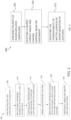
- FIG. 2 is a flow chart illustrating method 200 for creating a LBS by tailoring a fluidic flow path for separation of a sample including phosphorylated compounds.
- the method has certain steps which are optional as indicated by the dashed outline surrounding a particular step.
- Method 200 can start with a pretreatment step 205 for cleaning and/or preparing a flow path within a component for tailoring.
- Pretreatment step 205 can include cleaning the flow path with plasma, such as oxygen plasma. This pretreatment step is optional.
- an infiltration step 210 is initiated.
- a vaporized source of an alkylsilyl compound is infiltrated into the flow path.
- the vaporized source is free to travel throughout and along the internal surfaces of the flow path.
- Temperature and/or pressure is controlled during infiltration such that the vaporized source is allowed to permeate throughout the internal flow path and to deposit a coating from the vaporized source on the exposed surface (e.g., wetted surfaces) of the flow path as shown in step 215. Additional steps can be taken to further tailor the flow path. For example, after the coating is deposited, it can be heat treated or annealed (step 220) to create cross linking within the deposited coating and/or to adjust the contact angle or hydrophobicity of the coating.
- a second coating of alkylsilyl compound (having the same or different form) can be deposited by infiltrating a vaporized source into the flow path and depositing a second or additional layers in contact with the first deposited layer as shown in step 225.
- an annealing step can occur. Numerous infiltration and annealing steps can be provided to tailor the flow path accordingly (step 230).
- FIG. 3 provides a flow chart illustrating a method (300) of creating a LBS by tailoring a fluidic flow path for separation of a sample including a analyte, such as phosphorylated compounds.
- the method can be used to tailor a flow system for use in isolating, separating, and/or analyzing phosphorylated compounds.
- step 305 phosphorylated compounds are assessed to determine polarity. Understanding the polarity will allow an operator to select (by either look up table or make a determination) a desired coating chemistry and, optionally, contact angle as shown in step 310.
- the polarity of a stationary phase to be used to separate the phosphorylated compounds is also assessed.
- a chromatographic media e.g., stationary phase
- a chromatographic media can be selected based on metal-sensitive compounds or phosphorylated compounds in the sample. Understanding the polarity of both the phosphorylated and/or metal-sensitive compounds and the stationary phase is used in certain embodiments by the operator to select the desired coating chemistry and contact angle in step 310.
- the components to be tailored can then be positioned within a chemical infiltration system with environmental control (e.g., pressure, atmosphere, temperature, etc.) and precursor materials are infiltrated into the flow path of the component to deposit one or more coatings along the wetted surfaces to adjust the hydrophobicity as shown in step 315.
- environmental control e.g., pressure, atmosphere, temperature, etc.
- precursor materials are infiltrated into the flow path of the component to deposit one or more coatings along the wetted surfaces to adjust the hydrophobicity as shown in step 315.
- coatings deposited from the infiltration system can be monitored and if necessary precursors and or depositing conditions can be adjusted if required allowing for fine tuning of coating properties.
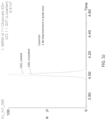
- FIGS. 4A and 4B show the results of the analysis of a standard solution separated using a linear gradient of 10mM ammonium acetate solution to 100% 10mM ammonium acetate, pH 9.2 in 90: 10 ACN/H2O over 3 minutes. While the peak area of AMP (Example 1, FIG.
- Coated hardware such as that sold under the tradename MaxPeak TM coated hardware (available from Waters Corporation, Milford, MA) can mitigate these effects by creating an inert surface, thus preventing the compounds' interaction with metals.
- a column hardware with a coating to provide LBS has been developed.
- the present technology includes a coating, such as alkylsilyl coating, to increase analyte recovery, sensitivity, as well as reproducibility by minimizing the analyte/surface interactions that can lead to sample losses.
- a chromatographic column such as a mixed-mode anion exchange column, incorporates the coating of the present disclosure; the mixed-mode anion exchange column has been designed to improve the retention of polar acidic analytes under reversed phase chromatographic conditions while also minimizing negative analyte/surface interactions for compounds.
- metal sensitive compounds, pharmaceutical drugs as well as biological metabolites were tested using the mixed-mode anion exchange column with and without the C2 coating on the column hardware.
- Biomarkers were also analyzed using the coated column hardware of the present technology. Each biomarker was tested using a water and ACN gradient each containing 10mM ammonium formate, pH 3.0. The compounds spanned a range of molecular properties and sizes.
- samples containing possible genotoxic impurities for quantity analysis do not interact with the walls of the sample preparation or separation devices.
- Each genotoxic impurity was tested using a water and methanol gradient. A portion of 2% aqueous formic acid was also applied.
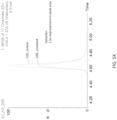
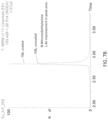
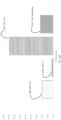
- FIG. 7A show chromatographic peak for recovery of NDMA on the Atlantis Premier BEH C 18 AX sorbent (available from Waters Corporation, Milford, MA) with MaxPeak LBS (available from Waters Corporation, Milford, MA) column hardware with C2 coating (top line, 702) and standard column hardware (bottom line, uncoated result 704); whereas FIG.
- FIGS. 7A-7B showed chromatographic peak for recovery of NDEA on the Atlantis Premier BEH C 18 AX sorbent (available from Waters Corporation, Milford, MA) with MaxPeak LBS (available from Waters Corporation, Milford, MA) column hardware with C2 coating (top line, 706) and standard column hardware (bottom line, uncoated result 708).
- FIGS. 7A-7B showed peak area increases of 2.3x and 1.4x, respectively, when analyzed using the MaxPeak TM LBS column hardware (available from Waters Corporation, Milford, MA).
- the above examples have all featured a mix-mode chemistry - Atlantis PREMIER BEH C18 AX from Waters Corporation.
- Each of the above examples featured a separation using this mix-mode column without a coating compared to the same separation but on the mix-mode column with an applied C2 coating.
- the technology need not be limited to mix-mode stationary phases.
- four different biological metabolites contained in a sample matrix of human urine were separated on a charged surface phenyl hexyl column (2.1 x100mm, 1.7 micron particles).
- Example 14 is a study of isocitric acid and citric acid, both biological metabolites. These metabolites generally have a concentration in the range of 20 to 90 ⁇ mol/mmol creatinine in urine for isocitric acid and 49 to 600 ⁇ mol/mmol creatinine in urine for citric acid. As a result of their low concentration, it can be difficult to quantify these metabolites.
- FIG. 8A shows that an improvement in peak area is achieved for both when using the present coated hardware technology.
- a 4.5x improvement in peak area over uncoated CSH phenyl hexyl column chemistry is achieved by the application of a C2 coating for isocitric acid and a 1.7x improvement in peak area is achieved for citric acid over the uncoated technology.
- the results for the coated hardware are indicated by line 802 (top line) and the results for the uncoated hardware are indicated by line 804 (bottom line).
- the peak for isocitric acid appears first at about 1.40; whereas the peak for citric acid appear around
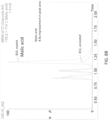
- Example 15 illustrates the results of a malic acid separation.
- a 4.8x improvement in peak area is achieve in utilizing a C2 coated column over the uncoated format (compare coated result 810 to uncoated result 812).
- Example 16 illustrates the results 3-phosphoglyceric acid separation.
- FIG. 8C shows a 41.1x improvement in peak area achieved by utilizing the C2 coated phenyl hexyl column versus an uncoated phenyl hexyl column (compare coated result 814 to uncoated result 816).
- Examples 14-16 studied the metabolites in a matrix of human urine.
- the embodiments in examples 17-19 illustrate improvements of using a coated charged surface phenyl hexyl column when investigating differences in pooled matrices - i.e., urine samples pooled from a healthy patients and diseased patients (breast cancer). Metabolic analytes in a matrix of healthy urine, diseased urine, and pooled urine were studied.
- stock solutions of the analytes were prepared in ultrapure water at 50 mM, free acid.
- Urine samples were defrosted on ice followed by 3x dilution with ultrapure water. The samples were then centrifuged for 10 minutes at 4 °C and 21,130 ref. The supernatant was transferred to a silanized vial for analysis with 50 microliters of each breast cancer positive (BioIVT, Westbury, NY) and control urine sample added to a new vial for the experimental pool. Samples were analyzed immediately.
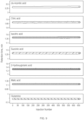
- Example 17 To assess the robustness of the separation method (i.e., separation using a coated column with charged phenyl hybrid stationary phase) for biological samples a pooled urine sample was prepared and injected continuously over several days in Example 17. Analytes of interest included cis-aconitic acid, citric acid, isocitric acid, succinic acid, 2-hydroxyglutaric acid, malic acid, and glutamine. Retention time variation was assessed for compounds eluting across the run. The results of over 650 injections, representing nearly 5 days of continuous operation are shown in FIG. 9 . Retention time variability ranged from 0.0-0.35% for the analytes.
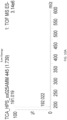
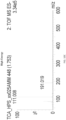
- FIGS. 10A-D illustrate the reduction in intensity of ion seen when applying the coated CSH phenyl-hexyl column.
- FIGS. 10A and 10C provide low and high energy spectra of citric acid in the pooled urine sample as separated with a C2 coated CSH phenyl-hexyl column whereas FIGS. 10 B and 10D provide the low and high energy spectra of citric acid in the pooled urine sample separated using a standard (uncoated) CSH phenyl-hexyl column. It is apparent from first glance of these figures that the spectra obtained using the coated columns ( FIGS.
- Example 19 recovery of analytes was investigated in a comparative study between coated and standard (uncoated) CSH phenyl-hexyl columns. Unwanted interactions of the organic acids with metals also decrease analyte peak area recovery. This analyte loss can be especially troublesome for metabolites present in samples in low concentrations or containing phosphate moieties.
- the extracted chromatograms for isocitric and citric acids, malic acid, 2-hydroxyglutaric acid, and 3-phosphoglyceric acid from pooled urine sample are shown in FIGS. 11A-D . It is clear from these chromatograms that the peak area recoveries for the compounds are higher for the coated columns compared to the standard stainless steel column (filled trace).
- Example 20 ( C2C10 coated columns )
- C2 coated hardware has been utilized to achieve improved peak area in separation of biomarkers, pharmaceutical drugs, biological metabolites, and genotoxic impurities.
- the C2 coated hardware is just one type of alkylsilyl coating that can be applied to wetted surfaces of the hardware.
- Other alkylsilyl coatings are possible, such as the coatings described in US Patent Publication No. US2019/0086371 , and in particular C2C10 coatings (which are also further described in US 2019/0086371 ).
- Example 20 is provided to illustrate the results of separation of a clinical marker using hardware coated with C2C10.
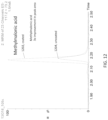
- FIG. 12 illustrates the results of a methylmalonic acid separation.
- the samples separated in this example are extracted from human plasma and are spiked with a standard solution. In general, the range of this clinical marker is between 0 and 0.4 ⁇ M in blood. Thus, samples contain a very low (if any) concentration of methylmalonic acid. As shown in FIG. 12 a 3x improvement in peak area is achieve in utilizing a C2C10 coated column over the uncoated format. Compare coated results 1202 to uncoated results 1204.
- FIG. 14A Also shown in FIG. 14A are the results for Allopurinol.
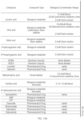
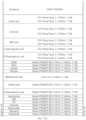
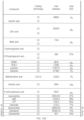
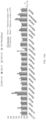
- Each of the tested columns C2 coated versus uncoated BEH C18, HSS T3, CSH C18, and CSH Phenylhexyl show that an increase in peak area is provided by the C2 coated versions of these columns. That is the value of each bar graph is well above the value of 1.
- FIGS. 14A-14F illustrate that certain C2 coated column formats provide enhanced separation (increased peak area) as compared to their uncoated counterparts.
- analytes that have been separated with C2 coated columns that provide a response of over 1.15 or more (i.e., 1.3x) in comparison to their uncoated counterparts.
- combinations of C2 coated columns and analytes that provide a response of 1.5 or more (i.e., 1.5x, 1.6x, 1.75x, 2x, 2.5x, 3x, 3.5x, or 4x).
- FIG. 15A provides the chemical structure of vinblastine, which is a chemotherapy medication. This analyte was separated using C2 coated and uncoated columns (i.e., C2 coated BEH C18 and uncoated BEH C18 columns; C2 coated HSS T3 and uncoated HSS T3 columns, C2 coated CSH C18 and uncoated CSH C18 columns, and C2 coated and uncoated CSH PhenylHexyl columns).
- C2 coated and uncoated columns i.e., C2 coated BEH C18 and uncoated BEH C18 columns; C2 coated HSS T3 and uncoated HSS T3 columns, C2 coated CSH C18 and uncoated CSH C18 columns, and C2 coated and uncoated CSH PhenylHexyl columns.
- the peak area for the separation results for each column type were obtained and the C2 coated column format was compared to the uncoated column format to obtain the data shown in bar graph form in FIG. 15B .
- a value of 1 indicates that the coated and uncoated column formats has substantially similar peak area.
- a value greater than 1 indicates that the C2 coated column format results provided an increased peak area versus its uncoated column counterpart.
- FIG. 15B shows a large difference in the increase versus column type. Specifically, the coated BEH C18 column (bar 1502) provided approximately a 10x increase in peak area over its uncoated counterpart.
- the coated HSS T2 (bar 1504) provided approximately a 2x increase in peak area over its uncoated counterpart.
- the coated CSH C18 (bar 1506) provided approximately 39.7x increase in peak area over its uncoated counterpart.
- the coated CSH PhenylHexyl (bar 1508) provided approximately a 12x increase in peak area over its uncoated counterpart.
- the present disclosure shows the benefits of increases in chromatographic peak area under LC/MS conditions that were observed in the range of 1.3x to 41.1x fold (or more) higher when comparing between columns with and without the LBS (i.e., the alkylsilyl coating).
- benefits such as phosphorylated compounds, pharmaceutical drugs, biological metabolites, biomarkers, and genotoxic impurities.
Landscapes
- Physics & Mathematics (AREA)
- Health & Medical Sciences (AREA)
- Life Sciences & Earth Sciences (AREA)
- Chemical & Material Sciences (AREA)
- Analytical Chemistry (AREA)
- Biochemistry (AREA)
- General Health & Medical Sciences (AREA)
- General Physics & Mathematics (AREA)
- Immunology (AREA)
- Pathology (AREA)
- Treatment Of Liquids With Adsorbents In General (AREA)
- Investigating Or Analysing Biological Materials (AREA)
- Other Investigation Or Analysis Of Materials By Electrical Means (AREA)
Claims (7)
- Verfahren zum Trennen einer Probe, umfassend:Bereitstellen eines Chromatographiesystems mit einem metallischen Strömungsweg mit einer Alkylsilylbeschichtung auf Fluid ausgesetzten Oberflächen, wobei der metallische Strömungsweg mit der Alkylsilylbeschichtung verhindert, dass sich die Probe an darunter liegende Metalloberflächen bindet;Einspritzen der Probe in das Chromatographiesystem, wobei die Probe Diazoxid oder Bicalutamid umfasst;Strömenlassen der Probe durch das Chromatographiesystem;Trennen der Probe; undDurchführen einer Massenspektrometrie an der getrennten Probe.
- Verfahren zum Trennen einer Probe, umfassend:Bereitstellen eines Chromatographiesystems mit einem metallischen Strömungsweg mit einer Alkylsilylbeschichtung auf Fluid ausgesetzten Oberflächen, wobei der metallische Strömungsweg mit der Alkylsilylbeschichtung verhindert, dass sich die Probe an darunter liegende Metalloberflächen bindet;Einspritzen der Probe in das Chromatographiesystem, wobei die Probe eine Verbindung umfasst, die aus der Gruppe bestehend aus Salmeterol, Apomorphin und Dobutamid ausgewählt ist;Strömenlassen der Probe durch das Chromatographiesystem;Trennen der Probe; undDurchführen einer Massenspektrometrie an der getrennten Probe.
- Verfahren zum Trennen einer Probe, umfassend:Bereitstellen eines Chromatographiesystems mit einem metallischen Strömungsweg mit einer Alkylsilylbeschichtung auf Fluid ausgesetzten Oberflächen, wobei der metallische Strömungsweg mit der Alkylsilylbeschichtung verhindert, dass sich die Probe an darunter liegende Metalloberflächen bindet;Einspritzen der Probe in das Chromatographiesystem, wobei die Probe N-Nitrosodimethylamin (NDMA) oder N-Nitrosodiethylamin (NDEA) umfasst;Strömenlassen der Probe durch das Chromatographiesystem;Trennen der Probe; undDurchführen einer Massenspektrometrie an der getrennten Probe.
- Verfahren nach einem der Ansprüche 1 bis 3, wobei die Alkylsilylbeschichtung eine chromatographische Peak-Fläche der Probe in einem Bereich von 1,3-fach bis 41,1-fach im Vergleich zu einem unbeschichteten Chromatographiesystem mit metallischen Oberflächen, die Fluiden ausgesetzt sind, vergrößert.
- Verfahren nach einem der Ansprüche 1 bis 3, wobei das Chromatographiesystem eine Mischmodus-Chromatographiesäule umfasst.
- Verfahren nach einem der Ansprüche 1 bis 3, wobei das Chromatographiesystem eine Phenyl-Hexyl-Chromatographiesäule umfasst.
- Verfahren nach einem der Ansprüche 1 bis 3, wobei die Alkylsilylbeschichtung Bis(trichlorsilyl)ethan oder Bis(trimethoxysilyl)ethan umfasst.
Priority Applications (1)
| Application Number | Priority Date | Filing Date | Title |
|---|---|---|---|
| EP25171010.9A EP4567422A3 (de) | 2020-01-17 | 2021-01-15 | Verfahren zum erhöhen der empfindlichkeits-lc/ms-analyse |
Applications Claiming Priority (3)
| Application Number | Priority Date | Filing Date | Title |
|---|---|---|---|
| US202062962476P | 2020-01-17 | 2020-01-17 | |
| US202063071750P | 2020-08-28 | 2020-08-28 | |
| PCT/IB2021/050312 WO2021144761A1 (en) | 2020-01-17 | 2021-01-15 | Methods to increase sensitivity lc/ms analysis |
Related Child Applications (2)
| Application Number | Title | Priority Date | Filing Date |
|---|---|---|---|
| EP25171010.9A Division-Into EP4567422A3 (de) | 2020-01-17 | 2021-01-15 | Verfahren zum erhöhen der empfindlichkeits-lc/ms-analyse |
| EP25171010.9A Division EP4567422A3 (de) | 2020-01-17 | 2021-01-15 | Verfahren zum erhöhen der empfindlichkeits-lc/ms-analyse |
Publications (2)
| Publication Number | Publication Date |
|---|---|
| EP4090964A1 EP4090964A1 (de) | 2022-11-23 |
| EP4090964B1 true EP4090964B1 (de) | 2025-05-21 |
Family
ID=74191815
Family Applications (2)
| Application Number | Title | Priority Date | Filing Date |
|---|---|---|---|
| EP21701015.6A Active EP4090964B1 (de) | 2020-01-17 | 2021-01-15 | Verfahren zum erhöhen der empfindlichkeits-lc/ms-analyse |
| EP25171010.9A Pending EP4567422A3 (de) | 2020-01-17 | 2021-01-15 | Verfahren zum erhöhen der empfindlichkeits-lc/ms-analyse |
Family Applications After (1)
| Application Number | Title | Priority Date | Filing Date |
|---|---|---|---|
| EP25171010.9A Pending EP4567422A3 (de) | 2020-01-17 | 2021-01-15 | Verfahren zum erhöhen der empfindlichkeits-lc/ms-analyse |
Country Status (4)
| Country | Link |
|---|---|
| US (3) | US11530966B2 (de) |
| EP (2) | EP4090964B1 (de) |
| CN (1) | CN114945824A (de) |
| WO (1) | WO2021144761A1 (de) |
Families Citing this family (1)
| Publication number | Priority date | Publication date | Assignee | Title |
|---|---|---|---|---|
| CN115508483A (zh) * | 2022-09-22 | 2022-12-23 | 武汉迈特维尔生物科技有限公司 | 一种快速检测血清样本中甲基丙二酸的lc-ms/ms方法 |
Family Cites Families (11)
| Publication number | Priority date | Publication date | Assignee | Title |
|---|---|---|---|---|
| AU2006274029B2 (en) | 2005-07-25 | 2011-07-14 | Metanomics Gmbh | Means and methods for analyzing a sample by means of chromatography-mass spectrometry |
| US20150024152A1 (en) | 2013-07-19 | 2015-01-22 | Agilent Technologies, Inc. | Metal components with inert vapor phase coating on internal surfaces |
| US9915001B2 (en) | 2014-09-03 | 2018-03-13 | Silcotek Corp. | Chemical vapor deposition process and coated article |
| EP3889614A1 (de) * | 2015-03-03 | 2021-10-06 | Laboratory Corporation of America Holdings | Verfahren und systeme zur messung von serotonin in einer probe |
| BR112017025097B1 (pt) | 2015-05-27 | 2021-05-11 | Quest Diagnostics Investments Llc | método para quantificação espectrométrica de massa de analitos extraídos de um dispositivo de microamostragem |
| US10876206B2 (en) | 2015-09-01 | 2020-12-29 | Silcotek Corp. | Thermal chemical vapor deposition coating |
| GB201522435D0 (en) * | 2015-12-18 | 2016-02-03 | Thermo Fisher Scient Bremen | Heated transfer line |
| US11709155B2 (en) * | 2017-09-18 | 2023-07-25 | Waters Technologies Corporation | Use of vapor deposition coated flow paths for improved chromatography of metal interacting analytes |
| US11959894B2 (en) | 2018-02-23 | 2024-04-16 | Silcotek Corp | Liquid chromatography technique |
| US10656059B2 (en) * | 2018-03-07 | 2020-05-19 | Alcala Pharmaceutical, Inc. | Method for qualitative and quantitative multiplexing of drug analytes from biological samples |
| CN113507971A (zh) * | 2019-02-27 | 2021-10-15 | 沃特世科技公司 | 用于最大程度减少分析物吸附的色谱密封件和经涂覆的流动路径 |
-
2021
- 2021-01-15 EP EP21701015.6A patent/EP4090964B1/de active Active
- 2021-01-15 WO PCT/IB2021/050312 patent/WO2021144761A1/en not_active Ceased
- 2021-01-15 US US17/150,793 patent/US11530966B2/en active Active
- 2021-01-15 CN CN202180009225.1A patent/CN114945824A/zh active Pending
- 2021-01-15 EP EP25171010.9A patent/EP4567422A3/de active Pending
-
2022
- 2022-11-18 US US17/990,029 patent/US11959842B2/en active Active
-
2024
- 2024-03-13 US US18/604,005 patent/US12216034B2/en active Active
Also Published As
| Publication number | Publication date |
|---|---|
| CN114945824A (zh) | 2022-08-26 |
| US20240219275A1 (en) | 2024-07-04 |
| US20210223148A1 (en) | 2021-07-22 |
| EP4090964A1 (de) | 2022-11-23 |
| US12216034B2 (en) | 2025-02-04 |
| EP4567422A2 (de) | 2025-06-11 |
| US11530966B2 (en) | 2022-12-20 |
| US11959842B2 (en) | 2024-04-16 |
| WO2021144761A1 (en) | 2021-07-22 |
| EP4567422A3 (de) | 2025-08-13 |
| US20230081572A1 (en) | 2023-03-16 |
Similar Documents
| Publication | Publication Date | Title |
|---|---|---|
| EP4324553B1 (de) | Verwendung von dampfabgeschiedenen durchflusspfaden zur verbesserung der chromatographie von metall-interaktiven analyten | |
| Xu et al. | Chemical reactions in liquid-phase microextraction | |
| Klepárník | Recent advances in the combination of capillary electrophoresis with mass spectrometry: From element to single‐cell analysis | |
| US20080213906A1 (en) | Compositions and methods for combining protein precipitation and solid phase extraction | |
| EP3829733B1 (de) | Flüssigchromatografische/massenspektrometrische verfahren zur analyse polarer moleküle | |
| US20250012766A1 (en) | Lc/ms adduct mitigation by vapor deposition coated surfaces | |
| US12216034B2 (en) | Methods to increase sensitivity of LC/MS analysis | |
| US20210349061A1 (en) | Liquid chromatography based detection and quantitation of phospho prodrugs and their active metabolites | |
| CN112189137A (zh) | 多重患者样品中的睾丸酮的质谱法测定 | |
| US20220205961A1 (en) | Method for determining b vitamins and their vitamers | |
| US20210255196A1 (en) | Low binding surfaces for peptide mapping | |
| Lopez et al. | Methods for the Passivation of HPLC Instruments and Columns | |
| US12352734B2 (en) | Chromatographic hardware improvements for separation of reactive molecules | |
| EP4291889A1 (de) | Verwendung von oberflächenbeschichtungen mit geringer rinde zur analyse von tyrosinkinasehemmern | |
| WO2024178406A2 (en) | Carbon microsphere chromatographic material | |
| GC | Issues with Sample Preparation |
Legal Events
| Date | Code | Title | Description |
|---|---|---|---|
| STAA | Information on the status of an ep patent application or granted ep patent |
Free format text: STATUS: UNKNOWN |
|
| STAA | Information on the status of an ep patent application or granted ep patent |
Free format text: STATUS: THE INTERNATIONAL PUBLICATION HAS BEEN MADE |
|
| PUAI | Public reference made under article 153(3) epc to a published international application that has entered the european phase |
Free format text: ORIGINAL CODE: 0009012 |
|
| STAA | Information on the status of an ep patent application or granted ep patent |
Free format text: STATUS: REQUEST FOR EXAMINATION WAS MADE |
|
| 17P | Request for examination filed |
Effective date: 20220719 |
|
| AK | Designated contracting states |
Kind code of ref document: A1 Designated state(s): AL AT BE BG CH CY CZ DE DK EE ES FI FR GB GR HR HU IE IS IT LI LT LU LV MC MK MT NL NO PL PT RO RS SE SI SK SM TR |
|
| DAV | Request for validation of the european patent (deleted) | ||
| DAX | Request for extension of the european patent (deleted) | ||
| GRAP | Despatch of communication of intention to grant a patent |
Free format text: ORIGINAL CODE: EPIDOSNIGR1 |
|
| STAA | Information on the status of an ep patent application or granted ep patent |
Free format text: STATUS: GRANT OF PATENT IS INTENDED |
|
| INTG | Intention to grant announced |
Effective date: 20241216 |
|
| GRAS | Grant fee paid |
Free format text: ORIGINAL CODE: EPIDOSNIGR3 |
|
| GRAA | (expected) grant |
Free format text: ORIGINAL CODE: 0009210 |
|
| STAA | Information on the status of an ep patent application or granted ep patent |
Free format text: STATUS: THE PATENT HAS BEEN GRANTED |
|
| AK | Designated contracting states |
Kind code of ref document: B1 Designated state(s): AL AT BE BG CH CY CZ DE DK EE ES FI FR GB GR HR HU IE IS IT LI LT LU LV MC MK MT NL NO PL PT RO RS SE SI SK SM TR |
|
| REG | Reference to a national code |
Ref country code: GB Ref legal event code: FG4D |
|
| P01 | Opt-out of the competence of the unified patent court (upc) registered |
Free format text: CASE NUMBER: APP_19145/2025 Effective date: 20250422 |
|
| REG | Reference to a national code |
Ref country code: CH Ref legal event code: EP |
|
| REG | Reference to a national code |
Ref country code: DE Ref legal event code: R096 Ref document number: 602021031075 Country of ref document: DE |
|
| REG | Reference to a national code |
Ref country code: IE Ref legal event code: FG4D |
|
| REG | Reference to a national code |
Ref country code: NL Ref legal event code: MP Effective date: 20250521 |
|
| PG25 | Lapsed in a contracting state [announced via postgrant information from national office to epo] |
Ref country code: FI Free format text: LAPSE BECAUSE OF FAILURE TO SUBMIT A TRANSLATION OF THE DESCRIPTION OR TO PAY THE FEE WITHIN THE PRESCRIBED TIME-LIMIT Effective date: 20250521 Ref country code: PT Free format text: LAPSE BECAUSE OF FAILURE TO SUBMIT A TRANSLATION OF THE DESCRIPTION OR TO PAY THE FEE WITHIN THE PRESCRIBED TIME-LIMIT Effective date: 20250922 Ref country code: ES Free format text: LAPSE BECAUSE OF FAILURE TO SUBMIT A TRANSLATION OF THE DESCRIPTION OR TO PAY THE FEE WITHIN THE PRESCRIBED TIME-LIMIT Effective date: 20250521 |
|
| REG | Reference to a national code |
Ref country code: LT Ref legal event code: MG9D |
|
| PG25 | Lapsed in a contracting state [announced via postgrant information from national office to epo] |
Ref country code: GR Free format text: LAPSE BECAUSE OF FAILURE TO SUBMIT A TRANSLATION OF THE DESCRIPTION OR TO PAY THE FEE WITHIN THE PRESCRIBED TIME-LIMIT Effective date: 20250822 Ref country code: NO Free format text: LAPSE BECAUSE OF FAILURE TO SUBMIT A TRANSLATION OF THE DESCRIPTION OR TO PAY THE FEE WITHIN THE PRESCRIBED TIME-LIMIT Effective date: 20250821 |
|
| PG25 | Lapsed in a contracting state [announced via postgrant information from national office to epo] |
Ref country code: NL Free format text: LAPSE BECAUSE OF FAILURE TO SUBMIT A TRANSLATION OF THE DESCRIPTION OR TO PAY THE FEE WITHIN THE PRESCRIBED TIME-LIMIT Effective date: 20250521 Ref country code: PL Free format text: LAPSE BECAUSE OF FAILURE TO SUBMIT A TRANSLATION OF THE DESCRIPTION OR TO PAY THE FEE WITHIN THE PRESCRIBED TIME-LIMIT Effective date: 20250521 |
|
| PG25 | Lapsed in a contracting state [announced via postgrant information from national office to epo] |
Ref country code: BG Free format text: LAPSE BECAUSE OF FAILURE TO SUBMIT A TRANSLATION OF THE DESCRIPTION OR TO PAY THE FEE WITHIN THE PRESCRIBED TIME-LIMIT Effective date: 20250521 |
|
| PG25 | Lapsed in a contracting state [announced via postgrant information from national office to epo] |
Ref country code: HR Free format text: LAPSE BECAUSE OF FAILURE TO SUBMIT A TRANSLATION OF THE DESCRIPTION OR TO PAY THE FEE WITHIN THE PRESCRIBED TIME-LIMIT Effective date: 20250521 |
|
| PG25 | Lapsed in a contracting state [announced via postgrant information from national office to epo] |
Ref country code: RS Free format text: LAPSE BECAUSE OF FAILURE TO SUBMIT A TRANSLATION OF THE DESCRIPTION OR TO PAY THE FEE WITHIN THE PRESCRIBED TIME-LIMIT Effective date: 20250821 |
|
| PG25 | Lapsed in a contracting state [announced via postgrant information from national office to epo] |
Ref country code: IS Free format text: LAPSE BECAUSE OF FAILURE TO SUBMIT A TRANSLATION OF THE DESCRIPTION OR TO PAY THE FEE WITHIN THE PRESCRIBED TIME-LIMIT Effective date: 20250921 |
|
| PG25 | Lapsed in a contracting state [announced via postgrant information from national office to epo] |
Ref country code: LV Free format text: LAPSE BECAUSE OF FAILURE TO SUBMIT A TRANSLATION OF THE DESCRIPTION OR TO PAY THE FEE WITHIN THE PRESCRIBED TIME-LIMIT Effective date: 20250521 |
|
| REG | Reference to a national code |
Ref country code: AT Ref legal event code: MK05 Ref document number: 1797140 Country of ref document: AT Kind code of ref document: T Effective date: 20250521 |
|
| PGFP | Annual fee paid to national office [announced via postgrant information from national office to epo] |
Ref country code: GB Payment date: 20251217 Year of fee payment: 6 |
|
| PG25 | Lapsed in a contracting state [announced via postgrant information from national office to epo] |
Ref country code: AT Free format text: LAPSE BECAUSE OF FAILURE TO SUBMIT A TRANSLATION OF THE DESCRIPTION OR TO PAY THE FEE WITHIN THE PRESCRIBED TIME-LIMIT Effective date: 20250521 Ref country code: DK Free format text: LAPSE BECAUSE OF FAILURE TO SUBMIT A TRANSLATION OF THE DESCRIPTION OR TO PAY THE FEE WITHIN THE PRESCRIBED TIME-LIMIT Effective date: 20250521 Ref country code: SM Free format text: LAPSE BECAUSE OF FAILURE TO SUBMIT A TRANSLATION OF THE DESCRIPTION OR TO PAY THE FEE WITHIN THE PRESCRIBED TIME-LIMIT Effective date: 20250521 |
|
| PG25 | Lapsed in a contracting state [announced via postgrant information from national office to epo] |
Ref country code: CZ Free format text: LAPSE BECAUSE OF FAILURE TO SUBMIT A TRANSLATION OF THE DESCRIPTION OR TO PAY THE FEE WITHIN THE PRESCRIBED TIME-LIMIT Effective date: 20250521 |
|
| PG25 | Lapsed in a contracting state [announced via postgrant information from national office to epo] |
Ref country code: EE Free format text: LAPSE BECAUSE OF FAILURE TO SUBMIT A TRANSLATION OF THE DESCRIPTION OR TO PAY THE FEE WITHIN THE PRESCRIBED TIME-LIMIT Effective date: 20250521 |
|
| PG25 | Lapsed in a contracting state [announced via postgrant information from national office to epo] |
Ref country code: SK Free format text: LAPSE BECAUSE OF FAILURE TO SUBMIT A TRANSLATION OF THE DESCRIPTION OR TO PAY THE FEE WITHIN THE PRESCRIBED TIME-LIMIT Effective date: 20250521 |
|
| PG25 | Lapsed in a contracting state [announced via postgrant information from national office to epo] |
Ref country code: IT Free format text: LAPSE BECAUSE OF FAILURE TO SUBMIT A TRANSLATION OF THE DESCRIPTION OR TO PAY THE FEE WITHIN THE PRESCRIBED TIME-LIMIT Effective date: 20250521 |
|
| REG | Reference to a national code |
Ref country code: DE Ref legal event code: R097 Ref document number: 602021031075 Country of ref document: DE |
|
| PLBE | No opposition filed within time limit |
Free format text: ORIGINAL CODE: 0009261 |
|
| STAA | Information on the status of an ep patent application or granted ep patent |
Free format text: STATUS: NO OPPOSITION FILED WITHIN TIME LIMIT |
|
| REG | Reference to a national code |
Ref country code: CH Ref legal event code: L10 Free format text: ST27 STATUS EVENT CODE: U-0-0-L10-L00 (AS PROVIDED BY THE NATIONAL OFFICE) Effective date: 20260402 |
|
| PGFP | Annual fee paid to national office [announced via postgrant information from national office to epo] |
Ref country code: DE Payment date: 20251217 Year of fee payment: 6 |
|
| 26N | No opposition filed |
Effective date: 20260224 |