EP4090065A2 - Systeme und verfahren zum ermöglichen von kommunikation über gemeinsam genutztes spektrum mit o-ran fronthaul-schnittstelle in funkzugangsnetzen - Google Patents
Systeme und verfahren zum ermöglichen von kommunikation über gemeinsam genutztes spektrum mit o-ran fronthaul-schnittstelle in funkzugangsnetzen Download PDFInfo
- Publication number
- EP4090065A2 EP4090065A2 EP22169259.3A EP22169259A EP4090065A2 EP 4090065 A2 EP4090065 A2 EP 4090065A2 EP 22169259 A EP22169259 A EP 22169259A EP 4090065 A2 EP4090065 A2 EP 4090065A2
- Authority
- EP
- European Patent Office
- Prior art keywords
- measurement
- controller
- sas
- measurements
- cbrs
- Prior art date
- Legal status (The legal status is an assumption and is not a legal conclusion. Google has not performed a legal analysis and makes no representation as to the accuracy of the status listed.)
- Withdrawn
Links
Images





Classifications
-
- H—ELECTRICITY
- H04—ELECTRIC COMMUNICATION TECHNIQUE
- H04W—WIRELESS COMMUNICATION NETWORKS
- H04W88/00—Devices specially adapted for wireless communication networks, e.g. terminals, base stations or access point devices
- H04W88/08—Access point devices
- H04W88/085—Access point devices with remote components
-
- H—ELECTRICITY
- H04—ELECTRIC COMMUNICATION TECHNIQUE
- H04W—WIRELESS COMMUNICATION NETWORKS
- H04W16/00—Network planning, e.g. coverage or traffic planning tools; Network deployment, e.g. resource partitioning or cells structures
- H04W16/14—Spectrum sharing arrangements between different networks
-
- H—ELECTRICITY
- H04—ELECTRIC COMMUNICATION TECHNIQUE
- H04W—WIRELESS COMMUNICATION NETWORKS
- H04W24/00—Supervisory, monitoring or testing arrangements
- H04W24/02—Arrangements for optimising operational condition
-
- H—ELECTRICITY
- H04—ELECTRIC COMMUNICATION TECHNIQUE
- H04W—WIRELESS COMMUNICATION NETWORKS
- H04W24/00—Supervisory, monitoring or testing arrangements
- H04W24/10—Scheduling measurement reports ; Arrangements for measurement reports
-
- H—ELECTRICITY
- H04—ELECTRIC COMMUNICATION TECHNIQUE
- H04W—WIRELESS COMMUNICATION NETWORKS
- H04W60/00—Affiliation to network, e.g. registration; Terminating affiliation with the network, e.g. de-registration
- H04W60/04—Affiliation to network, e.g. registration; Terminating affiliation with the network, e.g. de-registration using triggered events
-
- H—ELECTRICITY
- H04—ELECTRIC COMMUNICATION TECHNIQUE
- H04W—WIRELESS COMMUNICATION NETWORKS
- H04W72/00—Local resource management
- H04W72/20—Control channels or signalling for resource management
- H04W72/23—Control channels or signalling for resource management in the downlink direction of a wireless link, i.e. towards a terminal
-
- H—ELECTRICITY
- H04—ELECTRIC COMMUNICATION TECHNIQUE
- H04L—TRANSMISSION OF DIGITAL INFORMATION, e.g. TELEGRAPHIC COMMUNICATION
- H04L41/00—Arrangements for maintenance, administration or management of data switching networks, e.g. of packet switching networks
- H04L41/08—Configuration management of networks or network elements
- H04L41/085—Retrieval of network configuration; Tracking network configuration history
-
- H—ELECTRICITY
- H04—ELECTRIC COMMUNICATION TECHNIQUE
- H04W—WIRELESS COMMUNICATION NETWORKS
- H04W84/00—Network topologies
- H04W84/02—Hierarchically pre-organised networks, e.g. paging networks, cellular networks, WLAN [Wireless Local Area Network] or WLL [Wireless Local Loop]
- H04W84/04—Large scale networks; Deep hierarchical networks
- H04W84/042—Public Land Mobile systems, e.g. cellular systems
-
- H—ELECTRICITY
- H04—ELECTRIC COMMUNICATION TECHNIQUE
- H04W—WIRELESS COMMUNICATION NETWORKS
- H04W92/00—Interfaces specially adapted for wireless communication networks
- H04W92/04—Interfaces between hierarchically different network devices
- H04W92/12—Interfaces between hierarchically different network devices between access points and access point controllers
-
- H—ELECTRICITY
- H04—ELECTRIC COMMUNICATION TECHNIQUE
- H04W—WIRELESS COMMUNICATION NETWORKS
- H04W92/00—Interfaces specially adapted for wireless communication networks
- H04W92/04—Interfaces between hierarchically different network devices
- H04W92/14—Interfaces between hierarchically different network devices between access point controllers and backbone network device
Definitions
- the present disclosure relates to systems and methods for Radio Access Networks (RANs), and relates more particularly to Open RANs (O-RANs) for 4 th -Generation (4G) and 5 th -Generation (5G) based mobile networks.
- RANs Radio Access Networks
- OFD Open RANs
- 4G 4 th -Generation
- 5G 5 th -Generation
- Conventional RANs were built employing an integrated unit where the entire RAN was processed.
- Conventional RANs implement the protocol stack (e.g., Physical Layer (PHY), Media Access Control (MAC), Radio Link Control (RLC), Packet Data Convergence Control (PDCP) layers) at the base station (also referred to as the evolved node B (eNodeB or eNB) for 4G LTE or next generation node B (gNodeB or gNB) for 5G NR).
- PHY Physical Layer
- MAC Media Access Control
- RLC Radio Link Control
- PDCP Packet Data Convergence Control
- eNodeB or eNB evolved node B
- gNodeB or gNB next generation node B
- 5G NR next generation node B
- conventional RANs use application specific hardware for processing, which make the conventional RANs difficult to upgrade and evolve.
- CAPEX capital costs
- OPEX operating costs
- Cloud-based Radio Access Networks are networks where a significant portion of the RAN layer processing is performed at a baseband unit (BBU), located in the cloud on commercial off the shelf servers, while the radio frequency (RF) and real-time critical functions can be processed in the remote radio unit (RRU), also referred to as the radio unit (RU).
- BBU baseband unit
- RF radio frequency
- RRU remote radio unit
- the BBU can be split into two parts: centralized unit (CU) and distributed unit (DU). CUs are usually located in the cloud on commercial off the shelf servers, while DUs can be distributed.
- the BBU may also be virtualized, in which case it is also known as vBBU. Radio Frequency (RF) interface and real-time critical functions can be processed in the remote radio unit (RRU).
- RF Radio Frequency
- an interface called the fronthaul For the RRU and DU to communicate, an interface called the fronthaul is provided.
- 3GPP 3 rd Generation Partnership Project
- 3GPP has defined 8 options for the split between the BBU and the RRU among different layers of the protocol stack.
- There are multiple factors affecting the selection of the fronthaul split option such as bandwidth, latency, implementation cost, virtualization benefits, complexity of the fronthaul interface, expansion flexibility, computing power, and memory requirement.
- split option 7-2x Intra-Physical (PHY) layer split.
- UL Uplink
- FFT Fast Fourier Transform
- CP Cyclic Prefix
- pre-filtering functions reside in the RU, while the rest of PHY functions reside in the DU.
- iFFT inverse Fast Fourier Transform
- CP addition and beamforming functions reside in the RU
- the rest of PHY functions reside in the DU.
- This split has multiple advantages such as simplicity, transport bandwidth scalability, beamforming support, interoperability, support for advanced receivers and inter-cell coordination, lower O-RU complexity, future proofness, interface and functions symmetry.
- CBRS citizens Broadband Radio Service
- the first tier includes "incumbents," who are legacy/existing users of the CBRS band, e.g., military ship-borne radars in coastal areas, military ground-based radars, fixed satellite services (FSS) receive-only earth stations (35 sites around US, mostly in coastal areas), and Grandfathered Wireless Broadband Licensees (GWBL).
- legacy/existing users of the CBRS band e.g., military ship-borne radars in coastal areas, military ground-based radars, fixed satellite services (FSS) receive-only earth stations (35 sites around US, mostly in coastal areas), and Grandfathered Wireless Broadband Licensees (GWBL).
- GWBL Grandfathered Wireless Broadband Licensees
- the second tier includes Priority Access License (PAL) users, who are CBRS devices (CBSDs) having one or more licenses to use a portion of the CBRS band.
- PAL users who have a lower priority than incumbents, are restricted to a total of 70 MHz within 3.55 - 3.65 GHz band in the CBRS band.
- the third tier includes General Authorized Access (GAA) users, who are CBSDs using the CBRS band without holding a license.
- GAA users who have a lower priority than PAL users, are the lowest tier of the 3-tier architecture. GAA users can only use the spectrum if no incumbents or PAL users are using the channel at a given location. GAA users have access to the entire 150 MHz of the CBRS band.
- FIG. 1 shows the architecture of an example interface between Spectrum Access System (SAS) 1001 and CBSD/Domain Proxy (DP) 1002.
- CBSD includes, e.g., fixed stations and/or radios, or networks of such stations or radios, that operate on a PAL or GAA basis consistent with the regulations specified in Title 47 of the Code of Federal Regulations (CFR), ⁇ 96.
- CFR Code of Federal Regulations
- CBSDs which comprise multiple nodes or networks of nodes, CBSD requirements apply to each node even if network management and communication with the SAS is accomplished via a single network interface.
- CBSD obtains Grants from the SAS via the SAS-CBSD interface (which may be done with the assistance of DP 1002 in the communication path, or directly between SAS and CBSD, as shown in the example embodiment shown in FIG.
- the DP 1002 is a logical entity engaging in communications with the SAS on behalf of multiple individual CBSDs or networks of CBSDs.
- the DP can also provide a translational capability to interface legacy radio equipment in the 3650-3700 MHz band with a SAS to ensure compliance with the regulations specified in Title 47 of the Code of Federal Regulations (CFR), ⁇ 96 (hereinafter referred to as 47 CFR ⁇ 96).
- CFR Code of Federal Regulations
- ⁇ 96 hereinafter referred to as 47 CFR ⁇ 96
- the DP presents a consistent and secure interface to the SAS that can convey all messages pertaining to the SAS-CBSD interface for client CBSDs.
- CBSD aggregation and proxy function for large networks can be integrated within a Service Management and Orchestration (SMO) system or in a standalone node.
- SAS 1001 is a system that authorizes and manages use of spectrum for the CBRS in accordance with the regulations specified in 47 CFR ⁇ 96.
- the standards/procedures defined by the Wireless Innovation Forum (WInnForum) and CBRS Alliance consider the whole gNB (which is a CBSD) as a single node.
- the standards/procedures defined by the O-RAN Alliance disaggregates the RAN into multiple nodes that can be physically separated (i.e., O-RU, O-DU, O-CU, and SMO).
- the present disclosure provides a method for enabling communications over shared spectrum, e.g., CBRS band, in an O-RAN-compliant network, which method involves exchanging messages between an O-RAN compliant RU (O-RU) and an O-RAN compliant DU (O-DU) and the Service Management and Orchestration (SMO) system via the O-RAN fronthaul interface.
- the method according to the present disclosure enables CBRS operation over the O-RAN-compliant network by providing the required parameters, which are obtained over the O-RAN fronthaul interface, to the external SAS.
- the required parameters enable the SAS to allocate channels to CBRS O-RUs and manage inter-reference across different tiers/users sharing the spectrum.
- An example method enables CBRS functionalities in an O-RAN-based architecture by defining new CBRS parameters and messages to be exchanged among O-RU, O-DU, and a controller unit that controls O-RU.
- the controller that controls O-RU (“O-RU controller”) can be implemented in the SMO, O-DU or a separate entity, e.g., Network Management System (NMS).
- NMS Network Management System
- SMO/O-RU controller will be used in the present disclosure to mean i) an SMO that controls O-RU (i.e., acting as O-RU controller) and/or ii) a controller implemented in an O-DU or a separate entity, e.g., NMS, for controlling O-RU.
- O-RU controller is intended to encompass an SMO that controls O-RU.
- the CBRS functionalities in the O-RAN-defined network elements can include, without limitation, the following: CBSD registration procedure; CBSD spectrum inquiry procedure; CBSD grant procedure; CBSD heartbeat procedure; CBSD grant relinquishment procedure; and CBSD deregistration procedure.
- O-RU is requested to execute spectrum measurements and report measurement results back to the SMO/O-RU controller unit.
- An example method for operating an Open Radio Access Network (O-RAN) fronthaul interface between O-RAN radio unit (O-RU) and an O-RU controller for controlling the O-RU includes: sending, from the O-RU to the O-RU controller, a message informing whether the O-RU supports Citizens Broadband Radio Service (CBRS) operation; and if the O-RU supports the CBRS operation, sending from the O-RU to the O-RU controller a report of capabilities of the O-RU, wherein the report includes: i) an indication of whether the O-RU supports spectrum measurement; ii) if the O-RU supports spectrum measurement, one of an indication the O-RU supports measurement without grant from a Spectrum Access System (SAS) or an indication the O-RU supports measurement with grant from the SAS; and iii) at least one of Federal Communications Commission certification identification (FCC ID) for the O-RU, citizens Broadband Radio Service Device (CBSD) category for the O-RU, user registration identification (userId) for CBRS, installation parameters,
- An example method according to the present disclosure for operating an Open Radio Access Network (O-RAN) fronthaul interface between O-RAN radio unit (O-RU) and an O-RU controller for controlling the O-RU includes: sending, by the O-RU controller, a measurement request message to the O-RU requesting the O-RU to perform spectrum measurement based on at least one configuration parameter included in the measurement request message; and sending, by the O-RU, a message to the O-RU controller including results of the spectrum measurement performed by the O-RU.
- O-RAN Open Radio Access Network
- An example method according to the present disclosure for operating an Open Radio Access Network (O-RAN) fronthaul interface between O-RAN radio unit (O-RU) and an O-RU controller for controlling the O-RU includes: providing an interface between the O-RU controller and a domain proxy (DP); exchanging a specified set of messages between a spectrum access system (SAS) and the DP over the interface; and exchanging the same specified set of messages between the O-RU controller and the DP over the interface.
- SAS spectrum access system
- FIG. 2a illustrates an example embodiment of an O-RAN-based system for CBRS networks including the SAS-CBSD/DP interface based on the O-RAN Alliance architecture.
- FIG. 2a shows the disaggregation of the CBSD into multiple nodes (i.e., O-RU 2001, O-DU 2002, O-CU 2003, and SMO/O-RU controller 1003) as per the O-RAN alliance definition.
- CBSD 2 and CBSD N are illustrated with only O-RU 2001 explicitly shown for the sake of brevity, but it should be noted that CBSD 2 and CBSD N also include O-DU 2002, O-CU 2003, and SMO/O-RU controller 1003.
- the O-RU controller can be implemented in the SMO, O-DU or a separate entity, e.g., Network Management System (NMS).
- NMS Network Management System
- the communication between SAS and CBSD can be done directly (e.g., as shown on the right side of FIG. 2a ), or via DP (e.g., when DP is handling multiple CBSDs).
- FIG. 2b illustrates an alternative example embodiment of an O-RAN-based system for CBRS networks including i) the SAS-CBSD/DP interface based on the O-RAN alliance architecture and ii) a combined O-DU and O-RU.
- O-RU and O-DU are combined in a common node 2004 in the example embodiment of FIG. 2b .
- the O-RU must indicate in a message to the SMO/O-RU controller whether it supports CBRS, which indication enables the SMO/O-RU controller to configure the O-RU to operate in the CBRS band. If the O-RU supports the CBRS feature, the O-RU can report to the SMO/O-RU controller the following parameters as part of the O-RU's capabilities:
- Measurement capabilities The following measurement capabilities can be included if the O-RU supports measurement with grant or the O-RU supports measurement without grant:
- At least one of the above parameters in the capability report is reported per O-RU end point.
- At least one of the above parameters in the capability report is assumed to be supported by the O-RU as default if measurement is reported as supported.
- the SMO/O-RU controller can assume that the O-RU supports measurements averaging across antennas and across measurement occasions by default if conducting measurement is supported.
- At least one of the above parameters in the capability report is configured to be measured or calculated for each measured channel by the O-RU and sent in the measurement response message from the O-RU to the SMO/O-RU controller.
- the CPI signature data is only included in the capability Yang module if the CPI enters the data directly into the O-RU.
- one or more of the above capability parameters can be optionally included by the O-RU in the capability YANG module (each YANG module defines a hierarchy of data that can be used for NETCONF-based operations, including configuration, state data, Remote Procedure Calls (RPCs) and notifications).
- each YANG module defines a hierarchy of data that can be used for NETCONF-based operations, including configuration, state data, Remote Procedure Calls (RPCs) and notifications).
- the O-RU may report support for at least one of 1) sending the received signal power in units of 5 MHz or 10 MHz, 2) sending raw received signal samples, and 3) doing local processing and reporting the parameters shown above such as Channel usability, Channel RSSI, Detected Signal EARFCN or NR-ARFCN, Detected signal RAT, Detected Signal PCI, Detected Signal ECGI or NCGI, Signal tolerability, RSRP/SS-RSRP, RSRQ/SS-RSRQ, RSRQ histogram, RSRQ histogram.
- the SMO/O-RU controller may configure the O-RU with at least one of 1) sending the received signal power in units of 5 MHz or 10 MHz, 2) sending raw received signal samples, and 3) doing local processing and reporting the parameters shown above such as Channel usability, Channel RSSI, Detected Signal EARFCN or NR-ARFCN, Detected signal RAT, Detected Signal PCI, Detected Signal ECGI or NCGI, Signal tolerability, RSRP/SS-RSRP, RSRQ/SS-RSRQ, RSRQ histogram, RSRQ histogram.
- the O-RU may report to the SMO/O-RU controller at least one of 1) the received signal power in units of 5 MHz or 10 MHz, 2) raw received signal samples, and 3) one or more of the parameters shown above such as Channel usability, Channel RSSI, Detected Signal EARFCN or NR-ARFCN, Detected signal RAT, Detected Signal PCI, Detected Signal ECGI or NCGI, Signal tolerability, RSRP/SS-RSRP, RSRQ/SS-RSRQ, RSRQ histogram, RSRQ histogram.
- some of the reported parameters by the O-RU can be a single or multiple arrays based on whether the measurements are averaged or not and based on the number of detected signals.
- the SMO/O-RU controller configures the O-RU to do spectrum measurements (by sending measurement request message) only after a grant has been granted from the SAS. If the O-RU reports as part of its capabilities that the O-RU can do measurements without a grant, the SMO/O-RU controller configures the O-RU to do spectrum measurements (by sending measurement request message) immediately before initiating the registration procedure with the SAS.
- the measurements procedure can be executed immediately after receiving the registration response from the SAS.
- the SMO/O-RU controller determines that the one or more O-RU(s) support the CBRS feature, the SMO/O-RU controller facilitates the following:
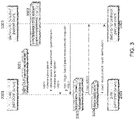
- FIG. 3 shows one example embodiment of the method, which can be referenced as a "trigger-based power measurement procedure," (or “on-demand power measurement procedure") in which the SMO/O-RU controller requests the O-RU to execute spectrum measurements (power measurements) by sending a measurement request message for each time a measurement is needed from the O-RU.
- NETCONF Network Configuration Protocol
- a remote procedure call is initiated to create a power-measurement-report stream (as shown by the process arrow 1), and the SMO/O-RU controller 1003 sends a trigger-based (on-demand) power measurement request to the O-RU 2001 (as shown by the RPC process arrow 2 and block 3003).
- the O-RU 2001 initiates an RPC for a reply (as shown by the process arrow 3) and sends a power measurement report (as shown by the block 3004 and the process arrow 4) to the SMO/O-RU controller 1003.
- the SMO/O-RU controller 1003 can include the following:
- the SMO/O-RU controller 1003 can include at least one of the following fields in the trigger-based (on-demand) power measurement request message.
- the power measurement request message is sent by the SMO/O-RU controller for each time a measurement is needed from the O-RU, but the SMO/O-RU controller shall include only the measurement duration per 10 MHz channel, e.g., in units of microsecond, milliseconds, seconds, or in number of OFDM symbols or number of slots.
- the measurement shall include the entire CBRS band from 3.55 GHz to 3.7 GHz, and the measurement bandwidth shall be set to the default value of 10 MHz, as an example.
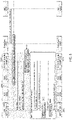
- FIG. 4 illustrates an example embodiment of the method, which can be referenced as a "periodic power measurement procedure," in which the power measurement request message is sent by the SMO/O-RU controller 1003 only once (or sent only if parameters update is needed) to the O-RU 2001, and the O-RU 2001 performs the measurements periodically and reports the measurements results periodically via measurement notifications.
- NETCONF Network Configuration Protocol
- a remote procedure call is initiated to create a power-measurement-report stream (as shown by the process arrow 1), and the SMO/O-RU controller 1003 sends a periodic power measurements request to the O-RU 2001 (as shown by the RPC process arrow 2).
- the O-RU 2001 starts a measurement-reporting notification timer (as shown by block 4003) having a specified notification interval, and the O-RU 2001 initiates an RPC for a reply (as shown by the process arrow 3).
- the O-RU 2001 performs a power measurement reporting loop, in which the O-RU 2001 sends, upon expiration of each notification interval specified by the measurement-reporting notification timer (as shown at block 4003), a power measurement report (as shown by the process arrow 4).
- the SMO/O-RU controller 1003 can include the following:
- the SMO/O-RU controller 1003 can include at least one of the following fields in the periodic power measurement request message.
- any of the parameters indicated above in either the trigger-based (on-demand) or the periodic measurement requests are assumed by default to be at the O-RU and the SMO/O-RU controller and no additional signaling is needed.
- the O-RU shall always average measurements across antennas and across measurements occasions (in case of periodic measurement request).
- the indicator to average or combine signals/measurements across antennas and/or measurement occasions can be configured per measurement channel or per measurement parameter. Consequently, the reported signals/measurements by the O-RU should follow the configurations by the SMO/O-RU controller.
- the power measurement request message is sent by the SMO/O-RU controller only once to the O-RU.
- the O-RU performs the measurement periodically for the entire CBRS band and for each 10 MHz channel, for example, and reports the measurements results periodically via measurement notifications.
- the SMO/O-RU controller can include the following:
- the O-RU executes and reports measurements results to the SMO/O-RU controller in a measurement response message either after receiving the measurement request message or periodically if the relevant parameter is included in the measurement request message.
- the measurement response message can include the following parameters:
- the SMO/O-RU controller can configure a measurement periodicity that is equal to the reporting periodicity, and the O-RU reports the measurement results once after each measurement.
- the SMO/O-RU controller can configure a measurement periodicity that is less than the reporting periodicity. In this case, the O-RU averages the measurement results per channel across different measurements occasions since the previous measurement report, and the O-RU reports the averaged measurement results to the SMO/O-RU controller.
- O-RAN section type 0 can be used to silence the O-RU operation over a specific channel in order to do measurements for this specific channel.
- the SMO/O-RU controller may configure the O-RU to report the received signal power in units of 5 MHz or 10 MHz, or the raw received signal samples, or do local processing and report the parameters shown above such as channel usability, PCI, RSRP, RSRQ, etc.
- FIGS. 5 , 6 and 7 show different parts of the overall call flow for an example CBRS operation in an O-RAN-based architecture.
- FIG. 5 shows the call flow for CBRS O-RU boot-up
- FIG. 6 shows the call flow for SMO/O-RU interfacing with DP and SAS
- FIG. 7 shows the call flow for CBRS O-RU configuration and activation of cells associated with O-RU.
- the overall call flow for the method according to the present disclosure includes the following:
- the SMO/O-RU controller 1003 manages and maintains, e.g., the following attributes that are used during the CBSD registration procedure with the SAS: userId; installationParam; groupingParam; and Call-sign.
- the SMO/O-RU controller 1003 can send a message to the O-RU 2001 to deactivate the carrier(s) before sending a relinquishment request message from the SMO/O-RU controller 1003 to the SAS 1001.
- new functional characteristics of a DP is defined in the O-RAN architecture to communicates with the SAS on behalf of multiple CBSDs. While the north-bound interface of the DP, i.e., DP to SAS, is as defined in the WInnForum, the south-bound interface of the DP, i.e., DP to SMO/O-RU controller, is to be defined as follows: the south-bound interface of the DP needs to carry all the parameters needed for the north-bound interface of the DP. One function of the DP is to aggregate these parameters (all the parameters needed for the north-bound interface of the DP) from multiple CBSDs and send them in the correct format to the SAS. In addition, the DP shall forward the received messages from the SAS to the SMO/O-RU controller after executing appropriate formatting (i.e., removing headers, assemble O-RAN messages, etc.).
- appropriate formatting i.e., removing headers, assemble O-RAN messages, etc.
- the YANG module for an example CBRS operation in an O-RAN-based architecture can be described as follows. This is merely one example, and several other embodiments can be used as per the description of the current invention. Furthermore, units shown below (e.g., int16, uint32, etc.) are merely examples which don't preclude other embodiments.
- CBRS band The 3550-3700 MHz citizens Broadband Radio Service band.
- CBSD Registration The procedure by which a CBSD indicates to a SAS its intention to operate. Successful registration implies a validation by the SAS that the CBSD has been FCC certified and confers on the CBSD the right to be authorized by the SAS to operate in accordance with a Grant. During the registration process, each CBSD provides a fixed location, unique identifiers (e.g., owner information, device information), Group membership, and radio-related capabilities. A successful registration procedure concludes with the SAS providing a unique identifier for that CBSD.
- CBSD User The registered entity that has operational responsibility for the CBSD.
- Channel the contiguous frequency range between lower and upper frequency limits.
- CBSD Citizens Broadband Radio Service Device
- CBSDs Fixed Stations, or networks of such stations, that operate on a Priority Access or General Authorized Access basis in the Citizens Broadband Radio Service consistent with FCC regulations.
- CBSDs which comprise multiple nodes or networks of nodes, CBSD requirements apply to each node even if network management and communication with the SAS is accomplished via a single network interface.
- CCG Common Channel Group
- a set of CBSDs represented by the largest set of vertices of a graph created at the SAS or CxM, in which any two vertices of the set are connected to each other through at least one path in the graph.
- CxG Coexistence Group
- CxM Coexistence Manager
- Control Plane refers specifically to real-time control between O-DU and O-RU, and should not be confused with the UE's control plane.
- Domain Proxy An entity engaging in communications with the SAS on behalf of multiple individual CBSDs or networks of CBSDs.
- the Domain Proxy can also provide a translational capability to interface legacy radio equipment in the 3650-3700 MHz band with a SAS to ensure compliance with FCC Part 96 rules.
- Grant The authorization provided by a SAS to a CBSD, subject to a Heartbeat exchange, to transmit using specified operating parameters. Grants are identified by a unique Grant identifier. Once issued, a Grant's operating parameters are never changed; if new or modified operating parameters are required, then a new Grant must be obtained. The Grant's operating parameters are maximum EIRP and Channel. A Grant can be in different states as will be explained in this FRS.
- Group A collection of CBSDs which are provided a special, common form of management by the SAS. The nature of the special management is dependent on Group type.
- ICG Interference Coordination Group
- LLS Lower Layer Split: logical interface between O-DU and O-RU when using a lower layer (intra-PHY based) functional split.
- M-Plane Management Plane: refers to non-real-time management operations between the O-DU and the O-RU
- O-CU O-RAN Control Unit - a logical node hosting PDCP, RRC, SDAP and other control functions
- O-DU O-RAN Distributed Unit: a logical node hosting RLC/MAC/High-PHY layers based on a lower layer functional split.
- O-RU O-RAN Radio Unit: a logical node hosting Low-PHY layer and RF processing based on a lower layer functional split. This is similar to 3GPP's "TRP" or "RRH” but more specific in including the Low-PHY layer (Fast Fourier Transform (FFT) /inverse Fast Fourier Transform (iFFT), Physical Random Access Channel (PRACH) extraction).
- FFT Fast Fourier Transform
- iFFT inverse Fast Fourier Transform
- PRACH Physical Random Access Channel
- PAL reserved channel A 10 MHz channel in the range of 3550-3650 that a SAS may establish for exclusive use of a set of one or more CBSDs that are registered as belonging to a PPA based upon acquired PAL rights.
- SAS Spectrum Access System
- Synchronization Plane refers to traffic between the O-RU or O-DU to a synchronization controller which is generally an IEEE 1588 Grand Master (however, Grand Master functionality may be embedded in the O-DU).
- U-Plane refers to IQ sample data transferred between O-DU and O-RU.
- UpLink data flow away from the radiating antenna (generally on the LLS interface).
Landscapes
- Engineering & Computer Science (AREA)
- Computer Networks & Wireless Communication (AREA)
- Signal Processing (AREA)
- Mobile Radio Communication Systems (AREA)
Applications Claiming Priority (3)
| Application Number | Priority Date | Filing Date | Title |
|---|---|---|---|
| US202163178226P | 2021-04-22 | 2021-04-22 | |
| US202163186463P | 2021-05-10 | 2021-05-10 | |
| US17/723,563 US12574747B2 (en) | 2021-04-22 | 2022-04-19 | Systems for enabling communications over shared spectrum using O-RAN fronthaul interface in radio access networks |
Publications (2)
| Publication Number | Publication Date |
|---|---|
| EP4090065A2 true EP4090065A2 (de) | 2022-11-16 |
| EP4090065A3 EP4090065A3 (de) | 2023-02-01 |
Family
ID=81648467
Family Applications (1)
| Application Number | Title | Priority Date | Filing Date |
|---|---|---|---|
| EP22169259.3A Withdrawn EP4090065A3 (de) | 2021-04-22 | 2022-04-21 | Systeme und verfahren zum ermöglichen von kommunikation über gemeinsam genutztes spektrum mit o-ran fronthaul-schnittstelle in funkzugangsnetzen |
Country Status (2)
| Country | Link |
|---|---|
| US (1) | US12574747B2 (de) |
| EP (1) | EP4090065A3 (de) |
Families Citing this family (16)
| Publication number | Priority date | Publication date | Assignee | Title |
|---|---|---|---|---|
| CN115915410A (zh) * | 2021-09-30 | 2023-04-04 | 北京三星通信技术研究有限公司 | 用于开放式无线接入网o-ran的通信方法及设备 |
| WO2023080604A1 (en) * | 2021-11-02 | 2023-05-11 | Samsung Electronics Co., Ltd. | Method and system for oran-cbrs interworking in wireless network |
| EP4458063A1 (de) * | 2021-12-28 | 2024-11-06 | Telefonaktiebolaget LM Ericsson (publ) | Verfahren und anordnungen zur unterstützung von energieeinsparung durch einen funkknoten |
| US12156051B2 (en) | 2022-02-28 | 2024-11-26 | Dish Wireless L.L.C. | Managing user experiences during cellular telecommunication network outage utilizing a backup data center |
| US12532303B2 (en) * | 2022-03-28 | 2026-01-20 | Dish Wireless L.L.C. | Systems and methods for virtualized domain proxy control |
| US20240223445A1 (en) * | 2022-07-08 | 2024-07-04 | Rakuten Mobile, Inc. | Method and system for configuring netconf server by netconf controller |
| US20240064614A1 (en) * | 2022-08-17 | 2024-02-22 | Microsoft Technology Licensing, Llc | Enterprise mobile network radio unit |
| WO2024112342A1 (en) * | 2022-11-25 | 2024-05-30 | Altiostar Networks India Private Limited | Supporting multiple radio units on a single distributed unit |
| JP2025542236A (ja) * | 2022-12-28 | 2025-12-25 | 楽天モバイル株式会社 | 通信ネットワークにおける動的アンテナアレイ再構成の実装 |
| US12501517B2 (en) * | 2022-12-29 | 2025-12-16 | Rakuten Symphony, Inc. | Enabling communication in NGDU of O-RAN |
| WO2024167291A1 (ko) * | 2023-02-06 | 2024-08-15 | 주식회사 쏠리드랩스 | 통신 시스템에서 통신 노드의 성능을 확인하기 위한 방법 및 그 장치 |
| US12520173B2 (en) * | 2023-03-22 | 2026-01-06 | Rakuten Symphony, Inc. | Triggering network redundancy based on loopback messaging |
| WO2024247197A1 (ja) * | 2023-05-31 | 2024-12-05 | 富士通株式会社 | 通信装置、無線装置、制御装置、無線通信システム、及び制御方法 |
| AU2023458126A1 (en) * | 2023-06-27 | 2026-01-15 | Rakuten Symphony, Inc. | Determining authentication status information of an o-ran radio unit |
| WO2025133249A1 (en) * | 2023-12-22 | 2025-06-26 | Telefonaktiebolaget Lm Ericsson (Publ) | First network node, second network node and methods performed thereby, for handling capability information |
| WO2025264896A1 (en) * | 2024-06-19 | 2025-12-26 | Mavenir Us Inc. | Dynamic single frequency group for cbsds |
Family Cites Families (5)
| Publication number | Priority date | Publication date | Assignee | Title |
|---|---|---|---|---|
| US11032717B2 (en) | 2017-10-03 | 2021-06-08 | Samsung Electronics Co., Ltd. | Method and apparatus for improving coexistence performance by measurements in wireless communication systems |
| US11432284B2 (en) * | 2018-05-22 | 2022-08-30 | Charter Communications Operating, Llc | Methods and apparatus for intra-cell and inter-frequency mobility optimization and mitigation of session disruption in a quasi-licensed wireless system |
| WO2020191096A1 (en) | 2019-03-20 | 2020-09-24 | Commscope Technologies Llc | Cloud radio access network implementing a citizens broadband radio service system |
| US11197181B2 (en) | 2019-12-20 | 2021-12-07 | Cisco Technology, Inc. | Citizen broadband radio service (CBRS) network performance while taking into account privacy preferences |
| CN113498076B (zh) * | 2020-03-20 | 2026-01-13 | 北京三星通信技术研究有限公司 | 基于o-ran的性能优化配置方法与设备 |
-
2022
- 2022-04-19 US US17/723,563 patent/US12574747B2/en active Active
- 2022-04-21 EP EP22169259.3A patent/EP4090065A3/de not_active Withdrawn
Also Published As
| Publication number | Publication date |
|---|---|
| US12574747B2 (en) | 2026-03-10 |
| US20220345896A1 (en) | 2022-10-27 |
| EP4090065A3 (de) | 2023-02-01 |
Similar Documents
| Publication | Publication Date | Title |
|---|---|---|
| US12574747B2 (en) | Systems for enabling communications over shared spectrum using O-RAN fronthaul interface in radio access networks | |
| CN114556848A (zh) | 与ul prs发送属性相关的详细警告和错误报告 | |
| CN114982285B (zh) | 用于访问边缘服务器的优先化移动性的系统和方法 | |
| CN114144991A (zh) | 具有混合参数集的载波聚集模式中的连通模式非连续接收(cdrx) | |
| CN119605213A (zh) | 网络实体之间的移动性分析交换 | |
| WO2023212910A1 (en) | Lp-wus for backscatter communications | |
| CN116602023A (zh) | 基于历史已完成prach规程来确定初始prach前置码发射功率 | |
| EP4388702A1 (de) | Weiche kollision zwischen prs und anderen kanälen in rrc-inaktivem und -leerlaufmodus | |
| WO2025034496A1 (en) | Performing initial clustering in cell-free networks | |
| WO2025034493A1 (en) | Systems and methods for clustering in cell-free networks | |
| US20250351112A1 (en) | Signaling for sidelink positioning | |
| JP2025528660A (ja) | 低メモリデバイスのためのアップリンクrrcシグナリングを改善する技法 | |
| EP4523469A1 (de) | Priorisierung von synchronisationssignalen für bandinterne nr-lte-koexistenz | |
| CN116746217A (zh) | 终端及通信方法 | |
| KR20240019127A (ko) | 비-3gpp 액세스를 위한 사용자 장비 로케이션의 향상 | |
| EP4561230A1 (de) | Kommunikationsverfahren und -vorrichtung | |
| US20250227801A1 (en) | Improved positioning configuration management in rrc inactive state | |
| WO2021151256A1 (en) | Radio access technology downgrading | |
| WO2025155423A1 (en) | Measurement gap | |
| EP4631282A1 (de) | Pdu-transfer bei einer übergabe zwischen amf ohne schnittstelle zwischen amf | |
| WO2026035654A1 (en) | Supporting ul-wus configuration | |
| TW202608111A (zh) | 支援ul—wus組態 | |
| WO2023172354A1 (en) | Storage of multiple positioning capability sets and activation/deactivation triggering options | |
| WO2024196472A1 (en) | Network slice/service type for positioning and sensing | |
| EP4602752A1 (de) | Gemeinsame scell- und pcell-aktivierungs-/deaktivierungssignalisierung in der l1/l2-interzellmobilität |
Legal Events
| Date | Code | Title | Description |
|---|---|---|---|
| PUAI | Public reference made under article 153(3) epc to a published international application that has entered the european phase |
Free format text: ORIGINAL CODE: 0009012 |
|
| STAA | Information on the status of an ep patent application or granted ep patent |
Free format text: STATUS: THE APPLICATION HAS BEEN PUBLISHED |
|
| AK | Designated contracting states |
Kind code of ref document: A2 Designated state(s): AL AT BE BG CH CY CZ DE DK EE ES FI FR GB GR HR HU IE IS IT LI LT LU LV MC MK MT NL NO PL PT RO RS SE SI SK SM TR |
|
| PUAL | Search report despatched |
Free format text: ORIGINAL CODE: 0009013 |
|
| AK | Designated contracting states |
Kind code of ref document: A3 Designated state(s): AL AT BE BG CH CY CZ DE DK EE ES FI FR GB GR HR HU IE IS IT LI LT LU LV MC MK MT NL NO PL PT RO RS SE SI SK SM TR |
|
| RIC1 | Information provided on ipc code assigned before grant |
Ipc: H04W 84/04 20090101ALN20221223BHEP Ipc: H04L 41/085 20220101ALI20221223BHEP Ipc: H04W 16/14 20090101ALI20221223BHEP Ipc: H04W 88/08 20090101ALI20221223BHEP Ipc: H04W 24/02 20090101AFI20221223BHEP |
|
| P01 | Opt-out of the competence of the unified patent court (upc) registered |
Effective date: 20230601 |
|
| STAA | Information on the status of an ep patent application or granted ep patent |
Free format text: STATUS: REQUEST FOR EXAMINATION WAS MADE |
|
| 17P | Request for examination filed |
Effective date: 20230719 |
|
| RBV | Designated contracting states (corrected) |
Designated state(s): AL AT BE BG CH CY CZ DE DK EE ES FI FR GB GR HR HU IE IS IT LI LT LU LV MC MK MT NL NO PL PT RO RS SE SI SK SM TR |
|
| GRAP | Despatch of communication of intention to grant a patent |
Free format text: ORIGINAL CODE: EPIDOSNIGR1 |
|
| STAA | Information on the status of an ep patent application or granted ep patent |
Free format text: STATUS: GRANT OF PATENT IS INTENDED |
|
| RIC1 | Information provided on ipc code assigned before grant |
Ipc: H04W 92/14 20090101ALN20250131BHEP Ipc: H04W 92/12 20090101ALN20250131BHEP Ipc: H04W 84/04 20090101ALN20250131BHEP Ipc: H04L 41/085 20220101ALI20250131BHEP Ipc: H04W 16/14 20090101ALI20250131BHEP Ipc: H04W 88/08 20090101ALI20250131BHEP Ipc: H04W 24/02 20090101AFI20250131BHEP |
|
| INTG | Intention to grant announced |
Effective date: 20250221 |
|
| STAA | Information on the status of an ep patent application or granted ep patent |
Free format text: STATUS: THE APPLICATION HAS BEEN WITHDRAWN |
|
| 18W | Application withdrawn |
Effective date: 20250618 |