EP4089768A1 - Secondary battery comprising organic polymer electrode additive capable of redox reaction - Google Patents
Secondary battery comprising organic polymer electrode additive capable of redox reaction Download PDFInfo
- Publication number
- EP4089768A1 EP4089768A1 EP21920101.9A EP21920101A EP4089768A1 EP 4089768 A1 EP4089768 A1 EP 4089768A1 EP 21920101 A EP21920101 A EP 21920101A EP 4089768 A1 EP4089768 A1 EP 4089768A1
- Authority
- EP
- European Patent Office
- Prior art keywords
- electrode
- secondary battery
- weight
- active material
- organic polymer
- Prior art date
- Legal status (The legal status is an assumption and is not a legal conclusion. Google has not performed a legal analysis and makes no representation as to the accuracy of the status listed.)
- Pending
Links
- 239000000654 additive Substances 0.000 title claims abstract description 70
- 230000000996 additive effect Effects 0.000 title claims abstract description 70
- 238000006479 redox reaction Methods 0.000 title claims abstract description 10
- 229920000620 organic polymer Polymers 0.000 title claims description 29
- 239000011230 binding agent Substances 0.000 claims abstract description 28
- 229910052759 nickel Inorganic materials 0.000 claims abstract description 15
- 239000002904 solvent Substances 0.000 claims abstract description 9
- -1 nitroxide radical Chemical class 0.000 claims description 60
- 239000007772 electrode material Substances 0.000 claims description 39
- OKTJSMMVPCPJKN-UHFFFAOYSA-N Carbon Chemical compound [C] OKTJSMMVPCPJKN-UHFFFAOYSA-N 0.000 claims description 34
- 239000004020 conductor Substances 0.000 claims description 29
- 229910052799 carbon Inorganic materials 0.000 claims description 22
- 150000003254 radicals Chemical class 0.000 claims description 15
- 150000001875 compounds Chemical class 0.000 claims description 12
- 229910052744 lithium Inorganic materials 0.000 claims description 12
- 239000000203 mixture Substances 0.000 claims description 12
- 229910052742 iron Inorganic materials 0.000 claims description 8
- 229910052748 manganese Inorganic materials 0.000 claims description 8
- 229910052751 metal Inorganic materials 0.000 claims description 6
- 239000002184 metal Substances 0.000 claims description 6
- XAGFODPZIPBFFR-UHFFFAOYSA-N aluminium Chemical compound [Al] XAGFODPZIPBFFR-UHFFFAOYSA-N 0.000 claims description 4
- 150000002641 lithium Chemical group 0.000 claims description 4
- 239000010450 olivine Substances 0.000 claims description 4
- 229910052609 olivine Inorganic materials 0.000 claims description 4
- 229910052708 sodium Inorganic materials 0.000 claims description 4
- 125000004436 sodium atom Chemical group 0.000 claims description 4
- 229910052596 spinel Inorganic materials 0.000 claims description 4
- 239000011029 spinel Substances 0.000 claims description 4
- 239000011701 zinc Substances 0.000 claims description 4
- KEAYESYHFKHZAL-UHFFFAOYSA-N Sodium Chemical compound [Na] KEAYESYHFKHZAL-UHFFFAOYSA-N 0.000 claims description 3
- NINIDFKCEFEMDL-UHFFFAOYSA-N Sulfur Chemical compound [S] NINIDFKCEFEMDL-UHFFFAOYSA-N 0.000 claims description 3
- HCHKCACWOHOZIP-UHFFFAOYSA-N Zinc Chemical compound [Zn] HCHKCACWOHOZIP-UHFFFAOYSA-N 0.000 claims description 3
- 229910052717 sulfur Inorganic materials 0.000 claims description 3
- 239000011593 sulfur Substances 0.000 claims description 3
- 229910052725 zinc Inorganic materials 0.000 claims description 3
- 229910019421 CoxAly Inorganic materials 0.000 claims description 2
- 229910013191 LiMO2 Inorganic materials 0.000 claims description 2
- 229910014330 LiNi1-x-yCoxAlyO2 Inorganic materials 0.000 claims description 2
- 229910014360 LiNi1−x−yCoxAlyO2 Inorganic materials 0.000 claims description 2
- 229910013421 LiNixCoyMn1-x-yO2 Inorganic materials 0.000 claims description 2
- 229910013427 LiNixCoyMn1−x−yO2 Inorganic materials 0.000 claims description 2
- 229910018893 NaMPO4 Inorganic materials 0.000 claims description 2
- 125000004430 oxygen atom Chemical group O* 0.000 claims 1
- ISWSIDIOOBJBQZ-UHFFFAOYSA-M phenolate Chemical compound [O-]C1=CC=CC=C1 ISWSIDIOOBJBQZ-UHFFFAOYSA-M 0.000 claims 1
- 229920000642 polymer Polymers 0.000 abstract description 33
- PXHVJJICTQNCMI-UHFFFAOYSA-N Nickel Chemical compound [Ni] PXHVJJICTQNCMI-UHFFFAOYSA-N 0.000 abstract description 18
- 238000007599 discharging Methods 0.000 abstract description 11
- 238000003487 electrochemical reaction Methods 0.000 abstract description 6
- 230000003993 interaction Effects 0.000 abstract description 4
- 230000000052 comparative effect Effects 0.000 description 39
- 239000000126 substance Substances 0.000 description 24
- 229920001577 copolymer Polymers 0.000 description 22
- 239000002033 PVDF binder Substances 0.000 description 12
- 229910021385 hard carbon Inorganic materials 0.000 description 12
- 229920002981 polyvinylidene fluoride Polymers 0.000 description 12
- 101000738322 Homo sapiens Prothymosin alpha Proteins 0.000 description 8
- 102100037925 Prothymosin alpha Human genes 0.000 description 8
- OKKRPWIIYQTPQF-UHFFFAOYSA-N Trimethylolpropane trimethacrylate Chemical compound CC(=C)C(=O)OCC(CC)(COC(=O)C(C)=C)COC(=O)C(C)=C OKKRPWIIYQTPQF-UHFFFAOYSA-N 0.000 description 8
- 238000006243 chemical reaction Methods 0.000 description 7
- 229910002099 LiNi0.5Mn1.5O4 Inorganic materials 0.000 description 6
- 229910011322 LiNi0.6Mn0.2Co0.2O2 Inorganic materials 0.000 description 6
- 229910002097 Lithium manganese(III,IV) oxide Inorganic materials 0.000 description 6
- 229910002804 graphite Inorganic materials 0.000 description 6
- 239000010439 graphite Substances 0.000 description 6
- SECXISVLQFMRJM-UHFFFAOYSA-N N-Methylpyrrolidone Chemical compound CN1CCCC1=O SECXISVLQFMRJM-UHFFFAOYSA-N 0.000 description 4
- XEEYBQQBJWHFJM-UHFFFAOYSA-N iron Substances [Fe] XEEYBQQBJWHFJM-UHFFFAOYSA-N 0.000 description 4
- 239000011572 manganese Substances 0.000 description 4
- CSCPPACGZOOCGX-UHFFFAOYSA-N Acetone Chemical compound CC(C)=O CSCPPACGZOOCGX-UHFFFAOYSA-N 0.000 description 3
- XTHFKEDIFFGKHM-UHFFFAOYSA-N Dimethoxyethane Chemical compound COCCOC XTHFKEDIFFGKHM-UHFFFAOYSA-N 0.000 description 3
- LFQSCWFLJHTTHZ-UHFFFAOYSA-N Ethanol Chemical compound CCO LFQSCWFLJHTTHZ-UHFFFAOYSA-N 0.000 description 3
- OKKJLVBELUTLKV-UHFFFAOYSA-N Methanol Chemical compound OC OKKJLVBELUTLKV-UHFFFAOYSA-N 0.000 description 3
- 239000002134 carbon nanofiber Substances 0.000 description 3
- 229910021393 carbon nanotube Inorganic materials 0.000 description 3
- 239000002041 carbon nanotube Substances 0.000 description 3
- 238000012423 maintenance Methods 0.000 description 3
- 239000007773 negative electrode material Substances 0.000 description 3
- 239000002861 polymer material Substances 0.000 description 3
- 229910000314 transition metal oxide Inorganic materials 0.000 description 3
- VAYTZRYEBVHVLE-UHFFFAOYSA-N 1,3-dioxol-2-one Chemical compound O=C1OC=CO1 VAYTZRYEBVHVLE-UHFFFAOYSA-N 0.000 description 2
- HEDRZPFGACZZDS-UHFFFAOYSA-N Chloroform Chemical compound ClC(Cl)Cl HEDRZPFGACZZDS-UHFFFAOYSA-N 0.000 description 2
- OIFBSDVPJOWBCH-UHFFFAOYSA-N Diethyl carbonate Chemical compound CCOC(=O)OCC OIFBSDVPJOWBCH-UHFFFAOYSA-N 0.000 description 2
- UQSXHKLRYXJYBZ-UHFFFAOYSA-N Iron oxide Chemical compound [Fe]=O UQSXHKLRYXJYBZ-UHFFFAOYSA-N 0.000 description 2
- 229910004183 Li(NiCoAl)O2 Inorganic materials 0.000 description 2
- 229910004235 Li(NiCoMn)O2 Inorganic materials 0.000 description 2
- 229910032387 LiCoO2 Inorganic materials 0.000 description 2
- 229910052493 LiFePO4 Inorganic materials 0.000 description 2
- HBBGRARXTFLTSG-UHFFFAOYSA-N Lithium ion Chemical compound [Li+] HBBGRARXTFLTSG-UHFFFAOYSA-N 0.000 description 2
- FXHOOIRPVKKKFG-UHFFFAOYSA-N N,N-Dimethylacetamide Chemical compound CN(C)C(C)=O FXHOOIRPVKKKFG-UHFFFAOYSA-N 0.000 description 2
- LRHPLDYGYMQRHN-UHFFFAOYSA-N N-Butanol Chemical compound CCCCO LRHPLDYGYMQRHN-UHFFFAOYSA-N 0.000 description 2
- 239000004698 Polyethylene Substances 0.000 description 2
- 239000002202 Polyethylene glycol Substances 0.000 description 2
- 229920002873 Polyethylenimine Polymers 0.000 description 2
- 239000004642 Polyimide Substances 0.000 description 2
- 239000004743 Polypropylene Substances 0.000 description 2
- KFDQGLPGKXUTMZ-UHFFFAOYSA-N [Mn].[Co].[Ni] Chemical compound [Mn].[Co].[Ni] KFDQGLPGKXUTMZ-UHFFFAOYSA-N 0.000 description 2
- 229920001940 conductive polymer Polymers 0.000 description 2
- 230000003247 decreasing effect Effects 0.000 description 2
- IEJIGPNLZYLLBP-UHFFFAOYSA-N dimethyl carbonate Chemical compound COC(=O)OC IEJIGPNLZYLLBP-UHFFFAOYSA-N 0.000 description 2
- 238000005516 engineering process Methods 0.000 description 2
- 229910021389 graphene Inorganic materials 0.000 description 2
- ZSIAUFGUXNUGDI-UHFFFAOYSA-N hexan-1-ol Chemical compound CCCCCCO ZSIAUFGUXNUGDI-UHFFFAOYSA-N 0.000 description 2
- 229910000625 lithium cobalt oxide Inorganic materials 0.000 description 2
- 229910001416 lithium ion Inorganic materials 0.000 description 2
- GELKBWJHTRAYNV-UHFFFAOYSA-K lithium iron phosphate Chemical compound [Li+].[Fe+2].[O-]P([O-])([O-])=O GELKBWJHTRAYNV-UHFFFAOYSA-K 0.000 description 2
- 229910002102 lithium manganese oxide Inorganic materials 0.000 description 2
- BFZPBUKRYWOWDV-UHFFFAOYSA-N lithium;oxido(oxo)cobalt Chemical compound [Li+].[O-][Co]=O BFZPBUKRYWOWDV-UHFFFAOYSA-N 0.000 description 2
- VLXXBCXTUVRROQ-UHFFFAOYSA-N lithium;oxido-oxo-(oxomanganiooxy)manganese Chemical compound [Li+].[O-][Mn](=O)O[Mn]=O VLXXBCXTUVRROQ-UHFFFAOYSA-N 0.000 description 2
- 238000004519 manufacturing process Methods 0.000 description 2
- 229920003208 poly(ethylene sulfide) Polymers 0.000 description 2
- 229920003229 poly(methyl methacrylate) Polymers 0.000 description 2
- 229920000573 polyethylene Polymers 0.000 description 2
- 229920001223 polyethylene glycol Polymers 0.000 description 2
- 229920001721 polyimide Polymers 0.000 description 2
- 239000004926 polymethyl methacrylate Substances 0.000 description 2
- 229920001155 polypropylene Polymers 0.000 description 2
- 229920001451 polypropylene glycol Polymers 0.000 description 2
- 239000011118 polyvinyl acetate Substances 0.000 description 2
- 229920002689 polyvinyl acetate Polymers 0.000 description 2
- 229920000036 polyvinylpyrrolidone Polymers 0.000 description 2
- 239000001267 polyvinylpyrrolidone Substances 0.000 description 2
- 235000013855 polyvinylpyrrolidone Nutrition 0.000 description 2
- 239000007774 positive electrode material Substances 0.000 description 2
- RUOJZAUFBMNUDX-UHFFFAOYSA-N propylene carbonate Chemical compound CC1COC(=O)O1 RUOJZAUFBMNUDX-UHFFFAOYSA-N 0.000 description 2
- 230000009467 reduction Effects 0.000 description 2
- 238000006722 reduction reaction Methods 0.000 description 2
- 229910021484 silicon-nickel alloy Inorganic materials 0.000 description 2
- BQCIDUSAKPWEOX-UHFFFAOYSA-N 1,1-Difluoroethene Chemical compound FC(F)=C BQCIDUSAKPWEOX-UHFFFAOYSA-N 0.000 description 1
- NOWKCMXCCJGMRR-UHFFFAOYSA-N Aziridine Chemical compound C1CN1 NOWKCMXCCJGMRR-UHFFFAOYSA-N 0.000 description 1
- 229920002134 Carboxymethyl cellulose Polymers 0.000 description 1
- RYGMFSIKBFXOCR-UHFFFAOYSA-N Copper Chemical compound [Cu] RYGMFSIKBFXOCR-UHFFFAOYSA-N 0.000 description 1
- IAZDPXIOMUYVGZ-UHFFFAOYSA-N Dimethylsulphoxide Chemical compound CS(C)=O IAZDPXIOMUYVGZ-UHFFFAOYSA-N 0.000 description 1
- 229910001216 Li2S Inorganic materials 0.000 description 1
- WHXSMMKQMYFTQS-UHFFFAOYSA-N Lithium Chemical compound [Li] WHXSMMKQMYFTQS-UHFFFAOYSA-N 0.000 description 1
- ZMXDDKWLCZADIW-UHFFFAOYSA-N N,N-Dimethylformamide Chemical compound CN(C)C=O ZMXDDKWLCZADIW-UHFFFAOYSA-N 0.000 description 1
- RPDUDBYMNGAHEM-UHFFFAOYSA-N PROXYL Chemical group CC1(C)CCC(C)(C)N1[O] RPDUDBYMNGAHEM-UHFFFAOYSA-N 0.000 description 1
- VYPSYNLAJGMNEJ-UHFFFAOYSA-N Silicium dioxide Chemical compound O=[Si]=O VYPSYNLAJGMNEJ-UHFFFAOYSA-N 0.000 description 1
- FKNQFGJONOIPTF-UHFFFAOYSA-N Sodium cation Chemical compound [Na+] FKNQFGJONOIPTF-UHFFFAOYSA-N 0.000 description 1
- WYURNTSHIVDZCO-UHFFFAOYSA-N Tetrahydrofuran Chemical compound C1CCOC1 WYURNTSHIVDZCO-UHFFFAOYSA-N 0.000 description 1
- 239000006230 acetylene black Substances 0.000 description 1
- 229910052782 aluminium Inorganic materials 0.000 description 1
- 229910003481 amorphous carbon Inorganic materials 0.000 description 1
- 229910021383 artificial graphite Inorganic materials 0.000 description 1
- 239000006229 carbon black Substances 0.000 description 1
- 230000008859 change Effects 0.000 description 1
- 239000011248 coating agent Substances 0.000 description 1
- 238000000576 coating method Methods 0.000 description 1
- IVMYJDGYRUAWML-UHFFFAOYSA-N cobalt(II) oxide Inorganic materials [Co]=O IVMYJDGYRUAWML-UHFFFAOYSA-N 0.000 description 1
- UBEWDCMIDFGDOO-UHFFFAOYSA-N cobalt(II,III) oxide Inorganic materials [O-2].[O-2].[O-2].[O-2].[Co+2].[Co+3].[Co+3] UBEWDCMIDFGDOO-UHFFFAOYSA-N 0.000 description 1
- 229910052802 copper Inorganic materials 0.000 description 1
- 239000010949 copper Substances 0.000 description 1
- 230000006866 deterioration Effects 0.000 description 1
- KPUWHANPEXNPJT-UHFFFAOYSA-N disiloxane Chemical class [SiH3]O[SiH3] KPUWHANPEXNPJT-UHFFFAOYSA-N 0.000 description 1
- 239000012153 distilled water Substances 0.000 description 1
- 230000000694 effects Effects 0.000 description 1
- 239000003792 electrolyte Substances 0.000 description 1
- 238000011156 evaluation Methods 0.000 description 1
- 238000004880 explosion Methods 0.000 description 1
- 229910010272 inorganic material Inorganic materials 0.000 description 1
- 239000011147 inorganic material Substances 0.000 description 1
- 150000002500 ions Chemical class 0.000 description 1
- FRMOHNDAXZZWQI-UHFFFAOYSA-N lithium manganese(2+) nickel(2+) oxygen(2-) Chemical compound [O-2].[Mn+2].[Ni+2].[Li+] FRMOHNDAXZZWQI-UHFFFAOYSA-N 0.000 description 1
- 229910052960 marcasite Inorganic materials 0.000 description 1
- 239000000463 material Substances 0.000 description 1
- VNWKTOKETHGBQD-UHFFFAOYSA-N methane Chemical compound C VNWKTOKETHGBQD-UHFFFAOYSA-N 0.000 description 1
- 229910052982 molybdenum disulfide Inorganic materials 0.000 description 1
- 229910021382 natural graphite Inorganic materials 0.000 description 1
- GNRSAWUEBMWBQH-UHFFFAOYSA-N nickel(II) oxide Inorganic materials [Ni]=O GNRSAWUEBMWBQH-UHFFFAOYSA-N 0.000 description 1
- 150000002825 nitriles Chemical class 0.000 description 1
- 229920000768 polyamine Polymers 0.000 description 1
- 229920000728 polyester Polymers 0.000 description 1
- 229920001021 polysulfide Polymers 0.000 description 1
- 239000005077 polysulfide Substances 0.000 description 1
- 150000008117 polysulfides Polymers 0.000 description 1
- 239000004814 polyurethane Substances 0.000 description 1
- 229920000915 polyvinyl chloride Polymers 0.000 description 1
- 239000004800 polyvinyl chloride Substances 0.000 description 1
- NIFIFKQPDTWWGU-UHFFFAOYSA-N pyrite Chemical compound [Fe+2].[S-][S-] NIFIFKQPDTWWGU-UHFFFAOYSA-N 0.000 description 1
- 229910052683 pyrite Inorganic materials 0.000 description 1
- 230000009257 reactivity Effects 0.000 description 1
- 229910052814 silicon oxide Inorganic materials 0.000 description 1
- 239000011734 sodium Substances 0.000 description 1
- 229910001415 sodium ion Inorganic materials 0.000 description 1
- BAZAXWOYCMUHIX-UHFFFAOYSA-M sodium perchlorate Chemical class [Na+].[O-]Cl(=O)(=O)=O BAZAXWOYCMUHIX-UHFFFAOYSA-M 0.000 description 1
- PVGBHEUCHKGFQP-UHFFFAOYSA-N sodium;n-[5-amino-2-(4-aminophenyl)sulfonylphenyl]sulfonylacetamide Chemical compound [Na+].CC(=O)NS(=O)(=O)C1=CC(N)=CC=C1S(=O)(=O)C1=CC=C(N)C=C1 PVGBHEUCHKGFQP-UHFFFAOYSA-N 0.000 description 1
- 229910021384 soft carbon Inorganic materials 0.000 description 1
- 229920003048 styrene butadiene rubber Polymers 0.000 description 1
- XLYOFNOQVPJJNP-UHFFFAOYSA-N water Chemical compound O XLYOFNOQVPJJNP-UHFFFAOYSA-N 0.000 description 1
Images




Classifications
-
- H—ELECTRICITY
- H01—ELECTRIC ELEMENTS
- H01M—PROCESSES OR MEANS, e.g. BATTERIES, FOR THE DIRECT CONVERSION OF CHEMICAL ENERGY INTO ELECTRICAL ENERGY
- H01M4/00—Electrodes
- H01M4/02—Electrodes composed of, or comprising, active material
- H01M4/13—Electrodes for accumulators with non-aqueous electrolyte, e.g. for lithium-accumulators; Processes of manufacture thereof
- H01M4/131—Electrodes based on mixed oxides or hydroxides, or on mixtures of oxides or hydroxides, e.g. LiCoOx
-
- H—ELECTRICITY
- H01—ELECTRIC ELEMENTS
- H01M—PROCESSES OR MEANS, e.g. BATTERIES, FOR THE DIRECT CONVERSION OF CHEMICAL ENERGY INTO ELECTRICAL ENERGY
- H01M10/00—Secondary cells; Manufacture thereof
- H01M10/05—Accumulators with non-aqueous electrolyte
- H01M10/052—Li-accumulators
-
- H—ELECTRICITY
- H01—ELECTRIC ELEMENTS
- H01M—PROCESSES OR MEANS, e.g. BATTERIES, FOR THE DIRECT CONVERSION OF CHEMICAL ENERGY INTO ELECTRICAL ENERGY
- H01M4/00—Electrodes
- H01M4/02—Electrodes composed of, or comprising, active material
- H01M4/36—Selection of substances as active materials, active masses, active liquids
- H01M4/48—Selection of substances as active materials, active masses, active liquids of inorganic oxides or hydroxides
- H01M4/50—Selection of substances as active materials, active masses, active liquids of inorganic oxides or hydroxides of manganese
- H01M4/505—Selection of substances as active materials, active masses, active liquids of inorganic oxides or hydroxides of manganese of mixed oxides or hydroxides containing manganese for inserting or intercalating light metals, e.g. LiMn2O4 or LiMn2OxFy
-
- H—ELECTRICITY
- H01—ELECTRIC ELEMENTS
- H01M—PROCESSES OR MEANS, e.g. BATTERIES, FOR THE DIRECT CONVERSION OF CHEMICAL ENERGY INTO ELECTRICAL ENERGY
- H01M4/00—Electrodes
- H01M4/02—Electrodes composed of, or comprising, active material
- H01M4/36—Selection of substances as active materials, active masses, active liquids
- H01M4/48—Selection of substances as active materials, active masses, active liquids of inorganic oxides or hydroxides
- H01M4/52—Selection of substances as active materials, active masses, active liquids of inorganic oxides or hydroxides of nickel, cobalt or iron
- H01M4/525—Selection of substances as active materials, active masses, active liquids of inorganic oxides or hydroxides of nickel, cobalt or iron of mixed oxides or hydroxides containing iron, cobalt or nickel for inserting or intercalating light metals, e.g. LiNiO2, LiCoO2 or LiCoOxFy
-
- H—ELECTRICITY
- H01—ELECTRIC ELEMENTS
- H01M—PROCESSES OR MEANS, e.g. BATTERIES, FOR THE DIRECT CONVERSION OF CHEMICAL ENERGY INTO ELECTRICAL ENERGY
- H01M4/00—Electrodes
- H01M4/02—Electrodes composed of, or comprising, active material
- H01M4/36—Selection of substances as active materials, active masses, active liquids
- H01M4/60—Selection of substances as active materials, active masses, active liquids of organic compounds
- H01M4/602—Polymers
-
- H—ELECTRICITY
- H01—ELECTRIC ELEMENTS
- H01M—PROCESSES OR MEANS, e.g. BATTERIES, FOR THE DIRECT CONVERSION OF CHEMICAL ENERGY INTO ELECTRICAL ENERGY
- H01M4/00—Electrodes
- H01M4/02—Electrodes composed of, or comprising, active material
- H01M2004/026—Electrodes composed of, or comprising, active material characterised by the polarity
- H01M2004/028—Positive electrodes
-
- Y—GENERAL TAGGING OF NEW TECHNOLOGICAL DEVELOPMENTS; GENERAL TAGGING OF CROSS-SECTIONAL TECHNOLOGIES SPANNING OVER SEVERAL SECTIONS OF THE IPC; TECHNICAL SUBJECTS COVERED BY FORMER USPC CROSS-REFERENCE ART COLLECTIONS [XRACs] AND DIGESTS
- Y02—TECHNOLOGIES OR APPLICATIONS FOR MITIGATION OR ADAPTATION AGAINST CLIMATE CHANGE
- Y02E—REDUCTION OF GREENHOUSE GAS [GHG] EMISSIONS, RELATED TO ENERGY GENERATION, TRANSMISSION OR DISTRIBUTION
- Y02E60/00—Enabling technologies; Technologies with a potential or indirect contribution to GHG emissions mitigation
- Y02E60/10—Energy storage using batteries
Definitions
- the present invention relates to a technology for manufacturing an electrode by adding an organic polymer electrode additive containing free radicals to an existing inorganic material-based electrode.
- the use of the electrode of the present invention can improve the electrochemical properties of a secondary battery.
- the organic polymer electrode additive of the present invention has free radicals.
- the organic polymer electrode additive of the present invention can increase the electrochemical reaction rate of a secondary battery because it undergoes an oxidation-reduction reaction through ionic interaction.
- the organic polymer electrode additive of the present invention can serve as a binder because it increases viscosity by dissolving in a solvent used for manufacturing an electrode.
- the organic polymer electrode additive of the present invention can be used for the positive electrode and the negative electrode.
- the organic polymer electrode additive used for the positive electrode undergoes an oxidation-reduction reaction at 3V ⁇ 4V.
- the organic polymer electrode additive used for the negative electrode undergoes an oxidation-reduction reaction at 0V ⁇ 2V.
- the organic polymer electrode additive of the present invention participates in an electrochemical reaction to store or release electrons, it can store ions such as sodium ion and lithium ion. Therefore, the organic polymer electrode additive of the present invention can increase the practical capacity of the secondary battery.
- the organic polymer electrode additive of the present invention has a stable structure. When the organic polymer electrode additive of the present invention is coated on an electrode active material, the stability of the electrode can be improved, thereby improving the cycle life characteristics of a secondary battery.
- a conventional secondary battery electrode is made of an inorganic electrode material that undergoes an oxidation-reduction reaction, a conductive material for transferring electrons, and a binder that binds the inorganic electrode material and the conductive material. Of these, only inorganic electrode material participates in the electrochemical reaction. Alternatively, an inorganic electrode material having low electrical conductivity is coated with a conductive polymer to improve electrical conductivity, and then an electrode is made together with a conductive material and a binder. Carbon black, carbon nanotubes (CNT), etc. were used as the conductive material.
- CNT carbon nanotubes
- Inorganic-based lithium mixed electrode materials have a low charge transfer rate and thus have poor fast charging or discharging characteristics.
- Positive electrode active materials include LCO (lithium cobalt oxide, LiCoO 2 ), NCM (nickel cobalt manganese, Li(NiCoMn)O 2 ), NCA(nickel cobalt aluminum, Li(NiCoAl)O 2 ), LMO(lithium manganese oxide, LiMn 2 O 4 ), LFP(Lithium iron phosphate, LiFePO 4 ), etc.
- LCO lithium cobalt oxide, LiCoO 2
- NCM nickel cobalt manganese, Li(NiCoMn)O 2 ), NCA(nickel cobalt aluminum, Li(NiCoAl)O 2 ), LMO(lithium manganese oxide, LiMn 2 O 4 ), LFP(Lithium iron phosphate, LiFePO 4 ), etc.
- High nickel technology is attracting attention because if nickel is used a lot,
- carbon transition metal oxide, nickel metal, silicon-nickel alloy, and the like may be used.
- carbon natural graphite, artificial graphite, soft carbon, hard carbon, etc. can be used.
- transition metal oxide Co 3 O 4 , CoO, FeO, NiO, and the like can be used.
- the present invention adds a polymer additive containing free radicals in the molecular structure to the electrode to solve the problems of the existing secondary battery.
- the polymer additive contains free radicals and undergoes an oxidation-reduction reaction through ionic interactions.
- this polymer additive is included in the electrode, the fast charging and fast discharging characteristics are improved, and the stability of the electrode is improved.
- the stability of the electrode is improved, the cycle life characteristics of the electrode are improved.
- the polymer additive participates in the electrochemical reaction, it increases the practical capacity of nickel. When dissolved in a solvent, the polymer additive can increase the viscosity and act as a binder.
- the present invention increases the practical capacity of a secondary battery by including a polymer material containing free radicals in the electrode.
- the present invention improves the fast charging and fast discharging characteristics of a secondary battery by including a polymer material containing free radicals in the electrode.
- the present invention improves the cycle life characteristics of a secondary battery by including a polymer material containing free radicals in the electrode.
- Representative materials that have free radicals in the molecular structure of the polymer and can undergo an electrochemical oxidation-reduction reaction through ionic interactions include polymers with nitroxide radicals, polymers with sulfonyloxy radicals, polymers with phenoxyl radicals, and the like.
- the polymers with nitroxide radicals include a substance containing a tempo group of chemical formula 1, a substance containing a proxyl group of chemical formula 2, a substance containing a 1,1,3,3-tetramethyl-isoindoline-2-yloxyl group of chemical formula 3, and a substance containing N-tert-butyl-N-oxylamino phenyl group of chemical formula 4.
- polymers with nitroxide radicals include PTMA of chemical formula 5, poly(2,2,6,6-tetramethylpiperidinyloxy-4-ylmethacrylate, PTVE of chemical formula 6, poly(2,2,6,6-tetramethylpiperidine-4-yl-1-oxyl vinyl ether, PTNB of chemical formula 7, poly[2,3-bis(2,2,6,6-tetramethylpiperidine-N-oxycarbonyl)-norbornene. (n is 5 to 1000) (n is 5 to 1000) (n is 5 to 1000) (n is 5 to 1000)
- polymers with sulfonyloxy radicals include PSS of chemical formula 8, poly(4-styrenesulfonate). (n is 5 to 1000)
- polymers with phenoxyl radicals include a substance containing a phenoxyl group of chemical formula 9, a substance containing a tetrametyhylphenoxyl group of chemical formula 10.
- the polymers with phenoxyl radicals may have 5 to 1000 repeat units.
- the polymers with nitroxide radicals and the polymers with phenoxyl radicals may be used for both a positive electrode and a negative electrode.
- the polymers with sulfonyloxy radicals may be used for a negative electrode.
- the nitroxide radicals lose electrons during charging and become oxoammonium cations, and the oxoammonium cations acquire electrons during discharging and become the nitroxide radicals according to the reaction shown in chemical formula 11 below.
- the nitroxide radicals acquire electrons during charging and become aminoxyl anions, and the aminoxyl anions lose electrons during discharging and become the nitroxide radicals according to the reaction shown in chemical formula 12 below.
- the phenoxyl radicals lose electrons during charging and become phenoxyl cations, and the phenoxyl cations acquire electrons during discharging and become the phenoxyl radicals according to the reaction shown in chemical formula 13 below.
- the phenoxyl radicals acquire electrons during charging and become phenoxyl anions, and the phenoxyl anions lose electrons during discharging and become the phenoxyl radicals according to the reaction shown in chemical formula 14 below.
- the sulfonyloxy radicals acquire electrons during charging and become sulfonyloxy anions, and the sulfonyloxy anions lose electrons during discharging and become the sulfonyloxy radicals according to the reaction shown in chemical formula 15 below.
- reaction as in chemical formula 16 occurs in the positive electrode and the reaction as in chemical formula 17 occurs in the negative electrode.
- a conventional positive electrode and negative electrode may be used as the positive electrode and negative electrode to which the polymer additive containing free radicals of the present invention is added.
- a positive electrode may be made by mixing a positive electrode active material, a conductive material, and a binder and applying the mixture to an aluminum electrode plate.
- a negative electrode may be made by mixing a negative electrode active material, a conductive material, and a binder and applying the mixture to a copper electrode plate.
- the electrode active material may be LCO (lithium cobalt oxide, LiCoO 2 ), NCM (nickel cobalt manganese, Li(NiCoMn)O 2 ), NCA (nickel cobalt aluminum, Li(NiCoAl)O 2 ), LMO (lithium manganese oxide, LiMn 2 O 4 ), LFP (lithium iron phosphate, LiFePO 4 ), and the like.
- the electrode active material may be an oxide containing a lithium atom, a sulfur mixture, an oxide containing a sodium atom, a carbon type electrode active material, a lithium metal type electrode active material, a sodium metal type electrode active material, an aluminum metal type electrode active material, a zinc metal type electrode active material, a carbon containing air, and a mixture thereof.
- the sulfur mixture may be S, FeS 2 , Li 2 S, MOS 2 , CuS 2 , and the like.
- the carbon type electrode active material may be graphite, hard carbon, carbon nanotubes, graphene, and the like.
- the lithium metal type electrode active material may be Li, and the like.
- the sodium metal type electrode active material may be Na, and the like.
- the aluminum metal type electrode active material may be Al, and the like.
- the zinc metal type electrode active material may be Zn, and the like.
- the carbon containing air may be Air-C, CO 2 -C, and the like.
- the negative electrode active material may be carbon, transition metal oxide, silicon oxide, nickel metal, silicon-nickel alloy, and the like.
- the conductive material may be carbon black, acetylene black, graphite type conductive material, amorphous carbon type conductive material, crystalline carbon type conductive material, carbon nanofiber type conductive material, vapor grown carbon fiber (VGCF), graphene type conductive material, conductive polymer type conductive material, and a combination thereof.
- the binder may be polyvinylidene fluoride (PVdF) type or its copolymer, poly[(vinylidene fluoride co-trifluoroethylene] type or its copolymer, polyethylene glycol (PEO) type or its copolymer, polyacrylic nitrile (PAN) type or its copolymer, poly(methyl methacrylate) (PMMA) type or its copolymer, polyvinyl chloride type or its copolymer, polyvinylpyrrolidone (PVP) type or its copolymer, polyimide (PI) type or its copolymer, polyethylene (PE) type or its copolymer, polyurethane (PU) type or its copolymer, polypropylene (PP) type or its copolymer, poly(propylene oxide) (PPO) type or its copolymer, Poly(ethylene imine) (PEI) type or its copolymer, poly(ethylene sulfide) (PES) type or
- the electrode active material, the conductive material, and the binder may be mixed using a solvent.
- the solvent may be DMF (dimethylformamide), NMP (N-methyl-2-pyrrolidone), DMAc (N,N-dimethylacetamide), acetone, ethanol, methanol, butanol, distilled water, PC (propylene carbonate), DMC (dimethyl carbonate), VC (vinylene carbonate), DME (1,2-dimethoxyethane), THF (tetrahydrofuran), hexanol, chloroform, DMSO (dimethyl sulfoxide), DEC (diethyl carbonate), a derivative thereof, and a combination thereof.
- DMF dimethylformamide
- NMP N-methyl-2-pyrrolidone
- DMAc N,N-dimethylacetamide
- acetone ethanol
- methanol methanol
- butanol distilled water
- PC propylene carbonate
- DMC
- the organic polymer electrode additive of the present invention may be used in an amount of 45% by weight to 0.5% by weight based on 45% by weight to 99% by weight of the electrode active material, and the conductive material and the binder may be used for the remainder. A small amount of the binder may or may not be added.
- the organic polymer electrode additive of the present invention may be more preferably used in an amount of 19.5% by weight to 2% by weight based on 80% by weight to 95% by weight of the electrode active material, and the conductive material and the binder may be used for the remainder. A small amount of the binder may or may not be added.
- the organic polymer electrode additive of the present invention may function as a binder by increasing the viscosity when dissolved in a solvent.
- the organic polymer electrode additive of the present invention may have a viscosity ranging from 3 cP to 50 cP when dissolved in a solvent. It may be more preferable that the organic polymer electrode additive of the present invention has a viscosity in the range of 5 cP to 30 cP when dissolved in a solvent.
- the structure of the electrode according to the present invention is shown in FIG. 1 .
- the mixture is applied to an electrode plate to form an electrode.
- a secondary battery in which the additive of the present invention was included in the electrode was configured as an example, and a secondary battery in which the additive of the present invention was not included in the electrode was configured as a comparative example.
- the positive electrode of Example 1 was composed of 85% by weight of LiMn 2 O 4 as LMO electrode material, 5% by weight of PTMA, 3% by weight of PVdF binder, and 7% by weight of SUPER-P TM carbon conductive material manufactured by TIMCAL.
- the positive electrode of Comparative Example 1 was composed of 85% by weight of LiMn 2 O 4 , 8% by weight of PVdF binder, and 7% by weight of SUPER-P TM carbon conductive material manufactured by TIMCAL. In both Example 1 and Comparative Example 1, lithium metal was used as a negative electrode.
- the secondary batteries of Example 1 and Comparative Example 1 were subjected to a charge-discharge test at a current density of 0.5C and a current density of 1C. The results are shown in FIG. 2 and FIG. 3 .
- the secondary battery using the PTMA organic polymer electrode additive exhibited higher capacity and higher C-rate characteristics than the secondary battery without the PTMA additive.
- the secondary battery of Example 1 to which PTMA was added maintained a high capacity of 140 mAh/g or more even at a high rate of 1C, but the secondary battery of Comparative Example 1 to which PTMA was not added exhibited a low capacity of 105 mAh/g.
- the positive electrode of Example 2 was composed of 88% by weight of LiNi 0.6 Mn 0.2 Co 0.2 O 2 as NCM electrode material, 3% by weight of PTVE, 2% by weight of PVdF binder, and 7% by weight of SUPER-P TM carbon conductive material manufactured by TIMCAL.
- the positive electrode of Comparative Example 2 was composed of 88% by weight of LiNi 0.6 Mn 0.2 Co 0.2 O 2 , 5% by weight of PVdF binder, and 7% by weight of SUPER-P TM carbon conductive material manufactured by TIMCAL. In both Example 2 and Comparative Example 2, lithium metal was used as a negative electrode.
- the secondary batteries of Example 2 and Comparative Example 2 were subjected to a charge-discharge test at a current density of 0.5C. With the secondary batteries of Example 2 and Comparative Example 2, the discharge capacity was measured up to 100 cycles at a current density of 0.5C. The results are shown in FIG. 4 and FIG. 5 .
- the NCM secondary battery of Example 2 with PTVE added showed a capacity of 180 mAh/g at a current density of 0.5C, and the NCM secondary battery of Comparative Example 2 without PTVE had a low capacity of 160 mAh/g (see Fig. 4 ). It can be seen from the cycle life graph of FIG. 5 of the secondary battery that the NCM secondary battery of Example 2 to which PTVE was added has a superior capacity maintenance to that of the NCM secondary battery of Comparative Example 2 to which PTVE was not added up to 100 cycles.
- the positive electrode of Example 3 was composed of 80% by weight of LiNi 0.5 Mn 1.5 O 4 as LNMO(lithium nickel manganese oxide) electrode material, 5% by weight of PTNB, 5% by weight of PVdF binder, and 10% by weight of SUPER-P TM carbon conductive material manufactured by TIMCAL.
- the positive electrode of Comparative Example 3 was composed of 80% by weight of LiNi 0.5 Mn 1.5 O 4 , 10% by weight of PVdF binder, and 10% by weight of SUPER-P TM carbon conductive material manufactured by TIMCAL. In both Example 3 and Comparative Example 3, lithium metal was used as a negative electrode.
- the secondary batteries of Example 3 and Comparative Example 3 were subjected to a charge-discharge test at a current density of 0.5C. With the secondary batteries of Example 3 and Comparative Example 3, the discharge capacity was measured up to 100 cycles at a current density of 0.5C. The results are shown in FIG. 6 and FIG. 7 .
- the LMNO secondary battery of Example 3 to which PTNB was added showed a capacity of 127 mAh/g at a current density of 0.5C, but the LMNO secondary battery of Comparative Example 3 to which PTNB was not added showed a low capacity of 119mAh/g (see FIG. 6 ).
- the LMNO secondary battery of Example 3 to which PTNB was added exhibited a higher cycle life characteristics and a higher capacity maintenance than the LMNO secondary battery of Comparative Example 3 to which PTNB was not added in the evaluation of cycle life characteristics up to 100 cycles (see FIG. 7 ).
- the negative electrode of Example 4 was composed of 46% by weight of hard carbon as a carbon type electrode material, 46% by weight of PSS, 4% by weight of PVdF binder, and 4% by weight of SUPER-P TM carbon conductive material manufactured by TIMCAL.
- the negative electrode of Comparative Example 4 was composed of 92% by weight of hard carbon, 4% by weight of PVdF binder, and 4% by weight of SUPER-P TM carbon conductive material manufactured by TIMCAL.
- sodium metal was used as the reference electrode of the half cell. Charge-discharge tests were performed at current densities of 0.2C, 0.5C, and 1C with the secondary batteries of Example 4 and Comparative Example 4 (see FIG. 8 and FIG. 10 ).
- FIG. 9 and FIG. 11 are charge-discharge graphs of the secondary battery of Comparative Example 4 to which PSS was not added and the secondary battery of Example 4 to which PSS was added.
- FIG. 9 and FIG. 11 are C-rate characteristic graphs showing the capacity change according to the discharge current density of the secondary battery of Comparative Example 4 to which PSS was not added and the secondary battery of Example 4 to which PSS was added.
- the secondary battery of Example 4 to which PSS was added exhibited higher capacity than the secondary battery of Comparative Example 4 to which PSS was not added at a current densities of all 0.2C, 0.5C, and 1C.
- the secondary battery of Comparative Example 4 to which PSS was not added showed a capacity of 350 mAh/g at a current density of 0.2C, and as the current density increased to 10C, the capacity rapidly decreased to less than 100 mAh/g.
- FIG. 9 the capacity of 350 mAh/g at a current density of 0.2C, and as the current density increased to 10C, the capacity rapidly decreased to less than 100 mAh/g.
- the secondary battery to which PSS was added showed a high capacity of 500 mAh/g at a current density of 0.2C, and a high capacity of 300 mAh/g even at a high discharge current density of 10C. From this, it can be seen that the fast charging and fast discharging characteristics are improved when the additive of the present invention is added.
- the secondary battery of Example 4 to which PSS was added and the secondary battery of Comparative Example 4 to PSS was not added were charged and discharged at 0.5C for up to 100 cycles, and each discharge capacity was measured (see FIG. 12 ).
- the secondary battery of Example 4 to which PSS was added had a capacity of 452 mAh/g in 1 cycle, and the capacity was 451 mAh/g even after 100 cycles, so the capacity reduction was only 0.2%.
- the secondary battery of Comparative Example 4 to which PSS was not added had a capacity of 254 mAh/g in 1 cycle, and the capacity was 217 mAh/g after 100 cycles, so the capacity reduction was 15%. From this, it can be seen that the addition of the additive of the present invention improves the capacity maintenance, that is, the cycle life characteristics of a secondary battery.
- the negative electrode of Example 5 was composed of 80% by weight of hard carbon as a carbon type electrode material, 5% by weight of PTVE, 5% by weight of PVdF binder, and 10% by weight of SUPER-P TM carbon conductive material manufactured by TIMCAL.
- the negative electrode of Comparative Example 5 was composed of 80% by weight of hard carbon, 10% by weight of PVdF binder, and 10% by weight of SUPER-P TM carbon conductive material manufactured by TIMCAL. In both Example 5 and Comparative Example 5, lithium metal was used as the reference electrode of the half cell. Charge-discharge tests were performed at current densities of 0.2C and 2C with the secondary batteries of Example 5 and Comparative Example 5 (see FIG. 13 and FIG. 14 ).
- the secondary battery of Comparative Example 5 using the graphite negative electrode to which PTVE was not added showed a discharge capacity of 303 mAh/g at 0.2C, but at a high current density of 2C, the discharge capacity rapidly decreased to 120 mAh/g (see FIG. 13 ).
- the secondary battery of Example 5 using the graphite negative electrode to which PTVE was added showed a high discharge capacity of 324 mAh/g at 0.2C, and maintained a high discharge capacity of 222 mAh/g even at a high current density of 2C (see Fig. 14 ).
- the organic polymer additive containing free radicals of the present invention when added to the positive or negative electrode, the electrochemical properties of the secondary battery are improved.
- the reason for this is that the polymer additive has free radicals and can transfer charges quickly.
- this is because the stability of the electrode active material is improved by coating a part of the electrode active material with the stable polymer additive.
- the polymer additive of the present invention can accept or release electrons, it participates in the electrochemical reaction of the secondary battery and increases the capacity of the secondary battery.
Landscapes
- Chemical & Material Sciences (AREA)
- Chemical Kinetics & Catalysis (AREA)
- Electrochemistry (AREA)
- General Chemical & Material Sciences (AREA)
- Inorganic Chemistry (AREA)
- Engineering & Computer Science (AREA)
- Manufacturing & Machinery (AREA)
- Materials Engineering (AREA)
- Battery Electrode And Active Subsutance (AREA)
Abstract
Description
- The present invention relates to a technology for manufacturing an electrode by adding an organic polymer electrode additive containing free radicals to an existing inorganic material-based electrode. The use of the electrode of the present invention can improve the electrochemical properties of a secondary battery. The organic polymer electrode additive of the present invention has free radicals. The organic polymer electrode additive of the present invention can increase the electrochemical reaction rate of a secondary battery because it undergoes an oxidation-reduction reaction through ionic interaction. The organic polymer electrode additive of the present invention can serve as a binder because it increases viscosity by dissolving in a solvent used for manufacturing an electrode. The organic polymer electrode additive of the present invention can be used for the positive electrode and the negative electrode. The organic polymer electrode additive used for the positive electrode undergoes an oxidation-reduction reaction at 3V~4V. The organic polymer electrode additive used for the negative electrode undergoes an oxidation-reduction reaction at 0V~2V. Because the organic polymer electrode additive of the present invention participates in an electrochemical reaction to store or release electrons, it can store ions such as sodium ion and lithium ion. Therefore, the organic polymer electrode additive of the present invention can increase the practical capacity of the secondary battery. The organic polymer electrode additive of the present invention has a stable structure. When the organic polymer electrode additive of the present invention is coated on an electrode active material, the stability of the electrode can be improved, thereby improving the cycle life characteristics of a secondary battery.
- A conventional secondary battery electrode is made of an inorganic electrode material that undergoes an oxidation-reduction reaction, a conductive material for transferring electrons, and a binder that binds the inorganic electrode material and the conductive material. Of these, only inorganic electrode material participates in the electrochemical reaction. Alternatively, an inorganic electrode material having low electrical conductivity is coated with a conductive polymer to improve electrical conductivity, and then an electrode is made together with a conductive material and a binder. Carbon black, carbon nanotubes (CNT), etc. were used as the conductive material.
- Inorganic-based lithium mixed electrode materials have a low charge transfer rate and thus have poor fast charging or discharging characteristics. Positive electrode active materials include LCO (lithium cobalt oxide, LiCoO2), NCM (nickel cobalt manganese, Li(NiCoMn)O2), NCA(nickel cobalt aluminum, Li(NiCoAl)O2), LMO(lithium manganese oxide, LiMn2O4), LFP(Lithium iron phosphate, LiFePO4), etc. High nickel technology is attracting attention because if nickel is used a lot, the capacity of lithium ions can be increased. However, as the content of nickel increases, the reactivity increases, resulting in a risk of explosion of the battery and deterioration in cycle life characteristics. As the negative active material, carbon, transition metal oxide, nickel metal, silicon-nickel alloy, and the like may be used. As the carbon, natural graphite, artificial graphite, soft carbon, hard carbon, etc. can be used. As the transition metal oxide, Co3O4, CoO, FeO, NiO, and the like can be used.
- The present invention adds a polymer additive containing free radicals in the molecular structure to the electrode to solve the problems of the existing secondary battery. The polymer additive contains free radicals and undergoes an oxidation-reduction reaction through ionic interactions. When this polymer additive is included in the electrode, the fast charging and fast discharging characteristics are improved, and the stability of the electrode is improved. When the stability of the electrode is improved, the cycle life characteristics of the electrode are improved. Because the polymer additive participates in the electrochemical reaction, it increases the practical capacity of nickel. When dissolved in a solvent, the polymer additive can increase the viscosity and act as a binder.
- The present invention increases the practical capacity of a secondary battery by including a polymer material containing free radicals in the electrode.
- The present invention improves the fast charging and fast discharging characteristics of a secondary battery by including a polymer material containing free radicals in the electrode.
- The present invention improves the cycle life characteristics of a secondary battery by including a polymer material containing free radicals in the electrode.
-
-
FIG. 1 is a figure showing the structure of an electrode containing the organic polymer additive containing free radicals of the present invention. -
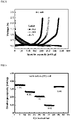
FIG. 2 is a charge-discharge graph of a secondary battery made using a LiMn2O4 positive electrode without adding PTMA additive at current densities of 0.5C and 1C. -
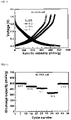
FIG. 3 is a charge-discharge graph of a secondary battery made using a LiMn2O4 positive electrode with PTMA additive added at current densities of 0.5C and 1C. -
FIG. 4 is a charge-discharge graph of a secondary battery made using a LiNi0.6Mn0.2Co0.2O2 positive electrode with PTVE additive added and a secondary battery made using a LiNi0.6Mn0.2Co0.2O2 positive electrode without PTVE additive added at a current density of 0.5C. -
FIG. 5 is a cycle life characteristic graph of a secondary battery made using a LiNi0.6Mn0.2Co0.2O2 positive electrode with PTVE additive added and a secondary battery made using a LiNi0.6Mn0.2Co0.2O2 positive electrode without PTVE additive added at a current density of 0.5C. -
FIG. 6 is a charge-discharge graph of a secondary battery made using a LiNi0.5Mn1.5O4 positive electrode with PTNB additive added and a secondary battery made using a LiNi0.5Mn1.5O4 positive electrode without PTNB additive added at a current density of 0.5C. -
FIG. 7 is a cycle life characteristic graph of a secondary battery made using a LiNi0.5Mn1.5O4 positive electrode with PTNB additive added and a secondary battery made using a LiNi0.5Mn1.5O4 positive electrode without PTNB additive added at a current density of 0.5C. -
FIG. 8 is a charge-discharge graph according to the current density of a half secondary battery made using a hard carbon negative electrode without adding PSS additive. -
FIG. 9 is a C-rate characteristic graph according to the current density of a half secondary battery made using a hard carbon negative electrode without adding PSS additive. -
FIG. 10 is a charge-discharge graph according to the current density of a half secondary battery made using a hard carbon negative electrode with adding PSS additive. -
FIG. 11 is a C-rate characteristic graph according to the current density of a half secondary battery made using a hard carbon negative electrode with adding PSS additive. -
FIG. 12 is a cycle life characteristic graph of a half secondary battery made using a hard carbon negative electrode with PSS additive added and a half secondary battery made using a hard carbon negative electrode without PSS additive added at a current density of 0.5C. -
FIG. 13 is a charge-discharge graph according to the current density of a secondary battery made using a graphite negative electrode without PTVE additive added. -
FIG. 14 is a charge-discharge graph according to the current density of a secondary battery made using a graphite negative electrode with PTVE additive added. - An embodiment of the present invention will be described in more detail. The embodiments mentioned in this specification are presented only as examples. The present invention is not limited by the embodiments. The present invention is only defined by the claims which will be described later.
- Representative materials that have free radicals in the molecular structure of the polymer and can undergo an electrochemical oxidation-reduction reaction through ionic interactions include polymers with nitroxide radicals, polymers with sulfonyloxy radicals, polymers with phenoxyl radicals, and the like.
- The polymers with nitroxide radicals include a substance containing a tempo group of
chemical formula 1, a substance containing a proxyl group of chemical formula 2, a substance containing a 1,1,3,3-tetramethyl-isoindoline-2-yloxyl group of chemical formula 3, and a substance containing N-tert-butyl-N-oxylamino phenyl group of chemical formula 4.


- Specific examples of the polymers with nitroxide radicals include PTMA of
chemical formula 5, poly(2,2,6,6-tetramethylpiperidinyloxy-4-ylmethacrylate, PTVE of chemical formula 6, poly(2,2,6,6-tetramethylpiperidine-4-yl-1-oxyl vinyl ether, PTNB of chemical formula 7, poly[2,3-bis(2,2,6,6-tetramethylpiperidine-N-oxycarbonyl)-norbornene.


- Specific examples of the polymers with sulfonyloxy radicals include PSS of chemical formula 8, poly(4-styrenesulfonate).

- Specific examples of the polymers with phenoxyl radicals include a substance containing a phenoxyl group of chemical formula 9, a substance containing a tetrametyhylphenoxyl group of
chemical formula 10. The polymers with phenoxyl radicals may have 5 to 1000 repeat units.

- The polymers with nitroxide radicals and the polymers with phenoxyl radicals may be used for both a positive electrode and a negative electrode. The polymers with sulfonyloxy radicals may be used for a negative electrode.
- When the polymers with nitroxide radicals are used for a positive electrode, the nitroxide radicals lose electrons during charging and become oxoammonium cations, and the oxoammonium cations acquire electrons during discharging and become the nitroxide radicals according to the reaction shown in chemical formula 11 below.

- When the polymers with nitroxide radicals are used for a negative electrode, the nitroxide radicals acquire electrons during charging and become aminoxyl anions, and the aminoxyl anions lose electrons during discharging and become the nitroxide radicals according to the reaction shown in chemical formula 12 below.

- When the polymers with phenoxyl radicals are used for a positive electrode, the phenoxyl radicals lose electrons during charging and become phenoxyl cations, and the phenoxyl cations acquire electrons during discharging and become the phenoxyl radicals according to the reaction shown in chemical formula 13 below.

- When the polymers with phenoxyl radicals are used for the negative electrode, the phenoxyl radicals acquire electrons during charging and become phenoxyl anions, and the phenoxyl anions lose electrons during discharging and become the phenoxyl radicals according to the reaction shown in chemical formula 14 below.

- When the polymers with sulfonyloxy radicals are used for a negative electrode, the sulfonyloxy radicals acquire electrons during charging and become sulfonyloxy anions, and the sulfonyloxy anions lose electrons during discharging and become the sulfonyloxy radicals according to the reaction shown in
chemical formula 15 below.
- For example, if PTVE polymer additive of chemical formula 6 is used as a polymer additive containing free radicals of the present invention, and NaClO4 salt is used as an electrolyte, the reaction as in chemical formula 16 occurs in the positive electrode and the reaction as in chemical formula 17 occurs in the negative electrode.


- As the positive electrode and negative electrode to which the polymer additive containing free radicals of the present invention is added, a conventional positive electrode and negative electrode may be used. For example, a positive electrode may be made by mixing a positive electrode active material, a conductive material, and a binder and applying the mixture to an aluminum electrode plate. A negative electrode may be made by mixing a negative electrode active material, a conductive material, and a binder and applying the mixture to a copper electrode plate.
- The electrode active material may be LCO (lithium cobalt oxide, LiCoO2), NCM (nickel cobalt manganese, Li(NiCoMn)O2), NCA (nickel cobalt aluminum, Li(NiCoAl)O2), LMO (lithium manganese oxide, LiMn2O4), LFP (lithium iron phosphate, LiFePO4), and the like. More specifically, the electrode active material may be an oxide containing a lithium atom, a sulfur mixture, an oxide containing a sodium atom, a carbon type electrode active material, a lithium metal type electrode active material, a sodium metal type electrode active material, an aluminum metal type electrode active material, a zinc metal type electrode active material, a carbon containing air, and a mixture thereof.
- The oxide containing a lithium atom may be LiMO2 (M=Co, Mn, Ni, Fe, etc.), LiNixCoyMn1-x-yO2 (x=>0.5, y=<0.2) (NCM), LiNi1-x-yCoxAlyO2 (x= >0.5, y=<0.2) (NCA), a layered structure compound, a spinel structure compound, an olivine structure compound, and a mixture thereof.
- The oxide containing a sodium atom may be NaMO2 (M= Co, Mn, Ni, Fe, etc.), NaM2O4 (M=Co, Mn, Ni, Fe, etc.), NaMPO4 (M=Co, Mn, Ni, Fe, etc.), NaNixCoyMn1-x-yO2 (x=>0.5, y =<0.2) (NCM), NaNi1-x-yCoxAlyO2 (x=>0.5, y=<0.2) (NCA), a layered structure compound, a spinel structure compound, an olivine structure compound, and a mixture thereof.
- The sulfur mixture may be S, FeS2, Li2S, MOS2, CuS2, and the like.
- The carbon type electrode active material may be graphite, hard carbon, carbon nanotubes, graphene, and the like.
- The lithium metal type electrode active material may be Li, and the like.
- The sodium metal type electrode active material may be Na, and the like.
- The aluminum metal type electrode active material may be Al, and the like.
- The zinc metal type electrode active material may be Zn, and the like.
- The carbon containing air may be Air-C, CO2-C, and the like.
- The negative electrode active material may be carbon, transition metal oxide, silicon oxide, nickel metal, silicon-nickel alloy, and the like.
- The conductive material may be carbon black, acetylene black, graphite type conductive material, amorphous carbon type conductive material, crystalline carbon type conductive material, carbon nanofiber type conductive material, vapor grown carbon fiber (VGCF), graphene type conductive material, conductive polymer type conductive material, and a combination thereof.
- The binder may be polyvinylidene fluoride (PVdF) type or its copolymer, poly[(vinylidene fluoride co-trifluoroethylene] type or its copolymer, polyethylene glycol (PEO) type or its copolymer, polyacrylic nitrile (PAN) type or its copolymer, poly(methyl methacrylate) (PMMA) type or its copolymer, polyvinyl chloride type or its copolymer, polyvinylpyrrolidone (PVP) type or its copolymer, polyimide (PI) type or its copolymer, polyethylene (PE) type or its copolymer, polyurethane (PU) type or its copolymer, polypropylene (PP) type or its copolymer, poly(propylene oxide) (PPO) type or its copolymer, Poly(ethylene imine) (PEI) type or its copolymer, poly(ethylene sulfide) (PES) type or its copolymer, poly(vinyl acetate) (PVAc) type or its copolymer, poly(ethylene succinate) (PESc) type or its copolymer, polyester type or its copolymer, polyamine type or its copolymer, polysulfide type or its copolymer, siloxane type or its copolymer, styrene butadiene rubber (SBR) type or its copolymer, carboxymethylcellulose (CMC) type or its copolymer, a derivative thereof, and a combination thereof.
- The electrode active material, the conductive material, and the binder may be mixed using a solvent. The solvent may be DMF (dimethylformamide), NMP (N-methyl-2-pyrrolidone), DMAc (N,N-dimethylacetamide), acetone, ethanol, methanol, butanol, distilled water, PC (propylene carbonate), DMC (dimethyl carbonate), VC (vinylene carbonate), DME (1,2-dimethoxyethane), THF (tetrahydrofuran), hexanol, chloroform, DMSO (dimethyl sulfoxide), DEC (diethyl carbonate), a derivative thereof, and a combination thereof.
- The organic polymer electrode additive of the present invention may be used in an amount of 45% by weight to 0.5% by weight based on 45% by weight to 99% by weight of the electrode active material, and the conductive material and the binder may be used for the remainder. A small amount of the binder may or may not be added. The organic polymer electrode additive of the present invention may be more preferably used in an amount of 19.5% by weight to 2% by weight based on 80% by weight to 95% by weight of the electrode active material, and the conductive material and the binder may be used for the remainder. A small amount of the binder may or may not be added.
- The organic polymer electrode additive of the present invention may function as a binder by increasing the viscosity when dissolved in a solvent. The organic polymer electrode additive of the present invention may have a viscosity ranging from 3 cP to 50 cP when dissolved in a solvent. It may be more preferable that the organic polymer electrode additive of the present invention has a viscosity in the range of 5 cP to 30 cP when dissolved in a solvent.
- The structure of the electrode according to the present invention is shown in
FIG. 1 . After mixing the organic polymer electrode additive of the present invention together with the electrode active material, the conductive material, and the binder, the mixture is applied to an electrode plate to form an electrode. - A secondary battery in which the additive of the present invention was included in the electrode was configured as an example, and a secondary battery in which the additive of the present invention was not included in the electrode was configured as a comparative example.
- The positive electrode of Example 1 was composed of 85% by weight of LiMn2O4 as LMO electrode material, 5% by weight of PTMA, 3% by weight of PVdF binder, and 7% by weight of SUPER-P™ carbon conductive material manufactured by TIMCAL. The positive electrode of Comparative Example 1 was composed of 85% by weight of LiMn2O4, 8% by weight of PVdF binder, and 7% by weight of SUPER-P™ carbon conductive material manufactured by TIMCAL. In both Example 1 and Comparative Example 1, lithium metal was used as a negative electrode. The secondary batteries of Example 1 and Comparative Example 1 were subjected to a charge-discharge test at a current density of 0.5C and a current density of 1C. The results are shown in
FIG. 2 and FIG. 3 . - As shown in
FIG. 2 and FIG. 3 , the secondary battery using the PTMA organic polymer electrode additive exhibited higher capacity and higher C-rate characteristics than the secondary battery without the PTMA additive. The secondary battery of Example 1 to which PTMA was added maintained a high capacity of 140 mAh/g or more even at a high rate of 1C, but the secondary battery of Comparative Example 1 to which PTMA was not added exhibited a low capacity of 105 mAh/g. - The positive electrode of Example 2 was composed of 88% by weight of LiNi0.6Mn0.2Co0.2O2 as NCM electrode material, 3% by weight of PTVE, 2% by weight of PVdF binder, and 7% by weight of SUPER-P™ carbon conductive material manufactured by TIMCAL. The positive electrode of Comparative Example 2 was composed of 88% by weight of LiNi0.6Mn0.2Co0.2O2, 5% by weight of PVdF binder, and 7% by weight of SUPER-P™ carbon conductive material manufactured by TIMCAL. In both Example 2 and Comparative Example 2, lithium metal was used as a negative electrode. The secondary batteries of Example 2 and Comparative Example 2 were subjected to a charge-discharge test at a current density of 0.5C. With the secondary batteries of Example 2 and Comparative Example 2, the discharge capacity was measured up to 100 cycles at a current density of 0.5C. The results are shown in
FIG. 4 and FIG. 5 . - The NCM secondary battery of Example 2 with PTVE added showed a capacity of 180 mAh/g at a current density of 0.5C, and the NCM secondary battery of Comparative Example 2 without PTVE had a low capacity of 160 mAh/g (see
Fig. 4 ). It can be seen from the cycle life graph ofFIG. 5 of the secondary battery that the NCM secondary battery of Example 2 to which PTVE was added has a superior capacity maintenance to that of the NCM secondary battery of Comparative Example 2 to which PTVE was not added up to 100 cycles. - The positive electrode of Example 3 was composed of 80% by weight of LiNi0.5Mn1.5O4 as LNMO(lithium nickel manganese oxide) electrode material, 5% by weight of PTNB, 5% by weight of PVdF binder, and 10% by weight of SUPER-P™ carbon conductive material manufactured by TIMCAL. The positive electrode of Comparative Example 3 was composed of 80% by weight of LiNi0.5Mn1.5O4, 10% by weight of PVdF binder, and 10% by weight of SUPER-P™ carbon conductive material manufactured by TIMCAL. In both Example 3 and Comparative Example 3, lithium metal was used as a negative electrode. The secondary batteries of Example 3 and Comparative Example 3 were subjected to a charge-discharge test at a current density of 0.5C. With the secondary batteries of Example 3 and Comparative Example 3, the discharge capacity was measured up to 100 cycles at a current density of 0.5C. The results are shown in
FIG. 6 and FIG. 7 . - The LMNO secondary battery of Example 3 to which PTNB was added showed a capacity of 127 mAh/g at a current density of 0.5C, but the LMNO secondary battery of Comparative Example 3 to which PTNB was not added showed a low capacity of 119mAh/g (see
FIG. 6 ). The LMNO secondary battery of Example 3 to which PTNB was added exhibited a higher cycle life characteristics and a higher capacity maintenance than the LMNO secondary battery of Comparative Example 3 to which PTNB was not added in the evaluation of cycle life characteristics up to 100 cycles (seeFIG. 7 ). - The negative electrode of Example 4 was composed of 46% by weight of hard carbon as a carbon type electrode material, 46% by weight of PSS, 4% by weight of PVdF binder, and 4% by weight of SUPER-P™ carbon conductive material manufactured by TIMCAL. The negative electrode of Comparative Example 4 was composed of 92% by weight of hard carbon, 4% by weight of PVdF binder, and 4% by weight of SUPER-P™ carbon conductive material manufactured by TIMCAL. In both Example 4 and Comparative Example 4, sodium metal was used as the reference electrode of the half cell. Charge-discharge tests were performed at current densities of 0.2C, 0.5C, and 1C with the secondary batteries of Example 4 and Comparative Example 4 (see
FIG. 8 andFIG. 10 ). Discharge capacity was measured up to 50 cycles at current densities of 0.2C, 0.5C, 1C, and 10C with the secondary batteries of Example 4 and Comparative Example 4 (seeFIG. 9 andFIG. 11 ).FIG. 8 andFIG. 10 are charge-discharge graphs of the secondary battery of Comparative Example 4 to which PSS was not added and the secondary battery of Example 4 to which PSS was added.FIG. 9 andFIG. 11 are C-rate characteristic graphs showing the capacity change according to the discharge current density of the secondary battery of Comparative Example 4 to which PSS was not added and the secondary battery of Example 4 to which PSS was added. - As shown in
FIG. 8 andFIG. 10 , the secondary battery of Example 4 to which PSS was added exhibited higher capacity than the secondary battery of Comparative Example 4 to which PSS was not added at a current densities of all 0.2C, 0.5C, and 1C. As shown inFIG. 9 , the secondary battery of Comparative Example 4 to which PSS was not added showed a capacity of 350 mAh/g at a current density of 0.2C, and as the current density increased to 10C, the capacity rapidly decreased to less than 100 mAh/g. As shown inFIG. 11 , however, the secondary battery to which PSS was added showed a high capacity of 500 mAh/g at a current density of 0.2C, and a high capacity of 300 mAh/g even at a high discharge current density of 10C. From this, it can be seen that the fast charging and fast discharging characteristics are improved when the additive of the present invention is added. - Referring to
FIG. 9 , since the secondary battery of Comparative Example 4 to which PSS was not added showed a capacity of 209 mAh/g at 1C, it took 1 hour to charge with a capacity of 209 mAh/g. Since it showed a capacity of 99 mAh/g at 10C, it took 6 minutes to charge with a capacity of 99 mAh/g. That is, about half of the 1C capacity was charged over 6 minutes. On the other hand, since the secondary battery of Example 4 to which PSS was added showed a capacity of 405 mAh/g at 1C, it took 1 hour to charge with a capacity of 405 mAh/g. Since it showed a capacity of 300 mAh/g at 10C, it took 6 minutes to charge with a capacity of 300 mAh/g. That is, about 3/4 of the 1C capacity was charged over 6 minutes. From this, it can be seen that the secondary battery can be rapidly charged by adding the additive of the present invention. - As shown in
FIG. 9 , when the current density of the secondary battery of Comparative Example 4 to which PSS was not added was lowered to 0.2C again after 10C, the capacity was 329 mAh/g, which was lower than the capacity at the first 0.2C. As shown inFIG. 11 , however, when the current density of the secondary battery to which PSS was added was lowered to 0.2C again after 10C, the capacity was 491 mAh/g, which was little different from the capacity at the first 0.2C. From this, it can be seen that when the additive of the present invention is added, the characteristics of the secondary battery are maintained even when fast charging and fast discharging is performed. - The secondary battery of Example 4 to which PSS was added and the secondary battery of Comparative Example 4 to PSS was not added were charged and discharged at 0.5C for up to 100 cycles, and each discharge capacity was measured (see
FIG. 12 ). As shown inFIG. 12 , the secondary battery of Example 4 to which PSS was added had a capacity of 452 mAh/g in 1 cycle, and the capacity was 451 mAh/g even after 100 cycles, so the capacity reduction was only 0.2%. However, the secondary battery of Comparative Example 4 to which PSS was not added had a capacity of 254 mAh/g in 1 cycle, and the capacity was 217 mAh/g after 100 cycles, so the capacity reduction was 15%. From this, it can be seen that the addition of the additive of the present invention improves the capacity maintenance, that is, the cycle life characteristics of a secondary battery. - The negative electrode of Example 5 was composed of 80% by weight of hard carbon as a carbon type electrode material, 5% by weight of PTVE, 5% by weight of PVdF binder, and 10% by weight of SUPER-P™ carbon conductive material manufactured by TIMCAL. The negative electrode of Comparative Example 5 was composed of 80% by weight of hard carbon, 10% by weight of PVdF binder, and 10% by weight of SUPER-P™ carbon conductive material manufactured by TIMCAL. In both Example 5 and Comparative Example 5, lithium metal was used as the reference electrode of the half cell. Charge-discharge tests were performed at current densities of 0.2C and 2C with the secondary batteries of Example 5 and Comparative Example 5 (see
FIG. 13 andFIG. 14 ). The secondary battery of Comparative Example 5 using the graphite negative electrode to which PTVE was not added showed a discharge capacity of 303 mAh/g at 0.2C, but at a high current density of 2C, the discharge capacity rapidly decreased to 120 mAh/g (seeFIG. 13 ). However, the secondary battery of Example 5 using the graphite negative electrode to which PTVE was added showed a high discharge capacity of 324 mAh/g at 0.2C, and maintained a high discharge capacity of 222 mAh/g even at a high current density of 2C (seeFig. 14 ). - As shown in Examples and Comparative Examples, when the organic polymer additive containing free radicals of the present invention is added to the positive or negative electrode, the electrochemical properties of the secondary battery are improved. The reason for this is that the polymer additive has free radicals and can transfer charges quickly. In addition, this is because the stability of the electrode active material is improved by coating a part of the electrode active material with the stable polymer additive. In addition, since the polymer additive of the present invention can accept or release electrons, it participates in the electrochemical reaction of the secondary battery and increases the capacity of the secondary battery.
Claims (11)
- An electrode for a secondary battery comprisingan electrode active material,a binder,a conductive material, andan organic polymer additive that contains a free radical in the molecular structure and can accept or release electrons through an electrochemical oxidation-reduction reaction.
- An electrode for a secondary battery comprisingan electrode active material,a binder,a conductive material, andan organic polymer additive that contains a structure in which a free radical is attached next to an oxygen atom in the molecular structure and can accept or release electrons through an electrochemical oxidation-reduction reaction.
- The electrode for a secondary battery according to claim 2, wherein the organic polymer additive contains a nitroxide radical.
- The electrode for a secondary battery according to claim 2, wherein the organic polymer additive contains a sulfonyloxy radical.
- The electrode for a secondary battery according to claim 2, wherein the organic polymer additive contains a phenoxyl radical.
- The electrode for a secondary battery according to any one of claims 1-5, wherein the organic polymer additive is dissolved in a solvent and exhibits viscosity, so that it can serve as a binder.
- The electrode for a secondary battery according to any one of claims 1-5, wherein when the entire electrode is 100% by weight, the electrode active material is included in an amount of 45% by weight to 99% by weight, and the organic polymer additive is included in an amount of 45% by weight to 0.5% by weight.
- The electrode for a secondary battery according to claim 7, wherein when the entire electrode is 100% by weight, the electrode active material is included in an amount of 80% by weight to 95% by weight, and the organic polymer additive is included in an amount of 19.5% by weight to 2% by weight.
- The electrode for a secondary battery according to any one of claims 1-5, wherein the electrode active material is selected from a group consists of an oxide containing a lithium atom, a sulfur mixture, an oxide containing a sodium atom, a carbon type electrode active material, a lithium metal type electrode active material, a sodium metal type electrode active material, an aluminum metal type electrode active material, a zinc metal type electrode active material, a carbon containing air, and a mixture thereof.
- The electrode for a secondary battery according to claim 9, wherein the oxide containing a lithium atom is selected from a group consists of LiMO2 (M=Co, Mn, Ni, Fe, etc.), LiNixCoyMn1-x-yO2 (x=>0.5, y=<0.2) (NCM), LiNi1-x-yCoxAlyO2 (x= >0.5, y=<0.2) (NCA), a layered structure compound, a spinel structure compound, an olivine structure compound, and a mixture thereof, and the oxide containing the sodium atom is selected from a group consists of NaMO2 (M= Co, Mn, Ni, Fe, etc.), NaM2O4 (M=Co, Mn, Ni, Fe, etc.), NaMPO4 (M=Co, Mn, Ni, Fe, etc.), NaNixCoyMn1-x-yO2 (x=>0.5, y =<0.2) (NCM), NaNi1-x-yCoxAlyO2 (x=>0.5, y=<0.2) (NCA), a layered structure compound, a spinel structure compound, an olivine structure compound, and a mixture thereof.
- A secondary battery comprising the electrode for a secondary battery according to any one of claims 1-5.
Applications Claiming Priority (2)
| Application Number | Priority Date | Filing Date | Title |
|---|---|---|---|
| KR20210042440 | 2021-04-01 | ||
| PCT/KR2021/004116 WO2022211159A1 (en) | 2021-04-01 | 2021-04-02 | Secondary battery comprising organic polymer electrode additive capable of redox reaction |
Publications (2)
| Publication Number | Publication Date |
|---|---|
| EP4089768A1 true EP4089768A1 (en) | 2022-11-16 |
| EP4089768A4 EP4089768A4 (en) | 2025-01-15 |
Family
ID=83594606
Family Applications (1)
| Application Number | Title | Priority Date | Filing Date |
|---|---|---|---|
| EP21920101.9A Pending EP4089768A4 (en) | 2021-04-01 | 2021-04-02 | SECONDARY BATTERY COMPRISING ORGANIC POLYMER ELECTRODE ADDITIVE CAPABLE OF OXIDATION-REDUCTION REACTION |
Country Status (1)
| Country | Link |
|---|---|
| EP (1) | EP4089768A4 (en) |
Family Cites Families (1)
| Publication number | Priority date | Publication date | Assignee | Title |
|---|---|---|---|---|
| CN105322219B (en) * | 2014-07-23 | 2019-12-27 | 中国科学院苏州纳米技术与纳米仿生研究所 | Lithium-sulfur battery positive electrode, electrolyte and lithium-sulfur battery |
-
2021
- 2021-04-02 EP EP21920101.9A patent/EP4089768A4/en active Pending
Also Published As
| Publication number | Publication date |
|---|---|
| EP4089768A4 (en) | 2025-01-15 |
Similar Documents
| Publication | Publication Date | Title |
|---|---|---|
| CN104282903B (en) | Positive active material, preparation method, anode and lithium secondary battery containing it | |
| CN113812020B (en) | Electrode for all-solid-state battery, method for manufacturing the same, and secondary battery | |
| KR101718061B1 (en) | Organic electrolytic solution and and Lithium battery comprising the solution | |
| CN103430359B (en) | Slurry composition for negative electrode of lithium ion secondary battery, negative electrode of lithium ion secondary battery, and lithium ion secondary battery | |
| US20130252107A1 (en) | Positive electrode active material for lithium ion secondary battery and lithium ion secondary battery including positive electrode active material | |
| US10734688B2 (en) | Constant-current charging and discharging method for lithium secondary battery by controlling current based on internal resistance measurement | |
| WO2011097184A2 (en) | Rechargeable battery using an aqueous binder | |
| US20220216512A1 (en) | Solid electrolyte composite and all-solid-state battery electrode comprising same | |
| CN104078708B (en) | Pre-doping agent, electrical storage device and its manufacture method using the pre-doping agent | |
| CN105609700A (en) | Methods for making solid electrolyte interface layer on surface of electrode | |
| CN107732185A (en) | Composite cathode active material, the positive pole containing it and lithium battery, and preparation method thereof | |
| KR20140094959A (en) | Electrolyte for rechargeable lithium battery, and rechargeable lithium battery including the same | |
| CN101192663A (en) | Electrode of rechargeable lithium battery and rechargeable lithium battery manufactured using the electrode | |
| JP4879226B2 (en) | Positive electrode active material for lithium secondary battery and method for producing the same | |
| KR20180038831A (en) | Cathode composite and all solid lithium secondary battery comprising the same | |
| CN109314271B (en) | Lithium battery | |
| KR20160071740A (en) | Positive electrode composition for rechargable lithium battery, and positive electrode for rechargable lithium battery and rechargable lithium battery including the same | |
| US20220115662A1 (en) | Sulfur-carbon composite, and cathode for lithium secondary battery and lithium secondary battery which comprise same | |
| CN106104874A (en) | Lithium ion secondary battery electrode adhesive composition, electrode slurry for lithium ion secondary battery compositions, electrode for lithium ion secondary battery and lithium rechargeable battery | |
| JP2008547157A (en) | Rechargeable cathode for lithium-ion batteries | |
| US20240097217A1 (en) | Method for Charging and Discharging Lithium Secondary Battery | |
| JP2016042461A (en) | Positive electrode material, positive electrode including the same, and lithium battery including the positive electrode | |
| JP2013196910A (en) | Nonaqueous electrolyte secondary battery | |
| JP2008226643A (en) | Non-aqueous electrolyte secondary battery | |
| US20200365882A1 (en) | Silicon-based particle-polymer composite and negative electrode active material comprising the same |
Legal Events
| Date | Code | Title | Description |
|---|---|---|---|
| STAA | Information on the status of an ep patent application or granted ep patent |
Free format text: STATUS: UNKNOWN |
|
| STAA | Information on the status of an ep patent application or granted ep patent |
Free format text: STATUS: THE INTERNATIONAL PUBLICATION HAS BEEN MADE |
|
| PUAI | Public reference made under article 153(3) epc to a published international application that has entered the european phase |
Free format text: ORIGINAL CODE: 0009012 |
|
| STAA | Information on the status of an ep patent application or granted ep patent |
Free format text: STATUS: REQUEST FOR EXAMINATION WAS MADE |
|
| 17P | Request for examination filed |
Effective date: 20220725 |
|
| AK | Designated contracting states |
Kind code of ref document: A1 Designated state(s): AL AT BE BG CH CY CZ DE DK EE ES FI FR GB GR HR HU IE IS IT LI LT LU LV MC MK MT NL NO PL PT RO RS SE SI SK SM TR |
|
| DAV | Request for validation of the european patent (deleted) | ||
| DAX | Request for extension of the european patent (deleted) | ||
| A4 | Supplementary search report drawn up and despatched |
Effective date: 20241211 |
|
| RIC1 | Information provided on ipc code assigned before grant |
Ipc: H01M 10/052 20100101ALI20241206BHEP Ipc: H01M 4/13 20100101ALI20241206BHEP Ipc: H01M 10/42 20060101ALI20241206BHEP Ipc: H01M 4/62 20060101AFI20241206BHEP |