EP4089027A1 - Resin-coated metal plate for containers - Google Patents
Resin-coated metal plate for containers Download PDFInfo
- Publication number
- EP4089027A1 EP4089027A1 EP21769008.0A EP21769008A EP4089027A1 EP 4089027 A1 EP4089027 A1 EP 4089027A1 EP 21769008 A EP21769008 A EP 21769008A EP 4089027 A1 EP4089027 A1 EP 4089027A1
- Authority
- EP
- European Patent Office
- Prior art keywords
- coating layer
- resin coating
- resin
- ethylene terephthalate
- ethylene
- Prior art date
- Legal status (The legal status is an assumption and is not a legal conclusion. Google has not performed a legal analysis and makes no representation as to the accuracy of the status listed.)
- Granted
Links
Images
Classifications
-
- B—PERFORMING OPERATIONS; TRANSPORTING
- B32—LAYERED PRODUCTS
- B32B—LAYERED PRODUCTS, i.e. PRODUCTS BUILT-UP OF STRATA OF FLAT OR NON-FLAT, e.g. CELLULAR OR HONEYCOMB, FORM
- B32B15/00—Layered products comprising a layer of metal
- B32B15/04—Layered products comprising a layer of metal comprising metal as the main or only constituent of a layer, which is next to another layer of the same or of a different material
- B32B15/08—Layered products comprising a layer of metal comprising metal as the main or only constituent of a layer, which is next to another layer of the same or of a different material of synthetic resin
- B32B15/09—Layered products comprising a layer of metal comprising metal as the main or only constituent of a layer, which is next to another layer of the same or of a different material of synthetic resin comprising polyesters
-
- C—CHEMISTRY; METALLURGY
- C09—DYES; PAINTS; POLISHES; NATURAL RESINS; ADHESIVES; COMPOSITIONS NOT OTHERWISE PROVIDED FOR; APPLICATIONS OF MATERIALS NOT OTHERWISE PROVIDED FOR
- C09D—COATING COMPOSITIONS, e.g. PAINTS, VARNISHES OR LACQUERS; FILLING PASTES; CHEMICAL PAINT OR INK REMOVERS; INKS; CORRECTING FLUIDS; WOODSTAINS; PASTES OR SOLIDS FOR COLOURING OR PRINTING; USE OF MATERIALS THEREFOR
- C09D167/00—Coating compositions based on polyesters obtained by reactions forming a carboxylic ester link in the main chain; Coating compositions based on derivatives of such polymers
- C09D167/02—Polyesters derived from dicarboxylic acids and dihydroxy compounds
- C09D167/03—Polyesters derived from dicarboxylic acids and dihydroxy compounds the dicarboxylic acids and dihydroxy compounds having the carboxyl - and the hydroxy groups directly linked to aromatic rings
-
- B—PERFORMING OPERATIONS; TRANSPORTING
- B32—LAYERED PRODUCTS
- B32B—LAYERED PRODUCTS, i.e. PRODUCTS BUILT-UP OF STRATA OF FLAT OR NON-FLAT, e.g. CELLULAR OR HONEYCOMB, FORM
- B32B15/00—Layered products comprising a layer of metal
- B32B15/04—Layered products comprising a layer of metal comprising metal as the main or only constituent of a layer, which is next to another layer of the same or of a different material
- B32B15/08—Layered products comprising a layer of metal comprising metal as the main or only constituent of a layer, which is next to another layer of the same or of a different material of synthetic resin
-
- B—PERFORMING OPERATIONS; TRANSPORTING
- B05—SPRAYING OR ATOMISING IN GENERAL; APPLYING FLUENT MATERIALS TO SURFACES, IN GENERAL
- B05D—PROCESSES FOR APPLYING FLUENT MATERIALS TO SURFACES, IN GENERAL
- B05D3/00—Pretreatment of surfaces to which liquids or other fluent materials are to be applied; After-treatment of applied coatings, e.g. intermediate treating of an applied coating preparatory to subsequent applications of liquids or other fluent materials
- B05D3/007—After-treatment
-
- B—PERFORMING OPERATIONS; TRANSPORTING
- B32—LAYERED PRODUCTS
- B32B—LAYERED PRODUCTS, i.e. PRODUCTS BUILT-UP OF STRATA OF FLAT OR NON-FLAT, e.g. CELLULAR OR HONEYCOMB, FORM
- B32B15/00—Layered products comprising a layer of metal
- B32B15/18—Layered products comprising a layer of metal comprising iron or steel
-
- B—PERFORMING OPERATIONS; TRANSPORTING
- B32—LAYERED PRODUCTS
- B32B—LAYERED PRODUCTS, i.e. PRODUCTS BUILT-UP OF STRATA OF FLAT OR NON-FLAT, e.g. CELLULAR OR HONEYCOMB, FORM
- B32B27/00—Layered products comprising a layer of synthetic resin
- B32B27/18—Layered products comprising a layer of synthetic resin characterised by the use of special additives
- B32B27/20—Layered products comprising a layer of synthetic resin characterised by the use of special additives using fillers, pigments, thixotroping agents
-
- B—PERFORMING OPERATIONS; TRANSPORTING
- B65—CONVEYING; PACKING; STORING; HANDLING THIN OR FILAMENTARY MATERIAL
- B65D—CONTAINERS FOR STORAGE OR TRANSPORT OF ARTICLES OR MATERIALS, e.g. BAGS, BARRELS, BOTTLES, BOXES, CANS, CARTONS, CRATES, DRUMS, JARS, TANKS, HOPPERS, FORWARDING CONTAINERS; ACCESSORIES, CLOSURES, OR FITTINGS THEREFOR; PACKAGING ELEMENTS; PACKAGES
- B65D25/00—Details of other kinds or types of rigid or semi-rigid containers
- B65D25/34—Coverings or external coatings
- B65D25/36—Coverings or external coatings formed by applying sheet material
-
- B—PERFORMING OPERATIONS; TRANSPORTING
- B65—CONVEYING; PACKING; STORING; HANDLING THIN OR FILAMENTARY MATERIAL
- B65D—CONTAINERS FOR STORAGE OR TRANSPORT OF ARTICLES OR MATERIALS, e.g. BAGS, BARRELS, BOTTLES, BOXES, CANS, CARTONS, CRATES, DRUMS, JARS, TANKS, HOPPERS, FORWARDING CONTAINERS; ACCESSORIES, CLOSURES, OR FITTINGS THEREFOR; PACKAGING ELEMENTS; PACKAGES
- B65D65/00—Wrappers or flexible covers; Packaging materials of special type or form
- B65D65/38—Packaging materials of special type or form
- B65D65/42—Applications of coated or impregnated materials
-
- C—CHEMISTRY; METALLURGY
- C09—DYES; PAINTS; POLISHES; NATURAL RESINS; ADHESIVES; COMPOSITIONS NOT OTHERWISE PROVIDED FOR; APPLICATIONS OF MATERIALS NOT OTHERWISE PROVIDED FOR
- C09D—COATING COMPOSITIONS, e.g. PAINTS, VARNISHES OR LACQUERS; FILLING PASTES; CHEMICAL PAINT OR INK REMOVERS; INKS; CORRECTING FLUIDS; WOODSTAINS; PASTES OR SOLIDS FOR COLOURING OR PRINTING; USE OF MATERIALS THEREFOR
- C09D167/00—Coating compositions based on polyesters obtained by reactions forming a carboxylic ester link in the main chain; Coating compositions based on derivatives of such polymers
- C09D167/02—Polyesters derived from dicarboxylic acids and dihydroxy compounds
-
- C—CHEMISTRY; METALLURGY
- C09—DYES; PAINTS; POLISHES; NATURAL RESINS; ADHESIVES; COMPOSITIONS NOT OTHERWISE PROVIDED FOR; APPLICATIONS OF MATERIALS NOT OTHERWISE PROVIDED FOR
- C09D—COATING COMPOSITIONS, e.g. PAINTS, VARNISHES OR LACQUERS; FILLING PASTES; CHEMICAL PAINT OR INK REMOVERS; INKS; CORRECTING FLUIDS; WOODSTAINS; PASTES OR SOLIDS FOR COLOURING OR PRINTING; USE OF MATERIALS THEREFOR
- C09D7/00—Features of coating compositions, not provided for in group C09D5/00; Processes for incorporating ingredients in coating compositions
- C09D7/40—Additives
- C09D7/60—Additives non-macromolecular
- C09D7/61—Additives non-macromolecular inorganic
-
- B—PERFORMING OPERATIONS; TRANSPORTING
- B05—SPRAYING OR ATOMISING IN GENERAL; APPLYING FLUENT MATERIALS TO SURFACES, IN GENERAL
- B05D—PROCESSES FOR APPLYING FLUENT MATERIALS TO SURFACES, IN GENERAL
- B05D2202/00—Metallic substrate
-
- B—PERFORMING OPERATIONS; TRANSPORTING
- B05—SPRAYING OR ATOMISING IN GENERAL; APPLYING FLUENT MATERIALS TO SURFACES, IN GENERAL
- B05D—PROCESSES FOR APPLYING FLUENT MATERIALS TO SURFACES, IN GENERAL
- B05D2508/00—Polyesters
-
- B—PERFORMING OPERATIONS; TRANSPORTING
- B32—LAYERED PRODUCTS
- B32B—LAYERED PRODUCTS, i.e. PRODUCTS BUILT-UP OF STRATA OF FLAT OR NON-FLAT, e.g. CELLULAR OR HONEYCOMB, FORM
- B32B2309/00—Parameters for the laminating or treatment process; Apparatus details
- B32B2309/08—Dimensions, e.g. volume
- B32B2309/10—Dimensions, e.g. volume linear, e.g. length, distance, width
- B32B2309/105—Thickness
-
- B—PERFORMING OPERATIONS; TRANSPORTING
- B32—LAYERED PRODUCTS
- B32B—LAYERED PRODUCTS, i.e. PRODUCTS BUILT-UP OF STRATA OF FLAT OR NON-FLAT, e.g. CELLULAR OR HONEYCOMB, FORM
- B32B2311/00—Metals, their alloys or their compounds
- B32B2311/30—Iron, e.g. steel
-
- B—PERFORMING OPERATIONS; TRANSPORTING
- B32—LAYERED PRODUCTS
- B32B—LAYERED PRODUCTS, i.e. PRODUCTS BUILT-UP OF STRATA OF FLAT OR NON-FLAT, e.g. CELLULAR OR HONEYCOMB, FORM
- B32B2367/00—Polyesters, e.g. PET, i.e. polyethylene terephthalate
-
- B—PERFORMING OPERATIONS; TRANSPORTING
- B32—LAYERED PRODUCTS
- B32B—LAYERED PRODUCTS, i.e. PRODUCTS BUILT-UP OF STRATA OF FLAT OR NON-FLAT, e.g. CELLULAR OR HONEYCOMB, FORM
- B32B2439/00—Containers; Receptacles
- B32B2439/40—Closed containers
- B32B2439/66—Cans, tins
-
- B—PERFORMING OPERATIONS; TRANSPORTING
- B65—CONVEYING; PACKING; STORING; HANDLING THIN OR FILAMENTARY MATERIAL
- B65D—CONTAINERS FOR STORAGE OR TRANSPORT OF ARTICLES OR MATERIALS, e.g. BAGS, BARRELS, BOTTLES, BOXES, CANS, CARTONS, CRATES, DRUMS, JARS, TANKS, HOPPERS, FORWARDING CONTAINERS; ACCESSORIES, CLOSURES, OR FITTINGS THEREFOR; PACKAGING ELEMENTS; PACKAGES
- B65D25/00—Details of other kinds or types of rigid or semi-rigid containers
- B65D25/14—Linings or internal coatings
-
- Y—GENERAL TAGGING OF NEW TECHNOLOGICAL DEVELOPMENTS; GENERAL TAGGING OF CROSS-SECTIONAL TECHNOLOGIES SPANNING OVER SEVERAL SECTIONS OF THE IPC; TECHNICAL SUBJECTS COVERED BY FORMER USPC CROSS-REFERENCE ART COLLECTIONS [XRACs] AND DIGESTS
- Y02—TECHNOLOGIES OR APPLICATIONS FOR MITIGATION OR ADAPTATION AGAINST CLIMATE CHANGE
- Y02W—CLIMATE CHANGE MITIGATION TECHNOLOGIES RELATED TO WASTEWATER TREATMENT OR WASTE MANAGEMENT
- Y02W30/00—Technologies for solid waste management
- Y02W30/50—Reuse, recycling or recovery technologies
- Y02W30/80—Packaging reuse or recycling, e.g. of multilayer packaging
Definitions
- the present invention relates to a resin-coated metal sheet for containers, the resin-coated metal sheet including a metal sheet and a resin coating layer on at least one surface of the metal sheet.
- metal containers are roughly categorized into two-piece cans and three-piece cans.
- a two-piece can is a metal container constituted by two parts: a lid and a can body integral with a can bottom, or a can bottom and a can body integral with a can lid.
- a three-piece can is a metal container constituted by three parts: a can barrel, a top lid, and a bottom lid.
- a two-piece can has no welded parts in the can body and thus has good appearance; however, typically, a high degree of processing is required.
- metal sheets such as tin-free steel (TFS) and aluminum
- TFS tin-free steel
- aluminum used as raw material for metal containers
- TFS tin-free steel
- the issues with the coating are that it requires a long processing time for complicated coating and baking steps and that emission of large quantities of solvents and carbon dioxide puts a heavy load on the environment.
- resin-coated metal sheets for containers having thermoplastic films on metal surfaces have been developed, and are currently widely industrially used mainly as beverage can raw material.
- Patent Literatures 1 to 3 disclose a technology of producing a two-piece can by a drawing method or a draw & ironing (DI) method using, as a raw material, a resin-coated metal sheet that has resin coating layers on both surfaces of a metal sheet. Furthermore, Patent Literatures 4 and 5 disclose a technology of adding a white pigment to a resin coating layer to be positioned on an outer surface side of a formed metal container in order to allow for a process, such as printing, that enhances the designability of the can body.
- DI draw & ironing
- Patent Literature 6 introduces a technology of controlling the crystallinity of a resin coating layer, which is determined from the difference between the heat of crystallization and the heat of melting, so as to decrease the residual stress after the forming process and suppress appearance defects (dotted pattern) caused by the heat treatment after the can-making process.
- the present invention has been made under the circumstances described above, and an object thereof is to provide a resin-coated metal sheet for containers, which exhibits excellent formability during the two-piece can-making process that involves a high degree of processing and on which wrinkle defects are not generated by a post-process heat treatment.
- the inventors of the present invention have conducted extensive studies and found that the wrinkle defects that are generated during the heat treatment after the can-making process are caused by coexistence of rigid phases (crystalline and rigid amorphous fractions) and soft phases (mobile amorphous fractions)in the resin coating layer.
- rigid phases (crystalline and rigid amorphous fractions) and soft phases (mobile amorphous fractions) coexist in a resin coating layer, inhomogeneous strain occurs in the resin coating layer upon deformation during the can-making process involving a high degree of processing.
- the resin coating layer that has been softened by being heated to near the melting point deforms unevenly, thereby generating wrinkle defects.
- the inventors of the present invention have studied further on the basis of the aforementioned findings. As a result, the inventors have found that adjusting the ratio of the mobile amorphous fractions in the resin coating layer to a particular value or higher suppresses inhomogeneous strain in the resin coating layer generated during the can-making process, and thus it becomes possible to suppress wrinkle defects generated during the heat treatment after the can-making process.
- a resin-coated metal sheet for containers which exhibits excellent formability during a two-piece can-making process that involves a high degree of processing and on which wrinkle defects are not generated by a post-process heat treatment.
- a resin-coated metal sheet for containers which is one embodiment of the present invention, will now be described.
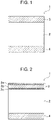
- Fig. 1 is a cross-sectional view illustrating a structure of a resin-coated metal sheet for containers according to one embodiment of the present invention.
- a resin-coated metal sheet 1 for containers according to one embodiment of the present invention includes a metal sheet 2, a resin coating layer 3 formed on a front surface side of the metal sheet 2, and a resin coating layer 4 formed on a rear surface side of the metal sheet 2.
- the resin coating layer 3 and the resin coating layer 4 are to be respectively positioned on an outer surface side and an inner surface side of a metal container after forming.
- the metal sheet 2 is formed of a steel sheet such as tin or tin-free steel. Tin having a coating weight in the range of 0.5 g/m 2 or more and 15 g/m 2 or less is preferably used as the tin.
- the tin-free steel preferably has, on its surfaces, a metallic chromium layer having a coating weight of 50 mg/m 2 or more and 200 g/m 2 or less and a chromium oxide layer having a coating weight of 3 mg/m 2 or more and 30 g/m 2 or less on a metallic chromium basis.
- the type of the steel sheet is not particularly specified as long as the steel sheet can be formed into an intended shape, but the steel sheet preferably has the following components and is preferably produced by the following method.
- the mechanical properties of the steel sheet are not particularly limited as long as the steel sheet can be formed into an intended shape.
- a steel sheet having a yield point (YP) of 220 MPa or more and 580 MPa or less is preferably used.
- the Lankford coefficient (r value) which is the indicator of the plastic anisotropy, is preferably 0.8 or more.
- the planar anisotropy ⁇ r of the r value is preferably 0.7 or less in terms of absolute value.
- the components of the steel for achieving the aforementioned properties are not particularly limited, and, for example, components such as Si, Mn, P, S, Al, and N may be contained.
- the Si content is preferably 0.001 mass% or more and 0.1 mass% or less
- the Mn content is preferably 0.01 mass% or more and 0.6 mass% or less
- the P content is preferably 0.002 mass% or more and 0.05 mass% or less
- the S content is preferably 0.002 mass% or more and 0.05 mass% or less
- the Al content is preferably 0.005 mass% or more and 0.100 mass% or less
- the N content is preferably 0.0005 mass% or more and 0.020 mass% or less.
- other components such as Ti, Nb, B, Cu, Ni, Cr, Mo, and V may be contained; however, from the viewpoint of securing corrosion resistance etc., the total content of these components is preferably 0.02 mass% or less.
- the resin coating layer 3 (the resin coating layer on the outer surface side of a container to be obtained by forming) on one surface is formed of a resin material containing 90 mol% or more of an ethylene terephthalate unit.
- the resin coating layer 3 is formed of a polyester containing 90 mol% or more of an ethylene terephthalate unit constituting polyethylene terephthalate formed of terephthalic acid as a carboxylic acid component and ethylene glycol as a glycol component.
- inorganic additives such as titanium oxide
- the ratio of the ethylene terephthalate unit in the resin material excluding the weight of such inorganic additives is 90 mol% or more.
- the resin material contains 92 mol% or more of the ethylene terephthalate unit.
- the resin softens due to the heat applied during the continuous can-making process, and the resin coating layer 3 may become fractured or scraped.
- dicarboxylic acid component examples include aromatic dicarboxylic acids such as isophthalic acid, naphthalenedicarboxylic acid, diphenyldicarboxylic acid, diphenylsulfonedicarboxylic acid, diphenoxyethanedicarboxylic acid, 5-sodium sulfoisophthalic acid, and phthalic acid, aliphatic dicarboxylic acids such as oxalic acid, succinic acid, adipic acid, sebacic acid, dimer acid, maleic acid, and fumaric acid, alicyclic dicarboxylic acids such as cyclohexanedicarboxylic acid, and oxycarboxylic acids such as p-oxybenzoic acid.
- aromatic dicarboxylic acids such as isophthalic acid, naphthalenedicarboxylic acid, diphenyldicarboxylic acid, diphenylsulfonedicarboxylic acid, diphenoxyethanedicarbox
- glycol component examples include aliphatic glycols such as propanediol, butanediol, pentanediol, hexanediol, and neopentyl glycol, alicyclic glycols such as cyclohexanedimethanol, aromatic glycols such as bisphenol A and bisphenol S, and diethylene glycol.
- the resin material forming the resin coating layer 3 is not limited by the production method.
- the resin material can be formed by (1) a method that involves esterifying terephthalic acid, ethylene glycol, and copolymer components and then performing polycondensation of the resulting reaction product to obtain a copolymer polyester or (2) a method that involves transesterifying dimethyl terephthalate, ethylene glycol, and copolymer components and then performing polycondensation reaction of the resulting reaction product to obtain a copolymer polyester.
- additives such as a fluorescent whitening agent, an antioxidant, a heat stabilizer, a UV absorber, and an antistatic material may be added.
- the resin coating layer 3 is formed of a resin material that has a mobile amorphous content of 80% or more.
- mobile amorphous fractions which are soft phases, account for 80% or more of the resin material constituting the resin coating layer 3, inhomogeneous strain generated during the can-making process can be suppressed, and wrinkle defects generated during the heat treatment after the can-making process can be suppressed.
- the mobile amorphous content in the resin coating layer 3 is 85% or more. More preferably, the mobile amorphous content in the resin coating layer 3 is 85% or more and 98% or less. When the mobile amorphous content is 98% or less, rigid phases can be securely obtained in the resin coating layer, and thus better impact resistance can be obtained.
- the mobile amorphous content in the resin material excluding the weight of such inorganic additives needs to be 80% or more.
- the mobile amorphous content in the present invention can be calculated from the difference in specific heat for the glass transition point obtained by temperature-modulated differential scanning calorimetry as described in the examples below.
- the resin-coated metal sheet 1 is obtained by press-bonding resin coating layers 3 and 4 on the front and rear surfaces of the metal sheet 2 heated to a temperature higher than or equal to the melting point of the resin coating layers 3 and 4 by using a laminating roller, and then cooling the resulting product.
- the mobile amorphous content in the resin coating layer 3 can be adjusted by changing the temperature of the metal sheet 2 after press-bonding and the time for which the metal sheet 2 after the press-bonding is held at a temperature higher than or equal to the melting onset temperature of the resin coating layer 3.
- the metal sheet 2 needs to be held at a temperature higher than or equal to the melting onset temperature of the resin coating layer 3 for 0.50 seconds or more and 3.0 seconds or less and then be quenched such as by water quenching.
- the time for which the metal sheet 2 is held at a temperature higher than or equal to the melting onset temperature of the resin coating layer 3 after the resin coating layer 3 is press-bonded to the metal sheet 2 is less than 0.50 seconds, melting of the resin coating layer is insufficient, and the mobile amorphous content of the present invention cannot be yielded.
- the time for which the metal sheet 2 is held at a temperature higher than or equal to the melting onset temperature of the resin coating layer 3 after the resin coating layer 3 is press-bonded to the metal sheet is more than 3.0 seconds, the production line becomes long, and the productivity is severely degraded. Furthermore, since the metal sheet 2 is allowed to naturally cool even after press bonding, the temperature of the metal sheet 2 during press bonding needs to be prominently high in order to hold, for more than 3.0 seconds, the metal sheet 2 at a temperature higher than or equal to the melting onset temperature of the resin coating layer 3 after press-bonding of the resin coating layer 3 onto the metal sheet 2. In such a case, the resin coating layer 3 becomes melted and adheres to the laminate roll.
- the time for which the metal sheet after the resin coating layer 3 is press-bonded to the metal sheet 2 is held at a temperature higher than or equal to the melting onset temperature of the resin coating layer 3 is preferably 3.0 seconds or less.
- quenching means performing cooling at a cooling rate of 150°C/second or more from the melting onset temperature to 100°C.
- the cooling rate is 200°C/second or more.
- Examples of the method for increasing the temperature of the metal sheet 2 after the resin coating layer 3 is press-bonded thereto include a method that involves increasing the heating temperature of the metal sheet 2 before press bonding, a method that involves decreasing the pressure of the laminate roll during press bonding, and a method that involves increasing the temperature of the laminate roll during press bonding.
- the heating temperature of the metal sheet 2 is preferably about 20°C to 50°C higher than the melting point of the resin coating layer 3.
- decreasing the pressing pressure of the roll during press bonding can mitigate the cooling effect of the roll during press bonding and can keep the metal sheet temperature high after press bonding.
- the higher the temperature of the laminate roll the smaller the cooling effect of the roll during press bonding, and thus the metal sheet temperature after press bonding can be kept high.
- the temperature of the laminate roll is 60°C or more higher than the glass transition point of the resin coating layer 3, the resin coating layer 3 softens, the roughness of the laminate roll is transferred to the resin coating layer 3, and thus appearance defects are generated.
- the temperature of the laminate roll needs to be lower than or equal to a temperature 60°C higher than the glass transition point of the resin coating layer 3.
- the resin coating layer 3 may contain 0.010 mass% or more and 1.5 mass% or less of lubricant components. At lubricant components content of 0.010 mass% or more, sufficient slidability with a die is obtained during the can-making process, and scraping of the resin coating layer 3 is avoided even in a severer process. In addition, at lubricant components content of 1.5 mass% or less, the resin coating layer 3 remains rigid, and scraping of the resin coating layer 3 is avoided even in a severer process.
- the lubricant components content is preferably 0.020 mass% or more and preferably 0.80% mass% or less.
- the lubricant components contained in the resin coating layer 3 is preferably organic lubricants.
- organic lubricants include polyolefins such as polyethylene and polypropylene, modified polyolefins such as acid-modified polyethylene, acid-modified polypropylene, polyethylene oxide, and polypropylene oxide, aliphatic acids and esters thereof such as stearic acid and stearate, and natural wax such as carnauba wax.
- the resin coating layer 3 is in some cases required to appear white in order to enhance designability after printing.
- the resin coating layer 3 may contain 30 mass% or less of inorganic pigments.
- the inorganic pigments content is preferably 10 mass% or more and preferably 25 mass% or less.
- the inorganic pigments content is more preferably 12 mass% or more and the inorganic pigments content is more preferably 22 mass% or less.
- At an inorganic pigments content of 10 mass% or more a more excellent whiteness is obtained after processing.
- issues related to the adhesion between the metal sheet 2 and the resin coating layer 3 and workability of the resin coating layer 3 may arise during forming that involves a high degree of processing.
- the inorganic pigments include titanium oxide, alumina, calcium carbonate, and barium sulfate.
- the inorganic pigments contained in the resin coating layer 3 is not particularly limited but is preferably titanium oxide.
- rutile type titanium oxide having a purity of 90% or more is preferable since dispersibility is more excellent during mixing with the resin material.
- the resin coating layer 3 may contain other additives as needed.
- the additives include an anti-blocking agent, a fluorescent whitening agent, an antioxidant, a heat stabilizer, a UV absorber, and an antistatic material.
- a fluorescent whitening agent is effective when whiteness is to be improved.
- the resin coating layer 3 may have an at least three-layer structure that includes an outermost surface layer 3a, an intermediate layer 3b, and a bottom layer 3c.
- the outermost surface layer 3a and the bottom layer 3c preferably each have a thickness of 1.0 ⁇ m or more and 5.0 ⁇ m or less.
- the thickness is more preferably 1.5 ⁇ m or more and more preferably 4.0 ⁇ m or less, and is yet more preferably 2.0 ⁇ m or more and yet more preferably 3.0 ⁇ m or less.
- the thickness of the intermediate layer 3b is preferably 6.0 ⁇ m or more and 30 ⁇ m or less.
- the thickness is more preferably 8.0 ⁇ m or more and more preferably 25 ⁇ m or less, and is yet more preferably 10 ⁇ m or more and yet more preferably 20 ⁇ m or less.
- the outermost surface layer 3a When inorganic pigments is added to the resin coating layer 3, the outermost surface layer 3a may become brittle and the resin coating layer 3 may thereby become fractured or scraped if the inorganic pigments content in the outermost surface layer 3a is large; thus, the inorganic pigments content in the outermost surface layer 3a is preferably 0 mass% or more and 2.0 mass% or less. Furthermore, when the inorganic pigments content in the bottom layer 3c is large, adhesion between the resin coating layer 3 and the metal sheet may decrease; thus, the inorganic pigments content in the bottom layer 3c is preferably 0 mass% or more and 2.0 mass% or less. From the viewpoint of securely obtaining whiteness after processing, the inorganic pigments content in the intermediate layer 3b is preferably 10 mass% or more and 30 mass% or less.
- the resin coating layer 3 may not exhibit sufficient gloss and may become fractured or scraped. Meanwhile, when the outermost surface layer 3a and the bottom layer 3c have a large thickness, increasing the thickness of the intermediate layer 3b or increasing the inorganic pigments content in the intermediate layer 3b becomes necessary to securely obtain whiteness, and this is not preferable from the viewpoints of economy and workability.
- the thickness of the outermost surface layer 3a and the bottom layer 3c is 1.0 ⁇ m or more and 5.0 ⁇ m or less
- the thickness of the intermediate layer 3b is 6.0 ⁇ m or more and 30 ⁇ m or less
- the outermost surface layer 3a and the bottom layer 3c each contain 0 mass% or more and 2.0 mass% or less of inorganic pigments
- the intermediate layer 3b contains 10 mass% or more and 30 mass% or less of inorganic pigments.
- the resin material forming the resin coating layer 4 is preferably a polyester containing 90 mol% or more of an ethylene terephthalate unit constituting polyethylene terephthalate formed of terephthalic acid as a carboxylic acid component and ethylene glycol as a glycol component.
- a 0.22 mm-thick tin free steel (TFS, metallic Cr layer: 120 mg/m 2 , Cr oxide layer: 10 mg/m 2 on a metallic Cr basis, temper: T3CA) was used as a metal sheet, and resin coating layers indicated in Tables 1 to 4 were formed by a film lamination method (film thermal melting bonding method).
- the metal sheet was heated to a temperature 20 to 40°C higher than the melting point of the resin coating layer, a film formed by a biaxial stretching method was thermally press-bonded onto the metal sheet by using a laminate roll, and the resulting metal sheet was held at a temperature higher than or equal to the melting onset temperature of the resin coating layer on the container outer surface side for 0.50 to 3.0 seconds and then cooled with water to coat both surfaces of the metal sheet with resin coating layers.
- the inorganic additive content (the inorganic additive refers to inorganic pigments and inorganic additives among additives other than the inorganic pigments), the mobile amorphous content, and the crystalline content in the resin coating layer positioned on the container outer surface side were measured by the methods described below.
- a resin-coated metal sheet was immersed at room temperature in a concentrated hydrochloric acid (12 mol/L)/distilled water (1:1) mixed solution to dissolve the metal surfaces and remove the resin coating layer positioned on the container outer surface side from the metal sheet. Subsequently, the removed resin coating layer was thoroughly washed with distilled water and then subjected to vacuum drying. The dried resin coating layer was subjected to temperature-modulated differential scanning calorimetry from 0°C to 300°C at a nitrogen gas flow rate of 30 mL/minute, an average heating rate of 2°C/minute, a modulation amplitude of ⁇ 0.5°C, and a modulation cycle of 40 seconds.
- the measurement results of reversing heat flow obtained from the temperature-modulated differential scanning calorimetry were used to calculate the difference in specific heat between before and after the glass transition point that existed between 50°C to 87.5°C, and the mobile amorphous content was calculated from the following formula (2).
- the inorganic additive content determined by the method described above was used as the inorganic additive content.
- Mobile amorphous content % difference in specific heat between before and after glass transition point J / g ⁇ ° C ⁇ 100 / 100 ⁇ inorganic additive content % / 0.405 J / g ⁇ ° C ⁇ 100
- a resin-coated metal sheet was immersed at room temperature in a concentrated hydrochloric acid (12 mol/L)/distilled water (1:1) mixed solution to dissolve the metal surfaces and remove the resin coating layer positioned on the container outer surface side from the metal sheet. Subsequently, the removed resin coating layer was thoroughly washed with distilled water and then subjected to vacuum drying. The dried resin coating layer was subjected to temperature-modulated differential scanning calorimetry from 0°C to 300°C at a nitrogen gas flow rate of 30 mL/minute, an average heating rate of 2°C/minute, a modulation amplitude of ⁇ 0.5°C, and a modulation cycle of 40 seconds.
- the measurement results of the total heat flow obtained by the temperature-modulated differential scanning calorimetry were used to determine the heat of crystallization from the area of the crystallization peak that existed between 87.5°C to 175°C and the heat of melting determined from the area of the melting peak that existed between 200°C and 275°C, and the heat of crystallization and the heat of melting were used to calculate the crystalline content from the following formula (3).
- the inorganic additive content determined by the method described above was used as the inorganic additive content.
- Crystalline content % heat of melting J / g ⁇ heat of crystallization J / g ⁇ 100 / 100 ⁇ inorganic additive content % / 140.2 J / g ⁇ 100
- Paraffin wax was applied to each of the resin-coated metal sheets for containers obtained in Examples 1 to 30 and Comparative Examples 1 to 12, and then a disk having a diameter of 180 mm was punched out. This disk was drawn by a cupping press machine and then subjected to two-step redrawing and one-step ironing to form a can having an inner diameter of 52 mm and a can height of 163 mm. The surface of the resin coating layer on the outer surface side of the formed can was observed with naked eye, and formability was evaluated according to the following standards.
- Paraffin wax was applied to each of the resin-coated metal sheets for containers according to Examples 1 to 30 and Comparative Examples 1 to 12, and then a disk having a diameter of 180 mm was punched out.
- This disk was drawn by a cupping press machine and then subjected to two-step redrawing and one-step ironing to form a can having an inner diameter of 52 mm and a can height of 163 mm.
- the obtained can body was heated in a hot-air drying furnace under conditions that the can body temperature reached 250°C in 90 seconds, and then quenched with cool air.
- the resin coating layer on the can outer surface after cooling was observed with naked eye, and appearance after heat treatment was evaluated according to the following standards.
- Table 5 indicates the evaluation results of the formability and the appearance after the heat treatment.
- Resin coating layer on container outer surface side Resin coating layer on container inner surface side Resin composition [mol%] Thickness [ ⁇ m] Inorganic pigment [mass%] Type of inorganic pigment Mobile amorphous content [%] Crystalline content [%] Lubricant component Amount of lubricant component added [mass%] Resin composition [mol%] Thickness [ ⁇ m]
- Example 1 Ethylene terephthalate 100 20 14 Titanium oxide 85 11 Carnauba 0.2 Ethylene terephthalate 90 Ethylene isophthalate 10 20 Example 2 Ethylene terephthalate 100 20 16 Titanium oxide 89 7 Carnauba 1.2 Ethylene terephthalate 90 Ethylene isophthalate 10 20 Example 3 Ethylene terephthalate 96 Ethylene isophthalate 4 20 0 - 89 8 Acid-modified polyethylene 0.4 Ethylene terephthalate
- the resin-coated metal sheets for container use in Examples 1 to 30 had excellent formability and appearance after the heat treatment whereas the evaluation results of the appearance after the heat treatment were insufficient in Comparative Examples 1 to 6 and 8 to 12. In Comparative Example 7, the evaluation result of the formability was insufficient.
Landscapes
- Chemical & Material Sciences (AREA)
- Engineering & Computer Science (AREA)
- Life Sciences & Earth Sciences (AREA)
- Materials Engineering (AREA)
- Wood Science & Technology (AREA)
- Organic Chemistry (AREA)
- Mechanical Engineering (AREA)
- Chemical Kinetics & Catalysis (AREA)
- Inorganic Chemistry (AREA)
- Laminated Bodies (AREA)
- Containers Having Bodies Formed In One Piece (AREA)
- Wrappers (AREA)
Abstract
Description
- The present invention relates to a resin-coated metal sheet for containers, the resin-coated metal sheet including a metal sheet and a resin coating layer on at least one surface of the metal sheet.
- Generally, metal containers are roughly categorized into two-piece cans and three-piece cans. A two-piece can is a metal container constituted by two parts: a lid and a can body integral with a can bottom, or a can bottom and a can body integral with a can lid. Meanwhile, a three-piece can is a metal container constituted by three parts: a can barrel, a top lid, and a bottom lid. A two-piece can has no welded parts in the can body and thus has good appearance; however, typically, a high degree of processing is required.
- Typically, metal sheets, such as tin-free steel (TFS) and aluminum, used as raw material for metal containers have been coated in order to improve corrosion resistance. However, the issues with the coating are that it requires a long processing time for complicated coating and baking steps and that emission of large quantities of solvents and carbon dioxide puts a heavy load on the environment. To address these issues, resin-coated metal sheets for containers having thermoplastic films on metal surfaces have been developed, and are currently widely industrially used mainly as beverage can raw material.
- Patent Literatures 1 to 3 disclose a technology of producing a two-piece can by a drawing method or a draw & ironing (DI) method using, as a raw material, a resin-coated metal sheet that has resin coating layers on both surfaces of a metal sheet. Furthermore,
Patent Literatures 4 and 5 disclose a technology of adding a white pigment to a resin coating layer to be positioned on an outer surface side of a formed metal container in order to allow for a process, such as printing, that enhances the designability of the can body. - As the shapes of can bodies have become increasingly diverse in recent years, the needs for increasing the degree of processing of can bodies have grown. While the number of can bodies that can be stored per unit area can be increased by decreasing the can diameter and increasing the can height, resin-coated metal sheets are more severely processed as the degree of processing increases.
-
- PTL 1:
Japanese Unexamined Patent Application Publication No. 2-303634 - PTL 2:
Japanese Unexamined Patent Application Publication No. 4-91825 - PTL 3:
Japanese Unexamined Patent Application Publication No. 2004-148324 - PTL 4:
Japanese Unexamined Patent Application Publication No. 8-169098 - PTL 5:
Japanese Unexamined Patent Application Publication No. 2004-130536 - PTL 6:
WO2013/030972 - When producing a two-piece can body that involves a high degree of processing by using a resin-coated metal sheet, in order to increase the adhesion between the resin coating and the metal sheet and to improve the coating property of the resin coating layer positioned on the can inner surface side, a heat treatment is performed at around the melting point of the resin coating layer after the processing. However, it has been found that, as the degree of processing performed on the two-piece can increases, wrinkle defects are generated in the resin coating layer during the heat treatment performed after the can-making process. Thus, when a two-piece can body that requires a high degree of processing is to be made by using a resin-coated metal sheet, wrinkle defects generated during the heat treatment after the can-making process need to be suppressed.
- Typically, crystalline, rigid amorphous, and mobile amorphous fractions coexist in a resin coating layer, and the ratios thereof can be calculated by calorimetry. Patent Literature 6 introduces a technology of controlling the crystallinity of a resin coating layer, which is determined from the difference between the heat of crystallization and the heat of melting, so as to decrease the residual stress after the forming process and suppress appearance defects (dotted pattern) caused by the heat treatment after the can-making process. However, wrinkle defects generated during the heat treatment after the can-making process still occur even when the crystallinity is decreased to be in the range of crystallinity disclosed in Patent Literature 6 (difference between heat of crystallization and heat of melting: 20 J/g or less ≈ crystalline content of 14% or less); thus, wrinkle defects cannot be suppressed by controlling the crystallinity.
- The present invention has been made under the circumstances described above, and an object thereof is to provide a resin-coated metal sheet for containers, which exhibits excellent formability during the two-piece can-making process that involves a high degree of processing and on which wrinkle defects are not generated by a post-process heat treatment.
- The inventors of the present invention have conducted extensive studies and found that the wrinkle defects that are generated during the heat treatment after the can-making process are caused by coexistence of rigid phases (crystalline and rigid amorphous fractions) and soft phases (mobile amorphous fractions)in the resin coating layer. When rigid phases (crystalline and rigid amorphous fractions) and soft phases (mobile amorphous fractions) coexist in a resin coating layer, inhomogeneous strain occurs in the resin coating layer upon deformation during the can-making process involving a high degree of processing. As a result, during the heat treatment after the can-making process, the resin coating layer that has been softened by being heated to near the melting point deforms unevenly, thereby generating wrinkle defects.
- The inventors of the present invention have studied further on the basis of the aforementioned findings. As a result, the inventors have found that adjusting the ratio of the mobile amorphous fractions in the resin coating layer to a particular value or higher suppresses inhomogeneous strain in the resin coating layer generated during the can-making process, and thus it becomes possible to suppress wrinkle defects generated during the heat treatment after the can-making process.
- The present invention has been made on the basis of the aforementioned findings and is summarized as follows.
- [1] A resin-coated metal sheet for containers, the resin-coated metal sheet including a metal sheet and a resin coating layer on at least one surface of the metal sheet, in which the resin coating layer on the at least one surface contains a resin material that contains 90 mol% or more of an ethylene terephthalate unit and that has a mobile amorphous content of 80% or more.
- [2] The resin-coated metal sheet for containers described in [1], in which the resin coating layer on the at least one surface contains 0.010 mass% or more and 1.5 mass% or less of lubricant components.
- [3] The resin-coated metal sheet for containers described in [1] or [2], in which the resin coating layer on the at least one surface contains 30 mass% or less of inorganic pigments.
- [4] The resin-coated metal sheet for containers described in [3], in which the resin coating layer on the at least one surface has a structure formed of at least three layers, which are an outermost surface layer, an intermediate layer, and a bottom layer, the outermost surface layer and the bottom layer each have a thickness of 1.0 µm or more and 5.0 µm or less, the intermediate layer has a thickness of 6.0 µm or more and 30 µm or less, the outermost surface layer and the bottom layer each contain 0 mass% or more and 2.0 mass% or less of the inorganic pigments, and the intermediate layer contains 10 mass% or more and 30 mass% or less of the inorganic pigments.
- According to the present invention, there can be provided a resin-coated metal sheet for containers, which exhibits excellent formability during a two-piece can-making process that involves a high degree of processing and on which wrinkle defects are not generated by a post-process heat treatment.
-
- [
Fig. 1] Fig. 1 is a cross-sectional view illustrating a structure of a resin-coated metal sheet for containers according to one embodiment of the present invention. - [
Fig. 2] Fig. 2 is a cross-sectional view illustrating a structure of a resin-coated metal sheet for containers according to another embodiment of the present invention. Description of Embodiments - A resin-coated metal sheet for containers , which is one embodiment of the present invention, will now be described.
-
Fig. 1 is a cross-sectional view illustrating a structure of a resin-coated metal sheet for containers according to one embodiment of the present invention. As illustrated inFig. 1 , a resin-coated metal sheet 1 for containers according to one embodiment of the present invention includes ametal sheet 2, aresin coating layer 3 formed on a front surface side of themetal sheet 2, and aresin coating layer 4 formed on a rear surface side of themetal sheet 2. Theresin coating layer 3 and theresin coating layer 4 are to be respectively positioned on an outer surface side and an inner surface side of a metal container after forming. - The
metal sheet 2 is formed of a steel sheet such as tin or tin-free steel. Tin having a coating weight in the range of 0.5 g/m2 or more and 15 g/m2 or less is preferably used as the tin. The tin-free steel preferably has, on its surfaces, a metallic chromium layer having a coating weight of 50 mg/m2 or more and 200 g/m2 or less and a chromium oxide layer having a coating weight of 3 mg/m2 or more and 30 g/m2 or less on a metallic chromium basis. The type of the steel sheet is not particularly specified as long as the steel sheet can be formed into an intended shape, but the steel sheet preferably has the following components and is preferably produced by the following method. - (1) A steel sheet that has been subjected to recrystallization annealing by continuously annealing a low-carbon steel having a carbon (C) content of about more than 0.003 mass% and 0.10 mass% or less.
- (2) A steel sheet that has been subjected to recrystallization annealing and overaging by continuously annealing a low-carbon steel having a C content of about more than 0.003 mass% and 0.10 mass% or less.
- (3) A steel sheet that has been subjected to recrystallization annealing by box-annealing a low-carbon steel having a C content of about more than 0.003 mass% and 0.10 mass% or less.
- (4) A steel sheet that has been subjected to recrystallization annealing by continuously annealing or box-annealing a low-carbon steel having a C content of about more than 0.003 mass% and 0.10 mass% or less, and then subjected to secondary cold-rolling (double reduced (DR) rolling).
- (5) A steel sheet that has been subjected to recrystallization annealing by continuously annealing an interstitial-free (IF) steel obtained by adding a dissolved-C-fixing element, such as Nb or Ti, to an ultra-low-carbon steel having a C content of about 0.003 mass% or less.
- The mechanical properties of the steel sheet are not particularly limited as long as the steel sheet can be formed into an intended shape. In order to maintain sufficient can body strength without degrading the workability, a steel sheet having a yield point (YP) of 220 MPa or more and 580 MPa or less is preferably used. In addition, the Lankford coefficient (r value), which is the indicator of the plastic anisotropy, is preferably 0.8 or more. The planar anisotropy Δr of the r value is preferably 0.7 or less in terms of absolute value.
- The components of the steel for achieving the aforementioned properties are not particularly limited, and, for example, components such as Si, Mn, P, S, Al, and N may be contained. The Si content is preferably 0.001 mass% or more and 0.1 mass% or less, the Mn content is preferably 0.01 mass% or more and 0.6 mass% or less, the P content is preferably 0.002 mass% or more and 0.05 mass% or less, the S content is preferably 0.002 mass% or more and 0.05 mass% or less, the Al content is preferably 0.005 mass% or more and 0.100 mass% or less, and the N content is preferably 0.0005 mass% or more and 0.020 mass% or less. In addition, other components such as Ti, Nb, B, Cu, Ni, Cr, Mo, and V may be contained; however, from the viewpoint of securing corrosion resistance etc., the total content of these components is preferably 0.02 mass% or less.
- In the present invention, at least the resin coating layer 3 (the resin coating layer on the outer surface side of a container to be obtained by forming) on one surface is formed of a resin material containing 90 mol% or more of an ethylene terephthalate unit. Specifically, the
resin coating layer 3 is formed of a polyester containing 90 mol% or more of an ethylene terephthalate unit constituting polyethylene terephthalate formed of terephthalic acid as a carboxylic acid component and ethylene glycol as a glycol component. When inorganic additives (such as titanium oxide) are contained in theresin coating layer 3, the ratio of the ethylene terephthalate unit in the resin material excluding the weight of such inorganic additives is 90 mol% or more. Preferably, the resin material contains 92 mol% or more of the ethylene terephthalate unit. When the molar concentration of the ethylene terephthalate unit is less than 90 mol%, the resin softens due to the heat applied during the continuous can-making process, and theresin coating layer 3 may become fractured or scraped. - As long as heat resistance and workability are not impaired, multiple dicarboxylic acid components and glycol components other than terephthalic acid and ethylene glycol may be copolymerized and used as a resin material constituting the
resin coating layer 3. Examples of the dicarboxylic acid component include aromatic dicarboxylic acids such as isophthalic acid, naphthalenedicarboxylic acid, diphenyldicarboxylic acid, diphenylsulfonedicarboxylic acid, diphenoxyethanedicarboxylic acid, 5-sodium sulfoisophthalic acid, and phthalic acid, aliphatic dicarboxylic acids such as oxalic acid, succinic acid, adipic acid, sebacic acid, dimer acid, maleic acid, and fumaric acid, alicyclic dicarboxylic acids such as cyclohexanedicarboxylic acid, and oxycarboxylic acids such as p-oxybenzoic acid. Examples of the glycol component include aliphatic glycols such as propanediol, butanediol, pentanediol, hexanediol, and neopentyl glycol, alicyclic glycols such as cyclohexanedimethanol, aromatic glycols such as bisphenol A and bisphenol S, and diethylene glycol. - The resin material forming the
resin coating layer 3 is not limited by the production method. For example, the resin material can be formed by (1) a method that involves esterifying terephthalic acid, ethylene glycol, and copolymer components and then performing polycondensation of the resulting reaction product to obtain a copolymer polyester or (2) a method that involves transesterifying dimethyl terephthalate, ethylene glycol, and copolymer components and then performing polycondensation reaction of the resulting reaction product to obtain a copolymer polyester. Furthermore, when producing the polyester, additives such as a fluorescent whitening agent, an antioxidant, a heat stabilizer, a UV absorber, and an antistatic material may be added. - Furthermore, the
resin coating layer 3 is formed of a resin material that has a mobile amorphous content of 80% or more. When mobile amorphous fractions, which are soft phases, account for 80% or more of the resin material constituting theresin coating layer 3, inhomogeneous strain generated during the can-making process can be suppressed, and wrinkle defects generated during the heat treatment after the can-making process can be suppressed. Preferably, the mobile amorphous content in theresin coating layer 3 is 85% or more. More preferably, the mobile amorphous content in theresin coating layer 3 is 85% or more and 98% or less. When the mobile amorphous content is 98% or less, rigid phases can be securely obtained in the resin coating layer, and thus better impact resistance can be obtained. When inorganic additives (such as an inorganic pigment) are contained in theresin coating layer 3, the mobile amorphous content in the resin material excluding the weight of such inorganic additives needs to be 80% or more. Note that the mobile amorphous content in the present invention can be calculated from the difference in specific heat for the glass transition point obtained by temperature-modulated differential scanning calorimetry as described in the examples below. - The resin-coated metal sheet 1 is obtained by press-bonding
resin coating layers metal sheet 2 heated to a temperature higher than or equal to the melting point of theresin coating layers resin coating layer 3 can be adjusted by changing the temperature of themetal sheet 2 after press-bonding and the time for which themetal sheet 2 after the press-bonding is held at a temperature higher than or equal to the melting onset temperature of theresin coating layer 3. - In order to achieve the mobile amorphous content of the present invention, after the
resin coating layer 3 is press-bonded to themetal sheet 2, themetal sheet 2 needs to be held at a temperature higher than or equal to the melting onset temperature of theresin coating layer 3 for 0.50 seconds or more and 3.0 seconds or less and then be quenched such as by water quenching. When the time for which themetal sheet 2 is held at a temperature higher than or equal to the melting onset temperature of theresin coating layer 3 after theresin coating layer 3 is press-bonded to themetal sheet 2 is less than 0.50 seconds, melting of the resin coating layer is insufficient, and the mobile amorphous content of the present invention cannot be yielded. When the time for which themetal sheet 2 is held at a temperature higher than or equal to the melting onset temperature of theresin coating layer 3 after theresin coating layer 3 is press-bonded to the metal sheet is more than 3.0 seconds, the production line becomes long, and the productivity is severely degraded. Furthermore, since themetal sheet 2 is allowed to naturally cool even after press bonding, the temperature of themetal sheet 2 during press bonding needs to be prominently high in order to hold, for more than 3.0 seconds, themetal sheet 2 at a temperature higher than or equal to the melting onset temperature of theresin coating layer 3 after press-bonding of theresin coating layer 3 onto themetal sheet 2. In such a case, theresin coating layer 3 becomes melted and adheres to the laminate roll. Thus, the time for which the metal sheet after theresin coating layer 3 is press-bonded to themetal sheet 2 is held at a temperature higher than or equal to the melting onset temperature of theresin coating layer 3 is preferably 3.0 seconds or less. - When the
metal sheet 2 is held at a temperature higher than or equal to the melting onset temperature of theresin coating layer 3 and is then allowed to naturally cool to a temperature less than the melting onset temperature, rigid phases (crystalline and rigid amorphous fractions) are generated in the resin coating layer, and the mobile amorphous content of the present invention cannot be obtained. Thus, after theresin coating layer 3 is held at a temperature higher than or equal to the melting onset temperature, quenching must be performed by, for example, water quenching. Here, quenching means performing cooling at a cooling rate of 150°C/second or more from the melting onset temperature to 100°C. Preferably, the cooling rate is 200°C/second or more. - Examples of the method for increasing the temperature of the
metal sheet 2 after theresin coating layer 3 is press-bonded thereto include a method that involves increasing the heating temperature of themetal sheet 2 before press bonding, a method that involves decreasing the pressure of the laminate roll during press bonding, and a method that involves increasing the temperature of the laminate roll during press bonding. In order to achieve the mobile amorphous content targeted by the present invention, the heating temperature of themetal sheet 2 is preferably about 20°C to 50°C higher than the melting point of theresin coating layer 3. Moreover, decreasing the pressing pressure of the roll during press bonding can mitigate the cooling effect of the roll during press bonding and can keep the metal sheet temperature high after press bonding. Moreover, the higher the temperature of the laminate roll, the smaller the cooling effect of the roll during press bonding, and thus the metal sheet temperature after press bonding can be kept high. However, when the temperature of the laminate roll is 60°C or more higher than the glass transition point of theresin coating layer 3, theresin coating layer 3 softens, the roughness of the laminate roll is transferred to theresin coating layer 3, and thus appearance defects are generated. Thus, the temperature of the laminate roll needs to be lower than or equal to a temperature 60°C higher than the glass transition point of theresin coating layer 3. - For the purpose of decreasing the frictional coefficient during the can-making process, the
resin coating layer 3 may contain 0.010 mass% or more and 1.5 mass% or less of lubricant components. At lubricant components content of 0.010 mass% or more, sufficient slidability with a die is obtained during the can-making process, and scraping of theresin coating layer 3 is avoided even in a severer process. In addition, at lubricant components content of 1.5 mass% or less, theresin coating layer 3 remains rigid, and scraping of theresin coating layer 3 is avoided even in a severer process. The lubricant components content is preferably 0.020 mass% or more and preferably 0.80% mass% or less. - The lubricant components contained in the
resin coating layer 3 is preferably organic lubricants. Examples of the organic lubricants include polyolefins such as polyethylene and polypropylene, modified polyolefins such as acid-modified polyethylene, acid-modified polypropylene, polyethylene oxide, and polypropylene oxide, aliphatic acids and esters thereof such as stearic acid and stearate, and natural wax such as carnauba wax. - The
resin coating layer 3 is in some cases required to appear white in order to enhance designability after printing. In such a case, theresin coating layer 3 may contain 30 mass% or less of inorganic pigments. The inorganic pigments content is preferably 10 mass% or more and preferably 25 mass% or less. The inorganic pigments content is more preferably 12 mass% or more and the inorganic pigments content is more preferably 22 mass% or less. At an inorganic pigments content of 10 mass% or more, a more excellent whiteness is obtained after processing. At an inorganic pigments content exceeding 30 mass%, issues related to the adhesion between themetal sheet 2 and theresin coating layer 3 and workability of theresin coating layer 3 may arise during forming that involves a high degree of processing. - Examples of the inorganic pigments include titanium oxide, alumina, calcium carbonate, and barium sulfate. The inorganic pigments contained in the
resin coating layer 3 is not particularly limited but is preferably titanium oxide. In particular, rutile type titanium oxide having a purity of 90% or more is preferable since dispersibility is more excellent during mixing with the resin material. - Here, as long as the purpose of the present invention is not obstructed, the
resin coating layer 3 may contain other additives as needed. Examples of the additives include an anti-blocking agent, a fluorescent whitening agent, an antioxidant, a heat stabilizer, a UV absorber, and an antistatic material. In particular, when whiteness is to be improved, addition of a fluorescent whitening agent is effective. - As illustrated in
Fig. 2 , theresin coating layer 3 may have an at least three-layer structure that includes anoutermost surface layer 3a, an intermediate layer 3b, and a bottom layer 3c. In this case, theoutermost surface layer 3a and the bottom layer 3c preferably each have a thickness of 1.0 µm or more and 5.0 µm or less. The thickness is more preferably 1.5 µm or more and more preferably 4.0 µm or less, and is yet more preferably 2.0 µm or more and yet more preferably 3.0 µm or less. The thickness of the intermediate layer 3b is preferably 6.0 µm or more and 30 µm or less. The thickness is more preferably 8.0 µm or more and more preferably 25 µm or less, and is yet more preferably 10 µm or more and yet more preferably 20 µm or less. - When inorganic pigments is added to the
resin coating layer 3, theoutermost surface layer 3a may become brittle and theresin coating layer 3 may thereby become fractured or scraped if the inorganic pigments content in theoutermost surface layer 3a is large; thus, the inorganic pigments content in theoutermost surface layer 3a is preferably 0 mass% or more and 2.0 mass% or less. Furthermore, when the inorganic pigments content in the bottom layer 3c is large, adhesion between theresin coating layer 3 and the metal sheet may decrease; thus, the inorganic pigments content in the bottom layer 3c is preferably 0 mass% or more and 2.0 mass% or less. From the viewpoint of securely obtaining whiteness after processing, the inorganic pigments content in the intermediate layer 3b is preferably 10 mass% or more and 30 mass% or less. - When the
outermost surface layer 3a and the bottom layer 3c have a small thickness, theresin coating layer 3 may not exhibit sufficient gloss and may become fractured or scraped. Meanwhile, when theoutermost surface layer 3a and the bottom layer 3c have a large thickness, increasing the thickness of the intermediate layer 3b or increasing the inorganic pigments content in the intermediate layer 3b becomes necessary to securely obtain whiteness, and this is not preferable from the viewpoints of economy and workability. Thus, preferably, the thickness of theoutermost surface layer 3a and the bottom layer 3c is 1.0 µm or more and 5.0 µm or less, the thickness of the intermediate layer 3b is 6.0 µm or more and 30 µm or less, theoutermost surface layer 3a and the bottom layer 3c each contain 0 mass% or more and 2.0 mass% or less of inorganic pigments, and the intermediate layer 3b contains 10 mass% or more and 30 mass% or less of inorganic pigments. - The resin material forming the
resin coating layer 4 is preferably a polyester containing 90 mol% or more of an ethylene terephthalate unit constituting polyethylene terephthalate formed of terephthalic acid as a carboxylic acid component and ethylene glycol as a glycol component. - A 0.22 mm-thick tin free steel (TFS, metallic Cr layer: 120 mg/m2, Cr oxide layer: 10 mg/m2 on a metallic Cr basis, temper: T3CA) was used as a metal sheet, and resin coating layers indicated in Tables 1 to 4 were formed by a film lamination method (film thermal melting bonding method). In Examples 1 to 30 and Comparative Example 7, the metal sheet was heated to a temperature 20 to 40°C higher than the melting point of the resin coating layer, a film formed by a biaxial stretching method was thermally press-bonded onto the metal sheet by using a laminate roll, and the resulting metal sheet was held at a temperature higher than or equal to the melting onset temperature of the resin coating layer on the container outer surface side for 0.50 to 3.0 seconds and then cooled with water to coat both surfaces of the metal sheet with resin coating layers. In Examples 1 to 6 and Comparative Examples 8 to 12, the time for which the metal sheet was held at a temperature higher than or equal to the melting onset temperature of the resin coating layer on the container outer surface side after thermal press-bonding of the films was set to less than 0.50 seconds, and then water cooling was performed to coat both surfaces of the metal sheet with resin coating layers.
- For each of the obtained resin-coated metal sheets for containers, the inorganic additive content (the inorganic additive refers to inorganic pigments and inorganic additives among additives other than the inorganic pigments), the mobile amorphous content, and the crystalline content in the resin coating layer positioned on the container outer surface side were measured by the methods described below.
- A resin-coated metal sheet was immersed at room temperature in a concentrated hydrochloric acid (12 mol/L)/distilled water (1:1) mixed solution to dissolve the metal surfaces and remove the resin coating layer positioned on the container outer surface side from the metal sheet. Subsequently, the removed resin coating layer was thoroughly washed with distilled water and then subjected to vacuum drying. The dried resin coating layer was subjected to thermogravimetric determination by using a thermogravimetric apparatus from room temperature to 800°C at an air flow rate of 300 mL/minute and a heating rate of 10°C/minute. From the results of the thermogravimetric determination, the ratio of the weight at 800°C to the weight at room temperature was assumed to be the inorganic additive content. The inorganic additive content was calculated from the following formula (1).

- A resin-coated metal sheet was immersed at room temperature in a concentrated hydrochloric acid (12 mol/L)/distilled water (1:1) mixed solution to dissolve the metal surfaces and remove the resin coating layer positioned on the container outer surface side from the metal sheet. Subsequently, the removed resin coating layer was thoroughly washed with distilled water and then subjected to vacuum drying. The dried resin coating layer was subjected to temperature-modulated differential scanning calorimetry from 0°C to 300°C at a nitrogen gas flow rate of 30 mL/minute, an average heating rate of 2°C/minute, a modulation amplitude of ±0.5°C, and a modulation cycle of 40 seconds. The measurement results of reversing heat flow obtained from the temperature-modulated differential scanning calorimetry were used to calculate the difference in specific heat between before and after the glass transition point that existed between 50°C to 87.5°C, and the mobile amorphous content was calculated from the following formula (2). The inorganic additive content determined by the method described above was used as the inorganic additive content.

- A resin-coated metal sheet was immersed at room temperature in a concentrated hydrochloric acid (12 mol/L)/distilled water (1:1) mixed solution to dissolve the metal surfaces and remove the resin coating layer positioned on the container outer surface side from the metal sheet. Subsequently, the removed resin coating layer was thoroughly washed with distilled water and then subjected to vacuum drying. The dried resin coating layer was subjected to temperature-modulated differential scanning calorimetry from 0°C to 300°C at a nitrogen gas flow rate of 30 mL/minute, an average heating rate of 2°C/minute, a modulation amplitude of ±0.5°C, and a modulation cycle of 40 seconds. The measurement results of the total heat flow obtained by the temperature-modulated differential scanning calorimetry were used to determine the heat of crystallization from the area of the crystallization peak that existed between 87.5°C to 175°C and the heat of melting determined from the area of the melting peak that existed between 200°C and 275°C, and the heat of crystallization and the heat of melting were used to calculate the crystalline content from the following formula (3). The inorganic additive content determined by the method described above was used as the inorganic additive content.

- For the resin-coated metal sheets for containers of Examples 1 to 30 and Comparative Examples 1 to 12, the formability and appearance after heat treatment were evaluated by the following methods.
- Paraffin wax was applied to each of the resin-coated metal sheets for containers obtained in Examples 1 to 30 and Comparative Examples 1 to 12, and then a disk having a diameter of 180 mm was punched out. This disk was drawn by a cupping press machine and then subjected to two-step redrawing and one-step ironing to form a can having an inner diameter of 52 mm and a can height of 163 mm. The surface of the resin coating layer on the outer surface side of the formed can was observed with naked eye, and formability was evaluated according to the following standards.
- Evaluation "⊙⊙": No scraping was observed.
- Evaluation "⊙": Scraping was found at a height of within 2 mm from the can flange. No practical issues arise. Evaluation "○": Scraping was found at a height of more than 2 mm but not more than 5 mm from the can flange. No practical issues arise.
- Evaluation "Δ": Scraping was found at a height of more than 5 mm but not more than 20 mm from the can flange. Practical issues arise.
- Paraffin wax was applied to each of the resin-coated metal sheets for containers according to Examples 1 to 30 and Comparative Examples 1 to 12, and then a disk having a diameter of 180 mm was punched out. This disk was drawn by a cupping press machine and then subjected to two-step redrawing and one-step ironing to form a can having an inner diameter of 52 mm and a can height of 163 mm. The obtained can body was heated in a hot-air drying furnace under conditions that the can body temperature reached 250°C in 90 seconds, and then quenched with cool air. The resin coating layer on the can outer surface after cooling was observed with naked eye, and appearance after heat treatment was evaluated according to the following standards.
- Evaluation "⊙": No wrinkle defects were observed.
- Evaluation "○": Wrinkle defects were observed in the range of 15 mm from the can flange. No practical issues arise. Evaluation "Δ": Wrinkle defects were observed in the range of more than 15 mm to 50 mm from the can flange. Practical issues arise.
- Evaluation "×": Wrinkle defects were observed in the range more than 50 mm from the can flange. Practical issues arise.
- Table 5 indicates the evaluation results of the formability and the appearance after the heat treatment.
[Table 1] Resin coating layer on container outer surface side Resin coating layer on container inner surface side Resin composition [mol%] Thickness [µm] Inorganic pigment [mass%] Type of inorganic pigment Mobile amorphous content [%] Crystalline content [%] Lubricant component Amount of lubricant component added [mass%] Resin composition [mol%] Thickness [µm] Example 1 Ethylene terephthalate 100 20 14 Titanium oxide 85 11 Carnauba 0.2 Ethylene terephthalate 90 Ethylene isophthalate 10 20 Example 2 Ethylene terephthalate 100 20 16 Titanium oxide 89 7 Carnauba 1.2 Ethylene terephthalate 90 Ethylene isophthalate 10 20 Example 3 Ethylene terephthalate 96 Ethylene isophthalate 4 20 0 - 89 8 Acid-modified polyethylene 0.4 Ethylene terephthalate 90 Ethylene isophthalate 10 20 Example 4 Ethylene terephthalate 96 Ethylene isophthalate 4 20 16 Titanium oxide 80 14 Acid-modified polyethylene 0.5 Ethylene terephthalate 90 Ethylene isophthalate 10 20 Example 5 Ethylene terephthalate 96 Ethylene isophthalate 4 20 16 Titanium oxide 80 15 - - Ethylene terephthalate 90 Ethylene isophthalate 10 20 Example 6 Ethylene terephthalate 96 Ethylene isophthalate 4 20 16 Titanium oxide 83 11 Acid-modified polyethylene 0.5 Ethylene terephthalate 90 Ethylene isophthalate 10 20 Example 7 Ethylene terephthalate 96 Ethylene isophthalate 4 20 22 Titanium oxide 85 8 Polyethylene 0.2 Ethylene terephthalate 90 Ethylene isophthalate 10 20 Example 8 Ethylene terephthalate 96 Ethylene isophthalate 4 20 16 Titanium oxide 85 7 Acid-modified polyethylene 0.5 Ethylene terephthalate 90 Ethylene isophthalate 10 20 Example 9 Ethylene terephthalate 96 Ethylene isophthalate 4 20 16 Titanium oxide 85 9 Polyethylene 1.5 Ethylene terephthalate 90 Ethylene isophthalate 10 20 Example 10 Ethylene terephthalate 96 Ethylene isophthalate 4 20 16 Titanium oxide 89 7 Acid-modified polyethylene 0.4 Ethylene terephthalate 90 Ethylene isophthalate 10 20 Example 11 Ethylene terephthalate 96 Ethylene isophthalate 4 20 16 Titanium oxide 94 4 Acid-modified polyethylene 0.6 Ethylene terephthalate 90 Ethylene isophthalate 10 20 Example 12 Ethylene terephthalate 96 Ethylene isophthalate 4 20 16 Titanium oxide 98 2 Acid-modified polyethylene 0.5 Ethylene terephthalate 90 Ethylene isophthalate 10 20 Example 13 Ethylene terephthalate 96 Ethylene isophthalate 4 20 30 Titanium oxide 89 6 Acid-modified polyethylene 0.5 Ethylene terephthalate 90 Ethylene isophthalate 10 20 Example 14 Ethylene terephthalate 90 Ethylene isophthalate 10 20 16 Titanium oxide 85 8 Polyethylene 0.8 Ethylene terephthalate 90 Ethylene isophthalate 10 20 Example 15 Ethylene terephthalate 90 Ethylene isophthalate 10 20 16 Titanium oxide 87 11 Acid-modified polyethylene 1.6 Ethylene terephthalate 90 Ethylene isophthalate 10 20 Example 16 Ethylene terephthalate 90 Ethylene isophthalate 10 20 32 Titanium oxide 86 10 Polyethylene 0.4 Ethylene terephthalate 90 Ethylene isophthalate 10 20 Example 17 Ethylene terephthalate 96 Ethylene isophthalate 4 20 0 - 88 10 - - Ethylene terephthalate 90 Ethylene isophthalate 10 20 Example 18 Ethylene terephthalate 96 Ethylene isophthalate 4 20 15 Alumina 87 10 Polyethylene 0.4 Ethylene terephthalate 90 Ethylene isophthalate 10 20 [Table 2] Resin coating layer on container outer surface side Resin coating layer on container inner surface side Outermost surface layer Intermediate layer Bottom layer Entire resin coating layer Entire resin coating layer Resin composition [mol%] Thickness [µm] Inorganic pigment [mass%] Type of inorganic pigment Lubricant component Amount of lubricant component added [mass%] Resin composition [mol%] Thickness [µm] Inorganic pigment [mass%] Type of inorganic pigment Lubricant component Resin composition [mol%] Thickness [µm] Inorganic pigment [mass%] Type of inorganic pigment Lubricant component Amount of lubricant component added [mass%] Mobile amorphous content [%] Crystalline content [%] Thickness [µm] Resin composition [mol%] Thickness [µm] Example 19 Ethylene terephthalate 100 2 0 - Carnauba 1.2 Ethylene terephthalate 100 16 18 Titanium oxide - Ethylene terephthalate 100 2 0 - Carnauba 1.2 82 14 20 Ethylene terephthalate 90 Ethylene isophthalate 10 20 Example 20 Ethylene terephthalate 100 2 0 - Carnauba 1.2 Ethylene terephthalate 100 16 20 Titanium oxide - Ethylene terephthalate 100 2 0 - Carnauba 1.2 86 9 20 Ethylene terephthalate 90 Ethylene isophthalate 10 20 Example 21 Ethylene terephthalate 96 Ethylene isophthalate 4 2 0 - - - Ethylene terephthalate 96 Ethylene isophthalate 4 16 20 Titanium oxide - Ethylene terephthalate 96 Ethylene isophthalate 4 2 0 - - - 85 10 20 Ethylene terephthalate 90 Ethylene isophthalate 10 20 Example 22 Ethylene terephthalate 96 Ethylene isophthalate 4 2 0 - Acid-modified polyethylene 0.5 Ethylene terephthalate 96 Ethylene isophthalate 4 16 20 Titanium oxide - Ethylene terephthalate 96 Ethylene isophthalate 4 2 0 - Acid-modified polyethylene 0.5 80 14 20 Ethylene terephthalate 90 Ethylene isophthalate 10 20 Example 23 Ethylene terephthalate 96 Ethylene isophthalate 4 5 0 - Acid-modified polyethylene 0.5 Ethylene terephthalate 96 Ethylene isophthalate 4 20 20 Titanium oxide - Ethylene terephthalate 96 Ethylene isophthalate 4 5 0 - Acid-modified polyethylene 0.5 87 9 30 Ethylene terephthalate 90 Ethylene isophthalate 10 20 Example 24 Ethylene terephthalate 96 Ethylene isophthalate 4 2 0 - Polyethylene 0.05 Ethylene terephthalate 96 Ethylene isophthalate 4 16 20 Titanium oxide - Ethylene terephthalate 96 Ethylene isophthalate 4 2 0 - Polyethylene 0.05 84 11 20 Ethylene terephthalate 90 Ethylene isophthalate 10 20 Example 25 Ethylene terephthalate 96 Ethylene isophthalate 4 2 0 - Polyethylene 0.1 Ethylene terephthalate 96 Ethylene isophthalate 4 16 20 Titanium oxide - Ethylene terephthalate 96 Ethylene isophthalate 4 2 0 - Polyethylene 0.1 88 9 20 Ethylene terephthalate 90 Ethylene isophthalate 10 20 Example 26 Ethylene terephthalate 96 Ethylene isophthalate 4 2 0 - Acid-modified polyethylene 0.5 Ethylene terephthalate 96 Ethylene isophthalate 4 16 20 Titanium oxide - Ethylene terephthalate 96 Ethylene isophthalate 4 2 0 - Acid-modified polyethylene 0.5 87 10 20 Ethylene terephthalate 90 Ethylene isophthalate 10 20 Example 27 Ethylene terephthalate 96 Ethylene isophthalate 4 2 2 Titanium oxide Acid-modified polyethylene 0.5 Ethylene terephthalate 96 Ethylene isophthalate 4 16 19 Titanium oxide - Ethylene terephthalate 96 Ethylene isophthalate 4 2 2 Titanium oxide Acid-modified polyethylene 0.5 92 7 20 Ethylene terephthalate 90 Ethylene isophthalate 10 20 Example 28 Ethylene terephthalate 96 Ethylene isophthalate 4 2 3 Titanium oxide Acid-modified polyethylene 0.5 Ethylene terephthalate 96 Ethylene isophthalate 4 16 19 Titanium oxide - Ethylene terephthalate 96 Ethylene isophthalate 4 2 3 Titanium oxide Acid-modified polyethylene 0.5 88 11 20 Ethylene terephthalate 90 Ethylene isophthalate 10 20 Example 29 Ethylene terephthalate 96 Ethylene isophthalate 4 3 0 - Acid-modified polyethylene 0.6 Ethylene terephthalate 96 Ethylene isophthalate 4 15 20 Titanium oxide - Ethylene terephthalate 96 Ethylene isophthalate 4 6 0 - Acid-modified polyethylene 0.6 89 7 24 Ethylene terephthalate 90 Ethylene isophthalate 10 20 Example 30 Ethylene terephthalate 96 Ethylene isophthalate 4 3 0 - Acid-modified polyethylene 0.5 Ethylene terephthalate 96 Ethylene isophthalate 4 14 32 Titanium oxide - Ethylene terephthalate 96 Ethylene isophthalate 4 3 0 - Acid-modified polyethylene 0.5 84 12 20 Ethylene terephthalate 90 Ethylene isophthalate 10 20 [Table 3] Resin coating layer on container outer surface side Resin coating layer on container inner surface side Resin composition [mol%] Thickness [µm] Inorganic pigment [mass%] Type of inorganic pigment Mobile amorphous content [%] Crystalline content [%] Lubricant component Amount of lubricant component added [mass%] Resin composition [mol%] Thickness [µm] Comparative Example 1 Ethylene terephthalate 100 20 16 Titanium oxide 78 13 Carnauba 1.2 Ethylene terephthalate 90 Ethylene isophthalate 10 20 Comparative Example 2 Ethylene terephthalate 96 Ethylene isophthalate 4 20 16 Titanium oxide 70 20 Acid-modified polyethylene 0.5 Ethylene terephthalate 90 Ethylene isophthalate 10 20 Comparative Example 3 Ethylene terephthalate 96 Ethylene isophthalate 4 20 16 Titanium oxide 74 16 Acid-modified polyethylene 0.5 Ethylene terephthalate 90 Ethylene isophthalate 10 20 Comparative Example 4 Ethylene terephthalate 96 Ethylene isophthalate 4 20 16 Titanium oxide 76 13 Acid-modified polyethylene 0.5 Ethylene terephthalate 90 Ethylene isophthalate 10 20 Comparative Example 5 Ethylene terephthalate 96 Ethylene isophthalate 4 20 16 Titanium oxide 77 11 - - Ethylene terephthalate 90 Ethylene isophthalate 10 20 Comparative Example 6 Ethylene terephthalate 96 Ethylene isophthalate 4 20 16 Titanium oxide 79 13 Acid-modified polyethylene 0.5 Ethylene terephthalate 90 Ethylene isophthalate 10 20 Comparative Example 7 Ethylene terephthalate 88 Ethylene isophthalate 12 20 16 Titanium oxide 80 14 - - Ethylene terephthalate 90 Ethylene isophthalate 10 20 [Table 4] Resin coating layer on container outer surface side Resin coating layer on container inner surface side Outermost surface layer Intermediate layer Bottom layer Entire resin coating layer Entire resin coating layer Resin composition [mol%] Thickness [µm] Inorganic pigment [mass%] Type of inorganic pigment Lubricant component Amount of lubricant component added [mass%] Resin composition [mol%] Thickness [µm] Inorganic pigment [mass%] Type of inorganic pigment Lubricant component Resin composition [mol%] Thickness [µm] Inorganic pigment [mass%] Type of inorganic pigment Lubricant component Amount of lubricant component added [mass%] Mobile amorphous content [%] Crystalline content [%] Thickness [µm] Resin composition [mol%] Thickness [µm] Comparative Example 8 Ethylene terephthalate 100 2 0 - Carnauba 1.2 Ethylene terephthalate 100 16 18 Titanium oxide - Ethylene terephthalate 100 2 0 - Carnauba 1.2 77 13 20 Ethylene terephthalate 90 Ethylene isophthalate 10 20 Comparative Example 9 Ethylene terephthalate 96 Ethylene isophthalate 4 2 0 - - - Ethylene terephthalate 96 Ethylene isophthalate 4 16 20 Titanium oxide - Ethylene terephthalate 96 Ethylene isophthalate 4 2 0 - - - 78 14 20 Ethylene terephthalate 90 Ethylene isophthalate 10 20 Comparative Example 10 Ethylene terephthalate 96 Ethylene isophthalate 4 2 0 - Polyethylene 0.05 Ethylene terephthalate 96 Ethylene isophthalate 4 16 20 Titanium oxide - Ethylene terephthalate 96 Ethylene isophthalate 4 2 0 - Polyethylene 0.05 73 15 20 Ethylene terephthalate 90 Ethylene isophthalate 10 20 Comparative Example 11 Ethylene terephthalate 96 Ethylene isophthalate 4 2 0 - Acid-modified polyethylene 0.5 Ethylene terephthalate 96 Ethylene isophthalate 4 16 20 Titanium oxide - Ethylene terephthalate 96 Ethylene isophthalate 4 2 0 - Acid-modified polyethylene 0.5 79 12 20 Ethylene terephthalate 90 Ethylene isophthalate 10 20 Comparative Example 12 Ethylene terephthalate 96 Ethylene isophthalate 4 2 0 - Acid-modified polyethylene 0.5 Ethylene terephthalate 96 Ethylene isophthalate 4 16 20 Titanium oxide - Ethylene terephthalate 96 Ethylene isophthalate 4 2 0 - Acid-modified polyethylene 0.5 74 16 20 Ethylene terephthalate 90 Ethylene isophthalate 10 20 [Table 5] Formability Appearance after heat treatment Example 1 ⊙⊙ ⊙ Example 2 ⊙⊙ ⊙ Example 3 ⊙⊙ ⊙ Example 4 ⊙⊙ ○ Example 5 ○ ○ Example 6 ⊙⊙ ○ Example 7 ⊙⊙ ⊙ Example 8 ⊙⊙ ⊙ Example 9 ⊙ ⊙ Example 10 ⊙⊙ ⊙ Example 11 ⊙⊙ ⊙ Example 12 ⊙⊙ ⊙ Example 13 ⊙ ⊙ Example 14 ⊙ ⊙ Example 15 ○ ⊙ Example 16 ○ ⊙ Example 17 ○ ⊙ Example 18 ⊙⊙ ⊙ Example 19 ⊙⊙ ○ Example 20 ⊙⊙ ⊙ Example 21 ○ ⊙ Example 22 ⊙⊙ ⊙ Example 23 ⊙ ⊙ Example 24 ⊙ ○ Example 25 ⊙⊙ ⊙ Example 26 ⊙⊙ ⊙ Example 27 ⊙⊙ ⊙ Example 28 ⊙ ⊙ Example 29 ○ ⊙ Example 30 ○ ○ Comparative Example 1 ⊙⊙ Δ Comparative Example 2 ⊙⊙ × Comparative Example 3 ⊙⊙ × Comparative Example 4 ⊙⊙ Δ Comparative Example 5 ○ Δ Comparative Example 6 ⊙⊙ Δ Comparative Example 7 Δ ○ Comparative Example 8 ⊙⊙ Δ Comparative Example 9 ○ Δ Comparative Example 10 ⊙ × Comparative Example 11 ⊙⊙ Δ Comparative Example 12 ⊙⊙ × - As indicated in Table 5, the resin-coated metal sheets for container use in Examples 1 to 30 had excellent formability and appearance after the heat treatment whereas the evaluation results of the appearance after the heat treatment were insufficient in Comparative Examples 1 to 6 and 8 to 12. In Comparative Example 7, the evaluation result of the formability was insufficient.
-
- 1
- resin-coated metal sheet for containers
- 2
- metal sheet
- 3, 4
- resin coating layer
- 3a
- outermost surface layer
- 3b
- intermediate layer
- 3c
- bottom layer
Claims (4)
- A resin-coated metal sheet for containers, the resin-coated metal sheet comprising a metal sheet and a resin coating layer on at least one surface of the metal sheet, wherein the resin coating layer on the at least one surface contains a resin material that contains 90 mol% or more of an ethylene terephthalate unit and that has a mobile amorphous content of 80% or more.
- The resin-coated metal sheet for containers according to Claim 1, wherein the resin coating layer on the at least one surface contains 0.010 mass% or more and 1.5 mass% or less of lubricant components.
- The resin-coated metal sheet for containers according to Claim 1 or 2, wherein the resin coating layer on the at least one surface contains 30 mass% or less of inorganic pigments.
- The resin-coated metal sheet for containers according to Claim 3, wherein the resin coating layer on the at least one surface has a structure formed of at least three layers, which are an outermost surface layer, an intermediate layer, and a bottom layer, the outermost surface layer and the bottom layer each have a thickness of 1.0 µm or more and 5.0 µm or less, the intermediate layer has a thickness of 6.0 µm or more and 30 µm or less, the outermost surface layer and the bottom layer each contain 0 mass% or more and 2.0 mass% or less of the inorganic pigments, and the intermediate layer contains 10 mass% or more and 30 mass% or less of the inorganic pigments.
Applications Claiming Priority (2)
| Application Number | Priority Date | Filing Date | Title |
|---|---|---|---|
| JP2020041697 | 2020-03-11 | ||
| PCT/JP2021/008284 WO2021182256A1 (en) | 2020-03-11 | 2021-03-03 | Resin-coated metal plate for containers |
Publications (3)
| Publication Number | Publication Date |
|---|---|
| EP4089027A1 true EP4089027A1 (en) | 2022-11-16 |
| EP4089027A4 EP4089027A4 (en) | 2023-07-05 |
| EP4089027B1 EP4089027B1 (en) | 2024-10-23 |
Family
ID=77670664
Family Applications (1)
| Application Number | Title | Priority Date | Filing Date |
|---|---|---|---|
| EP21769008.0A Active EP4089027B1 (en) | 2020-03-11 | 2021-03-03 | Resin-coated metal sheet for containers |
Country Status (11)
| Country | Link |
|---|---|
| US (1) | US20230101851A1 (en) |
| EP (1) | EP4089027B1 (en) |
| JP (1) | JP7226555B2 (en) |
| KR (2) | KR20220134629A (en) |
| CN (1) | CN115210071B (en) |
| AU (1) | AU2021234704B2 (en) |
| CA (1) | CA3169101C (en) |
| MY (1) | MY206613A (en) |
| PH (1) | PH12022552333A1 (en) |
| TW (1) | TWI840655B (en) |
| WO (1) | WO2021182256A1 (en) |
Families Citing this family (8)
| Publication number | Priority date | Publication date | Assignee | Title |
|---|---|---|---|---|
| MX2022001015A (en) * | 2019-07-31 | 2022-02-22 | Jfe Steel Corp | METAL SHEET COATED WITH RESIN, CONTAINER AND EVALUATION METHOD. |
| JP2023064975A (en) * | 2021-10-27 | 2023-05-12 | アルテミラ製缶株式会社 | Metallic cup manufacturing method |
| JP7601247B2 (en) * | 2022-09-09 | 2024-12-17 | Jfeスチール株式会社 | Resin-coated metal sheet for containers and method for producing same |
| KR20250116083A (en) * | 2023-01-23 | 2025-07-31 | 제이에프이 스틸 가부시키가이샤 | Resin-coated metal plate, two-piece can, and method for manufacturing resin-coated metal plate |
| EP4613477A4 (en) * | 2023-01-23 | 2026-03-11 | Jfe Steel Corp | Resin-coated metal foil, two-part can and method for producing the resin-coated metal foil |
| WO2025258524A1 (en) * | 2024-06-11 | 2025-12-18 | Jfeスチール株式会社 | Polyester laminated film for coating metal sheet, and resin-coated metal sheet |
| JP7777747B1 (en) * | 2024-06-11 | 2025-12-01 | Jfeスチール株式会社 | Polyester laminated film for metal sheet coating and resin-coated metal sheet |
| WO2026009576A1 (en) * | 2024-07-04 | 2026-01-08 | Jfeスチール株式会社 | Metal sheet for containers, method for producing metal sheet for containers, and method for can production |
Family Cites Families (16)
| Publication number | Priority date | Publication date | Assignee | Title |
|---|---|---|---|---|
| JPH07106394B2 (en) | 1989-05-17 | 1995-11-15 | 東洋製罐株式会社 | Squeeze ironing can manufacturing method |
| JP2526725B2 (en) | 1990-08-03 | 1996-08-21 | 東洋製罐株式会社 | Method for manufacturing coated thin can |
| JP2986010B2 (en) | 1994-12-16 | 1999-12-06 | 東レ株式会社 | Polyester film for metal plate lamination processing |
| WO2001092417A1 (en) * | 2000-05-30 | 2001-12-06 | Unitika Ltd. | Polyester film for metal sheet laminating, metal sheet laminated with this film, and metal vessel formed from this metal sheet |
| JP2004130536A (en) | 2002-10-08 | 2004-04-30 | Teijin Dupont Films Japan Ltd | White polyester film for laminate molding processing of metal sheet |
| JP2004148324A (en) | 2002-10-28 | 2004-05-27 | Toyo Seikan Kaisha Ltd | Method for manufacturing shear spun can made of resin coated metal |
| JP4411937B2 (en) * | 2003-10-31 | 2010-02-10 | Jfeスチール株式会社 | Polyester resin laminated metal sheet for containers |
| KR101981080B1 (en) * | 2011-02-21 | 2019-05-22 | 도레이 카부시키가이샤 | Biaxially oriented polyethylene terephthalate film |
| CN103781626B (en) * | 2011-08-31 | 2016-08-31 | 杰富意钢铁株式会社 | Resin coating metallic plate |
| KR102137425B1 (en) * | 2013-09-26 | 2020-07-24 | 도레이 카부시키가이샤 | Non-woven fabric, separation membrane support, separation membrane, fluid separation element, and method for manufacturing non-woven fabric |
| WO2016136099A1 (en) * | 2015-02-27 | 2016-09-01 | Jfeスチール株式会社 | Resin-coated metal plate, method for producing resin-coated metal plate, and metal container |
| JP6729365B2 (en) * | 2015-03-13 | 2020-07-22 | 東レ株式会社 | Optical polyester film and polarizing plate using the same |
| JP6658513B2 (en) * | 2015-03-20 | 2020-03-04 | 東洋紡株式会社 | Heat-shrinkable polyester film and package |
| JP6380280B2 (en) | 2015-07-31 | 2018-08-29 | Jfeスチール株式会社 | Resin-coated metal plate for containers |
| WO2017022742A1 (en) * | 2015-08-06 | 2017-02-09 | 日東電工株式会社 | Polyester film |
| CN111511545B (en) * | 2017-12-15 | 2022-09-20 | 杰富意钢铁株式会社 | Resin-coated metal plate for container |
-
2021
- 2021-03-03 KR KR1020227030272A patent/KR20220134629A/en not_active Ceased
- 2021-03-03 US US17/909,103 patent/US20230101851A1/en active Pending
- 2021-03-03 JP JP2021536023A patent/JP7226555B2/en active Active
- 2021-03-03 WO PCT/JP2021/008284 patent/WO2021182256A1/en not_active Ceased
- 2021-03-03 MY MYPI2022004686A patent/MY206613A/en unknown
- 2021-03-03 AU AU2021234704A patent/AU2021234704B2/en active Active
- 2021-03-03 CN CN202180018311.9A patent/CN115210071B/en active Active
- 2021-03-03 KR KR1020257032525A patent/KR20250145139A/en active Pending
- 2021-03-03 CA CA3169101A patent/CA3169101C/en active Active
- 2021-03-03 PH PH1/2022/552333A patent/PH12022552333A1/en unknown
- 2021-03-03 EP EP21769008.0A patent/EP4089027B1/en active Active
- 2021-03-05 TW TW110107809A patent/TWI840655B/en active
Also Published As
| Publication number | Publication date |
|---|---|
| NZ791910A (en) | 2025-03-28 |
| KR20250145139A (en) | 2025-10-13 |
| CA3169101A1 (en) | 2021-09-16 |
| JP7226555B2 (en) | 2023-02-21 |
| CN115210071B (en) | 2024-07-26 |
| TWI840655B (en) | 2024-05-01 |
| AU2021234704B2 (en) | 2024-04-18 |
| CN115210071A (en) | 2022-10-18 |
| PH12022552333A1 (en) | 2023-12-18 |
| EP4089027A4 (en) | 2023-07-05 |
| CA3169101C (en) | 2024-04-30 |
| EP4089027B1 (en) | 2024-10-23 |
| US20230101851A1 (en) | 2023-03-30 |
| MY206613A (en) | 2024-12-26 |
| JPWO2021182256A1 (en) | 2021-09-16 |
| KR20220134629A (en) | 2022-10-05 |
| TW202136028A (en) | 2021-10-01 |
| WO2021182256A1 (en) | 2021-09-16 |
Similar Documents
| Publication | Publication Date | Title |
|---|---|---|
| EP4089027B1 (en) | Resin-coated metal sheet for containers | |
| US9506152B2 (en) | Resin coated metal sheet | |
| JP2611737B2 (en) | Seamless can and manufacturing method thereof | |
| CN111479688B (en) | Resin-coated metal plate for container | |
| EP3616904B1 (en) | Resin-coated metal sheet for container | |
| TWI913556B (en) | Method for manufacturing resin-coated metal sheets for containers | |
| EP4613478A1 (en) | Resin-coated metal sheet, two-piece can, and method for producing resin-coated metal sheet | |
| JP3807037B2 (en) | Extrusion laminating method and can manufacturing laminate obtained by this method | |
| EP4613477A1 (en) | Resin-coated metal sheet, two-piece can, and method for manufacturing resin-coated metal sheet | |
| WO2026009579A1 (en) | Metal plate for container, method for manufacturing metal plate for container, and method for manufacturing can | |
| WO2026009577A1 (en) | Metal plate for container, method for manufacturing metal plate for container, and method for manufacturing can | |
| JPH11216805A (en) | Laminate and container using the same |
Legal Events
| Date | Code | Title | Description |
|---|---|---|---|
| STAA | Information on the status of an ep patent application or granted ep patent |
Free format text: STATUS: THE INTERNATIONAL PUBLICATION HAS BEEN MADE |
|
| PUAI | Public reference made under article 153(3) epc to a published international application that has entered the european phase |
Free format text: ORIGINAL CODE: 0009012 |
|
| STAA | Information on the status of an ep patent application or granted ep patent |
Free format text: STATUS: REQUEST FOR EXAMINATION WAS MADE |
|
| 17P | Request for examination filed |
Effective date: 20220810 |
|
| AK | Designated contracting states |
Kind code of ref document: A1 Designated state(s): AL AT BE BG CH CY CZ DE DK EE ES FI FR GB GR HR HU IE IS IT LI LT LU LV MC MK MT NL NO PL PT RO RS SE SI SK SM TR |
|
| REG | Reference to a national code |
Ref country code: DE Free format text: PREVIOUS MAIN CLASS: B65D0025360000 Ref country code: DE Ref legal event code: R079 Ref document number: 602021020706 Country of ref document: DE Free format text: PREVIOUS MAIN CLASS: B65D0025360000 Ipc: C09D0167020000 |
|
| DAV | Request for validation of the european patent (deleted) | ||
| DAX | Request for extension of the european patent (deleted) | ||
| A4 | Supplementary search report drawn up and despatched |
Effective date: 20230605 |
|
| RIC1 | Information provided on ipc code assigned before grant |
Ipc: B32B 15/09 20060101ALI20230530BHEP Ipc: B65D 25/36 20060101ALI20230530BHEP Ipc: C09D 167/02 20060101AFI20230530BHEP |
|
| RIC1 | Information provided on ipc code assigned before grant |
Ipc: B32B 15/09 20060101ALI20240424BHEP Ipc: B65D 25/36 20060101ALI20240424BHEP Ipc: C09D 167/02 20060101AFI20240424BHEP |
|
| GRAP | Despatch of communication of intention to grant a patent |
Free format text: ORIGINAL CODE: EPIDOSNIGR1 |
|
| STAA | Information on the status of an ep patent application or granted ep patent |
Free format text: STATUS: GRANT OF PATENT IS INTENDED |
|
| INTG | Intention to grant announced |
Effective date: 20240610 |
|
| GRAS | Grant fee paid |
Free format text: ORIGINAL CODE: EPIDOSNIGR3 |
|
| GRAA | (expected) grant |
Free format text: ORIGINAL CODE: 0009210 |
|
| STAA | Information on the status of an ep patent application or granted ep patent |
Free format text: STATUS: THE PATENT HAS BEEN GRANTED |
|
| AK | Designated contracting states |
Kind code of ref document: B1 Designated state(s): AL AT BE BG CH CY CZ DE DK EE ES FI FR GB GR HR HU IE IS IT LI LT LU LV MC MK MT NL NO PL PT RO RS SE SI SK SM TR |
|
| REG | Reference to a national code |
Ref country code: GB Ref legal event code: FG4D |
|
| REG | Reference to a national code |
Ref country code: CH Ref legal event code: EP |
|
| REG | Reference to a national code |
Ref country code: DE Ref legal event code: R096 Ref document number: 602021020706 Country of ref document: DE |
|
| REG | Reference to a national code |
Ref country code: NL Ref legal event code: FP Ref country code: IE Ref legal event code: FG4D |
|
| REG | Reference to a national code |
Ref country code: LT Ref legal event code: MG9D |
|
| REG | Reference to a national code |
Ref country code: AT Ref legal event code: MK05 Ref document number: 1734828 Country of ref document: AT Kind code of ref document: T Effective date: 20241023 |
|
| PG25 | Lapsed in a contracting state [announced via postgrant information from national office to epo] |
Ref country code: IS Free format text: LAPSE BECAUSE OF FAILURE TO SUBMIT A TRANSLATION OF THE DESCRIPTION OR TO PAY THE FEE WITHIN THE PRESCRIBED TIME-LIMIT Effective date: 20250223 Ref country code: PT Free format text: LAPSE BECAUSE OF FAILURE TO SUBMIT A TRANSLATION OF THE DESCRIPTION OR TO PAY THE FEE WITHIN THE PRESCRIBED TIME-LIMIT Effective date: 20250224 Ref country code: HR Free format text: LAPSE BECAUSE OF FAILURE TO SUBMIT A TRANSLATION OF THE DESCRIPTION OR TO PAY THE FEE WITHIN THE PRESCRIBED TIME-LIMIT Effective date: 20241023 |
|
| PG25 | Lapsed in a contracting state [announced via postgrant information from national office to epo] |
Ref country code: FI Free format text: LAPSE BECAUSE OF FAILURE TO SUBMIT A TRANSLATION OF THE DESCRIPTION OR TO PAY THE FEE WITHIN THE PRESCRIBED TIME-LIMIT Effective date: 20241023 |
|
| PG25 | Lapsed in a contracting state [announced via postgrant information from national office to epo] |
Ref country code: BG Free format text: LAPSE BECAUSE OF FAILURE TO SUBMIT A TRANSLATION OF THE DESCRIPTION OR TO PAY THE FEE WITHIN THE PRESCRIBED TIME-LIMIT Effective date: 20241023 |
|
| PG25 | Lapsed in a contracting state [announced via postgrant information from national office to epo] |
Ref country code: ES Free format text: LAPSE BECAUSE OF FAILURE TO SUBMIT A TRANSLATION OF THE DESCRIPTION OR TO PAY THE FEE WITHIN THE PRESCRIBED TIME-LIMIT Effective date: 20241023 |
|
| PG25 | Lapsed in a contracting state [announced via postgrant information from national office to epo] |
Ref country code: NO Free format text: LAPSE BECAUSE OF FAILURE TO SUBMIT A TRANSLATION OF THE DESCRIPTION OR TO PAY THE FEE WITHIN THE PRESCRIBED TIME-LIMIT Effective date: 20250123 |
|
| PG25 | Lapsed in a contracting state [announced via postgrant information from national office to epo] |
Ref country code: AT Free format text: LAPSE BECAUSE OF FAILURE TO SUBMIT A TRANSLATION OF THE DESCRIPTION OR TO PAY THE FEE WITHIN THE PRESCRIBED TIME-LIMIT Effective date: 20241023 Ref country code: LV Free format text: LAPSE BECAUSE OF FAILURE TO SUBMIT A TRANSLATION OF THE DESCRIPTION OR TO PAY THE FEE WITHIN THE PRESCRIBED TIME-LIMIT Effective date: 20241023 Ref country code: GR Free format text: LAPSE BECAUSE OF FAILURE TO SUBMIT A TRANSLATION OF THE DESCRIPTION OR TO PAY THE FEE WITHIN THE PRESCRIBED TIME-LIMIT Effective date: 20250124 |
|
| PG25 | Lapsed in a contracting state [announced via postgrant information from national office to epo] |
Ref country code: PL Free format text: LAPSE BECAUSE OF FAILURE TO SUBMIT A TRANSLATION OF THE DESCRIPTION OR TO PAY THE FEE WITHIN THE PRESCRIBED TIME-LIMIT Effective date: 20241023 |
|
| PG25 | Lapsed in a contracting state [announced via postgrant information from national office to epo] |
Ref country code: RS Free format text: LAPSE BECAUSE OF FAILURE TO SUBMIT A TRANSLATION OF THE DESCRIPTION OR TO PAY THE FEE WITHIN THE PRESCRIBED TIME-LIMIT Effective date: 20250123 |
|
| PG25 | Lapsed in a contracting state [announced via postgrant information from national office to epo] |
Ref country code: SM Free format text: LAPSE BECAUSE OF FAILURE TO SUBMIT A TRANSLATION OF THE DESCRIPTION OR TO PAY THE FEE WITHIN THE PRESCRIBED TIME-LIMIT Effective date: 20241023 |
|
| PG25 | Lapsed in a contracting state [announced via postgrant information from national office to epo] |
Ref country code: DK Free format text: LAPSE BECAUSE OF FAILURE TO SUBMIT A TRANSLATION OF THE DESCRIPTION OR TO PAY THE FEE WITHIN THE PRESCRIBED TIME-LIMIT Effective date: 20241023 |
|
| PG25 | Lapsed in a contracting state [announced via postgrant information from national office to epo] |
Ref country code: EE Free format text: LAPSE BECAUSE OF FAILURE TO SUBMIT A TRANSLATION OF THE DESCRIPTION OR TO PAY THE FEE WITHIN THE PRESCRIBED TIME-LIMIT Effective date: 20241023 |
|
| PG25 | Lapsed in a contracting state [announced via postgrant information from national office to epo] |
Ref country code: RO Free format text: LAPSE BECAUSE OF FAILURE TO SUBMIT A TRANSLATION OF THE DESCRIPTION OR TO PAY THE FEE WITHIN THE PRESCRIBED TIME-LIMIT Effective date: 20241023 |
|
| REG | Reference to a national code |
Ref country code: DE Ref legal event code: R097 Ref document number: 602021020706 Country of ref document: DE |
|
| PG25 | Lapsed in a contracting state [announced via postgrant information from national office to epo] |
Ref country code: SK Free format text: LAPSE BECAUSE OF FAILURE TO SUBMIT A TRANSLATION OF THE DESCRIPTION OR TO PAY THE FEE WITHIN THE PRESCRIBED TIME-LIMIT Effective date: 20241023 |
|
| PG25 | Lapsed in a contracting state [announced via postgrant information from national office to epo] |
Ref country code: CZ Free format text: LAPSE BECAUSE OF FAILURE TO SUBMIT A TRANSLATION OF THE DESCRIPTION OR TO PAY THE FEE WITHIN THE PRESCRIBED TIME-LIMIT Effective date: 20241023 |
|
| PG25 | Lapsed in a contracting state [announced via postgrant information from national office to epo] |
Ref country code: IT Free format text: LAPSE BECAUSE OF FAILURE TO SUBMIT A TRANSLATION OF THE DESCRIPTION OR TO PAY THE FEE WITHIN THE PRESCRIBED TIME-LIMIT Effective date: 20241023 |
|
| PLBE | No opposition filed within time limit |
Free format text: ORIGINAL CODE: 0009261 |
|
| STAA | Information on the status of an ep patent application or granted ep patent |
Free format text: STATUS: NO OPPOSITION FILED WITHIN TIME LIMIT |
|
| PG25 | Lapsed in a contracting state [announced via postgrant information from national office to epo] |
Ref country code: SE Free format text: LAPSE BECAUSE OF FAILURE TO SUBMIT A TRANSLATION OF THE DESCRIPTION OR TO PAY THE FEE WITHIN THE PRESCRIBED TIME-LIMIT Effective date: 20241023 |
|
| 26N | No opposition filed |
Effective date: 20250724 |
|
| PG25 | Lapsed in a contracting state [announced via postgrant information from national office to epo] |
Ref country code: MC Free format text: LAPSE BECAUSE OF FAILURE TO SUBMIT A TRANSLATION OF THE DESCRIPTION OR TO PAY THE FEE WITHIN THE PRESCRIBED TIME-LIMIT Effective date: 20241023 |
|
| REG | Reference to a national code |
Ref country code: CH Ref legal event code: H13 Free format text: ST27 STATUS EVENT CODE: U-0-0-H10-H13 (AS PROVIDED BY THE NATIONAL OFFICE) Effective date: 20251023 |
|
| PG25 | Lapsed in a contracting state [announced via postgrant information from national office to epo] |
Ref country code: LU Free format text: LAPSE BECAUSE OF NON-PAYMENT OF DUE FEES Effective date: 20250303 |
|
| REG | Reference to a national code |
Ref country code: BE Ref legal event code: MM Effective date: 20250331 |
|
| PG25 | Lapsed in a contracting state [announced via postgrant information from national office to epo] |
Ref country code: FR Free format text: LAPSE BECAUSE OF NON-PAYMENT OF DUE FEES Effective date: 20250331 |
|
| PG25 | Lapsed in a contracting state [announced via postgrant information from national office to epo] |
Ref country code: BE Free format text: LAPSE BECAUSE OF NON-PAYMENT OF DUE FEES Effective date: 20250331 |
|
| PG25 | Lapsed in a contracting state [announced via postgrant information from national office to epo] |
Ref country code: CH Free format text: LAPSE BECAUSE OF NON-PAYMENT OF DUE FEES Effective date: 20250331 |
|
| PG25 | Lapsed in a contracting state [announced via postgrant information from national office to epo] |
Ref country code: IE Free format text: LAPSE BECAUSE OF NON-PAYMENT OF DUE FEES Effective date: 20250303 |
|
| PGFP | Annual fee paid to national office [announced via postgrant information from national office to epo] |
Ref country code: NL Payment date: 20260213 Year of fee payment: 6 |
|
| PGFP | Annual fee paid to national office [announced via postgrant information from national office to epo] |
Ref country code: GB Payment date: 20260202 Year of fee payment: 6 |
|
| PGFP | Annual fee paid to national office [announced via postgrant information from national office to epo] |
Ref country code: DE Payment date: 20260128 Year of fee payment: 6 |