EP4088599B1 - Smoking set control circuit and smoking set - Google Patents
Smoking set control circuit and smoking set Download PDFInfo
- Publication number
- EP4088599B1 EP4088599B1 EP21739001.2A EP21739001A EP4088599B1 EP 4088599 B1 EP4088599 B1 EP 4088599B1 EP 21739001 A EP21739001 A EP 21739001A EP 4088599 B1 EP4088599 B1 EP 4088599B1
- Authority
- EP
- European Patent Office
- Prior art keywords
- circuit
- power
- control
- sampling
- electrically connected
- Prior art date
- Legal status (The legal status is an assumption and is not a legal conclusion. Google has not performed a legal analysis and makes no representation as to the accuracy of the status listed.)
- Active
Links
Images



Classifications
-
- A—HUMAN NECESSITIES
- A24—TOBACCO; CIGARS; CIGARETTES; SIMULATED SMOKING DEVICES; SMOKERS' REQUISITES
- A24F—SMOKERS' REQUISITES; MATCH BOXES; SIMULATED SMOKING DEVICES
- A24F40/00—Electrically operated smoking devices; Component parts thereof; Manufacture thereof; Maintenance or testing thereof; Charging means specially adapted therefor
- A24F40/50—Control or monitoring
-
- A—HUMAN NECESSITIES
- A24—TOBACCO; CIGARS; CIGARETTES; SIMULATED SMOKING DEVICES; SMOKERS' REQUISITES
- A24F—SMOKERS' REQUISITES; MATCH BOXES; SIMULATED SMOKING DEVICES
- A24F40/00—Electrically operated smoking devices; Component parts thereof; Manufacture thereof; Maintenance or testing thereof; Charging means specially adapted therefor
- A24F40/40—Constructional details, e.g. connection of cartridges and battery parts
-
- A—HUMAN NECESSITIES
- A24—TOBACCO; CIGARS; CIGARETTES; SIMULATED SMOKING DEVICES; SMOKERS' REQUISITES
- A24F—SMOKERS' REQUISITES; MATCH BOXES; SIMULATED SMOKING DEVICES
- A24F40/00—Electrically operated smoking devices; Component parts thereof; Manufacture thereof; Maintenance or testing thereof; Charging means specially adapted therefor
- A24F40/50—Control or monitoring
- A24F40/57—Temperature control
-
- H—ELECTRICITY
- H02—GENERATION; CONVERSION OR DISTRIBUTION OF ELECTRIC POWER
- H02J—ELECTRIC POWER NETWORKS; CIRCUIT ARRANGEMENTS OR SYSTEMS FOR SUPPLYING OR DISTRIBUTING ELECTRIC POWER; SYSTEMS FOR STORING ELECTRIC ENERGY
- H02J7/00—Circuit arrangements for charging or discharging batteries or for supplying loads from batteries
- H02J7/855—Circuit arrangements for charging or discharging batteries or for supplying loads from batteries with circuits adapted for supplying loads from the battery
-
- H—ELECTRICITY
- H02—GENERATION; CONVERSION OR DISTRIBUTION OF ELECTRIC POWER
- H02M—APPARATUS FOR CONVERSION BETWEEN AC AND AC, BETWEEN AC AND DC, OR BETWEEN DC AND DC, AND FOR USE WITH MAINS OR SIMILAR POWER SUPPLY SYSTEMS; CONVERSION OF DC OR AC INPUT POWER INTO SURGE OUTPUT POWER; CONTROL OR REGULATION THEREOF
- H02M1/00—Details of apparatus for conversion
- H02M1/0048—Circuits or arrangements for reducing losses
- H02M1/0054—Transistor switching losses
-
- H—ELECTRICITY
- H02—GENERATION; CONVERSION OR DISTRIBUTION OF ELECTRIC POWER
- H02M—APPARATUS FOR CONVERSION BETWEEN AC AND AC, BETWEEN AC AND DC, OR BETWEEN DC AND DC, AND FOR USE WITH MAINS OR SIMILAR POWER SUPPLY SYSTEMS; CONVERSION OF DC OR AC INPUT POWER INTO SURGE OUTPUT POWER; CONTROL OR REGULATION THEREOF
- H02M1/00—Details of apparatus for conversion
- H02M1/0064—Magnetic structures combining different functions, e.g. storage, filtering or transformation
-
- H—ELECTRICITY
- H02—GENERATION; CONVERSION OR DISTRIBUTION OF ELECTRIC POWER
- H02M—APPARATUS FOR CONVERSION BETWEEN AC AND AC, BETWEEN AC AND DC, OR BETWEEN DC AND DC, AND FOR USE WITH MAINS OR SIMILAR POWER SUPPLY SYSTEMS; CONVERSION OF DC OR AC INPUT POWER INTO SURGE OUTPUT POWER; CONTROL OR REGULATION THEREOF
- H02M3/00—Conversion of DC power input into DC power output
- H02M3/02—Conversion of DC power input into DC power output without intermediate conversion into AC
- H02M3/04—Conversion of DC power input into DC power output without intermediate conversion into AC by static converters
- H02M3/10—Conversion of DC power input into DC power output without intermediate conversion into AC by static converters using discharge tubes with control electrode or semiconductor devices with control electrode
- H02M3/145—Conversion of DC power input into DC power output without intermediate conversion into AC by static converters using discharge tubes with control electrode or semiconductor devices with control electrode using devices of a triode or transistor type requiring continuous application of a control signal
- H02M3/155—Conversion of DC power input into DC power output without intermediate conversion into AC by static converters using discharge tubes with control electrode or semiconductor devices with control electrode using devices of a triode or transistor type requiring continuous application of a control signal using semiconductor devices only
- H02M3/156—Conversion of DC power input into DC power output without intermediate conversion into AC by static converters using discharge tubes with control electrode or semiconductor devices with control electrode using devices of a triode or transistor type requiring continuous application of a control signal using semiconductor devices only with automatic control of output voltage or current, e.g. switching regulators
-
- H—ELECTRICITY
- H03—ELECTRONIC CIRCUITRY
- H03F—AMPLIFIERS
- H03F3/00—Amplifiers with only discharge tubes or only semiconductor devices as amplifying elements
- H03F3/45—Differential amplifiers
- H03F3/45071—Differential amplifiers with semiconductor devices only
- H03F3/45076—Differential amplifiers with semiconductor devices only characterised by the way of implementation of the active amplifying circuit in the differential amplifier
- H03F3/45179—Differential amplifiers with semiconductor devices only characterised by the way of implementation of the active amplifying circuit in the differential amplifier using MOSFET transistors as the active amplifying circuit
-
- H—ELECTRICITY
- H02—GENERATION; CONVERSION OR DISTRIBUTION OF ELECTRIC POWER
- H02J—ELECTRIC POWER NETWORKS; CIRCUIT ARRANGEMENTS OR SYSTEMS FOR SUPPLYING OR DISTRIBUTING ELECTRIC POWER; SYSTEMS FOR STORING ELECTRIC ENERGY
- H02J2105/00—Networks for supplying or distributing electric power characterised by their spatial reach or by the load
- H02J2105/40—Networks for supplying or distributing electric power characterised by their spatial reach or by the load characterised by the loads connecting to the networks or being supplied by the networks
- H02J2105/44—Portable electronic devices
-
- H—ELECTRICITY
- H02—GENERATION; CONVERSION OR DISTRIBUTION OF ELECTRIC POWER
- H02J—ELECTRIC POWER NETWORKS; CIRCUIT ARRANGEMENTS OR SYSTEMS FOR SUPPLYING OR DISTRIBUTING ELECTRIC POWER; SYSTEMS FOR STORING ELECTRIC ENERGY
- H02J2207/00—Details of circuit arrangements for charging or discharging batteries or supplying loads from batteries
- H02J2207/20—Charging or discharging characterised by the power electronics converter
Definitions
- the present application relates to the technical field of smoking sets, and in particular, relates to a smoking set control circuit and a smoking set.
- Articles such as cigarettes and cigars burn tobacco to produce tobacco smoke during use. Attempts have been made to provide substitutes for these tobacco-burning articles by producing products that release compounds without burning. Examples of such products are so-called incombustible products which are incombustible when heated, and they are also known as tobacco-heating products or tobacco-heating equipment which release compounds by heating instead of burning materials.
- the materials may be tobacco or other non-tobacco products or combinations thereof, such as blended mixtures that may or may not contain nicotine.
- An existing smoking set which is incombustible when heated at a low temperature generally adopts a voltage regulating circuit composed of discrete devices (inductors, switch tubes, etc.). That is, when the load needs different power, the required voltage is acquired by the voltage regulating circuit composed of the discrete devices, and then provided to a heater in the smoking set for heating.
- the problem of the above-mentioned voltage regulating circuit with discrete devices lies in that: the output voltage of the voltage regulating circuit is different when the heater needs different power, but the working frequency of the power tubes in the voltage regulating circuit is generally kept constant, which results in greater loss of the voltage regulating circuit and lower utilization rate of power supply.
- the present application provides a smoking set control circuit and a smoking set, which are intended to solve the problem in the existing smoking set that the loss of the voltage regulating circuit composed of discrete devices is great and the utilization rate of power supply is low.
- the present application provides a smoking set which comprises a heater and a smoking set control circuit.
- the smoking set control circuit and the smoking set provided according to the present application reduce the loss of the voltage regulating circuit and improve the utilization rate of power supply by acquiring the electrical parameters at different preset switching frequencies, and accordingly determining corresponding efficiencies of the voltage regulating circuit, and then controlling the power tube to take the preset switching frequency corresponding to the highest efficiency among the corresponding efficiencies as the working frequency.
- a smoking set control circuit provided according to the first embodiment of the present application comprises a power circuit 11, a first sampling circuit 12, a voltage regulating circuit 13, a second sampling circuit 14, a microcontroller 15, and a temperature detection circuit 17.
- the voltage regulating circuit 13 is provided with power tubes.
- the voltage regulating circuit 13 comprises a switch circuit 131, a power supply circuit 132, a driving circuit 133 and a boost circuit 134;
- the switch circuit 131 has an input terminal electrically connected with the power circuit 11, an output terminal electrically connected with a power input terminal of the power supply circuit 132, and a control terminal for receiving a second control signal output by the microcontroller 15; the second control signal is configured to controlling the on and off of the switch circuit 131;
- the power supply circuit 132 has a power output terminal electrically connected with the driving circuit 133;
- the power supply circuit 132 is configured to supply power to the driving circuit 133;
- the driving circuit 133 has a signal input terminal for receiving a driving signal provided by the microcontroller 15, and a signal output terminal which outputs a driving control signal for driving and controlling the power tubes in the boost circuit 134;
- the boost circuit 134 is provided with power tubes;
- the boost circuit 134 has a power input terminal electrically connected with the power circuit 11, a power output terminal electrically connected
- the switch circuit 131 comprises a third switch tube Q5 and a fourth switch tube Q6;
- the third switch tube Q5 has an input terminal electrically connected with the power circuit 11 (shown by BAT_IN in the figure), an output terminal electrically connected with pins (VIN, EN) of an integrated chip U5 in the power supply circuit 132, and a control terminal electrically connected with an input terminal of the fourth switch tube Q6;
- the fourth switch tube Q6 has an output terminal grounded and a control terminal for receiving a control signal 10V8_EN output by the microcontroller 15;
- the control signal 10V8_EN is configured to control the on and off of the fourth switch tube Q6, thereby controlling the on and off of the third switch tube Q5.
- the third switch tube Q5 is a PMOS transistor
- the fourth switch tube Q6 is an NMOS transistor.
- the power supply circuit 132 comprises the integrated chip U5 and peripheral circuits thereof, and a pin VOUT of the integrated chip U5 is electrically connected with the driving circuit 133 after filtering (shown by 10_8VDD in the figure).
- the driving circuit 133 comprises an integrated chip U2 and peripheral circuits thereof.
- a pin VDD of the integrated chip U2 is electrically connected with 10_8VDD, i.e., electrically connected with the pin VOUT of the integrated chip U5.
- the signal input pins EN, HI and LI of the integrated chip U2 are respectively configured to receive driving signals BOOST_PWM_EN, BOOST_PWM_HI and BOOST_PWM_LI provided by the microcontroller 15, and signal output pins HO and LO of the integrated chip U2 respectively output driving control signals BOOST_HO and BOOST_LO.
- the driving control signals BOOST_HO and BOOST_LO are configured to drive and control the power tubes in the boost circuit 134.
- the boost circuit 134 comprises a first switch tube Q1, a second switch tube Q2, a charging circuit L1, a first power tube Q3 and a second power tube Q4;
- the first switch tube Q1 has an input terminal electrically connected with the power circuit 11 (shown by BAT_IN in the figure) and an output terminal electrically connected to one end of the charging circuit L1, the other end of the charging circuit L1 is electrically connected with an input terminal of the first power tube Q3 and an input terminal of the second power tube Q4, and a control terminal of the first switch tube Q1 is electrically connected with an input terminal of the second switch tube Q2;
- the second switch tube Q2 has an output terminal grounded and a control terminal for receiving a control signal EN_VCC output by the microcontroller 15; and the control signal EN_VCC is configured to control the on and off of the second switch tube Q2, thereby controlling the on and off of the first switch tube Q1;
- the first power tube Q3 has an output terminal grounded, and a control terminal for receiving the driving control signal BOOST
- the charging circuit L1 is an inductor
- the first switch tube Q1 is a PMOS transistor
- the second switch tube Q2 the first power tube Q3 and the second power tube Q4 are all NMOS transistors.
- the first power tube Q3 and the second power tube Q4 adopt high-power NMOS transistors
- the second switch tube Q2 adopts a low-power NMOS transistor.
- the switching tube is an NMOS transistor
- the drain of the NMOS transistor may be used as an input terminal
- the source of the NMOS transistor may be used as an output terminal
- the gate of the NMOS transistor may be used as a control terminal.
- the source of the PMOS transistor may be used as an input terminal
- the drain of the PMOS transistor may be used as an output terminal
- the gate of the PMOS transistor may be used as a control terminal.
- the boost circuit 134 further comprises a filter circuit (shown by C8, C9 and C32 in the figure) which is electrically connected between the output terminal of the second power tube Q4 and the heater 16.
- the first sampling circuit 12 is used for sampling the first electrical parameters at the front end of the voltage regulating circuit 13; and the second sampling circuit 14 is used for sampling the second electrical parameters at the back end of the voltage regulating circuit 13.
- both the first electrical parameters and the second electrical parameters comprise current and voltage.
- Each of the first sampling circuit 12 and the second sampling circuit 14 comprises a first sampling electrical connection terminal D+ and a second sampling electrical connection terminal D-, a sampling resistor 121 (i.e., R111) electrically connected between the first sampling electrical connection terminal D+ and the second sampling electrical connection terminal D-, an operational amplifier 122, and a voltage dividing circuit 124 electrically connected with the second sampling electrical connection terminal D-.
- the operational amplifier 122 is configured to amplify and convert the voltage difference between the two ends of the sampling resistor 121, and output a sampling current (shown by ADC_IOUT in the figure).
- the voltage dividing circuit 124 is configured to divide the voltage of the second sampling electrical connection terminal D- and output a sampling voltage (shown by ADC_VOUT in the figure).
- the operational amplifier 122 comprises an operational amplifier chip U1 and peripheral circuits thereof.
- the output terminal ADC_VOUT of the operational amplifier 122 may also be electrically connected with a filter circuit 123, and the filter circuit 123 is configured to filter the sampling current output by the operational amplifier 122.
- the filter circuit 123 is an RC filter circuit (shown by R114 and C112 in the figure).
- the voltage dividing circuit 124 comprises a first resistor R112 and a second resistor R113 electrically connected in series, and a first capacitor C111 electrically connected at both ends of the second resistor R113 in parallel.
- each of the first sampling circuit 12 and the second sampling circuit 14 further comprises a bypass switch (not shown in the figure).
- the bypass switch is connected in parallel with the sampling resistor 121, and a control terminal of the bypass switch is configured to receive the first control signal output by the microcontroller 15; and the first control signal is used for controlling on and off of the bypass circuit.
- the sampling resistor may be prevented from being connected in series in the loop all the time (when the bypass circuit is turned on, the power terminal of the operational amplifier 122 may be disconnected from the power circuit), and the circuit loss may be reduced.
- the microcontroller 15 is configured to: control the power tubes in the boost circuit 134 to work at a plurality of different frequencies; acquire the first electrical parameters and the second electrical parameters at different preset switching frequencies, and accordingly determine corresponding efficiencies of the voltage regulating circuit 13 at different preset switching frequencies; control the power tube in the boost circuit 134 to take the preset switching frequency corresponding to the highest efficiency among the corresponding efficiencies as the working frequency.
- the switching frequencies of the power tubes are fn ⁇ fm, and k switching frequencies, namely f1, f2, f3 ... fk, are selected from fn ⁇ fm.
- the power tubes in the boost circuit 134 are sequentially controlled to work at different switching frequencies so as to acquire the first electrical parameters and the second electrical parameters at a plurality of different frequencies and determine the efficiency of the voltage regulating circuit 13.
- the efficiency of the voltage regulating circuit 13 corresponding to f1, f2, f3...fk is Q1, Q2, Q3...Qk.
- the power tube in the boost circuit 134 may be controlled to operate at the working frequency of ft. At this working frequency, the loss of the boost circuit 134 is minimal, which improves the utilization rate of power supply.
- the temperature of the heater gradually rises from the initial temperature to the highest temperature T1 (this stage may be called the preheating and heating-up stage).
- the time consumed by the heating-up phase is S1, which is short and usually several tens of seconds.
- the output power is particularly large, the output voltage is high, and the output current is large.
- the temperature of the heater After rising to the highest temperature T1, the temperature of the heater is kept within a certain temperature range or at a preset temperature value (this stage may be called heat preservation stage).
- the duration of the heat preservation stage is up to several minutes, and at this stage, the output power, output voltage and output current are relatively small.
- the microcontroller 15 controls the fourth switch tube Q6 to be turned on through the control signal 10V8_EN, thereby controlling the third switch tube Q5 to be turned on; the power circuit 11 is conductively connected with the integrated chip U5, and the integrated chip U5 is boosted to supply power to the integrated chip U2.
- the microcontroller 15 controls the second switch tube Q2 to be turned on through the control signal EN_VCC, thereby controling the first switch tube Q1 to be turned on.
- the microcontroller 15 provides driving signals BOOST_PWM_EN (at high level), BOOST PWM HI and BOOST PWM LI (PWM signals) to the integrated chip U2, so that the integrated chip U2 outputs the driving control signals BOOST_HO and BOOST_LO.
- the driving control signals BOOST_HO and BOOST_LO control the on and off of the first power tube Q3 and the second power tube Q4 (at this time, the switching frequencies of the first power tube Q3 and the second power tube Q4 are high, e.g., 350kHz to 450kHz, which may be determined in the aforementioned way, i.e., by taking the preset switching frequency corresponding to the highest efficiency among the corresponding efficiencies as the working frequency).
- the power circuit 11 charges the inductor L1 through the first switch tube Q1.
- the microcontroller 15 controls the fourth switch tube Q6 to be turned on through the control signal 10V8_EN, thereby controlling the third switch tube Q5 to be turned on; the power circuit 11 is conductively connected with the integrated chip U5, and the integrated chip U5 is boosted to supply power to the integrated chip U2.
- the microcontroller 15 controls the second switch tube Q2 to be turned on through the control signal EN_VCC, thereby controlling the first switch tube Q1 to be turned on.
- the microcontroller 15 provides driving signals BOOST_PWM_EN (at high level), BOOST PWM HI and BOOST PWM LI (PWM signals) to the integrated chip U2, so that the integrated chip U2 outputs the driving control signals BOOST_HO and BOOST_LO.
- the driving control signals BOOST_HO and BOOST_LO control the on and off of the first power tube Q3 and the second power tube Q4 (at this time, the switching frequencies of the first power tube Q3 and the second power tube Q4 are lower, e.g., 150kHz to 250kHz, which may also be determined in the aforementioned way, i.e., by taking the preset switching frequency corresponding to the highest efficiency among the corresponding efficiencies as the working frequency).
- the power circuit 11 charges the inductor L1 through the first switch tube Q1.
- FIG 8 is a smoking set provided according to the second embodiment of the present application.
- the smoking set 100 comprises a heater and the smoking set control circuit described in the first embodiment.
- the heater may operate at a central heating mode (in which the periphery of a heating body is in direct contact with the aerosol-forming matrix) and a peripheral heating mode (in which a cylindrical heating body wraps the aerosol-forming matrix), and the heater may also heat the aerosol-forming matrix by one or more of heat conduction, electromagnetic induction, chemical reaction, infrared action, resonance, photoelectric conversion and photothermal conversion to generate aerosol for inhalation.
- the heater is an infrared heater.
Landscapes
- Engineering & Computer Science (AREA)
- Power Engineering (AREA)
- Dc-Dc Converters (AREA)
- Agricultural Chemicals And Associated Chemicals (AREA)
- Oscillators With Electromechanical Resonators (AREA)
Description
- The present application relates to the technical field of smoking sets, and in particular, relates to a smoking set control circuit and a smoking set.
- Articles such as cigarettes and cigars burn tobacco to produce tobacco smoke during use. Attempts have been made to provide substitutes for these tobacco-burning articles by producing products that release compounds without burning. Examples of such products are so-called incombustible products which are incombustible when heated, and they are also known as tobacco-heating products or tobacco-heating equipment which release compounds by heating instead of burning materials. For example, the materials may be tobacco or other non-tobacco products or combinations thereof, such as blended mixtures that may or may not contain nicotine.
- An existing smoking set which is incombustible when heated at a low temperature generally adopts a voltage regulating circuit composed of discrete devices (inductors, switch tubes, etc.). That is, when the load needs different power, the required voltage is acquired by the voltage regulating circuit composed of the discrete devices, and then provided to a heater in the smoking set for heating.
- The problem of the above-mentioned voltage regulating circuit with discrete devices lies in that: the output voltage of the voltage regulating circuit is different when the heater needs different power, but the working frequency of the power tubes in the voltage regulating circuit is generally kept constant, which results in greater loss of the voltage regulating circuit and lower utilization rate of power supply.
- The present application provides a smoking set control circuit and a smoking set, which are intended to solve the problem in the existing smoking set that the loss of the voltage regulating circuit composed of discrete devices is great and the utilization rate of power supply is low.
- The invention is defined by the independent claim.
- Preferred embodiments are recited by the dependent claims.
- The present application provides a smoking set which comprises a heater and a smoking set control circuit.
- The smoking set control circuit and the smoking set provided according to the present application reduce the loss of the voltage regulating circuit and improve the utilization rate of power supply by acquiring the electrical parameters at different preset switching frequencies, and accordingly determining corresponding efficiencies of the voltage regulating circuit, and then controlling the power tube to take the preset switching frequency corresponding to the highest efficiency among the corresponding efficiencies as the working frequency.
- One or more embodiments are illustrated by pictures in corresponding attached drawings, and this does not constitute limitation on the embodiments. Elements with the same reference numerals in the attached drawings are shown as similar elements, and the pictures in the attached drawings do not constitute scale limitation unless otherwise stated particularly.
-
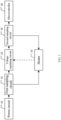
FIG 1 is a schematic block diagram of a smoking set control circuit provided according to a first embodiment of the present application. -
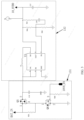
FIG 2 is a schematic block diagram of a voltage regulating circuit in the smoking set control circuit provided according to the first embodiment of the present application. -
FIG 3 is a schematic view of a switch circuit and a power supply circuit in the smoking set control circuit provided according to the first embodiment of the present application. -
FIG 4 is a schematic view of a driving circuit in the smoking set control circuit provided according to the first embodiment of the present application. -
FIG 5 is a schematic view of a boost circuit in the smoking set control circuit provided according to the first embodiment of the present application. -
FIG 6 is a schematic view of a sampling circuit in the smoking set control circuit provided according to the first embodiment of the present application. -
FIG 7 is a schematic view of the temperature curve provided according to the first embodiment of the present application. -
FIG 8 is a schematic view of a smoking set provided according to a second embodiment of the present application. - In order to facilitate the understanding of the present application, the present application will be explained in more detail below with reference to the attached drawings and the detailed description. It shall be noted that, when an element is expressed as "fixed to" another element, it may be directly on another element, or there may be one or more intervening elements therebetween. When an element is expressed as "electrically connected" to another element, it may be electrically connected to another element directly, or there may be one or more intervening elements therebetween. Terms such as "up", "down", "left", "right", "inside", "outside" and other similar expressions used in this specification are for illustrative purposes only.
- Unless otherwise defined, all technical and scientific terms used in this specification have the same meanings as commonly understood by those skilled in the art of the present application. In this specification, the terms used in the specification of the present application are only for the purpose of describing specific embodiments, and are not intended to limit the present application. The term "and/or" used in this specification comprises any and all combinations of one or more associated items listed.
- As shown in
FIG 1 , a smoking set control circuit provided according to the first embodiment of the present application comprises apower circuit 11, afirst sampling circuit 12, a voltage regulatingcircuit 13, asecond sampling circuit 14, amicrocontroller 15, and a temperature detection circuit 17. - The voltage regulating
circuit 13 is provided with power tubes. - Referring to
FIG 2 , in this example, thevoltage regulating circuit 13 comprises aswitch circuit 131, apower supply circuit 132, adriving circuit 133 and aboost circuit 134; theswitch circuit 131 has an input terminal electrically connected with thepower circuit 11, an output terminal electrically connected with a power input terminal of thepower supply circuit 132, and a control terminal for receiving a second control signal output by themicrocontroller 15; the second control signal is configured to controlling the on and off of theswitch circuit 131; thepower supply circuit 132 has a power output terminal electrically connected with thedriving circuit 133; thepower supply circuit 132 is configured to supply power to thedriving circuit 133; thedriving circuit 133 has a signal input terminal for receiving a driving signal provided by themicrocontroller 15, and a signal output terminal which outputs a driving control signal for driving and controlling the power tubes in theboost circuit 134; theboost circuit 134 is provided with power tubes; theboost circuit 134 has a power input terminal electrically connected with thepower circuit 11, a power output terminal electrically connected with aheater 16, a signal receiving terminal for receiving the driving control signal output by thedriving circuit 133, and a signal control terminal for receiving a third control signal output by themicrocontroller 15; and the third control signal is configured to control the on and off of theboost circuit 134. - Referring to
FIG 3 to FIG 5 for appreciation, in an example, theswitch circuit 131 comprises a third switch tube Q5 and a fourth switch tube Q6; the third switch tube Q5 has an input terminal electrically connected with the power circuit 11 (shown by BAT_IN in the figure), an output terminal electrically connected with pins (VIN, EN) of an integrated chip U5 in thepower supply circuit 132, and a control terminal electrically connected with an input terminal of the fourth switch tube Q6; the fourth switch tube Q6 has an output terminal grounded and a control terminal for receiving a control signal 10V8_EN output by themicrocontroller 15; the control signal 10V8_EN is configured to control the on and off of the fourth switch tube Q6, thereby controlling the on and off of the third switch tube Q5. - In this example, the third switch tube Q5 is a PMOS transistor, and the fourth switch tube Q6 is an NMOS transistor.
- The
power supply circuit 132 comprises the integrated chip U5 and peripheral circuits thereof, and a pin VOUT of the integrated chip U5 is electrically connected with thedriving circuit 133 after filtering (shown by 10_8VDD in the figure). - The
driving circuit 133 comprises an integrated chip U2 and peripheral circuits thereof. A pin VDD of the integrated chip U2 is electrically connected with 10_8VDD, i.e., electrically connected with the pin VOUT of the integrated chip U5. The signal input pins EN, HI and LI of the integrated chip U2 are respectively configured to receive driving signals BOOST_PWM_EN, BOOST_PWM_HI and BOOST_PWM_LI provided by themicrocontroller 15, and signal output pins HO and LO of the integrated chip U2 respectively output driving control signals BOOST_HO and BOOST_LO. The driving control signals BOOST_HO and BOOST_LO are configured to drive and control the power tubes in theboost circuit 134. - The
boost circuit 134 comprises a first switch tube Q1, a second switch tube Q2, a charging circuit L1, a first power tube Q3 and a second power tube Q4; the first switch tube Q1 has an input terminal electrically connected with the power circuit 11 (shown by BAT_IN in the figure) and an output terminal electrically connected to one end of the charging circuit L1, the other end of the charging circuit L1 is electrically connected with an input terminal of the first power tube Q3 and an input terminal of the second power tube Q4, and a control terminal of the first switch tube Q1 is electrically connected with an input terminal of the second switch tube Q2; the second switch tube Q2 has an output terminal grounded and a control terminal for receiving a control signal EN_VCC output by themicrocontroller 15; and the control signal EN_VCC is configured to control the on and off of the second switch tube Q2, thereby controlling the on and off of the first switch tube Q1; the first power tube Q3 has an output terminal grounded, and a control terminal for receiving the driving control signal BOOST_LO output by the integrated chip U2 in thedriving circuit 133; the second power tube Q4 has an output terminal electrically connected with the heater 16 (shown by V+2 and V-2 in the figure), and a control terminal for receiving the driving control signal BOOST_HO output by the integrated chip U2 in thedriving circuit 133. - In this example, the charging circuit L1 is an inductor, the first switch tube Q1 is a PMOS transistor, and the second switch tube Q2, the first power tube Q3 and the second power tube Q4 are all NMOS transistors. The first power tube Q3 and the second power tube Q4 adopt high-power NMOS transistors, and the second switch tube Q2 adopts a low-power NMOS transistor. It shall be noted that, when the switching tube is an NMOS transistor, the drain of the NMOS transistor may be used as an input terminal, the source of the NMOS transistor may be used as an output terminal, and the gate of the NMOS transistor may be used as a control terminal. When the switch tube is a PMOS transistor, the source of the PMOS transistor may be used as an input terminal, the drain of the PMOS transistor may be used as an output terminal, and the gate of the PMOS transistor may be used as a control terminal. The same applies to the following description, and therefore, this will not be further described herein.
- The
boost circuit 134 further comprises a filter circuit (shown by C8, C9 and C32 in the figure) which is electrically connected between the output terminal of the second power tube Q4 and theheater 16. - The
first sampling circuit 12 is used for sampling the first electrical parameters at the front end of thevoltage regulating circuit 13; and thesecond sampling circuit 14 is used for sampling the second electrical parameters at the back end of thevoltage regulating circuit 13. - Referring to
FIG 6 , in an example, both the first electrical parameters and the second electrical parameters comprise current and voltage. Each of thefirst sampling circuit 12 and thesecond sampling circuit 14 comprises a first sampling electrical connection terminal D+ and a second sampling electrical connection terminal D-, a sampling resistor 121 (i.e., R111) electrically connected between the first sampling electrical connection terminal D+ and the second sampling electrical connection terminal D-, anoperational amplifier 122, and a voltage dividing circuit 124 electrically connected with the second sampling electrical connection terminal D-. - The
operational amplifier 122 is configured to amplify and convert the voltage difference between the two ends of thesampling resistor 121, and output a sampling current (shown by ADC_IOUT in the figure). - The voltage dividing circuit 124 is configured to divide the voltage of the second sampling electrical connection terminal D- and output a sampling voltage (shown by ADC_VOUT in the figure).
- In this example, the
operational amplifier 122 comprises an operational amplifier chip U1 and peripheral circuits thereof. The output terminal ADC_VOUT of theoperational amplifier 122 may also be electrically connected with afilter circuit 123, and thefilter circuit 123 is configured to filter the sampling current output by theoperational amplifier 122. Thefilter circuit 123 is an RC filter circuit (shown by R114 and C112 in the figure). - In this example, the voltage dividing circuit 124 comprises a first resistor R112 and a second resistor R113 electrically connected in series, and a first capacitor C111 electrically connected at both ends of the second resistor R113 in parallel.
- Further speaking, each of the
first sampling circuit 12 and thesecond sampling circuit 14 further comprises a bypass switch (not shown in the figure). The bypass switch is connected in parallel with thesampling resistor 121, and a control terminal of the bypass switch is configured to receive the first control signal output by themicrocontroller 15; and the first control signal is used for controlling on and off of the bypass circuit. Through the bypass switch, the sampling resistor may be prevented from being connected in series in the loop all the time (when the bypass circuit is turned on, the power terminal of theoperational amplifier 122 may be disconnected from the power circuit), and the circuit loss may be reduced. - The
microcontroller 15 is configured to: control the power tubes in theboost circuit 134 to work at a plurality of different frequencies; acquire the first electrical parameters and the second electrical parameters at different preset switching frequencies, and accordingly determine corresponding efficiencies of thevoltage regulating circuit 13 at different preset switching frequencies; control the power tube in theboost circuit 134 to take the preset switching frequency corresponding to the highest efficiency among the corresponding efficiencies as the working frequency. - As an example, it is assumed that the switching frequencies of the power tubes are fn∼fm, and k switching frequencies, namely f1, f2, f3 ... fk, are selected from fn~fm. The power tubes in the
boost circuit 134 are sequentially controlled to work at different switching frequencies so as to acquire the first electrical parameters and the second electrical parameters at a plurality of different frequencies and determine the efficiency of thevoltage regulating circuit 13. For example, when the switching frequency of the power tube is, the voltage is U1 and the current is I1 in the first electrical parameters, and the voltage is U2 and the current is I2 in the second electrical parameters, then the efficiency of thevoltage regulating circuit 13 is Q1=P2/P1=(U2*I2)/(U1*I1). The efficiency of thevoltage regulating circuit 13 corresponding to f1, f2, f3...fk is Q1, Q2, Q3...Qk. - The preset switching frequencies f1, f2, f3...fk may be optionally set by selecting at equal steps within the switching frequency range fn~fm of the power tube, for example, f1=fn, f2=fn+X, and X is the step for frequency increment.
- By finding out the maximum efficiency among Q1, Q2, Q3...Qk (which is assumed to be Qt, then the corresponding switching frequency of the power tube is ft), the power tube in the
boost circuit 134 may be controlled to operate at the working frequency of ft. At this working frequency, the loss of theboost circuit 134 is minimal, which improves the utilization rate of power supply. - The working process of the smoking set control circuit of this example will be described with reference to the temperature curve shown in
FIG 7 below. - As shown in
FIG 7 , when the smoking set is started, the temperature of the heater gradually rises from the initial temperature to the highest temperature T1 (this stage may be called the preheating and heating-up stage). The time consumed by the heating-up phase is S1, which is short and usually several tens of seconds. However, at this stage, the output power is particularly large, the output voltage is high, and the output current is large. - After rising to the highest temperature T1, the temperature of the heater is kept within a certain temperature range or at a preset temperature value (this stage may be called heat preservation stage). The duration of the heat preservation stage is up to several minutes, and at this stage, the output power, output voltage and output current are relatively small.
- In the preheating and heating-up stage, the
microcontroller 15 controls the fourth switch tube Q6 to be turned on through the control signal 10V8_EN, thereby controlling the third switch tube Q5 to be turned on; thepower circuit 11 is conductively connected with the integrated chip U5, and the integrated chip U5 is boosted to supply power to the integrated chip U2. - The
microcontroller 15 controls the second switch tube Q2 to be turned on through the control signal EN_VCC, thereby controling the first switch tube Q1 to be turned on. Themicrocontroller 15 provides driving signals BOOST_PWM_EN (at high level), BOOST PWM HI and BOOST PWM LI (PWM signals) to the integrated chip U2, so that the integrated chip U2 outputs the driving control signals BOOST_HO and BOOST_LO. The driving control signals BOOST_HO and BOOST_LO control the on and off of the first power tube Q3 and the second power tube Q4 (at this time, the switching frequencies of the first power tube Q3 and the second power tube Q4 are high, e.g., 350kHz to 450kHz, which may be determined in the aforementioned way, i.e., by taking the preset switching frequency corresponding to the highest efficiency among the corresponding efficiencies as the working frequency). When the first power tube Q3 is turned on and the second power tube Q4 is turned off, thepower circuit 11 charges the inductor L1 through the first switch tube Q1. When the first power tube Q3 is turned off and the second power tube Q4 is turned on, the reverse electromotive force of the inductor L1 is superimposed on the voltage of thepower circuit 11, so that a higher voltage is output through the second power tube Q4. Finally, a stable voltage is formed after the voltage is filtered by the filter circuit (filter capacitors C8, C39, C32) and supplied to the heater 16 (V+2, V-2) for heating. - In the heat preservation stage, the
microcontroller 15 controls the fourth switch tube Q6 to be turned on through the control signal 10V8_EN, thereby controlling the third switch tube Q5 to be turned on; thepower circuit 11 is conductively connected with the integrated chip U5, and the integrated chip U5 is boosted to supply power to the integrated chip U2. - The
microcontroller 15 controls the second switch tube Q2 to be turned on through the control signal EN_VCC, thereby controlling the first switch tube Q1 to be turned on. Themicrocontroller 15 provides driving signals BOOST_PWM_EN (at high level), BOOST PWM HI and BOOST PWM LI (PWM signals) to the integrated chip U2, so that the integrated chip U2 outputs the driving control signals BOOST_HO and BOOST_LO. The driving control signals BOOST_HO and BOOST_LO control the on and off of the first power tube Q3 and the second power tube Q4 (at this time, the switching frequencies of the first power tube Q3 and the second power tube Q4 are lower, e.g., 150kHz to 250kHz, which may also be determined in the aforementioned way, i.e., by taking the preset switching frequency corresponding to the highest efficiency among the corresponding efficiencies as the working frequency). When the first power tube Q3 is turned on and the second power tube Q4 is turned off, thepower circuit 11 charges the inductor L1 through the first switch tube Q1. When the first power tube Q3 is turned off and the second power tube Q4 is turned on, the reverse electromotive force of the inductor L1 is superimposed on the voltage of thepower circuit 11, so that a higher voltage is output through the second power tube Q4 (this voltage is lower than the voltage at the preheating and heating-up stage, and the current and output power are relatively low). Finally, a stable voltage is formed after the voltage is filtered by the filter circuit (filter capacitors C8, C39, C32) and supplied to the heater 16 (V+2, V-2) for heating. -
FIG 8 is a smoking set provided according to the second embodiment of the present application. The smoking set 100 comprises a heater and the smoking set control circuit described in the first embodiment. - The heater may operate at a central heating mode (in which the periphery of a heating body is in direct contact with the aerosol-forming matrix) and a peripheral heating mode (in which a cylindrical heating body wraps the aerosol-forming matrix), and the heater may also heat the aerosol-forming matrix by one or more of heat conduction, electromagnetic induction, chemical reaction, infrared action, resonance, photoelectric conversion and photothermal conversion to generate aerosol for inhalation. Preferably, the heater is an infrared heater.
- It shall be noted that, the specification and attached drawings of the present application show preferred embodiments of the present application. However, the present application may be implemented in many different forms, and it is not limited to the embodiments described in this specification. These embodiments are not construed as additional restrictions on the content of the present application, but are provided for a more thorough and comprehensive understanding of the disclosure of the present application. Further speaking, those of ordinary skill in the art can make improvements or variations according to the above description, and all these improvements and variations shall fall within the scope claimed in the appended claims of the present application.
Claims (13)
- A smoking set control circuit, being a control circuit for a smoking set with a heater (15), comprising a power circuit (11), a sampling circuit, a voltage regulating circuit and a microcontroller (16), wherein the sampling circuit comprising a first sampling circuit (12) and a second sampling circuit (14);the first sampling circuit being configured to sample first electrical parameters at the front end of the voltage regulating circuit;the voltage regulating circuit comprising power tubes;the second sampling circuit being configured to sample second electrical parameters at the back end of the voltage regulating circuit;characterized in that:
the microcontroller being configured to:in a preheating and heating-up stage of the heater, control the power tubes to work at a plurality of different preset switching frequencies;acquire the first electrical parameters and the second electrical parameters at different preset switching frequencies, and accordingly determine corresponding efficiencies of the voltage regulating circuit at different preset switching frequencies;control the power tube to take the preset switching frequency corresponding to the highest efficiency among the corresponding efficiencies as the working frequency;in a heat preservation stage of the heater, stage, control the power tubes to work at a plurality of different preset switching frequencies; acquire the first electrical parameters and the second electrical parameters at different preset switching frequencies, and accordingly determine corresponding efficiencies of the voltage regulating circuit at different preset switching frequencies; control the power tube to take the preset switching frequency corresponding to the highest efficiency among the corresponding efficiencies as the working frequency;wherein the switching frequencies of the power tubes in the preheating and heating-up stage are higher than the switching frequencies of the power tubes in the heat preservation stage. - The smoking set control circuit according to Claim 1, being characterized in that, the first electrical parameters and the second electrical parameters comprise current and voltage;each of the first sampling circuit and the second sampling circuit comprises a first sampling electrical connection terminal, a second sampling electrical connection terminal, a sampling resistor and an operational amplifier, and a voltage dividing circuit electrically connected with the second sampling electrical connection terminal;the sampling resistor is connected between the first sampling electrical connection terminal and the second sampling electrical connection terminal;the operational amplifier is configured to amplify and convert the voltage difference between two ends of the sampling resistor and output a sampling current;the voltage dividing circuit is configured to divide the voltage of the second sampling electrical connection terminal and output a sampling voltage.
- The smoking set control circuit according to Claim 2, being characterized in that, the first sampling circuit and the second sampling circuit further comprise a filter circuit;
the filter circuit is electrically connected with an output terminal of the operational amplifier, and is configured to filter the sampling current output by the operational amplifier. - The smoking set control circuit according to Claim 2, being characterized in that, the voltage dividing circuit comprises a first resistor and a second resistor electrically connected in series, and a first capacitor electrically connected at both ends of the second resistor in parallel.
- The smoking set control circuit according to Claim 2, being characterized in that, the first sampling circuit and/or the second sampling circuit further comprise a bypass switch; the bypass switch is connected in parallel with the sampling resistor, and a control terminal of the bypass switch is configured to receive a first control signal output by the microcontroller; the first control signal is configured to control on and off of the bypass switch.
- The smoking set control circuit according to Claim 1, being characterized in that, the voltage regulating circuit comprises a switch circuit, a power supply circuit, a driving circuit and a boost circuit;the switch circuit has an input terminal electrically connected with the power circuit, an output terminal electrically connected with a power input terminal of the power supply circuit, and a control terminal for receiving a second control signal output by the microcontroller; the second control signal is configured to control the on and off of the switch circuit;the power supply circuit has a power output terminal electrically connected with a power terminal of the driving circuit; the power supply circuit is configured to supply power to the driving circuit;the driving circuit has a signal input terminal for receiving a driving signal provided by the microcontroller, and a signal output terminal which outputs a driving control signal for driving and controlling the power tubes;the boost circuit is provided with the power tubes; the boost circuit has a power input terminal electrically connected with the power circuit, a power output terminal configured to be electrically connected with the heater, a signal receiving terminal for receiving the driving control signal, and a signal control terminal for receiving a third control signal output by the microcontroller; and the third control signal is configured to control the on and off of the boost circuit.
- The smoking set control circuit according to Claim 6, being characterized in that, the boost circuit comprises a first switch tube, a second switch tube, a charging circuit, a first power tube and a second power tube;the first switch tube has an input terminal electrically connected with the power circuit and an output terminal electrically connected with one end of the charging circuit, the other end of the charging circuit is electrically connected with an input terminal of the first power tube and an input terminal of the second power tube, and a control terminal of the first switch tube is electrically connected with an input terminal of the second switch tube;the second switch tube has an output terminal grounded and a control terminal for receiving the third control signal; the third control signal is configured to control the on and off of the second switch tube, thereby controlling the on and off of the first switch tube;the first power tube has an output terminal grounded and a control terminal for receiving the first driving control signal output by the driving circuit;the second power tube has an output terminal electrically connected with the heater, and a control terminal for receiving the second driving control signal output by the driving circuit.
- The smoking set control circuit according to Claim 7, being characterized in that, the charging circuit comprises an inductor.
- The smoking set control circuit according to Claim 7, being characterized in that, the first switch tube is a PMOS transistor, and the second switch tube, the first power tube and the second power tube are all NMOS transistors.
- The smoking set control circuit according to any of Claims 7 to 9, being characterized in that, the boost circuit further comprises a filter circuit which is electrically connected between the output terminal of the second power tube and the heater.
- The smoking set control circuit according to Claim 6, being characterized in that, the switch circuit comprises a third switch tube and a fourth switch tube;the third switch tube has an input terminal electrically connected with the power circuit, an output terminal electrically connected with the power supply circuit, and a control terminal electrically connected with an input terminal of the fourth switch tube;the fourth switch tube has an output terminal grounded and a control terminal for receiving the second control signal; the second control signal is configured to control the on and off of the fourth switch tube, thereby controlling the on and off of the third switch tube.
- The smoking set control circuit according to Claim 11, being characterized in that, the third switch tube is a PMOS transistor, and the fourth switch tube is an NMOS transistor.
- A smoking set, being characterized in that it comprises the heater and the smoking set control circuit according to any of Claims 1 to 12.
Applications Claiming Priority (2)
| Application Number | Priority Date | Filing Date | Title |
|---|---|---|---|
| CN202020062619.6U CN212279901U (en) | 2020-01-11 | 2020-01-11 | Smoking set control circuit and smoking set |
| PCT/CN2021/070999 WO2021139804A1 (en) | 2020-01-11 | 2021-01-10 | Smoking set control circuit and smoking set |
Publications (3)
| Publication Number | Publication Date |
|---|---|
| EP4088599A1 EP4088599A1 (en) | 2022-11-16 |
| EP4088599A4 EP4088599A4 (en) | 2023-01-25 |
| EP4088599B1 true EP4088599B1 (en) | 2024-12-04 |
Family
ID=73933244
Family Applications (1)
| Application Number | Title | Priority Date | Filing Date |
|---|---|---|---|
| EP21739001.2A Active EP4088599B1 (en) | 2020-01-11 | 2021-01-10 | Smoking set control circuit and smoking set |
Country Status (6)
| Country | Link |
|---|---|
| US (1) | US12575604B2 (en) |
| EP (1) | EP4088599B1 (en) |
| JP (1) | JP7511653B2 (en) |
| KR (1) | KR102799043B1 (en) |
| CN (1) | CN212279901U (en) |
| WO (1) | WO2021139804A1 (en) |
Families Citing this family (3)
| Publication number | Priority date | Publication date | Assignee | Title |
|---|---|---|---|---|
| CN212279901U (en) | 2020-01-11 | 2021-01-05 | 深圳市合元科技有限公司 | Smoking set control circuit and smoking set |
| JP6909884B1 (en) * | 2020-02-25 | 2021-07-28 | 日本たばこ産業株式会社 | Aerosol aspirator power supply unit and aerosol aspirator |
| US20250386877A1 (en) * | 2024-06-25 | 2025-12-25 | Kt&G Corporation | Aerosol-generating device |
Family Cites Families (15)
| Publication number | Priority date | Publication date | Assignee | Title |
|---|---|---|---|---|
| US4814687A (en) * | 1988-01-21 | 1989-03-21 | Honeywell, Inc. | Following voltage/current regulator |
| US7412612B2 (en) | 2004-02-24 | 2008-08-12 | Delphi Technologies, Inc. | Dynamically optimized power converter |
| PL2563172T5 (en) * | 2010-04-30 | 2022-08-29 | Fontem Holdings 4 B.V. | Electronic device for smoking |
| CN102541232B (en) * | 2010-12-29 | 2014-12-10 | 鸿富锦精密工业(深圳)有限公司 | Buck conversion circuit |
| JP2014035314A (en) | 2012-08-10 | 2014-02-24 | Sharp Corp | Power consumption measuring device and power consumption measuring method |
| US9820509B2 (en) | 2013-10-10 | 2017-11-21 | Kyle D. Newton | Electronic cigarette with encoded cartridge |
| CN204258628U (en) | 2014-11-14 | 2015-04-08 | 深圳市高健实业股份有限公司 | A kind of booster circuit of the efficient high power be applied in electronic cigarette |
| CN205922901U (en) * | 2016-08-10 | 2017-02-08 | 卓尔悦欧洲控股有限公司 | Electron cigarette drive circuit and electron cigarette |
| CN206371515U (en) | 2016-11-30 | 2017-08-04 | 广州周立功单片机科技有限公司 | Electronic cigarette |
| US11431242B2 (en) | 2017-02-24 | 2022-08-30 | China Tobacco Hunan Industrial Co., Ltd. | Oscillation control circuit for ultrasonic atomization sheet and ultrasonic electronic cigarette |
| CN208258102U (en) | 2018-05-29 | 2018-12-18 | 深圳市舜宝科技有限公司 | A kind of electronic cigarette rapid heating circuit and electronic cigarette |
| EP3874591A1 (en) * | 2018-10-30 | 2021-09-08 | Agility Power Systems LLC | High efficiency, parallel, power conversion system with adaptive dynamic efficiency optimization |
| US10788523B1 (en) * | 2019-06-14 | 2020-09-29 | Infineon Technologies Ag | Inductor value determination for power converter |
| CN110432546B (en) * | 2019-07-31 | 2024-08-23 | 深圳瀚星翔科技有限公司 | Electronic cigarette, mode switching control method and device |
| CN212279901U (en) | 2020-01-11 | 2021-01-05 | 深圳市合元科技有限公司 | Smoking set control circuit and smoking set |
-
2020
- 2020-01-11 CN CN202020062619.6U patent/CN212279901U/en active Active
-
2021
- 2021-01-10 EP EP21739001.2A patent/EP4088599B1/en active Active
- 2021-01-10 JP JP2022542291A patent/JP7511653B2/en active Active
- 2021-01-10 US US17/792,135 patent/US12575604B2/en active Active
- 2021-01-10 WO PCT/CN2021/070999 patent/WO2021139804A1/en not_active Ceased
- 2021-01-10 KR KR1020227027867A patent/KR102799043B1/en active Active
Also Published As
| Publication number | Publication date |
|---|---|
| WO2021139804A1 (en) | 2021-07-15 |
| KR102799043B1 (en) | 2025-04-23 |
| KR20220125349A (en) | 2022-09-14 |
| JP7511653B2 (en) | 2024-07-05 |
| EP4088599A4 (en) | 2023-01-25 |
| JP2023510330A (en) | 2023-03-13 |
| CN212279901U (en) | 2021-01-05 |
| US20230086478A1 (en) | 2023-03-23 |
| EP4088599A1 (en) | 2022-11-16 |
| US12575604B2 (en) | 2026-03-17 |
Similar Documents
| Publication | Publication Date | Title |
|---|---|---|
| EP4088599B1 (en) | Smoking set control circuit and smoking set | |
| CN104283423B (en) | The power-supply system and method for output current are provided under adjusted system output voltage | |
| TW200934073A (en) | Switching regulator with balanced control configuration with filtering and referencing to eliminate compensation | |
| US20090206808A1 (en) | Method for Generating an Internal Compensation Network of a Pole and Two Zeros to Compensate High Frequency Voltage Mode Switching Regulators | |
| KR101045718B1 (en) | Buck Switching Regulators and Methods | |
| CN111400987B (en) | Double-closed-loop BUCK converter based on frequency domain analysis and loop design method thereof | |
| WO2021057298A1 (en) | Electronic cigarette chip realizing automatic closed-loop control over output voltage, and working method for electronic cigarette chip | |
| CN104783332A (en) | Electronic cigarette capable of automatically controlling temperature | |
| CN104839896A (en) | Automatic temperature-control electronic cigarette with titanium wire | |
| CN212464911U (en) | Smoking set control circuit and smoking set | |
| CN104881063A (en) | Automatic temperature control platinum wire electronic cigarette | |
| CN204440200U (en) | A kind of heating control circuit for baking-type smoke generating device | |
| CN102904435A (en) | Modified compensating circuit and switching power supply applying modified compensating circuit | |
| TWI555318B (en) | Voltage converter | |
| CN111935861A (en) | Electromagnetic heating circuit, control method and electronic atomization device | |
| US8339164B2 (en) | Antenna driving device | |
| CN218185268U (en) | Electron cigarette electromagnetic heating circuit and electron cigarette | |
| US20220263406A1 (en) | Converter and method for starting a switching power supply | |
| CN204540829U (en) | A kind of can be temperature automatically controlled electronic cigarette | |
| CN221769349U (en) | Heating circuit and aerosol generating device | |
| CN220545837U (en) | Aerosol generating device | |
| CN113080523A (en) | Smoking set control circuit and smoking set | |
| CN222941814U (en) | Aerosol generating device | |
| CN108233692A (en) | A kind of soft starting circuit of switching regulator | |
| CN212464921U (en) | Smoking set power supply circuit and smoking set |
Legal Events
| Date | Code | Title | Description |
|---|---|---|---|
| STAA | Information on the status of an ep patent application or granted ep patent |
Free format text: STATUS: THE INTERNATIONAL PUBLICATION HAS BEEN MADE |
|
| PUAI | Public reference made under article 153(3) epc to a published international application that has entered the european phase |
Free format text: ORIGINAL CODE: 0009012 |
|
| STAA | Information on the status of an ep patent application or granted ep patent |
Free format text: STATUS: REQUEST FOR EXAMINATION WAS MADE |
|
| 17P | Request for examination filed |
Effective date: 20220803 |
|
| AK | Designated contracting states |
Kind code of ref document: A1 Designated state(s): AL AT BE BG CH CY CZ DE DK EE ES FI FR GB GR HR HU IE IS IT LI LT LU LV MC MK MT NL NO PL PT RO RS SE SI SK SM TR |
|
| REG | Reference to a national code |
Ref country code: DE Ref legal event code: R079 Free format text: PREVIOUS MAIN CLASS: A24F0040500000 Ipc: H02M0001000000 Ref country code: DE Ref legal event code: R079 Ref document number: 602021022887 Country of ref document: DE Free format text: PREVIOUS MAIN CLASS: A24F0040500000 Ipc: H02M0001000000 |
|
| A4 | Supplementary search report drawn up and despatched |
Effective date: 20230102 |
|
| RIC1 | Information provided on ipc code assigned before grant |
Ipc: A24F 40/57 20200101ALI20221220BHEP Ipc: H02M 3/156 20060101ALI20221220BHEP Ipc: H02M 1/00 20060101AFI20221220BHEP |
|
| STAA | Information on the status of an ep patent application or granted ep patent |
Free format text: STATUS: EXAMINATION IS IN PROGRESS |
|
| 17Q | First examination report despatched |
Effective date: 20230127 |
|
| DAV | Request for validation of the european patent (deleted) | ||
| DAX | Request for extension of the european patent (deleted) | ||
| GRAP | Despatch of communication of intention to grant a patent |
Free format text: ORIGINAL CODE: EPIDOSNIGR1 |
|
| STAA | Information on the status of an ep patent application or granted ep patent |
Free format text: STATUS: GRANT OF PATENT IS INTENDED |
|
| RIC1 | Information provided on ipc code assigned before grant |
Ipc: A24F 40/57 20200101ALI20240530BHEP Ipc: H02J 7/00 20060101ALI20240530BHEP Ipc: H02M 3/156 20060101ALI20240530BHEP Ipc: H02M 1/00 20060101AFI20240530BHEP |
|
| INTG | Intention to grant announced |
Effective date: 20240626 |
|
| GRAS | Grant fee paid |
Free format text: ORIGINAL CODE: EPIDOSNIGR3 |
|
| GRAA | (expected) grant |
Free format text: ORIGINAL CODE: 0009210 |
|
| STAA | Information on the status of an ep patent application or granted ep patent |
Free format text: STATUS: THE PATENT HAS BEEN GRANTED |
|
| AK | Designated contracting states |
Kind code of ref document: B1 Designated state(s): AL AT BE BG CH CY CZ DE DK EE ES FI FR GB GR HR HU IE IS IT LI LT LU LV MC MK MT NL NO PL PT RO RS SE SI SK SM TR |
|
| REG | Reference to a national code |
Ref country code: CH Ref legal event code: EP |
|
| REG | Reference to a national code |
Ref country code: DE Ref legal event code: R096 Ref document number: 602021022887 Country of ref document: DE |
|
| REG | Reference to a national code |
Ref country code: IE Ref legal event code: FG4D |
|
| REG | Reference to a national code |
Ref country code: LT Ref legal event code: MG9D |
|
| REG | Reference to a national code |
Ref country code: NL Ref legal event code: MP Effective date: 20241204 |
|
| PG25 | Lapsed in a contracting state [announced via postgrant information from national office to epo] |
Ref country code: HR Free format text: LAPSE BECAUSE OF FAILURE TO SUBMIT A TRANSLATION OF THE DESCRIPTION OR TO PAY THE FEE WITHIN THE PRESCRIBED TIME-LIMIT Effective date: 20241204 |
|
| PG25 | Lapsed in a contracting state [announced via postgrant information from national office to epo] |
Ref country code: FI Free format text: LAPSE BECAUSE OF FAILURE TO SUBMIT A TRANSLATION OF THE DESCRIPTION OR TO PAY THE FEE WITHIN THE PRESCRIBED TIME-LIMIT Effective date: 20241204 |
|
| P01 | Opt-out of the competence of the unified patent court (upc) registered |
Free format text: CASE NUMBER: APP_11093/2025 Effective date: 20250306 |
|
| PG25 | Lapsed in a contracting state [announced via postgrant information from national office to epo] |
Ref country code: BG Free format text: LAPSE BECAUSE OF FAILURE TO SUBMIT A TRANSLATION OF THE DESCRIPTION OR TO PAY THE FEE WITHIN THE PRESCRIBED TIME-LIMIT Effective date: 20241204 |
|
| PG25 | Lapsed in a contracting state [announced via postgrant information from national office to epo] |
Ref country code: ES Free format text: LAPSE BECAUSE OF FAILURE TO SUBMIT A TRANSLATION OF THE DESCRIPTION OR TO PAY THE FEE WITHIN THE PRESCRIBED TIME-LIMIT Effective date: 20241204 |
|
| PG25 | Lapsed in a contracting state [announced via postgrant information from national office to epo] |
Ref country code: NO Free format text: LAPSE BECAUSE OF FAILURE TO SUBMIT A TRANSLATION OF THE DESCRIPTION OR TO PAY THE FEE WITHIN THE PRESCRIBED TIME-LIMIT Effective date: 20250304 |
|
| PG25 | Lapsed in a contracting state [announced via postgrant information from national office to epo] |
Ref country code: LV Free format text: LAPSE BECAUSE OF FAILURE TO SUBMIT A TRANSLATION OF THE DESCRIPTION OR TO PAY THE FEE WITHIN THE PRESCRIBED TIME-LIMIT Effective date: 20241204 Ref country code: GR Free format text: LAPSE BECAUSE OF FAILURE TO SUBMIT A TRANSLATION OF THE DESCRIPTION OR TO PAY THE FEE WITHIN THE PRESCRIBED TIME-LIMIT Effective date: 20250305 |
|
| PG25 | Lapsed in a contracting state [announced via postgrant information from national office to epo] |
Ref country code: RS Free format text: LAPSE BECAUSE OF FAILURE TO SUBMIT A TRANSLATION OF THE DESCRIPTION OR TO PAY THE FEE WITHIN THE PRESCRIBED TIME-LIMIT Effective date: 20250304 |
|
| PG25 | Lapsed in a contracting state [announced via postgrant information from national office to epo] |
Ref country code: NL Free format text: LAPSE BECAUSE OF FAILURE TO SUBMIT A TRANSLATION OF THE DESCRIPTION OR TO PAY THE FEE WITHIN THE PRESCRIBED TIME-LIMIT Effective date: 20241204 |
|
| REG | Reference to a national code |
Ref country code: AT Ref legal event code: MK05 Ref document number: 1749210 Country of ref document: AT Kind code of ref document: T Effective date: 20241204 |
|
| PG25 | Lapsed in a contracting state [announced via postgrant information from national office to epo] |
Ref country code: SM Free format text: LAPSE BECAUSE OF FAILURE TO SUBMIT A TRANSLATION OF THE DESCRIPTION OR TO PAY THE FEE WITHIN THE PRESCRIBED TIME-LIMIT Effective date: 20241204 |
|
| PG25 | Lapsed in a contracting state [announced via postgrant information from national office to epo] |
Ref country code: PL Free format text: LAPSE BECAUSE OF FAILURE TO SUBMIT A TRANSLATION OF THE DESCRIPTION OR TO PAY THE FEE WITHIN THE PRESCRIBED TIME-LIMIT Effective date: 20241204 |
|
| PG25 | Lapsed in a contracting state [announced via postgrant information from national office to epo] |
Ref country code: IS Free format text: LAPSE BECAUSE OF FAILURE TO SUBMIT A TRANSLATION OF THE DESCRIPTION OR TO PAY THE FEE WITHIN THE PRESCRIBED TIME-LIMIT Effective date: 20250404 |
|
| PG25 | Lapsed in a contracting state [announced via postgrant information from national office to epo] |
Ref country code: PT Free format text: LAPSE BECAUSE OF FAILURE TO SUBMIT A TRANSLATION OF THE DESCRIPTION OR TO PAY THE FEE WITHIN THE PRESCRIBED TIME-LIMIT Effective date: 20250404 |
|
| PG25 | Lapsed in a contracting state [announced via postgrant information from national office to epo] |
Ref country code: EE Free format text: LAPSE BECAUSE OF FAILURE TO SUBMIT A TRANSLATION OF THE DESCRIPTION OR TO PAY THE FEE WITHIN THE PRESCRIBED TIME-LIMIT Effective date: 20241204 |
|
| PG25 | Lapsed in a contracting state [announced via postgrant information from national office to epo] |
Ref country code: RO Free format text: LAPSE BECAUSE OF FAILURE TO SUBMIT A TRANSLATION OF THE DESCRIPTION OR TO PAY THE FEE WITHIN THE PRESCRIBED TIME-LIMIT Effective date: 20241204 Ref country code: AT Free format text: LAPSE BECAUSE OF FAILURE TO SUBMIT A TRANSLATION OF THE DESCRIPTION OR TO PAY THE FEE WITHIN THE PRESCRIBED TIME-LIMIT Effective date: 20241204 |
|
| PG25 | Lapsed in a contracting state [announced via postgrant information from national office to epo] |
Ref country code: SK Free format text: LAPSE BECAUSE OF FAILURE TO SUBMIT A TRANSLATION OF THE DESCRIPTION OR TO PAY THE FEE WITHIN THE PRESCRIBED TIME-LIMIT Effective date: 20241204 |
|
| PG25 | Lapsed in a contracting state [announced via postgrant information from national office to epo] |
Ref country code: CZ Free format text: LAPSE BECAUSE OF FAILURE TO SUBMIT A TRANSLATION OF THE DESCRIPTION OR TO PAY THE FEE WITHIN THE PRESCRIBED TIME-LIMIT Effective date: 20241204 |
|
| PG25 | Lapsed in a contracting state [announced via postgrant information from national office to epo] |
Ref country code: IT Free format text: LAPSE BECAUSE OF FAILURE TO SUBMIT A TRANSLATION OF THE DESCRIPTION OR TO PAY THE FEE WITHIN THE PRESCRIBED TIME-LIMIT Effective date: 20241204 |
|
| REG | Reference to a national code |
Ref country code: CH Ref legal event code: PL |
|
| REG | Reference to a national code |
Ref country code: DE Ref legal event code: R097 Ref document number: 602021022887 Country of ref document: DE |
|
| PG25 | Lapsed in a contracting state [announced via postgrant information from national office to epo] |
Ref country code: SE Free format text: LAPSE BECAUSE OF FAILURE TO SUBMIT A TRANSLATION OF THE DESCRIPTION OR TO PAY THE FEE WITHIN THE PRESCRIBED TIME-LIMIT Effective date: 20241204 |
|
| PG25 | Lapsed in a contracting state [announced via postgrant information from national office to epo] |
Ref country code: MC Free format text: LAPSE BECAUSE OF FAILURE TO SUBMIT A TRANSLATION OF THE DESCRIPTION OR TO PAY THE FEE WITHIN THE PRESCRIBED TIME-LIMIT Effective date: 20241204 Ref country code: LU Free format text: LAPSE BECAUSE OF NON-PAYMENT OF DUE FEES Effective date: 20250110 |
|
| PG25 | Lapsed in a contracting state [announced via postgrant information from national office to epo] |
Ref country code: DK Free format text: LAPSE BECAUSE OF FAILURE TO SUBMIT A TRANSLATION OF THE DESCRIPTION OR TO PAY THE FEE WITHIN THE PRESCRIBED TIME-LIMIT Effective date: 20241204 |
|
| PLBE | No opposition filed within time limit |
Free format text: ORIGINAL CODE: 0009261 |
|
| STAA | Information on the status of an ep patent application or granted ep patent |
Free format text: STATUS: NO OPPOSITION FILED WITHIN TIME LIMIT |
|
| PG25 | Lapsed in a contracting state [announced via postgrant information from national office to epo] |
Ref country code: BE Free format text: LAPSE BECAUSE OF NON-PAYMENT OF DUE FEES Effective date: 20250131 |
|
| PG25 | Lapsed in a contracting state [announced via postgrant information from national office to epo] |
Ref country code: CH Free format text: LAPSE BECAUSE OF NON-PAYMENT OF DUE FEES Effective date: 20250131 |
|
| REG | Reference to a national code |
Ref country code: BE Ref legal event code: MM Effective date: 20250131 |
|
| 26N | No opposition filed |
Effective date: 20250905 |
|
| PG25 | Lapsed in a contracting state [announced via postgrant information from national office to epo] |
Ref country code: IE Free format text: LAPSE BECAUSE OF NON-PAYMENT OF DUE FEES Effective date: 20250110 |
|
| PGFP | Annual fee paid to national office [announced via postgrant information from national office to epo] |
Ref country code: GB Payment date: 20260127 Year of fee payment: 6 |
|
| PGFP | Annual fee paid to national office [announced via postgrant information from national office to epo] |
Ref country code: DE Payment date: 20260114 Year of fee payment: 6 |
|
| PGFP | Annual fee paid to national office [announced via postgrant information from national office to epo] |
Ref country code: FR Payment date: 20260128 Year of fee payment: 6 |