EP4087286B1 - Netzwerkverwalter, empfangsvorrichtung und verfahren für rundfunkfunkzugangsnetzwerke - Google Patents
Netzwerkverwalter, empfangsvorrichtung und verfahren für rundfunkfunkzugangsnetzwerke Download PDFInfo
- Publication number
- EP4087286B1 EP4087286B1 EP21172105.5A EP21172105A EP4087286B1 EP 4087286 B1 EP4087286 B1 EP 4087286B1 EP 21172105 A EP21172105 A EP 21172105A EP 4087286 B1 EP4087286 B1 EP 4087286B1
- Authority
- EP
- European Patent Office
- Prior art keywords
- load data
- network
- data
- radio access
- load
- Prior art date
- Legal status (The legal status is an assumption and is not a legal conclusion. Google has not performed a legal analysis and makes no representation as to the accuracy of the status listed.)
- Active
Links
Images


Classifications
-
- H—ELECTRICITY
- H04—ELECTRIC COMMUNICATION TECHNIQUE
- H04N—PICTORIAL COMMUNICATION, e.g. TELEVISION
- H04N21/00—Selective content distribution, e.g. interactive television or video on demand [VOD]
- H04N21/60—Network structure or processes for video distribution between server and client or between remote clients; Control signalling between clients, server and network components; Transmission of management data between server and client, e.g. sending from server to client commands for recording incoming content stream; Communication details between server and client
- H04N21/61—Network physical structure; Signal processing
- H04N21/6106—Network physical structure; Signal processing specially adapted to the downstream path of the transmission network
- H04N21/6131—Network physical structure; Signal processing specially adapted to the downstream path of the transmission network involving transmission via a mobile phone network
-
- H—ELECTRICITY
- H04—ELECTRIC COMMUNICATION TECHNIQUE
- H04N—PICTORIAL COMMUNICATION, e.g. TELEVISION
- H04N21/00—Selective content distribution, e.g. interactive television or video on demand [VOD]
- H04N21/20—Servers specifically adapted for the distribution of content, e.g. VOD servers; Operations thereof
- H04N21/23—Processing of content or additional data; Elementary server operations; Server middleware
- H04N21/238—Interfacing the downstream path of the transmission network, e.g. adapting the transmission rate of a video stream to network bandwidth; Processing of multiplex streams
- H04N21/2385—Channel allocation; Bandwidth allocation
-
- H—ELECTRICITY
- H04—ELECTRIC COMMUNICATION TECHNIQUE
- H04N—PICTORIAL COMMUNICATION, e.g. TELEVISION
- H04N21/00—Selective content distribution, e.g. interactive television or video on demand [VOD]
- H04N21/20—Servers specifically adapted for the distribution of content, e.g. VOD servers; Operations thereof
- H04N21/25—Management operations performed by the server for facilitating the content distribution or administrating data related to end-users or client devices, e.g. end-user or client device authentication, learning user preferences for recommending movies
- H04N21/258—Client or end-user data management, e.g. managing client capabilities, user preferences or demographics, processing of multiple end-users preferences to derive collaborative data
- H04N21/25808—Management of client data
- H04N21/25841—Management of client data involving the geographical location of the client
-
- H—ELECTRICITY
- H04—ELECTRIC COMMUNICATION TECHNIQUE
- H04N—PICTORIAL COMMUNICATION, e.g. TELEVISION
- H04N21/00—Selective content distribution, e.g. interactive television or video on demand [VOD]
- H04N21/20—Servers specifically adapted for the distribution of content, e.g. VOD servers; Operations thereof
- H04N21/25—Management operations performed by the server for facilitating the content distribution or administrating data related to end-users or client devices, e.g. end-user or client device authentication, learning user preferences for recommending movies
- H04N21/262—Content or additional data distribution scheduling, e.g. sending additional data at off-peak times, updating software modules, calculating the carousel transmission frequency, delaying a video stream transmission, generating play-lists
- H04N21/26208—Content or additional data distribution scheduling, e.g. sending additional data at off-peak times, updating software modules, calculating the carousel transmission frequency, delaying a video stream transmission, generating play-lists the scheduling operation being performed under constraints
-
- H—ELECTRICITY
- H04—ELECTRIC COMMUNICATION TECHNIQUE
- H04W—WIRELESS COMMUNICATION NETWORKS
- H04W4/00—Services specially adapted for wireless communication networks; Facilities therefor
- H04W4/06—Selective distribution of broadcast services, e.g. multimedia broadcast multicast service [MBMS]; Services to user groups; One-way selective calling services
-
- H—ELECTRICITY
- H04—ELECTRIC COMMUNICATION TECHNIQUE
- H04W—WIRELESS COMMUNICATION NETWORKS
- H04W40/00—Communication routing or communication path finding
- H04W40/02—Communication route or path selection, e.g. power-based or shortest path routing
- H04W40/20—Communication route or path selection, e.g. power-based or shortest path routing based on geographic position or location
Definitions
- the disclosure relates to a broadcast network and a method for operating a broadcast network.
- Document EP 3 633 938 A1 discloses a how to offload data and video traffic to a supplemental downlink overlay network.
- Document WO 03/084098 A1 discloses providing broadcast data to a radio device via a broadcast channel and communicating from the radio device to a respective broadcast station via the internet.
- Document EP 3 200 453 A1 discloses sending sectional videos comprising a region of interest of a video in response to receiving a region-of-interest request.
- the present disclosure acknowledges the fact that serving more devices in cellular networks increases the complexity of the networks, since smaller cells need to be provided, or more capable transmitters need to be provided, to serve the increased number of devices. With increasing capabilities, the complexity and therefore also the costs for the transmitters raise. The same may apply to the power consumption of such transmitters. Operating the cellular network therefore becomes more demanding technically and economically.
- the operator of the network may estimate the average load on the cellular network and dimension the cellular network accordingly.
- the cellular network may experience congestion and overload situations.
- Such situations may for example arise when an important event, like a live sports event is viewed by many users on their mobile devices.
- the data stream comprising e.g., video and audio data for such a sports event, needs to be provided to all transceivers of the cellular network that currently serve at least one user that wants to view the event.
- users today expect a flawless experience, where the video and audio data is distributed with low latencies and high quality, an expectation that is difficult to meet, especially under high-load conditions.
- the present disclosure acknowledges that users will demand more and more services from cellular networks on their mobile devices that either require overprovisioning or may lead to congestion in the cellular networks.
- the present disclosure therefore, provides means for effectively using the infrastructure provided by broadcast networks to provide data to devices that usually operate in cellular networks.
- a cellular network in the context of the present disclosure may be a communication network providing bi-directional wireless communication for electronic devices, like user equipment such as mobile phones, also called UE, IoT devices and the like.
- a cellular network is a distributed network comprising "cells", wherein each cell is served by at least one fixed-location transceiver.
- a site hosting the fixed-location transceivers may also be called a base station.
- a cellular network usually allows transmission of voice, video and audio data and other types of content. Neighboring cells usually use different sets of frequencies to avoid interference between the single cells.
- Mobile devices in the cellular network may perform a hand-over when moving from one cell to another.
- a cellular network in the context of the present disclosure may also comprise a satellite-based cellular network.
- Such a satellite-based cellular network may offer bidirectional communication to receiving devices in small cells with low flying satellites.
- satellite-based cellular network will comprise a large number of satellites.
- These types of satellite-based cellular network may be designed for unicast data communication.
- the single transceivers of a cellular network are usually communicatively coupled to a common network, also called core network or backbone network. Data may be served to the transceivers from the common network and may be provided from the transceivers into the common network.
- a common network also called core network or backbone network.
- the common network not necessarily is a single network, but may also comprise different network segments that may be communicatively coupled to each other via other networks, like e.g. the internet or dedicated backbone networks.
- a point-to-point communication is performed, like e.g. when a telephone call is conducted between to devices.
- multicast transmissions are also possible. Due to the limited size of the single cells in a cellular network, the data to be transmitted in a multicast mode hast to be transmitted to every single transceiver via the common network.
- the operator of a cellular network may also be called the MNO or mobile network operator.
- a broadcast network in the context of the present disclosure may be a one-way communication network that usually provides at least one of audio communication and/or video communication in a one-way or unidirectional fashion to electronic devices, like radio receivers or TV sets. It is understood, that a broadcast in the context of the present disclosure may be terrestrial broadcast network, a satellite broadcast network or a combination of both.
- a broadcast network may also provide communication to devices that are usually served by cellular networks.
- a broadcast network is not limited to broadcast transmissions, but may also provide multicast transmissions.
- a broadcast transmission in this context is to be understood as a transmission to all receivers within reach of a single transmitter.
- a multicast transmission in this context is to be understood as a transmission to a limited group of receivers within reach of a single transmitter, instead of all receivers.
- a broadcast network may be formed by a group comprising at least one of a plurality of radio stations, a plurality television stations, or combined radio and television stations, or satellite stations.
- the term radio station refers to equipment for transmitting audio content wirelessly e.g., over the air.
- the term television station refers to equipment for transmitting audio and video content wirelessly e.g., over the air.
- satellite station refers generally to a satellite that is communicatively linked to a ground station and may be used as a radio access network or transmitter in the broadcast network.
- a common network also called core network
- core network may be provided that couples to the single transmitters, as explained above for cellular networks.
- the respective ground stations may be communicatively coupled to the core network of the broadcast network. Since the area of coverage of a transmitter of a broadcast network is larger than the area of coverage of a transmitter of a cellular network, the common network needs to connect to a smaller number of transmitters and therefore usually is of lower complexity than the common network of a cellular network.
- the geographical area covered by each of the transmitters of a broadcast network is larger than the geographical area covered by each of the transmitters of a cellular network.
- the geographical area covered by each of the transmitters of a broadcast network may comprise an area larger than the geographical area covered by at least two transmitters of a cellular network, i.e. larger than two cells of the cellular network.
- the area covered by a single terrestrial transmitter of a broadcast network may comprise a radius of about 1 km up to more than 100km.
- the area covered by a single transmitter of a cellular network may comprise a radius of up to 35 km.
- the transmitting power of a transmitter in a broadcast network may range up to 20 kW.
- the transmitting power of the respective transmitters may range up to 500 Watts.
- the transmitters in broadcast networks will usually use other frequencies than the transmitters in cellular networks.
- the transmitters in the broadcast networks may for example use frequencies in the UHF band, for example between 470 MHz and 698 Mhz.
- the size of the area of coverage may be size of the full earth globe, and the transmission power may be between 20W and 300W (depending on the bands and the usage).
- Exemplary standards used in broadcast networks may comprise DVB-based protocols, especially DVB-T and DVB-S based protocols, ATSC-based protocols, and 5G for broadcast networks or any future broadcast network standard.
- DVB-based protocols especially DVB-T and DVB-S based protocols, ATSC-based protocols, and 5G for broadcast networks or any future broadcast network standard.
- ATSC-based protocols especially DVB-T and DVB-S based protocols, ATSC-based protocols, and 5G for broadcast networks or any future broadcast network standard.
- 5G for broadcast networks or any future broadcast network standard.
- the operator of a broadcast network may also be called the BNO or broadcast network operator.
- the cellular networks and the broadcast networks mentioned in the present disclosure may comprise so called radio access networks or RANs and core networks or CNs.
- a RAN or Radio Access Network provides a radio access technology, and usually resides between a user device and the respective CN.
- a RAN in the context of the present disclosure may comprise the base station with respective antennas and a connection to the CN, and/or a satellite with connection to the CN via a respective ground station.
- RANs radio access networks
- core networks also called CNs
- a RAN with regard to cellular networks may comprise at least one of a GRAN, also GSM radio access network, a GERAN, which is essentially the same as GRAN but specifying the inclusion of EDGE packet radio services, a UTRAN, also called UMTS radio access network, and an E-UTRAN, the Long Term Evolution (LTE) high speed and low latency radio access network, or a RAN according to any upcoming RAN standard, or satellite-based RAN.
- GRAN also GSM radio access network
- GERAN which is essentially the same as GRAN but specifying the inclusion of EDGE packet radio services
- UTRAN also called UMTS radio access network
- E-UTRAN E-UTRAN
- LTE Long Term Evolution
- a RAN with regard to a broadcast network may comprise any technology that allows transmitting data in a broadcast or multicast manner to electronic devices.
- a RAN may for example comprise a DVB-T transmitter with respective antennas and a connection to the respective core network, or a satellite as DVB-S transmitter with respective antennas and a connection to the respective core network via the ground station of the satellite.
- Possible RANs comprise, but are not limited to, multi-frequency network or MFN RANs, single frequency network or SFN RANs, and SC-PTM RANs, also called Single-Cell - Point-to-Multipoint RANs.
- the RANs in the context of the present disclosure may for example comprise so called LPLT transmitters, also called low-power low-tower transmitters, HPHT transmitters, also called high-power high-tower transmitters, MPMT transmitters, which are a hybrid transmitter combining elements of LPLT and HPHT transmitters.
- MPMT stands for Medium Power Medium Tower.
- MPMT transmitters may have an output power that comes in between LPLT and HPHT, e.g.
- a RAN in the context of the present disclosure may comprise at least one transmitter with a fixed geographical location.
- a transmitter for a broadcast network may comprise a transmitting power of up to 20kW or more, and cover an area of more than 100km radius.
- core network in the context of the present disclosure refers to a network that couples to the RANs of the respective network.
- Core networks are sometimes also referred to as backbone networks. It is understood, that any networking technology, like cable-based ethernet, optical fiber-based ethernet, or other network technologies may be used to transmit data in the core network to and from the RANs.
- the core network may further comprise connections to other networks, like the networks of content providers or the like.
- radio access networks and core networks in the context of the present disclosure may comprise further elements, like network connections, network switches, network hubs, servers, and the like.
- the present disclosure acknowledges, as indicated above, that data may be offloaded from load data source networks, like cellular networks, to a broadcast network.
- load data source networks like cellular networks
- the present disclosure provides the network manager.
- the network manager comprises a data interface that communicatively couples the network controller to at least one radio access network of the broadcast network and a load data source network.
- a load data source network may be the core network of the broadcast network.
- the core network usually transports load data to the radio access networks for emission in a load data signal to the receiving devices.
- the load data source network and the radio access networks may be operated by the same operator.
- the network controller may therefore be coupled via a single network to the load data source network and the radio access networks.
- Communicatively coupled in this context refers to the data interface being capable of communicating with the respective entity, while a direct network connection or indirect network connection e.g., via other networks like the internet, is possible.
- the data interface may comprise a single hardware interface or multiple hardware interfaces.
- the core network may comprise a respective interface or respective interfaces that allow operators of cellular networks or other content providers to provide the load data to the core network.
- Such interfaces may comprise hardware-based network interfaces, API-based or software-based interfaces, or a combination of both.
- the core network may for example be coupled via a hardware interface to a network of a content provider or cellular network operator directly or indirectly.
- the load data may be provided to the core network via an upload functionality that is provided by the core network. It is understood, that such an upload functionality may comprise security measures, like e.g. authentication and encryption.
- the core network may for example comprise one or more FTP or HTTP(S) servers, that allow a content provider to upload the load data.
- the location based request data comprises at least one of a geographical location to which the load data refers, and an indication of a point of interest to which the load data refers, an indication of official regulations which the load data comprises, and an indication of roads to which the load data refers.
- the configuration data may configure the single radio access networks to emit the load data signal with different radio access network resources, at least with partially different radio access network resources.
- the network controller may for example provide the location based radio access network resources such that the radio access networks emit the load data signal with different frequencies or frequency ranges.
- the network controller may comprise or maintain a radio access network resources schedule.
- a radio access network resources schedule comprises information about which radio access network resources are used and when.
- a radio access network resources schedule may also be maintained either by the radio access networks or the load data source network.
- the network controller may base the decision about which radio access network resources to provide in the configuration data on the radio access network resources schedule.
- the general request data is described above.
- the location based request data in contrast refers exclusively to geographical parameters of the load data.
- Further location based request data may comprise an indication of a point of interest to which the load data refers.
- a point of interest may for example be a touristic point of interest.
- the load data referring to such a point of interest may for example comprise videos, images and textual explanations regarding the point of interest.
- the respective location based request data allows the network controller to identify the geographical location for the respective point of interest and define the location based radio access network resources accordingly.
- a further type of location based radio access network resources refers to an indication of roads to which the load data refers.
- the load data may for example comprise traffic and construction information for the respective roads. If a road is indicated in the location based request data, the network controller may identify the geographical location in which the road is and define the location based radio access network resources accordingly.
- the radio access networks may then emit a load data signal comprising the load data according to the radio access network resources.
- the network controller may be configured to combine the load data with the configuration data into combined load data and to provide the combined load data to at least one of the radio access networks and the load data source network.
- the configuration data and the load data may be provided to the radio access networks as separate information, especially if the configuration data is provided before the load data. However, especially in cases where the configuration data is provided at the same time as the load data, the configuration data and the load data may be provided to the radio access networks and/or a load data source network, as combined load data.
- the network controller may for example receive the load data via the data interface and provide the configuration data as a header to the load data.
- the network controller could provide the configuration data to the load data source network, which could add the configuration data as header data to the load data. This also allows dynamically changing the configuration data for different segments of the load data that comprise a dedicated header.
- the network controller may be configured to receive the location based request data prior to reception of the load data in the core network.
- the location based request data may be received in the broadcast network or the network manager prior to receiving the load data for reservation of the respective radio access network resources by the respective content provider.
- a respective memory may be provided in the network controller and/or in the radio access networks.
- the network manager may also receive the load data in advance to the emission of the load data via the radio access networks.
- the network manager may comprise a respective data storage to pre-store the load data for later transmission. This is especially relevant for load data that does not represent live footage and does not need to be emitted instantly.
- the load data is pre-stored in the network manager, it is also possible to emit the load data in a bulk emission to the receiving devices. This may for example be used to pre-store load data regarding larger regions onto the receiving devices. It is for example possible to pre-load map data or data regarding points of interest or the like onto receiving devices in a specific region. For example a provider of load data may request to offload map data every night onto receiving devices in a specific region.
- the bulk emission of the load data may be performed during times of the day that usually comprise only a low amount of load data emitted via the network manager, for example during the nights.
- a bulk emission may be performed at the maximum possible speed, instead of at a streaming data rate. Therefore, the time required to perform a bulk transmission is reduced compared to streaming a video.
- the load data may comprise any number of load data sets that may all refer to the same or different locations. It is understood, that the expression "a location based request data set for each one of the load data sets" is meant to also comprise that one location based request data set refers to two or more load data sets.
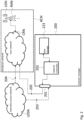
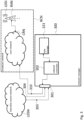
- the load data source network LDSN may be the network of a load data provider, like for example a streaming media service. It is understood, that the load data source network LDSN may comprise data storages, network devices and any other element required to provide the respective services offered by the load data source network LDSN.
- the network manager 200 comprises a data storage 223 that is communicatively coupled to the network controller 202.
- the network controller 202 may store the received load data 204 in the data storage 223.
Landscapes
- Engineering & Computer Science (AREA)
- Multimedia (AREA)
- Signal Processing (AREA)
- Databases & Information Systems (AREA)
- Computer Networks & Wireless Communication (AREA)
- Computer Graphics (AREA)
- Mobile Radio Communication Systems (AREA)
Claims (8)
- Netzwerkmanager (100, 200, 300), umfassend:eine Datenschnittstelle (101, 201, 301), die konfiguriert ist, um kommunikativ mit mindestens einem Funkzugangsnetzwerk (RAN) eines Rundfunknetzwerks (BCN) gekoppelt zu werden, wobei das Rundfunknetzwerk (BCN) ein Einwegkommunikationsnetzwerk umfasst und wobei das Rundfunknetzwerk (BCN) konfiguriert ist, um drahtlos ein Lastdatensignal (LDSI) auszusenden, und wobei die Datenschnittstelle (101, 201, 301) ferner konfiguriert ist, um kommunikativ mit einem Lastdatenquellennetzwerk (LDSN) gekoppelt zu werden; undeinen Netzwerkcontroller (102, 202, 302), der kommunikativ mit der Datenschnittstelle (101, 201, 301) gekoppelt istund konfiguriert ist, um standortbasierte Anforderungsdaten (103, 203, 303) hinsichtlich des Übertragens von Lastdaten (104, 204, 304) von dem Lastdatenquellennetzwerk (LDSN) zu empfangen und Konfigurationsdaten (105, 205, 305) zum Zweck des Konfigurierens des mindestens einen Funkzugangsnetzwerks (RAN) bereitzustellen, um mindestens eine spezifische standortspezifische Funkzugangsnetzwerkressource zum Übertragen der Lastdaten (104, 204, 304) zu verwenden;wobei der Netzwerkcontroller (102, 202, 302) konfiguriert ist, um die spezifischen Funkzugangsnetzwerkressourcen basierend auf den empfangenen standortbasierten Anforderungsdaten (103, 203, 303) zu definieren;wobei sich die standortbasierten Anforderungsdaten (103, 203, 303) ausschließlich auf geografische Parameter der Lastdaten (104, 204, 304) beziehen;wobei das Lastdatenquellennetzwerk (LDSN) konfiguriert ist, um die Lastdaten (104, 204, 304) bereitzustellen; undwobei das Lastdatensignal (LDSI) die Lastdaten gemäß den Funkzugangsnetzwerkressourcen umfasst; und dadurch gekennzeichnet, dass der Netzwerkcontroller (102, 202, 302) konfiguriert ist, um die standortbasierten Anforderungsdaten (103, 203, 303) vor dem Empfang der Lastdaten (104, 204, 304) in dem Rundfunknetzwerk (BCN) zu empfangen; und wobei der Netzwerkmanager (100, 200, 300) eine Datenspeicherung (223, 323) umfasst und wobei der Netzwerkcontroller (102, 202, 302) konfiguriert ist, um Lastdaten (104, 204, 304) zu empfangen und die empfangenen Lastdaten (104, 204, 304) in der Datenspeicherung (223, 323) zu speichern.
- Netzwerkmanager (100, 200, 300) nach Anspruch 1, wobei die standortbasierten Funkzugangsnetzwerkressourcen mindestens eines der Folgenden umfassen:einen geografischen Standort für das Übertragen der Lastdaten (104, 204, 304),einen Frequenzbereich oder eine Bandbreite zum Übertragen der Lastdaten (104, 204, 304),einen Übertragungszeitpunkt oder -zeitschlitz für das Übertragen der Lastdaten (104, 204, 304) undein Modulationsschema zum Übertragen der Lastdaten (104, 204, 304) und/oderwobei die standortbasierten Anforderungsdaten (103, 203, 303) mindestens eines der Folgenden umfassen:einen geographischen Standort, auf den sich die Lastdaten (104, 204, 304) beziehen, undeine Angabe eines Punkts von Interesse, auf den sich die Lastdaten (104, 204, 304) beziehen,eine Angabe zu behördlichen Vorschriften, die die Lastdaten (104, 204, 304) umfassen, undeine Angabe von Straßen, auf die sich die Lastdaten (104, 204, 304) beziehen.
- Netzwerkmanager (100, 200, 300) nach einem der vorstehenden Ansprüche, wobei der Netzwerkcontroller (102, 202, 302) konfiguriert ist, um die Lastdaten (104, 204, 304) mit den Konfigurationsdaten (105, 205, 305) zu kombinierten Lastdaten (310) zu kombinieren und die kombinierten Lastdaten (310) mindestens einem von den Funkzugangsnetzwerken (RAN) und dem Lastdatenquellennetzwerk (LDSN) bereitzustellen.
- Netzwerkmanager (100, 200, 300) nach einem der vorstehenden Ansprüche, wobei die Lastdaten (104, 204, 304) mindestens zwei Lastdatensätze umfassen und wobei die standortbasierten Anforderungsdaten (103, 203, 303) für jeden der Lastdatensätze einen standortbasierten Anforderungsdatensatz umfassen und
wobei der Netzwerkcontroller (102, 202, 302) konfiguriert ist, um Konfigurationsdaten (105, 205, 305) für jeden der Lastdatensätze bereitzustellen. - Verfahren für einen Netzwerkmanager zum Verwalten eines Rundfunknetzwerks (BCN), umfassend ein Einwegkommunikationsnetzwerk, und wobei das Rundfunknetzwerk (BCN) drahtlos ein Lastdatensignal (LDSI) aussendet, wobei das Verfahren umfasst:Empfangen (S11) von standortbasierten Anforderungsdaten (103, 203, 303) hinsichtlich einer Übertragung von Lastdaten (104, 204, 304) von einem Lastdatenquellennetzwerk (LDSN), wobei sich die standortbasierten Anforderungsdaten (103, 203, 303) ausschließlich auf geographische Parameter der Lastdaten (104, 204, 304) beziehen; undEmpfangen der standortbasierten Anforderungsdaten (103, 203, 303) vor dem Empfangen der Lastdaten (104, 204, 304) in dem Rundfunknetzwerk (BCN) undEmpfangen von Lastdaten (104, 204, 304) und Speichern der empfangenen Lastdaten (104, 204, 304) in einer Datenspeicherung (223, 323);Bereitstellen (S12) von Konfigurationsdaten (105, 205, 305) zum Zweck des Konfigurierens mindestens eines Funkzugangsnetzwerks (RAN) eines Rundfunknetzwerks (BCN) zum Verwenden mindestens einer spezifischen standortspezifischen Funkzugangsnetzwerkressource zum Übertragen der Lastdaten (104, 204, 304) basierend auf den empfangenen standortbasierten Anforderungsdaten (103, 203, 303).
- Verfahren nach Anspruch 5, wobei die standortbasierten Funkzugangsnetzwerkressourcen mindestens eines der Folgenden umfassen:einen geografischen Standort für das Übertragen der Lastdaten (104, 204, 304),einen Frequenzbereich oder eine Bandbreite zum Übertragen der Lastdaten (104, 204, 304),einen Übertragungszeitpunkt oder -zeitschlitz für das Übertragen der Lastdaten (104, 204, 304) undein Modulationsschema zum Übertragen der Lastdaten (104, 204, 304) und/oderwobei die standortbasierten Anforderungsdaten (103, 203, 303) mindestens eines der Folgenden umfassen:einen geographischen Standort, auf den sich die Lastdaten (104, 204, 304) beziehen, undeine Angabe eines Punkts von Interesse, auf den sich die Lastdaten (104, 204, 304) beziehen,eine Angabe zu behördlichen Vorschriften, die die Lastdaten (104, 204, 304) umfassen, undeine Angabe von Straßen, auf die sich die Lastdaten (104, 204, 304) beziehen.
- Verfahren nach einem der vorstehenden verfahrensbasierten Ansprüche, ferner umfassend das Kombinieren der Lastdaten (104, 204, 304) mit den Konfigurationsdaten (105, 205, 305) zu kombinierten Lastdaten (310) und das Bereitstellen der kombinierten Lastdaten (310) an mindestens eines von den Funkzugangsnetzwerken (RAN) und dem Lastdatenquellennetzwerk (LDSN).
- Verfahren nach einem der vorstehenden verfahrensbasierten Ansprüche, wobei die Lastdaten (104, 204, 304) mindestens zwei Lastdatensätze umfassen und wobei die standortbasierten Anforderungsdaten (103, 203, 303) für jeden der Lastdatensätze einen standortbasierten Anforderungsdatensatz umfassen und
wobei die Konfigurationsdaten (105, 205, 305) für jeden der Lastdatensätze bereitgestellt werden.
Priority Applications (1)
| Application Number | Priority Date | Filing Date | Title |
|---|---|---|---|
| EP21172105.5A EP4087286B1 (de) | 2021-05-04 | 2021-05-04 | Netzwerkverwalter, empfangsvorrichtung und verfahren für rundfunkfunkzugangsnetzwerke |
Applications Claiming Priority (1)
| Application Number | Priority Date | Filing Date | Title |
|---|---|---|---|
| EP21172105.5A EP4087286B1 (de) | 2021-05-04 | 2021-05-04 | Netzwerkverwalter, empfangsvorrichtung und verfahren für rundfunkfunkzugangsnetzwerke |
Publications (2)
| Publication Number | Publication Date |
|---|---|
| EP4087286A1 EP4087286A1 (de) | 2022-11-09 |
| EP4087286B1 true EP4087286B1 (de) | 2025-07-02 |
Family
ID=75825432
Family Applications (1)
| Application Number | Title | Priority Date | Filing Date |
|---|---|---|---|
| EP21172105.5A Active EP4087286B1 (de) | 2021-05-04 | 2021-05-04 | Netzwerkverwalter, empfangsvorrichtung und verfahren für rundfunkfunkzugangsnetzwerke |
Country Status (1)
| Country | Link |
|---|---|
| EP (1) | EP4087286B1 (de) |
Family Cites Families (3)
| Publication number | Priority date | Publication date | Assignee | Title |
|---|---|---|---|---|
| FI113722B (fi) * | 2002-03-28 | 2004-05-31 | Isi Industry Software Ab Oy | Menetelmä lähetyksen vastaanottimien asettamiseksi, lähetyksen vastaanotin ja palvelin |
| CN105592285B (zh) * | 2014-10-21 | 2020-04-21 | 华为技术有限公司 | Roi视频实现方法及装置 |
| US10904791B2 (en) * | 2018-10-04 | 2021-01-26 | Saankhya Labs Pvt. Ltd. | System and method for offloading data and video traffic to a supplemental downlink overlay network |
-
2021
- 2021-05-04 EP EP21172105.5A patent/EP4087286B1/de active Active
Also Published As
| Publication number | Publication date |
|---|---|
| EP4087286A1 (de) | 2022-11-09 |
Similar Documents
| Publication | Publication Date | Title |
|---|---|---|
| US8989021B2 (en) | Universal broadband broadcasting | |
| KR102763584B1 (ko) | 보조 다운링크 오버레이 네트워크로 데이터 및 비디오 트래픽을 오프로딩하기 위한 시스템 및 방법 | |
| US8973068B2 (en) | Video on demand delivery optimization over combined satellite and wireless broadband networks | |
| US9036651B2 (en) | System and methods for managing group parameters in unlicensed spectrum communications | |
| KR102763579B1 (ko) | 셀룰러로부터 단방향 점-대-다점 네트워크로 데이터의 송신을 동적으로 스위칭하기 위한 시스템 및 방법 | |
| US9800902B2 (en) | Digital television network structure and user terminal | |
| US20240381125A1 (en) | Network manager and method | |
| EP4335090B1 (de) | Netzwerkverwalter und verfahren zur konfigurierung eines broadcast netzwerks | |
| EP4087311B1 (de) | Lastdatentransformator und verfahren | |
| EP4087286A1 (de) | Netzwerkverwalter, empfangsvorrichtung und verfahren für rundfunkfunkzugangsnetzwerke | |
| EP4335160B1 (de) | Netzwerkmanager und verfahren | |
| US20240237040A1 (en) | Network manager, receiving device and method | |
| US20240236757A1 (en) | Network manager and method | |
| EP4087256A1 (de) | Rundfunknetzwerk und -verfahren | |
| EP4087287A1 (de) | Netzwerkverwalter und verfahren | |
| EP4087288A1 (de) | Basisstation und verfahren zum betrieb einer basisstation |
Legal Events
| Date | Code | Title | Description |
|---|---|---|---|
| PUAI | Public reference made under article 153(3) epc to a published international application that has entered the european phase |
Free format text: ORIGINAL CODE: 0009012 |
|
| STAA | Information on the status of an ep patent application or granted ep patent |
Free format text: STATUS: THE APPLICATION HAS BEEN PUBLISHED |
|
| AK | Designated contracting states |
Kind code of ref document: A1 Designated state(s): AL AT BE BG CH CY CZ DE DK EE ES FI FR GB GR HR HU IE IS IT LI LT LU LV MC MK MT NL NO PL PT RO RS SE SI SK SM TR |
|
| STAA | Information on the status of an ep patent application or granted ep patent |
Free format text: STATUS: REQUEST FOR EXAMINATION WAS MADE |
|
| 17P | Request for examination filed |
Effective date: 20230505 |
|
| RBV | Designated contracting states (corrected) |
Designated state(s): AL AT BE BG CH CY CZ DE DK EE ES FI FR GB GR HR HU IE IS IT LI LT LU LV MC MK MT NL NO PL PT RO RS SE SI SK SM TR |
|
| P01 | Opt-out of the competence of the unified patent court (upc) registered |
Effective date: 20230525 |
|
| GRAP | Despatch of communication of intention to grant a patent |
Free format text: ORIGINAL CODE: EPIDOSNIGR1 |
|
| STAA | Information on the status of an ep patent application or granted ep patent |
Free format text: STATUS: GRANT OF PATENT IS INTENDED |
|
| RIC1 | Information provided on ipc code assigned before grant |
Ipc: H04W 4/02 20180101ALN20250317BHEP Ipc: H04N 21/258 20110101ALI20250317BHEP Ipc: H04W 28/08 20090101ALI20250317BHEP Ipc: H04W 4/06 20090101AFI20250317BHEP |
|
| GRAS | Grant fee paid |
Free format text: ORIGINAL CODE: EPIDOSNIGR3 |
|
| INTG | Intention to grant announced |
Effective date: 20250408 |
|
| GRAA | (expected) grant |
Free format text: ORIGINAL CODE: 0009210 |
|
| STAA | Information on the status of an ep patent application or granted ep patent |
Free format text: STATUS: THE PATENT HAS BEEN GRANTED |
|
| RBV | Designated contracting states (corrected) |
Designated state(s): AL AT BE BG CY CZ DE DK EE ES FI FR GB GR HR HU IS IT LT LU LV MC MK MT NL NO PL PT RO RS SE SI SK SM TR |
|
| AK | Designated contracting states |
Kind code of ref document: B1 Designated state(s): AL AT BE BG CY CZ DE DK EE ES FI FR GB GR HR HU IS IT LT LU LV MC MK MT NL NO PL PT RO RS SE SI SK SM TR |
|
| REG | Reference to a national code |
Ref country code: GB Ref legal event code: FG4D |
|
| REG | Reference to a national code |
Ref country code: DE Ref legal event code: R096 Ref document number: 602021033181 Country of ref document: DE |
|
| REG | Reference to a national code |
Ref country code: NL Ref legal event code: MP Effective date: 20250702 |
|
| PG25 | Lapsed in a contracting state [announced via postgrant information from national office to epo] |
Ref country code: PT Free format text: LAPSE BECAUSE OF FAILURE TO SUBMIT A TRANSLATION OF THE DESCRIPTION OR TO PAY THE FEE WITHIN THE PRESCRIBED TIME-LIMIT Effective date: 20251103 |
|
| PG25 | Lapsed in a contracting state [announced via postgrant information from national office to epo] |
Ref country code: NL Free format text: LAPSE BECAUSE OF FAILURE TO SUBMIT A TRANSLATION OF THE DESCRIPTION OR TO PAY THE FEE WITHIN THE PRESCRIBED TIME-LIMIT Effective date: 20250702 |
|
| REG | Reference to a national code |
Ref country code: AT Ref legal event code: MK05 Ref document number: 1810685 Country of ref document: AT Kind code of ref document: T Effective date: 20250702 |
|
| PG25 | Lapsed in a contracting state [announced via postgrant information from national office to epo] |
Ref country code: IS Free format text: LAPSE BECAUSE OF FAILURE TO SUBMIT A TRANSLATION OF THE DESCRIPTION OR TO PAY THE FEE WITHIN THE PRESCRIBED TIME-LIMIT Effective date: 20251102 |
|
| PG25 | Lapsed in a contracting state [announced via postgrant information from national office to epo] |
Ref country code: NO Free format text: LAPSE BECAUSE OF FAILURE TO SUBMIT A TRANSLATION OF THE DESCRIPTION OR TO PAY THE FEE WITHIN THE PRESCRIBED TIME-LIMIT Effective date: 20251002 |
|
| REG | Reference to a national code |
Ref country code: LT Ref legal event code: MG9D |
|
| PG25 | Lapsed in a contracting state [announced via postgrant information from national office to epo] |
Ref country code: AT Free format text: LAPSE BECAUSE OF FAILURE TO SUBMIT A TRANSLATION OF THE DESCRIPTION OR TO PAY THE FEE WITHIN THE PRESCRIBED TIME-LIMIT Effective date: 20250702 |
|
| PG25 | Lapsed in a contracting state [announced via postgrant information from national office to epo] |
Ref country code: FI Free format text: LAPSE BECAUSE OF FAILURE TO SUBMIT A TRANSLATION OF THE DESCRIPTION OR TO PAY THE FEE WITHIN THE PRESCRIBED TIME-LIMIT Effective date: 20250702 |
|
| PG25 | Lapsed in a contracting state [announced via postgrant information from national office to epo] |
Ref country code: HR Free format text: LAPSE BECAUSE OF FAILURE TO SUBMIT A TRANSLATION OF THE DESCRIPTION OR TO PAY THE FEE WITHIN THE PRESCRIBED TIME-LIMIT Effective date: 20250702 |
|
| PG25 | Lapsed in a contracting state [announced via postgrant information from national office to epo] |
Ref country code: GR Free format text: LAPSE BECAUSE OF FAILURE TO SUBMIT A TRANSLATION OF THE DESCRIPTION OR TO PAY THE FEE WITHIN THE PRESCRIBED TIME-LIMIT Effective date: 20251003 |
|
| PG25 | Lapsed in a contracting state [announced via postgrant information from national office to epo] |
Ref country code: SE Free format text: LAPSE BECAUSE OF FAILURE TO SUBMIT A TRANSLATION OF THE DESCRIPTION OR TO PAY THE FEE WITHIN THE PRESCRIBED TIME-LIMIT Effective date: 20250702 Ref country code: CZ Free format text: LAPSE BECAUSE OF FAILURE TO SUBMIT A TRANSLATION OF THE DESCRIPTION OR TO PAY THE FEE WITHIN THE PRESCRIBED TIME-LIMIT Effective date: 20250702 |
|
| PG25 | Lapsed in a contracting state [announced via postgrant information from national office to epo] |
Ref country code: LV Free format text: LAPSE BECAUSE OF FAILURE TO SUBMIT A TRANSLATION OF THE DESCRIPTION OR TO PAY THE FEE WITHIN THE PRESCRIBED TIME-LIMIT Effective date: 20250702 |
|
| PG25 | Lapsed in a contracting state [announced via postgrant information from national office to epo] |
Ref country code: BG Free format text: LAPSE BECAUSE OF FAILURE TO SUBMIT A TRANSLATION OF THE DESCRIPTION OR TO PAY THE FEE WITHIN THE PRESCRIBED TIME-LIMIT Effective date: 20250702 Ref country code: PL Free format text: LAPSE BECAUSE OF FAILURE TO SUBMIT A TRANSLATION OF THE DESCRIPTION OR TO PAY THE FEE WITHIN THE PRESCRIBED TIME-LIMIT Effective date: 20250702 |
|
| PG25 | Lapsed in a contracting state [announced via postgrant information from national office to epo] |
Ref country code: RS Free format text: LAPSE BECAUSE OF FAILURE TO SUBMIT A TRANSLATION OF THE DESCRIPTION OR TO PAY THE FEE WITHIN THE PRESCRIBED TIME-LIMIT Effective date: 20251002 |
|
| PG25 | Lapsed in a contracting state [announced via postgrant information from national office to epo] |
Ref country code: ES Free format text: LAPSE BECAUSE OF FAILURE TO SUBMIT A TRANSLATION OF THE DESCRIPTION OR TO PAY THE FEE WITHIN THE PRESCRIBED TIME-LIMIT Effective date: 20250702 |
|
| PG25 | Lapsed in a contracting state [announced via postgrant information from national office to epo] |
Ref country code: SM Free format text: LAPSE BECAUSE OF FAILURE TO SUBMIT A TRANSLATION OF THE DESCRIPTION OR TO PAY THE FEE WITHIN THE PRESCRIBED TIME-LIMIT Effective date: 20250702 |
|
| PGFP | Annual fee paid to national office [announced via postgrant information from national office to epo] |
Ref country code: GB Payment date: 20260324 Year of fee payment: 6 |
|
| PG25 | Lapsed in a contracting state [announced via postgrant information from national office to epo] |
Ref country code: DK Free format text: LAPSE BECAUSE OF FAILURE TO SUBMIT A TRANSLATION OF THE DESCRIPTION OR TO PAY THE FEE WITHIN THE PRESCRIBED TIME-LIMIT Effective date: 20250702 |
|
| PG25 | Lapsed in a contracting state [announced via postgrant information from national office to epo] |
Ref country code: IT Free format text: LAPSE BECAUSE OF FAILURE TO SUBMIT A TRANSLATION OF THE DESCRIPTION OR TO PAY THE FEE WITHIN THE PRESCRIBED TIME-LIMIT Effective date: 20250702 |
|
| PG25 | Lapsed in a contracting state [announced via postgrant information from national office to epo] |
Ref country code: SK Free format text: LAPSE BECAUSE OF FAILURE TO SUBMIT A TRANSLATION OF THE DESCRIPTION OR TO PAY THE FEE WITHIN THE PRESCRIBED TIME-LIMIT Effective date: 20250702 Ref country code: EE Free format text: LAPSE BECAUSE OF FAILURE TO SUBMIT A TRANSLATION OF THE DESCRIPTION OR TO PAY THE FEE WITHIN THE PRESCRIBED TIME-LIMIT Effective date: 20250702 |
|
| PLBE | No opposition filed within time limit |
Free format text: ORIGINAL CODE: 0009261 |
|
| STAA | Information on the status of an ep patent application or granted ep patent |
Free format text: STATUS: NO OPPOSITION FILED WITHIN TIME LIMIT |