EP4087213B1 - Verfahren und vorrichtung zur verarbeitung von operationen mit künstlicher intelligenz, system, endgerät und netzwerkvorrichtung - Google Patents
Verfahren und vorrichtung zur verarbeitung von operationen mit künstlicher intelligenz, system, endgerät und netzwerkvorrichtung Download PDFInfo
- Publication number
- EP4087213B1 EP4087213B1 EP20914607.5A EP20914607A EP4087213B1 EP 4087213 B1 EP4087213 B1 EP 4087213B1 EP 20914607 A EP20914607 A EP 20914607A EP 4087213 B1 EP4087213 B1 EP 4087213B1
- Authority
- EP
- European Patent Office
- Prior art keywords
- terminal
- task
- network device
- indication information
- indicating
- Prior art date
- Legal status (The legal status is an assumption and is not a legal conclusion. Google has not performed a legal analysis and makes no representation as to the accuracy of the status listed.)
- Active
Links
Images









Classifications
-
- H—ELECTRICITY
- H04—ELECTRIC COMMUNICATION TECHNIQUE
- H04L—TRANSMISSION OF DIGITAL INFORMATION, e.g. TELEGRAPHIC COMMUNICATION
- H04L67/00—Network arrangements or protocols for supporting network services or applications
- H04L67/01—Protocols
- H04L67/10—Protocols in which an application is distributed across nodes in the network
-
- G—PHYSICS
- G06—COMPUTING OR CALCULATING; COUNTING
- G06F—ELECTRIC DIGITAL DATA PROCESSING
- G06F9/00—Arrangements for program control, e.g. control units
- G06F9/06—Arrangements for program control, e.g. control units using stored programs, i.e. using an internal store of processing equipment to receive or retain programs
- G06F9/46—Multiprogramming arrangements
- G06F9/50—Allocation of resources, e.g. of the central processing unit [CPU]
- G06F9/5005—Allocation of resources, e.g. of the central processing unit [CPU] to service a request
- G06F9/5027—Allocation of resources, e.g. of the central processing unit [CPU] to service a request the resource being a machine, e.g. CPUs, Servers, Terminals
-
- H—ELECTRICITY
- H04—ELECTRIC COMMUNICATION TECHNIQUE
- H04L—TRANSMISSION OF DIGITAL INFORMATION, e.g. TELEGRAPHIC COMMUNICATION
- H04L67/00—Network arrangements or protocols for supporting network services or applications
- H04L67/2866—Architectures; Arrangements
- H04L67/289—Intermediate processing functionally located close to the data consumer application, e.g. in same machine, in same home or in same sub-network
-
- H—ELECTRICITY
- H04—ELECTRIC COMMUNICATION TECHNIQUE
- H04L—TRANSMISSION OF DIGITAL INFORMATION, e.g. TELEGRAPHIC COMMUNICATION
- H04L67/00—Network arrangements or protocols for supporting network services or applications
- H04L67/34—Network arrangements or protocols for supporting network services or applications involving the movement of software or configuration parameters
-
- G—PHYSICS
- G06—COMPUTING OR CALCULATING; COUNTING
- G06F—ELECTRIC DIGITAL DATA PROCESSING
- G06F2209/00—Indexing scheme relating to G06F9/00
- G06F2209/50—Indexing scheme relating to G06F9/50
- G06F2209/5017—Task decomposition
-
- G—PHYSICS
- G06—COMPUTING OR CALCULATING; COUNTING
- G06F—ELECTRIC DIGITAL DATA PROCESSING
- G06F2209/00—Indexing scheme relating to G06F9/00
- G06F2209/50—Indexing scheme relating to G06F9/50
- G06F2209/509—Offload
-
- G—PHYSICS
- G06—COMPUTING OR CALCULATING; COUNTING
- G06N—COMPUTING ARRANGEMENTS BASED ON SPECIFIC COMPUTATIONAL MODELS
- G06N20/00—Machine learning
-
- H—ELECTRICITY
- H04—ELECTRIC COMMUNICATION TECHNIQUE
- H04L—TRANSMISSION OF DIGITAL INFORMATION, e.g. TELEGRAPHIC COMMUNICATION
- H04L67/00—Network arrangements or protocols for supporting network services or applications
- H04L67/01—Protocols
- H04L67/10—Protocols in which an application is distributed across nodes in the network
- H04L67/1001—Protocols in which an application is distributed across nodes in the network for accessing one among a plurality of replicated servers
- H04L67/1004—Server selection for load balancing
- H04L67/1008—Server selection for load balancing based on parameters of servers, e.g. available memory or workload
Definitions
- the present invention relates to the communication field, in particular to an artificial intelligence operation processing method, an apparatus, a system, a terminal, and a network device.
- AI Artificial Intelligence
- ML Machine Learning
- FIG. 1 is a schematic diagram of the transmission of the AI/ML model on the 5G and 6G networks in related technologies.
- 5G mobile terminals such as smart phones, smart cars, drones and robots
- effectively applying AI/ML services faces challenges: the terminals lack the computing power, storage resources, and battery capacity required to run AI/ML operations completely locally.
- AI/ML operation splitting is all static splitting, that is, it is fixed about which part is calculated by a terminal side and which part is calculated by the network device.
- the AI/ML processing resources of the terminal may not meet requirements of originally determined AI operation splitting in some cases, while in some other cases, the waste of AI processing resources or radio resources will be caused.
- Objects of the present invention provide an artificial intelligence operation processing method, an apparatus, a system, a terminal, and a network device, so as to at least solve technical problems that requirements are not met and resources are wasted when the terminal performs AI/ML operations locally in the related technology. It should be noted that preferred embodiments of the invention are those whose scope is within that of the dependent appended claims, and the implementations disclosed in this disclosure which do not fall under the scope of the appended claims are to be considered as examples for illustration.
- a method embodiment of an artificial intelligence operation processing method is provided, it should be noted that acts illustrated in the flowchart of the drawings may be performed in a computer system such as a set of computer executable instructions, and while a logical order is shown in the flowchart, the acts shown or described may be performed in a different order than herein, in some certain cases.
- FIG. 2 is a flowchart of a first artificial intelligence operation processing method according to an embodiment of the present invention. As shown in FIG. 2 , the method includes an act S202.
- a terminal receives indication information sent by a network device, wherein the indication information is used for indicating information about an Artificial Intelligence/Machine Learning (AI/ML) task performed by the terminal.
- AI/ML Artificial Intelligence/Machine Learning
- the purpose that the terminal can perform the adaptive AI/ML task according to an actual situation of the terminal is achieved, thereby realizing technical effects of optimal AI/ML task splitting between the network device and the terminal, and then optimizing AI/ML operation efficiency, and then solving the technical problems that the requirements are not met and the resources are wasted when the terminal performs the AI/ML operations locally in the related technology.
- an execution subject of the above act may be a terminal, which may be a mobile terminal, for example, some 5G mobile terminals such as smart phones, smart cars, drones, or robots, etc.
- the terminal performs part or all of operations in the AI/ML task according to the indication information.
- the purpose that the terminal can perform part or all of the adaptive AI/ML operations according to the actual situation of the terminal is achieved, thereby realizing technical effects of optimal AI/ML operation splitting between the network device and the terminal and then optimizing the AI/ML operation efficiency.
- information indicating the AI/ML task performed by the terminal may include multiple types of information, for example, the indication information is used for indicating at least one of the followings: an AI/ML model used by the terminal to perform the AI/ML task; a parameter set of an AI/ML model used by the terminal to perform the AI/ML task; or part or all of operations performed by the terminal in the AI/ML task. The followings are described separately.
- the AI/ML model used by the terminal to perform the AI/ML task may be indicated, in a case that the terminal does not determine the used AI/ML model itself (e.g. what type of model to use, or a model capable of achieving what function to use, etc., such as an image recognition model, or a speech recognition model).
- the AI/ML model mentioned in the embodiment of the present invention may be a neural network-based model.
- the terminal uses different AI/ML models, which needs the terminal to have different requirements. For example, different AI/ML models require different computing powers of the terminal for AI/ML, or different AI/ML models require different transmission requirements between the terminal and a network, etc.
- the network device may directly indicate the parameter set of the AI/ML model used by the terminal to perform the AI/ML task, thus achieving a purpose of indicating the terminal.
- different parameter sets are used for achieving different goals, that is, for completing different AI/ML tasks.
- the indication information is used for indicating part or all of the operations performed by the terminal in the AI/ML task, which may include: the indication information is used for indicating part or all of AI/ML acts performed by the terminal.
- the AI/ML acts performed by the terminal may be indicated according to a sequence of the acts in a case that there is a sequence of performing part or all of the AI/ML acts in the AI/ML task; in a case that there is no sequence of performing part or all of the AI/ML acts in the AI/ML task, the terminal may be indicated to perform the various acts that are not in sequence.
- the terminal may be indicated to perform acts 1, 2, 4, etc.
- the terminal may be indicated to perform acts 3, 2, etc., that have no sequence.
- indicating part or all of the operations performed by the terminal in the AI/ML task may be by a variety of modes, for example, indicating may be in a mode of explicitly indicating the corresponding part of the operation, for example, in a mode of indicating which acts used as described above; or part or all of the operations performed by the terminal in the AI/ML task may be indicated by a ratio between the acts performed by the network device and the terminal in the AI/ML task. That is, the ratio between the acts performed by the network device and the terminal in the AI/ML task is included in the indication information.
- the splitting ratio between the network device and the terminal is 8: 2, that is, it is indicated that the part performed by terminal in the AI/ML task accounts for 2/10 of all acts; it is indicated that the splitting ratio between the network device and the terminal is 7: 3, that is, it is indicated that the part performed by terminal in the AI/ML task accounts for 3/10 of all acts. That is, it is noted that using this mode is simple and can effectively improve efficiency of the indication.
- the indication information may indicate part or all of the AI/ML operations performed by the terminal in a variety of modes.
- a relatively simple and relatively fast indication mode may be that the indication information includes a serial number of the AI/ML operation required to be performed by the terminal in the AI/ML task, that is, the indication information indicates the AI/ML operation performed by the terminal by indicating the serial number. An example is described below.
- the indication information indicates the AI/ML model used by the terminal to perform the AI/ML task
- the indication information indicates a serial number of the AI/ML model used by the terminal to perform the AI/ML task in preset AI/ML models with n1 serial numbers
- the indication information indicates the parameter set of the AI/ML model used by the terminal to perform the AI/ML task
- the indication information indicates a serial number of the parameter set of the AI/ML model used by the terminal to perform the AI/ML task in preset parameter sets with n2 serial numbers
- the indication information indicates part or all of the operations performed by the terminal in the AI/ML task
- the indication information indicates a serial number of the operations performed by the terminal in the AI/ML task in preset operations with n3 serial numbers.
- the indication information indicates the terminal to perform the AI/ML act in the AI/ML task
- the indication information indicates a serial number of the AI/ML act performed by the terminal in preset AI/ML acts with m serial numbers, wherein the AI/ML acts with m serial numbers are used for complete one AI/ML task; and values of n1, n2, n3, and m are integers greater than or equal to 1.
- the method provided in the embodiment of the present invention further includes: at least one piece of the following information is sent to the network device for generating the indication information by the network device: a computing power of the terminal for performing the AI/ML task, a storage space of the terminal for performing the AI/ML task, a battery resource of the terminal for performing the AI/ML task, or a communication requirement of the terminal for performing the AI/ML task.
- the computing power of the terminal for performing the AI/ML task refers to an allocated computing resource of the terminal for performing the AI/ML operation in the AI/ML task.
- the storage space of the terminal for performing the AI/ML task refers to an allocated storage resource of the terminal for performing the AI/ML operation.
- the battery resource of the terminal for performing the AI/ML task refers to a power consumption or an energy consumption of the terminal for the AI/ML operation.
- the communication requirement of the terminal for performing the AI/ML task refers to a required transmission rate, transmission delay, and transmission reliability requirement, etc., to the terminal for the AI/ML operation.
- the indication information sent by the network device when the indication information sent by the network device is received, the indication information may be carried in information sent by the network device to the terminal, and the indication information may be received by receiving the information.
- the indication information sent by the network device may be received by receiving at least one piece of the following information: Downlink Control Information (DCI), a Media Access Control Control Element (MAC CE), high layer configuration information, or application layer control information.
- DCI Downlink Control Information
- MAC CE Media Access Control Element
- high layer configuration information high layer configuration information
- application layer control information application layer control information.
- the above DCI is in a dedicated DCI Format, or generated with a dedicated Radio Network Temporary Identity (RNTI).
- RNTI Radio Network Temporary Identity
- FIG. 3 is a flowchart of a second artificial intelligence operation processing method according to an embodiment of the present invention. As shown in FIG. 3 , the method includes the following acts S302 and S304.
- a network device determines information about an Artificial Intelligence/Machine Learning (AI/ML) task to be performed by a terminal.
- AI/ML Artificial Intelligence/Machine Learning
- the network device sends indication information to the terminal, wherein the indication information is used for indicating the information about the AI/ML task performed by the terminal.
- the purpose that the terminal can perform the adaptive AI/ML task according to the actual situation of the terminal is achieved, thereby realizing technical effects of optimal AI/ML operation splitting between the network device and the terminal and optimizing AI/ML operation efficiency, and then solving technical problems that requirements are not met and resources are wasted when the terminal performs the AI/ML operations locally in the related technology.
- an execution subject of the above acts may be a network device, for example, a server in which the network device realizes the above function, or a gateway, etc.
- the network device determines the information about the AI/ML task to be performed by the terminal, which includes: at least one piece of the following information is acquired: a computing power of the terminal for performing the AI/ML task, a storage space of the terminal for performing the AI/ML task, a battery resource of the terminal for performing the AI/ML task, or a communication requirement of the terminal for performing the AI/ML task; and the network device determines the information about the AI/ML task to be performed by the terminal according to the acquired information.
- the above mode of acquiring the information may be reporting the information by the terminal in a predetermined period, or sending, by the network device, an instruction to the terminal and reporting, by the terminal, the information to the network device after receiving the instruction.
- the indication information is used for indicating at least one of the followings: an AI/ML model used by the terminal to perform the AI/ML task; a parameter set of an AI/ML model used by the terminal to perform the AI/ML task; or part or all of operations performed by the terminal in the AI/ML task.
- the indication information is used for indicating part or all of the operations performed by the terminal in the AI/ML task, which includes: the indication information is used for indicating part or all of AI/ML acts performed by the terminal.
- the indication information is used for indicating part or all of the AI/ML acts performed by the terminal, which includes: the indication information includes a ratio between acts performed by the network device and the terminal in the AI/ML task.
- the indication information is used for indicating part or all of the operations performed by the terminal in the AI/ML task, which includes: the indication information includes a serial number of the AI/ML operation required to be performed by the terminal in the AI/ML task.
- the network device performs an AI/ML operation that matches the AI/ML operation performed by the terminal. That is, the network device performs the AI/ML operation that matches the AI/ML operation performed by the terminal, which implements splitting of the AI/ML operations between the network device and the terminal.
- matching may be that for one AI/ML task, a part of AI/ML operations of the AI/ML task are performed by the terminal, and the remaining part of the AI/ML task is performed by the network device.
- the network device may send the indication information to the terminal by carrying the indication information on at least one piece of the following information: Downlink Control Information (DCI), a Medium Access Control Control Element (MAC CE), high layer configuration information, or application layer control information.
- DCI Downlink Control Information
- MAC CE Medium Access Control Element
- high layer configuration information high layer configuration information
- application layer control information application layer control information
- FIG. 4 is a flowchart of a third artificial intelligence operation processing method according to an embodiment of the present invention. As shown in FIG. 4 , the method includes the following acts S402 to S408.
- a network device determines information about an Artificial Intelligence/Machine Learning (AI/ML) task to be performed by a terminal.
- AI/ML Artificial Intelligence/Machine Learning
- the network device sends indication information to the terminal, wherein the indication information is used for indicating the information about the AI/ML task performed by the terminal.
- the terminal performs part or all of AI/ML operations in the AI/ML task according to the indication information.
- act S408 the network device performs an AI/ML operation that matches the AI/ML operation performed by the terminal.
- the network device sends the indication information to the terminal to indicate the information about the AI/ML task performed by the terminal, by dynamically indicating the information about the AI/ML task performed by the terminal, for example, indicating part or all of the AI/ML operations in the AI/ML task performed by the terminal, a purpose that the terminal can perform the adaptive AI/ML operation according to the actual situation of the terminal is achieved, thereby realizing the technical effect of the optimal AI/ML operation splitting between the network device and the terminal, optimizing the AI/ML operation efficiency, and then solving the technical problems that requirements are not met and resources are wasted when the terminal performs the AI/ML operations locally in the related technology.
- the indication information is used for indicating at least one of the followings: an AI/ML model used by the terminal to perform the AI/ML task; a parameter set of an AI/ML model used by the terminal to perform the AI/ML task; or part or all of operations performed by the terminal in the AI/ML task.
- the indication information is used for indicating part or all of operations performed by the terminal in the AI/ML task, which includes: the indication information is used for indicating part or all of AI/ML acts performed by the terminal.
- a mobile terminal is in a changing wireless channel environment, and it itself will keep moving its position, so problems such as a reduced transmission rate, a data packet loss, an uncertain transmission delay, and the like, exist.
- Chip processing resources and storage resources, etc. that the mobile terminal can allocate for AI/ML computing are different and change at any time. According to a fixed splitting mode, AI/ML computing and processing resources and a wireless transmission rate of the terminal may not meet requirements of original AI/ML operation splitting in some certain cases, while in some other cases, waste of AI/ML processing resources or radio resources is also caused.
- an AI/ML operation splitting method (corresponding to the AI/ML operation processing method referred to in the above-mentioned and preferred embodiments) for a mobile communication system is provided, in which based on the situation of the terminal (for example, an available computing power, a wireless transmission rate, or other factors), the network device determines an AI/ML operation division between the network device and the terminal, including: dynamically indicating an AI/ML model that the terminal should use; dynamically indicating a parameter set of a model used by the terminal; and dynamically indicating a part, that the terminal performs, in an AI/ML task.
- dynamically indicating a part that the terminal performs in an AI/ML task may include: indicating AI/ML acts performed by the terminal; and indicating the terminal to perform a parallel splitting part.
- the AI/ML acts may be in an execution sequence, and parallel splitting parts may represent parts not in an execution sequence. Illustration is made by taking simply dynamically indicating the AI/ML model used by the terminal, or by dynamically indicating which AI/ML acts the terminal performs as an example in the following preferred embodiments.
- the AI/ML operation splitting method for participation by the mobile terminal may include: a terminal receives indication information from the network device in a wireless communication system (wherein the indication information may be scheduling information for the network device to perform a scheduling function on the terminal), wherein the indication information is used for indicating an AI/ML model used by the terminal, and/or to indicate which AI/ML acts the terminal performs.
- the indication information may be scheduling information for the network device to perform a scheduling function on the terminal
- the indication information is used for indicating an AI/ML model used by the terminal, and/or to indicate which AI/ML acts the terminal performs.
- the indication information indicates a serial number of one of the models.
- the indication information indicates m AI/ML acts thereof which are performed by the terminal.
- n and m are integers greater than or equal to 1, and the indication information may be carried in control information (such as DCI), a MAC CE, high layer configuration signaling (such as RRC signaling), or application layer control information.
- control information such as DCI
- a MAC CE such as MAC CE
- high layer configuration signaling such as RRC signaling
- application layer control information such as MAC CE
- the DCI may be in a dedicated DCI Format or be generated with a dedicated RNTI.
- the above method may ensure optimal splitting of the AI/ML operations between the network device and the terminal, optimizing efficiency of the AI/ML operations.
- the network device dynamically indicates other information about the AI/ML task of the terminal, for example, dynamically indicating a parameter set of the AI/ML model used by the terminal to perform the AI/ML task, or the like, which can also be applied to following preferred embodiments of the present invention.
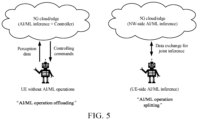
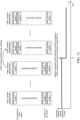
- FIG. 5 is a schematic diagram of "AI/ML operation offloading" and "AI/ML operation splitting" provided according to a preferred embodiment of the present invention.
- the AI/ML operation splitting thereof includes: the terminal primarily runs relatively low complexity calculation sensitive to delay and privacy protection, and the network device primarily runs relatively high complexity calculation insensitive to delay and privacy.
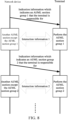
- FIG. 6 is a schematic diagram of dynamically adjusting, by a terminal, a running AI/ML model according to an indication of a network device, which is provided according to a preferred embodiment of the present invention. As shown in FIG. 6 , the network device dynamically schedules the AI/ML model that the terminal runs.
- the terminal determines the AI/ML model that the terminal runs, and meanwhile the network device runs an AI/ML model that adapts to the AI/ML model that the terminal runs, forming an AI operation splitting mode.
- the network device may also switch the AI/ML model that the terminal runs, and meanwhile the network device switches to another AI/ML model adapted to the AI/ML model that the terminal runs, entering another AI/ML operation splitting mode.
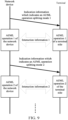
- FIG. 7 is a schematic diagram of dynamically adjusting, by a terminal, a responsible AI/ML act according to an indication of a network device, which is provided according to a preferred embodiment of the present invention.
- the network device dynamically schedules an AI/ML act that the terminal runs.
- the terminal determines an AI/ML act that the terminal is responsible for performing, and meanwhile the network device performs another AI/ML act, forming an AI/ML operation splitting mode.
- the network device may also adjust the AI/ML act that the terminal is responsible for performing, and meanwhile the network device instead performs a remaining AI/ML act, entering another AI/ML operation splitting mode.
- FIG. 8 is a schematic diagram of dynamically adjusting, by a terminal, a responsible AI/ML section according to an indication of a network device, which is provided according to a preferred embodiment of the present invention. As shown in FIG. 8 , the network device dynamically schedules the AI/ML section that the terminal runs.
- the terminal determines the AI/ML section that the terminal is responsible for performing, and meanwhile the network device performs another AI/ML section, forming an AI/ML operation splitting mode.
- the network device may also adjust the AI/ML section that the terminal is responsible for performing, and meanwhile the network device instead performs a remaining AI/ML section, entering another AI/ML operation splitting mode.
- the network device may also determines the AI/ML operation splitting mode by which the terminal and the network device perform the AI/ML tasks. For example, the network device may determine a ratio of the network device to the terminal for performing the AI/ML tasks, for example, the ratio of the network device to the terminal for performing the AI/ML tasks is 8: 2, or the ratio of the network device to the terminal for performing the AI/ML tasks is 7: 3, etc.
- FIG. 9 is a schematic diagram of dynamically adjusting, by a terminal, an AI/ML operation splitting mode according to an indication of a network device, which is provided according to a preferred embodiment of the present invention. As shown in FIG.
- the network device dynamically schedules the AI/ML operation splitting mode of the network device and the terminal for performing the AI/ML tasks.
- the terminal determines AI/ML operation that the terminal is responsible for performing, and meanwhile the network device performs another AI/ML operation, forming an AI/ML operation splitting mode.
- the network device may also adjust the AI/ML operation splitting mode, and determines the AI/ML operation that the terminal is responsible for performing, and meanwhile the network device instead performs a remaining AI/ML operation, entering another AI/ML operation splitting mode.
- Second embodiment implementation of AI/ML operation re-splitting by switching an AI/ML model
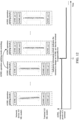
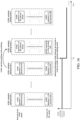
- FIG. 10 is a schematic diagram of indicating, by a network device according to varying of an AI/ML computing power of a terminal, the terminal to switch an AI/ML model, which is provided according to an embodiment of the present invention.
- the terminal has a relatively high AI/ML computing power (i.e., the computing power referred to above) available for this AI/ML task in a first period of time and may run a relatively complex AI/ML model 1, then the network device may run a network device AI/ML model matching the AI/ML model 1, and these two models constitute an AI/ML operation splitting mode 1.
- the network device may indicate the terminal to switch to the AI/ML model 2, and meanwhile the network device also switches to a network device AI/ML model which matches the AI/ML model 2, forming a new AI/ML operation splitting mode 2.
- an AI/ML operation splitting mode which adapts to the AI/ML computing resources of the terminal is realized, thereby ensuring the reliability of the terminal AI/ML operation and meanwhile making full use of the AI/ML computing power of the terminal and the network device as much as possible.
- FIG. 11 is a schematic diagram of indicating, by a network device according to varying of a realizable communication rate, a terminal to switch an AI/ML model, which is provided according to an embodiment of the present invention.
- a realizable data rate of a wireless communication channel between the terminal and the network device is relatively low in a first period of time, and only an AI/ML model 1 which is relatively complex and requires a relatively low communication rate can be run, then the network device runs a network device AI/ML model that matches the AI/ML Model 1, and these two models constitute an AI/ML operation splitting mode 1.
- the network device may indicate the terminal to switch to the AI/ML model 2, and meanwhile the network device also switch to a network device AI/ML model which matches the AI/ML model 2, forming an AI/ML operation splitting mode 2.
- an AI/ML operation splitting mode which adapts to a communication transmitting capability is realized, thereby ensuring reliability of interaction of wireless communication information and meanwhile making full use of the AI/ML computing power of the terminal and the network device as much as possible.
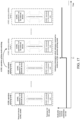
- FIG. 12 is a schematic diagram of indicating, by a network device according to varying of an AI/ML computing power of a terminal, the terminal to adjust a responsible AI/ML act, which is provided according to a preferred embodiment of the present invention.
- the terminal may run AI/ML acts 1 and 2, while the network device is responsible for running an AI/ML act 3.
- This division constitutes an AI/ML operation splitting mode 1.
- the network device may indicate the terminal to perform only the AI/ML act 1, and meanwhile the network device may also switch to perform the AI/ML acts 2 and 3, forming a new AI/ML operation splitting mode 2.
- an AI/ML act division which adapts to the AI/ML computing resources of the terminal may be realized, thereby ensuring reliability of the terminal AI/ML operation, and meanwhile making full use of the AI/ML computing power of the terminal and the network device as much as possible.
- FIG. 13 is a schematic diagram of indicating, by a network device according to varying of a realizable communication rate, a terminal to adjust a responsible AI/ML act, which is provided according to a preferred embodiment of the present invention.
- a realizable data rate of a wireless communication channel between the terminal and the network device is relatively low in a first period of time
- an AI/ML operation splitting mode 1 which requires a relatively low communication data rate needs to be used, that is, the terminal runs AI/ML acts 1 and 2, while the network device is responsible for running an AI/ML act 3.
- the network device may indicate the terminal to adjust to perform only the AI/ML act 1, and meanwhile the network device also adjusts to perform the AI/ML acts 2 and 3, forming an AI/ML operation splitting mode 2.
- an AI/ML operation splitting mode which adapts to a communication transmitting capability may be realized, thereby ensuring reliability of interaction of wireless communication information, and meanwhile making full use of the AI/ML computing power of the terminal and the network device as much as possible.
- FIG. 14 is a schematic diagram of indicating, by a network device according to varying of an AI/ML computing power of a terminal, the terminal to adjust a responsible AI/ML operation section, which is provided according to a preferred embodiment of the present invention.
- the terminal may run AI/ML operation sections 1 and 2, while the network device is responsible for running an AI/ML operation section 3.
- This division constitutes an AI/ML operation splitting mode 1.
- the network device may indicate the terminal to perform only the AI/ML operation section 1, and meanwhile the network device may also switch to perform the AI/ML operation sections 2 and 3, forming a new AI/ML operation splitting mode 2.
- an AI/ML operation section division which adapts to the AI/ML computing resources of the terminal may be realized, thereby ensuring reliability of the terminal AI/ML operation, and meanwhile making full use of the AI/ML computing power of the terminal and the network device as much as possible.
- FIG. 15 is a schematic diagram of indicating, by a network device according to varying of a realizable communication rate, a terminal to adjust a responsible AI/ML operation section, which is provided according to a preferred embodiment of the present invention.
- an AI/ML operation splitting mode 1 which requires a relatively low communication data rate needs to be used, that is, the terminal runs AI/ML operation sections 1 and 2, while the network device is responsible for running an AI/ML operation section 3.
- the network device may indicate the terminal to adjust to perform only the AI/ML operation section 1, and meanwhile the network device is also adjusted to perform the AI/ML operation sections 2 and 3, forming an AI/ML operation splitting mode 2.
- an AI/ML operation splitting mode which adapts to a communication transmitting capability may be realized, thereby ensuring reliability of interaction of wireless communication information, and meanwhile making full use of the AI/ML computing power of the terminal and the network device as much as possible.
- FIG. 16 is a schematic diagram of indicating, by a network device according to varying of an AI/ML computing power of a terminal, the terminal to switch an AI/ML operation splitting mode, which is provided according to a preferred embodiment of the present invention.
- the network device determines, according to the AI/ML computing power of the terminal which is available to this AI/ML task, that the network device and the terminal use a division mode of a splitting mode 1, in which the terminal performs an AI/ML operation 1, and the network device performs the AI/ML operation 1 that matches the terminal, and this division constitutes an AI/ML operation splitting mode 1.
- the network device determines, according to the AI/ML computing power of the terminal which is available to this AI/ML task, that the network device and the terminal use a division mode of a splitting mode 2, in which the terminal performs an AI/ML operation 2, and the network device performs the AI/ML operation 2 that matches the terminal, and this division constitutes an AI/ML operation splitting mode 1. Therefore, by indication information, the network device may indicate the terminal to switch the AI/ML operation splitting mode, the terminal performs the AI/ML operation 2, and the network device performs the AI/ML operation 2 that matches the terminal, forming a new AI/ML operation splitting mode 2.
- an AI/ML operation splitting mode which adapts to the AI/ML computing resources of the terminal may be realized, thereby ensuring reliability of the terminal AI/ML operation, and meanwhile making full use of the AI/ML computing power of the terminal and the network device as much as possible.
- FIG. 17 is a schematic diagram of indicating, by a network device according to varying of a realizable communication rate, a terminal to switch an AI/ML operation splitting mode, which is provided according to a preferred embodiment of the present invention.
- the network device determines that the network device and the terminal use a division mode of a splitting mode 1 according to a realizable network communication rate of the terminal which is available to this AI/ML task, the terminal performs an AI/ML operation 1, the network device performs the AI/ML operation 1 that matches the terminal, and this division constitutes an AI/ML operation splitting mode 1.
- the network device determines, according to a realizable network communication rate of the terminal which is available to the AI/ML task, that the network device and the terminal use a division mode of a splitting mode 2, in which the terminal performs an AI/ML operation 2, and the network device performs the AI/ML operation 2 that matches the terminal, and this division constitutes the AI/ML operation splitting mode 1. Therefore, by indication information, the network device may indicate the terminal to switch the AI/ML operation splitting mode, the terminal performs the AI/ML operation 2, and the network device performs the AI/ML operation 2 which matches the terminal, forming a new AI/ML operation splitting mode 2.
- an AI/ML operation splitting mode which adapts to a communication transmitting capability may be realized, thereby ensuring reliability of interaction of wireless communication information, and meanwhile making full use of the AI/ML computing power of the terminal and the network device as much as possible.
- FIG. 18 is a block diagram of a structure of a first artificial intelligence operation processing apparatus which is provided according to an embodiment of the present invention.
- the first AI/ML operation processing apparatus 180 includes: a receiving module 182, which is described below.
- the receiving module 182 is configured to receive, by a terminal, indication information sent by a network device, wherein the indication information is used for indicating information about an Artificial Intelligence/Machine Learning (AI/ML) task performed by the terminal.
- AI/ML Artificial Intelligence/Machine Learning
- FIG. 19 is a block diagram of a structure of a second artificial intelligence operation processing apparatus which is provided according to an embodiment of the present invention.
- the second AI/ML operation processing apparatus 190 includes: a determining module 192 and a sending module 194, which are described below.
- the determining module 192 is configured to determine, by a network device, information about an Artificial Intelligence/Machine Learning (AI/ML) task to be performed by a terminal; and the sending module 194 is connected to the determining module 192 and is configured to send, by the network device, indication information to the terminal, wherein the indication information is used for indicating the information about the AI/ML task performed by the terminal.
- AI/ML Artificial Intelligence/Machine Learning
- FIG. 20 is a block diagram of a structure of an artificial intelligence operation processing system which is provided according to an embodiment of the present invention.
- the AI/ML operation processing system 200 includes: a network device 202 and a terminal 204, which are described below respectively.
- the network device 202 is configured to determine information about an Artificial Intelligence/Machine Learning (AI/ML) task to be performed by the terminal and send indication information to the terminal, wherein the indication information is used for indicating the information about the AI/ML task performed by the terminal; the terminal 204 communicates with the network device 202, and is configured to perform part or all of AI/ML operations in the AI/ML task according to the indication information; and the network device 202 is further configured to perform AI/ML operations that match the AI/ML operations performed by the terminal.
- AI/ML Artificial Intelligence/Machine Learning
Landscapes
- Engineering & Computer Science (AREA)
- Computer Networks & Wireless Communication (AREA)
- Signal Processing (AREA)
- Software Systems (AREA)
- Theoretical Computer Science (AREA)
- Physics & Mathematics (AREA)
- General Engineering & Computer Science (AREA)
- General Physics & Mathematics (AREA)
- Mobile Radio Communication Systems (AREA)
- Data Exchanges In Wide-Area Networks (AREA)
- Small-Scale Networks (AREA)
- Power Sources (AREA)
Claims (11)
- Verfahren zur Verarbeitung von Operationen mit künstlicher Intelligenz, das Folgendes umfasst:
Empfangen, durch ein Endgerät, von durch eine Netzwerkvorrichtung gesendeten Anzeigeinformationen, wobei die Anzeigeinformationen verwendet werden zum Anzeigen von Informationen über eine Künstliche-Intelligenz-/Maschinenlern- bzw. KI/ML-Aufgabe, die durch das Endgerät durchgeführt werden soll; wobei die Anzeigeinformationen verwendet werden zum Anzeigen eines Teils der oder aller Operationen, die durch das Endgerät in der KI/ML-Aufgabe durchgeführt werden, was Folgendes umfasst:
die Anzeigeinformationen werden verwendet zum Anzeigen eines Teils der oder aller KI/ML-Handlungen, die durch das Endgerät durchgeführt werden; wobei die Anzeigeinformationen verwendet werden zum Anzeigen eines Teils der oder aller KI/ML-Handlungen, die durch das Endgerät durchgeführt werden, was Folgendes umfasst:ein Verhältnis zwischen Handlungen, die durch die Netzwerkvorrichtung und das Endgerät in der KI/ML-Aufgabe durchgeführt werden, ist in den Anzeigeinformationen enthalten;
oderwobei die Anzeigeinformationen verwendet werden zum Anzeigen eines Teils der oder aller Operationen, die durch das Endgerät in der KI/ML-Aufgabe durchgeführt werden, und eines KI/ML-Modells, das durch das Endgerät verwendet wird, um die KI/ML-Aufgabe durchzuführen, wobei die Anzeigeinformationen eine Seriennummer einer KI/ML-Operation umfassen, die durch das Endgerät in der KI/ML-Aufgabe durchgeführt werden muss; wobei das Verfahren ferner Folgendes umfasst:Umschalten, durch das Endgerät, des KI/ML-Modells entsprechend dem Variieren einer KI/ML-Rechenleistung des Endgeräts; oderUmschalten, durch das Endgerät, des KI/ML-Modells entsprechend dem Variieren einer umsetzbaren Kommunikationsrate. - Verfahren nach Anspruch 1, das ferner Folgendes umfasst:
Durchführen, durch das Endgerät, eines Teils der oder aller Operationen in der KI/ML-Aufgabe entsprechend den Anzeigeinformationen. - Verfahren nach Anspruch 1, wobei die Anzeigeinformationen ferner verwendet werden zum Anzeigen einer Parametermenge des KI/ML-Modells, die durch das Endgerät verwendet wird, um die KI/ML-Aufgabe durchzuführen.
- Verfahren nach Anspruch 1, das ferner Folgendes umfasst:
Senden, durch das Endgerät, zumindest eines Stückes der folgenden Informationen an die Netzwerkvorrichtung zum Erzeugen der Anzeigeinformationen durch die Netzwerkvorrichtung: einer Rechenleistung des Endgeräts zum Durchführen der KI/ML-Aufgabe, eines Speicherplatzes des Endgeräts zum Durchführen der KI/ML-Aufgabe, einer Batterieressource des Endgeräts zum Durchführen der KI/ML-Aufgabe, oder einer Kommunikationsanforderung des Endgeräts zum Durchführen der KI/ML-Aufgabe. - Verfahren nach einem der Ansprüche 1 bis 4, wobei die durch die Netzwerkvorrichtung gesendeten Anzeigeinformationen empfangen werden durch Empfangen zumindest eines Stückes der folgenden Informationen:
Downlink-Steuerinformationen, DCI, ein Medienzugriffssteuerungs-Steuerelement, MAC CE, Konfigurationsinformationen in einer hohen Schicht oder Steuerinformationen in der Anwendungsschicht. - Verfahren nach einem der Ansprüche 2 bis 4, wobei das KI/ML-Modell ein auf einem neuronalen Netzwerk basierendes Modell ist.
- Verfahren zur Verarbeitung von Operationen mit künstlicher Intelligenz, das Folgendes umfasst:Bestimmen (S302), durch eine Netzwerkvorrichtung, von Informationen über eine künstliche Intelligenz-/Maschinenlern- bzw. KI/ML-Aufgabe, die durch ein Endgerät durchgeführt werden soll; undSenden (S304), durch die Netzwerkvorrichtung, von Anzeigeinformationen an das Endgerät, wobei die Anzeigeinformationen verwendet werden zum Anzeigen der Informationen über die KI/ML-Aufgabe, die durch das Endgerät durchgeführt werden soll; wobei die Anzeigeinformationen verwendet werden zum Anzeigen eines Teils der oder aller Operationen, die durch das Endgerät in der KI/ML-Aufgabe durchgeführt werden, was Folgendes umfasst:
die Anzeigeinformationen werden verwendet zum Anzeigen eines Teils der oder aller KI/ML-Handlungen, die durch das Endgerät durchgeführt werden; wobei die Anzeigeinformationen verwendet werden zum Anzeigen eines Teils der oder aller KI/ML-Handlungen, die durch das Endgerät durchgeführt werden, was Folgendes umfasst:ein Verhältnis zwischen Handlungen, die durch die Netzwerkvorrichtung und das Endgerät in der KI/ML-Aufgabe durchgeführt werden, ist in den Anzeigeinformationen enthalten;
oderwobei die Anzeigeinformationen verwendet werden zum Anzeigen eines Teils der oder aller Operationen, die durch das Endgerät in der KI/ML-Aufgabe durchgeführt werden, und eines KI/ML-Modells, das durch das Endgerät verwendet wird, um die KI/ML-Aufgabe durchzuführen, wobei die Anzeigeinformationen eine Seriennummer einer KI/ML-Operation umfassen, die durch das Endgerät in der KI/ML-Aufgabe durchgeführt werden muss; wobei das Verfahren ferner Folgendes umfasst:Anzeigen, durch die Netzwerkvorrichtung entsprechend dem Variieren einer KI/ML-Rechenleistung eines Endgeräts, gegenüber dem Endgerät, ein KI/ML-Modell umzuschalten, oderAnzeigen, durch die Netzwerkvorrichtung, entsprechend dem Variieren einer umsetzbaren Kommunikationsrate, gegenüber dem Endgerät, ein KI/ML-Modell umzuschalten. - Verfahren nach Anspruch 7, wobei Bestimmen, durch eine Netzwerkvorrichtung, von Informationen über eine durch ein Endgerät durchzuführende KI/ML-Aufgabe Folgendes umfasst:Erfassen zumindest eines Stückes der folgenden Informationen: einer Rechenleistung des Endgeräts zum Durchführen der KI/ML-Aufgabe, eines Speicherplatzes des Endgeräts zum Durchführen der KI/ML-Aufgabe, einer Batterieressource des Endgeräts zum Durchführen der KI/ML-Aufgabe, oder einer Kommunikationsanforderung des Endgeräts zum Durchführen der KI/ML-Aufgabe; undBestimmen, durch die Netzwerkvorrichtung entsprechend den erfassten Informationen, der Informationen über die durch das Endgerät durchzuführende KI/ML-Aufgabe.
- Verfahren nach Anspruch 7, wobei die Anzeigeinformationen ferner verwendet werden zum Anzeigen einer Parametermenge des KI/ML-Modells, die durch das Endgerät verwendet wird, um die KI/ML-Aufgabe durchzuführen.
- Einrichtung zur Verarbeitung von Operationen mit künstlicher Intelligenz, die Folgendes umfasst:ein Bestimmungsmodul (192), ausgelegt zum Bestimmen, durch eine Netzwerkvorrichtung, von Informationen über eine Künstliche-Intelligenz-/Maschinenlern- bzw. KI/ML-Aufgabe, die durch ein Endgerät durchgeführt werden soll; undein Sendemodul (194), ausgelegt zum Senden, durch die Netzwerkvorrichtung, von Anzeigeinformationen an das Endgerät, wobei die Anzeigeinformationen verwendet werden zum Anzeigen der Informationen über die KI/ML-Aufgabe, die durch das Endgerät durchgeführt werden soll; wobei die Anzeigeinformationen verwendet werden zum Anzeigen eines Teils der oder aller Operationen, die durch das Endgerät in der KI/ML-Aufgabe durchgeführt werden, was Folgendes umfasst:
die Anzeigeinformationen werden verwendet zum Anzeigen eines Teils der oder aller KI/ML-Handlungen, die durch das Endgerät durchgeführt werden; wobei die Anzeigeinformationen verwendet werden zum Anzeigen eines Teils der oder aller KI/ML-Handlungen, die durch das Endgerät durchgeführt werden, was Folgendes umfasst:ein Verhältnis zwischen Handlungen, die durch die Netzwerkvorrichtung und das Endgerät in der KI/ML-Aufgabe durchgeführt werden, ist in den Anzeigeinformationen enthalten;
oderwobei die Anzeigeinformationen verwendet werden zum Anzeigen eines Teils der oder aller Operationen, die durch das Endgerät in der KI/ML-Aufgabe durchgeführt werden, und eines KI/ML-Modells, das durch das Endgerät verwendet wird, um die KI/ML-Aufgabe durchzuführen, wobei die Anzeigeinformationen eine Seriennummer einer KI/ML-Operation umfassen, die durch das Endgerät in der KI/ML-Aufgabe durchgeführt werden muss; wobei die Einrichtung zur Verarbeitung von Operationen mit künstlicher Intelligenz ferner ein Anzeigemodul umfasst, das ausgelegt ist zum:Anzeigen, gegenüber dem Endgerät, ein KI/ML-Modell entsprechend dem Variieren einer KI/ML-Rechenleistung eines Endgeräts umzuschalten; oderAnzeigen, gegenüber dem Endgerät, ein KI/ML-Modell entsprechend dem Variieren einer umsetzbaren Kommunikationsrate umzuschalten. - Einrichtung nach Anspruch 10, wobei die Anzeigeinformationen ferner verwendet werden zum Anzeigen einer Parametermenge des KI/ML-Modells, die durch das Endgerät verwendet wird, um die KI/ML-Aufgabe durchzuführen.
Priority Applications (1)
| Application Number | Priority Date | Filing Date | Title |
|---|---|---|---|
| EP25178346.0A EP4583489A3 (de) | 2020-01-14 | 2020-01-14 | Verfahren und vorrichtung zur verarbeitung von operationen mit künstlicher intelligenz, system, endgerät und netzwerkvorrichtung |
Applications Claiming Priority (1)
| Application Number | Priority Date | Filing Date | Title |
|---|---|---|---|
| PCT/CN2020/072104 WO2021142637A1 (zh) | 2020-01-14 | 2020-01-14 | 人工智能操作处理方法、装置、系统、终端及网络设备 |
Related Child Applications (1)
| Application Number | Title | Priority Date | Filing Date |
|---|---|---|---|
| EP25178346.0A Division EP4583489A3 (de) | 2020-01-14 | 2020-01-14 | Verfahren und vorrichtung zur verarbeitung von operationen mit künstlicher intelligenz, system, endgerät und netzwerkvorrichtung |
Publications (3)
| Publication Number | Publication Date |
|---|---|
| EP4087213A1 EP4087213A1 (de) | 2022-11-09 |
| EP4087213A4 EP4087213A4 (de) | 2023-01-04 |
| EP4087213B1 true EP4087213B1 (de) | 2025-06-18 |
Family
ID=76863394
Family Applications (2)
| Application Number | Title | Priority Date | Filing Date |
|---|---|---|---|
| EP20914607.5A Active EP4087213B1 (de) | 2020-01-14 | 2020-01-14 | Verfahren und vorrichtung zur verarbeitung von operationen mit künstlicher intelligenz, system, endgerät und netzwerkvorrichtung |
| EP25178346.0A Pending EP4583489A3 (de) | 2020-01-14 | 2020-01-14 | Verfahren und vorrichtung zur verarbeitung von operationen mit künstlicher intelligenz, system, endgerät und netzwerkvorrichtung |
Family Applications After (1)
| Application Number | Title | Priority Date | Filing Date |
|---|---|---|---|
| EP25178346.0A Pending EP4583489A3 (de) | 2020-01-14 | 2020-01-14 | Verfahren und vorrichtung zur verarbeitung von operationen mit künstlicher intelligenz, system, endgerät und netzwerkvorrichtung |
Country Status (4)
| Country | Link |
|---|---|
| US (1) | US20220334881A1 (de) |
| EP (2) | EP4087213B1 (de) |
| CN (1) | CN114930789A (de) |
| WO (1) | WO2021142637A1 (de) |
Families Citing this family (21)
| Publication number | Priority date | Publication date | Assignee | Title |
|---|---|---|---|---|
| EP4087343B1 (de) * | 2020-01-14 | 2025-11-19 | Guangdong Oppo Mobile Telecommunications Corp., Ltd. | Informationsberichtsverfahren, -gerät und -vorrichtung sowie speichermedium |
| CN115589600A (zh) * | 2021-07-05 | 2023-01-10 | 中国移动通信有限公司研究院 | Ai任务的控制方法、终端及基站 |
| WO2023010302A1 (en) | 2021-08-04 | 2023-02-09 | Qualcomm Incorporated | Machine learning group switching |
| EP4413802B1 (de) * | 2021-10-06 | 2026-03-18 | Qualcomm Incorporated | Überwachung von nachrichten, die das umschalten zwischen modellgruppen des maschinellen lernens (ml) anzeigen |
| CN116208976A (zh) * | 2021-11-30 | 2023-06-02 | 华为技术有限公司 | 任务处理方法及装置 |
| CN116341673A (zh) * | 2021-12-23 | 2023-06-27 | 大唐移动通信设备有限公司 | 辅助模型切分的方法、装置及可读存储介质 |
| WO2023115567A1 (en) * | 2021-12-24 | 2023-06-29 | Nec Corporation | Methods, devices, and computer readable medium for communication |
| CN118556412A (zh) * | 2022-01-20 | 2024-08-27 | Oppo广东移动通信有限公司 | 无线通信的方法、终端设备和网络设备 |
| EP4497261A4 (de) * | 2022-04-27 | 2025-07-23 | Samsung Electronics Co Ltd | Benutzergerät, basisstation und davon durchgeführtes verfahren |
| WO2023206456A1 (zh) * | 2022-04-29 | 2023-11-02 | 富士通株式会社 | 信息指示和处理方法以及装置 |
| CN119278640A (zh) * | 2022-05-20 | 2025-01-07 | Oppo广东移动通信有限公司 | Ue能力的上报方法、装置、设备和介质 |
| CN119790631A (zh) * | 2022-08-26 | 2025-04-08 | 苹果公司 | Ai/ml模型质量监测和模型故障检测下的快速恢复 |
| CN118019093A (zh) * | 2022-11-10 | 2024-05-10 | 华为技术有限公司 | 一种算法管理方法和装置 |
| CN118282880A (zh) * | 2022-12-30 | 2024-07-02 | 大唐移动通信设备有限公司 | 辅助信息上报方法及装置 |
| CN120752948A (zh) * | 2023-02-24 | 2025-10-03 | 联想(北京)有限公司 | 用于通信的设备、方法和计算机可读存储介质 |
| CN120500873A (zh) * | 2023-02-27 | 2025-08-15 | 上海诺基亚贝尔股份有限公司 | 用于确定针对数据处理实体的能量相关的性能指示符的机制 |
| EP4714089A1 (de) * | 2023-06-08 | 2026-03-25 | Huawei Technologies Co., Ltd. | Operationen im zusammenhang mit einem ki/ml-modell |
| WO2024264078A2 (en) * | 2023-11-03 | 2024-12-26 | Futurewei Technologies, Co., Ltd. | System and method for ue capability/capacity reporting for ai/ml-enabled functionalities in wireless systems |
| CN120238909A (zh) * | 2023-12-29 | 2025-07-01 | 维沃移动通信有限公司 | 无线通信方法、装置、终端以及网络侧设备 |
| CN121174173A (zh) * | 2024-06-17 | 2025-12-19 | 华为技术有限公司 | 通信方法及装置 |
| CN121605665A (zh) * | 2024-06-24 | 2026-03-03 | 北京小米移动软件有限公司 | 通信方法及通信设备、通信系统、存储介质 |
Citations (2)
| Publication number | Priority date | Publication date | Assignee | Title |
|---|---|---|---|---|
| US20190364492A1 (en) * | 2016-12-30 | 2019-11-28 | Intel Corporation | Methods and devices for radio communications |
| WO2020001161A1 (zh) * | 2018-06-29 | 2020-01-02 | 华为技术有限公司 | 任务处理方法和装置 |
Family Cites Families (19)
| Publication number | Priority date | Publication date | Assignee | Title |
|---|---|---|---|---|
| KR102018815B1 (ko) * | 2014-10-24 | 2019-11-04 | 삼성전자주식회사 | 주변 기기를 활용하여 원격 태스크를 수행하는 방법 및 디바이스 |
| US9699205B2 (en) * | 2015-08-31 | 2017-07-04 | Splunk Inc. | Network security system |
| US11327482B2 (en) * | 2016-10-20 | 2022-05-10 | Volkswagen Aktiengesellschaft | Apparatuses, methods and computer programs for a transportation vehicle and a central office |
| US10713593B2 (en) * | 2016-11-04 | 2020-07-14 | Google Llc | Implicit bridging of machine learning tasks |
| KR102642924B1 (ko) * | 2016-12-07 | 2024-03-04 | 삼성전자주식회사 | 차량의 동작하는 방법 및 장치. |
| CN108243216B (zh) * | 2016-12-26 | 2020-02-14 | 华为技术有限公司 | 数据处理的方法、端侧设备、云侧设备与端云协同系统 |
| CN108260105A (zh) * | 2016-12-29 | 2018-07-06 | 华为技术有限公司 | 一种d2d通信方法及设备 |
| US10649806B2 (en) * | 2017-04-12 | 2020-05-12 | Petuum, Inc. | Elastic management of machine learning computing |
| KR102610820B1 (ko) * | 2017-09-27 | 2023-12-06 | 삼성전자주식회사 | 뉴럴 네트워크 시스템 및 뉴럴 네트워크 시스템의 동작방법 |
| US11960976B2 (en) * | 2017-11-30 | 2024-04-16 | B.yond, Inc. | Decomposing tasks through artificial intelligence chaining |
| NL2020685B1 (en) * | 2018-03-29 | 2019-10-07 | Kepler Vision Tech B V | Adaptive artificial intelligence system for event categorizing by switching between different states. |
| WO2019193661A1 (ja) * | 2018-04-03 | 2019-10-10 | 株式会社ウフル | 機械学習済みモデル切り替えシステム、エッジデバイス、機械学習済みモデル切り替え方法、及びプログラム |
| CN110399211B (zh) * | 2018-04-24 | 2021-06-08 | 中科寒武纪科技股份有限公司 | 机器学习的分配系统、方法及装置、计算机设备 |
| CN108924187B (zh) * | 2018-06-07 | 2020-05-08 | 北京百度网讯科技有限公司 | 基于机器学习的任务处理方法、装置和终端设备 |
| WO2020067938A1 (en) * | 2018-09-26 | 2020-04-02 | Telefonaktiebolaget Lm Ericsson (Publ) | Method, first agent and computer program product controlling computing resources in a cloud network for enabling a machine learning operation |
| US11263529B2 (en) * | 2018-10-10 | 2022-03-01 | Google Llc | Modifying machine learning models to improve locality |
| US11244244B1 (en) * | 2018-10-29 | 2022-02-08 | Groupon, Inc. | Machine learning systems architectures for ranking |
| US11295239B2 (en) * | 2019-04-17 | 2022-04-05 | International Business Machines Corporation | Peer assisted distributed architecture for training machine learning models |
| US12153953B2 (en) * | 2021-04-08 | 2024-11-26 | International Business Machines Corporation | Intelligent identification of an execution environment |
-
2020
- 2020-01-14 EP EP20914607.5A patent/EP4087213B1/de active Active
- 2020-01-14 CN CN202080092140.XA patent/CN114930789A/zh active Pending
- 2020-01-14 WO PCT/CN2020/072104 patent/WO2021142637A1/zh not_active Ceased
- 2020-01-14 EP EP25178346.0A patent/EP4583489A3/de active Pending
-
2022
- 2022-07-06 US US17/858,833 patent/US20220334881A1/en active Pending
Patent Citations (2)
| Publication number | Priority date | Publication date | Assignee | Title |
|---|---|---|---|---|
| US20190364492A1 (en) * | 2016-12-30 | 2019-11-28 | Intel Corporation | Methods and devices for radio communications |
| WO2020001161A1 (zh) * | 2018-06-29 | 2020-01-02 | 华为技术有限公司 | 任务处理方法和装置 |
Also Published As
| Publication number | Publication date |
|---|---|
| WO2021142637A1 (zh) | 2021-07-22 |
| EP4583489A3 (de) | 2025-10-08 |
| US20220334881A1 (en) | 2022-10-20 |
| EP4087213A1 (de) | 2022-11-09 |
| EP4583489A2 (de) | 2025-07-09 |
| EP4087213A4 (de) | 2023-01-04 |
| CN114930789A (zh) | 2022-08-19 |
Similar Documents
| Publication | Publication Date | Title |
|---|---|---|
| EP4087213B1 (de) | Verfahren und vorrichtung zur verarbeitung von operationen mit künstlicher intelligenz, system, endgerät und netzwerkvorrichtung | |
| EP4135438A1 (de) | Ressourcenzuweisungsverfahren, vorrichtung, gerät und speichermedium | |
| EP3530049B1 (de) | Verfahren und vorrichtung ur ressourcenzuweisung für drahtlose netzwerke | |
| US12574920B2 (en) | Sidelink SL-based positioning method and apparatus, and terminal | |
| CN110971349B (zh) | 一种重复传输方法、终端和网络侧设备 | |
| EP3745766A1 (de) | Verfahren und vorrichtung zur leistungsreservenmeldung und computerspeichermedium | |
| CN115516988A (zh) | 免许可频带中的基于业务优先级的能量检测阈值自适应 | |
| CN113438672A (zh) | 一种干扰处理方法及装置 | |
| CN111132223B (zh) | 一种数据包的传输方法和通信设备 | |
| EP3713352B1 (de) | Datenübertragungsverfahren und -vorrichtung | |
| CN108513728B (zh) | 系统信息发送方法、系统信息接收方法及装置 | |
| WO2019029696A1 (zh) | 信号的发送方法、接收方法和装置 | |
| Wang et al. | Resource allocation scheme to reduce computing energy consumption of uRLLC and eMBB services in MEC scenarios | |
| US12309779B2 (en) | Resource configuration method and apparatus, terminal, and non-volatile storage medium | |
| US12302364B2 (en) | Method and apparatus for channel resource management in wireless communication system | |
| CN114553281A (zh) | 天线数目配置方法、装置、电子设备及存储介质 | |
| Lazaro et al. | 5G connected vehicles supported by optical fiber access | |
| EP3182778B1 (de) | Zeitplanungsverfahren, system und basisstation für mobile netzwerke mit burst-verkehr | |
| CN115707107B (zh) | 波束应用时间的确定方法、终端及网络侧设备 | |
| WO2024192643A1 (en) | Selective duplication | |
| CN115347990B (zh) | 传输处理方法、装置、通信设备及可读存储介质 | |
| CN114982282B (zh) | 信号源标识和确定 | |
| CN118158811A (zh) | 资源配置方法、装置、通信设备及可读存储介质 | |
| CN117998601A (zh) | 一种数据传输方法、装置及存储介质 | |
| CN117858246A (zh) | 干扰规避方法、系统以及通信装置 |
Legal Events
| Date | Code | Title | Description |
|---|---|---|---|
| STAA | Information on the status of an ep patent application or granted ep patent |
Free format text: STATUS: THE INTERNATIONAL PUBLICATION HAS BEEN MADE |
|
| PUAI | Public reference made under article 153(3) epc to a published international application that has entered the european phase |
Free format text: ORIGINAL CODE: 0009012 |
|
| STAA | Information on the status of an ep patent application or granted ep patent |
Free format text: STATUS: REQUEST FOR EXAMINATION WAS MADE |
|
| 17P | Request for examination filed |
Effective date: 20220804 |
|
| AK | Designated contracting states |
Kind code of ref document: A1 Designated state(s): AL AT BE BG CH CY CZ DE DK EE ES FI FR GB GR HR HU IE IS IT LI LT LU LV MC MK MT NL NO PL PT RO RS SE SI SK SM TR |
|
| REG | Reference to a national code |
Ref country code: DE Ref legal event code: R079 Free format text: PREVIOUS MAIN CLASS: H04L0029080000 Ipc: H04L0067100000 Ref document number: 602020053107 Country of ref document: DE |
|
| A4 | Supplementary search report drawn up and despatched |
Effective date: 20221202 |
|
| RIC1 | Information provided on ipc code assigned before grant |
Ipc: H04L 67/00 20220101ALI20221128BHEP Ipc: H04L 67/289 20220101ALI20221128BHEP Ipc: G06T 19/00 20110101ALI20221128BHEP Ipc: G06N 20/00 20190101ALI20221128BHEP Ipc: G06N 3/08 20060101ALI20221128BHEP Ipc: G06N 3/04 20060101ALI20221128BHEP Ipc: G06F 9/50 20060101ALI20221128BHEP Ipc: G06F 3/01 20060101ALI20221128BHEP Ipc: H04L 67/10 20220101AFI20221128BHEP |
|
| DAV | Request for validation of the european patent (deleted) | ||
| DAX | Request for extension of the european patent (deleted) | ||
| STAA | Information on the status of an ep patent application or granted ep patent |
Free format text: STATUS: EXAMINATION IS IN PROGRESS |
|
| 17Q | First examination report despatched |
Effective date: 20240424 |
|
| GRAP | Despatch of communication of intention to grant a patent |
Free format text: ORIGINAL CODE: EPIDOSNIGR1 |
|
| STAA | Information on the status of an ep patent application or granted ep patent |
Free format text: STATUS: GRANT OF PATENT IS INTENDED |
|
| INTG | Intention to grant announced |
Effective date: 20250113 |
|
| GRAS | Grant fee paid |
Free format text: ORIGINAL CODE: EPIDOSNIGR3 |
|
| GRAA | (expected) grant |
Free format text: ORIGINAL CODE: 0009210 |
|
| STAA | Information on the status of an ep patent application or granted ep patent |
Free format text: STATUS: THE PATENT HAS BEEN GRANTED |
|
| AK | Designated contracting states |
Kind code of ref document: B1 Designated state(s): AL AT BE BG CH CY CZ DE DK EE ES FI FR GB GR HR HU IE IS IT LI LT LU LV MC MK MT NL NO PL PT RO RS SE SI SK SM TR |
|
| REG | Reference to a national code |
Ref country code: GB Ref legal event code: FG4D |
|
| REG | Reference to a national code |
Ref country code: CH Ref legal event code: EP |
|
| REG | Reference to a national code |
Ref country code: DE Ref legal event code: R096 Ref document number: 602020053107 Country of ref document: DE |
|
| REG | Reference to a national code |
Ref country code: CH Ref legal event code: EP |
|
| REG | Reference to a national code |
Ref country code: IE Ref legal event code: FG4D |
|
| P01 | Opt-out of the competence of the unified patent court (upc) registered |
Free format text: CASE NUMBER: UPC_APP_5202_4087213/2025 Effective date: 20250829 |
|
| PG25 | Lapsed in a contracting state [announced via postgrant information from national office to epo] |
Ref country code: FI Free format text: LAPSE BECAUSE OF FAILURE TO SUBMIT A TRANSLATION OF THE DESCRIPTION OR TO PAY THE FEE WITHIN THE PRESCRIBED TIME-LIMIT Effective date: 20250618 |
|
| REG | Reference to a national code |
Ref country code: LT Ref legal event code: MG9D |
|
| PG25 | Lapsed in a contracting state [announced via postgrant information from national office to epo] |
Ref country code: NO Free format text: LAPSE BECAUSE OF FAILURE TO SUBMIT A TRANSLATION OF THE DESCRIPTION OR TO PAY THE FEE WITHIN THE PRESCRIBED TIME-LIMIT Effective date: 20250918 Ref country code: GR Free format text: LAPSE BECAUSE OF FAILURE TO SUBMIT A TRANSLATION OF THE DESCRIPTION OR TO PAY THE FEE WITHIN THE PRESCRIBED TIME-LIMIT Effective date: 20250919 |
|
| PG25 | Lapsed in a contracting state [announced via postgrant information from national office to epo] |
Ref country code: BG Free format text: LAPSE BECAUSE OF FAILURE TO SUBMIT A TRANSLATION OF THE DESCRIPTION OR TO PAY THE FEE WITHIN THE PRESCRIBED TIME-LIMIT Effective date: 20250618 |
|
| PG25 | Lapsed in a contracting state [announced via postgrant information from national office to epo] |
Ref country code: HR Free format text: LAPSE BECAUSE OF FAILURE TO SUBMIT A TRANSLATION OF THE DESCRIPTION OR TO PAY THE FEE WITHIN THE PRESCRIBED TIME-LIMIT Effective date: 20250618 |
|
| PG25 | Lapsed in a contracting state [announced via postgrant information from national office to epo] |
Ref country code: RS Free format text: LAPSE BECAUSE OF FAILURE TO SUBMIT A TRANSLATION OF THE DESCRIPTION OR TO PAY THE FEE WITHIN THE PRESCRIBED TIME-LIMIT Effective date: 20250918 |
|
| REG | Reference to a national code |
Ref country code: NL Ref legal event code: MP Effective date: 20250618 |
|
| PG25 | Lapsed in a contracting state [announced via postgrant information from national office to epo] |
Ref country code: LV Free format text: LAPSE BECAUSE OF FAILURE TO SUBMIT A TRANSLATION OF THE DESCRIPTION OR TO PAY THE FEE WITHIN THE PRESCRIBED TIME-LIMIT Effective date: 20250618 |
|
| PG25 | Lapsed in a contracting state [announced via postgrant information from national office to epo] |
Ref country code: NL Free format text: LAPSE BECAUSE OF FAILURE TO SUBMIT A TRANSLATION OF THE DESCRIPTION OR TO PAY THE FEE WITHIN THE PRESCRIBED TIME-LIMIT Effective date: 20250618 |
|
| PG25 | Lapsed in a contracting state [announced via postgrant information from national office to epo] |
Ref country code: PT Free format text: LAPSE BECAUSE OF FAILURE TO SUBMIT A TRANSLATION OF THE DESCRIPTION OR TO PAY THE FEE WITHIN THE PRESCRIBED TIME-LIMIT Effective date: 20251020 |
|
| REG | Reference to a national code |
Ref country code: AT Ref legal event code: MK05 Ref document number: 1805254 Country of ref document: AT Kind code of ref document: T Effective date: 20250618 |
|
| PG25 | Lapsed in a contracting state [announced via postgrant information from national office to epo] |
Ref country code: IS Free format text: LAPSE BECAUSE OF FAILURE TO SUBMIT A TRANSLATION OF THE DESCRIPTION OR TO PAY THE FEE WITHIN THE PRESCRIBED TIME-LIMIT Effective date: 20251018 |
|
| PG25 | Lapsed in a contracting state [announced via postgrant information from national office to epo] |
Ref country code: AT Free format text: LAPSE BECAUSE OF FAILURE TO SUBMIT A TRANSLATION OF THE DESCRIPTION OR TO PAY THE FEE WITHIN THE PRESCRIBED TIME-LIMIT Effective date: 20250618 Ref country code: SM Free format text: LAPSE BECAUSE OF FAILURE TO SUBMIT A TRANSLATION OF THE DESCRIPTION OR TO PAY THE FEE WITHIN THE PRESCRIBED TIME-LIMIT Effective date: 20250618 |
|
| PG25 | Lapsed in a contracting state [announced via postgrant information from national office to epo] |
Ref country code: CZ Free format text: LAPSE BECAUSE OF FAILURE TO SUBMIT A TRANSLATION OF THE DESCRIPTION OR TO PAY THE FEE WITHIN THE PRESCRIBED TIME-LIMIT Effective date: 20250618 |
|
| PG25 | Lapsed in a contracting state [announced via postgrant information from national office to epo] |
Ref country code: PL Free format text: LAPSE BECAUSE OF FAILURE TO SUBMIT A TRANSLATION OF THE DESCRIPTION OR TO PAY THE FEE WITHIN THE PRESCRIBED TIME-LIMIT Effective date: 20250618 |
|
| PG25 | Lapsed in a contracting state [announced via postgrant information from national office to epo] |
Ref country code: EE Free format text: LAPSE BECAUSE OF FAILURE TO SUBMIT A TRANSLATION OF THE DESCRIPTION OR TO PAY THE FEE WITHIN THE PRESCRIBED TIME-LIMIT Effective date: 20250618 |
|
| PG25 | Lapsed in a contracting state [announced via postgrant information from national office to epo] |
Ref country code: SK Free format text: LAPSE BECAUSE OF FAILURE TO SUBMIT A TRANSLATION OF THE DESCRIPTION OR TO PAY THE FEE WITHIN THE PRESCRIBED TIME-LIMIT Effective date: 20250618 |
|
| PG25 | Lapsed in a contracting state [announced via postgrant information from national office to epo] |
Ref country code: ES Free format text: LAPSE BECAUSE OF FAILURE TO SUBMIT A TRANSLATION OF THE DESCRIPTION OR TO PAY THE FEE WITHIN THE PRESCRIBED TIME-LIMIT Effective date: 20250618 |