EP4087049B1 - Battery module assembly apparatus using vision and assembly method using the same - Google Patents
Battery module assembly apparatus using vision and assembly method using the same Download PDFInfo
- Publication number
- EP4087049B1 EP4087049B1 EP21807735.2A EP21807735A EP4087049B1 EP 4087049 B1 EP4087049 B1 EP 4087049B1 EP 21807735 A EP21807735 A EP 21807735A EP 4087049 B1 EP4087049 B1 EP 4087049B1
- Authority
- EP
- European Patent Office
- Prior art keywords
- battery module
- unit
- vision
- module assembly
- battery cell
- Prior art date
- Legal status (The legal status is an assumption and is not a legal conclusion. Google has not performed a legal analysis and makes no representation as to the accuracy of the status listed.)
- Active
Links
Images



Classifications
-
- H—ELECTRICITY
- H01—ELECTRIC ELEMENTS
- H01M—PROCESSES OR MEANS, e.g. BATTERIES, FOR THE DIRECT CONVERSION OF CHEMICAL ENERGY INTO ELECTRICAL ENERGY
- H01M50/00—Constructional details or processes of manufacture of the non-active parts of electrochemical cells other than fuel cells, e.g. hybrid cells
- H01M50/50—Current conducting connections for cells or batteries
- H01M50/502—Interconnectors for connecting terminals of adjacent batteries; Interconnectors for connecting cells outside a battery casing
- H01M50/514—Methods for interconnecting adjacent batteries or cells
- H01M50/516—Methods for interconnecting adjacent batteries or cells by welding, soldering or brazing
-
- H—ELECTRICITY
- H01—ELECTRIC ELEMENTS
- H01M—PROCESSES OR MEANS, e.g. BATTERIES, FOR THE DIRECT CONVERSION OF CHEMICAL ENERGY INTO ELECTRICAL ENERGY
- H01M50/00—Constructional details or processes of manufacture of the non-active parts of electrochemical cells other than fuel cells, e.g. hybrid cells
- H01M50/50—Current conducting connections for cells or batteries
- H01M50/502—Interconnectors for connecting terminals of adjacent batteries; Interconnectors for connecting cells outside a battery casing
-
- B—PERFORMING OPERATIONS; TRANSPORTING
- B23—MACHINE TOOLS; METAL-WORKING NOT OTHERWISE PROVIDED FOR
- B23K—SOLDERING OR UNSOLDERING; WELDING; CLADDING OR PLATING BY SOLDERING OR WELDING; CUTTING BY APPLYING HEAT LOCALLY, e.g. FLAME CUTTING; WORKING BY LASER BEAM
- B23K1/00—Soldering, e.g. brazing, or unsoldering
- B23K1/0008—Soldering, e.g. brazing, or unsoldering specially adapted for particular articles or work
- B23K1/0016—Soldering of electronic components
-
- B—PERFORMING OPERATIONS; TRANSPORTING
- B23—MACHINE TOOLS; METAL-WORKING NOT OTHERWISE PROVIDED FOR
- B23K—SOLDERING OR UNSOLDERING; WELDING; CLADDING OR PLATING BY SOLDERING OR WELDING; CUTTING BY APPLYING HEAT LOCALLY, e.g. FLAME CUTTING; WORKING BY LASER BEAM
- B23K3/00—Tools, devices or special appurtenances for soldering, e.g. brazing, or unsoldering, not specially adapted for particular methods
- B23K3/06—Solder feeding devices; Solder melting pans
- B23K3/0607—Solder feeding devices
- B23K3/0623—Solder feeding devices for shaped solder piece feeding, e.g. preforms, bumps, balls, pellets, droplets
-
- B—PERFORMING OPERATIONS; TRANSPORTING
- B23—MACHINE TOOLS; METAL-WORKING NOT OTHERWISE PROVIDED FOR
- B23K—SOLDERING OR UNSOLDERING; WELDING; CLADDING OR PLATING BY SOLDERING OR WELDING; CUTTING BY APPLYING HEAT LOCALLY, e.g. FLAME CUTTING; WORKING BY LASER BEAM
- B23K3/00—Tools, devices or special appurtenances for soldering, e.g. brazing, or unsoldering, not specially adapted for particular methods
- B23K3/06—Solder feeding devices; Solder melting pans
- B23K3/0607—Solder feeding devices
- B23K3/0638—Solder feeding devices for viscous material feeding, e.g. solder paste feeding
-
- B—PERFORMING OPERATIONS; TRANSPORTING
- B23—MACHINE TOOLS; METAL-WORKING NOT OTHERWISE PROVIDED FOR
- B23K—SOLDERING OR UNSOLDERING; WELDING; CLADDING OR PLATING BY SOLDERING OR WELDING; CUTTING BY APPLYING HEAT LOCALLY, e.g. FLAME CUTTING; WORKING BY LASER BEAM
- B23K3/00—Tools, devices or special appurtenances for soldering, e.g. brazing, or unsoldering, not specially adapted for particular methods
- B23K3/08—Auxiliary devices therefor
- B23K3/087—Soldering or brazing jigs, fixtures or clamping means
-
- B—PERFORMING OPERATIONS; TRANSPORTING
- B23—MACHINE TOOLS; METAL-WORKING NOT OTHERWISE PROVIDED FOR
- B23K—SOLDERING OR UNSOLDERING; WELDING; CLADDING OR PLATING BY SOLDERING OR WELDING; CUTTING BY APPLYING HEAT LOCALLY, e.g. FLAME CUTTING; WORKING BY LASER BEAM
- B23K37/00—Auxiliary devices or processes, not specially adapted for a procedure covered by only one of the other main groups of this subclass
- B23K37/04—Auxiliary devices or processes, not specially adapted for a procedure covered by only one of the other main groups of this subclass for holding or positioning work
- B23K37/047—Auxiliary devices or processes, not specially adapted for a procedure covered by only one of the other main groups of this subclass for holding or positioning work moving work to adjust its position between soldering, welding or cutting steps
-
- B—PERFORMING OPERATIONS; TRANSPORTING
- B23—MACHINE TOOLS; METAL-WORKING NOT OTHERWISE PROVIDED FOR
- B23K—SOLDERING OR UNSOLDERING; WELDING; CLADDING OR PLATING BY SOLDERING OR WELDING; CUTTING BY APPLYING HEAT LOCALLY, e.g. FLAME CUTTING; WORKING BY LASER BEAM
- B23K37/00—Auxiliary devices or processes, not specially adapted for a procedure covered by only one of the other main groups of this subclass
- B23K37/04—Auxiliary devices or processes, not specially adapted for a procedure covered by only one of the other main groups of this subclass for holding or positioning work
- B23K37/053—Auxiliary devices or processes, not specially adapted for a procedure covered by only one of the other main groups of this subclass for holding or positioning work aligning cylindrical work; Clamping devices therefor
-
- G—PHYSICS
- G01—MEASURING; TESTING
- G01B—MEASURING LENGTH, THICKNESS OR SIMILAR LINEAR DIMENSIONS; MEASURING ANGLES; MEASURING AREAS; MEASURING IRREGULARITIES OF SURFACES OR CONTOURS
- G01B11/00—Measuring arrangements characterised by the use of optical techniques
- G01B11/24—Measuring arrangements characterised by the use of optical techniques for measuring contours or curvatures
- G01B11/25—Measuring arrangements characterised by the use of optical techniques for measuring contours or curvatures by projecting a pattern, e.g. one or more lines, moiré fringes on the object
-
- G—PHYSICS
- G01—MEASURING; TESTING
- G01B—MEASURING LENGTH, THICKNESS OR SIMILAR LINEAR DIMENSIONS; MEASURING ANGLES; MEASURING AREAS; MEASURING IRREGULARITIES OF SURFACES OR CONTOURS
- G01B11/00—Measuring arrangements characterised by the use of optical techniques
- G01B11/24—Measuring arrangements characterised by the use of optical techniques for measuring contours or curvatures
- G01B11/25—Measuring arrangements characterised by the use of optical techniques for measuring contours or curvatures by projecting a pattern, e.g. one or more lines, moiré fringes on the object
- G01B11/2518—Projection by scanning of the object
- G01B11/2522—Projection by scanning of the object the position of the object changing and being recorded
-
- H—ELECTRICITY
- H01—ELECTRIC ELEMENTS
- H01M—PROCESSES OR MEANS, e.g. BATTERIES, FOR THE DIRECT CONVERSION OF CHEMICAL ENERGY INTO ELECTRICAL ENERGY
- H01M50/00—Constructional details or processes of manufacture of the non-active parts of electrochemical cells other than fuel cells, e.g. hybrid cells
- H01M50/10—Primary casings; Jackets or wrappings
-
- H—ELECTRICITY
- H01—ELECTRIC ELEMENTS
- H01M—PROCESSES OR MEANS, e.g. BATTERIES, FOR THE DIRECT CONVERSION OF CHEMICAL ENERGY INTO ELECTRICAL ENERGY
- H01M50/00—Constructional details or processes of manufacture of the non-active parts of electrochemical cells other than fuel cells, e.g. hybrid cells
- H01M50/10—Primary casings; Jackets or wrappings
- H01M50/102—Primary casings; Jackets or wrappings characterised by their shape or physical structure
- H01M50/107—Primary casings; Jackets or wrappings characterised by their shape or physical structure having curved cross-section, e.g. round or elliptic
-
- H—ELECTRICITY
- H01—ELECTRIC ELEMENTS
- H01M—PROCESSES OR MEANS, e.g. BATTERIES, FOR THE DIRECT CONVERSION OF CHEMICAL ENERGY INTO ELECTRICAL ENERGY
- H01M50/00—Constructional details or processes of manufacture of the non-active parts of electrochemical cells other than fuel cells, e.g. hybrid cells
- H01M50/20—Mountings; Secondary casings or frames; Racks, modules or packs; Suspension devices; Shock absorbers; Transport or carrying devices; Holders
-
- H—ELECTRICITY
- H01—ELECTRIC ELEMENTS
- H01M—PROCESSES OR MEANS, e.g. BATTERIES, FOR THE DIRECT CONVERSION OF CHEMICAL ENERGY INTO ELECTRICAL ENERGY
- H01M50/00—Constructional details or processes of manufacture of the non-active parts of electrochemical cells other than fuel cells, e.g. hybrid cells
- H01M50/20—Mountings; Secondary casings or frames; Racks, modules or packs; Suspension devices; Shock absorbers; Transport or carrying devices; Holders
- H01M50/204—Racks, modules or packs for multiple batteries or multiple cells
- H01M50/207—Racks, modules or packs for multiple batteries or multiple cells characterised by their shape
- H01M50/213—Racks, modules or packs for multiple batteries or multiple cells characterised by their shape adapted for cells having curved cross-section, e.g. round or elliptic
-
- H—ELECTRICITY
- H01—ELECTRIC ELEMENTS
- H01M—PROCESSES OR MEANS, e.g. BATTERIES, FOR THE DIRECT CONVERSION OF CHEMICAL ENERGY INTO ELECTRICAL ENERGY
- H01M50/00—Constructional details or processes of manufacture of the non-active parts of electrochemical cells other than fuel cells, e.g. hybrid cells
- H01M50/20—Mountings; Secondary casings or frames; Racks, modules or packs; Suspension devices; Shock absorbers; Transport or carrying devices; Holders
- H01M50/244—Secondary casings; Racks; Suspension devices; Carrying devices; Holders characterised by their mounting method
-
- H—ELECTRICITY
- H01—ELECTRIC ELEMENTS
- H01M—PROCESSES OR MEANS, e.g. BATTERIES, FOR THE DIRECT CONVERSION OF CHEMICAL ENERGY INTO ELECTRICAL ENERGY
- H01M50/00—Constructional details or processes of manufacture of the non-active parts of electrochemical cells other than fuel cells, e.g. hybrid cells
- H01M50/50—Current conducting connections for cells or batteries
-
- B—PERFORMING OPERATIONS; TRANSPORTING
- B23—MACHINE TOOLS; METAL-WORKING NOT OTHERWISE PROVIDED FOR
- B23K—SOLDERING OR UNSOLDERING; WELDING; CLADDING OR PLATING BY SOLDERING OR WELDING; CUTTING BY APPLYING HEAT LOCALLY, e.g. FLAME CUTTING; WORKING BY LASER BEAM
- B23K2101/00—Articles made by soldering, welding or cutting
- B23K2101/36—Electric or electronic devices
-
- Y—GENERAL TAGGING OF NEW TECHNOLOGICAL DEVELOPMENTS; GENERAL TAGGING OF CROSS-SECTIONAL TECHNOLOGIES SPANNING OVER SEVERAL SECTIONS OF THE IPC; TECHNICAL SUBJECTS COVERED BY FORMER USPC CROSS-REFERENCE ART COLLECTIONS [XRACs] AND DIGESTS
- Y02—TECHNOLOGIES OR APPLICATIONS FOR MITIGATION OR ADAPTATION AGAINST CLIMATE CHANGE
- Y02E—REDUCTION OF GREENHOUSE GAS [GHG] EMISSIONS, RELATED TO ENERGY GENERATION, TRANSMISSION OR DISTRIBUTION
- Y02E60/00—Enabling technologies; Technologies with a potential or indirect contribution to GHG emissions mitigation
- Y02E60/10—Energy storage using batteries
Definitions
- the present invention relates to a battery module assembly apparatus using vision and an assembly method using the same, and more particularly to a battery module assembly apparatus using vision capable of accurately recognizing the position at which a battery cell and a busbar will be electrically connected to each other and minimizing poor contact therebetween due to foreign matter at the time of electrical connection therebetween and an assembly method using the same.
- a secondary battery which has high ease of application based on product family and electrical characteristics, such as high energy density, has been universally applied to an electric vehicle (EV) or a hybrid electric vehicle (HEV) driven by an electrical driving source as well as portable devices.
- EV electric vehicle
- HEV hybrid electric vehicle
- Such a secondary battery has attracted attention as a new energy source capable of enhancing environmental friendliness and energy efficiency in that the secondary battery has a primary advantage of remarkably reducing the use of fossil fuels and in that no by-products due to the use of energy are generated.
- a lithium-ion battery a lithium polymer battery, a nickel-cadmium battery, a nickel-hydride battery, and a nickel-zinc battery as secondary batteries that are widely used at present.
- the operating voltage of such a unit secondary battery cell i.e. a unit battery cell, is about 2.5V to 4.5V.
- a plurality of battery cells may be connected to each other in series to constitute a battery module.
- a plurality of battery modules may be connected to each other in parallel or in series depending on required charge and discharge capacities to constitute a battery pack.
- a plurality of cylindrical battery cells is received in a battery module, and the battery cells are connected to each other via a busbar in order to increase energy density.
- a positive electrode and a negative electrode are located very close to each other, and the areas of portions having corresponding polarities are small, whereby connection between the cylindrical battery cell and the busbar is not easily achieved.
- FIG. 1 is a view showing an apparatus for bonding a conventional battery cell.
- a battery module assembly apparatus includes a supply unit configured to supply a battery module to the apparatus, a transfer unit configured to transfer the supplied battery module to a work position, a vision type camera configured to scan the transferred battery module, and a welding unit configured to bond the battery module.
- the battery module transferred by the transfer unit is scanned through the vision type camera to set coordinates and is moved to the position of the welding unit based on the information such that bonding is performed by the welding unit.
- a bonding position is set using the vision type camera, and then bonding is performed. Since there is no light source configured to illuminate the battery module, however, it is difficult to accurately recognize the position of the battery module. In particular, there is a possibility of the battery module being contaminated by various kinds of foreign matter, such as dust, until the battery module reaches the welding unit, whereby welding defects may occur.
- Document CN208423080 discloses a battery module assembling equipment of known type.
- the present invention has been made in view of the above problems, and it is an object of the present invention to provide a battery module assembly apparatus using vision capable of accurately scanning the positions of a module case and a battery cell received in the module case such that the battery cell can be bonded to a busbar at a predetermined position and an assembly method using the same.
- a battery module assembly apparatus using vision according to the present invention and an assembly method using the same have a merit in that a plurality of vision units scans a battery module, and a cylindrical battery cell and a busbar are bonded to each other based on the result, whereby it is possible to perform bonding at a correct position.
- the battery module assembly apparatus using vision according to the present invention and the assembly method using the same have an advantage in that a washing unit configured to wash only a portion to be bonded is provided, whereby it is possible to minimize bonding defects due to foreign matter.
- the battery module assembly apparatus using vision according to the present invention and the assembly method using the same have a merit in that an illumination portion having high illuminance is provided, whereby it is possible to improve reliability in result of scanning by a vision camera.
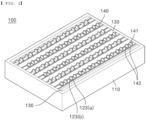
- FIG. 2 is a perspective view showing a battery module according to a preferred embodiment of the present invention
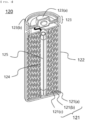
- FIG. 3 is a sectional view of a cylindrical battery cell according to a preferred embodiment of the present invention.
- the battery module 100 includes a module case 110, a cylindrical battery cell 120, a busbar 130, and a cover case 140.
- the module case 110 which has a hexahedral outer shape, is provided with a space configured to receive the cylindrical battery cell 120, and a plurality of openings (not shown), through which terminals of the cylindrical battery cell 120 are exposed to the outside in a state in which the cylindrical battery cell is upright, is formed in the upper end of the module case 110.
- a battery cell received in the battery module according to the present invention is a cylindrical battery cell 120, which may be manufactured by receiving an electrode assembly 121 having a wound type structure in a metal can 122, injecting an electrolytic solution into the metal can 122, and coupling a cap assembly 123 having an electrode terminal formed thereon to the open upper end of the metal can 122.
- the electrode assembly 121 is manufactured by sequentially stacking a positive electrode 121(a), a negative electrode 121(b), and a separator 121(c) and winding the same in a round shape.
- a cylindrical center pin 125 is inserted into a hollow core portion 124 formed in a central region of the electrode assembly 121.
- the center pin 125 is generally made of a metal material in order to provide predetermined strength.
- the center pin 125 serves to fix and support the electrode assembly 121, and serves as a path configured to discharge gas generated due to internal reaction when the battery cell is charged and discharged and is operated.
- a positive electrode terminal 123(a) is formed so as to have a protruding shape at a middle region of the upper end of the cap assembly 123, and the remaining region of the cap assembly 123 constitutes a negative electrode terminal 123(b).
- cylindrical battery cell 120 is not particularly restricted as long as the positive electrode terminal 123(a) and the negative electrode terminal 123(b) are exposed or protrude from the upper end of the cap assembly 123.
- the busbar 130 which is configured to connect a plurality of cylindrical battery cells 120 to each other in series or in parallel, is located in parallel to the cylindrical battery cells 120 in a state of being spaced apart therefrom by a predetermined distance.
- the cover case 140 which is configured to protect the upper part of the cylindrical battery cell 120 received in the module case 110, is provided with an opening 142 configured to expose the upper surface of the cylindrical battery cell 120.
- the cover case is provided with a plurality of protrusions 141 protruding by a predetermined height in order to protect the cylindrical battery cell 120 from external impact applied from above.
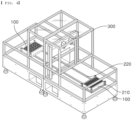
- FIG. 4 is an overall perspective view of a battery module assembly apparatus having vision according to a preferred embodiment of the present invention
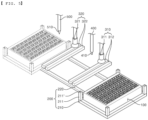
- FIG. 5 is an enlarged perspective view showing the interior of the battery module assembly apparatus having vision according to the preferred embodiment of the present invention.
- the battery module assembly apparatus includes a transfer unit 200, a vision unit 300, a washing unit 400, and a bonding unit 500.
- the transfer unit 200 is configured to move a battery module 100 in a state in which a cylindrical battery cell 120 to be bonded is received therein forwards and rearwards (an X-axis direction).
- the transfer unit 200 includes a seating die 210 having a flat structure configured to support the battery module 100 in a state of being in tight contact with the bottom surface of the battery module 100 and a rail 220 configured to provide a movement path of the seating die 210.
- a plurality guide portions 211 each having a predetermined height it is preferable for a plurality guide portions 211 each having a predetermined height to be provided at corners of the seating die 210, and it is more preferable for an "L"-shaped marker 211' to be formed at the upper surface of each guide portion 211, which will be described below.
- the vision unit 300 is configured to scan the upper surface of the battery module 100 transferred in a state of being seated on the seating die 210 in order to determine whether the module case 110 is seated at a predetermined position, and is configured to scan the position of the cylindrical battery cell 120 received in the module case 110 and to transmit the result to the washing unit 400 and the bonding unit 500.
- the vision unit 300 configured to perform the above functions includes a first vision unit 310 and a second vision unit 320.
- the first vision unit 310 is located ahead of the second vision unit, i.e. a position at which the battery module 100 is primarily scanned after the battery module is seated on the seating die 210 by a worker or a separate seating means (not shown), and includes a first vision camera 311 and a first illumination portion 312.
- a pair of first illumination portions 312 may be provided in a state of being spaced apart from each other by a predetermined distance.
- the first vision camera 311 is located above the pair of first illumination portions 312 to scan the upper surface of the battery module 100 that is moved.
- the first vision camera 311 scans the extent of twisting of the position at which the module case 110 is located and the position of the cylindrical battery cell 120 received in the module case 110 based on the marker 211' of the guide portion 211.
- the second vision unit 320 is located behind the first vision unit 310, and includes a second vision camera 321 and a second illumination portion 322.
- the second vision camera 321 and the second illumination portion 322 are identical in construction and function to the first vision camera 311 and the first illumination portion 312, respectively.
- the reason that the vision unit is constituted by the first vision unit 310 and the second vision unit 320, which perform the same function while forming a pair is that it is necessary to improve accuracy in bonding and to minimize a defect rate.
- the module case 110 having the cylindrical battery cell 120 received therein is moved along the rail 220 in order to minimize the movement distance of the washing unit 400 and the bonding unit 500, accurate movement of which is required, and therefore it is necessary to compare the result of the first vision unit 310 and the result of the second vision unit 320 with each other in order to determine again whether the module case is twisted during movement thereof.
- FIG. 6 is an enlarged perspective view illustrating that the portion of the battery cell to be bonded is washed using a laser according to a preferred embodiment of the present invention.
- the washing unit 400 is provided to minimize the number of battery modules discarded due to poor welding. Specifically, the washing unit 400 is provided at the lower end of a body thereof with a tip portion 410, and a laser is applied through the tip portion 410 in order to wash the upper surface of the cylindrical battery cell 120.
- the washing unit 400 is located in the order of the first vision unit 310, the washing unit 400, and the second vision unit 320, or is located in the order of the first vision unit 310, the second vision unit 320 and the washing unit 400.
- the bonding unit 500 which electrically connects the positive electrode of the battery cell and the busbar to each other and electrically connects the negative electrode of the battery cell and the busbar to each other, is provided at the lower end thereof with a pointed nozzle portion 510, and a molten conductive metal is discharged through the nozzle portion 510.
- the bonding unit 500 is movable in an upward-downward direction, a leftward-rightward direction, and a forward-rearward direction, and performs bonding between the positive electrode of the battery cell 120 and the busbar and between the negative electrode of the battery cell 120 and the busbar in the form of a wire W while repeatedly moving based on scanning results obtained by the first vision unit 310 and the second vision unit 320.
- FIG. 8 is a flowchart showing a battery module assembly method according to a preferred embodiment of the present invention.
- the assembly method using the battery module assembly apparatus using vision includes a first step of seating a battery module having a cylindrical battery cell 120 received therein on the transfer unit 200; a second step of moving the transfer unit 200; a third step of checking the position of the battery module 100 through the vision unit located on the movement path of the transfer unit 200; and a fourth step of bonding an electrode of the cylindrical battery cell 120 received in the battery module 100 and a busbar 130 to each other.
- the first vision unit 310, the second vision unit 320, and the washing unit 400 may be sequentially located, and therefore primary checking of the position of the battery module 100, secondary checking of the position of the battery module 100, and washing may be sequentially performed.
- bonding may be performed immediately after washing, whereby a possibility of foreign matter attachment is reduced, and therefore it is possible to minimize bonding defects due to foreign matter.
- One or more battery modules may be connected to each other in order to constitute a battery pack.
Landscapes
- Chemical & Material Sciences (AREA)
- Chemical Kinetics & Catalysis (AREA)
- Electrochemistry (AREA)
- General Chemical & Material Sciences (AREA)
- Engineering & Computer Science (AREA)
- Mechanical Engineering (AREA)
- Physics & Mathematics (AREA)
- Computer Vision & Pattern Recognition (AREA)
- General Physics & Mathematics (AREA)
- Optics & Photonics (AREA)
- Battery Mounting, Suspending (AREA)
- Connection Of Batteries Or Terminals (AREA)
Description
- This application claims the benefit of priority to
Korean Patent Application No. 2020-0061105 filed on May 21, 2020 - The present invention relates to a battery module assembly apparatus using vision and an assembly method using the same, and more particularly to a battery module assembly apparatus using vision capable of accurately recognizing the position at which a battery cell and a busbar will be electrically connected to each other and minimizing poor contact therebetween due to foreign matter at the time of electrical connection therebetween and an assembly method using the same.
- A secondary battery, which has high ease of application based on product family and electrical characteristics, such as high energy density, has been universally applied to an electric vehicle (EV) or a hybrid electric vehicle (HEV) driven by an electrical driving source as well as portable devices. Such a secondary battery has attracted attention as a new energy source capable of enhancing environmental friendliness and energy efficiency in that the secondary battery has a primary advantage of remarkably reducing the use of fossil fuels and in that no by-products due to the use of energy are generated.
- There are a lithium-ion battery, a lithium polymer battery, a nickel-cadmium battery, a nickel-hydride battery, and a nickel-zinc battery as secondary batteries that are widely used at present. The operating voltage of such a unit secondary battery cell, i.e. a unit battery cell, is about 2.5V to 4.5V. In the case in which output voltage higher than the above operating voltage is required, therefore, a plurality of battery cells may be connected to each other in series to constitute a battery module.
- Of course, a plurality of battery modules may be connected to each other in parallel or in series depending on required charge and discharge capacities to constitute a battery pack.
- Meanwhile, in order to satisfy required output voltage, a plurality of cylindrical battery cells is received in a battery module, and the battery cells are connected to each other via a busbar in order to increase energy density. For the cylindrical battery cell, however, a positive electrode and a negative electrode are located very close to each other, and the areas of portions having corresponding polarities are small, whereby connection between the cylindrical battery cell and the busbar is not easily achieved.
- In connection therewith,
FIG. 1 is a view showing an apparatus for bonding a conventional battery cell. Referring toFIG. 1 , a battery module assembly apparatus includes a supply unit configured to supply a battery module to the apparatus, a transfer unit configured to transfer the supplied battery module to a work position, a vision type camera configured to scan the transferred battery module, and a welding unit configured to bond the battery module. The battery module transferred by the transfer unit is scanned through the vision type camera to set coordinates and is moved to the position of the welding unit based on the information such that bonding is performed by the welding unit. - In the conventional art, a bonding position is set using the vision type camera, and then bonding is performed. Since there is no light source configured to illuminate the battery module, however, it is difficult to accurately recognize the position of the battery module. In particular, there is a possibility of the battery module being contaminated by various kinds of foreign matter, such as dust, until the battery module reaches the welding unit, whereby welding defects may occur.
- Document
CN208423080 discloses a battery module assembling equipment of known type. - (Patent Document 1)
Korean Registered Patent Publication No. 1810659 - The present invention has been made in view of the above problems, and it is an object of the present invention to provide a battery module assembly apparatus using vision capable of accurately scanning the positions of a module case and a battery cell received in the module case such that the battery cell can be bonded to a busbar at a predetermined position and an assembly method using the same.
- It is another object of the present invention to provide a battery module assembly apparatus using vision capable of removing foreign matter attached to the region of the battery cell to be bonded, thereby minimizing bonding defects, and an assembly method using the same.
- In order to accomplish the above objects, a battery module assembly apparatus as defined in the appended claims is provided.
- In addition, an assembly method is also provided.
- A battery module assembly apparatus using vision according to the present invention and an assembly method using the same have a merit in that a plurality of vision units scans a battery module, and a cylindrical battery cell and a busbar are bonded to each other based on the result, whereby it is possible to perform bonding at a correct position.
- In addition, the battery module assembly apparatus using vision according to the present invention and the assembly method using the same have an advantage in that a washing unit configured to wash only a portion to be bonded is provided, whereby it is possible to minimize bonding defects due to foreign matter.
- Furthermore, the battery module assembly apparatus using vision according to the present invention and the assembly method using the same have a merit in that an illumination portion having high illuminance is provided, whereby it is possible to improve reliability in result of scanning by a vision camera.
-
-
FIG. 1 is a view showing an apparatus for bonding a conventional battery cell. -
FIG. 2 is a perspective view showing a battery module according to a preferred embodiment of the present invention. -
FIG. 3 is a sectional view of a cylindrical battery cell according to a preferred embodiment of the present invention. -
FIG. 4 is an overall perspective view of a battery module assembly apparatus having vision according to a preferred embodiment of the present invention. -
FIG. 5 is an enlarged perspective view showing the interior of the battery module assembly apparatus having vision according to the preferred embodiment of the present invention. -
FIG. 6 is an enlarged perspective view illustrating that the portion of a battery cell to be bonded is washed using a laser according to a preferred embodiment of the present invention. -
FIG. 7 is an enlarged perspective view illustrating that the battery cell and a busbar are bonded to each other via a wire according to the preferred embodiment of the present invention. -
FIG. 8 is a flowchart showing a battery module assembly method according to a preferred embodiment of the present invention. - In the present application, it should be understood that the terms "comprises," "has," "includes," etc. specify the presence of stated features, numbers, steps, operations, elements, components, or combinations thereof, but do not preclude the presence or addition of one or more other features, numbers, steps, operations, elements, components, or combinations thereof.
- In addition, the same reference numbers will be used throughout the drawings to refer to parts that perform similar functions or operations. In the case in which one part is said to be connected to another part in the specification, not only may the one part be directly connected to the other part, but also, the one part may be indirectly connected to the other part via a further part. In addition, that a certain element is included does not mean that other elements are excluded, but means that such elements may be further included unless mentioned otherwise.
- Hereinafter, a battery module assembly apparatus using vision according to the present invention and an assembly method using the same will be described with reference to the accompanying drawings.
-
FIG. 2 is a perspective view showing a battery module according to a preferred embodiment of the present invention, andFIG. 3 is a sectional view of a cylindrical battery cell according to a preferred embodiment of the present invention. - Referring to
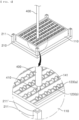
FIGS. 2 and3 , thebattery module 100 according to the present invention includes amodule case 110, acylindrical battery cell 120, abusbar 130, and acover case 140. - The
module case 110, which has a hexahedral outer shape, is provided with a space configured to receive thecylindrical battery cell 120, and a plurality of openings (not shown), through which terminals of thecylindrical battery cell 120 are exposed to the outside in a state in which the cylindrical battery cell is upright, is formed in the upper end of themodule case 110. - Meanwhile, as shown in
FIG. 3 , a battery cell received in the battery module according to the present invention is acylindrical battery cell 120, which may be manufactured by receiving anelectrode assembly 121 having a wound type structure in a metal can 122, injecting an electrolytic solution into the metal can 122, and coupling acap assembly 123 having an electrode terminal formed thereon to the open upper end of the metal can 122. - Here, the
electrode assembly 121 is manufactured by sequentially stacking a positive electrode 121(a), a negative electrode 121(b), and a separator 121(c) and winding the same in a round shape. - A
cylindrical center pin 125 is inserted into ahollow core portion 124 formed in a central region of theelectrode assembly 121. Thecenter pin 125 is generally made of a metal material in order to provide predetermined strength. Thecenter pin 125 serves to fix and support theelectrode assembly 121, and serves as a path configured to discharge gas generated due to internal reaction when the battery cell is charged and discharged and is operated. - Meanwhile, a positive electrode terminal 123(a) is formed so as to have a protruding shape at a middle region of the upper end of the
cap assembly 123, and the remaining region of thecap assembly 123 constitutes a negative electrode terminal 123(b). - Of course, the
cylindrical battery cell 120 is not particularly restricted as long as the positive electrode terminal 123(a) and the negative electrode terminal 123(b) are exposed or protrude from the upper end of thecap assembly 123. - The
busbar 130, which is configured to connect a plurality ofcylindrical battery cells 120 to each other in series or in parallel, is located in parallel to thecylindrical battery cells 120 in a state of being spaced apart therefrom by a predetermined distance. - The
cover case 140, which is configured to protect the upper part of thecylindrical battery cell 120 received in themodule case 110, is provided with anopening 142 configured to expose the upper surface of thecylindrical battery cell 120. In addition, the cover case is provided with a plurality ofprotrusions 141 protruding by a predetermined height in order to protect thecylindrical battery cell 120 from external impact applied from above. -
FIG. 4 is an overall perspective view of a battery module assembly apparatus having vision according to a preferred embodiment of the present invention, andFIG. 5 is an enlarged perspective view showing the interior of the battery module assembly apparatus having vision according to the preferred embodiment of the present invention. - Referring to
FIGS. 4 and5 , the battery module assembly apparatus according to the present invention includes atransfer unit 200, avision unit 300, awashing unit 400, and abonding unit 500. - The
transfer unit 200 is configured to move abattery module 100 in a state in which acylindrical battery cell 120 to be bonded is received therein forwards and rearwards (an X-axis direction). Specifically, thetransfer unit 200 includes a seating die 210 having a flat structure configured to support thebattery module 100 in a state of being in tight contact with the bottom surface of thebattery module 100 and arail 220 configured to provide a movement path of theseating die 210. - Here, it is preferable for a
plurality guide portions 211 each having a predetermined height to be provided at corners of theseating die 210, and it is more preferable for an "L"-shaped marker 211' to be formed at the upper surface of eachguide portion 211, which will be described below. - The
vision unit 300 is configured to scan the upper surface of thebattery module 100 transferred in a state of being seated on theseating die 210 in order to determine whether themodule case 110 is seated at a predetermined position, and is configured to scan the position of thecylindrical battery cell 120 received in themodule case 110 and to transmit the result to thewashing unit 400 and thebonding unit 500. - The
vision unit 300 configured to perform the above functions includes afirst vision unit 310 and asecond vision unit 320. Specifically, thefirst vision unit 310 is located ahead of the second vision unit, i.e. a position at which thebattery module 100 is primarily scanned after the battery module is seated on the seating die 210 by a worker or a separate seating means (not shown), and includes afirst vision camera 311 and afirst illumination portion 312. - Here, a pair of
first illumination portions 312 may be provided in a state of being spaced apart from each other by a predetermined distance. Thefirst vision camera 311 is located above the pair offirst illumination portions 312 to scan the upper surface of thebattery module 100 that is moved. - That is, the
first vision camera 311 scans the extent of twisting of the position at which themodule case 110 is located and the position of thecylindrical battery cell 120 received in themodule case 110 based on the marker 211' of theguide portion 211. - The
second vision unit 320 is located behind thefirst vision unit 310, and includes asecond vision camera 321 and asecond illumination portion 322. Thesecond vision camera 321 and thesecond illumination portion 322 are identical in construction and function to thefirst vision camera 311 and thefirst illumination portion 312, respectively. - Here, the reason that the vision unit is constituted by the
first vision unit 310 and thesecond vision unit 320, which perform the same function while forming a pair is that it is necessary to improve accuracy in bonding and to minimize a defect rate. - That is, in the present invention, the
module case 110 having thecylindrical battery cell 120 received therein is moved along therail 220 in order to minimize the movement distance of thewashing unit 400 and thebonding unit 500, accurate movement of which is required, and therefore it is necessary to compare the result of thefirst vision unit 310 and the result of thesecond vision unit 320 with each other in order to determine again whether the module case is twisted during movement thereof. -
FIG. 6 is an enlarged perspective view illustrating that the portion of the battery cell to be bonded is washed using a laser according to a preferred embodiment of the present invention. - In a process in which the
cylindrical battery cell 120 is received in themodule case 110 or in a process in which thecylindrical battery cell 120 is moved in a state of being received in themodule case 110, various foreign matter, such as dust or oil and fat, may be attached to the surface of the electrode, which may lead to poor welding. - In the present invention, the
washing unit 400 is provided to minimize the number of battery modules discarded due to poor welding. Specifically, thewashing unit 400 is provided at the lower end of a body thereof with atip portion 410, and a laser is applied through thetip portion 410 in order to wash the upper surface of thecylindrical battery cell 120. - In particular, it is possible to wash only a region to be welded using a laser based on scanning results obtained by the
first vision unit 310 and thesecond vision unit 320, whereby it is possible to rapidly assemble the battery module while reducing energy consumption. - Meanwhile, the
washing unit 400 is located in the order of thefirst vision unit 310, thewashing unit 400, and thesecond vision unit 320, or is located in the order of thefirst vision unit 310, thesecond vision unit 320 and thewashing unit 400. -
FIG. 7 is an enlarged perspective view illustrating that the battery cell and the busbar are bonded to each other via a wire according to the preferred embodiment of the present invention. - The
bonding unit 500, which electrically connects the positive electrode of the battery cell and the busbar to each other and electrically connects the negative electrode of the battery cell and the busbar to each other, is provided at the lower end thereof with apointed nozzle portion 510, and a molten conductive metal is discharged through thenozzle portion 510. - That is, the
bonding unit 500 is movable in an upward-downward direction, a leftward-rightward direction, and a forward-rearward direction, and performs bonding between the positive electrode of thebattery cell 120 and the busbar and between the negative electrode of thebattery cell 120 and the busbar in the form of a wire W while repeatedly moving based on scanning results obtained by thefirst vision unit 310 and thesecond vision unit 320. -
FIG. 8 is a flowchart showing a battery module assembly method according to a preferred embodiment of the present invention. - The assembly method using the battery module assembly apparatus using vision according to the present invention includes a first step of seating a battery module having a
cylindrical battery cell 120 received therein on thetransfer unit 200; a second step of moving thetransfer unit 200; a third step of checking the position of thebattery module 100 through the vision unit located on the movement path of thetransfer unit 200; and a fourth step of bonding an electrode of thecylindrical battery cell 120 received in thebattery module 100 and abusbar 130 to each other. - Meanwhile, it is preferable to check the position of the
battery module 100 twice in the third step, and it is more preferable to further perform a washing step before the fourth step. - That is, in the third step, the
first vision unit 310, thewashing unit 400, and thesecond vision unit 320 may be sequentially located, and therefore primary checking of the position of thebattery module 100, washing, and secondary checking of the position of thebattery module 100 may be sequentially performed. In this case, the position of thebattery module 100 can be checked before bonding even though thebattery module 100 is somewhat misaligned during washing, whereby it is possible to accurately recognize a bonding position. - Also, in the third step, the
first vision unit 310, thesecond vision unit 320, and thewashing unit 400 may be sequentially located, and therefore primary checking of the position of thebattery module 100, secondary checking of the position of thebattery module 100, and washing may be sequentially performed. In this case, bonding may be performed immediately after washing, whereby a possibility of foreign matter attachment is reduced, and therefore it is possible to minimize bonding defects due to foreign matter. - One or more battery modules, each of which is assembled using the assembly method using vision according to the present invention, may be connected to each other in order to constitute a battery pack.
- Although the specific details of the present invention have been described in detail, those skilled in the art will appreciate that the detailed description thereof discloses only preferred embodiments of the present invention and thus does not limit the scope of the present invention. Accordingly, those skilled in the art will appreciate that various changes and modifications are possible, without departing from the category and the technical idea of the present invention, and it will be obvious that such changes and modifications fall within the scope of the appended claims.
-
- 100: Battery module
- 110: Module case
- 120: Cylindrical battery cell
- 121: Electrode assembly
- 121(a): Positive electrode 121(b): Negative electrode
- 121(c): Separator
- 122: Metal can
- 123: Cap assembly
- 123(a): Positive electrode terminal 123(b): Negative electrode terminal
- 124: Core portion
- 125: Center pin
- 130: Busbar
- 140: Cover case
- 141: Protrusion 142: Opening
- 200: Transfer unit
- 210: Seating die
- 211: Guide portion 211': Marker
- 220: Rail
- 300: Vision unit
- 310: First vision unit
- 311: First vision camera 312: First illumination portion
- 320: Second vision unit
- 321: Second vision camera 322: Second illumination portion
- 400: Washing unit
- 410: Tip portion
- 500: Bonding unit
- 510: Nozzle portion
- W: Wire
Claims (8)
- A battery module assembly apparatus (100) using vision, the battery module assembly apparatus (100) comprising:a transfer unit (200) configured to move forwards and rearwards or leftwards and rightwards when a battery module (100) having a cylindrical battery cell (120) received therein is seated on the transfer unit (200);a vision unit (300) configured to check a position of the battery module (100);a bonding unit (500) configured to electrically connect an electrode of the cylindrical battery cell (120) received in the battery module (100) and a busbar (130) to each other;characterized in that the battery module assembly apparatus (100) further comprises a washing unit (400) configured to remove foreign matter from the cylindrical battery cell (120);wherein the vision unit (300) comprises a first vision unit (310) and a second vision unit (320) andwherein the first vision unit (310), the washing unit (400), and the second vision unit (320) are sequentially located in the named order, or wherein the first vision unit (310), the second vision unit (320), and the washing unit (400) are sequentially located in the named order.
- The battery module assembly apparatus according to claim 1, wherein the battery module (100) further has a cover case (140) configured to cover an upper part of the received cylindrical battery cell (120).
- The battery module assembly apparatus according to claim 2, wherein the cover case (140) is provided with a protrusion (141) formed so as to protrude upwards by a predetermined height and an opening (142) configured to allow a portion of an upper surface of the cylindrical battery cell (120) to be exposed therethrough.
- The battery module assembly apparatus according to claim 1, wherein the transfer unit (200) comprises:a seating die (210) configured to allow a bottom surface of the battery module (100) to be disposed in tight contact therewith; anda plurality of guide portions (211) located at corners of the seating die (210), each of the plurality of guide portions (211) having a predetermined height.
- The battery module assembly apparatus according to claim 4, wherein an "L"-shaped marker (211') is formed at an upper surface of each of the plurality of guide portions (211).
- The battery module assembly apparatus according to claim 1, wherein the vision unit (300) comprises an illumination portion (312; 322) and a vision camera (311; 321) configured to scan the battery module (100).
- The battery module assembly apparatus according to claim 1, wherein the washing unit (400) is a laser device.
- A battery module assembly method comprising:a first step of seating a battery module (100) having a cylindrical battery cell (120) received therein on a transfer unit (200);a second step of moving the transfer unit (200);a third step of checking a position of the battery module (100) through a vision unit (300) located on a movement path of the transfer unit (200); anda fourth step of bonding an electrode of the cylindrical battery cell (120) received in the battery module (100) and a busbar (130) to each other;the battery module assembly method being characterized in that it further comprises a step of washing a portion to be bonded on an upper surface of the cylindrical battery cell (120) before the fourth step,wherein the position of the battery module (100) is checked twice through the vision unit (300) in the third step, and
wherein the washing step is performed between the two position checking steps, or the washing step is performed after the two position checking steps.
Applications Claiming Priority (2)
| Application Number | Priority Date | Filing Date | Title |
|---|---|---|---|
| KR1020200061105A KR102874742B1 (en) | 2020-05-21 | 2020-05-21 | Assembling Devices For Battery Modules Using Vision and Assembling Methods Using it |
| PCT/KR2021/005213 WO2021235715A1 (en) | 2020-05-21 | 2021-04-26 | Apparatus for assembling battery module using vision, and assembly method using same |
Publications (3)
| Publication Number | Publication Date |
|---|---|
| EP4087049A1 EP4087049A1 (en) | 2022-11-09 |
| EP4087049A4 EP4087049A4 (en) | 2024-08-28 |
| EP4087049B1 true EP4087049B1 (en) | 2025-06-11 |
Family
ID=78707959
Family Applications (1)
| Application Number | Title | Priority Date | Filing Date |
|---|---|---|---|
| EP21807735.2A Active EP4087049B1 (en) | 2020-05-21 | 2021-04-26 | Battery module assembly apparatus using vision and assembly method using the same |
Country Status (9)
| Country | Link |
|---|---|
| US (1) | US12603395B2 (en) |
| EP (1) | EP4087049B1 (en) |
| JP (1) | JP7547000B2 (en) |
| KR (1) | KR102874742B1 (en) |
| CN (1) | CN115244778A (en) |
| ES (1) | ES3037714T3 (en) |
| HU (1) | HUE072794T2 (en) |
| PL (1) | PL4087049T3 (en) |
| WO (1) | WO2021235715A1 (en) |
Families Citing this family (3)
| Publication number | Priority date | Publication date | Assignee | Title |
|---|---|---|---|---|
| KR102874742B1 (en) * | 2020-05-21 | 2025-10-22 | 주식회사 엘지에너지솔루션 | Assembling Devices For Battery Modules Using Vision and Assembling Methods Using it |
| KR102929583B1 (en) * | 2021-07-15 | 2026-02-23 | 주식회사 엘지에너지솔루션 | Assembling Devices for Battery Modules with Increased Productivity and Assembling Methods Using the Same |
| KR102444804B1 (en) * | 2022-05-31 | 2022-09-19 | 디에이치 주식회사 | Electrolyte injection hole laser cleaning device of can-type secondary battery |
Family Cites Families (31)
| Publication number | Priority date | Publication date | Assignee | Title |
|---|---|---|---|---|
| JP3661564B2 (en) | 2000-05-31 | 2005-06-15 | 松下電器産業株式会社 | Display panel assembly equipment |
| JP2011033663A (en) | 2009-07-30 | 2011-02-17 | Hitachi High-Technologies Corp | Panel substrate conveying device and display panel module assembling device |
| JP5637005B2 (en) | 2011-02-23 | 2014-12-10 | トヨタ自動車株式会社 | Laser cleaning method, laser cleaning device, electromagnetic valve manufacturing method, electromagnetic valve manufacturing device, and electromagnetic valve |
| JP2013026383A (en) | 2011-07-20 | 2013-02-04 | Dainippon Screen Mfg Co Ltd | Alignment device, alignment method, and drawing device |
| US9678007B2 (en) * | 2011-10-14 | 2017-06-13 | Northwestern University | Biological tissue analysis by inverse spectroscopic optical coherence tomography |
| KR101289430B1 (en) | 2012-03-30 | 2013-07-24 | 주식회사 이랜텍 | Battery pack assembly unit |
| KR101512088B1 (en) | 2013-04-29 | 2015-04-14 | 주식회사 엘지화학 | Inner case of battery module assembly for vehicle's battery pack |
| KR101525798B1 (en) * | 2013-08-16 | 2015-06-03 | 동아공업 주식회사 | System and Method for Removal Burr of Gasket in Fuel Cell with Integrated Metal Separator |
| JP6135494B2 (en) | 2013-12-20 | 2017-05-31 | 豊田合成株式会社 | Battery pack |
| JP6609974B2 (en) | 2014-06-11 | 2019-11-27 | 日産自動車株式会社 | Laser welding apparatus and laser welding method |
| KR101810659B1 (en) | 2015-04-24 | 2017-12-20 | 주식회사 엘지화학 | Electrode Terminal Welding Device of Battery Cell Assembly Comprising Battery Cells and Welding Process Using the Same |
| US9620362B2 (en) | 2015-04-29 | 2017-04-11 | Taiwan Semiconductor Manufacutring Co., Ltd. | Seed layer structure for growth of III-V materials on silicon |
| JP6628505B2 (en) | 2015-06-17 | 2020-01-08 | 株式会社エンビジョンAescエナジーデバイス | Method and apparatus for manufacturing electrode for secondary battery and method for manufacturing secondary battery |
| KR20170071077A (en) * | 2015-12-15 | 2017-06-23 | 주식회사 엘지화학 | Apparatus for Manufacturing Battery Pack Having Plurality of Lanes for Assembling Battery Cells |
| JP2017126522A (en) | 2016-01-15 | 2017-07-20 | 台湾神戸電池股▲分▼有限公司 | Cleaning method of battery electrode plate head |
| CN205406643U (en) * | 2016-03-04 | 2016-07-27 | 福建星云电子股份有限公司 | Production line of soft -packaged electrical core module |
| KR101697698B1 (en) | 2016-04-21 | 2017-01-18 | 주영진 | The apparatus of smart welding control by using spot laser welding and vision sensing module |
| CN110178244B (en) | 2016-12-29 | 2023-01-03 | 罗密欧系统公司 | System and method for cell structure, interconnection, sensing and balancing |
| CN106825959B (en) | 2017-03-21 | 2018-12-07 | 无锡奥特维智能装备有限公司 | Battery pole ear welding equipment |
| KR102242248B1 (en) * | 2017-05-02 | 2021-04-20 | 주식회사 엘지화학 | Welding inspection device and inspection method for secondary battery |
| CN107946508A (en) | 2017-11-07 | 2018-04-20 | 合肥国轩高科动力能源有限公司 | A battery module structure |
| CN108539243B (en) | 2018-02-25 | 2024-08-16 | 深圳市联赢激光股份有限公司 | Automatic welding workstation for battery modules |
| KR102288122B1 (en) | 2018-03-27 | 2021-08-11 | 주식회사 엘지에너지솔루션 | Method and apparatus for manufacturing of secondary battery |
| JP2019179653A (en) | 2018-03-30 | 2019-10-17 | 株式会社エンビジョンAescジャパン | Measuring apparatus for battery module |
| KR101900403B1 (en) * | 2018-04-30 | 2018-09-20 | (주)하나기술 | Apparatus of aligning a cylindrical battery and a welding apparatus comprising the same |
| KR101908628B1 (en) * | 2018-04-30 | 2018-10-16 | (주)하나기술 | Welding method using a welding apparatus for tap for secondary battery |
| CN208423080U (en) | 2018-06-04 | 2019-01-22 | 杭州波谱莱新能源科技有限公司 | A kind of battery modules assembly device |
| KR102446378B1 (en) | 2018-11-23 | 2022-09-23 | 연세대학교 산학협력단 | Methods for predicting therapeutic responsiveness of non-tuberculous mycobacterium infection |
| JP7194335B2 (en) | 2019-04-23 | 2022-12-22 | トヨタ自動車株式会社 | Method for manufacturing secondary battery and secondary battery |
| CN110340519A (en) | 2019-07-04 | 2019-10-18 | 苏州德星云智能装备有限公司 | A kind of lithium battery mould group battery core connection sheet welding equipment |
| KR102874742B1 (en) * | 2020-05-21 | 2025-10-22 | 주식회사 엘지에너지솔루션 | Assembling Devices For Battery Modules Using Vision and Assembling Methods Using it |
-
2020
- 2020-05-21 KR KR1020200061105A patent/KR102874742B1/en active Active
-
2021
- 2021-04-26 PL PL21807735.2T patent/PL4087049T3/en unknown
- 2021-04-26 CN CN202180015916.2A patent/CN115244778A/en active Pending
- 2021-04-26 HU HUE21807735A patent/HUE072794T2/en unknown
- 2021-04-26 ES ES21807735T patent/ES3037714T3/en active Active
- 2021-04-26 WO PCT/KR2021/005213 patent/WO2021235715A1/en not_active Ceased
- 2021-04-26 EP EP21807735.2A patent/EP4087049B1/en active Active
- 2021-04-26 US US17/797,330 patent/US12603395B2/en active Active
- 2021-04-26 JP JP2022546536A patent/JP7547000B2/en active Active
Also Published As
| Publication number | Publication date |
|---|---|
| US20230059357A1 (en) | 2023-02-23 |
| EP4087049A1 (en) | 2022-11-09 |
| US12603395B2 (en) | 2026-04-14 |
| ES3037714T3 (en) | 2025-10-06 |
| JP2023513072A (en) | 2023-03-30 |
| KR20210144165A (en) | 2021-11-30 |
| CN115244778A (en) | 2022-10-25 |
| KR102874742B1 (en) | 2025-10-22 |
| EP4087049A4 (en) | 2024-08-28 |
| WO2021235715A1 (en) | 2021-11-25 |
| HUE072794T2 (en) | 2025-12-28 |
| JP7547000B2 (en) | 2024-09-09 |
| PL4087049T3 (en) | 2025-09-01 |
Similar Documents
| Publication | Publication Date | Title |
|---|---|---|
| EP4087049B1 (en) | Battery module assembly apparatus using vision and assembly method using the same | |
| US10603747B2 (en) | Lead welding apparatus, battery module manufactured by the lead welding apparatus, and battery pack comprising the battery module | |
| US11374290B2 (en) | Power supply device, vehicle in which same is used, and bus bar | |
| US11289773B2 (en) | Power supply device, vehicle using same, bus bar, and electrical connection method for battery cell using same bus bar | |
| US11404752B2 (en) | Cylindrical secondary battery including welding pole | |
| KR20170100333A (en) | Battery cell and fabricating method thereof | |
| KR20160079220A (en) | Battery Pack Prepared Using Electrical Connecting Member for Battery Cell with Contact Bending Part | |
| US12334594B2 (en) | Battery module having rail type socket and battery pack including the same | |
| US20240162572A1 (en) | Battery pack and vehicle including the same | |
| CN118451621A (en) | Secondary battery charging/discharging apparatus | |
| CN121420417A (en) | Energy storage device | |
| EP4431920A1 (en) | Welding inspection device | |
| EP4310986A1 (en) | Bonding state inspection apparatus and bonding state inspection method using same | |
| EP4297170A1 (en) | Battery module assembly apparatus having enhanced productivity and assembly method using same | |
| KR102834586B1 (en) | Bus bar assembly and method for manufacturing thereof | |
| US12621554B2 (en) | Welding inspection apparatus for inspecting a battery can | |
| EP4572078A1 (en) | Battery cell charging and discharging device and battery cell produced using same, and battery pack and vehicle comprising battery cells | |
| CN115380425B (en) | Electrical energy storage device for a motor vehicle, motor vehicle and method for producing an electrical energy storage device | |
| EP4604262A1 (en) | Thermal runaway test jig for batteries | |
| KR20240127293A (en) | Electric storage device |
Legal Events
| Date | Code | Title | Description |
|---|---|---|---|
| STAA | Information on the status of an ep patent application or granted ep patent |
Free format text: STATUS: THE INTERNATIONAL PUBLICATION HAS BEEN MADE |
|
| PUAI | Public reference made under article 153(3) epc to a published international application that has entered the european phase |
Free format text: ORIGINAL CODE: 0009012 |
|
| STAA | Information on the status of an ep patent application or granted ep patent |
Free format text: STATUS: REQUEST FOR EXAMINATION WAS MADE |
|
| 17P | Request for examination filed |
Effective date: 20220802 |
|
| AK | Designated contracting states |
Kind code of ref document: A1 Designated state(s): AL AT BE BG CH CY CZ DE DK EE ES FI FR GB GR HR HU IE IS IT LI LT LU LV MC MK MT NL NO PL PT RO RS SE SI SK SM TR |
|
| DAV | Request for validation of the european patent (deleted) | ||
| DAX | Request for extension of the european patent (deleted) | ||
| REG | Reference to a national code |
Ref country code: DE Ref legal event code: R079 Free format text: PREVIOUS MAIN CLASS: H01M0050502000 Ipc: H01M0050213000 Ref document number: 602021032219 Country of ref document: DE |
|
| A4 | Supplementary search report drawn up and despatched |
Effective date: 20240725 |
|
| RIC1 | Information provided on ipc code assigned before grant |
Ipc: H01M 50/244 20210101ALI20240722BHEP Ipc: B23K 37/047 20060101ALI20240722BHEP Ipc: B23K 3/08 20060101ALI20240722BHEP Ipc: B23K 3/06 20060101ALI20240722BHEP Ipc: B23K 1/00 20060101ALI20240722BHEP Ipc: H01M 50/213 20210101AFI20240722BHEP |
|
| GRAP | Despatch of communication of intention to grant a patent |
Free format text: ORIGINAL CODE: EPIDOSNIGR1 |
|
| STAA | Information on the status of an ep patent application or granted ep patent |
Free format text: STATUS: GRANT OF PATENT IS INTENDED |
|
| INTG | Intention to grant announced |
Effective date: 20250307 |
|
| GRAS | Grant fee paid |
Free format text: ORIGINAL CODE: EPIDOSNIGR3 |
|
| GRAA | (expected) grant |
Free format text: ORIGINAL CODE: 0009210 |
|
| STAA | Information on the status of an ep patent application or granted ep patent |
Free format text: STATUS: THE PATENT HAS BEEN GRANTED |
|
| P01 | Opt-out of the competence of the unified patent court (upc) registered |
Free format text: CASE NUMBER: APP_16845/2025 Effective date: 20250407 |
|
| AK | Designated contracting states |
Kind code of ref document: B1 Designated state(s): AL AT BE BG CH CY CZ DE DK EE ES FI FR GB GR HR HU IE IS IT LI LT LU LV MC MK MT NL NO PL PT RO RS SE SI SK SM TR |
|
| REG | Reference to a national code |
Ref country code: GB Ref legal event code: FG4D |
|
| REG | Reference to a national code |
Ref country code: CH Ref legal event code: EP |
|
| REG | Reference to a national code |
Ref country code: DE Ref legal event code: R096 Ref document number: 602021032219 Country of ref document: DE |
|
| REG | Reference to a national code |
Ref country code: IE Ref legal event code: FG4D |
|
| REG | Reference to a national code |
Ref country code: SE Ref legal event code: TRGR |
|
| REG | Reference to a national code |
Ref country code: ES Ref legal event code: FG2A Ref document number: 3037714 Country of ref document: ES Kind code of ref document: T3 Effective date: 20251006 |
|
| PG25 | Lapsed in a contracting state [announced via postgrant information from national office to epo] |
Ref country code: FI Free format text: LAPSE BECAUSE OF FAILURE TO SUBMIT A TRANSLATION OF THE DESCRIPTION OR TO PAY THE FEE WITHIN THE PRESCRIBED TIME-LIMIT Effective date: 20250611 |
|
| REG | Reference to a national code |
Ref country code: LT Ref legal event code: MG9D |
|
| PG25 | Lapsed in a contracting state [announced via postgrant information from national office to epo] |
Ref country code: NO Free format text: LAPSE BECAUSE OF FAILURE TO SUBMIT A TRANSLATION OF THE DESCRIPTION OR TO PAY THE FEE WITHIN THE PRESCRIBED TIME-LIMIT Effective date: 20250911 Ref country code: GR Free format text: LAPSE BECAUSE OF FAILURE TO SUBMIT A TRANSLATION OF THE DESCRIPTION OR TO PAY THE FEE WITHIN THE PRESCRIBED TIME-LIMIT Effective date: 20250912 |
|
| REG | Reference to a national code |
Ref country code: NL Ref legal event code: MP Effective date: 20250611 |
|
| PG25 | Lapsed in a contracting state [announced via postgrant information from national office to epo] |
Ref country code: BG Free format text: LAPSE BECAUSE OF FAILURE TO SUBMIT A TRANSLATION OF THE DESCRIPTION OR TO PAY THE FEE WITHIN THE PRESCRIBED TIME-LIMIT Effective date: 20250611 |
|
| PG25 | Lapsed in a contracting state [announced via postgrant information from national office to epo] |
Ref country code: HR Free format text: LAPSE BECAUSE OF FAILURE TO SUBMIT A TRANSLATION OF THE DESCRIPTION OR TO PAY THE FEE WITHIN THE PRESCRIBED TIME-LIMIT Effective date: 20250611 |
|
| PG25 | Lapsed in a contracting state [announced via postgrant information from national office to epo] |
Ref country code: RS Free format text: LAPSE BECAUSE OF FAILURE TO SUBMIT A TRANSLATION OF THE DESCRIPTION OR TO PAY THE FEE WITHIN THE PRESCRIBED TIME-LIMIT Effective date: 20250911 |
|
| PG25 | Lapsed in a contracting state [announced via postgrant information from national office to epo] |
Ref country code: LV Free format text: LAPSE BECAUSE OF FAILURE TO SUBMIT A TRANSLATION OF THE DESCRIPTION OR TO PAY THE FEE WITHIN THE PRESCRIBED TIME-LIMIT Effective date: 20250611 |
|
| PG25 | Lapsed in a contracting state [announced via postgrant information from national office to epo] |
Ref country code: NL Free format text: LAPSE BECAUSE OF FAILURE TO SUBMIT A TRANSLATION OF THE DESCRIPTION OR TO PAY THE FEE WITHIN THE PRESCRIBED TIME-LIMIT Effective date: 20250611 |
|
| PG25 | Lapsed in a contracting state [announced via postgrant information from national office to epo] |
Ref country code: PT Free format text: LAPSE BECAUSE OF FAILURE TO SUBMIT A TRANSLATION OF THE DESCRIPTION OR TO PAY THE FEE WITHIN THE PRESCRIBED TIME-LIMIT Effective date: 20251013 |
|
| REG | Reference to a national code |
Ref country code: AT Ref legal event code: MK05 Ref document number: 1802997 Country of ref document: AT Kind code of ref document: T Effective date: 20250611 |
|
| REG | Reference to a national code |
Ref country code: HU Ref legal event code: AG4A Ref document number: E072794 Country of ref document: HU |
|
| PG25 | Lapsed in a contracting state [announced via postgrant information from national office to epo] |
Ref country code: IS Free format text: LAPSE BECAUSE OF FAILURE TO SUBMIT A TRANSLATION OF THE DESCRIPTION OR TO PAY THE FEE WITHIN THE PRESCRIBED TIME-LIMIT Effective date: 20251011 |
|
| PG25 | Lapsed in a contracting state [announced via postgrant information from national office to epo] |
Ref country code: AT Free format text: LAPSE BECAUSE OF FAILURE TO SUBMIT A TRANSLATION OF THE DESCRIPTION OR TO PAY THE FEE WITHIN THE PRESCRIBED TIME-LIMIT Effective date: 20250611 Ref country code: SM Free format text: LAPSE BECAUSE OF FAILURE TO SUBMIT A TRANSLATION OF THE DESCRIPTION OR TO PAY THE FEE WITHIN THE PRESCRIBED TIME-LIMIT Effective date: 20250611 |
|
| PG25 | Lapsed in a contracting state [announced via postgrant information from national office to epo] |
Ref country code: CZ Free format text: LAPSE BECAUSE OF FAILURE TO SUBMIT A TRANSLATION OF THE DESCRIPTION OR TO PAY THE FEE WITHIN THE PRESCRIBED TIME-LIMIT Effective date: 20250611 |
|
| PG25 | Lapsed in a contracting state [announced via postgrant information from national office to epo] |
Ref country code: EE Free format text: LAPSE BECAUSE OF FAILURE TO SUBMIT A TRANSLATION OF THE DESCRIPTION OR TO PAY THE FEE WITHIN THE PRESCRIBED TIME-LIMIT Effective date: 20250611 |
|
| PG25 | Lapsed in a contracting state [announced via postgrant information from national office to epo] |
Ref country code: SK Free format text: LAPSE BECAUSE OF FAILURE TO SUBMIT A TRANSLATION OF THE DESCRIPTION OR TO PAY THE FEE WITHIN THE PRESCRIBED TIME-LIMIT Effective date: 20250611 |
|
| REG | Reference to a national code |
Ref country code: DE Ref legal event code: R097 Ref document number: 602021032219 Country of ref document: DE |
|
| PGFP | Annual fee paid to national office [announced via postgrant information from national office to epo] |
Ref country code: SE Payment date: 20260323 Year of fee payment: 6 |
|
| PGFP | Annual fee paid to national office [announced via postgrant information from national office to epo] |
Ref country code: GB Payment date: 20260324 Year of fee payment: 6 |
|
| PG25 | Lapsed in a contracting state [announced via postgrant information from national office to epo] |
Ref country code: DK Free format text: LAPSE BECAUSE OF FAILURE TO SUBMIT A TRANSLATION OF THE DESCRIPTION OR TO PAY THE FEE WITHIN THE PRESCRIBED TIME-LIMIT Effective date: 20250611 |
|
| PG25 | Lapsed in a contracting state [announced via postgrant information from national office to epo] |
Ref country code: IT Free format text: LAPSE BECAUSE OF FAILURE TO SUBMIT A TRANSLATION OF THE DESCRIPTION OR TO PAY THE FEE WITHIN THE PRESCRIBED TIME-LIMIT Effective date: 20250611 |
|
| PGFP | Annual fee paid to national office [announced via postgrant information from national office to epo] |
Ref country code: BE Payment date: 20260323 Year of fee payment: 6 |
|
| PLBE | No opposition filed within time limit |
Free format text: ORIGINAL CODE: 0009261 |
|
| STAA | Information on the status of an ep patent application or granted ep patent |
Free format text: STATUS: NO OPPOSITION FILED WITHIN TIME LIMIT |
|
| PGFP | Annual fee paid to national office [announced via postgrant information from national office to epo] |
Ref country code: FR Payment date: 20260323 Year of fee payment: 6 |
|
| REG | Reference to a national code |
Ref country code: CH Ref legal event code: L10 Free format text: ST27 STATUS EVENT CODE: U-0-0-L10-L00 (AS PROVIDED BY THE NATIONAL OFFICE) Effective date: 20260423 |
|
| PGFP | Annual fee paid to national office [announced via postgrant information from national office to epo] |
Ref country code: PL Payment date: 20260325 Year of fee payment: 6 |