EP4086820A2 - Informationsverarbeitungsverfahren und -gerät, elektronische vorrichtung, speichermedium und computerprogrammprodukt - Google Patents
Informationsverarbeitungsverfahren und -gerät, elektronische vorrichtung, speichermedium und computerprogrammprodukt Download PDFInfo
- Publication number
- EP4086820A2 EP4086820A2 EP22184657.9A EP22184657A EP4086820A2 EP 4086820 A2 EP4086820 A2 EP 4086820A2 EP 22184657 A EP22184657 A EP 22184657A EP 4086820 A2 EP4086820 A2 EP 4086820A2
- Authority
- EP
- European Patent Office
- Prior art keywords
- independence
- variables
- relationship
- variable
- completion
- Prior art date
- Legal status (The legal status is an assumption and is not a legal conclusion. Google has not performed a legal analysis and makes no representation as to the accuracy of the status listed.)
- Withdrawn
Links
Images




Classifications
-
- G—PHYSICS
- G06—COMPUTING OR CALCULATING; COUNTING
- G06N—COMPUTING ARRANGEMENTS BASED ON SPECIFIC COMPUTATIONAL MODELS
- G06N5/00—Computing arrangements using knowledge-based models
- G06N5/02—Knowledge representation; Symbolic representation
- G06N5/022—Knowledge engineering; Knowledge acquisition
-
- G—PHYSICS
- G06—COMPUTING OR CALCULATING; COUNTING
- G06F—ELECTRIC DIGITAL DATA PROCESSING
- G06F16/00—Information retrieval; Database structures therefor; File system structures therefor
- G06F16/20—Information retrieval; Database structures therefor; File system structures therefor of structured data, e.g. relational data
- G06F16/28—Databases characterised by their database models, e.g. relational or object models
- G06F16/284—Relational databases
-
- G—PHYSICS
- G06—COMPUTING OR CALCULATING; COUNTING
- G06N—COMPUTING ARRANGEMENTS BASED ON SPECIFIC COMPUTATIONAL MODELS
- G06N20/00—Machine learning
-
- G—PHYSICS
- G06—COMPUTING OR CALCULATING; COUNTING
- G06N—COMPUTING ARRANGEMENTS BASED ON SPECIFIC COMPUTATIONAL MODELS
- G06N5/00—Computing arrangements using knowledge-based models
- G06N5/02—Knowledge representation; Symbolic representation
- G06N5/022—Knowledge engineering; Knowledge acquisition
- G06N5/025—Extracting rules from data
-
- G—PHYSICS
- G06—COMPUTING OR CALCULATING; COUNTING
- G06N—COMPUTING ARRANGEMENTS BASED ON SPECIFIC COMPUTATIONAL MODELS
- G06N5/00—Computing arrangements using knowledge-based models
- G06N5/04—Inference or reasoning models
Definitions
- the present disclosure relates to the field of computer technologies, and in particular to the fields of artificial intelligence technologies such as big data, knowledge graphs, deep learning, and the like.
- the present disclosure provides an information processing method and apparatus, an electronic device, and a storage medium.
- an information processing method including:
- an information processing apparatus including:
- an electronic device including:
- a non-transitory computer-readable storage medium storing computer instructions, wherein the computer instructions, when executed by a computer, cause the computer to perform the method in any one of the embodiments of the present disclosure.
- a computer program product including a computer program, wherein the computer program, when executed by a processor, implements the method in any one of the embodiments of the present disclosure.
- the causal relationship in the data can be analyzed, and in a case where the causal relationship needs to be adjusted, a corresponding adjustment scheme can be generated according to the first independence relationship and variables, to obtain a more accurate second independent relationship, so that the result of causal relationship analysis has high stability and accuracy.
- a corresponding adjustment scheme can be generated according to the first independence relationship and variables, to obtain a more accurate second independent relationship, so that the result of causal relationship analysis has high stability and accuracy.
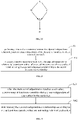
- the embodiments of the present disclosure first provide an information processing method. As shown in FIG. 1 , the information processing method includes:
- the variables can be variables in any collected dataset for training a model or for analyzing a causal relationship.
- a plurality of variables can include a stock market index, a gold price, a silver price, a platinum price, a currency price of a certain country, a consumer price index, gross national economy, etc.
- the variables can be parameters with a certain correlation ostensibly, or parameters with no correlation ostensibly.
- a plurality of variables can include the stock market index, the average temperature of the earth, etc.
- the variables can include a population quantity, an average house price, an average income, a population birth rate, an urban greening rate, an urban area, etc.
- the values respectively corresponding to the variables can be a value corresponding to each of the variables, for example, the values of the variables collected under the conditions of the same time, the same place, etc.
- the values respectively corresponding to the variables can be a plurality of values corresponding to each of the variables obtained under a plurality of conditions.
- variables A, B, C, D, E, and F correspond to a plurality of values A1, B1, C1, D1, E1, and F1 obtained under the first condition, correspond to a plurality of values A2, B2, C2, D2, E2, and F2 obtained under the second condition, and correspond to a plurality of values A3, B3, C3, D3, E3, and F3 obtained under the third condition, and so on.
- the plurality of variables can include a first economic index, a first education index, a first sports index, a first city size index, a first climate index, etc.
- the values respectively corresponding to the plurality of variables can include the respective values of the first economic index, the first education index, the first sports index, the first city size index, and the first climate index in the year 2001, the respective values of the first economic index, the first education index, the first sports index, the first city size index, and the first climate index in the year 2002, and so on.
- the values respectively corresponding to the plurality of variables can be values of the plurality of variables obtained under different conditions respectively.
- a plurality of variables can include traffic flow, graduate employment rate, population birth rate, average life expectancy, etc.
- the values respectively corresponding to a plurality of variables can include the traffic flow in a certain month in 2001, the employment rate of graduates in 2003, the population birth rate in 2005, the average life expectancy in 2002, and so on.
- the first independence relationship can be: selecting at least two variables from a plurality of variables, and assuming that the selected variables are independent of at least one other variable.
- the first independence relationship can be that A and C are independent, or A and C are independent under the condition of other variables.
- the first independence relationship can also be: performing an exhaustive or permutation combination on a plurality of variables, to obtain a plurality of individual independent assumptions. For example, for the plurality of variables A, B, C, D, E, and F, the first independence relationship can include that the plurality of variables are independent of each other.
- the first independence relationship can also be generated by a model, for example, a plurality of variables and the values respectively corresponding to the plurality of variables are input into a processing model, and the first independence relationship is generated by the processing model.
- the first independence relationship can include a plurality of individual independent assumptions (or individual independent relationships), for example, the first independent relationship includes that the variable A and the variable B are independent under the condition of the variable C, the variable C and the variable D are independent on the condition of the variable A, and the variable D and the variable E are independent of each other under any conditions.
- the variable A and the variable B are independent under the condition of the variable C, which can mean that the variable A and the variable B are independent under the condition that there is the variable C.
- At least two variables of the plurality of variables being relatively independent can mean that the two relatively independent variables are not causal to each other, that is, there is no direct causal relationship between the both.
- At least two variables of the plurality of variables being relatively independent can also mean that there is no indirect causal relationship between the two variables.
- the first independence relationship can include a causal relationship in which all variables and at least two variables are relatively independent.
- the determining the first adjustment scheme according to a plurality of variables and the first independence relationship can be: determining, according to the attributes of the variables themselves or the values corresponding to the variables, whether the various individual independent assumptions contained in the first independence relationship are tenable. If there is an individual independent assumption that is not tenable, it means that some contents in the first independence relationship may be wrong, then it can be determined that the first independence relationship needs to be adjusted, and the first adjustment scheme to adjust the first independence relationship is determined.
- the adjusting the first independence relationship according to the first adjustment scheme, to obtain the second independence relationship can be: adjusting part or all of the first independence relationship according to the first adjustment scheme, so that the adjusted respective individual independent assumptions are consistent with respective variables.
- the adjustment process can be performed circularly for many times, until the adjustment result meets the requirements.
- the adjustment process can be performed by a model.
- S11-S14 can be performed by the model.
- the machine learning model or deep learning model can train an initial model through certain sample data, so that the initial model learns a causal relationship rule in the sample data, so as to obtain the function of inferring output data according to the input data, then the performance of the machine learning model or the deep learning model will be significantly improved.
- the embodiment of the present disclosure determines independence assumptions related to a plurality of variables in a dataset according to the plurality of variables in the dataset and the specific values of the variables.
- the causal relationship between the variables can be reflected through the independence assumptions related to the plurality of variables.
- the algorithm of how to recover (mine) a causal structure diagram from data can be called as a causal structure learning algorithm. How to ensure the accuracy, stability, and interpretability of causal structure output information in the scenario of low data quality (high noise environment or the noise distribution does not satisfy the Gaussian distribution) is a technical difficulty.
- the embodiment of the present disclosure provides an information processing method for the above problems, which can determine a first independence relationship according to a plurality of variables in data, and adjust the first independence relationship according to the variables themselves and the first independence relationship, to continuously improve the accuracy of the independence relationship, thereby ensuring the accuracy, stability, and interpretability of the independent relationship output result even in the case of low data quality.
- the information processing method provided by the embodiment of the present disclosure is universal, does not require a special field background, and can be applied to many fields of knowledge discovery, such as user personalized portrait, advertisement recommendation, image recognition, relationship mining, and the like. It can also be applied to scenarios where models need to be deployed for information and data processing, or algorithms are directly used for information and data processing.
- the causal relationship among a plurality of variables can be learned through training a model to obtain the connection among the variables, thereby obtaining a more accurate effect when processing data.
- the migrated data processing mode can be learned at a faster speed and the stability of the model is improved. And, the model processing process can no longer exist in a black box way, but can have higher interpretability.
- the determining the first adjustment scheme according to the plurality of variables and the first independence relationship includes:
- the first independence relationship can be considered consistent with a plurality of variables.
- detecting the consistency between the plurality of variables and the first independent relationship can consider the actual common sense related to the variables when processing causal relationship information, so that the processing result of the causal relationship information is more accurate.
- the performing the test on the consistency between the first independence relationship and the actual independence of the plurality of variables includes:
- drawing a skeleton diagram based on the first independence relationship can be executed by a model, and the skeleton diagram is drawn according to a plurality of variables and the first independence relationship.
- the causal relationship can be represented by a directed acyclic graph, called as a causal structure diagram.
- the edges in the skeleton diagram may not contain directions. In the skeleton diagram, there may be no connected edges between two variables independent of each other.
- the independence relationship can be a conditional independence assumption, e.g., the variables A and B are independent under the condition of the variable C.
- the corresponding P value can be calculated to judge whether to accept the independent relationship.
- a composite score can be used to determine the possibility that the independence relationship is correct.
- the composite score can be determined according to a preset indicator function, the P value obtained by T times of calculation, and the number of times of calculation T, where T is a parameter set in consideration of stability and efficiency. For each individual independent assumption in the first independence relationship, if its composite score is greater than a set score threshold (the score threshold can be a rough value), the individual independent assumption is converted into the content of the skeleton, and the contents of the subsequent preliminary directed acyclic graph and the directed acyclic graph.
- the V structure can be as shown in FIG. 2B . If for variables A, B, and C, there are A that is a reason of B, and C that is also a reason of B, A and B are not independent in any variable set (i.e., in any case), B and C are not independent in any variable set (i.e., in any case), A and C are independent and the independent set does not contain the variable B (i.e., A and C are independent in the case of a given variable set, but if the given variable set contains B, A and C will not be independent).
- the completion rule of the V structure can be that if a node is a common neighbor of two absolutely independent nodes, and the node is not in the independent set (separated set) of two other absolutely independent nodes, the node and the two other absolutely independent nodes constitutes a V structure.
- a and D are independent in the case of a given ⁇ B, C ⁇ ; A and E are absolutely independent; B and C are absolutely independent; B and E are independent in the case of a given ⁇ D ⁇ ; and C and E are independent in the case of a given ⁇ D ⁇ .
- the skeleton diagram shown in FIG. 2C can be obtained, and in the skeleton diagram shown in FIG. 2C all pairs of variables without edges are independent.
- D is the common neighbor of B and C, and D is not in the independent set of B and C, B, D, and C constitutes a V structure.
- D is a top node, and B and C are end nodes, generating the graph after adding the V structure as shown in FIG. 2D .
- the completion direction is from D to E. Because if it is an opposite direction, the V structure of BDE will be generated, which will conflict with the completion rule.
- the resulting diagram is shown in FIG. 2E . Since the edge between A and B and the edge between A and C do not conflict with the completion rule in any direction, no direction completion is performed on the edge between A and B and the edge between A and C.
- the preset completion rule can be a rule that will not cause conflict after completion.
- the completion rule can be partially duplicated with a consistency test rule.
- the completion result can be a directed acyclic graph after completing a direction.
- the performing the completion on the direction of the undirected edge in the preliminary directed acyclic graph according to the preset completion rule includes:
- one of the directions when complementing an undirected edge, one of the directions can be selected as the first direction, the direction of the undirected edge is determined as the first direction, and whether there is a conflict with other edges is detected. If there is a conflict with other edges, it is adjusted to another second direction. If there is no conflict with other edges, it can be marked as the first direction.
- the edge with no direction in the preliminary directed acyclic graph is completed, so as to obtain the directed acyclic graph of all variables, through which whether the first independence relationship has contents inconsistent with a plurality of variables can be more directly observed.
- the performing the test on the consistency between the completion result and the actual independence of the plurality of variables includes: performing the test on the consistency between the completion result and the actual independence of the plurality of variables according to a preset test rule.
- the preset test rule can include common sense knowledge, that is, a test rule determined according to a plurality of variables and common sense. For example, based on the general cognition of human beings in a certain period of time, there is no causal relationship between climate change and production efficiency. For another example, based on the general cognition of human beings in a certain period of time, there is a causal relationship between climate change and the distribution of animals and plants.
- the preset test rule can also include a common sense test rule related to the directed acyclic graph.
- the preset test rule can include that: there are no edges with opposite directions (edges pointing to both ends at the same time) in a directed acyclic graph, no directed cycles are included, and no new V structures appear in a completion operation, and it does not conflict with common sense knowledge.
- the common sense based test rule is used to perform the consistency test on the completion result, so that when analyzing causal relationships, common sense can be combined to make the analysis result of the causal relationship more accurate.
- the at least two variables of the plurality of variables include a first variable and a second variable; and the at least two variables of the plurality of variables being relatively independent, includes:
- the further variables can be one or more further variables. That is, the further variable serves as the condition that the first variable and the second variable are independent.
- two relatively independent variables can constitute a variable pair, and the variable pair and the corresponding independent condition can constitute an individual independent assumption.
- a plurality of individual independent assumptions can be included in the first independence relationship and the second independence relationship.
- the independent condition of the first variable and the second variable may not be included in the first independence relationship.
- the individual independent assumption or the first independence relationship can be divided into an independence level and a separation set level.
- the independence level can include that the first variable and the second variable are independent
- the separation set level can include the condition that the first variable and the second variable are independent. Therefore, when the first adjustment scheme is determined, more accurate adjustment schemes can be set for the independence level and the separation set level respectively, so that the adjustment result is more accurate.
- the first adjustment scheme includes: adjusting the further variable.
- all possible separation sets can be tested in sequence, and the separation set with the highest corresponding score or correct ratio is selected.
- V structure in order to save processing time, when adjusting the further variable, i.e., adjusting the separation set, only the V structure can be adjusted. However, not constituting a V structure, i.e., an individual independent assumption without independent conditions will not affect the direction of the directed acyclic graph, so it can be not considered when adjusting the separation set.
- the causal relationship that obviously violates common sense knowledge can be adjusted.
- the stock market index affects the disease incidence rate, then the content of the graph corresponding to the result is obviously wrong and can be adjusted.
- the adjustment scheme with the highest composite score can be obtained by scoring each individual independent assumption, so that the scoring mechanism can be used to reduce the effect of data noise on processing.
- the first adjustment scheme can include adjusting the separation set first, thus the first independence relationship can be adjusted without changing the skeleton of the directed acyclic graph of the entire first independence relationship, so that the adjustment process is from small to large, while reducing the total adjustment operations, the accuracy of the adjustment and the completeness of the scheme traversal are guaranteed.
- the first adjustment scheme further includes: adjusting relative independence of the first variable and the second variable.
- the edges in the directed acyclic graph can be added or deleted, that is, the relative independence of each variable in the independence relationship can be adjusted.
- the independence level of the first independence relationship is adjusted, so that in the case wherein there is a skeleton error in the first independence relationship, it can be corrected to improve the accuracy of subsequent causal relationship information processing result.
- the method further includes:
- the adjusted independence relationship is consistent with all of the actual independence of the plurality of variables, it can be indicated that the adjusted independence relationship is the correct independence relationship.
- the adjusted first independence relationship passes the consistency test
- the adjusted first independence relationship is used as the second independence relationship, so that the correct causal relationship information processing results can be obtained according to the second independence relationship.
- the information processing method further includes:
- the initial number of adjustments can be set to 0, and after each adjustment, the number of adjustments is incremented by 1, and the number of adjustments is counted.
- the adjusted independence relationship may still not be the correct independence relationship, or that there is at least one independence relationship in the adjusted independence relationship.
- the adjustment of the first independence relationship can be performed circularly for many times, thereby finally improving the correctness of the second independence relationship.
- the self-correction mechanism is realized through a plurality of adjustments to the first independence relationship, which can ensure that the first independence relationship is closer to the correct independence relationship and ensure the accuracy of the causal relationship information processing result obtained subsequently.
- the information processing method further includes:
- either positive implementation or negative implementation can be performed. For example, it can be to determine two or more variables that are not independent of each other; it can also be to determine two or more variables that are obviously independent of each other.
- the adjustment can be terminated in advance for some variables, that is, at least two variables are set to be independent of each other, thereby saving operation steps and improving operation efficiency.
- the obtaining the causal relationship information processing result according to the second independence relationship includes: determining a causal relationship among the plurality of variables according to the second independence relationship.
- the causal relationship between a plurality of variables can be a causal relationship in which at least part of the plurality of variables are mutually causal.
- the determined causal relationship can include: in a case where A is the cause, B is the effect; in a case where B is the cause, C is the effect; in a case where D is the cause, C is the effect; and in a case where E is the cause, B is the effect.
- the causal relationship between a plurality of variables can be determined according to the second independence relationship, and the causal relationship between the plurality of variables can be used as the causal relationship information processing result, so that the causal relationship between the variables can be obtained according to the dataset, and the causal relationship is used to optimize the machine learning model or deep learning model.
- the first independence relationship in the embodiment of the present disclosure can include a plurality of individual independent assumptions, and the individual independent assumptions can be given in the following form: the variable X and the variable Y are independent in the case of a given variable set Z, wherein the variable set Z can be an empty set. If the independence assumption is true, the variable set Z will be called as a separation set of variables X and Y. Therefore, the correctness of each individual independent assumption and even the entire first independence relationship can be divided into two levels, one is the independence level, and the other is the separation set level.
- the specific content of the independence level includes: Are the variable X and the variable Y really independent?
- the specific content of the separation set level includes: Are the variable X the variable Y independent after a variable set Z is given? An individual independent assumption can be considered correct only if both levels are correct.
- the two levels of each individual independent assumption act individually. Whether the independence level is correct will determine whether the skeleton of the directed acyclic graph is correct. After the skeleton of the directed acyclic graph is given, whether the separation set level is correct will determine whether each V structure in the directed acyclic graph is correct. After the correct V structure is given, the process of completing other directions in the directed acyclic graph does not involve independent assumptions.
- the consistency test is set up to test whether a consistent (i.e., possibly correct, because an inconsistent structure must not be a real structure) causal structure diagram can be obtained according to the first independence relationship, and the self-correction mechanism is set up to adjust the information processing process in time when the consistency test fails, that is, when all optional causal structures generated according to the first independence relationship must be incorrect, to change the first independence relationship and finally obtain the correct second independence relationship.
- the information processing method includes:
- an independent assumption set that is considered to be true can be initialized and set according to a plurality of variables and the values of the plurality of variables, and the operations of determining the skeleton can be finished according to the independent assumption set.
- the skeleton of the directed acyclic graph can be drawn according to the independent assumption set.
- the directed acyclic graph includes nodes and edges, the nodes correspond to variables, and the edges correspond to the relationships between the nodes.
- the direction of the edge corresponds to the causal relationship between the nodes, which is from a cause node to a result node.
- causal structure diagram that passes the consistency test is consistent with the theoretical assumption (i.e., the directed acyclic graph), it has interpretability and it can be a correct causal structure diagram.
- the independence level Assuming that the first level of all independence assumptions, i.e., the independence level, is correct, but there is a second level of independence assumptions, i.e., the separation set level is wrong. Based on this assumption, all independent assumptions that may have a separation set error in the separation sets are selected, other possible separation sets are traversed to form new independent assumptions, the new independent assumptions are scored, and the independent assumption with the highest score after testing is retained.
- this operation assumes that there is an error at the independence level of the independence assumption.
- the independent assumption that is most likely to have an independence error is found according to the score of the assumption test sub-algorithm, then its independence is cancelled, and the operation of determining the skeleton is reexecuted.
- the method to measure the performance of a causal structure learning algorithm is to generate a dataset by a given causal structure diagram G, only use the dataset as the input of the causal structure learning algorithm, and obtain a causal structure diagram G' output by the algorithm.
- the similarity between this diagram and the real causal structure diagram G is used as a measurement indicator.
- the classic indicator to measure the similarity between two causal structure diagrams is the structural Hamming distance. The smaller the indicator is, the higher the similarity is.
- the structural Hamming distance also shows a tendency to change with the dataset size, and the larger the dataset size is, the larger the indicator of the structural Hamming distance is. Therefore, although the indicator can measure the performance effect of different algorithms on a certain dataset, it is relatively poor in measuring the performance effect of the same algorithm on different datasets.
- the indicator is divided by the dataset size (the number of nodes), and the obtained average structural Hamming distance is used as the final measurement indicator.
- This ratio value is only for convenience to show the impact of datasets of different sizes on the algorithm, and does not discriminate against any algorithm.
- the algorithm result output by the example of the present disclosure may contain more than one causal structure diagram, i.e., a list of causal structure diagrams [G'] is obtained, the minimum result of the average structural Hamming distance (MASHD) in the list can be used as the final performance.
- four data structures are acquired from the known dataset acquisition platform BNlearn (Bayesian Network learn).
- the names of the four data structures are Cancer, Survey, Asia, and Child, respectively.
- the specific parameters are shown in Table 1.
- the four data structures include a plurality of variables, the values of the variables can be acquired according to the four known data structures, to generate a dataset, and the causal relationship between the variables in the data structures can be determined by using the dataset.
- FIGS. 6A-D The comparative effects of the information processing method proposed in the example of the present disclosure and other ten information processing methods in four datasets of different sizes are shown in FIGS. 6A-D .
- Table 1 Names of datasets Cancer Survey Asia Child The number of nodes 5 6 8 20 The number of edges 4 6 8 25
- FIG. 6A is the structural Hamming distance between the causal relationship graph (directed acyclic graph) and the reference graph obtained by the dataset Cancer using the information processing method provided by the example of the present disclosure and the following algorithms: pc.stable (Peter and Clark stable, PC stable) algorithm, gs (Grow Shrink) algorithm, iamb (Incremental Association Markov Blanket) algorithm, fast.iamb (fast iamb) algorithm, inter.iamb (Interleaved iamb) algorithm, iamb.fdr (iamb with false discovery rate) algorithm, hc (Hill Climbing) algorithm, tabu (Tabu Search) algorithm, mmhc (Max-Min Hill-Climbing) algorithm, h2pc (Hybrid Parents and Children) algorithm.
- pc.stable Pulter and Clark stable, PC stable
- gs Global Shrink
- iamb Intelligent Association Markov Blanket
- fast.iamb fast iamb
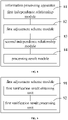
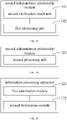
- An embodiment of the present disclosure further provides an information processing apparatus, as shown in FIG. 8 , including:
- the first adjustment scheme module includes:
- the first verification result obtaining unit is further configured for:
- the first verification result obtaining unit is further configured for:
- the first verification result obtaining unit is further configured for: performing the test on the consistency between the completion result and the actual independence of the plurality of variables according to a preset test rule.
- the at least two variables of the plurality of variables include a first variable and a second variable; and the at least two variables of the plurality of variables being relatively independent, includes:
- the first adjustment scheme includes: adjusting the further variables.
- the first adjustment scheme further includes: adjusting relative independence of the first variable and the second variable.
- the second independence relationship module includes:
- the second independence relationship module further includes: a second processing unit 111, configured for, in a case where the second test result is that the adjusted independence relationship is inconsistent with the actual independence of the plurality of variables, using the adjusted independence relationship as a new first independence relationship, adding one to the number of adjustments, and returning to the operation of determining the first adjustment scheme according to the plurality of variables and the first independence relationship.
- a second processing unit 111 configured for, in a case where the second test result is that the adjusted independence relationship is inconsistent with the actual independence of the plurality of variables, using the adjusted independence relationship as a new first independence relationship, adding one to the number of adjustments, and returning to the operation of determining the first adjustment scheme according to the plurality of variables and the first independence relationship.
- the information processing apparatus further includes:
- the processing result module is further configured for: determining a causal relationship among the plurality of variables according to the second independence relationship.
- the present disclosure also provides an electronic device, a readable storage medium, and a computer program product.
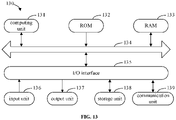
- FIG. 13 shows a schematic block diagram of an example electronic device 130 that can be configured to implement the embodiments of the present disclosure.
- the electronic device is intended to represent various forms of digital computers, such as laptop computers, desktop computers, workstations, personal digital assistants, servers, blade servers, mainframe computers, and other suitable computers.
- the electronic device can also represent various forms of mobile devices, such as a personal digital assistant, a cellular telephone, a smart phone, a wearable device, and other similar computing devices.
- the components shown herein, their connections and relationships, and their functions are by way of example only and are not intended to limit the implementations of the present disclosure described and/or claimed herein.
- the electronic device 130 includes a computing unit 131 that can perform various suitable actions and processes in accordance with computer programs stored in a read only memory (ROM) 132 or computer programs loaded from a storage unit 138 into a random access memory (RAM) 133.
- ROM read only memory
- RAM random access memory
- various programs and data required for the operation of the electronic device 130 can also be stored.
- the computing unit 131, the ROM 132, and the RAM 133 are connected to each other through a bus 134.
- An input/output (I/O) interface 135 is also connected to the bus 134.
- a plurality of components in the electronic device 130 are connected to the I/O interface 135, including: an input unit 136, such as a keyboard, a mouse, etc.; an output unit 137, such as various types of displays, speakers, etc.; a storage unit 138, such as a magnetic disk, an optical disk, etc.; and a communication unit 139, such as a network card, a modem, a wireless communication transceiver, etc.
- the communication unit 139 allows the electronic device 130 to exchange information/data with other devices over a computer network, such as the Internet, and/or various telecommunications networks.
- the computing unit 131 can be various general purpose and/or special purpose processing assemblies having processing and computing capabilities. Some examples of the computing unit 131 include, but are not limited to, a central processing unit (CPU), a graphics processing unit (GPU), various specialized artificial intelligence (AI) computing chips, various computing units running machine learning model algorithms, a digital signal processor (DSP), and any suitable processor, controller, microcontroller, etc.
- the computing unit 131 performs various methods and processes described above, such as the information processing method.
- the information processing method can be implemented as computer software programs that are physically contained in a machine-readable medium, such as the storage unit 138.
- some or all of the computer programs can be loaded into and/or installed on the electronic device 130 via the ROM 132 and/or the communication unit 139.
- the computer programs are loaded into the RAM 133 and executed by the computing unit 131, one or more of operations of the information processing method can be performed.
- the computing unit 131 can be configured to perform the information processing method in any other suitable manner (e.g., by means of a firmware).
- Various implementations of the systems and techniques described herein above can be implemented in a digital electronic circuit system, an integrated circuit system, a field programmable gate array (FPGA), an application specific integrated circuit (ASIC), an application specific standard product (ASSP), a system on a chip (SOC), a load programmable logic device (CPLD), a computer hardware, firmware, software, and/or a combination thereof.
- FPGA field programmable gate array
- ASIC application specific integrated circuit
- ASSP application specific standard product
- SOC system on a chip
- CPLD load programmable logic device
- These various implementations can include an implementation in one or more computer programs, which can be executed and/or interpreted on a programmable system including at least one programmable processor; the programmable processor can be a dedicated or general-purpose programmable processor and capable of receiving and transmitting data and instructions from and to a storage system, at least one input device, and at least one output device.
- the program codes for implementing the method of the present disclosure can be written in any combination of one or more programming languages. These program codes can be provided to a processor or controller of a general purpose computer, a special purpose computer, or other programmable data processing apparatus such that the program codes, when executed by the processor or controller, enable the functions/operations specified in the flowchart and/or the block diagram to be implemented.
- the program codes can be executed entirely on a machine, partly on a machine, partly on a machine as a stand-alone software package and partly on a remote machine, or entirely on a remote machine or server.
- the machine-readable medium can be a tangible medium that can contain or store programs for using by or in connection with an instruction execution system, apparatus, or device.
- the machine-readable medium can be a machine-readable signal medium or a machine-readable storage medium.
- the machine-readable medium can include, but is not limited to, an electronic, magnetic, optical, electromagnetic, infrared, or semiconductor system, apparatus, or device, or any suitable combination thereof.
- machine-readable storage medium can include one or more wire-based electrical connection, a portable computer diskette, a hard disk, a random access memory (RAM), a read-only memory (ROM), an erasable programmable read-only memory (EPROM or Flash memory), an optical fiber, a portable compact disk read-only memory (CD-ROM), an optical storage device, a magnetic storage device, or any suitable combination thereof.
- RAM random access memory
- ROM read-only memory
- EPROM or Flash memory erasable programmable read-only memory
- CD-ROM compact disk read-only memory
- magnetic storage device a magnetic storage device, or any suitable combination thereof.
- a computer having: a display device (e. g., a cathode ray tube (CRT) or a liquid crystal display (LCD) monitor) for displaying information to the user; and a keyboard and a pointing device (e. g., a mouse or a trackball), through which the user can provide an input to the computer.
- a display device e. g., a cathode ray tube (CRT) or a liquid crystal display (LCD) monitor
- a keyboard and a pointing device e. g., a mouse or a trackball
- Other kinds of devices can also provide an interaction with the user.
- a feedback provided to the user can be any form of sensory feedback (e.g., visual feedback, auditory feedback, or tactile feedback); and an input from the user can be received in any form (including an acoustic input, a voice input, or a tactile input).
- the systems and techniques described herein can be implemented in a computing system (e.g., as a data server) that includes a background component, or a computing system (e.g., an application server) that includes a middleware component, or a computing system (e.g., a user computer having a graphical user interface or a web browser through which a user can interact with implementations of the systems and techniques described herein) that includes a front-end component, or a computing system that includes any combination of such a background component, middleware component, or front-end component.
- the components of the system can be connected to each other through a digital data communication in any form or medium (e.g., a communication network). Examples of the communication network include a local area network (LAN), a wide area network (WAN), and the Internet.
- LAN local area network
- WAN wide area network
- the Internet the global information network
- the computer system can include a client and a server.
- the client and the server are typically remote from each other and typically interact via the communication network.
- the relationship of the client and the server is generated by computer programs running on respective computers and having a client-server relationship with each other.
Landscapes
- Engineering & Computer Science (AREA)
- Theoretical Computer Science (AREA)
- General Engineering & Computer Science (AREA)
- Software Systems (AREA)
- Data Mining & Analysis (AREA)
- Physics & Mathematics (AREA)
- General Physics & Mathematics (AREA)
- Databases & Information Systems (AREA)
- Computing Systems (AREA)
- Evolutionary Computation (AREA)
- Artificial Intelligence (AREA)
- Mathematical Physics (AREA)
- Medical Informatics (AREA)
- Computer Vision & Pattern Recognition (AREA)
- Computational Linguistics (AREA)
- Management, Administration, Business Operations System, And Electronic Commerce (AREA)
- Information Retrieval, Db Structures And Fs Structures Therefor (AREA)
Applications Claiming Priority (1)
| Application Number | Priority Date | Filing Date | Title |
|---|---|---|---|
| CN202111096300.0A CN113806452B (zh) | 2021-09-17 | 2021-09-17 | 信息处理方法、装置、电子设备及存储介质 |
Publications (2)
| Publication Number | Publication Date |
|---|---|
| EP4086820A2 true EP4086820A2 (de) | 2022-11-09 |
| EP4086820A3 EP4086820A3 (de) | 2023-02-08 |
Family
ID=78895912
Family Applications (1)
| Application Number | Title | Priority Date | Filing Date |
|---|---|---|---|
| EP22184657.9A Withdrawn EP4086820A3 (de) | 2021-09-17 | 2022-07-13 | Informationsverarbeitungsverfahren und -gerät, elektronische vorrichtung, speichermedium und computerprogrammprodukt |
Country Status (3)
| Country | Link |
|---|---|
| US (1) | US12158899B2 (de) |
| EP (1) | EP4086820A3 (de) |
| CN (1) | CN113806452B (de) |
Cited By (1)
| Publication number | Priority date | Publication date | Assignee | Title |
|---|---|---|---|---|
| CN118468995A (zh) * | 2024-07-10 | 2024-08-09 | 浙江大学 | 铝合金结构件一体化铸造质量因果关系获取方法、装置、介质 |
Families Citing this family (1)
| Publication number | Priority date | Publication date | Assignee | Title |
|---|---|---|---|---|
| JP2026000603A (ja) * | 2024-06-18 | 2026-01-06 | 株式会社東芝 | 情報処理装置、情報処理システム、情報処理方法およびプログラム |
Family Cites Families (9)
| Publication number | Priority date | Publication date | Assignee | Title |
|---|---|---|---|---|
| AU2009262931A1 (en) * | 2008-05-21 | 2009-12-30 | New York University | Method, system, and coumputer-accessible medium for inferring and/or determining causation in time course data with temporal logic |
| JP2014228991A (ja) * | 2013-05-21 | 2014-12-08 | ソニー株式会社 | 情報処理装置および方法、並びにプログラム |
| CN104537418A (zh) | 2014-12-11 | 2015-04-22 | 广东工业大学 | 一种自底向上的高维数据因果网络学习方法 |
| CN110019973A (zh) * | 2017-09-30 | 2019-07-16 | 日本电气株式会社 | 用于估计观测变量之间的因果关系的方法、装置和系统 |
| CN110555047B (zh) * | 2018-03-29 | 2024-03-15 | 日本电气株式会社 | 数据处理方法和电子设备 |
| CN110390396B (zh) * | 2018-04-16 | 2024-03-19 | 日本电气株式会社 | 用于估计观测变量之间的因果关系的方法、装置和系统 |
| WO2020004154A1 (ja) * | 2018-06-28 | 2020-01-02 | ソニー株式会社 | 情報処理装置、情報処理方法及びプログラム |
| JP7305566B2 (ja) * | 2020-01-21 | 2023-07-10 | 株式会社東芝 | 情報処理装置、情報処理システム、および情報処理プログラム |
| CN113055230B (zh) | 2021-03-09 | 2022-04-19 | 同济大学 | 一种面向信息物理系统的网络重构方法和系统 |
-
2021
- 2021-09-17 CN CN202111096300.0A patent/CN113806452B/zh active Active
-
2022
- 2022-07-13 EP EP22184657.9A patent/EP4086820A3/de not_active Withdrawn
- 2022-07-15 US US17/812,742 patent/US12158899B2/en active Active
Cited By (1)
| Publication number | Priority date | Publication date | Assignee | Title |
|---|---|---|---|---|
| CN118468995A (zh) * | 2024-07-10 | 2024-08-09 | 浙江大学 | 铝合金结构件一体化铸造质量因果关系获取方法、装置、介质 |
Also Published As
| Publication number | Publication date |
|---|---|
| US20220398260A1 (en) | 2022-12-15 |
| CN113806452B (zh) | 2022-10-25 |
| CN113806452A (zh) | 2021-12-17 |
| EP4086820A3 (de) | 2023-02-08 |
| US12158899B2 (en) | 2024-12-03 |
Similar Documents
| Publication | Publication Date | Title |
|---|---|---|
| CN109960810B (zh) | 一种实体对齐方法及装置 | |
| US20220148324A1 (en) | Method and apparatus for extracting information about a negotiable instrument, electronic device and storage medium | |
| CN113742387A (zh) | 数据处理方法、设备及计算机可读存储介质 | |
| CN111667050B (zh) | 度量学习方法、装置、设备及存储介质 | |
| US11295232B2 (en) | Learning the structure of hierarchical extraction models | |
| EP4086820A2 (de) | Informationsverarbeitungsverfahren und -gerät, elektronische vorrichtung, speichermedium und computerprogrammprodukt | |
| US20220358110A1 (en) | Method and Apparatus for Processing Table, Device, and Storage Medium | |
| CN108090499A (zh) | 基于最大信息三元组筛选网络的数据主动标注方法和系统 | |
| CN114329034A (zh) | 基于细粒度语义特征差异的图像文本匹配判别方法及系统 | |
| CN113420727B (zh) | 表格检测模型的训练方法、装置及表格检测方法、装置 | |
| CN114331122A (zh) | 重点人员风险等级评估方法及相关设备 | |
| CN110634060A (zh) | 一种用户信用风险的评估方法、系统、装置及存储介质 | |
| CN112434662B (zh) | 一种基于多尺度卷积神经网络的茶叶病斑自动识别算法 | |
| CN119476445B (zh) | 基于大小模型协同智能的模型优化方法及系统 | |
| CN114186646A (zh) | 区块链异常交易识别方法及装置、存储介质及电子设备 | |
| CN118586392A (zh) | 一种基于全局信息聚合的实体对齐方法及系统 | |
| KR20230154601A (ko) | 표의 픽셀 정보를 획득하는 방법 및 장치 | |
| CN117891458B (zh) | 一种sql语句生成方法、装置、设备及存储介质 | |
| CN109657907A (zh) | 地理国情监测数据的质量控制方法、装置和终端设备 | |
| Ma et al. | Complex buildings orientation recognition and description based on vector reconstruction | |
| CN108228896A (zh) | 一种基于密度的缺失数据填补方法及装置 | |
| CN114328174B (zh) | 一种基于对抗学习的多视图软件缺陷预测方法及系统 | |
| CN114693995B (zh) | 应用于图像处理的模型训练方法、图像处理方法和设备 | |
| CN117851854A (zh) | 基于最小先验知识的标签分配方法、电子设备及存储介质 | |
| CN115147824A (zh) | 数字表计检测和识别方法、装置及介质 |
Legal Events
| Date | Code | Title | Description |
|---|---|---|---|
| PUAI | Public reference made under article 153(3) epc to a published international application that has entered the european phase |
Free format text: ORIGINAL CODE: 0009012 |
|
| STAA | Information on the status of an ep patent application or granted ep patent |
Free format text: STATUS: REQUEST FOR EXAMINATION WAS MADE |
|
| 17P | Request for examination filed |
Effective date: 20220713 |
|
| AK | Designated contracting states |
Kind code of ref document: A2 Designated state(s): AL AT BE BG CH CY CZ DE DK EE ES FI FR GB GR HR HU IE IS IT LI LT LU LV MC MK MT NL NO PL PT RO RS SE SI SK SM TR |
|
| PUAL | Search report despatched |
Free format text: ORIGINAL CODE: 0009013 |
|
| AK | Designated contracting states |
Kind code of ref document: A3 Designated state(s): AL AT BE BG CH CY CZ DE DK EE ES FI FR GB GR HR HU IE IS IT LI LT LU LV MC MK MT NL NO PL PT RO RS SE SI SK SM TR |
|
| RIC1 | Information provided on ipc code assigned before grant |
Ipc: G06N 5/04 20000101ALN20230103BHEP Ipc: G06N 20/00 20190101ALI20230103BHEP Ipc: G06N 5/02 20000101AFI20230103BHEP |
|
| STAA | Information on the status of an ep patent application or granted ep patent |
Free format text: STATUS: THE APPLICATION IS DEEMED TO BE WITHDRAWN |
|
| 18D | Application deemed to be withdrawn |
Effective date: 20230809 |