EP4086576A1 - Gestion optimisee du trafic aerien de vehicules aeriens sans pilotes - Google Patents
Gestion optimisee du trafic aerien de vehicules aeriens sans pilotes Download PDFInfo
- Publication number
- EP4086576A1 EP4086576A1 EP22171166.6A EP22171166A EP4086576A1 EP 4086576 A1 EP4086576 A1 EP 4086576A1 EP 22171166 A EP22171166 A EP 22171166A EP 4086576 A1 EP4086576 A1 EP 4086576A1
- Authority
- EP
- European Patent Office
- Prior art keywords
- trajectory
- airspace
- conflict
- unmanned aerial
- uav
- Prior art date
- Legal status (The legal status is an assumption and is not a legal conclusion. Google has not performed a legal analysis and makes no representation as to the accuracy of the status listed.)
- Granted
Links
Images


Classifications
-
- G—PHYSICS
- G01—MEASURING; TESTING
- G01C—MEASURING DISTANCES, LEVELS OR BEARINGS; SURVEYING; NAVIGATION; GYROSCOPIC INSTRUMENTS; PHOTOGRAMMETRY OR VIDEOGRAMMETRY
- G01C21/00—Navigation; Navigational instruments not provided for in groups G01C1/00 - G01C19/00
- G01C21/20—Instruments for performing navigational calculations
-
- G—PHYSICS
- G06—COMPUTING OR CALCULATING; COUNTING
- G06N—COMPUTING ARRANGEMENTS BASED ON SPECIFIC COMPUTATIONAL MODELS
- G06N3/00—Computing arrangements based on biological models
- G06N3/02—Neural networks
- G06N3/04—Architecture, e.g. interconnection topology
- G06N3/044—Recurrent networks, e.g. Hopfield networks
- G06N3/0442—Recurrent networks, e.g. Hopfield networks characterised by memory or gating, e.g. long short-term memory [LSTM] or gated recurrent units [GRU]
-
- G—PHYSICS
- G06—COMPUTING OR CALCULATING; COUNTING
- G06N—COMPUTING ARRANGEMENTS BASED ON SPECIFIC COMPUTATIONAL MODELS
- G06N3/00—Computing arrangements based on biological models
- G06N3/02—Neural networks
- G06N3/04—Architecture, e.g. interconnection topology
- G06N3/045—Combinations of networks
- G06N3/0455—Auto-encoder networks; Encoder-decoder networks
-
- G—PHYSICS
- G06—COMPUTING OR CALCULATING; COUNTING
- G06N—COMPUTING ARRANGEMENTS BASED ON SPECIFIC COMPUTATIONAL MODELS
- G06N3/00—Computing arrangements based on biological models
- G06N3/02—Neural networks
- G06N3/08—Learning methods
-
- G—PHYSICS
- G06—COMPUTING OR CALCULATING; COUNTING
- G06N—COMPUTING ARRANGEMENTS BASED ON SPECIFIC COMPUTATIONAL MODELS
- G06N3/00—Computing arrangements based on biological models
- G06N3/02—Neural networks
- G06N3/08—Learning methods
- G06N3/092—Reinforcement learning
-
- G—PHYSICS
- G08—SIGNALLING
- G08G—TRAFFIC CONTROL SYSTEMS
- G08G5/00—Traffic control systems for aircraft
- G08G5/20—Arrangements for acquiring, generating, sharing or displaying traffic information
- G08G5/22—Arrangements for acquiring, generating, sharing or displaying traffic information located on the ground
-
- G—PHYSICS
- G08—SIGNALLING
- G08G—TRAFFIC CONTROL SYSTEMS
- G08G5/00—Traffic control systems for aircraft
- G08G5/20—Arrangements for acquiring, generating, sharing or displaying traffic information
- G08G5/26—Transmission of traffic-related information between aircraft and ground stations
-
- G—PHYSICS
- G08—SIGNALLING
- G08G—TRAFFIC CONTROL SYSTEMS
- G08G5/00—Traffic control systems for aircraft
- G08G5/30—Flight plan management
-
- G—PHYSICS
- G08—SIGNALLING
- G08G—TRAFFIC CONTROL SYSTEMS
- G08G5/00—Traffic control systems for aircraft
- G08G5/30—Flight plan management
- G08G5/32—Flight plan management for flight plan preparation
-
- G—PHYSICS
- G08—SIGNALLING
- G08G—TRAFFIC CONTROL SYSTEMS
- G08G5/00—Traffic control systems for aircraft
- G08G5/50—Navigation or guidance aids
- G08G5/55—Navigation or guidance aids for a single aircraft
-
- G—PHYSICS
- G08—SIGNALLING
- G08G—TRAFFIC CONTROL SYSTEMS
- G08G5/00—Traffic control systems for aircraft
- G08G5/50—Navigation or guidance aids
- G08G5/56—Navigation or guidance aids for two or more aircraft
-
- G—PHYSICS
- G08—SIGNALLING
- G08G—TRAFFIC CONTROL SYSTEMS
- G08G5/00—Traffic control systems for aircraft
- G08G5/50—Navigation or guidance aids
- G08G5/57—Navigation or guidance aids for unmanned aircraft
-
- G—PHYSICS
- G08—SIGNALLING
- G08G—TRAFFIC CONTROL SYSTEMS
- G08G5/00—Traffic control systems for aircraft
- G08G5/50—Navigation or guidance aids
- G08G5/59—Navigation or guidance aids in accordance with predefined flight zones, e.g. to avoid prohibited zones
-
- G—PHYSICS
- G08—SIGNALLING
- G08G—TRAFFIC CONTROL SYSTEMS
- G08G5/00—Traffic control systems for aircraft
- G08G5/70—Arrangements for monitoring traffic-related situations or conditions
- G08G5/72—Arrangements for monitoring traffic-related situations or conditions for monitoring traffic
- G08G5/727—Arrangements for monitoring traffic-related situations or conditions for monitoring traffic from a ground station
-
- G—PHYSICS
- G08—SIGNALLING
- G08G—TRAFFIC CONTROL SYSTEMS
- G08G5/00—Traffic control systems for aircraft
- G08G5/80—Anti-collision systems
Definitions
- the present invention relates to the management of air traffic. More specifically, the present invention relates to air traffic management including unmanned aerial vehicles.
- Unmanned aerial vehicles also known as drones
- Drones can be piloted by a remote operator, or piloted autonomously.
- the absence of a pilot in the drone makes it possible to envisage new forms for them, compared to aircraft with a pilot.
- a drone can be much smaller than a manned aircraft. This makes it possible to envisage new applications, such as the delivery of parcels by drones.
- the operating cost of a drone is generally lower than that of a piloted aircraft, because it does not require the presence of a pilot on board, and can be miniaturized.
- drones are increasingly present in the airspace, particularly at low altitude and in urban environments.
- Conventional air traffic control systems are based on the supervision of an airspace by an air traffic controller, who visualizes all the trajectories of aircraft and interacts with the pilots of the aircraft.
- drones are expected to generate much denser air traffic than manned aircraft.
- many drones can share an airspace, thus inducing a very high concentration of drones in space.
- drones fly at low altitude, and often close to obstacles (buildings, other drones, relief%), which requires faster decision-making to interact with drones.
- a human air traffic controller therefore risks not being able to analyze the air situation quickly enough, and to propose safe trajectories to drones in good time.
- drones may not be piloted by a human operator, or piloted by a remote operator who is not necessarily an air navigation expert. Communication habits between air traffic controllers and airline pilots cannot therefore be directly transposed to exchanges between air traffic control and drones.
- the subject of the invention is a computer-implemented method comprising: receiving a trajectory request from an unmanned aerial vehicle, said request comprising: an initial point; a full stop; at least one maneuverability parameter of the unmanned aerial vehicle; the calculation of a plurality of optimized 4D trajectories between the initial point and the final point, respecting the at least one maneuverability parameter, and avoiding obstacles in an airspace, each 4D trajectory being associated with a performance score; simulating, by a flight simulator, said plurality of 4D trajectories, in order of decreasing performance scores, until a 4D trajectory is considered flyable by the flight simulator; sending said trajectory considered flyable by the flight simulator to said unmanned aerial vehicle.
- the trajectory request comprises a series of waypoints defining a target route.
- a 4D trajectory is optimized according to one or a combination of the following parameters: minimization of a length of the trajectory by passing through a series of waypoints in a predefined order; minimizing a number of unmanned aerial vehicle maneuvers during path ; compliance with at least one maneuverability parameter; avoidance of obstacles according to a level of criticality of the obstacles; compliance with a safety corridor around a target road.
- the method comprises the addition of the trajectory considered to be flyable to the obstacles, for the calculation of the trajectory of other aircraft in the airspace.
- the calculation of a 4D trajectory of the plurality of optimized 4D trajectories comprises: receiving a three-dimensional representation of the airspace at the instant when the method is executed; airspace encoding configured to determine a reduced-dimensional airspace representation by applying a recursive auto-encoder to said three-dimensional airspace representation at the time the method is executed; determining an action to be implemented by said unmanned aerial vehicle, by implementing a deep reinforcement learning algorithm to determine said action from said representation of the airspace in reduced dimension, of information relating to said unmanned aerial vehicle and/or at least one other aircraft in the airspace.
- said deep reinforcement learning algorithm is trained beforehand to approximate, for a given representation of a scenario in the airspace at the moment when the method is executed, a reward function, said action corresponding to a strategy optimal maximizing said reward function during the training phase, said reward function defining the performance score associated with the 4D trajectory.
- said reward function associates a value with each triplet comprising an aerial situation at a first given instant, an action taken at a given time, and an aerial situation at a second given instant, said value being broken down into several penalties comprising: a positive penalty if the action taken at the given moment has resolved a conflict, or a negative penalty if the action taken at the given moment has not made it possible to resolve a conflict or has generated at least one other aerial conflict; a negative penalty if the action taken at the given moment generates a new trajectory causing a detour; a positive penalty if the action taken at the given moment generates a new, shorter trajectory; a negative penalty if the action taken at the given moment resolves the said air conflict and the resolution takes place close to the conflict; an increasing negative penalty with the number of actions taken for the resolution of said air conflict.
- the amount of the negative penalty if the action taken at the given instant has not made it possible to resolve a conflict or has generated at least one other air conflict depends on the criticality of said conflict or of said other air conflict.
- the method also relates to a system comprising: at least one communication port able to communicate with an unmanned aerial vehicle; access to at least one information storage medium storing a definition of a set of obstacles of an airspace; at least one calculation unit configured to execute a method according to one of the embodiments of the invention.
- the invention also relates to a computer program product comprising computer code elements configured to execute a method according to one of the embodiments of the invention.
- the figure 1 shows an example of airspace comprising unmanned aerial vehicles, for the control of which the invention can be implemented.
- the airspace 100 is an airspace in which manned aircraft 120, 121, 122, 123, 124 cohabit, and unmanned aerial vehicles (also called drones or UAVs) 130, 131 and 132.
- the UAV 132 is represented in 3 positions, corresponding to 3 successive positions on its trajectory.
- the UAVs 130, 131 and 132 are respectively associated with safety corridors 140, 141 and 142 defining corridors around the trajectory of the UAVs, in which there must be no obstacle so that the UAV can move in safety .
- the airspace also includes no-fly zones or obstacles, such as zones 150, 151, 152, 153, 154, 155 or 156.
- zones 150, 151, 152, 153, 154, 155 or 156 can include any type of zone in which flight is not desired, such as a nuclear power plant (area 151), or a military base (area 156). They may also include areas that are hazardous to aircraft, such as terrain, buildings, or areas of severe weather disturbance. Depending on the zones, overflight may be prohibited only over certain altitude ranges (such as for zones 150 to 155, or over all altitudes, as for zone 156. Prohibited zones can be permanently defined or temporary.
- the airspace 100 can be controlled by an air traffic control system, called UTM when the controlled devices are or include UAVs.
- UTM air traffic control system
- the role of the UTM is to optimize the trajectories of aircraft, in particular UAVs, so that they do not present any danger (if necessary, other parameters such as travel times or fuel consumption can be optimized ), and ensure that the trajectories are followed correctly by the aircraft. Verification of the fact that the trajectories do not present any danger can integrate the safety corridors 140, 141 and 142, for example by ensuring that these corridors do not come into contact with each other.
- the figure 2 shows an example of a man-machine interface allowing an operator to define an unmanned aerial vehicle trajectory, in one set of embodiments of the invention.
- the graphical interface, or HMI, 200 allows a UAV operator to define a trajectory.
- the HMI represents a map of a geographical area, over which the operator can define UAV trajectories, in particular by entering waypoints, or waypoints, on the map.
- the user can define the trajectory 210 of the drone 211 by successively entering in the interface 200 the waypoints 212, 213, 214 and 215.
- the trajectory can be sent to a UTM type control system which can check that it does not generate a conflict, and if necessary propose an optimal and safe alternative trajectory.
- the picture 3 represents a computing system, in a set of embodiments of the invention.
- the calculation system 300 can be implemented within an air traffic management system of the UTM type. According to different embodiments of the invention, it can be completely autonomous, or else supervised by an operator such as an air traffic controller. Unlike a conventional ATM system, an operator of a UTM, if it exists, will essentially have a control function, but by default will not be involved in defining trajectories.
- System 300 is a computing system. According to a set of embodiments of the invention, the system 300 can be a single calculation device such as a computer, a server, or any other system capable of performing computer calculations. System 300 may also include a plurality of computing devices. For example, system 300 may be a server farm with multiple compute servers.
- the system 300 thus comprises at least one calculation unit 330.
- the at least one calculation unit 310 can be any type of calculation unit capable of performing computer calculations.
- the calculation unit can be a processor configured with machine instructions, a microprocessor, an integrated circuit, a microcontroller, a programmable logic circuit, or any other calculation unit capable of being programmed to perform calculation operations.
- the system 300 comprises at least one communication port 310 capable of communicating with an unmanned aerial vehicle (UAV) 311.
- UAV unmanned aerial vehicle
- This communication port can thus receive from the UAV 311 a trajectory request, and communicate to it in return an optimized trajectory. .
- the communication port 310 is also able to communicate with an operator of the UAV, for example with the interface 200.
- the communication port can for example receive a request trajectory of the interface 200, and send the optimized trajectory both to the UAV itself for tracking the trajectory, and to the interface 200 to display the optimized trajectory.
- the at least one communication port 310 can also be used to receive different information from the airspace, such as the positions of the different aircraft, weather information, etc.
- the at least one communication port 310 can be of different types: internet connection, radio link, radars, etc.
- the invention is not restricted to one type of communication port, and the a person skilled in the art will be able to adapt the reception of the input parameters to the available input channels.
- the different input and output parameters can be received on a single port, or several ports, of the same type or of different types.
- aircraft trajectories can be received by radio link, and meteorological information by an Internet connection.
- Communication with UAVs can be done through a wireless link such as a 4G or 5G link.
- the system 300 includes access to at least one information storage medium 320.
- the at least one information storage medium 330 can be of any type of storage capable of storing information: hard disk, CD, DVD, magnetic stripe, memory card, USB key, Flash memory, RAM.
- the information storage medium may be integrated with system 300.
- system 300 is a computing device such as a server
- the information storage medium may be a hard drive of the device.
- the at least one storage medium can be a set of memories distributed over the different calculation devices.
- the system 300 can also have access to the at least one information storage medium 330 via a connection.
- the at least one information storage medium may consist of at least one hard disk accessed remotely, for example via at least one NAS server, or via a cloud computing system. computing).
- the at least one information storage medium 330 stores a definition of a set of obstacles 321 of an airspace.
- the concept of obstacle is defined here in the broad sense, as any element that could endanger the safety of the UAV, and should be avoided.
- An obstacle can for example consist of a relief, a building, dangerous weather, or the presence of another aircraft.
- the set of obstacles can comprise aircraft trajectories.
- the obstacles can be defined in fixed databases (for example, terrain and building databases), and/or can be received via the at least one communication port 310.
- the positions of the different UAVs in the airspace can be received through a 4G/5G network if the UAVs are equipped with SIM cards and geolocated by the 4G/5G network, but also by sensors such as radars. More generally, the system 300 receives the positions of the various aircraft in the airspace as well as their evolution. This can be done at regular intervals, for example every few seconds, and/or on the occurrence of events, such as the appearance of a UAV in the airspace, or a sudden change in course of a UAV . This makes it possible to monitor the position of aircraft relative to fixed and moving obstacles.
- Aircraft trajectories can be expressed in different ways. For example, trajectories can be expressed as 4D trajectories, with waypoints defined by latitude, longitude, and FL and time. The trajectories can also include, for each waypoint, an associated heading. A trajectory can also be associated with a type of aircraft and/or a callsign (name of a given aircraft).
- the meteorological information may in particular comprise at least one of the following information: numerical information (temperatures, winds, pressures, etc.), for example by means of a GRIB file, descriptive text of the weather (for example, presence of a storm, thunderstorm, etc%), SIGMET messages. More generally, any type of data providing indications on the weather within the airspace can be used.
- the at least one calculation unit 330 is configured to provide the UAV having made a trajectory request with an optimal trajectory. To this end, the at least one calculation unit 330 is configured to execute a method according to one of the embodiments of the invention, as defined in figure 4 , in order to propose an optimal trajectory to the UAV.
- the calculation system 300 centralizes all the trajectories of aircraft, and in particular of drones in the airspace. Thus, the calculation system can automatically offer each UAV an optimized trajectory as soon as necessary. This allows automatic optimization of drone trajectories, and automatic conflict resolution in the airspace, even when the number of drones in the airspace is very high.
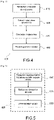
- the figure 4 represents a computer-implemented method, in one set of embodiments of the invention.
- Method 400 is a method aimed at automatically proposing to UAVs in an airspace a trajectory that is flyable, secure and as optimized as possible.
- Method 400 can be executed by a computing system such as computing system 300 and/or in a UTM system.
- the at least one maneuverability parameter of the UAV includes a maximum speed and acceleration of the UAV.
- the at least one maneuverability parameter can include any parameter having an impact on the flight capabilities of the UAV.
- the trajectory request also includes a sequence of waypoints defining a target trajectory.
- This sequence of waypoints can for example be in the form of 3D or 4D points, and can for example represent an initial target trajectory, defined for example via the interface 200, or corresponding to the current predicted trajectory of a UAV .
- the method 400 then comprises a second step 420 of calculating a plurality of optimized 4D trajectories between the initial point and the final point, respecting the at least one maneuverability parameter, and avoiding obstacles in an airspace, each 4D trajectory being associated with a performance score.
- This step consists in practice in calculating optimized 4D trajectories avoiding all the obstacles identified in the airspace (i.e terrain, buildings, weather, other aircraft, etc.) while respecting maneuverability constraints.
- a 4D trajectory can be presented as a succession of 4D waypoints (latitude, longitude, altitude/flight level, and time) defining the UAV's waypoints and the associated times. Waypoints can also be associated with flight information, such as UAV speeds and accelerations.
- the performance score can be calculated according to the level of achievement/respect of the selected parameter(s).
- the step of calculating the optimized 4D trajectories therefore consists in proposing 4D trajectories respecting as much as possible a set of criteria, each 4D trajectory being associated with a performance score according to the level of respect of the criteria.
- the method 400 then comprises a third step 430 of simulation, by a flight simulator, of said plurality of 4D trajectories, in order of decreasing performance scores, until a 4D trajectory is considered flyable by the flight simulator. flight.
- This step consists in simulating the calculated 4D trajectories. Indeed, even if the calculation of the 4D trajectories takes into account the maneuverability parameters of the aircraft, a 4D trajectory thus obtained may in certain cases not be flyable by the UAV. The simulation therefore makes it possible to ensure that a trajectory retained in fine is indeed flyable by the UAV.
- the flight simulator takes as input the 4D trajectory and the at least one maneuverability parameter. If the 4D trajectory is flyable by the UAV, it will be accepted by the simulation. Otherwise, it will be rejected. The acceptance or rejection of the trajectory determines whether a given 4D trajectory will actually be flyable or not by the UAV.
- 4D trajectories are simulated in order of decreasing performance scores, until a 4D trajectory is considered flyable by the flight simulator.
- the trajectories are classified, from the one with the best performance score (the most optimized) to the one with the worst performance score (the least optimized).
- the first trajectory (the most optimized) is simulated first. If it is accepted by the simulator, and therefore flyable, it is selected as the trajectory to follow. Otherwise (if it is rejected by the simulator, and therefore not flyable), the second most optimized trajectory is simulated to check if it is flyable. If this second trajectory is accepted by the simulator, and therefore flyable, it is selected as the trajectory to be followed. Otherwise, the 3rd most optimized trajectory is simulated, and so on until a flyable trajectory is identified.
- the trajectory selected at the end of the simulations is the flyable trajectory presenting the best performance score, that is to say the most optimized trajectory that the drone will be able to effectively follow.
- the method 400 then comprises a fourth step 440 of sending the trajectory considered flyable by the flight simulator to the unmanned aerial vehicle.
- This step consists of sending the UAV the trajectory selected in step 430, that is to say the most optimized trajectory considered to be flyable by the UAV. The UAV will then be able to follow the trajectory thus received.
- the sending of the trajectory to the UAV can for example be done by the at least one communication port 310.
- it can be done by means of a 4G or 5G network.
- the trajectory can be sent in the form of a series of 4D points, supplemented if necessary by additional flight information (speed, acceleration at each point for example), or actions to be performed by the UAV .
- the invention makes it possible to automatically propose to any UAV in a space a trajectory that is both secure with respect to known threats, and optimized.
- the method can be performed automatically, and allows automated interaction with UAVs.
- the method according to the invention therefore makes it possible to manage a dense traffic of unmanned aircraft, regardless of the number of aircraft present.
- the method according to the invention makes it possible to avoid medium-term conflicts between aircraft in an airspace.
- the method 400 can then include a step of following the trajectory by the UAV.
- This step consists in verifying that the UAV follows its trajectory, both in position and in time, and that no danger threatens the trajectory.
- a safety corridor can be defined as a tube around the trajectory; if the UAV leaves the corridor, or if an obstacle enters it (for example, if another aircraft enters the corridor, an alert can be raised, and the trajectory recalculated.
- this trajectory can be added to the obstacles 321 for the calculation of the trajectories of other aircraft.
- the method according to the invention therefore allows centralized and secure management of the trajectories of aircraft, including without a pilot, within an airspace, in which conflicts between aircraft are avoided upstream, by optimizing the trajectories of aircraft.
- the figure 5 represents an example of a method for calculating an optimized 4D trajectory according to a set of modes of implementation of the invention.
- a scenario represents a set of flight plans with the identifiers and categories of at least one aircraft.
- the steps 510, 520 and 530 of the method represented in figure 5 correspond to possible sub-steps of step 420.
- the embodiments referred to in figure 5 further provide a method for the optimization of a 4D trajectory of a UAV for which a trajectory is to be calculated, which will simply be referred to as "the UAV", and at least one other airspace aircraft from a three-dimensional representation of the airspace at the time the method is executed.
- a three-dimensional representation of the airspace at the time of execution of the method is received.
- a reduced-dimensional representation of the airspace may be determined by applying a recursive auto-encoder to the three-dimensional representation of the airspace at the time of execution of the method, encoding the airspace corresponding to the UAV and to the at least one other aircraft present in the airspace.
- the step 520 can comprise a sub-step performed offline to train the recurrent auto-encoder using real data from the flight plans of the UAV and of the at least one other aircraft, regardless of trajectory optimization.
- the recurrent autoencoder can be trained using a variation of backpropagation such as the conjugate gradient method or the gradient algorithm.
- the recursive autoencoder may be an LSTM autoencoder.
- an action to be implemented by the UAV can be determined from the representation of the airspace in reduced size, information relating to the UAV and/or the at least one other airspace aircraft by applying deep reinforcement learning algorithm.
- the information relating to the UAV and/or the at least one other aircraft may include the vertical distance, the horizontal distance, and the azimuth between the UAV and the at least one other aircraft, as well as the category of the UAV and the position of the last named points.
- the action to be performed by the UAV may be selected from a group including regulating the speed of the UAV, changing the altitude of the UAV, changing the direction of the 'UAV with return on the initial trajectory, direct on a named point, waiting without taking action.
- the agent may not observe the entire environment but only a few variables allowing it to evolve efficiently in the environment. These variables may include the velocity, position, and altitude of the agent and any other aircraft present, as well as information about the air conflict to be resolved and the positions of named points to which the agent can point. 'direct'.
- the agent perceives its state s t ⁇ S at the given time t and the set of possible actions A ( s t ) .
- the agent chooses an action a ⁇ A ( s t ) and receives from the environment a new state s t +1 corresponding to the situation at the given instant t+1 and a reward R t +1 .
- the decision of the action to be chosen by the agent is taken by a policy ⁇ : S ⁇ A which is a function which, conditionally on a state, associates a probability of selection with each action in this state.
- the goal of the agent is to maximize the global rewards it receives from the environment during an episode, an episode including all states of the agent that fall between an initial state and a state terminal.
- the value denoted by Q-value and denoted Q ( s,a ) measures the expected global reward if the agent is in state s ⁇ S and performs action a, then continues to interact with its environment until the end of the current episode according to a policy ⁇ .
- the deep reinforcement learning algorithm can be previously trained to approximate, for a given representation of the scenario in the airspace at the time of the execution of the method, a reward function, in such a way that the action to be implemented by the UAV corresponds to the optimal strategy learned allowing the maximization of the reward function.
- Training the reinforcement learning algorithm thus makes it possible to determine the future cumulative sums (or global rewards) that the agent can obtain for a given action and situation (or scenario).
- the action that yields the maximum reward function for the given current situation at the time of the conflict can be selected, it represents the action that matches the strategy optimal for trajectory optimization.
- a conflict can for example be generated as soon as a trajectory intersects a safety corridor of another aircraft, such as the safety corridors 140, 141, 142, or an obstacle such as the obstacles 150, 151, 152, 153, 154, 155 or 156.
- each obstacle is associated with a level of criticality (the level of criticality varying with the need to avoid the obstacle), and the amount of the negative penalty associated with a conflict with the obstacle depends the level of criticality of the obstacle.
- a non-critical obstacle for example, flying over a school or crossing a zone of turbulence
- Crossing this obstacle will therefore be penalizing, but possible if it also allows a significant optimization of the trajectory, or the avoidance of a more critical conflict.
- a critical or even impassable obstacle for example, a safety corridor of another aircraft, or a military base
- a critical or even impassable obstacle for example, a safety corridor of another aircraft, or a military base
- the deep reinforcement learning algorithm may be pre-trained using operational data and scenarios corresponding to all possible UAV maneuvers, all possible actions to resolve an air conflict, and all the possible categories of aircraft in conflict.
- the deep reinforcement learning algorithm may be pre-trained using scenarios created automatically from operational data and by performing data augmentation for deep learning, for example by varying the categories of aircraft, by adding delays on certain aircraft making it possible to modify and add air conflicts.
- the deep reinforcement learning algorithm may be a deep neural network implementing a reinforcement learning technique.
- the deep reinforcement learning algorithm can be chosen from among the algorithms of the family of Q-learning algorithms or of the family of actor-critic algorithms.
Landscapes
- Engineering & Computer Science (AREA)
- Physics & Mathematics (AREA)
- General Physics & Mathematics (AREA)
- Aviation & Aerospace Engineering (AREA)
- Theoretical Computer Science (AREA)
- Artificial Intelligence (AREA)
- Computing Systems (AREA)
- Biomedical Technology (AREA)
- Biophysics (AREA)
- Computational Linguistics (AREA)
- Data Mining & Analysis (AREA)
- Evolutionary Computation (AREA)
- General Health & Medical Sciences (AREA)
- Molecular Biology (AREA)
- Life Sciences & Earth Sciences (AREA)
- General Engineering & Computer Science (AREA)
- Mathematical Physics (AREA)
- Software Systems (AREA)
- Health & Medical Sciences (AREA)
- Radar, Positioning & Navigation (AREA)
- Remote Sensing (AREA)
- Automation & Control Theory (AREA)
- Traffic Control Systems (AREA)
- Control Of Position, Course, Altitude, Or Attitude Of Moving Bodies (AREA)
Abstract
Description
- La présente invention concerne la gestion du trafic aérien. Plus spécifiquement, la présente invention concerne la gestion du trafic aérien comprenant des véhicules aériens sans pilotes.
- Les véhicules aériens sans pilotes, également appelés drones, sont de plus en plus présents dans les espaces aériens. Les drones peuvent être pilotés par un opérateur à distance, ou pilotés de manière autonome. L'absence de pilote dans le drone permet d'envisager pour ceux-ci de nouvelles formes, par rapport aux aéronefs avec pilote. Par exemple, un drone peut être beaucoup plus petit qu'un aéronef avec pilote. Ceci permet d'envisager de nouvelles applications, telles que la livraison de colis par drones. Le coût d'opération d'un drone est généralement plus bas que celui d'un aéronef piloté, car il ne requiert pas la présence d'un pilote à bord, et peut être miniaturisé.
- Ainsi, les drones sont de plus en plus présents dans l'espace aérien, en particulier à basse altitude et en environnement urbain.
- Il est nécessaire, pour assurer la sécurité de la navigation par drone, de déployer des solutions de contrôle aérien permettant notamment de fournir à chaque drone des trajectoires ne comportant pas de risques de conflit avec des obstacles (pouvant être par exemple du relief, des bâtiments ou d'autres aéronefs).
- Les systèmes de contrôle aériens classiques reposent sur la supervision d'un espace aérien par un contrôleur aérien, qui visualise l'ensemble des trajectoires d'aéronefs et interagit avec les pilotes des aéronefs.
- Les solutions de contrôle aérien classique ne sont pas applicables à un espace aérien comportant un grand nombre de drones, et ce pour plusieurs raisons.
- D'une part, il est attendu que les drones génèrent un trafic aérien beaucoup plus dense que les aéronefs avec pilotes. En particulier, en environnement urbain, de nombreux drones peuvent se partager un espace aérien, induisant ainsi une très forte concentration de drones dans l'espace. De plus, les drones volent à basse altitude, et souvent proches d'obstacles (bâtiments, autre drones, relief...), ce qui nécessite une prise de décision plus rapide pour interagir avec des drones. Un contrôleur aérien humain risque donc de ne pas être capable d'analyser suffisamment vite la situation aérienne, et de proposer des trajectoires sécurisées aux drones en temps utile.
- D'autre part, les drones peuvent ne pas être pilotés par un opérateur humain, ou piloté par un opérateur distant qui n'est pas nécessairement un expert de la navigation aérienne. Les habitudes de communication entre contrôleurs aériens et pilotes de ligne ne peuvent donc pas être directement transposées à des échanges entre un contrôle aérien et des drones.
- Il y a donc besoin d'un système de contrôle aérien capable d'optimiser automatiquement des trajectoires dans un espace aérien comprenant un grand nombre de véhicules aériens sans pilotes.
- A cet effet, l'invention a pour objet une méthode mise en œuvre par ordinateur comprenant : la réception d'une demande de trajectoire d'un véhicule aérien sans pilote, ladite demande comprenant : un point initial ; un point final ; au moins un paramètre de manœuvrabilité du véhicule aérien sans pilote; le calcul d'une pluralité de trajectoires 4D optimisées entre le point initial et le point final, respectant l'au moins un paramètre de manœuvrabilité, et évitant des obstacles dans un espace aérien, chaque trajectoire 4D étant associée à un score de performance ; la simulation, par un simulateur de vol, de ladite pluralité de trajectoires 4D, par ordre de scores de performance décroissants, jusqu'à ce qu'une trajectoire 4D soit considérée comme volable par le simulateur de vol ; l'envoi de ladite trajectoire considérée comme volable par le simulateur de vol audit véhicule aérien sans pilote.
- Avantageusement, la demande de trajectoire comprend une suite de points de cheminement définissant une route cible.
- Avantageusement, une trajectoire 4D est optimisée selon l'un, ou une combinaison des paramètres suivants : minimisation d'une longueur de la trajectoire en passant par une suite de points de cheminement dans un ordre prédéfini ; minimisation d'un nombre de manœuvres de véhicule aérien sans pilote au cours de la trajectoire ; respect des de l'au moins un paramètre de manœuvrabilité ; évitement des obstacles selon un niveau de criticité des obstacles ; respect d'un couloir de sécurité autour d'une route cible.
- Avantageusement, la méthode comprend l'ajout de la trajectoire considérée comme volable aux obstacles, pour le calcul de trajectoire d'autres aéronefs dans l'espace aérien.
- Avantageusement, le calcul d'une trajectoire 4D de la pluralité de trajectoires 4D optimisées comprend : la réception d'une représentation tridimensionnelle de l'espace aérien à l'instant où la méthode est exécutée ; l'encodage de l'espace aérien configurée pour déterminer une représentation de l'espace aérien en dimension réduite en appliquant un auto-encodeur récurrent à ladite représentation tridimensionnelle de l'espace aérien audit instant où la méthode est exécutée; la détermination d'une action à mettre en œuvre par ledit véhicule aérien sans pilote, par la mise en œuvre un algorithme d'apprentissage par renforcement profond pour déterminer ladite action à partir de ladite représentation de l'espace aérien en dimension réduite, d'informations relatives audit véhicule aérien sans pilote et/ou à au moins un autre aéronef dans l'espace aérien.
- Avantageusement, ledit algorithme d'apprentissage par renforcement profond est préalablement entraîné à approximer, pour une représentation donnée d'un scénario dans l'espace aérien à l'instant où la méthode est exécutée, une fonction de récompense, ladite action correspondant à une stratégie optimale maximisant ladite fonction de récompense lors de la phase d'entraînement, ladite fonction de récompense définissant le score de performance associé à la trajectoire 4D.
- Avantageusement, ladite fonction de récompense associe une valeur à chaque triplet comprenant une situation aérienne à un premier instant donné, une action prise à un temps donné, et une situation aérienne à un second instant donné, ladite valeur se décomposant en plusieurs pénalités comprenant: une pénalité positive si l'action prise à l'instant donné a résolu un conflit, ou une pénalité négative si l'action prise à l'instant donné n'a pas permis de résoudre un conflit ou a engendré au moins un autre conflit aérien ; une pénalité négative si l'action prise à l'instant donné engendre une nouvelle trajectoire provoquant un détour ; une pénalité positive si l'action prise à l'instant donné engendre une nouvelle trajectoire plus courte ; une pénalité négative si l'action prise à l'instant donné permet de résoudre ledit conflit aérien et la résolution a lieu proche du conflit ; une pénalité négative croissante avec le nombre d'actions prises pour la résolution dudit conflit aérien.
- Avantageusement, le montant de la pénalité négative si l'action prise à l'instant donné n'a pas permis de résoudre un conflit ou a engendré au moins un autre conflit aérien dépend de la criticité dudit conflit ou dudit autre conflit aérien.
- La méthode a également pour objet un système comprenant : au moins un port de communication apte à communiquer avec un véhicule aérien sans pilote ; un accès à au moins un support de stockage d'information stockant une définition d'un ensemble d'obstacles d'un espace aérien ; au moins une unité de calcul configurée pour exécuter une méthode selon l'un des modes de réalisation de l'invention.
- L'invention a également pour objet un produit programme d'ordinateur comprenant des éléments de code informatique configurés pour exécuter une méthode selon l'un des modes de réalisation de l'invention.
- D'autres caractéristiques, détails et avantages de l'invention ressortiront à la lecture de la description faite en référence aux dessins annexés donnés à titre d'exemple et qui représentent, respectivement :
- [
Fig.1 ] un exemple d'espace aérien comprenant des véhicules aériens sans pilotes, pour le contrôle duquel l'invention peut être implémentée ; - [
Fig.2 ] un exemple d'interface homme machine permettant à un opérateur de définir une trajectoire de véhicule aérien sans pilote, dans un ensemble de modes de réalisation de l'invention ; - [
Fig.3 ] un système de calcul, dans un ensemble de modes de mise en œuvre de l'invention ; - [
Fig.4 ] une méthode mise en œuvre par ordinateur, dans un ensemble de modes de mise en œuvre de l'invention ; - [
Fig.5 ] un exemple de méthode de calcul d'une trajectoire 4D optimisée selon un ensemble de modes de mise en œuvre de l'invention. - Certains acronymes anglo-saxons couramment utilisés dans le domaine technique de la présente demande pourront être employés au cours de la description. Ces acronymes sont listés dans le tableau ci-dessous, avec notamment leur expression anglo-saxonne et leur signification.
[Tableaux 1] Acronyme Expression Signification ATM Air Traffic Management Gestion du Trafic Aérien : ensemble des activités menées pour assurer la sécurité et la fluidité du trafic aérien. FL Flight Level Niveau de Vol. En aéronautique, désigne une altitude exprimée en centaines de pieds au-dessus de la surface isobare 1013,25 hPa. LSTM Long Short Term Memory Mémoire à Long et à Court Terme. Désigne un type d'autoencodeur. Un autoencodeur LSTM est un type d'autoencodeur capable d'apprendre des dynamiques complexes à partir de l'ordonnancement temporel de séquences d'entrée. UAV Unmanned Aerial Vehicle Véhicule Aérien Sans pilote. Aéronef sans équipage dont le pilotage est automatisé ou télécommandé, généralement désigné par le terme « drone ». UTM Unmanned aircraft system Traffic Manaqment Système ATM dévelopé pour la gestion du traffic aérien comprenant des UAV - La
figure 1 représente un exemple d'espace aérien comprenant des véhicules aériens sans pilotes, pour le contrôle duquel l'invention peut être implémentée. - L'espace aérien 100 est un espace aérien dans lequel cohabitent des aéronefs pilotés 120, 121, 122, 123, 124, et des véhicules aériens sans pilotes (encore appelés drones ou UAVs) 130, 131 et 132. L'UAV 132 est représenté en 3 positions, correspondant à 3 positions successives sur sa trajectoire. Les UAVs 130, 131 et 132 sont respectivement associés à des couloirs de sécurité 140, 141 et 142 définissant des couloirs autour de la trajectoire des UAVs, dans lesquels ne doivent pas se trouver d'obstacle pour que l'UAV puisse se déplacer en sécurité.
- L'espace aérien comprend également des zones interdites de vol ou obstacles, telles que les zones 150, 151, 152, 153, 154, 155 ou 156. Ces zones peuvent comprendre tout type de zones dans lesquels le vol n'est pas souhaité, comme une centrale nucléaire (zone 151), ou une base militaire (zone 156). Elles peuvent également comprendre des zones dangereuses pour les aéronefs, comme du relief, des bâtiments ou des zones de perturbations météorologiques importantes. Selon les zones, le survol peut être interdit seulement sur certaines plages d'altitudes (comme par exemple pour les zones 150 à 155, ou sur l'ensemble des altitudes, comme pour la zone 156. Les zones interdites peuvent être définies de manière permanente ou temporaire.
- L'espace aérien 100 peut être contrôlé par un système de contrôle aérien, dit UTM lorsque les appareils contrôlés sont ou comprennent des UAVs. L'UTM a pour rôle d'optimiser les trajectoires des aéronefs, notamment UAVs, afin que celles-ci ne présentent aucun danger (le cas échéant, d'autres paramètres tels que les temps de parcours, ou la consommation de carburant peuvent être optimisés), et s'assurer du bon suivi des trajectoires par les aéronefs. La vérification du fait que les trajectoires ne présentent aucun danger peut intégrer les couloirs de sécurité 140, 141 et 142, par exemple en s'assurant les que ces couloirs ne rentrent pas en contact les uns avec les autres.
- La
figure 2 représente un exemple d'interface homme machine permettant à un opérateur de définir une trajectoire de véhicule aérien sans pilote, dans un ensemble de modes de réalisation de l'invention. - L'interface graphique, ou IHM, 200 permet à un opérateur d'UAV de définir une trajectoire. L'IHM représente une carte d'une zone géographique, par-dessus laquelle l'opérateur peut définir des trajectoires d'UAV, notamment en entrant des points de cheminement, ou waypoints, sur la carte. Par exemple, l'utilisateur peut définir la trajectoire 210 du drone 211 en entrant successivement dans l'interface 200 les points de cheminement 212, 213, 214 et 215.
- Une fois la trajectoire définie, elle peut être envoyée à un système de contrôle de type UTM qui pourra vérifier qu'elle ne génère pas de conflit, et le cas échéant proposer une trajectoire alternative optimale et sécurisée.
- La
figure 3 représente un système de calcul, dans un ensemble de modes de mise en œuvre de l'invention. - Le système de calcul 300 peut être implémenté au sein d'un système de gestion de trafic aérien de type UTM. Selon différents modes de réalisation de l'invention, il peut être complètement autonome, ou bien supervisé par un opérateur tel qu'un contrôleur aérien. Contrairement à un système ATM classique, un opérateur d'un UTM, s'il existe, aura essentiellement une fonction de contrôle, mais ne sera par défaut pas impliqué dans la définition des trajectoires.
- Le système 300 est un système de calcul. Selon un ensemble de modes de réalisation de l'invention, le système 300 peut être un dispositif de calcul unique tel qu'un ordinateur, un serveur, ou tout autre système apte à effectuer des calculs informatiques. Le système 300 peut également comporter une pluralité de dispositifs de calcul. Par exemple, le système 300 peut être une ferme de serveurs comportant plusieurs serveurs de calcul.
- Le système 300 comprend ainsi au moins une unité de calcul 330. L'au moins une unité de calcul 310 peut être n'importe quel type d'unité de calcul apte à effectuer des calculs informatiques. Par exemple, l'unité de calcul peut être un processeur configuré avec des instructions machines, un microprocesseur, un circuit intégré, un microcontrôleur, un circuit logique programmable, ou tout autre unité de calcul apte à être programmée pour effectuer des opérations de calcul.
- Le système 300 comprend au moins un port de communication 310 apte à communiquer avec un véhicule aérien sans pilote (UAV) 311. Ce port de communication peut ainsi recevoir de l'UAV 311 une demande de trajectoire, et lui communiquer en retour une trajectoire optimisée.
- Dans un ensemble de modes de réalisation de l'invention, le port de communication 310 est également apte à communiquer avec un opérateur de l'UAV, par exemple avec l'interface 200. Ainsi, le port de communication peut par exemple recevoir une demande de trajectoire de l'interface 200, et envoyer la trajectoire optimisée à la fois à l'UAV lui-même pour le suivi de la trajectoire, et à l'interface 200 pour afficher la trajectoire optimisée.
- L'au moins un port de communication 310 peut également être utilisé pour recevoir différentes informations de l'espace aérien, telles que les positions des différents aéronefs, des informations météorologiques etc...
- A cet effet, l'au moins un port de communication 310 peut être de différents types : connexion internet, liaison radio, radars, etc... L'invention n'est pas restreinte à un type de port de communication, et l'homme de l'art pourra adapter la réception des paramètres d'entrée aux canaux d'entrée disponibles. De même, selon différents modes de mise en œuvre de l'invention, les différents paramètres d'entrée et de sortie peuvent être reçus sur un port unique, ou plusieurs ports, de même type ou de types différents. Par exemple, des trajectoires d'aéronefs peuvent être reçues par liaison radio, et les informations météorologiques par une connexion internet. La communication avec des UAVs peut se faire par le biais d'une liaison sans fil telle qu'une liaison 4G ou 5G.
- Le système 300 comprend un accès à au moins un support de stockage d'information 320. L'au moins un support de stockage d'information 330 peut être de tout type de stockage apte à stoker des informations : disque dur, CD, DVD, bande magnétique, une carte mémoire, une clé USB, une mémoire Flash, une mémoire vive.
- Le support de stockage d'informations peut être intégré au système 300. Par exemple, si le système 300 est un dispositif de calcul tel qu'un serveur, le support de stockage d'information peut être un disque dur du dispositif. Dans le cas où le système 300 est composé d'une pluralité de dispositifs de calcul, l'au moins un support de stockage peut être un ensemble de mémoires réparties sur les différents dispositifs de calcul.
- Le système 300 peut également avoir accès à l'au moins un support de stockage d'information 330 via une connexion. Par exemple, l'au moins un support de stockage d'information peut consister en au moins un disque dur accédé à distance, par exemple via au moins un serveur NAS, ou via un système d'informatique en nuage (de l'anglais cloud computing).
- L'au moins un support de stockage d'information 330 stocke une définition d'un ensemble d'obstacles 321 d'un espace aérien. La notion d'obstacle est ici définie au sens large, comme tout élément pouvant mettre en danger la sécurité de l'UAV, et devant être évité. Un obstacle peut par exemple consister en un relief, un bâtiment, une météo dangereuse, ou la présence d'un autre aéronef. A cet effet, l'ensemble d'obstacle peut comprendre des trajectoires d'aéronefs. Les obstacles peuvent être définis dans des bases de données fixes (par exemple, bases de données reliefs et bâtiments), et/ou peuvent être reçus par le biais de l'au moins un port de communication 310.
- Par exemple, les positions des différents UAVs dans l'espace aérien peuvent être reçues par le biais d'un réseau 4G/5G si les UAVs sont équipés de cartes SIM et géolocalisés par le réseau 4G/5G, mais aussi par des capteurs tels que des radars. De manière plus générale, le système 300 reçoit les positions des différents aéronefs dans l'espace aérien ainsi que leur évolution. Ceci peut se faire à intervalle régulier, par exemple toutes les quelques secondes, et/ou à la survenue d'événements, tels que l'apparition d'un UAV dans l'espace aérien, ou un changement brusque de cap d'un UAV. Ceci permet de surveiller la position des aéronefs par rapport aux obstacles fixes et mobiles. Ceci permet notamment de s'assurer que le trajectoires prévues des différents aéronefs ne rentrent pas en conflit les unes par rapport aux autres, mais aussi prendre automatiquement les mesures nécessaires en cas de déviation d'un aéronef par rapport à sa trajectoire prévue : si l'aéronef est un UAV, une nouvelle trajectoire peut être automatiquement calculée ; si l'écart risque d'entraîner des conflits avec d'autres trajectoires de drones, celles-ci peuvent être recalculées pour éviter le conflit.
- Les trajectoires d'aéronefs peuvent être exprimées de différentes manières. Par exemple, les trajectoires peuvent être exprimées sous la forme de trajectoires 4D, avec des points de passage définis par une latitude, longitude, et un FL et un temps de passage. Les trajectoires peuvent également comprendre, pour chaque point de passage, un cap associé. Une trajectoire peut également être associée à un type d'avion et/ou un callsign (dénomination d'un aéronef donné).
- Les informations météorologiques peuvent notamment comprendre au moins une des informations suivantes : informations chiffrées (températures, vents, pressions...), par exemple par le biais d'un fichier GRIB, texte descriptif de la météo (par exemple, présence d'une tempête, orage, etc...), messages SIGMET. De manière plus générale, tout type de données fournissant des indications sur la météo au sein de l'espace aérien peut être utilisé.
- L'au moins une unité de calcul 330 est configurée pour fournir à l'UAV ayant fait une demande de trajectoire une trajectoire optimale. A cet effet, l'au moins une unité de calcul 330 est configurée pour exécuter une méthode selon l'un des modes de réalisation de l'invention, telle que définie en
figure 4 , afin de proposer une trajectoire optimale à l'UAV. - L'exécution de la méthode pour proposer une trajectoire optimale à un UAV peut se faire par exemple à l'initiative :
- De l'UAV lui-même ;
- D'un opérateur de l'UAV ;
- De l'UTM lui-même, par exemple lorsqu'une déviation de l'UAV par rapport à sa trajectoire, ou l'apparition d'un conflit (apparition d'un autre UAV à proximité de la trajectoire par exemple) est détectée.
- Le système de calcul 300 centralise l'ensemble des trajectoires d'aéronefs, et en particulier de drones dans l'espace aérien. Ainsi, le système de calcul peut proposer automatiquement à chaque UAV une trajectoire optimisée dès que nécessaire. Ceci permet une optimisation automatique des trajectoires de drones, et une résolution automatique de conflits dans l'espace aérien, même lorsque le nombre de drones dans l'espace aérien est très élevé.
- La
figure 4 représente une méthode mise en œuvre par ordinateur, dans un ensemble de modes de mise en œuvre de l'invention. - La méthode 400 est une méthode visant à proposer automatiquement à des UAVs dans un espace aérien une trajectoire volable, sécurisée et aussi optimisée que possible. La méthode 400 peut être exécutée par un système de calcul tel que le système de calcul 300 et/ou dans un système UTM.
- La méthode 400 comprend une première étape 410 de réception d'une demande de trajectoire d'un véhicule aérien sans pilote (UAV), ladite demande comprenant :
- un point initial ;
- un point final ;
- au moins un paramètre de manœuvrabilité de l'UAV.
- La réception d'une demande de trajectoire peut se faire à l'initiative :
- De l'UAV lui-même ;
- D'un opérateur de l'UAV ;
- De l'UTM lui-même, par exemple lorsqu'une déviation de l'UAV par rapport à sa trajectoire, ou l'apparition d'un conflit (apparition d'un autre UAV à proximité de la trajectoire par exemple) est détectée.
- Dans un ensemble de modes de réalisation de l'invention, l'au moins un paramètre de manœuvrabilité de l'UAV comprend une vitesse et une accélération maximale de l'UAV.
- Dans un ensemble de modes de dé réalisation de l'invention, l'au moins un paramètre de manœuvrabilité de l'UAV peut également comprendre au moins un paramètre choisi parmi :
- Un nombre de moteurs de l'UAV ;
- Une vitesse minimale de l'UAV.
- De manière plus générale, l'au moins un paramètre de manœuvrabilité peut comprendre tout paramètre ayant un impact sur les capacités de vol de l'UAV.
- Dans un ensemble de modes de réalisation de l'invention, la demande de trajectoire comprend également une suite de points de cheminement définissant une trajectoire cible. Cette suite de points de cheminement peut par exemple se présenter sous la forme de points 3D ou 4D, et peut par exemple représentée une trajectoire cible initiale, définie par exemple via l'interface 200, ou correspondant à la trajectoire prédite courante d'un UAV.
- La trajectoire souhaitée peut par exemple se présenter sous le formalisme suivant :
 " id" : " 2350_20190123i ",
 " route " : [
      {
             " speed " : 453.0,
             " timestamp " : 670,
             " latitude " : 53.2331,
             " longitude " : -3.0804,
             " level " : 34000.0,
      }.
      {
             " speed " : 453.0,
             " timestamp " : 751,
             " latitude " : 53.2448,
             " longitude " : -3.363
             " level " : 34000.0,
      },
      ...
- " speed " (mot anglais signifiant vitesse): vitesse de l'UAV au point de cheminement, en nœuds ;
- " timestamp " (mot anglais signifiant estampille temporelle): temps de passage au point de cheminement ;
- " latitude " : latitude point de cheminement, en degrés ;
- " longitude " : longitude point de cheminement, en degrés ;
- " level " (mot anglais signifiant niveau): niveau de vol de l'UAV au point de cheminement.
- minimisation d'une longueur de la trajectoire en passant par une suite de points de cheminement dans un ordre prédéfini ;
- minimisation d'un nombre de manœuvres de l'UAV au cours de la trajectoire ;
- respect des de l'au moins un paramètre de manœuvrabilité ;
- évitement d'obstacles selon un niveau de criticité, la traversée d'un obstacle diminuant le score de performance associé à la trajectoire, en fonction de la criticité de l'obstacle. Certains obstacles peuvent être infranchissables ;
- respect d'un couloir de sécurité autour d'une route cible. Le couloir de sécurité se présente comme un tube autour des segments d'une route cible. La largeur du couloir de sécurité peut dépendre de paramètres tels que les paramètres de manœuvrabilité, ou la vitesse du vent. La largeur du couloir de sécurité peut également être définie par l'opérateur du drone et/ou l'UTM.
- la gestion de l'espace aérien tridimensionnel ;
- la gestion de tous les types d'actions possibles pour la résolution de conflits aériens ;
- la gestion d'un nombre variable d'aéronefs avec hétérogénéité des catégories et des compagnies ;
- l'optimisation de la trajectoire, et le cas échéant la résolution d'un conflit aérien avec prise en compte des aéronefs alentour pour éviter la création de nouveaux conflits aériens, et
- la résolution efficace d'un conflit aérien tout en minimisant le détour effectué suite à une prise d'action, et la prise en compte de scénarios et de géométries de conflits non précédemment rencontrés.
- un agent autonome correspondant à un aéronef, l'agent autonome devant apprendre les actions à prendre pour résoudre les conflits dans l'espace aérien à partir d'expérience de façon à optimiser une fonction de récompense au cours du temps ;
- l'environnement de l'agent correspond à une représentation de l'espace aérien décrite par un scénario, l'agent étant plongé dans cet environnement et prenant des actions lui permettant d'interagir et de changer son environnement et de changer d'états ;
- les actions prises par un agent comprennent toutes les actions possibles de contrôle aérien que peut prendre un aéronef pour résoudre un conflit aérien, comprenant le changement de direction, le changement d'altitude, le changement de vitesse, le direct sur un point nommé, et le changement de direction avec retour sur la trajectoire initiale.
- une pénalité positive si l'action a prise à l'instant donné t a résolu un conflit ;
- une pénalité négative si l'action a prise à l'instant donné t n'a pas permis de résoudre un conflit ou a engendré au moins un autre conflit aérien;
- une pénalité négative si l'action a prise à l'instant donné t engendre une nouvelle trajectoire provoquant un détour ;
- une pénalité positive si l'action a prise à l'instant donné t engendre une nouvelle trajectoire plus courte ;
- une pénalité négative si l'action a prise à l'instant donné t permet de résoudre le conflit aérien et la résolution a lieu proche du conflit, et
- une pénalité négative croissante avec le nombre d'actions prises pour la résolution du conflit aérien.
Claims (10)
- Méthode mise en œuvre par ordinateur (400) comprenant :- la réception (410) d'une demande de trajectoire d'un véhicule aérien sans pilote, ladite demande comprenant :∘ un point initial ;∘ un point final ;∘ au moins un paramètre de manœuvrabilité du véhicule aérien sans pilote;- le calcul (420) d'une pluralité de trajectoires 4D optimisées entre le point initial et le point final, respectant l'au moins un paramètre de manœuvrabilité, et évitant des obstacles dans un espace aérien, chaque trajectoire 4D étant associée à un score de performance ;- la simulation (430), par un simulateur de vol, de ladite pluralité de trajectoires 4D, par ordre de scores de performance décroissants, jusqu'à ce qu'une trajectoire 4D soit considérée comme volable par le simulateur de vol ;- l'envoi (440) de ladite trajectoire considérée comme volable par le simulateur de vol audit véhicule aérien sans pilote.
- Méthode selon la revendication 1, dans laquelle la demande de trajectoire comprend une suite de points de cheminement définissant une route cible.
- Méthode selon l'un des revendications précédentes, dans laquelle une trajectoire 4D est optimisée selon l'un, ou une combinaison des paramètres suivants :∘ minimisation d'une longueur de la trajectoire en passant par une suite de points de cheminement dans un ordre prédéfini ;∘ minimisation d'un nombre de manœuvres de véhicule aérien sans pilote au cours de la trajectoire ;∘ respect des de l'au moins un paramètre de manœuvrabilité ;∘ évitement des obstacles selon un niveau de criticité des obstacles ;∘ respect d'un couloir de sécurité autour d'une route cible.
- Méthode selon l'une des revendications précédentes, comprenant l'ajout de la trajectoire considérée comme volable aux obstacles, pour le calcul de trajectoire d'autres aéronefs dans l'espace aérien.
- Méthode selon l'une des revendications précédentes dans laquelle le calcul (420) d'une trajectoire 4D de la pluralité de trajectoires 4D optimisées comprend :- la réception (510) d'une représentation tridimensionnelle de l'espace aérien à l'instant où la méthode est exécutée ;- l'encodage (520) de l'espace aérien configurée pour déterminer une représentation de l'espace aérien en dimension réduite en appliquant un auto-encodeur récurrent à ladite représentation tridimensionnelle de l'espace aérien audit instant où la méthode est exécutée;- la détermination (530) d'une action à mettre en œuvre par ledit véhicule aérien sans pilote, par la mise en œuvre un algorithme d'apprentissage par renforcement profond pour déterminer ladite action à partir de ladite représentation de l'espace aérien en dimension réduite, d'informations relatives audit véhicule aérien sans pilote et/ou à au moins un autre aéronef dans l'espace aérien.
- Méthode selon la revendication 5, caractérisée en ce que ledit algorithme d'apprentissage par renforcement profond est préalablement entraîné à approximer, pour une représentation donnée d'un scénario dans l'espace aérien à l'instant où la méthode est exécutée, une fonction de récompense, ladite action correspondant à une stratégie optimale maximisant ladite fonction de récompense lors de la phase d'entraînement, ladite fonction de récompense définissant le score de performance associé à la trajectoire 4D.
- Méthode selon la revendication 6, caractérisée en ce ladite fonction de récompense associe une valeur à chaque triplet comprenant une situation aérienne à un premier instant donné, une action prise à un temps donné, et une situation aérienne à un second instant donné, ladite valeur se décomposant en plusieurs pénalités comprenant:- une pénalité positive si l'action prise à l'instant donné a résolu un conflit, ou- une pénalité négative si l'action prise à l'instant donné n'a pas permis de résoudre un conflit ou a engendré au moins un autre conflit aérien ;- une pénalité négative si l'action prise à l'instant donné engendre une nouvelle trajectoire provoquant un détour ;- une pénalité positive si l'action prise à l'instant donné engendre une nouvelle trajectoire plus courte ;- une pénalité négative si l'action prise à l'instant donné permet de résoudre ledit conflit aérien et la résolution a lieu proche du conflit ;- une pénalité négative croissante avec le nombre d'actions prises pour la résolution dudit conflit aérien.
- Méthode selon la revendication 7, dans laquelle le montant de la pénalité négative si l'action prise à l'instant donné n'a pas permis de résoudre un conflit ou a engendré au moins un autre conflit aérien dépend de la criticité dudit conflit ou dudit autre conflit aérien.
- Système (300) comprenant :- au moins un port de communication (310) apte à communiquer avec un véhicule aérien sans pilote (311) ;- un accès à au moins un support de stockage d'information (320) stockant une définition d'un ensemble d'obstacles (321) d'un espace aérien ;- au moins une unité de calcul (330) configurée, pour exécuter une méthode selon l'une des revendications 1 à 8.
- Produit programme d'ordinateur comprenant des instructions de code de programme pour l'exécution des étapes de la méthode selon l'une des revendications 1 à 8 lorsque ledit programme est exécuté sur un ordinateur.
Applications Claiming Priority (1)
| Application Number | Priority Date | Filing Date | Title |
|---|---|---|---|
| FR2104644A FR3122490B1 (fr) | 2021-05-03 | 2021-05-03 | Gestion optimisée du trafic aérien de véhicules aériens sans pilotes |
Publications (4)
| Publication Number | Publication Date |
|---|---|
| EP4086576A1 true EP4086576A1 (fr) | 2022-11-09 |
| EP4086576C0 EP4086576C0 (fr) | 2026-02-25 |
| EP4086576B1 EP4086576B1 (fr) | 2026-02-25 |
| EP4086576B8 EP4086576B8 (fr) | 2026-04-22 |
Family
ID=77710834
Family Applications (1)
| Application Number | Title | Priority Date | Filing Date |
|---|---|---|---|
| EP22171166.6A Active EP4086576B8 (fr) | 2021-05-03 | 2022-05-02 | Gestion optimisee du trafic aerien de vehicules aeriens sans pilotes |
Country Status (4)
| Country | Link |
|---|---|
| US (1) | US12567335B2 (fr) |
| EP (1) | EP4086576B8 (fr) |
| AU (1) | AU2022202918A1 (fr) |
| FR (1) | FR3122490B1 (fr) |
Families Citing this family (4)
| Publication number | Priority date | Publication date | Assignee | Title |
|---|---|---|---|---|
| CN119479379A (zh) * | 2025-01-08 | 2025-02-18 | 中国民航管理干部学院 | 一种飞行信息管理系统 |
| CN119992884B (zh) * | 2025-02-05 | 2025-10-24 | 北京交通大学 | 低空异质无人机飞行计划预战术多元化调配方法及系统 |
| CN120316907A (zh) * | 2025-06-16 | 2025-07-15 | 湖南工商大学 | 一种基于ufo框架的无人机飞行轨迹优化方法 |
| CN121430651B (zh) * | 2025-12-31 | 2026-04-17 | 南京师范大学 | 一种双阶段流形优化的无人机低空航道规划方法 |
Citations (4)
| Publication number | Priority date | Publication date | Assignee | Title |
|---|---|---|---|---|
| EP2492856A1 (fr) * | 2011-02-22 | 2012-08-29 | General Electric Company | Procédés et systèmes pour la gestion du trafic aérien |
| US20190184561A1 (en) * | 2017-12-15 | 2019-06-20 | The Regents Of The University Of California | Machine Learning based Fixed-Time Optimal Path Generation |
| US20200346769A1 (en) * | 2014-08-29 | 2020-11-05 | Zunum Aero, Inc. | System and methods for implementing regional air transit network using hybrid-electric aircraft |
| US20200391384A1 (en) * | 2017-10-16 | 2020-12-17 | Elta Systems Ltd. | Path planning for an unmanned vehicle |
Family Cites Families (8)
| Publication number | Priority date | Publication date | Assignee | Title |
|---|---|---|---|---|
| US8924069B1 (en) | 2008-04-09 | 2014-12-30 | The United States of America as represented by the Administrator of the National Aeronautics & Space Administration (NASA) | Artificial immune system approach for airborne vehicle maneuvering |
| US8380367B2 (en) * | 2009-03-26 | 2013-02-19 | The University Of North Dakota | Adaptive surveillance and guidance system for vehicle collision avoidance and interception |
| US10679509B1 (en) | 2016-09-20 | 2020-06-09 | Amazon Technologies, Inc. | Autonomous UAV obstacle avoidance using machine learning from piloted UAV flights |
| US11790791B2 (en) * | 2018-05-04 | 2023-10-17 | Interdigital Patent Holdings, Inc. | Market based detect and avoid (DAA) solutions |
| JP6945167B2 (ja) * | 2018-09-28 | 2021-10-06 | パナソニックIpマネジメント株式会社 | 情報処理システム及び情報処理方法 |
| FR3099282B1 (fr) | 2019-07-25 | 2021-07-02 | Thales Sa | Analyse de trajectoires d'aeronefs |
| US20210124352A1 (en) | 2019-10-29 | 2021-04-29 | Loon Llc | Systems and Methods for Navigating Aerial Vehicles Using Deep Reinforcement Learning |
| WO2021259493A1 (fr) * | 2020-06-26 | 2021-12-30 | D3 Technologies Ag | Procédé et système de commande de mouvements de vol de véhicules aériens |
-
2021
- 2021-05-03 FR FR2104644A patent/FR3122490B1/fr active Active
-
2022
- 2022-04-29 US US17/733,861 patent/US12567335B2/en active Active
- 2022-05-02 AU AU2022202918A patent/AU2022202918A1/en active Pending
- 2022-05-02 EP EP22171166.6A patent/EP4086576B8/fr active Active
Patent Citations (4)
| Publication number | Priority date | Publication date | Assignee | Title |
|---|---|---|---|---|
| EP2492856A1 (fr) * | 2011-02-22 | 2012-08-29 | General Electric Company | Procédés et systèmes pour la gestion du trafic aérien |
| US20200346769A1 (en) * | 2014-08-29 | 2020-11-05 | Zunum Aero, Inc. | System and methods for implementing regional air transit network using hybrid-electric aircraft |
| US20200391384A1 (en) * | 2017-10-16 | 2020-12-17 | Elta Systems Ltd. | Path planning for an unmanned vehicle |
| US20190184561A1 (en) * | 2017-12-15 | 2019-06-20 | The Regents Of The University Of California | Machine Learning based Fixed-Time Optimal Path Generation |
Also Published As
| Publication number | Publication date |
|---|---|
| US20220351629A1 (en) | 2022-11-03 |
| US12567335B2 (en) | 2026-03-03 |
| EP4086576C0 (fr) | 2026-02-25 |
| FR3122490B1 (fr) | 2023-06-30 |
| FR3122490A1 (fr) | 2022-11-04 |
| EP4086576B8 (fr) | 2026-04-22 |
| AU2022202918A1 (en) | 2022-11-17 |
| EP4086576B1 (fr) | 2026-02-25 |
Similar Documents
| Publication | Publication Date | Title |
|---|---|---|
| EP4086576B1 (fr) | Gestion optimisee du trafic aerien de vehicules aeriens sans pilotes | |
| US20250348077A1 (en) | Cloud & hybrid-cloud flight vehicle & robotic control system ai & ml enabled cloud-based software & data system method for the optimization and distribution of flight control & robotic system solutions and capabilities | |
| US11248930B2 (en) | Microclimate wind forecasting | |
| WO2021105055A1 (fr) | Dispositif et procede d'aide a la decision pour la gestion de conflits aeriens | |
| FR2939505A1 (fr) | Systeme de gestion de vol a optimisation du plan de vol lateral | |
| WO2021001768A1 (fr) | Procédé de détermination de trajet d'un appareil aérien non habité et autres procédés associés | |
| FR3025920A1 (fr) | Procede de calcul temps reel d'une trajectoire planifiee, notamment de plan de vol, combinant une mission, et systeme de gestion d'une telle trajectoire | |
| FR3038750A1 (fr) | Procede d'integration d'un nouveau service de navigation dans un systeme avionique embarque a architecture ouverte de type client-serveur, en particulier d'un service de manoeuvre fim | |
| US20240124004A1 (en) | Synthetic scene generation for autonomous vehicle testing | |
| FR2951005A1 (fr) | Procede et dispositif d'aide a la gestion de vol d'un aeronef recevant une clairance de controle | |
| US11367290B2 (en) | Group of neural networks ensuring integrity | |
| US20210157283A1 (en) | Adaptively controlling groups of automated machines | |
| FR2993974A1 (fr) | Procede de construction d'une trajectoire d'un aeronef par vecteur d'etat | |
| EP4004894B1 (fr) | Système et méthode pour la détermination améliorée de complexité de secteurs aériens | |
| US20180247543A1 (en) | Automated vehicle control | |
| WO2022219007A1 (fr) | Adaptation automatique du profil vertical d'un aeronef en fonction d'une incertitude de position | |
| US10062291B1 (en) | Systems and methods for providing improved flight guidance | |
| EP4698418A1 (fr) | Procédé et dispositif électronique d'aide au pilotage d'un aéronef via la surveillance d'au moins un critère opérationnel, programme d'ordinateur et aéronef associés | |
| Liang et al. | Rlaga: A reinforcement learning augmented genetic algorithm for searching real and diverse marker-based landing violations | |
| WO2021249821A1 (fr) | Systeme et methode pour la determination amelioree de parametres de trajectoire d'aeronefs | |
| FR3068490B1 (fr) | Procede de calcul d'une trajectoire verticale d'un aeronef a partir de sa position courante, produit programme d'ordinateur et systeme de calcul associes | |
| RU2770239C1 (ru) | Способ и система определения траектории транспортного средства через слепую зону | |
| US20250214606A1 (en) | Generative artificial intelligence to pre-train and fine-tune models for multiple autonomous vehicle future trajectories | |
| Gettman | Raising awareness of artificial intelligence for transportation systems management and operations | |
| US20240166222A1 (en) | Measuring simulation realism |
Legal Events
| Date | Code | Title | Description |
|---|---|---|---|
| PUAI | Public reference made under article 153(3) epc to a published international application that has entered the european phase |
Free format text: ORIGINAL CODE: 0009012 |
|
| STAA | Information on the status of an ep patent application or granted ep patent |
Free format text: STATUS: THE APPLICATION HAS BEEN PUBLISHED |
|
| AK | Designated contracting states |
Kind code of ref document: A1 Designated state(s): AL AT BE BG CH CY CZ DE DK EE ES FI FR GB GR HR HU IE IS IT LI LT LU LV MC MK MT NL NO PL PT RO RS SE SI SK SM TR |
|
| STAA | Information on the status of an ep patent application or granted ep patent |
Free format text: STATUS: REQUEST FOR EXAMINATION WAS MADE |
|
| 17P | Request for examination filed |
Effective date: 20230208 |
|
| RBV | Designated contracting states (corrected) |
Designated state(s): AL AT BE BG CH CY CZ DE DK EE ES FI FR GB GR HR HU IE IS IT LI LT LU LV MC MK MT NL NO PL PT RO RS SE SI SK SM TR |
|
| STAA | Information on the status of an ep patent application or granted ep patent |
Free format text: STATUS: EXAMINATION IS IN PROGRESS |
|
| 17Q | First examination report despatched |
Effective date: 20240710 |
|
| GRAP | Despatch of communication of intention to grant a patent |
Free format text: ORIGINAL CODE: EPIDOSNIGR1 |
|
| STAA | Information on the status of an ep patent application or granted ep patent |
Free format text: STATUS: GRANT OF PATENT IS INTENDED |
|
| RIC1 | Information provided on ipc code assigned before grant |
Ipc: G01C 21/20 20060101AFI20251020BHEP Ipc: G06Q 10/04 20120101ALI20251020BHEP Ipc: G08G 5/00 20060101ALI20251020BHEP Ipc: G08G 5/22 20250101ALI20251020BHEP Ipc: G08G 5/26 20250101ALI20251020BHEP Ipc: G08G 5/32 20250101ALI20251020BHEP Ipc: G08G 5/55 20250101ALI20251020BHEP Ipc: G08G 5/56 20250101ALI20251020BHEP Ipc: G08G 5/72 20250101ALI20251020BHEP Ipc: G06N 3/0442 20230101ALI20251020BHEP Ipc: G06N 3/0455 20230101ALI20251020BHEP Ipc: G06N 3/092 20230101ALI20251020BHEP |
|
| INTG | Intention to grant announced |
Effective date: 20251119 |
|
| GRAS | Grant fee paid |
Free format text: ORIGINAL CODE: EPIDOSNIGR3 |
|
| GRAA | (expected) grant |
Free format text: ORIGINAL CODE: 0009210 |
|
| STAA | Information on the status of an ep patent application or granted ep patent |
Free format text: STATUS: THE PATENT HAS BEEN GRANTED |
|
| AK | Designated contracting states |
Kind code of ref document: B1 Designated state(s): AL AT BE BG CH CY CZ DE DK EE ES FI FR GB GR HR HU IE IS IT LI LT LU LV MC MK MT NL NO PL PT RO RS SE SI SK SM TR |
|
| REG | Reference to a national code |
Ref country code: CH Ref legal event code: F10 Free format text: ST27 STATUS EVENT CODE: U-0-0-F10-F00 (AS PROVIDED BY THE NATIONAL OFFICE) Effective date: 20260225 Ref country code: GB Ref legal event code: FG4D Free format text: NOT ENGLISH |
|
| GRAT | Correction requested after decision to grant or after decision to maintain patent in amended form |
Free format text: ORIGINAL CODE: EPIDOSNCDEC |
|
| REG | Reference to a national code |
Ref country code: CH Ref legal event code: W10 Free format text: ST27 STATUS EVENT CODE: U-0-0-W10-W00 (AS PROVIDED BY THE NATIONAL OFFICE) Effective date: 20260311 |
|
| REG | Reference to a national code |
Ref country code: DE Ref legal event code: R081 Ref document number: 602022030940 Country of ref document: DE Owner name: THALES, FR Free format text: FORMER OWNER: THALES, COURBEVOIE, FR |
|
| REG | Reference to a national code |
Ref country code: DE Ref legal event code: R096 Ref document number: 602022030940 Country of ref document: DE |
|
| REG | Reference to a national code |
Ref country code: IE Ref legal event code: FG4D Free format text: LANGUAGE OF EP DOCUMENT: FRENCH Ref country code: CH Ref legal event code: Q17 Free format text: ST27 STATUS EVENT CODE: U-0-0-Q10-Q17 (AS PROVIDED BY THE NATIONAL OFFICE) Effective date: 20260325 |
|
| RAP4 | Party data changed (patent owner data changed or rights of a patent transferred) |
Owner name: THALES |
|
| U01 | Request for unitary effect filed |
Effective date: 20260310 |
|
| U07 | Unitary effect registered |
Designated state(s): AT BE BG DE DK EE FI FR IT LT LU LV MT NL PT RO SE SI Effective date: 20260316 |