EP4086128A1 - Engineering vehicle autonomous parking system and autonomous parking method suitable for construction area - Google Patents
Engineering vehicle autonomous parking system and autonomous parking method suitable for construction area Download PDFInfo
- Publication number
- EP4086128A1 EP4086128A1 EP21812202.6A EP21812202A EP4086128A1 EP 4086128 A1 EP4086128 A1 EP 4086128A1 EP 21812202 A EP21812202 A EP 21812202A EP 4086128 A1 EP4086128 A1 EP 4086128A1
- Authority
- EP
- European Patent Office
- Prior art keywords
- parking
- information
- vehicle
- parking space
- vehicle body
- Prior art date
- Legal status (The legal status is an assumption and is not a legal conclusion. Google has not performed a legal analysis and makes no representation as to the accuracy of the status listed.)
- Pending
Links
Images




Classifications
-
- B—PERFORMING OPERATIONS; TRANSPORTING
- B60—VEHICLES IN GENERAL
- B60W—CONJOINT CONTROL OF VEHICLE SUB-UNITS OF DIFFERENT TYPE OR DIFFERENT FUNCTION; CONTROL SYSTEMS SPECIALLY ADAPTED FOR HYBRID VEHICLES; ROAD VEHICLE DRIVE CONTROL SYSTEMS FOR PURPOSES NOT RELATED TO THE CONTROL OF A PARTICULAR SUB-UNIT
- B60W30/00—Purposes of road vehicle drive control systems not related to the control of a particular sub-unit, e.g. of systems using conjoint control of vehicle sub-units
- B60W30/06—Automatic manoeuvring for parking
-
- B—PERFORMING OPERATIONS; TRANSPORTING
- B62—LAND VEHICLES FOR TRAVELLING OTHERWISE THAN ON RAILS
- B62D—MOTOR VEHICLES; TRAILERS
- B62D15/00—Steering not otherwise provided for
- B62D15/02—Steering position indicators ; Steering position determination; Steering aids
- B62D15/027—Parking aids, e.g. instruction means
- B62D15/0285—Parking performed automatically
-
- G—PHYSICS
- G06—COMPUTING OR CALCULATING; COUNTING
- G06V—IMAGE OR VIDEO RECOGNITION OR UNDERSTANDING
- G06V20/00—Scenes; Scene-specific elements
- G06V20/50—Context or environment of the image
- G06V20/56—Context or environment of the image exterior to a vehicle by using sensors mounted on the vehicle
- G06V20/58—Recognition of moving objects or obstacles, e.g. vehicles or pedestrians; Recognition of traffic objects, e.g. traffic signs, traffic lights or roads
- G06V20/586—Recognition of moving objects or obstacles, e.g. vehicles or pedestrians; Recognition of traffic objects, e.g. traffic signs, traffic lights or roads of parking space
-
- G—PHYSICS
- G08—SIGNALLING
- G08G—TRAFFIC CONTROL SYSTEMS
- G08G1/00—Traffic control systems for road vehicles
- G08G1/09—Arrangements for giving variable traffic instructions
- G08G1/095—Traffic lights
- G08G1/0955—Traffic lights transportable
-
- G—PHYSICS
- G08—SIGNALLING
- G08G—TRAFFIC CONTROL SYSTEMS
- G08G1/00—Traffic control systems for road vehicles
- G08G1/09—Arrangements for giving variable traffic instructions
- G08G1/0962—Arrangements for giving variable traffic instructions having an indicator mounted inside the vehicle, e.g. giving voice messages
- G08G1/0967—Systems involving transmission of highway information, e.g. weather, speed limits
- G08G1/096708—Systems involving transmission of highway information, e.g. weather, speed limits where the received information might be used to generate an automatic action on the vehicle control
- G08G1/096725—Systems involving transmission of highway information, e.g. weather, speed limits where the received information might be used to generate an automatic action on the vehicle control where the received information generates an automatic action on the vehicle control
-
- G—PHYSICS
- G08—SIGNALLING
- G08G—TRAFFIC CONTROL SYSTEMS
- G08G1/00—Traffic control systems for road vehicles
- G08G1/09—Arrangements for giving variable traffic instructions
- G08G1/0962—Arrangements for giving variable traffic instructions having an indicator mounted inside the vehicle, e.g. giving voice messages
- G08G1/0967—Systems involving transmission of highway information, e.g. weather, speed limits
- G08G1/096766—Systems involving transmission of highway information, e.g. weather, speed limits where the system is characterised by the origin of the information transmission
- G08G1/096783—Systems involving transmission of highway information, e.g. weather, speed limits where the system is characterised by the origin of the information transmission where the origin of the information is a roadside individual element
-
- G—PHYSICS
- G08—SIGNALLING
- G08G—TRAFFIC CONTROL SYSTEMS
- G08G1/00—Traffic control systems for road vehicles
- G08G1/14—Traffic control systems for road vehicles indicating individual free spaces in parking areas
- G08G1/141—Traffic control systems for road vehicles indicating individual free spaces in parking areas with means giving the indication of available parking spaces
- G08G1/142—Traffic control systems for road vehicles indicating individual free spaces in parking areas with means giving the indication of available parking spaces external to the vehicles
-
- B—PERFORMING OPERATIONS; TRANSPORTING
- B60—VEHICLES IN GENERAL
- B60W—CONJOINT CONTROL OF VEHICLE SUB-UNITS OF DIFFERENT TYPE OR DIFFERENT FUNCTION; CONTROL SYSTEMS SPECIALLY ADAPTED FOR HYBRID VEHICLES; ROAD VEHICLE DRIVE CONTROL SYSTEMS FOR PURPOSES NOT RELATED TO THE CONTROL OF A PARTICULAR SUB-UNIT
- B60W2420/00—Indexing codes relating to the type of sensors based on the principle of their operation
- B60W2420/40—Photo, light or radio wave sensitive means, e.g. infrared sensors
- B60W2420/408—Radar; Laser, e.g. lidar
-
- B—PERFORMING OPERATIONS; TRANSPORTING
- B60—VEHICLES IN GENERAL
- B60W—CONJOINT CONTROL OF VEHICLE SUB-UNITS OF DIFFERENT TYPE OR DIFFERENT FUNCTION; CONTROL SYSTEMS SPECIALLY ADAPTED FOR HYBRID VEHICLES; ROAD VEHICLE DRIVE CONTROL SYSTEMS FOR PURPOSES NOT RELATED TO THE CONTROL OF A PARTICULAR SUB-UNIT
- B60W2552/00—Input parameters relating to infrastructure
- B60W2552/50—Barriers
Definitions
- the present invention relates to the technical field of engineering vehicles, in particular, to an engineering vehicle autonomous parking system and an autonomous parking method suitable for construction area.
- the mixer truck is an engineering vehicle used to transport concrete.
- the mixing drum on the truck needs to keep rotating continuously to prevent the concrete from solidifying, which limits the driver's sight and further increase parking difficulty.
- the parking space in the construction area generally does not comprise any parking space marking, and the position of the parking area in the construction area changes as the construction progresses, that is, in a period of time, the parking area may be this area, while may be another area in another period of time.
- the present invention aims to solve at least one of the technical problems in the prior art or related art.
- an engineering vehicle autonomous parking system suitable for construction area is provided.
- an autonomous parking method is provided.
- the present invention provides an engineering vehicle autonomous parking system suitable for construction area, and it comprises: a vehicle unit and a marking unit, wherein the marking unit is movably or detachably provided in a construction area, and the marking unit records parking space information, and the vehicle unit comprises a vehicle body; a radar provided on the vehicle body, wherein the radar is adapted to obtain obstacle information; an information acquisition device provided on the vehicle body, wherein the information acquisition device is adapted to acquire the parking space information that the marking unit records and/or obtain obstacle information; a positioning device provided on the vehicle body, wherein the positioning device is adapted to obtain vehicle position information of the vehicle body; a sensing device provided on the vehicle body, wherein the sensing device is adapted to obtain operating information of a vehicle; and a control device provided on the vehicle body, wherein the control device is in communication connection with the radar, the information acquisition device, the positioning device, the sensing device and the vehicle body; and the control device is adapted to control the vehicle body to autonomously park in a parking space based on
- the parking space information that the marking unit records is acquired through the information acquisition device, the obstacle information regarding whether an obstacle exists in the parking travel path of an engineering vehicle is obtained through the radar, the vehicle position information regarding the location of the vehicle body is obtained through the positioning device, and furthermore, the control device determines a parking path based on the parking space information, the obstacle information and the vehicle position information, and obtains the traveling state of the vehicle through the operating information, and thus, the vehicle body can be controlled to travel along the parking path based on the operating information, and then the vehicle body is parked in the parking space.
- the engineering vehicle provided in the present invention can achieve autonomous parking, which substitutes the traditional embodiment that vehicle parking is controlled by a driver, thereby greatly improving the efficiency and the safety of parking.
- the marking unit is used to record the parking space information; the marking unit of the construction area can be disposed dynamically according to the variations of the construction area; a dynamical arrangement for the parking space is achieved by dynamically disposing the marking unit, i.e., a dynamical planning for the parking area is achieved.
- the information acquisition device is provided to acquire the parking space information that the marking unit records, which helps the engineering vehicles obtain the position and the type of the parking space and further helps the engineering vehicles autonomously park in the parking space.
- the engineering vehicle autonomous parking system provided by the present invention, through the arrangement of the radar, the obstacle information can be monitored and obtained, and this prevents the engineering vehicles from colliding with obstacles and then prevents causing safety accidents during the parking process, and therefore, the engineering vehicle autonomous parking system provided by the present invention achieves safer and more reliable parking.
- the radar can be a supersonic wave radar, and multiple radars can be arranged; multiple radars are divided into multiple groups and are distributed on the front end, the rear end and the two sides of the vehicle body.
- the arrangement of the multiple groups of radars makes the sensing range of the engineering vehicles wider and improves the convenience and the safety of the engineering vehicle parking.
- the marking unit is movably or detachably provided in the construction area, and then the arrangement of the marking unit does not affect the construction or the situation of the engineering vehicle.
- the engineering vehicle autonomous parking system in the above embodiment provided by the present invention can further comprise the following additional technical features.
- the positioning device comprises: an inertial measurement unit provided on the vehicle body; and a GPS positioning device provided on the vehicle body.
- the composition of the positioning device is further provided.
- the positioning device comprises the inertial measurement unit and the GPS positioning device. Through the combined use of the inertial measurement unit and the GPS positioning device, and through the performance complementation of the inertial measurement unit and the GPS positioning device, the positioning accuracy of the engineering vehicle is improved, and this helps the control device get the position of the vehicle body, and helps the control device control the vehicle body to park in the parking space.
- the sensing device comprises: at least one of a wheel speed sensor, a steering angle sensor and a steering torque sensor; and/or the information acquisition device comprises an image acquisition device provided on the vehicle body, and/or a vehicle networking device, wherein an on-board unit of the vehicle networking device is provided on the vehicle body.
- the composition of the sensing device is further provided, and the sensing device comprises at least one of the wheel speed sensor, the steering angle sensor and the steering torque sensor.
- the wheel speed sensor is adapted to obtain the wheel speed of the vehicle body
- the steering angle sensor is adapted to obtain the turning angle of the steering wheel of the vehicle body
- the steering torque sensor is adapted to obtain the steering torque of the steering wheel.
- the travelling state of the vehicle body can be obtained, and then the control device can provide control parameters based on the wheel speed, the turning angle and the steering torque of the vehicle body, and then the vehicle body travels along the parking path until the vehicle body parks in the parking space, thereby achieving the autonomous parking, and thus, the efficiency and the safety of parking is greatly improved.
- the control device can comprise a computing device and a wire-controlled chassis device, and the wire-controlled chassis device is in communication connection with the computing device.
- the computing device determines the parking path through the parking space information, the obstacle information and the vehicle position information.
- the wire-controlled chassis device generates a throttle value for controlling the size of the throttle, a braking value for controlling the magnitude of braking and the turning angle of the steering wheel based on the parking path and the operating information, and then the vehicle body can travel along the parking path until the vehicle body parks in the parking space.
- the information acquisition device can comprise the image acquisition device and/or the on-board unit.
- the information acquisition device comprises the image acquisition device
- a two-dimensional code mark can be disposed in the parking space, the two-dimensional code mark corresponds to the parking space information, then the image acquisition device acquires the two-dimensional code mark, and thus the parking space information can be obtained;
- the information acquisition device is a vehicle networking device (V2X device)
- a road-side unit (RSU) of the vehicle networking device can be provided in the parking space, and the road-side unit (RSU) is adapted to send the parking space information and the parking space information is thereby received when the on-board unit (OBU) of the vehicle networking device is close to the road-side unit.
- V2X device vehicle networking device
- RSU road-side unit of the vehicle networking device
- the image acquisition device is a 360-degree panoramic camera, and there can be multiple 360-degree panoramic cameras which are distributed on the front end, the rear end and the two sides of the vehicle body.
- the 360-degree panoramic cameras can further be used in combination with the radar to obtain the obstacle information while they are used to obtain the parking space information.
- the sensing range of the engineering vehicle becomes wider and this helps improve the convenience and the safety of the engineering vehicle parking.
- the marking unit further comprises a movable pile, wherein the movable pile is movably or detachably provided in the construction area; the two-dimensional code mark provided on the movable pile, wherein the two-dimensional code mark records the parking space information, and the information acquisition device is adapted to acquire the parking space information that the two-dimensional code mark records; and/or the road-side unit of the vehicle networking device provided on the movable pile, wherein the road-side unit records the parking space information, and the information acquisition device is adapted to acquire the parking space information that the road-side unit records.
- the composition of the marking unit is further provided.
- the marking unit comprises the movable pile and the two-dimensional code mark provided on the movable pile.
- the movable or detachable arrangement of the movable pile prevents the movable pile from affecting the operation of engineering vehicles, and meanwhile helps dynamically dispose the marking unit of the construction area.
- the arrangement of the two-dimensional code mark and the road-side unit of the vehicle networking device helps the information acquisition device of the vehicle unit acquire and obtain parking space information.
- an autonomous parking method for the engineering vehicle autonomous parking system comprises: obtaining parking space information through an information acquisition device; analyzing the parking space information to obtain parking parameter information; determining a parking start-point according to the parking parameter information and the position information of an engineering vehicle; determining a parking path according to the parking parameter information and the parking start-point; and controlling the engineering vehicle to park in a parking space according to the parking path.
- the parking space information is acquired and obtained by the information acquisition device of the engineering vehicle, the parking space information is analyzed to obtain the parking space parameter information, parking start-point information is determined based on parking space parameter information and the position information of the engineering vehicle, furthermore, the parking path is determined based on the parking parameter information and the parking start-point, and thus, the control device of the engineering vehicle can control the vehicle body to park in the parking space along the parking path, the autonomous parking of the engineering vehicle is achieved and the efficiency and the safety of the engineering vehicle parking is greatly improved.
- the parking space information is acquired and obtained by the information acquisition device, and then the parking space information is analyzed to obtain the parking space parameter information; on the one hand, considering the harsh environment in the construction area of engineering vehicles, there are generally no clear or definite parking space markings at the parking space for an engineering vehicle, and thus, the information acquisition device is provided to acquire the parking space information, which helps the engineering vehicles obtain the parking space parameter information and further help the engineering vehicles autonomously park in the parking space; on the other hand, the timeliness and the speed of obtaining the parking space information are improved, and further analysis is performed to obtain the parking space parameter information to facilitate the parking of the engineering vehicle.
- the position of the parking start-point can be a point that coincides with the position of the engineering vehicle or other points by which the engineering vehicle can park in the parking space.
- autonomous parking method for the engineering vehicle autonomous parking system in the above embodiment provided by the present invention can further comprise the following additional technical features.
- the parking parameter information comprises at least one type of parking space position information, parking space type information, parking space length information, parking space width information and parking space height information.
- the composition of the parking parameter information is further provided.
- the parking parameter information comprises at least one type of the parking space position information, the parking space type information, the parking space length information, the parking space width information and the parking space height information.
- the parking space position information is used to indicate the position of the parking space, and thus a control device of the engineering vehicle can park the engineering vehicle in the parking space based on the position of the vehicle and the parking space position information;
- the parking space type information specifically indicates the types of the parking space, for example, a parallel parking space, a vertical parking space and a diagonal parking space, for indicating the parking mode of the engineering vehicle;
- the parking space length information, the parking space width information and the parking space height information are used to indicate the size and the height of the parking space, and then prevent a portion of the engineering vehicles from going beyond the parking range of the parking space.
- the step of determining a parking path based on the parking parameter information and the parking start-point specifically comprises: determining a preset parking path through a Hybrid A ⁇ algorithm according to the parking parameter information and the parking start-point; determining whether an obstacle exists on the preset parking path by means of a radar; in the case that an obstacle exists on the preset parking path, determining whether the obstacle is moving; in the case that the obstacle does not move, generating an expanded parking start-point based on the parking start-point, and determining a target parking path based on the expanded parking start-point and the parking parameter information; in the case that the obstacle is moving, controlling the vehicle body to stop operating until the obstacle is away from the preset parking path, and implementing a smoothing treatment for the preset parking path according to a conjugate gradient method to obtain the parking path; in the case that there is no obstacle on the preset parking path, implementing a smoothing treatment for the preset parking path according to a conjugate gradient method to obtain the parking path;
- the preset parking path is determined through the Hybrid A ⁇ algorithm according to the parking parameter information and the parking start-point.
- a smoothing treatment for the preset parking path is implemented after the obstacle is away from the preset parking path, and then the parking path is obtained;
- the expanded parking start-point is generated and the target parking path is determined based on the expanded parking start-point and the parking parameter information, and until the obstacle does not exist on the target parking path, the smoothing treatment is implemented to the target parking path according to the conjugate gradient method to obtain the parking path; in the case that there is no obstacle on the preset parking path, the smoothing treatment is implemented to the preset parking path according to the conjugate gradient method, and then the parking path can be obtained.
- the generating mode of the expanded parking start-point is further provided. Expanding the parking start-point by the Reeds-Shepp curve helps quickly generate the expanded parking start-point, and meanwhile, the newly generated expanded parking start-point is relatively close to the parking start-point and thus it is conducive to the quick parking of the engineering vehicle.
- obtaining the parking space information comprises: scanning the two-dimensional code mark provided in the parking space by means of an image acquisition device on an engineering vehicle to obtain parking space information; or receiving parking space information sent by the road-side unit of the vehicle networking device disposed in the parking space by means of the on-board unit of the vehicle networking device on an engineering vehicle.
- the method for obtaining the parking space information is further provided. Through the cooperation of the image acquisition device and the two-dimensional code mark, or through the mutual cooperation of the on-board unit and the road-side unit provided in the parking space, the efficiency for obtaining the parking space information is improved.
- a benchmark can be provided in the parking space, the two-dimensional code mark is provided on the benchmark, and then the image acquisition device scans the two-dimensional code mark to obtain the parking space information.
- they further comprise: sending flameout prompt information when the engineering vehicle is parked in the parking space.
- the flameout prompt information is sent, and this helps shut down engineering vehicles in time and save energy.
- the driver when a driver is in the engineering vehicle, the driver can manually shut down the engineering vehicle after being informed of the flameout prompt information; if there is no driver in the engineering vehicle, the control device of the engineering vehicle can receive the flameout prompt information and shut down the engineering vehicle based on the flameout prompt information.
- the step of controlling the engineering vehicle to park in the parking space according to the parking path specifically comprises: obtaining the vehicle position information of the engineering vehicle through a positioning device; obtaining parking map information by means of a simultaneous localization and mapping technology in a moving process of the engineering vehicle; and controlling the engineering vehicle to park in the parking space according to the vehicle position information, the parking map information and the parking path.
- the specific steps for the engineering vehicle to park in the parking space are further provided.
- the parking map information is obtained by means of a simultaneous localization and mapping (SLAM) technology in a moving process of the engineering vehicle, and thus it is convenient to get the position of the engineering vehicle and the map information of the parking space, and it helps the engineering vehicle park in the parking space along the parking path, thereby achieving autonomous parking of the engineering vehicle, replacing the embodiments in which a traditional driver controls the parking of a vehicle, and thereby greatly improving the efficiency and the safety of parking.
- SLAM simultaneous localization and mapping
- an engineering vehicle autonomous parking system and an autonomous parking method suitable for construction area are described in the following.
- an embodiment of the present invention provides an engineering vehicle autonomous parking system suitable for construction area, and it comprises: a vehicle unit and a marking unit, wherein the marking unit is movably or detachably provided in a construction area, and the marking unit records parking space information, and the vehicle unit comprises a vehicle body; a radar 4 provided on the vehicle body, wherein the radar 4 is adapted to obtain obstacle information; an information acquisition device 6 provided on the vehicle body, wherein the information acquisition device 6 is adapted to acquire the parking space information that the marking unit records and/or obtain obstacle information; a positioning device 8 provided on the vehicle body, wherein the positioning device 8 is adapted to obtain vehicle position information of the vehicle body; a sensing device 10 provided on the vehicle body, wherein the sensing device 10 is adapted to obtain operating information of a vehicle; and a control device 12 provided on the vehicle body, wherein the control device 12 is in communication connection with the radar 4, the information acquisition device 6, the positioning device 8, the sensing device 10 and the vehicle body; and the control device
- the parking space information that the marking unit records is acquired through the information acquisition device 6, the obstacle information regarding whether an obstacle exists in the parking travel path of an engineering vehicle is obtained through the radar 4, the vehicle position information regarding the location of the vehicle body is obtained through the positioning device 8, and furthermore, the control device 12 determines a parking path based on the parking space information, the obstacle information and the vehicle position information, and obtains the traveling state of the vehicle through the operating information, and thus, the vehicle body can be controlled to travel along the parking path based on the operating information, and then the vehicle body is parked in the parking space 26.
- the engineering vehicle provided in the present invention can achieve autonomous parking, which substitutes the traditional embodiment that vehicle parking is controlled by a driver, thereby greatly improving the efficiency and the safety of parking.
- the marking unit is used to record the parking space information; the marking unit of the construction area can be disposed dynamically according to the variations of the construction area; a dynamical arrangement for the parking space is achieved by dynamically disposing the marking unit, i.e., a dynamical planning for the parking area is achieved.
- the information acquisition device 6 is provided to acquire the parking space information, which helps the engineering vehicles obtain the position and the type of the parking space 26 and further helps the engineering vehicles autonomously park in the parking space 26.
- the engineering vehicle autonomous parking system provided by the present invention, through the arrangement of the radar 4 and the information acquisition device 6, the obstacle information can be monitored and obtained, and this prevents the engineering vehicles from colliding with obstacles and then prevents causing safety accidents during the parking process, and therefore, the engineering vehicle parking provided by the present invention is safer and more reliable.
- the radar 4 can be a supersonic wave radar, and multiple radars 4 can be arranged; multiple radars 4 are divided into multiple groups and are distributed on the front end, the rear end and the two sides of the vehicle body.
- the arrangement of the multiple groups of radars 4 makes the sensing range of the engineering vehicles wider and improves the convenience and the safety of the engineering vehicle parking.
- the marking unit is movably or detachably provided in the construction area, and then the arrangement of the marking unit does not affect the construction or the situation of the engineering vehicle.
- an embodiment of the present invention provides an engineering vehicle autonomous parking system suitable for construction area, and it comprises: a vehicle unit and a marking unit, wherein the marking unit is movably or detachably provided in a construction area, and the marking unit records parking space information, and the vehicle unit comprises a vehicle body; a radar 4 provided on the vehicle body, wherein the radar 4 is adapted to obtain obstacle information; an information acquisition device 6 provided on the vehicle body, wherein the information acquisition device 6 is adapted to acquire the parking space information that the marking unit records and/or obtain obstacle information; a positioning device 8 provided on the vehicle body, wherein the positioning device 8 is adapted to obtain the vehicle position information of the vehicle body; a sensing device 10 provided on the vehicle body, wherein the sensing device 10 is adapted to obtain the operating information of a vehicle; and a control device 12 provided on the vehicle body, wherein the control device 12 is in communication connection with the radar 4, the information acquisition device 6, the positioning device 8, the sensing device 10 and the vehicle body; and
- the positioning device 8 comprises an inertial measurement unit 14 provided on the vehicle body and a GPS positioning device 16 provided on the vehicle body.
- the composition of the positioning device 8 is further provided.
- the positioning device 8 comprises the inertial measurement unit 14 and the GPS positioning device 16. Through the combined use of the inertial measurement unit 14 and the GPS positioning device 16, and through the performance complementation of the inertial measurement unit 14 and the GPS positioning device 16, the positioning accuracy of the engineering vehicle is improved, and this helps the control device 12 get the position of the vehicle body, and helps the control device 12 control the vehicle body to park in the parking space 26.
- an embodiment of the present invention provides an engineering vehicle autonomous parking system suitable for construction area, and it comprises: a vehicle unit and a marking unit, wherein the marking unit is movably or detachably provided in a construction area, and the marking unit records parking space information, and the vehicle unit comprises a vehicle body; a radar 4 provided on the vehicle body, wherein the radar 4 is adapted to obtain obstacle information; an information acquisition device 6 provided on the vehicle body, wherein the information acquisition device 6 is adapted to acquire the parking space information that the marking unit records and/or obtain obstacle information; a positioning device 8 provided on the vehicle body, wherein the positioning device 8 is adapted to obtain the vehicle position information of the vehicle body; a sensing device 10 provided on the vehicle body, wherein the sensing device 10 is adapted to obtain the operating information of a vehicle; and a control device 12 provided on the vehicle body, wherein the control device 12 is in communication connection with the radar 4, the information acquisition device 6, the positioning device 8, the sensing device 10 and the vehicle body; and
- the sensing device 10 comprises: at least one of a wheel speed sensor 18, a steering angle sensor 20 and a steering torque sensor 22; and/or the information acquisition device 6 comprises an image acquisition device provided on the vehicle body, and/or a vehicle networking device, wherein an on-board unit of the vehicle networking device is provided on the vehicle body.
- the composition of the sensing device 10 is further provided, and the sensing device 10 comprises at least one of the wheel speed sensor 18, the steering angle sensor 20 and the steering torque sensor 22.
- the wheel speed sensor 18 is adapted to obtain the wheel speed of the vehicle body
- the steering angle sensor 20 is adapted to obtain the turning angle of the steering wheel of the vehicle body
- the steering torque sensor 22 is adapted to obtain the steering torque of the steering wheel.
- the travelling state of the vehicle body can be obtained, and then the control device 12 can provide control parameters based on the wheel speed, the turning angle and the steering torque of the vehicle body, and then the vehicle body travels along the parking path until the vehicle body parks in the parking space 26, thereby achieving the autonomous parking, and thus, the efficiency and the safety of parking is greatly improved.
- control device 12 can comprise a computing device and a wire-controlled chassis device, and the wire-controlled chassis device is in communication connection with the computing device.
- the computing device determines the parking path through the parking space information, the obstacle information and the vehicle position information.
- the wire-controlled chassis device generates a throttle value for controlling the size of the throttle, a braking value for controlling the magnitude of braking and the turning angle of the steering wheel based on the parking path and the operating information, and then the vehicle body can travel along the parking path until the vehicle body parks in the parking space 26.
- the information acquisition device 6 can comprise the image acquisition device and/or the on-board unit of the vehicle networking device.
- the information acquisition device 6 comprises the image acquisition information
- a two-dimensional code mark can be disposed in the parking space 26, the two-dimensional code mark corresponds to the parking space information, then the image acquisition device acquires the two-dimensional code mark, and thus the parking space information can be obtained;
- a road-side unit can be provided in the parking space 26, and the road-side unit is adapted to send the parking space information and the parking space information is thereby received when the on-board unit is close to the road-side unit.
- the image acquisition device is a 360-degree panoramic camera, and there can be multiple 360-degree panoramic cameras which are distributed on the front end, the rear end and the two sides of the vehicle body.
- the 360-degree panoramic cameras can further be used in combination with the radar 4 to obtain the obstacle information while they are used to obtain the parking space information.
- the sensing range of the engineering vehicle becomes wider and this helps improve the convenience and the safety of the engineering vehicle parking.
- an embodiment of the present invention provides an engineering vehicle autonomous parking system suitable for construction area, and it comprises: a vehicle unit and a marking unit, wherein the marking unit is movably or detachably provided in a construction area, and the marking unit records parking space information, and the vehicle unit comprises a vehicle body; a radar 4 provided on the vehicle body, wherein the radar 4 is adapted to obtain obstacle information; an information acquisition device 6 provided on the vehicle body, wherein the information acquisition device 6 is adapted to acquire the parking space information that the marking unit records and/or obtain obstacle information; a positioning device 8 provided on the vehicle body, wherein the positioning device 8 is adapted to obtain vehicle position information of the vehicle body; a sensing device 10 provided on the vehicle body, wherein the sensing device 10 is adapted to obtain the operating information of a vehicle; and a control device 12 provided on the vehicle body, wherein the control device 12 is in communication connection with the radar 4, the information acquisition device 6, the positioning device 8, the sensing device 10 and the vehicle body; and the
- the marking unit further comprises a movable pile 28, wherein the movable pile 28 is movably or detachably provided in the construction area; a two-dimensional code mark 24 provided on the movable pile 28, wherein the two-dimensional code mark 24 records the parking space information, and the information acquisition device 6 is adapted to acquire the parking space information that the two-dimensional code mark 24 records; and/or a road-side unit of a vehicle networking device provided on the movable pile 28, wherein the road-side unit records the parking space information, and the information acquisition device is adapted to acquire the parking space information that the road-side unit records.
- the composition of the marking unit is further provided.
- the marking unit comprises the movable pile 28 and the two-dimensional code mark 24 provided on the movable pile 28.
- the movable pile 28 is prevented from affecting the operation of engineering vehicles.
- the two-dimensional code mark 24 and/or the vehicle networking device it helps the information acquisition device 6 of the vehicle unit acquire and obtain parking space information.
- an embodiment according to the present invention provides an autonomous parking method for the engineering vehicle autonomous parking system according to any one of the above embodiments, and the method comprises:
- the parking space information is acquired and obtained by the information acquisition device of the engineering vehicle, the parking space information is analyzed to obtain the parking space parameter information, parking start-point information is determined based on parking space parameter information and the position information of the engineering vehicle, furthermore, the parking path is determined based on the parking parameter information and the parking start-point, and thus, the control device of the engineering vehicle can control the vehicle body to park in the parking space along the parking path, the autonomous parking of the engineering vehicle is achieved and the efficiency and the safety of the engineering vehicle parking is greatly improved.
- the parking space information is acquired and obtained by the information acquisition device, and then the parking space information is analyzed to obtain the parking space parameter information; on the one hand, considering the harsh environment in the construction area of engineering vehicles, there are generally no clear or definite parking space markings at the parking space for an engineering vehicle, and thus, the information acquisition device is provided to acquire the parking space information, which helps the engineering vehicles obtain the parking space parameter information and further help the engineering vehicles autonomously park in the parking space; on the other hand, the timeliness and the speed of obtaining the parking space information are improved, and further analysis is performed to obtain the parking space parameter information to facilitate the parking of the engineering vehicle.
- the position of the parking start-point can be a point that coincides with the position of the engineering vehicle or other points by which the engineering vehicle can park in the parking space.
- an embodiment according to the present invention provides an autonomous parking method, and the method comprises:
- the parking parameter information comprises at least one type of parking space position information, parking space type information, parking space length information, parking space width information and parking space height information.
- the composition of the parking parameter information is further provided.
- the parking parameter information comprises at least one type of the parking space position information, the parking space type information, the parking space length information, the parking space width information and the parking space height information.
- the parking space position information is used to indicate the position of the parking space, and thus a control device of the engineering vehicle can park the engineering vehicle in the parking space based on the position of the vehicle and the parking space position information;
- the parking space type information specifically indicates the types of the parking space, for example, a parallel parking space, a vertical parking space and a diagonal parking space, for indicating the parking mode of the engineering vehicle;
- the parking space length information, the parking space width information and the parking space height information are used to indicate the size and the height of the parking space, and then prevent a portion of the engineering vehicles from going beyond the parking range of the parking space.
- an embodiment according to the present invention provides an autonomous parking method, and the method comprises:
- the target parking path is taken as a new preset parking path.
- the preset parking path is determined through the Hybrid A ⁇ algorithm according to the parking parameter information and the parking start-point.
- a smoothing treatment for the preset parking path is implemented after the obstacle is away from the preset parking path, and then the parking path is obtained;
- the expanded parking start-point is generated and the target parking path is determined based on the expanded parking start-point and the parking parameter information, and until the obstacle does not exist on the target parking path, the smoothing treatment is implemented to the target parking path according to the conjugate gradient method to obtain the parking path; in the case that there is no obstacle on the preset parking path, the smoothing treatment is implemented to the preset parking path according to the conjugate gradient method, and then the parking path can be obtained.
- an embodiment according to the present invention provides an autonomous parking method, and the method comprises:
- the target parking path is taken as a new preset parking path.
- the generating mode of the expanded parking start-point is further provided. Expanding the parking start-point by the Reeds-Shepp curve helps quickly generate the expanded parking start-point, and meanwhile, the newly generated expanded parking start-point is relatively close to the parking start-point and thus it is conducive to the quick parking of the engineering vehicle.
- an embodiment according to the present invention provides an autonomous parking method, and the method comprises:
- the method for obtaining the parking space information is further provided. Through the cooperation of the image acquisition device and the two-dimensional code mark, the efficiency for obtaining the parking space information is improved.
- a benchmark can be provided in the parking space, the two-dimensional code mark is provided on the benchmark, and then the image acquisition device scans the two-dimensional code mark to obtain the parking space information.
- an embodiment according to the present invention provides an autonomous parking method, and the method comprises:
- the method for obtaining the parking space information is further provided.
- the parking space information is obtained through the mutual cooperation of the on-board unit and the road-side unit, and the efficiency for obtaining the parking space information is improved.
- an embodiment according to the present invention provides an autonomous parking method, and the method comprises:
- flameout prompt information is sent, and this helps shut down engineering vehicles in time and save energy.
- the driver when a driver is in the engineering vehicle, the driver can manually shut down the engineering vehicle after being informed of the flameout prompt information; if there is no driver in the engineering vehicle, the control device of the engineering vehicle can receive the flameout prompt information and shut down the engineering vehicle based on the flameout prompt information.
- an embodiment according to the present invention provides an autonomous parking method, and the method comprises:
- the specific steps for the engineering vehicle to park in the parking space are further provided.
- the parking map information is obtained by means of a simultaneous localization and mapping (SLAM) technology in a moving process of the engineering vehicle, and thus it is convenient to get the position of the engineering vehicle and the map information of the parking space, and it helps the engineering vehicle park in the parking space along the parking path, thereby achieving autonomous parking of the engineering vehicle, replacing the embodiments in which a traditional driver controls the parking of a vehicle, and thereby greatly improving the efficiency and the safety of parking.
- SLAM simultaneous localization and mapping
- an embodiment of the present invention provides an engineering vehicle autonomous parking system suitable for construction area, and it comprises: a vehicle body, a radar 4, an information acquisition device 6, a positioning device 8, a sensing device 10 and a control device 12.
- the vehicle body is a mixer truck;
- the radar 4 comprises twelve supersonic wave radars;
- the information acquisition device 6 comprises four 360-degree panoramic cameras;
- the positioning device 8 comprises one inertial measurement unit (IMU) 14 and one GPS positioning device 16;
- the control device 12 comprises one wire-controlled chassis device and one computing unit, wherein the 360-degree panoramic cameras and the supersonic wave radars are used to detect and identify obstacles, the inertial measurement unit (IMU) 14 and the GPS positioning device 16 are used to determine the position of the mixer truck itself, the wire-controlled chassis device drives the mixer truck using electronic signals, and the computing unit is used for obstacle sensing, parking space positioning and identifying, autonomous path planning, vehicle controlling and etc.
- the engineering vehicle comprises a sensing layer, a processing layer and an implementing layer.
- the sensing layer comprises the supersonic wave radars, the 360-degree panoramic cameras, the inertial measurement unit (IMU) 14, the GPS positioning device 16, a wheel speed sensor 18, a steering angle sensor 20 and a steering torque sensor 22.
- IMU inertial measurement unit
- the supersonic wave radars, the 360-degree panoramic cameras and the inertial measurement unit (IMU) 14 are used to obtain obstacle information and vehicle position information;
- the wheel speed sensor 18 is taken as a portion of the electronic stability control system (ESC) of the vehicle body and is used to obtain the wheel speed of the mixer truck;
- the steering angle sensor 20 and the steering torque sensor 22 are taken as a portion of the electronic power steering system (EPS) and are used to obtain the turning angle and the torque of the steering wheel; operating information which represents the kinematics parameters of the integral vehicle of the mixer truck can be obtained through the wheel speed sensor 18, the steering angle sensor 20 and the steering torque sensor 22.
- ESC electronic stability control system
- EPS electronic power steering system
- the processing layer comprises a perception algorithm, a positioning algorithm, a planning algorithm and a control algorithm, which are used to generate a parking path through the computing unit of the control device 12 and are used for a throttle value, a braking value and the turning angle of the steering wheel which control the operation of the mixer truck; and the implementing layer comprises a wire-controlled throttle controller, a wire-controlled braking controller and an EPS controller; the throttle controller, the wire-controlled braking controller and the EPS controller are controlled to work through the throttle value, the braking value and the turning angle of the steering wheel generated by the wire-controlled chassis device of the control device 12 through the computing unit, and then the mixer truck is parked in the parking space 26 according to the parking path.
- the present embodiment provides a parking method for the above mentioned engineering vehicle.
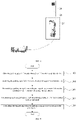
- the position information and the information of the length, the width and the height of the parking space 26 are obtained through scanning a two-dimensional code mark 24 on a movable pile 28 beside the parking space 26 with a camera of the engineering vehicle.
- the autonomous parking of the mixer truck in a complex construction environment is achieved by means of technologies such as positioning by the two-dimensional code mark 24, image identification, autonomous path planning and controlling and the wire-controlled chassis, and thus the drivers' working intensity is lowered and the operation safety of the mixer truck is improved, and the specific steps are provided as follows:
- Hybrid A ⁇ algorithm is provided as follows:
- c start represents a parking start-point
- c end represents a parking terminal
- c p represents points to be examined
- Sobs represents a collection of obstacle points
- Sopen represents a collection of opening points (points to be examined)
- S close represents a collection of closed points (examined points)
- ⁇ represents an empty collection
- the PopTop(S open ) function means searching a point with the smallest cost function value with respect to the current point of the vehicle and the parking terminal from the collection S open of points to be examined as the current examination point, and deleting the point from Sopen at the same time
- RSExpand(cp, c end , Sobs) means that if a Reeds-Shepp curve from the current point c p to the parking terminal c end can be established, the vehicle can travel from the current point to the terminal smoothly, and the parking can be ended
- Expand(cp, c end , Sopen, Sciose, Sobs) means taking the current point c p as the start
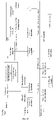
- step S4 the step that the mixer truck adopts the Hybrid A ⁇ algorithm to plan a smoothly transitioning parking path specifically comprises:
- the information acquisition device can further be an on-board unit, and a road-side unit is installed at the rear or the side of the parking space.
- the parking assistant system of the mixer truck can further identify the parking space and complete the parking.
- the costs and the complexity of the solution may be higher than that of the present invention.
- the terms of "one embodiment”, “some embodiments”, “specific embodiment” and the like mean that the specific features, structures, materials or characteristics described in combination with the embodiment or example are contained in at least one embodiment or example of the present invention.
- the illustrative expression of the above terms may not indicate the same embodiment or example.
- the specific features, structures, materials or characteristics described above may be combined in an appropriate method in one or more of any embodiments or examples.
Landscapes
- Engineering & Computer Science (AREA)
- Physics & Mathematics (AREA)
- General Physics & Mathematics (AREA)
- Transportation (AREA)
- Mechanical Engineering (AREA)
- Life Sciences & Earth Sciences (AREA)
- Atmospheric Sciences (AREA)
- Automation & Control Theory (AREA)
- Chemical & Material Sciences (AREA)
- Combustion & Propulsion (AREA)
- Multimedia (AREA)
- Theoretical Computer Science (AREA)
- Traffic Control Systems (AREA)
Abstract
Description
- This application claims priority to
Chinese Patent Application No. 202010456267.7 filed with China National Intellectual Property Administration on May 26, 2020 - The present invention relates to the technical field of engineering vehicles, in particular, to an engineering vehicle autonomous parking system and an autonomous parking method suitable for construction area.
- In the parking process of engineering vehicles, due to the harsh environment in the construction area, the traffics of people and vehicles are mixed, and mixer trucks have a large blind spot when the mixer trucks are parked, which can easily cause safety accidents. Existing engineering vehicle parking is basically completed by man power. Drivers need to be highly focused when parking. When encountering a particularly complex parking situation, drivers further need to get off the vehicles halfway to check surrounding conditions before continuing parking. This leads to long parking time and low parking efficiency and may easily cause safety accidents.
- In particular, the mixer truck is an engineering vehicle used to transport concrete. During the transportation process, the mixing drum on the truck needs to keep rotating continuously to prevent the concrete from solidifying, which limits the driver's sight and further increase parking difficulty.
- Meanwhile, the parking space in the construction area generally does not comprise any parking space marking, and the position of the parking area in the construction area changes as the construction progresses, that is, in a period of time, the parking area may be this area, while may be another area in another period of time.
- Therefore, for those skilled in the art, how to provide an autonomous parking system and an autonomous parking method suitable for construction areas has become a technical problem that needs to be solved urgently in this field.
- The present invention aims to solve at least one of the technical problems in the prior art or related art.
- Thus, according to a first aspect of the present invention, an engineering vehicle autonomous parking system suitable for construction area is provided.
- According to a second aspect of the present invention, an autonomous parking method is provided.
- In view of this, the present invention provides an engineering vehicle autonomous parking system suitable for construction area, and it comprises: a vehicle unit and a marking unit, wherein the marking unit is movably or detachably provided in a construction area, and the marking unit records parking space information, and the vehicle unit comprises a vehicle body; a radar provided on the vehicle body, wherein the radar is adapted to obtain obstacle information; an information acquisition device provided on the vehicle body, wherein the information acquisition device is adapted to acquire the parking space information that the marking unit records and/or obtain obstacle information; a positioning device provided on the vehicle body, wherein the positioning device is adapted to obtain vehicle position information of the vehicle body; a sensing device provided on the vehicle body, wherein the sensing device is adapted to obtain operating information of a vehicle; and a control device provided on the vehicle body, wherein the control device is in communication connection with the radar, the information acquisition device, the positioning device, the sensing device and the vehicle body; and the control device is adapted to control the vehicle body to autonomously park in a parking space based on the obstacle information, the vehicle position information, the parking space information and the operating information.
- For the engineering vehicle autonomous parking system suitable for construction area provided by the present invention, in a parking process, the parking space information that the marking unit records is acquired through the information acquisition device, the obstacle information regarding whether an obstacle exists in the parking travel path of an engineering vehicle is obtained through the radar, the vehicle position information regarding the location of the vehicle body is obtained through the positioning device, and furthermore, the control device determines a parking path based on the parking space information, the obstacle information and the vehicle position information, and obtains the traveling state of the vehicle through the operating information, and thus, the vehicle body can be controlled to travel along the parking path based on the operating information, and then the vehicle body is parked in the parking space. The engineering vehicle provided in the present invention can achieve autonomous parking, which substitutes the traditional embodiment that vehicle parking is controlled by a driver, thereby greatly improving the efficiency and the safety of parking.
- For the engineering vehicle autonomous parking system suitable for construction area provided by the present invention, through the arrangement of the marking unit, the marking unit is used to record the parking space information; the marking unit of the construction area can be disposed dynamically according to the variations of the construction area; a dynamical arrangement for the parking space is achieved by dynamically disposing the marking unit, i.e., a dynamical planning for the parking area is achieved.
- Specifically, for the engineering vehicle autonomous parking system provided by the present invention, considering the harsh environment in the construction area of engineering vehicles, there are generally no clear or definite parking space markings at the parking space for engineering vehicles, and thus, the information acquisition device is provided to acquire the parking space information that the marking unit records, which helps the engineering vehicles obtain the position and the type of the parking space and further helps the engineering vehicles autonomously park in the parking space.
- Specifically, for the engineering vehicle autonomous parking system provided by the present invention, through the arrangement of the radar, the obstacle information can be monitored and obtained, and this prevents the engineering vehicles from colliding with obstacles and then prevents causing safety accidents during the parking process, and therefore, the engineering vehicle autonomous parking system provided by the present invention achieves safer and more reliable parking.
- Specifically, the radar can be a supersonic wave radar, and multiple radars can be arranged; multiple radars are divided into multiple groups and are distributed on the front end, the rear end and the two sides of the vehicle body. The arrangement of the multiple groups of radars makes the sensing range of the engineering vehicles wider and improves the convenience and the safety of the engineering vehicle parking.
- Specifically, according to the present invention, the marking unit is movably or detachably provided in the construction area, and then the arrangement of the marking unit does not affect the construction or the situation of the engineering vehicle.
- In addition, the engineering vehicle autonomous parking system in the above embodiment provided by the present invention can further comprise the following additional technical features.
- In the above embodiment, furthermore, the positioning device comprises: an inertial measurement unit provided on the vehicle body; and a GPS positioning device provided on the vehicle body.
- In the embodiment, the composition of the positioning device is further provided. The positioning device comprises the inertial measurement unit and the GPS positioning device. Through the combined use of the inertial measurement unit and the GPS positioning device, and through the performance complementation of the inertial measurement unit and the GPS positioning device, the positioning accuracy of the engineering vehicle is improved, and this helps the control device get the position of the vehicle body, and helps the control device control the vehicle body to park in the parking space.
- In any one of the above embodiments, furthermore, the sensing device comprises: at least one of a wheel speed sensor, a steering angle sensor and a steering torque sensor; and/or the information acquisition device comprises an image acquisition device provided on the vehicle body, and/or a vehicle networking device, wherein an on-board unit of the vehicle networking device is provided on the vehicle body.
- In the embodiment, the composition of the sensing device is further provided, and the sensing device comprises at least one of the wheel speed sensor, the steering angle sensor and the steering torque sensor. During a working process, the wheel speed sensor is adapted to obtain the wheel speed of the vehicle body, the steering angle sensor is adapted to obtain the turning angle of the steering wheel of the vehicle body, and the steering torque sensor is adapted to obtain the steering torque of the steering wheel. Through obtaining the wheel speed, the turning angle and the steering torque of the vehicle body, the travelling state of the vehicle body can be obtained, and then the control device can provide control parameters based on the wheel speed, the turning angle and the steering torque of the vehicle body, and then the vehicle body travels along the parking path until the vehicle body parks in the parking space, thereby achieving the autonomous parking, and thus, the efficiency and the safety of parking is greatly improved.
- Specifically, the control device can comprise a computing device and a wire-controlled chassis device, and the wire-controlled chassis device is in communication connection with the computing device. During the parking process, the computing device determines the parking path through the parking space information, the obstacle information and the vehicle position information. The wire-controlled chassis device generates a throttle value for controlling the size of the throttle, a braking value for controlling the magnitude of braking and the turning angle of the steering wheel based on the parking path and the operating information, and then the vehicle body can travel along the parking path until the vehicle body parks in the parking space.
- In the embodiment, the specific types of the information acquisition device are further provided. The information acquisition device can comprise the image acquisition device and/or the on-board unit. When the information acquisition device comprises the image acquisition device, a two-dimensional code mark can be disposed in the parking space, the two-dimensional code mark corresponds to the parking space information, then the image acquisition device acquires the two-dimensional code mark, and thus the parking space information can be obtained; when the information acquisition device is a vehicle networking device (V2X device), a road-side unit (RSU) of the vehicle networking device can be provided in the parking space, and the road-side unit (RSU) is adapted to send the parking space information and the parking space information is thereby received when the on-board unit (OBU) of the vehicle networking device is close to the road-side unit.
- Specifically, the image acquisition device is a 360-degree panoramic camera, and there can be multiple 360-degree panoramic cameras which are distributed on the front end, the rear end and the two sides of the vehicle body. The 360-degree panoramic cameras can further be used in combination with the radar to obtain the obstacle information while they are used to obtain the parking space information. Through the arrangement of the multiple 360-degree panoramic cameras, the sensing range of the engineering vehicle becomes wider and this helps improve the convenience and the safety of the engineering vehicle parking.
- In any one of the above embodiments, furthermore, the marking unit further comprises a movable pile, wherein the movable pile is movably or detachably provided in the construction area; the two-dimensional code mark provided on the movable pile, wherein the two-dimensional code mark records the parking space information, and the information acquisition device is adapted to acquire the parking space information that the two-dimensional code mark records; and/or the road-side unit of the vehicle networking device provided on the movable pile, wherein the road-side unit records the parking space information, and the information acquisition device is adapted to acquire the parking space information that the road-side unit records.
- In the embodiment, the composition of the marking unit is further provided. The marking unit comprises the movable pile and the two-dimensional code mark provided on the movable pile. The movable or detachable arrangement of the movable pile prevents the movable pile from affecting the operation of engineering vehicles, and meanwhile helps dynamically dispose the marking unit of the construction area. The arrangement of the two-dimensional code mark and the road-side unit of the vehicle networking device helps the information acquisition device of the vehicle unit acquire and obtain parking space information.
- According to the second aspect of the present invention, an autonomous parking method for the engineering vehicle autonomous parking system according to any one of the above embodiments, and the method comprises: obtaining parking space information through an information acquisition device; analyzing the parking space information to obtain parking parameter information; determining a parking start-point according to the parking parameter information and the position information of an engineering vehicle; determining a parking path according to the parking parameter information and the parking start-point; and controlling the engineering vehicle to park in a parking space according to the parking path.
- For the parking method provided by the present invention, in the parking process, the parking space information is acquired and obtained by the information acquisition device of the engineering vehicle, the parking space information is analyzed to obtain the parking space parameter information, parking start-point information is determined based on parking space parameter information and the position information of the engineering vehicle, furthermore, the parking path is determined based on the parking parameter information and the parking start-point, and thus, the control device of the engineering vehicle can control the vehicle body to park in the parking space along the parking path, the autonomous parking of the engineering vehicle is achieved and the efficiency and the safety of the engineering vehicle parking is greatly improved.
- For the autonomous parking method provided by the present invention, the parking space information is acquired and obtained by the information acquisition device, and then the parking space information is analyzed to obtain the parking space parameter information; on the one hand, considering the harsh environment in the construction area of engineering vehicles, there are generally no clear or definite parking space markings at the parking space for an engineering vehicle, and thus, the information acquisition device is provided to acquire the parking space information, which helps the engineering vehicles obtain the parking space parameter information and further help the engineering vehicles autonomously park in the parking space; on the other hand, the timeliness and the speed of obtaining the parking space information are improved, and further analysis is performed to obtain the parking space parameter information to facilitate the parking of the engineering vehicle.
- It can be understood that in the autonomous parking method provided by the present invention, the position of the parking start-point can be a point that coincides with the position of the engineering vehicle or other points by which the engineering vehicle can park in the parking space.
- In addition, the autonomous parking method for the engineering vehicle autonomous parking system in the above embodiment provided by the present invention can further comprise the following additional technical features.
- In the above embodiment, furthermore, the parking parameter information comprises at least one type of parking space position information, parking space type information, parking space length information, parking space width information and parking space height information.
- In the embodiment, the composition of the parking parameter information is further provided. The parking parameter information comprises at least one type of the parking space position information, the parking space type information, the parking space length information, the parking space width information and the parking space height information. The parking space position information is used to indicate the position of the parking space, and thus a control device of the engineering vehicle can park the engineering vehicle in the parking space based on the position of the vehicle and the parking space position information; the parking space type information specifically indicates the types of the parking space, for example, a parallel parking space, a vertical parking space and a diagonal parking space, for indicating the parking mode of the engineering vehicle; the parking space length information, the parking space width information and the parking space height information are used to indicate the size and the height of the parking space, and then prevent a portion of the engineering vehicles from going beyond the parking range of the parking space.
- In any one of the above embodiments, furthermore, the step of determining a parking path based on the parking parameter information and the parking start-point specifically comprises: determining a preset parking path through a Hybrid A∗ algorithm according to the parking parameter information and the parking start-point; determining whether an obstacle exists on the preset parking path by means of a radar; in the case that an obstacle exists on the preset parking path, determining whether the obstacle is moving; in the case that the obstacle does not move, generating an expanded parking start-point based on the parking start-point, and determining a target parking path based on the expanded parking start-point and the parking parameter information; in the case that the obstacle is moving, controlling the vehicle body to stop operating until the obstacle is away from the preset parking path, and implementing a smoothing treatment for the preset parking path according to a conjugate gradient method to obtain the parking path; in the case that there is no obstacle on the preset parking path, implementing a smoothing treatment for the preset parking path according to a conjugate gradient method to obtain the parking path; wherein generating an expanded parking start-point based on the parking start-point comprises using a Reeds-Shepp curve to expand the parking start-point to generate an expanded parking start-point.
- In the embodiment, the specific steps for determining the parking path are further provided. The preset parking path is determined through the Hybrid A∗ algorithm according to the parking parameter information and the parking start-point. When a moving obstacle exists on the preset parking path, a smoothing treatment for the preset parking path is implemented after the obstacle is away from the preset parking path, and then the parking path is obtained; when the obstacle existing on the preset parking path does not move, the expanded parking start-point is generated and the target parking path is determined based on the expanded parking start-point and the parking parameter information, and until the obstacle does not exist on the target parking path, the smoothing treatment is implemented to the target parking path according to the conjugate gradient method to obtain the parking path; in the case that there is no obstacle on the preset parking path, the smoothing treatment is implemented to the preset parking path according to the conjugate gradient method, and then the parking path can be obtained. Through the above arrangement, a parking path free from any obstacle is finally obtained, and this helps the engineering vehicle park in the parking space safely and quickly.
- In the embodiment, the generating mode of the expanded parking start-point is further provided. Expanding the parking start-point by the Reeds-Shepp curve helps quickly generate the expanded parking start-point, and meanwhile, the newly generated expanded parking start-point is relatively close to the parking start-point and thus it is conducive to the quick parking of the engineering vehicle.
- In any one of the above embodiments, furthermore, obtaining the parking space information comprises: scanning the two-dimensional code mark provided in the parking space by means of an image acquisition device on an engineering vehicle to obtain parking space information; or receiving parking space information sent by the road-side unit of the vehicle networking device disposed in the parking space by means of the on-board unit of the vehicle networking device on an engineering vehicle.
- In the embodiment, the method for obtaining the parking space information is further provided. Through the cooperation of the image acquisition device and the two-dimensional code mark, or through the mutual cooperation of the on-board unit and the road-side unit provided in the parking space, the efficiency for obtaining the parking space information is improved.
- Specifically, a benchmark can be provided in the parking space, the two-dimensional code mark is provided on the benchmark, and then the image acquisition device scans the two-dimensional code mark to obtain the parking space information.
- In any one of the above embodiments, furthermore, they further comprise: sending flameout prompt information when the engineering vehicle is parked in the parking space.
- In the embodiment, in the case that the engineering vehicle is parked in the parking space, the flameout prompt information is sent, and this helps shut down engineering vehicles in time and save energy.
- Specifically, when a driver is in the engineering vehicle, the driver can manually shut down the engineering vehicle after being informed of the flameout prompt information; if there is no driver in the engineering vehicle, the control device of the engineering vehicle can receive the flameout prompt information and shut down the engineering vehicle based on the flameout prompt information.
- In any one of the above embodiments, furthermore, the step of controlling the engineering vehicle to park in the parking space according to the parking path specifically comprises: obtaining the vehicle position information of the engineering vehicle through a positioning device; obtaining parking map information by means of a simultaneous localization and mapping technology in a moving process of the engineering vehicle; and controlling the engineering vehicle to park in the parking space according to the vehicle position information, the parking map information and the parking path.
- In the embodiment, the specific steps for the engineering vehicle to park in the parking space are further provided. Through acquiring the vehicle position information, the parking map information is obtained by means of a simultaneous localization and mapping (SLAM) technology in a moving process of the engineering vehicle, and thus it is convenient to get the position of the engineering vehicle and the map information of the parking space, and it helps the engineering vehicle park in the parking space along the parking path, thereby achieving autonomous parking of the engineering vehicle, replacing the embodiments in which a traditional driver controls the parking of a vehicle, and thereby greatly improving the efficiency and the safety of parking.
- Additional aspects and advantages of the present invention will be obvious from the following description or can be understood from the implementation of the present invention.
- The above and/or the additional aspects and advantages of the present invention will become obvious and will be understood easily from the following description of embodiments in combination with accompanying drawings, wherein:
-
FIG. 1 is a schematic view of the structure of an engineering vehicle according to an embodiment of the present invention; -
FIG. 2 is a block diagram of the structure of an engineering vehicle according to an embodiment of the present invention; -
FIG. 3 is a schematic view of a parking path of an engineering vehicle according to an embodiment of the present invention; -
FIG. 4 is a schematic view of the flow of a parking method according to Embodiment 5 of the present invention; -
FIG. 5 is a schematic view of the flow of a parking method according toEmbodiment 6 of the present invention; -
FIG. 6 is a schematic view of the flow of a parking method according to Embodiment 7 of the present invention; -
FIG. 7 is a schematic view of the flow of a parking method according toEmbodiment 8 of the present invention; -
FIG. 8 is a schematic view of the flow of a parking method according to Embodiment 9 of the present invention; -
FIG. 9 is a schematic view of the flow of a parking method according toEmbodiment 10 of the present invention; -
FIG. 10 is a schematic view of the flow of a parking method according to Embodiment 11 of the present invention; -
FIG. 11 is a schematic view of the flow of a parking method according toEmbodiment 12 of the present invention; -
FIG. 12 is a block diagram of the structure of an engineering vehicle at a software level according to a specific embodiment of the present invention; and -
FIG. 13 is a schematic view of the flow of step S4 of a parking method according to a specific embodiment of the present invention. - Wherein, the corresponding relations between the reference signs in
FIG. 1 to FIG. 3 andFIG. 12 and the names of components are illustrated as follows:
4 radar; 6 information acquisition device; 8 positioning device; 10 sensing device; 12 control device; 14 inertial measurement unit; 16 GPS positioning device; 18 wheel speed sensor; 20 steering angle sensor; 22 steering torque sensor; 24 two-dimensional code mark; 26 parking space; 28 movable pile. - To more clearly understand the above objects, features and advantages of the present invention, the present invention will be further detailed hereinafter in combination with the accompanying drawings and embodiments. It should be indicated that in the case of no conflict, the embodiments and the features in the embodiments of the present invention can be combined with each other.
- Details are illustrated in the following description for the convenience of a fully understanding to the present invention, but the present invention can further be implemented using other embodiments other than these described herein. Therefore, the protection scope of the present invention is not limited to the specific embodiments disclosed in the following text.
- Referring to
FIG 1 to FIG 13 , an engineering vehicle autonomous parking system and an autonomous parking method suitable for construction area according to some embodiments of the present invention are described in the following. - As shown in
FIG 1 and FIG. 2 , an embodiment of the present invention provides an engineering vehicle autonomous parking system suitable for construction area, and it comprises: a vehicle unit and a marking unit, wherein the marking unit is movably or detachably provided in a construction area, and the marking unit records parking space information, and the vehicle unit comprises a vehicle body; a radar 4 provided on the vehicle body, wherein the radar 4 is adapted to obtain obstacle information; an information acquisition device 6 provided on the vehicle body, wherein the information acquisition device 6 is adapted to acquire the parking space information that the marking unit records and/or obtain obstacle information; a positioning device 8 provided on the vehicle body, wherein the positioning device 8 is adapted to obtain vehicle position information of the vehicle body; a sensing device 10 provided on the vehicle body, wherein the sensing device 10 is adapted to obtain operating information of a vehicle; and a control device 12 provided on the vehicle body, wherein the control device 12 is in communication connection with the radar 4, the information acquisition device 6, the positioning device 8, the sensing device 10 and the vehicle body; and the control device 12 is adapted to control the vehicle body to autonomously park in a parking space based on the obstacle information, the vehicle position information, the parking space information and the operating information. - For the engineering vehicle autonomous parking system suitable for construction area provided by the present invention, as shown in
FIG. 3 , in a parking process, the parking space information that the marking unit records is acquired through theinformation acquisition device 6, the obstacle information regarding whether an obstacle exists in the parking travel path of an engineering vehicle is obtained through theradar 4, the vehicle position information regarding the location of the vehicle body is obtained through thepositioning device 8, and furthermore, thecontrol device 12 determines a parking path based on the parking space information, the obstacle information and the vehicle position information, and obtains the traveling state of the vehicle through the operating information, and thus, the vehicle body can be controlled to travel along the parking path based on the operating information, and then the vehicle body is parked in theparking space 26. The engineering vehicle provided in the present invention can achieve autonomous parking, which substitutes the traditional embodiment that vehicle parking is controlled by a driver, thereby greatly improving the efficiency and the safety of parking. - For the engineering vehicle autonomous parking system suitable for construction area provided by the present invention, through the arrangement of the marking unit, the marking unit is used to record the parking space information; the marking unit of the construction area can be disposed dynamically according to the variations of the construction area; a dynamical arrangement for the parking space is achieved by dynamically disposing the marking unit, i.e., a dynamical planning for the parking area is achieved.
- Specifically, for the engineering vehicle autonomous parking system provided by the present invention, considering the harsh environment in the construction area of engineering vehicles, there are generally no clear or definite parking space markings at the
parking space 26 for engineering vehicles, and thus, theinformation acquisition device 6 is provided to acquire the parking space information, which helps the engineering vehicles obtain the position and the type of theparking space 26 and further helps the engineering vehicles autonomously park in theparking space 26. - Specifically, for the engineering vehicle autonomous parking system provided by the present invention, through the arrangement of the
radar 4 and theinformation acquisition device 6, the obstacle information can be monitored and obtained, and this prevents the engineering vehicles from colliding with obstacles and then prevents causing safety accidents during the parking process, and therefore, the engineering vehicle parking provided by the present invention is safer and more reliable. - Specifically, the
radar 4 can be a supersonic wave radar, andmultiple radars 4 can be arranged;multiple radars 4 are divided into multiple groups and are distributed on the front end, the rear end and the two sides of the vehicle body. The arrangement of the multiple groups ofradars 4 makes the sensing range of the engineering vehicles wider and improves the convenience and the safety of the engineering vehicle parking. - Specifically, according to the present invention, the marking unit is movably or detachably provided in the construction area, and then the arrangement of the marking unit does not affect the construction or the situation of the engineering vehicle.
- As shown in
FIG. 1 to FIG. 2 , an embodiment of the present invention provides an engineering vehicle autonomous parking system suitable for construction area, and it comprises: a vehicle unit and a marking unit, wherein the marking unit is movably or detachably provided in a construction area, and the marking unit records parking space information, and the vehicle unit comprises a vehicle body; a radar 4 provided on the vehicle body, wherein the radar 4 is adapted to obtain obstacle information; an information acquisition device 6 provided on the vehicle body, wherein the information acquisition device 6 is adapted to acquire the parking space information that the marking unit records and/or obtain obstacle information; a positioning device 8 provided on the vehicle body, wherein the positioning device 8 is adapted to obtain the vehicle position information of the vehicle body; a sensing device 10 provided on the vehicle body, wherein the sensing device 10 is adapted to obtain the operating information of a vehicle; and a control device 12 provided on the vehicle body, wherein the control device 12 is in communication connection with the radar 4, the information acquisition device 6, the positioning device 8, the sensing device 10 and the vehicle body; and the control device 12 is adapted to control the vehicle body to autonomously park in a parking space 26 based on the obstacle information, the vehicle position information, the parking space information and the operating information. - Furthermore, the
positioning device 8 comprises aninertial measurement unit 14 provided on the vehicle body and aGPS positioning device 16 provided on the vehicle body. - In the embodiment, the composition of the
positioning device 8 is further provided. Thepositioning device 8 comprises theinertial measurement unit 14 and theGPS positioning device 16. Through the combined use of theinertial measurement unit 14 and theGPS positioning device 16, and through the performance complementation of theinertial measurement unit 14 and theGPS positioning device 16, the positioning accuracy of the engineering vehicle is improved, and this helps thecontrol device 12 get the position of the vehicle body, and helps thecontrol device 12 control the vehicle body to park in theparking space 26. - As shown in
FIG. 1 to FIG. 2 , an embodiment of the present invention provides an engineering vehicle autonomous parking system suitable for construction area, and it comprises: a vehicle unit and a marking unit, wherein the marking unit is movably or detachably provided in a construction area, and the marking unit records parking space information, and the vehicle unit comprises a vehicle body; a radar 4 provided on the vehicle body, wherein the radar 4 is adapted to obtain obstacle information; an information acquisition device 6 provided on the vehicle body, wherein the information acquisition device 6 is adapted to acquire the parking space information that the marking unit records and/or obtain obstacle information; a positioning device 8 provided on the vehicle body, wherein the positioning device 8 is adapted to obtain the vehicle position information of the vehicle body; a sensing device 10 provided on the vehicle body, wherein the sensing device 10 is adapted to obtain the operating information of a vehicle; and a control device 12 provided on the vehicle body, wherein the control device 12 is in communication connection with the radar 4, the information acquisition device 6, the positioning device 8, the sensing device 10 and the vehicle body; and the control device 12 is adapted to control the vehicle body to autonomously park in a parking space 26 based on the obstacle information, the vehicle position information, the parking space information and the operating information. - Furthermore, the
sensing device 10 comprises: at least one of awheel speed sensor 18, asteering angle sensor 20 and asteering torque sensor 22; and/or theinformation acquisition device 6 comprises an image acquisition device provided on the vehicle body, and/or a vehicle networking device, wherein an on-board unit of the vehicle networking device is provided on the vehicle body. - In the embodiment, the composition of the
sensing device 10 is further provided, and thesensing device 10 comprises at least one of thewheel speed sensor 18, thesteering angle sensor 20 and thesteering torque sensor 22. During a working process, thewheel speed sensor 18 is adapted to obtain the wheel speed of the vehicle body, thesteering angle sensor 20 is adapted to obtain the turning angle of the steering wheel of the vehicle body, and thesteering torque sensor 22 is adapted to obtain the steering torque of the steering wheel. Through obtaining the wheel speed, the turning angle and the steering torque of the vehicle body, the travelling state of the vehicle body can be obtained, and then thecontrol device 12 can provide control parameters based on the wheel speed, the turning angle and the steering torque of the vehicle body, and then the vehicle body travels along the parking path until the vehicle body parks in theparking space 26, thereby achieving the autonomous parking, and thus, the efficiency and the safety of parking is greatly improved. - Specifically, the
control device 12 can comprise a computing device and a wire-controlled chassis device, and the wire-controlled chassis device is in communication connection with the computing device. During the parking process, the computing device determines the parking path through the parking space information, the obstacle information and the vehicle position information. The wire-controlled chassis device generates a throttle value for controlling the size of the throttle, a braking value for controlling the magnitude of braking and the turning angle of the steering wheel based on the parking path and the operating information, and then the vehicle body can travel along the parking path until the vehicle body parks in theparking space 26. - In the embodiment, the specific types of the
information acquisition device 6 are further provided. Theinformation acquisition device 6 can comprise the image acquisition device and/or the on-board unit of the vehicle networking device. When theinformation acquisition device 6 comprises the image acquisition information, a two-dimensional code mark can be disposed in theparking space 26, the two-dimensional code mark corresponds to the parking space information, then the image acquisition device acquires the two-dimensional code mark, and thus the parking space information can be obtained; when theinformation acquisition device 6 is the on-board unit, a road-side unit can be provided in theparking space 26, and the road-side unit is adapted to send the parking space information and the parking space information is thereby received when the on-board unit is close to the road-side unit. - Specifically, the image acquisition device is a 360-degree panoramic camera, and there can be multiple 360-degree panoramic cameras which are distributed on the front end, the rear end and the two sides of the vehicle body. The 360-degree panoramic cameras can further be used in combination with the
radar 4 to obtain the obstacle information while they are used to obtain the parking space information. Through the arrangement of the multiple 360-degree panoramic cameras, the sensing range of the engineering vehicle becomes wider and this helps improve the convenience and the safety of the engineering vehicle parking. - As shown in
FIG. 1 and FIG. 2 , an embodiment of the present invention provides an engineering vehicle autonomous parking system suitable for construction area, and it comprises: a vehicle unit and a marking unit, wherein the marking unit is movably or detachably provided in a construction area, and the marking unit records parking space information, and the vehicle unit comprises a vehicle body; a radar 4 provided on the vehicle body, wherein the radar 4 is adapted to obtain obstacle information; an information acquisition device 6 provided on the vehicle body, wherein the information acquisition device 6 is adapted to acquire the parking space information that the marking unit records and/or obtain obstacle information; a positioning device 8 provided on the vehicle body, wherein the positioning device 8 is adapted to obtain vehicle position information of the vehicle body; a sensing device 10 provided on the vehicle body, wherein the sensing device 10 is adapted to obtain the operating information of a vehicle; and a control device 12 provided on the vehicle body, wherein the control device 12 is in communication connection with the radar 4, the information acquisition device 6, the positioning device 8, the sensing device 10 and the vehicle body; and the control device 12 is adapted to control the vehicle body to autonomously park in a parking space 26 based on the obstacle information, the vehicle position information, the parking space information and the operating information. - Furthermore, the marking unit further comprises a
movable pile 28, wherein themovable pile 28 is movably or detachably provided in the construction area; a two-dimensional code mark 24 provided on themovable pile 28, wherein the two-dimensional code mark 24 records the parking space information, and theinformation acquisition device 6 is adapted to acquire the parking space information that the two-dimensional code mark 24 records; and/or a road-side unit of a vehicle networking device provided on themovable pile 28, wherein the road-side unit records the parking space information, and the information acquisition device is adapted to acquire the parking space information that the road-side unit records. - In the embodiment, the composition of the marking unit is further provided. The marking unit comprises the
movable pile 28 and the two-dimensional code mark 24 provided on themovable pile 28. Through the movable or detachable arrangement of themovable pile 28, themovable pile 28 is prevented from affecting the operation of engineering vehicles. Through the arrangement of the two-dimensional code mark 24 and/or the vehicle networking device, it helps theinformation acquisition device 6 of the vehicle unit acquire and obtain parking space information. - As shown in
FIG. 4 , an embodiment according to the present invention provides an autonomous parking method for the engineering vehicle autonomous parking system according to any one of the above embodiments, and the method comprises: - Step 102: obtaining parking space information through an information acquisition device;
- Step 104: analyzing the parking space information to obtain parking parameter information;
- Step 106: determining a parking start-point according to the parking parameter information and the position information of an engineering vehicle;
- Step 108: determining a parking path according to the parking parameter information and the parking start-point; and
- Step 110: controlling the engineering vehicle to park in a parking space according to the parking path.
- For the parking method provided by the present invention, in the parking process, the parking space information is acquired and obtained by the information acquisition device of the engineering vehicle, the parking space information is analyzed to obtain the parking space parameter information, parking start-point information is determined based on parking space parameter information and the position information of the engineering vehicle, furthermore, the parking path is determined based on the parking parameter information and the parking start-point, and thus, the control device of the engineering vehicle can control the vehicle body to park in the parking space along the parking path, the autonomous parking of the engineering vehicle is achieved and the efficiency and the safety of the engineering vehicle parking is greatly improved.
- For the parking method provided by the present invention, the parking space information is acquired and obtained by the information acquisition device, and then the parking space information is analyzed to obtain the parking space parameter information; on the one hand, considering the harsh environment in the construction area of engineering vehicles, there are generally no clear or definite parking space markings at the parking space for an engineering vehicle, and thus, the information acquisition device is provided to acquire the parking space information, which helps the engineering vehicles obtain the parking space parameter information and further help the engineering vehicles autonomously park in the parking space; on the other hand, the timeliness and the speed of obtaining the parking space information are improved, and further analysis is performed to obtain the parking space parameter information to facilitate the parking of the engineering vehicle.
- It can be understood that in the parking method provided by the present invention, the position of the parking start-point can be a point that coincides with the position of the engineering vehicle or other points by which the engineering vehicle can park in the parking space.
- As shown in
FIG. 5 , an embodiment according to the present invention provides an autonomous parking method, and the method comprises: - Step 202: obtaining parking space information through an information acquisition device;
- Step 204: analyzing the parking space information to obtain parking parameter information;
- Step 206: determining a parking start-point according to the parking parameter information and the position information of an engineering vehicle;
- Step 208: determining a parking path according to the parking parameter information and the parking start-point; and
- Step 210: controlling the engineering vehicle to park in a parking space according to the parking path.
- Furthermore, the parking parameter information comprises at least one type of parking space position information, parking space type information, parking space length information, parking space width information and parking space height information.
- In the embodiment, the composition of the parking parameter information is further provided. The parking parameter information comprises at least one type of the parking space position information, the parking space type information, the parking space length information, the parking space width information and the parking space height information. The parking space position information is used to indicate the position of the parking space, and thus a control device of the engineering vehicle can park the engineering vehicle in the parking space based on the position of the vehicle and the parking space position information; the parking space type information specifically indicates the types of the parking space, for example, a parallel parking space, a vertical parking space and a diagonal parking space, for indicating the parking mode of the engineering vehicle; the parking space length information, the parking space width information and the parking space height information are used to indicate the size and the height of the parking space, and then prevent a portion of the engineering vehicles from going beyond the parking range of the parking space.
- As shown in
FIG. 6 , an embodiment according to the present invention provides an autonomous parking method, and the method comprises: - Step 302: obtaining parking space information through an information acquisition device;
- Step 304: analyzing the parking space information to obtain parking parameter information;
- Step 306: determining a parking start-point according to the parking parameter information and the position information of an engineering vehicle;
- Step 308: determining a preset parking path through a Hybrid A∗ algorithm according to the parking parameter information and the parking start-point;
- Step 310: determining whether an obstacle exists on the preset parking path by means of a radar, then implementing
Step 312 if there is an obstacle, or implementingStep 318 if there is not any obstacle; - Step 312: determining whether the obstacle is moving, then implementing
Step 314 if it is not moving, or implementingStep 314 if it is moving; - Step 314: generating an expanded parking start-point based on the parking start-point, and determining a target parking path based on the expanded parking start-point and the parking parameter information, and then implementing
Step 310; - Step 316: controlling the vehicle body to stop operating until the obstacle is away from the preset parking path, and then implementing
Step 318; - Step 318: implementing a smoothing treatment for the preset parking path according to a conjugate gradient method to obtain the parking path; and
- Step 320: controlling the engineering vehicle to park in the parking space according to the parking path.
- Wherein, in the process of generating an expanded parking start-point based on the parking start-point, determining a target parking path based on the expanded parking start-point and the parking parameter information, and then implementing
Step 310, the target parking path is taken as a new preset parking path. - In the embodiment, the specific steps for determining the parking path are further provided. The preset parking path is determined through the Hybrid A∗ algorithm according to the parking parameter information and the parking start-point. When a moving obstacle exists on the preset parking path, a smoothing treatment for the preset parking path is implemented after the obstacle is away from the preset parking path, and then the parking path is obtained; when the obstacle existing on the preset parking path does not move, the expanded parking start-point is generated and the target parking path is determined based on the expanded parking start-point and the parking parameter information, and until the obstacle does not exist on the target parking path, the smoothing treatment is implemented to the target parking path according to the conjugate gradient method to obtain the parking path; in the case that there is no obstacle on the preset parking path, the smoothing treatment is implemented to the preset parking path according to the conjugate gradient method, and then the parking path can be obtained. Through the above arrangement, a parking path free from any obstacle is finally obtained, and this helps the engineering vehicle park in the parking space safely and quickly.
- As shown in
FIG. 7 , an embodiment according to the present invention provides an autonomous parking method, and the method comprises: - Step 402: obtaining parking space information through an information acquisition device;
- Step 404: analyzing the parking space information to obtain parking parameter information;
- Step 406: determining a parking start-point according to the parking parameter information and the position information of an engineering vehicle;
- Step 408: determining a preset parking path through a Hybrid A∗ algorithm according to the parking parameter information and the parking start-point;
- Step 410: determining whether an obstacle exists on the preset parking path by means of a radar, then implementing
Step 412 if there is an obstacle, or implementingStep 418 if there is not any obstacle; - Step 412: determining whether the obstacle is moving, then implementing
Step 414 if it is not moving, or implementingStep 414 if it is moving; - Step 414: using a Reeds-Shepp curve to expand the parking start-point to generate an expanded parking start-point, and determining a target parking path based on the expanded parking start-point and the parking parameter information, and then implementing
Step 410; - Step 416: controlling the vehicle body to stop operating until the obstacle is away from the preset parking path, and then implementing
Step 418; - Step 418: implementing a smoothing treatment to the preset parking path according to a conjugate gradient method to obtain the parking path; and
- Step 420: controlling the engineering vehicle to park in the parking space according to the parking path.
- Wherein, in the process of generating an expanded parking start-point based on the parking start-point, determining a target parking path based on the expanded parking start-point and the parking parameter information, and then implementing
Step 410, the target parking path is taken as a new preset parking path. - In the embodiment, the generating mode of the expanded parking start-point is further provided. Expanding the parking start-point by the Reeds-Shepp curve helps quickly generate the expanded parking start-point, and meanwhile, the newly generated expanded parking start-point is relatively close to the parking start-point and thus it is conducive to the quick parking of the engineering vehicle.
- As shown in
FIG. 8 , an embodiment according to the present invention provides an autonomous parking method, and the method comprises: - Step 502: scanning a two-dimensional code mark provided in a parking space by means of an image acquisition device on an engineering vehicle to obtain parking space information;
- Step 504: analyzing the parking space information to obtain parking parameter information;
- Step 506: determining a parking start-point according to the parking parameter information and the position information of an engineering vehicle;
- Step 508: determining a parking path according to the parking parameter information and the parking start-point; and
- Step 510: controlling the engineering vehicle to park in the parking space according to the parking path.
- The method for obtaining the parking space information is further provided. Through the cooperation of the image acquisition device and the two-dimensional code mark, the efficiency for obtaining the parking space information is improved.
- Specifically, a benchmark can be provided in the parking space, the two-dimensional code mark is provided on the benchmark, and then the image acquisition device scans the two-dimensional code mark to obtain the parking space information.
- As shown in
FIG. 9 , an embodiment according to the present invention provides an autonomous parking method, and the method comprises: - Step 602: receiving parking space information sent by a road-side unit disposed in the parking space by means of an on-board unit on an engineering vehicle;
- Step 604: analyzing the parking space information to obtain parking parameter information;
- Step 606: determining a parking start-point according to the parking parameter information and the position information of the engineering vehicle;
- Step 608: determining a parking path according to the parking parameter information and the parking start-point; and
- Step 610: controlling the engineering vehicle to park in the parking space according to the parking path.
- In the embodiment, the method for obtaining the parking space information is further provided. The parking space information is obtained through the mutual cooperation of the on-board unit and the road-side unit, and the efficiency for obtaining the parking space information is improved.
- As shown in
FIG. 10 , an embodiment according to the present invention provides an autonomous parking method, and the method comprises: - Step 702: obtaining parking space information through an information acquisition device;
- Step 704: analyzing the parking space information to obtain parking parameter information;
- Step 706: determining a parking start-point according to the parking parameter information and the position information of an engineering vehicle;
- Step 708: determining a parking path according to the parking parameter information and the parking start-point;
- Step 710: controlling the engineering vehicle to park in the parking space according to the parking path; and
- Step 712: sending flameout prompt information when the engineering vehicle is parked in the parking space.
- In the embodiment, in the case that the engineering vehicle is parked in the parking space, flameout prompt information is sent, and this helps shut down engineering vehicles in time and save energy.
- Specifically, when a driver is in the engineering vehicle, the driver can manually shut down the engineering vehicle after being informed of the flameout prompt information; if there is no driver in the engineering vehicle, the control device of the engineering vehicle can receive the flameout prompt information and shut down the engineering vehicle based on the flameout prompt information.
- As shown in
FIG. 11 , an embodiment according to the present invention provides an autonomous parking method, and the method comprises: - Step 802: obtaining parking space information through an information acquisition device;
- Step 804: analyzing the parking space information to obtain parking parameter information;
- Step 806: determining a parking start-point according to the parking parameter information and the position information of an engineering vehicle;
- Step 808: determining a parking path according to the parking parameter information and the parking start-point;
- Step 810: obtaining the vehicle position information of the engineering vehicle through a positioning device;
- Step 812: obtaining parking map information by means of a simultaneous localization and mapping technology in a moving process of the engineering vehicle; and
- Step 814: controlling the engineering vehicle to park in the parking space according to the vehicle position information, the parking map information and the parking path.
- In the embodiment, the specific steps for the engineering vehicle to park in the parking space are further provided. Through acquiring the vehicle position information, the parking map information is obtained by means of a simultaneous localization and mapping (SLAM) technology in a moving process of the engineering vehicle, and thus it is convenient to get the position of the engineering vehicle and the map information of the parking space, and it helps the engineering vehicle park in the parking space along the parking path, thereby achieving autonomous parking of the engineering vehicle, replacing the embodiments in which a traditional driver controls the parking of a vehicle, and thereby greatly improving the efficiency and the safety of parking.
- As shown in
FIG. 1 and FIG. 2 , an embodiment of the present invention provides an engineering vehicle autonomous parking system suitable for construction area, and it comprises: a vehicle body, aradar 4, aninformation acquisition device 6, apositioning device 8, asensing device 10 and acontrol device 12. - Wherein, from the hardware level, the vehicle body is a mixer truck; the
radar 4 comprises twelve supersonic wave radars; theinformation acquisition device 6 comprises four 360-degree panoramic cameras; thepositioning device 8 comprises one inertial measurement unit (IMU) 14 and oneGPS positioning device 16; thecontrol device 12 comprises one wire-controlled chassis device and one computing unit, wherein the 360-degree panoramic cameras and the supersonic wave radars are used to detect and identify obstacles, the inertial measurement unit (IMU) 14 and theGPS positioning device 16 are used to determine the position of the mixer truck itself, the wire-controlled chassis device drives the mixer truck using electronic signals, and the computing unit is used for obstacle sensing, parking space positioning and identifying, autonomous path planning, vehicle controlling and etc. - As shown in
FIG. 12 , wherein, from the software level, the engineering vehicle comprises a sensing layer, a processing layer and an implementing layer. The sensing layer comprises the supersonic wave radars, the 360-degree panoramic cameras, the inertial measurement unit (IMU) 14, theGPS positioning device 16, awheel speed sensor 18, asteering angle sensor 20 and asteering torque sensor 22. The supersonic wave radars, the 360-degree panoramic cameras and the inertial measurement unit (IMU) 14 are used to obtain obstacle information and vehicle position information; thewheel speed sensor 18 is taken as a portion of the electronic stability control system (ESC) of the vehicle body and is used to obtain the wheel speed of the mixer truck; thesteering angle sensor 20 and thesteering torque sensor 22 are taken as a portion of the electronic power steering system (EPS) and are used to obtain the turning angle and the torque of the steering wheel; operating information which represents the kinematics parameters of the integral vehicle of the mixer truck can be obtained through thewheel speed sensor 18, thesteering angle sensor 20 and thesteering torque sensor 22. The processing layer comprises a perception algorithm, a positioning algorithm, a planning algorithm and a control algorithm, which are used to generate a parking path through the computing unit of thecontrol device 12 and are used for a throttle value, a braking value and the turning angle of the steering wheel which control the operation of the mixer truck; and the implementing layer comprises a wire-controlled throttle controller, a wire-controlled braking controller and an EPS controller; the throttle controller, the wire-controlled braking controller and the EPS controller are controlled to work through the throttle value, the braking value and the turning angle of the steering wheel generated by the wire-controlled chassis device of thecontrol device 12 through the computing unit, and then the mixer truck is parked in theparking space 26 according to the parking path. - In view of this, the present embodiment provides a parking method for the above mentioned engineering vehicle. The position information and the information of the length, the width and the height of the
parking space 26 are obtained through scanning a two-dimensional code mark 24 on amovable pile 28 beside theparking space 26 with a camera of the engineering vehicle. The autonomous parking of the mixer truck in a complex construction environment is achieved by means of technologies such as positioning by the two-dimensional code mark 24, image identification, autonomous path planning and controlling and the wire-controlled chassis, and thus the drivers' working intensity is lowered and the operation safety of the mixer truck is improved, and the specific steps are provided as follows: - Step S1 marking the parking space: a mobile pile is temporarily erected behind or on the side of each parking space in a construction area, and the two-dimensional code mark of the parking space is pasted on the mobile pile; the two-dimensional code mark comprises parking space position information, the parking space type (a parallel parking space, a vertical parking space and a diagonal parking space), the length, the width and the height (for avoiding mixer trucks of some specifications which go beyond the height of special parking spaces) of the parking space and etc.; unless the construction parking space is changed, this step only needs to be implemented once, wherein the parking space position information is the global position coordinates of an electronic fence; the parking space types comprise the parallel parking space, the vertical parking space, and the diagonal parking space;
- Step S2 searching the parking space: after a mixer truck drives to the construction area, a driver presses a parking button, and the panoramic sensor of the mixer truck scans the surrounding two-dimensional code mark by 360 degrees, if the two-dimensional code mark on the movable pile can be scanned and the read message format is consistent with a specified format, it indicates that the parking space can be used for parking, otherwise it cannot be used for parking, if an irrelevant two-dimensional code mark is scanned and recognized, it should be ignored;
- Step S3 positioning the parking space: after the automatic parking system successfully scans the two-dimensional code mark for parking, the global position coordinates of the electronic fence, and the length, the width and the height of the parking space can be obtained, and thus the position of the parking space is determined; and then, the mixer truck will move to an optimal parking start-point, and furthermore, a SLAM (instant positioning and mapping) task is implemented according to the relative positioning information provided by integrated navigation;
- Step S4 autonomous parking: the mixer truck adopts the Hybrid A∗ algorithm to plan a smoothly transitioning parking path and the vehicle is autonomously parked at the parking space indicated by the two-dimensional code mark;
- Step S5 identifying obstacles: during the parking process, the parking assistant system of the mixer truck automatically identifies pedestrians, bicycles, electric vehicles, motorcycles, cone buckets and other obstacles on the parking path, and then avoids the obstacles or terminates the parking; and
- Step S6 user interaction: when the parking is over, the driver is reminded to turn off the engine; in the case of a special circumstance that autonomous parking cannot be achieved, the driver is reminded to take over the vehicle.
- Wherein, the Hybrid A∗ algorithm is provided as follows:

- Wherein, cstart represents a parking start-point, cend represents a parking terminal, cp represents points to be examined, Sobs represents a collection of obstacle points, Sopen represents a collection of opening points (points to be examined), Sclose represents a collection of closed points (examined points), and Φ represents an empty collection; the PopTop(Sopen) function means searching a point with the smallest cost function value with respect to the current point of the vehicle and the parking terminal from the collection Sopen of points to be examined as the current examination point, and deleting the point from Sopen at the same time; RSExpand(cp, cend, Sobs) means that if a Reeds-Shepp curve from the current point cp to the parking terminal cend can be established, the vehicle can travel from the current point to the terminal smoothly, and the parking can be ended; Expand(cp, cend, Sopen, Sciose, Sobs) means taking the current point cp as the start-point, using the Reeds-Shepp curve to expand the sub-nodes that meet the kinematics characteristics of the mixer truck, and adding these sub-nodes to the Sopen collection.
- As shown in
FIG. 13 , specifically, in step S4, the step that the mixer truck adopts the Hybrid A∗ algorithm to plan a smoothly transitioning parking path specifically comprises: - Step 41: adding the parking start-point into the collection of points to be examined, and setting examined motors as an empty collection;
- Step 42: selecting the point with the smallest cost function value with respect to the current position of the vehicle and the parking terminal from the collection of points to be examined as the current examination point;
- Step 43: determining whether it is near a target point, if it is, implementing
Step 44, if it is not, implementingStep 48; - Step 44: generating a Reeds-Shepp curve;
- Step 45: determining whether the curve is free from obstacles, if it is, implementing
Step 46, if it is not, implementingStep 48; - Step 46: carrying out smoothing by means of a conjugate gradient method;
- Step 47: outputting path points;
- Step 48: adopting the Reeds-Shepp curve to expand the sub-nodes of the current examination point and adding the current examination point into the collection of the examined points;
- Step 49: adding all the sub-nodes that meet the kinematics characteristics of the mixer truck into the collection of points to be examined; and
- Step 50: selecting the point with the smallest cost function value with respect to the current position of the vehicle and the parking terminal from the collection of points to be examined as the current examination point, and implementing
step 42. - It can be understood that the information acquisition device can further be an on-board unit, and a road-side unit is installed at the rear or the side of the parking space. Based on a signal receiving device, with the help of the parking space information provided by the RSU to the OBU, the parking assistant system of the mixer truck can further identify the parking space and complete the parking. The costs and the complexity of the solution may be higher than that of the present invention.
- In the specification of the present invention, the terms of "one embodiment", "some embodiments", "specific embodiment" and the like mean that the specific features, structures, materials or characteristics described in combination with the embodiment or example are contained in at least one embodiment or example of the present invention. In the specification, the illustrative expression of the above terms may not indicate the same embodiment or example. In addition, the specific features, structures, materials or characteristics described above may be combined in an appropriate method in one or more of any embodiments or examples.
- The above-mentioned are merely some preferred embodiments of the present disclosure and not intended to limit the present invention, and for one skilled in the art, various modifications and changes may be made to the present invention. Any modifications, equivalent substitutions, improvements and so on made within the spirit and principle of the present invention should be covered within the scope of protection of the present disclosure.
Claims (10)
- An engineering vehicle autonomous parking system suitable for construction area, comprising: a vehicle unit and a marking unit;wherein the marking unit is movably or detachably provided in a construction area, and the marking unit records parking space information; andthe vehicle unit comprises:a vehicle body;a radar provided on the vehicle body, wherein the radar is adapted to obtain obstacle information;an information acquisition device provided on the vehicle body, wherein the information acquisition device is adapted to acquire the parking space information that the marking unit records and/or obtain obstacle information;a positioning device provided on the vehicle body, wherein the positioning device is adapted to obtain vehicle position information of the vehicle body;a sensing device provided on the vehicle body, wherein the sensing device is adapted to obtain operating information of a vehicle; anda control device provided on the vehicle body, wherein the control device is in communication connection with the radar, the information acquisition device, the positioning device, the sensing device and the vehicle body; and the control device is adapted to control the vehicle body to autonomously park in a parking space based on the obstacle information, the vehicle position information, the parking space information and the operating information.
- The engineering vehicle autonomous parking system according to claim 1, wherein the positioning device comprises:an inertial measurement unit, provided on the vehicle body; anda GPS positioning device, provided on the vehicle body.
- The engineering vehicle autonomous parking system according to claim 1, whereinthe sensing device comprises at least one of a wheel speed sensor, a steering angle sensor and a steering torque sensor; and/orthe information acquisition device comprises:an image acquisition device provided on the vehicle body; and/ora vehicle networking device, wherein an on-board unit of the vehicle networking device is provided on the vehicle body.
- The engineering vehicle autonomous parking system according to claim 3, wherein the marking unit further comprises:a movable pile, wherein the movable pile is movably or detachably provided in the construction area;a two-dimensional code mark, provided on the movable pile;wherein the two-dimensional code mark records the parking space information, and the information acquisition device is adapted to acquire the parking space information that the two-dimensional code mark records; and/ora road-side unit of a vehicle networking device provided on the movable pile;wherein the road-side unit records the parking space information, and the information acquisition device is adapted to acquire the parking space information that the road-side unit records.
- An autonomous parking method for the engineering vehicle autonomous parking system suitable for construction area according to any one of claims 1 to 4, comprising:obtaining parking space information through an information acquisition device;analyzing the parking space information to obtain parking parameter information;determining a parking start-point according to the parking parameter information and the position information of an engineering vehicle;determining a parking path according to the parking parameter information and the parking start-point; andcontrolling the engineering vehicle to park in a parking space according to the parking path.
- The autonomous parking method according to claim 5, wherein
the parking parameter information comprises at least one type of parking space position information, parking space type information, parking space length information, parking space width information and parking space height information. - The autonomous parking method according to claim 5, wherein, the step of determining a parking path based on the parking parameter information and the parking start-point specifically comprises:determining a preset parking path through a Hybrid A∗algorithm according to the parking parameter information and the parking start-point;determining whether an obstacle exists on the preset parking path by means of a radar;in the case that an obstacle exists on the preset parking path, determining whether the obstacle is moving;in the case that the obstacle does not move, generating an expanded parking start-point based on the parking start-point, and determining a target parking path based on the expanded parking start-point and the parking parameter information;in the case that the obstacle is moving, controlling the vehicle body to stop operating until the obstacle is away from the preset parking path, and implementing a smoothing treatment for the preset parking path according to a conjugate gradient method to obtain the parking path; andin the case that there is no obstacle on the preset parking path, implementing a smoothing treatment for the preset parking path according to a conjugate gradient method to obtain the parking path;wherein, generating an expanded parking start-point based on the parking start-point comprises:
using a Reeds-Shepp curve to expand the parking start-point to generate an expanded parking start-point. - The autonomous parking method according to any one of claims 5 to 7, wherein, obtaining the parking space information comprises:scanning a two-dimensional code mark provided in a parking space by means of an image acquisition device on an engineering vehicle to obtain parking space information; orreceiving parking space information sent by a road-side unit of the vehicle networking device disposed in the parking space by means of an on-board unit of the vehicle networking device on an engineering vehicle.
- The autonomous parking method according to any one of claims 5 to 7, further comprising:
sending flameout prompt information when the engineering vehicle is parked in the parking space. - The autonomous parking method according to any one of claims 5 to 7, wherein, the step of controlling the engineering vehicle to park in the parking space according to the parking path specifically comprises:obtaining the vehicle position information of the engineering vehicle through the positioning device;obtaining parking map information by means of a simultaneous localization and mapping technology in a moving process of the engineering vehicle; andcontrolling the engineering vehicle to park in the parking space according to the vehicle position information, the parking map information and the parking path.
Applications Claiming Priority (2)
| Application Number | Priority Date | Filing Date | Title |
|---|---|---|---|
| CN202010456267.7A CN111619552A (en) | 2020-05-26 | 2020-05-26 | Autonomous parking system and method for engineering vehicle suitable for construction area |
| PCT/CN2021/094740 WO2021238748A1 (en) | 2020-05-26 | 2021-05-20 | Engineering vehicle autonomous parking system and autonomous parking method suitable for construction area |
Publications (2)
| Publication Number | Publication Date |
|---|---|
| EP4086128A1 true EP4086128A1 (en) | 2022-11-09 |
| EP4086128A4 EP4086128A4 (en) | 2024-03-13 |
Family
ID=72256193
Family Applications (1)
| Application Number | Title | Priority Date | Filing Date |
|---|---|---|---|
| EP21812202.6A Pending EP4086128A4 (en) | 2020-05-26 | 2021-05-20 | Engineering vehicle autonomous parking system and autonomous parking method suitable for construction area |
Country Status (3)
| Country | Link |
|---|---|
| EP (1) | EP4086128A4 (en) |
| CN (1) | CN111619552A (en) |
| WO (1) | WO2021238748A1 (en) |
Families Citing this family (6)
| Publication number | Priority date | Publication date | Assignee | Title |
|---|---|---|---|---|
| CN111619552A (en) * | 2020-05-26 | 2020-09-04 | 三一专用汽车有限责任公司 | Autonomous parking system and method for engineering vehicle suitable for construction area |
| CN112389421B (en) * | 2020-11-17 | 2022-02-18 | 湖南三一智能控制设备有限公司 | Control method and control system for parallel positioning of engineering vehicle and engineering vehicle |
| CN112389465B (en) * | 2020-11-17 | 2022-03-18 | 湖南三一智能控制设备有限公司 | Control method and control system of engineering vehicle and engineering vehicle |
| CN113096437B (en) * | 2021-03-30 | 2022-12-02 | 三一专用汽车有限责任公司 | Automatic parking method, device and vehicle |
| CN113147743A (en) * | 2021-04-27 | 2021-07-23 | 东风汽车集团股份有限公司 | Automatic parking method, system and storage medium |
| CN114179833B (en) * | 2021-12-30 | 2024-06-25 | 上海保隆领目汽车科技有限公司 | A method, computing device and storage medium for automatically parking a vehicle into a vehicle transport vehicle |
Family Cites Families (22)
| Publication number | Priority date | Publication date | Assignee | Title |
|---|---|---|---|---|
| AU2012327156B2 (en) * | 2011-10-17 | 2015-03-26 | Hitachi Construction Machinery Co., Ltd. | System for indicating parking position and direction of dump truck, and transportation system |
| DE102012003992A1 (en) * | 2012-02-28 | 2013-08-29 | Wabco Gmbh | Guidance system for motor vehicles |
| JP6243687B2 (en) * | 2013-09-30 | 2017-12-06 | 株式会社小松製作所 | Transport machine |
| DE102014223899A1 (en) * | 2014-11-24 | 2016-05-25 | Conti Temic Microelectronic Gmbh | System for assisting the parking of a vehicle |
| CN106205187A (en) * | 2016-07-13 | 2016-12-07 | 西安大唐电信有限公司 | Parking lot storing cycle guidance system based on mobile little base station and implementation method |
| CN207052098U (en) * | 2017-07-28 | 2018-02-27 | 清华大学苏州汽车研究院(吴江) | A kind of HMI system applied to parking lot autonomous parking |
| GB2568749B (en) * | 2017-11-28 | 2020-09-02 | Jaguar Land Rover Ltd | Imaging apparatus and method |
| GB2568882B (en) * | 2017-11-28 | 2021-01-20 | Jaguar Land Rover Ltd | Docking apparatus |
| GB2568747B (en) * | 2017-11-28 | 2020-04-22 | Jaguar Land Rover Ltd | Vehicle parking apparatus |
| GB2568879A (en) * | 2017-11-28 | 2019-06-05 | Jaguar Land Rover Ltd | Parking assist method and apparatus |
| GB2568880A (en) * | 2017-11-28 | 2019-06-05 | Jaguar Land Rover Ltd | Parking assist method and apparatus |
| CN207458354U (en) * | 2017-11-30 | 2018-06-05 | 广东技术师范学院 | Open parking ground parking stall unmanned plane mixing system |
| CN108569280B (en) * | 2017-12-15 | 2020-03-24 | 上海蔚来汽车有限公司 | Method and device for automatic parking, intelligent automobile and computer storage medium |
| FR3075134B1 (en) * | 2017-12-19 | 2019-11-08 | Psa Automobiles Sa | METHOD AND ASSISTANCE DEVICE FOR DETERMINING THE TRACK TO BE FOLLOWED BY A VEHICLE IN A PARKING IN THE ABSENCE OF SIGNAL |
| DE102018202526B4 (en) * | 2018-02-20 | 2019-09-26 | Audi Ag | Method for operating a driver assistance device of a motor vehicle by means of a navigation target device, control device, navigation target device, and motor vehicle |
| JP6637537B2 (en) * | 2018-03-14 | 2020-01-29 | 本田技研工業株式会社 | Vehicle control device and vehicle control method |
| US12231999B2 (en) * | 2018-09-28 | 2025-02-18 | Qualcomm Incorporated | Road side unit scheduling system |
| CN109606354B (en) * | 2018-10-18 | 2020-07-28 | 同济大学 | Automatic parking method and auxiliary system based on hierarchical planning |
| CN109615927A (en) * | 2019-01-24 | 2019-04-12 | 中汽研(天津)汽车工程研究院有限公司 | A V2X-based underground parking lot valet parking control system and method |
| CN110895888A (en) * | 2019-04-28 | 2020-03-20 | 腾讯科技(深圳)有限公司 | Intelligent parking method, device, system, electronic equipment and computer readable medium |
| CN110021190A (en) * | 2019-04-29 | 2019-07-16 | 昆明理工大学 | A kind of the parking stall two-dimensional code identification method and device of bus or train route collaboration |
| CN111619552A (en) * | 2020-05-26 | 2020-09-04 | 三一专用汽车有限责任公司 | Autonomous parking system and method for engineering vehicle suitable for construction area |
-
2020
- 2020-05-26 CN CN202010456267.7A patent/CN111619552A/en active Pending
-
2021
- 2021-05-20 EP EP21812202.6A patent/EP4086128A4/en active Pending
- 2021-05-20 WO PCT/CN2021/094740 patent/WO2021238748A1/en not_active Ceased
Also Published As
| Publication number | Publication date |
|---|---|
| CN111619552A (en) | 2020-09-04 |
| WO2021238748A1 (en) | 2021-12-02 |
| EP4086128A4 (en) | 2024-03-13 |
Similar Documents
| Publication | Publication Date | Title |
|---|---|---|
| EP4086128A1 (en) | Engineering vehicle autonomous parking system and autonomous parking method suitable for construction area | |
| CN109703561B (en) | Vehicle operating system, vehicle operating method and storage medium | |
| JP6646168B2 (en) | Vehicle control system, vehicle control method, and vehicle control program | |
| US10114371B2 (en) | Vehicle control system, vehicle control method, and vehicle control program | |
| CN110099833B (en) | Vehicle control system, vehicle control method, and storage medium | |
| JP6715959B2 (en) | Vehicle control system, vehicle control method, and vehicle control program | |
| CN108058713A (en) | The recording medium of information display device, method for information display and information display program | |
| JP6846431B2 (en) | Vehicle control systems, vehicle control methods, and vehicle control programs | |
| CN111063202A (en) | Intelligent parking management method based on electronic map | |
| US11391574B2 (en) | Object detection | |
| JP6692935B2 (en) | Vehicle control device, vehicle control method, and vehicle control program | |
| CN109249936B (en) | Method and system for assisting driving of an autonomous vehicle on a roadway having a must-pass zone | |
| CN112224198A (en) | Parking space parking method and device, vehicle and storage medium | |
| CN110087964A (en) | Vehicle control system, vehicle control method, and vehicle control program | |
| CN110087959A (en) | Vehicle control system, control method for vehicle and vehicle control program | |
| CN108058707B (en) | Information display device, information display method, and recording medium for information display program | |
| CN113492840B (en) | Vehicle Controls | |
| US20250171023A1 (en) | Electronic control unit for park out of a vehicle | |
| JP2019012130A (en) | Automatic driving support system, automatic driving support method, and map data structure of data for automatic driving | |
| JP6663343B2 (en) | Vehicle control system, vehicle control method, and vehicle control program | |
| EP4071019B1 (en) | Automated valet parking system and control method of automated valet parking system | |
| JP7805387B2 (en) | Control device, control method, and program | |
| US20240331408A1 (en) | External environment recognition apparatus | |
| JP7372365B2 (en) | Control device, control method, and program | |
| CN214215766U (en) | Intelligent unmanned automatic parking system |
Legal Events
| Date | Code | Title | Description |
|---|---|---|---|
| STAA | Information on the status of an ep patent application or granted ep patent |
Free format text: STATUS: THE INTERNATIONAL PUBLICATION HAS BEEN MADE |
|
| PUAI | Public reference made under article 153(3) epc to a published international application that has entered the european phase |
Free format text: ORIGINAL CODE: 0009012 |
|
| STAA | Information on the status of an ep patent application or granted ep patent |
Free format text: STATUS: REQUEST FOR EXAMINATION WAS MADE |
|
| 17P | Request for examination filed |
Effective date: 20220629 |
|
| AK | Designated contracting states |
Kind code of ref document: A1 Designated state(s): AL AT BE BG CH CY CZ DE DK EE ES FI FR GB GR HR HU IE IS IT LI LT LU LV MC MK MT NL NO PL PT RO RS SE SI SK SM TR |
|
| DAV | Request for validation of the european patent (deleted) | ||
| DAX | Request for extension of the european patent (deleted) | ||
| A4 | Supplementary search report drawn up and despatched |
Effective date: 20240209 |
|
| RIC1 | Information provided on ipc code assigned before grant |
Ipc: B62D 15/02 20060101ALI20240205BHEP Ipc: G08G 1/14 20060101ALI20240205BHEP Ipc: G06V 20/58 20220101ALI20240205BHEP Ipc: B60Q 1/48 20060101ALI20240205BHEP Ipc: B60W 30/06 20060101AFI20240205BHEP |