EP4086093B1 - Vehicular air-conditioning device - Google Patents
Vehicular air-conditioning device Download PDFInfo
- Publication number
- EP4086093B1 EP4086093B1 EP20909942.3A EP20909942A EP4086093B1 EP 4086093 B1 EP4086093 B1 EP 4086093B1 EP 20909942 A EP20909942 A EP 20909942A EP 4086093 B1 EP4086093 B1 EP 4086093B1
- Authority
- EP
- European Patent Office
- Prior art keywords
- air
- fan
- motor
- air conditioner
- housing
- Prior art date
- Legal status (The legal status is an assumption and is not a legal conclusion. Google has not performed a legal analysis and makes no representation as to the accuracy of the status listed.)
- Active
Links
Images




Classifications
-
- B—PERFORMING OPERATIONS; TRANSPORTING
- B60—VEHICLES IN GENERAL
- B60H—ARRANGEMENTS OF HEATING, COOLING, VENTILATING OR OTHER AIR-TREATING DEVICES SPECIALLY ADAPTED FOR PASSENGER OR GOODS SPACES OF VEHICLES
- B60H1/00—Heating, cooling or ventilating devices
- B60H1/00007—Combined heating, ventilating, or cooling devices
- B60H1/00021—Air flow details of HVAC devices
- B60H1/00064—Air flow details of HVAC devices for sending air streams of different temperatures into the passenger compartment
-
- F—MECHANICAL ENGINEERING; LIGHTING; HEATING; WEAPONS; BLASTING
- F04—POSITIVE - DISPLACEMENT MACHINES FOR LIQUIDS; PUMPS FOR LIQUIDS OR ELASTIC FLUIDS
- F04D—NON-POSITIVE-DISPLACEMENT PUMPS
- F04D25/00—Pumping installations or systems
- F04D25/02—Units comprising pumps and their driving means
- F04D25/08—Units comprising pumps and their driving means the working fluid being air, e.g. for ventilation
- F04D25/082—Units comprising pumps and their driving means the working fluid being air, e.g. for ventilation the unit having provision for cooling the motor
-
- F—MECHANICAL ENGINEERING; LIGHTING; HEATING; WEAPONS; BLASTING
- F04—POSITIVE - DISPLACEMENT MACHINES FOR LIQUIDS; PUMPS FOR LIQUIDS OR ELASTIC FLUIDS
- F04D—NON-POSITIVE-DISPLACEMENT PUMPS
- F04D25/00—Pumping installations or systems
- F04D25/16—Combinations of two or more pumps ; Producing two or more separate gas flows
- F04D25/166—Combinations of two or more pumps ; Producing two or more separate gas flows using fans
-
- F—MECHANICAL ENGINEERING; LIGHTING; HEATING; WEAPONS; BLASTING
- F04—POSITIVE - DISPLACEMENT MACHINES FOR LIQUIDS; PUMPS FOR LIQUIDS OR ELASTIC FLUIDS
- F04D—NON-POSITIVE-DISPLACEMENT PUMPS
- F04D29/00—Details, component parts, or accessories
- F04D29/26—Rotors specially for elastic fluids
- F04D29/28—Rotors specially for elastic fluids for centrifugal or helico-centrifugal pumps for radial-flow or helico-centrifugal pumps
- F04D29/281—Rotors specially for elastic fluids for centrifugal or helico-centrifugal pumps for radial-flow or helico-centrifugal pumps for fans or blowers
- F04D29/282—Rotors specially for elastic fluids for centrifugal or helico-centrifugal pumps for radial-flow or helico-centrifugal pumps for fans or blowers the leading edge of each vane being substantially parallel to the rotation axis
-
- F—MECHANICAL ENGINEERING; LIGHTING; HEATING; WEAPONS; BLASTING
- F04—POSITIVE - DISPLACEMENT MACHINES FOR LIQUIDS; PUMPS FOR LIQUIDS OR ELASTIC FLUIDS
- F04D—NON-POSITIVE-DISPLACEMENT PUMPS
- F04D29/00—Details, component parts, or accessories
- F04D29/58—Cooling; Heating; Diminishing heat transfer
- F04D29/5806—Cooling the drive system
-
- B—PERFORMING OPERATIONS; TRANSPORTING
- B60—VEHICLES IN GENERAL
- B60H—ARRANGEMENTS OF HEATING, COOLING, VENTILATING OR OTHER AIR-TREATING DEVICES SPECIALLY ADAPTED FOR PASSENGER OR GOODS SPACES OF VEHICLES
- B60H1/00—Heating, cooling or ventilating devices
- B60H1/00457—Ventilation unit, e.g. combined with a radiator
- B60H1/00471—The ventilator being of the radial type, i.e. with radial expulsion of the air
-
- B—PERFORMING OPERATIONS; TRANSPORTING
- B60—VEHICLES IN GENERAL
- B60H—ARRANGEMENTS OF HEATING, COOLING, VENTILATING OR OTHER AIR-TREATING DEVICES SPECIALLY ADAPTED FOR PASSENGER OR GOODS SPACES OF VEHICLES
- B60H1/00—Heating, cooling or ventilating devices
- B60H1/00007—Combined heating, ventilating, or cooling devices
- B60H1/00021—Air flow details of HVAC devices
- B60H2001/00078—Assembling, manufacturing or layout details
- B60H2001/00099—Assembling, manufacturing or layout details comprising additional ventilating means
-
- B—PERFORMING OPERATIONS; TRANSPORTING
- B60—VEHICLES IN GENERAL
- B60H—ARRANGEMENTS OF HEATING, COOLING, VENTILATING OR OTHER AIR-TREATING DEVICES SPECIALLY ADAPTED FOR PASSENGER OR GOODS SPACES OF VEHICLES
- B60H1/00—Heating, cooling or ventilating devices
- B60H1/00007—Combined heating, ventilating, or cooling devices
- B60H1/00021—Air flow details of HVAC devices
- B60H2001/00185—Distribution of conditionned air
- B60H2001/002—Distribution of conditionned air to front and rear part of passenger compartment
-
- B—PERFORMING OPERATIONS; TRANSPORTING
- B60—VEHICLES IN GENERAL
- B60H—ARRANGEMENTS OF HEATING, COOLING, VENTILATING OR OTHER AIR-TREATING DEVICES SPECIALLY ADAPTED FOR PASSENGER OR GOODS SPACES OF VEHICLES
- B60H1/00—Heating, cooling or ventilating devices
- B60H1/00271—HVAC devices specially adapted for particular vehicle parts or components and being connected to the vehicle HVAC unit
- B60H2001/003—Component temperature regulation using an air flow
Definitions
- the present invention relates to a vehicle air conditioner for taking in inside and/or outside air of a cabin and regulating a temperature.
- a vehicle such as a passenger vehicle mounts therein a vehicle air conditioner that regulates (conditions) a temperature of inside and/or outside air of a cabin.
- An air conditioner main body section of a commonly used vehicle air conditioner is mounted in a front portion of the vehicle.
- the air temperature-regulated (temperature-conditioned) by this air conditioner main body section can be blown by ducts into a plurality of regions of the cabin including a region for front seats and a region for rear seats.
- a duct for rear seats is longer than a duct for front seats and, therefore, higher in passage resistance. This causes a difference between an amount of air blown from the duct for front seats and an amount of air blown from the duct for rear seats.
- the air temperature-regulated by the air conditioner main body section is guided into the auxiliary fan.
- a motor that drives the auxiliary fan is affected by the temperature of warm air flowing from the air conditioner main body section.
- the vehicle air conditioner is used as a cabin heater.
- the warm air heated by a heater core in the air conditioner main body section is guided into the auxiliary fan.
- a motor is prone to be affected by heat since the warm air flows near the motor. There is room for improvement in a durability of the motor.
- Patent Literature 2 A technique for air-cooling a fan driving motor in a vehicle air conditioner is known in, for example, Patent Literature 2.
- the vehicle air conditioner known in Patent Literature 2 has a fan that guides outside air into an air conditioner main body section and air-cools the motor for driving this fan.
- the outside air is guided into a fan case by a suction force of the fan.
- Part of the guided outside air is guided to an outer peripheral surface of a motor case, thereby air-cooling the motor.
- the outside air after air-cooling the motor as well as a rest of the guided outside air is suctioned by the fan and delivered to a heater core and an evaporator in the air conditioner main body section.
- the conditioned air temperature-regulated by the heater core and the evaporator is blown to a plurality of regions of a cabin.
- the fan of Patent Literature 2 corresponds to the main fan of Patent Literature 1. That is, the vehicle air conditioner known in Patent Literature 2 does not include the auxiliary fan of the vehicle air conditioner known in Patent Literature 1.
- Patent Literature 2 It may be considered to adopt the technique of Patent Literature 2 so that the motor that drives the auxiliary fan of Patent Literature 1 is not affected by the heat of the warm air heated by the heater core in the air conditioner main body section.
- the auxiliary fan suctions both the warm air from the air conditioner main body section and the outside air for air-cooling, and the outside air for air-cooling air-cools the motor for driving the auxiliary fan.
- the air guided to cool the motor flows out to an air outlet passage for the auxiliary fan via the motor. That is, the air guided to cool the motor is mixed with the air temperature-regulated by the air conditioner main body section, resulting in concern of a fluctuation in the temperature of the temperature-regulated air.
- the techniques are incapable of appropriately controlling the temperature of the conditioned air blown by the auxiliary fan and not feasible.
- JP2007153159 Further examples are disclosed by JP2007153159 .
- An object of the present invention is to provide a technique capable of cooling a motor that drives a second fan in a vehicle air conditioner including: an air conditioner main body section including a first fan (main fan); a duct for rear seats; and the second fan (auxiliary fan) that is coupled to the duct for rear seats for securing an air volume of conditioned air circulating in this duct for rear seats.
- the present invention provides a vehicle air conditioner (20) including:
- the air guide port (106) is located downstream of the evaporator (41).
- the air guide port (106) is provided in a bottom plate (111) in the housing (31).
- At least a portion (107a) of the guide passage (107) is formed integrally with the housing (31).
- a motor that drives a second fan in a vehicle air conditioner that includes: an air conditioner main body section including a first fan; a duct for rear seats; and the second fan (auxiliary fan) that is coupled to the duct for rear seats for securing an air volume of conditioned air circulating in this duct for rear seats.
- left and right refer to left and right with reference to a passenger getting aboard a vehicle and front and rear refer to front and rear with reference to a vehicle travelling direction.
- Fr denotes front
- Rr denotes rear
- Le denotes left as viewed by the passenger
- Ri denotes right as viewed by the passenger
- Up denotes up
- Dn denotes down.
- a vehicle air conditioner 20 according to a first embodiment will be described with reference to Figs. 1 to 7 .
- a vehicle 10 such as a passenger vehicle mounts therein the vehicle air conditioner 20 that regulates (conditions) a temperature of air in a cabin 11.
- This vehicle air conditioner 20 includes an air conditioner main body section 30 and a duct unit for rear seats 50.
- the air conditioner main body section 30 can regulate (condition) a temperature of air fed from a first fan 32 and supply the air to the cabin 11 from a plurality of air outlets (delivery sections).
- the duct unit for rear seats 50 can feed part of the air temperature-regulated by the air conditioner main body section 30 toward rear seats 12.
- the vehicle air conditioner 20 will be described hereinafter in detail.
- the air conditioner main body section 30 is disposed in a front portion of the vehicle 10 and includes a housing 31, the first fan 32, an evaporator 41, a heater core 42, and a temperature regulation door 43.
- An air flow passage 33 is provided in the housing 31.
- the first fan 32 is a main fan (upstream blower) located upstream of the housing 31 and feeds air guided from inside and/or outside of the cabin 11 to the air flow passage 33 in the housing 31.
- main fan upstream blower
- An intake section 34 is provided on a suction side of the first fan 32.
- This intake section 34 includes an inside air inlet 35, an outside air inlet 36, an inside/outside switching door 37, and a filter 38.
- the inside air inlet 35 can guide the air from inside of the cabin 11.
- the outside air inlet 36 can guide the air from outside of the cabin 11.
- the inside/outside switching door 37 switches over opening/closing of the inside air inlet 35 and the outside air inlet 36.
- the filter 38 purifies the air guided from the inside air inlet 35 and the outside air inlet 36.
- FIG. 2 illustrates a state in which the first fan 32 is disposed in the front portion of the vehicle with respect to the housing 31 for helping understand the description. In actuality, the first fan 32 is disposed in a vehicle width direction with respect to the housing 31.
- the evaporator 41 (cooling heat exchanger 41), the heater core 42 (heating heat exchanger 42), and the temperature regulation door 43 are incorporated in the housing 31, i.e., provided in the air flow passage 33.
- the evaporator 41 and the heater core 42 are disposed in this order in series from an upstream side to a downstream side of the air flow passage 33. That is, the heater core 42 is provided downstream of the evaporator 41.
- the temperature regulation door 43 is provided between the evaporator 41 and the heater core 42 in the air flow passage 33, and regulates a ratio of the air heading for the heater core 42 to the air bypassing this heater core 42.
- the air flow passage 33 in the housing 31 is divided into three passages 44 to 46.
- the temperature regulation door 43 can switch the three passages 44 to 46 and is formed by, for example, a first door 43a and a second door 43b.
- the three passages 44 to 46 will be described hereinafter while being distinctively denoted by "first passage 44,” “second passage 45,” and “third passage 46,” respectively.
- the first passage 44 is a passage (passage toward the heater core 42) for the heater core 42 to heat the air passed through and cooled by the evaporator 41.
- the second passage 45 is a passage bypassing the first passage 44 and heading for a upper side of the housing 31.
- the third passage 46 is a passage bypassing the first passage 44 and heading for a lower side of the housing 31.
- a defroster delivery section 47 can feed the air from the first passage 44 and/or the second passage 45 toward a windshield.
- a side vent delivery section 48 and a center vent delivery section 49 can feed the air from the first passage 44 and/or the second passage 45 toward an upper half of a body of each of passengers seated in front seats 13.
- the housing 31 includes a front foot delivery port (not illustrated) that can feed the air toward legs of the passengers seated in the front seats 13 (refer to Fig. 1 ).
- the duct unit for rear seats 50 is connected to a downstream side of the heater core 42 in the housing 31 (out of the housing 31), and guides the conditioned air temperature-regulated by the air conditioner main body section 30 to the rear seats 12 in the cabin 11.
- This duct unit for rear seats 50 includes two ducts for rear seats 51 (only one of which is illustrated), a second fan 52 that suctions and delivers the conditioned air from the housing 31, and a second fan driving motor 80 that directly drives a centrifugal fan 72 accommodated in each fan case 71 of this second fan 52 by a rotary shaft 81 (motor shaft 81).
- the second fan 52 suctions, for example, the conditioned air from the housing 31 and delivers the conditioned air to the ducts for rear seats 51.
- the two ducts for rear seats 51 are located at a vehicle widthwise center of the vehicle 10 and extend from a delivery port 52a of the second fan 52 to the rear seats 12.
- the second fan 52 is an auxiliary fan (downstream blower) located downstream of the housing 31.
- This second fan 52 is formed from a suction case 60 (central case 60) located at a vehicle widthwise center of the second fan 52 and two fan sections 70A and 70B provided on two ends of this suction case 60 in the vehicle widthwise direction.
- the suction case 60 is a generally cylindrical member that extends in the vehicle width direction and has a suction port 61 at a center of the suction case 60 and partition walls 62A and 62B on the two ends of the suction case 60.
- the suction port 61 is connected to a rear seat delivery port 63 of the housing 31 by flanges 64 and 65.
- the partition walls 62A and 62B each have a fan inlet port 66 generally at a center.
- One of the two partition walls 62A and 62B will be referred to as “first partition wall 62A" and the other will be referred to as "second partition wall 62B,” hereinafter.
- the two fan sections 70A and 70B have so-called bilaterally symmetric configurations such that the fan sections 70A and 70B face each other across the suction case 60.
- One of the two fan sections 70A and 70B will be referred to as “first fan section 70A” and the other will be referred to as “second fan section 70B,” hereinafter.
- the first fan section 70A has the fan case 71 (scroll case 71) having one closed end and the centrifugal fan 72 rotatably accommodated in this fan case 71.
- the fan case 71 is attached to the suction case 60 in a state of covering an open end on the first partition wall 62A.
- the centrifugal fan (72) is accommodated in the fan case (71) of the second fan (52).
- the second fan section 70B is similar in configurations to the first fan section 70A and will not be described with same reference signs adding to the same elements.
- the fan case 71 of the second fan section 70B is attached to the suction case 60 in a state of covering an open end on the second partition wall 62B.
- the conditioned air temperature-regulated by the air conditioner main body section 30 enters the suction case 60 via the suction port 61 from the rear seat delivery port 63 and is suctioned to the first fan section 70A and the second fan section 70B from this suction case 60.
- the two fan sections 70A and 70B are directly driven by one second fan driving motor 80.
- This second fan driving motor 80 is configured as a so-called double-shaft motor that has one rotary shaft 81 (motor shaft 81) protruding from two ends of the motor case 84 in the vehicle width direction, and accommodated in and supported by the suction case 60.
- the centrifugal fans 72 of the two fan sections 70A and 70B are directly attached to two end portions of this rotary shaft 81.
- the second fan driving motor 80 is configured as a so-called inner rotor type brush motor that includes, as principal elements, the rotary shaft 81, a rotor 82 provided on this rotary shaft 81, a stator 83 located to surround an outer periphery of this rotor 82, and the motor case 84 that accommodates the rotor 82 and the stator 83.
- the rotary shaft 81 is rotatably supported by the motor case 84 via bearings 85.
- the motor case 84 is a cylindrical member that extends along the rotary shaft 81.
- this motor case 84 is formed by a cylindrical (cup-shaped) case main body 86 that has a bottom plate 86a on one end and a cap 87 that blocks an open end of this case main body 86.
- a base 89 including a circuit that controls rotation of the second fan driving motor 80 and a brush 88 is accommodated in this motor case 84. This base 89 is located on one side of the rotary shaft 81 in the axial direction, e.g., closer to the cap 87 in the motor case 84.
- At least an outer peripheral surface of the motor case 84 is entirely covered with a cover 90.
- This cover 90 is a cup-shaped member that includes a cylindrical cover main body 91 and a bottom plate 92 provided on one end of this cover main body 91. It is preferable that no gap is present between the cylindrical outer peripheral surface of the motor case 84 and a cylindrical inner peripheral surface of the cover main body 91. This is because it is possible to reduce the air released from the gap as much as possible.
- the vehicle air conditioner 20 includes an air-cooling device 100 that air-cools the second fan driving motor 80.
- This air-cooling device 100 cools the second fan driving motor 80 using part of the air flowing in the air flow passage 33 in the housing 31 and that is not temperature-regulated yet.
- the air-cooling device 100 will be described in detail hereinafter.
- the motor case 84 has at least one air inlet hole 101 and at least one air outlet hole 102 penetrating through inside and outside of the motor case 84.
- the air inlet hole 101 is provided on one side of the rotary shaft 81 in the axial direction, e.g., closer to the cap 87 in a cylindrical portion of the motor case 84 (cylindrical portion of the case main body 86).
- the air outlet hole 102 is provided on the other side of the rotary shaft 81 in the axial direction, e.g., in the bottom plate 86a in the motor case 84.
- a plurality of air inlet holes 101 and a plurality of air outlet holes 102 are arranged at equal pitches radially about the rotary shaft 81.
- a bulge section 103 that bulges radially outward from the cover main body 91 of the cover 90 in such a manner as to surround the plurality of air inlet holes 101 of the motor case 84 is provided on the cover main body 91.
- a first space section 104 is formed in this bulge section 103.
- This first space section 104 communicates with an interior of the motor case 84 via the plurality of air inlet holes 101 and can function as a distribution header for distributing the air to the plurality of air inlet holes 101.
- This first space section 104 will be paraphrased as "first opening 104," hereinafter as appropriate.
- a second space section 105 at a fixed distance is present between the bottom plate 86a of the motor case 84 and the bottom plate 92 of the cover 90.
- This second space section 105 communicates with the interior of the motor case 84 via the plurality of air outlet holes 102 and can function as a gathering header for gathering the air flowing out from the plurality of air outlet holes 102.
- This second space section 105 will be paraphrased as "second opening 105, " hereinafter as appropriate.
- the cover 90 has the first opening 104 and the second opening 105.
- the air-cooling device 100 further includes an air guide port 106, a guide passage 107, and a discharge passage 108.
- first guide passage 107a and the first guide pipe 112a extend along the bottom plate 111 of the housing 31 to the flange 64 (first flange 64) of the rear seat delivery port 63 of the housing 31.
- a tip end portion of the first guide pipe 112a serves as a through-hole 64a of the first flange 64.
- the housing 31 is formed from a structure of split parts obtained by splitting the housing 31 into two parts at least in the vehicle width direction.
- the first guide pipe 112a is located on split surfaces 113 and 114 of the housing 31 and thus split into two parts in the vehicle width direction.
- One split surface 113 has a protruding portion 115 protruding toward the other split surface 114.
- the other split surface 114 has a recess groove 116 into which the protruding portion 115 can be fitted.
- the protruding portion 115 is fitted into the recess groove 116.
- a seal member 117 is accommodated in a compressed state between a tip end of the protruding portion 115 and a bottom of the recess groove 116. As a result, the split parts of the housing 31 and the first guide passage 107a are sealed.
- first flange 64 and the second flange 65 are sealed by a sheet packing 118. Owing to this, mating surfaces of the first guide passage 107a and the second guide passage 107b are also sealed by the packing 118.
- the discharge passage 108 discharges the air for cooling the motor after passing through the second fan driving motor 80 to the cabin 11.
- This discharge passage 108 is an internal passage formed by a discharge pipe 119 and is provided, for example, integrally with the cover 90.
- the second opening 105 provided in the cover 90 can communicate the air outlet holes 102 with the discharge passage 108.
- the air for cooling the motor (motor cooling air) guided from downstream of the first fan 32 and upstream of the temperature regulation door 43 cools the second fan driving motor 80, and the air after cooling this second fan driving motor 80 is discharged to atmospheric air. Owing to this, the second fan driving motor 80 is not affected by heat of the warm air heated by the heater core 42.
- the vehicle air conditioner 20 that includes: the air conditioner main body section 30 including the first fan 32; the duct for rear seats 51; and the second fan 52 that is coupled to the duct for rear seats 51 for securing an air volume of the conditioned air circulating in this duct for rear seats 51, the second fan driving motor 80 can be efficiently cooled by the motor cooling air.
- the motor cooling air is directly discharged to the cabin 11 and is not mixed with the conditioned air circulating in the duct for rear seats 51; thus, an entire system of the vehicle air conditioner 20 is not affected.
- the discharge passage 108 discharges the motor cooling air to the cabin 11 in a space near the front seats; thus, a temperature of the space near the rear seats is not, in particular, affected.
- the air guide port 106 is located downstream of the evaporator 41. Owing to this, the inside air cooled by the evaporator 41 and the outside air (motor cooling air) can efficiently cool the second fan driving motor 80.
- the second fan driving motor 80 is covered with the cover 90. Owing to this, the second fan driving motor 80 is not directly exposed to the warm air heated by the heater core 42. It is possible to further prevent the second fan driving motor 80 from being affected by the heat of the warm air heated by the heater core 42.
- the motor cooling air passes through the guide passage 107 and the first opening 104 of the cover 90, flows into the motor case 84 from the air inlet holes 101, and cools an interior of the second fan driving motor 80.
- the motor cooling air after cooling the interior of the second fan driving motor 80 passes through the second opening 105 of the cover 90 and the discharge passage from the air outlet holes 102 of the motor case 84, and is discharged to the atmospheric air. Owing to this, the interior of the second fan driving motor 80 can be entirely, finely, efficiently cooled by the motor cooling air. It is thereby possible to sufficiently improve a durability of the second fan driving motor 80.
- the air conditioner main body section 30 is disposed in the front portion of the vehicle 10, e.g., in an instrument panel 14. It is preferable to secure a foot space for passenger to be seated in the front seats 13 in the cabin 11 below this instrument panel 14. Owing to this, a bottom surface of the air conditioner main body section 30, particularly the bottom plate 111 of the housing 31 is set higher than a floor surface 15 of the cabin 11.
- the duct for rear seats 51 extends in a vehicle longitudinal direction between a driver's seat and a front passenger seat. To secure the foot space of each passenger, a lower surface 51a of the duct for rear seats 51 is set at a height at which the lower surface 51a generally comes in contact with the floor surface 15 of the cabin 11. Owing to this, the second fan 52 is located rearward and downward of the housing 31.
- the second fan driving motor 80 is located below the bottom plate 111 of the housing 31.
- the air guide port 106 which guides the air cooling the motor, illustrated in Fig. 2 can be provided in a part other than the bottom plate 111 of the housing 31.
- the air conditioner main body section 30 including the housing 31 is required to be disposed in a limited space in the front portion of the vehicle 10.
- this air conditioner main body section 30 needs to have sufficient functions to regulate (condition) the air fed from the first fan 32 and to supply the air from the plurality of air outlets (delivery sections) into the cabin 11.
- the inventor of the present invention has discovered that the only ample space below the bottom plate 111 of the housing 31 may be made effective use of, as illustrated in Fig. 2 .
- the inventor of the present invention has decided to provide the air guide port 106 in the bottom plate 111 of the housing 31. It is, therefore, possible to pass through the short guide passage 107 below the bottom plate 111, and providing the guide passage 107 in this way is, thus, quite useful from the viewpoint of space saving and cost effectiveness. This is why the air guide port 106 is provided in the bottom plate 111 of the housing 31.
- a vehicle air conditioner 220 according to a second embodiment will next be described with reference to Fig. 8 .
- Fig. 8 illustrates cross-sectional configurations of a duct unit for rear seats 250 in the vehicle air conditioner 220 according to the second embodiment, and corresponds to cross-sectional positions in Fig. 4 .
- the vehicle air conditioner 220 according to the second embodiment is characterized in that the duct unit for rear seats 50 according to the first embodiment illustrated in Figs. 1 to 7 is changed to the duct unit for rear seats 250 illustrated in Fig. 8 .
- the other basic configurations of the vehicle air conditioner 220 are the same as those of the vehicle air conditioner 20 according to the first embodiment.
- the same elements as those of the vehicle air conditioner 20 according to the first embodiment are denoted by the same reference signs and not described in detail.
- the second fan driving motor 80 drives only one fan section 70B.
- the second fan driving motor 80 is unnecessary to accommodate in the suction case 260. That is, the second fan driving motor 80 is disposed outside of the suction case 260 and supported by, for example, the fan case 71. Owing to this, the second fan driving motor 80 is not exposed to the warm air heated by the heater core 42 (refer to Fig. 2 ) and, therefore, is not directly affected by the heat of this warm air. This is useful for improving the durability of the second fan driving motor 80.
- the vehicle air conditioner 220 according to the second embodiment can exhibit similar effects to those of the vehicle air conditioner 20 according to the first embodiment.
- the first fan 32 for example, is not limited to the configurations to be located upstream of the evaporator 41 and may be configured to be located downstream of the evaporator 41.
- the second fan 52, 252 may be configured to suction and deliver the conditioned air from the housing 31. That is, the second fan 52, 252 is not limited to the configurations to suction the conditioned air from the housing 31 and to deliver the conditioned air to the duct for rear seats 51, and includes, for example, configurations to be connected to a downstream side of the duct for rear seats 51.
- the second fan driving motor 80 is not limited to the configurations of the inner rotor type brush motor and may be configured as, for example, an outer rotor type motor or a brushless motor.
- first opening 104 may be able to communicate the guide passage 107 with the air inlet holes 101.
- the second opening 105 may be able communicate the air outlet holes 102 with the discharge passage 108.
- this vehicle air conditioner 20, 220 is mounted is not limited to a vehicle of so-called two seat rows including the front seats and the rear seats as illustrated in Fig. 1 , and this vehicle air conditioner 20, 220 may be mounted in a vehicle of so-called three seat rows including front seats, second-row seats, and third-row seats.
- the duct unit for rear seats 50 is provided to supply the conditioned air to a space of the second-row seats.
- the vehicle air conditioner 20, 220 of the present invention is suited for being mounted in the vehicle 10 such as a passenger vehicle.
Landscapes
- Engineering & Computer Science (AREA)
- Mechanical Engineering (AREA)
- General Engineering & Computer Science (AREA)
- Physics & Mathematics (AREA)
- Thermal Sciences (AREA)
- Air-Conditioning For Vehicles (AREA)
Description
- The present invention relates to a vehicle air conditioner for taking in inside and/or outside air of a cabin and regulating a temperature.
- A vehicle such as a passenger vehicle mounts therein a vehicle air conditioner that regulates (conditions) a temperature of inside and/or outside air of a cabin. An air conditioner main body section of a commonly used vehicle air conditioner is mounted in a front portion of the vehicle. The air temperature-regulated (temperature-conditioned) by this air conditioner main body section can be blown by ducts into a plurality of regions of the cabin including a region for front seats and a region for rear seats. However, a duct for rear seats is longer than a duct for front seats and, therefore, higher in passage resistance. This causes a difference between an amount of air blown from the duct for front seats and an amount of air blown from the duct for rear seats.
- To address this problem, a technique for making equal the amount of air blown from the duct for front seats and the amount of air blown from the duct for rear seats is known in, for example, Patent Literature 1. A vehicle air conditioner known in Patent Literature 1 includes not only a main fan (first fan) but also an auxiliary fan (second fan) that lies between an air conditioner main body section and a duct for rear seats. Increasing the amount of air blown to the duct for rear seats by the auxiliary fan makes it possible to solve insufficient air conditioning for the region for rear seats.
- The air temperature-regulated by the air conditioner main body section is guided into the auxiliary fan. Owing to this, a motor that drives the auxiliary fan is affected by the temperature of warm air flowing from the air conditioner main body section. In winter months, in particular, the vehicle air conditioner is used as a cabin heater. The warm air heated by a heater core in the air conditioner main body section is guided into the auxiliary fan. A motor is prone to be affected by heat since the warm air flows near the motor. There is room for improvement in a durability of the motor.
- A technique for air-cooling a fan driving motor in a vehicle air conditioner is known in, for example, Patent Literature 2. The vehicle air conditioner known in Patent Literature 2 has a fan that guides outside air into an air conditioner main body section and air-cools the motor for driving this fan. The outside air is guided into a fan case by a suction force of the fan. Part of the guided outside air is guided to an outer peripheral surface of a motor case, thereby air-cooling the motor. The outside air after air-cooling the motor as well as a rest of the guided outside air is suctioned by the fan and delivered to a heater core and an evaporator in the air conditioner main body section. The conditioned air temperature-regulated by the heater core and the evaporator is blown to a plurality of regions of a cabin.
- The fan of Patent Literature 2 corresponds to the main fan of Patent Literature 1. That is, the vehicle air conditioner known in Patent Literature 2 does not include the auxiliary fan of the vehicle air conditioner known in Patent Literature 1.
- It may be considered to adopt the technique of Patent Literature 2 so that the motor that drives the auxiliary fan of Patent Literature 1 is not affected by the heat of the warm air heated by the heater core in the air conditioner main body section. In that case, the auxiliary fan suctions both the warm air from the air conditioner main body section and the outside air for air-cooling, and the outside air for air-cooling air-cools the motor for driving the auxiliary fan. Here, the air guided to cool the motor flows out to an air outlet passage for the auxiliary fan via the motor. That is, the air guided to cool the motor is mixed with the air temperature-regulated by the air conditioner main body section, resulting in concern of a fluctuation in the temperature of the temperature-regulated air. The techniques are incapable of appropriately controlling the temperature of the conditioned air blown by the auxiliary fan and not feasible.
-
- Patent Literature 1:
JP-A-2004-161059 - Patent Literature 2:
JP-A-2006-177289 - Further examples are disclosed by
JP2007153159 - An object of the present invention is to provide a technique capable of cooling a motor that drives a second fan in a vehicle air conditioner including: an air conditioner main body section including a first fan (main fan); a duct for rear seats; and the second fan (auxiliary fan) that is coupled to the duct for rear seats for securing an air volume of conditioned air circulating in this duct for rear seats. Means for Solving the Problems
- While reference signs in the accompanying drawings are added in parentheses for helping understand the present invention, the reference signs are not intended to limit the present invention to the forms in the drawings.
- The present invention provides a vehicle air conditioner (20) including:
- an air conditioner main body section (30) including a housing (31) that has an air flow passage (33) provided inside; a first fan (32) that feeds air guided from inside of a cabin (11) and/or outside of the cabin (11) to the air flow passage (33); an evaporator (41) that is provided in the air flow passage (33); a heater core (42) that is provided downstream of the evaporator (41); and a temperature regulation door (43) that is provided between the evaporator (41) and the heater core (42) and that regulates a ratio of air heading for the heater core (42) to air bypassing the heater core (42); and
- a duct unit for rear seats (50) that is connected to a downstream side of the heater core (42) in the housing (31) and that guides conditioned air temperature-regulated by the air conditioner main body section (30) to rear seats of the cabin (11), the duct unit for rear seats (50) including a second fan (52) that suctions and delivers the conditioned air and a duct for rear seats (51),
- the duct unit for rear seats (50) having a second fan driving motor (80) that directly drives a centrifugal fan (72) accommodated in a fan case (71) of the second fan (52) by a rotary shaft (81), the vehicle air conditioner (20) including:
- an air guide port (106) that opens to the housing (31) to guide air for cooling a motor from downstream of the first fan (32) and upstream of the temperature regulation door (43) in the air flow passage (33);
- a guide passage (107) that guides the air for cooling the motor guided from the air guide port (106) to the second fan driving motor (80); and
- a discharge passage (108) that discharges the air for cooling the motor after passing through the second fan driving motor (80) to the cabin (11).
- Preferably, the air guide port (106) is located downstream of the evaporator (41).
- Preferably, the air guide port (106) is provided in a bottom plate (111) in the housing (31).
- Preferably, at least a portion (107a) of the guide passage (107) is formed integrally with the housing (31).
- It is preferable that
- the second fan driving motor (80) includes a cylindrical motor case (84) that extends along the rotary shaft (81),
- the motor case (84) includes an air inlet hole (101) that is provided on one side of the rotary shaft (81) in an axial direction, and an air outlet hole (102) that is provided on other side of the rotary shaft (81) in the axial direction,
- the duct unit for rear seats (50) includes a cover (90) that entirely covers at least an outer peripheral surface of the motor case (84), and
- the cover (90) includes a first opening (104) that can communicate the guide passage (107) with the air inlet hole (101), and a second opening (105) that can communicate the air outlet hole (102) with the discharge passage (108).
- According to the present invention, it is possible to cool a motor that drives a second fan in a vehicle air conditioner that includes: an air conditioner main body section including a first fan; a duct for rear seats; and the second fan (auxiliary fan) that is coupled to the duct for rear seats for securing an air volume of conditioned air circulating in this duct for rear seats.
-
-
Fig. 1 is a diagram schematically representing a vehicle in which a vehicle air conditioner according to a first embodiment is mounted. -
Fig. 2 is a cross-sectional view illustrating cross-sectional configurations of an air conditioner main body section illustrated inFig. 1 while elements incorporated in a second fan driving motor are omitted. -
Fig. 3 is a cross-sectional view of a second fan, the second fan driving motor, and an air-cooling device illustrated inFig 2 . -
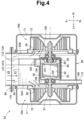
Fig. 4 is a cross-sectional view taken along a line 4-4 ofFig. 3 . -
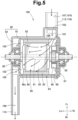
Fig. 5 is an enlarged view of the second fan driving motor and the air-cooling device illustrated inFig. 4 . -
Fig. 6 is an exploded view of the air-cooling device illustrated inFig. 3 . -
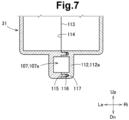
Fig. 7 is a cross-sectional view of a housing and a first guide passage illustrated inFig. 6 . -
Fig. 8 is a cross-sectional view of a second fan and an air-cooling device in a vehicle air conditioner according to a second embodiment (and corresponds to cross-sectional positions ofFig. 4 ). - Embodiments of the present invention will be described hereinafter with reference to the accompanying drawings. It is noted that forms illustrated in the accompanying drawings are given by way of example and that the present invention is not limited to the forms. In the description, left and right refer to left and right with reference to a passenger getting aboard a vehicle and front and rear refer to front and rear with reference to a vehicle travelling direction. In addition, in the drawings, Fr denotes front, Rr denotes rear, Le denotes left as viewed by the passenger, Ri denotes right as viewed by the passenger, Up denotes up, and Dn denotes down.
- A
vehicle air conditioner 20 according to a first embodiment will be described with reference toFigs. 1 to 7 . As illustrated inFig. 1 , avehicle 10 such as a passenger vehicle mounts therein thevehicle air conditioner 20 that regulates (conditions) a temperature of air in acabin 11. Thisvehicle air conditioner 20 includes an air conditionermain body section 30 and a duct unit forrear seats 50. The air conditionermain body section 30 can regulate (condition) a temperature of air fed from afirst fan 32 and supply the air to thecabin 11 from a plurality of air outlets (delivery sections). The duct unit forrear seats 50 can feed part of the air temperature-regulated by the air conditionermain body section 30 towardrear seats 12. Thevehicle air conditioner 20 will be described hereinafter in detail. - As illustrated in
Fig. 2 , the air conditionermain body section 30 is disposed in a front portion of thevehicle 10 and includes ahousing 31, thefirst fan 32, anevaporator 41, aheater core 42, and atemperature regulation door 43. Anair flow passage 33 is provided in thehousing 31. - The
first fan 32 is a main fan (upstream blower) located upstream of thehousing 31 and feeds air guided from inside and/or outside of thecabin 11 to theair flow passage 33 in thehousing 31. - An
intake section 34 is provided on a suction side of thefirst fan 32. Thisintake section 34 includes aninside air inlet 35, anoutside air inlet 36, an inside/outside switchingdoor 37, and afilter 38. Theinside air inlet 35 can guide the air from inside of thecabin 11. Theoutside air inlet 36 can guide the air from outside of thecabin 11. The inside/outside switchingdoor 37 switches over opening/closing of theinside air inlet 35 and theoutside air inlet 36. Thefilter 38 purifies the air guided from theinside air inlet 35 and theoutside air inlet 36. - A delivery side of the
first fan 32 is connected by aduct 39 to an upstream portion of theair flow passage 33 in thehousing 31. It is noted thatFig. 2 illustrates a state in which thefirst fan 32 is disposed in the front portion of the vehicle with respect to thehousing 31 for helping understand the description. In actuality, thefirst fan 32 is disposed in a vehicle width direction with respect to thehousing 31. - The evaporator 41 (cooling heat exchanger 41), the heater core 42 (heating heat exchanger 42), and the
temperature regulation door 43 are incorporated in thehousing 31, i.e., provided in theair flow passage 33. Theevaporator 41 and theheater core 42 are disposed in this order in series from an upstream side to a downstream side of theair flow passage 33. That is, theheater core 42 is provided downstream of theevaporator 41. - The
temperature regulation door 43 is provided between the evaporator 41 and theheater core 42 in theair flow passage 33, and regulates a ratio of the air heading for theheater core 42 to the air bypassing thisheater core 42. Theair flow passage 33 in thehousing 31 is divided into threepassages 44 to 46. Thetemperature regulation door 43 can switch the threepassages 44 to 46 and is formed by, for example, afirst door 43a and asecond door 43b. - The three
passages 44 to 46 will be described hereinafter while being distinctively denoted by "first passage 44," "second passage 45," and "third passage 46," respectively. Thefirst passage 44 is a passage (passage toward the heater core 42) for theheater core 42 to heat the air passed through and cooled by theevaporator 41. Thesecond passage 45 is a passage bypassing thefirst passage 44 and heading for a upper side of thehousing 31. Thethird passage 46 is a passage bypassing thefirst passage 44 and heading for a lower side of thehousing 31. Adefroster delivery section 47 can feed the air from thefirst passage 44 and/or thesecond passage 45 toward a windshield. A sidevent delivery section 48 and a centervent delivery section 49 can feed the air from thefirst passage 44 and/or thesecond passage 45 toward an upper half of a body of each of passengers seated in front seats 13. - Furthermore, the
housing 31 includes a front foot delivery port (not illustrated) that can feed the air toward legs of the passengers seated in the front seats 13 (refer toFig. 1 ). - The duct unit for
rear seats 50 is connected to a downstream side of theheater core 42 in the housing 31 (out of the housing 31), and guides the conditioned air temperature-regulated by the air conditionermain body section 30 to therear seats 12 in thecabin 11. This duct unit forrear seats 50 includes two ducts for rear seats 51 (only one of which is illustrated), asecond fan 52 that suctions and delivers the conditioned air from thehousing 31, and a secondfan driving motor 80 that directly drives acentrifugal fan 72 accommodated in eachfan case 71 of thissecond fan 52 by a rotary shaft 81 (motor shaft 81). Thesecond fan 52 suctions, for example, the conditioned air from thehousing 31 and delivers the conditioned air to the ducts forrear seats 51. - As illustrated in
Figs. 1 and2 , the two ducts forrear seats 51 are located at a vehicle widthwise center of thevehicle 10 and extend from adelivery port 52a of thesecond fan 52 to therear seats 12. - As illustrated in
Figs. 3 and4 , thesecond fan 52 is an auxiliary fan (downstream blower) located downstream of thehousing 31. Thissecond fan 52 is formed from a suction case 60 (central case 60) located at a vehicle widthwise center of thesecond fan 52 and twofan sections suction case 60 in the vehicle widthwise direction. - The
suction case 60 is a generally cylindrical member that extends in the vehicle width direction and has asuction port 61 at a center of thesuction case 60 andpartition walls suction case 60. Thesuction port 61 is connected to a rearseat delivery port 63 of thehousing 31 byflanges partition walls fan inlet port 66 generally at a center. One of the twopartition walls first partition wall 62A" and the other will be referred to as "second partition wall 62B," hereinafter. - The two
fan sections fan sections suction case 60. One of the twofan sections first fan section 70A" and the other will be referred to as "second fan section 70B," hereinafter. - The
first fan section 70A has the fan case 71 (scroll case 71) having one closed end and thecentrifugal fan 72 rotatably accommodated in thisfan case 71. Thefan case 71 is attached to thesuction case 60 in a state of covering an open end on thefirst partition wall 62A. As obvious from the description above, the centrifugal fan (72) is accommodated in the fan case (71) of the second fan (52). Thesecond fan section 70B is similar in configurations to thefirst fan section 70A and will not be described with same reference signs adding to the same elements. Thefan case 71 of thesecond fan section 70B is attached to thesuction case 60 in a state of covering an open end on thesecond partition wall 62B. - The conditioned air temperature-regulated by the air conditioner main body section 30 (refer to
Fig. 2 ) enters thesuction case 60 via thesuction port 61 from the rearseat delivery port 63 and is suctioned to thefirst fan section 70A and thesecond fan section 70B from thissuction case 60. - The two
fan sections fan driving motor 80. This secondfan driving motor 80 is configured as a so-called double-shaft motor that has one rotary shaft 81 (motor shaft 81) protruding from two ends of themotor case 84 in the vehicle width direction, and accommodated in and supported by thesuction case 60. Thecentrifugal fans 72 of the twofan sections rotary shaft 81. - More specifically, as illustrated in
Fig. 5 , the secondfan driving motor 80 is configured as a so-called inner rotor type brush motor that includes, as principal elements, therotary shaft 81, arotor 82 provided on thisrotary shaft 81, astator 83 located to surround an outer periphery of thisrotor 82, and themotor case 84 that accommodates therotor 82 and thestator 83. - The
rotary shaft 81 is rotatably supported by themotor case 84 viabearings 85. Themotor case 84 is a cylindrical member that extends along therotary shaft 81. Specifically, thismotor case 84 is formed by a cylindrical (cup-shaped) casemain body 86 that has abottom plate 86a on one end and acap 87 that blocks an open end of this casemain body 86. A base 89 including a circuit that controls rotation of the secondfan driving motor 80 and abrush 88 is accommodated in thismotor case 84. Thisbase 89 is located on one side of therotary shaft 81 in the axial direction, e.g., closer to thecap 87 in themotor case 84. - At least an outer peripheral surface of the
motor case 84 is entirely covered with acover 90. Thiscover 90 is a cup-shaped member that includes a cylindrical covermain body 91 and abottom plate 92 provided on one end of this covermain body 91. It is preferable that no gap is present between the cylindrical outer peripheral surface of themotor case 84 and a cylindrical inner peripheral surface of the covermain body 91. This is because it is possible to reduce the air released from the gap as much as possible. - As illustrated in
Fig. 2 , thevehicle air conditioner 20 includes an air-coolingdevice 100 that air-cools the secondfan driving motor 80. This air-coolingdevice 100 cools the secondfan driving motor 80 using part of the air flowing in theair flow passage 33 in thehousing 31 and that is not temperature-regulated yet. The air-coolingdevice 100 will be described in detail hereinafter. - As illustrated in
Fig. 5 , themotor case 84 has at least oneair inlet hole 101 and at least oneair outlet hole 102 penetrating through inside and outside of themotor case 84. Theair inlet hole 101 is provided on one side of therotary shaft 81 in the axial direction, e.g., closer to thecap 87 in a cylindrical portion of the motor case 84 (cylindrical portion of the case main body 86). Theair outlet hole 102 is provided on the other side of therotary shaft 81 in the axial direction, e.g., in thebottom plate 86a in themotor case 84. Preferably, as illustrated inFig. 3 , a plurality of air inlet holes 101 and a plurality of air outlet holes 102 are arranged at equal pitches radially about therotary shaft 81. - As illustrated in
Figs. 3 and5 , abulge section 103 that bulges radially outward from the covermain body 91 of thecover 90 in such a manner as to surround the plurality of air inlet holes 101 of themotor case 84 is provided on the covermain body 91. Afirst space section 104 is formed in thisbulge section 103. Thisfirst space section 104 communicates with an interior of themotor case 84 via the plurality of air inlet holes 101 and can function as a distribution header for distributing the air to the plurality of air inlet holes 101. Thisfirst space section 104 will be paraphrased as "first opening 104," hereinafter as appropriate. - As illustrated in
Fig. 5 , asecond space section 105 at a fixed distance is present between thebottom plate 86a of themotor case 84 and thebottom plate 92 of thecover 90. Thissecond space section 105 communicates with the interior of themotor case 84 via the plurality of air outlet holes 102 and can function as a gathering header for gathering the air flowing out from the plurality of air outlet holes 102. Thissecond space section 105 will be paraphrased as "second opening 105, " hereinafter as appropriate. - In this way, the
cover 90 has thefirst opening 104 and thesecond opening 105. - As illustrated in
Fig. 2 , the air-coolingdevice 100 further includes anair guide port 106, aguide passage 107, and adischarge passage 108. - The
air guide port 106 is open to thehousing 31 in such a manner as to guide the air for cooling the motor from downstream of thefirst fan 32 and upstream of thetemperature regulation door 43 in theair flow passage 33. Preferably, thisair guide port 106 is located downstream of theevaporator 41. More preferably, thisair guide port 106 is provided in abottom plate 111 of thehousing 31. By way of example, theair guide port 106 is formed by a recess portion formed in thisbottom plate 111 by causing thebottom plate 111 to bulge downward. - As illustrated in
Fig. 3 , theguide passage 107 guides the air for cooling the motor guided from theair guide port 106 to the secondfan driving motor 80. Thefirst opening 104 provided in thecover 90 can communicate theguide passage 107 with the air inlet holes 101. The secondfan driving motor 80 is located in rear of thehousing 31 and below thebottom plate 111 of thishousing 31. Owing to this, theguide passage 107 extends linearly while inclining rearward and downward from theair guide port 106 to thefirst opening 104. - As illustrated in
Figs. 3 and6 , at least aportion 107a (first guide passage 107a) of thisguide passage 107 is formed integrally with thehousing 31. This can make simpler configurations of theguide passage 107. Arest 107b (second guide passage 107b) of theguide passage 107 is formed integrally with thecover 90. - This
guide passage 107 is an internal passage formed by aguide pipe 112. Theguide pipe 112 is formed from afirst guide pipe 112a that forms thefirst guide passage 107a and asecond guide pipe 112b that forms thesecond guide passage 107b. - More specifically, the
first guide passage 107a and thefirst guide pipe 112a extend along thebottom plate 111 of thehousing 31 to the flange 64 (first flange 64) of the rearseat delivery port 63 of thehousing 31. In addition, a tip end portion of thefirst guide pipe 112a serves as a through-hole 64a of thefirst flange 64. - As illustrated in
Fig. 7 , thehousing 31 is formed from a structure of split parts obtained by splitting thehousing 31 into two parts at least in the vehicle width direction. Thefirst guide pipe 112a is located onsplit surfaces housing 31 and thus split into two parts in the vehicle width direction. Onesplit surface 113 has a protrudingportion 115 protruding toward theother split surface 114. Theother split surface 114 has arecess groove 116 into which the protrudingportion 115 can be fitted. The protrudingportion 115 is fitted into therecess groove 116. Aseal member 117 is accommodated in a compressed state between a tip end of the protrudingportion 115 and a bottom of therecess groove 116. As a result, the split parts of thehousing 31 and thefirst guide passage 107a are sealed. - As illustrated in
Fig. 3 , thesecond guide passage 107b extends from thefirst opening 104 of thecover 90 to the flange 65 (second flange 65) of thesuction port 61 of thesuction case 60. That is, thesecond guide pipe 112b extends from thebulge section 103 of thecover 90 to thesecond flange 65. A tip end portion of thesecond guide pipe 112b is inserted into a through-hole 65a of thesecond flange 65. - With such configurations, simply surface joining the
first flange 64 with thesecond flange 65 enables easy connection between theguide pipes - Surface joint surfaces of the
first flange 64 and thesecond flange 65 are sealed by a sheet packing 118. Owing to this, mating surfaces of thefirst guide passage 107a and thesecond guide passage 107b are also sealed by the packing 118. - As illustrated in
Fig. 5 , thedischarge passage 108 discharges the air for cooling the motor after passing through the secondfan driving motor 80 to thecabin 11. Thisdischarge passage 108 is an internal passage formed by adischarge pipe 119 and is provided, for example, integrally with thecover 90. Thesecond opening 105 provided in thecover 90 can communicate the air outlet holes 102 with thedischarge passage 108. - Operations of the air-cooling
device 100 will next be described with reference toFigs. 2 and4 . Part of the air flowing downstream of thefirst fan 32 and upstream of thetemperature regulation door 43 in theair flow passage 33 enters thefirst opening 104 from theair guide port 106 via theguide passage 107. The air entering thefirst opening 104 enters the air inlet holes 101 of themotor case 84, initially cools surroundings of thebase 89 and then cools therotor 82, thestator 83, and thebrush 88. After cooling, the air exits from the air outlet holes 102 of themotor case 84 and enters thesecond opening 105. The air entering thesecond opening 105 is discharged from thedischarge passage 108 to thecabin 11. - The description of the
vehicle air conditioner 20 according to the first embodiment is summarized as follows. - As illustrated in
Fig. 2 , the air for cooling the motor (motor cooling air) guided from downstream of thefirst fan 32 and upstream of thetemperature regulation door 43 cools the secondfan driving motor 80, and the air after cooling this secondfan driving motor 80 is discharged to atmospheric air. Owing to this, the secondfan driving motor 80 is not affected by heat of the warm air heated by theheater core 42. In thevehicle air conditioner 20 that includes: the air conditionermain body section 30 including thefirst fan 32; the duct forrear seats 51; and thesecond fan 52 that is coupled to the duct forrear seats 51 for securing an air volume of the conditioned air circulating in this duct forrear seats 51, the secondfan driving motor 80 can be efficiently cooled by the motor cooling air. Furthermore, the motor cooling air is directly discharged to thecabin 11 and is not mixed with the conditioned air circulating in the duct forrear seats 51; thus, an entire system of thevehicle air conditioner 20 is not affected. Moreover, as can be understood fromFigs. 2 and4 , thedischarge passage 108 discharges the motor cooling air to thecabin 11 in a space near the front seats; thus, a temperature of the space near the rear seats is not, in particular, affected. - Furthermore, the
air guide port 106 is located downstream of theevaporator 41. Owing to this, the inside air cooled by theevaporator 41 and the outside air (motor cooling air) can efficiently cool the secondfan driving motor 80. - Moreover, the second
fan driving motor 80 is covered with thecover 90. Owing to this, the secondfan driving motor 80 is not directly exposed to the warm air heated by theheater core 42. It is possible to further prevent the secondfan driving motor 80 from being affected by the heat of the warm air heated by theheater core 42. - Additionally, as illustrated in
Fig. 5 , the motor cooling air passes through theguide passage 107 and thefirst opening 104 of thecover 90, flows into themotor case 84 from the air inlet holes 101, and cools an interior of the secondfan driving motor 80. The motor cooling air after cooling the interior of the secondfan driving motor 80 passes through thesecond opening 105 of thecover 90 and the discharge passage from the air outlet holes 102 of themotor case 84, and is discharged to the atmospheric air. Owing to this, the interior of the secondfan driving motor 80 can be entirely, finely, efficiently cooled by the motor cooling air. It is thereby possible to sufficiently improve a durability of the secondfan driving motor 80. - A reason for providing the
air guide port 106 in thebottom plate 111 in thehousing 31 will now be described. - As illustrated in
Fig. 1 , the air conditionermain body section 30 is disposed in the front portion of thevehicle 10, e.g., in aninstrument panel 14. It is preferable to secure a foot space for passenger to be seated in thefront seats 13 in thecabin 11 below thisinstrument panel 14. Owing to this, a bottom surface of the air conditionermain body section 30, particularly thebottom plate 111 of thehousing 31 is set higher than afloor surface 15 of thecabin 11. On the other hand, the duct forrear seats 51 extends in a vehicle longitudinal direction between a driver's seat and a front passenger seat. To secure the foot space of each passenger, alower surface 51a of the duct forrear seats 51 is set at a height at which thelower surface 51a generally comes in contact with thefloor surface 15 of thecabin 11. Owing to this, thesecond fan 52 is located rearward and downward of thehousing 31. The secondfan driving motor 80 is located below thebottom plate 111 of thehousing 31. - While the air conditioner
main body section 30 and the duct unit forrear seats 50 are disposed in this way, theair guide port 106, which guides the air cooling the motor, illustrated inFig. 2 can be provided in a part other than thebottom plate 111 of thehousing 31. - However, as illustrated in
Figs. 1 and2 , the air conditionermain body section 30 including thehousing 31 is required to be disposed in a limited space in the front portion of thevehicle 10. In addition, this air conditionermain body section 30 needs to have sufficient functions to regulate (condition) the air fed from thefirst fan 32 and to supply the air from the plurality of air outlets (delivery sections) into thecabin 11. There is no avoiding, therefore, limiting a degree of freedom of designing the air conditionermain body section 30. Under such severe conditions, it is inadequate, from the viewpoint of space saving and cost effectiveness, to provide theair guide port 106 on a side or upper surface of thehousing 31 and to pass theguide passage 107 from theair guide port 106 to the secondfan driving motor 80 in a narrow space even in a current situation. This is because thisguide passage 107 is forced to have complicated configurations to pass through theguide passage 107 without interference with other members. - To solve the problems, the inventor of the present invention has discovered that the only ample space below the
bottom plate 111 of thehousing 31 may be made effective use of, as illustrated inFig. 2 . To this end, the inventor of the present invention has decided to provide theair guide port 106 in thebottom plate 111 of thehousing 31. It is, therefore, possible to pass through theshort guide passage 107 below thebottom plate 111, and providing theguide passage 107 in this way is, thus, quite useful from the viewpoint of space saving and cost effectiveness. This is why theair guide port 106 is provided in thebottom plate 111 of thehousing 31. - A
vehicle air conditioner 220 according to a second embodiment will next be described with reference toFig. 8 . -
Fig. 8 illustrates cross-sectional configurations of a duct unit forrear seats 250 in thevehicle air conditioner 220 according to the second embodiment, and corresponds to cross-sectional positions inFig. 4 . - The
vehicle air conditioner 220 according to the second embodiment is characterized in that the duct unit forrear seats 50 according to the first embodiment illustrated inFigs. 1 to 7 is changed to the duct unit forrear seats 250 illustrated inFig. 8 . The other basic configurations of thevehicle air conditioner 220 are the same as those of thevehicle air conditioner 20 according to the first embodiment. The same elements as those of thevehicle air conditioner 20 according to the first embodiment are denoted by the same reference signs and not described in detail. - A
second fan 252 in the duct unit forrear seats 250 according to the second embodiment includes only one of thefirst fan section 70A and thesecond fan section 70B illustrated inFig. 4 , e.g., only thesecond fan section 70B. That is, thissecond fan 252 is formed from asuction case 260 and the onefan section 70B provided on one end in the vehicle width direction with respect to thissuction case 60. For this reason, only one duct forrear seats 51 is provided. - The
suction case 260 is a member used as an alternative to thesuction case 60 according to the first embodiment (refer toFig. 4 ), and includes thesuction port 61 and thepartition wall 62B (second partition wall 62B) only on one end of thesuction case 260 in the vehicle width direction. - The second
fan driving motor 80 drives only onefan section 70B. According to the second embodiment, the secondfan driving motor 80 is unnecessary to accommodate in thesuction case 260. That is, the secondfan driving motor 80 is disposed outside of thesuction case 260 and supported by, for example, thefan case 71. Owing to this, the secondfan driving motor 80 is not exposed to the warm air heated by the heater core 42 (refer toFig. 2 ) and, therefore, is not directly affected by the heat of this warm air. This is useful for improving the durability of the secondfan driving motor 80. - The
vehicle air conditioner 220 according to the second embodiment can exhibit similar effects to those of thevehicle air conditioner 20 according to the first embodiment. - It is noted that the present invention is not limited to the embodiments as long as the operations and effects of the present invention can be exhibited.
- The
first fan 32, for example, is not limited to the configurations to be located upstream of theevaporator 41 and may be configured to be located downstream of theevaporator 41. - Furthermore, the
second fan housing 31. That is, thesecond fan housing 31 and to deliver the conditioned air to the duct forrear seats 51, and includes, for example, configurations to be connected to a downstream side of the duct forrear seats 51. - Moreover, the second
fan driving motor 80 is not limited to the configurations of the inner rotor type brush motor and may be configured as, for example, an outer rotor type motor or a brushless motor. - Furthermore, the air inlet holes 101 and the air outlet holes 102 may be provided in the
motor case 84 and are not limited to specific positions in themotor case 84. - Moreover, the
first opening 104 may be able to communicate theguide passage 107 with the air inlet holes 101. Thesecond opening 105 may be able communicate the air outlet holes 102 with thedischarge passage 108. - Furthermore, the vehicle in which this
vehicle air conditioner Fig. 1 , and thisvehicle air conditioner rear seats 50 is provided to supply the conditioned air to a space of the second-row seats. - The
vehicle air conditioner vehicle 10 such as a passenger vehicle. -
- 10: Vehicle
- 11: Cabin
- 12: Rear seats
- 20: Vehicle air conditioner
- 30: Air conditioner main body section
- 31: Housing
- 32: First fan
- 33: Air flow passage
- 41: Evaporator
- 42: Heater core
- 43: Temperature regulation door
- 50: Duct unit for rear seats
- 51: Duct for rear seats
- 52: Second fan
- 80: Second fan driving motor
- 81: Rotary shaft (motor shaft)
- 84: Motor case
- 90: Cover
- 101: Air inlet hole
- 102: Air outlet hole
- 104: First opening (first space section)
- 105: Second opening (second space section)
- 106: Air guide port
- 107: Guide passage
- 108: Discharge passage
- 220: Vehicle air conditioner
- 250: Duct unit for rear seats
- 252: Second fan
Claims (5)
- A vehicle air conditioner (20) comprising:an air conditioner main body section (30) including a housing (31) that has an air flow passage (33) provided inside; a first fan (32) that feeds air guided from inside of a cabin (11) and/or outside of the cabin (11) to the air flow passage (33); an evaporator (41) that is provided in the air flow passage (33); a heater core (42) that is provided downstream of the evaporator (41); and a temperature regulation door (43) that is provided between the evaporator (41) and the heater core (42) and that regulates a ratio of air heading for the heater core (42) to air bypassing the heater core (42); anda duct unit for rear seats (50) that is connected to a downstream side of the heater core (42) in the housing (31) and that guides conditioned air temperature-regulated by the air conditioner main body section (30) to rear seats of the cabin (11), the duct unit for rear seats (50) including a second fan (52) that suctions and delivers the conditioned air and a duct for rear seats (51),the duct unit for rear seats (50) having a second fan driving motor (80) that directly drives a centrifugal fan (72) accommodated in a fan case (71) of the second fan (52) by a rotary shaft (81), wherein the vehicle air conditioner (20) comprises:an air guide port (106) that opens to the housing (31) to guide air for cooling a motor from downstream of the first fan (32) and upstream of the temperature regulation door (43) in the air flow passage (33);a guide passage (107) that guides the air for cooling the motor guided from the air guide port (106) to the second fan driving motor (80); and characterised by,a discharge passage (108) that discharges the air for cooling the motor after passing through the second fan driving motor (80) to the cabin (11).
- The vehicle air conditioner according to claim 1, wherein
the air guide port (106) is located downstream of the evaporator (41). - The vehicle air conditioner according to claim 1 or 2, wherein
the air guide port (106) is provided in a bottom plate (111) in the housing (31). - The vehicle air conditioner according to any one of claims 1 to 3, wherein
at least a portion (107a) of the guide passage (107) is formed integrally with the housing (31). - The vehicle air conditioner according to any one of claims 1 to 4, whereinthe second fan driving motor (80) includes a cylindrical motor case (84) that extends along the rotary shaft (81),the motor case (84) includes an air inlet hole (101) that is provided on one side of the rotary shaft (81) in an axial direction, and an air outlet hole (102) that is provided on other side of the rotary shaft (81) in the axial direction,the duct unit for rear seats (50) includes a cover (90) that entirely covers at least an outer peripheral surface of the motor case (84), andthe cover (90) includes a first opening (104) that can communicate the guide passage (107) with the air inlet hole (101), and a second opening (105) that can communicate the air outlet hole (102) with the discharge passage (108).
Applications Claiming Priority (2)
| Application Number | Priority Date | Filing Date | Title |
|---|---|---|---|
| JP2020000002 | 2020-01-01 | ||
| PCT/JP2020/048360 WO2021137296A1 (en) | 2020-01-01 | 2020-12-24 | Vehicular air-conditioning device |
Publications (3)
| Publication Number | Publication Date |
|---|---|
| EP4086093A1 EP4086093A1 (en) | 2022-11-09 |
| EP4086093A4 EP4086093A4 (en) | 2024-01-17 |
| EP4086093B1 true EP4086093B1 (en) | 2025-04-23 |
Family
ID=76685912
Family Applications (1)
| Application Number | Title | Priority Date | Filing Date |
|---|---|---|---|
| EP20909942.3A Active EP4086093B1 (en) | 2020-01-01 | 2020-12-24 | Vehicular air-conditioning device |
Country Status (4)
| Country | Link |
|---|---|
| EP (1) | EP4086093B1 (en) |
| JP (1) | JP7445679B2 (en) |
| CN (1) | CN114929493B (en) |
| WO (1) | WO2021137296A1 (en) |
Families Citing this family (1)
| Publication number | Priority date | Publication date | Assignee | Title |
|---|---|---|---|---|
| KR20250145979A (en) * | 2024-03-29 | 2025-10-13 | 한온시스템 주식회사 | Blower unit for vehicle |
Family Cites Families (10)
| Publication number | Priority date | Publication date | Assignee | Title |
|---|---|---|---|---|
| US20040093885A1 (en) * | 2002-11-11 | 2004-05-20 | Koji Ito | Vehicle air conditioner with main blower and sub-blower |
| JP4042537B2 (en) | 2002-11-11 | 2008-02-06 | 株式会社デンソー | Air conditioner for vehicles |
| JP2006177289A (en) | 2004-12-24 | 2006-07-06 | Denso Corp | Blower unit |
| JP4837984B2 (en) * | 2005-12-06 | 2011-12-14 | カルソニックカンセイ株式会社 | Air conditioner for automobile |
| JP4821543B2 (en) | 2006-09-28 | 2011-11-24 | マツダ株式会社 | Air conditioner for vehicles |
| DE102011004868A1 (en) * | 2010-02-26 | 2011-09-01 | Behr Gmbh & Co. Kg | Air conditioning apparatus for warming up and cooling inner space of motor car, has channel opened with cool air intake into air duct in air flow direction according to fan running wheel and air filter |
| JP5859427B2 (en) * | 2010-03-15 | 2016-02-10 | 株式会社ヴァレオジャパン | Air conditioning unit for vehicles |
| JP6384599B2 (en) * | 2015-04-24 | 2018-09-05 | 株式会社デンソー | Air conditioner for vehicles |
| JP2018001820A (en) | 2016-06-28 | 2018-01-11 | 株式会社デンソー | Blower unit |
| JP2021123275A (en) * | 2020-02-07 | 2021-08-30 | 株式会社ヴァレオジャパン | Vehicle air conditioner |
-
2020
- 2020-12-24 WO PCT/JP2020/048360 patent/WO2021137296A1/en not_active Ceased
- 2020-12-24 JP JP2021568471A patent/JP7445679B2/en active Active
- 2020-12-24 CN CN202080090986.XA patent/CN114929493B/en active Active
- 2020-12-24 EP EP20909942.3A patent/EP4086093B1/en active Active
Also Published As
| Publication number | Publication date |
|---|---|
| WO2021137296A1 (en) | 2021-07-08 |
| JP7445679B2 (en) | 2024-03-07 |
| EP4086093A1 (en) | 2022-11-09 |
| JPWO2021137296A1 (en) | 2021-07-08 |
| EP4086093A4 (en) | 2024-01-17 |
| CN114929493B (en) | 2024-09-27 |
| CN114929493A (en) | 2022-08-19 |
Similar Documents
| Publication | Publication Date | Title |
|---|---|---|
| JP4036922B2 (en) | Automotive heating or air conditioning equipment | |
| EP0756955B1 (en) | Air-handling system for automotive vehicles | |
| US7156166B2 (en) | Heating and air-conditioning system for a motor vehicle | |
| CN104755292A (en) | Air circulation promotion device for vehicle | |
| CN105555563B (en) | Heating, ventilation and/or air conditioning device for motor vehicle passenger compartment | |
| JP2006036032A (en) | Air-conditioner for automobile | |
| KR101146430B1 (en) | Rear air conditioner for vehicle | |
| CN103052518B (en) | Air conditioning system for vehicle | |
| EP4086093B1 (en) | Vehicular air-conditioning device | |
| JP2005225448A (en) | Air conditioner for automobile | |
| KR101156302B1 (en) | Dual zone type air conditioning apparatus for a car | |
| CN115380155A (en) | Heating, ventilating and/or air conditioning device for a motor vehicle | |
| JP4821543B2 (en) | Air conditioner for vehicles | |
| GB2401677A (en) | Vehicle air conditioning apparatus | |
| JP2008081024A (en) | Air conditioner for vehicles | |
| JP2975590B2 (en) | Ventilation system for vehicle cabin | |
| JP2004161061A (en) | Air conditioner for vehicles | |
| EP4420903A1 (en) | Vehicular air-conditioning device | |
| WO2023171503A1 (en) | Vehicular air-conditioning device | |
| JP3680442B2 (en) | Air conditioning system for rear seats of vehicles | |
| JP2021123275A (en) | Vehicle air conditioner | |
| JP2005225445A (en) | Air conditioner for automobile | |
| CN115427239A (en) | Heating, ventilating and/or air conditioning device for motor vehicles | |
| JP3680443B2 (en) | Air conditioning system for rear seats of vehicles | |
| CN114161895B (en) | Air conditioner for automobile |
Legal Events
| Date | Code | Title | Description |
|---|---|---|---|
| STAA | Information on the status of an ep patent application or granted ep patent |
Free format text: STATUS: THE INTERNATIONAL PUBLICATION HAS BEEN MADE |
|
| PUAI | Public reference made under article 153(3) epc to a published international application that has entered the european phase |
Free format text: ORIGINAL CODE: 0009012 |
|
| STAA | Information on the status of an ep patent application or granted ep patent |
Free format text: STATUS: REQUEST FOR EXAMINATION WAS MADE |
|
| 17P | Request for examination filed |
Effective date: 20220726 |
|
| AK | Designated contracting states |
Kind code of ref document: A1 Designated state(s): AL AT BE BG CH CY CZ DE DK EE ES FI FR GB GR HR HU IE IS IT LI LT LU LV MC MK MT NL NO PL PT RO RS SE SI SK SM TR |
|
| DAV | Request for validation of the european patent (deleted) | ||
| DAX | Request for extension of the european patent (deleted) | ||
| P01 | Opt-out of the competence of the unified patent court (upc) registered |
Effective date: 20230629 |
|
| A4 | Supplementary search report drawn up and despatched |
Effective date: 20231215 |
|
| RIC1 | Information provided on ipc code assigned before grant |
Ipc: F04D 29/58 20060101ALI20231211BHEP Ipc: F04D 25/08 20060101ALI20231211BHEP Ipc: B60H 1/00 20060101AFI20231211BHEP |
|
| GRAP | Despatch of communication of intention to grant a patent |
Free format text: ORIGINAL CODE: EPIDOSNIGR1 |
|
| STAA | Information on the status of an ep patent application or granted ep patent |
Free format text: STATUS: GRANT OF PATENT IS INTENDED |
|
| INTG | Intention to grant announced |
Effective date: 20241118 |
|
| GRAS | Grant fee paid |
Free format text: ORIGINAL CODE: EPIDOSNIGR3 |
|
| GRAA | (expected) grant |
Free format text: ORIGINAL CODE: 0009210 |
|
| STAA | Information on the status of an ep patent application or granted ep patent |
Free format text: STATUS: THE PATENT HAS BEEN GRANTED |
|
| AK | Designated contracting states |
Kind code of ref document: B1 Designated state(s): AL AT BE BG CH CY CZ DE DK EE ES FI FR GB GR HR HU IE IS IT LI LT LU LV MC MK MT NL NO PL PT RO RS SE SI SK SM TR |
|
| REG | Reference to a national code |
Ref country code: GB Ref legal event code: FG4D |
|
| REG | Reference to a national code |
Ref country code: CH Ref legal event code: EP |
|
| REG | Reference to a national code |
Ref country code: DE Ref legal event code: R096 Ref document number: 602020050181 Country of ref document: DE |
|
| REG | Reference to a national code |
Ref country code: IE Ref legal event code: FG4D |
|
| REG | Reference to a national code |
Ref country code: NL Ref legal event code: MP Effective date: 20250423 |
|
| PG25 | Lapsed in a contracting state [announced via postgrant information from national office to epo] |
Ref country code: NL Free format text: LAPSE BECAUSE OF FAILURE TO SUBMIT A TRANSLATION OF THE DESCRIPTION OR TO PAY THE FEE WITHIN THE PRESCRIBED TIME-LIMIT Effective date: 20250423 |
|
| REG | Reference to a national code |
Ref country code: AT Ref legal event code: MK05 Ref document number: 1787463 Country of ref document: AT Kind code of ref document: T Effective date: 20250423 |
|
| PG25 | Lapsed in a contracting state [announced via postgrant information from national office to epo] |
Ref country code: FI Free format text: LAPSE BECAUSE OF FAILURE TO SUBMIT A TRANSLATION OF THE DESCRIPTION OR TO PAY THE FEE WITHIN THE PRESCRIBED TIME-LIMIT Effective date: 20250423 Ref country code: ES Free format text: LAPSE BECAUSE OF FAILURE TO SUBMIT A TRANSLATION OF THE DESCRIPTION OR TO PAY THE FEE WITHIN THE PRESCRIBED TIME-LIMIT Effective date: 20250423 Ref country code: PT Free format text: LAPSE BECAUSE OF FAILURE TO SUBMIT A TRANSLATION OF THE DESCRIPTION OR TO PAY THE FEE WITHIN THE PRESCRIBED TIME-LIMIT Effective date: 20250825 |
|
| REG | Reference to a national code |
Ref country code: LT Ref legal event code: MG9D |
|
| PG25 | Lapsed in a contracting state [announced via postgrant information from national office to epo] |
Ref country code: GR Free format text: LAPSE BECAUSE OF FAILURE TO SUBMIT A TRANSLATION OF THE DESCRIPTION OR TO PAY THE FEE WITHIN THE PRESCRIBED TIME-LIMIT Effective date: 20250724 Ref country code: NO Free format text: LAPSE BECAUSE OF FAILURE TO SUBMIT A TRANSLATION OF THE DESCRIPTION OR TO PAY THE FEE WITHIN THE PRESCRIBED TIME-LIMIT Effective date: 20250723 |
|
| PG25 | Lapsed in a contracting state [announced via postgrant information from national office to epo] |
Ref country code: PL Free format text: LAPSE BECAUSE OF FAILURE TO SUBMIT A TRANSLATION OF THE DESCRIPTION OR TO PAY THE FEE WITHIN THE PRESCRIBED TIME-LIMIT Effective date: 20250423 |
|
| PG25 | Lapsed in a contracting state [announced via postgrant information from national office to epo] |
Ref country code: BG Free format text: LAPSE BECAUSE OF FAILURE TO SUBMIT A TRANSLATION OF THE DESCRIPTION OR TO PAY THE FEE WITHIN THE PRESCRIBED TIME-LIMIT Effective date: 20250423 |
|
| PG25 | Lapsed in a contracting state [announced via postgrant information from national office to epo] |
Ref country code: HR Free format text: LAPSE BECAUSE OF FAILURE TO SUBMIT A TRANSLATION OF THE DESCRIPTION OR TO PAY THE FEE WITHIN THE PRESCRIBED TIME-LIMIT Effective date: 20250423 |
|
| PG25 | Lapsed in a contracting state [announced via postgrant information from national office to epo] |
Ref country code: AT Free format text: LAPSE BECAUSE OF FAILURE TO SUBMIT A TRANSLATION OF THE DESCRIPTION OR TO PAY THE FEE WITHIN THE PRESCRIBED TIME-LIMIT Effective date: 20250423 |
|
| PG25 | Lapsed in a contracting state [announced via postgrant information from national office to epo] |
Ref country code: RS Free format text: LAPSE BECAUSE OF FAILURE TO SUBMIT A TRANSLATION OF THE DESCRIPTION OR TO PAY THE FEE WITHIN THE PRESCRIBED TIME-LIMIT Effective date: 20250723 |
|
| PG25 | Lapsed in a contracting state [announced via postgrant information from national office to epo] |
Ref country code: IS Free format text: LAPSE BECAUSE OF FAILURE TO SUBMIT A TRANSLATION OF THE DESCRIPTION OR TO PAY THE FEE WITHIN THE PRESCRIBED TIME-LIMIT Effective date: 20250823 |
|
| PG25 | Lapsed in a contracting state [announced via postgrant information from national office to epo] |
Ref country code: LV Free format text: LAPSE BECAUSE OF FAILURE TO SUBMIT A TRANSLATION OF THE DESCRIPTION OR TO PAY THE FEE WITHIN THE PRESCRIBED TIME-LIMIT Effective date: 20250423 |
|
| PG25 | Lapsed in a contracting state [announced via postgrant information from national office to epo] |
Ref country code: DK Free format text: LAPSE BECAUSE OF FAILURE TO SUBMIT A TRANSLATION OF THE DESCRIPTION OR TO PAY THE FEE WITHIN THE PRESCRIBED TIME-LIMIT Effective date: 20250423 Ref country code: SM Free format text: LAPSE BECAUSE OF FAILURE TO SUBMIT A TRANSLATION OF THE DESCRIPTION OR TO PAY THE FEE WITHIN THE PRESCRIBED TIME-LIMIT Effective date: 20250423 |
|
| PGFP | Annual fee paid to national office [announced via postgrant information from national office to epo] |
Ref country code: FR Payment date: 20251230 Year of fee payment: 6 |
|
| PG25 | Lapsed in a contracting state [announced via postgrant information from national office to epo] |
Ref country code: CZ Free format text: LAPSE BECAUSE OF FAILURE TO SUBMIT A TRANSLATION OF THE DESCRIPTION OR TO PAY THE FEE WITHIN THE PRESCRIBED TIME-LIMIT Effective date: 20250423 |
|
| PG25 | Lapsed in a contracting state [announced via postgrant information from national office to epo] |
Ref country code: EE Free format text: LAPSE BECAUSE OF FAILURE TO SUBMIT A TRANSLATION OF THE DESCRIPTION OR TO PAY THE FEE WITHIN THE PRESCRIBED TIME-LIMIT Effective date: 20250423 |
|
| REG | Reference to a national code |
Ref country code: DE Ref legal event code: R097 Ref document number: 602020050181 Country of ref document: DE |
|
| PG25 | Lapsed in a contracting state [announced via postgrant information from national office to epo] |
Ref country code: SK Free format text: LAPSE BECAUSE OF FAILURE TO SUBMIT A TRANSLATION OF THE DESCRIPTION OR TO PAY THE FEE WITHIN THE PRESCRIBED TIME-LIMIT Effective date: 20250423 |
|
| PG25 | Lapsed in a contracting state [announced via postgrant information from national office to epo] |
Ref country code: IT Free format text: LAPSE BECAUSE OF FAILURE TO SUBMIT A TRANSLATION OF THE DESCRIPTION OR TO PAY THE FEE WITHIN THE PRESCRIBED TIME-LIMIT Effective date: 20250423 |
|
| PG25 | Lapsed in a contracting state [announced via postgrant information from national office to epo] |
Ref country code: RO Free format text: LAPSE BECAUSE OF FAILURE TO SUBMIT A TRANSLATION OF THE DESCRIPTION OR TO PAY THE FEE WITHIN THE PRESCRIBED TIME-LIMIT Effective date: 20250423 |
|
| PLBE | No opposition filed within time limit |
Free format text: ORIGINAL CODE: 0009261 |
|
| STAA | Information on the status of an ep patent application or granted ep patent |
Free format text: STATUS: NO OPPOSITION FILED WITHIN TIME LIMIT |
|
| REG | Reference to a national code |
Ref country code: CH Ref legal event code: L10 Free format text: ST27 STATUS EVENT CODE: U-0-0-L10-L00 (AS PROVIDED BY THE NATIONAL OFFICE) Effective date: 20260304 |
|
| 26N | No opposition filed |
Effective date: 20260126 |
|
| PGFP | Annual fee paid to national office [announced via postgrant information from national office to epo] |
Ref country code: DE Payment date: 20251231 Year of fee payment: 6 |