EP4083814A1 - Image retrieval system, image retrieval method, and storage medium - Google Patents
Image retrieval system, image retrieval method, and storage medium Download PDFInfo
- Publication number
- EP4083814A1 EP4083814A1 EP19957798.2A EP19957798A EP4083814A1 EP 4083814 A1 EP4083814 A1 EP 4083814A1 EP 19957798 A EP19957798 A EP 19957798A EP 4083814 A1 EP4083814 A1 EP 4083814A1
- Authority
- EP
- European Patent Office
- Prior art keywords
- image
- retrieval
- region
- registered
- interest
- Prior art date
- Legal status (The legal status is an assumption and is not a legal conclusion. Google has not performed a legal analysis and makes no representation as to the accuracy of the status listed.)
- Pending
Links
Images










Classifications
-
- G—PHYSICS
- G06—COMPUTING OR CALCULATING; COUNTING
- G06F—ELECTRIC DIGITAL DATA PROCESSING
- G06F16/00—Information retrieval; Database structures therefor; File system structures therefor
- G06F16/50—Information retrieval; Database structures therefor; File system structures therefor of still image data
- G06F16/58—Retrieval characterised by using metadata, e.g. metadata not derived from the content or metadata generated manually
- G06F16/583—Retrieval characterised by using metadata, e.g. metadata not derived from the content or metadata generated manually using metadata automatically derived from the content
-
- G—PHYSICS
- G06—COMPUTING OR CALCULATING; COUNTING
- G06F—ELECTRIC DIGITAL DATA PROCESSING
- G06F16/00—Information retrieval; Database structures therefor; File system structures therefor
- G06F16/50—Information retrieval; Database structures therefor; File system structures therefor of still image data
- G06F16/53—Querying
- G06F16/532—Query formulation, e.g. graphical querying
-
- G—PHYSICS
- G06—COMPUTING OR CALCULATING; COUNTING
- G06T—IMAGE DATA PROCESSING OR GENERATION, IN GENERAL
- G06T7/00—Image analysis
- G06T7/0002—Inspection of images, e.g. flaw detection
- G06T7/0004—Industrial image inspection
- G06T7/001—Industrial image inspection using an image reference approach
-
- G—PHYSICS
- G06—COMPUTING OR CALCULATING; COUNTING
- G06V—IMAGE OR VIDEO RECOGNITION OR UNDERSTANDING
- G06V10/00—Arrangements for image or video recognition or understanding
- G06V10/20—Image preprocessing
- G06V10/22—Image preprocessing by selection of a specific region containing or referencing a pattern; Locating or processing of specific regions to guide the detection or recognition
-
- G—PHYSICS
- G06—COMPUTING OR CALCULATING; COUNTING
- G06T—IMAGE DATA PROCESSING OR GENERATION, IN GENERAL
- G06T2207/00—Indexing scheme for image analysis or image enhancement
- G06T2207/20—Special algorithmic details
- G06T2207/20021—Dividing image into blocks, subimages or windows
-
- G—PHYSICS
- G06—COMPUTING OR CALCULATING; COUNTING
- G06T—IMAGE DATA PROCESSING OR GENERATION, IN GENERAL
- G06T2207/00—Indexing scheme for image analysis or image enhancement
- G06T2207/30—Subject of image; Context of image processing
- G06T2207/30108—Industrial image inspection
-
- G—PHYSICS
- G06—COMPUTING OR CALCULATING; COUNTING
- G06T—IMAGE DATA PROCESSING OR GENERATION, IN GENERAL
- G06T2207/00—Indexing scheme for image analysis or image enhancement
- G06T2207/30—Subject of image; Context of image processing
- G06T2207/30108—Industrial image inspection
- G06T2207/30121—CRT, LCD or plasma display
Definitions
- the present invention relates to an image retrieval system, an image retrieval method, and a storage medium.
- PTL 1 discloses an image inspection device that facilitates detection of a defect by generating an image decomposed into components such as specular reflection and diffuse reflection from a plurality of images captured by changing illumination.
- the defect may occur after transportation of the inspection object or the like.
- PTL 1 describes that the device detects a defect from the inspection object but there is no disclosure of verifying that there has been no defect at the time of inspection when the defect occurs at a destination where the inspection object is transported.
- an object of the present invention is to provide an image retrieval system, an image retrieval method, and a storage medium capable of easily confirming a state at the time of inspection of an object including a region of interest such as a defect.
- An image retrieval system includes: a storage means for storing a plurality of registered images obtained by capturing a plurality of objects to be registered; an acquisition means for acquiring a retrieval image including a region of interest; an extraction means for to extracting a feature from a region other than the region of interest of the retrieval image; a retrieval means for retrieving, from the plurality of registered images stored in the storage means, a registered image having a feature that matches the feature extracted by the extraction means; and an output means for outputting some or all of the registered images retrieved by the retrieval means in a mode that a region corresponding to the region of interest in the retrieval image is recognizable.
- An image retrieval method including: acquiring a retrieval image including a region of interest; extracting a feature from a region other than the region of interest of the retrieval image; retrieving, from a plurality of registered images obtained by capturing a plurality of objects to be registered, a registered image having a feature that matches the extracted feature; and outputting some or all of the retrieved registered images in a mode that a region corresponding to the region of interest in the retrieval image is recognizable.
- a storage medium stores a program for causing a computer to function as: an acquisition means configured to acquire a retrieval image including a region of interest; an extraction means configured to extract a feature from a region other than the region of interest of the retrieval image; a retrieval means configured to retrieve, from a plurality of registered images obtained by capturing a plurality of objects to be registered and stored in a storage means, a registered image having a feature that matches the feature extracted by the extraction means; and an output means configured to output some or all of the registered images retrieved by the retrieval means in a mode that a region corresponding to the region of interest in the retrieval image is recognizable.
- the present invention it is possible to easily confirm a state at the time of inspection of an object including a region of interest such as a defect.
- Fig. 1 is a diagram illustrating an example of a relationship among a manufacturer, a distributor, a vendor, a customer, and an image retrieval system 1.
- Fig. 1 is an example illustrating that each of the manufacturer, the distributor, the vendor, and the customer uses the image retrieval system when products are distributed in the aforementioned order.
- the present example embodiment is not limited to the use mode of the image retrieval system illustrated in Fig. 1 , and for example, only the manufacturer and the customer may use the image retrieval system.
- the manufacturer may be subdivided into a component manufacturer and a finished product manufacturer. At that time, a distributor may be added between the component manufacturer and the finished product manufacturer, and components are distributed as products from the component manufacturer to the finished product manufacturer.
- Fig. 2 is a diagram illustrating an example of actions performed by a registrant and a searcher.
- the registrant is the finished product manufacturer, the component manufacturer, the distributor, the vendor, or the like.
- the registrant uploads an image of the product to the image retrieval system 1 using the registration terminal 2.
- the searcher is the finished product manufacturer, the distributor, the vendor, the customer, or the like.
- the searcher accesses the image retrieval system 1 using the retrieval terminal 3 and performs image retrieval.
- the image retrieval system 1 outputs a retrieval result image to the retrieval terminal 3.
- Fig. 3 is an example of functional blocks of the image retrieval system according to the present example embodiment.
- the image retrieval system 1 includes a registration unit 11, a storage unit 12, an acquisition unit 13, a specifying unit 14, an extraction unit 15, a retrieval unit 16, and an output unit 17.
- the registration terminal 2 is connected to the registration unit 11 of the image retrieval system 1.
- the retrieval terminal 3 is connected to the acquisition unit 13 and the output unit 17 of the image retrieval system 1.
- the registration unit 11 acquires, from the registration terminal 2, registered images 101 obtained by imaging a plurality of objects to be registered and information related to the objects to be registered. Then, the registration unit 11 extracts a feature from each image of the object to be registered. Then, the registration unit 11 registers the each image and the information related to the feature in the storage unit 12 in association with each other. Note that the registration unit 11 favorably divides the registered image 101 into partial regions, and extracts and registers the feature from each partial region.
- the object to be registered is, for example, an industrial product manufactured by the manufacturer or the like.
- the objects to be registered may be any tangible objects, and include leather products such as bags, food items such as boxed lunches, and pharmaceuticals such as tablets.
- the registered image 101 is an image obtained by capturing the object to be registered.
- the registered image 101 may be an image of the entire object to be registered or an image of a part of the object to be registered. Further, the registered images 101 may be a plurality of images obtained by capturing the same object. For example, the registered images 101 may be a plurality of images each captured for each part of the same object to be registered or for each different capture direction. Further, the registered image 101 may be a moving image. For example, the registered images 101 may be a plurality of still images or moving images obtained by capturing the same portion from a plurality of illumination directions. Note that the registered image 101 favorably has a resolution at which the feature can be extracted.
- the information related to the object to be registered is, for example, information of the registrant (affiliation, name, and the like of the registrant), registration date and time, production date, registration place, manufacturing place, quality information (inspection result and the like), classification in the distribution process (distributor, vendor, and the like), manufacturing number, lot number, information of captured position of the object to be registered, information of the related registered image 101, and the like.
- the information related to the object to be registered includes information by which each image having been obtained by capturing the same object to be registered is recognizable, and desirably includes information of the captured position (front surface, back surface, side surface, or the like) of the object to be registered.
- the information related to the object to be registered favorably includes information by which the same object to be registered having been captured is recognizable as the feature of the registered image 101 matches.
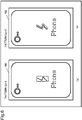
- Fig. 4 is an example of the registered images 101 registered by the registrant.
- Fig. 4(a) is an image obtained by capturing an entire front surface of a smartphone that is an object to be registered.
- Fig. 4(b) is an image obtained by capturing an entire back surface of the smartphone that is an object to be registered.
- the storage unit 12 stores the registered image 101 registered by the registration unit 11, the feature extracted from the registered image 101, and the information related to the object to be registered in association with each other.
- the acquisition unit 13 acquires a retrieval image 102 including a region of interest from the retrieval terminal 3.
- the acquisition unit 13 outputs the acquired retrieval image 102 to the specifying unit 14.
- the acquisition unit 13 may acquire information regarding the region of interest of the retrieval image 102. In the case of acquiring the information regarding the region of interest of the retrieval image 102, the acquisition unit 13 outputs the information regarding the region of interest to the specifying unit 14.
- the retrieval image 102 is an image obtained by capturing an object to be retrieved.
- the retrieval image 102 may be an image of the entire object to be retrieved or an image of a part of the object to be retrieved. Further, the number of retrieval images 102 may be plural.
- the retrieval images 102 may be images obtained by capturing the same portion in different illumination conditions, where one image is captured at an illumination angle at which the region of interest is easily recognizable, and the other image is captured at an illumination angle at which the feature is easily extractable.
- the retrieval image 102 may be a moving image.
- the retrieval images 102 may be moving images obtained by capturing the same portion from a plurality of illumination directions. Note that the retrieval image 102 favorably has a resolution at which the feature can be extracted.
- the region of interest is a region attracting attention in the retrieval image 102.
- the region of interest is a region including a flaw of the retrieval image 102 obtained by capturing a defect such as a flaw on the product surface.
- the region of interest is a region including an insect in the retrieval image 102 obtained by capturing a lunch box containing the insect.
- the information regarding the region of interest is information for designating the region of interest in the retrieval image 102.
- the information regarding the region of interest is information obtained by the searcher designating a range while viewing the retrieval image 102 using the retrieval terminal 3.
- the information regarding the region of interest is information input by the searcher tracing an outer periphery of the region of interest of the retrieval image 102 displayed on a touch panel using the retrieval terminal 3.
- Fig. 5 is an example of the retrieval images 102 used by the searcher.
- Fig. 5(a) is an image obtained by capturing an entire back surface of a smartphone that is an object to be retrieved.
- Fig. 5(b) is an image obtained by capturing a part of the back surface of the smartphone that is the object to be retrieved.
- Figs. 6 and 7 are examples of the region of interest.
- the searcher may designate the region of interest with a quadrangle including the region of interest as illustrated in Fig. 6(a) .
- the searcher may designate the region of interest in accordance with the shape of the region of interest as illustrated in Fig. 6(b) .
- Figs. 7(a) and 7(b) illustrate that the region of interest can be designated similarly to Figs. 6(a) and 6(b) even if the retrieval images 102 are captured images of a part of the object to be retrieved.
- the specifying unit 14 specifies the region of interest of the retrieval image 102 acquired by the acquisition unit 13. In a case where the acquisition unit 13 has acquired the information regarding the region of interest, the specifying unit 14 specifies the region of interest on the basis of the information regarding the region of interest. In a case where the acquisition unit 13 has not acquired the information regarding the region of interest, the specifying unit 14 specifies the region of interest on the basis of the retrieval image 102 acquired by the acquisition unit 13. For example, the specifying unit 14 divides the retrieval image 102 into partial regions, and specifies the region of interest by specifying the presence or absence of a defect (a flaw or the like) in each of the divided partial regions.
- a defect a flaw or the like
- the specifying unit 14 uses, for example, a neural network that has learned features of the defect to specify the presence or absence of the defect in each partial region.
- the specifying unit 14 may cause a model to learn the feature of a partial region without a defect to create a normal model, and specify a partial region deviating from the normal model as a defect.
- the specifying unit 14 outputs the specified region of interest to the extraction unit 15.
- the extraction unit 15 extracts the feature from a region other than the region of interest specified by the specifying unit 14 in the retrieval image 102.
- the region from which the feature has been extracted (hereinafter referred to as a feature extraction region) may be any region of the surface of the target object as long as the registered image is stored for the region in the storage unit 12.
- the extraction unit 15 may extract the feature from a region other than the region of interest among the partial regions specified as having a defect by the specifying unit 14.
- the extraction unit 15 may extract the feature from a partial region adjacent to the partial region specified as having a defect by the specifying unit 14. Further, in a case where the retrieval images 102 include the image captured at an illumination angle at which the region of interest is easily recognizable and the image captured at an illumination angle at which the feature is easily extractable, the extraction unit 15 sets a portion same as the region of interest in the image captured at an illumination angle at which the region of interest is easily recognizable as the region of interest in the image captured at an illumination angle at which the feature is easily extractable, and extracts the feature from the region other than the region of interest. The extraction unit 15 outputs the extracted feature to the retrieval unit 16.
- the feature extracted by the extraction unit 15 is, for example, a frequency feature obtained by performing two-dimensional discrete Fourier transform for the feature extraction region. Further, the feature may be a luminance gradient of the feature extraction region, a binary feature based on a magnitude relationship of pixels of the feature extraction region, an output result obtained by inputting an image of the feature extraction region to a neural network learned in advance, or the like.
- Fig. 8 is an example of a feature extraction region.
- a region excluding a region surrounded by the dotted line that is the region of interest, in a region surrounded by the one-dot chain line is the feature extraction region.
- the extraction unit 15 may extract the feature from the region other than the region of interest, in the region surrounded by the one-dot chain line including the region of interest.
- a region surrounded by the one-dot chain line is the feature extraction region.
- the feature extraction region is favorably a vertically or horizontally adjacent region.
- the extraction unit 15 may extract the feature from the region surrounded by the one-dot chain line adjacent to the region of interest. Note that the feature extraction region may not be adjacent to the region of interest as long as the positional relationship with the region of interest is known.
- Fig. 9 illustrates that the feature extraction region can be determined similarly to Fig. 8 even if the retrieval image 102 is a captured image of a part of the object to be retrieved.
- the retrieval unit 16 retrieves, from the storage unit 12, the registered image 101 having a feature that matches the feature extracted by the extraction unit 15. For example, in a case where the registered image 101 and the feature from the registered image 101 are stored in the storage unit 12 in association with each other, the retrieval unit 16 retrieves, from the storage unit 12, the registered image associated with the feature that matches the feature extracted by the extraction unit 15. The retrieval unit 16 outputs a retrieval result to the output unit 17.
- the output unit 17 outputs, to the retrieval terminal 3, some or all of the registered images 101 retrieved by the retrieval unit 16 in a mode that a region corresponding to the region of interest of the retrieval image 102 is recognizable.
- Figs. 10(a) and 10(b) are examples in which the output unit 17 superimposes and outputs images.
- the output unit 17 may superimpose and output an image in which the region corresponding to the region of interest of the retrieval image 102 is recognizable.
- the output registered image 101 may be an image obtained by cutting out a part of the registered image 101 obtained by capturing the entire target object or may be the registered image 101 obtained by capturing a part of the target object as long as the region corresponding to the region of interest of the retrieval image 102 is included.
- the searcher can visually understand the region of the registered image 101 corresponding to the region that has been the region of interest in the retrieval image 102, and can confirm what the corresponding region was like at the time of registration.
- Figs. 11(a) and 11(b) are examples in which the output unit 17 superimposes and outputs images.
- the output unit 17 may superimpose and output an image in which the feature extraction region of the retrieval image 102 is recognizable.
- the output registered image 101 may be an image obtained by cutting out a part of the registered image 101 obtained by capturing the entire target object or may be the registered image 101 obtained by capturing a part of the target object as long as the region corresponding to the region of interest of the retrieval image 102 and the feature extraction region are included.
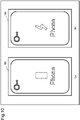
- Fig. 12 is an example in which the output unit 17 outputs an enlarged image.
- the output unit 17 may output the registered image 101 retrieved by the retrieval unit 16 and an enlarged image of the region corresponding to the region of interest of the retrieval image 102, in the registered image 101 retrieved by the retrieval unit 16.
- the searcher can confirm in detail what the corresponding region was like at the time of registration.
- Fig. 13 is an example in which the output unit 17 outputs two images in a comparable mode.
- the output unit 17 may output some or all of the registered images 101 including the region corresponding to the region of interest of the retrieval image 102 and the retrieval image 102.
- the registered image 101 and the retrieval image 102 in Fig. 13 may include a part or an entire object of the target object.
- the searcher can compare the region of the registered image 101 corresponding to the region of the retrieval image 102 with the region of interest of the retrieval image 102 on one screen.
- Fig. 13 is an example of outputting an inspection result that is information associated with the registered image 101.
- the output unit 17 may further output the information associated with the registered image 101 retrieved by the retrieval unit 16.
- the searcher can confirm the information related to the registered image 101.
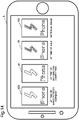
- Fig. 14 is an example in which the output unit 17 outputs an image registered at each distribution timing of a product.
- the output unit 17 may further output information associated with some or all of the plurality of registered images 101.
- each distribution timing is not limited to the example illustrated in Fig. 1 .
- the searcher can confirm what the region of interest of the target article was like at each distribution timing.
- the searcher can confirm at which timing of each distribution timing the defect has occurred.
- the searcher can investigate a cause and a factor of occurrence of the defect.
- Fig. 15 is examples of display modes of the region of interest and the feature extraction region.
- the region of interest and the feature extraction region superimposed and displayed on the registered image 101 and the retrieval image 102 may be recognized in the modes illustrated in Figs. 15(a), 15(b), 15(c), and 15(d) , for example.
- the display mode of the region of interest and the feature extraction region may be a dotted line, a one-dot chain line, or a solid line, and is not limited to the display mode in Fig. 15 . Further, the region of interest and the feature extraction region may be displayed in different colors.
- Fig. 16 is an example of a flowchart at the time of registration.
- the registration unit 11 acquires the registered images 101 obtained by capturing the plurality of objects to be registered and the information related to the objects to be registered from the registration terminal 2 (step S102).
- the registration unit 11 extracts the feature from the registered image 101 of each object to be registered (step S104).
- the registration unit 11 registers each registered image 101 and the information related to the feature in the storage unit 12 in association with each other (step S106).
- Fig. 17 is an example of a flowchart at the time of retrieval.
- the acquisition unit 13 acquires the retrieval image 102 including the region of interest from the retrieval terminal 3 (step S202).
- the specifying unit 14 specifies the region of interest of the retrieval image 102 (step S204).
- the extraction unit 15 extracts the feature from a region other than the region of interest in the retrieval image 102 (step S206).
- the retrieval unit 16 retrieves the registered image 101 having a feature matching the extracted feature (step S208).
- the output unit 17 outputs, to the retrieval terminal 3, some or all of the registered images 101 in a mode that a region corresponding to the region of interest of the retrieval image 102 is recognizable (step S210).
- the image retrieval system 1 can easily confirm the state at the time of inspection of the object including the region of interest such as a defect. Thereby, by registering the image of the target object, the registrant can verify that the defect was not present at the time of registration when the searcher performs retrieval using the target object including the defect.
- the searcher can suitably confirm the region of the registered image corresponding to the region of interest.
- the searcher can confirm the information related to the target object.
- the image retrieval system 1 can verify that there is no scratch, dent, or the like in the surface of the product at the time of shipment. Therefore, even in a case where a scratch or the like occurs in the product by an intermediary logistics company, retailer, or the like in the process until the product reaches the consumer, the manufacturer can verify that there was no defect at the time of shipment. In addition, the image retrieval system 1 can verify that there was no defect even in a case where a malicious person digitally processes an image of the appearance of the product to make the product appear to have a defect, and tries to cause harmful reputations to the manufacturer.
- the object to be registered may be a part or the entire infrastructure such as a road or a tunnel.
- the image retrieval system 1 enables easy retrieval of an image to know a difference from previous registration even in a case of detecting a crack in an infrastructure such as a road or a tunnel. For example, at the time of occurrence of an accident on an inspected road, the image retrieval system 1 can display a proof that the previous inspection was performed at the place where the accident has occurred, or a state (image) at the time of the inspection.
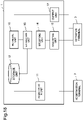
- Fig. 18 is an example of functional blocks of an image retrieval system according to a modification of the first example embodiment.
- the functional blocks of Fig. 18 are similar to the functional blocks of Fig. 3 but are different from those of the first example embodiment in that the storage unit 12 and the extraction unit 15 are connected.
- the storage unit 12 stores the registered image 101, the feature of the registered image 101, and the information related to the object to be registered in association with each other, whereas the modification is different from the first example embodiment in that the storage unit 12 does not store the feature of the registered image 101.
- the extraction unit 15 in the modification extracts the feature from the registered image 101 stored in the storage unit 12. Then, the extraction unit 15 associates the extracted feature with the registered image 101.
- the retrieval unit 16 in the modification retrieves the registered image 101 associated with the feature matching the feature of the retrieval image 102 according to the feature of the registered image 101 extracted by the extraction unit 15.
- FIG. 19 is an example of functional blocks of an image retrieval system according to the present example embodiment.
- an image retrieval system 1A includes a storage unit 12A, an acquisition unit 13A, an extraction unit 15A, a retrieval unit 16A, and an output unit 17A.
- the storage unit 12 A, the acquisition unit 13A, the extraction unit 15A, the retrieval unit 16A, and the output unit 17A can be configured similarly to the storage unit 12, the acquisition unit 13, the extraction unit 15, the retrieval unit 16, and the output unit 17, respectively, but are not limited thereto.
- the acquisition unit 13A acquires a retrieval image 102 including a region of interest and outputs the same to the extraction unit 15A.
- the extraction unit 15A extracts a feature from a region other than the region of interest in the retrieval image 102, and outputs the feature to the retrieval unit 16A.
- the retrieval unit 16A retrieves a registered image 101 having a feature matching the extracted feature, and outputs a retrieval result to the output unit 17A.
- the output unit 17A outputs some or all of the registered images 101 in a mode that a region corresponding to the region of interest of the retrieval image 102 is recognizable.
- the image retrieval system 1A can confirm what the region of interest of the target object was like at the time of registration in advance.
- a hardware configuration of the image retrieval system according to the first example embodiment or the second example embodiment will be described below.
- the functional components of the image retrieval system in the first example embodiment or the second example embodiment may be implemented by hardware (for example, a hard-wired electronic circuit and the like) that implements the functional components, or may be implemented by a combination of hardware and software (for example, a combination of an electronic circuit and a program that controls the electronic circuit and the like).
- a case where the functional configuration units of the image retrieval system according to the first example embodiment or the second example embodiment is implemented by a combination of hardware and software will be further described.
- Fig. 20 is a diagram illustrating a computer 1000, a network 1300, a registration terminal 2, and a retrieval terminal 3 for implementing the image retrieval system according to the first example embodiment or the second example embodiment.
- the computer 1000 is any computer.
- the computer 1000 is a personal computer (PC), a server machine, a tablet terminal, a smartphone, or the like.
- the computer 1000 may be a dedicated computer designed to implement the image retrieval system in the first example embodiment or the second example embodiment, or may be a general-purpose computer.
- the computer 1000 includes a bus 1020, a processor 1040, a memory 1060, a storage device 1080, an input/output interface (I/F) 1100, and a network interface (I/F) 1120.
- the bus 1020 is a data transmission path for the processor 1040, the memory 1060, the storage device 1080, the input/output interface 1100, and the network interface 1120 to transmit and receive data to and from one another. Note that the method of connecting the processor 1040 and the like to one another is not limited to the bus connection.
- the processor 1040 is one of various processors such as a central processing unit (CPU), a graphics processing unit (GPU), and a field-programmable gate array (FPGA).
- the memory 1060 is a main storage device implemented by using a random access memory (RAM) or the like.
- the storage device 1080 is an auxiliary storage device implemented by using a hard disk, a solid-state drive (SSD), a memory card, a read only memory (ROM), or the like.
- the input/output interface 1100 is an interface for connecting the computer 1000 and an input/output device.
- an input device such as a keyboard and an output device such as a display device are connected to the input/output interface 1100.
- the network interface 1120 is an interface for connecting the computer 1000 to the network 1300.
- the network is, for example, a local area network (LAN) or a wide area network (WAN).
- the method of connecting the network interface 1120 to the network may be wireless connection or wired connection.
- the registration terminal 2 and the retrieval terminal 3 are connected to the network 1300, and the computer 1000, the registration terminal 2, and the retrieval terminal 3 can communicate data via the network 1300.
- the storage device 1080 stores program modules that implement the units of the image retrieval system in the first example embodiment or the second example embodiment.
- the processor 1040 reads the program modules to the memory 1060 and executes the program modules, thereby implementing the functions related to the program modules.
- some functions of the image retrieval system in the first example embodiment or the second example embodiment may be executed on the side of the registration terminal 2 and the retrieval terminal 3. That is, a processor, a storage device, and a memory may be stored inside the registration terminal 2 and the retrieval terminal 3, and some or all pieces of the processing of the units of the image retrieval system in the first example embodiment or the second example embodiment may be executed using these components.
- the processing of the registration unit 11 may be executed on the side of the registration terminal 2, and the other processing may be executed on the side of the computer 1000.
- the processing of the acquisition unit 13, the specifying unit 14, and the extraction unit 15 may be executed on the side of the retrieval terminal 3, and the processing of the retrieval unit 16 and the output unit 17 may be executed on the side of the computer 1000.
- the retrieval terminal 3 may include a touch panel display such as a smartphone, and may be connected to both the acquisition unit 13 and the output unit 17. Furthermore, the retrieval terminal 3 may be a personal computer (PC) and a display, or the like, and the hardware connected to the acquisition unit 13 and the hardware connected to the output unit 17 may be separate.
- PC personal computer
- the image retrieval system of the present invention By using the image retrieval system of the present invention, it is possible to confirm what the region of interest of the target object was like at the time of registration in advance. Therefore, the manufacturer can verify that a defect or the like did not exist at the time of shipping from the manufacturer even if a defect or the like occurs in the target object later, by registering an image obtained by capturing the target object at the time of performing pre-shipment inspection.
- the image retrieval system of the present invention enables easy retrieval of an image to know a difference from previous registration even in a case of detecting a crack in an infrastructure such as a road or a tunnel.
- An image retrieval system including:
- the image retrieval system according to supplementary note 1, in which the output means outputs the some or all of the registered images retrieved by the retrieval means, by superimposing an image in which the region corresponding to the region of interest of the retrieval image is recognizable.
- the image retrieval system in which the output means outputs the some or all of the registered images retrieved by the retrieval means, by superimposing an image in which a region corresponding to the region from which the feature of the retrieval image has been extracted is recognizable.
- the image retrieval system according to any one of supplementary notes 1 to 3, in which the output means outputs the registered image retrieved by the retrieval means and an enlarged image of the region in the registered image, the region corresponding to the region of interest in the retrieval image retrieved by the retrieval means.
- the image retrieval system according to any one of supplementary notes 1 to 4, in which the output means outputs the some or all of the registered images including the region corresponding to the region of interest of the retrieval image, and the retrieval image.
- the image retrieval system according to any one of supplementary notes 1 to 7, further including: a specifying means for specifying the region of interest of the retrieval image using the retrieval image.
- the image retrieval system according to supplementary note 8, in which the specifying means divides the retrieval image acquired by the acquisition means into partial regions, and specifies the region of interest by determining presence or absence of a defect in each of the divided partial regions.
- the image retrieval system according to any one of supplementary notes 1 to 10, in which the extraction means extracts the feature from a region other than the region of interest, in a predetermined region including the region of interest.
- the image retrieval system according to any one of supplementary notes 1 to 10, in which the extraction means extracts the feature from a predetermined region adjacent to the region of interest.
- An image retrieval method including:
- the image retrieval method further including: outputting the some or all of the retrieved registered images, by superimposing an image in which the region corresponding to the region of interest of the retrieval image is recognizable.
- the image retrieval method further including: outputting the some or all of the retrieved registered images, by superimposing an image in which a region corresponding to the region from which the feature of the retrieval image has been extracted is recognizable.
- the image retrieval method according to any one of supplementary notes 13 to 15, further including: outputting the retrieved registered image and an enlarged image of the region in the retrieved registered image, the region corresponding to the region of interest in the retrieval image.
- the image retrieval method according to any one of supplementary notes 13 to 16, further including: outputting the some or all of the registered images including the region corresponding to the region of interest of the retrieval image, and the retrieval image.
- a storage medium storing a program for causing a computer to function as:
Landscapes
- Engineering & Computer Science (AREA)
- Theoretical Computer Science (AREA)
- Physics & Mathematics (AREA)
- General Physics & Mathematics (AREA)
- Library & Information Science (AREA)
- Data Mining & Analysis (AREA)
- General Engineering & Computer Science (AREA)
- Databases & Information Systems (AREA)
- Quality & Reliability (AREA)
- Computer Vision & Pattern Recognition (AREA)
- Multimedia (AREA)
- Mathematical Physics (AREA)
- Information Retrieval, Db Structures And Fs Structures Therefor (AREA)
- Processing Or Creating Images (AREA)
Abstract
Description
- The present invention relates to an image retrieval system, an image retrieval method, and a storage medium.
- There is known an image inspection device that irradiates a surface of an inspection object with light from an illumination unit, receives reflected light by an imaging means, analyzes a luminance distribution of the received light, and detects a defect or the like present in the inspection object. For example,
PTL 1 discloses an image inspection device that facilitates detection of a defect by generating an image decomposed into components such as specular reflection and diffuse reflection from a plurality of images captured by changing illumination. - [PTL 1]
JP 2018-205025 A - Even if no defect can be verified for the inspection object at the time of inspection, the defect may occur after transportation of the inspection object or the like. Meanwhile, although
PTL 1 describes that the device detects a defect from the inspection object but there is no disclosure of verifying that there has been no defect at the time of inspection when the defect occurs at a destination where the inspection object is transported. - In view of the above-described problems, an object of the present invention is to provide an image retrieval system, an image retrieval method, and a storage medium capable of easily confirming a state at the time of inspection of an object including a region of interest such as a defect.
- An image retrieval system according to the present invention includes: a storage means for storing a plurality of registered images obtained by capturing a plurality of objects to be registered; an acquisition means for acquiring a retrieval image including a region of interest; an extraction means for to extracting a feature from a region other than the region of interest of the retrieval image; a retrieval means for retrieving, from the plurality of registered images stored in the storage means, a registered image having a feature that matches the feature extracted by the extraction means; and an output means for outputting some or all of the registered images retrieved by the retrieval means in a mode that a region corresponding to the region of interest in the retrieval image is recognizable.
- An image retrieval method according to the present invention including: acquiring a retrieval image including a region of interest; extracting a feature from a region other than the region of interest of the retrieval image; retrieving, from a plurality of registered images obtained by capturing a plurality of objects to be registered, a registered image having a feature that matches the extracted feature; and outputting some or all of the retrieved registered images in a mode that a region corresponding to the region of interest in the retrieval image is recognizable.
- A storage medium according to the present invention stores a program for causing a computer to function as: an acquisition means configured to acquire a retrieval image including a region of interest; an extraction means configured to extract a feature from a region other than the region of interest of the retrieval image; a retrieval means configured to retrieve, from a plurality of registered images obtained by capturing a plurality of objects to be registered and stored in a storage means, a registered image having a feature that matches the feature extracted by the extraction means; and an output means configured to output some or all of the registered images retrieved by the retrieval means in a mode that a region corresponding to the region of interest in the retrieval image is recognizable.
- According to the present invention, it is possible to easily confirm a state at the time of inspection of an object including a region of interest such as a defect.
-
-
Fig. 1 is a diagram illustrating an example of a relationship among a manufacturer, a distributor, a vendor, a customer, and animage retrieval system 1 in the present invention. -
Fig. 2 is a diagram illustrating an example of actions performed by a registrant and a searcher in the present invention. -
Fig. 3 is an example of functional blocks of an image retrieval system according to a first example embodiment. -
Fig. 4 is an example of images registered by a registrant. -
Fig. 5 is an example of images used by a searcher for retrieval. -
Fig. 6 is examples of a region of interest. -
Fig. 7 is examples of the region of interest. -
Fig. 8 is examples of a feature extraction region. -
Fig. 9 is examples of the feature extraction region. -
Fig. 10 is examples in which an output unit superimposes and outputs images. -
Fig. 11 is examples in which the output unit superimposes and outputs images. -
Fig. 12 is an example in which the output unit outputs an enlarged image. -
Fig. 13 is an example in which the output unit outputs two images in a comparable mode. -
Fig. 14 is an example in which the output unit outputs an image registered at each distribution timing of a product. -
Fig. 15 is examples of display modes of the region of interest and the feature extraction region. -
Fig. 16 is an example of a flowchart at the time of registration. -
Fig. 17 is an example of a flowchart at the time of retrieval. -
Fig. 18 is an example of functional blocks of an image retrieval system according to a modification of the first example embodiment. -
Fig. 19 is an example of functional blocks of an image retrieval system according to a second example embodiment. -
Fig. 20 is a block diagram illustrating an example of hardware constituting each unit of each example embodiment of the present invention. - Hereinafter, an image retrieval system, an image retrieval method, and a storage medium will be described with reference to the drawings.
-
Fig. 1 is a diagram illustrating an example of a relationship among a manufacturer, a distributor, a vendor, a customer, and animage retrieval system 1.Fig. 1 is an example illustrating that each of the manufacturer, the distributor, the vendor, and the customer uses the image retrieval system when products are distributed in the aforementioned order. However, the present example embodiment is not limited to the use mode of the image retrieval system illustrated inFig. 1 , and for example, only the manufacturer and the customer may use the image retrieval system. Further, the manufacturer may be subdivided into a component manufacturer and a finished product manufacturer. At that time, a distributor may be added between the component manufacturer and the finished product manufacturer, and components are distributed as products from the component manufacturer to the finished product manufacturer. -
Fig. 2 is a diagram illustrating an example of actions performed by a registrant and a searcher. The registrant is the finished product manufacturer, the component manufacturer, the distributor, the vendor, or the like. The registrant uploads an image of the product to theimage retrieval system 1 using theregistration terminal 2. The searcher is the finished product manufacturer, the distributor, the vendor, the customer, or the like. The searcher accesses theimage retrieval system 1 using theretrieval terminal 3 and performs image retrieval. Theimage retrieval system 1 outputs a retrieval result image to theretrieval terminal 3. -
Fig. 3 is an example of functional blocks of the image retrieval system according to the present example embodiment. As illustrated inFig. 3 , theimage retrieval system 1 includes aregistration unit 11, astorage unit 12, anacquisition unit 13, aspecifying unit 14, anextraction unit 15, aretrieval unit 16, and anoutput unit 17. Theregistration terminal 2 is connected to theregistration unit 11 of theimage retrieval system 1. Theretrieval terminal 3 is connected to theacquisition unit 13 and theoutput unit 17 of theimage retrieval system 1. - Hereinafter, each functional block constituting the
image retrieval system 1 will be described in detail with reference toFig. 4 and subsequent drawings in addition toFig. 3 . - The
registration unit 11 acquires, from theregistration terminal 2, registeredimages 101 obtained by imaging a plurality of objects to be registered and information related to the objects to be registered. Then, theregistration unit 11 extracts a feature from each image of the object to be registered. Then, theregistration unit 11 registers the each image and the information related to the feature in thestorage unit 12 in association with each other. Note that theregistration unit 11 favorably divides the registeredimage 101 into partial regions, and extracts and registers the feature from each partial region. - The object to be registered is, for example, an industrial product manufactured by the manufacturer or the like. The objects to be registered may be any tangible objects, and include leather products such as bags, food items such as boxed lunches, and pharmaceuticals such as tablets.
- The registered
image 101 is an image obtained by capturing the object to be registered. The registeredimage 101 may be an image of the entire object to be registered or an image of a part of the object to be registered. Further, the registeredimages 101 may be a plurality of images obtained by capturing the same object. For example, the registeredimages 101 may be a plurality of images each captured for each part of the same object to be registered or for each different capture direction. Further, the registeredimage 101 may be a moving image. For example, the registeredimages 101 may be a plurality of still images or moving images obtained by capturing the same portion from a plurality of illumination directions. Note that the registeredimage 101 favorably has a resolution at which the feature can be extracted. - The information related to the object to be registered is, for example, information of the registrant (affiliation, name, and the like of the registrant), registration date and time, production date, registration place, manufacturing place, quality information (inspection result and the like), classification in the distribution process (distributor, vendor, and the like), manufacturing number, lot number, information of captured position of the object to be registered, information of the related registered
image 101, and the like. For example, in a case where a plurality of images is captured with respect to the same object to be registered, the information related to the object to be registered includes information by which each image having been obtained by capturing the same object to be registered is recognizable, and desirably includes information of the captured position (front surface, back surface, side surface, or the like) of the object to be registered. Further, for example, in a case where a target object registered by the manufacturer is registered again by the vendor or the like, the information related to the object to be registered favorably includes information by which the same object to be registered having been captured is recognizable as the feature of the registeredimage 101 matches. -
Fig. 4 is an example of the registeredimages 101 registered by the registrant.Fig. 4(a) is an image obtained by capturing an entire front surface of a smartphone that is an object to be registered.Fig. 4(b) is an image obtained by capturing an entire back surface of the smartphone that is an object to be registered. - The
storage unit 12 stores the registeredimage 101 registered by theregistration unit 11, the feature extracted from the registeredimage 101, and the information related to the object to be registered in association with each other. - The
acquisition unit 13 acquires aretrieval image 102 including a region of interest from theretrieval terminal 3. Theacquisition unit 13 outputs the acquiredretrieval image 102 to the specifyingunit 14. Moreover, theacquisition unit 13 may acquire information regarding the region of interest of theretrieval image 102. In the case of acquiring the information regarding the region of interest of theretrieval image 102, theacquisition unit 13 outputs the information regarding the region of interest to the specifyingunit 14. - The
retrieval image 102 is an image obtained by capturing an object to be retrieved. Theretrieval image 102 may be an image of the entire object to be retrieved or an image of a part of the object to be retrieved. Further, the number ofretrieval images 102 may be plural. For example, theretrieval images 102 may be images obtained by capturing the same portion in different illumination conditions, where one image is captured at an illumination angle at which the region of interest is easily recognizable, and the other image is captured at an illumination angle at which the feature is easily extractable. Further, theretrieval image 102 may be a moving image. For example, theretrieval images 102 may be moving images obtained by capturing the same portion from a plurality of illumination directions. Note that theretrieval image 102 favorably has a resolution at which the feature can be extracted. - The region of interest is a region attracting attention in the
retrieval image 102. For example, the region of interest is a region including a flaw of theretrieval image 102 obtained by capturing a defect such as a flaw on the product surface. Further, for example, the region of interest is a region including an insect in theretrieval image 102 obtained by capturing a lunch box containing the insect. - The information regarding the region of interest is information for designating the region of interest in the
retrieval image 102. For example, the information regarding the region of interest is information obtained by the searcher designating a range while viewing theretrieval image 102 using theretrieval terminal 3. For example, the information regarding the region of interest is information input by the searcher tracing an outer periphery of the region of interest of theretrieval image 102 displayed on a touch panel using theretrieval terminal 3. -
Fig. 5 is an example of theretrieval images 102 used by the searcher.Fig. 5(a) is an image obtained by capturing an entire back surface of a smartphone that is an object to be retrieved.Fig. 5(b) is an image obtained by capturing a part of the back surface of the smartphone that is the object to be retrieved. -
Figs. 6 and7 are examples of the region of interest. For example, the searcher may designate the region of interest with a quadrangle including the region of interest as illustrated inFig. 6(a) . For example, the searcher may designate the region of interest in accordance with the shape of the region of interest as illustrated inFig. 6(b) .Figs. 7(a) and 7(b) illustrate that the region of interest can be designated similarly toFigs. 6(a) and 6(b) even if theretrieval images 102 are captured images of a part of the object to be retrieved. - The specifying
unit 14 specifies the region of interest of theretrieval image 102 acquired by theacquisition unit 13. In a case where theacquisition unit 13 has acquired the information regarding the region of interest, the specifyingunit 14 specifies the region of interest on the basis of the information regarding the region of interest. In a case where theacquisition unit 13 has not acquired the information regarding the region of interest, the specifyingunit 14 specifies the region of interest on the basis of theretrieval image 102 acquired by theacquisition unit 13. For example, the specifyingunit 14 divides theretrieval image 102 into partial regions, and specifies the region of interest by specifying the presence or absence of a defect (a flaw or the like) in each of the divided partial regions. The specifyingunit 14 uses, for example, a neural network that has learned features of the defect to specify the presence or absence of the defect in each partial region. In addition, for example, the specifyingunit 14 may cause a model to learn the feature of a partial region without a defect to create a normal model, and specify a partial region deviating from the normal model as a defect. The specifyingunit 14 outputs the specified region of interest to theextraction unit 15. - The
extraction unit 15 extracts the feature from a region other than the region of interest specified by the specifyingunit 14 in theretrieval image 102. The region from which the feature has been extracted (hereinafter referred to as a feature extraction region) may be any region of the surface of the target object as long as the registered image is stored for the region in thestorage unit 12. For example, in a case where the size of each partial region divided by the specifyingunit 14 is sufficient for extracting the feature even if the region of interest is excluded, theextraction unit 15 may extract the feature from a region other than the region of interest among the partial regions specified as having a defect by the specifyingunit 14. For example, in a case where the size of each partial region divided by the specifyingunit 14 is not sufficient for extracting the feature if the region of interest is excluded, theextraction unit 15 may extract the feature from a partial region adjacent to the partial region specified as having a defect by the specifyingunit 14. Further, in a case where theretrieval images 102 include the image captured at an illumination angle at which the region of interest is easily recognizable and the image captured at an illumination angle at which the feature is easily extractable, theextraction unit 15 sets a portion same as the region of interest in the image captured at an illumination angle at which the region of interest is easily recognizable as the region of interest in the image captured at an illumination angle at which the feature is easily extractable, and extracts the feature from the region other than the region of interest. Theextraction unit 15 outputs the extracted feature to theretrieval unit 16. - The feature extracted by the
extraction unit 15 is, for example, a frequency feature obtained by performing two-dimensional discrete Fourier transform for the feature extraction region. Further, the feature may be a luminance gradient of the feature extraction region, a binary feature based on a magnitude relationship of pixels of the feature extraction region, an output result obtained by inputting an image of the feature extraction region to a neural network learned in advance, or the like. -
Fig. 8 is an example of a feature extraction region. InFig. 8(a) , a region excluding a region surrounded by the dotted line that is the region of interest, in a region surrounded by the one-dot chain line, is the feature extraction region. Theextraction unit 15 may extract the feature from the region other than the region of interest, in the region surrounded by the one-dot chain line including the region of interest. InFig. 8(b) , a region surrounded by the one-dot chain line is the feature extraction region. The feature extraction region is favorably a vertically or horizontally adjacent region. Theextraction unit 15 may extract the feature from the region surrounded by the one-dot chain line adjacent to the region of interest. Note that the feature extraction region may not be adjacent to the region of interest as long as the positional relationship with the region of interest is known. -
Fig. 9 illustrates that the feature extraction region can be determined similarly toFig. 8 even if theretrieval image 102 is a captured image of a part of the object to be retrieved. - The
retrieval unit 16 retrieves, from thestorage unit 12, the registeredimage 101 having a feature that matches the feature extracted by theextraction unit 15. For example, in a case where the registeredimage 101 and the feature from the registeredimage 101 are stored in thestorage unit 12 in association with each other, theretrieval unit 16 retrieves, from thestorage unit 12, the registered image associated with the feature that matches the feature extracted by theextraction unit 15. Theretrieval unit 16 outputs a retrieval result to theoutput unit 17. - The
output unit 17 outputs, to theretrieval terminal 3, some or all of the registeredimages 101 retrieved by theretrieval unit 16 in a mode that a region corresponding to the region of interest of theretrieval image 102 is recognizable. -
Figs. 10(a) and 10(b) are examples in which theoutput unit 17 superimposes and outputs images. Theoutput unit 17 may superimpose and output an image in which the region corresponding to the region of interest of theretrieval image 102 is recognizable. The output registeredimage 101 may be an image obtained by cutting out a part of the registeredimage 101 obtained by capturing the entire target object or may be the registeredimage 101 obtained by capturing a part of the target object as long as the region corresponding to the region of interest of theretrieval image 102 is included. By superimposing the image in which the region corresponding to the region of interest of theretrieval image 102 is recognizable, the searcher can visually understand the region of the registeredimage 101 corresponding to the region that has been the region of interest in theretrieval image 102, and can confirm what the corresponding region was like at the time of registration. -
Figs. 11(a) and 11(b) are examples in which theoutput unit 17 superimposes and outputs images. Theoutput unit 17 may superimpose and output an image in which the feature extraction region of theretrieval image 102 is recognizable. The output registeredimage 101 may be an image obtained by cutting out a part of the registeredimage 101 obtained by capturing the entire target object or may be the registeredimage 101 obtained by capturing a part of the target object as long as the region corresponding to the region of interest of theretrieval image 102 and the feature extraction region are included. By superimposing the image in which the feature extraction region of theretrieval image 102 is recognizable, the searcher can visually understand and confirm the region of the registeredimage 101 corresponding to the feature extraction region in theretrieval image 102. -
Fig. 12 is an example in which theoutput unit 17 outputs an enlarged image. Theoutput unit 17 may output the registeredimage 101 retrieved by theretrieval unit 16 and an enlarged image of the region corresponding to the region of interest of theretrieval image 102, in the registeredimage 101 retrieved by theretrieval unit 16. As a result, the searcher can confirm in detail what the corresponding region was like at the time of registration. -
Fig. 13 is an example in which theoutput unit 17 outputs two images in a comparable mode. Theoutput unit 17 may output some or all of the registeredimages 101 including the region corresponding to the region of interest of theretrieval image 102 and theretrieval image 102. The registeredimage 101 and theretrieval image 102 inFig. 13 may include a part or an entire object of the target object. As some or all of the registeredimages 101 including the region corresponding to the region of interest of theretrieval image 102 and theretrieval image 102 are output, the searcher can compare the region of the registeredimage 101 corresponding to the region of theretrieval image 102 with the region of interest of theretrieval image 102 on one screen. - Furthermore,
Fig. 13 is an example of outputting an inspection result that is information associated with the registeredimage 101. Theoutput unit 17 may further output the information associated with the registeredimage 101 retrieved by theretrieval unit 16. As a result, the searcher can confirm the information related to the registeredimage 101. -
Fig. 14 is an example in which theoutput unit 17 outputs an image registered at each distribution timing of a product. In a case where the registeredimage 101 retrieved by theretrieval unit 16 is registered by each of the manufacturer, the distributor, and the vendor illustrated inFig. 1 , theoutput unit 17 may further output information associated with some or all of the plurality of registeredimages 101. Note that each distribution timing is not limited to the example illustrated inFig. 1 . By further outputting the information associated with some or all of the plurality of registeredimages 101, the searcher can confirm what the region of interest of the target article was like at each distribution timing. Moreover, the searcher can confirm at which timing of each distribution timing the defect has occurred. In addition, in a case where the product is registered at each distribution timing, the searcher can investigate a cause and a factor of occurrence of the defect. -
Fig. 15 is examples of display modes of the region of interest and the feature extraction region. The region of interest and the feature extraction region superimposed and displayed on the registeredimage 101 and theretrieval image 102 may be recognized in the modes illustrated inFigs. 15(a), 15(b), 15(c), and 15(d) , for example. The display mode of the region of interest and the feature extraction region may be a dotted line, a one-dot chain line, or a solid line, and is not limited to the display mode inFig. 15 . Further, the region of interest and the feature extraction region may be displayed in different colors. -
Fig. 16 is an example of a flowchart at the time of registration. - First, the
registration unit 11 acquires the registeredimages 101 obtained by capturing the plurality of objects to be registered and the information related to the objects to be registered from the registration terminal 2 (step S102). - Next, the
registration unit 11 extracts the feature from the registeredimage 101 of each object to be registered (step S104). - Then, the
registration unit 11 registers eachregistered image 101 and the information related to the feature in thestorage unit 12 in association with each other (step S106). -
Fig. 17 is an example of a flowchart at the time of retrieval. - First, the
acquisition unit 13 acquires theretrieval image 102 including the region of interest from the retrieval terminal 3 (step S202). - Next, the specifying
unit 14 specifies the region of interest of the retrieval image 102 (step S204). - Next, the
extraction unit 15 extracts the feature from a region other than the region of interest in the retrieval image 102 (step S206). - Next, the
retrieval unit 16 retrieves the registeredimage 101 having a feature matching the extracted feature (step S208). - Then, the
output unit 17 outputs, to theretrieval terminal 3, some or all of the registeredimages 101 in a mode that a region corresponding to the region of interest of theretrieval image 102 is recognizable (step S210). - As described above, according to the first example embodiment, the
image retrieval system 1 can easily confirm the state at the time of inspection of the object including the region of interest such as a defect. Thereby, by registering the image of the target object, the registrant can verify that the defect was not present at the time of registration when the searcher performs retrieval using the target object including the defect In addition, the searcher can suitably confirm the region of the registered image corresponding to the region of interest. Moreover, the searcher can confirm the information related to the target object. - Moreover, according to the first example embodiment, for example, in a case where the manufacturer performs an appearance inspection at the time of shipment, the
image retrieval system 1 can verify that there is no scratch, dent, or the like in the surface of the product at the time of shipment. Therefore, even in a case where a scratch or the like occurs in the product by an intermediary logistics company, retailer, or the like in the process until the product reaches the consumer, the manufacturer can verify that there was no defect at the time of shipment. In addition, theimage retrieval system 1 can verify that there was no defect even in a case where a malicious person digitally processes an image of the appearance of the product to make the product appear to have a defect, and tries to cause harmful reputations to the manufacturer. - Although the first example embodiment has been described using an industrial product as the object to be registered, the object to be registered may be a part or the entire infrastructure such as a road or a tunnel. The
image retrieval system 1 enables easy retrieval of an image to know a difference from previous registration even in a case of detecting a crack in an infrastructure such as a road or a tunnel. For example, at the time of occurrence of an accident on an inspected road, theimage retrieval system 1 can display a proof that the previous inspection was performed at the place where the accident has occurred, or a state (image) at the time of the inspection. -
Fig. 18 is an example of functional blocks of an image retrieval system according to a modification of the first example embodiment. The functional blocks ofFig. 18 are similar to the functional blocks ofFig. 3 but are different from those of the first example embodiment in that thestorage unit 12 and theextraction unit 15 are connected. Further, in the first example embodiment, thestorage unit 12 stores the registeredimage 101, the feature of the registeredimage 101, and the information related to the object to be registered in association with each other, whereas the modification is different from the first example embodiment in that thestorage unit 12 does not store the feature of the registeredimage 101. Hereinafter, only configurations different from those of the first example embodiment will be described. - The
extraction unit 15 in the modification extracts the feature from the registeredimage 101 stored in thestorage unit 12. Then, theextraction unit 15 associates the extracted feature with the registeredimage 101. - The
retrieval unit 16 in the modification retrieves the registeredimage 101 associated with the feature matching the feature of theretrieval image 102 according to the feature of the registeredimage 101 extracted by theextraction unit 15. -
Fig. 19 is an example of functional blocks of an image retrieval system according to the present example embodiment. As illustrated inFig. 19 , animage retrieval system 1A includes astorage unit 12A, anacquisition unit 13A, anextraction unit 15A, aretrieval unit 16A, and anoutput unit 17A. - For example, the
storage unit 12 A, theacquisition unit 13A, theextraction unit 15A, theretrieval unit 16A, and theoutput unit 17A can be configured similarly to thestorage unit 12, theacquisition unit 13, theextraction unit 15, theretrieval unit 16, and theoutput unit 17, respectively, but are not limited thereto. - The
acquisition unit 13A acquires aretrieval image 102 including a region of interest and outputs the same to theextraction unit 15A. Theextraction unit 15A extracts a feature from a region other than the region of interest in theretrieval image 102, and outputs the feature to theretrieval unit 16A. Theretrieval unit 16A retrieves aregistered image 101 having a feature matching the extracted feature, and outputs a retrieval result to theoutput unit 17A. Theoutput unit 17A outputs some or all of the registeredimages 101 in a mode that a region corresponding to the region of interest of theretrieval image 102 is recognizable. - By the second example embodiment, the
image retrieval system 1A can confirm what the region of interest of the target object was like at the time of registration in advance. - A hardware configuration of the image retrieval system according to the first example embodiment or the second example embodiment will be described below. The functional components of the image retrieval system in the first example embodiment or the second example embodiment may be implemented by hardware (for example, a hard-wired electronic circuit and the like) that implements the functional components, or may be implemented by a combination of hardware and software (for example, a combination of an electronic circuit and a program that controls the electronic circuit and the like). Hereinafter, a case where the functional configuration units of the image retrieval system according to the first example embodiment or the second example embodiment is implemented by a combination of hardware and software will be further described.
-
Fig. 20 is a diagram illustrating acomputer 1000, anetwork 1300, aregistration terminal 2, and aretrieval terminal 3 for implementing the image retrieval system according to the first example embodiment or the second example embodiment. Thecomputer 1000 is any computer. For example, thecomputer 1000 is a personal computer (PC), a server machine, a tablet terminal, a smartphone, or the like. Thecomputer 1000 may be a dedicated computer designed to implement the image retrieval system in the first example embodiment or the second example embodiment, or may be a general-purpose computer. - The
computer 1000 includes abus 1020, aprocessor 1040, amemory 1060, astorage device 1080, an input/output interface (I/F) 1100, and a network interface (I/F) 1120. Thebus 1020 is a data transmission path for theprocessor 1040, thememory 1060, thestorage device 1080, the input/output interface 1100, and thenetwork interface 1120 to transmit and receive data to and from one another. Note that the method of connecting theprocessor 1040 and the like to one another is not limited to the bus connection. Theprocessor 1040 is one of various processors such as a central processing unit (CPU), a graphics processing unit (GPU), and a field-programmable gate array (FPGA). Thememory 1060 is a main storage device implemented by using a random access memory (RAM) or the like. Thestorage device 1080 is an auxiliary storage device implemented by using a hard disk, a solid-state drive (SSD), a memory card, a read only memory (ROM), or the like. - The input/
output interface 1100 is an interface for connecting thecomputer 1000 and an input/output device. For example, an input device such as a keyboard and an output device such as a display device are connected to the input/output interface 1100. - The
network interface 1120 is an interface for connecting thecomputer 1000 to thenetwork 1300. The network is, for example, a local area network (LAN) or a wide area network (WAN). The method of connecting thenetwork interface 1120 to the network may be wireless connection or wired connection. - Moreover, the
registration terminal 2 and theretrieval terminal 3 are connected to thenetwork 1300, and thecomputer 1000, theregistration terminal 2, and theretrieval terminal 3 can communicate data via thenetwork 1300. - The
storage device 1080 stores program modules that implement the units of the image retrieval system in the first example embodiment or the second example embodiment. Theprocessor 1040 reads the program modules to thememory 1060 and executes the program modules, thereby implementing the functions related to the program modules. - Note that some functions of the image retrieval system in the first example embodiment or the second example embodiment may be executed on the side of the
registration terminal 2 and theretrieval terminal 3. That is, a processor, a storage device, and a memory may be stored inside theregistration terminal 2 and theretrieval terminal 3, and some or all pieces of the processing of the units of the image retrieval system in the first example embodiment or the second example embodiment may be executed using these components. For example, the processing of theregistration unit 11 may be executed on the side of theregistration terminal 2, and the other processing may be executed on the side of thecomputer 1000. Alternatively, the processing of theacquisition unit 13, the specifyingunit 14, and theextraction unit 15 may be executed on the side of theretrieval terminal 3, and the processing of theretrieval unit 16 and theoutput unit 17 may be executed on the side of thecomputer 1000. - The
retrieval terminal 3 may include a touch panel display such as a smartphone, and may be connected to both theacquisition unit 13 and theoutput unit 17. Furthermore, theretrieval terminal 3 may be a personal computer (PC) and a display, or the like, and the hardware connected to theacquisition unit 13 and the hardware connected to theoutput unit 17 may be separate. - The present invention has been described as an example applied to the above-described exemplary example embodiments. However, the technical scope of the present invention is not limited to the scope described in each of the above-described example embodiments. It is obvious to those skilled in the art that various changes or improvements can be made to the example embodiments. In such a case, a new example embodiment to which such a change or improvement is added can also be included in the technical scope of the present invention. This is apparent from the matters described in the claims.
- By using the image retrieval system of the present invention, it is possible to confirm what the region of interest of the target object was like at the time of registration in advance. Therefore, the manufacturer can verify that a defect or the like did not exist at the time of shipping from the manufacturer even if a defect or the like occurs in the target object later, by registering an image obtained by capturing the target object at the time of performing pre-shipment inspection. In addition, the image retrieval system of the present invention enables easy retrieval of an image to know a difference from previous registration even in a case of detecting a crack in an infrastructure such as a road or a tunnel.
- Note that the configurations of the above-described example embodiments may be combined or some components may be replaced. Further, the configuration of the present disclosure is not limited only to the above-described example embodiments, and various modifications may be made without departing from the gist of the present disclosure.
- Some or all of the above example embodiments can be described as but are not limited to the following supplementary notes.
- An image retrieval system including:
- a storage means for storing a plurality of registered images obtained by capturing a plurality of objects to be registered;
- an acquisition means for acquiring a retrieval image including a region of interest;
- an extraction means for extracting a feature from a region other than the region of interest of the retrieval image;
- a retrieval means for retrieving, from the plurality of registered images stored in the storage means, a registered image having a feature that matches the feature extracted by the extraction means; and
- an output means for outputting some or all of the registered images retrieved by the retrieval means in a mode that a region corresponding to the region of interest in the retrieval image is recognizable.
- The image retrieval system according to
supplementary note 1, in which
the output means outputs the some or all of the registered images retrieved by the retrieval means, by superimposing an image in which the region corresponding to the region of interest of the retrieval image is recognizable. - The image retrieval system according to
supplementary note
the output means outputs the some or all of the registered images retrieved by the retrieval means, by superimposing an image in which a region corresponding to the region from which the feature of the retrieval image has been extracted is recognizable. - The image retrieval system according to any one of
supplementary notes 1 to 3, in which
the output means outputs the registered image retrieved by the retrieval means and an enlarged image of the region in the registered image, the region corresponding to the region of interest in the retrieval image retrieved by the retrieval means. - The image retrieval system according to any one of
supplementary notes 1 to 4, in which
the output means outputs the some or all of the registered images including the region corresponding to the region of interest of the retrieval image, and the retrieval image. - The image retrieval system according to any one of
supplementary notes 1 to 5, in which - the storage means stores information associated with each of the plurality of registered images, and
- the output means further outputs the information associated with the registered image retrieved by the retrieval means.
- The image retrieval system according to any one of
supplementary notes 1 to 6, in which - the storage means stores registered images captured at a plurality of different timings in a distribution process of the objects to be registered,
- the retrieval means retrieves, from the plurality of registered images stored in the storage means, a registered image at each of the plurality of timings, the registered image having a feature that matches the feature extracted by the extraction means, and
- the output means outputs some or all of the registered images at the plurality of timings retrieved by the retrieval means in a mode that a region corresponding to the region of interest in the retrieval image is recognizable.
- The image retrieval system according to any one of
supplementary notes 1 to 7, further including:
a specifying means for specifying the region of interest of the retrieval image using the retrieval image. - The image retrieval system according to supplementary note 8, in which
the specifying means divides the retrieval image acquired by the acquisition means into partial regions, and specifies the region of interest by determining presence or absence of a defect in each of the divided partial regions. - The image retrieval system according to any one of
supplementary notes 1 to 7, in which - the acquisition means further acquires information designating the region of interest, and
- the image retrieval system further including:
a specifying means configured to specify the region of interest of the retrieval image based on the information designating the region of interest acquired by the acquisition means. - The image retrieval system according to any one of
supplementary notes 1 to 10, in which
the extraction means extracts the feature from a region other than the region of interest, in a predetermined region including the region of interest. - The image retrieval system according to any one of
supplementary notes 1 to 10, in which
the extraction means extracts the feature from a predetermined region adjacent to the region of interest. - An image retrieval method including:
- acquiring a retrieval image including a region of interest;
- extracting a feature from a region other than the region of interest of the retrieval image;
- retrieving, from a plurality of registered images obtained by capturing a plurality of objects to be registered, a registered image having a feature that matches the extracted feature; and
- outputting some or all of the retrieved registered images in a mode that a region corresponding to the region of interest in the retrieval image is recognizable.
- The image retrieval method according to
supplementary note 13, further including:
outputting the some or all of the retrieved registered images, by superimposing an image in which the region corresponding to the region of interest of the retrieval image is recognizable. - The image retrieval method according to
supplementary note
outputting the some or all of the retrieved registered images, by superimposing an image in which a region corresponding to the region from which the feature of the retrieval image has been extracted is recognizable. - The image retrieval method according to any one of
supplementary notes 13 to 15, further including:
outputting the retrieved registered image and an enlarged image of the region in the retrieved registered image, the region corresponding to the region of interest in the retrieval image. - The image retrieval method according to any one of
supplementary notes 13 to 16, further including:
outputting the some or all of the registered images including the region corresponding to the region of interest of the retrieval image, and the retrieval image. - The image retrieval method according to any one of
supplementary notes 13 to 17, in which - the storage means stores information associated with each of the plurality of registered images, and
- the image retrieval method further including:
outputting the information associated with the retrieved registered image. - The image retrieval method according to any one of
supplementary notes 13 to 18, in which - the storage means stores registered images captured at a plurality of different timings in a distribution process of the objects to be registered, and
- the image retrieval method further including:
- retrieving, from the plurality of registered images stored in the storage means, a registered image at each of the plurality of timings, the registered image having a feature that matches the extracted feature; and
- outputting some or all of the retrieved registered images at the plurality of timings in a mode that a region corresponding to the region of interest in the retrieval image is recognizable.
- A storage medium storing a program for causing a computer to function as:
- an acquisition means configured to acquire a retrieval image including a region of interest;
- an extraction means configured to extract a feature from a region other than the region of interest of the retrieval image;
- a retrieval means configured to retrieve, from a plurality of registered images obtained by capturing a plurality of objects to be registered and stored in a storage means, a registered image having a feature that matches the feature extracted by the extraction means; and
- an output means configured to output some or all of the registered images retrieved by the retrieval means in a mode that a region corresponding to the region of interest in the retrieval image is recognizable.
-
- 1, 1A
- Image retrieval system
- 2
- Registration terminal
- 3
- Retrieval terminal
- 11
- Registration unit
- 12
- Storage unit
- 13, 13A
- Acquisition unit
- 14
- Specifying unit
- 15, 15A
- Extraction unit
- 16, 16A
- Retrieval unit
- 17, 17A
- Output unit
- 101
- Registered image
- 102
- Retrieval image
- 1000
- Computer
- 1020
- Bus
- 1040
- Processor
- 1060
- Memory
- 1080
- Storage device
- 1100
- Input/output I/F
- 1120
- Network I/F
- 1300
- Network
Claims (20)
- An image retrieval system comprising:a storage means for storing a plurality of registered images obtained by capturing a plurality of objects to be registered;an acquisition means for acquiring a retrieval image including a region of interest;an extraction means for extracting a feature from a region other than the region of interest of the retrieval image;a retrieval means for retrieving, from the plurality of registered images stored in the storage means, a registered image having a feature that matches the feature extracted by the extraction means; andan output means for outputting some or all of the registered images retrieved by the retrieval means in a mode that a region corresponding to the region of interest in the retrieval image is recognizable.
- The image retrieval system according to claim 1, wherein
the output means outputs the some or all of the registered images retrieved by the retrieval means, by superimposing an image in which the region corresponding to the region of interest of the retrieval image is recognizable. - The image retrieval system according to claim 1 or 2, wherein
the output means outputs the some or all of the registered images retrieved by the retrieval means, by superimposing an image in which a region corresponding to the region from which the feature of the retrieval image has been extracted is recognizable. - The image retrieval system according to any one of claims 1 to 3, wherein
the output means outputs the registered image retrieved by the retrieval means and an enlarged image of the region in the registered image, the region corresponding to the region of interest in the retrieval image retrieved by the retrieval means. - The image retrieval system according to any one of claims 1 to 4, wherein
the output means outputs the some or all of the registered images including the region corresponding to the region of interest of the retrieval image, and the retrieval image. - The image retrieval system according to any one of claims 1 to 5, whereinthe storage means stores information associated with each of the plurality of registered images, andthe output means further outputs the information associated with the registered image retrieved by the retrieval means.
- The image retrieval system according to any one of claims 1 to 6, whereinthe storage means stores registered images captured at a plurality of different timings in a distribution process of the objects to be registered,the retrieval means retrieves, from the plurality of registered images stored in the storage means, a registered image at each of the plurality of timings, the registered image having a feature that matches the feature extracted by the extraction means, andthe output means outputs some or all of the registered images at the plurality of timings retrieved by the retrieval means in a mode that a region corresponding to the region of interest in the retrieval image is recognizable.
- The image retrieval system according to any one of claims 1 to 7, further comprising:
a specifying means for specifying the region of interest of the retrieval image using the retrieval image. - The image retrieval system according to claim 8, wherein
the specifying means divides the retrieval image acquired by the acquisition means into partial regions, and specifies the region of interest by determining presence or absence of a defect in each of the divided partial regions. - The image retrieval system according to any one of claims 1 to 7, whereinthe acquisition means further acquires information designating the region of interest, andthe image retrieval system further comprising:
a specifying means configured to specify the region of interest of the retrieval image based on the information designating the region of interest acquired by the acquisition means. - The image retrieval system according to any one of claims 1 to 10, wherein
the extraction means extracts the feature from a region other than the region of interest, in a predetermined region including the region of interest. - The image retrieval system according to any one of claims 1 to 10, wherein
the extraction means extracts the feature from a predetermined region adjacent to the region of interest. - An image retrieval method comprising:acquiring a retrieval image including a region of interest;extracting a feature from a region other than the region of interest of the retrieval image;retrieving, from a plurality of registered images obtained by capturing a plurality of objects to be registered, a registered image having a feature that matches the extracted feature; andoutputting some or all of the retrieved registered images in a mode that a region corresponding to the region of interest in the retrieval image is recognizable.
- The image retrieval method according to claim 13, further comprising:
outputting the some or all of the retrieved registered images, by superimposing an image in which the region corresponding to the region of interest of the retrieval image is recognizable. - The image retrieval method according to claim 13 or 14, further comprising:
outputting the some or all of the retrieved registered images, by superimposing an image in which a region corresponding to the region from which the feature of the retrieval image has been extracted is recognizable. - The image retrieval method according to any one of claims 13 to 15, further comprising:
outputting the retrieved registered image and an enlarged image of the region in the retrieved registered image, the region corresponding to the region of interest in the retrieval image. - The image retrieval method according to any one of claims 13 to 16, further comprising:
outputting the some or all of the registered images including the region corresponding to the region of interest of the retrieval image, and the retrieval image. - The image retrieval method according to any one of claims 13 to 17, whereinthe storage means stores information associated with each of the plurality of registered images, andthe image retrieval method further comprising:
outputting the information associated with the retrieved registered image. - The image retrieval method according to any one of claims 13 to 18, whereinthe storage means stores registered images captured at a plurality of different timings in a distribution process of the objects to be registered, andthe image retrieval method further comprising:retrieving, from the plurality of registered images stored in the storage means, a registered image at each of the plurality of timings, the registered image having a feature that matches the extracted feature; andoutputting some or all of the retrieved registered images at the plurality of timings in a mode that a region corresponding to the region of interest in the retrieval image is recognizable.
- A storage medium storing a program for causing a computer to function as:an acquisition means configured to acquire a retrieval image including a region of interest;an extraction means configured to extract a feature from a region other than the region of interest of the retrieval image;a retrieval means configured to retrieve, from a plurality of registered images obtained by capturing a plurality of objects to be registered and stored in a storage means, a registered image having a feature that matches the feature extracted by the extraction means; andan output means configured to output some or all of the registered images retrieved by the retrieval means in a mode that a region corresponding to the region of interest in the retrieval image is recognizable.
Applications Claiming Priority (1)
| Application Number | Priority Date | Filing Date | Title |
|---|---|---|---|
| PCT/JP2019/050862 WO2021130906A1 (en) | 2019-12-25 | 2019-12-25 | Image retrieval system, image retrieval method, and storage medium |
Publications (2)
| Publication Number | Publication Date |
|---|---|
| EP4083814A1 true EP4083814A1 (en) | 2022-11-02 |
| EP4083814A4 EP4083814A4 (en) | 2022-12-21 |
Family
ID=76573758
Family Applications (1)
| Application Number | Title | Priority Date | Filing Date |
|---|---|---|---|
| EP19957798.2A Pending EP4083814A4 (en) | 2019-12-25 | 2019-12-25 | IMAGE RECOVERY SYSTEM, IMAGE RECOVERY METHOD AND RECORDING MEDIA |
Country Status (4)
| Country | Link |
|---|---|
| US (1) | US12182196B2 (en) |
| EP (1) | EP4083814A4 (en) |
| JP (1) | JP7482153B2 (en) |
| WO (1) | WO2021130906A1 (en) |
Families Citing this family (1)
| Publication number | Priority date | Publication date | Assignee | Title |
|---|---|---|---|---|
| JP2024035618A (en) * | 2022-09-02 | 2024-03-14 | キヤノン株式会社 | Information processing device, information processing method and program |
Family Cites Families (15)
| Publication number | Priority date | Publication date | Assignee | Title |
|---|---|---|---|---|
| US8856108B2 (en) * | 2006-07-31 | 2014-10-07 | Ricoh Co., Ltd. | Combining results of image retrieval processes |
| US8825682B2 (en) * | 2006-07-31 | 2014-09-02 | Ricoh Co., Ltd. | Architecture for mixed media reality retrieval of locations and registration of images |
| US8510283B2 (en) * | 2006-07-31 | 2013-08-13 | Ricoh Co., Ltd. | Automatic adaption of an image recognition system to image capture devices |
| US8868555B2 (en) * | 2006-07-31 | 2014-10-21 | Ricoh Co., Ltd. | Computation of a recongnizability score (quality predictor) for image retrieval |
| US8489987B2 (en) * | 2006-07-31 | 2013-07-16 | Ricoh Co., Ltd. | Monitoring and analyzing creation and usage of visual content using image and hotspot interaction |
| US8073263B2 (en) * | 2006-07-31 | 2011-12-06 | Ricoh Co., Ltd. | Multi-classifier selection and monitoring for MMR-based image recognition |
| US9842285B2 (en) | 2011-07-29 | 2017-12-12 | Nec Corporation | Collation/retrieval system, collation/retrieval server, image feature extraction apparatus, collation/retrieval method, and program |
| JP5821708B2 (en) | 2012-03-06 | 2015-11-24 | トヨタ自動車株式会社 | Defect inspection apparatus and defect inspection method |
| KR20180094138A (en) | 2012-06-22 | 2018-08-22 | 닛본 덴끼 가부시끼가이샤 | Verification method, verification system, verification device, and program therefor |
| US20150186988A1 (en) | 2013-08-05 | 2015-07-02 | Record360 Inc. | System, method, and apparatus for the automatic detection of property features when documenting the condition of tangible property |
| JP6697743B2 (en) | 2015-09-29 | 2020-05-27 | パナソニックIpマネジメント株式会社 | Information terminal control method and program |
| CN106560827B (en) | 2015-09-30 | 2021-11-26 | 松下知识产权经营株式会社 | Control method |
| DE102016208621A1 (en) | 2016-05-19 | 2017-11-23 | Continental Automotive Gmbh | Method for verifying the content and location of traffic signs |
| JP6957842B2 (en) | 2016-08-03 | 2021-11-02 | 株式会社ニデック | Fundus photography device |
| JP6997541B2 (en) | 2017-05-31 | 2022-01-17 | 株式会社キーエンス | Image inspection equipment, image inspection programs, computer-readable recording media and recording equipment |
-
2019
- 2019-12-25 WO PCT/JP2019/050862 patent/WO2021130906A1/en not_active Ceased
- 2019-12-25 JP JP2021566641A patent/JP7482153B2/en active Active
- 2019-12-25 EP EP19957798.2A patent/EP4083814A4/en active Pending
- 2019-12-25 US US17/640,687 patent/US12182196B2/en active Active
Also Published As
| Publication number | Publication date |
|---|---|
| US12182196B2 (en) | 2024-12-31 |
| EP4083814A4 (en) | 2022-12-21 |
| JPWO2021130906A1 (en) | 2021-07-01 |
| US20220327157A1 (en) | 2022-10-13 |
| WO2021130906A1 (en) | 2021-07-01 |
| JP7482153B2 (en) | 2024-05-13 |
Similar Documents
| Publication | Publication Date | Title |
|---|---|---|
| JP6575079B2 (en) | Method for product recognition from multiple images | |
| US11182637B2 (en) | X-ray image processing system and method, and program therefor | |
| US12394037B2 (en) | Physics-informed anomaly detection in formed metal parts | |
| CN107111872B (en) | Information processing apparatus, information processing method, and storage medium | |
| DE112017006429T5 (en) | Methods, systems and devices for segmenting objects | |
| JP2024091981A (en) | Information processing device, information processing method, and program | |
| US12462539B2 (en) | Analysis device and analysis method | |
| Andalo et al. | PSQP: Puzzle solving by quadratic programming | |
| US11443503B2 (en) | Product analysis system, product analysis method, and product analysis program | |
| CN107679529B (en) | A kind of logistics package picture processing method, device and system | |
| JP2021021669A (en) | Inspection assisting method, inspection assisting system, and inspection assisting program | |
| US12182196B2 (en) | Image retrieval system, image retrieval method, and storage medium | |
| JP6395895B1 (en) | Video inspection recognition device | |
| JP2015088084A (en) | Article identification system and program of the same | |
| JP2023181293A (en) | Image storage device, image storage method, and program | |
| US20230290105A1 (en) | Product detection device, product detection system, product detection method, and recording medium | |
| CN105372715A (en) | Cargo transportation security check method, system and security check apparatus | |
| US20210174129A1 (en) | Information processing apparatus, control method, and program | |
| US20220351233A1 (en) | Image processing apparatus, image processing method, and program | |
| US20210287028A1 (en) | Object identification device, object identification method, calculation device, system, and recording medium | |
| US20250148830A1 (en) | Action evaluation system, action evaluation method, and non-transitory computer-readable medium | |
| US11140363B2 (en) | Information processing apparatus, control method, and program | |
| KR20230059712A (en) | Inference program, learning program, inference method, and learning method | |
| JP2023162652A (en) | Image for learning creation program, image for learning creation device, and image for learning creation method | |
| CN115298691A (en) | Learning device and learning method |
Legal Events
| Date | Code | Title | Description |
|---|---|---|---|
| STAA | Information on the status of an ep patent application or granted ep patent |
Free format text: STATUS: THE INTERNATIONAL PUBLICATION HAS BEEN MADE |
|
| PUAI | Public reference made under article 153(3) epc to a published international application that has entered the european phase |
Free format text: ORIGINAL CODE: 0009012 |
|
| STAA | Information on the status of an ep patent application or granted ep patent |
Free format text: STATUS: REQUEST FOR EXAMINATION WAS MADE |
|
| 17P | Request for examination filed |
Effective date: 20220330 |
|
| AK | Designated contracting states |
Kind code of ref document: A1 Designated state(s): AL AT BE BG CH CY CZ DE DK EE ES FI FR GB GR HR HU IE IS IT LI LT LU LV MC MK MT NL NO PL PT RO RS SE SI SK SM TR |
|
| A4 | Supplementary search report drawn up and despatched |
Effective date: 20221123 |
|
| RIC1 | Information provided on ipc code assigned before grant |
Ipc: G06F 16/532 20190101AFI20221117BHEP |
|
| DAV | Request for validation of the european patent (deleted) | ||
| DAX | Request for extension of the european patent (deleted) | ||
| STAA | Information on the status of an ep patent application or granted ep patent |
Free format text: STATUS: EXAMINATION IS IN PROGRESS |
|
| 17Q | First examination report despatched |
Effective date: 20240704 |