EP4083022A1 - Process for preparing synthetic intermediates for preparing tetrahydroquinoline derivatives - Google Patents
Process for preparing synthetic intermediates for preparing tetrahydroquinoline derivatives Download PDFInfo
- Publication number
- EP4083022A1 EP4083022A1 EP22179712.9A EP22179712A EP4083022A1 EP 4083022 A1 EP4083022 A1 EP 4083022A1 EP 22179712 A EP22179712 A EP 22179712A EP 4083022 A1 EP4083022 A1 EP 4083022A1
- Authority
- EP
- European Patent Office
- Prior art keywords
- compound
- formula
- process according
- acid
- preparation
- Prior art date
- Legal status (The legal status is an assumption and is not a legal conclusion. Google has not performed a legal analysis and makes no representation as to the accuracy of the status listed.)
- Pending
Links
Classifications
-
- A—HUMAN NECESSITIES
- A61—MEDICAL OR VETERINARY SCIENCE; HYGIENE
- A61K—PREPARATIONS FOR MEDICAL, DENTAL OR TOILETRY PURPOSES
- A61K31/00—Medicinal preparations containing organic active ingredients
- A61K31/33—Heterocyclic compounds
- A61K31/395—Heterocyclic compounds having nitrogen as a ring hetero atom, e.g. guanethidine or rifamycins
- A61K31/435—Heterocyclic compounds having nitrogen as a ring hetero atom, e.g. guanethidine or rifamycins having six-membered rings with one nitrogen as the only ring hetero atom
- A61K31/47—Quinolines; Isoquinolines
-
- A—HUMAN NECESSITIES
- A61—MEDICAL OR VETERINARY SCIENCE; HYGIENE
- A61K—PREPARATIONS FOR MEDICAL, DENTAL OR TOILETRY PURPOSES
- A61K31/00—Medicinal preparations containing organic active ingredients
- A61K31/33—Heterocyclic compounds
- A61K31/395—Heterocyclic compounds having nitrogen as a ring hetero atom, e.g. guanethidine or rifamycins
- A61K31/435—Heterocyclic compounds having nitrogen as a ring hetero atom, e.g. guanethidine or rifamycins having six-membered rings with one nitrogen as the only ring hetero atom
- A61K31/47—Quinolines; Isoquinolines
- A61K31/472—Non-condensed isoquinolines, e.g. papaverine
- A61K31/4725—Non-condensed isoquinolines, e.g. papaverine containing further heterocyclic rings
-
- A—HUMAN NECESSITIES
- A61—MEDICAL OR VETERINARY SCIENCE; HYGIENE
- A61P—SPECIFIC THERAPEUTIC ACTIVITY OF CHEMICAL COMPOUNDS OR MEDICINAL PREPARATIONS
- A61P3/00—Drugs for disorders of the metabolism
- A61P3/06—Antihyperlipidemics
-
- A—HUMAN NECESSITIES
- A61—MEDICAL OR VETERINARY SCIENCE; HYGIENE
- A61P—SPECIFIC THERAPEUTIC ACTIVITY OF CHEMICAL COMPOUNDS OR MEDICINAL PREPARATIONS
- A61P9/00—Drugs for disorders of the cardiovascular system
- A61P9/10—Drugs for disorders of the cardiovascular system for treating ischaemic or atherosclerotic diseases, e.g. antianginal drugs, coronary vasodilators, drugs for myocardial infarction, retinopathy, cerebrovascula insufficiency, renal arteriosclerosis
-
- A—HUMAN NECESSITIES
- A61—MEDICAL OR VETERINARY SCIENCE; HYGIENE
- A61P—SPECIFIC THERAPEUTIC ACTIVITY OF CHEMICAL COMPOUNDS OR MEDICINAL PREPARATIONS
- A61P9/00—Drugs for disorders of the cardiovascular system
- A61P9/12—Antihypertensives
-
- C—CHEMISTRY; METALLURGY
- C07—ORGANIC CHEMISTRY
- C07D—HETEROCYCLIC COMPOUNDS
- C07D215/00—Heterocyclic compounds containing quinoline or hydrogenated quinoline ring systems
- C07D215/02—Heterocyclic compounds containing quinoline or hydrogenated quinoline ring systems having no bond between the ring nitrogen atom and a non-ring member or having only hydrogen atoms or carbon atoms directly attached to the ring nitrogen atom
- C07D215/16—Heterocyclic compounds containing quinoline or hydrogenated quinoline ring systems having no bond between the ring nitrogen atom and a non-ring member or having only hydrogen atoms or carbon atoms directly attached to the ring nitrogen atom with hetero atoms or with carbon atoms having three bonds to hetero atoms with at the most one bond to halogen, e.g. ester or nitrile radicals, directly attached to ring carbon atoms
- C07D215/38—Nitrogen atoms
- C07D215/42—Nitrogen atoms attached in position 4
-
- C—CHEMISTRY; METALLURGY
- C07—ORGANIC CHEMISTRY
- C07D—HETEROCYCLIC COMPOUNDS
- C07D401/00—Heterocyclic compounds containing two or more hetero rings, having nitrogen atoms as the only ring hetero atoms, at least one ring being a six-membered ring with only one nitrogen atom
- C07D401/02—Heterocyclic compounds containing two or more hetero rings, having nitrogen atoms as the only ring hetero atoms, at least one ring being a six-membered ring with only one nitrogen atom containing two hetero rings
- C07D401/12—Heterocyclic compounds containing two or more hetero rings, having nitrogen atoms as the only ring hetero atoms, at least one ring being a six-membered ring with only one nitrogen atom containing two hetero rings linked by a chain containing hetero atoms as chain links
Definitions
- the present invention relates to a process for the preparation of synthetic intermediates which may be used in the preparation of tetrahydroquinoline derivatives, which derivatives have an inhibitory activity against cholesteryl transfer protein (CETP), show effects of increasing HDL cholesterol level and decreasing LDL cholesterol level, and can be used for the treatment and/or prevention of diseases such as arteriosclerotic diseases, hyperlipidemia, dyslipidemia and the like.
- CETP cholesteryl transfer protein
- LDL-C low density lipoprotein-cholesterol
- CVD cardiovascular disease
- CETP Cholesterol Ester Transfer Protein
- dalcetrapib Another CETP inhibitor, dalcetrapib, which entered phase IIb clinical trials was shown to be a weak inhibitor that increased HDL-C by 30-40% with minimal effects on LDL-C concentrations but did not appear to exhibit the off-target effects of torcetrapib [11-13]. Recently, dalcetrapib development has also been terminated on the grounds of futility in a phase III study which was carried out with this compound.
- CETP inhibitors Two more CETP inhibitors, anacetrapib and evacetrapib, are currently in phase III clinical trials.
- a disadvantage of the use of these CETP-inhibitors is that due to the relatively high dosage which has to be used to obtain CETP-inhibition, more and stronger side effects may occur. This can have a negative influence on both the physical well-being of the patient as well as on patient compliance.
- CETP-inhibitor is the tetrahydroquinoline derivative referred to as Compound A and has the following structural formula:
- Compound A (or a salt thereof) is a potent CETP-inhibitor. Compared to other known CETP-inhibitors, only a relatively low dose of Compound A is needed to reach near complete CETP inhibition. Typically, repeated once daily dosages as low as 2.5 mg of Compound A have proven to be already sufficient to reach near complete CETP-inhibition. These are considerably lower dosages than had to be used for other CETP-inhibitors. Moreover, clinical studies have also shown that Compound A is well tolerated and that it does not lead to serious side effects.
- a first aspect of the present invention relates to a process for preparing the compound of formula I or a salt thereof: comprising the steps of:
- a second aspect of the present invention relates to the intermediate according to formula V as such as this intermediate has not been prepared before.
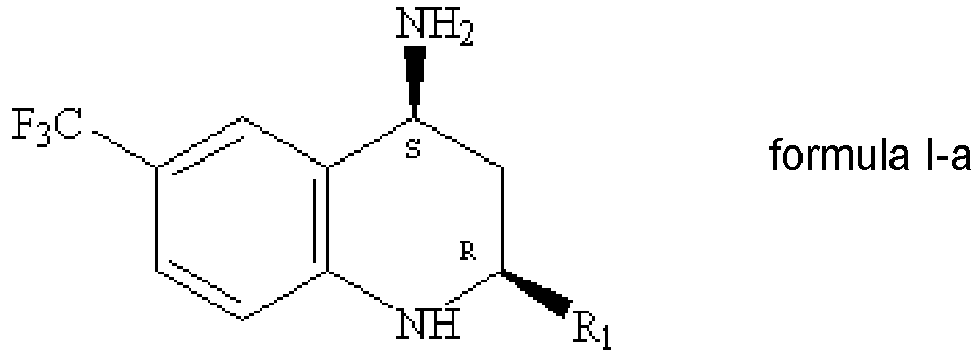
- a third aspect of the present invention relates to the use of the intermediate according to formula V in the preparation of a compound according to formula I, in particular in the preparation of the 2 R ,4 S enantiomers thereof according to formula I-a, which enantiomers may be used in the preparation of Compound A.
- a last aspect of the present invention relates to the use of the compound according to formula V in the preparation of Compound A.
- ' pharmaceutically acceptable ' as used herein has its conventional meaning and refers to compounds, material, compositions and/or dosage forms, which are, within the scope of sound medical judgment suitable for contact with the tissues of mammals, especially humans, without excessive toxicity, irritation, allergic response and other problem complications commensurate with a reasonable benefit/risk ratio.
- ' salt ' as used herein has its conventional meaning and includes the acid addition and base salts.
- ' treatment as used herein has its conventional meaning and refers to curative, palliative and prophylactic treatment.
- cardiovascular disease has its conventional meaning and includes arteriosclerosis, peripheral vascular disease, hyperlipidemia, mixed dyslipidemia betalipoproteinemia, hypoalphalipoproteinemia, hypercholesteremia, hypertriglyceridemia, familial-hypercholesteremia, angina, ischemia, cardiac ischemia, stroke, myocardial infarction, reperfusion injury, restenosis after angioplasty, hypertension, cerebral infarction and cerebral stroke.
- halo , " halogen atom “ or “ halogen” refers to fluorine, chlorine, bromine or iodine.
- alkyl or " alkyl group" as used herein has its conventional meaning and refers to a straight or branched saturated hydrocarbon chain having 1 to 10 carbon atoms and a cyclic saturated hydrocarbon chain having 3 to 10 carbon atoms.
- C 1 -C 3 alkyl as used herein has its conventional meaning and refers to an alkyl group having 1 to 3 carbon atoms. Examples of such alkyl groups are methyl, ethyl, propyl and isopropyl.
- the Povarov reaction is a 3-component reaction in which a cis -2-alkyl-4-amino-1,2,3,4-tetrahydroquinoline is formed in one stereoselective step from an aniline, an aldehyde and an enamine ( Tetrahedron 2009, 65, 2721 ).
- the use of this reaction has been reported in the literature, however its application in the preparation of pharmaceutically active ingredients has been limited due to concerns over storage stability and product purity.
- a first aspect of the present invention relates to a process for preparing the compound of formula I or a salt thereof: comprising the steps of:
- step a) and b) of the present process are carried out, a key intermediate according to formula I is obtained which may be used in the further preparation of tetrahydroquinoline derivatives, such as Compound A.
- One preferred way of at least partially separating or purifying the different enantiomers is the use of chiral resolving agents, such as L-tartaric acid or a derivative thereof, such as di- p -toluoyl-L-tartaric acid.
- the 2 R ,4 S enantiomers of the compounds according to formula I are most often needed.
- the 2 R ,4 S -enantiomer according to formula I-a is preferably separated from the other stereoisomers.
- the compound B also referred to in WO2007/116922 as (2 R ,4 S )-2-ethyl-6-trifluoromethyl-1,2,3,4-tetrahydroquinolin-4-ylamine
- the separation or purification of the compounds according to formula I is such that the compound according to formula I-a or compound B is obtained with a purity of at least 99% enantiomeric excess (e.e.), preferably at least 99.6% e.e., more preferably at least 99.7% e.e.
- the stoichiometry of the reaction between the aldehyde compound with formula III, the amide compound with formula IV and the 4-aminobenzotrifluoride with formula II ranges from 0.5-5(:)1(:)0.5-1, respectively.
- the yield of the compounds according to formula I may also be dependent from the solvent used in step a).
- the solvent used is dichloromethane, acetonitrile, ethyl acetate, toluene or a mixture thereof. If R 1 is CH 2 CH 3 and R 2 is H, the reaction of step a) is preferably conducted in dichloromethane, acetonitrile or in a mixture of toluene and dichloromethane.
- the catalyst used in step a) of the present invention is an acid, preferably a Br ⁇ nsted acid, or a Lewis acid.
- the reaction between the aldehyde compound with formula III, the compound with formula IV and the 4-aminobenzotrifluoride with formula II is conducted in the presence of the acid catalyst 4-toluenesulfonic acid.
- the acid catalyst 4-toluenesulfonic acid There are a number of addition modes that can successfully result in the desired product. A simultaneous addition mode is preferred so as to prevent formation of difficult to remove product related impurities.
- step a) of the process of the present invention a mixture of 4-aminobenzotrifluoride according to formula II and catalyst are added, simultaneously, to the addition of the compound according to formula IV and to the aldehyde according to formula III.
- the aldehyde according to formula III, the compound according to formula IV and the 4-aminobenzotrifluoride according to formula II are first mixed in a solvent according to the invention, before contacting the compounds with the catalyst.
- the aldehyde according to formula III and the 4-aminobenzotrifluoride according to formula II are first dissolved in a solvent according to the invention, before contacting them with the compound according formula IV and a catalyst according to the invention.
- the inventors found that it is beneficial to separate the compound of formula V (i.e. the Povarov product) formed in step (a) from the reaction mixture before carrying out the subsequent step (b).
- the compound of formula V i.e. the Povarov product formed in step (a) from the reaction mixture before carrying out the subsequent step (b).
- the compound of formula V is separated prior to step (b), by means of precipitation and/or filtration procedures.
- Precipitation of the compound of formula V from the reaction product may be carried out by means of the addition of a non-polar solvent to said reaction mixture.
- Preferred non-polar solvents are heptanes, cyclohexane or a mixture thereof.
- the compound with formula V is preferably in a first step precipitated with heptanes or cyclohexane or a mixture thereof and subsequently recrystallized with acetone, isopropanol, ethyl acetate or methyl tert-butyl ether in a second precipitation step. Further precipitation and/or recrystallization may be carried out to further increase the purity of the compound with formula V.
- step b) of the process of the present invention the compound with formula V is hydrolyzed to form the compound of formula I.
- hydrolysis is carried out by warming a mixture comprising compound V for 1 to 3 hours at a temperature of 45 to 80°C in the presence of an aqueous acid, preferably hydrochloric acid.
- the compound according to formula V is hydrolyzed in the presence of an alcohol, preferably ethanol, and an aqueous acid.
- the compounds according to formula I-a and in particular the compound B are preferably used further in the preparation of tetrahydroquinoline derivatives having CETP inhibiting properties, such as Compound A, by using the same kind of process as has been described in WO2007/116922 .
- a second aspect of the present invention relates to the compound according to formula V wherein R 2 is H, C 1 -C 3 alkyl or
- the compound of formula V is the so called Povarov product, which compound has not been synthesized before.
- the compound according to formula V wherein R 1 is CH 2 CH 3 and R 2 is H is particularly preferred for reasons that it is very efficient to use this compound in the preparation of Compound A.
- a third aspect of the present invention relates to the use of these compounds in the preparation of a compound according to formula I-a, in particular in the preparation of the compound B.
- a last aspect of the present invention relates to the use of a compound of formula V in the preparation of Compound A.
- Example 1a 3 mol% toluene sulfonic acid (TsOH) catalyzed 3-component Povarov reaction using simultaneous addition (50 g scale)
- reactor B and reactor C were added simultaneously to reactor A over ⁇ 4 hours whilst keeping the temperature of the contents of reactor A at 20-30°C.
- the reaction mixture in reactor A was stirred at 20-25°C for 16 hours.
- the mixture was then cooled to 0-5°C and stirred for 3 hours.
- the precipitate was filtered off and washed with cold acetonitrile (100 ml).
- the solid was then dried under vacuum at 40°C for 16 hours to give 31g of the Povarov product (37% yield).
Landscapes
- Chemical & Material Sciences (AREA)
- Organic Chemistry (AREA)
- Health & Medical Sciences (AREA)
- General Health & Medical Sciences (AREA)
- Pharmacology & Pharmacy (AREA)
- Life Sciences & Earth Sciences (AREA)
- Animal Behavior & Ethology (AREA)
- Public Health (AREA)
- Veterinary Medicine (AREA)
- Medicinal Chemistry (AREA)
- Epidemiology (AREA)
- Engineering & Computer Science (AREA)
- Bioinformatics & Cheminformatics (AREA)
- Chemical Kinetics & Catalysis (AREA)
- Nuclear Medicine, Radiotherapy & Molecular Imaging (AREA)
- General Chemical & Material Sciences (AREA)
- Cardiology (AREA)
- Heart & Thoracic Surgery (AREA)
- Obesity (AREA)
- Hematology (AREA)
- Urology & Nephrology (AREA)
- Vascular Medicine (AREA)
- Diabetes (AREA)
- Pharmaceuticals Containing Other Organic And Inorganic Compounds (AREA)
- Plural Heterocyclic Compounds (AREA)
- Medicines That Contain Protein Lipid Enzymes And Other Medicines (AREA)
- Quinoline Compounds (AREA)
- Other In-Based Heterocyclic Compounds (AREA)
- Organic Low-Molecular-Weight Compounds And Preparation Thereof (AREA)
- Nitrogen Condensed Heterocyclic Rings (AREA)
Abstract
Description
- The present invention relates to a process for the preparation of synthetic intermediates which may be used in the preparation of tetrahydroquinoline derivatives, which derivatives have an inhibitory activity against cholesteryl transfer protein (CETP), show effects of increasing HDL cholesterol level and decreasing LDL cholesterol level, and can be used for the treatment and/or prevention of diseases such as arteriosclerotic diseases, hyperlipidemia, dyslipidemia and the like.
- Prospective epidemiological studies have shown a strong association between low density lipoprotein-cholesterol (LDL-C) levels and cardiovascular disease (CVD) risk [1]. The subsequent application of statin therapy to decrease these atherogenic LDL-C levels has resulted in a marked reduction of CVD-related morbidity and mortality: every 1 mmol/L decrease in LDL-C results in an estimated 22% reduction of CVD events and a 10% reduction of all-cause mortality [2]. Notwithstanding these impressive benefits, a large residual disease burden persists that has a large impact on both individual patients as well as on global healthcare costs [3]. Novel therapeutics are required to reduce further this residual CVD risk in patients.
- One new approach which reduces LDL-C and elevates high-density lipoprotein cholesterol (HDL-C) levels is to inhibit Cholesterol Ester Transfer Protein (CETP). CETP is a plasma protein secreted primarily by liver and adipose tissue. CETP mediates the transfer of cholesteryl esters from HDL to apolipoprotein B (Apo B)-containing particles (mainly LDL and very low density lipoprotein VLDL) in exchange for triglycerides, thereby decreasing the cholesterol content in HDL in favor of that in (V)LDL. Hence, CETP inhibition has been hypothesized to retain cholesteryl esters in HDL-C and decrease the cholesterol content of the atherogenic Apo B fraction.
- Despite the evidence supporting the potential of CETP inhibition in reducing cardiovascular morbidity, clinical development of CETP inhibitors has not been straightforward. The first compound to progress to phase III clinical trials was torcetrapib which, although it showed efficacy, was withdrawn from development owing to safety concerns including an unexpected increase in cardiovascular events and death when in combination with atorvastatin, compared with atorvastatin alone [4].
- Another CETP inhibitor, dalcetrapib, which entered phase IIb clinical trials was shown to be a weak inhibitor that increased HDL-C by 30-40% with minimal effects on LDL-C concentrations but did not appear to exhibit the off-target effects of torcetrapib [11-13]. Recently, dalcetrapib development has also been terminated on the grounds of futility in a phase III study which was carried out with this compound.
- Two more CETP inhibitors, anacetrapib and evacetrapib, are currently in phase III clinical trials. However, a disadvantage of the use of these CETP-inhibitors is that due to the relatively high dosage which has to be used to obtain CETP-inhibition, more and stronger side effects may occur. This can have a negative influence on both the physical well-being of the patient as well as on patient compliance.
- Current inventors successfully overcame the above mentioned disadvantages by providing a potent and well tolerated CETP-inhibitor and a pharmaceutical composition thereof. This CETP-inhibitor is the tetrahydroquinoline derivative referred to as Compound A and has the following structural formula:
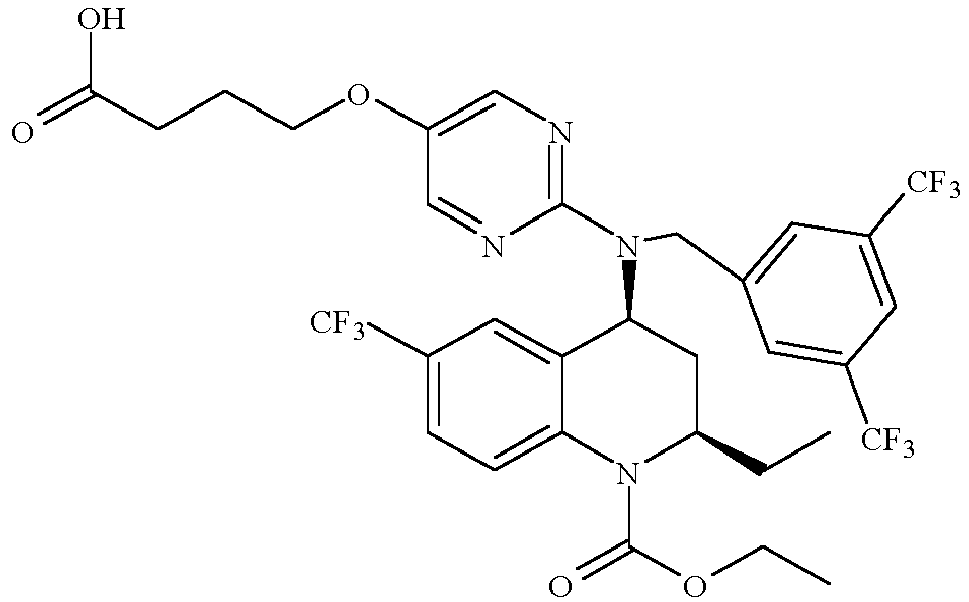
- Clinical studies have shown that Compound A (or a salt thereof) is a potent CETP-inhibitor. Compared to other known CETP-inhibitors, only a relatively low dose of Compound A is needed to reach near complete CETP inhibition. Typically, repeated once daily dosages as low as 2.5 mg of Compound A have proven to be already sufficient to reach near complete CETP-inhibition. These are considerably lower dosages than had to be used for other CETP-inhibitors. Moreover, clinical studies have also shown that Compound A is well tolerated and that it does not lead to serious side effects.
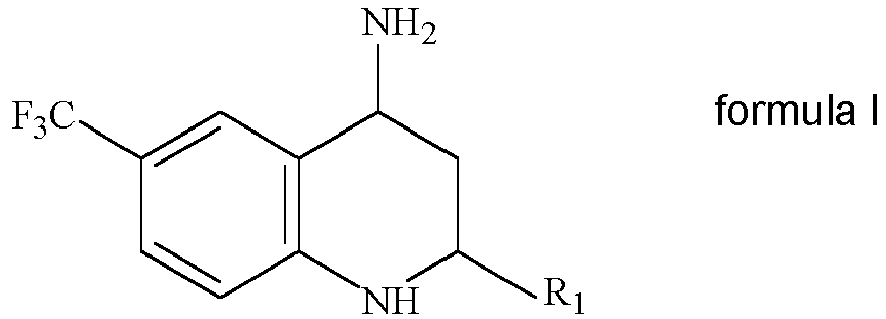
- For the preparation of tetrahydroquinoline derivatives, such as Compound A, use has been made of the intermediates according to formula I

- Although these kinds of intermediates are very useful in the preparation of tetrahydroquinoline derivatives, such as Compound A, with the current methods for preparing these kinds intermediates, such as described in
WO2007/116922 , the overall yield is relatively low. Moreover relatively expensive starting materials and catalysts have to be used, such as (R)-3-aminovaleric acid and palladium, respectively. Furthermore, in the current methods of manufacturing problems arise with residual fluorine corroding manufacturing equipment. - Hence, a need exists for an efficient and cost effective process for preparing intermediates according to formula I, which may be used in the further preparation of tetrahydroquinoline derivatives having CETP inhibiting properties, such as Compound A.
- A first aspect of the present invention relates to a process for preparing the compound of formula I or a salt thereof:
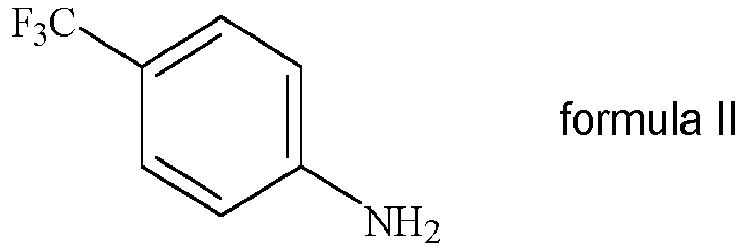
- (a) reacting 4-aminobenzotrifluoride according to formula II


- R1 is H or C1-C3 alkyl, preferably CH2CH3;
- R2 is H, C1-C3 alkyl or

- (b) hydrolyzing the compound of formula V to form the compound of formula I.
- With the process of the present invention it is now possible to prepare efficiently, with relatively cheap starting materials, with few byproducts and with a good yield the intermediate compounds according to formula I. As mentioned above, these compounds may be used in the further preparation of tetrahydroquinoline derivatives, such as Compound A.
- In the process according to the present invention, use is made of a so-called three component Povarov reaction. A key step in this process is the formation of the so-called Povarov product according to formula V:

- Hence, a second aspect of the present invention relates to the intermediate according to formula V as such as this intermediate has not been prepared before.
- A third aspect of the present invention relates to the use of the intermediate according to formula V in the preparation of a compound according to formula I, in particular in the preparation of the 2R,4S enantiomers thereof according to formula I-a, which enantiomers may be used in the preparation of Compound A.
- Hence, a last aspect of the present invention relates to the use of the compound according to formula V in the preparation of Compound A.
- The term 'pharmaceutically acceptable' as used herein has its conventional meaning and refers to compounds, material, compositions and/or dosage forms, which are, within the scope of sound medical judgment suitable for contact with the tissues of mammals, especially humans, without excessive toxicity, irritation, allergic response and other problem complications commensurate with a reasonable benefit/risk ratio.
- The term 'salt' as used herein has its conventional meaning and includes the acid addition and base salts.
- The term 'treatment' as used herein has its conventional meaning and refers to curative, palliative and prophylactic treatment.
- The term 'cardiovascular disease' has its conventional meaning and includes arteriosclerosis, peripheral vascular disease, hyperlipidemia, mixed dyslipidemia betalipoproteinemia, hypoalphalipoproteinemia, hypercholesteremia, hypertriglyceridemia, familial-hypercholesteremia, angina, ischemia, cardiac ischemia, stroke, myocardial infarction, reperfusion injury, restenosis after angioplasty, hypertension, cerebral infarction and cerebral stroke.
- The term "halo", "halogen atom" or "halogen" refers to fluorine, chlorine, bromine or iodine.
- The term "alkyl" or "alkyl group" as used herein has its conventional meaning and refers to a straight or branched saturated hydrocarbon chain having 1 to 10 carbon atoms and a cyclic saturated hydrocarbon chain having 3 to 10 carbon atoms.
- The term "C1-C3 alkyl" as used herein has its conventional meaning and refers to an alkyl group having 1 to 3 carbon atoms. Examples of such alkyl groups are methyl, ethyl, propyl and isopropyl.
- A process for the preparation of tetrahydroquinoline derivatives has been described in
WO 2007/116922 . Although tetrahydroquinoline derivatives, such as Compound A, may be prepared with the above mentioned process, this process was low-yielding and generated a high level of unwanted byproducts. Moreover, expensive starting materials, such as (R)-3-aminovaleric acid, were used in this process. It was found that in particular the preparation of the compounds according to formula I (such as DIAM in the process above) was troublesome and expensive. - In order to overcome these problems an improved process for the preparation of the compounds according to formula I was developed by the present inventors. It was surprisingly found that with the so called three-component Povarov reaction compounds according to formula I could be prepared.
- The Povarov reaction is a 3-component reaction in which a cis-2-alkyl-4-amino-1,2,3,4-tetrahydroquinoline is formed in one stereoselective step from an aniline, an aldehyde and an enamine (Tetrahedron 2009, 65, 2721). The use of this reaction has been reported in the literature, however its application in the preparation of pharmaceutically active ingredients has been limited due to concerns over storage stability and product purity.
- Hence, a first aspect of the present invention relates to a process for preparing the compound of formula I or a salt thereof:

- (a) reacting 4-aminobenzotrifluoride according to formula II

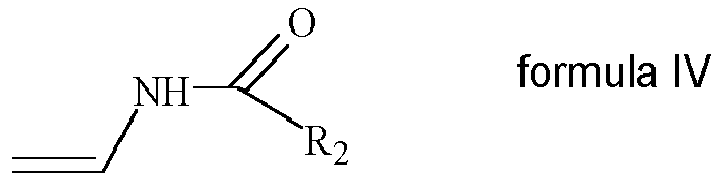

- R1 is H or C1-C3 alkyl, preferably CH2CH3;
- R2 is H, C1-C3 alkyl or

- (b) hydrolyzing the compound of formula V to form the compound of formula I.
- With the process of the present invention it is now possible to prepare efficiently, with relatively cheap starting materials and with a good yield the compounds according to formula I without many unwanted byproducts.
- For the preparation of Compound A it is preferred to use in the process of the present invention compounds wherein R1 is CH2CH3 and R2 is H. In such as case the aldehyde according to formula III is propionaldehyde and the compound according to formula IV is N-vinylformamide.
- After step a) and b) of the present process are carried out, a key intermediate according to formula I is obtained which may be used in the further preparation of tetrahydroquinoline derivatives, such as Compound A.
- Since the compounds according to formula I are chiral, it may be desirable to at least partially separate or purify the different enantiomers of the compound of formula I. Such separation or purification is well known in the art and several methods are readily available to the skilled person to execute such a separation or purification.
- One preferred way of at least partially separating or purifying the different enantiomers is the use of chiral resolving agents, such as L-tartaric acid or a derivative thereof, such as di-p-toluoyl-L-tartaric acid.
- For the preparation of tetrahydroquinoline derivatives having CETP-inhibiting properties, such as Compound A, the use of the 2R,4S enantiomers of the compounds according to formula I are most often needed. Hence, in a further step c) of the process of the present invention the 2R,4S-enantiomer according to formula I-a

With respect to the preparation of Compound A it is preferred to separate from the other stereoisomers the compound B (also referred to inWO2007/116922 as (2R,4S)-2-ethyl-6-trifluoromethyl-1,2,3,4-tetrahydroquinolin-4-ylamine)):
- Preferably, the separation or purification of the compounds according to formula I is such that the compound according to formula I-a or compound B is obtained with a purity of at least 99% enantiomeric excess (e.e.), preferably at least 99.6% e.e., more preferably at least 99.7% e.e.
- After having obtained these compounds they may be reacted into tetrahydroquinoline derivatives having CETP inhibiting properties, such as Compound A, by using the same process as has been described in
WO2007/116922 . - In one preferred embodiment of the invention, the stoichiometry of the reaction between the aldehyde compound with formula III, the amide compound with formula IV and the 4-aminobenzotrifluoride with formula II ranges from 0.5-5(:)1(:)0.5-1, respectively.
- The yield of the compounds according to formula I may also be dependent from the solvent used in step a). Preferably, the solvent used is dichloromethane, acetonitrile, ethyl acetate, toluene or a mixture thereof. If R1 is CH2CH3 and R2 is H, the reaction of step a) is preferably conducted in dichloromethane, acetonitrile or in a mixture of toluene and dichloromethane.
- In a preferred embodiment of the present invention the catalyst used in step a) of the present invention is an acid, preferably a Brønsted acid, or a Lewis acid.
- In an even more preferred embodiment according to the invention, the reaction between the aldehyde compound with formula III, the compound with formula IV and the 4-aminobenzotrifluoride with formula II is conducted in the presence of the acid catalyst 4-toluenesulfonic acid. There are a number of addition modes that can successfully result in the desired product. A simultaneous addition mode is preferred so as to prevent formation of difficult to remove product related impurities.
- Preferably, in step a) of the process of the present invention a mixture of 4-aminobenzotrifluoride according to formula II and catalyst are added, simultaneously, to the addition of the compound according to formula IV and to the aldehyde according to formula III.
- Alternatively, the aldehyde according to formula III, the compound according to formula IV and the 4-aminobenzotrifluoride according to formula II are first mixed in a solvent according to the invention, before contacting the compounds with the catalyst.
- Alternatively, the aldehyde according to formula III and the 4-aminobenzotrifluoride according to formula II are first dissolved in a solvent according to the invention, before contacting them with the compound according formula IV and a catalyst according to the invention.
- For the purpose of further improving the yield and purity of the compounds according to formula I, the inventors found that it is beneficial to separate the compound of formula V (i.e. the Povarov product) formed in step (a) from the reaction mixture before carrying out the subsequent step (b).
- Preferably, the compound of formula V is separated prior to step (b), by means of precipitation and/or filtration procedures. Precipitation of the compound of formula V from the reaction product may be carried out by means of the addition of a non-polar solvent to said reaction mixture. Preferred non-polar solvents are heptanes, cyclohexane or a mixture thereof.
- If required, purification is achieved by means of a two-step precipitation process with the compound of formula V. For this purpose, the compound with formula V is preferably in a first step precipitated with heptanes or cyclohexane or a mixture thereof and subsequently recrystallized with acetone, isopropanol, ethyl acetate or methyl tert-butyl ether in a second precipitation step. Further precipitation and/or recrystallization may be carried out to further increase the purity of the compound with formula V.
- In step b) of the process of the present invention the compound with formula V is hydrolyzed to form the compound of formula I. Preferably, such hydrolysis is carried out by warming a mixture comprising compound V for 1 to 3 hours at a temperature of 45 to 80°C in the presence of an aqueous acid, preferably hydrochloric acid.
- In a preferred embodiment of the process of the present invention, the compound according to formula V is hydrolyzed in the presence of an alcohol, preferably ethanol, and an aqueous acid.
- The compounds according to formula I-a and in particular the compound B are preferably used further in the preparation of tetrahydroquinoline derivatives having CETP inhibiting properties, such as Compound A, by using the same kind of process as has been described in
WO2007/116922 . - A second aspect of the present invention relates to the compound according to formula V


- The compound of formula V is the so called Povarov product, which compound has not been synthesized before. The compound according to formula V wherein R1 is CH2CH3 and R2 is H is particularly preferred for reasons that it is very efficient to use this compound in the preparation of Compound A.
- A third aspect of the present invention relates to the use of these compounds in the preparation of a compound according to formula I-a, in particular in the preparation of the compound B.
- A last aspect of the present invention relates to the use of a compound of formula V in the preparation of Compound A.
- The present invention will be illustrated further by means of the following nonlimiting examples.
-

- To a reactor A was added propionaldehyde (90g, 5 eq) and acetonitrile (50 ml), to a reactor B was added p-toluenesulfonic acid (1.77 g, 3%mol), 4-trifluoromethylaniline (50 g, 1 eq) and acetonitrile (100ml) and to a reactor C was added N-vinylformamide (26.5 g, 1.2 eq) and acetonitrile (100mL, 2 vols).
- The contents of reactor B and reactor C were added simultaneously to reactor A over ~4 hours whilst keeping the temperature of the contents of reactor A at 20-30°C. After addition, the reaction mixture in reactor A was stirred at 20-25°C for 16 hours. The mixture was then cooled to 0-5°C and stirred for 3 hours. The precipitate was filtered off and washed with cold acetonitrile (100 ml). The solid was then dried under vacuum at 40°C for 16 hours to give 31g of the Povarov product (37% yield).
- 4-Aminobenzotrifluoride (100 g, 78 mL, 0.62 mol) was dissolved in CH2Cl2 (200 mL) at room temperature. Propionaldehyde (44.7 mL, 0.62 mol) was added, followed by CH2Cl2 (200 mL). The clear solution was stirred at room temperature for 1 hour to give a pale-yellow solution of the imine. The reaction mixture was further diluted with CH2Cl2 (300 mL) and cooled on ice. N-vinylformamide (86.8 mL, 1.24 mol, 2.0 eq) was added in one portion to the in situ prepared imine solution, as described above. TsOH (2.36 g, 12.4 mmol, 2 mol%) was added to the reaction mixture which was stirred overnight on ice at 0°C to room temperature. Heptanes (700 mL) were added to the suspension. After 5 minutes the slurry was filtered over a glass filter under suction. The off-white crystals were washed on the filter with heptanes (2 × 200 mL) under suction. The obtained solids were dried under reduced pressure at 50°C with a rotary evaporator to give the product (99 g, 59% yield) as an off-white solid. Liquid chromatography-mass spectrometry (LCMS) and 1H-nuclear magnetic resonance (NMR) confirm the product. Next, the crude solid was recrystallized from hot acetone. Solids that did not dissolve were removed from the hot acetone solution by filtration. The resulting clear solution was stored at 5°C overnight. The resulting thick slush was filtered using a glass filter and washed with heptanes (2 × 200 mL). This yielded 52.5 g of a white solid (32% yield). The mother liquor was evaporated and recrystallized from isopropanol (IPA) (± 100 mL), yielding 13.5 g of a white solid. Both batches combined gave a yield of 66 g (39% yield). 1H NMR (300 MHz, CDCl3) δ 8.40 (s, 1H), 7.34 (t, 1H), 7.26 (d, J= 7.7 Hz, 1H), 6.52 (d, J= 8.4 Hz, 1H), 5.88-5.54 (m, J= 26.6 Hz, 1H), 5.52 - 5.36 (m, 1H), 4.85-4.67 (m, J= 16.3, 10.8 Hz, 1H), 4.14 (s, 1H), 3.58-3.31 (m, 1H), 2.45-2.30 (m, 1H), 1.80-1.36 (m, 4H), 1.03 (t, 3H).
- A mixture of the Povarov product (20 g, 73.5 mmol), concentrated HCl (22.3 mL) and ethanol (60 mL) was heated at 50°C for 5 hours. After cooling to 30-40°C, the mixture was evaporated to a total volume of 60 ml. The mixture was then cooled and dichloromethane (160 ml) added, followed by basification with 6M NaOH (60 mL) to pH12-13. The layers were separated and the aqueous phase extracted with dichloromethane (40 mL). The combined organic layers were washed with water (40 mL), dried over sodium sulphate and evaporated to dryness to yield 17.6 g of racemic compound B (95% yield).
- 4-Aminobenzotrifluoride (6.3 mL, 50.0 mmol) was dissolved in CH3CN (40 mL) at RT. Propionaldehyde (4.3 mL, 60 mmol, 1.2 eq.; stored at 4°C) was added in one portion. The temperature rose to 25°C. The clear solution was stirred at RT (in a water bath for cooling) for 5 minutes to give a pale-yellow solution of the imine. N-Vinylformamide (4.4 mL, 63 mmol, 1.25 eq.; stored at 4°C) was added in one portion to the in situ prepared imine solution followed by TsOH (160 mg, 0.017 eq.). The temperature rose to 27°C. After 5 min. a precipitate formed. The mixture was stirred under nitrogen atmosphere at RT overnight. NMR analysis showed full conversion of the components into the Povarov product. To the mixture water (140 mL) was added, followed by H2SO4 (14 mL) and the mixture was warmed at 60°C. After 0.5 hr NMR revealed full conversion of the Povarov product into the racemic compound B. The mixture was extracted with toluene (50 mL). The aqueous layer was basified with conc. aq. NaOH to pH 10. The basic water layer was extracted with toluene (200 mL) and the toluene layer was dried (Na2SO4) and concentrated to give 7.3 g (60%) of crude 2-ethyl-6-(trifluoromethyl)-1,2,3,4-tetrahydroquinolin-4-amine (racemic Compound B) as a brown solid, 80-90% pure by NMR. 1H NMR (300 MHz, CDCl3) δ 7.62 (s, 1H), 7.28 (d, 1H), 6.45 (d, J= 8.4 Hz, 1H), 4.03 (s, 2H), 4.00 (s, 1H), 3.48-3.28 (m, J= 2.8 Hz, 1H), 2.27-2.08 (m, 1H), 1.67-1.32 (m, 6H), 1.00 (t, 3H).
- Di-p-toluoyl-L-tartaric acid monohydrate (134.7 g, 0.33 mol, 0.75 eq) was added to a solution of crude racemic compound B (108.4 g) in methanol (1 L, 9 V) and stirred until crystals formed. The resulting slush was heated to reflux, allowed to cool to RT and then cooled on ice. Crystals formed, which were collected by filtration and dried (99.9 g solids). This material was crystallized again from methanol (750 mL, 7 V) and washed with methyl tert-butyl ether (TBME) (200 mL, 2V) to give 81.6 g compound B ditoluoyltartaric acid (B-DTTA) salt (27% yield) with 99.5% e.e.
- To 10 g compound B-DTTA salt (94% e.e.) was added toluene (100 mL) and 2N NaOH (100 mL). The mixture was stirred for 10 min. after which the layers were separated. The water phase was extracted with toluene (2 × 100 mL). Next, the combined toluene layers were washed with brine, dried over Na2SO4 and evaporated to dryness. This resulted in a brown oil, to which 3 V of isopropanol was added. Methanesulfonic acid (MsOH) (1 mL) was added dropwise to the resulting suspension. First the suspension became a clear mixture. After a few min solids started to form. These solids were collected, washed with TBME (2 ×) and dried. This furnished 4 g (75% yield from enriched compound B-TA salt) of compound B MsOH salt with an e.e. of 98.6%. 10 V of isopropanol (IPA)(40 mL) was added and the resulting suspension was heated to reflux for 5 min. after which it was allowed to cool to RT. Solids formed which were collected by filtration and washed with TBME. This resulted in 2.58 g (48% yield) of compound B MsOH salt with an e.e. of 99.7%.
- For the conversion of compound B methanesulfonic acid salt into Compound A the similar process as described in
WO2007/116922 was used. -

-
- 1. The Emerging Risk Factors Collaboration. Major lipids, apolipoproteins, and risk of vascular disease. JAMA. 2009;302:1993-2000.
- 2. Cholesterol Treatment Trialists (CTT) Collaboration. Efficacy and safety of more intensive lowering of LDL cholesterol: a meta-analysis of data from 170000 participants in 26 randomised trials. Lancet. 2010;13:1670-1681.
- 3. Roger VL, Go AS, Lloyd-Jones DM et al. Heart disease and stroke statistics - 2012 Update: A report from the American Heart Association. Circulation. 2012;125:e12-e230.
- 4. Barter PJ, Caulfield M, Eriksson M et al. Effects of torcetrapib in patients at high risk for coronary events. N Engl J Med. 2007;357:21009-2122.
- 5. Kastelein JJP, van Leuven SI, Burgess L et al. Effect of torcetrapib on carotid atherosclerosis in familial hypercholesterolemia. N Engl J Med. 2007;356:1620-1630.
- 6. Nicholls SJ, Tuzcu EM, Brennan DM, Tardif J-C, Nissen SE. Cholesteryl ester transfer protein inhibition, high-density lipoprotein raising, and progression of coronary atherosclerosis. Insights from ILLUSTRATE (Investigation of Lipid Level Management Using Coronary Ultrasound to Assess Reduction of Atherosclerosis by CETP Inhibition and HDL Elevation). Circulation. 2008;118:2506-2514.
- 7. Vergeer M, Bots ML, van Leuven SI, Basart DC, Sijbrands EJ, Evans GW, Grobbee DE, Visseren FL, Stalenhoef AF, Stroes ES, Kastelein JJP. Cholesteryl ester transfer protein inhibitor torcetrapib and off-target toxicity: pooled analysis of the rating atherosclerotic disease change by imaging with a new CETP inhibitor (RADIANCE) trials. Circulation. 2008;118:2515-2522.
- 8. Forrest MJ, Bloomfield D, Briscoe RJ et al. Torcetrapib-induced blood pressure elevation is independent of CETP inhibition and is accompanied by increasing circulating levels of aldosterone. Br J Pharmacol. 2008;154:1465-1473.
- 9. Simic B, Hermann M, Shaw SG et al. Torcetrapib impairs endothelial function in hypertension. Eur Heart J. 2012;33:1615-1624.
- 10. Barter PJ, Rye K-A, Beltangady MS et al. Relationship between atorvastatin dose and the harm caused by torcetrapib. J Lipid Res. 2012;53:2436-2442.
- 11. Schwartz GG, Olsson AG, Abt M et al. Effects of dalcetrapib in patients with recent acute coronary syndrome. N Engl J Med. 2012;367:2089-2099.
- 12. Stein EA, Stroes ES, Steiner G, et al. Safety and tolerability of dalcetrapib. Am J Cardiol. 2009; 104:82-91.
- 13. Lüscher TF, Taddei S, Kaski JC, et al. Vascular effects and safety of dalcetrapib in patients with or at risk of coronary heart disease: the dal-VESSEL randomized clinical trial. Eur Heart J. 2012;33:857-65.
- 14. Krishna R, Bergman AJ, Fallon et al. Multiple-dose pharmacodynamics and pharmacokinetics of anacetrapib, a potent cholesteryl ester transfer protein (CETP) inhibitor, in healthy subjects. Clin Pharmacol Ther. 2008;84:679-683.
- 15. Bloomfield D, Carlson GL, Aditi Sapre BS et al. Efficacy and safety of the cholesteryl ester transfer protein inhibitor anacetrapib as monotherapy and coadministered with atorvastatin in dyslipidemic patients. Am Heart J. 2009;157:352-360.
- 16. Nicholls SJ, Brewer HB, Kastelein JJP et al. Effects of the CETP inhibitor evacetrapib administered as monotherapy or in combination with statins on HDL and LDL cholesterol. JAMA. 2011;306:2099-2109.
- 17. Am. J. Cardiol., 2014 Jan 1;113(1):76-83: Evaluation of Lipids, Drug Concentration, and Safety Parameters Following Cessation of Treatment With the Cholesteryl Ester Transfer Protein Inhibitor Anacetrapib in Patients With or at High Risk for Coronary Heart Disease. Antonio M. Gotto Jr. et al.
- 18.
Okamoto M, Sakuragi A, Mori Y, Hamada T, Kubota H, Nakamura Y, Higashijima T, Hayashi N. Tanabe Seiyako Co. Ltd. A process for preparing tetrahydroquinoline derivatives WO 2007/116922 A1 . - 19. Govindan CK. An improved process for the preparation of benzyl-N-vinyl carbamate . Org Proc Res Dev. 2002;6:74-77.
- 20. Am Ende DJ, DeVries KM, Clifford PJ, Brenek SJ. A Calorimetric Investigation To Safely Scale-Up a Curtius Rearrangement of Acryloyl Azide Org Proc Res Dev. 1998;2:382-392.
- 21. Damon DB, Dugger RW, Magnus-Aryitey G, Ruggeri RB, Wester RT, Tu M, Abramov Y. Synthesis of the CETP Inhibitor Torcetrapib: The Resolution Route and Origin of Stereoselectivity in the Iminium Ion Cyclization. Org Proc Res Dev. 2006;10:464-471.
- 22. Liu H, Dagousset G, Masson G, Retailleau P, Zhu J. Chiral Brønsted Acid-Catalyzed Enantioselective Three-Component Povarov Reaction. J Am Chem Soc. 2009;131:4598-4599.
- 23. Dagousset G, Zhu J, Masson G. Chiral Phosphoric Acid-Catalyzed Enantioselective Three-Component Povarov Reaction Using Enecarbamates as Dienophiles: Highly Diastereo- and Enantioselective Synthesis of Substituted 4-Aminotetrahydroquinolines. J Am Chem Soc. 2011;133:14804-14813.
- 24. Huang D, Xu F, Chen T, Wang Y, Lin X. Highly enantioselective three-component Povarov reaction catalyzed by SPINOL-phosphoric acids. RSC Advances. 2013;3:573.
Claims (20)
- A process for preparing the compound of formula I or a salt thereof:
 (a) reacting 4-aminobenzotrifluoride according to formula II
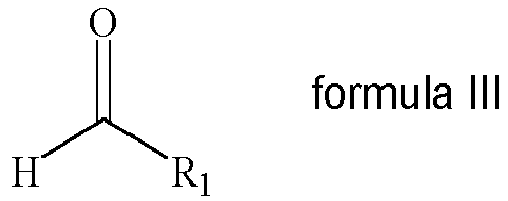

 R1 is H or C1-C3 alkyl, preferably CH2CH3;R2 is H, C1-C3 alkyl or
 (b) hydrolyzing the compound of formula V to form the compound of formula (I).
 - Process according to claim 1, wherein R1 is CH2CH3 and R2 is H.
- Process according to claim 1 or 2, wherein the solvent used is dichloromethane, acetonitrile, ethyl acetate, toluene or a mixture thereof.
- Process according to any of the previous claims, wherein the catalyst used in step a) is an acid, preferably a Brønsted acid, or a Lewis acid.
- Process according to claim 4, wherein the catalyst is 4-toluenesulfonic acid.
- Process according to any of the previous claims, wherein prior to step (b) the compound of formula V is separated from the reaction mixture of step (a), preferably by means of precipitation and/or filtration.
- Process according to claim 6, wherein the compound of formula V is precipitated from the reaction mixture by means of the addition of a non-polar solvent to said reaction mixture.
- Process according to claim 7, wherein the non-polar solvent is a heptane, cyclohexane or a mixture thereof.
- Process according to any of the previous claims, wherein in step (b) the compound of formula V is hydrolyzed by warming a mixture comprising said compound for 1 to 3 hours at a temperature of 45 to 80°C in the presence of an aqueous acid.
- Process according to claim 9, wherein the hydrolysis is in the presence of an alcohol and an aqueous acid.
- Process according to claim 9 or 10, wherein the acid is hydrochloric acid.
- Process according to claim 10 or 11, wherein the alcohol is ethanol.
- Process according to any of the previous claims, wherein in a further step c) the 2R,4S-enantiomer according to formula I-a is separated

- Process according to claim 13, wherein the separation of the enantiomer according to formula I-a is carried out by means of resolution with a chiral resolving agent, such as L-tartaric acid or a derivative thereof, such as di-p-toluoyl-L-tartaric acid.
- Process according to claim 13 or 14, wherein R1 is C2 alkyl.
- Process according to any of the claims 13-15, wherein the compound according to formula I-a or a salt thereof is used in the preparation of the Compound A according to formula

- A compound according to formula V


- Compound according to claim 17, wherein R1 is CH2CH3 and R2 is H.
- Use of a compound according to claim 17or 18 in the preparation of a compound according to formula I-a:

- Use of a compound according to claim 17 or 18 in the preparation of Compound A according to formula:

Applications Claiming Priority (3)
| Application Number | Priority Date | Filing Date | Title |
|---|---|---|---|
| NL2014050556 | 2014-08-12 | ||
| EP15767345.0A EP3180314B1 (en) | 2014-08-12 | 2015-07-29 | Process for preparing synthetic intermediates for preparing tetrahydroquinoline derivatives |
| PCT/NL2015/050555 WO2016024858A1 (en) | 2014-08-12 | 2015-07-29 | Process for preparing synthetic intermediates for preparing tetrahydroquinoline derivatives |
Related Parent Applications (1)
| Application Number | Title | Priority Date | Filing Date |
|---|---|---|---|
| EP15767345.0A Division EP3180314B1 (en) | 2014-08-12 | 2015-07-29 | Process for preparing synthetic intermediates for preparing tetrahydroquinoline derivatives |
Publications (1)
| Publication Number | Publication Date |
|---|---|
| EP4083022A1 true EP4083022A1 (en) | 2022-11-02 |
Family
ID=51429345
Family Applications (2)
| Application Number | Title | Priority Date | Filing Date |
|---|---|---|---|
| EP15767345.0A Active EP3180314B1 (en) | 2014-08-12 | 2015-07-29 | Process for preparing synthetic intermediates for preparing tetrahydroquinoline derivatives |
| EP22179712.9A Pending EP4083022A1 (en) | 2014-08-12 | 2015-07-29 | Process for preparing synthetic intermediates for preparing tetrahydroquinoline derivatives |
Family Applications Before (1)
| Application Number | Title | Priority Date | Filing Date |
|---|---|---|---|
| EP15767345.0A Active EP3180314B1 (en) | 2014-08-12 | 2015-07-29 | Process for preparing synthetic intermediates for preparing tetrahydroquinoline derivatives |
Country Status (28)
| Country | Link |
|---|---|
| US (1) | US10112904B2 (en) |
| EP (2) | EP3180314B1 (en) |
| JP (1) | JP6670310B2 (en) |
| KR (1) | KR102572626B1 (en) |
| CN (1) | CN107108558B (en) |
| AR (1) | AR101509A1 (en) |
| AU (1) | AU2015302407B2 (en) |
| BR (1) | BR112017002873B1 (en) |
| CA (1) | CA2958040C (en) |
| CL (1) | CL2017000367A1 (en) |
| CY (1) | CY1125574T1 (en) |
| DK (1) | DK3180314T3 (en) |
| EA (1) | EA034357B1 (en) |
| ES (1) | ES2926775T3 (en) |
| HR (1) | HRP20221061T1 (en) |
| HU (1) | HUE059947T2 (en) |
| IL (1) | IL250525B (en) |
| LT (1) | LT3180314T (en) |
| MA (1) | MA40378B1 (en) |
| MX (1) | MX367908B (en) |
| PL (1) | PL3180314T3 (en) |
| PT (1) | PT3180314T (en) |
| RS (1) | RS63575B1 (en) |
| SG (1) | SG11201701077XA (en) |
| SI (1) | SI3180314T1 (en) |
| SM (1) | SMT202200385T1 (en) |
| TW (1) | TWI691490B (en) |
| WO (1) | WO2016024858A1 (en) |
Families Citing this family (14)
| Publication number | Priority date | Publication date | Assignee | Title |
|---|---|---|---|---|
| EP4125911B1 (en) | 2021-03-05 | 2024-04-24 | NewAmsterdam Pharma B.V. | Obicetrapib for treatment of dementias |
| IL310115A (en) | 2021-07-26 | 2024-03-01 | Newamsterdam Pharma B V | Treatment of sub-responders to high-dose statins |
| AU2022425078A1 (en) | 2021-12-30 | 2024-08-08 | Newamsterdam Pharma B.V. | Obicetrapib and sglt2 inhibitor combination |
| CU20250001A7 (en) | 2022-07-05 | 2025-10-17 | Newamsterdam Pharma B V | OBICETRAPIB SALTS AND PROCESSES FOR THEIR MANUFACTURE AND INTERMEDIATE PRODUCTS THEREOF |
| TW202416994A (en) | 2022-08-22 | 2024-05-01 | 荷蘭商新阿姆斯特丹製藥公司 | Fixed dose pharmaceutical compositions and use thereof |
| EP4661865A1 (en) | 2023-02-07 | 2025-12-17 | NewAmsterdam Pharma B.V. | Obicetrapib and ezetimibe combination treatment and fixed dose pharmaceutical compositions |
| WO2025059594A1 (en) | 2023-09-15 | 2025-03-20 | Newamsterdam Pharma B.V. | METHODS FOR TREATING HETEROZYGOUS FAMILIAL HYPERCHOLESTEROLEMIA (HeFH) |
| WO2025093129A1 (en) | 2023-11-01 | 2025-05-08 | Newamsterdam Pharma B.V. | Treatment and prevention of age-related macular degeneration using a cetp inhibitor |
| WO2025093436A1 (en) | 2023-11-01 | 2025-05-08 | Newamsterdam Pharma B.V. | Treatment and prevention of age-related macular degeneration using a cetp inhibitor |
| WO2025146262A1 (en) | 2024-01-03 | 2025-07-10 | Newamsterdam Pharma B.V. | Obicetrapib for use in the treatment of hemoglobinopathies |
| WO2025146415A1 (en) | 2024-01-03 | 2025-07-10 | Newamsterdam Pharma B.V. | Improvement in atherosclerotic plaque characteristics with obicetrapib |
| WO2026062050A1 (en) | 2024-09-17 | 2026-03-26 | Newamsterdam Pharma B.V. | Obicetrapib for use in methods for treating a subject having heterozygous familial hypercholesterolemia (hefh) and/or atherosclerotic cardiovascular disease (ascvd) |
| WO2026062049A1 (en) | 2024-09-21 | 2026-03-26 | Newamsterdam Pharma B.V., | Obicetrapib for the treatment of dementias |
| WO2026063944A1 (en) | 2024-09-21 | 2026-03-26 | Newamsterdam Pharma B.V. | Obicetrapib for the treatment of dementias |
Citations (2)
| Publication number | Priority date | Publication date | Assignee | Title |
|---|---|---|---|---|
| WO2000017164A1 (en) * | 1998-09-17 | 2000-03-30 | Pfizer Products Inc. | 4-carboxyamino-2-substituted-1,2,3,4-tetrahydroquinolines as cetp inhibitors |
| WO2007116922A1 (en) | 2006-03-30 | 2007-10-18 | Mitsubishi Tanabe Pharma Corporation | A process for preparing tetrahydroquinoline derivatives |
Family Cites Families (3)
| Publication number | Priority date | Publication date | Assignee | Title |
|---|---|---|---|---|
| ATE316957T1 (en) * | 2001-04-30 | 2006-02-15 | Pfizer Prod Inc | COMPOUNDS USABLE AS INTERMEDIATE PRODUCTS FOR 4-AMINOQUINOLINE DERIVATIVES |
| UA90269C2 (en) * | 2004-04-02 | 2010-04-26 | Мицубиси Танабе Фарма Корпорейшн | Tetrahydroquinoline derivatives and a process for preparing the same |
| CN101466679A (en) * | 2006-03-30 | 2009-06-24 | 田边三菱制药株式会社 | Method for preparing tetrahydroquinoline derivatives |
-
2015
- 2015-07-29 EA EA201790364A patent/EA034357B1/en active IP Right Revival
- 2015-07-29 PT PT157673450T patent/PT3180314T/en unknown
- 2015-07-29 SI SI201531874T patent/SI3180314T1/en unknown
- 2015-07-29 DK DK15767345.0T patent/DK3180314T3/en active
- 2015-07-29 ES ES15767345T patent/ES2926775T3/en active Active
- 2015-07-29 CN CN201580046606.1A patent/CN107108558B/en active Active
- 2015-07-29 HU HUE15767345A patent/HUE059947T2/en unknown
- 2015-07-29 MA MA40378A patent/MA40378B1/en unknown
- 2015-07-29 BR BR112017002873-5A patent/BR112017002873B1/en active IP Right Grant
- 2015-07-29 KR KR1020177006422A patent/KR102572626B1/en active Active
- 2015-07-29 US US15/503,686 patent/US10112904B2/en active Active
- 2015-07-29 EP EP15767345.0A patent/EP3180314B1/en active Active
- 2015-07-29 SG SG11201701077XA patent/SG11201701077XA/en unknown
- 2015-07-29 PL PL15767345.0T patent/PL3180314T3/en unknown
- 2015-07-29 RS RS20220810A patent/RS63575B1/en unknown
- 2015-07-29 SM SM20220385T patent/SMT202200385T1/en unknown
- 2015-07-29 JP JP2017528754A patent/JP6670310B2/en active Active
- 2015-07-29 HR HRP20221061TT patent/HRP20221061T1/en unknown
- 2015-07-29 LT LTEPPCT/NL2015/050555T patent/LT3180314T/en unknown
- 2015-07-29 EP EP22179712.9A patent/EP4083022A1/en active Pending
- 2015-07-29 CA CA2958040A patent/CA2958040C/en active Active
- 2015-07-29 AU AU2015302407A patent/AU2015302407B2/en active Active
- 2015-07-29 WO PCT/NL2015/050555 patent/WO2016024858A1/en not_active Ceased
- 2015-07-29 MX MX2017001930A patent/MX367908B/en active IP Right Grant
- 2015-08-10 TW TW104125888A patent/TWI691490B/en active
- 2015-08-11 AR ARP150102597A patent/AR101509A1/en active IP Right Grant
-
2017
- 2017-02-09 IL IL250525A patent/IL250525B/en active IP Right Grant
- 2017-02-10 CL CL2017000367A patent/CL2017000367A1/en unknown
-
2022
- 2022-09-22 CY CY20221100631T patent/CY1125574T1/en unknown
Patent Citations (2)
| Publication number | Priority date | Publication date | Assignee | Title |
|---|---|---|---|---|
| WO2000017164A1 (en) * | 1998-09-17 | 2000-03-30 | Pfizer Products Inc. | 4-carboxyamino-2-substituted-1,2,3,4-tetrahydroquinolines as cetp inhibitors |
| WO2007116922A1 (en) | 2006-03-30 | 2007-10-18 | Mitsubishi Tanabe Pharma Corporation | A process for preparing tetrahydroquinoline derivatives |
Non-Patent Citations (27)
Also Published As
Similar Documents
| Publication | Publication Date | Title |
|---|---|---|
| EP3180314B1 (en) | Process for preparing synthetic intermediates for preparing tetrahydroquinoline derivatives | |
| EP0498722B1 (en) | Bicyclic nitrogen compounds, their preparation, intermediates obtained, their use as pharmaceuticals and pharmaceutical compositions containing them | |
| EP0515265B1 (en) | Pyrimidin derivatives, process for their preparation, the obtained intermediates, their use as medicines and the pharmaceutical compositions containing them | |
| KR20090106633A (en) | 6-benzyl-2,3,4,7-tetrahydro-indolo [2,3-c] quinoline compounds useful as PDE5 inhibitors | |
| JPWO2001021206A1 (en) | Preventive or therapeutic drug for myocarditis, dilated cardiomyopathy and heart failure containing NF-κB inhibitor as an active ingredient | |
| EP2185561B1 (en) | 1,2,3,4-tetrahydropyrrolo(1,2-a)pyrazine-6-carboxamide and 2,3,4,5-tetrahydropyrrolo(1,2-a)-diazepine-7-carboxamide derivatives, preparation and therapeutic use thereof | |
| US10357499B2 (en) | Substituted triazolobenzodiazepines | |
| HK40081593A (en) | Process for preparing synthetic intermediates for preparing tetrahydroquinoline derivatives | |
| EP2138490B1 (en) | New method for synthesis of fluoroquinolones | |
| HK1239687A1 (en) | Process for preparing synthetic intermediates for preparing tetrahydroquinoline derivatives | |
| HK1239687B (en) | Process for preparing synthetic intermediates for preparing tetrahydroquinoline derivatives | |
| EP0534844B1 (en) | New derivatives of decahydroquinoline, process for their preparation, intermediaires of the preparation, their use as medicines and compositions containing them | |
| TWI466887B (en) | Substituted xanthine derivatives | |
| BE893095Q (en) | 4-Fluoro:phenyl 3 1,3-benzodioxolyl(5)-oxy-methyl piperidine(s)(s) - antidepressant ant anti-Parkinson cpds. with superior activity, longer duration and fewer side-effects than imipramine | |
| FR2672597A1 (en) | New N-substituted quinoline derivatives, process for their preparation, the new intermediates obtained, their application as medicaments and the pharmaceutical compositions containing them | |
| JP2000191663A (en) | Production of condensed pyridazine derivative | |
| JPWO1996033169A1 (en) | 1-[ω-(3,4-dihydro-2-naphthalenyl)alkyl]cyclic amine derivatives, their preparation and pharmaceutical compositions containing them |
Legal Events
| Date | Code | Title | Description |
|---|---|---|---|
| PUAI | Public reference made under article 153(3) epc to a published international application that has entered the european phase |
Free format text: ORIGINAL CODE: 0009012 |
|
| STAA | Information on the status of an ep patent application or granted ep patent |
Free format text: STATUS: THE APPLICATION HAS BEEN PUBLISHED |
|
| AC | Divisional application: reference to earlier application |
Ref document number: 3180314 Country of ref document: EP Kind code of ref document: P |
|
| AK | Designated contracting states |
Kind code of ref document: A1 Designated state(s): AL AT BE BG CH CY CZ DE DK EE ES FI FR GB GR HR HU IE IS IT LI LT LU LV MC MK MT NL NO PL PT RO RS SE SI SK SM TR |
|
| STAA | Information on the status of an ep patent application or granted ep patent |
Free format text: STATUS: REQUEST FOR EXAMINATION WAS MADE |
|
| REG | Reference to a national code |
Ref country code: HK Ref legal event code: DE Ref document number: 40081593 Country of ref document: HK |
|
| 17P | Request for examination filed |
Effective date: 20230501 |
|
| RBV | Designated contracting states (corrected) |
Designated state(s): AL AT BE BG CH CY CZ DE DK EE ES FI FR GB GR HR HU IE IS IT LI LT LU LV MC MK MT NL NO PL PT RO RS SE SI SK SM TR |
|
| P01 | Opt-out of the competence of the unified patent court (upc) registered |
Effective date: 20230510 |