EP4082758B1 - Apparatus and method for sealing secondary battery - Google Patents
Apparatus and method for sealing secondary battery Download PDFInfo
- Publication number
- EP4082758B1 EP4082758B1 EP21771301.5A EP21771301A EP4082758B1 EP 4082758 B1 EP4082758 B1 EP 4082758B1 EP 21771301 A EP21771301 A EP 21771301A EP 4082758 B1 EP4082758 B1 EP 4082758B1
- Authority
- EP
- European Patent Office
- Prior art keywords
- straightening
- sealing part
- roller
- side sealing
- support block
- Prior art date
- Legal status (The legal status is an assumption and is not a legal conclusion. Google has not performed a legal analysis and makes no representation as to the accuracy of the status listed.)
- Active
Links
Images





Classifications
-
- B—PERFORMING OPERATIONS; TRANSPORTING
- B29—WORKING OF PLASTICS; WORKING OF SUBSTANCES IN A PLASTIC STATE IN GENERAL
- B29C—SHAPING OR JOINING OF PLASTICS; SHAPING OF MATERIAL IN A PLASTIC STATE, NOT OTHERWISE PROVIDED FOR; AFTER-TREATMENT OF THE SHAPED PRODUCTS, e.g. REPAIRING
- B29C66/00—General aspects of processes or apparatus for joining preformed parts
- B29C66/40—General aspects of joining substantially flat articles, e.g. plates, sheets or web-like materials; Making flat seams in tubular or hollow articles; Joining single elements to substantially flat surfaces
- B29C66/41—Joining substantially flat articles ; Making flat seams in tubular or hollow articles
- B29C66/43—Joining a relatively small portion of the surface of said articles
- B29C66/439—Joining sheets for making inflated articles without using a mould
-
- B—PERFORMING OPERATIONS; TRANSPORTING
- B29—WORKING OF PLASTICS; WORKING OF SUBSTANCES IN A PLASTIC STATE IN GENERAL
- B29C—SHAPING OR JOINING OF PLASTICS; SHAPING OF MATERIAL IN A PLASTIC STATE, NOT OTHERWISE PROVIDED FOR; AFTER-TREATMENT OF THE SHAPED PRODUCTS, e.g. REPAIRING
- B29C65/00—Joining or sealing of preformed parts, e.g. welding of plastics materials; Apparatus therefor
- B29C65/02—Joining or sealing of preformed parts, e.g. welding of plastics materials; Apparatus therefor by heating, with or without pressure
-
- B—PERFORMING OPERATIONS; TRANSPORTING
- B29—WORKING OF PLASTICS; WORKING OF SUBSTANCES IN A PLASTIC STATE IN GENERAL
- B29C—SHAPING OR JOINING OF PLASTICS; SHAPING OF MATERIAL IN A PLASTIC STATE, NOT OTHERWISE PROVIDED FOR; AFTER-TREATMENT OF THE SHAPED PRODUCTS, e.g. REPAIRING
- B29C65/00—Joining or sealing of preformed parts, e.g. welding of plastics materials; Apparatus therefor
- B29C65/02—Joining or sealing of preformed parts, e.g. welding of plastics materials; Apparatus therefor by heating, with or without pressure
- B29C65/18—Joining or sealing of preformed parts, e.g. welding of plastics materials; Apparatus therefor by heating, with or without pressure using heated tools
-
- B—PERFORMING OPERATIONS; TRANSPORTING
- B29—WORKING OF PLASTICS; WORKING OF SUBSTANCES IN A PLASTIC STATE IN GENERAL
- B29C—SHAPING OR JOINING OF PLASTICS; SHAPING OF MATERIAL IN A PLASTIC STATE, NOT OTHERWISE PROVIDED FOR; AFTER-TREATMENT OF THE SHAPED PRODUCTS, e.g. REPAIRING
- B29C66/00—General aspects of processes or apparatus for joining preformed parts
- B29C66/01—General aspects dealing with the joint area or with the area to be joined
- B29C66/05—Particular design of joint configurations
- B29C66/10—Particular design of joint configurations particular design of the joint cross-sections
- B29C66/11—Joint cross-sections comprising a single joint-segment, i.e. one of the parts to be joined comprising a single joint-segment in the joint cross-section
- B29C66/112—Single lapped joints
- B29C66/1122—Single lap to lap joints, i.e. overlap joints
-
- B—PERFORMING OPERATIONS; TRANSPORTING
- B29—WORKING OF PLASTICS; WORKING OF SUBSTANCES IN A PLASTIC STATE IN GENERAL
- B29C—SHAPING OR JOINING OF PLASTICS; SHAPING OF MATERIAL IN A PLASTIC STATE, NOT OTHERWISE PROVIDED FOR; AFTER-TREATMENT OF THE SHAPED PRODUCTS, e.g. REPAIRING
- B29C66/00—General aspects of processes or apparatus for joining preformed parts
- B29C66/01—General aspects dealing with the joint area or with the area to be joined
- B29C66/344—Stretching or tensioning the joint area during joining
-
- B—PERFORMING OPERATIONS; TRANSPORTING
- B29—WORKING OF PLASTICS; WORKING OF SUBSTANCES IN A PLASTIC STATE IN GENERAL
- B29C—SHAPING OR JOINING OF PLASTICS; SHAPING OF MATERIAL IN A PLASTIC STATE, NOT OTHERWISE PROVIDED FOR; AFTER-TREATMENT OF THE SHAPED PRODUCTS, e.g. REPAIRING
- B29C66/00—General aspects of processes or apparatus for joining preformed parts
- B29C66/01—General aspects dealing with the joint area or with the area to be joined
- B29C66/347—General aspects dealing with the joint area or with the area to be joined using particular temperature distributions or gradients; using particular heat distributions or gradients
- B29C66/3474—General aspects dealing with the joint area or with the area to be joined using particular temperature distributions or gradients; using particular heat distributions or gradients perpendicular to the plane of the joint
-
- B—PERFORMING OPERATIONS; TRANSPORTING
- B29—WORKING OF PLASTICS; WORKING OF SUBSTANCES IN A PLASTIC STATE IN GENERAL
- B29C—SHAPING OR JOINING OF PLASTICS; SHAPING OF MATERIAL IN A PLASTIC STATE, NOT OTHERWISE PROVIDED FOR; AFTER-TREATMENT OF THE SHAPED PRODUCTS, e.g. REPAIRING
- B29C66/00—General aspects of processes or apparatus for joining preformed parts
- B29C66/40—General aspects of joining substantially flat articles, e.g. plates, sheets or web-like materials; Making flat seams in tubular or hollow articles; Joining single elements to substantially flat surfaces
- B29C66/41—Joining substantially flat articles ; Making flat seams in tubular or hollow articles
- B29C66/43—Joining a relatively small portion of the surface of said articles
- B29C66/433—Casing-in, i.e. enclosing an element between two sheets by an outlined seam
-
- B—PERFORMING OPERATIONS; TRANSPORTING
- B29—WORKING OF PLASTICS; WORKING OF SUBSTANCES IN A PLASTIC STATE IN GENERAL
- B29C—SHAPING OR JOINING OF PLASTICS; SHAPING OF MATERIAL IN A PLASTIC STATE, NOT OTHERWISE PROVIDED FOR; AFTER-TREATMENT OF THE SHAPED PRODUCTS, e.g. REPAIRING
- B29C66/00—General aspects of processes or apparatus for joining preformed parts
- B29C66/70—General aspects of processes or apparatus for joining preformed parts characterised by the composition, physical properties or the structure of the material of the parts to be joined; Joining with non-plastics material
- B29C66/73—General aspects of processes or apparatus for joining preformed parts characterised by the composition, physical properties or the structure of the material of the parts to be joined; Joining with non-plastics material characterised by the intensive physical properties of the material of the parts to be joined, by the optical properties of the material of the parts to be joined, by the extensive physical properties of the parts to be joined, by the state of the material of the parts to be joined or by the material of the parts to be joined being a thermoplastic or a thermoset
- B29C66/739—General aspects of processes or apparatus for joining preformed parts characterised by the composition, physical properties or the structure of the material of the parts to be joined; Joining with non-plastics material characterised by the intensive physical properties of the material of the parts to be joined, by the optical properties of the material of the parts to be joined, by the extensive physical properties of the parts to be joined, by the state of the material of the parts to be joined or by the material of the parts to be joined being a thermoplastic or a thermoset characterised by the material of the parts to be joined being a thermoplastic or a thermoset
- B29C66/7392—General aspects of processes or apparatus for joining preformed parts characterised by the composition, physical properties or the structure of the material of the parts to be joined; Joining with non-plastics material characterised by the intensive physical properties of the material of the parts to be joined, by the optical properties of the material of the parts to be joined, by the extensive physical properties of the parts to be joined, by the state of the material of the parts to be joined or by the material of the parts to be joined being a thermoplastic or a thermoset characterised by the material of the parts to be joined being a thermoplastic or a thermoset characterised by the material of at least one of the parts being a thermoplastic
- B29C66/73921—General aspects of processes or apparatus for joining preformed parts characterised by the composition, physical properties or the structure of the material of the parts to be joined; Joining with non-plastics material characterised by the intensive physical properties of the material of the parts to be joined, by the optical properties of the material of the parts to be joined, by the extensive physical properties of the parts to be joined, by the state of the material of the parts to be joined or by the material of the parts to be joined being a thermoplastic or a thermoset characterised by the material of the parts to be joined being a thermoplastic or a thermoset characterised by the material of at least one of the parts being a thermoplastic characterised by the materials of both parts being thermoplastics
-
- B—PERFORMING OPERATIONS; TRANSPORTING
- B29—WORKING OF PLASTICS; WORKING OF SUBSTANCES IN A PLASTIC STATE IN GENERAL
- B29C—SHAPING OR JOINING OF PLASTICS; SHAPING OF MATERIAL IN A PLASTIC STATE, NOT OTHERWISE PROVIDED FOR; AFTER-TREATMENT OF THE SHAPED PRODUCTS, e.g. REPAIRING
- B29C66/00—General aspects of processes or apparatus for joining preformed parts
- B29C66/80—General aspects of machine operations or constructions and parts thereof
- B29C66/81—General aspects of the pressing elements, i.e. the elements applying pressure on the parts to be joined in the area to be joined, e.g. the welding jaws or clamps
- B29C66/814—General aspects of the pressing elements, i.e. the elements applying pressure on the parts to be joined in the area to be joined, e.g. the welding jaws or clamps characterised by the design of the pressing elements, e.g. of the welding jaws or clamps
- B29C66/8141—General aspects of the pressing elements, i.e. the elements applying pressure on the parts to be joined in the area to be joined, e.g. the welding jaws or clamps characterised by the design of the pressing elements, e.g. of the welding jaws or clamps characterised by the surface geometry of the part of the pressing elements, e.g. welding jaws or clamps, coming into contact with the parts to be joined
- B29C66/81411—General aspects of the pressing elements, i.e. the elements applying pressure on the parts to be joined in the area to be joined, e.g. the welding jaws or clamps characterised by the design of the pressing elements, e.g. of the welding jaws or clamps characterised by the surface geometry of the part of the pressing elements, e.g. welding jaws or clamps, coming into contact with the parts to be joined characterised by its cross-section, e.g. transversal or longitudinal, being non-flat
- B29C66/81421—General aspects of the pressing elements, i.e. the elements applying pressure on the parts to be joined in the area to be joined, e.g. the welding jaws or clamps characterised by the design of the pressing elements, e.g. of the welding jaws or clamps characterised by the surface geometry of the part of the pressing elements, e.g. welding jaws or clamps, coming into contact with the parts to be joined characterised by its cross-section, e.g. transversal or longitudinal, being non-flat being convex or concave
- B29C66/81422—General aspects of the pressing elements, i.e. the elements applying pressure on the parts to be joined in the area to be joined, e.g. the welding jaws or clamps characterised by the design of the pressing elements, e.g. of the welding jaws or clamps characterised by the surface geometry of the part of the pressing elements, e.g. welding jaws or clamps, coming into contact with the parts to be joined characterised by its cross-section, e.g. transversal or longitudinal, being non-flat being convex or concave being convex
-
- B—PERFORMING OPERATIONS; TRANSPORTING
- B29—WORKING OF PLASTICS; WORKING OF SUBSTANCES IN A PLASTIC STATE IN GENERAL
- B29C—SHAPING OR JOINING OF PLASTICS; SHAPING OF MATERIAL IN A PLASTIC STATE, NOT OTHERWISE PROVIDED FOR; AFTER-TREATMENT OF THE SHAPED PRODUCTS, e.g. REPAIRING
- B29C66/00—General aspects of processes or apparatus for joining preformed parts
- B29C66/80—General aspects of machine operations or constructions and parts thereof
- B29C66/81—General aspects of the pressing elements, i.e. the elements applying pressure on the parts to be joined in the area to be joined, e.g. the welding jaws or clamps
- B29C66/814—General aspects of the pressing elements, i.e. the elements applying pressure on the parts to be joined in the area to be joined, e.g. the welding jaws or clamps characterised by the design of the pressing elements, e.g. of the welding jaws or clamps
- B29C66/8141—General aspects of the pressing elements, i.e. the elements applying pressure on the parts to be joined in the area to be joined, e.g. the welding jaws or clamps characterised by the design of the pressing elements, e.g. of the welding jaws or clamps characterised by the surface geometry of the part of the pressing elements, e.g. welding jaws or clamps, coming into contact with the parts to be joined
- B29C66/81411—General aspects of the pressing elements, i.e. the elements applying pressure on the parts to be joined in the area to be joined, e.g. the welding jaws or clamps characterised by the design of the pressing elements, e.g. of the welding jaws or clamps characterised by the surface geometry of the part of the pressing elements, e.g. welding jaws or clamps, coming into contact with the parts to be joined characterised by its cross-section, e.g. transversal or longitudinal, being non-flat
- B29C66/81421—General aspects of the pressing elements, i.e. the elements applying pressure on the parts to be joined in the area to be joined, e.g. the welding jaws or clamps characterised by the design of the pressing elements, e.g. of the welding jaws or clamps characterised by the surface geometry of the part of the pressing elements, e.g. welding jaws or clamps, coming into contact with the parts to be joined characterised by its cross-section, e.g. transversal or longitudinal, being non-flat being convex or concave
- B29C66/81423—General aspects of the pressing elements, i.e. the elements applying pressure on the parts to be joined in the area to be joined, e.g. the welding jaws or clamps characterised by the design of the pressing elements, e.g. of the welding jaws or clamps characterised by the surface geometry of the part of the pressing elements, e.g. welding jaws or clamps, coming into contact with the parts to be joined characterised by its cross-section, e.g. transversal or longitudinal, being non-flat being convex or concave being concave
-
- B—PERFORMING OPERATIONS; TRANSPORTING
- B29—WORKING OF PLASTICS; WORKING OF SUBSTANCES IN A PLASTIC STATE IN GENERAL
- B29C—SHAPING OR JOINING OF PLASTICS; SHAPING OF MATERIAL IN A PLASTIC STATE, NOT OTHERWISE PROVIDED FOR; AFTER-TREATMENT OF THE SHAPED PRODUCTS, e.g. REPAIRING
- B29C66/00—General aspects of processes or apparatus for joining preformed parts
- B29C66/80—General aspects of machine operations or constructions and parts thereof
- B29C66/81—General aspects of the pressing elements, i.e. the elements applying pressure on the parts to be joined in the area to be joined, e.g. the welding jaws or clamps
- B29C66/814—General aspects of the pressing elements, i.e. the elements applying pressure on the parts to be joined in the area to be joined, e.g. the welding jaws or clamps characterised by the design of the pressing elements, e.g. of the welding jaws or clamps
- B29C66/8145—General aspects of the pressing elements, i.e. the elements applying pressure on the parts to be joined in the area to be joined, e.g. the welding jaws or clamps characterised by the design of the pressing elements, e.g. of the welding jaws or clamps characterised by the constructional aspects of the pressing elements, e.g. of the welding jaws or clamps
- B29C66/81463—General aspects of the pressing elements, i.e. the elements applying pressure on the parts to be joined in the area to be joined, e.g. the welding jaws or clamps characterised by the design of the pressing elements, e.g. of the welding jaws or clamps characterised by the constructional aspects of the pressing elements, e.g. of the welding jaws or clamps comprising a plurality of single pressing elements, e.g. a plurality of sonotrodes, or comprising a plurality of single counter-pressing elements, e.g. a plurality of anvils, said plurality of said single elements being suitable for making a single joint
-
- B—PERFORMING OPERATIONS; TRANSPORTING
- B29—WORKING OF PLASTICS; WORKING OF SUBSTANCES IN A PLASTIC STATE IN GENERAL
- B29C—SHAPING OR JOINING OF PLASTICS; SHAPING OF MATERIAL IN A PLASTIC STATE, NOT OTHERWISE PROVIDED FOR; AFTER-TREATMENT OF THE SHAPED PRODUCTS, e.g. REPAIRING
- B29C66/00—General aspects of processes or apparatus for joining preformed parts
- B29C66/80—General aspects of machine operations or constructions and parts thereof
- B29C66/81—General aspects of the pressing elements, i.e. the elements applying pressure on the parts to be joined in the area to be joined, e.g. the welding jaws or clamps
- B29C66/814—General aspects of the pressing elements, i.e. the elements applying pressure on the parts to be joined in the area to be joined, e.g. the welding jaws or clamps characterised by the design of the pressing elements, e.g. of the welding jaws or clamps
- B29C66/8145—General aspects of the pressing elements, i.e. the elements applying pressure on the parts to be joined in the area to be joined, e.g. the welding jaws or clamps characterised by the design of the pressing elements, e.g. of the welding jaws or clamps characterised by the constructional aspects of the pressing elements, e.g. of the welding jaws or clamps
- B29C66/81463—General aspects of the pressing elements, i.e. the elements applying pressure on the parts to be joined in the area to be joined, e.g. the welding jaws or clamps characterised by the design of the pressing elements, e.g. of the welding jaws or clamps characterised by the constructional aspects of the pressing elements, e.g. of the welding jaws or clamps comprising a plurality of single pressing elements, e.g. a plurality of sonotrodes, or comprising a plurality of single counter-pressing elements, e.g. a plurality of anvils, said plurality of said single elements being suitable for making a single joint
- B29C66/81467—General aspects of the pressing elements, i.e. the elements applying pressure on the parts to be joined in the area to be joined, e.g. the welding jaws or clamps characterised by the design of the pressing elements, e.g. of the welding jaws or clamps characterised by the constructional aspects of the pressing elements, e.g. of the welding jaws or clamps comprising a plurality of single pressing elements, e.g. a plurality of sonotrodes, or comprising a plurality of single counter-pressing elements, e.g. a plurality of anvils, said plurality of said single elements being suitable for making a single joint arranged in an offset pattern
-
- B—PERFORMING OPERATIONS; TRANSPORTING
- B29—WORKING OF PLASTICS; WORKING OF SUBSTANCES IN A PLASTIC STATE IN GENERAL
- B29C—SHAPING OR JOINING OF PLASTICS; SHAPING OF MATERIAL IN A PLASTIC STATE, NOT OTHERWISE PROVIDED FOR; AFTER-TREATMENT OF THE SHAPED PRODUCTS, e.g. REPAIRING
- B29C66/00—General aspects of processes or apparatus for joining preformed parts
- B29C66/80—General aspects of machine operations or constructions and parts thereof
- B29C66/81—General aspects of the pressing elements, i.e. the elements applying pressure on the parts to be joined in the area to be joined, e.g. the welding jaws or clamps
- B29C66/814—General aspects of the pressing elements, i.e. the elements applying pressure on the parts to be joined in the area to be joined, e.g. the welding jaws or clamps characterised by the design of the pressing elements, e.g. of the welding jaws or clamps
- B29C66/8145—General aspects of the pressing elements, i.e. the elements applying pressure on the parts to be joined in the area to be joined, e.g. the welding jaws or clamps characterised by the design of the pressing elements, e.g. of the welding jaws or clamps characterised by the constructional aspects of the pressing elements, e.g. of the welding jaws or clamps
- B29C66/81463—General aspects of the pressing elements, i.e. the elements applying pressure on the parts to be joined in the area to be joined, e.g. the welding jaws or clamps characterised by the design of the pressing elements, e.g. of the welding jaws or clamps characterised by the constructional aspects of the pressing elements, e.g. of the welding jaws or clamps comprising a plurality of single pressing elements, e.g. a plurality of sonotrodes, or comprising a plurality of single counter-pressing elements, e.g. a plurality of anvils, said plurality of said single elements being suitable for making a single joint
- B29C66/81469—General aspects of the pressing elements, i.e. the elements applying pressure on the parts to be joined in the area to be joined, e.g. the welding jaws or clamps characterised by the design of the pressing elements, e.g. of the welding jaws or clamps characterised by the constructional aspects of the pressing elements, e.g. of the welding jaws or clamps comprising a plurality of single pressing elements, e.g. a plurality of sonotrodes, or comprising a plurality of single counter-pressing elements, e.g. a plurality of anvils, said plurality of said single elements being suitable for making a single joint one placed next to the other in a single line transverse to the feed direction, e.g. shoulder to shoulder sonotrodes
-
- B—PERFORMING OPERATIONS; TRANSPORTING
- B29—WORKING OF PLASTICS; WORKING OF SUBSTANCES IN A PLASTIC STATE IN GENERAL
- B29C—SHAPING OR JOINING OF PLASTICS; SHAPING OF MATERIAL IN A PLASTIC STATE, NOT OTHERWISE PROVIDED FOR; AFTER-TREATMENT OF THE SHAPED PRODUCTS, e.g. REPAIRING
- B29C66/00—General aspects of processes or apparatus for joining preformed parts
- B29C66/80—General aspects of machine operations or constructions and parts thereof
- B29C66/83—General aspects of machine operations or constructions and parts thereof characterised by the movement of the joining or pressing tools
- B29C66/834—General aspects of machine operations or constructions and parts thereof characterised by the movement of the joining or pressing tools moving with the parts to be joined
- B29C66/8341—Roller, cylinder or drum types; Band or belt types; Ball types
- B29C66/83411—Roller, cylinder or drum types
-
- B—PERFORMING OPERATIONS; TRANSPORTING
- B29—WORKING OF PLASTICS; WORKING OF SUBSTANCES IN A PLASTIC STATE IN GENERAL
- B29C—SHAPING OR JOINING OF PLASTICS; SHAPING OF MATERIAL IN A PLASTIC STATE, NOT OTHERWISE PROVIDED FOR; AFTER-TREATMENT OF THE SHAPED PRODUCTS, e.g. REPAIRING
- B29C66/00—General aspects of processes or apparatus for joining preformed parts
- B29C66/80—General aspects of machine operations or constructions and parts thereof
- B29C66/83—General aspects of machine operations or constructions and parts thereof characterised by the movement of the joining or pressing tools
- B29C66/836—Moving relative to and tangentially to the parts to be joined, e.g. transversely to the displacement of the parts to be joined, e.g. using a X-Y table
- B29C66/8362—Rollers, cylinders or drums moving relative to and tangentially to the parts to be joined
-
- B—PERFORMING OPERATIONS; TRANSPORTING
- B29—WORKING OF PLASTICS; WORKING OF SUBSTANCES IN A PLASTIC STATE IN GENERAL
- B29C—SHAPING OR JOINING OF PLASTICS; SHAPING OF MATERIAL IN A PLASTIC STATE, NOT OTHERWISE PROVIDED FOR; AFTER-TREATMENT OF THE SHAPED PRODUCTS, e.g. REPAIRING
- B29C66/00—General aspects of processes or apparatus for joining preformed parts
- B29C66/80—General aspects of machine operations or constructions and parts thereof
- B29C66/84—Specific machine types or machines suitable for specific applications
- B29C66/841—Machines or tools adaptable for making articles of different dimensions or shapes or for making joints of different dimensions
- B29C66/8412—Machines or tools adaptable for making articles of different dimensions or shapes or for making joints of different dimensions of different length, width or height
-
- B—PERFORMING OPERATIONS; TRANSPORTING
- B29—WORKING OF PLASTICS; WORKING OF SUBSTANCES IN A PLASTIC STATE IN GENERAL
- B29C—SHAPING OR JOINING OF PLASTICS; SHAPING OF MATERIAL IN A PLASTIC STATE, NOT OTHERWISE PROVIDED FOR; AFTER-TREATMENT OF THE SHAPED PRODUCTS, e.g. REPAIRING
- B29C66/00—General aspects of processes or apparatus for joining preformed parts
- B29C66/90—Measuring or controlling the joining process
- B29C66/91—Measuring or controlling the joining process by measuring or controlling the temperature, the heat or the thermal flux
- B29C66/914—Measuring or controlling the joining process by measuring or controlling the temperature, the heat or the thermal flux by controlling or regulating the temperature, the heat or the thermal flux
- B29C66/9141—Measuring or controlling the joining process by measuring or controlling the temperature, the heat or the thermal flux by controlling or regulating the temperature, the heat or the thermal flux by controlling or regulating the temperature
- B29C66/91421—Measuring or controlling the joining process by measuring or controlling the temperature, the heat or the thermal flux by controlling or regulating the temperature, the heat or the thermal flux by controlling or regulating the temperature of the joining tools
- B29C66/91423—Measuring or controlling the joining process by measuring or controlling the temperature, the heat or the thermal flux by controlling or regulating the temperature, the heat or the thermal flux by controlling or regulating the temperature of the joining tools using joining tools having different temperature zones or using several joining tools with different temperatures
-
- B—PERFORMING OPERATIONS; TRANSPORTING
- B29—WORKING OF PLASTICS; WORKING OF SUBSTANCES IN A PLASTIC STATE IN GENERAL
- B29C—SHAPING OR JOINING OF PLASTICS; SHAPING OF MATERIAL IN A PLASTIC STATE, NOT OTHERWISE PROVIDED FOR; AFTER-TREATMENT OF THE SHAPED PRODUCTS, e.g. REPAIRING
- B29C66/00—General aspects of processes or apparatus for joining preformed parts
- B29C66/90—Measuring or controlling the joining process
- B29C66/91—Measuring or controlling the joining process by measuring or controlling the temperature, the heat or the thermal flux
- B29C66/919—Measuring or controlling the joining process by measuring or controlling the temperature, the heat or the thermal flux characterised by specific temperature, heat or thermal flux values or ranges
-
- H—ELECTRICITY
- H01—ELECTRIC ELEMENTS
- H01M—PROCESSES OR MEANS, e.g. BATTERIES, FOR THE DIRECT CONVERSION OF CHEMICAL ENERGY INTO ELECTRICAL ENERGY
- H01M10/00—Secondary cells; Manufacture thereof
- H01M10/04—Construction or manufacture in general
- H01M10/0404—Machines for assembling batteries
-
- H—ELECTRICITY
- H01—ELECTRIC ELEMENTS
- H01M—PROCESSES OR MEANS, e.g. BATTERIES, FOR THE DIRECT CONVERSION OF CHEMICAL ENERGY INTO ELECTRICAL ENERGY
- H01M50/00—Constructional details or processes of manufacture of the non-active parts of electrochemical cells other than fuel cells, e.g. hybrid cells
- H01M50/10—Primary casings; Jackets or wrappings
- H01M50/102—Primary casings; Jackets or wrappings characterised by their shape or physical structure
- H01M50/105—Pouches or flexible bags
-
- H—ELECTRICITY
- H01—ELECTRIC ELEMENTS
- H01M—PROCESSES OR MEANS, e.g. BATTERIES, FOR THE DIRECT CONVERSION OF CHEMICAL ENERGY INTO ELECTRICAL ENERGY
- H01M50/00—Constructional details or processes of manufacture of the non-active parts of electrochemical cells other than fuel cells, e.g. hybrid cells
- H01M50/10—Primary casings; Jackets or wrappings
- H01M50/183—Sealing members
-
- H—ELECTRICITY
- H01—ELECTRIC ELEMENTS
- H01M—PROCESSES OR MEANS, e.g. BATTERIES, FOR THE DIRECT CONVERSION OF CHEMICAL ENERGY INTO ELECTRICAL ENERGY
- H01M50/00—Constructional details or processes of manufacture of the non-active parts of electrochemical cells other than fuel cells, e.g. hybrid cells
- H01M50/10—Primary casings; Jackets or wrappings
- H01M50/183—Sealing members
- H01M50/184—Sealing members characterised by their shape or structure
-
- H—ELECTRICITY
- H01—ELECTRIC ELEMENTS
- H01M—PROCESSES OR MEANS, e.g. BATTERIES, FOR THE DIRECT CONVERSION OF CHEMICAL ENERGY INTO ELECTRICAL ENERGY
- H01M50/00—Constructional details or processes of manufacture of the non-active parts of electrochemical cells other than fuel cells, e.g. hybrid cells
- H01M50/10—Primary casings; Jackets or wrappings
- H01M50/183—Sealing members
- H01M50/186—Sealing members characterised by the disposition of the sealing members
-
- B—PERFORMING OPERATIONS; TRANSPORTING
- B29—WORKING OF PLASTICS; WORKING OF SUBSTANCES IN A PLASTIC STATE IN GENERAL
- B29L—INDEXING SCHEME ASSOCIATED WITH SUBCLASS B29C, RELATING TO PARTICULAR ARTICLES
- B29L2031/00—Other particular articles
- B29L2031/34—Electrical apparatus, e.g. sparking plugs or parts thereof
- B29L2031/3468—Batteries, accumulators or fuel cells
-
- B—PERFORMING OPERATIONS; TRANSPORTING
- B29—WORKING OF PLASTICS; WORKING OF SUBSTANCES IN A PLASTIC STATE IN GENERAL
- B29L—INDEXING SCHEME ASSOCIATED WITH SUBCLASS B29C, RELATING TO PARTICULAR ARTICLES
- B29L2031/00—Other particular articles
- B29L2031/712—Containers; Packaging elements or accessories, Packages
- B29L2031/7146—Battery-cases
-
- Y—GENERAL TAGGING OF NEW TECHNOLOGICAL DEVELOPMENTS; GENERAL TAGGING OF CROSS-SECTIONAL TECHNOLOGIES SPANNING OVER SEVERAL SECTIONS OF THE IPC; TECHNICAL SUBJECTS COVERED BY FORMER USPC CROSS-REFERENCE ART COLLECTIONS [XRACs] AND DIGESTS
- Y02—TECHNOLOGIES OR APPLICATIONS FOR MITIGATION OR ADAPTATION AGAINST CLIMATE CHANGE
- Y02E—REDUCTION OF GREENHOUSE GAS [GHG] EMISSIONS, RELATED TO ENERGY GENERATION, TRANSMISSION OR DISTRIBUTION
- Y02E60/00—Enabling technologies; Technologies with a potential or indirect contribution to GHG emissions mitigation
- Y02E60/10—Energy storage using batteries
-
- Y—GENERAL TAGGING OF NEW TECHNOLOGICAL DEVELOPMENTS; GENERAL TAGGING OF CROSS-SECTIONAL TECHNOLOGIES SPANNING OVER SEVERAL SECTIONS OF THE IPC; TECHNICAL SUBJECTS COVERED BY FORMER USPC CROSS-REFERENCE ART COLLECTIONS [XRACs] AND DIGESTS
- Y02—TECHNOLOGIES OR APPLICATIONS FOR MITIGATION OR ADAPTATION AGAINST CLIMATE CHANGE
- Y02P—CLIMATE CHANGE MITIGATION TECHNOLOGIES IN THE PRODUCTION OR PROCESSING OF GOODS
- Y02P70/00—Climate change mitigation technologies in the production process for final industrial or consumer products
- Y02P70/50—Manufacturing or production processes characterised by the final manufactured product
Definitions
- the straightening member may comprise: a pair of straightening blocks, which are respectively provided on both sides of the support block to support a bottom surface of the one-side sealing part disposed at each of both sides of the support block; and a pair of straightening rollers, which are configured to move in the longitudinal direction of the one-side sealing part in a state of pressing a top surface of the one-side sealing part supported by each of the straightening blocks so as to be disposed between the pair of straightening blocks, thereby flattening the surface of the one-side sealing part on which the sealing roller passes.
- a secondary battery 10 according to a first embodiment of the present invention comprises an electrode assembly 11 and a pouch 12 accommodating the electrode assembly 11, and the pouch 12 comprises an accommodation part 12a accommodating the electrode assembly 11 and a sealing part 12b sealing the accommodation part 12a.
- the sealing roller 112 moves in the longitudinal direction (from a right side to a left direction when viewed in FIG. 1 ) of the one-side sealing part 12b-1 in a state of pressing a top surface of the one-side sealing part 12b-1 supported on the support block 111 to seal the one-side sealing part 12b-1 supported on the support block 111.
- the set distance ⁇ may be 5 mm to 20 mm. That is, if the set distance ⁇ is 5 mm or less, the sealing roller 122 may pass without completely flattening the creases or wrinkles generated on the one-side sealing part 12b-1, and if the set distance ⁇ is 20 mm or more, the flattened surface of the one-side sealing part 12b-1 may be returned to its original shape to generate creases or wrinkles.
- the straightening roller 122 and the sealing roller 112 have a distance of 5 mm to 20 mm therebetween, and as a result, the one-side sealing part 12b-1 may be sealed to be flattened without the creases or wrinkles.
- the method for sealing the secondary battery uses the apparatus 100 for sealing the secondary battery, and the apparatus 100 for sealing the secondary battery comprises a sealing member 110 and a straightening member 120. Also, the sealing member 110 comprises a support block 111 and a sealing block 112, and the straightening member 120 comprises a pair of straightening blocks 121 and a straightening roller 122.
- the support block 111 is disposed on a bottom surface of one-side sealing part 12b-1 of a pouch 12.
- the support block 111 is disposed to be supported in a longitudinal direction (a horizontal direction when viewed in FIG. 1 ) of the one-side sealing part 12b-1.
- the straightening roller 122 is disposed on one end of the top surface of the one-side sealing part 12b-1 supported by the straightening block 121.
- the straightening roller 122 is disposed in a state of pressing the one-side sealing part 12b-1.
- the straightening rollers 122 are disposed so that a rotation center point of each of the pair of straightening rollers 122 when viewed at a position that is spaced apart from the one-side sealing part 12b-1 in a width direction is disposed at a position spaced a set distance forward from a rotation center point of the sealing roller 122.
- the straightening roller 122 may move to precede the sealing roller 112, thereby pressing and flattening a surface of the one-side sealing part 12b-1, on which the sealing roller 112 passes.
- the straightening roller 122 and the sealing roller 112 have the same diameter and the same rotational force. Thus, it is possible to prevent a change in movement interval between the straightening roller 122 and the sealing roller 112 so that the straightening roller 122 and the sealing roller 112 move at the same interval. As a result, the flattened surface of the one-side sealing part 12b-1 may be stably sealed.
- the straightening roller moving step (S50) the straightening roller 122 moves from one end to the other end of the one-side sealing part 12b-1. Then, the surface of the one-side sealing part 12b-1 is pressed by the straightening roller 122. Here, if there are creases or wrinkles on the surface of the one side sealing part 12b-1, the creases or wrinkles are flattened.
- the sealing roller 112 moves from one end to the other end of the one-side sealing part 12b-1 to seal the one-side sealing part 12b-1 supported on the support block 111.
- the sealing roller 112 passes on the one-side sealing part 12b-1 that is flattened by the pair of straightening rollers 122, the one-side sealing part 12b-1 may be sealed without the creases or wrinkles.
- each of the sealing roller 112 and the support block 111 has a set temperature to thermally fuse the one-side sealing part 12b-1.
- the one side sealing part 12b-1 may be stably sealed.
- an apparatus 100 for sealing a secondary battery according to a second embodiment of the present invention further comprises a guide means configured to guide a sealing roller 112 so that the sealing roller 112 moves from one end to other end of the support block 111.
- the guide means comprises a guide piece 111c in which a guide hole 111c-1 is formed from one end to the other end of one surface of the support block 111 and a guide protrusion 112a having one end that is freely rotatably coupled to a rotation shaft of the sealing roller 112 and the other end that is movably coupled to the guide hole 111c-1 to guide the sealing roller 112 from one end to the other end of the support block 111.
- the sealing roller 112 may stably move through the guide piece 111c and the guide protrusion 112c. As a result, the one-side sealing part 12b-1 of a pouch may be uniformly and safely sealed.
- the straightening roller 122 is interlocked in the same direction to rotate, thereby improving operability and convenience of use and significantly simplifying a structure.
Landscapes
- Engineering & Computer Science (AREA)
- Mechanical Engineering (AREA)
- Chemical & Material Sciences (AREA)
- Chemical Kinetics & Catalysis (AREA)
- Electrochemistry (AREA)
- General Chemical & Material Sciences (AREA)
- Manufacturing & Machinery (AREA)
- Physics & Mathematics (AREA)
- Thermal Sciences (AREA)
- Sealing Battery Cases Or Jackets (AREA)
- Secondary Cells (AREA)
- Package Closures (AREA)
Description
- The present invention relates to an apparatus and method for sealing a secondary battery, and more particularly, to an apparatus and method for sealing a secondary battery, which are capable of improving sealing quality of a pouch sealing part.
- In general, secondary batteries refer to chargeable and dischargeable batteries, unlike primary batteries that are not chargeable. The secondary batteries are being widely used in the high-tech electronic fields such as mobile phones, notebook computers, and camcorders.
- The secondary batteries are classified into a can-type secondary battery, in which an electrode assembly is embedded in a metal can, and a pouch-type secondary battery in which an electrode assembly is embedded in a pouch.
- Such a pouch-type secondary battery comprises an electrode assembly, an electrode lead coupled to the electrode assembly, and a pouch accommodating the electrode assembly in a state in which a front end of the electrode lead is drawn out. Also, the electrode assembly has a structure in which electrodes and separators are alternately stacked, and the pouch comprises an accommodation part accommodating the electrode assembly and a sealing part sealing the accommodation part to be sealed.
-
KR 2017 005 3011 A - Further prior art is described in
KR 2018 009 3598 A KR 2018 001 0563 A - Here, in the pouch-type secondary battery, when a pouch is manufactured, there is a problem in that creases or wrinkles occur to deteriorate sealing quality when a sealing part of the pouch, in which the creases or wrinkles occur, is sealed, thereby increasing in defect rate.
- The present invention has been invented to solve the above problem, and an object of the present invention is to provide an apparatus and method for sealing a secondary battery, which are capable of improving sealing quality of a sealing part by flattening creases or wrinkles, which occur on the sealing part of a pouch, thereby reducing a defect rate.
- The present invention relates an apparatus for sealing a secondary battery, which is configured to seal a pouch, the apparatus comprising: a support block configured to support a bottom surface of one-side sealing part of the pouch; and a sealing member comprising a sealing roller that is configured to move in a longitudinal direction of the one-side sealing part in a state of pressing a top surface of the one-side sealing part supported on the support block to seal the one-side sealing part supported on the support block; the apparatus further comprises a straightening member comprising at least a plurality of straightening rollers and a straightening block and being configured to flatten a surface of the one-side sealing part on which the sealing roller passes, wherein each of the sealing roller and the support block have a set temperature to thermally fuse the one-side sealing part.
- The support block may be in close contact with the surface of the one-side sealing part from one end to the other end in the longitudinal direction of the one-side sealing part to support a bottom surface of the one-side sealing part.
- The straightening member may comprise: a pair of straightening blocks, which are respectively provided on both sides of the support block to support a bottom surface of the one-side sealing part disposed at each of both sides of the support block; and a pair of straightening rollers, which are configured to move in the longitudinal direction of the one-side sealing part in a state of pressing a top surface of the one-side sealing part supported by each of the straightening blocks so as to be disposed between the pair of straightening blocks, thereby flattening the surface of the one-side sealing part on which the sealing roller passes.
- A rotation center point of each of the pair of straightening rollers when viewed at a position that is spaced apart from the one-side sealing part in a width direction may be disposed at a position spaced a set distance forward from a rotation center point of the sealing roller.
- The set distance may range of 5 mm to 20 mm.
- The pair of straightening rollers and the sealing roller may have the same diameter and the same rotational force.
- The pair of straightening rollers and the sealing roller may be coupled to be interlocked with each other.
- A pressing groove may be formed in a top surface of the straightening block in the longitudinal direction of the one-side sealing part, a pressing protrusion is configured to forcibly press the one-side sealing part disposed in the pressing groove to be inserted into the pressing groove may be formed on a circumferential surface of the straightening roller, and the one-side sealing part that is forcibly inserted into the pressing groove by the pressing protrusion may be pulled in a direction of the straightening roller to flatten the surface of the one-side sealing part on which the sealing roller passes.
- The apparatus may further comprise a guide means configured to guide the sealing roller to move from one end to the other end of the support block.
- The guide means may comprise a guide piece in which a guide hole is formed from one end to the other end of one surface of the support block and a guide protrusion having one end that is freely rotatably coupled to a rotation shaft of the sealing roller and the other end that is movably coupled to the guide hole to guide the sealing roller from one end to the other end of the support block.
- A method for sealing a secondary battery, which is performed to seal a pouch, in which an electrode assembly is accommodated, comprises: a support block disposition step (S10) of disposing a support block on a bottom surface of one-side sealing part of the pouch, wherein the support block is disposed to be supported in a longitudinal direction of the one-side sealing part; a sealing roller disposition step (S20) of disposing a sealing roller on one end of a top surface of the one-side sealing part supported by the support block; the method further comprises a straightening block disposition step (S30) of disposing a straightening block on each of both sides of the support block, wherein the straightening block is disposed to be supported in the longitudinal direction of the one-side sealing part; a straightening roller disposition step (S40) of disposing a straightening roller on one end of a top surface of the one-side sealing part supported on the straightening block, wherein the straightening roller is disposed in a state of pressing the one-side sealing part; a straightening roller moving step (S50) of allowing the straightening roller to move from one end to the other end of the one-side sealing part so as to flatten a surface of the one-side sealing part, which is disposed between the straightening rollers; and a sealing roller moving step (S60) of allowing the sealing roller to move from one end to the other end of the one-side sealing part so as to seal the one-side sealing part supported on the support block, wherein the one-side sealing part supported on the support block is sealed in a state of being flattened by the straightening roller.
- In the straightening roller disposition step (S40), the straightening rollers may be disposed so that a rotation center point of each of the pair of straightening rollers when viewed at a position that is spaced apart from the one-side sealing part in a width direction is disposed at a position spaced a set distance forward from a rotation center point of the sealing roller.
- The straightening roller and the sealing roller may have the same diameter and the same rotational force.
- Each of the sealing roller and the support block may have a set temperature to thermally fuse the one-side sealing part.
- The apparatus for sealing the secondary battery according to the present invention comprises a sealing member comprising a support block and a sealing roller and a straightening member. Due to this feature, the sealing part of the pouch, on which the sealing roller passes may be flattened, to seal the sealing part without the creases or wrinkles, thereby improving the sealing quality.
- In addition, in the apparatus for sealing the secondary battery according to the present invention, the support block entirely supports the sealing part from one end to the other end of the sealing part in the longitudinal direction to be in surface contact with the sealing part. Due to this feature, the sealing part is effectively sealed from one end to the other end thereof in the longitudinal direction without the creases or wrinkles.
- In addition, in the apparatus for sealing the secondary battery according to the present invention, the straightening member comprises the straightening block and the straightening roller. Due to this feature, the sealing part of the pouch on which the sealing roller passes is effectively flattened.
- In addition, in the apparatus for sealing the secondary battery according to the present invention, the pressing groove is formed in the top surface of the straightening block in the longitudinal direction of the one-side sealing part, and the pressing protrusion that presses the one-side sealing part disposed in the pressing groove is formed on the circumferential surface of the straightening roller so as to be forcibly inserted into the pressing groove. Due to this feature, the one-side sealing part that is forcibly inserted into the pressing groove by the pressing protrusion is pulled toward the straightening roller so that the surface thereof, on which the sealing roller passes, is flattened.
-
-
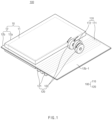
FIG. 1 is a perspective view of an apparatus for sealing a secondary battery according to a first embodiment of the present invention. -
FIG. 2 is a front view ofFIG. 1 . -
FIG. 3 is a side view ofFIG. 1 . -
FIG. 4 is a plan view ofFIG. 1 . -
FIG. 5 is a bottom view ofFIG. 1 . -
FIG. 6 is a plan view illustrating an interval between a sealing roller and a straightening roller in the apparatus for sealing the secondary battery according to the first embodiment of the present invention. -
FIG. 7 is a perspective view illustrating a usage state of the apparatus for sealing the secondary battery according to the first embodiment of the present invention. -
FIG. 8 is a side view illustrating the usage state of the apparatus for sealing the secondary battery according to the first embodiment of the present invention. -
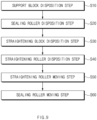
FIG. 9 is a flowchart illustrating a method for sealing the secondary battery according to the first embodiment of the present invention. -
FIG. 10 is a side view of an apparatus for sealing a secondary battery according to a second embodiment of the present invention. -
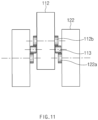
FIG. 11 is a plan view of an apparatus for sealing a secondary battery according to a third embodiment of the present invention. -
FIG. 12 is a front view of an apparatus for sealing a secondary battery according to a fourth embodiment of the present invention. -
FIG. 13 is a front view illustrating a usage state of the apparatus for sealing the secondary battery according to the fourth embodiment of the present invention. -
FIG. 14 is a perspective view illustrating another example of the apparatus for sealing the secondary battery according to the first embodiment of the present invention. - Hereinafter, embodiments of the present invention will be described in detail with reference to the accompanying drawings in such a manner that the technical idea of the present invention may easily be carried out by a person with ordinary skill in the art to which the invention pertains. The present invention may, however, be embodied in different forms and should not be construed as limited to the embodiments set forth herein. In the drawings, anything unnecessary for describing the present invention will be omitted for clarity, and also like reference numerals in the drawings denote like elements.
- Referring to
FIG. 1 , asecondary battery 10 according to a first embodiment of the present invention comprises anelectrode assembly 11 and apouch 12 accommodating theelectrode assembly 11, and thepouch 12 comprises anaccommodation part 12a accommodating theelectrode assembly 11 and a sealingpart 12b sealing theaccommodation part 12a. - The
secondary battery 10 according to the first embodiment of the present invention accommodates theelectrode assembly 11 in theaccommodation part 12a of thepouch 12, and then, thesealing part 12b of thepouch 12 is sealed. Here, an apparatus for sealing the secondary battery according to the present invention is used. - As illustrated in FIGS.
FIGS. 1 to 8 , anapparatus 100 for sealing the secondary battery according to the first embodiment of the present invention has a structure, in which the sealing parts provided on an edge of the pouch are sequentially sealed, for example, the sealing parts are sealed to be flat without creases or wrinkles. - That is, the
apparatus 100 for sealing the secondary battery according to the first embodiment of the present invention comprises a sealingmember 110, which seals the sealing part (hereinafter, referred to as one-side sealingpart 12b-1), which is disposed at one side, of the sealingparts 12b provided on the edge of thepouch 12 and a straighteningmember 120, which flattens a surface of the one-side sealingpart 12b-1 on which the sealingmember 110 passes. - Thus, the
apparatus 100 for sealing the secondary battery according to the first embodiment of the present invention may seal the one-side sealing part 12b-1 to be flattened without the creases or wrinkles, thereby improving sealing quality of the sealing part. - Hereinafter, the configuration of the
apparatus 100 for sealing the secondary battery according to the first embodiment of the present invention will be described in more detail. - The sealing
member 110 is configured to seal the sealing part of the pouch and comprises asupport block 111 supporting a bottom surface of the one-side sealing part 12b-1 of thepouch 12 and a sealingroller 112 sealing the one-side sealing part 12b-1 supported on thesupport block 111. - The
support block 111 has a long rectangular rod shape and is in surface contact with the one-side sealing part 12b-1 from one end to the other end of the one-side sealing part 12b-1 in a longitudinal direction of the one-side sealing part 12b-1 to support a bottom surface of the one-side sealing part 12b-1. Here, a surface of thesupport block 111 that supports the one-side sealing part 12b-1 may be formed as a horizontal surface to improve surface-contact force with the one-side sealing part 12b-1. - Particularly, referring to
FIG. 14 , thesupport block 111 may comprise a plurality of assembly blocks 111a that are assembled in the longitudinal direction. Thus, thesupport block 111 may be adjusted in length according to the number of plurality of assembly blocks connected to each other. Aflat tape 111b for flatness may be attached to one surface of thesupport block 111 to which the plurality ofassembly blocks 111a are assembled. - The sealing
roller 112 moves in the longitudinal direction (from a right side to a left direction when viewed inFIG. 1 ) of the one-side sealing part 12b-1 in a state of pressing a top surface of the one-side sealing part 12b-1 supported on thesupport block 111 to seal the one-side sealing part 12b-1 supported on thesupport block 111. - Each of the
support block 111 and the sealingroller 112 may have a temperature set to thermally fuse the one-side sealing part 12b-1, and the set temperature may be 80°C to 150°C. Thus, thesupport block 111 and the sealingroller 112 may seal one-side sealing part 12b-1 to be sealed stably. - Here, the sealing
roller 112 has a temperature greater than that of thesupport block 111. That is, thesupport block 111 may have a temperature of 80°C, and the sealingroller 112 may have a temperature of 100°C to 150°C. When the temperature of thesupport block 111 is 100°C or more, the one-side sealing part 12b-1 supported by thesupport block 111 for a long time may be deformed. Thus, thesupport block 111 may be set to a temperature of 80°C to maintain a temperature at which the one-side sealing part 12b-1 does not rise to a temperature of 80°C or more, and the sealingroller 112 may be only set to a high temperature to stably seal the one-side sealing part 12b-1 just by allowing the sealingroller 112 to pass thereon. - The sealing
member 110 having the above-described configuration may stably seal the one-side sealing portion 12b-1 of thepouch 12. - The straightening
member 120 is configured to press and flatten creases or wrinkles generated on the surface of the one-side sealing part on which the sealing member passes and comprises a pair of straighteningblocks 121, which are respectively provided on both sides of thesupport block 111 to support a bottom surface of the one-side sealing part 12b-1 disposed at each of both sides of thesupport block 111, and a pair of straighteningrollers 122, which move in a longitudinal direction of the one-side sealing part 12b-1 in a state of pressing (or pushing) a top surface of the one-side sealing part 12b-1 supported by each of the straightening blocks 121 so as to be disposed between the pair of straighteningblocks 121, thereby pressing and flattening the surface of the one-side sealing part 12b-1 on which the sealingroller 112 passes. - That is, referring to
FIGS. 7 and8 , in the straighteningmember 120, the pair of straighteningrollers 122 may move along the straightening blocks 121 while rotating to push or press the creases or wrinkles generated on the surface of the one-side sealing part 12b-1 in a moving direction of the straighteningrollers 122 to flatten the surface of the one-side sealing part 12b-1 disposed between the pair of straighteningrollers 122. Then, the sealingmember 110 may pass on the flattened surface of the one-side sealing part 12b-1 to sealing the one-side sealing part 12b-1 without the creases or wrinkles. - A rotation center point A of each of the pair of straightening
rollers 122 when viewed at a position that is spaced apart from the one-side sealing part 12b-1 in a width direction is disposed at a position spaced a set distance α forward from a rotation center point B of the sealingroller 112 when viewed at the other end (a left end of the sealing part when viewed inFIG. 8 ) of the one-side sealing part 12b-1. That is, the straighteningroller 122 may precede the sealingroller 112 to previously flatten the surface of the one-side sealing part 12b-1 on which the sealingroller 112 passes, and thus, the sealing part of the pouch may be stably sealed without the creases or wrinkles. - Here, the set distance α may be 5 mm to 20 mm. That is, if the set distance α is 5 mm or less, the sealing
roller 122 may pass without completely flattening the creases or wrinkles generated on the one-side sealing part 12b-1, and if the set distance α is 20 mm or more, the flattened surface of the one-side sealing part 12b-1 may be returned to its original shape to generate creases or wrinkles. Thus, the straighteningroller 122 and the sealingroller 112 have a distance of 5 mm to 20 mm therebetween, and as a result, the one-side sealing part 12b-1 may be sealed to be flattened without the creases or wrinkles. - The pair of straightening
rollers 122 and the sealingroller 112 have the same diameter and the same rotational force. That is, in order to set the pair of straighteningrollers 122 and the sealingroller 112 to move at the same interval, the pair of straighteningrollers 122 and the sealingroller 112 have the same diameter and the same rotational force. Thus, the pair of straighteningrollers 122 and the sealingrollers 112 may easily move at the same interval. - Therefore, the
apparatus 100 for sealing the secondary battery according to the first embodiment of the present invention may seal the sealing part of the pouch without the creases or wrinkles, to improve sealing quality of the sealing part, thereby reducing a defective rate. - Hereinafter, a method for sealing a secondary battery according to the first embodiment of the present invention will be described.
- As illustrated in
FIG. 9 , a method for sealing a secondary battery according to the first embodiment of the present invention is a method for sealing a pouch, in which an electrode assembly is accommodated, and comprises a support block disposition step (S10), a sealing roller disposition step (S20), a straightening block disposition step (S30), a straightening roller disposition step (S40), a straightening roller moving step (S50), and a sealing roller moving step (S60) . - The method for sealing the secondary battery according to the first embodiment of the present invention uses the
apparatus 100 for sealing the secondary battery, and theapparatus 100 for sealing the secondary battery comprises a sealingmember 110 and a straighteningmember 120. Also, the sealingmember 110 comprises asupport block 111 and asealing block 112, and the straighteningmember 120 comprises a pair of straighteningblocks 121 and a straighteningroller 122. - Referring to
FIG. 1 , in the support block disposition step (S10), thesupport block 111 is disposed on a bottom surface of one-side sealing part 12b-1 of apouch 12. Here, thesupport block 111 is disposed to be supported in a longitudinal direction (a horizontal direction when viewed inFIG. 1 ) of the one-side sealing part 12b-1. - In the sealing roller disposition step (S20), the sealing
roller 112 is disposed on one end (a right end of a top surface of the one-side sealing part 12b-1 when viewed inFIG. 1 ) of a top surface of the one-side sealing part 12b-1 supported by thesupport block 111. - In the straightening block disposition step (S30), the straightening
block 121 is disposed on each of both sides of thesupport block 111. Here, the straighteningblock 121 is disposed to be supported in the longitudinal direction of the oneside sealing part 12b-1, i.e., in the same direction as thesupport block 111. - In the straightening roller arranging step (S40), the straightening
roller 122 is disposed on one end of the top surface of the one-side sealing part 12b-1 supported by the straighteningblock 121. Here, the straighteningroller 122 is disposed in a state of pressing the one-side sealing part 12b-1. - Particularly, referring to
FIG. 8 , in the straightening roller disposition step (S40), the straighteningrollers 122 are disposed so that a rotation center point of each of the pair of straighteningrollers 122 when viewed at a position that is spaced apart from the one-side sealing part 12b-1 in a width direction is disposed at a position spaced a set distance forward from a rotation center point of the sealingroller 122. Thus, the straighteningroller 122 may move to precede the sealingroller 112, thereby pressing and flattening a surface of the one-side sealing part 12b-1, on which the sealingroller 112 passes. - Here, the straightening
roller 122 and the sealingroller 112 have the same diameter and the same rotational force. Thus, it is possible to prevent a change in movement interval between the straighteningroller 122 and the sealingroller 112 so that the straighteningroller 122 and the sealingroller 112 move at the same interval. As a result, the flattened surface of the one-side sealing part 12b-1 may be stably sealed. - In the straightening roller moving step (S50), the straightening
roller 122 moves from one end to the other end of the one-side sealing part 12b-1. Then, the surface of the one-side sealing part 12b-1 is pressed by the straighteningroller 122. Here, if there are creases or wrinkles on the surface of the oneside sealing part 12b-1, the creases or wrinkles are flattened. - In more detail, referring to
FIGS. 7 and8 , when the straighteningroller 122 moves from one end to the other end of the one-side sealing part 12b-1 while rotating, the creases or wrinkles of the one-side sealing part 12b-1, which is disposed between the pair of straighteningrollers 122, are pressed or pushed to be flattened. - In the sealing roller moving step (S60), the sealing
roller 112 moves from one end to the other end of the one-side sealing part 12b-1 to seal the one-side sealing part 12b-1 supported on thesupport block 111. Here, since the sealingroller 112 passes on the one-side sealing part 12b-1 that is flattened by the pair of straighteningrollers 122, the one-side sealing part 12b-1 may be sealed without the creases or wrinkles. - Particularly, each of the sealing
roller 112 and thesupport block 111 has a set temperature to thermally fuse the one-side sealing part 12b-1. Thus, the oneside sealing part 12b-1 may be stably sealed. - Hereinafter, in descriptions of another embodiment of the present invention, constituents having the same function as the above-mentioned embodiment have been given the same reference numeral in the drawings, and thus duplicated description will be omitted.
- As illustrated in
FIG. 10 , anapparatus 100 for sealing a secondary battery according to a second embodiment of the present invention further comprises a guide means configured to guide a sealingroller 112 so that the sealingroller 112 moves from one end to other end of thesupport block 111. - That is, the guide means comprises a
guide piece 111c in which aguide hole 111c-1 is formed from one end to the other end of one surface of thesupport block 111 and aguide protrusion 112a having one end that is freely rotatably coupled to a rotation shaft of the sealingroller 112 and the other end that is movably coupled to theguide hole 111c-1 to guide the sealingroller 112 from one end to the other end of thesupport block 111. - Thus, in the
apparatus 100 for sealing the secondary battery according to the second embodiment of the present invention, the sealingroller 112 may stably move through theguide piece 111c and the guide protrusion 112c. As a result, the one-side sealing part 12b-1 of a pouch may be uniformly and safely sealed. - As illustrated in
FIG. 11 , anapparatus 100 for sealing a secondary battery according to a third embodiment of the present invention comprises a pair of straighteningrollers 122 and a sealingroller 112. The pair of straighteningrollers 112 and the sealingroller 112 are coupled to be interlocked with each other. - That is, the
apparatus 100 for sealing the secondary battery according to the third embodiment of the present invention comprises astraightening gear 122a provided on a rotation shaft, asealing gear 112b provided on a rotation shaft of the sealingroller 112, and aconnection gear 113 connecting thestraightening gear 122a to thesealing gear 112b. Here, thestraightening gear 122a and the sealing gear 11b have the same gear ratio. - Therefore, in the
apparatus 100 for sealing the secondary battery according to the third embodiment of the present invention, when the sealingroller 112 rotates, the straighteningroller 122 is interlocked in the same direction to rotate, thereby improving operability and convenience of use and significantly simplifying a structure. - As illustrated in
FIGS. 12 and13 , anapparatus 100 for sealing a secondary battery according to a fourth embodiment of the present invention comprises astraightening block 121 and a straighteningroller 122. Apressing groove 121a is formed in a top surface of thestraightening block 121 in a longitudinal direction of one-side sealing part 12b-1, and apressing protrusion 122b forcibly pressing the one-side sealing part 12b-1 disposed in thepressing groove 121a to be inserted into thepressing groove 121a is formed on a circumferential surface of the straighteningroller 122. - Therefore, in the
apparatus 100 for sealing the secondary battery according to the fourth embodiment of the present invention, since the one-side sealing part 12b-1 is forcibly inserted into thepressing groove 121a by thepressing protrusion 122b, the one-side sealing part may be pulled in a direction of the straightening roller, and as a result, a surface of the one-side sealing part 12b-1 disposed between the pair of straighteningrollers 122 may be more flattened. - Accordingly, the scope of the present invention is defined by the appended claims.
-
- 100:
- Sealing apparatus
- 110:
- Sealing member
- 111:
- Support block
- 112:
- Sealing roller
- 120:
- Straightening member
- 121:
- Straightening block
- 122:
- Straightening roller
Claims (14)
- An apparatus (100) for sealing a secondary battery (10), which is configured to seal a pouch (12), the apparatus (100) comprising:a support block (111) configured to support a bottom surface of a one-side sealing part (12b-1) of the pouch (12); anda sealing member (110) comprising a sealing roller (112) that is configured to move in a longitudinal direction of the one-side sealing part (12b-1) in a state of pressing a top surface of the one-side sealing part (12b-1) supported on the support block (111) to seal the one-side sealing part (12b-1) supported on the support block (111),characterized bya straightening member (120) comprising at least a plurality of straightening rollers (122) and a straightening block (121) and being configured to flatten a surface of the one-side sealing part (12b-1) on which the sealing roller (112) passes,wherein each of the sealing roller (112) and the support block (111) have a set temperature to thermally fuse the one-side sealing part (12b-1).
- The apparatus (100) of claim 1, wherein the support block (111) is in close contact with the surface of the one-side sealing part (12b-1) from one end to the other end in the longitudinal direction of the one-side sealing part (12b-1) to support a bottom surface of the one-side sealing part (12b-1).
- The apparatus (100) of claim 1, wherein the straightening member (120) comprises:a pair of straightening blocks (121), which are respectively provided on both sides of the support block (111) to support a bottom surface of the one-side sealing part (12b-1) disposed at each of both sides of the support block (111); anda pair of straightening rollers (122), which are configured to move in the longitudinal direction of the one-side sealing part (12b-1) in a state of pressing a top surface of the one-side sealing part (12b-1) supported by each of the straightening blocks (121) so as to be disposed between the pair of straightening blocks (121), thereby flattening the surface of the one-side sealing part (12b-1) on which the sealing roller (112) passes.
- The apparatus (100) of claim 3, wherein a rotation center point (A) of each of the pair of straightening rollers (122) when viewed at a position that is spaced apart from the one-side sealing part (12b-1) in a width direction is disposed at a position spaced a set distance (α) forward from a rotation center point (B) of the sealing roller (112).
- The apparatus (100) of claim 4, wherein the set distance (α) ranges of 5 mm to 20 mm.
- The apparatus (100) of claim 1, wherein the pair of straightening rollers (122) and the sealing roller (112) have the same diameter and the same rotational force.
- The apparatus (100) of claim 6, wherein the pair of straightening rollers (122) and the sealing roller (112) are coupled to be interlocked with each other.
- The apparatus (100) of claim 3, wherein a pressing groove (121a) is formed in a top surface of the straightening block (121) in the longitudinal direction of the one-side sealing part (12b-1),a pressing protrusion (122b) configured to forcibly press the one-side sealing part (12b-1) disposed in the pressing groove (121a) to be inserted into the pressing groove (121a) is formed on a circumferential surface of the straightening roller (122), andthe one-side sealing part (12b-1) that is forcibly inserted into the pressing groove (121a) by the pressing protrusion (122b) is pulled in a direction of the straightening roller (122) to flatten the surface of the one-side sealing part (12b-1) on which the sealing roller (112) passes.
- The apparatus (100) of claim 1, further comprising a guide means configured to guide the sealing roller (112) to move from one end to the other end of the support block (111).
- The apparatus (100) of claim 9, wherein the guide means comprises a guide piece (111c) in which a guide hole (111c-1) is formed from one end to the other end of one surface of the support block (111) and a guide protrusion (112a) having one end that is freely rotatably coupled to a rotation shaft of the sealing roller (112) and the other end that is movably coupled to the guide hole (111c-1) to guide the sealing roller (112) from one end to the other end of the support block (111).
- A method for sealing a secondary battery (10), which is performed to seal a pouch (12), in which an electrode assembly (11) is accommodated, the method comprising:a support block disposition step (S10) of disposing a support block (111) on a bottom surface of one-side sealing part (12b-1) of the pouch (12), wherein the support block (111) is disposed to be supported in a longitudinal direction of the one-side sealing part (12b-1);a sealing roller disposition step (S20) of disposing a sealing roller (112) on one end of a top surface of the one-side sealing part (12b-1) supported by the support block (111),characterized bya straightening block disposition step (S30) of disposing a straightening block (121) on each of both sides of the support block (111), wherein the straightening block (121) is disposed to be supported in the longitudinal direction of the one-side sealing part (12b-1);a straightening roller disposition step (S40) of disposing a straightening roller (122) on one end of a top surface of the one-side sealing part (12b-1) supported on the straightening block (121), wherein the straightening roller (122) is disposed in a state of pressing the one-side sealing part (12b-1);a straightening roller moving step (S50) of allowing the straightening roller (122) to move from one end to the other end of the one-side sealing part (12b-1) so as to flatten a surface of the one-side sealing part (12b-1), which is disposed between the straightening rollers (122); anda sealing roller moving step (S60) of allowing the sealing roller (112) to move from one end to the other end of the one-side sealing part (12b-1) so as to seal the one-side sealing part (12b-1) supported on the support block (111), wherein the one-side sealing part (12b-1) supported on the support block (111) is sealed in a state of being flattened by the straightening roller (122).
- The method of claim 11, wherein, in the straightening roller disposition step (S40), the straightening rollers (122) are disposed so that a rotation center point (A) of each of the pair of straightening rollers (122) when viewed at a position that is spaced apart from the one-side sealing part (12b-1) in a width direction is disposed at a position spaced a set distance forward from a rotation center point (B) of the sealing roller (112).
- The method of claim 11, wherein the straightening roller (122) and the sealing roller (112) have the same diameter and the same rotational force.
- The method of claim 11, wherein each of the sealing roller (112) and the support block (111) have a set temperature to thermally fuse the one-side sealing part (12b-1).
Applications Claiming Priority (2)
| Application Number | Priority Date | Filing Date | Title |
|---|---|---|---|
| KR1020200032235A KR102831129B1 (en) | 2020-03-16 | 2020-03-16 | Sealing device and method secondary battery |
| PCT/KR2021/002878 WO2021187790A1 (en) | 2020-03-16 | 2021-03-09 | Secondary battery sealing device and sealing method |
Publications (3)
| Publication Number | Publication Date |
|---|---|
| EP4082758A1 EP4082758A1 (en) | 2022-11-02 |
| EP4082758A4 EP4082758A4 (en) | 2023-04-19 |
| EP4082758B1 true EP4082758B1 (en) | 2024-07-03 |
Family
ID=77768465
Family Applications (1)
| Application Number | Title | Priority Date | Filing Date |
|---|---|---|---|
| EP21771301.5A Active EP4082758B1 (en) | 2020-03-16 | 2021-03-09 | Apparatus and method for sealing secondary battery |
Country Status (7)
| Country | Link |
|---|---|
| US (1) | US12431562B2 (en) |
| EP (1) | EP4082758B1 (en) |
| KR (1) | KR102831129B1 (en) |
| CN (1) | CN115003491B (en) |
| ES (1) | ES2987799T3 (en) |
| HU (1) | HUE067807T2 (en) |
| WO (1) | WO2021187790A1 (en) |
Families Citing this family (5)
| Publication number | Priority date | Publication date | Assignee | Title |
|---|---|---|---|---|
| KR102710934B1 (en) | 2021-08-31 | 2024-09-26 | 주식회사 엘지에너지솔루션 | System and method for diagnosing battery |
| KR20230161817A (en) * | 2022-05-19 | 2023-11-28 | 에스케이온 주식회사 | Apparatus and method for sealing pouch-type battery case |
| KR20240156194A (en) * | 2023-04-21 | 2024-10-29 | 주식회사 엘지에너지솔루션 | Sealing device for sealing secondary battery and manufacuring method using the device |
| KR20250051998A (en) * | 2023-10-11 | 2025-04-18 | 주식회사 엘지에너지솔루션 | Sealing device of secondary battery pocket part and sealing method using the same |
| KR20250146394A (en) * | 2024-04-01 | 2025-10-13 | 에스케이온 주식회사 | Forming Apparatus For Folding Guide Line And Battery Cell |
Family Cites Families (21)
| Publication number | Priority date | Publication date | Assignee | Title |
|---|---|---|---|---|
| JP3808776B2 (en) * | 2002-01-18 | 2006-08-16 | 松下電器産業株式会社 | Square sealed battery and assembled battery |
| KR100644904B1 (en) * | 2005-03-28 | 2006-11-10 | 한국생산성본부 | Lead-Step Film Fusion Device for Polymer Battery for Secondary Battery |
| KR100882488B1 (en) | 2006-07-18 | 2009-02-06 | 주식회사 엘지화학 | Manufacturing method of secondary battery with improved productivity |
| KR101417152B1 (en) | 2009-10-09 | 2014-08-07 | 주식회사 엘지화학 | Method for manufacturing pouch type battery and sealing device for pouch |
| KR101949479B1 (en) | 2012-08-06 | 2019-02-19 | 스미또모 가가꾸 가부시키가이샤 | Roll member, coating device, separator production device, and secondary battery production device |
| KR101838315B1 (en) | 2013-10-18 | 2018-03-13 | 주식회사 엘지화학 | Method For Manufacturing Pouch Type Lithium Secondary Battery |
| KR102191499B1 (en) * | 2014-08-11 | 2020-12-15 | 에스케이이노베이션 주식회사 | Sealing apparatus of pouch type secondary battery |
| KR101617954B1 (en) | 2014-08-11 | 2016-05-23 | 주식회사 대한소재 | The electrode tabs film fusion device of secondary batterycells and method |
| KR101793729B1 (en) | 2014-12-24 | 2017-11-03 | 주식회사 엘지화학 | Pouch type secondary battery and a method of making the same |
| KR101672402B1 (en) * | 2015-07-21 | 2016-11-03 | (주)휴민텍 | Acute angle bending apparatus for side sealing portion of pouch type secondary battery cell and acute angle bending method using the same |
| KR20170026230A (en) | 2015-08-27 | 2017-03-08 | 주식회사 엘지화학 | apparatus for sealing secondary battery |
| KR101766966B1 (en) | 2015-09-17 | 2017-08-09 | 정종홍 | Pouch folding apparatus of secondary battery |
| KR102258656B1 (en) | 2015-11-05 | 2021-05-31 | 에스케이이노베이션 주식회사 | Apparatus for folding pouch of secondary battery |
| KR101863748B1 (en) | 2016-04-21 | 2018-06-04 | 유종재 | High-capacity rechargeable battery heat-sealable film lid tab automation equipment |
| CN205770460U (en) * | 2016-05-26 | 2016-12-07 | 亚尼塑料科技(天津)有限公司 | A kind of plastic film closing device |
| KR20180010563A (en) | 2016-07-21 | 2018-01-31 | 충북대학교 산학협력단 | 2nd Pouch Side Continuous Folding System |
| KR102178188B1 (en) * | 2016-09-08 | 2020-11-12 | 주식회사 엘지화학 | Battery Case Forming Device Equipped with Punch Head of Low Friction Force |
| KR102252177B1 (en) * | 2017-02-14 | 2021-05-14 | 주식회사 엘지화학 | Machine for Processing Sealing Extra Part of Battery Cell |
| KR102224911B1 (en) | 2017-03-20 | 2021-03-05 | 주식회사 엘지화학 | Leveling apparatus for preventing curling of pouch type secondary battery |
| KR20190038094A (en) * | 2017-09-29 | 2019-04-08 | 에스케이이노베이션 주식회사 | Apparatus for forming a pouch for secondary battery |
| KR102326441B1 (en) | 2017-10-31 | 2021-11-15 | 주식회사 엘지에너지솔루션 | Sealing device and sealing method of pouch for secondary battery |
-
2020
- 2020-03-16 KR KR1020200032235A patent/KR102831129B1/en active Active
-
2021
- 2021-03-09 ES ES21771301T patent/ES2987799T3/en active Active
- 2021-03-09 EP EP21771301.5A patent/EP4082758B1/en active Active
- 2021-03-09 WO PCT/KR2021/002878 patent/WO2021187790A1/en not_active Ceased
- 2021-03-09 US US17/796,791 patent/US12431562B2/en active Active
- 2021-03-09 HU HUE21771301A patent/HUE067807T2/en unknown
- 2021-03-09 CN CN202180010076.0A patent/CN115003491B/en active Active
Also Published As
| Publication number | Publication date |
|---|---|
| CN115003491A (en) | 2022-09-02 |
| ES2987799T3 (en) | 2024-11-18 |
| US20230053218A1 (en) | 2023-02-16 |
| KR20210115865A (en) | 2021-09-27 |
| HUE067807T2 (en) | 2024-11-28 |
| EP4082758A1 (en) | 2022-11-02 |
| CN115003491B (en) | 2023-11-24 |
| KR102831129B1 (en) | 2025-07-04 |
| US12431562B2 (en) | 2025-09-30 |
| WO2021187790A1 (en) | 2021-09-23 |
| EP4082758A4 (en) | 2023-04-19 |
Similar Documents
| Publication | Publication Date | Title |
|---|---|---|
| EP4082758B1 (en) | Apparatus and method for sealing secondary battery | |
| EP3098877B1 (en) | Battery cell comprising circumferential surface sealing part having sealing line | |
| Garayt et al. | A guide to making highly reproducible Li-ion single-layer pouch cells for academic researchers | |
| EP2133942A1 (en) | Secondary battery and method for manufacturing secondary battery | |
| US11050103B2 (en) | Pouch cell and method of forming same | |
| EP3886231B1 (en) | Sequential pressure formation jig and formation method using same | |
| US20090061307A1 (en) | Can type lithium secondary battery | |
| KR101637071B1 (en) | Electrode assembly having partly folded function and battery cell including the same | |
| JP2016167416A (en) | Separator housing type electrode body of power storage device, electrode assembly of power storage device, and manufacturing apparatus of power storage device | |
| CN113875043B (en) | Secondary battery | |
| EP3828957B1 (en) | Battery module having insulation pad with extended length, and battery pack and vehicle comprising same | |
| EP4064399A1 (en) | Secondary battery rolling apparatus | |
| EP3312928B1 (en) | Lithium ion secondary battery | |
| KR20150033436A (en) | Rechargeable battery | |
| US10910663B2 (en) | Secondary battery | |
| CN108808011A (en) | Secondary cell and current-collecting terminals | |
| EP3159959A1 (en) | Battery cell including battery case having projecting portion formed thereon corresponding to step-structured electrode assembly | |
| JP7631750B2 (en) | Electrode sheet manufacturing device and electrode sheet manufacturing method | |
| EP4235888B1 (en) | Manufacturing device for electrode assembly and method using the same | |
| EP4513610A1 (en) | Formation jig and formation system comprising same | |
| KR20220092102A (en) | Battery cell manufacturing device | |
| KR102937305B1 (en) | Battery cell fixing apparatus | |
| US20250266576A1 (en) | Flexible electrode assembly and rechargeable battery including the same | |
| EP4250386A1 (en) | Calendering rolls of calendering roll press for manufacturing dry electrode | |
| JP2004220940A (en) | Bead forming apparatus and bead forming method for cylindrical battery |
Legal Events
| Date | Code | Title | Description |
|---|---|---|---|
| STAA | Information on the status of an ep patent application or granted ep patent |
Free format text: STATUS: THE INTERNATIONAL PUBLICATION HAS BEEN MADE |
|
| PUAI | Public reference made under article 153(3) epc to a published international application that has entered the european phase |
Free format text: ORIGINAL CODE: 0009012 |
|
| STAA | Information on the status of an ep patent application or granted ep patent |
Free format text: STATUS: REQUEST FOR EXAMINATION WAS MADE |
|
| 17P | Request for examination filed |
Effective date: 20220725 |
|
| AK | Designated contracting states |
Kind code of ref document: A1 Designated state(s): AL AT BE BG CH CY CZ DE DK EE ES FI FR GB GR HR HU IE IS IT LI LT LU LV MC MK MT NL NO PL PT RO RS SE SI SK SM TR |
|
| REG | Reference to a national code |
Ref legal event code: R079 Ipc: B29C0065180000 Ref country code: DE Ref legal event code: R079 Ref document number: 602021015250 Country of ref document: DE Free format text: PREVIOUS MAIN CLASS: B29C0065000000 Ipc: B29C0065180000 |
|
| A4 | Supplementary search report drawn up and despatched |
Effective date: 20230320 |
|
| RIC1 | Information provided on ipc code assigned before grant |
Ipc: B29L 31/34 20060101ALN20230314BHEP Ipc: H01M 50/183 20210101ALI20230314BHEP Ipc: H01M 50/105 20210101ALI20230314BHEP Ipc: H01M 10/04 20060101ALI20230314BHEP Ipc: H01M 50/10 20210101ALI20230314BHEP Ipc: B29L 31/00 20060101ALI20230314BHEP Ipc: H01M 50/116 20210101ALI20230314BHEP Ipc: B29C 65/02 20060101ALI20230314BHEP Ipc: B29C 65/00 20060101ALI20230314BHEP Ipc: B29C 65/18 20060101AFI20230314BHEP |
|
| DAV | Request for validation of the european patent (deleted) | ||
| DAX | Request for extension of the european patent (deleted) | ||
| GRAP | Despatch of communication of intention to grant a patent |
Free format text: ORIGINAL CODE: EPIDOSNIGR1 |
|
| STAA | Information on the status of an ep patent application or granted ep patent |
Free format text: STATUS: GRANT OF PATENT IS INTENDED |
|
| RIC1 | Information provided on ipc code assigned before grant |
Ipc: B29L 31/34 20060101ALN20240313BHEP Ipc: H01M 50/183 20210101ALI20240313BHEP Ipc: H01M 50/105 20210101ALI20240313BHEP Ipc: H01M 10/04 20060101ALI20240313BHEP Ipc: H01M 50/10 20210101ALI20240313BHEP Ipc: B29L 31/00 20060101ALI20240313BHEP Ipc: H01M 50/116 20210101ALI20240313BHEP Ipc: B29C 65/02 20060101ALI20240313BHEP Ipc: B29C 65/00 20060101ALI20240313BHEP Ipc: B29C 65/18 20060101AFI20240313BHEP |
|
| INTG | Intention to grant announced |
Effective date: 20240410 |
|
| GRAS | Grant fee paid |
Free format text: ORIGINAL CODE: EPIDOSNIGR3 |
|
| GRAA | (expected) grant |
Free format text: ORIGINAL CODE: 0009210 |
|
| STAA | Information on the status of an ep patent application or granted ep patent |
Free format text: STATUS: THE PATENT HAS BEEN GRANTED |
|
| P01 | Opt-out of the competence of the unified patent court (upc) registered |
Effective date: 20240430 |
|
| AK | Designated contracting states |
Kind code of ref document: B1 Designated state(s): AL AT BE BG CH CY CZ DE DK EE ES FI FR GB GR HR HU IE IS IT LI LT LU LV MC MK MT NL NO PL PT RO RS SE SI SK SM TR |
|
| REG | Reference to a national code |
Ref country code: CH Ref legal event code: EP |
|
| REG | Reference to a national code |
Ref country code: DE Ref legal event code: R096 Ref document number: 602021015250 Country of ref document: DE |
|
| REG | Reference to a national code |
Ref country code: LT Ref legal event code: MG9D |
|
| REG | Reference to a national code |
Ref country code: NL Ref legal event code: MP Effective date: 20240703 |
|
| REG | Reference to a national code |
Ref country code: ES Ref legal event code: FG2A Ref document number: 2987799 Country of ref document: ES Kind code of ref document: T3 Effective date: 20241118 |
|
| REG | Reference to a national code |
Ref country code: HU Ref legal event code: AG4A Ref document number: E067807 Country of ref document: HU |
|
| PG25 | Lapsed in a contracting state [announced via postgrant information from national office to epo] |
Ref country code: PT Free format text: LAPSE BECAUSE OF FAILURE TO SUBMIT A TRANSLATION OF THE DESCRIPTION OR TO PAY THE FEE WITHIN THE PRESCRIBED TIME-LIMIT Effective date: 20241104 |
|
| REG | Reference to a national code |
Ref country code: AT Ref legal event code: MK05 Ref document number: 1699406 Country of ref document: AT Kind code of ref document: T Effective date: 20240703 |
|
| PG25 | Lapsed in a contracting state [announced via postgrant information from national office to epo] |
Ref country code: NL Free format text: LAPSE BECAUSE OF FAILURE TO SUBMIT A TRANSLATION OF THE DESCRIPTION OR TO PAY THE FEE WITHIN THE PRESCRIBED TIME-LIMIT Effective date: 20240703 |
|
| PG25 | Lapsed in a contracting state [announced via postgrant information from national office to epo] |
Ref country code: PT Free format text: LAPSE BECAUSE OF FAILURE TO SUBMIT A TRANSLATION OF THE DESCRIPTION OR TO PAY THE FEE WITHIN THE PRESCRIBED TIME-LIMIT Effective date: 20241104 Ref country code: NL Free format text: LAPSE BECAUSE OF FAILURE TO SUBMIT A TRANSLATION OF THE DESCRIPTION OR TO PAY THE FEE WITHIN THE PRESCRIBED TIME-LIMIT Effective date: 20240703 |
|
| PG25 | Lapsed in a contracting state [announced via postgrant information from national office to epo] |
Ref country code: NO Free format text: LAPSE BECAUSE OF FAILURE TO SUBMIT A TRANSLATION OF THE DESCRIPTION OR TO PAY THE FEE WITHIN THE PRESCRIBED TIME-LIMIT Effective date: 20241003 |
|
| PG25 | Lapsed in a contracting state [announced via postgrant information from national office to epo] |
Ref country code: GR Free format text: LAPSE BECAUSE OF FAILURE TO SUBMIT A TRANSLATION OF THE DESCRIPTION OR TO PAY THE FEE WITHIN THE PRESCRIBED TIME-LIMIT Effective date: 20241004 Ref country code: FI Free format text: LAPSE BECAUSE OF FAILURE TO SUBMIT A TRANSLATION OF THE DESCRIPTION OR TO PAY THE FEE WITHIN THE PRESCRIBED TIME-LIMIT Effective date: 20240703 Ref country code: PL Free format text: LAPSE BECAUSE OF FAILURE TO SUBMIT A TRANSLATION OF THE DESCRIPTION OR TO PAY THE FEE WITHIN THE PRESCRIBED TIME-LIMIT Effective date: 20240703 |
|
| PG25 | Lapsed in a contracting state [announced via postgrant information from national office to epo] |
Ref country code: BG Free format text: LAPSE BECAUSE OF FAILURE TO SUBMIT A TRANSLATION OF THE DESCRIPTION OR TO PAY THE FEE WITHIN THE PRESCRIBED TIME-LIMIT Effective date: 20240703 |
|
| PG25 | Lapsed in a contracting state [announced via postgrant information from national office to epo] |
Ref country code: LV Free format text: LAPSE BECAUSE OF FAILURE TO SUBMIT A TRANSLATION OF THE DESCRIPTION OR TO PAY THE FEE WITHIN THE PRESCRIBED TIME-LIMIT Effective date: 20240703 |
|
| PG25 | Lapsed in a contracting state [announced via postgrant information from national office to epo] |
Ref country code: IS Free format text: LAPSE BECAUSE OF FAILURE TO SUBMIT A TRANSLATION OF THE DESCRIPTION OR TO PAY THE FEE WITHIN THE PRESCRIBED TIME-LIMIT Effective date: 20241103 Ref country code: AT Free format text: LAPSE BECAUSE OF FAILURE TO SUBMIT A TRANSLATION OF THE DESCRIPTION OR TO PAY THE FEE WITHIN THE PRESCRIBED TIME-LIMIT Effective date: 20240703 |
|
| PG25 | Lapsed in a contracting state [announced via postgrant information from national office to epo] |
Ref country code: CZ Free format text: LAPSE BECAUSE OF FAILURE TO SUBMIT A TRANSLATION OF THE DESCRIPTION OR TO PAY THE FEE WITHIN THE PRESCRIBED TIME-LIMIT Effective date: 20240703 Ref country code: HR Free format text: LAPSE BECAUSE OF FAILURE TO SUBMIT A TRANSLATION OF THE DESCRIPTION OR TO PAY THE FEE WITHIN THE PRESCRIBED TIME-LIMIT Effective date: 20240703 |
|
| PG25 | Lapsed in a contracting state [announced via postgrant information from national office to epo] |
Ref country code: RS Free format text: LAPSE BECAUSE OF FAILURE TO SUBMIT A TRANSLATION OF THE DESCRIPTION OR TO PAY THE FEE WITHIN THE PRESCRIBED TIME-LIMIT Effective date: 20241003 |
|
| PG25 | Lapsed in a contracting state [announced via postgrant information from national office to epo] |
Ref country code: RS Free format text: LAPSE BECAUSE OF FAILURE TO SUBMIT A TRANSLATION OF THE DESCRIPTION OR TO PAY THE FEE WITHIN THE PRESCRIBED TIME-LIMIT Effective date: 20241003 Ref country code: PL Free format text: LAPSE BECAUSE OF FAILURE TO SUBMIT A TRANSLATION OF THE DESCRIPTION OR TO PAY THE FEE WITHIN THE PRESCRIBED TIME-LIMIT Effective date: 20240703 Ref country code: NO Free format text: LAPSE BECAUSE OF FAILURE TO SUBMIT A TRANSLATION OF THE DESCRIPTION OR TO PAY THE FEE WITHIN THE PRESCRIBED TIME-LIMIT Effective date: 20241003 Ref country code: LV Free format text: LAPSE BECAUSE OF FAILURE TO SUBMIT A TRANSLATION OF THE DESCRIPTION OR TO PAY THE FEE WITHIN THE PRESCRIBED TIME-LIMIT Effective date: 20240703 Ref country code: IS Free format text: LAPSE BECAUSE OF FAILURE TO SUBMIT A TRANSLATION OF THE DESCRIPTION OR TO PAY THE FEE WITHIN THE PRESCRIBED TIME-LIMIT Effective date: 20241103 Ref country code: HR Free format text: LAPSE BECAUSE OF FAILURE TO SUBMIT A TRANSLATION OF THE DESCRIPTION OR TO PAY THE FEE WITHIN THE PRESCRIBED TIME-LIMIT Effective date: 20240703 Ref country code: GR Free format text: LAPSE BECAUSE OF FAILURE TO SUBMIT A TRANSLATION OF THE DESCRIPTION OR TO PAY THE FEE WITHIN THE PRESCRIBED TIME-LIMIT Effective date: 20241004 Ref country code: FI Free format text: LAPSE BECAUSE OF FAILURE TO SUBMIT A TRANSLATION OF THE DESCRIPTION OR TO PAY THE FEE WITHIN THE PRESCRIBED TIME-LIMIT Effective date: 20240703 Ref country code: CZ Free format text: LAPSE BECAUSE OF FAILURE TO SUBMIT A TRANSLATION OF THE DESCRIPTION OR TO PAY THE FEE WITHIN THE PRESCRIBED TIME-LIMIT Effective date: 20240703 Ref country code: BG Free format text: LAPSE BECAUSE OF FAILURE TO SUBMIT A TRANSLATION OF THE DESCRIPTION OR TO PAY THE FEE WITHIN THE PRESCRIBED TIME-LIMIT Effective date: 20240703 Ref country code: AT Free format text: LAPSE BECAUSE OF FAILURE TO SUBMIT A TRANSLATION OF THE DESCRIPTION OR TO PAY THE FEE WITHIN THE PRESCRIBED TIME-LIMIT Effective date: 20240703 |
|
| REG | Reference to a national code |
Ref country code: DE Ref legal event code: R097 Ref document number: 602021015250 Country of ref document: DE |
|
| PG25 | Lapsed in a contracting state [announced via postgrant information from national office to epo] |
Ref country code: RO Free format text: LAPSE BECAUSE OF FAILURE TO SUBMIT A TRANSLATION OF THE DESCRIPTION OR TO PAY THE FEE WITHIN THE PRESCRIBED TIME-LIMIT Effective date: 20240703 Ref country code: DK Free format text: LAPSE BECAUSE OF FAILURE TO SUBMIT A TRANSLATION OF THE DESCRIPTION OR TO PAY THE FEE WITHIN THE PRESCRIBED TIME-LIMIT Effective date: 20240703 Ref country code: SM Free format text: LAPSE BECAUSE OF FAILURE TO SUBMIT A TRANSLATION OF THE DESCRIPTION OR TO PAY THE FEE WITHIN THE PRESCRIBED TIME-LIMIT Effective date: 20240703 |
|
| PG25 | Lapsed in a contracting state [announced via postgrant information from national office to epo] |
Ref country code: EE Free format text: LAPSE BECAUSE OF FAILURE TO SUBMIT A TRANSLATION OF THE DESCRIPTION OR TO PAY THE FEE WITHIN THE PRESCRIBED TIME-LIMIT Effective date: 20240703 |
|
| PG25 | Lapsed in a contracting state [announced via postgrant information from national office to epo] |
Ref country code: IT Free format text: LAPSE BECAUSE OF FAILURE TO SUBMIT A TRANSLATION OF THE DESCRIPTION OR TO PAY THE FEE WITHIN THE PRESCRIBED TIME-LIMIT Effective date: 20240703 Ref country code: SK Free format text: LAPSE BECAUSE OF FAILURE TO SUBMIT A TRANSLATION OF THE DESCRIPTION OR TO PAY THE FEE WITHIN THE PRESCRIBED TIME-LIMIT Effective date: 20240703 |
|
| PLBE | No opposition filed within time limit |
Free format text: ORIGINAL CODE: 0009261 |
|
| STAA | Information on the status of an ep patent application or granted ep patent |
Free format text: STATUS: NO OPPOSITION FILED WITHIN TIME LIMIT |
|
| 26N | No opposition filed |
Effective date: 20250404 |
|
| PGFP | Annual fee paid to national office [announced via postgrant information from national office to epo] |
Ref country code: ES Payment date: 20250408 Year of fee payment: 5 |
|
| PG25 | Lapsed in a contracting state [announced via postgrant information from national office to epo] |
Ref country code: SE Free format text: LAPSE BECAUSE OF FAILURE TO SUBMIT A TRANSLATION OF THE DESCRIPTION OR TO PAY THE FEE WITHIN THE PRESCRIBED TIME-LIMIT Effective date: 20240703 |
|
| PG25 | Lapsed in a contracting state [announced via postgrant information from national office to epo] |
Ref country code: MC Free format text: LAPSE BECAUSE OF FAILURE TO SUBMIT A TRANSLATION OF THE DESCRIPTION OR TO PAY THE FEE WITHIN THE PRESCRIBED TIME-LIMIT Effective date: 20240703 |
|
| REG | Reference to a national code |
Ref country code: CH Ref legal event code: H13 Free format text: ST27 STATUS EVENT CODE: U-0-0-H10-H13 (AS PROVIDED BY THE NATIONAL OFFICE) Effective date: 20251023 |
|
| PG25 | Lapsed in a contracting state [announced via postgrant information from national office to epo] |
Ref country code: LU Free format text: LAPSE BECAUSE OF NON-PAYMENT OF DUE FEES Effective date: 20250309 |
|
| PG25 | Lapsed in a contracting state [announced via postgrant information from national office to epo] |
Ref country code: CH Free format text: LAPSE BECAUSE OF NON-PAYMENT OF DUE FEES Effective date: 20250331 |
|
| PG25 | Lapsed in a contracting state [announced via postgrant information from national office to epo] |
Ref country code: IE Free format text: LAPSE BECAUSE OF NON-PAYMENT OF DUE FEES Effective date: 20250309 |
|
| PGFP | Annual fee paid to national office [announced via postgrant information from national office to epo] |
Ref country code: GB Payment date: 20260224 Year of fee payment: 6 |
|
| PGFP | Annual fee paid to national office [announced via postgrant information from national office to epo] |
Ref country code: DE Payment date: 20260220 Year of fee payment: 6 |
|
| PGFP | Annual fee paid to national office [announced via postgrant information from national office to epo] |
Ref country code: BE Payment date: 20260220 Year of fee payment: 6 |
|
| PGFP | Annual fee paid to national office [announced via postgrant information from national office to epo] |
Ref country code: HU Payment date: 20260310 Year of fee payment: 6 |
|
| PGFP | Annual fee paid to national office [announced via postgrant information from national office to epo] |
Ref country code: FR Payment date: 20260224 Year of fee payment: 6 |