EP4080837B1 - Bierpaket-weiterleitungsverfahren, -vorrichtung, -gerät und -speichermedium - Google Patents
Bierpaket-weiterleitungsverfahren, -vorrichtung, -gerät und -speichermedium Download PDFInfo
- Publication number
- EP4080837B1 EP4080837B1 EP20903588.0A EP20903588A EP4080837B1 EP 4080837 B1 EP4080837 B1 EP 4080837B1 EP 20903588 A EP20903588 A EP 20903588A EP 4080837 B1 EP4080837 B1 EP 4080837B1
- Authority
- EP
- European Patent Office
- Prior art keywords
- packet
- bier
- node
- forwarding
- information
- Prior art date
- Legal status (The legal status is an assumption and is not a legal conclusion. Google has not performed a legal analysis and makes no representation as to the accuracy of the status listed.)
- Active
Links
Images




Classifications
-
- H—ELECTRICITY
- H04—ELECTRIC COMMUNICATION TECHNIQUE
- H04L—TRANSMISSION OF DIGITAL INFORMATION, e.g. TELEGRAPHIC COMMUNICATION
- H04L45/00—Routing or path finding of packets in data switching networks
- H04L45/02—Topology update or discovery
-
- H—ELECTRICITY
- H04—ELECTRIC COMMUNICATION TECHNIQUE
- H04L—TRANSMISSION OF DIGITAL INFORMATION, e.g. TELEGRAPHIC COMMUNICATION
- H04L45/00—Routing or path finding of packets in data switching networks
- H04L45/02—Topology update or discovery
- H04L45/04—Interdomain routing, e.g. hierarchical routing
-
- H—ELECTRICITY
- H04—ELECTRIC COMMUNICATION TECHNIQUE
- H04L—TRANSMISSION OF DIGITAL INFORMATION, e.g. TELEGRAPHIC COMMUNICATION
- H04L45/00—Routing or path finding of packets in data switching networks
- H04L45/50—Routing or path finding of packets in data switching networks using label swapping, e.g. multi-protocol label switch [MPLS]
-
- H—ELECTRICITY
- H04—ELECTRIC COMMUNICATION TECHNIQUE
- H04L—TRANSMISSION OF DIGITAL INFORMATION, e.g. TELEGRAPHIC COMMUNICATION
- H04L45/00—Routing or path finding of packets in data switching networks
- H04L45/74—Address processing for routing
- H04L45/741—Routing in networks with a plurality of addressing schemes, e.g. with both IPv4 and IPv6
-
- H—ELECTRICITY
- H04—ELECTRIC COMMUNICATION TECHNIQUE
- H04L—TRANSMISSION OF DIGITAL INFORMATION, e.g. TELEGRAPHIC COMMUNICATION
- H04L47/00—Traffic control in data switching networks
- H04L47/10—Flow control; Congestion control
- H04L47/43—Assembling or disassembling of packets, e.g. segmentation and reassembly [SAR]
-
- H—ELECTRICITY
- H04—ELECTRIC COMMUNICATION TECHNIQUE
- H04L—TRANSMISSION OF DIGITAL INFORMATION, e.g. TELEGRAPHIC COMMUNICATION
- H04L47/00—Traffic control in data switching networks
- H04L47/70—Admission control; Resource allocation
-
- H—ELECTRICITY
- H04—ELECTRIC COMMUNICATION TECHNIQUE
- H04L—TRANSMISSION OF DIGITAL INFORMATION, e.g. TELEGRAPHIC COMMUNICATION
- H04L69/00—Network arrangements, protocols or services independent of the application payload and not provided for in the other groups of this subclass
- H04L69/22—Parsing or analysis of headers
-
- H—ELECTRICITY
- H04—ELECTRIC COMMUNICATION TECHNIQUE
- H04L—TRANSMISSION OF DIGITAL INFORMATION, e.g. TELEGRAPHIC COMMUNICATION
- H04L47/00—Traffic control in data switching networks
- H04L47/70—Admission control; Resource allocation
- H04L47/80—Actions related to the user profile or the type of traffic
-
- H—ELECTRICITY
- H04—ELECTRIC COMMUNICATION TECHNIQUE
- H04L—TRANSMISSION OF DIGITAL INFORMATION, e.g. TELEGRAPHIC COMMUNICATION
- H04L47/00—Traffic control in data switching networks
- H04L47/70—Admission control; Resource allocation
- H04L47/82—Miscellaneous aspects
- H04L47/825—Involving tunnels, e.g. MPLS
Definitions
- the present application relates to the field of data communication, for example, a Bit Indexed Explicit Replication (BIER) packet forwarding method and apparatus, a device, a computer program and a storage medium.
- BIER Bit Indexed Explicit Replication
- the Request For Comments (RFC) 8279 specifies a BIER architecture, which is a new architecture for the forwarding of multicast data packets and provides an optimal path for the forwarding of multicast data packets through a multicast domain.
- the BIER architecture does not require the use of a protocol for building multicast distribution trees, nor does require intermediate nodes to maintain any per-flow state.
- BFIR Bit-Forwarding Ingress Router
- the BFIR determines a sub-domain (SD) in which the packet will be sent and determines the Bit-Forwarding Egress Routers (BFERs) to which the packet will be sent. Then, the BFIR inserts a "BIER header" in the packet header.
- SD sub-domain
- BFERs Bit-Forwarding Egress Routers
- the BIER header contains a BitString in which each bit represents a Bit-Forwarding Router-identifier (BFR-id) of the corresponding BFER.
- BFR-id Bit-Forwarding Router-identifier
- the number of BFERs to which a packet can be forwarded is limited only by the BitString Length (BSL). It is possible that the number of BFERs in a sub-domain is greater than the BSL.
- a Set Identifier (SI) is introduced into the BIER header. It is the SI and the BitString together that determine the BFERs to which a packet will be delivered. If the SI is n and the K-th bit in the BitString is 1 (the lowest bit is marked as the first bit), then the packet will be delivered to the BFER whose BFR-id is n*BSL+K.
- the RFC 8296 describes multiple forms of BIER encapsulation, such as a Multiprotocol Label Switching (MPLS) BIER packet which can be used in MPLS networks and a non-MPLS BIER packet which can be used in non-MPLS networks.
- MPLS Multiprotocol Label Switching
- BIFT-id Bit Index Forwarding Table-id
- the mature MPLS forwarding plane is used, and a BIER packet is identified by a hit label entry, that is, the BIER packet is essentially a label packet.
- this manner will waste a lot of label resources.
- the BIFT-id in the BIER header directly identifies a BIFT sub-table corresponding to the specific ⁇ SD, BSL, SI>.
- any encapsulation header (such as Ethernet, the Internet Protocol (IP), the User Datagram Protocol (UDP), or MPLS) carrying BIER packets needs to have the capability to identify BIER packets.
- Ethernet extends the value of its protocol type field, and when the value of EtherType is 0xAB37, it is indicated that a non-MPLS BIER packet is encapsulated.
- the BIFT-id corresponding to the ⁇ SD, BSL, SI> is a specific BIER resource and is very sufficient, and may be of a global meaning or a local meaning.
- a large number of encapsulation headers need to be directly extended, such as Ethernet, the IP, the UDP, MPLS and other extended encapsulation headers, resulting in the problem of interconnection because not all vendor nodes in the network have upgraded and completed the corresponding extensions.
- the MPLS encapsulation has no extensible protocol field to identify an inner-layer payload.
- US 2019/356500 A1 discloses systems and methods for generating a bit-indexed forwarding table (BIFT) that includes a plurality of entries, each of which corresponds to a bit position of a number of bit positions. Each such bit position represents an egress network node of a plurality of egress network nodes.
- the BIFT is generated from an existing BIFT that includes a number of existing BIFT entries. Further, the generating configures the BIFT to be used in forwarding a packet to one or more of the egress nodes, based at least in part on a bit string in the packet.
- the generating includes selecting a bit position of the plurality of bit positions as a selected bit position, creating an entry of the plurality of entries, and converting an existing BIFT entry of the plurality of existing BIFT entries to the entry of the plurality of entries.
- WO 2018/228490 A1 discloses a multicast cross-domain method, device and system, and a computer readable storage medium.
- the method includes: dividing nodes in each domain of a multi-domain network into a multicast proxy nodes and a common nodes; sending, by the common nodes, a subscription request to a multicast source node outside the each domain through the multicast proxy nodes in the each domain; sending, by the multicast source node, a bit indexed explicit replication (BIER) multicast message obtained through BIER encapsulation to the multicast proxy nodes; and sending, by the multicast proxy nodes, the BIER multicast message to the common nodes.
- BIER bit indexed explicit replication
- the present application provides a BIER packet forwarding method and apparatus, a device, a computer program and a storage medium.
- FIG. 1 is a flowchart of a BIER packet forwarding method according to an embodiment of the present application.
- the embodiment of the present application is applicable to the case of BIER packet forwarding, and the method may be executed by a BIER packet forwarding apparatus.
- the apparatus may be implemented by software and/or hardware and may be integrated on a sending node.
- the BIER packet forwarding method in the embodiment of the present application includes the following.
- node information of a BIER forwarding neighboring node is set in a BIFT forwarding entry.
- the BIFT forwarding entry includes the node information of the BIER forwarding neighboring node.
- the BIER forwarding neighboring node may be a node for BIER packet forwarding, the BIER forwarding neighboring node may be in a state of being directly adjacent to or not directly adjacent to a packet sending node, and the packet sending node may perform data transmission with the BIER forwarding neighboring node.
- the BIER forwarding neighboring node may be a Bit-Forwarding Router (BFR) node for packet forwarding according to the Interior Gateway Protocol (IGP) or the Border Gateway Protocol (BGP).
- IGP Interior Gateway Protocol
- BGP Border Gateway Protocol
- the node information may be relevant information of the forwarding neighboring node, and may comprise an identifier number of the BIER forwarding neighboring node and a packet format identifier of the BIER forwarding neighboring node.
- the packet format identifier may be a BIER non-MPLS Generic Label (BNMGL).
- BNMGL BIER non-MPLS Generic Label
- the BIFT forwarding entry may include a BFR-id of each BIER forwarding neighboring node, and the BFR-id may identify each BIER forwarding neighboring node for subsequent BIER packet forwarding.
- the BIER forwarding neighboring node may continuously search for the BIFT forwarding entry for packet forwarding according to a target node in a received BIER packet.
- the node information of the BIER forwarding neighboring node for BIER packet forwarding may be set in the BIFT forwarding entry.
- the BIER forwarding neighboring node may be a node directly adjacent to or not directly adjacent to the packet sending node.
- a BIER packet may be forwarded to the target node through the BIER forwarding neighboring node.
- the BIER forwarding neighboring node and the packet sending node may belong to the same network domain or different network domains.
- FIG. 2A is a network topology diagram according to an embodiment of the present application
- FIG. 2B is another network topology diagram according to an embodiment of the present application. Referring to FIG.
- the packet sending node 10 may be located in a network domain sending a packet in a Non-MPLS BIER format, and a packet forwarding node 11 may be located in a network domain sending a packet in an MPLS format.
- the packet sending node 10 and the BIER forwarding neighboring node 11 may be simultaneously located in a network domain sending a packet in an MPLS format.
- a BIER packet is encapsulated according to the target packet format.
- the target packet format may be a packet format for sending a BIER packet across network domains, and may be generated by processing a packet in a Non-MPLS BIER format.
- the target packet format may be generated in the form of adding a BNMGL to the header of the BIER packet, and the BIER packet in the target packet format may be forwarded in an MPLS network domain.
- the BIER forwarding neighboring node When the BIER forwarding neighboring node joins a network domain formed by sub-domains (SDs), the BIER forwarding neighboring node may have the capability of processing the target format packet. After the BIER forwarding neighboring node declares that the BIER forwarding neighboring node joins the network domain formed by the sub-domains, other communication nodes may store the node information of the BIER forwarding neighboring node in a corresponding BIFT forwarding entry, and the sending node may encapsulate the BIER packet according to the target packet format and sends the encapsulated BIER packet.
- the BIER forwarding neighboring node and the sending node may be located in the same network domain or in different network domains.
- the BIER packet is sent to the BIER forwarding neighboring node.
- the packet sending node may send the encapsulated BIER packet to the BIER forwarding neighboring node.
- the node information of the BIER forwarding neighboring node is set in the BIFT forwarding entry, it is determined according to the node information that the BIER forwarding neighboring node has the capability of processing the target packet format, and the BIER packet is encapsulated according to the target packet format and sent.
- BIER packet forwarding in different network domains is implemented, and the non-MPLS BIER packet can be carried on an MPLS tunnel, so that the interconnection problem in different network domains is solved, and communication islands caused by the incompatibility of forwarding protocols is reduced.
- FIG. 3 is a flowchart of a BIER packet forwarding method according to an embodiment of the present application.
- the embodiment of the present application illustrates that the sending node joins the control plane.
- the BIER packet forwarding method in the embodiment of the present application includes the following.
- BIER information sent by at least one communication node is received, and a corresponding BIFT forwarding entry is created according to each piece of BIER information.
- each communication node may send a declaration to other communication nodes in the same network domain to join the sub-domain network domain.
- the packet sending node may receive BIER information sent by communication nodes in the same sub-domain network domain; and after acquiring BIER information sent by each communication node, the packet sending node may store the BIER information in a corresponding BIFT forwarding entry to facilitate subsequent BIER packet forwarding.
- the mapping relationship between the BIFT-id and the ⁇ SD, BSL, SI> may be configured globally and statically, and at this time, BIFT-id values maintained on multiple nodes are the same and have a global meaning; or the mapping relationship may be sent to other communication nodes through the IGP, and at this time, the BIFT-id values maintained on multiple nodes have a local meaning and may be different from each other.
- the node may also allocate a BNMGL used for forwarding a BIER packet in a target packet format to advertise together, and the sending node may store the received BNMGL in a corresponding BIFT forwarding entry.
- the BIFT forwarding entry established at the sending node for other communication nodes may be expressed as follows:
- Flag may represent an encapsulation identifier of a packet format, and may be used for determining whether a capability of processing a target packet format exists.
- Inner-label may represent an internal label used for packet cross-domain sending.
- Next-hop may represent the next hop of packet forwarding.
- F-BM may represent a bit string including identifier information of multiple target nodes.
- the BIER information of the communication node is continuously flooded to at least one other communication node, so that other communication nodes establish corresponding BIFT forwarding entries.
- a packet sending node may be a packet sending node or a packet forwarding node.
- the packet sending node may be a forwarding node.
- the packet sending node may continuously send the acquired BIER information, for example, may send the BIER information to other communication nodes, so that other communication nodes can also establishes BIFT forwarding entries according to the BIER information.
- the packet sending node also floods the BIER information of the packet sending node, and joins the same sub-domain as the other nodes by flooding the BIER information of the packet sending node to other nodes.
- Other communication nodes may establish BIFT forwarding entries within the communication nodes according to the received BIER information.
- node information of a BIER forwarding neighboring node is set in a BIFT forwarding entry.
- the node information includes at least one of a node identifier, routing information, a packet format identifier or a BNMGL.
- the node information may be relevant information of the forwarding node and may include a node identifier, routing information, a packet format identifier and a BNMGL.
- the node identifier may be unique identifier information in a communication network, and may be used for identifying each forwarding node.
- the routing information may be used for describing forwarding information of the forwarding node.
- the packet format identifier may identify a packet format of the packet processed by the forwarding node. For example, the flag may be encapsulated in the format of non-MPLS BIER and may indicate that the forwarding node can process a BIER packet in the non-MPLS BIER format.
- the node information includes a packet format identifier corresponding to a non-MPLS BIER packet, it is determined that the BIER forwarding neighboring node has the capability of processing a target format packet.
- the node information may include the identifier of the target packet format. If the node information in the BIFT forwarding entry includes the identifier of the non-MPLS BIER packet, it may be determined that the BIER forwarding neighboring node can process the packet in the non-MPLS BIER format, and the forwarding node can process the target format packet and parses the packet in the non-MPLS BIER format.
- a BNMGL in the node information is acquired, and the BNMGL and a BIER packet payload in the non-MPLS BIER packet format are encapsulated as an MPLS packet.
- the BNMGL may be a general label identifying that the node has both the capability of forwarding a non-MPLS BIER packet and the capability of forwarding an MPLS label packet in the embodiment of the present application, and may be set at the bottom of a stack of the MPLS label packet.
- the payload behind the BNMGL may be a non-MPLS BIER packet.
- FIG. 4 is a network topology diagram of a BIER packet forwarding method according to an embodiment of the present application.
- nodes BFIR-1, BFR-1, BFR-2, BFER-1 and BFER-2 join the same sub-domain, and it is assumed that a multicast source resides on the BFIR-1 side, and two multicast receivers reside on the BFER-1 side and the BFER-2 side, respectively.
- BEIR-1 encapsulates multicast streams in the non-MPLS BIER packet encapsulation manner, and a BitString in a BIER header includes BFR-id information of BFER-1 and BFR-id information of BFER-2.
- the non-MPLS BIER packet is directly encapsulated in an upgraded Ethernet header supporting the non-MPLS BIER packet according to the BIFT entry created on BFIR-1, and the value of Ethertype is 0xAB37.
- the BitString includes the BFR-id information of BFER-1 and the BFR-id information of BFER-2, the corresponding BIFT entry is found and hit, and the packet is continuously sent to the downstream neighbor BFR-2 in the non-MPLS BIER packet encapsulation manner.
- the BIER forwarding neighboring node BFR-2 supports the non-MPLS BIER packet format, so that the non-MPLS BIER packet is encapsulated with a corresponding BNMGL to form an MPLS packet, and then the MPLS packet is encapsulated in an outer layer unicast tunnel (which may be a Label Distribution Protocol (LDP) Label Switched Path (LSP), a Resource Reservation Protocol-Traffic Engineering (RSVP-TE) LSP, or a Segment Routing LSP, etc.) of BFR-2 for forwarding.
- LDP Label Distribution Protocol
- LSP Label Switched Path
- RSVP-TE Resource Reservation Protocol-Traffic Engineering
- each node may achieve the declaration of joining the sub-domain by including BIER information in a prefix reachable flooding packet of the IGP.
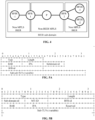
- FIG. 5A is a structural diagram of a flooding packet according to an embodiment of the present application
- FIG. 5B is a structural diagram of another flooding packet according to an embodiment of the present application.
- the BNMGL may be carried in the BIER Infor Sub-Type-Length-Value (Sub-TLV).
- the BNMGL when the BIER information is advertised through the Open Shortest Path First (OSPF) v2 protocol, the BNMGL may be carried in the BIER Sub-TLV.
- the BNMGL may be used for identifying a label encapsulating a non-MPLS BIER payload in the forwarded packet, and the non-MPLS BIER payload is encapsulated behind the BNMGL in the forwarded packet.
- FIG. 6A and FIG. 6B are structural diagrams of the BNMGL in the ISIS protocol and the OSPFv2 protocol. Referring to FIG. 6A , the BNMGL information may be directly used as the value of the sub-sub-TLVs field in the ISIS protocol packet, and referring to FIG. 6B , the BNMGL information may be directly used as the value of the Sub-TLVs field in the OSPFv2 protocol packet.
- the BIER packet is forwarded to the BIER forwarding neighboring node.
- the BIER packet encapsulated in the MPLS format is sent to the BIER forwarding neighboring node, and the BIER packet may be forwarded to a receiver through the BIER forwarding neighboring node.
- the BIER information sent by the communication node is received, the corresponding BIFT forwarding entry is created according to the BIER information, the BITF forwarding entry includes the node information of the BIER forwarding neighboring node, if the node information includes the packet format identifier corresponding to the non-MPLS BIER packet, it is determined that the BIER forwarding neighboring node has the capability of processing the target format packet, and the BNMGL and the BIER packet payload in the non-MPLS BIER packet format are encapsulated as the MPLS packet and sent to the BIER forwarding neighboring node.
- the non-MPLS BIER packet is carried on an MPLS tunnel, so that the problem of packet forwarding interconnection is solved, communication islands caused by the incompatibility of forwarding protocols is reduced, and the compatibility of the BIER packet is different protocols is enhanced.
- FIG. 7 is a flowchart illustrating steps of another BIER packet forwarding method according to an embodiment of the present application.
- the embodiment of the present application is applicable to the case of BIER packet forwarding, and the method may be executed by a BIER packet forwarding apparatus.
- the apparatus may be implemented by software and/or hardware and may be integrated on a forwarding node.
- the BIER packet forwarding method in the embodiment of the present application includes the following.
- the packet sending node may be a residence node of a multicast source in a communication network, and the packet sending node may send a BIER packet to a forwarding node.
- a packet forwarding node may receive the BIER packet sent by the packet sending node.
- the packet forwarding node and the packet sending node may be in the same network domain or in different network domains.
- the packet sending node, the packet forwarding node and a packet reception node may pre-advertise through the IGP/BGP to join the same sub-domain.
- a BNMGL incoming label map entry is searched for according to a BNMGL in the BIER packet, and when it is determined that the current node has a capability of processing a target packet format, the BIER packet is parsed to acquire target node information.
- the target packet format may be a non-MPLS BIER packet format.
- the BNMGL may be added at the bottom of a label stack of an MPLS packet, and the BNMGL is followed by a non-MPLS BIER packet payload.
- the key value of the BNMGL incoming label map entry is the BNMGL of the current forwarding node.
- a sending node may be a sending node or a forwarding node. For example, when a remote node sends a BIER packet to another remote node through a sending node, the sending node may be a forwarding node.
- Whether the capability of processing the target packet format existing may be first determined. For example, when a label forwarding entry is found according to a current top-level label of the forwarded packet, a local BNMGL incoming label map entry can be hit, and thus it can be determined that the capability of processing the target format exists.
- the BIER packet may be parsed according to the target packet format to acquire the target node information in the packet payload. For example, the BNMGL is popped out first to acquire the non-MPLS BIER packet payload behind the BNMGL.
- a BNMGL incoming label map entry may be expressed as the following format:
- Label Operation may represent an operation type
- Flag may represent a load identifier and may be used for identifying the operation type and the load type of a packet which can be processed.
- the forwarding node can process a packet load of the non-MPLS BIER type.
- the BIER packet is forwarded according to the target node information.
- the BIER packet sent by the sending node is received, when it is determined according to the BNMGL in the BNMGL incoming label map entry that the packet forwarding node has the capability of processing the target packet format, the BIER packet is parsed to acquire the target node information, and the BIER packet is forwarded according to the target node information.
- the compatibility of different communication protocols is achieved, the non-MPLS BIER packet can be carried on an MPLS tunnel, and the compatibility of BIER packet forwarding is improved, so that the interconnection problem caused by communication protocols can be solved, and the occurrence of communication islands is reduced.
- FIG. 8 is a flowchart of another BIER packet forwarding method according to an embodiment of the present application.
- the technical scheme in the embodiment of the present application illustrates that the forwarding node joins the control plane.
- the BIER packet forwarding method in the embodiment of the present application includes the following.
- BIER information sent by at least one communication node is acquired, and a corresponding BIFT forwarding entry is created according to each piece of BIER information.
- each communication node may send a declaration to other communication nodes in the same network domain to join the sub-domain network domain.
- the packet forwarding node may receive BIER information sent by communication nodes in the same sub-domain network domain; and after acquiring the BIER information sent by each communication node, the packet forwarding node may create a corresponding BIFT forwarding entry according to the BIER information to facilitate subsequent BIER packet forwarding.
- the BIER information of the current node is flooded to at least one other communication node, and a corresponding BNMGL incoming label map entry is created.
- the packet forwarding node may flood the BIER information of the packet forwarding node to other nodes through the IGP/BGP to join the same sub-domain.
- the packet forwarding node may create the corresponding BNMGL incoming label map entry according to the BNMGL in the BIER information of the packet forwarding node.
- the BNMGL in the BIER packet is removed, a BIER packet header is extracted in a non-MPLS BIER packet format, corresponding ⁇ SD, BSL, SI> is acquired according to a BIFT-id in the BIER packet header, and a BitString in the BIER packet header is parsed according to the ⁇ SD, BSL, SI> to acquire target node information.
- the forwarding node pops the BNMGL out first, acquires the BIFT-id through the non-MPLS BIER format, acquires the ⁇ SD, BSL, SI> according to the BIFT-id, and parse the BitString information according to the ⁇ SD, BSL, SI> to acquire the target node information.
- ILM incoming label map
- the BIER packet is forwarded according to the target node information.
- a BIER forwarding neighboring node which can forward the BIER packet may be found in the BIFT forwarding entry according to the target node information, and the BIER packet may be forwarded to the BIER forwarding neighboring node and may be continuously forwarded by the BIER forwarding neighboring node until being forwarded to the target node.
- FIG. 9 is a network topology diagram of another BIER packet forwarding method according to an embodiment of the present application.
- the non-MPLS BIER encapsulation manner may also be adopted in a complete MPLS domain so as to save label resources.
- FIG. 9 it is assumed that all the nodes in FIG. 9 are within the same IGP domain (at the ISIS level or in the OSPF area), these nodes enable the BIER and flood the BIER information of these nodes for joining BIER sub-domain 0 through the IGP, and BIER sub-domain 0 includes an area composed of nodes BFIR-1, BFR-1, BFER-1 and BFER-2 and connected links of these nodes.
- the BIER packet forwarding method includes the following.
- the nodes BFIR-1, BFR-1, BFER-1 and BFER-2 flood the BIER information of the nodes through the IGP to join BIER sub-domain 0, and the advertised BIER information includes a BNMGL locally allocated for the present node to support non-MPLS BIER encapsulation.
- the BNMGL allocated for the node BFR-1 is BNMGL-100, and a corresponding ILM entry is established on the node BFR-1 for BNMGL-100 as follows:
- the nodes BFER-1 and BFER-2 are also allocated with BNMGLs, that is, BNMGL-1000 and BNMGL-2000, respectively, and corresponding ILM entries are established as above.
- the BIFT entry of BFER-1 and the BIFT entry of BFER-2 are respectively established on the node BFR-1, and next hops of the BIFT entry of BFER-1 and the BIFT entry of BFER-2 are both directly connected next hops. Since the non-MPLS BIER packet encapsulation manner is used, and BFR-1 receives the BNMGL advertisement of the corresponding next hop node, BFR-1 may choose to introduce a BNMGL into the BIFT entry according to a local policy, regardless of whether the next hop node in the BIFT entry is directly connected.
- the forwarding information of the BIFT entry of BFER-1 and the BIFT entry of BFER-2 may be expressed as follows:
- the BIFT entry of BFER-1 and the BIFT entry of BFER-2 are respectively established on BFIR-1, and BFIR-1 chooses to introduce a BNMGL into the BIFT entry according to a local policy, regardless of whether the next hop of the BIFT entry is directly connected.
- the BIFT entry of BFER-1 and the BIFT entry of BFER-2 are as follows:
- BFIR-1 encapsulates multicast streams in the non-MPLS BIER packet encapsulation manner
- the BitString in a BIER header includes the BFR-id information of BFER-1 and the BFR-id information of BFER-2.
- the non-MPLS BIER packet is encapsulated with the label BNMGL-100 to form an MPLS packet, and then the MPLS packet is encapsulated with a layer 2 link header (such as Ethernet).
- a layer 2 link header such as Ethernet
- the BitString includes the BFR-id information of BFER-1 and the BFR-id information of BFER-2
- the packet is replicated and sent to BFER-1 and BFER-2 respectively according to the BIFT entry created on BFR-1.
- the non-MPLS BIER packet is encapsulated with the label BNMGL-1000 (when sent to BFER-1) or the label BNMGL-2000 (when sent to BFER-2) first to form an MPLS packet, and then the MPLS packet is encapsulated with a layer 2 link header (such as Ethernet).
- a layer 2 link header such as Ethernet
- the packet sending node acquires the BIER information sent by the communication node to establish the corresponding BIFT forwarding entry, and the packet forwarding node floods the BIER information of the packet forwarding node to other communication nodes and establish the corresponding BNMGL incoming label map entry.
- the packet forwarding node receives the BIER packet sent by the packet sending node, the corresponding BNMGL incoming label map entry is found according to the top-level label of the packet to determine the capability of processing the target packet format, the BNMGL of the BIER packet is removed, the BIER packet header is extracted in the non-MPLS BIER packet format, the corresponding ⁇ SD, BSL, SI> is acquired according to the BIFT-id in the BIER packet and the Bitstring in the BIER packet header is parsed accordingly, the target node information is acquired, and then the BIER packet is continuously forwarded by searching for the BIFT entry according to the target node information.
- the compatibility of different communication protocols is achieved, the non-MPLS BIER packet can be carried on an MPLS tunnel, and the compatibility of BIER packet forwarding is improved, so that the interconnection problem caused by communication protocols can be solved, and the occurrence of communication islands is reduced.
- that the BIER information of the current node is flooded to at least one other node, and the corresponding BNMGL incoming label map entry is created includes: a BNMGL of the current node is allocated, the BNMGL is included in BIER information in a prefix reachable flooding packet, and the flooding packet is flooded and sent to at least one communication node; and the BNMGL incoming label map entry is created with the BNMGL as a key value, where the BNMGL incoming label map entry further includes an operation type and a load mark.
- the BIER information may be flooded with the prefix reachable packet to achieve the declaration of joining the sub-domain, and when the BIER information is advertised through the ISIS protocol, the BNMGL may be carried in the BIER Info Sub-TLV. When the BIER information is advertised through the OSPFv2 protocol, the BNMGL may be carried in the BIER Sub-TLV.
- the BNMGL may be used for identifying that the BNMGL in the forwarded packet is followed by a non-MPLS BIER payload.
- the BNMGL incoming label map entry further includes an operation type and a load mark.
- FIG. 10 is a structural diagram of a BIER packet forwarding apparatus according to an embodiment of the present application not covered by the invention.
- the BIER packet forwarding apparatus provided by the embodiment of the present application may execute the BIER packet forwarding method provided by any embodiment of the present application, and has the corresponding function modules and effects of the executed method.
- the apparatus may be implemented by software and/or hardware and may be integrated in a sending node.
- the apparatus includes an information searching module 501, a packet encapsulation module 502 and a packet sending module 503.
- the information searching module 501 is configured to set node information of a BIER forwarding neighboring node in a BIFT forwarding entry.
- the packet encapsulation module 502 is configured to in a case of determining according to the node information that the BIER forwarding neighboring node has a capability of processing a target packet format according to the node information, encapsulate a BIER packet according to the target packet format.
- the packet forwarding module 503 is configured to send the BIER packet to the BIER forwarding neighboring node.
- the information searching module searches for the node information of the BIER forwarding neighboring node in the BIFT forwarding entry; the packet encapsulation module determines that the BIER forwarding neighboring node has the capability of processing the target packet format according to the node information and encapsulate the BIER packet according to the target packet format; and the packet sending module forwards the encapsulated packet.
- BIER packet forwarding in different network domains is implemented, and a non-MPLS BIER packet can be carried on an MPLS tunnel, so that the interconnection problem in different network domains is solved, and communication islands caused by the incompatibility of forwarding protocols is reduced.
- the node information involved in the information searching module 501 includes at least one of a node identifier, routing information, a packet format identifier or a BNMGL.
- the packet encapsulation module 502 includes a capability determination unit and a packet encapsulation unit.
- the capability determination unit is configured to if the node information includes a packet format identifier corresponding to a non-MPLS BIER packet, determine that the BIER forwarding neighboring node has the capability of processing a target format packet.
- the packet encapsulation unit is configured to acquire a BNMGL in the node information, and encapsulate the BNMGL and a BIER packet payload in a non-MPLS BIER packet format as an MPLS packet.
- the BIER packet forwarding apparatus further includes a forwarding entry module and an information flooding module.
- the forwarding entry module is configured to receive BIER information sent by at least one communication node, and create a corresponding BIFT forwarding entry according to each piece of BIER information.
- the information flooding module is configured to continuously flood the BIER information of the communication node to at least one other communication node, so that other communication nodes establish corresponding BIFT forwarding entries.
- FIG. 11 is a structural diagram of another BIER packet forwarding apparatus according to an embodiment of the present application.
- the BIER packet forwarding apparatus provided by the embodiment of the present application may execute the BIER packet forwarding method provided by any embodiment of the present application, and has the corresponding function modules and beneficial effects of the executed method.
- the apparatus may be implemented by software and/or hardware and may be integrated in a forwarding node.
- the apparatus includes a packet reception module 601, an information parsing module 602 and a packet forwarding module 603.
- the packet reception module 601 is configured to receive a BIER packet sent by a packet sending node.
- the information parsing module 602 is configured to search for a BNMGL incoming label map entry according to a BNMGL in the BIER packet, and when it is determined that the current node has a capability of processing a target packet format, parse the BIER packet to acquire target node information.
- the packet forwarding module 603 is configured to forward the BIER packet according to the target node information.
- the packet reception module receives the BIER packet sent by the packet sending node; when the information parsing module determines that the capability of processing the target packet format exists, the information parsing module parses the BIER packet to acquire the target node information; and the packet forwarding module forwards the BIER packet according to the target node information.
- the compatibility of different communication protocols is achieved, the non-MPLS BIER packet can be carried on an MPLS tunnel, and the compatibility of BIER packet forwarding is improved, so that the interconnection problem caused by communication protocols can be solved, and the occurrence of communication islands is reduced.
- the information parsing module 602 includes a capability determination unit and an information extraction unit.
- the capability determination unit is configured to when the BNMGL in the BIER packet is found in the BNMGL incoming label map entry, determine that the capability of processing the target packet format exists.
- the information extraction unit is configured to remove the BNMGL in the BIER packet, extract a BIER packet header in a non-MPLS BIER packet format, acquire corresponding ⁇ SD, BSL, SI> according to a BIFT identifier in the BIER packet header, and parse a BitString in the BIER packet header according to the ⁇ SD, BSL, SI> to acquire target node information.
- the BIER packet forwarding apparatus further includes a forwarding entry module and an incoming label entry module.
- the forwarding entry module is configured to acquire BIER information sent by at least one communication node, and create a corresponding BIFT forwarding entry according to each piece of BIER information.
- the incoming label entry module is configured to flood the BIER information of the current node to at least one other communication node, and create a corresponding BNMGL incoming label map entry.
- the incoming label entry module further includes an advertisement unit and a label unit.
- the advertisement unit is configured to allocate a BNMGL of the current node, include the BNMGL in BIER information in a prefix reachable flooding packet, and flood the prefix reachable flooding packet to at least one communication node.
- the label unit is configured to create the BNMGL incoming label map entry with the BNMGL as a key value, where the BNMGL incoming label map entry further includes an operation type and a load mark.
- FIG. 12 is a structural diagram of a device according to an embodiment of the present disclosure.
- the device includes a processor 70, a memory 71, an input apparatus 12 and an output apparatus 73.
- One or more processors 70 may be disposed in the device, and one processor 70 is taken as an example in FIG. 12 .
- the processor 70, the memory 71, the input apparatus 72 and the output apparatus 73 in the device may be connected by a bus or in other manners. Connecting by a bus is used as an example in FIG. 12 .
- the memory 71 may be configured to store software programs and computer-executable programs and modules, such as modules (the information searching module 501, the packet encapsulation module 502 and the packet sending module 503, or the packet reception module 601, the information parsing module 602 and the packet forwarding module 603) corresponding to the BIER packet forwarding apparatus in any embodiment of the present application.
- the processor 70 runs the software programs, instructions and modules stored in the memory 71 to execute multiple function applications and data processing of the device, that is, to implement the preceding BIER packet forwarding method.
- the memory 71 may mainly include a program storage region and a data storage region.
- the program storage region may store an operating system and an application program required by at least one function.
- the data storage region may store data created depending on the use of a terminal.
- the memory 71 may include a high-speed random-access memory and may also include a non-volatile memory such as at least one disk memory, a flash memory or another non-volatile solid-state memory.
- the memory 71 may include memories which are remotely disposed relative to the processor 70, and these remote memories may be connected to the device via a network. Examples of the preceding network include, but are not limited to, the Internet, an intranet, a local area network, a mobile communication network and a combination thereof.
- the input apparatus 72 may be configured to receive input digital or character information and generate key signal input related to user settings and function control of the device.
- the output apparatus 73 may include display devices such as a display screen.
- An embodiment of the present application further provides a storage medium including computer-executable instructions, and the computer-executable instructions are used for executing a BIER packet forwarding method when executed by a computer processor.
- the method includes the following.
- Node information of a BIER forwarding neighboring node is set in a BIFT forwarding entry; when it is determined according to the node information that the BIER forwarding neighboring node has a capability of processing a target packet format, a BIER packet is encapsulated according to the target packet format; and the BIER packet is sent to the BIER forwarding neighboring node.
- a BIER packet sent by a packet sending node is received; a BNMGL incoming label map entry is searched for according to the BNMGL in the BIER packet, and when it is determined that the current node has a capability of processing a target packet format, the BIER packet is parsed to acquire target node information; and the BIER packet is forwarded according to the target node information.
- the computer-executable instructions implement not only the preceding method operations but also related operations in the BIER packet forwarding method provided by any embodiment of the present application.
- the term user terminal encompasses any appropriate type of wireless user device, such as a mobile phone, a portable data processing apparatus, a portable web browser or a vehicle-mounted mobile station.
- multiple embodiments of the present application may be implemented in hardware or special-purpose circuits, software, logic or any combination thereof.
- some aspects may be implemented in hardware while other aspects may be implemented in firmware or software that may be executed by a controller, a microprocessor or another computing apparatus, though the present application is not limited thereto.
- the embodiments of the present application may be implemented by computer program instructions executed by a data processor of a mobile apparatus, for example, implemented in a processor entity, by hardware or by a combination of software and hardware.
- the computer program instructions may be assembly instructions, instruction set architecture (ISA) instructions, machine instructions, machine-related instructions, microcodes, firmware instructions, status setting data or source or object codes written in any combination of one or more programming languages.
- a block diagram of any logic flow among the drawings of the present application may represent program steps, may represent interconnected logic circuits, modules and functions, or may represent a combination of program steps with logic circuits, modules and functions.
- Computer programs may be stored in the memory.
- the memory may be of any type suitable for a local technical environment and may be implemented using any suitable data storage technology, such as, but not limited to, a read-only memory (ROM), a random-access memory (RAM) and an optical memory device and system (a digital video disc (DVD) or a compact disc (CD)).
- the computer-readable medium may include a non-transitory storage medium.
- the data processor may be of any type suitable for a local technical environment such as, but not limited to, a general-purpose computer, a special-purpose computer, a microprocessor, a digital signal processor (DSP), an application-specific integrated circuit (ASIC), a field-programmable gate array (FPGA) and a processor based on a multi-core processor architecture.
- a general-purpose computer such as, but not limited to, a general-purpose computer, a special-purpose computer, a microprocessor, a digital signal processor (DSP), an application-specific integrated circuit (ASIC), a field-programmable gate array (FPGA) and a processor based on a multi-core processor architecture.
- DSP digital signal processor
- ASIC application-specific integrated circuit
- FPGA field-programmable gate array
Landscapes
- Engineering & Computer Science (AREA)
- Computer Networks & Wireless Communication (AREA)
- Signal Processing (AREA)
- Computer Security & Cryptography (AREA)
- Data Exchanges In Wide-Area Networks (AREA)
Claims (10)
- Bitindizierte explizite Replikation, BIER, Paketweiterleitungsverfahren, angewandt auf einen Paketsendeknoten, umfassend: Setzen (101, 203) von Knoteninformationen eines BIER-Weiterleitungsnachbarknotens in eine Bitindex-Weiterleitungstabelle, BIFT, Weiterleitungseintrag, wobei die Knoteninformationen des BIER-Weiterleitungsnachbarknotens anzeigen, ob der BIER-Weiterleitungsnachbarknoten eine Fähigkeit zur Verarbeitung eines Zielpaketformats hat; in einem Fall des Feststellens (102) gemäss der Knoteninformation, dass der BIER-Weiterleitungs-Nachbarknoten die Fähigkeit hat, das Ziel-Paketformat zu verarbeiten, Einkapseln (102) eines BIER-Pakets gemäss dem Ziel-Paketformat; und Senden (103, 206) eines eingekapselten BIER-Pakets an den BIER-Weiterleitungsknoten in der Nachbarschaft; wobei in dem Fall, in dem gemäss der Knoteninformation bestimmt wird (102), dass der BIER-Weiterleitungs-Nachbarknoten die Fähigkeit hat, das Ziel-Paketformat zu verarbeiten, das Verkapseln (102) des BIER-Pakets gemäss dem Ziel-Paketformat umfasst: in einem Fall, in dem die Knoteninformation einen Paketformat-Identifizierer umfasst, der einem Nicht-Multiprotokoll-Etikettenvermittlungs-, MPLS-, BIER-Paket entspricht, Feststellen (204), dass der BIER-Weiterleitungs-Nachbarknoten die Fähigkeit hat, das Ziel-Paketformat zu verarbeiten; und Erfassen (205) eines BIER nicht-MPLS-Generisches Label, BNMGL, in der Knoteninformation, und Einkapseln des BNMGL und einer BIER-Paket-Nutzlast in einem non-MPLS BIER-Paketformat als MPLS-Paket.
- Verfahren nach Anspruch 1, wobei die Knoteninformationen ausserdem mindestens eine der folgenden Informationen umfassen: einen Knotenidentifikator oder Routing-Informationen.
- Verfahren nach Anspruch 1, das vor dem Setzen (101, 203) der Knoteninformation des BIER-Weiterleitungsnachbarknotens im BIFT-Weiterleitungseintrag weiterhin umfasst: Empfangen (201) von mindestens einer BIER-Information, die von mindestens einem Kommunikationsknoten gesendet wird, und Erzeugen (201) eines BIFT-Weiterleitungseintrags, der der jeweiligen einen BIER-Information entspricht, gemäss einer jeweiligen einen BIER-Information, die von jedem Kommunikationsknoten gesendet wird; und Fluten (202) der jeweiligen einen BIER-Information, die von jedem Kommunikationsknoten an einen oder mehrere andere Kommunikationsknoten als den jeweiligen Kommunikationsknoten gesendet wird, so dass der eine oder die mehreren anderen Kommunikationsknoten als der jeweilige Kommunikationsknoten einen BIFT-Weiterleitungseintrag entsprechend der jeweiligen einen BIER-Information erstellen.
- Bit-indexiertes explizites Replikations-, BIER, Paketweiterleitungsverfahren, das auf einen Paketweiterleitungsknoten angewendet wird, umfassend: Empfang (301, 403) eines BIER-Pakets, das von einem Paketsendeknoten gesendet wurde; Suchen (302, 404) nach einem BNMGL-Eingangs-Label-Map-Eintrag (BNMGL: nicht-Multiprotokoll-Label-Switching, MPLS, Generisches Label) in dem BIER-Paket, wobei der BNMGL-Eingangs-Label-Map-Eintrag des Paketweiterleitungsknotens anzeigt, ob der Paketweiterleitungsknoten die Fähigkeit hat, ein Ziel-Paketformat zu verarbeiten; und in einem Fall des Bestimmens (302, 404) gemäss einem Suchergebnis, dass der Paketweiterleitungsknoten die Fähigkeit hat, das Zielpaketformat zu verarbeiten, Analysieren (302, 404) des BIER-Pakets, um Zielknoteninformationen zu erhalten; und Weiterleitung (303, 406) des BIER-Pakets entsprechend der Zielknoteninformation; wobei in dem Fall, in dem gemäss dem Suchergebnis bestimmt wird (302, 404), dass der Paketweiterleitungsknoten die Fähigkeit hat, das Zielpaketformat zu verarbeiten, das Parsen (302, 404) des BIER-Pakets, um die Zielknoteninformationen zu erhalten, umfasst: in einem Fall, in dem die BNMGL in dem BIER-Paket in dem BNMGL-Eingangslabel-Map-Eintrag gefunden wird, Bestimmen (404), dass der Paketweiterleitungsknoten die Fähigkeit hat, das vorhandene Zielpaketformat zu verarbeiten; und Entfernen (405) der BNMGL in dem BIER-Paket, Extrahieren (405) eines BIER-Paket-Headers in einem Nicht-MPLS-BIER-Paketformat, Erfassen (405), gemäss einer Bitindex-Weiterleitungstabelle, BIFT, Kennung in dem BIER-Paket-Header, <Subdomäne, SD, BitString-Länge, BSL, Set-Kennung, SI>, die dem BIFT-Identifikator entsprechen, und Parsen eines BitStrings im BIER-Paket-Header gemäss <SD, BSL, SI>, um die Zielknoten-Information zu erhalten.
- Verfahren nach Anspruch 4, das vor dem Empfang (301, 403) des BIER-Pakets, das von dem Paketsendeknoten gesendet wurde, weiterhin umfasst: Erfassen (401) mindestens einer BIER-Information, die von mindestens einem Kommunikationsknoten gesendet wird, und Erzeugen eines BIFT-Weiterleitungseintrags, der der BIER-Information entspricht, gemäss der von jedem Kommunikationsknoten gesendeten BIER-Information; und Fluten (402) von BIER-Informationen des Paketweiterleitungsknotens an mindestens einen anderen Kommunikationsknoten als den Paketweiterleitungsknoten, und Erzeugen (402) des BNMGL-Eintrags für eingehende Etiketten, der den BIER-Informationen des Paketweiterleitungsknotens entspricht.
- Verfahren nach Anspruch 5, wobei das Fluten (402) der BIER-Informationen des Paketweiterleitungsknotens zu dem mindestens einen Kommunikationsknoten, der nicht der Paketweiterleitungsknoten ist, und das Erzeugen (402) des BNMGL-Eintrags für die Karte der eingehenden Etiketten entsprechend den BIER-Informationen des Paketweiterleitungsknotens umfasst: Zuweisen einer BNMGL des Paketweiterleitungsknotens, Einfügen der BNMGL in BIER-Informationen in ein Präfix-erreichbar-Flooding-Paket, und Fluten des Präfix-erreichbar-Flooding-Pakets an den mindestens einen Kommunikationsknoten, der nicht der Paketweiterleitungsknoten ist; und Erstellen des BNMGL-Eingangs-Label-Map-Eintrags mit dem BNMGL als Schlüsselwert, wobei der BNMGL-Eingangs-Label-Map-Eintrag einen Operationstyp und eine Lastmarke umfasst.
- Computerprogramm, das Computerbefehle umfasst, die von einem Gerät ausgeführt werden können, wobei die Computerbefehle, wenn sie von mindestens einem Prozessor in dem Gerät ausgeführt werden, den mindestens einen Prozessor veranlassen, die Bitindizierte explizite Replikation, BIER, Paketweiterleitungsverfahren nach einem der Ansprüche 1 bis 6 zu implementieren.
- Bitindizierte explizite Replikation, BIER, Paketweiterleitungsgerät, angewandt auf einen Paketweiterleitungsknoten, umfassend: ein Paketempfangsmodul (601), das so konfiguriert ist, dass es ein von einem Paketsendeknoten gesendetes BIER-Paket empfängt; ein Informations-Parsing-Modul (602), das so konfiguriert ist, dass es gemäss einem BIER nicht-Multiprotokoll-Label-Switching, MPLS, Generic Label, BNMGL, in dem BIER-Paket nach einem BNMGL-Eingangs-Label-Map-Eintrag sucht, wobei das BNMGL in der Knoteninformation des Paket-Weiterleitungsknotens enthalten ist und die Knoteninformation des Paket-Weiterleitungsknotens anzeigt, dass der Paket-Weiterleitungsknoten eine Fähigkeit zur Verarbeitung eines Ziel-Paketformats hat; in einem Fall, in dem gemäss einem Suchergebnis festgestellt wird, dass der Paketweiterleitungsknoten die Fähigkeit hat, das Zielpaketformat zu verarbeiten, das BIER-Paket zu analysieren, um Zielknoteninformationen zu erhalten; und ein Paketweiterleitungsmodul (603), das so konfiguriert ist, dass es das BIER-Paket entsprechend der Zielknoteninformation weiterleitet; wobei das Informationsanalysemodul (602) eine Fähigkeitsbestimmungseinheit und eine Informationsextraktionseinheit umfasst; wobei in einem Fall, in dem die BNMGL in dem BIER-Paket in dem BNMGL-Eingangslabel-Map-Eintrag gefunden wird, die Fähigkeitsbestimmungseinheit konfiguriert ist, um zu bestimmen, dass der Paketweiterleitungsknoten die Fähigkeit hat, das vorhandene Zielpaketformat zu verarbeiten; und wobei die Informationsextraktionseinheit konfiguriert ist, um die BNMGL in dem BIER-Paket zu entfernen, einen BIER-Paketkopf in einem Nicht-MPLS-BIER-Paketformat zu extrahieren, einen <Sub-Domain, SD, BitString Length, BSL, Set Identifier, SI> entsprechend einem Bit Index Forwarding Table, BIFT, Identifikator gemäss dem BIFT-Identifikator in dem BIER-Paket-Header, und einen BitString in dem BIER-Paket-Header gemäss dem <SD, BSL, SI> zu analysieren, um die Zielknoten-Information zu erhalten.
- Gerät, umfassend: mindestens einen Prozessor (70); und einen Speicher (71), der konfiguriert ist, um mindestens ein Programm zu speichern; wobei das mindestens ein Programm, wenn es von dem mindestens einen Prozessor (70) ausgeführt wird, den mindestens einen Prozessor (70) veranlasst, die Bitindizierte explizite Replikation, BIER, Paketweiterleitungsverfahren nach einem der Ansprüche 1 bis 6 zu implementieren.
- Computerlesbares Speichermedium, das ein Computerprogramm speichert, wobei das Computerprogramm, wenn es von einem Prozessor ausgeführt wird, die Bitindizierte explizite Replikation, BIER, Paketweiterleitungsverfahren nach einem der Ansprüche 1 bis 6 implementiert.
Applications Claiming Priority (2)
| Application Number | Priority Date | Filing Date | Title |
|---|---|---|---|
| CN201911329040.XA CN113014486B (zh) | 2019-12-20 | 2019-12-20 | 一种bier报文转发方法、装置、设备和存储介质 |
| PCT/CN2020/134242 WO2021121065A1 (zh) | 2019-12-20 | 2020-12-07 | Bier报文转发方法、装置、设备和存储介质 |
Publications (3)
| Publication Number | Publication Date |
|---|---|
| EP4080837A1 EP4080837A1 (de) | 2022-10-26 |
| EP4080837A4 EP4080837A4 (de) | 2023-06-28 |
| EP4080837B1 true EP4080837B1 (de) | 2025-05-07 |
Family
ID=76381852
Family Applications (1)
| Application Number | Title | Priority Date | Filing Date |
|---|---|---|---|
| EP20903588.0A Active EP4080837B1 (de) | 2019-12-20 | 2020-12-07 | Bierpaket-weiterleitungsverfahren, -vorrichtung, -gerät und -speichermedium |
Country Status (4)
| Country | Link |
|---|---|
| US (1) | US12192092B2 (de) |
| EP (1) | EP4080837B1 (de) |
| CN (1) | CN113014486B (de) |
| WO (1) | WO2021121065A1 (de) |
Families Citing this family (9)
| Publication number | Priority date | Publication date | Assignee | Title |
|---|---|---|---|---|
| CN113645134A (zh) * | 2020-05-11 | 2021-11-12 | 华为技术有限公司 | 用于发送组播报文的方法和装置 |
| MX2023001814A (es) * | 2020-08-13 | 2023-03-13 | Huawei Tech Co Ltd | Metodo y aparato para enviar paquete de multidifusion y metodo y aparato para obtener entrada de reenvio. |
| CN114598634A (zh) * | 2020-12-02 | 2022-06-07 | 华为技术有限公司 | 报文传输的方法、获取对应关系的方法、装置及系统 |
| CN113992564B (zh) * | 2021-09-17 | 2023-03-31 | 新华三信息安全技术有限公司 | 报文处理方法及装置 |
| CN113839895B (zh) * | 2021-11-01 | 2023-08-22 | 新华三技术有限公司合肥分公司 | 一种报文转发方法及装置 |
| CN116232989A (zh) * | 2021-12-02 | 2023-06-06 | 中兴通讯股份有限公司 | Bier报文转发方法、装置及存储介质 |
| CN114338569B (zh) * | 2021-12-31 | 2024-06-14 | 锐捷网络股份有限公司 | 报文复制转发方法及装置 |
| CN117201212A (zh) * | 2022-05-31 | 2023-12-08 | 中兴通讯股份有限公司 | 信息处理方法、网络设备、存储介质和程序产品 |
| CN115460133B (zh) * | 2022-08-12 | 2023-11-03 | 烽火通信科技股份有限公司 | 一种bier组播的硬件学习及转发的方法、装置及设备 |
Family Cites Families (18)
| Publication number | Priority date | Publication date | Assignee | Title |
|---|---|---|---|---|
| US9806897B2 (en) * | 2013-09-17 | 2017-10-31 | Cisco Technology, Inc. | Bit indexed explicit replication forwarding optimization |
| CN109476965A (zh) | 2016-07-28 | 2019-03-15 | 3M创新有限公司 | 可拉伸导电粘合带 |
| CN107968750B (zh) * | 2016-10-20 | 2021-06-15 | 中兴通讯股份有限公司 | 报文传输方法、装置及节点 |
| US10404592B2 (en) * | 2017-03-24 | 2019-09-03 | Cisco Technology, Inc. | System and method to facilitate content forwarding using bit index explicit replication (BIER) in an information-centric networking (ICN) environment |
| CN108667731A (zh) * | 2017-03-28 | 2018-10-16 | 中兴通讯股份有限公司 | 一种基于bier信息的处理及装置 |
| CN108696438A (zh) * | 2017-04-05 | 2018-10-23 | 中兴通讯股份有限公司 | Bier报文的转发方法及装置 |
| CN108989209B (zh) * | 2017-05-31 | 2022-04-19 | 中兴通讯股份有限公司 | Bier mpls网络设备、及其报文转发方法和介质 |
| CN109150730A (zh) * | 2017-06-15 | 2019-01-04 | 中兴通讯股份有限公司 | 组播跨域方法、装置、系统及计算机可读存储介质 |
| US10498667B2 (en) * | 2017-09-28 | 2019-12-03 | Nokia Technologies Oy | Multicast based on bit indexed explicit replication |
| CN109660460B (zh) * | 2017-10-10 | 2021-10-19 | 中兴通讯股份有限公司 | Bier-te信息的处理方法、服务器及存储介质 |
| CN109756425B (zh) | 2017-11-07 | 2022-01-18 | 中国电信股份有限公司 | 组播转发方法、装置以及bfr |
| CN110460522B (zh) * | 2018-05-08 | 2021-11-19 | 华为技术有限公司 | 组播数据传输方法、相关装置及系统 |
| US20190386837A1 (en) * | 2018-06-19 | 2019-12-19 | Juniper Networks, Inc. | Forwarding multicast data packets using bit index explicit replication (bier) for bier-incapable network devices |
| US10644900B2 (en) * | 2018-06-19 | 2020-05-05 | Juniper Networks, Inc. | Forwarding multicast data packets using bit index explicit replication (BIER) for BIER-incapable network devices |
| US10567181B2 (en) * | 2018-06-20 | 2020-02-18 | Juniper Networks, Inc. | Bit index explicit replication (BIER) penultimate hop popping |
| CN109729012B (zh) * | 2018-12-24 | 2021-08-24 | 新华三技术有限公司 | 一种单播报文传输方法和装置 |
| US11483237B2 (en) * | 2019-04-25 | 2022-10-25 | Nokia Solutions And Networks Oy | BIER traffic engineering (BIER-TE) using unicast MPLS-TE tunnels |
| WO2021073357A1 (zh) * | 2019-10-14 | 2021-04-22 | 华为技术有限公司 | 报文处理方法、装置、系统、设备及存储介质 |
-
2019
- 2019-12-20 CN CN201911329040.XA patent/CN113014486B/zh active Active
-
2020
- 2020-12-07 EP EP20903588.0A patent/EP4080837B1/de active Active
- 2020-12-07 US US17/787,897 patent/US12192092B2/en active Active
- 2020-12-07 WO PCT/CN2020/134242 patent/WO2021121065A1/zh not_active Ceased
Also Published As
| Publication number | Publication date |
|---|---|
| EP4080837A1 (de) | 2022-10-26 |
| US12192092B2 (en) | 2025-01-07 |
| CN113014486A (zh) | 2021-06-22 |
| EP4080837A4 (de) | 2023-06-28 |
| US20230040579A1 (en) | 2023-02-09 |
| WO2021121065A1 (zh) | 2021-06-24 |
| CN113014486B (zh) | 2023-08-01 |
Similar Documents
| Publication | Publication Date | Title |
|---|---|---|
| EP4080837B1 (de) | Bierpaket-weiterleitungsverfahren, -vorrichtung, -gerät und -speichermedium | |
| CN110784411B (zh) | 建立bier转发表项的方法、装置和系统 | |
| US12395426B2 (en) | Message indication method and apparatus, and device and storage medium | |
| EP3965381B1 (de) | Verfahren und vorrichtung zum senden von bier-paketen | |
| CN106572023B (zh) | 一种实现比特位索引显示复制的方法及比特位转发路由器 | |
| EP3783849A1 (de) | Multicast-datenübertragungsverfahren, zugehörige vorrichtung und system | |
| US20180205636A1 (en) | Bier packet transmission method and device | |
| US11627070B2 (en) | Data packet processing method and apparatus, storage medium, and electronic device | |
| EP2869512A1 (de) | Dynamikbereichsfilterung für Link-State-Routing-Protokolle | |
| US11671352B2 (en) | Message sending method, binding relationship advertising method, apparatus, and storage medium | |
| US20220239590A1 (en) | Packet Processing Method, Apparatus, System, and Device, and Storage Medium | |
| CN112491706B (zh) | 数据报文的处理方法及装置、存储介质、电子装置 | |
| US12058027B2 (en) | Packet transmission method, correspondence obtaining method, apparatus, and system | |
| WO2023016550A1 (zh) | 一种路由发送方法及设备 | |
| EP4224817A1 (de) | Verfahren und vorrichtung zur bestimmung des nächsten sprungs | |
| WO2018177273A1 (zh) | 一种基于bier信息的处理及装置 | |
| EP4716175A1 (de) | Nachrichtenwerbungsverfahren, vorrichtung, speichermedium und elektronische vorrichtung | |
| EP2985967B1 (de) | Verfahren, vorrichtung und computerspeichermedium zur durchführung einer werbung auf basis von ip-adressen | |
| WO2022237563A1 (zh) | 数据转发方法、装置、存储介质和电子装置 | |
| CN117749700A (zh) | 对应关系的获取方法、参数通告方法、装置、设备及介质 |
Legal Events
| Date | Code | Title | Description |
|---|---|---|---|
| STAA | Information on the status of an ep patent application or granted ep patent |
Free format text: STATUS: THE INTERNATIONAL PUBLICATION HAS BEEN MADE |
|
| PUAI | Public reference made under article 153(3) epc to a published international application that has entered the european phase |
Free format text: ORIGINAL CODE: 0009012 |
|
| STAA | Information on the status of an ep patent application or granted ep patent |
Free format text: STATUS: REQUEST FOR EXAMINATION WAS MADE |
|
| 17P | Request for examination filed |
Effective date: 20220718 |
|
| AK | Designated contracting states |
Kind code of ref document: A1 Designated state(s): AL AT BE BG CH CY CZ DE DK EE ES FI FR GB GR HR HU IE IS IT LI LT LU LV MC MK MT NL NO PL PT RO RS SE SI SK SM TR |
|
| DAV | Request for validation of the european patent (deleted) | ||
| DAX | Request for extension of the european patent (deleted) | ||
| REG | Reference to a national code |
Free format text: PREVIOUS MAIN CLASS: H04L0012723000 Ref country code: DE Ref legal event code: R079 Ref document number: 602020051086 Country of ref document: DE Free format text: PREVIOUS MAIN CLASS: H04L0012723000 Ipc: H04L0045020000 |
|
| A4 | Supplementary search report drawn up and despatched |
Effective date: 20230526 |
|
| RIC1 | Information provided on ipc code assigned before grant |
Ipc: H04L 69/22 20220101ALI20230522BHEP Ipc: H04L 47/80 20220101ALI20230522BHEP Ipc: H04L 47/70 20220101ALI20230522BHEP Ipc: H04L 47/43 20220101ALI20230522BHEP Ipc: H04L 45/50 20220101ALI20230522BHEP Ipc: H04L 45/741 20220101ALI20230522BHEP Ipc: H04L 45/02 20220101AFI20230522BHEP |
|
| GRAP | Despatch of communication of intention to grant a patent |
Free format text: ORIGINAL CODE: EPIDOSNIGR1 |
|
| STAA | Information on the status of an ep patent application or granted ep patent |
Free format text: STATUS: GRANT OF PATENT IS INTENDED |
|
| GRAS | Grant fee paid |
Free format text: ORIGINAL CODE: EPIDOSNIGR3 |
|
| INTG | Intention to grant announced |
Effective date: 20250227 |
|
| GRAA | (expected) grant |
Free format text: ORIGINAL CODE: 0009210 |
|
| STAA | Information on the status of an ep patent application or granted ep patent |
Free format text: STATUS: THE PATENT HAS BEEN GRANTED |
|
| AK | Designated contracting states |
Kind code of ref document: B1 Designated state(s): AL AT BE BG CH CY CZ DE DK EE ES FI FR GB GR HR HU IE IS IT LI LT LU LV MC MK MT NL NO PL PT RO RS SE SI SK SM TR |
|
| REG | Reference to a national code |
Ref country code: GB Ref legal event code: FG4D |
|
| REG | Reference to a national code |
Ref country code: CH Ref legal event code: EP |
|
| REG | Reference to a national code |
Ref country code: DE Ref legal event code: R096 Ref document number: 602020051086 Country of ref document: DE |
|
| REG | Reference to a national code |
Ref country code: IE Ref legal event code: FG4D |
|
| REG | Reference to a national code |
Ref country code: NL Ref legal event code: MP Effective date: 20250507 |
|
| PG25 | Lapsed in a contracting state [announced via postgrant information from national office to epo] |
Ref country code: PT Free format text: LAPSE BECAUSE OF FAILURE TO SUBMIT A TRANSLATION OF THE DESCRIPTION OR TO PAY THE FEE WITHIN THE PRESCRIBED TIME-LIMIT Effective date: 20250908 Ref country code: FI Free format text: LAPSE BECAUSE OF FAILURE TO SUBMIT A TRANSLATION OF THE DESCRIPTION OR TO PAY THE FEE WITHIN THE PRESCRIBED TIME-LIMIT Effective date: 20250507 Ref country code: ES Free format text: LAPSE BECAUSE OF FAILURE TO SUBMIT A TRANSLATION OF THE DESCRIPTION OR TO PAY THE FEE WITHIN THE PRESCRIBED TIME-LIMIT Effective date: 20250507 |
|
| REG | Reference to a national code |
Ref country code: LT Ref legal event code: MG9D |
|
| PG25 | Lapsed in a contracting state [announced via postgrant information from national office to epo] |
Ref country code: NO Free format text: LAPSE BECAUSE OF FAILURE TO SUBMIT A TRANSLATION OF THE DESCRIPTION OR TO PAY THE FEE WITHIN THE PRESCRIBED TIME-LIMIT Effective date: 20250807 Ref country code: GR Free format text: LAPSE BECAUSE OF FAILURE TO SUBMIT A TRANSLATION OF THE DESCRIPTION OR TO PAY THE FEE WITHIN THE PRESCRIBED TIME-LIMIT Effective date: 20250808 |
|
| PG25 | Lapsed in a contracting state [announced via postgrant information from national office to epo] |
Ref country code: PL Free format text: LAPSE BECAUSE OF FAILURE TO SUBMIT A TRANSLATION OF THE DESCRIPTION OR TO PAY THE FEE WITHIN THE PRESCRIBED TIME-LIMIT Effective date: 20250507 Ref country code: NL Free format text: LAPSE BECAUSE OF FAILURE TO SUBMIT A TRANSLATION OF THE DESCRIPTION OR TO PAY THE FEE WITHIN THE PRESCRIBED TIME-LIMIT Effective date: 20250507 |
|
| REG | Reference to a national code |
Ref country code: AT Ref legal event code: MK05 Ref document number: 1793745 Country of ref document: AT Kind code of ref document: T Effective date: 20250507 |
|
| PG25 | Lapsed in a contracting state [announced via postgrant information from national office to epo] |
Ref country code: BG Free format text: LAPSE BECAUSE OF FAILURE TO SUBMIT A TRANSLATION OF THE DESCRIPTION OR TO PAY THE FEE WITHIN THE PRESCRIBED TIME-LIMIT Effective date: 20250507 |
|
| PG25 | Lapsed in a contracting state [announced via postgrant information from national office to epo] |
Ref country code: HR Free format text: LAPSE BECAUSE OF FAILURE TO SUBMIT A TRANSLATION OF THE DESCRIPTION OR TO PAY THE FEE WITHIN THE PRESCRIBED TIME-LIMIT Effective date: 20250507 |
|
| PG25 | Lapsed in a contracting state [announced via postgrant information from national office to epo] |
Ref country code: AT Free format text: LAPSE BECAUSE OF FAILURE TO SUBMIT A TRANSLATION OF THE DESCRIPTION OR TO PAY THE FEE WITHIN THE PRESCRIBED TIME-LIMIT Effective date: 20250507 |
|
| PG25 | Lapsed in a contracting state [announced via postgrant information from national office to epo] |
Ref country code: RS Free format text: LAPSE BECAUSE OF FAILURE TO SUBMIT A TRANSLATION OF THE DESCRIPTION OR TO PAY THE FEE WITHIN THE PRESCRIBED TIME-LIMIT Effective date: 20250807 |
|
| PG25 | Lapsed in a contracting state [announced via postgrant information from national office to epo] |
Ref country code: IS Free format text: LAPSE BECAUSE OF FAILURE TO SUBMIT A TRANSLATION OF THE DESCRIPTION OR TO PAY THE FEE WITHIN THE PRESCRIBED TIME-LIMIT Effective date: 20250907 |
|
| PG25 | Lapsed in a contracting state [announced via postgrant information from national office to epo] |
Ref country code: LV Free format text: LAPSE BECAUSE OF FAILURE TO SUBMIT A TRANSLATION OF THE DESCRIPTION OR TO PAY THE FEE WITHIN THE PRESCRIBED TIME-LIMIT Effective date: 20250507 |
|
| PGFP | Annual fee paid to national office [announced via postgrant information from national office to epo] |
Ref country code: DE Payment date: 20251211 Year of fee payment: 6 |
|
| PGFP | Annual fee paid to national office [announced via postgrant information from national office to epo] |
Ref country code: GB Payment date: 20251219 Year of fee payment: 6 |
|
| PG25 | Lapsed in a contracting state [announced via postgrant information from national office to epo] |
Ref country code: DK Free format text: LAPSE BECAUSE OF FAILURE TO SUBMIT A TRANSLATION OF THE DESCRIPTION OR TO PAY THE FEE WITHIN THE PRESCRIBED TIME-LIMIT Effective date: 20250507 Ref country code: SM Free format text: LAPSE BECAUSE OF FAILURE TO SUBMIT A TRANSLATION OF THE DESCRIPTION OR TO PAY THE FEE WITHIN THE PRESCRIBED TIME-LIMIT Effective date: 20250507 |
|
| PGFP | Annual fee paid to national office [announced via postgrant information from national office to epo] |
Ref country code: FR Payment date: 20251229 Year of fee payment: 6 |
|
| PG25 | Lapsed in a contracting state [announced via postgrant information from national office to epo] |
Ref country code: CZ Free format text: LAPSE BECAUSE OF FAILURE TO SUBMIT A TRANSLATION OF THE DESCRIPTION OR TO PAY THE FEE WITHIN THE PRESCRIBED TIME-LIMIT Effective date: 20250507 |
|
| PG25 | Lapsed in a contracting state [announced via postgrant information from national office to epo] |
Ref country code: EE Free format text: LAPSE BECAUSE OF FAILURE TO SUBMIT A TRANSLATION OF THE DESCRIPTION OR TO PAY THE FEE WITHIN THE PRESCRIBED TIME-LIMIT Effective date: 20250507 |
|
| PG25 | Lapsed in a contracting state [announced via postgrant information from national office to epo] |
Ref country code: SK Free format text: LAPSE BECAUSE OF FAILURE TO SUBMIT A TRANSLATION OF THE DESCRIPTION OR TO PAY THE FEE WITHIN THE PRESCRIBED TIME-LIMIT Effective date: 20250507 |
|
| PG25 | Lapsed in a contracting state [announced via postgrant information from national office to epo] |
Ref country code: IT Free format text: LAPSE BECAUSE OF FAILURE TO SUBMIT A TRANSLATION OF THE DESCRIPTION OR TO PAY THE FEE WITHIN THE PRESCRIBED TIME-LIMIT Effective date: 20250507 |
|
| PG25 | Lapsed in a contracting state [announced via postgrant information from national office to epo] |
Ref country code: RO Free format text: LAPSE BECAUSE OF FAILURE TO SUBMIT A TRANSLATION OF THE DESCRIPTION OR TO PAY THE FEE WITHIN THE PRESCRIBED TIME-LIMIT Effective date: 20250507 |
|
| REG | Reference to a national code |
Ref country code: DE Ref legal event code: R097 Ref document number: 602020051086 Country of ref document: DE |
|
| PLBE | No opposition filed within time limit |
Free format text: ORIGINAL CODE: 0009261 |
|
| STAA | Information on the status of an ep patent application or granted ep patent |
Free format text: STATUS: NO OPPOSITION FILED WITHIN TIME LIMIT |
|
| REG | Reference to a national code |
Ref country code: CH Ref legal event code: L10 Free format text: ST27 STATUS EVENT CODE: U-0-0-L10-L00 (AS PROVIDED BY THE NATIONAL OFFICE) Effective date: 20260318 |
|
| 26N | No opposition filed |
Effective date: 20260210 |