EP4080819B1 - Gruppenidentitäten in einem kommunikationssystem - Google Patents
Gruppenidentitäten in einem kommunikationssystem Download PDFInfo
- Publication number
- EP4080819B1 EP4080819B1 EP22164325.7A EP22164325A EP4080819B1 EP 4080819 B1 EP4080819 B1 EP 4080819B1 EP 22164325 A EP22164325 A EP 22164325A EP 4080819 B1 EP4080819 B1 EP 4080819B1
- Authority
- EP
- European Patent Office
- Prior art keywords
- service
- identity
- request
- group
- function
- Prior art date
- Legal status (The legal status is an assumption and is not a legal conclusion. Google has not performed a legal analysis and makes no representation as to the accuracy of the status listed.)
- Active
Links
Images



Classifications
-
- H—ELECTRICITY
- H04—ELECTRIC COMMUNICATION TECHNIQUE
- H04W—WIRELESS COMMUNICATION NETWORKS
- H04W12/00—Security arrangements; Authentication; Protecting privacy or anonymity
- H04W12/06—Authentication
-
- H—ELECTRICITY
- H04—ELECTRIC COMMUNICATION TECHNIQUE
- H04W—WIRELESS COMMUNICATION NETWORKS
- H04W4/00—Services specially adapted for wireless communication networks; Facilities therefor
- H04W4/06—Selective distribution of broadcast services, e.g. multimedia broadcast multicast service [MBMS]; Services to user groups; One-way selective calling services
- H04W4/08—User group management
-
- H—ELECTRICITY
- H04—ELECTRIC COMMUNICATION TECHNIQUE
- H04L—TRANSMISSION OF DIGITAL INFORMATION, e.g. TELEGRAPHIC COMMUNICATION
- H04L41/00—Arrangements for maintenance, administration or management of data switching networks, e.g. of packet switching networks
- H04L41/08—Configuration management of networks or network elements
- H04L41/0893—Assignment of logical groups to network elements
-
- H—ELECTRICITY
- H04—ELECTRIC COMMUNICATION TECHNIQUE
- H04L—TRANSMISSION OF DIGITAL INFORMATION, e.g. TELEGRAPHIC COMMUNICATION
- H04L63/00—Network architectures or network communication protocols for network security
- H04L63/08—Network architectures or network communication protocols for network security for authentication of entities
-
- H—ELECTRICITY
- H04—ELECTRIC COMMUNICATION TECHNIQUE
- H04L—TRANSMISSION OF DIGITAL INFORMATION, e.g. TELEGRAPHIC COMMUNICATION
- H04L67/00—Network arrangements or protocols for supporting network services or applications
- H04L67/50—Network services
- H04L67/51—Discovery or management thereof, e.g. service location protocol [SLP] or web services
-
- H—ELECTRICITY
- H04—ELECTRIC COMMUNICATION TECHNIQUE
- H04L—TRANSMISSION OF DIGITAL INFORMATION, e.g. TELEGRAPHIC COMMUNICATION
- H04L69/00—Network arrangements, protocols or services independent of the application payload and not provided for in the other groups of this subclass
- H04L69/22—Parsing or analysis of headers
-
- H—ELECTRICITY
- H04—ELECTRIC COMMUNICATION TECHNIQUE
- H04L—TRANSMISSION OF DIGITAL INFORMATION, e.g. TELEGRAPHIC COMMUNICATION
- H04L41/00—Arrangements for maintenance, administration or management of data switching networks, e.g. of packet switching networks
- H04L41/50—Network service management, e.g. ensuring proper service fulfilment according to agreements
- H04L41/5041—Network service management, e.g. ensuring proper service fulfilment according to agreements characterised by the time relationship between creation and deployment of a service
- H04L41/5051—Service on demand, e.g. definition and deployment of services in real time
-
- H—ELECTRICITY
- H04—ELECTRIC COMMUNICATION TECHNIQUE
- H04L—TRANSMISSION OF DIGITAL INFORMATION, e.g. TELEGRAPHIC COMMUNICATION
- H04L67/00—Network arrangements or protocols for supporting network services or applications
- H04L67/01—Protocols
- H04L67/02—Protocols based on web technology, e.g. hypertext transfer protocol [HTTP]
-
- H—ELECTRICITY
- H04—ELECTRIC COMMUNICATION TECHNIQUE
- H04L—TRANSMISSION OF DIGITAL INFORMATION, e.g. TELEGRAPHIC COMMUNICATION
- H04L67/00—Network arrangements or protocols for supporting network services or applications
- H04L67/01—Protocols
- H04L67/12—Protocols specially adapted for proprietary or special-purpose networking environments, e.g. medical networks, sensor networks, networks in vehicles or remote metering networks
Definitions
- the present disclosure relates to methods, apparatuses and computer program products in a communication system, and more particularly group identities in a communication system.
- a communication system provides a facility communication between two or more devices such as user terminals, machine-like terminals, base stations and other access points, network entities, service provider entities and/or other devices.
- a communication system can be provided for example by means of a communication network and one or more compatible devices providing communication channels for carrying information between the communicating entities.
- Communication devices for example user devices and other terminal devices can access the communication network via access points.
- a communication device providing an access point is provided with an appropriate signal receiving and transmitting apparatus for enabling communications.
- Communication sessions may comprise, for example, communication of data for carrying communications for services such as voice, video, electronic mail (email), text message, multimedia, control data and/or content data and so on.
- Non-limiting examples of services provided comprise two-way or multi-way calls, data communication, multimedia services and access to a data network system, such as the Internet.
- wireless communication system In a mobile or wireless communication system at least a part of a communication session between at least two devices occurs over a wireless or radio link.
- wireless systems comprise public land mobile networks (PLMN), satellite-based communication systems and different wireless local networks, for example wireless local area networks (WLAN).
- PLMN public land mobile networks
- WLAN wireless local area networks
- a user can access the wider communication system via an access system means of an appropriate communication device or terminal.
- a communication device of a user may be referred to as user equipment (UE) or user device.
- UE user equipment
- a wireless communication device is provided with an appropriate signal receiving and transmitting apparatus for enabling the communications.
- the wireless access can be provided by a base station of a radio access system or network.
- Radio access systems provide local coverage areas and are connected to a larger communication system, known as the core network.
- the core network comprises a wide variety of entities providing various functionalities and services. Similar functions and/or services may be provided by different entities in separate locations and/or by distributed data processing. At least some of the functions and/or services may be provided by virtual data processing instances.
- Providing data communications between the accessing devices and the ultimate service providing entities can involve intermediate and otherwise associated entities, processes and functions.
- the communication system and associated devices typically operate in accordance with a given standard or specification which sets out what the various entities associated with the system are permitted to do and how that should be achieved. Communication protocols and/or parameters which shall be used for the connection are also typically defined. Examples of communication systems are based on so-called fifth generation (5G) networks. 5G is being standardized by the 3rd Generation Partnership Project (3GPP). The successive versions of the standard are known as Releases (Rel). In a 3GPP 5G standardisation work is ongoing to further develop and improve the features of the communications system.
- 3GPP 3rd Generation Partnership Project
- Rel Releases
- CN108683690 relates to an authentication method for use in the field of Internet of things communication.
- an apparatus comprising at least one processor and at least one memory including a computer program code, the at least one memory and computer program code configured to, with the at least one processor, cause the apparatus at least to: receive a request for a service provided by a service function entity in a network system, wherein the request indicates an identity of a user for which the service is requested, determine an identity of a group of service function entities capable of serving the user and determined based on the identity of the user, and send an indication of the determined group identity in the response for subsequent use by the sender of the request and/or at least one other entity involved in requests for services associated with the same user.
- an apparatus comprising means for receiving a request for a service provided by a service function entity in a network system, wherein the request indicates an identity of a user for which the service is requested; means for determining an identity of a group of service function entities capable of serving the user and determined based on the identity of the user, and means for sending an indication of the determined group identity in the response for subsequent use by the sender of the request and/or at least one other entity involved in requests for services associated with the same user.
- the apparatus may be configured to receive the request for the service from a network function entity, send an enquiry to at least one network entity associated with providing the requested service, and send the indication of the determined identity of the group in a response to the network function entity.
- the network function entity may comprise an access and mobility management function.
- the apparatus may comprise a service proxy function configured to determine and send the indication of the identity of the group in response to receiving the request.
- apparatus comprising at least one processor and at least one memory including a computer program code, the at least one memory and computer program code configured to, with the at least one processor, cause the apparatus at least to: send a request for a service provided by a service function entity in a network system, wherein the request indicates an identity of a user for which the service is requested, receive in response an identity of a group of service function entities capable of serving the user and determined based on the indicated identity of the user, and store the indication of the determined identity of the group for subsequent use by the apparatus and/or at least one other entity involved in requests for services associated with the user.
- an apparatus comprising means for sending a request for a service provided by a service function entity in a network system, wherein the request indicates an identity of a user for which the service is requested, means for receiving in response an identity of a group of service function entities capable of serving the user and determined based on the indicated identity of the user, and means for storing the indication of the determined identity of the group for subsequent use by the apparatus and/or at least one other entity involved in requests for services associated with the user.
- a method comprising: receiving a request for a service provided by a service function entity in a network system, wherein the request indicates an identity of a user for which the service is requested, determining an identity of a group of service function entities capable of serving the user and determined based on the identity of the user, and sending an indication of the determined identity of the group in a response for subsequent use by the sender of the request and/or at least one other entity involved in requests for services associated with the user.
- the receiving may comprise receiving the request for the service from a network function entity.
- the determining may comprise sending an enquiry to at least one network entity associated with providing the requested service.
- the sending of the indication may comprise sending the determined identity of the group to the network function entity.
- a method comprising: sending a request for a service provided by a service function entity in a network system, wherein the request indicates an identity of a user for which the service is requested, receiving in response an identity of a group of service function entities capable of serving the user and determined based on the indicated identity of the user, and storing the indication of the determined identity of the group for subsequent use by the recipient of the response to the request and/or at least one other entity involved in requests for services associated with the user.
- providing the service comprises indirect communication with a delegated service discovery.
- a service request response message may be provided to a user device or a network access management entity receiving a request for the service from a user device.
- the indication of the determined group identity is communicated in a header of a service response message.
- the header may comprise a header configured for use as a 3GPP Service Based Interface (SBI) header.
- SBI Service Based Interface
- the request may comprise a request for services to the user by a provider of at least one of Unified Data Management service, Authentication Server Function, Policy Control Function, Unified Data Repository, Charging Function, or Home Subscriber Service.
- Discovery and selection of a service function entity in the network system may be provided based on a mobile subscriber identity and exchange of messages with a Network Function Repository Function.
- a request for the service may be sent to the selected service function entity.
- An indication of the identity of the group may be included in a service response.
- a service communication proxy can receive the request for the service and send in a service response message the indication of the determined group identity.
- the request may comprise a request for Unified Data Management (UDM) service and the group identity may comprise a UDM group identity, wherein a UDM entity is discovered and selected in the network system based on a mobile subscriber identity and exchange of messages with a Network Function Repository Function, a request for the service is sent to the selected UDM entity, and an indication of the UDM group identity is included in a UDM service response.
- UDM Unified Data Management
- the group identity may comprise the group identity for at least one of Unified Data Management service, Authentication Server Function, Policy Control Function, Unified Data Repository, Charging Function, or Home Subscriber Service.
- the determined identity of the group may be stored for subsequent use.
- the indication of the determined identity of the group may be forwarded to another entity for subsequent use by the other entity.
- a computer software product embodying at least a part of the herein described functions may also be provided.
- a computer program comprises instructions for performing at least one of the methods described herein.
- FIG. 1 shows a schematic presentation of system 1 comprising a radio access system 2 and a core network (CN) system shown as cloud 3.
- a radio access system can comprise one or a plurality of access points. A number of radio access systems can be connected to the core network.
- An access point can comprise any node that can transmit/receive radio signals (e.g., a TRP, a 3GPP 5G base station such as gNB, eNB, a user device such as a UE and so forth).
- the access point and the radio access system is presented as a base station.
- An example of wireless access architecture is 3GPP 5G radio access architecture. However, embodiments are not limited to such an architecture.
- UMTS universal mobile telecommunications system
- UTRAN E-UTRAN
- LTE long term evolution
- LTE-A LTE advanced
- WLAN wireless local area network
- Wi-Fi worldwide interoperability for microwave access
- Bluetooth ® personal communications services
- PCS personal communications services
- WCDMA wideband code division multiple access
- UWB ultra-wideband
- sensor networks sensor networks
- MANETs mobile ad-hoc networks
- IoT Internet Protocol multimedia subsystems
- IMS Internet Protocol multimedia subsystems
- a communications device 10 is located in the service area of the radio access system 2.
- the device 10 can thus communicate wirelessly with the access point provided by the system 2.
- the communications device 10 is an example of a user which can request for one or more services provided by entities of the core network 3.
- the device is associated with a unique user identity.
- the user identity may be assigned to the device, to a user of the device or a subscription by a user of the device.
- the term user identity is intended to cover any identity that can be associated with and used to identify a device using a service.
- the device 10 may be any suitable communications device adapted for wireless communications.
- a wireless communications device may be provided by any device capable of sending and receiving radio signals.
- Non-limiting examples comprise a mobile station (MS) (e.g., a mobile device such as a mobile phone or what is known as a 'smart phone'), a computer provided with a wireless interface card or other wireless interface facility (e.g., USB dongle), personal data assistant (PDA) or a tablet provided with wireless communication capabilities, machine-type communications (MTC) devices, Internet of Things (IoT) type communications devices or any combinations of these or the like.
- the device may be provided as part of another device.
- the device may receive signals over an air or radio interface via appropriate apparatus for receiving and may transmit signals via appropriate apparatus for transmitting radio signals.
- the communications can occur via multiple paths. Multiple input multiple output (MIMO) type communications may be provided with multiantenna elements.
- MIMO Multiple input multiple output
- the wider communication system (core network) 3 can comprise a 5G core network (5GC) and entities providing one or more Network Functions (NF).
- the system can comprise one or more data networks (DN).
- blocks 11 to 19 denote various possible network entities. The non-liming and non-exhaustive list of these include an Access and Mobility Management Function (AMF) 11, an Authentication Server Function (AUSF) 13, Network Function Repository Function (NRF) 14, Policy Control Function (PCF) 15, Unified Data Management (UDM) service 16, Unified Data Repository (UDR) 17, Charging Function (CF) 18, and Home Subscriber Service (HSS) 19.
- AMF Access and Mobility Management Function
- AUSF Authentication Server Function
- NRF Network Function Repository Function
- PCF Policy Control Function
- UDM Unified Data Management
- UDR Unified Data Repository
- CF Charging Function
- HSS Home Subscriber Service
- Other management, control and application functions such as the Session Management Function (SMF) and the like are also possible.
- SMF Session Management
- Figure 1 shows a service communication proxy (SCP) 12.
- the proxy can be configured to implement some of the herein disclosed features. For example, according to certain aspects the proxy determines group identities and provides at least one other entity with information about the determined group identities. The group identity information can be provided to the entities within the core network 3. Detailed examples of functionalities of the SCP are described later in this specification.
- the data processing can be provided by an apparatus comprising means for executing the data processing functions, e.g. at least one processor and at least one memory.
- Figure 2 shows an example of a data processing apparatus 50 comprising processor(s) 52, 53, 54 and memory or memories 51. Figure 2 further shows connections between the elements of the apparatus and an interface for connecting the data processing apparatus to other components of the device.
- the at least one memory may comprise at least one ROM and/or at least one RAM.
- the communications device may comprise other possible components for use in software and hardware aided execution of tasks it is designed to perform and implementing the herein described features.
- the at least one processor can be coupled to the at least one memory.
- the at least one processor may be configured to execute an appropriate software code to implement one or more of the following aspects.
- the software code may be stored in the at least one memory, for example in the at least one ROM.
- the processing may be distributed between several processors.
- the processing may be provided by virtual data processing instances such as virtual machines or separated cores (containers) operated on a shared operating system resource.
- virtual data processing instances such as virtual machines or separated cores (containers) operated on a shared operating system resource.
- entity covers such virtual data processing instances.
- Unified Data Management (UDM) group identity refers to one or more Unified Data Management (UDM) instances managing a specific set of Subscription Permanent Identifiers (SUPIs).
- UDM group consists of one or multiple UDM sets. Group ID can be supported based on SUPI for various functions supporting operation in the network system such as Authentication Server Function (AUSF), Charging Function (CHF), Policy Control Function (PCF), Unified Data Repository (UDR) and so on.
- AUSF Authentication Server Function
- CHF Charging Function
- PCF Policy Control Function
- UDR Unified Data Repository
- AUSF group ID refers to one or more AUSF instances managing a specific set of SUPIs.
- An AUSF group can comprise one or multiple AUSF Sets.
- CHF group ID refers to one or more CHF instances managing a specific set of SUPIs.
- PCF group ID refers to one or more PCF instances managing a specific set of SUPIs.
- a PCF group can comprise one or multiple PCF Sets.
- UDR group ID refers to one or more UDR instances managing a specific set of SUPIs.
- An UDR group can comprises one or multiple UDR Sets.
- UDM Unified Data Management
- Discovery can comprise various stages and interaction with different entities.
- discovery for a UDM service can include two parts. First the UDM group identity is resolved based on the SUPI. Next the UDM entity for the corresponding UDM group identity is discovered. For example, a Network Function Repository Function (NRF) storing a mapping between UDM group IDs and SUPIs may be queried. The UDM instance may also interact with Unified Data Repository (UDR) to resolve the UDM group ID for the SUPI.
- NRF Network Function Repository Function
- UDR Unified Data Repository
- a device for example the user equipment (UE) 10 can register itself with relevant core network function or functions to be able to access and use the desired service available in the system 1.
- the device may need to register with the Access and Mobility Management Function (AMF) 11.
- AMF Access and Mobility Management Function
- NF Network Functions
- multiple database queries may be needed to locate the UDM group ID corresponding to a target SUPI.
- UDM is used as an example. Similar group identity concept based on the user identity is defined, for example, for AUSF, PCF, CHF, UDR and HSS network functions and can be defined for any network function in a wireless network. In particular, while the examples described in this document refer to the 5G system, the concepts of this document have a more general reach and can as well be applied to future developments of the wireless system referred to in this document as well as different wireless systems.
- IP Internet Protocol
- IMS Internet Multimedia Subsystem
- SBI Service Based Interface
- API Application Programming Interface
- the communications can take place between two Virtualized Network Functions (VNFs) within the 5G Service Based Architecture (SBA).
- VNFs Virtualized Network Functions
- SBA Service Based Architecture
- the user of the NF (“Consumer") may use so called Model D (defined in 3GPP TS 23.501 v16.7.0 Annex E where a Service Communication Proxy (SCP) performs selection of the provider of the network function (NF; the "Producer”) based on discovery parameters specified in the service request.
- SCP Service Communication Proxy
- the SCP can rely on the NRF to discover the group ID of UDM/HSS instance(s) serving the provided user identity.
- a possibility for the SCP is to first query the UDR(GroupIDmap) for the UDM/HSS group ID for the provided user identity.
- Another possibility known as Model C enables indirect communication without delegated discovery where users of discovery can query the NRF.
- the user device can select a network function (NF) set or a specific NF instance of an NF set.
- the device using the service sends the request to the SCP containing the address of the selected service producer pointing to a NF service instance or a set of NF service instances. In the latter case, the SCP selects an NF service instance. If possible, the SCP interacts with NRF to get selection parameters such as location, capacity, etc.
- the SCP routes the request to the selected NF service producer instance.
- SCP can proxy the service request towards the selected NF producer.
- SCP proxies the service response from the NF producer towards the NF consumer.
- SCP can communicate the selected NF producer instance ID to the NF consumers via 3gpp-Sbi-Producer- Id header in the service response.
- NF consumers can then query the producer's NF profile from the NRF and in the group ID in response. This may not always be an efficient way of operation. For example, such querying can cause delay in the device registration or IMS registration. Problems may also be caused because such behaviour can be something the device requesting for a network function service is not expecting when delegating selection of the network function service producer to a SCP.
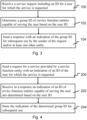
- an entity can be configured to determine a group identity for another entity and inform at least one further entity of the determined group identity. More particularly, a request for a service provided by a service function entity in a network system is received at 100. The request indicates an identity associated with a user for which the service is requested. For example, a user identity associated with the device 10 of Figure 1 can be indicated. An identity of a group of service function entities capable of serving the user and determined based on the identity of the user is determined at 102. An indication of the determined identity of the group is provided at 104 in a response for subsequent use by the sender of the request and/or at least one other entity involved in requests for services associated with the user.
- the request can be received indirectly from a device requesting and using the service.
- the request for the service may be received from a network function, for example an entity providing access and mobility management functions for accessing devices.
- the processing of the determining and service function entity selection can be delegated to a proxy function.
- the group identity can be communicated from the proxy entity 12 in a response message to the access management function 11 and then to any of the core network entities 13 to 19.
- the group identity indication may be delivered to the entity providing access and mobility management functions and/or to the accessing device.
- the indication can be sent for storing of the determined group identity for subsequent use by a recipient of the indication.
- the indication of the determined group identity can be included into a message that is a response to a service request.
- Sending of the indication of the determined group identity may comprise including the indication into a header of a message.
- the indication may be carried in a header comprising a 3GPP Service Based Architecture (SBA) compatible Service Based Interface (SBI) header. Examples for possible formats are given below.
- SBA Service Based Architecture
- SBI Service Based Interface
- Figure 4 illustrates another example where an entity receives the indication of a group identity determined subsequent to sending a request for a service to be provided for a user of the service.
- the entity receiving the indication may comprise, for example a network function entity.
- a more detailed example is an entity providing access and mobility management functions for accessing devices.
- a request is sent for a service provided by a service function entity in a network system, wherein the request indicates an identity of a user for which the service is requested.
- a response comprising an identity of a group of service function entities capable of serving the user and determined based on the indicated identity of the user is received at 202.
- the indication of the determined identity of the group is stored at 204 for subsequent use by the recipient of the response and/or at least one other entity involved in requests for services associated with the user.
- the storing may be provided at least temporarily.
- the group ID can be stored until the end of the service session or registration. More detailed examples for possible uses of the group ID in various scenarios are discussed below.
- the discovery can be delegated to a SCP.
- identity such as a SUPI of the accessing device an issue may arise because either the SCP or the NRF may first need to resolve the UDM group ID based on the SUPI and then discover the UDM for the corresponding UDM group ID.
- the user of the network function is not necessarily informed about the UDM group ID. Hence the user of the network function may not able to pass the UDM group ID to any other network function, should this be needed for whatever reason. To be able to do so the user of the network function needs to perform a separate NRF query to retrieve the UDM profile for the network function instance ID as specified in the 3gpp-Sbi-Producer-Id header.
- I-CSCF interrogation call state control function
- SIP session initiation protocol
- SCP Service Communication Proxy
- ID group identity
- the devices may be using services such as the Unified Data Management (UDM) service, Home Subscriber Server (HSS) service and Authentication Server Function (AUSF) service.
- UDM Unified Data Management
- HSS Home Subscriber Server
- AUSF Authentication Server Function
- PCF Policy Control Function
- UDR Unified Data repository
- CHF Charging Function
- the group identity information can be provided to service using entity by configuring a Service Based Interface (SBI) custom header to have format 3gpp-Sbi-Target-Nf-Group-Id.
- SBI Service Based Interface
- the SBI header can be modified to be applicable for all services which involve resolving the group identity based on user identity.
- the header can be provided in the service response.
- the SCP can then use a header like 3gpp-Sbi-Target-Group-Id for indicating the group ID of the service producing network function (NF) to the user devices and other entities involved in the use of the service.
- the SCP can use the header for indicating the group ID of the producer NF to the user of UDM, AUSF, HSS, PCF, CHF and UDR services in a service response message.
- the recipient can store in a memory thereof the received group ID information for subsequent use.
- the group ID information can be stored for a configured duration. According to a possibility the group ID information has the same expiry as the UE context.
- the recipient can also pass the group ID information to at least one other network function according the service specific application programming interface (API) and/or appropriate signalling.
- API application programming interface
- an active Access and Mobility Management Function performs at separate steps required service selections, for example AUSF Selection, UDM Selection and PCF Selection and related operations, based on the user identity.
- the user identity can comprise, for example, a permanent subscriber identity (SUPI) of a user equipment (UE).
- SUPI permanent subscriber identity
- the service discovery can be delegated to a SCP. That is, the task of performing selection of the service providing instances and necessary actions can be delegated to a SCP instance.
- An example of a possible signal flow for this is shown in Figure 5 in the context of the SCP performing UDM selection. However, it is noted that similar procedure can be applied to other service requests.
- the AMF sends in message 1 a UDM service request to the SCP.
- the request includes the user device identity, for example SUPI.
- the SCP then initiates the procure to resolve the UDM group ID based on the user identity.
- Message 2 is sent to an UDR requesting for UDR service.
- Message 2 includes the user identity and a specific request for group ID mapping.
- the UDR responds by message 3 including the UDM group ID resolved based on the user identity to the SCP.
- the SCP can now perform UDM discovery with an NRF based on the received UDM group ID.
- Message 4 comprising a discovery request and including the UDM group ID is sent to the NRF.
- NRF responds by message 5 to the discovery request.
- the SCP can now select the indicated UDM.
- the SCP sends in message 6 a UDM service request to the selected UDM and receives a service response in message 7 from the UDM.
- the SCP is in the possession of the UDM group ID and therefore can provide it to the AMF by message 8.
- the AMF may then use the UDM group ID for communications with other entities.
- the SCP includes the UDM group ID in a HTTP 3GPP SBI header 3gpp-Sbi-Target-Nf-Group-Id. This header can be used in a service response from the SCP to the NF service consumer, when using indirect communication, to identify the NF group ID of the NF service producer.
- Reception of the group ID information allows the AMF to signal the UDM group ID to other NFs, e.g. to the SMF (Nsmf_PDUSession_Create) when the UE establishes a PDU session, to the SMSF (Nsmsf_SMService_Activate) when Short Message Service (SMS) is enabled for the subscriber, or other AMF (Namf Communication_UEContextTransfer) during inter-AMF mobility.
- SMF Sesmf_PDUSession_Create
- SMSF Short Message Service
- SMS Short Message Service
- the SMF, the SMSF or a new AMF invoke UDM services (e.g., to register the SMF, SMF or new AMF in UDM), they can discover the UDM using the group ID (when not delegating the selection of the UDM to the SCP, using the NRF NFDiscovery group-id-list query parameter per clause 6.2.3.2.3.1 of 3GPP TS 29.510 v16.6.0). They can also include the 3gpp-Sbi-Discovery-group-id-list header in their service request to the SCP (when delegating the selection of the UDM to the SCP). In both cases, need to resolve first the UDM group ID from the SUPI can be avoided.
- the header is defined as 3gpp-Sbi-Target-Nf-Group-Id.
- This header can contain the UDM/HSS/AUSF/UDR/CHF/PCF group identity.
- the encoding of the header can follow the Augmented Backus-Naur Form (ABNF) as defined in IETF RFC 7230.
- ABNF Augmented Backus-Naur Form
- Such a header can be standardised to provide identity of the UDM, AUSF, HSS, PCF, CHF and UDR group identity to the service using device.
- identity for model D and/or C discussed above can be standardized. This may require defining the new 3gpp-Sbi-Target-Nf-Group-Id header and ABNF syntax as described above and operations of the entities that need to handle the header.
- NF instance ID and NF group ID can be returned to the user of the NF service (service consumer).
- Indirect communication with delegated discovery can be provided.
- Another possibility is to provide indirect communication without delegated discovery when the NF service consumer only selects an NF set and delegates the selection of the NF service instance to the SCP.
- An SCP that (re)selected the target NF service instance can include the 3gpp-Sbi-Producer-Id header in its response.
- the 3gpp-Sbi-Target-Nf-Group-Id header can also be included in the HTTP response the SCP forwards towards the NF service consumer.
- the response can thus contain respectively the NF Instance ID and the NF Group ID of the NF Service Producer selected by the SCP.
- the SCP can forward the respective header unmodified in the response towards the HTTP client, without adding any new such header or other information.
- the NF service consumer can include a header like 3gpp-Sbi-Discovery-target-nf-instance-id set to the NF instance ID of the NF service producer in the request creating the new resource.
- An SCP may not need to insert a 3gpp-Sbi-Producer-Id header nor a 3gpp-Sbi-Target-Nf-Group-ld header in an HTTP response if it has already received a 3gpp-Sbi-Target-apiRoot header in a related HTTP request and has not reselected a different NF service producer.
- some embodiments may be implemented in hardware or special purpose circuits, software, logic or any combination thereof.
- some aspects may be implemented in hardware, while other aspects may be implemented in firmware or software which may be executed by a controller, microprocessor or other computing device, although embodiments are not limited thereto.
- firmware or software which may be executed by a controller, microprocessor or other computing device, although embodiments are not limited thereto. While various embodiments may be illustrated and described as block diagrams, flow charts, or using some other pictorial representation, it is well understood that these blocks, apparatus, systems, techniques or methods described herein may be implemented in, as non-limiting examples, hardware, software, firmware, special purpose circuits or logic, general purpose hardware or controller or other computing devices, or some combination thereof.
- the embodiments may be implemented by computer software stored in a memory and executable by at least one data processor of the involved entities or by hardware, or by a combination of software and hardware. At least a part of the functions can be provided in virtualised environment, and at least some of the entities can be provided as virtual computing instances. Further in this regard it should be noted that any of the above procedures may represent program steps, or interconnected logic circuits, blocks and functions, or a combination of program steps and logic circuits, blocks and functions.
- the software may be stored on such physical media as memory chips, or memory blocks implemented within the processor, magnetic media such as hard disk or floppy disks, and optical media such as for example DVD and the data variants thereof, CD.
- the memory may be of any type suitable to the local technical environment and may be implemented using any suitable data storage technology, such as semiconductor based memory devices, magnetic memory devices and systems, optical memory devices and systems, fixed memory and removable memory.
- the data processors may be of any type suitable to the local technical environment, and may include one or more of general purpose computers, special purpose computers, microprocessors, digital signal processors (DSPs), application specific integrated circuits (ASIC), gate level circuits and processors based on multi core processor architecture, as non-limiting examples.
- circuitry may be configured to perform one or more of the functions and/or method procedures previously described. That circuitry may be provided in the network entity and/or in the communications device and/or a server and/or a device.
- circuitry may refer to one or more or all of the following:
- circuitry also covers an implementation of merely a hardware circuit or processor (or multiple processors) or portion of a hardware circuit or processor and its (or their) accompanying software and/or firmware.
- circuitry also covers, for example integrated device.
Landscapes
- Engineering & Computer Science (AREA)
- Computer Networks & Wireless Communication (AREA)
- Signal Processing (AREA)
- Computer Security & Cryptography (AREA)
- Multimedia (AREA)
- Computer Hardware Design (AREA)
- Computing Systems (AREA)
- General Engineering & Computer Science (AREA)
- Mobile Radio Communication Systems (AREA)
Claims (14)
- Dienstproxyfunktion, die mindestens einen Prozessor und mindestens einen Speicher umfasst, der einen Computerprogrammcode beinhaltet, wobei der Computerprogrammcode, wenn er von dem mindestens einen Prozessor ausgeführt wird, dazu ausgelegt sind, die Einrichtung zu veranlassen, mindestens Folgendes durchzuführen:Empfangen einer Anforderung eines Dienstes, der von einer Dienstfunktionsentität in einem Netzwerksystem bereitgestellt wird, wobei die Anforderung eine Identität einer Benutzervorrichtung anzeigt, für die der Dienst angefordert wird,in Reaktion auf das Empfangen der Anforderung Bestimmen einer Identität einer Gruppe von Dienstfunktionsentitäten, die angepasst sind, die Benutzervorrichtung zu bedienen, wobei das Bestimmen auf der Identität der Benutzervorrichtung basiert, undSenden einer Anzeige der Identität der Gruppe zur nachfolgenden Verwendung durch mindestens eines von einem Absender der Anforderung und mindestens eine weitere Entität, die an Anforderungen von Diensten beteiligt sind, die mit der Benutzervorrichtung verknüpft sind, in einem Header einer Dienstantwortnachricht auf die Dienstanforderung, wobei der Header einen Header umfasst, der zur Verwendung als ein 3GPP-Service-Based-Interface(SBI)-Header ausgelegt ist.
- Dienstproxyfunktion nach Anspruch 1, wobei der Computerprogrammcode, wenn er von dem mindestens einen Prozessor ausgeführt wird, dazu ausgelegt ist, die Einrichtung zu Folgendem zu veranlassen:Empfangen der Dienstanforderung von einer Netzwerkfunktionsentität,Senden einer Anfrage an mindestens eine Netzwerkentität, die mit dem Bereitstellen des Dienstes der Anforderung verknüpft ist, undSenden der Dienstantwortnachricht an die Netzwerkfunktionsentität.
- Einrichtung, die mindestens einen Prozessor und mindestens einen Speicher umfasst, der einen Computerprogrammcode beinhaltet, wobei der Computerprogrammcode, wenn er von dem mindestens einen Prozessor ausgeführt wird, dazu ausgelegt sind, die Einrichtung mindestens zu Folgendem zu veranlassen:Senden einer Anforderung eines Dienstes, der von einer Dienstfunktionsentität in einem Netzwerksystem bereitgestellt wird, an eine Dienstproxyfunktion, wobei die Anforderung eine Identität einer Benutzervorrichtung anzeigt, für die der Dienst angefordert wird,Empfangen in Reaktion einer Identität einer Gruppe von Dienstfunktionsentitäten, die angepasst sind, die Benutzervorrichtung zu bedienen und auf Basis der Identität der Benutzervorrichtung bestimmt werden, für die der Dienst angefordert wird, in einem Header einer Dienstantwortnachricht auf die Dienstanforderung, wobei der Header einen Header umfasst, der zur Verwendung als ein 3GPP-Service-Based-Interface(SB)-Header ausgelegt ist, undSpeichern der Anzeige der Identität der Gruppe für eine nachfolgende Verwendung durch die Einrichtung und/oder mindestens einer weiteren Entität, die an Dienstanforderungen beteiligt ist, die mit der Benutzervorrichtung verknüpft sind.
- Einrichtung nach Anspruch 3, wobei die Einrichtung eines von einer Benutzervorrichtung, die den Dienst anfordert, oder einer Netzwerkzugangsverwaltungsentität, die eine Anforderung des Dienstes von einer Benutzervorrichtung empfängt, umfasst.
- Einrichtung nach Anspruch 3 oder 4, wobei der Header als Folgendes ausgelegt ist:3gpp-Sbi-Target-Nf-Group-Id" ":" OWS "nfgid=" nfGroupIdvalue, oder3gpp-Sbi-Producer-Id = "3gpp-Sbi-Producer-Id" ":" OWS "nfinst=" nfInstanceIdvalue [;OWS "nfgid=" nfGroupIdvalue],wobei nfgid die bestimmte Identität der Gruppe anzeigt.
- Einrichtung nach einem der Ansprüche 3 bis 5, wobei die Anforderung eine Anforderung eines Dienstes bei der Benutzervorrichtung durch einen Anbieter von mindestens einem von einem einheitlichen Datenverwaltungsdienst, einer Authentifizierungsserverfunktion, einer Richtliniensteuerfunktion, einem einheitlichen Datenrepositorium, einer Abrechnungsfunktion oder einem Heimteilnehmerdienst ist.
- Einrichtung nach einem der Ansprüche 3 bis 6, wobei die Identität der Gruppe eine Gruppenidentität für mindestens eines von einem einheitlichen Datenverwaltungsdienst, einer Authentifizierungsserverfunktion, einer Richtliniensteuerfunktion, einem einheitlichen Datenrepositorium, einer Abrechnungsfunktion oder einem Heimteilnehmerdienst umfasst.
- Einrichtung nach einem der Ansprüche 3 bis 7, wobei die Dienstfunktionsentität im Netzwerksystem auf Basis einer Mobilteilnehmeridentität und von einem Austausch von Nachrichten mit einer Netzwerkfunktionsrepositoriumsfunktion entdeckt und ausgewählt wird und eine Anforderung für den Dienst an die Dienstfunktionsentität gesendet wird, die entdeckt und ausgewählt wird, und eine Anzeige der Identität der Gruppe in einer Dienstantwort beinhaltet ist.
- Verfahren, das von einer Dienstproxyfunktion durchgeführt wird, wobei das Verfahren Folgendes umfasst:Empfangen einer Anforderung eines Dienstes, der von einer Dienstfunktionsentität in einem Netzwerksystem bereitgestellt wird, wobei die Anforderung eine Identität einer Benutzervorrichtung anzeigt, für die der Dienst angefordert wird,in Reaktion auf das Empfangen der Anforderung Bestimmen einer Identität einer Gruppe von Dienstfunktionsentitäten, die angepasst sind, die Benutzervorrichtung zu bedienen, wobei das Bestimmen auf der Identität der Benutzervorrichtung basiert, undSenden einer Anzeige der Identität der Gruppe zur nachfolgenden Verwendung durch einen Absender der Anforderung und/oder mindestens eine weitere Entität, die an Anforderungen von Diensten beteiligt ist, die mit der Benutzervorrichtung verknüpft sind, in einem Header einer Dienstantwortnachricht auf die Dienstanforderung, wobei der Header einen Header umfasst, der zur Verwendung als ein 3GPP-Service-Based-Interface(SBI)-Header ausgelegt ist.
- Verfahren nach Anspruch 9, wobei das Empfangen das Empfangen der Dienstanforderung von einer Netzwerkfunktionsentität umfasst, das Bestimmen das Senden einer Anfrage an mindestens eine Netzwerkentität umfasst, die mit dem Bereitstellen des Dienstes der Anforderung verknüpft ist, und das Senden der Anzeige das Senden der Dienstantwortnachricht an die Netzwerkfunktionsentität umfasst.
- Verfahren, das Folgendes umfasst:Senden einer Anforderung eines Dienstes, der von einer Dienstfunktionsentität in einem Netzwerksystem bereitgestellt wird, an eine Dienstproxyfunktion, wobei die Anforderung eine Identität einer Benutzervorrichtung anzeigt, für die der Dienst angefordert wird,Empfangen in Reaktion einer Identität einer Gruppe von Dienstfunktionsentitäten, die angepasst sind, die Benutzervorrichtung zu bedienen und auf Basis der Identität der Benutzervorrichtung bestimmt werden, für die der Dienst angefordert wird, in einem Header einer Dienstantwortnachricht auf die Dienstanforderung, wobei der Header einen Header umfasst, der zur Verwendung als ein 3GPP-Service-Based-Interface(SB)-Header ausgelegt ist, undSpeichern der Anzeige der Identität der Gruppe für eine nachfolgende Verwendung durch den Empfänger der Antwort auf die Anforderung und/oder mindestens eine weitere Entität, die an Dienstanforderungen beteiligt ist, die mit der Benutzervorrichtung verknüpft sind.
- Verfahren nach einem der Ansprüche 9 bis 11, das eine indirekte Kommunikation mit einer delegierten Dienstentdeckung umfasst.
- Verfahren nach einem der Ansprüche 9 bis 12, wobei ein Dienstkommunikationsproxy die Anforderung des Dienstes empfängt und die Anzeige der Identität der Gruppe in einer Dienstantwortnachricht sendet.
- Computerlesbares Medium, das Programmcode umfasst, der, wenn er von einem Prozessor ausgeführt wird, den Prozessor veranlasst, Anweisungen eines wie in einem der Ansprüche 9 bis 13 beanspruchten Verfahrens durchzuführen.
Applications Claiming Priority (1)
| Application Number | Priority Date | Filing Date | Title |
|---|---|---|---|
| IN202141015857 | 2021-04-03 |
Publications (2)
| Publication Number | Publication Date |
|---|---|
| EP4080819A1 EP4080819A1 (de) | 2022-10-26 |
| EP4080819B1 true EP4080819B1 (de) | 2024-10-09 |
Family
ID=81344474
Family Applications (1)
| Application Number | Title | Priority Date | Filing Date |
|---|---|---|---|
| EP22164325.7A Active EP4080819B1 (de) | 2021-04-03 | 2022-03-25 | Gruppenidentitäten in einem kommunikationssystem |
Country Status (3)
| Country | Link |
|---|---|
| US (1) | US12445809B2 (de) |
| EP (1) | EP4080819B1 (de) |
| ES (1) | ES2995593T3 (de) |
Families Citing this family (9)
| Publication number | Priority date | Publication date | Assignee | Title |
|---|---|---|---|---|
| WO2021234028A1 (en) * | 2020-05-20 | 2021-11-25 | Telefonaktiebolaget Lm Ericsson (Publ) | Service request handling |
| WO2022161391A1 (en) * | 2021-01-31 | 2022-08-04 | Telefonaktiebolaget Lm Ericsson (Publ) | Network nodes and methods therein for providing binding indication |
| US20220353263A1 (en) * | 2021-04-28 | 2022-11-03 | Verizon Patent And Licensing Inc. | Systems and methods for securing network function subscribe notification process |
| US12219087B2 (en) * | 2021-08-19 | 2025-02-04 | Verizon Patent And Licensing Inc. | Systems and methods for regional segmentation and selection of charging function |
| US12549936B2 (en) * | 2021-11-02 | 2026-02-10 | Verizon Patent And Licensing Inc. | Systems and methods to optimize registration and session establishment in a wireless network |
| US12562986B2 (en) * | 2022-05-25 | 2026-02-24 | Oracle International Corporation | Methods, systems, and computer readable media for optimized multi-domain service communication proxy (SCP) routing |
| US12549938B2 (en) * | 2022-12-12 | 2026-02-10 | Verizon Patent And Licensing Inc. | Systems and methods for session setup in a core network |
| US20240205859A1 (en) * | 2022-12-15 | 2024-06-20 | Verizon Patent And Licensing Inc. | Systems and methods for session setup or registration in a core network |
| US20250234187A1 (en) * | 2024-01-16 | 2025-07-17 | Oracle International Corporation | Methods, systems, and computer readable media for detecting and processing inter-public land mobile network (plmn) service-based interface (sbi) messages without 3gpp-sbi-originating-network-id headers |
Family Cites Families (13)
| Publication number | Priority date | Publication date | Assignee | Title |
|---|---|---|---|---|
| CN101355797B (zh) * | 2007-07-25 | 2011-12-07 | 华为技术有限公司 | 获得用户终端设备信息的方法和通信业务功能实体 |
| US10225698B2 (en) * | 2014-07-03 | 2019-03-05 | Cisco Technology, Inc. | System and method for providing message delivery and paging to a group of users in a network environment |
| EP3709761B1 (de) * | 2015-08-07 | 2022-02-16 | Samsung Electronics Co., Ltd. | Netzwerk-entitäten und verfahren dafür |
| CN110535648B (zh) * | 2018-05-24 | 2022-05-06 | 腾讯科技(深圳)有限公司 | 电子凭证生成及验证和密钥控制方法、装置、系统和介质 |
| CN110830543B (zh) * | 2018-08-13 | 2021-10-19 | 华为技术有限公司 | 通信方法和通信设备 |
| CN108683690B (zh) * | 2018-08-27 | 2021-11-02 | 创新维度科技(北京)有限公司 | 鉴权方法、用户设备、鉴权装置、鉴权服务器和存储介质 |
| CN111010744B (zh) * | 2018-10-08 | 2022-05-13 | 华为技术有限公司 | 建立会话的方法和装置以及发送报文的方法和装置 |
| EP3949262A4 (de) * | 2019-03-29 | 2022-03-09 | Telefonaktiebolaget LM Ericsson (publ) | Verfahren und vorrichtung zur authentifizierung eines drahtlosen gerätes |
| US10924893B2 (en) * | 2019-04-16 | 2021-02-16 | Verizon Patent And Licensing Inc. | Group message delivery using multicast |
| WO2021047554A1 (en) * | 2019-09-12 | 2021-03-18 | Telefonaktiebolaget Lm Ericsson (Publ) | Method and apparatus for service management |
| KR20220123285A (ko) * | 2020-02-03 | 2022-09-06 | 엘지전자 주식회사 | 무선 통신 시스템에서 멀티캐스트-방송 서비스 영역 제어를 위한 방법 및 장치 |
| US11483694B2 (en) * | 2020-09-01 | 2022-10-25 | Oracle International Corporation | Methods, systems, and computer readable media for service communications proxy (SCP)-specific prioritized network function (NF) discovery and routing |
| US11431746B1 (en) * | 2021-01-21 | 2022-08-30 | T-Mobile Usa, Inc. | Cybersecurity system for common interface of service-based architecture of a wireless telecommunications network |
-
2022
- 2022-03-25 EP EP22164325.7A patent/EP4080819B1/de active Active
- 2022-03-25 ES ES22164325T patent/ES2995593T3/es active Active
- 2022-03-31 US US17/710,838 patent/US12445809B2/en active Active
Also Published As
| Publication number | Publication date |
|---|---|
| EP4080819A1 (de) | 2022-10-26 |
| US12445809B2 (en) | 2025-10-14 |
| US20220322053A1 (en) | 2022-10-06 |
| ES2995593T3 (en) | 2025-02-10 |
Similar Documents
| Publication | Publication Date | Title |
|---|---|---|
| US12445809B2 (en) | Group identities in a communication system | |
| EP3866397B1 (de) | Verfahren und vorrichtung zum ändern der netzwerkkonfiguration in einem drahtlosen kommunikationssystem | |
| CN110086757B (zh) | 通信方法和通信装置 | |
| US10567581B2 (en) | IMS emergency call routing techniques | |
| CN113785552B (zh) | 会话管理功能选择 | |
| CN112512096B (zh) | 一种基于切片的通信方法和设备 | |
| EP4142253B1 (de) | Ims-slicing auf basis von slice-identifikatoren von hss | |
| EP3266187A1 (de) | Inter-ims-serviceunterstützung in telekommunikationssystemen | |
| US20230269661A1 (en) | Communication method and apparatus | |
| US12598243B2 (en) | Service request and response handling | |
| CN114846780A (zh) | 处理通信网络中的ims服务的提供的节点和方法 | |
| US20220022023A1 (en) | Method and Apparatus for Selecting Session Management Network Element | |
| WO2022214971A1 (en) | Media gateway dynamic discovery in ims | |
| JP2023519698A (ja) | 無線通信システムにおけるシステム間の移動性支援のための方法及びその装置 | |
| CN120034944A (zh) | 装置、方法和计算机程序 | |
| US12520124B2 (en) | Apparatus, method, and computer program | |
| US12200616B2 (en) | Edge computing | |
| EP4221152A1 (de) | Verfahren, vorrichtung und computerprogramm zur p-cscf entdeckung | |
| WO2025008870A1 (en) | Method and system for routing the registration request in a wireless network | |
| KR20250029665A (ko) | 무선 통신 시스템에서 IMS-DC(IP(internet protocol) multimedia subsystem-data channel) 서비스를 지원하는 방법 및 장치 | |
| KR20250110521A (ko) | 독립적 ims dc 서비스 특성을 고려한 세션 제어 방법 및 장치 | |
| WO2023061553A1 (en) | Methods and apparatuses for broadcast (mbs) session control |
Legal Events
| Date | Code | Title | Description |
|---|---|---|---|
| PUAI | Public reference made under article 153(3) epc to a published international application that has entered the european phase |
Free format text: ORIGINAL CODE: 0009012 |
|
| STAA | Information on the status of an ep patent application or granted ep patent |
Free format text: STATUS: THE APPLICATION HAS BEEN PUBLISHED |
|
| AK | Designated contracting states |
Kind code of ref document: A1 Designated state(s): AL AT BE BG CH CY CZ DE DK EE ES FI FR GB GR HR HU IE IS IT LI LT LU LV MC MK MT NL NO PL PT RO RS SE SI SK SM TR |
|
| STAA | Information on the status of an ep patent application or granted ep patent |
Free format text: STATUS: REQUEST FOR EXAMINATION WAS MADE |
|
| 17P | Request for examination filed |
Effective date: 20230426 |
|
| RBV | Designated contracting states (corrected) |
Designated state(s): AL AT BE BG CH CY CZ DE DK EE ES FI FR GB GR HR HU IE IS IT LI LT LU LV MC MK MT NL NO PL PT RO RS SE SI SK SM TR |
|
| REG | Reference to a national code |
Ref country code: DE Ref legal event code: R079 Free format text: PREVIOUS MAIN CLASS: H04L0009400000 Ipc: H04L0041089300 Ref document number: 602022006584 Country of ref document: DE |
|
| GRAP | Despatch of communication of intention to grant a patent |
Free format text: ORIGINAL CODE: EPIDOSNIGR1 |
|
| STAA | Information on the status of an ep patent application or granted ep patent |
Free format text: STATUS: GRANT OF PATENT IS INTENDED |
|
| RIC1 | Information provided on ipc code assigned before grant |
Ipc: H04W 12/06 20210101ALI20240131BHEP Ipc: H04L 9/40 20220101ALI20240131BHEP Ipc: H04L 69/22 20220101ALI20240131BHEP Ipc: H04L 67/51 20220101ALI20240131BHEP Ipc: H04L 41/5051 20220101ALI20240131BHEP Ipc: H04L 41/0893 20220101AFI20240131BHEP |
|
| INTG | Intention to grant announced |
Effective date: 20240223 |
|
| GRAJ | Information related to disapproval of communication of intention to grant by the applicant or resumption of examination proceedings by the epo deleted |
Free format text: ORIGINAL CODE: EPIDOSDIGR1 |
|
| STAA | Information on the status of an ep patent application or granted ep patent |
Free format text: STATUS: REQUEST FOR EXAMINATION WAS MADE |
|
| GRAP | Despatch of communication of intention to grant a patent |
Free format text: ORIGINAL CODE: EPIDOSNIGR1 |
|
| STAA | Information on the status of an ep patent application or granted ep patent |
Free format text: STATUS: GRANT OF PATENT IS INTENDED |
|
| INTC | Intention to grant announced (deleted) | ||
| INTG | Intention to grant announced |
Effective date: 20240708 |
|
| GRAS | Grant fee paid |
Free format text: ORIGINAL CODE: EPIDOSNIGR3 |
|
| GRAA | (expected) grant |
Free format text: ORIGINAL CODE: 0009210 |
|
| STAA | Information on the status of an ep patent application or granted ep patent |
Free format text: STATUS: THE PATENT HAS BEEN GRANTED |
|
| AK | Designated contracting states |
Kind code of ref document: B1 Designated state(s): AL AT BE BG CH CY CZ DE DK EE ES FI FR GB GR HR HU IE IS IT LI LT LU LV MC MK MT NL NO PL PT RO RS SE SI SK SM TR |
|
| REG | Reference to a national code |
Ref country code: CH Ref legal event code: EP |
|
| REG | Reference to a national code |
Ref country code: DE Ref legal event code: R096 Ref document number: 602022006584 Country of ref document: DE |
|
| REG | Reference to a national code |
Ref country code: IE Ref legal event code: FG4D |
|
| REG | Reference to a national code |
Ref country code: LT Ref legal event code: MG9D |
|
| REG | Reference to a national code |
Ref country code: ES Ref legal event code: FG2A Ref document number: 2995593 Country of ref document: ES Kind code of ref document: T3 Effective date: 20250210 |
|
| REG | Reference to a national code |
Ref country code: NL Ref legal event code: MP Effective date: 20241009 |
|
| REG | Reference to a national code |
Ref country code: AT Ref legal event code: MK05 Ref document number: 1731818 Country of ref document: AT Kind code of ref document: T Effective date: 20241009 |
|
| PG25 | Lapsed in a contracting state [announced via postgrant information from national office to epo] |
Ref country code: NL Free format text: LAPSE BECAUSE OF FAILURE TO SUBMIT A TRANSLATION OF THE DESCRIPTION OR TO PAY THE FEE WITHIN THE PRESCRIBED TIME-LIMIT Effective date: 20241009 |
|
| PG25 | Lapsed in a contracting state [announced via postgrant information from national office to epo] |
Ref country code: NL Free format text: LAPSE BECAUSE OF FAILURE TO SUBMIT A TRANSLATION OF THE DESCRIPTION OR TO PAY THE FEE WITHIN THE PRESCRIBED TIME-LIMIT Effective date: 20241009 |
|
| PG25 | Lapsed in a contracting state [announced via postgrant information from national office to epo] |
Ref country code: HR Free format text: LAPSE BECAUSE OF FAILURE TO SUBMIT A TRANSLATION OF THE DESCRIPTION OR TO PAY THE FEE WITHIN THE PRESCRIBED TIME-LIMIT Effective date: 20241009 Ref country code: IS Free format text: LAPSE BECAUSE OF FAILURE TO SUBMIT A TRANSLATION OF THE DESCRIPTION OR TO PAY THE FEE WITHIN THE PRESCRIBED TIME-LIMIT Effective date: 20250209 Ref country code: PT Free format text: LAPSE BECAUSE OF FAILURE TO SUBMIT A TRANSLATION OF THE DESCRIPTION OR TO PAY THE FEE WITHIN THE PRESCRIBED TIME-LIMIT Effective date: 20250210 |
|
| PG25 | Lapsed in a contracting state [announced via postgrant information from national office to epo] |
Ref country code: FI Free format text: LAPSE BECAUSE OF FAILURE TO SUBMIT A TRANSLATION OF THE DESCRIPTION OR TO PAY THE FEE WITHIN THE PRESCRIBED TIME-LIMIT Effective date: 20241009 |
|
| PG25 | Lapsed in a contracting state [announced via postgrant information from national office to epo] |
Ref country code: BG Free format text: LAPSE BECAUSE OF FAILURE TO SUBMIT A TRANSLATION OF THE DESCRIPTION OR TO PAY THE FEE WITHIN THE PRESCRIBED TIME-LIMIT Effective date: 20241009 |
|
| PG25 | Lapsed in a contracting state [announced via postgrant information from national office to epo] |
Ref country code: NO Free format text: LAPSE BECAUSE OF FAILURE TO SUBMIT A TRANSLATION OF THE DESCRIPTION OR TO PAY THE FEE WITHIN THE PRESCRIBED TIME-LIMIT Effective date: 20250109 |
|
| PG25 | Lapsed in a contracting state [announced via postgrant information from national office to epo] |
Ref country code: LV Free format text: LAPSE BECAUSE OF FAILURE TO SUBMIT A TRANSLATION OF THE DESCRIPTION OR TO PAY THE FEE WITHIN THE PRESCRIBED TIME-LIMIT Effective date: 20241009 Ref country code: AT Free format text: LAPSE BECAUSE OF FAILURE TO SUBMIT A TRANSLATION OF THE DESCRIPTION OR TO PAY THE FEE WITHIN THE PRESCRIBED TIME-LIMIT Effective date: 20241009 Ref country code: GR Free format text: LAPSE BECAUSE OF FAILURE TO SUBMIT A TRANSLATION OF THE DESCRIPTION OR TO PAY THE FEE WITHIN THE PRESCRIBED TIME-LIMIT Effective date: 20250110 |
|
| PG25 | Lapsed in a contracting state [announced via postgrant information from national office to epo] |
Ref country code: PL Free format text: LAPSE BECAUSE OF FAILURE TO SUBMIT A TRANSLATION OF THE DESCRIPTION OR TO PAY THE FEE WITHIN THE PRESCRIBED TIME-LIMIT Effective date: 20241009 |
|
| PG25 | Lapsed in a contracting state [announced via postgrant information from national office to epo] |
Ref country code: RS Free format text: LAPSE BECAUSE OF FAILURE TO SUBMIT A TRANSLATION OF THE DESCRIPTION OR TO PAY THE FEE WITHIN THE PRESCRIBED TIME-LIMIT Effective date: 20250109 |
|
| PG25 | Lapsed in a contracting state [announced via postgrant information from national office to epo] |
Ref country code: SM Free format text: LAPSE BECAUSE OF FAILURE TO SUBMIT A TRANSLATION OF THE DESCRIPTION OR TO PAY THE FEE WITHIN THE PRESCRIBED TIME-LIMIT Effective date: 20241009 |
|
| PG25 | Lapsed in a contracting state [announced via postgrant information from national office to epo] |
Ref country code: DK Free format text: LAPSE BECAUSE OF FAILURE TO SUBMIT A TRANSLATION OF THE DESCRIPTION OR TO PAY THE FEE WITHIN THE PRESCRIBED TIME-LIMIT Effective date: 20241009 |
|
| PGFP | Annual fee paid to national office [announced via postgrant information from national office to epo] |
Ref country code: ES Payment date: 20250414 Year of fee payment: 4 |
|
| REG | Reference to a national code |
Ref country code: DE Ref legal event code: R097 Ref document number: 602022006584 Country of ref document: DE |
|
| PG25 | Lapsed in a contracting state [announced via postgrant information from national office to epo] |
Ref country code: EE Free format text: LAPSE BECAUSE OF FAILURE TO SUBMIT A TRANSLATION OF THE DESCRIPTION OR TO PAY THE FEE WITHIN THE PRESCRIBED TIME-LIMIT Effective date: 20241009 |
|
| PG25 | Lapsed in a contracting state [announced via postgrant information from national office to epo] |
Ref country code: RO Free format text: LAPSE BECAUSE OF FAILURE TO SUBMIT A TRANSLATION OF THE DESCRIPTION OR TO PAY THE FEE WITHIN THE PRESCRIBED TIME-LIMIT Effective date: 20241009 |
|
| PG25 | Lapsed in a contracting state [announced via postgrant information from national office to epo] |
Ref country code: SK Free format text: LAPSE BECAUSE OF FAILURE TO SUBMIT A TRANSLATION OF THE DESCRIPTION OR TO PAY THE FEE WITHIN THE PRESCRIBED TIME-LIMIT Effective date: 20241009 |
|
| PG25 | Lapsed in a contracting state [announced via postgrant information from national office to epo] |
Ref country code: CZ Free format text: LAPSE BECAUSE OF FAILURE TO SUBMIT A TRANSLATION OF THE DESCRIPTION OR TO PAY THE FEE WITHIN THE PRESCRIBED TIME-LIMIT Effective date: 20241009 |
|
| PLBE | No opposition filed within time limit |
Free format text: ORIGINAL CODE: 0009261 |
|
| STAA | Information on the status of an ep patent application or granted ep patent |
Free format text: STATUS: NO OPPOSITION FILED WITHIN TIME LIMIT |
|
| PG25 | Lapsed in a contracting state [announced via postgrant information from national office to epo] |
Ref country code: SE Free format text: LAPSE BECAUSE OF FAILURE TO SUBMIT A TRANSLATION OF THE DESCRIPTION OR TO PAY THE FEE WITHIN THE PRESCRIBED TIME-LIMIT Effective date: 20241009 |
|
| 26N | No opposition filed |
Effective date: 20250710 |
|
| PG25 | Lapsed in a contracting state [announced via postgrant information from national office to epo] |
Ref country code: MC Free format text: LAPSE BECAUSE OF FAILURE TO SUBMIT A TRANSLATION OF THE DESCRIPTION OR TO PAY THE FEE WITHIN THE PRESCRIBED TIME-LIMIT Effective date: 20241009 |
|
| REG | Reference to a national code |
Ref country code: CH Ref legal event code: H13 Free format text: ST27 STATUS EVENT CODE: U-0-0-H10-H13 (AS PROVIDED BY THE NATIONAL OFFICE) Effective date: 20251023 |
|
| PG25 | Lapsed in a contracting state [announced via postgrant information from national office to epo] |
Ref country code: LU Free format text: LAPSE BECAUSE OF NON-PAYMENT OF DUE FEES Effective date: 20250325 |
|
| REG | Reference to a national code |
Ref country code: BE Ref legal event code: MM Effective date: 20250331 |
|
| PG25 | Lapsed in a contracting state [announced via postgrant information from national office to epo] |
Ref country code: FR Free format text: LAPSE BECAUSE OF NON-PAYMENT OF DUE FEES Effective date: 20250331 |
|
| PG25 | Lapsed in a contracting state [announced via postgrant information from national office to epo] |
Ref country code: BE Free format text: LAPSE BECAUSE OF NON-PAYMENT OF DUE FEES Effective date: 20250331 |
|
| PG25 | Lapsed in a contracting state [announced via postgrant information from national office to epo] |
Ref country code: CH Free format text: LAPSE BECAUSE OF NON-PAYMENT OF DUE FEES Effective date: 20250331 |
|
| PG25 | Lapsed in a contracting state [announced via postgrant information from national office to epo] |
Ref country code: IE Free format text: LAPSE BECAUSE OF NON-PAYMENT OF DUE FEES Effective date: 20250325 |
|
| PGFP | Annual fee paid to national office [announced via postgrant information from national office to epo] |
Ref country code: DE Payment date: 20260204 Year of fee payment: 5 |
|
| PGFP | Annual fee paid to national office [announced via postgrant information from national office to epo] |
Ref country code: IT Payment date: 20260220 Year of fee payment: 5 |