EP4079572B1 - Dumper - Google Patents
Dumper Download PDFInfo
- Publication number
- EP4079572B1 EP4079572B1 EP22165935.2A EP22165935A EP4079572B1 EP 4079572 B1 EP4079572 B1 EP 4079572B1 EP 22165935 A EP22165935 A EP 22165935A EP 4079572 B1 EP4079572 B1 EP 4079572B1
- Authority
- EP
- European Patent Office
- Prior art keywords
- trough
- dumper
- chassis
- control device
- sensor
- Prior art date
- Legal status (The legal status is an assumption and is not a legal conclusion. Google has not performed a legal analysis and makes no representation as to the accuracy of the status listed.)
- Active
Links
Images
Classifications
-
- B—PERFORMING OPERATIONS; TRANSPORTING
- B60—VEHICLES IN GENERAL
- B60W—CONJOINT CONTROL OF VEHICLE SUB-UNITS OF DIFFERENT TYPE OR DIFFERENT FUNCTION; CONTROL SYSTEMS SPECIALLY ADAPTED FOR HYBRID VEHICLES; ROAD VEHICLE DRIVE CONTROL SYSTEMS FOR PURPOSES NOT RELATED TO THE CONTROL OF A PARTICULAR SUB-UNIT
- B60W50/00—Details of control systems for road vehicle drive control not related to the control of a particular sub-unit, e.g. process diagnostic or vehicle driver interfaces
- B60W50/08—Interaction between the driver and the control system
- B60W50/14—Means for informing the driver, warning the driver or prompting a driver intervention
-
- B—PERFORMING OPERATIONS; TRANSPORTING
- B60—VEHICLES IN GENERAL
- B60P—VEHICLES ADAPTED FOR LOAD TRANSPORTATION OR TO TRANSPORT, TO CARRY, OR TO COMPRISE SPECIAL LOADS OR OBJECTS
- B60P1/00—Vehicles predominantly for transporting loads and modified to facilitate loading, consolidating the load, or unloading
- B60P1/04—Vehicles predominantly for transporting loads and modified to facilitate loading, consolidating the load, or unloading with a tipping movement of load-transporting element
- B60P1/045—Levelling or stabilising systems for tippers
-
- B—PERFORMING OPERATIONS; TRANSPORTING
- B60—VEHICLES IN GENERAL
- B60W—CONJOINT CONTROL OF VEHICLE SUB-UNITS OF DIFFERENT TYPE OR DIFFERENT FUNCTION; CONTROL SYSTEMS SPECIALLY ADAPTED FOR HYBRID VEHICLES; ROAD VEHICLE DRIVE CONTROL SYSTEMS FOR PURPOSES NOT RELATED TO THE CONTROL OF A PARTICULAR SUB-UNIT
- B60W50/00—Details of control systems for road vehicle drive control not related to the control of a particular sub-unit, e.g. process diagnostic or vehicle driver interfaces
- B60W50/08—Interaction between the driver and the control system
- B60W50/14—Means for informing the driver, warning the driver or prompting a driver intervention
- B60W2050/143—Alarm means
Definitions
- the invention relates to a dumper with a chassis, comprising a trough mounted thereon in a tiltable manner, a drive and an electrical control device to which sensors for detecting the driving state are assigned, wherein the control device, depending on the trough position and the driving state, in order to maintain a safety distance from the tipping limit, issues a danger signal when at least one vehicle-specific limit value stored in the control device corresponding to the safety distance is exceeded.
- Simple dumpers are equipped with front-wheel drive. Newer or larger ones usually have four-wheel drive. Versions with crawler drive are also available, especially for use in horticulture or on difficult terrain. Dumpers sometimes also have an optional Rotating tipping trough, which makes it easier to place the bulk material, or lifting troughs to be able to discharge the bulk material from an elevated position. There are also models with a reversible driver's stand, which means that the dumper can be moved in both directions with the driver sitting in the direction of travel.
- the invention solves the problem in that the control device, depending on the trough position and the driving state, in order to maintain a safety distance from the tipping limit, issues a danger signal when at least one vehicle-specific limit value stored in the control device corresponding to the safety distance is exceeded, wherein the trough is designed to be rotatably adjustable about a vertical axis with respect to the chassis via a rotating device, namely a turntable, and a rotation angle sensor is preferably assigned to the rotating device.
- the trough In a dumper with a so-called high-rotation tipper, the trough can be raised, which reduces the critical angle of the machine, meaning that the tipping limit is reached at smaller angles. Therefore, a different limit value is used for the permitted angle of inclination when the trough is raised than when the trough is lowered.
- the permitted angle of inclination is specified depending on the trough position.
- the tipping adjustment of the trough can also be suppressed by the danger signal present in order to avoid exceeding the tipping limit.
- limit values corresponding to the safety distance from the tipping limit are stored in the control device for possible driving conditions, in particular driving speed, inclination of the chassis, steering angle, acceleration, deceleration, etc. If a limit value is exceeded, a danger signal is sent.
- the position of the trough can be measured using a limit switch or preferably using a tipping angle sensor.
- the tipping limit depends on the design and Size, especially wheelbase, track width and center of gravity of the dumper.
- At least one inclination sensor can be provided, preferably on the chassis section of the dumper assigned to the trough, which measures the chassis inclination around the roll axis, a transverse vehicle axis, and/or the pitch axis, a longitudinal vehicle axis.
- the inclination sensor can be mounted on the chassis section of the dumper assigned to the trough, in particular the front end, and measures the respective inclination of the construction machine analogously or discretely.
- the danger signal corresponding to the safety distance from the limit value is emitted.
- the invention can alert an operator to critical driving states of the dumper and makes it possible to avoid dangerous driving states as far as possible.
- At least one driving speed sensor can be provided to determine the driving state.
- the driving speed can be limited when the inclination is active and measured with the inclination sensor in order to prevent the maximum driving speed from endangering the operator if the inclination is too great.
- the speed reduction is reduced linearly or in stages from the maximum speed corresponding to the design speed to the set speed value.
- At least one steering angle sensor can also be provided to determine the driving condition.
- Such vehicles can be equipped with conventional or articulated steering, which are particularly susceptible to tipping.
- strain gauges are suitable for use as weighing sensors because the strain recorded by the strain gauges serves as a measure of the load on an axle or similar and can therefore be used to determine its weight load.
- two strain gauges can be provided, one on the front and one on the rear axle, which are attached to a milled surface of the respective axle and which monitor the loading and unloading of the axles. If, for example, the weight load from the dumper on an axle approaches zero, the risk of tipping increases considerably.
- Four or more strain gauges can also be provided. If two strain gauges are provided per axle, for example one strain gauge on each side of the axle, the values of the two strain gauges on one axle can also be compared and a lateral tilt of the machine can be determined.
- At least one position sensor which in the simplest case is a position switch, can be provided to determine the position of the trough.
- the trough can be designed to be adjustable in height relative to the chassis using a lifting device, in particular a scissor drive, and a lifting height sensor can preferably be assigned to the lifting device.
- the trough can assume different positions. For example, trough in storage, trough tipped, trough raised but not tipped, and trough raised and tipped.
- a raised trough noticeably increases the center of gravity of the dumper and thus also the risk of tipping.
- a display in the area of the dumper's dashboard and/or an acoustic signaling device can be provided.
- the display gives a visual and/or acoustic warning signal when a danger signal is received.
- the control device limits and/or reduces the permitted driving speed of the drive to a maximum driving speed stored in the control device and dependent on the danger signal. If the inclination is too great, the speed should be reduced, since the dumper high speeds, especially on uneven terrain, such as on a construction site, can more easily lose traction and tip over. On high-rotation tipper machines, the tilt monitoring is permanently active when the trough is raised and has an even more critical angle setting as well as a permanent speed reduction.
- an acoustic and/or visual warning signal is issued.
- different limit values and danger signals can be provided for different driving conditions. For example, at danger level 1 there is no warning and restriction, at danger level 2 there is a low reaction, at danger level 3 there is a medium reaction, and at danger level 4 there is the highest reaction.
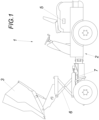
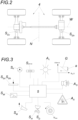
- a dumper 1 with a chassis 2 comprises a trough 3 mounted thereon in a tiltable manner, a drive 4 and an electrical control device 5, to which sensors S are assigned for detecting the driving state.
- the control device 5 depending on the trough position and the driving state, in order to maintain a safety distance from the tipping limit, issues a danger signal A when at least one vehicle-specific limit value corresponding to the safety distance stored in the control device 5 is exceeded.
- At least one inclination sensor Sw is provided on the chassis section of the dumper assigned to the trough, which measures the chassis inclination about the roll axis W and/or the Pitch axis N measures.
- a driving speed sensor S km/h is also provided to determine the driving condition.
- At least one steering angle sensor S a is also provided.
- weighing sensors S Gv , S Gh are arranged on the front axle and rear axle of the chassis. At least one position sensor S M is provided to determine the position of the trough. If the trough 3 is designed to be adjustable in height relative to the chassis 2 via a lifting device 6, in particular a scissor drive, a lifting height sensor S H is optionally assigned to the lifting device 6. To adjust the rotation of the trough 3, a rotating device 7, namely a turntable, is provided, with which the trough 3 can be adjusted in rotation about a vertical axis relative to the chassis 2. A rotation angle sensor S D is assigned to the rotating device.
- the control device 5 limits the permitted driving speed v of the drive 4 to a maximum driving speed v max stored in the control device 5 and dependent on the danger signal.
Landscapes
- Engineering & Computer Science (AREA)
- Transportation (AREA)
- Mechanical Engineering (AREA)
- Automation & Control Theory (AREA)
- Human Computer Interaction (AREA)
- Control Of Vehicle Engines Or Engines For Specific Uses (AREA)
- Emergency Alarm Devices (AREA)
- Vehicle Body Suspensions (AREA)
Description
- Die Erfindung bezieht sich auf einen Dumper mit einem Fahrgestell, umfassend eine darauf kippverstellbar gelagerte Mulde, einen Fahrantrieb und eine elektrische Steuereinrichtung, der Sensoren zur Fahrzustandserkennung zugeordnet sind, wobei die Steuereinrichtung in Abhängigkeit der Muldenstellung und des Fahrzustandes, zwecks Einhaltung eines Sicherheitsabstandes zur Kippgrenze, bei Überschreiten wenigstens eines in der Steuereinrichtung hinterlegten fahrzeugspezifischen, dem Sicherheitsabstand entsprechenden Grenzwertes ein Gefahrensignal absetzt. Gattungesgemäße Vorrichtungen sind beispielsweise aus
EP 1 148 794 A1 ,DE10 2013 102790 A1 ,CN 109 367 462 A undUS 2014/336883 A1 bekannt. Als Dumper, oder auch Vorderkipper, die eine kompaktere Bauart eines Muldenkippers bezeichnen, werden in der Regel geländegängige Baustellenfahrzeuge mit einer kippbaren Mulde bezeichnet, die einer Beförderung von Baumaterial und Aushub dienen. Dumper können beim Auskippen ab einem gewissen Neigungswinkel, der sogenannten Kippgrenze, die Haftung zum Boden verlieren und sich in weiterer Folge gegebenenfalls sogar überschlagen. Aktuell gibt es keine technische Einrichtung, die es hilft einen Überschlag zu vermeiden und die den Bediener darauf hinweist, dass sich die Maschine in einer kritischen Lage befindet. Ferner sind aus derDE 102016106459 A1 Arbeitsfahrzeuge mit Knick-Gelenk-Lenkung sowie einer kippverstellbaren Mulde am Vorderwagen bekannt. - Einfache Dumper sind mit einem Frontantrieb ausgestattet. Neuere oder größere meist mit Allradantrieb. Auch Ausführungen mit Raupenantrieb sind verfügbar, insbesondere für den Einsatz im Gartenbau oder bei schwierigem Untergrund. Dumper verfügen teilweise auch über eine optionale Drehkippmulde, wodurch sich das Schüttgut besser platzieren lässt, bzw. anhebbare Mulden, um das Schüttgut von einer erhöhten Position abgeben zu können. Zudem sind Modelle mit umsetzbarem Fahrerstand bekannt, womit der Dumper in beiden Fahrtrichtungen gleichermaßen mit in Fahrtrichtung gewandter Sitzposition des Fahrers bewegt werden können.
- Der Erfindung liegt somit die Aufgabe zugrunde, einen Dumper zu schaffen, der eine erhöhte Sicherheit gegen Überschläge aufweist.
- Die Erfindung löst die gestellte Aufgabe dadurch, dass die Steuereinrichtung in Abhängigkeit der Muldenstellung und des Fahrzustandes, zwecks Einhaltung eines Sicherheitsabstandes zur Kippgrenze, bei Überschreiten wenigstens eines in der Steuereinrichtung hinterlegten fahrzeugspezifischen, dem Sicherheitsabstand entsprechenden Grenzwertes ein Gefahrensignal absetzt, wobei die Mulde über eine Dreheinrichtung, nämlich einen Drehschemel, bezüglich des Fahrgestells um eine Hochachse drehverstellbar ausgebildet und der Dreheinrichtung vorzugsweise ein Drehwinkelsensor zugeordnet ist.
- Bei einem Dumper mit einem derartigen sogenannten Hochdrehkipper kann die Mulde angehoben werden, wodurch sich der kritische Winkel der Maschine verringert, also die Kippgrenze bei geringeren Winkeln erreicht wird. Daher wird bei angehobener Mulde insbesondere ein anderer Grenzwert für den erlaubten Neigungswinkel verwendet als bei abgesenkter Mulde. Der erlaubte Neigungswinkel wird in Abhängigkeit der Muldenstellung vorgegeben.
- Mithilfe der erfindungsgemäßen Steuereinrichtung kann ein Bediener beim Auskippen der Mulde vor kritischen Auskippwinkeln gewarnt werden. Gegebenenfalls kann die Kippverstellung der Mulde auch vom jeweils anliegenden Gefahrensignal unterdrückt werden, um ein Überschreiten der Kippgrenze zu vermeiden. Im einfachsten Fall sind in der Steuereinrichtung für mögliche Fahrzustände, insbesondere Fahrgeschwindigkeit, Neigung des Fahrgestelles, Lenkwinkel, Beschleunigen, Verzögern u. dgl. jeweils dem Sicherheitsabstand zur Kippgrenze entsprechende Grenzwerte hinterlegt. Wird ein Grenzwert überschritten, wird ein Gefahrensignal abgesetzt. Die Lage der Mulde kann mittels Endschalter oder vorzugsweise mittels eines Kippwinkelsensors gemessen werden. Die Kippgrenze ist von Bauart und Baugröße, insbesondere Radstand, Spurweite und Schwerpunkt des Dumpers abhängig.
- Zur Feststellung des Fahrzustandes kann, vorzugsweise am der Mulde zugeordneten Fahrgestellabschnitt des Dumpers, wenigstes ein Neigungssensor vorgesehen sein, der die Fahrgestellneigung um die Wankachse, eine Fahrzeugquerachse, und/oder die Nickachse, eine Fahrzeuglängsachse, misst. Der Neigungssensor kann am der Mulde zugeordneten Fahrgestellabschnitt des Dumpers, insbesondere dem Vorderwagen, montiert sein, und misst die jeweilige Schräglage der Baumaschine analog oder diskret. Je nach eingestelltem zulässigen Neigungswinkel wird das dem Sicherheitsabstand zum Grenzwert entsprechende Gefahrensignal abgesetzt. Mit der Erfindung kann ein Bediener auf kritische Fahrzustände des Dumpers hingewiesen werden und besteht die Möglichkeit gefährliche Fahrzustände weitestgehend zu vermeiden.
- Darüber hinaus kann zur Feststellung des Fahrzustandes wenigstens ein Fahrgeschwindigkeitssensor vorgesehen sein. Nach einer einstellbaren Entprellung der Sensoren kann die Fahrgeschwindigkeit bei aktiver, mit dem Neigungssensor gemessener, Schräglage beschränkt werden, um zu verhindern, dass die maximale Fahrgeschwindigkeit den Bediener bei zu großer Schräglage gefährdet. Dabei wird die Geschwindigkeitsreduzierung vom der Bauartgeschwindigkeit entsprechenden Geschwindigkeitsmaximum bis zum eingestellten Geschwindigkeitswert linear oder stufenweise reduziert.
- Ebenso kann zur Feststellung des Fahrzustandes wenigstens ein Lenkwinkelsensor vorgesehen sein. Derartige Fahrzeuge können mit herkömmlichen oder Knicklenkungen ausgestattet sein, die besonders kippanfällig sind.
- Sind zur Feststellung des Fahrzustandes an Vorderachse und an Hinterachse des Fahrwerkes Wägesensoren angeordnet, so kann die Lastverteilung, insbesondere auch der Ladung, für die Gefahrenabschätzung berücksichtigt werden. Dehnmesstreifen eignen sich zur Nutzung als Wägesensoren, da die von den Dehnmesstreifen aufgenommene Dehnung als Maß für die Belastung einer Achse od. dgl. dient und so auf deren Gewichtsbelastung geschlossen werden kann. Dazu können zwei Dehnungsmessstreifen, je einer auf der Vorder- und einer Hinterachse, vorgesehen sein, welche auf einer plangefrästen Fläche der jeweiligen Achse befestigt werden und die eine Be- und Entlastung der der Achsen überwachen. Geht beispielsweise die Gewichtsbelastung durch den Dumper an einer Achse gegen Null, so steigt die Kippgefahr erheblich. Es können auch vier, oder mehr, Dehnmessstreifen vorgesehen sein. Sind zwei Dehnmessstreifen je Achse, beispielsweise jeweils ein Dehnmesstreifen auf jeder Seite der Achse, vorgesehen, so können auch die Werte der beiden Dehnmesstreifen einer Achse verglichen und kann auf eine seitliche Neigung der Maschine geschlossen werden.
- Zur Feststellung der Muldenstellung kann wenigstens ein Lagesensor, der im einfachsten Fall ein Lageschalter ist, vorgesehen sein. Zum Anheben der Mulde kann die Mulde über eine Hubeinrichtung, insbesondere einen Scherentrieb, bezüglich des Fahrgestells hubverstellbar ausgebildet und kann der Hubeinrichtung vorzugsweise ein Hubhöhensensor zugeordnet sein. Die Mulde kann unterschiedliche Lagen einnehmen. Beispielsweise Mulde in Ablage, Mulde gekippt, Mulde angehoben aber nicht gekippt und Mulde angehoben und gekippt. Eine angehobene Mulde erhöht den Schwerpunkt des Dumpers merklich und damit auch die Kippgefahr.
- Zur Darstellung des Gefahrensignales kann eine Anzeige im Bereich eines Armaturenbrettes des Dumpers und/oder eine akustische Signaleinrichtung vorgesehen sein. Das Display gibt bei einem eingehenden Gefahrensignal ein optisches und/oder akustisches Warnsignal aus.
- Vorzugsweise begrenzt und/oder reduziert die Steuereinrichtung die erlaubte Fahrgeschwindigkeit des Fahrantriebs auf eine in der Steuereinrichtung hinterlegte, gefahrensignalabhängige Höchstfahrgeschwindigkeit. Bei zu großer Schräglage soll die Geschwindigkeit reduziert werden, da der Dumper bei zu hohen Geschwindigkeiten, insbesondere in unebenem Gelände, wie auf einer Baustelle, leichter die Bodenhaftung verlieren und umkippen können. Bei den Hochdrehkipper Maschinen wird bei angehobener Mulde die Neigungsüberwachung permanent aktiv und hat einen noch kritischeren eingestellten Winkel sowie eine permanente Geschwindigkeitsreduzierung.
- Wird die Neigung des Fahrgestelles beispielsweise mittels Neigungssensor gemessen und dabei festgestellt, dass sich der Dumper beim Auskippen in kritischer Schräglage befindet, wird ein akustisches und/oder optisches Warnsignal ausgegeben. Zudem können für unterschiedliche Fahrzustände unterschiedliche Grenzwerte und Gefahrensignale vorgesehen sein. Zum Beispiel erfolgt bei Gefahrenniveau 1 keine Warnung und Einschränkung, bei Gefahrenniveau 2 eine geringe Reaktion, bei Gefahrenniveau 3 eine mittlere Reaktion und bei Gefahrenniveau 4 die höchste Reaktion.
- In der Zeichnung ist der Erfindungsgegenstand beispielsweise dargestellt. Es zeigen
-
Fig. 1 einen Dumper in Seitenansicht, -
Fig. 2 eine Draufsicht auf einen Fahrantrieb des Dumpers und -
Fig. 3 ein Schema einer erfindungsgemäßen Steuereinrichtung. - Ein Dumper 1 mit einem Fahrgestell 2 umfasst eine darauf kippverstellbar gelagerte Mulde 3, einen Fahrantrieb 4 und eine elektrische Steuereinrichtung 5, der Sensoren S zur Fahrzustandserkennung zugeordnet sind. Die Steuereinrichtung 5 setzt in Abhängigkeit der Muldenstellung und des Fahrzustandes, zwecks Einhaltung eines Sicherheitsabstandes zur Kippgrenze, bei Überschreiten wenigstens eines in der Steuereinrichtung 5 hinterlegten fahrzeugspezifischen, dem Sicherheitsabstand entsprechenden Grenzwertes ein Gefahrensignal A ab.
- Zur Feststellung des Fahrzustandes ist wenigstens am der Mulde zugeordneten Fahrgestellabschnitt des Dumpers, wenigstes ein Neigungssensor Sw vorgesehen, der die Fahrgestellneigung um die Wankachse W und/oder die Nickachse N misst. Zur Feststellung des Fahrzustandes ist zudem ein Fahrgeschwindigkeitssensor SKm/h vorgesehen. Auch wenigstens ein Lenkwinkelsensor Sa ist vorgesehen.
- Zur Feststellung des auf jeder Achse aufruhenden Gewichtes sind an Vorderachse und an Hinterachse des Fahrwerkes Wägesensoren SGv, SGh angeordnet. Zur Feststellung der Muldenstellung ist wenigstens ein Lagesensor SM vorgesehen. Ist die die Mulde 3 über eine Hubeinrichtung 6, insbesondere einen Scherentrieb, bezüglich des Fahrgestells 2 hubverstellbar ausgebildet, so ist der Hubeinrichtung 6 gegebenenfalls ein Hubhöhensensor SH zugeordnet. Zur Drehverstellung der Mulde 3 ist eine Dreheinrichtung 7, nämlich ein Drehschemel vorgesehen, mit dem die Mulde 3 bezüglich des Fahrgestells 2 um eine Hochachse drehverstellt werden kann. Der Dreheinrichtung ist ein Drehwinkelsensor SD zugeordnet.
- Zur Darstellung des Gefahrensignales A ist eine Anzeige AA, AL im Bereich eines Armaturenbrettes des Dumpers und/oder eine akustische Signaleinrichtung As vorgesehen. Die Steuereinrichtung 5 begrenzt die erlaubte Fahrgeschwindigkeit v des Fahrantriebs 4 auf eine in der Steuereinrichtung 5 hinterlegte, gefahrensignalabhängige Höchstfahrgeschwindigkeit vmax.
Claims (9)
- Dumper (2) mit einem Fahrgestell (2), umfassend eine darauf kippverstellbar gelagerte Mulde (3), einen Fahrantrieb (4) und eine elektrische Steuereinrichtung (5), der Sensoren (S) zur Fahrzustandserkennung zugeordnet sind, dadurch gekennzeichnet, dass die Steuereinrichtung (5) in Abhängigkeit der Muldenstellung und des Fahrzustandes, zwecks Einhaltung eines Sicherheitsabstandes (a) zur Kippgrenze, bei Überschreiten wenigstens eines in der Steuereinrichtung hinterlegten fahrzeugspezifischen, dem Sicherheitsabstand entsprechenden Grenzwertes(G) ein Gefahrensignal (A) absetzt, wobei dass die Mulde (3) über eine Dreheinrichtung (7), nämlich einen Drehschemel, bezüglich des Fahrgestells (2) um eine Hochachse drehverstellbar ausgebildet und der Dreheinrichtung (7) vorzugsweise ein Drehwinkelsensor (SD) zugeordnet ist.
- Dumper nach Anspruch 1, dadurch gekennzeichnet, dass zur Feststellung des Fahrzustandes, vorzugsweise am der Mulde (3) zugeordneten Fahrgestellabschnitt des Dumpers (1), wenigstes ein Neigungssensor (Sw) vorgesehen ist, der die Fahrgestellneigung um die Wankachse (W) und/oder die Nickachse (N) misst.
- Dumper nach Anspruch 1 oder 2, dadurch gekennzeichnet, dass zur Feststellung des Fahrzustandes wenigstens Fahrgeschwindigkeitssensor (SKm/h) vorgesehen ist.
- Dumper nach einem der Ansprüche 1 bis 3, dadurch gekennzeichnet, dass zur Feststellung des Fahrzustandes wenigstens ein Lenkwinkelsensor (Sa) vorgesehen ist.
- Dumper nach einem der Ansprüche 1 bis 4, dadurch gekennzeichnet, dass zur Feststellung des Fahrzustandes an Vorderachse und an Hinterachse des Fahrwerkes Wägesensoren (SGv, SGh) angeordnet sind.
- Dumper nach einem der Ansprüche 1 bis 5, dadurch gekennzeichnet, dass zur Feststellung der Muldenstellung wenigstens ein Lagesensor (SM) vorgesehen ist.
- Dumper nach einem der Ansprüche 1 bis 6, dadurch gekennzeichnet, dass die Mulde (3) über eine Hubeinrichtung (6), insbesondere einen Scherentrieb, bezüglich des Fahrgestells (2) hubverstellbar ausgebildet und der Hubeinrichtung (6) vorzugsweise ein Hubhöhensensor (SH) zugeordnet ist.
- Dumper nach einem der Ansprüche 1 bis 7, dadurch gekennzeichnet, dass zur Darstellung des Gefahrensignales eine Anzeige (AA) im Bereich eines Armaturenbrettes des Dumpers (1) und/oder eine akustische Signaleinrichtung (As) vorgesehen ist.
- Dumper nach einem der Ansprüche 1 bis 8, dadurch gekennzeichnet, dass die Steuereinrichtung (5) die erlaubte Fahrgeschwindigkeit (v) des Fahrantriebs (4) auf eine in der Steuereinrichtung (5) hinterlegte, gefahrensignalabhängige Höchstfahrgeschwindigkeit (vmax) begrenzt und/oder reduziert.
Applications Claiming Priority (1)
| Application Number | Priority Date | Filing Date | Title |
|---|---|---|---|
| ATGM50072/2021U AT17335U1 (de) | 2021-04-20 | 2021-04-20 | Dumper |
Publications (2)
| Publication Number | Publication Date |
|---|---|
| EP4079572A1 EP4079572A1 (de) | 2022-10-26 |
| EP4079572B1 true EP4079572B1 (de) | 2024-07-10 |
Family
ID=78951112
Family Applications (1)
| Application Number | Title | Priority Date | Filing Date |
|---|---|---|---|
| EP22165935.2A Active EP4079572B1 (de) | 2021-04-20 | 2022-03-31 | Dumper |
Country Status (4)
| Country | Link |
|---|---|
| EP (1) | EP4079572B1 (de) |
| AT (1) | AT17335U1 (de) |
| DK (1) | DK4079572T3 (de) |
| ES (1) | ES2989282T3 (de) |
Families Citing this family (1)
| Publication number | Priority date | Publication date | Assignee | Title |
|---|---|---|---|---|
| DE102022211991B3 (de) | 2022-11-11 | 2023-12-07 | Zf Friedrichshafen Ag | Verfahren und Steuersystem zum Betreiben einer selbstfahrenden Arbeitsmaschine |
Family Cites Families (6)
| Publication number | Priority date | Publication date | Assignee | Title |
|---|---|---|---|---|
| GB2448691B (en) * | 2007-04-23 | 2010-03-10 | Knorr Bremse Systeme | Tilt Angle Sensor for Stability Control of a Vehicle |
| GB2497134B8 (en) * | 2011-12-02 | 2014-07-23 | Caterpiller Sarl | Determing the relative orientation of members of an articulated work machine |
| DE102013102790A1 (de) * | 2013-03-19 | 2014-09-25 | Schmitz Cargobull Gotha GmbH | Vorrichtung zur Überwachung der Standsicherheit eines Kippsattelaufliegers |
| DE202016100964U1 (de) * | 2016-02-24 | 2017-05-26 | Wacker Neuson Linz Gmbh | Arbeitsfahrzeug mit drehbarem Fahrersitz |
| DE102016106459A1 (de) * | 2016-04-08 | 2017-10-12 | Weidemann GmbH | Arbeitsfahrzeug mit Knick-Gelenk-Lenkung und lastabhängiger Lenkwinkelbegrenzung |
| CN109367462B (zh) * | 2018-09-21 | 2021-06-18 | 中国重汽集团青岛重工有限公司 | 自卸车稳定性安全控制系统及方法 |
-
2021
- 2021-04-20 AT ATGM50072/2021U patent/AT17335U1/de unknown
-
2022
- 2022-03-31 ES ES22165935T patent/ES2989282T3/es active Active
- 2022-03-31 EP EP22165935.2A patent/EP4079572B1/de active Active
- 2022-03-31 DK DK22165935.2T patent/DK4079572T3/da active
Also Published As
| Publication number | Publication date |
|---|---|
| DK4079572T3 (da) | 2024-08-05 |
| ES2989282T3 (es) | 2024-11-25 |
| AT17335U1 (de) | 2021-12-15 |
| EP4079572A1 (de) | 2022-10-26 |
Similar Documents
| Publication | Publication Date | Title |
|---|---|---|
| EP2829438B1 (de) | Kipperfahrzeug | |
| WO2004069568A1 (de) | System zur sicherung der fahrstabilität eines flürförderfahrzeuges | |
| EP2781404B1 (de) | Vorrichtung zur Überwachung der Standsicherheit eines Kippsattelaufliegers | |
| EP3091143B1 (de) | Autobetonpumpe mit abstützvorrichtung | |
| EP2580152B1 (de) | Verfahren zum bestimmen einer kippwahrscheinlichkeit bei einem flurförderzeug | |
| DE69604315T2 (de) | Höhenregelungssystem für Kraftfahrzeuge | |
| EP3750763B1 (de) | Einrichtung und verfahren zur abbremsung eines fahrzeugs mit einer frontlastaufnahmevorrichtung | |
| DE10010011A1 (de) | Flurförderzeug mit einer Stabilisierungseinrichtung zur Erhöhung der Standsicherheit | |
| DE102005012004B4 (de) | Flurförderzeug mit erhöhter statischer/quasistatischer und dynamischer Kippstabilität | |
| DE19919655A1 (de) | Flurförderzeug mit Kippsicherung | |
| EP3451313A1 (de) | Verfahren zur ermittlung einer kollisionsgefahr | |
| EP2781403A2 (de) | Vorrichtung und Verfahren zur Überwachung der Entladung eines Kippfahrzeuges | |
| EP4079572B1 (de) | Dumper | |
| CN113696885A (zh) | 施工机械及提高施工机械的稳定性的方法 | |
| US20160236606A1 (en) | Method for controlling hoisting of an articulated machine | |
| EP1426205A2 (de) | Vierradflurförderzeug mit Pendelachse | |
| DE202013101202U1 (de) | Standsicherheitskontrolleinrichtung sowie Nutzfahrzeug | |
| DE102016106459A1 (de) | Arbeitsfahrzeug mit Knick-Gelenk-Lenkung und lastabhängiger Lenkwinkelbegrenzung | |
| EP3059560A1 (de) | Überwachungseinrichtung für den beladungszustand eines schüttgutfahrzeugs | |
| EP1318066B1 (de) | Anhängerfahrzeug zur Verbindung mit einem Zugfahrzeug, insbesondere einem Schwerlast-Lkw | |
| EP2607295B1 (de) | Verfahren zur Bestimmung des Kippmoments in Längsrichtung für Flurförderzeuge | |
| EP4144581A1 (de) | Fahrzeug und verfahren zum betrieb eines fahrzeugs | |
| DE102016225045A1 (de) | Mobilkran | |
| DE102013109828B4 (de) | Flurförderzeug | |
| DE10017358A1 (de) | Flurförderzeug mit einer Lastaufnahmevorrichtung |
Legal Events
| Date | Code | Title | Description |
|---|---|---|---|
| PUAI | Public reference made under article 153(3) epc to a published international application that has entered the european phase |
Free format text: ORIGINAL CODE: 0009012 |
|
| STAA | Information on the status of an ep patent application or granted ep patent |
Free format text: STATUS: THE APPLICATION HAS BEEN PUBLISHED |
|
| AK | Designated contracting states |
Kind code of ref document: A1 Designated state(s): AL AT BE BG CH CY CZ DE DK EE ES FI FR GB GR HR HU IE IS IT LI LT LU LV MC MK MT NL NO PL PT RO RS SE SI SK SM TR |
|
| STAA | Information on the status of an ep patent application or granted ep patent |
Free format text: STATUS: REQUEST FOR EXAMINATION WAS MADE |
|
| 17P | Request for examination filed |
Effective date: 20230417 |
|
| RBV | Designated contracting states (corrected) |
Designated state(s): AL AT BE BG CH CY CZ DE DK EE ES FI FR GB GR HR HU IE IS IT LI LT LU LV MC MK MT NL NO PL PT RO RS SE SI SK SM TR |
|
| STAA | Information on the status of an ep patent application or granted ep patent |
Free format text: STATUS: EXAMINATION IS IN PROGRESS |
|
| 17Q | First examination report despatched |
Effective date: 20231113 |
|
| GRAP | Despatch of communication of intention to grant a patent |
Free format text: ORIGINAL CODE: EPIDOSNIGR1 |
|
| STAA | Information on the status of an ep patent application or granted ep patent |
Free format text: STATUS: GRANT OF PATENT IS INTENDED |
|
| INTG | Intention to grant announced |
Effective date: 20240430 |
|
| GRAS | Grant fee paid |
Free format text: ORIGINAL CODE: EPIDOSNIGR3 |
|
| GRAA | (expected) grant |
Free format text: ORIGINAL CODE: 0009210 |
|
| STAA | Information on the status of an ep patent application or granted ep patent |
Free format text: STATUS: THE PATENT HAS BEEN GRANTED |
|
| AK | Designated contracting states |
Kind code of ref document: B1 Designated state(s): AL AT BE BG CH CY CZ DE DK EE ES FI FR GB GR HR HU IE IS IT LI LT LU LV MC MK MT NL NO PL PT RO RS SE SI SK SM TR |
|
| REG | Reference to a national code |
Ref country code: CH Ref legal event code: EP |
|
| REG | Reference to a national code |
Ref country code: DE Ref legal event code: R096 Ref document number: 502022001194 Country of ref document: DE |
|
| REG | Reference to a national code |
Ref country code: DK Ref legal event code: T3 Effective date: 20240730 |
|
| REG | Reference to a national code |
Ref country code: LT Ref legal event code: MG9D |
|
| REG | Reference to a national code |
Ref country code: NL Ref legal event code: MP Effective date: 20240710 |
|
| REG | Reference to a national code |
Ref country code: ES Ref legal event code: FG2A Ref document number: 2989282 Country of ref document: ES Kind code of ref document: T3 Effective date: 20241125 |
|
| PG25 | Lapsed in a contracting state [announced via postgrant information from national office to epo] |
Ref country code: PT Free format text: LAPSE BECAUSE OF FAILURE TO SUBMIT A TRANSLATION OF THE DESCRIPTION OR TO PAY THE FEE WITHIN THE PRESCRIBED TIME-LIMIT Effective date: 20241111 |
|
| PG25 | Lapsed in a contracting state [announced via postgrant information from national office to epo] |
Ref country code: NL Free format text: LAPSE BECAUSE OF FAILURE TO SUBMIT A TRANSLATION OF THE DESCRIPTION OR TO PAY THE FEE WITHIN THE PRESCRIBED TIME-LIMIT Effective date: 20240710 |
|
| PG25 | Lapsed in a contracting state [announced via postgrant information from national office to epo] |
Ref country code: PT Free format text: LAPSE BECAUSE OF FAILURE TO SUBMIT A TRANSLATION OF THE DESCRIPTION OR TO PAY THE FEE WITHIN THE PRESCRIBED TIME-LIMIT Effective date: 20241111 Ref country code: NL Free format text: LAPSE BECAUSE OF FAILURE TO SUBMIT A TRANSLATION OF THE DESCRIPTION OR TO PAY THE FEE WITHIN THE PRESCRIBED TIME-LIMIT Effective date: 20240710 |
|
| PG25 | Lapsed in a contracting state [announced via postgrant information from national office to epo] |
Ref country code: NO Free format text: LAPSE BECAUSE OF FAILURE TO SUBMIT A TRANSLATION OF THE DESCRIPTION OR TO PAY THE FEE WITHIN THE PRESCRIBED TIME-LIMIT Effective date: 20241010 |
|
| PG25 | Lapsed in a contracting state [announced via postgrant information from national office to epo] |
Ref country code: PL Free format text: LAPSE BECAUSE OF FAILURE TO SUBMIT A TRANSLATION OF THE DESCRIPTION OR TO PAY THE FEE WITHIN THE PRESCRIBED TIME-LIMIT Effective date: 20240710 Ref country code: GR Free format text: LAPSE BECAUSE OF FAILURE TO SUBMIT A TRANSLATION OF THE DESCRIPTION OR TO PAY THE FEE WITHIN THE PRESCRIBED TIME-LIMIT Effective date: 20241011 Ref country code: FI Free format text: LAPSE BECAUSE OF FAILURE TO SUBMIT A TRANSLATION OF THE DESCRIPTION OR TO PAY THE FEE WITHIN THE PRESCRIBED TIME-LIMIT Effective date: 20240710 |
|
| PG25 | Lapsed in a contracting state [announced via postgrant information from national office to epo] |
Ref country code: BG Free format text: LAPSE BECAUSE OF FAILURE TO SUBMIT A TRANSLATION OF THE DESCRIPTION OR TO PAY THE FEE WITHIN THE PRESCRIBED TIME-LIMIT Effective date: 20240710 |
|
| PG25 | Lapsed in a contracting state [announced via postgrant information from national office to epo] |
Ref country code: LV Free format text: LAPSE BECAUSE OF FAILURE TO SUBMIT A TRANSLATION OF THE DESCRIPTION OR TO PAY THE FEE WITHIN THE PRESCRIBED TIME-LIMIT Effective date: 20240710 |
|
| PG25 | Lapsed in a contracting state [announced via postgrant information from national office to epo] |
Ref country code: IS Free format text: LAPSE BECAUSE OF FAILURE TO SUBMIT A TRANSLATION OF THE DESCRIPTION OR TO PAY THE FEE WITHIN THE PRESCRIBED TIME-LIMIT Effective date: 20241110 |
|
| PG25 | Lapsed in a contracting state [announced via postgrant information from national office to epo] |
Ref country code: HR Free format text: LAPSE BECAUSE OF FAILURE TO SUBMIT A TRANSLATION OF THE DESCRIPTION OR TO PAY THE FEE WITHIN THE PRESCRIBED TIME-LIMIT Effective date: 20240710 |
|
| PG25 | Lapsed in a contracting state [announced via postgrant information from national office to epo] |
Ref country code: RS Free format text: LAPSE BECAUSE OF FAILURE TO SUBMIT A TRANSLATION OF THE DESCRIPTION OR TO PAY THE FEE WITHIN THE PRESCRIBED TIME-LIMIT Effective date: 20241010 |
|
| PG25 | Lapsed in a contracting state [announced via postgrant information from national office to epo] |
Ref country code: RS Free format text: LAPSE BECAUSE OF FAILURE TO SUBMIT A TRANSLATION OF THE DESCRIPTION OR TO PAY THE FEE WITHIN THE PRESCRIBED TIME-LIMIT Effective date: 20241010 Ref country code: PL Free format text: LAPSE BECAUSE OF FAILURE TO SUBMIT A TRANSLATION OF THE DESCRIPTION OR TO PAY THE FEE WITHIN THE PRESCRIBED TIME-LIMIT Effective date: 20240710 Ref country code: NO Free format text: LAPSE BECAUSE OF FAILURE TO SUBMIT A TRANSLATION OF THE DESCRIPTION OR TO PAY THE FEE WITHIN THE PRESCRIBED TIME-LIMIT Effective date: 20241010 Ref country code: LV Free format text: LAPSE BECAUSE OF FAILURE TO SUBMIT A TRANSLATION OF THE DESCRIPTION OR TO PAY THE FEE WITHIN THE PRESCRIBED TIME-LIMIT Effective date: 20240710 Ref country code: IS Free format text: LAPSE BECAUSE OF FAILURE TO SUBMIT A TRANSLATION OF THE DESCRIPTION OR TO PAY THE FEE WITHIN THE PRESCRIBED TIME-LIMIT Effective date: 20241110 Ref country code: HR Free format text: LAPSE BECAUSE OF FAILURE TO SUBMIT A TRANSLATION OF THE DESCRIPTION OR TO PAY THE FEE WITHIN THE PRESCRIBED TIME-LIMIT Effective date: 20240710 Ref country code: GR Free format text: LAPSE BECAUSE OF FAILURE TO SUBMIT A TRANSLATION OF THE DESCRIPTION OR TO PAY THE FEE WITHIN THE PRESCRIBED TIME-LIMIT Effective date: 20241011 Ref country code: FI Free format text: LAPSE BECAUSE OF FAILURE TO SUBMIT A TRANSLATION OF THE DESCRIPTION OR TO PAY THE FEE WITHIN THE PRESCRIBED TIME-LIMIT Effective date: 20240710 Ref country code: BG Free format text: LAPSE BECAUSE OF FAILURE TO SUBMIT A TRANSLATION OF THE DESCRIPTION OR TO PAY THE FEE WITHIN THE PRESCRIBED TIME-LIMIT Effective date: 20240710 |
|
| REG | Reference to a national code |
Ref country code: DE Ref legal event code: R097 Ref document number: 502022001194 Country of ref document: DE |
|
| PG25 | Lapsed in a contracting state [announced via postgrant information from national office to epo] |
Ref country code: SM Free format text: LAPSE BECAUSE OF FAILURE TO SUBMIT A TRANSLATION OF THE DESCRIPTION OR TO PAY THE FEE WITHIN THE PRESCRIBED TIME-LIMIT Effective date: 20240710 Ref country code: RO Free format text: LAPSE BECAUSE OF FAILURE TO SUBMIT A TRANSLATION OF THE DESCRIPTION OR TO PAY THE FEE WITHIN THE PRESCRIBED TIME-LIMIT Effective date: 20240710 |
|
| PG25 | Lapsed in a contracting state [announced via postgrant information from national office to epo] |
Ref country code: EE Free format text: LAPSE BECAUSE OF FAILURE TO SUBMIT A TRANSLATION OF THE DESCRIPTION OR TO PAY THE FEE WITHIN THE PRESCRIBED TIME-LIMIT Effective date: 20240710 |
|
| PG25 | Lapsed in a contracting state [announced via postgrant information from national office to epo] |
Ref country code: SK Free format text: LAPSE BECAUSE OF FAILURE TO SUBMIT A TRANSLATION OF THE DESCRIPTION OR TO PAY THE FEE WITHIN THE PRESCRIBED TIME-LIMIT Effective date: 20240710 Ref country code: IT Free format text: LAPSE BECAUSE OF FAILURE TO SUBMIT A TRANSLATION OF THE DESCRIPTION OR TO PAY THE FEE WITHIN THE PRESCRIBED TIME-LIMIT Effective date: 20240710 |
|
| PLBE | No opposition filed within time limit |
Free format text: ORIGINAL CODE: 0009261 |
|
| STAA | Information on the status of an ep patent application or granted ep patent |
Free format text: STATUS: NO OPPOSITION FILED WITHIN TIME LIMIT |
|
| 26N | No opposition filed |
Effective date: 20250411 |
|
| PGFP | Annual fee paid to national office [announced via postgrant information from national office to epo] |
Ref country code: ES Payment date: 20250416 Year of fee payment: 4 |
|
| PGFP | Annual fee paid to national office [announced via postgrant information from national office to epo] |
Ref country code: CH Payment date: 20250401 Year of fee payment: 4 |
|
| PG25 | Lapsed in a contracting state [announced via postgrant information from national office to epo] |
Ref country code: SE Free format text: LAPSE BECAUSE OF FAILURE TO SUBMIT A TRANSLATION OF THE DESCRIPTION OR TO PAY THE FEE WITHIN THE PRESCRIBED TIME-LIMIT Effective date: 20240710 |
|
| PG25 | Lapsed in a contracting state [announced via postgrant information from national office to epo] |
Ref country code: MC Free format text: LAPSE BECAUSE OF FAILURE TO SUBMIT A TRANSLATION OF THE DESCRIPTION OR TO PAY THE FEE WITHIN THE PRESCRIBED TIME-LIMIT Effective date: 20240710 |
|
| PG25 | Lapsed in a contracting state [announced via postgrant information from national office to epo] |
Ref country code: LU Free format text: LAPSE BECAUSE OF NON-PAYMENT OF DUE FEES Effective date: 20250331 |
|
| REG | Reference to a national code |
Ref country code: BE Ref legal event code: MM Effective date: 20250331 |
|
| PG25 | Lapsed in a contracting state [announced via postgrant information from national office to epo] |
Ref country code: BE Free format text: LAPSE BECAUSE OF NON-PAYMENT OF DUE FEES Effective date: 20250331 |
|
| PG25 | Lapsed in a contracting state [announced via postgrant information from national office to epo] |
Ref country code: IE Free format text: LAPSE BECAUSE OF NON-PAYMENT OF DUE FEES Effective date: 20250331 |
|
| REG | Reference to a national code |
Ref country code: CH Ref legal event code: U11 Free format text: ST27 STATUS EVENT CODE: U-0-0-U10-U11 (AS PROVIDED BY THE NATIONAL OFFICE) Effective date: 20260401 |
|
| PGFP | Annual fee paid to national office [announced via postgrant information from national office to epo] |
Ref country code: GB Payment date: 20260324 Year of fee payment: 5 |
|
| PGFP | Annual fee paid to national office [announced via postgrant information from national office to epo] |
Ref country code: DK Payment date: 20260323 Year of fee payment: 5 Ref country code: DE Payment date: 20260320 Year of fee payment: 5 |
|
| PGFP | Annual fee paid to national office [announced via postgrant information from national office to epo] |
Ref country code: AT Payment date: 20260301 Year of fee payment: 5 |
|
| PGFP | Annual fee paid to national office [announced via postgrant information from national office to epo] |
Ref country code: FR Payment date: 20260325 Year of fee payment: 5 |
|
| PGFP | Annual fee paid to national office [announced via postgrant information from national office to epo] |
Ref country code: CZ Payment date: 20260318 Year of fee payment: 5 |