EP4078436B1 - Verfahren zur erkennung von verkehrsteilnehmern - Google Patents
Verfahren zur erkennung von verkehrsteilnehmern Download PDFInfo
- Publication number
- EP4078436B1 EP4078436B1 EP20841884.8A EP20841884A EP4078436B1 EP 4078436 B1 EP4078436 B1 EP 4078436B1 EP 20841884 A EP20841884 A EP 20841884A EP 4078436 B1 EP4078436 B1 EP 4078436B1
- Authority
- EP
- European Patent Office
- Prior art keywords
- person
- transport
- pose
- determined
- image
- Prior art date
- Legal status (The legal status is an assumption and is not a legal conclusion. Google has not performed a legal analysis and makes no representation as to the accuracy of the status listed.)
- Active
Links
Images
Classifications
-
- G—PHYSICS
- G08—SIGNALLING
- G08G—TRAFFIC CONTROL SYSTEMS
- G08G1/00—Traffic control systems for road vehicles
- G08G1/16—Anti-collision systems
- G08G1/166—Anti-collision systems for active traffic, e.g. moving vehicles, pedestrians, bikes
-
- G—PHYSICS
- G01—MEASURING; TESTING
- G01S—RADIO DIRECTION-FINDING; RADIO NAVIGATION; DETERMINING DISTANCE OR VELOCITY BY USE OF RADIO WAVES; LOCATING OR PRESENCE-DETECTING BY USE OF THE REFLECTION OR RERADIATION OF RADIO WAVES; ANALOGOUS ARRANGEMENTS USING OTHER WAVES
- G01S17/00—Systems using the reflection or reradiation of electromagnetic waves other than radio waves, e.g. lidar systems
- G01S17/88—Lidar systems specially adapted for specific applications
- G01S17/93—Lidar systems specially adapted for specific applications for anti-collision purposes
- G01S17/931—Lidar systems specially adapted for specific applications for anti-collision purposes of land vehicles
-
- G—PHYSICS
- G01—MEASURING; TESTING
- G01S—RADIO DIRECTION-FINDING; RADIO NAVIGATION; DETERMINING DISTANCE OR VELOCITY BY USE OF RADIO WAVES; LOCATING OR PRESENCE-DETECTING BY USE OF THE REFLECTION OR RERADIATION OF RADIO WAVES; ANALOGOUS ARRANGEMENTS USING OTHER WAVES
- G01S7/00—Details of systems according to groups G01S13/00, G01S15/00, G01S17/00
- G01S7/48—Details of systems according to groups G01S13/00, G01S15/00, G01S17/00 of systems according to group G01S17/00
- G01S7/4802—Details of systems according to groups G01S13/00, G01S15/00, G01S17/00 of systems according to group G01S17/00 using analysis of echo signal for target characterisation; Target signature; Target cross-section
-
- G—PHYSICS
- G06—COMPUTING OR CALCULATING; COUNTING
- G06T—IMAGE DATA PROCESSING OR GENERATION, IN GENERAL
- G06T7/00—Image analysis
- G06T7/70—Determining position or orientation of objects or cameras
- G06T7/73—Determining position or orientation of objects or cameras using feature-based methods
-
- G—PHYSICS
- G06—COMPUTING OR CALCULATING; COUNTING
- G06V—IMAGE OR VIDEO RECOGNITION OR UNDERSTANDING
- G06V20/00—Scenes; Scene-specific elements
- G06V20/50—Context or environment of the image
- G06V20/56—Context or environment of the image exterior to a vehicle by using sensors mounted on the vehicle
- G06V20/58—Recognition of moving objects or obstacles, e.g. vehicles or pedestrians; Recognition of traffic objects, e.g. traffic signs, traffic lights or roads
-
- G—PHYSICS
- G06—COMPUTING OR CALCULATING; COUNTING
- G06V—IMAGE OR VIDEO RECOGNITION OR UNDERSTANDING
- G06V40/00—Recognition of biometric, human-related or animal-related patterns in image or video data
- G06V40/10—Human or animal bodies, e.g. vehicle occupants or pedestrians; Body parts, e.g. hands
- G06V40/103—Static body considered as a whole, e.g. static pedestrian or occupant recognition
-
- G—PHYSICS
- G06—COMPUTING OR CALCULATING; COUNTING
- G06V—IMAGE OR VIDEO RECOGNITION OR UNDERSTANDING
- G06V40/00—Recognition of biometric, human-related or animal-related patterns in image or video data
- G06V40/20—Movements or behaviour, e.g. gesture recognition
- G06V40/23—Recognition of whole body movements, e.g. for sport training
-
- G—PHYSICS
- G06—COMPUTING OR CALCULATING; COUNTING
- G06T—IMAGE DATA PROCESSING OR GENERATION, IN GENERAL
- G06T2207/00—Indexing scheme for image analysis or image enhancement
- G06T2207/10—Image acquisition modality
- G06T2207/10016—Video; Image sequence
-
- G—PHYSICS
- G06—COMPUTING OR CALCULATING; COUNTING
- G06T—IMAGE DATA PROCESSING OR GENERATION, IN GENERAL
- G06T2207/00—Indexing scheme for image analysis or image enhancement
- G06T2207/30—Subject of image; Context of image processing
- G06T2207/30196—Human being; Person
-
- G—PHYSICS
- G06—COMPUTING OR CALCULATING; COUNTING
- G06T—IMAGE DATA PROCESSING OR GENERATION, IN GENERAL
- G06T2207/00—Indexing scheme for image analysis or image enhancement
- G06T2207/30—Subject of image; Context of image processing
- G06T2207/30241—Trajectory
-
- G—PHYSICS
- G06—COMPUTING OR CALCULATING; COUNTING
- G06T—IMAGE DATA PROCESSING OR GENERATION, IN GENERAL
- G06T2207/00—Indexing scheme for image analysis or image enhancement
- G06T2207/30—Subject of image; Context of image processing
- G06T2207/30248—Vehicle exterior or interior
- G06T2207/30252—Vehicle exterior; Vicinity of vehicle
- G06T2207/30261—Obstacle
-
- G—PHYSICS
- G06—COMPUTING OR CALCULATING; COUNTING
- G06V—IMAGE OR VIDEO RECOGNITION OR UNDERSTANDING
- G06V10/00—Arrangements for image or video recognition or understanding
- G06V10/70—Arrangements for image or video recognition or understanding using pattern recognition or machine learning
- G06V10/74—Image or video pattern matching; Proximity measures in feature spaces
- G06V10/75—Organisation of the matching processes, e.g. simultaneous or sequential comparisons of image or video features; Coarse-fine approaches, e.g. multi-scale approaches; using context analysis; Selection of dictionaries
- G06V10/751—Comparing pixel values or logical combinations thereof, or feature values having positional relevance, e.g. template matching
Definitions
- the invention relates to a method for detecting road users, in particular people in road traffic. It is known from the prior art to detect road users using ADAS sensors such as cameras, radar or lidar and to roughly classify them as persons, vehicles or animals. It is also known to track these road users, for example for movement prediction.
- ADAS sensors such as cameras, radar or lidar
- the DE102014207802B3 a method and a system for proactively recognizing an action of a road user.
- a camera is used to capture a pixel-by-pixel structured image of the road user and generate corresponding image data.
- US 2018/253595 A1 refers to a method for predicting the actions of road users. For this purpose, objects in the environment are detected, their respective poses are recognized, and future behavior is derived from this.
- WO 2019/116099 A1 refers to a method for predicting people's actions. For this purpose, poses of detected people are analyzed and future movements of the respective person are deduced from this.
- the optical sensor is preferably a mono camera or a stereo camera system. It would also be conceivable to use a surround view camera system or a combination of the above alternatives. With at least one of these cameras an image of the environment or a sequence of images of the environment is taken. An algorithm is then applied to this image of the environment or the sequence of images, which recognizes objects and people in images. So-called convolutional neural networks (CNN) or neural networks are suitable for this. These CNNs can be trained for person recognition, among other things, in order to be able to identify a person based on certain features in the image of the environment.
- CNN convolutional neural networks
- a skeleton-like representation can be generated for the person.
- This skeleton-like representation is generated by detecting key points by connecting the detected key points.
- the skeleton-like representation therefore represents a relative position and orientation of individual body parts of the pedestrian.
- the pose of a person can be determined from this information. For example, a comparison can be made between the detected pose and a look-up table in order to be able to classify the person's orientation or posture more quickly.
- neural networks can be trained accordingly to identify certain objects as means of transport and to distinguish them from, for example, carried items of luggage.
- a possible predefined movement profile can be assigned on this basis.
- certain means of transport such as bicycles, skateboards or Inline skates have framework parameters stored which influence the selection of the movement profile.
- the presence of a means of transport is determined by observing a time sequence of pose states or by observing individual images. Observing a time sequence of pose states is advantageous in that when using a certain means of transport, a pose is either permanently adopted or at least certain movement patterns and thus different poses are repeated. For example, a cyclist has a certain pose. For a skateboarder, a certain movement pattern is repeated when a foot is used to push, and thus certain poses are repeated several times within a certain period of time.
- a means of transport can also be determined based on individual images. This is particularly possible with a sensor data fusion, such as between a radar sensor and a camera sensor.
- the radar sensor can be used, for example, to determine the speed of certain limbs based on the available Doppler speeds.
- a means of transport can be recognized in this way, since there is a certain movement pattern of the legs for the use of a means of transport, for example.
- the means of transport is classified by a corresponding classifier.
- a classifier is trained to distinguish, based on the pose and on the basis of the typical leg movements, between, for example, a inline skater, a skateboarder, a normal pedestrian or a cyclist, etc.
- the criticality of the person is determined based on the means of transport determined. This criticality describes, for example, the probability that the person will cross the road. Depending on the means of transport, changes of direction are possible more quickly. In conjunction with a higher speed than that of a normal pedestrian, a person with a corresponding means of transport represents a higher risk and must be assessed or classified accordingly in order to be able to adapt driving functions or intervention thresholds accordingly if necessary. For example, the driving speed of the vehicle can be reduced or an intervention threshold of an EBA system (emergency braking assistant) can be lowered if a higher criticality of the recognized person is determined. Furthermore, the area with the recognized person can be scanned more frequently or the ROI (region of interest) can be enlarged in order to ensure that the person is recognized for a certain period of time or can be aimed directly at the person.
- EBA electronic safety braking assistant
- the predicted movement profile includes a maximum speed, degrees of freedom of the person and/or a direction of movement. These different parameters can be stored for each individual potentially recognizable means of transport, for example in a look-up table.
- degrees of freedom are understood to mean the various possibilities for changing direction in relation to the direction, the angle in relation to the current direction of movement and the speed of the change in direction.
- the movement profile can also be used to optimize model-based tracking, particularly with regard to the maximum achievable speeds in connection with the means of transport.
- the vehicle can adapt more quickly to a change in the person's direction of movement, as a more accurate prediction of the person's position in the next time step is possible.
- the data processing device uses a CNN (Convolutional Neural Network), for example. This enables the data processing device to carry out person and pose recognition with the help of trained classifiers. Classifiers are also trained, which are used to determine a specific means of transport based on certain features.
- CNN Convolutional Neural Network
- a movement profile is then assigned to each of these means of transport.
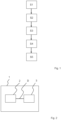
- FIG. 1 shows a schematic flow diagram of an embodiment of the invention.
- step S1 an image of the environment or a sequence of images is recorded using at least one optical sensor 2.
- step S2 a person is detected in this image of the environment.
- step S3 a pose of the detected person is determined.
- step S4 the presence of a means of transport is determined.
- step S5 a movement profile is assigned to the person based on the means of transport determined.
- FIG. 2 shows a schematic representation of an embodiment of the invention.
- a system 1 for detecting road users, in particular people in road traffic is shown in a schematic representation.
- the system 1 comprises an optical sensor 2 and a data processing device 3.
- the optical sensor 2 and the data processing device 3 are connected via a data connection D, by means of which image data can be transmitted from the optical sensor 2 to the data processing device.
- the data processing device it would be conceivable for the data processing device to be connected to one or more actuators, which control the vehicle accordingly based on the results of the data processing device.
- the data connection D is preferably wired. However, wireless connections such as WLAN, Bluetooth or similar would also be conceivable.
Landscapes
- Engineering & Computer Science (AREA)
- Physics & Mathematics (AREA)
- General Physics & Mathematics (AREA)
- Theoretical Computer Science (AREA)
- Multimedia (AREA)
- Human Computer Interaction (AREA)
- Computer Vision & Pattern Recognition (AREA)
- Psychiatry (AREA)
- Health & Medical Sciences (AREA)
- General Health & Medical Sciences (AREA)
- Social Psychology (AREA)
- Radar, Positioning & Navigation (AREA)
- Remote Sensing (AREA)
- Computer Networks & Wireless Communication (AREA)
- Electromagnetism (AREA)
- Traffic Control Systems (AREA)
- Image Analysis (AREA)
Description
- Die Erfindung betrifft ein Verfahren zur Erkennung von Verkehrsteilnehmern, insbesondere Personen im Straßenverkehr. Aus dem Stand der Technik ist bekannt, Verkehrsteilnehmer mittels ADAS-Sensoren wie beispielsweise Kamera, Radar oder Lidar zu erkennen und grob in Person, Fahrzeug oder Tier zu klassifizieren. Weiterhin ist bekannt diese Verkehrsteilnehmer bspw. für eine Bewegungsprädiktion zu verfolgen.
- So zeigt beispielsweise die
DE102014207802B3 ein Verfahren und ein System zum proaktiven Erkennen einer Aktion eines Verkehrsteilnehmers. Hierfür werden mittels einer Kamera ein bildpunktweise strukturiertes Bild des Verkehrsteilnehmers erfasst und entsprechende Bilddaten erzeugt. -
US 2018/253595 A1 bezieht sich auf ein Verfahren zur Vorhersage von Aktionen von Verkehrsteilnehmern. Zu diesem Zweck werden Objekte im Umfeld detektiert, deren jeweilige Posen erkannt, und daraus zukünftiges Verhalten abgeleitet. -
WO 2019/116099 A1 bezieht sich auf ein Verfahren zur Vorhersage von Aktionen von Personen. Zu diesem Zweck werden Posen detektierter Personen analysiert, und daraus auf zukünftige Bewegungen der jeweiligen Person geschlossen. - Nachteilig hierbei ist jedoch, dass derzeitige Erfassungen und Klassifizierungen von Personen nicht immer ausreichend sind, da bei Personen im Straßenverkehr verschiedenste Verhaltens- und Fortbewegungsweisen möglich sind.
- Es ist demnach eine Aufgabe der vorliegenden Erfindung ein Verfahren bereitzustellen, welches eine genauere und robustere Erfassung und Klassifizierung von Personen ermöglicht.
- Diese Aufgabe wird durch den Gegenstand der unabhängigen Ansprüche 1 und 4 gelöst. Weitere vorteilhafte Ausgestaltungen sind Gegenstand der Unteransprüche.
- Allgemein sind die Interaktions- und Kommunikationsmöglichkeiten der Verkehrsteilnehmer äußerst komplex. Es ist grundsätzlich möglich, einen Klassifikationsansatz so zu erweitern, dass nicht nur grobe Klassifikationsergebnisse wie Person oder Fahrzeug, sondern spezifischere Klassifikationsergebnisse, welche bspw. nähere Eigenschaften der Person beschreiben, erkannt werden können.
- Dieser Ansatz ist jedoch in der Praxis schwierig umzusetzen, da er u.a. mit einem hohen Aufwand, bzgl. der Datenmenge und den damit zusammenhängenden Aufwänden für Datenaufnahme, Labelling etc. verbunden sind, da die Klassifikation in der Regel auf den Rohdaten, z.B. Kamerabild, angewandt wird.
- Insbesondere ist es für eine sichere Trajektorienplanung wichtig zu wissen, ob eine Person als Fußgänger einzustufen ist, oder ob sich die Person bspw. mit einem Fortbewegungsmittel bewegt.
- Erfindungsgemäß wird deshalb ein Verfahren zur Erkennung von Verkehrsteilnehmern, insbesondere Personen im Straßenverkehr, mit den folgenden Schritten vorgeschlagen:
- Aufnehmen zumindest eines Umgebungsbildes oder einer Folge von Umgebungsbildern mittels eines optischen Sensors eines Fahrzeugs,
- Detektieren einer Person in dem Umgebungsbild,
- Ermitteln einer Pose der detektierten Person;
- Ermitteln eines Vorhandenseins eines Fortbewegungsmittels der Person;
- Zuordnen eines Bewegungsprofils zu der Person basierend auf dem ermittelten Fortbewegungsmittel der Person.
- Der optische Sensor ist hier bevorzugt eine Monokamera oder ein Stereokamerasystem. Denkbar wäre auch die Verwendung eines Surroundview Kamerasystems oder eine Kombination der vorgenannten Alternativen. Mit zumindest einer dieser Kameras wird ein Umgebungsbild bzw. eine folge an Umgebungsbildern aufgenommen. Auf dieses Umgebungsbild bzw. die Folge aus Bildern wird dann ein Algorithmus angewandt, welcher Objekte und Personen in Bildern erkennt. Geeignet hierfür sind beispielsweise sog. Convolutional Nerual Networks (CNN) bzw. neuronale Netze. Diese CNNs können unter anderem für eine Personenerkennung trainiert werden, um anhand von bestimmten Merkmalen in dem Umgebungsbild auf eine Person schließen zu können.
- Für das Ermitteln der Pose der Person kann für die Person eine skelettähnliche Darstellung generiert werden. Diese skelettähnliche Darstellung wird mittels Detektion von Schlüsselpunkten bzw. Key-Points generiert, indem die erkannten Key-Points miteinander verbunden werden. Die skelettähnliche Darstellung stellt demnach eine relative Position und Ausrichtung einzelner Körperteile des Fußgängers dar. Aus diesen Informationen lässt sich die Pose einer Person ermitteln. Es kann hierfür beispielsweise ein Vergleich zwischen der detektierten Pose und einem Look-up-Table durchgeführt werden, um bspw. die Ausrichtung oder Körperhaltung der Person schneller einordnen zu können.
- Für das Ermitteln des Vorhandenseins eines Fortbewegungsmittels werden Objekte betrachtet, welche aufgrund Ihrer Nähe der Person zugeordnet werden können. Auch hier kann neuronales Netz entsprechend trainiert werden, um bestimmte Objekte als Fortbewegungsmittel zu identifizieren und diese bspw. von getragenen Gepäckstücken zu unterscheiden.
- Wird ein Fortbewegungsmittel zweifelsfrei erkannt, kann auf dieser Basis ein mögliches vordefiniertes Bewegungsprofil zugeordnet werden. Hier können ebenfalls bereits für bestimmte Fortbewegungsmittel wie beispielsweise Fahrrad, Skateboard oder Inline-Skates Rahmenparameter hinterlegt sein, welche in die Auswahl des Bewegungsprofils einfließen.
- Im Kontext der vorliegenden Erfindung wird das Vorhandensein eines Fortbewegungsmittels durch betrachten einer Zeitsequenz aus Posen-Zuständen oder durch betrachten von Einzelbildern ermittelt. Die Betrachtung einer Zeitsequenz aus Posen-Zuständen ist dahingehend vorteilhaft, da bei der Verwendung eines bestimmten Fortbewegungsmittels eine Pose entweder dauerhaft eingenommen wird oder sich zumindest bestimmte Bewegungsmuster und somit verschiedene Posen wiederholen. So hat ein Fahrradfahrer beispielsweise eine bestimmte Pose inne. Bei einem Skateboardfahrer wiederholt sich ein bestimmtes Bewegungsmuster, wenn ein Fuß zum Anschieben verwendet wird und somit wiederholen sich bestimmte Posen innerhalb eines bestimmten Zeitraums mehrfach.
- Allerdings ist auch ein Vorhandensein eines Fortbewegungsmittels basierend auf Einzelbildern zu erreichen. Dies ist insbesondere bei einer Sensordaten-Fusion, wie beispielsweise zwischen einem Radarsensor und einem Kamerasensor möglich. Durch den Radarsensor lassen sich beispielsweise Geschwindigkeiten bestimmter Gliedmaßen aufgrund der verfügbaren Dopplergeschwindigkeiten ermitteln. In Kombination mit dem Bild einer Kamera kann auf diese Weise ein Fortbewegungsmittel erkannt werden, da es für die Verwendung eines Fortbewegungsmittels beispielsweise ein bestimmtes Bewegungsmuster der Beine gibt.
- Des Weiteren wird das Fortbewegungsmittel durch einen entsprechenden Klassifikator klassifiziert. Hierfür wird ein Klassifikator entsprechend antrainiert um auf Basis der Pose, und auf Basis der typischen Beinbewegungen, zwischen beispielsweise einem Inline-Skater, einem Skateboarder, einem normalen Fußgänger oder einem Radfahrer etc. zu unterscheiden.
- Weiter ist bevorzugt, dass basierend auf dem ermittelten Fortbewegungsmittel eine Kritikalität der Person ermittelt wird. Diese Kritikalität beschreibt beispielsweise die Wahrscheinlichkeit, dass die Person die Fahrbahn kreuzt. Je nach Fortbewegungsmittel sind Richtungsänderungen schneller möglich. In Verbindung mit einer höheren Geschwindigkeit als der eines normalen Fußgängers stellt eine Person mit einem entsprechenden Fortbewegungsmittel ein höheres Risiko dar und muss entsprechend bewertet bzw. eingestuft werden, um ggf. Fahrfunktionen bzw. Eingriffsschwellwerte entsprechend anpassen zu können. Hierbei kann z.B. die Fahrgeschwindigkeit des Fahrzeugs reduziert werden oder ein Eingriffsschwellenwert eines EBA-Systems (Notbremsassistent) gesenkt werden, wenn eine höhere Kritikalität der erkannten Person ermittelt wird. Weiterhin kann der Bereich mit der erkannten Person häufiger abgescannt werden bzw. die ROI (Region of interest) vergrößert werden, um die Erkennung der Person für einen bestimmten Zeitraum sicherzustellen oder auf die Person direkt gerichtet werden.
- In einer besonders bevorzugten Ausführungsform umfasst das prädizierte Bewegungsprofil eine maximale Geschwindigkeit, Freiheitsgrade der Person und/oder eine Bewegungsrichtung. Diese Unterschiedlichen Parameter können zu jedem einzelnen potentiell erkennbaren Fortbewegungsmittel beispielsweise in einem Look-up Table hinterlegt sein. Unter Freiheitsgraden werden im Lichte der Erfindung die verschiedenen Möglichkeiten zur Richtungsänderung bezogen auf die Richtung, den Winkel in Relation zu der Aktuellen Bewegungsrichtung und die Geschwindigkeit der Richtungsänderung. Je nach Fortbewegungsmittel sind mehr bzw. schnellere Richtungsänderungen möglich. Ein Inline-Skater kann beispielsweise schneller eine Richtungsänderung mit einem größeren Winkel durchführen, als beispielsweise ein Fahrradfahrer. Durch das Bewegungsprofil kann auch ein modell-basiertes Tracking optimiert werden, insbesondere im Hinblick auf die maximal erreichbaren Geschwindigkeiten in Verbindung mit dem Fortbewegungsmittel. Weiterhin kann sich das Fahrzeug schneller an eine Änderung der Bewegungsrichtung der Person anpassen, da eine genauere Prädiktion der Position der Person im nächsten Zeitschritt möglich wird.
- Weiterhin wird erfindungsgemäß ein System zur Erkennung von Verkehrsteilnehmern, insbesondere Personen im Straßenverkehr vorgeschlagen, umfassend zumindest einen optischen Sensor zum Aufnehmen eines Umgebungsbildes oder einer Folge an Umgebungsbildern sowie eine Datenverarbeitungseinrichtung, welche dazu ausgestaltet ist
- das aufgenommene Umgebungsbild zu analysieren und eine Personenerkennung durchzuführen,
- eine Posenerkennung der Person durchzuführen,
- das Vorhandensein eines Fortbewegungsmittels im Bild zu ermitteln und
- basierend auf dem Fortbewegungsmittel ein Bewegungsprofil zu der Person zuzuordnen.
- Die Datenverarbeitungseinrichtung verwendet dabei beispielsweise ein CNN (Convolutional Neural Network). Hiermit ist es der Datenverarbeitungseinrichtung möglich mit Hilfe von antrainierten Klassifikatoren eine Personen- und auch Posenerkennung durchzuführen. Weiterhin werden Klassifikatoren antrainiert, mittels welchen basierend auf bestimmten Merkmalen auf ein bestimmtes Fortbewegungsmittel geschlossen wird.
- Zu jedem dieser Fortbewegungsmittel wird dann ein Bewegungsprofil zugeordnet.
- Weitere vorteilhafte Ausgestaltungen und Ausführungsformen ergeben sich aus den Zeichnungen. Darin zeigen:
-
Fig. 1 ein schematisches Ablaufdiagramm einer Ausführungsform der Erfindung; -
Fig. 2 eine schematische Darstellung einer Ausführungsform der Erfindung. -
Figur 1 zeigt ein schematisches Ablaufdiagramm einer Ausführungsform der Erfindung. In Schritt S1 wird ein Umgebungsbild oder eine Folge von Bildern mittels zumindest eines optischen Sensors 2 aufgenommen. In Schritt S2 wird in diesem Umgebungsbild eine Person detektiert. In einem weiteren Schritt S3 wird eine Pose der detektierten Person ermittelt. Weiter wird in Schritt S4 das Vorhandensein eines Fortbewegungsmittels ermittelt. In einem nächsten Schritt S5 wird ein Bewegungsprofil zu der Person basierend auf dem ermittelten Fortbewegungsmittel der Person zugeordnet. -
Figur 2 zeigt eine schematische Darstellung einer Ausführungsform der Erfindung. Hierbei ist ein System 1 zur Erkennung von Verkehrsteilnehmern, insbesondere Personen im Straßenverkehr in schematischer Darstellung gezeigt. Das System 1 umfasst dabei einen optischen Sensor 2 sowie eine Datenverarbeitungseinrichtung 3. Der optische Sensor 2 sowie die Datenverarbeitungseinrichtung 3 sind dabei über eine Datenverbindung D verbunden, mittels welcher Bilddaten vom optischen Sensor 2 an die Datenverarbeitungseinrichtung übertragen werden können. Es wäre denkbar, dass die Datenverarbeitungseinrichtung mit einem oder mehreren Aktuatoren verbunden ist, welche basierend auf den Ergebnissen der Datenverarbeitungseinrichtung das Fahrzeug entsprechend steuern. Die Datenverbindung D ist dabei bevorzugt kabelgebunden ausgestaltet. Es wären aber auch drahtlose Verbindungen wie beispielsweise WLAN, Bluetooth o.ä. denkbar. -
- 1
- System
- 2
- Optischer Sensor
- 3
- Datenverarbeitungseinrichtung
- D
- Datenverbindung
- S1-S5
- Verfahrensschritte
Claims (4)
- Verfahren zur Erkennung von Verkehrsteilnehmern, insbesondere Personen im Straßenverkehr, mit den folgenden Schritten:- Aufnehmen (S1) zumindest eines Umgebungsbildes oder einer Folge von Umgebungsbildern mittels eines optischen Sensors (2) eines Fahrzeugs,- Detektieren (S2) einer Person in dem Umgebungsbild,- Ermitteln (S3) einer Pose der detektierten Person;- Ermitteln (S4) eines Vorhandenseins eines Fortbewegungsmittels der Person, wobei das Vorhandensein des Fortbewegungsmittels durch Betrachten einer Zeitsequenz aus Posen-Zuständen oder durch betrachten von Einzelbildern ermittelt wird, wobei das Fortbewegungsmittel durch einen entsprechenden Klassifikator klassifiziert wird und der Klassifikator auf Basis der Pose und der typischen Beinbewegungen das Fortbewegungsmittel klassifiziert;- Zuordnen (S5) eines Bewegungsprofils zu der Person basierend auf dem ermittelten Fortbewegungsmittel der Person.
- Verfahren nach einem der vorhergehenden Ansprüche,
dadurch gekennzeichnet, dass
basierend auf dem ermittelten Fortbewegungsmittel eine Kritikalität der Person ermittelt wird. - Verfahren nach Anspruch 1,
dadurch gekennzeichnet, dass
das prädizierte Bewegungsprofil eine maximale Geschwindigkeit, Freiheitsgrade der Person und/oder eine Bewegungsrichtung umfasst. - System (1) zur Erkennung von Verkehrsteilnehmern, insbesondere Personen im Straßenverkehr umfassend zumindest einen optischen Sensor (2) zum Aufnehmen eines Umgebungsbildes oder einer Folge an Umgebungsbildern sowie eine Datenverarbeitungseinrichtung (3), welche dazu ausgestaltet ist- das aufgenommene Umgebungsbild zu analysieren und eine Personenerkennung durchzuführen,- eine Posenerkennung der Person durchzuführen,- das Vorhandensein eines Fortbewegungsmittels im Bild zu ermitteln, wobei das Vorhandensein des Fortbewegungsmittels durch Betrachten einer Zeitsequenz aus Posen-Zuständen oder durch betrachten von Einzelbildern ermittelt wird, wobei das Fortbewegungsmittel durch einen entsprechenden Klassifikator klassifiziert wird und der Klassifikator auf Basis der Pose und der typischen Beinbewegungen das Fortbewegungsmittel klassifiziert und- basierend auf dem Fortbewegungsmittel ein Bewegungsprofil zu der Person zuzuordnen.
Applications Claiming Priority (2)
| Application Number | Priority Date | Filing Date | Title |
|---|---|---|---|
| DE102019220009.5A DE102019220009A1 (de) | 2019-12-18 | 2019-12-18 | Verfahren zur Erkennung von Verkehrsteilnehmern |
| PCT/DE2020/200111 WO2021121490A1 (de) | 2019-12-18 | 2020-12-08 | Verfahren zur erkennung von verkehrsteilnehmern |
Publications (2)
| Publication Number | Publication Date |
|---|---|
| EP4078436A1 EP4078436A1 (de) | 2022-10-26 |
| EP4078436B1 true EP4078436B1 (de) | 2025-02-12 |
Family
ID=74184332
Family Applications (1)
| Application Number | Title | Priority Date | Filing Date |
|---|---|---|---|
| EP20841884.8A Active EP4078436B1 (de) | 2019-12-18 | 2020-12-08 | Verfahren zur erkennung von verkehrsteilnehmern |
Country Status (5)
| Country | Link |
|---|---|
| US (1) | US12562063B2 (de) |
| EP (1) | EP4078436B1 (de) |
| CN (1) | CN115280379A (de) |
| DE (2) | DE102019220009A1 (de) |
| WO (1) | WO2021121490A1 (de) |
Families Citing this family (1)
| Publication number | Priority date | Publication date | Assignee | Title |
|---|---|---|---|---|
| DE102022209561A1 (de) * | 2022-09-13 | 2024-03-14 | Zf Friedrichshafen Ag | System zur Erkennung der vorausliegenden Fußgängerintension eines Fußgängers in einem Umfeld, Fahrzeug und Verkehrsüberwachungssystem |
Family Cites Families (21)
| Publication number | Priority date | Publication date | Assignee | Title |
|---|---|---|---|---|
| WO2011027907A1 (en) * | 2009-09-03 | 2011-03-10 | Honda Motor Co., Ltd. | Vehicle vicinity monitoring apparatus |
| US8952799B2 (en) * | 2011-04-12 | 2015-02-10 | Conti Temic Microelectronic Gmbh | Method and system for warning a driver of a vehicle about potential obstacles behind the vehicle |
| DE102013101639A1 (de) * | 2013-02-19 | 2014-09-04 | Continental Teves Ag & Co. Ohg | Verfahren und Vorrichtung zur Bestimmung eines Fahrbahnzustands |
| DE102013207223A1 (de) | 2013-04-22 | 2014-10-23 | Ford Global Technologies, Llc | Verfahren zur Erkennung von nicht motorisierten Verkehrsteilnehmern |
| JP5884794B2 (ja) * | 2013-08-29 | 2016-03-15 | 株式会社デンソー | 衝突可能性判定装置およびプログラム |
| DE102014214090B4 (de) * | 2013-09-12 | 2024-10-31 | Continental Autonomous Mobility Germany GmbH | Verfahren zur Erkennung von Verkehrssituationen |
| CN103745196B (zh) * | 2013-12-27 | 2016-10-05 | 东软集团股份有限公司 | 广义行人检测方法和装置 |
| DE102014207802B3 (de) * | 2014-04-25 | 2015-10-29 | Bayerische Motoren Werke Aktiengesellschaft | Verfahren und System zum proaktiven Erkennen einer Aktion eines Verkehrsteilnehmers |
| CN108028021B (zh) * | 2015-09-29 | 2021-10-15 | 索尼公司 | 信息处理设备、信息处理方法和程序 |
| US10496766B2 (en) * | 2015-11-05 | 2019-12-03 | Zoox, Inc. | Simulation system and methods for autonomous vehicles |
| US9903733B2 (en) * | 2016-03-17 | 2018-02-27 | Honda Motor Co., Ltd. | Vehicular communications network and methods of use and manufacture thereof |
| CN108062868B (zh) * | 2016-11-09 | 2021-06-29 | 奥迪股份公司 | 用于车辆的自行车检测系统和方法以及车辆 |
| DE102017204404B3 (de) * | 2017-03-16 | 2018-06-28 | Audi Ag | Verfahren und Vorhersagevorrichtung zum Vorhersagen eines Verhaltens eines Objekts in einer Umgebung eines Kraftfahrzeugs und Kraftfahrzeug |
| DE102017216000A1 (de) | 2017-09-11 | 2019-03-14 | Conti Temic Microelectronic Gmbh | Gestensteuerung zur Kommunikation mit einem autonomen Fahrzeug auf Basis einer einfachen 2D Kamera |
| US10913454B2 (en) * | 2017-12-13 | 2021-02-09 | Humanising Autonomy Limited | Systems and methods for predicting pedestrian intent |
| EP3794571A4 (de) * | 2018-05-16 | 2022-01-26 | Notraffic Ltd. | System und verfahren zur verwendung von v2x und sensordaten |
| EP3834098A4 (de) * | 2018-09-12 | 2021-08-11 | Avigilon Corporation | System und verfahren zur verbesserung der geschwindigkeit von ähnlichkeitsbasierten suchen |
| WO2020160276A1 (en) * | 2019-01-30 | 2020-08-06 | Perceptive Automata, Inc. | Neural network based navigation of autonomous vehicles through traffic entities |
| US20200231160A1 (en) * | 2019-04-09 | 2020-07-23 | Ron Zass | Controlling Vehicles in Response to Two-Wheeler Vehicles |
| DE102019220508A1 (de) * | 2019-12-23 | 2021-06-24 | Robert Bosch Gmbh | Verfahren zum situationsabhängigen Anpassen einer Auslöseschwelle bei Querverkehrsszenarien mit mehreren Objekten |
| US11587329B2 (en) * | 2019-12-27 | 2023-02-21 | Valeo Schalter Und Sensoren Gmbh | Method and apparatus for predicting intent of vulnerable road users |
-
2019
- 2019-12-18 DE DE102019220009.5A patent/DE102019220009A1/de not_active Withdrawn
-
2020
- 2020-12-08 US US17/757,727 patent/US12562063B2/en active Active
- 2020-12-08 CN CN202080082507.XA patent/CN115280379A/zh active Pending
- 2020-12-08 DE DE112020006188.4T patent/DE112020006188A5/de active Pending
- 2020-12-08 EP EP20841884.8A patent/EP4078436B1/de active Active
- 2020-12-08 WO PCT/DE2020/200111 patent/WO2021121490A1/de not_active Ceased
Also Published As
| Publication number | Publication date |
|---|---|
| DE112020006188A5 (de) | 2022-09-22 |
| US12562063B2 (en) | 2026-02-24 |
| WO2021121490A1 (de) | 2021-06-24 |
| DE102019220009A1 (de) | 2021-06-24 |
| EP4078436A1 (de) | 2022-10-26 |
| CN115280379A (zh) | 2022-11-01 |
| US20230343105A1 (en) | 2023-10-26 |
Similar Documents
| Publication | Publication Date | Title |
|---|---|---|
| WO2019174682A1 (de) | Verfahren und vorrichtung zur erkennung und bewertung von fahrbahnzuständen und witterungsbedingten umwelteinflüssen | |
| DE102014210820B4 (de) | Verfahren zum Nachweis von großen und Passagierfahrzeugen von festen Kameras | |
| EP3671546A1 (de) | Verfahren und system zum bestimmen von landmarken in einer umgebung eines fahrzeugs | |
| EP3044727B1 (de) | Verfahren und vorrichtung zur objekterkennung aus tiefenaufgelösten bilddaten | |
| DE102015208428A1 (de) | Verfahren und Vorrichtung zur Erkennung und Bewertung von Umwelteinflüssen und Fahrbahnzustandsinformationen im Fahrzeugumfeld | |
| DE102018212655A1 (de) | Erkennung der Bewegungsabsicht eines Fußgängers aus Kamerabildern | |
| EP2174260A2 (de) | Vorrichtung zur erkennung und/oder klassifizierung von bewegungsmustern in einer bildsequenz von einer überwachungsszene, verfahren sowie computerprogramm | |
| DE102017208728B4 (de) | Verfahren zur Ermittlung einer Fahranweisung | |
| EP3789926A1 (de) | Verfahren zum erkennen einer adversarialen störung in eingangsdaten eines neuronalen netzes | |
| DE102015208139A1 (de) | Fahrzeuginsassenerfassung mittels des Abstands zwischen Beifahrer- und Fahrermerkmalen | |
| DE102019214558A1 (de) | Projektionsinformations-erkennungsvorrichtung auf basis eines künstlichen neuronalen netzwerks und verfahren derselben | |
| WO2019048554A1 (de) | Verfahren zum auswerten eines optischen erscheinungsbildes in einer fahrzeugumgebung und fahrzeug | |
| DE102019219750B4 (de) | Fahrerassistenzsystem und Verfahren zum Detektieren von Objektbarrieren in 3D-Punktewolken | |
| EP4078436B1 (de) | Verfahren zur erkennung von verkehrsteilnehmern | |
| WO2015090691A1 (de) | Verfahren zum erzeugen eines umgebungsmodells eines kraftfahrzeugs, fahrerassistenzsystem und kraftfahrzeug | |
| EP3961479B1 (de) | Verfahren und vorrichtung zur klassifizierung von targets | |
| DE102010003669A1 (de) | Verfahren und Vorrichtung zur Lokalisierung von Personen in einem vorgegebenen Bereich | |
| DE102016223106A1 (de) | Verfahren und System zum Detektieren eines sich innerhalb eines Parkplatzes befindenden erhabenen Objekts | |
| EP3997614B1 (de) | Verfahren und vorrichtung zum kamerabasierten bestimmen eines abstandes eines bewegten objektes im umfeld eines kraftfahrzeugs | |
| EP2483834B1 (de) | Verfahren und Vorrichtung zum Erkennen einer Fehldetektion eines Objekts in einem Bild | |
| DE102022211463A1 (de) | Computerimplementiertes Verfahren und Vorrichtung zur Bestimmung einer Klassifikation für ein Objekt | |
| DE102016223094A1 (de) | Verfahren und System zum Detektieren eines sich innerhalb eines Parkplatzes befindenden erhabenen Objekts | |
| EP2359308B1 (de) | Vorrichtung zur erzeugung und/oder verarbeitung einer objektsignatur, überwachungsvorrichtung, verfahren und computerprogramm | |
| DE102019204187A1 (de) | Klassifizierung und temporale Erkennung taktischer Fahrmanöver von Verkehrsteilnehmern | |
| EP2696310B1 (de) | Verfahren zum Identifizieren eines Straßenrands |
Legal Events
| Date | Code | Title | Description |
|---|---|---|---|
| STAA | Information on the status of an ep patent application or granted ep patent |
Free format text: STATUS: UNKNOWN |
|
| STAA | Information on the status of an ep patent application or granted ep patent |
Free format text: STATUS: THE INTERNATIONAL PUBLICATION HAS BEEN MADE |
|
| PUAI | Public reference made under article 153(3) epc to a published international application that has entered the european phase |
Free format text: ORIGINAL CODE: 0009012 |
|
| STAA | Information on the status of an ep patent application or granted ep patent |
Free format text: STATUS: REQUEST FOR EXAMINATION WAS MADE |
|
| 17P | Request for examination filed |
Effective date: 20220718 |
|
| AK | Designated contracting states |
Kind code of ref document: A1 Designated state(s): AL AT BE BG CH CY CZ DE DK EE ES FI FR GB GR HR HU IE IS IT LI LT LU LV MC MK MT NL NO PL PT RO RS SE SI SK SM TR |
|
| DAV | Request for validation of the european patent (deleted) | ||
| DAX | Request for extension of the european patent (deleted) | ||
| REG | Reference to a national code |
Ref country code: DE Ref legal event code: R079 Free format text: PREVIOUS MAIN CLASS: G06K0009000000 Ipc: G01S0007480000 Ref country code: DE Ref legal event code: R079 Ref document number: 502020010399 Country of ref document: DE Free format text: PREVIOUS MAIN CLASS: G06K0009000000 Ipc: G01S0007480000 |
|
| REG | Reference to a national code |
Ref country code: DE Ref legal event code: R079 Free format text: PREVIOUS MAIN CLASS: G01S0007480000 Ipc: G08G0001160000 Ref country code: DE Ref legal event code: R079 Ref document number: 502020010399 Country of ref document: DE Free format text: PREVIOUS MAIN CLASS: G01S0007480000 Ipc: G08G0001160000 |
|
| GRAP | Despatch of communication of intention to grant a patent |
Free format text: ORIGINAL CODE: EPIDOSNIGR1 |
|
| STAA | Information on the status of an ep patent application or granted ep patent |
Free format text: STATUS: GRANT OF PATENT IS INTENDED |
|
| RIC1 | Information provided on ipc code assigned before grant |
Ipc: G08G 1/16 20060101ALI20240817BHEP Ipc: G06V 40/20 20220101ALI20240817BHEP Ipc: G06V 40/10 20220101ALI20240817BHEP Ipc: G06V 20/58 20220101ALI20240817BHEP Ipc: G06T 7/73 20170101ALI20240817BHEP Ipc: G01S 17/931 20200101ALI20240817BHEP Ipc: G01S 7/48 20060101AFI20240817BHEP |
|
| INTG | Intention to grant announced |
Effective date: 20240906 |
|
| RIC1 | Information provided on ipc code assigned before grant |
Ipc: G06V 10/75 20220101ALN20240830BHEP Ipc: G06V 40/20 20220101ALI20240830BHEP Ipc: G06V 40/10 20220101ALI20240830BHEP Ipc: G06V 20/58 20220101ALI20240830BHEP Ipc: G06T 7/73 20170101ALI20240830BHEP Ipc: G01S 17/931 20200101ALI20240830BHEP Ipc: G01S 7/48 20060101ALI20240830BHEP Ipc: G08G 1/16 20060101AFI20240830BHEP |
|
| GRAS | Grant fee paid |
Free format text: ORIGINAL CODE: EPIDOSNIGR3 |
|
| GRAA | (expected) grant |
Free format text: ORIGINAL CODE: 0009210 |
|
| STAA | Information on the status of an ep patent application or granted ep patent |
Free format text: STATUS: THE PATENT HAS BEEN GRANTED |
|
| AK | Designated contracting states |
Kind code of ref document: B1 Designated state(s): AL AT BE BG CH CY CZ DE DK EE ES FI FR GB GR HR HU IE IS IT LI LT LU LV MC MK MT NL NO PL PT RO RS SE SI SK SM TR |
|
| REG | Reference to a national code |
Ref country code: GB Ref legal event code: FG4D Free format text: NOT ENGLISH |
|
| REG | Reference to a national code |
Ref country code: CH Ref legal event code: EP |
|
| REG | Reference to a national code |
Ref country code: DE Ref legal event code: R096 Ref document number: 502020010399 Country of ref document: DE |
|
| REG | Reference to a national code |
Ref country code: IE Ref legal event code: FG4D Free format text: LANGUAGE OF EP DOCUMENT: GERMAN |
|
| REG | Reference to a national code |
Ref country code: NL Ref legal event code: MP Effective date: 20250212 |
|
| PG25 | Lapsed in a contracting state [announced via postgrant information from national office to epo] |
Ref country code: RS Free format text: LAPSE BECAUSE OF FAILURE TO SUBMIT A TRANSLATION OF THE DESCRIPTION OR TO PAY THE FEE WITHIN THE PRESCRIBED TIME-LIMIT Effective date: 20250512 |
|
| PG25 | Lapsed in a contracting state [announced via postgrant information from national office to epo] |
Ref country code: FI Free format text: LAPSE BECAUSE OF FAILURE TO SUBMIT A TRANSLATION OF THE DESCRIPTION OR TO PAY THE FEE WITHIN THE PRESCRIBED TIME-LIMIT Effective date: 20250212 |
|
| PG25 | Lapsed in a contracting state [announced via postgrant information from national office to epo] |
Ref country code: PL Free format text: LAPSE BECAUSE OF FAILURE TO SUBMIT A TRANSLATION OF THE DESCRIPTION OR TO PAY THE FEE WITHIN THE PRESCRIBED TIME-LIMIT Effective date: 20250212 |
|
| PG25 | Lapsed in a contracting state [announced via postgrant information from national office to epo] |
Ref country code: ES Free format text: LAPSE BECAUSE OF FAILURE TO SUBMIT A TRANSLATION OF THE DESCRIPTION OR TO PAY THE FEE WITHIN THE PRESCRIBED TIME-LIMIT Effective date: 20250212 |
|
| REG | Reference to a national code |
Ref country code: LT Ref legal event code: MG9D |
|
| REG | Reference to a national code |
Ref country code: DE Ref legal event code: R081 Ref document number: 502020010399 Country of ref document: DE Owner name: AUMOVIO AUTONOMOUS MOBILITY GERMANY GMBH, DE Free format text: FORMER OWNER: CONTINENTAL AUTONOMOUS MOBILITY GERMANY GMBH, 85057 INGOLSTADT, DE |
|
| PG25 | Lapsed in a contracting state [announced via postgrant information from national office to epo] |
Ref country code: NO Free format text: LAPSE BECAUSE OF FAILURE TO SUBMIT A TRANSLATION OF THE DESCRIPTION OR TO PAY THE FEE WITHIN THE PRESCRIBED TIME-LIMIT Effective date: 20250512 Ref country code: IS Free format text: LAPSE BECAUSE OF FAILURE TO SUBMIT A TRANSLATION OF THE DESCRIPTION OR TO PAY THE FEE WITHIN THE PRESCRIBED TIME-LIMIT Effective date: 20250612 |
|
| PG25 | Lapsed in a contracting state [announced via postgrant information from national office to epo] |
Ref country code: NL Free format text: LAPSE BECAUSE OF FAILURE TO SUBMIT A TRANSLATION OF THE DESCRIPTION OR TO PAY THE FEE WITHIN THE PRESCRIBED TIME-LIMIT Effective date: 20250212 |
|
| PG25 | Lapsed in a contracting state [announced via postgrant information from national office to epo] |
Ref country code: HR Free format text: LAPSE BECAUSE OF FAILURE TO SUBMIT A TRANSLATION OF THE DESCRIPTION OR TO PAY THE FEE WITHIN THE PRESCRIBED TIME-LIMIT Effective date: 20250212 |
|
| PG25 | Lapsed in a contracting state [announced via postgrant information from national office to epo] |
Ref country code: LV Free format text: LAPSE BECAUSE OF FAILURE TO SUBMIT A TRANSLATION OF THE DESCRIPTION OR TO PAY THE FEE WITHIN THE PRESCRIBED TIME-LIMIT Effective date: 20250212 Ref country code: PT Free format text: LAPSE BECAUSE OF FAILURE TO SUBMIT A TRANSLATION OF THE DESCRIPTION OR TO PAY THE FEE WITHIN THE PRESCRIBED TIME-LIMIT Effective date: 20250612 |
|
| PG25 | Lapsed in a contracting state [announced via postgrant information from national office to epo] |
Ref country code: GR Free format text: LAPSE BECAUSE OF FAILURE TO SUBMIT A TRANSLATION OF THE DESCRIPTION OR TO PAY THE FEE WITHIN THE PRESCRIBED TIME-LIMIT Effective date: 20250513 Ref country code: BG Free format text: LAPSE BECAUSE OF FAILURE TO SUBMIT A TRANSLATION OF THE DESCRIPTION OR TO PAY THE FEE WITHIN THE PRESCRIBED TIME-LIMIT Effective date: 20250212 |
|
| RAP4 | Party data changed (patent owner data changed or rights of a patent transferred) |
Owner name: AUMOVIO AUTONOMOUS MOBILITY GERMANY GMBH |
|
| PG25 | Lapsed in a contracting state [announced via postgrant information from national office to epo] |
Ref country code: SE Free format text: LAPSE BECAUSE OF FAILURE TO SUBMIT A TRANSLATION OF THE DESCRIPTION OR TO PAY THE FEE WITHIN THE PRESCRIBED TIME-LIMIT Effective date: 20250212 |
|
| PG25 | Lapsed in a contracting state [announced via postgrant information from national office to epo] |
Ref country code: SM Free format text: LAPSE BECAUSE OF FAILURE TO SUBMIT A TRANSLATION OF THE DESCRIPTION OR TO PAY THE FEE WITHIN THE PRESCRIBED TIME-LIMIT Effective date: 20250212 |
|
| PG25 | Lapsed in a contracting state [announced via postgrant information from national office to epo] |
Ref country code: DK Free format text: LAPSE BECAUSE OF FAILURE TO SUBMIT A TRANSLATION OF THE DESCRIPTION OR TO PAY THE FEE WITHIN THE PRESCRIBED TIME-LIMIT Effective date: 20250212 |
|
| PG25 | Lapsed in a contracting state [announced via postgrant information from national office to epo] |
Ref country code: IT Free format text: LAPSE BECAUSE OF FAILURE TO SUBMIT A TRANSLATION OF THE DESCRIPTION OR TO PAY THE FEE WITHIN THE PRESCRIBED TIME-LIMIT Effective date: 20250212 |
|
| PG25 | Lapsed in a contracting state [announced via postgrant information from national office to epo] |
Ref country code: CZ Free format text: LAPSE BECAUSE OF FAILURE TO SUBMIT A TRANSLATION OF THE DESCRIPTION OR TO PAY THE FEE WITHIN THE PRESCRIBED TIME-LIMIT Effective date: 20250212 Ref country code: EE Free format text: LAPSE BECAUSE OF FAILURE TO SUBMIT A TRANSLATION OF THE DESCRIPTION OR TO PAY THE FEE WITHIN THE PRESCRIBED TIME-LIMIT Effective date: 20250212 |
|
| PG25 | Lapsed in a contracting state [announced via postgrant information from national office to epo] |
Ref country code: RO Free format text: LAPSE BECAUSE OF FAILURE TO SUBMIT A TRANSLATION OF THE DESCRIPTION OR TO PAY THE FEE WITHIN THE PRESCRIBED TIME-LIMIT Effective date: 20250212 |
|
| PG25 | Lapsed in a contracting state [announced via postgrant information from national office to epo] |
Ref country code: SK Free format text: LAPSE BECAUSE OF FAILURE TO SUBMIT A TRANSLATION OF THE DESCRIPTION OR TO PAY THE FEE WITHIN THE PRESCRIBED TIME-LIMIT Effective date: 20250212 |
|
| REG | Reference to a national code |
Ref country code: DE Ref legal event code: R097 Ref document number: 502020010399 Country of ref document: DE |
|
| PLBE | No opposition filed within time limit |
Free format text: ORIGINAL CODE: 0009261 |
|
| STAA | Information on the status of an ep patent application or granted ep patent |
Free format text: STATUS: NO OPPOSITION FILED WITHIN TIME LIMIT |
|
| PGFP | Annual fee paid to national office [announced via postgrant information from national office to epo] |
Ref country code: FR Payment date: 20251223 Year of fee payment: 6 |
|
| 26N | No opposition filed |
Effective date: 20251113 |
|
| PGFP | Annual fee paid to national office [announced via postgrant information from national office to epo] |
Ref country code: DE Payment date: 20251231 Year of fee payment: 6 |