EP4076549B1 - Verbesserte wundpflegevorrichtung - Google Patents
Verbesserte wundpflegevorrichtung Download PDFInfo
- Publication number
- EP4076549B1 EP4076549B1 EP20842349.1A EP20842349A EP4076549B1 EP 4076549 B1 EP4076549 B1 EP 4076549B1 EP 20842349 A EP20842349 A EP 20842349A EP 4076549 B1 EP4076549 B1 EP 4076549B1
- Authority
- EP
- European Patent Office
- Prior art keywords
- hydrogel
- antimicrobial
- amphiphilic
- wound
- antimicrobial peptide
- Prior art date
- Legal status (The legal status is an assumption and is not a legal conclusion. Google has not performed a legal analysis and makes no representation as to the accuracy of the status listed.)
- Active
Links
Images

Classifications
-
- A—HUMAN NECESSITIES
- A61—MEDICAL OR VETERINARY SCIENCE; HYGIENE
- A61K—PREPARATIONS FOR MEDICAL, DENTAL OR TOILETRY PURPOSES
- A61K38/00—Medicinal preparations containing peptides
- A61K38/04—Peptides having up to 20 amino acids in a fully defined sequence; Derivatives thereof
- A61K38/08—Peptides having 5 to 11 amino acids
-
- A—HUMAN NECESSITIES
- A61—MEDICAL OR VETERINARY SCIENCE; HYGIENE
- A61K—PREPARATIONS FOR MEDICAL, DENTAL OR TOILETRY PURPOSES
- A61K38/00—Medicinal preparations containing peptides
- A61K38/04—Peptides having up to 20 amino acids in a fully defined sequence; Derivatives thereof
- A61K38/10—Peptides having 12 to 20 amino acids
-
- A—HUMAN NECESSITIES
- A61—MEDICAL OR VETERINARY SCIENCE; HYGIENE
- A61L—METHODS OR APPARATUS FOR STERILISING MATERIALS OR OBJECTS IN GENERAL; DISINFECTION, STERILISATION OR DEODORISATION OF AIR; CHEMICAL ASPECTS OF BANDAGES, DRESSINGS, ABSORBENT PADS OR SURGICAL ARTICLES; MATERIALS FOR BANDAGES, DRESSINGS, ABSORBENT PADS OR SURGICAL ARTICLES
- A61L15/00—Chemical aspects of, or use of materials for, bandages, dressings or absorbent pads
- A61L15/07—Stiffening bandages
- A61L15/12—Stiffening bandages containing macromolecular materials
-
- A—HUMAN NECESSITIES
- A61—MEDICAL OR VETERINARY SCIENCE; HYGIENE
- A61L—METHODS OR APPARATUS FOR STERILISING MATERIALS OR OBJECTS IN GENERAL; DISINFECTION, STERILISATION OR DEODORISATION OF AIR; CHEMICAL ASPECTS OF BANDAGES, DRESSINGS, ABSORBENT PADS OR SURGICAL ARTICLES; MATERIALS FOR BANDAGES, DRESSINGS, ABSORBENT PADS OR SURGICAL ARTICLES
- A61L15/00—Chemical aspects of, or use of materials for, bandages, dressings or absorbent pads
- A61L15/07—Stiffening bandages
- A61L15/14—Use of materials characterised by their function or physical properties
-
- A—HUMAN NECESSITIES
- A61—MEDICAL OR VETERINARY SCIENCE; HYGIENE
- A61L—METHODS OR APPARATUS FOR STERILISING MATERIALS OR OBJECTS IN GENERAL; DISINFECTION, STERILISATION OR DEODORISATION OF AIR; CHEMICAL ASPECTS OF BANDAGES, DRESSINGS, ABSORBENT PADS OR SURGICAL ARTICLES; MATERIALS FOR BANDAGES, DRESSINGS, ABSORBENT PADS OR SURGICAL ARTICLES
- A61L15/00—Chemical aspects of, or use of materials for, bandages, dressings or absorbent pads
- A61L15/16—Bandages, dressings or absorbent pads for physiological fluids such as urine or blood, e.g. sanitary towels, tampons
- A61L15/22—Bandages, dressings or absorbent pads for physiological fluids such as urine or blood, e.g. sanitary towels, tampons containing macromolecular materials
- A61L15/26—Macromolecular compounds obtained otherwise than by reactions only involving carbon-to-carbon unsaturated bonds; Derivatives thereof
-
- A—HUMAN NECESSITIES
- A61—MEDICAL OR VETERINARY SCIENCE; HYGIENE
- A61L—METHODS OR APPARATUS FOR STERILISING MATERIALS OR OBJECTS IN GENERAL; DISINFECTION, STERILISATION OR DEODORISATION OF AIR; CHEMICAL ASPECTS OF BANDAGES, DRESSINGS, ABSORBENT PADS OR SURGICAL ARTICLES; MATERIALS FOR BANDAGES, DRESSINGS, ABSORBENT PADS OR SURGICAL ARTICLES
- A61L15/00—Chemical aspects of, or use of materials for, bandages, dressings or absorbent pads
- A61L15/16—Bandages, dressings or absorbent pads for physiological fluids such as urine or blood, e.g. sanitary towels, tampons
- A61L15/22—Bandages, dressings or absorbent pads for physiological fluids such as urine or blood, e.g. sanitary towels, tampons containing macromolecular materials
- A61L15/32—Proteins, polypeptides; Degradation products or derivatives thereof, e.g. albumin, collagen, fibrin, gelatin
-
- A—HUMAN NECESSITIES
- A61—MEDICAL OR VETERINARY SCIENCE; HYGIENE
- A61L—METHODS OR APPARATUS FOR STERILISING MATERIALS OR OBJECTS IN GENERAL; DISINFECTION, STERILISATION OR DEODORISATION OF AIR; CHEMICAL ASPECTS OF BANDAGES, DRESSINGS, ABSORBENT PADS OR SURGICAL ARTICLES; MATERIALS FOR BANDAGES, DRESSINGS, ABSORBENT PADS OR SURGICAL ARTICLES
- A61L15/00—Chemical aspects of, or use of materials for, bandages, dressings or absorbent pads
- A61L15/16—Bandages, dressings or absorbent pads for physiological fluids such as urine or blood, e.g. sanitary towels, tampons
- A61L15/42—Use of materials characterised by their function or physical properties
- A61L15/44—Medicaments
-
- A—HUMAN NECESSITIES
- A61—MEDICAL OR VETERINARY SCIENCE; HYGIENE
- A61L—METHODS OR APPARATUS FOR STERILISING MATERIALS OR OBJECTS IN GENERAL; DISINFECTION, STERILISATION OR DEODORISATION OF AIR; CHEMICAL ASPECTS OF BANDAGES, DRESSINGS, ABSORBENT PADS OR SURGICAL ARTICLES; MATERIALS FOR BANDAGES, DRESSINGS, ABSORBENT PADS OR SURGICAL ARTICLES
- A61L15/00—Chemical aspects of, or use of materials for, bandages, dressings or absorbent pads
- A61L15/16—Bandages, dressings or absorbent pads for physiological fluids such as urine or blood, e.g. sanitary towels, tampons
- A61L15/42—Use of materials characterised by their function or physical properties
- A61L15/46—Deodorants or malodour counteractants, e.g. to inhibit the formation of ammonia or bacteria
-
- A—HUMAN NECESSITIES
- A61—MEDICAL OR VETERINARY SCIENCE; HYGIENE
- A61L—METHODS OR APPARATUS FOR STERILISING MATERIALS OR OBJECTS IN GENERAL; DISINFECTION, STERILISATION OR DEODORISATION OF AIR; CHEMICAL ASPECTS OF BANDAGES, DRESSINGS, ABSORBENT PADS OR SURGICAL ARTICLES; MATERIALS FOR BANDAGES, DRESSINGS, ABSORBENT PADS OR SURGICAL ARTICLES
- A61L15/00—Chemical aspects of, or use of materials for, bandages, dressings or absorbent pads
- A61L15/16—Bandages, dressings or absorbent pads for physiological fluids such as urine or blood, e.g. sanitary towels, tampons
- A61L15/42—Use of materials characterised by their function or physical properties
- A61L15/60—Liquid-swellable gel-forming materials, e.g. super-absorbents
-
- A—HUMAN NECESSITIES
- A61—MEDICAL OR VETERINARY SCIENCE; HYGIENE
- A61L—METHODS OR APPARATUS FOR STERILISING MATERIALS OR OBJECTS IN GENERAL; DISINFECTION, STERILISATION OR DEODORISATION OF AIR; CHEMICAL ASPECTS OF BANDAGES, DRESSINGS, ABSORBENT PADS OR SURGICAL ARTICLES; MATERIALS FOR BANDAGES, DRESSINGS, ABSORBENT PADS OR SURGICAL ARTICLES
- A61L26/00—Chemical aspects of, or use of materials for, wound dressings or bandages in liquid, gel or powder form
- A61L26/0009—Chemical aspects of, or use of materials for, wound dressings or bandages in liquid, gel or powder form containing macromolecular materials
- A61L26/0019—Chemical aspects of, or use of materials for, wound dressings or bandages in liquid, gel or powder form containing macromolecular materials obtained otherwise than by reactions only involving carbon-to-carbon unsaturated bonds
-
- A—HUMAN NECESSITIES
- A61—MEDICAL OR VETERINARY SCIENCE; HYGIENE
- A61L—METHODS OR APPARATUS FOR STERILISING MATERIALS OR OBJECTS IN GENERAL; DISINFECTION, STERILISATION OR DEODORISATION OF AIR; CHEMICAL ASPECTS OF BANDAGES, DRESSINGS, ABSORBENT PADS OR SURGICAL ARTICLES; MATERIALS FOR BANDAGES, DRESSINGS, ABSORBENT PADS OR SURGICAL ARTICLES
- A61L26/00—Chemical aspects of, or use of materials for, wound dressings or bandages in liquid, gel or powder form
- A61L26/0061—Use of materials characterised by their function or physical properties
- A61L26/0066—Medicaments; Biocides
-
- A—HUMAN NECESSITIES
- A61—MEDICAL OR VETERINARY SCIENCE; HYGIENE
- A61L—METHODS OR APPARATUS FOR STERILISING MATERIALS OR OBJECTS IN GENERAL; DISINFECTION, STERILISATION OR DEODORISATION OF AIR; CHEMICAL ASPECTS OF BANDAGES, DRESSINGS, ABSORBENT PADS OR SURGICAL ARTICLES; MATERIALS FOR BANDAGES, DRESSINGS, ABSORBENT PADS OR SURGICAL ARTICLES
- A61L26/00—Chemical aspects of, or use of materials for, wound dressings or bandages in liquid, gel or powder form
- A61L26/0061—Use of materials characterised by their function or physical properties
- A61L26/0076—Sprayable compositions
-
- A—HUMAN NECESSITIES
- A61—MEDICAL OR VETERINARY SCIENCE; HYGIENE
- A61L—METHODS OR APPARATUS FOR STERILISING MATERIALS OR OBJECTS IN GENERAL; DISINFECTION, STERILISATION OR DEODORISATION OF AIR; CHEMICAL ASPECTS OF BANDAGES, DRESSINGS, ABSORBENT PADS OR SURGICAL ARTICLES; MATERIALS FOR BANDAGES, DRESSINGS, ABSORBENT PADS OR SURGICAL ARTICLES
- A61L26/00—Chemical aspects of, or use of materials for, wound dressings or bandages in liquid, gel or powder form
- A61L26/0061—Use of materials characterised by their function or physical properties
- A61L26/008—Hydrogels or hydrocolloids
-
- A—HUMAN NECESSITIES
- A61—MEDICAL OR VETERINARY SCIENCE; HYGIENE
- A61L—METHODS OR APPARATUS FOR STERILISING MATERIALS OR OBJECTS IN GENERAL; DISINFECTION, STERILISATION OR DEODORISATION OF AIR; CHEMICAL ASPECTS OF BANDAGES, DRESSINGS, ABSORBENT PADS OR SURGICAL ARTICLES; MATERIALS FOR BANDAGES, DRESSINGS, ABSORBENT PADS OR SURGICAL ARTICLES
- A61L28/00—Materials for colostomy devices
- A61L28/0034—Use of materials characterised by their function or physical properties
- A61L28/0038—Medicaments; Biocides
-
- A—HUMAN NECESSITIES
- A61—MEDICAL OR VETERINARY SCIENCE; HYGIENE
- A61L—METHODS OR APPARATUS FOR STERILISING MATERIALS OR OBJECTS IN GENERAL; DISINFECTION, STERILISATION OR DEODORISATION OF AIR; CHEMICAL ASPECTS OF BANDAGES, DRESSINGS, ABSORBENT PADS OR SURGICAL ARTICLES; MATERIALS FOR BANDAGES, DRESSINGS, ABSORBENT PADS OR SURGICAL ARTICLES
- A61L28/00—Materials for colostomy devices
- A61L28/0034—Use of materials characterised by their function or physical properties
- A61L28/0046—Sprayable compositions
-
- A—HUMAN NECESSITIES
- A61—MEDICAL OR VETERINARY SCIENCE; HYGIENE
- A61L—METHODS OR APPARATUS FOR STERILISING MATERIALS OR OBJECTS IN GENERAL; DISINFECTION, STERILISATION OR DEODORISATION OF AIR; CHEMICAL ASPECTS OF BANDAGES, DRESSINGS, ABSORBENT PADS OR SURGICAL ARTICLES; MATERIALS FOR BANDAGES, DRESSINGS, ABSORBENT PADS OR SURGICAL ARTICLES
- A61L28/00—Materials for colostomy devices
- A61L28/0034—Use of materials characterised by their function or physical properties
- A61L28/0049—Hydrogels or hydrocolloids
-
- A—HUMAN NECESSITIES
- A61—MEDICAL OR VETERINARY SCIENCE; HYGIENE
- A61L—METHODS OR APPARATUS FOR STERILISING MATERIALS OR OBJECTS IN GENERAL; DISINFECTION, STERILISATION OR DEODORISATION OF AIR; CHEMICAL ASPECTS OF BANDAGES, DRESSINGS, ABSORBENT PADS OR SURGICAL ARTICLES; MATERIALS FOR BANDAGES, DRESSINGS, ABSORBENT PADS OR SURGICAL ARTICLES
- A61L28/00—Materials for colostomy devices
- A61L28/0061—Materials for coating
- A61L28/0069—Macromolecular materials
-
- A—HUMAN NECESSITIES
- A61—MEDICAL OR VETERINARY SCIENCE; HYGIENE
- A61L—METHODS OR APPARATUS FOR STERILISING MATERIALS OR OBJECTS IN GENERAL; DISINFECTION, STERILISATION OR DEODORISATION OF AIR; CHEMICAL ASPECTS OF BANDAGES, DRESSINGS, ABSORBENT PADS OR SURGICAL ARTICLES; MATERIALS FOR BANDAGES, DRESSINGS, ABSORBENT PADS OR SURGICAL ARTICLES
- A61L29/00—Materials for catheters, medical tubing, cannulae, or endoscopes or for coating catheters
- A61L29/14—Materials characterised by their function or physical properties, e.g. lubricating compositions
- A61L29/16—Biologically active materials, e.g. therapeutic substances
-
- A—HUMAN NECESSITIES
- A61—MEDICAL OR VETERINARY SCIENCE; HYGIENE
- A61L—METHODS OR APPARATUS FOR STERILISING MATERIALS OR OBJECTS IN GENERAL; DISINFECTION, STERILISATION OR DEODORISATION OF AIR; CHEMICAL ASPECTS OF BANDAGES, DRESSINGS, ABSORBENT PADS OR SURGICAL ARTICLES; MATERIALS FOR BANDAGES, DRESSINGS, ABSORBENT PADS OR SURGICAL ARTICLES
- A61L31/00—Materials for other surgical articles, e.g. stents, stent-grafts, shunts, surgical drapes, guide wires, materials for adhesion prevention, occluding devices, surgical gloves, tissue fixation devices
- A61L31/08—Materials for coatings
- A61L31/10—Macromolecular materials
-
- A—HUMAN NECESSITIES
- A61—MEDICAL OR VETERINARY SCIENCE; HYGIENE
- A61L—METHODS OR APPARATUS FOR STERILISING MATERIALS OR OBJECTS IN GENERAL; DISINFECTION, STERILISATION OR DEODORISATION OF AIR; CHEMICAL ASPECTS OF BANDAGES, DRESSINGS, ABSORBENT PADS OR SURGICAL ARTICLES; MATERIALS FOR BANDAGES, DRESSINGS, ABSORBENT PADS OR SURGICAL ARTICLES
- A61L31/00—Materials for other surgical articles, e.g. stents, stent-grafts, shunts, surgical drapes, guide wires, materials for adhesion prevention, occluding devices, surgical gloves, tissue fixation devices
- A61L31/14—Materials characterised by their function or physical properties, e.g. injectable or lubricating compositions, shape-memory materials, surface modified materials
- A61L31/145—Hydrogels or hydrocolloids
-
- A—HUMAN NECESSITIES
- A61—MEDICAL OR VETERINARY SCIENCE; HYGIENE
- A61L—METHODS OR APPARATUS FOR STERILISING MATERIALS OR OBJECTS IN GENERAL; DISINFECTION, STERILISATION OR DEODORISATION OF AIR; CHEMICAL ASPECTS OF BANDAGES, DRESSINGS, ABSORBENT PADS OR SURGICAL ARTICLES; MATERIALS FOR BANDAGES, DRESSINGS, ABSORBENT PADS OR SURGICAL ARTICLES
- A61L31/00—Materials for other surgical articles, e.g. stents, stent-grafts, shunts, surgical drapes, guide wires, materials for adhesion prevention, occluding devices, surgical gloves, tissue fixation devices
- A61L31/14—Materials characterised by their function or physical properties, e.g. injectable or lubricating compositions, shape-memory materials, surface modified materials
- A61L31/16—Biologically active materials, e.g. therapeutic substances
-
- A—HUMAN NECESSITIES
- A61—MEDICAL OR VETERINARY SCIENCE; HYGIENE
- A61P—SPECIFIC THERAPEUTIC ACTIVITY OF CHEMICAL COMPOUNDS OR MEDICINAL PREPARATIONS
- A61P31/00—Antiinfectives, i.e. antibiotics, antiseptics, chemotherapeutics
- A61P31/02—Local antiseptics
-
- A—HUMAN NECESSITIES
- A61—MEDICAL OR VETERINARY SCIENCE; HYGIENE
- A61P—SPECIFIC THERAPEUTIC ACTIVITY OF CHEMICAL COMPOUNDS OR MEDICINAL PREPARATIONS
- A61P31/00—Antiinfectives, i.e. antibiotics, antiseptics, chemotherapeutics
- A61P31/04—Antibacterial agents
-
- A—HUMAN NECESSITIES
- A61—MEDICAL OR VETERINARY SCIENCE; HYGIENE
- A61P—SPECIFIC THERAPEUTIC ACTIVITY OF CHEMICAL COMPOUNDS OR MEDICINAL PREPARATIONS
- A61P7/00—Drugs for disorders of the blood or the extracellular fluid
- A61P7/04—Antihaemorrhagics; Procoagulants; Haemostatic agents; Antifibrinolytic agents
-
- C—CHEMISTRY; METALLURGY
- C08—ORGANIC MACROMOLECULAR COMPOUNDS; THEIR PREPARATION OR CHEMICAL WORKING-UP; COMPOSITIONS BASED THEREON
- C08L—COMPOSITIONS OF MACROMOLECULAR COMPOUNDS
- C08L71/00—Compositions of polyethers obtained by reactions forming an ether link in the main chain; Compositions of derivatives of such polymers
- C08L71/02—Polyalkylene oxides
-
- A—HUMAN NECESSITIES
- A61—MEDICAL OR VETERINARY SCIENCE; HYGIENE
- A61L—METHODS OR APPARATUS FOR STERILISING MATERIALS OR OBJECTS IN GENERAL; DISINFECTION, STERILISATION OR DEODORISATION OF AIR; CHEMICAL ASPECTS OF BANDAGES, DRESSINGS, ABSORBENT PADS OR SURGICAL ARTICLES; MATERIALS FOR BANDAGES, DRESSINGS, ABSORBENT PADS OR SURGICAL ARTICLES
- A61L2300/00—Biologically active materials used in bandages, wound dressings, absorbent pads or medical devices
- A61L2300/20—Biologically active materials used in bandages, wound dressings, absorbent pads or medical devices containing or releasing organic materials
- A61L2300/25—Peptides having up to 20 amino acids in a defined sequence
-
- A—HUMAN NECESSITIES
- A61—MEDICAL OR VETERINARY SCIENCE; HYGIENE
- A61L—METHODS OR APPARATUS FOR STERILISING MATERIALS OR OBJECTS IN GENERAL; DISINFECTION, STERILISATION OR DEODORISATION OF AIR; CHEMICAL ASPECTS OF BANDAGES, DRESSINGS, ABSORBENT PADS OR SURGICAL ARTICLES; MATERIALS FOR BANDAGES, DRESSINGS, ABSORBENT PADS OR SURGICAL ARTICLES
- A61L2300/00—Biologically active materials used in bandages, wound dressings, absorbent pads or medical devices
- A61L2300/40—Biologically active materials used in bandages, wound dressings, absorbent pads or medical devices characterised by a specific therapeutic activity or mode of action
- A61L2300/404—Biocides, antimicrobial agents, antiseptic agents
-
- A—HUMAN NECESSITIES
- A61—MEDICAL OR VETERINARY SCIENCE; HYGIENE
- A61L—METHODS OR APPARATUS FOR STERILISING MATERIALS OR OBJECTS IN GENERAL; DISINFECTION, STERILISATION OR DEODORISATION OF AIR; CHEMICAL ASPECTS OF BANDAGES, DRESSINGS, ABSORBENT PADS OR SURGICAL ARTICLES; MATERIALS FOR BANDAGES, DRESSINGS, ABSORBENT PADS OR SURGICAL ARTICLES
- A61L2300/00—Biologically active materials used in bandages, wound dressings, absorbent pads or medical devices
- A61L2300/40—Biologically active materials used in bandages, wound dressings, absorbent pads or medical devices characterised by a specific therapeutic activity or mode of action
- A61L2300/418—Agents promoting blood coagulation, blood-clotting agents, embolising agents
Definitions
- the present disclosure relates to antimicrobial hydrogels. Specifically, it relates to an antimicrobial amphiphilic hydrogel composition for use in haemostasis of a wound.
- the antimicrobial hydrogel may be provided as a dispersion.
- Haemostasis or hemostasis is the body's process to prevent and stop bleeding. Haemostasis involves blood coagulation and the formulation of blood clots to stop bleeding. It is known in wound-care to use Microfibrillar collagen haemostats to accelerate the formation of blood clots. Microfibrillar collagen is available as a sheet, a powder and as a sponge.
- the commercially available wound dressings such as Mepilex ® or Mepilex-Ag ® (marketed by Mölnlycke Health Care) incorporate soft superabsorbent dressing layers comprising silver as the antimicrobial agent.
- the silver is released into the wound and kills the microbes by damaging the cell wall or inhibiting the microbe from reproduction.
- Numerous other wound dressings incorporate antimicrobial molecules such as chlorhexidine or conventional antibiotic drugs such as penicillin are used to prevent bacterial adhesion or infection at the wound site.
- antimicrobial molecules such as chlorhexidine or conventional antibiotic drugs such as penicillin are used to prevent bacterial adhesion or infection at the wound site.
- the above compounds are limited in use due to their limited spectrum of activity, cytotoxicity to human cells and the possibility of development of antimicrobial resistance after only a short period.
- the release of silver into the water system has detrimental environmental effects.
- wound care devices such as those named above, which may have antibacterial characteristics, simply collect, or soak up blood.
- WO 2019/074422 A1 (AMFERIA AB) 18 April 2019 describes an antimicrobial amphiphilic hydrogel.
- the hydrogel of WO 2019/074422 A1 is disclosed as a solid singular material suitable for use as an antimicrobial wound-care device, especially in antibiotic resistant infections. This document does not relate to haemostasis or bleeding wounds. Improved compositions and new uses of the material may improve wound-care alternatives for medical personal and patients.
- the present invention preferably seeks to mitigate, alleviate or eliminate one or more of the above-identified deficiencies in the art singly or in any combination and solves at least the above-mentioned problems by providing an antimicrobial amphiphilic hydrogel composition for use in haemostasis of a wound comprising: a first cross-linkable amphiphilic component, the first amphiphilic component, in its chemically cross-linked state, being a lyotropic liquid crystal and having an ordered nanostructure of hydrophobic and hydrophilic domains, the hydrogel comprising an antimicrobial agent covalently attached to the hydrophilic and/or hydrophobic domains, wherein the antimicrobial agent is an antimicrobial peptide comprising less than 20 amino acids and comprising an amino acid sequence having at least 90% identity to RRPRPRPRP.
- composition has been shown to have a haemostatic effect.
- amphiphilic hydrogel is non-biodegradable and the antimicrobial agents are covalently attached to the hydrogel which means that it will not leach hydrogel and/or antimicrobial agents in to the wound and is long-term stable.
- the present inventors have used a new material which appears to have a combined antimicrobial and haemostatic effect.
- the provision of an antimicrobial amphiphilic material allows the material to absorb both hydrophobic and hydrophilic substances such as bacterial toxins released from dying bacteria.
- the small and repeating domains furthermore enables a higher density of antimicrobial agents to be present on the surface of the hydrogel.
- the present amphiphilic hydrogel is capable of significant swelling from a wet state and therefore blood exudate and blood can absorb into the hydrogel.
- an antimicrobial hydrogel composition for use in haemostasis of a wound, wherein the antimicrobial agent is a proline arginine-rich end leucine-rich repeat protein, PRELP, derived antimicrobial peptide, such as an antimicrobial peptide having a 95% identity to RRPRPRP is provided.
- Such proteins have been shown to be similar to human cathelicidin derived LL-37 with respect to several aspects, such as net charge and antimicrobial efficacy ( Malmsten, M et al., Highly Selective End-Tagged Antimicrobial Peptides Derived from PRELP, PLoS ONE, 2011, 6(1): e16400. doi:10.1371/journal.pone.0016400 ).
- the following description of the present invention describes antimicrobial amphiphilic hydrogels, uses of antimicrobial amphiphilic hydrogels in wound-care, and compositions comprising such antimicrobial amphiphilic hydrogels.
- the antimicrobial hydrogel comprises a first cross-linkable amphiphilic component. In its cross-linked state, the amphiphilic component results in a hydrogel comprising an ordered structure of hydrophilic and hydrophobic domains.
- the antimicrobial hydrogel further comprises an antimicrobial agent covalently bonded to the repeating hydrophilic and/or hydrophobic domains of the cross-linked hydrogel. Details regarding methods of manufacture of the amphiphilic hydrogel and its benefits are detailed in WO 2019/074422 A1 .
- the repeating ordered nanostructure of the amphiphilic hydrogel comprises repeating and alternating hydrophobic-hydrophilic domains.
- the morphology and specific structure of the hydrophobic-hydrophilic domains is discussed below.
- the hydrogel comprises an ordered and repeating nanostructure throughout the hydrogel, that is, not only on the surface of the hydrogel.
- the cross-linked hydrogel is solid. Intermolecular cross-linking irreversibly locks the ordered structure and results in a hydrogel which has a high integrity and is mechanically resilient.
- the antimicrobial hydrogel is especially suitable for wound care applications due to the ordered and repeating nanostructure leading to an ordered and repeating provision of antimicrobial agents on the skin or wound surface. Furthermore, antimicrobial agents are better immobilized leading to better long-term performance.
- the hydrogel may be considered to form a substrate on to which antimicrobial agents can be immobilized.
- the hydrogel is, in its cross-linked state, self-supporting and three-dimensional.
- the hydrogel is substantially non-degrading in physiological conditions. That is, the hydrogel is non-biodegradable, it is substantially not degraded by chemical or enzymatic conditions found in the relevant in vitro and in vivo conditions. For example, the hydrogel is not degraded in the presence of blood, sweat, urine or other biological fluids.
- the hydrogel is substantially non-degrading, that is, it is stable and remains a solid, in relatively low or high pH environments.
- the hydrogel may form a first substantially uniform layer to which antimicrobial agents are covalently attached.
- Antimicrobial agents may be covalently attached to at least the repeating hydrophilic domains of the hydrogel throughout the layer. They may be provided within the layer, and not only on the surface of the hydrogel. This is a significant improvement compared to techniques of surface modification of a hydrogel or other substrate which lead to only surface immobilization of antimicrobial agents.
- the small and repeating domains furthermore enable a higher density of antimicrobial agents to be present on the surface of the hydrogel
- the repeating and ordered structure of hydrophilic and hydrophobic domains is ordered on at least the nanoscale, and as will be discussed further below, may be ordered on a larger, micro or macro scale depending on production techniques.
- the terms ordered and repeating relate to the hydrogel having a defined periodicity.
- the nanostructure of the hydrogel as described herein has an ordered and repeating nanostructure and is not randomly cross-linked.
- the hydrogel is amphiphilic. After cross linking, the amphiphilic hydrogel is a chemically cross-linked amphiphilic hydrogel.
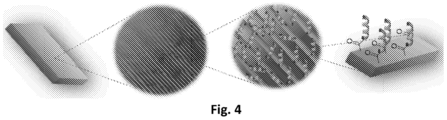
- the ordered and repeating nanostructure results in antimicrobial agents covalently bonded to the hydrogel having a defined orientation. If the antimicrobial agents themselves are amphiphilic then the antimicrobial agent is furthermore more effectively immobilized on the surface of, and within, the hydrogel. The amphiphilicity of the hydrogel also allows the absorption of both aqueous and non-aqueous solutions.
- the hydrogel of the present disclosure has a repeating and ordered nanostructure both on the surface and within the bulk of the hydrogel. This leads to improved immobilization of antimicrobial agents both on the surface and within the hydrogel.
- the antimicrobial hydrogel may be formed by the chemical cross-linking of organic amphiphilic materials such as cross-linkable copolymers, cross-linkable surfactants, cross-linkable proteins, cross-linkable peptides and cross-linkable lipids.
- Cross-linkable refers to the covalent linkage of molecules to each other using reactive chemical groups present on the molecules.
- the chemical cross-linking process can be catalysed using light such as ultraviolet light, heat, or other chemical catalysts such as enzymes.
- the covalent cross-linking of the hydrogel is non-reversible. The covalent cross-linking will not degrade or disintegrate at increased temperatures.
- the covalent cross-linking is also stable towards pH variations.
- the first amphiphilic component of the hydrogel may be a cross-linkable amphiphilic polymer.
- a typical and suitable amphiphilic material is a diacrylate modified poloxamer, such as, polyethylene oxide-polypropylene oxide-polyethylene oxide (DA-PEO x -PPO y -PEO x -DA, where x and y refer to the number of PEO and PPO groups present respectively) as described in the experimental section below.
- the amphiphilic material may be the amphiphilic tri-block co-polymers, polyethylene oxide(100)-polypropylene oxide(70)-polyethylene oxide(100) (Pluronic ® F127 - BASF Corporation), polyethylene oxide(30)-polypropylene oxide(70)-polyethylene oxide(30) (Pluronic ® P123 - BASF Corporation).
- the amphiphilic component may be a diacrylate derivative of a tri-block copolymer thus enabling the copolymer to be chemically cross-linked.
- a process for diacrylate modification is provided in the experimental section below. The modification may be performed via the reaction of a triblock amphiphilic copolymer with acryloyl chloride to form a diacrylate derivative.
- Other methods of forming cross-linkable amphiphilic polymers may be possible such as forming methacrylate derivatives or via carboxylic-amine bridges.
- the cross-linkable amphiphilic polymer may, in the presence of water, self-assemble to form ordered nanostructures called lyotropic liquid crystals (LLC).
- LLC lyotropic liquid crystals
- the hydrogel In its cross-linked form, that is, after cross-linking, the hydrogel may be considered a chemically cross-linked lyotropic liquid crystal (LLC).
- the cross-linking of the amphiphilic polymer may be considered to form a polymerized lyotropic liquid crystal (PLLC) having a well-defined structure.
- a non-solid cross-linked hydrogel may have a structure of spherical micellar aggregates in size range of 2-100 nm arranged randomly throughout the hydrogel called as a normal micellar system, denoted in shorthand as Li.
- a normal micellar hydrogel may comprise from about 1% to about 19% (%wt) amphiphilic polymer, and from about 99% to about 81% (%wt) water.
- this system does not form a cross-linked solid gel, however in certain cases such as between the range of 15-19% (%wt) amphiphilic polymer concentration, the system can exist as a cross-linked solid with very soft and pliable mechanical features.
- the hydrogel may have a structure of spherical micellar aggregates in the size range 2-100 nm arranged in a lyotropic liquid crystal, cubic shaped, ordered arrangement known as a normal micellar cubic system, denoted in shorthand as I 1 , with a primitive arrangement (P%) or body centred (B%) arrangement or a face centred (F%) arrangement of micellar structures in a cubic lattice.
- a normal micellar cubic structure with an Im3m crystal symmetry may comprise from about 20% to about 65% (%wt) amphiphilic polymer and from about 80% to about 35% (%wt) water.
- Another example composition to obtain a normal micellar cubic system with primitive arrangement of a micellar structures in a cubic lattice is 65% (%wt) water, 10% (%wt) butanol and 25% (%wt) amphiphilic polymer.
- the hydrogel may have a structure of spherical micellar aggregates in the size range 2-100 nm arranged in a lyotropic liquid crystal, bicontinuous cubic shaped, ordered arrangement known as a micellar cubic system with Pn3m crystal structure.
- a bicontinous micellar cubic system with Pn3m crystal structure may comprise from about 25% to about 65% (%wt) amphiphilic polymer and from about 75% to about 35% (%wt) water.
- Another example composition to obtain such a LLC structure is 33-38% (%wt) water and the rest composed of an amphiphilic species or amphiphilic polymer.
- the hydrogel may have a structure of spherical micellar aggregates in the size range 2-100 nm arranged in a lyotropic liquid crystal, bicontinuous cubic shaped, ordered arrangement known as a micellar cubic system with Ia3d crystal structure.
- An example composition to obtain such a LLC structure is 13-32% (%wt) water and the rest composed of the amphiphilic species or amphiphilic polymer.
- the hydrogel may have a structure of cylindrical micellar aggregates with diameter of cylinders in the size range of 2-100 nm arranged in an ordered lyotropic liquid crystal, hexagonal geometry called as a normal hexagonal system
- the amphiphilic polymer may be present in from about 30% to about 80% (%wt) and water may be present in from about 60% to about 20% (%wt), with or without minor amounts of organic solvents.
- Such a normal micellar hexagonal system may comprise from about 35% to about 40% (%wt) amphiphilic polymer, about 50% (%wt) water, and from about 10% to about 15% (%wt) organic solvent.
- the antimicrobial hydrogel may also have a chemically cross-linked, ordered nanostructure of the following structures with a neutral geometry and zero curvature; sheet-like micellar aggregates with distance between adjacent sheets is in the range of 2-100 nm, arranged as lyotropic liquid crystal, lamellar geometry called as a lamellar system.
- a lamellar system might comprise anywhere between 20-80% (%wt) amphiphilic molecule, 15-60% (%wt) aqueous solution and 0-25% (%wt) organic solvents such as butanol.
- An example composition of to obtain a lamellar LLC is 20% amphiphilic polymer, 55% (%wt) water and 25% (%wt) organic solvent such as butanol.
- Micellar and lyotropic liquid crystal nanostructures of the antimicrobial hydrogel may comprise aqueous liquids such as water as the continuous domain and hydrophobic parts confined within the micellar aggregates.
- the micellar and lyotropic liquid crystal nanostructure may comprise an aqueous liquid such as water confined within the micellar aggregates and a hydrophobic continuous domain.
- Aqueous liquids include, but are not limited to, water, salt solutions, blood, sweat and other possible biological fluids. In its fully wet, also known as swollen state, the antimicrobial hydrogel can absorb up to 3 to 4 times its own weight of aqueous liquids.
- a fully wet/swollen state refers to the original concentration (by weight) of the hydrogel of 20-90% aqueous solution and 10-80 % amphiphilic organic molecules, depending on the type of cross-linked LLC structure the hydrogels possesses.
- the hydrogel In its fully dry state the hydrogel uniformly contains less than 10 % aqueous solution by weight, and more usually less than 5 % aqueous solution by weight, in which case it may absorb up to 8 to 10 times aqueous solution of its own weight.
- the antimicrobial hydrogel swells and changes in size. However, the shape and geometry of the hydrogels is substantially retained.
- the fully-dry hydrogel can absorb hydrophobic liquid, such as chloroform, up to 20 to 30 times its own weight.
- a fully dry state refers to the concentration of the hydrogel of less than 5 % aqueous solution and greater than 95 % amphiphilic organic molecules by weight. The fully dry state does not refer to a freeze-dried polymer network, which cannot be considered a hydrogel.
- the liquid absorption properties of the hydrogels can be tailored to absorb more or less water or hydrophobic liquids. This can be achieved by using amphiphilic molecules of different ratios of chain lengths in hydrophilic to hydrophobic groups to form the hydrogel.
- amphiphilic block copolymer DA-PEO x -PPO y -PEO x -DA where x and y refer to the number of PEO and PPO, groups can possess more or less PEO or PPO groups. Higher amounts of PEO groups than PPO groups may result in a hydrogel with high water absorption capacity, up to 3 to 8 times its own initial weight. Conversely, a hydrogel with more PPO groups than PEO groups absorbs less water approximately, 0.5-1.5 times its initial weight.
- the antimicrobial agent is covalently bonded to the repeating hydrophilic and/or hydrophobic domains.
- the antimicrobial hydrogel there is a plurality of antimicrobial molecules each of which is covalently bonded to at least a portion of the repeating and periodic hydrophilic and/or the hydrophobic domains.
- Greater than 10%, such as greater than 50%, or greater than 90% of the antimicrobial agent present in the hydrogel may be covalently attached to the hydrogel. This results in greater stability and reduced leaching of antimicrobial agent from the hydrogel.
- the antimicrobial agent may be an amphiphilic antimicrobial agent. That is, the antimicrobial molecule may have a hydrophilic region and a hydrophobic region. The antimicrobial agent may be selected such that it ruptures the bacterial cell wall via electrostatic forces.
- the antimicrobial agent may be an antimicrobial polymeric molecule such as polymeric biocides or an antimicrobial peptide (AMP). AMPs generally disrupt or inhibit microbial growth and proliferation by damaging the microbes' cell membranes. AMPs are generally amphiphilic. AMPs are generally short chain peptides, i.e. consisting of 1-50 amino acids, and molecular weights between 1-50 kDa.
- AMPs can be linear chained AMPs, branched AMPs and/or cyclic AMPs. They generally possess a net positive charge and possess both hydrophilic and hydrophobic regions. It is known that the positively charged, amphiphilic structure of AMPs enables the peptide to penetrate the negatively charged bacterial membrane. The compromised cell wall leads to cell death.
- the amphiphilic nature of AMPs in combination with the ordered and repeating nanostructure of the hydrogel leads to orientation and higher immobilization of AMPs. That is, the AMPs do not separate or release from the underlying hydrogel. This results in the antimicrobial hydrogel being a non-leachable substrate for the antimicrobial agents.
- An AMP may be covalently attached to both a hydrophilic domain and a hydrophobic domain of the amphiphilic hydrogel.
- An AMP may be covalently attached to adjacent hydrophilic and hydrophobic domains.
- the N-terminus of an AMP may be covalently attached to the hydrophobic domains of the hydrogel.
- the C-terminus of an AMP may be covalently attached to the hydrophilic domains of the hydrogel.
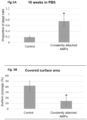
- An AMP may be both covalently attached to the amphiphilic hydrogel and physically absorbed in to the hydrogel. As is shown by the right-most image in Fig. 3B of WO 2019/074422 A1 even after 3 weeks of washing in 50% ethanol the amphiphilic hydrogel does not release all of the physically absorbed fluorescent tagged AMP. This is due to the amphiphilicity of the hydrogel and the interaction of the AMP with the hydrophilic and hydrophobic domains of the hydrogel. This results in increased antimicrobial performance and long-term stability during use.
- the antimicrobial agent may be silver (Ag).
- the antimicrobial agent may be a silver nanoparticle immobilized within or on the repeating and ordered hydrophilic and/or hydrophobic domains of the hydrogel. It is known that, silver has the disadvantage of increased toxicity to mammalian cells and has detrimental environmental effects if it is, for example, released into the water system, however, it is also generally a lower cost antimicrobial agent in comparison to an AMP.
- the immobilization is generally achieved via the covalent bonds between carboxyl groups on the hydrophilic domains of the hydrogel.
- the antimicrobial agent being an antimicrobial peptide
- strong amide bonds are formed between the AMP and the repeating hydrophilic domains of the hydrogel.
- the AMP may be covalently bonded to the hydrogel via 1-Ethyl-3-(3-dimethylaminopropyl) carbodiimid (EDC)-N-hydroxysuccinimide (NHS) activation of the carboxyl groups present on the hydrophilic domains of the hydrogel.
- EDC 1-Ethyl-3-(3-dimethylaminopropyl) carbodiimid
- NHS 1-Ethyl-3-(3-dimethylaminopropyl) carbodiimid
- NHS 1-Ethyl-3-(3-dimethylaminopropyl) carbodiimid
- NHS 1-Ethyl-3-(3-dimethylamino
- AMPs or other antimicrobial agents may furthermore be physically absorbed in to the hydrogel, however, in such a case there is no covalent bonding of the antimicrobial agent to the hydrophilic or hydrophobic regions of the hydrogel.
- Non-covalently bonded antimicrobial agents are, however, prone to relatively faster degradation and leaching/release from the hydrogel.
- zone inhibition test shown in Fig. 3 it can be seen that physically absorbed AMPs tend to leach/release from the hydrogel, whereas covalently bonded or attached AMPs do not leach.
- the AMP or other amphiphilic antimicrobial agent, has a hydrophobic region which interacts with the ordered and repeating hydrophobic regions of the hydrogel. This leads to improved orientation and improved immobilization of the antimicrobial agent. Stability and resistance to degradation of the AMPs is thus increased, while decreasing or eliminating the release of AMPs in to the surrounding environment, due to the hydrogel having ordered and repeating hydrophilic and hydrophobic domains. Such an architecture is contended to improve the stability and activity of AMPs.
- the antimicrobial hydrogel is capable of killing up to 99.99% of bacteria.
- a further benefit is that the hydrophilic domains of the antimicrobial hydrogel are capable of attracting the negatively charged bacteria and therein effectively killing them. In wound care applications, this may also lead to the removal of dead and/or attached bacteria via removal of a wound dressing comprising the antimicrobial hydrogel.
- the experimental results for gram-positive and gram-negative bacteria suggest that the antimicrobial hydrogel is also capable of killing drug resistant strains of bacteria such as MRSA and multi-drug resistant (MDR) E-coli.
- the antimicrobial peptide may be one or more of the following; RRPRPRPRPWWWW-NH2 (RRP9W4N, Red Glead Discovery AB, Lund, Sweden), RRPRPRPRP-NH2 (RRP9N, Red Glead Discovery AB, Lund, Sweden), RRPRPRPWWWWRP-NH2 (RRP7W4RPN, Red Glead Discovery AB, Lund, Sweden), RRPRPWWRPWWRP-NH2 (RRP5W2RPW2RPN, Red Glead Discovery AB, Lund, Sweden). Sequences for RRP9W4N, RRP9N, are provided in WO 2012/033450 A1 .
- the antimicrobial peptide is an antimicrobial peptide comprising less than 20 amino acids which comprises an amino acid sequence having at least 90%, optionally 95%, identity to the amino acid sequence RRPRPRP (sequence provided in WO 2012/033450 A1 ), and optionally, a stretch of at least three consecutive tryptophan or phenylalaline residues appended to either the C- or N-terminus, or therebetween.
- the antimicrobial peptide may comprise an N-terminal amidation.
- the antimicrobial peptide may be an antimicrobial peptide comprising a stretch of at least one, such as at least three, hydrophobic amino acids, such as phenylalanine, or tryptophan residues, forming a hydrophobic region.
- the hydrophobic region allows for interaction with the hydrophobic regions of the hydrogel.
- other antimicrobial peptides may be suitable for use as the antimicrobial agent.
- the antimicrobial agent may be a synthetically derived AMP as those in the preceding paragraph or biologically derived.
- Biologically derived AMPs can be derived from a kininogen proteins, proline and arginine rich end leucine rich repeat protein (PRELP), growth factor proteins, coagulation system proteins, complement factor C3a, von Willebrand factor, vitronectin, superoxide dismutase, prion proteins, protein C inhibitor, fibronectin, laminin, chemokines, and histidine rich glycoprotein.
- the antimicrobial agent may be an LL-37 derivative having less than 37 amino acids, that is, a length of less than the wild-type LL-37.
- the antimicrobial agent is preferably a proline arginine-rich end leucine-rich repeat protein (PRELP) derived peptide.
- PRELP proline arginine-rich end leucine-rich repeat protein
- the antimicrobial agent is comparable to LL-37 in charge and antimicrobial efficacy.
- the antimicrobial agent is preferably RRP9W4 which is a PRELP derived peptide comparable to LL-37 with respect to antimicrobial efficacy and net charge.
- the antimicrobial agent may be attached to the hydrogel via a variety of processes. As is shown in the experimental section the antimicrobial agent may be attached via immersion of the hydrogel in a solution comprising the antimicrobial agent. An antimicrobial agent may be applied substantially to the surface of the hydrogel via a surface application process as opposed to immersion. A solution comprising the antimicrobial agent may be dropped on to the surface of the hydrogel. A solution comprising the antimicrobial agent may be sprayed on to the hydrogel. As is shown in the experimental section the amount of antimicrobial agent required for antimicrobial activation of the surface is generally reduced significantly via dropping and spraying compared to immersion. This is because the bulk of the hydrogel is not activated with an antimicrobial agent.
- the hydrogel may comprise at least one therapeutic agent. Due to the ordered and repeating hydrophilic and hydrophobic domains of the hydrogel the therapeutic agent may be hydrophobic, hydrophilic, or amphiphilic, polar or non-polar.
- the antimicrobial hydrogel can host hydrophobic therapeutic agent(s) in the hydrophobic domain while the hydrophilic domains will host hydrophilic therapeutic agent(s).
- a therapeutic agent can be, but not limited to, drug molecules or small biomolecules such as peptides or proteins with anti-inflammatory, antibiotic or anticancer properties.
- At least one therapeutic agent may be covalently attached or physically absorbed to the hydrophobic and/or hydrophilic domains of the antimicrobial hydrogel.
- a plurality of therapeutic agents may be provided to the hydrogel. In such cases a first therapeutic agent may be covalently attached to the hydrogel and a second, third, etc. therapeutic agent may be physically absorbed.
- the at least one therapeutic agent need not be immobilized on or within the hydrogel but may be free to substantially leach from the surface.
- the antimicrobial hydrogel does not adhere or stick to biological surfaces like skin or a wound bed. This leads to improved performance in a variety of applications.
- a wound care article such as a wound dressing must be soft and be able to absorb the excess wound exudate in order to contain infection and keep the wound environment from harbouring microbes.
- the antimicrobial hydrogel can be used as a wound dressing to absorb uncontrollable exudates released from a compromised skin. Wound exudates can contain pus, blood, water, and sweat. Due to the high and versatile absorption properties of the antimicrobial hydrogel, in combination with the antimicrobial properties it is especially suitable as a wound care article.
- the antimicrobial hydrogel absorbs substantially the same amount of water compared to a hydrogel, comprising amphiphilic component, but without an antimicrobial agent covalently bonded thereto.
- the antimicrobial hydrogel therefore has sufficient wound exudate absorbing performance even when comprising an antimicrobial agent.
- the amphiphilicity of the antimicrobial hydrogel furthermore allows the material to absorb both hydrophobic and hydrophilic substances such as bacterial toxins released from dying bacteria.
- the antimicrobial amphiphilic hydrogel may be prepared as a dispersion of particles in a continuous medium, for the particles may be present as a suspension of particles in a solution.
- the solid cross-linked amphiphilic hydrogel may be processed via grinding or the like to obtain a collection of amphiphilic hydrogel particles.
- the particles may have a diameter of from about 0.01 mm to about 0.5 mm.
- the particles may be formed via, for example, a grinding process, the particles need not be regular spherical particles but may be irregular. Particles being smaller than the range identified above may also be obtainable via other production methods. For example, particles in the size range of 10 nm to 1 ⁇ m in diameter may be possible to obtain via a dispersing method such as via sonication.
- a further process for obtaining the particles is to first disperse the non-crosslinked polymer in solution prior to cross-linking.
- the non-crosslinked amphiphilic polymer may be provided to a solution e.g., water forming an LLC.
- the LLC hydrogel formed in the water may then be rapidly dispersed in solution via, e.g., blade mixing and subsequently UV cross-linked.
- particles may range in size from 10 nm to 0.5 mm depending on the process used for forming the particles.
- the particles may be present in dry form or may be swollen with for example, an aqueous solution.
- the particles of amphiphilic hydrogel may be thereafter functionalised with an antimicrobial agent such as an AMP.
- the antimicrobial agent may be covalently attached to at least the hydrophilic regions of the hydrogel.
- the antimicrobial agent may be an amphiphilic antimicrobial agent attached to both a hydrophilic and a hydrophobic region of the hydrogel.
- Amphiphilic hydrogel particles which are functionalised with an antimicrobial agent have a greater surface area and it is contended that they are more effective e.g., antibacterial agents, as they can expose a bacterial film to a greater portion of antimicrobial agent than a flat solid hydrogel.
- the particles of amphiphilic hydrogel may be dispersed in a solution such as an aqueous solution.
- the particles of amphiphilic hydrogel may be dispersed in a saline solution.
- the particles of amphiphilic hydrogel may be dispersed in a biocompatible buffer, that is, a buffer which is non-toxic to cells.
- a non-aqueous solution such as a non-polar solvent such as essential oil-based systems and in combination with alcohol.
- the particles in the dispersion are swollen, that is, they have absorbed solution.
- a hydrogel may sometimes be described itself as a dispersion or suspension itself, as some hydrogels comprise discrete particles which swell and therein form the hydrogel.
- the composition comprises a plurality of crosslinked hydrogel particles separate from each other, and separate from the continuous medium, e.g., aqueous solution.
- a spray device may comprise a spraying mechanism, such as a manual spray pump, and a solution comprising a plurality of amphiphilic hydrogel particles as described above, wherein an antimicrobial agent, such as an antimicrobial peptide is covalently attached to the hydrophilic and/or the hydrophobic regions of the particles.
- a spraying mechanism such as a manual spray pump
- a solution comprising a plurality of amphiphilic hydrogel particles as described above, wherein an antimicrobial agent, such as an antimicrobial peptide is covalently attached to the hydrophilic and/or the hydrophobic regions of the particles.
- a spray device is shown schematically in Fig. 9 .
- the device comprises a solution 100, for example an aqueous solution, such as a saline solution.
- the device further comprises a membrane 200 separating the solution from a plurality of antimicrobial hydrogel particles 300.
- an agitation process 500 such as shaking the device causes the membrane 200 to disintegrate and for the hydrogel particles to spread in the solution 100 forming a suspension of hydrogel particles 300.
- Such a device has enhanced storage stability as the hydrogel particles 300 are not stored in suspension, but maintained separately until the device is ready for use.
- Spraying the amphiphilic hydrogel has advantages over placing a solid piece of hydrogel on a wound.
- the coverage is improved as the sprayed particles can cover an irregular surface better than a solid material.
- the spray can be used to rapidly cover a wound region without being held in place by additional bandages etc.
- the spray may therefore be ideal for use as an acute wound treatment.
- the sprayable composition of antimicrobial amphiphilic hydrogel particles is furthermore an ideal coating medium for surgical or medical device, such as a stent, a catheter, a skin graft, a contact lens, personal hygiene articles, nappies, a wound dressing, an ostomy dressing, ostomy baseplate, incision film, surgical drape, a patch, a bandage, a band-aid, a plaster, an adhesive, an adhesive tape, an adhesive plaster, a sticking-plaster, and a court-plaster, or any combination thereof.
- a manufacturing or treatment process for any of the above listed devices may comprise a step of spraying the antimicrobial amphiphilic hydrogel particles on to the surface of the device and may include post treatments such as drying or scrubbing or wiping.
- the surface sprayed with the particles may be a surface which is intended to contact the human body, or bodily fluids.
- the antimicrobial amphiphilic hydrogel may be used for inducing and/or enhancing haemostasis of a wound.
- the antimicrobial hydrogel may therefore be used for increasing and/or accelerating blood coagulation and/or blood clot formation in a wound.
- the antimicrobial hydrogel formed clearly visible clots in comparison to control samples.
- the acceleration of haemostasis may be in mammals, for example, haemostasis of human blood as shown in Experiment 1 may be accelerated.
- an antimicrobial amphiphilic hydrogel is known from WO 2019/074422 A1 .
- that document is silent with regards to additional uses of the amphiphilic hydrogel beyond antimicrobial treatment of wounds.
- the antimicrobial hydrogel may be used to accelerate the process of haemostasis.
- not all wounds bleed such that haemostasis occurs. Wounds such as burns, and pressure sores do not bleed but are susceptible to bacterial and other microbial infections. This distinction does not appear to be considered in the referenced document as it does not relate to bleeding wounds.
- the known therapeutic application from WO 2019/074422 A1 that is infection prevention or treatment, is not only different to enhancing or accelerating haemostasis, but is related to a general population of patients with wounds, rather than the specific target population of wounds which bleed.
- the antimicrobial amphiphilic hydrogel may be especially useful for inducing or accelerating haemostasis in patients with a coagulopathy, i.e., a bleeding disorder in which the ability of the blood to coagulate is impaired.
- a coagulopathy i.e., a bleeding disorder in which the ability of the blood to coagulate is impaired.
- the haemostatic action of the antimicrobial hydrogel is indeed a biochemical interaction with the body.
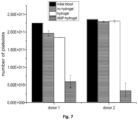
- the hydrogel alone did not cause a significant nor substantial reduction in the count of platelets in the measured sample.
- the antimicrobial amphiphilic hydrogel may be used for simultaneously inducing haemostasis and inhibiting the growth of bacteria at and/or in a wound.
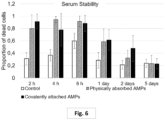
- the combination of the experimentally confirmed characteristics of serum stability and enhanced haemostatic effect make the antimicrobial amphiphilic hydrogel an ideal wound dressing for use for inducing haemostasis in a wound.
- a method for treating a bleeding wound may comprise: placing an antimicrobial amphiphilic hydrogel according to the present description on a bleeding wound; thereby forming a blood clot at the interface between the antimicrobial amphiphilic hydrogel and blood; and, thereby substantially limiting, or hindering the growth of bacteria at the wound.
- the sprayable dispersion of antimicrobial amphiphilic hydrogel particles may be ideally used for combined antimicrobial and haemostatic treatment. That is, the sprayable dispersion is ideal for use as a combined antimicrobial and haemostatic wound-care composition.
- the hydrogel particles have improved surface coverage of irregular shapes, which is common for a wound, the hydrogel particles, are expected to have improved antimicrobial and haemostatic effects compared to a substantially flat sheet of amphiphilic hydrogel.
- the hydrogel is non-biodegradable and antimicrobial agents may maintain their effect for several days as shown in Fig. 6 . This is especially relevant in a device for use in haemostasis of a bleeding wound, where the device will inherently be subject to a greater amount of contact with bodily fluids than in treatment of a non-bleeding wound.
- a proline arginine-rich end leucine-rich repeat protein PRELP, derived antimicrobial peptide
- RRP9W4 has been shown to have a haemostatic effect.
- the PRELP derived antimicrobial peptide may be applied to a substrate.
- Cross-linked amphiphilic hydrogels were prepared according to the method in Experiment 1 in WO 2019/074422 A1 for Pluronic ® F127.
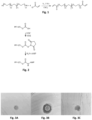
- the reaction scheme is shown in Fig. 1 . Briefly, a mixture of Pluronic F-127 (30 wt.%) and water (70 wt.%) was made to form a micellar cubic liquid crystalline phase. Irgacure 2959 was added to the mixture of Pluronic F-127 (2 wt.%) as a photoinitiator. Mixing was performed in 20ml glass vials manually using a spatula until a thick and homogenous gel formed. The gels were spread onto glass slides and kept in a sealed container overnight to set into correlating phase.
- the gels were cut into desired shapes and washed in mili-Q water for 48h to remove the unwanted by-products and get into their fully swollen shape before further analysis and AMP attachment.
- Pluronic F127 (EO 100 PO 70 EO 100 ) was chemically functionalized with polymerizable diacrylate head groups as shown in WO 2019/074422 A1 Experiment 1 and the modified polymer was used for manufacturing of crosslinked F127 hydrogels for AMP modification.
- AMPs were covalently immobilised to the hydrogels according to the submersion method described in Experiment 1 in WO 2019/074422 A1 .
- a control amphiphilic hydrogel was prepared without any AMPs.
- the reaction scheme is shown in Fig. 2 . Briefly, a solution of antimicrobial peptide (AMP) RRPRPRPRPWWWW-NH2 (RRP9W4N, Red Glead Discovery AB, Lund, Sweden) was prepared in sterilized water to a concentration of 200 ⁇ M.
- AMP antimicrobial peptide
- hydrogels For covalent attachment of AMP to the hydrogels, prior to AMP modification, the clean hydrogels were submerged into a solution of 1-ethyl-3-(3-dimethylaminopropyl) carbodiimide hydrochloride (EDC) and N-Hydroxysuccinimide (NHS) mixed in MES buffer (pH 6) at a final concentration of 2 mg/ml and were allowed to react for 30 min on slow shake at room temperature. Hydrogels were then washed 3 times in PBS (pH 7.4) and suspended in 1ml of 200 ⁇ M AMP solution in sterilized water for 2 h in RT. The surfaces were washed 3 times with sterilized water to remove unreacted peptides and used for all the tests performed in this work.
- EDC 1-ethyl-3-(3-dimethylaminopropyl) carbodiimide hydrochloride
- NHS N-Hydroxysuccinimide
- Samples were conditioned by adding 1 ml of PBS and were shaken at 600 rpm for 30 min prior to the experiment.
- the hydrogels (control and AMP modified) were placed in Eppendorf test tubes. 100 ⁇ L of PBS were added in order to soak the samples. And then 1 ml of fresh blood added to each tube. The tubes were then rotated vertically for 60min in 37°C incubator. As blank controls, 1ml of blood was added to an Eppendorf tube without any hydrogels and treated with the same conditions. After the experiments the blood was carefully collected from the tubes and mixed with EDTA giving a final concentration of 4nM. The number of platelets was determined using a Sysmex XP-300 haematology analyser (Kobe Japan) directly after the experiment. Samples were run in duplicate with blood from each donor.
- RRP9W4N is a proline arginine-rich end leucine-rich repeat protein, PRELP, derived antimicrobial peptide, and similar in many respects to LL-37, whereas LL-37 has been shown not to affect plasmatic coagulation ( Harm, S et al., Blood Compatibility - An Important but Often Forgotten Aspect of the Characterization of Antimicrobial Peptides for Clinical Application, Int. J. Mol. Sci. 2019, 20, 5426; doi: 10.3390/ijms20215426 ).
- a sprayable formulation of granulated hydrogel was prepared according to the following procedure.
- DA-F127 was synthesised as per Experiment 1 in WO 2019/074422 A1 for Pluronic ® F127, the DA-F127 was mixed with water with the composition 30 wt% Pluronic ® and 70 wt% water. After mixing, the initiator Irgacure ® 2959 (1-[4-(2-Hydroxyethoxy)-phenyl]-2-hydroxy-2-methyl-1-propane-1-one) was added to the formed gel with an amount corresponding to 0,5 wt% of the Pluronic ® in the gel. The gel was placed in a fridge for at least two days. Following cold storage, the gel was cross-linked at 365 nm for 6 minutes. The now cross-linked hydrogels were washed in water for at least two days.
- the hydrogels were grinded to a rough paste with pestle and mortar.
- the paste was then put in water and an Ultra-Turrax ® disperser was used to get a finer particle size and distribution.
- the obtained solution was then stable for experiments to be performed at convenience.
- a known weight of the particles (in swollen form) was obtained by suction filtration and then by putting the granules in a 15 ml falcon tube. This was normally around 2 grams.
- 10 ml of newly prepared EDC/NHS (2mg/ml) in MES buffer was added to the falcon tube.
- the tube was sonicated for a few minutes and then put on a shaking plate for 30 minutes.
- the solution was then suction filtered and washed with water to separate the particles and to wash away the excess EDC/NHS.
- the granules were then weighed to record any loss and then 10 ml of 400 ⁇ M AMP (solved in PBS) was added to the granules. This was also sonicated quickly and then put on a shaking plate for about 2 hours.
- the solution was once again suction filtered and washed with 30 ml of water, but this time the washing solution was recovered in order to measure the amount of peptide still left after activation.
- the granules are now activated and can be weighed and put in a solution to get a known concentration for further experiments.
- Agar plates were streaked with a culture of S. aureus at a concentration of 10 8 CFU (colony forming units)/ml and left to dry for some minutes.
- the solutions of the Eppendorf tubes were then placed on top of the agar plates with one control and one AMP-activated version on each agar plate.
- the solution was gently spread on top of the agar plates to get a relatively uniform spread and thickness of the solutions each time.
- the agar plates were left open to air dry for some minutes until no liquid was observed around the granules so that the solution stayed in place on top of the agar after inversion.
- the agar plates were then incubated upside down overnight ( ⁇ 15 hours).
- CFU experiments were done by taking a biopsy punch in the centre of each 'spread' which was put in Eppendorf tubes containing 1 ml of PBS. The tubes were vortexed and shaken for at least 10 minutes. A serial dilution of steps of 10 was then performed and 10 ⁇ l drops of suitable dilutions were put on agar plates and incubated for around 15 hours (until colonies were easy to count).
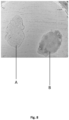
- Fig. 8 shows an example of how the plates looked after the incubation overnight.
- the difference in colour/texture is most likely due to much less bacteria present in/beneath the AMP-activated granules.
- the black and white drawings as published show the different texture. It's also easy to see that bacteria have grown on the spots were coverage was bad for the AMP-activated particles, that is, where the sprayable particles were not spread on the plate.
- the results from the CFU is presented in Table 1. Where the CFU corresponds to the number of bacteria in the 1 ml of PBS that the biopsies were washed in. The results clearly show a significant reduction of about 99.993 % when the AMP-activated granules are applied compared to the control ones.
- UV-vis measurements of the AMP residues after washing the granules showed that 1.7 grams of the particles took up about 5.7 mg of peptides. This compares to 0.07 mg of peptides for 0.07 g of solid sheet formed amphiphilic hydrogel. The particles took up about 3.35 times as much peptide compared to the solid hydrogel in non-particle/granular form.
- particles that were solved in PBS were placed in a simple mechanical spray bottle and sprayed on to a surface.
- the particles were sprayable and covered a surface area of approximately 25 cm 2 rapidly and relatively uniformly. Thickness uniformity was inspected visually.
- Hydrogels were functionalized with 4 different types of antimicrobial peptides (AMPs).
- the AMPs used were PGLa, LL-37, Temporin B and RRP9W4.
- As control hydrogels without any attached AMPs were used.
- Fresh citrated Horse blood was purchased from H ⁇ tunalab AB, Sweden and used to show how if presence of AMPs can induce clotting.
- 1 ml of blood with 0.1 ml of 250 Mm calcium chloride (to reverse the citrate anticoagulant) was added and mixed.
- Samples were placed in 24 well plate and conditioned by adding 1 ml PBS to the hydrogels. After 15 minutes the samples were transferred to the Eppendorf tubes containing the blood. The tubes were then placed on shaker and incubated for 60 min at 37 °C.
Landscapes
- Health & Medical Sciences (AREA)
- Life Sciences & Earth Sciences (AREA)
- Chemical & Material Sciences (AREA)
- General Health & Medical Sciences (AREA)
- Veterinary Medicine (AREA)
- Public Health (AREA)
- Animal Behavior & Ethology (AREA)
- Epidemiology (AREA)
- Engineering & Computer Science (AREA)
- Materials Engineering (AREA)
- Medicinal Chemistry (AREA)
- Hematology (AREA)
- Pharmacology & Pharmacy (AREA)
- Chemical Kinetics & Catalysis (AREA)
- Vascular Medicine (AREA)
- Surgery (AREA)
- Heart & Thoracic Surgery (AREA)
- Dispersion Chemistry (AREA)
- Organic Chemistry (AREA)
- Bioinformatics & Cheminformatics (AREA)
- Biomedical Technology (AREA)
- General Chemical & Material Sciences (AREA)
- Nuclear Medicine, Radiotherapy & Molecular Imaging (AREA)
- Molecular Biology (AREA)
- Gastroenterology & Hepatology (AREA)
- Immunology (AREA)
- Proteomics, Peptides & Aminoacids (AREA)
- Communicable Diseases (AREA)
- Oncology (AREA)
- Diabetes (AREA)
- Polymers & Plastics (AREA)
- Medicinal Preparation (AREA)
- Materials For Medical Uses (AREA)
- Peptides Or Proteins (AREA)
- Medicines That Contain Protein Lipid Enzymes And Other Medicines (AREA)
- Warping, Beaming, Or Leasing (AREA)
- Replacement Of Web Rolls (AREA)
- Auxiliary Devices For And Details Of Packaging Control (AREA)
- Cosmetics (AREA)
Claims (9)
- Antimikrobielle amphiphile Hydrogelzusammensetzung zur Verwendung bei der Hämostase einer Wunde, umfassend:- eine erste vernetzbare amphiphile Komponente, wobei die erste amphiphile Komponente in ihrem chemisch vernetzten Zustand ein lyotroper Flüssigkristall ist und eine geordnete Nanostruktur aus hydrophoben und hydrophilen Domänen aufweist, das Hydrogel umfassend ein antimikrobielles Mittel, das an die hydrophilen und/oder hydrophoben Domänen kovalent angebracht ist, wobei das antimikrobielle Mittel ein antimikrobielles Peptid ist, umfassend weniger als 20 Aminosäuren und umfassend eine Aminosäuresequenz, die mindestens 90 % Identität mit RRPRPRPRP aufweist.
- Antimikrobielle amphiphile Hydrogelzusammensetzung zur Verwendung nach Anspruch 1, wobei das antimikrobielle Peptid eine Sequenz umfasst, die mindestens 95 % Identität mit der Aminosäuresequenz RRPRPRPRP aufweist.
- Antimikrobielle amphiphile Hydrogelzusammensetzung zur Verwendung nach den Ansprüchen 1 oder 2, wobei das antimikrobielle Peptid RRPRPRPRPWWWW-NH2 ist.
- Antimikrobielle amphiphile Hydrogelzusammensetzung zur Verwendung nach einem der Ansprüche 1 bis 3, wobei die Zusammensetzung eine Suspension amphiphiler Hydrogelpartikel in einer Lösung ist.
- Antimikrobielle amphiphile Hydrogelzusammensetzung zur Verwendung nach einem der Ansprüche 1 bis 4 zur Verwendung bei der Hämostase einer Wunde bei Patienten, die an einer Koagulopathie leiden.
- Antimikrobielles Peptid, abgeleitet von Prolin-Arginin-reichem und Leucinreichem Wiederholungsprotein (PRELP), zur Verwendung bei der Hämostase einer Wunde, das antimikrobielle Peptid umfassend weniger als 20 Aminosäuren und umfassend eine Aminosäuresequenz, die mindestens 90 % Identität mit RRPRPRPRP aufweist.
- Antimikrobielles Peptid zur Verwendung nach Anspruch 6, wobei das antimikrobielle Peptid eine Sequenz umfasst, die mindestens 95 % Identität mit der Aminosäuresequenz RRPRPRPRP aufweist.
- Antimikrobielles Peptid zur Verwendung nach Anspruch 6 oder 7, wobei das antimikrobielle Peptid RRPRPRPRPWWWW-NH2 ist.
- Antimikrobielles Peptid zur Verwendung nach einem der Ansprüche 6 bis 8, wobei das Peptid auf ein Substrat, wie einen Wundverband, einen Stomaverband, eine Stomagrundplatte, eine Inzisionsfolie, ein Operationstuch, eine Klappe, eine Bandage, ein Wundpflaster, ein Pflaster, ein selbstklebendes Pflaster, ein Klebeband, ein Heftpflaster, ein Leukoplast, ein Seidenpflaster oder eine beliebige Kombination davon, beschichtet, gestrichen, aufgesprüht oder auf beliebige andere Weise aufgetragen ist.
Priority Applications (2)
| Application Number | Priority Date | Filing Date | Title |
|---|---|---|---|
| EP24210473.5A EP4483962A3 (de) | 2019-12-18 | 2020-12-16 | Verbesserte wundpflegezusammensetzung und verfahren |
| EP24208960.5A EP4477268A2 (de) | 2019-12-18 | 2020-12-16 | Verbesserte wundpflegevorrichtung |
Applications Claiming Priority (2)
| Application Number | Priority Date | Filing Date | Title |
|---|---|---|---|
| SE1951495A SE544460C2 (en) | 2019-12-18 | 2019-12-18 | Improved wound care device |
| PCT/SE2020/051223 WO2021126063A1 (en) | 2019-12-18 | 2020-12-16 | Improved wound care device |
Related Child Applications (2)
| Application Number | Title | Priority Date | Filing Date |
|---|---|---|---|
| EP24210473.5A Division EP4483962A3 (de) | 2019-12-18 | 2020-12-16 | Verbesserte wundpflegezusammensetzung und verfahren |
| EP24208960.5A Division EP4477268A2 (de) | 2019-12-18 | 2020-12-16 | Verbesserte wundpflegevorrichtung |
Publications (3)
| Publication Number | Publication Date |
|---|---|
| EP4076549A1 EP4076549A1 (de) | 2022-10-26 |
| EP4076549C0 EP4076549C0 (de) | 2024-11-13 |
| EP4076549B1 true EP4076549B1 (de) | 2024-11-13 |
Family
ID=74186809
Family Applications (3)
| Application Number | Title | Priority Date | Filing Date |
|---|---|---|---|
| EP20842349.1A Active EP4076549B1 (de) | 2019-12-18 | 2020-12-16 | Verbesserte wundpflegevorrichtung |
| EP24208960.5A Withdrawn EP4477268A2 (de) | 2019-12-18 | 2020-12-16 | Verbesserte wundpflegevorrichtung |
| EP24210473.5A Pending EP4483962A3 (de) | 2019-12-18 | 2020-12-16 | Verbesserte wundpflegezusammensetzung und verfahren |
Family Applications After (2)
| Application Number | Title | Priority Date | Filing Date |
|---|---|---|---|
| EP24208960.5A Withdrawn EP4477268A2 (de) | 2019-12-18 | 2020-12-16 | Verbesserte wundpflegevorrichtung |
| EP24210473.5A Pending EP4483962A3 (de) | 2019-12-18 | 2020-12-16 | Verbesserte wundpflegezusammensetzung und verfahren |
Country Status (9)
| Country | Link |
|---|---|
| US (1) | US20230346876A1 (de) |
| EP (3) | EP4076549B1 (de) |
| JP (2) | JP2023507086A (de) |
| KR (1) | KR20220117214A (de) |
| AU (1) | AU2020410383A1 (de) |
| CA (1) | CA3160689A1 (de) |
| ES (1) | ES3004567T3 (de) |
| SE (1) | SE544460C2 (de) |
| WO (1) | WO2021126063A1 (de) |
Families Citing this family (3)
| Publication number | Priority date | Publication date | Assignee | Title |
|---|---|---|---|---|
| WO2024204137A1 (ja) * | 2023-03-29 | 2024-10-03 | 株式会社シード | 薬物結合ハイドロゲル |
| GB202314158D0 (en) * | 2023-09-15 | 2023-11-01 | Senorei Ltd | Inhibition of vascular leakage |
| CN120420271A (zh) * | 2025-07-04 | 2025-08-05 | 赣江新区莱威再生医学科技有限公司 | 一种生物活性玻璃软膏及其制备方法 |
Family Cites Families (9)
| Publication number | Priority date | Publication date | Assignee | Title |
|---|---|---|---|---|
| US20020122771A1 (en) * | 2000-09-23 | 2002-09-05 | Troy Holland | Spray hydrogel wound dressings |
| KR101946227B1 (ko) * | 2010-04-07 | 2019-02-08 | 가부시키가이샤 닛폰 쇼쿠바이 | 폴리아크릴산(염)계 흡수성 수지분말의 제조방법 및 폴리아크릴산(염)계 흡수성 수지분말 |
| WO2012033450A1 (en) | 2010-09-07 | 2012-03-15 | Dermagen Ab | Novel antimicrobial peptides |
| US20130090291A1 (en) * | 2011-10-11 | 2013-04-11 | Baxter Healthcare S.A. | Hemostatic compositions |
| US20170189334A1 (en) * | 2014-06-05 | 2017-07-06 | Kansas State University Research Foundation | Peptide hydrogel properties and its applications |
| GB201508024D0 (en) * | 2015-05-11 | 2015-06-24 | Haemostatix Ltd | Haemostatic compositions |
| SE541313C2 (en) * | 2017-10-13 | 2019-06-25 | Amferia Ab | Amphiphilic antimicrobial hydrogel |
| CN108440645A (zh) * | 2018-03-13 | 2018-08-24 | 徐清波 | 一种生物活性多肽及其应用 |
| WO2019226086A1 (en) * | 2018-05-25 | 2019-11-28 | Amferia Ab | Mesoporous elastomer |
-
2019
- 2019-12-18 SE SE1951495A patent/SE544460C2/en unknown
-
2020
- 2020-12-16 KR KR1020227018847A patent/KR20220117214A/ko active Pending
- 2020-12-16 EP EP20842349.1A patent/EP4076549B1/de active Active
- 2020-12-16 AU AU2020410383A patent/AU2020410383A1/en active Pending
- 2020-12-16 JP JP2022534387A patent/JP2023507086A/ja active Pending
- 2020-12-16 ES ES20842349T patent/ES3004567T3/es active Active
- 2020-12-16 EP EP24208960.5A patent/EP4477268A2/de not_active Withdrawn
- 2020-12-16 US US17/782,893 patent/US20230346876A1/en active Pending
- 2020-12-16 EP EP24210473.5A patent/EP4483962A3/de active Pending
- 2020-12-16 CA CA3160689A patent/CA3160689A1/en active Pending
- 2020-12-16 WO PCT/SE2020/051223 patent/WO2021126063A1/en not_active Ceased
-
2025
- 2025-05-14 JP JP2025080972A patent/JP2025128123A/ja active Pending
Non-Patent Citations (1)
| Title |
|---|
| JIE ZHU ET AL: "Peptide-Functionalized Amino Acid-Derived Pseudoprotein-Based Hydrogel with Hemorrhage Control and Antibacterial Activity for Wound Healing", CHEMISTRY OF MATERIALS, vol. 31, no. 12, 22 May 2019 (2019-05-22), US, pages 4436 - 4450, XP055768418, ISSN: 0897-4756, DOI: 10.1021/acs.chemmater.9b00850 * |
Also Published As
| Publication number | Publication date |
|---|---|
| SE1951495A1 (en) | 2021-06-19 |
| JP2023507086A (ja) | 2023-02-21 |
| WO2021126063A1 (en) | 2021-06-24 |
| EP4477268A2 (de) | 2024-12-18 |
| EP4076549C0 (de) | 2024-11-13 |
| AU2020410383A1 (en) | 2022-06-23 |
| ES3004567T3 (en) | 2025-03-12 |
| EP4076549A1 (de) | 2022-10-26 |
| JP2025128123A (ja) | 2025-09-02 |
| SE544460C2 (en) | 2022-06-07 |
| EP4483962A3 (de) | 2025-03-19 |
| KR20220117214A (ko) | 2022-08-23 |
| EP4483962A2 (de) | 2025-01-01 |
| US20230346876A1 (en) | 2023-11-02 |
| CA3160689A1 (en) | 2021-06-24 |
Similar Documents
| Publication | Publication Date | Title |
|---|---|---|
| Zhu et al. | Peptide-functionalized amino acid-derived pseudoprotein-based hydrogel with hemorrhage control and antibacterial activity for wound healing | |
| Atefyekta et al. | Antimicrobial peptide-functionalized mesoporous hydrogels | |
| Atefyekta et al. | Antibiofilm elastin-like polypeptide coatings: functionality, stability, and selectivity | |
| Xiao et al. | A moisture balanced antibacterial dressing loaded with lysozyme possesses antibacterial activity and promotes wound healing | |
| Xu et al. | Multifunctional chitosan/silver/tannic acid cryogels for hemostasis and wound healing | |
| EP3694568B1 (de) | Amphiphiles antimikrobielles hydrogel | |
| Cui et al. | A chitosan-based self-healing hydrogel for accelerating infected wound healing | |
| JP2025128123A (ja) | 改良型創傷ケアデバイス | |
| Dong et al. | Facile preparation of a thermosensitive and antibiofouling physically crosslinked hydrogel/powder for wound healing | |
| Li et al. | Electrospun fibrous membrane containing a cyclodextrin covalent organic framework with antibacterial properties for accelerating wound healing | |
| Hsu et al. | Antibacterial polypeptide/heparin composite hydrogels carrying growth factor for wound healing | |
| Nguyen et al. | Enzymatically triggered graphene oxide released from multifunctional carriers boosts anti-pathogenic properties for promising wound-healing applications | |
| Shang et al. | Chlorhexidine-loaded polysulfobetaine/keratin hydrogels with antioxidant and antibacterial activity for infected wound healing | |
| Li et al. | Biomimetic multifunctional hybrid sponge via enzymatic cross-linking to accelerate infected burn wound healing | |
| Zhang et al. | Antibacterial and rapidly absorbable hemostatic sponge by aldehyde modification of natural polysaccharide | |
| Wang et al. | A bionic self-assembly hydrogel constructed by peptides with favorable biosecurity, rapid hemostasis and antibacterial property for wound healing | |
| Wang et al. | Development of a Mechanically Strong Nondegradable Protein Hydrogel with a Sponge‐Like Morphology | |
| He et al. | Silver functionalized chitosan composite hydrogel with sustained silver release and enhanced antibacterial properties promotes healing of infected wounds | |
| Jahan et al. | Development of self-gelling powder combining chitosan/bentonite nanoclay/sodium polyacrylate for rapid hemostasis: In vitro and in vivo study | |
| Xu et al. | A thermosensitive hydrogel based arginine grafted chitosan and poloxamer 407 for wound healing | |
| Ma et al. | Multifunctional Chitosan/Cellulose/Tannic Acid Biocomposite Sponge with Excellent Biocompatibility for Rapid Hemostasis | |
| CN114681665A (zh) | 一种抗菌、快速止血并促进伤口愈合的多肽水凝胶 | |
| Jiang et al. | Dual network composite hydrogels with robust antibacterial and antifouling capabilities for efficient wound healing | |
| Han | Silver Sulfadiazine-Integrated Dual-Network Hydrogel as a Mechanically Adaptive and Antimicrobial Dressing for Wound healing | |
| AU2024224596A1 (en) | Endotoxin neutralising agent |
Legal Events
| Date | Code | Title | Description |
|---|---|---|---|
| STAA | Information on the status of an ep patent application or granted ep patent |
Free format text: STATUS: UNKNOWN |
|
| STAA | Information on the status of an ep patent application or granted ep patent |
Free format text: STATUS: THE INTERNATIONAL PUBLICATION HAS BEEN MADE |
|
| PUAI | Public reference made under article 153(3) epc to a published international application that has entered the european phase |
Free format text: ORIGINAL CODE: 0009012 |
|
| STAA | Information on the status of an ep patent application or granted ep patent |
Free format text: STATUS: REQUEST FOR EXAMINATION WAS MADE |
|
| 17P | Request for examination filed |
Effective date: 20220615 |
|
| AK | Designated contracting states |
Kind code of ref document: A1 Designated state(s): AL AT BE BG CH CY CZ DE DK EE ES FI FR GB GR HR HU IE IS IT LI LT LU LV MC MK MT NL NO PL PT RO RS SE SI SK SM TR |
|
| DAV | Request for validation of the european patent (deleted) | ||
| DAX | Request for extension of the european patent (deleted) | ||
| GRAP | Despatch of communication of intention to grant a patent |
Free format text: ORIGINAL CODE: EPIDOSNIGR1 |
|
| STAA | Information on the status of an ep patent application or granted ep patent |
Free format text: STATUS: GRANT OF PATENT IS INTENDED |
|
| INTG | Intention to grant announced |
Effective date: 20240213 |
|
| GRAJ | Information related to disapproval of communication of intention to grant by the applicant or resumption of examination proceedings by the epo deleted |
Free format text: ORIGINAL CODE: EPIDOSDIGR1 |
|
| STAA | Information on the status of an ep patent application or granted ep patent |
Free format text: STATUS: REQUEST FOR EXAMINATION WAS MADE |
|
| GRAP | Despatch of communication of intention to grant a patent |
Free format text: ORIGINAL CODE: EPIDOSNIGR1 |
|
| GRAP | Despatch of communication of intention to grant a patent |
Free format text: ORIGINAL CODE: EPIDOSNIGR1 |
|
| STAA | Information on the status of an ep patent application or granted ep patent |
Free format text: STATUS: GRANT OF PATENT IS INTENDED |
|
| INTC | Intention to grant announced (deleted) | ||
| INTG | Intention to grant announced |
Effective date: 20240614 |
|
| GRAS | Grant fee paid |
Free format text: ORIGINAL CODE: EPIDOSNIGR3 |
|
| GRAA | (expected) grant |
Free format text: ORIGINAL CODE: 0009210 |
|
| STAA | Information on the status of an ep patent application or granted ep patent |
Free format text: STATUS: THE PATENT HAS BEEN GRANTED |
|
| AK | Designated contracting states |
Kind code of ref document: B1 Designated state(s): AL AT BE BG CH CY CZ DE DK EE ES FI FR GB GR HR HU IE IS IT LI LT LU LV MC MK MT NL NO PL PT RO RS SE SI SK SM TR |
|
| REG | Reference to a national code |
Ref country code: GB Ref legal event code: FG4D |
|
| REG | Reference to a national code |
Ref country code: CH Ref legal event code: EP |
|
| REG | Reference to a national code |
Ref country code: IE Ref legal event code: FG4D |
|
| REG | Reference to a national code |
Ref country code: DE Ref legal event code: R096 Ref document number: 602020041437 Country of ref document: DE |
|
| U01 | Request for unitary effect filed |
Effective date: 20241129 |
|
| U07 | Unitary effect registered |
Designated state(s): AT BE BG DE DK EE FI FR IT LT LU LV MT NL PT RO SE SI Effective date: 20241210 |
|
| PGFP | Annual fee paid to national office [announced via postgrant information from national office to epo] |
Ref country code: NO Payment date: 20241206 Year of fee payment: 5 |
|
| PGFP | Annual fee paid to national office [announced via postgrant information from national office to epo] |
Ref country code: GB Payment date: 20241219 Year of fee payment: 5 |
|
| U20 | Renewal fee for the european patent with unitary effect paid |
Year of fee payment: 5 Effective date: 20241216 |
|
| PGFP | Annual fee paid to national office [announced via postgrant information from national office to epo] |
Ref country code: IE Payment date: 20241212 Year of fee payment: 5 |
|
| REG | Reference to a national code |
Ref country code: ES Ref legal event code: FG2A Ref document number: 3004567 Country of ref document: ES Kind code of ref document: T3 Effective date: 20250312 |
|
| PG25 | Lapsed in a contracting state [announced via postgrant information from national office to epo] |
Ref country code: IS Free format text: LAPSE BECAUSE OF FAILURE TO SUBMIT A TRANSLATION OF THE DESCRIPTION OR TO PAY THE FEE WITHIN THE PRESCRIBED TIME-LIMIT Effective date: 20250313 Ref country code: HR Free format text: LAPSE BECAUSE OF FAILURE TO SUBMIT A TRANSLATION OF THE DESCRIPTION OR TO PAY THE FEE WITHIN THE PRESCRIBED TIME-LIMIT Effective date: 20241113 |
|
| PGFP | Annual fee paid to national office [announced via postgrant information from national office to epo] |
Ref country code: ES Payment date: 20250114 Year of fee payment: 5 |
|
| PG25 | Lapsed in a contracting state [announced via postgrant information from national office to epo] |
Ref country code: GR Free format text: LAPSE BECAUSE OF FAILURE TO SUBMIT A TRANSLATION OF THE DESCRIPTION OR TO PAY THE FEE WITHIN THE PRESCRIBED TIME-LIMIT Effective date: 20250214 |
|
| PGFP | Annual fee paid to national office [announced via postgrant information from national office to epo] |
Ref country code: CH Payment date: 20250101 Year of fee payment: 5 |
|
| PG25 | Lapsed in a contracting state [announced via postgrant information from national office to epo] |
Ref country code: PL Free format text: LAPSE BECAUSE OF FAILURE TO SUBMIT A TRANSLATION OF THE DESCRIPTION OR TO PAY THE FEE WITHIN THE PRESCRIBED TIME-LIMIT Effective date: 20241113 |
|
| PG25 | Lapsed in a contracting state [announced via postgrant information from national office to epo] |
Ref country code: RS Free format text: LAPSE BECAUSE OF FAILURE TO SUBMIT A TRANSLATION OF THE DESCRIPTION OR TO PAY THE FEE WITHIN THE PRESCRIBED TIME-LIMIT Effective date: 20250213 |
|
| PG25 | Lapsed in a contracting state [announced via postgrant information from national office to epo] |
Ref country code: SM Free format text: LAPSE BECAUSE OF FAILURE TO SUBMIT A TRANSLATION OF THE DESCRIPTION OR TO PAY THE FEE WITHIN THE PRESCRIBED TIME-LIMIT Effective date: 20241113 |
|
| PG25 | Lapsed in a contracting state [announced via postgrant information from national office to epo] |
Ref country code: SK Free format text: LAPSE BECAUSE OF FAILURE TO SUBMIT A TRANSLATION OF THE DESCRIPTION OR TO PAY THE FEE WITHIN THE PRESCRIBED TIME-LIMIT Effective date: 20241113 |
|
| PG25 | Lapsed in a contracting state [announced via postgrant information from national office to epo] |
Ref country code: CZ Free format text: LAPSE BECAUSE OF FAILURE TO SUBMIT A TRANSLATION OF THE DESCRIPTION OR TO PAY THE FEE WITHIN THE PRESCRIBED TIME-LIMIT Effective date: 20241113 |
|
| PG25 | Lapsed in a contracting state [announced via postgrant information from national office to epo] |
Ref country code: MC Free format text: LAPSE BECAUSE OF FAILURE TO SUBMIT A TRANSLATION OF THE DESCRIPTION OR TO PAY THE FEE WITHIN THE PRESCRIBED TIME-LIMIT Effective date: 20241113 |
|
| PLBE | No opposition filed within time limit |
Free format text: ORIGINAL CODE: 0009261 |
|
| STAA | Information on the status of an ep patent application or granted ep patent |
Free format text: STATUS: NO OPPOSITION FILED WITHIN TIME LIMIT |
|
| 26N | No opposition filed |
Effective date: 20250814 |