EP4075847B1 - Netzfunktionsdienstabonnementsteuerung - Google Patents
Netzfunktionsdienstabonnementsteuerung Download PDFInfo
- Publication number
- EP4075847B1 EP4075847B1 EP22161325.0A EP22161325A EP4075847B1 EP 4075847 B1 EP4075847 B1 EP 4075847B1 EP 22161325 A EP22161325 A EP 22161325A EP 4075847 B1 EP4075847 B1 EP 4075847B1
- Authority
- EP
- European Patent Office
- Prior art keywords
- network function
- consumer
- access token
- request
- authorization
- Prior art date
- Legal status (The legal status is an assumption and is not a legal conclusion. Google has not performed a legal analysis and makes no representation as to the accuracy of the status listed.)
- Active
Links
Images


Classifications
-
- H—ELECTRICITY
- H04—ELECTRIC COMMUNICATION TECHNIQUE
- H04L—TRANSMISSION OF DIGITAL INFORMATION, e.g. TELEGRAPHIC COMMUNICATION
- H04L63/00—Network architectures or network communication protocols for network security
- H04L63/08—Network architectures or network communication protocols for network security for authentication of entities
- H04L63/0884—Network architectures or network communication protocols for network security for authentication of entities by delegation of authentication, e.g. a proxy authenticates an entity to be authenticated on behalf of this entity vis-à-vis an authentication entity
-
- H—ELECTRICITY
- H04—ELECTRIC COMMUNICATION TECHNIQUE
- H04W—WIRELESS COMMUNICATION NETWORKS
- H04W48/00—Access restriction; Network selection; Access point selection
- H04W48/16—Discovering, processing access restriction or access information
-
- H—ELECTRICITY
- H04—ELECTRIC COMMUNICATION TECHNIQUE
- H04W—WIRELESS COMMUNICATION NETWORKS
- H04W12/00—Security arrangements; Authentication; Protecting privacy or anonymity
- H04W12/08—Access security
-
- H—ELECTRICITY
- H04—ELECTRIC COMMUNICATION TECHNIQUE
- H04W—WIRELESS COMMUNICATION NETWORKS
- H04W12/00—Security arrangements; Authentication; Protecting privacy or anonymity
- H04W12/08—Access security
- H04W12/084—Access security using delegated authorisation, e.g. open authorisation [OAuth] protocol
-
- H—ELECTRICITY
- H04—ELECTRIC COMMUNICATION TECHNIQUE
- H04W—WIRELESS COMMUNICATION NETWORKS
- H04W48/00—Access restriction; Network selection; Access point selection
- H04W48/18—Selecting a network or a communication service
-
- H—ELECTRICITY
- H04—ELECTRIC COMMUNICATION TECHNIQUE
- H04W—WIRELESS COMMUNICATION NETWORKS
- H04W8/00—Network data management
- H04W8/18—Processing of user or subscriber data, e.g. subscribed services, user preferences or user profiles; Transfer of user or subscriber data
- H04W8/20—Transfer of user or subscriber data
-
- H—ELECTRICITY
- H04—ELECTRIC COMMUNICATION TECHNIQUE
- H04W—WIRELESS COMMUNICATION NETWORKS
- H04W88/00—Devices specially adapted for wireless communication networks, e.g. terminals, base stations or access point devices
- H04W88/18—Service support devices; Network management devices
Definitions
- the present disclosure relates to controlling network function service subscription and provision in communication networks.
- Core network, CN, entities may seek to discover a set of one or more NF instances and NF service instances for a specific NF service or an NF type. Examples of such CN entities include NFs and service communication proxies, SCPs. Examples of NF instances to be discovered include application functions, gateways and subscriber data repositories, and also application related functions, for example for vertical industry support, or entertainment. Further examples include a resource control or management function, a session management or control function, an interworking, data management or storage function, an authentication function or a combination of one or more of these functions.
- NF service instances include individual services provided by an NF.
- One NF may be configured to provide more than one service, wherein each of the more than one service may be reachable using a different approach, such as a different address or port or communication protocol.
- NF service discovery may be enabled via a NF discovery procedure, as specified for wireless communication networks in technical specifications established by the third generation partnership project, 3GPP, or GSMA, GSM association, for example.
- a network repository function NRF may be configured to act as a service access authorization server, and provide a (service-consuming) network function consumer, or an SCP acting on behalf of the network function consumer, with a cryptographic access token authorizing the network function consumer to use the service provided by a (service-providing) network function producer.
- HUAWEI ET AL " Update on solution#15 in TR 33.855", 3GPP DRAFT; S3-194509, 3RD GENERATION PARTNERSHIP PROJECT (3GPP), MOBILE COMPETENCE CENTRE ; 650, ROUTE DES LUCIOLES ; F-06921 SOPHIA-ANTIPOLIS CEDEX ; FRANCE, vol. SA WG3, no. Reno (US); 20191118 - 20191122 22 November 2019 (2019-11-22), XP051828661 discloses performing of mutual authentication between network functions and between a network function and a network repository function.
- WO 2020/221956 A1 discloses solutions for service authorization for indirect communication in a communication system.
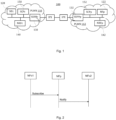
- Fig.1 illustrates an example system, comprising two public land mobile networks, PLMNs, 110, 112, each equipped with a network function, NF, 120, 122.
- a network function may refer to an operational and/or a physical entity.
- a network function may be a specific network node or element, or a specific function or set of functions carried out by one or more entities, such as virtualized network elements, VNFs.
- One physical node may be configured to perform plural NFs.
- a network function can be implemented either as a network element on a dedicated hardware, as a software instance running on a dedicated hardware, or as a virtualised function instantiated on an appropriate platform, e.g. on a cloud infrastructure. Examples of such network functions include a resource control or management function, session management or control function, interworking, data management or storage function, authentication function or a combination of one or more of these functions.
- core network NFs may comprise at least some of an access and mobility management function, AMF, a session management function, SMF, a network slice selection function, NSSF, a network exposure function, NEF, a network repository function, NRF, a unified data management, UDM, an authentication server function, AUSF, a policy control function, PCF, and an application function, AF.
- the PLMNs may each further comprise a security edge protection proxy, SEPP, 130, 132 configured to operate as a security edge node or gateway.
- SEPP security edge protection proxy
- the NFs may communicate with each other using representational state transfer application programming interfaces, for example. These may be known as Restful APIs.
- NFs include NFs related to gaming, streaming or industrial process control.
- the system may comprise also nodes from 3G or 4G node systems, such as home subscriber server, HSS, and a suitable interworking function for protocol translations between e.g. diameter and REST API Json. While described herein primarily using terminology of 5G systems, the principles of the invention are applicable also to other communication networks using proxies as described herein, such as 4G networks, 6G networks, and non-3GPP networks, for example.
- the SEPP 130, 132 is a network node at the boundary of an operator's network that may be configured to receive a message, such as an HTTP request or HTTP response from an NF, to apply protection for sending and to forward the reformatted message through a chain of intermediate nodes, such as IP eXchanges, IPX, towards a receiving SEPP.
- the receiving SEPP receives a message sent by the sending SEPP and forwards the message towards an NF within its operator's network, e.g. the AUSF.
- an NF service may be provided for a service-consuming NF by a service-producing NF, henceforth referred to as NFc 120 and NFp 122. They may also be referred to as NF (service) consumer and NF (service) producer, respectively. As noted, the NFc and NFp may reside in the same PLMN or in different PLMNs.
- a service communication proxy, SCP, 150, 152 may be deployed for indirect communication between network functions, NFs.
- An SCP is an intermediate network entity to assist in indirect communication between an NFc and an NFp, including routing messages, such as, for example, control plane messages between the NFs.
- the SCP may discover and select NFp on behalf of NFc.
- the SCP may request an access token from the NRF or an Authorization Server on behalf of NFc to access the service of NFp.
- NF discovery and NF service discovery enable entities, such as NFc 120 or SCP 150, to discover a set of NF instance(s) and NF service instance(s) for a specific NF service or an NFp type.
- the NRF 140, 142 may comprise a function that is used to support the functionality of NF and NF service registration, NF and NF service discovery and NF status changes subscription and notification. Additionally or alternatively, the NRF may be configured to act as a service access authorization server.
- the NRF may maintain an NF profile of available NFp entities and their supported services. The NRF may notify about newly registered, updated, or deregistered NFp entities along with its NF services to a subscribed NFc or SCP.
- An NRF may thus advise NFc entities or SCP concerning where, that is, from which NFp entities, they may obtain services they need.
- An NRF may be co-located together with an SCP, for example, run in a same computing substrate.
- NRF may be in a physically distinct node than an SCP or even hosted by a service provider.
- the NFc 120 or SCP 150 may initiate, based on local configuration, a discovery procedure with an NRF, such as NRFc 140.
- the discovery procedure may be initiated by providing the type of the NFp and optionally a list of the specific service(s) it is attempting to discover.
- the NFc 120 or SCP 150 may additionally or alternatively provide other service parameters, such as information relating to network slicing.
- Direct communication may be applied between NFc 120 and NFp 122 for an NF service, or NF service communication may be performed indirectly via SCP(s) 150, 152.
- the NFc 120 performs discovery of the target NFp 122 by local configuration or via local NRF, NRFc 140.
- the NFc 120 may delegate the discovery of the target NFp 122 to the SCP 150.
- the SCP may use the parameters provided by NFc 120 to perform discovery and/or selection of the target NFp 122, for example with reference to one or more NRF.
- the NFc may delegate the NFp discovery and selection to the SCP and also delegate the service access authorization, i.e. delegate the access token retrieval for accessing the specific NFp's services to the SCP.
- the service access authorization i.e. delegate the access token retrieval for accessing the specific NFp's services to the SCP.
- a system implementing an embodiment of the present disclosure comprises both fourth generation, 4G, and fifth generation, 5G, parts.
- a network support function such as an NRF may further be configured to act as a service access authorization server, and provide the NFc, or an SCP acting on behalf of the NFc, with a cryptographic access token authorizing the NFc to use the service provided by the NFp.
- the access token may also be referred to as an authorization token.
- an NRF is a terminological example of a network support node.
- an SCP is a terminological example of a proxy entity.
- OAuth based service authorization and/or token exchange is applied between NFc and NFp for the purpose of authorizing an NFc to access the service of an NFp.
- another authorization framework may be applied.
- a network entity such as an NRF
- AS such as an OAuth authorization server.
- the NFc may be an OAuth client and the NFp may operate as OAuth resource server, and they may be configured to support OAuth authorization framework as defined in IETF RFC 6749, for example.
- the NFc or SCP may include the access token in a request message when requesting the service from the NFp, for example in an "authorization bearer" header.
- the NRF may act as an OAuth 2.0 authorization server.
- the access token may comprise e.g. identifiers of the NFc, NRF and/or NFp, a timestamp and/or an identifier of the specific service which is authorised for the NFc with the access token.
- the access token may comprise a token identifier of itself, for example a serial number. The token identifier may uniquely identify the token.
- the access token may be cryptographically signed using a private key of the NRF.
- a validity of such a cryptographic signature may be verified using the corresponding public key of the NRF, which the NFp (or another entity validating the access token) may obtain in connection with registering with the NRF the service(s) it offers, for example.
- the NFc contacts the NFp, it may present the access token, which the NFp may then verify, for example at least in part by using its copy of the public key of the NRF.
- a subscribe-notify NF service allows an NFc to subscribe the service of the NF service producer, for instance NFp 122.
- the subscription request includes the notification endpoint, as an URI where a notification of the service, such as an event notification, by the NFp is to be sent.
- a first NF service consumer may also subscribe to NF service offered by NFp on behalf of a second NF consumer, NFc2.
- a consumer of the subscribe/notify service such as the NFc1, requests the NFp to send notifications to another consumer(s).
- NFc1 includes the notification endpoint of NFc2 in the subscribe request, on the basis of which the NFp may send notifications to the NFc2.
- the subscribe-notify model also uses OAuth access tokens for authorizing service requests. Therefore, if NFc1 wants to send a subscribe request to NFp, then NRF, via OAuth procedures, first authorizes the NFc1 to send a subscribe request to NFp.
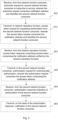
- NFc1 sends the subscribe request along with the access token received by the NRF. After the token/claim(s) thereof is verified by the NFp, the NFp can send a notification to NFc1 without asking any authorization. However, in Fig. 2 , NFp sends notifications to NFc2, and there are security challenges with current procedures. For example, if NFc1 is malicious then it will add NFc2 ID towards NFp and NRF. However, it may add another entity, NFc2', URI (e.g. the address of a malicious entity to collect data) to receive the notification data.
- URI e.g. the address of a malicious entity to collect data
- NRF authorizes NFp to send the data to NFc2, but as the URI belongs to NFc2', the NFp will send data to the malicious NFc2'.
- Another problem is that a malicious NFc1 may also raise a DoS attack towards the NFc2.
- Fig. 3 illustrates a method, for controlling a network function service subscribe procedure.
- the method may be performed by a network function service provider network entity, referred to below also as NFp, in some embodiments 3GPP SBA NFp (e.g. the NFp 122), or in a control device configured to control the functioning thereof.
- NFp network function service provider network entity
- 3GPP SBA NFp e.g. the NFp 122
- control device configured to control the functioning thereof.
- Block 300 comprises receiving, from a first network function consumer, referred to below as NFc1, a subscribe request for, or on behalf of, a second network function consumer, referred to below as NFc2, to subscribe to a service.
- the subscribe request comprises a notification address and identifies the NFc2.
- the NFc1 may transmit the subscribe request on behalf of the NFc2, to subscribe to an NF service provided by the NFp performing the method.
- the notification address may be an URI, such as a notification URI, and NFc2 (and NFc1) may be identified by their respective NF instance identifier or identity (instanceID).
- Block 310 comprises transmitting, to a network repository function, referred to below as NRF, an access token request for an access token for requesting authorization from the NFc2.
- the access token request comprises the notification address and identifies the NFc2.
- Block 320 comprises receiving, from the NRF, an access token response comprising an access token comprising the notification address verified by the NRF.
- the access token is received from the NRF if the NRF verifies the notification address transmitted in block 310 to belong to the NFc2.
- the received notification address such as a callback URI, may be stored and used later for transmitting notifications to the NFc2 (at block 350).
- Block 330 comprises transmitting, to the NFc2, an authorization request for receiving data authorization, wherein the authorization request comprises the access token received in block 320 and comprising the notification address.
- the authorization request is to confirm if the NFc2 authorizes at least some data reception from the network function producer based on the subscribe request, in some embodiments notifications of a 3GPP SBA subscribe-notify mechanism.
- the authorization request may identify a receiving data authorization service.
- Block 340 comprises receiving, from the NFc2, an authorization response indicative of authorization of the NFc2.
- Block 350 comprises transmitting, on the basis of the authorization response, a notification to the NFc2.
- block 350 may be entered if the NFc2 has approved data reception and notifications from the NFp and the authorization response indicates approval of the authorization request.
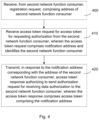
- Fig. 4 illustrates a method for access token control.
- the method may be performed by a service access authorization network entity, referred to below as network repository function or NRF, in some embodiments 3GPP SBA NRF (e.g. the NRF 140 or 142), or in a control device configured to control the functioning thereof.
- NRF network repository function
- 3GPP SBA NRF e.g. the NRF 140 or 142
- control device configured to control the functioning thereof.
- Block 400 comprises receiving, from an NFc2, a registration request, comprising an address of the NFc2.
- the registration request may be for a specific service to confirm if the NFc2 authorizes data reception from a network function producer, and transmitted 500 by an NF performing the method of Fig. 5 .
- the service may be referred to as a receiving data authorization service, and the address may be an URI of the NFc2.
- NFc2 service or profile information may be generated or updated based on the received information, with the address of the NFc2 being associated with identity information of the NFc2, and stored for subsequent use.
- Block 420 comprises transmitting, in response to the notification address corresponding with the address of the NFc2, an access token response authorizing to send an authorization request for receiving data authorization to the NFc2.
- the access token response comprises an access token comprising the notification address.
- the NRF may thus retrieve the address registered in block 400 based on NFc2 identity information in the request and determine if the received notification address corresponding with the registered address (e.g. notification URI) of the NFc2. If yes, the NRF may generate the access token and enter block 420. If no, the NRF may transmit an access token response without an access token and indicative of rejection of the access token request 410.
- Fig. 5 illustrates a method for authorizing data reception and/or notifications, regarding a service provided by an NFp.
- the method may be performed by a (service consuming) network entity, which itself has not subscribed to a service by the NFp, but for which service the NFc1 has requested subscription on behalf of the entity.
- the entity performing the method of Fig. 5 is referred to below as the NFc2, in some embodiments 3GPP SBA NFc (e.g. the NFc 120), or in a control device configured to control the functioning thereof.
- Block 510 comprises receiving, from an NFp, an authorization request for receiving data authorization.
- the authorization request comprises an access token, which may be transmitted by the NFp in block 330.
- the access token may comprise the notification address verified by the NRF in block 420 to correspond with the network address registered in block 500 and 400.
- the authorization request may be based on the subscribe request of block 300 by an NFc1 on behalf of the NFc2 to subscribe to a service by the NFp.
- the access token may be generated and transmitted 420 for the NFp by the NRF in response to an access token request from the NFp in response to the subscribe request.
- Block 520 comprises transmitting, in response to validating the access token and authorizing data reception from the network function producer, an authorization response to the NFp.
- the NFc2 may perform one or more authorization checks to determine whether or not to accept the authorization request. The NFc2 may thus determine whether the access token is valid and indicate in the authorization response if data transmission/notifications to the NFc2 are allowed or not.
- the NFc2 transmits a registration request, in the present example Register NFc Service message 600 to the NRF.
- This request is used to register the NFc2 with the receiving data authorization service at the NRF.
- This service provides an API to validate if the respective NF NFc2 is willing to receive the data from an authorized NF (NFp).
- the request comprises at least one address belonging to the NFc2, such as IP URI and/or fully qualified domain name (FQDN) based URI(s) belonging to the NFc2.
- the NRF creates or updates NF profile information of the NFc2 to include the received information and transmit a response message 602.
- the NFc1 may determine to subscribe to an NF service of the NFp on behalf of the NFc2. Thus, the NFc1 may determine that there is a need to perform delegated subscription on behalf of the NFc2.
- the NFc1 thus transmits an access token, referred to as AT in Fig. 6 , request 604 to the NFp, to request authorization and access token for receiving data from the NFp.
- the AT request 604 comprises an identifier of NFc1, and identifier of NFc2, and an identifier of the NFp.
- the NRF In response to the NFc1 and NFc2 being permitted to access the NF service by the NFp, the NRF authorizes the NFc1 and NFc2 to receive data from the NFp. This may also implicitly authorize the NFp to send data to the NFc1 and NFc2. The authorization may be performed and decided based on preconfigured policy of the respective NF NRF, according to policy of the serving operator, and/or inter-operator agreement. If the NFc1 does not send the NFc2 information in AT request 604, then the access token in the response 606 will only authorize NFc1 (and not NFc2) to receive notification from NFp. The NFc2 details may in this case be sent in response to the subsequent access token request 614.
- the NFc1 Upon receiving the access token in the AT response 606, the NFc1 transmits a Subscribe request 608 to NFp.
- the request 608 includes additional NF (NFc2) details where data is to be sent by NFp.
- the request may include NFc2 identifier, the notification address (which may be an NFc2 URI), and the access token received from the NRF in message 606.
- the subscribe request 608 may comprise NF identity of the NFc2 and the notification address by uniform resource identifier(s) to identify a receiver of notifications from the network function producer.
- the subscribe request 608 may comprise the access token granted by the NRF based on the AT request 604 and included in the AT response 606.
- the access token may be indicative of authorization of the NRF for the NFc1, or in another embodiment, the NFc1 and the NFc2, to receive data from the network function producer.
- the access token (claims) may identify NFc1 and NFc2 as consumers and NFc as producer.
- the received access token may be validated by the NFp. This may be performed after the discovery, or already before the discovery. In response to successfully validating the received access token, the NFp may allow NFc1 (or the NFc1 and the NFc2) to receive data from the NFp.
- NFp is not aware if URI provided as the notification address in the subscribe request 608 really belongs to the NFc2. For this purpose, it transmits the access token request 614.
- the access token request may be transmitted (in block 310) 614 after validating the access token received in the subscribe request 608 (in block 300).
- the NFp may transmit the AT request 614, or a response to the subscribe request to the NFc1, indicative of rejection of the request.
- the AT request 614 may comprise:
- the AT request 614 (as well as 604) may comprise client credentials of the respective NF (NFp or NFc1), which the NRF validates as a condition for accepting the AT request and access token generation, in some embodiments according to the OAuth 2.0 procedure.
- the (first and second) access tokens are cryptographically signed by the NRF and the access token validation may comprise verifying the signature.
- the NRF verifies 618 if the URI received in AT request 614 is really belonging to the NFc2. If the received URI corresponds with the URI registered by the registration request 600, the NRF may authorize the request, generate the access token and transmit the AT response 620 comprising the generated access token (as in block 420) to the NFp.
- the NRF may further in block 618 (or as separate block(s)) verify, as further precondition for generating the access token, if the NFc is authorized to receive notifications from NFp and/or verify if NFp is authorized to access service of NFc2.
- the authorization may be performed and decided based on preconfigured policy of the respective NF NRF, according to policy of the serving operator, and/or inter-operator agreement.
- the AT request is rejected, and no access token for requesting receiving data authorization is transmitted to the NFp.
- the subscribe request as requested by message 608 is rejected, and the NFp may inform NFc1 accordingly.
- the access token in the AT response 620 may comprise claims specifying:
- the NFp Upon receiving the AT response indicative of approval of the request and comprising the access token, the NFp transmits an authorization request 622 (for receiving data authorization), in the example of Fig. 6 Nnf_ReceivingData auth request to the NFc2.
- the request 622 comprises the access token received in message 620 from the NRF.
- the access token may thus specify NFc2 URI as the Notification Receiving NF URI, and identify the source NF (i.e. NFc1) which is using the NFc2 URI.
- the NFc2 processes the received request in block 624 and determines if it authorizes the request, including validating the access token as a precondition for accepting the authorisation request. In the present example, the NFc2 admits to receive notifications from the NFp according to the authorization request.
- block 624 may comprise verifying the Notification Receiving NF URI of the request 622. If this URI does not match with the URI of the NFc2, the received request 622 is rejected.
- the NFc2 transmit an Nnf ReceivingData auth response 626 to the NFp. If the response 626 indicates approval of the request and thus authorization data reception from the network function producer, the NFp may establish service provision for the NFc2 in accordance with the subscribe request 608. The NFp may thus start to send notification(s) 628 to the NFc2. If the authorization response indicates rejection, the NFp may send a subscribe response indicating refusal to the NFc1.
- the NFc1 may transmit 700 to the NRF an access token request for access token for requesting receiving data authorization from the NFc2.
- the access token request may identify NFc1, NFc2, and NFp.
- the access token request may also include the notification address (which may refer to the URI of the NFc2) where the NFp needs to send notifications.
- the NRF may perform the method of Fig. 4 .
- the NRF may authorize the NFc1 and NFc2 to receive data from the NFp and implicitly, the NFp is authorized to send data to NFc1 and NFc2.
- the NRF may also verify using the NFc2 registration data, if the received notification address, e.g. URI is actually belonging to NFc2. If yes, the NRF may conclude verifying and accepting the access token request, and also add the URI of the NFc2 in the access token claims.
- the NFc1 receives 710 an access token response from the NRF, comprising the access token comprising the notification address verified by the NRF.
- the NFc1 may then transmit 720 a service or subscribe request to the NFp with the access token. Upon validating the access token, the NFp may continue with block 330 and transmit the authorization request as illustrated above. Hence, the NFp may perform the method of Fig. 3 , except blocks 310 and 320, and receive the access token in block 300.
- the NFc2 may perform the method of Fig. 5 (regardless if the access token is acquired by the NFc1 instead of the NFp) and operate similarly as illustrated in connection with Fig. 6 .
- Fig. 8 illustrates an example apparatus capable of supporting at least some embodiments of the present invention. Illustrated is device 800, which may comprise, for example, in applicable parts, a physical node running a NFc, an NFp, and/or an NRF, for example. The device may be configured to perform the method of Fig. 3 , 4 , 5 , 7 , or an embodiment thereof.
- processor 810 Comprised in device 800 is processor 810, which may comprise, for example, a single- or multi-core processor wherein a single-core processor comprises one processing core and a multi-core processor comprises more than one processing core.
- Processor 810 may comprise, in general, a control device.
- Processor 810 may comprise more than one processor.
- Processor 810 may be a control device.
- Processor 810 may comprise at least one application-specific integrated circuit, ASIC.
- Processor 810 may comprise at least one field-programmable gate array, FPGA.
- Processor 810 may be means for performing method steps in device 800, such as receiving, transmitting and/or providing, for example.
- Processor 810 may be configured, at least in part by computer instructions, to perform actions.
- a processor may comprise circuitry, or be constituted as circuitry or circuitries, the circuitry or circuitries being configured to perform phases of methods in accordance with embodiments described herein.
- circuitry may refer to one or more or all of the following: (a) hardware-only circuit implementations, such as implementations in only analogue and/or digital circuitry, and (b) combinations of hardware circuits and software, such as, as applicable: (i) a combination of analogue and/or digital hardware circuit(s) with software/firmware and (ii) any portions of hardware processor(s) with software (including digital signal processor(s)), software, and memory(ies) that work together to cause an apparatus, such as a server, to perform various functions) and (c) hardware circuit(s) and or processor(s), such as a microprocessor(s) or a portion of a microprocessor(s), that requires software (e.g., firmware) for operation, but the software may not be present when it is not needed for operation.
- firmware firmware
- circuitry also covers an implementation of merely a hardware circuit or processor (or multiple processors) or portion of a hardware circuit or processor and its (or their) accompanying software and/or firmware.
- circuitry also covers, for example and if applicable to the particular claim element, a baseband integrated circuit or processor integrated circuit for a mobile device or a similar integrated circuit in server, a cellular network device, or other computing or network device.
- Device 800 may comprise memory 820.
- Memory 820 may comprise random-access memory and/or permanent memory.
- Memory 820 may comprise at least one RAM chip.
- Memory 820 may comprise solid-state, magnetic, optical and/or holographic memory, for example.
- Memory 820 may be at least in part accessible to processor 810.
- Memory 820 may be at least in part comprised in processor 810.
- Memory 820 may be means for storing information.
- Memory 820 may comprise computer instructions that processor 810 is configured to execute. When computer instructions configured to cause processor 810 to perform certain actions are stored in memory 820, and device 800 overall is configured to run under the direction of processor 810 using computer instructions from memory 820, processor 810 and/or its at least one processing core may be considered to be configured to perform said certain actions.
- Memory 820 may be at least in part comprised in processor 810.
- Memory 820 may be at least in part external to device 800 but accessible to device 800.
- Device 800 may comprise a transmitter 830.
- Device 800 may comprise a receiver 840.
- Transmitter 830 and receiver 840 may be configured to transmit and receive, respectively, information in accordance with at least one cellular or non-cellular standard.
- Transmitter 830 may comprise more than one transmitter.
- Receiver 840 may comprise more than one receiver.
- Transmitter 830 and/or receiver 840 may be configured to operate in accordance with a suitable messaging protocol.
- Device 800 may comprise user interface, UI, 850.
- UI 850 may comprise at least one of a display, a keyboard and a touchscreen.
- a user may be able to operate device 800 via UI 850, for example to configure operating parameters, such as SCP service request handling related parameters.
- Processor 810 may be furnished with a transmitter arranged to output information from processor 810, via electrical leads internal to device 800, to other devices comprised in device 800.
- a transmitter may comprise a serial bus transmitter arranged to, for example, output information via at least one electrical lead to memory 820 for storage therein.
- processor 810 may comprise a receiver arranged to receive information in processor 810, via electrical leads internal to device 800, from other devices comprised in device 800.
- Such a receiver may comprise a serial bus receiver arranged to, for example, receive information via at least one electrical lead from receiver 840 for processing in processor 810.
- the receiver may comprise a parallel bus receiver.
- Device 800 may comprise further devices not illustrated in Fig. 8 . In some embodiments, device 800 lacks at least one device described above.
- Processor 810, memory 820, transmitter 830, receiver 840 and/or UI 850 may be interconnected by electrical leads internal to device 800 in a multitude of different ways.
- each of the aforementioned devices may be separately connected to a master bus internal to device 800, to allow for the devices to exchange information.
- this is only one example and depending on the embodiment various ways of interconnecting at least two of the aforementioned devices may be selected without departing from the scope of the present invention.
Landscapes
- Engineering & Computer Science (AREA)
- Computer Security & Cryptography (AREA)
- Computer Networks & Wireless Communication (AREA)
- Signal Processing (AREA)
- Databases & Information Systems (AREA)
- Computer Hardware Design (AREA)
- Computing Systems (AREA)
- General Engineering & Computer Science (AREA)
- Mobile Radio Communication Systems (AREA)
Claims (13)
- Vorrichtung, die mindestens einen Verarbeitungskern, mindestens einen Speicher, der einen Computerprogrammcode beinhaltet, umfasst, wobei der mindestens eine Speicher und der Computerprogrammcode dazu ausgelegt sind, die Vorrichtung mit dem mindestens einen Verarbeitungskern zu veranlassen, mindestens Folgendes durchzuführen:- Empfangen (300) einer Subskriptionsanforderung für einen zweiten Netzwerkfunktionsverbraucher zum Subskribieren eines Dienstes von einem ersten Netzwerkfunktionsverbraucher, wobei die Subskriptionsanforderung eine Benachrichtigungsadresse umfasst und den zweiten Netzwerkfunktionsverbraucher identifiziert,- Übertragen (310, 614) einer Zugangstokenanforderung für ein Zugangstoken zum Anfordern einer Autorisierung vom zweiten Netzwerkfunktionsverbraucher zu einer Netzwerkrepositoriumsfunktion, wobei die Zugangstokenanforderung die Benachrichtigungsadresse umfasst und den zweiten Netzwerkfunktionsverbraucher identifiziert,- Empfangen (320) einer Zugangstokenantwort, die ein Zugangstoken umfasst, das die Benachrichtigungsadresse umfasst, die von der Netzwerkrepositoriumsfunktion verifiziert wurde, von der Netzwerkrepositoriumsfunktion,- Übertragen (330, 622) einer Autorisierungsanforderung zum Empfangen einer Datenautorisierung des zweiten Netzwerkfunktionsverbrauchers zum zweiten Netzwerkfunktionsverbraucher, wobei die Autorisierungsanforderung das Zugangstoken umfasst, das die Benachrichtigungsadresse umfasst, und die angeforderte Datenautorisierung eine Validierung der Benachrichtigungsadresse und eine Bestätigung einer Bereitschaft, Daten von der Vorrichtung zu akzeptieren, umfasst,- Empfangen (340) einer Autorisierungsantwort, die anzeigt, dass der zweite Netzwerkfunktionsverbraucher die Benachrichtigungsadresse als gültig ansieht und bereit ist, Daten von der Vorrichtung zu akzeptieren, vom zweiten Netzwerkfunktionsverbraucher, und- Übertragen (350, 628) einer Benachrichtigung zum Dienst auf Basis der Autorisierungsantwort zum zweiten Netzwerkfunktionsverbraucher.
- Vorrichtung nach Anspruch 1, wobei die Subskriptionsanforderung ein weiteres Zugangstoken umfasst, das eine Autorisierung der Netzwerkrepositoriumsfunktion für den ersten Netzwerkfunktionsverbraucher oder den ersten Netzwerkfunktionsverbraucher und den zweiten Netzwerkfunktionsverbraucher zum Empfangen von Daten von einem Netzwerkfunktionsproduzenten anzeigt, und
der mindestens eine Speicher und der Computerprogrammcode sind dazu ausgelegt, mit dem mindestens einen Verarbeitungskern die Vorrichtung zu veranlassen, in Reaktion auf das Validieren des Zugangstokens, das in der Subskriptionsanforderung empfangen wurde, die Zugangstokenanforderung zu übertragen (310, 614). - Vorrichtung nach Anspruch 1 oder 2, wobei der mindestens eine Speicher und der Computerprogrammcode dazu ausgelegt sind, mit dem mindestens einen Verarbeitungskern die Vorrichtung zu veranlassen, eine Netzwerkfunktionsentdeckung (610, 614) mit der Netzwerkrepositoriumsfunktion durchzuführen, um in Reaktion auf die Subskriptionsanforderung einen Datenempfangsautorisierungsdienst zu entdecken, und die Vorrichtung dazu ausgelegt ist, die Zugangstokenanforderung zu übertragen (310, 614), nachdem die Netzwerkfunktionsentdeckung (610, 614) durchgeführt wurde, wobei die Zugangstokenanforderung den Datenempfangsautorisierungsdienst identifiziert.
- Vorrichtung, die mindestens einen Verarbeitungskern, mindestens einen Speicher, der einen Computerprogrammcode beinhaltet, umfasst, wobei der mindestens eine Speicher und der Computerprogrammcode dazu ausgelegt sind, die Vorrichtung mit dem mindestens einen Verarbeitungskern zu veranlassen, mindestens Folgendes durchzuführen:- Empfangen (400) einer Registrierungsanforderung von einem zweiten Netzwerkfunktionsverbraucher, wobei die Registrierungsanforderung eine Adresse des zweiten Netzwerkfunktionsverbrauchers umfasst,- Empfangen (410) einer Zugangstokenanforderung von einem Netzwerkfunktionsproduzenten oder einem ersten Netzwerkfunktionsverbraucher, wobei die Zugangstokenanforderung eine Benachrichtigungsadresse umfasst und den zweiten Netzwerkfunktionsverbraucher identifiziert, und- Übertragen (420, 620) einer Zugangstokenantwort zum Netzwerkfunktionsproduzenten oder zum ersten Netzwerkfunktionsverbraucher in Reaktion auf die Benachrichtigungsadresse, die der Adresse des zweiten Netzwerkfunktionsverbrauchers entspricht, zum Autorisieren des Sendens einer Autorisierungsanforderung zum Empfangen einer Datenautorisierung des zweiten Netzwerkfunktionsverbrauchers an den zweiten Netzwerkfunktionsverbraucher, wobei die Zugangstokenantwort ein Zugangstoken umfasst, das die Benachrichtigungsadresse umfasst, und die angeforderte Datenautorisierung eine Validierung der Benachrichtigungsadresse und eine Bestätigung einer Bereitschaft des zweiten Netzwerkfunktionsverbrauchers, Daten vom Netzwerkfunktionsproduzenten zu akzeptieren, umfasst.
- Vorrichtung nach Anspruch 4, wobei der mindestens eine Speicher und der Computerprogrammcode dazu ausgelegt sind, die Vorrichtung mit dem mindestens einen Verarbeitungskern zu Folgendem zu veranlassen:Empfangen einer Zugangstokenanforderung vom ersten Netzwerkfunktionsverbraucher zum Senden einer Subskriptionsanforderung an den Netzwerkfunktionsproduzenten im Namen eines zweiten Netzwerkfunktionsverbrauchers, um einen Dienst zu subskribieren,Autorisieren des ersten Netzwerkfunktionsverbrauchers oder des ersten Netzwerkfunktionsverbrauchers und des zweiten Netzwerkfunktionsverbrauchers zum Senden der Subskriptionsanforderung an den Netzwerkfunktionsproduzenten, undÜbertragen (606) einer Zugangstokenantwort zum ersten Netzwerkfunktionsverbraucher in Reaktion auf die Autorisierung zum Senden der Subskriptionsanforderung, die ein Zugangstoken für die Subskriptionsanforderung umfasst.
- Vorrichtung, die mindestens einen Verarbeitungskern, mindestens einen Speicher, der einen Computerprogrammcode beinhaltet, umfasst, wobei der mindestens eine Speicher und der Computerprogrammcode dazu ausgelegt sind, die Vorrichtung mit dem mindestens einen Verarbeitungskern zu veranlassen, mindestens Folgendes durchzuführen:- Übertragen (600) einer Registrierungsanforderung zu einer Netzwerkrepositoriumsfunktion, wobei die Registrierungsanforderung eine Adresse eines zweiten Netzwerkfunktionsverbrauchers umfasst,- Empfangen einer Autorisierungsanforderung zum Empfangen einer Datenautorisierung der Vorrichtung von einem Netzwerkfunktionsproduzenten, wobei die Autorisierungsanforderung ein Zugangstoken umfasst, das eine Benachrichtigungsadresse umfasst, und die angeforderte Datenautorisierung eine Validierung der Benachrichtigungsadresse und eine Bestätigung einer Bereitschaft der Vorrichtung, Daten vom Netzwerkfunktionsproduzenten zu akzeptieren, umfasst,- Übertragen (626) einer Autorisierungsantwort, die anzeigt, dass die Vorrichtung die Benachrichtigungsadresse als gültig ansieht und bereit ist, Daten vom Netzwerkfunktionsproduzenten zu akzeptieren, in Reaktion auf das Validieren des Zugangstokens und des Autorisierens eines Datenempfangs vom Netzwerkfunktionsproduzenten zum Netzwerkfunktionsproduzenten, undEmpfangen einer Benachrichtigung zu einem Dienst vom Netzwerkfunktionsproduzenten.
- Vorrichtung nach Anspruch 6, wobei das Durchführen der Autorisierung des Datenempfangs das Prüfen umfasst, ob der zweite Netzwerkfunktionsverbraucher eine Subskription des ersten Netzwerkfunktionsverbrauchers aufweist, und/oder das Prüfen, ob es dem ersten Netzwerkfunktionsverbraucher erlaubt ist, eine einheitliche Ressourcenkennung des zweiten Netzwerkfunktionsverbrauchers zu verwenden.
- Vorrichtung nach Anspruch 6 oder 7, wobei die Autorisierungsanforderung einen Datenempfangsautorisierungsdienst identifiziert, und
das Zugangstoken, das die Benachrichtigungsadresse umfasst, identifiziert mindestens einiges von Folgendem:- den ersten Netzwerkfunktionsverbraucher als eine Quelle der einheitlichen Ressourcenkennung des zweiten Netzwerkfunktionsverbrauchers,- den Netzwerkfunktionsproduzenten als eine verbrauchende Netzwerkfunktion für den Datenempfangsautorisierungsdienst,- den zweiten Netzwerkfunktionsverbraucher als eine produzierende Netzwerkfunktion für den Datenempfangsautorisierungsdienst, und- eine einheitliche Ressourcenkennung des zweiten Netzwerkfunktionsverbrauchers als die Benachrichtigungsadresse zum Identifizieren einer Netzwerkfunktion zum Empfangen einer Benachrichtigung. - Verfahren, das Folgendes umfasst:- Empfangen (300) einer Subskriptionsanforderung für einen zweiten Netzwerkfunktionsverbraucher zum Subskribieren eines Dienstes von einem ersten Netzwerkfunktionsverbraucher, wobei die Subskriptionsanforderung eine Benachrichtigungsadresse umfasst und den zweiten Netzwerkfunktionsverbraucher identifiziert,- Übertragen (310, 614) einer Zugangstokenanforderung für ein Zugangstoken zum Anfordern einer Autorisierung vom zweiten Netzwerkfunktionsverbraucher zu einer Netzwerkrepositoriumsfunktion, wobei die Zugangstokenanforderung die Benachrichtigungsadresse umfasst und den zweiten Netzwerkfunktionsverbraucher identifiziert,- Empfangen (320) einer Zugangstokenantwort, die ein Zugangstoken umfasst, das die Benachrichtigungsadresse umfasst, die von der Netzwerkrepositoriumsfunktion verifiziert wurde, von der Netzwerkrepositoriumsfunktion,- Übertragen (330, 622) einer Autorisierungsanforderung zum Empfangen einer Datenautorisierung des zweiten Netzwerkfunktionsverbrauchers zum zweiten Netzwerkfunktionsverbraucher, wobei die Autorisierungsanforderung das Zugangstoken umfasst, das die Benachrichtigungsadresse umfasst, und die angeforderte Datenautorisierung eine Validierung der Benachrichtigungsadresse und eine Bestätigung einer Bereitschaft des zweiten Netzwerkfunktionsverbrauchers, Daten zu akzeptieren, umfasst,- Empfangen (340) einer Autorisierungsantwort, die anzeigt, dass der zweite Netzwerkfunktionsverbraucher die Benachrichtigungsadresse als gültig ansieht und bereit ist, Daten zu akzeptieren, vom zweiten Netzwerkfunktionsverbraucher, und- Übertragen (350, 628) einer Benachrichtigung zum Dienst auf Basis der Autorisierungsantwort zum zweiten Netzwerkfunktionsverbraucher.
- Verfahren nach Anspruch 9, wobei die Subskriptionsanforderung ein weiteres Zugangstoken umfasst, das eine Autorisierung der Netzwerkrepositoriumsfunktion für den ersten Netzwerkfunktionsverbraucher oder den ersten Netzwerkfunktionsverbraucher und den zweiten Netzwerkfunktionsverbraucher zum Empfangen von Daten von einem Netzwerkfunktionsproduzenten anzeigt, und
die Zugangstokenanforderung wird in Reaktion auf das Validieren des in der Subskriptionsanforderung empfangenen Zugangstokens übertragen. - Verfahren nach Anspruch 9 oder 10, wobei eine Netzwerkfunktionsentdeckung mit der Netzwerkrepositoriumsfunktion durchgeführt wird, um in Reaktion auf die Subskriptionsanforderung einen Datenempfangsautorisierungsdienst zu entdecken, und die Vorrichtung dazu ausgelegt ist, die Zugangstokenanforderung zu übertragen, nachdem die Netzwerkfunktionsentdeckung durchgeführt wurde, wobei die Zugangstokenanforderung den Datenempfangsautorisierungsdienst identifiziert.
- Verfahren, das Folgendes umfasst:- Empfangen (400) einer Registrierungsanforderung von einem zweiten Netzwerkfunktionsverbraucher, wobei die Registrierungsanforderung eine Adresse des zweiten Netzwerkfunktionsverbrauchers umfasst,- Empfangen (410) einer Zugangstokenanforderung von einem Netzwerkfunktionsproduzenten oder einem ersten Netzwerkfunktionsverbraucher, wobei die Zugangstokenanforderung eine Benachrichtigungsadresse umfasst und den zweiten Netzwerkfunktionsverbraucher identifiziert, und- Übertragen (420, 620) einer Zugangstokenantwort zum Netzwerkfunktionsproduzenten oder zum ersten Netzwerkfunktionsverbraucher in Reaktion auf die Benachrichtigungsadresse, die der Adresse des zweiten Netzwerkfunktionsverbrauchers entspricht, zum Autorisieren des Sendens einer Autorisierungsanforderung zum Empfangen einer Datenautorisierung des zweiten Netzwerkfunktionsverbrauchers an den zweiten Netzwerkfunktionsverbraucher, wobei die Zugangstokenantwort ein Zugangstoken umfasst, das die Benachrichtigungsadresse umfasst, und die angeforderte Datenautorisierung eine Validierung der Benachrichtigungsadresse und eine Bestätigung einer Bereitschaft des zweiten Netzwerkfunktionsverbrauchers, Daten vom Netzwerkfunktionsproduzenten zu akzeptieren, umfasst.
- Verfahren nach Anspruch 12, das ferner Folgendes umfasst:- Empfangen einer Zugangstokenanforderung vom ersten Netzwerkfunktionsverbraucher zum Senden einer Subskriptionsanforderung an den Netzwerkfunktionsproduzenten im Namen eines zweiten Netzwerkfunktionsverbrauchers, um einen Dienst zu subskribieren,- Autorisieren des ersten Netzwerkfunktionsverbrauchers oder des ersten Netzwerkfunktionsverbrauchers und des zweiten Netzwerkfunktionsverbrauchers zum Senden der Subskriptionsanforderung an den Netzwerkfunktionsproduzenten, und- Übertragen einer Zugangstokenantwort zum ersten Netzwerkfunktionsverbraucher in Reaktion auf die Autorisierung zum Senden der Subskriptionsanforderung, die ein Zugangstoken für die Subskriptionsanforderung umfasst.
Applications Claiming Priority (1)
| Application Number | Priority Date | Filing Date | Title |
|---|---|---|---|
| US17/232,640 US11425636B1 (en) | 2021-04-16 | 2021-04-16 | Network function service subscription control |
Publications (2)
| Publication Number | Publication Date |
|---|---|
| EP4075847A1 EP4075847A1 (de) | 2022-10-19 |
| EP4075847B1 true EP4075847B1 (de) | 2025-01-22 |
Family
ID=80735787
Family Applications (1)
| Application Number | Title | Priority Date | Filing Date |
|---|---|---|---|
| EP22161325.0A Active EP4075847B1 (de) | 2021-04-16 | 2022-03-10 | Netzfunktionsdienstabonnementsteuerung |
Country Status (2)
| Country | Link |
|---|---|
| US (1) | US11425636B1 (de) |
| EP (1) | EP4075847B1 (de) |
Families Citing this family (11)
| Publication number | Priority date | Publication date | Assignee | Title |
|---|---|---|---|---|
| WO2020254918A1 (en) * | 2019-06-15 | 2020-12-24 | Nokia Technologies Oy | Secure access control in communication system |
| EP4000287B1 (de) * | 2019-07-18 | 2023-10-18 | Nokia Solutions and Networks Oy | Mechanismus zur erleichterung des signalisierungsverkehrs |
| CN116349217A (zh) * | 2020-08-05 | 2023-06-27 | 诺基亚通信公司 | 装置、方法和计算机程序 |
| US11895501B2 (en) * | 2020-12-08 | 2024-02-06 | Oracle International Corporation | Methods, systems, and computer readable media for automatic key management of network function (NF) repository function (NRF) access token public keys for 5G core (5GC) authorization to mitigate security attacks |
| US20220353263A1 (en) * | 2021-04-28 | 2022-11-03 | Verizon Patent And Licensing Inc. | Systems and methods for securing network function subscribe notification process |
| US12192351B2 (en) | 2021-11-27 | 2025-01-07 | Oracle International Corporation | Methods, systems, and computer readable media for sharing key identification and public certificate data for access token verification |
| US20250301319A1 (en) * | 2022-05-09 | 2025-09-25 | Beijing Xiaomi Mobile Software Co., Ltd. | Subscription processing method and apparatus |
| US12556512B2 (en) | 2022-09-02 | 2026-02-17 | Oracle International Corporation | Methods, systems, and computer readable media for automatic category 1 message filtering rules configuration by learning topology information from network function (NF) repository function (NRF) |
| WO2025008913A1 (en) * | 2023-07-03 | 2025-01-09 | Jio Platforms Limited | Method and system for providing secured application programming interface based manual authentication of network functions |
| US12206742B1 (en) * | 2023-08-28 | 2025-01-21 | Charter Communications Operating, Llc | Methods and apparatus for managing network functions in a network core |
| US12413486B1 (en) | 2024-03-11 | 2025-09-09 | T-Mobile Usa, Inc. | Telecommunications system to timely send producer network function status notifications to consumer network functions |
Family Cites Families (5)
| Publication number | Priority date | Publication date | Assignee | Title |
|---|---|---|---|---|
| CN109587187B (zh) * | 2017-09-28 | 2024-08-02 | 华为技术有限公司 | 用于调用网络功能服务的方法、装置和系统 |
| US11844014B2 (en) * | 2019-04-27 | 2023-12-12 | Nokia Technologies Oy | Service authorization for indirect communication in a communication system |
| US10785652B1 (en) * | 2019-09-11 | 2020-09-22 | Cisco Technology, Inc. | Secure remote access to a 5G private network through a private network slice |
| KR102922826B1 (ko) * | 2020-09-29 | 2026-02-04 | 삼성전자 주식회사 | 무선 통신 시스템에서 네트워크 데이터 분석을 위한 구독 갱신 방법 및 장치 |
| US11317321B1 (en) * | 2020-10-27 | 2022-04-26 | Sprint Communications Company L.P. | Methods for delivering network slices to a user |
-
2021
- 2021-04-16 US US17/232,640 patent/US11425636B1/en active Active
-
2022
- 2022-03-10 EP EP22161325.0A patent/EP4075847B1/de active Active
Also Published As
| Publication number | Publication date |
|---|---|
| US11425636B1 (en) | 2022-08-23 |
| EP4075847A1 (de) | 2022-10-19 |
Similar Documents
| Publication | Publication Date | Title |
|---|---|---|
| EP4075847B1 (de) | Netzfunktionsdienstabonnementsteuerung | |
| EP3962136B1 (de) | Verwaltung von zugangstoken in kommunikationsnetzen | |
| US12063312B2 (en) | Security procedure for cryptographic signature verification based on a trust relationship between edge nodes connecting home and visited networks | |
| US12192359B2 (en) | Authorization of network request | |
| US12407561B2 (en) | Network function request error handling | |
| EP3886390A1 (de) | Tokenverwaltung | |
| EP3852339B1 (de) | Ermöglichung von dienstgüte für vertrauenswürdige netzwerkfunktionen von drittanbietern in kernnetzwerken | |
| WO2021240055A1 (en) | Enhanced authorization in communication networks | |
| WO2021140272A1 (en) | Verification of access tokens with network repository functions in core networks | |
| EP4181465B1 (de) | Netzwerksicherheit | |
| US12452063B2 (en) | Network security | |
| WO2021165194A1 (en) | Key management | |
| WO2021099675A1 (en) | Mobile network service security management | |
| WO2021165925A1 (en) | Key management | |
| WO2021176131A1 (en) | Enhanced authorization in communication networks | |
| WO2021198552A1 (en) | Improved authorization in communication networks | |
| EP4027581A1 (de) | Authentifizierung einer netzwerkanfrage | |
| EP4092982A1 (de) | Authentifizierung einer netzwerkanforderung | |
| JP2026507148A (ja) | 通信方法および通信装置 | |
| WO2021079023A1 (en) | Inter-mobile network communication security | |
| WO2024235111A1 (zh) | 一种通信方法和通信装置 |
Legal Events
| Date | Code | Title | Description |
|---|---|---|---|
| PUAI | Public reference made under article 153(3) epc to a published international application that has entered the european phase |
Free format text: ORIGINAL CODE: 0009012 |
|
| STAA | Information on the status of an ep patent application or granted ep patent |
Free format text: STATUS: THE APPLICATION HAS BEEN PUBLISHED |
|
| AK | Designated contracting states |
Kind code of ref document: A1 Designated state(s): AL AT BE BG CH CY CZ DE DK EE ES FI FR GB GR HR HU IE IS IT LI LT LU LV MC MK MT NL NO PL PT RO RS SE SI SK SM TR |
|
| STAA | Information on the status of an ep patent application or granted ep patent |
Free format text: STATUS: REQUEST FOR EXAMINATION WAS MADE |
|
| 17P | Request for examination filed |
Effective date: 20230418 |
|
| RBV | Designated contracting states (corrected) |
Designated state(s): AL AT BE BG CH CY CZ DE DK EE ES FI FR GB GR HR HU IE IS IT LI LT LU LV MC MK MT NL NO PL PT RO RS SE SI SK SM TR |
|
| GRAP | Despatch of communication of intention to grant a patent |
Free format text: ORIGINAL CODE: EPIDOSNIGR1 |
|
| STAA | Information on the status of an ep patent application or granted ep patent |
Free format text: STATUS: GRANT OF PATENT IS INTENDED |
|
| RIC1 | Information provided on ipc code assigned before grant |
Ipc: H04W 88/18 20090101ALN20240905BHEP Ipc: H04L 9/40 20220101ALI20240905BHEP Ipc: H04W 12/084 20210101AFI20240905BHEP |
|
| INTG | Intention to grant announced |
Effective date: 20240930 |
|
| GRAS | Grant fee paid |
Free format text: ORIGINAL CODE: EPIDOSNIGR3 |
|
| GRAA | (expected) grant |
Free format text: ORIGINAL CODE: 0009210 |
|
| STAA | Information on the status of an ep patent application or granted ep patent |
Free format text: STATUS: THE PATENT HAS BEEN GRANTED |
|
| AK | Designated contracting states |
Kind code of ref document: B1 Designated state(s): AL AT BE BG CH CY CZ DE DK EE ES FI FR GB GR HR HU IE IS IT LI LT LU LV MC MK MT NL NO PL PT RO RS SE SI SK SM TR |
|
| REG | Reference to a national code |
Ref country code: GB Ref legal event code: FG4D |
|
| REG | Reference to a national code |
Ref country code: CH Ref legal event code: EP |
|
| REG | Reference to a national code |
Ref country code: IE Ref legal event code: FG4D |
|
| REG | Reference to a national code |
Ref country code: DE Ref legal event code: R096 Ref document number: 602022009695 Country of ref document: DE |
|
| PGFP | Annual fee paid to national office [announced via postgrant information from national office to epo] |
Ref country code: AT Payment date: 20250417 Year of fee payment: 4 |
|
| REG | Reference to a national code |
Ref country code: NL Ref legal event code: MP Effective date: 20250122 |
|
| PG25 | Lapsed in a contracting state [announced via postgrant information from national office to epo] |
Ref country code: NL Free format text: LAPSE BECAUSE OF FAILURE TO SUBMIT A TRANSLATION OF THE DESCRIPTION OR TO PAY THE FEE WITHIN THE PRESCRIBED TIME-LIMIT Effective date: 20250122 |
|
| PG25 | Lapsed in a contracting state [announced via postgrant information from national office to epo] |
Ref country code: RS Free format text: LAPSE BECAUSE OF FAILURE TO SUBMIT A TRANSLATION OF THE DESCRIPTION OR TO PAY THE FEE WITHIN THE PRESCRIBED TIME-LIMIT Effective date: 20250422 |
|
| PG25 | Lapsed in a contracting state [announced via postgrant information from national office to epo] |
Ref country code: FI Free format text: LAPSE BECAUSE OF FAILURE TO SUBMIT A TRANSLATION OF THE DESCRIPTION OR TO PAY THE FEE WITHIN THE PRESCRIBED TIME-LIMIT Effective date: 20250122 |
|
| PG25 | Lapsed in a contracting state [announced via postgrant information from national office to epo] |
Ref country code: PL Free format text: LAPSE BECAUSE OF FAILURE TO SUBMIT A TRANSLATION OF THE DESCRIPTION OR TO PAY THE FEE WITHIN THE PRESCRIBED TIME-LIMIT Effective date: 20250122 |
|
| PG25 | Lapsed in a contracting state [announced via postgrant information from national office to epo] |
Ref country code: ES Free format text: LAPSE BECAUSE OF FAILURE TO SUBMIT A TRANSLATION OF THE DESCRIPTION OR TO PAY THE FEE WITHIN THE PRESCRIBED TIME-LIMIT Effective date: 20250122 |
|
| REG | Reference to a national code |
Ref country code: LT Ref legal event code: MG9D |
|
| PG25 | Lapsed in a contracting state [announced via postgrant information from national office to epo] |
Ref country code: NO Free format text: LAPSE BECAUSE OF FAILURE TO SUBMIT A TRANSLATION OF THE DESCRIPTION OR TO PAY THE FEE WITHIN THE PRESCRIBED TIME-LIMIT Effective date: 20250422 Ref country code: IS Free format text: LAPSE BECAUSE OF FAILURE TO SUBMIT A TRANSLATION OF THE DESCRIPTION OR TO PAY THE FEE WITHIN THE PRESCRIBED TIME-LIMIT Effective date: 20250522 |
|
| REG | Reference to a national code |
Ref country code: AT Ref legal event code: MK05 Ref document number: 1762385 Country of ref document: AT Kind code of ref document: T Effective date: 20250122 |
|
| PG25 | Lapsed in a contracting state [announced via postgrant information from national office to epo] |
Ref country code: HR Free format text: LAPSE BECAUSE OF FAILURE TO SUBMIT A TRANSLATION OF THE DESCRIPTION OR TO PAY THE FEE WITHIN THE PRESCRIBED TIME-LIMIT Effective date: 20250122 |
|
| PG25 | Lapsed in a contracting state [announced via postgrant information from national office to epo] |
Ref country code: LV Free format text: LAPSE BECAUSE OF FAILURE TO SUBMIT A TRANSLATION OF THE DESCRIPTION OR TO PAY THE FEE WITHIN THE PRESCRIBED TIME-LIMIT Effective date: 20250122 Ref country code: PT Free format text: LAPSE BECAUSE OF FAILURE TO SUBMIT A TRANSLATION OF THE DESCRIPTION OR TO PAY THE FEE WITHIN THE PRESCRIBED TIME-LIMIT Effective date: 20250522 |
|
| PG25 | Lapsed in a contracting state [announced via postgrant information from national office to epo] |
Ref country code: BG Free format text: LAPSE BECAUSE OF FAILURE TO SUBMIT A TRANSLATION OF THE DESCRIPTION OR TO PAY THE FEE WITHIN THE PRESCRIBED TIME-LIMIT Effective date: 20250122 Ref country code: GR Free format text: LAPSE BECAUSE OF FAILURE TO SUBMIT A TRANSLATION OF THE DESCRIPTION OR TO PAY THE FEE WITHIN THE PRESCRIBED TIME-LIMIT Effective date: 20250423 |
|
| PG25 | Lapsed in a contracting state [announced via postgrant information from national office to epo] |
Ref country code: AT Free format text: LAPSE BECAUSE OF FAILURE TO SUBMIT A TRANSLATION OF THE DESCRIPTION OR TO PAY THE FEE WITHIN THE PRESCRIBED TIME-LIMIT Effective date: 20250122 |
|
| PG25 | Lapsed in a contracting state [announced via postgrant information from national office to epo] |
Ref country code: SE Free format text: LAPSE BECAUSE OF FAILURE TO SUBMIT A TRANSLATION OF THE DESCRIPTION OR TO PAY THE FEE WITHIN THE PRESCRIBED TIME-LIMIT Effective date: 20250122 |
|
| REG | Reference to a national code |
Ref country code: DE Ref legal event code: R119 Ref document number: 602022009695 Country of ref document: DE |
|
| PG25 | Lapsed in a contracting state [announced via postgrant information from national office to epo] |
Ref country code: SM Free format text: LAPSE BECAUSE OF FAILURE TO SUBMIT A TRANSLATION OF THE DESCRIPTION OR TO PAY THE FEE WITHIN THE PRESCRIBED TIME-LIMIT Effective date: 20250122 |
|
| PG25 | Lapsed in a contracting state [announced via postgrant information from national office to epo] |
Ref country code: DK Free format text: LAPSE BECAUSE OF FAILURE TO SUBMIT A TRANSLATION OF THE DESCRIPTION OR TO PAY THE FEE WITHIN THE PRESCRIBED TIME-LIMIT Effective date: 20250122 |
|
| PG25 | Lapsed in a contracting state [announced via postgrant information from national office to epo] |
Ref country code: MC Free format text: LAPSE BECAUSE OF FAILURE TO SUBMIT A TRANSLATION OF THE DESCRIPTION OR TO PAY THE FEE WITHIN THE PRESCRIBED TIME-LIMIT Effective date: 20250122 |
|
| PG25 | Lapsed in a contracting state [announced via postgrant information from national office to epo] |
Ref country code: IT Free format text: LAPSE BECAUSE OF FAILURE TO SUBMIT A TRANSLATION OF THE DESCRIPTION OR TO PAY THE FEE WITHIN THE PRESCRIBED TIME-LIMIT Effective date: 20250122 |
|
| PG25 | Lapsed in a contracting state [announced via postgrant information from national office to epo] |
Ref country code: EE Free format text: LAPSE BECAUSE OF FAILURE TO SUBMIT A TRANSLATION OF THE DESCRIPTION OR TO PAY THE FEE WITHIN THE PRESCRIBED TIME-LIMIT Effective date: 20250122 Ref country code: CZ Free format text: LAPSE BECAUSE OF FAILURE TO SUBMIT A TRANSLATION OF THE DESCRIPTION OR TO PAY THE FEE WITHIN THE PRESCRIBED TIME-LIMIT Effective date: 20250122 |
|
| PG25 | Lapsed in a contracting state [announced via postgrant information from national office to epo] |
Ref country code: RO Free format text: LAPSE BECAUSE OF FAILURE TO SUBMIT A TRANSLATION OF THE DESCRIPTION OR TO PAY THE FEE WITHIN THE PRESCRIBED TIME-LIMIT Effective date: 20250122 |
|
| REG | Reference to a national code |
Ref country code: CH Ref legal event code: H13 Free format text: ST27 STATUS EVENT CODE: U-0-0-H10-H13 (AS PROVIDED BY THE NATIONAL OFFICE) Effective date: 20251024 |
|
| PG25 | Lapsed in a contracting state [announced via postgrant information from national office to epo] |
Ref country code: SK Free format text: LAPSE BECAUSE OF FAILURE TO SUBMIT A TRANSLATION OF THE DESCRIPTION OR TO PAY THE FEE WITHIN THE PRESCRIBED TIME-LIMIT Effective date: 20250122 |
|
| PG25 | Lapsed in a contracting state [announced via postgrant information from national office to epo] |
Ref country code: LU Free format text: LAPSE BECAUSE OF NON-PAYMENT OF DUE FEES Effective date: 20250310 |
|
| PLBE | No opposition filed within time limit |
Free format text: ORIGINAL CODE: 0009261 |
|
| STAA | Information on the status of an ep patent application or granted ep patent |
Free format text: STATUS: NO OPPOSITION FILED WITHIN TIME LIMIT |
|
| REG | Reference to a national code |
Ref country code: BE Ref legal event code: MM Effective date: 20250331 |
|
| 26N | No opposition filed |
Effective date: 20251023 |
|
| PG25 | Lapsed in a contracting state [announced via postgrant information from national office to epo] |
Ref country code: DE Free format text: LAPSE BECAUSE OF NON-PAYMENT OF DUE FEES Effective date: 20251001 |
|
| PG25 | Lapsed in a contracting state [announced via postgrant information from national office to epo] |
Ref country code: FR Free format text: LAPSE BECAUSE OF NON-PAYMENT OF DUE FEES Effective date: 20250322 |
|
| PG25 | Lapsed in a contracting state [announced via postgrant information from national office to epo] |
Ref country code: BE Free format text: LAPSE BECAUSE OF NON-PAYMENT OF DUE FEES Effective date: 20250331 |
|
| PG25 | Lapsed in a contracting state [announced via postgrant information from national office to epo] |
Ref country code: CH Free format text: LAPSE BECAUSE OF NON-PAYMENT OF DUE FEES Effective date: 20250331 |
|
| PG25 | Lapsed in a contracting state [announced via postgrant information from national office to epo] |
Ref country code: IE Free format text: LAPSE BECAUSE OF NON-PAYMENT OF DUE FEES Effective date: 20250310 |
|
| PGFP | Annual fee paid to national office [announced via postgrant information from national office to epo] |
Ref country code: GB Payment date: 20260202 Year of fee payment: 5 |