EP4075634A1 - Charging prompting method and apparatus, electronic device, and computer-readable storage medium - Google Patents
Charging prompting method and apparatus, electronic device, and computer-readable storage medium Download PDFInfo
- Publication number
- EP4075634A1 EP4075634A1 EP20902906.5A EP20902906A EP4075634A1 EP 4075634 A1 EP4075634 A1 EP 4075634A1 EP 20902906 A EP20902906 A EP 20902906A EP 4075634 A1 EP4075634 A1 EP 4075634A1
- Authority
- EP
- European Patent Office
- Prior art keywords
- charging
- prompting
- electronic device
- state
- misaligning
- Prior art date
- Legal status (The legal status is an assumption and is not a legal conclusion. Google has not performed a legal analysis and makes no representation as to the accuracy of the status listed.)
- Withdrawn
Links
Images




Classifications
-
- H—ELECTRICITY
- H02—GENERATION; CONVERSION OR DISTRIBUTION OF ELECTRIC POWER
- H02J—ELECTRIC POWER NETWORKS; CIRCUIT ARRANGEMENTS OR SYSTEMS FOR SUPPLYING OR DISTRIBUTING ELECTRIC POWER; SYSTEMS FOR STORING ELECTRIC ENERGY
- H02J50/00—Circuit arrangements or systems for wireless supply or distribution of electric power
- H02J50/90—Circuit arrangements or systems for wireless supply or distribution of electric power involving detection or optimisation of position, e.g. alignment
-
- H—ELECTRICITY
- H02—GENERATION; CONVERSION OR DISTRIBUTION OF ELECTRIC POWER
- H02J—ELECTRIC POWER NETWORKS; CIRCUIT ARRANGEMENTS OR SYSTEMS FOR SUPPLYING OR DISTRIBUTING ELECTRIC POWER; SYSTEMS FOR STORING ELECTRIC ENERGY
- H02J50/00—Circuit arrangements or systems for wireless supply or distribution of electric power
- H02J50/80—Circuit arrangements or systems for wireless supply or distribution of electric power involving the exchange of data, concerning supply or distribution of electric power, between transmitting devices and receiving devices
-
- H—ELECTRICITY
- H02—GENERATION; CONVERSION OR DISTRIBUTION OF ELECTRIC POWER
- H02J—ELECTRIC POWER NETWORKS; CIRCUIT ARRANGEMENTS OR SYSTEMS FOR SUPPLYING OR DISTRIBUTING ELECTRIC POWER; SYSTEMS FOR STORING ELECTRIC ENERGY
- H02J7/00—Circuit arrangements for charging or discharging batteries or for supplying loads from batteries
- H02J7/40—Circuit arrangements for charging or discharging batteries or for supplying loads from batteries characterised by the exchange of charge or discharge related data
- H02J7/42—Circuit arrangements for charging or discharging batteries or for supplying loads from batteries characterised by the exchange of charge or discharge related data with electronic devices having internal batteries, e.g. mobile phones
-
- H—ELECTRICITY
- H02—GENERATION; CONVERSION OR DISTRIBUTION OF ELECTRIC POWER
- H02J—ELECTRIC POWER NETWORKS; CIRCUIT ARRANGEMENTS OR SYSTEMS FOR SUPPLYING OR DISTRIBUTING ELECTRIC POWER; SYSTEMS FOR STORING ELECTRIC ENERGY
- H02J7/00—Circuit arrangements for charging or discharging batteries or for supplying loads from batteries
- H02J7/80—Circuit arrangements for charging or discharging batteries or for supplying loads from batteries including monitoring or indicating arrangements
-
- H—ELECTRICITY
- H02—GENERATION; CONVERSION OR DISTRIBUTION OF ELECTRIC POWER
- H02J—ELECTRIC POWER NETWORKS; CIRCUIT ARRANGEMENTS OR SYSTEMS FOR SUPPLYING OR DISTRIBUTING ELECTRIC POWER; SYSTEMS FOR STORING ELECTRIC ENERGY
- H02J7/00—Circuit arrangements for charging or discharging batteries or for supplying loads from batteries
- H02J7/90—Regulation of charging or discharging current or voltage
- H02J7/971—Regulation of charging or discharging current or voltage the charge cycle being controlled or terminated in response to non-electric parameters
-
- G—PHYSICS
- G06—COMPUTING OR CALCULATING; COUNTING
- G06F—ELECTRIC DIGITAL DATA PROCESSING
- G06F3/00—Input arrangements for transferring data to be processed into a form capable of being handled by the computer; Output arrangements for transferring data from processing unit to output unit, e.g. interface arrangements
- G06F3/002—Specific input/output arrangements not covered by G06F3/01 - G06F3/16
-
- H—ELECTRICITY
- H02—GENERATION; CONVERSION OR DISTRIBUTION OF ELECTRIC POWER
- H02J—ELECTRIC POWER NETWORKS; CIRCUIT ARRANGEMENTS OR SYSTEMS FOR SUPPLYING OR DISTRIBUTING ELECTRIC POWER; SYSTEMS FOR STORING ELECTRIC ENERGY
- H02J50/00—Circuit arrangements or systems for wireless supply or distribution of electric power
- H02J50/10—Circuit arrangements or systems for wireless supply or distribution of electric power using inductive coupling
-
- H—ELECTRICITY
- H02—GENERATION; CONVERSION OR DISTRIBUTION OF ELECTRIC POWER
- H02J—ELECTRIC POWER NETWORKS; CIRCUIT ARRANGEMENTS OR SYSTEMS FOR SUPPLYING OR DISTRIBUTING ELECTRIC POWER; SYSTEMS FOR STORING ELECTRIC ENERGY
- H02J50/00—Circuit arrangements or systems for wireless supply or distribution of electric power
- H02J50/10—Circuit arrangements or systems for wireless supply or distribution of electric power using inductive coupling
- H02J50/12—Circuit arrangements or systems for wireless supply or distribution of electric power using inductive coupling of the resonant type
-
- Y—GENERAL TAGGING OF NEW TECHNOLOGICAL DEVELOPMENTS; GENERAL TAGGING OF CROSS-SECTIONAL TECHNOLOGIES SPANNING OVER SEVERAL SECTIONS OF THE IPC; TECHNICAL SUBJECTS COVERED BY FORMER USPC CROSS-REFERENCE ART COLLECTIONS [XRACs] AND DIGESTS
- Y02—TECHNOLOGIES OR APPLICATIONS FOR MITIGATION OR ADAPTATION AGAINST CLIMATE CHANGE
- Y02B—CLIMATE CHANGE MITIGATION TECHNOLOGIES RELATED TO BUILDINGS, e.g. HOUSING, HOUSE APPLIANCES OR RELATED END-USER APPLICATIONS
- Y02B40/00—Technologies aiming at improving the efficiency of home appliances, e.g. induction cooking or efficient technologies for refrigerators, freezers or dish washers
Definitions
- the present disclosure relates to the field of charging, and more particularly, to a charging prompting method and apparatus, an electronic device, and a computer-readable storage medium.
- the wireless charging technology is derived from a wireless power transmission technology.
- the charging can be achieved by transmitting energy between a wireless charger and an electronic device in a magnetic field.
- a charging symbol can be displayed on a battery icon.
- Embodiments of the present disclosure provides a charging prompting method and apparatus, an electronic device, and a computer-readable storage medium, capable of enabling the electronic device in different charging states to prompt in different prompting forms.
- a charging prompting method includes: obtaining a charging state of an electronic device in a wireless charging process; in response to the charging state being an abnormal charging state, outputting charging prompting information at a first playing speed; and in response to the charging state being a normal charging state, outputting the charging prompting information at a second playing speed, the second playing speed being greater than the first playing speed.
- a charging prompting apparatus includes: a state obtaining module configured to obtain a charging state of an electronic device in a wireless charging process; and a charging prompting module configured to output, in response to the charging state being an abnormal charging state, charging prompting information at a first playing speed, and output, in response to the charging state being a normal charging state, the charging prompting information at a second playing speed, the second playing speed being greater than the first playing speed.
- An electronic device includes a processor, and a memory having a computer program stored thereon.
- the computer program when being executed by the processor, implements steps of: obtaining a charging speed of an electronic device in a wireless charging process; outputting, in response to the charging speed being smaller than a predetermined charging speed, charging prompting information at a first playing speed, the first playing speed being smaller than a first playing speed threshold.
- a computer-readable storage medium has a computer program stored thereon.
- the computer program when being executed by a processor, implements steps of: obtaining a charging state of an electronic device in a wireless charging process; outputting, in response to the charging state being an abnormal charging state, charging prompting information at a first playing speed; and outputting, in response to the charging state being a normal charging state, the charging prompting information at a second playing speed, the second playing speed being greater than the first playing speed.
- the charging state of the electronic device in the wireless charging process is obtained, when the charging state is the abnormal charging state, the charging prompting information is output at the first playing speed; and when the charging state is the normal charging state, the charging prompting information is output at the second playing speed greater than the first playing speed.
- different prompting forms can be adopted to prompt in different charging states, and thus the user of the electronic device can be visually prompted that the electronic device is in the abnormal charging state, thereby shortening the invalid charging time of the electronic device and improving a charging efficiency.
- a charging prompting method includes: obtaining a charging speed of an electronic device in a wireless charging process; in response to the charging speed being smaller than a predetermined charging speed, outputting charging prompting information at a first playing speed, the first playing speed being smaller than a first playing speed threshold.
- a charging prompting apparatus includes: a speed obtaining module configured to obtain a charging speed of an electronic device in a wireless charging process; and a charging prompting module configured to, when the charging speed is smaller than a predetermined charging speed, output charging prompting information at a first playing speed, the first playing speed being smaller than a first playing speed threshold.
- An electronic device includes a processor; and a memory having a computer program stored thereon.
- the computer program when being executed by the processor, implements steps of: obtaining a charging speed of an electronic device in a wireless charging process; in response to the charging speed being smaller than a predetermined charging speed, outputting charging prompting information at a first playing speed, the first playing speed being smaller than a first playing speed threshold.
- a computer-readable storage medium has a computer program stored thereon.
- the computer program when being executed by a processor, implements steps of: obtaining a charging speed of an electronic device in a wireless charging process; in response to the charging speed being smaller than a predetermined charging speed, outputting charging prompting information at a first playing speed, the first playing speed being smaller than a first playing speed threshold.
- the charging speed of the electronic device in the wireless charging process is obtained, and in response to the charging speed being smaller than the predetermined charging speed, the charging prompting information is output at the first playing speed, and the first playing speed is smaller than a first playing speed threshold.
- the user of the electronic device can be visually prompted that the electronic device is in the abnormal charging state, thereby shortening the invalid charging time of the electronic device and improving a charging efficiency.
- FIG. 1 is a schematic diagram illustrating an application environment for wireless charging of an electronic device according to an embodiment.
- the application environment includes an electronic device 110 and a wireless charging device 120.
- the wireless charging apparatus 120 may be a wireless charging base, a wireless power bank, or a wireless charging adapter.
- the wireless power bank when having electric energy, can transmit wireless power to wirelessly charge the electronic device 110.
- the wireless charging base and the wireless charging adapter require an external power supply, and after they are connected to the external power supply, the wireless power can be emitted to wirelessly charge the electronic device 110.
- the electronic device 110 may be a mobile phone, a tablet computer, a wearable device, a wireless headset, a wireless sound box, etc.
- FIG. 2 is a flowchart of a charging prompting method according to an embodiment. As illustrated in FIG. 2 , a charging prompting method includes the following actions in block.
- a charging state of an electronic device in a wireless charging process is obtained.
- the charging state indicates a charging condition of the electronic device.
- the charging state may include a normal charging state and an abnormal charging state.
- the normal charging state refers to that the electronic device is normally charged by a wireless charging device paired with the electronic device in accordance with a predetermined charging power.
- the predetermined charging power may be a rated operating power of the wireless charging device.
- the paired wireless charging device generally refers to a wireless charging device, charging parameters or charging specifications of which are compatible with the electronic device and provided by the same service provider.
- the normal charging state may be that a receiving coil of the electronic device is aligned with a transmitting coil of the wireless charging device during the charging with the wireless charging device paired with the electronic device.
- the abnormal charging state refers to a charging state other than the normal charging state.
- the abnormal charging state may include a charging misaligning state, a charging state that a charging power provided by the wireless charging device is smaller than the predetermined charging power, a charging state that an obstacle exists between the electronic device and the wireless charging device, and the like.
- the charging misaligning state refers to a charging state in which the receiving coil of the electronic device is misaligned with the transmitting coil of the wireless charging device, resulting in a reduced charging efficiency of the electronic device.
- the misalignment of the receiving coil of the electronic device and the transmitting coil of the wireless charging device may include the following scenarios: the receiving coil not completely coinciding with the transmitting coil (when the two coils are of the same size); a center of the receiving coil not overlapping a center of the transmitting coil; the receiving coil not being completely within an enclosing range of the transmitting coil; and the like.
- the charging power can be obtained and compared with the predetermined charging power to determine a current charging state.
- the predetermined charging power is set in advance and is the same as the rated charging power of the wireless charging device paired with the electronic device.
- the charging state of the electronic device when the charging power of the electronic device in the wireless charging process is the predetermined charging power, the charging state of the electronic device is the normal charging state; and when the charging power of the electronic device in the wireless charging process is smaller than the predetermined charging power, the charging state of the electronic device is the abnormal charging state.
- charging prompting information is output at a first playing speed.
- the first playing speed may be predetermined as required, for example, 10 frames per second, 20 frames per second, etc., but it is not limited thereto.
- the charging prompting information may be animated information, audio information, text information, or the like.
- the first playing speed may be a number of frames of animation per second.
- the charging prompting information is the audio information
- the first playing speed may be a playing speed of sound, such as a number of words per second.
- the charging prompting information is the text information
- the first playing speed is the playing speed of the text information, such as a number of words per second.
- the charging prompting information is output at a second playing speed.
- the second playing speed is greater than the first playing speed.
- the second playing speed can be set as needed. Since the second playing speed is greater than the first playing speed, the user can be prompted more visually that the charging state of the electronic device returns to the normal charging state.
- the charging state of the electronic device in the wireless charging process is obtained; when the charging state is determined to be the abnormal charging state, the charging prompting information is output at the first playing speed; and when the charging state is the normal charging state, the charging prompting information is output at the second playing speed, the second playing speed being greater than the first playing speed.
- different prompting forms can be adopted to prompt in different charging states, and thus the user of the electronic device can be visually prompted that the electronic device is in the abnormal charging state, thereby shortening the invalid charging time of the electronic device and improving a charging efficiency.
- FIG. 3 is a schematic diagram illustrating charging prompting information in a charging misaligning state according to an embodiment.
- the charging prompt information includes the animated information.
- the animated information 302 is played at the first playing speed on a display interface of the electronic device.
- the first playing speed is a frames/second, where a is a positive number.
- the animated information may include a charged amount.
- the charged amount may be expressed in percentage, such as 73%, as illustrated in FIG. 3 .
- the charged amount may be presented in other ways, for example, an integer between 0 and 100, in different colors, and the like.
- the animated information may further include a charging duration, and the like.
- FIG. 4 is a schematic diagram illustrating charging prompting information in a normal charging state according to an embodiment.
- the charging prompt information includes the animated information.
- the animated information 402 is played at the second playing speed on the display interface of the electronic device.
- the second playing speed is b frames/second, where b is a positive number greater than a.
- the animated information may include a charged amount.
- the charged amount may be expressed in percentage, such as 73% as illustrated in FIG. 4 .
- the charged amount may be represented in other ways, such as an integer between 0 and 100.
- the animated information may further include a charging duration, and the like.
- the abnormal charging state is a charging misaligning state, in which the receiving coil of the electronic device is misaligned with the transmitting coil of the wireless charging device.
- the charging prompting method further includes: displaying, in response to the charging state being the charging misaligning state and the electronic device being in a screen-blanking state, misaligning prompting information in the screen-blanking state.
- the misaligning prompting information is used to indicate that the receiving coil of the electronic device is misaligned with the transmitting coil of the wireless charging device.
- the screen-blanking state refers to a state that a backlight of a screen of the electronic device is turned off.
- the misaligning prompting information is used to indicate that the receiving coil of the electronic device is misaligned with the transmitting coil of the wireless charging device.
- the misaligning prompting information may include marked position information of the receiving coil of the electronic device and marked position information of the transmitting coil of the wireless charging device. The misalignment between the receiving coil of the electronic device and the transmitting coil of the wireless charging device can be indicated by their marked position information.
- the transmitting coil of the wireless charging device may be disposed at a central position of the wireless charging device, and at least one group of symmetrical pressure sensors is arranged around the transmitting coil of the wireless charging device.
- Each group of symmetrical pressure sensors includes two pressure sensors. The two pressure sensors are symmetrically arranged with respect to the center of the transmitting coil.
- the receiving coil of the electronic device is disposed at the center of the electronic device.
- the receiving coil of the electronic device When an absolute value of a pressure difference between the two symmetrical pressure sensors is greater than a first predetermined pressure value, the receiving coil of the electronic device is considered to be misaligned with the transmitting coil of the wireless charging device, i.e., a misalignment exists during the charging. A direction and a distance that the electronic device should be moved are determined based on the pressure difference. When the electronic device is skewed towards the pressure sensor having a greater pressure value, the electronic device needs to be moved towards the pressure sensor having a smaller pressure value.
- the receiving coil of the electronic device is considered to be aligned with the transmitting coil of the wireless charging device, i.e., no misalignment exists during the charging.
- the first predetermined pressure value is greater than or equal to the second predetermined pressure value.
- the electronic device may receive a message transmitted by the wireless charging device and indicating that the receiving coil of the electronic device is misaligned with the transmitting coil of the wireless charging device. It is determined, based on the message, that the charging state of the electronic device is the charging misaligning state.
- the message indicating that the receiving coil of the electronic device is misaligned with the transmitting coil of the wireless charging device is generated when it is detected that the absolute value of the pressure difference between the at least one group of two symmetrical pressure sensors obtained by the wireless charging device is greater than the first predetermined pressure value.
- the electronic device may further receive information transmitted by the wireless charging device and indicating a direction and a distance that the electronic device needs to move.
- the electronic device when the electronic device is being charged and detects that a coupling resonant frequency between the receiving coil and the transmitting coil of the wireless charging device is smaller than a predetermined frequency, it is determined that the charging state of the electronic device is the charging misaligning state.
- the predetermined frequency is determined based on coupling resonance characteristics of the receiving coil of the electronic device and the transmitting coil of the wireless charging device, and it can also be obtained by testing a relation between the misalignment and the coupling resonance frequency for multiple times.
- the misaligning prompting information may be presented in at least one form of text, audio, or graphics.
- the misaligning prompting information is directly displayed as text on the electronic device, for example, when the misalignment exists during charging, a position of the electronic device needs to be adjusted to charge more efficiently, and the like, which is not limited in the present disclosure.
- the misaligning prompting information is played by sound.
- two graphs are adopted to respectively represent the receiving coil of the electronic device and the transmitting coil of the wireless charging device, so as to display the misaligning prompting information.
- the marked position information of the receiving coil of the electronic device and the marked position information of the transmitting coil of the wireless charging device may be represented in the form of graphics.
- the receiving coil and the transmitting coil may be represented using the same graphic or different graphics.
- the receiving coil and the transmitting coil are represented by the same graphic. For example, two circles on the display interface respectively represent a marked position of the receiving coil and a marked position of the transmitting coil. Alternatively, two round dots on the display interface respectively represent the marked position of the receiving coil and the marked position of the transmitting coil. In the case that the positions of the two graphics completely coincide, the charging is regarded as not misaligned.
- the graphics may also be triangles, polygons, etc.
- the receiving coil and the transmitting coil are represented by different graphics.
- a circle represents the marked position of the receiving coil
- a rectangle represents the marked position of the transmitting coil.
- the marking position information of the receiving coil and the marked position information of the transmitting coil may also be represented by graphics with colors.
- the marked position information of the receiving coil is represented by a blue circle
- the marked position information of the transmitting coil is represented by a red circle.
- the misaligning prompting information may also include text information.
- the text information may include a position adjustment prompt, etc.
- the misaligning prompting information is displayed in the screen-blanking state. In this way, it can more clearly prompt the user of the charging misalignment of the electronic device and remind the user to adjust the position of electronic device to obtain higher charging efficiency, thereby shortening the invalid charging time of electronic device.
- the charging prompting method described above further includes: stopping, in response to detecting that a position of the electronic device is continuously changed for predetermined times and in response to the charging state of the electronic device being still in the charging misaligning state, outputting the misaligning prompting information.
- the position of the electronic device It can be detected by a gyroscope whether the position of the electronic device is changed. After the detecting begins, the charging state of the electronic device is detected, and when the electronic device is in the charging misaligning state, one change of the position of the electronic device is recorded. After the change of the position of the electronic device is recorded for predetermined times, the output of the misaligning prompting information is stopped.
- the predetermined times are determined as needed, such as 3 times, 4 times, 5 times, and the like, which is not limited herein.
- said displaying the misaligning prompting information in the screen-blanking state includes: displaying the misaligning prompting information in an Always-On display mode in the screen-blanking state.
- the Always-On display mode is to adopt the Always-On Display (AOD) technology to continuously display in the screen-blanking state
- the misaligning prompting information is continuously displayed in the screen-blanking state to constantly prompt the user of the charging misalignment and of that the position of the electronic device needs to be adjusted in time. In this way, the charging efficiency is improved.
- the Always-On display mode can play a role in the prompting and can also save the electric quantity of the electronic device.
- the charging prompting method further includes: after the misaligning prompting information is displayed in the screen-blanking state, in response to detecting the charging state of the electronic device to be the normal charging state, controlling the misaligning prompting information to disappear, and playing the charging prompting information at the second playing speed.
- the normal charging state is that the receiving coil of the electronic device is aligned with the transmitting coil of the wireless charging device.
- misaligning prompting information is displayed in the screen-blanking state
- the misaligning prompting information is controlled to disappear, and the charging prompting information is played at the second playing speed to remind the user that the charging is normal.
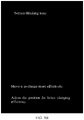
- FIG. 5A is a schematic diagram illustrating misaligning prompting information in a screen-blanking state according to an embodiment.
- the misaligning prompting information includes a solid circle 502, a dotted circle 504, and text information.
- the solid circle represents the marked position of the receiving coils of the electronic device.
- the dotted circle represents the marked position of the transmitting coil of the wireless charging device.
- the text information includes "Move it to charge more effectively", “Adjust position for better charging efficiency", and the like.
- the charging prompting information may also be displayed when the electronic device is in the screen-blanking state.
- the charging prompting information is played at the first playing speed.
- FIG. 5B differs from FIG. 5A in that the solid circle 502 and the dotted circle 504 are omitted and the text information is used for prompting.
- FIG. 6 is a schematic diagram illustrating charging prompting information displayed after a position of an electronic device is adjusted in the screen-blanking state according to an embodiment.
- the position of the electronic device is adjusted, and the electronic device detects that the charging power is equal to the predetermined charging power, indicating that the electronic device is in the normal charging state, and the electronic device plays animated information 602 at the second playing speed for a charging prompt.
- the charging prompting method further includes: controlling, in response to the charging state being the charging misaligning state and the electronic device being in the screen-blanking state, the electronic device to enter the screen-lighting state from the screen-blanking state and display a misaligning prompting window containing the misaligning prompting information in the screen-lighting state.
- the charging misaligning state indicates that the receiving coil of the electronic device is misaligned with the transmitting coil of the wireless charging device.
- the misaligning prompting information is used to indicate that the receiving coil of the electronic device is misaligned with the transmitting coil of the wireless charging device.
- the electronic device in response to a display duration of the misaligning prompting window reaching a first predetermined duration and a triggering operation on the misaligning prompting window not being obtained, the electronic device is controlled to enter the screen-blanking state and display the misaligning prompting information in the screen-blanking state.
- the screen-lighting state refers to a lighting state of the screen of the electronic device.
- the misaligning prompting window is used for displaying the misaligning prompting information.
- the misaligning prompting window can be a pop-up window or a floating window, etc.
- the misaligning prompting information may be represented in at least one form of text, audio, or graphic.
- the misaligning prompting information may include the marked position information of the receiving coil of the electronic device and the marked position information of the transmitting coil of the wireless charging device.
- the misalignment between the receiving coil of the electronic device and the transmitting coil of the wireless charging device may be indicated by the marked position information of the receiving coil of the electronic device and the marked position information of the transmitting coil of the wireless charging device.
- the marked position information of the receiving coil of the electronic device and the marked position information of the transmitting coil of the wireless charging device may be represented in the form of graphics.
- the marked position information of the receiving coil of the electronic device and the marked position information of the transmitting coil of the wireless charging device may be represented by the same graphic or different graphics.
- the marked position information of the receiving coil of the electronic device and the marked position information of the transmitting coil of the wireless charging device are represented by the same graph, for example, two circles on the display interface respectively represent the marked position information of the receiving coil of the electronic device and the marked position information of the transmitting coil of the wireless charging device.
- two round dots on the display interface respectively represent the marked position of the receiving coil and the marked position of the transmitting coil.
- the graphics may also be triangles, polygons, etc.
- the marked position information of the receiving coil of the electronic device and the marked position information of the transmitting coil of the wireless charging device may be represented by different graphics. For example, on the display interface, a circle represents the marked position of the receiving coil, and a rectangle represents the marked position of the transmitting coil. When an overlap of the positions of the two graphics reaches the maximum value, the charging is not misaligned.
- the marked position information of the receiving coil and the marked position information of the transmitting coil may also be represented by graphics with colors.
- the marked position information of the receiving coil is represented by a blue circle
- the marked position information of the transmitting coil is represented by a red circle.
- the misaligning prompting information may also include text information.
- the text information may include a position adjustment prompt, etc.
- the first predetermined duration can be determined as needed, for example, 2 seconds, 3 seconds, 5 seconds, 1 minute, and the like.
- the display duration of the misaligning prompting window is timed from the occurrence of the misaligning prompting window.
- the electronic device When the charging misalignment is detected in the screen-blanking state, the electronic device is controlled to enter the screen-lightening state from the screen-blanking state and display the misaligning prompting window containing the misaligning prompting information in the screen-lightening state. In this way, when the charging misalignment is detected in the screen-blanking state, the electronic device can timely enter the screen-lightening state, and the misaligning prompting window is displayed in the screen-lightening state to display misaligning prompting information through the misaligning prompting window.
- the screen-lightening and the misaligning prompting information as double prompting, can achieve an intensive prompting.
- the triggering operation on the misaligning prompting window may include clicking, double clicking, applying a pressing force greater than a pressure threshold, pressing for a pressing duration longer than a duration threshold, and the like.
- the charging prompting information can be output at the first playing speed in the screen-lighting state.
- the charging misalignment can be prompted in a combination of various modes, and the user can be reminded of performing an adjustment in time, reaching a more intensive prompt effect.
- the misaligning prompting window when the display duration of the misaligning prompting window reaches the first predetermined duration and the triggering operation on the misaligning prompting window is not obtained, subsequent to controlling the electronic device to enter the screen-blanking state, the misaligning prompting window can be automatically closed and display the misaligning prompting information in an Always-On display mode in the screen-blanking state to display the misaligning prompting information in a simpler way.
- the charging prompting method further includes: after the electronic device enters the screen-blanking state, starting timing.
- the electronic device When reaching a specified duration and detecting the charging state of the electronic device to be the charging misaligning state, the electronic device is controlled to enter the screen-lighting state from the screen-blanking state again and display the misaligning prompting window containing the misaligning prompting information in the screen-lighting state.
- the display duration of the misaligning prompting window reaches the first predetermined duration and the triggering operation on the misaligning prompting window is not obtained, the electronic device is controlled to enter the screen-blanking state again.
- the specified duration can be determined as needed. In this way, the user can be repeatedly reminded of performing an adjustment on the charging position to improve the charging efficiency.
- the charging prompting method further includes: in response to a triggering operation on the misaligning prompting window being obtained, controlling the misaligning prompting window to disappear; and outputting the charging prompting information at the first playing speed in the screen-lighting state.
- the triggering operation on the misaligning prompting window may include clicking, double clicking, applying a pressing force greater than a pressure threshold, pressing for a pressing duration longer than a duration threshold, and the like.
- the misaligning prompting window is controlled to disappear, and the charging prompting information is played at the first playing speed in the screen-lighting state.
- the disappearance of the misaligning prompting window can be a closure of the misaligning prompting window or a hiding of the misaligning prompting window.
- the charging prompting method further includes: after the charging prompting information is output at the first playing speed in the screen-lighting state, in response to detecting the charging state of the electronic device to be the normal charging state, outputting the charging prompting information at the second playing speed in the screen-lighting state.
- FIG. 7 is a schematic diagram illustrating a displaying of misaligning prompting information in a screen-lighting state according to an embodiment.
- a charging misalignment is detected, and a misaligning prompting window 702 containing the misaligning prompting information is displayed in a pop-up window.
- the misaligning prompting information includes a solid circle, a dotted circle, and text information.
- the solid circle indicates the position of the electronic device.
- the dotted circle indicates the position of the wireless charging device.
- the text information includes "Move it to charge more effectively", “Adjust the position for better charging efficiency", and the like.
- the charging prompting information may also be displayed when the electronic device is in the screen-lighting state.
- the charging prompting information is played at the first playing speed.
- a control of "I knew it” is also displayed in the misaligning prompting window, and when it is detected that the user clicks the control of "I knew it", the misaligning prompting window disappears.
- the charging prompting information is output at the first playing speed in the screen-lighting state.
- the charging prompting method further includes: after the misaligning prompting information is displayed in the screen-blanking state, in response to detecting the charging state to be the normal charging state, controlling the misaligning prompting information to disappear, and outputting the charging prompting information at the second playing speed.
- FIG. 8 is a schematic diagram illustrating charging prompting information outputted in a screen-lighting state according to an embodiment.
- the electronic device displays the misaligning prompting window in the screen-lighting state and displays the misaligning prompting information in the misaligning prompting window
- the misaligning prompting window is closed, and the charging prompting information 802 is displayed at the first playing speed in the screen-lighting state.
- the electronic device detects that the charging power is equal to the predetermined charging power, the electronic device is in the normal charging state, and the charging prompting information is displayed at the second playing speed in the screen-lighting state.
- the charging prompting method further includes: displaying, in response to the charging state being the charging misaligning state and the electronic device being in the screen-lighting state, the misaligning prompting window containing the misaligning prompting information.
- the charging misaligning state refers that the receiving coil of the electronic device is misaligned with the transmitting coil of the wireless charging device, and the misaligning prompting information is used to indicate that the receiving coil of the electronic device is misaligned with the transmitting coil of the wireless charging device.
- the screen-lighting state refers to a lighting state of the screen of the electronic device.
- the misaligning prompting window is used for displaying the misaligning prompting information.
- the misaligning prompting window can be a pop-up window or a floating window, etc.
- the misaligning prompting information may be represented in at least one form of text, audio, or graphic.
- the misaligning prompting information may include the marked position information of the receiving coil of the electronic device and the marked position information of the transmitting coil of the wireless charging device.
- the marked position information of the receiving coil of the electronic device and the marked position information of the transmitting coil of the wireless charging device may be represented by graphics. As illustrated in FIG. 7 , during the wireless charging of the electronic device performs in the screen-lighting state, if charging misalignment is detected, the misaligning prompting window containing the misaligning prompting information is displayed in the pop-up window.
- the charging prompting method when the charging state is the charging misaligning state and the electronic device is in the screen-lighting state, the charging prompting method further includes: subsequent to displaying the misaligning prompting window containing the misaligning prompting information, in response to obtaining the triggering operation on the misaligning prompting window, controlling the misaligning prompting window to disappear, and outputting the charging prompting information at the first playing speed in the screen-lighting state.
- the triggering operation on the misaligning prompting window may include clicking, double clicking, applying a pressing force greater than a pressure threshold, pressing for a pressing duration longer than a duration threshold, and the like.
- the misaligning prompting window is controlled to disappear, and the charging prompting information is played at the first playing speed in the screen-lighting state.
- the disappearance of the misaligning prompting window can be a closure of the misaligning prompting window or a hiding of the misaligning prompting window.
- the charging prompting method further includes: outputting, in response to detecting the charging state of the electronic device to be the normal charging state, the charging prompting information at the second playing speed in the screen-lighting state.
- the normal charging state refers that the receiving coil of the electronic device is aligned with the transmitting coil of the wireless charging device.
- the charging prompting information can be output at the first playing speed in the screen-lighting state.
- the charging misalignment can be prompted in a combination of various modes, and the user can be reminded of performing an adjustment in time, reaching a more intensive prompt effect.
- the charging prompting method further includes: when the display duration of the misaligning prompting window reaches a second predetermined duration and the triggering operation on the misaligning prompting window is not obtained, controlling the misaligning prompting window to disappear, and outputting the charging prompting information at the first playing speed in the screen-lighting state.
- the second predetermined duration can be determined as needed, for example, it can be 2 seconds, 3 seconds, 5 seconds, 1 minute, and the like.
- the display duration of the misaligning prompting window is timed from the occurrence of the misaligning prompting window.
- the misaligning prompting window can be controlled to disappear by closing or hiding the misaligning prompting window.
- said outputting the charging prompting information includes: outputting the charging prompting information in a floating window on the electronic device.
- the floating window is used to indicate that, when a triggering operation on the floating window is detected, an interface element covered by the floating window can respond to the triggering operation.
- the charging prompting information is displayed in the floating window without affecting the triggering operation on the screen of the electronic device. That is, the floating window will neither intercept the triggering operation nor respond to the triggering operation. In this way, by displaying the charging prompting information in the floating window, which will not respond to the triggering operation, it is avoided that the charging prompting information of the wireless charging disturbs the user's current operation.
- the interface element may be an application, a control, etc. on the interface of the electronic device.
- FIG. 9 is a schematic diagram illustrating charging prompting information outputted in use of an electronic device according to an embodiment.
- a plurality of application icons can be displayed on the display interface of the electronic device, for example, a music application icon, a photo album application icon, an application store application icon, a map application icon, a weather application icon, a clock application icon, a telephone call application icon, a short message application icon, a browser application icon, a camera application icon, etc.
- the charging prompting information 902 is displayed in a display window and played at the first playing speed or the second playing speed.
- the charging prompting information also includes a percentage of charged amount, such as 73%, etc.
- the charging prompting method further includes: controlling, in response to a display duration of the charging prompting information outputted by the floating window reaching a third predetermined duration, the floating window to disappear.
- Said controlling the floating window to disappear refers to that the charging prompting information is controlled to disappear.
- the floating window can be closed to close the charging prompting information.
- FIG. 10 is a flowchart of a charging prompting method according to another embodiment. As illustrated in FIG. 10 , the charging prompting method includes the following actions in blocks.
- a charging speed of an electronic device in a wireless charging process is obtained.
- a mapping relation between the charging power and the charging speed can be established in advance.
- the electronic device may detect the charging power, and acquire a charging speed based on the charging power from the mapping relation between the charging power and the charging speed, which is established in advance.
- a magnitude of the detected charging power may be influenced by the following factors: a distance between the electronic device and the wireless charging device, whether other objects exist between the electronic device and the wireless charging device, a charging power that can be provided by the wireless charging device, and the like.
- charging prompting information is output at a first playing speed.
- the first playing speed is smaller than a first playing speed threshold.
- the predetermined charging speed is set in advance and can be determined based on the speed required by the normal charging.
- a state in which the charging speed is smaller than the predetermined charging speed may include a state in which the receiving coil of the electronic device is misaligned with the transmitting coil of the wireless charging device, a charging state in which the charging power provided by the wireless charging device is smaller than the predetermined charging power, a state in which an obstacle exists between the electronic device and the wireless charging device, and the like.
- the first playing speed may be set in advance to be, for example, 5 frames/sec, which is merely an example but not limited in the present disclosure.
- the first playing speed threshold is a predetermined speed threshold, for example, 10 frames/second, which is merely an example but not limited in the present disclosure.
- the charging speed of the electronic device in the wireless charging process is obtained, and it is detected that the charging speed is smaller than the predetermined charging speed, and the charging prompting information is output at the first playing speed. In this way, the user can be visually prompted that the electronic device is in the abnormal charging state, and the invalid charging time of the electronic device is shortened, thereby improving the charging efficiency.
- a state in which the charging speed is smaller than the predetermined charging speed includes a state in which the receiving coil of the electronic device is misaligned with the transmitting coil of the wireless charging device.
- the misaligning prompting information is displayed in the screen-blanking state.
- the misaligning prompting information is used to indicate that the receiving coil of the electronic device is misaligned with the transmitting coil of the wireless charging device.
- the transmitting coil of the wireless charging device may be disposed at a central position of the wireless charging device, and at least one group of symmetrical pressure sensors is arranged around the transmitting coil of the wireless charging device.
- Each group of symmetrical pressure sensors includes two pressure sensors. The two pressure sensors are symmetrically arranged with respect to the center of the transmitting coil.
- the receiving coil of the electronic device is disposed at the center of the electronic device.
- the receiving coil of the electronic device is considered to be misaligned with the transmitting coil of the wireless charging device, i.e., a misalignment exists during the charging.
- a direction and a distance that the electronic device should be moved are determined based on the pressure difference.
- the receiving coil of the electronic device is considered to be aligned with the transmitting coil of the wireless charging device, i.e., no misalignment exists during the charging.
- the first predetermined pressure value is greater than or equal to the second predetermined pressure value.
- the electronic device may receive a message transmitted by the wireless charging device and indicating that the receiving coil of the electronic device is misaligned with the transmitting coil of the wireless charging device. It is determined, based on the message, that the charging state of the electronic device is the charging misaligning state.
- the message indicating that the receiving coil of the electronic device is misaligned with the transmitting coil of the wireless charging device is generated when it is detected that the absolute value of the pressure difference between the at least one group of two symmetrical pressure sensors obtained by the wireless charging device is greater than the first predetermined pressure value.
- the electronic device when the electronic device is being charged and detects that a coupling resonant frequency between the receiving coil of the electronic device and the transmitting coil of the wireless charging device is smaller than a predetermined frequency, it is determined that the charging state of the electronic device is the charging misaligning state.
- the predetermined frequency is determined based on coupling resonance characteristics of the receiving coil of the electronic device and the transmitting coil of the wireless charging device, and it can also be obtained by testing a relation between the misalignment and the coupling resonance frequency for multiple times.
- the misaligning prompting information may be represented in at least one form of text, audio, or graphics.
- the misaligning prompting information is directly displayed as text on the electronic device, for example, when the misalignment exists during charging, a position of the electronic device needs to be adjusted to charge more efficiently, and the like, which is not limited in the present disclosure.
- the misaligning prompting information is played by sound.
- graphics as illustrated in FIG. 5A , two graphs are adopted to respectively represent the receiving coil of the electronic device and the transmitting coil of the wireless charging device, so as to display the misaligning prompting information.
- the misaligning prompting information is displayed in an Always-On display mode in the screen-blanking state.
- the misaligning prompting information is displayed in the screen-blanking state.
- the user can be visually prompted in the screen-blanking state that the electronic device is misaligned during the charging.
- the Always-On display mode for prompting the electric quantity of the electronic device can be saved.
- the state in which the charging speed is smaller than the predetermined charging speed includes the state that the receiving coil of the electronic device is misaligned with the transmitting coil of the wireless charging device.
- the electronic device When the receiving coil of the electronic device is misaligned with the transmitting coil of the wireless charging device and the electronic device is in the screen-blanking state, the electronic device is controlled to enter the screen-lighting state from the screen-lighting state and display the misaligning prompting window containing the misaligning prompting information in the screen-lighting state.
- the misaligning prompting information is used to indicate that the receiving coil of the electronic device is misaligned with the transmitting coil of the wireless charging device.
- the electronic device is controlled to enter the screen-blanking state and display the misaligning prompting information in the screen-blanking state.
- the screen-lighting state refers to a lighting state of the screen of the electronic device.
- the misaligning prompting window is used for displaying the misaligning prompting information.
- the misaligning prompting window can be a pop-up window or a floating window, etc.
- the misaligning prompting information may be represented in at least one form of text, audio, or graphic.
- the first predetermined duration can be determined as needed, for example, it can be 2 seconds, 3 seconds, 5 seconds, 1 minute, and the like.
- the display duration of the misaligning prompting window is timed from the occurrence of the misaligning prompting window.
- the electronic device When the charging misalignment is detected in the screen-blanking state, the electronic device is controlled to enter the screen-lightening state from the screen-blanking state and display the misaligning prompting window containing the misaligning prompting information in the screen-lightening state. In this way, when the charging misalignment is detected in the screen-blanking state, the electronic device can timely enter the screen-lightening state, and the misaligning prompting window is displayed in the screen-lightening state to display the misaligning prompting information through the misaligning prompting window.
- the screen-lightening and the misaligning prompting information as double prompting, can achieve an intensive prompting.
- the triggering operation on the misaligning prompting window may include clicking, double clicking, applying a pressing force greater than a pressure threshold, pressing for a pressing duration longer than a duration threshold, and the like.
- the state in which the charging speed is smaller than the predetermined charging speed includes the state in which the receiving coil of the electronic device is misaligned with the transmitting coil of the wireless charging device.
- the misaligning prompting window containing the misaligning prompting information is displayed.
- the misaligning prompting information is used to indicate information about the relative positions between the electronic device and the wireless charging device.
- the screen-lighting state refers to a lighting state of the screen of the electronic device.
- the misaligning prompting window is used for displaying the misaligning prompting information.
- the misaligning prompting window can be a pop-up window or a floating window and the like.
- the misaligning prompting information may be represented in at least one form of text, audio, or graphic.
- the misaligning prompting window is controlled to disappear, and the charging prompting information is output at the first playing speed in the screen-lighting state.
- the second predetermined duration can be determined as needed, for example, it can be 2 seconds, 3 seconds, 5 seconds, 1 minute, and the like.
- the display duration of the misaligning prompting window is timed from the occurrence of the misaligning prompting window.
- the charging prompting method described above further includes: in response to detecting that a position of the electronic device is continuously changed for predetermined times and in response to the receiving coil of the electronic device being still misaligned with the transmitting coil of the wireless charging device, stopping outputting the misaligning prompting information. In this way, the stopped prompting can reduce the disturbance to the user.
- said outputting the charging prompting information includes: outputting, in a floating window, the charging prompting information on the electronic device.
- a triggering operation on the floating window is detected, an interface element covered by the floating window can respond to the triggering operation.
- the charging prompting information is displayed in the floating window without affecting the triggering operation on the screen of the electronic device. That is, the floating window will neither intercept the triggering operation nor respond to the triggering operation. In this way, by displaying the charging prompting information in the floating window, which will not respond to the triggering operation, it is avoided that the charging prompting information of the wireless charging disturbs the user's current operation.
- the method further includes: controlling, in response to a display duration of the charging prompting information outputted by the floating window reaching a third predetermined duration, the floating window to disappear.
- the third predetermined duration can be determined as needed.
- the floating window disappears after being displayed for a certain time. In this way, the space occupied by the floating window on the interface can be saved, facilitating checking the electronic device.
- the charging prompting method described above further includes: when the charging speed is greater than or equal to the predetermined charging speed, outputting the charging prompting information at the second playing speed.
- the second playing speed is greater than the second playing speed threshold, and the second playing speed threshold is greater than or equal to the first playing speed threshold.
- the charging prompting information is output at the second playing speed. In this way, the user can be visually prompted that the electronic device is in the normal charging state.
- actions in blocks in the flowcharts of FIG. 2 and FIG. 10 are illustrated in an order as indicated by the arrows, they are not necessarily performed in the order as indicated by the arrows.
- the actions in blocks are not limited to being performed in the specific order as illustrated, and they may be performed in other orders, unless explicitly stated herein.
- at least some of the actions in blocks illustrated in FIG. 2 and FIG. 10 may include multiple sub-blocks or multiple stages, which are not necessarily performed at the same time and may be performed at different moments.
- the sub-blocks or stages are not necessarily performed sequentially, and they may be performed rotationally or alternately with other actions or at least some of the sub-blocks or stages of other actions.
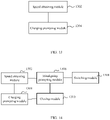
- FIG. 11 is a structural block diagram of a charging prompting apparatus according to an embodiment. As illustrated in FIG. 11 , in an embodiment, a charging prompting apparatus includes a state obtaining module 1102 and a charging prompting module 1104.
- the state obtaining module 1102 is configured to obtain a charging state of an electronic device in a wireless charging process.
- the charging prompting module 1104 is configured to, in response to the charging state being an abnormal charging state, output charging prompting information at a first playing speed; and in response to the charging state being a normal charging state, output the charging prompting information at a second playing speed.
- the second playing speed is greater than the first playing speed.
- the charging prompting information may be animated information, audio information, or text information, or the like.
- the charging state of the electronic device in the wireless charging process is obtained, when the charging state is determined to be the abnormal charging state, the charging prompting information is output at the first playing speed, and when the charging state is the normal charging state, the charging prompting information is output at the second playing speed, the second playing speed being greater than the first playing speed.
- different prompting forms can be adopted to prompt in different charging states, and thus the user of the electronic device can be visually prompted that the electronic device is in the abnormal charging state, thereby shortening the invalid charging time of the electronic device and improving a charging efficiency.
- the charging prompting module 1104 is further configured to, in response to the charging state being a normal charging state, output the charging prompting information at a second playing speed.
- the second playing speed is greater than the first playing speed.
- the abnormal charging state refers to the charging misaligning state.
- the charging misaligning state indicates that the receiving coil of the electronic device is misaligned with the transmitting coil of the wireless charging device.
- the charging prompting module 1104 is further configured to output the charging prompting information at the first playing speed when the charging state is the charging misaligning state.
- the abnormal charging state is the charging misaligning state
- the charging misaligning state indicates that the receiving coil of the electronic device is misaligned with the transmitting coil of the wireless charging device.
- the charging prompting apparatus described above further includes a misaligning prompting module 1106, a switching module 1108, and a closing module 1110.
- the misaligning prompting module 1106 is configured to, in response to the charging state being the charging misaligning state and in response to the electronic device being in the screen-blanking state, display misaligning prompting information in the screen-blanking state.
- the misaligning prompting information is used to indicate that the receiving coil of the electronic device is misaligned with the transmitting coil of the wireless charging device.
- the abnormal charging state is the charging misaligning state
- the charging misaligning state indicates that the receiving coil of the electronic device is misaligned with the transmitting coil of the wireless charging device.
- the switching module 1108 is configured to, prior to displaying the misaligning prompting information in the screen-blanking state, control the electronic device to enter a screen-lighting state from a screen-blanking state.
- the misaligning prompting module 1106 is further configured to display a misaligning prompting window containing the misaligning prompting information in the screen-lighting state.
- the misaligning prompting information is used to indicate that the receiving coil of the electronic device is misaligned with the transmitting coil of the wireless charging device.
- the switching module 1108 is further configured to, in response to the display duration of the misaligning prompting window reaching a first predetermined duration and a triggering operation on the misaligning prompting window not being obtained, control the electronic device to enter the screen-blanking state and display the misaligning prompting information in the screen-blanking state.
- the closing module 1110 is configured to, in response to the triggering operation on the misaligning prompting window being obtained, control the misaligning prompting window to disappear.
- the charging prompting module 1104 is further configured to output the charging prompting information at the first playing speed in the screen-lighting state.
- the closing module 1110 is further configured to, subsequent to displaying the misaligning prompting information in the screen-blanking state, in response to the charging state being the normal charging state, control the misaligning prompting information to disappear.
- the charging prompting module 1104 is further configured to output the charging prompting information at a second playing speed.
- the normal charging state is that the receiving coil of the electronic device is aligned with the transmitting coil of the wireless charging device.
- the abnormal charging state is the charging misaligning state
- the charging misaligning state indicates that the receiving coil of the electronic device is misaligned with the transmitting coil of the wireless charging device.
- the misaligning prompting module 1106 is further configured to, in response to the charging state being the charging misaligning state and in response to the electronic device being in the screen-lighting state, display the misaligning prompting window containing the misaligning prompting information.
- the closing module 1108 is further configured to, in response to the triggering operation on the misaligning prompting window being obtained, control the misaligning prompting window to disappear.
- the charging prompting module 1104 is further configured to output the charging prompting information at the first playing speed in the screen-lighting state.
- the closing module 1108 is further configured to, in response to the display duration of the misaligning prompting window reaching a second predetermined duration and the triggering operation on the misaligning prompting window not being obtained, control the misaligning prompting window to disappear.
- the charging prompting module 1104 is further configured to output the charging prompting information at the first playing speed in the screen-lighting state.
- the misaligning prompting information includes marked position information of the receiving coil of the electronic device and marked position information of the transmitting coil of the wireless charging device.
- the misaligning prompting module 1108 is further configured to, in response to detecting that a position of the electronic device is continuously changed for predetermined times and in response to the charging state of the electronic device being still in the charging misaligning state, stop outputting the misaligning prompting information.
- the misaligning prompting module 1108 is further configured to display the misaligning prompting information in an Always-On display mode in the screen-blanking state.
- the abnormal charging state includes a situation that an obstacle exists between the electronic device and the wireless charging device, or a situation that a charging power received by the electronic device is smaller than a predetermined charging power.
- the charging prompting module 1104 is further configured to output, in a floating window, the charging prompting information on the electronic device.
- a triggering operation on the floating window is detected, an interface element covered by the floating window can respond to the triggering operation.
- the closing module 1110 is further configured to, in response to a display duration of the charging prompting information outputted by the floating window reaching a third predetermined duration, control the floating window to disappear.
- the state obtaining module 1102 is further configured to, in response to a charging power of the electronic device in the wireless charging process being a predetermined charging power, determine that the charging state of the electronic device is the normal charging state; and in response to the charging power of the electronic device in the wireless charging process being smaller than the predetermined charging power, determine that the charging state of the electronic device is the abnormal charging state.
- FIG. 13 is a structural block diagram of a charging prompting apparatus according to another embodiment. As illustrated in FIG. 13 , the charging prompting apparatus includes a speed obtaining module 1302 and a charging prompting module 1304.
- the speed obtaining module 1302 is configured to obtain a charging speed of an electronic device in a wireless charging process.
- the charging prompting module 1304 is configured to output, in response to the charging speed being smaller than a predetermined charging speed, charging prompting information at a first playing speed.
- the first playing speed is smaller than a first playing speed threshold.
- the charging prompting apparatus further includes a misaligning prompting module 1306, a switching module 1308, and a closing module 1310.
- the state in which the charging speed is smaller than the predetermined charging speed includes that a receiving coil of the electronic device is misaligned with a transmitting coil of the wireless charging device.
- the misaligning prompting module 1306 is configured to, in response to the receiving coil of the electronic device being misaligned with the transmitting coil of the wireless charging device and in response to the electronic device being in a screen-blanking state, display misaligning prompting information in the screen-blanking state.
- the misaligning prompting information is used to indicate that the receiving coil of the electronic device is misaligned with the transmitting coil of the wireless charging device.
- the state in which the charging speed is smaller than the predetermined charging speed includes that the receiving coil of the electronic device is misaligned with the transmitting coil of the wireless charging device.
- the switching module 1308 is configured to control, in response to the receiving coil of the electronic device being misaligned with the transmitting coil of the wireless charging device and in response to the electronic device being in the screen-blanking state, the electronic device to enter a screen-lighting state from the screen-blanking state and display a misaligning prompting window containing the misaligning prompting information in the screen-lighting state.
- the misaligning prompting information is used to indicate that the receiving coil of the electronic device is misaligned with the transmitting coil of the wireless charging device.
- the switching module 1308 is further configured to, in response to the display duration of the misaligning prompting window reaching a first predetermined duration and in response to a triggering operation on the misaligning prompting window not being obtained, control the electronic device to enter the screen-blanking state and display the misaligning prompting information in the screen-blanking state.
- the state in which the charging speed is smaller than the predetermined charging speed includes that the receiving coil of the electronic device is misaligned with a transmitting coil of the wireless charging device.
- the misaligning prompting module 1306 is further configured to, in response to the receiving coil of the electronic device being misaligned with the transmitting coil of the wireless charging device and in response to the electronic device being in the screen-blanking state, display the misaligning prompting window containing the misaligning prompting information.
- the misaligning prompting information is used to indicate that the receiving coil of the electronic device is misaligned with the transmitting coil of the wireless charging device.
- the closing module 1310 is configured to, in response to the display duration of the misaligning prompting window reaching a second predetermined duration and in response to the triggering operation on the misaligning prompting window not being obtained, control the misaligning prompting window to disappear, and output the charging prompting information at the first playing speed in the screen-lighting state.
- the misaligning prompting module 1306 is further configured to, in response to detecting that a position of the electronic device is continuously changed for predetermined times and in response to the receiving coil of the electronic device being still misaligned with the transmitting coil of the wireless charging device, stop outputting the misaligning prompting information.
- the charging prompting module 1304 is further configured to output, in a floating window, the charging prompting information on the electronic device.
- a triggering operation on the floating window is detected, an interface element covered by the floating window can respond to the triggering operation.
- the closing module 1310 is further configured to, in response to the display duration of the charging prompting information outputted by the floating window reaching a third predetermined duration, control the floating window to disappear.
- the charging prompting apparatus may be divided into different modules as needed to complete all or part of the functions of the charging prompting apparatus.
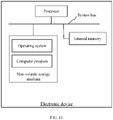
- FIG. 15 is a schematic diagram illustrating an internal structure of an electronic device according to an embodiment.
- the electronic device includes a processor and a memory, which are connected by a system bus.
- the processor has calculation and control capability and can support the operation of the whole electronic device.
- the memory may include a non-volatile storage media and an internal memory.
- the non-volatile storage medium stores an operating system and a computer program.
- the computer program is executable by a processor to implement the charging prompting method provided in the embodiments.
- the internal memory provides a cached operating environment for computer programs of an operating system in the non-volatile storage medium.
- the electronic device can be a mobile phone, a tablet computer, a personal digital assistant, a wearable device, or a wireless intelligent device.
- the wireless intelligent device may include a wireless earphone or a wireless sound box, and the like.
- the respective modules in the charging prompting apparatus provided in the embodiment of the present disclosure may be embodied in the form of a computer program.
- the computer program may be executed on a terminal or a server.
- the program modules constituted by the computer program may be stored on the memory of the terminal or the server.
- the computer program when being executed by a processor, performs the actions of the method described in the embodiments of the present disclosure.
- the embodiments of the present disclosure further provide a computer-readable storage medium.
- One or more non-transitory computer-readable storage media containing computer-executable instructions that, when executed by one or more processors, cause the processors to perform the actions of the charging prompting method.
- a computer program product has instructions stored thereon. The instructions, when being executed on a computer, cause the computer to perform the charging prompting method.
- Non-volatile memory may include Read-Only Memory (ROM), Programmable ROM (PROM), Electrically Programmable ROM (EPROM), Electrically Erasable Programmable ROM (EEPROM), or flash memory.
- ROM Read-Only Memory
- PROM Programmable ROM
- EPROM Electrically Programmable ROM
- EEPROM Electrically Erasable Programmable ROM
- flash memory may include Random Access Memory (RAM), which acts as external cache memory.
- RAM Random Access Memory
- RAM is available in a variety of forms such as Static RAM (SRAM), Dynamic RAM (DRAM), Synchronous DRAM (SDRAM), Double Data Rate SDRAM (DDR SDRAM), Enhanced SDRAM (ESDRAM), Synchronous Link (Synchlink) DRAM (SLDRAM), Rambus Direct RAM (RDRAM), Direct Rambus Dynamic RAM (DRDRAM), and Rambus Dynamic RAM (RDRAM).
- SRAM Static RAM
- DRAM Dynamic RAM
- SDRAM Synchronous DRAM
- DDR SDRAM Double Data Rate SDRAM
- ESDRAM Enhanced SDRAM
- SLDRAM Synchronous Link
- RDRAM Rambus Direct RAM
- DRAM Direct Rambus Dynamic RAM
- RDRAM Rambus Dynamic RAM
Landscapes
- Engineering & Computer Science (AREA)
- Power Engineering (AREA)
- Computer Networks & Wireless Communication (AREA)
- Charge And Discharge Circuits For Batteries Or The Like (AREA)
- Telephone Function (AREA)
Abstract
Description
- The present application claims priority to
Chinese Patent Application No. 201911324131.4, titled "CHARGING PROMPTING METHOD AND APPARATUS, ELECTRONIC DEVICE, AND COMPUTER-READABLE STORAGE MEDIUM", filed on December 20, 2019 - The present disclosure relates to the field of charging, and more particularly, to a charging prompting method and apparatus, an electronic device, and a computer-readable storage medium.
- With the development of wireless charging technology, more users use wireless chargers to charge electronic devices. The wireless charging technology is derived from a wireless power transmission technology. The charging can be achieved by transmitting energy between a wireless charger and an electronic device in a magnetic field. During the charging of the electronic device, a charging symbol can be displayed on a battery icon.
- Embodiments of the present disclosure provides a charging prompting method and apparatus, an electronic device, and a computer-readable storage medium, capable of enabling the electronic device in different charging states to prompt in different prompting forms.
- A charging prompting method includes: obtaining a charging state of an electronic device in a wireless charging process; in response to the charging state being an abnormal charging state, outputting charging prompting information at a first playing speed; and in response to the charging state being a normal charging state, outputting the charging prompting information at a second playing speed, the second playing speed being greater than the first playing speed.
- A charging prompting apparatus includes: a state obtaining module configured to obtain a charging state of an electronic device in a wireless charging process; and a charging prompting module configured to output, in response to the charging state being an abnormal charging state, charging prompting information at a first playing speed, and output, in response to the charging state being a normal charging state, the charging prompting information at a second playing speed, the second playing speed being greater than the first playing speed.
- An electronic device includes a processor, and a memory having a computer program stored thereon. The computer program, when being executed by the processor, implements steps of: obtaining a charging speed of an electronic device in a wireless charging process; outputting, in response to the charging speed being smaller than a predetermined charging speed, charging prompting information at a first playing speed, the first playing speed being smaller than a first playing speed threshold.
- A computer-readable storage medium has a computer program stored thereon. The computer program, when being executed by a processor, implements steps of: obtaining a charging state of an electronic device in a wireless charging process; outputting, in response to the charging state being an abnormal charging state, charging prompting information at a first playing speed; and outputting, in response to the charging state being a normal charging state, the charging prompting information at a second playing speed, the second playing speed being greater than the first playing speed.
- According to the charging prompting method and apparatus, the electronic device, and the computer-readable storage medium provided by the embodiments of the present disclosure, the charging state of the electronic device in the wireless charging process is obtained, when the charging state is the abnormal charging state, the charging prompting information is output at the first playing speed; and when the charging state is the normal charging state, the charging prompting information is output at the second playing speed greater than the first playing speed. In this way, different prompting forms can be adopted to prompt in different charging states, and thus the user of the electronic device can be visually prompted that the electronic device is in the abnormal charging state, thereby shortening the invalid charging time of the electronic device and improving a charging efficiency.
- A charging prompting method includes: obtaining a charging speed of an electronic device in a wireless charging process; in response to the charging speed being smaller than a predetermined charging speed, outputting charging prompting information at a first playing speed, the first playing speed being smaller than a first playing speed threshold.
- A charging prompting apparatus includes: a speed obtaining module configured to obtain a charging speed of an electronic device in a wireless charging process; and a charging prompting module configured to, when the charging speed is smaller than a predetermined charging speed, output charging prompting information at a first playing speed, the first playing speed being smaller than a first playing speed threshold.
- An electronic device includes a processor; and a memory having a computer program stored thereon. The computer program, when being executed by the processor, implements steps of: obtaining a charging speed of an electronic device in a wireless charging process; in response to the charging speed being smaller than a predetermined charging speed, outputting charging prompting information at a first playing speed, the first playing speed being smaller than a first playing speed threshold.
- A computer-readable storage medium has a computer program stored thereon. The computer program, when being executed by a processor, implements steps of: obtaining a charging speed of an electronic device in a wireless charging process; in response to the charging speed being smaller than a predetermined charging speed, outputting charging prompting information at a first playing speed, the first playing speed being smaller than a first playing speed threshold.
- According to the charging prompting method and apparatus, the electronic device, and the computer-readable storage medium provided by the embodiments of the present disclosure, the charging speed of the electronic device in the wireless charging process is obtained, and in response to the charging speed being smaller than the predetermined charging speed, the charging prompting information is output at the first playing speed, and the first playing speed is smaller than a first playing speed threshold. In this way, the user of the electronic device can be visually prompted that the electronic device is in the abnormal charging state, thereby shortening the invalid charging time of the electronic device and improving a charging efficiency.
- The details of one or more embodiments of the present disclosure are set forth in accompanying drawings and the description below. Other features, objects, and advantages of the present disclosure will be apparent from the description, the accompanying drawings, and the claims.
- In order to clearly explain embodiments of the present disclosure or technical solutions in the prior art, the drawings used for describing the embodiments or the prior art are briefly introduced below. Obviously, the drawings described below are merely some embodiments of the present disclosure. Based on these drawings, those skilled in the art can obtain other drawings without paying creative effort.
-
FIG. 1 is a schematic diagram illustrating an application environment for wireless charging of an electronic device according to an embodiment. -
FIG. 2 is a flowchart of a charging prompting method according to an embodiment. -
FIG. 3 is a schematic diagram illustrating charging prompting information in a charging misaligning state according to an embodiment. -
FIG. 4 is a schematic diagram illustrating charging prompting information in a normal charging state according to an embodiment. -
FIG. 5A is a schematic diagram illustrating misaligning prompting information in a screen-blanking state according to an embodiment. -
FIG. 5B is a schematic diagram illustrating misaligning prompting information in a screen-blanking state according to another embodiment. -
FIG. 6 is a schematic diagram illustrating charging prompting information displayed after a position of an electronic device is adjusted in the screen-blanking state according to an embodiment. -
FIG. 7 is a schematic diagram illustrating a display of misaligning prompting information in a screen-lighting state according to an embodiment. -
FIG. 8 is a schematic diagram illustrating charging prompting information outputted in a screen-lighting state according to an embodiment. -
FIG. 9 is a schematic diagram illustrating charging prompting information outputted in use of an electronic device according to an embodiment. -
FIG. 10 is a flowchart of a charging prompting method according to another embodiment. -
FIG. 11 is a structural block diagram of a charging prompting apparatus according to an embodiment. -
FIG. 12 is a structural block diagram of a charging prompting apparatus according to another embodiment. -
FIG. 13 is a structural block diagram of a charging prompting apparatus according to yet another embodiment. -
FIG. 14 is a structural block diagram of a charging prompting apparatus according to yet another embodiment. -
FIG. 15 is a schematic diagram of an internal structure of an electronic device according to an embodiment. - In order to clearly explain the objects, technical solutions and advantages of the present disclosure, the present disclosure is described in detail below with reference to accompanying drawings and embodiments. It should be understood that the specific embodiments described herein are merely intended to illustrate the present disclosure, instead of limiting the present disclosure.
-
FIG. 1 is a schematic diagram illustrating an application environment for wireless charging of an electronic device according to an embodiment. As illustrated inFIG. 1 , the application environment includes anelectronic device 110 and awireless charging device 120. Thewireless charging apparatus 120 may be a wireless charging base, a wireless power bank, or a wireless charging adapter. The wireless power bank, when having electric energy, can transmit wireless power to wirelessly charge theelectronic device 110. The wireless charging base and the wireless charging adapter require an external power supply, and after they are connected to the external power supply, the wireless power can be emitted to wirelessly charge theelectronic device 110. Theelectronic device 110 may be a mobile phone, a tablet computer, a wearable device, a wireless headset, a wireless sound box, etc. -
FIG. 2 is a flowchart of a charging prompting method according to an embodiment. As illustrated inFIG. 2 , a charging prompting method includes the following actions in block. - At
block 202, a charging state of an electronic device in a wireless charging process is obtained. - The charging state indicates a charging condition of the electronic device. The charging state may include a normal charging state and an abnormal charging state. The normal charging state refers to that the electronic device is normally charged by a wireless charging device paired with the electronic device in accordance with a predetermined charging power. The predetermined charging power may be a rated operating power of the wireless charging device. The paired wireless charging device generally refers to a wireless charging device, charging parameters or charging specifications of which are compatible with the electronic device and provided by the same service provider. The normal charging state may be that a receiving coil of the electronic device is aligned with a transmitting coil of the wireless charging device during the charging with the wireless charging device paired with the electronic device. The abnormal charging state refers to a charging state other than the normal charging state. The abnormal charging state may include a charging misaligning state, a charging state that a charging power provided by the wireless charging device is smaller than the predetermined charging power, a charging state that an obstacle exists between the electronic device and the wireless charging device, and the like. The charging misaligning state refers to a charging state in which the receiving coil of the electronic device is misaligned with the transmitting coil of the wireless charging device, resulting in a reduced charging efficiency of the electronic device. The misalignment of the receiving coil of the electronic device and the transmitting coil of the wireless charging device may include the following scenarios: the receiving coil not completely coinciding with the transmitting coil (when the two coils are of the same size); a center of the receiving coil not overlapping a center of the transmitting coil; the receiving coil not being completely within an enclosing range of the transmitting coil; and the like.
- When the charging state of the electronic device is obtained in the wireless charging process, the charging power can be obtained and compared with the predetermined charging power to determine a current charging state. The predetermined charging power is set in advance and is the same as the rated charging power of the wireless charging device paired with the electronic device.
- In an embodiment, when the charging power of the electronic device in the wireless charging process is the predetermined charging power, the charging state of the electronic device is the normal charging state; and when the charging power of the electronic device in the wireless charging process is smaller than the predetermined charging power, the charging state of the electronic device is the abnormal charging state.
- At
block 204, in response to the charging state being the abnormal charging state, charging prompting information is output at a first playing speed. - The first playing speed may be predetermined as required, for example, 10 frames per second, 20 frames per second, etc., but it is not limited thereto. The charging prompting information may be animated information, audio information, text information, or the like. When the charging prompting information is the animated information, the first playing speed may be a number of frames of animation per second. When the charging prompting information is the audio information, the first playing speed may be a playing speed of sound, such as a number of words per second. When the charging prompting information is the text information, the first playing speed is the playing speed of the text information, such as a number of words per second.
- At
block 206, in response to the charging state being the normal charging state, the charging prompting information is output at a second playing speed. The second playing speed is greater than the first playing speed. - The second playing speed can be set as needed. Since the second playing speed is greater than the first playing speed, the user can be prompted more visually that the charging state of the electronic device returns to the normal charging state.
- In the present embodiment, the charging state of the electronic device in the wireless charging process is obtained; when the charging state is determined to be the abnormal charging state, the charging prompting information is output at the first playing speed; and when the charging state is the normal charging state, the charging prompting information is output at the second playing speed, the second playing speed being greater than the first playing speed. In this way, different prompting forms can be adopted to prompt in different charging states, and thus the user of the electronic device can be visually prompted that the electronic device is in the abnormal charging state, thereby shortening the invalid charging time of the electronic device and improving a charging efficiency.
-
FIG. 3 is a schematic diagram illustrating charging prompting information in a charging misaligning state according to an embodiment. As illustrated inFIG. 3 , as an example, the charging prompt information includes the animated information. Theanimated information 302 is played at the first playing speed on a display interface of the electronic device. The first playing speed is a frames/second, where a is a positive number. The animated information may include a charged amount. The charged amount may be expressed in percentage, such as 73%, as illustrated inFIG. 3 . The charged amount may be presented in other ways, for example, an integer between 0 and 100, in different colors, and the like. In other embodiments, the animated information may further include a charging duration, and the like. -
FIG. 4 is a schematic diagram illustrating charging prompting information in a normal charging state according to an embodiment. As illustrated inFIG. 4 , as an example, the charging prompt information includes the animated information. Theanimated information 402 is played at the second playing speed on the display interface of the electronic device. The second playing speed is b frames/second, where b is a positive number greater than a. The animated information may include a charged amount. The charged amount may be expressed in percentage, such as 73% as illustrated inFIG. 4 . The charged amount may be represented in other ways, such as an integer between 0 and 100. In other embodiments, the animated information may further include a charging duration, and the like. - In an embodiment, the abnormal charging state is a charging misaligning state, in which the receiving coil of the electronic device is misaligned with the transmitting coil of the wireless charging device. The charging prompting method further includes: displaying, in response to the charging state being the charging misaligning state and the electronic device being in a screen-blanking state, misaligning prompting information in the screen-blanking state. The misaligning prompting information is used to indicate that the receiving coil of the electronic device is misaligned with the transmitting coil of the wireless charging device.
- The screen-blanking state refers to a state that a backlight of a screen of the electronic device is turned off. The misaligning prompting information is used to indicate that the receiving coil of the electronic device is misaligned with the transmitting coil of the wireless charging device. The misaligning prompting information may include marked position information of the receiving coil of the electronic device and marked position information of the transmitting coil of the wireless charging device. The misalignment between the receiving coil of the electronic device and the transmitting coil of the wireless charging device can be indicated by their marked position information.
- In an embodiment, the transmitting coil of the wireless charging device may be disposed at a central position of the wireless charging device, and at least one group of symmetrical pressure sensors is arranged around the transmitting coil of the wireless charging device. Each group of symmetrical pressure sensors includes two pressure sensors. The two pressure sensors are symmetrically arranged with respect to the center of the transmitting coil. The receiving coil of the electronic device is disposed at the center of the electronic device. When the electronic device is placed on the wireless charging device for charging, the pressure sensors symmetrically arranged around the transmitting coil of the wireless charging device can detect pressure values. When an absolute value of a pressure difference between the two symmetrical pressure sensors is greater than a first predetermined pressure value, the receiving coil of the electronic device is considered to be misaligned with the transmitting coil of the wireless charging device, i.e., a misalignment exists during the charging. A direction and a distance that the electronic device should be moved are determined based on the pressure difference. When the electronic device is skewed towards the pressure sensor having a greater pressure value, the electronic device needs to be moved towards the pressure sensor having a smaller pressure value. When the absolute value of the pressure difference between the two symmetrical pressure sensors is smaller than or equal to a second predetermined pressure value, the receiving coil of the electronic device is considered to be aligned with the transmitting coil of the wireless charging device, i.e., no misalignment exists during the charging. The first predetermined pressure value is greater than or equal to the second predetermined pressure value.
- The electronic device may receive a message transmitted by the wireless charging device and indicating that the receiving coil of the electronic device is misaligned with the transmitting coil of the wireless charging device. It is determined, based on the message, that the charging state of the electronic device is the charging misaligning state. The message indicating that the receiving coil of the electronic device is misaligned with the transmitting coil of the wireless charging device is generated when it is detected that the absolute value of the pressure difference between the at least one group of two symmetrical pressure sensors obtained by the wireless charging device is greater than the first predetermined pressure value.
- Optionally, the electronic device may further receive information transmitted by the wireless charging device and indicating a direction and a distance that the electronic device needs to move.
- In other embodiments, when the electronic device is being charged and detects that a coupling resonant frequency between the receiving coil and the transmitting coil of the wireless charging device is smaller than a predetermined frequency, it is determined that the charging state of the electronic device is the charging misaligning state. The predetermined frequency is determined based on coupling resonance characteristics of the receiving coil of the electronic device and the transmitting coil of the wireless charging device, and it can also be obtained by testing a relation between the misalignment and the coupling resonance frequency for multiple times.
- In an embodiment, the misaligning prompting information may be presented in at least one form of text, audio, or graphics. In the form of text, the misaligning prompting information is directly displayed as text on the electronic device, for example, when the misalignment exists during charging, a position of the electronic device needs to be adjusted to charge more efficiently, and the like, which is not limited in the present disclosure. In the form of audio, the misaligning prompting information is played by sound. In the form of graphics, two graphs are adopted to respectively represent the receiving coil of the electronic device and the transmitting coil of the wireless charging device, so as to display the misaligning prompting information.
- The marked position information of the receiving coil of the electronic device and the marked position information of the transmitting coil of the wireless charging device may be represented in the form of graphics. The receiving coil and the transmitting coil may be represented using the same graphic or different graphics. The receiving coil and the transmitting coil are represented by the same graphic. For example, two circles on the display interface respectively represent a marked position of the receiving coil and a marked position of the transmitting coil. Alternatively, two round dots on the display interface respectively represent the marked position of the receiving coil and the marked position of the transmitting coil. In the case that the positions of the two graphics completely coincide, the charging is regarded as not misaligned. The graphics may also be triangles, polygons, etc. The receiving coil and the transmitting coil are represented by different graphics. For example, on the display interface, a circle represents the marked position of the receiving coil, and a rectangle represents the marked position of the transmitting coil. When an overlap ratio of the positions of the two graphics reaches the maximum value, the charging is not misaligned. Optionally, the marked position information of the receiving coil and the marked position information of the transmitting coil may also be represented by graphics with colors. For example, the marked position information of the receiving coil is represented by a blue circle, and the marked position information of the transmitting coil is represented by a red circle. In other embodiments, the misaligning prompting information may also include text information. The text information may include a position adjustment prompt, etc.
- In the embodiment, when the charging state is the charging misaligning state, the misaligning prompting information is displayed in the screen-blanking state. In this way, it can more clearly prompt the user of the charging misalignment of the electronic device and remind the user to adjust the position of electronic device to obtain higher charging efficiency, thereby shortening the invalid charging time of electronic device.
- In an embodiment, the charging prompting method described above further includes: stopping, in response to detecting that a position of the electronic device is continuously changed for predetermined times and in response to the charging state of the electronic device being still in the charging misaligning state, outputting the misaligning prompting information.
- It can be detected by a gyroscope whether the position of the electronic device is changed. After the detecting begins, the charging state of the electronic device is detected, and when the electronic device is in the charging misaligning state, one change of the position of the electronic device is recorded. After the change of the position of the electronic device is recorded for predetermined times, the output of the misaligning prompting information is stopped. The predetermined times are determined as needed, such as 3 times, 4 times, 5 times, and the like, which is not limited herein.
- In an embodiment, said displaying the misaligning prompting information in the screen-blanking state includes: displaying the misaligning prompting information in an Always-On display mode in the screen-blanking state.
- The Always-On display mode is to adopt the Always-On Display (AOD) technology to continuously display in the screen-blanking state
- In the Always-On display mode, the misaligning prompting information is continuously displayed in the screen-blanking state to constantly prompt the user of the charging misalignment and of that the position of the electronic device needs to be adjusted in time. In this way, the charging efficiency is improved. The Always-On display mode can play a role in the prompting and can also save the electric quantity of the electronic device.
- In an embodiment, the charging prompting method further includes: after the misaligning prompting information is displayed in the screen-blanking state, in response to detecting the charging state of the electronic device to be the normal charging state, controlling the misaligning prompting information to disappear, and playing the charging prompting information at the second playing speed. The normal charging state is that the receiving coil of the electronic device is aligned with the transmitting coil of the wireless charging device.
- After the misaligning prompting information is displayed in the screen-blanking state, when the charging position of the electronic device is adjusted based on the misaligning prompting information by the user so that the charging state of the electronic device is the normal charging state, the misaligning prompting information is controlled to disappear, and the charging prompting information is played at the second playing speed to remind the user that the charging is normal.
-
FIG. 5A is a schematic diagram illustrating misaligning prompting information in a screen-blanking state according to an embodiment. As illustrated inFIG. 5A , the misaligning prompting information includes asolid circle 502, adotted circle 504, and text information. The solid circle represents the marked position of the receiving coils of the electronic device. The dotted circle represents the marked position of the transmitting coil of the wireless charging device. The text information includes "Move it to charge more effectively", "Adjust position for better charging efficiency", and the like. In other embodiments, the charging prompting information may also be displayed when the electronic device is in the screen-blanking state. The charging prompting information is played at the first playing speed. - An embodiment illustrated in
FIG. 5B differs fromFIG. 5A in that thesolid circle 502 and thedotted circle 504 are omitted and the text information is used for prompting. -
FIG. 6 is a schematic diagram illustrating charging prompting information displayed after a position of an electronic device is adjusted in the screen-blanking state according to an embodiment. As illustrated inFIG. 6 , when the user sees that the electronic device displays the misaligning prompting information in the screen-blanking state as illustrated inFIG. 5 , the position of the electronic device is adjusted, and the electronic device detects that the charging power is equal to the predetermined charging power, indicating that the electronic device is in the normal charging state, and the electronic device playsanimated information 602 at the second playing speed for a charging prompt. - In an embodiment, prior to displaying the misaligning prompting information in the screen-blanking state, the charging prompting method further includes: controlling, in response to the charging state being the charging misaligning state and the electronic device being in the screen-blanking state, the electronic device to enter the screen-lighting state from the screen-blanking state and display a misaligning prompting window containing the misaligning prompting information in the screen-lighting state. The charging misaligning state indicates that the receiving coil of the electronic device is misaligned with the transmitting coil of the wireless charging device. The misaligning prompting information is used to indicate that the receiving coil of the electronic device is misaligned with the transmitting coil of the wireless charging device.
- Optionally, in response to a display duration of the misaligning prompting window reaching a first predetermined duration and a triggering operation on the misaligning prompting window not being obtained, the electronic device is controlled to enter the screen-blanking state and display the misaligning prompting information in the screen-blanking state.
- The screen-lighting state refers to a lighting state of the screen of the electronic device. The misaligning prompting window is used for displaying the misaligning prompting information. The misaligning prompting window can be a pop-up window or a floating window, etc. The misaligning prompting information may be represented in at least one form of text, audio, or graphic. The misaligning prompting information may include the marked position information of the receiving coil of the electronic device and the marked position information of the transmitting coil of the wireless charging device. The misalignment between the receiving coil of the electronic device and the transmitting coil of the wireless charging device may be indicated by the marked position information of the receiving coil of the electronic device and the marked position information of the transmitting coil of the wireless charging device. For example, the marked position information of the receiving coil of the electronic device and the marked position information of the transmitting coil of the wireless charging device may be represented in the form of graphics. The marked position information of the receiving coil of the electronic device and the marked position information of the transmitting coil of the wireless charging device may be represented by the same graphic or different graphics. The marked position information of the receiving coil of the electronic device and the marked position information of the transmitting coil of the wireless charging device are represented by the same graph, for example, two circles on the display interface respectively represent the marked position information of the receiving coil of the electronic device and the marked position information of the transmitting coil of the wireless charging device. Alternatively, two round dots on the display interface respectively represent the marked position of the receiving coil and the marked position of the transmitting coil. In the case that the positions of the two graphics completely coincide, the charging is regard as not misaligned. The graphics may also be triangles, polygons, etc. The marked position information of the receiving coil of the electronic device and the marked position information of the transmitting coil of the wireless charging device may be represented by different graphics. For example, on the display interface, a circle represents the marked position of the receiving coil, and a rectangle represents the marked position of the transmitting coil. When an overlap of the positions of the two graphics reaches the maximum value, the charging is not misaligned. Optionally, the marked position information of the receiving coil and the marked position information of the transmitting coil may also be represented by graphics with colors. For example, the marked position information of the receiving coil is represented by a blue circle, and the marked position information of the transmitting coil is represented by a red circle. In other embodiments, the misaligning prompting information may also include text information. The text information may include a position adjustment prompt, etc.
- The first predetermined duration can be determined as needed, for example, 2 seconds, 3 seconds, 5 seconds, 1 minute, and the like. The display duration of the misaligning prompting window is timed from the occurrence of the misaligning prompting window.
- When the charging misalignment is detected in the screen-blanking state, the electronic device is controlled to enter the screen-lightening state from the screen-blanking state and display the misaligning prompting window containing the misaligning prompting information in the screen-lightening state. In this way, when the charging misalignment is detected in the screen-blanking state, the electronic device can timely enter the screen-lightening state, and the misaligning prompting window is displayed in the screen-lightening state to display misaligning prompting information through the misaligning prompting window. The screen-lightening and the misaligning prompting information, as double prompting, can achieve an intensive prompting.
- The triggering operation on the misaligning prompting window may include clicking, double clicking, applying a pressing force greater than a pressure threshold, pressing for a pressing duration longer than a duration threshold, and the like. When the display duration of the misaligning prompting window reaches the first predetermined duration and the triggering operation on the misaligning prompting window is not obtained, the electronic device is controlled to enter the screen-blanking state, and the wireless charging is continued, such that a brightness of the screen can be reduced, thereby preventing the charging efficiency from being influenced.
- In an embodiment, when the electronic device is controlled to enter the screen-lighting state from the screen-blanking state and display the misaligning prompting window containing the misaligning prompting information in the screen-lighting state, the charging prompting information can be output at the first playing speed in the screen-lighting state.
- By simultaneously outputting the misaligning prompting information and the charging prompting information, the charging misalignment can be prompted in a combination of various modes, and the user can be reminded of performing an adjustment in time, reaching a more intensive prompt effect.
- In an embodiment, when the display duration of the misaligning prompting window reaches the first predetermined duration and the triggering operation on the misaligning prompting window is not obtained, subsequent to controlling the electronic device to enter the screen-blanking state, the misaligning prompting window can be automatically closed and display the misaligning prompting information in an Always-On display mode in the screen-blanking state to display the misaligning prompting information in a simpler way.
- In an embodiment, the charging prompting method further includes: after the electronic device enters the screen-blanking state, starting timing. When reaching a specified duration and detecting the charging state of the electronic device to be the charging misaligning state, the electronic device is controlled to enter the screen-lighting state from the screen-blanking state again and display the misaligning prompting window containing the misaligning prompting information in the screen-lighting state. When the display duration of the misaligning prompting window reaches the first predetermined duration and the triggering operation on the misaligning prompting window is not obtained, the electronic device is controlled to enter the screen-blanking state again. The specified duration can be determined as needed. In this way, the user can be repeatedly reminded of performing an adjustment on the charging position to improve the charging efficiency.
- In an embodiment, the charging prompting method further includes: in response to a triggering operation on the misaligning prompting window being obtained, controlling the misaligning prompting window to disappear; and outputting the charging prompting information at the first playing speed in the screen-lighting state.
- The triggering operation on the misaligning prompting window may include clicking, double clicking, applying a pressing force greater than a pressure threshold, pressing for a pressing duration longer than a duration threshold, and the like. After the misaligning prompting window is displayed, in response to obtaining the user's triggering operation on the misaligning prompting window, the misaligning prompting window is controlled to disappear, and the charging prompting information is played at the first playing speed in the screen-lighting state. In this way, the user's response to the misaligning prompting window can be obtained, and a space occupied by the misaligning prompting window on the display interface of the electronic device can be reduced. The disappearance of the misaligning prompting window can be a closure of the misaligning prompting window or a hiding of the misaligning prompting window.
- In an embodiment, the charging prompting method further includes: after the charging prompting information is output at the first playing speed in the screen-lighting state, in response to detecting the charging state of the electronic device to be the normal charging state, outputting the charging prompting information at the second playing speed in the screen-lighting state.
-
FIG. 7 is a schematic diagram illustrating a displaying of misaligning prompting information in a screen-lighting state according to an embodiment. As illustrated inFIG. 7 , during a wireless charging of the electronic device in the screen-lighting state, a charging misalignment is detected, and amisaligning prompting window 702 containing the misaligning prompting information is displayed in a pop-up window. The misaligning prompting information includes a solid circle, a dotted circle, and text information. The solid circle indicates the position of the electronic device. The dotted circle indicates the position of the wireless charging device. The text information includes "Move it to charge more effectively", "Adjust the position for better charging efficiency", and the like. In other embodiments, the charging prompting information may also be displayed when the electronic device is in the screen-lighting state. The charging prompting information is played at the first playing speed. A control of "I knew it" is also displayed in the misaligning prompting window, and when it is detected that the user clicks the control of "I knew it", the misaligning prompting window disappears. The charging prompting information is output at the first playing speed in the screen-lighting state. - In an embodiment, the charging prompting method further includes: after the misaligning prompting information is displayed in the screen-blanking state, in response to detecting the charging state to be the normal charging state, controlling the misaligning prompting information to disappear, and outputting the charging prompting information at the second playing speed.
-
FIG. 8 is a schematic diagram illustrating charging prompting information outputted in a screen-lighting state according to an embodiment. As illustrated inFIG. 8 , when the electronic device displays the misaligning prompting window in the screen-lighting state and displays the misaligning prompting information in the misaligning prompting window, if it is detected that the user performs a triggering operation on the misaligning prompting window, the misaligning prompting window is closed, and thecharging prompting information 802 is displayed at the first playing speed in the screen-lighting state. When the user adjusts the position of the electronic device, if the electronic device detects that the charging power is equal to the predetermined charging power, the electronic device is in the normal charging state, and the charging prompting information is displayed at the second playing speed in the screen-lighting state. - In an embodiment, the charging prompting method further includes: displaying, in response to the charging state being the charging misaligning state and the electronic device being in the screen-lighting state, the misaligning prompting window containing the misaligning prompting information. The charging misaligning state refers that the receiving coil of the electronic device is misaligned with the transmitting coil of the wireless charging device, and the misaligning prompting information is used to indicate that the receiving coil of the electronic device is misaligned with the transmitting coil of the wireless charging device.
- The screen-lighting state refers to a lighting state of the screen of the electronic device. The misaligning prompting window is used for displaying the misaligning prompting information. The misaligning prompting window can be a pop-up window or a floating window, etc. The misaligning prompting information may be represented in at least one form of text, audio, or graphic. The misaligning prompting information may include the marked position information of the receiving coil of the electronic device and the marked position information of the transmitting coil of the wireless charging device. The marked position information of the receiving coil of the electronic device and the marked position information of the transmitting coil of the wireless charging device may be represented by graphics. As illustrated in
FIG. 7 , during the wireless charging of the electronic device performs in the screen-lighting state, if charging misalignment is detected, the misaligning prompting window containing the misaligning prompting information is displayed in the pop-up window. - In an embodiment, when the charging state is the charging misaligning state and the electronic device is in the screen-lighting state, the charging prompting method further includes: subsequent to displaying the misaligning prompting window containing the misaligning prompting information, in response to obtaining the triggering operation on the misaligning prompting window, controlling the misaligning prompting window to disappear, and outputting the charging prompting information at the first playing speed in the screen-lighting state.
- The triggering operation on the misaligning prompting window may include clicking, double clicking, applying a pressing force greater than a pressure threshold, pressing for a pressing duration longer than a duration threshold, and the like. After the misaligning prompting window is displayed, in response to obtaining the user's triggering operation on the misaligning prompting window, the misaligning prompting window is controlled to disappear, and the charging prompting information is played at the first playing speed in the screen-lighting state. In this way, the user's response to the misaligning prompting window can be obtained, and a space occupied by the misaligning prompting window on the display interface of the electronic device can be reduced. The disappearance of the misaligning prompting window can be a closure of the misaligning prompting window or a hiding of the misaligning prompting window.
- In an embodiment, after the misaligning prompting window is controlled to disappear and the charging prompting information is output at the first playing speed in the screen-lighting state, the charging prompting method further includes: outputting, in response to detecting the charging state of the electronic device to be the normal charging state, the charging prompting information at the second playing speed in the screen-lighting state. The normal charging state refers that the receiving coil of the electronic device is aligned with the transmitting coil of the wireless charging device.
- In an embodiment, when the charging state is the charging misaligning state and the electronic device is in the screen-lighting state, and when the misaligning prompting window containing the misaligning prompting information is displayed in the screen-lighting state, the charging prompting information can be output at the first playing speed in the screen-lighting state.
- In the screen-lighting state, by simultaneously outputting the misaligning prompting information and the charging prompting information, the charging misalignment can be prompted in a combination of various modes, and the user can be reminded of performing an adjustment in time, reaching a more intensive prompt effect.
- In an embodiment, the charging prompting method further includes: when the display duration of the misaligning prompting window reaches a second predetermined duration and the triggering operation on the misaligning prompting window is not obtained, controlling the misaligning prompting window to disappear, and outputting the charging prompting information at the first playing speed in the screen-lighting state.
- The second predetermined duration can be determined as needed, for example, it can be 2 seconds, 3 seconds, 5 seconds, 1 minute, and the like. The display duration of the misaligning prompting window is timed from the occurrence of the misaligning prompting window. The misaligning prompting window can be controlled to disappear by closing or hiding the misaligning prompting window.
- In an embodiment, said outputting the charging prompting information includes: outputting the charging prompting information in a floating window on the electronic device. The floating window is used to indicate that, when a triggering operation on the floating window is detected, an interface element covered by the floating window can respond to the triggering operation.
- The charging prompting information is displayed in the floating window without affecting the triggering operation on the screen of the electronic device. That is, the floating window will neither intercept the triggering operation nor respond to the triggering operation. In this way, by displaying the charging prompting information in the floating window, which will not respond to the triggering operation, it is avoided that the charging prompting information of the wireless charging disturbs the user's current operation. The interface element may be an application, a control, etc. on the interface of the electronic device.
-
FIG. 9 is a schematic diagram illustrating charging prompting information outputted in use of an electronic device according to an embodiment. As illustrated inFIG. 9 , a plurality of application icons can be displayed on the display interface of the electronic device, for example, a music application icon, a photo album application icon, an application store application icon, a map application icon, a weather application icon, a clock application icon, a telephone call application icon, a short message application icon, a browser application icon, a camera application icon, etc. Thecharging prompting information 902 is displayed in a display window and played at the first playing speed or the second playing speed. The charging prompting information also includes a percentage of charged amount, such as 73%, etc. When the user clicks the charging prompting information, the music application icon under the charging prompting information can be clicked and initiated without triggering the charging prompting information. - In an embodiment, after the floating window of the electronic device outputs the charging prompting information, the charging prompting method further includes: controlling, in response to a display duration of the charging prompting information outputted by the floating window reaching a third predetermined duration, the floating window to disappear.
- Said controlling the floating window to disappear refers to that the charging prompting information is controlled to disappear. The floating window can be closed to close the charging prompting information.
-
FIG. 10 is a flowchart of a charging prompting method according to another embodiment. As illustrated inFIG. 10 , the charging prompting method includes the following actions in blocks. - At
block 1002, a charging speed of an electronic device in a wireless charging process is obtained. - Specifically, in the wireless charging process of the electronic device, when charging with high power, the charging speed will be fast, and when charging with low power, the charging speed will be slow. A mapping relation between the charging power and the charging speed can be established in advance. The electronic device may detect the charging power, and acquire a charging speed based on the charging power from the mapping relation between the charging power and the charging speed, which is established in advance. A magnitude of the detected charging power may be influenced by the following factors: a distance between the electronic device and the wireless charging device, whether other objects exist between the electronic device and the wireless charging device, a charging power that can be provided by the wireless charging device, and the like.
- At
block 1004, in response to the charging speed being smaller than a predetermined charging speed, charging prompting information is output at a first playing speed. The first playing speed is smaller than a first playing speed threshold. - The predetermined charging speed is set in advance and can be determined based on the speed required by the normal charging. A state in which the charging speed is smaller than the predetermined charging speed may include a state in which the receiving coil of the electronic device is misaligned with the transmitting coil of the wireless charging device, a charging state in which the charging power provided by the wireless charging device is smaller than the predetermined charging power, a state in which an obstacle exists between the electronic device and the wireless charging device, and the like. The first playing speed may be set in advance to be, for example, 5 frames/sec, which is merely an example but not limited in the present disclosure. The first playing speed threshold is a predetermined speed threshold, for example, 10 frames/second, which is merely an example but not limited in the present disclosure.
- In the present embodiment, the charging speed of the electronic device in the wireless charging process is obtained, and it is detected that the charging speed is smaller than the predetermined charging speed, and the charging prompting information is output at the first playing speed. In this way, the user can be visually prompted that the electronic device is in the abnormal charging state, and the invalid charging time of the electronic device is shortened, thereby improving the charging efficiency.
- In an embodiment, a state in which the charging speed is smaller than the predetermined charging speed includes a state in which the receiving coil of the electronic device is misaligned with the transmitting coil of the wireless charging device.
- When the receiving coil of the electronic device is misaligned with the transmitting coil of the wireless charging device and the electronic device is in the screen-blanking state, the misaligning prompting information is displayed in the screen-blanking state. The misaligning prompting information is used to indicate that the receiving coil of the electronic device is misaligned with the transmitting coil of the wireless charging device.
- Optionally, when it is detected that the charging speed is smaller than the predetermined charging speed, the transmitting coil of the wireless charging device may be disposed at a central position of the wireless charging device, and at least one group of symmetrical pressure sensors is arranged around the transmitting coil of the wireless charging device. Each group of symmetrical pressure sensors includes two pressure sensors. The two pressure sensors are symmetrically arranged with respect to the center of the transmitting coil. The receiving coil of the electronic device is disposed at the center of the electronic device. When the electronic device is placed on the wireless charging device for charging, the pressure sensors symmetrically arranged around the transmitting coil of the wireless charging device can detect pressure values. A pressure difference is obtained based on the pressure values of the two symmetrical pressure sensors. When an absolute value of the pressure difference between the two symmetrical pressure sensors is greater than a first predetermined pressure value, the receiving coil of the electronic device is considered to be misaligned with the transmitting coil of the wireless charging device, i.e., a misalignment exists during the charging. A direction and a distance that the electronic device should be moved are determined based on the pressure difference. When the electronic device is skewed towards the pressure sensor having a greater pressure value, the electronic device needs to be moved towards the pressure sensor having a smaller pressure value. When the absolute value of the pressure difference between the two symmetrical pressure sensors is smaller than or equal to a second predetermined pressure value, the receiving coil of the electronic device is considered to be aligned with the transmitting coil of the wireless charging device, i.e., no misalignment exists during the charging. The first predetermined pressure value is greater than or equal to the second predetermined pressure value.
- The electronic device may receive a message transmitted by the wireless charging device and indicating that the receiving coil of the electronic device is misaligned with the transmitting coil of the wireless charging device. It is determined, based on the message, that the charging state of the electronic device is the charging misaligning state. The message indicating that the receiving coil of the electronic device is misaligned with the transmitting coil of the wireless charging device is generated when it is detected that the absolute value of the pressure difference between the at least one group of two symmetrical pressure sensors obtained by the wireless charging device is greater than the first predetermined pressure value.
- In other embodiments, when the electronic device is being charged and detects that a coupling resonant frequency between the receiving coil of the electronic device and the transmitting coil of the wireless charging device is smaller than a predetermined frequency, it is determined that the charging state of the electronic device is the charging misaligning state. The predetermined frequency is determined based on coupling resonance characteristics of the receiving coil of the electronic device and the transmitting coil of the wireless charging device, and it can also be obtained by testing a relation between the misalignment and the coupling resonance frequency for multiple times.
- The misaligning prompting information may be represented in at least one form of text, audio, or graphics. In the form of text, as illustrated in
FIG. 5B , the misaligning prompting information is directly displayed as text on the electronic device, for example, when the misalignment exists during charging, a position of the electronic device needs to be adjusted to charge more efficiently, and the like, which is not limited in the present disclosure. In the form of audio, the misaligning prompting information is played by sound. In the form of graphics, as illustrated inFIG. 5A , two graphs are adopted to respectively represent the receiving coil of the electronic device and the transmitting coil of the wireless charging device, so as to display the misaligning prompting information. - Optionally, the misaligning prompting information is displayed in an Always-On display mode in the screen-blanking state.
- In the embodiment, when it is detected that the receiving coil of the electronic device is misaligned with the transmitting coil of the wireless charging device and the electronic device is in the screen-blanking state, the misaligning prompting information is displayed in the screen-blanking state. In this way, the user can be visually prompted in the screen-blanking state that the electronic device is misaligned during the charging. By adopting the Always-On display mode for prompting, the electric quantity of the electronic device can be saved.
- In an embodiment, the state in which the charging speed is smaller than the predetermined charging speed includes the state that the receiving coil of the electronic device is misaligned with the transmitting coil of the wireless charging device.
- When the receiving coil of the electronic device is misaligned with the transmitting coil of the wireless charging device and the electronic device is in the screen-blanking state, the electronic device is controlled to enter the screen-lighting state from the screen-lighting state and display the misaligning prompting window containing the misaligning prompting information in the screen-lighting state. The misaligning prompting information is used to indicate that the receiving coil of the electronic device is misaligned with the transmitting coil of the wireless charging device.
- Optionally, when the display duration of the misaligning prompting window reaches the first predetermined duration and the triggering operation on the misaligning prompting window is not obtained, the electronic device is controlled to enter the screen-blanking state and display the misaligning prompting information in the screen-blanking state.
- The screen-lighting state refers to a lighting state of the screen of the electronic device. The misaligning prompting window is used for displaying the misaligning prompting information. The misaligning prompting window can be a pop-up window or a floating window, etc. The misaligning prompting information may be represented in at least one form of text, audio, or graphic. The first predetermined duration can be determined as needed, for example, it can be 2 seconds, 3 seconds, 5 seconds, 1 minute, and the like. The display duration of the misaligning prompting window is timed from the occurrence of the misaligning prompting window.
- When the charging misalignment is detected in the screen-blanking state, the electronic device is controlled to enter the screen-lightening state from the screen-blanking state and display the misaligning prompting window containing the misaligning prompting information in the screen-lightening state. In this way, when the charging misalignment is detected in the screen-blanking state, the electronic device can timely enter the screen-lightening state, and the misaligning prompting window is displayed in the screen-lightening state to display the misaligning prompting information through the misaligning prompting window. The screen-lightening and the misaligning prompting information, as double prompting, can achieve an intensive prompting.
- The triggering operation on the misaligning prompting window may include clicking, double clicking, applying a pressing force greater than a pressure threshold, pressing for a pressing duration longer than a duration threshold, and the like. When the display duration of the misaligning prompting window reaches the first predetermined duration and the triggering operation on the misaligning prompting window is not obtained, the electronic device is controlled to enter the screen-blanking state, and the wireless charging is continued, such that a brightness of the screen can be reduced, thereby preventing the charging efficiency from being influenced.
- In an embodiment, the state in which the charging speed is smaller than the predetermined charging speed includes the state in which the receiving coil of the electronic device is misaligned with the transmitting coil of the wireless charging device.
- When the receiving coil of the electronic device is misaligned with the transmitting coil of the wireless charging device and the electronic device is in the screen-lighting state, the misaligning prompting window containing the misaligning prompting information is displayed. The misaligning prompting information is used to indicate information about the relative positions between the electronic device and the wireless charging device.
- The screen-lighting state refers to a lighting state of the screen of the electronic device. The misaligning prompting window is used for displaying the misaligning prompting information. The misaligning prompting window can be a pop-up window or a floating window and the like. The misaligning prompting information may be represented in at least one form of text, audio, or graphic.
- In an embodiment, when the display duration of the misaligning prompting window reaches the second predetermined duration and the triggering operation on the misaligning prompting window is not obtained, the misaligning prompting window is controlled to disappear, and the charging prompting information is output at the first playing speed in the screen-lighting state.
- The second predetermined duration can be determined as needed, for example, it can be 2 seconds, 3 seconds, 5 seconds, 1 minute, and the like. The display duration of the misaligning prompting window is timed from the occurrence of the misaligning prompting window.
- In an embodiment, the charging prompting method described above further includes: in response to detecting that a position of the electronic device is continuously changed for predetermined times and in response to the receiving coil of the electronic device being still misaligned with the transmitting coil of the wireless charging device, stopping outputting the misaligning prompting information. In this way, the stopped prompting can reduce the disturbance to the user.
- In an embodiment, said outputting the charging prompting information includes: outputting, in a floating window, the charging prompting information on the electronic device. When a triggering operation on the floating window is detected, an interface element covered by the floating window can respond to the triggering operation.
- The charging prompting information is displayed in the floating window without affecting the triggering operation on the screen of the electronic device. That is, the floating window will neither intercept the triggering operation nor respond to the triggering operation. In this way, by displaying the charging prompting information in the floating window, which will not respond to the triggering operation, it is avoided that the charging prompting information of the wireless charging disturbs the user's current operation.
- In an embodiment, subsequent to said outputting, in the floating window, the charging prompting information on the electronic device, the method further includes: controlling, in response to a display duration of the charging prompting information outputted by the floating window reaching a third predetermined duration, the floating window to disappear.
- The third predetermined duration can be determined as needed. The floating window disappears after being displayed for a certain time. In this way, the space occupied by the floating window on the interface can be saved, facilitating checking the electronic device.
- In an embodiment, the charging prompting method described above further includes: when the charging speed is greater than or equal to the predetermined charging speed, outputting the charging prompting information at the second playing speed. The second playing speed is greater than the second playing speed threshold, and the second playing speed threshold is greater than or equal to the first playing speed threshold.
- When the charging speed is greater than or equal to the predetermined charging speed, the charging prompting information is output at the second playing speed. In this way, the user can be visually prompted that the electronic device is in the normal charging state.
- It should be understood that, although the actions in blocks in the flowcharts of
FIG. 2 andFIG. 10 are illustrated in an order as indicated by the arrows, they are not necessarily performed in the order as indicated by the arrows. The actions in blocks are not limited to being performed in the specific order as illustrated, and they may be performed in other orders, unless explicitly stated herein. Moreover, at least some of the actions in blocks illustrated inFIG. 2 andFIG. 10 may include multiple sub-blocks or multiple stages, which are not necessarily performed at the same time and may be performed at different moments. The sub-blocks or stages are not necessarily performed sequentially, and they may be performed rotationally or alternately with other actions or at least some of the sub-blocks or stages of other actions. -
FIG. 11 is a structural block diagram of a charging prompting apparatus according to an embodiment. As illustrated inFIG. 11 , in an embodiment, a charging prompting apparatus includes astate obtaining module 1102 and acharging prompting module 1104. - The
state obtaining module 1102 is configured to obtain a charging state of an electronic device in a wireless charging process. - The
charging prompting module 1104 is configured to, in response to the charging state being an abnormal charging state, output charging prompting information at a first playing speed; and in response to the charging state being a normal charging state, output the charging prompting information at a second playing speed. The second playing speed is greater than the first playing speed. - The charging prompting information may be animated information, audio information, or text information, or the like.
- In the present embodiment, the charging state of the electronic device in the wireless charging process is obtained, when the charging state is determined to be the abnormal charging state, the charging prompting information is output at the first playing speed, and when the charging state is the normal charging state, the charging prompting information is output at the second playing speed, the second playing speed being greater than the first playing speed. In this way, different prompting forms can be adopted to prompt in different charging states, and thus the user of the electronic device can be visually prompted that the electronic device is in the abnormal charging state, thereby shortening the invalid charging time of the electronic device and improving a charging efficiency.
- In an embodiment, the
charging prompting module 1104 is further configured to, in response to the charging state being a normal charging state, output the charging prompting information at a second playing speed. The second playing speed is greater than the first playing speed. - In an embodiment, the abnormal charging state refers to the charging misaligning state. The charging misaligning state indicates that the receiving coil of the electronic device is misaligned with the transmitting coil of the wireless charging device. The
charging prompting module 1104 is further configured to output the charging prompting information at the first playing speed when the charging state is the charging misaligning state. - In an embodiment, as illustrated in
FIG. 12 , the abnormal charging state is the charging misaligning state, and the charging misaligning state indicates that the receiving coil of the electronic device is misaligned with the transmitting coil of the wireless charging device. The charging prompting apparatus described above further includes amisaligning prompting module 1106, aswitching module 1108, and aclosing module 1110. - The
misaligning prompting module 1106 is configured to, in response to the charging state being the charging misaligning state and in response to the electronic device being in the screen-blanking state, display misaligning prompting information in the screen-blanking state. The misaligning prompting information is used to indicate that the receiving coil of the electronic device is misaligned with the transmitting coil of the wireless charging device. - In an embodiment, the abnormal charging state is the charging misaligning state, and the charging misaligning state indicates that the receiving coil of the electronic device is misaligned with the transmitting coil of the wireless charging device. The
switching module 1108 is configured to, prior to displaying the misaligning prompting information in the screen-blanking state, control the electronic device to enter a screen-lighting state from a screen-blanking state. Themisaligning prompting module 1106 is further configured to display a misaligning prompting window containing the misaligning prompting information in the screen-lighting state. The misaligning prompting information is used to indicate that the receiving coil of the electronic device is misaligned with the transmitting coil of the wireless charging device. - The
switching module 1108 is further configured to, in response to the display duration of the misaligning prompting window reaching a first predetermined duration and a triggering operation on the misaligning prompting window not being obtained, control the electronic device to enter the screen-blanking state and display the misaligning prompting information in the screen-blanking state. - In an embodiment, the
closing module 1110 is configured to, in response to the triggering operation on the misaligning prompting window being obtained, control the misaligning prompting window to disappear. Thecharging prompting module 1104 is further configured to output the charging prompting information at the first playing speed in the screen-lighting state. - In an embodiment, the
closing module 1110 is further configured to, subsequent to displaying the misaligning prompting information in the screen-blanking state, in response to the charging state being the normal charging state, control the misaligning prompting information to disappear. Thecharging prompting module 1104 is further configured to output the charging prompting information at a second playing speed. The normal charging state is that the receiving coil of the electronic device is aligned with the transmitting coil of the wireless charging device. - In an embodiment, the abnormal charging state is the charging misaligning state, and the charging misaligning state indicates that the receiving coil of the electronic device is misaligned with the transmitting coil of the wireless charging device. The
misaligning prompting module 1106 is further configured to, in response to the charging state being the charging misaligning state and in response to the electronic device being in the screen-lighting state, display the misaligning prompting window containing the misaligning prompting information. - In an embodiment, the
closing module 1108 is further configured to, in response to the triggering operation on the misaligning prompting window being obtained, control the misaligning prompting window to disappear. Thecharging prompting module 1104 is further configured to output the charging prompting information at the first playing speed in the screen-lighting state. - In an embodiment, the
closing module 1108 is further configured to, in response to the display duration of the misaligning prompting window reaching a second predetermined duration and the triggering operation on the misaligning prompting window not being obtained, control the misaligning prompting window to disappear. Thecharging prompting module 1104 is further configured to output the charging prompting information at the first playing speed in the screen-lighting state. - In an embodiment, the misaligning prompting information includes marked position information of the receiving coil of the electronic device and marked position information of the transmitting coil of the wireless charging device.
- In an embodiment, the
misaligning prompting module 1108 is further configured to, in response to detecting that a position of the electronic device is continuously changed for predetermined times and in response to the charging state of the electronic device being still in the charging misaligning state, stop outputting the misaligning prompting information. - In an embodiment, the
misaligning prompting module 1108 is further configured to display the misaligning prompting information in an Always-On display mode in the screen-blanking state. - In an embodiment, the abnormal charging state includes a situation that an obstacle exists between the electronic device and the wireless charging device, or a situation that a charging power received by the electronic device is smaller than a predetermined charging power.
- In an embodiment, the
charging prompting module 1104 is further configured to output, in a floating window, the charging prompting information on the electronic device. When a triggering operation on the floating window is detected, an interface element covered by the floating window can respond to the triggering operation. - In an embodiment, the
closing module 1110 is further configured to, in response to a display duration of the charging prompting information outputted by the floating window reaching a third predetermined duration, control the floating window to disappear. - The
state obtaining module 1102 is further configured to, in response to a charging power of the electronic device in the wireless charging process being a predetermined charging power, determine that the charging state of the electronic device is the normal charging state; and in response to the charging power of the electronic device in the wireless charging process being smaller than the predetermined charging power, determine that the charging state of the electronic device is the abnormal charging state. -
FIG. 13 is a structural block diagram of a charging prompting apparatus according to another embodiment. As illustrated inFIG. 13 , the charging prompting apparatus includes aspeed obtaining module 1302 and acharging prompting module 1304. - The
speed obtaining module 1302 is configured to obtain a charging speed of an electronic device in a wireless charging process. - The
charging prompting module 1304 is configured to output, in response to the charging speed being smaller than a predetermined charging speed, charging prompting information at a first playing speed. The first playing speed is smaller than a first playing speed threshold. - In an embodiment, as illustrated in
FIG. 14 , the charging prompting apparatus further includes amisaligning prompting module 1306, aswitching module 1308, and aclosing module 1310. - The state in which the charging speed is smaller than the predetermined charging speed includes that a receiving coil of the electronic device is misaligned with a transmitting coil of the wireless charging device.
- The
misaligning prompting module 1306 is configured to, in response to the receiving coil of the electronic device being misaligned with the transmitting coil of the wireless charging device and in response to the electronic device being in a screen-blanking state, display misaligning prompting information in the screen-blanking state. The misaligning prompting information is used to indicate that the receiving coil of the electronic device is misaligned with the transmitting coil of the wireless charging device. - In an embodiment, the state in which the charging speed is smaller than the predetermined charging speed includes that the receiving coil of the electronic device is misaligned with the transmitting coil of the wireless charging device.
- The
switching module 1308 is configured to control, in response to the receiving coil of the electronic device being misaligned with the transmitting coil of the wireless charging device and in response to the electronic device being in the screen-blanking state, the electronic device to enter a screen-lighting state from the screen-blanking state and display a misaligning prompting window containing the misaligning prompting information in the screen-lighting state. The misaligning prompting information is used to indicate that the receiving coil of the electronic device is misaligned with the transmitting coil of the wireless charging device. - The
switching module 1308 is further configured to, in response to the display duration of the misaligning prompting window reaching a first predetermined duration and in response to a triggering operation on the misaligning prompting window not being obtained, control the electronic device to enter the screen-blanking state and display the misaligning prompting information in the screen-blanking state. - In an embodiment, the state in which the charging speed is smaller than the predetermined charging speed includes that the receiving coil of the electronic device is misaligned with a transmitting coil of the wireless charging device.
- The
misaligning prompting module 1306 is further configured to, in response to the receiving coil of the electronic device being misaligned with the transmitting coil of the wireless charging device and in response to the electronic device being in the screen-blanking state, display the misaligning prompting window containing the misaligning prompting information. The misaligning prompting information is used to indicate that the receiving coil of the electronic device is misaligned with the transmitting coil of the wireless charging device. - The
closing module 1310 is configured to, in response to the display duration of the misaligning prompting window reaching a second predetermined duration and in response to the triggering operation on the misaligning prompting window not being obtained, control the misaligning prompting window to disappear, and output the charging prompting information at the first playing speed in the screen-lighting state. - In an embodiment, the
misaligning prompting module 1306 is further configured to, in response to detecting that a position of the electronic device is continuously changed for predetermined times and in response to the receiving coil of the electronic device being still misaligned with the transmitting coil of the wireless charging device, stop outputting the misaligning prompting information. - The
charging prompting module 1304 is further configured to output, in a floating window, the charging prompting information on the electronic device. When a triggering operation on the floating window is detected, an interface element covered by the floating window can respond to the triggering operation. - The
closing module 1310 is further configured to, in response to the display duration of the charging prompting information outputted by the floating window reaching a third predetermined duration, control the floating window to disappear. - The division of the respective modules in the charging prompting apparatus is merely illustrative. In other embodiments, the charging prompting apparatus may be divided into different modules as needed to complete all or part of the functions of the charging prompting apparatus.
-
FIG. 15 is a schematic diagram illustrating an internal structure of an electronic device according to an embodiment. As illustrated inFIG. 15 , the electronic device includes a processor and a memory, which are connected by a system bus. The processor has calculation and control capability and can support the operation of the whole electronic device. The memory may include a non-volatile storage media and an internal memory. The non-volatile storage medium stores an operating system and a computer program. The computer program is executable by a processor to implement the charging prompting method provided in the embodiments. The internal memory provides a cached operating environment for computer programs of an operating system in the non-volatile storage medium. The electronic device can be a mobile phone, a tablet computer, a personal digital assistant, a wearable device, or a wireless intelligent device. The wireless intelligent device may include a wireless earphone or a wireless sound box, and the like. - The respective modules in the charging prompting apparatus provided in the embodiment of the present disclosure may be embodied in the form of a computer program. The computer program may be executed on a terminal or a server. The program modules constituted by the computer program may be stored on the memory of the terminal or the server. The computer program, when being executed by a processor, performs the actions of the method described in the embodiments of the present disclosure.
- The embodiments of the present disclosure further provide a computer-readable storage medium. One or more non-transitory computer-readable storage media containing computer-executable instructions that, when executed by one or more processors, cause the processors to perform the actions of the charging prompting method.
- A computer program product has instructions stored thereon. The instructions, when being executed on a computer, cause the computer to perform the charging prompting method.
- Any reference to memory, storage, databases, or other media used by embodiments of the present disclosure may include non-volatile and/or volatile memory. Suitable non-volatile memory may include Read-Only Memory (ROM), Programmable ROM (PROM), Electrically Programmable ROM (EPROM), Electrically Erasable Programmable ROM (EEPROM), or flash memory. The volatile memory may include Random Access Memory (RAM), which acts as external cache memory. By way of illustration and not limitation, RAM is available in a variety of forms such as Static RAM (SRAM), Dynamic RAM (DRAM), Synchronous DRAM (SDRAM), Double Data Rate SDRAM (DDR SDRAM), Enhanced SDRAM (ESDRAM), Synchronous Link (Synchlink) DRAM (SLDRAM), Rambus Direct RAM (RDRAM), Direct Rambus Dynamic RAM (DRDRAM), and Rambus Dynamic RAM (RDRAM).
- The above embodiments merely illustrate some implementations of the present disclosure, which are described in details but are not construed to limit the scope of the present disclosure. It should be understood that those skilled in the art can make various modifications and improvements without departing from the principle of the present disclosure. These modifications and improvements shall fall within the protection scope of the present disclosure. The protection scope of the present disclosure is defined by the appended claims.
Claims (36)
- A charging prompting method, comprising:obtaining a charging state of an electronic device in a wireless charging process;outputting, in response to the charging state being an abnormal charging state, charging prompting information at a first playing speed; andoutputting, in response to the charging state being a normal charging state, the charging prompting information at a second playing speed, the second playing speed being greater than the first playing speed.
- The charging prompting method according to claim 1, wherein the abnormal charging state is a charging misaligning state in which a receiving coil of the electronic device is misaligned with a transmitting coil of a wireless charging device.
- The charging prompting method according to claim 2, further comprising:
displaying, in response to the charging state being the charging misaligning state and the electronic device being in a screen-blanking state, misaligning prompting information in the screen-blanking state, wherein the misaligning prompting information is used to indicate that the receiving coil of the electronic device is misaligned with the transmitting coil of the wireless charging device. - The charging prompting method according to claim 2, further comprising:
controlling, in response to the charging state being the charging misaligning state and the electronic device being in a screen-blanking state, the electronic device to enter a screen-lighting state from the screen-blanking state and display a misaligning prompting window containing the misaligning prompting information in the screen-lighting state, wherein the misaligning prompting information is used to indicate that the receiving coil of the electronic device is misaligned with the transmitting coil of the wireless charging device. - The charging prompting method according to claim 4, further comprising:
controlling, in response to a display duration of the misaligning prompting window reaching a first predetermined duration and in response to a triggering operation on the misaligning prompting window not being obtained, the electronic device to enter the screen-blanking state and display the misaligning prompting information in the screen-blanking state. - The charging prompting method according to claim 4, further comprising:controlling, in response to a triggering operation on the misaligning prompting window being obtained, the misaligning prompting window to disappear; andoutputting the charging prompting information at the first playing speed in the screen-lighting state.
- The charging prompting method according to claim 3, further comprising, subsequent to said displaying the misaligning prompting information in the screen-blanking state:
in response to the charging state being the normal charging state, controlling the misaligning prompting information to disappear, and outputting the charging prompting information at the second playing speed, wherein the normal charging state indicates that the receiving coil of the electronic device is aligned with the transmitting coil of the wireless charging device. - The charging prompting method according to claim 2, further comprising:
displaying, in response to the charging state being the charging misaligning state and the electronic device being in a screen-lighting state, a misaligning prompting window containing the misaligning prompting information, wherein the misaligning prompting information is used to indicate that the receiving coil of the electronic device is misaligned with the transmitting coil of the wireless charging device. - The charging prompting method according to claim 8, further comprising:
in response to a triggering operation on the misaligning prompting window being obtained, controlling the misaligning prompting window to disappear, and outputting the charging prompting information at the first playing speed in the screen-lighting state. - The charging prompting method according to claim 8, further comprising:
in response to a display duration of the misaligning prompting window reaching a second predetermined duration and in response to a triggering operation on the misaligning prompting window not being obtained, controlling the misaligning prompting window to disappear, and outputting the charging prompting information at the first playing speed in the screen-lighting state. - The charging prompting method according to any one of claims 3 to 10, further comprising:
in response to detecting that a position of the electronic device is continuously changed for predetermined times and in response to the charging state of the electronic device being still in the charging misaligning state, stopping outputting the misaligning prompting information. - The charging prompting method according to any one of claims 2 to 10, wherein the receiving coil of the electronic device is disposed at a central position of the electronic device; and wherein the method further comprises:receiving a message transmitted by the wireless charging device and indicating that the receiving coil of the electronic device is misaligned with the transmitting coil of the wireless charging device; anddetermining, based on the message, that the charging state of the electronic device is the charging misaligning state,wherein the message indicating that the receiving coil of the electronic device is misaligned with the transmitting coil of the wireless charging device is generated in response to detecting that an absolute value of a pressure difference between at least one group of two symmetrical pressure sensors obtained by the wireless charging device is greater than a first predetermined pressure value, wherein the transmitting coil of the wireless charging device is disposed at a central position of the wireless charging device, and wherein the at least one group of two symmetrical pressure sensors is arranged around the transmitting coil of the wireless charging device.
- The charging prompting method according to any one of claims 2 to 10, further comprising:
determining, in response to detecting, by the electronic device, that a coupling resonant frequency between the receiving coil of the electronic device and the transmitting coil of the wireless charging device is smaller than a predetermined frequency, that the charging state of the electronic device is the charging misaligning state. - The charging prompting method according to claim 3, wherein said displaying the misaligning prompting information in the screen-blanking state comprises:
displaying the misaligning prompting information in an Always-On display mode in the screen-blanking state. - The charging prompting method according to claim 1, wherein the abnormal charging state comprises a situation that an obstacle exists between the electronic device and the wireless charging device, or a situation that a charging power received by the electronic device is smaller than a predetermined charging power.
- The charging prompting method according to any one of claims 1 to 10, wherein said outputting the charging prompting information comprises:outputting, in a floating window, the charging prompting information on the electronic device,wherein when a triggering operation on the floating window is detected, an interface element covered by the floating window responds to the triggering operation.
- The charging prompting method according to claim 16, further comprising, subsequent to said outputting, in the floating window, the charging prompting information on the electronic device:
controlling, in response to a display duration of the charging prompting information outputted by the floating window reaching a third predetermined duration, the floating window to disappear. - The charging prompting method according to any one of claims 1 to 10, wherein the charging prompting information comprises animated prompting information, audio prompting information, or text information.
- The charging prompting method according to claim 1, further comprising:determining, in response to a charging power of the electronic device in the wireless charging process being a predetermined charging power, that the charging state of the electronic device is the normal charging state; anddetermining, in response to the charging power of the electronic device in the wireless charging process being smaller than the predetermined charging power, that the charging state of the electronic device is the abnormal charging state.
- A charging prompting method, comprising:obtaining a charging speed of an electronic device in a wireless charging process;outputting, in response to the charging speed being smaller than a predetermined charging speed, charging prompting information at a first playing speed, the first playing speed being smaller than a first playing speed threshold.
- The charging prompting method according to claim 20, wherein a state in which the charging speed is smaller than the predetermined charging speed comprises a state in which a receiving coil of the electronic device is misaligned with a transmitting coil of a wireless charging device.
- The charging prompting method according to claim 21, further comprising:
displaying, in response to the receiving coil of the electronic device being misaligned with the transmitting coil of the wireless charging device and in response to the electronic device being in a screen-blanking state, misaligning prompting information in the screen-blanking state, wherein the misaligning prompting information is used to indicate that the receiving coil of the electronic device is misaligned with the transmitting coil of the wireless charging device. - The charging prompting method according to claim 21, further comprising:
controlling, in response to the receiving coil of the electronic device being misaligned with the transmitting coil of the wireless charging device and in response to the electronic device being in a screen-blanking state, the electronic device to enter a screen-lighting state from the screen-blanking state and display a misaligning prompting window containing the misaligning prompting information in the screen-lighting state, wherein the misaligning prompting information is used to indicate that the receiving coil of the electronic device is misaligned with the transmitting coil of the wireless charging device. - The charging prompting method according to claim 23, further comprising:
controlling, in response to a display duration of the misaligning prompting window reaching a first predetermined duration and in response to a triggering operation on the misaligning prompting window not being obtained, the electronic device to enter the screen-blanking state and display the misaligning prompting information in the screen-blanking state. - The charging prompting method according to claim 21, further comprising:
displaying, in response to the receiving coil of the electronic device being misaligned with the transmitting coil of the wireless charging device and in response to the electronic device being in a screen-lighting state, a misaligning prompting window containing the misaligning prompting information, wherein the misaligning prompting information is used to indicate that the receiving coil of the electronic device is misaligned with the transmitting coil of the wireless charging device. - The charging prompting method according to claim 25, further comprising:
in response to a display duration of the misaligning prompting window reaching a second predetermined duration and in response to a triggering operation on the misaligning prompting window not being obtained, controlling the misaligning prompting window to disappear, and outputting the charging prompting information at the first playing speed in the screen-lighting state. - The charging prompting method according to any one of claims 22 to 26, further comprising:
in response to detecting that a position of the electronic device is continuously changed for predetermined times and in response to the receiving coil of the electronic device being still misaligned with the transmitting coil of the wireless charging device, stopping outputting the misaligning prompting information. - The charging prompting method according to any one of claims 21 to 26, wherein the receiving coil of the electronic device is disposed at a central position of the electronic device; and wherein the method further comprises:receiving a message transmitted by the wireless charging device and indicating that the receiving coil of the electronic device is misaligned with the transmitting coil of the wireless charging device; anddetermining, based on the message, that the charging state of the electronic device is the charging misaligning state;wherein the message indicating that the receiving coil of the electronic device is misaligned with the transmitting coil of the wireless charging device is generated in response to detecting that an absolute value of a pressure difference between at least one group of two symmetrical pressure sensors obtained by the wireless charging device is greater than a first predetermined pressure value, wherein the transmitting coil of the wireless charging device is disposed at a central position of the wireless charging device, and wherein the at least one group of two symmetrical pressure sensors is arranged around the transmitting coil of the wireless charging device.
- The charging prompting method according to any one of claims 21 to 26, further comprising:
determining, in response to detecting, by the electronic device, that a coupling resonant frequency between the receiving coil of the electronic device and the transmitting coil of the wireless charging device is smaller than a predetermined frequency, that the charging state of the electronic device is the charging misaligning state. - The charging prompting method according to claim 20, wherein a state in which the charging speed is smaller than the predetermined charging speed comprises a state in which an obstacle exists between the electronic device and the wireless charging device, or a state in which a charging power provided by the wireless charging device is smaller than a predetermined charging power.
- The charging prompting method according to any one of claims 20 to 26, wherein said outputting the charging prompting information comprises:outputting, in a floating window, the charging prompting information on the electronic device,wherein when a triggering operation on the floating window is detected, an interface element covered by the floating window responds to the triggering operation.
- The charging prompting method according to claim 31, further comprising, subsequent to said outputting, in the floating window, the charging prompting information on the electronic device:
controlling, in response to a display duration of the charging prompting information outputted by the floating window reaching a third predetermined duration, the floating window to disappear. - A charging prompting apparatus, comprising:a state obtaining module configured to obtain a charging state of an electronic device in a wireless charging process; anda charging prompting module configured to:output, in response to the charging state being an abnormal charging state, charging prompting information at a first playing speed; andoutput, in response to the charging state being a normal charging state, the charging prompting information at a second playing speed, the second playing speed being greater than the first playing speed.
- A charging prompting apparatus, comprising:a speed obtaining module configured to obtain a charging speed of an electronic device in a wireless charging process; anda charging prompting module configured to output, in response to the charging speed being smaller than a predetermined charging speed, charging prompting information at a first playing speed, the first playing speed being smaller than a first playing speed threshold.
- An electronic device, comprising:a processor; anda memory having a computer program stored thereon,wherein the computer program, when being executed by the processor, implements steps of the charging prompting method according to any one of claims 1 to 19 or according to any one of claims 20 to 32.
- A computer-readable storage medium, having a computer program stored thereon, wherein the computer program, when being executed by a processor, implements steps of the charging prompting method according to any one of claims 1 to 19 or according to any one of claims 20 to 32.
Applications Claiming Priority (2)
| Application Number | Priority Date | Filing Date | Title |
|---|---|---|---|
| CN201911324131.4A CN110994731B (en) | 2019-12-20 | 2019-12-20 | Charging prompting method and device, electronic equipment and computer readable storage medium |
| PCT/CN2020/134159 WO2021121057A1 (en) | 2019-12-20 | 2020-12-07 | Charging prompting method and apparatus, electronic device, and computer-readable storage medium |
Publications (2)
| Publication Number | Publication Date |
|---|---|
| EP4075634A1 true EP4075634A1 (en) | 2022-10-19 |
| EP4075634A4 EP4075634A4 (en) | 2023-03-15 |
Family
ID=70073446
Family Applications (1)
| Application Number | Title | Priority Date | Filing Date |
|---|---|---|---|
| EP20902906.5A Withdrawn EP4075634A4 (en) | 2019-12-20 | 2020-12-07 | METHOD AND APPARATUS OF CHARGE PROMPT, ELECTRONIC DEVICE AND COMPUTER READABLE STORAGE MEDIA |
Country Status (4)
| Country | Link |
|---|---|
| US (1) | US20220320913A1 (en) |
| EP (1) | EP4075634A4 (en) |
| CN (1) | CN110994731B (en) |
| WO (1) | WO2021121057A1 (en) |
Cited By (1)
| Publication number | Priority date | Publication date | Assignee | Title |
|---|---|---|---|---|
| EP4191830A4 (en) * | 2020-07-28 | 2024-02-21 | Guangdong Oppo Mobile Telecommunications Corp., Ltd. | CHARGING INVITATION METHOD AND APPARATUS, AND STORAGE DEVICE AND MEDIUM |
Families Citing this family (7)
| Publication number | Priority date | Publication date | Assignee | Title |
|---|---|---|---|---|
| KR102342855B1 (en) * | 2015-03-05 | 2021-12-22 | 지이 하이브리드 테크놀로지스, 엘엘씨 | Method and apparatus of adjusting coil location in wireless power transfer system |
| CN110994731B (en) * | 2019-12-20 | 2022-01-07 | Oppo广东移动通信有限公司 | Charging prompting method and device, electronic equipment and computer readable storage medium |
| CN113555978B (en) * | 2020-04-23 | 2022-10-21 | 深圳市万普拉斯科技有限公司 | Wireless charging and discharging deviation detection method and device, electronic equipment and storage medium |
| US11881732B2 (en) * | 2021-01-13 | 2024-01-23 | Renesas Electronics America Inc. | Active receiver overvoltage and overpower protection in wireless power transfer |
| CN117666903A (en) * | 2021-03-26 | 2024-03-08 | 荣耀终端有限公司 | An information screen display method and electronic device |
| CN113178957B (en) * | 2021-04-07 | 2022-08-16 | 荣耀终端有限公司 | Wireless charging alignment detection method and electronic equipment |
| CN115663968B (en) * | 2022-11-15 | 2026-03-31 | 苏州美思迪赛半导体技术有限公司 | A fast discharge circuit based on MTK protocol |
Family Cites Families (24)
| Publication number | Priority date | Publication date | Assignee | Title |
|---|---|---|---|---|
| KR100564256B1 (en) * | 2004-06-25 | 2006-03-29 | 주식회사 한림포스텍 | Wireless charging pads and battery packs with radio frequency identification technology |
| US8047652B1 (en) * | 2009-05-19 | 2011-11-01 | Ernesto Collazo | Portable electronic amsler test |
| KR101660747B1 (en) * | 2010-11-09 | 2016-09-29 | 엘지전자 주식회사 | Mobile terminal and method for controlling the same |
| GB2500783A (en) * | 2012-03-13 | 2013-10-02 | Bury Sp Zoo | Mobile phone holder with optimally positionable inductive charging coil |
| JP2015053794A (en) * | 2013-09-06 | 2015-03-19 | ローム株式会社 | Misalignment detection device and electronic apparatus |
| CN103545880B (en) * | 2013-09-27 | 2015-11-25 | 深圳天珑无线科技有限公司 | Wireless charging position calibration method and electronic equipment |
| JP6219210B2 (en) * | 2014-03-26 | 2017-10-25 | 京セラ株式会社 | Electronic device and display method in electronic device |
| CN105634144B (en) * | 2014-10-31 | 2018-06-15 | 华硕电脑股份有限公司 | Electronic device and method for detecting charging quality |
| US9658736B2 (en) * | 2015-06-04 | 2017-05-23 | Microsoft Technology Licensing, Llc | Contrast-oriented cursor presentation |
| KR20170041389A (en) * | 2015-10-07 | 2017-04-17 | 엘지이노텍 주식회사 | Method for Guiding Alignment of Wireless Charging Device, Apparatus and System therefor |
| US11207989B2 (en) * | 2016-03-22 | 2021-12-28 | University Of Georgia Research Foundation, Inc. | Wireless charging of electric vehicles |
| CN105958658A (en) * | 2016-05-20 | 2016-09-21 | 联想(北京)有限公司 | Charging position prompt method and electronic equipment |
| US11129996B2 (en) * | 2016-06-15 | 2021-09-28 | Boston Scientific Neuromodulation Corporation | External charger for an implantable medical device for determining position and optimizing power transmission using resonant frequency as determined from at least one sense coil |
| JP6949482B2 (en) * | 2016-12-21 | 2021-10-13 | 川崎重工業株式会社 | Display device for saddle-type vehicles and saddle-type vehicles |
| WO2018139159A1 (en) * | 2017-01-27 | 2018-08-02 | 富士フイルム株式会社 | Liquid crystal display device, electronic device, display control method, display control program, and non-transitory recording medium |
| CN107222040A (en) * | 2017-06-28 | 2017-09-29 | 温州市鹿城区中津先进科技研究院 | Wireless charging reminding method |
| CN107222033B (en) * | 2017-06-30 | 2020-03-13 | 努比亚技术有限公司 | Wireless charging method and wireless charging panel |
| CN109818387B (en) * | 2017-11-20 | 2021-11-30 | 北京小米移动软件有限公司 | Charging state prompting method and device |
| CN108155683A (en) * | 2017-12-07 | 2018-06-12 | 北京小米移动软件有限公司 | Reminding method and device, the electronic equipment of charged state |
| CN108448666A (en) * | 2018-03-16 | 2018-08-24 | 联想(北京)有限公司 | A kind of information processing method and electronic equipment |
| CN208820501U (en) * | 2018-09-29 | 2019-05-03 | Oppo广东移动通信有限公司 | wireless charging system |
| CN110994731B (en) * | 2019-12-20 | 2022-01-07 | Oppo广东移动通信有限公司 | Charging prompting method and device, electronic equipment and computer readable storage medium |
| CN111641750B (en) * | 2020-05-19 | 2022-05-24 | Oppo广东移动通信有限公司 | Screen capture method, terminal and non-volatile computer readable storage medium |
| US20240283266A1 (en) * | 2023-02-21 | 2024-08-22 | Meta Platforms Technologies, Llc | Charging apparatus with a racetrack-shaped base for charging headset and controllers, and systems and methods of use thereof |
-
2019
- 2019-12-20 CN CN201911324131.4A patent/CN110994731B/en active Active
-
2020
- 2020-12-07 WO PCT/CN2020/134159 patent/WO2021121057A1/en not_active Ceased
- 2020-12-07 EP EP20902906.5A patent/EP4075634A4/en not_active Withdrawn
-
2022
- 2022-06-20 US US17/844,127 patent/US20220320913A1/en not_active Abandoned
Cited By (1)
| Publication number | Priority date | Publication date | Assignee | Title |
|---|---|---|---|---|
| EP4191830A4 (en) * | 2020-07-28 | 2024-02-21 | Guangdong Oppo Mobile Telecommunications Corp., Ltd. | CHARGING INVITATION METHOD AND APPARATUS, AND STORAGE DEVICE AND MEDIUM |
Also Published As
| Publication number | Publication date |
|---|---|
| EP4075634A4 (en) | 2023-03-15 |
| US20220320913A1 (en) | 2022-10-06 |
| CN110994731B (en) | 2022-01-07 |
| CN110994731A (en) | 2020-04-10 |
| WO2021121057A1 (en) | 2021-06-24 |
Similar Documents
| Publication | Publication Date | Title |
|---|---|---|
| US20220320913A1 (en) | Charging prompting method and apparatus, electronic device, and computer-readable storage medium | |
| US20210143661A1 (en) | Charging method and charging device | |
| CN107843802B (en) | Internal short circuit detection method and device | |
| CN113746149B (en) | Charging system, method, device and terminal equipment | |
| EP3832840B1 (en) | Charging method and device, terminal device and storage medium | |
| WO2020051808A1 (en) | Charging control method and apparatus, electronic device and computer-readable storage medium | |
| JP2017534241A (en) | Charging method and apparatus | |
| US12531431B2 (en) | Charging control method, electronic device and storage medium | |
| CN113746150B (en) | Charging system, method, device and terminal equipment | |
| CN105677042A (en) | Control method and device for display mode of terminal | |
| EP2963889A1 (en) | Method and apparatus for sharing data of electronic device | |
| CN112421702B (en) | Lithium battery charging method and device | |
| US20220029444A1 (en) | Charging Management Method, Graphical User Interface, and Related Apparatus | |
| EP4135152A1 (en) | Charging method, electronic device and storage medium | |
| CN107256165A (en) | One kind application startup method, terminal and computer-readable recording medium | |
| CN113036710A (en) | Method and device for acquiring battery state, battery, electronic equipment and storage medium | |
| US9621986B2 (en) | Electronic device, audio device, and method for supplying power to the audio device | |
| CN109643831A (en) | Portable electronic device with addressable charge indicator | |
| CN106610476B (en) | Test method, device and the terminal of charge and discharge process | |
| CN105978103B (en) | A kind of battery charge controller and method | |
| US20250021716A1 (en) | Method and Apparatus for Generating Vibration Description File, Device, and Readable Storage Medium | |
| CN114666744A (en) | Near field communication equipment connection method, device, equipment, storage medium and product | |
| CN115513571A (en) | Battery temperature control method and terminal equipment | |
| CN107908273A (en) | Application management method and device, storage medium and electronic equipment | |
| CN117713266B (en) | A control method, electronic device and storage medium |
Legal Events
| Date | Code | Title | Description |
|---|---|---|---|
| STAA | Information on the status of an ep patent application or granted ep patent |
Free format text: STATUS: THE INTERNATIONAL PUBLICATION HAS BEEN MADE |
|
| PUAI | Public reference made under article 153(3) epc to a published international application that has entered the european phase |
Free format text: ORIGINAL CODE: 0009012 |
|
| STAA | Information on the status of an ep patent application or granted ep patent |
Free format text: STATUS: REQUEST FOR EXAMINATION WAS MADE |
|
| 17P | Request for examination filed |
Effective date: 20220711 |
|
| AK | Designated contracting states |
Kind code of ref document: A1 Designated state(s): AL AT BE BG CH CY CZ DE DK EE ES FI FR GB GR HR HU IE IS IT LI LT LU LV MC MK MT NL NO PL PT RO RS SE SI SK SM TR |
|
| REG | Reference to a national code |
Ref country code: DE Ref legal event code: R079 Free format text: PREVIOUS MAIN CLASS: H02J0007000000 Ipc: H02J0050900000 |
|
| A4 | Supplementary search report drawn up and despatched |
Effective date: 20230209 |
|
| RIC1 | Information provided on ipc code assigned before grant |
Ipc: H02J 50/80 20160101ALI20230203BHEP Ipc: H02J 7/00 20060101ALI20230203BHEP Ipc: H02J 50/90 20160101AFI20230203BHEP |
|
| DAV | Request for validation of the european patent (deleted) | ||
| DAX | Request for extension of the european patent (deleted) | ||
| STAA | Information on the status of an ep patent application or granted ep patent |
Free format text: STATUS: EXAMINATION IS IN PROGRESS |
|
| STAA | Information on the status of an ep patent application or granted ep patent |
Free format text: STATUS: THE APPLICATION HAS BEEN WITHDRAWN |
|
| 17Q | First examination report despatched |
Effective date: 20240715 |
|
| 18W | Application withdrawn |
Effective date: 20240722 |