EP4075566B1 - Process automation system for integrating grading of battery cells and battery module assembly process - Google Patents
Process automation system for integrating grading of battery cells and battery module assembly process Download PDFInfo
- Publication number
- EP4075566B1 EP4075566B1 EP21856139.7A EP21856139A EP4075566B1 EP 4075566 B1 EP4075566 B1 EP 4075566B1 EP 21856139 A EP21856139 A EP 21856139A EP 4075566 B1 EP4075566 B1 EP 4075566B1
- Authority
- EP
- European Patent Office
- Prior art keywords
- battery cells
- cell
- battery
- unit
- automation system
- Prior art date
- Legal status (The legal status is an assumption and is not a legal conclusion. Google has not performed a legal analysis and makes no representation as to the accuracy of the status listed.)
- Active
Links
Images




Classifications
-
- B—PERFORMING OPERATIONS; TRANSPORTING
- B07—SEPARATING SOLIDS FROM SOLIDS; SORTING
- B07C—POSTAL SORTING; SORTING INDIVIDUAL ARTICLES, OR BULK MATERIAL FIT TO BE SORTED PIECE-MEAL, e.g. BY PICKING
- B07C5/00—Sorting according to a characteristic or feature of the articles or material being sorted, e.g. by control effected by devices which detect or measure such characteristic or feature; Sorting by manually actuated devices, e.g. switches
- B07C5/34—Sorting according to other particular properties
- B07C5/344—Sorting according to other particular properties according to electric or electromagnetic properties
-
- B—PERFORMING OPERATIONS; TRANSPORTING
- B07—SEPARATING SOLIDS FROM SOLIDS; SORTING
- B07C—POSTAL SORTING; SORTING INDIVIDUAL ARTICLES, OR BULK MATERIAL FIT TO BE SORTED PIECE-MEAL, e.g. BY PICKING
- B07C5/00—Sorting according to a characteristic or feature of the articles or material being sorted, e.g. by control effected by devices which detect or measure such characteristic or feature; Sorting by manually actuated devices, e.g. switches
- B07C5/34—Sorting according to other particular properties
- B07C5/3412—Sorting according to other particular properties according to a code applied to the object which indicates a property of the object, e.g. quality class, contents or incorrect indication
-
- B—PERFORMING OPERATIONS; TRANSPORTING
- B07—SEPARATING SOLIDS FROM SOLIDS; SORTING
- B07C—POSTAL SORTING; SORTING INDIVIDUAL ARTICLES, OR BULK MATERIAL FIT TO BE SORTED PIECE-MEAL, e.g. BY PICKING
- B07C5/00—Sorting according to a characteristic or feature of the articles or material being sorted, e.g. by control effected by devices which detect or measure such characteristic or feature; Sorting by manually actuated devices, e.g. switches
- B07C5/36—Sorting apparatus characterised by the means used for distribution
-
- B—PERFORMING OPERATIONS; TRANSPORTING
- B07—SEPARATING SOLIDS FROM SOLIDS; SORTING
- B07C—POSTAL SORTING; SORTING INDIVIDUAL ARTICLES, OR BULK MATERIAL FIT TO BE SORTED PIECE-MEAL, e.g. BY PICKING
- B07C5/00—Sorting according to a characteristic or feature of the articles or material being sorted, e.g. by control effected by devices which detect or measure such characteristic or feature; Sorting by manually actuated devices, e.g. switches
- B07C5/36—Sorting apparatus characterised by the means used for distribution
- B07C5/361—Processing or control devices therefor, e.g. escort memory
-
- B—PERFORMING OPERATIONS; TRANSPORTING
- B07—SEPARATING SOLIDS FROM SOLIDS; SORTING
- B07C—POSTAL SORTING; SORTING INDIVIDUAL ARTICLES, OR BULK MATERIAL FIT TO BE SORTED PIECE-MEAL, e.g. BY PICKING
- B07C5/00—Sorting according to a characteristic or feature of the articles or material being sorted, e.g. by control effected by devices which detect or measure such characteristic or feature; Sorting by manually actuated devices, e.g. switches
- B07C5/36—Sorting apparatus characterised by the means used for distribution
- B07C5/361—Processing or control devices therefor, e.g. escort memory
- B07C5/362—Separating or distributor mechanisms
-
- G—PHYSICS
- G01—MEASURING; TESTING
- G01R—MEASURING ELECTRIC VARIABLES; MEASURING MAGNETIC VARIABLES
- G01R31/00—Arrangements for testing electric properties; Arrangements for locating electric faults; Arrangements for electrical testing characterised by what is being tested not provided for elsewhere
- G01R31/36—Arrangements for testing, measuring or monitoring the electrical condition of accumulators or electric batteries, e.g. capacity or state of charge [SoC]
- G01R31/385—Arrangements for measuring battery or accumulator variables
- G01R31/3865—Arrangements for measuring battery or accumulator variables related to manufacture, e.g. testing after manufacture
-
- G—PHYSICS
- G01—MEASURING; TESTING
- G01R—MEASURING ELECTRIC VARIABLES; MEASURING MAGNETIC VARIABLES
- G01R31/00—Arrangements for testing electric properties; Arrangements for locating electric faults; Arrangements for electrical testing characterised by what is being tested not provided for elsewhere
- G01R31/36—Arrangements for testing, measuring or monitoring the electrical condition of accumulators or electric batteries, e.g. capacity or state of charge [SoC]
- G01R31/396—Acquisition or processing of data for testing or for monitoring individual cells or groups of cells within a battery
-
- H—ELECTRICITY
- H01—ELECTRIC ELEMENTS
- H01M—PROCESSES OR MEANS, e.g. BATTERIES, FOR THE DIRECT CONVERSION OF CHEMICAL ENERGY INTO ELECTRICAL ENERGY
- H01M10/00—Secondary cells; Manufacture thereof
- H01M10/04—Construction or manufacture in general
- H01M10/0404—Machines for assembling batteries
-
- H—ELECTRICITY
- H01—ELECTRIC ELEMENTS
- H01M—PROCESSES OR MEANS, e.g. BATTERIES, FOR THE DIRECT CONVERSION OF CHEMICAL ENERGY INTO ELECTRICAL ENERGY
- H01M10/00—Secondary cells; Manufacture thereof
- H01M10/04—Construction or manufacture in general
- H01M10/0422—Cells or battery with cylindrical casing
-
- H—ELECTRICITY
- H01—ELECTRIC ELEMENTS
- H01M—PROCESSES OR MEANS, e.g. BATTERIES, FOR THE DIRECT CONVERSION OF CHEMICAL ENERGY INTO ELECTRICAL ENERGY
- H01M10/00—Secondary cells; Manufacture thereof
- H01M10/42—Methods or arrangements for servicing or maintenance of secondary cells or secondary half-cells
- H01M10/4207—Methods or arrangements for servicing or maintenance of secondary cells or secondary half-cells for several batteries or cells simultaneously or sequentially
-
- H—ELECTRICITY
- H01—ELECTRIC ELEMENTS
- H01M—PROCESSES OR MEANS, e.g. BATTERIES, FOR THE DIRECT CONVERSION OF CHEMICAL ENERGY INTO ELECTRICAL ENERGY
- H01M10/00—Secondary cells; Manufacture thereof
- H01M10/42—Methods or arrangements for servicing or maintenance of secondary cells or secondary half-cells
- H01M10/4221—Methods or arrangements for servicing or maintenance of secondary cells or secondary half-cells with battery type recognition
-
- H—ELECTRICITY
- H01—ELECTRIC ELEMENTS
- H01M—PROCESSES OR MEANS, e.g. BATTERIES, FOR THE DIRECT CONVERSION OF CHEMICAL ENERGY INTO ELECTRICAL ENERGY
- H01M10/00—Secondary cells; Manufacture thereof
- H01M10/42—Methods or arrangements for servicing or maintenance of secondary cells or secondary half-cells
- H01M10/4285—Testing apparatus
-
- H—ELECTRICITY
- H01—ELECTRIC ELEMENTS
- H01M—PROCESSES OR MEANS, e.g. BATTERIES, FOR THE DIRECT CONVERSION OF CHEMICAL ENERGY INTO ELECTRICAL ENERGY
- H01M10/00—Secondary cells; Manufacture thereof
- H01M10/42—Methods or arrangements for servicing or maintenance of secondary cells or secondary half-cells
- H01M10/48—Accumulators combined with arrangements for measuring, testing or indicating the condition of cells, e.g. the level or density of the electrolyte
- H01M10/482—Accumulators combined with arrangements for measuring, testing or indicating the condition of cells, e.g. the level or density of the electrolyte for several batteries or cells simultaneously or sequentially
-
- H—ELECTRICITY
- H01—ELECTRIC ELEMENTS
- H01M—PROCESSES OR MEANS, e.g. BATTERIES, FOR THE DIRECT CONVERSION OF CHEMICAL ENERGY INTO ELECTRICAL ENERGY
- H01M50/00—Constructional details or processes of manufacture of the non-active parts of electrochemical cells other than fuel cells, e.g. hybrid cells
- H01M50/20—Mountings; Secondary casings or frames; Racks, modules or packs; Suspension devices; Shock absorbers; Transport or carrying devices; Holders
- H01M50/204—Racks, modules or packs for multiple batteries or multiple cells
- H01M50/207—Racks, modules or packs for multiple batteries or multiple cells characterised by their shape
- H01M50/213—Racks, modules or packs for multiple batteries or multiple cells characterised by their shape adapted for cells having curved cross-section, e.g. round or elliptic
-
- H—ELECTRICITY
- H01—ELECTRIC ELEMENTS
- H01M—PROCESSES OR MEANS, e.g. BATTERIES, FOR THE DIRECT CONVERSION OF CHEMICAL ENERGY INTO ELECTRICAL ENERGY
- H01M50/00—Constructional details or processes of manufacture of the non-active parts of electrochemical cells other than fuel cells, e.g. hybrid cells
- H01M50/20—Mountings; Secondary casings or frames; Racks, modules or packs; Suspension devices; Shock absorbers; Transport or carrying devices; Holders
- H01M50/244—Secondary casings; Racks; Suspension devices; Carrying devices; Holders characterised by their mounting method
-
- H—ELECTRICITY
- H01—ELECTRIC ELEMENTS
- H01M—PROCESSES OR MEANS, e.g. BATTERIES, FOR THE DIRECT CONVERSION OF CHEMICAL ENERGY INTO ELECTRICAL ENERGY
- H01M50/00—Constructional details or processes of manufacture of the non-active parts of electrochemical cells other than fuel cells, e.g. hybrid cells
- H01M50/20—Mountings; Secondary casings or frames; Racks, modules or packs; Suspension devices; Shock absorbers; Transport or carrying devices; Holders
- H01M50/256—Carrying devices, e.g. belts
-
- H—ELECTRICITY
- H01—ELECTRIC ELEMENTS
- H01M—PROCESSES OR MEANS, e.g. BATTERIES, FOR THE DIRECT CONVERSION OF CHEMICAL ENERGY INTO ELECTRICAL ENERGY
- H01M50/00—Constructional details or processes of manufacture of the non-active parts of electrochemical cells other than fuel cells, e.g. hybrid cells
- H01M50/20—Mountings; Secondary casings or frames; Racks, modules or packs; Suspension devices; Shock absorbers; Transport or carrying devices; Holders
- H01M50/258—Modular batteries; Casings provided with means for assembling
-
- Y—GENERAL TAGGING OF NEW TECHNOLOGICAL DEVELOPMENTS; GENERAL TAGGING OF CROSS-SECTIONAL TECHNOLOGIES SPANNING OVER SEVERAL SECTIONS OF THE IPC; TECHNICAL SUBJECTS COVERED BY FORMER USPC CROSS-REFERENCE ART COLLECTIONS [XRACs] AND DIGESTS
- Y02—TECHNOLOGIES OR APPLICATIONS FOR MITIGATION OR ADAPTATION AGAINST CLIMATE CHANGE
- Y02E—REDUCTION OF GREENHOUSE GAS [GHG] EMISSIONS, RELATED TO ENERGY GENERATION, TRANSMISSION OR DISTRIBUTION
- Y02E60/00—Enabling technologies; Technologies with a potential or indirect contribution to GHG emissions mitigation
- Y02E60/10—Energy storage using batteries
-
- Y—GENERAL TAGGING OF NEW TECHNOLOGICAL DEVELOPMENTS; GENERAL TAGGING OF CROSS-SECTIONAL TECHNOLOGIES SPANNING OVER SEVERAL SECTIONS OF THE IPC; TECHNICAL SUBJECTS COVERED BY FORMER USPC CROSS-REFERENCE ART COLLECTIONS [XRACs] AND DIGESTS
- Y10—TECHNICAL SUBJECTS COVERED BY FORMER USPC
- Y10T—TECHNICAL SUBJECTS COVERED BY FORMER US CLASSIFICATION
- Y10T29/00—Metal working
- Y10T29/53—Means to assemble or disassemble
- Y10T29/5313—Means to assemble electrical device
- Y10T29/53135—Storage cell or battery
Definitions
- the present disclosure relates to a process automation system, and more particularly, to a process automation system, in which a process device for grading of battery cells and a process device for inserting qualified battery cells into a module frame of a battery module are integrated.
- a secondary battery refers to a rechargeable battery unlike a primary battery which is non-rechargeable, and is widely used in electronic devices such as mobile phones, laptop computers, camcorders, or the like or electric vehicles.
- a lithium secondary battery has an operating voltage of about 3.5 V to 3.6 V, that is, a greater capacity than a nickel-cadmium battery or a nickel-hydrogen battery which are frequently used as a power source for electronic equipment, and also has a relatively high energy density per unit weight, and thus the extent of using the lithium secondary battery is rapidly increasing.
- the lithium secondary battery includes an electrode assembly including a positive electrode, a negative electrode, and a separator formed between the positive electrode and the negative electrode to insulate the positive electrode from the negative electrode.
- the lithium secondary battery is formed by performing a formation process and an aging process, and due to various reasons, defects frequently occur during the processes, and thus, it is important to sort out the defects accurately. Recently, to sort out a defect in a secondary battery, a method of sorting out a low-voltage defect of a secondary battery during an activation process has been used.
- a defect may additionally be generated in the secondary battery.
- a product that is to be determined to have a low-voltage defect may be incorrectly determined as normal and be assembled into a battery module.
- a battery module is configured by connecting a plurality of battery cells in series and in parallel, and when the performance and capacity of the battery cells vary, the quality of the battery module may be decided by the performance of a battery cell of the lowest grade.
- the battery module as above has a short lifespan and has varying, irregular performance, degrading the product reliability.
- the applicant has introduced a battery cell grade classification system that allows classifying battery cells according to capacity, in which battery cells mounted in a certain battery module are controlled to have substantially the same capacity.
- the battery cell grade classification facility includes, as illustrated in FIG. 1 , a cell supply line 11, an open circuit voltage testing equipment 12, and a plurality of cell discharge lines 13 through 17 for classifying battery cells according to grade.
- battery cells 20 are classified into first to fourth grades and a defective category based on open voltage values thereof.
- the battery cells according to the respective grades, which have undergone the battery cell grade classification facility, are loaded into a separate loading tray and transported to a location where a battery module assembly process facility is located.
- Example of a full-automatic all-in-one machine for sorting battery cells and putting the battery cells into a module support is described in CN 111438082 A .
- Example of a test fixture for testing a plurality of longitudinal battery cells is described in US 2012/133371 A1 .
- Example of an inspection system for a cell battery assembly is described in JP 2006/117241 A .
- the present invention is designed to solve the problems of the related art, and therefore the present invention is directed to providing a process automation system, in which a process device for grading of battery cells and a process device for inserting qualified battery cells into a module frame of a battery module are integrated.
- a process automation system including: a cell transfer unit configured to transfer battery cells; a cell inspection unit configured to measure an open circuit voltage of each battery cell in units of a preset number of battery cells and sort out qualified battery cells and defective battery cells; a frame transfer unit configured to transfer module frames of a battery module to insert the qualified battery cells; a cell discharging unit configured to load and discharge the defective battery cells; and a gripper unit configured to pick up one or more battery cells from any one device among the cell transfer unit, the cell inspection unit, the frame transfer unit, and the cell discharging unit, and transport the one or more battery cells to another device.
- Each of the battery cells may include a QR code
- the cell inspection unit may be configured to scan the QR code and transmit an open circuit voltage value of each battery cell to a server.
- the cell inspection unit may include: a voltage measuring device configured to measure the open circuit voltage of each battery cell; and a QR code scanner of each battery cell.
- the cell inspection unit may further include a turntable including cell holders arranged at an edge of the turntable in a circumferential direction, the turntable being configured to be rotated clockwise or counter-clockwise, wherein the voltage measuring device and the QR Scanner are arranged opposite to each other with the turntable therebetween.
- the battery cells may include cylindrical battery cells, and the cell inspection unit may further include a cell inverter arranged above one side edge of the turntable and configured to invert, up and down, one or more battery cells inserted into the cell holders.
- the cell inverter may include: a clamp configured to hold at least one of the battery cells inserted into the cell holders; a rotator configured to rotate the clamp by ⁇ 180 degrees; and a moving block connected to the rotator and configured to be movable in a vertical direction.
- Four cell holders may be arranged on the turntable in a square composition, and the process automation system may be configured such that, as the turntable is rotated, measurement of voltages of the battery cells respectively mounted in the cell holders, scanning of a QR code of the battery cells, vertical inversion of the battery cells are performed.
- the frame transfer unit may include a first frame transfer unit and a second frame transfer unit extending and arranged in parallel with each other, and the cell inspection unit may be arranged between the first frame transfer unit and the second frame transfer unit.
- the cell inspection unit may include a control unit configured to determine battery cells having the open circuit voltage of a value falling within a preset first set range, as first qualified battery cells, and determine battery cells having the open circuit voltage of a value falling within a preset second set range, as second qualified battery cells.
- the process automation system may further include a temporary loading unit configured to temporarily load the first qualified battery cells or the second qualified battery cells.
- the control unit may be further configured to control the gripper unit such that the first qualified battery cells are supplied to the first frame transfer unit and the second qualified battery cells are supplied to the second frame transfer unit.
- the cell discharging unit may include discharge trays provided to load the defective battery cells and a conveyor for moving the discharge trays.
- a process automation system in which a process device for grading each battery cell and a process device for inserting qualified battery cells into a module frame of a battery module are integrated, may be provided.
- grade classification of battery cells by establishing a process automation system, grade classification of battery cells, assembly of a battery module, and discharging of defective battery cells may be integrally performed, thereby remarkably improving the facility efficiency and logistics transportation.
- a battery cell process automation system 10 includes a cell transfer unit 100, a cell inspection unit 200, a frame transfer unit 300, a gripper unit 400, and a cell discharging unit 500.
- the battery cell process automation system 10 may be applied to performing of a process of inserting the battery cells 20 into a module frame 30 in a process of grading and classification of the battery cells 20 and assembling into a battery module.
- the battery cells 20 refer to cylindrical battery cells in the present embodiment.
- the present disclosure is not limited to the cylindrical battery cell.
- the battery cells 20 may be prismatic or pouch-shaped, and in this case, the shape of a tray or module frame for accommodating the battery cells 20 may be configured differently from the present embodiment according to the type of battery cells.
- the cell transfer unit 100 may be implemented as a conveyor as a means for moving the battery cells 20.
- the battery cells 20 may be accommodated in a tray 40 and moved along the conveyor to be positioned adjacent to the cell inspection unit 200.
- the conveyor may also be replaced by other means of logistics transportation. That is, any logistics transportation means for stably transporting the battery cells 20 may be applied instead of a conveyor.
- the cell inspection unit 200 may be configured to receive the battery cells 20 from the cell transfer unit 100, measure open circuit voltages (OCV) of the battery cells 20, and grade each battery cell 20 based on a preset range of the open circuit voltages.
- OCV open circuit voltages
- the cell inspection unit 200 may be configured to additionally inspect management indicators such as internal resistance (IR), K-value, etc. in addition to the open circuit voltage when grading each battery cell.
- management indicators such as internal resistance (IR), K-value, etc.
- the cell inspection unit 200 may be configured to identify each battery cell 20 through a QR code 20a provided for each battery cell 20, and transmit information such as the open circuit voltage (OCV) and the internal resistance (IR) of the identified battery cells 20, or the like, to a server.
- OCV open circuit voltage
- IR internal resistance
- the cell inspection unit 200 may include a turntable 210, a voltage measuring device 220, a QR code scanner 230, a cell inverter 240, and a control unit (not shown).
- the turntable 210 may be rotated clockwise or counter-clockwise by a combination of a rotation shaft 210a coupled to a center thereof and a servomotor (not shown) connected to the rotation shaft 210a.
- the servomotor may be controlled by the control unit.
- Cell holders 211 may be provided at an edge of the turntable 210 at certain intervals in a circumferential direction.
- the cell holders 211 may be provided in the form of sockets into which a certain number of battery cells 20 may be respectively inserted.
- each cell holder 211 is configured to mount seven battery cells 20 in a row thereof.
- the cell holder 211 may also be configured to have one or more rows and mount six or less or eight or more battery cells 20 in each row thereof.
- the turntable 210 may be rotated by a certain angle such that each cell holder 211 is sequentially positioned at positions where the voltage measuring device 220, the QR code scanner 230, and the cell inverter 240 are respectively located.
- the turntable 210 may be controlled such that, when a certain operation on the battery cells 20 is completed in units of each cell holder 211, the turntable 210 may be rotated so that a next operation is performed.
- the turntable 210 enables to perform various operations simultaneously while rotating a certain number of battery cells 20, and thus may be useful in effectively implementing a space-efficient facility.
- the voltage measuring device 220 is a means for measuring the open circuit voltage of the battery cells 20, and may include upper measuring pins 221 and lower measuring pins 222 and a measuring device driving member 223 for moving the upper and lower measuring pins 221 and 222 up and down or forward or backward.
- the battery cells 20 supplied from the cell transfer unit 100 may be respectively mounted in the cell holders 211, and as illustrated in FIG. 4 , according to operation of the voltage measuring device 220, the upper measuring pins 221 and the lower measuring pins 222 may contact upper and lower ends of each battery cell 20 to measure an open circuit voltage of each battery cell 20, and a value of the measured open circuit voltage of each battery cell 20 may be transmitted to the control unit to determine whether the battery cell 20 is qualified and grade the battery cell 20.
- the upper measuring pins 221 and the lower measuring pins 222 may be configured to operate integrally or individually. Accordingly, the open circuit voltage of all battery cells 20 mounted in the cell holder 211 may be simultaneously measured, or open circuit voltages of some battery cells 20 may be measured and open circuit voltages of the remaining battery cells 20 may not be measured.
- the battery cell 20 includes the QR code 20a.
- the QR code 20a may store product information such as the manufacturing date, capacity, specification, and a unique number of each battery cell 20.
- the QR code 20a may be replaced with a barcode.
- the QR code scanner 230 may include, as a means for scanning the QR code 20a of each battery cell 20, a transparent screen 231 and a camera 233 for scanning the QR code 20a of each battery cell 20, and may be configured to be connected to a data storage server (not shown) provided for management of a history of each battery cell 20 and to the control unit in a wired or wireless manner.
- the QR code scanner 230 identifies each battery cell 20 through a unique number stored in the QR code 20a of each battery cell 20 and transmits an open circuit voltage value of each battery cell 20 to the data storage server.
- the QR code scanner 230 may be arranged opposite to the voltage measuring device 220 with the turntable 210 therebetween. This may be regarded as an arrangement structure for increasing the working space efficiency according to the arrangement of a plurality of frame transfer units 300 to be described later. Therefore, to add an inspection item on the arrangement of transfer units of the module frame 30 or the turntable 210, the positions of the voltage measuring device 220 and the QR code scanner 230 may be adjusted differently from present embodiment.
- the cell inverter 240 is a means for performing an operation of changing a polarity of certain battery cells 20 so that the battery cells 20 may be directly inserted into the module frame 30 of the battery module after a voltage test and storing a test result.
- the cell inverter 240 may be arranged above one side edge of the turntable 210 and configured to invert, up and down, one or more of the battery cells 20 inserted into the cell holders 211.
- the battery cells may be inserted into the module frame 30 such that top caps of a group of battery cells 20, which function as a positive electrode, face upward, and top caps of another group of battery cells face downward.
- the cell inverter 240 may be used when it is necessary to selectively invert battery cells up and down before inserting the battery cells into a module frame.
- the cell inverter 240 includes a clamp 241 configured to selectively hold each battery cell 20, a rotator 243 that rotates the clamp 241 by ⁇ 180 degrees, and a moving block 245 connected to the rotator 243 and configured to be movable in a vertical direction.
- the clamp 241 is positioned above the cell holder 211 and then descends to hold only the battery cells 20 required to be inverted, and then is lifted up again.
- the clamp 241 may be configured to individually clamp each battery cell 20 so as to selectively hold those battery cells required to be inverted.
- the clamp 241 is rotated 180 degrees by the rotator 243. Accordingly, the battery cells 20 held by the clamp 241 are inverted such that a top cap thereof faces downward. In this state, the moving block 245 operates and the clamp 241 descends to place the inverted battery cells 20 back to be seated in the cell holders 211.
- the module frame 30 is a component of the battery module and refers to a structure for fixing the battery cells 20 and protecting the same from external impact.
- the battery module may be manufactured in a form in which, after the battery cells 20 are inserted into and arranged in the module frame 30, the battery cells 20 are electrically connected to each other by using a metal plate (not shown) and a BMS or the like is assembled thereto, and a housing cover (not shown) may be coupled to an upper portion of the module frame 30.
- the module frame 30 may be transferred using the frame transfer unit 300 to be supplied.
- the frame transfer unit 300 is a means for supporting and moving the module frames 30, and may be implemented using, for example, a conveyor.
- the frame transfer unit 300 may also be replaced with any other device that stably performs logistics transportation, than the conveyor.
- the frame transfer unit 300 may include a first frame transfer unit 310 and a second frame transfer unit 320 extending and arranged in parallel with each other, with the cell inspection unit 200 therebetween.
- the cell inspection unit 200 may include a control unit to determine whether battery cells are defective or not.
- the control unit may be configured to compare an open circuit voltage value of each battery cell 20, measured by the voltage measuring device 220, with a preset range of a preset open circuit voltage, and when the measured open circuit voltage value of each battery cell 20 falls within the preset range, the control unit may be configured to grade the battery cells 20 as qualified battery cells 21 and 22 and allow the same to be directly mounted in the module frame 30 of the battery module, and determine, as defective ones, those battery cells 20 having open circuit voltage values which are not in the preset range.
- control unit may be configured to divide the preset range into a first set range and a second set range again, and to classify the qualified battery cells 21 and 22 such that the first qualified battery cells 21 falling within the first set range are distinguished from the second qualified battery cells 22 falling within the second set range.
- the preset range may be divided again such that the first set range may be set to 3.58V to 3.54V, and the second set range may be set to 3.5399V to 3.5V.
- the first qualified battery cells 21 refer to battery cells 20 having an open circuit voltage value within 3.58 V to 3.54 V
- the second qualified battery cells 22 refer to battery cells 20 having an open circuit voltage value within 3.5399 V to 3.5 V.
- control unit may be configured to control the gripper unit 400 such that the first qualified battery cells 21 are supplied to the first frame transfer unit 310 and the second qualified battery cells 22 are supplied to the second frame transfer unit 320.
- Defective battery cells 23 having an open circuit voltage value determined to be outside the preset range are not assembled into the module frame 30 and are managed to be separately discharged.
- the battery cell process automation system 10 according to the present disclosure further includes the cell discharging unit 500 for loading and discharging the defective battery cells 23.
- the cell discharging unit 500 is arranged between the first frame transfer unit 310 and the second frame transfer unit 320, and may include a conveyor configured to move the discharge tray 40 provided to accommodate the defective battery cells 23.
- the battery cell process automation system 10 may further include a temporary loading unit 600 to temporarily load the first qualified battery cells 21 or the second qualified battery cells 22 after classifying the first qualified battery cells 21 and the second qualified battery cells 22 and supply the same into the first frame transfer unit 310 or the second frame transfer unit 320 as described above.
- the temporary loading unit 600 will be described later.
- the gripper unit 400 is a means for transporting the battery cells 20 between the cell transfer unit 100, the cell inspection unit 200, the frame transfer unit 300, and the cell discharging unit 500 described above, and may be configured to be in conjunction with the cell inspection unit 200 and pick up and transport one or more of the battery cells 20.
- the gripper unit 400 may be configured with a combination of a plurality of fingers 410 for picking up the battery cell 20, a plurality of link arms 420 connected to the plurality of fingers 410 such that the plurality of fingers 410 are moved along the X-Y-Z axes, and a cylinder and a linear motor which are used for driving but are not shown for convenience of illustration, and a sensor for recognition of objects.
- each of the seven fingers 410 may be configured to individually perform a grip operation.
- the seven fingers 410 may be configured to be able to select and transport, for example, only two or three battery cells 20, in addition to picking up and transporting seven battery cells 20 at a time.
- Seven battery cells 20 are picked up by the gripper unit 400 from the tray 40 on the cell transfer unit 100, and are inserted into the cell holders 211 on the turntable 210 on the side where the voltage measuring device 220 is located.
- a portion of the turntable 210 at the voltage measuring device 220 will be referred to as a first region, and each region at every 90 degrees in a clockwise direction from the first region will be referred to as a second region, a third region, and a fourth region, respectively.
- open circuit voltages of the seven battery cells 20 mounted in the cell holders 211 in the first region are measured by the voltage measuring device 220, and grades of the seven battery cells 20 are determined based on measured open circuit voltage values of the battery cells 20 and a preset voltage range.
- the process automation system 10 may be operated as follows.
- all of the battery cells 20 may be the first qualified battery cells 21.
- the turntable 210 is sequentially rotated clockwise by 90 degrees and processes of measuring open circuit voltages, scanning the QR code 20a, storing the open circuit voltage of each battery cell 20 in the server, inverting some battery cells 20, and inserting the first qualified battery cells 21 into the module frame 30 of the first frame transfer unit 310 may be repeatedly performed.
- all the first qualified battery cells 21 are picked up from the fourth region and transferred to the first frame transfer unit 310, and thus, when the turntable 210 is rotated to return to the first region, the cell holders 211 are empty.
- the defective battery cells 23 are loaded into the cell discharging unit 500 by using the gripper unit 400, and the second qualified battery cells 22 are temporarily loaded into the temporary loading unit 600.
- New battery cells 20 are filled in the cell holders 211 after the defective battery cells 23 and the second good battery cells 22 are picked out, and voltage measurement is performed only on the above newly filled battery cells 20. The above process may be repeated until all of the battery cells 20 filled in the cell holders 211 are the first qualified battery cells 21. When the cell holders 211 in the first region are completely filled with the first qualified battery cells 21, the turntable 210 is sequentially rotated to perform the subsequent operations.
- the number of second qualified battery cells 22 in the temporary loading unit 600 is increased. Therefore, after the second qualified battery cells 22 of a sufficient number are filled in the temporary loading unit 600, and when the cell holders 211 return in an empty state to the first region after one rotation of the turntable 210, the second qualified battery cells 22 are transferred to the cell holders 211 from the temporary loading unit 600, instead of the cell transfer unit 100, to perform the process.
- the first qualified battery cells 21 may be temporarily loaded into the temporary loading unit 600 instead of the second qualified battery cells 22, and only the first qualified battery cells 21 may be transferred to the turntable 210.
- the grading of the battery cells 20 and the assembly operation of the battery module may be performed using a single facility, thereby significantly improving process efficiency and logistics transportation.
Landscapes
- Chemical & Material Sciences (AREA)
- Chemical Kinetics & Catalysis (AREA)
- Electrochemistry (AREA)
- General Chemical & Material Sciences (AREA)
- Engineering & Computer Science (AREA)
- Manufacturing & Machinery (AREA)
- Physics & Mathematics (AREA)
- General Physics & Mathematics (AREA)
- Battery Mounting, Suspending (AREA)
- Secondary Cells (AREA)
- Tests Of Electric Status Of Batteries (AREA)
- Sorting Of Articles (AREA)
- Feeding Of Articles To Conveyors (AREA)
Description
- The present disclosure relates to a process automation system, and more particularly, to a process automation system, in which a process device for grading of battery cells and a process device for inserting qualified battery cells into a module frame of a battery module are integrated.
- In general, a secondary battery refers to a rechargeable battery unlike a primary battery which is non-rechargeable, and is widely used in electronic devices such as mobile phones, laptop computers, camcorders, or the like or electric vehicles. In particular, a lithium secondary battery has an operating voltage of about 3.5 V to 3.6 V, that is, a greater capacity than a nickel-cadmium battery or a nickel-hydrogen battery which are frequently used as a power source for electronic equipment, and also has a relatively high energy density per unit weight, and thus the extent of using the lithium secondary battery is rapidly increasing.
- The lithium secondary battery includes an electrode assembly including a positive electrode, a negative electrode, and a separator formed between the positive electrode and the negative electrode to insulate the positive electrode from the negative electrode. The lithium secondary battery is formed by performing a formation process and an aging process, and due to various reasons, defects frequently occur during the processes, and thus, it is important to sort out the defects accurately. Recently, to sort out a defect in a secondary battery, a method of sorting out a low-voltage defect of a secondary battery during an activation process has been used.
- However, even though a secondary battery was graded as normal in the activation process, over a storage period to a point when the secondary battery is assembled into a battery module after the activation process, a defect may additionally be generated in the secondary battery. In addition, a product that is to be determined to have a low-voltage defect may be incorrectly determined as normal and be assembled into a battery module.
- A battery module is configured by connecting a plurality of battery cells in series and in parallel, and when the performance and capacity of the battery cells vary, the quality of the battery module may be decided by the performance of a battery cell of the lowest grade. The battery module as above has a short lifespan and has varying, irregular performance, degrading the product reliability.
- As disclosed in
KR 10-2015-0049527 - The battery cell grade classification facility includes, as illustrated in
FIG. 1 , acell supply line 11, an open circuitvoltage testing equipment 12, and a plurality ofcell discharge lines 13 through 17 for classifying battery cells according to grade. - As illustrated in
FIG. 1 ,battery cells 20 are classified into first to fourth grades and a defective category based on open voltage values thereof. The battery cells according to the respective grades, which have undergone the battery cell grade classification facility, are loaded into a separate loading tray and transported to a location where a battery module assembly process facility is located. - However, recently, research into the improvement of the battery cell process efficiency has become an issue, and as part of that, development of a facility into which a battery cell classification process and a battery module assembly process, which are essential processes of a battery cell process, can be integrated is required.
- Example of a full-automatic all-in-one machine for sorting battery cells and putting the battery cells into a module support is described in
CN 111438082 A . Example of a test fixture for testing a plurality of longitudinal battery cells is described inUS 2012/133371 A1 . Example of an inspection system for a cell battery assembly is described inJP 2006/117241 A - The present invention is designed to solve the problems of the related art, and therefore the present invention is directed to providing a process automation system, in which a process device for grading of battery cells and a process device for inserting qualified battery cells into a module frame of a battery module are integrated.
- The present invention is defined in the
independent claim 1. Preferred embodiments are defined in the dependent claims. - In one aspect of the present disclosure, there is provided a process automation system including: a cell transfer unit configured to transfer battery cells; a cell inspection unit configured to measure an open circuit voltage of each battery cell in units of a preset number of battery cells and sort out qualified battery cells and defective battery cells; a frame transfer unit configured to transfer module frames of a battery module to insert the qualified battery cells; a cell discharging unit configured to load and discharge the defective battery cells; and a gripper unit configured to pick up one or more battery cells from any one device among the cell transfer unit, the cell inspection unit, the frame transfer unit, and the cell discharging unit, and transport the one or more battery cells to another device.
- Each of the battery cells may include a QR code, and the cell inspection unit may be configured to scan the QR code and transmit an open circuit voltage value of each battery cell to a server.
- The cell inspection unit may include: a voltage measuring device configured to measure the open circuit voltage of each battery cell; and a QR code scanner of each battery cell.
- The cell inspection unit may further include a turntable including cell holders arranged at an edge of the turntable in a circumferential direction, the turntable being configured to be rotated clockwise or counter-clockwise, wherein the voltage measuring device and the QR Scanner are arranged opposite to each other with the turntable therebetween.
- The battery cells may include cylindrical battery cells, and the cell inspection unit may further include a cell inverter arranged above one side edge of the turntable and configured to invert, up and down, one or more battery cells inserted into the cell holders.
- The cell inverter may include: a clamp configured to hold at least one of the battery cells inserted into the cell holders; a rotator configured to rotate the clamp by ±180 degrees; and a moving block connected to the rotator and configured to be movable in a vertical direction.
- Four cell holders may be arranged on the turntable in a square composition, and the process automation system may be configured such that, as the turntable is rotated, measurement of voltages of the battery cells respectively mounted in the cell holders, scanning of a QR code of the battery cells, vertical inversion of the battery cells are performed.
- The frame transfer unit may include a first frame transfer unit and a second frame transfer unit extending and arranged in parallel with each other, and the cell inspection unit may be arranged between the first frame transfer unit and the second frame transfer unit.
- The cell inspection unit may include a control unit configured to determine battery cells having the open circuit voltage of a value falling within a preset first set range, as first qualified battery cells, and determine battery cells having the open circuit voltage of a value falling within a preset second set range, as second qualified battery cells.
- The process automation system may further include a temporary loading unit configured to temporarily load the first qualified battery cells or the second qualified battery cells.
- The control unit may be further configured to control the gripper unit such that the first qualified battery cells are supplied to the first frame transfer unit and the second qualified battery cells are supplied to the second frame transfer unit.
- The cell discharging unit may include discharge trays provided to load the defective battery cells and a conveyor for moving the discharge trays.
- According to an aspect of the present disclosure, a process automation system, in which a process device for grading each battery cell and a process device for inserting qualified battery cells into a module frame of a battery module are integrated, may be provided.
- For example, as in the method according to the related art, when battery cells are classified by grade at the location where a cell classification facility is located, and the battery cells graded as qualified are moved from the location to another location where a battery module assembly facility is located, and then inserted into a module frame of a battery module, time and effort are required to transport the battery cells. In addition, establishing each process facility requires high equipment investment costs.
- However, according to the present disclosure, by establishing a process automation system, grade classification of battery cells, assembly of a battery module, and discharging of defective battery cells may be integrally performed, thereby remarkably improving the facility efficiency and logistics transportation.
- The effects of the present disclosure will be clearly understood by the following examples of the present disclosure. It will also be readily apparent that the present disclosure can be realized by the means and combinations thereof indicated in the claims of the present disclosure.
- The accompanying drawings illustrate a preferred embodiment of the present disclosure and together with the detailed description of the disclosure given below, serve to provide further understanding of the technical features of the present disclosure, and thus, the present disclosure is not construed as being limited to the drawings.
-
FIG. 1 is a schematic view of a battery cell grade classification apparatus according to the related art. -
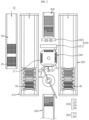
FIG. 2 is a schematic plan view illustrating major components of a process automation system according to an embodiment of the present disclosure. -
FIG. 3 is a schematic perspective view of the process automation system ofFIG. 2 . -
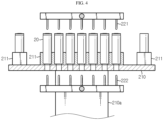
FIG. 4 illustrates a region of a voltage measuring device of a cell inspection unit, according to an embodiment of the present disclosure. -
FIG. 5 illustrates a QR code scanner region of a cell inspection unit, according to an embodiment of the present disclosure. -
FIGS. 6 and7 illustrate a region of a cell inverter of a cell inspection unit, according to an embodiment of the present disclosure. -
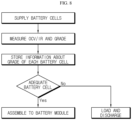
FIG. 8 is a flowchart of a battery cell grading and assembling method, according to an embodiment of the present disclosure. - The invention is defined in the appended claims.
- The embodiments of the present disclosure are provided so that this disclosure will be thorough and complete and will fully convey the present disclosure to one of ordinary skill in the art. In the drawings, shapes and sizes of components may be exaggerated or omitted or schematically illustrated for clear description. Thus, the size or ratio of each component does not perfectly reflect an actual size.
- Referring to
FIGS. 2 and3 , a battery cellprocess automation system 10 according to an embodiment of the present disclosure includes acell transfer unit 100, acell inspection unit 200, aframe transfer unit 300, agripper unit 400, and acell discharging unit 500. - The battery cell
process automation system 10 according to the present embodiment to be described below may be applied to performing of a process of inserting thebattery cells 20 into amodule frame 30 in a process of grading and classification of thebattery cells 20 and assembling into a battery module. - The
battery cells 20 refer to cylindrical battery cells in the present embodiment. However, the present disclosure is not limited to the cylindrical battery cell. For example, thebattery cells 20 may be prismatic or pouch-shaped, and in this case, the shape of a tray or module frame for accommodating thebattery cells 20 may be configured differently from the present embodiment according to the type of battery cells. - The
cell transfer unit 100 may be implemented as a conveyor as a means for moving thebattery cells 20. Thebattery cells 20 may be accommodated in atray 40 and moved along the conveyor to be positioned adjacent to thecell inspection unit 200. The conveyor may also be replaced by other means of logistics transportation. That is, any logistics transportation means for stably transporting thebattery cells 20 may be applied instead of a conveyor. - The
cell inspection unit 200 may be configured to receive thebattery cells 20 from thecell transfer unit 100, measure open circuit voltages (OCV) of thebattery cells 20, and grade eachbattery cell 20 based on a preset range of the open circuit voltages. - In addition, the
cell inspection unit 200 may be configured to additionally inspect management indicators such as internal resistance (IR), K-value, etc. in addition to the open circuit voltage when grading each battery cell. - In addition, the
cell inspection unit 200 may be configured to identify eachbattery cell 20 through aQR code 20a provided for eachbattery cell 20, and transmit information such as the open circuit voltage (OCV) and the internal resistance (IR) of the identifiedbattery cells 20, or the like, to a server. - In addition, as illustrated in
FIGS. 2 to 7 , thecell inspection unit 200 according to the present embodiment may include aturntable 210, avoltage measuring device 220, aQR code scanner 230, acell inverter 240, and a control unit (not shown). - The
turntable 210 may be rotated clockwise or counter-clockwise by a combination of arotation shaft 210a coupled to a center thereof and a servomotor (not shown) connected to therotation shaft 210a. The servomotor may be controlled by the control unit. -
Cell holders 211 may be provided at an edge of theturntable 210 at certain intervals in a circumferential direction. Thecell holders 211 may be provided in the form of sockets into which a certain number ofbattery cells 20 may be respectively inserted. - In the present embodiment, four
cell holders 211 are arranged on theturntable 210 in a square composition, and eachcell holder 211 is configured to mount sevenbattery cells 20 in a row thereof. When necessary, thecell holder 211 may also be configured to have one or more rows and mount six or less or eight ormore battery cells 20 in each row thereof. - The
turntable 210 may be rotated by a certain angle such that eachcell holder 211 is sequentially positioned at positions where thevoltage measuring device 220, theQR code scanner 230, and thecell inverter 240 are respectively located. For example, theturntable 210 may be controlled such that, when a certain operation on thebattery cells 20 is completed in units of eachcell holder 211, theturntable 210 may be rotated so that a next operation is performed. - The
turntable 210 enables to perform various operations simultaneously while rotating a certain number ofbattery cells 20, and thus may be useful in effectively implementing a space-efficient facility. - The
voltage measuring device 220 is a means for measuring the open circuit voltage of thebattery cells 20, and may include upper measuring pins 221 and lower measuring pins 222 and a measuringdevice driving member 223 for moving the upper and lower measuring pins 221 and 222 up and down or forward or backward. - The
battery cells 20 supplied from thecell transfer unit 100 may be respectively mounted in thecell holders 211, and as illustrated inFIG. 4 , according to operation of thevoltage measuring device 220, the upper measuring pins 221 and the lower measuring pins 222 may contact upper and lower ends of eachbattery cell 20 to measure an open circuit voltage of eachbattery cell 20, and a value of the measured open circuit voltage of eachbattery cell 20 may be transmitted to the control unit to determine whether thebattery cell 20 is qualified and grade thebattery cell 20. - Here, the upper measuring pins 221 and the lower measuring pins 222 may be configured to operate integrally or individually. Accordingly, the open circuit voltage of all
battery cells 20 mounted in thecell holder 211 may be simultaneously measured, or open circuit voltages of somebattery cells 20 may be measured and open circuit voltages of the remainingbattery cells 20 may not be measured. - The
battery cell 20 includes theQR code 20a. TheQR code 20a may store product information such as the manufacturing date, capacity, specification, and a unique number of eachbattery cell 20. Here, theQR code 20a may be replaced with a barcode. - As illustrated in
FIG. 5 , theQR code scanner 230 may include, as a means for scanning theQR code 20a of eachbattery cell 20, atransparent screen 231 and acamera 233 for scanning theQR code 20a of eachbattery cell 20, and may be configured to be connected to a data storage server (not shown) provided for management of a history of eachbattery cell 20 and to the control unit in a wired or wireless manner. - The
QR code scanner 230 identifies eachbattery cell 20 through a unique number stored in theQR code 20a of eachbattery cell 20 and transmits an open circuit voltage value of eachbattery cell 20 to the data storage server. - The
QR code scanner 230 may be arranged opposite to thevoltage measuring device 220 with theturntable 210 therebetween. This may be regarded as an arrangement structure for increasing the working space efficiency according to the arrangement of a plurality offrame transfer units 300 to be described later. Therefore, to add an inspection item on the arrangement of transfer units of themodule frame 30 or theturntable 210, the positions of thevoltage measuring device 220 and theQR code scanner 230 may be adjusted differently from present embodiment. - The
cell inverter 240 is a means for performing an operation of changing a polarity ofcertain battery cells 20 so that thebattery cells 20 may be directly inserted into themodule frame 30 of the battery module after a voltage test and storing a test result. Thecell inverter 240 may be arranged above one side edge of theturntable 210 and configured to invert, up and down, one or more of thebattery cells 20 inserted into thecell holders 211. - For reference, in the case of a battery module consisting of
cylindrical battery cells 20, in order to facilitate series and parallel connection between the battery cells, the battery cells may be inserted into themodule frame 30 such that top caps of a group ofbattery cells 20, which function as a positive electrode, face upward, and top caps of another group of battery cells face downward. As described above, thecell inverter 240 may be used when it is necessary to selectively invert battery cells up and down before inserting the battery cells into a module frame. - In detail, the
cell inverter 240 according to the present embodiment includes aclamp 241 configured to selectively hold eachbattery cell 20, arotator 243 that rotates theclamp 241 by ±180 degrees, and a movingblock 245 connected to therotator 243 and configured to be movable in a vertical direction. - An example of inverting a battery cell by the
cell inverter 240 will be briefly described with reference toFIGS. 6 and7 . - The
clamp 241 is positioned above thecell holder 211 and then descends to hold only thebattery cells 20 required to be inverted, and then is lifted up again. Here, theclamp 241 may be configured to individually clamp eachbattery cell 20 so as to selectively hold those battery cells required to be inverted. - Then, as illustrated in
FIG. 7 , theclamp 241 is rotated 180 degrees by therotator 243. Accordingly, thebattery cells 20 held by theclamp 241 are inverted such that a top cap thereof faces downward. In this state, the movingblock 245 operates and theclamp 241 descends to place theinverted battery cells 20 back to be seated in thecell holders 211. - As described above, by selectively inverting the battery cells up and down in advance by using the
cell inverter 240 and then picking up all of the battery cells later from thecell holders 211 by using thegripper unit 400 and inserting the battery cells into themodule frame 30 as they are, the assembling may be easy. - Here, the
module frame 30 is a component of the battery module and refers to a structure for fixing thebattery cells 20 and protecting the same from external impact. The battery module may be manufactured in a form in which, after thebattery cells 20 are inserted into and arranged in themodule frame 30, thebattery cells 20 are electrically connected to each other by using a metal plate (not shown) and a BMS or the like is assembled thereto, and a housing cover (not shown) may be coupled to an upper portion of themodule frame 30. Themodule frame 30 may be transferred using theframe transfer unit 300 to be supplied. - The
frame transfer unit 300 is a means for supporting and moving the module frames 30, and may be implemented using, for example, a conveyor. Theframe transfer unit 300 may also be replaced with any other device that stably performs logistics transportation, than the conveyor. - The frame transfer unit 300 (see
FIG. 2 ) may include a firstframe transfer unit 310 and a secondframe transfer unit 320 extending and arranged in parallel with each other, with thecell inspection unit 200 therebetween. - As described above, by providing a plurality of
frame transfer units 300, there is an advantage that a transportation line is dualized, and in particular, capacity deviation of a battery module may be further reduced by inserting thequalified battery cells frame transfer unit 310 and the module frames 30 on the secondframe transfer unit 320, respectively. - Meanwhile, in the process automation system according to the present disclosure (see
FIG. 8 ), thecell inspection unit 200 may include a control unit to determine whether battery cells are defective or not. The control unit may be configured to compare an open circuit voltage value of eachbattery cell 20, measured by thevoltage measuring device 220, with a preset range of a preset open circuit voltage, and when the measured open circuit voltage value of eachbattery cell 20 falls within the preset range, the control unit may be configured to grade thebattery cells 20 asqualified battery cells module frame 30 of the battery module, and determine, as defective ones, thosebattery cells 20 having open circuit voltage values which are not in the preset range. - Furthermore, the control unit may be configured to divide the preset range into a first set range and a second set range again, and to classify the
qualified battery cells qualified battery cells 21 falling within the first set range are distinguished from the secondqualified battery cells 22 falling within the second set range. - For example, when a preset range of an open circuit voltage value of the lithium ion
cylindrical battery cell 20 is 3.58V to 3.50V, the preset range may be divided again such that the first set range may be set to 3.58V to 3.54V, and the second set range may be set to 3.5399V to 3.5V. In this case, the firstqualified battery cells 21 refer tobattery cells 20 having an open circuit voltage value within 3.58 V to 3.54 V, and the secondqualified battery cells 22 refer tobattery cells 20 having an open circuit voltage value within 3.5399 V to 3.5 V. - In addition, the control unit may be configured to control the
gripper unit 400 such that the firstqualified battery cells 21 are supplied to the firstframe transfer unit 310 and the secondqualified battery cells 22 are supplied to the secondframe transfer unit 320. - By assembling battery cells into the
module frame 30 by distinguishing the grades of thequalified battery cells battery cells 20 constituting each battery module, and thus, the quality and lifespan of the battery modules may be improved. -
Defective battery cells 23 having an open circuit voltage value determined to be outside the preset range are not assembled into themodule frame 30 and are managed to be separately discharged. To this end, the battery cellprocess automation system 10 according to the present disclosure further includes thecell discharging unit 500 for loading and discharging thedefective battery cells 23. - The
cell discharging unit 500 is arranged between the firstframe transfer unit 310 and the secondframe transfer unit 320, and may include a conveyor configured to move thedischarge tray 40 provided to accommodate thedefective battery cells 23. - In addition, the battery cell
process automation system 10 according to the present embodiment may further include atemporary loading unit 600 to temporarily load the firstqualified battery cells 21 or the secondqualified battery cells 22 after classifying the firstqualified battery cells 21 and the secondqualified battery cells 22 and supply the same into the firstframe transfer unit 310 or the secondframe transfer unit 320 as described above. Thetemporary loading unit 600 will be described later. - The
gripper unit 400 is a means for transporting thebattery cells 20 between thecell transfer unit 100, thecell inspection unit 200, theframe transfer unit 300, and thecell discharging unit 500 described above, and may be configured to be in conjunction with thecell inspection unit 200 and pick up and transport one or more of thebattery cells 20. - Referring back to
FIG. 3 , thegripper unit 400 may be configured with a combination of a plurality offingers 410 for picking up thebattery cell 20, a plurality oflink arms 420 connected to the plurality offingers 410 such that the plurality offingers 410 are moved along the X-Y-Z axes, and a cylinder and a linear motor which are used for driving but are not shown for convenience of illustration, and a sensor for recognition of objects. - In the present embodiment, each of the seven
fingers 410 may be configured to individually perform a grip operation. In other words, the sevenfingers 410 may be configured to be able to select and transport, for example, only two or threebattery cells 20, in addition to picking up and transporting sevenbattery cells 20 at a time. - Next, the process of classifying, according to grades, the
battery cells 20 according to theprocess automation system 10 according to an embodiment of the present disclosure, and inserting the classifiedbattery cells 20 into themodule frame 30 will be further described in detail again with reference toFIGS. 2 and3 below. - Seven
battery cells 20 are picked up by thegripper unit 400 from thetray 40 on thecell transfer unit 100, and are inserted into thecell holders 211 on theturntable 210 on the side where thevoltage measuring device 220 is located. (Hereinafter, a portion of theturntable 210 at thevoltage measuring device 220 will be referred to as a first region, and each region at every 90 degrees in a clockwise direction from the first region will be referred to as a second region, a third region, and a fourth region, respectively.) - Next, open circuit voltages of the seven
battery cells 20 mounted in thecell holders 211 in the first region are measured by thevoltage measuring device 220, and grades of the sevenbattery cells 20 are determined based on measured open circuit voltage values of thebattery cells 20 and a preset voltage range. - When the grades of the
battery cell 20 are determined as described above, theprocess automation system 10 may be operated as follows. - First, as a result of voltage measurement, all of the
battery cells 20 may be the firstqualified battery cells 21. In this case, theturntable 210 is sequentially rotated clockwise by 90 degrees and processes of measuring open circuit voltages, scanning theQR code 20a, storing the open circuit voltage of eachbattery cell 20 in the server, inverting somebattery cells 20, and inserting the firstqualified battery cells 21 into themodule frame 30 of the firstframe transfer unit 310 may be repeatedly performed. - For reference, in the
cell holders 211 located in the fourth region where a cell inverting operation is performed, all the firstqualified battery cells 21 are picked up from the fourth region and transferred to the firstframe transfer unit 310, and thus, when theturntable 210 is rotated to return to the first region, thecell holders 211 are empty. - As a result of voltage measurement, when all the
battery cells 20 are the secondqualified battery cells 22, the same operations are performed in the same order as with respect to the firstqualified battery cells 21 except for inserting the second qualified battery cells into themodule frame 30 of the secondframe transfer unit 320. - Second, there may be a case where, as a result of voltage measurement, the
qualified battery cells defective battery cells 23 are mixedly included. In this case, only thedefective battery cells 23 are picked out using thegripper unit 400 and loaded into thecell discharging unit 500. In addition,new battery cells 20 are filled in portions from which thedefective battery cells 23 are picked out, and voltage measurement is performed only on the above newly filledbattery cells 20. As a result of voltage measurement, when the newly filledbattery cells 20 are graded asqualified battery cells turntable 210 is rotated to perform the subsequent operations as in the first case. - Third, as a result of voltage measurement, there may be a case where the first
qualified battery cells 21, the secondqualified battery cells 22, and thedefective battery cells 23 are mixedly included. In this case, thedefective battery cells 23 are loaded into thecell discharging unit 500 by using thegripper unit 400, and the secondqualified battery cells 22 are temporarily loaded into thetemporary loading unit 600. -
New battery cells 20 are filled in thecell holders 211 after thedefective battery cells 23 and the secondgood battery cells 22 are picked out, and voltage measurement is performed only on the above newly filledbattery cells 20. The above process may be repeated until all of thebattery cells 20 filled in thecell holders 211 are the firstqualified battery cells 21. When thecell holders 211 in the first region are completely filled with the firstqualified battery cells 21, theturntable 210 is sequentially rotated to perform the subsequent operations. - By continuously repeating the above pattern, the number of second
qualified battery cells 22 in thetemporary loading unit 600 is increased. Therefore, after the secondqualified battery cells 22 of a sufficient number are filled in thetemporary loading unit 600, and when thecell holders 211 return in an empty state to the first region after one rotation of theturntable 210, the secondqualified battery cells 22 are transferred to thecell holders 211 from thetemporary loading unit 600, instead of thecell transfer unit 100, to perform the process. - Also, the first
qualified battery cells 21 may be temporarily loaded into thetemporary loading unit 600 instead of the secondqualified battery cells 22, and only the firstqualified battery cells 21 may be transferred to theturntable 210. - According to the configuration and operation of the battery cell
process automation system 10 according to the present disclosure as described above, the grading of thebattery cells 20 and the assembly operation of the battery module may be performed using a single facility, thereby significantly improving process efficiency and logistics transportation. - As described above, while the present disclosure has been described with reference to limited embodiments and drawings, the present disclosure is not limited thereto, and various modifications and variations may be made by those of ordinary skill in the art to which the present disclosure pertains within the scope of the present disclosure and the claims.
- In the present specification, while terms indicating directions such as up, down, left, right, front, and back, etc. have been used, it will be obvious to those skilled in the art that these terms refer to relative positions and are only for convenience of description and may be expressed differently depending on the location of the object or the viewing position of the observer.
Claims (12)
- A process automation system (10) comprising:a cell transfer unit (100) configured to transfer battery cells (20);a cell inspection unit (200) configured to measure an open circuit voltage of each battery cell (20) in units of a preset number of battery cells (20) and sort out qualified battery cells (21, 22) and defective battery cells (23);a frame transfer unit (300) configured to transfer module frames (30) of a battery module to insert the qualified battery cells (21, 22);a cell discharging unit (500) configured to load and discharge the defective battery cells (23);characterized in that the process automation system (10) comprises a gripper unit (400) configured to pick up one or more battery cells (20) from the cell transfer unit (100), the cell inspection unit (200), the frame transfer unit (300), and the cell discharging unit (500), and transport the one or more battery cells (20) to another device.
- The process automation system (10) of claim 1, wherein each of the battery cells (20) comprises a QR code (20a), and
the cell inspection unit (200) is configured to scan the QR code (20a) and transmit an open circuit voltage value of each battery cell (20) to a server. - The process automation system (10) of claim 2, wherein the cell inspection unit (200) comprises: a voltage measuring device (220) configured to measure the open circuit voltage of each battery cell (20); and a QR code scanner (230) of each battery cell (20).
- The process automation system (10) of claim 3, wherein the cell inspection unit (200) further comprises a turntable (210) comprising cell holders (211) arranged at an edge of the turntable (210) in a circumferential direction, the turntable (210) being configured to be rotated clockwise or counter-clockwise, and
the voltage measuring device (220) and the QR code scanner (230) are arranged opposite to each other with the turntable (210) therebetween. - The process automation system (10) of claim 4, wherein the battery cells (20) comprise cylindrical battery cells, and
the cell inspection unit (200) further comprises a cell inverter (240) arranged above one side edge of the turntable (210) and configured to invert, up and down, one or more battery cells (20) inserted into the cell holders (211). - The process automation system (10) of claim 5, wherein the cell inverter (240) comprises: a clamp (241) configured to hold at least one of the battery cells (20) inserted into the cell holders (211); a rotator (243) configured to rotate the clamp (241) by ±180 degrees; and a moving block (245) connected to the rotator (243) and configured to be movable in a vertical direction.
- The process automation system (10) of claim 5, wherein four cell holders (211) are arranged on the turntable (210) in a square composition, and the process automation system (10) is configured such that, as the turntable (210) is rotated, measurement of voltages of the battery cells (20) respectively mounted in the cell holders (211), scanning of the QR code (20a) of the battery cells (20), vertical inversion of the battery cells (20) are performed.
- The process automation system (10) of claim 1, wherein the frame transfer unit (300) comprises a first frame transfer unit (310) and a second frame transfer unit (320) extending and arranged in parallel with each other, and
the cell inspection unit (200) is arranged between the first frame transfer unit (310) and the second frame transfer unit (320). - The process automation system (10) of claim 8, wherein the cell inspection unit (200) comprises a control unit configured to determine battery cells (20) having the open circuit voltage of a value falling within a preset first set range, as first qualified battery cells (21), and determine battery cells (20) having the open circuit voltage of a value falling within a preset second set range, as second qualified battery cells (22).
- The process automation system (10) of claim 9, further comprising a temporary loading unit (600) configured to temporarily load the first qualified battery cells (21) or the second qualified battery cells (22).
- The process automation system (10) of claim 9, wherein the control unit is further configured to control the gripper unit (400) such that the first qualified battery cells (21) are supplied to the first frame transfer unit (310) and the second qualified battery cells (22) are supplied to the second frame transfer unit (320).
- The process automation system (10) of claim 1, wherein the cell discharging unit (500) comprises discharge trays (40) provided to load the defective battery cells (23) and a conveyor for moving the discharge trays.
Applications Claiming Priority (2)
| Application Number | Priority Date | Filing Date | Title |
|---|---|---|---|
| KR1020200100691A KR20220020123A (en) | 2020-08-11 | 2020-08-11 | automation apparatus for grading battery cells and inserting the battery cells into a battery module |
| PCT/KR2021/010362 WO2022035133A1 (en) | 2020-08-11 | 2021-08-05 | Process automation system for determining battery cell grades and integrating battery module assembly process |
Publications (3)
| Publication Number | Publication Date |
|---|---|
| EP4075566A1 EP4075566A1 (en) | 2022-10-19 |
| EP4075566A4 EP4075566A4 (en) | 2024-07-03 |
| EP4075566B1 true EP4075566B1 (en) | 2025-03-12 |
Family
ID=80246772
Family Applications (1)
| Application Number | Title | Priority Date | Filing Date |
|---|---|---|---|
| EP21856139.7A Active EP4075566B1 (en) | 2020-08-11 | 2021-08-05 | Process automation system for integrating grading of battery cells and battery module assembly process |
Country Status (8)
| Country | Link |
|---|---|
| US (1) | US12482848B2 (en) |
| EP (1) | EP4075566B1 (en) |
| JP (1) | JP7313552B2 (en) |
| KR (1) | KR20220020123A (en) |
| CN (1) | CN114586230A (en) |
| ES (1) | ES3017860T3 (en) |
| HU (1) | HUE070740T2 (en) |
| WO (1) | WO2022035133A1 (en) |
Families Citing this family (20)
| Publication number | Priority date | Publication date | Assignee | Title |
|---|---|---|---|---|
| KR102948607B1 (en) * | 2021-11-08 | 2026-04-03 | 현대자동차주식회사 | System for detecting battery cell insulation |
| KR20230131618A (en) * | 2022-03-07 | 2023-09-14 | 주식회사 엘지에너지솔루션 | Device for packaging of cell |
| KR102616638B1 (en) * | 2022-04-15 | 2023-12-21 | 주식회사 엘지에너지솔루션 | Battery cell tracking device |
| JP7676717B2 (en) * | 2022-04-15 | 2025-05-15 | エルジー エナジー ソリューション リミテッド | Battery Cell Tracker |
| CN121605517A (en) * | 2022-04-18 | 2026-03-03 | 宁德时代新能源科技股份有限公司 | Battery transmission system, control method, simulation method, device, PLC and medium |
| CN114906007B (en) * | 2022-05-16 | 2024-10-22 | 东风汽车动力零部件有限公司 | Quick battery replacement device for commercial vehicle and control method |
| CN114740384B (en) * | 2022-06-13 | 2022-08-26 | 李明 | Storage battery equipment detection device that photovoltaic power generation system used |
| KR102469433B1 (en) * | 2022-07-11 | 2022-11-22 | 주식회사 모아이에스 | Battery Case Assembly System for Electric Vehicle |
| GB2620790B (en) * | 2022-07-22 | 2024-11-20 | Autocraft Solutions Group Ltd | Battery servicing system and battery servicing method |
| GB2620791B (en) * | 2022-07-22 | 2024-11-13 | Autocraft Solutions Group Ltd | Battery servicing system for use in battery servicing station and method thereof |
| CN116393409B (en) * | 2023-03-23 | 2025-06-27 | 中国机械总院集团海西(福建)分院有限公司 | Cylindrical cell voltage sorting machine |
| EP4506071A4 (en) * | 2023-06-21 | 2025-06-11 | Contemporary Amperex Technology (Hong Kong) Limited | OCV TEST METHOD AND TEST DEVICE |
| KR20250035992A (en) | 2023-09-06 | 2025-03-13 | (주)커넥티드 인사이트 | Battery cell automatic alignment inspection system |
| CN117068678B (en) * | 2023-10-13 | 2024-02-06 | 宁德时代新能源科技股份有限公司 | Battery cell feeding system and method, battery cell grouping system and method and operation system |
| CN117160885B (en) * | 2023-10-31 | 2024-04-02 | 宁德时代新能源科技股份有限公司 | Testing Equipment |
| KR102835646B1 (en) * | 2023-12-15 | 2025-07-18 | 주식회사 엘지에너지솔루션 | Apparatus for gas collecting |
| CN117630706B (en) * | 2024-01-26 | 2024-06-18 | 宁德时代新能源科技股份有限公司 | Open circuit voltage testing device of battery |
| WO2025236878A1 (en) * | 2024-05-15 | 2025-11-20 | 广东贝导智能科技有限公司 | Code scanning apparatus, sorting device and code scanning method |
| CN118970237A (en) * | 2024-07-30 | 2024-11-15 | 上海轩邑新能源发展有限公司 | A battery secondary formation system and a battery secondary formation method |
| CN119793925B (en) * | 2025-01-14 | 2025-12-30 | 博众精工科技股份有限公司 | A battery multi-performance testing and sorting device |
Family Cites Families (28)
| Publication number | Priority date | Publication date | Assignee | Title |
|---|---|---|---|---|
| JP3993658B2 (en) * | 1997-03-13 | 2007-10-17 | 本田技研工業株式会社 | Electric vehicle battery inspection apparatus, electric vehicle battery inspection system, and electric vehicle battery inspection method |
| JP3967892B2 (en) | 2000-09-22 | 2007-08-29 | シャープ株式会社 | Inspection and classification system for thin plate semiconductor components |
| JP2008117241A (en) | 2006-11-07 | 2008-05-22 | Seiko Epson Corp | Information processing apparatus and power control method |
| KR101428109B1 (en) | 2008-12-19 | 2014-08-07 | 주식회사 엘지화학 | Pouch type battery voltage measuring device |
| KR20110107070A (en) | 2010-03-24 | 2011-09-30 | 삼성에스디아이 주식회사 | Battery sorting device and sorting method |
| US8519715B2 (en) * | 2010-11-29 | 2013-08-27 | Volkswagen Ag | Method and system for assembling a battery module |
| KR101939966B1 (en) | 2010-12-14 | 2019-01-18 | 에이비비 슈바이쯔 아게 | Automatic checking, validation, and post-processing of a battery object |
| JP5746856B2 (en) | 2010-12-24 | 2015-07-08 | 日立オートモティブシステムズ株式会社 | Battery module manufacturing method |
| JP5683257B2 (en) | 2010-12-24 | 2015-03-11 | 矢崎総業株式会社 | Relay connector |
| KR101167096B1 (en) | 2011-12-20 | 2012-07-20 | 주식회사 스마트하이텍 | Apparatus and method for inspecting appearance of pack |
| US9048462B2 (en) | 2012-03-29 | 2015-06-02 | GM Global Technology Operations LLC | Method of handling large format battery cells for high speed assembly |
| EP2845261A4 (en) | 2012-05-04 | 2016-04-27 | Tricopian Llc | SYSTEM AND METHOD FOR IDENTIFYING BATTERIES |
| KR101650504B1 (en) | 2013-07-11 | 2016-08-23 | 주식회사 엘지화학 | Device for inspecting quality of battery pack |
| KR101819255B1 (en) | 2013-10-30 | 2018-02-28 | 주식회사 엘지화학 | System for grading a battery cell and method thereof |
| KR101818515B1 (en) * | 2014-05-30 | 2018-01-15 | 주식회사 엘지화학 | Apparatus for fault detection in battery pack production process and method thereof |
| KR101763006B1 (en) | 2014-10-31 | 2017-07-28 | 주식회사 엘지화학 | Classification device of battery cell |
| KR101707220B1 (en) * | 2015-08-03 | 2017-02-28 | (주)자비스 | An Apparatus for Inspecting a Battery with X-ray Image and a Method for Inspecting a Battery Using the Same |
| KR20170071077A (en) * | 2015-12-15 | 2017-06-23 | 주식회사 엘지화학 | Apparatus for Manufacturing Battery Pack Having Plurality of Lanes for Assembling Battery Cells |
| CN205944305U (en) | 2016-08-12 | 2017-02-08 | 无锡先导智能装备股份有限公司 | Lithium cell inserted sheet device |
| CN109671967A (en) | 2017-10-13 | 2019-04-23 | 哈尔滨智明科技有限公司 | Power battery pack assembles/disassemble bi-directional production line |
| KR102204303B1 (en) * | 2017-10-27 | 2021-01-15 | 주식회사 엘지화학 | Battery module having fixing structure intergrated with cooling material for battery cells and Battery pack including the same |
| NO343947B1 (en) | 2017-12-20 | 2019-07-22 | Soelvpilen As | Fish farm and method for operation |
| KR101962918B1 (en) * | 2018-01-17 | 2019-03-28 | 주식회사 디자인메탈 | Battery characteristic measurement system |
| KR102039261B1 (en) * | 2018-06-14 | 2019-10-31 | 서정록 | battery cell selection and storage equipment |
| PL3826085T3 (en) * | 2018-08-29 | 2023-05-15 | Youilet Co., Ltd. | Secondary battery electrode production system |
| KR102389191B1 (en) * | 2019-03-07 | 2022-04-20 | 주식회사 엘지에너지솔루션 | Battery pack manufacturing devide and manufacturing method of battery pack |
| KR102043112B1 (en) | 2019-04-25 | 2019-11-11 | 백영진 | Secondary battery cell rotating device |
| CN111438082B (en) | 2020-03-25 | 2022-06-21 | 深圳市欧盛自动化有限公司 | Full-automatic battery cell sorting and module support all-in-one machine |
-
2020
- 2020-08-11 KR KR1020200100691A patent/KR20220020123A/en active Pending
-
2021
- 2021-08-05 US US17/777,768 patent/US12482848B2/en active Active
- 2021-08-05 CN CN202180005857.0A patent/CN114586230A/en active Pending
- 2021-08-05 EP EP21856139.7A patent/EP4075566B1/en active Active
- 2021-08-05 ES ES21856139T patent/ES3017860T3/en active Active
- 2021-08-05 WO PCT/KR2021/010362 patent/WO2022035133A1/en not_active Ceased
- 2021-08-05 JP JP2022521478A patent/JP7313552B2/en active Active
- 2021-08-05 HU HUE21856139A patent/HUE070740T2/en unknown
Also Published As
| Publication number | Publication date |
|---|---|
| HUE070740T2 (en) | 2025-07-28 |
| EP4075566A1 (en) | 2022-10-19 |
| KR20220020123A (en) | 2022-02-18 |
| EP4075566A4 (en) | 2024-07-03 |
| US20220416286A1 (en) | 2022-12-29 |
| JP7313552B2 (en) | 2023-07-24 |
| WO2022035133A1 (en) | 2022-02-17 |
| JP2022553651A (en) | 2022-12-26 |
| ES3017860T3 (en) | 2025-05-13 |
| CN114586230A (en) | 2022-06-03 |
| US12482848B2 (en) | 2025-11-25 |
Similar Documents
| Publication | Publication Date | Title |
|---|---|---|
| US12482848B2 (en) | Process automation system | |
| KR102146945B1 (en) | Inspection system for inspecting secondary battery cell | |
| US8519715B2 (en) | Method and system for assembling a battery module | |
| US11804616B2 (en) | Battery pack manufacturing apparatus and method, and battery pack | |
| EP2652514B1 (en) | Automatic checking, validation, and post-processing of a battery object | |
| KR20190059593A (en) | battery cell selection and storage equipment | |
| KR102628806B1 (en) | apparatus for inspecting cylindrical secondary battery | |
| EP4403905B1 (en) | System and method for inspecting outer appearance | |
| CN217369338U (en) | Full-automatic discharging equipment of capacitor | |
| KR20130000598A (en) | Cell carrier and apparatus for testing performance of cell | |
| HU231404B1 (en) | Apparatus for manufacturing various cap assemblies for secondary batteries, and method for the same | |
| JPH11250929A (en) | Manufacture of lithium secondary battery | |
| EP4280326A1 (en) | Secondary battery manufacturing method | |
| KR101251359B1 (en) | Cell-carrier unit and cell distinction apparatus comprising the same | |
| CN110058169B (en) | Battery discharge detection mechanism and test equipment thereof | |
| CN221613948U (en) | Multiple cells alignment device on battery module production line | |
| Zhang et al. | Robotic automated battery sorting system | |
| KR101251357B1 (en) | Jig carrier | |
| CN218767242U (en) | Lithium ion battery OCV test equipment | |
| TWM653683U (en) | Arrangement device for positioning a plurality of battery cells in battery module production line | |
| JP4404536B2 (en) | Method for manufacturing power supply device for vehicle | |
| KR20050072354A (en) | Battery cell sorting machine and sorting method using the same | |
| KR20240096001A (en) | Overhang Inspection System Secondary Battery | |
| JPH10321250A (en) | Sorting device of article | |
| CN217888727U (en) | Rotary type soft package battery OCV detection equipment |
Legal Events
| Date | Code | Title | Description |
|---|---|---|---|
| STAA | Information on the status of an ep patent application or granted ep patent |
Free format text: STATUS: THE INTERNATIONAL PUBLICATION HAS BEEN MADE |
|
| PUAI | Public reference made under article 153(3) epc to a published international application that has entered the european phase |
Free format text: ORIGINAL CODE: 0009012 |
|
| STAA | Information on the status of an ep patent application or granted ep patent |
Free format text: STATUS: REQUEST FOR EXAMINATION WAS MADE |
|
| 17P | Request for examination filed |
Effective date: 20220711 |
|
| AK | Designated contracting states |
Kind code of ref document: A1 Designated state(s): AL AT BE BG CH CY CZ DE DK EE ES FI FR GB GR HR HU IE IS IT LI LT LU LV MC MK MT NL NO PL PT RO RS SE SI SK SM TR |
|
| DAV | Request for validation of the european patent (deleted) | ||
| DAX | Request for extension of the european patent (deleted) | ||
| REG | Reference to a national code |
Ref legal event code: R079 Ipc: B07C0005344000 Ref country code: DE Ref document number: 602021027633 Country of ref document: DE Free format text: PREVIOUS MAIN CLASS: H01M0010420000 |
|
| A4 | Supplementary search report drawn up and despatched |
Effective date: 20240529 |
|
| RIC1 | Information provided on ipc code assigned before grant |
Ipc: G01R 31/385 20190101ALI20240524BHEP Ipc: H01M 50/244 20210101ALI20240524BHEP Ipc: H01M 50/213 20210101ALI20240524BHEP Ipc: H01M 10/48 20060101ALI20240524BHEP Ipc: H01M 10/42 20060101ALI20240524BHEP Ipc: H01M 10/04 20060101ALI20240524BHEP Ipc: B07C 5/36 20060101ALI20240524BHEP Ipc: B07C 5/344 20060101AFI20240524BHEP |
|
| GRAP | Despatch of communication of intention to grant a patent |
Free format text: ORIGINAL CODE: EPIDOSNIGR1 |
|
| STAA | Information on the status of an ep patent application or granted ep patent |
Free format text: STATUS: GRANT OF PATENT IS INTENDED |
|
| INTG | Intention to grant announced |
Effective date: 20241216 |
|
| GRAS | Grant fee paid |
Free format text: ORIGINAL CODE: EPIDOSNIGR3 |
|
| GRAA | (expected) grant |
Free format text: ORIGINAL CODE: 0009210 |
|
| STAA | Information on the status of an ep patent application or granted ep patent |
Free format text: STATUS: THE PATENT HAS BEEN GRANTED |
|
| P01 | Opt-out of the competence of the unified patent court (upc) registered |
Free format text: CASE NUMBER: APP_595/2025 Effective date: 20250107 |
|
| AK | Designated contracting states |
Kind code of ref document: B1 Designated state(s): AL AT BE BG CH CY CZ DE DK EE ES FI FR GB GR HR HU IE IS IT LI LT LU LV MC MK MT NL NO PL PT RO RS SE SI SK SM TR |
|
| REG | Reference to a national code |
Ref country code: GB Ref legal event code: FG4D |
|
| REG | Reference to a national code |
Ref country code: CH Ref legal event code: EP |
|
| REG | Reference to a national code |
Ref country code: DE Ref legal event code: R096 Ref document number: 602021027633 Country of ref document: DE |
|
| REG | Reference to a national code |
Ref country code: IE Ref legal event code: FG4D |
|
| REG | Reference to a national code |
Ref country code: ES Ref legal event code: FG2A Ref document number: 3017860 Country of ref document: ES Kind code of ref document: T3 Effective date: 20250513 |
|
| PG25 | Lapsed in a contracting state [announced via postgrant information from national office to epo] |
Ref country code: RS Free format text: LAPSE BECAUSE OF FAILURE TO SUBMIT A TRANSLATION OF THE DESCRIPTION OR TO PAY THE FEE WITHIN THE PRESCRIBED TIME-LIMIT Effective date: 20250612 |
|
| PG25 | Lapsed in a contracting state [announced via postgrant information from national office to epo] |
Ref country code: FI Free format text: LAPSE BECAUSE OF FAILURE TO SUBMIT A TRANSLATION OF THE DESCRIPTION OR TO PAY THE FEE WITHIN THE PRESCRIBED TIME-LIMIT Effective date: 20250312 |
|
| REG | Reference to a national code |
Ref country code: LT Ref legal event code: MG9D |
|
| PG25 | Lapsed in a contracting state [announced via postgrant information from national office to epo] |
Ref country code: NO Free format text: LAPSE BECAUSE OF FAILURE TO SUBMIT A TRANSLATION OF THE DESCRIPTION OR TO PAY THE FEE WITHIN THE PRESCRIBED TIME-LIMIT Effective date: 20250612 |
|
| PGFP | Annual fee paid to national office [announced via postgrant information from national office to epo] |
Ref country code: BE Payment date: 20250425 Year of fee payment: 5 |
|
| PG25 | Lapsed in a contracting state [announced via postgrant information from national office to epo] |
Ref country code: HR Free format text: LAPSE BECAUSE OF FAILURE TO SUBMIT A TRANSLATION OF THE DESCRIPTION OR TO PAY THE FEE WITHIN THE PRESCRIBED TIME-LIMIT Effective date: 20250312 |
|
| REG | Reference to a national code |
Ref country code: NL Ref legal event code: MP Effective date: 20250312 |
|
| PG25 | Lapsed in a contracting state [announced via postgrant information from national office to epo] |
Ref country code: LV Free format text: LAPSE BECAUSE OF FAILURE TO SUBMIT A TRANSLATION OF THE DESCRIPTION OR TO PAY THE FEE WITHIN THE PRESCRIBED TIME-LIMIT Effective date: 20250312 |
|
| PG25 | Lapsed in a contracting state [announced via postgrant information from national office to epo] |
Ref country code: BG Free format text: LAPSE BECAUSE OF FAILURE TO SUBMIT A TRANSLATION OF THE DESCRIPTION OR TO PAY THE FEE WITHIN THE PRESCRIBED TIME-LIMIT Effective date: 20250312 Ref country code: GR Free format text: LAPSE BECAUSE OF FAILURE TO SUBMIT A TRANSLATION OF THE DESCRIPTION OR TO PAY THE FEE WITHIN THE PRESCRIBED TIME-LIMIT Effective date: 20250613 |
|
| REG | Reference to a national code |
Ref country code: HU Ref legal event code: AG4A Ref document number: E070740 Country of ref document: HU |
|
| REG | Reference to a national code |
Ref country code: AT Ref legal event code: MK05 Ref document number: 1774588 Country of ref document: AT Kind code of ref document: T Effective date: 20250312 |
|
| PG25 | Lapsed in a contracting state [announced via postgrant information from national office to epo] |
Ref country code: NL Free format text: LAPSE BECAUSE OF FAILURE TO SUBMIT A TRANSLATION OF THE DESCRIPTION OR TO PAY THE FEE WITHIN THE PRESCRIBED TIME-LIMIT Effective date: 20250312 |
|
| PG25 | Lapsed in a contracting state [announced via postgrant information from national office to epo] |
Ref country code: SE Free format text: LAPSE BECAUSE OF FAILURE TO SUBMIT A TRANSLATION OF THE DESCRIPTION OR TO PAY THE FEE WITHIN THE PRESCRIBED TIME-LIMIT Effective date: 20250312 |
|
| PGFP | Annual fee paid to national office [announced via postgrant information from national office to epo] |
Ref country code: HU Payment date: 20250827 Year of fee payment: 5 |
|
| PG25 | Lapsed in a contracting state [announced via postgrant information from national office to epo] |
Ref country code: SM Free format text: LAPSE BECAUSE OF FAILURE TO SUBMIT A TRANSLATION OF THE DESCRIPTION OR TO PAY THE FEE WITHIN THE PRESCRIBED TIME-LIMIT Effective date: 20250312 |
|
| PG25 | Lapsed in a contracting state [announced via postgrant information from national office to epo] |
Ref country code: PT Free format text: LAPSE BECAUSE OF FAILURE TO SUBMIT A TRANSLATION OF THE DESCRIPTION OR TO PAY THE FEE WITHIN THE PRESCRIBED TIME-LIMIT Effective date: 20250714 |
|
| PGFP | Annual fee paid to national office [announced via postgrant information from national office to epo] |
Ref country code: ES Payment date: 20250911 Year of fee payment: 5 |
|
| PGFP | Annual fee paid to national office [announced via postgrant information from national office to epo] |
Ref country code: DE Payment date: 20250721 Year of fee payment: 5 |
|
| PG25 | Lapsed in a contracting state [announced via postgrant information from national office to epo] |
Ref country code: IT Free format text: LAPSE BECAUSE OF FAILURE TO SUBMIT A TRANSLATION OF THE DESCRIPTION OR TO PAY THE FEE WITHIN THE PRESCRIBED TIME-LIMIT Effective date: 20250312 Ref country code: PL Free format text: LAPSE BECAUSE OF FAILURE TO SUBMIT A TRANSLATION OF THE DESCRIPTION OR TO PAY THE FEE WITHIN THE PRESCRIBED TIME-LIMIT Effective date: 20250312 |
|
| PGFP | Annual fee paid to national office [announced via postgrant information from national office to epo] |
Ref country code: GB Payment date: 20250722 Year of fee payment: 5 |
|
| PG25 | Lapsed in a contracting state [announced via postgrant information from national office to epo] |
Ref country code: AT Free format text: LAPSE BECAUSE OF FAILURE TO SUBMIT A TRANSLATION OF THE DESCRIPTION OR TO PAY THE FEE WITHIN THE PRESCRIBED TIME-LIMIT Effective date: 20250312 |
|
| PGFP | Annual fee paid to national office [announced via postgrant information from national office to epo] |
Ref country code: FR Payment date: 20250725 Year of fee payment: 5 |
|
| PG25 | Lapsed in a contracting state [announced via postgrant information from national office to epo] |
Ref country code: CZ Free format text: LAPSE BECAUSE OF FAILURE TO SUBMIT A TRANSLATION OF THE DESCRIPTION OR TO PAY THE FEE WITHIN THE PRESCRIBED TIME-LIMIT Effective date: 20250312 Ref country code: EE Free format text: LAPSE BECAUSE OF FAILURE TO SUBMIT A TRANSLATION OF THE DESCRIPTION OR TO PAY THE FEE WITHIN THE PRESCRIBED TIME-LIMIT Effective date: 20250312 |
|
| PG25 | Lapsed in a contracting state [announced via postgrant information from national office to epo] |
Ref country code: RO Free format text: LAPSE BECAUSE OF FAILURE TO SUBMIT A TRANSLATION OF THE DESCRIPTION OR TO PAY THE FEE WITHIN THE PRESCRIBED TIME-LIMIT Effective date: 20250312 |
|
| PG25 | Lapsed in a contracting state [announced via postgrant information from national office to epo] |
Ref country code: SK Free format text: LAPSE BECAUSE OF FAILURE TO SUBMIT A TRANSLATION OF THE DESCRIPTION OR TO PAY THE FEE WITHIN THE PRESCRIBED TIME-LIMIT Effective date: 20250312 |
|
| PG25 | Lapsed in a contracting state [announced via postgrant information from national office to epo] |
Ref country code: IS Free format text: LAPSE BECAUSE OF FAILURE TO SUBMIT A TRANSLATION OF THE DESCRIPTION OR TO PAY THE FEE WITHIN THE PRESCRIBED TIME-LIMIT Effective date: 20250712 |
|
| REG | Reference to a national code |
Ref country code: DE Ref legal event code: R097 Ref document number: 602021027633 Country of ref document: DE |
|
| PG25 | Lapsed in a contracting state [announced via postgrant information from national office to epo] |
Ref country code: DK Free format text: LAPSE BECAUSE OF FAILURE TO SUBMIT A TRANSLATION OF THE DESCRIPTION OR TO PAY THE FEE WITHIN THE PRESCRIBED TIME-LIMIT Effective date: 20250312 |
|
| PLBE | No opposition filed within time limit |
Free format text: ORIGINAL CODE: 0009261 |
|
| STAA | Information on the status of an ep patent application or granted ep patent |
Free format text: STATUS: NO OPPOSITION FILED WITHIN TIME LIMIT |
|
| REG | Reference to a national code |
Ref country code: CH Ref legal event code: L10 Free format text: ST27 STATUS EVENT CODE: U-0-0-L10-L00 (AS PROVIDED BY THE NATIONAL OFFICE) Effective date: 20260121 |
|
| 26N | No opposition filed |
Effective date: 20251215 |
|
| REG | Reference to a national code |
Ref country code: CH Ref legal event code: H13 Free format text: ST27 STATUS EVENT CODE: U-0-0-H10-H13 (AS PROVIDED BY THE NATIONAL OFFICE) Effective date: 20260324 |
|
| PG25 | Lapsed in a contracting state [announced via postgrant information from national office to epo] |
Ref country code: MC Free format text: LAPSE BECAUSE OF FAILURE TO SUBMIT A TRANSLATION OF THE DESCRIPTION OR TO PAY THE FEE WITHIN THE PRESCRIBED TIME-LIMIT Effective date: 20250312 |
|
| PG25 | Lapsed in a contracting state [announced via postgrant information from national office to epo] |
Ref country code: LU Free format text: LAPSE BECAUSE OF NON-PAYMENT OF DUE FEES Effective date: 20250805 |
|
| PG25 | Lapsed in a contracting state [announced via postgrant information from national office to epo] |
Ref country code: CH Free format text: LAPSE BECAUSE OF NON-PAYMENT OF DUE FEES Effective date: 20250831 |