EP4075230A1 - Kartenaktualisierung für einen haushaltsroboter - Google Patents
Kartenaktualisierung für einen haushaltsroboter Download PDFInfo
- Publication number
- EP4075230A1 EP4075230A1 EP22164675.5A EP22164675A EP4075230A1 EP 4075230 A1 EP4075230 A1 EP 4075230A1 EP 22164675 A EP22164675 A EP 22164675A EP 4075230 A1 EP4075230 A1 EP 4075230A1
- Authority
- EP
- European Patent Office
- Prior art keywords
- robot
- occupancy
- occupancy grid
- household
- grid
- Prior art date
- Legal status (The legal status is an assumption and is not a legal conclusion. Google has not performed a legal analysis and makes no representation as to the accuracy of the status listed.)
- Granted
Links
Images

Classifications
-
- G—PHYSICS
- G05—CONTROLLING; REGULATING
- G05D—SYSTEMS FOR CONTROLLING OR REGULATING NON-ELECTRIC VARIABLES
- G05D1/00—Control of position, course, altitude or attitude of land, water, air or space vehicles, e.g. using automatic pilots
- G05D1/02—Control of position or course in two dimensions
- G05D1/021—Control of position or course in two dimensions specially adapted to land vehicles
- G05D1/0268—Control of position or course in two dimensions specially adapted to land vehicles using internal positioning means
- G05D1/0274—Control of position or course in two dimensions specially adapted to land vehicles using internal positioning means using mapping information stored in a memory device
-
- G—PHYSICS
- G05—CONTROLLING; REGULATING
- G05D—SYSTEMS FOR CONTROLLING OR REGULATING NON-ELECTRIC VARIABLES
- G05D1/00—Control of position, course, altitude or attitude of land, water, air or space vehicles, e.g. using automatic pilots
- G05D1/02—Control of position or course in two dimensions
- G05D1/021—Control of position or course in two dimensions specially adapted to land vehicles
- G05D1/0231—Control of position or course in two dimensions specially adapted to land vehicles using optical position detecting means
- G05D1/0238—Control of position or course in two dimensions specially adapted to land vehicles using optical position detecting means using obstacle or wall sensors
Definitions
- the invention relates to a household robot.
- the invention relates to updating a navigation map of an autonomously moving robot for a household.
- a robot is set up to move and navigate independently in a household.
- the robot should perform a predetermined useful function, for example cleaning a floor surface.
- An orientation map is available to the robot for navigation, which it can create itself, for example, based on scanning an environment.
- the orientation map can in particular be designed as a topographical map or as an occupancy map or occupancy grid.
- the occupancy map provides information about which places in the household the robot can reach and how these places are located in relation to one another. Unreachable spots can be permanent, for example in the form of a wall, or local, for example in the form of a movable table or chair.
- the occupancy grid should have a format that enables new information to be incorporated quickly and efficiently, in particular in order to display temporary obstacles in the occupancy grid as up-to-date as possible.
- One of the objects on which the present invention is based is to specify an improved technique for updating an occupancy grid of an autonomously moving robot for a household.
- the invention solves this problem by means of the subject matter of the independent claims. Subclaims reflect preferred embodiments.
- An autonomous mobile robot for a household comprises a sensor for scanning the household in the vicinity of the robot; processing means for determining an occupancy grid based on the scan; where the occupancy grid is a multiplicity cells comprises; where a cell represents a section of the household; where the logit of an occupancy by an object is specified for the cell; where the logit relates to the natural logarithm of a chance that the cell is occupied by an object; wherein the chance comprises a probability of occupancy divided by a probability of non-occupancy of the cell; wherein the processing device is set up to control a movement of the robot in the household in such a way that a section whose associated cell has a logit that exceeds a predetermined threshold value is not entered.
- an occupancy grid with logit (or log odds) values is particularly well suited to mapping the frequently changing circumstances of a household for an autonomous robot.
- the occupancy grid can be updated based on samples from different sensors. A section that was initially determined to be occupied can be determined to be free again by determining a sufficient number of free states, so that an obstacle that is no longer present can be mapped in the occupancy grid.
- the logit has a domain of definition between 0 and 1. The logit maps probabilities from 0 to 0.5 to a negative value, a probability from 0.5 to a value of zero, and a probability from 0.5 to 1 to a positive value.
- the occupancy grid can also be updated on the basis of imported information rather than locally determined by the robot.
- the order in which occupancy information is entered is not important. In this way, local knowledge can be better combined with information collected and supplied externally.
- the robot can include a communication device for receiving a further occupancy grid of another robot in the household; wherein the processing device is set up to integrate the further occupancy grid into the existing one by adding the logit values of mutually corresponding cells in each case. The result of an addition can then be stored in the corresponding cell in the allocation grid.
- Received information can be entered quickly and easily by adding the logit values of cells that correspond to one another.
- the processing device can perform the updating during operation of the robot. Operation cannot be affected by an update in progress.
- the robot may be able to navigate even if some cells of the local occupancy grid are already updated and others are not. If a local and a received occupancy grid relate to overlapping but not identical areas of the household, an existing occupancy grid can be expanded on the basis of the information received regarding its area, or only information received which relates to the locally known area of the household is used. This can be advantageous when storage space for storing the allocation grid is tight.
- the other robot can be constructed the same as or different from the first robot.
- an occupancy grid can be exchanged between a moving, a flying or a permanently installed other robot.
- the only prerequisite for combining two occupancy grids is that cells assigned to one another can be found in the grids.
- the processing device can be set up to store the received occupancy grid if no mutually corresponding cells can be determined between the occupancy grids. This can be the case in particular if the occupancy grids relate to disjoint areas of the household or the local occupancy grid is not yet sufficiently established to reliably identify the position of the occupancy grids relative to one another based on structures of occupied or free areas.
- the saved occupancy grid can be entered at a later time when more information is available in the local occupancy grid. This further information can be sampled by the sensor or received from another source.
- information from any number of sources can be combined to provide an improved population grid for controlling the robot.
- the different occupancy grids can have arisen under different conditions. For example, a robot that is not allowed to enter a predetermined area of the household can still obtain information about its occupancy received by another robot that is allowed to enter the area or can scan it without entering it. The information received can be used to advantage immediately or later.
- the processing device can be set up to scan a section of the household using the sensor, to determine the logit of the occupancy of the section on the basis of the scan and to add the logit determined to a logit of a cell of the occupancy grid that represents the section. In this way, the local occupancy grid can be successively improved on the basis of the robot's own scans.
- the robot can also include a communication device for providing the specific occupancy grid.
- the occupancy grid can be made available to another robot in the same household.
- two robots can exchange their occupancy grids in both directions and thus work together in an improved manner.
- the processing device can also be set up to determine a local occupancy grid on the basis of a large number of scans and to provide the local occupancy grid. In this way it can be avoided that information relating to each individual scan has to be provided or transmitted individually. By accumulating samples in a local occupancy grid, an efficient reduction of information to be transmitted or processed by a receiver can take place.
- the processing device can be set up to integrate the local occupancy grid into a global occupancy grid after it has been provided and to reinitialize the local occupancy grid.
- the robot's locomotion and obstacle avoidance can be influenced by knowledge of the global occupancy grid. By using a local occupancy grid, the effort involved in updating it can be reduced.
- the initialization of the local occupancy grid can be done with a predetermined probability value like 0.5 to express an uncertainty regarding the occupancy.
- the global occupancy grid can be constructed like the local one, in that it has cells, each representing a section of the household, and carrying the logit values related to their occupancy.
- the logit values can be easily and efficiently improved by adding on a multiple sample basis, as detailed herein.
- Scans may be of a predetermined area of the household represented by multiple cells.
- a sample that corresponds to several cells can also be called a temporary population grid.
- the temporary occupancy grid can be combined with another occupancy grid by cell-by-cell addition.
- the occupancy grid can be provided whenever a predetermined number of samples that have been included in the occupancy grid have taken place.
- the occupancy grid can also be provided periodically.
- the local occupancy grid can be made available to predetermined recipients and kept available until it has been successfully transmitted to all predetermined recipients.
- a receiver in particular another robot in the household, therefore does not have to be constantly ready to receive new occupancy grids, but can, for example, be temporarily switched off or temporarily removed from a communication area.
- a dedicated memory can be provided for an occupancy grid that has not yet been sent to all recipients.
- a system comprises a first robot described herein configured to receive an occupancy grid and a second robot described herein configured to provide an occupancy grid.
- Each robot can also support both options.
- the system can include any number of robots which can work cooperatively in the manner described to exchange information about the occupancy status of sections of the household with each other. In this way, all robots can benefit from the scans of the other robots and move around the house more safely. In particular, quickly or frequently changing occupancy states by mobile objects can be better determined and disseminated in this way.
- a robot's route planning can be improved by being able to better identify and use vacant or vacant sections of the household.
- the system may also include a central location configured to receive an occupancy grid from one of the robots and provide it to another robot.
- the central location can temporarily store a received allocation grid until all intended robots have received it.
- the central office can create a global occupancy grid that can be made available, for example, to a robot newly added to the household.
- the central point is preferably located in the household and set up to only receive or provide information locally.
- a central point outside the household can also be provided, for example in the form of a server or a service, for example in a cloud.
- a first method for controlling an autonomously moving robot for a household comprises the steps of scanning the household in the vicinity of the robot; determining an occupancy grid based on the sampling, the occupancy grid comprising a plurality of cells, a cell representing a portion of the household, the cell indicating the logit of an occupancy of an item; and controlling the robot in the home such that a section whose associated cell has a logit that exceeds a predetermined threshold is not entered.
- the logit concerns the natural logarithm of a chance that the cell is occupied by an object; and the odds comprise a probability that the cell is occupied by an item divided by an opposite probability.
- the method can be carried out using a robot as described herein.
- the robot can include a processing device that is set up to carry out the method in whole or in part.
- the processing device can comprise a programmable microcomputer or microcontroller and the method can be present in the form of a computer program product with program code means.
- the computer program product can also be stored on a computer-readable data carrier. Additional features or advantages of the method can be transferred to the device or vice versa.
- a method of controlling a system having multiple robots includes steps of controlling at least one the robot in the household based on a local occupancy grid; scanning the household by the at least one robot; determining a local population grid based on the sampling; and providing the determined local population grid to at least one of the other robots.
- the other robot can then be controlled on the basis of the provided and optionally also a local occupancy grid.
- the second method can be carried out with any number of robots described herein, which are preferably all assigned to the same household.
- An occupancy grid can be provided by a robot directly to one or more robots or via a central location.
- the robots can also communicate with one another in the manner of a meshed network in order to transmit an occupancy grid to a number of recipients.
- An occupancy grid can be digitally signed by the providing robot or central authority to attest to its identity or provenance.
- a checksum (“hash") of the allocation grid can be created and attached to the allocation grid using cryptographic methods.
- An allocation grid that is not signed or signed incorrectly can be discarded by a robot.
- the communication of a robot can be encrypted.
- a robot can keep a history of entered allocation grids, for example by saving their checksums. By comparing a checksum of a received occupancy grid with stored checksums, it can be prevented that an occupancy grid is imported more than once.
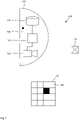
- figure 1 shows a robot 100 in a household 105.
- the robot 100 can move autonomously in the household 105 and is preferably set up to carry out a predetermined function on the go or at a controlled location.
- the function is typically associated with household 105 and may include transport or cleaning, for example.
- the illustrated robot 100 is floor-based and may have a drive mechanism including wheels; other ways of moving the robot 100 are also conceivable.
- the household 105 is usually used by at least one person who moves around in the household 105 and can move an item 110 in the household.
- Object 110 may include a fixed boundary such as a wall or closet.
- movable objects 110 are also possible, for example movable furniture such as a table or a chair or a book, a cable or a carpet.
- a moving door can be considered a moving object in this sense, just like a person or a pet.
- an object includes any type of object that the robot 100 is not intended to collide with.
- a section that the robot 100 is not intended to travel is commonly referred to as a prohibited or no-go area and may coincide with an occupied section or stand alone.
- a prohibited area can also be permanent or temporary.
- a forbidden area can often still be scanned, at least up to a certain distance from the robot 100.
- the no-go area is occupied in the occupancy grid with a probability of 1, the logit of which is infinite. In this way, the area is always regarded as occupied, so that the robot 100 does not enter it.
- the robot 100 preferably comprises a processing device 115, at least one scanning device 120, a storage device 125 and a communication device 130.
- a drive device which can be controlled by the processing device 115 in order to move the robot 100 in the household 105 is not shown.
- the processing device 115 is usually formed by an embedded controller.
- the scanning device 120 is set up to scan a section of the household 105 in the area surrounding the robot 100 in as contactless a manner as possible and to determine whether the section is occupied by an object 110 or free.
- the scanning device 120 can include a camera, a LiDAR sensor, a radar sensor or an ultrasonic sensor.
- the sensing device 120 may also include a collision or contact sensor for an object 110 .
- the storage device 125 is set up to record an occupancy grid 135 that reflects an occupancy state of the household 105 .
- the communication device 130 is set up for preferably wireless communication with another robot 100 or another location in the household 105 .
- the occupancy grid 135 includes a number of cells 140, typically organized in a matrix or checkerboard fashion, with a cell 140 representing a portion of the household 105.
- a floor area of household 105 is represented by a two-dimensional array of cells 140 .
- a cell 140 carries a value representing a logit of a probability that an associated portion of the household 105 has an item 110 occupied.
- a light cell is associated with a low logit value and a dark cell is associated with a high logit value. If an occupancy status of a section is not known, the cell 140 can be initialized with 0.5.
- the values assigned to the cells 140 each include logit values of an occupancy of an assigned section.
- the robot 100 can use the scanning device 120 to scan a section of the household 105 and determine a probability p with which the section is occupied by an object 110 . The logit can then be determined with respect to the probability p.
- An important property of logit is that simply adding two logit values creates another logit value.
- a logit value stored in a cell 140 of the occupancy grid 135 can be updated by adding a specific logit value. Whether the section is considered occupied or free can be determined by comparing a stored logit value with a predetermined threshold value. A hysteresis can be used in the determination.
- the robot 100 can be controlled not to enter a section represented by a cell 140 whose logit value is above a predetermined threshold. While driving, the robot 100 can update the occupancy grid 135 using scans.
- the robot 100 be set up to exchange an occupancy grid 135 or a section thereof with another robot 100 in the household 105 .
- the robot 100 can provide the allocation grid 135 determined by it to another robot 100 or combine an externally provided allocation grid 135 with its local one.
- the robot 100 maintains in its storage device 125 a global occupancy grid 135, according to which it determines its movement in the household 105, and a local occupancy grid 135 comprising information which is based on one or more scans by the scanner 120 are formed.
- the local occupancy grid 135 can be provided to the outside and integrated into the own global occupancy grid 135 .
- each determination can also be incorporated directly into the global occupancy grid 135, while at the same time being collected in the local occupancy grid 135 and provided periodically.
- the local population grid 135 may also be provided after each scan has taken place. This allows for very low latency before the information is available at another robot 100, but also requires high bandwidth for transmission.
- figure 2 shows a system 200 with several robots 100 in a household 105.
- a first robot 205, a second robot 210 and a third robot 215 are shown as examples.
- an optional central point 220 is provided, for example, which is set up to communicate with the robots 205 - 215 by means of a communication device 225 , to process received information by means of a processing device 230 and to store it by means of a memory device 235 .
- the robots 205 - 215 can receive information about the occupancy status of sections of the Household 105 prefer to share among themselves. Various scenarios are conceivable for this.
- the first robot 205 drives in the household 105 while the second robot 210 is in a first charging station 240 and the third robot 215 is in a second charging station 245 .
- the robots 210 and 215 can be switched off or work with reduced power, so that they are less accessible for communication.
- the first robot 205 can build a local population grid 135 without providing it at the same time.
- the local occupancy grid 135 can only be made available to the robots 210, 215 when the journey is completed, so that they can incorporate all current information into their occupancy grids 135. In this way it can be prevented that the robots 210, 215 have to become active themselves more frequently or for longer than necessary in order to update their occupancy grids 135.
- the robots 205 and 210 drive around the household while the third robot 215 stands still.
- the moving robots 205 and 210 can set up their occupancy grids 135 by communicating their own findings to one another immediately or after a local occupancy grid 135 has been built up. If the robots 205 and 210 end their journeys in the household 105, the last moving robot 205, 210 can provide its occupancy grid 135 to all other robots 205-215 since it has the most up-to-date occupancy data.
- all robots 205-215 have an occupancy grid 135 and each robot 205-215 knows its own position on the navigation map and its own local occupancy grid 135. Now, as in the first scenario, only one robot 205 drives through the household 105, this can create a local occupancy grid 135. At the end of his journey, the local occupancy map 135 can be integrated into the global occupancy grid 135 . A periodic transmission of the local allocation grid 135 may not be necessary if the receiving robots 210, 215 are not currently using the allocation grid 135.
- the temporary occupancy grid 135 must be checked before the first addition whether the first robot 205 can localize itself in the present global occupancy grid 135 or whether the update to be newly integrated of the temporary occupancy grid 135 is to be assigned to the previous global occupancy grid 135 . If this is the case, the first robot 205 provides updates to the existing global occupancy grid 135, otherwise it creates a new global occupancy grid 135 as in scenario 1.
- the non-active robots 210, 215 are not burdened with receiving and processing data in their idle phase and do not receive the global occupancy grid 135 as long as the first robot 205 is still driving. Since these robots 210, 215 are standing at their loading station 240, 245 the entire time, they do not need the occupancy grid 135 to be updated either. Instead, the first robot 205 sends the updated global occupancy grid 135 to the other robots 210, 215 after the end of the journey, so that they can take over the occupancy grid 135 all at once.
- the robots 210, 215 must now check whether the received occupancy grid 135 is an update of their existing global occupancy grid 135, or an alternative, new global occupancy grid 135 that replaces the existing global occupancy grid 135 should not overwrite. In this way, at the end all robots 205-215 have access to all of the collection grids 135 in the most up-to-date version.
- a fourth scenario all robots 205 - 215 have an occupancy grid 135 and each robot 205 - 215 knows its own position with respect to the navigation map and the associated occupancy grid 135. Similar to the second scenario, robots 205 and 210 then move, while the third Robot 215 stops.
- the moving robots 205, 210 each expand or update their occupancy grid 135 by creating a local occupancy grid 135 based on scans of their environment and periodically updating this in the global occupancy grid 135. Since the local population grid 135 is useful to the other moving robot 210, it is preferably provided to it as well.
- the robot 210 can integrate the received allocation grid 135 into its own global allocation grid 135 and optionally in a corresponding one Provide its local occupancy grid 135 to the first robot 205.
- Each robot 205, 210 sends its temporary occupancy grid 135 to the other robot 205, 210 one last time when it finishes its journey.
- the inactive robot 215 only receives an update from the last robot 205, 210 still moving, which includes all information that the moving robot 205, 210 collected during its last deployment.
- a prerequisite for overwriting the global occupancy grid 135 of the other robots 210, 215 is that they establish a match with their own global occupancy grid 135. If no matches can be found, it may be that the robots 205 - 215 act in a group, but have been used in different environments.
- the global occupancy grid 135 of the last active robot 205, 210 is preferably stored as an alternative occupancy grid 135 on the other robots 205, 210, 215.
- the robot 205, 210 that drove last in front of it sends its created global occupancy grid 135 to all other robots 210, 215, until finally each of the collected global occupancy grids 135 could be assigned to one another or as a new alternative occupancy grid 135 on all robots 205 - 215 is deposited. In this way, all robots 205 - 215 have access to all the collected assignment grids 135 in the most up-to-date version at the end.
- all robots 205-215 can have the most up-to-date occupancy grid 135 with the latest updates at their disposal, in order to use them as a basis for their own navigation.
- the procedure described can also be used if the robots 205-215 of the association perform different tasks in the same household 105, for example vacuuming, wiping, transporting or a care task. Shorter exploration times and thus faster and more efficient task execution can result when multiple robots 205 - 215 explore cooperatively in the same household 105 . Through the cooperative exchange of updates or extensions to the occupancy grid 135, those robots 205 - 215 that are not driving also receive the latest occupancy grid 135.
- An exchange of occupancy grids 135 from other environments can also advantageously take place, for example if the robots 205 - 215 are in different rooms or are on different floors. Even if a robot 205 - 215 has not driven there before, it can be used there immediately afterwards without exploration, since the most up-to-date occupancy grid 135 is already available to it. A user only needs to create customized areas such as a forbidden area or additional information such as a designation of rooms, do-not-disturb times or situations for specific rooms once for the global occupancy grid 135 and not for each robot 205-215 individually.
- FIG. 3 shows a flow diagram of a method 300 for transmitting map information from a first example robot 205 to a second example robot 210 that are in the same household 105.
- FIG. Steps that are assigned to the first robot 205 are shown in a left-hand area, and steps that are assigned to the second robot 210 are shown in a right-hand area.
- the robots 205, 210 can also switch roles. Bi-directional exchange is also possible.
- card information can be exchanged between any robots 205-215 in a household 105, and any number of robots 205-215 can participate in the method 300 shown.
- the above with reference to figure 2 The exemplary scenarios described are compatible with the method 300.
- the first robot 205 scans its surroundings in the household 105.
- a scan may relate to one or more sections to which different cells 140 of the occupancy grid 135 are assigned.
- the population grid 135 may be updated or expanded based on the scan. The update usually takes place on a local occupancy grid 135 , while navigation of the first robot 205 is influenced by a global occupancy grid 135 .
- a step 315 it is determined whether sufficient acquisitions have been made. If this is not the case, steps 305 to 315 can be repeated. Otherwise, the created local occupancy grid 135 can be made available to one or more other robots 210, 215 in a step 320. If it is known which robots 210, 215 are to receive the update, then a list with identifications of all those robots 210, 215 that have not yet confirmed receipt of the update can be created. If a confirmation from a robot 210, 215 arrives, the identification of be removed from the list. In a step 325 it is determined whether the list is empty. If this is the case, the occupancy grid 135 can be discarded in a step 330 or also archived. In addition, a new local occupancy grid 135 can be created, which is provided with new information when steps 305, 310 are run through again. The new occupancy grid 135 can also already be created and filled if not all receiving robots 210, 215 have acknowledged receipt.
- the second robot 210 can receive the occupancy grid 135 from the first robot 205 in a step 340 .
- a step 345 he can confirm the receipt at the first robot 205 .
- the second robot 210 can check whether it can correlate the information received with its own information. If he cannot determine a position of the received occupancy grid 135 with respect to his own global occupancy grid 135, he can discard the received raster or keep it as an alternative occupancy grid 135. A later received occupancy grid 135 can then be checked against all stored alternative occupancy grids 135 .
Landscapes
- Engineering & Computer Science (AREA)
- Radar, Positioning & Navigation (AREA)
- Physics & Mathematics (AREA)
- Aviation & Aerospace Engineering (AREA)
- Remote Sensing (AREA)
- General Physics & Mathematics (AREA)
- Automation & Control Theory (AREA)
- Electromagnetism (AREA)
- Control Of Position, Course, Altitude, Or Attitude Of Moving Bodies (AREA)
Abstract
Description
- Die Erfindung betrifft einen Haushaltsroboter. Insbesondere betrifft die Erfindung die Aktualisierung einer Navigationskarte eines autonom beweglichen Roboters für einen Haushalt.
- Ein Roboter ist dazu eingerichtet, sich eigenständig in einem Haushalt zu bewegen und zu navigieren. Dabei soll der Roboter eine vorbestimmte Nutzfunktion ausführen, beispielsweise ein Reinigen einer Bodenfläche. Zur Navigation steht dem Roboter eine Orientierungskarte zur Verfügung, die er beispielsweise aufgrund von Abtastungen eines Umfelds selbst erstellen kann. Die Orientierungskarte kann insbesondere als topographische Karte oder als Belegungskarte bzw. Belegungsraster ausgeführt sein. Die Belegungskarte gibt darüber Aufschluss, welche Stellen des Haushalts für den Roboter erreichbar sind und wie diese Stellen relativ zueinander liegen. Nicht erreichbare Stellen können permanent sein, beispielsweise in Form einer Wand, oder lokal, beispielsweise in Form eines verschiebbaren Tischs oder Stuhls.
- Eine besondere Herausforderung im Haushalt besteht darin, das Belegungsraster fortlaufend zu aktualisieren, um eine hohe Beweglichkeit des Roboters zu ermöglichen. Dazu soll das Belegungsraster ein Format aufweisen, das eine rasche und effiziente Einarbeitung neuer Informationen ermöglicht, um insbesondere temporäre Hindernisse möglichst aktuell im Belegungsraster abzubilden.
- Eine der vorliegenden Erfindung zu Grunde liegende Aufgabe besteht in der Angabe einer verbesserten Technik zur Aktualisierung eines Belegungsrasters eines autonom beweglichen Roboters für einen Haushalt. Die Erfindung löst diese Aufgabe mittels der Gegenstände der unabhängigen Ansprüche. Unteransprüche geben bevorzugte Ausführungsformen wieder.
- Ein autonom beweglicher Roboter für einen Haushalt umfasst einen Sensor zur Abtastung des Haushalts im Umfeld des Roboters; eine Verarbeitungseinrichtung zur Bestimmung eines Belegungsrasters auf der Basis der Abtastung; wobei das Belegungsraster eine Vielzahl Zellen umfasst; wobei eine Zelle einen Abschnitt des Haushalts repräsentiert; wobei für die Zelle der Logit einer Belegung durch einen Gegenstand angegeben ist; wobei der Logit den natürlichen Logarithmus einer Chance betrifft, dass die Zelle durch einen Gegenstand belegt ist; wobei die Chance eine Wahrscheinlichkeit einer Belegung, geteilt durch eine Wahrscheinlichkeit einer Nichtbelegung der Zelle umfasst; wobei die Verarbeitungseinrichtung dazu eingerichtet ist, eine Bewegung des Roboters im Haushalt derart zu steuern, dass ein Abschnitt, dessen zugehörige Zelle einen Logit aufweist, der einen vorbestimmten Schwellenwert übersteigt, nicht betreten wird.
- Es wurde erkannt, dass ein Belegungsraster ("occupancy grid") mit Logit (oder "log odds") Werten besonders gut dazu geeignet ist, die sich häufig ändernden Umstände eines Haushalts für einen autonomen Roboter abzubilden. Das Belegungsraster kann auf der Basis von Abtastungen mittels unterschiedlicher Sensoren aktualisiert werden. Ein zunächst als belegt bestimmter Abschnitt kann durch ausreichend viele Bestimmungen eines freien Zustands wieder als frei bestimmt werden, sodass ein nicht mehr vorliegendes Hindernis im Belegungsraster abgebildet werden kann. Der Logit hat einen Definitionsbereich zwischen 0 und 1. Der Logit bildet Wahrscheinlichkeiten zwischen 0 und 0,5 auf einen negativen Wert, eine Wahrscheinlichkeit von 0,5 auf den Wert null und eine Wahrscheinlichkeit zwischen 0,5 und 1 auf einen positiven Wert ab.
- Das Belegungsraster kann auch auf der Basis nicht durch den Roboter lokal bestimmter, sondern importierter Informationen aktualisiert werden. Eine Reihenfolge, in der Belegungsinformationen eingepflegt werden, ist dabei nicht von Bedeutung. So können lokale Erkenntnisse verbessert mit von extern erhobenen und zugeführten Informationen kombiniert werden.
- Der Roboter kann eine Kommunikationseinrichtung zum Empfangen eines weiteren Belegungsrasters eines anderen Roboters im Haushalt umfassen; wobei die Verarbeitungseinrichtung dazu eingerichtet ist, das weitere Belegungsraster in das vorhandene zu integrieren, indem die Logit-Werte zueinander korrespondierender Zellen jeweils addiert werden. Das Ergebnis einer Addition kann dann in der entsprechenden Zelle im Belegungsraster abgelegt werden.
- Das Einpflegen empfangener Informationen kann rasch und einfach durch Addieren von Logit-Werten zueinander korrespondierender Zellen erfolgen. Die Verarbeitungseinrichtung kann das Aktualisieren während eines Betriebs des Roboters durchführen. Der Betrieb kann durch eine gerade erfolgende Aktualisierung nicht beeinträchtigt werden. Eine Navigation des Roboters kann selbst dann möglich sein, wenn einige Zellen des lokalen Belegungsrasters bereits aktualisiert sind und andere noch nicht. Betreffen ein lokales und ein empfangenes Belegungsraster einander überschneidende, aber nicht identische Gebiete des Haushalts, so kann ein bestehendes Belegungsraster aufgrund der empfangenen Informationen bezüglich ihres Gebiets erweitert werden oder es werden nur empfangene Informationen verwendet, die das lokal bekannte Gebiet des Haushalts betreffen. Dies kann bei knappem Speicherplatz zur Ablage des Belegungsrasters vorteilhaft sein.
- Der andere Roboter kann gleich oder abweichend vom ersten Roboter aufgebaut sein. Beispielsweise kann ein Belegungsraster zwischen einem fahrenden, einem fliegenden oder einem fest installierten anderen Roboter ausgetauscht werden. Voraussetzung zur Kombination zweier Belegungsraster ist lediglich, dass einander zugeordnete Zellen in den Rastern gefunden werden können.
- Die Verarbeitungseinrichtung kann dazu eingerichtet sein, das empfangene Belegungsraster zu speichern, falls keine zueinander korrespondierenden Zellen zwischen den Belegungsrastern bestimmt werden können. Dies kann insbesondere der Fall sein, wenn die Belegungsraster disjunkte Gebiete des Haushalts betreffen oder das lokale Belegungsraster noch nicht ausreichend gefestigt ist, um eine Lage der Belegungsraster zueinander anhand von Strukturen belegter oder freier Bereiche sicher zu erkennen. Das gespeicherte Belegungsraster kann zu einem späteren Zeitpunkt eingepflegt werden, wenn weitere Informationen im lokalen Belegungsraster verfügbar sind. Diese weiteren Informationen können mittels des Sensors abgetastet oder von einer anderen Quelle empfangen werden.
- Letztlich können Informationen einer beliebigen Vielzahl an Quellen miteinander kombiniert werden, um ein verbessertes Belegungsraster zur Steuerung des Roboters bereitzustellen. Die unterschiedlichen Belegungsraster können unter unterschiedlichen Bedingungen entstanden sein. Beispielsweise kann ein Roboter, der einen vorbestimmten Bereich des Haushalts nicht betreten darf, trotzdem Informationen über dessen Belegung von einem anderen Roboter empfangen, der den Bereich betreten darf oder ihn abtasten kann, ohne ihn zu betreten. Die empfangenen Informationen können sofort oder später vorteilhaft verwendet werden.
- Die Verarbeitungseinrichtung kann dazu eingerichtet sein, einen Abschnitt des Haushalts mittels des Sensors abzutasten, den Logit der Belegung des Abschnitts auf der Basis der Abtastung zu bestimmen und den bestimmten Logit zu einem Logit einer den Abschnitt repräsentierenden Zelle des Belegungsrasters zu addieren. So kann das lokale Belegungsraster auf der Basis eigener Abtastungen des Roboters sukzessive verbessert werden.
- Der Roboter kann außerdem eine Kommunikationseinrichtung zur Bereitstellung des bestimmten Belegungsrasters umfassen. Das Belegungsraster kann insbesondere an einen anderen Roboter im selben Haushalt bereitgestellt werden. In Verbindung mit der oben genannten Ausführungsform können zwei Roboter ihre Belegungsraster in beiden Richtungen austauschen und so verbessert kooperativ zusammenwirken.
- Die Verarbeitungseinrichtung kann ferner dazu eingerichtet sein, auf der Basis einer Vielzahl Abtastungen ein lokales Belegungsraster zu bestimmen und das lokale Belegungsraster bereitzustellen. So kann vermieden werden, dass Informationen bezüglich jeder einzelnen Abtastung einzeln bereitgestellt oder übermittelt werden müssen. Durch das Akkumulieren von Abtastungen in einem lokalen Belegungsraster kann eine effiziente Reduktion zu übermittelnder oder seitens eines Empfängers zu verarbeitender Informationen erfolgen.
- Die Verarbeitungseinrichtung kann dazu eingerichtet sein, das lokale Belegungsraster nach dem Bereitstellen in ein globales Belegungsraster zu integrieren und das lokale Belegungsraster neu zu initialisieren. Die Fortbewegung und Hindernisumfahrung des Roboters kann durch die Kenntnis über das globale Belegungsraster beeinflusst werden. Durch Verwendung eines lokalen Belegungsrasters kann ein Aufwand für dessen Aktualisieren reduziert sein. Das Initialisieren des lokalen Belegungsrasters kann mit einem vorbestimmten Wahrscheinlichkeitswert wie 0,5 erfolgen, um eine Unbestimmtheit bezüglich der Belegung auszudrücken.
- Das globale Belegungsraster kann aufgebaut sein wie das lokale, indem es Zellen aufweist, die jeweils einen Abschnitt des Haushalts repräsentieren, und die Logit-Werte bezüglich deren Belegung tragen. Die Logit-Werte können auf der Basis mehrerer Abtastungen einfach und effizient durch Addieren verbessert werden, wie hierin genauer ausgeführt ist. Abtastungen können eine vorbestimmte Fläche des Haushalts betreffen, die durch mehrere Zellen repräsentiert sind. Eine Abtastung, die mehreren Zellen entspricht, kann auch temporäres Belegungsraster genannt werden. Das temporäre Belegungsraster kann durch zellenweise Addition mit einem anderen Belegungsraster zusammengeführt werden. In einer Ausführungsform kann das Belegungsraster immer dann bereitgestellt werden, wenn eine vorbestimmte Anzahl Abtastungen erfolgt ist, die in das Belegungsraster eingeflossen sind. Das Belegungsraster kann auch periodisch bereitgestellt werden.
- Das lokale Belegungsraster kann vorbestimmten Empfänger bereitgestellt und so lange bereitgehalten werden, bis es erfolgreich an alle vorbestimmten Empfänger übermittelt wurde. Ein Empfänger, insbesondere ein weiterer Roboter im Haushalt, muss daher nicht ständig zum Empfang neuer Belegungsraster bereitstehen, sondern kann beispielsweise vorübergehend abgeschaltet werden oder sich vorübergehend aus einem Kommunikationsbereich entfernen. Für ein noch nicht an alle Empfänger zugestelltes Belegungsraster kann ein dedizierter Speicher vorgesehen sein.
- Nach einem weiteren Aspekt der vorliegenden Erfindung umfasst ein System einen ersten hierin beschriebenen Roboter, der dazu eingerichtet ist, ein Belegungsraster zu empfangen, und einen zweiten hierin beschriebenen Roboter, der dazu eingerichtet ist, ein Belegungsraster bereitzustellen. Jeder Roboter kann auch beide Möglichkeiten unterstützen. Das System kann eine beliebige Vielzahl Roboter umfassen, die auf die beschriebene Weise kooperativ zusammenwirken können, um Informationen über den Belegungszustand von Abschnitten des Haushalts untereinander auszutauschen. So können alle Roboter von den Abtastungen der jeweils anderen Roboter profitieren und sich verbessert sicher im Haushalt bewegen. Insbesondere sich rasch oder häufig ändernde Belegungszustände durch mobile Gegenstände können so verbessert bestimmt und verbreitet werden. Eine Wegplanung eines Roboters kann verbessert sein, indem er freie oder frei gewordene Abschnitte des Haushalts verbessert identifizieren und nutzen kann.
- Das System kann auch eine zentrale Stelle umfassen, die dazu eingerichtet ist, ein Belegungsraster von einem der Roboter zu empfangen und einem anderen Roboter bereitzustellen. Die zentrale Stelle kann ein empfangenes Belegungsraster so lange zwischenspeichern, bis alle vorgesehenen Roboter sie empfangen haben. Außerdem kann die zentrale Stelle ein globales Belegungsraster erstellen, das beispielsweise einem dem Haushalt neu hinzugefügten Roboter bereitgestellt werden kann. Die zentrale Stelle ist bevorzugt im Haushalt angeordnet und dazu eingerichtet, Informationen nur lokal zu empfangen oder bereitzustellen. Es kann auch eine zentrale Stelle außerhalb des Haushalts vorgesehen sein, beispielsweise in Form eines Servers oder eines Diensts, zum Beispiel in einer Cloud.
- Nach wieder einem weiteren Aspekt der vorliegenden Erfindung umfasst ein erstes Verfahren zum Steuern eines autonom beweglichen Roboters für einen Haushalt Schritte des Abtastens des Haushalts im Umfeld des Roboters; des Bestimmens eines Belegungsrasters auf der Basis der Abtastung, wobei das Belegungsraster eine Vielzahl Zellen umfasst, wobei eine Zelle einen Abschnitt des Haushalts repräsentiert, wobei für die Zelle der Logit einer Belegung durch einen Gegenstand angegeben ist; und des Steuerns des Roboters im Haushalt derart, dass ein Abschnitt, dessen zugeordnete Zelle einen Logit aufweist, der einen vorbestimmten Schwellenwert übersteigt, nicht betreten wird. Der Logit betrifft den natürlichen Logarithmus einer Chance, dass die Zelle durch einen Gegenstand belegt ist; und die Chance umfasst eine Wahrscheinlichkeit, mit der die Zelle durch einen Gegenstand belegt ist, geteilt durch eine Gegenwahrscheinlichkeit.
- Das Verfahren kann mittels eines hierin beschriebenen Roboters ausgeführt werden. Der Roboter kann eine Verarbeitungseinrichtung umfassen, die dazu eingerichtet ist, das Verfahren ganz oder teilweise auszuführen. Dazu kann die Verarbeitungseinrichtung einen programmierbaren Mikrocomputer oder Mikrocontroller umfassen und das Verfahren kann in Form eines Computerprogrammprodukts mit Programmcodemitteln vorliegen. Das Computerprogrammprodukt kann auch auf einem computerlesbaren Datenträger abgespeichert sein. Merkmale oder Vorteile des Verfahrens können auf die Vorrichtung übertragen werden oder umgekehrt.
- Nach noch einem weiteren Aspekt der vorliegenden Erfindung umfasst ein Verfahren zum Steuern eines Systems mit mehreren Robotern Schritte des Steuerns wenigstens eines der Roboter im Haushalt auf der Basis eines lokalen Belegungsrasters; des Abtastens des Haushalts durch den wenigstens einen Roboter; des Bestimmens eines lokalen Belegungsrasters auf der Basis der Abtastung; und des Bereitstellens des bestimmten lokalen Belegungsrasters an wenigstens einen der anderen Roboter. Der andere Roboter kann dann auf der Basis des bereitgestellten sowie optional auch eines lokalen Belegungsrasters gesteuert werden. Das zweite Verfahren kann mit beliebig vielen hierin beschriebenen Robotern ausgeführt werden, die bevorzugt alle demselben Haushalt zugeordnet sind.
- Ein Belegungsraster kann von einem Roboter direkt an einen oder mehrere Roboter bereitgestellt werden oder über eine zentrale Stelle. Die Roboter können auch nach Art eines vermaschten Netzes ("meshed network") miteinander kommunizieren, um ein Belegungsraster an mehrere Empfänger zu übermitteln.
- Ein Belegungsraster kann vom bereitstellenden Roboter oder der zentralen Stelle digital signiert werden, um seine Identität oder Herkunft zu bezeugen. Dazu kann eine Prüfsumme ("Hash") des Belegungsrasters erstellt und mittels kryptographischer Methoden an das Belegungsraster angehängt werden. Ein nicht oder fehlerhaft unterschriebenes Belegungsraster kann von einem Roboter verworfen werden. Die Kommunikation eines Roboters kann verschlüsselt erfolgen. Ein Roboter kann eine Historie eingepflegter Belegungsraster führen, beispielsweise indem deren Prüfsummen gespeichert werden. Durch Vergleichen einer Prüfsumme eines empfangenen Belegungsrasters mit gespeicherten Prüfsummen kann verhindert werden, dass ein Belegungsraster mehrmals eingespielt wird.
- Die Erfindung wird nun unter Bezug auf die beiliegenden Figuren genauer beschrieben, in denen:
- Figur 1
- einen Roboter in einem Haushalt;
- Figur 2
- ein System mit mehreren Robotern; und
- Figur 3
- ein Ablaufdiagramm eines Verfahrens
-
Figur 1 zeigt einen Roboter 100 in einem Haushalt 105. Der Roboter 100 ist im Haushalt 105 autonom beweglich und bevorzugt dazu eingerichtet, unterwegs oder an einem angesteuerten Ort eine vorbestimmte Funktion auszuführen. Die Funktion ist üblicherweise dem Haushalt 105 zugeordnet und kann etwa ein Transportieren oder Reinigen umfassen. Der dargestellte Roboter 100 ist bodengestützt und kann eine Antriebseinrichtung aufweisen, die Räder umfasst; andere Arten der Fortbewegung des Roboters 100 sind ebenfalls denkbar. - Der Haushalt 105 wird üblicherweise von wenigstens einer Person benutzt, die sich im Haushalt 105 bewegt und einen Gegenstand 110 im Haushalt bewegen kann. Der Gegenstand 110 kann eine feste Begrenzung wie eine Wand oder einen Einbauschrank umfassen. Aber auch bewegliche Gegenstände 110 sind möglich, beispielsweise ein bewegliches Möbel wie ein Tisch oder ein Stuhl oder ein Buch, ein Kabel oder ein Teppich. Eine bewegliche Tür kann in diesem Sinn genauso als beweglicher Gegenstand angesehen werden wie eine Person oder ein Haustier. Im Allgemeinen umfasst ein Gegenstand jede Art von Objekt, mit dem der Roboter 100 nicht kollidieren soll.
- Ein Abschnitt, den der Roboter 100 nicht befahren soll, wird üblicherweise als verbotener oder No-Go Bereich bezeichnet und kann mit einem belegten Abschnitt zusammenfallen oder eigenständig sein. Auch ein verbotener Bereich kann permanenter oder temporärer Natur sein. Häufig kann ein verbotener Bereich noch abgetastet werden, zumindest bis in eine gewisse Entfernung vom Roboter 100. In einer Ausführungsform wird der No-Go Bereich im Belegungsraster mit einer Wahrscheinlichkeit von 1 belegt, deren Logit unendlich ist. So wird der Bereich stets als belegt angesehen, sodass der Roboter 100 ihn nicht betritt.
- Der Roboter 100 umfasst bevorzugt eine Verarbeitungseinrichtung 115, wenigstens eine Abtasteinrichtung 120, eine Speichereinrichtung 125 und eine Kommunikationseinrichtung 130. Eine Antriebseinrichtung, die durch die Verarbeitungseinrichtung 115 steuerbar ist, um den Roboter 100 im Haushalt 105 zu bewegen, ist nicht dargestellt.
- Die Verarbeitungseinrichtung 115 ist üblicherweise durch einen Embedded Controller gebildet. Die Abtasteinrichtung 120 ist dazu eingerichtet, einen Abschnitt des Haushalts 105 im Umfeld des Roboters 100 möglichst berührungslos abzutasten und zu bestimmen, ob der Abschnitt von einem Gegenstand 110 belegt oder frei ist. Beispielsweise kann die Abtasteinrichtung 120 eine Kamera, einen LiDAR-Sensor, einen Radarsensor oder einen Ultraschall-Sensor umfassen. Die Abtasteinrichtung 120 kann auch einen Kollisions- oder Kontaktsensor für einen Gegenstand 110 umfassen. Die Speichereinrichtung 125 ist dazu eingerichtet, ein Belegungsraster 135 aufzunehmen, das einen Belegungszustand des Haushalts 105 reflektiert. Die Kommunikationseinrichtung 130 ist zur bevorzugt drahtlosen Kommunikation mit einem anderen Roboter 100 oder einer anderen Stelle im Haushalt 105 eingerichtet.
- Das Belegungsraster 135 umfasst eine Anzahl Zellen 140, die üblicherweise nach Art einer Matrix oder eines Schachbretts organisiert sind, wobei eine Zelle 140 einen Abschnitt des Haushalts 105 repräsentiert. In der dargestellten Ausführungsform wird eine Bodenfläche des Haushalts 105 durch eine zweidimensionale Matrix von Zellen 140 repräsentiert. Eine Zelle 140 trägt einen Wert, der einen Logit einer Wahrscheinlichkeit repräsentiert, dass ein zugeordneter Abschnitt des Haushalts 105 mit einem Gegenstand 110 belegt ist. In der Darstellung von
Figur 1 ist eine helle Zelle einem niedrigen Logit-Wert und eine dunkle Zelle einem hohen Logit-Wert zugeordnet. Ist ein Belegungszustand eines Abschnitts nicht bekannt, so kann die Zelle 140 mit 0,5 initialisiert werden. - Die den Zellen 140 zugeordneten Werte umfassen jeweils Logit-Werte einer Belegung eines zugeordneten Abschnitts. Der Logit ist eine aus der Statistik bekannte Funktion, die wie folgt definiert ist:

- Der Roboter 100 kann mittels der Abtasteinrichtung 120 einen Abschnitt des Haushalts 105 abtasten und eine Wahrscheinlichkeit p bestimmen, mit dem der Abschnitt durch einen Gegenstand 110 belegt ist. Bezüglich der Wahrscheinlichkeit p kann dann der Logit bestimmt werden. Eine wichtige Eigenschaft des Logit besteht darin, dass durch einfaches Addieren zweier Logit Werte ein weiterer Logit-Wert entsteht. So kann ein in einer Zelle 140 des Belegungsrasters 135 gespeicherter Logit-Wert durch Addition eines bestimmten Logit-Werts aktualisiert werden. Ob der Abschnitt als belegt oder frei gilt, kann durch Vergleichen eines abgespeicherten Logit-Werts mit einem vorbestimmten Schwellenwert bestimmt werden. Bei der Bestimmung kann eine Hysterese angewandt werden.
- Der Roboter 100 kann derart gesteuert werden, dass er einen Abschnitt, der durch eine Zelle 140 repräsentiert ist, deren Logit-Wert über einem vorbestimmten Schwellenwert liegt, nicht betritt. Während des Fahrens kann der Roboter 100 das Belegungsraster 135 mittels Abtastungen aktualisieren.
- Es wird vorgeschlagen, dass der Roboter 100 dazu eingerichtet ist, ein Belegungsraster 135 oder einen Abschnitt davon mit einem anderen Roboter 100 im Haushalt 105 auszutauschen. Dazu kann der Roboter 100 das von ihm bestimmte Belegungsraster 135 einem anderen Roboter 100 bereitstellen oder ein extern bereitgestelltes Belegungsraster 135 mit seinem lokalen vereinigen.
- Es ist besonders bevorzugt, dass der Roboter 100 in seiner Speichereinrichtung 125 ein globales Belegungsraster 135 hält, nach dem er seine Bewegung im Haushalt 105 bestimmt, und ein lokales Belegungsraster 135, das Informationen umfasst, die auf der Basis einer oder mehrerer Abtastungen mittels der Abtasteinrichtung 120 gebildet sind. In vorbestimmten Abständen, beispielsweise immer nachdem eine vorbestimmte Anzahl Abtastungen erfolgt ist oder nachdem eine vorbestimmte Zeit verstrichen ist, kann das lokale Belegungsraster 135 nach außen bereitgestellt und in das eigene globale Belegungsraster 135 integriert werden. In einer anderen Ausführungsform kann auch jede Bestimmung unmittelbar in das globale Belegungsraster 135 eingearbeitet werden, während sie gleichzeitig im lokalen Belegungsraster 135 gesammelt und periodisch bereitgestellt wird. In noch einer weiteren Ausführungsform kann das lokale Belegungsraster 135 auch nach jeder erfolgten Abtastung bereitgestellt werden. Dies ermöglicht eine sehr geringe Latenzzeit, bis die Informationen an einem anderen Roboter 100 verfügbar sind, erfordert jedoch auch eine hohe Bandbreite für die Übertragung.
-
Figur 2 zeigt ein System 200 mit mehreren Robotern 100 in einem Haushalt 105. Beispielhaft sind eine erster Roboter 205, ein zweiter Roboter 210 und ein dritter Roboter 215 dargestellt. Außerdem ist beispielhaft eine optionale zentrale Stelle 220 vorgesehen, die dazu eingerichtet ist, mittels einer Kommunikationseinrichtung 225 mit den Robotern 205 - 215 zu kommunizieren, empfangene Informationen mittels einer Verarbeitungseinrichtung 230 zu verarbeiten und mittels einer Speichereinrichtung 235 abzuspeichern. Die Roboter 205 - 215 können Informationen über Belegungszustände von Abschnitten des Haushalts 105 bevorzugt untereinander teilen. Dazu sind verschiedene Szenarien denkbar. - In einem ersten beispielhaften Szenario fährt der erste Roboter 205 im Haushalt 105, während der zweite Roboter 210 in einer ersten Ladestation 240 und der dritte Roboter 215 in einer zweiten Ladestation 245 steht. Die Roboter 210 und 215 können abgeschaltet sein oder mit verminderter Leistung arbeiten, sodass sie weniger gut kommunikativ erreichbar sind. In diesem Szenario kann der erste Roboter 205 ein lokales Belegungsraster 135 aufbauen, ohne es gleichzeitig bereitzustellen. Erst bei Beendigung der Fahrt kann das lokale Belegungsraster 135 an die Roboter 210, 215 bereitgestellt werden, sodass diese in ihren Belegungsrastern 135 alle aktuellen Informationen einarbeiten können. So kann verhindert werden, dass die Roboter 210, 215 häufiger oder länger als nötig selbst aktiv werden müssen, um ihre Belegungsraster 135 zu aktualisieren.
- In einem zweiten beispielhaften Szenario fahren die Roboter 205 und 210 im Haushalt, während der dritte Roboter 215 stillsteht. Exemplarisch wird davon ausgegangen, dass zunächst alle Roboter 205 - 215 neu initialisierte Belegungsraster 135 haben und dass keiner der Roboter 205 - 215 seine Position oder die eines anderen Roboters 205 - 215 auf dem Belegungsraster 135 kennt. Die fahrenden Roboter 205 und 210 können ihre Belegungsraster 135 aufbauen, indem sie eigene Erkenntnisse sofort oder nach Aufbauen eines lokalen Belegungsrasters 135 einander mitteilen. Beenden die Roboter 205 und 210 ihre Fahrten im Haushalt 105, so kann der letzte fahrende Roboter 205, 210 sein Belegungsraster 135 allen anderen Robotern 205 - 215 bereitstellen, da er die aktuellsten Belegungsdaten hat.
- In einem dritten beispielhaften Szenario liegt allen Robotern 205 - 215 ein Belegungsraster 135 vor und jeder Roboter 205 - 215 kennt seine eigene Position in der Navigationskarte und das zugehörige eigene, lokale Belegungsraster 135. Fährt nun wie im ersten Szenario nur ein Roboter 205 durch den Haushalt 105, so kann dieser dabei ein lokales Belegungsraster 135 erstellen. Bei Ende seiner Fahrt kann die lokale Belegungskarte 135 in das globale Belegungsraster 135 integriert werden. Eine periodische Übermittlung des lokalen Belegungsrasters 135 kann nicht erforderlich sein, wenn die empfangenden Roboter 210, 215 das Belegungsraster 135 gerade nicht verwenden.
- Da es möglich ist, dass der erste Roboter 205 bei der neu gestarteten Fahrt in einer anderen Umgebung arbeitet als bei einem vorangehenden Einsatz, sodass ein lokales Belegungsraster 135 nicht dem zuvor vorliegenden globalen Belegungsraster 135 entspricht, muss vor dem ersten Addieren des temporären Belegungsrasters 135 geprüft werden, ob sich der erste Roboter 205 im vorliegenden globalen Belegungsraster 135 lokalisieren kann oder ob das neu zu integrierende Update des temporären Belegungsrasters 135 dem bisherigen globalen Belegungsraster 135 zuzuordnen ist. Ist dies der Fall, so liefert der erste Roboter 205 Aktualisierungen zum vorliegenden globalen Belegungsraster 135, ansonsten erstellt er wie in Szenario 1 ein neues globales Belegungsraster 135.
- Wie im ersten Szenario werden die nicht-aktiven Roboter 210, 215 in ihrer Ruhephase nicht mit dem Empfangen und Verarbeiten von Daten belastet und erhalten das globale Belegungsraster 135 nicht, solange der erste Roboter 205 noch fährt. Da diese Roboter 210, 215 die gesamte Zeit an ihrer Ladestation 240, 245 stehen, benötigen sie die Aktualisierungen der Belegungsraster 135 auch nicht. Stattdessen sendet der erste Roboter 205 das aktualisierte globale Belegungsraster 135 nach Beendigung der Fahrt an die anderen Roboter 210, 215, sodass diese das Belegungsraster 135 mit einem Mal übernehmen können. Wie im zweiten Szenario ist von den Robotern 210, 215 nun jeweils zu prüfen, ob es sich bei dem empfangenen Belegungsraster 135 um eine Aktualisierung ihres vorhandenen globalen Belegungsrasters 135, oder um ein alternatives, neues globales Belegungsraster 135 handelt, welches das vorhandene globale Belegungsraster 135 nicht überschreiben soll. Auf diese Weise stehen am Ende allen Robotern 205 - 215 alle gesammelten Belegungsraster 135 in der aktuellsten Version zur Verfügung.
- In einem vierten Szenario liegt allen Robotern 205 - 215 ein Belegungsraster 135 vor und jeder Roboter 205 - 215 kennt seine eigene Position bezüglich der Navigationskarte und des zugeordneten Belegungsrasters 135. Ähnlich wie im zweiten Szenario bewegen sich dann die Roboter 205 und 210, während der dritte Roboter 215 stillsteht. Die fahrenden Roboter 205, 210 erweitern oder aktualisieren jeweils ihre Belegungsraster 135, indem sie auf der Basis von Abtastungen ihres Umfelds ein lokales Belegungsraster 135 erstellen und dieses periodisch in das globale Belegungsraster 135 einpflegen. Da das lokale Belegungsraster 135 für den anderen sich bewegenden Roboter 210 nützlich ist, wird es ihm bevorzugt ebenfalls bereitgestellt. Der Roboter 210 kann das empfangene Belegungsraster 135 in sein eigenes globales Belegungsraster 135 integrierten und optional in entsprechender Weise sein lokales Belegungsraster 135 dem ersten Roboter 205 bereitstellen. Ein letztes Mal sendet jeder Roboter 205, 210 sein temporäres Belegungsraster 135 an den anderen Roboter 205, 210, wenn er seine Fahrt beendet. Der nicht aktive Roboter 215 erhält erst vom letzten noch fahrenden Roboter 205, 210 eine Aktualisierung, die alle Informationen umfasst, die der fahrende Roboter 205, 210 innerhalb seines letzten Einsatzes gesammelt hat.
- Voraussetzung für das Überschreiben des globalen Belegungsrasters 135 der anderen Roboter 210, 215 ist, dass diese eine Übereinstimmung mit ihrem eigenen globalen Belegungsraster 135 feststellen. Sind keinerlei Übereinstimmungen zu finden, so kann es sein, dass die Roboter 205 - 215 zwar in einem Verband agieren, jedoch in unterschiedlichen Umgebungen zum Einsatz gekommen sind. In diesem Fall wird bevorzugt das globale Belegungsraster 135 des letzten aktiven Roboters 205, 210 als alternatives Belegungsraster 135 auf den anderen Robotern 205, 210, 215 gespeichert. Der jeweils zuletzt davor gefahrene Roboter 205, 210 sendet in diesem Fall sein erstelltes globales Belegungsraster 135 an alle anderen Roboter 210, 215, bis schließlich jedes der gesammelten globalen Belegungsraster 135 einander zugeordnet werden konnten oder als neue alternative Belegungsraster 135 auf allen Robotern 205 - 215 hinterlegt ist. Auf diese Weise stehen allen Robotern 205 - 215 am Ende alle gesammelten Belegungsraster 135 in der jeweils aktuellsten Version zur Verfügung.
- Durch die beschriebene Kooperation können alle Roboter 205 - 215 über die aktuellsten Belegungsraster 135 mit den neuesten Aktualisierungen verfügen, um sie einer eigenen Navigation zu Grunde zu legen. Die beschriebene Vorgehensweise ist auch anwendbar, wenn die Roboter 205 - 215 des Verbands im gleichen Haushalt 105 unterschiedliche Aufgaben ausführen, beispielsweise Saugen, Wischen, Transportieren oder eine Pflegeaufgabe. Es können sich kürzere Explorationszeiten und somit eine schnellere und effizientere Aufgabendurchführung ergeben, wenn mehrere Roboter 205 - 215 kooperativ im gleichen Haushalt 105 explorieren. Durch den kooperativen Austausch von Aktualisierungen oder Erweiterungen der Belegungsraster 135 erhalten auch jene Roboter 205 - 215, die nicht fahren, die neusten Belegungsraster 135.
- Vorteilhaft kann auch ein Austausch von Belegungsrastern 135 von anderen Umgebungen erfolgen, beispielsweise wenn die Roboter 205 - 215 in unterschiedlichen Räumen oder auf unterschiedlichen Stockwerken unterwegs sind. Selbst wenn ein Roboter 205 - 215 dort zuvor noch nicht gefahren ist, kann er danach ohne Exploration sofort dort eingesetzt werden, da ihm bereits die aktuellsten Belegungsraster 135 vorliegen. Ein Benutzer muss angepasste Bereiche wie ein verbotener Bereich oder zusätzliche Informationen wie eine Bezeichnung von Räumen, Do-Not-Disturb Zeiten oder Situationen für bestimmte Räume nur einmal für das globale Belegungsraster 135 und nicht für jeden Roboter 205 - 215 einzeln erstellen.
-
Figur 3 zeigt ein Ablaufdiagramm eines Verfahrens 300 zur Übermittlung von Karteninformationen von einem ersten beispielhaften Roboter 205 an einen zweiten beispielhaften Roboter 210, die in demselben Haushalt 105 sind. In einem linken Bereich sind Schritte dargestellt, die dem ersten Roboter 205 zugeordnet sind, und in einem rechten Bereich Schritte, die dem zweiten Roboter 210 zugeordnet sind. Es ist zu verstehen, dass die Roboter 205, 210 auch ihre Rollen vertauschen können. Ein bidirektionaler Austausch ist ebenfalls möglich. Außerdem können Karteninformationen zwischen beliebigen Robotern 205 - 215 in einem Haushalt 105 ausgetauscht werden, und es können beliebig viele Roboter 205 - 215 am gezeigten Verfahren 300 teilnehmen. Die oben mit Bezug aufFigur 2 geschilderten beispielhaften Szenarien sind mit dem Verfahren 300 kompatibel. - In einem Schritt 305 tastet der erste Roboter 205 sein Umfeld im Haushalt 105 ab. Eine Abtastung kann eine oder mehrere Abschnitte betreffen, denen unterschiedliche Zellen 140 des Belegungsrasters 135 zugeordnet sind. In einem Schritt 310 kann das Belegungsraster 135 auf der Basis der Abtastung aktualisiert oder erweitert werden. Die Aktualisierung erfolgt üblicherweise auf einem lokalen Belegungsraster 135, während eine Navigation des ersten Roboters 205 durch ein globales Belegungsraster 135 beeinflusst wird.
- In einem Schritt 315 wird bestimmt, ob ausreichend Erfassungen durchgeführt wurden. Ist dies nicht der Fall, so können die Schritte 305 bis 315 erneut durchlaufen werden. Andernfalls kann das erstellte lokale Belegungsraster 135 in einem Schritt 320 an einen oder mehrere andere Roboter 210, 215 bereitgestellt werden. Ist bekannt, welche Roboter 210, 215 die Aktualisierung erhalten sollen, so kann eine Liste mit Identifikationen all derer Roboter 210, 215 erstellt werden, die den Erhalt der Aktualisierung noch nicht bestätigt haben. Trifft eine Bestätigung eines Roboters 210, 215 ein, so kann die Identifikation von der Liste entfernt werden. In einem Schritt 325 wird bestimmt, ob die Liste leer ist. Ist dies der Fall, so kann das Belegungsraster 135 in einem Schritt 330 verworfen oder auch archiviert werden. Außerdem kann ein neues lokales Belegungsraster 135 angelegt werden, das bei einem neuen Durchlauf der Schritte 305, 310 mit neuen Informationen versehen wird. Das neue Belegungsraster 135 kann auch bereits angelegt und gefüllt werden, wenn noch nicht alle empfangenden Roboter 210, 215 den Empfang quittiert haben.
- Der zweite Roboter 210 kann in einem Schritt 340 das Belegungsraster 135 vom ersten Roboter 205 empfangen. In einem Schritt 345 kann er den Empfang beim ersten Roboter 205 bestätigen. In einem Schritt 350 kann er prüfen, ob das Belegungsraster 135 ihm bereits bekannt ist. Dazu kann er eine Prüfsumme über das empfangene Belegungsraster 135 bestimmen und mit einer Liste von Prüfsummen vergleichen, die auf der Basis zuvor erhaltener Belegungsraster 135 bestimmt wurden. Außerdem kann der zweite Roboter 210 prüfen, ob er die empfangenen Informationen mit den eigenen Informationen korrelieren kann. Kann er eine Lage des empfangenen Belegungsrasters 135 bezüglich des eigenen globalen Belegungsrasters 135 nicht bestimmen, so kann er das empfangene Raster verwerfen oder als alternatives Belegungsraster 135 behalten. Ein später empfangenes Belegungsraster 135 kann dann bezüglich aller gespeicherter alternativer Belegungsraster 135 geprüft werden.
-
- 100
- Roboter
- 105
- Haushalt
- 110
- Gegenstand, Objekt, Person, Hindernis
- 115
- Verarbeitungseinrichtung
- 120
- Abtasteinrichtung, Sensor
- 125
- Speichereinrichtung
- 130
- Kommunikationseinrichtung
- 135
- Belegungsraster, Belegungskarte, occupancy grid
- 200
- System
- 205
- erster Roboter
- 210
- zweiter Roboter
- 215
- dritter Roboter
- 220
- zentrale Stelle
- 225
- Kommunikationseinrichtung
- 230
- Verarbeitungseinrichtung
- 235
- Speichereinrichtung
- 240
- erste Ladestation
- 245
- zweite Ladestation
- 300
- Verfahren
- 305
- Umfeld abtasten
- 310
- lokales Belegungsraster verbessern
- 315
- ausreichend Erfassungen?
- 320
- lokales Belegungsraster bereitstellen
- 325
- alle Empfänger bestätigt?
- 330
- Belegungsraster verwerfen oder archivieren
- 335
- neues lokales Belegungsraster anlegen
- 340
- lokales Belegungsraster empfangen
- 345
- Belegungsraster bestätigen
- 350
- Belegungsraster bekannt?
- 355
- empfangenes und lokales Belegungsraster integrieren
Claims (12)
- Autonom beweglicher Roboter (100) für einen Haushalt (105), wobei der Roboter (100) folgendes umfasst:- einen Sensor (120) zur Abtastung des Haushalts (105) im Umfeld des Roboters (100);- eine Verarbeitungseinrichtung (115) zur Bestimmung eines Belegungsrasters (135) auf der Basis der Abtastung;- wobei das Belegungsraster (135) eine Vielzahl Zellen (140) umfasst,- wobei eine Zelle (140) einen Abschnitt des Haushalts (105) repräsentiert,- wobei für die Zelle (140) der Logit einer Belegung durch einen Gegenstand (110) angegeben ist;- wobei der Logit den natürlichen Logarithmus einer Chance betrifft, dass die Zelle (140) durch einen Gegenstand (110) belegt ist;- wobei die Chance eine Wahrscheinlichkeit einer Belegung, geteilt durch eine Wahrscheinlichkeit einer Nichtbelegung der Zelle (140) umfasst;- wobei die Verarbeitungseinrichtung (115) dazu eingerichtet ist, eine Bewegung des Roboters (100) im Haushalt (105) derart zu steuern, dass ein Abschnitt, dessen zugehörige Zelle (140) einen Logit aufweist, der einen vorbestimmten Schwellenwert übersteigt, nicht betreten wird.
- Roboter (100) nach Anspruch 1, ferner umfassend eine Kommunikationseinrichtung zum Empfangen eines weiteren Belegungsrasters (135) eines anderen Roboters (100) im Haushalt (105); wobei die Verarbeitungseinrichtung (115) dazu eingerichtet ist, das weitere Belegungsraster (135) in das vorhandene zu integrieren, indem die Logit-Werte zueinander korrespondierender Zellen (140) jeweils addiert werden.
- Roboter (100) nach Anspruch 2, wobei die Verarbeitungseinrichtung (115) dazu eingerichtet ist, das empfangene Belegungsraster (135) zu speichern, falls keine zueinander korrespondierenden Zellen (140) zwischen den Belegungsrastern (135) bestimmt werden können.
- Roboter (100) nach einem der vorangehenden Ansprüche, wobei die Verarbeitungseinrichtung (115) dazu eingerichtet ist, einen Abschnitt des Haushalts (105) mittels des Sensors abzutasten, den Logit der Belegung des Abschnitts auf der Basis der Abtastung zu bestimmen und den bestimmten Logit zu einem Logit einer den Abschnitt repräsentierenden Zelle (140) des Belegungsrasters (135) zu addieren.
- Roboter (100) nach Anspruch 4, ferner umfassend eine Kommunikationseinrichtung (130) zur Bereitstellung des bestimmten Belegungsrasters (135).
- Roboter (100) nach Anspruch 5, wobei die Verarbeitungseinrichtung (115) dazu eingerichtet ist, auf der Basis einer Vielzahl Abtastungen ein lokales Belegungsraster (135) zu bestimmen und das lokale Belegungsraster (135) bereitzustellen.
- Roboter (100) nach Anspruch 6, wobei die Verarbeitungseinrichtung (115) dazu eingerichtet ist, das lokale Belegungsraster (135) nach dem Bereitstellen in ein globales Belegungsraster (135) zu integrieren und das lokale Belegungsraster (135) neu zu initialisieren.
- Roboter (100) nach Anspruch 6 oder 7, wobei das lokale Belegungsraster (135) an vorbestimmte Empfänger bereitgestellt und so lange bereitgehalten wird, bis es erfolgreich an alle vorbestimmten Empfänger übermittelt wurde.
- System (200), umfassend einen ersten Roboter (100) nach einem der Ansprüche 2 oder 3 und einen zweiten Roboter (100) nach einem der Ansprüche 4 bis 8.
- System (200) nach Anspruch 9, ferner umfassend eine zentrale Stelle, die dazu eingerichtet ist, ein Belegungsraster (135) von einem der Roboter (100) zu empfangen und einem anderen Roboter (100) bereitzustellen.
- Verfahren (300) zum Steuern eines autonom beweglichen Roboters (100) für einen Haushalt (105), wobei das Verfahren folgende Schritte umfasst:- Abtasten des Haushalts (105) im Umfeld des Roboters (100);- Bestimmen eines Belegungsrasters (135) auf der Basis der Abtastung;- wobei das Belegungsraster (135) eine Vielzahl Zellen (140) umfasst,- wobei eine Zelle (140) einen Abschnitt des Haushalts (105) repräsentiert,- wobei für die Zelle (140) der Logit einer Belegung durch einen Gegenstand (110) angegeben ist;- wobei der Logit den natürlichen Logarithmus einer Chance betrifft, dass die Zelle (140) durch einen Gegenstand (110) belegt ist; und- wobei die Chance eine Wahrscheinlichkeit einer Belegung, geteilt durch eine Wahrscheinlichkeit einer Nichtbelegung umfasst; und- Steuern des Roboters (100) im Haushalt (105) derart, dass ein Abschnitt, dessen zugeordnete Zelle (140) einen Logit aufweist, der einen vorbestimmten Schwellenwert übersteigt, nicht betreten wird.
- Verfahren (300) zum Steuern eines Systems (200) mit mehreren Robotern (100) jeweils nach einem der Ansprüche 1 bis 8, wobei das Verfahren folgende Schritte umfasst:- Steuern wenigstens eines der Roboter (100) im Haushalt (105) auf der Basis eines lokalen Belegungsrasters (135);- Abtasten des Haushalts (105) durch den wenigstens einen Roboter (100) und Bestimmen eines lokalen Belegungsrasters (135) auf der Basis der Abtastung; und- Bereitstellen des bestimmten lokalen Belegungsrasters (135) an wenigstens einen der anderen Roboter (100).
Applications Claiming Priority (1)
| Application Number | Priority Date | Filing Date | Title |
|---|---|---|---|
| DE102021203703.8A DE102021203703B4 (de) | 2021-04-14 | 2021-04-14 | Kartenaktualisierung für einen Haushaltsroboter |
Publications (2)
| Publication Number | Publication Date |
|---|---|
| EP4075230A1 true EP4075230A1 (de) | 2022-10-19 |
| EP4075230B1 EP4075230B1 (de) | 2024-05-08 |
Family
ID=80953260
Family Applications (1)
| Application Number | Title | Priority Date | Filing Date |
|---|---|---|---|
| EP22164675.5A Active EP4075230B1 (de) | 2021-04-14 | 2022-03-28 | Kartenaktualisierung für einen haushaltsroboter |
Country Status (2)
| Country | Link |
|---|---|
| EP (1) | EP4075230B1 (de) |
| DE (1) | DE102021203703B4 (de) |
Citations (2)
| Publication number | Priority date | Publication date | Assignee | Title |
|---|---|---|---|---|
| US20190212752A1 (en) * | 2018-01-05 | 2019-07-11 | Irobot Corporation | Mobile cleaning robot teaming and persistent mapping |
| EP3660617A1 (de) * | 2018-08-14 | 2020-06-03 | Chiba Institute of Technology | Mobiler roboter |
Family Cites Families (1)
| Publication number | Priority date | Publication date | Assignee | Title |
|---|---|---|---|---|
| DE102019203274B3 (de) | 2019-03-11 | 2020-07-09 | Zf Friedrichshafen Ag | Computerimplementiertes Verfahren zum Erstellen eines Umfeldmodells für ein automatisiert betreibbares Fahrzeug, Steuergerät und Computerprogrammprodukt zur automatisierten Steuerung eines Fahrzeuges und Steuerungssystem für ein Fahrzeug |
-
2021
- 2021-04-14 DE DE102021203703.8A patent/DE102021203703B4/de active Active
-
2022
- 2022-03-28 EP EP22164675.5A patent/EP4075230B1/de active Active
Patent Citations (2)
| Publication number | Priority date | Publication date | Assignee | Title |
|---|---|---|---|---|
| US20190212752A1 (en) * | 2018-01-05 | 2019-07-11 | Irobot Corporation | Mobile cleaning robot teaming and persistent mapping |
| EP3660617A1 (de) * | 2018-08-14 | 2020-06-03 | Chiba Institute of Technology | Mobiler roboter |
Non-Patent Citations (1)
| Title |
|---|
| QADEER BAIG ET AL: "Low level data fusion of laser and monocular color camera using occupancy grid framework", CONTROL AUTOMATION ROBOTICS&VISION (ICARCV), 2010 11TH INTERNATIONAL CONFERENCE ON, IEEE, 7 December 2010 (2010-12-07), pages 905 - 910, XP031899956, ISBN: 978-1-4244-7814-9, DOI: 10.1109/ICARCV.2010.5707407 * |
Also Published As
| Publication number | Publication date |
|---|---|
| EP4075230B1 (de) | 2024-05-08 |
| DE102021203703B4 (de) | 2025-02-06 |
| DE102021203703A1 (de) | 2022-10-20 |
Similar Documents
| Publication | Publication Date | Title |
|---|---|---|
| EP2174537B2 (de) | Verfahren zur Einsatzsteuerung von landwirtschaftlichen Maschinen | |
| EP3207538B1 (de) | Kommunikationsvorrichtung für ein fahrzeug und verfahren zum kommunizieren | |
| DE102019120034A1 (de) | Verwalten von arbeitsbereichsreservierungen für autonome fahrzeuge | |
| WO2013050194A1 (de) | Verfahren zum navigieren eines fahrzeuges auf einem parkplatz | |
| DE102013215208A1 (de) | Verfahren und Vorrichtung zur Einparkunterstützung eines Fahrzeuges | |
| DE102014224601A1 (de) | Vorrichtung und Verfahren zum Betreiben eines Parkplatzes | |
| DE102008020494A1 (de) | Verfahren zum Koordinieren von fahrbaren landwirtschaftlichen Maschinen | |
| DE102020112315A1 (de) | Verfügbarkeitsvorhersagesysteme und -verfahren für parkplätze | |
| EP3638017A1 (de) | Infrastrukturanordnung für einen nutztierstall und verfahren zur bereitstellung eines solchen | |
| DE102013100953A1 (de) | Verfahren und System zum Auffinden freier Parkplatzpositionen in einem Großraum | |
| EP3695192A1 (de) | Verfahren zur kartierung eines streckenabschnitts | |
| DE102021105002A1 (de) | Informationsverarbeitungsvorrichtung, informationsverarbeitungssystem und informationsverarbeitungsverfahren | |
| WO2024033082A1 (de) | Verfahren zur bestimmung der verfügbarkeit von ladestationen | |
| DE102022101338A1 (de) | Systeme und verfahren für eine dezentrale hybride, autonome luft-boden-lieferung von waren über die letzte meile | |
| EP3848770B1 (de) | Verfahren zum betrieb eines systems mit zwei sich selbsttätig fortbewegenden bodenbearbeitungsgeräten sowie system zur durchführung eines solchen verfahrens | |
| DE102016219305A1 (de) | Verfahren zur Ermittlung einer voraussichtlichen Auslastung einer Ladestation | |
| DE102019212312A1 (de) | Steuervorrichtung und -verfahren für die Übertragung von Daten zum Fahrzeugumfeld | |
| EP4075230B1 (de) | Kartenaktualisierung für einen haushaltsroboter | |
| EP3961329B1 (de) | Steuereinheit sowie verfahren zum steuern von transporten einer vielzahl an werkstücken in einem modularen montagesystem mittels eines genetischen algorithmus; montagesystem | |
| DE102017126321A1 (de) | Fahrzeugziele | |
| EP3163520A1 (de) | Koordination einer leistungserbringung | |
| DE102021104354A1 (de) | Automatisiertes Fahrsystem | |
| EP3851929B1 (de) | Verfahren zum betrieb eines systems mit mindestens zwei sich selbsttätig fortbewegenden bodenbearbeitungsgeräten sowie system zur durchführung eines solchen verfahrens | |
| DE102013215394B4 (de) | Verfahren und System zum Generieren von Steuerungskommandos für ein Raumfahrzeug | |
| DE102020208620A1 (de) | Verfahren und Vorrichtung zum Betreiben eines streckengebundenen Transportsystems mithilfe von Methoden künstlicher Intelligenz |
Legal Events
| Date | Code | Title | Description |
|---|---|---|---|
| PUAI | Public reference made under article 153(3) epc to a published international application that has entered the european phase |
Free format text: ORIGINAL CODE: 0009012 |
|
| STAA | Information on the status of an ep patent application or granted ep patent |
Free format text: STATUS: THE APPLICATION HAS BEEN PUBLISHED |
|
| AK | Designated contracting states |
Kind code of ref document: A1 Designated state(s): AL AT BE BG CH CY CZ DE DK EE ES FI FR GB GR HR HU IE IS IT LI LT LU LV MC MK MT NL NO PL PT RO RS SE SI SK SM TR |
|
| STAA | Information on the status of an ep patent application or granted ep patent |
Free format text: STATUS: REQUEST FOR EXAMINATION WAS MADE |
|
| 17P | Request for examination filed |
Effective date: 20230419 |
|
| RBV | Designated contracting states (corrected) |
Designated state(s): AL AT BE BG CH CY CZ DE DK EE ES FI FR GB GR HR HU IE IS IT LI LT LU LV MC MK MT NL NO PL PT RO RS SE SI SK SM TR |
|
| GRAP | Despatch of communication of intention to grant a patent |
Free format text: ORIGINAL CODE: EPIDOSNIGR1 |
|
| STAA | Information on the status of an ep patent application or granted ep patent |
Free format text: STATUS: GRANT OF PATENT IS INTENDED |
|
| INTG | Intention to grant announced |
Effective date: 20231214 |
|
| GRAS | Grant fee paid |
Free format text: ORIGINAL CODE: EPIDOSNIGR3 |
|
| GRAA | (expected) grant |
Free format text: ORIGINAL CODE: 0009210 |
|
| STAA | Information on the status of an ep patent application or granted ep patent |
Free format text: STATUS: THE PATENT HAS BEEN GRANTED |
|
| AK | Designated contracting states |
Kind code of ref document: B1 Designated state(s): AL AT BE BG CH CY CZ DE DK EE ES FI FR GB GR HR HU IE IS IT LI LT LU LV MC MK MT NL NO PL PT RO RS SE SI SK SM TR |
|
| REG | Reference to a national code |
Ref country code: GB Ref legal event code: FG4D Free format text: NOT ENGLISH |
|
| REG | Reference to a national code |
Ref country code: CH Ref legal event code: EP |
|
| REG | Reference to a national code |
Ref country code: DE Ref legal event code: R096 Ref document number: 502022000858 Country of ref document: DE |
|
| REG | Reference to a national code |
Ref country code: IE Ref legal event code: FG4D Free format text: LANGUAGE OF EP DOCUMENT: GERMAN |
|
| REG | Reference to a national code |
Ref country code: LT Ref legal event code: MG9D |
|
| REG | Reference to a national code |
Ref country code: NL Ref legal event code: MP Effective date: 20240508 |
|
| PG25 | Lapsed in a contracting state [announced via postgrant information from national office to epo] |
Ref country code: IS Free format text: LAPSE BECAUSE OF FAILURE TO SUBMIT A TRANSLATION OF THE DESCRIPTION OR TO PAY THE FEE WITHIN THE PRESCRIBED TIME-LIMIT Effective date: 20240908 |
|
| PG25 | Lapsed in a contracting state [announced via postgrant information from national office to epo] |
Ref country code: BG Free format text: LAPSE BECAUSE OF FAILURE TO SUBMIT A TRANSLATION OF THE DESCRIPTION OR TO PAY THE FEE WITHIN THE PRESCRIBED TIME-LIMIT Effective date: 20240508 |
|
| PG25 | Lapsed in a contracting state [announced via postgrant information from national office to epo] |
Ref country code: FI Free format text: LAPSE BECAUSE OF FAILURE TO SUBMIT A TRANSLATION OF THE DESCRIPTION OR TO PAY THE FEE WITHIN THE PRESCRIBED TIME-LIMIT Effective date: 20240508 Ref country code: HR Free format text: LAPSE BECAUSE OF FAILURE TO SUBMIT A TRANSLATION OF THE DESCRIPTION OR TO PAY THE FEE WITHIN THE PRESCRIBED TIME-LIMIT Effective date: 20240508 |
|
| PG25 | Lapsed in a contracting state [announced via postgrant information from national office to epo] |
Ref country code: GR Free format text: LAPSE BECAUSE OF FAILURE TO SUBMIT A TRANSLATION OF THE DESCRIPTION OR TO PAY THE FEE WITHIN THE PRESCRIBED TIME-LIMIT Effective date: 20240809 |
|
| PG25 | Lapsed in a contracting state [announced via postgrant information from national office to epo] |
Ref country code: PT Free format text: LAPSE BECAUSE OF FAILURE TO SUBMIT A TRANSLATION OF THE DESCRIPTION OR TO PAY THE FEE WITHIN THE PRESCRIBED TIME-LIMIT Effective date: 20240909 |
|
| PG25 | Lapsed in a contracting state [announced via postgrant information from national office to epo] |
Ref country code: NL Free format text: LAPSE BECAUSE OF FAILURE TO SUBMIT A TRANSLATION OF THE DESCRIPTION OR TO PAY THE FEE WITHIN THE PRESCRIBED TIME-LIMIT Effective date: 20240508 |
|
| PG25 | Lapsed in a contracting state [announced via postgrant information from national office to epo] |
Ref country code: ES Free format text: LAPSE BECAUSE OF FAILURE TO SUBMIT A TRANSLATION OF THE DESCRIPTION OR TO PAY THE FEE WITHIN THE PRESCRIBED TIME-LIMIT Effective date: 20240508 |
|
| PG25 | Lapsed in a contracting state [announced via postgrant information from national office to epo] |
Ref country code: PL Free format text: LAPSE BECAUSE OF FAILURE TO SUBMIT A TRANSLATION OF THE DESCRIPTION OR TO PAY THE FEE WITHIN THE PRESCRIBED TIME-LIMIT Effective date: 20240508 |
|
| PG25 | Lapsed in a contracting state [announced via postgrant information from national office to epo] |
Ref country code: LV Free format text: LAPSE BECAUSE OF FAILURE TO SUBMIT A TRANSLATION OF THE DESCRIPTION OR TO PAY THE FEE WITHIN THE PRESCRIBED TIME-LIMIT Effective date: 20240508 |
|
| PG25 | Lapsed in a contracting state [announced via postgrant information from national office to epo] |
Ref country code: PT Free format text: LAPSE BECAUSE OF FAILURE TO SUBMIT A TRANSLATION OF THE DESCRIPTION OR TO PAY THE FEE WITHIN THE PRESCRIBED TIME-LIMIT Effective date: 20240909 Ref country code: PL Free format text: LAPSE BECAUSE OF FAILURE TO SUBMIT A TRANSLATION OF THE DESCRIPTION OR TO PAY THE FEE WITHIN THE PRESCRIBED TIME-LIMIT Effective date: 20240508 Ref country code: NO Free format text: LAPSE BECAUSE OF FAILURE TO SUBMIT A TRANSLATION OF THE DESCRIPTION OR TO PAY THE FEE WITHIN THE PRESCRIBED TIME-LIMIT Effective date: 20240808 Ref country code: NL Free format text: LAPSE BECAUSE OF FAILURE TO SUBMIT A TRANSLATION OF THE DESCRIPTION OR TO PAY THE FEE WITHIN THE PRESCRIBED TIME-LIMIT Effective date: 20240508 Ref country code: LV Free format text: LAPSE BECAUSE OF FAILURE TO SUBMIT A TRANSLATION OF THE DESCRIPTION OR TO PAY THE FEE WITHIN THE PRESCRIBED TIME-LIMIT Effective date: 20240508 Ref country code: IS Free format text: LAPSE BECAUSE OF FAILURE TO SUBMIT A TRANSLATION OF THE DESCRIPTION OR TO PAY THE FEE WITHIN THE PRESCRIBED TIME-LIMIT Effective date: 20240908 Ref country code: HR Free format text: LAPSE BECAUSE OF FAILURE TO SUBMIT A TRANSLATION OF THE DESCRIPTION OR TO PAY THE FEE WITHIN THE PRESCRIBED TIME-LIMIT Effective date: 20240508 Ref country code: GR Free format text: LAPSE BECAUSE OF FAILURE TO SUBMIT A TRANSLATION OF THE DESCRIPTION OR TO PAY THE FEE WITHIN THE PRESCRIBED TIME-LIMIT Effective date: 20240809 Ref country code: FI Free format text: LAPSE BECAUSE OF FAILURE TO SUBMIT A TRANSLATION OF THE DESCRIPTION OR TO PAY THE FEE WITHIN THE PRESCRIBED TIME-LIMIT Effective date: 20240508 Ref country code: ES Free format text: LAPSE BECAUSE OF FAILURE TO SUBMIT A TRANSLATION OF THE DESCRIPTION OR TO PAY THE FEE WITHIN THE PRESCRIBED TIME-LIMIT Effective date: 20240508 Ref country code: BG Free format text: LAPSE BECAUSE OF FAILURE TO SUBMIT A TRANSLATION OF THE DESCRIPTION OR TO PAY THE FEE WITHIN THE PRESCRIBED TIME-LIMIT Effective date: 20240508 Ref country code: RS Free format text: LAPSE BECAUSE OF FAILURE TO SUBMIT A TRANSLATION OF THE DESCRIPTION OR TO PAY THE FEE WITHIN THE PRESCRIBED TIME-LIMIT Effective date: 20240808 |
|
| PG25 | Lapsed in a contracting state [announced via postgrant information from national office to epo] |
Ref country code: DK Free format text: LAPSE BECAUSE OF FAILURE TO SUBMIT A TRANSLATION OF THE DESCRIPTION OR TO PAY THE FEE WITHIN THE PRESCRIBED TIME-LIMIT Effective date: 20240508 |
|
| PG25 | Lapsed in a contracting state [announced via postgrant information from national office to epo] |
Ref country code: EE Free format text: LAPSE BECAUSE OF FAILURE TO SUBMIT A TRANSLATION OF THE DESCRIPTION OR TO PAY THE FEE WITHIN THE PRESCRIBED TIME-LIMIT Effective date: 20240508 |
|
| PG25 | Lapsed in a contracting state [announced via postgrant information from national office to epo] |
Ref country code: CZ Free format text: LAPSE BECAUSE OF FAILURE TO SUBMIT A TRANSLATION OF THE DESCRIPTION OR TO PAY THE FEE WITHIN THE PRESCRIBED TIME-LIMIT Effective date: 20240508 |
|
| PG25 | Lapsed in a contracting state [announced via postgrant information from national office to epo] |
Ref country code: SK Free format text: LAPSE BECAUSE OF FAILURE TO SUBMIT A TRANSLATION OF THE DESCRIPTION OR TO PAY THE FEE WITHIN THE PRESCRIBED TIME-LIMIT Effective date: 20240508 Ref country code: RO Free format text: LAPSE BECAUSE OF FAILURE TO SUBMIT A TRANSLATION OF THE DESCRIPTION OR TO PAY THE FEE WITHIN THE PRESCRIBED TIME-LIMIT Effective date: 20240508 |
|
| PG25 | Lapsed in a contracting state [announced via postgrant information from national office to epo] |
Ref country code: SM Free format text: LAPSE BECAUSE OF FAILURE TO SUBMIT A TRANSLATION OF THE DESCRIPTION OR TO PAY THE FEE WITHIN THE PRESCRIBED TIME-LIMIT Effective date: 20240508 |
|
| PG25 | Lapsed in a contracting state [announced via postgrant information from national office to epo] |
Ref country code: SM Free format text: LAPSE BECAUSE OF FAILURE TO SUBMIT A TRANSLATION OF THE DESCRIPTION OR TO PAY THE FEE WITHIN THE PRESCRIBED TIME-LIMIT Effective date: 20240508 Ref country code: SK Free format text: LAPSE BECAUSE OF FAILURE TO SUBMIT A TRANSLATION OF THE DESCRIPTION OR TO PAY THE FEE WITHIN THE PRESCRIBED TIME-LIMIT Effective date: 20240508 Ref country code: RO Free format text: LAPSE BECAUSE OF FAILURE TO SUBMIT A TRANSLATION OF THE DESCRIPTION OR TO PAY THE FEE WITHIN THE PRESCRIBED TIME-LIMIT Effective date: 20240508 Ref country code: EE Free format text: LAPSE BECAUSE OF FAILURE TO SUBMIT A TRANSLATION OF THE DESCRIPTION OR TO PAY THE FEE WITHIN THE PRESCRIBED TIME-LIMIT Effective date: 20240508 Ref country code: DK Free format text: LAPSE BECAUSE OF FAILURE TO SUBMIT A TRANSLATION OF THE DESCRIPTION OR TO PAY THE FEE WITHIN THE PRESCRIBED TIME-LIMIT Effective date: 20240508 Ref country code: CZ Free format text: LAPSE BECAUSE OF FAILURE TO SUBMIT A TRANSLATION OF THE DESCRIPTION OR TO PAY THE FEE WITHIN THE PRESCRIBED TIME-LIMIT Effective date: 20240508 |
|
| PG25 | Lapsed in a contracting state [announced via postgrant information from national office to epo] |
Ref country code: IT Free format text: LAPSE BECAUSE OF FAILURE TO SUBMIT A TRANSLATION OF THE DESCRIPTION OR TO PAY THE FEE WITHIN THE PRESCRIBED TIME-LIMIT Effective date: 20240508 |
|
| REG | Reference to a national code |
Ref country code: DE Ref legal event code: R097 Ref document number: 502022000858 Country of ref document: DE |
|
| PLBE | No opposition filed within time limit |
Free format text: ORIGINAL CODE: 0009261 |
|
| STAA | Information on the status of an ep patent application or granted ep patent |
Free format text: STATUS: NO OPPOSITION FILED WITHIN TIME LIMIT |
|
| 26N | No opposition filed |
Effective date: 20250211 |
|
| PG25 | Lapsed in a contracting state [announced via postgrant information from national office to epo] |
Ref country code: SI Free format text: LAPSE BECAUSE OF FAILURE TO SUBMIT A TRANSLATION OF THE DESCRIPTION OR TO PAY THE FEE WITHIN THE PRESCRIBED TIME-LIMIT Effective date: 20240508 |
|
| PG25 | Lapsed in a contracting state [announced via postgrant information from national office to epo] |
Ref country code: SE Free format text: LAPSE BECAUSE OF FAILURE TO SUBMIT A TRANSLATION OF THE DESCRIPTION OR TO PAY THE FEE WITHIN THE PRESCRIBED TIME-LIMIT Effective date: 20240508 |
|
| PG25 | Lapsed in a contracting state [announced via postgrant information from national office to epo] |
Ref country code: MC Free format text: LAPSE BECAUSE OF FAILURE TO SUBMIT A TRANSLATION OF THE DESCRIPTION OR TO PAY THE FEE WITHIN THE PRESCRIBED TIME-LIMIT Effective date: 20240508 |
|
| REG | Reference to a national code |
Ref country code: CH Ref legal event code: H13 Free format text: ST27 STATUS EVENT CODE: U-0-0-H10-H13 (AS PROVIDED BY THE NATIONAL OFFICE) Effective date: 20251023 |
|
| PG25 | Lapsed in a contracting state [announced via postgrant information from national office to epo] |
Ref country code: LU Free format text: LAPSE BECAUSE OF NON-PAYMENT OF DUE FEES Effective date: 20250328 |
|
| REG | Reference to a national code |
Ref country code: BE Ref legal event code: MM Effective date: 20250331 |
|
| PG25 | Lapsed in a contracting state [announced via postgrant information from national office to epo] |
Ref country code: BE Free format text: LAPSE BECAUSE OF NON-PAYMENT OF DUE FEES Effective date: 20250331 |
|
| PG25 | Lapsed in a contracting state [announced via postgrant information from national office to epo] |
Ref country code: CH Free format text: LAPSE BECAUSE OF NON-PAYMENT OF DUE FEES Effective date: 20250331 |
|
| PG25 | Lapsed in a contracting state [announced via postgrant information from national office to epo] |
Ref country code: IE Free format text: LAPSE BECAUSE OF NON-PAYMENT OF DUE FEES Effective date: 20250328 |
|
| PGFP | Annual fee paid to national office [announced via postgrant information from national office to epo] |
Ref country code: GB Payment date: 20260324 Year of fee payment: 5 |
|
| PGFP | Annual fee paid to national office [announced via postgrant information from national office to epo] |
Ref country code: DE Payment date: 20260331 Year of fee payment: 5 |
|
| PGFP | Annual fee paid to national office [announced via postgrant information from national office to epo] |
Ref country code: AT Payment date: 20260301 Year of fee payment: 5 |
|
| PGFP | Annual fee paid to national office [announced via postgrant information from national office to epo] |
Ref country code: FR Payment date: 20260325 Year of fee payment: 5 |