EP4075142A1 - Biomarker zur in-vitro-diagnose und/oder -prognose einer systemischen entzündung - Google Patents
Biomarker zur in-vitro-diagnose und/oder -prognose einer systemischen entzündung Download PDFInfo
- Publication number
- EP4075142A1 EP4075142A1 EP21168225.7A EP21168225A EP4075142A1 EP 4075142 A1 EP4075142 A1 EP 4075142A1 EP 21168225 A EP21168225 A EP 21168225A EP 4075142 A1 EP4075142 A1 EP 4075142A1
- Authority
- EP
- European Patent Office
- Prior art keywords
- protein
- yes
- sepsis
- svsig4
- systemic inflammation
- Prior art date
- Legal status (The legal status is an assumption and is not a legal conclusion. Google has not performed a legal analysis and makes no representation as to the accuracy of the status listed.)
- Pending
Links
Images
















Classifications
-
- G—PHYSICS
- G01—MEASURING; TESTING
- G01N—INVESTIGATING OR ANALYSING MATERIALS BY DETERMINING THEIR CHEMICAL OR PHYSICAL PROPERTIES
- G01N33/00—Investigating or analysing materials by specific methods not covered by groups G01N1/00 - G01N31/00
- G01N33/48—Biological material, e.g. blood, urine; Haemocytometers
- G01N33/50—Chemical analysis of biological material, e.g. blood, urine; Testing involving biospecific ligand binding methods; Immunological testing
- G01N33/68—Chemical analysis of biological material, e.g. blood, urine; Testing involving biospecific ligand binding methods; Immunological testing involving proteins, peptides or amino acids
- G01N33/6893—Chemical analysis of biological material, e.g. blood, urine; Testing involving biospecific ligand binding methods; Immunological testing involving proteins, peptides or amino acids related to diseases not provided for elsewhere
-
- G—PHYSICS
- G01—MEASURING; TESTING
- G01N—INVESTIGATING OR ANALYSING MATERIALS BY DETERMINING THEIR CHEMICAL OR PHYSICAL PROPERTIES
- G01N2333/00—Assays involving biological materials from specific organisms or of a specific nature
- G01N2333/435—Assays involving biological materials from specific organisms or of a specific nature from animals; from humans
- G01N2333/705—Assays involving receptors, cell surface antigens or cell surface determinants
- G01N2333/70503—Immunoglobulin superfamily, e.g. VCAMs, PECAM, LFA-3
-
- G—PHYSICS
- G01—MEASURING; TESTING
- G01N—INVESTIGATING OR ANALYSING MATERIALS BY DETERMINING THEIR CHEMICAL OR PHYSICAL PROPERTIES
- G01N2800/00—Detection or diagnosis of diseases
- G01N2800/26—Infectious diseases, e.g. generalised sepsis
Definitions
- the present invention relates to the field of in vitro diagnosis of a systemic inflammation or prognosis of a risk of mortality of a subject with a systemic inflammation.
- the invention relates to the field of monitoring a systemic inflammation.
- the invention further relates to the use of a biomarker for in vitro diagnosing a systemic inflammation in a subject or prognosing a risk of mortality of a subject with a systemic inflammation.
- the systemic inflammation is caused by an infectious agent, more preferably is a sepsis.
- the methods according to the invention also relate to the field of decision making processes regarding therapeutic interventions in subjects, in particular human subjects, suffering from a systemic inflammation, in particular from sepsis.
- Systemic inflammations in particular systemic inflammations caused by an infectious agent such as sepsis, represent a significant cause of mortality throughout the world. Specifically, sepsis is the third most common cause of death in Germany and other developed countries.
- Sepsis typically occurs when pathogens, or the toxins they produce, spread from a localized site of inflammation throughout the body via the circulation, reaching distant organs and triggering a systemic inflammation.
- Systemic inflammation can lead to the failure of individual or several organs as well as multi-organ failure and, in the case of an additional severe drop in blood pressure, to septic shock.
- sepsis, severe sepsis or septic shock are typically caused by an infectious agent.
- Septic shock is associated with a high lethality.
- Microbiological methods such as culturing of patient blood and subsequent identification of pathogens, are very time-consuming and not reliable due to a high incidence of false-negative results.
- the interpretation of microbiological findings in critically ill patients is often problematic, because microorganisms may be detected that may merely represent colonizers, but are not necessarily indicative for a systemic inflammation caused by an infectious agent.
- Biophysical detection methods such as mass spectrometry, in particular matrix-assisted laser desorption ionization-time of flight mass spectrometry (MALDI-TOF MS), can also be used to detect a pathogen in a blood sample based on protein profiles characteristic for each pathogen.
- MALDI-TOF MS matrix-assisted laser desorption ionization-time of flight mass spectrometry
- this method is usually done with blood samples that are pre-cultured at least for a short time.
- this method is typically employed on positive blood cultures, i. e. requiring an additional method step before MALDI-TOF MS ( Clin. Microbiol. Infect. 2020; 26:142-150 ).
- pathogens can be identified in biological samples in a targeted and partially parallelized manner.
- Pathogen detection in patient blood samples by PCR analysis is highly sensitive and specific, but sample preparation and measurement is time-consuming and in some cases can only be performed by highly experienced staff.
- Multiplex PCR can be used to perform multiple pathogen detections in parallel, but the number of measurements that can be performed in parallel is limited. Therefore, negative PCR results cannot exclude a present infection with a non-tested pathogen.
- PCT procalcitonin
- CRP C-reactive protein
- IL-6 interleukin-6
- biomarker for diagnosing a systemic inflammation or prognosing a risk of mortality of a subject with a systemic inflammation, in particular a systemic inflammation caused by an infectious agent, in particular a sepsis. It is furthermore an objective of the present invention to provide an improved biomarker or combination of biomarkers for such purposes.
- biomarker it is an objective to provide a more reliable biomarker than the presently used biomarkers, such as PCT and CRP, specifically in view of the differentiation of systemic inflammation caused by an infectious agent, such as sepsis, and a systemic inflammation which is not caused by an infectious agent, such as SIRS.
- the present invention solves at least one of these objectives.
- at least one of these objects is solved by a method of in vitro diagnosing a systemic inflammation or prognosing a risk of mortality of a subject with a systemic inflammation, wherein the method comprises
- soluble V-set and immunoglobulin-containing protein 4 sVSIG4
- sVSIG4 or combinations of sVSIG4 and other proteins and peptides in the biological sample can be used as a sole or supportive diagnostic criterion for a systemic inflammation.
- the sVSIG4 or combinations of sVSIG4 and other proteins and peptides can be used for in vitro diagnosis of a systemic inflammation caused by an infectious agent, such as sepsis, systemic infection or bloodstream infection, or a systemic inflammation not caused by an infectious agent, such as SIRS.
- the method according to the present invention it is possible to reliably diagnose a systemic inflammation, in particular sepsis, by determining the level of sVSIG4 without the need of any other biomarker or diagnostic tool.
- the method is sensitive and specific. The method is fast and does not require culturing of a biological sample. It is an unbiased method in that no pre-diagnosis is necessary. It is also possible to combine the diagnosis with other biomarkers or diagnostic tools.
- the method is performed in vitro in that it makes use of a biological sample which has previously been taken from the subject, for example a human patient.
- the conclusion as to the diagnosis of a systemic inflammation or the prognosis of a risk of mortality from the presence and/or level of sVSIG4 can be drawn on basis of a cut-off level (a threshold) to indicate a systemic inflammation, in particular SIRS, bloodstream infection or sepsis.
- a threshold a cut-off level
- the conclusion can also be drawn on basis of differential expression between the biological samples of two subjects, for example one healthy subject and one subject with a suspected systemic inflammation, in particular sepsis.
- the method allows identifying a subject with a systemic inflammation, in particular sepsis, at an early stage of the disease. This is particularly useful for the therapy decision.
- the method allows adapting the therapy in the course of infection if above steps a) and b) are repeated at least one time (monitoring). For example, if a high level of sVSIG4 is detected in a patient that has already been diagnosed with a sepsis, it is likely that a more aggressive therapy, for example in case of a bacterial pathogen as infectious agent a more aggressive antibiotic therapy or a different antibiotic therapy, is necessary.
- the method allows prognosing a risk of mortality of a subject with a systemic inflammation.
- individual patients can be subjected to targeted enhanced monitoring in order to detect complications in the course of the disease at an early stage.
- the determination of the concentration of sVSIG4 alone, or in combination with one or more other biomarkers, over time is also suitable for monitoring the effect of antimicrobial therapy through an increase or decrease in the level of the biomarkers.
- biological samples from a subject can contain proteins at altered concentrations in the biological sample from patients with severe sepsis or septic shock and patients with systemic inflammatory response syndrome (SIRS) with or without organ dysfunction (collected according to sepsis-2 definition) with significantly different abundance or concentration in the two groups.
- SIRS systemic inflammatory response syndrome
- a method of distinguishing between SIRS and sepsis in a subject comprises:
- a method of distinguishing between a systemic inflammation not caused by an infectious agent (i. e. a sterile systemic inflammation) and bacteremia in a subject comprising:
- the invention relates to an antibiotic agent for use in a method of treating an infection in a subject or treating a subject with a suspected infection, wherein the infection is part of a bloodstream infection, systemic infection or sepsis and wherein the bloodstream infection, systemic infection or sepsis is diagnosed or monitored by the level of sVSIG4 in a biological sample.
- therapy can be individualized and adapted according to the subject's need.
- sVSIG4 is used as a biomarker for in vitro diagnosing a systemic inflammation in a subject or prognosing a risk of mortality of a subject with a systemic inflammation.
- sVSIG4 can be used as a sole biomarker or as a biomarker in combination with other biomarkers or diagnostic tools.
- a kit comprising a binding molecule to sVSIG4 and a binding molecule to at least one further biomarker for the quantitative detection of sVSIG4 and the at least one further biomarker.
- the present invention provides a method of in vitro diagnosing a systemic inflammation or prognosing a risk of mortality of a subject with a systemic inflammation, in particular a systemic inflammation caused by an infectious agent, in particular sepsis.
- a systemic inflammation in particular a systemic inflammation caused by an infectious agent, in particular sepsis.
- the protein-based biomarker soluble V-set and immunoglobulin domain-containing protein 4 allows for early detection of a systemically spreading infection.
- the protein-based biomarker is advantageously readily available in biological samples, such as body fluids, and can be directly measured, as the biomarker is soluble in said biological sample.
- a method of in vitro diagnosing a systemic inflammation or prognosing a risk of mortality of a subject with a systemic inflammation comprises
- “In vitro Diagnosis” refers to a diagnosis that does not require the presence of the subject to be diagnosed because the biological sample has previously been obtained from the subject. Subsequently, the biological sample can be analyzed, i. e. the level of sVSIG4 can be determined, in the absence of the subject.
- VSIG4 V-set and immunoglobulin domain containing 4 is also known as complement receptor of the immunoglobulin superfamily (CRIg) and Z39Ig.
- VSIG4 is a type I transmembrane glycoprotein, O-glycosylated on extracellular threonin-264. It is a B7 family-related protein and an Ig superfamily member. It is involved in phagocytic processes on macrophages and is a strong negative regulator of T-cell proliferation.
- VSIG4 is a potent inhibitor of the alternative complement pathway convertases.
- VSIG4 contains an extracellular domain which comprises Ig-like domain 1 (SEQ ID NO: 4), or Ig-like domain 1 (SEQ ID NO: 4) and Ig-like domain 2 (SEQ ID NO: 5), and further a transmembrane domain and a cytoplasmic domain.
- VSIG4 is particularly selected from the group consisting of VSIG4 isoform 1 (UniProt Identifier Q9Y279-1), VSIG4 isoform 2 (UniProt Identifier Q9Y279-2) and VSIG4 isoform 3 (UniProt Identifier Q9Y279-3) or has an amino acid sequence which is at least 90% identical to the amino acid sequence of VSIG4 isoform 1 (UniProt Identifier Q9Y279-1), VSIG4 isoform 2 (UniProt Identifier Q9Y279-2) or VSIG4 isoform 3 (UniProt Identifier Q9Y279-3).
- Table 1 UniProt Identifier Q9Y279-1
- VSIG4 isoform 2 UniProt Identifier Q9Y279-2
- VSIG4 isoform 3 UniProt Identifier Q9Y279-3
- Isoform 2 misses amino acids 322 to 399 of isoform 1.
- amino acids 138 to 232 of isoform 1 are replaced by histidine (H).
- the extracellular Ig-like domain 1 (SEQ ID NO: 4) encompasses amino acid 21 to 131 of either isoform.
- the extracellular Ig-like domain 2 (SEQ ID NO: 5) encompasses amino acids 143-226 of isoform 1 and isoform 2 and is missing in isoform 3.
- Table 2 Sequences of Ig-like domain 1, Ig-like domain 2, extracellular domain, transmembrane domain and cytoplasmic domain of VSIG4. Name Sequence No.
- the protein soluble VSIG4 preferably comprises the extracellular domain or a fragment of the extracellular domain of VSIG4. In another preferred embodiment, sVSIG4 does not comprise the transmembrane domain and cytoplasmic domain of VSIG4. In a particular embodiment, sVSIG4 comprises the extracellular domain or a fragment of the extracellular domain of VSIG4 and does not comprise the transmembrane domain and cytoplasmic domain of VSIG4.
- sVSIG4 is a soluble protein, i. e. sVSIG4 is a free protein which is preferably not bound to a cell or integrated into a membrane, such as a cell membrane. sVSIG4 is preferably soluble in plasma, in particular in human plasma. In a preferred embodiment, sVSIG4 is dissolved in the biological sample, in particular in the non-cellular fraction of the biological sample. Thus, sVSIG4 can be detected in a cell-free or cell-depleted biological sample.
- the extracellular domain comprises Ig-like domain 1 (SEQ ID NO: 4), or Ig-like domain 1 (SEQ ID NO: 4) and Ig-like domain-2 (SEQ ID NO: 5).
- the extracellular domain comprises the sequence as defined in SEQ ID NO: 6 which comprises Ig-like domain 1 (SEQ ID NO: 4) and Ig-like domain-2 (SEQ ID NO: 5) and a first linker region between Ig-like domain 1 (SEQ ID NO: 4) and Ig-like domain-2 (SEQ ID NO: 5) and a second linker region after Ig-like domain 2 (SEQ ID NO: 5).
- Determining a "level" of sVSIG4 or any other biomarker is synonymous with determining the concentration of sVSIG4 or such other biomarker in the biological sample.
- the level can be determined with various methods as further explained infra.
- Systemic Inflammation refers to a systemic response of a subject, preferably a human subject, to a harmful stimulus.
- the harmful stimulus is for example an infectious agent, i. e. a pathogen.
- the harmful stimulus may also be a trauma, polytrauma or severe burns.
- the systemic inflammation is not caused by an infectious agent.
- the response typically involves a strong reaction of the subject's immune system including the release of cytokines from immune cells, to result in a systemic reaction (as opposed to a local reaction) of the subject.
- Infection refers to the invasion of a subject by an infectious agent, i. e. pathogens. Hence, a systemic inflammation may be caused by an infectious agent. Infectious agents, i. e. pathogens, may be bacteria, viruses or fungi, in particular bacteria or viruses. It is also possible that more than one type of pathogen infects the subject, for example an infection by bacteria and fungi.
- the systemic inflammation caused by an infectious agent is preferably a sepsis, a systemic infection, or a bloodstream infection, more preferably a sepsis.
- the systemic inflammation may also be not caused by an infectious agent. This is typically referred to as a sterile systemic inflammation and means that no infectious agent was detectable.
- the systemic inflammation not caused by an infectious agent is a medical condition called systemic inflammatory reaction syndrome (SIRS).
- SIRS is characterized by a systemic reaction of a subject.
- Systemic infection is an infection which has started locally but subsequently has spread across the organs of the subject. Hence, systemic infections in a human typically involve different parts of the body or more than one body system at the same time.
- Bloodstream infection refers to an infection present in the blood. Bloodstream infections typically occur when a pathogen enters the bloodstream during surgery or due to foreign bodies, such as catheters or cardiac valves. Bloodstream infections include bacteremias, viremias and fungemias, depending on the pathogen (bacteria, viruses or fungi, respectively). Bacteremias are most common.
- Sepsis can be defined in several ways. According to the “sepsis-2 definition" ( Int. Arch. Allergy Appl. Immunol. 1984; 73:97-103 ), an excessive inflammatory response including a so-called cytokine storm is held responsible for the pathogenesis of sepsis. A SIRS with suspected or proven infection is referred to as sepsis.
- the German Sepsis Society lists four SIRS criteria in its sepsis definition in addition to the requirement of documented or suspected infection: (1) fever ( ⁇ 38.0°C) or hypothermia ( ⁇ 36.0°C), (2) tachycardia (heart rate ⁇ 90/min), (3) tachypnea (respiratory rate ⁇ 20/min) or hyperventilation (confirmed by taking an arterial blood gas analysis with PaCO2 ⁇ 4.3 kPa or 33 mmHg), (4) leukocytosis ( ⁇ 12,000/mm 3 ) or leukopenia ( ⁇ 4,000/mm 3 ), or more than 10% immature neutrophils on differential blood count.
- Severe sepsis according to the sepsis-2 definition is referred to a medical condition wherein one or more organs fail. If this event also results in an extreme drop in blood pressure, in which the heart can no longer pump the blood through severely dilated blood vessels despite sufficient administration of fluids, and vasopressors are needed this is referred to as "septic shock".
- the term "sepsis” includes “severe sepsis” and “septic shock” unless specified separately.
- sepsis-3 definition JAMA 2016; 315:801-10 ; JAMA 2016; 315:775-87 ) replaces the SIRS criteria with an empirical, data-based, and evidence-driven definition of sepsis. Accordingly, sepsis according to the sepsis-3 definition is defined as life-threatening organ dysfunction caused by a dysregulated host response to infection. Because organ failure is already a component of sepsis by definition, the classification severe sepsis is not used in this definition. According to this definition, sepsis is present if (A) there is a diagnosed or suspected infection and (B) the Sequential Organ Failure Assessment (SOFA; see Intensive Care Med. 1996; 22:707-10 ) score increases by ⁇ 2 points.
- SOFA Sequential Organ Failure Assessment
- septic shock is a subset of sepsis in which underlying circulatory and cellular/metabolic abnormalities are profound enough to substantially increase mortality. For this reason, in addition to severe hypotension lactate concentration is measured for the diagnosis of septic shock, and values ⁇ 2 mmol/L after volume substitution are used as a criterion for septic shock ( JAMA 2016; 315:775-87 ). Outside of intensive care management of patients, it is advised to use the so-called Quick Sequential Organ Failure Assessment-(qSOFA; see Jama 2016; 315:762-74 ) score, an abbreviated procedure to detect organ failure, to intensively monitor patients with suspected systemic infection. Regular collection of the qSOFA score outside of ITS departments has gained acceptance as a predictive value for detecting vital threats to high-risk patients, but it can only be performed by trained staff and requires time.
- qSOFA Quick Sequential Organ Failure Assessment
- microbiological and molecular biological methods are currently used to detect an infection or a suspected infection, in particular a systemic infection or a suspected systemic infection, which is part of a sepsis, severe sepsis or septic shock (according to sepsis-2 and sepsis-3).
- this decision-making process with respect to the localization of the infection focus is not necessary.
- the invention merely requires one biological sample, typically whole blood or plasma isolated from whole blood. It is not necessary to make a decision whether an infection is suspected or not because the method allows discriminating between a systemic inflammation caused by an infectious agent and a systemic inflammation not caused by an infectious agent, in particular between sepsis and SIRS, based on the level of sVSIG4 in the biological sample.
- the determination of the level of sVSIG4 in the biological sample is fast and reliable. Fast determination is especially advantageous because the earlier the diagnosis, the earlier the onset of therapy which goes along with a decrease of mortality.
- the present invention helps by enabling fast onset of treatment of systemic inflammations, in particular caused by an infectious agent.
- Sepsis is most frequently caused by bacterial pathogens, although viruses, protozoa and fungi can also rarely trigger a sepsis.
- Early targeted use of antibiotics can contain the inflammatory response caused by bacterial pathogens, reduce severe courses, and decrease mortality rates.
- delay in diagnosis can increase the risk of serious outcomes such as organ failure, chronic pain, amputation, or death.
- diagnosis remains difficult due to the complexity of the disease with diverse physiological and biochemical changes and manifestations.
- the current sepsis bundle includes determination of lactate, obtaining blood cultures and administering antibiotics.
- the risk of mortality of a subject with systemic inflammation in particular with sepsis, relates to the risk to die of the systemic inflammation, in particular to die of sepsis.
- the present invention allows determining the risk of mortality due to a systemic inflammation, in particular due to sepsis based on the presence and/or level of sVSIG4.
- the risk of mortality is defined for a certain time frame, for example the risk of mortality can refer to the risk to die within at least 7 days, at least 10 days, at least 15 days, at least 20 days, at least 25 days or at least 30 days, preferably within 28 days, after diagnosis of the systemic inflammation, particularly of sepsis.
- the risk can be expressed as probability in percentage terms. For example, a risk of mortality of a subject with a systemic inflammation of 20 % within 28 days means that there is a probability of 20 % that the subject dies of the systemic inflammation within 28 days.
- a subject is at a higher risk to die of the systemic inflammation, i. e. the subject with systemic inflammation has a high risk of mortality, such as 60 %, 70 %, 80 % or 90 %
- the subject can be subjected to targeted enhanced monitoring in order to detect complications at an early stage.
- the subject could for example be transferred to an intermediate care unit or transferred to an intensive care unit.
- it is very beneficial in the clinical practice to know about the risk of mortality.
- the risk of mortality can preferably be detected very early in disease progression, typically on day 1 or 2 after diagnosis.
- a subject typically has a higher risk to die of the systemic inflammation caused by an infectious agent, typically within 28 days, if the level of sVSIG4 in a biological sample, preferably in human plasma, is high, e. g. at least 4500 pg/ml, at least 9000 pg/ml, at least 15000 pg/ml, at least 40000 pg/ml, or at least 50000 pg/ml.
- a level of sVSIG4 in the biological sample of at least 4500 pg/ml, at least 9000 pg/ml, at least 15000 pg/ml, at least 40000 pg/ml, or at least 50000 pg/ml indicates a risk of mortality of a subject with a systemic inflammation caused by an infectious agent of at least 50 % within 28 days.
- the specificity is preferably about 82 %.
- the subject is a human subject.
- the biological sample is plasma.
- a level of sVSIG4 in the biological sample of at least 4500 pg/ml, preferably at least 9000 pg/ml, more preferably at least 15000 pg/ml, more preferably at least 40000 pg/ml, more preferably at least 50000 pg/ml, indicates a risk of mortality of a subject with a systemic inflammation caused by an infectious agent of at least 50 % within 28 days.
- the specificity is preferably about 82 %.
- the subject is a human subject.
- the biological sample is plasma.
- a level of sVSIG4 in the biological sample of at least 70000 pg/ml, at least 75000 pg/ml, at least 80000 pg/ml, or at least 85000 pg/ml indicates a risk of mortality of a subject with a systemic inflammation caused by an infectious agent of at least 30 % within 28 days.
- the specificity is preferably about 85 %.
- the subject is a human subject.
- the biological sample is plasma.
- a level of sVSIG4 in the biological sample of at least 70000 pg/ml, preferably at least 75000 pg/ml, more preferably at least 80000 pg/ml, more preferably at least 85000 pg/ml, indicates a risk of mortality of a subject with a systemic inflammation caused by an infectious agent of at least 30 % within 28 days.
- the specificity is preferably about 85 %.
- the subject is a human subject.
- the biological sample is plasma.
- the level of sVSIG4 in the biological sample also has an impact on the therapy management. If the level of sVSIG4 in the biological sample indicates a systemic inflammation caused by an infectious agent, such as a bloodstream infection or a sepsis, the subject can be treated accordingly. The therapist thereby learns when to take therapeutic measures. It is advantageous that the method of the present invention allows a very fast therapy decision. For example, a therapy with antibiotics can be initiated as soon as the level of sVSIG4 is known.
- differential diagnosis can follow. For example, in case a bloodstream infection is suspected because the subject has for example a catheter, a culture from the catheter may be started and reveal the potential pathogen. In case a sepsis is suspected, a blood culture may reveal the responsible pathogen. Further diagnostic measures can also serve the purpose of distinguishing between sepsis, severe sepsis and septic shock. Nevertheless, the method according to the present invention gives a fast indication whether the subject suffers from a systemic inflammation caused or not caused by an infectious agent and, in case of a systemic inflammation caused by an infectious agent, whether the subject suffers from a bloodstream infection or sepsis.
- the method may also include further parameters for diagnosing a systemic inflammation, preferably a systemic inflammation caused by an infectious agent, the further parameters being in particular Sequential Organ Failure Assessment (SOFA) score, Quick Sequential Organ Failure Assessment (qSOFA) score, Acute Physiology and Chronic Healthy Evaluation II (APACHE-II) score and/or Simplified Acute Physiology Score II (SAPS-II).
- SOFA Sequential Organ Failure Assessment
- qSOFA Quick Sequential Organ Failure Assessment
- APACHE-II Acute Physiology and Chronic Healthy Evaluation II
- SAPS-II Simplified Acute Physiology Score II
- the "Acute Physiology and Chronic Health Evaluation II" (APACHE-II) score is an ICU severity-of-disease classification system. It is applied within 24h after ICU admission and an integer score from 0 to 71 is computed based on several measurements. A higher score corresponds to more severe disease and a higher risk of death.
- the point score is calculated from the following variables: blood-gas tension (PaO2) or alveolar-arterial gradient (AaDO2), body temperature, mean arterial pressure, blood pH, heart rate, respiratory rate, serum sodium, serum potassium, creatinine, hematocrit, white blood cell count, Glasgow Coma Scale.
- the Simplified Acute Physiology Score II is also a disease severity classification scoring system in the ICU.
- the point score is calculated from the parameters: age, heart rate, systolic blood pressure, temperature, Glasgow Coma Scale, mechanical ventilation or continuous positive airway pressure (CPAP), blood gas tension (PaO2), fraction of inspired oxygen (FiO2), urine output, blood urea nitrogen, sodium, potassium, bicarbonate, bilirubin, white blood cell count, chronic diseases, type of admisson.
- a level of sVSIG4 in the biological sample of at least 20 pg/ml, at least 50 pg/ml, at least 100 pg/ml, at least 150 pg/ml, at least 200 pg/ml, or at least 250 pg/ml indicates the systemic inflammation.
- the subject is a human subject.
- the biological sample is plasma.
- a level of sVSIG4 in the biological sample of at least 20 pg/ml, preferably at least 50 pg/ml, more preferably at least 100 pg/ml, more preferably at least 150 pg/ml, more preferably at least 200 pg/ml more preferably at least 250 pg/ml indicates the systemic inflammation.
- the subject is a human subject.
- the biological sample is plasma.
- a level of sVSIG4 of at least 20 pg/ml, at least 50 pg/ml, at least 100 pg/ml, at least 150 pg/ml, at least 200 pg/ml, or at least 250 pg/ml indicates that the subject is not healthy and in particular has a systemic inflammation.
- the systemic inflammation can be any type of systemic inflammation including SIRS and sepsis.
- the subject is a human subject.
- the biological sample is plasma.
- the subject is a human subject.
- the biological sample is plasma.
- a level of sVSIG4 in the biological sample of at least 200 pg/ml, at least 250 pg/ml, at least 300 pg/ml, at least 350 pg/ml, or at least 400 pg/ml indicates the bloodstream infection.
- the subject is a human subject.
- the biological sample is plasma.
- a level of sVSIG4 in the biological sample of at least 200 pg/ml, preferably at least 250 pg/ml, more preferably at least 300 pg/ml, more preferably at least 350 pg/ml, more preferably at least 400 pg/ml indicates the bloodstream infection.
- the subject is a human subject.
- the biological sample is plasma.
- the subject is a human subject.
- the biological sample is plasma.
- the subject is a human subject.
- the biological sample is plasma.
- a cut-off value of at least 1500 pg/ml, at least 5000 pg/ml, at least 10000 pg/ml, or at least 12500 pg/ml allows identifying a subject having sepsis and not having SIRS.
- the subject is a human subject.
- the biological sample is plasma.
- a level of sVSIG4 in the biological sample of at least 1500 pg/ml, at least 5000 pg/ml, at least 10000 pg/ml, or at least 12500 pg/ml indicates the sepsis and discriminates between SIRS and sepsis.
- the subject is a human subject.
- the biological sample is plasma.
- a level of sVSIG4 in the biological sample of at least 1500 pg/ml, preferably at least 5000 pg/ml, more preferably at least 10000 pg/ml, more preferably at least 12500 pg/ml indicates the sepsis and discriminates between SIRS and sepsis.
- the subject is a human subject.
- the biological sample is plasma.
- the protein sVSIG4 may also be termed a biomarker in the context of the present invention.
- a "biomarker” in the sense of the present invention refers for example to a biological compound, such as a peptide, a polypeptide, or a protein, preferably a polypeptide or a protein.
- the biomarker may be protein-based, i. e. the biomarker comprises a polypeptide or a protein, preferably is a polypeptide or a protein.
- a biomarker in the sense of the present invention is preferably a human polypeptide or protein.
- the names of the biomarkers are usually presented herein as full names and their abbreviation in parentheses, or only the abbreviation is presented. All biomarkers and their sequences and abbreviations are retrieved from the UniProt database.
- the abbreviations of the biomarkers can alternatively have the suffix "_HUMAN”. With and without the suffix the same polypeptide or protein is meant.
- a biomarker which level in a biological sample from a subject exceeds a reference level indicates a systemic inflammation per se.
- the same or another reference level preferably a higher reference level, indicates a sepsis.
- a level exceeds a reference level if the numerical value of the level is higher than the numerical value of the reference level.
- the method of determining the level can be any suitable method and will be further described infra.
- Cut-off value refers to an assay cut-off value (threshold or reference level) that is used to assess diagnostic, prognostic, or therapeutic efficacy results by comparing the assay results against the predetermined cut-off value / sVSIG4 level, where the predetermined cut-off value / sVSIG4 level has already been linked or associated with various clinical parameters (e.g., presence of disease, stage of disease, severity of disease, progression, non-progression, or improvement of disease, etc.).
- the disclosure provides exemplary predetermined levels.
- cut-off values may vary depending on the nature of the immunoassay (e.g., antibodies employed, reaction conditions, sample purity, etc.).
- Cut-off values / reference levels can be used herein to determine whether an individual is suffering from a systemic inflammation caused by an infectious agent, or from a systemic inflammation not caused by an infectious agent, or is a healthy subject with no systemic inflammation.
- the reference levels of sVSIG4 or sVSIG4 in combination with other markers for infection can be used to determine whether a subject is suffering from a systemic inflammation caused by an infectious agent, or from a systemic inflammation not caused by an infectious agent, or is a healthy subject that is free of a systemic inflammation.
- the reference level of sVSIG4 alone, or used in particular combinations, may be a predetermined cut-off value, or a level determined from a control subject, wherein that control subject is known to be a healthy subject without a systemic inflammation, a subject with a systemic inflammation not caused by an infectious agent (e. g. SIRS) or a subject with a systemic inflammation caused by an infectious agent.
- a control subject is known to be a healthy subject without a systemic inflammation, a subject with a systemic inflammation not caused by an infectious agent (e. g. SIRS) or a subject with a systemic inflammation caused by an infectious agent.
- SIRS infectious agent
- Cut-off values may be determined by a receiver operating curve (ROC) analysis from biological samples of a patient group.
- ROC analysis is a determination of the ability of a test to discriminate one condition from another, e.g. to determine the performance of markers in identifying subjects with a systemic inflammation caused or not caused by an infectious agent, in particular sepsis, severe sepsis or septic shock.
- cutoff values can be determined by a quartile analysis of biological samples of a patient group.
- a cut-off value can also be determined by selecting a value that corresponds to any value in the 25th-75th percentile range, preferably a value that corresponds to the 25th percentile, the 50th percentile or the 75th percentile, preferably the 75 th percentile.
- a cut-off value can for example be determined experimentally as shown in Figure 16 .
- a cut-off value can be the level at which the sensitivity and specificity curves cross.
- a lower cut-off value can also be chosen which will be concomitant with an increase in sensitivity at the cost of lower specificity.
- a higher cut-off value is also possible which will be concomitant with lower sensitivity and increased specificity.
- a high sensitivity typically means that every positive subject is identified, yet at the expense of false-positives.
- a high specificity means that the subjects not affected are reliably excluded but at the expense of false-negatives.
- an optimal cut-off value can be chosen.
- the biomarker is differentially abundant in a biological sample from a subject having a systemic inflammation, in particular a sepsis, as compared to a comparable biological sample from a control subject.
- the control subject may be a healthy subject or a subject with no diagnosed or suspected infection (a non-infected subject) or a subject with a negative diagnosis of sepsis.
- the control subject is a subject suffering from SIRS.
- peptide can be used synonymously and refer to a polymer of amino acids and are not limited to a minimum or maximum length. Both full-length proteins and fragments thereof are encompassed by the definition.
- Posttranslational modifications of the peptide, the polypeptide, or the protein are also encompassed, for example, glycosylation, acetylation, hydroxylation, phosphorylation, and/or oxidation, in particular glycosylation.
- the term "differentially abundant” or “differentially expressed” relates to a difference in the quantity, i. e. the determined level, of a biomarker in a biological sample taken from a subject having, for example, systemic inflammation, in particular a sepsis, as compared to a control subject.
- the level of the biomarker may thus be increased or decreased as compared to a control subject.
- a biomarker is differentially abundant or differentially expressed between two biological samples if the level of the biomarker in one biological sample is different from the level of the biomarker in the other sample.
- a biomarker is differentially abundant or differentially expressed in two biological samples if the level of the biomarker is increased by at least about 20%, at least about 30%, at least about 50%, at least about 80%, at least about 100%, at least about 200%, at least about 400% compared with the other biological sample, or if it is detectable in one biological sample and not detectable in the other biological sample.
- the systemic inflammation may be caused by an infectious agent or not be caused by an infectious agent.
- the systemic inflammation may be a sepsis, systemic infection or bloodstream infection.
- the systemic inflammation may be SIRS.
- the infectious agent is a bacterium, a fungus or a virus.
- the bacterium is a gram positive or a gram negative bacterium.
- the virus may be influenza A virus, influenza B virus, respiratory syncytial virus (RSV), rhinovirus, and/or coronavirus, in particular severe acute respiratory syndrome coronavirus type 2 (SARS-CoV2).
- RSV respiratory syncytial virus
- rhinovirus in particular severe acute respiratory syndrome coronavirus type 2 (SARS-CoV2).
- SARS-CoV2 severe acute respiratory syndrome coronavirus type 2
- the systemic inflammation is caused by an infectious agent and is a sepsis, a severe sepsis or a septic shock according to the sepsis-2 definition.
- the method further comprises:
- the one or more additional biomarkers may serve to confirm or undermine the diagnosis or prognosis.
- the one or more additional biomarkers are preferably detectable in the same biological sample as sVSIG4 and are preferably also soluble in that they are not bound to a cell or membrane. Although the method allows diagnosis and prognosis based on solely sVSIG4 as a biomarker, one or more further biomarkers may thus be helpful.
- the one or more additional biomarkers can be revealed experimentally, e. g. in that differentially abundant proteins in sepsis and SIRS patients are analyzed or in that levels of biomarkers of patients, which have subsequently died of the systemic inflammation, are compared.
- the one or more additional biomarkers are preferably selected from the group consisting of IgGFc-binding protein (FCGBP), GDNF family receptor alpha-2 (GFRA2), Carboxypeptidase D (CBPD), Asialoglycoprotein receptor 1 (ASGR1), Hypoxia upregulated protein 1 (HYOU1), Tenascin (TENA), Polymeric immunoglobulin receptor (PIGR), Sushi, von Willebrand factor type A, EGF and Pentraxin domain-containing protein 1 (SVEP1), Interleukin-1 receptor type 2 (IL1R2), Laminin subunit beta-1 (LAMB1), Endoplasmic reticulum chaperone BiP (BIP), Peroxidasin homolog (PXDN), Follistatin-related protein 1 (FSTL1), Leucine-rich alpha-2 glycoprotein (A2GL), Metalloproteinase inhibitor 1 (TIMP1), NPC intracellular cholesterol transporter 2 (NPC2), Peptidoglycan recognition protein 1 (PGRP1), Lacto
- the one or more additional biomarkers in the biological sample are selected from one or more of the following:
- sVSIG4 as a biomarker can be combined with one or more of the one or more additional biomarkers as recited supra.
- sVSIG4 as a biomarker can be combined with one or more of groups (i) to (xi).
- the level of one or more further soluble proteins in the biological sample is determined which can be used as biomarkers.
- the one or more additional biomarkers are preferably selected from the group consisting of Kininogen-1 (KNG1), Tenascin (TENA), Versican core protein (CSPG2), Cadherin-related family member 2 (CDHR2), EMILIN-2 (EMIL2), Osteopontin (OSTP), Tyrosine-protein phosphatase non-receptor type substrate 1 (SHPS1), Lithostathine-1-beta (REG1B), Carcinoembryonic antigen-related cell adhesion molecule 6 (CEAM6), Paired immunoglobulin-like type 2 receptor alpha (PILRA), HLA class II histocompatibility antigen gamma chain (HG2A), Scavenger receptor cysteine-rich type 1 protein M130 (C163A), Fibroleukin (FGL2), Follistatin-related protein 3 (FSTL3), Fibromodulin (FMOD), Beta-galactoside alpha-2,6-sialyltransfera
- the one or more additional biomarkers in the biological sample are selected from one or more of the following:
- sVSIG4 as a biomarker can be combined with one or more of the one or more additional biomarkers as recited supra.
- sVSIG4 as a biomarker can be combined with one or more of groups (i) to (vii).
- the level of one or more further soluble proteins in the biological sample is determined which can be used as biomarkers.
- sVSIG4 can be used in combination with CRP, Myeloblastin (PRTN3), Phosphatidylinositol-glycan-specific phospholipase D (PHLD) and/or PCT for diagnosis of a systemic inflammation, preferably caused by an infectious agent, preferably sepsis.
- sVSIG4 can be used in combination with CRP in the diagnosis of sepsis.
- sVSIG4 is used in combination with myeloblastin (PRTN3) in the diagnosis of sepsis.
- sVSIG4 is used in combination with Phosphatidylinositol-glycan-specific phospholipase D (PHLD) in the diagnosis of sepsis.
- PHLD Phosphatidylinositol-glycan-specific phospholipase D
- sVSIG4 is used in combination with PCT in the diagnosis of sepsis.
- sVSIG4 is used in combination with CRP and PCT in the diagnosis of sepsis.
- the same combinations are also beneficial for determining the risk of mortality of a subject with a systemic inflammation, preferably sepsis.
- a predictor can be constructed as a linear combination of two variables.
- the respective weights for the two variables can be calculated using a linear discriminant analysis (LDA) for the classification of SIRS vs sepsis patients.
- LDA linear discriminant analysis
- the data Prior to LDA the data is preferably log-transformed, centered (to mean) and scaled (by standard deviation). Sensitivity and specificity are preferably plotted for each predictor.
- predictor ⁇ 0.4268478 ⁇ ln sVSIG 4 ⁇ 0.4500494 ⁇ ln CRP + 5.927552
- a predictor calculated by this equation less than 3, preferably less than 0.5, preferably less than 0, more preferably less than -0.2 may indicate a sepsis based on the determination of the levels of sVSIG4 and CRP in the biological sample.
- a method wherein a predictor based on the determination of the levels of sVSIG4 and CRP in the biological sample and calculated by - 0.4268478 x In(sVSIG4) - 0.4500494 x In(CRP) + 5.927552 less than 3, preferably less than 0.5, preferably less than 0, more preferably less than -0.2 indicates the sepsis.
- the subject is a human subject.
- the biological sample is plasma.
- a method is provided, wherein a predictor based on the determination of the levels of sVSIG4 and CRP in the biological sample and calculated by - 0.4268478 x In(sVSIG4) - 0.4500494 x In(CRP) + 5.927552 less than 1, preferably less than 0, more preferably less than -1 indicates a risk of mortality of a subject with a systemic inflammation, preferably a sepsis, of at least 50 % within 28 days.
- the subject is a human subject.
- the biological sample is plasma.
- predictor ⁇ 0.4331127 ⁇ ln sVSIG 4 ⁇ 0.4901329 ⁇ ln PRTN 3 + 9.942252
- a predictor based on the determination of the levels of sVSIG4 and myeloblastin (PRTN3) in the biological sample and calculated by -0.4331127 x In(sVSIG4) -0.4901329 x In(PRTN3) +9.942252 less than 2, preferably less than 1, more preferably less than -0.1 indicates the sepsis.
- the subject is a human subject.
- the biological sample is plasma.
- a predictor based on the determination of the levels of sVSIG4 and myeloblastin (PRTN3) in the biological sample and calculated by -0.4331127 x In(sVSIG4) -0.4901329 x In(PRTN3) +9.942252 less than 0, preferably less than -1 indicates a risk of mortality of a subject with a systemic inflammation, preferably a sepsis, of at least 50 % within 28 days.
- the subject is a human subject.
- the biological sample is plasma.
- sVSIG4 is a glycoprotein, i. e. a protein which contains oligosaccharide chains (glycans) covalently attached to amino acid side-chains.
- the glycosylation in particular comprises N-glycosylation and/or O-glycosylation, preferably O-glycosylation.
- the glycosylation can for example be analyzed by chemical oxidation of glycan structures linked to sVSIG4 by hydrazide chemistry resulting in aldehydes and modification with either biotin-labelled crosslinkers or hydrazide-activated agarose beads forming a stable conjugate via hydrazone bonds.
- Biotinylation of sVSIG4 can be detected by immunoprecipitation of labelled sVSIG4 and Western Blot analysis using avidin- or streptavidin conjugated with Horseradish peroxidase.
- the method may comprise enriching glycosylated proteins in the biological sample.
- the sample is more concentrated with respect to the glycosylated proteins and the determination of sVSIG4 would be improved.
- the enriching of glycosylated proteins in the biological sample is preferably performed prior to step a).
- enriching glycosylated proteins in the biological sample includes performing one or more separation steps with the biological sample, in particular prior to step a).
- the one or more separation steps include chromatographic separation, preferably affinity chromatographic separation.
- chromatographic separation preferably affinity chromatographic separation.
- affinity chromatographic separation The person skilled in the art is familiar with chromatographic methods.
- the affinity chromatographic separation is selected from the group consisting of lectin affinity chromatography, separation by hydrazide chemistry, hydrophilic interaction chromatography and immunoaffinity chromatography.
- proteins of the biological sample are enzymatically degraded in the one or more separation steps for further analysis, in particular quantitative analysis.
- Enzymatic degradation can also be referred to as proteolytic cleavage and allows analysis such as mass spectrometry.
- the determination step a) is preferably performed by one or more methods selected from the group consisting of chromatography, spectrometry, electrophoresis, spectroscopy, biochemical assay and immunoassay, preferably spectrometry, in particular mass spectrometry, and/or immunoassay.
- the mass spectrometry is a liquid chromatography-mass spectrometry (LC-MS), LC-MS/MS or matrix-assisted laser desorption ionization-time of flight mass spectrometry (MALDI-TOF MS).
- LC-MS liquid chromatography-mass spectrometry
- MALDI-TOF MS matrix-assisted laser desorption ionization-time of flight mass spectrometry
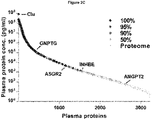
- Proteomic analyses of serum and plasma samples by mass spectrometry are often difficult because 95% of the total plasma protein amount is accounted for by 20 highly abundant proteins, which means that proteins present in significantly lower amounts are often not detectable or not reproducible.
- mass spectrometry is useful in the search for unknown proteins.
- the immunoassay is selected from one or more of the group consisting of enzyme-linked immunoassay (ELISA), immunoscreening, lateral flow immunochromatographic assay, magnetic immunoassay and radio immunoassay, preferably ELISA.
- ELISA is performed for specifically and accurately determining the level of sVSIG4 in the biological sample.
- the ELISA is preferably performed with a monoclonal antibody specific for human VSIG4, especially specific for the extracellular domain of human VSIG4.
- ELISA is advantageous because it is not necessary to process the biological sample, such as whole blood, plasma or serum, before use.
- the person skilled in the art is familiar with the ELISA technique.
- the ELISA may also include a further antibody directed against the extracellular domain of VSIG4 to perform a sandwich ELISA.
- the ELISA may also include a further antibody directed against another biomarker so that the level of sVSIG4 and another biomarker can be determined.
- step a) comprises performing LC-MS, LC-MS/MS or MALDI-TOF MS and a subsequent step of analyzing the obtained data for determining the level of sVSIG4 in the biological sample. This combination may further enhance accuracy.
- the method comprises:
- the “depletion step” typically involves separating and discarding cells or cell debris from the biological sample, for example by centrifugation.
- Fractionation in the sense of the present invention refers to separating the biological sample into its component parts, for example by centrifugation.
- the component parts are typically blood plasma, which can also be fractionated into its components, leukocytes and platelets, and erythrocytes.
- Fractionation of plasma typically involves changing the conditions of the plasma (e.g., the temperature, the acidity or the hydration of proteins) so that proteins that are normally dissolved in the plasma fluid become insoluble, forming large clumps, called precipitate. Precipitation can for example be achieved with trichloroacetic acid, acetone, methanol-chloroform or ammonium sulfate. The insoluble protein can be collected by centrifugation.
- the conditions of the plasma e.g., the temperature, the acidity or the hydration of proteins
- the depletion step and/or a fractionation step and/or the enriching of glycosylated proteins in the biological sample prior to step a) typically serves the purpose of increasing the concentration of the protein to be detected, for example sVSIG4. In case the level of sVSIG4 is high enough for detection, these steps may be omitted.
- the method may also comprise,
- the level of sVSIG4 is determined on basis of the enzymatically degraded proteins, i. e. peptides. In case the optional degradation step is not performed, the level of sVSIG4 may be determined on basis of the soluble protein on the whole.
- Possible peptides of the degradation step may be produced by proteolytic degradation or chemical cleavage methods. Examples for the use of trypsin protease for the proteolytic digestion of plasma-associated sVSIG4 are the ones depicted in Table 3. Other enzymes for the proteolytic digestion of plasma-associated sVSIG4 may also be used. Table 3. Tryptic peptide sequences identified by mass spectrometry. Peptide sequence No.
- VSIG4 isoform 1 SEQ ID NO: GDVNLPCTYDPLQGYTQVLVK 35-55 9 GSDPVTIFLR 61-70 10 VPGDVSLQLSTLEMDDR 92-108 11 SHYTCEVTWQTPDGNQVVR 108-127 12 LSVSKPTVTTGSGYGFTVPQGMR 138-160 13 PTVTTGSGYGFTVPQGMR 143-160 14 ISLQCQAR 161-168 15 GSPPISYIWYK 169-179 16 VATLSTLLFK 190-199 17 PAVIADSGSYFCTAK 200-214 18
- the biological sample is a body fluid sample.
- a biological sample has a cellular and a non-cellular fraction.
- the biological sample is the non-cellular fraction of a biological sample.
- the body fluid sample is preferably selected from one or more of the group consisting of whole blood, plasma, serum, synovial fluid, pleural effusion, lymphatic fluid, urine, liquor, cerebrospinal fluid, ascites, and bronchial lavage, and samples derived from the foregoing, in particular cell-free or cell-depleted samples derived from the foregoing samples by removing cells.
- the biological sample is selected from the group consisting of whole blood, plasma and serum.
- Plasma or blood plasma refers to the liquid portion of blood, i. e. it is essentially cell-depleted, preferably cell-free.
- Serum typically refers to blood plasma without fibrinogens.
- Whole blood, plasma and serum can be easily retrieved from a subject and processed making the inventive method convenient and easy to perform.
- the biological sample is prepared according to the usual standards. For example, in case blood is drawn for isolation of plasma, typically anticoagulants are added to the blood sample, such as heparin, EDTA and/or citrate. Other supplements are also possible.
- the biological sample is a cell-free or cell-depleted sample. This is particularly useful because sVSIG4 is a soluble protein.
- the biological sample is processed prior to step a), in particular by obtaining the non-cellular fraction of the biological sample.
- the biological sample is a body fluid, in particular whole blood, plasma or serum, and the biological sample is processed prior to step a).
- Processing in the sense of the present invention comprises cell separation or depletion and/or chromatography.
- the focus of infection may be important to combat the causing pathogen.
- the systemic inflammation is caused by an infectious agent and a conclusion is drawn as to the region of origin of the infection caused by the infectious agent by the method according to the invention.
- the region of origin of the infection caused by the infectious agent may be the abdomen, the respiratory system, or the urinary tract.
- One or more regional biomarkers can assist in identifying the region of infection.
- the method may further comprise:
- the one or more regional biomarkers are preferably selected from one or more of:
- the subject is a human subject.
- the subject may be healthy or ill based on a suspected or confirmed diagnosis.
- a human subject may also be referred to as patient.
- a method of monitoring a systemic inflammation of a subject comprising:
- the method may further comprise repeating step ii) until diagnosing the absence of the systemic inflammation, or for monitoring the therapeutic success or therapeutic failure.
- repeating step ii) comprises performing step i) at least two times, such as at least three times, at least four times, at least five times, at least six times, at least seven times, at least eight times, at least nine times, at least 10 times, at least 12 times, at least 15 times, at least 20 times, at least 25 times, at least 30 times, or at least 35 times, preferably at least 25 times.
- the method comprises repeating step ii) within 12 hours, in particular within 24 hours, more particularly within 48 hours for therapy control (monitoring).
- the step is repeated every 48 hours. If a worsening of the symptoms is observed or the subject is at a higher risk, for example because the subject has acquired another infection, the step may be repeated every 24 hours or every 12 hours.
- monitoring the therapeutic success or therapeutic failure comprises repeating step i) at least one time after a treatment of the systemic inflammation has been initiated or completed, preferably repeating performing step i) until diagnosing the absence of the systemic inflammation.
- Monitoring also includes monitoring a subject with a non-infectious systemic inflammation with respect to development of a sepsis and progression of disease.
- a method of treating a systemic inflammation comprising:
- a sepsis may be diagnosed in step b) and treatment may be initiated in step ii) with an antibiotic agent.
- the antibiotic treatment may be a standard antibiotic treatment according to the prevailing national and international guidelines, for example a broad spectrum antibiotic.
- the treatment with an antibiotic agent combats an infection with bacteria.
- an antibiotic agent for use in a method of treating an infection in a subject or treating a subject with a suspected infection wherein the infection is part of a bloodstream infection, systemic infection or sepsis and wherein the bloodstream infection, systemic infection or sepsis is diagnosed or monitored by the level of sVSIG4 in a biological sample.
- the bloodstream infection, systemic infection or sepsis, preferably the sepsis is diagnosed or monitored by the method as defined above.
- the subject has an increased level of sVSIG4. The level may be compared to a reference level of sVSIG4 in a non-infected control.
- a method of distinguishing between SIRS and sepsis in a subject comprises:
- SIRS in this context includes SIRS with and without organ dysfunction.
- sVSIG4 is used as a biomarker for in vitro diagnosing a systemic inflammation in a subject or prognosing a risk of mortality of a subject with a systemic inflammation.
- sVSIG4 can be used as the sole biomarker or in combination with one or more further biomarkers. The method is particularly performed as described herein.
- a kit comprising a binding molecule to sVSIG4 and a binding molecule to at least one further biomarker for the quantitative detection of sVSIG4 and the at least one further biomarker.
- the at least one further biomarker detected by means of the kit is CRP and/or PCT.
- kit with the determination of the lactate level in the subject's biological sample.
- the kit is used by means of whole blood, plasma or serum of a subject, preferably plasma.
- the detection may be based on a chromogenic, fluorescent and/or luminescent reaction, and/or a chromatographic method.
- the binding molecule in the kit is preferably selected from the group consisting of an antibody, an aptamer, and a nanobody.
- the kit is based on an ELISA or chromatography.
- the kit is a quick test or POC (point-of-care) test.
- POC point-of-care
- compositions are described as comprising components or materials, it is additionally contemplated that the compositions can in embodiments also consist essentially of, or consist of, any combination of the recited components or materials, unless described otherwise.
- Reference to “the disclosure” and “the invention” and the like includes single or multiple aspects taught herein; and so forth. Aspects taught herein are encompassed by the term “invention”.
- sVSIG4 is suitable for use in a method of in vitro diagnosis of a systemic inflammation, in particular sepsis.
- sVSIG4 is a suitable biomarker for distinguishing a systemic inflammation caused by an infectious agent, such as a sepsis, from a systemic inflammation not caused by an infectious agent, such as SIRS.
- sVSIG4 is a suitable biomarker for use in a method of monitoring a systemic inflammation of a subject, in particular sepsis.
- citrated plasma samples from the earliest possible time (day 1 or 2) after sepsis diagnosis by the treating physician were selected to identify early markers of systemic infection and onset of severe sepsis or septic shock.
- the two groups of patients showed no differences in age or body mass index (BMI). Slightly more men than women were recruited in both groups, but the groups did not differ statistically significantly.
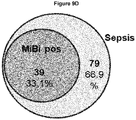
- the critical care scoring systems SOFA-score, APACHE-score, and SAPS-score were significantly increased in the sepsis group. Fever, leukocytosis, hypoxemia, renal dysfunction, metabolic acidosis, and hypotension also occurred significantly more frequently in the sepsis group. PCT and CRP were significantly elevated in the sepsis group. Microbiological verification of infection was successful in 39.2% of all cases in the sepsis group, with gram-positive bacteria detected in 34.3%, gram-negative bacteria in 16.1%, and fungal infections in 7.7% of all positive cases. 53.8% of all sepsis patients had an infection focus in the respiratory tract, 35.0% in the abdomen, and 4.9% in the genitourinary tract. The mortality rates for in-hospital mortality and intensive care unit mortality were 44.8% and 33.5%, respectively, in the sepsis group and 14% and 9.0%, respectively, in the SIRS group.
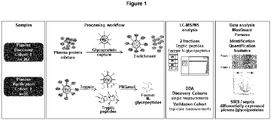
- glycosylated proteins in the plasma samples are enriched. Taking advantage of sugar residues covalently linked to the protein scaffold, the glycosylated proteins are coupled to a solid phase (Sepharose) via so-called hydrazide chemistry after mild oxidation. Non-glycosylated proteins are washed away and the enriched preparation of plasma glycoproteins can be processed for proteomic studies and mass spectrometry.
- glycoproteins covalently linked to sepharose are reduced at cysteine residues, these are stabilized in their oxidation state by alkylation, and after extensive washing the glycoproteins are cut into peptides at the solid phase by a protease (trypsin), which can now be freely removed in the supernatant of the sepharose. A few peptides remain on the sepharose, which still carry sugar residues that ensure linkage to the sepharose.
- PNGaseF sugar residues of the most common type of glycosylation, known as N-glycosylation, can be cleaved directly from the peptide portion of the protein, allowing even these last peptides of the glycoproteins to enter solution and become accessible to MS analysis.
- an asparagine is converted by deamination to an aspartate, which can be detected by the mass change and subsequent mass spectrometric analysis.
- the resulting two peptide fractions of a plasma sample (trypsin and PNGaseF peptides) are separated by reversed-phase liquid chromatography and analyzed by mass spectrometry (LC-MS/MS), providing good sensitivity for glycoproteins present in low concentrations due to the low complexity of the samples (especially the PNGaseF peptide fraction).
- the results of both fractions are again combined in one sample in the subsequent software-assisted calculation of the raw data ( Figure 1 ).
- the result is the glycoprotein profile of the plasma sample, with a few non-glycosylated proteins that were not completely removed as contaminants.
- Modern mass spectrometry in addition to identifying the peptides and proteins present in the sample, also provides quantitative values for the identified peptides. These can be transferred into quantitative values for the individual proteins contained in the sample via the software packages used to analyze the samples.
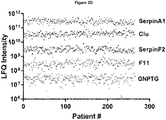
- the analysis software used MaxQuant (version 1.5.5.1), calculates the relative concentration of proteins and gives the abundance as a so-called label-free-quantity (LFQ) value.
- LFQ label-free-quantity
- PCA principal component analysis
- IQR interquartile range
- APACHE Acute Physiology and Chronic Healthy Evaluation II
- SOFA Sequential Organ Failure Assessment
- SAPS Simplified Acute Physiology Score II
- PCT Procalcitonin (ng/ml)
- CRP C-reactive protein (mg/l)
- WBC white blood count
- ICU intensive care unit.
- Statistical analysis was done by Mann-Whitney-U-Test unless otherwise specified. ⁇ Chisquare test.
- the plasma samples in the Validation cohort were processed as the plasma samples in the Discovery cohort.
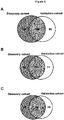
- the LC-MS/MS analyses of the Validation cohort were performed by triplicate measurements (technical triplicates) to increase the sensitivity and reproducibility of peptide and protein identification in the samples of the Validation cohort.
- CRP C-reactive protein
- SAA1 serum amyloid protein-1
- SAA2 serum amyloid protein-2
- sVSIG4 soluble protein V-set and immunoglobulin domain-containing protein 4
- Protein accession numbers protein ID
- entry name protein ID
- p-value protein ID
- fold changes peptide numbers of significantly differentially abundant proteins in SIRS and sepsis patients identified in the discovery cohort and in the Validation cohort.
- the protein IDs and entry names were retrieved from the UniProt database with release number 2016_04.
- the entry names can alternatively have the suffix "_HUMAN”; with and without the suffix the same proteins are meant.
- Discovery cohort Validation cohort Protein ID Entry name Glycoprotein -Log (p-value) (log2)
- FC Peptides -Log p-value
- P01613 KVD33 yes 2.20305 -0.34058 2 n.s. n.s. n.s. P10909 CLUS yes 7.75577 -0.32917 31 2.18959 -0.21784 39 P00734 THRB yes 8.24632 -0.29782 50 3.34416 -0.32133 50 P13473 LAMP2 yes n.s. n.s. n.s. 1.88010 -0.29219 13 P01860 IGHG3 yes 1.97363 -0.29194 27 n.s. n.s. n.s.
- P05362 ICAM1 yes 11.98438 0.78407 19 13.98151 1.27649 19 Q06033 ITIH3 yes 28.34559 0.79306 40 6.08913 0.68843 46 P53634 CATC yes 2.60671 0.79368 5 5.26862 1.14544 6 Q14767 LTBP2 yes 1.95809 0.79406 4 1.77388 1.24459 5 Q9NPR2 SEM4B yes n.s. n.s. n.s. 4.04264 0.79450 12 Q6UXG3 CLM9 yes 2.48356 0.79741 1 n.s. n.s. n.s. P21810 PGS1 yes n.s. n.s. n.s.
- Table 11 lists all identified peptides suitable for detection of plasma proteins with significantly different concentration in SIRS or sepsis patients (Table 7) (in both cohorts studied with significantly different concentration).
- cholinesterase CHLE, gene name BCHE
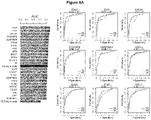
- AUC 0.86
- macrophage mannose receptor 1, MMR MRC1, gene name MRC1
- AUC 0.86
- afamin AFAM, gene name AFM
- AUC 0.86
- inter-alpha-trypsin inhibitor heavy chain H3 ITIH3, gene name ITIH3
- alpha-2-HS-glycoprotein FETUA, gene name AHSG
- AUC 0.87
- soluble V-set and immunoglobulin domain-containing protein 4 sVSIG4, gene nme VSIG4
- AUC 0.87
- calistatin KAIN, gene name SERPINA4
- PGRP2, gene name PGLYRP2 N-acetylmuramoyl-L-alanine amidase
- PHLD phosphatidylinositol-glycan-specific phospholipase D
- PHLD gene name GPLD1
- AUC 0.90
- Inter-alpha-trypsin inhibitor heavy chain H1, IIH1, gene name ITHI1
- AUC 0.91
- inter-alpha-trypsin inhibitor heavy chain H2, ITIH2
- AUC 0.93.
- ITIH2 ITIH2
- the AUC of the combinations is superior to the use of CRP as the sole marker in both cases.
- sVSIG4 is included in the combinations with two markers in both approaches as a marker for the diagnosis of sepsis.
- sVSIG4 alone, or in combination with one (in the example with ITIH2 and PHLD) or more other plasma proteins is suitable for sepsis diagnosis and shows better AUC compared to the use of CRP and PCT.
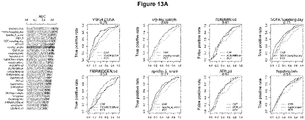
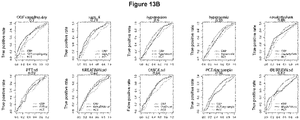
- soluble V-set immunoglobulin domain-containing protein 4 was the protein that possessed the most pronounced positive fold change in this comparison (Table 8). This indicates that sVSIG4 is a suitable marker in the blood of patients for the diagnosis of systemic infections such as in critically ill patients with suspected sepsis.
- Protein accession numbers protein ID
- entry name entry name
- p-value and fold changes FC of significant differentially abundant proteins in patients with positive microbiological cultures and critically ill patients with negative microbiological results in the discovery cohort.
- the protein IDs and entry names are retrieved from the UniProt database with release number 2016_04.
- the entry names can alternatively have the suffix "_HUMAN"; with and without the suffix the same proteins are meant.
- systemic infections microbiologically verified sepsis
- MMP9 interleukin-1 receptors antagonist protein
- sVSIG4 soluble V-set and immunoglobulin domain-containing protein 4
- MMP8 metalloproteinase 8
- CHI3L1 Chitinase-3-like protein 1
- IL1RA Interleukin receptor-like 1
- CD177 CD177 antigen
- NGAL Neutrophil gelatinase-associated lipocalin
- TRFL Lactotransferrin
- IL18BP Interleukin-18-binding protein
- TIMP1 metalloproteinase inhibitor 1
- CGRE1 Cell growth regulator with EF hand domain protein 1
- CGRE1 Cell growth regulator with EF hand domain protein 1
- sVSIG4 is a suitable biomarker in plasma for the detection of systemic infections and sepsis with abdominal focus, but high sVSIG4 levels are also detectable in plasma samples of patients with systemic infections or sepsis with respiratory focus. sVSIG4 is thus also suitable as a biomarker for diagnostic purposes of systemic infections or sepsis with respiratory focus.
- Protein accession numbers protein ID
- entry name entry name
- p-value and fold changes p-value and fold changes of significant differentially abundant proteins in patient plasma with abdominal focus or focus in the respiratory system of the discovery cohort. Negative FC indicates higher abundance in patients with abdominal focus.
- the protein IDs and entry names are retrieved from the UniProt database with release number 2016_04.
- the entry names can alternatively have the suffix "HUMAN"; with and without the suffix the same proteins are meant.
- Protein accession numbers protein ID
- entry name protein ID
- p-value entry name
- fold changes FC
- peptide numbers of significant differentially abundant proteins in patients who died of sepsis and critically ill patients who survived identified in the discovery cohort and in the validation cohort.
- the protein IDs and entry names are retrieved from the UniProt database with release number 2016_04.
- the entry names can alternatively have the suffix "_HUMAN”; with and without the suffix the same proteins are meant.
- Discovery cohort Validation cohort Protein ID Entry name Log(p-value) (log2)
- FC Peptides Log(p-value) (log2) FC Q14623 IHH 2.75009255 -1.22793992 4 n.s. n.s.
- P02751 FINC 4.91551789 -1.21008938 122 n.s. n.s. Q15166 PON3 3.29263755 -1.03903157 9 n.s. n.s. P11597 CETP 4.61095434 -1.0364968 20 n.s. n.s. Q8NI99 ANGL6 2.58403424 -1.02525044 5 n.s. n.s. P35858 ALS 7.33942868 -0.9951301 24 n.s. n.s. Q86U17 SPA11 3.35492013 -0.98991567 5 n.s. n.s.
- n.s. Q6UX06 OLFM4 2.40502576 1.16419793 10 n.s. n.s. P16581 LYAM2 2.44863746 1.1698984 10 n.s. n.s. P02461 CO3A1 2.97304197 1.17170634 6 n.s. n.s. P61916 NPC2 3.03754394 1.17995506 2 n.s. n.s. Q9Y287 ITM2B 2.35256703 1.18367957 6 n.s. n.s. P01824 HV439 3.49889677 1.19026569 4 n.s. n.s.
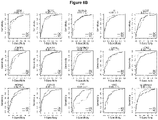
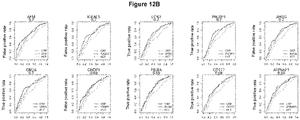
- sVSIG4 showed the highest AUC of all proteins identified in the data set that prognostically indicate sepsis with an increased risk of mortality ( Figure 12 ).
- the AUC of sVSIG4 was 0.77, whereas the clinical data of CRP and PCT in this prognosis showed significantly worse AUC values of 0.66 and 0.56, respectively.
- Plasma levels of sVSIG4 were subsequently quantified by ELISA (enzyme-linked immunosorbent assay, quantitative) for verification. Using an appropriate antibody pair against the extracellular domain of VSIG4 (and thus binding to sVSIG4), plasma samples from the Discovery and Validation cohorts were assayed for sVSIG4.
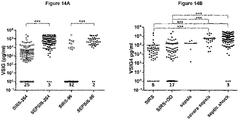
- Concentration sVSIG4 (mean ⁇ SD) in plasma from sepsis patients was 83493 ⁇ 82876 pg/ml and 84391 ⁇ 83982 pg/ml in the Discovery and Validation cohorts, and 12572 ⁇ 40392 and 11532 ⁇ 41672 in plasma samples from SIRS patients in the Discovery and Validation cohorts, respectively (1-way ANOVA Dunn's multiple comparison test p ⁇ 0. 0001, Figure 14A ).
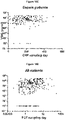
- sVSIG4 levels are found to be high in all patients (in the range 10,000-100,000 pg/ml, Figure 15C ) and a correlation to increasing CRP levels of patients on the same examination day is not apparent.
- Sepsis patients with low CRP values mostly already show high sVSIG4 values.
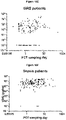
- the correlations with PCT are similar. While no correlation of plasma VSIG4 with PCT can be shown in the examinations of all patients or the patients of the SIRS group, it is evident, similarly to the comparison with CRP, that sVSIG4 appears in high concentrations on the day of examination in all patient groups (with 3 exceptions below the detection level), independent of the measured PCT value ( Figure 15D and 15E ). Particularly in the sepsis group, the sVSIG4 concentration is strongly elevated independent of the PCT value ( Figure 15F ).
- the verification experiments by ELISA indicate that by using quantification methods to determine the sVSIG level in patient blood samples (e.g. in plasma) alone, or in combination with other biomarkers, it is possible to diagnostically differentiate patients with severe sepsis or septic shock from patients with SIRS or SIRS+organ dysfunction.
- high sVSIG4 levels already indicate an increased mortality risk of the patient at an early stage of the disease, so that this patient group can be identified and thus could get an individualized, more intensive monitoring in order to be able to therapeutically intervene at an early stage.
- sVSIG4 levels are particularly high in plasma in patients with microbiologically positive confirmations of a systemic infection and with high SOFA-score values.
- sVSIG4 The plasma concentration of sVSIG4 shows only a slight correlation to CRP (high CRP values correlate with high sVSIG4 values), but especially in the sepsis group, high sVSIG4 levels are already detectable when CRP values were still quite low on day 1 or 2 of diagnosis. sVSIG4 is therefore a marker for systemic infections, sepsis and septic shock that is independent of CRP as well as PCT.
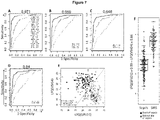
- sVSIG4 alone Figure 16A +B
- sVSIG4 in combination with other biomarkers can be considered, e.g. PHLD (which also shows good performance alone, Figure 16C , mass spectrometry data), but also a combination with CRP (clinical data Figure 16D ), which is already used in the clinic, is possible.
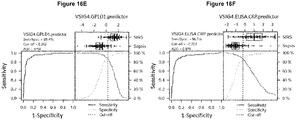
- the combination of sVSIG4 and PHLD ( Figure 16E ) has a sensitivity and specificity of 88.4% at a cut-off value of 0.262 (linear combination of the two markers) with an AUC of 0.94. Based on PHLD values only, quantitative determinations by ELISA may lead to even more accurate values and improved specificity/sensitivity.
- the combination of sVSIG4 and CRP performs slightly worse compared with the combination sVSIG4/PHLD but has a sensitivity and specificity of 86.7% at a cut-off value of -0.203 and an AUC of 0.916 ( Figure 16F , ELISA data sVSIG4).
- the combination with myeloblastin (PRTN3) is also possible ( Figure 16G ) with a sensitivity and specificity of 87.1% at a cut-off value of -0.126 (linear combination of the two markers) with an AUC of 0.917.
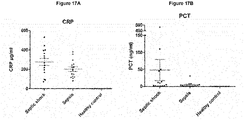
- sVSIG4 plasma levels of sVSIG4 were quantified by ELISA (enzyme-linked immunosorbent assay, quantitative) in EDTA-plasma from sepsis patients, patients with septic shock and a group of healthy volunteers (15 samples per group), using an appropriate antibody pair against the extracellular domain of VSIG4 (and thus binding to sVSIG4).
- ELISA enzyme-linked immunosorbent assay, quantitative
- sVSIG4 levels in plasma with a mean concentration of 31889 ⁇ 91603 pg/ml (mean+SD), while two patients had sVSIG4 level below the detection level.
- Patients with septic shock showed further increased sVSIG4 levels in plasma samples with 90124 ⁇ 91684 pg/ml (mean+SD), significantly increased compared to the sepsis group (p ⁇ 0.0007, two-tailed t-test).
- the data indicate that sVSIG4 levels in sepsis patients (defined according to Sepsis-3 Definition) rise substantially with increased morbidity.
- Table 11 lists protein names and identified peptide sequences of differentially abundant proteins in SIRS and sepsis patients.
- the level of sVSIG4 can be combined with the level of any one or more of the identified proteins for the method as described herein.
- Protein accession numbers Protein ID
- gene names protein names
- protein names identified peptide sequences of significantly differentially abundant proteins in the discovery and validation cohort of SIRS and sepsis patients. Sequences were retrieved from the UniProt Database with release number 2016_04 on May 11, 2016.
Landscapes
- Life Sciences & Earth Sciences (AREA)
- Health & Medical Sciences (AREA)
- Engineering & Computer Science (AREA)
- Molecular Biology (AREA)
- Chemical & Material Sciences (AREA)
- Biomedical Technology (AREA)
- Urology & Nephrology (AREA)
- Hematology (AREA)
- Immunology (AREA)
- Biotechnology (AREA)
- Analytical Chemistry (AREA)
- Cell Biology (AREA)
- Proteomics, Peptides & Aminoacids (AREA)
- Food Science & Technology (AREA)
- Medicinal Chemistry (AREA)
- Physics & Mathematics (AREA)
- Microbiology (AREA)
- Biochemistry (AREA)
- General Health & Medical Sciences (AREA)
- General Physics & Mathematics (AREA)
- Pathology (AREA)
- Investigating Or Analysing Biological Materials (AREA)
- Peptides Or Proteins (AREA)
Priority Applications (5)
| Application Number | Priority Date | Filing Date | Title |
|---|---|---|---|
| EP21168225.7A EP4075142A1 (de) | 2021-04-13 | 2021-04-13 | Biomarker zur in-vitro-diagnose und/oder -prognose einer systemischen entzündung |
| US18/286,064 US20240255525A1 (en) | 2021-04-13 | 2022-04-12 | Biomarker for in vitro diagnosis and/or prognosis of a systemic inflammation |
| PCT/EP2022/059707 WO2022218961A1 (en) | 2021-04-13 | 2022-04-12 | Biomarker for in vitro diagnosis and/or prognosis of a systemic inflammation |
| JP2023562244A JP2024515167A (ja) | 2021-04-13 | 2022-04-12 | 全身性炎症のインビトロ診断および/または予後診断のためのバイオマーカー |
| CN202280041828.4A CN117501124A (zh) | 2021-04-13 | 2022-04-12 | 用于全身炎症的体外诊断和/或预后的生物标志物 |
Applications Claiming Priority (1)
| Application Number | Priority Date | Filing Date | Title |
|---|---|---|---|
| EP21168225.7A EP4075142A1 (de) | 2021-04-13 | 2021-04-13 | Biomarker zur in-vitro-diagnose und/oder -prognose einer systemischen entzündung |
Publications (1)
| Publication Number | Publication Date |
|---|---|
| EP4075142A1 true EP4075142A1 (de) | 2022-10-19 |
Family
ID=75529794
Family Applications (1)
| Application Number | Title | Priority Date | Filing Date |
|---|---|---|---|
| EP21168225.7A Pending EP4075142A1 (de) | 2021-04-13 | 2021-04-13 | Biomarker zur in-vitro-diagnose und/oder -prognose einer systemischen entzündung |
Country Status (5)
| Country | Link |
|---|---|
| US (1) | US20240255525A1 (de) |
| EP (1) | EP4075142A1 (de) |
| JP (1) | JP2024515167A (de) |
| CN (1) | CN117501124A (de) |
| WO (1) | WO2022218961A1 (de) |
Families Citing this family (3)
| Publication number | Priority date | Publication date | Assignee | Title |
|---|---|---|---|---|
| CN120966977A (zh) * | 2024-05-17 | 2025-11-18 | 浙江大学 | 一种诊断全身性炎症的标志物以及应用 |
| CN118581207B (zh) * | 2024-05-17 | 2026-02-10 | 浙江大学医学院附属邵逸夫医院 | 一种诊断全身性炎症的标志物以及应用 |
| CN121186348B (zh) * | 2025-11-25 | 2026-02-24 | 北京大学人民医院 | 瓜氨酸化内凝集素-1多肽在制备类风湿关节炎诊断产品中的应用 |
Citations (3)
| Publication number | Priority date | Publication date | Assignee | Title |
|---|---|---|---|---|
| US20090004755A1 (en) * | 2007-03-23 | 2009-01-01 | Biosite, Incorporated | Methods and compositions for diagnosis and/or prognosis in systemic inflammatory response syndromes |
| US20150024969A1 (en) * | 2011-09-12 | 2015-01-22 | The Children's Mercy Hospital | Sepsis prognosis biomarkers |
| WO2018200755A1 (en) * | 2017-04-25 | 2018-11-01 | Vanderbilt University | Monocyte biomarkers for hypertension |
Family Cites Families (4)
| Publication number | Priority date | Publication date | Assignee | Title |
|---|---|---|---|---|
| US7192589B2 (en) * | 1998-09-16 | 2007-03-20 | Genentech, Inc. | Treatment of inflammatory disorders with STIgMA immunoadhesins |
| DE102005050933A1 (de) * | 2005-10-21 | 2007-04-26 | Justus-Liebig-Universität Giessen | Erfindung betreffend Expressionsprofile zur Vorhersage von septischen Zuständen |
| CA2633291A1 (en) * | 2005-12-15 | 2007-07-12 | Becton Dickinson And Company | Diagnosis of sepsis |
| KR20180047928A (ko) * | 2016-11-02 | 2018-05-10 | 인제대학교 산학협력단 | VSIG4(v-set and immunoglobulin-domain containing protein) 세포 표면 항원을 유효성분으로 함유하는 패혈증 진단용 바이오마커 조성물 및 이를 이용한 패혈증 진단 방법 |
-
2021
- 2021-04-13 EP EP21168225.7A patent/EP4075142A1/de active Pending
-
2022
- 2022-04-12 WO PCT/EP2022/059707 patent/WO2022218961A1/en not_active Ceased
- 2022-04-12 CN CN202280041828.4A patent/CN117501124A/zh active Pending
- 2022-04-12 JP JP2023562244A patent/JP2024515167A/ja active Pending
- 2022-04-12 US US18/286,064 patent/US20240255525A1/en active Pending
Patent Citations (3)
| Publication number | Priority date | Publication date | Assignee | Title |
|---|---|---|---|---|
| US20090004755A1 (en) * | 2007-03-23 | 2009-01-01 | Biosite, Incorporated | Methods and compositions for diagnosis and/or prognosis in systemic inflammatory response syndromes |
| US20150024969A1 (en) * | 2011-09-12 | 2015-01-22 | The Children's Mercy Hospital | Sepsis prognosis biomarkers |
| WO2018200755A1 (en) * | 2017-04-25 | 2018-11-01 | Vanderbilt University | Monocyte biomarkers for hypertension |
Non-Patent Citations (12)
| Title |
|---|
| ANAESTHESIOL. INTENSIVE THER., vol. 51, 2019, pages 299 - 305 |
| ANONYMOUS I: "Data Sheet - GeneChip Human Genome U133 Arrays The Most Comprehensive Coverage of the Human Genome in Two Flexible Formats: Single-array Cartridges and Multi-array Plates", 1 January 2007 (2007-01-01), XP093018562, Retrieved from the Internet <URL:https://www.affymetrix.com/support/technical/datasheets/hgu133arrays_datasheet.pdf> [retrieved on 20230127] * |
| ANONYMOUS: "User Manual - RayBio Label-based (L-Series) Human Antibody Array 2000 A combination of Human L-507, L-493, L-3 and L-4 arrays", 9 December 2019 (2019-12-09), XP055793741, Retrieved from the Internet <URL:https://doc.raybiotech.com/pdf/Manual/AAH-BLG-2000.pdf> [retrieved on 20210408] * |
| CHEST, vol. 101, no. 6, 1992, pages 1644 - 55 |
| CLIN. MICROBIOL. INFECT., vol. 26, 2020, pages 142 - 150 |
| CRIT. CARE, vol. 24, no. 1, 2020, pages 287 |
| EISFELD A.J. ET AL.: "Multi-platform 'omics analysis of human Ebola virus disease pathogenesis", CELL HOST & MICROBE, vol. 22, no. 6, 13 December 2017 (2017-12-13), pages 817 - 829, XP055845926 * |
| INT. ARCH. ALLERGY APPL. IMMUNOL., vol. 73, 1984, pages 97 - 103 |
| INTENSIVE CARE MED., vol. 22, 1996, pages 707 - 10 |
| JAMA, vol. 315, 2016, pages 762 - 74 |
| JAMA, vol. 315, 2016, pages 775 - 87 |
| SMALL A.G. ET AL.: "Complement receptor immunoglobulin: a control point in infection and immunity, inflammation and cancer", SWISS MED. WKLY, vol. 146, W14301, 5 April 2016 (2016-04-05), pages 1 - 9, XP055845606 * |
Also Published As
| Publication number | Publication date |
|---|---|
| US20240255525A1 (en) | 2024-08-01 |
| WO2022218961A1 (en) | 2022-10-20 |
| CN117501124A (zh) | 2024-02-02 |
| JP2024515167A (ja) | 2024-04-05 |
Similar Documents
| Publication | Publication Date | Title |
|---|---|---|
| US20240255525A1 (en) | Biomarker for in vitro diagnosis and/or prognosis of a systemic inflammation | |
| EP3164715B1 (de) | Marker zur frühen vorhersage von diabetischer nephropathie | |
| EP3577465B1 (de) | Proadm als marker für eine nebenwirkung | |
| US20150072360A1 (en) | Biomarkers of pulmonary hypertension | |
| US20230152333A1 (en) | Method of differentiating of a chronic kidney disease or glomerulopathy, method of monitoring a response to treatment of a chronic kidney disease or glomerulop athy in a subject and a method of treatment of a chronic kidney disease or glomerulopathy | |
| US12449426B2 (en) | Method of screening for a chronic kidney disease or glomerulopathy method of monitoring a response to treatment of a chronic kidney disease or glomerulopathy in a subject and a method of treatment of a chronic kidney disease or glomerulopathy | |
| EP3469372B1 (de) | Verfahren zur diagnose und überwachung mithilfe von urinproteinen als marker bei iga-nephropathie | |
| EP3363347B1 (de) | Früherkennung von akuter nierenläsion bei kritischen patienten anhand von fibroblastenwachstumsfaktor 23, klotho und erythropoetin als biomarker | |
| HK40083038A (en) | Biomarker for in vitro diagnosis and/or prognosis of a systemic inflammation | |
| US20080213800A1 (en) | Method for Examing Interstitital Cystitis | |
| Lu et al. | Proteomic profiles of bronchoalveolar lavage fluid from patients with ventilator‐associated pneumonia by gel‐assisted digestion and 2‐D‐LC/MS/MS | |
| CA3173639C (en) | Method of screening for a chronic kidney disease or glomerulopathy, method of monitoring a response to treatment of a chronic kidney disease or glomerulopathy in a subject and a method of treatment of a chronic kidney disease or glomerulopath | |
| CN119269804B (zh) | β2-微球蛋白在制备诊断和/或预后评估慢阻肺急性加重产品中的应用 | |
| Kahindo et al. | Diagnostic value of serum creatinine versus urinary neutrophil gelatinase-associated lipocalin (uNGAL) in acute kidney injury in resource-limited settings | |
| KR20250078197A (ko) | 임신 초기 조산 예측을 위한 질환 특이적인 바이오마커 및 그의 용도 | |
| KR20250078199A (ko) | 임신 말기 조산 예측을 위한 질환 특이적인 바이오마커 및 그의 용도 | |
| KR20250078198A (ko) | 임신 중기 조산 예측을 위한 질환 특이적인 바이오마커 및 그의 용도 | |
| KR20250079483A (ko) | 임신 중기 임신중독증 예측 및 진단을 위한 질환 특이적인 바이오마커 및 그의 용도 | |
| KR20250079484A (ko) | 임신 말기 임신중독증 진단을 위한 질환 특이적인 바이오마커 및 그의 용도 | |
| KR20250079482A (ko) | 임신 초기 임신중독증 예측 및 진단을 위한 질환 특이적인 바이오마커 및 그의 용도 | |
| CZ309668B6 (cs) | Způsob stanovení mutované formy bílkoviny mucinu-1 v biologickém vzorku |
Legal Events
| Date | Code | Title | Description |
|---|---|---|---|
| PUAI | Public reference made under article 153(3) epc to a published international application that has entered the european phase |
Free format text: ORIGINAL CODE: 0009012 |
|
| STAA | Information on the status of an ep patent application or granted ep patent |
Free format text: STATUS: THE APPLICATION HAS BEEN PUBLISHED |
|
| AK | Designated contracting states |
Kind code of ref document: A1 Designated state(s): AL AT BE BG CH CY CZ DE DK EE ES FI FR GB GR HR HU IE IS IT LI LT LU LV MC MK MT NL NO PL PT RO RS SE SI SK SM TR |
|
| STAA | Information on the status of an ep patent application or granted ep patent |
Free format text: STATUS: REQUEST FOR EXAMINATION WAS MADE |
|
| 17P | Request for examination filed |
Effective date: 20230419 |
|
| RBV | Designated contracting states (corrected) |
Designated state(s): AL AT BE BG CH CY CZ DE DK EE ES FI FR GB GR HR HU IE IS IT LI LT LU LV MC MK MT NL NO PL PT RO RS SE SI SK SM TR |
|
| REG | Reference to a national code |
Ref country code: HK Ref legal event code: DE Ref document number: 40083038 Country of ref document: HK |
|
| STAA | Information on the status of an ep patent application or granted ep patent |
Free format text: STATUS: EXAMINATION IS IN PROGRESS |
|
| 17Q | First examination report despatched |
Effective date: 20260206 |