EP4074393A1 - Distillation tower management system, distillation tower state analysis method, and distillation tower management method - Google Patents
Distillation tower management system, distillation tower state analysis method, and distillation tower management method Download PDFInfo
- Publication number
- EP4074393A1 EP4074393A1 EP20898041.7A EP20898041A EP4074393A1 EP 4074393 A1 EP4074393 A1 EP 4074393A1 EP 20898041 A EP20898041 A EP 20898041A EP 4074393 A1 EP4074393 A1 EP 4074393A1
- Authority
- EP
- European Patent Office
- Prior art keywords
- distillation tower
- chlorine
- data
- differential pressure
- unit
- Prior art date
- Legal status (The legal status is an assumption and is not a legal conclusion. Google has not performed a legal analysis and makes no representation as to the accuracy of the status listed.)
- Granted
Links
Images

Classifications
-
- B—PERFORMING OPERATIONS; TRANSPORTING
- B01—PHYSICAL OR CHEMICAL PROCESSES OR APPARATUS IN GENERAL
- B01D—SEPARATION
- B01D3/00—Distillation or related exchange processes in which liquids are contacted with gaseous media, e.g. stripping
- B01D3/42—Regulation; Control
- B01D3/4211—Regulation; Control of columns
-
- B—PERFORMING OPERATIONS; TRANSPORTING
- B01—PHYSICAL OR CHEMICAL PROCESSES OR APPARATUS IN GENERAL
- B01D—SEPARATION
- B01D3/00—Distillation or related exchange processes in which liquids are contacted with gaseous media, e.g. stripping
- B01D3/42—Regulation; Control
-
- B—PERFORMING OPERATIONS; TRANSPORTING
- B01—PHYSICAL OR CHEMICAL PROCESSES OR APPARATUS IN GENERAL
- B01D—SEPARATION
- B01D3/00—Distillation or related exchange processes in which liquids are contacted with gaseous media, e.g. stripping
- B01D3/14—Fractional distillation or use of a fractionation or rectification column
-
- B—PERFORMING OPERATIONS; TRANSPORTING
- B01—PHYSICAL OR CHEMICAL PROCESSES OR APPARATUS IN GENERAL
- B01D—SEPARATION
- B01D3/00—Distillation or related exchange processes in which liquids are contacted with gaseous media, e.g. stripping
- B01D3/14—Fractional distillation or use of a fractionation or rectification column
- B01D3/32—Other features of fractionating columns ; Constructional details of fractionating columns not provided for in groups B01D3/16 - B01D3/30
-
- B—PERFORMING OPERATIONS; TRANSPORTING
- B01—PHYSICAL OR CHEMICAL PROCESSES OR APPARATUS IN GENERAL
- B01D—SEPARATION
- B01D3/00—Distillation or related exchange processes in which liquids are contacted with gaseous media, e.g. stripping
- B01D3/34—Distillation or related exchange processes in which liquids are contacted with gaseous media, e.g. stripping with one or more auxiliary substances
-
- C—CHEMISTRY; METALLURGY
- C10—PETROLEUM, GAS OR COKE INDUSTRIES; TECHNICAL GASES CONTAINING CARBON MONOXIDE; FUELS; LUBRICANTS; PEAT
- C10G—CRACKING HYDROCARBON OILS; PRODUCTION OF LIQUID HYDROCARBON MIXTURES, e.g. BY DESTRUCTIVE HYDROGENATION, OLIGOMERISATION, POLYMERISATION; RECOVERY OF HYDROCARBON OILS FROM OIL-SHALE, OIL-SAND, OR GASES; REFINING MIXTURES MAINLY CONSISTING OF HYDROCARBONS; REFORMING OF NAPHTHA; MINERAL WAXES
- C10G7/00—Distillation of hydrocarbon oils
- C10G7/10—Inhibiting corrosion during distillation
-
- C—CHEMISTRY; METALLURGY
- C10—PETROLEUM, GAS OR COKE INDUSTRIES; TECHNICAL GASES CONTAINING CARBON MONOXIDE; FUELS; LUBRICANTS; PEAT
- C10G—CRACKING HYDROCARBON OILS; PRODUCTION OF LIQUID HYDROCARBON MIXTURES, e.g. BY DESTRUCTIVE HYDROGENATION, OLIGOMERISATION, POLYMERISATION; RECOVERY OF HYDROCARBON OILS FROM OIL-SHALE, OIL-SAND, OR GASES; REFINING MIXTURES MAINLY CONSISTING OF HYDROCARBONS; REFORMING OF NAPHTHA; MINERAL WAXES
- C10G7/00—Distillation of hydrocarbon oils
- C10G7/12—Controlling or regulating
-
- C—CHEMISTRY; METALLURGY
- C10—PETROLEUM, GAS OR COKE INDUSTRIES; TECHNICAL GASES CONTAINING CARBON MONOXIDE; FUELS; LUBRICANTS; PEAT
- C10G—CRACKING HYDROCARBON OILS; PRODUCTION OF LIQUID HYDROCARBON MIXTURES, e.g. BY DESTRUCTIVE HYDROGENATION, OLIGOMERISATION, POLYMERISATION; RECOVERY OF HYDROCARBON OILS FROM OIL-SHALE, OIL-SAND, OR GASES; REFINING MIXTURES MAINLY CONSISTING OF HYDROCARBONS; REFORMING OF NAPHTHA; MINERAL WAXES
- C10G75/00—Inhibiting corrosion or fouling in apparatus for treatment or conversion of hydrocarbon oils, in general
-
- C—CHEMISTRY; METALLURGY
- C10—PETROLEUM, GAS OR COKE INDUSTRIES; TECHNICAL GASES CONTAINING CARBON MONOXIDE; FUELS; LUBRICANTS; PEAT
- C10G—CRACKING HYDROCARBON OILS; PRODUCTION OF LIQUID HYDROCARBON MIXTURES, e.g. BY DESTRUCTIVE HYDROGENATION, OLIGOMERISATION, POLYMERISATION; RECOVERY OF HYDROCARBON OILS FROM OIL-SHALE, OIL-SAND, OR GASES; REFINING MIXTURES MAINLY CONSISTING OF HYDROCARBONS; REFORMING OF NAPHTHA; MINERAL WAXES
- C10G75/00—Inhibiting corrosion or fouling in apparatus for treatment or conversion of hydrocarbon oils, in general
- C10G75/02—Inhibiting corrosion or fouling in apparatus for treatment or conversion of hydrocarbon oils, in general by addition of corrosion inhibitors
-
- G—PHYSICS
- G01—MEASURING; TESTING
- G01N—INVESTIGATING OR ANALYSING MATERIALS BY DETERMINING THEIR CHEMICAL OR PHYSICAL PROPERTIES
- G01N7/00—Analysing materials by measuring the pressure or volume of a gas or vapour
- G01N7/14—Analysing materials by measuring the pressure or volume of a gas or vapour by allowing the material to emit a gas or vapour, e.g. water vapour, and measuring a pressure or volume difference
- G01N7/16—Analysing materials by measuring the pressure or volume of a gas or vapour by allowing the material to emit a gas or vapour, e.g. water vapour, and measuring a pressure or volume difference by heating the material
Definitions
- the present invention relates to a distillation tower management system, a distillation tower state analysis method, and a distillation tower management method.
- the sublimation operation method refers to an operation method in which a precipitated salt is sublimed by increasing the temperature of a distillation tower and discharged into a distillation tower-top system. Sublimation operation makes it possible to remove the precipitated salt from the tower top portion to the outside of the system.
- the cleaning water application method is a method in which cleaning water is fed to a top reflux line, a top pump around and the like in a distillation tower, thereby feeding the cleaning water to a portion where a salt is precipitated and dissolving and removing the salt.
- the feed of cleaning water makes it possible to eliminate the differential pressure within a short period of time.
- NPL 1 describes a sublimation operation method in which a precipitated salt is sublimed by increasing the temperature of a distillation tower within a short period of time and discharged into a distillation tower-top system.
- PTL 1 describes a hydrocarbon oil distillation method in which, in a distillation treatment of hydrocarbon oil, water is introduced into a distillation tower, thereby removing water-soluble salts in the tower.
- NPL 1 GRACE DAVISON CATALAGRAM, ISSUE, 2010, No. 107, pp. 34 to 39
- the present invention has been made in consideration of such circumstances, and an objective of the present invention is to provide a distillation tower management system, a distillation tower state analysis method, and a distillation tower management method that are capable of predicting abnormality in distillation towers before the abnormality becomes apparent (in other words, detecting the warning of abnormality in distillation towers) and capable of taking preventive actions.
- the present inventors have conducted intensive studies and consequently found that the warning of abnormality can be detected by acquiring the operation information of a distillation tower and analyzing a change in the operation information.
- the present invention has been completed based on such a finding.
- the present disclosure relates to the followings.
- a distillation tower management system capable of predicting abnormality in distillation towers before the abnormality becomes apparent and capable of taking preventive actions.
- distillation tower management system a distillation tower state analysis method and a distillation tower management method according to an embodiment of the present invention (hereinafter, simply referred to as “the present embodiment” in some cases) will be specifically described.
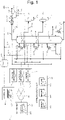
- a distillation tower management system 1 includes a measurement unit 10, an operation data unit 20, an analysis unit 30 and a control unit 40 as shown in Fig. 1 .
- the configuration elements of the distillation tower management system 1 are connected to each other through a communication network 50, and data is exchanged through the communication network 50.
- the communication network 50 is, for example, a wired or wireless local area network (LAN), wide area network (WAN), internet, intranet, exclusive line or the like.
- the configuration elements of the distillation tower management system 1 are connected to the communication network 50, whereby, with the Internet of Things (IoT), it is possible to carry out remote control, remote monitoring, data transmission and the like, and it is enabled to mutually control the configuration elements.
- IoT Internet of Things
- the distillation tower management system 1 is a system for managing a distillation tower facility (atmospheric distillation device) 100 and, particularly, a system for managing the operation state of a distillation tower 103. Therefore, first, the distillation tower facility 100 that is managed by the distillation tower management system 1 will be described.
- distillation tower facility 100 an atmospheric distillation method by an example of a single tower type will be described, but the present invention is not limited thereto, and the method may be an atmospheric distillation method by a different example of the single tower type or an atmospheric distillation method by a twin tower type.
- the distillation tower facility 100 may have side stripers as shown in Fig. 1 or may have no side stripers.
- the distillation tower facility 100 is not particularly limited in terms of the use and can be used in facilities for petroleum refinery processes, petroleum chemical processes or coal chemical processes.
- the tray-type distillation tower facility 100 has been described, but the present invention is not limited thereto and may be a distillation tower facility in which infill is used.
- a plurality of side fluxes is provided, and, for example, a first side reflux 131, a second side reflux 132 and a third side reflux 133 are sequentially provided from the top as shown in Fig. 1 .
- a line 111c and a line 116a are provided on the lower portion side of the first side reflux 131.
- the line 111c is connected to a heat exchanger 111C, and some of a fraction fractionally distilled with the first side reflux 131 is refluxed toward the upper portion in the tower.
- the line 116a is connected to a side stripper 112b, and some of the fraction fractionally distilled with the first side reflux 131 is sent to the side stripper 112b through the line 116a.
- a line 111b and a line 115a are provided on the lower portion side of the second side reflux 132.
- the line 111b is connected to a heat exchanger 111B, and some of a fraction fractionally distilled with the second side reflux 132 is refluxed toward the upper portion in the tower.
- the line 115a is connected to a side stripper 112a, and some of the fraction fractionally distilled with the second side reflux 132 is sent to the side stripper 112a through the line 115a.
- a line 111a and a line 114 are provided on the lower portion side of the third side reflux 133.
- the line 111a is connected to a heat exchanger 111A, and some of a fraction fractionally distilled with the third side reflux 133 is refluxed toward the upper portion in the tower.
- the line 114 is connected to the outside of the distillation tower 103, and some of the fraction fractionally distilled with the third side reflux 133 is sent to the outside of the distillation tower 103.
- a raw material oil is fed to the distillation tower 103 from a line 102 and fractionally distilled into a heavy oil fraction, a heavy gas oil fraction, a light oil fraction, a heavy naphtha fraction, a naphtha fraction, a gas fraction and the like.
- the raw material oil is heated up to a temperature of approximately 350°C with a heating furnace (not shown) or a heat exchanger and then continuously fed to the distillation tower 103.
- the heavy oil fraction has a boiling point of approximately 350°C or higher, fractionally distilled in the tower bottom portion and ejected from a line 113. Some of the heavy oil fraction ejected from the line 113 is heated with a heat exchanger 111 and then refluxed toward the lower portion side of the third side reflux 133 in the distillation tower 103.
- the heavy gas oil fraction has a boiling point of approximately 240°C to 350°C and ejected from the line 114.
- the light oil fraction has a boiling point of approximately 170°C to 250°C and ejected from the line 115 through the side stripper 112a.
- the heavy naphtha or kerosene fraction has a boiling point of approximately 80°C to 180°C and ejected from the line 116 through the side stripper 112b.
- the naphtha fraction and the gas fraction have a boiling point of approximately 35°C to 80°C and discharged from the tower top portion of the distillation tower 103.
- the naphtha fraction and the gas fraction discharged from the tower top portion of the distillation tower 103 pass through a line 104, are condensed with an air cooling-type cooler 105 and a heat exchanger 106 and collected in a naphtha receiver (an example of an overhead receiver) 107.
- a naphtha receiver 107 gas and liquid are separated, a fuel gas, a liquefied petroleum gas or the like is ejected from a line 108 as a gas fraction, and the naphtha fraction as a liquid fraction is ejected from a line 109.
- water accumulating in the lowest portion of the naphtha receiver 107 is drained from a water drainage unit 110 of the naphtha receiver 107.
- the heat exchangers 111, 111A, 111B and 111C are used to cool some of the fractions fractionally distilled from the distillation tower and to reflux some of the fractions to the inside of the tower from the viewpoint of temperature management.
- the measurement unit 10 is at least one selected from the group consisting of a pressure measurement unit 11 for measuring pressures at a plurality of different sites in the height direction of the distillation tower 103, a temperature measurement unit 12 for measuring the tower top portion temperature of the distillation tower 103 and a chlorine measurement unit 13 for measuring the feed rate of chlorine fed to the distillation tower 103 and the discharge rate of chlorine discharged from the distillation tower 103. That is, measurement data that is measured with the measurement unit 10 is obtained from at least one selected from the group consisting of the pressure measurement unit 11, the temperature measurement unit 12 and the chlorine measurement unit 13.
- the measurement unit 10 is any one of the pressure measurement unit 11, the temperature measurement unit 12 and the chlorine measurement unit 13, any two of those units or those three units, and the measurement data is obtained from any one of the pressure measurement unit 11, the temperature measurement unit 12 and the chlorine measurement unit 13, any two of those units or those three units.
- the pressure measurement unit 11 measures pressures at a plurality of different sites in the height direction of the distillation tower 103 and acquires the pressure of each site in the distillation tower 103.
- the pressure measurement unit 11 measures pressures at arbitrary sites in the distillation tower 103 and is thereby capable of acquiring the pressures at the arbitrary sites in the distillation tower 103 and capable of acquiring, for example, the pressure at the tower top portion of the distillation tower 103 and the upper portion or lower portion pressure in at least any of the plurality of side refluxes such as the first side reflux 131, the second side reflux 132 and the third side reflux 133.
- the pressure measurement unit 11 may be a configuration that directly measures pressures in the distillation tower 103 or may be a configuration that acquires pressures correlating with pressures in the tower. The pressure measurement unit 11 may continuously acquire or intermittently acquire the pressures in the distillation tower 103.
- the pressure measurement unit 11 for example, a strain gauge-type pressure sensor or the like can be used.
- the pressures that are acquired with the pressure measurement unit 11 may be estimated values.
- the temperature measurement unit 12 is preferably provided near the tower top portion of the distillation tower 103 and measures the tower top portion temperature.
- the temperature measurement unit 12 may be a configuration that directly measures the temperature in the distillation tower 103 or may be a configuration that acquires a temperature correlating with the tower top portion temperature (for example, the temperature ahead of or behind the heat exchanger 111B or 111C).
- the temperature measurement unit 12 may continuously acquire or intermittently acquire the tower top portion temperature of the distillation tower 103.
- thermocouple As the temperature measurement unit 12, for example, a temperature sensor such as a thermocouple can be used.
- the tower top portion temperature that is acquired with the temperature measurement unit 12 may be an estimated value.
- the chlorine measurement unit 13 is provided in the line 102 that feeds the raw material oil to the distillation tower 103 and measures the feed rate of chlorine fed to the distillation tower 103.
- the chlorine measurement unit 13 is provided in the line 104 that discharges the naphtha fraction and the gas fraction from the tower top portion of the distillation tower 103 and/or in the water drainage unit 110 that discharges drain water and measures the discharge rate of chlorine discharged from the distillation tower 103.
- the chlorine measurement unit 13 may continuously acquire or intermittently acquire the chlorine feed rate and the chlorine discharge rate.
- Examples of the chlorine measurement unit 13 include any units that measure the chlorine feed rate and the chlorine discharge rate by a method in which the chlorine rate is measured from each of the raw material oil and the drain water, a method in which the chlorine feed rate and the chlorine discharge rate are measured by X-ray analysis or the like as long as the chlorine feed rate and the chlorine discharge rate can be measured.
- the operation data unit 20 produces operation data containing the measurement data measured with the measurement unit 10.
- the operation data unit 20 produces operation data containing differential pressure data 200 regarding a differential pressure between portions in the distillation tower 103.
- the differential pressure data 200 is obtained by calculating a difference between individual pressures at portions in the distillation tower 103, which are measured with the pressure measurement unit 11.
- the differential pressure data 200 in the first side reflux 131 can be obtained by acquiring the pressure at the tower top portion of the distillation tower 103 and the lower portion pressure at the first side reflux 131 and obtaining the difference between these acquired pressures.
- the differential pressure data 200 is preferably a corrected differential pressure that is a value corrected with the amount of process fluid passing through a site from which the differential pressure has been obtained.
- Alteration in the differential pressure data 200 may be based on continuous data or intermittent data.
- the operation data unit 20 produces operation data containing temperature difference data 201 regarding a temperature difference between the tower top portion temperature measured with the temperature measurement unit 12 and the salting-out temperature obtained by calculation.
- the temperature difference data 201 can be obtained by calculating the difference between the tower top portion temperature and the salting-out temperature.
- the salting-out temperature can be obtained by calculation using the Antoine equation.
- the salting-out temperature may be calculated based on Calculations estimate process stream depositions ( Oil & Gas Journal Jan 3, 1994, pp. 38 to 41 ).
- the operation data unit 20 produces operation data containing chlorine rate difference data 202 regarding the difference in chlorine rate between the chlorine feed rate and the chlorine discharge rate measured with the chlorine measurement unit 13.
- the chlorine rate difference data 202 can be obtained by calculating the difference between the feed rate of chlorine fed to the distillation tower 103 and the discharge rate of chlorine discharged from the distillation tower 103.
- the analysis unit 30 analyzes the state of the distillation tower 103 from the operation data and produces analysis data 300 regarding the state of the distillation tower 103.
- the analysis unit 30 analyzes, for example, the presence or absence of salting-out as the state of the distillation tower 103.
- the analysis unit 30 is capable of analyzing the predicted alteration of a future differential pressure from the differential pressure alteration that is obtained from the differential pressure data 200.
- the differential pressure alteration that is obtained from the differential pressure data 200 may be grasped from the value of a change in the differential pressure per unit time or may be grasped by graphing the differential pressure alteration that is obtained from the differential pressure data 200.
- An example of the analysis data 300 produced with the analysis unit 30 by analyzing the operation data containing the differential pressure data 200 is shown in Fig. 2.
- Fig. 2 is a graph showing the number of operation days along the horizontal axis and differential pressures along the vertical axis. That is, Fig. 2 is a graph showing the differential pressure alteration.
- the analysis unit 30 carries out at least one of a group consisting of moving average, exponential mean, linear approximation, non-linear approximation, multivariate analysis and the other free set values based on the differential pressure alteration that has been thus far obtained, thereby analyzing the predicted alteration of a future differential pressure from the differential pressure alteration that has been thus far obtained. Specifically, the analysis unit 30 analyzes the predicted alteration of the future differential pressure from the slope of a graph showing the differential pressure alteration that is obtained from the differential pressure data 200. In addition, the analysis unit 30 predicts whether or not the predicted alteration obtained by the analysis reaches an upper limit differential pressure set as a state in which the operation of the distillation tower 103 is hindered.
- the differential pressure is evaluated as "A", which means that the differential pressure is favorable.
- a evaluation a change in the operation specification (the kind of a differential pressure-eliminating agent, the amount of the differential pressure-eliminating agent added and the like) of the distillation tower 103 is not recommended.
- the differential pressure is evaluated as "B", which means that attention needs to be paid to the differential pressure, and, in a case where the period of time becomes shorter than the intended period of time, the differential pressure is evaluated as "C”, which means that an action needs to be taken regarding the differential pressure.
- B evaluation or "C evaluation”
- a change in the operation specification of the distillation tower 103 is recommended.
- the predicted alteration of the future differential pressure can be made more accurate using a result obtained by learning, such as machine learning or deep learning.
- the analysis unit 30 is capable of analyzing the predicted alteration of a future temperature difference from the temperature difference alteration between the tower top portion temperature and the salting-out temperature that is obtained from the temperature difference data 201.
- the temperature difference alteration that is obtained from the temperature difference data 201 may be grasped from the value of a change in the temperature difference per unit time or may be grasped by graphing the temperature difference alteration that is obtained from the temperature difference data 201.
- An example of the analysis data 300 produced with the analysis unit 30 by analyzing the operation data containing the temperature difference data 201 is shown in Fig. 3.
- Fig. 3 is a graph showing the number of operation days along the horizontal axis and temperatures along the vertical axis. That is, Fig.
- the analysis unit 30 carries out at least one of a group consisting of moving average, exponential mean, linear approximation, non-linear approximation, multivariate analysis and the other free set values based on the temperature difference alteration that has been thus far obtained, thereby analyzing the predicted alteration of a future temperature difference from the temperature difference alteration that has been thus far obtained. Specifically, the analysis unit 30 analyzes the predicted alteration of the future temperature difference from the slopes of graphs showing the temperature difference alteration that is obtained from the temperature difference data 201.
- the analysis unit 30 sets a case where the tower top portion temperature is below the salting-out temperature as a state in which the operation of the distillation tower 103 is hindered and predicts whether or not the tower top portion temperature is below the salting-out temperature in the predicted alteration obtained by analysis.
- the temperature difference is evaluated as "A", which means that the temperature difference is favorable.
- a evaluation a change in the operation specification (the kind of the differential pressure-eliminating agent, the amount of the differential pressure-eliminating agent added and the like) of the distillation tower 103 is not recommended.
- the temperature difference is evaluated as "B", which means that attention needs to be paid to the temperature difference, and, in a case where it is predicted that the tower top portion temperature may be highly likely to reach the salting-out temperature, the temperature difference is evaluated as "C”, which means that an action needs to be taken regarding the temperature difference.
- B evaluation or "C evaluation”
- a change in the operation specification of the distillation tower 103 is recommended.
- the predicted alteration of the future temperature difference can be made more accurate using a result obtained by learning, such as machine learning or deep learning.
- the analysis unit 30 is capable of analyzing the predicted alteration of a future chlorine difference from the chlorine rate difference alteration between the chlorine feed rate and the chlorine discharge rate obtained from the chlorine rate difference data 202.
- the chlorine difference alteration that is obtained from the chlorine rate difference data 202 may be grasped from the value of a change in the chlorine difference per unit time or may be grasped by graphing the chlorine difference alteration that is obtained from the chlorine rate difference data 202.
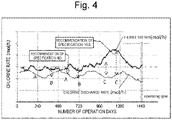
- An example of the analysis data 300 produced with the analysis unit 30 by analyzing the operation data containing the chlorine rate difference data 202 is shown in Fig. 4.
- Fig. 4 is a graph showing the number of operation days along the horizontal axis and the amounts of chlorine along the vertical axis. That is, Fig.
- the analysis unit 30 carries out at least one of a group consisting of moving average, exponential mean, linear approximation, non-linear approximation, multivariate analysis and the other free set values based on the chlorine rate difference alteration that has been thus far obtained, thereby analyzing the predicted alteration of a future chlorine rate difference from the chlorine rate difference alteration that has been thus far obtained. Specifically, the analysis unit 30 analyzes the predicted alteration of the future chlorine rate difference from the slopes of graphs showing the chlorine rate difference alteration that is obtained from the chlorine rate difference data 202.
- the analysis unit 30 sets a case where the chlorine rate difference between the chlorine feed rate and the chlorine discharge rate becomes a certain value or more as a state in which the operation of the distillation tower 103 is hindered and predicts whether or not the chlorine rate difference between the chlorine feed rate and the chlorine discharge rate becomes the certain value or more in the predicted alteration obtained by analysis.
- the chlorine rate difference is evaluated as "A", which means that the chlorine rate difference is favorable.
- a evaluation a change in the operation specification (the kind of the differential pressure-eliminating agent, the amount of the differential pressure-eliminating agent added and the like) of the distillation tower 103 is not recommended.
- the chlorine rate difference is evaluated as "B", which means that attention needs to be paid to the chlorine rate difference, and, in a case where the chlorine rate difference between the chlorine feed rate and the chlorine discharge rate is highly likely to reach the certain value, the chlorine rate difference is evaluated as "C”, which means that an action needs to be taken regarding the chlorine rate difference.
- B evaluation or "C evaluation”
- a change in the operation specification of the distillation tower 103 is recommended.
- the predicted alteration of the future chlorine rate difference can be made more accurate using a result obtained by learning, such as machine learning or deep learning.
- the control unit 40 produces, based on the analysis data 300, control data 400 regarding the differential pressure-eliminating agent that is added to the distillation tower 103.
- the control data 400 is data containing the kind of the differential pressure-eliminating agent that is added to the distillation tower 103 and the amount of the differential pressure-eliminating agent added.
- the control unit 40 In a case where the operation of the distillation tower 103 is predicted not to be hindered in the analysis data 300, the control unit 40 produces the control data 400 that maintains the kind of the differential pressure-eliminating agent that is added to the distillation tower 103 and the amount of the differential pressure-eliminating agent added. On the other hand, in a case where the operation of the distillation tower 103 is predicted to be hindered in the analysis data 300, the control unit 40 produces the control data 400 that changes the kind of the differential pressure-eliminating agent that is added to the distillation tower 103 and/or increases the amount of the differential pressure-eliminating agent added.
- the control unit 40 sends the control data 400 to a differential pressure-eliminating agent tank 120 and adds the differential pressure-eliminating agent to the distillation tower 103 based on the control data 400.
- the distillation tower management system 1 may be configured to include a differential pressure-eliminating agent-adding unit (not shown) that adds the differential pressure-eliminating agent to the distillation tower 103 based on the control data.
- the differential pressure-eliminating agent is preferably at least one of a salt remover and a salt dispersant.
- the kind of a salt that becomes a target of the differential pressure-eliminating agent is not particularly limited, and examples of the salt include ammonium chloride, ammonium hydrosulfide, ammonium sulfate and the like.
- the salt remover is a chemical agent that turns a precipitated salt into a neutral salt.
- the salt remover is preferably a quaternary ammonium compound.
- the quaternary ammonium compound is not particularly limited and may be one or more of hydroxymethyltrimethylammonium hydroxide, hydroxymethyltriethylammonium hydroxide, hydroxyethyltrimethylammonium hydroxide, (2-hydroxyethyl)triethylammonium hydroxide, (3-hydroxypropyl)trimethylammonium hydroxide and the like.
- choline hydroxide (2-hydroxyethyl)triethylammonium hydroxide
- choline hydroxide (2-hydroxyethyl)triethylammonium hydroxide
- choline hydroxide may be used singly or choline hydroxide and an alkaline substance such as an organic amine may be used in combination.
- the salt dispersant is a chemical agent that maintains a salt in a state of being suspended in a fluid and prevents deposition or adhesion.
- the salt dispersant for example, the salt dispersants described in International Publication WO. 2006/032620 , US 7585403 B and US 5387733 B can be used.
- a position where the differential pressure-eliminating agent is added (injected) to the distillation tower 103 is not particularly limited; however, from the viewpoint of discharging the precipitated salt to the outside of the distillation tower 103 within a short period of time, the differential pressure-eliminating agent is preferably added (injected) to a line of a top reflux of the atmospheric distillation device (the process fluid that is refluxed to the highest position of the tower with the tower-top system), an return line of a top pump around (a fraction corresponding to heavy naphtha or a gasoline fraction; the process fluid that is circulated and cooled) or an extraction line of the top pump around (a fraction corresponding to heavy naphtha or a gasoline fraction; the process fluid that is circulated and cooled) and more preferably added to the line of the top reflux.
- the differential pressure-eliminating agent may be added (injected) to a plurality of lines by combining several lines.
- the differential pressure-eliminating agent is preferably added (injected) to any line or a plurality of lines of the differential pressure-eliminating agent injection lines 121a, 121b and 121c.
- the differential pressure-eliminating agent injection line 121a fluid in the top reflux
- the differential pressure-eliminating agent injection line 121b fluid in the return line of the top pump around
- the differential pressure-eliminating agent injection line 121c fluid in the extraction line of the top pump around
- a quill nozzle is preferably used from the viewpoint of the dispersibility in the process fluid.
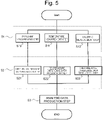
- a distillation tower state analysis method includes a measurement step S1, an operation data production step
- the measurement step S1 includes at least one selected from the group consisting of a pressure measurement step S10 of measuring pressures at a plurality of different sites in the height direction of the distillation tower 103 with the pressure measurement unit 11, a temperature measurement step S11 of measuring the tower top portion temperature of the distillation tower 103 with the temperature measurement unit 12 and a chlorine measurement step S12 of measuring the feed rate of chlorine fed to the distillation tower 103 and the discharge rate of chlorine discharged from the distillation tower 103 with the chlorine measurement unit 13.
- the measurement step S1 includes the pressure measurement step S10, specifically, the pressure at the tower top portion of the distillation tower 103 and the lower portion pressure in at least any of the plurality of side refluxes such as the first side reflux 131, the second side reflux 132 and the third side reflux 133 are measured with the pressure measurement unit 11.
- a method for measuring the pressures with the pressure measurement unit 11 may be a method in which pressures in the distillation tower 103 are directly measured or may be a method in which pressures correlating with the pressures in the tower are measured.
- the pressures in the distillation tower 103 may be continuously measured or intermittently measured.
- the pressure measurement unit 11 stores the measured pressures in a storage unit (not shown) through the network 50.
- a storage unit for example, storage media such as a ROM, a RAM and a hard disc can be used.
- the pressure measurement unit 11 is connected to the communication network 50, whereby, with the Internal of Things (IoT), it is possible to carry out remote control, remote monitoring, data transmission and the like, and it is enabled to exchange information between the configuration elements of the distillation tower management system 1.
- IoT Internal of Things
- the tower top portion temperature of the distillation tower 103 is measured with the temperature measurement unit 12 provided in the tower top portion of the distillation tower 103.
- a method for measuring the temperature with the temperature measurement unit 12 may be a method in which temperature in the distillation tower 103 may be directly measured or may be a method in which a temperature correlating with the tower top portion temperature (for example, the temperature ahead of or behind the heat exchanger 111B or 111C) is measured.
- the tower top portion temperature that is acquired with the temperature measurement unit 12 may be an estimated value.
- the tower top portion temperature of the distillation tower 103 may be continuously measured or intermittently measured.
- the temperature measurement unit 12 stores the measured temperature in the storage unit (not shown) through the network 50.
- the feed rate of chlorine fed to the distillation tower 103 is measured with the chlorine measurement unit 13 provided in the line 102 that feeds the raw material oil to the distillation tower 103.
- the discharge rate of chlorine discharged from the distillation tower 103 is measured with the chlorine measurement unit 13 provided in the line 104 that discharges the naphtha fraction and the gas fraction from the tower top portion of the distillation tower 103 and/or in the water drainage unit 110 that discharges drain water.
- the chlorine feed rate and the chlorine discharge rate may be measured with the chlorine measurement unit 13 continuously or intermittently.
- the chlorine measurement unit 13 store the measured chlorine feed rate and the measured chlorine discharge rate in the storage unit (not shown) through the network 50.
- operation data containing the measurement data measured by the measurement step S1 is produced with the operation data unit 20.
- the operation data production step S2 includes a differential pressure data production step S20 of producing operation data containing the differential pressure data 200 regarding the differential pressure between portions in the distillation tower 103 with the operation data unit 20.
- the operation data unit 20 acquires data regarding the pressures measured by the measurement step S1 that are stored in the storage unit.
- the operation data unit 20 produces the differential pressure data 200 by calculating a difference between individual pressures at portions in the distillation tower 103, which have been measured by the measurement step S1.
- a corrected differential pressure obtained by correcting the differential pressure data 200 with the amount of process fluid passing through a differential pressure estimation site is preferably regarded as the differential pressure data 200.
- the operation data unit 20 may produce alteration in the differential pressure data 200 based on continuous data or intermittent data.
- the operation data unit 20 stores the produced differential pressure data 200 in the storage unit (not shown) through the network 50.
- the operation data production step S2 includes a temperature difference data production step S21 of producing operation data containing the temperature difference data 201 regarding the temperature difference between the tower top portion temperature and the salting-out temperature obtained by calculation.
- the operation data unit 20 acquires data regarding the tower top portion temperature measured by the temperature measurement step S11 that is stored in the storage unit.
- the operation data unit 20 calculates the salting-out temperature based on the tower top portion pressure, the mole flow rate of an acid (for example, a chloride), the mole flow rate of bases (ammonia and amines), the amount of process fluid in terms of mole and the pressure value of the process.
- the mole flow rate of the acid and the mole flow rate of the bases fixed values may be used or the mole flow rates may be estimated from an analysis value of tower top drain water or a sensor-read value.
- values read with an existing actual sensor can be used as the amount of process fluid in terms of mole and the pressure value of the process.
- the operation data unit 20 produces the temperature difference data 201 by calculating the difference between the tower top portion temperature and the salting-out temperature.
- the operation data unit 20 stores the produced temperature difference data 201 in the storage unit (not shown) through the network 50.
- the operation data production step S2 includes a chlorine rate difference data production step S22 of producing operation data containing the chlorine rate difference data 202 regarding the chlorine rate difference between the chlorine feed rate and the chlorine discharge rate.
- the operation data unit 20 acquires data regarding the chlorine feed rate and the chlorine discharge rate measured by the chlorine rate measurement step S12 that is stored in the storage unit.
- the operation data unit 20 produces the chlorine rate difference data 202 by calculating the difference between the feed rate of chlorine fed to the distillation tower 103 and the discharge rate of chlorine discharged from the distillation tower 103.
- the operation data unit 20 stores the produced chlorine rate difference data 202 in the storage unit (not shown) through the network 50.
- the analysis data 300 regarding the state of the distillation tower 103 is produced with the analysis unit 30.
- the analysis data 300 is produced with the analysis unit 30 by analyzing the presence or absence of salting-out.
- the analysis unit 30 acquires operation data containing the differential pressure data 200 produced by the operation data production step S2 that is stored in the storage unit.
- the analysis unit 30 analyzes the predicted alteration of a future differential pressure from the differential pressure alteration that is obtained from the differential pressure data 200 based on the operation data containing the differential pressure data 200.
- the analysis unit 30 produces a graph showing the differential pressure alteration, like Fig. 2 , based on, for example, the operation data containing the differential pressure data 200 and analyzes the predicted alteration of the future differential pressure from the graph showing the differential pressure alteration.
- the analysis unit 30 analyzes the predicted alteration of the future differential pressure from the slope of the graph showing the differential pressure alteration that is obtained from the differential pressure data 200.
- the analysis unit 30 determines whether or not the predicted alteration obtained by the analysis reaches the upper limit differential pressure set as a state in which the operation of the distillation tower 103 is hindered and produces the analysis data 300 containing the determination result.
- the analysis unit 30 stores the produced analysis data 300 in the storage unit (not shown) through the network 50.
- the analysis unit 30 acquires operation data containing the temperature difference data 201 produced by the operation data production step S2 that is stored in the storage unit.
- the analysis unit 30 analyzes the predicted alteration of a future temperature difference from the temperature difference alteration that is obtained from the temperature difference data 201 based on the operation data containing the temperature difference data 201.
- the analysis unit 30 produces a graph showing the temperature difference alteration, like Fig. 3 , based on, for example, the operation data containing the temperature difference data 201 and analyzes the predicted alteration of the future temperature difference from the graph showing the temperature difference alteration.
- the analysis unit 30 analyzes the predicted alteration of the future temperature difference from the slopes of graphs showing the temperature difference alteration that is obtained from the temperature difference data 201.
- the analysis unit 30 sets a case where the tower top portion temperature is below the salting-out temperature as a state in which the operation of the distillation tower 103 is hindered, determines whether or not the tower top portion temperature is below the salting-out temperature in the predicted alteration obtained by analysis, and produces the analysis data 300 containing the determination result.
- the analysis unit 30 stores the produced analysis data 300 in the storage unit (not shown) through the network 50.
- the analysis unit 30 acquires operation data containing the chlorine rate difference data 202 produced by the operation data production step S2 that is stored in the storage unit.
- the analysis unit 30 analyzes the predicted alteration of a future temperature difference from the chlorine rate difference alteration that is obtained from the chlorine rate difference data 202 based on the operation data containing the chlorine rate difference data 202.
- the analysis unit 30 produces a graph showing the chlorine rate difference alteration, like Fig. 4 , based on, for example, the operation data containing the chlorine rate difference data 202 and analyzes the predicted alteration of the future temperature difference from the graph showing the chlorine rate difference alteration.
- the analysis unit 30 analyzes the predicted alteration of the future chlorine rate difference from the slopes of graphs showing the chlorine rate difference alteration that is obtained from the chlorine rate difference data 202.
- the analysis unit 30 sets a case where the chlorine rate difference between the chlorine feed rate and the chlorine discharge rate becomes a certain value or more as a state in which the operation of the distillation tower 103 is hindered, determines whether or not the chlorine rate difference between the chlorine feed rate and the chlorine discharge rate becomes the certain value or more in the predicted alteration obtained by analysis, and produces the analysis data 300 containing the determination result.
- the analysis unit 30 stores the produced analysis data 300 in the storage unit (not shown) through the network 50.
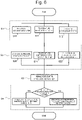
- a distillation tower management method includes a measurement step S1, an operation data production step S2, an analysis data production step S3 and a control data production step S4 as shown in Fig. 6 .
- the distillation tower management method according to the present embodiment will be described with reference to Fig. 1 and Fig. 6 .
- the measurement step S1, the operation data production step S2 and the analysis data production step S3 are the same as those in the above-described distillation tower state analysis method and thus will not be described again.
- control data 400 regarding the differential pressure-eliminating agent that is added to the distillation tower 103 is produced with the control unit 40 based on the analysis data 300.
- control unit 40 acquires the analysis data 300 produced by the analysis data production step S3 that is stored in the storage unit.
- control unit 40 determines whether or not the state in which the operation of the distillation tower 103 is hindered is predicted to be reached in the analysis data 300. In addition, in a case where the operation of the distillation tower 103 is predicted not to be hindered in the analysis data 300, the control unit 40 produces the control data 400 that maintains the kind of the differential pressure-eliminating agent that is added to the distillation tower 103 and the amount of the differential pressure-eliminating agent added.
- control unit 40 produces the control data 400 that changes the kind of the differential pressure-eliminating agent that is added to the distillation tower 103 and/or increases the amount of the differential pressure-eliminating agent added.
- control unit 40 sends the control data 400 to the differential pressure-eliminating agent tank 120 and adds the differential pressure-eliminating agent to the distillation tower 103 based on the control data 400.
- the differential pressure-eliminating agent is preferably at least one of a salt remover and a salt dispersant.
- the distillation tower state analysis method and the distillation tower management method of the present invention since it is possible to predict abnormality in distillation towers before the abnormality becomes apparent and to take preventive actions, it is possible to improve the facility use efficiency and to extend the service lives of facilities.
Landscapes
- Chemical & Material Sciences (AREA)
- Chemical Kinetics & Catalysis (AREA)
- Oil, Petroleum & Natural Gas (AREA)
- Engineering & Computer Science (AREA)
- Organic Chemistry (AREA)
- General Chemical & Material Sciences (AREA)
- Life Sciences & Earth Sciences (AREA)
- General Health & Medical Sciences (AREA)
- General Physics & Mathematics (AREA)
- Immunology (AREA)
- Pathology (AREA)
- Biochemistry (AREA)
- Analytical Chemistry (AREA)
- Health & Medical Sciences (AREA)
- Physics & Mathematics (AREA)
- Vaporization, Distillation, Condensation, Sublimation, And Cold Traps (AREA)
- Production Of Liquid Hydrocarbon Mixture For Refining Petroleum (AREA)
Abstract
Description
- The present invention relates to a distillation tower management system, a distillation tower state analysis method, and a distillation tower management method.
- In distillation towers in distillation facilities for petroleum refinery processes, petroleum chemical processes, coal chemical processes and the like, a problem has been that the flow of the processes is hindered by the precipitation of a neutral salt represented by ammonium chloride, which leads to a decrease in the facility use efficiency. In addition, another problem is that the precipitated salt absorbs moisture, which results in the occurrence of severe local corrosion in the facilities. Clogging in distillation towers caused by a salt or the like is confirmed by an increase in the difference in pressure (hereinafter, referred to as the "differential pressure") in a predetermined position or the like.
- As a method for eliminating the differential pressure caused by the precipitation of a salt (salting-out), a sublimation operation method or a method of applying cleaning water into towers is usually employed.
- The sublimation operation method refers to an operation method in which a precipitated salt is sublimed by increasing the temperature of a distillation tower and discharged into a distillation tower-top system. Sublimation operation makes it possible to remove the precipitated salt from the tower top portion to the outside of the system.
- The cleaning water application method is a method in which cleaning water is fed to a top reflux line, a top pump around and the like in a distillation tower, thereby feeding the cleaning water to a portion where a salt is precipitated and dissolving and removing the salt. The feed of cleaning water makes it possible to eliminate the differential pressure within a short period of time.
- For example, NPL 1 describes a sublimation operation method in which a precipitated salt is sublimed by increasing the temperature of a distillation tower within a short period of time and discharged into a distillation tower-top system.
- In addition, for example,
PTL 1 describes a hydrocarbon oil distillation method in which, in a distillation treatment of hydrocarbon oil, water is introduced into a distillation tower, thereby removing water-soluble salts in the tower. - PTL 1:
US 5656152 B - NPL 1: GRACE DAVISON CATALAGRAM, ISSUE, 2010, No. 107, pp. 34 to 39
- Conventionally, methods for eliminating a differential pressure caused by salting-out such as the sublimation operation method and the cleaning water application method are carried out in a case where an increase in the differential pressure in a distillation tower is observed and the degree of such an increase is determined to be in a problematic situation. That is, since an increase in the differential pressure is not responded until abnormality in the distillation tower becomes apparent, a problem has been that the response becomes a late action and worsening of the situation such as a decrease in the amount treated or the progress of facility corrosion is allowed. In some cases, it takes several days to several months to confirm that an increase in differential pressure is obvious, and corrosion or contamination by a corrosion product that has progressed during the confirmation of the increase in differential pressure cannot be properly responded by the sublimation operation. In addition, since the corrosion product itself is highly corrosive, there is a concern that facilities may be additionally corroded during water cleaning.
- In addition, while the use of a salt remover, a dispersant or the like makes it possible to reduce a risk of differential pressure or corrosion caused by a precipitated salt, in a case where corrosion has already progressed due to a precipitated salt, there is no solution.
- The present invention has been made in consideration of such circumstances, and an objective of the present invention is to provide a distillation tower management system, a distillation tower state analysis method, and a distillation tower management method that are capable of predicting abnormality in distillation towers before the abnormality becomes apparent (in other words, detecting the warning of abnormality in distillation towers) and capable of taking preventive actions.
- In order to solve the above-described problems, the present inventors have conducted intensive studies and consequently found that the warning of abnormality can be detected by acquiring the operation information of a distillation tower and analyzing a change in the operation information.
- The present invention has been completed based on such a finding.
- That is, the present disclosure relates to the followings.
- (1) A distillation tower management system including a measurement unit that is at least one selected from the group consisting of a pressure measurement unit that measures pressures at a plurality of different sites in a height direction of a distillation tower, a temperature measurement unit that measures a tower top portion temperature of the distillation tower, and a chlorine measurement unit that measures a feed rate of chlorine fed to the distillation tower and a discharge rate of chlorine discharged from the distillation tower, an operation data unit that produces operation data containing measurement data measured with the measurement unit, an analysis unit that analyzes a state of the distillation tower from the operation data and produces analysis data regarding the state of the distillation tower, and a control unit that produces, based on the analysis data, control data regarding a differential pressure-eliminating agent that is added to the distillation tower, in which, in a case where the measurement unit is the pressure measurement unit, the operation data unit produces operation data containing differential pressure data regarding a differential pressure between pressures at a plurality of sites measured with the pressure measurement unit, in a case where the measurement unit is the temperature measurement unit, the operation data unit produces operation data containing temperature difference data regarding a temperature difference between the tower top portion temperature measured with the temperature measurement unit and a salting-out temperature obtained by calculation, and, in a case where the measurement unit is the chlorine measurement unit, the operation data unit produces operation data containing chlorine rate difference data regarding a difference in chlorine rate between the chlorine feed rate and the chlorine discharge rate measured with the chlorine measurement unit.
- (2) The distillation tower management system according to (1), in which the analysis unit analyzes predicted alteration of a future differential pressure from differential pressure alteration that is obtained from the differential pressure data.
- (3) The distillation tower management system according to (1) or (2), in which the differential pressure-eliminating agent is at least one of a salt remover and a salt dispersant.
- (4) A distillation tower state analysis method including a measurement step that is at least one selected from the group consisting of a pressure measurement step of measuring pressures at a plurality of different sites in a height direction of a distillation tower with a pressure measurement unit, a temperature measurement step of measuring a tower top portion temperature of the distillation tower with a temperature measurement unit, and a chlorine measurement step of measuring a feed rate of chlorine fed to the distillation tower and a discharge rate of chlorine discharged from the distillation tower with a chlorine measurement unit, an operation data production step of producing, with an operation data unit, operation data containing measurement data measured by the measurement step, and an analysis data production step of analyzing a state of the distillation tower from the operation data and producing analysis data regarding the state of the distillation tower with an analysis unit, in which, in a case where the measurement step is the pressure measurement step, the operation data production step includes a differential pressure data production step of producing operation data containing differential pressure data regarding a differential pressure between pressures at a plurality of sites measured with the pressure measurement unit, in a case where the measurement step is the temperature measurement step, the operation data production step includes a temperature difference data production step of producing operation data containing temperature difference data regarding a temperature difference between the tower top portion temperature and a salting-out temperature obtained by calculation, and, in a case where the measurement step is the chlorine measurement step, the operation data production step includes a chlorine rate difference data production step of producing operation data containing chlorine rate difference data regarding a difference in chlorine rate between the chlorine feed rate and the chlorine discharge rate.
- (5) The distillation tower state analysis method according to (4), in which, in the analysis data production step, predicted alteration of a future differential pressure is analyzed with the analysis unit from differential pressure alteration that is obtained from the differential pressure data.
- (6) A distillation tower management method including a measurement step that is at least one selected from the group consisting of a pressure measurement step of measuring pressures at a plurality of different sites in a height direction of a distillation tower with a pressure measurement unit, a temperature measurement step of measuring a tower top portion temperature of the distillation tower with a temperature measurement unit, and a chlorine measurement step of measuring a feed rate of chlorine fed to the distillation tower and a discharge rate of chlorine discharged from the distillation tower with a chlorine measurement unit, an operation data production step of producing, with an operation data unit, operation data containing measurement data measured by the measurement step, an operation data production step including a differential pressure data production step of producing, with an operation data unit, operation data containing differential pressure data regarding a differential pressure between pressures at a plurality of sites measured with the pressure measurement unit, an analysis data production step of analyzing a state of the distillation tower from the operation data and producing analysis data regarding the state of the distillation tower with an analysis unit, and a control data production step of producing, with a control unit based on the analysis data, control data regarding a differential pressure-eliminating agent that is added to the distillation tower, in which, in a case where the measurement step is the pressure measurement step, the operation data production step includes a differential pressure data production step of producing operation data containing differential pressure data regarding a differential pressure between pressures at a plurality of sites measured with the pressure measurement unit, in a case where the measurement step is the temperature measurement step, the operation data production step includes a temperature difference data production step of producing operation data containing temperature difference data regarding a temperature difference between the tower top portion temperature and a salting-out temperature obtained by calculation, and, in a case where the measurement step is the chlorine measurement step, the operation data production step includes a chlorine rate difference data production step of producing operation data containing chlorine rate difference data regarding a difference in chlorine rate between the chlorine feed rate and the chlorine discharge rate.
- (7) The distillation tower management method according to (6), in which, in the analysis data production step, predicted alteration of a future differential pressure is analyzed with the analysis unit from differential pressure alteration that is obtained from the differential pressure data.
- According to the present invention, it is possible to provide a distillation tower management system, a distillation tower state analysis method, and a distillation tower management method that are capable of predicting abnormality in distillation towers before the abnormality becomes apparent and capable of taking preventive actions.
-
- [
Fig. 1] Fig. 1 is a block diagram of a distillation tower management system and a distillation tower facility according to an embodiment of the present invention. - [
Fig. 2] Fig. 2 is an example of analysis data produced by analyzing operation data containing differential pressure data in the distillation tower management system according to the embodiment of the present invention. - [
Fig. 3] Fig. 3 is an example of analysis data produced by analyzing operation data containing temperature difference data in the distillation tower management system according to the embodiment of the present invention. - [
Fig. 4] Fig. 4 is an example of analysis data produced by analyzing operation data containing chlorine rate difference data in the distillation tower management system according to the embodiment of the present invention. - [
Fig. 5] Fig. 5 is a flowchart showing a distillation tower state analysis method according to the embodiment of the present invention. - [
Fig. 6] Fig. 6 is a flowchart showing a distillation tower management method according to the embodiment of the present invention. - Hereinafter, a distillation tower management system, a distillation tower state analysis method and a distillation tower management method according to an embodiment of the present invention (hereinafter, simply referred to as "the present embodiment" in some cases) will be specifically described.
- A distillation
tower management system 1 according to the present embodiment includes ameasurement unit 10, anoperation data unit 20, ananalysis unit 30 and acontrol unit 40 as shown inFig. 1 . - The configuration elements of the distillation
tower management system 1 are connected to each other through acommunication network 50, and data is exchanged through thecommunication network 50. Thecommunication network 50 is, for example, a wired or wireless local area network (LAN), wide area network (WAN), internet, intranet, exclusive line or the like. The configuration elements of the distillationtower management system 1 are connected to thecommunication network 50, whereby, with the Internet of Things (IoT), it is possible to carry out remote control, remote monitoring, data transmission and the like, and it is enabled to mutually control the configuration elements. - As shown in
Fig. 1 , the distillationtower management system 1 is a system for managing a distillation tower facility (atmospheric distillation device) 100 and, particularly, a system for managing the operation state of adistillation tower 103. Therefore, first, thedistillation tower facility 100 that is managed by the distillationtower management system 1 will be described. - Regarding the
distillation tower facility 100, an atmospheric distillation method by an example of a single tower type will be described, but the present invention is not limited thereto, and the method may be an atmospheric distillation method by a different example of the single tower type or an atmospheric distillation method by a twin tower type. In addition, thedistillation tower facility 100 may have side stripers as shown inFig. 1 or may have no side stripers. Furthermore, thedistillation tower facility 100 is not particularly limited in terms of the use and can be used in facilities for petroleum refinery processes, petroleum chemical processes or coal chemical processes. In addition, in the above-described example, the tray-typedistillation tower facility 100 has been described, but the present invention is not limited thereto and may be a distillation tower facility in which infill is used. - In the
distillation tower 103, a plurality of side fluxes is provided, and, for example, afirst side reflux 131, asecond side reflux 132 and athird side reflux 133 are sequentially provided from the top as shown inFig. 1 . - A
line 111c and aline 116a are provided on the lower portion side of thefirst side reflux 131. Theline 111c is connected to aheat exchanger 111C, and some of a fraction fractionally distilled with thefirst side reflux 131 is refluxed toward the upper portion in the tower. Theline 116a is connected to aside stripper 112b, and some of the fraction fractionally distilled with thefirst side reflux 131 is sent to theside stripper 112b through theline 116a. - A
line 111b and aline 115a are provided on the lower portion side of thesecond side reflux 132. Theline 111b is connected to aheat exchanger 111B, and some of a fraction fractionally distilled with thesecond side reflux 132 is refluxed toward the upper portion in the tower. Theline 115a is connected to aside stripper 112a, and some of the fraction fractionally distilled with thesecond side reflux 132 is sent to theside stripper 112a through theline 115a. - A
line 111a and aline 114 are provided on the lower portion side of thethird side reflux 133. Theline 111a is connected to aheat exchanger 111A, and some of a fraction fractionally distilled with thethird side reflux 133 is refluxed toward the upper portion in the tower. Theline 114 is connected to the outside of thedistillation tower 103, and some of the fraction fractionally distilled with thethird side reflux 133 is sent to the outside of thedistillation tower 103. - In the
distillation tower facility 100, a raw material oil is fed to thedistillation tower 103 from aline 102 and fractionally distilled into a heavy oil fraction, a heavy gas oil fraction, a light oil fraction, a heavy naphtha fraction, a naphtha fraction, a gas fraction and the like. In the case of being in an unheated state, the raw material oil is heated up to a temperature of approximately 350°C with a heating furnace (not shown) or a heat exchanger and then continuously fed to thedistillation tower 103. - The heavy oil fraction has a boiling point of approximately 350°C or higher, fractionally distilled in the tower bottom portion and ejected from a
line 113. Some of the heavy oil fraction ejected from theline 113 is heated with aheat exchanger 111 and then refluxed toward the lower portion side of thethird side reflux 133 in thedistillation tower 103. - The heavy gas oil fraction has a boiling point of approximately 240°C to 350°C and ejected from the
line 114. - The light oil fraction has a boiling point of approximately 170°C to 250°C and ejected from the
line 115 through theside stripper 112a. - The heavy naphtha or kerosene fraction has a boiling point of approximately 80°C to 180°C and ejected from the
line 116 through theside stripper 112b. - The naphtha fraction and the gas fraction have a boiling point of approximately 35°C to 80°C and discharged from the tower top portion of the
distillation tower 103. The naphtha fraction and the gas fraction discharged from the tower top portion of thedistillation tower 103 pass through aline 104, are condensed with an air cooling-type cooler 105 and aheat exchanger 106 and collected in a naphtha receiver (an example of an overhead receiver) 107. In thisnaphtha receiver 107, gas and liquid are separated, a fuel gas, a liquefied petroleum gas or the like is ejected from aline 108 as a gas fraction, and the naphtha fraction as a liquid fraction is ejected from aline 109. In addition, water accumulating in the lowest portion of the naphtha receiver 107 (overhead receiver water) is drained from awater drainage unit 110 of thenaphtha receiver 107. - In
Fig. 1 , theheat exchangers - The
measurement unit 10 is at least one selected from the group consisting of apressure measurement unit 11 for measuring pressures at a plurality of different sites in the height direction of thedistillation tower 103, atemperature measurement unit 12 for measuring the tower top portion temperature of thedistillation tower 103 and achlorine measurement unit 13 for measuring the feed rate of chlorine fed to thedistillation tower 103 and the discharge rate of chlorine discharged from thedistillation tower 103. That is, measurement data that is measured with themeasurement unit 10 is obtained from at least one selected from the group consisting of thepressure measurement unit 11, thetemperature measurement unit 12 and thechlorine measurement unit 13. In other words, themeasurement unit 10 is any one of thepressure measurement unit 11, thetemperature measurement unit 12 and thechlorine measurement unit 13, any two of those units or those three units, and the measurement data is obtained from any one of thepressure measurement unit 11, thetemperature measurement unit 12 and thechlorine measurement unit 13, any two of those units or those three units. - Hereinafter, the
pressure measurement unit 11, thetemperature measurement unit 12 and thechlorine measurement unit 13 will be described in detail. - The
pressure measurement unit 11 measures pressures at a plurality of different sites in the height direction of thedistillation tower 103 and acquires the pressure of each site in thedistillation tower 103. Thepressure measurement unit 11 measures pressures at arbitrary sites in thedistillation tower 103 and is thereby capable of acquiring the pressures at the arbitrary sites in thedistillation tower 103 and capable of acquiring, for example, the pressure at the tower top portion of thedistillation tower 103 and the upper portion or lower portion pressure in at least any of the plurality of side refluxes such as thefirst side reflux 131, thesecond side reflux 132 and thethird side reflux 133. Thepressure measurement unit 11 may be a configuration that directly measures pressures in thedistillation tower 103 or may be a configuration that acquires pressures correlating with pressures in the tower. Thepressure measurement unit 11 may continuously acquire or intermittently acquire the pressures in thedistillation tower 103. - As the
pressure measurement unit 11, for example, a strain gauge-type pressure sensor or the like can be used. - In addition, the pressures that are acquired with the
pressure measurement unit 11 may be estimated values. - The
temperature measurement unit 12 is preferably provided near the tower top portion of thedistillation tower 103 and measures the tower top portion temperature. Thetemperature measurement unit 12 may be a configuration that directly measures the temperature in thedistillation tower 103 or may be a configuration that acquires a temperature correlating with the tower top portion temperature (for example, the temperature ahead of or behind theheat exchanger temperature measurement unit 12 may continuously acquire or intermittently acquire the tower top portion temperature of thedistillation tower 103. - As the
temperature measurement unit 12, for example, a temperature sensor such as a thermocouple can be used. - In addition, the tower top portion temperature that is acquired with the
temperature measurement unit 12 may be an estimated value. - The
chlorine measurement unit 13 is provided in theline 102 that feeds the raw material oil to thedistillation tower 103 and measures the feed rate of chlorine fed to thedistillation tower 103. In addition, thechlorine measurement unit 13 is provided in theline 104 that discharges the naphtha fraction and the gas fraction from the tower top portion of thedistillation tower 103 and/or in thewater drainage unit 110 that discharges drain water and measures the discharge rate of chlorine discharged from thedistillation tower 103. Thechlorine measurement unit 13 may continuously acquire or intermittently acquire the chlorine feed rate and the chlorine discharge rate. - Examples of the
chlorine measurement unit 13 include any units that measure the chlorine feed rate and the chlorine discharge rate by a method in which the chlorine rate is measured from each of the raw material oil and the drain water, a method in which the chlorine feed rate and the chlorine discharge rate are measured by X-ray analysis or the like as long as the chlorine feed rate and the chlorine discharge rate can be measured. - The
operation data unit 20 produces operation data containing the measurement data measured with themeasurement unit 10. - In a case where the
measurement unit 10 is thepressure measurement unit 11, theoperation data unit 20 produces operation data containingdifferential pressure data 200 regarding a differential pressure between portions in thedistillation tower 103. - The
differential pressure data 200 is obtained by calculating a difference between individual pressures at portions in thedistillation tower 103, which are measured with thepressure measurement unit 11. For example, thedifferential pressure data 200 in thefirst side reflux 131 can be obtained by acquiring the pressure at the tower top portion of thedistillation tower 103 and the lower portion pressure at thefirst side reflux 131 and obtaining the difference between these acquired pressures. - The
differential pressure data 200 is preferably a corrected differential pressure that is a value corrected with the amount of process fluid passing through a site from which the differential pressure has been obtained. - Alteration in the
differential pressure data 200 may be based on continuous data or intermittent data. - In a case where the
measurement unit 10 is thetemperature measurement unit 12, theoperation data unit 20 produces operation data containingtemperature difference data 201 regarding a temperature difference between the tower top portion temperature measured with thetemperature measurement unit 12 and the salting-out temperature obtained by calculation. - The
temperature difference data 201 can be obtained by calculating the difference between the tower top portion temperature and the salting-out temperature. - The salting-out temperature can be obtained by calculation using the Antoine equation. For example, the salting-out temperature may be calculated based on Calculations estimate process stream depositions (Oil & Gas Journal Jan 3, 1994, pp. 38 to 41).
- In a case where the
measurement unit 10 is thechlorine measurement unit 13, theoperation data unit 20 produces operation data containing chlorinerate difference data 202 regarding the difference in chlorine rate between the chlorine feed rate and the chlorine discharge rate measured with thechlorine measurement unit 13. - The chlorine
rate difference data 202 can be obtained by calculating the difference between the feed rate of chlorine fed to thedistillation tower 103 and the discharge rate of chlorine discharged from thedistillation tower 103. - The
analysis unit 30 analyzes the state of thedistillation tower 103 from the operation data and producesanalysis data 300 regarding the state of thedistillation tower 103. Theanalysis unit 30 analyzes, for example, the presence or absence of salting-out as the state of thedistillation tower 103. - The
analysis unit 30 is capable of analyzing the predicted alteration of a future differential pressure from the differential pressure alteration that is obtained from thedifferential pressure data 200. The differential pressure alteration that is obtained from thedifferential pressure data 200 may be grasped from the value of a change in the differential pressure per unit time or may be grasped by graphing the differential pressure alteration that is obtained from thedifferential pressure data 200. An example of theanalysis data 300 produced with theanalysis unit 30 by analyzing the operation data containing thedifferential pressure data 200 is shown inFig. 2. Fig. 2 is a graph showing the number of operation days along the horizontal axis and differential pressures along the vertical axis. That is,Fig. 2 is a graph showing the differential pressure alteration. Theanalysis unit 30 carries out at least one of a group consisting of moving average, exponential mean, linear approximation, non-linear approximation, multivariate analysis and the other free set values based on the differential pressure alteration that has been thus far obtained, thereby analyzing the predicted alteration of a future differential pressure from the differential pressure alteration that has been thus far obtained. Specifically, theanalysis unit 30 analyzes the predicted alteration of the future differential pressure from the slope of a graph showing the differential pressure alteration that is obtained from thedifferential pressure data 200. In addition, theanalysis unit 30 predicts whether or not the predicted alteration obtained by the analysis reaches an upper limit differential pressure set as a state in which the operation of thedistillation tower 103 is hindered. - As a result of analyzing the predicted alteration of the future differential pressure from the differential pressure alteration, for example, in a case where a period of time during which the predicted differential pressure is predicted to reach the upper limit differential pressure exceeds an intended period of time of operation, the differential pressure is evaluated as "A", which means that the differential pressure is favorable. In the case of "A evaluation", a change in the operation specification (the kind of a differential pressure-eliminating agent, the amount of the differential pressure-eliminating agent added and the like) of the
distillation tower 103 is not recommended. On the other hand, as a result of analyzing the predicted alteration of the future differential pressure from the differential pressure alteration, for example, in a case where there is a concern that the period of time during which the predicted differential pressure is predicted to reach the upper limit differential pressure may become shorter than the intended period of time, the differential pressure is evaluated as "B", which means that attention needs to be paid to the differential pressure, and, in a case where the period of time becomes shorter than the intended period of time, the differential pressure is evaluated as "C", which means that an action needs to be taken regarding the differential pressure. In the case of "B evaluation" or "C evaluation", a change in the operation specification of thedistillation tower 103 is recommended. - The predicted alteration of the future differential pressure can be made more accurate using a result obtained by learning, such as machine learning or deep learning.
- The
analysis unit 30 is capable of analyzing the predicted alteration of a future temperature difference from the temperature difference alteration between the tower top portion temperature and the salting-out temperature that is obtained from thetemperature difference data 201. The temperature difference alteration that is obtained from thetemperature difference data 201 may be grasped from the value of a change in the temperature difference per unit time or may be grasped by graphing the temperature difference alteration that is obtained from thetemperature difference data 201. An example of theanalysis data 300 produced with theanalysis unit 30 by analyzing the operation data containing thetemperature difference data 201 is shown inFig. 3. Fig. 3 is a graph showing the number of operation days along the horizontal axis and temperatures along the vertical axis. That is,Fig. 3 is a graph showing the temperature difference alteration between the tower top portion temperature and the salting-out temperature. Theanalysis unit 30 carries out at least one of a group consisting of moving average, exponential mean, linear approximation, non-linear approximation, multivariate analysis and the other free set values based on the temperature difference alteration that has been thus far obtained, thereby analyzing the predicted alteration of a future temperature difference from the temperature difference alteration that has been thus far obtained. Specifically, theanalysis unit 30 analyzes the predicted alteration of the future temperature difference from the slopes of graphs showing the temperature difference alteration that is obtained from thetemperature difference data 201. In addition, theanalysis unit 30 sets a case where the tower top portion temperature is below the salting-out temperature as a state in which the operation of thedistillation tower 103 is hindered and predicts whether or not the tower top portion temperature is below the salting-out temperature in the predicted alteration obtained by analysis. - As a result of analyzing the predicted alteration of the future temperature difference from the temperature difference alteration, for example, in a case where the tower top portion temperature is predicted to be below the salting-out temperature, the temperature difference is evaluated as "A", which means that the temperature difference is favorable. In the case of "A evaluation", a change in the operation specification (the kind of the differential pressure-eliminating agent, the amount of the differential pressure-eliminating agent added and the like) of the
distillation tower 103 is not recommended. On the other hand, as a result of analyzing the predicted alteration of the future temperature difference from the temperature difference alteration, for example, in a case where it is predicted that there may be a concern that the tower top portion temperature may reach the salting-out temperature, the temperature difference is evaluated as "B", which means that attention needs to be paid to the temperature difference, and, in a case where it is predicted that the tower top portion temperature may be highly likely to reach the salting-out temperature, the temperature difference is evaluated as "C", which means that an action needs to be taken regarding the temperature difference. In the case of "B evaluation" or "C evaluation", a change in the operation specification of thedistillation tower 103 is recommended. - The predicted alteration of the future temperature difference can be made more accurate using a result obtained by learning, such as machine learning or deep learning.
- The
analysis unit 30 is capable of analyzing the predicted alteration of a future chlorine difference from the chlorine rate difference alteration between the chlorine feed rate and the chlorine discharge rate obtained from the chlorinerate difference data 202. The chlorine difference alteration that is obtained from the chlorinerate difference data 202 may be grasped from the value of a change in the chlorine difference per unit time or may be grasped by graphing the chlorine difference alteration that is obtained from the chlorinerate difference data 202. An example of theanalysis data 300 produced with theanalysis unit 30 by analyzing the operation data containing the chlorinerate difference data 202 is shown inFig. 4. Fig. 4 is a graph showing the number of operation days along the horizontal axis and the amounts of chlorine along the vertical axis. That is,Fig. 4 is a graph showing the chlorine rate difference alteration between the chlorine feed rate and the chlorine discharge rate. Theanalysis unit 30 carries out at least one of a group consisting of moving average, exponential mean, linear approximation, non-linear approximation, multivariate analysis and the other free set values based on the chlorine rate difference alteration that has been thus far obtained, thereby analyzing the predicted alteration of a future chlorine rate difference from the chlorine rate difference alteration that has been thus far obtained. Specifically, theanalysis unit 30 analyzes the predicted alteration of the future chlorine rate difference from the slopes of graphs showing the chlorine rate difference alteration that is obtained from the chlorinerate difference data 202. In addition, theanalysis unit 30 sets a case where the chlorine rate difference between the chlorine feed rate and the chlorine discharge rate becomes a certain value or more as a state in which the operation of thedistillation tower 103 is hindered and predicts whether or not the chlorine rate difference between the chlorine feed rate and the chlorine discharge rate becomes the certain value or more in the predicted alteration obtained by analysis. - As a result of analyzing the predicted alteration of the future temperature difference from the chlorine difference alteration, for example, in a case where the chlorine rate difference between the chlorine feed rate and the chlorine discharge rate is predicted to be below the certain value, the chlorine rate difference is evaluated as "A", which means that the chlorine rate difference is favorable. In the case of "A evaluation", a change in the operation specification (the kind of the differential pressure-eliminating agent, the amount of the differential pressure-eliminating agent added and the like) of the
distillation tower 103 is not recommended. On the other hand, as a result of analyzing the predicted alteration of the future temperature difference from the chlorine difference alteration, for example, in a case where there is a concern that the chlorine rate difference between the chlorine feed rate and the chlorine discharge rate may reach the certain value, the chlorine rate difference is evaluated as "B", which means that attention needs to be paid to the chlorine rate difference, and, in a case where the chlorine rate difference between the chlorine feed rate and the chlorine discharge rate is highly likely to reach the certain value, the chlorine rate difference is evaluated as "C", which means that an action needs to be taken regarding the chlorine rate difference. In the case of "B evaluation" or "C evaluation", a change in the operation specification of thedistillation tower 103 is recommended. - The predicted alteration of the future chlorine rate difference can be made more accurate using a result obtained by learning, such as machine learning or deep learning.
- The
control unit 40 produces, based on theanalysis data 300,control data 400 regarding the differential pressure-eliminating agent that is added to thedistillation tower 103. Thecontrol data 400 is data containing the kind of the differential pressure-eliminating agent that is added to thedistillation tower 103 and the amount of the differential pressure-eliminating agent added. - In a case where the operation of the
distillation tower 103 is predicted not to be hindered in theanalysis data 300, thecontrol unit 40 produces thecontrol data 400 that maintains the kind of the differential pressure-eliminating agent that is added to thedistillation tower 103 and the amount of the differential pressure-eliminating agent added. On the other hand, in a case where the operation of thedistillation tower 103 is predicted to be hindered in theanalysis data 300, thecontrol unit 40 produces thecontrol data 400 that changes the kind of the differential pressure-eliminating agent that is added to thedistillation tower 103 and/or increases the amount of the differential pressure-eliminating agent added. - The
control unit 40 sends thecontrol data 400 to a differential pressure-eliminatingagent tank 120 and adds the differential pressure-eliminating agent to thedistillation tower 103 based on thecontrol data 400. - The distillation
tower management system 1 according to the present embodiment may be configured to include a differential pressure-eliminating agent-adding unit (not shown) that adds the differential pressure-eliminating agent to thedistillation tower 103 based on the control data. - The differential pressure-eliminating agent is preferably at least one of a salt remover and a salt dispersant. The kind of a salt that becomes a target of the differential pressure-eliminating agent is not particularly limited, and examples of the salt include ammonium chloride, ammonium hydrosulfide, ammonium sulfate and the like.
- The salt remover is a chemical agent that turns a precipitated salt into a neutral salt. The salt remover is preferably a quaternary ammonium compound. The quaternary ammonium compound is not particularly limited and may be one or more of hydroxymethyltrimethylammonium hydroxide, hydroxymethyltriethylammonium hydroxide, hydroxyethyltrimethylammonium hydroxide, (2-hydroxyethyl)triethylammonium hydroxide, (3-hydroxypropyl)trimethylammonium hydroxide and the like. Among them, (2-hydroxyethyl)triethylammonium hydroxide (hereinafter, referred to as "choline hydroxide") is preferable, and choline hydroxide may be used singly or choline hydroxide and an alkaline substance such as an organic amine may be used in combination.
- The salt dispersant is a chemical agent that maintains a salt in a state of being suspended in a fluid and prevents deposition or adhesion. As the salt dispersant, for example, the salt dispersants described in International Publication
WO. 2006/032620 ,US 7585403 B andUS 5387733 B can be used. - A position where the differential pressure-eliminating agent is added (injected) to the
distillation tower 103 is not particularly limited; however, from the viewpoint of discharging the precipitated salt to the outside of thedistillation tower 103 within a short period of time, the differential pressure-eliminating agent is preferably added (injected) to a line of a top reflux of the atmospheric distillation device (the process fluid that is refluxed to the highest position of the tower with the tower-top system), an return line of a top pump around (a fraction corresponding to heavy naphtha or a gasoline fraction; the process fluid that is circulated and cooled) or an extraction line of the top pump around (a fraction corresponding to heavy naphtha or a gasoline fraction; the process fluid that is circulated and cooled) and more preferably added to the line of the top reflux. In addition, the differential pressure-eliminating agent may be added (injected) to a plurality of lines by combining several lines. - For example, in
Fig. 1 , the differential pressure-eliminating agent is preferably added (injected) to any line or a plurality of lines of the differential pressure-eliminatingagent injection lines - The differential pressure-eliminating
agent injection line 121a: fluid in the top reflux - The differential pressure-eliminating
agent injection line 121b: fluid in the return line of the top pump around - The differential pressure-eliminating
agent injection line 121c: fluid in the extraction line of the top pump around - In the injection line, a quill nozzle is preferably used from the viewpoint of the dispersibility in the process fluid.
- A distillation tower state analysis method according to the present embodiment includes a measurement step S1, an operation data production step
- S2 and an analysis data production step S3 as shown in
Fig. 5 . Hereinafter, the distillation tower management method according to the present embodiment will be described with reference toFig. 1 andFig. 5 . - The measurement step S1 includes at least one selected from the group consisting of a pressure measurement step S10 of measuring pressures at a plurality of different sites in the height direction of the
distillation tower 103 with thepressure measurement unit 11, a temperature measurement step S11 of measuring the tower top portion temperature of thedistillation tower 103 with thetemperature measurement unit 12 and a chlorine measurement step S12 of measuring the feed rate of chlorine fed to thedistillation tower 103 and the discharge rate of chlorine discharged from thedistillation tower 103 with thechlorine measurement unit 13. - In a case where the measurement step S1 includes the pressure measurement step S10, specifically, the pressure at the tower top portion of the
distillation tower 103 and the lower portion pressure in at least any of the plurality of side refluxes such as thefirst side reflux 131, thesecond side reflux 132 and thethird side reflux 133 are measured with thepressure measurement unit 11. A method for measuring the pressures with thepressure measurement unit 11 may be a method in which pressures in thedistillation tower 103 are directly measured or may be a method in which pressures correlating with the pressures in the tower are measured. Regarding the measurement of the pressures with thepressure measurement unit 11, the pressures in thedistillation tower 103 may be continuously measured or intermittently measured. - The
pressure measurement unit 11 stores the measured pressures in a storage unit (not shown) through thenetwork 50. As the storage unit, for example, storage media such as a ROM, a RAM and a hard disc can be used. Thepressure measurement unit 11 is connected to thecommunication network 50, whereby, with the Internal of Things (IoT), it is possible to carry out remote control, remote monitoring, data transmission and the like, and it is enabled to exchange information between the configuration elements of the distillationtower management system 1. - In a case where the measurement step S1 includes the temperature measurement step S11, specifically, the tower top portion temperature of the
distillation tower 103 is measured with thetemperature measurement unit 12 provided in the tower top portion of thedistillation tower 103. A method for measuring the temperature with thetemperature measurement unit 12 may be a method in which temperature in thedistillation tower 103 may be directly measured or may be a method in which a temperature correlating with the tower top portion temperature (for example, the temperature ahead of or behind theheat exchanger temperature measurement unit 12 may be an estimated value. Regarding the measurement of the temperature with thetemperature measurement unit 12, the tower top portion temperature of thedistillation tower 103 may be continuously measured or intermittently measured. - The
temperature measurement unit 12 stores the measured temperature in the storage unit (not shown) through thenetwork 50. - In a case where the measurement step S1 includes the chlorine measurement step S12, specifically, the feed rate of chlorine fed to the
distillation tower 103 is measured with thechlorine measurement unit 13 provided in theline 102 that feeds the raw material oil to thedistillation tower 103. In addition, the discharge rate of chlorine discharged from thedistillation tower 103 is measured with thechlorine measurement unit 13 provided in theline 104 that discharges the naphtha fraction and the gas fraction from the tower top portion of thedistillation tower 103 and/or in thewater drainage unit 110 that discharges drain water. The chlorine feed rate and the chlorine discharge rate may be measured with thechlorine measurement unit 13 continuously or intermittently. - The
chlorine measurement unit 13 store the measured chlorine feed rate and the measured chlorine discharge rate in the storage unit (not shown) through thenetwork 50. - In the operation data production step S2, operation data containing the measurement data measured by the measurement step S1 is produced with the
operation data unit 20. - In a case where the measurement step S1 includes the pressure measurement step S10, the operation data production step S2 includes a differential pressure data production step S20 of producing operation data containing the
differential pressure data 200 regarding the differential pressure between portions in thedistillation tower 103 with theoperation data unit 20. - Specifically, first, the
operation data unit 20 acquires data regarding the pressures measured by the measurement step S1 that are stored in the storage unit. - Next, the
operation data unit 20 produces thedifferential pressure data 200 by calculating a difference between individual pressures at portions in thedistillation tower 103, which have been measured by the measurement step S1. At this time, in theoperation data unit 20, a corrected differential pressure obtained by correcting thedifferential pressure data 200 with the amount of process fluid passing through a differential pressure estimation site is preferably regarded as thedifferential pressure data 200. Theoperation data unit 20 may produce alteration in thedifferential pressure data 200 based on continuous data or intermittent data. - The
operation data unit 20 stores the produceddifferential pressure data 200 in the storage unit (not shown) through thenetwork 50. - In a case where the measurement step S1 includes the temperature measurement step S11, the operation data production step S2 includes a temperature difference data production step S21 of producing operation data containing the
temperature difference data 201 regarding the temperature difference between the tower top portion temperature and the salting-out temperature obtained by calculation. - Specifically, the
operation data unit 20 acquires data regarding the tower top portion temperature measured by the temperature measurement step S11 that is stored in the storage unit. - Next, the
operation data unit 20 calculates the salting-out temperature based on the tower top portion pressure, the mole flow rate of an acid (for example, a chloride), the mole flow rate of bases (ammonia and amines), the amount of process fluid in terms of mole and the pressure value of the process. As the mole flow rate of the acid and the mole flow rate of the bases, fixed values may be used or the mole flow rates may be estimated from an analysis value of tower top drain water or a sensor-read value. In addition, as the amount of process fluid in terms of mole and the pressure value of the process, values read with an existing actual sensor can be used. - Next, the
operation data unit 20 produces thetemperature difference data 201 by calculating the difference between the tower top portion temperature and the salting-out temperature. - The
operation data unit 20 stores the producedtemperature difference data 201 in the storage unit (not shown) through thenetwork 50. - In a case where the measurement step S1 includes the chlorine rate measurement step S12, the operation data production step S2 includes a chlorine rate difference data production step S22 of producing operation data containing the chlorine
rate difference data 202 regarding the chlorine rate difference between the chlorine feed rate and the chlorine discharge rate. - Specifically, the
operation data unit 20 acquires data regarding the chlorine feed rate and the chlorine discharge rate measured by the chlorine rate measurement step S12 that is stored in the storage unit. - Next, the
operation data unit 20 produces the chlorinerate difference data 202 by calculating the difference between the feed rate of chlorine fed to thedistillation tower 103 and the discharge rate of chlorine discharged from thedistillation tower 103. - The
operation data unit 20 stores the produced chlorinerate difference data 202 in the storage unit (not shown) through thenetwork 50. - In the analysis data production step S3, the state of the
distillation tower 103 is analyzed from the operation data, and theanalysis data 300 regarding the state of thedistillation tower 103 is produced with theanalysis unit 30. In the analysis data production step S3, as the state of thedistillation tower 103, for example, theanalysis data 300 is produced with theanalysis unit 30 by analyzing the presence or absence of salting-out. - A case where the state of the
distillation tower 103 is analyzed using the operation data containing thedifferential pressure data 200 in the analysis data production step S3 will be described. - First, the
analysis unit 30 acquires operation data containing thedifferential pressure data 200 produced by the operation data production step S2 that is stored in the storage unit. - Next, the
analysis unit 30 analyzes the predicted alteration of a future differential pressure from the differential pressure alteration that is obtained from thedifferential pressure data 200 based on the operation data containing thedifferential pressure data 200. Theanalysis unit 30 produces a graph showing the differential pressure alteration, likeFig. 2 , based on, for example, the operation data containing thedifferential pressure data 200 and analyzes the predicted alteration of the future differential pressure from the graph showing the differential pressure alteration. Specifically, theanalysis unit 30 analyzes the predicted alteration of the future differential pressure from the slope of the graph showing the differential pressure alteration that is obtained from thedifferential pressure data 200. In addition, theanalysis unit 30 determines whether or not the predicted alteration obtained by the analysis reaches the upper limit differential pressure set as a state in which the operation of thedistillation tower 103 is hindered and produces theanalysis data 300 containing the determination result. - The
analysis unit 30 stores the producedanalysis data 300 in the storage unit (not shown) through thenetwork 50. - A case where the state of the
distillation tower 103 is analyzed using the operation data containing thetemperature difference data 201 in the analysis data production step S3 will be described. - First, the
analysis unit 30 acquires operation data containing thetemperature difference data 201 produced by the operation data production step S2 that is stored in the storage unit. - Next, the
analysis unit 30 analyzes the predicted alteration of a future temperature difference from the temperature difference alteration that is obtained from thetemperature difference data 201 based on the operation data containing thetemperature difference data 201. Theanalysis unit 30 produces a graph showing the temperature difference alteration, likeFig. 3 , based on, for example, the operation data containing thetemperature difference data 201 and analyzes the predicted alteration of the future temperature difference from the graph showing the temperature difference alteration. Specifically, theanalysis unit 30 analyzes the predicted alteration of the future temperature difference from the slopes of graphs showing the temperature difference alteration that is obtained from thetemperature difference data 201. In addition, theanalysis unit 30 sets a case where the tower top portion temperature is below the salting-out temperature as a state in which the operation of thedistillation tower 103 is hindered, determines whether or not the tower top portion temperature is below the salting-out temperature in the predicted alteration obtained by analysis, and produces theanalysis data 300 containing the determination result. - The
analysis unit 30 stores the producedanalysis data 300 in the storage unit (not shown) through thenetwork 50. - A case where the state of the
distillation tower 103 is analyzed using the operation data containing the chlorinerate difference data 202 in the analysis data production step S3 will be described. - First, the
analysis unit 30 acquires operation data containing the chlorinerate difference data 202 produced by the operation data production step S2 that is stored in the storage unit. - Next, the
analysis unit 30 analyzes the predicted alteration of a future temperature difference from the chlorine rate difference alteration that is obtained from the chlorinerate difference data 202 based on the operation data containing the chlorinerate difference data 202. Theanalysis unit 30 produces a graph showing the chlorine rate difference alteration, likeFig. 4 , based on, for example, the operation data containing the chlorinerate difference data 202 and analyzes the predicted alteration of the future temperature difference from the graph showing the chlorine rate difference alteration. Specifically, theanalysis unit 30 analyzes the predicted alteration of the future chlorine rate difference from the slopes of graphs showing the chlorine rate difference alteration that is obtained from the chlorinerate difference data 202. In addition, theanalysis unit 30 sets a case where the chlorine rate difference between the chlorine feed rate and the chlorine discharge rate becomes a certain value or more as a state in which the operation of thedistillation tower 103 is hindered, determines whether or not the chlorine rate difference between the chlorine feed rate and the chlorine discharge rate becomes the certain value or more in the predicted alteration obtained by analysis, and produces theanalysis data 300 containing the determination result. - The
analysis unit 30 stores the producedanalysis data 300 in the storage unit (not shown) through thenetwork 50. - A distillation tower management method according to the present embodiment includes a measurement step S1, an operation data production step S2, an analysis data production step S3 and a control data production step S4 as shown in
Fig. 6 . Hereinafter, the distillation tower management method according to the present embodiment will be described with reference toFig. 1 andFig. 6 . - The measurement step S1, the operation data production step S2 and the analysis data production step S3 are the same as those in the above-described distillation tower state analysis method and thus will not be described again.
- In the control data production step S4, the
control data 400 regarding the differential pressure-eliminating agent that is added to thedistillation tower 103 is produced with thecontrol unit 40 based on theanalysis data 300. - Specifically, first, the
control unit 40 acquires theanalysis data 300 produced by the analysis data production step S3 that is stored in the storage unit. - Next, the
control unit 40 determines whether or not the state in which the operation of thedistillation tower 103 is hindered is predicted to be reached in theanalysis data 300. In addition, in a case where the operation of thedistillation tower 103 is predicted not to be hindered in theanalysis data 300, thecontrol unit 40 produces thecontrol data 400 that maintains the kind of the differential pressure-eliminating agent that is added to thedistillation tower 103 and the amount of the differential pressure-eliminating agent added. In addition, in a case where the operation of thedistillation tower 103 is predicted to be hindered in theanalysis data 300, thecontrol unit 40 produces thecontrol data 400 that changes the kind of the differential pressure-eliminating agent that is added to thedistillation tower 103 and/or increases the amount of the differential pressure-eliminating agent added. - Next, the
control unit 40 sends thecontrol data 400 to the differential pressure-eliminatingagent tank 120 and adds the differential pressure-eliminating agent to thedistillation tower 103 based on thecontrol data 400. The differential pressure-eliminating agent is preferably at least one of a salt remover and a salt dispersant. - According to the distillation tower management system, the distillation tower state analysis method and the distillation tower management method of the present invention, since it is possible to predict abnormality in distillation towers before the abnormality becomes apparent and to take preventive actions, it is possible to improve the facility use efficiency and to extend the service lives of facilities.
-
- 1: Distillation tower management system
- 10: Measurement unit
- 11: Pressure measurement unit
- 12: Temperature measurement unit
- 13: Chlorine measurement unit
- 20: Operation data unit
- 30: Analysis unit
- 40: Control unit
- 50: Communication network
- 100: Distillation tower facility
- 102, 104, 108, 109: Line
- 103: Distillation tower
- 105: Air cooling-type cooler
- 106: Heat exchanger
- 107: Naphtha receiver
- 110: Water drainage unit
- 111, 111A, 111B, 111C: Heat exchanger
- 112a, 112b: Side stripper
- 113, 114, 115a, 116a: Line
- 120: Differential pressure-eliminating agent tank
- 121a, 121b, 121c: Differential pressure-eliminating agent injection line
Claims (7)
- A distillation tower management system comprising:a measurement unit that is at least one selected from the group consisting of a pressure measurement unit that measures pressures at a plurality of different sites in a height direction of a distillation tower, a temperature measurement unit that measures a tower top portion temperature of the distillation tower, and a chlorine measurement unit that measures a feed rate of chlorine fed to the distillation tower and a discharge rate of chlorine discharged from the distillation tower;an operation data unit that produces operation data containing measurement data measured with the measurement unit;an analysis unit that analyzes a state of the distillation tower from the operation data and produces analysis data regarding the state of the distillation tower; anda control unit that produces, based on the analysis data, control data regarding a differential pressure-eliminating agent that is added to the distillation tower,wherein, in a case where the measurement unit is the pressure measurement unit, the operation data unit produces operation data containing differential pressure data regarding a differential pressure between pressures at a plurality of sites measured with the pressure measurement unit,in a case where the measurement unit is the temperature measurement unit, the operation data unit produces operation data containing temperature difference data regarding a temperature difference between the tower top portion temperature measured with the temperature measurement unit and a salting-out temperature obtained by calculation, andin a case where the measurement unit is the chlorine measurement unit, the operation data unit produces operation data containing chlorine rate difference data regarding a difference in chlorine rate between the chlorine feed rate and the chlorine discharge rate measured with the chlorine measurement unit.
- The distillation tower management system according to claim 1,
wherein the analysis unit analyzes predicted alteration of a future differential pressure from differential pressure alteration that is obtained from the differential pressure data. - The distillation tower management system according to claim 1 or 2,
wherein the differential pressure-eliminating agent is at least one of a salt remover and a salt dispersant. - A distillation tower state analysis method comprising:a measurement step that is at least one selected from the group consisting of a pressure measurement step of measuring pressures at a plurality of different sites in a height direction of a distillation tower with a pressure measurement unit, a temperature measurement step of measuring a tower top portion temperature of the distillation tower with a temperature measurement unit, and a chlorine measurement step of measuring a feed rate of chlorine fed to the distillation tower and a discharge rate of chlorine discharged from the distillation tower with a chlorine measurement unit;an operation data production step of producing, with an operation data unit, operation data containing measurement data measured by the measurement step; andan analysis data production step of analyzing a state of the distillation tower from the operation data and producing analysis data regarding the state of the distillation tower with an analysis unit,wherein, in a case where the measurement step is the pressure measurement step, the operation data production step comprises a differential pressure data production step of producing operation data containing differential pressure data regarding a differential pressure between pressures at a plurality of sites measured with the pressure measurement unit,in a case where the measurement step is the temperature measurement step, the operation data production step comprises a temperature difference data production step of producing operation data containing temperature difference data regarding a temperature difference between the tower top portion temperature and a salting-out temperature obtained by calculation, andin a case where the measurement step is the chlorine measurement step, the operation data production step comprises a chlorine rate difference data production step of producing operation data containing chlorine rate difference data regarding a difference in chlorine rate between the chlorine feed rate and the chlorine discharge rate.
- The distillation tower state analysis method according to claim 4,
wherein, in the analysis data production step, predicted alteration of a future differential pressure is analyzed with the analysis unit from differential pressure alteration that is obtained from the differential pressure data. - A distillation tower management method comprising:a measurement step that is at least one selected from the group consisting of a pressure measurement step of measuring pressures at a plurality of different sites in a height direction of a distillation tower with a pressure measurement unit, a temperature measurement step of measuring a tower top portion temperature of the distillation tower with a temperature measurement unit, and a chlorine measurement step of measuring a feed rate of chlorine fed to the distillation tower and a discharge rate of chlorine discharged from the distillation tower with a chlorine measurement unit;an operation data production step of producing, with an operation data unit, operation data containing measurement data measured by the measurement step;an operation data production step comprising a differential pressure data production step of producing, with an operation data unit, operation data containing differential pressure data regarding a differential pressure between pressures at a plurality of sites measured with the pressure measurement unit;an analysis data production step of analyzing a state of the distillation tower from the operation data and producing analysis data regarding the state of the distillation tower with an analysis unit; anda control data production step of producing, with a control unit based on the analysis data, control data regarding a differential pressure-eliminating agent that is added to the distillation tower,wherein, in a case where the measurement step is the pressure measurement step, the operation data production step comprises a differential pressure data production step of producing operation data containing differential pressure data regarding a differential pressure between pressures at a plurality of sites measured with the pressure measurement unit,in a case where the measurement step is the temperature measurement step, the operation data production step comprises a temperature difference data production step of producing operation data containing temperature difference data regarding a temperature difference between the tower top portion temperature and a salting-out temperature obtained by calculation, andin a case where the measurement step is the chlorine measurement step, the operation data production step comprises a chlorine rate difference data production step of producing operation data containing chlorine rate difference data regarding a difference in chlorine rate between the chlorine feed rate and the chlorine discharge rate.
- The distillation tower management method according to claim 6,
wherein, in the analysis data production step, predicted alteration of a future differential pressure is analyzed with the analysis unit from differential pressure alteration that is obtained from the differential pressure data.
Applications Claiming Priority (2)
| Application Number | Priority Date | Filing Date | Title |
|---|---|---|---|
| JP2019225908A JP6939872B2 (en) | 2019-12-13 | 2019-12-13 | Distillation column management system, distillation column state analysis method and distillation column management method |
| PCT/JP2020/034406 WO2021117308A1 (en) | 2019-12-13 | 2020-09-11 | Distillation tower management system, distillation tower state analysis method, and distillation tower management method |
Publications (3)
| Publication Number | Publication Date |
|---|---|
| EP4074393A1 true EP4074393A1 (en) | 2022-10-19 |
| EP4074393A4 EP4074393A4 (en) | 2023-03-01 |
| EP4074393B1 EP4074393B1 (en) | 2024-12-18 |
Family
ID=76328868
Family Applications (1)
| Application Number | Title | Priority Date | Filing Date |
|---|---|---|---|
| EP20898041.7A Active EP4074393B1 (en) | 2019-12-13 | 2020-09-11 | Distillation tower management system and distillation tower management method |
Country Status (11)
| Country | Link |
|---|---|
| US (1) | US12201927B2 (en) |
| EP (1) | EP4074393B1 (en) |
| JP (2) | JP6939872B2 (en) |
| KR (1) | KR20220107154A (en) |
| CN (1) | CN114423502B (en) |
| CA (1) | CA3154696A1 (en) |
| ES (1) | ES3013957T3 (en) |
| LT (1) | LT4074393T (en) |
| PL (1) | PL4074393T3 (en) |
| TW (1) | TWI857138B (en) |
| WO (1) | WO2021117308A1 (en) |
Families Citing this family (4)
| Publication number | Priority date | Publication date | Assignee | Title |
|---|---|---|---|---|
| FR3108415B1 (en) * | 2020-03-18 | 2022-04-01 | Total Sa | Method for predicting clogging of distillation column(s) of a refinery, computer program and associated prediction system |
| KR20230023372A (en) * | 2021-08-10 | 2023-02-17 | 삼성전자주식회사 | Electronic device for controlling surface heat in the electronic device and method of operating the same |
| CN116116030B (en) * | 2022-12-27 | 2024-10-01 | 北京化工大学 | Energy-saving and emission-reduction system for chemical separation and purification process |
| CN116271930A (en) * | 2023-05-23 | 2023-06-23 | 山东嘉隆新能源股份有限公司 | Remote Control System of Alcohol Refining Process |
Family Cites Families (23)
| Publication number | Priority date | Publication date | Assignee | Title |
|---|---|---|---|---|
| US3436337A (en) * | 1967-07-31 | 1969-04-01 | Universal Oil Prod Co | System and method for fractionation |
| US5387733A (en) * | 1993-06-09 | 1995-02-07 | Betz Laboratories, Inc. | Method for the inhibition and removal of ammonium chloride deposition in hydrocarbon processing units |
| US5656152A (en) | 1994-12-05 | 1997-08-12 | Mobil Oil Coporation | Water washing to remove salts |
| JP3844383B2 (en) * | 1997-07-29 | 2006-11-08 | 出光興産株式会社 | Production plant control system |
| JP4134391B2 (en) * | 1998-04-07 | 2008-08-20 | 日本ゼオン株式会社 | Separation and purification apparatus and method for separation and purification of unsaturated hydrocarbons |
| JP2000096067A (en) * | 1998-09-22 | 2000-04-04 | Idemitsu Petrochem Co Ltd | Distillation of hydrocarbon oil containing water-soluble salt |
| JP3690149B2 (en) * | 1998-12-16 | 2005-08-31 | 住友化学株式会社 | Operation method of distillation tower |
| JP2002361001A (en) * | 2001-06-07 | 2002-12-17 | Sumitomo Chem Co Ltd | Control method of distillation column |
| JP3962919B2 (en) * | 2002-11-12 | 2007-08-22 | 栗田工業株式会社 | Metal anticorrosive, metal anticorrosion method, hydrogen chloride generation inhibitor and method for preventing hydrogen chloride generation in crude oil atmospheric distillation equipment |
| JP3692449B2 (en) * | 2002-11-12 | 2005-09-07 | 栗田工業株式会社 | Hydrogen chloride generation inhibitor and hydrogen chloride generation prevention method in crude oil atmospheric distillation equipment |
| JP4824912B2 (en) * | 2004-02-12 | 2011-11-30 | 三菱化学株式会社 | Distillation tower control system |
| TW200619193A (en) * | 2004-08-31 | 2006-06-16 | Zeon Corp | The apparatus for separation and refining of unsaturated hydrocarbon and the method of separation and refining |
| ITRM20040446A1 (en) * | 2004-09-20 | 2004-12-20 | Chimec Spa | DISPERSER OF SALINE DEPOSITS IN HYDROCARBON PROCESS PLANTS. |
| US7292899B2 (en) * | 2005-08-15 | 2007-11-06 | Praxair Technology, Inc. | Model predictive control having application to distillation |
| US9150793B2 (en) | 2008-11-03 | 2015-10-06 | Nalco Company | Method of reducing corrosion and corrosion byproduct deposition in a crude unit |
| JP5476774B2 (en) * | 2009-04-07 | 2014-04-23 | 三菱レイヨン株式会社 | Method for recovering (meth) acrylonitrile |
| US8608912B2 (en) * | 2010-09-29 | 2013-12-17 | Uop Llc | Methods and extraction units employing vapor draw compositional analysis |
| US9493715B2 (en) * | 2012-05-10 | 2016-11-15 | General Electric Company | Compounds and methods for inhibiting corrosion in hydrocarbon processing units |
| TWI580771B (en) * | 2012-07-25 | 2017-05-01 | 奈寇公司 | Design, development and implementation of analyzers based on control systems and algorithms |
| AU2016303647B2 (en) * | 2015-07-31 | 2021-10-28 | Bl Technologies, Inc. | System and method of predictive analytics for dynamic control of a hydrocarbon refining process |
| US10995277B2 (en) * | 2015-12-04 | 2021-05-04 | Bl Technologies, Inc. | System and method of predictive analytics for control of an overhead crude section of a hydrocarbon refining process |
| JP2019521444A (en) * | 2016-07-07 | 2019-07-25 | アスペン テクノロジー インコーポレイテッド | Computer system and method for dynamic construction and on-line deployment of a motion-centric first principles process model for predictive analysis |
| WO2020055551A1 (en) * | 2018-09-14 | 2020-03-19 | Exxonmobil Research And Engineering Company | Advanced process control scheme for dividing wall column and dual-dividing wall column with multiple products |
-
2019
- 2019-12-13 JP JP2019225908A patent/JP6939872B2/en active Active
-
2020
- 2020-09-11 KR KR1020227008434A patent/KR20220107154A/en active Pending
- 2020-09-11 US US17/642,952 patent/US12201927B2/en active Active
- 2020-09-11 CA CA3154696A patent/CA3154696A1/en active Pending
- 2020-09-11 CN CN202080064839.5A patent/CN114423502B/en active Active
- 2020-09-11 PL PL20898041.7T patent/PL4074393T3/en unknown
- 2020-09-11 LT LTEPPCT/JP2020/034406T patent/LT4074393T/en unknown
- 2020-09-11 WO PCT/JP2020/034406 patent/WO2021117308A1/en not_active Ceased
- 2020-09-11 EP EP20898041.7A patent/EP4074393B1/en active Active
- 2020-09-11 ES ES20898041T patent/ES3013957T3/en active Active
- 2020-09-15 TW TW109131713A patent/TWI857138B/en active
-
2021
- 2021-02-12 JP JP2021020791A patent/JP7056774B2/en active Active
Also Published As
| Publication number | Publication date |
|---|---|
| WO2021117308A1 (en) | 2021-06-17 |
| TWI857138B (en) | 2024-10-01 |
| PL4074393T3 (en) | 2025-04-07 |
| US12201927B2 (en) | 2025-01-21 |
| LT4074393T (en) | 2025-02-10 |
| CA3154696A1 (en) | 2021-06-17 |
| EP4074393B1 (en) | 2024-12-18 |
| EP4074393A4 (en) | 2023-03-01 |
| CN114423502A (en) | 2022-04-29 |
| JP7056774B2 (en) | 2022-04-19 |
| JP2021094508A (en) | 2021-06-24 |
| KR20220107154A (en) | 2022-08-02 |
| CN114423502B (en) | 2024-12-03 |
| TW202122144A (en) | 2021-06-16 |
| JP6939872B2 (en) | 2021-09-22 |
| US20220331710A1 (en) | 2022-10-20 |
| ES3013957T3 (en) | 2025-04-15 |
| JP2021094557A (en) | 2021-06-24 |
Similar Documents
| Publication | Publication Date | Title |
|---|---|---|
| EP4074393B1 (en) | Distillation tower management system and distillation tower management method | |
| JP7344201B2 (en) | Cooling water monitoring and control system | |
| US11326113B2 (en) | Method of reducing corrosion and corrosion byproduct deposition in a crude unit | |
| EP3685113B1 (en) | Method for cooling water monitoring and control | |
| US20120053861A1 (en) | On-line monitoring and prediction of corrosion in overhead systems | |
| RU2817359C1 (en) | Distillation column control system and distillation column control method | |
| Barletta et al. | Crude overhead system design considerations | |
| JP2022167091A (en) | Chemical supply method in petroleum process | |
| Cross | High temperature corrosion control and monitoring for processing acidic crudes |
Legal Events
| Date | Code | Title | Description |
|---|---|---|---|
| STAA | Information on the status of an ep patent application or granted ep patent |
Free format text: STATUS: THE INTERNATIONAL PUBLICATION HAS BEEN MADE |
|
| PUAI | Public reference made under article 153(3) epc to a published international application that has entered the european phase |
Free format text: ORIGINAL CODE: 0009012 |
|
| STAA | Information on the status of an ep patent application or granted ep patent |
Free format text: STATUS: REQUEST FOR EXAMINATION WAS MADE |
|
| 17P | Request for examination filed |
Effective date: 20220314 |
|
| AK | Designated contracting states |
Kind code of ref document: A1 Designated state(s): AL AT BE BG CH CY CZ DE DK EE ES FI FR GB GR HR HU IE IS IT LI LT LU LV MC MK MT NL NO PL PT RO RS SE SI SK SM TR |
|
| A4 | Supplementary search report drawn up and despatched |
Effective date: 20230127 |
|
| RIC1 | Information provided on ipc code assigned before grant |
Ipc: B01D 3/32 20060101ALI20230123BHEP Ipc: B01D 3/14 20060101ALI20230123BHEP Ipc: B01D 3/42 20060101AFI20230123BHEP |
|
| DAV | Request for validation of the european patent (deleted) | ||
| DAX | Request for extension of the european patent (deleted) | ||
| STAA | Information on the status of an ep patent application or granted ep patent |
Free format text: STATUS: EXAMINATION IS IN PROGRESS |
|
| 17Q | First examination report despatched |
Effective date: 20231108 |
|
| GRAP | Despatch of communication of intention to grant a patent |
Free format text: ORIGINAL CODE: EPIDOSNIGR1 |
|
| STAA | Information on the status of an ep patent application or granted ep patent |
Free format text: STATUS: GRANT OF PATENT IS INTENDED |
|
| INTG | Intention to grant announced |
Effective date: 20240722 |
|
| GRAS | Grant fee paid |
Free format text: ORIGINAL CODE: EPIDOSNIGR3 |
|
| GRAA | (expected) grant |
Free format text: ORIGINAL CODE: 0009210 |
|
| STAA | Information on the status of an ep patent application or granted ep patent |
Free format text: STATUS: THE PATENT HAS BEEN GRANTED |
|
| P01 | Opt-out of the competence of the unified patent court (upc) registered |
Free format text: CASE NUMBER: APP_57406/2024 Effective date: 20241021 |
|
| AK | Designated contracting states |
Kind code of ref document: B1 Designated state(s): AL AT BE BG CH CY CZ DE DK EE ES FI FR GB GR HR HU IE IS IT LI LT LU LV MC MK MT NL NO PL PT RO RS SE SI SK SM TR |
|
| REG | Reference to a national code |
Ref country code: CH Ref legal event code: EP |
|
| REG | Reference to a national code |
Ref country code: DE Ref legal event code: R096 Ref document number: 602020043530 Country of ref document: DE |
|
| REG | Reference to a national code |
Ref country code: IE Ref legal event code: FG4D |
|
| REG | Reference to a national code |
Ref country code: GR Ref legal event code: EP Ref document number: 20250400161 Country of ref document: GR Effective date: 20250211 |
|
| PG25 | Lapsed in a contracting state [announced via postgrant information from national office to epo] |
Ref country code: HR Free format text: LAPSE BECAUSE OF FAILURE TO SUBMIT A TRANSLATION OF THE DESCRIPTION OR TO PAY THE FEE WITHIN THE PRESCRIBED TIME-LIMIT Effective date: 20241218 |
|
| PG25 | Lapsed in a contracting state [announced via postgrant information from national office to epo] |
Ref country code: FI Free format text: LAPSE BECAUSE OF FAILURE TO SUBMIT A TRANSLATION OF THE DESCRIPTION OR TO PAY THE FEE WITHIN THE PRESCRIBED TIME-LIMIT Effective date: 20241218 |
|
| REG | Reference to a national code |
Ref country code: ES Ref legal event code: FG2A Ref document number: 3013957 Country of ref document: ES Kind code of ref document: T3 Effective date: 20250415 |
|
| PG25 | Lapsed in a contracting state [announced via postgrant information from national office to epo] |
Ref country code: BG Free format text: LAPSE BECAUSE OF FAILURE TO SUBMIT A TRANSLATION OF THE DESCRIPTION OR TO PAY THE FEE WITHIN THE PRESCRIBED TIME-LIMIT Effective date: 20241218 |
|
| PG25 | Lapsed in a contracting state [announced via postgrant information from national office to epo] |
Ref country code: NO Free format text: LAPSE BECAUSE OF FAILURE TO SUBMIT A TRANSLATION OF THE DESCRIPTION OR TO PAY THE FEE WITHIN THE PRESCRIBED TIME-LIMIT Effective date: 20250318 |
|
| REG | Reference to a national code |
Ref country code: SK Ref legal event code: T3 Ref document number: E 46044 Country of ref document: SK Ref country code: NL Ref legal event code: MP Effective date: 20241218 |
|
| PG25 | Lapsed in a contracting state [announced via postgrant information from national office to epo] |
Ref country code: LV Free format text: LAPSE BECAUSE OF FAILURE TO SUBMIT A TRANSLATION OF THE DESCRIPTION OR TO PAY THE FEE WITHIN THE PRESCRIBED TIME-LIMIT Effective date: 20241218 |
|
| PG25 | Lapsed in a contracting state [announced via postgrant information from national office to epo] |
Ref country code: RS Free format text: LAPSE BECAUSE OF FAILURE TO SUBMIT A TRANSLATION OF THE DESCRIPTION OR TO PAY THE FEE WITHIN THE PRESCRIBED TIME-LIMIT Effective date: 20250318 |
|
| PG25 | Lapsed in a contracting state [announced via postgrant information from national office to epo] |
Ref country code: NL Free format text: LAPSE BECAUSE OF FAILURE TO SUBMIT A TRANSLATION OF THE DESCRIPTION OR TO PAY THE FEE WITHIN THE PRESCRIBED TIME-LIMIT Effective date: 20241218 |
|
| REG | Reference to a national code |
Ref country code: AT Ref legal event code: MK05 Ref document number: 1751804 Country of ref document: AT Kind code of ref document: T Effective date: 20241218 |
|
| PG25 | Lapsed in a contracting state [announced via postgrant information from national office to epo] |
Ref country code: SM Free format text: LAPSE BECAUSE OF FAILURE TO SUBMIT A TRANSLATION OF THE DESCRIPTION OR TO PAY THE FEE WITHIN THE PRESCRIBED TIME-LIMIT Effective date: 20241218 |
|
| PG25 | Lapsed in a contracting state [announced via postgrant information from national office to epo] |
Ref country code: IS Free format text: LAPSE BECAUSE OF FAILURE TO SUBMIT A TRANSLATION OF THE DESCRIPTION OR TO PAY THE FEE WITHIN THE PRESCRIBED TIME-LIMIT Effective date: 20250418 |
|
| PG25 | Lapsed in a contracting state [announced via postgrant information from national office to epo] |
Ref country code: PT Free format text: LAPSE BECAUSE OF FAILURE TO SUBMIT A TRANSLATION OF THE DESCRIPTION OR TO PAY THE FEE WITHIN THE PRESCRIBED TIME-LIMIT Effective date: 20250421 |
|
| PG25 | Lapsed in a contracting state [announced via postgrant information from national office to epo] |
Ref country code: EE Free format text: LAPSE BECAUSE OF FAILURE TO SUBMIT A TRANSLATION OF THE DESCRIPTION OR TO PAY THE FEE WITHIN THE PRESCRIBED TIME-LIMIT Effective date: 20241218 |
|
| PG25 | Lapsed in a contracting state [announced via postgrant information from national office to epo] |
Ref country code: RO Free format text: LAPSE BECAUSE OF FAILURE TO SUBMIT A TRANSLATION OF THE DESCRIPTION OR TO PAY THE FEE WITHIN THE PRESCRIBED TIME-LIMIT Effective date: 20241218 Ref country code: AT Free format text: LAPSE BECAUSE OF FAILURE TO SUBMIT A TRANSLATION OF THE DESCRIPTION OR TO PAY THE FEE WITHIN THE PRESCRIBED TIME-LIMIT Effective date: 20241218 |
|
| PG25 | Lapsed in a contracting state [announced via postgrant information from national office to epo] |
Ref country code: CZ Free format text: LAPSE BECAUSE OF FAILURE TO SUBMIT A TRANSLATION OF THE DESCRIPTION OR TO PAY THE FEE WITHIN THE PRESCRIBED TIME-LIMIT Effective date: 20241218 |
|
| PG25 | Lapsed in a contracting state [announced via postgrant information from national office to epo] |
Ref country code: IT Free format text: LAPSE BECAUSE OF FAILURE TO SUBMIT A TRANSLATION OF THE DESCRIPTION OR TO PAY THE FEE WITHIN THE PRESCRIBED TIME-LIMIT Effective date: 20241218 |
|
| PG25 | Lapsed in a contracting state [announced via postgrant information from national office to epo] |
Ref country code: SE Free format text: LAPSE BECAUSE OF FAILURE TO SUBMIT A TRANSLATION OF THE DESCRIPTION OR TO PAY THE FEE WITHIN THE PRESCRIBED TIME-LIMIT Effective date: 20241218 |
|
| REG | Reference to a national code |
Ref country code: DE Ref legal event code: R097 Ref document number: 602020043530 Country of ref document: DE |
|
| PG25 | Lapsed in a contracting state [announced via postgrant information from national office to epo] |
Ref country code: DK Free format text: LAPSE BECAUSE OF FAILURE TO SUBMIT A TRANSLATION OF THE DESCRIPTION OR TO PAY THE FEE WITHIN THE PRESCRIBED TIME-LIMIT Effective date: 20241218 |
|
| PGFP | Annual fee paid to national office [announced via postgrant information from national office to epo] |
Ref country code: LT Payment date: 20250804 Year of fee payment: 6 Ref country code: DE Payment date: 20250730 Year of fee payment: 6 |
|
| PGFP | Annual fee paid to national office [announced via postgrant information from national office to epo] |
Ref country code: GR Payment date: 20250818 Year of fee payment: 6 |
|
| PGFP | Annual fee paid to national office [announced via postgrant information from national office to epo] |
Ref country code: PL Payment date: 20250807 Year of fee payment: 6 |
|
| PGFP | Annual fee paid to national office [announced via postgrant information from national office to epo] |
Ref country code: GB Payment date: 20250731 Year of fee payment: 6 |
|
| PGFP | Annual fee paid to national office [announced via postgrant information from national office to epo] |
Ref country code: FR Payment date: 20250808 Year of fee payment: 6 |
|
| PLBE | No opposition filed within time limit |
Free format text: ORIGINAL CODE: 0009261 |
|
| STAA | Information on the status of an ep patent application or granted ep patent |
Free format text: STATUS: NO OPPOSITION FILED WITHIN TIME LIMIT |
|
| PGFP | Annual fee paid to national office [announced via postgrant information from national office to epo] |
Ref country code: SK Payment date: 20250812 Year of fee payment: 6 |
|
| REG | Reference to a national code |
Ref country code: CH Ref legal event code: L10 Free format text: ST27 STATUS EVENT CODE: U-0-0-L10-L00 (AS PROVIDED BY THE NATIONAL OFFICE) Effective date: 20251029 |
|
| 26N | No opposition filed |
Effective date: 20250919 |
|
| PGFP | Annual fee paid to national office [announced via postgrant information from national office to epo] |
Ref country code: ES Payment date: 20251013 Year of fee payment: 6 |
|
| REG | Reference to a national code |
Ref country code: CH Ref legal event code: H13 Free format text: ST27 STATUS EVENT CODE: U-0-0-H10-H13 (AS PROVIDED BY THE NATIONAL OFFICE) Effective date: 20260504 |