EP4074325A1 - Composition for preventing, inhibiting or treating infection of coronavirus - Google Patents
Composition for preventing, inhibiting or treating infection of coronavirus Download PDFInfo
- Publication number
- EP4074325A1 EP4074325A1 EP22167800.6A EP22167800A EP4074325A1 EP 4074325 A1 EP4074325 A1 EP 4074325A1 EP 22167800 A EP22167800 A EP 22167800A EP 4074325 A1 EP4074325 A1 EP 4074325A1
- Authority
- EP
- European Patent Office
- Prior art keywords
- camellia
- coronavirus
- composition
- camellia saponin
- saponin
- Prior art date
- Legal status (The legal status is an assumption and is not a legal conclusion. Google has not performed a legal analysis and makes no representation as to the accuracy of the status listed.)
- Granted
Links
Images

Classifications
-
- A—HUMAN NECESSITIES
- A61—MEDICAL OR VETERINARY SCIENCE; HYGIENE
- A61K—PREPARATIONS FOR MEDICAL, DENTAL OR TOILETRY PURPOSES
- A61K31/00—Medicinal preparations containing organic active ingredients
- A61K31/70—Carbohydrates; Sugars; Derivatives thereof
- A61K31/7028—Compounds having saccharide radicals attached to non-saccharide compounds by glycosidic linkages
- A61K31/7034—Compounds having saccharide radicals attached to non-saccharide compounds by glycosidic linkages attached to a carbocyclic compound, e.g. phloridzin
- A61K31/704—Compounds having saccharide radicals attached to non-saccharide compounds by glycosidic linkages attached to a carbocyclic compound, e.g. phloridzin attached to a condensed carbocyclic ring system, e.g. sennosides, thiocolchicosides, escin, daunorubicin
-
- A—HUMAN NECESSITIES
- A23—FOODS OR FOODSTUFFS; TREATMENT THEREOF, NOT COVERED BY OTHER CLASSES
- A23L—FOODS, FOODSTUFFS OR NON-ALCOHOLIC BEVERAGES, NOT OTHERWISE PROVIDED FOR; PREPARATION OR TREATMENT THEREOF
- A23L33/00—Modifying nutritive qualities of foods; Dietetic products; Preparation or treatment thereof
- A23L33/10—Modifying nutritive qualities of foods; Dietetic products; Preparation or treatment thereof using additives
- A23L33/105—Plant extracts, their artificial duplicates or their derivatives
-
- A—HUMAN NECESSITIES
- A23—FOODS OR FOODSTUFFS; TREATMENT THEREOF, NOT COVERED BY OTHER CLASSES
- A23L—FOODS, FOODSTUFFS OR NON-ALCOHOLIC BEVERAGES, NOT OTHERWISE PROVIDED FOR; PREPARATION OR TREATMENT THEREOF
- A23L33/00—Modifying nutritive qualities of foods; Dietetic products; Preparation or treatment thereof
- A23L33/10—Modifying nutritive qualities of foods; Dietetic products; Preparation or treatment thereof using additives
- A23L33/125—Modifying nutritive qualities of foods; Dietetic products; Preparation or treatment thereof using additives containing carbohydrate syrups; containing sugars; containing sugar alcohols; containing starch hydrolysates
-
- A—HUMAN NECESSITIES
- A61—MEDICAL OR VETERINARY SCIENCE; HYGIENE
- A61K—PREPARATIONS FOR MEDICAL, DENTAL OR TOILETRY PURPOSES
- A61K31/00—Medicinal preparations containing organic active ingredients
- A61K31/70—Carbohydrates; Sugars; Derivatives thereof
- A61K31/7042—Compounds having saccharide radicals and heterocyclic rings
- A61K31/7048—Compounds having saccharide radicals and heterocyclic rings having oxygen as a ring hetero atom, e.g. leucoglucosan, hesperidin, erythromycin, nystatin, digitoxin or digoxin
-
- A—HUMAN NECESSITIES
- A61—MEDICAL OR VETERINARY SCIENCE; HYGIENE
- A61K—PREPARATIONS FOR MEDICAL, DENTAL OR TOILETRY PURPOSES
- A61K36/00—Medicinal preparations of undetermined constitution containing material from algae, lichens, fungi or plants, or derivatives thereof, e.g. traditional herbal medicines
- A61K36/18—Magnoliophyta (angiosperms)
- A61K36/185—Magnoliopsida (dicotyledons)
- A61K36/82—Theaceae (Tea family), e.g. camellia
-
- A—HUMAN NECESSITIES
- A61—MEDICAL OR VETERINARY SCIENCE; HYGIENE
- A61K—PREPARATIONS FOR MEDICAL, DENTAL OR TOILETRY PURPOSES
- A61K8/00—Cosmetics or similar toiletry preparations
- A61K8/18—Cosmetics or similar toiletry preparations characterised by the composition
- A61K8/30—Cosmetics or similar toiletry preparations characterised by the composition containing organic compounds
- A61K8/60—Sugars; Derivatives thereof
- A61K8/602—Glycosides, e.g. rutin
-
- A—HUMAN NECESSITIES
- A61—MEDICAL OR VETERINARY SCIENCE; HYGIENE
- A61K—PREPARATIONS FOR MEDICAL, DENTAL OR TOILETRY PURPOSES
- A61K8/00—Cosmetics or similar toiletry preparations
- A61K8/18—Cosmetics or similar toiletry preparations characterised by the composition
- A61K8/30—Cosmetics or similar toiletry preparations characterised by the composition containing organic compounds
- A61K8/63—Steroids; Derivatives thereof
-
- A—HUMAN NECESSITIES
- A61—MEDICAL OR VETERINARY SCIENCE; HYGIENE
- A61K—PREPARATIONS FOR MEDICAL, DENTAL OR TOILETRY PURPOSES
- A61K8/00—Cosmetics or similar toiletry preparations
- A61K8/18—Cosmetics or similar toiletry preparations characterised by the composition
- A61K8/96—Cosmetics or similar toiletry preparations characterised by the composition containing materials, or derivatives thereof of undetermined constitution
- A61K8/97—Cosmetics or similar toiletry preparations characterised by the composition containing materials, or derivatives thereof of undetermined constitution from algae, fungi, lichens or plants; from derivatives thereof
- A61K8/9783—Angiosperms [Magnoliophyta]
- A61K8/9789—Magnoliopsida [dicotyledons]
-
- A—HUMAN NECESSITIES
- A61—MEDICAL OR VETERINARY SCIENCE; HYGIENE
- A61K—PREPARATIONS FOR MEDICAL, DENTAL OR TOILETRY PURPOSES
- A61K9/00—Medicinal preparations characterised by special physical form
- A61K9/0012—Galenical forms characterised by the site of application
- A61K9/0014—Skin, i.e. galenical aspects of topical compositions
-
- A—HUMAN NECESSITIES
- A61—MEDICAL OR VETERINARY SCIENCE; HYGIENE
- A61P—SPECIFIC THERAPEUTIC ACTIVITY OF CHEMICAL COMPOUNDS OR MEDICINAL PREPARATIONS
- A61P11/00—Drugs for disorders of the respiratory system
-
- A—HUMAN NECESSITIES
- A61—MEDICAL OR VETERINARY SCIENCE; HYGIENE
- A61P—SPECIFIC THERAPEUTIC ACTIVITY OF CHEMICAL COMPOUNDS OR MEDICINAL PREPARATIONS
- A61P31/00—Antiinfectives, i.e. antibiotics, antiseptics, chemotherapeutics
- A61P31/12—Antivirals
- A61P31/14—Antivirals for RNA viruses
-
- A—HUMAN NECESSITIES
- A61—MEDICAL OR VETERINARY SCIENCE; HYGIENE
- A61Q—SPECIFIC USE OF COSMETICS OR SIMILAR TOILETRY PREPARATIONS
- A61Q17/00—Barrier preparations; Preparations brought into direct contact with the skin for affording protection against external influences, e.g. sunlight, X-rays or other harmful rays, corrosive materials, bacteria or insect stings
- A61Q17/005—Antimicrobial preparations
-
- A—HUMAN NECESSITIES
- A61—MEDICAL OR VETERINARY SCIENCE; HYGIENE
- A61Q—SPECIFIC USE OF COSMETICS OR SIMILAR TOILETRY PREPARATIONS
- A61Q19/00—Preparations for care of the skin
-
- A—HUMAN NECESSITIES
- A23—FOODS OR FOODSTUFFS; TREATMENT THEREOF, NOT COVERED BY OTHER CLASSES
- A23V—INDEXING SCHEME RELATING TO FOODS, FOODSTUFFS OR NON-ALCOHOLIC BEVERAGES AND LACTIC OR PROPIONIC ACID BACTERIA USED IN FOODSTUFFS OR FOOD PREPARATION
- A23V2002/00—Food compositions, function of food ingredients or processes for food or foodstuffs
-
- A—HUMAN NECESSITIES
- A23—FOODS OR FOODSTUFFS; TREATMENT THEREOF, NOT COVERED BY OTHER CLASSES
- A23V—INDEXING SCHEME RELATING TO FOODS, FOODSTUFFS OR NON-ALCOHOLIC BEVERAGES AND LACTIC OR PROPIONIC ACID BACTERIA USED IN FOODSTUFFS OR FOOD PREPARATION
- A23V2200/00—Function of food ingredients
- A23V2200/30—Foods, ingredients or supplements having a functional effect on health
- A23V2200/324—Foods, ingredients or supplements having a functional effect on health having an effect on the immune system
Definitions
- the present specification relates to a composition for preventing, inhibiting or treating coronavirus infection.
- Coronaviruses are enveloped, positive-sense single strand RNA viruses and have 25-32 kb of genome size, so they belong to a relatively large RNA virus. Coronaviruses have a unique flame shape because the spike proteins, which are club-shaped bumps, are embedded in a membrane.
- coronaviruses have been found in various birds and mammals such as bat, bird, cat, dog, cow, pig and mouse. Coronaviruses are divided into four groups (Alpha-, Beta-, Gamma- and Deltacoronavirus). Alphacoronavirus and Betacoronavirus groups primarily infect mammals, and Gammacoronavirus and Deltacoronavirus groups are discovered from birds. It has been known that coronaviruses cause various diseases such as gastrointestinal diseases and respiratory diseases.
- SARS coronavirus SARS coronavirus
- SARS-CoV SARS coronavirus
- WHO World Health Organization
- MERS-CoV Middle East respiratory syndrome-coronavirus
- COVID-19 coronavirus disease-19
- COVID-19 coronavirus disease-19
- SARS-Cov-2 severe acute respiratory syndrome coronavirus 2
- the coronaviruses have become a global problem, but an effective therapeutic agent and preventive vaccine have not been developed. Therefore, it is very urgent to develop a composition that effectively inhibits the infection of the coronavirus.
- the present disclosure provides a composition for preventing, inhibiting or treating coronavirus infection.
- the present disclosure provides a composition for preventing, inhibiting or treating coronavirus infection comprising camellia saponin.
- the coronavirus may be severe acute respiratory syndrome coronavirus 2 (SARS-CoV-2).
- SARS-CoV-2 severe acute respiratory syndrome coronavirus 2
- the camellia saponin may be extracted from oil press cake of camellia.
- the camellia saponin may be administered at a dosage of 60 to 150 mg/kg/day.
- the camellia saponin may comprise camellia saponin A1, camellia saponin A2, camellia saponin B1, camellia saponin B2, camellia saponin C1, or a combination thereof.
- the composition may be a composition for skin external application.
- the composition may be a food composition, a pharmaceutical composition or a cosmetic composition.
- composition according to the present disclosure can prevent, inhibit or treat infection by a coronavirus.
- a composition according to the present disclosure can eliminate the coronavirus remaining on the skin to block an infection mechanism of the coronavirus penetrating into a human body.
- the present disclosure provides a composition for preventing, inhibiting or treating coronavirus infection comprising camellia saponin as an active ingredient.
- camellia refers to Camelliajaponica which is an evergreen tree of the family Charysis, and is mainly distributed in East Asia including Korea.
- the oil is extracted from the seeds of the camellia to make camellia oil, and all parts of the plant such as roots, stems, leaves, flowers, etc. of the camellia may be used, and the entire plant (whole plant) may also be used.
- camellia saponin is the saponin derived from camellia, and may be prepared by extracting the extract from the camellia using a solvent and removing impurities from the extract using an ion exchange resin, but is not limited thereto.
- the solvent may be water, alcohol, isopropanol, acetone, hexane, ethyl acetate, carbon dioxide, or a mixture of two or more thereof, but is not limited thereto.
- the alcohol may be a C 1 -C 5 lower alcohol.
- the camellia saponin may be extracted from oil press cake of camellia.
- the oil press cake may refer to a product remaining after squeezing oil and the like from seeds of plants.
- the oil press cake of camellia may refer to a product remaining after squeezing oil and the like from the seeds of camellia.
- the camellia saponin may comprise camellia saponin A1, camellia saponin A2, camellia saponin B1, camellia saponin B2, camellia saponin C1, or a combination thereof.
- the camellia saponin may be administered at a dosage of 60 to 150 mg/kg/day. If the dosage of camellia saponin is less than 60 mg/kg/day, it may be difficult to exhibit the effect according to the present invention, and if it exceeds 150 mg/kg/day, it may cause irritation to the skin.
- the camellia saponin may be administered at a dose of 60 mg/kg/day or more, 61 mg/kg/day or more, 62 mg/kg/day or more, 63 mg/kg/day or more, 64 mg/kg/day or more, 65 mg/kg/day or more, 66 mg/kg/day or more, 67 mg/kg/day or more, 68 mg/kg/day or more, 69 mg/kg/day or more, 70 mg/kg/day or more, 71 mg/kg/day or more, 72 mg/kg/day or more, 73 mg/kg/day or more, 74 mg/kg/day or more, 75 mg/kg/day or more, 76 mg/kg/day or more, 77 mg/kg/day or more, 78 mg/kg/day or more, 79 mg/kg/day or more, 80 mg/kg/day or more, 81 mg/kg/day or more, 82 mg/kg/day or more, 83 mg/kg/day or more, 84 mg//day
- the coronavirus may comprise severe acute respiratory syndrome coronavirus (SARS-CoV), Middle East respiratory syndrome coronavirus (MERS-CoV), severe acute respiratory syndrome coronavirus-2 (SARS-CoV-2) which is the cause of corona virus disease 19 (COVID-19), bovine coronavirus (BCoV), feline/canine coronavirus (FCoV/CCoV), mouse hepatitis virus (MHV), and the like, but is not limited thereto.
- the coronavirus may be severe acute respiratory syndrome virus-2 (SARS-CoV-2).
- the administration route of the composition is not limited, but may preferably be for skin external application.
- the composition may be a cosmetic composition.
- the cosmetic composition may have a formulation such as a softening lotion, a astringent lotion, a nourishing lotion, a nourishing cream, a massage cream, an eye cream, an eye essence, an essence, a cleansing cream, a cleansing lotion, a cleansing foam, a cleansing water, a pack, a powder, a body lotion, a body cream, a body essence, a body cleaner, a hair dye, a shampoo, a conditioner, a hair fixative, a hair tonics, an ointment, a gel, a cream, a patch, a spray, a powder, and a skin adhesive type, but is not limited thereto.
- the components other than the above essential components can be suitably selected and formulated by those skilled in the art without difficulty depending on the type or purpose of use of other external preparation.
- the cosmetic composition may be provided in any formulation suitable for topical application.
- it may be provided in the form of a solution, an emulsion obtained by dispersing an oil phase in an aqueous phase, an emulsion obtained by dispersing an aqueous phase in an oil phase, a suspension, a solid, a gel, a powder, a paste, a microneedle, a foam, or an aerosol composition.
- Compositions of such formulations can be prepared according to conventional methods in the art.
- the cosmetic composition according to the present disclosure may further comprise functional additives and components included in general cosmetic compositions in addition to the compound of the present disclosure.
- the functional additive may comprise a component selected from the group consisting of a water-soluble vitamin, an oil-soluble vitamin, a high-molecular peptide, a high-molecular polysaccharide, a sphingolipid, and seaweed extract.
- the cosmetic composition according to the present specification may preferably comprise other ingredients that can give a synergistic effect to the main effect, within a range that does not impair the main effect.
- the cosmetic composition according to the present specification may further comprise a moisturizing agent, an emollient, a surfactant, a UV absorber, a preservative, a bactericide, an antioxidant, a pH adjuster, an organic and inorganic pigment, a fragrance, a cooling agent or an anti-perspiration agent.
- a moisturizing agent an emollient, a surfactant, a UV absorber, a preservative, a bactericide, an antioxidant, a pH adjuster, an organic and inorganic pigment, a fragrance, a cooling agent or an anti-perspiration agent.
- the blending amount of the component can be easily selected by those skilled in the art within the range that does not impair the purpose and effect of the present specification, and the blending amount may be 0.001 to 10% by weight, specifically 0.01 to 3% by weight, based on the total weight of the composition.
- the composition may be a food composition.
- the formulation of the food composition is not particularly limited, and for example, it may be formulated as a tablet, granules, a pill, a powder, a liquid such as a drink, a caramel, a gel, a bar, a tea bag, and the like.
- the food composition of each formulation can be combined with ingredients commonly used in the field selected by those skilled in the art without difficulty depending on the formulation or purpose of use, and when applied simultaneously with other raw materials, a synergistic effect may occur.
- the food composition according to one embodiment may comprise various nutrients, a vitamin, a mineral (electrolyte), a flavoring agent such as synthetic and natural flavoring agents, a coloring agent, a thickener (cheese, chocolate, etc.), a pectic acid and salt thereof, an alginic acid and salt thereof, an organic acid, a protective colloidal thickening agent, a pH adjuster, a stabilizer, a preservative, a glycerin, an alcohol, a carbonation agent used in carbonated beverages, and the like.
- the food composition according to an embodiment may comprise a natural fruit juice and pulp for the production of a fruit juice beverage and a vegetable beverage. This component may be used independently or in combination. The proportion of this additive is not so important, but is generally included in the range of 0 to about 50 parts by weight per 100 parts by weight of the composition according to an embodiment.
- the composition may be a pharmaceutical composition.
- the pharmaceutical composition may be administered orally, parenterally, rectally, topically, transdermally, intravenously, intramuscularly, intraperitoneally, subcutaneously, and the like.
- the formulation for oral administration may be a tablet, a pill, soft and hard capsules, granules, a powder, fine granules, a liquid, an emulsion, or a pellet, but is not limited thereto.
- the formulation for parenteral administration may be a liquid, a suspension, an emulsion, a gel, an injection, a drop, a suppository, a patch, or a spray, but is not limited thereto.
- the formulation can be easily prepared according to conventional methods in the art, and comprise a surfactant, an excipient, a wetting agent, an emulsification promoter, a suspending agent, a salt or buffer for control of osmotic pressure, a colorant, a spice, a stabilizer, an antiseptic, a preservative or other commercially available adjuvants.
- the present disclosure provides a method for preventing or inhibiting coronavirus infection, comprising the step of administering to a subject in need of preventing or inhibiting coronavirus infection a composition comprising an effective amount of camellia saponin.
- the administration of the method may be performed according to the administration method and administration dose described in the present disclosure.
- the present disclosure provides a method for treating coronavirus infection, comprising the step of administering to a subject in need of treating coronavirus infection a composition comprising an effective amount of camellia saponin.
- the administration of the method may be performed according to the administration method and administration dose described in the present disclosure.
- the present disclosure provides a use of camellia saponin for preparing a composition for preventing or inhibiting coronavirus infection.
- the present disclosure provides a use of camellia saponin for preparing a composition for treating coronavirus infection.
- the present disclosure provides a use of camellia saponin for preventing or inhibiting coronavirus infection.
- the present disclosure provides a use of camellia saponin for treating coronavirus infection.
- camellia saponin powder was dissolved in 70% ethanol, and the camellia saponin A1, A2, B1, B2 and C1 were sequentially separated by reverse-phase chromatography under the conditions of 0.1% TFA water/0.1% TFA acetonitrile and the content was analyzed, which is shown in Table 1.
- Table 1 Retention time (min) Area (%) camellia saponin A1 22.03 2.0 camellia saponin A2 18.82 4.4 camellia saponin B1 16.12 47.7 camellia saponin B2 13.96 25.2 camellia saponin C1 13.31 6.1
- Severe acute respiratory syndrome virus-2 (SARS-CoV-2) was provided by the Korea Centers for Disease Control and Prevention (KCDC), and Vero cells ((ATCC-CCL81) used in the experiment were obtained from ATCC company.
- KCDC Korea Centers for Disease Control and Prevention
- Vero cells (ATCC-CCL81) used in the experiment were obtained from ATCC company.
- a primary antibody, protein-specific anti-SARS-CoV-2 N was obtained from Sino Biological, and secondary antibodies, Alexa Fluor 488 goat anti-rabbit IgG and Hoechst 33342, were obtained from Molecular Probes.
- Example 1 Comparative Example 1
- Comparative Example 2 were serially diluted 2-fold in DMSO to prepare 10 points, and cells were treated with 500 ⁇ g/ml as the highest concentration.
- SARS-CoV-2 0.0125 MOI
- BSL3 facility a BSL3 facility
- PFA paraformaldehyde
- the cells were stained with the primary antibody, anti-SARS-CoV-2 nucleocapsid (N) and secondary antibodies, Alexa Fluor 488-conjugated goat anti-rabbit IgG and Hoechst 33342.
- the fluorescence images of infected cells were acquired using a large-capacity image analysis instrument, Operetta (Perkin Elmer).
- the fluorescence images of the cells obtained above were analyzed using Columbus software.
- the total number of cells per well was calculated as the number of Hoechst-stained nuclei, and the number of infected cells was calculated as the number of cells expressing the viral N protein.
- the infection ratio was calculated as the number of cells expressing the N protein/total number of cells.
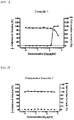
- the infection ratio per well was normalized to the average infection ratio of wells containing uninfected cells (mock) and the average infection ratio of wells containing infected cells treated with 0.5% DMSO (v/v) in the same plate, and the resulting graphs are shown in FIGS. 1 to 3 (in the graphs of FIGS.
- the circled line ( ) represents the inhibition of infection
- the squared line ( ) represents cytotoxicity
- the number of cells in each well was normalized to the average number of cells in the wells of the uninfected cell group and expressed as 'cell number to mock' on the graph.
- Example 1 Comparative Example 1 Comparative Example 2 IC 50 36.08 ⁇ g/ml > 500 ⁇ g/ml > 500 ⁇ g/ml CC 50 92.2 ⁇ g/ml > 500 ⁇ g/ml > 500 ⁇ g/ml SI(Selectivity Index) 2.56 1 1
- Example 1 showed the SARS-CoV-2 infection inhibition rate of 96.24% at a concentration that does not show cytotoxicity, indicating that the camellia saponin according to an embodiment of the present invention was excellent in inhibiting coronavirus infection.
- a sanitizer was prepared in a conventional manner according to the composition shown in Table 3 below.
- Ingredients Content(wt%) Camellia saponin of Example 1 1.00 Ethanol 70 Glycerin 1.00 Carbomer 0.2 Aminomethylpropanol 0.1 Purified water balance Total 100.00
- a hand wash was prepared in a conventional manner according to the composition shown in Table 4 below.
- Ingredient Content(wt%) Camellia saponin of Example 1 1.00 Ethanol 10 Glycerin 7.00 Butylene glycol 3.0 Lauric acid 3.0 Lauryl hydroxysultaine 2.4 Myristic acid 2.0 Potassium hydroxide 1.5 Disodium EDTA 0.1 Purified water balance Total 100.00
- a lotion was prepared in a conventional manner according to the composition shown in Table 5 below.
- Ingredient Content(wt%) Camellia saponin of Example 1 1.00 L-ascorbic acid-2-magnesium phosphate salt 1.00 Collagen 1.00 Sodium citrate 0.10 Citric acid 0.05 Licorice extract 0.20 1,3-butylene glycol 3.00 Purified water balance Total 100.00
- a cream was prepared in a conventional manner according to the composition shown in Table 6 below.
- Ingredient Content(wt%) Camellia saponin of Example 1 1.20 Polyethylene glycol monostearate 2.00 Self-emulsifying glycerin monostearate 5.00 Cetyl alcohol 4.00 Squalene 6.00 Tri2-ethylhexane glyceryl 6.00 Sphingoglycolipid 1.00 1,3-butylene glycol 7.00 Purified water balance Total 100.00
- a soap was prepared in a conventional manner according to the composition shown in Table 7 below.
- Ingredient Content(wt%) Camellia saponin of Example 1 1.00 Titanium dioxide 0.20 Polyethylene glycol 0.80 Glycerin 0.50 Ethylenediaminetetraacetic acid 0.05 Sodium 1.00 Pigment 0.20 Soapy scent 0.20 Soap base balance Total 100.00
- a pack was prepared in a conventional manner according to the composition shown in Table 8 below.
- Ingredient Content(wt%) Camellia saponin of Example 1 1.20 Polyvinyl alcohol 13.00 L-ascorbic acid-2-phosphate magnesium salt 1.00 Lauroylhydroxyproline 1.00 Collagen 2.00 1,3-butylene glycol 3.00 Ethanol 5.00 Purified water balance Total 100.00
- a cosmetic liquid formulation was prepared in a conventional manner according to the composition shown in Table 9 below.
- Ingredient Content(wt%) Camellia saponin of Example 1 1.00 Hydroxyethylene cellulose 12.00 Xanthan gum 2.00 1,3-butylene glycol 6.00 Glycerin 4.00 Sodium Hyaluronate 5.00 Purified water balance Total 100.00
- camellia saponin 160 mg of L-carnitine, 320 mg of soybean oil, 2 mg of palm oil, 8 mg of hydrogenated vegetable oil, 4 mg of yellow beeswax and 6 mg of lecithin were mixed, and filled into one capsule according to a conventional method to prepare a soft capsule.
- camellia saponin 0.5 g of galactooligosaccharide, 80 mg of lactose and 220 mg of maltose were mixed and granulated using a fluidized bed dryer, and then 6 mg of sugar ester was added to the granulation, and the granulation was compressed with a tablet machine to prepare a tablet.
- camellia saponin according to Example 1 250 mg of anhydrous crystalline glucose, and 550 mg of starch were mixed, formed into granules using a fluidized bed granulator, and then filled in a bag to prepare granules.
- camellia saponin 10 g of glucose, 0.6 g of citric acid, and 25 g of liquid oligosaccharide are mixed, 500 ml of purified water was added to the mixture, and then the mixture was filled in a bottle. After that, the filled bottle was sterilized at 130 °C for 4 to 5 seconds to prepare a drink.
- Embodiment 1 A composition for preventing or inhibiting coronavirus infection comprising camellia saponin.
- Embodiment 2 The composition of embodiment 1, wherein the coronavirus is severe acute respiratory syndrome coronavirus-2 (SARS-CoV-2).
- SARS-CoV-2 severe acute respiratory syndrome coronavirus-2
- Embodiment 3 The composition of embodiment 1 or 2, wherein the camellia saponin is extracted from oil press cake of camellia.
- Embodiment 4 The composition of any one of embodiments 1 to 3, wherein the camellia saponin is administered at a dosage of 60 to 150 mg/kg/day.
- Embodiment 5 The composition according to any one of embodiments 1 to 4, wherein the camellia saponin is a dried product of an ethanol extract of the oil press cake of camellia passed through an ion exchange resin.
- Embodiment 6 The composition according to any one of embodiments 1 to 5, wherein the composition is a composition for skin external application.
- Embodiment 7 The composition of any of embodiments 1 to 5, wherein the composition is a food composition.
- Embodiment 8 The composition of any of embodiments 1 to 6, wherein the composition is a pharmaceutical composition.
- Embodiment 9 The composition of any of embodiments 1 to 6, wherein the composition is a cosmetic composition.
Landscapes
- Health & Medical Sciences (AREA)
- Life Sciences & Earth Sciences (AREA)
- Animal Behavior & Ethology (AREA)
- General Health & Medical Sciences (AREA)
- Public Health (AREA)
- Veterinary Medicine (AREA)
- Chemical & Material Sciences (AREA)
- Natural Medicines & Medicinal Plants (AREA)
- Medicinal Chemistry (AREA)
- Pharmacology & Pharmacy (AREA)
- Epidemiology (AREA)
- Engineering & Computer Science (AREA)
- Mycology (AREA)
- Botany (AREA)
- Molecular Biology (AREA)
- Virology (AREA)
- Microbiology (AREA)
- Biotechnology (AREA)
- Chemical Kinetics & Catalysis (AREA)
- Nuclear Medicine, Radiotherapy & Molecular Imaging (AREA)
- General Chemical & Material Sciences (AREA)
- Organic Chemistry (AREA)
- Birds (AREA)
- Nutrition Science (AREA)
- Food Science & Technology (AREA)
- Polymers & Plastics (AREA)
- Medical Informatics (AREA)
- Alternative & Traditional Medicine (AREA)
- Communicable Diseases (AREA)
- Oncology (AREA)
- Dermatology (AREA)
- Pulmonology (AREA)
- Bioinformatics & Cheminformatics (AREA)
- Pharmaceuticals Containing Other Organic And Inorganic Compounds (AREA)
- Medicines Containing Plant Substances (AREA)
Abstract
Description
- The present specification relates to a composition for preventing, inhibiting or treating coronavirus infection.
- Coronaviruses are enveloped, positive-sense single strand RNA viruses and have 25-32 kb of genome size, so they belong to a relatively large RNA virus. Coronaviruses have a unique flame shape because the spike proteins, which are club-shaped bumps, are embedded in a membrane.
- After the first discovery from chickens in 1937, coronaviruses have been found in various birds and mammals such as bat, bird, cat, dog, cow, pig and mouse. Coronaviruses are divided into four groups (Alpha-, Beta-, Gamma- and Deltacoronavirus). Alphacoronavirus and Betacoronavirus groups primarily infect mammals, and Gammacoronavirus and Deltacoronavirus groups are discovered from birds. It has been known that coronaviruses cause various diseases such as gastrointestinal diseases and respiratory diseases.
- Human coronaviruses, which infect human beings, were discovered, and SARS coronavirus (SARS-CoV), causing severe acute respiratory syndrome (SARS), was first discovered in 2003. In relation to SARS, according to a report of the World Health Organization (WHO), there were 8,273 patients and 775 deaths (fatality rate: about 10%) all over the world in 2002 and 2003. There were additional cases and deaths until 2004. In addition, the first identified case of infection by Middle East respiratory syndrome-coronavirus (MERS-CoV) occurred in Saudi Arabia in September 2012. And then, there were 808 cases and 313 deaths officially reported to the WHO by June 2014.
- Recently, the world is threatened by the coronavirus disease-19 (COVID-19), a respiratory infectious disease that has been spreading since its first outbreak in Wuhan, China. The pathogen of COVID-19 is a new type of severe acute respiratory syndrome coronavirus 2 (SARS-Cov-2), transmitted when droplets (saliva) of an infected person penetrate the respiratory tract or the mucous membranes of the eyes, nose, and mouth.
- As such, the coronaviruses have become a global problem, but an effective therapeutic agent and preventive vaccine have not been developed. Therefore, it is very urgent to develop a composition that effectively inhibits the infection of the coronavirus.
- In one aspect, the present disclosure provides a composition for preventing, inhibiting or treating coronavirus infection.
- In one aspect, the present disclosure provides a composition for preventing, inhibiting or treating coronavirus infection comprising camellia saponin.
- In an exemplary embodiment, the coronavirus may be severe acute respiratory syndrome coronavirus 2 (SARS-CoV-2).
- In an exemplary embodiment, the camellia saponin may be extracted from oil press cake of camellia.
- In In an exemplary embodiment, the camellia saponin may be administered at a dosage of 60 to 150 mg/kg/day.
- In an exemplary embodiment, the camellia saponin may comprise camellia saponin A1, camellia saponin A2, camellia saponin B1, camellia saponin B2, camellia saponin C1, or a combination thereof.
- In an exemplary embodiment, the composition may be a composition for skin external application.
- In an exemplary embodiment, the composition may be a food composition, a pharmaceutical composition or a cosmetic composition.
- In one aspect, a composition according to the present disclosure can prevent, inhibit or treat infection by a coronavirus.
- In one aspect, a composition according to the present disclosure can eliminate the coronavirus remaining on the skin to block an infection mechanism of the coronavirus penetrating into a human body.
-
-
FIG. 1 is a graph showing the coronavirus infection inhibitory effect of Example 1 according to an embodiment of the present disclosure. -
FIG. 2 is a graph showing the coronavirus infection inhibitory effect of Comparative Example 1 according to an embodiment of the present disclosure. -
FIG. 3 is a graph showing the coronavirus infection inhibitory effect of Comparative Example 2 according to an embodiment of the present disclosure. - Hereinafter, the present disclosure is described in detail.
- In one aspect, the present disclosure provides a composition for preventing, inhibiting or treating coronavirus infection comprising camellia saponin as an active ingredient.
- In the present disclosure, camellia refers to Camelliajaponica which is an evergreen tree of the family Charysis, and is mainly distributed in East Asia including Korea. The oil is extracted from the seeds of the camellia to make camellia oil, and all parts of the plant such as roots, stems, leaves, flowers, etc. of the camellia may be used, and the entire plant (whole plant) may also be used.
- In the present disclosure, camellia saponin is the saponin derived from camellia, and may be prepared by extracting the extract from the camellia using a solvent and removing impurities from the extract using an ion exchange resin, but is not limited thereto. The solvent may be water, alcohol, isopropanol, acetone, hexane, ethyl acetate, carbon dioxide, or a mixture of two or more thereof, but is not limited thereto. The alcohol may be a C1-C5 lower alcohol.
- In one embodiment, the camellia saponin may be extracted from oil press cake of camellia.
- In the present disclosure, the oil press cake may refer to a product remaining after squeezing oil and the like from seeds of plants. In the present disclosure, the oil press cake of camellia may refer to a product remaining after squeezing oil and the like from the seeds of camellia.
- In one embodiment, the camellia saponin may comprise camellia saponin A1, camellia saponin A2, camellia saponin B1, camellia saponin B2, camellia saponin C1, or a combination thereof.
- In one embodiment, the camellia saponin may be administered at a dosage of 60 to 150 mg/kg/day. If the dosage of camellia saponin is less than 60 mg/kg/day, it may be difficult to exhibit the effect according to the present invention, and if it exceeds 150 mg/kg/day, it may cause irritation to the skin. Specifically, the camellia saponin may be administered at a dose of 60 mg/kg/day or more, 61 mg/kg/day or more, 62 mg/kg/day or more, 63 mg/kg/day or more, 64 mg/kg/day or more, 65 mg/kg/day or more, 66 mg/kg/day or more, 67 mg/kg/day or more, 68 mg/kg/day or more, 69 mg/kg/day or more, 70 mg/kg/day or more, 71 mg/kg/day or more, 72 mg/kg/day or more, 73 mg/kg/day or more, 74 mg/kg/day or more, 75 mg/kg/day or more, 76 mg/kg/day or more, 77 mg/kg/day or more, 78 mg/kg/day or more, 79 mg/kg/day or more, 80 mg/kg/day or more, 81 mg/kg/day or more, 82 mg/kg/day or more, 83 mg/kg/day or more, 84 mg/kg/day or more, 85 mg/kg/day or more, or 150 mg/kg/day or less, 149 mg/kg/day or less, 148 mg/kg/day or less, 147 mg/kg/day or less, 146 mg/kg/day or less, 145 mg/kg/day or less, 144 mg/kg/day or less, 143 mg/kg/day or less, 142 mg/kg/day or less, 141 mg/kg/day or less, 140 mg/kg/day or less, 139 mg/kg/day or less, 138 mg/kg/day or less, 137 mg/kg/day or less, 136 mg/kg/day or less, 135 mg/kg/day or less, 134 mg/kg/day or less, 133 mg/kg/day or less, 132 mg/kg/day or less, 131 mg/kg/day or less or 130 mg/kg/day or less.
- In one embodiment, the coronavirus may comprise severe acute respiratory syndrome coronavirus (SARS-CoV), Middle East respiratory syndrome coronavirus (MERS-CoV), severe acute respiratory syndrome coronavirus-2 (SARS-CoV-2) which is the cause of corona virus disease 19 (COVID-19), bovine coronavirus (BCoV), feline/canine coronavirus (FCoV/CCoV), mouse hepatitis virus (MHV), and the like, but is not limited thereto. Preferably, the coronavirus may be severe acute respiratory syndrome virus-2 (SARS-CoV-2).
- In one embodiment, the administration route of the composition is not limited, but may preferably be for skin external application.
- In one embodiment, the composition may be a cosmetic composition. The cosmetic composition may have a formulation such as a softening lotion, a astringent lotion, a nourishing lotion, a nourishing cream, a massage cream, an eye cream, an eye essence, an essence, a cleansing cream, a cleansing lotion, a cleansing foam, a cleansing water, a pack, a powder, a body lotion, a body cream, a body essence, a body cleaner, a hair dye, a shampoo, a conditioner, a hair fixative, a hair tonics, an ointment, a gel, a cream, a patch, a spray, a powder, and a skin adhesive type, but is not limited thereto.
- In addition, in each formulation, the components other than the above essential components can be suitably selected and formulated by those skilled in the art without difficulty depending on the type or purpose of use of other external preparation.
- The cosmetic composition may be provided in any formulation suitable for topical application. For example, it may be provided in the form of a solution, an emulsion obtained by dispersing an oil phase in an aqueous phase, an emulsion obtained by dispersing an aqueous phase in an oil phase, a suspension, a solid, a gel, a powder, a paste, a microneedle, a foam, or an aerosol composition. Compositions of such formulations can be prepared according to conventional methods in the art.
- The cosmetic composition according to the present disclosure may further comprise functional additives and components included in general cosmetic compositions in addition to the compound of the present disclosure. The functional additive may comprise a component selected from the group consisting of a water-soluble vitamin, an oil-soluble vitamin, a high-molecular peptide, a high-molecular polysaccharide, a sphingolipid, and seaweed extract. The cosmetic composition according to the present specification may preferably comprise other ingredients that can give a synergistic effect to the main effect, within a range that does not impair the main effect. In addition, the cosmetic composition according to the present specification may further comprise a moisturizing agent, an emollient, a surfactant, a UV absorber, a preservative, a bactericide, an antioxidant, a pH adjuster, an organic and inorganic pigment, a fragrance, a cooling agent or an anti-perspiration agent. The blending amount of the component can be easily selected by those skilled in the art within the range that does not impair the purpose and effect of the present specification, and the blending amount may be 0.001 to 10% by weight, specifically 0.01 to 3% by weight, based on the total weight of the composition.
- In one embodiment, the composition may be a food composition. The formulation of the food composition is not particularly limited, and for example, it may be formulated as a tablet, granules, a pill, a powder, a liquid such as a drink, a caramel, a gel, a bar, a tea bag, and the like. In addition to the active ingredient, the food composition of each formulation can be combined with ingredients commonly used in the field selected by those skilled in the art without difficulty depending on the formulation or purpose of use, and when applied simultaneously with other raw materials, a synergistic effect may occur.
- The food composition according to one embodiment may comprise various nutrients, a vitamin, a mineral (electrolyte), a flavoring agent such as synthetic and natural flavoring agents, a coloring agent, a thickener (cheese, chocolate, etc.), a pectic acid and salt thereof, an alginic acid and salt thereof, an organic acid, a protective colloidal thickening agent, a pH adjuster, a stabilizer, a preservative, a glycerin, an alcohol, a carbonation agent used in carbonated beverages, and the like. In addition, the food composition according to an embodiment may comprise a natural fruit juice and pulp for the production of a fruit juice beverage and a vegetable beverage. This component may be used independently or in combination. The proportion of this additive is not so important, but is generally included in the range of 0 to about 50 parts by weight per 100 parts by weight of the composition according to an embodiment.
- In one embodiment, the composition may be a pharmaceutical composition. The pharmaceutical composition may be administered orally, parenterally, rectally, topically, transdermally, intravenously, intramuscularly, intraperitoneally, subcutaneously, and the like. The formulation for oral administration may be a tablet, a pill, soft and hard capsules, granules, a powder, fine granules, a liquid, an emulsion, or a pellet, but is not limited thereto.
- The formulation for parenteral administration may be a liquid, a suspension, an emulsion, a gel, an injection, a drop, a suppository, a patch, or a spray, but is not limited thereto. The formulation can be easily prepared according to conventional methods in the art, and comprise a surfactant, an excipient, a wetting agent, an emulsification promoter, a suspending agent, a salt or buffer for control of osmotic pressure, a colorant, a spice, a stabilizer, an antiseptic, a preservative or other commercially available adjuvants.
- In one aspect, the present disclosure provides a method for preventing or inhibiting coronavirus infection, comprising the step of administering to a subject in need of preventing or inhibiting coronavirus infection a composition comprising an effective amount of camellia saponin. In one aspect, the administration of the method may be performed according to the administration method and administration dose described in the present disclosure.
- In one aspect, the present disclosure provides a method for treating coronavirus infection, comprising the step of administering to a subject in need of treating coronavirus infection a composition comprising an effective amount of camellia saponin. In one aspect, the administration of the method may be performed according to the administration method and administration dose described in the present disclosure.
- In one aspect, the present disclosure provides a use of camellia saponin for preparing a composition for preventing or inhibiting coronavirus infection.
- In one aspect, the present disclosure provides a use of camellia saponin for preparing a composition for treating coronavirus infection.
- In one aspect, the present disclosure provides a use of camellia saponin for preventing or inhibiting coronavirus infection.
- In one aspect, the present disclosure provides a use of camellia saponin for treating coronavirus infection.
- Hereinafter, the present disclosure is described in more detail through examples and the like. These examples are only for illustrating the present disclosure, and it will be apparent to those of ordinary skill in the art that the scope of the present disclosure is not to be construed as being limited by these examples.
- 1 kg of oil press cake of camellia (Jeju Island) was milked at a low temperature to remove oil, and 8 kg of 70% ethanol was added. Extraction was performed at 60 °C for 8 hours using a warm extractor and filtering was performed by a filter press to obtain an extract of oil press cake of camellia. The extract of the oil press cake of the camellia was concentrated under a reduced pressure at 50 to 60 °C with a rotary vacuum concentrator until a solid content was about 50% of the concentrate, so that 200 g of the concentrate was obtained. The concentrate was diluted with purified water so as to have the solid content of 10%. After loading this solution on a glass tube column filled with 2L of ion exchange resin (HP-20), it was washed with 10L of purified water to remove impurities, sugars, and proteins, and then 10L of 30% ethanol was flowed. After that, 10 L of 50% ethanol was flowed, and the eluate was concentrated under a reduced pressure and freeze-dried to obtain 35 g of camellia saponin powder.
- The thus obtained camellia saponin powder was dissolved in 70% ethanol, and the camellia saponin A1, A2, B1, B2 and C1 were sequentially separated by reverse-phase chromatography under the conditions of 0.1% TFA water/0.1% TFA acetonitrile and the content was analyzed, which is shown in Table 1.
[Table 1] Retention time (min) Area (%) camellia saponin A1 22.03 2.0 camellia saponin A2 18.82 4.4 camellia saponin B1 16.12 47.7 camellia saponin B2 13.96 25.2 camellia saponin C1 13.31 6.1 - Propolis was obtained from Hyundai Bioland and used as Comparative Example 1.
- 1-Deoxynojirimycin was obtained from Sigma-Aldrich and used as Comparative Example 2.
- Severe acute respiratory syndrome virus-2 (SARS-CoV-2) was provided by the Korea Centers for Disease Control and Prevention (KCDC), and Vero cells ((ATCC-CCL81) used in the experiment were obtained from ATCC company.
- A primary antibody, protein-specific anti-SARS-CoV-2 N was obtained from Sino Biological, and secondary antibodies, Alexa Fluor 488 goat anti-rabbit IgG and Hoechst 33342, were obtained from Molecular Probes.
- 384-tissue culture plate was seeded with 1.2 × 10⁴ Vero cells per well. After 24 hours, Example 1, Comparative Example 1, and Comparative Example 2 were serially diluted 2-fold in DMSO to prepare 10 points, and cells were treated with 500 µg/ml as the highest concentration. About 1 hour after the treatment, cells were infected with SARS-CoV-2 (0.0125 MOI) in a BSL3 facility and incubated at 37 °C for 24 hours. After fixing the cells with 4% paraformaldehyde (PFA), permeabilization was performed. Thereafter, the cells were stained with the primary antibody, anti-SARS-CoV-2 nucleocapsid (N) and secondary antibodies, Alexa Fluor 488-conjugated goat anti-rabbit IgG and Hoechst 33342. The fluorescence images of infected cells were acquired using a large-capacity image analysis instrument, Operetta (Perkin Elmer).
- The fluorescence images of the cells obtained above were analyzed using Columbus software. The total number of cells per well was calculated as the number of Hoechst-stained nuclei, and the number of infected cells was calculated as the number of cells expressing the viral N protein. The infection ratio was calculated as the number of cells expressing the N protein/total number of cells. The infection ratio per well was normalized to the average infection ratio of wells containing uninfected cells (mock) and the average infection ratio of wells containing infected cells treated with 0.5% DMSO (v/v) in the same plate, and the resulting graphs are shown in
FIGS. 1 to 3 (in the graphs ofFIGS. 1 to 3 , the circled line () represents the inhibition of infection, and the squared line ( ) represents cytotoxicity). For cytotoxicity, the number of cells in each well was normalized to the average number of cells in the wells of the uninfected cell group and expressed as 'cell number to mock' on the graph. The response curve according to concentration and IC50 and CC50 values were derived using the formula Y = Bottom + (Top-Bottom)/(1 + (IC50/X)Hillslope) of XLFit 4 (IDBS) software. All IC50 and CC50 values were calculated from a fitted dose-response curve obtained through two repeated experiments, and selectivity index (SI) values were calculated as CC50/IC50 and are shown in Table 2.
[Table 2] Example 1 Comparative Example 1 Comparative Example 2 IC50 36.08 µg/ml > 500 µg/ml > 500 µg/ml CC50 92.2 µg/ml > 500 µg/ml > 500 µg/ml SI(Selectivity Index) 2.56 1 1 - As can be seen from the results of
FIGS. 1 to 3 and Table 2, propolis (Comparative Example 1), which is known to be effective in suppressing Herpes Simplex Virus, and 1-Deoxynojirimycin (Comparative Example 2), which is known to be effective in suppressing severe acute respiratory syndrome virus (SARS-CoV), did not inhibit infection with severe acute respiratory syndrome virus-2 (SARS-CoV-2). On the other hand, Example 1 showed the SARS-CoV-2 infection inhibition rate of 96.24% at a concentration that does not show cytotoxicity, indicating that the camellia saponin according to an embodiment of the present invention was excellent in inhibiting coronavirus infection. - A sanitizer was prepared in a conventional manner according to the composition shown in Table 3 below.
[Table 3] Ingredients Content(wt%) Camellia saponin of Example 1 1.00 Ethanol 70 Glycerin 1.00 Carbomer 0.2 Aminomethylpropanol 0.1 Purified water balance Total 100.00 - A hand wash was prepared in a conventional manner according to the composition shown in Table 4 below.
[Table 4] Ingredient Content(wt%) Camellia saponin of Example 1 1.00 Ethanol 10 Glycerin 7.00 Butylene glycol 3.0 Lauric acid 3.0 Lauryl hydroxysultaine 2.4 Myristic acid 2.0 Potassium hydroxide 1.5 Disodium EDTA 0.1 Purified water balance Total 100.00 - A lotion was prepared in a conventional manner according to the composition shown in Table 5 below.
[Table 5] Ingredient Content(wt%) Camellia saponin of Example 1 1.00 L-ascorbic acid-2-magnesium phosphate salt 1.00 Collagen 1.00 Sodium citrate 0.10 Citric acid 0.05 Licorice extract 0.20 1,3-butylene glycol 3.00 Purified water balance Total 100.00 - A cream was prepared in a conventional manner according to the composition shown in Table 6 below.
[Table 6] Ingredient Content(wt%) Camellia saponin of Example 1 1.20 Polyethylene glycol monostearate 2.00 Self-emulsifying glycerin monostearate 5.00 Cetyl alcohol 4.00 Squalene 6.00 Tri2-ethylhexane glyceryl 6.00 Sphingoglycolipid 1.00 1,3-butylene glycol 7.00 Purified water balance Total 100.00 - A soap was prepared in a conventional manner according to the composition shown in Table 7 below.
[Table 7] Ingredient Content(wt%) Camellia saponin of Example 1 1.00 Titanium dioxide 0.20 Polyethylene glycol 0.80 Glycerin 0.50 Ethylenediaminetetraacetic acid 0.05 Sodium 1.00 Pigment 0.20 Soapy scent 0.20 Soap base balance Total 100.00 - A pack was prepared in a conventional manner according to the composition shown in Table 8 below.
[Table 8] Ingredient Content(wt%) Camellia saponin of Example 1 1.20 Polyvinyl alcohol 13.00 L-ascorbic acid-2-phosphate magnesium salt 1.00 Lauroylhydroxyproline 1.00 Collagen 2.00 1,3-butylene glycol 3.00 Ethanol 5.00 Purified water balance Total 100.00 - A cosmetic liquid formulation was prepared in a conventional manner according to the composition shown in Table 9 below.
[Table 9] Ingredient Content(wt%) Camellia saponin of Example 1 1.00 Hydroxyethylene cellulose 12.00 Xanthan gum 2.00 1,3-butylene glycol 6.00 Glycerin 4.00 Sodium Hyaluronate 5.00 Purified water balance Total 100.00 - 0.3 g of camellia saponin according to Example 1, 160 mg of L-carnitine, 320 mg of soybean oil, 2 mg of palm oil, 8 mg of hydrogenated vegetable oil, 4 mg of yellow beeswax and 6 mg of lecithin were mixed, and filled into one capsule according to a conventional method to prepare a soft capsule.
- 0.4 g of camellia saponin according to Example 1, 0.5 g of galactooligosaccharide, 80 mg of lactose and 220 mg of maltose were mixed and granulated using a fluidized bed dryer, and then 6 mg of sugar ester was added to the granulation, and the granulation was compressed with a tablet machine to prepare a tablet.
- 0.4 g of camellia saponin according to Example 1, 250 mg of anhydrous crystalline glucose, and 550 mg of starch were mixed, formed into granules using a fluidized bed granulator, and then filled in a bag to prepare granules.
- 0.4 g of camellia saponin according to Example 1, 10 g of glucose, 0.6 g of citric acid, and 25 g of liquid oligosaccharide are mixed, 500 ml of purified water was added to the mixture, and then the mixture was filled in a bottle. After that, the filled bottle was sterilized at 130 °C for 4 to 5 seconds to prepare a drink.
- The specification is further illustrated by the following embodiments which do not limit the claims.
-
Embodiment 1. A composition for preventing or inhibiting coronavirus infection comprising camellia saponin. -
Embodiment 2. The composition ofembodiment 1, wherein the coronavirus is severe acute respiratory syndrome coronavirus-2 (SARS-CoV-2). - Embodiment 3. The composition of
embodiment - Embodiment 4. The composition of any one of
embodiments 1 to 3, wherein the camellia saponin is administered at a dosage of 60 to 150 mg/kg/day. - Embodiment 5. The composition according to any one of
embodiments 1 to 4, wherein the camellia saponin is a dried product of an ethanol extract of the oil press cake of camellia passed through an ion exchange resin. - Embodiment 6. The composition according to any one of
embodiments 1 to 5, wherein the composition is a composition for skin external application. - Embodiment 7. The composition of any of
embodiments 1 to 5, wherein the composition is a food composition. - Embodiment 8. The composition of any of
embodiments 1 to 6, wherein the composition is a pharmaceutical composition. - Embodiment 9. The composition of any of
embodiments 1 to 6, wherein the composition is a cosmetic composition.
Claims (7)
- A camellia saponin for use in preventing, inhibiting or treating coronavirus infection.
- The camellia saponin for its use according to claim 1, wherein the coronavirus is severe acute respiratory syndrome coronavirus-2 (SARS-CoV-2).
- The camellia saponin for its use according to any one of claims 1 to 2, wherein the camellia saponin is extracted from oil press cake of camellia.
- The camellia saponin for its use according to any one of claims 1 to 3, wherein the camellia saponin is administered at a dose of 60 to 150 mg/kg/day.
- The camellia saponin for its use according to any one of claims 1 to 4, wherein the camellia saponin comprises camellia saponin A1, camellia saponin A2, camellia saponin B1, camellia saponin B2, camellia saponin C1, or a combination thereof.
- The camellia saponin for its use according to any one of claims 1 to 5, wherein the camellia saponin is formulated in the form of a composition for skin external application.
- The camellia saponin for its use according to any one of claims 1 to 6, wherein the camellia saponin is formulated in the form of a pharmaceutical composition.
Applications Claiming Priority (1)
| Application Number | Priority Date | Filing Date | Title |
|---|---|---|---|
| KR1020210047945A KR20220141616A (en) | 2021-04-13 | 2021-04-13 | Composition for preventing, inhibiting or treating infection of coronavirus |
Publications (2)
| Publication Number | Publication Date |
|---|---|
| EP4074325A1 true EP4074325A1 (en) | 2022-10-19 |
| EP4074325B1 EP4074325B1 (en) | 2024-07-31 |
Family
ID=81580086
Family Applications (1)
| Application Number | Title | Priority Date | Filing Date |
|---|---|---|---|
| EP22167800.6A Active EP4074325B1 (en) | 2021-04-13 | 2022-04-12 | Composition for preventing, inhibiting or treating infection of coronavirus |
Country Status (4)
| Country | Link |
|---|---|
| US (1) | US20220323533A1 (en) |
| EP (1) | EP4074325B1 (en) |
| KR (1) | KR20220141616A (en) |
| CN (1) | CN115192591A (en) |
Citations (2)
| Publication number | Priority date | Publication date | Assignee | Title |
|---|---|---|---|---|
| KR101638818B1 (en) * | 2014-08-22 | 2016-07-13 | 서울대학교산학협력단 | Composition comprising extract of Camellia japonica or oleanane triterpenes derivatives isolated therefrom for treating or preventing Corona virus related disease |
| WO2020235717A1 (en) * | 2019-05-22 | 2020-11-26 | 주식회사 휴사이온 | Pharmaceutical composition comprising extract from camellia japonica as active ingredient for prevention and treatment of viral infection |
Family Cites Families (1)
| Publication number | Priority date | Publication date | Assignee | Title |
|---|---|---|---|---|
| KR102131043B1 (en) | 2018-05-02 | 2020-07-08 | (주)아모레퍼시픽 | Composition for preventing or suppressing infection of influenza virus comprising Ginseng berry polysaccharide |
-
2021
- 2021-04-13 KR KR1020210047945A patent/KR20220141616A/en active Pending
-
2022
- 2022-04-06 US US17/714,769 patent/US20220323533A1/en not_active Abandoned
- 2022-04-12 CN CN202210381100.8A patent/CN115192591A/en active Pending
- 2022-04-12 EP EP22167800.6A patent/EP4074325B1/en active Active
Patent Citations (2)
| Publication number | Priority date | Publication date | Assignee | Title |
|---|---|---|---|---|
| KR101638818B1 (en) * | 2014-08-22 | 2016-07-13 | 서울대학교산학협력단 | Composition comprising extract of Camellia japonica or oleanane triterpenes derivatives isolated therefrom for treating or preventing Corona virus related disease |
| WO2020235717A1 (en) * | 2019-05-22 | 2020-11-26 | 주식회사 휴사이온 | Pharmaceutical composition comprising extract from camellia japonica as active ingredient for prevention and treatment of viral infection |
Non-Patent Citations (3)
| Title |
|---|
| CAO THAO QUYEN ET AL: "SARS-CoV-2 main protease inhibition by compounds isolated from Luffa cylindrica using molecular docking", BIOORGANIC & MEDICINAL CHEMISTRY LETTERS, ELSEVIER, AMSTERDAM, NL, vol. 40, 19 March 2021 (2021-03-19), XP086557656, ISSN: 0960-894X, [retrieved on 20210319], DOI: 10.1016/J.BMCL.2021.127972 * |
| LUO PAN ET AL: "Pharmacological perspective: glycyrrhizin may be an efficacious therapeutic agent for COVID-19", INTERNATIONAL JOURNAL OF ANTIMICROBIAL AGENTS, ELSEVIER, AMSTERDAM, NL, vol. 55, no. 6, 24 April 2020 (2020-04-24), XP086159031, ISSN: 0924-8579, [retrieved on 20200424], DOI: 10.1016/J.IJANTIMICAG.2020.105995 * |
| SHARMA ET AL: "Saponins: Extraction, bio-medicinal properties and way forward to anti-viral representatives - ScienceDirect", 19 February 2021 (2021-02-19), pages 1 - 33, XP055927544, Retrieved from the Internet <URL:https://www.sciencedirect.com/science/article/pii/S0278691521001083?via=ihub> [retrieved on 20220602] * |
Also Published As
| Publication number | Publication date |
|---|---|
| US20220323533A1 (en) | 2022-10-13 |
| CN115192591A (en) | 2022-10-18 |
| EP4074325B1 (en) | 2024-07-31 |
| KR20220141616A (en) | 2022-10-20 |
Similar Documents
| Publication | Publication Date | Title |
|---|---|---|
| EP3991742A1 (en) | Coronavirus therapeutic agent comprising elaeocarpus sylvestris extract as active ingredient | |
| KR102598905B1 (en) | Deodorant composition comprising Quillaia saponaria | |
| KR101501876B1 (en) | Composition for preventing or treating influenza virus infection comprising xylitol | |
| JP2006306804A (en) | Wrinkle formation inhibitor | |
| KR20170030689A (en) | Aloe composition for influenza vaccine adjuvants and influenzq vaccine composition comprising the same | |
| EP4074325B1 (en) | Composition for preventing, inhibiting or treating infection of coronavirus | |
| JP7470412B2 (en) | Coronavirus killer | |
| KR102291441B1 (en) | Composition for skin whitening comprising plum seed extract | |
| JP2025513387A (en) | A composition for preventing, improving, or treating coronavirus infections, containing a complex Korean herbal extract as an active ingredient | |
| KR101310033B1 (en) | Composition for anti-influenza virus comprising carpesium macrocephalum franch and sav. extract | |
| JPWO2017110767A1 (en) | Anti-norovirus composition and use thereof | |
| EP1541163A1 (en) | Hair growth stimulants for oral use | |
| KR20210044762A (en) | Anti-microbial composition comprising pinus koraiensis sieb extract | |
| KR102359447B1 (en) | Composition for promoting hair growth | |
| KR102823047B1 (en) | Composition for preventing, improving, or treating mite-induced skin inflammation containing extract of Quercus glauca or a fraction thereof | |
| KR102578871B1 (en) | Composition for preventing, ameliorating or treating coronavirus infectious disease comprising herbal medicine extract as effective component | |
| KR102676865B1 (en) | Composition for preventing, ameliorating or treating coronavirus infectious disease comprising herbal medicine extract as effective component | |
| KR102347243B1 (en) | Composition for anti-virus comprising Quillaia saponaria | |
| KR102594706B1 (en) | Composition for preventing, ameliorating or treating coronavirus infectious disease comprising herbal medicine extract as effective component | |
| KR102811751B1 (en) | Composition comprising the extract of leaves of Schizophragma hydrangeoides Siebold Zucc. for immune enhancement | |
| KR102527037B1 (en) | Composition for preventing, ameliorating or treating coronavirus infectious disease comprising herbal medicine mixture extract as effective component | |
| KR102540384B1 (en) | Composition for preventing, ameliorating or treating coronavirus infectious disease comprising herbal medicine extract as effective component | |
| KR20210085334A (en) | Composition for preventing, ameliorating or treating atopic dermatitis comprising Chrysanthemum indicum L. oil extract as effective component | |
| KR102532944B1 (en) | Composition for preventing, ameliorating or treating coronavirus infectious disease comprising herbal medicine mixture extract as effective component | |
| KR101765995B1 (en) | Influenza virus infection inhibitor |
Legal Events
| Date | Code | Title | Description |
|---|---|---|---|
| PUAI | Public reference made under article 153(3) epc to a published international application that has entered the european phase |
Free format text: ORIGINAL CODE: 0009012 |
|
| STAA | Information on the status of an ep patent application or granted ep patent |
Free format text: STATUS: THE APPLICATION HAS BEEN PUBLISHED |
|
| AK | Designated contracting states |
Kind code of ref document: A1 Designated state(s): AL AT BE BG CH CY CZ DE DK EE ES FI FR GB GR HR HU IE IS IT LI LT LU LV MC MK MT NL NO PL PT RO RS SE SI SK SM TR |
|
| STAA | Information on the status of an ep patent application or granted ep patent |
Free format text: STATUS: REQUEST FOR EXAMINATION WAS MADE |
|
| 17P | Request for examination filed |
Effective date: 20230414 |
|
| RBV | Designated contracting states (corrected) |
Designated state(s): AL AT BE BG CH CY CZ DE DK EE ES FI FR GB GR HR HU IE IS IT LI LT LU LV MC MK MT NL NO PL PT RO RS SE SI SK SM TR |
|
| STAA | Information on the status of an ep patent application or granted ep patent |
Free format text: STATUS: EXAMINATION IS IN PROGRESS |
|
| 17Q | First examination report despatched |
Effective date: 20230707 |
|
| GRAP | Despatch of communication of intention to grant a patent |
Free format text: ORIGINAL CODE: EPIDOSNIGR1 |
|
| STAA | Information on the status of an ep patent application or granted ep patent |
Free format text: STATUS: GRANT OF PATENT IS INTENDED |
|
| INTG | Intention to grant announced |
Effective date: 20240315 |
|
| P01 | Opt-out of the competence of the unified patent court (upc) registered |
Effective date: 20240510 |
|
| GRAS | Grant fee paid |
Free format text: ORIGINAL CODE: EPIDOSNIGR3 |
|
| GRAA | (expected) grant |
Free format text: ORIGINAL CODE: 0009210 |
|
| STAA | Information on the status of an ep patent application or granted ep patent |
Free format text: STATUS: THE PATENT HAS BEEN GRANTED |
|
| AK | Designated contracting states |
Kind code of ref document: B1 Designated state(s): AL AT BE BG CH CY CZ DE DK EE ES FI FR GB GR HR HU IE IS IT LI LT LU LV MC MK MT NL NO PL PT RO RS SE SI SK SM TR |
|
| REG | Reference to a national code |
Ref country code: CH Ref legal event code: EP Ref country code: GB Ref legal event code: FG4D |
|
| REG | Reference to a national code |
Ref country code: DE Ref legal event code: R096 Ref document number: 602022004892 Country of ref document: DE |
|
| REG | Reference to a national code |
Ref country code: IE Ref legal event code: FG4D |
|
| REG | Reference to a national code |
Ref country code: LT Ref legal event code: MG9D |
|
| REG | Reference to a national code |
Ref country code: NL Ref legal event code: MP Effective date: 20240731 |
|
| PG25 | Lapsed in a contracting state [announced via postgrant information from national office to epo] |
Ref country code: PT Free format text: LAPSE BECAUSE OF FAILURE TO SUBMIT A TRANSLATION OF THE DESCRIPTION OR TO PAY THE FEE WITHIN THE PRESCRIBED TIME-LIMIT Effective date: 20241202 |
|
| REG | Reference to a national code |
Ref country code: AT Ref legal event code: MK05 Ref document number: 1707856 Country of ref document: AT Kind code of ref document: T Effective date: 20240731 |
|
| PG25 | Lapsed in a contracting state [announced via postgrant information from national office to epo] |
Ref country code: PT Free format text: LAPSE BECAUSE OF FAILURE TO SUBMIT A TRANSLATION OF THE DESCRIPTION OR TO PAY THE FEE WITHIN THE PRESCRIBED TIME-LIMIT Effective date: 20241202 |
|
| PG25 | Lapsed in a contracting state [announced via postgrant information from national office to epo] |
Ref country code: NO Free format text: LAPSE BECAUSE OF FAILURE TO SUBMIT A TRANSLATION OF THE DESCRIPTION OR TO PAY THE FEE WITHIN THE PRESCRIBED TIME-LIMIT Effective date: 20241031 |
|
| PG25 | Lapsed in a contracting state [announced via postgrant information from national office to epo] |
Ref country code: FI Free format text: LAPSE BECAUSE OF FAILURE TO SUBMIT A TRANSLATION OF THE DESCRIPTION OR TO PAY THE FEE WITHIN THE PRESCRIBED TIME-LIMIT Effective date: 20240731 Ref country code: NL Free format text: LAPSE BECAUSE OF FAILURE TO SUBMIT A TRANSLATION OF THE DESCRIPTION OR TO PAY THE FEE WITHIN THE PRESCRIBED TIME-LIMIT Effective date: 20240731 Ref country code: GR Free format text: LAPSE BECAUSE OF FAILURE TO SUBMIT A TRANSLATION OF THE DESCRIPTION OR TO PAY THE FEE WITHIN THE PRESCRIBED TIME-LIMIT Effective date: 20241101 Ref country code: PL Free format text: LAPSE BECAUSE OF FAILURE TO SUBMIT A TRANSLATION OF THE DESCRIPTION OR TO PAY THE FEE WITHIN THE PRESCRIBED TIME-LIMIT Effective date: 20240731 |
|
| PG25 | Lapsed in a contracting state [announced via postgrant information from national office to epo] |
Ref country code: BG Free format text: LAPSE BECAUSE OF FAILURE TO SUBMIT A TRANSLATION OF THE DESCRIPTION OR TO PAY THE FEE WITHIN THE PRESCRIBED TIME-LIMIT Effective date: 20240731 |
|
| PG25 | Lapsed in a contracting state [announced via postgrant information from national office to epo] |
Ref country code: LV Free format text: LAPSE BECAUSE OF FAILURE TO SUBMIT A TRANSLATION OF THE DESCRIPTION OR TO PAY THE FEE WITHIN THE PRESCRIBED TIME-LIMIT Effective date: 20240731 |
|
| PG25 | Lapsed in a contracting state [announced via postgrant information from national office to epo] |
Ref country code: IS Free format text: LAPSE BECAUSE OF FAILURE TO SUBMIT A TRANSLATION OF THE DESCRIPTION OR TO PAY THE FEE WITHIN THE PRESCRIBED TIME-LIMIT Effective date: 20241130 Ref country code: AT Free format text: LAPSE BECAUSE OF FAILURE TO SUBMIT A TRANSLATION OF THE DESCRIPTION OR TO PAY THE FEE WITHIN THE PRESCRIBED TIME-LIMIT Effective date: 20240731 |
|
| PG25 | Lapsed in a contracting state [announced via postgrant information from national office to epo] |
Ref country code: HR Free format text: LAPSE BECAUSE OF FAILURE TO SUBMIT A TRANSLATION OF THE DESCRIPTION OR TO PAY THE FEE WITHIN THE PRESCRIBED TIME-LIMIT Effective date: 20240731 |
|
| PG25 | Lapsed in a contracting state [announced via postgrant information from national office to epo] |
Ref country code: ES Free format text: LAPSE BECAUSE OF FAILURE TO SUBMIT A TRANSLATION OF THE DESCRIPTION OR TO PAY THE FEE WITHIN THE PRESCRIBED TIME-LIMIT Effective date: 20240731 Ref country code: RS Free format text: LAPSE BECAUSE OF FAILURE TO SUBMIT A TRANSLATION OF THE DESCRIPTION OR TO PAY THE FEE WITHIN THE PRESCRIBED TIME-LIMIT Effective date: 20241031 |
|
| PG25 | Lapsed in a contracting state [announced via postgrant information from national office to epo] |
Ref country code: RS Free format text: LAPSE BECAUSE OF FAILURE TO SUBMIT A TRANSLATION OF THE DESCRIPTION OR TO PAY THE FEE WITHIN THE PRESCRIBED TIME-LIMIT Effective date: 20241031 Ref country code: PL Free format text: LAPSE BECAUSE OF FAILURE TO SUBMIT A TRANSLATION OF THE DESCRIPTION OR TO PAY THE FEE WITHIN THE PRESCRIBED TIME-LIMIT Effective date: 20240731 Ref country code: NO Free format text: LAPSE BECAUSE OF FAILURE TO SUBMIT A TRANSLATION OF THE DESCRIPTION OR TO PAY THE FEE WITHIN THE PRESCRIBED TIME-LIMIT Effective date: 20241031 Ref country code: NL Free format text: LAPSE BECAUSE OF FAILURE TO SUBMIT A TRANSLATION OF THE DESCRIPTION OR TO PAY THE FEE WITHIN THE PRESCRIBED TIME-LIMIT Effective date: 20240731 Ref country code: LV Free format text: LAPSE BECAUSE OF FAILURE TO SUBMIT A TRANSLATION OF THE DESCRIPTION OR TO PAY THE FEE WITHIN THE PRESCRIBED TIME-LIMIT Effective date: 20240731 Ref country code: IS Free format text: LAPSE BECAUSE OF FAILURE TO SUBMIT A TRANSLATION OF THE DESCRIPTION OR TO PAY THE FEE WITHIN THE PRESCRIBED TIME-LIMIT Effective date: 20241130 Ref country code: HR Free format text: LAPSE BECAUSE OF FAILURE TO SUBMIT A TRANSLATION OF THE DESCRIPTION OR TO PAY THE FEE WITHIN THE PRESCRIBED TIME-LIMIT Effective date: 20240731 Ref country code: GR Free format text: LAPSE BECAUSE OF FAILURE TO SUBMIT A TRANSLATION OF THE DESCRIPTION OR TO PAY THE FEE WITHIN THE PRESCRIBED TIME-LIMIT Effective date: 20241101 Ref country code: FI Free format text: LAPSE BECAUSE OF FAILURE TO SUBMIT A TRANSLATION OF THE DESCRIPTION OR TO PAY THE FEE WITHIN THE PRESCRIBED TIME-LIMIT Effective date: 20240731 Ref country code: ES Free format text: LAPSE BECAUSE OF FAILURE TO SUBMIT A TRANSLATION OF THE DESCRIPTION OR TO PAY THE FEE WITHIN THE PRESCRIBED TIME-LIMIT Effective date: 20240731 Ref country code: BG Free format text: LAPSE BECAUSE OF FAILURE TO SUBMIT A TRANSLATION OF THE DESCRIPTION OR TO PAY THE FEE WITHIN THE PRESCRIBED TIME-LIMIT Effective date: 20240731 Ref country code: AT Free format text: LAPSE BECAUSE OF FAILURE TO SUBMIT A TRANSLATION OF THE DESCRIPTION OR TO PAY THE FEE WITHIN THE PRESCRIBED TIME-LIMIT Effective date: 20240731 |
|
| PG25 | Lapsed in a contracting state [announced via postgrant information from national office to epo] |
Ref country code: RO Free format text: LAPSE BECAUSE OF FAILURE TO SUBMIT A TRANSLATION OF THE DESCRIPTION OR TO PAY THE FEE WITHIN THE PRESCRIBED TIME-LIMIT Effective date: 20240731 Ref country code: DK Free format text: LAPSE BECAUSE OF FAILURE TO SUBMIT A TRANSLATION OF THE DESCRIPTION OR TO PAY THE FEE WITHIN THE PRESCRIBED TIME-LIMIT Effective date: 20240731 Ref country code: SM Free format text: LAPSE BECAUSE OF FAILURE TO SUBMIT A TRANSLATION OF THE DESCRIPTION OR TO PAY THE FEE WITHIN THE PRESCRIBED TIME-LIMIT Effective date: 20240731 |
|
| PG25 | Lapsed in a contracting state [announced via postgrant information from national office to epo] |
Ref country code: EE Free format text: LAPSE BECAUSE OF FAILURE TO SUBMIT A TRANSLATION OF THE DESCRIPTION OR TO PAY THE FEE WITHIN THE PRESCRIBED TIME-LIMIT Effective date: 20240731 |
|
| PG25 | Lapsed in a contracting state [announced via postgrant information from national office to epo] |
Ref country code: CZ Free format text: LAPSE BECAUSE OF FAILURE TO SUBMIT A TRANSLATION OF THE DESCRIPTION OR TO PAY THE FEE WITHIN THE PRESCRIBED TIME-LIMIT Effective date: 20240731 |
|
| PG25 | Lapsed in a contracting state [announced via postgrant information from national office to epo] |
Ref country code: IT Free format text: LAPSE BECAUSE OF FAILURE TO SUBMIT A TRANSLATION OF THE DESCRIPTION OR TO PAY THE FEE WITHIN THE PRESCRIBED TIME-LIMIT Effective date: 20240731 Ref country code: SK Free format text: LAPSE BECAUSE OF FAILURE TO SUBMIT A TRANSLATION OF THE DESCRIPTION OR TO PAY THE FEE WITHIN THE PRESCRIBED TIME-LIMIT Effective date: 20240731 |
|
| REG | Reference to a national code |
Ref country code: DE Ref legal event code: R097 Ref document number: 602022004892 Country of ref document: DE |
|
| PLBE | No opposition filed within time limit |
Free format text: ORIGINAL CODE: 0009261 |
|
| STAA | Information on the status of an ep patent application or granted ep patent |
Free format text: STATUS: NO OPPOSITION FILED WITHIN TIME LIMIT |
|
| 26N | No opposition filed |
Effective date: 20250501 |
|
| PG25 | Lapsed in a contracting state [announced via postgrant information from national office to epo] |
Ref country code: SE Free format text: LAPSE BECAUSE OF FAILURE TO SUBMIT A TRANSLATION OF THE DESCRIPTION OR TO PAY THE FEE WITHIN THE PRESCRIBED TIME-LIMIT Effective date: 20240731 |
|
| REG | Reference to a national code |
Ref country code: DE Ref legal event code: R119 Ref document number: 602022004892 Country of ref document: DE |
|
| REG | Reference to a national code |
Ref country code: CH Ref legal event code: H13 Free format text: ST27 STATUS EVENT CODE: U-0-0-H10-H13 (AS PROVIDED BY THE NATIONAL OFFICE) Effective date: 20251125 |
|
| PG25 | Lapsed in a contracting state [announced via postgrant information from national office to epo] |
Ref country code: LU Free format text: LAPSE BECAUSE OF NON-PAYMENT OF DUE FEES Effective date: 20250412 |
|
| PG25 | Lapsed in a contracting state [announced via postgrant information from national office to epo] |
Ref country code: MC Free format text: LAPSE BECAUSE OF FAILURE TO SUBMIT A TRANSLATION OF THE DESCRIPTION OR TO PAY THE FEE WITHIN THE PRESCRIBED TIME-LIMIT Effective date: 20240731 |
|
| REG | Reference to a national code |
Ref country code: BE Ref legal event code: MM Effective date: 20250430 |
|
| PG25 | Lapsed in a contracting state [announced via postgrant information from national office to epo] |
Ref country code: DE Free format text: LAPSE BECAUSE OF NON-PAYMENT OF DUE FEES Effective date: 20251104 |
|
| PG25 | Lapsed in a contracting state [announced via postgrant information from national office to epo] |
Ref country code: BE Free format text: LAPSE BECAUSE OF NON-PAYMENT OF DUE FEES Effective date: 20250430 |
|
| PG25 | Lapsed in a contracting state [announced via postgrant information from national office to epo] |
Ref country code: CH Free format text: LAPSE BECAUSE OF NON-PAYMENT OF DUE FEES Effective date: 20250430 |
|
| PGFP | Annual fee paid to national office [announced via postgrant information from national office to epo] |
Ref country code: GB Payment date: 20260324 Year of fee payment: 5 |
|
| PG25 | Lapsed in a contracting state [announced via postgrant information from national office to epo] |
Ref country code: IE Free format text: LAPSE BECAUSE OF NON-PAYMENT OF DUE FEES Effective date: 20250412 |
|
| PGFP | Annual fee paid to national office [announced via postgrant information from national office to epo] |
Ref country code: FR Payment date: 20260323 Year of fee payment: 5 |