EP4074094B1 - Verfahren zur netzwerkoptimierung eines zellularen netzwerks - Google Patents
Verfahren zur netzwerkoptimierung eines zellularen netzwerks Download PDFInfo
- Publication number
- EP4074094B1 EP4074094B1 EP20819751.7A EP20819751A EP4074094B1 EP 4074094 B1 EP4074094 B1 EP 4074094B1 EP 20819751 A EP20819751 A EP 20819751A EP 4074094 B1 EP4074094 B1 EP 4074094B1
- Authority
- EP
- European Patent Office
- Prior art keywords
- base station
- cell area
- user equipments
- user equipment
- neighbor relation
- Prior art date
- Legal status (The legal status is an assumption and is not a legal conclusion. Google has not performed a legal analysis and makes no representation as to the accuracy of the status listed.)
- Active
Links
Images
Classifications
-
- H—ELECTRICITY
- H04—ELECTRIC COMMUNICATION TECHNIQUE
- H04W—WIRELESS COMMUNICATION NETWORKS
- H04W24/00—Supervisory, monitoring or testing arrangements
- H04W24/02—Arrangements for optimising operational condition
-
- H—ELECTRICITY
- H04—ELECTRIC COMMUNICATION TECHNIQUE
- H04W—WIRELESS COMMUNICATION NETWORKS
- H04W16/00—Network planning, e.g. coverage or traffic planning tools; Network deployment, e.g. resource partitioning or cells structures
- H04W16/24—Cell structures
- H04W16/28—Cell structures using beam steering
-
- H—ELECTRICITY
- H04—ELECTRIC COMMUNICATION TECHNIQUE
- H04W—WIRELESS COMMUNICATION NETWORKS
- H04W24/00—Supervisory, monitoring or testing arrangements
- H04W24/08—Testing, supervising or monitoring using real traffic
-
- H—ELECTRICITY
- H04—ELECTRIC COMMUNICATION TECHNIQUE
- H04W—WIRELESS COMMUNICATION NETWORKS
- H04W36/00—Hand-off or reselection arrangements
- H04W36/0005—Control or signalling for completing the hand-off
- H04W36/0055—Transmission or use of information for re-establishing the radio link
- H04W36/0061—Transmission or use of information for re-establishing the radio link of neighbour cell information
-
- H—ELECTRICITY
- H04—ELECTRIC COMMUNICATION TECHNIQUE
- H04W—WIRELESS COMMUNICATION NETWORKS
- H04W24/00—Supervisory, monitoring or testing arrangements
- H04W24/10—Scheduling measurement reports ; Arrangements for measurement reports
Definitions
- the present invention relates to a method for a base station operating with a cellular network.
- the invention also pertains to a base station using said method.
- the base stations of the cellular network maintain neighbor lists indicating which base stations are in proximity of the base station, that means in particular, to which base stations a handover of a user equipment may happen. While this neighbor list was originally configured by the network operator, in later generations of the cellular technology standards a procedure called selforganizing networks (SON) was introduced. This approach contained that the neighbor lists are amended by means of signals from user equipments operating with the base station, e.g. when camping on the base station or when being in connected mode, measuring neighbor cell signals and providing information from all other base stations that can be decoded. This lead to an immense reduction of maintenance work and the neighbor lists were quickly updated even when a new base station was installed in the field.
- SON selforganizing networks
- ANR automatic neighbor relation
- MDT minimization of drive tests
- exemplary disclosures of ANR are: WO2019/196906 A1 , US2019/132777 A1 , US2016/029253 A1 and Huawei: “Automatic Neighbour Relation in NR", 3GPP Draft; R3-171226, XP051245936 .
- FR2 is currently considered for indoor, hot spots or areas with the demand for high data throughput.
- base stations in lower frequency areas are available and coverage oriented, while base stations in higher frequency areas are more throughput oriented but by far do not cover permanently a larger area, or cells in that range from a larger consecutive coverage area, instead they are typically using beamforming and cover a certain small area with several beams.
- the first type of base stations may even be such supporting 4G, in the currently defined non-standalone (NSA) 5G rollout.
- the first type of base stations i.e. the one's in the low frequency range - also called FR1 - they can rely on the well-known concepts developed for LTE such as MDT(minimization of drive tests), where the user equipment reports at its next connection setup all cell IDs where the user equipment camped on in the meantime. Or more connection oriented methods such, where user equipment in dedicated mode receives dedicated measurement instruction for expected neighbor cells to build up neighbor cell relations.
- MDT minimization of drive tests
- connection oriented methods such, where user equipment in dedicated mode receives dedicated measurement instruction for expected neighbor cells to build up neighbor cell relations.
- a method for a first base station operating with a cellular network covering a first cell area and being connectively coupled to a second base station supporting beamforming, covering a second cell area, wherein a plurality of user equipments is located in said first cell area, the method comprising the steps of:
- the first aspect of the invention relates to a first base station operating with a cellular network.
- the cellular network is one that is at least supporting the technology standards of 4G and 5G.
- the first base station is a base station designated for coverage oriented servicing of a cell area. That means it is the goal that the plurality of base stations of the type of the first base station, which belong to the cellular network, is to cover seamlessly the coverage area of the cellular network. Of course coverage holes may exists, but that does not change the general approach.
- Such base stations of the type of the first base stations are either 4G base stations in the non-stand-alone (NSA) approach of 5G roll out.
- the first base station is a 5G or beyond base station of a first type that is designated for covering the whole cell area.
- Such base stations (gNBs) are also called anchor-cells or wide area base stations. Typically they operate in a frequency range being part of FR1, preferably even below 2GHz which allows to perform a full coverage with a reasonable number of base stations.
- the first base station is communicatively connected to a second base station which is supporting beamforming, and which is covering a second cell area.
- Beamforming as a MIMO technique for overcoming increased MCL (minimum coupling loss) especially in higher frequency regions is a known technique applied in NR for normal operation.
- Beam management for NR was studied in context of Rel. 14 and most important beam management functionalities are described e.g. TR38.802 in chapter 6.1.6.1 Beam management.
- beam management is defined as follows:
- sense covering does not mean, that in each location of the second cell area it is permanently or even in the majority of time a connection link possible for a user equipment with the second base station.
- This is a throughput oriented base station, and it is supporting the technology standard of 5G or beyond for high frequency ranges (FR2).
- the 5G technology standard is designed that way, that the base stations of the type of the first base station are available for user equipments to camp on, while - in particular depending upon the requested throughput - for a connection setup a switch reps. handover to, or a multi-carrier setup including said base station of the type of the second base station is needed.
- the first base station has accurate knowledge about which parts of the second cell area are covered by the at least one second base station in proximity, in particular that the camping user equipment which might want to setup a connection has the chance to do so due to the current coverage.
- the first base station sends a message representative of an instruction to perform at least one automatic neighbor relation measurement to all or a subset of those user equipments that are currently located in the first cell area. Effectively these user equipments are camping on the first base station, therefore they are known at that time, if this should be required for sending that message.
- Such automatic neighbor relation measurements at least comprises carrying out for one or more base stations, to receive signals and measure signal strength. In particular it may comprises, if necessary - to decode a broadcast of system information of the one or more neighbor base station.
- the first base station indicates with the sent message from which one or more base stations the measurements are supposed to be carried out.
- the user equipments carry out such measurements and perform evaluations on basis of the measurements, which in particular indicate if it would be sufficiently strong to operate with.
- the first base station receives from said user equipments at least one automatic neighbor relation message.
- it is a plurality of messages, from all user equipments where the first base station sent the message to for instructing the ANR measurement.
- Such messages are representative of the automatic neighbor relation measurements from the user equipments, and in particular of the evaluation of such measurements.
- the first base station evaluates the received ANR messages for figuring out if the sending user equipment is located outside of the second cell area.
- the second cell area is the cell area which could be covered by the second base station, but that does not necessarily mean that the user equipment received signals from the second base station.
- the user equipment is omitted from the next requests for ANR measurements for this second base station. This is advantageous in particular for such user equipment that are operated stationary, and it reduces power consumption for carrying out measurements and sending the ANR messages completely in vain.
- This separation requires to figure out if the user equipment is located inside the second cell area. This is possible by a couple of different operations or submitted data.
- said automatic neighbor relation message indicates that said user equipment is located inside the second cell area, in case at least one of the following conditions apply:
- the first option comprises that a measurement result from signals transmitted from the second base station are received at the respective user equipment and is reported with the ANR message from the user equipment.
- a measurement result is above a certain threshold, like a predefined suitability level.
- the measurement can consider one beam, a set of beams, or a number of beams received above a certain threshold, i.e. a user equipment may be located in the overlapping area of two beams.
- the user equipment When the user equipment can sufficiently good receive signals from the second base station, it is located in the second cell area.
- the second option is that the value of the timing advance (TA) to the first base station is lower than a predefined threshold value.
- This timing advance value is in particular of relevance when the first base station and the second base station are located close together, in particular when installed on the same tower.
- the timing advance value would for that preferably be part of the automatic neighbor relation message from the user equipment, at least optionally.
- timing advance value a rough estimation of distance from the first base station is available, which gives a good picture if the user equipment is located in the second cell area or not.
- NR applies a time frequency grid for all resource allocations towards a dedicated user equipment said TA needs to be known by the user equipment in anyway during UL reporting. Hence said value can be included by some or all user equipments at no burden in the UL report, or is known by the base station when the user equipment attempts to report.
- the measurement advice can be provided by broadcast the reporting of the TA can be of benefit. This applies in particular later on the discarding of user equipments having send an empty report which have a too large TA and thus reduce the number of user equipments to be considered in the further steps to a smaller number.
- a position value This might be a geo-coordinate pair in terms of longitude/latitude, either absolute or as difference values to a reference point, in order to save bits.
- a geo-code like a spatial quadcode, which in particular has tunable resolution, may be used to provide a representative of the position value.
- Such position value may then be matched within the geographical boundaries of the cell area. Typically these geographical boundaries are defined by a vector of center position longitude/latitude and radius. Preferably a tolerance value is added on the radius to cover good signalling conditions situations.
- said automatic neighbor relation message comprising a location indication only, in case the automatic neighbor relation message is not comprising a measurement results of the second base station.
- This embodiment preferably saves information and processing effort, as a redundant information in the ANR message is avoided.
- the first base station knows that the user equipment is within the second cell area, if a measurement is received. Hence the first base station would not even look on the location indication (or the timing advance value) for evaluating if the user equipment is in the second cell area.
- Such information relating to the second base station in particular comprises of one out of the group of:
- the information provided in the ANR message therefore covers in particular one out of the group of cell identifier of the second base station or a beam identifier of the second base station.
- the first base station may take measures to improve this situation.
- Such instruction in particular considers the received location indications in the ANR message and therefor encourages the second base station to amend the beamforming for covering more user equipments.
- the user equipments e.g. indicate in the ANR message or through its capabilities information in particular during registration, if they have interest (or is allowed for getting high throughput) in operating with the second base station for getting a high throughput. If this is not the case, that user equipment resp. its position may be ignored for amending the beamforming of the second base station.
- NSSAI i.e. slice selection assistance information provided by the user equipment during initial registration can be used, i.e.
- each user equipment provides during registration the S-NSSAI (Single-Network Slice Selection Assistance information) of the HPLMN, including QoS Information (refer to clause TS23.501 5.7): the subscribed Session-AMBR, Default 5QI and Default ARP.
- the 5QI includes an indication related to requested type of service the user equipment may want to receive and hence it can also be checked whether the subscription is inline with said requested service and hence whether said user equipment would be as suitable candidate in case of service request being served by the 2 nd high throughput base station.
- the instruction for such measurements is carried out through dedicated instructions.
- the step of sending a message to at least one user equipment is carried out by means of at least one of broadcast or multicast signalling, the method further comprising the step of carrying out a second step of signalling to the at least one user equipment, that is further considered for further automatic neighbor relation evaluation, in a dedicated type signalling.
- This embodiment means, that for the first request for ANR messages no dedicated signalling is used. Therefore with a common broadcast resp. multicast (for groups) instruction all user equipments in a cell area are instructed to send first ANR messages.
- Such dedicated type of signalling is in particular during an open connection or through dedicated downlink channels sensible. That means that the user equipment may immediately after reporting of the first measurement request receive said second request via RRC signaling. Or the user equipment is held in connection unless preparation is done and then accordingly instructed such waiting time can be overcome by applying C-DRX but for high-end user equipments should not be an issue anyway. In a less preferred way such user equipment can also be released to idle and paged for instruction some time later.
- the step of sending a message to at least one user equipment by means of broadcast or multicast is carried out considering the fraction of user equipments being in reach of the second base station and being in reach of the first base station compared to all user equipments being in reach of the first base station and being capable of communicating to the second base station.
- This embodiment is for the question, when to switch back to broadcasted/ multicasted instructions after the first step of the inventive method was carried out. Obviously after installation or activation of the first and/or the second base station, the first step is carried out with broadcasted instructions. However, it is not advantageous to never come back to that approach, in particular in the scenario of moving user equipments and amendable beamforming of the second base station.
- the first base station evaluates the received ANR messages, in particular those in response to the dedicated signalling.
- the simple approach is to apply a time trigger, that is after a predetermined time of e.g. 1 hour a broadcast / multicast message is sent out to all user equipments camping on the first base station.
- a topology change e.g. a new base station of the first or second base station's type in proximity of the first base station, could be used as a trigger for broadcasted/multicasted instruction signalling.
- the latter condition relates to the fact the user equipments which are only capable of operating with 4G base stations may not be accounted for the fraction.
- the first base station known about the connected core element, in particular the MME resp the AMF, if the user equipments are capable of communicating with the second base station.
- That fraction threshold is either fixed by setting a certain percentage, e.g. below 50%.
- the threshold is adaptive, in that a reduction of percentage within the last period of time, e.g. 10 minutes or an hour, depending on the need for reacting, is taken into account to identify a drop as in the terrace example above.
- This adaptive threshold is advantageous as it automatically adapts to the current situation. Even when the restaurant terrace was fully equipped with people, a good share of user equipment might not be reachable by the beams of the second base station due to the even distribution over a comparable large place. Hence here a comparable low fraction could in the case of a fixed threshold permanently restart the broadcasting, although no improvement can be achieved e.g. by amending the beams.
- a base station operating with a cellular network, covering a first cell area and being connectively coupled to a second base station supporting beamforming, covering a second cell area, wherein a plurality of user equipments is located in said first cell area, the base station being configured to:
- the base station of this aspect of the invention relates to the first base station of the first aspect of the invention.
- It is equipped with transmitting and receiving circuitry, and at least one antenna. It comprises further processing circuitry to control the transmitting and receiving circuitry. If further comprises preferably volatile and permanent memory at least for holding operating software and configuration data.
- the base station is further equipped with communication circuitry for communicating with core network components, like MME or AMF, of the cellular network it belongs to. That communication circuitry is in particular set up wired.
- core network components like MME or AMF
- the base station is configured to support the technology standard of LTE (4G) for non-standalone operation, or of New Radio (NR, 5G), or beyond.
- LTE Long Term Evolution
- NR New Radio
- the base station has further communication circuitry for communicating with the second base station.
- the second base station is installed at the same site, in particular the same tower. It is further foreseen that the first and second base station share hardware components, like antenna, processing circuitry and or memory for carrying out their tasks.
- the first base station is configured to send instructions to the second base station.
- the second base station is additionally configured to carry out beamforming, that is it is able to operate in higher frequency areas than the first base station and consequently to perform communication tasks with higher throughput than the first base station.
- the first base station is configured to serve a plurality of user equipments that are capable of supporting the same technology standard like the first base station.
- the second aspect of the invention shares the advantages of the first aspect of the invention.
- this invention advantageously solves the depicted problem and offers a solution which copes with the new scenario of coverage oriented and throughput oriented base station in 5G and beyond in an advantageous way.
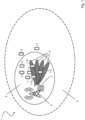
- FIG. 1 schematically shows a first base station 2 of the type to which the present invention is applied as an embodiment.
- the first base station 2 is communicatively coupled to the second base station 3.
- Both are part of the cellular network 1, which comprises a plurality of base stations of the type of the first 2 and of the second base station 3.
- the first base station is in particular operating in the technology standard of 4G or 5G, and beyond. It is a base station for coverage oriented communication. It covers the first cell area 4. As it is coverage oriented, a user equipment 7 which is located in the first cell area 4 is able to operate with the first base station, provided it has sufficient capacity.
- the situation is different for the second base station 3.
- the second cell area 5 is the theoretical coverage area of the second base station.
- first and second base station are installed on the same tower. Hence the first and second cell areas overlap.
- the second cell area is completely located in the first cell area.
- the second cell area is the theoretical coverage area for user equipments 7 located in the second cell area. Instead only those user equipments can be served when the beams 6 are directed to the position where the user equipment 7 is currently located.
- the user equipments 7.6 and 7.7 have received not signals from the second base station. They consequently would provide with the ANR message a location indication, e.g. a geo-position in latitude/longitude.
- the first base station 2 can derive that they are located outside of the second cell area 5 and can therefore be removed from the list of user equipments that are usable for ANR messages about the second base station 3.
- the user equipment 7.5, 7.8 and 7.9 will deliver ANR messages with measurement results and/or additional information about the second base station 3. From that the first base station 2 can derive that these user equipments are located within the second cell area 5, and they are in the range of the beams 6 of the second base station 3 and can therefore operate with the second base station. Such operation may be a high data throughput communication session.
- User equipments 7.1, 7.2, 7.3, and 7.4 however would, like the user equipments 7.6 and 7.7, send in their ANR messages an indication of their position, but no measurement results, due to the fact that they cannot receive signals due to the beamforming which does not cover the position of these user equipment.
- the first base station would however not omit these user equipments, as they are located inside of the second cell area. A change of beamforming could lead to the situation that they can indeed communicate with the second base station 3.
- the first base station would therefore send instructions, preferably in dedicated mode, to all shown user equipments except user equipments 7.6 and 7.7.
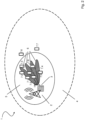
- the second base station 3 has, based on instructions received from the first base station 2, amended its beamforming configuration.
- the first base station analyzed the position information from the user equipments 7 and figured out that a majority of user equipment is not covered by the beams 6.
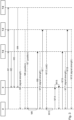
- FIG. 3 it is shown an exemplifying sequence diagram between the first and the second base station and selected user equipments 7.2, 7.5 and 7.6.
- the user equipments complement to those shown in Fig. 1 and 2 , with the beamforming configuration of Fig. 1 .
- the message flow starts with instruction message M1 from the first base station 2 to all of the user equipments camping on the first base station, including those shown in the sequence diagram.
- This instruction message is in particular sent via broadcast, e.g. with system information. Also multicast, that is to a group of user equipments, is included in this option.
- the receiving user equipments are instructed to carry out measurements in regards to at least on neighboring base station, in particular one of the type of the second base station.
- Such measurements are carried out with messages M2-M4 by each of the receiving user equipments.
- the messages are as shown to be understood as attempts to measure signals from the second base station 3. However, should the user equipments 7.2, 7.5, 7.6 not in reach of the second base station, resp. a beam of the second base station, then the message would not arrive at the second base station 3.
- ANR automatic neighbor relation
- ANR message M5 comprises the signal strength value of the user equipment 7.5, which is located in direction of one of the beams 6 of the second base station 3. Hence it could carry out measurements and thus indicate to the first base station a comparably high measurement signal value. This indicates to the first base station that user equipment 7.5 is operating in the second cell area and even the beam and should be considered for further ANR messaging.
- ANR message M6 comprises a position indication from the user equipment 7.2. This position indication is reported as the measurement attempt M3 lead to no result. Of course a measurement signal value might be reported additionally with the ANR message M6.
- ANR message M7 also comprises a position indication from the user equipment 7.6. This situation is for the user equipment similar as for user equipment 7.2, as the measurement attempt M4 lead to no result.
- step M8 the first base station evaluates the received ANR message M5, M6, M7.
- This evaluation step has the main task to figure out which user equipments 7.2, 7.5, 7.6 to consider for further ANR instructions.
- Clearly user equipment 7.5 is to keep, as it provided measurement results of the signal strength. for the user equipments 7.2 and 7.6 the first base station however has to distinguish from the received position indication, if the user equipments are situated in the second cell area or not. This is not the case for user equipment 7.6, which is consequently not considered for further ANR operations.
- User equipment is located within the second cell area 5, and therefore the first base station continues to consider this user equipment for the subsequent ANR operation.
- next ANR request preferably carried out after some time, is carried out with instruction message M9 to user equipment 7.5.
- This instruction message is carried out in dedicated signalling, means, only user equipment 7.5 receives this instruction.
- the user equipment 7.5 carries out again a measurement attempt (not shown), and reports the result to the first base station.
- user equipment again could measure the signal strength of the second base station and consequently provides with ANR message M10 a value indicative of the measured signal strength of the second base station 3.
- an ANR request M11 is sent in dedicated signalling to user equipment 7.2.
- This user equipment 7.2 carries out another measurement attempt but still fails to measure signals from the second base station.
- the ANR request M9, M11 in particular instructs the receiving user equipment to carry out a specific measurement from a specific base station, in this case from the second base station 3. Should user equipment 7.2 be in the cell area of another base station of the type of the second base station, then it would not report a possible positive measurement result, as it is not requested. Consequently in message M12 the user equipment 7.2 indicated that no measurement could be carried out.
- ANR message M12 Another indication relating to the position of the user equipment 7.2 is submitted with ANR message M12. Should the user equipment 7.2 however has left the second cell area 5, it could be omitted from the next ANR messaging.
- step M13 the first base station 2 evaluates the ANR message received after the last set of ANR requests.
- the outcome of this evaluation step is an instruction sent with message M14 to the second base station 3 for amending the beamforming based on the position information of the user equipments in the second cell area 5 which are not covered by the beams 6.
- the second base station 3 consequently carries out a change of beamforming with step M14.
- the first base station sends with message M15 and M17 ANR requests to the user equipments 7.2 and 7.5.
- both user equipment will successfully carry out measurement attempts from signals received from the second base station 3.
- the operation continues with this now comparably optimal configuration of the beams.
- the situation might change. Either in time or through movements of the user equipments 7.
Landscapes
- Engineering & Computer Science (AREA)
- Computer Networks & Wireless Communication (AREA)
- Signal Processing (AREA)
- Mobile Radio Communication Systems (AREA)
Claims (14)
- Verfahren für eine erste Basisstation (2), die mit einem Mobilfunknetz (1) betrieben wird, die einen ersten Funkzellbereich (4) abdeckt und die verbindend mit einer zweiten Basisstation (3), die Strahlformung unterstützt, gekoppelt ist, welche einen zweiten Funkzellbereich (5) abdeckt, wobei der erste Funkzellbereich und der zweite Funkzellbereich überlappend sind, wobei eine Vielzahl von Nutzergeräten (7) in dem ersten Funkzellbereich (4) lokalisiert ist, wobei das Verfahren die folgenden Schritte umfasst:- Senden einer Nachricht, die repräsentativ ist für eine Instruktion, wonach eine automatische Nachbarbeziehungsmessung an mindestens einem Nutzergerät der Vielzahl von Nutzergeräten, die in dem ersten Funkzellbereich lokalisiert sind, durchgeführt wird,- Empfangen mindestens einer automatischen Nachbarbeziehungsnachricht von dem mindestens einen Nutzergerät (7) der Vielzahl von Nutzergeräten, die in dem ersten Funkzellbereich (4) lokalisiert (4) sind,- Weglassen des mindestens einen Nutzergerätes (7) der Vielzahl von Nutzergeräten, die in dem ersten Funkzellbereich lokalisiert (4) sind, aus der Berücksichtigung für eine weitere automatische Nachbarbeziehungsbewertung, falls die automatische Nachbarbeziehungsnachricht anzeigt, dass das Nutzergerät (7) der Vielzahl von Nutzergeräten, die in dem ersten Funkzellbereich (4) lokalisiert sind, außerhalb des zweiten Funkzellbereichs lokalisiert ist (5).
- Verfahren nach Anspruch 1, ferner umfassend den Schritt Berücksichtigen des mindestens einen Nutzergeräts (7) der Vielzahl von Nutzergeräten, die in dem ersten Funkzellbereich (5) lokalisiert sind, falls die automatische Nachbarbeziehungsnachricht anzeigt, dass das Nutzergerät innerhalb des zweiten Funkzellbereichs (5) lokalisiert ist.
- Verfahren nach einem der Ansprüche 1 oder 2, wobei die automatische Nachbarbeziehungsnachricht anzeigt, dass das Nutzergerät (7) der Vielzahl von Nutzergeräten, die in dem ersten Funkzellbereich (4) lokalisiert sind, innerhalb des zweiten Funkzellbereichs (5) lokalisiert ist, falls mindestens eine der folgenden Bedingungen zutrifft:- die automatische Nachbarbeziehungsnachricht umfasst ein Messergebnis, das sich auf die zweite Basisstation (3) bezieht,- der Zeitvorlauf zu der ersten Basisstation (2) ist niedriger als ein vordefinierter Schwellenwert;- ein Positionswert, der in der automatischen Nachbarbeziehungsnachricht enthalten ist, stimmt mit den geografischen Grenzen des geschätzten zweiten Funkzellbereichs (5) überein.
- Verfahren nach Anspruch 3, wobei die automatische Nachbarbeziehungsnachricht eine Ortsangabe nur umfasst, falls die automatische Nachbarbeziehungsnachricht kein Messergebnis der zweiten Basisstation (3) umfasst.
- Verfahren nach einem der Ansprüche 1 bis 4, ferner umfassend die folgenden Schritte:- Analysieren einer Vielzahl von automatischen Nachbarbeziehungsnachrichten dahingehend, ob Informationen, die sich auf die zweite Basisstation (3) beziehen, darin umfasst sind,- Instruieren der zweiten Basisstation (3), die Strahlformung mit Berücksichtigen der Ortsangaben der Vielzahl von automatischen Nachbarbeziehungsnachrichten zu modifizieren.
- Verfahren nach Anspruch 5, wobei von den Informationen, die sich auf die zweite Basisstation (3) beziehen, mindestens eine Informationsangabe aus der folgenden Gruppe kommt:- einem Funkzell-Identifikator der zweiten Basisstation (3),- einem Strahl-Identifikator, der sich auf die zweite Basisstation (3) bezieht,- einem Leistungsmesswert von Signalen, die von der zweiten Basisstation (3) empfangen werden,- Informationen, die sich auf eine Identität beziehen, für die eine Messinstruktion ergangen war.
- Verfahren nach einem der Ansprüche 1 bis 6, wobei der Schritt Senden einer Nachricht an mindestens ein Nutzergerät (7) der Vielzahl von Nutzergeräten, die in dem ersten Funkzellbereich (4) lokalisiert sind, mittels mindestens entweder einer Broadcast- oder Multicast-Signalübertragung oder beiden ausgeführt wird, wobei das Verfahren ferner den Schritt Durchführen eines zweiten Schrittes einer Signalübertragung an mindestens ein Nutzergerät (7) der Vielzahl von Nutzergeräten umfasst, die in dem ersten Funkzellbereich (4) lokalisiert sind, der ferner für eine weitere automatische Nachbarbeziehungsbewertung mittels einem dedizierten Signalübertragungstyp berücksichtigt wird.
- Verfahren nach einem der Ansprüche 1 bis 7, wobei der Schritt Senden einer Nachricht an mindestens ein Nutzergerät (7) der Vielzahl von Nutzergeräten, die in dem ersten Funkzellbereich (4) lokalisiert sind, mittels entweder Broadcast oder Multicast oder beiden ausgeführt wird, wobei die Fraktion von Nutzergeräten (7) der Vielzahl von Nutzergeräten, die in dem ersten Funkzellbereich (4) lokalisiert sind, berücksichtigt wird, die in Reichweite der zweiten Basisstation (3) sind und die in Reichweite der ersten Basisstation (2) sind jeweils im Vergleich zu allen Nutzergeräten, die in Reichweite der ersten Basisstation (2) sind und die Fähigkeit haben, mit der zweiten Basisstation (3) zu kommunizieren.
- Basisstation (2), die mit einem Mobilfunknetz (1) betrieben wird, die einen ersten Funkzellbereich (4) abdeckt und die verbindend mit einer zweiten Basisstation (3), die Strahlformung unterstützt, gekoppelt ist, die einen zweiten Funkzellbereich (5) abdeckt, wobei eine Vielzahl der Nutzergeräte in dem ersten Funkzellbereich lokalisiert ist, wobei die Basisstation (2) wie folgt konfiguriert ist:- zum Senden einer Nachricht, die repräsentativ ist für eine Instruktion, wonach eine automatische Nachbarbeziehungsmessung an mindestens einem Nutzergerät (7) der Vielzahl von Nutzergeräten, die in dem ersten Funkzellbereich (4) lokalisiert sind, durchgeführt wird,- zum Empfangen mindestens einer automatischen Nachbarbeziehungsnachricht von dem mindestens einen Nutzergerät (7) der Vielzahl von Nutzergeräten, die in der ersten Funkzellbereich (4) lokalisiert (4) sind,- zum Weglassen des mindestens einen Nutzergerätes (7) der Vielzahl von Nutzergeräten, die in dem ersten Funkzellbereich lokalisiert (4) sind, aus der Berücksichtigung für eine weitere automatische Nachbarbeziehungsbewertung, falls die automatische Nachbarbeziehungsnachricht anzeigt, dass das Nutzergerät außerhalb des zweiten Funkzellbereichs (5) lokalisiert ist.
- Basisstation nach Anspruch 9, wobei die automatische Nachbarbeziehungsnachricht anzeigt, dass das Nutzergerät (7) der Vielzahl von Nutzergeräten, die in dem ersten Funkzellbereich (4) lokalisiert sind, in dem zweiten Funkzellbereich (5) lokalisiert ist, falls mindestens eine der folgenden Bedingungen zutrifft:- die automatische Nachbarbeziehungsnachricht umfasst ein Messergebnis der zweiten Basisstation (3);- der Zeitvorlauf zu der ersten Basisstation (2) ist niedriger als ein vordefinierter Schwellenwert;- ein Positionswert, der in der automatischen Nachbarbeziehungsnachricht enthalten ist, stimmt mit den geografischen Grenzen des geschätzten zweiten Funkzellbereichs (5) überein.
- Basisstation (2) nach mindestens einem der Ansprüche 9 oder 10, die ferner wie folgt dazu konfiguriert:- zum Analysieren einer Vielzahl von automatischen Nachbarbeziehungsnachrichten dahingehend, ob Informationen, die sich auf die zweite Basisstation (3) beziehen, darin umfasst sind,- zum Instruieren der zweiten Basisstation (3), die Strahlformung mit Berücksichtigung der Ortsangaben der Vielzahl von automatischen Nachbarbeziehungsnachrichten zu modifizieren.
- Basisstation (2) nach Anspruch 11, wobei die Informationen, die sich auf die zweite Basisstation (3) beziehen, mindestens eine Informationsangabe aus der folgenden Gruppe ist:- ein Funkzell-Identifikator der zweiten Basisstation (3),- ein Strahlen-Identifikator, der sich auf die zweite Basisstation (3) bezieht,- ein Leistungsmesswert der Signale, die von der zweiten Basisstation (3) empfangen werden,- Informationen, die sich auf eine Identität beziehen, für die die Messinstruktion ergangen ist.
- Basisstation (2) nach mindestens einem der Ansprüche 9 bis 12, die dazu konfiguriert ist, das Senden einer Nachricht an mindestens ein Nutzergerät (7) der Vielzahl von Nutzergeräten, die in dem ersten Funkzellbereich (4) lokalisiert sind, mittels mindestens entweder einer Broadcast- oder Multicast-Signalübertragung oder beiden durchzuführen, wobei ferner ein zweiter Schritt Durchführen einer Signalübertragung an mindestens ein Nutzergerät (7) der Vielzahl von Nutzergeräten, die in dem ersten Funkzellbereich (4) lokalisiert sind, erfolgt, die für eine weitere automatische Nachbarbeziehungsbewertung in einem dedizierten Signalübertragungstyp berücksichtigt wird.
- Basisstation (2) nach mindestens einem der Ansprüche 9 bis 13, die ferner dazu konfiguriert ist, eine Nachricht an mindestens ein Nutzergerät (7) der Vielzahl von Nutzergeräten zu senden, die in dem ersten Funkzellbereich (4) lokalisiert sind, was mittels Broadcast oder Multicast durchgeführt wird, wobei die Fraktion von Nutzergeräten (7) der Vielzahl von Nutzergeräten, die in dem ersten Funkzellbereich (4) lokalisiert sind, mittels entweder Broadcast oder Multicast oder beiden durchgeführt wird, wobei die Fraktion von Nutzergeräten (7) der Vielzahl von Nutzergeräten, die in dem ersten Funkzellbereich (4) lokalisiert sind, berücksichtigt wird, die in Reichweite der zweiten Basisstation (3) sind und die in Reichweite der ersten Basisstation (2) sind jeweils im Vergleich zu allen Nutzergeräten, die in Reichweite der ersten Basisstation (2) sind und die Fähigkeit haben, mit der zweiten Basisstation (3) zu kommunizieren.
Applications Claiming Priority (2)
| Application Number | Priority Date | Filing Date | Title |
|---|---|---|---|
| EP19214661.1A EP3836604A1 (de) | 2019-12-10 | 2019-12-10 | Verfahren zur netzwerkoptimierung eines zellularen netzwerks |
| PCT/EP2020/084992 WO2021116062A1 (en) | 2019-12-10 | 2020-12-08 | Method for network optimization of a cellular network |
Publications (3)
| Publication Number | Publication Date |
|---|---|
| EP4074094A1 EP4074094A1 (de) | 2022-10-19 |
| EP4074094B1 true EP4074094B1 (de) | 2024-03-13 |
| EP4074094C0 EP4074094C0 (de) | 2024-03-13 |
Family
ID=68847949
Family Applications (2)
| Application Number | Title | Priority Date | Filing Date |
|---|---|---|---|
| EP19214661.1A Withdrawn EP3836604A1 (de) | 2019-12-10 | 2019-12-10 | Verfahren zur netzwerkoptimierung eines zellularen netzwerks |
| EP20819751.7A Active EP4074094B1 (de) | 2019-12-10 | 2020-12-08 | Verfahren zur netzwerkoptimierung eines zellularen netzwerks |
Family Applications Before (1)
| Application Number | Title | Priority Date | Filing Date |
|---|---|---|---|
| EP19214661.1A Withdrawn EP3836604A1 (de) | 2019-12-10 | 2019-12-10 | Verfahren zur netzwerkoptimierung eines zellularen netzwerks |
Country Status (6)
| Country | Link |
|---|---|
| US (1) | US12207114B2 (de) |
| EP (2) | EP3836604A1 (de) |
| JP (1) | JP7398563B2 (de) |
| KR (1) | KR20220113488A (de) |
| CN (1) | CN115039432B (de) |
| WO (1) | WO2021116062A1 (de) |
Families Citing this family (1)
| Publication number | Priority date | Publication date | Assignee | Title |
|---|---|---|---|---|
| US20250008416A1 (en) * | 2023-02-21 | 2025-01-02 | Telefonaktiebolaget Lm Ericsson (Publ) | Automatic neighbor relations augmention in a wireless communications network |
Family Cites Families (6)
| Publication number | Priority date | Publication date | Assignee | Title |
|---|---|---|---|---|
| JP6304926B2 (ja) | 2013-01-17 | 2018-04-04 | Kddi株式会社 | 通信制御装置、無線基地局装置、無線端末装置および通信制御方法 |
| US20160029253A1 (en) * | 2014-07-28 | 2016-01-28 | Telefonaktiebolaget L M Ericsson (Publ) | System and method of automatic neighbor relation (anr) intelligence enhancement for boomer neighbor in lte |
| CN110476454B (zh) | 2017-02-03 | 2021-12-10 | 瑞典爱立信有限公司 | 用于自动邻居关联的操作方法、用户设备以及基站 |
| WO2018204863A1 (en) * | 2017-05-04 | 2018-11-08 | Ofinno Technologies, Llc | Beam-based measurement configuration |
| WO2019196098A1 (en) * | 2018-04-13 | 2019-10-17 | Qualcomm Incorporated | Measurement configuration for global cell identifier reporting |
| CN111586739B (zh) * | 2019-02-15 | 2022-04-22 | 华为技术有限公司 | 信息处理方法和装置 |
-
2019
- 2019-12-10 EP EP19214661.1A patent/EP3836604A1/de not_active Withdrawn
-
2020
- 2020-12-08 US US17/783,095 patent/US12207114B2/en active Active
- 2020-12-08 EP EP20819751.7A patent/EP4074094B1/de active Active
- 2020-12-08 JP JP2022535178A patent/JP7398563B2/ja active Active
- 2020-12-08 CN CN202080096099.3A patent/CN115039432B/zh active Active
- 2020-12-08 WO PCT/EP2020/084992 patent/WO2021116062A1/en not_active Ceased
- 2020-12-08 KR KR1020227023689A patent/KR20220113488A/ko active Pending
Also Published As
| Publication number | Publication date |
|---|---|
| US12207114B2 (en) | 2025-01-21 |
| JP7398563B2 (ja) | 2023-12-14 |
| EP3836604A1 (de) | 2021-06-16 |
| CN115039432B (zh) | 2025-02-11 |
| WO2021116062A1 (en) | 2021-06-17 |
| CN115039432A (zh) | 2022-09-09 |
| US20230011159A1 (en) | 2023-01-12 |
| JP2023505826A (ja) | 2023-02-13 |
| KR20220113488A (ko) | 2022-08-12 |
| EP4074094A1 (de) | 2022-10-19 |
| EP4074094C0 (de) | 2024-03-13 |
Similar Documents
| Publication | Publication Date | Title |
|---|---|---|
| US12267138B2 (en) | First node, wireless device and methods performed thereby, for handling beamforming beams | |
| EP2082603B1 (de) | Übertragung von spezialnachbar-zellenlisten | |
| EP3264630B1 (de) | Verfahren und vorrichtung zur handhabung von messungen in einem drahtloskommunikationssystem | |
| KR101648566B1 (ko) | 셀룰러 통신 네트워크의 무선 접근 네트워크 정보를 획득하기 위한 방법 및 시스템 | |
| EP4333493B1 (de) | Kommunikationsvorrichtung und -verfahren | |
| EP2179614B1 (de) | Funkzellenübergabe in einer geschlossenen teilnehmergruppe | |
| US20260019858A1 (en) | Communications device, infrastructure equipment, core network element and methods for minimization of drive tests, mdt, report | |
| US20220272586A1 (en) | Base station device, terminal device, control method, and computer-readable storage medium that use notification information taking into consideration presence of multiple service providers | |
| EP3679744B1 (de) | Verfahren in einem zellularen telekommunikationsnetzwerk, computerprogramm, computerlesbarer datenträger und netzwerkknoten | |
| EP2194739A1 (de) | Bereitstellung von Standortinformationen | |
| US12507141B2 (en) | Cell reselection-related information associated with network slice or closed access group for wireless networks | |
| US20230403674A1 (en) | Communications device and network infrastructure equipment and methods applying mobility information of infrastructure equipment | |
| US12207114B2 (en) | Method for network optimization of a cellular network | |
| US10341922B2 (en) | Radio base station and radio terminal | |
| US20220295260A1 (en) | Triggering a temporary roaming after an occurrence of an event | |
| WO2025233416A1 (en) | Method for signaling mbs service availability | |
| CN106255163B (zh) | 信息处理方法及基站 | |
| WO2023104527A1 (en) | Methods, communications devices, and wireless communications networks | |
| EP3291631A1 (de) | Verfahren zum aufbau einer kommunikationsverbindung zwischen einem drathlosterminal und einem zellulären netzwerk | |
| WO2025160886A1 (en) | Voice call protocol selection enhancement | |
| EP4178248A1 (de) | Grid-of-beams optimierung für stationäre vorrichtungen | |
| WO2023104573A1 (en) | Access restriction based on secondary tracking area | |
| CN119586214A (zh) | 方法、通信设备和基础设施设备 | |
| HK1135833A (en) | Transmission of special neighbor cell lists |
Legal Events
| Date | Code | Title | Description |
|---|---|---|---|
| STAA | Information on the status of an ep patent application or granted ep patent |
Free format text: STATUS: UNKNOWN |
|
| STAA | Information on the status of an ep patent application or granted ep patent |
Free format text: STATUS: THE INTERNATIONAL PUBLICATION HAS BEEN MADE |
|
| PUAI | Public reference made under article 153(3) epc to a published international application that has entered the european phase |
Free format text: ORIGINAL CODE: 0009012 |
|
| STAA | Information on the status of an ep patent application or granted ep patent |
Free format text: STATUS: REQUEST FOR EXAMINATION WAS MADE |
|
| 17P | Request for examination filed |
Effective date: 20220711 |
|
| AK | Designated contracting states |
Kind code of ref document: A1 Designated state(s): AL AT BE BG CH CY CZ DE DK EE ES FI FR GB GR HR HU IE IS IT LI LT LU LV MC MK MT NL NO PL PT RO RS SE SI SK SM TR |
|
| DAV | Request for validation of the european patent (deleted) | ||
| DAX | Request for extension of the european patent (deleted) | ||
| RAP3 | Party data changed (applicant data changed or rights of an application transferred) |
Owner name: TELIT CINTERION DEUTSCHLAND GMBH |
|
| GRAP | Despatch of communication of intention to grant a patent |
Free format text: ORIGINAL CODE: EPIDOSNIGR1 |
|
| STAA | Information on the status of an ep patent application or granted ep patent |
Free format text: STATUS: GRANT OF PATENT IS INTENDED |
|
| INTG | Intention to grant announced |
Effective date: 20231108 |
|
| GRAS | Grant fee paid |
Free format text: ORIGINAL CODE: EPIDOSNIGR3 |
|
| GRAA | (expected) grant |
Free format text: ORIGINAL CODE: 0009210 |
|
| STAA | Information on the status of an ep patent application or granted ep patent |
Free format text: STATUS: THE PATENT HAS BEEN GRANTED |
|
| AK | Designated contracting states |
Kind code of ref document: B1 Designated state(s): AL AT BE BG CH CY CZ DE DK EE ES FI FR GB GR HR HU IE IS IT LI LT LU LV MC MK MT NL NO PL PT RO RS SE SI SK SM TR |
|
| REG | Reference to a national code |
Ref country code: GB Ref legal event code: FG4D |
|
| RIN1 | Information on inventor provided before grant (corrected) |
Inventor name: BREUER, VOLKER |
|
| REG | Reference to a national code |
Ref country code: CH Ref legal event code: EP |
|
| REG | Reference to a national code |
Ref country code: DE Ref legal event code: R096 Ref document number: 602020027298 Country of ref document: DE |
|
| REG | Reference to a national code |
Ref country code: IE Ref legal event code: FG4D |
|
| U01 | Request for unitary effect filed |
Effective date: 20240313 |
|
| U07 | Unitary effect registered |
Designated state(s): AT BE BG DE DK EE FI FR IT LT LU LV MT NL PT SE SI Effective date: 20240321 |
|
| PG25 | Lapsed in a contracting state [announced via postgrant information from national office to epo] |
Ref country code: GR Free format text: LAPSE BECAUSE OF FAILURE TO SUBMIT A TRANSLATION OF THE DESCRIPTION OR TO PAY THE FEE WITHIN THE PRESCRIBED TIME-LIMIT Effective date: 20240614 |
|
| PG25 | Lapsed in a contracting state [announced via postgrant information from national office to epo] |
Ref country code: RS Free format text: LAPSE BECAUSE OF FAILURE TO SUBMIT A TRANSLATION OF THE DESCRIPTION OR TO PAY THE FEE WITHIN THE PRESCRIBED TIME-LIMIT Effective date: 20240613 Ref country code: HR Free format text: LAPSE BECAUSE OF FAILURE TO SUBMIT A TRANSLATION OF THE DESCRIPTION OR TO PAY THE FEE WITHIN THE PRESCRIBED TIME-LIMIT Effective date: 20240313 |
|
| PG25 | Lapsed in a contracting state [announced via postgrant information from national office to epo] |
Ref country code: ES Free format text: LAPSE BECAUSE OF FAILURE TO SUBMIT A TRANSLATION OF THE DESCRIPTION OR TO PAY THE FEE WITHIN THE PRESCRIBED TIME-LIMIT Effective date: 20240313 |
|
| PG25 | Lapsed in a contracting state [announced via postgrant information from national office to epo] |
Ref country code: RS Free format text: LAPSE BECAUSE OF FAILURE TO SUBMIT A TRANSLATION OF THE DESCRIPTION OR TO PAY THE FEE WITHIN THE PRESCRIBED TIME-LIMIT Effective date: 20240613 Ref country code: NO Free format text: LAPSE BECAUSE OF FAILURE TO SUBMIT A TRANSLATION OF THE DESCRIPTION OR TO PAY THE FEE WITHIN THE PRESCRIBED TIME-LIMIT Effective date: 20240613 Ref country code: HR Free format text: LAPSE BECAUSE OF FAILURE TO SUBMIT A TRANSLATION OF THE DESCRIPTION OR TO PAY THE FEE WITHIN THE PRESCRIBED TIME-LIMIT Effective date: 20240313 Ref country code: GR Free format text: LAPSE BECAUSE OF FAILURE TO SUBMIT A TRANSLATION OF THE DESCRIPTION OR TO PAY THE FEE WITHIN THE PRESCRIBED TIME-LIMIT Effective date: 20240614 Ref country code: ES Free format text: LAPSE BECAUSE OF FAILURE TO SUBMIT A TRANSLATION OF THE DESCRIPTION OR TO PAY THE FEE WITHIN THE PRESCRIBED TIME-LIMIT Effective date: 20240313 |
|
| PG25 | Lapsed in a contracting state [announced via postgrant information from national office to epo] |
Ref country code: IS Free format text: LAPSE BECAUSE OF FAILURE TO SUBMIT A TRANSLATION OF THE DESCRIPTION OR TO PAY THE FEE WITHIN THE PRESCRIBED TIME-LIMIT Effective date: 20240713 |
|
| PG25 | Lapsed in a contracting state [announced via postgrant information from national office to epo] |
Ref country code: SM Free format text: LAPSE BECAUSE OF FAILURE TO SUBMIT A TRANSLATION OF THE DESCRIPTION OR TO PAY THE FEE WITHIN THE PRESCRIBED TIME-LIMIT Effective date: 20240313 |
|
| PG25 | Lapsed in a contracting state [announced via postgrant information from national office to epo] |
Ref country code: CZ Free format text: LAPSE BECAUSE OF FAILURE TO SUBMIT A TRANSLATION OF THE DESCRIPTION OR TO PAY THE FEE WITHIN THE PRESCRIBED TIME-LIMIT Effective date: 20240313 |
|
| PG25 | Lapsed in a contracting state [announced via postgrant information from national office to epo] |
Ref country code: PL Free format text: LAPSE BECAUSE OF FAILURE TO SUBMIT A TRANSLATION OF THE DESCRIPTION OR TO PAY THE FEE WITHIN THE PRESCRIBED TIME-LIMIT Effective date: 20240313 |
|
| PG25 | Lapsed in a contracting state [announced via postgrant information from national office to epo] |
Ref country code: SK Free format text: LAPSE BECAUSE OF FAILURE TO SUBMIT A TRANSLATION OF THE DESCRIPTION OR TO PAY THE FEE WITHIN THE PRESCRIBED TIME-LIMIT Effective date: 20240313 |
|
| PG25 | Lapsed in a contracting state [announced via postgrant information from national office to epo] |
Ref country code: SM Free format text: LAPSE BECAUSE OF FAILURE TO SUBMIT A TRANSLATION OF THE DESCRIPTION OR TO PAY THE FEE WITHIN THE PRESCRIBED TIME-LIMIT Effective date: 20240313 Ref country code: SK Free format text: LAPSE BECAUSE OF FAILURE TO SUBMIT A TRANSLATION OF THE DESCRIPTION OR TO PAY THE FEE WITHIN THE PRESCRIBED TIME-LIMIT Effective date: 20240313 Ref country code: RO Free format text: LAPSE BECAUSE OF FAILURE TO SUBMIT A TRANSLATION OF THE DESCRIPTION OR TO PAY THE FEE WITHIN THE PRESCRIBED TIME-LIMIT Effective date: 20240313 Ref country code: PL Free format text: LAPSE BECAUSE OF FAILURE TO SUBMIT A TRANSLATION OF THE DESCRIPTION OR TO PAY THE FEE WITHIN THE PRESCRIBED TIME-LIMIT Effective date: 20240313 Ref country code: IS Free format text: LAPSE BECAUSE OF FAILURE TO SUBMIT A TRANSLATION OF THE DESCRIPTION OR TO PAY THE FEE WITHIN THE PRESCRIBED TIME-LIMIT Effective date: 20240713 Ref country code: CZ Free format text: LAPSE BECAUSE OF FAILURE TO SUBMIT A TRANSLATION OF THE DESCRIPTION OR TO PAY THE FEE WITHIN THE PRESCRIBED TIME-LIMIT Effective date: 20240313 |
|
| REG | Reference to a national code |
Ref country code: DE Ref legal event code: R097 Ref document number: 602020027298 Country of ref document: DE |
|
| U20 | Renewal fee for the european patent with unitary effect paid |
Year of fee payment: 5 Effective date: 20241121 |
|
| PLBE | No opposition filed within time limit |
Free format text: ORIGINAL CODE: 0009261 |
|
| STAA | Information on the status of an ep patent application or granted ep patent |
Free format text: STATUS: NO OPPOSITION FILED WITHIN TIME LIMIT |
|
| 26N | No opposition filed |
Effective date: 20241216 |
|
| PG25 | Lapsed in a contracting state [announced via postgrant information from national office to epo] |
Ref country code: MC Free format text: LAPSE BECAUSE OF FAILURE TO SUBMIT A TRANSLATION OF THE DESCRIPTION OR TO PAY THE FEE WITHIN THE PRESCRIBED TIME-LIMIT Effective date: 20240313 |
|
| REG | Reference to a national code |
Ref country code: CH Ref legal event code: PL |
|
| PG25 | Lapsed in a contracting state [announced via postgrant information from national office to epo] |
Ref country code: CH Free format text: LAPSE BECAUSE OF NON-PAYMENT OF DUE FEES Effective date: 20241231 |
|
| PG25 | Lapsed in a contracting state [announced via postgrant information from national office to epo] |
Ref country code: IE Free format text: LAPSE BECAUSE OF NON-PAYMENT OF DUE FEES Effective date: 20241208 |
|
| U20 | Renewal fee for the european patent with unitary effect paid |
Year of fee payment: 6 Effective date: 20251119 |
|
| PGFP | Annual fee paid to national office [announced via postgrant information from national office to epo] |
Ref country code: GB Payment date: 20251120 Year of fee payment: 6 |
|
| PG25 | Lapsed in a contracting state [announced via postgrant information from national office to epo] |
Ref country code: CY Free format text: LAPSE BECAUSE OF FAILURE TO SUBMIT A TRANSLATION OF THE DESCRIPTION OR TO PAY THE FEE WITHIN THE PRESCRIBED TIME-LIMIT Effective date: 20240313 |