EP4072203B1 - Paketdaten-netzgateway (pgw) wiederauswahl für netzwerk slicing - Google Patents
Paketdaten-netzgateway (pgw) wiederauswahl für netzwerk slicing Download PDFInfo
- Publication number
- EP4072203B1 EP4072203B1 EP22156574.0A EP22156574A EP4072203B1 EP 4072203 B1 EP4072203 B1 EP 4072203B1 EP 22156574 A EP22156574 A EP 22156574A EP 4072203 B1 EP4072203 B1 EP 4072203B1
- Authority
- EP
- European Patent Office
- Prior art keywords
- packet data
- data network
- network gateway
- subscription
- pgw2
- Prior art date
- Legal status (The legal status is an assumption and is not a legal conclusion. Google has not performed a legal analysis and makes no representation as to the accuracy of the status listed.)
- Active
Links
Images


Classifications
-
- H—ELECTRICITY
- H04—ELECTRIC COMMUNICATION TECHNIQUE
- H04W—WIRELESS COMMUNICATION NETWORKS
- H04W48/00—Access restriction; Network selection; Access point selection
- H04W48/16—Discovering, processing access restriction or access information
-
- H—ELECTRICITY
- H04—ELECTRIC COMMUNICATION TECHNIQUE
- H04W—WIRELESS COMMUNICATION NETWORKS
- H04W36/00—Hand-off or reselection arrangements
- H04W36/12—Reselecting a serving backbone network switching or routing node
-
- H—ELECTRICITY
- H04—ELECTRIC COMMUNICATION TECHNIQUE
- H04W—WIRELESS COMMUNICATION NETWORKS
- H04W36/00—Hand-off or reselection arrangements
- H04W36/24—Reselection being triggered by specific parameters
- H04W36/26—Reselection being triggered by specific parameters by agreed or negotiated communication parameters
-
- H—ELECTRICITY
- H04—ELECTRIC COMMUNICATION TECHNIQUE
- H04W—WIRELESS COMMUNICATION NETWORKS
- H04W76/00—Connection management
- H04W76/10—Connection setup
-
- H—ELECTRICITY
- H04—ELECTRIC COMMUNICATION TECHNIQUE
- H04W—WIRELESS COMMUNICATION NETWORKS
- H04W76/00—Connection management
- H04W76/10—Connection setup
- H04W76/12—Setup of transport tunnels
-
- H—ELECTRICITY
- H04—ELECTRIC COMMUNICATION TECHNIQUE
- H04W—WIRELESS COMMUNICATION NETWORKS
- H04W8/00—Network data management
-
- H—ELECTRICITY
- H04—ELECTRIC COMMUNICATION TECHNIQUE
- H04W—WIRELESS COMMUNICATION NETWORKS
- H04W8/00—Network data management
- H04W8/18—Processing of user or subscriber data, e.g. subscribed services, user preferences or user profiles; Transfer of user or subscriber data
-
- H—ELECTRICITY
- H04—ELECTRIC COMMUNICATION TECHNIQUE
- H04W—WIRELESS COMMUNICATION NETWORKS
- H04W88/00—Devices specially adapted for wireless communication networks, e.g. terminals, base stations or access point devices
- H04W88/16—Gateway arrangements
Definitions
- Some example embodiments may generally relate to communications including mobile or wireless telecommunication systems, such as Long Term Evolution (LTE) or fifth generation (5G) radio access technology or new radio (NR) access technology, or other communications systems.
- LTE Long Term Evolution
- 5G fifth generation
- NR new radio
- certain example embodiments may generally relate to methods, apparatuses and/or systems for packet data network gateway (PGW) reselection for network slicing.
- PGW packet data network gateway
- Examples of mobile or wireless telecommunication systems may include the Universal Mobile Telecommunications System (UMTS) Terrestrial Radio Access Network (UTRAN), Long Term Evolution (LTE) Evolved UTRAN (E-UTRAN), LTE-Advanced (LTE-A), MulteFire, LTE-A Pro, and/or fifth generation (5G) radio access technology or new radio (NR) access technology.
- UMTS Universal Mobile Telecommunications System
- UTRAN Universal Mobile Telecommunications System
- LTE Long Term Evolution
- E-UTRAN Evolved UTRAN
- LTE-A LTE-Advanced
- MulteFire LTE-A Pro
- 5G wireless systems refer to the next generation (NG) of radio systems and network architecture.
- NG next generation
- a 5G system is mostly built on a 5G new radio (NR), but a 5G (or NG) network can also build on the E-UTRA radio.
- NR provides bitrates on the order of 10-20 Gbit/s or higher, and can support at least service categories such as enhanced mobile broadband (eMBB) and ultra-reliable low-latency-communication (URLLC) as well as massive machine type communication (mMTC).
- eMBB enhanced mobile broadband
- URLLC ultra-reliable low-latency-communication
- mMTC massive machine type communication
- NR is expected to deliver extreme broadband and ultra-robust, low latency connectivity and massive networking to support the Internet of Things (IoT).
- IoT and machine-to-machine (M2M) communication With IoT and machine-to-machine (M2M) communication becoming more widespread, there will be a growing need for networks that meet the needs of lower power, low data rate, and long battery life.
- the next generation radio access network (NG-RAN) represents the RAN for 5G, which can provide both NR and LTE (and LTE-Advanced) radio accesses.
- the nodes that can provide radio access functionality to a user equipment may be named next-generation NB (gNB) when built on NR radio and may be named next-generation eNB (NG-eNB) when built on E-UTRA radio.
- gNB next-generation NB
- NG-eNB next-generation eNB
- 3GPP C4-201179 discloses PGW selection and related Create Session Request and Create Session Response messages.
- 3GPP C4-205689 relates to the restoration of PDN connections after a PGW-C/SMF change, wherein the PGW-C/SMF returns a PGW Change Info IE in the Create Session Response message which contains a PGW Set FQDN.
- Certain embodiments described herein may relate to procedures to support the evolved packet system (EPS) and 5G system (5GS) interworking.
- EPS and 5GS interworking several problems can arise.
- one problem may arise when a UE establishes a connection with EPS and then later moves to 5GS.
- the mobility management entity (MME) may select a PGW. This selection may be based, in part, on the acess point name (APN) / data network name (DNN).
- APN acess point name
- DNN data network name
- an APN/DNN may be supported by multiple network slices.
- a PGW may support different network slices.
- An MME not aware of the network slices (which were basically introduced with 5G), could therefore, during establishment of a UE's PDN connection, select a PGW that supports the requested APN/DNN, but the selected PGW might not support the network slice the user has a subscription for. This would then, later on, cause EPS to 5GS mobility failure when the UE moves from EPS to 5GS.
- the MME may select (during the establishment of the UE's PDN connection) a PGW supporting the requested APN/DNN, but not supporting the network slice (NS) for which the user has a subscription.
- DCN dedicated core network
- VPN visited public land mobile network
- one APN/DNN can be supported by two different network slices, NS1 and NS2 (e.g., having single network slice assistance information (S-NSSAI) 100 and S-NSSAI 101, respectively), where a first PGW (PGW1) supports the APN/DNN but just NS1 (S-NSSAI 100) and a second PGW (PGW2) supports the APN/DNN but just NS2 (S-NSSAI 101).
- PGW1 single network slice assistance information
- PGW2 PGW
- PGW1 PGW
- PGW2 PGW
- the UE has a user subscription for this APN/DNN and just NS2 (S-NSSAI 101).
- the MME does a domain name system (DNS) query using the APN fully qualified domain name (FQDN) set to the requested APN, and discovers that PGW1 and PGW2 support the APN/DNN. Since the MME does not know the 5GS subscription of the UE, nor which network slice each PGW supports, it may select the "wrong" PGW, PGW 1, and attempt to establish the PDN connection towards PGW1.
- DNS domain name system
- FQDN fully qualified domain name
- PGW1 has an interface with the unified data management (UDM), it can retrieve the (5G) user subscription. From the user subscription, PGW1 may determine that it does not support the network slice for which the user has a subscription (e.g., NS2), and PGW1 may discover another PGW, here PGW2, that supports the requested APN/DNN and the network slice (NS2) subscribed by the UE. Not doing so would cause EPS to 5GS mobility failure when the UE later moves from EPS to 5GS.
- PGW2 unified data management
- PGW1 forwards the Create Session Request to PGW2, during the PDN connection establishment.
- PGW1 includes the sender fully qualified tunnel endpoint identifier (F-TEID) received from the SGW, and sets the source IP address and the source UDP port as its own IP address.
- F-TEID sender fully qualified tunnel endpoint identifier
- the PGW2 is not aware that the Create Session Request message was transferred from another PGW.
- PGW1 has to store the SGW source address/port received in the Create Session Request in order to set the correct destination address/port when forwarding the Create Session Response.
- PGW1 should also store the PGW2 address, so that retransmissions are sent to the same PGW2.
- This requires building a new "session database" where the retrieval key might be the SGW F-TEID, because TEID is not allocated in PGW1.
- Receiving GTP-C messages (CSResponse) where TEID in the header is not locally assigned may also be problematic for the internal routing of the messages and might cause issues if the TEID assigned by SGW is also assigned by PGW1 for another session.
- a Create Session Request cannot be forwarded between two PGWs from isolated network slices and consequenlty EPS to 5GS mobility procedure may fail in such case. Additionally, it adds significant complexity to the PGW implementation.
- some example embodiments provide an approach that can overcome at least the issues posed above.
- a PGW e.g., PGW1 reecives a Create Session Request from the MME and then determines that it does not support the network slice that the UE has a user subscription for
- the PGW e.g., PGW1 may reject the Create Session Request towards the MME with a new cause indicating "PGW mismatch with network slice subscribed by the UE" and with the FQDN or IP address of a different PGW (e.g., PGW 2) that the MME should use for establishing the PDN connection.
- the PGW may discover the different PGW (e.g., PGW2) using a network repository function (NRF) network function (NF) discovery procedure and/or through local configuration.
- the MME can then request to establish the PDN connection towards that different PGW (PGW2).
- PGW1 may discover the different PGW (e.g., PGW2) using a network repository function (NRF) network function (NF) discovery procedure and/or through local configuration.
- NRF network repository function
- NF network function
- the PGW (PGW1) may forward the Create Session Request to the other PGW (PGW2), but include a new information element (IE) in the forwarded Create Session Request to convey the SGW source port information (i.e., source port number of the Create Session Request received by PGW1) such as to enable PGW2 to send a successful Create Session Response directly to the SGW, i.e., with the following signalling paths: Create Session Request: MME->SGW->PGW1->PGW2, and Create Session Response: PGW2->SGW->MME.
- the IE included by PGW1 in the forwarded Create Session Request indicates to the PGW2 to direclty reply back to the SGW, rather than via PGW1.
- Fig. 1 illustrates an example signaling diagram, according to certain example embodiments.
- the signaling diagram may include a MME, SGW, PGW1 supporting slice 100, and PGW2 supporting slice 101.
- a MME may transmit, to a receiving PGW (PGW1) via the SGW, a Create Session Request to establish a PDN connection for a UE in EPS.
- a receiving PGW (PGW1) determines, after retrieving the user subscription from UDM, that it (PGW1) does not support the network slice of the APN/DNN for which the UE has a subscription
- the PGW1 may, at 120, reject the Create Session Request towards the MME with a new error cause indicating a PGW mismatch with the network slice subscribed by the UE and with the FQDN or IP address of a different PGW (PGW 2).
- the error cause for "PGW mismatch with network slice subscribed by the UE" may be used by the PGW in the Create Session Response message during an EPS to 5GS mobility procedure, to indicate that the PGW is not serving the network slice subscribed by the UE for the APN/DNN.
- the PGW e.g., PGW1
- the other PGW e.g., PGW2
- a NRF NF discovery procedure i.e., NF discovery request with query parameters identifying the APN/DNN and the network slice subscribed by the UE
- the MME can then, at 130, transmit a Create Session Request to establish the PDN connection towards PGW2.
- the MME may receive a Create Session Response from PGW2.
- new IEs for an alternative PGW-C/SMF FQDN and alternative PGW-C/SMF IP address are shown in Table 1 below. These alternative IEs may be defined in the Create Session Response.
- Fig. 1 is provided as one example. Other examples are possible, according to some embodiments.
- Table 1 Alternative PGW-C/SMF FQDN O This IE may be included by the PGW on the S5/S8 interfaces, when the PGW rejects the Create Session Request with the cause "PGW mismatch with network slice subscribed by the UE".
- FQDN 3 If the SGW receives this IE, the SGW shall forward it to the MME over the S11 interface. When present, the IE shall contain the FQDN of the other PGW that the MME should use for establishing the PDN connection.
- This IE may be included by the PGW on the S5/S8 interfaces, when the PGW rejects the Create Session Request with the cause "PGW mismatch with network slice subscribed by the UE". IP Address 1 If the SGW receives this IE, the SGW shall forward it to the MME over the S11 interface. When present, the IE shall contain the IP Address of the other PGW that the MME should use for establishing the PDN connection.
- Fig. 2 illustrates an example signaling diagram, according to another example embodiments.
- the signaling diagram may include a MME, SGW, PGW1 supporting slice 100, and PGW2 supporting slice 101.
- a MME may transmit, to a receiving PGW (PGW1) via the SGW, a Create Session Request to establish a PDN connection for a UE in EPS.
- PGW1 may forward the Create Session Request to PGW2, and include a new IE in the forwarded Create Session Request to convey the SGW UDP port number (i.e., source UDP port number of the Create Session Request received by PGW1) such as to enable PGW2 to send a successful Create Session Response directly to the SGW.
- the Create Session Request may be sent along the following signalling path: MME->SGW->PGW1->PGW2, and the Create Session Response may be sent along the following singalling path: PGW2->SGW->MME.
- a new IE for a SGW source UDP Port Number may be defined in the Create Session Request.
- Table 2 SGW source UDP Port Number C This IE shall be included in the Create Session Request that is forwarded from a first PGW to another PGW. When present, it shall be set to the source UDP port of the incoming message received by the forwarding PGW. Port Number 0
- PGW2 may send the Create Session Response directly to the SGW IP address and UDP port number.
- the SGW IP address is already available in the existing message (in Sender F-TEID IE).
- Fig. 2 is provided as one example. It is noted that other examples are possible, according to some embodiments.
- Fig. 3A illustrates a flow chart of a method of packet data network gateway (PGW) reselection for network slicing, according to a claimed embodiment.
- the flow diagram of Fig. 3A may be performed by a network entity or network node in a communications system, such as LTE or 5G NR.
- the network entity performing one or more of the procedures depicted in Fig. 3A includes or is included in a network gateway, such as a PGW.
- Fig. 3A includes one or more procedures performed by PGW1 in the examples of Figs. 1 and 2 .
- the method includes, at 305, receiving a request from a network entity, such as a MME, to establish PDN connection for at least one UE in an EPS.
- the request is a create session request to establish the packet data network (PDN) connection in the evolved packet system (EPS).
- the method includes, at 310, retrieving a subscription for the at least one UE.
- the retrieving 310 includes retrieving the user subscription from a UDM or other location in which the user subscription may be stored.
- the method includes, at 315, determining from the user subscription that the PGW does not support a network slice of an APN and/or DNN for which the at least one UE has a subscription.
- the method includes discovering an address of another PGW that supports the APN and/or DNN and the network slice, e.g., using a NRF NF discovery procedure or through local configuration and, at 320, transmitting a response to the network entity.
- the response includes an indication that there is a PGW mismatch with the network slice subscribed to by the at least one UE and includes an address of the other PGW that supports the network slice.
- the transmitting 320 may include transmitting a create session error response rejecting the request towards the MME with a new error cause indicating the PGW mismatch with the network slice subscribed by the UE and with the FQDN or IP address of another PGW that supports the network slice.
- Fig. 3A shows a method of the invention. It is noted that other examples are possible, according to some embodiments.
- Fig. 3B illustrates an example flow chart of a method of packet data network gateway (PGW) reselection for network slicing, according to one embodiment.
- PGW packet data network gateway
- the example flow diagram of Fig. 3B may be performed by a network entity or network node in a communications system, such as LTE or 5G NR.
- the network entity performing one or more of the procedures depicted in Fig. 3B may include or be included in a network gateway, such as a PGW, or the like.
- Fig. 3B may include one or more procedures performed by PGW1 in the examples of Figs. 1 and 2 .
- the method may include, at 355, receiving at a PGW, from a MME, a Create Session Request to establish a PDN connection for a UE in EPS.
- the method may include, at 360, retrieving a subscription for the at least one UE.
- the retrieving 360 may include retrieving the user subscription from a UDM or other location in which the user subscription may be stored.
- the method may include, at 365, determining from the user subscription that the PGW does not support a network slice of an APN and/or DNN for which the at least one UE has a subscription.
- the method may include, at 370, forwarding the Create Session Request to an other PGW that supports the network slice for which the at least one UE has a subscription, and including a new IE in the forwarded Create Session Request to convey the SGW UDP port number (i.e., source UDP port number of the Create Session Request received by the PGW) such as to enable the other PGW to send a successful Create Session Response directly to the SGW.
- the other PGW may send the Create Session Response directly to the SGW IP address and UDP port number.
- Fig. 4A illustrates a flow chart of a method of packet data network gateway (PGW) reselection for network slicing, according to a claimed embodiment.
- the flow diagram of Fig. 4A is performed by a network entity or network node in a communications system, such as LTE or 5G NR.
- the network entity performing one or more of the procedures depicted in Fig. 4A may include or be included in a node responsible for signaling, paging, authentication and/or authorization of a mobile device or UE.
- the entity performing the method of Fig. 4A may include a MME.
- Fig. 4A may include one or more procedures performed by the MME in the examples of Figs. 1 and 2 .
- the method includes, at 405, transmitting a request to a PGW to establish a PDN connection for at least one UE in an EPS.
- the request is a create session request to establish the PDN connection in the EPS.
- the method includes, at 410, receiving a response from the PGW.
- the response includes an indication that the PGW does not support a network slice subscribed to by the at least one UE and includes an address of another PGW that supports the network slice.
- the response may include an indication that there is a PGW mismatch with the network slice subscribed to by the at least one UE and may include an address of another PGW that supports the network slice.
- the receiving 410 may include receiving a create session error response rejecting the request towards the MME with a new error cause indicating the PGW mismatch with the network slice subscribed by the UE and with the FQDN or IP address of another PGW that supports the network slice.
- the method further includes, at 415, transmitting a request to establish the PDN connection towards the another PGW that supports the network slice.
- the method may include, at 420, receiving a create session response from the another PGW.
- Fig. 4B illustrates an example flow chart of a method of packet data network gateway (PGW) reselection for network slicing, according to one embodiment.
- PGW packet data network gateway
- the example flow diagram of Fig. 4B may be performed by a network entity or network node in a communications system, such as LTE or 5G NR.
- the network entity performing one or more of the procedures depicted in Fig. 4B may include or be included in a network gateway, such as a PGW, or the like.
- Fig. 4B may include one or more procedures performed by PGW2 in the examples of Figs. 1 and 2 .
- the method may include, at 450, receiving a Create Session Request with a new SGW source UDP port IE.
- the method may include, at 460, transmitting a Create Session Response directly to the SGW indicated in the SGW source UDP port IE.
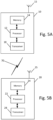
- apparatus 10 may be a node, host, or server in a communications network or serving such a network.
- apparatus 10 may be a network node, a sensing node, satellite, base station, a Node B, an evolved Node B (eNB), 5G Node B or access point, next generation Node B (NG-NB or gNB), TRP, HAPS, integrated access and backhaul (IAB) node, and/or a WLAN access point, associated with a radio access network, such as a LTE network, 5G or NR.
- apparatus 10 may be a gateway, such as a PGW.
- apparatus 10 may be comprised of an edge cloud server as a distributed computing system where the server and the radio node may be stand-alone apparatuses communicating with each other via a radio path or via a wired connection, or they may be located in a same entity communicating via a wired connection.
- apparatus 10 represents a gNB
- it may be configured in a central unit (CU) and distributed unit (DU) architecture that divides the gNB functionality.
- the CU may be a logical node that includes gNB functions such as transfer of user data, mobility control, radio access network sharing, positioning, and/or session management, etc.
- the CU may control the operation of DU(s) over a front-haul interface.
- the DU may be a logical node that includes a subset of the gNB functions, depending on the functional split option. It should be noted that one of ordinary skill in the art would understand that apparatus 10 may include components or features not shown in Fig. 5A .
- apparatus 10 may include a processor 12 for processing information and executing instructions or operations.
- processor 12 may be any type of general or specific purpose processor.
- processor 12 may include one or more of general-purpose computers, special purpose computers, microprocessors, digital signal processors (DSPs), field-programmable gate arrays (FPGAs), application-specific integrated circuits (ASICs), and processors based on a multi-core processor architecture, or any other processing means, as examples. While a single processor 12 is shown in Fig. 5A , multiple processors may be utilized according to other embodiments.
- apparatus 10 may include two or more processors that may form a multiprocessor system (e.g., in this case processor 12 may represent a multiprocessor) that may support multiprocessing.
- processor 12 may represent a multiprocessor
- the multiprocessor system may be tightly coupled or loosely coupled (e.g., to form a computer cluster).
- Processor 12 may perform functions associated with the operation of apparatus 10, which may include, for example, precoding of antenna gain/phase parameters, encoding and decoding of individual bits forming a communication message, formatting of information, and overall control of the apparatus 10, including processes related to management of communication or communication resources.
- Apparatus 10 may further include or be coupled to a memory 14 (internal or external), which may be coupled to processor 12, for storing information and instructions that may be executed by processor 12.
- Memory 14 may be one or more memories and of any type suitable to the local application environment, and may be implemented using any suitable volatile or nonvolatile data storage technology such as a semiconductor-based memory device, a magnetic memory device and system, an optical memory device and system, fixed memory, and/or removable memory.
- memory 14 can be comprised of any combination of random access memory (RAM), read only memory (ROM), static storage such as a magnetic or optical disk, hard disk drive (HDD), or any other type of non-transitory machine or computer readable media, or other appropriate storing means.
- the instructions stored in memory 14 may include program instructions or computer program code that, when executed by processor 12, enable the apparatus 10 to perform tasks as described herein.
- apparatus 10 may further include or be coupled to (internal or external) a drive or port that is configured to accept and read an external computer readable storage medium, such as an optical disc, USB drive, flash drive, or any other storage medium.
- an external computer readable storage medium such as an optical disc, USB drive, flash drive, or any other storage medium.
- the external computer readable storage medium may store a computer program or software for execution by processor 12 and/or apparatus 10.
- apparatus 10 may also include or be coupled to one or more antennas 15 for transmitting and receiving signals and/or data to and from apparatus 10.
- Apparatus 10 may further include or be coupled to a transceiver 18 configured to transmit and receive information.
- the transceiver 18 may include, for example, a plurality of radio interfaces that may be coupled to the antenna(s) 15, or may include any other appropriate transceiving means.
- the radio interfaces may correspond to a plurality of radio access technologies including one or more of GSM, NB-IoT, LTE, 5G, WLAN, Bluetooth, BT-LE, NFC, radio frequency identifier (RFID), ultrawideband (UWB), MulteFire, and the like.
- the radio interface may include components, such as filters, converters (for example, digital-to-analog converters and the like), mappers, a Fast Fourier Transform (FFT) module, and the like, to generate symbols for a transmission via one or more downlinks and to receive symbols (for example, via an uplink).
- filters for example, digital-to-analog converters and the like
- mappers for example, mappers
- FFT Fast Fourier Transform
- transceiver 18 may be configured to modulate information on to a carrier waveform for transmission by the antenna(s) 15 and demodulate information received via the antenna(s) 15 for further processing by other elements of apparatus 10.
- transceiver 18 may be capable of transmitting and receiving signals or data directly.
- apparatus 10 may include an input and/or output device (I/O device), or an input/output means.
- memory 14 may store software modules that provide functionality when executed by processor 12.
- the modules may include, for example, an operating system that provides operating system functionality for apparatus 10.
- the memory may also store one or more functional modules, such as an application or program, to provide additional functionality for apparatus 10.
- the components of apparatus 10 may be implemented in hardware, or as any suitable combination of hardware and software.
- processor 12 and memory 14 may be included in or may form a part of processing circuitry/means or control circuitry/means.
- transceiver 18 may be included in or may form a part of transceiver circuitry/means.
- circuitry may refer to hardware-only circuitry implementations (e.g., analog and/or digital circuitry), combinations of hardware circuits and software, combinations of analog and/or digital hardware circuits with software/firmware, any portions of hardware processor(s) with software (including digital signal processors) that work together to cause an apparatus (e.g., apparatus 10) to perform various functions, and/or hardware circuit(s) and/or processor(s), or portions thereof, that use software for operation but where the software may not be present when it is not needed for operation.
- circuitry may also cover an implementation of merely a hardware circuit or processor (or multiple processors), or portion of a hardware circuit or processor, and its accompanying software and/or firmware.
- circuitry may also cover, for example, a baseband integrated circuit in a server, cellular network node or device, or other computing or network device.
- apparatus 10 may be a network element or RAN node, such as a base station, access point, Node B, eNB, gNB, TRP, HAPS, IAB node, WLAN access point, or the like.
- apparatus 10 may be a PGW.
- apparatus 10 may be controlled by memory 14 and processor 12 to perform the functions associated with any of the embodiments described herein.
- apparatus 10 may be configured to perform one or more of the processes depicted in any of the flow charts or signaling diagrams described herein, such as those illustrated in Figs. 1-4 or any other method described herein.
- apparatus 10 may be configured to perform a procedure relating to reselection of a PGW for network slicing, for example.
- apparatus 10 may be controlled by memory 14 and processor 12 to receive a request from a network entity, such as a MME, to establish PDN connection for at least one UE in an EPS.
- the request may be a create session request to establish the PDN connection in the EPS.
- apparatus 10 may be controlled by memory 14 and processor 12 to retrieve a subscription for the at least one UE.
- apparatus 10 may be controlled by memory 14 and processor 12 to retrieve the user subscription from a UDM or other location in which the user subscription may be stored.
- apparatus 10 may be controlled by memory 14 and processor 12 to determine from the user subscription that the apparatus 10 does not support a network slice of an APN and/or DNN for which the at least one UE has a subscription.
- apparatus 10 when it is determined, after retrieving the user subscription, that the apparatus 10 does not support the network slice of the APN and/or DNN for which the at least one UE has a subscription, apparatus 10 may be controlled by memory 14 and processor 12 to transmit a response to the network entity.
- the response may include an indication that there is a PGW mismatch with the network slice subscribed to by the at least one UE and may include an address of another PGW that supports the network slice.
- apparatus 10 may be controlled by memory 14 and processor 12 to transmit a create session error response rejecting the request towards the MME with a new error cause indicating the PGW mismatch with the network slice subscribed by the UE and with the FQDN or IP address of another PGW that supports the network slice.
- apparatus 20 may be a node, network element, host, or server in a communications network or associated with such a network.
- apparatus 20 may be a network node, a sensing node, satellite, base station, a Node B, an evolved Node B (eNB), 5G Node B or access point, next generation Node B (NG-NB or gNB), TRP, HAPS, integrated access and backhaul (IAB) node, and/or a WLAN access point, associated with a radio access network, such as a LTE network, 5G or NR.
- apparatus 20 may be a node responsible for signaling, paging, authentication and/or authorization of a mobile device or UE.
- apparatus 20 may be or may include a MME.
- apparatus 20 may include one or more processors, one or more computer-readable storage medium (for example, memory, storage, or the like), one or more radio access components (for example, a modem, a transceiver, or the like), and/or a user interface.
- apparatus 20 may be configured to operate using one or more radio access technologies, such as GSM, LTE, LTE-A, NR, 5G, WLAN, WiFi, NB-IoT, Bluetooth, NFC, MulteFire, and/or any other radio access technologies. It should be noted that one of ordinary skill in the art would understand that apparatus 20 may include components or features not shown in Fig. 5B .
- apparatus 20 may include or be coupled to a processor 22 for processing information and executing instructions or operations.
- processor 22 may be any type of general or specific purpose processor.
- processor 22 may include one or more of general-purpose computers, special purpose computers, microprocessors, digital signal processors (DSPs), field-programmable gate arrays (FPGAs), application-specific integrated circuits (ASICs), and processors based on a multi-core processor architecture, as examples. While a single processor 22 is shown in Fig. 5B , multiple processors may be utilized according to other embodiments.
- apparatus 20 may include two or more processors that may form a multiprocessor system (e.g., in this case processor 22 may represent a multiprocessor) that may support multiprocessing.
- processor 22 may represent a multiprocessor
- the multiprocessor system may be tightly coupled or loosely coupled (e.g., to form a computer cluster).
- Processor 22 may perform functions associated with the operation of apparatus 20 including, as some examples, precoding of antenna gain/phase parameters, encoding and decoding of individual bits forming a communication message, formatting of information, and overall control of the apparatus 20, including processes related to management of communication resources.
- Apparatus 20 may further include or be coupled to a memory 24 (internal or external), which may be coupled to processor 22, for storing information and instructions that may be executed by processor 22.
- Memory 24 may be one or more memories and of any type suitable to the local application environment, and may be implemented using any suitable volatile or nonvolatile data storage technology such as a semiconductor-based memory device, a magnetic memory device and system, an optical memory device and system, fixed memory, and/or removable memory.
- memory 24 can be comprised of any combination of random access memory (RAM), read only memory (ROM), static storage such as a magnetic or optical disk, hard disk drive (HDD), or any other type of non-transitory machine or computer readable media.
- the instructions stored in memory 24 may include program instructions or computer program code that, when executed by processor 22, enable the apparatus 20 to perform tasks as described herein.
- apparatus 20 may further include or be coupled to (internal or external) a drive or port that is configured to accept and read an external computer readable storage medium, such as an optical disc, USB drive, flash drive, or any other storage medium.
- an external computer readable storage medium such as an optical disc, USB drive, flash drive, or any other storage medium.
- the external computer readable storage medium may store a computer program or software for execution by processor 22 and/or apparatus 20.
- apparatus 20 may also include or be coupled to one or more antennas 25 for receiving a downlink signal and for transmitting via an uplink from apparatus 20.
- Apparatus 20 may further include a transceiver 28 configured to transmit and receive information.
- the transceiver 28 may also include a radio interface (e.g., a modem) coupled to the antenna 25.
- the radio interface may correspond to a plurality of radio access technologies including one or more of GSM, LTE, LTE-A, 5G, NR, WLAN, NB-IoT, Bluetooth, BT-LE, NFC, RFID, UWB, and the like.
- the radio interface may include other components, such as filters, converters (for example, digital-to-analog converters and the like), symbol demappers, signal shaping components, an Inverse Fast Fourier Transform (IFFT) module, and the like, to process symbols, such as OFDMA symbols, carried by a downlink or an uplink.
- filters for example, digital-to-analog converters and the like
- symbol demappers for example, digital-to-analog converters and the like
- signal shaping components for example, an Inverse Fast Fourier Transform (IFFT) module, and the like
- IFFT Inverse Fast Fourier Transform
- transceiver 28 may be configured to modulate information on to a carrier waveform for transmission by the antenna(s) 25 and demodulate information received via the antenna(s) 25 for further processing by other elements of apparatus 20.
- transceiver 28 may be capable of transmitting and receiving signals or data directly.
- apparatus 20 may include an input and/or output device (I/O device).
- apparatus 20 may further include a user interface, such as a graphical user interface or touchscreen.
- memory 24 stores software modules that provide functionality when executed by processor 22.
- the modules may include, for example, an operating system that provides operating system functionality for apparatus 20.
- the memory may also store one or more functional modules, such as an application or program, to provide additional functionality for apparatus 20.
- the components of apparatus 20 may be implemented in hardware, or as any suitable combination of hardware and software.
- apparatus 20 may optionally be configured to communicate with apparatus 10 via a wireless or wired communications link 70 according to any radio access technology, such as NR.
- processor 22 and memory 24 may be included in or may form a part of processing circuitry or control circuitry.
- transceiver 28 may be included in or may form a part of transceiving circuitry.
- apparatus 20 may be a node responsible for signaling, paging, authentication and/or authorization of a mobile device or UE, such as a MME, for example.
- apparatus 20 may be controlled by memory 24 and processor 22 to perform the functions associated with any of the embodiments described herein, such as one or more of the operations illustrated in, or described with respect to, Fig. 5 or any other method described herein.
- apparatus 20 may be controlled to perform a process relating to reselection of a PGW for network slicing.
- apparatus 20 may be controlled by memory 24 and processor 22 to transmit a request to a PGW to establish a PDN connection for at least one UE in an EPS.
- the request may be a create session request to establish the PDN connection in the EPS.
- apparatus 20 may be controlled by memory 24 and processor 22 to receive a response from the PGW.
- the response may include an indication that the PGW does not support a network slice subscribed to by the at least one UE and may include an address of another PGW that supports the network slice.
- the response may include an indication that there is a PGW mismatch with the network slice subscribed to by the at least one UE and may include an address of a "correct" PGW that supports the network slice.
- the response may be a create session error response rejecting the request towards the MME with a new error cause indicating the PGW mismatch with the network slice subscribed by the UE and with the FQDN or IP address of another PGW that supports the network slice.
- apparatus 20 may be controlled by memory 24 and processor 22 to transmit a request to establish the PDN connection towards the other, "correct" PGW that supports the network slice. According to an embodiment, apparatus 20 may be controlled by memory 24 and processor 22 to receive a create session response from the other PGW.
- an apparatus may include means for performing a method, a process, or any of the variants discussed herein.
- the means may include one or more processors, memory, controllers, transmitters, receivers, and/or computer program code for causing the performance of the operations.
- certain example embodiments provide several technological improvements, enhancements, and/or advantages over existing technological processes and constitute an improvement at least to the technological field of wireless network control and management.
- certain example embodiments provide procedures for PGW reselection for network slicing in order to support EPS and 5GS interworking.
- certain embodiments allow a PGW, which receives a request from a network entity to establish a PDN connection for a UE in an EPS, but does not support a network slice for which the UE has a subscription, to determine a correct PGW and indicate that correct PGW to the requesting entity.
- example embodiments provide an efficient method for PGW reselection. Accordingly, the use of certain example embodiments results in improved functioning of communications networks and their nodes, such as base stations, eNBs, gNBs, and/or IoT devices, UEs or mobile stations.
- any of the methods, processes, signaling diagrams, algorithms or flow charts described herein may be implemented by software and/or computer program code or portions of code stored in memory or other computer readable or tangible media, and may be executed by a processor.
- an apparatus may include or be associated with at least one software application, module, unit or entity configured as arithmetic operation(s), or as a program or portions of programs (including an added or updated software routine), which may be executed by at least one operation processor or controller.
- Programs also called program products or computer programs, including software routines, applets and macros, may be stored in any apparatus-readable data storage medium and may include program instructions to perform particular tasks.
- a computer program product may include one or more computer-executable components which, when the program is run, are configured to carry out some example embodiments.
- the one or more computer-executable components may be at least one software code or portions of code. Modifications and configurations required for implementing the functionality of an example embodiment may be performed as routine(s), which may be implemented as added or updated software routine(s).
- software routine(s) may be downloaded into the apparatus.
- software or computer program code or portions of code may be in source code form, object code form, or in some intermediate form, and may be stored in some sort of carrier, distribution medium, or computer readable medium, which may be any entity or device capable of carrying the program.
- carrier may include a record medium, computer memory, read-only memory, photoelectrical and/or electrical carrier signal, telecommunications signal, and/or software distribution package, for example.
- the computer program may be executed in a single electronic digital computer or it may be distributed amongst a number of computers.
- the computer readable medium or computer readable storage medium may be a non-transitory medium.
- example embodiments may be performed by hardware or circuitry included in an apparatus, for example through the use of an application specific integrated circuit (ASIC), a programmable gate array (PGA), a field programmable gate array (FPGA), or any other combination of hardware and software.
- ASIC application specific integrated circuit
- PGA programmable gate array
- FPGA field programmable gate array
- the functionality of example embodiments may be implemented as a signal, such as a non-tangible means, that can be carried by an electromagnetic signal downloaded from the Internet or other network.
- an apparatus such as a node, device, or a corresponding component, may be configured as circuitry, a computer or a microprocessor, such as single-chip computer element, or as a chipset, which may include at least a memory for providing storage capacity used for arithmetic operation(s) and/or an operation processor for executing the arithmetic operation(s).
- Example embodiments described herein may apply to both singular and plural implementations, regardless of whether singular or plural language is used in connection with describing certain embodiments.
- an embodiment that describes operations of a single network node may also apply to embodiments that include multiple instances of the network node, and vice versa.
Landscapes
- Engineering & Computer Science (AREA)
- Computer Networks & Wireless Communication (AREA)
- Signal Processing (AREA)
- Databases & Information Systems (AREA)
- Computer Security & Cryptography (AREA)
- Mobile Radio Communication Systems (AREA)
Claims (15)
- Verfahren, das von einem Paketdatennetzwerkgateway (PGW1) durchgeführt wird und Folgendes umfasst:Empfangen (305) einer Sitzungseinrichtungsanforderungsnachricht zum Aufbauen einer Paketdatennetzwerk(PDN)-Verbindung für eine Teilnehmereinrichtung, UE, in einem entwickelten Paketsystem, EPS, von einer Netzwerkentität;Abrufen (310) einer Subskription für die UE von einer vereinheitlichten Datenverwaltung, UDM;Bestimmen (315) anhand der Subskription, dass das Paketdatennetzwerkgateway (PGW1) eine Netzwerkslice, für die die UE eine Subskription hat, nicht unterstützt;Entdecken eines weiteren Paketdatennetzwerkgateways (PGW2), das die Netzwerkslice, für die die UE eine Subskription hat, unterstützt; undÜbertragen (320) einer Sitzungseinrichtungsantwortnachricht zur Netzwerkentität, wobei die Sitzungseinrichtungsantwortnachricht eine Anzeige umfasst, dass eine Paketdatennetzwerkgateway (PGW1) -Nichtübereinstimmung mit der Netzwerkslice, die durch die UE subskribiert wird, und einer Adresse des weiteren Paketdatennetzwerkgateways (PGW2) vorliegt, das die Netzwerkslice unterstützt, für die die UE eine Subskription hat.
- Verfahren nach Anspruch 1, wobei die Sitzungseinrichtungsantwortnachricht eine Sitzungseinrichtungsfehlerantwortnachricht umfasst.
- Verfahren nach Anspruch 1 oder 2, wobei das Entdecken des weiteren Paketdatengateways (PGW2), das die Netzwerkslice unterstützt, für die die UE eine Subskription hat, das Entdecken des weiteren Paketdatennetzwerkgateways (PGW2) durch eine lokale Auslegung oder durch Durchführen einer Netzwerkfunktions(NF)-Entdeckungsanforderung bei einer Netzwerkrepositoriumsfunktion, NRF, umfasst.
- Verfahren nach einem der Ansprüche 1 bis 3, wobei das Entdecken des weiteren Paketdatennetzwerkgateways (PGW2), das die Netzwerkslice unterstützt, für die die UE eine Subskription hat, das Entdecken einer Adresse des weiteren Paketdatennetzwerkgateways (PGW2) umfasst.
- Verfahren nach einem der Ansprüche 1 bis 4, wobei die Adresse des weiteren Paketdatennetzwerkgateways (PGW2) mindestens eines von einem vollständig qualifizierten Domänennamen, FQDN, oder einer Internetprotokoll(IP)-Adresse umfasst.
- Verfahren nach einem der Ansprüche 1 bis 5, wobei die Netzwerkentität eine Mobilitätsverwaltungsentität umfasst.
- Verfahren, das von einer Netzwerkentität durchgeführt wird und Folgendes umfasst:Übertragen (405) einer Sitzungseinrichtungsanforderungsnachricht zu einem Paketdatennetzwerkgateway (PGW1), um eine Paketdatennetzwerk(PDN)-Verbindung für eine Teilnehmereinrichtung, UE, in einem entwickelten Paketsystem, EPS, aufzubauen;Empfangen (410) einer Sitzungseinrichtungsantwortnachricht vom Paketdatennetzwerkgateway (PGW1), wobei die Sitzungseinrichtungsantwortnachricht eine Anzeige, dass das Paketdatennetzwerkgateway (PGW1) eine Netzwerkslice, die durch die UE subskribiert wird, nicht unterstützt, und eine Adresse eines weiteren Paketdatennetzwerkgateways (PGW2) umfasst, die die Netzwerkslice unterstützt, für die die UE eine Subskription hat; undÜbertragen (415) einer weiteren Sitzungseinrichtungsanforderungsnachricht, um die PDN-Verbindung zum weiteren Paketdatennetzwerkgateway (PGW2) aufzubauen, das die Netzwerkslice unterstützt, für die die UE eine Subskription hat.
- Verfahren nach Anspruch 7, das ferner das Empfangen einer weiteren Sitzungseinrichtungsantwortnachricht vom weiteren Paketdatennetzwerkgateway (PGW2) umfasst.
- Verfahren nach Anspruch 7 oder 8, wobei die Sitzungseinrichtungsantwortnachricht vom Paketdatennetzwerkgateway (PGW1) eine Sitzungseinrichtungsfehlerantwortnachricht umfasst.
- Verfahren nach einem der Ansprüche 7 bis 9, wobei die Adresse des weiteren Paketdatennetzwerkgateways (PGW2) mindestens eines von einem vollständig qualifizierten Domänennamen, FQDN, oder einer Internetprotokoll(IP)-Adresse umfasst.
- Verfahren nach einem der Ansprüche 7 bis 10, wobei die Netzwerkentität eine Mobilitätsverwaltungsentität umfasst.
- Paketdatennetzwerkgateway (PGW1), das Folgendes umfasst:Mittel zum Empfangen einer Sitzungseinrichtungsanforderungsnachricht zum Aufbauen einer Paketdatennetzwerk(PDN)-Verbindung für eine Teilnehmereinrichtung, UE, in einem entwickelten Paketsystem, EPS, von einer Netzwerkentität;Mittel zum Abrufen einer Subskription für die UE von einer vereinheitlichten Datenverwaltung, UDM;Mittel zum Bestimmen anhand der Subskription, dass das Paketdatennetzwerkgateway (PGW1) eine Netzwerkslice, für die die Teilnehmereinrichtung, UE, eine Subskription hat, nicht unterstützt;Mittel zum Entdecken eines Paketdatennetzwerkgateways (PGW2), das die Netzwerkslice, für die die UE eine Subskription hat, unterstützt; undMittel zum Übertragen einer Sitzungseinrichtungsantwortnachricht zur Netzwerkentität, wobei die Sitzungseinrichtungsantwortnachricht eine Anzeige umfasst, dass eine Paketdatennetzwerkgateway(PGWl)-Nichtübereinstimmung mit der Netzwerkslice, die durch die UE subskribiert wird, und einer Adresse des Paketdatennetzwerkgateways (PGW2) vorliegt, das die Netzwerkslice unterstützt, für die die UE eine Subskription hat.
- Netzwerkentität, die Folgendes umfasst:Mittel zum Übertragen einer Sitzungseinrichtungsanforderungsnachricht zu einem Paketdatennetzwerkgateway (PGW1), um eine Paketdatennetzwerk(PDN)-Verbindung für eine Teilnehmereinrichtung, UE, in einem entwickelten Paketsystem, EPS, aufzubauen;Mittel zum Empfangen einer Sitzungseinrichtungsantwortnachricht vom Paketdatennetzwerkgateway (PGW1), wobei die Sitzungseinrichtungsantwortnachricht eine Anzeige, dass das Paketdatennetzwerkgateway (PGW1) eine Netzwerkslice, die durch die UE subskribiert wird, nicht unterstützt, und eine Adresse eines weiteren Paketdatennetzwerkgateways (PGW2) umfasst, das die Netzwerkslice unterstützt, für die die UE eine Subskription hat; undMittel zum Übertragen einer weiteren Sitzungseinrichtungsanforderungsnachricht, um die PDN-Verbindung zum weiteren Paketdatennetzwerkgateway (PGW2) aufzubauen, das die Netzwerkslice unterstützt, für die die UE eine Subskription hat.
- Paketdatennetzwerkgateway nach Anspruch 12, das ferner Mittel zum Durchführen eines Verfahrens nach einem der Ansprüche 2 bis 6 umfasst.
- Computerprogramm, das Anweisungen umfasst, die, wenn sie von einem Prozessor eines Paketdatennetzwerkgateways ausgeführt werden, den Prozessor veranlassen, ein Verfahren nach einem der Ansprüche 1 bis 6 durchzuführen.
Applications Claiming Priority (1)
| Application Number | Priority Date | Filing Date | Title |
|---|---|---|---|
| US202163149703P | 2021-02-16 | 2021-02-16 |
Publications (2)
| Publication Number | Publication Date |
|---|---|
| EP4072203A1 EP4072203A1 (de) | 2022-10-12 |
| EP4072203B1 true EP4072203B1 (de) | 2025-03-05 |
Family
ID=80683733
Family Applications (1)
| Application Number | Title | Priority Date | Filing Date |
|---|---|---|---|
| EP22156574.0A Active EP4072203B1 (de) | 2021-02-16 | 2022-02-14 | Paketdaten-netzgateway (pgw) wiederauswahl für netzwerk slicing |
Country Status (3)
| Country | Link |
|---|---|
| US (1) | US20220264434A1 (de) |
| EP (1) | EP4072203B1 (de) |
| ES (1) | ES3017863T3 (de) |
Families Citing this family (2)
| Publication number | Priority date | Publication date | Assignee | Title |
|---|---|---|---|---|
| US20240129808A1 (en) * | 2022-10-12 | 2024-04-18 | At&T Intellectual Property I, L.P. | Facilitating network slicing information preservation in advanced networks |
| US12549508B2 (en) | 2023-02-10 | 2026-02-10 | T-Mobile Usa, Inc. | Increase capacity of a wireless telecommunication network |
Family Cites Families (7)
| Publication number | Priority date | Publication date | Assignee | Title |
|---|---|---|---|---|
| WO2017162295A1 (en) * | 2016-03-24 | 2017-09-28 | Telefonaktiebolaget Lm Ericsson (Publ) | Method and node for handling re-selection of a serving node to serve a ue |
| KR20200143134A (ko) * | 2019-06-14 | 2020-12-23 | 삼성전자주식회사 | 무선통신 시스템에서 서비스를 제공하는 방법 및 장치 |
| WO2021070028A1 (en) * | 2019-10-08 | 2021-04-15 | Telefonaktiebolaget Lm Ericsson (Publ) | Network slicing scalability attributes |
| KR20210058479A (ko) * | 2019-11-14 | 2021-05-24 | 삼성전자주식회사 | 무선 통신 시스템에서 네트워크 슬라이스의 인터워킹을 제공하기 위한 장치 및 방법 |
| US20230164652A1 (en) * | 2020-02-13 | 2023-05-25 | Telefonaktiebolaget Lm Ericsson (Publ) | Re-selection of a pgw-c/smf in the desired network slice |
| US11659454B2 (en) * | 2020-02-27 | 2023-05-23 | Huawei Technologies Co., Ltd. | Methods, systems and apparatuses for management or network functions |
| ES2946912T3 (es) * | 2020-07-09 | 2023-07-27 | Deutsche Telekom Ag | Procedimiento para una funcionalidad de interconexión mejorada entre una primera red de comunicación móvil por un lado y una segunda red de comunicación móvil por otro lado, sistema, red de comunicación móvil, identificador de red y funcionalidad de traducción de números, programa y producto de programa informático |
-
2022
- 2022-02-14 EP EP22156574.0A patent/EP4072203B1/de active Active
- 2022-02-14 ES ES22156574T patent/ES3017863T3/es active Active
- 2022-02-15 US US17/671,793 patent/US20220264434A1/en not_active Abandoned
Also Published As
| Publication number | Publication date |
|---|---|
| US20220264434A1 (en) | 2022-08-18 |
| ES3017863T3 (en) | 2025-05-13 |
| EP4072203A1 (de) | 2022-10-12 |
Similar Documents
| Publication | Publication Date | Title |
|---|---|---|
| US11509728B2 (en) | Methods and apparatuses for discovering a network function acting as network function service consumer | |
| US12381842B2 (en) | Physical service communication proxy domain | |
| EP3987715B1 (de) | Ereignisabonnementmeldung | |
| US11503437B2 (en) | Methods and apparatuses for multicast-broadcast service (MBS) activation and deactivation | |
| CN114390435B (zh) | 5g中的增强型定位服务 | |
| EP4316046A1 (de) | Gleichzeitige registrierung bei mehreren netzwerken | |
| EP4072203B1 (de) | Paketdaten-netzgateway (pgw) wiederauswahl für netzwerk slicing | |
| WO2021138558A1 (en) | Selecting session management function capable of storing internet protocol multicast | |
| US12200813B2 (en) | Selective indications towards user equipment | |
| US12531759B2 (en) | Broadcast service restoration for multicast/broadcast service upon radio access node failure or restart | |
| US12513601B2 (en) | Methods and apparatuses for determination of non-3GPP interworking function (N3IWF) | |
| WO2025083321A1 (en) | Network selection to support simultaneous multiple access registration from a user equipment | |
| US12526607B2 (en) | Policy control for 5G multicast-broadcast services (5MBS) | |
| US12431998B2 (en) | Working clock determination for a mobile user equipment | |
| US20240396975A1 (en) | Application specific protocol data unit sessions | |
| WO2022175779A1 (en) | Pushing of packet flow descriptions based on provisioned and configured attributes | |
| US12520354B2 (en) | Methods and apparatuses for user plane function control for multicast transport | |
| WO2023214972A1 (en) | Dynamic ad hoc group configuration and handling in fifth generation (5g) system (5gs) | |
| WO2023191690A1 (en) | Network nodes, and methods for traffic steering policies |
Legal Events
| Date | Code | Title | Description |
|---|---|---|---|
| PUAI | Public reference made under article 153(3) epc to a published international application that has entered the european phase |
Free format text: ORIGINAL CODE: 0009012 |
|
| STAA | Information on the status of an ep patent application or granted ep patent |
Free format text: STATUS: THE APPLICATION HAS BEEN PUBLISHED |
|
| AK | Designated contracting states |
Kind code of ref document: A1 Designated state(s): AL AT BE BG CH CY CZ DE DK EE ES FI FR GB GR HR HU IE IS IT LI LT LU LV MC MK MT NL NO PL PT RO RS SE SI SK SM TR |
|
| STAA | Information on the status of an ep patent application or granted ep patent |
Free format text: STATUS: REQUEST FOR EXAMINATION WAS MADE |
|
| 17P | Request for examination filed |
Effective date: 20230412 |
|
| RBV | Designated contracting states (corrected) |
Designated state(s): AL AT BE BG CH CY CZ DE DK EE ES FI FR GB GR HR HU IE IS IT LI LT LU LV MC MK MT NL NO PL PT RO RS SE SI SK SM TR |
|
| REG | Reference to a national code |
Ref country code: DE Ref legal event code: R079 Free format text: PREVIOUS MAIN CLASS: H04W0048160000 Ipc: H04W0008000000 Ref document number: 602022011285 Country of ref document: DE |
|
| RIC1 | Information provided on ipc code assigned before grant |
Ipc: H04W 88/16 20090101ALN20240507BHEP Ipc: H04W 76/12 20180101ALI20240507BHEP Ipc: H04W 48/16 20090101ALI20240507BHEP Ipc: H04W 36/26 20090101ALI20240507BHEP Ipc: H04W 36/14 20090101ALI20240507BHEP Ipc: H04W 36/12 20090101ALI20240507BHEP Ipc: H04W 8/18 20090101ALI20240507BHEP Ipc: H04W 8/00 20090101AFI20240507BHEP |
|
| GRAP | Despatch of communication of intention to grant a patent |
Free format text: ORIGINAL CODE: EPIDOSNIGR1 |
|
| STAA | Information on the status of an ep patent application or granted ep patent |
Free format text: STATUS: GRANT OF PATENT IS INTENDED |
|
| RIC1 | Information provided on ipc code assigned before grant |
Ipc: H04W 88/16 20090101ALN20240527BHEP Ipc: H04W 76/12 20180101ALI20240527BHEP Ipc: H04W 48/16 20090101ALI20240527BHEP Ipc: H04W 36/26 20090101ALI20240527BHEP Ipc: H04W 36/14 20090101ALI20240527BHEP Ipc: H04W 36/12 20090101ALI20240527BHEP Ipc: H04W 8/18 20090101ALI20240527BHEP Ipc: H04W 8/00 20090101AFI20240527BHEP |
|
| INTG | Intention to grant announced |
Effective date: 20240701 |
|
| GRAJ | Information related to disapproval of communication of intention to grant by the applicant or resumption of examination proceedings by the epo deleted |
Free format text: ORIGINAL CODE: EPIDOSDIGR1 |
|
| STAA | Information on the status of an ep patent application or granted ep patent |
Free format text: STATUS: REQUEST FOR EXAMINATION WAS MADE |
|
| GRAP | Despatch of communication of intention to grant a patent |
Free format text: ORIGINAL CODE: EPIDOSNIGR1 |
|
| INTC | Intention to grant announced (deleted) | ||
| STAA | Information on the status of an ep patent application or granted ep patent |
Free format text: STATUS: GRANT OF PATENT IS INTENDED |
|
| RIC1 | Information provided on ipc code assigned before grant |
Ipc: H04W 88/16 20090101ALN20241002BHEP Ipc: H04W 76/12 20180101ALI20241002BHEP Ipc: H04W 48/16 20090101ALI20241002BHEP Ipc: H04W 36/26 20090101ALI20241002BHEP Ipc: H04W 36/14 20090101ALI20241002BHEP Ipc: H04W 36/12 20090101ALI20241002BHEP Ipc: H04W 8/18 20090101ALI20241002BHEP Ipc: H04W 8/00 20090101AFI20241002BHEP |
|
| INTG | Intention to grant announced |
Effective date: 20241017 |
|
| GRAS | Grant fee paid |
Free format text: ORIGINAL CODE: EPIDOSNIGR3 |
|
| GRAA | (expected) grant |
Free format text: ORIGINAL CODE: 0009210 |
|
| STAA | Information on the status of an ep patent application or granted ep patent |
Free format text: STATUS: THE PATENT HAS BEEN GRANTED |
|
| AK | Designated contracting states |
Kind code of ref document: B1 Designated state(s): AL AT BE BG CH CY CZ DE DK EE ES FI FR GB GR HR HU IE IS IT LI LT LU LV MC MK MT NL NO PL PT RO RS SE SI SK SM TR |
|
| REG | Reference to a national code |
Ref country code: GB Ref legal event code: FG4D |
|
| REG | Reference to a national code |
Ref country code: CH Ref legal event code: EP |
|
| REG | Reference to a national code |
Ref country code: IE Ref legal event code: FG4D |
|
| REG | Reference to a national code |
Ref country code: DE Ref legal event code: R096 Ref document number: 602022011285 Country of ref document: DE |
|
| REG | Reference to a national code |
Ref country code: ES Ref legal event code: FG2A Ref document number: 3017863 Country of ref document: ES Kind code of ref document: T3 Effective date: 20250513 |
|
| PG25 | Lapsed in a contracting state [announced via postgrant information from national office to epo] |
Ref country code: RS Free format text: LAPSE BECAUSE OF FAILURE TO SUBMIT A TRANSLATION OF THE DESCRIPTION OR TO PAY THE FEE WITHIN THE PRESCRIBED TIME-LIMIT Effective date: 20250605 |
|
| PG25 | Lapsed in a contracting state [announced via postgrant information from national office to epo] |
Ref country code: FI Free format text: LAPSE BECAUSE OF FAILURE TO SUBMIT A TRANSLATION OF THE DESCRIPTION OR TO PAY THE FEE WITHIN THE PRESCRIBED TIME-LIMIT Effective date: 20250305 |
|
| REG | Reference to a national code |
Ref country code: NL Ref legal event code: MP Effective date: 20250305 |
|
| REG | Reference to a national code |
Ref country code: LT Ref legal event code: MG9D |
|
| PG25 | Lapsed in a contracting state [announced via postgrant information from national office to epo] |
Ref country code: NO Free format text: LAPSE BECAUSE OF FAILURE TO SUBMIT A TRANSLATION OF THE DESCRIPTION OR TO PAY THE FEE WITHIN THE PRESCRIBED TIME-LIMIT Effective date: 20250605 |
|
| PG25 | Lapsed in a contracting state [announced via postgrant information from national office to epo] |
Ref country code: HR Free format text: LAPSE BECAUSE OF FAILURE TO SUBMIT A TRANSLATION OF THE DESCRIPTION OR TO PAY THE FEE WITHIN THE PRESCRIBED TIME-LIMIT Effective date: 20250305 |
|
| PG25 | Lapsed in a contracting state [announced via postgrant information from national office to epo] |
Ref country code: LV Free format text: LAPSE BECAUSE OF FAILURE TO SUBMIT A TRANSLATION OF THE DESCRIPTION OR TO PAY THE FEE WITHIN THE PRESCRIBED TIME-LIMIT Effective date: 20250305 |
|
| PG25 | Lapsed in a contracting state [announced via postgrant information from national office to epo] |
Ref country code: GR Free format text: LAPSE BECAUSE OF FAILURE TO SUBMIT A TRANSLATION OF THE DESCRIPTION OR TO PAY THE FEE WITHIN THE PRESCRIBED TIME-LIMIT Effective date: 20250606 Ref country code: BG Free format text: LAPSE BECAUSE OF FAILURE TO SUBMIT A TRANSLATION OF THE DESCRIPTION OR TO PAY THE FEE WITHIN THE PRESCRIBED TIME-LIMIT Effective date: 20250305 |
|
| REG | Reference to a national code |
Ref country code: AT Ref legal event code: MK05 Ref document number: 1774075 Country of ref document: AT Kind code of ref document: T Effective date: 20250305 |
|
| PG25 | Lapsed in a contracting state [announced via postgrant information from national office to epo] |
Ref country code: NL Free format text: LAPSE BECAUSE OF FAILURE TO SUBMIT A TRANSLATION OF THE DESCRIPTION OR TO PAY THE FEE WITHIN THE PRESCRIBED TIME-LIMIT Effective date: 20250305 |
|
| PG25 | Lapsed in a contracting state [announced via postgrant information from national office to epo] |
Ref country code: SE Free format text: LAPSE BECAUSE OF FAILURE TO SUBMIT A TRANSLATION OF THE DESCRIPTION OR TO PAY THE FEE WITHIN THE PRESCRIBED TIME-LIMIT Effective date: 20250305 |
|
| PG25 | Lapsed in a contracting state [announced via postgrant information from national office to epo] |
Ref country code: SM Free format text: LAPSE BECAUSE OF FAILURE TO SUBMIT A TRANSLATION OF THE DESCRIPTION OR TO PAY THE FEE WITHIN THE PRESCRIBED TIME-LIMIT Effective date: 20250305 |
|
| PG25 | Lapsed in a contracting state [announced via postgrant information from national office to epo] |
Ref country code: PT Free format text: LAPSE BECAUSE OF FAILURE TO SUBMIT A TRANSLATION OF THE DESCRIPTION OR TO PAY THE FEE WITHIN THE PRESCRIBED TIME-LIMIT Effective date: 20250707 |
|
| PG25 | Lapsed in a contracting state [announced via postgrant information from national office to epo] |
Ref country code: IT Free format text: LAPSE BECAUSE OF FAILURE TO SUBMIT A TRANSLATION OF THE DESCRIPTION OR TO PAY THE FEE WITHIN THE PRESCRIBED TIME-LIMIT Effective date: 20250305 Ref country code: PL Free format text: LAPSE BECAUSE OF FAILURE TO SUBMIT A TRANSLATION OF THE DESCRIPTION OR TO PAY THE FEE WITHIN THE PRESCRIBED TIME-LIMIT Effective date: 20250305 |
|
| PG25 | Lapsed in a contracting state [announced via postgrant information from national office to epo] |
Ref country code: AT Free format text: LAPSE BECAUSE OF FAILURE TO SUBMIT A TRANSLATION OF THE DESCRIPTION OR TO PAY THE FEE WITHIN THE PRESCRIBED TIME-LIMIT Effective date: 20250305 |
|
| PG25 | Lapsed in a contracting state [announced via postgrant information from national office to epo] |
Ref country code: EE Free format text: LAPSE BECAUSE OF FAILURE TO SUBMIT A TRANSLATION OF THE DESCRIPTION OR TO PAY THE FEE WITHIN THE PRESCRIBED TIME-LIMIT Effective date: 20250305 Ref country code: CZ Free format text: LAPSE BECAUSE OF FAILURE TO SUBMIT A TRANSLATION OF THE DESCRIPTION OR TO PAY THE FEE WITHIN THE PRESCRIBED TIME-LIMIT Effective date: 20250305 |
|
| PG25 | Lapsed in a contracting state [announced via postgrant information from national office to epo] |
Ref country code: RO Free format text: LAPSE BECAUSE OF FAILURE TO SUBMIT A TRANSLATION OF THE DESCRIPTION OR TO PAY THE FEE WITHIN THE PRESCRIBED TIME-LIMIT Effective date: 20250305 |
|
| PG25 | Lapsed in a contracting state [announced via postgrant information from national office to epo] |
Ref country code: SK Free format text: LAPSE BECAUSE OF FAILURE TO SUBMIT A TRANSLATION OF THE DESCRIPTION OR TO PAY THE FEE WITHIN THE PRESCRIBED TIME-LIMIT Effective date: 20250305 |
|
| PG25 | Lapsed in a contracting state [announced via postgrant information from national office to epo] |
Ref country code: IS Free format text: LAPSE BECAUSE OF FAILURE TO SUBMIT A TRANSLATION OF THE DESCRIPTION OR TO PAY THE FEE WITHIN THE PRESCRIBED TIME-LIMIT Effective date: 20250705 |
|
| REG | Reference to a national code |
Ref country code: DE Ref legal event code: R097 Ref document number: 602022011285 Country of ref document: DE |
|
| PLBE | No opposition filed within time limit |
Free format text: ORIGINAL CODE: 0009261 |
|
| STAA | Information on the status of an ep patent application or granted ep patent |
Free format text: STATUS: NO OPPOSITION FILED WITHIN TIME LIMIT |
|
| PG25 | Lapsed in a contracting state [announced via postgrant information from national office to epo] |
Ref country code: DK Free format text: LAPSE BECAUSE OF FAILURE TO SUBMIT A TRANSLATION OF THE DESCRIPTION OR TO PAY THE FEE WITHIN THE PRESCRIBED TIME-LIMIT Effective date: 20250305 |
|
| REG | Reference to a national code |
Ref country code: CH Ref legal event code: L10 Free format text: ST27 STATUS EVENT CODE: U-0-0-L10-L00 (AS PROVIDED BY THE NATIONAL OFFICE) Effective date: 20260114 |
|
| 26N | No opposition filed |
Effective date: 20251208 |