EP4068895A2 - Bestimmung von ressourcen oder parametern eines direktzugriffskanals (rach) basierend auf netzwerkscheiben-basierten ressourcenzuweisungsklassen (racs) - Google Patents
Bestimmung von ressourcen oder parametern eines direktzugriffskanals (rach) basierend auf netzwerkscheiben-basierten ressourcenzuweisungsklassen (racs) Download PDFInfo
- Publication number
- EP4068895A2 EP4068895A2 EP22162111.3A EP22162111A EP4068895A2 EP 4068895 A2 EP4068895 A2 EP 4068895A2 EP 22162111 A EP22162111 A EP 22162111A EP 4068895 A2 EP4068895 A2 EP 4068895A2
- Authority
- EP
- European Patent Office
- Prior art keywords
- resource allocation
- signaling
- network slice
- transmitting
- message
- Prior art date
- Legal status (The legal status is an assumption and is not a legal conclusion. Google has not performed a legal analysis and makes no representation as to the accuracy of the status listed.)
- Pending
Links
Images



Classifications
-
- H—ELECTRICITY
- H04—ELECTRIC COMMUNICATION TECHNIQUE
- H04W—WIRELESS COMMUNICATION NETWORKS
- H04W74/00—Wireless channel access
- H04W74/002—Transmission of channel access control information
- H04W74/006—Transmission of channel access control information in the downlink, i.e. towards the terminal
-
- H—ELECTRICITY
- H04—ELECTRIC COMMUNICATION TECHNIQUE
- H04W—WIRELESS COMMUNICATION NETWORKS
- H04W68/00—User notification, e.g. alerting and paging, for incoming communication, change of service or the like
- H04W68/005—Transmission of information for alerting of incoming communication
-
- H—ELECTRICITY
- H04—ELECTRIC COMMUNICATION TECHNIQUE
- H04W—WIRELESS COMMUNICATION NETWORKS
- H04W72/00—Local resource management
- H04W72/50—Allocation or scheduling criteria for wireless resources
- H04W72/53—Allocation or scheduling criteria for wireless resources based on regulatory allocation policies
-
- H—ELECTRICITY
- H04—ELECTRIC COMMUNICATION TECHNIQUE
- H04W—WIRELESS COMMUNICATION NETWORKS
- H04W48/00—Access restriction; Network selection; Access point selection
- H04W48/08—Access restriction or access information delivery, e.g. discovery data delivery
- H04W48/12—Access restriction or access information delivery, e.g. discovery data delivery using downlink control channel
-
- H—ELECTRICITY
- H04—ELECTRIC COMMUNICATION TECHNIQUE
- H04W—WIRELESS COMMUNICATION NETWORKS
- H04W68/00—User notification, e.g. alerting and paging, for incoming communication, change of service or the like
- H04W68/02—Arrangements for increasing efficiency of notification or paging channel
-
- H—ELECTRICITY
- H04—ELECTRIC COMMUNICATION TECHNIQUE
- H04W—WIRELESS COMMUNICATION NETWORKS
- H04W74/00—Wireless channel access
- H04W74/08—Non-scheduled access, e.g. ALOHA
- H04W74/0833—Random access procedures, e.g. with 4-step access
-
- H—ELECTRICITY
- H04—ELECTRIC COMMUNICATION TECHNIQUE
- H04W—WIRELESS COMMUNICATION NETWORKS
- H04W76/00—Connection management
- H04W76/20—Manipulation of established connections
- H04W76/27—Transitions between radio resource control [RRC] states
Definitions
- Some example embodiments may generally relate to mobile or wireless telecommunication systems, such as Long Term Evolution (LTE) or fifth generation (5G) radio access technology or new radio (NR) access technology, or other communications systems.
- LTE Long Term Evolution
- 5G fifth generation
- NR new radio
- certain embodiments may relate to systems and/or methods for determining random access channel (RACH) resources or parameters based on network slice-based resource allocation classes (RACs).
- RACH random access channel
- Examples of mobile or wireless telecommunication systems may include the Universal Mobile Telecommunications System (UMTS) Terrestrial Radio Access Network (UTRAN), Long Term Evolution (LTE) Evolved UTRAN (E-UTRAN), LTE-Advanced (LTE-A), MulteFire, LTE-A Pro, and/or fifth generation (5G) radio access technology or new radio (NR) access technology.
- UMTS Universal Mobile Telecommunications System
- UTRAN Universal Mobile Telecommunications System
- LTE Long Term Evolution
- E-UTRAN Evolved UTRAN
- LTE-A LTE-Advanced
- MulteFire LTE-A Pro
- 5G wireless systems refer to the next generation (NG) of radio systems and network architecture.
- 5G is mostly built on a new radio (NR), but a 5G (or NG) network can also build on E-UTRA radio.
- NR may provide bitrates on the order of 10-20 Gbit/s or higher, and may support at least enhanced mobile broadband (eMBB) and ultra-reliable low-latency-communication (URLLC) as well as massive machine type communication (mMTC).
- eMBB enhanced mobile broadband
- URLLC ultra-reliable low-latency-communication
- mMTC massive machine type communication
- NR is expected to deliver extreme broadband and ultra-robust, low latency connectivity and massive networking to support the Internet of Things (IoT).
- IoT Internet of Things
- M2M machine-to-machine
- the nodes that can provide radio access functionality to a user equipment may be named gNB when built on NR radio and may be named NG-eNB when built on E-UTRA radio.
- an apparatus may include at least one processor and at least one memory including computer program code.
- the at least one memory and the computer program code may be configured to, with the at least one processor, cause the apparatus to receive signaling including mapping information that includes a mapping between one or more resource allocation classes and one or more random access channel resources or parameters.
- the at least one memory and the computer program code may be configured to, with the at least one processor, cause the apparatus to receive signaling including network slice mapping information that includes a mapping between the one or more resource allocation classes and one or more network slices. If a radio resource control request is to be transmitted, the at least one memory and the computer program code may be configured to, with the at least one processor, cause the apparatus to transmit signaling.
- the signaling may be transmitted either using, for a mobile terminated call, random access channel resources or parameters corresponding, based on the received mapping information, to a resource allocation class, or using, for a mobile originated call, random access channel resources or parameters corresponding, based on the mapping information, to the resource allocation class corresponding, based on the network slice mapping information, to a requested network slice associated with the mobile originated call.
- the resource allocation class may be received in a radio paging message initiating the mobile terminated call.
- the at least one memory and the computer program code may be configured to, with the at least one processor, further cause the apparatus, when receiving the signaling including the mapping information, to receive the signaling from a radio access network node.
- the signaling may include system information broadcast in a cell associated with the radio access network node.
- the at least one memory and the computer program code may be configured to, with the at least one processor, further cause the apparatus, when receiving the signaling including the network slice mapping information, to receive the signaling from a core network node.
- the signaling may include a non-access stratum message.
- the at least one memory and the computer program code may be configured to, with the at least one processor, further cause the apparatus, when receiving the signaling including the network slice mapping information, to receive the network slice mapping information from a radio access network node in a radio resource control message.
- the at least one memory and the computer program code may be configured to, with the at least one processor, further cause the apparatus, when using, for the mobile terminated call or the mobile originated call, the random access channel resources or parameters, to use, for the mobile terminated call or the mobile originated call, the random access channel resources or parameters corresponding to the resource allocation class.
- the resource allocation class may include an operator-defined unified access class.
- the at least one memory and the computer program code may be configured to, with the at least one processor, further cause the apparatus, when using, for the mobile terminated call, the random access channel resources or parameters, to use, for the mobile terminated call, the random access channel resources or parameters corresponding to the resource allocation class.
- the resource allocation class included in the radio paging message may be encoded using a dedicated user equipment identity earlier allocated to the user equipment by a core network node or a radio access network node.
- an apparatus may include at least one processor and at least one memory including computer program code.
- the at least one memory and the computer program code may be configured to, with the at least one processor, cause the apparatus to determine mapping information that includes a mapping between one or more resource allocation classes and one or more random access channel resources or parameters.
- the at least one memory and the computer program code may be configured to, with the at least one processor, cause the apparatus to transmit signaling including the mapping information.
- the at least one memory and the computer program code may be configured to, with the at least one processor, cause the apparatus to transmit a paging radio signaling message.
- the paging radio signaling message is transmitted either: including, for a mobile terminated call where the paging radio signaling message is triggered by receiving a paging message, a resource allocation class received in the triggering paging message, or including, for a mobile terminated call where the paging radio signaling message is triggered by incoming data for an inactive user equipment, a resource allocation class corresponding to a protocol data unit session resource associated with the incoming data.
- the at least one memory and the computer program code may be configured to, with the at least one processor, further cause the apparatus, when transmitting the signaling including the mapping information, to transmit, in a cell associated with the apparatus, the signaling including the mapping information.
- the signaling may further include system information.
- the at least one memory and the computer program code may be configured to, with the at least one processor, further cause the apparatus, when transmitting the paging radio signaling message, to transmit the paging radio signaling message including the resource allocation class.
- the resource allocation class may correspond to a protocol data unit session resource and may be received when the protocol data unit session resource is setup or modified in at least one of: a protocol data unit session resource setup request message, a protocol data unit session resource modify request message, an initial context setup request message, or a handover request message.
- the at least one memory and the computer program code may be configured to, with the at least one processor, further cause the apparatus, when transmitting the paging radio signaling message, to transmit the paging radio signaling message including the resource allocation class corresponding to the protocol data unit session resource.
- the resource allocation class may be determined using the network slice associated with the protocol data unit session resource and a data structure that includes network slice mapping information including a mapping between one or more network slices and the one or more resource allocation classes.
- the at least one memory and the computer program code may be configured to, with the at least one processor, further cause the apparatus to transmit, to a core network node, an indication of whether the apparatus supports the one or more resource allocation classes.
- the at least one memory and the computer program code may be configured to, with the at least one processor, further cause the apparatus to transmit, to the core network node in association with transmitting the indication, network slice mapping information that includes a mapping between the one or more resource allocation classes and one or more network slices, or receive, from the core network node in association with transmitting the indication, network slice mapping information that includes a mapping between the one or more resource allocation classes and one or more network slices.
- the at least one memory and the computer program code may be configured to, with the at least one processor, further cause the apparatus, when transmitting the paging radio signaling message, to transmit the paging radio signaling message where the resource allocation class may be encoded using a dedicated user equipment paging identity earlier allocated to the user equipment.
- an apparatus may include at least one processor, and at least one memory including computer program code.
- the at least one memory and the computer program code may be configured to, with the at least one processor, cause the apparatus to determine network slice mapping information that includes a mapping between one or more resource allocation classes and one or more network slices.
- the at least one memory and the computer program code may be configured to, with the at least one processor, cause the apparatus to transmit, to a user equipment, signaling including the network slice mapping information.
- the at least one memory and the computer program code may be configured to, with the at least one processor, cause the apparatus to, if a paging message is transmitted towards the user equipment, for a mobile terminated call associated with a network slice, include, in the paging message, a resource allocation class corresponding to the network slice based on the network slice mapping information.
- the at least one memory and the computer program code may be configured to, with the at least one processor, further cause the apparatus, when transmitting the signaling including the network slice mapping information, to transmit the signaling where the signaling may further include a non-access stratum signaling message.
- the at least one memory and the computer program code may be configured to, with the at least one processor, further cause the apparatus to receive the network slice mapping information from a radio access network node in a non-user equipment-associated message.
- the at least one memory and the computer program code may be configured to, with the at least one processor, further cause the apparatus at least to transmit, to a radio access network node, a next generation application protocol message associated with setting up or modifying a protocol data unit session resource.
- the next generation application protocol message may include the resource allocation class.
- the at least one memory and the computer program code may be configured to, with the at least one processor, further cause the apparatus, when transmitting the next generation application protocol message, to transmit the next generation application protocol message where the resource allocation class included in the next generation application protocol message may correspond to the network slice associated with the protocol data unit session resource based on the network slice mapping information.
- the at least one memory and the computer program code may be configured to, with the at least one processor, further cause the apparatus, when transmitting the paging message including the resource allocation class, to transmit the paging message including the resource allocation class based on receiving, in a non-user equipment-associated message, an indication that a radio access network node supports the resource allocation class.
- the at least one memory and the computer program code may be configured to, with the at least one processor, further cause the apparatus, when transmitting the network slice mapping information, to, for the mobile terminated call, allocate different user equipment identities based on the resource allocation class to be used.
- a method may include receiving signaling including mapping information that includes a mapping between one or more resource allocation classes and one or more random access channel resources or parameters.
- the method may include receiving signaling including network slice mapping information that includes a mapping between the one or more resource allocation classes and one or more network slices.
- the method may include, if a radio resource control request is to be transmitted, transmitting signaling.
- the signaling may be transmitted using, for a mobile terminated call, random access channel resources or parameters corresponding, based on the received mapping information, to a resource allocation class, or using, for a mobile originated call, random access channel resources or parameters corresponding, based on the mapping information, to the resource allocation class corresponding, based on the network slice mapping information, to a requested network slice associated with the mobile originated call.
- the resource allocation class may be received in a radio paging message initiating the mobile terminated call.
- receiving the signaling including the mapping information may include receiving the signaling from a radio access network node.
- the signaling may include system information broadcast in a cell associated with the radio access network node.
- receiving the signaling including the network slice mapping information may include receiving the signaling from a core network node.
- the signaling may include a non-access stratum message.
- receiving the signaling including the network slice mapping information may include receiving the network slice mapping information from a radio access network node in a radio resource control message.
- the random access channel resources or parameters may include using, for the mobile terminated call or the mobile originated call, the random access channel resources or parameters corresponding to the resource allocation class.
- the resource allocation class may include an operator-defined unified access class.
- using, for the mobile terminated call, the random access channel resources or parameters may include using, for the mobile terminated call, the random access channel resources or parameters corresponding to the resource allocation class.
- the resource allocation class included in the radio paging message may be encoded using a dedicated user equipment identity earlier allocated to the user equipment by a core network node or a radio access network node.
- a method may include determining mapping information that includes a mapping between one or more resource allocation classes and one or more random access channel resources or parameters.
- the method may include transmitting signaling including the mapping information.
- the method may include transmitting a paging radio signaling message either: including, for a mobile terminated call where the paging radio signaling message is triggered by receiving a paging message, a resource allocation class received in the triggering paging message, or including, for a mobile terminated call where the paging radio signaling message is triggered by incoming data for an inactive user equipment, a resource allocation class corresponding to a protocol data unit session resource associated with the incoming data.
- transmitting the signaling including the mapping information may include transmitting, in a cell associated with the apparatus, the signaling including the mapping information.
- the signaling may further include system information.
- transmitting the paging radio signaling message including the resource allocation class corresponding to the protocol data unit session resource may include transmitting the paging radio signaling message including the resource allocation class.
- the resource allocation class may correspond to a protocol data unit session resource and may be received when the protocol data unit session resource is setup or modified in at least one of: a protocol data unit session resource setup request message, a protocol data unit session resource modify request message, an initial context setup request message, or a handover request message.
- transmitting the paging radio signaling message including the resource allocation class may include transmitting the paging radio signaling message including the resource allocation class corresponding to the protocol data unit session resource where the resource allocation class is determined using the network slice associated with the protocol data unit session resource and a data structure that includes network slice mapping information including a mapping between one or more network slices and the one or more resource allocation classes.
- the method may include transmitting, to a core network node, an indication of whether the apparatus supports the one or more resource allocation classes.
- the method may include transmitting, to the core network node in association with transmitting the indication, network slice mapping information that includes a mapping between the one or more resource allocation classes and one or more network slices, or receive, from the core network node in association with transmitting the indication, network slice mapping information that includes a mapping between the one or more resource allocation classes and one or more network slices.
- transmitting the paging radio signaling message may include transmitting the paging radio signaling message.
- the resource allocation class may be encoded using a dedicated user equipment paging identity earlier allocated to the user equipment.
- a method may include determining network slice mapping information that includes a mapping between one or more resource allocation classes and one or more network slices.
- the method may include transmitting, to a user equipment, signaling including the network slice mapping information.
- the method may include, if a paging message is transmitted towards the user equipment, for a mobile terminated call associated with a network slice, including, in the paging message, a resource allocation class corresponding to the network slice based on the network slice mapping information.
- transmitting the signaling including the network slice mapping information may include transmitting the signaling where the signaling further includes a non-access stratum signaling message.
- the method may include receiving the network slice mapping information from a radio access network node in a non-user equipment-associated message.
- the method may include transmitting, to a radio access network node, a next generation application protocol message associated with setting up or modifying a protocol data unit session resource, wherein the next generation application protocol message includes the resource allocation class.
- transmitting the next generation application protocol message may include transmitting the next generation application protocol message where the resource allocation class included in the next generation application protocol message corresponds to the network slice associated with the protocol data unit session resource based on the network slice mapping information.
- transmitting the paging message including the resource allocation class may include transmitting the paging message including the resource allocation class based on receiving, in a non-user equipment-associated message, an indication that a radio access network node supports the resource allocation class.
- transmitting the network slice mapping information may include, for the mobile terminated call, allocating different user equipment identities based on the resource allocation class to be used.
- a seventh embodiment may be directed to an apparatus that may include circuitry configured to cause the apparatus to perform the method according to the fourth embodiment, the fifth embodiment, or the sixth embodiment, or any of the variants of those embodiments discussed above.
- An eighth embodiment may be directed to an apparatus that may include means for performing the method according to the fourth embodiment, the fifth embodiment, or the sixth embodiment, or any of the variants of those embodiments discussed above.
- Examples of the means may include one or more processors, memory, and/or computer program codes for causing the performance of the operation.
- a ninth embodiment may be directed to a computer readable medium comprising program instructions stored thereon for causing an apparatus to perform at least the method according to the fourth embodiment, the fifth embodiment, or the sixth embodiment, or any of the variants of those embodiments discussed above.
- a tenth embodiment may be directed to a computer program product encoding instructions for causing an apparatus to perform at least the method according to the fourth embodiment, the fifth embodiment, or the sixth embodiment, or any of the variants of those embodiments discussed above.
- NR may support network slicing and may enable a UE fast access to a cell supporting an intended network slice.
- a network slice-based RACH configuration may be applied to an idle or an inactive UE.
- the association between network slices and/or network slice-specific RACH resources may be configured and provided to the UE in a system information block (SIB) or dedicated signaling.
- SIB system information block
- a single UE may use multiple network slices and a paging message may be network slice agnostic.
- the UE may have to be able to determine the network slice or network slice group that triggered the paging to be able to use a network slice or network slice group-specific RACH configuration to establish a radio resource control (RRC) connection.
- RRC radio resource control
- the UE may trigger initial access and a RACH procedure, but may not be able to determine which network slice-specific resources to use, since there may not be a way for the UE to determine the network slice or network slice group.
- RRC radio resource control
- Some embodiments described herein may provide for determining RACH resources or parameters based on network slice-based RACs. Certain embodiments may perform a two-stage mapping between network slices and specific RACH configurations, such as RACH resources or parameters.
- a mapping between network slices and a set of RACs may be determined by a core network (CN) based on stored information stored in a network node, such as in an access and mobility management function (AMF).
- CN core network
- AMF access and mobility management function
- Mapping between RACs and RACH resources or parameters may be determined by a radio access network (RAN) (e.g., on a local basis, such as on a per gNB or cell basis).
- RAN radio access network
- the CN may determine the mapping between the network slices (e.g., single network slice selection assistance information (S-NSSAI)) and a set of RACs.
- the CN may send this mapping to the UE, e.g., via the non-access stratum (NAS) in a register accept message during a registration procedure.
- NAS non-access stratum
- the UE may select RACH resources or parameters for the network slice that is associated with RRC connection establishment.
- the RAN may determine the mapping between the RACs and the RACH resources or parameters (e.g., on a local basis). Different RACH resources or parameters may be used for different localities and/or a different number of resource or parameter sets may be available for the different localities.
- the number of RACs may be higher than the number of RACH resource or parameter sets that are available in cell.
- the available RACH resource or parameter sets and their numbers may be different in different cells (e.g., a macro cell may have totally different parameters than a micro cell). This type of cell-specific RAN parameters may normally be hidden from the CN.
- Each gNB cell may broadcast the mapping between the RACH resources or parameters to be used and the RACs.
- Each gNB may also indicate, via the NG interface in a setup request message, whether it supports RACs or not. In some embodiments, this information may be included by the RAN in a setup message and may be further updated by update messages (the RAN may be provisioned with the RACs and RACH pools and may also be provisioned with the S-NSSAIs per RAC, and the RAN may provide this latter information to the CN when the NG interface is established).
- the CN may send a paging message including the relevant RAC based on a network slice.
- the gNB may include the RAC in a radio paging message.
- the UE may determine, from the cell broadcast, the corresponding RACH resources or parameters to be used.
- the CN may allocate different UE identities depending on the RAC to be used.
- the CN may send the mapping between the UE identity and the RAC to the UE, e.g., in a NAS register accept message.
- the CN may include the relevant UE identity in the paging message, and the gNB may use that UE identity to page the UE over the air interface.
- the UE may determine, from the NAS register accept message, which RAC corresponds to that UE identity and, from the cell broadcast, which corresponding RACH resources or parameters are to be used.
- the CN may indicate the RAC associated with a protocol data unit (PDU) session resource in, e.g., a PDU session resource setup message, according to the network slice with which the PDU session is associated.
- PDU protocol data unit
- This information may be stored by the gNB.
- a paging trigger e.g., downlink data
- the gNB may include the earlier received RAC into the radio paging message.
- the UE may then determine, from the cell broadcast, the corresponding RACH resources or parameters to be used.
- the gNB may allocate different inactive radio network temporary identifiers (I-RNTIs) to the UE, depending on RACs to be used.
- the gNB may send the mapping between I-RNTIs and RACs to the UE in, e.g., an RRC release message, such as when sending the UE to an RRC inactive mode.
- the gNB determines to page the UE for a RAC, it may include the mapped I-RNTI in the radio paging message towards the UE.
- the UE may determine, from the previous RRC release information, which RAC corresponds to that I-RNTI, and then may determine, from the cell broadcast, which corresponding RACH resources or parameters are to be used.
- the CN may provide the gNB, e.g., in the NG setup response message, a mapping between network slices (e.g., S-NSSAI) and RACs.
- the gNB may determine, from the included S-NSSAI, an associated RAC.
- the UE may determine the corresponding RAC from the mapping information received in a NAS register accept message. The UE may then determine, from the cell broadcast, which corresponding RACH resources or parameters are to be used.
- unified access classes UAC
- the mapping between network slices and operator-defined unified access classes may be provided to the UE in a NAS register accept message, and the cell may broadcast the mapping between unified access classes and RACH resources or parameters to be used.
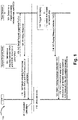
- Fig. 1 illustrates an example signal diagram 100 for determining RACH resources or parameters for a MT call based on network slice-based RACs, according to some embodiments.
- the signal diagram 100 may include a UE, an access network node (e.g., a gNB), and a core network (e.g., a 5G core (5GC)) that includes one or more network nodes.
- an access network node e.g., a gNB
- a core network e.g., a 5G core (5GC)
- the access network node may determine a mapping between RACs and RACH resources or parameters (e.g., mapping information). For example, the access network node may determine which RACH resources or parameters are associated with certain RACs.
- the core network may determine a mapping between network slices and RACs (network slice mapping information). For example, the core network may determine which network slices are associated with certain RACs.
- the access network node may transmit, and the core network may receive, an NG setup request message.
- the setup request message may include information that identifies RACs that are supported by the access network node or information that the access network node supports operation with RACs.
- the core network may transmit, and the access network node may receive, an NG setup response.
- the access network node may transmit, and the UE may receive, information (e.g., system information) that includes the mapping between the RACs and the RACH resources or parameters determined by the access network node.
- operations 112, 114, 116, 118, 120, and 122 may include MT call-related operations.
- the UE may be operating in idle mode.
- the core network may detect a trigger for paging the UE for a certain network slice.
- the core network may select a RAC based on this network slice (e.g., using the mapping determined at 104). For example, the core network may determine a network slice to be used by the UE, and may determine a RAC associated with the network slice.
- the core network may transmit, and the access network node may receive, an NG paging message.
- the NG paging may include the selected RAC.
- the access network node may transmit, and the UE may receive, a radio paging message that includes the selected RAC.
- the UE may transmit, and the access network node may receive, signaling for starting an RRC connection setup.
- the signaling may use RACH resources or parameters selected based on the RAC received in the radio paging message. For example, the UE may determine the RAC from the radio paging message signaling and, using the mapping received at 110, may determine the RACH resources or parameters associated with the RAC.
- Fig. 1 is provided as an example. Other examples are possible, according to some embodiments.
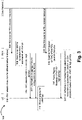
- Fig. 2 illustrates an example signal diagram 200 for determining RACH resources or parameters for a MO call based on network slice-based RACs, according to some embodiments.
- the signal diagram 200 includes a UE, an access network node, and a core network.
- Operations 202, 204, 206, 208, and 210 may be similar to operations 102, 104, 106, 108, and 110, respectively, illustrated in Fig. 1 .
- operations 212, 214, 216, and 218 may include MO call-related operations.
- the UE may transmit, and the core network may receive, a register request.
- the register request may include one or more requested network slices.
- the core network may transmit, and the UE may receive, a register accept response.
- the register accept response may include a RAC for one or more allowed network slices (e.g., the requested network slices that the core network may allow, e.g., based on subscription information stored in the core network).
- the register accept response may include a mapping between RACs and allowed network slices.
- the UE may select a RAC for an MO call session based on the received mapping between network slices and RACs. For example, the UE may determine to trigger an MO call associated with one of the previously received allowed network slices, and may then determine a RAC to use based on the mapping between RACs and network slices.
- the UE may additionally select RACH resources or parameters based on the selected RAC.
- the UE may use the mapping received at 210 to determine which RACH resources or parameters to use based on the RAC selected at 216.
- the UE may transmit, and the access network node may receive, signaling to start an MO call session using the RACH resources or parameters selected based on the RAC.
- Fig. 2 is provided as an example. Other examples are possible, according to some embodiments.
- Fig. 3 illustrates an example signal diagram 300 for determining RACH resources or parameters for a MT call based on network slice-based RACs, according to some embodiments.
- Fig. 3 illustrates an example where a RAN may assign and use multiple, e.g., I-RNTIs to indicate the RAC in paging.
- the example signal diagram 300 includes a UE, a radio access network (RAN), and a core network.
- RAN radio access network
- the UE and the RAN may establish PDU session resources for different network slices.
- the core network may transmit, and the RAN may receive, RACs for the PDU session resources.
- the core network may provide information related to the active PDU session resources and the RACs associated with those PDU session resources.
- the RAN may determine I-RNTIs for active RACs associated with the UE.
- the RAN may transmit, and the UE may receive, an RRC release message to cause the UE to operate in an RRC inactive state.
- the RRC release message may include a suspend configuration for the RRC connection, I-RNTIs, e.g., for non-high priority scenarios, I-RNTIs for high priority scenarios, and mapping information between RACs and these I-RNTI(s). For example, certain embodiments may use two RACs as two different priorities for call setup, e.g., voice calls or emergency calls may be prioritized as high priority scenarios.
- the RAN may transmit, and the UE may receive, information (e.g., system information).
- the information may include a mapping of RACH configuration for various RACs associated with the UE.
- the UE may monitor paging for I-RNTIs received from the RAN at 308.
- the core network may transmit, and the RAN may receive, downlink data for a PDU session resource.
- the RAN may select an I-RNTI based on the RAC of the PDU session resource associated with the downlink data. For example, the RAN may select an appropriate I-RNTI for the UE based on the trigger received from the core network. In the example illustrated in Fig. 3 , assume that the RAN selects a I-RNTI for high priority.
- the RAN may transmit, and the UE may receive, radio paging message signaling.
- the RAN may include the I-RNTI for high priority scenarios in the radio paging message signaling based on having selected the I-RNTI for high priority scenarios.
- the UE may activate a connected mode selecting RACH resources or parameters for a random access procedure based on the I-RNTI for high priority but still using the (different) I-RNTI as a UE identifier.
- the UE may trigger an RRC resume procedure, and then the UE may select the RACH resources or parameters based on the high priority I-RNTI received in the radio paging message signaling.
- the UE may use a default I-RNTI or a short I-RNTI during the random access procedure to identify itself, in some embodiments.
- Fig. 3 is provided as an example. Other examples are possible, according to some embodiments.
- a suspend configuration e.g., a SuspendConfig message
- the SuspendConfig message may include information for full I-RNTI values for various RACs.
- the sequence of additional I-RNTIs may have a size from 1 to, e.g., 8 values.
- the information for the additional I-RNTIs may include full I-RNTI values, and an ra-Class sequence with a size from 1 to the 8 values.
- Certain example embodiments may provide detailed information related to RACs. For example, certain embodiments may provide a mapping RAC for the network slice configured in the UE at registration time, but then a particular PDU session resource in the network slice may have a PDU session-specific RAC based on a rule stored at the session management function (SMF) .
- the PDU session-specific RAC may be sent to the UE in a PDU session establishment accept message. The usage of such RACH may follow the same approach as for a network slice-specific RAC.
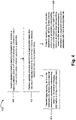
- Fig. 4 illustrates an example flow diagram of a method 400, according to some embodiments.
- Fig. 4 may illustrate example operations of a UE (e.g., apparatus 20 illustrated in, and described with respect to, Fig. 4b). Some of the operations illustrated in Fig. 4 may be similar to some operations shown in, and described with respect to, Figs. 1-3 .
- the method 400 may include, at 402, receiving signaling including mapping information that includes a mapping between one or more resource allocation classes and one or more random access channel resources or parameters, e.g., in a manner similar to that at 110 of Fig. 1 and/or 210 of Fig. 2 .
- the signaling at 402 may be received from a RAN node.
- the method 400 may include, at 404, receiving signaling including network slice mapping information that includes a mapping between the one or more resource allocation classes and one or more network slices (e.g., one or more S-NSSAIs).
- the signaling at 404 may be received from a core network node.
- the method 400 may include, at 406, transmitting signaling using, for a mobile terminated call, random access channel resources or parameters corresponding, based on the received mapping information, to a resource allocation class.
- the resource allocation class may have been received in a radio paging message initiating the mobile terminated call.
- the method may include, at 408, transmitting signaling using, for a mobile originated call, random access channel resources or parameters corresponding, based on the mapping information, to the resource allocation class corresponding, based on the network slice mapping information, to a requested network slice associated with the mobile originated call.
- the radio resource control request may include at least one of a radio resource control setup request or a radio resource control resume request.
- the receiving at 402 may include receiving the signaling from a radio access network node.
- the signaling may include system information broadcast in a cell associated with the radio access network node.
- the receiving at 404 may include receiving the signaling from a core network node, where the signaling may include a non-access stratum message.
- the non-access stratum message may include a non-access stratum register accept message received during a registration procedure.
- the receiving at 404 may include receiving the network slice mapping information from a radio access network node. In some embodiments, the receiving at 404 may include receiving the network slice mapping information from the radio access network node in a radio resource control (RRC) message. I In some embodiments, the receiving at 404 may include receiving the network slice mapping information from the radio access network node in a radio resource control (RRC) message releasing the UE to RRC idle mode or RRC inactive mode.
- RRC radio resource control
- the resource allocation class may include an operator-defined unified access class. In some embodiments, for the mobile terminated call, the resource allocation class included in the radio paging message may be encoded using a dedicated user equipment identity earlier allocated to the user equipment by a core network node or a radio access network node.
- Fig. 4 is provided as an example. Other examples are possible according to some embodiments.
- Fig. 5 illustrates an example flow diagram of a method 500, according to some embodiments.
- Fig. 5 may illustrate example operations of a network node (e.g., apparatus 10 illustrated in, and described with respect to, Fig. 4a).
- Fig. 5 may illustrate example operations of a gNB.
- Some of the operations illustrated in Fig. 5 may be similar to some operations shown in, and described with respect to, Figs. 1-3 .
- the method 500 may include, at 502, determining mapping information that includes a mapping between one or more resource allocation classes and one or more random access channel resources or parameters, e.g., in a manner similar to that at 102 of Fig. 1 and/or 202 of Fig. 2 .
- the method 500 may include, at 504, transmitting signaling including the mapping information, e.g., in a manner similar to that at 110 of Fig. 1 and/or 210 of Fig. 2 .
- the method 500 may include, at 506, transmitting a paging radio signaling message including, for a mobile terminated call where the paging radio signaling message is triggered by receiving a paging message (e.g., an NG paging message), a resource allocation class received in the triggering paging message, e.g., in a manner similar to that at 120 of Fig. 1 .
- the method 500 may include, at 508, transmitting a paging radio signaling message including, for a mobile terminated call where the paging radio signaling message is triggered by incoming data for an inactive user equipment (e.g., an RRC inactive user equipment), a resource allocation class corresponding to a protocol data unit session resource associated with the incoming data.
- an inactive user equipment e.g., an RRC inactive user equipment
- the resource allocation class may be determined from a network slice (S-NSSAI) received in the triggering paging message based on a data structure that includes a mapping between resource allocation classes and network slices (S-NSSAIs).
- the transmitting at 504 may include transmitting, in a cell associated with the apparatus, the signaling including the mapping information.
- the signaling may include system information.
- the resource allocation class may correspond to a protocol data unit session resource and is received when the protocol data unit session resource is setup or modified in at least one of: a protocol data unit session resource setup request message (e.g., an NG PDU session resource setup request message), a protocol data unit session resource modify request message, an initial context setup request message, or a handover request message.
- a protocol data unit session resource setup request message e.g., an NG PDU session resource setup request message
- a protocol data unit session resource modify request message e.g., an initial context setup request message, or a handover request message.
- the resource allocation class may be determined using the network slice (e.g., S-NSSAI) associated with the protocol data unit session resource and a data structure that includes network slice mapping information including a mapping between one or more network slices (e.g., S-NSSAIs) and the one or more resource allocation classes.
- the method 500 may further include transmitting, to a core network node, an indication of whether the apparatus supports the one or more resource allocation classes.
- the method 500 may further include transmitting, to the core network node in association with transmitting the indication, network slice mapping information that includes a mapping between the one or more resource allocation classes and one or more network slices.
- the method 500 may further include receiving, from the core network node in association with transmitting the indication, network slice mapping information that includes a mapping between the one or more resource allocation classes and one or more network slices. In some embodiments, the method 500 may further include transmitting, to the user equipment, network slice mapping information that includes a mapping between the one or more resource allocation classes and one or more network slices. In some embodiments, the transmitting the network slice mapping information may include transmitting the network slice mapping information to the user equipment using a radio resource control (RRC) message. In some embodiments, the transmitting the network slice mapping information may include transmitting the network slice mapping information to the user equipment using a radio resource control (RRC) release message. In some embodiments, the resource allocation class may be encoded using a dedicated user equipment paging identity earlier allocated to the user equipment. In some embodiments, the resource allocation class may include an operator-defined unified access class.
- RRC radio resource control
- Fig. 5 is provided as an example. Other examples are possible according to some embodiments.
- Fig. 6 illustrates an example flow diagram of a method 600, according to some embodiments.
- Fig. 6 may illustrate example operations of a network node (e.g., apparatus 10 illustrated in, and described with respect to, Fig. 4a).
- Fig. 6 may illustrate example operations of a core network node (e.g., a 5G core network node (5GC)).
- a core network node e.g., a 5G core network node (5GC)
- 5GC 5G core network node
- the method 600 may include, at 602, determining network slice mapping information that includes a mapping between one or more resource allocation classes and one or more network slices (e.g., S-NSSAIs), e.g., in a manner similar to that at 104 of Fig. 1 and/or 204 of Fig. 2 .
- the method 600 may include, at 604, transmitting, to a user equipment, signaling including the network slice mapping information.
- the method 600 may include, at 606, if a paging message (e.g., an NG paging message) is transmitted towards the user equipment, for a mobile terminated call associated with a network slice (S-NSSAI), including, in the paging message, a resource allocation class corresponding to the network slice based on the network slice mapping information.
- a paging message e.g., an NG paging message
- S-NSSAI network slice
- the received paging message may include information identifying the network slice (e.g., S-NSSAI), and the access network node may determine a resource allocation class from the received information based on a data structure that maps the S-NSSAI to the resource allocation class.
- the signaling transmitted at 604 may include a non-access stratum signaling message.
- the method 600 may include receiving the network slice mapping information from a radio access network node in a non-user equipment-associated message.
- the method 600 may include transmitting, to a radio access network node, a next generation application protocol message associated with setting up or modifying a protocol data unit session resource.
- the next generation application protocol message may include the resource allocation class.
- the resource allocation class included in the next generation application protocol message may correspond to the network slice associated with the protocol data unit session resource based on the network slice mapping information.
- the method 600 may include transmitting the paging message including the resource allocation class based on receiving, in a non-user equipment-associated message, an indication that a radio access network node supports the resource allocation class.
- the method 600 may include, for the mobile terminated call, allocating different user equipment identities based on the resource allocation class to be used.
- the resource allocation class may include an operator-defined unified access class.
- Fig. 6 is provided as an example. Other examples are possible according to some embodiments.
- apparatus 10 may be a node, host, or server in a communications network or serving such a network.
- apparatus 10 may be a network node, satellite, base station, a Node B, an evolved Node B (eNB), 5G Node B or access point, next generation Node B (NG-NB or gNB), and/or a WLAN access point, associated with a radio access network, such as a LTE network, 5G or NR.
- apparatus 10 may be an eNB in LTE or gNB in 5G.
- apparatus 10 may be comprised of an edge cloud server as a distributed computing system where the server and the radio node may be stand-alone apparatuses communicating with each other via a radio path or via a wired connection, or they may be located in a same entity communicating via a wired connection.
- apparatus 10 represents a gNB
- it may be configured in a central unit (CU) and distributed unit (DU) architecture that divides the gNB functionality.
- the CU may be a logical node that includes gNB functions such as transfer of user data, mobility control, radio access network sharing, positioning, and/or session management, etc.
- the CU may control the operation of DU(s) over a front-haul interface.
- the DU may be a logical node that includes a subset of the gNB functions, depending on the functional split option. It should be noted that one of ordinary skill in the art would understand that apparatus 10 may include components or features not shown in Fig. 7a .
- apparatus 10 may include a processor 12 for processing information and executing instructions or operations.
- processor 12 may be any type of general or specific purpose processor.
- processor 12 may include one or more of general-purpose computers, special purpose computers, microprocessors, digital signal processors (DSPs), field-programmable gate arrays (FPGAs), application-specific integrated circuits (ASICs), and processors based on a multi-core processor architecture, as examples. While a single processor 12 is shown in Fig. 7a , multiple processors may be utilized according to other embodiments.
- apparatus 10 may include two or more processors that may form a multiprocessor system (e.g., in this case processor 12 may represent a multiprocessor) that may support multiprocessing.
- processor 12 may represent a multiprocessor
- the multiprocessor system may be tightly coupled or loosely coupled (e.g., to form a computer cluster).
- Processor 12 may perform functions associated with the operation of apparatus 10, which may include, for example, precoding of antenna gain/phase parameters, encoding and decoding of individual bits forming a communication message, formatting of information, and overall control of the apparatus 10, including processes related to management of communication or communication resources.
- Apparatus 10 may further include or be coupled to a memory 14 (internal or external), which may be coupled to processor 12, for storing information and instructions that may be executed by processor 12.
- Memory 14 may be one or more memories and of any type suitable to the local application environment, and may be implemented using any suitable volatile or nonvolatile data storage technology such as a semiconductor-based memory device, a magnetic memory device and system, an optical memory device and system, fixed memory, and/or removable memory.
- memory 14 can be comprised of any combination of random access memory (RAM), read only memory (ROM), static storage such as a magnetic or optical disk, hard disk drive (HDD), or any other type of non-transitory machine or computer readable media.
- the instructions stored in memory 14 may include program instructions or computer program code that, when executed by processor 12, enable the apparatus 10 to perform tasks as described herein.
- apparatus 10 may further include or be coupled to (internal or external) a drive or port that is configured to accept and read an external computer readable storage medium, such as an optical disc, USB drive, flash drive, or any other storage medium.
- an external computer readable storage medium such as an optical disc, USB drive, flash drive, or any other storage medium.
- the external computer readable storage medium may store a computer program or software for execution by processor 12 and/or apparatus 10.
- apparatus 10 may also include or be coupled to one or more antennas 15 for transmitting and receiving signals and/or data to and from apparatus 10.
- Apparatus 10 may further include or be coupled to a transceiver 18 configured to transmit and receive information.
- the transceiver 18 may include, for example, a plurality of radio interfaces that may be coupled to the antenna(s) 15.
- the radio interfaces may correspond to a plurality of radio access technologies including one or more of GSM, NB-IoT, LTE, 5G, WLAN, Bluetooth, BT-LE, NFC, radio frequency identifier (RFID), ultrawideband (UWB), MulteFire, and the like.
- the radio interface may include components, such as filters, converters (for example, digital-to-analog converters and the like), mappers, a Fast Fourier Transform (FFT) module, and the like, to generate symbols for a transmission via one or more downlinks and to receive symbols (for example, via an uplink).
- filters for example, digital-to-analog converters and the like
- mappers for example, mappers
- FFT Fast Fourier Transform
- transceiver 18 may be configured to modulate information on to a carrier waveform for transmission by the antenna(s) 15 and demodulate information received via the antenna(s) 15 for further processing by other elements of apparatus 10.
- transceiver 18 may be capable of transmitting and receiving signals or data directly.
- apparatus 10 may include an input and/or output device (I/O device).
- memory 14 may store software modules that provide functionality when executed by processor 12.
- the modules may include, for example, an operating system that provides operating system functionality for apparatus 10.
- the memory may also store one or more functional modules, such as an application or program, to provide additional functionality for apparatus 10.
- the components of apparatus 10 may be implemented in hardware, or as any suitable combination of hardware and software.
- processor 12 and memory 14 may be included in or may form a part of processing circuitry or control circuitry.
- transceiver 18 may be included in or may form a part of transceiver circuitry.
- circuitry may refer to hardware-only circuitry implementations (e.g., analog and/or digital circuitry), combinations of hardware circuits and software, combinations of analog and/or digital hardware circuits with software/firmware, any portions of hardware processor(s) with software (including digital signal processors) that work together to cause an apparatus (e.g., apparatus 10) to perform various functions, and/or hardware circuit(s) and/or processor(s), or portions thereof, that use software for operation but where the software may not be present when it is not needed for operation.
- circuitry may also cover an implementation of merely a hardware circuit or processor (or multiple processors), or portion of a hardware circuit or processor, and its accompanying software and/or firmware.
- circuitry may also cover, for example, a baseband integrated circuit in a server, cellular network node or device, or other computing or network device.
- apparatus 10 may be a network node or RAN node, such as a base station, access point, Node B, eNB, gNB, WLAN access point, or the like.
- a network node or RAN node such as a base station, access point, Node B, eNB, gNB, WLAN access point, or the like.
- apparatus 10 may be controlled by memory 14 and processor 12 to perform the functions associated with any of the embodiments described herein, such as some operations illustrated in, or described with respect to, Figs. 1-3 , 5 , and 6 .
- apparatus 10 may be controlled by memory 14 and processor 12 to perform the methods of Figs. 5 and 6 .
- apparatus 20 may be a node or element in a communications network or associated with such a network, such as a UE, mobile equipment (ME), mobile station, mobile device, stationary device, IoT device, or other device.
- a UE mobile equipment
- ME mobile station
- mobile device mobile device
- stationary device stationary device
- IoT device IoT device
- a UE may alternatively be referred to as, for example, a mobile station, mobile equipment, mobile unit, mobile device, user device, subscriber station, wireless terminal, tablet, smart phone, IoT device, sensor or NB-IoT device, a watch or other wearable, a head-mounted display (HMD), a vehicle, a drone, a medical device and applications thereof (e.g., remote surgery), an industrial device and applications thereof (e.g., a robot and/or other wireless devices operating in an industrial and/or an automated processing chain context), a consumer electronics device, a device operating on commercial and/or industrial wireless networks, or the like.
- apparatus 20 may be implemented in, for instance, a wireless handheld device, a wireless plug-in accessory, or the like.
- apparatus 20 may include one or more processors, one or more computer-readable storage medium (for example, memory, storage, or the like), one or more radio access components (for example, a modem, a transceiver, or the like), and/or a user interface.
- apparatus 20 may be configured to operate using one or more radio access technologies, such as GSM, LTE, LTE-A, NR, 5G, WLAN, WiFi, NB-IoT, Bluetooth, NFC, MulteFire, and/or any other radio access technologies. It should be noted that one of ordinary skill in the art would understand that apparatus 20 may include components or features not shown in Fig. 7b .
- apparatus 20 may include or be coupled to a processor 22 for processing information and executing instructions or operations.
- processor 22 may be any type of general or specific purpose processor.
- processor 22 may include one or more of general-purpose computers, special purpose computers, microprocessors, digital signal processors (DSPs), field-programmable gate arrays (FPGAs), application-specific integrated circuits (ASICs), and processors based on a multi-core processor architecture, as examples. While a single processor 22 is shown in Fig. 7b , multiple processors may be utilized according to other embodiments.
- apparatus 20 may include two or more processors that may form a multiprocessor system (e.g., in this case processor 22 may represent a multiprocessor) that may support multiprocessing.
- processor 22 may represent a multiprocessor
- the multiprocessor system may be tightly coupled or loosely coupled (e.g., to form a computer cluster).
- Processor 22 may perform functions associated with the operation of apparatus 20 including, as some examples, precoding of antenna gain/phase parameters, encoding and decoding of individual bits forming a communication message, formatting of information, and overall control of the apparatus 20, including processes related to management of communication resources.
- Apparatus 20 may further include or be coupled to a memory 24 (internal or external), which may be coupled to processor 22, for storing information and instructions that may be executed by processor 22.
- Memory 24 may be one or more memories and of any type suitable to the local application environment, and may be implemented using any suitable volatile or nonvolatile data storage technology such as a semiconductor-based memory device, a magnetic memory device and system, an optical memory device and system, fixed memory, and/or removable memory.
- memory 24 can be comprised of any combination of random access memory (RAM), read only memory (ROM), static storage such as a magnetic or optical disk, hard disk drive (HDD), or any other type of non-transitory machine or computer readable media.
- the instructions stored in memory 24 may include program instructions or computer program code that, when executed by processor 22, enable the apparatus 20 to perform tasks as described herein.
- apparatus 20 may further include or be coupled to (internal or external) a drive or port that is configured to accept and read an external computer readable storage medium, such as an optical disc, USB drive, flash drive, or any other storage medium.
- an external computer readable storage medium such as an optical disc, USB drive, flash drive, or any other storage medium.
- the external computer readable storage medium may store a computer program or software for execution by processor 22 and/or apparatus 20.
- apparatus 20 may also include or be coupled to one or more antennas 25 for receiving a downlink signal and for transmitting via an uplink from apparatus 20.
- Apparatus 20 may further include a transceiver 28 configured to transmit and receive information.
- the transceiver 28 may also include a radio interface (e.g., a modem) coupled to the antenna 25.
- the radio interface may correspond to a plurality of radio access technologies including one or more of GSM, LTE, LTE-A, 5G, NR, WLAN, NB-IoT, Bluetooth, BT-LE, NFC, RFID, UWB, and the like.
- the radio interface may include other components, such as filters, converters (for example, digital-to-analog converters and the like), symbol demappers, signal shaping components, an Inverse Fast Fourier Transform (IFFT) module, and the like, to process symbols, such as OFDMA symbols, carried by a downlink or an uplink.
- filters for example, digital-to-analog converters and the like
- symbol demappers for example, digital-to-analog converters and the like
- signal shaping components for example, an Inverse Fast Fourier Transform (IFFT) module, and the like
- IFFT Inverse Fast Fourier Transform
- transceiver 28 may be configured to modulate information on to a carrier waveform for transmission by the antenna(s) 25 and demodulate information received via the antenna(s) 25 for further processing by other elements of apparatus 20.
- transceiver 28 may be capable of transmitting and receiving signals or data directly.
- apparatus 20 may include an input and/or output device (I/O device).
- apparatus 20 may further include a user interface, such as a graphical user interface or touchscreen.
- memory 24 stores software modules that provide functionality when executed by processor 22.
- the modules may include, for example, an operating system that provides operating system functionality for apparatus 20.
- the memory may also store one or more functional modules, such as an application or program, to provide additional functionality for apparatus 20.
- the components of apparatus 20 may be implemented in hardware, or as any suitable combination of hardware and software.
- apparatus 20 may optionally be configured to communicate with apparatus 10 via a wireless or wired communications link 70 according to any radio access technology, such as NR.
- processor 22 and memory 24 may be included in or may form a part of processing circuitry or control circuitry.
- transceiver 28 may be included in or may form a part of transceiving circuitry.
- apparatus 20 may be a UE, mobile device, mobile station, ME, IoT device and/or NB-IoT device, for example.
- apparatus 20 may be controlled by memory 24 and processor 22 to perform the functions associated with any of the embodiments described herein, such as some operations illustrated in, or described with respect to, Figs. 1-4 .
- apparatus 20 may be controlled by memory 24 and processor 22 to perform the method of Fig. 4 .
- an apparatus may include means for performing a method or any of the variants discussed herein, e.g., a method described with reference to Figs. 4-6 .
- Examples of the means may include one or more processors, memory, and/or computer program code for causing the performance of the operation.
- certain example embodiments provide several technological improvements, enhancements, and/or advantages over existing technological processes.
- one benefit of some example embodiments is reduction or elimination of device operating issues that may occur as a result of a UE being unaware of which network slice paged the UE, thereby reducing or eliminating consumption of network and/or computing resources that would otherwise occur as a result of such operating issues.
- the use of some example embodiments results in improved functioning of communications networks and their nodes and, therefore constitute an improvement at least to the technological field of mobile terminated or mobile originated calls, among others.
- any of the methods, processes, signaling diagrams, algorithms or flow charts described herein may be implemented by software and/or computer program code or portions of code stored in memory or other computer readable or tangible media, and executed by a processor.
- an apparatus may be included or be associated with at least one software application, module, unit or entity configured as arithmetic operation(s), or as a program or portions of it (including an added or updated software routine), executed by at least one operation processor.
- Programs also called program products or computer programs, including software routines, applets and macros, may be stored in any apparatus-readable data storage medium and may include program instructions to perform particular tasks.
- a computer program product may include one or more computer-executable components which, when the program is run, are configured to carry out some example embodiments.
- the one or more computer-executable components may be at least one software code or portions of code. Modifications and configurations used for implementing functionality of an example embodiment may be performed as routine(s), which may be implemented as added or updated software routine(s). In one example, software routine(s) may be downloaded into the apparatus.
- software or a computer program code or portions of code may be in a source code form, object code form, or in some intermediate form, and it may be stored in some sort of carrier, distribution medium, or computer readable medium, which may be any entity or device capable of carrying the program.
- carrier may include a record medium, computer memory, read-only memory, photoelectrical and/or electrical carrier signal, telecommunications signal, and/or software distribution package, for example.
- the computer program may be executed in a single electronic digital computer or it may be distributed amongst a number of computers.
- the computer readable medium or computer readable storage medium may be a non-transitory medium.
- the functionality may be performed by hardware or circuitry included in an apparatus (e.g., apparatus 10 or apparatus 20), for example through the use of an application specific integrated circuit (ASIC), a programmable gate array (PGA), a field programmable gate array (FPGA), or any other combination of hardware and software.
- ASIC application specific integrated circuit
- PGA programmable gate array
- FPGA field programmable gate array
- the functionality may be implemented as a signal, such as a non-tangible means that can be carried by an electromagnetic signal downloaded from the Internet or other network.
- an apparatus such as a node, device, or a corresponding component, may be configured as circuitry, a computer or a microprocessor, such as single-chip computer element, or as a chipset, which may include at least a memory for providing storage capacity used for arithmetic operation(s) and/or an operation processor for executing the arithmetic operation(s).
- Example embodiments described herein apply equally to both singular and plural implementations, regardless of whether singular or plural language is used in connection with describing certain embodiments. For example, an embodiment that describes operations of a single network node equally applies to embodiments that include multiple instances of the network node, and vice versa.
Landscapes
- Engineering & Computer Science (AREA)
- Computer Networks & Wireless Communication (AREA)
- Signal Processing (AREA)
- Mobile Radio Communication Systems (AREA)
Applications Claiming Priority (1)
| Application Number | Priority Date | Filing Date | Title |
|---|---|---|---|
| US17/219,673 US11943812B2 (en) | 2021-03-31 | 2021-03-31 | Determining random access channel (RACH) resources or parameters based on network slice-based resource allocation classes (RACs) |
Publications (2)
| Publication Number | Publication Date |
|---|---|
| EP4068895A2 true EP4068895A2 (de) | 2022-10-05 |
| EP4068895A3 EP4068895A3 (de) | 2022-12-07 |
Family
ID=80780891
Family Applications (1)
| Application Number | Title | Priority Date | Filing Date |
|---|---|---|---|
| EP22162111.3A Pending EP4068895A3 (de) | 2021-03-31 | 2022-03-15 | Bestimmung von ressourcen oder parametern eines direktzugriffskanals (rach) basierend auf netzwerkscheiben-basierten ressourcenzuweisungsklassen (racs) |
Country Status (2)
| Country | Link |
|---|---|
| US (1) | US11943812B2 (de) |
| EP (1) | EP4068895A3 (de) |
Families Citing this family (1)
| Publication number | Priority date | Publication date | Assignee | Title |
|---|---|---|---|---|
| WO2022011618A1 (zh) * | 2020-07-15 | 2022-01-20 | Oppo广东移动通信有限公司 | 信息处理方法、终端设备和网络设备 |
Family Cites Families (12)
| Publication number | Priority date | Publication date | Assignee | Title |
|---|---|---|---|---|
| US10059497B2 (en) * | 2015-12-21 | 2018-08-28 | Target Brands, Inc. | Product hang card for retail display |
| KR102172834B1 (ko) * | 2016-08-02 | 2020-11-02 | 엘지전자 주식회사 | 접속 시도 방법 및 사용자기기와, 접속 제어 방법 및 기지국 |
| CN108811168B (zh) * | 2016-08-12 | 2020-01-17 | 华为技术有限公司 | 无线网络的接入控制方法及装置 |
| CN114900858A (zh) * | 2016-12-30 | 2022-08-12 | 英特尔公司 | 用于无线电通信的方法和设备 |
| CN115150920B (zh) * | 2017-01-04 | 2024-01-09 | 皇家飞利浦有限公司 | 无线通信系统的网络分片的接入控制 |
| US10798640B2 (en) * | 2017-01-06 | 2020-10-06 | Mediatek Inc. | Enhancement of unified access control |
| CN113056937B (zh) * | 2018-11-29 | 2024-01-23 | 谷歌有限责任公司 | 向上层通知对多个接入类别的限制减轻 |
| US20220078742A1 (en) * | 2018-12-28 | 2022-03-10 | Nec Corporation | Procedure to handle services provided by a ue supporting multiple usim card |
| GB2587489A (en) * | 2019-07-29 | 2021-03-31 | Samsung Electronics Co Ltd | Dynamic assignment of service identifiers |
| US11832214B2 (en) * | 2019-09-26 | 2023-11-28 | Intel Corporation | Paging cause determination for inactive device in the 5G system |
| WO2021239899A1 (en) * | 2020-05-29 | 2021-12-02 | Fraunhofer-Gesellschaft zur Förderung der angewandten Forschung e.V. | Ue rach resource configuration selection function and resource prioritization to support slicing |
| CN116234050A (zh) * | 2020-07-03 | 2023-06-06 | Oppo广东移动通信有限公司 | 一种随机接入资源配置方法、电子设备及存储介质 |
-
2021
- 2021-03-31 US US17/219,673 patent/US11943812B2/en active Active
-
2022
- 2022-03-15 EP EP22162111.3A patent/EP4068895A3/de active Pending
Non-Patent Citations (1)
| Title |
|---|
| XIAOMI: "Considerations on the solutions of slice based RACH configuration", vol. RAN WG2, no. Online; 20210125 - 20210205, 15 January 2021 (2021-01-15), XP051973606, Retrieved from the Internet <URL:https://ftp.3gpp.org/tsg_ran/WG2_RL2/TSGR2_113-e/Docs/R2-2100424.zip R2-2100424 Considerations on the solutions of slice based RACH configuration.docx> [retrieved on 20210115] * |
Also Published As
| Publication number | Publication date |
|---|---|
| US11943812B2 (en) | 2024-03-26 |
| EP4068895A3 (de) | 2022-12-07 |
| US20220322444A1 (en) | 2022-10-06 |
Similar Documents
| Publication | Publication Date | Title |
|---|---|---|
| CN115280882B (zh) | 启用能力降低的新无线电(nr)设备的接入 | |
| US20240236905A1 (en) | Efficient registration in an area where a service is supported partially | |
| US20240188021A1 (en) | Simultaneous registration to multiple networks | |
| US12506631B2 (en) | Separate session start request indication | |
| WO2021140372A1 (en) | Selective indications towards user equipment | |
| EP4068895A2 (de) | Bestimmung von ressourcen oder parametern eines direktzugriffskanals (rach) basierend auf netzwerkscheiben-basierten ressourcenzuweisungsklassen (racs) | |
| US20240056792A1 (en) | Multiple user subscriber identity module (musim) user equipment (ue) switching connection between networks | |
| US11363450B2 (en) | Paging area update failure handling | |
| US20240056913A1 (en) | Return time indication on network switching | |
| EP4240100A1 (de) | Rundfunkdienstwiederherstellung für multicast-/rundfunkdienst bei ausfall oder neustart eines funkzugangsknotens | |
| US20240422525A1 (en) | Multiple universal subscriber identity module (musim) switching | |
| US20250294442A1 (en) | User equipment support for provision of edge services with session continuity during mobility | |
| US20250234384A1 (en) | Bandwidth part (bwp) switching for configured grant small data transmission | |
| WO2021028820A1 (en) | Conditional primary secondary cell access | |
| US12232212B2 (en) | Emergency operations slice exchange between entities in mobile networks | |
| US12022428B2 (en) | Remote user equipment direct to indirect path switching in sidelink relay | |
| US12563626B2 (en) | Slice aware pre-emption signaling and process | |
| GB2643236A (en) | Paging cycle determination | |
| WO2026032635A1 (en) | Paging cycle determination | |
| JP2025529755A (ja) | 同期バッファステータス報告 | |
| CN121002915A (zh) | 早期用户设备能力指示递送 |
Legal Events
| Date | Code | Title | Description |
|---|---|---|---|
| PUAI | Public reference made under article 153(3) epc to a published international application that has entered the european phase |
Free format text: ORIGINAL CODE: 0009012 |
|
| STAA | Information on the status of an ep patent application or granted ep patent |
Free format text: STATUS: THE APPLICATION HAS BEEN PUBLISHED |
|
| AK | Designated contracting states |
Kind code of ref document: A2 Designated state(s): AL AT BE BG CH CY CZ DE DK EE ES FI FR GB GR HR HU IE IS IT LI LT LU LV MC MK MT NL NO PL PT RO RS SE SI SK SM TR |
|
| PUAL | Search report despatched |
Free format text: ORIGINAL CODE: 0009013 |
|
| AK | Designated contracting states |
Kind code of ref document: A3 Designated state(s): AL AT BE BG CH CY CZ DE DK EE ES FI FR GB GR HR HU IE IS IT LI LT LU LV MC MK MT NL NO PL PT RO RS SE SI SK SM TR |
|
| RIC1 | Information provided on ipc code assigned before grant |
Ipc: H04W 74/08 20090101ALN20221101BHEP Ipc: H04W 68/02 20090101ALN20221101BHEP Ipc: H04W 74/00 20090101AFI20221101BHEP |
|
| STAA | Information on the status of an ep patent application or granted ep patent |
Free format text: STATUS: REQUEST FOR EXAMINATION WAS MADE |
|
| 17P | Request for examination filed |
Effective date: 20230605 |
|
| RBV | Designated contracting states (corrected) |
Designated state(s): AL AT BE BG CH CY CZ DE DK EE ES FI FR GB GR HR HU IE IS IT LI LT LU LV MC MK MT NL NO PL PT RO RS SE SI SK SM TR |
|
| STAA | Information on the status of an ep patent application or granted ep patent |
Free format text: STATUS: EXAMINATION IS IN PROGRESS |
|
| 17Q | First examination report despatched |
Effective date: 20250410 |