EP4068566B1 - Voltage control method and device for motor - Google Patents
Voltage control method and device for motor Download PDFInfo
- Publication number
- EP4068566B1 EP4068566B1 EP21757476.3A EP21757476A EP4068566B1 EP 4068566 B1 EP4068566 B1 EP 4068566B1 EP 21757476 A EP21757476 A EP 21757476A EP 4068566 B1 EP4068566 B1 EP 4068566B1
- Authority
- EP
- European Patent Office
- Prior art keywords
- voltage
- controlling
- battery
- vehicle
- current
- Prior art date
- Legal status (The legal status is an assumption and is not a legal conclusion. Google has not performed a legal analysis and makes no representation as to the accuracy of the status listed.)
- Active
Links
Images
Classifications
-
- H—ELECTRICITY
- H02—GENERATION; CONVERSION OR DISTRIBUTION OF ELECTRIC POWER
- H02J—ELECTRIC POWER NETWORKS; CIRCUIT ARRANGEMENTS OR SYSTEMS FOR SUPPLYING OR DISTRIBUTING ELECTRIC POWER; SYSTEMS FOR STORING ELECTRIC ENERGY
- H02J7/00—Circuit arrangements for charging or discharging batteries or for supplying loads from batteries
- H02J7/14—Circuit arrangements for charging or discharging batteries or for supplying loads from batteries for charging batteries from dynamo-electric generators driven at varying speed, e.g. on vehicle
- H02J7/1469—Regulation of the charging current or voltage otherwise than by variation of field
- H02J7/1492—Regulation of the charging current or voltage otherwise than by variation of field by means of controlling devices between the generator output and the battery
-
- H—ELECTRICITY
- H02—GENERATION; CONVERSION OR DISTRIBUTION OF ELECTRIC POWER
- H02J—ELECTRIC POWER NETWORKS; CIRCUIT ARRANGEMENTS OR SYSTEMS FOR SUPPLYING OR DISTRIBUTING ELECTRIC POWER; SYSTEMS FOR STORING ELECTRIC ENERGY
- H02J7/00—Circuit arrangements for charging or discharging batteries or for supplying loads from batteries
- H02J7/90—Regulation of charging or discharging current or voltage
- H02J7/96—Regulation of charging or discharging current or voltage in response to battery voltage
- H02J7/963—Regulation of charging or discharging current or voltage in response to battery voltage in response to battery voltage gradient
-
- H—ELECTRICITY
- H02—GENERATION; CONVERSION OR DISTRIBUTION OF ELECTRIC POWER
- H02J—ELECTRIC POWER NETWORKS; CIRCUIT ARRANGEMENTS OR SYSTEMS FOR SUPPLYING OR DISTRIBUTING ELECTRIC POWER; SYSTEMS FOR STORING ELECTRIC ENERGY
- H02J7/00—Circuit arrangements for charging or discharging batteries or for supplying loads from batteries
- H02J7/80—Circuit arrangements for charging or discharging batteries or for supplying loads from batteries including monitoring or indicating arrangements
-
- B—PERFORMING OPERATIONS; TRANSPORTING
- B60—VEHICLES IN GENERAL
- B60L—PROPULSION OF ELECTRICALLY-PROPELLED VEHICLES; SUPPLYING ELECTRIC POWER FOR AUXILIARY EQUIPMENT OF ELECTRICALLY-PROPELLED VEHICLES; ELECTRODYNAMIC BRAKE SYSTEMS FOR VEHICLES IN GENERAL; MAGNETIC SUSPENSION OR LEVITATION FOR VEHICLES; MONITORING OPERATING VARIABLES OF ELECTRICALLY-PROPELLED VEHICLES; ELECTRIC SAFETY DEVICES FOR ELECTRICALLY-PROPELLED VEHICLES
- B60L50/00—Electric propulsion with power supplied within the vehicle
- B60L50/10—Electric propulsion with power supplied within the vehicle using propulsion power supplied by engine-driven generators, e.g. generators driven by combustion engines
- B60L50/15—Electric propulsion with power supplied within the vehicle using propulsion power supplied by engine-driven generators, e.g. generators driven by combustion engines with additional electric power supply
-
- B—PERFORMING OPERATIONS; TRANSPORTING
- B60—VEHICLES IN GENERAL
- B60L—PROPULSION OF ELECTRICALLY-PROPELLED VEHICLES; SUPPLYING ELECTRIC POWER FOR AUXILIARY EQUIPMENT OF ELECTRICALLY-PROPELLED VEHICLES; ELECTRODYNAMIC BRAKE SYSTEMS FOR VEHICLES IN GENERAL; MAGNETIC SUSPENSION OR LEVITATION FOR VEHICLES; MONITORING OPERATING VARIABLES OF ELECTRICALLY-PROPELLED VEHICLES; ELECTRIC SAFETY DEVICES FOR ELECTRICALLY-PROPELLED VEHICLES
- B60L50/00—Electric propulsion with power supplied within the vehicle
- B60L50/50—Electric propulsion with power supplied within the vehicle using propulsion power supplied by batteries or fuel cells
- B60L50/60—Electric propulsion with power supplied within the vehicle using propulsion power supplied by batteries or fuel cells using power supplied by batteries
- B60L50/61—Electric propulsion with power supplied within the vehicle using propulsion power supplied by batteries or fuel cells using power supplied by batteries by batteries charged by engine-driven generators, e.g. series hybrid electric vehicles
-
- B—PERFORMING OPERATIONS; TRANSPORTING
- B60—VEHICLES IN GENERAL
- B60L—PROPULSION OF ELECTRICALLY-PROPELLED VEHICLES; SUPPLYING ELECTRIC POWER FOR AUXILIARY EQUIPMENT OF ELECTRICALLY-PROPELLED VEHICLES; ELECTRODYNAMIC BRAKE SYSTEMS FOR VEHICLES IN GENERAL; MAGNETIC SUSPENSION OR LEVITATION FOR VEHICLES; MONITORING OPERATING VARIABLES OF ELECTRICALLY-PROPELLED VEHICLES; ELECTRIC SAFETY DEVICES FOR ELECTRICALLY-PROPELLED VEHICLES
- B60L58/00—Methods or circuit arrangements for monitoring or controlling batteries or fuel cells, specially adapted for electric vehicles
- B60L58/10—Methods or circuit arrangements for monitoring or controlling batteries or fuel cells, specially adapted for electric vehicles for monitoring or controlling batteries
- B60L58/12—Methods or circuit arrangements for monitoring or controlling batteries or fuel cells, specially adapted for electric vehicles for monitoring or controlling batteries responding to state of charge [SoC]
- B60L58/14—Preventing excessive discharging
-
- B—PERFORMING OPERATIONS; TRANSPORTING
- B60—VEHICLES IN GENERAL
- B60L—PROPULSION OF ELECTRICALLY-PROPELLED VEHICLES; SUPPLYING ELECTRIC POWER FOR AUXILIARY EQUIPMENT OF ELECTRICALLY-PROPELLED VEHICLES; ELECTRODYNAMIC BRAKE SYSTEMS FOR VEHICLES IN GENERAL; MAGNETIC SUSPENSION OR LEVITATION FOR VEHICLES; MONITORING OPERATING VARIABLES OF ELECTRICALLY-PROPELLED VEHICLES; ELECTRIC SAFETY DEVICES FOR ELECTRICALLY-PROPELLED VEHICLES
- B60L58/00—Methods or circuit arrangements for monitoring or controlling batteries or fuel cells, specially adapted for electric vehicles
- B60L58/10—Methods or circuit arrangements for monitoring or controlling batteries or fuel cells, specially adapted for electric vehicles for monitoring or controlling batteries
- B60L58/12—Methods or circuit arrangements for monitoring or controlling batteries or fuel cells, specially adapted for electric vehicles for monitoring or controlling batteries responding to state of charge [SoC]
- B60L58/15—Preventing overcharging
-
- H—ELECTRICITY
- H02—GENERATION; CONVERSION OR DISTRIBUTION OF ELECTRIC POWER
- H02J—ELECTRIC POWER NETWORKS; CIRCUIT ARRANGEMENTS OR SYSTEMS FOR SUPPLYING OR DISTRIBUTING ELECTRIC POWER; SYSTEMS FOR STORING ELECTRIC ENERGY
- H02J7/00—Circuit arrangements for charging or discharging batteries or for supplying loads from batteries
- H02J7/60—Circuit arrangements for charging or discharging batteries or for supplying loads from batteries including safety or protection arrangements
-
- H—ELECTRICITY
- H02—GENERATION; CONVERSION OR DISTRIBUTION OF ELECTRIC POWER
- H02J—ELECTRIC POWER NETWORKS; CIRCUIT ARRANGEMENTS OR SYSTEMS FOR SUPPLYING OR DISTRIBUTING ELECTRIC POWER; SYSTEMS FOR STORING ELECTRIC ENERGY
- H02J7/00—Circuit arrangements for charging or discharging batteries or for supplying loads from batteries
- H02J7/60—Circuit arrangements for charging or discharging batteries or for supplying loads from batteries including safety or protection arrangements
- H02J7/61—Circuit arrangements for charging or discharging batteries or for supplying loads from batteries including safety or protection arrangements against overcharge
-
- H—ELECTRICITY
- H02—GENERATION; CONVERSION OR DISTRIBUTION OF ELECTRIC POWER
- H02J—ELECTRIC POWER NETWORKS; CIRCUIT ARRANGEMENTS OR SYSTEMS FOR SUPPLYING OR DISTRIBUTING ELECTRIC POWER; SYSTEMS FOR STORING ELECTRIC ENERGY
- H02J7/00—Circuit arrangements for charging or discharging batteries or for supplying loads from batteries
- H02J7/60—Circuit arrangements for charging or discharging batteries or for supplying loads from batteries including safety or protection arrangements
- H02J7/63—Circuit arrangements for charging or discharging batteries or for supplying loads from batteries including safety or protection arrangements against overdischarge
-
- H—ELECTRICITY
- H02—GENERATION; CONVERSION OR DISTRIBUTION OF ELECTRIC POWER
- H02J—ELECTRIC POWER NETWORKS; CIRCUIT ARRANGEMENTS OR SYSTEMS FOR SUPPLYING OR DISTRIBUTING ELECTRIC POWER; SYSTEMS FOR STORING ELECTRIC ENERGY
- H02J7/00—Circuit arrangements for charging or discharging batteries or for supplying loads from batteries
- H02J7/90—Regulation of charging or discharging current or voltage
- H02J7/94—Regulation of charging or discharging current or voltage in response to battery current
-
- H—ELECTRICITY
- H02—GENERATION; CONVERSION OR DISTRIBUTION OF ELECTRIC POWER
- H02J—ELECTRIC POWER NETWORKS; CIRCUIT ARRANGEMENTS OR SYSTEMS FOR SUPPLYING OR DISTRIBUTING ELECTRIC POWER; SYSTEMS FOR STORING ELECTRIC ENERGY
- H02J7/00—Circuit arrangements for charging or discharging batteries or for supplying loads from batteries
- H02J7/90—Regulation of charging or discharging current or voltage
- H02J7/96—Regulation of charging or discharging current or voltage in response to battery voltage
-
- H—ELECTRICITY
- H02—GENERATION; CONVERSION OR DISTRIBUTION OF ELECTRIC POWER
- H02J—ELECTRIC POWER NETWORKS; CIRCUIT ARRANGEMENTS OR SYSTEMS FOR SUPPLYING OR DISTRIBUTING ELECTRIC POWER; SYSTEMS FOR STORING ELECTRIC ENERGY
- H02J7/00—Circuit arrangements for charging or discharging batteries or for supplying loads from batteries
- H02J7/90—Regulation of charging or discharging current or voltage
- H02J7/971—Regulation of charging or discharging current or voltage the charge cycle being controlled or terminated in response to non-electric parameters
-
- H—ELECTRICITY
- H02—GENERATION; CONVERSION OR DISTRIBUTION OF ELECTRIC POWER
- H02J—ELECTRIC POWER NETWORKS; CIRCUIT ARRANGEMENTS OR SYSTEMS FOR SUPPLYING OR DISTRIBUTING ELECTRIC POWER; SYSTEMS FOR STORING ELECTRIC ENERGY
- H02J7/00—Circuit arrangements for charging or discharging batteries or for supplying loads from batteries
- H02J7/90—Regulation of charging or discharging current or voltage
- H02J7/971—Regulation of charging or discharging current or voltage the charge cycle being controlled or terminated in response to non-electric parameters
- H02J7/975—Regulation of charging or discharging current or voltage the charge cycle being controlled or terminated in response to non-electric parameters in response to temperature
- H02J7/977—Regulation of charging or discharging current or voltage the charge cycle being controlled or terminated in response to non-electric parameters in response to temperature of the battery
-
- B—PERFORMING OPERATIONS; TRANSPORTING
- B60—VEHICLES IN GENERAL
- B60L—PROPULSION OF ELECTRICALLY-PROPELLED VEHICLES; SUPPLYING ELECTRIC POWER FOR AUXILIARY EQUIPMENT OF ELECTRICALLY-PROPELLED VEHICLES; ELECTRODYNAMIC BRAKE SYSTEMS FOR VEHICLES IN GENERAL; MAGNETIC SUSPENSION OR LEVITATION FOR VEHICLES; MONITORING OPERATING VARIABLES OF ELECTRICALLY-PROPELLED VEHICLES; ELECTRIC SAFETY DEVICES FOR ELECTRICALLY-PROPELLED VEHICLES
- B60L2240/00—Control parameters of input or output; Target parameters
- B60L2240/40—Drive Train control parameters
- B60L2240/42—Drive Train control parameters related to electric machines
- B60L2240/427—Voltage
-
- B—PERFORMING OPERATIONS; TRANSPORTING
- B60—VEHICLES IN GENERAL
- B60L—PROPULSION OF ELECTRICALLY-PROPELLED VEHICLES; SUPPLYING ELECTRIC POWER FOR AUXILIARY EQUIPMENT OF ELECTRICALLY-PROPELLED VEHICLES; ELECTRODYNAMIC BRAKE SYSTEMS FOR VEHICLES IN GENERAL; MAGNETIC SUSPENSION OR LEVITATION FOR VEHICLES; MONITORING OPERATING VARIABLES OF ELECTRICALLY-PROPELLED VEHICLES; ELECTRIC SAFETY DEVICES FOR ELECTRICALLY-PROPELLED VEHICLES
- B60L2240/00—Control parameters of input or output; Target parameters
- B60L2240/40—Drive Train control parameters
- B60L2240/54—Drive Train control parameters related to batteries
- B60L2240/545—Temperature
-
- B—PERFORMING OPERATIONS; TRANSPORTING
- B60—VEHICLES IN GENERAL
- B60L—PROPULSION OF ELECTRICALLY-PROPELLED VEHICLES; SUPPLYING ELECTRIC POWER FOR AUXILIARY EQUIPMENT OF ELECTRICALLY-PROPELLED VEHICLES; ELECTRODYNAMIC BRAKE SYSTEMS FOR VEHICLES IN GENERAL; MAGNETIC SUSPENSION OR LEVITATION FOR VEHICLES; MONITORING OPERATING VARIABLES OF ELECTRICALLY-PROPELLED VEHICLES; ELECTRIC SAFETY DEVICES FOR ELECTRICALLY-PROPELLED VEHICLES
- B60L2240/00—Control parameters of input or output; Target parameters
- B60L2240/40—Drive Train control parameters
- B60L2240/54—Drive Train control parameters related to batteries
- B60L2240/547—Voltage
-
- B—PERFORMING OPERATIONS; TRANSPORTING
- B60—VEHICLES IN GENERAL
- B60L—PROPULSION OF ELECTRICALLY-PROPELLED VEHICLES; SUPPLYING ELECTRIC POWER FOR AUXILIARY EQUIPMENT OF ELECTRICALLY-PROPELLED VEHICLES; ELECTRODYNAMIC BRAKE SYSTEMS FOR VEHICLES IN GENERAL; MAGNETIC SUSPENSION OR LEVITATION FOR VEHICLES; MONITORING OPERATING VARIABLES OF ELECTRICALLY-PROPELLED VEHICLES; ELECTRIC SAFETY DEVICES FOR ELECTRICALLY-PROPELLED VEHICLES
- B60L2240/00—Control parameters of input or output; Target parameters
- B60L2240/40—Drive Train control parameters
- B60L2240/54—Drive Train control parameters related to batteries
- B60L2240/549—Current
-
- F—MECHANICAL ENGINEERING; LIGHTING; HEATING; WEAPONS; BLASTING
- F02—COMBUSTION ENGINES; HOT-GAS OR COMBUSTION-PRODUCT ENGINE PLANTS
- F02N—STARTING OF COMBUSTION ENGINES; STARTING AIDS FOR SUCH ENGINES, NOT OTHERWISE PROVIDED FOR
- F02N11/00—Starting of engines by means of electric motors
- F02N11/08—Circuits specially adapted for starting of engines
- F02N11/0862—Circuits specially adapted for starting of engines characterised by the electrical power supply means, e.g. battery
-
- H—ELECTRICITY
- H02—GENERATION; CONVERSION OR DISTRIBUTION OF ELECTRIC POWER
- H02J—ELECTRIC POWER NETWORKS; CIRCUIT ARRANGEMENTS OR SYSTEMS FOR SUPPLYING OR DISTRIBUTING ELECTRIC POWER; SYSTEMS FOR STORING ELECTRIC ENERGY
- H02J2105/00—Networks for supplying or distributing electric power characterised by their spatial reach or by the load
- H02J2105/30—Networks for supplying or distributing electric power characterised by their spatial reach or by the load the load networks being external to vehicles, i.e. exchanging power with vehicles
- H02J2105/33—Networks for supplying or distributing electric power characterised by their spatial reach or by the load the load networks being external to vehicles, i.e. exchanging power with vehicles exchanging power with road vehicles
- H02J2105/37—Networks for supplying or distributing electric power characterised by their spatial reach or by the load the load networks being external to vehicles, i.e. exchanging power with vehicles exchanging power with road vehicles exchanging power with electric vehicles [EV] or with hybrid electric vehicles [HEV]
-
- Y—GENERAL TAGGING OF NEW TECHNOLOGICAL DEVELOPMENTS; GENERAL TAGGING OF CROSS-SECTIONAL TECHNOLOGIES SPANNING OVER SEVERAL SECTIONS OF THE IPC; TECHNICAL SUBJECTS COVERED BY FORMER USPC CROSS-REFERENCE ART COLLECTIONS [XRACs] AND DIGESTS
- Y02—TECHNOLOGIES OR APPLICATIONS FOR MITIGATION OR ADAPTATION AGAINST CLIMATE CHANGE
- Y02T—CLIMATE CHANGE MITIGATION TECHNOLOGIES RELATED TO TRANSPORTATION
- Y02T10/00—Road transport of goods or passengers
- Y02T10/60—Other road transportation technologies with climate change mitigation effect
- Y02T10/70—Energy storage systems for electromobility, e.g. batteries
-
- Y—GENERAL TAGGING OF NEW TECHNOLOGICAL DEVELOPMENTS; GENERAL TAGGING OF CROSS-SECTIONAL TECHNOLOGIES SPANNING OVER SEVERAL SECTIONS OF THE IPC; TECHNICAL SUBJECTS COVERED BY FORMER USPC CROSS-REFERENCE ART COLLECTIONS [XRACs] AND DIGESTS
- Y02—TECHNOLOGIES OR APPLICATIONS FOR MITIGATION OR ADAPTATION AGAINST CLIMATE CHANGE
- Y02T—CLIMATE CHANGE MITIGATION TECHNOLOGIES RELATED TO TRANSPORTATION
- Y02T10/00—Road transport of goods or passengers
- Y02T10/80—Technologies aiming to reduce greenhouse gasses emissions common to all road transportation technologies
- Y02T10/92—Energy efficient charging or discharging systems for batteries, ultracapacitors, supercapacitors or double-layer capacitors specially adapted for vehicles
Definitions
- the present disclosure relates to the technical field of vehicle controlling, and particularly relates to a method and apparatus for controlling a voltage of an electricity-generation-starting-up integrated electric machine.
- the designed rotational speed of the BSGs is 0-15000 revolutions per minute, and the designed electric quantity of the 48V battery is 1.5 kilowatt-hours/hour.
- US 2017/0166077 A1 discloses a method of recharging a supplementary battery of a vehicle comprising the step of acquiring voltage, charged current of a supplementary battery, starting a timer when the charged current exceeds a limit range, updating a current limit on the basis of a timer value and temperature information of the supplementary battery and controlling a target voltage by subtracting a voltage corresponding to one limit voltage step from the current LDC target voltage.
- US 2017/0264104 A1 discloses an electric power supply system for a vehicle including a first battery, a second battery connected in parallel with the first battery, a voltage sensor configured to detect a voltage value of the second battery, a current sensor configured to detect a current value of the second battery, an electronic control unit configured to make a voltage of the alternator fluctuate according to a predetermined voltage waveform, and calculate internal resistance of the second battery using the voltage value and the current value of the second battery respectively detected by the voltage sensor and the current sensor while the electronic control unit is making the voltage of the alternator fluctuate according to the predetermined voltage waveform.
- the present invention is set out in the appended set of claims. It provides a method and apparatus for controlling a voltage of an electricity-generation-starting-up integrated electric machine, to solve the problems of the failure of 48V batteries and the affection on the life of 48V batteries.
- an embodiment of the present disclosure provides a method for controlling a voltage of an electricity-generation-starting-up integrated electric machine, wherein the method is applied to a vehicle having such an electric machine, and the method comprises:
- the method before the step that when the vehicle is in the voltage-controlling mode, acquiring the current battery voltage, the current battery electric current and the electric-current limit value of the vehicle, the method further comprises: when the vehicle satisfies a voltage-controlling activating condition, controlling the vehicle to enter the voltage-controlling mode.
- the step that based on the superposing-voltage value and the initial target voltage, determining the target controlling voltage comprises: superposing the superposing-voltage value to the initial target voltage one time every target preset duration, to obtain one instance of the target controlling voltage.
- the step that when the vehicle satisfies the voltage-controlling activating condition, controlling the vehicle to enter the voltage-controlling mode comprises: when the vehicle satisfies a condition that the electricity-generation-starting-up integrated electric machine is in a torque-controlling mode, a battery temperature is less than a first preset battery temperature, an engine rotational speed is greater than a first preset engine rotational speed and an entire vehicle has been in a preparation state for a duration greater than a preset duration, controlling the vehicle to enter the voltage-controlling mode.
- the step that based on the difference between the current electric current and the electric-current limit value of the battery, determining the superposing-voltage value comprises:
- the method further comprises: when the vehicle satisfies a condition that a battery temperature is greater than a second preset temperature and an engine rotational speed is less than a second preset engine rotational speed, controlling the vehicle to exit the voltage-controlling mode.
- an embodiment of the present disclosure provides an apparatus for controlling a voltage of an electricity-generation-starting-up integrated electric machine, wherein the apparatus is applied to a vehicle having such an electric machine, and the apparatus comprises:
- the apparatus further comprises: a second controlling module configured for, when the vehicle satisfies a voltage-controlling activating condition, controlling the vehicle to enter the voltage-controlling mode.
- a second controlling module configured for, when the vehicle satisfies a voltage-controlling activating condition, controlling the vehicle to enter the voltage-controlling mode.
- the third determining module comprises: an obtaining submodule configured for superposing the superposing-voltage value to the initial target voltage one time every target preset duration, to obtain one instance of the target controlling voltage.
- the second controlling module comprises: a controlling submodule configured for, when the vehicle satisfies a condition that the electricity-generation-starting-up integrated electric machine is in a torque-controlling mode, a battery temperature is less than a first preset battery temperature, an engine rotational speed is greater than a first preset engine rotational speed and an entire vehicle has been in a preparation state for a duration greater than a preset duration, controlling the vehicle to enter the voltage-controlling mode.
- a controlling submodule configured for, when the vehicle satisfies a condition that the electricity-generation-starting-up integrated electric machine is in a torque-controlling mode, a battery temperature is less than a first preset battery temperature, an engine rotational speed is greater than a first preset engine rotational speed and an entire vehicle has been in a preparation state for a duration greater than a preset duration, controlling the vehicle to enter the voltage-controlling mode.
- the second determining module comprises:
- the apparatus further comprises: a third controlling module configured for, when the vehicle satisfies a condition that a battery temperature is greater than a second preset temperature and an engine rotational speed is less than a second preset engine rotational speed, controlling the vehicle to exit the voltage-controlling mode.
- a third controlling module configured for, when the vehicle satisfies a condition that a battery temperature is greater than a second preset temperature and an engine rotational speed is less than a second preset engine rotational speed, controlling the vehicle to exit the voltage-controlling mode.
- the method for controlling a voltage of an electricity-generation-starting-up integrated electric machine comprises, when the vehicle is in a voltage-controlling mode, acquiring a current battery voltage, a current battery electric current and an electric-current limit value of the vehicle; determining an initial target voltage according to the battery voltage; determining a superposing-voltage value according to a difference between the electric-current limit value and the battery electric current; determining a target controlling voltage based on the superposing-voltage value and the initial target voltage; and controlling the battery voltage of the vehicle based on the target controlling voltage.
- the vehicles can perform voltage-stabilization controlling by means of voltage superposition even if in conditions such as a low temperature, to merely charge the low-voltage loads and the 48V section, and not perform assisting discharging, which can precisely control the voltage, and prevent over-charge and over-discharge of the battery, thereby prolonging the life of the 48V battery.
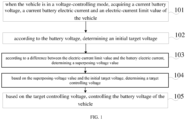
- FIG. 1 a flow chart of the steps of the method for controlling a voltage of an electricity-generation-starting-up integrated electric machine according to the first embodiment of the present disclosure is shown.
- the method for controlling a voltage of an electricity-generation-starting-up integrated electric machine may be applied to a vehicle having an electricity-generation-starting-up integrated electric machine.
- the method for controlling a voltage of an electric machine may particularly comprise the following steps: Step 101: when the vehicle is in a voltage-controlling mode, acquiring a current battery voltage, a current battery electric current and an electric-current limit value of the vehicle.
- the vehicle when the vehicle satisfies a condition that the electricity-generation-starting-up integrated electric machine is in a torque-controlling mode, a battery temperature is less than a first preset battery temperature, an engine rotational speed is greater than a first preset engine rotational speed and an entire vehicle has been in a preparation state for a duration greater than a preset duration, the vehicle may be controlled to enter the voltage-controlling mode.
- the condition is not limited to that.
- the vehicle may also enter the single-pedal-function activating mode when the vehicle is in another condition, which may particularly be configured according to actual situations, and is not limited in the embodiments of the present disclosure.
- the first preset battery temperature may be -26 degrees Celsius, and may also be -20 degrees Celsius.
- the first preset engine rotational speed may be 1400 revolutions per minute.
- the preset duration may be 5 seconds. All of those data are calibrationable data, which is not particularly limited in the embodiments of the present disclosure.
- the entire-vehicle controlling unit (Hybrid Control Unit, HCU) of the vehicle receives the current battery voltage, the current battery electric current and the electric-current limit value of the vehicle that are emitted by the battery.
- HCU Hybrid Control Unit
- the step 102 After the step that when the vehicle is in the voltage-controlling mode, acquiring the current battery voltage, the current battery electric current and the electric-current limit value of the vehicle, the step 102 is executed.
- Step 102 according to the battery voltage, determining an initial target voltage.
- the initial target voltage may be equal to the battery voltage plus a compensating value, wherein the range of the compensating value is (-0.5, +0.5).
- the compensating value is not limited to that.
- the compensating value may be determined according to the actual calibration result, which may particularly be configured according to actual situations, and is not limited in the embodiments of the present disclosure.
- the step 103 is executed.
- Step 103 according to a difference between the electric-current limit value and the battery electric current, determining a superposing-voltage value.
- the HCU may determine a superposing-voltage value according to the difference between the electric-current limit value and the battery electric current, after calculating the difference between the current electric-current limit value and the battery electric current of the vehicle.
- FIG. 2 a correspondence relation between the difference between the electric-current limit value and the battery electric current and the superposing-voltage value according to an embodiment of the present disclosure is shown.
- the correspondence relation between the difference between the electric-current limit value and the battery electric current and the superposing-voltage value may be pre-stored in the vehicle system, and, in turn, after the difference between the electric-current limit value and the battery electric current has been obtained by calculation, the superposing-voltage value corresponding to the difference may be determined according to the correspondence relation between the difference and the superposing-voltage value.
- the step 104 After the step that according to the difference between the electric-current limit value and the battery electric current, determining the superposing-voltage value, the step 104 is executed.
- Step 104 based on the superposing-voltage value and the initial target voltage, determining a target controlling voltage.
- the HCU may sum the superposing-voltage value and the initial target voltage after determining the superposing-voltage value, to obtain the target controlling voltage, and send the target controlling voltage to the BSG of the vehicle. Furthermore, the step 105 may be executed according to the target controlling voltage in the BSG of the vehicle.
- Step 105 based on the target controlling voltage, controlling the battery voltage of the vehicle.
- the BSG of the vehicle receives the target controlling voltage emitted by the HCU, to control the battery voltage of the vehicle.
- the controlling precision is within ⁇ 1V, and can self-adaptively change, and the controlled voltage is stable.
- the method for controlling a voltage of an electricity-generation-starting-up integrated electric machine comprises, when the vehicle is in a voltage-controlling mode, acquiring a current battery voltage, a current battery electric current and an electric-current limit value of the vehicle; determining an initial target voltage according to the battery voltage; determining a superposing-voltage value according to a difference between the electric-current limit value and the battery electric current; determining a target controlling voltage based on the superposing-voltage value and the initial target voltage; and controlling the battery voltage of the vehicle based on the target controlling voltage.
- the vehicle can perform voltage-stabilization controlling by means of voltage superposition even if in conditions such as a low temperature, to merely charge the low-voltage loads and the 48V section, and not perform assisting discharging, which can precisely control the voltage, and prevent over-charge and over-discharge of the battery, thereby prolonging the life of the 48V battery.
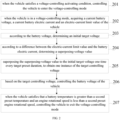
- FIG. 2 a flow chart of the steps of the method for controlling a voltage of an electricity-generation-starting-up integrated electric machine according to the second embodiment of the present disclosure is shown.
- the method for controlling a voltage of an electricity-generation-starting-up integrated electric machine is applied to a vehicle having an electricity-generation-starting-up integrated electric machine.
- the method for controlling a voltage of an electricity-generation-starting-up integrated electric machine may particularly comprise the following steps: Step 201: when the vehicle satisfies a voltage-controlling activating condition, controlling the vehicle to enter the voltage-controlling mode.
- the particular implementation process of the step 201 may comprise:
- the vehicle When the vehicle satisfies a condition that the electricity-generation-starting-up integrated electric machine is in a torque-controlling mode, a battery temperature is less than a first preset battery temperature, an engine rotational speed is greater than a first preset engine rotational speed and an entire vehicle has been in a preparation state for a duration greater than a preset duration, the vehicle may be controlled to enter the voltage-controlling mode.
- the condition is not limited to that.
- the vehicle may also enter the single-pedal-function activating mode when the vehicle is in another condition, which may particularly be configured according to actual situations, and is not limited in the embodiments of the present disclosure.
- the first preset battery temperature may be -26 degrees Celsius, and may also be -20 degrees Celsius.
- the first preset engine rotational speed may be 1400 revolutions per minute.
- the preset duration may be 5 seconds. All of those data are calibrationable data, which is not particularly limited in the embodiments of the present disclosure.
- the step 202 is executed.
- Step 202 when the vehicle is in a voltage-controlling mode, acquiring a current battery voltage, a current battery electric current and an electric-current limit value of the vehicle.
- the entire-vehicle controlling unit of the vehicle receives the current battery voltage, the current battery electric current and the electric-current limit value of the vehicle that are emitted by the battery.
- the step 203 After the step that when the vehicle is in the voltage-controlling mode, acquiring the current battery voltage, the current battery electric current and the electric-current limit value of the vehicle, the step 203 is executed.
- Step 203 according to the battery voltage, determining an initial target voltage.
- the initial target voltage may be the battery voltage plus a compensating value, wherein the range of the compensating value is (-0.5, +0.5).
- the compensating value is not limited to that.
- the compensating value may be determined according to the actual calibration result, which may particularly be configured according to actual situations, and is not limited in the embodiments of the present disclosure.
- the step 204 is executed.
- Step 204 according to a difference between the electric-current limit value and the battery electric current, determining a superposing-voltage value.
- the HCU may determine a superposing-voltage value according to the difference between the electric-current limit value and the battery electric current after acquiring the difference between the current electric-current limit value and the battery electric current of the vehicle.
- FIG. 2 a correspondence relation between the difference between the electric-current limit value and the battery electric current and the superposing-voltage value according to an embodiment of the present disclosure is shown.
- the correspondence relation between the difference between the electric-current limit value and the battery electric current and the superposing-voltage value may be pre-stored in the vehicle system, and, in turn, after the difference between the electric-current limit value and the battery electric current has been obtained by calculation, the superposing-voltage value corresponding to the difference may be determined according to the correspondence relation between the difference and the superposing-voltage value.
- the particular implementation process of the step 204 may comprise: Sub-step 2041: if the difference between the current electric current and the electric-current limit value of the battery is greater than a maximum value of a preset difference range, calculating to obtain a positive superposing-voltage value.
- the preset difference range may be (15,30)Ah, and, accordingly, when the difference between the current electric current and the electric-current limit value of the battery is greater than 30Ah, referring to the above table, a corresponding positive superposing-voltage value can be obtained.
- the superposing-voltage value is 0.1.
- the superposing-voltage value is 0.2.
- the superposing-voltage value is 0.3, and so on.
- Sub-step 2042 if the difference between the current electric current and the electric-current limit value of the battery is within the preset difference range, setting the superposing-voltage value to be zero.
- the preset difference range may be (15,30)Ah, and, accordingly, when the difference between the current electric current and the electric-current limit value of the battery is within (15,30)Ah, the superposing-voltage value is 0.
- Sub-step 2043 if the difference between the current electric current and the electric-current limit value of the battery is less than a minimum value of the preset difference range, calculating to obtain a negative superposing-voltage value.
- the preset difference range may be (15,30)Ah, and, accordingly, when the difference between the current electric current and the electric-current limit value of the battery is less than 30Ah, referring to the above table, a corresponding negative superposing-voltage value can be obtained.
- the difference when the difference is 13Ah, the superposing-voltage value is -0.1.
- the superposing-voltage value is -0.2.
- the superposing-voltage value is -0.3, and so on.
- the initial voltage of the battery is used as the target controlling voltage, and the superposition begins when the difference between the current electric current and the electric-current limit value of the battery is greater than a maximum value of a preset difference range.
- the preset critical value may be set to be 5Ah, which is not particularly limited in the embodiments of the present disclosure.
- the step 205 is executed.
- Step 205 superposing the superposing-voltage value to the initial target voltage one time every target preset duration, to obtain one instance of the target controlling voltage.
- the HCU may sum the superposing-voltage value and the initial target voltage after determining the superposing-voltage value, to obtain the target controlling voltage, wherein in the process the target voltage may be superposed one time every 5 seconds, to obtain the real-time target controlling voltage, and send the target controlling voltage to the BSG of the vehicle. Furthermore, the step 206 may be executed according to the target controlling voltage in the BSG of the vehicle.
- Step 206 based on the target controlling voltage, controlling the battery voltage of the vehicle.
- the BSG of the vehicle receives the target controlling voltage emitted by the HCU, to control the battery voltage of the vehicle.
- the controlling precision is within ⁇ 1V, and can self-adaptively change, and the controlled voltage is stable.
- the BSG merely performs the function of charging and supplies electric power to the low-voltage loads according to the target controlling voltage of the battery at the moment, does not perform the assisting and charging functions in the conventional torque mode, and performs voltage-stabilization controlling in the form of an electric generator with the target controlling voltage as the target. If the target controlling voltage is equal to the voltage of the 48V battery, then the BSG cannot charge the 48V battery, merely serves as an external parallel-connected voltage source, and is merely used by a device for conversion between high- and low-voltage direct currents (Direct Current Direct Current, DCDC) to convert a direct current (DC) into a 12V load.
- DCDC Direct Current Direct Current
- the BSG self-adapts for the changing in the loads, to ensure that the voltage outputted by the BSG is stable.
- the step 207 is executed.
- Step 207 when the vehicle satisfies a condition that a battery temperature is greater than a second preset temperature and an engine rotational speed is less than a second preset engine rotational speed, controlling the vehicle to exit the voltage-controlling mode.
- the second preset temperature may be -24 degrees Celsius, and the second preset engine rotational speed may be 800 revolutions per minute.
- the method for controlling a voltage of an electricity-generation-starting-up integrated electric machine comprises, when the vehicle satisfies a voltage-controlling activating condition, controlling the vehicle to enter the voltage-controlling mode; when the vehicle is in a voltage-controlling mode, acquiring a current battery voltage, a current battery electric current and an electric-current limit value of the vehicle; determining an initial target voltage according to the battery voltage; determining a superposing-voltage value according to a difference between the electric-current limit value and the battery electric current; superposing the superposing-voltage value to the initial target voltage one time every target preset duration, to obtain one instance of the target controlling voltage; controlling the battery voltage of the vehicle based on the target controlling voltage; and when the vehicle satisfies a condition that a battery temperature is greater than a second preset temperature and an engine rotational speed is less than a second preset engine rotational speed, controlling the vehicle to exit the voltage-controlling mode.
- the vehicle can perform voltage-stabilization controlling by means of voltage superposition even if in conditions such as a low temperature, to merely charge the low-voltage loads and the 48V section, and not perform assisting discharging, which can precisely control the voltage, and prevent over-charge and over-discharge of the battery, thereby prolonging the life of the 48V battery.
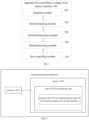
- FIG. 3 a schematic structural diagram of the apparatus for controlling a voltage of an electricity-generation-starting-up integrated electric machine according to the third embodiment of the present disclosure is shown.
- the apparatus for controlling a voltage of an electricity-generation-starting-up integrated electric machine is applied to a vehicle having an electricity-generation-starting-up integrated electric machine.
- the apparatus for controlling a voltage of an electricity-generation-starting-up integrated electric machine 300 may particularly comprise:
- the apparatus further comprises: a second controlling module configured for, when the vehicle satisfies a voltage-controlling activating condition, controlling the vehicle to enter the voltage-controlling mode.
- a second controlling module configured for, when the vehicle satisfies a voltage-controlling activating condition, controlling the vehicle to enter the voltage-controlling mode.
- the third determining module comprises: an obtaining submodule configured for superposing the superposing-voltage value to the initial target voltage one time every target preset duration, to obtain one instance of the target controlling voltage.
- the second controlling module comprises: a controlling submodule configured for, when the vehicle satisfies a condition that the electricity-generation-starting-up integrated electric machine is in a torque-controlling mode, a battery temperature is less than a first preset battery temperature, an engine rotational speed is greater than a first preset engine rotational speed and an entire vehicle has been in a preparation state for a duration greater than a preset duration, controlling the vehicle to enter the voltage-controlling mode.
- a controlling submodule configured for, when the vehicle satisfies a condition that the electricity-generation-starting-up integrated electric machine is in a torque-controlling mode, a battery temperature is less than a first preset battery temperature, an engine rotational speed is greater than a first preset engine rotational speed and an entire vehicle has been in a preparation state for a duration greater than a preset duration, controlling the vehicle to enter the voltage-controlling mode.
- the second determining module comprises:
- the apparatus further comprises: a third controlling module configured for, when the vehicle satisfies that a battery temperature is greater than a second preset temperature and an engine rotational speed is less than a second preset engine rotational speed, controlling the vehicle to exit the voltage-controlling mode.
- a third controlling module configured for, when the vehicle satisfies that a battery temperature is greater than a second preset temperature and an engine rotational speed is less than a second preset engine rotational speed, controlling the vehicle to exit the voltage-controlling mode.
- the method for controlling a voltage of an electricity-generation-starting-up integrated electric machine can, by using the acquiring module, when the vehicle is in a voltage-controlling mode, acquire a current battery voltage, a current battery electric current and an electric-current limit value of the vehicle; by using the first determining module, determine an initial target voltage according to the battery voltage; by using the second determining module, determine a superposing-voltage value according to a difference between the electric-current limit value and the battery electric current; by using the third determining module, determine a target controlling voltage based on the superposing-voltage value and the initial target voltage; and finally, by using the first controlling module, control the battery voltage of the vehicle based on the target controlling voltage.
- the vehicle can perform voltage-stabilization controlling by means of voltage superposition even if in conditions such as a low temperature, to merely charge the low-voltage loads and the 48V section, and not perform assisting discharging, which can precisely control the voltage, and prevent over-charge and over-discharge of the battery, thereby prolonging the life of the 48V battery.
- the above-described device embodiments are merely illustrative, wherein the units that are described as separate components may or may not be physically separate, and the components that are displayed as units may or may not be physical units; in other words, they may be located at the same one location, and may also be distributed to a plurality of network units. Some or all of the modules may be selected according to the actual demands to realize the purposes of the solutions of the embodiments. A person skilled in the art can understand and implement the technical solutions without paying creative work.
- Each component embodiment of the present disclosure may be implemented by hardware, or by software modules that are operated on one or more processors, or by a combination thereof.
- a person skilled in the art should understand that some or all of the functions of some or all of the components of the calculating and processing device according to the embodiments of the present disclosure may be implemented by using a microprocessor or a digital signal processor (DSP) in practice.
- DSP digital signal processor
- the present disclosure may also be implemented as apparatus or device programs (for example, computer programs and computer program products) for implementing part of or the whole of the method described herein.
- Such programs for implementing the present disclosure may be stored in a computer-readable medium, or may be in the form of one or more signals. Such signals may be downloaded from an Internet website, or provided on a carrier signal, or provided in any other forms.
- FIG. 4 shows a calculating and processing device that can implement the method according to the present disclosure.
- the calculating and processing device traditionally comprises a processor 1010 and a computer program product or computer-readable medium in the form of a memory 1020.
- the memory 1020 may be electronic memories such as flash memory, EEPROM (Electrically Erasable Programmable Read Only Memory), EPROM, hard disk or ROM.
- the memory 1020 has the storage space 1030 of the program code 1031 for implementing any steps of the above method.
- the storage space 1030 for program code may contain program codes 1031 for individually implementing each of the steps of the above method. Those program codes may be read from one or more computer program products or be written into the one or more computer program products.
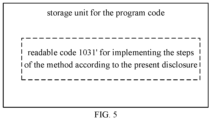
- Those computer program products include program code carriers such as a hard disk, a compact disk (CD), a memory card or a floppy disk. Such computer program products are usually portable or fixed storage units as shown in FIG. 5 .
- the storage unit may have storage segments or storage spaces with similar arrangement to the memory 1020 of the calculating and processing device in FIG. 4 .
- the program codes may, for example, be compressed in a suitable form.
- the storage unit contains a computer-readable code 1031', which can be read by a processor like 1010. When those codes are executed by the calculating and processing device, the codes cause the calculating and processing device to implement each of the steps of the method described above.
- any reference signs between parentheses should not be construed as limiting the claims.
- the word “comprise” does not exclude elements or steps that are not listed in the claims.
- the word “a” or “an” preceding an element does not exclude the existing of a plurality of such elements.
- the present disclosure may be implemented by means of hardware comprising several different elements and by means of a properly programmed computer. In unit claims that list several devices, some of those devices may be embodied by the same item of hardware.
- the words first, second, third and so on do not denote any order. Those words may be interpreted as names.
Landscapes
- Engineering & Computer Science (AREA)
- Power Engineering (AREA)
- Transportation (AREA)
- Mechanical Engineering (AREA)
- Life Sciences & Earth Sciences (AREA)
- Sustainable Development (AREA)
- Sustainable Energy (AREA)
- Electric Propulsion And Braking For Vehicles (AREA)
Description
- The present disclosure relates to the technical field of vehicle controlling, and particularly relates to a method and apparatus for controlling a voltage of an electricity-generation-starting-up integrated electric machine.
- With the gradual development of vehicle controlling technologies, for 48V micro hybrid electrical vehicles, the electric generators of conventional engines have been reformed by using an electricity-generation-starting-up integrated electric machine (Belt Driven Starter Generator, BSG), to form a belt-driven BSG.
- Currently, the designed rotational speed of the BSGs is 0-15000 revolutions per minute, and the designed electric quantity of the 48V battery is 1.5 kilowatt-hours/hour. For vehicles equipped with a BSG, it is possible to include a mode in which the BSG generates electricity to charge the battery. Due to the BSG characteristic, the torque error is ±3Nm when it within 100Nm, and according to the power formula P=T*n/9550, wherein P represents the power, T represents the torque, and n represents the rotational speed, it can be known that the torque error causes a large power error in the high-rotational-speed zone.
- The available battery electric quantity and the available power of 48V micro hybrid electrical vehicles are very low at a low temperature, and in this case the power error greatly affects the 48V battery, it results in over-charge or over-discharge of the battery, and also results in failure of the 48V battery and affection on the life of the 48V battery.
US 2017/0166077 A1 discloses a method of recharging a supplementary battery of a vehicle comprising the step of acquiring voltage, charged current of a supplementary battery, starting a timer when the charged current exceeds a limit range, updating a current limit on the basis of a timer value and temperature information of the supplementary battery and controlling a target voltage by subtracting a voltage corresponding to one limit voltage step from the current LDC target voltage.US 2017/0264104 A1 discloses an electric power supply system for a vehicle including a first battery, a second battery connected in parallel with the first battery, a voltage sensor configured to detect a voltage value of the second battery, a current sensor configured to detect a current value of the second battery, an electronic control unit configured to make a voltage of the alternator fluctuate according to a predetermined voltage waveform, and calculate internal resistance of the second battery using the voltage value and the current value of the second battery respectively detected by the voltage sensor and the current sensor while the electronic control unit is making the voltage of the alternator fluctuate according to the predetermined voltage waveform. - In view of the above, the present invention is set out in the appended set of claims. It provides a method and apparatus for controlling a voltage of an electricity-generation-starting-up integrated electric machine, to solve the problems of the failure of 48V batteries and the affection on the life of 48V batteries.
- In order to achieve the above object, the technical solutions of the present disclosure are realized as follows:
In the first aspect, an embodiment of the present disclosure provides a method for controlling a voltage of an electricity-generation-starting-up integrated electric machine, wherein the method is applied to a vehicle having such an electric machine, and the method comprises: - when the vehicle is in a voltage-controlling mode, acquiring a current battery voltage, a current battery electric current and an electric-current limit value of the vehicle;
- according to the battery voltage, determining an initial target voltage;
- according to a difference between the electric-current limit value and the battery electric current, determining a superposing-voltage value;
- based on the superposing-voltage value and the initial target voltage, determining a target controlling voltage; and
- based on the target controlling voltage, controlling the battery voltage of the vehicle.
- Optionally, before the step that when the vehicle is in the voltage-controlling mode, acquiring the current battery voltage, the current battery electric current and the electric-current limit value of the vehicle, the method further comprises:
when the vehicle satisfies a voltage-controlling activating condition, controlling the vehicle to enter the voltage-controlling mode. - Optionally, the step that based on the superposing-voltage value and the initial target voltage, determining the target controlling voltage, comprises:
superposing the superposing-voltage value to the initial target voltage one time every target preset duration, to obtain one instance of the target controlling voltage. - Optionally, the step that when the vehicle satisfies the voltage-controlling activating condition, controlling the vehicle to enter the voltage-controlling mode, comprises:
when the vehicle satisfies a condition that the electricity-generation-starting-up integrated electric machine is in a torque-controlling mode, a battery temperature is less than a first preset battery temperature, an engine rotational speed is greater than a first preset engine rotational speed and an entire vehicle has been in a preparation state for a duration greater than a preset duration, controlling the vehicle to enter the voltage-controlling mode. - Optionally, the step that based on the difference between the current electric current and the electric-current limit value of the battery, determining the superposing-voltage value, comprises:
- if the difference between the current electric current and the electric-current limit value of the battery is greater than a maximum value of a preset difference range, calculating to obtain a positive superposing-voltage value;
- if the difference between the current electric current and the electric-current limit value of the battery is within the preset difference range, setting the superposing-voltage value to be zero; and
- if the difference between the current electric current and the electric-current limit value of the battery is less than a minimum value of the preset difference range, calculating to obtain a negative superposing-voltage value.
- Optionally, after the step that based on the target controlling voltage, controlling the battery voltage of the vehicle, the method further comprises:
when the vehicle satisfies a condition that a battery temperature is greater than a second preset temperature and an engine rotational speed is less than a second preset engine rotational speed, controlling the vehicle to exit the voltage-controlling mode. - In the second aspect, an embodiment of the present disclosure provides an apparatus for controlling a voltage of an electricity-generation-starting-up integrated electric machine, wherein the apparatus is applied to a vehicle having such an electric machine, and the apparatus comprises:
- an acquiring module configured for, when the vehicle is in a voltage-controlling mode, acquiring a current battery voltage, a current battery electric current and an electric-current limit value of the vehicle;
- a first determining module configured for, according to the battery voltage, determining an initial target voltage;
- a second determining module configured for, according to a difference between the electric-current limit value and the battery electric current, determining a superposing-voltage value;
- a third determining module configured for, based on the superposing-voltage value and the initial target voltage, determining a target controlling voltage; and
- a first controlling module configured for, based on the target controlling voltage, controlling the battery voltage of the vehicle.
- Optionally, the apparatus further comprises:
a second controlling module configured for, when the vehicle satisfies a voltage-controlling activating condition, controlling the vehicle to enter the voltage-controlling mode. - Optionally, the third determining module comprises:
an obtaining submodule configured for superposing the superposing-voltage value to the initial target voltage one time every target preset duration, to obtain one instance of the target controlling voltage. - Optionally, the second controlling module comprises:
a controlling submodule configured for, when the vehicle satisfies a condition that the electricity-generation-starting-up integrated electric machine is in a torque-controlling mode, a battery temperature is less than a first preset battery temperature, an engine rotational speed is greater than a first preset engine rotational speed and an entire vehicle has been in a preparation state for a duration greater than a preset duration, controlling the vehicle to enter the voltage-controlling mode. - Optionally, the second determining module comprises:
- a first calculating submodule configured for, if the difference between the current electric current and the electric-current limit value of the battery is greater than a maximum value of a preset difference range, calculating to obtain a positive superposing-voltage value;
- a setting submodule configured for, if the difference between the current electric current and the electric-current limit value of the battery is within the preset difference range, setting the superposing-voltage value to be zero; and
- a second calculating submodule configured for, if the difference between the current electric current and the electric-current limit value of the battery is less than a minimum value of the preset difference range, calculating to obtain a negative superposing-voltage value.
- Optionally, the apparatus further comprises:
a third controlling module configured for, when the vehicle satisfies a condition that a battery temperature is greater than a second preset temperature and an engine rotational speed is less than a second preset engine rotational speed, controlling the vehicle to exit the voltage-controlling mode. - As compared with the prior art, the embodiments of the present disclosure have the following advantages:
The method for controlling a voltage of an electricity-generation-starting-up integrated electric machine according to the embodiments of the present disclosure comprises, when the vehicle is in a voltage-controlling mode, acquiring a current battery voltage, a current battery electric current and an electric-current limit value of the vehicle; determining an initial target voltage according to the battery voltage; determining a superposing-voltage value according to a difference between the electric-current limit value and the battery electric current; determining a target controlling voltage based on the superposing-voltage value and the initial target voltage; and controlling the battery voltage of the vehicle based on the target controlling voltage. Accordingly, the vehicles can perform voltage-stabilization controlling by means of voltage superposition even if in conditions such as a low temperature, to merely charge the low-voltage loads and the 48V section, and not perform assisting discharging, which can precisely control the voltage, and prevent over-charge and over-discharge of the battery, thereby prolonging the life of the 48V battery. - The above description is merely a summary of the technical solutions of the present disclosure. In order to more clearly know the elements of the present disclosure to enable the implementation according to the contents of the description, and in order to make the above and other purposes, features and advantages of the present disclosure more apparent and understandable, the particular embodiments of the present disclosure are provided below.
- In order to more clearly illustrate the technical solutions of the embodiments of the present disclosure or the prior art, the figures that are required to describe the embodiments or the prior art will be briefly introduced below. Apparently, the figures that are described below are embodiments of the present disclosure, and a person skilled in the art can obtain other figures according to these figures without paying creative work.
- The drawings, which form part of the present disclosure, are intended to provide a further understanding of the present disclosure. The illustrative embodiments of the present disclosure and their explanation are intended to interpret the present disclosure, and do not inappropriately limit the present disclosure. In the drawings:
-
FIG. 1 shows a flow chart of the steps of the method for controlling a voltage of an electric machine according to the first embodiment of the present disclosure; -
FIG. 2 shows a flow chart of the steps of the method for controlling a voltage of an electric machine according to the second embodiment of the present disclosure; -
FIG. 3 shows a schematic structural diagram of the apparatus for controlling a voltage of an electric machine according to the third embodiment of the present disclosure; -
FIG. 4 schematically shows a block diagram of a calculating and processing device for implementing the method according to the present disclosure; and -
FIG. 5 schematically shows a storage unit for maintaining or carrying a program code for implementing the method according to the present disclosure. - In order to make the objects, the technical solutions and the advantages of the embodiments of the present disclosure clearer, the technical solutions of the embodiments of the present disclosure will be clearly and completely described below with reference to the drawings of the embodiments of the present disclosure. Apparently, the described embodiments are merely certain embodiments of the present disclosure, rather than all of the embodiments. All of the other embodiments that a person skilled in the art obtains on the basis of the embodiments of the present disclosure without paying creative work fall within the protection scope of the present disclosure.
- It should be noted that, subject to the avoiding of any conflict, the embodiments and the features of the embodiments of the present disclosure may be combined.
- The invention is defined by the features of the independent claims. Preferred embodiments are defined in the dependent claims.
- The present disclosure will be described in detail below with reference to the drawings and the embodiments.
- Referring to
FIG. 1 , a flow chart of the steps of the method for controlling a voltage of an electricity-generation-starting-up integrated electric machine according to the first embodiment of the present disclosure is shown. The method for controlling a voltage of an electricity-generation-starting-up integrated electric machine may be applied to a vehicle having an electricity-generation-starting-up integrated electric machine. - As shown in
FIG. 1 , the method for controlling a voltage of an electric machine may particularly comprise the following steps:
Step 101: when the vehicle is in a voltage-controlling mode, acquiring a current battery voltage, a current battery electric current and an electric-current limit value of the vehicle. - In an embodiment of the present disclosure, when the vehicle satisfies a condition that the electricity-generation-starting-up integrated electric machine is in a torque-controlling mode, a battery temperature is less than a first preset battery temperature, an engine rotational speed is greater than a first preset engine rotational speed and an entire vehicle has been in a preparation state for a duration greater than a preset duration, the vehicle may be controlled to enter the voltage-controlling mode. Certainly, the condition is not limited to that. In a particular implementation, the vehicle may also enter the single-pedal-function activating mode when the vehicle is in another condition, which may particularly be configured according to actual situations, and is not limited in the embodiments of the present disclosure.
- The first preset battery temperature may be -26 degrees Celsius, and may also be -20 degrees Celsius. The first preset engine rotational speed may be 1400 revolutions per minute. The preset duration may be 5 seconds. All of those data are calibrationable data, which is not particularly limited in the embodiments of the present disclosure.
- Optionally, when the vehicle is in the voltage-controlling mode, the entire-vehicle controlling unit (Hybrid Control Unit, HCU) of the vehicle receives the current battery voltage, the current battery electric current and the electric-current limit value of the vehicle that are emitted by the battery.
- After the step that when the vehicle is in the voltage-controlling mode, acquiring the current battery voltage, the current battery electric current and the electric-current limit value of the vehicle, the
step 102 is executed. - Step 102: according to the battery voltage, determining an initial target voltage.
- The initial target voltage may be equal to the battery voltage plus a compensating value, wherein the range of the compensating value is (-0.5, +0.5). Certainly, the compensating value is not limited to that. In a particular implementation, the compensating value may be determined according to the actual calibration result, which may particularly be configured according to actual situations, and is not limited in the embodiments of the present disclosure.
- After the step that according to the battery voltage, determining the initial target voltage, the
step 103 is executed. - Step 103: according to a difference between the electric-current limit value and the battery electric current, determining a superposing-voltage value.
- The HCU may determine a superposing-voltage value according to the difference between the electric-current limit value and the battery electric current, after calculating the difference between the current electric-current limit value and the battery electric current of the vehicle. As shown in
FIG. 2 , a correspondence relation between the difference between the electric-current limit value and the battery electric current and the superposing-voltage value according to an embodiment of the present disclosure is shown. - Correspondence relation between the difference between the electric-current limit value and the battery electric current and the superposing-voltage value
Difference/Ah ≥100 80 60 40 30 15 13 10 7 5 superposing-voltage value/V 0.4 0.3 0.2 0.1 0 0 -0.1 -0.2 -0.3 -0.4 - The correspondence relation between the difference between the electric-current limit value and the battery electric current and the superposing-voltage value may be pre-stored in the vehicle system, and, in turn, after the difference between the electric-current limit value and the battery electric current has been obtained by calculation, the superposing-voltage value corresponding to the difference may be determined according to the correspondence relation between the difference and the superposing-voltage value.
- After the step that according to the difference between the electric-current limit value and the battery electric current, determining the superposing-voltage value, the
step 104 is executed. - Step 104: based on the superposing-voltage value and the initial target voltage, determining a target controlling voltage.
- The HCU may sum the superposing-voltage value and the initial target voltage after determining the superposing-voltage value, to obtain the target controlling voltage, and send the target controlling voltage to the BSG of the vehicle. Furthermore, the
step 105 may be executed according to the target controlling voltage in the BSG of the vehicle. - Step 105: based on the target controlling voltage, controlling the battery voltage of the vehicle.
- The BSG of the vehicle receives the target controlling voltage emitted by the HCU, to control the battery voltage of the vehicle. The controlling precision is within ±1V, and can self-adaptively change, and the controlled voltage is stable.
- The method for controlling a voltage of an electricity-generation-starting-up integrated electric machine according to the embodiments of the present disclosure comprises, when the vehicle is in a voltage-controlling mode, acquiring a current battery voltage, a current battery electric current and an electric-current limit value of the vehicle; determining an initial target voltage according to the battery voltage; determining a superposing-voltage value according to a difference between the electric-current limit value and the battery electric current; determining a target controlling voltage based on the superposing-voltage value and the initial target voltage; and controlling the battery voltage of the vehicle based on the target controlling voltage. Accordingly, the vehicle can perform voltage-stabilization controlling by means of voltage superposition even if in conditions such as a low temperature, to merely charge the low-voltage loads and the 48V section, and not perform assisting discharging, which can precisely control the voltage, and prevent over-charge and over-discharge of the battery, thereby prolonging the life of the 48V battery.
- Referring to
FIG. 2 , a flow chart of the steps of the method for controlling a voltage of an electricity-generation-starting-up integrated electric machine according to the second embodiment of the present disclosure is shown. The method for controlling a voltage of an electricity-generation-starting-up integrated electric machine is applied to a vehicle having an electricity-generation-starting-up integrated electric machine. - As shown in
FIG. 2 , the method for controlling a voltage of an electricity-generation-starting-up integrated electric machine may particularly comprise the following steps:
Step 201: when the vehicle satisfies a voltage-controlling activating condition, controlling the vehicle to enter the voltage-controlling mode. - In an embodiment of the present disclosure, the particular implementation process of the
step 201 may comprise: - When the vehicle satisfies a condition that the electricity-generation-starting-up integrated electric machine is in a torque-controlling mode, a battery temperature is less than a first preset battery temperature, an engine rotational speed is greater than a first preset engine rotational speed and an entire vehicle has been in a preparation state for a duration greater than a preset duration, the vehicle may be controlled to enter the voltage-controlling mode. Certainly, the condition is not limited to that. In a particular implementation, the vehicle may also enter the single-pedal-function activating mode when the vehicle is in another condition, which may particularly be configured according to actual situations, and is not limited in the embodiments of the present disclosure.
- The first preset battery temperature may be -26 degrees Celsius, and may also be -20 degrees Celsius. The first preset engine rotational speed may be 1400 revolutions per minute. The preset duration may be 5 seconds. All of those data are calibrationable data, which is not particularly limited in the embodiments of the present disclosure.
- After the step that when the vehicle satisfies the voltage-controlling activating condition, controlling the vehicle to enter the voltage-controlling mode, the
step 202 is executed. - Step 202: when the vehicle is in a voltage-controlling mode, acquiring a current battery voltage, a current battery electric current and an electric-current limit value of the vehicle.
- Optionally, when the vehicle is in the voltage-controlling mode, the entire-vehicle controlling unit of the vehicle receives the current battery voltage, the current battery electric current and the electric-current limit value of the vehicle that are emitted by the battery.
- After the step that when the vehicle is in the voltage-controlling mode, acquiring the current battery voltage, the current battery electric current and the electric-current limit value of the vehicle, the
step 203 is executed. - Step 203: according to the battery voltage, determining an initial target voltage.
- The initial target voltage may be the battery voltage plus a compensating value, wherein the range of the compensating value is (-0.5, +0.5). Certainly, the compensating value is not limited to that. In a particular implementation, the compensating value may be determined according to the actual calibration result, which may particularly be configured according to actual situations, and is not limited in the embodiments of the present disclosure.
- After the step that according to the battery voltage, determining the initial target voltage, the
step 204 is executed. - Step 204: according to a difference between the electric-current limit value and the battery electric current, determining a superposing-voltage value.
- In an embodiment of the present disclosure, the HCU may determine a superposing-voltage value according to the difference between the electric-current limit value and the battery electric current after acquiring the difference between the current electric-current limit value and the battery electric current of the vehicle.. As shown in
FIG. 2 , a correspondence relation between the difference between the electric-current limit value and the battery electric current and the superposing-voltage value according to an embodiment of the present disclosure is shown. - Correspondence relation between the difference between the electric-current limit value and the battery electric current and the superposing-voltage value
Difference/Ah ≥100 80 60 40 30 15 13 10 7 5 superposing-voltage value/V 0.4 0.3 0.2 0.1 0 0 -0.1 -0.2 -0.3 -0.4 - The correspondence relation between the difference between the electric-current limit value and the battery electric current and the superposing-voltage value may be pre-stored in the vehicle system, and, in turn, after the difference between the electric-current limit value and the battery electric current has been obtained by calculation, the superposing-voltage value corresponding to the difference may be determined according to the correspondence relation between the difference and the superposing-voltage value.
- In an embodiment of the present disclosure, the particular implementation process of the
step 204 may comprise:
Sub-step 2041: if the difference between the current electric current and the electric-current limit value of the battery is greater than a maximum value of a preset difference range, calculating to obtain a positive superposing-voltage value. - Optionally, the preset difference range may be (15,30)Ah, and, accordingly, when the difference between the current electric current and the electric-current limit value of the battery is greater than 30Ah, referring to the above table, a corresponding positive superposing-voltage value can be obtained. For example, when the difference is 40Ah, the superposing-voltage value is 0.1. When the difference is 60Ah, the superposing-voltage value is 0.2. When the difference is 80Ah, the superposing-voltage value is 0.3, and so on.
- Sub-step 2042: if the difference between the current electric current and the electric-current limit value of the battery is within the preset difference range, setting the superposing-voltage value to be zero.
- Optionally, the preset difference range may be (15,30)Ah, and, accordingly, when the difference between the current electric current and the electric-current limit value of the battery is within (15,30)Ah, the superposing-voltage value is 0.
- Sub-step 2043: if the difference between the current electric current and the electric-current limit value of the battery is less than a minimum value of the preset difference range, calculating to obtain a negative superposing-voltage value.
- Optionally, the preset difference range may be (15,30)Ah, and, accordingly, when the difference between the current electric current and the electric-current limit value of the battery is less than 30Ah, referring to the above table, a corresponding negative superposing-voltage value can be obtained. For example, when the difference is 13Ah, the superposing-voltage value is -0.1. When the difference is 10Ah, the superposing-voltage value is -0.2. When the difference is 70Ah, the superposing-voltage value is -0.3, and so on.
- It should be noted that, when the difference between the current electric current and the electric-current limit value of the battery is less than a preset critical value, the initial voltage of the battery is used as the target controlling voltage, and the superposition begins when the difference between the current electric current and the electric-current limit value of the battery is greater than a maximum value of a preset difference range.
- The preset critical value may be set to be 5Ah, which is not particularly limited in the embodiments of the present disclosure.
- After the step that according to the difference between the electric-current limit value and the battery electric current, determining the superposing-voltage value, the
step 205 is executed. - Step 205: superposing the superposing-voltage value to the initial target voltage one time every target preset duration, to obtain one instance of the target controlling voltage.
- The HCU may sum the superposing-voltage value and the initial target voltage after determining the superposing-voltage value, to obtain the target controlling voltage, wherein in the process the target voltage may be superposed one time every 5 seconds, to obtain the real-time target controlling voltage, and send the target controlling voltage to the BSG of the vehicle. Furthermore, the
step 206 may be executed according to the target controlling voltage in the BSG of the vehicle. - Step 206: based on the target controlling voltage, controlling the battery voltage of the vehicle.
- The BSG of the vehicle receives the target controlling voltage emitted by the HCU, to control the battery voltage of the vehicle. The controlling precision is within ±1V, and can self-adaptively change, and the controlled voltage is stable.
- It should be noted that, after the vehicle has entered the voltage-controlling mode, the BSG merely performs the function of charging and supplies electric power to the low-voltage loads according to the target controlling voltage of the battery at the moment, does not perform the assisting and charging functions in the conventional torque mode, and performs voltage-stabilization controlling in the form of an electric generator with the target controlling voltage as the target. If the target controlling voltage is equal to the voltage of the 48V battery, then the BSG cannot charge the 48V battery, merely serves as an external parallel-connected voltage source, and is merely used by a device for conversion between high- and low-voltage direct currents (Direct Current Direct Current, DCDC) to convert a direct current (DC) into a 12V load. With the changing of the 12V low-voltage loads (a large lamp, a fan, and so on), the BSG self-adapts for the changing in the loads, to ensure that the voltage outputted by the BSG is stable.
- After the step that based on the target controlling voltage, controlling the battery voltage of the vehicle, the
step 207 is executed. - Step 207: when the vehicle satisfies a condition that a battery temperature is greater than a second preset temperature and an engine rotational speed is less than a second preset engine rotational speed, controlling the vehicle to exit the voltage-controlling mode.
- The second preset temperature may be -24 degrees Celsius, and the second preset engine rotational speed may be 800 revolutions per minute.
- The method for controlling a voltage of an electricity-generation-starting-up integrated electric machine according to the embodiments of the present disclosure comprises, when the vehicle satisfies a voltage-controlling activating condition, controlling the vehicle to enter the voltage-controlling mode; when the vehicle is in a voltage-controlling mode, acquiring a current battery voltage, a current battery electric current and an electric-current limit value of the vehicle; determining an initial target voltage according to the battery voltage; determining a superposing-voltage value according to a difference between the electric-current limit value and the battery electric current; superposing the superposing-voltage value to the initial target voltage one time every target preset duration, to obtain one instance of the target controlling voltage; controlling the battery voltage of the vehicle based on the target controlling voltage; and when the vehicle satisfies a condition that a battery temperature is greater than a second preset temperature and an engine rotational speed is less than a second preset engine rotational speed, controlling the vehicle to exit the voltage-controlling mode. Accordingly, the vehicle can perform voltage-stabilization controlling by means of voltage superposition even if in conditions such as a low temperature, to merely charge the low-voltage loads and the 48V section, and not perform assisting discharging, which can precisely control the voltage, and prevent over-charge and over-discharge of the battery, thereby prolonging the life of the 48V battery.
- Referring to
FIG. 3 , a schematic structural diagram of the apparatus for controlling a voltage of an electricity-generation-starting-up integrated electric machine according to the third embodiment of the present disclosure is shown. The apparatus for controlling a voltage of an electricity-generation-starting-up integrated electric machine is applied to a vehicle having an electricity-generation-starting-up integrated electric machine. - As shown in
FIG. 3 , the apparatus for controlling a voltage of an electricity-generation-starting-up integrated electric machine 300 may particularly comprise: - an acquiring
module 301 configured for, when the vehicle is in a voltage-controlling mode, acquiring a current battery voltage, a current battery electric current and an electric-current limit value of the vehicle; - a first determining
module 302 configured for, according to the battery voltage, determining an initial target voltage; - a second determining
module 303 configured for, according to a difference between the electric-current limit value and the battery electric current, determining a superposing-voltage value; - a third determining
module 304 configured for, based on the superposing-voltage value and the initial target voltage, determining a target controlling voltage; and - a
first controlling module 305 configured for, based on the target controlling voltage, controlling the battery voltage of the vehicle. - Optionally, the apparatus further comprises:
a second controlling module configured for, when the vehicle satisfies a voltage-controlling activating condition, controlling the vehicle to enter the voltage-controlling mode. - Optionally, the third determining module comprises:
an obtaining submodule configured for superposing the superposing-voltage value to the initial target voltage one time every target preset duration, to obtain one instance of the target controlling voltage. - Optionally, the second controlling module comprises:
a controlling submodule configured for, when the vehicle satisfies a condition that the electricity-generation-starting-up integrated electric machine is in a torque-controlling mode, a battery temperature is less than a first preset battery temperature, an engine rotational speed is greater than a first preset engine rotational speed and an entire vehicle has been in a preparation state for a duration greater than a preset duration, controlling the vehicle to enter the voltage-controlling mode. - Optionally, the second determining module comprises:
- a first calculating submodule configured for, if the difference between the current electric current and the electric-current limit value of the battery is greater than a maximum value of a preset difference range, calculating to obtain a positive superposing-voltage value;
- a setting submodule configured for, if the difference between the current electric current and the electric-current limit value of the battery is within the preset difference range, setting the superposing-voltage value to be zero; and
- a second calculating submodule configured for, if the difference between the current electric current and the electric-current limit value of the battery is less than a minimum value of the preset difference range, calculating to obtain a negative superposing-voltage value.
- Optionally, the apparatus further comprises:
a third controlling module configured for, when the vehicle satisfies that a battery temperature is greater than a second preset temperature and an engine rotational speed is less than a second preset engine rotational speed, controlling the vehicle to exit the voltage-controlling mode. - The particular implementations of the apparatus for controlling a voltage of an electricity-generation-starting-up integrated electric machine according to the embodiments of the present disclosure have already been described in detail in the process section, and are not discussed herein further.
- The method for controlling a voltage of an electricity-generation-starting-up integrated electric machine according to the embodiments of the present disclosure can, by using the acquiring module, when the vehicle is in a voltage-controlling mode, acquire a current battery voltage, a current battery electric current and an electric-current limit value of the vehicle; by using the first determining module, determine an initial target voltage according to the battery voltage; by using the second determining module, determine a superposing-voltage value according to a difference between the electric-current limit value and the battery electric current; by using the third determining module, determine a target controlling voltage based on the superposing-voltage value and the initial target voltage; and finally, by using the first controlling module, control the battery voltage of the vehicle based on the target controlling voltage. Accordingly, the vehicle can perform voltage-stabilization controlling by means of voltage superposition even if in conditions such as a low temperature, to merely charge the low-voltage loads and the 48V section, and not perform assisting discharging, which can precisely control the voltage, and prevent over-charge and over-discharge of the battery, thereby prolonging the life of the 48V battery.
- The above description is merely preferable embodiments of the present disclosure, and is not indented to limit the present disclosure.
- The above-described device embodiments are merely illustrative, wherein the units that are described as separate components may or may not be physically separate, and the components that are displayed as units may or may not be physical units; in other words, they may be located at the same one location, and may also be distributed to a plurality of network units. Some or all of the modules may be selected according to the actual demands to realize the purposes of the solutions of the embodiments. A person skilled in the art can understand and implement the technical solutions without paying creative work.
- Each component embodiment of the present disclosure may be implemented by hardware, or by software modules that are operated on one or more processors, or by a combination thereof. A person skilled in the art should understand that some or all of the functions of some or all of the components of the calculating and processing device according to the embodiments of the present disclosure may be implemented by using a microprocessor or a digital signal processor (DSP) in practice. The present disclosure may also be implemented as apparatus or device programs (for example, computer programs and computer program products) for implementing part of or the whole of the method described herein. Such programs for implementing the present disclosure may be stored in a computer-readable medium, or may be in the form of one or more signals. Such signals may be downloaded from an Internet website, or provided on a carrier signal, or provided in any other forms.
- For example,
FIG. 4 shows a calculating and processing device that can implement the method according to the present disclosure. The calculating and processing device traditionally comprises aprocessor 1010 and a computer program product or computer-readable medium in the form of amemory 1020. Thememory 1020 may be electronic memories such as flash memory, EEPROM (Electrically Erasable Programmable Read Only Memory), EPROM, hard disk or ROM. Thememory 1020 has thestorage space 1030 of theprogram code 1031 for implementing any steps of the above method. For example, thestorage space 1030 for program code may containprogram codes 1031 for individually implementing each of the steps of the above method. Those program codes may be read from one or more computer program products or be written into the one or more computer program products. Those computer program products include program code carriers such as a hard disk, a compact disk (CD), a memory card or a floppy disk. Such computer program products are usually portable or fixed storage units as shown inFIG. 5 . The storage unit may have storage segments or storage spaces with similar arrangement to thememory 1020 of the calculating and processing device inFIG. 4 . The program codes may, for example, be compressed in a suitable form. Generally, the storage unit contains a computer-readable code 1031', which can be read by a processor like 1010. When those codes are executed by the calculating and processing device, the codes cause the calculating and processing device to implement each of the steps of the method described above. - The "one embodiment", "an embodiment" or "one or more embodiments" as used herein means that particular features, structures or characteristics described with reference to an embodiment are included in at least one embodiment of the present disclosure. Moreover, it should be noted that here an example using the wording "in an embodiment" does not necessarily refer to the same one embodiment.
- The description provided herein describes many concrete details. However, it can be understood that the embodiments of the present disclosure may be implemented without those concrete details. In some of the embodiments, well-known processes, structures and techniques are not described in detail, so as not to affect the understanding of the description.
- In the claims, any reference signs between parentheses should not be construed as limiting the claims. The word "comprise" does not exclude elements or steps that are not listed in the claims. The word "a" or "an" preceding an element does not exclude the existing of a plurality of such elements. The present disclosure may be implemented by means of hardware comprising several different elements and by means of a properly programmed computer. In unit claims that list several devices, some of those devices may be embodied by the same item of hardware. The words first, second, third and so on do not denote any order. Those words may be interpreted as names.
- Finally, it should be noted that the above embodiments are merely intended to explain the technical solutions of the present disclosure, and not to limit them. Although the present disclosure is explained in detail with reference to the above embodiments, a person skilled in the art should understand that he can still modify the technical solutions set forth by the above embodiments, or make equivalent substitutions to part of the technical features of them.
Claims (15)
- A method for controlling a voltage of an electricity-generation-starting-up integrated electric machine, wherein the method is applied to a vehicle having such an electric machine, and the method comprises:when the vehicle is in a voltage-controlling mode, acquiring (101, 202) a current battery voltage, a current battery electric current and an electric-current limit value of the vehicle;according to the battery voltage, determining (102, 203) an initial target voltage;according to a difference between the electric-current limit value and the battery electric current, determining (103, 204) a superposing-voltage value;based on the superposing-voltage value and the initial target voltage, determining (104) a target controlling voltage; andbased on the target controlling voltage, controlling (105, 206) the battery voltage of the vehicle.
- The method according to claim 1, wherein before the step that when the vehicle is in the voltage-controlling mode, acquiring the current battery voltage, the current battery electric current and the electric-current limit value of the vehicle, the method further comprises:
when the vehicle satisfies a voltage-controlling activating condition, controlling (201) the vehicle to enter the voltage-controlling mode. - The method according to claim 1, wherein the step that based on the superposing-voltage value and the initial target voltage, determining the target controlling voltage, comprises:
Superposing (205) the superposing-voltage value to the initial target voltage one time every target preset duration, to obtain one instance of the target controlling voltage. - The method according to claim 2, wherein the step that when the vehicle satisfies the voltage-controlling activating condition, controlling (201) the vehicle to enter the voltage-controlling mode, comprises:
when the vehicle satisfies a condition that the electricity-generation-starting-up integrated electric machine is in a torque-controlling mode, a battery temperature is less than a first preset battery temperature, an engine rotational speed is greater than a first preset engine rotational speed and an entire vehicle has been in a preparation state for a duration greater than a preset duration, controlling the vehicle to enter the voltage-controlling mode. - The method according to claim 1, wherein the step that based on the difference between the current electric current and the electric-current limit value of the battery, determining (103, 204) the superposing-voltage value, comprises:if the difference between the current electric current and the electric-current limit value of the battery is greater than a maximum value of a preset difference range, calculating to obtain a positive superposing-voltage value;if the difference between the current electric current and the electric-current limit value of the battery is within the preset difference range, setting the superposing-voltage value to be zero; andif the difference between the current electric current and the electric-current limit value of the battery is less than a minimum value of the preset difference range, calculating to obtain a negative superposing-voltage value.
- The method according to claim 1, wherein after the step that based on the target controlling voltage, controlling (206) the battery voltage of the vehicle, the method further comprises:
when the vehicle satisfies a condition that a battery temperature is greater than a second preset temperature and an engine rotational speed is less than a second preset engine rotational speed, controlling (207) the vehicle to exit the voltage-controlling mode. - An apparatus (300) for controlling a voltage of an electricity-generation-starting-up integrated electric machine, wherein the apparatus (300) is applied to a vehicle having such an electric machine, and the apparatus (300) comprises:an acquiring module (301) configured for, when the vehicle is in a voltage-controlling mode, acquiring a current battery voltage, a current battery electric current and an electric-current limit value of the vehicle;a first determining module (302) configured for, according to the battery voltage, determining an initial target voltage;a second determining module (303) configured for, according to a difference between the electric-current limit value and the battery electric current, determining a superposing-voltage value;a third determining module (304) configured for, based on the superposing-voltage value and the initial target voltage, determining a target controlling voltage; anda first controlling module (305) configured for, based on the target controlling voltage, controlling the battery voltage of the vehicle.
- The apparatus (300) according to claim 7, wherein the apparatus (300) further comprises:
a second controlling module configured for, when the vehicle satisfies a voltage-controlling activating condition, controlling the vehicle to enter the voltage-controlling mode. - The apparatus (300) according to claim 7, wherein the third determining module comprises:
an obtaining submodule configured for superposing the superposing-voltage value to the initial target voltage one time every target preset duration, to obtain one instance of the target controlling voltage. - The apparatus (300) according to claim 8, wherein the second controlling module comprises:
a controlling submodule configured for, when the vehicle satisfies a condition that the electricity-generation-starting-up integrated electric machine is in a torque-controlling mode, a battery temperature is less than a first preset battery temperature, an engine rotational speed is greater than a first preset engine rotational speed and an entire vehicle has been in a preparation state for a duration greater than a preset duration, controlling the vehicle to enter the voltage-controlling mode. - The apparatus (300) according to claim 7, wherein the second determining module comprises:a first calculating submodule configured for, if the difference between the current electric current and the electric-current limit value of the battery is greater than a maximum value of a preset difference range, calculating to obtain a positive superposing-voltage value;a setting submodule configured for, if the difference between the current electric current and the electric-current limit value of the battery is within the preset difference range, setting the superposing-voltage value to be zero; anda second calculating submodule configured for, if the difference between the current electric current and the electric-current limit value of the battery is less than a minimum value of the preset difference range, calculating to obtain a negative superposing-voltage value.
- The apparatus (300) according to claim 7, wherein the apparatus (300) further comprises:
a third controlling module configured for, when the vehicle satisfies a condition that a battery temperature is greater than a second preset temperature and an engine rotational speed is less than a second preset engine rotational speed, controlling the vehicle to exit the voltage-controlling mode. - A calculating and processing device, wherein the calculating and processing device comprises:a memory (1020) storing a computer-readable code (1031); andone or more processors (1010), wherein when the computer-readable code (1031) is executed by the one or more processors (1010), the calculating and processing device implements the method for controlling a voltage of an electricity-generation-starting-up integrated electric machine according to any one of claims 1-6.
- A computer program, wherein the computer program comprises a computer-readable code (1031), and when the computer-readable code (1031) is executed in a calculating and processing device, the computer-readable code (1031) causes the calculating and processing device to implement the method for controlling a voltage of an electricity-generation-starting-up integrated electric machine according to any one of claims 1-6.
- A computer-readable medium, wherein the computer-readable medium stores the computer program according to claim 14.
Applications Claiming Priority (2)
| Application Number | Priority Date | Filing Date | Title |
|---|---|---|---|
| CN202010105375.XA CN112350417B (en) | 2020-02-20 | 2020-02-20 | Voltage control method and device of motor |
| PCT/CN2021/072670 WO2021164486A1 (en) | 2020-02-20 | 2021-01-19 | Voltage control method and device for motor |
Publications (3)
| Publication Number | Publication Date |
|---|---|
| EP4068566A1 EP4068566A1 (en) | 2022-10-05 |
| EP4068566A4 EP4068566A4 (en) | 2023-03-22 |
| EP4068566B1 true EP4068566B1 (en) | 2024-05-29 |
Family
ID=74357155
Family Applications (1)
| Application Number | Title | Priority Date | Filing Date |
|---|---|---|---|
| EP21757476.3A Active EP4068566B1 (en) | 2020-02-20 | 2021-01-19 | Voltage control method and device for motor |
Country Status (4)
| Country | Link |
|---|---|
| US (1) | US20230052334A1 (en) |
| EP (1) | EP4068566B1 (en) |
| CN (1) | CN112350417B (en) |
| WO (1) | WO2021164486A1 (en) |
Families Citing this family (6)
| Publication number | Priority date | Publication date | Assignee | Title |
|---|---|---|---|---|
| CN115107565B (en) * | 2022-01-07 | 2025-04-29 | 长城汽车股份有限公司 | Battery SOC full correction method and related device |
| CN114940045B (en) * | 2022-03-24 | 2025-03-21 | 青岛海尔空调器有限总公司 | Parking air conditioner fan start control method, device, medium and parking air conditioner |
| CN115498753B (en) * | 2022-09-30 | 2025-09-19 | 科华数据股份有限公司 | Independent control method and related device of direct current power supply |
| CN116691649A (en) * | 2023-06-08 | 2023-09-05 | 武汉菱电汽车电控系统股份有限公司 | Control method for avoiding overcharge of battery of hybrid electric vehicle in low-temperature environment |
| CN117048425B (en) * | 2023-10-11 | 2024-02-02 | 凡己科技(苏州)有限公司 | Vehicle control method and device and vehicle power system |
| CN117772804A (en) * | 2023-12-20 | 2024-03-29 | 阳春新钢铁有限责任公司 | A control method and system for early warning and time superimposed repair of finishing roll boxes |
Family Cites Families (13)
| Publication number | Priority date | Publication date | Assignee | Title |
|---|---|---|---|---|
| JP4619878B2 (en) * | 2005-06-24 | 2011-01-26 | 三菱電機株式会社 | Power generation control device for rotating electrical machine for vehicle |
| KR101491185B1 (en) * | 2009-12-04 | 2015-02-06 | 현대자동차주식회사 | Method controlling voltage and electric power of converter |
| US8841884B2 (en) * | 2010-11-02 | 2014-09-23 | Enerpro, Inc. | Battery charging method and system with three-stage temperature-compensated charge profile |
| KR101925002B1 (en) * | 2015-08-21 | 2018-12-04 | 주식회사 엘지화학 | Apparatus of Adjusting Charging Condition of Secondary Battery and Method thereof |
| KR101838507B1 (en) * | 2015-12-15 | 2018-03-14 | 현대자동차주식회사 | Sub battery recharging system for vehicle and method for controlling the same |
| JP6508094B2 (en) * | 2016-03-10 | 2019-05-08 | トヨタ自動車株式会社 | Vehicle power system |
| CN106100477B (en) * | 2016-07-14 | 2019-04-05 | 广州汽车集团股份有限公司 | Automobile generator control method and device |
| CN109795469A (en) * | 2017-11-17 | 2019-05-24 | 郑州宇通客车股份有限公司 | A kind of battery charging and discharging current control method, system and vehicle |
| DE102018202111A1 (en) * | 2018-02-12 | 2019-08-14 | Audi Ag | A method of starting a fuel cell system in the presence of frost start conditions |
| CN108674188A (en) * | 2018-03-22 | 2018-10-19 | 吉利汽车研究院(宁波)有限公司 | Hybrid vehicle self power generation limping system, method and automobile |
| CN110635527B (en) * | 2018-06-22 | 2021-09-21 | 长城汽车股份有限公司 | Method and system for controlling charging of electric vehicle battery and electric vehicle |
| CN109305050B (en) * | 2018-09-28 | 2022-06-24 | 上汽通用五菱汽车股份有限公司 | Control method, motor controller, electric vehicle, and computer-readable storage medium |
| CN109888885B (en) * | 2019-04-02 | 2021-08-03 | 惠州Tcl移动通信有限公司 | Charging control method, device, storage medium and electronic device |
-
2020
- 2020-02-20 CN CN202010105375.XA patent/CN112350417B/en active Active
-
2021
- 2021-01-19 US US17/790,155 patent/US20230052334A1/en active Pending
- 2021-01-19 EP EP21757476.3A patent/EP4068566B1/en active Active
- 2021-01-19 WO PCT/CN2021/072670 patent/WO2021164486A1/en not_active Ceased
Also Published As
| Publication number | Publication date |
|---|---|
| EP4068566A4 (en) | 2023-03-22 |
| EP4068566A1 (en) | 2022-10-05 |
| WO2021164486A1 (en) | 2021-08-26 |
| CN112350417B (en) | 2022-09-13 |
| CN112350417A (en) | 2021-02-09 |
| US20230052334A1 (en) | 2023-02-16 |
Similar Documents
| Publication | Publication Date | Title |
|---|---|---|
| EP4068566B1 (en) | Voltage control method and device for motor | |
| US6271645B1 (en) | Method for balancing battery pack energy levels | |
| US7634369B2 (en) | Battery management system (BMS) and driving method thereof | |
| US8154299B2 (en) | Deterioration determination circuit, power supply apparatus, and deterioration determination method of secondary battery | |
| US8111035B2 (en) | Charging system, charging device and battery pack | |
| US10145899B2 (en) | Battery class determination device and battery class determination method | |
| EP3411262B1 (en) | Control device and method for charging a rechargeable battery | |
| EP3438683A1 (en) | Secondary battery deterioration estimation device and secondary battery deterioration estimation method | |
| US12401206B2 (en) | Battery balancing system | |
| US6469475B2 (en) | Method and apparatus for detecting a disconnection in the charge line between a generator and an electric battery in a motor vehicle | |
| US20170136968A1 (en) | In-vehicle electricity storage system | |
| US20190023145A1 (en) | Control device and method for charging a rechargeable battery | |
| CN109383327B (en) | Power supply system | |
| JP2008199860A (en) | Target charge amount calculation method, target charge amount calculation device, and charge amount control device | |
| JP2021111584A (en) | Battery system | |
| EP3808592B1 (en) | Method for determining the support of energy content and power of a battery | |
| US11604227B2 (en) | Method and control device for impedance-based determination of a state of charge of at least one battery cell and motor vehicle | |
| US10892627B2 (en) | Learning algorithm for controlling the voltage of battery | |
| CN113715798B (en) | An ISG motor compensation control method and device | |
| US10923935B2 (en) | Charging apparatus, a vehicle including same, and a method for controlling a charging apparatus | |
| CN110391473B (en) | Method for charging an electrical energy storage unit | |
| US20240317075A1 (en) | Method and Device for Starting a Vehicle Electrical Wiring System | |
| CN115107679B (en) | Battery over-discharge protection method and device and vehicle | |
| CN106030097A (en) | Engine electronic control unit battery charge controller | |
| US12103427B2 (en) | Method for determining the support of energy content and power of a battery |
Legal Events
| Date | Code | Title | Description |
|---|---|---|---|
| STAA | Information on the status of an ep patent application or granted ep patent |
Free format text: STATUS: THE INTERNATIONAL PUBLICATION HAS BEEN MADE |
|
| PUAI | Public reference made under article 153(3) epc to a published international application that has entered the european phase |
Free format text: ORIGINAL CODE: 0009012 |
|
| STAA | Information on the status of an ep patent application or granted ep patent |
Free format text: STATUS: REQUEST FOR EXAMINATION WAS MADE |
|
| 17P | Request for examination filed |
Effective date: 20220627 |
|
| AK | Designated contracting states |
Kind code of ref document: A1 Designated state(s): AL AT BE BG CH CY CZ DE DK EE ES FI FR GB GR HR HU IE IS IT LI LT LU LV MC MK MT NL NO PL PT RO RS SE SI SK SM TR |
|
| A4 | Supplementary search report drawn up and despatched |
Effective date: 20230222 |
|
| RIC1 | Information provided on ipc code assigned before grant |
Ipc: B60L 58/15 20190101ALI20230216BHEP Ipc: B60L 58/14 20190101ALI20230216BHEP Ipc: B60L 50/61 20190101ALI20230216BHEP Ipc: B60L 50/15 20190101ALI20230216BHEP Ipc: H02J 7/00 20060101ALI20230216BHEP Ipc: H02J 7/14 20060101AFI20230216BHEP |
|
| DAV | Request for validation of the european patent (deleted) | ||
| DAX | Request for extension of the european patent (deleted) | ||
| GRAP | Despatch of communication of intention to grant a patent |
Free format text: ORIGINAL CODE: EPIDOSNIGR1 |
|
| STAA | Information on the status of an ep patent application or granted ep patent |
Free format text: STATUS: GRANT OF PATENT IS INTENDED |
|
| INTG | Intention to grant announced |
Effective date: 20231220 |
|
| GRAS | Grant fee paid |
Free format text: ORIGINAL CODE: EPIDOSNIGR3 |
|
| GRAA | (expected) grant |
Free format text: ORIGINAL CODE: 0009210 |
|
| STAA | Information on the status of an ep patent application or granted ep patent |
Free format text: STATUS: THE PATENT HAS BEEN GRANTED |
|
| AK | Designated contracting states |
Kind code of ref document: B1 Designated state(s): AL AT BE BG CH CY CZ DE DK EE ES FI FR GB GR HR HU IE IS IT LI LT LU LV MC MK MT NL NO PL PT RO RS SE SI SK SM TR |
|
| P01 | Opt-out of the competence of the unified patent court (upc) registered |
Effective date: 20240422 |
|
| REG | Reference to a national code |
Ref country code: CH Ref legal event code: EP |
|
| REG | Reference to a national code |
Ref country code: IE Ref legal event code: FG4D |
|
| REG | Reference to a national code |
Ref country code: DE Ref legal event code: R096 Ref document number: 602021013899 Country of ref document: DE |
|
| REG | Reference to a national code |
Ref country code: LT Ref legal event code: MG9D |
|
| REG | Reference to a national code |
Ref country code: NL Ref legal event code: MP Effective date: 20240529 |
|
| PG25 | Lapsed in a contracting state [announced via postgrant information from national office to epo] |
Ref country code: IS Free format text: LAPSE BECAUSE OF FAILURE TO SUBMIT A TRANSLATION OF THE DESCRIPTION OR TO PAY THE FEE WITHIN THE PRESCRIBED TIME-LIMIT Effective date: 20240929 |
|
| PG25 | Lapsed in a contracting state [announced via postgrant information from national office to epo] |
Ref country code: BG Free format text: LAPSE BECAUSE OF FAILURE TO SUBMIT A TRANSLATION OF THE DESCRIPTION OR TO PAY THE FEE WITHIN THE PRESCRIBED TIME-LIMIT Effective date: 20240529 |
|
| PG25 | Lapsed in a contracting state [announced via postgrant information from national office to epo] |
Ref country code: HR Free format text: LAPSE BECAUSE OF FAILURE TO SUBMIT A TRANSLATION OF THE DESCRIPTION OR TO PAY THE FEE WITHIN THE PRESCRIBED TIME-LIMIT Effective date: 20240529 Ref country code: FI Free format text: LAPSE BECAUSE OF FAILURE TO SUBMIT A TRANSLATION OF THE DESCRIPTION OR TO PAY THE FEE WITHIN THE PRESCRIBED TIME-LIMIT Effective date: 20240529 |
|
| PG25 | Lapsed in a contracting state [announced via postgrant information from national office to epo] |
Ref country code: GR Free format text: LAPSE BECAUSE OF FAILURE TO SUBMIT A TRANSLATION OF THE DESCRIPTION OR TO PAY THE FEE WITHIN THE PRESCRIBED TIME-LIMIT Effective date: 20240830 |
|
| REG | Reference to a national code |
Ref country code: AT Ref legal event code: MK05 Ref document number: 1691466 Country of ref document: AT Kind code of ref document: T Effective date: 20240529 |
|
| PG25 | Lapsed in a contracting state [announced via postgrant information from national office to epo] |
Ref country code: ES Free format text: LAPSE BECAUSE OF FAILURE TO SUBMIT A TRANSLATION OF THE DESCRIPTION OR TO PAY THE FEE WITHIN THE PRESCRIBED TIME-LIMIT Effective date: 20240529 |
|
| PG25 | Lapsed in a contracting state [announced via postgrant information from national office to epo] |
Ref country code: AT Free format text: LAPSE BECAUSE OF FAILURE TO SUBMIT A TRANSLATION OF THE DESCRIPTION OR TO PAY THE FEE WITHIN THE PRESCRIBED TIME-LIMIT Effective date: 20240529 |
|
| PG25 | Lapsed in a contracting state [announced via postgrant information from national office to epo] |
Ref country code: PL Free format text: LAPSE BECAUSE OF FAILURE TO SUBMIT A TRANSLATION OF THE DESCRIPTION OR TO PAY THE FEE WITHIN THE PRESCRIBED TIME-LIMIT Effective date: 20240529 |
|
| PG25 | Lapsed in a contracting state [announced via postgrant information from national office to epo] |
Ref country code: LV Free format text: LAPSE BECAUSE OF FAILURE TO SUBMIT A TRANSLATION OF THE DESCRIPTION OR TO PAY THE FEE WITHIN THE PRESCRIBED TIME-LIMIT Effective date: 20240529 |
|
| PG25 | Lapsed in a contracting state [announced via postgrant information from national office to epo] |
Ref country code: PL Free format text: LAPSE BECAUSE OF FAILURE TO SUBMIT A TRANSLATION OF THE DESCRIPTION OR TO PAY THE FEE WITHIN THE PRESCRIBED TIME-LIMIT Effective date: 20240529 Ref country code: NO Free format text: LAPSE BECAUSE OF FAILURE TO SUBMIT A TRANSLATION OF THE DESCRIPTION OR TO PAY THE FEE WITHIN THE PRESCRIBED TIME-LIMIT Effective date: 20240829 Ref country code: LV Free format text: LAPSE BECAUSE OF FAILURE TO SUBMIT A TRANSLATION OF THE DESCRIPTION OR TO PAY THE FEE WITHIN THE PRESCRIBED TIME-LIMIT Effective date: 20240529 Ref country code: IS Free format text: LAPSE BECAUSE OF FAILURE TO SUBMIT A TRANSLATION OF THE DESCRIPTION OR TO PAY THE FEE WITHIN THE PRESCRIBED TIME-LIMIT Effective date: 20240929 Ref country code: HR Free format text: LAPSE BECAUSE OF FAILURE TO SUBMIT A TRANSLATION OF THE DESCRIPTION OR TO PAY THE FEE WITHIN THE PRESCRIBED TIME-LIMIT Effective date: 20240529 Ref country code: GR Free format text: LAPSE BECAUSE OF FAILURE TO SUBMIT A TRANSLATION OF THE DESCRIPTION OR TO PAY THE FEE WITHIN THE PRESCRIBED TIME-LIMIT Effective date: 20240830 Ref country code: FI Free format text: LAPSE BECAUSE OF FAILURE TO SUBMIT A TRANSLATION OF THE DESCRIPTION OR TO PAY THE FEE WITHIN THE PRESCRIBED TIME-LIMIT Effective date: 20240529 Ref country code: ES Free format text: LAPSE BECAUSE OF FAILURE TO SUBMIT A TRANSLATION OF THE DESCRIPTION OR TO PAY THE FEE WITHIN THE PRESCRIBED TIME-LIMIT Effective date: 20240529 Ref country code: BG Free format text: LAPSE BECAUSE OF FAILURE TO SUBMIT A TRANSLATION OF THE DESCRIPTION OR TO PAY THE FEE WITHIN THE PRESCRIBED TIME-LIMIT Effective date: 20240529 Ref country code: AT Free format text: LAPSE BECAUSE OF FAILURE TO SUBMIT A TRANSLATION OF THE DESCRIPTION OR TO PAY THE FEE WITHIN THE PRESCRIBED TIME-LIMIT Effective date: 20240529 Ref country code: RS Free format text: LAPSE BECAUSE OF FAILURE TO SUBMIT A TRANSLATION OF THE DESCRIPTION OR TO PAY THE FEE WITHIN THE PRESCRIBED TIME-LIMIT Effective date: 20240829 |
|
| PG25 | Lapsed in a contracting state [announced via postgrant information from national office to epo] |
Ref country code: NL Free format text: LAPSE BECAUSE OF FAILURE TO SUBMIT A TRANSLATION OF THE DESCRIPTION OR TO PAY THE FEE WITHIN THE PRESCRIBED TIME-LIMIT Effective date: 20240529 |
|
| PG25 | Lapsed in a contracting state [announced via postgrant information from national office to epo] |
Ref country code: NL Free format text: LAPSE BECAUSE OF FAILURE TO SUBMIT A TRANSLATION OF THE DESCRIPTION OR TO PAY THE FEE WITHIN THE PRESCRIBED TIME-LIMIT Effective date: 20240529 |
|
| PG25 | Lapsed in a contracting state [announced via postgrant information from national office to epo] |
Ref country code: DK Free format text: LAPSE BECAUSE OF FAILURE TO SUBMIT A TRANSLATION OF THE DESCRIPTION OR TO PAY THE FEE WITHIN THE PRESCRIBED TIME-LIMIT Effective date: 20240529 |
|
| PG25 | Lapsed in a contracting state [announced via postgrant information from national office to epo] |
Ref country code: EE Free format text: LAPSE BECAUSE OF FAILURE TO SUBMIT A TRANSLATION OF THE DESCRIPTION OR TO PAY THE FEE WITHIN THE PRESCRIBED TIME-LIMIT Effective date: 20240529 |
|
| PG25 | Lapsed in a contracting state [announced via postgrant information from national office to epo] |
Ref country code: CZ Free format text: LAPSE BECAUSE OF FAILURE TO SUBMIT A TRANSLATION OF THE DESCRIPTION OR TO PAY THE FEE WITHIN THE PRESCRIBED TIME-LIMIT Effective date: 20240529 |
|
| PG25 | Lapsed in a contracting state [announced via postgrant information from national office to epo] |
Ref country code: RO Free format text: LAPSE BECAUSE OF FAILURE TO SUBMIT A TRANSLATION OF THE DESCRIPTION OR TO PAY THE FEE WITHIN THE PRESCRIBED TIME-LIMIT Effective date: 20240529 Ref country code: SK Free format text: LAPSE BECAUSE OF FAILURE TO SUBMIT A TRANSLATION OF THE DESCRIPTION OR TO PAY THE FEE WITHIN THE PRESCRIBED TIME-LIMIT Effective date: 20240529 |
|
| PG25 | Lapsed in a contracting state [announced via postgrant information from national office to epo] |
Ref country code: SM Free format text: LAPSE BECAUSE OF FAILURE TO SUBMIT A TRANSLATION OF THE DESCRIPTION OR TO PAY THE FEE WITHIN THE PRESCRIBED TIME-LIMIT Effective date: 20240529 |
|
| PG25 | Lapsed in a contracting state [announced via postgrant information from national office to epo] |
Ref country code: SM Free format text: LAPSE BECAUSE OF FAILURE TO SUBMIT A TRANSLATION OF THE DESCRIPTION OR TO PAY THE FEE WITHIN THE PRESCRIBED TIME-LIMIT Effective date: 20240529 Ref country code: SK Free format text: LAPSE BECAUSE OF FAILURE TO SUBMIT A TRANSLATION OF THE DESCRIPTION OR TO PAY THE FEE WITHIN THE PRESCRIBED TIME-LIMIT Effective date: 20240529 Ref country code: RO Free format text: LAPSE BECAUSE OF FAILURE TO SUBMIT A TRANSLATION OF THE DESCRIPTION OR TO PAY THE FEE WITHIN THE PRESCRIBED TIME-LIMIT Effective date: 20240529 Ref country code: EE Free format text: LAPSE BECAUSE OF FAILURE TO SUBMIT A TRANSLATION OF THE DESCRIPTION OR TO PAY THE FEE WITHIN THE PRESCRIBED TIME-LIMIT Effective date: 20240529 Ref country code: DK Free format text: LAPSE BECAUSE OF FAILURE TO SUBMIT A TRANSLATION OF THE DESCRIPTION OR TO PAY THE FEE WITHIN THE PRESCRIBED TIME-LIMIT Effective date: 20240529 Ref country code: CZ Free format text: LAPSE BECAUSE OF FAILURE TO SUBMIT A TRANSLATION OF THE DESCRIPTION OR TO PAY THE FEE WITHIN THE PRESCRIBED TIME-LIMIT Effective date: 20240529 |
|
| PG25 | Lapsed in a contracting state [announced via postgrant information from national office to epo] |
Ref country code: IT Free format text: LAPSE BECAUSE OF FAILURE TO SUBMIT A TRANSLATION OF THE DESCRIPTION OR TO PAY THE FEE WITHIN THE PRESCRIBED TIME-LIMIT Effective date: 20240529 |
|
| REG | Reference to a national code |
Ref country code: DE Ref legal event code: R097 Ref document number: 602021013899 Country of ref document: DE |
|
| PLBE | No opposition filed within time limit |
Free format text: ORIGINAL CODE: 0009261 |
|
| STAA | Information on the status of an ep patent application or granted ep patent |
Free format text: STATUS: NO OPPOSITION FILED WITHIN TIME LIMIT |
|
| PG25 | Lapsed in a contracting state [announced via postgrant information from national office to epo] |
Ref country code: SI Free format text: LAPSE BECAUSE OF FAILURE TO SUBMIT A TRANSLATION OF THE DESCRIPTION OR TO PAY THE FEE WITHIN THE PRESCRIBED TIME-LIMIT Effective date: 20240529 |
|
| 26N | No opposition filed |
Effective date: 20250303 |
|
| REG | Reference to a national code |
Ref country code: CH Ref legal event code: PL |
|
| PG25 | Lapsed in a contracting state [announced via postgrant information from national office to epo] |
Ref country code: SE Free format text: LAPSE BECAUSE OF FAILURE TO SUBMIT A TRANSLATION OF THE DESCRIPTION OR TO PAY THE FEE WITHIN THE PRESCRIBED TIME-LIMIT Effective date: 20240529 |
|
| PG25 | Lapsed in a contracting state [announced via postgrant information from national office to epo] |
Ref country code: MC Free format text: LAPSE BECAUSE OF FAILURE TO SUBMIT A TRANSLATION OF THE DESCRIPTION OR TO PAY THE FEE WITHIN THE PRESCRIBED TIME-LIMIT Effective date: 20240529 Ref country code: LU Free format text: LAPSE BECAUSE OF NON-PAYMENT OF DUE FEES Effective date: 20250119 |
|
| PG25 | Lapsed in a contracting state [announced via postgrant information from national office to epo] |
Ref country code: BE Free format text: LAPSE BECAUSE OF NON-PAYMENT OF DUE FEES Effective date: 20250131 |
|
| PG25 | Lapsed in a contracting state [announced via postgrant information from national office to epo] |
Ref country code: CH Free format text: LAPSE BECAUSE OF NON-PAYMENT OF DUE FEES Effective date: 20250131 |
|
| REG | Reference to a national code |
Ref country code: BE Ref legal event code: MM Effective date: 20250131 |
|
| PG25 | Lapsed in a contracting state [announced via postgrant information from national office to epo] |
Ref country code: IE Free format text: LAPSE BECAUSE OF NON-PAYMENT OF DUE FEES Effective date: 20250119 |
|
| PGFP | Annual fee paid to national office [announced via postgrant information from national office to epo] |
Ref country code: GB Payment date: 20260127 Year of fee payment: 6 |
|
| PGFP | Annual fee paid to national office [announced via postgrant information from national office to epo] |
Ref country code: DE Payment date: 20260114 Year of fee payment: 6 |
|
| PGFP | Annual fee paid to national office [announced via postgrant information from national office to epo] |
Ref country code: FR Payment date: 20260128 Year of fee payment: 6 |
|
| PG25 | Lapsed in a contracting state [announced via postgrant information from national office to epo] |
Ref country code: PT Free format text: LAPSE BECAUSE OF NON-PAYMENT OF DUE FEES Effective date: 20240529 |