EP4068280B1 - Spracherkennungsfehlerkorrekturverfahren, zugehörige vorrichtungen und lesbares speichermedium - Google Patents
Spracherkennungsfehlerkorrekturverfahren, zugehörige vorrichtungen und lesbares speichermedium Download PDFInfo
- Publication number
- EP4068280B1 EP4068280B1 EP20894295.3A EP20894295A EP4068280B1 EP 4068280 B1 EP4068280 B1 EP 4068280B1 EP 20894295 A EP20894295 A EP 20894295A EP 4068280 B1 EP4068280 B1 EP 4068280B1
- Authority
- EP
- European Patent Office
- Prior art keywords
- recognition result
- speech
- recognition
- error correction
- keyword
- Prior art date
- Legal status (The legal status is an assumption and is not a legal conclusion. Google has not performed a legal analysis and makes no representation as to the accuracy of the status listed.)
- Active
Links
Images
Classifications
-
- G—PHYSICS
- G10—MUSICAL INSTRUMENTS; ACOUSTICS
- G10L—SPEECH ANALYSIS TECHNIQUES OR SPEECH SYNTHESIS; SPEECH RECOGNITION; SPEECH OR VOICE PROCESSING TECHNIQUES; SPEECH OR AUDIO CODING OR DECODING
- G10L15/00—Speech recognition
- G10L15/08—Speech classification or search
- G10L15/18—Speech classification or search using natural language modelling
- G10L15/1815—Semantic context, e.g. disambiguation of the recognition hypotheses based on word meaning
-
- G—PHYSICS
- G10—MUSICAL INSTRUMENTS; ACOUSTICS
- G10L—SPEECH ANALYSIS TECHNIQUES OR SPEECH SYNTHESIS; SPEECH RECOGNITION; SPEECH OR VOICE PROCESSING TECHNIQUES; SPEECH OR AUDIO CODING OR DECODING
- G10L15/00—Speech recognition
- G10L15/20—Speech recognition techniques specially adapted for robustness in adverse environments, e.g. in noise, of stress induced speech
-
- G—PHYSICS
- G10—MUSICAL INSTRUMENTS; ACOUSTICS
- G10L—SPEECH ANALYSIS TECHNIQUES OR SPEECH SYNTHESIS; SPEECH RECOGNITION; SPEECH OR VOICE PROCESSING TECHNIQUES; SPEECH OR AUDIO CODING OR DECODING
- G10L15/00—Speech recognition
- G10L15/06—Creation of reference templates; Training of speech recognition systems, e.g. adaptation to the characteristics of the speaker's voice
-
- G—PHYSICS
- G10—MUSICAL INSTRUMENTS; ACOUSTICS
- G10L—SPEECH ANALYSIS TECHNIQUES OR SPEECH SYNTHESIS; SPEECH RECOGNITION; SPEECH OR VOICE PROCESSING TECHNIQUES; SPEECH OR AUDIO CODING OR DECODING
- G10L15/00—Speech recognition
- G10L15/08—Speech classification or search
-
- G—PHYSICS
- G10—MUSICAL INSTRUMENTS; ACOUSTICS
- G10L—SPEECH ANALYSIS TECHNIQUES OR SPEECH SYNTHESIS; SPEECH RECOGNITION; SPEECH OR VOICE PROCESSING TECHNIQUES; SPEECH OR AUDIO CODING OR DECODING
- G10L15/00—Speech recognition
- G10L15/08—Speech classification or search
- G10L15/16—Speech classification or search using artificial neural networks
-
- G—PHYSICS
- G10—MUSICAL INSTRUMENTS; ACOUSTICS
- G10L—SPEECH ANALYSIS TECHNIQUES OR SPEECH SYNTHESIS; SPEECH RECOGNITION; SPEECH OR VOICE PROCESSING TECHNIQUES; SPEECH OR AUDIO CODING OR DECODING
- G10L15/00—Speech recognition
- G10L15/26—Speech to text systems
-
- G—PHYSICS
- G10—MUSICAL INSTRUMENTS; ACOUSTICS
- G10L—SPEECH ANALYSIS TECHNIQUES OR SPEECH SYNTHESIS; SPEECH RECOGNITION; SPEECH OR VOICE PROCESSING TECHNIQUES; SPEECH OR AUDIO CODING OR DECODING
- G10L15/00—Speech recognition
- G10L15/28—Constructional details of speech recognition systems
- G10L15/32—Multiple recognisers used in sequence or in parallel; Score combination systems therefor, e.g. voting systems
-
- G—PHYSICS
- G10—MUSICAL INSTRUMENTS; ACOUSTICS
- G10L—SPEECH ANALYSIS TECHNIQUES OR SPEECH SYNTHESIS; SPEECH RECOGNITION; SPEECH OR VOICE PROCESSING TECHNIQUES; SPEECH OR AUDIO CODING OR DECODING
- G10L19/00—Speech or audio signals analysis-synthesis techniques for redundancy reduction, e.g. in vocoders; Coding or decoding of speech or audio signals, using source filter models or psychoacoustic analysis
- G10L19/005—Correction of errors induced by the transmission channel, if related to the coding algorithm
-
- G—PHYSICS
- G10—MUSICAL INSTRUMENTS; ACOUSTICS
- G10L—SPEECH ANALYSIS TECHNIQUES OR SPEECH SYNTHESIS; SPEECH RECOGNITION; SPEECH OR VOICE PROCESSING TECHNIQUES; SPEECH OR AUDIO CODING OR DECODING
- G10L25/00—Speech or voice analysis techniques not restricted to a single one of groups G10L15/00 - G10L21/00
- G10L25/03—Speech or voice analysis techniques not restricted to a single one of groups G10L15/00 - G10L21/00 characterised by the type of extracted parameters
-
- G—PHYSICS
- G06—COMPUTING OR CALCULATING; COUNTING
- G06F—ELECTRIC DIGITAL DATA PROCESSING
- G06F40/00—Handling natural language data
- G06F40/20—Natural language analysis
- G06F40/279—Recognition of textual entities
-
- G—PHYSICS
- G10—MUSICAL INSTRUMENTS; ACOUSTICS
- G10L—SPEECH ANALYSIS TECHNIQUES OR SPEECH SYNTHESIS; SPEECH RECOGNITION; SPEECH OR VOICE PROCESSING TECHNIQUES; SPEECH OR AUDIO CODING OR DECODING
- G10L15/00—Speech recognition
- G10L15/08—Speech classification or search
- G10L2015/088—Word spotting
-
- G—PHYSICS
- G10—MUSICAL INSTRUMENTS; ACOUSTICS
- G10L—SPEECH ANALYSIS TECHNIQUES OR SPEECH SYNTHESIS; SPEECH RECOGNITION; SPEECH OR VOICE PROCESSING TECHNIQUES; SPEECH OR AUDIO CODING OR DECODING
- G10L15/00—Speech recognition
- G10L15/22—Procedures used during a speech recognition process, e.g. man-machine dialogue
- G10L2015/226—Procedures used during a speech recognition process, e.g. man-machine dialogue using non-speech characteristics
- G10L2015/228—Procedures used during a speech recognition process, e.g. man-machine dialogue using non-speech characteristics of application context
Definitions
- the speech recognition technology based on deep learning is maturing, and satisfactory recognition accuracy is achieved in general scenarios by using conventional speech recognition models.
- speech in some special scenarios (such as professional fields) usually includes some technical terms, which are unusual in the general scenarios and therefore the conventional speech recognition model cannot recognize these words well.
- recognition of speech including such words with the conventional speech recognition model often encounters errors, resulting in low accuracy of speech recognition.
- CN109065054A discloses a method including: obtaining a first speech recognition result of user to be error corrected; according to user's corresponding user error correction library, determining an error to be corrected in the first speech recognition result and a replacement word corresponding to the word to be corrected.
- US20150058018A1 discloses a method including: performing a first speech processing pass comprising identifying, in the speech, a first portion including the natural language and a second portion including the at least one word specified in the at least one domain-specific vocabulary, and recognizing the first portion including the natural language.
- the method further comprises performing a second speech processing pass comprising recognizing the second portion including the at least one word specified in the at least one domain-specific vocabulary.
- US20180174589A1 discloses a method including two recognition processes, a first recognition process being performed using an acoustic model and a language model and a second recognition process being performed without distinguishing between the acoustic model and the language model in response to an accuracy of a result of the first recognition process not meeting a threshold.
- EP3029669A1 discloses a speech recognition method, which includes receiving a sentence generated through speech recognition, calculating a degree of suitability for each word in the sentence based on a relationship of each word with other words in the sentence, detecting a target word to be corrected among the words in the sentence based on the degree of suitability for each word, and replacing the target word with any one of candidate words corresponding to the target word.
- a speech recognition error correction method and device and a readable storage medium are provided.
- the method includes: acquiring to-be-recognized speech data and a first recognition result of the speech data, re-recognizing the speech data with reference to context information in the first recognition result to obtain a second recognition result, and determining a final recognition result based on the second recognition result.
- the speech data is re-recognized with reference to context information in the first recognition result, which fully considers context information in the recognition result and the application scenario of the speech data. If any error occurs in the first recognition result, the first recognition result is corrected based on the second recognition. Therefore, the accuracy of speech recognition can be improved.
- a keyword may further be extracted from the first recognition result.
- the speech data may be re-recognized with reference to the context information in the first recognition result and the keyword, thereby further improving accuracy of the second recognition result.
- Texts including filed-specific words in a special scenario are collected as corpuses to optimize and customize a conventional speech recognition model.
- the customized and optimized model achieves high accuracy in recognizing speeches in this special scenario.
- the customized and optimized model has lowered accuracy in recognizing speeches in general scenario as compared to the conventional speech recognition model.
- the inventors conducted in-depth research and found that in the conventional speech recognition technology, once a recognition result is obtained based on a speech data stream, the recognition result is not corrected.
- a first clause in the speech data stream is recognized incorrectly due to insufficient context information
- a clause subsequent to the first clause can be recognized correctly due to sufficient context information.
- a same word may be recognized incorrectly in the first clause but be recognized correctly in a second clause.
- the inventors found that context information in the recognition result may impact the correctness of the recognition result. Therefore, based on the context information in a first recognition result of the to-be-recognized speech data, the to-be-recognized speech data may be re-recognized to obtain a second recognition result. In the second recognition result, a filed-specific word mistakenly recognized in the first recognition result may be corrected, so as to improve accuracy of the speech recognition result.
- the inventors propose a speech recognition error correction method.
- the speech recognition error correction method according to the present disclosure is described in connection with the following embodiments.
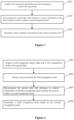
- FIG. 1 is a flowchart of a speech recognition error correction method according to an embodiment which is not part of the invention and is presented for illustration purposes only, the method may include the following steps S101 to S103.
- step S101 to-be-recognized speech data and a first recognition result of the to-be-recognized speech data are acquired.
- the to-be-recognized speech data is from a user in an application as needed, for example, speech data inputted by the user using speech input when sending a short message or chatting.
- the to-be-recognized speech data may be speech data in a general field or speech data in a special scenario (for example, a professional field).
- the first recognition result of the to-be-recognized speech data may be acquired in a variety of ways.
- the first recognition result may be acquired based on a neural network model.
- other ways of acquiring the first recognition result of the to-be-recognized speech also fall within the scope of the present disclosure.
- the first recognition result of the to-be-recognized speech data may be stored in advance and is directly acquired from a storage medium for usage.
- step S102 the speech data is re-recognized with reference to context information in the first recognition result to obtain a second recognition result.
- the speech data may be re-recognized with reference to the context information in the first recognition result to obtain the second recognition result.
- the speech data may be re-recognized based on a neural network model.
- a filed-specific word included in the first recognition result may be identified to find out, from other words in the first recognition result, a word which matches with the filed-specific word at a degree higher than a preset limit and is not exactly the same as the filed-specific word. The found word is replaced with the filed-specific word to obtain the second recognition result.
- step S103 a final recognition result is determined based on the second recognition result.
- the second identification result may be directly determined as the final identification result.
- the second recognition result may not be better than the first recognition result, and if the second recognition result is directly determined as the final recognition result, the recognition accuracy is lowered. Therefore, in this case, an optimal one out of the first recognition result and the second recognition result is determined as the final recognition result.
- a confidence of the first recognition result and a confidence of the second recognition result may be obtained, and the one with a higher confidence out of the first recognition result and the second recognition result is determined as the final recognition result.
- an optimal identification result may be determined by manual verification from the first identification result and the second identification result.
- a speech recognition error correction method includes: acquiring to-be-recognized speech data and a first recognition result of the to-be-recognized speech data; re-recognizing the speech data with reference to context information in the first recognition result to obtain a second recognition result; and determining a final recognition result based on the second recognition result.
- the speech data is re-recognized with reference to context information in the first recognition result, therefore the application scenario of the context information in the recognition result is fully considered. If the first recognition result is wrong, the first recognition result is corrected based on the re-recognition. Therefore, the accuracy of speech recognition can be improved.
- a speech recognition error correction method is further provided according to the invention, in which a keyword is extracted from the first recognition result, and thus the speech data is re-recognized with reference to the context information and the keyword to further improve the accuracy of the second recognition result.
- the method includes the following steps S201 to S204.
- step S201 to-be-recognized speech data and a first recognition result of the to-be-recognized speech data are acquired.
- Step S201 is the same as step S101 described above.
- one may refer to the above description and the implementation is not repeated herein.
- step S202 a keyword is extracted from the first recognition result.
- the keyword is a field-specific word extracted from the first recognition result. That is to say, the keyword is a word that is included in the first recognition result and related to a field. Examples of this kind of words may be “autophagy reaction”, “bone traction”, “renal biopsy” and the like in the medical field, “feedforward neural network”, “pool layer” and the like in the computer field.
- step S203 the speech data is re-recognized with reference to context information in the first recognition result and the keyword to obtain a second recognition result.
- the speech data is re-recognized with reference to both the context information in the first recognition result and the keyword.
- the second recognition result may be obtained based on a neural network model.
- step S204 a final recognition result is determined based on the second recognition result.
- Step S204 is the same as step S103 described above. For detailed implementation, one may refer to the above description and the implementation is not repeated herein.
- a speech recognition error correction method is disclosed in this embodiment.
- a keyword is extracted from the first recognition result.
- the keyword is a field-specific word.
- the speech data is re-recognized with reference to the context information and the keyword in the first recognition result, thereby further improves the accuracy of the second recognition result.
- the speech data may be inputted to a pre-trained speech recognition model to obtain the first recognition result.
- the pre-trained speech recognition model may be a conventional speech recognition model or a speech recognition model generated by training a preset model with a recognition-training data set.
- the recognition-training data set includes at least one group of recognition-training data, and each group of recognition-training data includes a text corresponding to a piece of speech data and an acoustic feature of the piece of speech data.
- the preset model may be any neural network model, which is not limited in the present disclosure.
- each piece of recognition-training data in the set may be obtained by: acquiring a piece of speech data and manually labeling the speech data to obtain a text corresponding to the speech data; extracting an acoustic feature of the speech data; and generating a piece of recognition-training data, which includes the text corresponding to the speech data and the acoustic feature of the speech data.
- the speech data may be received through a microphone of an intelligent terminal.
- the intelligent terminal is an electronic device with a speech recognition function, such as a smart phone, a computer, a translator, a robot, a smart home, and a smart home appliance.
- pre-stored speech data may be acquired.
- other ways to acquire the speech data also fall within the scope of the present disclosure, which is not limited in the present disclosure.
- an acoustic feature of each piece of speech data may be a spectral feature of the speech data, for example, an MFCC (Mel frequency cepstral coefficient) or an FBank feature.
- the acoustic feature of each piece of speech data may be any extracted with any mainstream acoustic feature extraction method, which is not limited in the present disclosure.
- the preset model to be trained may be a traditional attention-based encoder-decoder (encoding and decoding based on attention mechanism) or any other model structure, which is not limited in the present disclosure.
- the acoustic feature of each piece of speech data in the recognition-training data is taken as an input to the preset model and the text corresponding to the piece of speech data is taken as a training target, to train parameters of the preset model.
- the keyword may be extracted from the first recognition result by using the Named Entity Recognition (NER) technology.
- NER Named Entity Recognition
- other implementations of extracting the keyword in the first recognition result also fall within the scope of the present disclosure.
- the keyword may be extracted manually from the first recognition result.
- NER technology may be realized based on a neural network model.
- the keyword may be extracted from the first recognition result by: inputting the first recognition result to a pre-trained keyword extraction model to obtain the keyword in the first recognition result.
- the keyword extraction model may be generated by training a preset model structure based on a data set for extraction-training.
- the data set includes at least one group of extraction-training data, and each group of extraction-training data includes a text in which filed-specific terms are marked.
- Each text may be a text in a special scenario, in which the filed-specific terms are marked by manual annotation.
- the preset model may be a BiLSTM_CRF (bidirectional long-term and short-term memory model_conditional random field) model based on deep learning.
- BiLSTM_CRF bidirectional long-term and short-term memory model_conditional random field
- the first recognition result of "Autophagy reaction inhibits the occurrence of cancer, which is just the opposite of what many people thought in the past, so that the therapies for inhibiting autophagy reaction may result in bad consequences" is inputted to the keyword extraction model, and the keyword extraction model outputs keywords: “autophagy reaction”, “cancer” and “therapies”.
- NER technology may also be implemented based on a statistical model.
- the keyword may be extracted from the first recognition result by: inputting the first recognition result to the statistical model to obtain the keyword in the first recognition result.
- the way of constructing the statistical model is known in the art and is not detailed in the present disclosure.
- the acoustic feature of the speech data and the first recognition result is inputted to the pre-trained speech recognition error correction model to obtain the second recognition result.
- the speech recognition error correction model is obtained by training a preset model with a data set for error-correction training.
- the data set includes at least one group of error-correction training data, and each group of error-correction training data includes an acoustic feature corresponding to a piece of speech data, a text corresponding to the piece of speech data and the first recognition result corresponding to the piece of speech data.
- the acoustic feature corresponding to the piece of speech data and the first recognition result corresponding to the piece of speech data are taken as input to the preset speech recognition error correction model structure, and the text corresponding to the piece of speech data is taken as a training target of the preset speech recognition error correction model structure.
- Each group of error correction training data may be obtained by: acquiring a piece of speech data, manually marking the speech data to obtain a text corresponding to the speech data, extracting the acoustic feature of the speech data, and inputting the speech data to the pre-trained speech recognition model to obtain the first recognition result corresponding to the speech data.
- the acoustic feature of the speech data, the first recognition result and the keyword may be inputted to the pre-trained speech recognition error correction model to obtain the second recognition result.
- the speech recognition error correction model is obtained by training the preset model with the error-correction training data set.
- the error-correction training data set includes at least one group of error-correction training data, and each group of error-correction training data includes an acoustic feature corresponding to a piece of speech data, a text corresponding to the piece of speech data, a first recognition result corresponding to the piece of speech data and the keyword in the first recognition result.
- the acoustic feature corresponding to the piece of speech data, the first recognition result corresponding to the piece of speech data and the keyword in the first recognition result are taken as input to the preset speech recognition error correction model structure, and the text corresponding to the piece of speech data is taken as a training target of the preset speech recognition error correction model structure.
- Each group of error-correction training data may be obtained by: acquiring a piece of speech data, manually marking the speech data to obtain a text corresponding to the speech data, extracting the acoustic feature of the speech data, inputting the speech data to the pre-trained speech recognition model to obtain the first recognition result corresponding to the speech data, and inputting the first recognition result to the pre-trained keyword extraction model to obtain the keyword in the first recognition result.
- the second recognition result may be obtained in two implementations.
- the two implementations are based on the speech recognition error correction model and the two implementations are different in input data of the model.
- the acoustic feature of the speech data and the first recognition result are inputted to the model.
- the acoustic feature of the speech data, the first recognition result and the keyword extracted from the first recognition result are inputted to the model. That is to say, compared with the first implementation, the second implementation additionally inputs the keyword to the model.
- the acoustic feature of the speech data, the first recognition result and the keyword are inputted to the pre-trained speech recognition error correction model to obtain the second recognition result by: encoding, by the speech recognition error correction model, the acoustic feature of the speech data, the first recognition result and the keyword, and performing, by the speech recognition error correction model, attention calculation to obtain the second recognition result.
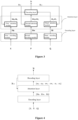
- FIG. 3 is a schematic diagram of a topology structure of a preset model for training the speech recognition error correction model according to an embodiment of the present disclosure.
- the model includes three layers, namely, an encoding layer, an attention layer and a decoding layer.
- a function of the encoding layer is to extract an advanced feature.
- a function of the attention layer is to calculate correlation between an input to the attention layer and a final output result.
- An output of the attention layer serves as an input to the decoding layer, and an output of the decoding layer serves as a current output result.
- the decoding layer may be a single-layer neural network with softmax, which is not limited in the present disclosure.
- the encoding layer may further be divided into three parts, namely, a first encoding module, a second encoding module and a third encoding module.
- the first encoding module, the second encoding module and the third encoding module may be in a structure of inverted-pyramid-shaped bidirectional recursive neural network (RNN) or convolutional neural network (CNN), which is not limited in the present disclosure.
- RNN inverted-pyramid-shaped bidirectional recursive neural network
- CNN convolutional neural network
- the attention layer may also be divided into three parts, namely, a first attention module, a second attention module and a third attention module.
- the first attention module, the second attention module and the third attention module may be in a structure of bidirectional RNN or unidirectional RNN, which is not limited in the present disclosure.
- the output of the attention layer serves as the input to the decoding layer, and the output of the decoding layer serves as the current output result.
- the decoding layer may be a single-layer neural network with softmax, which is not limited in the present disclosure.
- An input to the first encoding module is the acoustic feature X of the to-be-recognized speech data, and an output of the first encoding module is an advanced acoustic feature Ha.
- An input to the second encoding module is characterization P of the first recognition result of the to-be-recognized speech data, and an output of the second encoding module is an advanced feature Hw of the characterization P of the first recognition result.
- An input to the third encoding module is characterization Q of a keyword in the first recognition result of the to-be-recognized speech data, and an output of the third encoding module is an advanced feature Hr of the characterization Q of the keyword.
- a previous output result y i-1 is a common input to the first attention module, the second attention module and the third attention module.
- the three parts have different inputs and outputs.
- An input to the first attention module is Ha
- an output of the first attention module is a hidden layer state sa i and a semantic vector ca i related to the speech.
- An input to the second attention module is Hw
- an output of the second attention module is a hidden layer state sw i and a semantic vector cw i related to the first recognition result.
- An input to the third attention module is Hr
- an output of the third attention module is a hidden layer state sr i and a semantic vector cr i related to the keyword in the first recognition result.
- the input to the decoding layer is the output sa i , ca i , sw i , cw i , sr i and cr i of the attention layer.
- the output of the decoding layer is the current output result y i
- y i is the recognition result of the to-be-recognized speech data.
- P(y i ) represents probability that the current output result is y i
- P(y i ) Decode(sa i , sw i , sr i , ca i , cw i , cr i ).
- the encoding, by the speech recognition error correction model, the acoustic feature of the speech data, the first recognition result and the keyword, and performing, by the speech recognition error correction model, attention calculation to obtain the second recognition result may include: encoding, by the encoding layer of the speech recognition error correction model, the acoustic feature of the speech data, the first recognition result and the keyword, and performing, by the attention layer of the speech recognition error correction model, attention calculation to obtain the calculation result; and decoding, by the decoding layer of the speech recognition error correction model, the calculation result to obtain the second recognition result.
- the encoding, by the encoding layer of the speech recognition error correction model, the acoustic feature of the speech data, the first recognition result and the keyword, and performing, by the attention layer of the speech recognition error correction model, attention calculation to obtain the calculation result may include: encoding, by the encoding layer of the speech recognition error correction model, each target object to obtain an acoustic advanced feature of the target object; performing, by the attention layer of the speech recognition error correction model, attention calculation on a previous semantic vector related to the target object and a previous output result of the speech recognition error correction model, to obtain a hidden layer state related to the target object; and performing, by the attention layer of the speech recognition error correction model, attention calculation on the acoustic advanced feature of the target object and the hidden layer state related to the target object, to obtain a semantic vector related to the target object.
- the target object includes the acoustic feature of the speech data, the first recognition result, and the keyword.
- the first encoding module encodes the acoustic feature of the speech data to obtain the acoustic advanced feature of the speech data.
- the first attention module performs attention calculation on the previous semantic vector related to the speech data and the previous output result of the speech recognition error correction model to obtain the hidden layer state related to the speech data.
- the first attention module performs attention calculation on the acoustic advanced feature of the speech data and the hidden layer state related to the speech data to obtain the semantic vector related to the speech data.
- the second encoding module encodes the first recognition result to obtain an advanced feature of the first recognition result.
- the second attention module performs attention calculation on the previous semantic vector related to the first recognition result and the previous output result of the speech recognition error correction model to obtain a hidden layer state related to the first recognition result.
- the second attention module performs attention calculation on the advanced feature of the first recognition result and the hidden layer state related to the first recognition result to obtain the semantic vector related to the first recognition result.
- the third encoding module encodes the keyword to obtain an advanced feature of the keyword.
- the third attention module performs attention calculation on the previous semantic vector related to the keyword and the previous output result of the speech recognition error correction model to obtain a hidden layer state related to the keyword.
- the third attention module performs attention calculation on the advanced feature of the keyword and the hidden layer state related to the keyword to obtain the semantic vector related to the keyword.
- the above example is an optional processing process of the speech recognition error correction model in a case that the input data includes the acoustic feature of the speech data, the first recognition result and the keyword.
- the input data includes the acoustic feature of the speech data and the first recognition result
- all model structures and processing processes involving the keyword in Figure 3 are omitted, that is, the third encoding module and the third attention model are removed from the speech recognition error correction model without changing other model structures.
- the process is not repeated herein.
- FIG. 4 is a schematic diagram of a topology structure of a preset model for training the speech recognition error correction model according to another embodiment of the present disclosure.
- the model includes three layers, namely, an encoding layer, an attention layer and a decoding layer.
- a function of the encoding layer is to extract an advanced feature.
- a function of the attention layer is to calculate correlation between an input to the attention layer and a final output result.
- An output of the attention layer serves as an input to the decoding layer, and an output of the decoding layer serves as a current output result.
- the decoding layer may be a single-layer neural network with softmax, which is not limited in the present disclosure.
- the input to the encoding layer is a merged vector [X, P, Q] formed by the acoustic feature X of the to-be-recognized speech data, the characterization P of the first recognition result of the to-be-recognized speech data, and the characterization Q of the keyword in the first recognition result.
- the output of the encoding layer is a merged vector [Ha, Hw, Hr] formed by the advanced feature Ha of the acoustic feature, the advanced feature Hw of the characterization P of the first recognition result of the to-be-recognized speech data, and the advanced feature Hr of the characterization Q of the keyword in the first recognition result.
- An output of the attention layer is a vector [sa i , ca i , sw i , cw i , sr i , cr i ] formed by a hidden layer state sa i and a semantic vector ca i that are related to the speech, a hidden layer state sw i and a semantic vector cw i that are related to the first recognition result, a hidden layer state sr i and a semantic vector cr i that are related to the keyword in the first recognition result.
- the output of the attention layer serves as the input to the decoding layer.
- the output of the decoding layer serves as a current output result y i , and y i is the recognition result of the to-be-recognized speech data.
- the encoding, by the speech recognition error correction model, the acoustic feature of the speech data, the first recognition result and the keyword, and performing, by the speech recognition error correction model, attention calculation to obtain the second recognition result based on a calculation result may include: merging the acoustic feature of the speech data, the first recognition result and the keyword to obtain a merged vector; performing, by the encoding layer and the attention layer of the speech recognition error correction model, encoding and attention calculation on the merged vector to obtain the calculation result; and decoding, by the decoding layer of the speech recognition error correction model, the calculation result to obtain the second recognition result.
- the performing, by the encoding layer and the attention layer of the speech recognition error correction model, encoding and attention calculation on the merged vector to obtain the calculation result may include: encoding, by the encoding layer of the speech recognition error correction model, the merged vector to obtain an acoustic advanced feature of the merged vector; performing, by the attention layer of the speech recognition error correction model, attention calculation on a previous semantic vector related to the merged vector and the previous output result of the speech recognition error correction model to obtain a hidden layer state related to the merged vector; and performing, by the attention layer of the speech recognition error correction model, attention calculation on the acoustic advanced feature of the merged vector and the hidden layer state related to the merged vector to obtain the semantic vector related to the merged vector.
- the attention layer mainly focuses on correlation between the output result of the conventional speech recognition model and the acoustic feature of the speech data.
- the first recognition result of the speech data and the keyword in the first recognition result are integrated into the attention layer, so that the output result of the speech recognition error correction model is related to error correction information of the recognition result and the context information in the recognition result.
- the speech recognition error correction model may learn an attention mechanism in which the output result is related to the context information, and may learn an attention mechanism in which the output result is related to error-correction, whereby finding out the context information and error correction information needed for the current speech data, i.e., automatically selecting whether or not to pay attention to the first recognition result and the keyword information in the first recognition result based on the inputted speech data. That is to say, the speech recognition error correction model has an ability of automatic error correction based on the first recognition result and the keyword in the first recognition result.
- the above example shows another optional processing process of the speech recognition error correction model in a case that the input data includes the acoustic feature of the speech data, the first recognition result and the keyword.
- the input to the encoding layer shown in Figure 4 is a merged vector [X, P] formed by the acoustic feature X of the to-be-recognized speech data and the characterization P of the first recognition result of the to-be-recognized speech data
- the output of the encoding layer is a merged vector [Ha, Hw] formed by the advanced feature Ha of the acoustic feature and the advanced feature Hw of the characterization P of the first recognition result.
- the output result of the attention layer is a vector [sa i , ca i , sw i , cw i ] formed by the hidden layer state sa i and the semantic vector ca i that are related to speech, and the hidden layer state sw i and the semantic vector cw i that are related to the first recognition result.
- the output of the attention layer serves as the input to the decoding layer.
- the output of the decoding layer serves as the current output result y i
- y i is the recognition result of the to-be-recognized speech data.
- a merged vector inputted to the encoding layer does not include the information of the keyword.
- Other layers of the model may process the input from the encoding layer in similar logic and reference may be made to the above description, which is not repeated herein.
- Speech data for training a speech recognition model and a speech recognition error correction model is collected.
- the speech data may be received through a microphone of a smart terminal.
- the smart terminal is an electronic device with a speech recognition function, for example, a smart phone, a computer, a translator, a robot, a smart home (home appliance), and the like.
- each piece of speech data is manually marked, that is, each piece of speech data is manually transcribed into text data.
- An acoustic feature of each piece of speech data is extracted.
- the acoustic feature is generally a spectral feature of the speech data, for example, an MFCC feature, an FBank feature and other feature.
- the acoustic feature may be extracted in a conventional manner, which is not repeated herein.
- the acoustic feature of the speech data and the manually marked text corresponding to the speech data are obtained.
- the acoustic feature of the speech data and the manually marked text corresponding to the speech data obtained in the above steps are divided into two parts.
- a first part is represented by a set A
- a second part is represented by a set B.
- 1 million groups of the acoustic features of the speech data and the manually marked texts corresponding to the speech data obtained in the above steps are randomly divided into two sets of equal amount, namely, set A and set B.
- Each of the set A and the set B includes multiple groups of training data, and each group of training data includes an acoustic feature of a piece of speech data and a manually marked text corresponding to the piece of speech data.
- Training is performed by using the set A as the recognition-training data set to obtain a speech recognition model.
- the set B is inputted into the trained speech recognition model to obtain recognition results corresponding to the set B. Then the recognition results corresponding to the set B are inputted into a keyword extraction model to obtain keywords in the recognition results corresponding to the set B.
- the acoustic features, the manually marked texts, the recognition results and the keywords corresponding to the set B form a set C.
- the set C includes multiple groups of training data, and each group of training data includes an acoustic feature corresponding to a piece of speech data, a manually marked text corresponding to the piece of speech data, a recognition result corresponding to the piece of speech data and a keyword in the recognition result.
- Training is performed by using the set C as the error-correction training data set to obtain the speech recognition error correction model.
- the set B may be inputted into the trained speech recognition model to obtain Nbest recognition results corresponding to the set B. Then each recognition result is inputted into the keyword extraction model to obtain the keyword in the recognition result. If the set B includes n pieces of speech data and each piece of speech corresponds to Nbest recognition results, then n*N groups of training data are finally obtained. This processing enriches the error correction training data set and improves the coverage of the speech recognition error correction model.
- each of the recognition-training data set and the error correction training data set includes keywords. If the input to the speech recognition error correction model only includes the acoustic feature of the speech data and the first recognition result, that is, the input data does not include the keyword, then the step of obtaining the keywords in the above process may be omitted. The finally obtained recognition-training data set and error correction training data set are not required to include the keywords.
- a speech recognition error correction device according to an embodiment of the present disclosure is described below.
- the speech recognition error correction device described below and the speech recognition error correction method described above may be cross referenced.
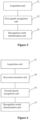
- Figure 5 is a schematic structural diagram of a speech recognition error correction device according to an embodiment which is not part of the invention and is presented for illustration purposes only.
- the speech recognition error correction device includes an acquisition unit 51, a first speech recognition unit 52 and a recognition result determination unit 53.
- the acquisition unit 51 is configured to acquire to-be-recognized speech data and a first recognition result of the speech data.
- the first speech recognition unit 52 is configured to re-recognize the speech data with reference to context information in the first recognition result to obtain a second recognition result.
- the recognition result determination unit 53 is configured to determine a final recognition result based on the second recognition result.
- the speech recognition error correction device includes an acquisition unit 51, a keyword extraction unit 54, a second speech recognition unit 55, and a recognition result determination unit 53.
- the keyword extraction unit 54 is configured to extract a keyword from the first recognition result.
- the second speech recognition unit 55 is configured to re-recognize the speech data with reference to context information in the first recognition result and the keyword to obtain a second recognition result.
- the recognition result determination unit 53 is configured to determine a final recognition result based on the second recognition result.
- the keyword extraction unit includes a filed-specific word extraction unit.
- the filed-specific word extraction unit is configured to extract a filed-specific word from the first recognition result as a keyword.
- the second speech recognition unit includes an acoustic feature acquisition unit and a model processing unit.
- the acoustic feature acquisition unit is configured to acquire an acoustic feature of the speech data.
- the model processing unit is configured to input the acoustic feature of the speech data, the first recognition result and the keyword to a pre-trained speech recognition error correction model to obtain the second recognition result.
- the speech recognition error correction model is obtained by training a preset model using an error-correction training data set.
- the error-correction training data set includes at least one group of error-correction training data, and each group of error-correction training data includes an acoustic feature of a piece of speech data, a text corresponding to the piece of speech data, a first recognition result corresponding to the piece of speech data, and a keyword in the first recognition result.
- the model processing unit includes an encoding and attention calculation unit and a recognition unit.
- the encoding and attention calculation unit is configured to perform encoding and attention calculation on the acoustic feature of the speech data, the first recognition result and the keyword using the speech recognition error correction model.
- the recognition unit is configured to obtain the second recognition result based on the calculation result.
- the encoding and attention calculation unit includes a first encoding and attention calculation unit, and the recognition unit includes a first decoding unit;
- the first encoding and attention calculation unit is configured to perform encoding and attention calculation on each of the acoustic feature of the speech data, the first recognition result and the keyword using the encoding layer and the attention layer of the speech recognition error correction model to obtain the calculation result.
- the first decoding unit is configured to decode the calculation result using the decoding layer of the speech recognition error correction model to obtain the second recognition result.
- the model processing unit further includes a merging unit.
- the encoding and attention calculation unit includes a second encoding and attention calculation unit.
- the recognition unit includes a second decoding unit.
- the merging unit is configured to merge the acoustic feature of the speech data, the first recognition result and the keyword to obtain a merged vector.
- the second encoding and attention calculation unit is configured to perform encoding and attention calculation on the merged vector using the encoding layer and the attention layer of the speech recognition error correction model to obtain the calculation result.
- the second decoding unit is configured to decode the calculation result using the decoding layer of the speech recognition error correction model to obtain the second recognition result.
- the first encoding and attention calculation unit includes a first encoding unit and a first attention calculation unit.
- the first encoding unit is configured to encode each target object using the encoding layer of the speech recognition error correction model to obtain the acoustic advanced feature of the target object.
- the first attention calculation unit is configured to perform attention calculation on a previous semantic vector related to each target object and a previous output result of the speech recognition error correction model using the attention layer of the speech recognition error correction model to obtain a hidden layer state related to the target object; and perform attention calculation on the acoustic advanced feature of the target object and the hidden layer state related to the target object using the attention layer of the speech recognition error correction model to obtain the semantic vector related to the target object.
- the target object includes the acoustic feature of the speech data, the first recognition result, and the keyword.
- the second encoding and attention calculation unit includes a second encoding unit and a second attention calculation unit.
- the second encoding unit is configured to encode the merged vector using the encoding layer of the speech recognition error correction model to obtain the acoustic advanced feature of the merged vector.
- the second attention calculation unit is configured to perform attention calculation on the previous semantic vector related to the merged vector and the previous output result of the speech recognition error correction model using the attention layer of the speech recognition error correction model to obtain a hidden layer state related to the merged vector; and perform attention calculation on the acoustic advanced feature of the merged vector and the hidden layer state related to the merged vector using the attention layer of the speech recognition error correction model to obtain the semantic vector related to the merged vector.
- the recognition result determination unit includes a confidence acquisition unit and a determination unit.
- the confidence acquisition unit is configured to acquire a confidence of the first recognition result and a confidence of the second recognition result.
- the determination unit is configured to determine one with a higher confidence out of the first recognition result and the second recognition result as a final recognition result.
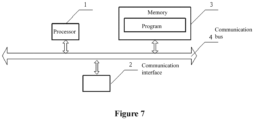
- Figure 7 is a block diagram of a hardware structure of a speech recognition error correction system according to an embodiment of the present disclosure.
- the hardware structure of the speech recognition error correction system includes at least one processor 1, at least one communication interface 2, at least one memory 3 and at least one communication bus 4.
- processor 1 there is at least one processor 1, at least one communication interface 2, at least one memory 3 and at least one communication bus 4.
- the processor 1, the communication interface 2 and the memory 3 communicates with each other through the communication bus 4.
- the memory 3 may include a high-speed RAM memory, a non-volatile memory and the like, for example, at least one disk memory.
- the memory stores a program
- the processor calls the program stored in the memory.
- the program is used for: acquiring to-be-recognized speech data and a first recognition result of the to-be-recognized speech data; re-recognizing the speech data with reference to the context information in the first recognition result to obtain a second recognition result; and determining a final recognition result based on the second recognition result.
- the program is used for: acquiring to-be-recognized speech data and a first recognition result of the to-be-recognized speech data; extracting a keyword from the first recognition result; re-recognizing the speech data with reference to the context information in the first recognition result and the keyword to obtain a second recognition result; and determining a final recognition result based on the second recognition result.
- a storage medium is further provided according to an embodiment of the present disclosure.
- the storage medium stores a program executable by a processor.
- the program is used for: acquiring the to-be-recognized speech data and a first recognition result of the to-be-recognized speech data; re-recognizing the speech data with reference to the context information in the first recognition result to obtain a second recognition result; and determining a final recognition result based on the second recognition result.
- the program may be used for: acquiring the to-be-recognized speech data and a first recognition result of the to-be-recognized speech data; extracting a keyword from the first recognition result; re-recognizing the speech data with reference to the context information in the first recognition result and the keyword to obtain a second recognition result; and determining a final recognition result based on the second recognition result.
- a computer program product is further provided according to an embodiment of the present disclosure.
- the computer program product when being executed on a terminal device, causes the terminal device to perform any implementation of the speech recognition error correction method.
- relationship terms such as “first” and “second” are merely for distinguishing one entity or operation from another entity or operation rather than indicating or implying an actual relationship or order between these entities or operations.
- terms of “include”, “comprise” or any other variants are intended to be non-exclusive. Therefore, a process, method, article or device including multiple elements includes not only the elements but also other elements that are not enumerated, or also include elements inherent in the process, method, article or device. Unless expressively limited otherwise, the statement “comprising (including) one" does not exclude a case that other similar elements may exist in the process, method, article or device.
Landscapes
- Engineering & Computer Science (AREA)
- Computational Linguistics (AREA)
- Health & Medical Sciences (AREA)
- Audiology, Speech & Language Pathology (AREA)
- Human Computer Interaction (AREA)
- Physics & Mathematics (AREA)
- Acoustics & Sound (AREA)
- Multimedia (AREA)
- Signal Processing (AREA)
- Artificial Intelligence (AREA)
- Evolutionary Computation (AREA)
- Machine Translation (AREA)
Claims (11)
- Spracherkennungsfehlerkorrekturverfahren, das Folgendes umfasst:Erfassen von zu erkennenden Sprachdaten und eines ersten Erkennungsergebnisses der Sprachdaten,Extrahieren eines Schlüsselwortes aus dem ersten Erkennungsergebnis,erneutes Erkennen der Sprachdaten mit Bezug auf Kontextinformationen in dem ersten Erkennungsergebnis und das Schlüsselwort, um ein zweites Erkennungsergebnis zu erhalten, undErmitteln eines endgültigen Erkennungsergebnisses auf der Grundlage des zweiten Erkennungsergebnisses,dadurch gekennzeichnet, dass:das Schlüsselwort ein gebietsspezifisches Wort ist unddas erneute Erkennen der Sprachdaten mit Bezug auf Kontextinformationen in dem ersten Erkennungsergebnis und das Schlüsselwort, um ein zweites Erkennungsergebnis zu erhalten, Folgendes umfasst:Erfassen eines akustischen Merkmals der Sprachdaten undEingeben des akustischen Merkmals der Sprachdaten, des ersten Erkennungsergebnisses und des Schlüsselwortes in ein vortrainiertes Spracherkennungsfehlerkorrekturmodell, um das zweite Erkennungsergebnis zu erhalten, wobei das Spracherkennungsfehlerkorrekturmodell erhalten wird, indem ein vorgegebenes Modell mit einem Fehlerkorrekturtrainingsdatensatz trainiert wird,wobei der Fehlerkorrekturtrainingsdatensatz wenigstens eine Gruppe von Fehlerkorrekturtrainingsdaten umfasst und jede Gruppe von Fehlerkorrekturtrainingsdaten ein akustisches Merkmal eines Stücks Sprachdaten, einen dem Stück Sprachdaten entsprechenden Text, ein dem Stück Sprachdaten entsprechendes erstes Erkennungsergebnis und ein Schlüsselwort in dem ersten Erkennungsergebnis umfasst.
- Verfahren nach Anspruch 1, bei dem das Eingeben des akustischen Merkmals der Sprachdaten, des ersten Erkennungsergebnisses und des Schlüsselwortes in ein vortrainiertes Spracherkennungsfehlerkorrekturmodell, um das zweite Erkennungsergebnis zu erhalten, Folgendes umfasst:
Durchführen einer Codierungs- und Aufmerksamkeitsberechnung an dem akustischen Merkmal der Sprachdaten, dem ersten Erkennungsergebnis und dem Schlüsselwort unter Verwendung des Spracherkennungsfehlerkorrekturmodells, um das zweite Erkennungsergebnis auf der Grundlage eines Berechnungsergebnisses zu erhalten. - Verfahren nach Anspruch 2, bei dem das Durchführen der Codierungs- und Aufmerksamkeitsberechnung an dem akustischen Merkmal der Sprachdaten, dem ersten Erkennungsergebnis und dem Schlüsselwort unter Verwendung des Spracherkennungsfehlerkorrekturmodells, um das zweite Erkennungsergebnis auf der Grundlage eines Berechnungsergebnisses zu erhalten, Folgendes umfasst:Durchführen einer Codierungs- und Aufmerksamkeitsberechnung jeweils an dem akustischen Merkmal der Sprachdaten, dem ersten Erkennungsergebnis und dem Schlüsselwort unter Verwendung einer Codierungsschicht und einer Aufmerksamkeitsschicht des Spracherkennungsfehlerkorrekturmodells, um das Berechnungsergebnis zu erhalten, undDecodieren des Berechnungsergebnisses unter Verwendung einer Decodierungsschicht des Spracherkennungsfehlerkorrekturmodells, um das zweite Erkennungsergebnis zu erhalten.
- Verfahren nach Anspruch 2, bei dem das Durchführen der Codierungs- und Aufmerksamkeitsberechnung an dem akustischen Merkmal der Sprachdaten, dem ersten Erkennungsergebnis und dem Schlüsselwort unter Verwendung des Spracherkennungsfehlerkorrekturmodells, um das zweite Erkennungsergebnis auf der Grundlage eines Berechnungsergebnisses zu erhalten, Folgendes umfasst:Zusammenführen des akustischen Merkmals der Sprachdaten, des ersten Erkennungsergebnisses und des Schlüsselworts, um einen zusammengeführten Vektor zu erhalten,Durchführen einer Codierungs- und Aufmerksamkeitsberechnung an dem zusammengeführten Vektor durch eine Codierungsschicht und eine Aufmerksamkeitsschicht des Spracherkennungsfehlerkorrekturmodells, um das Berechnungsergebnis zu erhalten, undDecodieren des Berechnungsergebnisses durch eine Decodierungsschicht des Spracherkennungsfehlerkorrekturmodells, um das zweite Erkennungsergebnis zu erhalten.
- Verfahren nach Anspruch 3, bei dem das Durchführen der Codierungs- und Aufmerksamkeitsberechnung jeweils an dem akustischen Merkmal der Sprachdaten, dem ersten Erkennungsergebnis und dem Schlüsselwort unter Verwendung einer Codierungsschicht und einer Aufmerksamkeitsschicht des Spracherkennungsfehlerkorrekturmodells, um das Berechnungsergebnis zu erhalten, Folgendes umfasst:
für jedes Zielobjekt:Codieren des Zielobjekts durch die Codierungsschicht des Spracherkennungsfehlerkorrekturmodells, um ein akustisches fortgeschrittenes Merkmal des Zielobjekts zu erhalten,Durchführen einer Aufmerksamkeitsberechnung an einem vorherigen semantischen Vektor in Bezug auf das Zielobjekt und einem vorherigen Ausgabeergebnis des Spracherkennungsfehlerkorrekturmodells durch die Aufmerksamkeitsschicht des Spracherkennungsfehlerkorrekturmodells, um einen Zustand einer verborgenen Schicht in Bezug auf das Zielobjekt zu erhalten, undDurchführen einer Aufmerksamkeitsberechnung an dem akustischen fortgeschrittenen Merkmal des Zielobjekts und dem Zustand der verborgenen Schicht in Bezug auf das Zielobjekt durch die Aufmerksamkeitsschicht des Spracherkennungsfehlerkorrekturmodells, um einen semantischen Vektor in Bezug auf das Zielobjekt zu erhalten,wobei das Zielobjekt das akustische Merkmal der Sprachdaten, das erste Erkennungsergebnis und das Schlüsselwort umfasst. - Verfahren nach Anspruch 4, bei dem das Durchführen einer Codierungs- und Aufmerksamkeitsberechnung an dem zusammengeführten Vektor durch die Codierungsschicht und die Aufmerksamkeitsschicht des Spracherkennungsfehlerkorrekturmodells, um das Berechnungsergebnis zu erhalten, Folgendes umfasst:Codieren des zusammengeführten Vektors durch die Codierungsschicht des Spracherkennungsfehlerkorrekturmodells, um ein akustisches fortgeschrittenes Merkmal des zusammengeführten Vektors zu erhalten,Durchführen einer Aufmerksamkeitsberechnung an einem vorherigen semantischen Vektor in Bezug auf den zusammengeführten Vektor und einem vorherigen Ausgabeergebnis des Spracherkennungsfehlerkorrekturmodells durch die Aufmerksamkeitsschicht des Spracherkennungsfehlerkorrekturmodells, um einen Zustand einer verborgenen Schicht in Bezug auf den zusammengeführten Vektor zu erhalten, undDurchführen einer Aufmerksamkeitsberechnung an dem akustischen fortgeschrittenen Merkmal des zusammengeführten Vektors und dem Zustand der verborgenen Schicht in Bezug auf den zusammengeführten Vektor durch die Aufmerksamkeitsschicht des Spracherkennungsfehlerkorrekturmodells, um einen semantischen Vektor in Bezug auf den zusammengeführten Vektor zu erhalten.
- Verfahren nach Anspruch 1, bei dem das Ermitteln eines endgültigen Erkennungsergebnisses auf der Grundlage des zweiten Erkennungsergebnisses Folgendes umfasst:Erfassen einer Konfidenz des ersten Erkennungsergebnisses und einer Konfidenz des zweiten Erkennungsergebnisses undErmitteln desjenigen mit einer höheren Konfidenz aus dem ersten Erkennungsergebnis und dem zweiten Erkennungsergebnis als endgültiges Erkennungsergebnis.
- Spracherkennungsfehlerkorrekturvorrichtung mit:einer Erfassungseinheit, die dazu eingerichtet ist, zu erkennende Sprachdaten und ein erstes Erkennungsergebnis der Sprachdaten zu erfassen,einer Schlüsselwortextraktionseinheit, die dazu eingerichtet ist, ein Schlüsselwort aus dem ersten Erkennungsergebnis zu extrahieren,einer zweiten Spracherkennungseinheit, die dazu eingerichtet ist, die Sprachdaten mit Bezug auf Kontextinformationen in dem ersten Erkennungsergebnis und das Schlüsselwort erneut zu erkennen, um ein zweites Erkennungsergebnis zu erhalten, undeiner Erkennungsergebnisermittlungseinheit, die dazu eingerichtet ist, ein endgültiges Erkennungsergebnis auf der Grundlage des zweiten Erkennungsergebnisses zu ermitteln,dadurch gekennzeichnet, dass:das Schlüsselwort ein gebietsspezifisches Wort ist unddie zweite Spracherkennungseinheit ferner dazu eingerichtet ist,:ein akustisches Merkmal der Sprachdaten zu erfassen unddas akustische Merkmal der Sprachdaten, das erste Erkennungsergebnis und das Schlüsselwort in ein vortrainiertes Spracherkennungsfehlerkorrekturmodell einzugeben, um das zweite Erkennungsergebnis zu erhalten, wobei das Spracherkennungsfehlerkorrekturmodell erhalten wird, indem ein vorgegebenes Modell mit einem Fehlerkorrekturtrainingsdatensatz trainiert wird,wobei der Fehlerkorrekturtrainingsdatensatz wenigstens eine Gruppe von Fehlerkorrekturtrainingsdaten umfasst und jede Gruppe von Fehlerkorrekturtrainingsdaten ein akustisches Merkmal eines Stücks Sprachdaten, einen dem Stück Sprachdaten entsprechenden Text, ein dem Stück Sprachdaten entsprechendes erstes Erkennungsergebnis und ein Schlüsselwort in dem ersten Erkennungsergebnis umfasst.
- Spracherkennungsfehlerkorrektursystem mit:einem Speicher, der dazu eingerichtet ist, ein Programm zu speichern, undeinem Prozessor, der dazu eingerichtet ist, das Programm auszuführen, um das Spracherkennungsfehlerkorrekturverfahren nach einem der Ansprüche 1 bis 7 durchzuführen.
- Lesbares Speichermedium, auf dem ein Computerprogramm gespeichert ist, wobei das Computerprogramm bei Ausführung durch einen Prozessor das Spracherkennungsfehlerkorrekturverfahren nach einem der Ansprüche 1 bis 7 implementiert.
- Computerprogrammprodukt, das bei Ausführung auf einem Endgerät bewirkt, dass das Endgerät das Verfahren nach einem der Ansprüche 1 bis 7 durchführt.
Applications Claiming Priority (2)
| Application Number | Priority Date | Filing Date | Title |
|---|---|---|---|
| CN201911167009.0A CN110956959B (zh) | 2019-11-25 | 2019-11-25 | 语音识别纠错方法、相关设备及可读存储介质 |
| PCT/CN2020/129314 WO2021104102A1 (zh) | 2019-11-25 | 2020-11-17 | 语音识别纠错方法、相关设备及可读存储介质 |
Publications (4)
| Publication Number | Publication Date |
|---|---|
| EP4068280A1 EP4068280A1 (de) | 2022-10-05 |
| EP4068280A4 EP4068280A4 (de) | 2023-11-01 |
| EP4068280C0 EP4068280C0 (de) | 2025-03-19 |
| EP4068280B1 true EP4068280B1 (de) | 2025-03-19 |
Family
ID=69978361
Family Applications (1)
| Application Number | Title | Priority Date | Filing Date |
|---|---|---|---|
| EP20894295.3A Active EP4068280B1 (de) | 2019-11-25 | 2020-11-17 | Spracherkennungsfehlerkorrekturverfahren, zugehörige vorrichtungen und lesbares speichermedium |
Country Status (7)
| Country | Link |
|---|---|
| US (1) | US12183326B2 (de) |
| EP (1) | EP4068280B1 (de) |
| JP (1) | JP7514920B2 (de) |
| KR (1) | KR102648306B1 (de) |
| CN (1) | CN110956959B (de) |
| ES (1) | ES3033058T3 (de) |
| WO (1) | WO2021104102A1 (de) |
Families Citing this family (40)
| Publication number | Priority date | Publication date | Assignee | Title |
|---|---|---|---|---|
| CN110956959B (zh) * | 2019-11-25 | 2023-07-25 | 科大讯飞股份有限公司 | 语音识别纠错方法、相关设备及可读存储介质 |
| CN111627457A (zh) * | 2020-05-13 | 2020-09-04 | 广州国音智能科技有限公司 | 语音分离方法、系统及计算机可读存储介质 |
| CN111583909B (zh) | 2020-05-18 | 2024-04-12 | 科大讯飞股份有限公司 | 一种语音识别方法、装置、设备及存储介质 |
| CN111754987A (zh) * | 2020-06-23 | 2020-10-09 | 国投(宁夏)大数据产业发展有限公司 | 一种大数据分析语音识别方法 |
| CN112016305B (zh) * | 2020-09-09 | 2023-03-28 | 平安科技(深圳)有限公司 | 文本纠错方法、装置、设备及存储介质 |
| CN112259100B (zh) * | 2020-09-15 | 2024-04-09 | 科大讯飞华南人工智能研究院(广州)有限公司 | 语音识别方法及相关模型的训练方法和相关设备、装置 |
| CN112133453B (zh) * | 2020-09-16 | 2022-08-26 | 成都美透科技有限公司 | 一种基于医美数据和医疗数据的用户咨询辅助分析系统 |
| CN112257437B (zh) * | 2020-10-20 | 2024-02-13 | 中国科学技术大学 | 语音识别纠错方法、装置、电子设备和存储介质 |
| CN112435671B (zh) * | 2020-11-11 | 2021-06-29 | 深圳市小顺智控科技有限公司 | 汉语精准识别的智能化语音控制方法及系统 |
| CN112489651B (zh) * | 2020-11-30 | 2023-02-17 | 科大讯飞股份有限公司 | 语音识别方法和电子设备、存储装置 |
| CN114678027B (zh) * | 2020-12-24 | 2024-12-03 | 深圳Tcl新技术有限公司 | 语音识别结果的纠错方法、装置、终端设备及存储介质 |
| US11551694B2 (en) * | 2021-01-05 | 2023-01-10 | Comcast Cable Communications, Llc | Methods, systems and apparatuses for improved speech recognition and transcription |
| CN113035175B (zh) * | 2021-03-02 | 2024-04-12 | 科大讯飞股份有限公司 | 一种语音文本重写模型构建方法、语音识别方法 |
| CN113129870B (zh) * | 2021-03-23 | 2022-03-25 | 北京百度网讯科技有限公司 | 语音识别模型的训练方法、装置、设备和存储介质 |
| KR102715945B1 (ko) * | 2021-04-07 | 2024-10-10 | 네이버 주식회사 | 음성 녹음 후의 정보에 기초하여 생성된 음성 기록을 제공하는 방법 및 시스템 |
| CN113257227B (zh) * | 2021-04-25 | 2024-03-01 | 平安科技(深圳)有限公司 | 语音识别模型性能检测方法、装置、设备及存储介质 |
| CN113409767B (zh) * | 2021-05-14 | 2023-04-25 | 北京达佳互联信息技术有限公司 | 一种语音处理方法、装置、电子设备及存储介质 |
| CN113421553B (zh) * | 2021-06-15 | 2023-10-20 | 北京捷通数智科技有限公司 | 音频挑选的方法、装置、电子设备和可读存储介质 |
| CN113221580B (zh) * | 2021-07-08 | 2021-10-12 | 广州小鹏汽车科技有限公司 | 语义拒识方法、语义拒识装置、交通工具及介质 |
| CN113626563A (zh) * | 2021-08-30 | 2021-11-09 | 京东方科技集团股份有限公司 | 训练自然语言处理模型和自然语言处理的方法、电子设备 |
| CN113889091A (zh) * | 2021-10-26 | 2022-01-04 | 深圳地平线机器人科技有限公司 | 语音识别方法、装置、计算机可读存储介质及电子设备 |
| CN114187913A (zh) * | 2021-12-10 | 2022-03-15 | 北京百度网讯科技有限公司 | 语音识别方法、装置、设备、介质及程序产品 |
| CN114333795B (zh) * | 2021-12-23 | 2025-05-13 | 科大讯飞股份有限公司 | 语音识别方法和装置、计算机可读存储介质 |
| CN114358010B (zh) * | 2021-12-30 | 2025-09-09 | 腾讯科技(深圳)有限公司 | 一种实体识别方法、装置和计算机设备 |
| US12519568B2 (en) * | 2022-04-01 | 2026-01-06 | Intel Corporation | Semantic network data correction |
| CN115346531B (zh) * | 2022-08-02 | 2024-08-09 | 启迪万众网络科技(北京)有限公司 | 一种语音媒体处理用语音转文字识别系统 |
| WO2024029845A1 (ko) * | 2022-08-05 | 2024-02-08 | 삼성전자주식회사 | 전자 장치 및 이의 음성 인식 방법 |
| US12475888B2 (en) | 2022-10-12 | 2025-11-18 | Samsung Electronics Co., Ltd. | Method and system for auto-correction of an ongoing speech command |
| US11657803B1 (en) * | 2022-11-02 | 2023-05-23 | Actionpower Corp. | Method for speech recognition by using feedback information |
| CN115798463A (zh) * | 2022-11-03 | 2023-03-14 | 科大讯飞股份有限公司 | 语音识别方法、装置、电子设备和存储介质 |
| CN116013261A (zh) * | 2022-12-31 | 2023-04-25 | 科大讯飞股份有限公司 | 一种语音识别方法、装置、存储介质及设备 |
| CN116129906B (zh) * | 2023-02-14 | 2024-09-20 | 新声科技(深圳)有限公司 | 语音识别文本修订方法、装置、计算机设备以及存储介质 |
| US12469507B2 (en) | 2023-06-14 | 2025-11-11 | Microsoft Technology Licensing, Llc | Predictive context-based decoder correction |
| US12363319B2 (en) | 2023-06-14 | 2025-07-15 | Microsoft Technology Licensing, Llc | Object-based context-based decoder correction |
| US20240420707A1 (en) * | 2023-06-14 | 2024-12-19 | Microsoft Technology Licensing, Llc | Voice context-based decoder correction |
| CN116991874B (zh) * | 2023-09-26 | 2024-03-01 | 海信集团控股股份有限公司 | 一种文本纠错、基于大模型的sql语句生成方法及设备 |
| CN117238276B (zh) * | 2023-11-10 | 2024-01-30 | 深圳市托普思维商业服务有限公司 | 一种基于智能化语音数据识别的分析纠正系统 |
| CN117542353B (zh) * | 2023-11-14 | 2024-07-19 | 贵州大学 | 一种基于知识图谱和语音特征融合网络的语音理解方法 |
| CN117558263B (zh) * | 2024-01-10 | 2024-04-26 | 科大讯飞股份有限公司 | 语音识别方法、装置、设备及可读存储介质 |
| CN119091861B (zh) * | 2024-08-21 | 2025-05-13 | 国家计算机网络与信息安全管理中心 | 基于人工智能的语音转写加速方法 |
Family Cites Families (66)
| Publication number | Priority date | Publication date | Assignee | Title |
|---|---|---|---|---|
| US7047191B2 (en) * | 2000-03-06 | 2006-05-16 | Rochester Institute Of Technology | Method and system for providing automated captioning for AV signals |
| GB2376335B (en) * | 2001-06-28 | 2003-07-23 | Vox Generation Ltd | Address recognition using an automatic speech recogniser |
| US7139704B2 (en) * | 2001-11-30 | 2006-11-21 | Intel Corporation | Method and apparatus to perform speech recognition over a voice channel |
| DE10204924A1 (de) * | 2002-02-07 | 2003-08-21 | Philips Intellectual Property | Verfahren und Vorrichtung zur schnellen mustererkennungsunterstützten Transkription gesprochener und schriftlicher Äußerungen |
| JP2003308094A (ja) * | 2002-02-12 | 2003-10-31 | Advanced Telecommunication Research Institute International | 音声認識における認識誤り箇所の訂正方法 |
| US8239197B2 (en) * | 2002-03-28 | 2012-08-07 | Intellisist, Inc. | Efficient conversion of voice messages into text |
| US20060190249A1 (en) * | 2002-06-26 | 2006-08-24 | Jonathan Kahn | Method for comparing a transcribed text file with a previously created file |
| US20040249637A1 (en) * | 2003-06-04 | 2004-12-09 | Aurilab, Llc | Detecting repeated phrases and inference of dialogue models |
| FR2864281A1 (fr) * | 2003-12-18 | 2005-06-24 | France Telecom | Procede de correspondance automatique entre des elements graphiques et elements phonetiques |
| EP1787289B1 (de) * | 2004-07-30 | 2018-01-10 | Dictaphone Corporation | System und verfahren zur konfidenzbestimmung von reporttranskriptionen |
| US7310602B2 (en) * | 2004-09-27 | 2007-12-18 | Kabushiki Kaisha Equos Research | Navigation apparatus |
| CN101031913A (zh) * | 2004-09-30 | 2007-09-05 | 皇家飞利浦电子股份有限公司 | 自动文本校正 |
| JP4734155B2 (ja) | 2006-03-24 | 2011-07-27 | 株式会社東芝 | 音声認識装置、音声認識方法および音声認識プログラム |
| US20100070263A1 (en) * | 2006-11-30 | 2010-03-18 | National Institute Of Advanced Industrial Science And Technology | Speech data retrieving web site system |
| JP4867654B2 (ja) * | 2006-12-28 | 2012-02-01 | 日産自動車株式会社 | 音声認識装置、および音声認識方法 |
| WO2009081861A1 (ja) * | 2007-12-21 | 2009-07-02 | Nec Corporation | 単語カテゴリ推定装置、単語カテゴリ推定方法、音声認識装置、音声認識方法、プログラム、および記録媒体 |
| JP4709887B2 (ja) * | 2008-04-22 | 2011-06-29 | 株式会社エヌ・ティ・ティ・ドコモ | 音声認識結果訂正装置および音声認識結果訂正方法、ならびに音声認識結果訂正システム |
| US8407049B2 (en) * | 2008-04-23 | 2013-03-26 | Cogi, Inc. | Systems and methods for conversation enhancement |
| CN101876975A (zh) * | 2009-11-04 | 2010-11-03 | 中国科学院声学研究所 | 汉语地名的识别方法 |
| US8296142B2 (en) * | 2011-01-21 | 2012-10-23 | Google Inc. | Speech recognition using dock context |
| US9009041B2 (en) * | 2011-07-26 | 2015-04-14 | Nuance Communications, Inc. | Systems and methods for improving the accuracy of a transcription using auxiliary data such as personal data |
| CN102592595B (zh) * | 2012-03-19 | 2013-05-29 | 安徽科大讯飞信息科技股份有限公司 | 语音识别方法及系统 |
| CN103366741B (zh) * | 2012-03-31 | 2019-05-17 | 上海果壳电子有限公司 | 语音输入纠错方法及系统 |
| WO2014018039A1 (en) * | 2012-07-26 | 2014-01-30 | Nuance Communications, Inc. | Text formatter with intuitive customization |
| US9336771B2 (en) * | 2012-11-01 | 2016-05-10 | Google Inc. | Speech recognition using non-parametric models |
| KR20150091406A (ko) * | 2012-12-06 | 2015-08-10 | 사로니코스 트레이딩 앤드 서비스즈, 유니페쏘알 엘디에이 | 전화 호출의 음성-텍스트 전사를 위한 언어 결정 방법 및 디바이스들 |
| KR101892734B1 (ko) * | 2013-01-04 | 2018-08-28 | 한국전자통신연구원 | 음성 인식 시스템에서의 오류 수정 방법 및 그 장치 |
| US20140278402A1 (en) * | 2013-03-14 | 2014-09-18 | Kent S. Charugundla | Automatic Channel Selective Transcription Engine |
| US9818401B2 (en) * | 2013-05-30 | 2017-11-14 | Promptu Systems Corporation | Systems and methods for adaptive proper name entity recognition and understanding |
| EP2862164B1 (de) * | 2013-08-23 | 2017-05-31 | Nuance Communications, Inc. | Mehrsträngige automatische spracherkennung |
| US9767802B2 (en) * | 2013-08-29 | 2017-09-19 | Vonage Business Inc. | Methods and apparatus for conducting internet protocol telephony communications |
| US20150073790A1 (en) * | 2013-09-09 | 2015-03-12 | Advanced Simulation Technology, inc. ("ASTi") | Auto transcription of voice networks |
| US20150154956A1 (en) * | 2013-12-03 | 2015-06-04 | Cellco Partnership D/B/A Verizon Wireless | Auto-tagger that learns |
| US9672202B2 (en) * | 2014-03-20 | 2017-06-06 | Microsoft Technology Licensing, Llc | Context-aware re-formating of an input |
| US9263033B2 (en) * | 2014-06-25 | 2016-02-16 | Google Inc. | Utterance selection for automated speech recognizer training |
| US9905240B2 (en) * | 2014-10-20 | 2018-02-27 | Audimax, Llc | Systems, methods, and devices for intelligent speech recognition and processing |
| KR102199444B1 (ko) * | 2014-11-24 | 2021-01-07 | 에스케이텔레콤 주식회사 | 음성 인식 오류에 강인한 의미 추론 방법 및 이를 위한 장치 |
| KR102380833B1 (ko) | 2014-12-02 | 2022-03-31 | 삼성전자주식회사 | 음성 인식 방법 및 음성 인식 장치 |
| GB2533370A (en) * | 2014-12-18 | 2016-06-22 | Ibm | Orthographic error correction using phonetic transcription |
| US9576578B1 (en) * | 2015-08-12 | 2017-02-21 | Google Inc. | Contextual improvement of voice query recognition |
| US9799327B1 (en) * | 2016-02-26 | 2017-10-24 | Google Inc. | Speech recognition with attention-based recurrent neural networks |
| DK201670539A1 (en) * | 2016-03-14 | 2017-10-02 | Apple Inc | Dictation that allows editing |
| CN107391504B (zh) * | 2016-05-16 | 2021-01-29 | 华为技术有限公司 | 新词识别方法与装置 |
| US10019986B2 (en) * | 2016-07-29 | 2018-07-10 | Google Llc | Acoustic model training using corrected terms |
| KR102940875B1 (ko) | 2016-12-19 | 2026-03-18 | 삼성전자주식회사 | 음성 인식 방법 및 장치 |
| CN106875943A (zh) * | 2017-01-22 | 2017-06-20 | 上海云信留客信息科技有限公司 | 一种用于大数据分析的语音识别系统 |
| JP6875905B2 (ja) * | 2017-03-29 | 2021-05-26 | 株式会社日立情報通信エンジニアリング | 通話制御システム及び通話制御方法 |
| CN112802459B (zh) * | 2017-05-23 | 2024-06-18 | 创新先进技术有限公司 | 一种基于语音识别的咨询业务处理方法及装置 |
| CN107093423A (zh) | 2017-05-27 | 2017-08-25 | 努比亚技术有限公司 | 一种语音输入修正方法、装置及计算机可读存储介质 |
| CN107293296B (zh) * | 2017-06-28 | 2020-11-20 | 百度在线网络技术(北京)有限公司 | 语音识别结果纠正方法、装置、设备及存储介质 |
| JP2019113636A (ja) * | 2017-12-22 | 2019-07-11 | オンキヨー株式会社 | 音声認識システム |
| JP6985138B2 (ja) * | 2017-12-28 | 2021-12-22 | 株式会社イトーキ | 音声認識システム及び音声認識方法 |
| CN108428447B (zh) | 2018-06-19 | 2021-02-02 | 科大讯飞股份有限公司 | 一种语音意图识别方法及装置 |
| US11482213B2 (en) * | 2018-07-20 | 2022-10-25 | Cisco Technology, Inc. | Automatic speech recognition correction |
| CN109065054A (zh) * | 2018-08-31 | 2018-12-21 | 出门问问信息科技有限公司 | 语音识别纠错方法、装置、电子设备及可读存储介质 |
| CN113016030A (zh) * | 2018-11-06 | 2021-06-22 | 株式会社赛斯特安国际 | 提供语音识别服务的方法及装置 |
| KR102377971B1 (ko) | 2018-11-16 | 2022-03-25 | 엘지전자 주식회사 | 디스플레이 장치를 갖는 인공지능 냉장고 |
| US11017778B1 (en) * | 2018-12-04 | 2021-05-25 | Sorenson Ip Holdings, Llc | Switching between speech recognition systems |
| CN110110041B (zh) * | 2019-03-15 | 2022-02-15 | 平安科技(深圳)有限公司 | 错词纠正方法、装置、计算机装置及存储介质 |
| CN110021293B (zh) * | 2019-04-08 | 2022-01-28 | 上海汽车集团股份有限公司 | 语音识别方法及装置、可读存储介质 |
| WO2020225999A1 (ja) * | 2019-05-08 | 2020-11-12 | 株式会社Nttドコモ | 認識誤り訂正装置及び訂正モデル |
| KR102390940B1 (ko) * | 2019-06-19 | 2022-04-26 | 구글 엘엘씨 | 음성 인식을 위한 컨텍스트 바이어싱 |
| US11636853B2 (en) * | 2019-08-20 | 2023-04-25 | Soundhound, Inc. | Natural language grammar improvement |
| US10665231B1 (en) * | 2019-09-06 | 2020-05-26 | Verbit Software Ltd. | Real time machine learning-based indication of whether audio quality is suitable for transcription |
| US11610588B1 (en) * | 2019-10-28 | 2023-03-21 | Meta Platforms, Inc. | Generating contextually relevant text transcripts of voice recordings within a message thread |
| CN110956959B (zh) * | 2019-11-25 | 2023-07-25 | 科大讯飞股份有限公司 | 语音识别纠错方法、相关设备及可读存储介质 |
-
2019
- 2019-11-25 CN CN201911167009.0A patent/CN110956959B/zh active Active
-
2020
- 2020-11-17 JP JP2022522366A patent/JP7514920B2/ja active Active
- 2020-11-17 KR KR1020227005374A patent/KR102648306B1/ko active Active
- 2020-11-17 ES ES20894295T patent/ES3033058T3/es active Active
- 2020-11-17 EP EP20894295.3A patent/EP4068280B1/de active Active
- 2020-11-17 US US17/773,641 patent/US12183326B2/en active Active
- 2020-11-17 WO PCT/CN2020/129314 patent/WO2021104102A1/zh not_active Ceased
Also Published As
| Publication number | Publication date |
|---|---|
| KR20220035222A (ko) | 2022-03-21 |
| US12183326B2 (en) | 2024-12-31 |
| JP7514920B2 (ja) | 2024-07-11 |
| US20220383853A1 (en) | 2022-12-01 |
| ES3033058T3 (en) | 2025-07-30 |
| WO2021104102A1 (zh) | 2021-06-03 |
| JP2022552662A (ja) | 2022-12-19 |
| EP4068280A1 (de) | 2022-10-05 |
| KR102648306B1 (ko) | 2024-03-15 |
| CN110956959B (zh) | 2023-07-25 |
| EP4068280A4 (de) | 2023-11-01 |
| EP4068280C0 (de) | 2025-03-19 |
| CN110956959A (zh) | 2020-04-03 |
Similar Documents
| Publication | Publication Date | Title |
|---|---|---|
| EP4068280B1 (de) | Spracherkennungsfehlerkorrekturverfahren, zugehörige vorrichtungen und lesbares speichermedium | |
| CN102682763B (zh) | 修正语音输入文本中命名实体词汇的方法、装置及终端 | |
| CN101923854B (zh) | 一种交互式语音识别系统和方法 | |
| CN106328147B (zh) | 语音识别方法和装置 | |
| US6718303B2 (en) | Apparatus and method for automatically generating punctuation marks in continuous speech recognition | |
| CN114299930B (zh) | 端到端语音识别模型处理方法、语音识别方法及相关装置 | |
| CN107844481B (zh) | 识别文本检错方法及装置 | |
| CN111508497B (zh) | 语音识别方法、装置、电子设备及存储介质 | |
| CN108710704B (zh) | 对话状态的确定方法、装置、电子设备及存储介质 | |
| CN103903619A (zh) | 一种提高语音识别准确率的方法及系统 | |
| JP5148671B2 (ja) | 音声認識結果出力装置、音声認識結果出力方法、及び音声認識結果出力プログラム | |
| JP2011002656A (ja) | 音声認識結果修正候補検出装置、音声書き起こし支援装置、方法及びプログラム | |
| JP4885160B2 (ja) | 英語変異発音を識別するモジュールの構築方法、および、当該モジュールの構築を実現するプログラムを記憶したコンピュータが読み取り可能な記録媒体 | |
| CN111985234B (zh) | 语音文本纠错方法 | |
| US12597422B2 (en) | Speaking practice system with reliable pronunciation evaluation | |
| CN102063900A (zh) | 克服混淆发音的语音识别方法及系统 | |
| CN112836522A (zh) | 语音识别结果的确定方法及装置、存储介质及电子装置 | |
| KR102199246B1 (ko) | 신뢰도 측점 점수를 고려한 음향 모델 학습 방법 및 장치 | |
| CN116343752B (zh) | 一种声学模型性能评估方法、声学识别方法及相关装置 | |
| WO2015099418A1 (ko) | 채팅 데이터 학습 및 서비스 방법 및 그에 따른 시스템 | |
| CN115691503A (zh) | 语音识别方法、装置、电子设备和存储介质 | |
| CN118675503A (zh) | 智能语音设备的自定义唤醒词识别方法、装置和存储介质 | |
| CN113889094B (zh) | 一种语音识别模型的语料扩充方法、装置、电子设备及计算机可读存储介质 | |
| WO2023036283A1 (zh) | 一种在线课堂交互的方法及在线课堂系统 | |
| CN115269777B (zh) | 文本识别方法、装置、电子设备及可读存储介质 |
Legal Events
| Date | Code | Title | Description |
|---|---|---|---|
| STAA | Information on the status of an ep patent application or granted ep patent |
Free format text: STATUS: THE INTERNATIONAL PUBLICATION HAS BEEN MADE |
|
| PUAI | Public reference made under article 153(3) epc to a published international application that has entered the european phase |
Free format text: ORIGINAL CODE: 0009012 |
|
| STAA | Information on the status of an ep patent application or granted ep patent |
Free format text: STATUS: REQUEST FOR EXAMINATION WAS MADE |
|
| 17P | Request for examination filed |
Effective date: 20220211 |
|
| AK | Designated contracting states |
Kind code of ref document: A1 Designated state(s): AL AT BE BG CH CY CZ DE DK EE ES FI FR GB GR HR HU IE IS IT LI LT LU LV MC MK MT NL NO PL PT RO RS SE SI SK SM TR |
|
| DAV | Request for validation of the european patent (deleted) | ||
| DAX | Request for extension of the european patent (deleted) | ||
| REG | Reference to a national code |
Ref legal event code: R079 Free format text: PREVIOUS MAIN CLASS: G10L0015200000 Ipc: G10L0015160000 Ref country code: DE Ref legal event code: R079 Ref document number: 602020048124 Country of ref document: DE Free format text: PREVIOUS MAIN CLASS: G10L0015200000 Ipc: G10L0015160000 |
|
| A4 | Supplementary search report drawn up and despatched |
Effective date: 20231005 |
|
| RIC1 | Information provided on ipc code assigned before grant |
Ipc: G06F 40/295 20200101ALN20230928BHEP Ipc: G10L 15/22 20060101ALN20230928BHEP Ipc: G10L 15/08 20060101ALN20230928BHEP Ipc: G10L 15/18 20130101ALI20230928BHEP Ipc: G10L 15/32 20130101ALI20230928BHEP Ipc: G10L 15/16 20060101AFI20230928BHEP |
|
| STAA | Information on the status of an ep patent application or granted ep patent |
Free format text: STATUS: EXAMINATION IS IN PROGRESS |
|
| 17Q | First examination report despatched |
Effective date: 20240528 |
|
| GRAP | Despatch of communication of intention to grant a patent |
Free format text: ORIGINAL CODE: EPIDOSNIGR1 |
|
| STAA | Information on the status of an ep patent application or granted ep patent |
Free format text: STATUS: GRANT OF PATENT IS INTENDED |
|
| RIC1 | Information provided on ipc code assigned before grant |
Ipc: G06F 40/295 20200101ALN20241010BHEP Ipc: G10L 15/22 20060101ALN20241010BHEP Ipc: G10L 15/08 20060101ALN20241010BHEP Ipc: G10L 15/18 20130101ALI20241010BHEP Ipc: G10L 15/32 20130101ALI20241010BHEP Ipc: G10L 15/16 20060101AFI20241010BHEP |
|
| INTG | Intention to grant announced |
Effective date: 20241024 |
|
| GRAS | Grant fee paid |
Free format text: ORIGINAL CODE: EPIDOSNIGR3 |
|
| GRAA | (expected) grant |
Free format text: ORIGINAL CODE: 0009210 |
|
| STAA | Information on the status of an ep patent application or granted ep patent |
Free format text: STATUS: THE PATENT HAS BEEN GRANTED |
|
| AK | Designated contracting states |
Kind code of ref document: B1 Designated state(s): AL AT BE BG CH CY CZ DE DK EE ES FI FR GB GR HR HU IE IS IT LI LT LU LV MC MK MT NL NO PL PT RO RS SE SI SK SM TR |
|
| REG | Reference to a national code |
Ref country code: GB Ref legal event code: FG4D |
|
| REG | Reference to a national code |
Ref country code: CH Ref legal event code: EP |
|
| REG | Reference to a national code |
Ref country code: IE Ref legal event code: FG4D |
|
| REG | Reference to a national code |
Ref country code: DE Ref legal event code: R096 Ref document number: 602020048124 Country of ref document: DE |
|
| U01 | Request for unitary effect filed |
Effective date: 20250415 |
|
| U07 | Unitary effect registered |
Designated state(s): AT BE BG DE DK EE FI FR IT LT LU LV MT NL PT RO SE SI Effective date: 20250423 |
|
| PG25 | Lapsed in a contracting state [announced via postgrant information from national office to epo] |
Ref country code: RS Free format text: LAPSE BECAUSE OF FAILURE TO SUBMIT A TRANSLATION OF THE DESCRIPTION OR TO PAY THE FEE WITHIN THE PRESCRIBED TIME-LIMIT Effective date: 20250619 |
|
| PG25 | Lapsed in a contracting state [announced via postgrant information from national office to epo] |
Ref country code: NO Free format text: LAPSE BECAUSE OF FAILURE TO SUBMIT A TRANSLATION OF THE DESCRIPTION OR TO PAY THE FEE WITHIN THE PRESCRIBED TIME-LIMIT Effective date: 20250619 |
|
| PG25 | Lapsed in a contracting state [announced via postgrant information from national office to epo] |
Ref country code: HR Free format text: LAPSE BECAUSE OF FAILURE TO SUBMIT A TRANSLATION OF THE DESCRIPTION OR TO PAY THE FEE WITHIN THE PRESCRIBED TIME-LIMIT Effective date: 20250319 |
|
| PG25 | Lapsed in a contracting state [announced via postgrant information from national office to epo] |
Ref country code: GR Free format text: LAPSE BECAUSE OF FAILURE TO SUBMIT A TRANSLATION OF THE DESCRIPTION OR TO PAY THE FEE WITHIN THE PRESCRIBED TIME-LIMIT Effective date: 20250620 |
|
| REG | Reference to a national code |
Ref country code: ES Ref legal event code: FG2A Ref document number: 3033058 Country of ref document: ES Kind code of ref document: T3 Effective date: 20250730 |
|
| PG25 | Lapsed in a contracting state [announced via postgrant information from national office to epo] |
Ref country code: SM Free format text: LAPSE BECAUSE OF FAILURE TO SUBMIT A TRANSLATION OF THE DESCRIPTION OR TO PAY THE FEE WITHIN THE PRESCRIBED TIME-LIMIT Effective date: 20250319 |
|
| PG25 | Lapsed in a contracting state [announced via postgrant information from national office to epo] |
Ref country code: PL Free format text: LAPSE BECAUSE OF FAILURE TO SUBMIT A TRANSLATION OF THE DESCRIPTION OR TO PAY THE FEE WITHIN THE PRESCRIBED TIME-LIMIT Effective date: 20250319 |
|
| PG25 | Lapsed in a contracting state [announced via postgrant information from national office to epo] |
Ref country code: CZ Free format text: LAPSE BECAUSE OF FAILURE TO SUBMIT A TRANSLATION OF THE DESCRIPTION OR TO PAY THE FEE WITHIN THE PRESCRIBED TIME-LIMIT Effective date: 20250319 |
|
| PG25 | Lapsed in a contracting state [announced via postgrant information from national office to epo] |
Ref country code: SK Free format text: LAPSE BECAUSE OF FAILURE TO SUBMIT A TRANSLATION OF THE DESCRIPTION OR TO PAY THE FEE WITHIN THE PRESCRIBED TIME-LIMIT Effective date: 20250319 |
|
| PG25 | Lapsed in a contracting state [announced via postgrant information from national office to epo] |
Ref country code: IS Free format text: LAPSE BECAUSE OF FAILURE TO SUBMIT A TRANSLATION OF THE DESCRIPTION OR TO PAY THE FEE WITHIN THE PRESCRIBED TIME-LIMIT Effective date: 20250719 |
|
| U20 | Renewal fee for the european patent with unitary effect paid |
Year of fee payment: 6 Effective date: 20251127 |
|
| PGFP | Annual fee paid to national office [announced via postgrant information from national office to epo] |
Ref country code: TR Payment date: 20251106 Year of fee payment: 6 |
|
| PLBE | No opposition filed within time limit |
Free format text: ORIGINAL CODE: 0009261 |
|
| STAA | Information on the status of an ep patent application or granted ep patent |
Free format text: STATUS: NO OPPOSITION FILED WITHIN TIME LIMIT |
|
| REG | Reference to a national code |
Ref country code: CH Ref legal event code: L10 Free format text: ST27 STATUS EVENT CODE: U-0-0-L10-L00 (AS PROVIDED BY THE NATIONAL OFFICE) Effective date: 20260128 |
|
| PGFP | Annual fee paid to national office [announced via postgrant information from national office to epo] |
Ref country code: ES Payment date: 20251212 Year of fee payment: 6 |
|
| 26N | No opposition filed |
Effective date: 20251222 |