EP4068118A1 - Information pushing system, method and apparatus, device and storage medium - Google Patents
Information pushing system, method and apparatus, device and storage medium Download PDFInfo
- Publication number
- EP4068118A1 EP4068118A1 EP20891804.5A EP20891804A EP4068118A1 EP 4068118 A1 EP4068118 A1 EP 4068118A1 EP 20891804 A EP20891804 A EP 20891804A EP 4068118 A1 EP4068118 A1 EP 4068118A1
- Authority
- EP
- European Patent Office
- Prior art keywords
- push
- content
- users
- time points
- service types
- Prior art date
- Legal status (The legal status is an assumption and is not a legal conclusion. Google has not performed a legal analysis and makes no representation as to the accuracy of the status listed.)
- Ceased
Links
Images


Classifications
-
- H—ELECTRICITY
- H04—ELECTRIC COMMUNICATION TECHNIQUE
- H04L—TRANSMISSION OF DIGITAL INFORMATION, e.g. TELEGRAPHIC COMMUNICATION
- H04L67/00—Network arrangements or protocols for supporting network services or applications
- H04L67/50—Network services
- H04L67/55—Push-based network services
-
- G—PHYSICS
- G06—COMPUTING OR CALCULATING; COUNTING
- G06F—ELECTRIC DIGITAL DATA PROCESSING
- G06F16/00—Information retrieval; Database structures therefor; File system structures therefor
- G06F16/90—Details of database functions independent of the retrieved data types
- G06F16/95—Retrieval from the web
- G06F16/953—Querying, e.g. by the use of web search engines
- G06F16/9535—Search customisation based on user profiles and personalisation
Definitions
- this embodiment may further include a stream task service terminal 13 configured to collect the content uploaded by the user and store the content uploaded by the user to the push content candidate terminal 12, and update, based on expose events and click events of the content uploaded by the user reported by the push user, exposure statistical parameters and click statistical parameters of the content uploaded by the user stored on the push content candidate terminal 12.
- a stream task service terminal 13 configured to collect the content uploaded by the user and store the content uploaded by the user to the push content candidate terminal 12, and update, based on expose events and click events of the content uploaded by the user reported by the push user, exposure statistical parameters and click statistical parameters of the content uploaded by the user stored on the push content candidate terminal 12.
- the content generation requests are initiated prior to the push time points corresponding to the push service types, and the target push content corresponding to the push service types is generated using the dynamically configured content push algorithm, such that a closed loop of content production, content selection, and content push formed in the information push service is achieved, and the accuracy of the push time points and the push content is improved.
- the time-driven scheduling terminal, the push content generating terminal, the push content candidate terminal, and stream task service terminal are deployed in a distributed mode in the system for pushing information.
- the push time points for different push service types are disposed for the push users, the content generation requests are initiated prior to the push time points, and the target push content of most interest of the push users at the push time points are acquired in time to push to the push users at the push time points.
- the content generation request corresponding to the push service type may be initiated in advance to avoid the slow content generation caused by excessively large system throughput and congested content, such that the target push content can be successfully generated prior to the push time point, and timeliness of the information push and the system stability may be ensured.
- FIG. 4A is a flowchart of a method for pushing information according to this embodiment
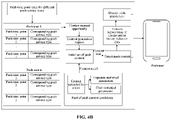
- FIG. 4B is a schematic diagram of a process of pushing information according to this embodiment. This embodiment is described based on the above embodiment, and this embodiment mainly explains and describes other cases in the process of pushing information.
- expose events and click events on message content uploaded by different push users are collected, and exposure statistical parameters and click statistical parameters of the message content are correspondingly updated based on the expose events and the click events, so as to determine, based on the exposure statistical parameters and the click statistical parameters of the message content, the target push content of the push users at the push time points corresponding to the push service types using the content push algorithm.
- the target push content of the push users at the push time points corresponding to the push service types is determined using the dynamically configured content push algorithm at the content request opportunities.
- the apparatus for pushing information described above may further include a time point calculating module configured to calculate the push time points of the push users for the different push service types according to the push time point rules for the different push service types at the predetermined time interval.
Landscapes
- Engineering & Computer Science (AREA)
- Databases & Information Systems (AREA)
- Theoretical Computer Science (AREA)
- Data Mining & Analysis (AREA)
- Physics & Mathematics (AREA)
- General Engineering & Computer Science (AREA)
- General Physics & Mathematics (AREA)
- Computer Networks & Wireless Communication (AREA)
- Signal Processing (AREA)
- Information Transfer Between Computers (AREA)
Abstract
Description
- The present disclosure claims priority to the
Chinese patent application No. 201911205610.4, filed on November 29, 2019 - The present disclosure relates to the technical field of data transmission, and in particular, relates to a system, method and apparatus for pushing information, and a device and a storage medium thereof.
- For improvement of activity of users in a plurality of push applications and for a good use experience of the users in browsing various types of information in the push applications, stricter requirements are being imposed on content push services. The content push service is mainly directed to: 1) screening push content of interest for the users; and 2) scheduling appropriate content push time points for different users.
- Generally, a single content push algorithm and push time determination algorithm are uniformly configured into a system for pushing content. For example, in the case that the content of interest is pushed to the user in an event-driven fashion, once new content uploaded by the user is received, users with a higher similarity degree are immediately filtered based on feature information of history browse content of other users and the feature information of the new content, and then the new content is directly pushed to the users. In this case, content production, content selection, and content push form a closed loop in the content push service, and whether it is convenient for the push user to receive the push content cannot be determined. As such, excessively frequent content push may cause interference to the push user. Alternatively, lists of push time points are manually arranged for different types of users, and the content of interest is filtered and pushed using a uniformly configured content push algorithm. Consequently, different push time points for different users of the same type fail to be satisfied.
- In the related art, the content of interest is pushed at an appropriate push time point by uniformly configuring the single content push algorithm and push time determination algorithm. In this case, the single content push algorithm and push time determination algorithm are not applicable to a scenario of multiple push services, thereby reducing different push problems and uncontrollable push effect.
- Embodiments of the present disclosure provide a system, method and apparatus for pushing information, and a device and a storage medium thereof, which ensure extendibility of a content push algorithm, and improve accuracy of push time points and push content.
- The embodiments of the present disclosure provide a system for pushing information. The system for pushing information includes: a time-driven scheduling terminal, a push content generating terminal, and a push content candidate terminal; wherein
the time-driven scheduling terminal is configured to calculate push time points of push users for different push service types according to push time point rules for the different push service types, and initiate content generation requests based on push service types and user bases at same push time points; and the push content generating terminal is configured to select, based on the content generation requests, target push content of the push users at the push time points corresponding to the push service types from the push content candidate terminal using a dynamically configured content push algorithm, and feed the target push content back to the time-driven scheduling terminal. - The embodiments of the present disclosure provide a method for pushing information. The method for pushing information includes:
- calculating content request opportunities that match push service types corresponding to push time points of push users and user bases at the push time points, wherein the push time points are calculated according to push time point rules for different push service types; and
- determining, at the content request opportunities, target push content of the push users at the push time points corresponding to the push service types using a dynamically configured content push algorithm, wherein the target push content is content for the push service types corresponding to the push time points.
- The embodiments of the present disclosure provide an apparatus for pushing information. The apparatus for pushing information includes:
- an opportunity calculating module, configured to calculate content request opportunities that match push service types corresponding to push time points of push users and user bases at the push time points, wherein the push time points are calculated according to push time point rules for different push service types; and
- a target content determining module, configured to determine, at the content request opportunities, target push content of the push users at the push time points corresponding to the push service types using a dynamically configured content push algorithm, wherein the target push content is content for the push service types corresponding to the push time points.
- The embodiments of the present disclosure provide a device. The device includes:
- one or more processors; and
- a memory, configured to store one or more programs;
- wherein the one or more processors, when running the one or more programs, are caused to perform the method for pushing information according to any of the embodiments of the present disclosure.
- The embodiments of the present disclosure provide a computer-readable storage medium. The computer-readable storage medium stores a computer program, wherein the computer program, when run by a processor, causes the processor to perform the method for pushing information according to in any of the embodiments of the present disclosure.
-
-
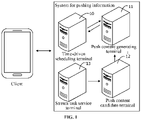
FIG. 1 is a block diagram of a system for pushing information according to an embodiment of the present disclosure; -
FIG. 2 is an architectural diagram of a system for pushing information according to a second embodiment of the present disclosure; -
FIG. 3A is a flowchart of a method for pushing information according to a third embodiment of the present disclosure; -
FIG. 3B is a schematic diagram of a process of pushing information according to the third embodiment of the present disclosure; -
FIG. 4A is a flowchart of a method for pushing information according to a fourth embodiment of the present disclosure; -
FIG. 4B is a schematic diagram of a process of pushing information according to the fourth embodiment of the present disclosure; -
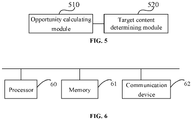
FIG. 5 is a schematic structural diagram of an apparatus for pushing information according to a fifth embodiment of the present disclosure; and -
FIG. 6 is a schematic structural diagram of a device according to a sixth embodiment of the present disclosure. - The following describes the present disclosure hereinafter in connection with the accompanying drawings and the embodiments. The embodiments described herein are only intended to explain, but limit, the present disclosure. In addition, only some, but not all, of the structures associated with the present disclosure are shown in the accompanying drawings.
-
FIG. 1 is a block diagram of a system for pushing information according to this embodiment. This embodiment is applicable to any scenario of pushing information. Referring toFIG. 1 , the system for pushing information may include: a time-drivenscheduling terminal 10, a pushcontent generating terminal 11, and a pushcontent candidate terminal 12. - The time-driven
scheduling 10 terminal is configured to calculate push time points of push users for different push service types according to push time point rules for the different push service types, and initiate content generation requests based on push service types and user bases at same push time points; and the pushcontent generating terminal 11 is configured to select, based on the content generation requests, target push content of the push users at the push time points corresponding to the push service types from the pushcontent candidate terminal 12 using a dynamically configured content push algorithm, and feed the target push content back to the time-drivenscheduling terminal 10. - Optionally, this embodiment is applicable in a push scenario of multiple types of messages of planning suitable push time points for a plurality of push users and screening push content of most interest from content of the multiple types of messages to push to the push users at the push time points. In this case, planning the push time points, screening the push content, and storing the message content are separately performed in this embodiment to improve processing performance of the information push. Thus, the time-driven
scheduling terminal 10 corresponding to planning of the push time point, the pushcontent generating terminal 11 corresponding to screening of the push content, and the pushcontent candidate terminal 12 corresponding to storing of the message content are configured to perform different functions. In order to ensure the processing performance of the terminals, the time-drivenscheduling terminal 10, the pushcontent generating terminal 11, and the pushcontent candidate terminal 12 are deployed in a distributed mode. Because the corresponding push function is configured for a plurality of servers in the system for pushing information, and the plurality of servers are organized into the time-drivenscheduling terminal 10, the pushcontent generating terminal 11, and the pushcontent candidate terminal 12 that are predetermined. The number of servers in the terminals may be determined based on the processing performance, which is not limited in this embodiment. For example, in the case that the message content stored in the pushcontent candidate terminal 12 is excessively large, the number of servers in the pushcontent candidate terminal 12 may be additionally increased to relieve storage pressure of each server. - The functions of the time-driven
scheduling terminal 10, the pushcontent generating terminal 11, and the pushcontent candidate terminal 12 are described hereinafter. - The time-driven
scheduling terminal 10 is taken as a trigger for the system for pushing information, and different types of push service are configured for corresponding push time point rules in the time-drivenscheduling terminal 10, which ensures the accuracy of push time points for different push service types. In this case, the push time point rules may include manual intervention arrangements, predetermined push time point algorithms, and the like. For example, for the push service with slow service data update or the push service with a fixed push time point, the manual intervention arrangement may be applied to organize the push users in terms of different attributes such as region, country, or language, such that the push time points for the push service types are defined for the plurality of push users. For example, for the push service that service data with fast service data update or the push service with an unfixed browsing time point of the user, the push time point algorithm may be applied to analyze history behavior data of the plurality of push users, such that the push time points for the push service types are defined for the plurality of push users. Illustratively, a plurality of time segments are predefined, and the push time points suitable for the push user are analyzed based on history activity information of the push user within a history time period, such as history active time points (user online time points), and click preference time points for the push content, such that different push users are assigned to different time segments. Each push user may fall within the plurality of time segments, and thus push time points of the different push users are adaptively adjusted. - In this embodiment, the time-driven
scheduling terminal 10 calculates the push time points for the plurality of push users for the different push service types according to the push time point rules for the different push service types, such that one push time point table is maintained on the time-drivenscheduling terminal 10 for each push user. The push time point table records the push time points of the push users for the different push service types, the push service types for a plurality of push time points and the user bases at the same push time points are analyzed subsequently, and push content pushed to the users at each push time point is requested from the pushcontent generating terminal 11 at a suitable opportunity, so as to avoid a time delay of the push due to failure of generation of suitable push content at the push time point caused by an excessive data processing amount. Illustratively, in the case that the push service type is updated fast and the user base at the same push time point is small, the content generation request may be directly initiated at a time point closest to the push time point to ensure the accuracy of the push content; and in the case that the push service type is updated slowly or the user base at the same push time point is large, the content generation request may be initiated at a period of time ahead (e.g., a previous day) of the push time point to ensure that the push content corresponding to the push time point may be generated within a sufficient time period. In order to ensure the accuracy of the opportunity for initiating the content generation requests, different weights may be predetermined for the push service types and the user bases at the same push time points in this embodiment to determine accurate request opportunities. - The push
content generating terminal 11 is a content screening portion of the system for pushing information, and the pushcontent generating terminal 11 is provided with a dynamic configuration interface for dynamically configuring the corresponding content push algorithm. Illustratively, in this embodiment, the dynamic configuration interface may push the content push algorithm with higher accuracy to replace the previous content push algorithm, so as to reconfigure the new content push algorithm onto the pushcontent generating terminal 11 to achieve dynamic extensibility of the content push algorithm in the system for pushing information. - In the case that the push
content generating terminal 11 receives the content generation requests initiated by the time-drivenscheduling terminal 10, the content generation requests may include push user identifications and the push service types corresponding to the push time points, and thus it is convenient for the pushcontent generating terminal 11 to determine the push users of the present push and the push service types corresponding to the corresponding the push time points. In this case, the pushcontent generating terminal 11 may select the message content of most interest of each push user for the push service types corresponding to the push user from the multiple types of message content stored in the pushcontent candidate terminal 12 using the dynamically configured content push algorithm, may take the message content of most interest as the target push content of each push user at the push time points corresponding to the push service types, and may feed the target push content back to the time-drivenscheduling terminal 10. In this case, the time-drivenscheduling terminal 10 may push the target push content corresponding to the push time points to the corresponding push users at the push time points corresponding to the push service types, which ensures the timeliness and accuracy of pushing information. - In order to ensure the efficiency of pushing information, the content generation request initiated by the time-driven
scheduling terminal 10 in this embodiment may be used to request the push content of the same push user at different push time points, and may further be used to request the push content of different push users at the same push time point, which is not limited in this embodiment. In the case that the content generation request for the pushcontent generating terminal 11 receives the push content of the same push user at different push time points, the pushcontent generating terminal 11 may screen out the plurality of message content from the pushcontent candidate terminal 12 using the dynamically configured content push algorithm, and distribute the plurality of message content to different push time points based on the rule, such as, distributing the plurality of message content in one-to-one correspondence based on a chronological order of the push time points and a match degree between the message content and the push users, or performing a match analysis on the screened message content at each push time point and sequentially redistributing the different push time points based on the match degree, which is not limited in this embodiment. - The push
content candidate terminal 12 is a storage portion of the system for pushing information, and the pushcontent candidate terminal 12 is configured to store the multiple types of message content uploaded by the different types users in the push application and corresponding user operation parameters after the multiple types of message content are pushed to the different push users. In this way, the pushcontent generating terminal 11 may refer to the user operation parameters of the multiple types of message content in the case that the pushcontent generating terminal 11 selects, based on the content generation request, the target push content of the push user at the corresponding push time point using the dynamically configured content push algorithm, thereby improving the accuracy of the push content. In the case that the amount of the message content store is excessively large, the servers of the pushcontent candidate terminal 12 may be deployed in a distributed mode to implement partition-based content storage and the number of servers in the pushcontent candidate terminal 12 may be additionally added in the process of information push, such that the efficiency of storing the message content is ensured. - In order to collect the content uploaded by the user and monitor operation condition of the plurality of push users for push information in real time, this embodiment may further include a stream
task service terminal 13 configured to collect the content uploaded by the user and store the content uploaded by the user to the pushcontent candidate terminal 12, and update, based on expose events and click events of the content uploaded by the user reported by the push user, exposure statistical parameters and click statistical parameters of the content uploaded by the user stored on the pushcontent candidate terminal 12. - In the case that the push user uploads the new message content to the system for pushing information, the stream
task service terminal 13 in the system for pushing information may collect the message content uploaded from the client in real time, and store the message content uploaded from the client to the pushcontent candidate terminal 12. In the case that the time-drivenscheduling terminal 10 pushes the message content to the push user, the client which the push user logs in to may report the expose events and the click events of the message content. The expose event is a determination message fed back when the client which the push user logs in to successfully receives the pushed message content, and the click event is a determination message for determination whether the push user browses the pushed message content. In the case that the streamtask service terminal 13 collects the expose time and the click events of the message content reported from the client, the exposure statistical parameters and the click statistical parameters of the message content on the push content candidate terminal are updated based on the exposure and click conditions, so as to improve the accuracy of the subsequent push content. - In the technical solutions according to this embodiment, the system for pushing information includes the time-driven scheduling terminal, the push content generating terminal, and the push content candidate terminal. The time-driven scheduling terminal is provided with the corresponding push time point rules for different push service types, the push content generating terminal is provided with the dynamically configured content push algorithm. In this case, the time-driven scheduling terminal calculates the push time points of the plurality of push users for the different push service types according to the push time point rules for different push service types, and initiates the content generation requests based on the push service types and user bases at the same push time points, such that the accuracy of the opportunities for initiating the content generation requests is ensured. In the case that the user base at the same push time point is too large, the content generation request corresponding to the push service type may be initiated in advance to avoid the slow content generation caused by excessively large system throughput and congested content. The push content generating terminal is configured to select, based on the content generation requests, the target push content of the push users at the push time points corresponding to the push service types from the push content candidate terminal using the dynamically configured content push algorithm, and feed the target push content back to the time-driven scheduling terminal, such that the target push content can be successfully generated prior to the push time point, and timeliness of the information push and the system stability may be ensured. Meanwhile, the push content generating terminal achieves the extendibility of the content push algorithm by dynamically configuring the content push algorithm. In this embodiment, the content generation requests are initiated prior to the push time points corresponding to the push service types, and the target push content corresponding to the push service types is generated using the dynamically configured content push algorithm, such that a closed loop of content production, content selection, and content push formed in the information push service is achieved, and the accuracy of the push time points and the push content is improved.
-
FIG. 2 is an architectural diagram of a system for pushing information according to this embodiment. This embodiment is described based on the above embodiment. Optionally, as shown inFIG. 2 , this embodiment illustrates the configuration of the time-drivenscheduling terminal 20, the pushcontent generating terminal 21, the pushcontent candidate terminal 22, and the streamtask service terminal 23 in the system for pushing information. - Optionally, the time-driven
scheduling terminal 20 may include atime point server 201, acontent request server 202, and acontent push server 203 based on different functions in the push time point process. - The
time point server 201 is provided with push time point rules for different push service types. As in the information push process, the need of the push user for the time point may change, and push users may be added, the time point server may calculate push time points of a plurality of push users for the different push service types according to the push time point rules for the different push service types at a predetermined time interval, such that the accuracy of the push time points of the plurality of push users for the different push service types is ensured. Thecontent request server 202 accesses the push time points of the plurality of push users for the different push service types in thetime point server 201 at different push service types in real time, determines content request opportunities corresponding to the different push time points based on the push service types and user bases at same push time points, and initiates the content generation requests to the push content generating terminal at the content request opportunities, wherein the content request opportunities are prior to push time points corresponding to the content request opportunities, such that the pushcontent generating terminal 21 acquires the target push content corresponding to the push time points in time prior to the push time points corresponding to the content request opportunities, thereby ensuring the timeliness of the information push. Thecontent push server 203 receives the target push content at the push time point fed back by the pushcontent generating terminal 21, and pushes push the target push content corresponding to the push time points fed back by the push content generating terminal to the push users at push time points. - Based on the different functions in the process of pushing information, the push
content generating terminal 21 may include acontent recall server 211 and arank server 212 that are deployed in a distributed mode. In the case that the pushcontent generating terminal 21 receives the content generation requests initiated by the time-drivenscheduling terminal 20, because the time-drivenscheduling terminal 20 may simultaneously request the push content of the different push users at the same push time point, the pushcontent generating terminal 21 in this embodiment may distribute the content generation requests for the different push users to the differentcontent recall servers 211 to simultaneously perform the push content determination operations of the different push users. - Upon receiving the content generation request, the
content recall server 211 first determines the push users of the present request and the push service types corresponding to the corresponding push time points, and then recalls initial sets of push content under a predetermined condition from the pushcontent candidate terminal 22 for the push users using a predetermined similarity algorithm. In this case, the predetermined condition may be the upper limit of the number of message content of interest of the push user recalled from the initial sets of push content and the push service types of the recalled message content being the push service types corresponding to the push time point to be pushed in the present request in the content generation request, such that the message content in the initial set of push content is the push service type corresponding to the push time point of the present request. Illustratively, thecontent recall server 211 may recall the number of the message content of interest of the push user corresponding to closest similarity degree based on information of different attributes of the push user (such as the country, the language, the age, the gender, the history behavior, and the like) form the pushcontent candidate terminal 22. Therank server 212 ranks the plurality of message content in the initial sets of push content recalled by thecontent recall server 211 using a predetermined match algorithm, and selects the target push content of the push users at the corresponding push time points based on a ranking result. In the case that there is one push time point, best ranked message content is selected as the target push content at the push time point; in the case that a plurality of the push time points are present, top ranked message content at a quantity the same as the quantity of push time points is selected, and a match analysis is performed again based on the chronological order of the push time points, so as to determine the target push content at the plurality of push time points. - Furthermore, in order to improve the push experience of the push user, this embodiment may further include a display diversity of the target push content, and the push
content generating terminal 21 may further include a style server 213. The style server 213 first looks up version information of the client which the push user logs in to, analyzes history behavior data of the push user for the pushed message content, and determines display style parameters of the target push content based on the version information of the client which the push user logs in to and/or the history behavior data of the push user. For example, for a push user that has not browsed the push content within a predetermined time period, the target push content may be set as a pop-up style push to prompt the push user to browse, and the target push content and the corresponding display style parameters may be fed back to the time-drivenscheduling terminal 20, such that the time-drivenscheduling terminal 20 pushes the target push content and the corresponding display style parameters to the push user at the corresponding push time point, and the client which the push user logs in to displays the target push content with the display style parameters. As such, the personalized display of the push content is improved, and the information push is fully achieved for different clients. - In order to distinguish the message content uploaded by different types of users, the push
content candidate terminal 22 may include aconventional content memory 221 and aprofessional content memory 222. Users in the push application include ordinary users and authenticated professional users. In this case, the streamtask service terminal 23 may store the original content uploaded by an ordinary user and collected in real-time to theconventional content memory 221, and store content uploaded by an authenticated professional user in the push application to theprofessional content memory 222. In this embodiment, theconventional content memory 221 and theprofessional content memory 222 are deployed in a distributed mode. In the case that the stored content is too large, the functions corresponding to the server may be additionally added to ensure extensibility of the content store. - The stream
task service terminal 23 may include acontent collection server 231 and a reflowstatistical server 232. Thecontent collection server 231 collects the message content uploaded by the plurality of push users in real-time, and store, based on types of the push users, the message content to theconventional content memory 221 and theprofessional content memory 222 in the pushcontent candidate terminal 22. After pushing the different message content to the plurality of push users, the reflowstatistical server 232 collects the expose events and the click events of the plurality of message contents uploaded from the clients which the push users log in to in real time, and sends exposure notifications corresponding to the expose events and click notifications corresponding to the click events to the push content candidate terminal, such that the pushcontent candidate terminal 22 updates the exposure statistical parameters and the click statistical parameters of the message content in theconventional content memory 221 and theprofessional content memory 222, thereby improving the accuracy of the subsequent information push. - In the technical solutions according to this embodiment, the time-driven scheduling terminal, the push content generating terminal, the push content candidate terminal, and stream task service terminal are deployed in a distributed mode in the system for pushing information. The push time points for different push service types are disposed for the push users, the content generation requests are initiated prior to the push time points, and the target push content of most interest of the push users at the push time points are acquired in time to push to the push users at the push time points. In this case, the content generation request corresponding to the push service type may be initiated in advance to avoid the slow content generation caused by excessively large system throughput and congested content, such that the target push content can be successfully generated prior to the push time point, and timeliness of the information push and the system stability may be ensured. Meanwhile, the push content generating terminal achieves the extendibility of the content push algorithm by dynamically configuring the content push algorithm. In this embodiment, the content generation requests are initiated prior to the corresponding push time points, and the target push content is generated using the dynamically configured content push algorithm, such that a closed loop of content production, content selection, and content push formed in the information push service is achieved, and the accuracy of the push time points and the push content is improved.
-
FIG. 3A is a flowchart of a method for pushing information according to this embodiment. This embodiment is applicable to any scenario of pushing information. The method for pushing information according to this embodiment may be performed by the apparatus for pushing information according to the embodiments of the present disclosure. The apparatus may be performed by software and/or hardware, and may be integrated in a device for performing the method, which may be a backed service terminal corresponding to any push application. - Referring to
FIG. 3A , the method may include the following processes. - In S310, content request opportunities that match push service types corresponding to push time points of push users and user bases at the push time points are calculated
- The push time points are acquired according to the push time point rules for the different push service types. The push time rules for the different push service types are preconfigured in this embodiment for the different push service types, and the push time point rules may include manual intervention arrangement and predetermined push time point algorithms, and the like. In this case, the push time points of the plurality of push users for the different push service types may be calculated according to the push time point rules for the different push service types, and one push time point table is maintained for each push user to record the push time points of the push user for different push service types.
- Optionally, in this embodiment, in order to avoid a time delay of the content push due to the failure of generation of suitable push content at the push time point caused by an excessive data processing amount, prior to the plurality of push time points of the user, the time-driven scheduling terminal is configured to analyze the push service types corresponding to the push time points and the user bases at the same push time points, determine whether the service data for the push service types are updated fast, or whether the user base is too large to cause a large calculation amount of the push data, and calculate content request opportunities that match the push service types corresponding to the push time points of the push users and the user bases at the push time points. Illustratively, in the case that the push service type is updated fast and the user base at the same push time point is less, the content request opportunity may be set at a time point closer to the push time point to ensure the accuracy of the push content; in the case that the push service type is updated slowly or the user base at the same push time point is large, the content request opportunity may be at a period of time ahead (e.g., a previous day) of the push time point to ensure that the push content corresponding to the push time point may be generated within a sufficient time period. In order to ensure the accuracy of the opportunity for initiating the content generation requests, different weights may be predetermined for the push service types and the user bases at the same push time points in this embodiment to determine an calculate accurate request opportunity based on the push service types of the push users corresponding to the push time point, the user bases at the push time point, and the weights corresponding to the push service types and the user bases, such that timeliness of acquiring the push content at the push point is ensured.
- In S320, target push content of the push users at the push time points corresponding to the push service types is determined at the content request opportunities using a dynamically configured content push algorithm.
- The target push content is the content for the push service type at the push time point. The content push algorithm may be dynamically pre-configured in this embodiment, and the content push algorithm may be the content push algorithm with a higher accuracy in the related art, and may be dynamically updated, which is not limited in this embodiment.
- Optionally, after determining the corresponding content request opportunities by the time-driven scheduling terminal, the content generation requests may be initiated at the content request opportunities to the push content generating terminal. The content generation request may include push user identifications and the push service types corresponding to the different push time points. The message content of most interest of each push user for the push service types corresponding to the push user is selected, based on the content generation requests, from the multiple types of message content stored in the push content candidate terminal using the dynamically configured content push algorithm, and the message content of most interest is taken as the target push content of each push user at the corresponding push time point. In this case, the target push content is the message content for the push service type corresponding to the push time point.
- Optionally, as shown in
FIG. 3B , in the case that the target push content of the push user at the corresponding push time point is determined using the dynamically configured content push algorithm, the content push algorithm may include a predetermined similarity algorithm and a predetermined match algorithm, and the target push content may be screened. In this case, determining, at the content request opportunities, the target push content of the push users at the push time points corresponding to the push service types using the dynamically configured content push algorithm may include: recalling, at the content request opportunities, initial sets of push content under a predetermined condition from a pool of push content candidates for the push users using the predetermined dynamically configured similarity algorithm; and ranking the plurality of message content in the initial sets of push content using the predetermined match algorithm, and selecting the target push content of the push users at the push time points corresponding to the push service types based on a ranking result. - Upon acquiring the content generation requests at the content request opportunities, the content recall server first determines the push users of the present request and the push service types corresponding to the corresponding push time points, and then recalls the initial sets of push content under the predetermined condition from the push content candidate terminal for the push users using the predetermined similarity algorithm by performing corresponding content recall function. In this case, the predetermined condition may be the upper limit of the number of message content of interest of the push user recalled from the initial sets of push content and the push service types of the recalled message content being the push service types corresponding to the push time point to be pushed in the present request in the content generation request, such that the message content in the initial set of push content is the push service type corresponding to the push time point of the present request. The rank server ranks the plurality of message content in the initial sets of push content using the predetermined match algorithm, and selects the target push content of the push users at the corresponding push time points based on the ranking result. For example, there is one push time point, best ranked message content is selected as the target push content at the push time point; in the case that a plurality of the push time points are present, top ranked message content at a quantity the same as the quantity of push time points is selected, and a match analysis is performed again based on the chronological order of the push time points to determine the target push content at the plurality of push time points. In addition, the target push content is pushed to the push user at the push time point, so as to ensure the accuracy of the push time points and the push content.
- In the technical solutions according to this embodiment, the push service types corresponding to the push time points for the different push service types and the user bases at push time points are calculated according to push time point rules for the different push service types, the content request opportunities corresponding to the push time points are determined based on the push service types and the user bases, wherein the content request opportunities are prior to push time points. The target push content of the push users at the push time points corresponding to the push service types is determined at the content request opportunities using the dynamically configured content push algorithm, such that the target push content at the push time points may be timely acquired prior to the push time points, the slow content generation caused by excessively large system throughput and congested content are avoided, and the target push content may be successfully generated prior to the push time point to ensure timeliness of the information push and the system stability. Meanwhile, the push content generating terminal achieves the extendibility of the content push algorithm by dynamically configuring the content push algorithm. In this embodiment, the content generation requests are initiated prior to the corresponding push time point, and the target push content corresponding to the push service type is generated using the dynamically configured content push algorithm, such that a closed loop of content production, content selection, and content push formed in the information push service is achieved, and the accuracy of the push time points and the push content is improved.
-
FIG. 4A is a flowchart of a method for pushing information according to this embodiment, andFIG. 4B is a schematic diagram of a process of pushing information according to this embodiment. This embodiment is described based on the above embodiment, and this embodiment mainly explains and describes other cases in the process of pushing information. - Optionally, as shown in
FIG. 4A , this embodiment may include the following processes. - In S410, push time points of push users for different push service types are calculated according to push time point rules for the different push service types at the predetermined time interval.
- Optionally, as in the information push process, the need of the push user for the time point may change, and push users may be added, the push time points of the push users for the different push service types are calculated according to the push time point rules for the different push service types at the predetermined time interval to timely update the push time points of the push users for different push service types.
- In S420, content request opportunities that match the push service types corresponding to the push time points of the push users and the user bases at the push time points are calculated.
- In S430, expose events and click events on message content uploaded by different push users are collected, and exposure statistical parameters and click statistical parameters of the message content are correspondingly updated based on the expose events and the click events, so as to determine, based on the exposure statistical parameters and the click statistical parameters of the message content, the target push content of the push users at the push time points corresponding to the push service types using the content push algorithm.
- Optionally, in order to ensure the accuracy of the push content, in this embodiment, the push content candidate terminal may store the message content uploaded by the user, and may additionally store the exposure statistical parameters and click statistical parameters of a plurality of the message uploaded by a plurality of users, such that the exposure statistical parameters and click statistical parameters of the plurality of the message uploaded by the plurality of users may be referred in determining the target push content using the content push algorithm, so as to improve the accuracy of the push content. In this embodiment, after the plurality of message content uploaded by the plurality of users are pushed to the push users, the expose events and the click events on the plurality of message content uploaded by the users may be collected in real time, and the exposure statistical parameters and the click statistical parameters of the plurality of message content uploaded by the user may be updated based on the expose events and the click events, so as to improve the accuracy of the subsequent push content.
- In S440, the target push content of the push users at the push time points corresponding to the push service types is determined using the dynamically configured content push algorithm at the content request opportunities.
- In S450, display style parameters of the target push content are determined based on version information of clients which the push users log in to and/or history behavior data of the push users.
- Optionally, after determining the target push content of the push users at the push time points corresponding to the push service types, the display style parameter of the target push content may be additionally added to improve the click rate of the push user for the target push content. The style server looks up version information of the client which the push user logs in to, analyzes history behavior data of the push user for the pushed message content, and determines display style parameters of the target push content based on the version information of the client which the push user logs in to and/or the history behavior data of the push user. For example, for a push user who has not browsed the push content within a predetermined time period, the target push content may be set as a pop-up style push to prompt the push user to browse.
- In S460, the target push content and the display style parameters corresponding to the target push content are pushed to the push users.
- In the case that the target push content and the display style parameters corresponding to the target push content are pushed to the push users, the clients which the push users log in to may correspondingly display the target push content based on the display style parameters. In this way, the personalized display of the target push content is improved, and the information push is fully achieved for different clients.
- In the technical solutions according to this embodiment, the push time points of the users for different push service types are correspondingly updated at the predetermined time interval to improve the integrity and accuracy of the push time points. Meanwhile, the exposure statistical parameters and the click statistical parameters of the content uploaded by the users are updated in real time, so as to ensure the accuracy of the target push content. The display style parameters of the target push content are additionally acquired, such that the personalized display of the target push content is improved, and the information push is fully achieved for different clients. The target push content corresponding to the push time points for the push service types are acquired at the suitable content request opportunities prior to the push time points for the push service types, such that a closed loop of content production, content selection, and content push formed in the information push service is achieved, and the accuracy of the push time points and the push content is improved.
-
FIG. 5 is a schematic structural diagram of an apparatus for pushing information according to this embodiment. In particular, as shown inFIG. 5 , the apparatus may include: - an opportunity calculating module, configured to calculate content request opportunities that match push service types corresponding to push time points of push users and user bases at the push time points, wherein the push time points are calculated according to push time point rules for different push service types; and
- a target content determining module, configured to determine, at the content request opportunities, target push content of the push users at the push time points corresponding to the push service types using the dynamically configured content push algorithm, wherein the target push content is content for the push service types corresponding to the push time points.
- In the technical solutions according to this embodiment, the push service types corresponding to the push time points for the different push service types and the user bases at push time points are calculated according to push time point rules for the different push service types, the content request opportunities corresponding to the push time points are determined based on the push service types and the user bases, wherein the content request opportunities are prior to push time points. The target push content of the push users at the push time points corresponding to the push service types is determined at the content request opportunities using the dynamically configured content push algorithm, such that the target push content at the push time points may be timely acquired prior to the push time points, the slow content generation caused by excessively large system throughput and congested content are avoided, and the target push content may be successfully generated prior to the push time point to ensure timeliness of the information push and the system stability. Meanwhile, the push content generating terminal achieves the extendibility of the content push algorithm by dynamically configuring the content push algorithm. In this embodiment, the content generation request is initiated prior to the push time point corresponding to the push service type, and the target push content corresponding to the push service type is generated using the dynamically configured content push algorithm, such that a closed loop of content production, content selection, and content push formed in the information push service is achieved, and the accuracy of the push time points and the push content is improved.
- The apparatus for pushing information described above may further include a time point calculating module configured to calculate the push time points of the push users for the different push service types according to the push time point rules for the different push service types at the predetermined time interval.
- The target
content determining module 520 is configured to recall, at the content request opportunities, initial sets of push content under the predetermined condition from the pool of content candidates for the push users using the predetermined dynamically configured similarity algorithm; and rank a plurality of message content in the initial sets of push content using a predetermined match algorithm, and select the target push content of the push users at the push time points corresponding to the push service types based on the ranking result. - The apparatus for pushing information described above may further include a style determining module, configured to determine, based on at least one of version information of clients which the push users log in to and/or history behavior data of the push users, display style parameters of the target push content.
- The apparatus for pushing information described above may further include a pushing module, configured to push the target push content and the display style parameters of the target push content to the push users.
- The apparatus for pushing information described above may further include a statistical parameter updating module, configured to collect expose events and click events on message content uploaded by different push users, and correspondingly update, based on the expose events and the click events, exposure statistical parameters and click statistical parameters of the message content, so as to determine, based on the exposure statistical parameters and the click statistical parameters of the message content uploaded by the push users, the target push content of the push users at the push time points corresponding to the push service types using the content push algorithm.
- The apparatus for pushing information according to this embodiment may be applicable to the method for pushing information according to any of the embodiments described above, and have corresponding functions.
-
FIG. 6 is a schematic structural diagram of a device according to this embodiment. As shown inFIG. 6 , the device includes aprocessor 60, amemory 61, and acommunication device 62. One ormore processors 60 may be configured in the device. For example, taking oneprocessor 60 as an example inFIG. 6 , theprocessor 60, thememory 61, and thecommunication device 62 in the device may be connected by a bus or the like. For example, FIG. takes bus connection as an example. - The
memory 61, as a computer-readable storage medium, is configured to store software programs, computer-executable programs, and modules, such as the program instructions/modules corresponding to the method for pushing information according to the embodiments of the present disclosure. Theprocessor 60 executes various function applications and data processing of the device (i.e., performing the method for pushing information described above) by executing the software programs, the instructions, and the modules stored in thememory 61. - The
memory 61 may primarily include a storage program area and a storage data area. The storage program area may store an operation system, an application required by at least one function, and the storage data area may store data created based on the use of the terminal, and the like. Furthermore, thememory 61 may include a high-speed random access memory, and a non-volatile memory, such as at least one of a magnetic disk memory, a flash memory, or other non-volatile solid state memory. In some embodiments, thememory 61 may include a memory remotely disposed relative to theprocessor 60, which may be connected to the device over a network. Examples of such networks include, but are not limited to, the Internet, an intranet, a local area network, a mobile communication networks, and any combination thereof. - The
communication device 62 is configured to achieve a network connection or a mobile data connection among devices. - The apparatus in this embodiment may be configured to perform the method for pushing information according to any of the embodiments described above, and have corresponding functions.
- This embodiment further provides a computer-readable storage medium. The computer-readable storage medium stores a computer program. The computer program, when executed by a processor, causes the processor to perform the method for pushing information in any of the above embodiments. The method may include:
- calculating content request opportunities that match push service types corresponding to push time points of push users and user bases at the push time points, wherein the push time points are calculated according to push time point rules for different push service types; and
- determining, at the content request opportunities, target push content of the push users at the push time points corresponding to the push service types using the dynamically configured content push algorithm, wherein the target push content is content for the push service types corresponding to the push time points.
- For the storage medium including computer-executable instructions according to this embodiment of the present disclosure, the computer-executable instructions are not limited to the method operations described above, and may also be executed to perform related operations in the method for pushing information in any one of the embodiments of the present disclosure.
- It should be apparent to those skilled in the art from the foregoing description of the embodiments that, the present disclosure may be implemented by software and the necessary general purpose hardware, and may be implemented by hardware, and the former is a preferable implementation. Based on such understandings, the essence of the technical solution of the present disclosure or the portion contributed to the related art may be embodied in the form of a software product. The computer software product may be stored in a computer-readable storage medium, for example, a floppy disk, a read-only memory (ROM), a random-access memory (RAM), a flash memory (FLASH), a hard disk, or an optical disk of a computer, and the like. The computer software product includes a plurality of instructions to cause the computer device (a personal computer, a server, or a network device) to perform the method described above.
- It should be noted that, in the above embodiments of the apparatus for recommending information, the included units and modules are merely divided according to function logic, but are not limited to the division described above, so long as the corresponding functions can be implemented. In addition, the names of the functional units are also merely for distinction, and are not intended to limit the scope of the present disclosure.
Claims (17)
- A system for pushing information, comprising: a time-driven scheduling terminal, a push content generating terminal, and a push content candidate terminal; whereinthe time-driven scheduling terminal is configured to calculate push time points of push users for different push service types according to push time point rules for the different push service types, and initiate content generation requests based on push service types and user bases at same push time points; andthe push content generating terminal is configured to select, based on the content generation requests, target push content of the push users at the push time points corresponding to the push service types from the push content candidate terminal using a dynamically configured content push algorithm, and feed the target push content back to the time-driven scheduling terminal.
- The system for pushing information according to claim 1, wherein the time-driven scheduling terminal is further configured to push the target push content corresponding to the push time points to the push users at the push time points corresponding to the push service types.
- The system for pushing information according to claim 2, wherein the time-driven scheduling terminal comprises a time point server, a content request server, and a content push server; whereinthe time point server is configured to calculate the push time points of the push users for the different push service types according to the push time point rules for the different push service types at a predetermined time interval;the content request server is configured to access the push time points of the push users for the different push service types in the time point server, determine content request opportunities corresponding to the different push time points based on the push service types and the user bases at the same push time points, and initiate the content generation requests to the push content generating terminal at the content request opportunities, wherein the content request opportunities are prior to push time points corresponding to the content request opportunities; andthe content push server is configured to push the target push content corresponding to the push time points that is fed back by the push content generating terminal to the push users at push time points corresponding to the content request opportunities.
- The system for pushing information according to claim 1, whereina plurality of push users are present, the content generation requests comprise content generation requests of different push users, and the push content generating terminal comprises a content recall server and a rank server that are deployed in a distributed mode, and the push content generating terminal is configured to distribute the content generation requests of the different push users to different content recall servers; whereinthe content recall server is configured to recall, in the case that content generation requests are received, initial sets of push content under a predetermined condition from the push content candidate terminal for the push users using a predetermined similarity algorithm; andthe rank server is configured to rank a plurality of message content in the initial sets of push content using a predetermined match algorithm, and select the target push content of the push users at the push time points corresponding to the push service types based on a ranking result.
- The system for pushing information according to claim 4, wherein the push content generating terminal further comprises a style server; wherein
the style server is configured to determine, based on at least one of version information of clients which the push users log in to and history behavior data of the push users, display style parameters of the target push content, and feed the target push content and the display style parameters of the target push content back to the time-driven scheduling terminal. - The system for pushing information according to claim 1, wherein the push content candidate terminal comprises a conventional content memory and a professional content memory; whereinthe conventional content memory is configured to store original content uploaded by an ordinary user in a push application; andthe professional content memory is configured to store content uploaded by an authenticated professional user in the push application.
- The system for pushing information according to any one of claims 1 to 6, further comprising a stream task service terminal; wherein
the stream task service terminal is configured to collect message content uploaded by a user, store the message content to the push content candidate terminal, and correspondingly update, based on expose events and click events of the message content uploaded by the push users, exposure statistical parameters and click statistical parameters of the message content on the push content candidate terminal. - The system for pushing information according to claim 7, wherein the stream task service terminal comprises a content collection server and a reflow statistical server; whereinthe content collection server is configured to collect the plurality of message content uploaded by the plurality of push users in real-time, and store, based on types of the plurality of push users, the plurality of message content to the push content candidate terminal; andthe reflow statistical server is configured to collect the expose events and the click events on message content uploaded by the plurality of push users in real time, and send exposure notifications corresponding to the expose events and click notifications corresponding to the click events to the push content candidate terminal, such that the push content candidate terminal updates the exposure statistical parameters and the click statistical parameters of the message content.
- A method for pushing information, comprising:calculating content request opportunities that match push service types corresponding to push time points of push users and user bases at the push time points, wherein the push time points are calculated according to push time point rules for different push service types; anddetermining, at the content request opportunities, target push content of the push users at the push time points corresponding to the push service types using a dynamically configured content push algorithm, wherein the target push content is content for the push service types corresponding to the push time points.
- The method according to claim 9, prior to calculating the content request opportunities that match the push service types corresponding to the push time points of the push users and the user bases at the push time points, the method further comprises:
calculating the push time points of the push users for different push service types according to the push time point rules for the different push service types at a predetermined time interval. - The method according to claim 9, wherein determining, at the content request opportunities, the target push content of the push users at the push time points corresponding to the push service types using the dynamically configured content push algorithm comprises:recalling, at the content request opportunities, initial sets of push content under a predetermined condition from a pool of content candidates for the push users using a predetermined dynamically configured similarity algorithm; andranking a plurality of message content in the initial sets of push content using a predetermined match algorithm, and select the target push content of the push users at the push time points corresponding to the push service types based on a ranking result.
- The method according to claim 9, after determining, at the content request opportunities, the target push content of the push users at the push time points corresponding to the push service types using the dynamically configured content push algorithm, the method further comprises:
determining, based on at least one of version information of clients which the push users log in to and history behavior data of the push users, display style parameters of the target push content. - The method according to claim 12, after determining the display style parameters of the target push content, the method further comprises:
pushing the target push content and the display style parameters of the target push content to the push users. - The method according to any one of claims 9 to 13, prior to determining, at the content request opportunities, the target push content of the push users at the push time points corresponding to the push service types using the dynamically configured content push algorithm, the method further comprises:
collecting expose events and click events on message content uploaded by different push users, and correspondingly updating, based on the expose events and the click events, exposure statistical parameters and click statistical parameters of the message content, so as to determine, based on the exposure statistical parameters and the click statistical parameters of the message content, the target push content of the push users at the push time points corresponding to the push service types using the content push algorithm. - An apparatus for pushing information, comprising:an opportunity calculating module, configured to calculate content request opportunities that match push service types corresponding to push time points of push users and user bases at the push time points, wherein the push time points are calculated according to push time point rules for different push service types; anda target content determining module, configured to determine, at the content request opportunities, target push content of the push users at the push time points corresponding to the push service types using a dynamically configured content push algorithm, wherein the target push content is content for the push service types corresponding to the push time points.
- A device, comprising:at least one processor; anda memory, configured to store at least one program;wherein the at least one processor, when executes running the at least one program, is caused to perform the method for pushing information as defined in any one of claims 9 to 14.
- A computer-readable storage medium, storing a computer program, wherein the program, when run by a processor, causes the processor to perform the method for pushing information as defined in any one of claims 9 to 14.
Applications Claiming Priority (2)
| Application Number | Priority Date | Filing Date | Title |
|---|---|---|---|
| CN201911205610.4A CN110990699B (en) | 2019-11-29 | 2019-11-29 | Information pushing system, method, device, equipment and storage medium |
| PCT/CN2020/108217 WO2021103652A1 (en) | 2019-11-29 | 2020-08-10 | Information pushing system, method and apparatus, device and storage medium |
Publications (2)
| Publication Number | Publication Date |
|---|---|
| EP4068118A1 true EP4068118A1 (en) | 2022-10-05 |
| EP4068118A4 EP4068118A4 (en) | 2023-02-01 |
Family
ID=70088670
Family Applications (1)
| Application Number | Title | Priority Date | Filing Date |
|---|---|---|---|
| EP20891804.5A Ceased EP4068118A4 (en) | 2019-11-29 | 2020-08-10 | SYSTEM, METHOD AND APPARATUS FOR PUSHING INFORMATION, DEVICE AND RECORDING MEDIUM |
Country Status (4)
| Country | Link |
|---|---|
| US (1) | US12058223B2 (en) |
| EP (1) | EP4068118A4 (en) |
| CN (1) | CN110990699B (en) |
| WO (1) | WO2021103652A1 (en) |
Families Citing this family (11)
| Publication number | Priority date | Publication date | Assignee | Title |
|---|---|---|---|---|
| CN110990699B (en) | 2019-11-29 | 2021-12-07 | 广州市百果园信息技术有限公司 | Information pushing system, method, device, equipment and storage medium |
| CN111866082A (en) * | 2020-06-22 | 2020-10-30 | 远光软件股份有限公司 | Data distribution method and device based on target system configuration |
| CN111726417B (en) * | 2020-06-30 | 2023-03-24 | 北京达佳互联信息技术有限公司 | Delay control method, device, server and storage medium |
| CN111859132B (en) * | 2020-07-21 | 2025-12-02 | 腾讯科技(深圳)有限公司 | A data processing method, apparatus, intelligent device, and storage medium |
| CN113595876A (en) * | 2021-07-19 | 2021-11-02 | 孙志鹏 | Mobile phone application software for information sharing and pushing |
| CN113590948B (en) * | 2021-07-28 | 2024-03-26 | 咪咕数字传媒有限公司 | Information recommendation method, device, equipment and computer storage medium |
| CN114722100B (en) * | 2022-04-18 | 2025-04-08 | 上海喜马拉雅科技有限公司 | Method, device, electronic device and readable storage medium for determining target item sequence |
| CN115658448A (en) * | 2022-09-27 | 2023-01-31 | 北京奇艺世纪科技有限公司 | Detection method, device, electronic equipment and storage medium |
| CN116204259A (en) * | 2023-02-10 | 2023-06-02 | 平安壹钱包电子商务有限公司 | Intelligent operation popup method, intelligent operation popup device, computer equipment and storage medium |
| CN116578618A (en) * | 2023-03-21 | 2023-08-11 | 青岛海尔科技有限公司 | Method, device, storage medium and electronic device for generating target reflow instances |
| CN116915845A (en) * | 2023-05-26 | 2023-10-20 | 中国银行股份有限公司 | Data collection methods, devices, computer equipment and storage media |
Family Cites Families (21)
| Publication number | Priority date | Publication date | Assignee | Title |
|---|---|---|---|---|
| US7016968B2 (en) * | 2001-06-22 | 2006-03-21 | International Business Machines Corporation | Method and apparatus for facilitating the providing of content |
| US8307110B1 (en) * | 2009-07-07 | 2012-11-06 | Sprint Communications Company L.P. | Dynamic scheduling of electronic content updates |
| CN102231849B (en) * | 2011-06-17 | 2014-04-16 | 广州珠江数码集团有限公司 | Digital television video on demand system and on demand method |
| CN103297917A (en) * | 2012-03-02 | 2013-09-11 | 华为终端有限公司 | Information push method, device and system based on wireless local area network |
| JP2015162162A (en) | 2014-02-28 | 2015-09-07 | 東芝テック株式会社 | Information distribution apparatus and information distribution program |
| CN105023165A (en) | 2014-04-17 | 2015-11-04 | 腾讯科技(深圳)有限公司 | Method, device and system for controlling release tasks in social networking platform |
| CN112102824B (en) * | 2014-06-06 | 2024-08-02 | 谷歌有限责任公司 | Active chat information system based on environment |
| CN104065565B (en) * | 2014-06-12 | 2017-04-05 | 北京奇虎科技有限公司 | The method of PUSH message, server, client terminal device and system |
| GB2544662A (en) | 2014-09-23 | 2017-05-24 | Google Inc | Notifying users of relevant content |
| CN106156127B (en) * | 2015-04-08 | 2020-06-16 | 深圳市腾讯计算机系统有限公司 | Method and device for selecting data content to push to terminal |
| EP3295411A1 (en) * | 2015-09-09 | 2018-03-21 | Google LLC | Systems and methods for providing content |
| US10748179B1 (en) * | 2016-03-28 | 2020-08-18 | Quantcast Corporation | Control system based on viewable attention |
| CN107302573A (en) | 2017-06-19 | 2017-10-27 | 福建中金在线信息科技有限公司 | A kind of information-pushing method, device, electronic equipment and storage medium |
| US11622020B2 (en) * | 2017-08-31 | 2023-04-04 | Micro Focus Llc | Push control |
| CN110049079A (en) | 2018-01-16 | 2019-07-23 | 阿里巴巴集团控股有限公司 | Information push and model training method, device, equipment and storage medium |
| CN108629045A (en) * | 2018-05-14 | 2018-10-09 | 平安科技(深圳)有限公司 | A kind of information push method, storage medium and server |
| CN110311963B (en) * | 2019-06-19 | 2023-04-18 | 中国平安财产保险股份有限公司 | Message pushing method and device, computer equipment and computer readable storage medium |
| CN110493306A (en) | 2019-07-05 | 2019-11-22 | 口碑(上海)信息技术有限公司 | Information-pushing method and client, server-side, system |
| CN110489644B (en) * | 2019-08-13 | 2024-06-25 | 腾讯科技(北京)有限公司 | Information push method, device, computer readable storage medium and computer equipment |
| US20210051122A1 (en) * | 2019-08-15 | 2021-02-18 | Rovi Guides, Inc. | Systems and methods for pushing content |
| CN110990699B (en) | 2019-11-29 | 2021-12-07 | 广州市百果园信息技术有限公司 | Information pushing system, method, device, equipment and storage medium |
-
2019
- 2019-11-29 CN CN201911205610.4A patent/CN110990699B/en active Active
-
2020
- 2020-08-10 US US17/780,223 patent/US12058223B2/en active Active
- 2020-08-10 WO PCT/CN2020/108217 patent/WO2021103652A1/en not_active Ceased
- 2020-08-10 EP EP20891804.5A patent/EP4068118A4/en not_active Ceased
Also Published As
| Publication number | Publication date |
|---|---|
| CN110990699B (en) | 2021-12-07 |
| US12058223B2 (en) | 2024-08-06 |
| EP4068118A4 (en) | 2023-02-01 |
| US20220417342A1 (en) | 2022-12-29 |
| WO2021103652A1 (en) | 2021-06-03 |
| CN110990699A (en) | 2020-04-10 |
Similar Documents
| Publication | Publication Date | Title |
|---|---|---|
| US12058223B2 (en) | System and method for pushing information, and device and storage medium thereof | |
| US20230237094A1 (en) | Processing ingested data to identify anomalies | |
| US20250110777A1 (en) | Swappable online artificial intelligence algorithms implemented in a data intake and query system | |
| US11782989B1 (en) | Correlating data based on user-specified search criteria | |
| US10877639B2 (en) | Page shortcut display method, apparatus, terminal, and server, and storage medium | |
| US11715051B1 (en) | Service provider instance recommendations using machine-learned classifications and reconciliation | |
| US12014255B1 (en) | Generating machine learning-based outlier detection models using timestamped event data | |
| US11687487B1 (en) | Text files updates to an active processing pipeline | |
| US10719769B2 (en) | Systems and methods for generating and communicating application recommendations at uninstall time | |
| US8990353B2 (en) | Recommended alteration to a processing system | |
| US20140052542A1 (en) | Method, client and system for recommending software | |
| US9537962B2 (en) | Method, device and system for processing client environment data | |
| CN113010790B (en) | Content recommendation method, device, server and storage medium | |
| US10375157B2 (en) | System and method for reducing data streaming and/or visualization network resource usage | |
| US20180173767A1 (en) | System and method for facilitating queries via request-prediction-based temporary storage of query results | |
| US12020077B1 (en) | Autoscaling in a stateful system | |
| CN111464826B (en) | List updating method and device for virtual resources, electronic equipment and storage medium | |
| US20170046376A1 (en) | Method and system for monitoring data quality and dependency | |
| CN111427627A (en) | Software function intelligent configuration method, device, server and storage medium | |
| US20180173705A1 (en) | System and method for facilitating queries via request-prediction-based temporary storage of query results | |
| CN116055809A (en) | Video information display method, electronic device and storage medium | |
| CN111124650B (en) | Stream data processing method and device | |
| CN111917804A (en) | Service channel recommendation method, system and equipment | |
| US11949928B2 (en) | Video loading method and device | |
| CN114051052B (en) | Behavior event configuration method, system, device, server and storage medium |
Legal Events
| Date | Code | Title | Description |
|---|---|---|---|
| STAA | Information on the status of an ep patent application or granted ep patent |
Free format text: STATUS: THE INTERNATIONAL PUBLICATION HAS BEEN MADE |
|
| PUAI | Public reference made under article 153(3) epc to a published international application that has entered the european phase |
Free format text: ORIGINAL CODE: 0009012 |
|
| STAA | Information on the status of an ep patent application or granted ep patent |
Free format text: STATUS: REQUEST FOR EXAMINATION WAS MADE |
|
| 17P | Request for examination filed |
Effective date: 20220526 |
|
| AK | Designated contracting states |
Kind code of ref document: A1 Designated state(s): AL AT BE BG CH CY CZ DE DK EE ES FI FR GB GR HR HU IE IS IT LI LT LU LV MC MK MT NL NO PL PT RO RS SE SI SK SM TR |
|
| A4 | Supplementary search report drawn up and despatched |
Effective date: 20230105 |
|
| RIC1 | Information provided on ipc code assigned before grant |
Ipc: H04L 67/55 20220101ALI20221223BHEP Ipc: G06F 16/9535 20190101AFI20221223BHEP |
|
| DAV | Request for validation of the european patent (deleted) | ||
| DAX | Request for extension of the european patent (deleted) | ||
| STAA | Information on the status of an ep patent application or granted ep patent |
Free format text: STATUS: EXAMINATION IS IN PROGRESS |
|
| 17Q | First examination report despatched |
Effective date: 20230919 |
|
| REG | Reference to a national code |
Ref country code: DE Ref legal event code: R003 |
|
| STAA | Information on the status of an ep patent application or granted ep patent |
Free format text: STATUS: THE APPLICATION HAS BEEN REFUSED |
|
| 18R | Application refused |
Effective date: 20240902 |