EP4067126B1 - Vehicle control device, vehicle control method, and vehicle control system - Google Patents
Vehicle control device, vehicle control method, and vehicle control system Download PDFInfo
- Publication number
- EP4067126B1 EP4067126B1 EP20891799.7A EP20891799A EP4067126B1 EP 4067126 B1 EP4067126 B1 EP 4067126B1 EP 20891799 A EP20891799 A EP 20891799A EP 4067126 B1 EP4067126 B1 EP 4067126B1
- Authority
- EP
- European Patent Office
- Prior art keywords
- vehicle
- control
- ruts
- control command
- integrated control
- Prior art date
- Legal status (The legal status is an assumption and is not a legal conclusion. Google has not performed a legal analysis and makes no representation as to the accuracy of the status listed.)
- Active
Links
Images





Classifications
-
- B—PERFORMING OPERATIONS; TRANSPORTING
- B62—LAND VEHICLES FOR TRAVELLING OTHERWISE THAN ON RAILS
- B62D—MOTOR VEHICLES; TRAILERS
- B62D6/00—Arrangements for automatically controlling steering depending on driving conditions sensed and responded to, e.g. control circuits
- B62D6/04—Arrangements for automatically controlling steering depending on driving conditions sensed and responded to, e.g. control circuits responsive only to forces disturbing the intended course of the vehicle, e.g. forces acting transversely to the direction of vehicle travel
-
- B—PERFORMING OPERATIONS; TRANSPORTING
- B60—VEHICLES IN GENERAL
- B60G—VEHICLE SUSPENSION ARRANGEMENTS
- B60G17/00—Resilient suspensions having means for adjusting the spring or vibration-damper characteristics, for regulating the distance between a supporting surface and a sprung part of vehicle or for locking suspension during use to meet varying vehicular or surface conditions, e.g. due to speed or load
- B60G17/015—Resilient suspensions having means for adjusting the spring or vibration-damper characteristics, for regulating the distance between a supporting surface and a sprung part of vehicle or for locking suspension during use to meet varying vehicular or surface conditions, e.g. due to speed or load the regulating means comprising electric or electronic elements
-
- B—PERFORMING OPERATIONS; TRANSPORTING
- B60—VEHICLES IN GENERAL
- B60G—VEHICLE SUSPENSION ARRANGEMENTS
- B60G17/00—Resilient suspensions having means for adjusting the spring or vibration-damper characteristics, for regulating the distance between a supporting surface and a sprung part of vehicle or for locking suspension during use to meet varying vehicular or surface conditions, e.g. due to speed or load
- B60G17/015—Resilient suspensions having means for adjusting the spring or vibration-damper characteristics, for regulating the distance between a supporting surface and a sprung part of vehicle or for locking suspension during use to meet varying vehicular or surface conditions, e.g. due to speed or load the regulating means comprising electric or electronic elements
- B60G17/016—Resilient suspensions having means for adjusting the spring or vibration-damper characteristics, for regulating the distance between a supporting surface and a sprung part of vehicle or for locking suspension during use to meet varying vehicular or surface conditions, e.g. due to speed or load the regulating means comprising electric or electronic elements characterised by their responsiveness, when the vehicle is travelling, to specific motion, a specific condition, or driver input
- B60G17/0165—Resilient suspensions having means for adjusting the spring or vibration-damper characteristics, for regulating the distance between a supporting surface and a sprung part of vehicle or for locking suspension during use to meet varying vehicular or surface conditions, e.g. due to speed or load the regulating means comprising electric or electronic elements characterised by their responsiveness, when the vehicle is travelling, to specific motion, a specific condition, or driver input to an external condition, e.g. rough road surface, side wind
-
- B—PERFORMING OPERATIONS; TRANSPORTING
- B60—VEHICLES IN GENERAL
- B60G—VEHICLE SUSPENSION ARRANGEMENTS
- B60G17/00—Resilient suspensions having means for adjusting the spring or vibration-damper characteristics, for regulating the distance between a supporting surface and a sprung part of vehicle or for locking suspension during use to meet varying vehicular or surface conditions, e.g. due to speed or load
- B60G17/015—Resilient suspensions having means for adjusting the spring or vibration-damper characteristics, for regulating the distance between a supporting surface and a sprung part of vehicle or for locking suspension during use to meet varying vehicular or surface conditions, e.g. due to speed or load the regulating means comprising electric or electronic elements
- B60G17/0195—Resilient suspensions having means for adjusting the spring or vibration-damper characteristics, for regulating the distance between a supporting surface and a sprung part of vehicle or for locking suspension during use to meet varying vehicular or surface conditions, e.g. due to speed or load the regulating means comprising electric or electronic elements characterised by the regulation being combined with other vehicle control systems
-
- B—PERFORMING OPERATIONS; TRANSPORTING
- B60—VEHICLES IN GENERAL
- B60T—VEHICLE BRAKE CONTROL SYSTEMS OR PARTS THEREOF; BRAKE CONTROL SYSTEMS OR PARTS THEREOF, IN GENERAL; ARRANGEMENT OF BRAKING ELEMENTS ON VEHICLES IN GENERAL; PORTABLE DEVICES FOR PREVENTING UNWANTED MOVEMENT OF VEHICLES; VEHICLE MODIFICATIONS TO FACILITATE COOLING OF BRAKES
- B60T7/00—Brake-action initiating means
- B60T7/12—Brake-action initiating means for automatic initiation; for initiation not subject to will of driver or passenger
- B60T7/22—Brake-action initiating means for automatic initiation; for initiation not subject to will of driver or passenger initiated by contact of vehicle, e.g. bumper, with an external object, e.g. another vehicle, or by means of contactless obstacle detectors mounted on the vehicle
-
- B—PERFORMING OPERATIONS; TRANSPORTING
- B60—VEHICLES IN GENERAL
- B60T—VEHICLE BRAKE CONTROL SYSTEMS OR PARTS THEREOF; BRAKE CONTROL SYSTEMS OR PARTS THEREOF, IN GENERAL; ARRANGEMENT OF BRAKING ELEMENTS ON VEHICLES IN GENERAL; PORTABLE DEVICES FOR PREVENTING UNWANTED MOVEMENT OF VEHICLES; VEHICLE MODIFICATIONS TO FACILITATE COOLING OF BRAKES
- B60T8/00—Arrangements for adjusting wheel-braking force to meet varying vehicular or ground-surface conditions, e.g. limiting or varying distribution of braking force
- B60T8/17—Using electrical or electronic regulation means to control braking
- B60T8/1755—Brake regulation specially adapted to control the stability of the vehicle, e.g. taking into account yaw rate or transverse acceleration in a curve
- B60T8/17557—Brake regulation specially adapted to control the stability of the vehicle, e.g. taking into account yaw rate or transverse acceleration in a curve specially adapted for lane departure prevention
-
- B—PERFORMING OPERATIONS; TRANSPORTING
- B60—VEHICLES IN GENERAL
- B60W—CONJOINT CONTROL OF VEHICLE SUB-UNITS OF DIFFERENT TYPE OR DIFFERENT FUNCTION; CONTROL SYSTEMS SPECIALLY ADAPTED FOR HYBRID VEHICLES; ROAD VEHICLE DRIVE CONTROL SYSTEMS FOR PURPOSES NOT RELATED TO THE CONTROL OF A PARTICULAR SUB-UNIT
- B60W10/00—Conjoint control of vehicle sub-units of different type or different function
-
- B—PERFORMING OPERATIONS; TRANSPORTING
- B60—VEHICLES IN GENERAL
- B60W—CONJOINT CONTROL OF VEHICLE SUB-UNITS OF DIFFERENT TYPE OR DIFFERENT FUNCTION; CONTROL SYSTEMS SPECIALLY ADAPTED FOR HYBRID VEHICLES; ROAD VEHICLE DRIVE CONTROL SYSTEMS FOR PURPOSES NOT RELATED TO THE CONTROL OF A PARTICULAR SUB-UNIT
- B60W10/00—Conjoint control of vehicle sub-units of different type or different function
- B60W10/04—Conjoint control of vehicle sub-units of different type or different function including control of propulsion units
-
- B—PERFORMING OPERATIONS; TRANSPORTING
- B60—VEHICLES IN GENERAL
- B60W—CONJOINT CONTROL OF VEHICLE SUB-UNITS OF DIFFERENT TYPE OR DIFFERENT FUNCTION; CONTROL SYSTEMS SPECIALLY ADAPTED FOR HYBRID VEHICLES; ROAD VEHICLE DRIVE CONTROL SYSTEMS FOR PURPOSES NOT RELATED TO THE CONTROL OF A PARTICULAR SUB-UNIT
- B60W10/00—Conjoint control of vehicle sub-units of different type or different function
- B60W10/18—Conjoint control of vehicle sub-units of different type or different function including control of braking systems
-
- B—PERFORMING OPERATIONS; TRANSPORTING
- B60—VEHICLES IN GENERAL
- B60W—CONJOINT CONTROL OF VEHICLE SUB-UNITS OF DIFFERENT TYPE OR DIFFERENT FUNCTION; CONTROL SYSTEMS SPECIALLY ADAPTED FOR HYBRID VEHICLES; ROAD VEHICLE DRIVE CONTROL SYSTEMS FOR PURPOSES NOT RELATED TO THE CONTROL OF A PARTICULAR SUB-UNIT
- B60W10/00—Conjoint control of vehicle sub-units of different type or different function
- B60W10/20—Conjoint control of vehicle sub-units of different type or different function including control of steering systems
-
- B—PERFORMING OPERATIONS; TRANSPORTING
- B60—VEHICLES IN GENERAL
- B60W—CONJOINT CONTROL OF VEHICLE SUB-UNITS OF DIFFERENT TYPE OR DIFFERENT FUNCTION; CONTROL SYSTEMS SPECIALLY ADAPTED FOR HYBRID VEHICLES; ROAD VEHICLE DRIVE CONTROL SYSTEMS FOR PURPOSES NOT RELATED TO THE CONTROL OF A PARTICULAR SUB-UNIT
- B60W10/00—Conjoint control of vehicle sub-units of different type or different function
- B60W10/22—Conjoint control of vehicle sub-units of different type or different function including control of suspension systems
-
- B—PERFORMING OPERATIONS; TRANSPORTING
- B60—VEHICLES IN GENERAL
- B60W—CONJOINT CONTROL OF VEHICLE SUB-UNITS OF DIFFERENT TYPE OR DIFFERENT FUNCTION; CONTROL SYSTEMS SPECIALLY ADAPTED FOR HYBRID VEHICLES; ROAD VEHICLE DRIVE CONTROL SYSTEMS FOR PURPOSES NOT RELATED TO THE CONTROL OF A PARTICULAR SUB-UNIT
- B60W30/00—Purposes of road vehicle drive control systems not related to the control of a particular sub-unit, e.g. of systems using conjoint control of vehicle sub-units
- B60W30/02—Control of vehicle driving stability
-
- B—PERFORMING OPERATIONS; TRANSPORTING
- B60—VEHICLES IN GENERAL
- B60W—CONJOINT CONTROL OF VEHICLE SUB-UNITS OF DIFFERENT TYPE OR DIFFERENT FUNCTION; CONTROL SYSTEMS SPECIALLY ADAPTED FOR HYBRID VEHICLES; ROAD VEHICLE DRIVE CONTROL SYSTEMS FOR PURPOSES NOT RELATED TO THE CONTROL OF A PARTICULAR SUB-UNIT
- B60W30/00—Purposes of road vehicle drive control systems not related to the control of a particular sub-unit, e.g. of systems using conjoint control of vehicle sub-units
- B60W30/10—Path keeping
-
- B—PERFORMING OPERATIONS; TRANSPORTING
- B62—LAND VEHICLES FOR TRAVELLING OTHERWISE THAN ON RAILS
- B62D—MOTOR VEHICLES; TRAILERS
- B62D15/00—Steering not otherwise provided for
- B62D15/02—Steering position indicators ; Steering position determination; Steering aids
- B62D15/025—Active steering aids, e.g. helping the driver by actively influencing the steering system after environment evaluation
-
- B—PERFORMING OPERATIONS; TRANSPORTING
- B62—LAND VEHICLES FOR TRAVELLING OTHERWISE THAN ON RAILS
- B62D—MOTOR VEHICLES; TRAILERS
- B62D15/00—Steering not otherwise provided for
- B62D15/02—Steering position indicators ; Steering position determination; Steering aids
- B62D15/025—Active steering aids, e.g. helping the driver by actively influencing the steering system after environment evaluation
- B62D15/0265—Automatic obstacle avoidance by steering
-
- B—PERFORMING OPERATIONS; TRANSPORTING
- B62—LAND VEHICLES FOR TRAVELLING OTHERWISE THAN ON RAILS
- B62D—MOTOR VEHICLES; TRAILERS
- B62D17/00—Means on vehicles for adjusting camber, castor, or toe-in
-
- F—MECHANICAL ENGINEERING; LIGHTING; HEATING; WEAPONS; BLASTING
- F02—COMBUSTION ENGINES; HOT-GAS OR COMBUSTION-PRODUCT ENGINE PLANTS
- F02D—CONTROLLING COMBUSTION ENGINES
- F02D29/00—Controlling engines, such controlling being peculiar to the devices driven thereby, the devices being other than parts or accessories essential to engine operation, e.g. controlling of engines by signals external thereto
- F02D29/02—Controlling engines, such controlling being peculiar to the devices driven thereby, the devices being other than parts or accessories essential to engine operation, e.g. controlling of engines by signals external thereto peculiar to engines driving vehicles; peculiar to engines driving variable pitch propellers
-
- B—PERFORMING OPERATIONS; TRANSPORTING
- B60—VEHICLES IN GENERAL
- B60G—VEHICLE SUSPENSION ARRANGEMENTS
- B60G2200/00—Indexing codes relating to suspension types
- B60G2200/40—Indexing codes relating to the wheels in the suspensions
- B60G2200/462—Toe-in/out
- B60G2200/4622—Alignment adjustment
-
- B—PERFORMING OPERATIONS; TRANSPORTING
- B60—VEHICLES IN GENERAL
- B60G—VEHICLE SUSPENSION ARRANGEMENTS
- B60G2400/00—Indexing codes relating to detected, measured or calculated conditions or factors
- B60G2400/20—Speed
- B60G2400/204—Vehicle speed
-
- B—PERFORMING OPERATIONS; TRANSPORTING
- B60—VEHICLES IN GENERAL
- B60G—VEHICLE SUSPENSION ARRANGEMENTS
- B60G2400/00—Indexing codes relating to detected, measured or calculated conditions or factors
- B60G2400/80—Exterior conditions
- B60G2400/82—Ground surface
- B60G2400/821—Uneven, rough road sensing affecting vehicle body vibration
-
- B—PERFORMING OPERATIONS; TRANSPORTING
- B60—VEHICLES IN GENERAL
- B60G—VEHICLE SUSPENSION ARRANGEMENTS
- B60G2400/00—Indexing codes relating to detected, measured or calculated conditions or factors
- B60G2400/80—Exterior conditions
- B60G2400/82—Ground surface
- B60G2400/824—Travel path sensing; Track monitoring
-
- B—PERFORMING OPERATIONS; TRANSPORTING
- B60—VEHICLES IN GENERAL
- B60G—VEHICLE SUSPENSION ARRANGEMENTS
- B60G2401/00—Indexing codes relating to the type of sensors based on the principle of their operation
- B60G2401/14—Photo or light sensitive means, e.g. Infrared
- B60G2401/142—Visual Display Camera, e.g. LCD
-
- B—PERFORMING OPERATIONS; TRANSPORTING
- B60—VEHICLES IN GENERAL
- B60G—VEHICLE SUSPENSION ARRANGEMENTS
- B60G2401/00—Indexing codes relating to the type of sensors based on the principle of their operation
- B60G2401/16—GPS track data
-
- B—PERFORMING OPERATIONS; TRANSPORTING
- B60—VEHICLES IN GENERAL
- B60G—VEHICLE SUSPENSION ARRANGEMENTS
- B60G2500/00—Indexing codes relating to the regulated action or device
- B60G2500/10—Damping action or damper
-
- B—PERFORMING OPERATIONS; TRANSPORTING
- B60—VEHICLES IN GENERAL
- B60G—VEHICLE SUSPENSION ARRANGEMENTS
- B60G2500/00—Indexing codes relating to the regulated action or device
- B60G2500/30—Height or ground clearance
-
- B—PERFORMING OPERATIONS; TRANSPORTING
- B60—VEHICLES IN GENERAL
- B60G—VEHICLE SUSPENSION ARRANGEMENTS
- B60G2800/00—Indexing codes relating to the type of movement or to the condition of the vehicle and to the end result to be achieved by the control action
- B60G2800/01—Attitude or posture control
- B60G2800/012—Rolling condition
-
- B—PERFORMING OPERATIONS; TRANSPORTING
- B60—VEHICLES IN GENERAL
- B60G—VEHICLE SUSPENSION ARRANGEMENTS
- B60G2800/00—Indexing codes relating to the type of movement or to the condition of the vehicle and to the end result to be achieved by the control action
- B60G2800/01—Attitude or posture control
- B60G2800/014—Pitch; Nose dive
-
- B—PERFORMING OPERATIONS; TRANSPORTING
- B60—VEHICLES IN GENERAL
- B60G—VEHICLE SUSPENSION ARRANGEMENTS
- B60G2800/00—Indexing codes relating to the type of movement or to the condition of the vehicle and to the end result to be achieved by the control action
- B60G2800/01—Attitude or posture control
- B60G2800/016—Yawing condition
-
- B—PERFORMING OPERATIONS; TRANSPORTING
- B60—VEHICLES IN GENERAL
- B60T—VEHICLE BRAKE CONTROL SYSTEMS OR PARTS THEREOF; BRAKE CONTROL SYSTEMS OR PARTS THEREOF, IN GENERAL; ARRANGEMENT OF BRAKING ELEMENTS ON VEHICLES IN GENERAL; PORTABLE DEVICES FOR PREVENTING UNWANTED MOVEMENT OF VEHICLES; VEHICLE MODIFICATIONS TO FACILITATE COOLING OF BRAKES
- B60T2260/00—Interaction of vehicle brake system with other systems
- B60T2260/02—Active Steering, Steer-by-Wire
-
- B—PERFORMING OPERATIONS; TRANSPORTING
- B60—VEHICLES IN GENERAL
- B60T—VEHICLE BRAKE CONTROL SYSTEMS OR PARTS THEREOF; BRAKE CONTROL SYSTEMS OR PARTS THEREOF, IN GENERAL; ARRANGEMENT OF BRAKING ELEMENTS ON VEHICLES IN GENERAL; PORTABLE DEVICES FOR PREVENTING UNWANTED MOVEMENT OF VEHICLES; VEHICLE MODIFICATIONS TO FACILITATE COOLING OF BRAKES
- B60T2260/00—Interaction of vehicle brake system with other systems
- B60T2260/06—Active Suspension System
-
- B—PERFORMING OPERATIONS; TRANSPORTING
- B60—VEHICLES IN GENERAL
- B60W—CONJOINT CONTROL OF VEHICLE SUB-UNITS OF DIFFERENT TYPE OR DIFFERENT FUNCTION; CONTROL SYSTEMS SPECIALLY ADAPTED FOR HYBRID VEHICLES; ROAD VEHICLE DRIVE CONTROL SYSTEMS FOR PURPOSES NOT RELATED TO THE CONTROL OF A PARTICULAR SUB-UNIT
- B60W2420/00—Indexing codes relating to the type of sensors based on the principle of their operation
- B60W2420/40—Photo, light or radio wave sensitive means, e.g. infrared sensors
- B60W2420/403—Image sensing, e.g. optical camera
-
- B—PERFORMING OPERATIONS; TRANSPORTING
- B60—VEHICLES IN GENERAL
- B60W—CONJOINT CONTROL OF VEHICLE SUB-UNITS OF DIFFERENT TYPE OR DIFFERENT FUNCTION; CONTROL SYSTEMS SPECIALLY ADAPTED FOR HYBRID VEHICLES; ROAD VEHICLE DRIVE CONTROL SYSTEMS FOR PURPOSES NOT RELATED TO THE CONTROL OF A PARTICULAR SUB-UNIT
- B60W2520/00—Input parameters relating to overall vehicle dynamics
- B60W2520/10—Longitudinal speed
-
- B—PERFORMING OPERATIONS; TRANSPORTING
- B60—VEHICLES IN GENERAL
- B60W—CONJOINT CONTROL OF VEHICLE SUB-UNITS OF DIFFERENT TYPE OR DIFFERENT FUNCTION; CONTROL SYSTEMS SPECIALLY ADAPTED FOR HYBRID VEHICLES; ROAD VEHICLE DRIVE CONTROL SYSTEMS FOR PURPOSES NOT RELATED TO THE CONTROL OF A PARTICULAR SUB-UNIT
- B60W2520/00—Input parameters relating to overall vehicle dynamics
- B60W2520/14—Yaw
-
- B—PERFORMING OPERATIONS; TRANSPORTING
- B60—VEHICLES IN GENERAL
- B60W—CONJOINT CONTROL OF VEHICLE SUB-UNITS OF DIFFERENT TYPE OR DIFFERENT FUNCTION; CONTROL SYSTEMS SPECIALLY ADAPTED FOR HYBRID VEHICLES; ROAD VEHICLE DRIVE CONTROL SYSTEMS FOR PURPOSES NOT RELATED TO THE CONTROL OF A PARTICULAR SUB-UNIT
- B60W2530/00—Input parameters relating to vehicle conditions or values, not covered by groups B60W2510/00 or B60W2520/00
- B60W2530/16—Driving resistance
-
- B—PERFORMING OPERATIONS; TRANSPORTING
- B60—VEHICLES IN GENERAL
- B60W—CONJOINT CONTROL OF VEHICLE SUB-UNITS OF DIFFERENT TYPE OR DIFFERENT FUNCTION; CONTROL SYSTEMS SPECIALLY ADAPTED FOR HYBRID VEHICLES; ROAD VEHICLE DRIVE CONTROL SYSTEMS FOR PURPOSES NOT RELATED TO THE CONTROL OF A PARTICULAR SUB-UNIT
- B60W2552/00—Input parameters relating to infrastructure
- B60W2552/30—Road curve radius
-
- B—PERFORMING OPERATIONS; TRANSPORTING
- B60—VEHICLES IN GENERAL
- B60W—CONJOINT CONTROL OF VEHICLE SUB-UNITS OF DIFFERENT TYPE OR DIFFERENT FUNCTION; CONTROL SYSTEMS SPECIALLY ADAPTED FOR HYBRID VEHICLES; ROAD VEHICLE DRIVE CONTROL SYSTEMS FOR PURPOSES NOT RELATED TO THE CONTROL OF A PARTICULAR SUB-UNIT
- B60W2552/00—Input parameters relating to infrastructure
- B60W2552/35—Road bumpiness, e.g. potholes
-
- B—PERFORMING OPERATIONS; TRANSPORTING
- B60—VEHICLES IN GENERAL
- B60W—CONJOINT CONTROL OF VEHICLE SUB-UNITS OF DIFFERENT TYPE OR DIFFERENT FUNCTION; CONTROL SYSTEMS SPECIALLY ADAPTED FOR HYBRID VEHICLES; ROAD VEHICLE DRIVE CONTROL SYSTEMS FOR PURPOSES NOT RELATED TO THE CONTROL OF A PARTICULAR SUB-UNIT
- B60W2555/00—Input parameters relating to exterior conditions, not covered by groups B60W2552/00, B60W2554/00
- B60W2555/20—Ambient conditions, e.g. wind or rain
-
- B—PERFORMING OPERATIONS; TRANSPORTING
- B60—VEHICLES IN GENERAL
- B60W—CONJOINT CONTROL OF VEHICLE SUB-UNITS OF DIFFERENT TYPE OR DIFFERENT FUNCTION; CONTROL SYSTEMS SPECIALLY ADAPTED FOR HYBRID VEHICLES; ROAD VEHICLE DRIVE CONTROL SYSTEMS FOR PURPOSES NOT RELATED TO THE CONTROL OF A PARTICULAR SUB-UNIT
- B60W2556/00—Input parameters relating to data
- B60W2556/45—External transmission of data to or from the vehicle
- B60W2556/50—External transmission of data to or from the vehicle of positioning data, e.g. GPS [Global Positioning System] data
-
- B—PERFORMING OPERATIONS; TRANSPORTING
- B60—VEHICLES IN GENERAL
- B60W—CONJOINT CONTROL OF VEHICLE SUB-UNITS OF DIFFERENT TYPE OR DIFFERENT FUNCTION; CONTROL SYSTEMS SPECIALLY ADAPTED FOR HYBRID VEHICLES; ROAD VEHICLE DRIVE CONTROL SYSTEMS FOR PURPOSES NOT RELATED TO THE CONTROL OF A PARTICULAR SUB-UNIT
- B60W2710/00—Output or target parameters relating to a particular sub-units
- B60W2710/18—Braking system
-
- B—PERFORMING OPERATIONS; TRANSPORTING
- B60—VEHICLES IN GENERAL
- B60W—CONJOINT CONTROL OF VEHICLE SUB-UNITS OF DIFFERENT TYPE OR DIFFERENT FUNCTION; CONTROL SYSTEMS SPECIALLY ADAPTED FOR HYBRID VEHICLES; ROAD VEHICLE DRIVE CONTROL SYSTEMS FOR PURPOSES NOT RELATED TO THE CONTROL OF A PARTICULAR SUB-UNIT
- B60W2710/00—Output or target parameters relating to a particular sub-units
- B60W2710/20—Steering systems
-
- B—PERFORMING OPERATIONS; TRANSPORTING
- B60—VEHICLES IN GENERAL
- B60W—CONJOINT CONTROL OF VEHICLE SUB-UNITS OF DIFFERENT TYPE OR DIFFERENT FUNCTION; CONTROL SYSTEMS SPECIALLY ADAPTED FOR HYBRID VEHICLES; ROAD VEHICLE DRIVE CONTROL SYSTEMS FOR PURPOSES NOT RELATED TO THE CONTROL OF A PARTICULAR SUB-UNIT
- B60W2710/00—Output or target parameters relating to a particular sub-units
- B60W2710/20—Steering systems
- B60W2710/207—Steering angle of wheels
-
- B—PERFORMING OPERATIONS; TRANSPORTING
- B60—VEHICLES IN GENERAL
- B60W—CONJOINT CONTROL OF VEHICLE SUB-UNITS OF DIFFERENT TYPE OR DIFFERENT FUNCTION; CONTROL SYSTEMS SPECIALLY ADAPTED FOR HYBRID VEHICLES; ROAD VEHICLE DRIVE CONTROL SYSTEMS FOR PURPOSES NOT RELATED TO THE CONTROL OF A PARTICULAR SUB-UNIT
- B60W2710/00—Output or target parameters relating to a particular sub-units
- B60W2710/22—Suspension systems
-
- B—PERFORMING OPERATIONS; TRANSPORTING
- B60—VEHICLES IN GENERAL
- B60W—CONJOINT CONTROL OF VEHICLE SUB-UNITS OF DIFFERENT TYPE OR DIFFERENT FUNCTION; CONTROL SYSTEMS SPECIALLY ADAPTED FOR HYBRID VEHICLES; ROAD VEHICLE DRIVE CONTROL SYSTEMS FOR PURPOSES NOT RELATED TO THE CONTROL OF A PARTICULAR SUB-UNIT
- B60W2720/00—Output or target parameters relating to overall vehicle dynamics
- B60W2720/10—Longitudinal speed
-
- B—PERFORMING OPERATIONS; TRANSPORTING
- B60—VEHICLES IN GENERAL
- B60W—CONJOINT CONTROL OF VEHICLE SUB-UNITS OF DIFFERENT TYPE OR DIFFERENT FUNCTION; CONTROL SYSTEMS SPECIALLY ADAPTED FOR HYBRID VEHICLES; ROAD VEHICLE DRIVE CONTROL SYSTEMS FOR PURPOSES NOT RELATED TO THE CONTROL OF A PARTICULAR SUB-UNIT
- B60W2720/00—Output or target parameters relating to overall vehicle dynamics
- B60W2720/10—Longitudinal speed
- B60W2720/106—Longitudinal acceleration
-
- B—PERFORMING OPERATIONS; TRANSPORTING
- B60—VEHICLES IN GENERAL
- B60W—CONJOINT CONTROL OF VEHICLE SUB-UNITS OF DIFFERENT TYPE OR DIFFERENT FUNCTION; CONTROL SYSTEMS SPECIALLY ADAPTED FOR HYBRID VEHICLES; ROAD VEHICLE DRIVE CONTROL SYSTEMS FOR PURPOSES NOT RELATED TO THE CONTROL OF A PARTICULAR SUB-UNIT
- B60W2720/00—Output or target parameters relating to overall vehicle dynamics
- B60W2720/14—Yaw
-
- B—PERFORMING OPERATIONS; TRANSPORTING
- B62—LAND VEHICLES FOR TRAVELLING OTHERWISE THAN ON RAILS
- B62D—MOTOR VEHICLES; TRAILERS
- B62D6/00—Arrangements for automatically controlling steering depending on driving conditions sensed and responded to, e.g. control circuits
- B62D6/007—Arrangements for automatically controlling steering depending on driving conditions sensed and responded to, e.g. control circuits adjustable by the driver, e.g. sport mode
Definitions
- the present invention relates to a vehicle control device, a vehicle control method, and a vehicle control system.
- a travel control apparatus of Patent Document 1 sets a target course over a road surface on which a vehicle travels as a first course on the basis of map information, sets target courses over the road surface on which the vehicle travels as second and third courses on the basis of rut information, compares the first course with the second and third courses, and sets the target course over the road surface on which the vehicle travels on the basis of traveling road information and the rut information.
- Patent Document 2 discloses a method for influencing the guidance of a vehicle depending on vertical dynamic influences on the vehicle comprises the following steps: - acquisition of data, in particular a mathematical function, representing one or more vertical dynamic influences on the vehicle when driving on a terrain area, - comparison with one of several pre-stored patterns, and in particular an assignment of the recorded data to one of the predetermined patterns, - determining and providing data for influencing the guidance of the vehicle depending on the assigned pattern to at least one vehicle function.
- Patent Document 3 discloses a method for controlling the behavior of a vehicle when driving on a route, wherein at least one angle of inclination about a body axis of the vehicle is influenced to implement a tilting technique for the vehicle, wherein a speed profile to be set for the vehicle along a section of the route to be traveled in the future is adapted to the at least one inclination angle.
- the present invention has been made in view of conventional circumstances, and an object of the present invention is to provide a vehicle control device, a vehicle control method, and a vehicle control system that are capable of improving travel stability of a vehicle on a road surface on which irregularities such as ruts exist.
- Characteristics of a road condition in front of a traveling vehicle are acquired based on external information that is acquired from an external recognition unit; vehicle behavior control variables for controlling the behavior of the vehicle are acquired based on estimated state variables of the vehicle that are obtained based on the characteristics of the road condition and control variables concerning speed of the vehicle based on the external information; trajectory tracking control variables for causing the vehicle to track the target trajectory are acquired based on the target trajectory on which the vehicle travels that are obtained based on the characteristics of the road condition and the estimated state variables; and a first control command for controlling the suspension device, a second control command for controlling the steering device, and a third control command for controlling a braking and driving device are output based on vehicle behavior control variables and trajectory tracking control variables.
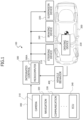
- FIG. 1 is a schematic block diagram illustrating an aspect of a vehicle control system 100.
- a vehicle 200 of FIG. 1 is capable of autonomous driving, and it has a steering device 210, a suspension device 220, a driving device 230, and a braking device 240.
- Steering device 210 is capable of electronically controlling the steering angle by the steering actuator such as electric power steering (i.e., mechanical steering) and a steer-by-wire system.
- the steering actuator such as electric power steering (i.e., mechanical steering) and a steer-by-wire system.
- Suspension device 220 is capable of electronically controlling the vehicle height and damping force by the energy source such as hydraulic pressure and pneumatic pressure such as fully active suspension and electronic controlled air suspension.
- Driving device 230 is capable of electronically controlling the driving force such as a motor and an engine.
- braking device 240 is capable of electronically controlling the braking force such as a friction brake and a regenerative brake.
- Driving device 230 and braking device 240 constitute the braking and driving device that is capable of electronically controlling the braking and driving force of vehicle 200.
- vehicle control system 100 includes an external recognition unit 300, a vehicle behavior detection unit 400, and an integrated control controller 500 (vehicle control device) as well as steering device 210, suspension device 220, driving device 230, and braking device 240.
- vehicle control device vehicle control device
- External recognition unit 300 includes, for example, a stereo camera 310 that captures images of the surroundings of vehicle 200, a navigation system 320 that uses the Global Positioning System (GPS) and map information in combination, a communication system 330 that acquires the vehicle position, the external information and the like from the outside by means of inter-vehicle communications and the like, and an electronic control unit 340 (AD-ECU, ADAS-ECU) that controls autonomous driving or Advanced Driver Assistance Systems.
- GPS Global Positioning System
- a communication system 330 that acquires the vehicle position, the external information and the like from the outside by means of inter-vehicle communications and the like
- AD-ECU, ADAS-ECU electronice control unit 340 that controls autonomous driving or Advanced Driver Assistance Systems.
- external recognition unit 300 may include, for example, Light Detection and Ranging, Laser Imaging Detection and Ranging (LIDAR).
- LIDAR Laser Imaging Detection and Ranging
- electronic control unit 340 has the function of acquiring the external information (peripheral information) through, for example, analysis of images captured by stereo camera 310.
- Integrated control controller 500 is the electronic control device that includes a microcomputer 500A which serves as the control unit that obtains the control commands for controlling steering device 210, suspension device 220, driving device 230, and braking device 240.
- Integrated control controller 500 acquires information on a vehicle speed command or an acceleration command, road surface displacements, road shape, surrounding environment and the like from external recognition unit 300, acquires information on vehicle behavior (for example, yaw rate, lateral G, longitudinal G, wheel speed, and the like) from vehicle behavior detection unit 400, and computes acquired information to obtain and output control commands for controlling steering device 210, suspension device 220, driving device 230, and braking device 240, respectively.
- vehicle behavior for example, yaw rate, lateral G, longitudinal G, wheel speed, and the like
- integrated control controller 500 detects the road condition in front of the vehicle, which may cause disruption of the behavior of vehicle 200, such as road curvature, ruts, drifts, bumps, and potholes.
- integrated control controller 500 When integrated control controller 500 detects that irregularity such as ruts exists on the road surface in front of the vehicle, integrated control controller 500 uses steering device 210, suspension device 220, driving device 230 and braking device 240 to control three axes of the vehicle, which are the longitudinal, transverse and vertical axes. In this way, in addition to the trajectory tracking control, integrated control controller 500 performs integral control for ensuring travel stability of vehicle 200 on the road surface where irregularity such as ruts exists.
- integrated control controller 500 performs longitudinal axis control by using driving device 230 and braking device 240 to control the braking and driving force, that is, to control the engine torque, motor torque, regenerative braking, and friction braking, performs transverse axis control by using steering device 210 to control the steering angle, and performs vertical axis control by using suspension device 220 to control the vehicle height and damping force.
- the ruts, drifts, bumps, and potholes are characteristics of changes in road surface displacements among the characteristics of the road condition, that is, the recognition result concerning the unevenness of the road surface of the road condition (i.e., the identification information concerning the unevenness of the road surface).
- Integrated control controller 500 acquires characteristics of the road condition (specifically, information concerning the curvature of the road surface and the change in the road surface displacements) based on the analysis result of the image captured by stereo camera 310.
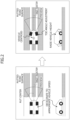
- FIG. 2 is a diagram illustrating the control details of integrated control controller 500 when vehicle 200 travels on a rutted road surface.
- Ruts are tracks of wheels (i.e., grooves or recesses) that remain on a road surface after automobiles have passed, and occur on snow-covered roads and on unpaved roads.
- wheels i.e., grooves or recesses
- the following embodiment explains the case of ruts on a snow-covered road as an example.
- integrated control controller 500 When integrated control controller 500 detects ruts in front of vehicle 200 based on preview information from stereo camera 310, integrated control controller 500 decreases the traveling speed of vehicle 200 before vehicle 200 encounters ruts, to a predetermined appropriate vehicle speed that can ensure stability when vehicle 200 travels along the ruts.
- integrated control controller 500 causes vehicle 200 to encounter the ruts at a speed equal to or less than the appropriate vehicle speed.
- integrated control controller 500 decelerates vehicle 200 to the appropriate vehicle speed by performing control to reduce the driving force that driving device 230 generates, and/or performing control to increase the braking force that braking device 240 generates.
- integrated control controller 500 when integrated control controller 500 detects ruts in front of a vehicle, integrated control controller 500 outputs the deceleration control command (third control command) to driving device 230 and/or braking device 240 so that vehicle speed is reduced compared to before ruts were detected; in other words, reduced vehicle speed compared to when a vehicle travels on a road surface without ruts.
- deceleration control command third control command
- integrated control controller 500 outputs a control command (first control command) to suspension device 220 to raise the vehicle height so that the vehicle height is raised higher than when vehicle 200 travels on a road surface without ruts.
- integrated control controller 500 performs toe-in control when vehicle 200 travels in ruts.
- integrated control controller 500 performs toe-in control by directing the toe angle of the front wheels more inwardly than when vehicle 200 does not travel in ruts, and thus, improves stability when vehicle 200 travels along ruts.
- integrated control controller 500 performs three-axis control by decelerating the vehicle to the appropriate vehicle speed for traveling in ruts, increasing the vehicle height, and causing the wheels to toe in, and thus ensures stability when vehicle 200 travels in ruts.
- integrated control controller 500 outputs the target trajectory control command (second control command) to steering device 210 so that the centroid position of vehicle 200 moves along the center of the ruts, in other words, moves along the ruts while the right and left wheels are caught in the ruts.
- center of the ruts is the center of the space between the right and left ruts (see FIG. 2 ).
- integrated control controller 500 determines that the interference between vehicle 200 and the snow cover may not be sufficiently suppressed even if the control for raising the vehicle height to the maximum is performed due to deep ruts, that is, determines that a predetermined vehicle height that allows traveling in ruts may not be ensured
- integrated control controller 500 performs correction processing to offset the target trajectory in autonomous driving by a predetermined distance in the transverse direction from the center of the ruts, and outputs a control command (second control command) concerning steering angle to steering device 210 so that vehicle 200 travels along the corrected target trajectory.
- integrated control controller 500 acquires the target trajectory based on characteristics of the irregularity of the road surface state (identification information of ruts) and the characteristics of the road shape (i.e., information concerning road shape), and outputs the control command (second control command) concerning steering to steering device 210 so that vehicle 200 travels along the target trajectory.
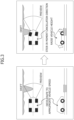
- FIG. 3 illustrates the control details of integrated control controller 500 when vehicle 200 travels over a drift.
- the drift is an area of the road on which snow or fallen leaves have been blown by the wind and deposited, or refers to the deposit (mound).
- the following embodiment explains the case of a snowdrift as an example.
- integrated control controller 500 When integrated control controller 500 detects a snowdrift in front of vehicle 200 based on the preview information from stereo camera 310, integrated control controller 500 decreases the traveling speed of vehicle 200, before vehicle 200 encounters the snowdrift, to a predetermined appropriate vehicle speed that can ensure stability when vehicle 200 travels over the snowdrift.
- integrated control controller 500 causes vehicle 200 to encounter the snowdrift at a speed equal to or less than an appropriate vehicle speed.
- integrated control controller 500 decelerates vehicle 200 to an appropriate vehicle speed by performing control to reduce the driving force that driving device 230 generates, and/or performing control to increase the braking force that braking device 240 generates.
- integrated control controller 500 when integrated control controller 500 detects a snowdrift in front of the vehicle, integrated control controller 500 outputs the deceleration control command (third control command) to driving device 230 and/or braking device 240 so that the vehicle speed is reduced compared to before the snowdrift was detected, in other words, reduced vehicle speed compared to when the vehicle travels on the road surface without snowdrifts.
- the deceleration control command third control command
- integrated control controller 500 outputs the control command (first control command) for raising the vehicle height to suspension device 220 so that the vehicle height is raised higher than when vehicle 200 travels on the road surface without snowdrifts.
- integrated control controller 500 outputs the steering angle control command (second control command) to steering device 210 so that a yaw moment is generated in a direction opposite to another yaw moment that is generated by the track resistance caused by the snowdrift, and thereby offsets the other yaw moment that is generated by the track resistance caused by the snowdrift.
- integrated control controller 500 performs three-axis control by decelerating the vehicle to an appropriate vehicle speed for traveling over a snowdrift, increasing the vehicle height, and steering the wheels to suppress yaw moment, and thus, ensures stability when vehicle 200 travels over the snowdrift.
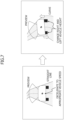
- FIG. 4 illustrates the control of target trajectory for causing vehicle 200 to travel while avoiding the snowdrift.
- integrated control controller 500 When integrated control controller 500 detects a snowdrift in front of vehicle 200, if avoidance conditions such as there being no oncoming vehicle is satisfied, integrated control controller 500 corrects the target trajectory to avoid the snowdrift, and allows vehicle 200 to travel along the corrected target trajectory.
- integrated control controller 500 acquires the target trajectory based on the characteristics of irregularity of the road surface state (identification information of a snowdrift) and the characteristics of the road shape (i.e., information concerning the road shape), and outputs a control command (second control command) concerning steering to steering device 210 so that vehicle 200 travels along the target trajectory.
- FIG. 5 illustrates the control details of integrated control controller 500 when a pothole is detected in front of vehicle 200.
- the pothole is a hole (or a recess) having a length of about 0.1 m to 1 m that is formed on a paved road surface (for example, an asphalt pavement).
- integrated control controller 500 When integrated control controller 500 detects a pothole in front of vehicle 200 based on the preview information from stereo camera 310, integrated control controller 500 decreases the traveling speed of vehicle 200, before vehicle 200 encounters the pothole, to a predetermined appropriate vehicle speed that can ensure stability when vehicle 200 travels over the pothole.
- integrated control controller 500 causes vehicle 200 to encounter the pothole at a speed equal to or less than an appropriate vehicle speed.
- integrated control controller 500 decelerates vehicle 200 to an appropriate vehicle speed by performing control to reduce the driving force that driving device 230 generates, and/or performing control to increase the braking force that braking device 240 generates.
- integrated control controller 500 when integrated control controller 500 detects a pothole in front of the vehicle, integrated control controller 500 outputs the deceleration control command (third control command) to driving device 230 and/or braking device 240 so that the vehicle speed is reduced compared to before the pothole was detected; in other words, reduced vehicle speed compared to when the vehicle travels on a road surface without potholes.
- the deceleration control command third control command
- integrated control controller 500 outputs the vehicle-height and/or damping-force control command to suspension device 220 in order to prevent the wheels of vehicle 200 from falling in the pothole and impacting the vehicle body.
- integrated control controller 500 outputs a control command (first control command) to suspension device 220 to lift the wheel, and/or outputs a control command (first control command) to suspension device 220 to stiffen the damper (i.e., shock absorber), in other words, to increase damping force, which is the resistance force generated by the damper.
- integrated control controller 500 may correct the target trajectory to that for avoiding the pothole and output the steering angle control command (second control command) to steering device 210 so that vehicle 200 travels along such target trajectory.
- integrated control controller 500 acquires the target trajectory based on the characteristics of the irregularity of the road surface state (specifically, identification information of a pothole) and the characteristics of the road shape (i.e., information concerning road shape), and outputs a control command (second control command) concerning steering to steering device 210 so that vehicle 200 travels along the target trajectory.
- FIG. 6 illustrates control details of integrated control controller 500 when a bump is detected in front of vehicle 200.
- the bump refers to an area in which a part of the road has bumps as a result of construction work or the like, and may exclude bumps that are intentionally installed to encourage drivers to decelerate (for example, a speed bump or a speed cushion).
- integrated control controller 500 When integrated control controller 500 detects a bump in front of vehicle 200 based on preview information from stereo camera 310, integrated control controller 500 decreases the traveling speed of vehicle 200, before vehicle 200 encounters the bump, to a predetermined appropriate vehicle speed that can ensure stability when vehicle 200 travels over the bump.
- integrated control controller 500 causes vehicle 200 to encounter the bump at a speed equal to or less than an appropriate vehicle speed.
- integrated control controller 500 decelerates vehicle 200 to an appropriate vehicle speed by performing control to reduce the driving force that driving device 230 generates, and/or performing control to increase the braking force that braking device 240 generates.
- integrated control controller 500 when integrated control controller 500 detects a bump in front of the vehicle, integrated control controller 500 outputs the deceleration control command (third control command) to driving device 230 and/or braking device 240 so that the vehicle speed is reduced compared to before the bump was detected; in other words, reduced vehicle speed compared to when the vehicle travels on a road surface without bumps.
- the deceleration control command third control command
- integrated control controller 500 outputs the vehicle height and/or damping force control command to suspension device 220 in order to suppress the generation of vertical vibration of vehicle 200 when a wheel of vehicle 200 rides up on the bump.
- integrated control controller 500 outputs the control command (first control command) to suspension device 220 to lift the wheel, or outputs the control command (first control command) to suspension device 220 to soften the damper (i.e., the shock absorber), in other words, to reduce the damping force which is the resistance force generated by the damper.
- integrated control controller 500 may correct the target trajectory to that for avoiding the bump and output a control command (second control command) concerning steering angle to steering device 210 so that vehicle 200 travels along such a target trajectory.
- integrated control controller 500 acquires a target trajectory based on the characteristics of the irregularity of the road surface state (identification information of a bump) and the characteristics of the road shape (i.e., information concerning road shape), and outputs a control command (second control command) concerning steering to steering device 210 so that vehicle 200 travels along a target trajectory.
- FIG. 7 illustrates the control details of integrated control controller 500 when a curved road (i.e., a curvature of the road surface) is detected in front of vehicle 200.
- a curved road i.e., a curvature of the road surface
- integrated control controller 500 When integrated control controller 500 detects the curved road in front of vehicle 200 based on the preview information, map information, and the like, from stereo camera 310, integrated control controller 500 decreases the traveling speed of vehicle 200, before vehicle 200 encounters the curved road, to a predetermined appropriate vehicle speed that can ensure stability when vehicle 200 travels on the curved road.
- integrated control controller 500 causes vehicle 200 to encounter the curved road at a speed equal to or less than an appropriate vehicle speed.
- integrated control controller 500 decelerates vehicle 200 to an appropriate vehicle speed by performing control to reduce driving force that driving device 230 generates, and/or performing control to increase braking force that braking device 240 generates.
- integrated control controller 500 when integrated control controller 500 detects a curved road in front of the vehicle, integrated control controller 500 outputs a deceleration control command (third control command) to driving device 230 and/or braking device 240 so that the vehicle speed is reduced compared to before the curved road was detected; in other words, reduced vehicle speed compared to when the vehicle travels on a straight road.
- a deceleration control command third control command
- integrated control controller 500 suppresses lateral acceleration that is felt by an occupant of vehicle 200 during traveling on a curved road by outputting the vehicle height adjustment control command (first control command) to suspension device 220 so that, for right or left vehicle height of vehicle 200, the vehicle height on the turning inner side becomes lower than the vehicle height on the turning outer side.
- integrated control controller 500 performs vehicle height control by reducing the vehicle height on the turning inner side and raising the vehicle height on the turning outer side from the state in which the right and left vehicle heights are controlled to be the same. In this way, the vehicle height on the turning inner side is lower than that on the turning outer side.
- integrated control controller 500 that is, the vehicle behavior control and the trajectory tracking control including the control functions for dealing with the road condition irregularity such as ruts, are explained in detail with reference to the functional block diagram of FIG. 8 .
- Integrated control controller 500 has a state estimation unit 510 and an integrated control execution unit 520. Furthermore, integrated control execution unit 520 includes a vehicle behavior control unit 530, a trajectory tracking control unit 540, and a distribution control unit 550.
- State estimation unit 510 includes a road surface determination unit 511, a vehicle state variable estimation unit 512, and a trajectory generation unit 513.
- Road surface determination unit 511 acquires the road surface displacements, road shape, peripheral information and the like from external recognition unit 300, and obtains and outputs characteristics of the road condition including identification information such as ruts, snowdrifts, potholes, and bumps, that is, the irregularity information.
- Vehicle state variable estimation unit 512 acquires road condition information and the like that are output by road surface determination unit 511, and estimates the vehicle state variables including the estimated vehicle speed, sideslip angle, vehicle height, the position of the vehicle itself and the like.
- the estimated vehicle speed is the data of vehicle speed that is obtained based on information on the wheel speed.
- Trajectory generation unit 513 acquires the road shape and peripheral information from external recognition unit 300, and acquires the road condition information including the irregularity information (for example, the identification information such as ruts) from road surface determination unit 511.
- the irregularity information for example, the identification information such as ruts
- trajectory generation unit 513 generates the target trajectory that avoids the irregularity according to conditions such as the state of irregularity such as a snowdrift and the presence or absence of an oncoming vehicle.
- trajectory generation unit 513 when vehicle 200 travels in ruts, trajectory generation unit 513 generates the target trajectory so that the centroid position of vehicle 200 moves along the center of the ruts, and if the determination is made that the vehicle height that enables traveling along the ruts may not be ensured, generates a target trajectory that is offset by a predetermined distance in the transverse direction from the center of the ruts.
- road surface determination unit 511 determines the road surface state in front of traveling vehicle 200 based on characteristics of road surface displacements and characteristics of road shape
- trajectory generation unit 513 acquires the target trajectory based on characteristics of the irregularity of the road surface state and characteristics of the road shape.
- Vehicle behavior control unit 530 of integrated control execution unit 520 has a vehicle speed control unit 531 and an attitude control unit 532.
- Vehicle speed control unit 531 acquires information on a vehicle speed command and an acceleration command in autonomous driving (advanced driver assistance) from external recognition unit 300; in other words, information on control variables concerning the speed of vehicle 200, acquires information on estimated vehicle speed from vehicle state variable estimation unit 512, and acquires information on the target vehicle speed according to irregularity of the road surface from attitude control unit 532.
- vehicle speed control unit 531 determines the presence or absence of the deceleration request before encountering an irregularity such as ruts, and decides the final target vehicle speed.
- vehicle speed control unit 531 obtains target longitudinal acceleration based on the comparison between final target vehicle speed and estimated vehicle speed, and outputs information on the obtained target longitudinal acceleration.
- attitude control unit 532 acquires information on the target trajectory from trajectory generation unit 513, acquires information on vehicle state variables including state of entry into an irregularity on the road surface from vehicle state variable estimation unit 512, and based on these, obtains and outputs the target vehicle height, target roll moment, target lateral acceleration, and the like.
- attitude control unit 532 changes the target vehicle height so that the vehicle height is raised, and sets the target lateral acceleration so that a yaw moment is generated in a direction opposite to another yaw moment that is generated by the track resistance caused by a snowdrift.
- attitude control unit 532 outputs the toe-in request when vehicle 200 travels in ruts, outputs a request for adjusting the damping force and/or vehicle height when vehicle 200 travels over a bump or a pothole, and outputs a request for adjusting the right or left vehicle height when vehicle 200 travels on a curved road.
- vehicle behavior control unit 530 constituted by vehicle speed control unit 531 and attitude control unit 532 acquires vehicle behavior control variables based on vehicle state variables that include estimated vehicle speed of vehicle 200, target trajectory, and control variables (specifically, vehicle speed command and acceleration command) concerning the speed of vehicle 200.
- Trajectory tracking control unit 540 acquires information on the position of the vehicle itself (vehicle position) from vehicle state variable estimation unit 512 and information on the target trajectory from trajectory generation unit 513, and obtains and outputs information on target lateral acceleration (trajectory tracking control variables) for causing vehicle 200 to trace the target trajectory.
- trajectory tracking control unit 540 acquires the trajectory tracking control variables based on the position of vehicle 200 itself of the estimated state variables of vehicle 200, and the target trajectory.
- Distribution control unit 550 has a longitudinal and pitch control unit 551, a vertical and roll control unit 552 and a transverse and yaw control unit 553, and outputs the control commands to driving device 230, braking device 240, suspension device 220, and steering device 210 respectively which constitute an actuator control unit 600.
- Longitudinal and pitch control unit 551 acquires information on the target longitudinal acceleration from vehicle speed control unit 531, and based on the comparison between the target longitudinal acceleration and the actual longitudinal acceleration, outputs the drive torque control command to driving device 230 as the control command (third control command) for realizing the target longitudinal acceleration, and outputs the braking torque control command to braking device 240.
- Vertical and roll control unit 552 acquires information on the target vehicle height, target roll moment, target damping force, and the like, from attitude control unit 532, and based on these, outputs a control command (first control command) to suspension device 220 to adjust the vehicle height and damping force.
- Transverse and yaw control unit 553 acquires information on the target lateral acceleration from attitude control unit 532 and trajectory tracking control unit 540, and based on these, outputs a control command (second control command) to steering device 210 to adjust the steering angle.
- distribution control unit 550 outputs the first control command for controlling suspension device 220, the second control command for controlling steering device 210, and the third control command for controlling the braking and driving device (driving device 230 and braking device 240) based on the vehicle behavior control variables from vehicle behavior control unit 530 and the trajectory tracking control variables from trajectory tracking control unit 540.
- FIG. 9 is a flowchart illustrating a procedure for control of steering device 210, suspension device 220, driving device 230, and braking device 240, respectively, by integrated control controller 500.
- step S1000 integrated control controller 500 determines whether or not steering device 210, driving device 230, braking device 240, and external recognition unit 300 are normal, and if any of them is abnormal, terminates computation without performing various controls since the autonomous driving and the advanced driver assistance may not be performed.
- step S1100 determines whether or not ruts are detected in front of vehicle 200.
- integrated control controller 500 When integrated control controller 500 detects ruts in front of vehicle 200, integrated control controller 500 proceeds to step S 1200 and determines whether or not a snowdrift is detected in front of vehicle 200.
- integrated control controller 500 performs trajectory tracking control for causing vehicle 200 to travel along the target trajectory in step S 1300.
- integrated control controller 500 proceeds to step S1400, and performs control (control 1) when vehicle 200 travels on a rutted road surface.
- FIG. 10 illustrates the details of processing contents (control 1) of step S1400.
- step S1401 before vehicle 200 encounters ruts, integrated control controller 500 performs driving and braking control for decelerating vehicle 200 to a predetermined appropriate vehicle speed that is suitable for traveling in ruts.
- step S1401 integrated control controller 500 outputs a control command (third control command) to driving device 230 and/or braking device 240 to decelerate vehicle 200 to an appropriate vehicle speed for traveling in ruts (see FIG. 2 ).
- step S1402 integrated control controller 500 determines whether or not suspension device 220 is normal.
- step S1403 integrated control controller 500 proceeds to step S1403 and performs control for adjusting the vehicle height so that the lower surface of vehicle 200 does not rub against snow when the wheels travel while being caught in ruts.
- integrated control controller 500 outputs a control command (first control command) to suspension device 220 to raise the vehicle height of vehicle 200 in step S1403 (see FIG. 2 ).
- step S1403 if abnormality occurs in suspension device 220, integrated control controller 500 bypasses step S1403 and proceeds to step S1404 so as to cancel adjusting the vehicle height.
- step S1404 integrated control controller 500 determines whether or not the vehicle height at which the lower surface of vehicle 200 does not rub against snow is ensured.
- integrated control controller 500 bypasses steps S1405 and S1406 and proceeds to step S1407 so that the wheels of vehicle 200 travel while being caught in ruts.
- step S1405 the vehicle height required for traveling in ruts is not ensured, in other words, if the lower surface of vehicle 200 may rub against snow due to insufficient vehicle height
- integrated control controller 500 proceeds to step S1405, and it sets so as to offset the target trajectory from the center of the ruts.
- integrated control controller 500 corrects the target trajectory so that the wheels of vehicle 200 travel without being caught in ruts.
- integrated control controller 500 outputs a steering angle command (second control command) to steering device 210 so that vehicle 200 traces the corrected target trajectory.
- step S1405 If the target trajectory is corrected in step S1405, vehicle 200 travels on a road surface with high track resistance on which no other vehicle has traveled before. Thus, integrated control controller 500 increases the drive torque in the next step S1406.
- step S 1407 determines whether steering device 210 is a steer-by-wire system that is capable of adjusting the toe angles of the right and left sides independently, and if so, integrated control controller 500 proceeds to step S1408.
- step S 1408 in order to improve stability when the wheels travel while being caught in ruts, integrated control controller 500 outputs the toe-in control command (second control command) to steering device 210 so that the toe angle of the front wheels is directed more inwardly than when the wheels are not traveling in ruts (see FIG. 2 ).
- step S 1200 if integrated control controller 500 detects a snowdrift in step S 1200 in the flowchart in FIG. 9 , that is, detects ruts and a snowdrift in front of vehicle 200, integrated control controller 500 proceeds to step S1500 and performs trajectory tracking control that causes vehicle 200 to travel along the target trajectory.
- integrated control controller 500 performs control (control 2) for traveling on a snowy road on which ruts and snowdrifts exist.
- FIG. 11 illustrates the details of processing contents (control 2) of step S1600.
- steps S1601 to S 1608 in the flowchart of FIG. 11 are the same as those in steps S1401 to S1408 described above, and thus, are not described in further detail below.
- Integrated control controller 500 performs deceleration control, vehicle height control, target trajectory correction control, and toe angle control in steps S1601 to S1608, and then proceeds to step S1609.
- step S1609 when vehicle 200 travels over a snowdrift, integrated control controller 500 outputs the steering angle control command (second control command) to steering device 210 so that a yaw moment is generated in a direction opposite to another yaw moment that is generated by track resistance caused by a snowdrift, and thereby offsets the other yaw moment that is generated by track resistance caused by the snowdrift (see FIG. 3 ).
- second control command the steering angle control command
- integrated control controller 500 proceeds to step S1700 and determines whether or not a snowdrift is detected.
- integrated control controller 500 detects a snowdrift in front of the vehicle, integrated control controller 500 proceeds to step S1800 to perform trajectory tracking control for causing vehicle 200 to travel along the target trajectory, and in the next step S1900, performs control (control 3) when vehicle 200 travels over the snowdrift.
- the flowchart of FIG. 12 illustrates the details of processing contents (control 3) of step S1900.
- step S1901 before vehicle 200 encounters a snowdrift, integrated control controller 500 performs driving and braking control for decelerating vehicle 200 to a predetermined appropriate vehicle speed that is suitable for traveling over a snowdrift.
- step S1901 integrated control controller 500 outputs a control command (third control command) to driving device 230 and/or braking device 240 to decelerate vehicle 200 to an appropriate vehicle speed for traveling over a snowdrift.
- a control command third control command
- integrated control controller 500 proceeds to step S1902 and determines whether or not vehicle 200 can travel while avoiding (bypassing) the snowdrift based on traveling conditions such as presence or absence of an oncoming vehicle and size and position of the snowdrift.
- step S1903 corrects the target trajectory of vehicle 200 (i.e., the target traveling locus) to a trajectory that avoids the snowdrift (see FIG. 4 ), and outputs the steering angle command (second control command) to steering device 210 so that vehicle 200 traces the corrected target trajectory.
- the target trajectory of vehicle 200 i.e., the target traveling locus
- the steering angle command second control command
- step S1904 determines whether or not suspension device 220 is normal.
- step S1905 integrated control controller 500 proceeds to step S1905 and performs vehicle height control to raise the vehicle height of vehicle 200 higher than the vehicle height before vehicle 200 encounters the snowdrift, and thus improves travel stability (see FIG. 3 ).
- integrated control controller 500 outputs a vehicle height control command (first control command) to suspension device 220 so as to increase the vehicle height of vehicle 200.
- step S1905 when suspension device 220 is abnormal and the vehicle height may not be adjusted, integrated control controller 500 bypasses step S1905 and proceeds to step S1906 so as to cancel adjusting the vehicle height.
- step S1906 when vehicle 200 travels over a snowdrift, integrated control controller 500 outputs a steering angle control command (second control command) to steering device 210 so that a yaw moment is generated in a direction opposite to another yaw moment that is generated by track resistance caused by the snowdrift, and thereby offsets the other yaw moment that is generated by the track resistance caused by the snowdrift (see FIG. 3 ).
- a steering angle control command second control command
- integrated control controller 500 If integrated control controller 500 does not detect a snowdrift in front of vehicle 200 in step S1700 of the flowchart of FIG. 9 , integrated control controller 500 proceeds to step S2000 and determines whether or not a pothole is detected.
- step S2100 integrated control controller 500 proceeds to step S2100 to perform trajectory tracking control for causing vehicle 200 to travel along the target trajectory.
- integrated control controller 500 performs control (control 4) when vehicle 200 travels over a pothole.
- FIG. 13 illustrates the details of processing contents (control 4) of step S2200.
- step S2201 before vehicle 200 encounters a pothole, integrated control controller 500 performs driving and braking control for decelerating vehicle 200 to a predetermined appropriate vehicle speed that is suitable for driving in a pothole.
- step S2201 integrated control controller 500 outputs the control command (third control command) for decelerating vehicle 200 to an appropriate vehicle speed for traveling in a pothole to driving device 230 and/or braking device 240.
- integrated control controller 500 proceeds to step S2202, and determines whether or not vehicle 200 can travel while avoiding (bypassing) a pothole based on travel conditions such as the presence or absence of an oncoming vehicle and size and position of a pothole.
- step S2203 If a pothole is avoidable, integrated control controller 500 proceeds to step S2203, corrects the target trajectory of vehicle 200 to a trajectory that avoids the pothole (see FIG. 5 ), and outputs the steering angle command (second control command) to steering device 210 so that vehicle 200 traces the corrected target trajectory.
- step S2204 determines whether or not suspension device 220 is normal.
- step S2205 If suspension device 220 is normal, integrated control controller 500 proceeds to step S2205 and performs vehicle height control to lift the wheels that encounter the pothole (see FIG. 5 ).
- integrated control controller 500 performs damping force control for stiffening the damper of the wheels that encounter the pothole, in other words, increasing the damping force (see FIG. 5 ).
- integrated control controller 500 may perform either vehicle height control in step S2205 or damping force control in step S2206.
- integrated control controller 500 may cancel the process of step S2205 and perform step S2206.
- integrated control controller 500 outputs the control command (first control command) to suspension device 220 to prevent the wheel from falling into the pothole, and thus, improves stability when vehicle 200 travels over the pothole.
- integrated control controller 500 does not detect a pothole in front of vehicle 200 in step S2000 of the flowchart of FIG. 9 , integrated control controller 500 proceeds to step S2300 and determines whether or not a bump is detected.
- step S2400 If integrated control controller 500 detects a bump, integrated control controller 500 proceeds to step S2400 to perform trajectory tracking control for causing vehicle 200 to travel along the target trajectory.
- integrated control controller 500 performs control (control 5) when vehicle 200 travels over the bump.
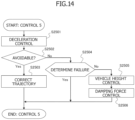
- the flowchart of FIG. 14 illustrates the details of processing contents (control 5) of step S2500.
- step S2501 before vehicle 200 encounters the bump, integrated control controller 500 performs driving and braking control to decelerate vehicle 200 to a predetermined appropriate vehicle speed that is suitable for travel over a bump.
- step S2501 integrated control controller 500 outputs the control command (third control command) for decelerating vehicle 200 to an appropriate vehicle speed for travel over a bump to driving device 230 and/or braking device 240.
- integrated control controller 500 proceeds to step S2502, and determines whether or not vehicle 200 may travel while avoiding (bypassing) the bump based on travel conditions, such as presence or absence of an oncoming vehicle and the size and position of the bump.
- step S2503 corrects the target trajectory of vehicle 200 to a trajectory that avoids the bump (see FIG. 6 ), and outputs the steering angle command (second control command) to steering device 210 so that vehicle 200 traces the corrected target trajectory.
- step S2504 determines whether or not suspension device 220 is normal.
- step S2505 If suspension device 220 is normal, integrated control controller 500 proceeds to step S2505 and performs vehicle height control to lift the wheels that encounter the bump (see FIG. 6 ).
- integrated control controller 500 performs damping force control for softening the damper of the wheels that encounter the bump in other words, reducing the damping force (see FIG. 6 ).
- integrated control controller 500 may perform either vehicle height control in step S2505 or damping force control in step S2506.
- integrated control controller 500 may cancel the process of step S2505 and perform step S2506.
- integrated control controller 500 outputs the control command (first control command) to suspension device 220 to prevent the transmission of impact to the vehicle body, and thus, improves stability when vehicle 200 travels over the bump.
- integrated control controller 500 does not detect a bump in front of vehicle 200 in step S2300 of the flowchart of FIG. 9 , integrated control controller 500 proceeds to step S2600 and determines whether or not a curved road is detected.
- integrated control controller 500 If integrated control controller 500 detects a curved road, integrated control controller 500 proceeds to step S2700 to perform trajectory tracking control for causing vehicle 200 to travel along the target trajectory.
- integrated control controller 500 performs control (control 6) when vehicle 200 travels on a curved road.
- FIG. 15 illustrates the details of processing contents (control 6) of step S2800.
- step S2801 before vehicle 200 encounters a curved road, integrated control controller 500 performs driving and braking control to decelerate vehicle 200 to a predetermined appropriate vehicle speed that is suitable for traveling on a curve (turning traveling) (see FIG. 7 ).
- step S2801 integrated control controller 500 outputs the control command (third control command) to decelerate vehicle 200 to an appropriate vehicle speed for traveling on the curved road to driving device 230 and/or braking device 240.
- integrated control controller 500 proceeds to step S2802 and determines whether or not suspension device 220 is normal.
- step S2803 integrated control controller 500 proceeds to step S2803 and performs vehicle height control to suppress the transverse acceleration (lateral acceleration) that is felt by the driver (occupant) when vehicle 200 travels on a curved road.
- step S2803 integrated control controller 500 outputs the vehicle height adjustment control command (first control command) to suspension device 220 so that the vehicle height on the turning inner side becomes lower than the vehicle height on the turning outer side on the curved road, and thus, suppresses the lateral acceleration that is felt by the occupant of vehicle 200 during traveling on a curved road (see FIG. 7 ).
- integrated control controller 500 may predict the lateral acceleration that is generated during the traveling on a curve and adjust the difference in the vehicle heights of the turning inner and outer wheels based on the prediction result.
- integrated control controller 500 does not detect a curved road (road curvature) in front of vehicle 200 in step S2600 of the flowchart of FIG. 9 , that is, if integrated control controller 500 does not detect any ruts, snowdrift, pothole, bump, or curved road, and a flat and substantially straight road extends in front of vehicle 200, integrated control controller 500 proceeds to step S2900, and performs trajectory tracking control for causing vehicle 200 to travel along the target trajectory.
- integrated control controller 500 may cause vehicle 200 to travel without changing the target trajectory even though irregularity such as a snowdrift, bump, pothole, and the like, is avoidable.
- the target trajectory of vehicle 200 may be offset transversely by a predetermined distance from the center of the ruts (center of the space between the right and left ruts).
- integrated control controller 500 may change the target trajectory of vehicle 200 so that vehicle 200 travels over a section in which height of a snowdrift or a bump is lower than a predetermined value, or the section in which a depth or size of a pothole is shallower or smaller than a predetermined value.
- integrated control controller 500 may change an appropriate vehicle speed that is targeted in the deceleration control before the vehicle encounters the irregularity.
- integrated control controller 500 may change the adjustment margins of the lifting variables and damping force in the wheels lifting control and the damping force adjustment control when vehicle 200 travels over a pothole or a bump.
- integrated control controller 500 may output the steering angle control command (second control command) to steering device 210 so that a yaw moment is generated in a direction opposite to another yaw moment that is generated when either the right or left wheels travels over a bump or a pothole.
- integrated control controller 500 may output a control command (first control command) to suspension device 220 so that the wheels that are going over the bump are lifted and/or the damping force of the dampers on wheels that are going over the bump is decreased.
- a bump for example, a speed bump or a speed cushion
- the irregularity is not limited to ruts, snowdrifts, potholes, and bumps that are defined in the above embodiment as partial unevenness of the road surface on which vehicle control is performed.
- the claims are directed to ruts.
- integrated control controller 500 may detect a fallen object of a predetermined height or less on a road, a plate that is placed on the road for road construction, or the like, as a protrusion as an irregularity. Integrated control controller 500 may then perform deceleration control before encountering such an irregularity, and when vehicle 200 goes over the irregularity, integrated control controller 500 may perform control on suspension device 220 to lift the wheels and/or to decrease the damping force, or may perform steering control to change the target trajectory to that for avoiding the protrusion.
Landscapes
- Engineering & Computer Science (AREA)
- Mechanical Engineering (AREA)
- Transportation (AREA)
- Chemical & Material Sciences (AREA)
- Combustion & Propulsion (AREA)
- Automation & Control Theory (AREA)
- General Engineering & Computer Science (AREA)
- Control Of Driving Devices And Active Controlling Of Vehicle (AREA)
- Vehicle Body Suspensions (AREA)
Description
- The present invention relates to a vehicle control device, a vehicle control method, and a vehicle control system.
- A travel control apparatus of
Patent Document 1 sets a target course over a road surface on which a vehicle travels as a first course on the basis of map information, sets target courses over the road surface on which the vehicle travels as second and third courses on the basis of rut information, compares the first course with the second and third courses, and sets the target course over the road surface on which the vehicle travels on the basis of traveling road information and the rut information. -
Patent Document 2 discloses a method for influencing the guidance of a vehicle depending on vertical dynamic influences on the vehicle comprises the following steps: - acquisition of data, in particular a mathematical function, representing one or more vertical dynamic influences on the vehicle when driving on a terrain area, - comparison with one of several pre-stored patterns, and in particular an assignment of the recorded data to one of the predetermined patterns, - determining and providing data for influencing the guidance of the vehicle depending on the assigned pattern to at least one vehicle function. -
Patent Document 3 discloses a method for controlling the behavior of a vehicle when driving on a route, wherein at least one angle of inclination about a body axis of the vehicle is influenced to implement a tilting technique for the vehicle, wherein a speed profile to be set for the vehicle along a section of the route to be traveled in the future is adapted to the at least one inclination angle. -
- Patent Document 1:
JP 2016-172500 A - Patent document 2:
DE 10 2017 201 613 A - Patent document 3:
DE 10 2014 013 585 A - If an irregularity such as ruts on a road surface exists, simply selecting a target course (target trajectory) and controlling a steering angle to trace the selected target course is insufficient to deal with effects of irregularities, and it is difficult to ensure travel stability of vehicles.
- The present invention has been made in view of conventional circumstances, and an object of the present invention is to provide a vehicle control device, a vehicle control method, and a vehicle control system that are capable of improving travel stability of a vehicle on a road surface on which irregularities such as ruts exist.
- Said object is achieved by the present invention defined by the subject matter of the independent claims. Characteristics of a road condition in front of a traveling vehicle are acquired based on external information that is acquired from an external recognition unit; vehicle behavior control variables for controlling the behavior of the vehicle are acquired based on estimated state variables of the vehicle that are obtained based on the characteristics of the road condition and control variables concerning speed of the vehicle based on the external information; trajectory tracking control variables for causing the vehicle to track the target trajectory are acquired based on the target trajectory on which the vehicle travels that are obtained based on the characteristics of the road condition and the estimated state variables; and a first control command for controlling the suspension device, a second control command for controlling the steering device, and a third control command for controlling a braking and driving device are output based on vehicle behavior control variables and trajectory tracking control variables.
- According to the present invention, it is possible to improve travel stability of a vehicle on a road surface on which irregularities such as ruts exist.
-
-
FIG. 1 is a schematic diagram of a vehicle control system. -
FIG. 2 is a diagram illustrating deceleration control, vehicle height control, and toe-in control when a vehicle travels in ruts. -
FIG. 3 is a diagram illustrating deceleration control, vehicle height control, and steering control when a vehicle travels over a drift. -
FIG. 4 is a diagram illustrating deceleration control and correction control of a target trajectory when a vehicle travels over a drift. -
FIG. 5 is a diagram illustrating deceleration control, correction control of the target trajectory, and control of a suspension device when a vehicle travels over a pothole. -
FIG. 6 is a diagram illustrating deceleration control, correction control of the target trajectory, and control of the suspension device when a vehicle travels over a bump. -
FIG. 7 is a diagram illustrating deceleration control and vehicle height control when a vehicle travels on a curved road. -
FIG. 8 is a functional block diagram of an integrated control controller. -
FIG. 9 is a flowchart illustrating control details of the integrated control controller. -
FIG. 10 is a flowchart illustrating control details when a vehicle travels in ruts. -
FIG. 11 is a flowchart illustrating control details when a vehicle travels in ruts and over a drift. -
FIG. 12 is a flowchart illustrating control details when a vehicle travels over a drift. -
FIG. 13 is a flowchart illustrating control details when a vehicle travels over a pothole. -
FIG. 14 is a flowchart illustrating control details when a vehicle travels over a bump. -
FIG. 15 is a flowchart illustrating control details when a vehicle travels on a curved road. - Hereinafter, an embodiment of a vehicle control device, a vehicle control method, and a vehicle control system according to the present invention will be described with reference to the drawings.
-
FIG. 1 is a schematic block diagram illustrating an aspect of avehicle control system 100. - A
vehicle 200 ofFIG. 1 is capable of autonomous driving, and it has asteering device 210, asuspension device 220, adriving device 230, and abraking device 240. -
Steering device 210 is capable of electronically controlling the steering angle by the steering actuator such as electric power steering (i.e., mechanical steering) and a steer-by-wire system. -
Suspension device 220 is capable of electronically controlling the vehicle height and damping force by the energy source such as hydraulic pressure and pneumatic pressure such as fully active suspension and electronic controlled air suspension. -
Driving device 230 is capable of electronically controlling the driving force such as a motor and an engine. - Furthermore,
braking device 240 is capable of electronically controlling the braking force such as a friction brake and a regenerative brake. -
Driving device 230 andbraking device 240 constitute the braking and driving device that is capable of electronically controlling the braking and driving force ofvehicle 200. - Furthermore,
vehicle control system 100 includes anexternal recognition unit 300, a vehiclebehavior detection unit 400, and an integrated control controller 500 (vehicle control device) as well assteering device 210,suspension device 220,driving device 230, andbraking device 240. -
External recognition unit 300 includes, for example, astereo camera 310 that captures images of the surroundings ofvehicle 200, anavigation system 320 that uses the Global Positioning System (GPS) and map information in combination, acommunication system 330 that acquires the vehicle position, the external information and the like from the outside by means of inter-vehicle communications and the like, and an electronic control unit 340 (AD-ECU, ADAS-ECU) that controls autonomous driving or Advanced Driver Assistance Systems. - Here,
external recognition unit 300 may include, for example, Light Detection and Ranging, Laser Imaging Detection and Ranging (LIDAR). - Furthermore,
electronic control unit 340 has the function of acquiring the external information (peripheral information) through, for example, analysis of images captured bystereo camera 310. -
Integrated control controller 500 is the electronic control device that includes amicrocomputer 500A which serves as the control unit that obtains the control commands for controllingsteering device 210,suspension device 220,driving device 230, andbraking device 240. -
Integrated control controller 500 acquires information on a vehicle speed command or an acceleration command, road surface displacements, road shape, surrounding environment and the like fromexternal recognition unit 300, acquires information on vehicle behavior (for example, yaw rate, lateral G, longitudinal G, wheel speed, and the like) from vehiclebehavior detection unit 400, and computes acquired information to obtain and output control commands for controllingsteering device 210,suspension device 220,driving device 230, andbraking device 240, respectively. - Here, as the preview information from
stereo camera 310, integratedcontrol controller 500 detects the road condition in front of the vehicle, which may cause disruption of the behavior ofvehicle 200, such as road curvature, ruts, drifts, bumps, and potholes. - When integrated
control controller 500 detects that irregularity such as ruts exists on the road surface in front of the vehicle, integratedcontrol controller 500 usessteering device 210,suspension device 220,driving device 230 andbraking device 240 to control three axes of the vehicle, which are the longitudinal, transverse and vertical axes. In this way, in addition to the trajectory tracking control,integrated control controller 500 performs integral control for ensuring travel stability ofvehicle 200 on the road surface where irregularity such as ruts exists. - Here,
integrated control controller 500 performs longitudinal axis control by usingdriving device 230 andbraking device 240 to control the braking and driving force, that is, to control the engine torque, motor torque, regenerative braking, and friction braking, performs transverse axis control by usingsteering device 210 to control the steering angle, and performs vertical axis control by usingsuspension device 220 to control the vehicle height and damping force. - The ruts, drifts, bumps, and potholes are characteristics of changes in road surface displacements among the characteristics of the road condition, that is, the recognition result concerning the unevenness of the road surface of the road condition (i.e., the identification information concerning the unevenness of the road surface).
-
Integrated control controller 500 acquires characteristics of the road condition (specifically, information concerning the curvature of the road surface and the change in the road surface displacements) based on the analysis result of the image captured bystereo camera 310. - Hereinafter, the three-axis control that is performed by integrated
control controller 500 to ensure travel stability ofvehicle 200 when irregularity such as ruts exists on the road surface in front of the vehicle is explained for each road condition (i.e., for each type of irregularity). -
FIG. 2 is a diagram illustrating the control details of integratedcontrol controller 500 whenvehicle 200 travels on a rutted road surface. - Ruts are tracks of wheels (i.e., grooves or recesses) that remain on a road surface after automobiles have passed, and occur on snow-covered roads and on unpaved roads. The following embodiment explains the case of ruts on a snow-covered road as an example.
- When integrated
control controller 500 detects ruts in front ofvehicle 200 based on preview information fromstereo camera 310, integratedcontrol controller 500 decreases the traveling speed ofvehicle 200 beforevehicle 200 encounters ruts, to a predetermined appropriate vehicle speed that can ensure stability whenvehicle 200 travels along the ruts. - As a result, integrated
control controller 500 causesvehicle 200 to encounter the ruts at a speed equal to or less than the appropriate vehicle speed. - Here, integrated
control controller 500 deceleratesvehicle 200 to the appropriate vehicle speed by performing control to reduce the driving force that drivingdevice 230 generates, and/or performing control to increase the braking force thatbraking device 240 generates. - That is, when
integrated control controller 500 detects ruts in front of a vehicle,integrated control controller 500 outputs the deceleration control command (third control command) to drivingdevice 230 and/orbraking device 240 so that vehicle speed is reduced compared to before ruts were detected; in other words, reduced vehicle speed compared to when a vehicle travels on a road surface without ruts. - Furthermore, in order to suppress the interference between the vehicle body of
vehicle 200 and the snow on the road surface, whenvehicle 200 travels in ruts, integratedcontrol controller 500 outputs a control command (first control command) tosuspension device 220 to raise the vehicle height so that the vehicle height is raised higher than whenvehicle 200 travels on a road surface without ruts. - Furthermore, when steering
device 210 is a steer-by-wire system and the toe angle of the front right and left wheels (that is, the front toe) is adjustable,integrated control controller 500 performs toe-in control whenvehicle 200 travels in ruts. - That is, when
vehicle 200 travels in ruts, integratedcontrol controller 500 performs toe-in control by directing the toe angle of the front wheels more inwardly than whenvehicle 200 does not travel in ruts, and thus, improves stability whenvehicle 200 travels along ruts. - As described above, when
vehicle 200 travels in ruts, integratedcontrol controller 500 performs three-axis control by decelerating the vehicle to the appropriate vehicle speed for traveling in ruts, increasing the vehicle height, and causing the wheels to toe in, and thus ensures stability whenvehicle 200 travels in ruts. - Furthermore, when
vehicle 200 travels in ruts, integratedcontrol controller 500 outputs the target trajectory control command (second control command) tosteering device 210 so that the centroid position ofvehicle 200 moves along the center of the ruts, in other words, moves along the ruts while the right and left wheels are caught in the ruts. - Note that the center of the ruts is the center of the space between the right and left ruts (see
FIG. 2 ). - However, if
integrated control controller 500 determines that the interference betweenvehicle 200 and the snow cover may not be sufficiently suppressed even if the control for raising the vehicle height to the maximum is performed due to deep ruts, that is, determines that a predetermined vehicle height that allows traveling in ruts may not be ensured, integratedcontrol controller 500 performs correction processing to offset the target trajectory in autonomous driving by a predetermined distance in the transverse direction from the center of the ruts, and outputs a control command (second control command) concerning steering angle tosteering device 210 so thatvehicle 200 travels along the corrected target trajectory. - That is, integrated
control controller 500 acquires the target trajectory based on characteristics of the irregularity of the road surface state (identification information of ruts) and the characteristics of the road shape (i.e., information concerning road shape), and outputs the control command (second control command) concerning steering tosteering device 210 so thatvehicle 200 travels along the target trajectory. -
FIG. 3 illustrates the control details ofintegrated control controller 500 whenvehicle 200 travels over a drift. - The drift is an area of the road on which snow or fallen leaves have been blown by the wind and deposited, or refers to the deposit (mound). The following embodiment explains the case of a snowdrift as an example.
- When integrated
control controller 500 detects a snowdrift in front ofvehicle 200 based on the preview information fromstereo camera 310, integratedcontrol controller 500 decreases the traveling speed ofvehicle 200, beforevehicle 200 encounters the snowdrift, to a predetermined appropriate vehicle speed that can ensure stability whenvehicle 200 travels over the snowdrift. - As a result, integrated
control controller 500 causesvehicle 200 to encounter the snowdrift at a speed equal to or less than an appropriate vehicle speed. - Here,
integrated control controller 500 deceleratesvehicle 200 to an appropriate vehicle speed by performing control to reduce the driving force that drivingdevice 230 generates, and/or performing control to increase the braking force that brakingdevice 240 generates. - That is, when integrated
control controller 500 detects a snowdrift in front of the vehicle,integrated control controller 500 outputs the deceleration control command (third control command) to drivingdevice 230 and/orbraking device 240 so that the vehicle speed is reduced compared to before the snowdrift was detected, in other words, reduced vehicle speed compared to when the vehicle travels on the road surface without snowdrifts. - Furthermore, in order to suppress the interference between the vehicle body of
vehicle 200 and the snowdrift, whenvehicle 200 travels over the snowdrift,integrated control controller 500 outputs the control command (first control command) for raising the vehicle height tosuspension device 220 so that the vehicle height is raised higher than whenvehicle 200 travels on the road surface without snowdrifts. - Here, if either the right wheel or the left wheel of
vehicle 200 travels over the snowdrift, the track resistance of either the right wheel or the left wheel becomes greater than that of the other, and a yaw moment is generated invehicle 200. - Thus, when
vehicle 200 travels over a snowdrift,integrated control controller 500 outputs the steering angle control command (second control command) tosteering device 210 so that a yaw moment is generated in a direction opposite to another yaw moment that is generated by the track resistance caused by the snowdrift, and thereby offsets the other yaw moment that is generated by the track resistance caused by the snowdrift. - As described above, when
vehicle 200 travels over the snowdrift, in other words, whenvehicle 200 goes over the snowdrift,integrated control controller 500 performs three-axis control by decelerating the vehicle to an appropriate vehicle speed for traveling over a snowdrift, increasing the vehicle height, and steering the wheels to suppress yaw moment, and thus, ensures stability whenvehicle 200 travels over the snowdrift. -
FIG. 4 illustrates the control of target trajectory for causingvehicle 200 to travel while avoiding the snowdrift. - When integrated
control controller 500 detects a snowdrift in front ofvehicle 200, if avoidance conditions such as there being no oncoming vehicle is satisfied,integrated control controller 500 corrects the target trajectory to avoid the snowdrift, and allowsvehicle 200 to travel along the corrected target trajectory. - That is, integrated
control controller 500 acquires the target trajectory based on the characteristics of irregularity of the road surface state (identification information of a snowdrift) and the characteristics of the road shape (i.e., information concerning the road shape), and outputs a control command (second control command) concerning steering tosteering device 210 so thatvehicle 200 travels along the target trajectory. -
FIG. 5 illustrates the control details ofintegrated control controller 500 when a pothole is detected in front ofvehicle 200. - The pothole is a hole (or a recess) having a length of about 0.1 m to 1 m that is formed on a paved road surface (for example, an asphalt pavement).
- When integrated
control controller 500 detects a pothole in front ofvehicle 200 based on the preview information fromstereo camera 310, integratedcontrol controller 500 decreases the traveling speed ofvehicle 200, beforevehicle 200 encounters the pothole, to a predetermined appropriate vehicle speed that can ensure stability whenvehicle 200 travels over the pothole. - As a result, integrated
control controller 500 causesvehicle 200 to encounter the pothole at a speed equal to or less than an appropriate vehicle speed. - Here,
integrated control controller 500 deceleratesvehicle 200 to an appropriate vehicle speed by performing control to reduce the driving force that drivingdevice 230 generates, and/or performing control to increase the braking force that brakingdevice 240 generates. - That is, when integrated
control controller 500 detects a pothole in front of the vehicle,integrated control controller 500 outputs the deceleration control command (third control command) to drivingdevice 230 and/orbraking device 240 so that the vehicle speed is reduced compared to before the pothole was detected; in other words, reduced vehicle speed compared to when the vehicle travels on a road surface without potholes. - Furthermore,
integrated control controller 500 outputs the vehicle-height and/or damping-force control command tosuspension device 220 in order to prevent the wheels ofvehicle 200 from falling in the pothole and impacting the vehicle body. - Here, as for the wheel that is expected to travel over the pothole,
integrated control controller 500 outputs a control command (first control command) tosuspension device 220 to lift the wheel, and/or outputs a control command (first control command) tosuspension device 220 to stiffen the damper (i.e., shock absorber), in other words, to increase damping force, which is the resistance force generated by the damper. - If
vehicle 200 can travel on a trajectory that avoids a pothole,integrated control controller 500 may correct the target trajectory to that for avoiding the pothole and output the steering angle control command (second control command) tosteering device 210 so thatvehicle 200 travels along such target trajectory. - That is, integrated
control controller 500 acquires the target trajectory based on the characteristics of the irregularity of the road surface state (specifically, identification information of a pothole) and the characteristics of the road shape (i.e., information concerning road shape), and outputs a control command (second control command) concerning steering tosteering device 210 so thatvehicle 200 travels along the target trajectory. -
FIG. 6 illustrates control details ofintegrated control controller 500 when a bump is detected in front ofvehicle 200. - The bump refers to an area in which a part of the road has bumps as a result of construction work or the like, and may exclude bumps that are intentionally installed to encourage drivers to decelerate (for example, a speed bump or a speed cushion).
- When integrated
control controller 500 detects a bump in front ofvehicle 200 based on preview information fromstereo camera 310, integratedcontrol controller 500 decreases the traveling speed ofvehicle 200, beforevehicle 200 encounters the bump, to a predetermined appropriate vehicle speed that can ensure stability whenvehicle 200 travels over the bump. - As a result, integrated
control controller 500 causesvehicle 200 to encounter the bump at a speed equal to or less than an appropriate vehicle speed. - Here,
integrated control controller 500 deceleratesvehicle 200 to an appropriate vehicle speed by performing control to reduce the driving force that drivingdevice 230 generates, and/or performing control to increase the braking force that brakingdevice 240 generates. - That is, when integrated
control controller 500 detects a bump in front of the vehicle,integrated control controller 500 outputs the deceleration control command (third control command) to drivingdevice 230 and/orbraking device 240 so that the vehicle speed is reduced compared to before the bump was detected; in other words, reduced vehicle speed compared to when the vehicle travels on a road surface without bumps. - Furthermore,
integrated control controller 500 outputs the vehicle height and/or damping force control command tosuspension device 220 in order to suppress the generation of vertical vibration ofvehicle 200 when a wheel ofvehicle 200 rides up on the bump. - Here, as for the wheel that is expected to ride up on the bump,
integrated control controller 500 outputs the control command (first control command) tosuspension device 220 to lift the wheel, or outputs the control command (first control command) tosuspension device 220 to soften the damper (i.e., the shock absorber), in other words, to reduce the damping force which is the resistance force generated by the damper. - If
vehicle 200 can travel on a trajectory that avoids a bump,integrated control controller 500 may correct the target trajectory to that for avoiding the bump and output a control command (second control command) concerning steering angle tosteering device 210 so thatvehicle 200 travels along such a target trajectory. - That is, integrated
control controller 500 acquires a target trajectory based on the characteristics of the irregularity of the road surface state (identification information of a bump) and the characteristics of the road shape (i.e., information concerning road shape), and outputs a control command (second control command) concerning steering tosteering device 210 so thatvehicle 200 travels along a target trajectory. -
FIG. 7 illustrates the control details ofintegrated control controller 500 when a curved road (i.e., a curvature of the road surface) is detected in front ofvehicle 200. - When integrated
control controller 500 detects the curved road in front ofvehicle 200 based on the preview information, map information, and the like, fromstereo camera 310, integratedcontrol controller 500 decreases the traveling speed ofvehicle 200, beforevehicle 200 encounters the curved road, to a predetermined appropriate vehicle speed that can ensure stability whenvehicle 200 travels on the curved road. - As a result, integrated
control controller 500 causesvehicle 200 to encounter the curved road at a speed equal to or less than an appropriate vehicle speed. - Here,
integrated control controller 500 deceleratesvehicle 200 to an appropriate vehicle speed by performing control to reduce driving force that drivingdevice 230 generates, and/or performing control to increase braking force that brakingdevice 240 generates. - That is, when integrated
control controller 500 detects a curved road in front of the vehicle,integrated control controller 500 outputs a deceleration control command (third control command) to drivingdevice 230 and/orbraking device 240 so that the vehicle speed is reduced compared to before the curved road was detected; in other words, reduced vehicle speed compared to when the vehicle travels on a straight road. - Furthermore,
integrated control controller 500 suppresses lateral acceleration that is felt by an occupant ofvehicle 200 during traveling on a curved road by outputting the vehicle height adjustment control command (first control command) tosuspension device 220 so that, for right or left vehicle height ofvehicle 200, the vehicle height on the turning inner side becomes lower than the vehicle height on the turning outer side. - For example,
integrated control controller 500 performs vehicle height control by reducing the vehicle height on the turning inner side and raising the vehicle height on the turning outer side from the state in which the right and left vehicle heights are controlled to be the same. In this way, the vehicle height on the turning inner side is lower than that on the turning outer side. - Hereinafter, the functions of
integrated control controller 500, that is, the vehicle behavior control and the trajectory tracking control including the control functions for dealing with the road condition irregularity such as ruts, are explained in detail with reference to the functional block diagram ofFIG. 8 . -
Integrated control controller 500 has astate estimation unit 510 and an integratedcontrol execution unit 520. Furthermore, integratedcontrol execution unit 520 includes a vehiclebehavior control unit 530, a trajectory tracking control unit 540, and adistribution control unit 550. -
State estimation unit 510 includes a roadsurface determination unit 511, a vehicle statevariable estimation unit 512, and atrajectory generation unit 513. - Road
surface determination unit 511 acquires the road surface displacements, road shape, peripheral information and the like fromexternal recognition unit 300, and obtains and outputs characteristics of the road condition including identification information such as ruts, snowdrifts, potholes, and bumps, that is, the irregularity information. - Vehicle state
variable estimation unit 512 acquires road condition information and the like that are output by roadsurface determination unit 511, and estimates the vehicle state variables including the estimated vehicle speed, sideslip angle, vehicle height, the position of the vehicle itself and the like. - Note that the estimated vehicle speed is the data of vehicle speed that is obtained based on information on the wheel speed.
-
Trajectory generation unit 513 acquires the road shape and peripheral information fromexternal recognition unit 300, and acquires the road condition information including the irregularity information (for example, the identification information such as ruts) from roadsurface determination unit 511. - Then,
trajectory generation unit 513 generates the target trajectory that avoids the irregularity according to conditions such as the state of irregularity such as a snowdrift and the presence or absence of an oncoming vehicle. - Furthermore, when
vehicle 200 travels in ruts,trajectory generation unit 513 generates the target trajectory so that the centroid position ofvehicle 200 moves along the center of the ruts, and if the determination is made that the vehicle height that enables traveling along the ruts may not be ensured, generates a target trajectory that is offset by a predetermined distance in the transverse direction from the center of the ruts. - That is, road
surface determination unit 511 determines the road surface state in front of travelingvehicle 200 based on characteristics of road surface displacements and characteristics of road shape, andtrajectory generation unit 513 acquires the target trajectory based on characteristics of the irregularity of the road surface state and characteristics of the road shape. - Vehicle
behavior control unit 530 of integratedcontrol execution unit 520 has a vehiclespeed control unit 531 and anattitude control unit 532. - Vehicle
speed control unit 531 acquires information on a vehicle speed command and an acceleration command in autonomous driving (advanced driver assistance) fromexternal recognition unit 300; in other words, information on control variables concerning the speed ofvehicle 200, acquires information on estimated vehicle speed from vehicle statevariable estimation unit 512, and acquires information on the target vehicle speed according to irregularity of the road surface fromattitude control unit 532. - Then, based on the information on the target vehicle speed according to the irregularity of the road surface and information on the vehicle speed command in autonomous driving, vehicle
speed control unit 531 determines the presence or absence of the deceleration request before encountering an irregularity such as ruts, and decides the final target vehicle speed. - Furthermore, vehicle
speed control unit 531 obtains target longitudinal acceleration based on the comparison between final target vehicle speed and estimated vehicle speed, and outputs information on the obtained target longitudinal acceleration. - Furthermore,
attitude control unit 532 acquires information on the target trajectory fromtrajectory generation unit 513, acquires information on vehicle state variables including state of entry into an irregularity on the road surface from vehicle statevariable estimation unit 512, and based on these, obtains and outputs the target vehicle height, target roll moment, target lateral acceleration, and the like. - That is, when
vehicle 200 travels on an irregular portion of a road surface such as ruts and a snowdrift,attitude control unit 532 changes the target vehicle height so that the vehicle height is raised, and sets the target lateral acceleration so that a yaw moment is generated in a direction opposite to another yaw moment that is generated by the track resistance caused by a snowdrift. - Furthermore,
attitude control unit 532 outputs the toe-in request whenvehicle 200 travels in ruts, outputs a request for adjusting the damping force and/or vehicle height whenvehicle 200 travels over a bump or a pothole, and outputs a request for adjusting the right or left vehicle height whenvehicle 200 travels on a curved road. - Thus, vehicle
behavior control unit 530 constituted by vehiclespeed control unit 531 andattitude control unit 532 acquires vehicle behavior control variables based on vehicle state variables that include estimated vehicle speed ofvehicle 200, target trajectory, and control variables (specifically, vehicle speed command and acceleration command) concerning the speed ofvehicle 200. - Trajectory tracking control unit 540 acquires information on the position of the vehicle itself (vehicle position) from vehicle state
variable estimation unit 512 and information on the target trajectory fromtrajectory generation unit 513, and obtains and outputs information on target lateral acceleration (trajectory tracking control variables) for causingvehicle 200 to trace the target trajectory. - That is, trajectory tracking control unit 540 acquires the trajectory tracking control variables based on the position of
vehicle 200 itself of the estimated state variables ofvehicle 200, and the target trajectory. -
Distribution control unit 550 has a longitudinal andpitch control unit 551, a vertical and rollcontrol unit 552 and a transverse andyaw control unit 553, and outputs the control commands to drivingdevice 230,braking device 240,suspension device 220, andsteering device 210 respectively which constitute anactuator control unit 600. - Longitudinal and
pitch control unit 551 acquires information on the target longitudinal acceleration from vehiclespeed control unit 531, and based on the comparison between the target longitudinal acceleration and the actual longitudinal acceleration, outputs the drive torque control command to drivingdevice 230 as the control command (third control command) for realizing the target longitudinal acceleration, and outputs the braking torque control command tobraking device 240. - Vertical and roll
control unit 552 acquires information on the target vehicle height, target roll moment, target damping force, and the like, fromattitude control unit 532, and based on these, outputs a control command (first control command) tosuspension device 220 to adjust the vehicle height and damping force. - Transverse and
yaw control unit 553 acquires information on the target lateral acceleration fromattitude control unit 532 and trajectory tracking control unit 540, and based on these, outputs a control command (second control command) tosteering device 210 to adjust the steering angle. - Thus,
distribution control unit 550 outputs the first control command for controllingsuspension device 220, the second control command for controllingsteering device 210, and the third control command for controlling the braking and driving device (drivingdevice 230 and braking device 240) based on the vehicle behavior control variables from vehiclebehavior control unit 530 and the trajectory tracking control variables from trajectory tracking control unit 540. -
FIG. 9 is a flowchart illustrating a procedure for control ofsteering device 210,suspension device 220, drivingdevice 230, andbraking device 240, respectively, byintegrated control controller 500. - In step S1000,
integrated control controller 500 determines whether or not steeringdevice 210, drivingdevice 230,braking device 240, andexternal recognition unit 300 are normal, and if any of them is abnormal, terminates computation without performing various controls since the autonomous driving and the advanced driver assistance may not be performed. - On the other hand, if steering
device 210, drivingdevice 230,braking device 240, andexternal recognition unit 300 are all normal,integrated control controller 500 proceeds to step S1100 and determines whether or not ruts are detected in front ofvehicle 200. - When integrated
control controller 500 detects ruts in front ofvehicle 200, integratedcontrol controller 500 proceeds to stepS 1200 and determines whether or not a snowdrift is detected in front ofvehicle 200. - Then, if ruts are detected but no snowdrift is detected, in other words, if ruts exist but no snowdrift exists on a snow-covered road,
integrated control controller 500 performs trajectory tracking control for causingvehicle 200 to travel along the target trajectory instep S 1300. - Furthermore,
integrated control controller 500 proceeds to step S1400, and performs control (control 1) whenvehicle 200 travels on a rutted road surface. - The flowchart of
FIG. 10 illustrates the details of processing contents (control 1) of step S1400. - In step S1401, before
vehicle 200 encounters ruts, integratedcontrol controller 500 performs driving and braking control for deceleratingvehicle 200 to a predetermined appropriate vehicle speed that is suitable for traveling in ruts. - That is, in step S1401,
integrated control controller 500 outputs a control command (third control command) to drivingdevice 230 and/orbraking device 240 to deceleratevehicle 200 to an appropriate vehicle speed for traveling in ruts (seeFIG. 2 ). - Next, in step S1402,
integrated control controller 500 determines whether or notsuspension device 220 is normal. - If
suspension device 220 is normal,integrated control controller 500 proceeds to step S1403 and performs control for adjusting the vehicle height so that the lower surface ofvehicle 200 does not rub against snow when the wheels travel while being caught in ruts. - That is, when
suspension device 220 is normal,integrated control controller 500 outputs a control command (first control command) tosuspension device 220 to raise the vehicle height ofvehicle 200 in step S1403 (seeFIG. 2 ). - On the other hand, if abnormality occurs in
suspension device 220, integratedcontrol controller 500 bypasses step S1403 and proceeds to step S1404 so as to cancel adjusting the vehicle height. - In step S1404,
integrated control controller 500 determines whether or not the vehicle height at which the lower surface ofvehicle 200 does not rub against snow is ensured. - If the vehicle height required for traveling in ruts is ensured, integrated
control controller 500 bypasses steps S1405 and S1406 and proceeds to step S1407 so that the wheels ofvehicle 200 travel while being caught in ruts. - On the other hand, if the vehicle height required for traveling in ruts is not ensured, in other words, if the lower surface of
vehicle 200 may rub against snow due to insufficient vehicle height,integrated control controller 500 proceeds to step S1405, and it sets so as to offset the target trajectory from the center of the ruts. - That is, when the wheels of
vehicle 200 travel while being caught in ruts, the lower surface ofvehicle 200 may rub against snow due to insufficient vehicle height. Thus,integrated control controller 500 corrects the target trajectory so that the wheels ofvehicle 200 travel without being caught in ruts. - As a consequence of correcting the target trajectory,
integrated control controller 500 outputs a steering angle command (second control command) tosteering device 210 so thatvehicle 200 traces the corrected target trajectory. - If the target trajectory is corrected in step S1405,
vehicle 200 travels on a road surface with high track resistance on which no other vehicle has traveled before. Thus,integrated control controller 500 increases the drive torque in the next step S1406. - If the vehicle height required for traveling in ruts is ensured and
vehicle 200 travels along ruts, integratedcontrol controller 500 proceeds to step S 1407 and determines whethersteering device 210 is a steer-by-wire system that is capable of adjusting the toe angles of the right and left sides independently, and if so, integratedcontrol controller 500 proceeds to step S1408. - In
step S 1408, in order to improve stability when the wheels travel while being caught in ruts, integratedcontrol controller 500 outputs the toe-in control command (second control command) tosteering device 210 so that the toe angle of the front wheels is directed more inwardly than when the wheels are not traveling in ruts (seeFIG. 2 ). - On the other hand, if
integrated control controller 500 detects a snowdrift in step S 1200 in the flowchart inFIG. 9 , that is, detects ruts and a snowdrift in front ofvehicle 200, integratedcontrol controller 500 proceeds to step S1500 and performs trajectory tracking control that causesvehicle 200 to travel along the target trajectory. - Furthermore, in the next step S1600,
integrated control controller 500 performs control (control 2) for traveling on a snowy road on which ruts and snowdrifts exist. - The flowchart of
FIG. 11 illustrates the details of processing contents (control 2) of step S1600. - The respective processes in steps S1601 to S 1608 in the flowchart of
FIG. 11 are the same as those in steps S1401 to S1408 described above, and thus, are not described in further detail below. -
Integrated control controller 500 performs deceleration control, vehicle height control, target trajectory correction control, and toe angle control in steps S1601 to S1608, and then proceeds to step S1609. - In step S1609, when
vehicle 200 travels over a snowdrift,integrated control controller 500 outputs the steering angle control command (second control command) tosteering device 210 so that a yaw moment is generated in a direction opposite to another yaw moment that is generated by track resistance caused by a snowdrift, and thereby offsets the other yaw moment that is generated by track resistance caused by the snowdrift (seeFIG. 3 ). - Furthermore, if
integrated control controller 500 does not detect ruts in front ofvehicle 200 in step S1100 of the flowchart ofFIG. 9 , integratedcontrol controller 500 proceeds to step S1700 and determines whether or not a snowdrift is detected. - If integrated
control controller 500 detects a snowdrift in front of the vehicle,integrated control controller 500 proceeds to step S1800 to perform trajectory tracking control for causingvehicle 200 to travel along the target trajectory, and in the next step S1900, performs control (control 3) whenvehicle 200 travels over the snowdrift. - The flowchart of
FIG. 12 illustrates the details of processing contents (control 3) of step S1900. - In step S1901, before
vehicle 200 encounters a snowdrift,integrated control controller 500 performs driving and braking control for deceleratingvehicle 200 to a predetermined appropriate vehicle speed that is suitable for traveling over a snowdrift. - That is, in step S1901,
integrated control controller 500 outputs a control command (third control command) to drivingdevice 230 and/orbraking device 240 to deceleratevehicle 200 to an appropriate vehicle speed for traveling over a snowdrift. - Next,
integrated control controller 500 proceeds to step S1902 and determines whether or notvehicle 200 can travel while avoiding (bypassing) the snowdrift based on traveling conditions such as presence or absence of an oncoming vehicle and size and position of the snowdrift. - If the snowdrift is avoidable,
integrated control controller 500 proceeds to step S1903, corrects the target trajectory of vehicle 200 (i.e., the target traveling locus) to a trajectory that avoids the snowdrift (seeFIG. 4 ), and outputs the steering angle command (second control command) tosteering device 210 so thatvehicle 200 traces the corrected target trajectory. - On the other hand, if a snowdrift is unavoidable and the vehicle travels over the snowdrift,
integrated control controller 500 proceeds to step S1904 and determines whether or notsuspension device 220 is normal. - If
suspension device 220 is normal,integrated control controller 500 proceeds to step S1905 and performs vehicle height control to raise the vehicle height ofvehicle 200 higher than the vehicle height beforevehicle 200 encounters the snowdrift, and thus improves travel stability (seeFIG. 3 ). - That is, when
vehicle 200 travels over a snowdrift,integrated control controller 500 outputs a vehicle height control command (first control command) tosuspension device 220 so as to increase the vehicle height ofvehicle 200. - On the other hand, when
suspension device 220 is abnormal and the vehicle height may not be adjusted,integrated control controller 500 bypasses step S1905 and proceeds to step S1906 so as to cancel adjusting the vehicle height. - In step S1906, when
vehicle 200 travels over a snowdrift,integrated control controller 500 outputs a steering angle control command (second control command) tosteering device 210 so that a yaw moment is generated in a direction opposite to another yaw moment that is generated by track resistance caused by the snowdrift, and thereby offsets the other yaw moment that is generated by the track resistance caused by the snowdrift (seeFIG. 3 ). - If integrated
control controller 500 does not detect a snowdrift in front ofvehicle 200 in step S1700 of the flowchart ofFIG. 9 , integratedcontrol controller 500 proceeds to step S2000 and determines whether or not a pothole is detected. - Then, if
integrated control controller 500 detects a pothole,integrated control controller 500 proceeds to step S2100 to perform trajectory tracking control for causingvehicle 200 to travel along the target trajectory. - Furthermore, in the next step S2200,
integrated control controller 500 performs control (control 4) whenvehicle 200 travels over a pothole. - The flowchart of
FIG. 13 illustrates the details of processing contents (control 4) of step S2200. - In step S2201, before
vehicle 200 encounters a pothole,integrated control controller 500 performs driving and braking control for deceleratingvehicle 200 to a predetermined appropriate vehicle speed that is suitable for driving in a pothole. - That is, in step S2201,
integrated control controller 500 outputs the control command (third control command) for deceleratingvehicle 200 to an appropriate vehicle speed for traveling in a pothole to drivingdevice 230 and/orbraking device 240. - Next,
integrated control controller 500 proceeds to step S2202, and determines whether or notvehicle 200 can travel while avoiding (bypassing) a pothole based on travel conditions such as the presence or absence of an oncoming vehicle and size and position of a pothole. - If a pothole is avoidable,
integrated control controller 500 proceeds to step S2203, corrects the target trajectory ofvehicle 200 to a trajectory that avoids the pothole (seeFIG. 5 ), and outputs the steering angle command (second control command) tosteering device 210 so thatvehicle 200 traces the corrected target trajectory. - On the other hand, if a pothole is unavoidable and the vehicle needs to travel over the pothole,
integrated control controller 500 proceeds to step S2204 and determines whether or notsuspension device 220 is normal. - If
suspension device 220 is normal,integrated control controller 500 proceeds to step S2205 and performs vehicle height control to lift the wheels that encounter the pothole (seeFIG. 5 ). - Furthermore, in the next step S2206,
integrated control controller 500 performs damping force control for stiffening the damper of the wheels that encounter the pothole, in other words, increasing the damping force (seeFIG. 5 ). - Note that if
suspension device 220 is the fully active suspension in whichsuspension device 220 may adjust the vehicle height,integrated control controller 500 may perform either vehicle height control in step S2205 or damping force control in step S2206. - Furthermore, if
suspension device 220 is a semi-active suspension in which the vehicle height may not be adjusted, but the damping force may be adjusted,integrated control controller 500 may cancel the process of step S2205 and perform step S2206. - Thus, when
vehicle 200 travels over a pothole,integrated control controller 500 outputs the control command (first control command) tosuspension device 220 to prevent the wheel from falling into the pothole, and thus, improves stability whenvehicle 200 travels over the pothole. - If integrated
control controller 500 does not detect a pothole in front ofvehicle 200 in step S2000 of the flowchart ofFIG. 9 , integratedcontrol controller 500 proceeds to step S2300 and determines whether or not a bump is detected. - If integrated
control controller 500 detects a bump,integrated control controller 500 proceeds to step S2400 to perform trajectory tracking control for causingvehicle 200 to travel along the target trajectory. - Furthermore, in the next step S2500,
integrated control controller 500 performs control (control 5) whenvehicle 200 travels over the bump. - The flowchart of
FIG. 14 illustrates the details of processing contents (control 5) of step S2500. - In step S2501, before
vehicle 200 encounters the bump,integrated control controller 500 performs driving and braking control to deceleratevehicle 200 to a predetermined appropriate vehicle speed that is suitable for travel over a bump. - That is, in step S2501,
integrated control controller 500 outputs the control command (third control command) for deceleratingvehicle 200 to an appropriate vehicle speed for travel over a bump to drivingdevice 230 and/orbraking device 240. - Next,
integrated control controller 500 proceeds to step S2502, and determines whether or notvehicle 200 may travel while avoiding (bypassing) the bump based on travel conditions, such as presence or absence of an oncoming vehicle and the size and position of the bump. - If the bump is avoidable,
integrated control controller 500 proceeds to step S2503, corrects the target trajectory ofvehicle 200 to a trajectory that avoids the bump (seeFIG. 6 ), and outputs the steering angle command (second control command) tosteering device 210 so thatvehicle 200 traces the corrected target trajectory. - On the other hand, if the bump is unavoidable and the vehicle needs to travel over the bump,
integrated control controller 500 proceeds to step S2504 and determines whether or notsuspension device 220 is normal. - If
suspension device 220 is normal,integrated control controller 500 proceeds to step S2505 and performs vehicle height control to lift the wheels that encounter the bump (seeFIG. 6 ). - Furthermore, in the next step S2506,
integrated control controller 500 performs damping force control for softening the damper of the wheels that encounter the bump in other words, reducing the damping force (seeFIG. 6 ). - Note that if
suspension device 220 is a fully active suspension in whichsuspension device 220 may adjust the vehicle height,integrated control controller 500 may perform either vehicle height control in step S2505 or damping force control in step S2506. - Furthermore, if
suspension device 220 is a semi-active suspension in which the vehicle height may not be adjusted, but the damping force may be adjusted,integrated control controller 500 may cancel the process of step S2505 and perform step S2506. - Thus, when
vehicle 200 travels over the bump,integrated control controller 500 outputs the control command (first control command) tosuspension device 220 to prevent the transmission of impact to the vehicle body, and thus, improves stability whenvehicle 200 travels over the bump. - If integrated
control controller 500 does not detect a bump in front ofvehicle 200 in step S2300 of the flowchart ofFIG. 9 , integratedcontrol controller 500 proceeds to step S2600 and determines whether or not a curved road is detected. - If integrated
control controller 500 detects a curved road,integrated control controller 500 proceeds to step S2700 to perform trajectory tracking control for causingvehicle 200 to travel along the target trajectory. - Furthermore, in the next step S2800,
integrated control controller 500 performs control (control 6) whenvehicle 200 travels on a curved road. - The flowchart of
FIG. 15 illustrates the details of processing contents (control 6) of step S2800. - In step S2801, before
vehicle 200 encounters a curved road,integrated control controller 500 performs driving and braking control to deceleratevehicle 200 to a predetermined appropriate vehicle speed that is suitable for traveling on a curve (turning traveling) (seeFIG. 7 ). - That is, in step S2801,
integrated control controller 500 outputs the control command (third control command) to deceleratevehicle 200 to an appropriate vehicle speed for traveling on the curved road to drivingdevice 230 and/orbraking device 240. - Next,
integrated control controller 500 proceeds to step S2802 and determines whether or notsuspension device 220 is normal. - If
suspension device 220 is normal,integrated control controller 500 proceeds to step S2803 and performs vehicle height control to suppress the transverse acceleration (lateral acceleration) that is felt by the driver (occupant) whenvehicle 200 travels on a curved road. - That is, in step S2803,
integrated control controller 500 outputs the vehicle height adjustment control command (first control command) tosuspension device 220 so that the vehicle height on the turning inner side becomes lower than the vehicle height on the turning outer side on the curved road, and thus, suppresses the lateral acceleration that is felt by the occupant ofvehicle 200 during traveling on a curved road (seeFIG. 7 ). - Here,
integrated control controller 500 may predict the lateral acceleration that is generated during the traveling on a curve and adjust the difference in the vehicle heights of the turning inner and outer wheels based on the prediction result. - Furthermore, if
integrated control controller 500 does not detect a curved road (road curvature) in front ofvehicle 200 in step S2600 of the flowchart ofFIG. 9 , that is, ifintegrated control controller 500 does not detect any ruts, snowdrift, pothole, bump, or curved road, and a flat and substantially straight road extends in front ofvehicle 200, integratedcontrol controller 500 proceeds to step S2900, and performs trajectory tracking control for causingvehicle 200 to travel along the target trajectory. - The technical ideas described in the above embodiments may be used in any appropriate combination as long as they do not conflict with each other.
- For example, when height of a snowdrift or bump is lower than a predetermined value, or when a depth of a pothole is shallower than a predetermined value or the size of a pothole is smaller than a predetermined value, integrated
control controller 500 may causevehicle 200 to travel without changing the target trajectory even though irregularity such as a snowdrift, bump, pothole, and the like, is avoidable. - In an embodiment not covered, even when
vehicle 200 is adjustable to a sufficient vehicle height on a rutted road surface, the target trajectory ofvehicle 200 may be offset transversely by a predetermined distance from the center of the ruts (center of the space between the right and left ruts). - Furthermore,
integrated control controller 500 may change the target trajectory ofvehicle 200 so thatvehicle 200 travels over a section in which height of a snowdrift or a bump is lower than a predetermined value, or the section in which a depth or size of a pothole is shallower or smaller than a predetermined value. - Furthermore, depending on the height of a snowdrift or bump, or the depth of ruts or a pothole,
integrated control controller 500 may change an appropriate vehicle speed that is targeted in the deceleration control before the vehicle encounters the irregularity. - Furthermore, depending on the depth or size of a pothole, or the height of a bump,
integrated control controller 500 may change the adjustment margins of the lifting variables and damping force in the wheels lifting control and the damping force adjustment control whenvehicle 200 travels over a pothole or a bump. - Furthermore,
integrated control controller 500 may output the steering angle control command (second control command) tosteering device 210 so that a yaw moment is generated in a direction opposite to another yaw moment that is generated when either the right or left wheels travels over a bump or a pothole. - Furthermore, when integrated
control controller 500 detects a bump (for example, a speed bump or a speed cushion), that has been intentionally installed, in front ofvehicle 200 to encourage the driver to decelerate,integrated control controller 500 may output a control command (first control command) tosuspension device 220 so that the wheels that are going over the bump are lifted and/or the damping force of the dampers on wheels that are going over the bump is decreased. - Furthermore, the irregularity is not limited to ruts, snowdrifts, potholes, and bumps that are defined in the above embodiment as partial unevenness of the road surface on which vehicle control is performed. The claims are directed to ruts.
- For example,
integrated control controller 500 may detect a fallen object of a predetermined height or less on a road, a plate that is placed on the road for road construction, or the like, as a protrusion as an irregularity.Integrated control controller 500 may then perform deceleration control before encountering such an irregularity, and whenvehicle 200 goes over the irregularity, integratedcontrol controller 500 may perform control onsuspension device 220 to lift the wheels and/or to decrease the damping force, or may perform steering control to change the target trajectory to that for avoiding the protrusion. -
- 100
- Vehicle control system
- 200
- Vehicle
- 210
- Steering device
- 220
- Suspension device
- 230
- Driving device
- 240
- Braking device
- 300
- External recognition unit
- 500
- Integrated control controller (vehicle control device, control unit)
- 510
- State estimation unit
- 511
- Road surface determination unit
- 512
- Vehicle state variable estimation unit
- 513
- Trajectory generation unit
- 520
- Integrated control execution unit
- 530
- Vehicle behavior control unit
- 540
- Trajectory tracking control unit
- 550
- Distribution control unit
Claims (5)
- A vehicle control device comprising:a control unit that obtains a control command for controlling a suspension device (220), a steering device (210) being a steer-by-wire system, and a braking and driving device (230, 240) provided on a vehicle (200),the control unit being configured toacquire characteristics of a road condition in front of the traveling vehicle based on external information that is acquired from an external recognition unit (300),acquire vehicle behavior control variables for controlling the behavior of the vehicle (200) based on estimated state variables of the vehicle (200) that are obtained based on the characteristics of the road condition and control variables concerning speed of the vehicle based on the external information,acquire trajectory tracking control variables for causing the vehicle (200) to track the target trajectory based on the target trajectory on which the vehicle (200) travels that are obtained based on the characteristics of the road condition and the estimated state variables, andoutput a first control command for controlling the suspension device (220), a second control command for controlling the steering device, and a third control command for controlling the braking and driving device based on the vehicle behavior control variables and the trajectory tracking control variables, the vehicle control device characterized in that:if characteristics of ruts are acquired as the characteristics of the road condition,the third control command is output so that the vehicle (200) decelerates before the vehicle (200) encounters the ruts, andthe second control command is output so that the centroid position of the vehicle (200) moves along the center of the ruts when the vehicle (200) travels in the ruts, and further the second control command is output so that a toe angle of right and left wheels of the vehicle (200) is adjusted.
- The vehicle control device according to claim 1, wherein the control unit is configured to perform toe-in control by directing the toe angle of the right and left wheels more inwardly, as the toe angle adjustment when the vehicle (200) travels in the ruts.
- A vehicle control method performed by a control unit that is provided on a vehicle (200), the vehicle (200) comprising a suspension device (220), a steering device (210) being a steer-by-wire system, and a braking and driving device (230, 240), the method comprising the steps of:acquiring characteristics of a road condition in front of the traveling vehicle (200) based on external information that is acquired from an external recognition unit (300);acquiring vehicle behavior control variables for controlling the behavior of the vehicle (200) based on estimated state variables of the vehicle (200) that are obtained based on the characteristics of the road condition and control variables concerning speed of the vehicle (200) based on the external information;acquiring trajectory tracking control variables for causing the vehicle (200) to track the target trajectory based on the target trajectory on which the vehicle (200) travels that are obtained based on the characteristics of the road condition and the estimated state variables; andoutputting a first control command for controlling the suspension device (220), a second control command for controlling the steering device, and a third control command for controlling the braking and driving device based on the vehicle behavior control variables and the trajectory tracking control variables, the method characterized by comprising the steps of:if characteristics of ruts are acquired as the characteristics of the road condition,outputting the third control command so that the vehicle (200) decelerates before the vehicle (200) encounters the ruts, andoutputting the second control command so that the centroid position of the vehicle (200) moves along the center of the ruts when the vehicle (200) travels in the ruts, and further outputting the second control command so that a toe angle of right and left wheels of the vehicle (200) is adjusted.
- The vehicle control method according to claim 3, wherein toe-in control is performed by directing the toe angle of the right and left wheels more inwardly, as the toe angle adjustment when the vehicle (200) travels in the ruts.
- A vehicle control system (100) comprising:a vehicle control device according to claim 1;the suspension device (220) provided on the vehicle (200);the steering device (210) provided on the vehicle (200), the steering device (210) being a steer-by-wire system;the braking and driving device provided on the vehicle (200); andthe external recognition unit (300) that is configured to acquire external information of the vehicle (200).
Applications Claiming Priority (2)
| Application Number | Priority Date | Filing Date | Title |
|---|---|---|---|
| JP2019215350 | 2019-11-28 | ||
| PCT/JP2020/043672 WO2021106873A1 (en) | 2019-11-28 | 2020-11-24 | Vehicle control device, vehicle control method, and vehicle control system |
Publications (3)
| Publication Number | Publication Date |
|---|---|
| EP4067126A1 EP4067126A1 (en) | 2022-10-05 |
| EP4067126A4 EP4067126A4 (en) | 2022-12-28 |
| EP4067126B1 true EP4067126B1 (en) | 2024-08-28 |
Family
ID=76130525
Family Applications (1)
| Application Number | Title | Priority Date | Filing Date |
|---|---|---|---|
| EP20891799.7A Active EP4067126B1 (en) | 2019-11-28 | 2020-11-24 | Vehicle control device, vehicle control method, and vehicle control system |
Country Status (5)
| Country | Link |
|---|---|
| US (1) | US12252111B2 (en) |
| EP (1) | EP4067126B1 (en) |
| JP (1) | JP7320074B2 (en) |
| CN (1) | CN114390979A (en) |
| WO (1) | WO2021106873A1 (en) |
Families Citing this family (26)
| Publication number | Priority date | Publication date | Assignee | Title |
|---|---|---|---|---|
| JP7259574B2 (en) * | 2019-06-17 | 2023-04-18 | 株式会社ジェイテクト | Control device and steering device |
| EP4178817A4 (en) * | 2020-07-10 | 2024-09-11 | Clearmotion, Inc. | INTEGRATED VEHICLE BRAKING SYSTEM |
| KR102886281B1 (en) * | 2020-12-14 | 2025-11-13 | 현대자동차주식회사 | Control method of vehicle in speed bump pass |
| US20220340122A1 (en) * | 2021-04-26 | 2022-10-27 | Ford Global Technologies, Llc | Adaptive vehicle systems reactive to changing terrain |
| JP7635694B2 (en) * | 2021-10-11 | 2025-02-26 | トヨタ自動車株式会社 | vehicle |
| US12059937B2 (en) * | 2021-10-12 | 2024-08-13 | DRiV Automotive Inc. | Suspension system with roll and pitch stiffness deactivation based on road profile information |
| US11912092B2 (en) | 2021-10-12 | 2024-02-27 | DRiV Automotive Inc. | Suspension leak check systems and methods |
| US11865889B2 (en) | 2021-10-12 | 2024-01-09 | DRiV Automotive Inc. | Suspension system with comfort valves between cross-over hydraulic circuits |
| US12097739B2 (en) | 2021-10-12 | 2024-09-24 | DRiV Automotive Inc. | Pump rinsing systems and methods |
| US11938772B2 (en) | 2021-10-12 | 2024-03-26 | DRiV Automotive Inc. | System for grading filling of a hydraulic suspension system |
| US11904841B2 (en) | 2021-10-12 | 2024-02-20 | DRiV Automotive Inc. | Suspension system integration with advanced driver assistance system |
| US12168378B2 (en) | 2021-10-12 | 2024-12-17 | DRiV Automotive Inc. | Accumulator check systems and methods |
| US11919355B2 (en) | 2021-10-12 | 2024-03-05 | DRiV Automotive Inc. | Valve diagnostic systems and methods |
| US11865887B2 (en) | 2021-10-12 | 2024-01-09 | DRiV Automotive Inc. | Suspension system with incremental roll and pitch stiffness control |
| JP7626081B2 (en) * | 2022-02-16 | 2025-02-04 | トヨタ自動車株式会社 | Vehicle control device |
| JP2023159788A (en) * | 2022-04-20 | 2023-11-01 | Thk株式会社 | Suspension control device and suspension control method |
| GB2618364B (en) * | 2022-05-05 | 2024-11-20 | Jaguar Land Rover Ltd | Control system and method for vehicle suspension |
| GB2632373B (en) * | 2022-05-05 | 2025-07-23 | Jaguar Land Rover Ltd | Control system and method for vehicle suspension |
| JP2024056543A (en) * | 2022-10-11 | 2024-04-23 | 日立Astemo株式会社 | Suspension control device and suspension control method |
| KR20240103497A (en) * | 2022-12-27 | 2024-07-04 | 현대모비스 주식회사 | Apparatus for controlling suspension of vehicle and method thereof |
| JP2024110503A (en) * | 2023-02-03 | 2024-08-16 | トヨタ自動車株式会社 | Cruise control system |
| DE102023106353A1 (en) | 2023-03-14 | 2024-09-19 | Dr. Ing. H.C. F. Porsche Aktiengesellschaft | Method for controlling an active chassis |
| CN118850042A (en) * | 2023-04-28 | 2024-10-29 | 比亚迪股份有限公司 | Vehicle control method and device and vehicle |
| EP4425945A4 (en) * | 2023-07-28 | 2024-11-06 | New Automobile Co., Ltd | Visual collection system provided in smart terminal of intelligent logistics vehicle |
| CN117302895A (en) * | 2023-10-11 | 2023-12-29 | 浙江中烟工业有限责任公司 | Electric monorail trolley |
| CN117228245A (en) * | 2023-10-16 | 2023-12-15 | 浙江中烟工业有限责任公司 | EMS trolley for wearing broken track and emergency stop and vehicle distance maintaining method thereof |
Family Cites Families (27)
| Publication number | Priority date | Publication date | Assignee | Title |
|---|---|---|---|---|
| JP3289565B2 (en) | 1995-08-23 | 2002-06-10 | トヨタ自動車株式会社 | Automatic steering system |
| JP3710085B2 (en) * | 2000-11-08 | 2005-10-26 | 本田技研工業株式会社 | Control device for front and rear wheel drive vehicle |
| JP3999499B2 (en) | 2001-11-13 | 2007-10-31 | 住友ゴム工業株式会社 | Suspension device |
| JP4811154B2 (en) * | 2006-06-29 | 2011-11-09 | トヨタ自動車株式会社 | Vehicle traveling device |
| JP4967806B2 (en) * | 2007-05-22 | 2012-07-04 | 株式会社日立製作所 | Vehicle speed control device according to path curvature |
| JP5052265B2 (en) | 2007-09-06 | 2012-10-17 | トヨタ自動車株式会社 | Travel path determination device and vehicle travel control device |
| US20110153116A1 (en) * | 2009-12-21 | 2011-06-23 | At&T Intellectual Property I, Lp | Determining a status of adherence to a traffic regulation |
| JP2011136627A (en) | 2009-12-28 | 2011-07-14 | Honda Motor Co Ltd | Vehicle control system |
| US20120283912A1 (en) * | 2011-05-05 | 2012-11-08 | GM Global Technology Operations LLC | System and method of steering override end detection for automated lane centering |
| KR20130005107A (en) * | 2011-07-05 | 2013-01-15 | 현대자동차주식회사 | System for controlling vehicle interval automatically and method thereof |
| JP5754510B2 (en) * | 2011-09-26 | 2015-07-29 | トヨタ自動車株式会社 | Vehicle driving support system |
| DE102012004201A1 (en) * | 2012-03-01 | 2012-10-11 | Daimler Ag | Method for assisting driver during driving of vehicle e.g. passenger car, in land, involves adjusting chassis clearance of vehicle during controlling of chassis such that touching of vehicle on ground and/or tilting of vehicle is inhibited |
| US9037341B2 (en) * | 2012-06-03 | 2015-05-19 | Jerry Alex James | Traction control enable/disable feature |
| JP2014184747A (en) * | 2013-03-21 | 2014-10-02 | Toyota Motor Corp | Vehicle control apparatus and vehicle control method |
| JP6035207B2 (en) * | 2013-06-14 | 2016-11-30 | 日立オートモティブシステムズ株式会社 | Vehicle control system |
| DE102014013585B4 (en) * | 2014-09-13 | 2020-11-05 | Audi Ag | Method for controlling a behavior of a vehicle |
| JP6025273B2 (en) * | 2015-03-17 | 2016-11-16 | 富士重工業株式会社 | Vehicle travel control device |
| US10640109B2 (en) * | 2015-04-10 | 2020-05-05 | Hitachi Automotive Systems, Ltd. | Travel control device for vehicle |
| US9821801B2 (en) * | 2015-06-29 | 2017-11-21 | Mitsubishi Electric Research Laboratories, Inc. | System and method for controlling semi-autonomous vehicles |
| SE541041C2 (en) | 2016-02-24 | 2019-03-19 | Scania Cv Ab | Method and system for controlling a vehicle on a road with wheel grooves |
| DE102017201613A1 (en) * | 2017-02-01 | 2018-08-02 | Bayerische Motoren Werke Aktiengesellschaft | Method, device and computer program for influencing the guidance of a vehicle depending on vertical dynamic influences on the vehicle |
| JP6285592B1 (en) * | 2017-03-24 | 2018-02-28 | 株式会社ショーワ | Road surface determination device, suspension control device, and suspension device |
| JP6285591B1 (en) * | 2017-03-24 | 2018-02-28 | 株式会社ショーワ | Suspension control device and suspension device |
| WO2018179359A1 (en) * | 2017-03-31 | 2018-10-04 | 本田技研工業株式会社 | Vehicle control system, vehicle control method, and vehicle control program |
| JP6503585B2 (en) * | 2017-09-01 | 2019-04-24 | 本田技研工業株式会社 | Vehicle control system, vehicle control method, and program |
| JP6617126B2 (en) * | 2017-09-15 | 2019-12-11 | 本田技研工業株式会社 | Travel control system and vehicle control method |
| JP2019182188A (en) | 2018-04-10 | 2019-10-24 | アイシン精機株式会社 | Vehicle height adjustment system |
-
2020
- 2020-11-24 JP JP2021561422A patent/JP7320074B2/en active Active
- 2020-11-24 CN CN202080064630.9A patent/CN114390979A/en active Pending
- 2020-11-24 US US17/641,562 patent/US12252111B2/en active Active
- 2020-11-24 EP EP20891799.7A patent/EP4067126B1/en active Active
- 2020-11-24 WO PCT/JP2020/043672 patent/WO2021106873A1/en not_active Ceased
Also Published As
| Publication number | Publication date |
|---|---|
| JP7320074B2 (en) | 2023-08-02 |
| US20220332306A1 (en) | 2022-10-20 |
| EP4067126A4 (en) | 2022-12-28 |
| CN114390979A (en) | 2022-04-22 |
| US12252111B2 (en) | 2025-03-18 |
| WO2021106873A1 (en) | 2021-06-03 |
| JPWO2021106873A1 (en) | 2021-06-03 |
| EP4067126A1 (en) | 2022-10-05 |
Similar Documents
| Publication | Publication Date | Title |
|---|---|---|
| EP4067126B1 (en) | Vehicle control device, vehicle control method, and vehicle control system | |
| US12350989B2 (en) | Vehicle active suspension control system and method | |
| CN114559961B (en) | Road obstacle avoidance method, device and readable storage medium for autonomous driving vehicle | |
| RU2720858C2 (en) | Method of adjusting or controlling damping force of adjustable shock absorbers in cars, particularly in industrial vehicles | |
| CN102060018B (en) | Lane guidance method for a vehicle, in particular for a truck and lane guidance system | |
| KR20190128290A (en) | Electronic controlled suspension control system of vehicle using road surface information and control method using the same | |
| US10471795B2 (en) | Method for compensating for vertical movements | |
| KR102869195B1 (en) | Vehicle stability management | |
| CN108357405B (en) | Semi-fixed surface | |
| CN113811469A (en) | Method for performing automated or autonomous driving of a vehicle | |
| US12559068B2 (en) | Integrated vehicle braking system | |
| CN115056618B (en) | Suspension adaptive adjustment method, system and vehicle based on road surface information | |
| US20240001924A1 (en) | Collaborative control of vehicle systems | |
| US20240001728A1 (en) | Camber modification for different driving surfaces | |
| US20150360529A1 (en) | Motor vehicle | |
| CN114919576A (en) | Determining a trajectory of a motor vehicle avoiding a pothole | |
| RU2704704C2 (en) | Method and device for vehicle cushion level control | |
| CN112406854A (en) | Method for controlling side-tipping stability of wheel hub motor-driven off-road vehicle | |
| KR101950176B1 (en) | Collision avoidance method for vehicles | |
| CN114953884A (en) | Control of the vehicle according to the terrain features of the road surface | |
| CN115593391B (en) | Automobile turning control method and system based on electric suspension system | |
| CN116461522A (en) | Vehicle lane change track planning method, system and automobile | |
| CN116039667A (en) | Method for automatic track guiding of a vehicle and track guiding system for automatic track guiding of a vehicle | |
| GB2615425A (en) | Vehicle active suspension control system and method | |
| GB2615660A (en) | Vehicle active suspension control system and method |
Legal Events
| Date | Code | Title | Description |
|---|---|---|---|
| STAA | Information on the status of an ep patent application or granted ep patent |
Free format text: STATUS: THE INTERNATIONAL PUBLICATION HAS BEEN MADE |
|
| PUAI | Public reference made under article 153(3) epc to a published international application that has entered the european phase |
Free format text: ORIGINAL CODE: 0009012 |
|
| STAA | Information on the status of an ep patent application or granted ep patent |
Free format text: STATUS: REQUEST FOR EXAMINATION WAS MADE |
|
| 17P | Request for examination filed |
Effective date: 20220308 |
|
| AK | Designated contracting states |
Kind code of ref document: A1 Designated state(s): AL AT BE BG CH CY CZ DE DK EE ES FI FR GB GR HR HU IE IS IT LI LT LU LV MC MK MT NL NO PL PT RO RS SE SI SK SM TR |
|
| A4 | Supplementary search report drawn up and despatched |
Effective date: 20221125 |
|
| RIC1 | Information provided on ipc code assigned before grant |
Ipc: B60W 10/20 20060101ALI20221121BHEP Ipc: B60W 30/10 20060101ALI20221121BHEP Ipc: B60W 30/02 20120101ALI20221121BHEP Ipc: B60W 10/22 20060101ALI20221121BHEP Ipc: B60W 10/18 20120101ALI20221121BHEP Ipc: B60W 10/04 20060101ALI20221121BHEP Ipc: B60W 10/00 20060101ALI20221121BHEP Ipc: B60T 8/1755 20060101ALI20221121BHEP Ipc: F02D 29/02 20060101ALI20221121BHEP Ipc: B62D 6/00 20060101ALI20221121BHEP Ipc: G08G 1/00 20060101ALI20221121BHEP Ipc: B60T 7/12 20060101ALI20221121BHEP Ipc: B60G 17/0165 20060101ALI20221121BHEP Ipc: B60G 17/015 20060101AFI20221121BHEP |
|
| DAV | Request for validation of the european patent (deleted) | ||
| DAX | Request for extension of the european patent (deleted) | ||
| STAA | Information on the status of an ep patent application or granted ep patent |
Free format text: STATUS: EXAMINATION IS IN PROGRESS |
|
| 17Q | First examination report despatched |
Effective date: 20240402 |
|
| GRAP | Despatch of communication of intention to grant a patent |
Free format text: ORIGINAL CODE: EPIDOSNIGR1 |
|
| GRAP | Despatch of communication of intention to grant a patent |
Free format text: ORIGINAL CODE: EPIDOSNIGR1 |
|
| STAA | Information on the status of an ep patent application or granted ep patent |
Free format text: STATUS: GRANT OF PATENT IS INTENDED |
|
| INTG | Intention to grant announced |
Effective date: 20240614 |
|
| GRAS | Grant fee paid |
Free format text: ORIGINAL CODE: EPIDOSNIGR3 |
|
| GRAA | (expected) grant |
Free format text: ORIGINAL CODE: 0009210 |
|
| STAA | Information on the status of an ep patent application or granted ep patent |
Free format text: STATUS: THE PATENT HAS BEEN GRANTED |
|
| AK | Designated contracting states |
Kind code of ref document: B1 Designated state(s): AL AT BE BG CH CY CZ DE DK EE ES FI FR GB GR HR HU IE IS IT LI LT LU LV MC MK MT NL NO PL PT RO RS SE SI SK SM TR |
|
| REG | Reference to a national code |
Ref country code: CH Ref legal event code: EP |
|
| REG | Reference to a national code |
Ref country code: DE Ref legal event code: R096 Ref document number: 602020036864 Country of ref document: DE |
|
| REG | Reference to a national code |
Ref country code: IE Ref legal event code: FG4D |
|
| REG | Reference to a national code |
Ref country code: LT Ref legal event code: MG9D |
|
| PG25 | Lapsed in a contracting state [announced via postgrant information from national office to epo] |
Ref country code: NO Free format text: LAPSE BECAUSE OF FAILURE TO SUBMIT A TRANSLATION OF THE DESCRIPTION OR TO PAY THE FEE WITHIN THE PRESCRIBED TIME-LIMIT Effective date: 20241128 |
|
| REG | Reference to a national code |
Ref country code: AT Ref legal event code: MK05 Ref document number: 1717589 Country of ref document: AT Kind code of ref document: T Effective date: 20240828 |
|
| PG25 | Lapsed in a contracting state [announced via postgrant information from national office to epo] |
Ref country code: NL Free format text: LAPSE BECAUSE OF FAILURE TO SUBMIT A TRANSLATION OF THE DESCRIPTION OR TO PAY THE FEE WITHIN THE PRESCRIBED TIME-LIMIT Effective date: 20240828 Ref country code: PL Free format text: LAPSE BECAUSE OF FAILURE TO SUBMIT A TRANSLATION OF THE DESCRIPTION OR TO PAY THE FEE WITHIN THE PRESCRIBED TIME-LIMIT Effective date: 20240828 Ref country code: PT Free format text: LAPSE BECAUSE OF FAILURE TO SUBMIT A TRANSLATION OF THE DESCRIPTION OR TO PAY THE FEE WITHIN THE PRESCRIBED TIME-LIMIT Effective date: 20241230 Ref country code: GR Free format text: LAPSE BECAUSE OF FAILURE TO SUBMIT A TRANSLATION OF THE DESCRIPTION OR TO PAY THE FEE WITHIN THE PRESCRIBED TIME-LIMIT Effective date: 20241129 Ref country code: FI Free format text: LAPSE BECAUSE OF FAILURE TO SUBMIT A TRANSLATION OF THE DESCRIPTION OR TO PAY THE FEE WITHIN THE PRESCRIBED TIME-LIMIT Effective date: 20240828 |
|
| PG25 | Lapsed in a contracting state [announced via postgrant information from national office to epo] |
Ref country code: BG Free format text: LAPSE BECAUSE OF FAILURE TO SUBMIT A TRANSLATION OF THE DESCRIPTION OR TO PAY THE FEE WITHIN THE PRESCRIBED TIME-LIMIT Effective date: 20240828 |
|
| PG25 | Lapsed in a contracting state [announced via postgrant information from national office to epo] |
Ref country code: LV Free format text: LAPSE BECAUSE OF FAILURE TO SUBMIT A TRANSLATION OF THE DESCRIPTION OR TO PAY THE FEE WITHIN THE PRESCRIBED TIME-LIMIT Effective date: 20240828 |
|
| REG | Reference to a national code |
Ref country code: NL Ref legal event code: MP Effective date: 20240828 |
|
| PG25 | Lapsed in a contracting state [announced via postgrant information from national office to epo] |
Ref country code: AT Free format text: LAPSE BECAUSE OF FAILURE TO SUBMIT A TRANSLATION OF THE DESCRIPTION OR TO PAY THE FEE WITHIN THE PRESCRIBED TIME-LIMIT Effective date: 20240828 Ref country code: IS Free format text: LAPSE BECAUSE OF FAILURE TO SUBMIT A TRANSLATION OF THE DESCRIPTION OR TO PAY THE FEE WITHIN THE PRESCRIBED TIME-LIMIT Effective date: 20241228 |
|
| PG25 | Lapsed in a contracting state [announced via postgrant information from national office to epo] |
Ref country code: HR Free format text: LAPSE BECAUSE OF FAILURE TO SUBMIT A TRANSLATION OF THE DESCRIPTION OR TO PAY THE FEE WITHIN THE PRESCRIBED TIME-LIMIT Effective date: 20240828 |
|
| PG25 | Lapsed in a contracting state [announced via postgrant information from national office to epo] |
Ref country code: ES Free format text: LAPSE BECAUSE OF FAILURE TO SUBMIT A TRANSLATION OF THE DESCRIPTION OR TO PAY THE FEE WITHIN THE PRESCRIBED TIME-LIMIT Effective date: 20240828 Ref country code: RS Free format text: LAPSE BECAUSE OF FAILURE TO SUBMIT A TRANSLATION OF THE DESCRIPTION OR TO PAY THE FEE WITHIN THE PRESCRIBED TIME-LIMIT Effective date: 20241128 |
|
| PG25 | Lapsed in a contracting state [announced via postgrant information from national office to epo] |
Ref country code: RS Free format text: LAPSE BECAUSE OF FAILURE TO SUBMIT A TRANSLATION OF THE DESCRIPTION OR TO PAY THE FEE WITHIN THE PRESCRIBED TIME-LIMIT Effective date: 20241128 Ref country code: PT Free format text: LAPSE BECAUSE OF FAILURE TO SUBMIT A TRANSLATION OF THE DESCRIPTION OR TO PAY THE FEE WITHIN THE PRESCRIBED TIME-LIMIT Effective date: 20241230 Ref country code: PL Free format text: LAPSE BECAUSE OF FAILURE TO SUBMIT A TRANSLATION OF THE DESCRIPTION OR TO PAY THE FEE WITHIN THE PRESCRIBED TIME-LIMIT Effective date: 20240828 Ref country code: NO Free format text: LAPSE BECAUSE OF FAILURE TO SUBMIT A TRANSLATION OF THE DESCRIPTION OR TO PAY THE FEE WITHIN THE PRESCRIBED TIME-LIMIT Effective date: 20241128 Ref country code: NL Free format text: LAPSE BECAUSE OF FAILURE TO SUBMIT A TRANSLATION OF THE DESCRIPTION OR TO PAY THE FEE WITHIN THE PRESCRIBED TIME-LIMIT Effective date: 20240828 Ref country code: LV Free format text: LAPSE BECAUSE OF FAILURE TO SUBMIT A TRANSLATION OF THE DESCRIPTION OR TO PAY THE FEE WITHIN THE PRESCRIBED TIME-LIMIT Effective date: 20240828 Ref country code: IS Free format text: LAPSE BECAUSE OF FAILURE TO SUBMIT A TRANSLATION OF THE DESCRIPTION OR TO PAY THE FEE WITHIN THE PRESCRIBED TIME-LIMIT Effective date: 20241228 Ref country code: HR Free format text: LAPSE BECAUSE OF FAILURE TO SUBMIT A TRANSLATION OF THE DESCRIPTION OR TO PAY THE FEE WITHIN THE PRESCRIBED TIME-LIMIT Effective date: 20240828 Ref country code: GR Free format text: LAPSE BECAUSE OF FAILURE TO SUBMIT A TRANSLATION OF THE DESCRIPTION OR TO PAY THE FEE WITHIN THE PRESCRIBED TIME-LIMIT Effective date: 20241129 Ref country code: FI Free format text: LAPSE BECAUSE OF FAILURE TO SUBMIT A TRANSLATION OF THE DESCRIPTION OR TO PAY THE FEE WITHIN THE PRESCRIBED TIME-LIMIT Effective date: 20240828 Ref country code: ES Free format text: LAPSE BECAUSE OF FAILURE TO SUBMIT A TRANSLATION OF THE DESCRIPTION OR TO PAY THE FEE WITHIN THE PRESCRIBED TIME-LIMIT Effective date: 20240828 Ref country code: BG Free format text: LAPSE BECAUSE OF FAILURE TO SUBMIT A TRANSLATION OF THE DESCRIPTION OR TO PAY THE FEE WITHIN THE PRESCRIBED TIME-LIMIT Effective date: 20240828 Ref country code: AT Free format text: LAPSE BECAUSE OF FAILURE TO SUBMIT A TRANSLATION OF THE DESCRIPTION OR TO PAY THE FEE WITHIN THE PRESCRIBED TIME-LIMIT Effective date: 20240828 |
|
| PG25 | Lapsed in a contracting state [announced via postgrant information from national office to epo] |
Ref country code: SM Free format text: LAPSE BECAUSE OF FAILURE TO SUBMIT A TRANSLATION OF THE DESCRIPTION OR TO PAY THE FEE WITHIN THE PRESCRIBED TIME-LIMIT Effective date: 20240828 Ref country code: DK Free format text: LAPSE BECAUSE OF FAILURE TO SUBMIT A TRANSLATION OF THE DESCRIPTION OR TO PAY THE FEE WITHIN THE PRESCRIBED TIME-LIMIT Effective date: 20240828 Ref country code: RO Free format text: LAPSE BECAUSE OF FAILURE TO SUBMIT A TRANSLATION OF THE DESCRIPTION OR TO PAY THE FEE WITHIN THE PRESCRIBED TIME-LIMIT Effective date: 20240828 |
|
| PG25 | Lapsed in a contracting state [announced via postgrant information from national office to epo] |
Ref country code: EE Free format text: LAPSE BECAUSE OF FAILURE TO SUBMIT A TRANSLATION OF THE DESCRIPTION OR TO PAY THE FEE WITHIN THE PRESCRIBED TIME-LIMIT Effective date: 20240828 |
|
| PG25 | Lapsed in a contracting state [announced via postgrant information from national office to epo] |
Ref country code: CZ Free format text: LAPSE BECAUSE OF FAILURE TO SUBMIT A TRANSLATION OF THE DESCRIPTION OR TO PAY THE FEE WITHIN THE PRESCRIBED TIME-LIMIT Effective date: 20240828 |
|
| PG25 | Lapsed in a contracting state [announced via postgrant information from national office to epo] |
Ref country code: SK Free format text: LAPSE BECAUSE OF FAILURE TO SUBMIT A TRANSLATION OF THE DESCRIPTION OR TO PAY THE FEE WITHIN THE PRESCRIBED TIME-LIMIT Effective date: 20240828 Ref country code: IT Free format text: LAPSE BECAUSE OF FAILURE TO SUBMIT A TRANSLATION OF THE DESCRIPTION OR TO PAY THE FEE WITHIN THE PRESCRIBED TIME-LIMIT Effective date: 20240828 |
|
| REG | Reference to a national code |
Ref country code: DE Ref legal event code: R097 Ref document number: 602020036864 Country of ref document: DE |
|
| REG | Reference to a national code |
Ref country code: CH Ref legal event code: PL |
|
| PLBE | No opposition filed within time limit |
Free format text: ORIGINAL CODE: 0009261 |
|
| STAA | Information on the status of an ep patent application or granted ep patent |
Free format text: STATUS: NO OPPOSITION FILED WITHIN TIME LIMIT |
|
| PG25 | Lapsed in a contracting state [announced via postgrant information from national office to epo] |
Ref country code: MC Free format text: LAPSE BECAUSE OF FAILURE TO SUBMIT A TRANSLATION OF THE DESCRIPTION OR TO PAY THE FEE WITHIN THE PRESCRIBED TIME-LIMIT Effective date: 20240828 |
|
| PG25 | Lapsed in a contracting state [announced via postgrant information from national office to epo] |
Ref country code: LU Free format text: LAPSE BECAUSE OF NON-PAYMENT OF DUE FEES Effective date: 20241124 |
|
| REG | Reference to a national code |
Ref country code: CH Ref legal event code: PL |
|
| GBPC | Gb: european patent ceased through non-payment of renewal fee |
Effective date: 20241128 |
|
| PG25 | Lapsed in a contracting state [announced via postgrant information from national office to epo] |
Ref country code: CH Free format text: LAPSE BECAUSE OF NON-PAYMENT OF DUE FEES Effective date: 20241130 |
|
| 26N | No opposition filed |
Effective date: 20250530 |
|
| REG | Reference to a national code |
Ref country code: BE Ref legal event code: MM Effective date: 20241130 |
|
| PG25 | Lapsed in a contracting state [announced via postgrant information from national office to epo] |
Ref country code: SE Free format text: LAPSE BECAUSE OF FAILURE TO SUBMIT A TRANSLATION OF THE DESCRIPTION OR TO PAY THE FEE WITHIN THE PRESCRIBED TIME-LIMIT Effective date: 20240828 |
|
| PG25 | Lapsed in a contracting state [announced via postgrant information from national office to epo] |
Ref country code: GB Free format text: LAPSE BECAUSE OF NON-PAYMENT OF DUE FEES Effective date: 20241128 Ref country code: BE Free format text: LAPSE BECAUSE OF NON-PAYMENT OF DUE FEES Effective date: 20241130 |
|
| PG25 | Lapsed in a contracting state [announced via postgrant information from national office to epo] |
Ref country code: FR Free format text: LAPSE BECAUSE OF NON-PAYMENT OF DUE FEES Effective date: 20241130 |
|
| PG25 | Lapsed in a contracting state [announced via postgrant information from national office to epo] |
Ref country code: IE Free format text: LAPSE BECAUSE OF NON-PAYMENT OF DUE FEES Effective date: 20241124 |
|
| PGFP | Annual fee paid to national office [announced via postgrant information from national office to epo] |
Ref country code: DE Payment date: 20250930 Year of fee payment: 6 |
|
| PG25 | Lapsed in a contracting state [announced via postgrant information from national office to epo] |
Ref country code: HU Free format text: LAPSE BECAUSE OF FAILURE TO SUBMIT A TRANSLATION OF THE DESCRIPTION OR TO PAY THE FEE WITHIN THE PRESCRIBED TIME-LIMIT; INVALID AB INITIO Effective date: 20201124 |
|
| PG25 | Lapsed in a contracting state [announced via postgrant information from national office to epo] |
Ref country code: CY Free format text: LAPSE BECAUSE OF FAILURE TO SUBMIT A TRANSLATION OF THE DESCRIPTION OR TO PAY THE FEE WITHIN THE PRESCRIBED TIME-LIMIT; INVALID AB INITIO Effective date: 20201124 |