EP4067063A1 - Decorative sheet, decorative plate, and inkjet ink for decorative sheets - Google Patents
Decorative sheet, decorative plate, and inkjet ink for decorative sheets Download PDFInfo
- Publication number
- EP4067063A1 EP4067063A1 EP20891561.1A EP20891561A EP4067063A1 EP 4067063 A1 EP4067063 A1 EP 4067063A1 EP 20891561 A EP20891561 A EP 20891561A EP 4067063 A1 EP4067063 A1 EP 4067063A1
- Authority
- EP
- European Patent Office
- Prior art keywords
- decorative sheet
- silver
- decorative
- printed layer
- inkjet
- Prior art date
- Legal status (The legal status is an assumption and is not a legal conclusion. Google has not performed a legal analysis and makes no representation as to the accuracy of the status listed.)
- Pending
Links
Images



Classifications
-
- C—CHEMISTRY; METALLURGY
- C09—DYES; PAINTS; POLISHES; NATURAL RESINS; ADHESIVES; COMPOSITIONS NOT OTHERWISE PROVIDED FOR; APPLICATIONS OF MATERIALS NOT OTHERWISE PROVIDED FOR
- C09D—COATING COMPOSITIONS, e.g. PAINTS, VARNISHES OR LACQUERS; FILLING PASTES; CHEMICAL PAINT OR INK REMOVERS; INKS; CORRECTING FLUIDS; WOODSTAINS; PASTES OR SOLIDS FOR COLOURING OR PRINTING; USE OF MATERIALS THEREFOR
- C09D11/00—Inks
- C09D11/30—Inkjet printing inks
- C09D11/32—Inkjet printing inks characterised by colouring agents
- C09D11/322—Pigment inks
-
- B—PERFORMING OPERATIONS; TRANSPORTING
- B32—LAYERED PRODUCTS
- B32B—LAYERED PRODUCTS, i.e. PRODUCTS BUILT-UP OF STRATA OF FLAT OR NON-FLAT, e.g. CELLULAR OR HONEYCOMB, FORM
- B32B15/00—Layered products comprising a layer of metal
- B32B15/04—Layered products comprising a layer of metal comprising metal as the main or only constituent of a layer, which is next to another layer of the same or of a different material
- B32B15/08—Layered products comprising a layer of metal comprising metal as the main or only constituent of a layer, which is next to another layer of the same or of a different material of synthetic resin
-
- B—PERFORMING OPERATIONS; TRANSPORTING
- B32—LAYERED PRODUCTS
- B32B—LAYERED PRODUCTS, i.e. PRODUCTS BUILT-UP OF STRATA OF FLAT OR NON-FLAT, e.g. CELLULAR OR HONEYCOMB, FORM
- B32B21/00—Layered products comprising a layer of wood, e.g. wood board, veneer, wood particle board
- B32B21/02—Layered products comprising a layer of wood, e.g. wood board, veneer, wood particle board the layer being formed of fibres, chips, or particles, e.g. MDF, HDF, OSB, chipboard, particle board, hardboard
-
- B—PERFORMING OPERATIONS; TRANSPORTING
- B32—LAYERED PRODUCTS
- B32B—LAYERED PRODUCTS, i.e. PRODUCTS BUILT-UP OF STRATA OF FLAT OR NON-FLAT, e.g. CELLULAR OR HONEYCOMB, FORM
- B32B21/00—Layered products comprising a layer of wood, e.g. wood board, veneer, wood particle board
- B32B21/04—Layered products comprising a layer of wood, e.g. wood board, veneer, wood particle board comprising wood as the main or only constituent of a layer, which is next to another layer of the same or of a different material
- B32B21/08—Layered products comprising a layer of wood, e.g. wood board, veneer, wood particle board comprising wood as the main or only constituent of a layer, which is next to another layer of the same or of a different material of synthetic resin
-
- B—PERFORMING OPERATIONS; TRANSPORTING
- B32—LAYERED PRODUCTS
- B32B—LAYERED PRODUCTS, i.e. PRODUCTS BUILT-UP OF STRATA OF FLAT OR NON-FLAT, e.g. CELLULAR OR HONEYCOMB, FORM
- B32B21/00—Layered products comprising a layer of wood, e.g. wood board, veneer, wood particle board
- B32B21/14—Layered products comprising a layer of wood, e.g. wood board, veneer, wood particle board comprising wood board or veneer
-
- B—PERFORMING OPERATIONS; TRANSPORTING
- B32—LAYERED PRODUCTS
- B32B—LAYERED PRODUCTS, i.e. PRODUCTS BUILT-UP OF STRATA OF FLAT OR NON-FLAT, e.g. CELLULAR OR HONEYCOMB, FORM
- B32B27/00—Layered products comprising a layer of synthetic resin
- B32B27/30—Layered products comprising a layer of synthetic resin comprising vinyl (co)polymers; comprising acrylic (co)polymers
- B32B27/304—Layered products comprising a layer of synthetic resin comprising vinyl (co)polymers; comprising acrylic (co)polymers comprising vinyl halide (co)polymers, e.g. PVC, PVDC, PVF, PVDF
-
- B—PERFORMING OPERATIONS; TRANSPORTING
- B32—LAYERED PRODUCTS
- B32B—LAYERED PRODUCTS, i.e. PRODUCTS BUILT-UP OF STRATA OF FLAT OR NON-FLAT, e.g. CELLULAR OR HONEYCOMB, FORM
- B32B7/00—Layered products characterised by the relation between layers; Layered products characterised by the relative orientation of features between layers, or by the relative values of a measurable parameter between layers, i.e. products comprising layers having different physical, chemical or physicochemical properties; Layered products characterised by the interconnection of layers
- B32B7/04—Interconnection of layers
- B32B7/12—Interconnection of layers using interposed adhesives or interposed materials with bonding properties
-
- B—PERFORMING OPERATIONS; TRANSPORTING
- B32—LAYERED PRODUCTS
- B32B—LAYERED PRODUCTS, i.e. PRODUCTS BUILT-UP OF STRATA OF FLAT OR NON-FLAT, e.g. CELLULAR OR HONEYCOMB, FORM
- B32B2255/00—Coating on the layer surface
- B32B2255/10—Coating on the layer surface on synthetic resin layer or on natural or synthetic rubber layer
-
- B—PERFORMING OPERATIONS; TRANSPORTING
- B32—LAYERED PRODUCTS
- B32B—LAYERED PRODUCTS, i.e. PRODUCTS BUILT-UP OF STRATA OF FLAT OR NON-FLAT, e.g. CELLULAR OR HONEYCOMB, FORM
- B32B2255/00—Coating on the layer surface
- B32B2255/26—Polymeric coating
-
- B—PERFORMING OPERATIONS; TRANSPORTING
- B32—LAYERED PRODUCTS
- B32B—LAYERED PRODUCTS, i.e. PRODUCTS BUILT-UP OF STRATA OF FLAT OR NON-FLAT, e.g. CELLULAR OR HONEYCOMB, FORM
- B32B2255/00—Coating on the layer surface
- B32B2255/28—Multiple coating on one surface
-
- B—PERFORMING OPERATIONS; TRANSPORTING
- B32—LAYERED PRODUCTS
- B32B—LAYERED PRODUCTS, i.e. PRODUCTS BUILT-UP OF STRATA OF FLAT OR NON-FLAT, e.g. CELLULAR OR HONEYCOMB, FORM
- B32B2307/00—Properties of the layers or laminate
- B32B2307/40—Properties of the layers or laminate having particular optical properties
- B32B2307/406—Bright, glossy, shiny surface
-
- B—PERFORMING OPERATIONS; TRANSPORTING
- B32—LAYERED PRODUCTS
- B32B—LAYERED PRODUCTS, i.e. PRODUCTS BUILT-UP OF STRATA OF FLAT OR NON-FLAT, e.g. CELLULAR OR HONEYCOMB, FORM
- B32B2307/00—Properties of the layers or laminate
- B32B2307/70—Other properties
- B32B2307/75—Printability
-
- E—FIXED CONSTRUCTIONS
- E04—BUILDING
- E04F—FINISHING WORK ON BUILDINGS, e.g. STAIRS, FLOORS
- E04F13/00—Coverings or linings, e.g. for walls or ceilings
- E04F13/07—Coverings or linings, e.g. for walls or ceilings composed of covering or lining elements; Sub-structures therefor; Fastening means therefor
- E04F13/08—Coverings or linings, e.g. for walls or ceilings composed of covering or lining elements; Sub-structures therefor; Fastening means therefor composed of a plurality of similar covering or lining elements
- E04F13/0866—Coverings or linings, e.g. for walls or ceilings composed of covering or lining elements; Sub-structures therefor; Fastening means therefor composed of a plurality of similar covering or lining elements composed of several layers, e.g. sandwich panels or layered panels
-
- E—FIXED CONSTRUCTIONS
- E04—BUILDING
- E04F—FINISHING WORK ON BUILDINGS, e.g. STAIRS, FLOORS
- E04F15/00—Flooring
- E04F15/02—Flooring or floor layers composed of a number of similar elements
- E04F15/10—Flooring or floor layers composed of a number of similar elements of other materials, e.g. fibrous or chipped materials, organic plastics, magnesite tiles, hardboard, or with a top layer of other materials
- E04F15/107—Flooring or floor layers composed of a number of similar elements of other materials, e.g. fibrous or chipped materials, organic plastics, magnesite tiles, hardboard, or with a top layer of other materials composed of several layers, e.g. sandwich panels
Definitions
- the present invention relates to decorative sheets, decorative plates, and inkjet inks for decorative sheets for use in interior materials such as wall materials, ceiling materials, floor materials, or construction materials in buildings such as houses, fittings, furniture and fixtures, exteriors of housing equipment or home appliances, and vehicle interiors such as automobiles.
- Lustrous printed matter is usually widely used in various applications (for example, PTL 1 and 2) in order to derive unique benefits of design of the lustrous printed matter which reflects light with which the lustrous printed matter is illuminated.
- the lustrous printed matter is formed by printing a lustrous pattern on a substrate using lustrous ink.
- the lustrous ink is made by kneading metallic powders such as scale-like aluminum powders (aluminum flakes) or lustrous pigment such as pearlescent pigments (pearl pigments) such as titanium dioxide-coated mica into a selected binder resin.
- a lustrous layer is added to a wood grain pattern in order to reproduce deep shiny wood textures unique to natural wood using printing technology.
- Various lustrous decorative sheets and decorative plates (hereinafter simply referred to as "decorative sheet") that express lustrous designs such as a silk tone, a pearl tone or a metallic tone in stone grain patterns, abstract patterns and the like other than wood grain patterns are used in a wide range of fields.
- lustrous pigments having particle sizes ranging from several micrometers to 100 ⁇ m or more are commercially available.
- metallic inks sometimes called mirror ink, RIGEL ink, hologram ink, or STELLA ink, depending on the shape of the powder
- silver ink are kneaded with this lustrous pigment.
- a lustrous pigment having an average particle size of less than approximately 30 ⁇ m are generally used due to the restrictions on the printability of pearlescent inks.
- inkjet printing has been put to practical use in various fields and applications, and therefore is widely used.
- inkjet printing is often used as an output device of a personal computer or as a printer for printing New Year's cards and photographs.
- inkjet printing is often used as a bar code printer or commercial printed materials such as signboards, POP advertisements, and advertising media.
- inkjet printing is one method of printing, without the need of a printing plate, a target printed matter is obtained using data from a personal computer or a dedicated device. This not only saves the cost of printing plates, but also has many advantages such as reducing the time required for printing and simplifying the trial printing process which is known as proof printing.
- the conventional decorative sheet is, therefore, configured to have patterns printed using gravure printing.
- Gravure printing has the advantage of being able to print large quantities at high speed.
- gravure printing is not economical when only a small amount of printing is to be performed, and may not be suitable in terms of print quality when the pattern is complex. Therefore, the technique disclosed in PTL 3 has been proposed to use inkjet printing for printing a decorative sheet.
- a lustrous pigment may be mixed with the inkjet ink to add luster to the inkjet printed layer.
- the present invention has been developed in view of the above problems and circumstances.
- the present invention has an object to provide a decorative sheet and a decorative plate having both high luminance and high designability, and to provide an inkjet ink for the decorative sheet used for producing the decorative sheet and the decorative plate. More specifically, the present invention aims to provide a decorative sheet and a decorative plate having high luminance, and an inkjet ink for the decorative sheet.
- the decorative sheet and the decorative plate having high luminance are realized by adding a silver nanoparticle to ink for printing a luminance pattern printed layer formed by an inkjet printing method.
- a decorative sheet includes a base sheet and an inkjet printed layer which is formed on the base sheet using inkjet ink which contains a silver nanoparticle.
- a decorative plate according to an aspect of the present invention includes the decorative sheet, and a substrate arranged on the base sheet side of the decorative sheet.
- An inkjet ink for a decorative sheet according to an aspect of the present invention is used for forming, on a base sheet, a pattern printed layer by an inkjet printing method, and the inkjet ink contains a silver nanoparticle.
- the present invention provides a decorative sheet and a decorative plate having both high luminance and high designability, as well as an inkjet ink for decorative sheets used to produce the decorative sheet and the decorative plate.
- the present invention uses an inkjet ink for decorative sheets containing a silver nanoparticle, so that a picture printed layer having luster can be printed by inkjet printing method, and a decorative sheet and a decorative plate having high luminance can be obtained without the need for a printing plate.
- the decorative sheet according to the embodiments of the present invention all have the common feature of having at least an inkjet printed layer formed on the base sheet using an inkjet ink which contains a silver nanoparticle.
- a method for easily determining whether a lustrous layer, which is a printed layer imparted with luminosity by including a silver nanoparticle, is formed by an inkjet printing method, is to see whether the lustrous layer is printed in brown or in multiple colors of red, blue, yellow, and black when, for example, a pattern such as a wood grain pattern on the printed layer is observed in an enlarged manner by a loupe or the like.
- the present inventors have found that by using an inkjet ink (hereinafter referred to simply as "silver nanoparticle ink”) containing silver nanoparticles for printing a lustrous layer, and by preferably selecting the particle size and concentration of the silver nanoparticles, the luminance can be adjusted, and thus both the designability and the luminance of the inkjet ink can be enhanced. Additionally, the present inventors have also found that for example, a design of a pearl tone which is characterized by thin lines or gradations unique to building materials, or a design of a light gloss which is difficult to express by an ink using aluminum can be printed and reproduced.
- composition of the silver nanoparticle ink used in the present embodiment is described in detail below.
- the surface of the silver nanoparticle used in the present embodiment is covered with a protective molecule which contains an amine compound as a main component.
- the "main component” described here refers to the most abundant component (molecule) among the plurality of protective molecules covering the surface of the silver nanoparticle.
- the silver nanoparticle according to the present embodiment have, for example, a median diameter (D50) in the range of 1 nm or more and 250 nm or less, and can be dispersed in a dispersion medium such as an organic solvent or water. If the median diameter (D50) of silver nanoparticles is smaller than 1 nm, visibility (luminosity) may be reduced, and if the median diameter (D50) of silver nanoparticles is larger than 250 nm, dispersibility may be reduced.
- the average primary particle size was obtained from the particle size distribution measured with a 0.1 mass% dispersion liquid using a Nanotrac UPA-EX 150 particle size analyzer (dynamic light scattering method, Nikkiso Co., Ltd.).
- the shape of the silver nanoparticles there is no particular limitation on the shape of the silver nanoparticles, but it is particularly preferable to include one or more shapes, such as spherical, flat, polygonal, or the like.
- Flat silver nanoparticles have a large surface area and thus are expected to have good visibility (luster) even with a small number of particles.
- Spherical silver nanoparticles are expected to stabilize the size of the nanoparticles and this causes the nanoparticles to be arranged without gaps. Therefore, spherical silver nanoparticles are expected to have good visibility (luster).
- silver-containing compounds silver compounds which are easily decomposed by heating to produce metallic silver are preferably used as the raw material of silver that constitutes the silver nanoparticles.
- Such silver compounds include, for example, silver carboxylate, in which silver is compounded with carboxylic acids such as formic acid, acetic acid, oxalic acid, malonic acid, benzoic acid, and phthalic acid, as well as silver chloride, silver nitrate, and silver carbonate.
- carboxylic acids such as formic acid, acetic acid, oxalic acid, malonic acid, benzoic acid, and phthalic acid
- silver chloride, silver nitrate, and silver carbonate silver chloride, silver nitrate, and silver carbonate.
- Silver oxalate has a high silver content, and oxalate ions are decomposed and removed as carbon dioxide by heating. This is advantageous in that metallic silver can be obtained as it is by thermal decomposition without the need of a reducing agent, and impurities are less likely to remain.
- an alcohol a fatty acid, a polymer or the like may be added. These additions are expected to contribute to adjustment of the particle size, change in good dispersion medium, and improvement in the dispersion stability.
- the alcohol include methanol, ethanol, and 1-propanol.
- the fatty acid includes oleic acid and linoleic acid.
- the polymer includes polyvinyl pyrrolidone and gelatin.
- the amine compound which protects the surface of the silver nanoparticle is not particularly limited in its structure, but preferably has RNH 2 (R is a hydrocarbon group) which is a primary amino group from the point of ease of coordination to the silver atom.
- RNH 2 is a hydrocarbon group
- a secondary amino group can also be coordinated, but the reactivity is lower than that of the primary amino group.
- a diamine compound having a plurality of amino groups may also be used.
- a diamine compound includes a primary amino group and a tertiary amino group
- the primary amino group is selectively coordinated to the silver atom and the bulky tertiary amino group is directed outward, and thus the surface of the silver nanoparticle is easily protected.
- amines examples include ethylamine, n-propylamine, isopropylamine, 1,2-dimethylpropylamine, n-butylamine, isobutylamine, n-nonylamine, n-aminodecane, n-aminoundecane, n-hexadecylamine, n-heptadecylamine, n-octadecylamine and n-oleylamine.
- diamine examples include, but are not limited to, N, N-dimethylethylenediamine, N, N-diethylethylenediamine, N, N-dimethyl-1, 3-propanediamine, N, N-diethyl-1, 3-propanediamine, N, N-dimethyl-1, 5-diamino -2 methylpentane, N, N-dimethyl-1, 6-hexanediamine, N, N-dibutylaminopropane, N, N-diisobutyl 1, 3-diaminopropane, and the like.
- a plurality of different amines may also be used simultaneously.
- the silver nanoparticle used in the present embodiment may be produced via a silver oxalate amine complex, for example, by mixing silver oxalate with an amine and thermally decomposing them.
- a technique for producing a silver nanoparticle by thermally decomposing silver oxalate and an amine are disclosed, for example, in JP 2012-162767 A and JP 5574761 B .
- the above-described method does not require mixing of a reducing agent for reducing silver ions, and a silver nanoparticle can be produced by a simple method.
- the silver nanoparticle obtained by the above-described method mainly have amino groups of amine molecules coordinated on the surface of the silver particles and have high dispersibility in the dispersion medium. Further, since the size and dispersibility of the particles can be changed depending on the conditions of production, silver nanoparticle ink using these silver nanoparticles can express designs having adjusted luminosity depending on the silver nanoparticles used and their concentration.
- the amount of silver nanoparticles added in the coating liquid is preferably in the range of 1 mass% or more and 50 mass% or less with respect to the dispersion medium, for example.
- the amount of silver nanoparticles added is particularly preferable to be 15 mass% or more, since the metallic luster becomes stronger. When the amount of silver nanoparticles added is less than 1 mass%, visibility (luster) as printed matter may decrease, and when the amount of silver nanoparticles added is more than 50 mass%, dispersibility may decrease.
- a dispersant When the silver nanoparticles according to the present embodiment are dispersed in a solvent or the like used as a dispersion solvent, a dispersant may be used.
- Dispersants can be broadly classified as anionic, cationic, or nonionic, and appropriately selected according to the potential of the particle surface and the dispersion medium. Typical anionic systems are sulfate ester, phosphate ester, carboxylic acid, and sulfonic acid types, and most of them have molecular structures of ethylene oxide (EO) addition type. Cationic systems can be classified as quaternary ammonium salt type, Cl salt type, non-Cl salt type, and EO addition type. Nonionic systems can be broadly classified into alkylene oxide addition type and calkanolamide type.
- anionic systems are particularly preferred. Specifically, a polyoxyethylene alkyl ether phosphate (salt), a polyoxyethylene alkyl ether sulfate, a polyoxyethylene alkyl ether acetate, a polyoxyethylene alkyl ether succinate, and the like are preferred, and a polyoxyethylene alkyl ether phosphate (salt) is particularly preferred.
- Phosphanol RB-40, RD-510Y, RD720N, RL-210, RS-410 TOHO Chemical Industry Co., Ltd.
- NIKKOL DDP-8NV DDP-2, DDP-4, DDP-6, DDP-8, DDP-10
- the silver nanoparticle ink according to the present embodiment may have additives such as dyes, defoaming agents, leveling agents, and curing agents in addition to the dispersants described above.
- Examples of the dispersion medium of the silver nanoparticle ink according to the present embodiment include water, ethanol, 2-propanol, 1-butanol, methyl ethyl ketone, ethyl acetate, toluene, cyclohexanone, terpenes such as terpineol, and the like.
- the dispersion medium may be used by appropriately mixing the above-described components according to the physical properties of the target coating liquid.
- the mixing ratio of the above components in the coating liquid is not particularly limited, but when it is necessary to prevent the coating liquid from drying in the nozzle as in the inkjet printing method, it is more preferable that one or more organic solvents having a boiling point of 110°C or higher, such as glycerin, propylene glycol, 1-butanol, cyclohexanone, and terpineol, are contained in the coating solution for inkjet coating (silver nanoparticle ink) in a total of 1 mass% or more.
- the content of the above-described components in the coating liquid is less than 1 mass%, the coating liquid tends to dry, which may cause nozzle clogging.
- There is no upper limit to the amount of the above-described components but if the amount is too large, the time required for drying the coating solution may be extended.
- the color of the layer (inkjet printed layer) printed with the silver nanoparticle ink according to the present embodiment can express, but is not limited to, blue, green, yellow, red, as well as other colors derived from the localized surface plasmon resonance of silver nanoparticles, in addition to silver derived silver.
- the size and the shape of the silver nanoparticles, surface modification, ink concentration, and the density of the particles on the substrate all affect the color.
- Fig. 1 is a schematic cross-sectional view illustrating a configuration of a decorative sheet 10 according to a first embodiment of the present invention.
- the decorative sheet 10 according to the first embodiment includes a base sheet 1, and on the base sheet 1, a silver pattern printed layer (lustrous pattern printed layer) 2 is formed by an inkjet printing using silver nanoparticle ink.
- the silver pattern printed layer 2 formed using the silver nanoparticle ink simultaneously serves as a lustrous layer K1, and has a function of imparting brightness to the decorative sheet 10 and a function of enhancing designability of the decorative sheet 10.
- the color of the "silver pattern printed layer 2" according to the present embodiment is not limited to silver (silver color).
- the color of the silver nanoparticles depends on the size and the shape of the contained silver nanoparticles, surface modification, ink concentration, and the density of the particles on the substrate.
- the lustrous pattern printed layer formed by containing silver nanoparticles is referred to as a "silver pattern printed layer" for convenience, to distinguish the "silver pattern printed layer” from the "color pattern printed layer” described below.
- the silver pattern printed layer 2 is preferred to contain silver nanoparticles in an amount of 90 mass% or more, more preferably 95 mass% or more, and even more preferably 98 mass% or more, relative to the total mass of the silver pattern printed layer 2.
- content of the silver nanoparticles is 90 mass% or more, a brightness can be effectively imparted to the silver pattern printed layer 2.
- the thickness of the silver pattern printed layer 2 is preferably in the range of 5 nm or more and 500 nm or less, and more preferably in the range of 10 nm or more and 400 nm or less. When the thickness of the silver pattern printed layer 2 is within the above numerical value range, the inkjet printed layer printed by the inkjet printing method can be effectively given luminosity.
- the silver pattern printed layer 2 may be formed to cover at least a part of the surface of the base sheet 1, or may be formed to cover the entire surface of the base sheet 1.
- the material of the base material sheet 1 may be flexible, thermoplastic, formable, and printable polyvinyl chloride (PVC) resin, or acrylic resin, polyolefin-based polypropylene resin, or polyethylene resin, polycarbonate resin, all in sheet form.
- PVC polyvinyl chloride
- acrylic resin acrylic resin, polyolefin-based polypropylene resin, or polyethylene resin, polycarbonate resin, all in sheet form.
- acrylic resin polyolefin-based polypropylene resin
- polyethylene resin polycarbonate resin
- Other than the above, paper, steel sheet, wood, all in sheet form may also be used. These may be appropriately selected according to the application and specifications of the base sheet 1.
- Fig. 2 is a schematic cross-sectional view illustrating a configuration of a decorative sheet 20 according to a second embodiment of the present invention.
- the decorative sheet 20 according to the second embodiment has a pattern made using coloring ink is formed as a color pattern printed layer 2'.
- a silver pattern printed layer 2 (lustrous layer K2) using silver nanoparticle ink is formed by an inkjet printing method. Therefore, the decorative sheet 20 according to the second embodiment becomes a decorative sheet 20 having high design qualities such that the lustrous layer K2 shows a sense of brightness colored with an arbitrary color.
- the color pattern printed layer 2' can be formed by a printing method such as gravure printing or inkjet printing.
- the thickness of the color pattern printed layer 2' is not particularly limited and may be set as appropriate.
- the color pattern printed layer 2 is a layer that does not contain silver nanoparticles. Since the color pattern printed layer 2' does not contain silver nanoparticles, the brightness of the silver pattern printed layer 2 formed on the color pattern printed layer 2' tends to be more prominent.
- the silver pattern printed layer 2 may be formed to cover the entire surface of the color patter printed layer 2', or may be formed to cover a part of the surface of the color pattern printed layer 2'.
- Fig. 3 is a schematic cross-sectional view illustrating a configuration of a decorative sheet 30 according to a third embodiment of the present invention.
- the decorative sheet 30 according to the third embodiment includes a silver pattern printed layer 2 and a color pattern printed layer 2' which are formed on the same plane of the base sheet 1.
- the silver pattern printed layer 2' is formed using silver nanoparticle ink provided in a decorative sheet 10 according to the first embodiment shown in Fig. 1 .
- a color pattern printed layer 2' is formed using a coloring ink provided in the decorative sheet 20 according to the second embodiment shown in Fig. 2 .
- the silver pattern printed layer 2 formed using the silver nanoparticle ink may be formed first, or the color pattern printed layer 2' formed using the coloring ink may be formed first.
- the order in which the layers are formed on the base sheet 1 may be: forming the silver pattern printed layer 2 first, followed by forming the color pattern printed layer 2', or forming the color pattern printed layer 2' first, followed by forming the silver pattern printed layer 2.
- the silver pattern printed layer 2 is formed by an inkjet printing method using silver nanoparticle ink.
- the color pattern printing layer 2' is formed using coloring ink.
- the silver pattern printed layer 2 (lustrous layer K1) and the color pattern printed layer 2' may be formed so that a part of the surface of the base sheet 1 is exposed as shown in Fig. 3 , or the silver pattern printed layer 2 (lustrous layer K1) and the color pattern printed layer 2' may be formed so as to cover the entire surface of the base sheet 1.
- Fig. 4 is a schematic cross-sectional view illustrating a configuration of a decorative sheet 40 according to a fourth embodiment of the present invention.
- the decorative sheet 40 according to the fourth embodiment has, on a base sheet 1, a color pattern printed layer 2' formed using a coloring ink, and on the color pattern printed layer 2', a lustrous layer K2 which is a silver pattern printed layer 2 formed using a silver nanoparticle ink. Further, on the base sheet 1, a lustrous layer K3 which is the silver pattern printed layer 2 is formed using a silver nanoparticle ink.
- the decorative sheet 40 according to the fourth embodiment has the lustrous layer K3 formed in addition to the form of the decorative sheet 20 according to the second embodiment shown in Fig. 2 .
- the decorative sheet 40 according to the fourth embodiment is partially colored and has high design properties that shows an overall sense of brightness.
- the side surface of the color pattern printed layer 2' may also be covered with a lustrous layer (silver pattern printed layer 2).
- the silver pattern printed layer 2 may be formed to cover entire base sheet 1 and the color pattern printed layer 2', or may be formed to cover at least a part of the base sheet 1 and the color pattern printed layer 2' which is formed on the base sheet 1.
- Fig. 5 is a schematic cross-sectional view illustrating a configuration of a decorative sheet 50 according to a fifth embodiment of the present invention.
- the decorative sheet 50 according to the fifth embodiment is provided with a surface protective layer 3 which covers the surface of the decorative sheet 10 according to the first embodiment shown in Fig. 1 .
- the decorative sheet 50 has the surface protective layer 3 provided on the outermost surface layer of the decorative sheet 50.
- thermosetting resins examples include thermosetting resins having urethane bonds such as two-part curing urethane resins.
- ionizing radiation curable resins examples include ultraviolet curable resins.
- ultraviolet curable resins examples include (meth) acrylic resins, silicone resins, polyester resins, urethane resins, amide resins, and epoxy resins. The use of these materials improves the hardness of the surface protective layer 3, and also enhances the surface physical properties, such as wear resistance, scratch resistance, and solvent resistance.
- an antimicrobial agent and an antifungal agent may be added to the surface protective layer 3.
- An ultraviolet absorber or a light stabilizer may further be added to the surface protective layer 3, if necessary.
- ultraviolet absorbers include benzotriazole-based ultraviolet absorbers, benzoate-based ultraviolet absorbers, benzophenone-based ultraviolet absorbers, and triazine-based ultraviolet absorbers.
- the light stabilizer may be a hindered amine-based light stabilizer.
- a release agent having a silicone skeleton can be added.
- the type of release agent is not limited; however, the use of a silicone release agent having a terminal functional group that is reactive with the resin composition can improve contamination control performance and the durability of Sellotape (registered trademark) mold-release characteristics.
- the decorative sheet 50 according to the fifth embodiment is configured to have the surface protective layer 3 to cover the surface of the decorative sheet 10 according to the first embodiment shown in Fig. 1 .
- the decorative sheet 50 may, similarly, have the surface protective layer 3 to cover the respective surfaces of the decorative sheet 20 according to the second embodiment and the decorative sheet 30 according to the third embodiment shown in Figs. 2 and 3 .
- the thickness of the surface protective layer 3 is not particularly limited as long as the surface protective layer 3 can cover the entire silver pattern printed layer 2 (lustrous layer K1), but is preferably in a range of 1 ⁇ m or more and 100 ⁇ m or less, and more preferably in a range of 10 ⁇ m or more and 80 ⁇ m or less. When the thickness of the surface protective layer 3 is within the numerical value range, the silver pattern printed layer 2 can be effectively protected and the flexibility of the decorative sheet 50 can be maintained.
- Fig. 6 is a schematic cross-sectional view illustrating a configuration of a decorative plate 100 according to the first embodiment of the present invention.
- the decorative plate 100 according to the present embodiment has a laminated structure in which the decorative sheet 50 shown in Fig. 5 is laminated on one surface of a substrate 5.
- An adhesive layer 4 is provided between the substrate 5 and the decorative sheet 50 such that the substrate 5 and the decorative sheet 50 are adhered via the adhesive layer 4.
- the substrate 5 for example, a wood plate such as plywood, particle board, medium density fiberboard (MDF), or hard board, or a metal plate can be used.
- a wood plate such as plywood, particle board, medium density fiberboard (MDF), or hard board, or a metal plate
- the adhesive layer 4 include a thermoplastic resin and a thermosetting resin.
- the decorative plate 100 shown in Fig. 6 has a laminated structure in which the decorative sheet 50 shown in Fig. 5 is laminated on one surface of the substrate 5.
- the decorative plate 100 may have a laminated structure consisting of laminated decorative sheets, and each surface of the decorative sheet 20 of the second embodiment and the decorative sheet 30 of the third embodiment may be covered by the surface protective layer 3.
- the decorative sheet 30 according to the third embodiment shown in Fig. 3 was produced by the following material composition and steps, but the present invention is not limited to these.
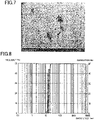
- Fig. 7 is a scanning electron microscope image of silver nanoparticles obtained in Example 1 after the toluene dispersion of silver nanoparticles was dropped onto a substrate (copper mesh microgrid) and then dried.
- 0.20 g of silver nanoparticles obtained in the above step was added to 1.8 g of toluene (KANTO CHEMICAL CO., INC.), and 0.2 g of terpineol (Isomer mixture, FUJIFILM Wako Pure Chemical Corporation), and stirred to form a dispersion.
- the mass% of the silver nanoparticles is 10%.
- the dispersion was filtered through a syringe filter (Whatman, 25 mm GD/X syringe filter (GF/B 1.0 ⁇ m)) to form silver nanoparticle ink for inkjet printing.
- the base sheet PVC film (FZ manufactured by RIKEN TECHNOS CORPORATION) was used.
- the wood grain pattern was printed as the color pattern printed layer 2' with an inkjet printer using inkjet inks (yellow, magenta, cyan) containing no lustrous pigment.
- a medium colored wood grain pattern was printed by an inkjet printer using the silver nanoparticle ink as the lustrous pattern printed layer 2.
- thermosetting polyfunctional acrylic urethane resin and silica encapsulated Acrydic manufactured by DIC Graphics Corporation
- the decorative sheet of Example 1 was produced in this way.
- silver nanoparticles were obtained in the manner similar to that in Example 1, except that a mixture of 1.43 g of n-hexylamine (Tokyo Chemical Industry Co., Ltd.) and 1.21 g of N, N-diethyl-1, 3-diaminopropane (Tokyo Chemical Industry Co., Ltd.) was used instead of 3.26 g of N, N-diethyl-1, 3-diaminopropane (Tokyo Chemical Industry Co., Ltd.).
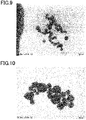
- a scanning electron microscope image of the obtained silver nanoparticles is shown in Fig. 9 .
- the obtained silver nanoparticles were processed in a manner similar to that in Example 1, except that n-butanol (KANTO CHEMICAL CO., INC.) was used as a dispersion medium instead of toluene and terpineol, and Plysurf A208F (DKS Co. Ltd.) was used as a dispersant to produce a decorative sheet of Example 2.
- n-butanol KANTO CHEMICAL CO., INC.
- Plysurf A208F DKS Co. Ltd.
- the synthesis of silver nanoparticles was modified as follows. After 6.51 g of N, N-diethyl-1, 3-diaminopropane (Tokyo Chemical Industry Co., Ltd.), 0.25 g of oleic acid (KANTO CHEMICAL CO., INC.), and 9.60 g of n-butanol (KANTO CHEMICAL CO., INC.) were added together, 1.92 g of silver oxalate was added and heated and stirred in an oil bath at 95 °C. After a few minutes of heating, the color began to change, and within 18 minutes, carbon dioxide effervescence occurred and the mixture became a brown suspension.
- Example 3 A decorative sheet of Example 3 was prepared in the manner similar to that in Example 2, using the obtained silver nanoparticles.
- silver nanoparticles were obtained in the manner similar to that in Example 3, except that a mixture of 1.47 g of n-hexylamine (Tokyo Chemical Industry Co., Ltd.) and 1.24 g of N, N-diethyl-1, 3-diaminopropane (Tokyo Chemical Industry Co., Ltd.) was used instead of 6.51 g of N, N-diethyl-1, 3-diaminopropane (Tokyo Chemical Industry Co., Ltd.).
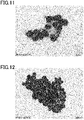
- a scanning electron microscope image of the obtained silver nanoparticles is shown in Fig. 11 .
- a decorative sheet of Example 4 was prepared in the manner similar to that in Example 2, using the obtained silver nanoparticles.
- silver nanoparticles were obtained in the manner similar to that in Example 3, except that n-hexanol (KANTO CHEMICAL CO., INC.) was used instead of n-butanol (KANTO CHEMICAL CO., INC.).
- a scanning electron microscope image of the obtained silver nanoparticles is shown in Fig. 12 .
- a decorative sheet of Example 5 was prepared in the manner similar to that in Example 2, using the obtained silver nanoparticles.
- the synthesis of silver nanoparticles was modified as follows. 0.32 g of gelatin (KANTO CHEMICAL CO., INC.) and 2.56 g of N,N-dimethyl-1,3-diaminopropane (Tokyo Chemical Industry Co., Ltd.) were dissolved in 8.00 g of distilled water, to this, 0.96 g of silver oxalate was added, and the mixture was heated and stirred in an oil bath at 100°C. for 3 hours. When the reaction solution was cooled down, the reaction solution was diluted with 50 mL of distilled water, and the precipitate obtained by centrifugation was dried naturally to give 0.61 g of silver nanoparticles (standard silver yield of 90.0%).
- FIG. 13 A scanning electron microscope image of the obtained silver nanoparticles is shown in Fig. 13 .
- the obtained silver nanoparticles were processed in the manner similar to that in Example 1, except that water was used as a dispersion medium and Plysurf AL (DKS Co. Ltd.) was used as a dispersant to produce a decorative sheet of Example 6.
- Plysurf AL DKS Co. Ltd.
- the synthesis of silver nanoparticles was changed as follows to prepare silver nanoparticles whose surface was modified with polyvinylpyrrolidone.
- a dispersion medium prepared by adding 2.4 g of polyvinylpyrrolidone K30 (FUJIFILM Wako Pure Chemical Corporation) to 4.0 g of water to prepare an aqueous solution
- 0.48 g of silver oxalate was added and heated and stirred in an oil bath at 80 °C. The mixture was heated and stirred for 5 hours to obtain a grayish dispersion.
- the obtained dispersion was cooled, and 40 mL of water was added thereto, and separated by centrifugation (Avanti HP-26 XP, 15,000 rpm, 30 minutes, manufactured by Beckman Coulter, Inc.) to obtain 0.35 g of a gray solid.
- the obtained silver nanoparticles were processed in the manner similar to that in Example 1, except that water was used as a dispersion medium and Plysurf AL (DKS Co. Ltd.) was used as a dispersant to prepare a decorative sheet of Example 7.
- Example 8 A decorative sheet of Example 8 was prepared in the manner similar to that in Example 1, except that silver nanoparticles manufactured by OSAKA SODA CO., LTD. were used as the silver nanoparticles, cyclohexanone was used as a dispersion medium, and that Plysurf AL (DKS Co. Ltd.) was used as a dispersant.
- silver nanoparticles manufactured by OSAKA SODA CO., LTD. were used as the silver nanoparticles
- cyclohexanone was used as a dispersion medium
- Plysurf AL DKS Co. Ltd.
- a decorative sheet of Comparative Example 1 was prepared as in Example 1, except that a wood grain pattern was printed with a gravure printer using gravure ink (Lamister (registered trademark) manufactured by TOYO INK CO., LTD.) containing lustrous pigment as the lustrous pattern printed layer.
- gravure ink Limitter (registered trademark) manufactured by TOYO INK CO., LTD.
- a decorative sheet of Comparative Example 2 was prepared as in Example 1, except that a wood grain pattern was printed as the pattern printed layer with an inkjet printer using UV ink (manufactured by KONICA MINOLTA, INC.) containing no lustrous pigment.
- a decorative sheet of Comparative Example 3 was prepared as in Example 1, except that a wood grain pattern was printed as the pattern printed layer with an inkjet printer using UV silver ink (manufactured by MIMAKI ENGINEERING CO., LTD.) containing no silver nanoparticles.
- the brightness was rated as "good” when more than 50 out of 100 subjects evaluated that the brightness of wood grain is natural and that the natural gloss of natural wood could be reproduced, and the brightness was rated as "poor” when more than 50 out of 100 subjects evaluated that the brightness of the wood grain is unnaturally strong or when the brightness of the wood grain is too weak which resulted in failure to reproduce the natural gloss of natural wood.
- the evaluation resulted in the rating of "good” it was considered that the decorative sheet had no problem in use and thus it was determined as "pass”.
- the design was rated as "good” when more than 50 out of 100 subjects felt that the outline of the fine lines (width of several ⁇ m) of the wood grain pattern could be reproduced properly without blurring. On the other hand, the design was rated as "poor” when the subjects felt that the outline of the fine lines (width of several ⁇ m) of the wood grain pattern was blurred and could not be reproduced, whereas the design was rated as "average” when the subjects felt that the printing was partially uneven. A microscope with a magnification factor of 100 was used to check the contour of the fine lines of the wood grain pattern. When the evaluation resulted in the rating of "good” or "average”, it was considered that the decorative sheet had no problem in use and thus it was evaluated as "acceptable”.
- Table 1 shows the evaluation results of Examples 1 to 6 and Comparative Examples 1 to 3. [Table 1] Example 1 Example 2 Example 3 Example 4 Example 5 Example 6 Example 7 Example 8 Comparative Example 1 Comparative Example 2 Comparative Example 3 LUMINANCE GOOD GOOD GOOD GOOD GOOD GOOD GOOD GOOD POOR POOR DESIGN GOOD GOOD GOOD GOOD GOOD AVERAGE AVERAGE POOR GOOD GOOD
- Example 1 As shown in Table 1, the brightness and the designability of the decorative sheets of Example 1 to 6 which all satisfy the conditions of the present invention were both good. In Examples 7 and 8, although the brightness of the decorative sheets was sufficient, uneven print was observed. Comparative Example 1, in which a gravure printing machine was used, resulted in blurry thin lines and insufficient design. Comparative Example 2, in which UV ink containing no lustrous pigments was inkjet printed, resulted in a lack of brightness. Comparative Example 3, in which UV silver ink containing no silver nanoparticles was inkjet printed, resulted in excessive luminance.
Landscapes
- Life Sciences & Earth Sciences (AREA)
- Engineering & Computer Science (AREA)
- Wood Science & Technology (AREA)
- Chemical & Material Sciences (AREA)
- Materials Engineering (AREA)
- Organic Chemistry (AREA)
- Inks, Pencil-Leads, Or Crayons (AREA)
- Laminated Bodies (AREA)
Abstract
Description
- The present invention relates to decorative sheets, decorative plates, and inkjet inks for decorative sheets for use in interior materials such as wall materials, ceiling materials, floor materials, or construction materials in buildings such as houses, fittings, furniture and fixtures, exteriors of housing equipment or home appliances, and vehicle interiors such as automobiles.
- Lustrous printed matter is usually widely used in various applications (for example,
PTL 1 and 2) in order to derive unique benefits of design of the lustrous printed matter which reflects light with which the lustrous printed matter is illuminated. The lustrous printed matter is formed by printing a lustrous pattern on a substrate using lustrous ink. The lustrous ink is made by kneading metallic powders such as scale-like aluminum powders (aluminum flakes) or lustrous pigment such as pearlescent pigments (pearl pigments) such as titanium dioxide-coated mica into a selected binder resin. - For example, for the surface decoration of building materials, furniture, housings of household electric appliances, a lustrous layer is added to a wood grain pattern in order to reproduce deep shiny wood textures unique to natural wood using printing technology. Various lustrous decorative sheets and decorative plates (hereinafter simply referred to as "decorative sheet") that express lustrous designs such as a silk tone, a pearl tone or a metallic tone in stone grain patterns, abstract patterns and the like other than wood grain patterns are used in a wide range of fields.
- Various kinds of lustrous pigments having particle sizes ranging from several micrometers to 100 µm or more are commercially available. For lustrous decorative sheets using a printing technique, metallic inks (sometimes called mirror ink, RIGEL ink, hologram ink, or STELLA ink, depending on the shape of the powder) such as silver ink are kneaded with this lustrous pigment. A lustrous pigment having an average particle size of less than approximately 30 µm are generally used due to the restrictions on the printability of pearlescent inks.
- Today, inkjet printing has been put to practical use in various fields and applications, and therefore is widely used. For example, also in general households, inkjet printing is often used as an output device of a personal computer or as a printer for printing New Year's cards and photographs. Also, in industrial applications, inkjet printing is often used as a bar code printer or commercial printed materials such as signboards, POP advertisements, and advertising media.
- The primary advantage of inkjet printing is that the printer is relatively inexpensive and provides high image quality. Although inkjet printing is one method of printing, without the need of a printing plate, a target printed matter is obtained using data from a personal computer or a dedicated device. This not only saves the cost of printing plates, but also has many advantages such as reducing the time required for printing and simplifying the trial printing process which is known as proof printing.
- The conventional decorative sheet is, therefore, configured to have patterns printed using gravure printing. Gravure printing has the advantage of being able to print large quantities at high speed. However, gravure printing is not economical when only a small amount of printing is to be performed, and may not be suitable in terms of print quality when the pattern is complex. Therefore, the technique disclosed in
PTL 3 has been proposed to use inkjet printing for printing a decorative sheet. For example, in order to improve designability of the decorative sheet, a lustrous pigment may be mixed with the inkjet ink to add luster to the inkjet printed layer. - The techniques disclosed in PTL 4 and
PTL 5 have a problem unique to inkjet printing in that the inner diameter of the nozzle needs to be reduced to the order of 10 µm for discharging minute droplets. However, since many of the lustrous pigments have a large particle size, the ink in which the lustrous pigments are dispersed has a problem of clogging of the nozzle which may lead to unstable discharge of the ink. In general, it is difficult to print with inkjet ink mixed with lustrous pigments, and the lustrous layer can only be used as a solid film by a coating method or by other methods such as gravure printing, as shown inPTLs -
- [PTL 1]
JP 4725226 B - [PTL 2]
JP 6107180 B - [PTL 3]
JP 2001-71447 A - [PTL 4]
JP 2004-299378 A - [PTL 5]
JP 4834981 B - The present invention has been developed in view of the above problems and circumstances. The present invention has an object to provide a decorative sheet and a decorative plate having both high luminance and high designability, and to provide an inkjet ink for the decorative sheet used for producing the decorative sheet and the decorative plate. More specifically, the present invention aims to provide a decorative sheet and a decorative plate having high luminance, and an inkjet ink for the decorative sheet. The decorative sheet and the decorative plate having high luminance are realized by adding a silver nanoparticle to ink for printing a luminance pattern printed layer formed by an inkjet printing method.
- To solve the above problem, a decorative sheet according to an aspect of the present invention includes a base sheet and an inkjet printed layer which is formed on the base sheet using inkjet ink which contains a silver nanoparticle.
- A decorative plate according to an aspect of the present invention includes the decorative sheet, and a substrate arranged on the base sheet side of the decorative sheet.
- An inkjet ink for a decorative sheet according to an aspect of the present invention is used for forming, on a base sheet, a pattern printed layer by an inkjet printing method, and the inkjet ink contains a silver nanoparticle.
- The present invention provides a decorative sheet and a decorative plate having both high luminance and high designability, as well as an inkjet ink for decorative sheets used to produce the decorative sheet and the decorative plate. Specifically, the present invention uses an inkjet ink for decorative sheets containing a silver nanoparticle, so that a picture printed layer having luster can be printed by inkjet printing method, and a decorative sheet and a decorative plate having high luminance can be obtained without the need for a printing plate.
-
-
Fig. 1 is a schematic cross-sectional view illustrating a configuration of a decorative sheet according to a first embodiment of the present invention. -
Fig. 2 is a schematic cross-sectional view illustrating a configuration of a decorative sheet according to a second embodiment of the present invention. -
Fig. 3 is a schematic cross-sectional view illustrating a configuration of a decorative sheet according to a third embodiment of the present invention. -
Fig. 4 is a schematic cross-sectional view illustrating a configuration of a decorative sheet according to a fourth embodiment of the present invention. -
Fig. 5 is a schematic cross-sectional view illustrating a configuration of a decorative sheet according to a fifth embodiment of the present invention. -
Fig. 6 is a schematic cross-sectional view illustrating a configuration of a decorative plate including a decorative sheet according to the first embodiment of the present invention. -
Fig. 7 is a view showing a scanning electron microscope image of silver nanoparticles observed after a toluene dispersion of silver nanoparticles obtained in Example 1 of the present invention is applied to a substrate and then dried. -
Fig. 8 is a diagram showing the particle size distribution and the cumulative frequency (%) of the silver nanoparticles obtained in Example 1 of the present invention. -
Fig. 9 is a view showing a scanning electron microscope image of silver nanoparticles observed after an n-butanol dispersion of silver nanoparticles obtained in Example 2 of the present invention is applied to a substrate and then dried. -
Fig. 10 is a view showing a scanning electron microscope image of silver nanoparticles observed after an n-butanol dispersion of silver nanoparticles obtained in Example 3 of the present invention is applied to a substrate and then dried. -
Fig. 11 is a view showing a scanning electron microscope image of silver nanoparticles observed after an n-butanol dispersion of silver nanoparticles obtained in Example 4 of the present invention is applied to a substrate and then dried. -
Fig. 12 is a view showing a scanning electron microscope image of silver nanoparticles observed after an n-butanol dispersion of silver nanoparticles obtained in Example 5 of the present invention is applied to a substrate and then dried. -
Fig. 13 is a view showing a scanning electron microscope image of silver nanoparticles observed after an aqueous dispersion of silver nanoparticles obtained in Example 6 of the present invention is applied to a substrate and then dried. - Configurations of a decorative sheet and a decorative plate according to embodiments of the present invention will be described below with reference to the drawings. Unless otherwise specified, for the sake of convenience, the same components are denoted by the same reference signs. Throughout the drawings, the thickness and the ratio of components may be exaggerated and the number of components may be reduced for convenience of illustration. Further, the present invention is not limited to the embodiments described below, and can be appropriately combined and modified without departing from the gist of the present invention.
- The decorative sheet according to the embodiments of the present invention all have the common feature of having at least an inkjet printed layer formed on the base sheet using an inkjet ink which contains a silver nanoparticle. A method for easily determining whether a lustrous layer, which is a printed layer imparted with luminosity by including a silver nanoparticle, is formed by an inkjet printing method, is to see whether the lustrous layer is printed in brown or in multiple colors of red, blue, yellow, and black when, for example, a pattern such as a wood grain pattern on the printed layer is observed in an enlarged manner by a loupe or the like.
- It has been difficult to produce inkjet ink using a lustrous pigment, and although devices capable of discharging them exist, they are still limited. Additionally, there were many cases in which printing with the desired design was difficult due to insufficient brightness or excessive brightness.
- The present inventors have found that by using an inkjet ink (hereinafter referred to simply as "silver nanoparticle ink") containing silver nanoparticles for printing a lustrous layer, and by preferably selecting the particle size and concentration of the silver nanoparticles, the luminance can be adjusted, and thus both the designability and the luminance of the inkjet ink can be enhanced. Additionally, the present inventors have also found that for example, a design of a pearl tone which is characterized by thin lines or gradations unique to building materials, or a design of a light gloss which is difficult to express by an ink using aluminum can be printed and reproduced.
- The composition of the silver nanoparticle ink used in the present embodiment is described in detail below.
- The surface of the silver nanoparticle used in the present embodiment is covered with a protective molecule which contains an amine compound as a main component. The "main component" described here refers to the most abundant component (molecule) among the plurality of protective molecules covering the surface of the silver nanoparticle.
- The silver nanoparticle according to the present embodiment have, for example, a median diameter (D50) in the range of 1 nm or more and 250 nm or less, and can be dispersed in a dispersion medium such as an organic solvent or water. If the median diameter (D50) of silver nanoparticles is smaller than 1 nm, visibility (luminosity) may be reduced, and if the median diameter (D50) of silver nanoparticles is larger than 250 nm, dispersibility may be reduced. The average primary particle size was obtained from the particle size distribution measured with a 0.1 mass% dispersion liquid using a Nanotrac UPA-EX 150 particle size analyzer (dynamic light scattering method, Nikkiso Co., Ltd.).
- There is no particular limitation on the shape of the silver nanoparticles, but it is particularly preferable to include one or more shapes, such as spherical, flat, polygonal, or the like. Flat silver nanoparticles have a large surface area and thus are expected to have good visibility (luster) even with a small number of particles. Spherical silver nanoparticles are expected to stabilize the size of the nanoparticles and this causes the nanoparticles to be arranged without gaps. Therefore, spherical silver nanoparticles are expected to have good visibility (luster).
- Among silver-containing compounds, silver compounds which are easily decomposed by heating to produce metallic silver are preferably used as the raw material of silver that constitutes the silver nanoparticles.
- Such silver compounds include, for example, silver carboxylate, in which silver is compounded with carboxylic acids such as formic acid, acetic acid, oxalic acid, malonic acid, benzoic acid, and phthalic acid, as well as silver chloride, silver nitrate, and silver carbonate. Among the above silver compounds, silver oxalate is preferably used from the viewpoint that it easily produces metal by decomposition and is less likely to produce impurities other than silver.
- Silver oxalate has a high silver content, and oxalate ions are decomposed and removed as carbon dioxide by heating. This is advantageous in that metallic silver can be obtained as it is by thermal decomposition without the need of a reducing agent, and impurities are less likely to remain.
- When the silver compound is thermally decomposed, an alcohol, a fatty acid, a polymer or the like may be added. These additions are expected to contribute to adjustment of the particle size, change in good dispersion medium, and improvement in the dispersion stability. Examples of the alcohol include methanol, ethanol, and 1-propanol. Examples of the fatty acid includes oleic acid and linoleic acid. Examples of the polymer includes polyvinyl pyrrolidone and gelatin.
- The amine compound which protects the surface of the silver nanoparticle is not particularly limited in its structure, but preferably has RNH2 (R is a hydrocarbon group) which is a primary amino group from the point of ease of coordination to the silver atom. A secondary amino group can also be coordinated, but the reactivity is lower than that of the primary amino group.
- A diamine compound having a plurality of amino groups may also be used. When a diamine compound includes a primary amino group and a tertiary amino group, the primary amino group is selectively coordinated to the silver atom and the bulky tertiary amino group is directed outward, and thus the surface of the silver nanoparticle is easily protected.
- Examples of amines include ethylamine, n-propylamine, isopropylamine, 1,2-dimethylpropylamine, n-butylamine, isobutylamine, n-nonylamine, n-aminodecane, n-aminoundecane, n-hexadecylamine, n-heptadecylamine, n-octadecylamine and n-oleylamine.
- Examples of the diamine include, but are not limited to, N, N-dimethylethylenediamine, N, N-diethylethylenediamine, N, N-dimethyl-1, 3-propanediamine, N, N-diethyl-1, 3-propanediamine, N, N-dimethyl-1, 5-diamino -2 methylpentane, N, N-dimethyl-1, 6-hexanediamine, N, N-dibutylaminopropane, N, N-
diisobutyl 1, 3-diaminopropane, and the like. A plurality of different amines may also be used simultaneously. - The silver nanoparticle used in the present embodiment may be produced via a silver oxalate amine complex, for example, by mixing silver oxalate with an amine and thermally decomposing them. A technique for producing a silver nanoparticle by thermally decomposing silver oxalate and an amine are disclosed, for example, in
JP 2012-162767 A JP 5574761 B - There is also a method for producing silver nanoparticles by using polyvinylpyrrolidone as a molecule coordinated to the surface of the particles during thermal decomposition of silver oxalate (see
Reference 1 below). The silver nanoparticles synthesized by this method include platelike particles, which are expected to have high brightness when printed.
[Reference literature 1] T. Togashi, S. Ojima, I. Sato, K. Kanaizuka, and M. Kurihara, Chem. Lett., 2016, 45, 646-648 - The amount of silver nanoparticles added in the coating liquid is preferably in the range of 1 mass% or more and 50 mass% or less with respect to the dispersion medium, for example. The amount of silver nanoparticles added is particularly preferable to be 15 mass% or more, since the metallic luster becomes stronger. When the amount of silver nanoparticles added is less than 1 mass%, visibility (luster) as printed matter may decrease, and when the amount of silver nanoparticles added is more than 50 mass%, dispersibility may decrease.
- When the silver nanoparticles according to the present embodiment are dispersed in a solvent or the like used as a dispersion solvent, a dispersant may be used. Dispersants can be broadly classified as anionic, cationic, or nonionic, and appropriately selected according to the potential of the particle surface and the dispersion medium. Typical anionic systems are sulfate ester, phosphate ester, carboxylic acid, and sulfonic acid types, and most of them have molecular structures of ethylene oxide (EO) addition type. Cationic systems can be classified as quaternary ammonium salt type, Cl salt type, non-Cl salt type, and EO addition type. Nonionic systems can be broadly classified into alkylene oxide addition type and calkanolamide type. Since the surface modification of the silver nanoparticles according to the present embodiment is an amine complex, anionic systems are particularly preferred. Specifically, a polyoxyethylene alkyl ether phosphate (salt), a polyoxyethylene alkyl ether sulfate, a polyoxyethylene alkyl ether acetate, a polyoxyethylene alkyl ether succinate, and the like are preferred, and a polyoxyethylene alkyl ether phosphate (salt) is particularly preferred. Specifically, Phosphanol RB-40, RD-510Y, RD720N, RL-210, RS-410 (TOHO Chemical Industry Co., Ltd.), NIKKOL DDP-8NV, DDP-2, DDP-4, DDP-6, DDP-8, DDP-10 (Nikko Chemicals Co., Ltd.), Plysurf A212C, A215C, A208F, M208F, A208A, A208B, A210B, A219B, DB-01, AL, DBS (DKS Co. Ltd.), and the like, but are not limited to these.
- The silver nanoparticle ink according to the present embodiment may have additives such as dyes, defoaming agents, leveling agents, and curing agents in addition to the dispersants described above.
- Examples of the dispersion medium of the silver nanoparticle ink according to the present embodiment include water, ethanol, 2-propanol, 1-butanol, methyl ethyl ketone, ethyl acetate, toluene, cyclohexanone, terpenes such as terpineol, and the like. The dispersion medium may be used by appropriately mixing the above-described components according to the physical properties of the target coating liquid.
- The mixing ratio of the above components in the coating liquid is not particularly limited, but when it is necessary to prevent the coating liquid from drying in the nozzle as in the inkjet printing method, it is more preferable that one or more organic solvents having a boiling point of 110°C or higher, such as glycerin, propylene glycol, 1-butanol, cyclohexanone, and terpineol, are contained in the coating solution for inkjet coating (silver nanoparticle ink) in a total of 1 mass% or more. When the content of the above-described components in the coating liquid is less than 1 mass%, the coating liquid tends to dry, which may cause nozzle clogging. There is no upper limit to the amount of the above-described components, but if the amount is too large, the time required for drying the coating solution may be extended.
- The color of the layer (inkjet printed layer) printed with the silver nanoparticle ink according to the present embodiment can express, but is not limited to, blue, green, yellow, red, as well as other colors derived from the localized surface plasmon resonance of silver nanoparticles, in addition to silver derived silver. The size and the shape of the silver nanoparticles, surface modification, ink concentration, and the density of the particles on the substrate all affect the color.
- The configuration of the decorative sheet according to each embodiment of the present invention will be described below.
-
Fig. 1 is a schematic cross-sectional view illustrating a configuration of adecorative sheet 10 according to a first embodiment of the present invention. Thedecorative sheet 10 according to the first embodiment includes abase sheet 1, and on thebase sheet 1, a silver pattern printed layer (lustrous pattern printed layer) 2 is formed by an inkjet printing using silver nanoparticle ink. The silver pattern printedlayer 2 formed using the silver nanoparticle ink simultaneously serves as a lustrous layer K1, and has a function of imparting brightness to thedecorative sheet 10 and a function of enhancing designability of thedecorative sheet 10. The color of the "silver pattern printedlayer 2" according to the present embodiment is not limited to silver (silver color). This is because, as described above, the color of the silver nanoparticles depends on the size and the shape of the contained silver nanoparticles, surface modification, ink concentration, and the density of the particles on the substrate. In the present embodiment, the lustrous pattern printed layer formed by containing silver nanoparticles is referred to as a "silver pattern printed layer" for convenience, to distinguish the "silver pattern printed layer" from the "color pattern printed layer" described below. - The silver pattern printed
layer 2 is preferred to contain silver nanoparticles in an amount of 90 mass% or more, more preferably 95 mass% or more, and even more preferably 98 mass% or more, relative to the total mass of the silver pattern printedlayer 2. When the content of the silver nanoparticles is 90 mass% or more, a brightness can be effectively imparted to the silver pattern printedlayer 2. - The thickness of the silver pattern printed
layer 2 is preferably in the range of 5 nm or more and 500 nm or less, and more preferably in the range of 10 nm or more and 400 nm or less. When the thickness of the silver pattern printedlayer 2 is within the above numerical value range, the inkjet printed layer printed by the inkjet printing method can be effectively given luminosity. - As shown in
Fig. 1 , the silver pattern printedlayer 2 may be formed to cover at least a part of the surface of thebase sheet 1, or may be formed to cover the entire surface of thebase sheet 1. - The material of the
base material sheet 1 may be flexible, thermoplastic, formable, and printable polyvinyl chloride (PVC) resin, or acrylic resin, polyolefin-based polypropylene resin, or polyethylene resin, polycarbonate resin, all in sheet form. Other than the above, paper, steel sheet, wood, all in sheet form may also be used. These may be appropriately selected according to the application and specifications of thebase sheet 1. -
Fig. 2 is a schematic cross-sectional view illustrating a configuration of adecorative sheet 20 according to a second embodiment of the present invention. Thedecorative sheet 20 according to the second embodiment has a pattern made using coloring ink is formed as a color pattern printed layer 2'. On the color pattern printed layer 2', a silver pattern printed layer 2 (lustrous layer K2) using silver nanoparticle ink is formed by an inkjet printing method. Therefore, thedecorative sheet 20 according to the second embodiment becomes adecorative sheet 20 having high design qualities such that the lustrous layer K2 shows a sense of brightness colored with an arbitrary color. The color pattern printed layer 2' can be formed by a printing method such as gravure printing or inkjet printing. - The thickness of the color pattern printed layer 2' is not particularly limited and may be set as appropriate.
- The color pattern printed
layer 2 is a layer that does not contain silver nanoparticles. Since the color pattern printed layer 2' does not contain silver nanoparticles, the brightness of the silver pattern printedlayer 2 formed on the color pattern printed layer 2' tends to be more prominent. - As shown in
Fig. 2 , the silver pattern printed layer 2 (lustrous layer K2) may be formed to cover the entire surface of the color patter printed layer 2', or may be formed to cover a part of the surface of the color pattern printed layer 2'. -
Fig. 3 is a schematic cross-sectional view illustrating a configuration of adecorative sheet 30 according to a third embodiment of the present invention. Thedecorative sheet 30 according to the third embodiment includes a silver pattern printedlayer 2 and a color pattern printed layer 2' which are formed on the same plane of thebase sheet 1. The silver pattern printed layer 2' is formed using silver nanoparticle ink provided in adecorative sheet 10 according to the first embodiment shown inFig. 1 . A color pattern printed layer 2' is formed using a coloring ink provided in thedecorative sheet 20 according to the second embodiment shown inFig. 2 . Therefore, only the silver pattern printedlayer 2 becomes a lustrous layer K1, and only the area where the lustrous layer K1 is formed shows a sense of brightness, resulting in thedecorative sheet 30 having high design qualities. The silver pattern printedlayer 2 formed using the silver nanoparticle ink may be formed first, or the color pattern printed layer 2' formed using the coloring ink may be formed first. In detail, the order in which the layers are formed on thebase sheet 1 may be: forming the silver pattern printedlayer 2 first, followed by forming the color pattern printed layer 2', or forming the color pattern printed layer 2' first, followed by forming the silver pattern printedlayer 2. The silver pattern printedlayer 2 is formed by an inkjet printing method using silver nanoparticle ink. The color pattern printing layer 2' is formed using coloring ink. - The silver pattern printed layer 2 (lustrous layer K1) and the color pattern printed layer 2' may be formed so that a part of the surface of the
base sheet 1 is exposed as shown inFig. 3 , or the silver pattern printed layer 2 (lustrous layer K1) and the color pattern printed layer 2' may be formed so as to cover the entire surface of thebase sheet 1. -
Fig. 4 is a schematic cross-sectional view illustrating a configuration of adecorative sheet 40 according to a fourth embodiment of the present invention. Thedecorative sheet 40 according to the fourth embodiment has, on abase sheet 1, a color pattern printed layer 2' formed using a coloring ink, and on the color pattern printed layer 2', a lustrous layer K2 which is a silver pattern printedlayer 2 formed using a silver nanoparticle ink. Further, on thebase sheet 1, a lustrous layer K3 which is the silver pattern printedlayer 2 is formed using a silver nanoparticle ink. In other words, thedecorative sheet 40 according to the fourth embodiment has the lustrous layer K3 formed in addition to the form of thedecorative sheet 20 according to the second embodiment shown inFig. 2 . As a result, thedecorative sheet 40 according to the fourth embodiment is partially colored and has high design properties that shows an overall sense of brightness. - Although not shown, the side surface of the color pattern printed layer 2' may also be covered with a lustrous layer (silver pattern printed layer 2).
- As shown in
Fig. 4 , the silver pattern printed layer 2 (lustrous layer K2 and lustrous layer K3) may be formed to coverentire base sheet 1 and the color pattern printed layer 2', or may be formed to cover at least a part of thebase sheet 1 and the color pattern printed layer 2' which is formed on thebase sheet 1. -
Fig. 5 is a schematic cross-sectional view illustrating a configuration of adecorative sheet 50 according to a fifth embodiment of the present invention. Thedecorative sheet 50 according to the fifth embodiment is provided with a surfaceprotective layer 3 which covers the surface of thedecorative sheet 10 according to the first embodiment shown inFig. 1 . In detail, thedecorative sheet 50 has the surfaceprotective layer 3 provided on the outermost surface layer of thedecorative sheet 50. - Examples of materials for the surface
protective layer 3 include thermosetting resins, ionizing radiation curable resins, or mixtures of these resins. Examples of thermosetting resins include thermosetting resins having urethane bonds such as two-part curing urethane resins. Examples of ionizing radiation curable resins include ultraviolet curable resins. Examples of ultraviolet curable resins include (meth) acrylic resins, silicone resins, polyester resins, urethane resins, amide resins, and epoxy resins. The use of these materials improves the hardness of the surfaceprotective layer 3, and also enhances the surface physical properties, such as wear resistance, scratch resistance, and solvent resistance. - Additionally, in order to impart various functions, functional additives, such as an antimicrobial agent and an antifungal agent, may be added to the surface
protective layer 3. An ultraviolet absorber or a light stabilizer may further be added to the surfaceprotective layer 3, if necessary. Examples of ultraviolet absorbers include benzotriazole-based ultraviolet absorbers, benzoate-based ultraviolet absorbers, benzophenone-based ultraviolet absorbers, and triazine-based ultraviolet absorbers. For example, the light stabilizer may be a hindered amine-based light stabilizer. Furthermore, when contamination control performance and Sellotape (registered trademark) mold-release characteristics are required, a release agent having a silicone skeleton can be added. In this case, the type of release agent is not limited; however, the use of a silicone release agent having a terminal functional group that is reactive with the resin composition can improve contamination control performance and the durability of Sellotape (registered trademark) mold-release characteristics. - The
decorative sheet 50 according to the fifth embodiment is configured to have the surfaceprotective layer 3 to cover the surface of thedecorative sheet 10 according to the first embodiment shown inFig. 1 . However, thedecorative sheet 50 may, similarly, have the surfaceprotective layer 3 to cover the respective surfaces of thedecorative sheet 20 according to the second embodiment and thedecorative sheet 30 according to the third embodiment shown inFigs. 2 and 3 . - The thickness of the surface
protective layer 3 is not particularly limited as long as the surfaceprotective layer 3 can cover the entire silver pattern printed layer 2 (lustrous layer K1), but is preferably in a range of 1 µm or more and 100 µm or less, and more preferably in a range of 10 µm or more and 80 µm or less. When the thickness of the surfaceprotective layer 3 is within the numerical value range, the silver pattern printedlayer 2 can be effectively protected and the flexibility of thedecorative sheet 50 can be maintained. -
Fig. 6 is a schematic cross-sectional view illustrating a configuration of adecorative plate 100 according to the first embodiment of the present invention. As shown inFig. 6 , thedecorative plate 100 according to the present embodiment has a laminated structure in which thedecorative sheet 50 shown inFig. 5 is laminated on one surface of asubstrate 5. An adhesive layer 4 is provided between thesubstrate 5 and thedecorative sheet 50 such that thesubstrate 5 and thedecorative sheet 50 are adhered via the adhesive layer 4. - For the
substrate 5, for example, a wood plate such as plywood, particle board, medium density fiberboard (MDF), or hard board, or a metal plate can be used. Examples of the adhesive layer 4 include a thermoplastic resin and a thermosetting resin. - The
decorative plate 100 shown inFig. 6 has a laminated structure in which thedecorative sheet 50 shown inFig. 5 is laminated on one surface of thesubstrate 5. Similarly, thedecorative plate 100 may have a laminated structure consisting of laminated decorative sheets, and each surface of thedecorative sheet 20 of the second embodiment and thedecorative sheet 30 of the third embodiment may be covered by the surfaceprotective layer 3. - The
decorative sheet 30 according to the third embodiment shown inFig. 3 was produced by the following material composition and steps, but the present invention is not limited to these. - 60 mL of distilled water was added to 9.92 g of oxalic acid dihydrate (KANTO CHEMICAL CO., INC.) which was dissolved by heating, and while stirring in an oil bath at 110°C, 26.7 g of silver nitrate (KANTO CHEMICAL CO., INC.) dissolved in 20 mL of distilled water by heating was added to the oil bath, and heating and stirring was continued for 1 hour. The precipitated silver oxalate was collected by natural filtration, and further filtered and washed with 200 mL of hot water and 50 mL of methanol (KANTO CHEMICAL CO., INC.), and dried at room temperature under reduced pressure in a light-shielded desiccator. The yield of silver oxalate thus obtained was 21.6 g (90.4% yield).
- 0.13 g of oleic acid (KANTO CHEMICAL CO., INC.) was added to 3.26 g of N,N-diethyl-1,3-diaminopropane (Tokyo Chemical Industry Co., Ltd.), and then 1.90 g of silver oxalate obtained in the above step was further added, and the mixture was heated and stirred in an oil bath at 110°C. Within a minute, carbon dioxide effervescence occurred, and after a few minutes a brown suspension was produced. After heating the suspension for 5 minutes, then leaving until cool, 30 mL of methanol was added to the cooled suspension, and the precipitate obtained by centrifugation was dried naturally to obtain 1.48 g of silver nanoparticles (a standard silver yield of 97.0%) as a blue solid.
- The obtained silver nanoparticles were observed in S-TEM mode (acceleration voltage of 30 kV) using a scanning electron microscope (Hitachi High-Tech Corporation, SEM S -4800), and spherical particles having a particle size of approximately 5 to 20 nm were observed. The result is shown in
Fig. 7 . More specifically,Fig. 7 is a scanning electron microscope image of silver nanoparticles obtained in Example 1 after the toluene dispersion of silver nanoparticles was dropped onto a substrate (copper mesh microgrid) and then dried. - Then, since the obtained silver nanoparticles were dispersed in toluene, dynamic light scattering particle size measurement (Nikkiso Co., Ltd., Nanotrac UPA-EX 150) of the toluene dispersion was performed. The result showed that the silver nanoparticles were well dispersed with an average particle size of 15 nm. The result is shown in
Fig. 8 . The solid line shown inFig. 8 indicates the cumulative frequency (%). - 0.20 g of silver nanoparticles obtained in the above step was added to 1.8 g of toluene (KANTO CHEMICAL CO., INC.), and 0.2 g of terpineol (Isomer mixture, FUJIFILM Wako Pure Chemical Corporation), and stirred to form a dispersion. In this case, since 0.2 g of silver nanoparticles were used with respect to 2.0 g of the dispersion solvent, the mass% of the silver nanoparticles is 10%. The dispersion was filtered through a syringe filter (Whatman, 25 mm GD/X syringe filter (GF/B 1.0 µm)) to form silver nanoparticle ink for inkjet printing.
- As the
base sheet 1, PVC film (FZ manufactured by RIKEN TECHNOS CORPORATION) was used. Next, the wood grain pattern was printed as the color pattern printed layer 2' with an inkjet printer using inkjet inks (yellow, magenta, cyan) containing no lustrous pigment. Subsequently, on the same plane of thebase sheet 1 on which the color pattern printed layer 2' is formed, a medium colored wood grain pattern was printed by an inkjet printer using the silver nanoparticle ink as the lustrous pattern printedlayer 2. Further, as the surfaceprotective layer 3, thermosetting polyfunctional acrylic urethane resin and silica encapsulated Acrydic (manufactured by DIC Graphics Corporation) were coated so that the thickness after drying was 1 µm. - The decorative sheet of Example 1 was produced in this way.
- In the synthesis of silver nanoparticles, silver nanoparticles were obtained in the manner similar to that in Example 1, except that a mixture of 1.43 g of n-hexylamine (Tokyo Chemical Industry Co., Ltd.) and 1.21 g of N, N-diethyl-1, 3-diaminopropane (Tokyo Chemical Industry Co., Ltd.) was used instead of 3.26 g of N, N-diethyl-1, 3-diaminopropane (Tokyo Chemical Industry Co., Ltd.). A scanning electron microscope image of the obtained silver nanoparticles is shown in
Fig. 9 . The obtained silver nanoparticles were processed in a manner similar to that in Example 1, except that n-butanol (KANTO CHEMICAL CO., INC.) was used as a dispersion medium instead of toluene and terpineol, and Plysurf A208F (DKS Co. Ltd.) was used as a dispersant to produce a decorative sheet of Example 2. - The synthesis of silver nanoparticles was modified as follows. After 6.51 g of N, N-diethyl-1, 3-diaminopropane (Tokyo Chemical Industry Co., Ltd.), 0.25 g of oleic acid (KANTO CHEMICAL CO., INC.), and 9.60 g of n-butanol (KANTO CHEMICAL CO., INC.) were added together, 1.92 g of silver oxalate was added and heated and stirred in an oil bath at 95 °C. After a few minutes of heating, the color began to change, and within 18 minutes, carbon dioxide effervescence occurred and the mixture became a brown suspension. After heating the suspension for 5 minutes, then leaving until cool, 30 mL of methanol was added to the cooled suspension, and the precipitate obtained by centrifugation was naturally dried to obtain 1.29 g of silver nanoparticles (a standard silver yield of 95.0%) as a blue solid. A scanning electron microscope image of the obtained silver nanoparticles is shown in
Fig. 10 . A decorative sheet of Example 3 was prepared in the manner similar to that in Example 2, using the obtained silver nanoparticles. - In the synthesis of silver nanoparticles, silver nanoparticles were obtained in the manner similar to that in Example 3, except that a mixture of 1.47 g of n-hexylamine (Tokyo Chemical Industry Co., Ltd.) and 1.24 g of N, N-diethyl-1, 3-diaminopropane (Tokyo Chemical Industry Co., Ltd.) was used instead of 6.51 g of N, N-diethyl-1, 3-diaminopropane (Tokyo Chemical Industry Co., Ltd.). A scanning electron microscope image of the obtained silver nanoparticles is shown in
Fig. 11 . A decorative sheet of Example 4 was prepared in the manner similar to that in Example 2, using the obtained silver nanoparticles. - For the synthesis of silver nanoparticles, silver nanoparticles were obtained in the manner similar to that in Example 3, except that n-hexanol (KANTO CHEMICAL CO., INC.) was used instead of n-butanol (KANTO CHEMICAL CO., INC.). A scanning electron microscope image of the obtained silver nanoparticles is shown in
Fig. 12 . A decorative sheet of Example 5 was prepared in the manner similar to that in Example 2, using the obtained silver nanoparticles. - The synthesis of silver nanoparticles was modified as follows. 0.32 g of gelatin (KANTO CHEMICAL CO., INC.) and 2.56 g of N,N-dimethyl-1,3-diaminopropane (Tokyo Chemical Industry Co., Ltd.) were dissolved in 8.00 g of distilled water, to this, 0.96 g of silver oxalate was added, and the mixture was heated and stirred in an oil bath at 100°C. for 3 hours. When the reaction solution was cooled down, the reaction solution was diluted with 50 mL of distilled water, and the precipitate obtained by centrifugation was dried naturally to give 0.61 g of silver nanoparticles (standard silver yield of 90.0%). A scanning electron microscope image of the obtained silver nanoparticles is shown in
Fig. 13 . The obtained silver nanoparticles were processed in the manner similar to that in Example 1, except that water was used as a dispersion medium and Plysurf AL (DKS Co. Ltd.) was used as a dispersant to produce a decorative sheet of Example 6. - The synthesis of silver nanoparticles was changed as follows to prepare silver nanoparticles whose surface was modified with polyvinylpyrrolidone. To a dispersion medium prepared by adding 2.4 g of polyvinylpyrrolidone K30 (FUJIFILM Wako Pure Chemical Corporation) to 4.0 g of water to prepare an aqueous solution, 0.48 g of silver oxalate was added and heated and stirred in an oil bath at 80 °C. The mixture was heated and stirred for 5 hours to obtain a grayish dispersion. The obtained dispersion was cooled, and 40 mL of water was added thereto, and separated by centrifugation (Avanti HP-26 XP, 15,000 rpm, 30 minutes, manufactured by Beckman Coulter, Inc.) to obtain 0.35 g of a gray solid. The obtained silver nanoparticles were processed in the manner similar to that in Example 1, except that water was used as a dispersion medium and Plysurf AL (DKS Co. Ltd.) was used as a dispersant to prepare a decorative sheet of Example 7.
- A decorative sheet of Example 8 was prepared in the manner similar to that in Example 1, except that silver nanoparticles manufactured by OSAKA SODA CO., LTD. were used as the silver nanoparticles, cyclohexanone was used as a dispersion medium, and that Plysurf AL (DKS Co. Ltd.) was used as a dispersant.
- D50 of silver nanoparticles manufactured by OSAKA SODA CO., LTD. was measured and was 265 nm.
- A decorative sheet of Comparative Example 1 was prepared as in Example 1, except that a wood grain pattern was printed with a gravure printer using gravure ink (Lamister (registered trademark) manufactured by TOYO INK CO., LTD.) containing lustrous pigment as the lustrous pattern printed layer.
- A decorative sheet of Comparative Example 2 was prepared as in Example 1, except that a wood grain pattern was printed as the pattern printed layer with an inkjet printer using UV ink (manufactured by KONICA MINOLTA, INC.) containing no lustrous pigment.
- A decorative sheet of Comparative Example 3 was prepared as in Example 1, except that a wood grain pattern was printed as the pattern printed layer with an inkjet printer using UV silver ink (manufactured by MIMAKI ENGINEERING CO., LTD.) containing no silver nanoparticles.
- The brightness was rated as "good" when more than 50 out of 100 subjects evaluated that the brightness of wood grain is natural and that the natural gloss of natural wood could be reproduced, and the brightness was rated as "poor" when more than 50 out of 100 subjects evaluated that the brightness of the wood grain is unnaturally strong or when the brightness of the wood grain is too weak which resulted in failure to reproduce the natural gloss of natural wood. When the evaluation resulted in the rating of "good", it was considered that the decorative sheet had no problem in use and thus it was determined as "pass".
- The design was rated as "good" when more than 50 out of 100 subjects felt that the outline of the fine lines (width of several µm) of the wood grain pattern could be reproduced properly without blurring. On the other hand, the design was rated as "poor" when the subjects felt that the outline of the fine lines (width of several µm) of the wood grain pattern was blurred and could not be reproduced, whereas the design was rated as "average" when the subjects felt that the printing was partially uneven. A microscope with a magnification factor of 100 was used to check the contour of the fine lines of the wood grain pattern. When the evaluation resulted in the rating of "good" or "average", it was considered that the decorative sheet had no problem in use and thus it was evaluated as "acceptable".
- Table 1 shows the evaluation results of Examples 1 to 6 and Comparative Examples 1 to 3.
[Table 1] Example 1 Example 2 Example 3 Example 4 Example 5 Example 6 Example 7 Example 8 Comparative Example 1 Comparative Example 2 Comparative Example 3 LUMINANCE GOOD GOOD GOOD GOOD GOOD GOOD GOOD GOOD GOOD POOR POOR DESIGN GOOD GOOD GOOD GOOD GOOD GOOD AVERAGE AVERAGE POOR GOOD GOOD - As shown in Table 1, the brightness and the designability of the decorative sheets of Example 1 to 6 which all satisfy the conditions of the present invention were both good. In Examples 7 and 8, although the brightness of the decorative sheets was sufficient, uneven print was observed. Comparative Example 1, in which a gravure printing machine was used, resulted in blurry thin lines and insufficient design. Comparative Example 2, in which UV ink containing no lustrous pigments was inkjet printed, resulted in a lack of brightness. Comparative Example 3, in which UV silver ink containing no silver nanoparticles was inkjet printed, resulted in excessive luminance.
-
- 1...Base sheet
- 2... Silver pattern printed layer (lustrous pattern printed layer)
- 2'...Color pattern printed layer
- K1, K2, K3...Lustrous layer
- 3 ... Surface protective layer
- 4 ... Adhesive layer
- 5 ... Substrate
- 10, 20, 30, 40, 50 ... Decorative sheet
- 100 ... Decorative plate
Claims (12)
- A decorative sheet comprising:a base sheet; andan inkjet printed layer which is formed on the base sheet using inkjet ink, whereinthe inkjet ink contains a silver nanoparticle.
- The decorative sheet according to claim 1, wherein the silver nanoparticle has a surface covered with a protective molecule which mainly contains an amine compound.
- The decorative sheet according to claim 1 or 2, wherein a median diameter (D50) of the silver nanoparticle is in a range of 1 nm or more and 250 nm or less.
- The decorative sheet according to any one of claims 1 to 3, wherein the inkjet printed layer is a lustrous pattern printed layer which contains the silver nanoparticle.
- The decorative sheet according to any one of claims 1 to 4, further comprising a color pattern printed layer formed on the base sheet using coloring ink.
- The decorative sheet according to any one of claims 1 to 5, wherein
a lustrous pattern printed layer and a color pattern printed layer are formed on a same plane of the base sheet, the lustrous pattern printed layer being the inkjet printed layer formed using the inkjet ink containing the silver nanoparticle, the color pattern printed layer being formed using the coloring ink. - The decorative sheet according to claim 5 or 6, wherein the inkjet printed layer is formed on at least either the base sheet or the color pattern printed layer.
- The decorative sheet according to any one of claims 1 to 7, wherein a surface protective layer is provided on an outermost surface layer of the decorative sheet.
- A decorative plate comprising:the decorative sheet according to any one of claims 1 to 8; anda substrate disposed on a portion of the decorative sheet which faces the base sheet.
- Inkjet ink for a decorative sheet, wherein the inkjet ink is configured to form a pattern printed layer on a base sheet using an inkjet printing method, the inkjet ink containing a silver nanoparticle.
- The inkjet ink for a decorative sheet according to claim 10, wherein the silver nanoparticle has a surface protected by a protective molecule which mainly contains an amine compound.
- The inkjet ink for a decorative sheet according to claim 10 or 11, wherein a median diameter (D50) of the silver nanoparticle is in a range of 1 nm or more and 250 nm or less.
Applications Claiming Priority (2)
| Application Number | Priority Date | Filing Date | Title |
|---|---|---|---|
| JP2019216577 | 2019-11-29 | ||
| PCT/JP2020/043890 WO2021106955A1 (en) | 2019-11-29 | 2020-11-25 | Decorative sheet, decorative plate, and inkjet ink for decorative sheets |
Publications (2)
| Publication Number | Publication Date |
|---|---|
| EP4067063A1 true EP4067063A1 (en) | 2022-10-05 |
| EP4067063A4 EP4067063A4 (en) | 2022-12-28 |
Family
ID=76129437
Family Applications (1)
| Application Number | Title | Priority Date | Filing Date |
|---|---|---|---|
| EP20891561.1A Pending EP4067063A4 (en) | 2019-11-29 | 2020-11-25 | DECORATIVE SHEET, DECORATIVE PLATE AND INKJET INK FOR DECORATIVE SHEETS |
Country Status (5)
| Country | Link |
|---|---|
| US (1) | US12116495B2 (en) |
| EP (1) | EP4067063A4 (en) |
| JP (1) | JP7619279B2 (en) |
| CN (1) | CN114728493A (en) |
| WO (1) | WO2021106955A1 (en) |
Families Citing this family (3)
| Publication number | Priority date | Publication date | Assignee | Title |
|---|---|---|---|---|
| JP7721972B2 (en) * | 2021-06-09 | 2025-08-13 | Toppanホールディングス株式会社 | Antibacterial decorative sheets and decorative panels |
| US20230070107A1 (en) * | 2021-08-17 | 2023-03-09 | Joshua Daniel NADEAU | Archival printed articles and methods |
| JP7847435B2 (en) * | 2022-01-13 | 2026-04-17 | セーレン株式会社 | Decorative sheet |
Family Cites Families (18)
| Publication number | Priority date | Publication date | Assignee | Title |
|---|---|---|---|---|
| JP3475912B2 (en) | 1999-06-30 | 2003-12-10 | イビデン株式会社 | Decorative plate, decorative sheet, and production method thereof |
| JP3997802B2 (en) | 2002-03-14 | 2007-10-24 | 凸版印刷株式会社 | Cosmetic sheet and cosmetic material |
| JP2004299378A (en) | 2003-03-18 | 2004-10-28 | Mitsubishi Paper Mills Ltd | Inkjet recording medium |
| JP4834981B2 (en) | 2004-12-03 | 2011-12-14 | 大日本印刷株式会社 | Method for producing pattern forming body |
| JP4725226B2 (en) | 2005-07-27 | 2011-07-13 | 大日本印刷株式会社 | Printing method of printed matter |
| JP5574761B2 (en) * | 2009-04-17 | 2014-08-20 | 国立大学法人山形大学 | Coated silver ultrafine particles and method for producing the same |
| JP6241908B2 (en) | 2011-02-04 | 2017-12-06 | 国立大学法人山形大学 | Coated fine metal particles and production method thereof |
| JP6107180B2 (en) | 2013-01-31 | 2017-04-05 | 凸版印刷株式会社 | Interior decorative sheet |
| EP3441435A4 (en) * | 2016-04-04 | 2020-01-01 | Daicel Corporation | Ink for screen printing |
| JP6732526B2 (en) * | 2016-05-10 | 2020-07-29 | 株式会社シマノ | Article with decorative layer |
| JP2018030265A (en) * | 2016-08-23 | 2018-03-01 | 凸版印刷株式会社 | Decorative sheet and decorative board |
| JP6986896B2 (en) * | 2016-09-08 | 2021-12-22 | アイカ工業株式会社 | Method for manufacturing thermosetting resin veneer, top plate and thermosetting resin veneer |
| JP2018103616A (en) * | 2016-12-22 | 2018-07-05 | 株式会社リコー | Ink, inkjet printing apparatus, and inkjet printing method |
| JP6848740B2 (en) * | 2017-07-18 | 2021-03-24 | 株式会社リコー | Ink, ink container, image recording device, image recording method, and recorded material |
| JPWO2019131435A1 (en) * | 2017-12-26 | 2020-12-10 | コニカミノルタ株式会社 | Method for producing silver nanoparticle dispersion, silver nanoparticle dispersion, inkjet ink and image formation method using it |
| JP7209289B2 (en) * | 2018-03-06 | 2023-01-20 | アイカ工業株式会社 | Thermosetting resin veneer |
| JP7070055B2 (en) * | 2018-05-08 | 2022-05-18 | 凸版印刷株式会社 | Cosmetic material and its manufacturing method |
| JP7383904B2 (en) * | 2019-05-08 | 2023-11-21 | Toppanホールディングス株式会社 | Metallic ink and printing substrate |
-
2020
- 2020-11-25 JP JP2021561463A patent/JP7619279B2/en active Active
- 2020-11-25 WO PCT/JP2020/043890 patent/WO2021106955A1/en not_active Ceased
- 2020-11-25 EP EP20891561.1A patent/EP4067063A4/en active Pending
- 2020-11-25 CN CN202080080900.5A patent/CN114728493A/en active Pending
-
2022
- 2022-05-24 US US17/752,190 patent/US12116495B2/en active Active
Also Published As
| Publication number | Publication date |
|---|---|
| US20220282104A1 (en) | 2022-09-08 |
| US12116495B2 (en) | 2024-10-15 |
| CN114728493A (en) | 2022-07-08 |
| JPWO2021106955A1 (en) | 2021-06-03 |
| JP7619279B2 (en) | 2025-01-22 |
| WO2021106955A1 (en) | 2021-06-03 |
| EP4067063A4 (en) | 2022-12-28 |
Similar Documents
| Publication | Publication Date | Title |
|---|---|---|
| US12116495B2 (en) | Decorative sheet, decorative plate, and inkjet ink for decorative sheet | |
| EP1862511B1 (en) | Metallic pigment, pigment dispersion liquid, metallic pigment ink composition, and ink jet recording method | |
| US7513945B2 (en) | Ink composition | |
| US5037475A (en) | Colored metallic pigment, method for the production of same and products containing same | |
| JP5214103B2 (en) | Metallic pigment, ink composition, and ink jet recording method | |
| US10953681B2 (en) | Ink jet composition and recorded matter | |
| CN103013230A (en) | Preparation method of solvent-based nano-carbon black paste | |
| JP7635532B2 (en) | Inkjet ink for decorative sheets, decorative sheets, and decorative boards | |
| JP2020131589A (en) | Decorative sheet and decorative laminate | |
| JP2022066955A (en) | Decorative sheet and decorative board | |
| JP7721972B2 (en) | Antibacterial decorative sheets and decorative panels | |
| JP7151182B2 (en) | Metallic decorative member and metallic decorative molding using the same | |
| CN104231747B (en) | Pad printing ink and safety products | |
| JP7540220B2 (en) | Electromagnetic wave transmitting member, manufacturing method thereof, and coating liquid for electromagnetic wave transmitting member | |
| JP7725877B2 (en) | UV inkjet ink for decorative sheets, decorative sheets, and decorative boards | |
| US20190300732A1 (en) | Ink Jet Composition And Recorded Matter | |
| JP4351020B2 (en) | Ink composition | |
| JP2010126562A (en) | Printing ink composition for lamination, printed matter, and laminated item | |
| KR102404801B1 (en) | Decoration having ink receptive layer for concealing substrate and method for manufacturing the same | |
| JP2024077262A (en) | Coating composition | |
| JP2025188321A (en) | Coating composition | |
| JP7119594B2 (en) | Metallic decorative member and metallic decorative molding using the same | |
| JP3183362B2 (en) | Paint composition | |
| JP7388069B2 (en) | Metallic coating fluid and coated objects | |
| KR102946029B1 (en) | Effect pigments that produce the same color from different angles and method for producing the same |
Legal Events
| Date | Code | Title | Description |
|---|---|---|---|
| STAA | Information on the status of an ep patent application or granted ep patent |
Free format text: STATUS: THE INTERNATIONAL PUBLICATION HAS BEEN MADE |
|
| PUAI | Public reference made under article 153(3) epc to a published international application that has entered the european phase |
Free format text: ORIGINAL CODE: 0009012 |
|
| STAA | Information on the status of an ep patent application or granted ep patent |
Free format text: STATUS: REQUEST FOR EXAMINATION WAS MADE |
|
| 17P | Request for examination filed |
Effective date: 20220411 |
|
| AK | Designated contracting states |
Kind code of ref document: A1 Designated state(s): AL AT BE BG CH CY CZ DE DK EE ES FI FR GB GR HR HU IE IS IT LI LT LU LV MC MK MT NL NO PL PT RO RS SE SI SK SM TR |
|
| A4 | Supplementary search report drawn up and despatched |
Effective date: 20221129 |
|
| RIC1 | Information provided on ipc code assigned before grant |
Ipc: E04F 15/10 20060101ALI20221123BHEP Ipc: E04F 13/08 20060101ALI20221123BHEP Ipc: E04F 13/07 20060101ALI20221123BHEP Ipc: C09D 11/322 20140101ALI20221123BHEP Ipc: B32B 15/12 20060101ALI20221123BHEP Ipc: B32B 15/10 20060101ALI20221123BHEP Ipc: B32B 15/08 20060101ALI20221123BHEP Ipc: B32B 15/01 20060101ALI20221123BHEP Ipc: B32B 5/16 20060101AFI20221123BHEP |
|
| DAV | Request for validation of the european patent (deleted) | ||
| DAX | Request for extension of the european patent (deleted) | ||
| STAA | Information on the status of an ep patent application or granted ep patent |
Free format text: STATUS: EXAMINATION IS IN PROGRESS |
|
| 17Q | First examination report despatched |
Effective date: 20260304 |