EP4066818A1 - Near infrared absorbing composite resin particles - Google Patents
Near infrared absorbing composite resin particles Download PDFInfo
- Publication number
- EP4066818A1 EP4066818A1 EP21166554.2A EP21166554A EP4066818A1 EP 4066818 A1 EP4066818 A1 EP 4066818A1 EP 21166554 A EP21166554 A EP 21166554A EP 4066818 A1 EP4066818 A1 EP 4066818A1
- Authority
- EP
- European Patent Office
- Prior art keywords
- substituted
- group
- unsubstituted
- poly
- nir
- Prior art date
- Legal status (The legal status is an assumption and is not a legal conclusion. Google has not performed a legal analysis and makes no representation as to the accuracy of the status listed.)
- Granted
Links
Classifications
-
- A—HUMAN NECESSITIES
- A61—MEDICAL OR VETERINARY SCIENCE; HYGIENE
- A61K—PREPARATIONS FOR MEDICAL, DENTAL OR TOILETRY PURPOSES
- A61K41/00—Medicinal preparations obtained by treating materials with wave energy or particle radiation ; Therapies using these preparations
- A61K41/0057—Photodynamic therapy with a photosensitizer, i.e. agent able to produce reactive oxygen species upon exposure to light or radiation, e.g. UV or visible light; photocleavage of nucleic acids with an agent
-
- A—HUMAN NECESSITIES
- A61—MEDICAL OR VETERINARY SCIENCE; HYGIENE
- A61K—PREPARATIONS FOR MEDICAL, DENTAL OR TOILETRY PURPOSES
- A61K49/00—Preparations for testing in vivo
- A61K49/001—Preparation for luminescence or biological staining
- A61K49/0013—Luminescence
- A61K49/0017—Fluorescence in vivo
- A61K49/0019—Fluorescence in vivo characterised by the fluorescent group, e.g. oligomeric, polymeric or dendritic molecules
- A61K49/0021—Fluorescence in vivo characterised by the fluorescent group, e.g. oligomeric, polymeric or dendritic molecules the fluorescent group being a small organic molecule
- A61K49/0032—Methine dyes, e.g. cyanine dyes
-
- A—HUMAN NECESSITIES
- A61—MEDICAL OR VETERINARY SCIENCE; HYGIENE
- A61K—PREPARATIONS FOR MEDICAL, DENTAL OR TOILETRY PURPOSES
- A61K49/00—Preparations for testing in vivo
- A61K49/001—Preparation for luminescence or biological staining
- A61K49/0063—Preparation for luminescence or biological staining characterised by a special physical or galenical form, e.g. emulsions, microspheres
- A61K49/0069—Preparation for luminescence or biological staining characterised by a special physical or galenical form, e.g. emulsions, microspheres the agent being in a particular physical galenical form
- A61K49/0089—Particulate, powder, adsorbate, bead, sphere
- A61K49/0091—Microparticle, microcapsule, microbubble, microsphere, microbead, i.e. having a size or diameter higher or equal to 1 micrometer
-
- A—HUMAN NECESSITIES
- A61—MEDICAL OR VETERINARY SCIENCE; HYGIENE
- A61K—PREPARATIONS FOR MEDICAL, DENTAL OR TOILETRY PURPOSES
- A61K9/00—Medicinal preparations characterised by special physical form
- A61K9/48—Preparations in capsules, e.g. of gelatin, of chocolate
- A61K9/50—Microcapsules having a gas, liquid or semi-solid filling; Solid microparticles or pellets surrounded by a distinct coating layer, e.g. coated microspheres, coated drug crystals
- A61K9/51—Nanocapsules; Nanoparticles
- A61K9/5107—Excipients; Inactive ingredients
- A61K9/513—Organic macromolecular compounds; Dendrimers
- A61K9/5146—Organic macromolecular compounds; Dendrimers obtained otherwise than by reactions only involving carbon-to-carbon unsaturated bonds, e.g. polyethylene glycol, polyamines, polyanhydrides
- A61K9/5153—Polyesters, e.g. poly(lactide-co-glycolide)
-
- C—CHEMISTRY; METALLURGY
- C08—ORGANIC MACROMOLECULAR COMPOUNDS; THEIR PREPARATION OR CHEMICAL WORKING-UP; COMPOSITIONS BASED THEREON
- C08K—Use of inorganic or non-macromolecular organic substances as compounding ingredients
- C08K5/00—Use of organic ingredients
- C08K5/16—Nitrogen-containing compounds
- C08K5/34—Heterocyclic compounds having nitrogen in the ring
- C08K5/3442—Heterocyclic compounds having nitrogen in the ring having two nitrogen atoms in the ring
- C08K5/3462—Six-membered rings
-
- C—CHEMISTRY; METALLURGY
- C09—DYES; PAINTS; POLISHES; NATURAL RESINS; ADHESIVES; COMPOSITIONS NOT OTHERWISE PROVIDED FOR; APPLICATIONS OF MATERIALS NOT OTHERWISE PROVIDED FOR
- C09B—ORGANIC DYES OR CLOSELY-RELATED COMPOUNDS FOR PRODUCING DYES, e.g. PIGMENTS; MORDANTS; LAKES
- C09B23/00—Methine or polymethine dyes, e.g. cyanine dyes
- C09B23/0066—Methine or polymethine dyes, e.g. cyanine dyes the polymethine chain being part of a carbocyclic ring,(e.g. benzene, naphtalene, cyclohexene, cyclobutenene-quadratic acid)
Definitions
- the present invention relates to a biocompatible organic nano- and microparticle design for opto-medical applications such as phototherapies including photothermal therapy (PTT), photodynamic therapy (PDT), chemo-photodynamic therapy and fluorescence medical imaging.
- phototherapies including photothermal therapy (PTT), photodynamic therapy (PDT), chemo-photodynamic therapy and fluorescence medical imaging.
- NIR Near infrared
- Several of these technologies rely on NIR absorbing nanoparticles, where often inorganic nanoparticles are used, such as gold nanomaterials, carbon nanomaterials, including carbon nanotubes, metal sulfides, metal oxides and different upconverting nanoparticles.
- inorganic optothermal converting nanoparticles has extensively been reviewed ( Raza et al., Journal of Materials Research and Technology, 8(1), 1497-1509 (2019 ); Wang et al., International Journal of Nanomedicine, 15, 1903-1914 (2020 )).
- nanoparticles based on biocompatible organic NIR absorbers would be highly preferred.
- cyanine dyes are a particularly preferred class of NIR absorbers due to their high molar extinction coefficient. High molar extinction of NIR laser light has the advantage that the amount of required NIR absorber can be reduced and makes application of in vitro and in vivo imaging and treatment of deeply-sited diseases such as tumours, possible.
- NIR absorbers such as indocyanine green have to be integrated in nanoparticles to increase their lifetime in the body, be dispersible in the aqueous fluids of the body, prevent photo-bleaching and increase its tumour targeting ability.
- Integrating NIR absorbers into nanoparticles have furthermore other additional benefits. It is known that the spectral characteristics of several classes of NIR absorbers are very dependent on their environment and can change in function of e.g. pH and ionic strength, caused by aggregation phenomena. Therefore, physically integrating NIR absorbers into a nanoparticle makes the spectral characteristic and photophysics of the absorber independent of the external environment. The response in a physiological environment becomes then very predictable. Tuning the laser response is simply done by adapting the concentration of the NIR absorber in the nanoparticle, avoiding laborious synthesis of NIR absorbers each time.
- Cyanine dyes such as indocyanine green are however, often not compatible with industrial and easy scalable technologies such as solvent evaporation to physically integrate them into biocompatible nanoparticles.
- Indocyanine green is not or very limited soluble in the solvents currently used in solvent evaporation techniques. Due to its partial water solubility and degradation in water, the indocyanin green dyes have to be completely encapsulated to avoid any contact with water. This requirement further limits the availability of techniques for making fully encapsulated indocyanin green nano- and microparticles.
- the aqueous dispersion is defined in Claim 8
- the present invention includes an industrial scalable method of integrating the specific class of NIR absorbers with biocompatible polymers as defined in Claim 14
- the objects of the present invention are realized by composite resin particles comprising a NIR absorber and a biocompatible resin.
- the NIR absorber is a compound according to general formula I (see below).
- the NIR absorber present in the composite resin particles of the invention is according general formula I wherein
- said NIR absorber represents a compound according to general formula II: wherein,
- R 1 and R 2 represent the necessary atoms to form a substituted or unsubstituted five or six membered ring, a six membered ring being the most preferred.
- R 3 and R 4 independently represent a substituted or unsubstituted alkyl group, a substituted or unsubstituted alkenyl group, a substituted or unsubstituted alkynyl group and a substituted or unsubstituted aralkyl group, a substituted or unsubstituted alkyl group being more preferred.
- a and A' independently are selected from the group consisting of a substituted or unsubstituted indolinine, a substituted or unsubstituted naphtinolinine, a substituted or unsubstituted naphtostyryl group, a substituted or unsubstituted benzimidazole, a substituted or unsubstituted benzothiazole, a substituted or unsubstituted benzoxazole, a substituted or unsubstituted pyridine and a substituted or unsubstituted quinolone. Indolinines, naphtindolinines and naphtostyryls are particularly preferred.
- At least one and more preferably at least two of R 3 , R 4 , R 5 and R 6 represent a branched substituted or unsubstituted alkyl group.
- a branched alkyl group is defined as an alkyl group wherein at least a second group selected from the group consisting of an alkyl group, an alkenyl group, an alkynyl group, an aralkyl group, an alkaryl group and an aryl or heteroaryl group is substituted on a non-terminal carbon atom of the alkyl chain. Most preferably, said branched alkyl group is substituted by an alkyl group.
- NIR absorbers according to the present invention are given in Table 1 without being limited thereto.
- Table 1 NIR-1 NIR-2 NIR-3 NIR-4 NIR-5 NIR-6 NIR-7 NIR-8 NIR-9 NIR-10 NIR-11 NIR-12 NIR-13 NIR-14 NIR-15 NIR-16 NIR-17 NIR-18 NIR-19 NIR-20 NIR-21 NIR-22 NIR-23 NIR-24 NIR-25
- the NIR absorber preferably has an absorption maximum between 700 and 1200 nm, more preferably between 750 and 1150 nm and most preferably between 780 and 1100 nm.
- the NIR absorber is non-ionic. Due to its non-ionic character, a high solubility in solvents used in solvent evaporation technologies is obtained. Hence, high concentration of NIR absorbers can be obtained in the resin particle. Non-ionic NIR absorbers also show a low water solubility. Due to the low water solubility, no complete encapsulation by the resin in the composite resin particle is required.
- the NIR absorber content in the dispersion is preferably between 0.05 wt.% to 15 w% on the total solid content of the dispersion, more preferably between 0.1 w% and 10 w% and most preferably between 0.25 w% and 5 w%.
- the biocompatible resin present in the composite resin particle according to the present invention is preferably soluble in a substantially water immiscible solvent.
- a substantially water immiscible solvent is defined as a solvent that forms a two phase system at room temperature when mixed with water in a one to one ratio. Esters and ketones are particularly preferred water immiscible solvents.
- Biodegradable and biocompatible resins can be selected from the resins as discussed in Biodegradable Polymers, PBM Series, Volume 2 (Citus Books 2003, ISSN 1479-1285 ).
- the resin according to the present invention is selected from the group consisting of (poly(amino acids), polyphosphazenes, polysaccharide derivatives, poly(esters), poly(ortho esters), poly(cyano-acrylates) and copolymers thereof, poly(amino acids) and poly(esters) being more preferred.
- the poly(ester) is preferably a poly(caprolactone), a poly(lactic acid), a poly(L-lactic acid), a poly(glycolic acid), a poly(lactic acid-co-glycolic acid), a poly(L-lactic acid-co-glycolicacid), a poly(D, L-lactide) and any derivative and/or combination thereof.
- the composite resin particles are also suitable for on-demand drug release wherein the drug is released upon heating the particles by means of an appropriate NIR light source such as a NIR laser. Therefor it is useful to incorporate a pharmaceutical compound to achieve this on-demand drug release.
- PTT or PDT cannot completely destruct cancer cells and may result in the survival of the residual cells after photothermal treatment.
- anti-cancer drugs for enhanced chemotherapy.
- the drug will be released upon application of NIR light on the composite particle due to the heat generated, triggering synergetic chemo-photothermal therapy.
- the anti-cancer drug should preferably be soluble in the water immiscible solvent used in the preparation of the composite resin particles (see ⁇ B.).
- Anti-cancer drugs which are suitable to be incorporated in the particles of the invention are cytostatics.
- Cytostatics for the treatment of cancer can be selected from the group consisting of alkylating agents, anthracyclines, cytoskeletal disruptors, epothilones, histone deacetylase inhibitors, topoisomerase I inhibitors, topoisomerase II inhibitors, kinase inhibitors, nucleotide analogs, peptide antibiotics, platinum based agents, retinoids and vinca alkaloids and derivatives.
- Alkylating agents can be bi- or monofunctional. Typical bifunctional alkylating agents are cyclophosphamide, mechlorethamine, chlorambucil and melphalan.
- Typical monofunctional alkylating agents are dacarbazine, nitrosoureas and temozolomide.
- Typical anthracyclines are daunorubicin, doxorubicin, epirubicin, idarubicin, mitoxantrone and valrubicin.
- Typical cytoskeletal disruptors are paclitaxel, docetaxel, abraxane and taxotere.
- Typical histone deacetylase inhibitors are vorinostat and romidepsin.
- Typical topoisomerase I inhibitors are irinotecan and topotecan.
- Typical topoisomerase II inhibitors are etoposide, teniposide and tafluposide.
- Typical kinase inhibitors are bortezomib, erlotinib, gefitinib, imatinib, vemurafenib and vismodegib.
- Typical nucleotide analogs are azathioprine, capecitabine, cytarabine, doxifluridine, fluorouracil, gemcitabine, hydroxyurea, mercaptopurine, methotrexate and tioguanine.
- Typical retinoids are tretinoin, alitretinoin and bexarotene.
- Typical vinca alkaloids are vinblastine, vincristine and vindesine.
- the composite resin particle according to the present invention is a mixture of a biocompatible resin which is preferably soluble in a water immiscible solvent and selected from the group consisting of (poly(amino acids), polyphosphazenes, polysaccharide derivatives, poly(esters), poly(ortho esters), poly(cyano-acrylates) and copolymers thereof, poly(amino acids) and poly(esters) and at least one NIR infrared dye according to the present invention (see ⁇ A.1).
- a biocompatible resin which is preferably soluble in a water immiscible solvent and selected from the group consisting of (poly(amino acids), polyphosphazenes, polysaccharide derivatives, poly(esters), poly(ortho esters), poly(cyano-acrylates) and copolymers thereof, poly(amino acids) and poly(esters) and at least one NIR infrared dye according to the present invention (see ⁇ A.1).
- the resins according to the present invention can be functionalized with functional groups making the resin self-dispersing in water, with the proviso that the functionalization is limited to avoid that the resin becomes fully water soluble.
- Typical functional groups making resins self-dispersing are selected from the group consisting of a poly(ethylene oxide), a carboxylic acid or salt thereof, a sulfonic acid or salt thereof, a phosphonic acid or salt thereof, a phosphoric acid monoester or salt thereof, a sulfuric acid monoester or salt thereof, an ammonium group, a sulfonium group and a phosphonium group.
- the incorporation of a poly(ethylene gycol) functional group is particularly useful to give stealth properties to the composite resin particles of the invention in the human or animal body. These stealth properties are required to avoid fast uptake by the reticuloendothelial system and only being uphold at the required site.
- the resin according to the present invention is not functionalized with a functional group making the resin self-dispersing.
- the use of a dispersant in the preparation of an aqueous dispersion of the composite resin particles is particularly preferred. This allows to adjust the surface characteristics without the need for designing specialty resins.
- Standard biocompatible resins can be used in the preparation of the resin particles.
- the dispersant can be a surfactant or a stabilizing polymer.
- the surfactant can be non-ionic, anionic, cationic or zwitterionic. Non-ionic ethoxylated block copolymer surfactants are preferred.
- EO-PPO-EO triblock copolymers even more preferred.
- the block copolymers give the particles of the invention stealth properties but also lead to smaller particle diameters.
- As stabilizing polymers hydroxyl functionalized polymers are particularly preferred, preferably selected from polysaccharides and poly(vinyl alcohol) or poly(vinyl alcohol) copolymers or derivatives thereof.
- the particle size of the composite resin particles according to the present invention is between 0.03 ⁇ m and 3 ⁇ m, more preferably between 0.05 ⁇ m and 1 ⁇ m and most preferably between 0.07 ⁇ m and 0.5 ⁇ m.
- Composite resin particles according to the present invention having a particle size below 0.25 ⁇ m are particularly preferred.
- a particularly preferred method for the preparation of composite resin particle dispersion according to the present invention includes the following steps:
- the composite resin particles in dried state if required, can be obtained by isolating the composite particles via a separation technique such as centrifuge, freeze-drying, ...
- an additional functional compound such as a pharmaceutical active agent has to be integrated in the composite resin particle, this compound is preferably dissolved in the water immiscible solvent.
- the solvent evaporation technology according to the present invention is particularly of interest for the incorporation of active pharmaceutical ingredients such as anti-cancer drugs.
- a particularly preferred method for the preparation of a dispersion of the composite resin particles according to the present invention, comprising an additional functional compound such as an active pharmaceutical ingredient includes the following steps:
- the composite resin particles can be obtained the same way as described above.
- the composite resin particles according to the invention are suitable for imaging affected organs in the human and/or animal body.
- the strong absorption of NIR light makes them also suitable for diffuse optical tomography and photoacoustic imaging.
- the NIR absorber in the composite particle of the invention can convert the absorbed photon energy into heat, directly ablating cancer cells with minimal invasion to surrounding healthy tissues making the particles very suitable in tumour phototherapy treatment (PTT).
- PTT tumour phototherapy treatment
- the composite resin particle of the invention is also useful in photodynamic therapy (PDT) wherein the NIR absorber is excited with light of an appropriate wavelength for converting molecular oxygen into cytotoxic reactive oxygen species (ROS), such as singlet oxygen, which in turn damages cancer cells through oxidative stress and consequently induces cell death.
- PDT photodynamic therapy
- ROS cytotoxic reactive oxygen species
- NIR-25 Residual impurities were removed by filtration. 6.6 I methyl t.butyl ether was added and NIR-25 was allowed to crystallize from the medium. NIR-25 was isolated by filtration and dried. 136 g (y: 28%) of NIR-25 was isolated.
- the particle size of the capsules was measured using a ZetasizerTM Nano-S (Malvern Instruments, Goffin Meyvis).
- UV-VIS spectra were measured on an Agilent 8433 spectrophotometer for spectra up to 1100 nm.
- the more bathochromic NIR absorbers were measured on a Shimadzu UV2600 spectrophotometer.
- the absorption of the samples at ⁇ max was adjusted to 1 by diluting the samples with water.
- This example illustrates the preparation of PLA based submicron particle dispersions according to the present invention.
- a first solution was prepared by dissolving 4.651 g Natureworks Polylactide Resin 4060D in 51.86 g ethyl acetate. A solution of 117 mg NIR-7 in 2 ml dichloromethane was added and the solution was further stirred for 30 minutes.
- a second solution was prepared by dissolving 2.33 g Mowiol 4 88 in 93 g water.
- the first solution was added to the second solution over 15 minutes, while stirring at 18000 rpm using an Ultra Turrax T25 (IKA). After complete addition, stirring at 18000 rpm was continued for an additional 10 minutes, while keeping the temperature below 32°C.
- IKA Ultra Turrax T25
- the solvents ethyl acetate and dichloromethane were removed under reduced pressure at 35°C, while gradually lowering the pressure from 950 mbar to 85 mbar.
- the weight dispersion was adjusted to 100 g by dilution with water if needed.
- the measured average particle size was 282 nm.
- the dispersion had an absorption maximum at 1036 nm.
- This example illustrates the preparation of PLGA based composite resin particle dispersions according to the present invention.
- a first solution was prepared by dissolving 4.651 g Resomer RG503H in 61.86 g ethyl acetate. A solution of 116 mg NIR-7 in 2 ml dichloromethane was added and the solution was further stirred for 30 minutes.
- a second solution was prepared by dissolving 4.651 g Synperonic PE/F68-FL in 90.58 g water.
- the first solution was added to the second solution over 15 minutes, while stirring at 13000 rpm using an Ultra Turrax T25 (IKA). After complete addition, stirring at 13000 rpm was continued for an additional 10 minutes, while keeping the temperature below 32°C.
- IKA Ultra Turrax T25
- the solvents ethyl acetate and dichloromethane were removed under reduced pressure at 35°C, while gradually lowering the pressure from 950 mbar to 85 mbar.
- the weight dispersion was adjusted to 100 g by dilution with water if needed.
- the measured average particle size was 167 nm.
- the dispersion had an absorption maximum at 1036 nm.
- a first solution was prepared by dissolving 4.651 g of RESOMER RG503H and 0.116 g NIR 24 in 92 g methylene chloride.
- a second solution was prepared by dissolving 2.33 g Mowiol 4 88 in 93 g water.
- the first solution was added to the second solution over 15 minutes, while stirring with at 10000 rpm using an Ultra Turrax T25 (IKA). After complete addition, stirring at 10000 rpm was continued for an additional 10 minutes, while keeping the temperature at 21°C.
- IKA Ultra Turrax T25
- the solvent was removed under reduced pressure at 35°C, while gradually lowering the pressure from 950 mbar to 85 mbar.
- the weight of the dispersion was adjusted to 100 g by dilution with water if needed.
- the particle size was measured using a light microscope. The average particle size was 2 micron. The dispersion had an absorption maximum at 772 nm.
- a first solution was prepared by dissolving 4.651 g of RESOMER RG503H and 0.116 g NIR 25 in 92 g methylene chloride.
- a second solution was prepared by dissolving 2.33 g Mowiol 4 88 in 93 g water.
- the first solution was added to the second solution over 15 minutes, while stirring with at 10000 rpm using an Ultra Turrax T25 (IKA). After complete addition, stirring at 10000 rpm was continued for an additional 10 minutes, while keeping the temperature at 21°C.
- IKA Ultra Turrax T25
- the solvent was removed under reduced pressure at 35°C, while gradually lowering the pressure from 950 mbar to 85 mbar.
- the weight of the dispersion was adjusted to 100 g by dilution with water if needed.
- the particle size was measured using a light microscope. The average particle size was 2 micron. The dispersion had an absorption maximum at 810 nm.
- This example illustrates the NIR response of dispersion comprising NIR responsive submicron particles according to the present invention.
- a 1 mm thick coating of diluted dispersions of NIR nanoparticles according to the present invention was exposed to laser radiation on a Coherent laser combination, equipped with 3 lasers, respectively emitting at 920 nm, 1064 nm and 1150 nm. It was evaluated to which extend the different 1 mm thick coating evaporated under laser exposure.
- the samples were coated on Priplak, a poly(propylene) substrate supplied by Antalis. The results are summarized in Table 2.
Landscapes
- Health & Medical Sciences (AREA)
- Chemical & Material Sciences (AREA)
- Life Sciences & Earth Sciences (AREA)
- Engineering & Computer Science (AREA)
- Epidemiology (AREA)
- Animal Behavior & Ethology (AREA)
- General Health & Medical Sciences (AREA)
- Public Health (AREA)
- Veterinary Medicine (AREA)
- Medicinal Chemistry (AREA)
- Biomedical Technology (AREA)
- Bioinformatics & Cheminformatics (AREA)
- Pharmacology & Pharmacy (AREA)
- Organic Chemistry (AREA)
- Chemical Kinetics & Catalysis (AREA)
- Polymers & Plastics (AREA)
- Biochemistry (AREA)
- Physics & Mathematics (AREA)
- Molecular Biology (AREA)
- Nanotechnology (AREA)
- Optics & Photonics (AREA)
- Medicinal Preparation (AREA)
- Plural Heterocyclic Compounds (AREA)
- Medicines That Contain Protein Lipid Enzymes And Other Medicines (AREA)
- Medicines Containing Antibodies Or Antigens For Use As Internal Diagnostic Agents (AREA)
- Pharmaceuticals Containing Other Organic And Inorganic Compounds (AREA)
Abstract
Description
- The present invention relates to a biocompatible organic nano- and microparticle design for opto-medical applications such as phototherapies including photothermal therapy (PTT), photodynamic therapy (PDT), chemo-photodynamic therapy and fluorescence medical imaging.
- Near infrared (NIR) laser technology is gaining importance in non-invasive treatment of different diseases and in medical diagnostics, including photothermal therapy, photodynamic therapy, fluorescence imaging and photo-acoustic imaging. Several of these technologies rely on NIR absorbing nanoparticles, where often inorganic nanoparticles are used, such as gold nanomaterials, carbon nanomaterials, including carbon nanotubes, metal sulfides, metal oxides and different upconverting nanoparticles. The use of inorganic optothermal converting nanoparticles has extensively been reviewed (Raza et al., Journal of Materials Research and Technology, 8(1), 1497-1509 (2019); Wang et al., International Journal of Nanomedicine, 15, 1903-1914 (2020)). Although giving excellent NIR response, these nanoparticles are not biodegradable and hold the risk for bioaccumulation and long retention time in the body that could potentially increase their probability of long term toxicity. Therefore, nanoparticles based on biocompatible organic NIR absorbers would be highly preferred.
- Although several classical organic NIR absorbers are well documented in opto-medical applications, cyanine dyes are a particularly preferred class of NIR absorbers due to their high molar extinction coefficient. High molar extinction of NIR laser light has the advantage that the amount of required NIR absorber can be reduced and makes application of in vitro and in vivo imaging and treatment of deeply-sited diseases such as tumours, possible. One of the best known and also FDA approved cyanine dye, is indocyanine green.
- NIR absorbers such as indocyanine green have to be integrated in nanoparticles to increase their lifetime in the body, be dispersible in the aqueous fluids of the body, prevent photo-bleaching and increase its tumour targeting ability.
- Integrating NIR absorbers into nanoparticles have furthermore other additional benefits. It is known that the spectral characteristics of several classes of NIR absorbers are very dependent on their environment and can change in function of e.g. pH and ionic strength, caused by aggregation phenomena. Therefore, physically integrating NIR absorbers into a nanoparticle makes the spectral characteristic and photophysics of the absorber independent of the external environment. The response in a physiological environment becomes then very predictable. Tuning the laser response is simply done by adapting the concentration of the NIR absorber in the nanoparticle, avoiding laborious synthesis of NIR absorbers each time.
- Several designs of nanoparticles have been proposed in the prior art and recently reviewed (Zhu et al. Biomater. Sci, 6, 746-765 (2018); Zhu et al., Current Medicinal Chemistry, 26, 1389-1405 (2019); Hg. Et al., Chemical reviews, 115, 11012-11042 (2015); Shao et al., RSC Nanoscience & Nanotechnology, 40, 125-157 (2016)). Proposed nanoparticle designs often require laborious synthetic protocols, hampering easy tuning of the nanoparticles towards different applications. Therefore, there is a need for near infrared responsive nanoparticles that are accessible via simple and scalable industrial technologies. One of these simple and scalable industrial technologies, is solvent evaporation.
- Cyanine dyes, such as indocyanine green are however, often not compatible with industrial and easy scalable technologies such as solvent evaporation to physically integrate them into biocompatible nanoparticles. Indocyanine green is not or very limited soluble in the solvents currently used in solvent evaporation techniques. Due to its partial water solubility and degradation in water, the indocyanin green dyes have to be completely encapsulated to avoid any contact with water. This requirement further limits the availability of techniques for making fully encapsulated indocyanin green nano- and microparticles.
- Hence there is a need to integrate organic NIR absorbers with a high molar extinction coefficient in biocompatible nanoparticles, using industrial solvent evaporation technologies without the need of fully encapsulating the NIR absorbers.
- It is an object of the invention to provide a specific class of NIR absorbers which can be integrated with biocompatible polymers via industrial and easy scalable technologies into composite resin particles as defined in Claim 1.
- It is an even further aspect of the present invention to provide nano- or microcapsules of biocompatible polymers containing specific non-ionic NIR absorbers as defined in Claim 4.
- It is a further aspect of the present invention to provide an aqueous dispersion of the composite resin particles as defined in Claim 1. The aqueous dispersion is defined in Claim 8
- According to another aspect, the present invention includes an industrial scalable method of integrating the specific class of NIR absorbers with biocompatible polymers as defined in Claim 14
- Other features, elements, steps, characteristics and advantages of the present invention will become more apparent from the following detailed description of preferred embodiments of the present invention. Specific embodiments of the invention are also defined in the dependent claims.
- The objects of the present invention are realized by composite resin particles comprising a NIR absorber and a biocompatible resin. The NIR absorber is a compound according to general formula I (see below).
- The NIR absorber present in the composite resin particles of the invention is according general formula I

- A and A' independently represent a substituted or unsubstituted heterocyclic group, covalently bonded to the polymethine chromophore via a carbon atom
- R1 and R2 are independently selected from the group consisting of a hydrogen, a substituted or unsubstituted alkyl group, a substituted or unsubstituted alkenyl group, a substituted or unsubstituted alkynyl group, a substituted or unsubstituted aralkyl group, a substituted or unsubstituted alkaryl group and a substituted or unsubstituted aryl or heteroaryl group R1 and R2 may represent the necessary atoms to form a five to eight membered ring
- R3 and R4 are independently selected from the group consisting of a substituted or unsubstituted alkyl group, a substituted or unsubstituted alkenyl group, a substituted or unsubstituted alkynyl group, a substituted or unsubstituted aralkyl group, a substituted or unsubstituted alkaryl group and a substituted or unsubstituted aryl or heteroaryl group.
- In a preferred embodiment, said NIR absorber represents a compound according to general formula II:

- R1 and R2 are independently selected from the group consisting of a hydrogen, a substituted or unsubstituted alkyl group, a substituted or unsubstituted alkenyl group, a substituted or unsubstituted alkynyl group, a substituted or unsubstituted aralkyl group, a substituted or unsubstituted alkaryl group and a substituted or unsubstituted aryl or heteroaryl group R1 and R2 may represent the necessary atoms to form a five to eight membered ring
- R3 and R4 are independently selected from the group consisting of a substituted or unsubstituted alkyl group, a substituted or unsubstituted alkenyl group, a substituted or unsubstituted alkynyl group, a substituted or unsubstituted aralkyl group, a substituted or unsubstituted alkaryl group and a substituted or unsubstituted aryl or heteroaryl group R5 and R6 independently represent a substituted or unsubstituted alkyl group, a substituted or unsubstituted alkenyl group, a substituted or unsubstituted alkynyl group, a substituted or unsubstituted aralkyl group, a substituted or unsubstituted alkaryl group and a substituted or unsubstituted aryl or heteroaryl group
- Q represents the necessary atoms to form a substituted or unsubstituted five or six membered heteroring
- In a further preferred embodiment, R1 and R2 represent the necessary atoms to form a substituted or unsubstituted five or six membered ring, a six membered ring being the most preferred.
- In another preferred embodiment, R3 and R4 independently represent a substituted or unsubstituted alkyl group, a substituted or unsubstituted alkenyl group, a substituted or unsubstituted alkynyl group and a substituted or unsubstituted aralkyl group, a substituted or unsubstituted alkyl group being more preferred.
- In a further preferred embodiment, A and A' independently are selected from the group consisting of a substituted or unsubstituted indolinine, a substituted or unsubstituted naphtinolinine, a substituted or unsubstituted naphtostyryl group, a substituted or unsubstituted benzimidazole, a substituted or unsubstituted benzothiazole, a substituted or unsubstituted benzoxazole, a substituted or unsubstituted pyridine and a substituted or unsubstituted quinolone. Indolinines, naphtindolinines and naphtostyryls are particularly preferred.
- In an even further preferred embodiment, at least one and more preferably at least two of R3, R4, R5 and R6 represent a branched substituted or unsubstituted alkyl group.
- A branched alkyl group is defined as an alkyl group wherein at least a second group selected from the group consisting of an alkyl group, an alkenyl group, an alkynyl group, an aralkyl group, an alkaryl group and an aryl or heteroaryl group is substituted on a non-terminal carbon atom of the alkyl chain. Most preferably, said branched alkyl group is substituted by an alkyl group.
- Typical examples of NIR absorbers according to the present invention are given in Table 1 without being limited thereto.
Table 1 
NIR-1 
NIR-2 
NIR-3 
NIR-4 
NIR-5 
NIR-6 
NIR-7 
NIR-8 
NIR-9 
NIR-10 
NIR-11 
NIR-12 
NIR-13 
NIR-14 
NIR-15 
NIR-16 
NIR-17 
NIR-18 
NIR-19 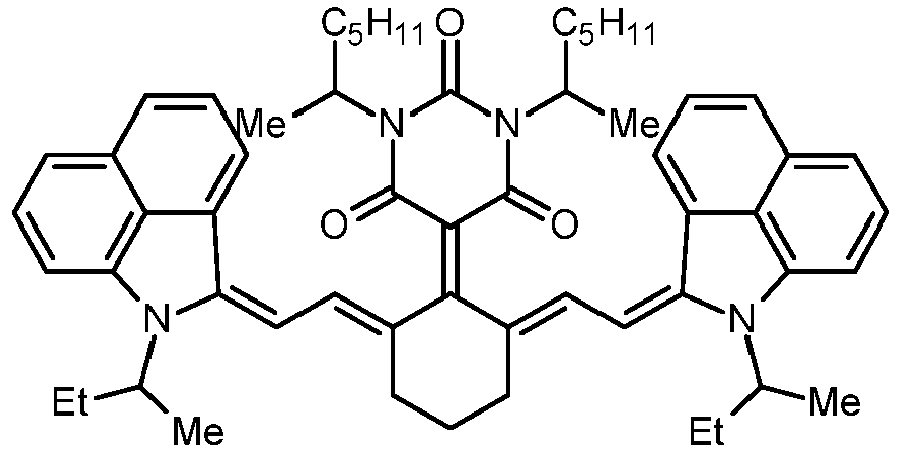
NIR-20 
NIR-21 
NIR-22 
NIR-23 
NIR-24 
NIR-25 - The NIR absorber preferably has an absorption maximum between 700 and 1200 nm, more preferably between 750 and 1150 nm and most preferably between 780 and 1100 nm.
- In a preferred embodiment of the invention, the NIR absorber is non-ionic. Due to its non-ionic character, a high solubility in solvents used in solvent evaporation technologies is obtained. Hence, high concentration of NIR absorbers can be obtained in the resin particle. Non-ionic NIR absorbers also show a low water solubility. Due to the low water solubility, no complete encapsulation by the resin in the composite resin particle is required.
- When the composite resin particles are dispersed in an aqueous vehicle, the NIR absorber content in the dispersion is preferably between 0.05 wt.% to 15 w% on the total solid content of the dispersion, more preferably between 0.1 w% and 10 w% and most preferably between 0.25 w% and 5 w%.
- The biocompatible resin present in the composite resin particle according to the present invention is preferably soluble in a substantially water immiscible solvent. A substantially water immiscible solvent is defined as a solvent that forms a two phase system at room temperature when mixed with water in a one to one ratio. Esters and ketones are particularly preferred water immiscible solvents.
- Biodegradable and biocompatible resins can be selected from the resins as discussed in Biodegradable Polymers, PBM Series, Volume 2 (Citus Books 2003, ISSN 1479-1285). The resin according to the present invention is selected from the group consisting of (poly(amino acids), polyphosphazenes, polysaccharide derivatives, poly(esters), poly(ortho esters), poly(cyano-acrylates) and copolymers thereof, poly(amino acids) and poly(esters) being more preferred.
- The poly(ester) is preferably a poly(caprolactone), a poly(lactic acid), a poly(L-lactic acid), a poly(glycolic acid), a poly(lactic acid-co-glycolic acid), a poly(L-lactic acid-co-glycolicacid), a poly(D, L-lactide) and any derivative and/or combination thereof.
- The composite resin particles are also suitable for on-demand drug release wherein the drug is released upon heating the particles by means of an appropriate NIR light source such as a NIR laser. Therefor it is useful to incorporate a pharmaceutical compound to achieve this on-demand drug release.
- Sometimes, PTT or PDT cannot completely destruct cancer cells and may result in the survival of the residual cells after photothermal treatment. Therefor it is useful to incorporate anti-cancer drugs for enhanced chemotherapy. The drug will be released upon application of NIR light on the composite particle due to the heat generated, triggering synergetic chemo-photothermal therapy. The anti-cancer drug should preferably be soluble in the water immiscible solvent used in the preparation of the composite resin particles (see § B.).
- Anti-cancer drugs which are suitable to be incorporated in the particles of the invention are cytostatics. Cytostatics for the treatment of cancer can be selected from the group consisting of alkylating agents, anthracyclines, cytoskeletal disruptors, epothilones, histone deacetylase inhibitors, topoisomerase I inhibitors, topoisomerase II inhibitors, kinase inhibitors, nucleotide analogs, peptide antibiotics, platinum based agents, retinoids and vinca alkaloids and derivatives. Alkylating agents can be bi- or monofunctional. Typical bifunctional alkylating agents are cyclophosphamide, mechlorethamine, chlorambucil and melphalan. Typical monofunctional alkylating agents are dacarbazine, nitrosoureas and temozolomide. Typical anthracyclines are daunorubicin, doxorubicin, epirubicin, idarubicin, mitoxantrone and valrubicin. Typical cytoskeletal disruptors are paclitaxel, docetaxel, abraxane and taxotere. Typical histone deacetylase inhibitors are vorinostat and romidepsin. Typical topoisomerase I inhibitors are irinotecan and topotecan. Typical topoisomerase II inhibitors are etoposide, teniposide and tafluposide. Typical kinase inhibitors are bortezomib, erlotinib, gefitinib, imatinib, vemurafenib and vismodegib. Typical nucleotide analogs are azathioprine, capecitabine, cytarabine, doxifluridine, fluorouracil, gemcitabine, hydroxyurea, mercaptopurine, methotrexate and tioguanine. Typical retinoids are tretinoin, alitretinoin and bexarotene. Typical vinca alkaloids are vinblastine, vincristine and vindesine.
- The composite resin particle according to the present invention is a mixture of a biocompatible resin which is preferably soluble in a water immiscible solvent and selected from the group consisting of (poly(amino acids), polyphosphazenes, polysaccharide derivatives, poly(esters), poly(ortho esters), poly(cyano-acrylates) and copolymers thereof, poly(amino acids) and poly(esters) and at least one NIR infrared dye according to the present invention (see §A.1).
- The resins according to the present invention can be functionalized with functional groups making the resin self-dispersing in water, with the proviso that the functionalization is limited to avoid that the resin becomes fully water soluble. Typical functional groups making resins self-dispersing are selected from the group consisting of a poly(ethylene oxide), a carboxylic acid or salt thereof, a sulfonic acid or salt thereof, a phosphonic acid or salt thereof, a phosphoric acid monoester or salt thereof, a sulfuric acid monoester or salt thereof, an ammonium group, a sulfonium group and a phosphonium group.
- The incorporation of a poly(ethylene gycol) functional group is particularly useful to give stealth properties to the composite resin particles of the invention in the human or animal body. These stealth properties are required to avoid fast uptake by the reticuloendothelial system and only being uphold at the required site.
- In a preferred embodiment, the resin according to the present invention is not functionalized with a functional group making the resin self-dispersing.
- The use of a dispersant in the preparation of an aqueous dispersion of the composite resin particles is particularly preferred. This allows to adjust the surface characteristics without the need for designing specialty resins. Standard biocompatible resins can be used in the preparation of the resin particles. The dispersant can be a surfactant or a stabilizing polymer. The surfactant can be non-ionic, anionic, cationic or zwitterionic. Non-ionic ethoxylated block copolymer surfactants are preferred. EO-PPO-EO triblock copolymers even more preferred. The block copolymers give the particles of the invention stealth properties but also lead to smaller particle diameters. As stabilizing polymers, hydroxyl functionalized polymers are particularly preferred, preferably selected from polysaccharides and poly(vinyl alcohol) or poly(vinyl alcohol) copolymers or derivatives thereof.
- In a preferred embodiment, the particle size of the composite resin particles according to the present invention is between 0.03 µm and 3 µm, more preferably between 0.05 µm and 1 µm and most preferably between 0.07µm and 0.5 µm. Composite resin particles according to the present invention having a particle size below 0.25 µm are particularly preferred.
- A particularly preferred method for the preparation of composite resin particle dispersion according to the present invention includes the following steps:
- 1. Dissolving the resin according to the present invention and the NIR absorber according to the present invention in a water immiscible solvent; and
- 2. Dissolving a dispersant into water; and
- 3. Emulsifying the solution of the resin and the NIR absorber into the aqueous solution of the dispersant; and
- 4. Evaporating the water immiscible solvent.
- The composite resin particles in dried state if required, can be obtained by isolating the composite particles via a separation technique such as centrifuge, freeze-drying, ...
- If an additional functional compound such as a pharmaceutical active agent has to be integrated in the composite resin particle, this compound is preferably dissolved in the water immiscible solvent. The solvent evaporation technology according to the present invention is particularly of interest for the incorporation of active pharmaceutical ingredients such as anti-cancer drugs.
- A particularly preferred method for the preparation of a dispersion of the composite resin particles according to the present invention, comprising an additional functional compound such as an active pharmaceutical ingredient includes the following steps:
- 1. Dissolving the resin according to the present invention, the NIR absorber according to the present invention and a functional compound in a substantially water immiscible solvent; and
- 2. Dissolving the dispersant into water; and
- 3. Emulsifying the solution of the resin, the NIR absorber and the functional compound into the aqueous solution of the dispersant; and
- 4. Evaporating the substantially water immiscible solvent.
- The composite resin particles can be obtained the same way as described above.
- The composite resin particles according to the invention are suitable for imaging affected organs in the human and/or animal body. The strong absorption of NIR light makes them also suitable for diffuse optical tomography and photoacoustic imaging.
- When irradiated with an appropriate NIR laser, the NIR absorber in the composite particle of the invention can convert the absorbed photon energy into heat, directly ablating cancer cells with minimal invasion to surrounding healthy tissues making the particles very suitable in tumour phototherapy treatment (PTT).
- The composite resin particle of the invention is also useful in photodynamic therapy (PDT) wherein the NIR absorber is excited with light of an appropriate wavelength for converting molecular oxygen into cytotoxic reactive oxygen species (ROS), such as singlet oxygen, which in turn damages cancer cells through oxidative stress and consequently induces cell death.
-
- Mowiol 4 88 is a poly(vinyl alcohol) supplied by Kuraray.
- Synperonic PE/F68-FL is a PEO-PPO-block copolymer surfactant supplied by Croda Chemicals International Ltd.
- Natureworks Polylactide Resin 4060D is a poly(lactide) supplied by Evans Chemetics.
- Resomer RG503H is a poly(D,L-lactide-co-glycolide) supplied by Evonik Industries.
-
NIR-7 is a NIR absorber and is prepared as follows:

- The synthesis of the ureum (I)
146 g n.-butyl isocyanate was dissolved in 85 ml toluene. 166 g 2-heptyl amine was added over two hours while the temperature was kept below 50 °C. The reaction was allowed to continue for 30 minutes at 50°C. The solvent and the excess of n.-butyl isocyanate were removed under reduced pressure and the crude ureum was used in the second step without further purification. - The synthesis of the barbiturate (II)
206 g acetic acid was added to 300 g of the ureum (I). The mixture was heated to 60°C. The solution of ureum (I) in acetic acid was added to 147 g malonic acid at 60°C. This solution was added to 292 g acetic anhydride. The reaction mixture was gently heated to 90°C and the reaction was allowed to continue for two and a half hours at 90°C. The reaction was allowed to cool down to 50°C and 78 g methanol was added. The mixture was refluxed for 45 minutes. The mixture was allowed to cool down to room temperature and the solvent was evaporated under reduced pressure. The residue was redissolved in 311 g methyl t.butyl ether and extracted three times with 2010 g of a 5w% sodium chloride solution. The solvent was removed under reduced pressure. Four times 35 ml toluene was added followed by removal under reduced pressure. The crude barbituric acid derivative (II) was used without further purification. - The synthesis of intermediate (III)
84 g cyclopentanone was added to 240 g of the barbituric acid derivative (II). 5 g ammonium acetate was added followed by the addition of 101 g methanol. The reaction mixture was heated to reflux and the reaction was allowed to continue for four and a half hours at reflux. The reaction mixture was allowed to cool down to room temperature and the solvent was removed at 50 mbar pressure and 95°C. Four times 5 ml toluene was added followed by evaporation at 50 mbar and 100°C. The reaction mixture was allowed to cool down to room temperature and 92 g toluene was added. 26 g silicagel in 55 g toluene was added and the mixture was filtered. The silicagel was flushed with toluene. The pooled toluene fractions were treated twice with 26 g silicagel in 55 g toluene, filtered and followed by flushing the silicagel with toluene. All toluene fractions were pooled, followed by evaporation of the solvent under reduced pressure. 287 g (y: 97%) of the crude intermediate (III) was isolated. - The synthesis of intermediate (V):
0.685 kg of intermediate (III) was dissolved in 0.334 kg ethyl acetate. The solution was cooled to 10°C and 18.9 g acetic acid was added. 0.273 kg N,N-dimethylformamide dimethyl acetal was added over 10 minutes, while the temperature rose to 20°C. The reaction was allowed to continue for 30 minutes at room temperature. The reaction mixture was heated to 45°C and 0.604 kg dimethylformamide dimethyl acetal was added over 15 minutes, followed by heating the reaction mixture to 65°C. The reaction was allowed to continue for 25 minutes at 65°C. The reaction mixture was allowed to cool to 47°C, followed by the addition of 1.06 kg methyl t.-butyl ether and 1.61 kg n.-hexane. The reaction mixture was cooled to 7°C. The crystallized intermediate V was isolated by filtration, washed with 160 g ethyl acetate and 60 g methyl t.-butyl ether, followed by three times washing with 160 g ethyl acetate and 60 g n.-hexane and once with 400 g heptane. The isolated intermediate (V) was dried. 335 g (y: 37%) of intermediate (V) was isolated. - The synthesis of intermediate (VI) :
The intermediate (VI) can be prepared as disclosed inWO2013037672 . - The synthesis of NIR-7:
621 g of intermediate (VI) was dissolved in 3.2 I methyl acetate. The reaction mixture was heated to 40°C. 372 g of intermediate (V) was added and the reaction was allowed to continue for two and a half hours at 50°C. The reaction mixture is cooled to 20°C. The crystallized NIR-7 was isolated by filtration, washed with 284 ml methyl acetate, 2.84 I ethyl acetate and 530 ml methyl t.-butyl ether. The crude NIR-7 was treated in 2.9 L water, isolated by filtration, washed with 1.5 I water, 142 ml methyl acetate, 280 ml ethyl acetate and 800 ml methyl t.-butyl ether and dried. 597 g (y : 87%) of NIR-7 was isolated.
- The synthesis of the ureum (I)
- NIR-24 is a NIR absorber and is prepared as follows:

- The synthesis of NIR-24
30 g of NIR starting material (I) was added to 100 ml acetonitrile. 6.24 g N,N'-dimethyl barbituric acid was added, followed by the addition of 5.5 ml (4.0g) triethyl amine. The reaction was allowed to continue for three hours at room temperature. The crude NIR-24 was isolated by filtration and treated in methanol at reflux. NIR-24 was isolated by filtration of the warm methanol solution and dried. 19.7 g (y : 35%) of NIR-24 was isolated.
- The synthesis of NIR-24
- NIR-25 is a NIR absorber and is prepared as follows:


- The synthesis of intermediate (I) :
Intermediate (I) can be prepared as disclosed inWO2010120058 . - The synthesis of intermediate (II) :
292 g N,N'-dicyclohexyl barbituric acid was dissolved in 1.5 liter trichloroethane. 156 ml cyclohexanone, 12 ml (0.12 mol) piperidine and 15 ml acetic acid were added and the reaction mixture was heated to reflux. Water was removed by azeotrpic distillation using a Dean-Stark trap. The reaction was allowed to continue for 24 hours. The reaction mixture was allowed to cool down to room temperature and the solvent was removed under reduced pressure. The residue was redissolved in 1 liter trichloroethane. The undissolved residues were removed by filtration. 100 ml piperidine was added and intermediate (II) crystallized from the medium. Intermediate (II) was isolated by filtration and dried. 302 g (y : 67%) was isolated. - The synthesis of NIR-25 :
- The synthesis of intermediate (I) :
- 301.6 g of intermediate (II) and 533 g of intermediate (I) were dissolved in 1.05I of N,N'-dimethyl imidazolone. 186 ml acetic anhydride and 366 ml triethyl amine were added and the reaction mixture was heated to 100°C. The reaction was allowed to continue for 30 minutes at 100°C. The reaction mixture was allowed to cool down to room temperature and NIR-25 was allowed to crystallize from the reaction mixture. The crude NIR-25 was isolated by filtration and treated with 1.3 I acetone followed by treating with 1.3 I methyl t.butyl ether. The isolated NIR-25 was redissolved in a 1/1 mixture of dichloromethane and methanol. Residual impurities were removed by filtration. 6.6 I methyl t.butyl ether was added and NIR-25 was allowed to crystallize from the medium. NIR-25 was isolated by filtration and dried. 136 g (y: 28%) of NIR-25 was isolated.
- The particle size of the capsules was measured using a ZetasizerTM Nano-S (Malvern Instruments, Goffin Meyvis).
- The UV-VIS spectra were measured on an Agilent 8433 spectrophotometer for spectra up to 1100 nm. The more bathochromic NIR absorbers were measured on a Shimadzu UV2600 spectrophotometer. The absorption of the samples at λmax was adjusted to 1 by diluting the samples with water.
- This example illustrates the preparation of PLA based submicron particle dispersions according to the present invention.
- A first solution was prepared by dissolving 4.651 g Natureworks Polylactide Resin 4060D in 51.86 g ethyl acetate. A solution of 117 mg NIR-7 in 2 ml dichloromethane was added and the solution was further stirred for 30 minutes.
- A second solution was prepared by dissolving 2.33 g Mowiol 4 88 in 93 g water.
- The first solution was added to the second solution over 15 minutes, while stirring at 18000 rpm using an Ultra Turrax T25 (IKA). After complete addition, stirring at 18000 rpm was continued for an additional 10 minutes, while keeping the temperature below 32°C.
- The solvents ethyl acetate and dichloromethane were removed under reduced pressure at 35°C, while gradually lowering the pressure from 950 mbar to 85 mbar. The weight dispersion was adjusted to 100 g by dilution with water if needed.
- The measured average particle size was 282 nm. The dispersion had an absorption maximum at 1036 nm.
- This example illustrates the preparation of PLGA based composite resin particle dispersions according to the present invention.
- A first solution was prepared by dissolving 4.651 g Resomer RG503H in 61.86 g ethyl acetate. A solution of 116 mg NIR-7 in 2 ml dichloromethane was added and the solution was further stirred for 30 minutes.
- A second solution was prepared by dissolving 4.651 g Synperonic PE/F68-FL in 90.58 g water.
- The first solution was added to the second solution over 15 minutes, while stirring at 13000 rpm using an Ultra Turrax T25 (IKA). After complete addition, stirring at 13000 rpm was continued for an additional 10 minutes, while keeping the temperature below 32°C.
- The solvents ethyl acetate and dichloromethane were removed under reduced pressure at 35°C, while gradually lowering the pressure from 950 mbar to 85 mbar. The weight dispersion was adjusted to 100 g by dilution with water if needed.
- The measured average particle size was 167 nm. The dispersion had an absorption maximum at 1036 nm.
- A first solution was prepared by dissolving 4.651 g of RESOMER RG503H and 0.116 g NIR 24 in 92 g methylene chloride.
- A second solution was prepared by dissolving 2.33 g Mowiol 4 88 in 93 g water.
- The first solution was added to the second solution over 15 minutes, while stirring with at 10000 rpm using an Ultra Turrax T25 (IKA). After complete addition, stirring at 10000 rpm was continued for an additional 10 minutes, while keeping the temperature at 21°C.
- The solvent was removed under reduced pressure at 35°C, while gradually lowering the pressure from 950 mbar to 85 mbar. The weight of the dispersion was adjusted to 100 g by dilution with water if needed.
- The particle size was measured using a light microscope. The average particle size was 2 micron. The dispersion had an absorption maximum at 772 nm.
- A first solution was prepared by dissolving 4.651 g of RESOMER RG503H and 0.116 g NIR 25 in 92 g methylene chloride.
- A second solution was prepared by dissolving 2.33 g Mowiol 4 88 in 93 g water.
- The first solution was added to the second solution over 15 minutes, while stirring with at 10000 rpm using an Ultra Turrax T25 (IKA). After complete addition, stirring at 10000 rpm was continued for an additional 10 minutes, while keeping the temperature at 21°C.
- The solvent was removed under reduced pressure at 35°C, while gradually lowering the pressure from 950 mbar to 85 mbar. The weight of the dispersion was adjusted to 100 g by dilution with water if needed.
- The particle size was measured using a light microscope. The average particle size was 2 micron. The dispersion had an absorption maximum at 810 nm.
- This example illustrates the NIR response of dispersion comprising NIR responsive submicron particles according to the present invention.
- A 1 mm thick coating of diluted dispersions of NIR nanoparticles according to the present invention was exposed to laser radiation on a Coherent laser combination, equipped with 3 lasers, respectively emitting at 920 nm, 1064 nm and 1150 nm. It was evaluated to which extend the different 1 mm thick coating evaporated under laser exposure. The samples were coated on Priplak, a poly(propylene) substrate supplied by Antalis. The results are summarized in Table 2.
Table 2 Resin particle dispersion Laser response COM POSITE-RES-1 Immediate evaporation over half of the powersweep COM POSITE-RES-1 Partial evaporation over the full powersweep COM POSITE-RES-2 Immediate full evaporation over the full power sweep COM POSITE-RES-2 Immediate full evaporation over the full power sweep COM POSITE-RES-2 Immediate full evaporation over the full power sweep - From Table 2 it becomes apparent that the NIR responsive nanoparticles according to the present invention show high laser response.
Claims (15)
- A composite resin particle comprising a NIR absorber according to general formula I and a resin selected from the group consisting of poly(amino acids), polyphosphazenes, polysaccharide derivatives, poly(esters), poly(ortho esters), poly(cyano-acrylates) and copolymers thereof
 wherein A and A' independently represent a substituted or unsubstituted heterocyclic group, covalently bonded to the polymethine chromophore via a carbon atomR1 and R2 are independently selected from the group consisting of a hydrogen, a substituted or unsubstituted alkyl group, a substituted or unsubstituted alkenyl group, a substituted or unsubstituted alkynyl group, a substituted or unsubstituted aralkyl group, a substituted or unsubstituted alkaryl group and a substituted or unsubstituted aryl or heteroaryl groupR1 and R2 may represent the necessary atoms to form a five to eight membered ringR3 and R4 are independently selected from the group consisting of a substituted or unsubstituted alkyl group, a substituted or unsubstituted alkenyl group, a substituted or unsubstituted alkynyl group, a substituted or unsubstituted aralkyl group, a substituted or unsubstituted alkaryl group and a substituted or unsubstituted aryl or heteroaryl group.
 - The composite resin particle according to claim 1 wherein the poly(ester) is selected from the group consisting of a poly(caprolactone), a poly(lactic acid), a poly(L-lactic acid), a poly(glycolic acid), a poly(lactic acid-co-glycolic acid), a poly(L-lactic acid-co-glycolicacid), a poly(D, L-lactide) and any derivative and/or combination thereof.
- The composite resin particle according to any of the preceding claims wherein the near infrared absorber is according to general formula II
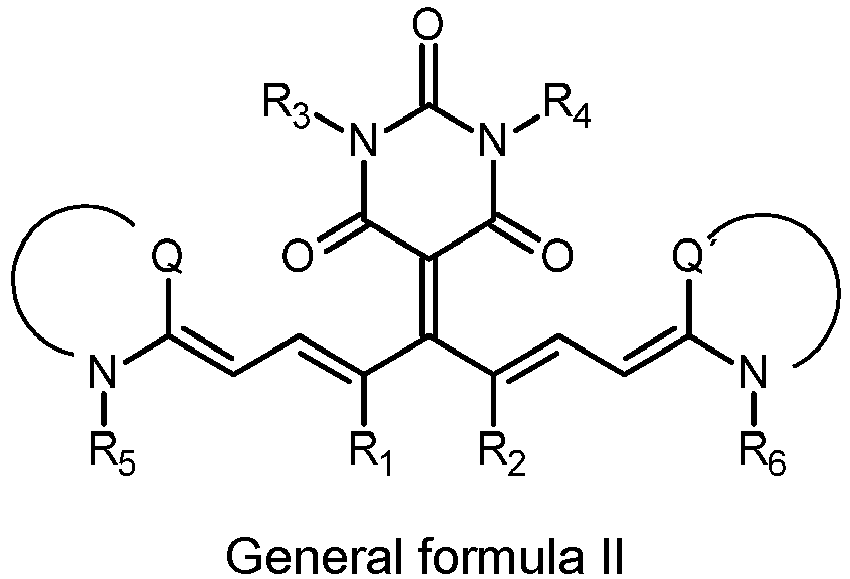 R1 and R2 are independently selected from the group consisting of a hydrogen, a substituted or unsubstituted alkyl group, a substituted or unsubstituted alkenyl group, a substituted or unsubstituted alkynyl group, a substituted or unsubstituted aralkyl group, a substituted or unsubstituted alkaryl group and a substituted or unsubstituted aryl or heteroaryl groupR1 and R2 may represent the necessary atoms to form a five to eight membered ringR3 and R4 are independently selected from the group consisting of a substituted or unsubstituted alkyl group, a substituted or unsubstituted alkenyl group, a substituted or unsubstituted alkynyl group, a substituted or unsubstituted aralkyl group, a substituted or unsubstituted alkaryl group and a substituted or unsubstituted aryl or heteroaryl groupR5 and R6 independently represent a substituted or unsubstituted alkyl group, a substituted or unsubstituted alkenyl group, a substituted or unsubstituted alkynyl group, a substituted or unsubstituted aralkyl group, a substituted or unsubstituted alkaryl group and a substituted or unsubstituted aryl or heteroaryl groupQ represents the necessary atoms to form a substituted or unsubstituted five or six membered hetero-ring.
 - The composite resin particle according to any of the preceding claims wherein the NIR absorber is non-ionic.
- The composite resin particle according to any of the preceding claims wherein the average particle size of the composite resin particles according to the present invention is between 0.03 µm and 3 µm
- The composite resin particle according to any of the preceding claims further comprising a pharmaceutical active compound.
- The composite resin particle according to Claim 6 wherein the pharmaceutical active compound is a cytostatics selected from the group consisting of alkylating agents, anthracyclines, cytoskeletal disruptors, epothilones, histone deacetylase inhibitors, topoisomerase I inhibitors, topoisomerase II inhibitors, kinase inhibitors, nucleotide analogs, peptide antibiotics, platinum based agents, retinoids and vinca alkaloids and derivatives.
- An aqueous dispersion comprising the composite resin particles as defined in claim 1 to 7 and a stabilizing polymer or a surfactant.
- The aqueous dispersion according to Claim 8 wherein the surfactant is a non-ionic ethoxylated block copolymer surfactant.
- The aqueous dispersion according to Claim 8 wherein the stabilizing polymer is a polysaccharide, a poly(vinyl alcohol) or a poly(vinyl alcohol) copolymer or derivatives thereof.
- A pharmaceutical composition comprising the dispersions as defined in claims 8 to10 and a pharmaceutical carrier or excipient.
- A pharmaceutical composition comprising the dispersion as defined in claims 8 to 10 for use in cancer therapy.
- A pharmaceutical composition comprising the dispersion as defined in claims 8 to 10 for use in a medical imaging method.
- A method of preparing an aqueous dispersion as defined in claims 8 to 10 comprising the steps of:a) dissolving a resin selected from the group consisting of (poly(amino acids), polyphosphazenes, polysaccahride derivatives, poly(esters), poly(ortho esters), poly(cyano-acrylates) and copolymers thereof and a NIR absorber according to general formula I in a substantially water immiscible solvent; andb) dissolving a dispersant into water; andc) emulsifying the solution of the resin and the near infrared absorber obtained in step a) into the aqueous solution of the dispersant obtained in step b); andd) evaporating the substantially water immiscible solvent.
- The method of preparing the aqueous dispersion according to claim 14 wherein a pharmaceutical active compound is added to the substantially water immiscible solvent in step a).
Priority Applications (5)
| Application Number | Priority Date | Filing Date | Title |
|---|---|---|---|
| EP21166554.2A EP4066818B1 (en) | 2021-04-01 | 2021-04-01 | Near infrared absorbing composite resin particles |
| JP2023560589A JP7649389B2 (en) | 2021-04-01 | 2022-03-30 | Near infrared absorbing composite resin particles |
| PCT/EP2022/058411 WO2022207705A1 (en) | 2021-04-01 | 2022-03-30 | Near infrared absorbing composite resin particles |
| US18/284,807 US20240374762A1 (en) | 2021-04-01 | 2022-03-30 | Near infrared absorbing composite resin particles |
| CN202280025769.1A CN117157057A (en) | 2021-04-01 | 2022-03-30 | Near infrared absorbing composite resin particles |
Applications Claiming Priority (1)
| Application Number | Priority Date | Filing Date | Title |
|---|---|---|---|
| EP21166554.2A EP4066818B1 (en) | 2021-04-01 | 2021-04-01 | Near infrared absorbing composite resin particles |
Publications (2)
| Publication Number | Publication Date |
|---|---|
| EP4066818A1 true EP4066818A1 (en) | 2022-10-05 |
| EP4066818B1 EP4066818B1 (en) | 2023-11-29 |
Family
ID=75639653
Family Applications (1)
| Application Number | Title | Priority Date | Filing Date |
|---|---|---|---|
| EP21166554.2A Active EP4066818B1 (en) | 2021-04-01 | 2021-04-01 | Near infrared absorbing composite resin particles |
Country Status (5)
| Country | Link |
|---|---|
| US (1) | US20240374762A1 (en) |
| EP (1) | EP4066818B1 (en) |
| JP (1) | JP7649389B2 (en) |
| CN (1) | CN117157057A (en) |
| WO (1) | WO2022207705A1 (en) |
Citations (4)
| Publication number | Priority date | Publication date | Assignee | Title |
|---|---|---|---|---|
| WO2010120058A2 (en) | 2009-04-17 | 2010-10-21 | 한국과학기술연구원 | Novel cyanine compound for labelling biomolecules, and preparation method thereof |
| WO2013037672A1 (en) | 2011-09-12 | 2013-03-21 | Agfa-Gevaert | Colour laser marking methods of security document precursors |
| WO2020011601A1 (en) * | 2018-07-10 | 2020-01-16 | Agfa-Gevaert Nv | Near infrared (nir) laser processing of resin based articles |
| WO2020172618A2 (en) * | 2019-02-21 | 2020-08-27 | Bambu Vault Llc | Remotely triggered therapy |
Family Cites Families (7)
| Publication number | Priority date | Publication date | Assignee | Title |
|---|---|---|---|---|
| JP2003025743A (en) * | 2001-07-13 | 2003-01-29 | Fuji Photo Film Co Ltd | Image forming material |
| JP4179824B2 (en) * | 2002-08-12 | 2008-11-12 | 富士フイルム株式会社 | Polymerizable composition and planographic printing plate precursor using the same |
| WO2008066899A2 (en) * | 2006-11-28 | 2008-06-05 | Marinus Pharmaceuticals | Nanoparticulate formulations and methods for the making and use thereof |
| US8927197B2 (en) * | 2012-11-16 | 2015-01-06 | Eastman Kodak Company | Negative-working lithographic printing plate precursors |
| EP3285765B1 (en) * | 2015-04-20 | 2020-04-08 | Oregon State University | A composition comprising a photosensitive compound in a polymeric nanoparticle, and a method of using the composition |
| WO2019007833A1 (en) * | 2017-07-03 | 2019-01-10 | Agfa Nv | Near infrared (nir) laser markable compositions |
| EP3495155A1 (en) * | 2017-12-08 | 2019-06-12 | Agfa Nv | Near infrared (nir) laser processing of resin based articles |
-
2021
- 2021-04-01 EP EP21166554.2A patent/EP4066818B1/en active Active
-
2022
- 2022-03-30 JP JP2023560589A patent/JP7649389B2/en active Active
- 2022-03-30 WO PCT/EP2022/058411 patent/WO2022207705A1/en not_active Ceased
- 2022-03-30 CN CN202280025769.1A patent/CN117157057A/en active Pending
- 2022-03-30 US US18/284,807 patent/US20240374762A1/en active Pending
Patent Citations (4)
| Publication number | Priority date | Publication date | Assignee | Title |
|---|---|---|---|---|
| WO2010120058A2 (en) | 2009-04-17 | 2010-10-21 | 한국과학기술연구원 | Novel cyanine compound for labelling biomolecules, and preparation method thereof |
| WO2013037672A1 (en) | 2011-09-12 | 2013-03-21 | Agfa-Gevaert | Colour laser marking methods of security document precursors |
| WO2020011601A1 (en) * | 2018-07-10 | 2020-01-16 | Agfa-Gevaert Nv | Near infrared (nir) laser processing of resin based articles |
| WO2020172618A2 (en) * | 2019-02-21 | 2020-08-27 | Bambu Vault Llc | Remotely triggered therapy |
Non-Patent Citations (10)
| Title |
|---|
| "Biodegradable Polymers", PBM SERIES, vol. 2, 2003, ISSN: 1479-1285 |
| DUONG TONY ET AL: "Phototheranostic nanoplatform based on a single cyanine dye for image-guided combinatorial phototherapy", NANOMEDICINE , NANOTECHNOLOGY , BIOLOGY AND MEDICINE, vol. 13, no. 3, 1 April 2017 (2017-04-01), pages 955 - 963, XP029977657, ISSN: 1549-9634, DOI: 10.1016/J.NANO.2016.11.005 * |
| HG. ET AL., CHEMICAL REVIEWS, vol. 115, 2015, pages 11012 - 11042 |
| NAGAO ET AL., DYES AND PIGMENTS, vol. 73, no. 3, 2006, pages 344 - 352 |
| RAZA ET AL., JOURNAL OF MATERIALS RESEARCH AND TECHNOLOGY, vol. 8, no. 1, 2019, pages 1497 - 1509 |
| SHAO ET AL., RSC NANOSCIENCE & NANOTECHNOLOGY, vol. 40, 2016, pages 125 - 157 |
| WANG ET AL., JOURNAL OF NANOMEDICINE, vol. 15, pages 1903 - 1914 |
| ZHANG YUANYUAN ET AL: "Polymeric nanocarriers incorporating near-infrared absorbing agents for potent photothermal therapy of cancer", POLYMER JOURNAL, vol. 48, no. 5, 16 December 2015 (2015-12-16), pages 589 - 603, XP037325114, ISSN: 0032-3896, DOI: 10.1038/PJ.2015.117 * |
| ZHU ET AL., BIOMATER. SCI, vol. 6, 2018, pages 746 - 765 |
| ZHU ET AL., CURRENT MEDICINAL CHEMISTRY, vol. 26, 2019, pages 1389 - 1405 |
Also Published As
| Publication number | Publication date |
|---|---|
| JP2024511856A (en) | 2024-03-15 |
| WO2022207705A1 (en) | 2022-10-06 |
| US20240374762A1 (en) | 2024-11-14 |
| JP7649389B2 (en) | 2025-03-19 |
| EP4066818B1 (en) | 2023-11-29 |
| CN117157057A (en) | 2023-12-01 |
Similar Documents
| Publication | Publication Date | Title |
|---|---|---|
| Wu et al. | Stability enhancement of fluorophores for lighting up practical application in bioimaging | |
| JP5972171B2 (en) | Nanoparticle carrier system based on human serum albumin for photodynamic therapy | |
| Wang et al. | Nanomaterials and singlet oxygen photosensitizers: potential applications in photodynamic therapy | |
| US10646472B2 (en) | Composition comprising a photosensitive compound in a polymeric nanoparticle, and a method of using the composition | |
| US10835605B2 (en) | Preparations of poly(lactic-co-glycolic acid)/polydopamine core/shell hybrid nanoparticle for photothermal applications | |
| JP5848332B2 (en) | Functional cross-linked nanostructures for optical contrast and therapy tandems | |
| EP2682131B1 (en) | Switching-type fluorescent nanoparticle probe, and fluorescent molecular imaging method using same | |
| Dong et al. | Fluorescent nanogel based on four-arm PEG–PCL copolymer with porphyrin core for bioimaging | |
| KR102099516B1 (en) | NIR responsive cross-linked micelles, drug delivery carrier targeting cancer cell and method for preparing the same | |
| Treekoon et al. | Aza-BODIPY encapsulated polymeric nanoparticles as an effective nanodelivery system for photodynamic cancer treatment | |
| KR101177173B1 (en) | ICG Doped Silica Nanoparticles for Biological Imaging and Production Method Thereof | |
| EP4066818B1 (en) | Near infrared absorbing composite resin particles | |
| CN108264475A (en) | Indocyanine green derivative and preparation method | |
| US20260071027A1 (en) | Near infrared and red light absorbing composite resin particles | |
| JP7748474B2 (en) | NIR absorbing capsule | |
| Li et al. | Stimuli responsive nanomaterials for controlled release applications | |
| Yang et al. | Photothermally triggered disassembly of a visible dual fluorescent poly (ethylene glycol)/α-cyclodextrin hydrogel | |
| Alvarez-Venicio et al. | Red fluorescent benzothiadiazole derivative loaded in different nanoformulations: Optical properties and their use in bio-imaging | |
| Khoee et al. | The Effects of Different Regions of Light on the Structure of Micro/Nanoparticles with Photo-Removable Shell and Their Use in Biomedical Applications | |
| WO2025255466A1 (en) | Infrared emissive conjugated polymers, composites, and compositions |
Legal Events
| Date | Code | Title | Description |
|---|---|---|---|
| PUAI | Public reference made under article 153(3) epc to a published international application that has entered the european phase |
Free format text: ORIGINAL CODE: 0009012 |
|
| STAA | Information on the status of an ep patent application or granted ep patent |
Free format text: STATUS: THE APPLICATION HAS BEEN PUBLISHED |
|
| AK | Designated contracting states |
Kind code of ref document: A1 Designated state(s): AL AT BE BG CH CY CZ DE DK EE ES FI FR GB GR HR HU IE IS IT LI LT LU LV MC MK MT NL NO PL PT RO RS SE SI SK SM TR |
|
| STAA | Information on the status of an ep patent application or granted ep patent |
Free format text: STATUS: REQUEST FOR EXAMINATION WAS MADE |
|
| 17P | Request for examination filed |
Effective date: 20230405 |
|
| RBV | Designated contracting states (corrected) |
Designated state(s): AL AT BE BG CH CY CZ DE DK EE ES FI FR GB GR HR HU IE IS IT LI LT LU LV MC MK MT NL NO PL PT RO RS SE SI SK SM TR |
|
| REG | Reference to a national code |
Ref country code: DE Ref legal event code: R079 Free format text: PREVIOUS MAIN CLASS: A61K0009100000 Ipc: C08L0067040000 Ref country code: DE Ref legal event code: R079 Ref document number: 602021007166 Country of ref document: DE Free format text: PREVIOUS MAIN CLASS: A61K0009100000 Ipc: C08L0067040000 |
|
| RIC1 | Information provided on ipc code assigned before grant |
Ipc: A61K 41/00 20200101ALI20230721BHEP Ipc: A61K 49/00 20060101ALI20230721BHEP Ipc: C08K 5/3462 20060101ALI20230721BHEP Ipc: A61K 9/51 20060101ALI20230721BHEP Ipc: C08L 67/04 20060101AFI20230721BHEP |
|
| GRAP | Despatch of communication of intention to grant a patent |
Free format text: ORIGINAL CODE: EPIDOSNIGR1 |
|
| STAA | Information on the status of an ep patent application or granted ep patent |
Free format text: STATUS: GRANT OF PATENT IS INTENDED |
|
| INTG | Intention to grant announced |
Effective date: 20230908 |
|
| GRAS | Grant fee paid |
Free format text: ORIGINAL CODE: EPIDOSNIGR3 |
|
| GRAA | (expected) grant |
Free format text: ORIGINAL CODE: 0009210 |
|
| STAA | Information on the status of an ep patent application or granted ep patent |
Free format text: STATUS: THE PATENT HAS BEEN GRANTED |
|
| AK | Designated contracting states |
Kind code of ref document: B1 Designated state(s): AL AT BE BG CH CY CZ DE DK EE ES FI FR GB GR HR HU IE IS IT LI LT LU LV MC MK MT NL NO PL PT RO RS SE SI SK SM TR |
|
| REG | Reference to a national code |
Ref country code: GB Ref legal event code: FG4D |
|
| REG | Reference to a national code |
Ref country code: CH Ref legal event code: EP |
|
| REG | Reference to a national code |
Ref country code: DE Ref legal event code: R096 Ref document number: 602021007166 Country of ref document: DE |
|
| REG | Reference to a national code |
Ref country code: IE Ref legal event code: FG4D |
|
| REG | Reference to a national code |
Ref country code: LT Ref legal event code: MG9D |
|
| REG | Reference to a national code |
Ref country code: NL Ref legal event code: MP Effective date: 20231129 |
|
| PG25 | Lapsed in a contracting state [announced via postgrant information from national office to epo] |
Ref country code: GR Free format text: LAPSE BECAUSE OF FAILURE TO SUBMIT A TRANSLATION OF THE DESCRIPTION OR TO PAY THE FEE WITHIN THE PRESCRIBED TIME-LIMIT Effective date: 20240301 |
|
| PG25 | Lapsed in a contracting state [announced via postgrant information from national office to epo] |
Ref country code: IS Free format text: LAPSE BECAUSE OF FAILURE TO SUBMIT A TRANSLATION OF THE DESCRIPTION OR TO PAY THE FEE WITHIN THE PRESCRIBED TIME-LIMIT Effective date: 20240329 |
|
| PG25 | Lapsed in a contracting state [announced via postgrant information from national office to epo] |
Ref country code: LT Free format text: LAPSE BECAUSE OF FAILURE TO SUBMIT A TRANSLATION OF THE DESCRIPTION OR TO PAY THE FEE WITHIN THE PRESCRIBED TIME-LIMIT Effective date: 20231129 |
|
| PG25 | Lapsed in a contracting state [announced via postgrant information from national office to epo] |
Ref country code: ES Free format text: LAPSE BECAUSE OF FAILURE TO SUBMIT A TRANSLATION OF THE DESCRIPTION OR TO PAY THE FEE WITHIN THE PRESCRIBED TIME-LIMIT Effective date: 20231129 |
|
| PG25 | Lapsed in a contracting state [announced via postgrant information from national office to epo] |
Ref country code: LT Free format text: LAPSE BECAUSE OF FAILURE TO SUBMIT A TRANSLATION OF THE DESCRIPTION OR TO PAY THE FEE WITHIN THE PRESCRIBED TIME-LIMIT Effective date: 20231129 Ref country code: IS Free format text: LAPSE BECAUSE OF FAILURE TO SUBMIT A TRANSLATION OF THE DESCRIPTION OR TO PAY THE FEE WITHIN THE PRESCRIBED TIME-LIMIT Effective date: 20240329 Ref country code: GR Free format text: LAPSE BECAUSE OF FAILURE TO SUBMIT A TRANSLATION OF THE DESCRIPTION OR TO PAY THE FEE WITHIN THE PRESCRIBED TIME-LIMIT Effective date: 20240301 Ref country code: ES Free format text: LAPSE BECAUSE OF FAILURE TO SUBMIT A TRANSLATION OF THE DESCRIPTION OR TO PAY THE FEE WITHIN THE PRESCRIBED TIME-LIMIT Effective date: 20231129 Ref country code: BG Free format text: LAPSE BECAUSE OF FAILURE TO SUBMIT A TRANSLATION OF THE DESCRIPTION OR TO PAY THE FEE WITHIN THE PRESCRIBED TIME-LIMIT Effective date: 20240229 |
|
| REG | Reference to a national code |
Ref country code: AT Ref legal event code: MK05 Ref document number: 1636073 Country of ref document: AT Kind code of ref document: T Effective date: 20231129 |
|
| PG25 | Lapsed in a contracting state [announced via postgrant information from national office to epo] |
Ref country code: NL Free format text: LAPSE BECAUSE OF FAILURE TO SUBMIT A TRANSLATION OF THE DESCRIPTION OR TO PAY THE FEE WITHIN THE PRESCRIBED TIME-LIMIT Effective date: 20231129 |
|
| PG25 | Lapsed in a contracting state [announced via postgrant information from national office to epo] |
Ref country code: SE Free format text: LAPSE BECAUSE OF FAILURE TO SUBMIT A TRANSLATION OF THE DESCRIPTION OR TO PAY THE FEE WITHIN THE PRESCRIBED TIME-LIMIT Effective date: 20231129 Ref country code: RS Free format text: LAPSE BECAUSE OF FAILURE TO SUBMIT A TRANSLATION OF THE DESCRIPTION OR TO PAY THE FEE WITHIN THE PRESCRIBED TIME-LIMIT Effective date: 20231129 Ref country code: PL Free format text: LAPSE BECAUSE OF FAILURE TO SUBMIT A TRANSLATION OF THE DESCRIPTION OR TO PAY THE FEE WITHIN THE PRESCRIBED TIME-LIMIT Effective date: 20231129 Ref country code: NO Free format text: LAPSE BECAUSE OF FAILURE TO SUBMIT A TRANSLATION OF THE DESCRIPTION OR TO PAY THE FEE WITHIN THE PRESCRIBED TIME-LIMIT Effective date: 20240229 Ref country code: NL Free format text: LAPSE BECAUSE OF FAILURE TO SUBMIT A TRANSLATION OF THE DESCRIPTION OR TO PAY THE FEE WITHIN THE PRESCRIBED TIME-LIMIT Effective date: 20231129 Ref country code: LV Free format text: LAPSE BECAUSE OF FAILURE TO SUBMIT A TRANSLATION OF THE DESCRIPTION OR TO PAY THE FEE WITHIN THE PRESCRIBED TIME-LIMIT Effective date: 20231129 Ref country code: HR Free format text: LAPSE BECAUSE OF FAILURE TO SUBMIT A TRANSLATION OF THE DESCRIPTION OR TO PAY THE FEE WITHIN THE PRESCRIBED TIME-LIMIT Effective date: 20231129 |
|
| PG25 | Lapsed in a contracting state [announced via postgrant information from national office to epo] |
Ref country code: DK Free format text: LAPSE BECAUSE OF FAILURE TO SUBMIT A TRANSLATION OF THE DESCRIPTION OR TO PAY THE FEE WITHIN THE PRESCRIBED TIME-LIMIT Effective date: 20231129 |
|
| PG25 | Lapsed in a contracting state [announced via postgrant information from national office to epo] |
Ref country code: CZ Free format text: LAPSE BECAUSE OF FAILURE TO SUBMIT A TRANSLATION OF THE DESCRIPTION OR TO PAY THE FEE WITHIN THE PRESCRIBED TIME-LIMIT Effective date: 20231129 Ref country code: AT Free format text: LAPSE BECAUSE OF FAILURE TO SUBMIT A TRANSLATION OF THE DESCRIPTION OR TO PAY THE FEE WITHIN THE PRESCRIBED TIME-LIMIT Effective date: 20231129 |
|
| PG25 | Lapsed in a contracting state [announced via postgrant information from national office to epo] |
Ref country code: SK Free format text: LAPSE BECAUSE OF FAILURE TO SUBMIT A TRANSLATION OF THE DESCRIPTION OR TO PAY THE FEE WITHIN THE PRESCRIBED TIME-LIMIT Effective date: 20231129 |
|
| PG25 | Lapsed in a contracting state [announced via postgrant information from national office to epo] |
Ref country code: SM Free format text: LAPSE BECAUSE OF FAILURE TO SUBMIT A TRANSLATION OF THE DESCRIPTION OR TO PAY THE FEE WITHIN THE PRESCRIBED TIME-LIMIT Effective date: 20231129 Ref country code: SK Free format text: LAPSE BECAUSE OF FAILURE TO SUBMIT A TRANSLATION OF THE DESCRIPTION OR TO PAY THE FEE WITHIN THE PRESCRIBED TIME-LIMIT Effective date: 20231129 Ref country code: RO Free format text: LAPSE BECAUSE OF FAILURE TO SUBMIT A TRANSLATION OF THE DESCRIPTION OR TO PAY THE FEE WITHIN THE PRESCRIBED TIME-LIMIT Effective date: 20231129 Ref country code: EE Free format text: LAPSE BECAUSE OF FAILURE TO SUBMIT A TRANSLATION OF THE DESCRIPTION OR TO PAY THE FEE WITHIN THE PRESCRIBED TIME-LIMIT Effective date: 20231129 Ref country code: DK Free format text: LAPSE BECAUSE OF FAILURE TO SUBMIT A TRANSLATION OF THE DESCRIPTION OR TO PAY THE FEE WITHIN THE PRESCRIBED TIME-LIMIT Effective date: 20231129 Ref country code: CZ Free format text: LAPSE BECAUSE OF FAILURE TO SUBMIT A TRANSLATION OF THE DESCRIPTION OR TO PAY THE FEE WITHIN THE PRESCRIBED TIME-LIMIT Effective date: 20231129 Ref country code: AT Free format text: LAPSE BECAUSE OF FAILURE TO SUBMIT A TRANSLATION OF THE DESCRIPTION OR TO PAY THE FEE WITHIN THE PRESCRIBED TIME-LIMIT Effective date: 20231129 |
|
| PG25 | Lapsed in a contracting state [announced via postgrant information from national office to epo] |
Ref country code: PT Free format text: LAPSE BECAUSE OF FAILURE TO SUBMIT A TRANSLATION OF THE DESCRIPTION OR TO PAY THE FEE WITHIN THE PRESCRIBED TIME-LIMIT Effective date: 20240401 |
|
| PG25 | Lapsed in a contracting state [announced via postgrant information from national office to epo] |
Ref country code: PT Free format text: LAPSE BECAUSE OF FAILURE TO SUBMIT A TRANSLATION OF THE DESCRIPTION OR TO PAY THE FEE WITHIN THE PRESCRIBED TIME-LIMIT Effective date: 20240401 |
|
| REG | Reference to a national code |
Ref country code: DE Ref legal event code: R097 Ref document number: 602021007166 Country of ref document: DE |
|
| PLBE | No opposition filed within time limit |
Free format text: ORIGINAL CODE: 0009261 |
|
| STAA | Information on the status of an ep patent application or granted ep patent |
Free format text: STATUS: NO OPPOSITION FILED WITHIN TIME LIMIT |
|
| PG25 | Lapsed in a contracting state [announced via postgrant information from national office to epo] |
Ref country code: SI Free format text: LAPSE BECAUSE OF FAILURE TO SUBMIT A TRANSLATION OF THE DESCRIPTION OR TO PAY THE FEE WITHIN THE PRESCRIBED TIME-LIMIT Effective date: 20231129 |
|
| PG25 | Lapsed in a contracting state [announced via postgrant information from national office to epo] |
Ref country code: SI Free format text: LAPSE BECAUSE OF FAILURE TO SUBMIT A TRANSLATION OF THE DESCRIPTION OR TO PAY THE FEE WITHIN THE PRESCRIBED TIME-LIMIT Effective date: 20231129 |
|
| 26N | No opposition filed |
Effective date: 20240830 |
|
| PG25 | Lapsed in a contracting state [announced via postgrant information from national office to epo] |
Ref country code: MC Free format text: LAPSE BECAUSE OF FAILURE TO SUBMIT A TRANSLATION OF THE DESCRIPTION OR TO PAY THE FEE WITHIN THE PRESCRIBED TIME-LIMIT Effective date: 20231129 |
|
| PG25 | Lapsed in a contracting state [announced via postgrant information from national office to epo] |
Ref country code: MC Free format text: LAPSE BECAUSE OF FAILURE TO SUBMIT A TRANSLATION OF THE DESCRIPTION OR TO PAY THE FEE WITHIN THE PRESCRIBED TIME-LIMIT Effective date: 20231129 |
|
| REG | Reference to a national code |
Ref country code: CH Ref legal event code: PL |
|
| PG25 | Lapsed in a contracting state [announced via postgrant information from national office to epo] |
Ref country code: LU Free format text: LAPSE BECAUSE OF NON-PAYMENT OF DUE FEES Effective date: 20240401 |
|
| PG25 | Lapsed in a contracting state [announced via postgrant information from national office to epo] |
Ref country code: LU Free format text: LAPSE BECAUSE OF NON-PAYMENT OF DUE FEES Effective date: 20240401 |
|
| PG25 | Lapsed in a contracting state [announced via postgrant information from national office to epo] |
Ref country code: CH Free format text: LAPSE BECAUSE OF NON-PAYMENT OF DUE FEES Effective date: 20240430 |
|
| PG25 | Lapsed in a contracting state [announced via postgrant information from national office to epo] |
Ref country code: IE Free format text: LAPSE BECAUSE OF NON-PAYMENT OF DUE FEES Effective date: 20240401 |
|
| PG25 | Lapsed in a contracting state [announced via postgrant information from national office to epo] |
Ref country code: CY Free format text: LAPSE BECAUSE OF FAILURE TO SUBMIT A TRANSLATION OF THE DESCRIPTION OR TO PAY THE FEE WITHIN THE PRESCRIBED TIME-LIMIT; INVALID AB INITIO Effective date: 20210401 |
|
| PG25 | Lapsed in a contracting state [announced via postgrant information from national office to epo] |
Ref country code: HU Free format text: LAPSE BECAUSE OF FAILURE TO SUBMIT A TRANSLATION OF THE DESCRIPTION OR TO PAY THE FEE WITHIN THE PRESCRIBED TIME-LIMIT; INVALID AB INITIO Effective date: 20210401 |
|
| PG25 | Lapsed in a contracting state [announced via postgrant information from national office to epo] |
Ref country code: FI Free format text: LAPSE BECAUSE OF FAILURE TO SUBMIT A TRANSLATION OF THE DESCRIPTION OR TO PAY THE FEE WITHIN THE PRESCRIBED TIME-LIMIT Effective date: 20231129 |
|
| PG25 | Lapsed in a contracting state [announced via postgrant information from national office to epo] |
Ref country code: TR Free format text: LAPSE BECAUSE OF FAILURE TO SUBMIT A TRANSLATION OF THE DESCRIPTION OR TO PAY THE FEE WITHIN THE PRESCRIBED TIME-LIMIT Effective date: 20231129 |
|
| PGFP | Annual fee paid to national office [announced via postgrant information from national office to epo] |
Ref country code: GB Payment date: 20260313 Year of fee payment: 6 |
|
| PGFP | Annual fee paid to national office [announced via postgrant information from national office to epo] |
Ref country code: BE Payment date: 20260226 Year of fee payment: 6 |
|
| PGFP | Annual fee paid to national office [announced via postgrant information from national office to epo] |
Ref country code: FR Payment date: 20260306 Year of fee payment: 6 |
|
| PGFP | Annual fee paid to national office [announced via postgrant information from national office to epo] |
Ref country code: IT Payment date: 20260430 Year of fee payment: 6 |
|
| PGFP | Annual fee paid to national office [announced via postgrant information from national office to epo] |
Ref country code: DE Payment date: 20260306 Year of fee payment: 6 |