EP4066664A1 - Vaporizer and ceramic vaporization core thereof and method for fabricating ceramic vaporization core - Google Patents
Vaporizer and ceramic vaporization core thereof and method for fabricating ceramic vaporization core Download PDFInfo
- Publication number
- EP4066664A1 EP4066664A1 EP20893626.0A EP20893626A EP4066664A1 EP 4066664 A1 EP4066664 A1 EP 4066664A1 EP 20893626 A EP20893626 A EP 20893626A EP 4066664 A1 EP4066664 A1 EP 4066664A1
- Authority
- EP
- European Patent Office
- Prior art keywords
- ceramic
- weight
- parts
- blank
- hydroxyl group
- Prior art date
- Legal status (The legal status is an assumption and is not a legal conclusion. Google has not performed a legal analysis and makes no representation as to the accuracy of the status listed.)
- Granted
Links
Images

Classifications
-
- H—ELECTRICITY
- H05—ELECTRIC TECHNIQUES NOT OTHERWISE PROVIDED FOR
- H05B—ELECTRIC HEATING; ELECTRIC LIGHT SOURCES NOT OTHERWISE PROVIDED FOR; CIRCUIT ARRANGEMENTS FOR ELECTRIC LIGHT SOURCES, IN GENERAL
- H05B3/00—Ohmic-resistance heating
- H05B3/40—Heating elements having the shape of rods or tubes
- H05B3/42—Heating elements having the shape of rods or tubes non-flexible
-
- A—HUMAN NECESSITIES
- A24—TOBACCO; CIGARS; CIGARETTES; SIMULATED SMOKING DEVICES; SMOKERS' REQUISITES
- A24F—SMOKERS' REQUISITES; MATCH BOXES; SIMULATED SMOKING DEVICES
- A24F40/00—Electrically operated smoking devices; Component parts thereof; Manufacture thereof; Maintenance or testing thereof; Charging means specially adapted therefor
- A24F40/10—Devices using liquid inhalable precursors
-
- A—HUMAN NECESSITIES
- A24—TOBACCO; CIGARS; CIGARETTES; SIMULATED SMOKING DEVICES; SMOKERS' REQUISITES
- A24F—SMOKERS' REQUISITES; MATCH BOXES; SIMULATED SMOKING DEVICES
- A24F40/00—Electrically operated smoking devices; Component parts thereof; Manufacture thereof; Maintenance or testing thereof; Charging means specially adapted therefor
- A24F40/40—Constructional details, e.g. connection of cartridges and battery parts
- A24F40/44—Wicks
-
- A—HUMAN NECESSITIES
- A24—TOBACCO; CIGARS; CIGARETTES; SIMULATED SMOKING DEVICES; SMOKERS' REQUISITES
- A24F—SMOKERS' REQUISITES; MATCH BOXES; SIMULATED SMOKING DEVICES
- A24F40/00—Electrically operated smoking devices; Component parts thereof; Manufacture thereof; Maintenance or testing thereof; Charging means specially adapted therefor
- A24F40/70—Manufacture
-
- B—PERFORMING OPERATIONS; TRANSPORTING
- B32—LAYERED PRODUCTS
- B32B—LAYERED PRODUCTS, i.e. PRODUCTS BUILT-UP OF STRATA OF FLAT OR NON-FLAT, e.g. CELLULAR OR HONEYCOMB, FORM
- B32B18/00—Layered products essentially comprising ceramics, e.g. refractory products
-
- C—CHEMISTRY; METALLURGY
- C04—CEMENTS; CONCRETE; ARTIFICIAL STONE; CERAMICS; REFRACTORIES
- C04B—LIME, MAGNESIA; SLAG; CEMENTS; COMPOSITIONS THEREOF, e.g. MORTARS, CONCRETE OR LIKE BUILDING MATERIALS; ARTIFICIAL STONE; CERAMICS; REFRACTORIES; TREATMENT OF NATURAL STONE
- C04B33/00—Clay-wares
- C04B33/02—Preparing or treating the raw materials individually or as batches
- C04B33/04—Clay; Kaolin
-
- C—CHEMISTRY; METALLURGY
- C04—CEMENTS; CONCRETE; ARTIFICIAL STONE; CERAMICS; REFRACTORIES
- C04B—LIME, MAGNESIA; SLAG; CEMENTS; COMPOSITIONS THEREOF, e.g. MORTARS, CONCRETE OR LIKE BUILDING MATERIALS; ARTIFICIAL STONE; CERAMICS; REFRACTORIES; TREATMENT OF NATURAL STONE
- C04B35/00—Shaped ceramic products characterised by their composition; Ceramics compositions; Processing powders of inorganic compounds preparatory to the manufacturing of ceramic products
- C04B35/01—Shaped ceramic products characterised by their composition; Ceramics compositions; Processing powders of inorganic compounds preparatory to the manufacturing of ceramic products based on oxide ceramics
- C04B35/10—Shaped ceramic products characterised by their composition; Ceramics compositions; Processing powders of inorganic compounds preparatory to the manufacturing of ceramic products based on oxide ceramics based on aluminium oxide
-
- C—CHEMISTRY; METALLURGY
- C04—CEMENTS; CONCRETE; ARTIFICIAL STONE; CERAMICS; REFRACTORIES
- C04B—LIME, MAGNESIA; SLAG; CEMENTS; COMPOSITIONS THEREOF, e.g. MORTARS, CONCRETE OR LIKE BUILDING MATERIALS; ARTIFICIAL STONE; CERAMICS; REFRACTORIES; TREATMENT OF NATURAL STONE
- C04B35/00—Shaped ceramic products characterised by their composition; Ceramics compositions; Processing powders of inorganic compounds preparatory to the manufacturing of ceramic products
- C04B35/01—Shaped ceramic products characterised by their composition; Ceramics compositions; Processing powders of inorganic compounds preparatory to the manufacturing of ceramic products based on oxide ceramics
- C04B35/10—Shaped ceramic products characterised by their composition; Ceramics compositions; Processing powders of inorganic compounds preparatory to the manufacturing of ceramic products based on oxide ceramics based on aluminium oxide
- C04B35/111—Fine ceramics
-
- C—CHEMISTRY; METALLURGY
- C04—CEMENTS; CONCRETE; ARTIFICIAL STONE; CERAMICS; REFRACTORIES
- C04B—LIME, MAGNESIA; SLAG; CEMENTS; COMPOSITIONS THEREOF, e.g. MORTARS, CONCRETE OR LIKE BUILDING MATERIALS; ARTIFICIAL STONE; CERAMICS; REFRACTORIES; TREATMENT OF NATURAL STONE
- C04B35/00—Shaped ceramic products characterised by their composition; Ceramics compositions; Processing powders of inorganic compounds preparatory to the manufacturing of ceramic products
- C04B35/622—Forming processes; Processing powders of inorganic compounds preparatory to the manufacturing of ceramic products
- C04B35/64—Burning or sintering processes
-
- C—CHEMISTRY; METALLURGY
- C04—CEMENTS; CONCRETE; ARTIFICIAL STONE; CERAMICS; REFRACTORIES
- C04B—LIME, MAGNESIA; SLAG; CEMENTS; COMPOSITIONS THEREOF, e.g. MORTARS, CONCRETE OR LIKE BUILDING MATERIALS; ARTIFICIAL STONE; CERAMICS; REFRACTORIES; TREATMENT OF NATURAL STONE
- C04B38/00—Porous mortars, concrete, artificial stone or ceramic ware; Preparation thereof
- C04B38/0051—Porous mortars, concrete, artificial stone or ceramic ware; Preparation thereof characterised by the pore size, pore shape or kind of porosity
- C04B38/0054—Porous mortars, concrete, artificial stone or ceramic ware; Preparation thereof characterised by the pore size, pore shape or kind of porosity the pores being microsized or nanosized
-
- C—CHEMISTRY; METALLURGY
- C04—CEMENTS; CONCRETE; ARTIFICIAL STONE; CERAMICS; REFRACTORIES
- C04B—LIME, MAGNESIA; SLAG; CEMENTS; COMPOSITIONS THEREOF, e.g. MORTARS, CONCRETE OR LIKE BUILDING MATERIALS; ARTIFICIAL STONE; CERAMICS; REFRACTORIES; TREATMENT OF NATURAL STONE
- C04B38/00—Porous mortars, concrete, artificial stone or ceramic ware; Preparation thereof
- C04B38/06—Porous mortars, concrete, artificial stone or ceramic ware; Preparation thereof by burning-out added substances by burning natural expanding materials or by sublimating or melting out added substances
- C04B38/063—Preparing or treating the raw materials individually or as batches
- C04B38/0635—Compounding ingredients
- C04B38/0645—Burnable, meltable, sublimable materials
-
- C—CHEMISTRY; METALLURGY
- C04—CEMENTS; CONCRETE; ARTIFICIAL STONE; CERAMICS; REFRACTORIES
- C04B—LIME, MAGNESIA; SLAG; CEMENTS; COMPOSITIONS THEREOF, e.g. MORTARS, CONCRETE OR LIKE BUILDING MATERIALS; ARTIFICIAL STONE; CERAMICS; REFRACTORIES; TREATMENT OF NATURAL STONE
- C04B38/00—Porous mortars, concrete, artificial stone or ceramic ware; Preparation thereof
- C04B38/06—Porous mortars, concrete, artificial stone or ceramic ware; Preparation thereof by burning-out added substances by burning natural expanding materials or by sublimating or melting out added substances
- C04B38/063—Preparing or treating the raw materials individually or as batches
- C04B38/0635—Compounding ingredients
- C04B38/0645—Burnable, meltable, sublimable materials
- C04B38/067—Macromolecular compounds
-
- C—CHEMISTRY; METALLURGY
- C04—CEMENTS; CONCRETE; ARTIFICIAL STONE; CERAMICS; REFRACTORIES
- C04B—LIME, MAGNESIA; SLAG; CEMENTS; COMPOSITIONS THEREOF, e.g. MORTARS, CONCRETE OR LIKE BUILDING MATERIALS; ARTIFICIAL STONE; CERAMICS; REFRACTORIES; TREATMENT OF NATURAL STONE
- C04B38/00—Porous mortars, concrete, artificial stone or ceramic ware; Preparation thereof
- C04B38/06—Porous mortars, concrete, artificial stone or ceramic ware; Preparation thereof by burning-out added substances by burning natural expanding materials or by sublimating or melting out added substances
- C04B38/063—Preparing or treating the raw materials individually or as batches
- C04B38/0635—Compounding ingredients
- C04B38/0645—Burnable, meltable, sublimable materials
- C04B38/068—Carbonaceous materials, e.g. coal, carbon, graphite, hydrocarbons
-
- H—ELECTRICITY
- H05—ELECTRIC TECHNIQUES NOT OTHERWISE PROVIDED FOR
- H05B—ELECTRIC HEATING; ELECTRIC LIGHT SOURCES NOT OTHERWISE PROVIDED FOR; CIRCUIT ARRANGEMENTS FOR ELECTRIC LIGHT SOURCES, IN GENERAL
- H05B3/00—Ohmic-resistance heating
- H05B3/02—Details
- H05B3/04—Waterproof or air-tight seals for heaters
-
- H—ELECTRICITY
- H05—ELECTRIC TECHNIQUES NOT OTHERWISE PROVIDED FOR
- H05B—ELECTRIC HEATING; ELECTRIC LIGHT SOURCES NOT OTHERWISE PROVIDED FOR; CIRCUIT ARRANGEMENTS FOR ELECTRIC LIGHT SOURCES, IN GENERAL
- H05B3/00—Ohmic-resistance heating
- H05B3/10—Heating elements characterised by the composition or nature of the materials or by the arrangement of the conductor
- H05B3/16—Heating elements characterised by the composition or nature of the materials or by the arrangement of the conductor the conductor being mounted on an insulating base
-
- H—ELECTRICITY
- H05—ELECTRIC TECHNIQUES NOT OTHERWISE PROVIDED FOR
- H05B—ELECTRIC HEATING; ELECTRIC LIGHT SOURCES NOT OTHERWISE PROVIDED FOR; CIRCUIT ARRANGEMENTS FOR ELECTRIC LIGHT SOURCES, IN GENERAL
- H05B3/00—Ohmic-resistance heating
- H05B3/20—Heating elements having extended surface area substantially in a two-dimensional [2D] plane, e.g. plate-heater
- H05B3/22—Heating elements having extended surface area substantially in a two-dimensional [2D] plane, e.g. plate-heater non-flexible
- H05B3/26—Heating elements having extended surface area substantially in a two-dimensional [2D] plane, e.g. plate-heater non-flexible heating conductor mounted on insulating base
-
- H—ELECTRICITY
- H05—ELECTRIC TECHNIQUES NOT OTHERWISE PROVIDED FOR
- H05B—ELECTRIC HEATING; ELECTRIC LIGHT SOURCES NOT OTHERWISE PROVIDED FOR; CIRCUIT ARRANGEMENTS FOR ELECTRIC LIGHT SOURCES, IN GENERAL
- H05B3/00—Ohmic-resistance heating
- H05B3/20—Heating elements having extended surface area substantially in a two-dimensional [2D] plane, e.g. plate-heater
- H05B3/22—Heating elements having extended surface area substantially in a two-dimensional [2D] plane, e.g. plate-heater non-flexible
- H05B3/26—Heating elements having extended surface area substantially in a two-dimensional [2D] plane, e.g. plate-heater non-flexible heating conductor mounted on insulating base
- H05B3/265—Heating elements having extended surface area substantially in a two-dimensional [2D] plane, e.g. plate-heater non-flexible heating conductor mounted on insulating base the insulating base being an inorganic material, e.g. ceramic
-
- H—ELECTRICITY
- H05—ELECTRIC TECHNIQUES NOT OTHERWISE PROVIDED FOR
- H05B—ELECTRIC HEATING; ELECTRIC LIGHT SOURCES NOT OTHERWISE PROVIDED FOR; CIRCUIT ARRANGEMENTS FOR ELECTRIC LIGHT SOURCES, IN GENERAL
- H05B3/00—Ohmic-resistance heating
- H05B3/40—Heating elements having the shape of rods or tubes
- H05B3/42—Heating elements having the shape of rods or tubes non-flexible
- H05B3/46—Heating elements having the shape of rods or tubes non-flexible heating conductor mounted on insulating base
-
- A—HUMAN NECESSITIES
- A24—TOBACCO; CIGARS; CIGARETTES; SIMULATED SMOKING DEVICES; SMOKERS' REQUISITES
- A24F—SMOKERS' REQUISITES; MATCH BOXES; SIMULATED SMOKING DEVICES
- A24F40/00—Electrically operated smoking devices; Component parts thereof; Manufacture thereof; Maintenance or testing thereof; Charging means specially adapted therefor
- A24F40/40—Constructional details, e.g. connection of cartridges and battery parts
- A24F40/46—Shape or structure of electric heating means
-
- C—CHEMISTRY; METALLURGY
- C04—CEMENTS; CONCRETE; ARTIFICIAL STONE; CERAMICS; REFRACTORIES
- C04B—LIME, MAGNESIA; SLAG; CEMENTS; COMPOSITIONS THEREOF, e.g. MORTARS, CONCRETE OR LIKE BUILDING MATERIALS; ARTIFICIAL STONE; CERAMICS; REFRACTORIES; TREATMENT OF NATURAL STONE
- C04B2111/00—Mortars, concrete or artificial stone or mixtures to prepare them, characterised by specific function, property or use
- C04B2111/00241—Physical properties of the materials not provided for elsewhere in C04B2111/00
- C04B2111/00413—Materials having an inhomogeneous concentration of ingredients or irregular properties in different layers
-
- C—CHEMISTRY; METALLURGY
- C04—CEMENTS; CONCRETE; ARTIFICIAL STONE; CERAMICS; REFRACTORIES
- C04B—LIME, MAGNESIA; SLAG; CEMENTS; COMPOSITIONS THEREOF, e.g. MORTARS, CONCRETE OR LIKE BUILDING MATERIALS; ARTIFICIAL STONE; CERAMICS; REFRACTORIES; TREATMENT OF NATURAL STONE
- C04B2235/00—Aspects relating to ceramic starting mixtures or sintered ceramic products
- C04B2235/02—Composition of constituents of the starting material or of secondary phases of the final product
- C04B2235/30—Constituents and secondary phases not being of a fibrous nature
- C04B2235/32—Metal oxides, mixed metal oxides, or oxide-forming salts thereof, e.g. carbonates, nitrates, (oxy)hydroxides, chlorides
- C04B2235/3217—Aluminum oxide or oxide forming salts thereof, e.g. bauxite, alpha-alumina
-
- C—CHEMISTRY; METALLURGY
- C04—CEMENTS; CONCRETE; ARTIFICIAL STONE; CERAMICS; REFRACTORIES
- C04B—LIME, MAGNESIA; SLAG; CEMENTS; COMPOSITIONS THEREOF, e.g. MORTARS, CONCRETE OR LIKE BUILDING MATERIALS; ARTIFICIAL STONE; CERAMICS; REFRACTORIES; TREATMENT OF NATURAL STONE
- C04B2235/00—Aspects relating to ceramic starting mixtures or sintered ceramic products
- C04B2235/02—Composition of constituents of the starting material or of secondary phases of the final product
- C04B2235/30—Constituents and secondary phases not being of a fibrous nature
- C04B2235/34—Non-metal oxides, non-metal mixed oxides, or salts thereof that form the non-metal oxides upon heating, e.g. carbonates, nitrates, (oxy)hydroxides, chlorides
- C04B2235/3427—Silicates other than clay, e.g. water glass
- C04B2235/3463—Alumino-silicates other than clay, e.g. mullite
- C04B2235/3472—Alkali metal alumino-silicates other than clay, e.g. spodumene, alkali feldspars such as albite or orthoclase, micas such as muscovite, zeolites such as natrolite
-
- C—CHEMISTRY; METALLURGY
- C04—CEMENTS; CONCRETE; ARTIFICIAL STONE; CERAMICS; REFRACTORIES
- C04B—LIME, MAGNESIA; SLAG; CEMENTS; COMPOSITIONS THEREOF, e.g. MORTARS, CONCRETE OR LIKE BUILDING MATERIALS; ARTIFICIAL STONE; CERAMICS; REFRACTORIES; TREATMENT OF NATURAL STONE
- C04B2235/00—Aspects relating to ceramic starting mixtures or sintered ceramic products
- C04B2235/02—Composition of constituents of the starting material or of secondary phases of the final product
- C04B2235/30—Constituents and secondary phases not being of a fibrous nature
- C04B2235/34—Non-metal oxides, non-metal mixed oxides, or salts thereof that form the non-metal oxides upon heating, e.g. carbonates, nitrates, (oxy)hydroxides, chlorides
- C04B2235/349—Clays, e.g. bentonites, smectites such as montmorillonite, vermiculites or kaolines, e.g. illite, talc or sepiolite
-
- C—CHEMISTRY; METALLURGY
- C04—CEMENTS; CONCRETE; ARTIFICIAL STONE; CERAMICS; REFRACTORIES
- C04B—LIME, MAGNESIA; SLAG; CEMENTS; COMPOSITIONS THEREOF, e.g. MORTARS, CONCRETE OR LIKE BUILDING MATERIALS; ARTIFICIAL STONE; CERAMICS; REFRACTORIES; TREATMENT OF NATURAL STONE
- C04B2235/00—Aspects relating to ceramic starting mixtures or sintered ceramic products
- C04B2235/02—Composition of constituents of the starting material or of secondary phases of the final product
- C04B2235/30—Constituents and secondary phases not being of a fibrous nature
- C04B2235/44—Metal salt constituents or additives chosen for the nature of the anions, e.g. hydrides or acetylacetonate
- C04B2235/447—Phosphates or phosphites, e.g. orthophosphate or hypophosphite
-
- C—CHEMISTRY; METALLURGY
- C04—CEMENTS; CONCRETE; ARTIFICIAL STONE; CERAMICS; REFRACTORIES
- C04B—LIME, MAGNESIA; SLAG; CEMENTS; COMPOSITIONS THEREOF, e.g. MORTARS, CONCRETE OR LIKE BUILDING MATERIALS; ARTIFICIAL STONE; CERAMICS; REFRACTORIES; TREATMENT OF NATURAL STONE
- C04B2235/00—Aspects relating to ceramic starting mixtures or sintered ceramic products
- C04B2235/70—Aspects relating to sintered or melt-casted ceramic products
- C04B2235/74—Physical characteristics
- C04B2235/77—Density
-
- C—CHEMISTRY; METALLURGY
- C04—CEMENTS; CONCRETE; ARTIFICIAL STONE; CERAMICS; REFRACTORIES
- C04B—LIME, MAGNESIA; SLAG; CEMENTS; COMPOSITIONS THEREOF, e.g. MORTARS, CONCRETE OR LIKE BUILDING MATERIALS; ARTIFICIAL STONE; CERAMICS; REFRACTORIES; TREATMENT OF NATURAL STONE
- C04B2235/00—Aspects relating to ceramic starting mixtures or sintered ceramic products
- C04B2235/70—Aspects relating to sintered or melt-casted ceramic products
- C04B2235/74—Physical characteristics
- C04B2235/77—Density
- C04B2235/775—Products showing a density-gradient
-
- C—CHEMISTRY; METALLURGY
- C04—CEMENTS; CONCRETE; ARTIFICIAL STONE; CERAMICS; REFRACTORIES
- C04B—LIME, MAGNESIA; SLAG; CEMENTS; COMPOSITIONS THEREOF, e.g. MORTARS, CONCRETE OR LIKE BUILDING MATERIALS; ARTIFICIAL STONE; CERAMICS; REFRACTORIES; TREATMENT OF NATURAL STONE
- C04B2237/00—Aspects relating to ceramic laminates or to joining of ceramic articles with other articles by heating
- C04B2237/30—Composition of layers of ceramic laminates or of ceramic or metallic articles to be joined by heating, e.g. Si substrates
- C04B2237/32—Ceramic
- C04B2237/34—Oxidic
- C04B2237/343—Alumina or aluminates
-
- C—CHEMISTRY; METALLURGY
- C04—CEMENTS; CONCRETE; ARTIFICIAL STONE; CERAMICS; REFRACTORIES
- C04B—LIME, MAGNESIA; SLAG; CEMENTS; COMPOSITIONS THEREOF, e.g. MORTARS, CONCRETE OR LIKE BUILDING MATERIALS; ARTIFICIAL STONE; CERAMICS; REFRACTORIES; TREATMENT OF NATURAL STONE
- C04B2237/00—Aspects relating to ceramic laminates or to joining of ceramic articles with other articles by heating
- C04B2237/50—Processing aspects relating to ceramic laminates or to the joining of ceramic articles with other articles by heating
- C04B2237/58—Forming a gradient in composition or in properties across the laminate or the joined articles
-
- H—ELECTRICITY
- H05—ELECTRIC TECHNIQUES NOT OTHERWISE PROVIDED FOR
- H05B—ELECTRIC HEATING; ELECTRIC LIGHT SOURCES NOT OTHERWISE PROVIDED FOR; CIRCUIT ARRANGEMENTS FOR ELECTRIC LIGHT SOURCES, IN GENERAL
- H05B2203/00—Aspects relating to Ohmic resistive heating covered by group H05B3/00
- H05B2203/021—Heaters specially adapted for heating liquids
Definitions
- Nicotine in e-liquid for electronic cigarettes generally has three forms: a free-base form, a singly protonated form, and a doubly protonated form.
- the absorption rates of different forms of nicotine at different positions of the respiratory system differ from each other, affecting the satisfaction of users when vaping electronic cigarettes.
- a lower degree of protonation of nicotine indicates a higher level of satisfaction.
- e-liquids including nicotine salts with a lower degree of protonation has been prepared, and the e-liquids can provide a good user experience by formulating the components in the free-base form and the singly protonated form.
- the process for preparing the nicotine salts is relatively complex and has technological barriers.
- diversified requirements of different users can only be met by preparing e-liquids with different formulations.
- a technical problem to be solved by the present invention is to provide an improved ceramic vaporization core, and further provide a method for fabricating the improved ceramic vaporization core and a vaporizer.
- a technical solution adopted by the present invention to solve the technical problem is to construct a ceramic vaporization core, including a porous body and a heating body disposed on the porous body, wherein the porous body includes at least one porous ceramic layer doped with hydroxyl group-containing matrix.
- the porous ceramic layer doped with hydroxyl group-containing matrix includes components in parts by weight as follows: 35 to 55 parts by the weight of ceramic powder doped with hydroxyl group compound and 25 to 45 parts by the weight of pore-forming agent.
- the ceramic powder doped with hydroxyl group compound includes components in parts by weight as follows: 70 to 80 parts by the weight of main blank material, 10 to 15 parts by the weight of albite, 10 to 15 parts by the weight of fat clay, and 1 to 5 parts by the weight of hydroxyapatite.
- the main blank material includes one or more of: aluminum oxide, silicon oxide, silicon carbide, cordierite, silicon nitride, aluminum nitride, and mullite; and/or the pore-forming agent includes at least one of: starch, graphite, polystyrene microspheres, and polymethyl methacrylate microspheres.
- the porous body further includes at least one microporous ceramic layer; the porous ceramic layer doped with hydroxyl group-containing matrix and the microporous ceramic layer are sequentially disposed in the flow direction of e-liquid; and the pore size of the microporous ceramic layer is less than the pore size of the porous ceramic layer doped with hydroxyl group-containing matrix.
- a plurality of porous ceramic layers doped with hydroxyl group-containing matrix and a plurality of microporous ceramic layers are provided; and the porous ceramic layers doped with hydroxyl group-containing matrix and the microporous ceramic layers are sequentially and alternately disposed in the flow direction of e-liquid.
- the pore size d50 of the microporous ceramic layer is 0.1 ⁇ m to 5 ⁇ m; and/or the pore size d90 of the porous ceramic layer doped with hydroxyl group-containing matrix is 10 ⁇ m to 200 ⁇ m.
- the porosity of the porous ceramic layer doped with hydroxyl group-containing matrix is 40% to 75%; and/or the porosity of the microporous ceramic layer is 40% to 60%.
- the porous body includes a vaporization surface and a liquid absorbing surface opposite to the vaporization surface;
- the present invention further constructs a method for fabricating a ceramic vaporization core, including:
- the method further includes:
- the method further includes: inserting a heating body into the side of the second blank that is away from the first blank.
- the present invention further constructs a vaporizer, including the ceramic vaporization core according to the present invention.
- the configuration of the at least one porous ceramic layer doped with hydroxyl group-containing matrix in the ceramic vaporization core allows hydrogen ions in nicotine in e-liquid that passes through the porous body and has not been vaporized to react with hydroxyl groups, to reduce the degree of protonation of nicotine in the e-liquid, thereby improving the absorption degree of nicotine in the lung and improving user experience.
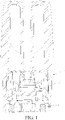
- FIG. 1 shows some exemplary embodiments of a vaporizer of the present invention.
- the vaporizer may include a base 3, a housing 2 sleeved on the base 3, and a ceramic vaporization core 1 of the present invention.
- An upper part of the housing 2 may be formed with a liquid storage cavity to store e-liquid.
- the ceramic vaporization core may be disposed in the housing 2 and mounted on the base 3.
- An electrode component may be disposed on the base 3 to connect a power supply device to the ceramic vaporization core 1, to supply power to the ceramic vaporization core 1.
- the ceramic vaporization core 1 may include a porous body 10 and a heating body 20.
- the porous body 10 may be used for liquid absorbing and liquid storage, and includes a vaporization surface and a liquid absorbing surface.
- the vaporization surface may be defined on the side away from the liquid storage cavity.
- the liquid absorbing surface may be opposite to the vaporization surface and may be located on the side close to the liquid storage cavity, and may be configured to absorb the e-liquid from the liquid storage cavity.
- the heating body 20 may be disposed on the porous body 10.
- the heating body 20 may be disposed on the outer surface of the porous body 10. Specifically, the heating body may be disposed on the vaporization surface and may form an integral structure with the porous body 10 through sintering. It may be understood that, the heating body 20 is not limited to being disposed on the vaporization surface, but may also be buried in the porous body 10.
- the porous body 10 may include a porous ceramic layer 11 doped with hydroxyl group-containing matrix and a microporous ceramic layer 12.
- the porous ceramic layer 11 doped with hydroxyl group-containing matrix and the microporous ceramic layer 12 are sequentially disposed in the flow direction of the e-liquid.
- the porous ceramic layer 11 doped with hydroxyl group-containing matrix may be used for reducing the degree of protonation of the e-liquid; and provides e-liquid guiding and storage function.
- a main function of the microporous ceramic layer 12 is to control the particle size of vaporized particles. It may be understood that, in some other embodiments, the number of the porous ceramic layers 11 doped with hydroxyl group-containing matrix and the number of the microporous ceramic layers 12 are not limited to one, and may be more than one.
- the porous body 10 includes a plurality of porous ceramic layers 11 doped with hydroxyl group-containing matrix and a plurality of microporous ceramic layers 12, the porous ceramic layers 11 doped with hydroxyl group-containing matrix and the microporous ceramic layer 12 may be sequentially and alternately disposed in the flow direction of the e-liquid.
- the porous ceramic layer 11 doped with hydroxyl group-containing matrix may be formed by mixing and sintering 35 to 55 parts by the weight of ceramic powder doped with hydroxyl group compound and 25 to 45 parts by the weight of pore-forming agent.
- the ceramic powder doped with hydroxyl group compound may include 70 to 80 parts by the weight of main blank material, 10 to 15 parts by the weight of albite, 10 to 15 parts by the weight of fat clay, and 1 to 5 parts by the weight of hydroxyapatite.
- the main blank material may be aluminum oxide.
- the main blank material may be not limited to aluminum oxide, and may be one or more of aluminum oxide, silicon oxide, silicon carbide, cordierite, silicon nitride, aluminum nitride, and mullite.
- the main blank material may be used for forming a blank.
- the albite may be used as an auxiliary ingredient to reduce drying shrinkage and deformation of the blank, improve the drying performance, and shorten the drying time, and may be used as a flux to be filled in the blank during sintering, to compact the blank to reduce pores and improve the light transmittance of the blank.
- the fat clay may be used for enhancing a bonding force of the main blank material.
- the hydroxyapatite may be used for reducing the degree of protonation of nicotine.
- the pore-forming agent may be selected from at least one of starch, graphite, polystyrene (PS) microspheres, and polymethyl methacrylate (PMMA) microspheres, and may be used for forming pores in the ceramic blank, to form the ceramic blank into the porous body 10.
- the porous ceramic layer 11 doped with hydroxyl group-containing matrix has a pore size d90 of 10 ⁇ m to 200 ⁇ m and a porosity of 40% to 75%, and may be configured for e-liquid guiding and storage and configured to reduce the degree of protonation of nicotine in the e-liquid before vaporization.
- the microporous ceramic layer 12 may be made of common ceramic material, and the pore size of the microporous ceramic layer 12 is less than the pore size of the porous ceramic layer 11 doped with hydroxyl group-containing matrix, so that the particle size of the vaporized particles can be controlled, and the proportion of vapor passing through the microporous ceramic layer 12 that can be absorbed by the lung can be adjusted.
- the microporous ceramic layer 12 has a pore size d50 of 0.1 ⁇ m to 5 ⁇ m and a porosity of 40% to 60%.
- the heating body 20 may be a metal sheet, which may be partially embedded in the porous body 10 and configured to generate heat when being electrified, to vaporize the e-liquid close to the vaporization surface of the porous body 10.
- the heating body may be alternatively formed by sintering of conductive slurry screen-printed on the porous body.
- a method for fabricating the ceramic vaporization core includes the following steps: 70 to 80 parts by the weight of main blank material, 10 to 15 parts by the weight of albite, 10 to 15 parts by the weight of fat clay, and 1 to 5 parts by the weight of hydroxyapatite are mixed to form ceramic powder doped with hydroxyl group compound.
- the main blank material is selected from one or more of aluminum oxide, silicon oxide, silicon carbide, cordierite, silicon nitride, aluminum nitride, and mullite.
- the main blank material may be aluminum oxide.
- the pore-forming agent can volatilize at a high temperature to form pores, and may be selected from at least one of starch, graphite, PS microspheres, and PMMA microspheres.
- the first mixed powder is prepared into a first blank.
- the first mixed powder is prepared into the first blank through dry pressing, hot pressing, or gel casting.
- the method further includes: mixing 40 to 50 parts by the weight of the main blank material, 20 to 30 parts by the weight of albite, and 20 to 30 parts by the weight of fat clay to form ceramic powder.
- the pore-forming agent can volatilize at a high temperature to form pores, and may be selected from at least one of starch, graphite, PS microspheres, and PMMA microspheres.
- the second mixed powder is prepared into a second blank.
- the second mixed powder is prepared into the second blank through dry pressing, hot pressing, or gel casting.
- the second blank is stacked with the first blank, to be sintered together with the first blank.
- the method further includes: inserting a heating body into the side of the second blank away from the first blank; and sintering the first blank.
- first blank, the second blank, and the heating body form an integral structure through sintering.
- Nicotine may be present in the e-liquid in the following three forms:
- a doubly protonated form NicH 2 2+ is primarily ionized to generate one H + and a singly protonated form NicH + .
- the singly protonated form NicH + is then ionized to generate one H + and a free-base form Nic, which is equivalent to a secondary ionization of the doubly protonated form NicH 2 2+ .
- the primary ionization is more likely to occur than the secondary ionization.
- the content of nicotine in the nicotine-containing e-liquid is generally 3.6 mg/mL, 2.4 mg/mL, 1.8 mg/mL, 1.2 mg/mL, and 0.6 mg/mL.
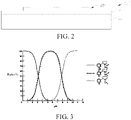
- the contents of nicotine in different forms may be directly reflected on the pH value of the e-liquid, as shown in FIG. 3 .
- the experimental data is as follows: As can be seen from FIG. 3 , when the pH value was 7, the nicotine was present in the singly protonated form and free-base form, and the ratio of the singly protonated form to the free-base form was 9:1; and when the pH value was 3.2, the nicotine was present in the doubly protonated form and free-base form, and the ratio of the doubly protonated form to the free-base form was 5:5. Calculation is performed below by using examples in which the pH values are 3.2 and 7 respectively.
- FIG. 4 shows experimental data of the absorption of an aerosol in different parts of a human body.
- the alveoli mainly absorbed aerosol particles with a particle size of less than 100 nm.
- the vaporization core prepared according to the embodiments of this application can reduce the degree of protonation of nicotine in the e-liquid, and can adjust the particle size distribution of the aerosol after vaporization, so that most particles have a particle size of less than 100 nm, and can easily solidify to be transmitted to and deposited in the lung, thereby improving the absorption rate in the lung.
Landscapes
- Chemical & Material Sciences (AREA)
- Engineering & Computer Science (AREA)
- Ceramic Engineering (AREA)
- Materials Engineering (AREA)
- Structural Engineering (AREA)
- Organic Chemistry (AREA)
- Manufacturing & Machinery (AREA)
- Nanotechnology (AREA)
- Inorganic Chemistry (AREA)
- Dispersion Chemistry (AREA)
- Pharmaceuticals Containing Other Organic And Inorganic Compounds (AREA)
- Compositions Of Oxide Ceramics (AREA)
- Manufacture Of Tobacco Products (AREA)
- Medicinal Preparation (AREA)
Abstract
Description
- The present invention relates to electronic vaporization apparatuses, and more specifically, to a vaporizer and a ceramic vaporization core thereof, and a method for fabricating the ceramic vaporization core.
- Nicotine in e-liquid for electronic cigarettes generally has three forms: a free-base form, a singly protonated form, and a doubly protonated form. The absorption rates of different forms of nicotine at different positions of the respiratory system differ from each other, affecting the satisfaction of users when vaping electronic cigarettes. A lower degree of protonation of nicotine indicates a higher level of satisfaction.
- The absorption rate of nicotine is slow in the mouth and the upper airway, and fast in the lung, which may reach 80% to 90%. Due to characteristics of the human body biofilm, nicotine in the protonated forms cannot enter blood through the biofilm in the lung, but nicotine in the free-base form can quickly pass through the biofilm. In addition, the buffer in the lung of a human body is slightly basic (PH=7.4), and a certain proportion of nicotine deposited in the lung will enter the blood in the singly protonated form and the free-base form.
- In the related art, e-liquids including nicotine salts with a lower degree of protonation has been prepared, and the e-liquids can provide a good user experience by formulating the components in the free-base form and the singly protonated form. However, the process for preparing the nicotine salts is relatively complex and has technological barriers. In addition, diversified requirements of different users can only be met by preparing e-liquids with different formulations.
- A technical problem to be solved by the present invention is to provide an improved ceramic vaporization core, and further provide a method for fabricating the improved ceramic vaporization core and a vaporizer.
- A technical solution adopted by the present invention to solve the technical problem is to construct a ceramic vaporization core, including a porous body and a heating body disposed on the porous body, wherein the porous body includes at least one porous ceramic layer doped with hydroxyl group-containing matrix.
- Preferably, the porous ceramic layer doped with hydroxyl group-containing matrix includes components in parts by weight as follows: 35 to 55 parts by the weight of ceramic powder doped with hydroxyl group compound and 25 to 45 parts by the weight of pore-forming agent.
- Preferably, the ceramic powder doped with hydroxyl group compound includes components in parts by weight as follows: 70 to 80 parts by the weight of main blank material, 10 to 15 parts by the weight of albite, 10 to 15 parts by the weight of fat clay, and 1 to 5 parts by the weight of hydroxyapatite.
- Preferably, the main blank material includes one or more of: aluminum oxide, silicon oxide, silicon carbide, cordierite, silicon nitride, aluminum nitride, and mullite; and/or
the pore-forming agent includes at least one of: starch, graphite, polystyrene microspheres, and polymethyl methacrylate microspheres. - Preferably, the porous body further includes at least one microporous ceramic layer; the porous ceramic layer doped with hydroxyl group-containing matrix and the microporous ceramic layer are sequentially disposed in the flow direction of e-liquid; and
the pore size of the microporous ceramic layer is less than the pore size of the porous ceramic layer doped with hydroxyl group-containing matrix. - Preferably, a plurality of porous ceramic layers doped with hydroxyl group-containing matrix and a plurality of microporous ceramic layers are provided; and
the porous ceramic layers doped with hydroxyl group-containing matrix and the microporous ceramic layers are sequentially and alternately disposed in the flow direction of e-liquid. - Preferably, the pore size d50 of the microporous ceramic layer is 0.1 µm to 5 µm; and/or
the pore size d90 of the porous ceramic layer doped with hydroxyl group-containing matrix is 10 µm to 200 µm. - Preferably, the porosity of the porous ceramic layer doped with hydroxyl group-containing matrix is 40% to 75%; and/or
the porosity of the microporous ceramic layer is 40% to 60%. - Preferably, the porous body includes a vaporization surface and a liquid absorbing surface opposite to the vaporization surface;
- the heating body is disposed on the vaporization surface; and
- the porous ceramic layer is disposed on the side away from the vaporization surface, and the liquid absorbing surface is defined on the side of the porous ceramic layer facing away from the vaporization surface.
- The present invention further constructs a method for fabricating a ceramic vaporization core, including:
- mixing 70 to 80 parts by the weight of a main blank material, 10 to 15 parts by the weight of albite, 10 to 15 parts by the weight of fat clay, and 1 to 5 parts by the weight of hydroxyapatite to form ceramic powder doped with hydroxyl group compound;
- mixing 35 to 55 parts by the weight of the ceramic powder doped with hydroxyl group compound and 25 to 45 parts by the weight of pore-forming agent to form first mixed powder;
- preparing the first mixed powder into a first blank; and
- sintering the first blank.
- Preferably, before the preparing the first mixed powder into a first blank and sintering the first blank, the method further includes:
- mixing 40 to 50 parts by the weight of the main blank material, 20 to 30 parts by the weight of albite, and 20 to 30 parts by the weight of fat clay to form ceramic powder;
- mixing 80 to 90 parts by the weight of the ceramic powder and 10 to 20 parts by the weight of the pore-forming agent to form second mixed powder;
- preparing the second mixed powder into a second blank; and
- stacking the second blank with the first blank, to be sintered together with the first blank.
- Preferably, before the sintering, the method further includes: inserting a heating body into the side of the second blank that is away from the first blank.
- The present invention further constructs a vaporizer, including the ceramic vaporization core according to the present invention.
- The following beneficial effects are achieved by implementing the vaporizer, the ceramic vaporization core, and the method for fabricating the ceramic vaporization core of the present invention: The configuration of the at least one porous ceramic layer doped with hydroxyl group-containing matrix in the ceramic vaporization core allows hydrogen ions in nicotine in e-liquid that passes through the porous body and has not been vaporized to react with hydroxyl groups, to reduce the degree of protonation of nicotine in the e-liquid, thereby improving the absorption degree of nicotine in the lung and improving user experience.
- The present invention will be further described below with reference to the accompanying drawings and embodiments. In the accompanying drawings:
-
FIG. 1 is a cross-sectional view of a vaporizer according to some embodiments of the present invention; -
FIG. 2 is a schematic structural diagram of a ceramic vaporization core in the vaporizer shown inFIG. 1 ; -
FIG. 3 shows curves illustrating the distribution of contents of nicotine in different forms under different pH values; and -
FIG. 4 shows curves illustrating the absorption of an aerosol in different parts of a human body. - In order to provide a clearer understanding of the technical features, the objectives, and the effects of the present invention, specific embodiments of the present invention are now described in detail with reference to the accompanying drawings.
- It should be understood that, terms such as "front", "rear", "left", "right", "upper", "lower", "first", and "second" are merely for ease of describing the technical solutions of the present invention rather than indicating that the mentioned apparatus or component needs to have a particular difference. Therefore, these terms should be not construed as a limitation to the present invention. It should be noted that, when a component is considered to be "connected to" another component, the component may be directly connected to the another component, or an intermediate component may also be present. Unless otherwise defined, meanings of all technical and scientific terms used in this specification are the same as that usually understood by a person skilled in the technical field to which the present invention belongs. In this specification, terms used in the specification of the present invention are merely intended to describe objectives of the specific embodiments, but are not intended to limit the present invention.
-
FIG. 1 shows some exemplary embodiments of a vaporizer of the present invention. The vaporizer may include abase 3, ahousing 2 sleeved on thebase 3, and aceramic vaporization core 1 of the present invention. An upper part of thehousing 2 may be formed with a liquid storage cavity to store e-liquid. The ceramic vaporization core may be disposed in thehousing 2 and mounted on thebase 3. An electrode component may be disposed on thebase 3 to connect a power supply device to theceramic vaporization core 1, to supply power to theceramic vaporization core 1. - As shown in
FIG. 2 , theceramic vaporization core 1 may include aporous body 10 and aheating body 20. Theporous body 10 may be used for liquid absorbing and liquid storage, and includes a vaporization surface and a liquid absorbing surface. The vaporization surface may be defined on the side away from the liquid storage cavity. The liquid absorbing surface may be opposite to the vaporization surface and may be located on the side close to the liquid storage cavity, and may be configured to absorb the e-liquid from the liquid storage cavity. Theheating body 20 may be disposed on theporous body 10. Theheating body 20 may be disposed on the outer surface of theporous body 10. Specifically, the heating body may be disposed on the vaporization surface and may form an integral structure with theporous body 10 through sintering. It may be understood that, theheating body 20 is not limited to being disposed on the vaporization surface, but may also be buried in theporous body 10. - Further, in some embodiments, the
porous body 10 may include a porousceramic layer 11 doped with hydroxyl group-containing matrix and a microporousceramic layer 12. The porousceramic layer 11 doped with hydroxyl group-containing matrix and the microporousceramic layer 12 are sequentially disposed in the flow direction of the e-liquid. Specifically, the porousceramic layer 11 doped with hydroxyl group-containing matrix is disposed on the side away from the vaporization surface, and the liquid absorbing surface may be defined on the side of the porousceramic layer 11 facing away from the vaporization surface; and the microporousceramic layer 12 is disposed on the side of the porousceramic layer 11 doped with hydroxyl group-containing matrix facing away from the liquid absorbing surface, and the vaporization surface is defined on the side of the microporous ceramic layer facing away from the porousceramic layer 11 doped with hydroxyl group-containing matrix. In some embodiments, the porousceramic layer 11 doped with hydroxyl group-containing matrix may be used for reducing the degree of protonation of the e-liquid; and provides e-liquid guiding and storage function. A main function of the microporousceramic layer 12 is to control the particle size of vaporized particles. It may be understood that, in some other embodiments, the number of the porousceramic layers 11 doped with hydroxyl group-containing matrix and the number of the microporousceramic layers 12 are not limited to one, and may be more than one. When theporous body 10 includes a plurality of porousceramic layers 11 doped with hydroxyl group-containing matrix and a plurality of microporousceramic layers 12, the porousceramic layers 11 doped with hydroxyl group-containing matrix and the microporousceramic layer 12 may be sequentially and alternately disposed in the flow direction of the e-liquid. - Further, in some embodiments, the porous
ceramic layer 11 doped with hydroxyl group-containing matrix may be formed by mixing and sintering 35 to 55 parts by the weight of ceramic powder doped with hydroxyl group compound and 25 to 45 parts by the weight of pore-forming agent. The ceramic powder doped with hydroxyl group compound may include 70 to 80 parts by the weight of main blank material, 10 to 15 parts by the weight of albite, 10 to 15 parts by the weight of fat clay, and 1 to 5 parts by the weight of hydroxyapatite. Specifically, in some embodiments, the main blank material may be aluminum oxide. It may be understood that, in some other embodiments, the main blank material may be not limited to aluminum oxide, and may be one or more of aluminum oxide, silicon oxide, silicon carbide, cordierite, silicon nitride, aluminum nitride, and mullite. The main blank material may be used for forming a blank. The albite may be used as an auxiliary ingredient to reduce drying shrinkage and deformation of the blank, improve the drying performance, and shorten the drying time, and may be used as a flux to be filled in the blank during sintering, to compact the blank to reduce pores and improve the light transmittance of the blank. The fat clay may be used for enhancing a bonding force of the main blank material. The hydroxyapatite may be used for reducing the degree of protonation of nicotine. A reaction mechanism of the hydroxyapatite with acid is: Ca10(PO4)6(OH)2+2H+=3Ca3(PO4)2+Ca2++2H2O. In some embodiments, the pore-forming agent may be selected from at least one of starch, graphite, polystyrene (PS) microspheres, and polymethyl methacrylate (PMMA) microspheres, and may be used for forming pores in the ceramic blank, to form the ceramic blank into theporous body 10. - Further, in some embodiments, the porous
ceramic layer 11 doped with hydroxyl group-containing matrix has a pore size d90 of 10 µm to 200 µm and a porosity of 40% to 75%, and may be configured for e-liquid guiding and storage and configured to reduce the degree of protonation of nicotine in the e-liquid before vaporization. - Further, in some embodiments, the microporous
ceramic layer 12 may be made of common ceramic material, and the pore size of the microporousceramic layer 12 is less than the pore size of the porousceramic layer 11 doped with hydroxyl group-containing matrix, so that the particle size of the vaporized particles can be controlled, and the proportion of vapor passing through the microporousceramic layer 12 that can be absorbed by the lung can be adjusted. In some embodiments, the microporousceramic layer 12 has a pore size d50 of 0.1 µm to 5 µm and a porosity of 40% to 60%. - Further, in some embodiments, the
heating body 20 may be a metal sheet, which may be partially embedded in theporous body 10 and configured to generate heat when being electrified, to vaporize the e-liquid close to the vaporization surface of theporous body 10. In some other embodiments, the heating body may be alternatively formed by sintering of conductive slurry screen-printed on the porous body. - A method for fabricating the ceramic vaporization core includes the following steps:
70 to 80 parts by the weight of main blank material, 10 to 15 parts by the weight of albite, 10 to 15 parts by the weight of fat clay, and 1 to 5 parts by the weight of hydroxyapatite are mixed to form ceramic powder doped with hydroxyl group compound. - The main blank material is selected from one or more of aluminum oxide, silicon oxide, silicon carbide, cordierite, silicon nitride, aluminum nitride, and mullite. Specifically, the main blank material may be aluminum oxide.
- 35 to 55 parts by the weight of the ceramic powder doped with hydroxyl group compound and 25 to 45 parts by the weight of pore-forming agent are mixed to form first mixed powder.
- The pore-forming agent can volatilize at a high temperature to form pores, and may be selected from at least one of starch, graphite, PS microspheres, and PMMA microspheres.
- The first mixed powder is prepared into a first blank.
- Specifically, the first mixed powder is prepared into the first blank through dry pressing, hot pressing, or gel casting.
- Before the preparing the first mixed powder into a first blank and sintering the first blank, the method further includes:
mixing 40 to 50 parts by the weight of the main blank material, 20 to 30 parts by the weight of albite, and 20 to 30 parts by the weight of fat clay to form ceramic powder. - The main blank material is selected from one or more of aluminum oxide, silicon oxide, silicon carbide, cordierite, silicon nitride, aluminum nitride, and mullite. Specifically, the main blank material may be aluminum oxide.
- 80 to 90 parts by the weight of the ceramic powder and 10 to 20 parts by the weight of the pore-forming agent are mixed to form second mixed powder.
- The pore-forming agent can volatilize at a high temperature to form pores, and may be selected from at least one of starch, graphite, PS microspheres, and PMMA microspheres.
- The second mixed powder is prepared into a second blank.
- Specifically, the second mixed powder is prepared into the second blank through dry pressing, hot pressing, or gel casting.
- The second blank is stacked with the first blank, to be sintered together with the first blank.
- Before the sintering, the method further includes: inserting a heating body into the side of the second blank away from the first blank; and sintering the first blank.
- Specifically, the first blank, the second blank, and the heating body form an integral structure through sintering.
- Specific examples are described below (unless otherwise particularly stated, the following examples do not include other components that are not clearly pointed out except inevitable impurities):
-
- 1) Based on 100 parts by the weight of powder, 70 to 80 parts by the weight of aluminum oxide, 10 to 15 parts by the weight of albite, 10 to 15 parts by the weight of fat clay, and 1 to 2 parts by the weight of hydroxyapatite were mixed to form ceramic powder doped with hydroxyl group compound. Based on 100 parts by the weight of porous ceramic powder, 35 to 55 parts by the weight of the ceramic powder doped with hydroxyl group compound and 25 to 45 parts by the weight of pore-forming agent were mixed to form first mixed powder. The first mixed powder was prepared into a first blank.
- 2) Based on 100 parts by the weight of powder, 40 to 50 parts by the weight of aluminum oxide, 20 to 30 parts by the weight of albite, and 20 to 30 parts by the weight of fat clay were mixed to form ceramic powder. 80 to 90 parts by the weight of the ceramic powder and 10 to 20 parts by the weight of the pore-forming agent were mixed to form second mixed powder. The second mixed powder was prepared into a second blank.
- 3) The second blank was stacked with the first blank, a heating body was inserted into the side of the second blank away from the first blank, and the first blank and the second blank were sintered together to form a ceramic vaporization core.
-
- 1) Based on 100 parts by the weight of powder, 70 to 80 parts by the weight of aluminum oxide, 10 to 15 parts by the weight of albite, 10 to 15 parts by the weight of fat clay, and 2 to 3 parts by the weight of hydroxyapatite were mixed to form ceramic powder doped with hydroxyl group compound. Based on 100 parts by the weight of porous ceramic powder, 35 to 55 parts by the weight of the ceramic powder doped with hydroxyl group compound and 25 to 45 parts by the weight of pore-forming agent were mixed to form first mixed powder. The first mixed powder was prepared into a first blank.
- 2) Based on 100 parts by the weight of powder, 40 to 50 parts by the weight of aluminum oxide, 20 to 30 parts by the weight of albite, and 20 to 30 parts by the weight of fat clay were mixed to form ceramic powder. 80 to 90 parts by the weight of the ceramic powder and 10 to 20 parts by the weight of the pore-forming agent were mixed to form second mixed powder. The second mixed powder was prepared into a second blank.
- 3) The second blank was stacked with the first blank, a heating body was inserted into the side of the second blank away from the first blank, and the first blank and the second blank were sintered together to form a ceramic vaporization core.
-
- 1) Based on 100 parts by the weight of powder, 70 to 80 parts by the weight of aluminum oxide, 10 to 15 parts by the weight of albite, 10 to 15 parts by the weight of fat clay, and 3 to 4 parts by the weight of hydroxyapatite were mixed to form ceramic powder doped with hydroxyl group compound. Based on 100 parts by the weight of porous ceramic powder, 35 to 55 parts by the weight of the ceramic powder doped with hydroxyl group compound and 25 to 45 parts by the weight of pore-forming agent were mixed to form first mixed powder. The first mixed powder was prepared into a first blank.
- 2) Based on 100 parts by the weight of powder, 40 to 50 parts by the weight of aluminum oxide, 20 to 30 parts by the weight of albite, and 20 to 30 parts by the weight of fat clay were mixed to form ceramic powder. 80 to 90 parts by the weight of the ceramic powder and 10 to 20 parts by the weight of the pore-forming agent were mixed to form second mixed powder. The second mixed powder was prepared into a second blank.
- 3) The second blank was stacked with the first blank, a heating body was inserted into the side of the second blank away from the first blank, and the first blank and the second blank were sintered together to form a ceramic vaporization core.
-
- 1) Based on 100 parts by the weight of powder, 70 to 80 parts by the weight of aluminum oxide, 10 to 15 parts by the weight of albite, 10 to 15 parts by the weight of fat clay, and 4 to 5 parts by the weight of hydroxyapatite were mixed to form ceramic powder doped with hydroxyl group compound. Based on 100 parts by the weight of porous ceramic powder, 35 to 55 parts by the weight of the ceramic powder doped with hydroxyl group compound and 25 to 45 parts by the weight of pore-forming agent were mixed to form first mixed powder. The first mixed powder was prepared into a first blank;
- 2) Based on 100 parts by the weight of powder, 40 to 50 parts by the weight of aluminum oxide, 20 to 30 parts by the weight of albite, and 20 to 30 parts by the weight of fat clay were mixed to form ceramic powder. 80 to 90 parts by the weight of the ceramic powder and 10 to 20 parts by the weight of the pore-forming agent were mixed to form second mixed powder. The second mixed powder was prepared into a second blank.
- 3) The second blank was stacked with the first blank, a heating body was inserted into the side of the second blank away from the first blank, and the first blank and the second blank were sintered together to form a ceramic vaporization core.
- 1.1 Reaction mechanism of hydroxyapatite with acid:
Ca10(PO4)6(OH)2+2H+=3Ca3(PO4)2+Ca2++2H2O
- Nicotine may be present in the e-liquid in the following three forms:

- The relationship of conversion between the three forms of nicotine is as follows:

- A doubly protonated form NicH2 2+ is primarily ionized to generate one H+ and a singly protonated form NicH+. The singly protonated form NicH+ is then ionized to generate one H+ and a free-base form Nic, which is equivalent to a secondary ionization of the doubly protonated form NicH2 2+. Generally, the primary ionization is more likely to occur than the secondary ionization.
- As can be known from 1 to 3, after a nicotine-containing e-liquid passes through the ceramic vaporization core doped with hydroxyapatite, H+ generated from the ionization of a large part of the doubly protonated form NicH2 2+ and a small part of the singly protonated form NicH+ in the nicotine reacts with the hydroxyapatite to generate the singly protonated form NicH+ and the free-base nicotine.
- Using a cartridge with a 2 mL e-liquid storage tank as an example, the content of nicotine in the nicotine-containing e-liquid is generally 3.6 mg/mL, 2.4 mg/mL, 1.8 mg/mL, 1.2 mg/mL, and 0.6 mg/mL. The following calculation is performed by using a cartridge with a 2 mL e-liquid storage tank having a nicotine content of 1.8 mg/mL:
nicotine content: 1.8 mg/mL ∗2 mL=3.6 mg. - The contents of nicotine in different forms may be directly reflected on the pH value of the e-liquid, as shown in
FIG. 3 . The experimental data is as follows:
As can be seen fromFIG. 3 , when the pH value was 7, the nicotine was present in the singly protonated form and free-base form, and the ratio of the singly protonated form to the free-base form was 9:1; and when the pH value was 3.2, the nicotine was present in the doubly protonated form and free-base form, and the ratio of the doubly protonated form to the free-base form was 5:5. Calculation is performed below by using examples in which the pH values are 3.2 and 7 respectively. - a. When the pH value is 3.2, the contents of the substances in the e-liquid are as follows:
- doubly protonated form: 3.6 mg∗50%=1.8 mg, i.e., 1.8 mg/164.23 (mg/mmol)=0.011 mmol (the molecular weight of nicotine in the doubly protonated form is 164.23); and
- free-base form: 1.8 mg (the molecular weight of nicotine in the free-base form is 162.23).
- To reduce the degree of protonation, i.e., to change the doubly protonated form to the singly protonated form, an amount of hydroxyapatite that needs to be added is:

- After the e-liquid reacts with the hydroxyapatite, the nicotine is present in the singly protonated form and free-base form, and the ratio of the singly protonated form to the free-base form is 5:5.
- b. When the pH value is 7, the contents of the substances in the e-liquid are as follows:
- singly protonated form: 3.6 mg∗90%=3.24 mg, i.e., 3.24 mg/163.23 (mg/mmol)=0.020 mmol (the molecular weight of nicotine in the singly protonated form is 163.23); and
- free-base form: 0.36 mg (the molecular weight of nicotine in free-base form is 162.23).
- To reduce the degree of protonation, i.e., to change part of the nicotine in the singly protonated form to the free-base form, an amount of hydroxyapatite that needs to be added is:
- if the ratio of the singly protonated form to the free-base form is 8:2, the amount is 0.020 mmol∗(1/9)0.5∗1004 mg/mmol=1.116 mg;
- if the ratio of the singly protonated form to the free-base form is 7:3, the amount is 0.020 mmol∗(2/9)0.5∗1004 mg/mmol=2.232 mg;
- if the ratio of the singly protonated form to the free-base form is 6:4, the amount is 0.020 mmol∗(3/9)0.5∗1004 mg/mmol=3.348 mg; and
- if the ratio of the singly protonated form to the free-base form is 5:5, the amount is 0.020 mmol∗(4/9)0.5∗1004 mg/mmol=4.464 mg.
- The variations in the pH after the e-liquid passed through the ceramic vaporization core doped with hydroxyapatite were measured using a pH meter. The data is as shown in the following table.
Initial pH of e-liquid pH after passing through ceramic vaporization core doped with hydroxyapatite 5.0 7.0 5.5 7.5 6.0 7.5 6.5 7.5 -
FIG. 4 shows experimental data of the absorption of an aerosol in different parts of a human body. As can be known fromFIG. 4 , the alveoli mainly absorbed aerosol particles with a particle size of less than 100 nm. - Vapor passing through a porous ceramic was collected, and the particle size distribution of the vapor was tested. The results are as shown in the following table:
Pore size d50/µm d50 of vapor after passing through porous ceramic vaporization core/nm d90 of vapor after passing through porous ceramic vaporization core/nm 0.1 20 45 1 50 90 5 100 130 10 150 250 100 500 900 - As can be known from the data in the foregoing table, when d50 of the porous ceramic was less than 5 µm, 90% of particles of vapor generated by the ceramic vaporization core had a particle size of not greater than 100 nm. As can be known from 4 and 5, by controlling the pore size distribution of the porous ceramic vaporization core to make its d50 less than 5 µm, the particle size d50 of the vapor was not greater than 100 nm, and particles having such a particle size can easily enter the lung and can easily solidify to be transmitted to and deposited in the lung, thereby improving the absorption rate in the lung.
- 6.1 Comparison of effects of reducing the degree of protonation for a same e-liquid
Type of vaporization core Initial pH of e-liquid pH of e-liquid after passing through vaporization core Conventional ceramic vaporization core 6 6 Ceramic vaporization core doped with hydroxyapatite 6 7.5 - 6.2 Comparison of aerosol particle size distributions collected after vaporization at the same power
Type of vaporization core Aerosol d50/µm Aerosol d90/µm Conventional ceramic vaporization core 150 250 Ceramic vaporization core of this application 80 110 - The foregoing two sets of experimental data show that the vaporization core prepared according to the embodiments of this application can reduce the degree of protonation of nicotine in the e-liquid, and can adjust the particle size distribution of the aerosol after vaporization, so that most particles have a particle size of less than 100 nm, and can easily solidify to be transmitted to and deposited in the lung, thereby improving the absorption rate in the lung.
- 6.3 Comparison of sensory evaluation at the same power
Type of vaporization core Sense of throat strike Lung-inhaling satisfaction Conventional ceramic vaporization core Relatively strong Mild Ceramic vaporization core of this application Strong Relatively strong - While the invention has been illustrated and described in detail in the drawings and foregoing description, such illustration and description are to be considered illustrative or exemplary and not restrictive. It will be understood that changes and modifications may be made by those of ordinary skill within the scope of the following claims. In particular, the present invention covers further embodiments with any combination of features from different embodiments described above and below. Additionally, statements made herein characterizing the invention refer to an embodiment of the invention and not necessarily all embodiments.
Claims (13)
- A ceramic vaporization core, comprising:a porous body; anda heating body disposed on the porous body,wherein the porous body comprises at least one porous ceramic layer doped with hydroxyl group-containing matrix.
- The ceramic vaporization core of claim 1, wherein the porous ceramic layer doped with hydroxyl group-containing matrix comprises components in parts by weight as follows:35 to 55 parts by the weight of ceramic powder doped with hydroxyl group compound; and25 to 45 parts by the weight of pore-forming agent.
- The ceramic vaporization core of claim 2, wherein the ceramic powder doped with hydroxyl group compound comprises components in parts by weight as follows:70 to 80 parts by the weight of main blank material;10 to 15 parts by the weight of albite;10 to 15 parts by the weight of fat clay; and1 to 5 parts by the weight of hydroxyapatite.
- The ceramic vaporization core of claim 3, wherein the main blank material comprises one or more of: aluminum oxide, silicon oxide, silicon carbide, cordierite, silicon nitride, aluminum nitride, and mullite, and/or
wherein the pore-forming agent comprises at least one of: starch, graphite, polystyrene microspheres, and polymethyl methacrylate microspheres. - The ceramic vaporization core of claim 1, wherein the porous body further comprises at least one microporous ceramic layer,wherein the porous ceramic layer doped with hydroxyl group-containing matrix and the microporous ceramic layer are sequentially disposed in the flow direction of e-liquid, andwherein the pore size of the microporous ceramic layer is less than the pore size of the porous ceramic layer doped with hydroxyl group-containing matrix.
- The ceramic vaporization core of claim 5, wherein a plurality of porous ceramic layers doped with hydroxyl group-containing matrix and a plurality of microporous ceramic layers are provided, and
wherein the porous ceramic layers doped with hydroxyl group-containing matrix and the microporous ceramic layers are sequentially and alternately disposed in the flow direction of e-liquid. - The ceramic vaporization core of claim 5, wherein the pore size d50 of the microporous ceramic layer is 0.1 µm to 5 µm, and/or
wherein the pore size d90 of the porous ceramic layer doped with hydroxyl group-containing matrix is 10 µm to 200 µm. - The ceramic vaporization core of claim 5, wherein the porosity of the porous ceramic layer doped with hydroxyl group-containing matrix is 40% to 75%, and/or
wherein the porosity of the microporous ceramic layer is 40% to 60%. - The ceramic vaporization core of claim 1, wherein the porous body comprises a vaporization surface and a liquid absorbing surface opposite to the vaporization surface,
wherein the heating body is disposed on the vaporization surface, the porous ceramic layer is disposed on the side away from the vaporization surface, and the liquid absorbing surface is defined on the side of the porous ceramic layer facing away from the vaporization surface. - A method for fabricating a ceramic vaporization core, comprising:mixing 70 to 80 parts by the weight of a main blank material, 10 to 15 parts by the weight of albite, 10 to 15 parts by the weight of fat clay, and 1 to 5 parts by the weight of hydroxyapatite to form ceramic powder doped with hydroxyl group compound;mixing 35 to 55 parts by the weight of the ceramic powder doped with hydroxyl group compound and 25 to 45 parts by the weight of pore-forming agent to form first mixed powder;preparing the first mixed powder into a first blank; andsintering the first blank.
- The method for fabricating a ceramic vaporization core of claim 10, wherein before the preparing the first mixed powder into a first blank and sintering the first blank, the method further comprises:mixing 40 to 50 parts by the weight of the main blank material, 20 to 30 parts by the weight of albite, and 20 to 30 parts by the weight of fat clay to form ceramic powder;mixing 80 to 90 parts by the weight of the ceramic powder and 10 to 20 parts by the weight of the pore-forming agent to form second mixed powder;preparing the second mixed powder into a second blank; andstacking the second blank with the first blank, to be sintered together with the first blank.
- The method for fabricating a ceramic vaporization core of claim 11, wherein before the sintering, the method further comprises: inserting a heating body into the side of the second blank that is away from the first blank.
- A vaporizer, characterized by comprising:
the ceramic vaporization core of any of claims 1 to 9.
Applications Claiming Priority (2)
| Application Number | Priority Date | Filing Date | Title |
|---|---|---|---|
| CN201911176626.7A CN110876494B (en) | 2019-11-26 | 2019-11-26 | Atomizer, ceramic atomizing core thereof and preparation method of ceramic atomizing core |
| PCT/CN2020/118561 WO2021103807A1 (en) | 2019-11-26 | 2020-09-28 | Vaporizer and ceramic vaporization core thereof and method for fabricating ceramic vaporization core |
Publications (3)
| Publication Number | Publication Date |
|---|---|
| EP4066664A1 true EP4066664A1 (en) | 2022-10-05 |
| EP4066664A4 EP4066664A4 (en) | 2022-12-28 |
| EP4066664B1 EP4066664B1 (en) | 2025-07-16 |
Family
ID=69730561
Family Applications (1)
| Application Number | Title | Priority Date | Filing Date |
|---|---|---|---|
| EP20893626.0A Active EP4066664B1 (en) | 2019-11-26 | 2020-09-28 | Vaporizer and ceramic vaporization core thereof and method for fabricating ceramic vaporization core |
Country Status (4)
| Country | Link |
|---|---|
| US (1) | US12369635B2 (en) |
| EP (1) | EP4066664B1 (en) |
| CN (1) | CN110876494B (en) |
| WO (1) | WO2021103807A1 (en) |
Cited By (1)
| Publication number | Priority date | Publication date | Assignee | Title |
|---|---|---|---|---|
| WO2024200740A1 (en) * | 2023-03-29 | 2024-10-03 | Philip Morris Products S.A. | Two part heater assembly |
Families Citing this family (12)
| Publication number | Priority date | Publication date | Assignee | Title |
|---|---|---|---|---|
| CN110876494B (en) * | 2019-11-26 | 2021-10-01 | 深圳麦克韦尔科技有限公司 | Atomizer, ceramic atomizing core thereof and preparation method of ceramic atomizing core |
| CN111869938A (en) * | 2020-08-10 | 2020-11-03 | 深圳伊卡普科技有限公司 | Ceramic heating body |
| CN112250470A (en) * | 2020-10-21 | 2021-01-22 | 深圳市博迪科技开发有限公司 | Use of hydroxyapatite to reduce powder falling off of heating body substrate of electronic atomizer |
| CN115104765A (en) * | 2021-03-19 | 2022-09-27 | 比亚迪股份有限公司 | Atomizing core, preparation method of composite porous ceramic matrix for atomizing core and electronic atomizing device |
| CN115108839A (en) * | 2021-03-19 | 2022-09-27 | 比亚迪股份有限公司 | Atomizing core, preparation method of composite porous ceramic matrix for atomizing core and electronic atomizing device |
| CN115316707A (en) * | 2021-05-10 | 2022-11-11 | 深圳市基克纳科技有限公司 | A ceramic atomizing core, atomizer and electronic atomization equipment |
| CN113854645B (en) * | 2021-10-18 | 2024-10-29 | 深圳市吉迩科技有限公司 | Atomizer core and preparation method thereof |
| CN113845354A (en) * | 2021-10-18 | 2021-12-28 | 深圳市真味生物科技有限公司 | Preparation method of nicotine salt atomizer with low irritation |
| CN114477971B (en) * | 2022-03-25 | 2023-04-28 | 贵州群华九九特种陶瓷科技有限公司 | Microporous ceramic for electronic cigarette and preparation method thereof |
| CN114668182A (en) * | 2022-03-31 | 2022-06-28 | 海南摩尔兄弟科技有限公司 | Electronic atomizing device and atomizing core thereof |
| CN115894007A (en) * | 2022-11-24 | 2023-04-04 | 深圳市基克纳科技有限公司 | Biological porous ceramic and preparation method thereof |
| CN117843393A (en) * | 2023-12-28 | 2024-04-09 | 深圳市吉迩科技有限公司 | Preparation method of ceramic substrate, atomizing core and aerosol forming device |
Family Cites Families (26)
| Publication number | Priority date | Publication date | Assignee | Title |
|---|---|---|---|---|
| JPWO2003093197A1 (en) * | 2002-04-28 | 2005-09-08 | 小出 正文 | Porous ceramics and method for producing the same |
| CN101218190B (en) * | 2005-07-06 | 2013-01-30 | 丸石窯业原料株式会社 | Method for producing ceramic porous article |
| US20090061003A1 (en) * | 2007-03-28 | 2009-03-05 | Doxa Ab | Carriers for drug delivery |
| US9078473B2 (en) * | 2011-08-09 | 2015-07-14 | R.J. Reynolds Tobacco Company | Smoking articles and use thereof for yielding inhalation materials |
| WO2015192300A1 (en) * | 2014-06-16 | 2015-12-23 | 深圳麦克韦尔股份有限公司 | Method for preparing porous ceramics, porous ceramics, and electronic cigarette |
| CN104119490A (en) * | 2014-07-10 | 2014-10-29 | 合肥美的电冰箱有限公司 | A composition, a foam material prepared from the composition, a preparing method of the foam material and applications of the foam material |
| KR20240136452A (en) | 2014-07-11 | 2024-09-13 | 필립모리스 프로덕츠 에스.에이. | Aerosol-forming cartridge comprising a liquid nicotine source |
| GB2535427A (en) * | 2014-11-07 | 2016-08-24 | Nicoventures Holdings Ltd | Solution |
| WO2016172959A1 (en) * | 2015-04-30 | 2016-11-03 | 深圳麦克韦尔股份有限公司 | Method for preparing porous ceramic material, porous ceramic material and use thereof |
| WO2017149288A1 (en) * | 2016-02-29 | 2017-09-08 | Emplicure Ab | Devices for evaporation and inhalation of nicotine |
| CN105813815B (en) * | 2016-03-15 | 2018-06-12 | 惠州市吉瑞科技有限公司深圳分公司 | A kind of manufacturing method of heater and the molding machine of heater |
| RU2770806C2 (en) * | 2017-08-07 | 2022-04-21 | Басф Се | Isocyanate functional polymer components and polyurethane products made of recycled polyurethane products, and corresponding manufacturing methods |
| US11388924B2 (en) * | 2018-02-02 | 2022-07-19 | 10150703 Canada Inc. | Nicotine ion pair formulation neutralized with CO2 and process therefor |
| CN108794051A (en) * | 2018-08-14 | 2018-11-13 | 中铭富驰(苏州)纳米高新材料有限公司 | Porous ceramics, preparation method and electronic cigarette heating device |
| CN108774211A (en) * | 2018-08-24 | 2018-11-09 | 云南中烟工业有限责任公司 | A kind of nicotine eutectic, preparation method and the usage |
| CN109288140B (en) * | 2018-12-06 | 2021-08-27 | 广东国研新材料有限公司 | Porous ceramic heating element for electronic cigarette and preparation method thereof |
| CN109527657A (en) * | 2018-12-21 | 2019-03-29 | 深圳市合元科技有限公司 | The preparation method and electronic smoke atomizer of atomizing component |
| CN109674091A (en) * | 2019-01-21 | 2019-04-26 | 湖南聚能陶瓷材料有限公司 | A kind of combined high-temperature micropore high-power ceramic atomization core and preparation method thereof |
| CN109832673A (en) * | 2019-02-27 | 2019-06-04 | 深圳市合元科技有限公司 | Electronic smoke atomizer, electronic cigarette, atomizing component and preparation method thereof |
| CN109875123B (en) * | 2019-02-27 | 2023-02-14 | 深圳市合元科技有限公司 | Electronic cigarette atomizer, electronic cigarette, atomization assembly and preparation method of atomization assembly |
| CN109984387A (en) * | 2019-04-22 | 2019-07-09 | 深圳市合元科技有限公司 | Atomizing component and preparation method thereof |
| CN110054506A (en) * | 2019-04-30 | 2019-07-26 | 深圳陶陶科技有限公司 | Prepare the method and system of porous plate |
| CN110150760A (en) * | 2019-05-31 | 2019-08-23 | 钟术光 | A kind of aerosol generation system |
| CN110194662B (en) * | 2019-06-05 | 2022-05-17 | 阿特麦哲(东莞)科技有限公司 | Atomizing core and preparation method thereof and electronic cigarette |
| CN110477456B (en) * | 2019-08-02 | 2024-07-16 | 深圳麦克韦尔科技有限公司 | Porous structure assembly and electronic cigarette |
| CN110876494B (en) * | 2019-11-26 | 2021-10-01 | 深圳麦克韦尔科技有限公司 | Atomizer, ceramic atomizing core thereof and preparation method of ceramic atomizing core |
-
2019
- 2019-11-26 CN CN201911176626.7A patent/CN110876494B/en active Active
-
2020
- 2020-09-28 WO PCT/CN2020/118561 patent/WO2021103807A1/en not_active Ceased
- 2020-09-28 EP EP20893626.0A patent/EP4066664B1/en active Active
-
2022
- 2022-05-18 US US17/747,255 patent/US12369635B2/en active Active
Cited By (1)
| Publication number | Priority date | Publication date | Assignee | Title |
|---|---|---|---|---|
| WO2024200740A1 (en) * | 2023-03-29 | 2024-10-03 | Philip Morris Products S.A. | Two part heater assembly |
Also Published As
| Publication number | Publication date |
|---|---|
| CN110876494A (en) | 2020-03-13 |
| EP4066664B1 (en) | 2025-07-16 |
| WO2021103807A1 (en) | 2021-06-03 |
| EP4066664A4 (en) | 2022-12-28 |
| US12369635B2 (en) | 2025-07-29 |
| CN110876494B (en) | 2021-10-01 |
| US20220312844A1 (en) | 2022-10-06 |
Similar Documents
| Publication | Publication Date | Title |
|---|---|---|
| US12369635B2 (en) | Vaporizer and ceramic vaporization core thereof and method for fabricating ceramic vaporization core | |
| JP2022137035A (en) | Devices for evaporation and inhalation of nicotine | |
| CN112978704B (en) | Modified lithium iron phosphate material and preparation method thereof | |
| KR100385480B1 (en) | Manufacturing method of non-sintered nickel electrode for alkaline battery and alkaline storage battery | |
| WO2025035796A1 (en) | Method for preparing silver powder having adjustable sintering activity, and conductive silver powder and use thereof | |
| JP2010537390A (en) | Removal of impurity phase from electrochemical devices | |
| US20230309616A1 (en) | Electronic vaporization device and vaporization core thereof | |
| US20250318577A1 (en) | Electronic vaporization device and vaporization core thereof | |
| WO2018072275A1 (en) | Graphene/oxide-based electrode material, and lithium-sulfur battery comprising same | |
| CN116711887B (en) | Heat-conducting porous ceramic atomizing core and preparation method and application thereof | |
| CN115104765A (en) | Atomizing core, preparation method of composite porous ceramic matrix for atomizing core and electronic atomizing device | |
| WO2018004079A1 (en) | Cathode active material for lithium secondary battery, and lithium secondary battery comprising same | |
| CN115108839A (en) | Atomizing core, preparation method of composite porous ceramic matrix for atomizing core and electronic atomizing device | |
| US7771612B2 (en) | Hydrogen generating composition | |
| JP3260988B2 (en) | Method for producing solid electrolyte | |
| US20210309578A1 (en) | Low temperature co-fired dielectric material and preparation method thereof | |
| CN1876281B (en) | Copper powder | |
| CN116530212A (en) | Conductive porous sintered body | |
| CN117813254B (en) | A modified iron phosphate material, its preparation method and application | |
| JP3443550B2 (en) | Carbon dioxide absorbent and method for producing carbon dioxide absorbent | |
| EP4005999A1 (en) | Ceramic powder material, method for producing ceramic powder material, molded body, sintered body, and battery | |
| CN119764537B (en) | High-stability high-ion-conductivity solid oxide electrolyte, preparation method thereof and oxide electrolyte sheet for solid battery | |
| EP4289300A1 (en) | Atomizer, resistive slurry, heating assembly, and aerosol generation device | |
| CN117756528B (en) | Preparation method of perovskite hydrogen permeable membrane capable of inhibiting element loss at high temperature | |
| Jean et al. | Effect of alumina on densification of binary borosilicate glass composite |
Legal Events
| Date | Code | Title | Description |
|---|---|---|---|
| STAA | Information on the status of an ep patent application or granted ep patent |
Free format text: STATUS: THE INTERNATIONAL PUBLICATION HAS BEEN MADE |
|
| PUAI | Public reference made under article 153(3) epc to a published international application that has entered the european phase |
Free format text: ORIGINAL CODE: 0009012 |
|
| STAA | Information on the status of an ep patent application or granted ep patent |
Free format text: STATUS: REQUEST FOR EXAMINATION WAS MADE |
|
| 17P | Request for examination filed |
Effective date: 20220620 |
|
| AK | Designated contracting states |
Kind code of ref document: A1 Designated state(s): AL AT BE BG CH CY CZ DE DK EE ES FI FR GB GR HR HU IE IS IT LI LT LU LV MC MK MT NL NO PL PT RO RS SE SI SK SM TR |
|
| A4 | Supplementary search report drawn up and despatched |
Effective date: 20221125 |
|
| RIC1 | Information provided on ipc code assigned before grant |
Ipc: C04B 35/10 20060101ALI20221121BHEP Ipc: H05B 3/42 20060101ALI20221121BHEP Ipc: H05B 3/04 20060101ALI20221121BHEP Ipc: H05B 3/26 20060101ALI20221121BHEP Ipc: H05B 3/46 20060101ALI20221121BHEP Ipc: H05B 3/16 20060101ALI20221121BHEP Ipc: A24F 40/40 20200101ALI20221121BHEP Ipc: A24F 40/46 20200101AFI20221121BHEP |
|
| DAV | Request for validation of the european patent (deleted) | ||
| DAX | Request for extension of the european patent (deleted) | ||
| RAP3 | Party data changed (applicant data changed or rights of an application transferred) |
Owner name: SHENZHEN SMOORE TECHNOLOGY LIMITED |
|
| REG | Reference to a national code |
Ipc: H05B0003160000 Ref country code: DE Ref legal event code: R079 Ref document number: 602020054797 Country of ref document: DE Free format text: PREVIOUS MAIN CLASS: A24F0040460000 |
|
| GRAP | Despatch of communication of intention to grant a patent |
Free format text: ORIGINAL CODE: EPIDOSNIGR1 |
|
| STAA | Information on the status of an ep patent application or granted ep patent |
Free format text: STATUS: GRANT OF PATENT IS INTENDED |
|
| RAP3 | Party data changed (applicant data changed or rights of an application transferred) |
Owner name: SHENZHEN SMOORE TECHNOLOGY LIMITED |
|
| RIC1 | Information provided on ipc code assigned before grant |
Ipc: B32B 18/00 20060101ALI20250417BHEP Ipc: C04B 111/00 20060101ALI20250417BHEP Ipc: C04B 38/06 20060101ALI20250417BHEP Ipc: C04B 35/111 20060101ALI20250417BHEP Ipc: C04B 33/04 20060101ALI20250417BHEP Ipc: C04B 35/10 20060101ALI20250417BHEP Ipc: A24F 40/46 20200101ALI20250417BHEP Ipc: A24F 40/40 20200101ALI20250417BHEP Ipc: H05B 3/42 20060101ALI20250417BHEP Ipc: H05B 3/04 20060101ALI20250417BHEP Ipc: H05B 3/46 20060101ALI20250417BHEP Ipc: H05B 3/26 20060101ALI20250417BHEP Ipc: H05B 3/16 20060101AFI20250417BHEP |
|
| GRAS | Grant fee paid |
Free format text: ORIGINAL CODE: EPIDOSNIGR3 |
|
| INTG | Intention to grant announced |
Effective date: 20250508 |
|
| GRAA | (expected) grant |
Free format text: ORIGINAL CODE: 0009210 |
|
| STAA | Information on the status of an ep patent application or granted ep patent |
Free format text: STATUS: THE PATENT HAS BEEN GRANTED |
|
| P01 | Opt-out of the competence of the unified patent court (upc) registered |
Free format text: CASE NUMBER: APP_24652/2025 Effective date: 20250523 |
|
| AK | Designated contracting states |
Kind code of ref document: B1 Designated state(s): AL AT BE BG CH CY CZ DE DK EE ES FI FR GB GR HR HU IE IS IT LI LT LU LV MC MK MT NL NO PL PT RO RS SE SI SK SM TR |
|
| REG | Reference to a national code |
Ref country code: GB Ref legal event code: FG4D |
|
| REG | Reference to a national code |
Ref country code: CH Ref legal event code: EP |
|
| REG | Reference to a national code |
Ref country code: DE Ref legal event code: R096 Ref document number: 602020054797 Country of ref document: DE |
|
| REG | Reference to a national code |
Ref country code: IE Ref legal event code: FG4D |
|
| PGFP | Annual fee paid to national office [announced via postgrant information from national office to epo] |
Ref country code: DE Payment date: 20250916 Year of fee payment: 6 |
|
| PGFP | Annual fee paid to national office [announced via postgrant information from national office to epo] |
Ref country code: GB Payment date: 20250919 Year of fee payment: 6 |
|
| PGFP | Annual fee paid to national office [announced via postgrant information from national office to epo] |
Ref country code: FR Payment date: 20250930 Year of fee payment: 6 |
|
| REG | Reference to a national code |
Ref country code: NL Ref legal event code: MP Effective date: 20250716 |
|
| PG25 | Lapsed in a contracting state [announced via postgrant information from national office to epo] |
Ref country code: PT Free format text: LAPSE BECAUSE OF FAILURE TO SUBMIT A TRANSLATION OF THE DESCRIPTION OR TO PAY THE FEE WITHIN THE PRESCRIBED TIME-LIMIT Effective date: 20251117 |
|
| PG25 | Lapsed in a contracting state [announced via postgrant information from national office to epo] |
Ref country code: NL Free format text: LAPSE BECAUSE OF FAILURE TO SUBMIT A TRANSLATION OF THE DESCRIPTION OR TO PAY THE FEE WITHIN THE PRESCRIBED TIME-LIMIT Effective date: 20250716 |
|
| REG | Reference to a national code |
Ref country code: AT Ref legal event code: MK05 Ref document number: 1815335 Country of ref document: AT Kind code of ref document: T Effective date: 20250716 |
|
| PG25 | Lapsed in a contracting state [announced via postgrant information from national office to epo] |
Ref country code: IS Free format text: LAPSE BECAUSE OF FAILURE TO SUBMIT A TRANSLATION OF THE DESCRIPTION OR TO PAY THE FEE WITHIN THE PRESCRIBED TIME-LIMIT Effective date: 20251116 |
|
| PG25 | Lapsed in a contracting state [announced via postgrant information from national office to epo] |
Ref country code: NO Free format text: LAPSE BECAUSE OF FAILURE TO SUBMIT A TRANSLATION OF THE DESCRIPTION OR TO PAY THE FEE WITHIN THE PRESCRIBED TIME-LIMIT Effective date: 20251016 |
|
| REG | Reference to a national code |
Ref country code: LT Ref legal event code: MG9D |
|
| PG25 | Lapsed in a contracting state [announced via postgrant information from national office to epo] |
Ref country code: AT Free format text: LAPSE BECAUSE OF FAILURE TO SUBMIT A TRANSLATION OF THE DESCRIPTION OR TO PAY THE FEE WITHIN THE PRESCRIBED TIME-LIMIT Effective date: 20250716 |
|
| PG25 | Lapsed in a contracting state [announced via postgrant information from national office to epo] |
Ref country code: FI Free format text: LAPSE BECAUSE OF FAILURE TO SUBMIT A TRANSLATION OF THE DESCRIPTION OR TO PAY THE FEE WITHIN THE PRESCRIBED TIME-LIMIT Effective date: 20250716 |
|
| PG25 | Lapsed in a contracting state [announced via postgrant information from national office to epo] |
Ref country code: HR Free format text: LAPSE BECAUSE OF FAILURE TO SUBMIT A TRANSLATION OF THE DESCRIPTION OR TO PAY THE FEE WITHIN THE PRESCRIBED TIME-LIMIT Effective date: 20250716 |
|
| PG25 | Lapsed in a contracting state [announced via postgrant information from national office to epo] |
Ref country code: GR Free format text: LAPSE BECAUSE OF FAILURE TO SUBMIT A TRANSLATION OF THE DESCRIPTION OR TO PAY THE FEE WITHIN THE PRESCRIBED TIME-LIMIT Effective date: 20251017 |
|
| PG25 | Lapsed in a contracting state [announced via postgrant information from national office to epo] |
Ref country code: SE Free format text: LAPSE BECAUSE OF FAILURE TO SUBMIT A TRANSLATION OF THE DESCRIPTION OR TO PAY THE FEE WITHIN THE PRESCRIBED TIME-LIMIT Effective date: 20250716 |
|
| PG25 | Lapsed in a contracting state [announced via postgrant information from national office to epo] |
Ref country code: LV Free format text: LAPSE BECAUSE OF FAILURE TO SUBMIT A TRANSLATION OF THE DESCRIPTION OR TO PAY THE FEE WITHIN THE PRESCRIBED TIME-LIMIT Effective date: 20250716 |
|
| PG25 | Lapsed in a contracting state [announced via postgrant information from national office to epo] |
Ref country code: BG Free format text: LAPSE BECAUSE OF FAILURE TO SUBMIT A TRANSLATION OF THE DESCRIPTION OR TO PAY THE FEE WITHIN THE PRESCRIBED TIME-LIMIT Effective date: 20250716 Ref country code: PL Free format text: LAPSE BECAUSE OF FAILURE TO SUBMIT A TRANSLATION OF THE DESCRIPTION OR TO PAY THE FEE WITHIN THE PRESCRIBED TIME-LIMIT Effective date: 20250716 |
|
| PG25 | Lapsed in a contracting state [announced via postgrant information from national office to epo] |
Ref country code: RS Free format text: LAPSE BECAUSE OF FAILURE TO SUBMIT A TRANSLATION OF THE DESCRIPTION OR TO PAY THE FEE WITHIN THE PRESCRIBED TIME-LIMIT Effective date: 20251016 |
|
| PG25 | Lapsed in a contracting state [announced via postgrant information from national office to epo] |
Ref country code: ES Free format text: LAPSE BECAUSE OF FAILURE TO SUBMIT A TRANSLATION OF THE DESCRIPTION OR TO PAY THE FEE WITHIN THE PRESCRIBED TIME-LIMIT Effective date: 20250716 |
|
| PG25 | Lapsed in a contracting state [announced via postgrant information from national office to epo] |
Ref country code: RO Free format text: LAPSE BECAUSE OF FAILURE TO SUBMIT A TRANSLATION OF THE DESCRIPTION OR TO PAY THE FEE WITHIN THE PRESCRIBED TIME-LIMIT Effective date: 20250716 |
|
| PG25 | Lapsed in a contracting state [announced via postgrant information from national office to epo] |
Ref country code: SM Free format text: LAPSE BECAUSE OF FAILURE TO SUBMIT A TRANSLATION OF THE DESCRIPTION OR TO PAY THE FEE WITHIN THE PRESCRIBED TIME-LIMIT Effective date: 20250716 |
|
| PG25 | Lapsed in a contracting state [announced via postgrant information from national office to epo] |
Ref country code: DK Free format text: LAPSE BECAUSE OF FAILURE TO SUBMIT A TRANSLATION OF THE DESCRIPTION OR TO PAY THE FEE WITHIN THE PRESCRIBED TIME-LIMIT Effective date: 20250716 |
|
| PG25 | Lapsed in a contracting state [announced via postgrant information from national office to epo] |
Ref country code: IT Free format text: LAPSE BECAUSE OF FAILURE TO SUBMIT A TRANSLATION OF THE DESCRIPTION OR TO PAY THE FEE WITHIN THE PRESCRIBED TIME-LIMIT Effective date: 20250716 |
|
| PG25 | Lapsed in a contracting state [announced via postgrant information from national office to epo] |
Ref country code: CZ Free format text: LAPSE BECAUSE OF FAILURE TO SUBMIT A TRANSLATION OF THE DESCRIPTION OR TO PAY THE FEE WITHIN THE PRESCRIBED TIME-LIMIT Effective date: 20250716 |
|
| PG25 | Lapsed in a contracting state [announced via postgrant information from national office to epo] |
Ref country code: SK Free format text: LAPSE BECAUSE OF FAILURE TO SUBMIT A TRANSLATION OF THE DESCRIPTION OR TO PAY THE FEE WITHIN THE PRESCRIBED TIME-LIMIT Effective date: 20250716 Ref country code: EE Free format text: LAPSE BECAUSE OF FAILURE TO SUBMIT A TRANSLATION OF THE DESCRIPTION OR TO PAY THE FEE WITHIN THE PRESCRIBED TIME-LIMIT Effective date: 20250716 |
|
| REG | Reference to a national code |
Ref country code: CH Ref legal event code: H13 Free format text: ST27 STATUS EVENT CODE: U-0-0-H10-H13 (AS PROVIDED BY THE NATIONAL OFFICE) Effective date: 20260504 |