EP4065241B1 - Fire suppression system for battery modules - Google Patents
Fire suppression system for battery modules Download PDFInfo
- Publication number
- EP4065241B1 EP4065241B1 EP20807211.6A EP20807211A EP4065241B1 EP 4065241 B1 EP4065241 B1 EP 4065241B1 EP 20807211 A EP20807211 A EP 20807211A EP 4065241 B1 EP4065241 B1 EP 4065241B1
- Authority
- EP
- European Patent Office
- Prior art keywords
- suppressant
- pipe
- vertically extending
- tanks
- pump
- Prior art date
- Legal status (The legal status is an assumption and is not a legal conclusion. Google has not performed a legal analysis and makes no representation as to the accuracy of the status listed.)
- Active
Links
Images





Classifications
-
- A—HUMAN NECESSITIES
- A62—LIFE-SAVING; FIRE-FIGHTING
- A62C—FIRE-FIGHTING
- A62C3/00—Fire prevention, containment or extinguishing specially adapted for particular objects or places
- A62C3/16—Fire prevention, containment or extinguishing specially adapted for particular objects or places in electrical installations, e.g. cableways
-
- A—HUMAN NECESSITIES
- A62—LIFE-SAVING; FIRE-FIGHTING
- A62C—FIRE-FIGHTING
- A62C35/00—Permanently-installed equipment
- A62C35/02—Permanently-installed equipment with containers for delivering the extinguishing substance
- A62C35/026—Permanently-installed equipment with containers for delivering the extinguishing substance the extinguishing material being put under pressure by means other than pressure gas, e.g. pumps
-
- A—HUMAN NECESSITIES
- A62—LIFE-SAVING; FIRE-FIGHTING
- A62C—FIRE-FIGHTING
- A62C35/00—Permanently-installed equipment
- A62C35/02—Permanently-installed equipment with containers for delivering the extinguishing substance
- A62C35/11—Permanently-installed equipment with containers for delivering the extinguishing substance controlled by a signal from the danger zone
- A62C35/13—Permanently-installed equipment with containers for delivering the extinguishing substance controlled by a signal from the danger zone with a finite supply of extinguishing material
-
- A—HUMAN NECESSITIES
- A62—LIFE-SAVING; FIRE-FIGHTING
- A62C—FIRE-FIGHTING
- A62C35/00—Permanently-installed equipment
- A62C35/58—Pipe-line systems
- A62C35/62—Pipe-line systems dry, i.e. empty of extinguishing material when not in use
-
- H—ELECTRICITY
- H01—ELECTRIC ELEMENTS
- H01M—PROCESSES OR MEANS, e.g. BATTERIES, FOR THE DIRECT CONVERSION OF CHEMICAL ENERGY INTO ELECTRICAL ENERGY
- H01M10/00—Secondary cells; Manufacture thereof
- H01M10/42—Methods or arrangements for servicing or maintenance of secondary cells or secondary half-cells
- H01M10/4207—Methods or arrangements for servicing or maintenance of secondary cells or secondary half-cells for several batteries or cells simultaneously or sequentially
-
- H—ELECTRICITY
- H01—ELECTRIC ELEMENTS
- H01M—PROCESSES OR MEANS, e.g. BATTERIES, FOR THE DIRECT CONVERSION OF CHEMICAL ENERGY INTO ELECTRICAL ENERGY
- H01M10/00—Secondary cells; Manufacture thereof
- H01M10/60—Heating or cooling; Temperature control
- H01M10/61—Types of temperature control
- H01M10/613—Cooling or keeping cold
-
- H—ELECTRICITY
- H01—ELECTRIC ELEMENTS
- H01M—PROCESSES OR MEANS, e.g. BATTERIES, FOR THE DIRECT CONVERSION OF CHEMICAL ENERGY INTO ELECTRICAL ENERGY
- H01M10/00—Secondary cells; Manufacture thereof
- H01M10/60—Heating or cooling; Temperature control
- H01M10/65—Means for temperature control structurally associated with the cells
- H01M10/655—Solid structures for heat exchange or heat conduction
- H01M10/6556—Solid parts with flow channel passages or pipes for heat exchange
-
- H—ELECTRICITY
- H01—ELECTRIC ELEMENTS
- H01M—PROCESSES OR MEANS, e.g. BATTERIES, FOR THE DIRECT CONVERSION OF CHEMICAL ENERGY INTO ELECTRICAL ENERGY
- H01M10/00—Secondary cells; Manufacture thereof
- H01M10/60—Heating or cooling; Temperature control
- H01M10/65—Means for temperature control structurally associated with the cells
- H01M10/656—Means for temperature control structurally associated with the cells characterised by the type of heat-exchange fluid
- H01M10/6567—Liquids
- H01M10/6568—Liquids characterised by flow circuits, e.g. loops, located externally to the cells or cell casings
-
- H—ELECTRICITY
- H01—ELECTRIC ELEMENTS
- H01M—PROCESSES OR MEANS, e.g. BATTERIES, FOR THE DIRECT CONVERSION OF CHEMICAL ENERGY INTO ELECTRICAL ENERGY
- H01M50/00—Constructional details or processes of manufacture of the non-active parts of electrochemical cells other than fuel cells, e.g. hybrid cells
- H01M50/20—Mountings; Secondary casings or frames; Racks, modules or packs; Suspension devices; Shock absorbers; Transport or carrying devices; Holders
-
- H—ELECTRICITY
- H01—ELECTRIC ELEMENTS
- H01M—PROCESSES OR MEANS, e.g. BATTERIES, FOR THE DIRECT CONVERSION OF CHEMICAL ENERGY INTO ELECTRICAL ENERGY
- H01M50/00—Constructional details or processes of manufacture of the non-active parts of electrochemical cells other than fuel cells, e.g. hybrid cells
- H01M50/20—Mountings; Secondary casings or frames; Racks, modules or packs; Suspension devices; Shock absorbers; Transport or carrying devices; Holders
- H01M50/204—Racks, modules or packs for multiple batteries or multiple cells
- H01M50/207—Racks, modules or packs for multiple batteries or multiple cells characterised by their shape
- H01M50/209—Racks, modules or packs for multiple batteries or multiple cells characterised by their shape adapted for prismatic or rectangular cells
-
- H—ELECTRICITY
- H01—ELECTRIC ELEMENTS
- H01M—PROCESSES OR MEANS, e.g. BATTERIES, FOR THE DIRECT CONVERSION OF CHEMICAL ENERGY INTO ELECTRICAL ENERGY
- H01M50/00—Constructional details or processes of manufacture of the non-active parts of electrochemical cells other than fuel cells, e.g. hybrid cells
- H01M50/20—Mountings; Secondary casings or frames; Racks, modules or packs; Suspension devices; Shock absorbers; Transport or carrying devices; Holders
- H01M50/244—Secondary casings; Racks; Suspension devices; Carrying devices; Holders characterised by their mounting method
-
- H—ELECTRICITY
- H01—ELECTRIC ELEMENTS
- H01M—PROCESSES OR MEANS, e.g. BATTERIES, FOR THE DIRECT CONVERSION OF CHEMICAL ENERGY INTO ELECTRICAL ENERGY
- H01M50/00—Constructional details or processes of manufacture of the non-active parts of electrochemical cells other than fuel cells, e.g. hybrid cells
- H01M50/60—Arrangements or processes for filling or topping-up with liquids; Arrangements or processes for draining liquids from casings
- H01M50/673—Containers for storing liquids; Delivery conduits therefor
- H01M50/682—Containers for storing liquids; Delivery conduits therefor accommodated in battery or cell casings
-
- H—ELECTRICITY
- H01—ELECTRIC ELEMENTS
- H01M—PROCESSES OR MEANS, e.g. BATTERIES, FOR THE DIRECT CONVERSION OF CHEMICAL ENERGY INTO ELECTRICAL ENERGY
- H01M2200/00—Safety devices for primary or secondary batteries
-
- Y—GENERAL TAGGING OF NEW TECHNOLOGICAL DEVELOPMENTS; GENERAL TAGGING OF CROSS-SECTIONAL TECHNOLOGIES SPANNING OVER SEVERAL SECTIONS OF THE IPC; TECHNICAL SUBJECTS COVERED BY FORMER USPC CROSS-REFERENCE ART COLLECTIONS [XRACs] AND DIGESTS
- Y02—TECHNOLOGIES OR APPLICATIONS FOR MITIGATION OR ADAPTATION AGAINST CLIMATE CHANGE
- Y02E—REDUCTION OF GREENHOUSE GAS [GHG] EMISSIONS, RELATED TO ENERGY GENERATION, TRANSMISSION OR DISTRIBUTION
- Y02E60/00—Enabling technologies; Technologies with a potential or indirect contribution to GHG emissions mitigation
- Y02E60/10—Energy storage using batteries
Definitions
- This disclosure is directed to a containerized battery energy storage system comprising a standard ISO container and a fire suppression system for batteries.
- CN 108 853 848 discloses a charging battery cabinet and a firefighting system for preventing the propagation of a thermal runaway in the charging battery cabinet.
- the charging cabinet comprises vertical frames that are separated from each other in a horizontal direction. Horizontal trays are fixed to the vertical frames and support a plurality of battery modules.
- the firefighting system comprises a pipe system comprising a plurality of vertically extending pipes.
- a tank containing water is placed above the charging battery cabinet. When a thermal runaway is detected, water contained in the tank feeds a sprinkler placed above the modules. After having been sprayed on the battery modules, the water falls into a water collection tank. When the tank is empty and all the water has been collected by the water collection tank, a pump pumps the water back into the tank.
- Some embodiments of the present disclosure address the above problems and other problems of related art.
- some embodiments of the present disclosure negate the requirement for a constant connection to an outside source or a tanker to supply suppressant.
- Some embodiments of present disclosure mitigate battery module to battery module fire propagation as well as provide limited battery cell to battery cell fire propagation prevention, alleviating much of the risk of catastrophic loss due to fire.
- a first object of the invention is a containerized battery energy storage system comprising:
- a pump of the at least one pump is configured to pump the suppressant to at least one first vertically extending pipe of the plurality of vertically extending pipes via one of at least one second vertically extending pipe of the plurality of vertically extending pipes, such that the slots of each of the at least one first vertically extending pipe supply the suppressant.
- the drain is configured to supply the suppressant, that is supplied by the slots of the plurality of first vertically extending pipes, to the tank of the at least one tank, and the floor of the container further comprises an additional drain, the additional drain configured to supply the suppressant, that is supplied by the slots of the plurality of second vertically extending pipes, to an additional tank of the at least one tank.
- the tank and the additional tank are connected to each other such that one of the at least one pump is configured to pump the suppressant stored in the additional tank into one of the at least one first vertically extending pipe via the tank.
- the fire suppression system further comprises: a controller comprising at least one processor, wherein the at least one first vertically extending pipe is a plurality of first vertically extending pipes, the at least one second vertically extending pipe is a plurality of second vertically extending pipes, the pipe system further comprises a first valve that connects the plurality of first vertically extending pipes to a horizontally extending pipe, the first valve configured to control a flow of the suppressant to all of the plurality of first vertically extending pipes, and the pipe system further comprises a second valve that connects the plurality of second vertically extending pipes to the horizontally extending pipe, the second valve configured to control a flow of the suppressant to all of the plurality of second vertically extending pipes, and the controller is configured to selectively control the first valve and the second valve.
- the fire suppression system further comprises a controller comprising at least one processor, wherein the pipe system further comprises a plurality of valves, including respective valves configured to control flow of the suppressant to each of the plurality of vertically extending pipes, and the controller is configured to selectively control the plurality of valves.
- the horizontally extending pipe is mounted to a top of the container.
- an additional container is provided, said additional container being configured to receive frames that are separated from each other in the horizontal direction, each of the frames received by the additional container comprising battery modules that are stacked in the vertical direction, an additional pipe system comprising at least one vertically extending pipe, each of the at least one vertically extending pipe of the additional pipe system configured to be provided between a respective two of the frames of the additional container and configured to supply suppressant to at least one of the battery modules of each of the respective two of the frames of the additional container via slots of the vertically extending pipe of the additional pipe system, wherein the at least one tank is outside the container and the additional container, and the at least one tank is connected to the pipe system and the additional pipe system.
- each of the slots extend in a horizontal plane and are configured to output the suppressant in a flat spray pattern.
- a second object of the invention is a method for forming a containerized battery energy storage system.
- the method comprises: providing an ISO container comprising a floor and frames, inside the container, the frames separated from each other in a horizontal direction, each of the frames comprising battery modules that are stacked in a vertical direction, and providing a pipe system comprising a plurality of vertically extending pipes, that are spaced from each other in the horizontal direction, and further comprising a horizontally extending pipe that communicates the plurality of vertically extending pipes with each other, each of the vertically extending pipes provided between a respective two of the frames and supplying suppressant to at least one of the battery modules of each of the respective two of the frames via slots of the vertically extending pipe; providing a plurality of tanks placed under the floor and distinct from the floor or a plurality of tanks having top surfaces, the top surfaces being portions of the floor, the tanks being interconnected in such a way that any single pump has access to the suppressant between the tanks, and the tanks being connected to the pipe system and storing the
- low volume direct impingement fire suppression systems for containerized Battery Energy Storage Systems are provided.
- low volume direct impingement fire suppression systems wherein the system is a captured closed loop system that recirculates suppressant.
- the systems may pump suppressant to an event (e.g. a fire) by using, for example, one or more pumps, capture the suppressant, and return the suppressant to, for example, one or more tanks to be distributed repeatedly.
- Tanks of the present disclosure may be associated with anti-evaporation drains and a visual gauge to indicate refill requirements during maintenance (e.g. annual maintenance).
- a fixed volume of water may be used in the captured closed loop systems. Accordingly, the captured closed loop systems may thwart the need for connected or continuous water supply and may alleviate the need for contaminated wastewater or spill containment.
- Embodiments of the present disclosure have been tested and shown to be effective against the thermal propagation between Li-Ion battery modules. Embodiments of the present disclosure may also resist a thermal loss of suppressant.
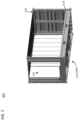
- FIG. 1 illustrates a perspective view of a fire suppression system 200.
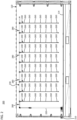
- FIG. 2 illustrates a side view of the fire suppression system 200.
- a fire suppression system 200 of an embodiment may include a pipe system 115 that is provided with a container 110.
- the container 110 is any standard or customized ISO container. In an embodiment, the container 110 is up to 16.1544 m (53 feet) in length. In an embodiment, the container 110 is an IM20HE prototype container.
- the pipe system 115 may include a suppressant interface 210, a connection pipe 220, a horizontal extending pipe 230, and vertical extending pipes 240. The horizontal extending pipe 230 may be connected to a ceiling of the container 110 by struts 280.
- the fire suppression system 200 may also include component 250 within an underside 112 of the container 110, below a floor 114 of the container 110.
- the components 250 may include, for example, pipes for transferring the suppressant, tanks for holding the suppressant, and pumps for pumping the suppressant to the pipe system 115 for supplying the suppressant to an event (e.g. a fire).
- the components 250 may be provided between the I-beam support structure at the underside 112 of the container 110.
- the suppressant interface 210 may be an inlet body configured to introduce suppressant (e.g. water) into the container 110 to be supplied to the vertical extending pipes 240, via the connection pipe 220 and the horizontal extending pipe 230.
- the suppressant interface 210 may be connected to another part of the fire suppression system (e.g. a holding tank(s)), that is not shown in FIGS. 1-2 , and may be configured to enable the suppressant to recirculate to the vertical extending pipes 240.
- the suppressant interface 210 may be a snoot that is a Fire Department (FD) connection for a fire hose to supply suppressant (e.g. water) to the fire suppression system 200.
- FD Fire Department
- the snoot may have a size in accordance with standards for FD connections for any country, and may be adapted to conform with any of such standards.
- the suppressant interface 210 may include a valve (e.g. a check valve) that prevents suppressant from leaving through the snoot and prevents a fire hose connected to the snoot from over filling tanks of the fire suppression systems of the present disclosure.
- the snoots of the present disclosure may be used to allow for "top off" of suppressant during scheduled maintenance of the fire suppression systems of the present disclosure.
- the snoot may be configured to connect to an external suppressant source (e.g.
- a fire hose or a tank so as to provide an initial fill of the tanks of the fire suppression systems for recirculation of suppressant, additional suppressant when a fire department arrives, and an emergency backup water source in case pumps or other components of the fire suppressant systems for recirculation becomes inoperable.
- the horizontal extending pipe 230 is an overhead supply pipe connected to the vertical extending pipes 240, and configured to supply suppressant to the vertical extending pipes 240.
- the vertical extending pipes 240 may be a series of modular distribution pipes that each include a plurality of openings 260 configured to distribute suppressant to battery modules 130, as discussed further below.
- Each of the openings 260 located on the vertical extending pipes 240 may be modular specific, and the locations of the openings 260 may be set based on the height and horizontal location of variable types of bodies 120 and variable stacks of battery modules 130.
- Each of the openings 260 may be a slot.
- the openings 260 may provide a suppressant flow in flat customizable patterns that spray across the battery modules.
- the vertical extending pipes 240 and their openings 260 may be placed such that suppressant flowing into the suppressant interface 210, or from a holding tank(s) of the fire suppression system 200, may reach every battery module 130 within the container 110 via the openings 260.
- the vertical extending pipes 240 may be associated with one or more electronic valves that can be controlled by any device, including, for example, a fire panel, a pull station, etc., to selectively supply suppressant to none, all, or particular ones of the vertical extending pipes 240 for releasing suppressant. Accordingly, the electronic valves may be used to spray suppressant on selected battery modules.
- the underside 112 of the container 110 may include various components for recirculation or holding of the suppressant.
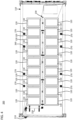
- the underside 112 may include the pipes which are connected to drains 270, illustrated in FIG. 4 .
- the drains 270 may be configured to recover the suppressant supplied by the vertical extending pipes 240 and provide the suppressant to the components 250.
- the components 250 may be connected to, for example, a tank (not shown) within the underside 112 of the container 110, or outside of the container 110, for storing the suppressant until needed again to be supplied to a battery module(s) by one or more of the vertical extending pipes 240.
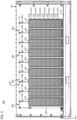
- the container 110 holds bodies 120, each of the bodies 120 may hold a respective set of battery modules 130 in a vertical stack, and each of the battery modules 130 may include battery cells 131.
- the battery cells 131 may be, for example, Li-Ion battery cells.
- the combination of the container 110 with the bodies 120, the battery modules 130, and the battery cells 131 may be considered a BESS system.
- the components of the fire suppression systems of the present disclosure may be implemented with BESS systems during an assembly process of the BESS systems, but can also be fitted into existing containers of BESS systems.
- the components of the fire suppression systems of the present disclosure may be adapted to BESS systems located in occupied or high hazard facilities in compliance with NPFA regulations.
- the bodies 120 may be frames that include openings that expose one or more sides of the battery modules 130 to an outside of the bodies 120, and the bodies 120 may be separated from each other in a horizontal plane.
- the bodies 120 may be configured to hold the battery modules 130 such that there are through spaces 122, through the bodies 120, above each of the battery modules 130.
- a top surface of each of the battery modules 130 may communicate with an outside of the bodies 120 via the through spaces 122.
- Containers of the present disclosure may hold the bodies 120 in any configuration, including any number of rows, any number of columns, and any number of bodies 120.
- the bodies 120 may be provided in two rows within the container 110, wherein the rows mirror each other along a central lengthwise axis of the container 110.
- the battery modules 130 may be, for example, the group of battery cells 131 or a body that retains the battery cells 131.
- the horizontal extending pipe 230 may be positioned overhead and between the rows of bodies 120, and each of the vertical extending pipes 240 may extend downward, from the horizontal extending pipe 230, to directly between a respective two of the bodies 120.
- Each of the vertical extending pipes 240 may be configured to, via the openings 260 provided thereon, provide (e.g. spray) the suppressant onto all of the battery modules 130 held by the respective bodies 120 in which the vertical extending pipe 240 is between.
- the suppressant may be provided to a top face of each of the battery modules 130 by the openings 260 of the vertical extending pipes 240 providing the suppressant to the through spaces 122.
- FIG. 5 illustrates one of the vertical extending pipes 240 and one of the bodies 120, with some battery modules 130 omitted for illustrative purposes. It is to be understood that the vertical extending pipe 240 illustrated in FIG. 5 may be sandwiched between the body 120 and another body 120 that is presently not shown for illustrative purposes.
- each of the vertical extending pipes 240 may include, for example, a series of pairs 242 of cuts, as the openings 260, spaced along the vertical extending pipe 240 in the vertical direction.
- each cut of the pair 242 may face towards a respective body 120 and provide a respective spray pattern 248 of suppressant. Accordingly, each cut of the pairs 242 may provide a respective spray pattern 248 on to a respective battery module 130.
- the pairs 242 of cuts may be positioned such that the suppressant of the spray patterns 248 is provided between a top of each of the battery modules 130 and the shelves 124 of the body 120 that hold the battery modules 130. Accordingly, suppressant may be provided to a top surface of each of the battery modules 130.
- FIGs. 6A and 6B illustrate a non-limiting example shape of the pairs 242 of cuts.
- FIGs. 6A and 6B illustrate a partial view of the vertical extending pipe 240 where one pair 242 of cuts is located.
- FIG. 6A illustrates a partial side view of a portion of a vertical extending pipe 240 of embodiments that includes the pair of cuts 242.
- the partial side view is from a perspective along the extending direction of the horizontal pipe 230.
- FIG. 6B illustrates a partial front view of the portion.
- the partial front view is from a prospective of one of the bodies 120, towards the horizontal extending pipe 230 where a vertical extending pipe 240 is connected.
- each of the pairs 242 of cuts may include a first slot cut 242A and second slot cut 242B on opposite sides of the vertical extending pipe 240 in the horizontal plane.
- the first slot cut 242A and the second slot cut 242B may be configured to each provide a respective spray pattern 248 of suppressant to a battery module 130 of a respective body 120 that is adjacent to the vertical extending pipe 240.
- the first slot cut 242A may provide suppressant to a battery module 130 of one body 120 and the second slot cut 242B may provide suppressant to a battery module 130 of another body 120.
- a shape of the second slot cut 242B may extend in the horizontal direction and have a narrow height .
- the first slot cut 242A may have a same shape as the second slot cut 242B, and may be provided such that the first slot cut 242A and the second slot cut 242B, together, provide a hole through the vertical extending pipe 240 in the horizontal plane.
- the first slot cut 242A and the second slot cut 242B may have a height of 1 mm ( ⁇ .2 mm) and a width of 10.5 mm.
- FIG. 6B the first slot cut 242A and the second slot cut 242B may have a height of 1 mm ( ⁇ .2 mm) and a width of 10.5 mm.
- the first slot cut 242A and the second slot cut 242B may have depth of 4.77 mm ( ⁇ 0.13 mm).
- the pairs of cuts 242 may be sized and shaped for a particular purpose or use in other embodiments.
- a fire suppression system 300 is described, which is a modified version of the fire suppression system 200. Descriptions of previously described elements are omitted. Additionally, while the elements illustrated in FIGs. 7-8 may be provided in the container 110, the walls and ceiling of the container 110 is omitted from Figs. 7-8 for illustrative purposes.
- the fire suppression system 300 may include a plurality of groups of the vertical extending pipes 240.
- three groups 340A, 340B, and 340C may be included, wherein each of the groups 340A-C includes three vertical extending pipes 240.
- embodiments of the present disclosure may include any number of groups and any number of vertical extending pipes 240 within each group.
- the vertical extending pipes 240 of each of the groups may be connected together via an intermediate horizontal pipe 370, and the intermediate horizontal pipe 370 may be connected to the horizontal extending pipe 230 with a valve 390 (e.g. a check valve) disposed there between.
- a valve 390 e.g. a check valve
- Each of the valves 390 may be configured to stop suppressant from flowing between one of the groups 340A-C of the vertical extending pipes 240 and the horizontal extending pipe.
- the valves 390 may be selectively controlled by a controller with at least one processor and memory.
- the valves 390 may be controlled by the controller 900, illustrated in FIG. 12 , based on an input to the controller 900 that indicates fire suppression is needed with respect to one or more battery modules 130.
- the fire suppression system 300 may also include a respective tank for each of the groups.
- the fire suppression system 300 may include tanks 353A, 353B, and 353C.
- the tanks 353A-C may be placed in an underside of a container of the fire suppression system 300.
- the tanks 353A-C may be provided in the underside 112 of the container 110 that is illustrated in FIG. 1 .
- the top surfaces 354 of the tanks 353A-C may be portions of the floor 114 of the container 110.
- the tanks 353A-C may be placed under the floor 114 and distinct from the floor 114.
- the tanks 353A-C may consume all available space between an I-Beam support structure within the underside 112 of the container 110.
- the tanks 353A-C are connected to drains 270, within the floor 114 of the container 110, that allows suppressant supplied by the vertical extending pipes 240 to return to the tanks 353A-C.
- each of the tanks 353A-C may be associated with a pump that can distribute the contents of the tank, in which it is associated, into the group of vertical extending pipes 240 that is above the tank.
- FIG. 8 illustrates the tanks 353A-C with a bottom wall of the tanks 353A-C removed.
- the pumps 356 A-C may be included in the tanks 353A-C.
- the tank 353A-C are interconnected in such a way that any single pump has access to the suppressant in all of the tanks 353A-C.
- the tanks 353A-C are connected together by tubes 358 that transfer the suppressant between the tanks 353A-C.
- the tubes 358 may be, for example, one or more pipes or hoses.
- Each of the pumps 356A-C may be connected, via a tube 359, to one or more of the vertical extending pipes 240 of a respective one of the groups 340A-C, so as to be configured to pump suppressant to the vertical extending pipes 240.
- the pump 356A may be connected via a tube 359 to the vertical extending pipe 240 that is at the center of the group 340A
- the pump 356B may be connected via a tube 359 to the vertical extending pipe 240 that is at the center of the group 340B
- the pump 356C may be connected via a tube 359 (not shown) to the vertical extending pipe 240 that is at the center of the group 340C.
- each of the pumps 356A-C may pump suppressant into the center vertical extending pipe 240 of a respective one of the groups 340A-C.
- the tubes 359 may be, for example, one or more pipes or hoses.
- the pump 356A may pump suppressant such that all of the vertical extending pipes 240 of the group 340A supply suppressant
- the pump 356B may pump suppressant such that all of the vertical extending pipes 240 of the group 340B supply suppressant
- the pump 356C may pump suppressant such that all of the vertical extending pipes 240 of the group 340C supply suppressant.
- any one of the pumps 356A-C may also pump suppressant to a neighboring group(s) of vertical extending pipes 240 such that the neighboring group(s) of vertical extending pipes 240 supply suppressant.
- the pump 356A may cause suppressant to be supplied to the group 340A and to the horizontal extending pipe 230.
- the pump 356A may cause the suppressant to be supplied to the group 340B such that the group 340B supplies the suppressant.
- the pump 356A may cause the suppressant to be supplied to the group 340C such that the group 340C supplies the suppressant.
- the pump 356A may cause suppressant to be supplied only to group 340A such that group 340A supplies the suppressant. Accordingly, selective release of suppressant among groups 340A-C is realized.
- the fire suppression system 300 may alternatively or additionally have a respective valve (e.g. check valve) associated with each vertical extending pipe 240. Accordingly, based on the electronic control of such valves, one or more of the pumps 340A-C may supply to one or more of the vertical extending pipes 240 that are selected for releasing suppressant. Accordingly, selective release of suppressant among vertical extending pipes 240 in a same group is realized.
- a respective valve e.g. check valve
- the fire suppression system 300 may only include a single pump, instead of pumps 356A-C.
- any two of the pumps 356A-C may be omitted.
- the single pump may pump suppressant to any number of the groups 340A-C and any number of vertical extending pipes 240 of the groups 340A-C, for releasing suppressant, based on the selective control of the valves described above.
- a fire suppression system 400 is described, which is a modified version of the fire suppression system 300.
- the descriptions of previously described elements are omitted. Additionally, while the elements illustrated in FIG. 9 may be provided in the container 110, at least the walls and ceiling of the container 110 are omitted from Fig. 9 for illustrative purposes.
- the fire suppression system 400 may be similar to the fire suppression system 300, illustrated in FIGs. 7-8 , except may have at least the following differences.
- the vertical extending pipes 400 may be connected to the horizontal extending pipe 230, without an intermediate horizontal pipe 370 disposed there between as provided in the fire suppression system 300. Further, instead of having the valve configuration illustrated in FIGs. 7-8 , the fire suppression system 400 includes a respective valve 490, that is electronically controllable, between each vertical extending pipe 240 and the horizontal extending pipe 230.
- the valves 490 may be, for example, check valves.
- Each of the valves 490 may be configured to stop suppressant from flowing to a respective one of the vertical extending pipes 240 from the horizontal extending pipe 230, and vice versa in some embodiments.
- the valves 490 may be selectively controlled by a controller with at least one processor and memory.
- the valves 490 may be controlled by the controller 900, illustrated in FIG. 12 , based on an input to the controller 900 that indicates fire suppression is needed with respect to one or more battery modules 130.
- the fire suppression system 400 may include a pump 456 that is outside an underneath of the container 110, instead of the pumps 356A-C of the fire suppression system 300.
- the pump 456 may be on top of the floor 114 of the container 110.
- the pump may be outside of the container 110.
- the pump 456 may be configured to pump the suppressant, that is underneath the floor 114 in the tanks 353A-C, to the horizontal extending pipe 230 via the connection pipe 220. Accordingly, depending on control of the valves 490, the pump 456 may pump the suppressant to a selected vertical extending pipe(s) 240 for releasing the suppressant through the openings of the vertical extending pipe(s) 240.
- a fire suppression system 500 which is not part of the invention is described, which is a modified embodiment of the fire suppression system 400.
- the descriptions of previously described elements are omitted. Additionally, while the elements illustrated in FIG. 10 may be provided in the container 110, the container 110 is omitted from Fig. 10 for illustrative purposes.
- the fire suppression system 500 may be similar to the fire suppression system 400, illustrated in FIG. 9 , except may have at least the following differences.
- the fire suppression system 500 which is not part of the invention may include a tank 553, instead of the tanks 353A-C illustrated in FIGs. 7-9 .
- the tank 553 may be located on top of the container 110 occupying part or all available space on top of the container 110.
- the tank 553 may be connected to the connecting pipe 220 such that the tank 553 may supply suppressant to the horizontal extending pipe 230.
- tubes 550 may be provided instead of the tanks 353A-C.
- the tubes 550 may include, for example, one or more pipes or hoses.
- the tubes 550 may connect the drains 270 to a pump 556.
- the pump 556 may be located in the underside 112 of the container 110. However, the pump 556 may alternatively be located outside of the container 110 or inside the container 110, above the floor 114 of the container 110
- the pump 556 may be configured to pump the suppressant collected by the drains 270 and the tubes 550 to the tank 553 to be held.
- the pump 556 may be controlled by the controller 900, illustrated in FIG. 12 , to pump the suppressant when the controller 900 detects suppressant nearby the pump 556 via a sensor.
- the tank 553 may be configured to gravity feed the suppressant to the horizontal extending pipe 230 via a connection at a bottom side of the tank 553. Accordingly, depending on control of the valves 490, the tank 553 may supply the suppressant to a selected vertical extending pipe(s) 240 for releasing the suppressant.
- a second pump may be provided in the tank 553 or between the tank 553 and the horizontal extending pipe 230, and the second pump may be configured to pump suppressant to one or more of the vertical extending pipes 240 via the horizontal extending pipe 230.
- the system 600 includes a plurality of the fire suppression systems 200, wherein a tank 650 and a pump system 656, comprising at least one pump, is provided outside the containers 110 of the fire suppression systems 200.
- the tank 650 may be placed on a surface of the ground, or in an approved application, placed underground to protect it from the environment.
- the tank 650 may be connected to the pump system 656 by a first tubing system 652 that may include, for example, one or more pipes or hoses.
- the pump system 656 may be connected to the suppressant interfaces 210 of the suppression systems 200 by a second tubing system 653 that may include, for example, pipes or hoses provided in parallel.
- the tank 650 may be connected to the suppression systems 200 by a third tubing system 654 that may include, for example, pipes or hoses provided in parallel.
- the third tubing system 654 may be connected to the components 250 that are provided in the underside 112 of the containers 110.
- the pump system 656 may cause suppressant stored in the tank 650 to be supplied to the fire suppression systems via the first tubing system 652 and the second tubing system 653.
- the suppressant may be returned to the tank 650 via the third tubing system 654.
- a pump of the suppression system 200 may be configured to return the suppressant, that is collected by the drains 270 of the fire suppression system 200, to the tank 650 via the third tubing system 654.
- the pump system 656 may be configured to selectively pump suppressant to one or more of the suppression systems 200 via the second tubing system 653. Accordingly, the pump system 656 may be configured to cause the vertical extending pipes 240 of the fire suppression systems 200 to release suppressant onto battery modules 130.
- system 600 has been described to include the fire suppression systems 200.
- the system 600 may alternatively or additionally include other fire suppression systems.
- the system 600 may include one or more of the fire suppression systems 300-500.
- the tank 650 and the pump system 656 of the system 600 may provide fire suppression to a group of containers configured as BESS systems.
- the tank 650 may include its own suppressant interface (e.g. a fire hose connection)such that a fire department can fill the tank 650 with suppressant, without approaching the fire suppression systems 200.
- suppressant interface e.g. a fire hose connection
- the fire suppression systems of the present disclosure may include a controller 900 that comprises at least one processor and memory storing computer instructions that, when executed by the at least one processor, causes the controller 900 to perform its functions.
- the controller 900 may control a suppressant flow of the fire suppression systems by controlling valves 910 to selectively open and close and pumps 920 to pump suppressant.
- the valves 910 controlled may include for, example, valves 390, valves 490, and all other valves of the present disclosure.
- the pumps 920 controlled may include, for example, pumps 356A-C, pump 456, pump 556, pump system 656, and all other pumps of the present disclosure.
- the controller 900 may control the valves 910 and the pumps 920 based on sensor inputs or inputs from a fire panel, a pull station, etc, to selectively cause one or more of the vertical extending pipes 240 to supply suppressant to battery modules 130 or a holding tank.
- the controller 900 may be configured to determine suppressant levels of the fire suppression systems based on sensor inputs, and display the suppressant levels on a display (e.g. a digital display).
- a display e.g. a digital display
- the fire suppression systems of the present disclosure may include gauges that indicate suppressant levels.
- a requirement for a constant connection to an outside source or a tanker to supply suppressant may be negated, battery module to battery module fire propagation may be mitigated, and some prevention of battery cell to battery cell fire propagation may be provided. Accordingly, much of the risk of catastrophic loss due to fire is alleviated.
Landscapes
- Chemical & Material Sciences (AREA)
- Chemical Kinetics & Catalysis (AREA)
- Electrochemistry (AREA)
- General Chemical & Material Sciences (AREA)
- Health & Medical Sciences (AREA)
- Public Health (AREA)
- Business, Economics & Management (AREA)
- Emergency Management (AREA)
- Engineering & Computer Science (AREA)
- Manufacturing & Machinery (AREA)
- Fire-Extinguishing By Fire Departments, And Fire-Extinguishing Equipment And Control Thereof (AREA)
Description
- This disclosure is directed to a containerized battery energy storage system comprising a standard ISO container and a fire suppression system for batteries.
- The use of traditional fire suppression systems and chemicals is often ineffective in stopping thermal runaway in high density Li-Ion energy storage systems.
- Some high density Li-Ion energy storage systems may incorporate water impingement fire suppression systems that provide water directly to battery cells to prevent thermal runaway situations. However, such water impingement fire suppression systems typically use a lot of water, as a suppressant, and require constant connection to an external source such as a supply or multiple connections with tankers carrying suppressant.
CN 108 853 848 discloses a charging battery cabinet and a firefighting system for preventing the propagation of a thermal runaway in the charging battery cabinet. The charging cabinet comprises vertical frames that are separated from each other in a horizontal direction. Horizontal trays are fixed to the vertical frames and support a plurality of battery modules. The firefighting system comprises a pipe system comprising a plurality of vertically extending pipes. A tank containing water is placed above the charging battery cabinet. When a thermal runaway is detected, water contained in the tank feeds a sprinkler placed above the modules. After having been sprayed on the battery modules, the water falls into a water collection tank. When the tank is empty and all the water has been collected by the water collection tank, a pump pumps the water back into the tank. - Some embodiments of the present disclosure address the above problems and other problems of related art.
- For example, some embodiments of the present disclosure negate the requirement for a constant connection to an outside source or a tanker to supply suppressant. Some embodiments of present disclosure mitigate battery module to battery module fire propagation as well as provide limited battery cell to battery cell fire propagation prevention, alleviating much of the risk of catastrophic loss due to fire.
- A first object of the invention is a containerized battery energy storage system comprising:
- a) a standard ISO container comprising a floor and having frames that are separated from each other in a horizontal direction, each of the frames comprising battery modules that are stacked in a vertical direction,
- b) a fire suppression system including:;
- i) a pipe system comprising a plurality of vertically extending pipes that are spaced from each other in the horizontal direction, and further comprising a horizontally extending pipe that communicates the plurality of vertically extending pipes with each other, each of the vertically extending pipes being provided between a respective two of the frames and supplying suppressant to at least one of the battery modules of each of the respective two of the frames via slots of the vertically extending pipe;
- ii) a plurality of tanks placed under the floor and distinct from the floor or a plurality of tanks having top surfaces, the top surfaces being portions of the floor, the tanks being interconnected in such a way that any single pump has access to the suppressant in all of the tanks, and the tanks being connected to the pipe system and storing the suppressant; the tanks being connected to drains within the floor of the container, that allow suppressant supplied by the vertically extending pipes to return to the tanks and
- iii) at least one pump being connected via a tube to at least one vertically extending pipe or connected to the horizontally extending pipe via a connection pipe, thereby recirculating the suppressant, supplied by the slots of each of the vertically extending pipes of the pipe system, to the pipe system or a tank of the plurality of tanks. Optionally, the containerized battery energy storage system further comprises an inlet body connecting with a suppressant source, that is external to the container, to provide new suppressant into the pipe system or the plurality of tanks.
- In an embodiment, a pump of the at least one pump is configured to pump the suppressant to at least one first vertically extending pipe of the plurality of vertically extending pipes via one of at least one second vertically extending pipe of the plurality of vertically extending pipes, such that the slots of each of the at least one first vertically extending pipe supply the suppressant. In an embodiment, the drain is configured to supply the suppressant, that is supplied by the slots of the plurality of first vertically extending pipes, to the tank of the at least one tank, and the floor of the container further comprises an additional drain, the additional drain configured to supply the suppressant, that is supplied by the slots of the plurality of second vertically extending pipes, to an additional tank of the at least one tank. In an embodiment, the tank and the additional tank are connected to each other such that one of the at least one pump is configured to pump the suppressant stored in the additional tank into one of the at least one first vertically extending pipe via the tank.
- In an embodiment, the fire suppression system further comprises: a controller comprising at least one processor, wherein the at least one first vertically extending pipe is a plurality of first vertically extending pipes, the at least one second vertically extending pipe is a plurality of second vertically extending pipes, the pipe system further comprises a first valve that connects the plurality of first vertically extending pipes to a horizontally extending pipe, the first valve configured to control a flow of the suppressant to all of the plurality of first vertically extending pipes, and the pipe system further comprises a second valve that connects the plurality of second vertically extending pipes to the horizontally extending pipe, the second valve configured to control a flow of the suppressant to all of the plurality of second vertically extending pipes, and the controller is configured to selectively control the first valve and the second valve.
- In an embodiment, the fire suppression system further comprises a controller comprising at least one processor, wherein the pipe system further comprises a plurality of valves, including respective valves configured to control flow of the suppressant to each of the plurality of vertically extending pipes, and the controller is configured to selectively control the plurality of valves.
- In an embodiment, the horizontally extending pipe is mounted to a top of the container.
- In an embodiment, an additional container is provided, said additional container being configured to receive frames that are separated from each other in the horizontal direction, each of the frames received by the additional container comprising battery modules that are stacked in the vertical direction, an additional pipe system comprising at least one vertically extending pipe, each of the at least one vertically extending pipe of the additional pipe system configured to be provided between a respective two of the frames of the additional container and configured to supply suppressant to at least one of the battery modules of each of the respective two of the frames of the additional container via slots of the vertically extending pipe of the additional pipe system, wherein the at least one tank is outside the container and the additional container, and the at least one tank is connected to the pipe system and the additional pipe system.
- In an embodiment, each of the slots extend in a horizontal plane and are configured to output the suppressant in a flat spray pattern.
- A second object of the invention is a method for forming a containerized battery energy storage system. The method comprises: providing an ISO container comprising a floor and frames, inside the container, the frames separated from each other in a horizontal direction, each of the frames comprising battery modules that are stacked in a vertical direction, and providing a pipe system comprising a plurality of vertically extending pipes, that are spaced from each other in the horizontal direction, and further comprising a horizontally extending pipe that communicates the plurality of vertically extending pipes with each other, each of the vertically extending pipes provided between a respective two of the frames and supplying suppressant to at least one of the battery modules of each of the respective two of the frames via slots of the vertically extending pipe; providing a plurality of tanks placed under the floor and distinct from the floor or a plurality of tanks having top surfaces, the top surfaces being portions of the floor, the tanks being interconnected in such a way that any single pump has access to the suppressant between the tanks, and the tanks being connected to the pipe system and storing the suppressant; the tanks being connected to drains within the floor of the container, that allow suppressant supplied by the vertically extending pipes to return to the tanks; and providing at least one pump, and connecting the at least one pump via a tube to at least one vertically extending pipe or connecting the at least one pump to the horizontally extending pipe via a connection pipe, the at least one pump recirculating the suppressant, supplied by the slots of each of the vertically extending pipes of the pipe system, to the pipe system or a tank of the plurality of tanks.
- Further features, the nature, and various advantages of the disclosed subject matter will be more apparent from the following detailed description and the accompanying drawings in which:
-
FIG. 1 illustrates a perspective view of a fire suppression system according to a first embodiment. -
FIG. 2 illustrates a front view of the fire suppression system according to the first embodiment. -
FIG. 3 illustrates a front view of the fire suppression system according to the first embodiment, wherein battery modules are provided. -
FIG. 4 illustrates a top view of the fire suppression system according to the first embodiment, wherein battery modules are provided. -
FIG. 5 is a diagram that illustrates a spray pattern of vertical extending pipes of embodiments. -
FIG. 6A illustrates a partial side view of a portion of a vertical extending pipe of embodiments that includes a pair of cuts. -
FIG. 6B illustrates a partial front view of the portion of the vertical extending pipe of embodiments that includes the pair of cuts. -
FIG. 7 illustrates a first perspective view of a fire suppression system according to a second embodiment. -
FIG. 8 illustrates a second perspective view of the fire suppression system according to the second embodiment. -
FIG. 9 illustrates a perspective view of a fire suppression system according to a third embodiment. -
FIG. 10 illustrates a perspective view of a fire suppression system according to a fourth embodiment which is not part of the invention. -
FIG. 11 illustrates a perspective view of a system according to a fifth embodiment. -
FIG. 12 is a block diagram illustrating a controller, valves, and pumps of embodiments. - In embodiments of the pressure disclosure, low volume direct impingement fire suppression systems for containerized Battery Energy Storage Systems (BESS) are provided.
- According to embodiments of the present disclosure, low volume direct impingement fire suppression systems are provided, wherein the system is a captured closed loop system that recirculates suppressant. For example, the systems may pump suppressant to an event (e.g. a fire) by using, for example, one or more pumps, capture the suppressant, and return the suppressant to, for example, one or more tanks to be distributed repeatedly. Tanks of the present disclosure may be associated with anti-evaporation drains and a visual gauge to indicate refill requirements during maintenance (e.g. annual maintenance).
- According to embodiments of the present disclosure, a fixed volume of water may be used in the captured closed loop systems. Accordingly, the captured closed loop systems may thwart the need for connected or continuous water supply and may alleviate the need for contaminated wastewater or spill containment. Embodiments of the present disclosure have been tested and shown to be effective against the thermal propagation between Li-Ion battery modules. Embodiments of the present disclosure may also resist a thermal loss of suppressant.
-
FIG. 1 illustrates a perspective view of afire suppression system 200.FIG. 2 illustrates a side view of thefire suppression system 200. - With reference to
FIGs 1-2 , afire suppression system 200 of an embodiment may include apipe system 115 that is provided with acontainer 110. - The
container 110 is any standard or customized ISO container. In an embodiment, thecontainer 110 is up to 16.1544 m (53 feet) in length. In an embodiment, thecontainer 110 is an IM20HE prototype container. Thepipe system 115 may include asuppressant interface 210, aconnection pipe 220, a horizontal extendingpipe 230, and vertical extendingpipes 240. The horizontal extendingpipe 230 may be connected to a ceiling of thecontainer 110 bystruts 280. Thefire suppression system 200 may also includecomponent 250 within anunderside 112 of thecontainer 110, below afloor 114 of thecontainer 110. Thecomponents 250 may include, for example, pipes for transferring the suppressant, tanks for holding the suppressant, and pumps for pumping the suppressant to thepipe system 115 for supplying the suppressant to an event (e.g. a fire). Thecomponents 250 may be provided between the I-beam support structure at theunderside 112 of thecontainer 110. - The
suppressant interface 210 may be an inlet body configured to introduce suppressant (e.g. water) into thecontainer 110 to be supplied to the vertical extendingpipes 240, via theconnection pipe 220 and the horizontal extendingpipe 230. In some embodiments, thesuppressant interface 210 may be connected to another part of the fire suppression system (e.g. a holding tank(s)), that is not shown inFIGS. 1-2 , and may be configured to enable the suppressant to recirculate to the vertical extendingpipes 240. In some embodiments, thesuppressant interface 210 may be a snoot that is a Fire Department (FD) connection for a fire hose to supply suppressant (e.g. water) to thefire suppression system 200. The snoot may have a size in accordance with standards for FD connections for any country, and may be adapted to conform with any of such standards. Thesuppressant interface 210 may include a valve (e.g. a check valve) that prevents suppressant from leaving through the snoot and prevents a fire hose connected to the snoot from over filling tanks of the fire suppression systems of the present disclosure. The snoots of the present disclosure may be used to allow for "top off" of suppressant during scheduled maintenance of the fire suppression systems of the present disclosure. In the embodiments of the present disclosure, the snoot may be configured to connect to an external suppressant source (e.g. a fire hose or a tank) so as to provide an initial fill of the tanks of the fire suppression systems for recirculation of suppressant, additional suppressant when a fire department arrives, and an emergency backup water source in case pumps or other components of the fire suppressant systems for recirculation becomes inoperable. - The horizontal extending
pipe 230 is an overhead supply pipe connected to the vertical extendingpipes 240, and configured to supply suppressant to the vertical extendingpipes 240. The vertical extendingpipes 240 may be a series of modular distribution pipes that each include a plurality ofopenings 260 configured to distribute suppressant tobattery modules 130, as discussed further below. Each of theopenings 260 located on the vertical extendingpipes 240 may be modular specific, and the locations of theopenings 260 may be set based on the height and horizontal location of variable types ofbodies 120 and variable stacks ofbattery modules 130. Each of theopenings 260 may be a slot. In embodiments, theopenings 260 may provide a suppressant flow in flat customizable patterns that spray across the battery modules. In embodiments, the vertical extendingpipes 240 and theiropenings 260 may be placed such that suppressant flowing into thesuppressant interface 210, or from a holding tank(s) of thefire suppression system 200, may reach everybattery module 130 within thecontainer 110 via theopenings 260. - In embodiments, the vertical extending
pipes 240 may be associated with one or more electronic valves that can be controlled by any device, including, for example, a fire panel, a pull station, etc., to selectively supply suppressant to none, all, or particular ones of the vertical extendingpipes 240 for releasing suppressant. Accordingly, the electronic valves may be used to spray suppressant on selected battery modules. - The
underside 112 of thecontainer 110 may include various components for recirculation or holding of the suppressant. For example, theunderside 112 may include the pipes which are connected todrains 270, illustrated inFIG. 4 . Thedrains 270 may be configured to recover the suppressant supplied by the vertical extendingpipes 240 and provide the suppressant to thecomponents 250. Thecomponents 250 may be connected to, for example, a tank (not shown) within theunderside 112 of thecontainer 110, or outside of thecontainer 110, for storing the suppressant until needed again to be supplied to a battery module(s) by one or more of the vertical extendingpipes 240. - With reference to
FIGs. 3-4 , thecontainer 110 holdsbodies 120, each of thebodies 120 may hold a respective set ofbattery modules 130 in a vertical stack, and each of thebattery modules 130 may includebattery cells 131. In embodiments, thebattery cells 131 may be, for example, Li-Ion battery cells. The combination of thecontainer 110 with thebodies 120, thebattery modules 130, and thebattery cells 131 may be considered a BESS system. The components of the fire suppression systems of the present disclosure may be implemented with BESS systems during an assembly process of the BESS systems, but can also be fitted into existing containers of BESS systems. For example, the components of the fire suppression systems of the present disclosure may be adapted to BESS systems located in occupied or high hazard facilities in compliance with NPFA regulations. - In an embodiment, the
bodies 120 may be frames that include openings that expose one or more sides of thebattery modules 130 to an outside of thebodies 120, and thebodies 120 may be separated from each other in a horizontal plane. Thebodies 120 may be configured to hold thebattery modules 130 such that there are throughspaces 122, through thebodies 120, above each of thebattery modules 130. A top surface of each of thebattery modules 130 may communicate with an outside of thebodies 120 via the throughspaces 122. - Containers of the present disclosure may hold the
bodies 120 in any configuration, including any number of rows, any number of columns, and any number ofbodies 120. As a non-limiting example, with reference toFIG. 4 , thebodies 120 may be provided in two rows within thecontainer 110, wherein the rows mirror each other along a central lengthwise axis of thecontainer 110. Thebattery modules 130 may be, for example, the group ofbattery cells 131 or a body that retains thebattery cells 131. - With reference to
FIGs. 3-4 , the horizontal extendingpipe 230 may be positioned overhead and between the rows ofbodies 120, and each of the vertical extendingpipes 240 may extend downward, from the horizontal extendingpipe 230, to directly between a respective two of thebodies 120. Each of the vertical extendingpipes 240 may be configured to, via theopenings 260 provided thereon, provide (e.g. spray) the suppressant onto all of thebattery modules 130 held by therespective bodies 120 in which the vertical extendingpipe 240 is between. In an embodiment, the suppressant may be provided to a top face of each of thebattery modules 130 by theopenings 260 of the vertical extendingpipes 240 providing the suppressant to the throughspaces 122. - With reference to
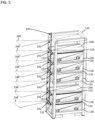
FIG. 5 , example positions of theopenings 260 on the vertical extendingpipes 240 andexample spray patterns 248 of theopenings 260 are described.FIG. 5 illustrates one of the vertical extendingpipes 240 and one of thebodies 120, with somebattery modules 130 omitted for illustrative purposes. It is to be understood that the vertical extendingpipe 240 illustrated inFIG. 5 may be sandwiched between thebody 120 and anotherbody 120 that is presently not shown for illustrative purposes. - With reference to
FIG. 5 , each of the vertical extendingpipes 240 may include, for example, a series ofpairs 242 of cuts, as theopenings 260, spaced along the vertical extendingpipe 240 in the vertical direction. For eachpair 242 of cuts of a vertical extendingpipe 240, each cut of thepair 242 may face towards arespective body 120 and provide arespective spray pattern 248 of suppressant. Accordingly, each cut of thepairs 242 may provide arespective spray pattern 248 on to arespective battery module 130. With reference toFIG. 5 , thepairs 242 of cuts may be positioned such that the suppressant of thespray patterns 248 is provided between a top of each of thebattery modules 130 and theshelves 124 of thebody 120 that hold thebattery modules 130. Accordingly, suppressant may be provided to a top surface of each of thebattery modules 130. - With reference to
FIGs. 6A and 6B , a non-limiting example shape of thepairs 242 of cuts are described.FIGs. 6A and 6B illustrate a partial view of the vertical extendingpipe 240 where onepair 242 of cuts is located. - In particular,
FIG. 6A illustrates a partial side view of a portion of a vertical extendingpipe 240 of embodiments that includes the pair ofcuts 242. With reference toFIG. 4 , the partial side view is from a perspective along the extending direction of thehorizontal pipe 230.FIG. 6B illustrates a partial front view of the portion. With reference toFIG. 4 , the partial front view is from a prospective of one of thebodies 120, towards the horizontal extendingpipe 230 where a vertical extendingpipe 240 is connected. - With reference to
FIG. 6A , each of thepairs 242 of cuts may include a first slot cut 242A and second slot cut 242B on opposite sides of the vertical extendingpipe 240 in the horizontal plane. The first slot cut 242A and the second slot cut 242B may be configured to each provide arespective spray pattern 248 of suppressant to abattery module 130 of arespective body 120 that is adjacent to the vertical extendingpipe 240. In other words, the first slot cut 242A may provide suppressant to abattery module 130 of onebody 120 and the second slot cut 242B may provide suppressant to abattery module 130 of anotherbody 120. - In embodiments, as illustrated in
FIG. 6B , a shape of the second slot cut 242B may extend in the horizontal direction and have a narrow height . The first slot cut 242A may have a same shape as the second slot cut 242B, and may be provided such that the first slot cut 242A and the second slot cut 242B, together, provide a hole through the vertical extendingpipe 240 in the horizontal plane. In an embodiment, with reference toFIG. 6B , the first slot cut 242A and the second slot cut 242B may have a height of 1 mm (± .2 mm) and a width of 10.5 mm. In the embodiment, with reference toFIG. 6A , the first slot cut 242A and the second slot cut 242B may have depth of 4.77 mm (± 0.13 mm). However, in embodiments of the present disclosure, the pairs ofcuts 242 may be sized and shaped for a particular purpose or use in other embodiments. - With reference to
FIGs. 7-8 , afire suppression system 300 is described, which is a modified version of thefire suppression system 200. Descriptions of previously described elements are omitted. Additionally, while the elements illustrated inFIGs. 7-8 may be provided in thecontainer 110, the walls and ceiling of thecontainer 110 is omitted fromFigs. 7-8 for illustrative purposes. - As illustrated in
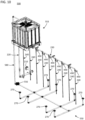
FIG. 7 , thefire suppression system 300 may include a plurality of groups of the vertical extendingpipes 240. As a non-limiting example, threegroups groups 340A-C includes three vertical extendingpipes 240. However, embodiments of the present disclosure may include any number of groups and any number of vertical extendingpipes 240 within each group. In embodiments, the vertical extendingpipes 240 of each of the groups may be connected together via an intermediatehorizontal pipe 370, and the intermediatehorizontal pipe 370 may be connected to the horizontal extendingpipe 230 with a valve 390 (e.g. a check valve) disposed there between. - Each of the
valves 390 may be configured to stop suppressant from flowing between one of thegroups 340A-C of the vertical extendingpipes 240 and the horizontal extending pipe. In embodiments, thevalves 390 may be selectively controlled by a controller with at least one processor and memory. For example, thevalves 390 may be controlled by thecontroller 900, illustrated inFIG. 12 , based on an input to thecontroller 900 that indicates fire suppression is needed with respect to one ormore battery modules 130. - The
fire suppression system 300 may also include a respective tank for each of the groups. For example, thefire suppression system 300 may includetanks tanks 353A-C may be placed in an underside of a container of thefire suppression system 300. For example, thetanks 353A-C may be provided in theunderside 112 of thecontainer 110 that is illustrated inFIG. 1 . Additionally, as illustrated inFIG. 7 , thetop surfaces 354 of thetanks 353A-C may be portions of thefloor 114 of thecontainer 110. Alternatively, in embodiments, thetanks 353A-C may be placed under thefloor 114 and distinct from thefloor 114. In embodiments, thetanks 353A-C may consume all available space between an I-Beam support structure within theunderside 112 of thecontainer 110. Thetanks 353A-C are connected todrains 270, within thefloor 114 of thecontainer 110, that allows suppressant supplied by the vertical extendingpipes 240 to return to thetanks 353A-C. - With reference to
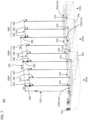
FIG. 8 , each of thetanks 353A-C may be associated with a pump that can distribute the contents of the tank, in which it is associated, into the group of vertical extendingpipes 240 that is above the tank. For illustrative purposes,FIG. 8 illustrates thetanks 353A-C with a bottom wall of thetanks 353A-C removed. In embodiments, as illustrated inFIG. 8 , the pumps 356 A-C may be included in thetanks 353A-C. Thetank 353A-C are interconnected in such a way that any single pump has access to the suppressant in all of thetanks 353A-C. For example, as illustrated inFig. 8 , thetanks 353A-C are connected together bytubes 358 that transfer the suppressant between thetanks 353A-C. The tubes 358 may be, for example, one or more pipes or hoses. - Each of the
pumps 356A-C may be connected, via atube 359, to one or more of the vertical extendingpipes 240 of a respective one of thegroups 340A-C, so as to be configured to pump suppressant to the vertical extendingpipes 240. For example, as illustrated inFIG. 8 , thepump 356A may be connected via atube 359 to the vertical extendingpipe 240 that is at the center of thegroup 340A, thepump 356B may be connected via atube 359 to the vertical extendingpipe 240 that is at the center of thegroup 340B, and thepump 356C may be connected via a tube 359 (not shown) to the vertical extendingpipe 240 that is at the center of thegroup 340C. Accordingly, each of thepumps 356A-C may pump suppressant into the center vertical extendingpipe 240 of a respective one of thegroups 340A-C. The tubes 359 may be, for example, one or more pipes or hoses. - With the above configuration, the
pump 356A may pump suppressant such that all of the vertical extendingpipes 240 of thegroup 340A supply suppressant, thepump 356B may pump suppressant such that all of the vertical extendingpipes 240 of thegroup 340B supply suppressant, and thepump 356C may pump suppressant such that all of the vertical extendingpipes 240 of thegroup 340C supply suppressant. - Depending on electronic control of the
valves 390, any one of thepumps 356A-C may also pump suppressant to a neighboring group(s) of vertical extendingpipes 240 such that the neighboring group(s) of vertical extendingpipes 240 supply suppressant. For example, when thevalve 390 above thegroup 340A is in an open state and thepump 356A is pumping suppressant, thepump 356A may cause suppressant to be supplied to thegroup 340A and to the horizontal extendingpipe 230. Accordingly, in a case where thevalve 390 above thegroup 340B is also in an open state, thepump 356A may cause the suppressant to be supplied to thegroup 340B such that thegroup 340B supplies the suppressant. In a case where thevalve 390 above thegroup 340C is also in an open state, thepump 356A may cause the suppressant to be supplied to thegroup 340C such that thegroup 340C supplies the suppressant. Alternatively, when thevalve 390 above thegroup 340A is in a close state and thepump 356A is pumping suppressant, thepump 356A may cause suppressant to be supplied only togroup 340A such thatgroup 340A supplies the suppressant. Accordingly, selective release of suppressant amonggroups 340A-C is realized. - In embodiments, the
fire suppression system 300 may alternatively or additionally have a respective valve (e.g. check valve) associated with each vertical extendingpipe 240. Accordingly, based on the electronic control of such valves, one or more of thepumps 340A-C may supply to one or more of the vertical extendingpipes 240 that are selected for releasing suppressant. Accordingly, selective release of suppressant among vertical extendingpipes 240 in a same group is realized. - In embodiments, the
fire suppression system 300 may only include a single pump, instead ofpumps 356A-C. For example, any two of thepumps 356A-C may be omitted. The single pump may pump suppressant to any number of thegroups 340A-C and any number of vertical extendingpipes 240 of thegroups 340A-C, for releasing suppressant, based on the selective control of the valves described above. - With reference to
FIG. 9 , afire suppression system 400 is described, which is a modified version of thefire suppression system 300. The descriptions of previously described elements are omitted. Additionally, while the elements illustrated inFIG. 9 may be provided in thecontainer 110, at least the walls and ceiling of thecontainer 110 are omitted fromFig. 9 for illustrative purposes. - The
fire suppression system 400 may be similar to thefire suppression system 300, illustrated inFIGs. 7-8 , except may have at least the following differences. - The vertical extending
pipes 400 may be connected to the horizontal extendingpipe 230, without an intermediatehorizontal pipe 370 disposed there between as provided in thefire suppression system 300. Further, instead of having the valve configuration illustrated inFIGs. 7-8 , thefire suppression system 400 includes arespective valve 490, that is electronically controllable, between each vertical extendingpipe 240 and the horizontal extendingpipe 230. Thevalves 490 may be, for example, check valves. - Each of the
valves 490 may be configured to stop suppressant from flowing to a respective one of the vertical extendingpipes 240 from the horizontal extendingpipe 230, and vice versa in some embodiments. In embodiments, thevalves 490 may be selectively controlled by a controller with at least one processor and memory. For example, thevalves 490 may be controlled by thecontroller 900, illustrated inFIG. 12 , based on an input to thecontroller 900 that indicates fire suppression is needed with respect to one ormore battery modules 130. - The
fire suppression system 400 may include apump 456 that is outside an underneath of thecontainer 110, instead of thepumps 356A-C of thefire suppression system 300. For example, as illustrated inFIG. 9 , thepump 456 may be on top of thefloor 114 of thecontainer 110. Alternatively, the pump may be outside of thecontainer 110. After suppressant is collected by thedrains 270, thepump 456 may be configured to pump the suppressant, that is underneath thefloor 114 in thetanks 353A-C, to the horizontal extendingpipe 230 via theconnection pipe 220. Accordingly, depending on control of thevalves 490, thepump 456 may pump the suppressant to a selected vertical extending pipe(s) 240 for releasing the suppressant through the openings of the vertical extending pipe(s) 240. - With reference to
FIG. 10 , afire suppression system 500 which is not part of the invention is described, which is a modified embodiment of thefire suppression system 400. The descriptions of previously described elements are omitted. Additionally, while the elements illustrated inFIG. 10 may be provided in thecontainer 110, thecontainer 110 is omitted fromFig. 10 for illustrative purposes. - The
fire suppression system 500 may be similar to thefire suppression system 400, illustrated inFIG. 9 , except may have at least the following differences. - As illustrated in
FIG. 10 , thefire suppression system 500 which is not part of the invention may include atank 553, instead of thetanks 353A-C illustrated inFIGs. 7-9 . Thetank 553 may be located on top of thecontainer 110 occupying part or all available space on top of thecontainer 110. Thetank 553 may be connected to the connectingpipe 220 such that thetank 553 may supply suppressant to the horizontal extendingpipe 230. In theunderside 112 of the container 110 (not shown inFIG. 10 ),tubes 550 may be provided instead of thetanks 353A-C. The tubes 550 may include, for example, one or more pipes or hoses. Thetubes 550 may connect thedrains 270 to apump 556. With reference toFIG. 10 , thepump 556 may be located in theunderside 112 of thecontainer 110. However, thepump 556 may alternatively be located outside of thecontainer 110 or inside thecontainer 110, above thefloor 114 of thecontainer 110 - In such configurations, the
pump 556 may be configured to pump the suppressant collected by thedrains 270 and thetubes 550 to thetank 553 to be held. In embodiments, thepump 556 may be controlled by thecontroller 900, illustrated inFIG. 12 , to pump the suppressant when thecontroller 900 detects suppressant nearby thepump 556 via a sensor. Thetank 553 may be configured to gravity feed the suppressant to the horizontal extendingpipe 230 via a connection at a bottom side of thetank 553. Accordingly, depending on control of thevalves 490, thetank 553 may supply the suppressant to a selected vertical extending pipe(s) 240 for releasing the suppressant. - In embodiments, a second pump may be provided in the
tank 553 or between thetank 553 and the horizontal extendingpipe 230, and the second pump may be configured to pump suppressant to one or more of the vertical extendingpipes 240 via the horizontal extendingpipe 230. - With reference to
FIG. 11 , asystem 600 is described. - As illustrated in
FIG. 11 , thesystem 600 includes a plurality of thefire suppression systems 200, wherein atank 650 and apump system 656, comprising at least one pump, is provided outside thecontainers 110 of thefire suppression systems 200. Thetank 650 may be placed on a surface of the ground, or in an approved application, placed underground to protect it from the environment. Thetank 650 may be connected to thepump system 656 by afirst tubing system 652 that may include, for example, one or more pipes or hoses. Thepump system 656 may be connected to the suppressant interfaces 210 of thesuppression systems 200 by asecond tubing system 653 that may include, for example, pipes or hoses provided in parallel. And thetank 650 may be connected to thesuppression systems 200 by athird tubing system 654 that may include, for example, pipes or hoses provided in parallel. With reference toFIGs. 1 and11 , thethird tubing system 654 may be connected to thecomponents 250 that are provided in theunderside 112 of thecontainers 110. Thepump system 656 may cause suppressant stored in thetank 650 to be supplied to the fire suppression systems via thefirst tubing system 652 and thesecond tubing system 653. With reference toFIGs. 4 and11 , after thefire suppression systems 200 releases the suppressant via one or more vertical extendingpipes 240 and the suppressant is collected by thedrains 270 of thefire suppression systems 200, the suppressant may be returned to thetank 650 via thethird tubing system 654. - For example, for each of the
suppression systems 200, a pump of thesuppression system 200 may be configured to return the suppressant, that is collected by thedrains 270 of thefire suppression system 200, to thetank 650 via thethird tubing system 654. Thepump system 656 may be configured to selectively pump suppressant to one or more of thesuppression systems 200 via thesecond tubing system 653. Accordingly, thepump system 656 may be configured to cause the vertical extendingpipes 240 of thefire suppression systems 200 to release suppressant ontobattery modules 130. - Although
system 600 has been described to include thefire suppression systems 200. Thesystem 600 may alternatively or additionally include other fire suppression systems. For example, thesystem 600 may include one or more of the fire suppression systems 300-500. - According to the above configurations, the
tank 650 and thepump system 656 of thesystem 600 may provide fire suppression to a group of containers configured as BESS systems. - In embodiments, the
tank 650 may include its own suppressant interface (e.g. a fire hose connection)such that a fire department can fill thetank 650 with suppressant, without approaching thefire suppression systems 200. - With reference to
FIG. 12 , the fire suppression systems of the present disclosure may include acontroller 900 that comprises at least one processor and memory storing computer instructions that, when executed by the at least one processor, causes thecontroller 900 to perform its functions. Thecontroller 900 may control a suppressant flow of the fire suppression systems by controllingvalves 910 to selectively open and close and pumps 920 to pump suppressant. Thevalves 910 controlled may include for, example,valves 390,valves 490, and all other valves of the present disclosure. Thepumps 920 controlled may include, for example, pumps 356A-C, pump 456, pump 556,pump system 656, and all other pumps of the present disclosure. Thecontroller 900 may control thevalves 910 and thepumps 920 based on sensor inputs or inputs from a fire panel, a pull station, etc, to selectively cause one or more of the vertical extendingpipes 240 to supply suppressant tobattery modules 130 or a holding tank. - In embodiments, the
controller 900 may be configured to determine suppressant levels of the fire suppression systems based on sensor inputs, and display the suppressant levels on a display (e.g. a digital display). Alternatively or additionally, the fire suppression systems of the present disclosure may include gauges that indicate suppressant levels. - According to embodiments of the present disclosure, a requirement for a constant connection to an outside source or a tanker to supply suppressant may be negated, battery module to battery module fire propagation may be mitigated, and some prevention of battery cell to battery cell fire propagation may be provided. Accordingly, much of the risk of catastrophic loss due to fire is alleviated.
- The term "or" as used herein is an inclusive "or", and has a meaning equivalent to "and/or."
Claims (11)
- A containerized battery energy storage system comprising:a) a standard ISO container (110) comprising a floor (114) and having frames (120) that are separated from each other in a horizontal direction, each of the frames comprising battery modules (130) that are stacked in a vertical direction,b) a fire suppression system (200, 300, 400) including:i) a pipe system (115) comprising a plurality of vertically extending pipes (240), that are spaced from each other in the horizontal direction, and further comprising a horizontally extending pipe (230) that communicates the plurality of vertically extending pipes (240) with each other, each of the vertically extending pipes being provided between a respective two of the frames (120) and supplying suppressant to at least one of the battery modules (130) of each of the respective two of the frames (120) via slots (260) of the vertically extending pipe,;ii) a plurality of tanks (353A, 353B, 353C) placed under the floor and distinct from the floor or a plurality of tanks having top surfaces (354), the top surfaces being portions of the floor, the tanks being interconnected (358) in such a way that any single pump has access to the suppressant in all of the tanks, and the tanks being connected to the pipe system (115) and storing the suppressant; the tanks being connected to drains (270) within the floor of the container, that allow suppressant supplied by the vertically extending pipes to return to the tanks andiii) at least one pump (356A, 356B, 356C) being connected via a tube (359) to at least one vertically extending pipe (240) or connected to the horizontally extending pipe (230) via a connection pipe (220), thereby recirculating the suppressant, supplied by the slots (260) of each of the vertically extending pipes of the pipe system (115), to the pipe system or a tank of the plurality of tanks (353A, 353B, 353C).
- The containerized battery energy storage system of claim 1, wherein the horizontally extending pipe (230) is mounted to a top of the container (110).
- The containerized battery energy storage system of claim 1, wherein each of the slots (260) extend in a horizontal plane and are configured to output the suppressant in a flat spray pattern.
- The containerized battery energy storage system of claim 1, wherein each of the slots (260) are configured to output the suppressant on a top of a respective one of the battery modules (130) of the frames (120).
- The containerized battery energy storage system of claim 1, further comprising
an inlet body connecting with a suppressant source to provide new suppressant into the pipe system (115) or the plurality of tanks (353A, 353B, 353C), the suppressant source being external to the container. - The containerized battery energy storage system of claim 5, wherein
a pump of the at least one pump (356A, 356B, 356C) is configured to pump the suppressant to at least one first vertically extending pipe of the plurality of vertically extending pipes (240) via one of at least one second vertically extending pipe of the plurality of vertically extending pipes, such that the slots (260) of each of the at least one first vertically extending pipe (240) supply the suppressant. - The containerized battery energy storage system of claim 6, wherein a first tank (353A) and a second tank (353B) are connected to each other such that one of the at least one pump (356B) is configured to pump the suppressant stored in the second tank into one of the at least one first vertically extending pipe via the first tank.
- The containerized battery energy storage system of claim 6, further comprising:a controller (900) comprising at least one processor, whereinthe at least one second vertically extending pipe is a plurality of second vertically extending pipes,the pipe system (115) further comprises a first valve that connects the plurality of first vertically extending pipes (240) to a horizontally extending pipe (230), the first valve configured to control a flow of the suppressant to all of the plurality of first vertically extending pipes, andthe pipe system (115) further comprises a second valve that connects the plurality of second vertically extending pipes (240) to the horizontally extending pipe (230), the second valve configured to control a flow of the suppressant to all of the plurality of second vertically extending pipes, andthe controller (900) is configured to selectively control the first valve and the second valve.
- The containerized battery energy storage system of claim 6, further comprising:a controller (900) comprising at least one processor, whereinthe pipe system (115) further comprises a plurality of valves (390, 490), including respective valves configured to control flow of the suppressant to each of the plurality of vertically extending pipes (240), andthe controller (900) is configured to selectively control the plurality of valves.
- The containerized battery energy storage system of claim 5, wherein each of the slots (260) extend in a horizontal plane and are configured to output the suppressant in a flat spray pattern.
- A method for forming a containerized battery energy storage system, the method comprising:providing a standard ISO container (110) comprising a floor (114) and frames (120), inside the container, the frames (120) separated from each other in a horizontal direction, each of the frames (120) comprising battery modules (130) that are stacked in a vertical direction, andproviding a pipe system (115) comprising a plurality of vertically extending pipes (240), that are spaced from each other in the horizontal direction, and further comprising a horizontally extending pipe (230) that communicates the plurality of vertically extending pipes (240) with each other, each of the vertically extending pipes (240) provided between a respective two of the frames (120) and supplying suppressant to at least one of the battery modules (130) of each of the respective two of the frames (120) via slots (260) of the vertically extending pipe (240),providing a plurality of tanks (353A, 353B, 353C) placed under the floor and distinct from the floor or a plurality of tanks having top surfaces (354), the top surfaces being portions of the floor, the tanks being interconnected (358) in such a way that any single pump has access to the suppressant between the tanks, and the tanks being connected to the pipe system (115) and storing the suppressant; the tanks being connected to drains (270) within the floor of the container, that allow suppressant supplied by the vertically extending pipes to return to the tanks; andproviding at least one pump (356A, 356B, 356C), and connecting the at least one pump via a tube (359) to at least one vertically extending pipe (240) or connecting the at least one pump to the horizontally extending pipe (230) via a connection pipe (220), the at least one pump recirculating the suppressant, supplied by the slots (260) of the vertically extending pipes (240) of the pipe system (115), to the pipe system or a tank of the plurality of tanks (353A, 353B, 353C).
Applications Claiming Priority (2)
| Application Number | Priority Date | Filing Date | Title |
|---|---|---|---|
| US16/697,683 US11833377B2 (en) | 2019-11-27 | 2019-11-27 | Fire suppression system for battery modules |
| PCT/US2020/056815 WO2021108048A1 (en) | 2019-11-27 | 2020-10-22 | Fire suppression system for battery modules |
Publications (2)
| Publication Number | Publication Date |
|---|---|
| EP4065241A1 EP4065241A1 (en) | 2022-10-05 |
| EP4065241B1 true EP4065241B1 (en) | 2025-05-28 |
Family
ID=73402169
Family Applications (1)
| Application Number | Title | Priority Date | Filing Date |
|---|---|---|---|
| EP20807211.6A Active EP4065241B1 (en) | 2019-11-27 | 2020-10-22 | Fire suppression system for battery modules |
Country Status (5)
| Country | Link |
|---|---|
| US (1) | US11833377B2 (en) |
| EP (1) | EP4065241B1 (en) |
| CN (1) | CN114746155A (en) |
| ES (1) | ES3037159T3 (en) |
| WO (1) | WO2021108048A1 (en) |
Families Citing this family (10)
| Publication number | Priority date | Publication date | Assignee | Title |
|---|---|---|---|---|
| KR102803017B1 (en) * | 2020-03-05 | 2025-05-02 | 주식회사 엘지에너지솔루션 | A battery pack having a structure in which cooling water can be introduced into the battery module when a thermal runaway occurs and Energy storage system comprising the same |
| KR102289709B1 (en) * | 2020-10-19 | 2021-08-13 | 퍼스트 유한회사 | Fire extinguishing system of battery loading of electric propulsion ship |
| US12401075B2 (en) | 2021-06-18 | 2025-08-26 | Analytical Scientific Products LLC | System for fire prevention in battery systems |
| EP4459737A4 (en) * | 2022-05-02 | 2025-08-20 | Lg Energy Solution Ltd | ENERGY STORAGE SYSTEM |
| KR20240037432A (en) * | 2022-09-14 | 2024-03-22 | 현대자동차주식회사 | Fire extinguishing system of vehicle |
| US20240204344A1 (en) * | 2022-12-17 | 2024-06-20 | Kidde Technologies Inc. | Emergency fire suppression system |
| US12620657B2 (en) * | 2022-12-17 | 2026-05-05 | Kidde Technologies Inc. | Battery fire suppression system |
| US12306066B2 (en) | 2022-12-17 | 2025-05-20 | Kidde Technologies, Inc. | Ducted gas detector |
| US12614768B2 (en) | 2022-12-17 | 2026-04-28 | Kidde Technologies Inc. | Battery outgassing detector |
| GB2644034A (en) * | 2024-09-11 | 2026-03-18 | Fire Containers Ltd | Container with storage system and fire suppressant |
Family Cites Families (20)
| Publication number | Priority date | Publication date | Assignee | Title |
|---|---|---|---|---|
| DE2044731C3 (en) * | 1970-09-10 | 1975-09-25 | Continental Gummi-Werke Ag, 3000 Hannover | Fire extinguishing device |
| US20140290967A1 (en) * | 2010-04-30 | 2014-10-02 | Code Consultants, Inc. | Water-conserving fire protection systems |
| FR2986911A1 (en) | 2012-02-10 | 2013-08-16 | Peugeot Citroen Automobiles Sa | Cooling device for cooling rechargeable battery in e.g. hybrid car, has solenoid valve to supply cooling liquid to main conduit in absence of receipt of alert or to auxiliary conduit to flood space in battery housing upon receipt of alert |
| CN203521551U (en) | 2013-09-12 | 2014-04-02 | 比克国际(天津)有限公司 | Battery system |
| KR102050531B1 (en) * | 2015-11-02 | 2019-11-29 | 주식회사 엘지화학 | Battery pack and vehicle comprising the battery pack |
| CN205564903U (en) | 2015-11-15 | 2016-09-07 | 深圳市沃特玛电池有限公司 | Fire protection system of battery box |
| CN205759224U (en) | 2016-05-30 | 2016-12-07 | 北京迅力世达技术有限公司 | There is the battery box system of automatic fire extinguisher |
| CN106684499A (en) | 2017-01-09 | 2017-05-17 | 武汉船用电力推进装置研究所(中国船舶重工集团公司第七二研究所) | Method and apparatus for suppressing and preventing thermal runway of lithium ion battery |
| CN206867531U (en) | 2017-06-27 | 2018-01-12 | 飞鹏车辆配件有限公司 | Lithium battery bin automatic fire extinguisher |
| CN208525712U (en) | 2018-04-17 | 2019-02-22 | 深圳市泰宇电源有限公司 | A kind of lithium battery explosion-proof tank |
| CN108853848A (en) | 2018-08-24 | 2018-11-23 | 东莞骑士换电电子科技有限公司 | A kind of fire water circulation utilization method, system and the device of rechargeable battery cabinet |
| CN108926789B (en) | 2018-08-24 | 2023-06-02 | 东莞骑士换电电子科技有限公司 | An automatic fire sprinkler and automatic power-off device for a charging cabinet |
| CN109193073A (en) | 2018-09-17 | 2019-01-11 | 双极泵业科技(珠海)有限公司 | New energy car battery safety management system and method |
| US20200139178A1 (en) * | 2018-11-02 | 2020-05-07 | Flexgen Power Systems. Inc. | Apparatus and methods for battery fire suppression using multi-port extinguishing agent distribution |
| CN109173118A (en) | 2018-11-12 | 2019-01-11 | 东莞骑士换电电子科技有限公司 | A kind of charging cabinet fire plant |
| CN109999386A (en) | 2019-03-22 | 2019-07-12 | 中国电力科学研究院有限公司 | A kind of energy-storage battery cluster with fire-fighting structure |
| CN110010808B (en) * | 2019-03-22 | 2023-04-07 | 中国电力科学研究院有限公司 | Energy storage battery cluster with fire control function |
| CN110112507B (en) | 2019-05-23 | 2021-02-12 | 华霆(合肥)动力技术有限公司 | Thermal management device, power supply system and thermal management method |
| CN110193154A (en) * | 2019-06-14 | 2019-09-03 | 郑州轻工业学院 | The comprehensive fire fighting extinguisher of container-type lithium ion battery energy storage system |
| CN110420417B (en) | 2019-07-18 | 2022-05-13 | 应急管理部天津消防研究所 | A kind of barrier fire extinguishing board for energy storage system |
-
2019
- 2019-11-27 US US16/697,683 patent/US11833377B2/en active Active
-
2020
- 2020-10-22 ES ES20807211T patent/ES3037159T3/en active Active
- 2020-10-22 CN CN202080082838.3A patent/CN114746155A/en active Pending
- 2020-10-22 EP EP20807211.6A patent/EP4065241B1/en active Active
- 2020-10-22 WO PCT/US2020/056815 patent/WO2021108048A1/en not_active Ceased
Also Published As
| Publication number | Publication date |
|---|---|
| US11833377B2 (en) | 2023-12-05 |
| CN114746155A (en) | 2022-07-12 |
| EP4065241A1 (en) | 2022-10-05 |
| US20210154503A1 (en) | 2021-05-27 |
| ES3037159T3 (en) | 2025-09-29 |
| WO2021108048A1 (en) | 2021-06-03 |
Similar Documents
| Publication | Publication Date | Title |
|---|---|---|
| US11833377B2 (en) | Fire suppression system for battery modules | |
| US3539108A (en) | Storage rack and sprinkler arrangement | |
| CN113631490B (en) | Automated cellular access system with foam-based fire protection system | |
| US10612215B2 (en) | Water storage systems | |
| JP2020008048A (en) | Hydrogen station | |
| JP2004527426A (en) | Method and system for dispensing flowable substances | |
| CN108604470B (en) | Horizontal storage module, tray assembly and can transfer assembly | |
| BR112019009728A2 (en) | apparatus for forming an aqueous solution of a chemical from a solid chemical, cartridge for retaining a solid chemical and method for creating a chemical solution from a solid chemical using water | |
| US11407582B2 (en) | Spill containment system for container tanks | |
| WO2017043735A1 (en) | Containing system | |
| US12311207B2 (en) | Automated grid storage and retrieval system with foam-based fire prevention system | |
| US7985322B2 (en) | Containment extension and processing system and method | |
| RU2470686C1 (en) | Device for extinguishing flammable liquids in vertical tank with floating roof or pontoon | |
| KR101515712B1 (en) | Self-assembly water supplying apparatus for water supplying of spent fuel storage tank | |
| CN107509543A (en) | Plant frame | |
| CN110354645B (en) | Passive online liquid supplementing device and method for containment filtering and discharging system | |
| DE102018106048B4 (en) | System for storing water-polluting substances | |
| US9889987B2 (en) | Prevention of liquid overflow from an outside liquid storage installation | |
| JP2013029320A (en) | Cooling system | |
| JP7311193B1 (en) | battery shipping container | |
| US20030156902A1 (en) | Fuel dispensing and containment assembly | |
| CN210096745U (en) | Nuclear power plant emergency water supply system | |
| US20140367379A1 (en) | Liquid containment system | |
| CN213253133U (en) | Chemical defoaming device | |
| RU143822U1 (en) | CONTAINER FILLING STATION |
Legal Events
| Date | Code | Title | Description |
|---|---|---|---|
| STAA | Information on the status of an ep patent application or granted ep patent |
Free format text: STATUS: UNKNOWN |
|
| STAA | Information on the status of an ep patent application or granted ep patent |
Free format text: STATUS: THE INTERNATIONAL PUBLICATION HAS BEEN MADE |
|
| PUAI | Public reference made under article 153(3) epc to a published international application that has entered the european phase |
Free format text: ORIGINAL CODE: 0009012 |
|
| STAA | Information on the status of an ep patent application or granted ep patent |
Free format text: STATUS: REQUEST FOR EXAMINATION WAS MADE |
|
| 17P | Request for examination filed |
Effective date: 20220627 |
|
| AK | Designated contracting states |
Kind code of ref document: A1 Designated state(s): AL AT BE BG CH CY CZ DE DK EE ES FI FR GB GR HR HU IE IS IT LI LT LU LV MC MK MT NL NO PL PT RO RS SE SI SK SM TR |
|
| DAV | Request for validation of the european patent (deleted) | ||
| DAX | Request for extension of the european patent (deleted) | ||
| P01 | Opt-out of the competence of the unified patent court (upc) registered |
Effective date: 20230514 |
|
| STAA | Information on the status of an ep patent application or granted ep patent |
Free format text: STATUS: EXAMINATION IS IN PROGRESS |
|
| 17Q | First examination report despatched |
Effective date: 20230824 |
|
| RIC1 | Information provided on ipc code assigned before grant |
Ipc: H01M 10/613 20140101ALI20241119BHEP Ipc: H01M 50/682 20210101ALI20241119BHEP Ipc: H01M 50/244 20210101ALI20241119BHEP Ipc: H01M 50/209 20210101ALI20241119BHEP Ipc: H01M 10/6568 20140101ALI20241119BHEP Ipc: H01M 10/6556 20140101ALI20241119BHEP Ipc: H01M 50/20 20210101ALI20241119BHEP Ipc: A62C 3/16 20060101AFI20241119BHEP |
|
| RIN1 | Information on inventor provided before grant (corrected) |
Inventor name: TRINIDAD, JUSTIN ALEXANDER Inventor name: SEMENOV, NIKOLAY VLADIMIROVICH Inventor name: BOURG, MICHAEL JOSEPH Inventor name: GINDER, DAVID BARKLY |
|
| GRAP | Despatch of communication of intention to grant a patent |
Free format text: ORIGINAL CODE: EPIDOSNIGR1 |
|
| STAA | Information on the status of an ep patent application or granted ep patent |
Free format text: STATUS: GRANT OF PATENT IS INTENDED |
|
| INTG | Intention to grant announced |
Effective date: 20250130 |
|
| GRAS | Grant fee paid |
Free format text: ORIGINAL CODE: EPIDOSNIGR3 |
|
| GRAA | (expected) grant |
Free format text: ORIGINAL CODE: 0009210 |
|
| STAA | Information on the status of an ep patent application or granted ep patent |
Free format text: STATUS: THE PATENT HAS BEEN GRANTED |
|
| AK | Designated contracting states |
Kind code of ref document: B1 Designated state(s): AL AT BE BG CH CY CZ DE DK EE ES FI FR GB GR HR HU IE IS IT LI LT LU LV MC MK MT NL NO PL PT RO RS SE SI SK SM TR |
|
| REG | Reference to a national code |
Ref country code: GB Ref legal event code: FG4D |
|
| REG | Reference to a national code |
Ref country code: CH Ref legal event code: EP |
|
| REG | Reference to a national code |
Ref country code: DE Ref legal event code: R096 Ref document number: 602020052063 Country of ref document: DE |
|
| REG | Reference to a national code |
Ref country code: IE Ref legal event code: FG4D |
|
| REG | Reference to a national code |
Ref country code: ES Ref legal event code: FG2A Ref document number: 3037159 Country of ref document: ES Kind code of ref document: T3 Effective date: 20250929 |
|
| REG | Reference to a national code |
Ref country code: NL Ref legal event code: MP Effective date: 20250528 |
|
| PG25 | Lapsed in a contracting state [announced via postgrant information from national office to epo] |
Ref country code: FI Free format text: LAPSE BECAUSE OF FAILURE TO SUBMIT A TRANSLATION OF THE DESCRIPTION OR TO PAY THE FEE WITHIN THE PRESCRIBED TIME-LIMIT Effective date: 20250528 |
|
| REG | Reference to a national code |
Ref country code: LT Ref legal event code: MG9D |
|
| PG25 | Lapsed in a contracting state [announced via postgrant information from national office to epo] |
Ref country code: NO Free format text: LAPSE BECAUSE OF FAILURE TO SUBMIT A TRANSLATION OF THE DESCRIPTION OR TO PAY THE FEE WITHIN THE PRESCRIBED TIME-LIMIT Effective date: 20250828 Ref country code: GR Free format text: LAPSE BECAUSE OF FAILURE TO SUBMIT A TRANSLATION OF THE DESCRIPTION OR TO PAY THE FEE WITHIN THE PRESCRIBED TIME-LIMIT Effective date: 20250829 |
|
| PG25 | Lapsed in a contracting state [announced via postgrant information from national office to epo] |
Ref country code: PL Free format text: LAPSE BECAUSE OF FAILURE TO SUBMIT A TRANSLATION OF THE DESCRIPTION OR TO PAY THE FEE WITHIN THE PRESCRIBED TIME-LIMIT Effective date: 20250528 Ref country code: NL Free format text: LAPSE BECAUSE OF FAILURE TO SUBMIT A TRANSLATION OF THE DESCRIPTION OR TO PAY THE FEE WITHIN THE PRESCRIBED TIME-LIMIT Effective date: 20250528 |
|
| PG25 | Lapsed in a contracting state [announced via postgrant information from national office to epo] |
Ref country code: BG Free format text: LAPSE BECAUSE OF FAILURE TO SUBMIT A TRANSLATION OF THE DESCRIPTION OR TO PAY THE FEE WITHIN THE PRESCRIBED TIME-LIMIT Effective date: 20250528 |
|
| PG25 | Lapsed in a contracting state [announced via postgrant information from national office to epo] |
Ref country code: HR Free format text: LAPSE BECAUSE OF FAILURE TO SUBMIT A TRANSLATION OF THE DESCRIPTION OR TO PAY THE FEE WITHIN THE PRESCRIBED TIME-LIMIT Effective date: 20250528 |
|
| PG25 | Lapsed in a contracting state [announced via postgrant information from national office to epo] |
Ref country code: RS Free format text: LAPSE BECAUSE OF FAILURE TO SUBMIT A TRANSLATION OF THE DESCRIPTION OR TO PAY THE FEE WITHIN THE PRESCRIBED TIME-LIMIT Effective date: 20250828 |
|
| PG25 | Lapsed in a contracting state [announced via postgrant information from national office to epo] |
Ref country code: IS Free format text: LAPSE BECAUSE OF FAILURE TO SUBMIT A TRANSLATION OF THE DESCRIPTION OR TO PAY THE FEE WITHIN THE PRESCRIBED TIME-LIMIT Effective date: 20250928 |
|
| PG25 | Lapsed in a contracting state [announced via postgrant information from national office to epo] |
Ref country code: LV Free format text: LAPSE BECAUSE OF FAILURE TO SUBMIT A TRANSLATION OF THE DESCRIPTION OR TO PAY THE FEE WITHIN THE PRESCRIBED TIME-LIMIT Effective date: 20250528 |
|
| REG | Reference to a national code |
Ref country code: AT Ref legal event code: MK05 Ref document number: 1798316 Country of ref document: AT Kind code of ref document: T Effective date: 20250528 |
|
| PGFP | Annual fee paid to national office [announced via postgrant information from national office to epo] |
Ref country code: DE Payment date: 20251031 Year of fee payment: 6 |
|
| PG25 | Lapsed in a contracting state [announced via postgrant information from national office to epo] |
Ref country code: AT Free format text: LAPSE BECAUSE OF FAILURE TO SUBMIT A TRANSLATION OF THE DESCRIPTION OR TO PAY THE FEE WITHIN THE PRESCRIBED TIME-LIMIT Effective date: 20250528 Ref country code: SM Free format text: LAPSE BECAUSE OF FAILURE TO SUBMIT A TRANSLATION OF THE DESCRIPTION OR TO PAY THE FEE WITHIN THE PRESCRIBED TIME-LIMIT Effective date: 20250528 Ref country code: DK Free format text: LAPSE BECAUSE OF FAILURE TO SUBMIT A TRANSLATION OF THE DESCRIPTION OR TO PAY THE FEE WITHIN THE PRESCRIBED TIME-LIMIT Effective date: 20250528 |
|
| PGFP | Annual fee paid to national office [announced via postgrant information from national office to epo] |
Ref country code: FR Payment date: 20251030 Year of fee payment: 6 |
|
| PG25 | Lapsed in a contracting state [announced via postgrant information from national office to epo] |
Ref country code: CZ Free format text: LAPSE BECAUSE OF FAILURE TO SUBMIT A TRANSLATION OF THE DESCRIPTION OR TO PAY THE FEE WITHIN THE PRESCRIBED TIME-LIMIT Effective date: 20250528 |
|
| PG25 | Lapsed in a contracting state [announced via postgrant information from national office to epo] |
Ref country code: EE Free format text: LAPSE BECAUSE OF FAILURE TO SUBMIT A TRANSLATION OF THE DESCRIPTION OR TO PAY THE FEE WITHIN THE PRESCRIBED TIME-LIMIT Effective date: 20250528 |
|
| PG25 | Lapsed in a contracting state [announced via postgrant information from national office to epo] |
Ref country code: SK Free format text: LAPSE BECAUSE OF FAILURE TO SUBMIT A TRANSLATION OF THE DESCRIPTION OR TO PAY THE FEE WITHIN THE PRESCRIBED TIME-LIMIT Effective date: 20250528 |
|
| PG25 | Lapsed in a contracting state [announced via postgrant information from national office to epo] |
Ref country code: IT Free format text: LAPSE BECAUSE OF FAILURE TO SUBMIT A TRANSLATION OF THE DESCRIPTION OR TO PAY THE FEE WITHIN THE PRESCRIBED TIME-LIMIT Effective date: 20250528 |
|
| REG | Reference to a national code |
Ref country code: DE Ref legal event code: R097 Ref document number: 602020052063 Country of ref document: DE |
|
| PG25 | Lapsed in a contracting state [announced via postgrant information from national office to epo] |
Ref country code: RO Free format text: LAPSE BECAUSE OF FAILURE TO SUBMIT A TRANSLATION OF THE DESCRIPTION OR TO PAY THE FEE WITHIN THE PRESCRIBED TIME-LIMIT Effective date: 20250528 |
|
| PLBE | No opposition filed within time limit |
Free format text: ORIGINAL CODE: 0009261 |
|
| STAA | Information on the status of an ep patent application or granted ep patent |
Free format text: STATUS: NO OPPOSITION FILED WITHIN TIME LIMIT |
|
| REG | Reference to a national code |
Ref country code: CH Ref legal event code: L10 Free format text: ST27 STATUS EVENT CODE: U-0-0-L10-L00 (AS PROVIDED BY THE NATIONAL OFFICE) Effective date: 20260409 |
|
| PGFP | Annual fee paid to national office [announced via postgrant information from national office to epo] |
Ref country code: ES Payment date: 20260309 Year of fee payment: 6 |
|
| 26N | No opposition filed |
Effective date: 20260303 |