EP4064135B1 - Verfahren zur durchführung von selbstüberwachtem lernen eines auf tiefenlernen basierten erkennungsnetzwerks unter verwendung eines tiefen-q-netzwerks und vorrichtungen damit - Google Patents
Verfahren zur durchführung von selbstüberwachtem lernen eines auf tiefenlernen basierten erkennungsnetzwerks unter verwendung eines tiefen-q-netzwerks und vorrichtungen damit Download PDFInfo
- Publication number
- EP4064135B1 EP4064135B1 EP21207673.1A EP21207673A EP4064135B1 EP 4064135 B1 EP4064135 B1 EP 4064135B1 EP 21207673 A EP21207673 A EP 21207673A EP 4064135 B1 EP4064135 B1 EP 4064135B1
- Authority
- EP
- European Patent Office
- Prior art keywords
- new
- network
- unlabeled
- unlabeled image
- deep
- Prior art date
- Legal status (The legal status is an assumption and is not a legal conclusion. Google has not performed a legal analysis and makes no representation as to the accuracy of the status listed.)
- Active
Links
Images


Classifications
-
- G—PHYSICS
- G06—COMPUTING OR CALCULATING; COUNTING
- G06F—ELECTRIC DIGITAL DATA PROCESSING
- G06F18/00—Pattern recognition
- G06F18/20—Analysing
- G06F18/21—Design or setup of recognition systems or techniques; Extraction of features in feature space; Blind source separation
- G06F18/214—Generating training patterns; Bootstrap methods, e.g. bagging or boosting
-
- G—PHYSICS
- G06—COMPUTING OR CALCULATING; COUNTING
- G06F—ELECTRIC DIGITAL DATA PROCESSING
- G06F18/00—Pattern recognition
- G06F18/20—Analysing
- G06F18/21—Design or setup of recognition systems or techniques; Extraction of features in feature space; Blind source separation
- G06F18/2163—Partitioning the feature space
-
- G—PHYSICS
- G06—COMPUTING OR CALCULATING; COUNTING
- G06F—ELECTRIC DIGITAL DATA PROCESSING
- G06F18/00—Pattern recognition
- G06F18/20—Analysing
- G06F18/24—Classification techniques
-
- G—PHYSICS
- G06—COMPUTING OR CALCULATING; COUNTING
- G06N—COMPUTING ARRANGEMENTS BASED ON SPECIFIC COMPUTATIONAL MODELS
- G06N3/00—Computing arrangements based on biological models
- G06N3/02—Neural networks
- G06N3/04—Architecture, e.g. interconnection topology
-
- G—PHYSICS
- G06—COMPUTING OR CALCULATING; COUNTING
- G06N—COMPUTING ARRANGEMENTS BASED ON SPECIFIC COMPUTATIONAL MODELS
- G06N3/00—Computing arrangements based on biological models
- G06N3/02—Neural networks
- G06N3/04—Architecture, e.g. interconnection topology
- G06N3/045—Combinations of networks
-
- G—PHYSICS
- G06—COMPUTING OR CALCULATING; COUNTING
- G06N—COMPUTING ARRANGEMENTS BASED ON SPECIFIC COMPUTATIONAL MODELS
- G06N3/00—Computing arrangements based on biological models
- G06N3/02—Neural networks
- G06N3/04—Architecture, e.g. interconnection topology
- G06N3/0464—Convolutional networks [CNN, ConvNet]
-
- G—PHYSICS
- G06—COMPUTING OR CALCULATING; COUNTING
- G06N—COMPUTING ARRANGEMENTS BASED ON SPECIFIC COMPUTATIONAL MODELS
- G06N3/00—Computing arrangements based on biological models
- G06N3/02—Neural networks
- G06N3/08—Learning methods
- G06N3/088—Non-supervised learning, e.g. competitive learning
-
- G—PHYSICS
- G06—COMPUTING OR CALCULATING; COUNTING
- G06N—COMPUTING ARRANGEMENTS BASED ON SPECIFIC COMPUTATIONAL MODELS
- G06N3/00—Computing arrangements based on biological models
- G06N3/02—Neural networks
- G06N3/08—Learning methods
- G06N3/0895—Weakly supervised learning, e.g. semi-supervised or self-supervised learning
-
- G—PHYSICS
- G06—COMPUTING OR CALCULATING; COUNTING
- G06N—COMPUTING ARRANGEMENTS BASED ON SPECIFIC COMPUTATIONAL MODELS
- G06N3/00—Computing arrangements based on biological models
- G06N3/02—Neural networks
- G06N3/08—Learning methods
- G06N3/092—Reinforcement learning
-
- G—PHYSICS
- G06—COMPUTING OR CALCULATING; COUNTING
- G06V—IMAGE OR VIDEO RECOGNITION OR UNDERSTANDING
- G06V10/00—Arrangements for image or video recognition or understanding
- G06V10/20—Image preprocessing
- G06V10/25—Determination of region of interest [ROI] or a volume of interest [VOI]
-
- G—PHYSICS
- G06—COMPUTING OR CALCULATING; COUNTING
- G06V—IMAGE OR VIDEO RECOGNITION OR UNDERSTANDING
- G06V10/00—Arrangements for image or video recognition or understanding
- G06V10/70—Arrangements for image or video recognition or understanding using pattern recognition or machine learning
- G06V10/764—Arrangements for image or video recognition or understanding using pattern recognition or machine learning using classification, e.g. of video objects
-
- G—PHYSICS
- G06—COMPUTING OR CALCULATING; COUNTING
- G06V—IMAGE OR VIDEO RECOGNITION OR UNDERSTANDING
- G06V10/00—Arrangements for image or video recognition or understanding
- G06V10/70—Arrangements for image or video recognition or understanding using pattern recognition or machine learning
- G06V10/77—Processing image or video features in feature spaces; using data integration or data reduction, e.g. principal component analysis [PCA] or independent component analysis [ICA] or self-organising maps [SOM]; Blind source separation
- G06V10/774—Generating sets of training patterns; Bootstrap methods, e.g. bagging or boosting
- G06V10/7753—Incorporation of unlabelled data, e.g. multiple instance learning [MIL]
-
- G—PHYSICS
- G06—COMPUTING OR CALCULATING; COUNTING
- G06V—IMAGE OR VIDEO RECOGNITION OR UNDERSTANDING
- G06V10/00—Arrangements for image or video recognition or understanding
- G06V10/70—Arrangements for image or video recognition or understanding using pattern recognition or machine learning
- G06V10/77—Processing image or video features in feature spaces; using data integration or data reduction, e.g. principal component analysis [PCA] or independent component analysis [ICA] or self-organising maps [SOM]; Blind source separation
- G06V10/776—Validation; Performance evaluation
-
- G—PHYSICS
- G06—COMPUTING OR CALCULATING; COUNTING
- G06V—IMAGE OR VIDEO RECOGNITION OR UNDERSTANDING
- G06V10/00—Arrangements for image or video recognition or understanding
- G06V10/70—Arrangements for image or video recognition or understanding using pattern recognition or machine learning
- G06V10/77—Processing image or video features in feature spaces; using data integration or data reduction, e.g. principal component analysis [PCA] or independent component analysis [ICA] or self-organising maps [SOM]; Blind source separation
- G06V10/778—Active pattern-learning, e.g. online learning of image or video features
-
- G—PHYSICS
- G06—COMPUTING OR CALCULATING; COUNTING
- G06V—IMAGE OR VIDEO RECOGNITION OR UNDERSTANDING
- G06V10/00—Arrangements for image or video recognition or understanding
- G06V10/70—Arrangements for image or video recognition or understanding using pattern recognition or machine learning
- G06V10/77—Processing image or video features in feature spaces; using data integration or data reduction, e.g. principal component analysis [PCA] or independent component analysis [ICA] or self-organising maps [SOM]; Blind source separation
- G06V10/80—Fusion, i.e. combining data from various sources at the sensor level, preprocessing level, feature extraction level or classification level
- G06V10/806—Fusion, i.e. combining data from various sources at the sensor level, preprocessing level, feature extraction level or classification level of extracted features
-
- G—PHYSICS
- G06—COMPUTING OR CALCULATING; COUNTING
- G06V—IMAGE OR VIDEO RECOGNITION OR UNDERSTANDING
- G06V10/00—Arrangements for image or video recognition or understanding
- G06V10/70—Arrangements for image or video recognition or understanding using pattern recognition or machine learning
- G06V10/77—Processing image or video features in feature spaces; using data integration or data reduction, e.g. principal component analysis [PCA] or independent component analysis [ICA] or self-organising maps [SOM]; Blind source separation
- G06V10/80—Fusion, i.e. combining data from various sources at the sensor level, preprocessing level, feature extraction level or classification level
- G06V10/809—Fusion, i.e. combining data from various sources at the sensor level, preprocessing level, feature extraction level or classification level of classification results, e.g. where the classifiers operate on the same input data
-
- G—PHYSICS
- G06—COMPUTING OR CALCULATING; COUNTING
- G06V—IMAGE OR VIDEO RECOGNITION OR UNDERSTANDING
- G06V10/00—Arrangements for image or video recognition or understanding
- G06V10/70—Arrangements for image or video recognition or understanding using pattern recognition or machine learning
- G06V10/82—Arrangements for image or video recognition or understanding using pattern recognition or machine learning using neural networks
-
- G—PHYSICS
- G06—COMPUTING OR CALCULATING; COUNTING
- G06V—IMAGE OR VIDEO RECOGNITION OR UNDERSTANDING
- G06V20/00—Scenes; Scene-specific elements
Definitions
- the present disclosure relates to methods for performing self-supervised learning of a deep-learning based detection network by using a deep Q-network and devices using the same; and more particularly, to the methods for performing the self-supervised learning of the detection network by using the deep Q-network to determine training data suitable for the self-supervised learning of the detection network on the basis of objection detection information outputted from the detection network, and the devices using the same.
- unsupervised learning instead of using labeled training data, methods such as clustering or density estimation are used to train the detection network to find groups in given data or identify patterns among the given data.
- the unsupervised learning also has its limitations in that results of the clustering are difficult to be assessed without the use of the labeled training data and that defined groups or patterns may not be applicable to real-world data.
- self-supervised learning is also studied.
- a minimum amount of the labeled training data and a large amount of unlabeled training data are used for training the detection network.
- the self-supervised learning initially trains the detection network by using the labeled training data, and then let the detection network to perform the given task of generating self-labeled training data from the unlabeled training data inputted into the detection network. Subsequently, the detection network is continuously trained by using the labeled training data obtained during the initial stage of learning and the self-labeled training data produced by the detection network itself.
- CN 111 476 302 A discloses a Faster-RCNN target object detection method based on deep reinforcement learning. The comprises the steps: storing the state of the regional suggested network RPN at each moment by adopting an experience pool of deep reinforcement learning, outputting two actions by adopting a convolution gating circulation unit, selectively executing corresponding actions by adopting a random strategy, and removing redundant detection boxes by adopting a self-defined non-maximum suppression method to obtain a detection box closest to a labeling box; classifying the detection frames by adopting a classification network, and carrying out quadratic regression on the detection frames to realize detection and identification of the target object.
- the target positioning is accurate, and the target detection precision is high.
- DQN deep Q-network
- recordable media that are readable by a computer for storing a computer program to execute the method of the present disclosure is further provided.
- Any images referred to in the present disclosure may include images related to any roads paved or unpaved, in which case the objects on the roads or near the roads may include vehicles, persons, animals, plants, buildings, flying objects like planes or drones, or any other obstacles which may appear in a road-related scene, but the scope of the present disclosure is not limited thereto.
- said any images referred to in the present disclosure may include images not related to any roads, such as images related to alleyway, land lots, sea, lakes, rivers, mountains, forests, deserts, sky, or any indoor space
- the objects in said any images may include vehicles, persons, animals, plants, buildings, flying objects like planes or drones, ships, amphibious planes or ships, or any other obstacles which may appear in a scene related to alleyway, land lots, sea, lakes, rivers, mountains, forests, deserts, sky, or any indoor space, but the scope of the present disclosure is not limited thereto.
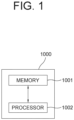
- Fig. 1 is a drawing schematically illustrating a learning device 1000 performing reinforcement learning of a deep Q-network to allow the deep Q-network to select training data useful for self-supervised learning of a deep-learning based detection network by referring to object detection information outputted from the detection network in accordance with one example embodiment of the present disclosure.
- the learning device 1000 may include a memory 1001 for performing the reinforcement learning of the deep Q-network, and a processor 1002 for performing the reinforcement learning of the deep Q-network according to the instructions in the memory 1001.
- the learning device 1000 may achieve a desired system performance by using combinations of at least one computing device and at least one computer software, e.g., a computer processor, a memory, a storage, an input device, an output device, or any other conventional computing components, an electronic communication device such as a router or a switch, an electronic information storage system such as a network-attached storage (NAS) device and a storage area network (SAN) as the computing device and any instructions that allow the computing device to function in a specific way as the computer software.
- a computer software e.g., a computer processor, a memory, a storage, an input device, an output device, or any other conventional computing components, an electronic communication device such as a router or a switch, an electronic information storage system such as a network-attached storage (NAS) device and a storage area network (SAN) as the computing device and any instructions that allow the computing device to function in a specific way as the computer software.
- NAS network-attached storage
- SAN storage area network
- the processor of the computing device may include hardware configuration of MPU (Micro Processing Unit) or CPU (Central Processing Unit), cache memory, data bus, etc. Additionally, the computing device may further include OS and software configuration of applications that achieve specific purposes.
- MPU Micro Processing Unit
- CPU Central Processing Unit
- the computing device includes an integrated processor, integrating a medium, a processor and a memory, for implementing the present disclosure is not excluded.
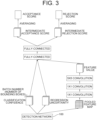
- a process of performing the reinforcement learning of the deep Q-network to allow the deep Q-network to select the training data useful for the self-supervised learning of the deep-learning based detection network by referring to the object detection information outputted from the detection network through using the learning device 1000 configured as explained above is described by referring to Figs. 2 and 3 .
- Fig. 2 is a drawing schematically illustrating a process for performing the reinforcement learning of the deep Q-network to allow the deep Q-network to select the training data useful for the self-supervised learning of the deep-learning based detection network by referring to the object detection information outputted from the detection network in accordance with one example embodiment of the present disclosure.
- the learning device 1000 upon acquiring at least one first unlabeled image from an unlabeled database, inputs the first unlabeled image into the detection network 100 that has been trained with at least one training data stored in a training database to perform an object detection, to thereby allow the detection network 100 to perform the object detection on the first unlabeled image and thus to generate first object detection information.
- the first unlabeled image may be randomly selected from the unlabeled database.
- the training data used for an initial learning of the detection network 100 may have already been fully annotated by using their corresponding ground truths.
- the unlabeled database may be storing unlabeled images which have not been annotated with their corresponding ground truths.
- the learning device 1000 may input the first unlabeled image into the detection network 100, to thereby allow the detection network 100 to apply at least one convolution operation to the first unlabeled image through at least one convolutional layer, and thus generate a first feature map corresponding to the first unlabeled image. Then, the learning device 1000 may generate first ROIs (Regions of Interest) corresponding to proposed regions where k 1 objects are predicted to be positioned on the first unlabeled image through a region proposal network by referring to the first feature map, and perform an ROI pooling operation on each of the proposed regions corresponding to each of the first ROIs on the first feature map through a pooling layer, and thus generate each of first pooled feature maps corresponding to each of the first ROIs.
- first ROIs Region of Interest
- the learning device 1000 may apply at least one first Fully-Connected operation to each of the first pooled feature maps through at least one Fully-Connected layer and thus generate each piece of first regression information and each piece of first classification information corresponding to each of the first ROIs.
- the learning device 1000 may generate (1_1)-st bounding box to (1_k 1 )-th bounding box and (1_1)-st classification information to (1_k 1 )-th classification information, respectively corresponding to the k 1 objects included in the first unlabeled image, by referring to each piece of the first regression information and each piece of the first classification information corresponding to each of the first ROIs.
- the (1_1)-st classification information to the (1_ki)-th classification information may include a (1_1)-st classification confidence to a (1_ki)-th classification confidence
- the (1_1)-st bounding box to the (1_k 1 )-th bounding box may include a (1_1)-st regression uncertainty to a (1_ki)-th regression uncertainty
- k 1 is an integer bigger than or equal to 1, and may vary depending on the number of objects present in the first unlabeled image.
- the learning device 1000 generates a first state set by referring to the first object detection information, wherein the first state set includes the (1_1)-st classification confidence to the (1_k 1 )-th classification confidence, the (1_1)-st regression uncertainty to the (1_k 1 )-th regression uncertainty, and a (1_1)-st pooled feature map to a (1_k 1 )-th pooled feature map, respectively corresponding to the (1_1)-st bounding box indicating a 1st object included in the first unlabeled image to the (1_k 1 )-th bounding box indicating a k 1 object included in the first unlabeled image.
- the learning device 1000 inputs the first state set into the deep Q-network 200, to thereby allow the deep Q-network 200 to perform a learning operation on the first state set and thus to generate a Q-value including an acceptance score and a rejection score. Then, the learning device 1000 may generate an action by applying an argMax function to the Q-value.
- the learning device 1000 may allow the deep Q-network 200 to apply at least one second Fully-Connected operation to the (1_1)-st classification confidence to the (1_k 1 )-th classification confidence, the (1_1)-st regression uncertainty to the (1_k 1 )-th regression uncertainty, and the (1_1)-st pooled feature map to the (1_k 1 )-th pooled feature map, respectively corresponding to the (1_1)-st bounding box to the (1_k 1 )-th bounding box, to thereby generate a first intermediate acceptance score to a k 1 th intermediate acceptance score and a first intermediate rejection score to a k 1 th intermediate rejection score, respectively corresponding to the (1_1)-st bounding box to the (1_k 1 )-th bounding box.
- the learning device 1000 may allow the deep Q-network 200 to execute at least one 1 ⁇ 1 convolution operation and an m x m convolution operation on the (1_1)-st pooled feature map to the (1_k 1 )-th pooled feature map, to thereby generate a first feature value to a k 1 th feature value, and then execute the second Fully-Connected operation on the (1_1)-st classification confidence to the (1_ki)-th classification confidence, the (1_1)-st regression uncertainty to the (1_ki)-th regression uncertainty, and the first feature value to the k 1 th feature value.
- data formats of components in the first state set i.e., the (1_1)-st classification confidence to the (1_k 1 )-th classification confidence, the (1_1)-st regression uncertainty to the (1_ki)-th regression uncertainty, and the (1_1)-st pooled feature map to the (1_k 1 )-th pooled feature map, may be made to be identical or similar to one another, prior to executing the second Fully-Connection operation on the components in the first state set.
- m X m may correspond to a size of the (1_1)-st pooled feature map to the (1_ki)-th pooled feature map.
- each of the (1_1)-st pooled feature map to the (1_k 1 )-th pooled feature map has a size of (5 x 5)
- at least one 1 ⁇ 1 convolution operation and a 5 ⁇ 5 convolution operation may be applied to the (1_1)-st pooled feature map to the (1_k 1 )-th pooled feature map, to thereby generate the first feature value to the k 1 th feature value.
- the second Fully-Connected operation may be executed on the (1_1)-st classification confidence to the (1_k 1 )-th classification confidence, the (1_1)-st regression uncertainty to the (1_k 1 )-th regression uncertainty, and the first feature value to the k 1 th feature value, to thereby generate the first intermediate acceptance score to the k 1 th intermediate acceptance score and the first intermediate rejection score to the k 1 th intermediate rejection score.
- the learning device 1000 may allow the deep Q-network 200 to average the first intermediate acceptance score to the k 1 th intermediate acceptance score, thus generating the acceptance score, and average the first intermediate rejection score to the k 1 th intermediate rejection score, thus generating the rejection score, to thereby generate the Q-value including the acceptance score and the rejection score.
- the learning device 1000 adds add a labeled image to the training database as the training data wherein the labeled image is generated by inserting the first object detection information into the first unlabeled image.
- the learning device 1000 deletes the first unlabeled image from the unlabeled database and retrains the detection network 100 by using at least one of the training data included in the training database, thus generating a reward by referring to a first accuracy.
- the first accuracy is obtained from a result of testing the detection network 100 by using a validation database.
- the first accuracy may be set to be a mAP (mean Average Precision) obtained by comparing test object detection information with their corresponding ground truths.
- the test object detection information may be generated through the detection network 100 by performing the objection detection on test data included in the validation database
- the learning device 1000 deletes the first unlabeled image from the unlabeled database and generates the reward by referring to a second accuracy wherein the second accuracy is obtained from a result of testing the detection network 100 by using the validation database.
- the second accuracy may be obtained based on a current state of the detection network 100 which has not been retrained with the training database. That is, since the second accuracy is measured without retraining the detection network 100, the second accuracy may not have been changed from a previously measured accuracy.
- the learning device 1000 inputs the second unlabeled image into the detection network 100, to thereby allow the detection network 100 to perform the object detection on the second unlabeled image and thus to generate second object detection information.
- the second unlabeled image may be randomly selected from the unlabeled database.
- the learning device 1000 may input the second unlabeled image into the detection network 100, to thereby allow the detection network 100 to apply the convolution operation to the second unlabeled image through the convolutional layer, and thus generate a second feature map corresponding to the second unlabeled image. Then, the learning device 1000 may generate second ROIs (Regions of Interest) corresponding to proposed regions where k 2 objects are predicted to be positioned on the second unlabeled image through the region proposal network by referring to the second feature map, and perform the ROI pooling operation on each of the proposed regions corresponding to each of the second ROIs on the second feature map through the pooling layer, and thus generate each of second pooled feature maps corresponding to each of the second ROIs.
- second ROIs Region of Interest
- the learning device 1000 may apply the first Fully-Connected operation to each of the second pooled feature maps through the Fully-Connected layer and thus generate each piece of second regression information and each piece of second classification information corresponding to each of the second ROIs.
- the learning device 1000 may generate (2_1)-st bounding box to (2_k 2 )-th bounding box and (2_1)-st classification information to (2_k 2 )-th classification information, respectively corresponding to the k 2 objects included in the second unlabeled image, by referring to each piece of the second regression information and each piece of the second classification information corresponding to each of the second ROIs.
- the (2_1)-st classification information to the (2_k 2 )-th classification information may include a (2_1)-st classification confidence to a (2_k 2 )-th classification confidence
- the (2_1)-st bounding box to the (2_k 2 )-th bounding box may include a (2_1)-st regression uncertainty to a (2_k 2 )-th regression uncertainty.
- k 2 is an integer bigger than or equal to 1, and may vary depending on the number of objects present in the second unlabeled image.
- the learning device 1000 generates a second state set by referring to the second object detection information, wherein the second state set includes the (2_1)-st classification confidence to the (2_k 2 )-th classification confidence, the (2_1)-st regression uncertainty to the (2_k 2 )-th regression uncertainty, and a (2_1)-st pooled feature map to a (2_k 2 )-th pooled feature map, respectively corresponding to the (2_1)-st bounding box indicating a 1st object included in the second unlabeled image to the (2_k 2 )-th bounding box indicating a k 2 th object included in the second unlabeled image.
- the learning device 1000 stores the first state set, the action, the reward, and the second state set as elements of a transition vector in a memory.
- the learning device 1000 may first store the first state set, the action, and the reward corresponding to the first unlabeled image in the memory, and additionally store the second state set in the memory upon acquiring the second state set.
- the elements of the transition vector may be referred to as components included in the transition vector, and the transition vector may be stored in the memory in the form of a tuple.
- the learning device 1000 may generate a minibatch by sampling at least one specific transition vector to be used as at least one transition vector for training from the memory and then train the deep Q-network 200 by using the minibatch such that the deep Q-network 200 outputs the action for increasing the reward according to the first state set and the second state set.
- a loss function based on Bellman's equation may be formulated by referring to the transition vector for training included in the minibatch, and thus the deep Q-network 200 may be trained by minimizing a loss from the loss function.
- the step of generating the first state set, the action, the reward, and the second state set as explained above may be performed iteratively to thereby generate multiple transition vectors
- the memory may include a replay memory.
- the learning device 1000 may transmit each of the transition vectors to the replay memory, to thereby replace its corresponding oldest previously generated transition vector with each of the transition vectors according to a predetermined capacity of a cyclic buffer and thus to store each of the transition vectors in the replay memory.
- the learning device 1000 generates the minibatch by randomly selecting specific transition vectors to be used as multiple transition vectors for training from the replay memory.
- the learning device 1000 may randomly select a*n or 2 n specific transition vectors to be used as the multiple transition vectors for training from the memory in proportion to an accumulated volume of the transition vectors in the memory, to thereby generate the minibatch.
- a and n are respectively integers bigger than or equal to 1 and n is increased by 1 for every predetermined number of iterations.
- the reinforcement learning of the deep Q-network 200 as explained above may be carried out by using a pseudocode below.
- the detection network 100 is represented as Detection-Net
- the deep Q-network 200 is represented as Q-Net.
- the learning device 1000 may repeat the process of training the deep Q-network 200 for every iteration the transition vector is generated.
- the self-supervised learning of the detection network 100 may be simultaneously performed with the reinforcement learning of the deep Q-network.
- the present disclosure is not limited thereto, and a method for performing the self-supervised learning of the deep Q-network by using the deep Q-network trained as explained above is as follows.
- a method for a self-learning device to perform the self-supervised learning of the detection network 100 by using the deep Q-network 200 that has been trained as explained above is provided below by referring to Figs. 4 and 5 .
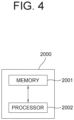
- Fig. 4 a drawing schematically illustrating the self-learning device 2000 performing the self-supervised learning of the detection network 100 by using the deep Q-network 200 in accordance with one example embodiment of the present disclosure.
- the self-learning device 2000 may include a memory 2001 for performing the self-supervised learning of the detection network 100 by using the deep Q-network 200, and a processor 2002 for performing the self-supervised learning of the detection network 100 by using the deep Q-network 200 according to the instructions in the memory 2001.
- the self-learning device 2000 may achieve a desired system performance by using combinations of at least one computing device and at least one computer software, e.g., a computer processor, a memory, a storage, an input device, an output device, or any other conventional computing components, an electronic communication device such as a router or a switch, an electronic information storage system such as a network-attached storage (NAS) device and a storage area network (SAN) as the computing device and any instructions that allow the computing device to function in a specific way as the computer software.
- a computer software e.g., a computer processor, a memory, a storage, an input device, an output device, or any other conventional computing components, an electronic communication device such as a router or a switch, an electronic information storage system such as a network-attached storage (NAS) device and a storage area network (SAN) as the computing device and any instructions that allow the computing device to function in a specific way as the computer software.
- NAS network-attached storage
- SAN storage area network
- the processor of the computing device may include hardware configuration of MPU (Micro Processing Unit) or CPU (Central Processing Unit), cache memory, data bus, etc. Additionally, the computing device may further include OS and software configuration of applications that achieve specific purposes.
- MPU Micro Processing Unit
- CPU Central Processing Unit
- the computing device includes an integrated processor, integrating a medium, a processor and a memory, for implementing the present disclosure is not excluded.
- the self-learning device 2000 may be installed on a cloud platform, IoT devices, imaging devices, autonomous vehicles, robots, etc. from which the unlabeled training data are continuously provided. If necessary, parameters of the detection network 100 and parameters of the deep Q-network 200 may be transmitted from the self-learning device 2000 to the learning device 1000 on a regular basis to receive updated parameters of the deep Q-network 200 from the learning device 1000.
- the learning device 1000 and the self-learning device 2000 may thus be physically separated and exchange data with each other, but the present disclosure is not limited thereto, and when there is no capacity limitation or physical limitation or when necessary, the learning device 1000 and the self-learning device 2000 may function as a same device.
- a process for the self-learning device 2000 configured as explained above to perform the self-supervised learning of the detection network 100 by using the deep Q-network 200 in accordance with one example embodiment of the present disclosure is explained below by referring to Fig. 5 .
- detailed explanation of parts that can be easily understood from the description provided by referring to Figs. 2 and 3 are omitted.
- the self-learning device 2000 upon acquiring at least one new unlabeled image from a new unlabeled database, inputs the new unlabeled image into the detection network 100, to thereby allow the detection network 100 to perform the object detection on the new unlabeled image and thus to generate new object detection information.
- the new labeled image may be randomly selected from the new unlabeled database.
- the new unlabeled database may be storing new labeled images which have not been annotated with their corresponding ground truths.
- the self-learning device 2000 may input the new unlabeled image into the detection network 100, to thereby allow the detection network 100 to apply the convolution operation to the new unlabeled image through the convolutional layer, and thus generate a new feature map corresponding to the new unlabeled image. Then, the self-learning device 2000 may generate new ROIs corresponding to new proposed regions where k 3 objects are predicted to be positioned on the new unlabeled image through the region proposal network by referring to the new feature map, and perform the ROI pooling operation on each of the new proposed regions corresponding to each of the new ROIs on the new feature map through the pooling layer, and thus generate each of new pooled feature maps corresponding to each of the new ROIs.
- the self-learning device 2000 may apply the first Fully-Connected operation to each of the new pooled feature maps through the Fully-Connected layer and thus generate each piece of new regression information and each piece of new classification information corresponding to each of the new ROIs.
- the self-learning device 2000 may generate a first new bounding box to a k 3 th new bounding box and first new classification information to k 3 th new classification information, respectively corresponding to the k 3 objects included in the new unlabeled image, by referring to each piece of the new regression information and each piece of the new classification information corresponding to each of the new ROIs.
- the first new classification information to the k 3 th new classification information may include a first new classification confidence to a k 3 th new classification confidence
- the first new bounding box to the k 3 th new bounding box may include a first new regression uncertainty to a k 3 th new regression uncertainty.
- k 3 is an integer bigger than or equal to 1, and may vary depending on the number of objects present in the new unlabeled image.
- the self-learning device 2000 generates a new state set by referring to the new object detection information, wherein the new state set includes the first new classification confidence to the k 3 th new classification confidence, the first new regression uncertainty to the k 3 th new regression uncertainty, and a first new pooled feature map to a k 3 th new pooled feature map, respectively corresponding to the first new bounding box indicating a 1st object included in the new unlabeled image to the k 3 th new bounding box indicating a k 3 th object included in the new unlabeled image.
- the self-learning device 2000 inputs the new state set into the deep Q-network 200, to thereby allow the deep Q-network 200 to perform the learning operation on the new state set and thus to generate a new Q-value including a new acceptance score and a new rejection score. Then, the self-learning device 2000 generates a new action by applying the argMax function to the new Q-value.
- the self-learning device 2000 may allow the deep Q-network 200 to apply the second Fully-Connected operation to the first new classification confidence to the k 3 th new classification confidence, the first new regression uncertainty to the k 3 th new regression uncertainty, and the first new pooled feature map to the k 3 th new pooled feature map, respectively corresponding to the first new bounding box to the k 3 th new bounding box, to thereby generate a first new intermediate acceptance score to a k 3 th new intermediate acceptance score and a first new intermediate rejection score to a k 3 th new intermediate rejection score, respectively corresponding to the first new bounding box to the k 3 th new bounding box.
- the self-learning device 2000 may allow the deep Q-network 200 to execute at least one 1 ⁇ 1 convolution operation and an m x m convolution operation on the first new pooled feature map to the k 3 th new pooled feature map, to thereby generate a first new feature value to a k 3 th new feature value, and then execute the second Fully-Connected operation on the first new classification confidence to the k 3 th new classification confidence, the first new regression uncertainty to the k 3 th new regression uncertainty, and the first new feature value to the k 3 th new feature value.
- data formats of components in the new state set i.e., the first new classification confidence to the k 3 th new classification confidence, the first new regression uncertainty to the k 3 th new regression uncertainty, and the first new pooled feature map to the k 3 th new pooled feature map, may be made to be identical or similar to one another, prior to executing the second Fully-Connection operation on the components in the new state set.
- the self-learning device 2000 may average the first new intermediate acceptance score to the k 3 th new intermediate acceptance score, thus generating the new acceptance score, and average the first new intermediate rejection score to the k 3 th new intermediate rejection score, thus generating the new rejection score, to thereby generate the new Q-value including the new acceptance score and the new rejection score.
- the self-learning device 2000 adds a new labeled image to the training database as the training data wherein the new labeled image is generated by inserting the new object detection information into the new unlabeled image.
- the self-learning device 2000 deletes the new unlabeled image from the new unlabeled database, and retrains the detection network 100 by using at least one of the training data included in the training database.
- the self-learning device 2000 deletes the new unlabeled image from the new unlabeled database.
- the self-supervised learning of the detection network 100 as explained above may be carried out by using a pseudocode below.
- the detection network 100 is represented as Detection-Net
- the deep Q-network 200 is represented as Q-Net.
- the self-learning device 2000 may generate the new state set, the new Q-value and the new action and repeat the process of training the detection network 100 for every iteration the new unlabeled image is obtained from the new unlabeled database.
- the training database used for the self-supervised learning of the detection network 100 may include those training data used for the self-supervised learning of the detection network 100 during the stage of the reinforcement learning of the deep Q-network 200.
- the present disclosure is not limited thereto, and may include cases where the training database includes a new set of training data instead of an original set of training data used for the self-supervised learning of the detection network 100 during the stage of the reinforcement learning of the deep Q-network 200.
- the self-learning device 2000 may allow a new detection network different from the detection network 100 above to perform the process of the object detection to generate the new object detection information on the new unlabeled image selected from the new unlabeled database.
- the deep Q-network 200 trained through the reinforcement learning may be used for self-supervised learning of the new detection network instead of the self-supervised learning of the detection network 100 originally used for the reinforcement learning of the deep Q-network 200.
- the present disclosure has an effect of effectively selecting the training data useful for increasing an accuracy of the detection network by using the deep-Q network to generate Q-values based on object detection results of the detection network on the training data.
- the present disclosure has another effect of performing the reinforcement learning of the deep Q-network connected to the detection network by using the accuracy of the detection network as the reward such that the deep Q-network is trained to produce the Q-values capable of selecting the training data useful for increasing the accuracy of the detection network.
- the present disclosure has still another effect of enabling the self-supervised learning of the detection network by using the training data selected on the basis of the Q-values generated from the deep Q-network.
- the embodiments of the present disclosure as explained above can be implemented in a form of executable program command through a variety of computer means recordable to computer readable media.
- the computer readable media may store solely or in combination, program commands, data files, and data structures.
- the program commands recorded in the media may be components specially designed for the present disclosure or may be usable for a skilled human in a field of computer software.
- the computer readable media include, but are not limited to, magnetic media such as hard drives, floppy diskettes, magnetic tapes, memory cards, solid-state drives, USB flash drives, optical media such as CD-ROM and DVD, magneto-optical media such as floptical diskettes and hardware devices such as a read-only memory (ROM), a random access memory (RAM), and a flash memory specially designed to store and carry out program commands.
- Program commands may include not only a machine language code made by a compiler but also a high level code that can be used by an interpreter etc., which is executed by a computer.
- the aforementioned hardware device may work as more than a software module to perform the action of the present disclosure and they may do the same in the opposite case.
- the hardware device may include a processor such as a CPU or a GPU, combined with a memory device such as ROM or RAM to store the program commands, configured to execute the commands stored in the memory, and a communication part which can exchange signals with external devices.
- the hardware device may include a keyboard, a mouse, and any other external input device to receive commands prepared by developers.
Landscapes
- Engineering & Computer Science (AREA)
- Theoretical Computer Science (AREA)
- Physics & Mathematics (AREA)
- General Physics & Mathematics (AREA)
- Evolutionary Computation (AREA)
- Artificial Intelligence (AREA)
- Computing Systems (AREA)
- General Health & Medical Sciences (AREA)
- Software Systems (AREA)
- Health & Medical Sciences (AREA)
- Computer Vision & Pattern Recognition (AREA)
- Databases & Information Systems (AREA)
- Multimedia (AREA)
- Medical Informatics (AREA)
- Data Mining & Analysis (AREA)
- Life Sciences & Earth Sciences (AREA)
- General Engineering & Computer Science (AREA)
- Biomedical Technology (AREA)
- Biophysics (AREA)
- Computational Linguistics (AREA)
- Molecular Biology (AREA)
- Mathematical Physics (AREA)
- Bioinformatics & Cheminformatics (AREA)
- Bioinformatics & Computational Biology (AREA)
- Evolutionary Biology (AREA)
- Image Analysis (AREA)
Claims (15)
- Verfahren zur Durchführung von selbstüberwachtem Lernen eines auf Deep Learning basierenden Erkennungsnetzwerks unter Verwendung eines Deep-Q-Netzwerks, umfassend die Schritte:(a) nach Erwerben mindestens eines ersten unmarkierten Bildes aus einer unmarkierten Datenbank Durchführen von Prozessen des (i) Eingebens des ersten unmarkierten Bildes in ein Erkennungsnetzwerk, welches mit mindestens einigen Trainingsdaten trainiert worden ist, die in einer Trainingsdatenbank gespeichert sind, um eine Objekterkennung durchzuführen, um dadurch zu ermöglichen, dass das Erkennungsnetzwerk die Objekterkennung an dem ersten unmarkierten Bild durchführt und somit erste Objekterkennungsinformationen erzeugt, (ii) des Erzeugens eines ersten Zustandsdatensatzes unter Rückgriff auf die ersten Objekterkennungsinformationen, wobei der erste Zustandsdatensatz eine (1_1)-te bis (1_k1)-te Klassifikationskonfidenz, eine (1_1)-te bis (1_k1)-te Regressionsunsicherheit und eine (1_1)-te bis (1_k1)-te gepoolte Merkmalsabbildung umfasst, welche jeweils einem (1_1)-ten Eingrenzungsrahmen, der ein erstes Objekt anzeigt, das in dem ersten unmarkierten Bild enthalten ist, bis (1_k1)-ten Eingrenzungsrahmen entsprechen, der ein k1-tes Objekt anzeigt, das in dem ersten unmarkierten Bild enthalten ist, und wobei k1 eine ganze Zahl größer oder gleich 1 ist, (iii) des Eingebens des ersten Zustandsdatensatzes in ein Deep-Q-Netzwerk, um dadurch zu ermöglichen, dass das Deep-Q-Netzwerk eine Lernoperation an dem ersten Zustandsdatensatz durchführt und somit einen Q-Wert erzeugt, welcher einen Akzeptanzpunktwert und einen Ablehnungspunktwert umfasst, und (iv) des Erzeugens einer Handlung durch Anwenden einer ArgMax-Funktion auf den Q-Wert durch eine Lernvorrichtung;(b) Durchführen von Prozessen des (i) (i-1) Hinzufügens eines markierten Bildes zu der Trainingsdatenbank als die Trainingsdaten, wenn bestimmt wird, dass die Handlung einer Akzeptanz des ersten unmarkierten Bildes entspricht, wobei das markierte Bild durch Einfügen der ersten Objekterkennungsinformationen in das erste unmarkierte Bild erzeugt wird, des Löschens des ersten unmarkierten Bildes aus der unmarkierten Datenbank, des Neu-Trainierens des Erkennungsnetzwerks unter Verwendung mindestens einiger der Trainingsdaten, die in der Trainingsdatenbank enthalten sind, und somit des Erzeugens einer Belohnung unter Rückgriff auf eine erste Genauigkeit, wobei die erste Genauigkeit aus einem Ergebnis des Testens des Erkennungsnetzwerks unter Verwendung einer Validierungsdatenbank erhalten wird, (i-2) wenn bestimmt wird, dass die Handlung einer Ablehnung des ersten unmarkierten Bildes entspricht, des Löschens des ersten unmarkierten Bildes aus der unmarkierten Datenbank und des Erzeugens der Belohnung unter Rückgriff auf eine zweite Genauigkeit, wobei die zweite Genauigkeit aus einem Ergebnis des Testens des Erkennungsnetzwerks unter Verwendung der Validierungsdatenbank erhalten wird, und (ii) nach Erwerben mindestens eines zweiten unmarkierten Bildes aus der unmarkierten Datenbank (ii-1) des Eingebens des zweiten unmarkierten Bildes in des Erkennungsnetzwerk, um dadurch zu ermöglichen, dass das Erkennungsnetzwerk die Objekterkennung an dem zweiten unmarkierten Bild durchführt und somit zweite Objekterkennungsinformationen erzeugt, (ii-2) des Erzeugens eines zweiten Zustandsdatensatzes unter Rückgriff auf die zweiten Objekterkennungsinformationen, wobei der zweite Zustandsdatensatz eine (2_1)-te bis (2_k2)-te Klassifikationskonfidenz, eine (2_1)-te bis (2_k2)-te Regressionsunsicherheit und eine (2_1)-te bis (2_k2)-te gepoolte Merkmalsabbildung umfasst, welche jeweils einem (2_1)-ten Eingrenzungsrahmen, der ein erstes Objekt anzeigt, das in dem zweiten unmarkierten Bild enthalten ist, bis (2_k2)-ten Eingrenzungsrahmen entsprechen, der ein k2-tes Objekt anzeigt, das in dem zweiten unmarkierten Bild enthalten ist, und wobei sich k2 auf eine ganze Zahl größer oder gleich 1 bezieht, und (ii-3) des Speicherns des ersten Zustandsdatensatzes, der Handlung, der Belohnung und des zweiten Zustandsdatensatzes als Elemente eines Übergangsvektors in einem Speicher durch die Lernvorrichtung; und(c) Durchführen eines Prozesses des Erzeugens eines Minibatch durch Sampeln mindestens eines speziellen Übergangsvektors, der als mindestens ein Übergangsvektor zum Trainieren zu verwenden ist, aus dem Speicher und anschließendes Trainieren des Deep-Q-Netzwerks unter Verwendung des Minibatch durch die Lernvorrichtung derart, dass das Deep-Q-Netzwerk die Handlung zum Erhöhen der Belohnung gemäß dem ersten Zustandsdatensatz und dem zweiten Zustandsdatensatz ausgibt.
- Verfahren nach Anspruch 1, wobei im Schritt (a) die Lernvorrichtung einen Prozess des Ermöglichens durchführt, dass das Deep-Q-Netzwerk (i) mindestens eine Fully-Connected-Operation auf die (1_1)-te bis (1_k1)-te Klassifikationskonfidenz, die (1_1)-te bis (1_k1)-te Regressionsunsicherheit und die (1_1)-te bis (1_k1)-te gepoolte Merkmalsabbildung anwendet, welche jeweils dem (1_1)-ten bis (1_k1)-ten Eingrenzungsrahmen entsprechen, um dadurch einen ersten bis k1-ten Zwischenakzeptanzpunktwert und einen ersten bis k1-ten Zwischenablehnungspunktwert zu erzeugen, welche jeweils dem (1_1)-ten bis (1_k1)-ten Eingrenzungsrahmen entsprechen, und (ii) den ersten bis k1-ten Zwischenakzeptanzpunktwert mittelt, wodurch der Akzeptanzpunktwert erzeugt wird, und den ersten bis k1-ten Zwischenablehnungspunktwert mittelt, wodurch der Ablehnungspunktwert erzeugt wird, um dadurch den Q-Wert zu erzeugen, welcher den Akzeptanzpunktwert und den Ablehnungspunktwert umfasst.
- Verfahren nach Anspruch 2, wobei die Lernvorrichtung einen Prozess des Ermöglichens durchführt, dass das Deep-Q-Netzwerk mindestens eine 1×1-Faltungsoperation und eine mxm-Faltungsoperation an der (1_1)-ten bis (1_k1)-ten gepoolten Merkmalsabbildung durchführt, um dadurch einen ersten bis k1-ten Merkmalswert zu erzeugen, und anschließend die Fully-Connected-Operation auf die (1_1)-te bis (1_k1)-te Klassifikationskonfidenz, die (1_1)-te bis (1_k1)-te Regressionsunsicherheit und den ersten bis k1-ten Merkmalswert anwendet, um dadurch den ersten bis k1-ten Zwischenakzeptanzpunktwert und den ersten bis k1-ten Zwischenablehnungspunktwert zu erzeugen.
- Verfahren nach Anspruch 1, wobei der Schritt (a), der Schritt (b) und der Schritt (c) wiederholt durchgeführt werden, um dadurch mehrere Übergangsvektoren zu erzeugen, und
wobei im Schritt (c) für jede Wiederholung die Lernvorrichtung einen Prozess des zufälligen Auswählens a*n oder 2 n spezieller Übergangsvektoren, die als mehrere Übergangsvektoren zum Trainieren zu verwenden sind, aus dem Speicher in Proportion zu einem akkumulierten Volumen der Übergangsvektoren in dem Speicher, um dadurch den Minibatch zu erzeugen, und des anschließenden Trainierens des Deep-Q-Netzwerks unter Verwendung des Minibatch durchführt oder eine andere Vorrichtung unterstützt, diesen durchzuführen, wobei a und n jeweils ganze Zahlen größer oder gleich 1 sind und n für jede vorab bestimmte Anzahl von Wiederholungen um 1 erhöht wird. - Verfahren nach Anspruch 1, wobei der Schritt (a), der Schritt (b) und der Schritt (c) wiederholt durchgeführt werden, um dadurch mehrere Übergangsvektoren zu erzeugen,wobei der Speicher einen Wiedergabespeicher umfasst, undwobei im Schritt (c) für jede Wiederholung die Lernvorrichtung einen Prozess des (i) Sendens jedes der Übergangsvektoren an den Wiedergabespeicher, um dadurch seinen entsprechenden ältesten früher erzeugten Übergangsvektor gemäß einer vorab bestimmten Kapazität eines zyklischen Puffers durch jeden der Übergangsvektoren zu ersetzen und somit jeden der Übergangsvektoren in dem Wiedergabespeicher zu speichern, und (ii) des Erzeugens des Minibatch durch zufälliges Sampeln spezieller Übergangsvektoren, die als mehrere Übergangsvektoren zum Trainieren zu verwenden sind, aus dem Wiedergabespeicher durchführt.
- Verfahren nach Anspruch 1, wobei im Schritt (a) die Lernvorrichtung einen Prozess des Eingebens des ersten unmarkierten Bildes in das Erkennungsnetzwerk durchführt, um dadurch zu ermöglichen, dass das Erkennungsnetzwerk (i) durch mindestens eine Faltungsschicht mindestens eine Faltungsoperation auf das erste unmarkierte Bild anwendet und somit eine erste Merkmalsabbildung erzeugt, welche dem ersten unmarkierten Bild entspricht, (ii) durch ein Regionsvorschlagsnetzwerk unter Rückgriff auf die erste Merkmalsabbildung ROIs erzeugt, welche vorgeschlagenen Regionen entsprechen, für die vorhergesagt wird, dass die k1 Objekte auf dem ersten unmarkierten Bild dort positioniert sind, (iii) durch eine Pooling-Schicht eine ROI-Pooling-Operation an jeweiligen der vorgeschlagenen Regionen durchführt, welche jeweiligen der ROIs auf der ersten Merkmalsabbildung entsprechen, und somit jeweilige von gepoolten Merkmalsabbildungen erzeugt, welche jeweiligen der ROIs entsprechen, (iv) durch mindestens eine Fully-Connected-Schicht mindestens eine Fully-Connected-Operation auf jeweilige der gepoolten Merkmalsabbildungen anwendet und somit jeweilige Elemente von Regressionsinformationen und jeweilige Elemente von Klassifikationsinformationen erzeugt, welche jeweiligen der ROIs entsprechen, und (v) unter Rückgriff auf ein jeweiliges Element der Regressionsinformationen und ein jeweiliges Element der Klassifikationsinformationen, die jeweiligen der ROIs entsprechen, den (1_1)-ten bis (1-k1)-ten Eingrenzungsrahmen und (1_1)-te bis (1-k1)-te Klassifikationsinformationen erzeugt, welche jeweils den k1 Objekten entsprechen, die in dem ersten unmarkierten Bild enthalten sind.
- Verfahren zur Durchführung von selbstüberwachtem Lernen eines auf Deep Learning basierenden Erkennungsnetzwerks unter Verwendung eines Deep-Q-Netzwerks, umfassend die Schritte:(a) Ausführen der Schritte gemäß dem Verfahren nach Anspruch 1 und nach Erwerben mindestens eines neuen unmarkierten Bildes aus einer neuen unmarkierten Datenbank Durchführen von Prozessen des (i) Eingebens des neuen unmarkierten Bildes in das Erkennungsnetzwerk, um dadurch zu ermöglichen, dass das Erkennungsnetzwerk die Objekterkennung an dem neuen unmarkierten Bild durchführt und somit neue Objekterkennungsinformationen erzeugt, (ii) des Erzeugens eines neuen Zustandsdatensatzes unter Rückgriff auf die neuen Objekterkennungsinformationen, wobei der neue Zustandsdatensatz eine erste bis k3-te neue Klassifikationskonfidenz, eine erste bis k3-te neue Regressionsunsicherheit und eine erste bis k3-te neue gepoolte Merkmalsabbildung umfasst, welche jeweils einem ersten neuen Eingrenzungsrahmen, der ein erstes Objekt anzeigt, das in dem neuen unmarkierten Bild enthalten ist, bis k3-ten neuen Eingrenzungsrahmen entsprechen, der ein ks-tes Objekt anzeigt, das in dem neuen unmarkierten Bild enthalten ist, und wobei sich k3 auf eine ganze Zahl größer oder gleich 1 bezieht, (iii) des Eingebens des neuen Zustandsdatensatzes in das Deep-Q-Netzwerk, um dadurch zu ermöglichen, dass das Deep-Q-Netzwerk die Lernoperation an dem neuen Zustandsdatensatz durchführt und somit einen Q-Wert erzeugt, welcher einen neuen Akzeptanzpunktwert und einen neuen Ablehnungspunktwert umfasst, und (iv) des Erzeugens einer neuen Handlung durch Anwenden der ArgMax-Funktion auf den neuen Q-Wert durch eine selbstlernende Vorrichtung; und(b) Durchführen von Prozessen des (i) Hinzufügens eines neuen markierten Bildes zu der Trainingsdatenbank als die Trainingsdaten, wenn bestimmt wird, dass die neue Handlung einer Akzeptanz des neuen unmarkierten Bildes entspricht, wobei das neue markierte Bild durch Einfügen der neuen Objekterkennungsinformationen in das neue unmarkierte Bild erzeugt wird, des Löschens des neuen unmarkierten Bildes aus der neuen unmarkierten Datenbank und des Neu-Trainierens des Erkennungsnetzwerks unter Verwendung mindestens einiger der Trainingsdaten, die in der Trainingsdatenbank enthalten sind, und (ii) wenn bestimmt wird, dass die neue Handlung einer Ablehnung des neuen unmarkierten Bildes entspricht, des Löschens des neuen unmarkierten Bildes aus der neuen unmarkierten Datenbank durch die selbstlernende Vorrichtung.
- Verfahren nach Anspruch 7, wobei im Schritt (a) die selbstlernende Vorrichtung einen Prozess des Ermöglichens durchführt, dass das Deep-Q-Netzwerk (i) mindestens eine Fully-Connected-Operation auf die erste bis k3-te neue Klassifikationskonfidenz, die erste bis k3-te neue Regressionsunsicherheit und die erste bis k3-te neue gepoolte Merkmalsabbildung anwendet, welche jeweils dem ersten bis k3-ten neuen Eingrenzungsrahmen entsprechen, um dadurch einen ersten bis k3-ten neuen Zwischenakzeptanzpunktwert und einen ersten bis k3-ten neuen Zwischenablehnungspunktwert zu erzeugen, welche jeweils dem ersten bis k3-ten neuen Eingrenzungsrahmen entsprechen, und (ii) den ersten bis k3-ten neuen Zwischenakzeptanzpunktwert mittelt, wodurch der neue Akzeptanzpunktwert erzeugt wird, und den ersten bis k3-ten neuen Zwischenablehnungspunktwert mittelt, wodurch der neue Ablehnungspunktwert erzeugt wird, um dadurch den neuen Q-Wert zu erzeugen, welcher den neuen Akzeptanzpunktwert und den neuen Ablehnungspunktwert umfasst.
- Verfahren nach Anspruch 8, wobei die selbstlernende Vorrichtung einen Prozess des Ermöglichens durchführt, dass das Deep-Q-Netzwerk mindestens eine 1x1-Faltungsoperation und eine mxm-Faltungsoperation an der ersten bis k3-ten neuen gepoolten Merkmalsabbildung durchführt, um dadurch einen ersten bis k3-ten neuen Merkmalswert zu erzeugen, und anschließend die Fully-Connected-Operation auf die erste bis k3-te neue Klassifikationskonfidenz, die erste bis k3-te neue Regressionsunsicherheit und den ersten bis k3-ten neuen Merkmalswert anwendet, um dadurch den ersten bis k3-ten neuen Zwischenakzeptanzpunktwert und den ersten bis k3-ten neuen Zwischenablehnungspunktwert zu erzeugen.
- Verfahren nach Anspruch 7, wobei im Schritt (a) die selbstlernende Vorrichtung einen Prozess des Eingebens des neuen unmarkierten Bildes in das Erkennungsnetzwerk durchführt, um dadurch zu ermöglichen, dass das Erkennungsnetzwerk (i) durch mindestens eine Faltungsschicht mindestens eine Faltungsoperation auf das neue unmarkierte Bild anwendet und somit eine neue Merkmalsabbildung erzeugt, welche dem neuen unmarkierten Bild entspricht, (ii) durch ein Regionsvorschlagsnetzwerk unter Rückgriff auf die neue Merkmalsabbildung neue ROIs erzeugt, welche neuen vorgeschlagenen Regionen entsprechen, für die vorhergesagt wird, dass die k3 Objekte auf dem neuen unmarkierten Bild dort positioniert sind, (iii) durch eine Pooling-Schicht eine ROI-Pooling-Operation an jeweiligen der neuen vorgeschlagenen Regionen durchführt, welche jeweiligen der neuen ROIs auf der neuen Merkmalsabbildung entsprechen, und somit jeweilige von neuen gepoolten Merkmalsabbildungen erzeugt, welche jeweiligen der neuen ROIs entsprechen, (iv) durch mindestens eine Fully-Connected-Schicht mindestens eine Fully-Connected-Operation auf jeweilige der neuen gepoolten Merkmalsabbildungen anwendet und somit jeweilige Elemente von neuen Regressionsinformationen und jeweilige Elemente von neuen Klassifikationsinformationen erzeugt, welche jeweiligen der neuen ROIs entsprechen, und (v) unter Rückgriff auf ein jeweiliges Element der neuen Regressionsinformationen und ein jeweiliges Element der neuen Klassifikationsinformationen, die jeweiligen der neuen ROIs entsprechen, den ersten bis k3-ten neuen Eingrenzungsrahmen und erste bis k3-te neue Klassifikationsinformationen erzeugt, welche jeweils den k3 Objekten entsprechen, die in dem neuen unmarkierten Bild enthalten sind.
- Lernvorrichtung zur Durchführung von selbstüberwachtem Lernen eines auf Deep Learning basierenden Erkennungsnetzwerks unter Verwendung eines Deep-Q-Netzwerks, umfassend:mindestens einen Speicher, welcher Anweisungen speichert; undmindestens einen Prozessor, konfiguriert zum Ausführen der Anweisungen zum Durchführen von: Prozessen (I) nach Erwerben mindestens eines ersten unmarkierten Bildes aus einer unmarkierten Datenbank (i) des Eingebens des ersten unmarkierten Bildes in ein Erkennungsnetzwerk, welches mit mindestens einigen Trainingsdaten trainiert worden ist, die in einer Trainingsdatenbank gespeichert sind, um eine Objekterkennung durchzuführen, um dadurch zu ermöglichen, dass das Erkennungsnetzwerk die Objekterkennung an dem ersten unmarkierten Bild durchführt und somit erste Objekterkennungsinformationen erzeugt, (ii) des Erzeugens eines ersten Zustandsdatensatzes unter Rückgriff auf die ersten Objekterkennungsinformationen, wobei der erste Zustandsdatensatz eine (1_1)-te bis (1_k1)-te Klassifikationskonfidenz, eine (1_1)-te bis (1_k1)-te Regressionsunsicherheit und eine (1_1)-te bis (1_k1)-te gepoolte Merkmalsabbildung umfasst, welche jeweils einem (1_1)-ten Eingrenzungsrahmen, der ein erstes Objekt anzeigt, das in dem ersten unmarkierten Bild enthalten ist, bis (1_ki)-ten Eingrenzungsrahmen entsprechen, der ein k1-tes Objekt anzeigt, das in dem ersten unmarkierten Bild enthalten ist, und wobei k1 eine ganze Zahl größer oder gleich 1 ist, (iii) des Eingebens des ersten Zustandsdatensatzes in ein Deep-Q-Netzwerk, um dadurch zu ermöglichen, dass das Deep-Q-Netzwerk eine Lernoperation an dem ersten Zustandsdatensatz durchführt und somit einen Q-Wert erzeugt, welcher einen Akzeptanzpunktwert und einen Ablehnungspunktwert umfasst, und (iv) des Erzeugens einer Handlung durch Anwenden einer ArgMax-Funktion auf den Q-Wert, (II) (i) (i-1) des Hinzufügens eines markierten Bildes zu der Trainingsdatenbank als die Trainingsdaten, wenn bestimmt wird, dass die Handlung einer Akzeptanz des ersten unmarkierten Bildes entspricht, wobei das markierte Bild durch Einfügen der ersten Objekterkennungsinformationen in das erste unmarkierte Bild erzeugt wird, des Löschens des ersten unmarkierten Bildes aus der unmarkierten Datenbank, des Neu-Trainierens des Erkennungsnetzwerks unter Verwendung mindestens einiger der Trainingsdaten, die in der Trainingsdatenbank enthalten sind, und somit des Erzeugens einer Belohnung unter Rückgriff auf eine erste Genauigkeit, wobei die erste Genauigkeit aus einem Ergebnis des Testens des Erkennungsnetzwerks unter Verwendung einer Validierungsdatenbank erhalten wird, (i-2) wenn bestimmt wird, dass die Handlung einer Ablehnung des ersten unmarkierten Bildes entspricht, des Löschens des ersten unmarkierten Bildes aus der unmarkierten Datenbank und des Erzeugens der Belohnung unter Rückgriff auf eine zweite Genauigkeit, wobei die zweite Genauigkeit aus einem Ergebnis des Testens des Erkennungsnetzwerks unter Verwendung der Validierungsdatenbank erhalten wird, und (ii) nach Erwerben mindestens eines zweiten unmarkierten Bildes aus der unmarkierten Datenbank (ii-1) des Eingebens des zweiten unmarkierten Bildes in des Erkennungsnetzwerk, um dadurch zu ermöglichen, dass das Erkennungsnetzwerk die Objekterkennung an dem zweiten unmarkierten Bild durchführt und somit zweite Objekterkennungsinformationen erzeugt, (ii-2) des Erzeugens eines zweiten Zustandsdatensatzes unter Rückgriff auf die zweiten Objekterkennungsinformationen, wobei der zweite Zustandsdatensatz eine (2_1)-te bis (2_k2)-te Klassifikationskonfidenz, eine (2_1)-te bis (2_k2)-te Regressionsunsicherheit und eine (2_1)-te bis (2_k2)-te gepoolte Merkmalsabbildung umfasst, welche jeweils einem (2_1)-ten Eingrenzungsrahmen, der ein erstes Objekt anzeigt, das in dem zweiten unmarkierten Bild enthalten ist, bis (2_k2)-ten Eingrenzungsrahmen entsprechen, der ein k2-tes Objekt anzeigt, das in dem zweiten unmarkierten Bild enthalten ist, und wobei sich k2 auf eine ganze Zahl größer oder gleich 1 bezieht, und (ii-3) des Speicherns des ersten Zustandsdatensatzes, der Handlung, der Belohnung und des zweiten Zustandsdatensatzes als Elemente eines Übergangsvektors in einem Speicher; und (III) des Erzeugens eines Minibatch durch Sampeln mindestens eines speziellen Übergangsvektors, der als mindestens ein Übergangsvektor zum Trainieren zu verwenden ist, aus dem Speicher und anschließendes Trainieren des Deep-Q-Netzwerks unter Verwendung des Minibatch derart, dass das Deep-Q-Netzwerk die Handlung zum Erhöhen der Belohnung gemäß dem ersten Zustandsdatensatz und dem zweiten Zustandsdatensatz ausgibt.
- Lernvorrichtung nach Anspruch 11, wobei im Prozess (I) der Prozessor einen Prozess des Ermöglichens durchführt, dass das Deep-Q-Netzwerk (i) mindestens eine Fully-Connected-Operation auf die (1_1)-te bis (1_k1)-te Klassifikationskonfidenz, die (1_1)-te bis (1_k1)-te Regressionsunsicherheit und die (1_1)-te bis (1_k1)-te gepoolte Merkmalsabbildung anwendet, welche jeweils dem (1_1)-ten bis (1_k1)-ten Eingrenzungsrahmen entsprechen, um dadurch einen ersten bis k1-ten Zwischenakzeptanzpunktwert und einen ersten bis k1-ten Zwischenablehnungspunktwert zu erzeugen, welche jeweils dem (1_1)-ten bis (1_k1)-ten Eingrenzungsrahmen entsprechen, und (ii) den ersten bis k1-ten Zwischenakzeptanzpunktwert mittelt, wodurch der Akzeptanzpunktwert erzeugt wird, und den ersten bis k1-ten Zwischenablehnungspunktwert mittelt, wodurch der Ablehnungspunktwert erzeugt wird, um dadurch den Q-Wert zu erzeugen, welcher den Akzeptanzpunktwert und den Ablehnungspunktwert umfasst.
- Lernvorrichtung nach Anspruch 12, wobei der Prozessor einen Prozess des Ermöglichens durchführt, dass das Deep-Q-Netzwerk mindestens eine 1x1-Faltungsoperation und eine mxm-Faltungsoperation an der (1_1)-ten bis (1_ki)-ten gepoolten Merkmalsabbildung durchführt, um dadurch einen ersten bis k1-ten Merkmalswert zu erzeugen, und anschließend die Fully-Connected-Operation auf die (1_1)-te bis (1_k1)-te Klassifikationskonfidenz, die (1_1)-te bis (1_k1)-te Regressionsunsicherheit und den ersten bis k1-ten Merkmalswert anwendet, um dadurch den ersten bis k1-ten Zwischenakzeptanzpunktwert und den ersten bis k1-ten Zwischenablehnungspunktwert zu erzeugen.
- Lernvorrichtung nach Anspruch 11, wobei der Prozess (I), der Prozess (II) und der Prozess (III) wiederholt durchgeführt werden, um dadurch mehrere Übergangsvektoren zu erzeugen, und
wobei im Prozess (III) für jede Wiederholung der Prozessor einen Prozess des zufälligen Auswählens a*n oder 2 n spezieller Übergangsvektoren, die als mehrere Übergangsvektoren zum Trainieren zu verwenden sind, aus dem Speicher in Proportion zu einem akkumulierten Volumen der Übergangsvektoren in dem Speicher, um dadurch den Minibatch zu erzeugen, und des anschließenden Trainierens des Deep-Q-Netzwerks unter Verwendung des Minibatch durchführt, wobei a und n jeweils ganze Zahlen größer oder gleich 1 sind und n für jede vorab bestimmte Anzahl von Wiederholungen um 1 erhöht wird. - Selbstlernende Vorrichtung zur Durchführung von selbstüberwachtem Lernen eines auf Deep Learning basierenden Erkennungsnetzwerks unter Verwendung eines Deep-Q-Netzwerks, umfassend:mindestens einen Speicher, welcher Anweisungen speichert; undmindestens einen Prozessor, konfiguriert zum Ausführen der Anweisungen zum Durchführen von: Prozessen (I) wenn eine Lernvorrichtung nach Erwerben mindestens eines ersten unmarkierten Bildes aus einer unmarkierten Datenbank Prozesse des (i-1) Eingebens des ersten unmarkierten Bildes in ein Erkennungsnetzwerk, welches mit mindestens einigen Trainingsdaten trainiert worden ist, die in einer Trainingsdatenbank gespeichert sind, um eine Objekterkennung durchzuführen, um dadurch zu ermöglichen, dass das Erkennungsnetzwerk die Objekterkennung an dem ersten unmarkierten Bild durchführt und somit erste Objekterkennungsinformationen erzeugt, (i-2) des Erzeugens eines ersten Zustandsdatensatzes unter Rückgriff auf die ersten Objekterkennungsinformationen, wobei der erste Zustandsdatensatz eine (1_1)-te bis (1_k1)-te Klassifikationskonfidenz, eine (1_1)-te bis (1_k1)-te Regressionsunsicherheit und eine (1_1)-te bis (1_k1)-te gepoolte Merkmalsabbildung umfasst, welche jeweils einem (1_1)-ten Eingrenzungsrahmen, der ein erstes Objekt anzeigt, das in dem ersten unmarkierten Bild enthalten ist, bis (1_ki)-ten Eingrenzungsrahmen entsprechen, der ein k1-tes Objekt anzeigt, das in dem ersten unmarkierten Bild enthalten ist, und wobei k1 eine ganze Zahl größer oder gleich 1 ist, (i-3) des Eingebens des ersten Zustandsdatensatzes in ein Deep-Q-Netzwerk, um dadurch zu ermöglichen, dass das Deep-Q-Netzwerk eine Lernoperation an dem ersten Zustandsdatensatz durchführt und somit einen Q-Wert erzeugt, welcher einen Akzeptanzpunktwert und einen Ablehnungspunktwert umfasst, und (i-4) des Erzeugens einer Handlung durch Anwenden einer ArgMax-Funktion auf den Q-Wert, (ii) (ii-1) (1) des Hinzufügens eines markierten Bildes zu der Trainingsdatenbank als die Trainingsdaten, wenn bestimmt wird, dass die Handlung einer Akzeptanz des ersten unmarkierten Bildes entspricht, wobei das markierte Bild durch Einfügen der ersten Objekterkennungsinformationen in das erste unmarkierte Bild erzeugt wird, des Löschens des ersten unmarkierten Bildes aus der unmarkierten Datenbank, des Neu-Trainierens des Erkennungsnetzwerks unter Verwendung mindestens einiger der Trainingsdaten, die in der Trainingsdatenbank enthalten sind, und somit des Erzeugens einer Belohnung unter Rückgriff auf eine erste Genauigkeit, wobei die erste Genauigkeit aus einem Ergebnis des Testens des Erkennungsnetzwerks unter Verwendung einer Validierungsdatenbank erhalten wird, (2) wenn bestimmt wird, dass die Handlung einer Ablehnung des ersten unmarkierten Bildes entspricht, des Löschens des ersten unmarkierten Bildes aus der unmarkierten Datenbank und des Erzeugens der Belohnung unter Rückgriff auf eine zweite Genauigkeit, wobei die zweite Genauigkeit aus einem Ergebnis des Testens des Erkennungsnetzwerks unter Verwendung der Validierungsdatenbank erhalten wird, und (ii-2) nach Erwerben mindestens eines zweiten unmarkierten Bildes aus der unmarkierten Datenbank (1) des Eingebens des zweiten unmarkierten Bildes in des Erkennungsnetzwerk, um dadurch zu ermöglichen, dass das Erkennungsnetzwerk die Objekterkennung an dem zweiten unmarkierten Bild durchführt und somit zweite Objekterkennungsinformationen erzeugt, (2) des Erzeugens eines zweiten Zustandsdatensatzes unter Rückgriff auf die zweiten Objekterkennungsinformationen, wobei der zweite Zustandsdatensatz eine (2_1)-te bis (2_k2)-te Klassifikationskonfidenz, eine (2_1)-te bis (2_k2)-te Regressionsunsicherheit und eine (2_1)-te bis (2_k2)-te gepoolte Merkmalsabbildung umfasst, welche jeweils einem (2_1)-ten Eingrenzungsrahmen, der ein erstes Objekt anzeigt, das in dem zweiten unmarkierten Bild enthalten ist, bis (2_k2)-ten Eingrenzungsrahmen entsprechen, der ein k2-tes Objekt anzeigt, das in dem zweiten unmarkierten Bild enthalten ist, und wobei sich k2 auf eine ganze Zahl größer oder gleich 1 bezieht, und (3) des Speicherns des ersten Zustandsdatensatzes, der Handlung, der Belohnung und des zweiten Zustandsdatensatzes als Elemente eines Übergangsvektors in einem Speicher, und (iii) des Erzeugens eines Minibatch durch Sampeln mindestens eines speziellen Übergangsvektors, der als mindestens ein Übergangsvektor zum Trainieren zu verwenden ist, aus dem Speicher und anschließendes Trainieren des Deep-Q-Netzwerks unter Verwendung des Minibatch durch die Lernvorrichtung derart durchgeführt hat, dass das Deep-Q-Netzwerk die Handlung zum Erhöhen der Belohnung gemäß dem ersten Zustandsdatensatz und dem zweiten Zustandsdatensatz ausgibt, nach Erwerben mindestens eines neuen unmarkierten Bildes aus einer neuen unmarkierten Datenbank (i) des Eingebens des neuen unmarkierten Bildes in das Erkennungsnetzwerk, um dadurch zu ermöglichen, dass das Erkennungsnetzwerk die Objekterkennung an dem neuen unmarkierten Bild durchführt und somit neue Objekterkennungsinformationen erzeugt, (ii) des Erzeugens eines neuen Zustandsdatensatzes unter Rückgriff auf die neuen Objekterkennungsinformationen, wobei der neue Zustandsdatensatz eine erste bis k3-te neue Klassifikationskonfidenz, eine erste bis k3-te neue Regressionsunsicherheit und eine erste bis k3-te neue gepoolte Merkmalsabbildung umfasst, welche jeweils einem ersten neuen Eingrenzungsrahmen, der ein erstes Objekt anzeigt, das in dem neuen unmarkierten Bild enthalten ist, bis k3-ten neuen Eingrenzungsrahmen entsprechen, der ein ks-tes Objekt anzeigt, das in dem neuen unmarkierten Bild enthalten ist, und wobei sich k3 auf eine ganze Zahl größer oder gleich 1 bezieht, (iii) des Eingebens des neuen Zustandsdatensatzes in das Deep-Q-Netzwerk, um dadurch zu ermöglichen, dass das Deep-Q-Netzwerk die Lernoperation an dem neuen Zustandsdatensatz durchführt und somit einen Q-Wert erzeugt, welcher einen neuen Akzeptanzpunktwert und einen neuen Ablehnungspunktwert umfasst, und (iv) des Erzeugens einer neuen Handlung durch Anwenden der ArgMax-Funktion auf den neuen Q-Wert, und (II) (i) des Hinzufügens eines neuen markierten Bildes zu der Trainingsdatenbank als die Trainingsdaten, wenn bestimmt wird, dass die neue Handlung einer Akzeptanz des neuen unmarkierten Bildes entspricht, wobei das neue markierte Bild durch Einfügen der neuen Objekterkennungsinformationen in das neue unmarkierte Bild erzeugt wird, des Löschens des neuen unmarkierten Bildes aus der neuen unmarkierten Datenbank und des Neu-Trainierens des Erkennungsnetzwerks unter Verwendung mindestens einiger der Trainingsdaten, die in der Trainingsdatenbank enthalten sind, und (ii) wenn bestimmt wird, dass die neue Handlung einer Ablehnung des neuen unmarkierten Bildes entspricht, des Löschens des neuen unmarkierten Bildes aus der neuen unmarkierten Datenbank.
Applications Claiming Priority (1)
| Application Number | Priority Date | Filing Date | Title |
|---|---|---|---|
| US17/213,853 US11113574B1 (en) | 2021-03-26 | 2021-03-26 | Methods for performing self-supervised learning of deep-learning based detection network by using deep Q-network and devices using the same |
Publications (3)
| Publication Number | Publication Date |
|---|---|
| EP4064135A1 EP4064135A1 (de) | 2022-09-28 |
| EP4064135B1 true EP4064135B1 (de) | 2024-10-23 |
| EP4064135C0 EP4064135C0 (de) | 2024-10-23 |
Family
ID=77558963
Family Applications (1)
| Application Number | Title | Priority Date | Filing Date |
|---|---|---|---|
| EP21207673.1A Active EP4064135B1 (de) | 2021-03-26 | 2021-11-11 | Verfahren zur durchführung von selbstüberwachtem lernen eines auf tiefenlernen basierten erkennungsnetzwerks unter verwendung eines tiefen-q-netzwerks und vorrichtungen damit |
Country Status (5)
| Country | Link |
|---|---|
| US (1) | US11113574B1 (de) |
| EP (1) | EP4064135B1 (de) |
| JP (1) | JP7220813B2 (de) |
| KR (1) | KR102712246B1 (de) |
| CN (1) | CN115130644B (de) |
Families Citing this family (8)
| Publication number | Priority date | Publication date | Assignee | Title |
|---|---|---|---|---|
| JP7024515B2 (ja) * | 2018-03-09 | 2022-02-24 | 富士通株式会社 | 学習プログラム、学習方法および学習装置 |
| US11893084B2 (en) * | 2021-09-07 | 2024-02-06 | Johnson Controls Tyco IP Holdings LLP | Object detection systems and methods including an object detection model using a tailored training dataset |
| KR102665981B1 (ko) * | 2021-11-17 | 2024-05-14 | 주식회사 슈프리마 | 생체 인증 데이터 분류 장치 및 방법 |
| KR102728960B1 (ko) * | 2022-11-10 | 2024-11-13 | 주식회사 슈퍼브에이아이 | 확장된 오브젝트 클래스를 검출하는 딥러닝 기반의 오브젝트 디텍터를 생성하는 방법 및 이를 이용한 디텍터 생성 장치 |
| CN116385814B (zh) * | 2023-03-07 | 2023-12-05 | 广州市妇女儿童医疗中心 | 一种检测目标的超声筛查方法、系统、装置及介质 |
| US20240355116A1 (en) * | 2023-04-18 | 2024-10-24 | X Development Llc | Processing aquatic life images |
| CN117292119B (zh) * | 2023-11-24 | 2024-03-22 | 国网智能科技股份有限公司 | 一种输电多尺度目标检测方法及系统 |
| CN118744893B (zh) * | 2024-06-25 | 2025-01-21 | 南京机电职业技术学院 | 一种物料抓取用自动纠偏机构及运行控制方法 |
Family Cites Families (14)
| Publication number | Priority date | Publication date | Assignee | Title |
|---|---|---|---|---|
| US9934440B1 (en) * | 2017-10-04 | 2018-04-03 | StradVision, Inc. | Method for monitoring blind spot of monitoring vehicle and blind spot monitor using the same |
| CN108764006B (zh) * | 2018-02-05 | 2021-11-02 | 北京航空航天大学 | 一种基于深度强化学习的sar图像目标检测方法 |
| US11084225B2 (en) * | 2018-04-02 | 2021-08-10 | Nanotronics Imaging, Inc. | Systems, methods, and media for artificial intelligence process control in additive manufacturing |
| US11103773B2 (en) | 2018-07-27 | 2021-08-31 | Yogesh Rathod | Displaying virtual objects based on recognition of real world object and identification of real world object associated location or geofence |
| KR102891515B1 (ko) * | 2018-10-30 | 2025-11-25 | 삼성전자 주식회사 | 신경망을 이용하여 예측 결과를 출력하는 방법, 신경망을 생성하는 방법 및 그 장치들 |
| CN109948642B (zh) * | 2019-01-18 | 2023-03-28 | 中山大学 | 基于图像输入的多智能体跨模态深度确定性策略梯度训练方法 |
| US10430691B1 (en) * | 2019-01-22 | 2019-10-01 | StradVision, Inc. | Learning method and learning device for object detector based on CNN, adaptable to customers' requirements such as key performance index, using target object merging network and target region estimating network, and testing method and testing device using the same to be used for multi-camera or surround view monitoring |
| CN109657802B (zh) * | 2019-01-28 | 2020-12-29 | 清华大学深圳研究生院 | 一种混合专家强化学习方法及系统 |
| US10540572B1 (en) * | 2019-01-31 | 2020-01-21 | StradVision, Inc. | Method for auto-labeling training images for use in deep learning network to analyze images with high precision, and auto-labeling device using the same |
| US10796206B2 (en) * | 2019-01-31 | 2020-10-06 | StradVision, Inc. | Method for integrating driving images acquired from vehicles performing cooperative driving and driving image integrating device using same |
| CN110084245B (zh) * | 2019-04-04 | 2020-12-25 | 中国科学院自动化研究所 | 基于视觉注意机制强化学习弱监督图像检测方法、系统 |
| CN111476302B (zh) * | 2020-04-08 | 2023-03-24 | 北京工商大学 | 基于深度强化学习的Faster-RCNN目标物体检测方法 |
| CN112102405B (zh) * | 2020-08-26 | 2022-11-15 | 东南大学 | 基于深度强化学习的机器人搅动-抓取组合方法 |
| CN112405543B (zh) * | 2020-11-23 | 2022-05-06 | 长沙理工大学 | 一种基于深度强化学习的机械臂密集物体温度优先抓取方法 |
-
2021
- 2021-03-26 US US17/213,853 patent/US11113574B1/en active Active
- 2021-11-11 EP EP21207673.1A patent/EP4064135B1/de active Active
-
2022
- 2022-01-21 JP JP2022007514A patent/JP7220813B2/ja active Active
- 2022-02-04 KR KR1020220015016A patent/KR102712246B1/ko active Active
- 2022-02-08 CN CN202210119377.3A patent/CN115130644B/zh active Active
Also Published As
| Publication number | Publication date |
|---|---|
| EP4064135C0 (de) | 2024-10-23 |
| CN115130644A (zh) | 2022-09-30 |
| EP4064135A1 (de) | 2022-09-28 |
| US11113574B1 (en) | 2021-09-07 |
| KR20220134429A (ko) | 2022-10-05 |
| JP2022151596A (ja) | 2022-10-07 |
| KR102712246B1 (ko) | 2024-10-04 |
| JP7220813B2 (ja) | 2023-02-10 |
| CN115130644B (zh) | 2025-10-14 |
Similar Documents
| Publication | Publication Date | Title |
|---|---|---|
| EP4064135B1 (de) | Verfahren zur durchführung von selbstüberwachtem lernen eines auf tiefenlernen basierten erkennungsnetzwerks unter verwendung eines tiefen-q-netzwerks und vorrichtungen damit | |
| Yin et al. | Airport detection based on improved faster RCNN in large scale remote sensing images | |
| CN111507150A (zh) | 利用基于深度神经网络的多重图像块组合识别人脸的方法 | |
| EP3910532B1 (de) | Lernverfahren und lernvorrichtung zum trainieren eines objektdetektionsnetzwerks unter verwendung von aufmerksamkeitskarten und testverfahren und testvorrichtung mit verwendung davon | |
| JP6847463B2 (ja) | CNN(Convolutional Neural Network)を利用して車線を検出するための学習方法及び学習装置そしてこれを利用したテスト方法及びテスト装置{LEARNING METHOD, LEARNING DEVICE FOR DETECTING LANE USING CNN AND TEST METHOD, TEST DEVICE USING THE SAME} | |
| CN110879960B (zh) | 生成卷积神经网络学习用图像数据集的方法及计算装置 | |
| CN111476343B (zh) | 利用掩蔽参数的方法和装置 | |
| JP6980289B2 (ja) | 車線モデルを利用して車線を検出し得る学習方法及び学習装置そしてこれを利用したテスト方法及びテスト装置{learning method, learning device for detecting lane using lane model and test method, test device using the same} | |
| EP3910563B1 (de) | Verfahren zur durchführung von on-device-lernen eines maschinenlernnetzwerks in einem autonomen fahrzeug durch verwendung von mehrstufigem lernen mit adaptiven hyperparametersätzen und vorrichtung zur verwendung davon | |
| KR20220088497A (ko) | 서브-커널 써칭 모듈을 사용하여 온-디바이스 뉴럴 네트워크 모델을 최적화하는 방법 및 장치 | |
| KR20210155825A (ko) | 셀렉티브 딥 제너레이티브 리플레이 모듈을 사용하여 딥 뉴럴 네트워크 모델에 대한 조정 가능한 연속 학습을 수행하는 방법 및 장치 | |
| CN111488786B (zh) | 基于cnn的监视用客体检测器的方法及装置 | |
| Durasov et al. | Enabling uncertainty estimation in iterative neural networks | |
| KR102764471B1 (ko) | 주행 환경에 적응되도록 자율주행차량의 딥러닝 기반의 객체 검출기를 업데이트하기 위한 학습 방법 및 학습 장치, 그리고 이를 이용한 업데이트 방법 및 업데이트 장치 | |
| CN116448134B (zh) | 基于风险场与不确定分析的车辆路径规划方法及装置 | |
| CN111507151A (zh) | 使得能够评价自动行驶客体检测过程的支援方法及装置 | |
| KR102764477B1 (ko) | 서로 다른 스펙을 가지는 영상 장치들로부터 획득된 이미지들을 이용하여 퍼셉션 네트워크를 학습 및 테스트하는 방법 및 이를 이용한 학습 및 테스트 장치 | |
| CN116524288A (zh) | 用于训练模型的方法、设备和程序产品 | |
| Borkar et al. | Dynamic Approach for Object Detection using Deep Reinforcement Learning | |
| KR102738343B1 (ko) | 제1 오브젝트 클래스들을 검출하도록 학습된 오브젝트 디텍터를 제2 오브젝트 클래스들을 검출할 수 있도록 전이 학습하는 방법 및 학습 장치, 이를 이용한 테스트 방법 및 테스트 장치 | |
| Hock et al. | DE1-SoC FPGA support for human posture detection system | |
| CN119600281B (zh) | 基于体素内聚引导主动学习的点云语义分割方法及系统 | |
| KR20250072199A (ko) | 참조 이미지 세그멘테이션 방법 및 장치 | |
| Vardhan et al. | Class Correlation affects Single Object Localization using Pre-trained ConvNets | |
| KR20230075695A (ko) | 기계 학습을 통해 영상에서 객체를 검출하는 장치 |
Legal Events
| Date | Code | Title | Description |
|---|---|---|---|
| PUAI | Public reference made under article 153(3) epc to a published international application that has entered the european phase |
Free format text: ORIGINAL CODE: 0009012 |
|
| STAA | Information on the status of an ep patent application or granted ep patent |
Free format text: STATUS: REQUEST FOR EXAMINATION WAS MADE |
|
| 17P | Request for examination filed |
Effective date: 20211111 |
|
| AK | Designated contracting states |
Kind code of ref document: A1 Designated state(s): AL AT BE BG CH CY CZ DE DK EE ES FI FR GB GR HR HU IE IS IT LI LT LU LV MC MK MT NL NO PL PT RO RS SE SI SK SM TR |
|
| RBV | Designated contracting states (corrected) |
Designated state(s): AL AT BE BG CH CY CZ DE DK EE ES FI FR GB GR HR HU IE IS IT LI LT LU LV MC MK MT NL NO PL PT RO RS SE SI SK SM TR |
|
| REG | Reference to a national code |
Ref country code: DE Ref legal event code: R079 Ref document number: 602021020591 Country of ref document: DE Free format text: PREVIOUS MAIN CLASS: G06N0003080000 Ipc: G06N0003045000 |
|
| GRAP | Despatch of communication of intention to grant a patent |
Free format text: ORIGINAL CODE: EPIDOSNIGR1 |
|
| STAA | Information on the status of an ep patent application or granted ep patent |
Free format text: STATUS: GRANT OF PATENT IS INTENDED |
|
| RIC1 | Information provided on ipc code assigned before grant |
Ipc: G06V 20/00 20220101ALI20240425BHEP Ipc: G06V 10/80 20220101ALI20240425BHEP Ipc: G06V 10/82 20220101ALI20240425BHEP Ipc: G06V 10/25 20220101ALI20240425BHEP Ipc: G06V 10/778 20220101ALI20240425BHEP Ipc: G06V 10/776 20220101ALI20240425BHEP Ipc: G06V 10/774 20220101ALI20240425BHEP Ipc: G06N 3/088 20230101ALI20240425BHEP Ipc: G06N 3/045 20230101AFI20240425BHEP |
|
| INTG | Intention to grant announced |
Effective date: 20240529 |
|
| GRAS | Grant fee paid |
Free format text: ORIGINAL CODE: EPIDOSNIGR3 |
|
| GRAA | (expected) grant |
Free format text: ORIGINAL CODE: 0009210 |
|
| STAA | Information on the status of an ep patent application or granted ep patent |
Free format text: STATUS: THE PATENT HAS BEEN GRANTED |
|
| AK | Designated contracting states |
Kind code of ref document: B1 Designated state(s): AL AT BE BG CH CY CZ DE DK EE ES FI FR GB GR HR HU IE IS IT LI LT LU LV MC MK MT NL NO PL PT RO RS SE SI SK SM TR |
|
| REG | Reference to a national code |
Ref country code: GB Ref legal event code: FG4D |
|
| REG | Reference to a national code |
Ref country code: CH Ref legal event code: EP |
|
| REG | Reference to a national code |
Ref country code: DE Ref legal event code: R096 Ref document number: 602021020591 Country of ref document: DE |
|
| REG | Reference to a national code |
Ref country code: IE Ref legal event code: FG4D |
|
| U01 | Request for unitary effect filed |
Effective date: 20241119 |
|
| U07 | Unitary effect registered |
Designated state(s): AT BE BG DE DK EE FI FR IT LT LU LV MT NL PT RO SE SI Effective date: 20241126 |
|
| U20 | Renewal fee for the european patent with unitary effect paid |
Year of fee payment: 4 Effective date: 20241126 |
|
| PG25 | Lapsed in a contracting state [announced via postgrant information from national office to epo] |
Ref country code: IS Free format text: LAPSE BECAUSE OF FAILURE TO SUBMIT A TRANSLATION OF THE DESCRIPTION OR TO PAY THE FEE WITHIN THE PRESCRIBED TIME-LIMIT Effective date: 20250223 Ref country code: HR Free format text: LAPSE BECAUSE OF FAILURE TO SUBMIT A TRANSLATION OF THE DESCRIPTION OR TO PAY THE FEE WITHIN THE PRESCRIBED TIME-LIMIT Effective date: 20241023 |
|
| PG25 | Lapsed in a contracting state [announced via postgrant information from national office to epo] |
Ref country code: ES Free format text: LAPSE BECAUSE OF FAILURE TO SUBMIT A TRANSLATION OF THE DESCRIPTION OR TO PAY THE FEE WITHIN THE PRESCRIBED TIME-LIMIT Effective date: 20241023 |
|
| PG25 | Lapsed in a contracting state [announced via postgrant information from national office to epo] |
Ref country code: NO Free format text: LAPSE BECAUSE OF FAILURE TO SUBMIT A TRANSLATION OF THE DESCRIPTION OR TO PAY THE FEE WITHIN THE PRESCRIBED TIME-LIMIT Effective date: 20250123 |
|
| PG25 | Lapsed in a contracting state [announced via postgrant information from national office to epo] |
Ref country code: GR Free format text: LAPSE BECAUSE OF FAILURE TO SUBMIT A TRANSLATION OF THE DESCRIPTION OR TO PAY THE FEE WITHIN THE PRESCRIBED TIME-LIMIT Effective date: 20250124 |
|
| PG25 | Lapsed in a contracting state [announced via postgrant information from national office to epo] |
Ref country code: PL Free format text: LAPSE BECAUSE OF FAILURE TO SUBMIT A TRANSLATION OF THE DESCRIPTION OR TO PAY THE FEE WITHIN THE PRESCRIBED TIME-LIMIT Effective date: 20241023 |
|
| PG25 | Lapsed in a contracting state [announced via postgrant information from national office to epo] |
Ref country code: RS Free format text: LAPSE BECAUSE OF FAILURE TO SUBMIT A TRANSLATION OF THE DESCRIPTION OR TO PAY THE FEE WITHIN THE PRESCRIBED TIME-LIMIT Effective date: 20250123 |
|
| REG | Reference to a national code |
Ref country code: CH Ref legal event code: PL |
|
| PG25 | Lapsed in a contracting state [announced via postgrant information from national office to epo] |
Ref country code: SM Free format text: LAPSE BECAUSE OF FAILURE TO SUBMIT A TRANSLATION OF THE DESCRIPTION OR TO PAY THE FEE WITHIN THE PRESCRIBED TIME-LIMIT Effective date: 20241023 |
|
| PG25 | Lapsed in a contracting state [announced via postgrant information from national office to epo] |
Ref country code: MC Free format text: LAPSE BECAUSE OF FAILURE TO SUBMIT A TRANSLATION OF THE DESCRIPTION OR TO PAY THE FEE WITHIN THE PRESCRIBED TIME-LIMIT Effective date: 20241023 |
|
| REG | Reference to a national code |
Ref country code: CH Ref legal event code: PL |
|
| PG25 | Lapsed in a contracting state [announced via postgrant information from national office to epo] |
Ref country code: CH Free format text: LAPSE BECAUSE OF NON-PAYMENT OF DUE FEES Effective date: 20241130 |
|
| PG25 | Lapsed in a contracting state [announced via postgrant information from national office to epo] |
Ref country code: SK Free format text: LAPSE BECAUSE OF FAILURE TO SUBMIT A TRANSLATION OF THE DESCRIPTION OR TO PAY THE FEE WITHIN THE PRESCRIBED TIME-LIMIT Effective date: 20241023 |
|
| PG25 | Lapsed in a contracting state [announced via postgrant information from national office to epo] |
Ref country code: CZ Free format text: LAPSE BECAUSE OF FAILURE TO SUBMIT A TRANSLATION OF THE DESCRIPTION OR TO PAY THE FEE WITHIN THE PRESCRIBED TIME-LIMIT Effective date: 20241023 |
|
| PLBE | No opposition filed within time limit |
Free format text: ORIGINAL CODE: 0009261 |
|
| STAA | Information on the status of an ep patent application or granted ep patent |
Free format text: STATUS: NO OPPOSITION FILED WITHIN TIME LIMIT |
|
| 26N | No opposition filed |
Effective date: 20250724 |
|
| PG25 | Lapsed in a contracting state [announced via postgrant information from national office to epo] |
Ref country code: IE Free format text: LAPSE BECAUSE OF NON-PAYMENT OF DUE FEES Effective date: 20241111 |
|
| U20 | Renewal fee for the european patent with unitary effect paid |
Year of fee payment: 5 Effective date: 20251016 |