EP4064124A1 - Intelligentes diagnoseunterstützungsverfahren und endgerät auf der basis von medizinischen bildern - Google Patents
Intelligentes diagnoseunterstützungsverfahren und endgerät auf der basis von medizinischen bildern Download PDFInfo
- Publication number
- EP4064124A1 EP4064124A1 EP19953002.3A EP19953002A EP4064124A1 EP 4064124 A1 EP4064124 A1 EP 4064124A1 EP 19953002 A EP19953002 A EP 19953002A EP 4064124 A1 EP4064124 A1 EP 4064124A1
- Authority
- EP
- European Patent Office
- Prior art keywords
- model
- preset
- image
- classification
- feature map
- Prior art date
- Legal status (The legal status is an assumption and is not a legal conclusion. Google has not performed a legal analysis and makes no representation as to the accuracy of the status listed.)
- Granted
Links
Images


Classifications
-
- G—PHYSICS
- G06—COMPUTING OR CALCULATING; COUNTING
- G06V—IMAGE OR VIDEO RECOGNITION OR UNDERSTANDING
- G06V10/00—Arrangements for image or video recognition or understanding
- G06V10/70—Arrangements for image or video recognition or understanding using pattern recognition or machine learning
- G06V10/82—Arrangements for image or video recognition or understanding using pattern recognition or machine learning using neural networks
-
- G—PHYSICS
- G06—COMPUTING OR CALCULATING; COUNTING
- G06N—COMPUTING ARRANGEMENTS BASED ON SPECIFIC COMPUTATIONAL MODELS
- G06N3/00—Computing arrangements based on biological models
- G06N3/02—Neural networks
- G06N3/04—Architecture, e.g. interconnection topology
- G06N3/045—Combinations of networks
-
- G—PHYSICS
- G06—COMPUTING OR CALCULATING; COUNTING
- G06N—COMPUTING ARRANGEMENTS BASED ON SPECIFIC COMPUTATIONAL MODELS
- G06N3/00—Computing arrangements based on biological models
- G06N3/02—Neural networks
- G06N3/04—Architecture, e.g. interconnection topology
- G06N3/0464—Convolutional networks [CNN, ConvNet]
-
- G—PHYSICS
- G06—COMPUTING OR CALCULATING; COUNTING
- G06N—COMPUTING ARRANGEMENTS BASED ON SPECIFIC COMPUTATIONAL MODELS
- G06N3/00—Computing arrangements based on biological models
- G06N3/02—Neural networks
- G06N3/04—Architecture, e.g. interconnection topology
- G06N3/0475—Generative networks
-
- G—PHYSICS
- G06—COMPUTING OR CALCULATING; COUNTING
- G06N—COMPUTING ARRANGEMENTS BASED ON SPECIFIC COMPUTATIONAL MODELS
- G06N3/00—Computing arrangements based on biological models
- G06N3/02—Neural networks
- G06N3/04—Architecture, e.g. interconnection topology
- G06N3/0495—Quantised networks; Sparse networks; Compressed networks
-
- G—PHYSICS
- G06—COMPUTING OR CALCULATING; COUNTING
- G06N—COMPUTING ARRANGEMENTS BASED ON SPECIFIC COMPUTATIONAL MODELS
- G06N3/00—Computing arrangements based on biological models
- G06N3/02—Neural networks
- G06N3/08—Learning methods
-
- G—PHYSICS
- G06—COMPUTING OR CALCULATING; COUNTING
- G06N—COMPUTING ARRANGEMENTS BASED ON SPECIFIC COMPUTATIONAL MODELS
- G06N3/00—Computing arrangements based on biological models
- G06N3/02—Neural networks
- G06N3/08—Learning methods
- G06N3/0895—Weakly supervised learning, e.g. semi-supervised or self-supervised learning
-
- G—PHYSICS
- G06—COMPUTING OR CALCULATING; COUNTING
- G06N—COMPUTING ARRANGEMENTS BASED ON SPECIFIC COMPUTATIONAL MODELS
- G06N3/00—Computing arrangements based on biological models
- G06N3/02—Neural networks
- G06N3/08—Learning methods
- G06N3/09—Supervised learning
-
- G—PHYSICS
- G06—COMPUTING OR CALCULATING; COUNTING
- G06N—COMPUTING ARRANGEMENTS BASED ON SPECIFIC COMPUTATIONAL MODELS
- G06N3/00—Computing arrangements based on biological models
- G06N3/02—Neural networks
- G06N3/08—Learning methods
- G06N3/094—Adversarial learning
-
- G—PHYSICS
- G06—COMPUTING OR CALCULATING; COUNTING
- G06T—IMAGE DATA PROCESSING OR GENERATION, IN GENERAL
- G06T7/00—Image analysis
- G06T7/0002—Inspection of images, e.g. flaw detection
- G06T7/0012—Biomedical image inspection
-
- G—PHYSICS
- G06—COMPUTING OR CALCULATING; COUNTING
- G06V—IMAGE OR VIDEO RECOGNITION OR UNDERSTANDING
- G06V10/00—Arrangements for image or video recognition or understanding
- G06V10/40—Extraction of image or video features
-
- G—PHYSICS
- G06—COMPUTING OR CALCULATING; COUNTING
- G06V—IMAGE OR VIDEO RECOGNITION OR UNDERSTANDING
- G06V10/00—Arrangements for image or video recognition or understanding
- G06V10/70—Arrangements for image or video recognition or understanding using pattern recognition or machine learning
- G06V10/764—Arrangements for image or video recognition or understanding using pattern recognition or machine learning using classification, e.g. of video objects
-
- G—PHYSICS
- G06—COMPUTING OR CALCULATING; COUNTING
- G06V—IMAGE OR VIDEO RECOGNITION OR UNDERSTANDING
- G06V10/00—Arrangements for image or video recognition or understanding
- G06V10/70—Arrangements for image or video recognition or understanding using pattern recognition or machine learning
- G06V10/77—Processing image or video features in feature spaces; using data integration or data reduction, e.g. principal component analysis [PCA] or independent component analysis [ICA] or self-organising maps [SOM]; Blind source separation
- G06V10/80—Fusion, i.e. combining data from various sources at the sensor level, preprocessing level, feature extraction level or classification level
- G06V10/806—Fusion, i.e. combining data from various sources at the sensor level, preprocessing level, feature extraction level or classification level of extracted features
-
- G—PHYSICS
- G16—INFORMATION AND COMMUNICATION TECHNOLOGY [ICT] SPECIALLY ADAPTED FOR SPECIFIC APPLICATION FIELDS
- G16H—HEALTHCARE INFORMATICS, i.e. INFORMATION AND COMMUNICATION TECHNOLOGY [ICT] SPECIALLY ADAPTED FOR THE HANDLING OR PROCESSING OF MEDICAL OR HEALTHCARE DATA
- G16H30/00—ICT specially adapted for the handling or processing of medical images
- G16H30/40—ICT specially adapted for the handling or processing of medical images for processing medical images, e.g. editing
-
- G—PHYSICS
- G16—INFORMATION AND COMMUNICATION TECHNOLOGY [ICT] SPECIALLY ADAPTED FOR SPECIFIC APPLICATION FIELDS
- G16H—HEALTHCARE INFORMATICS, i.e. INFORMATION AND COMMUNICATION TECHNOLOGY [ICT] SPECIALLY ADAPTED FOR THE HANDLING OR PROCESSING OF MEDICAL OR HEALTHCARE DATA
- G16H50/00—ICT specially adapted for medical diagnosis, medical simulation or medical data mining; ICT specially adapted for detecting, monitoring or modelling epidemics or pandemics
- G16H50/20—ICT specially adapted for medical diagnosis, medical simulation or medical data mining; ICT specially adapted for detecting, monitoring or modelling epidemics or pandemics for computer-aided diagnosis, e.g. based on medical expert systems
-
- G—PHYSICS
- G06—COMPUTING OR CALCULATING; COUNTING
- G06V—IMAGE OR VIDEO RECOGNITION OR UNDERSTANDING
- G06V2201/00—Indexing scheme relating to image or video recognition or understanding
- G06V2201/03—Recognition of patterns in medical or anatomical images
Definitions
- the present application involves in the field of computer technologies, and particularly relates to a smart diagnosis assistance method based on medical images and a smart diagnosis assistance terminal based on medical images.
- One of purposes of embodiments of the present application is to provide a smart diagnosis assistance method based on medical images and a smart diagnosis assistance terminal based on medical images, so as to solve the problem of the inaccurate classification result due to that a lot of internal structure information and internal correlation information of the image are lost when a medical image is processed by a traditional deep network model.
- a first aspect provides a smart diagnosis assistance method based on medical images, which includes:
- the inputting the preprocessed image into the trained classification model for classification processing to obtain the classification category corresponding to the preprocessed image includes:
- the extracting the key features in the target image by using the classifier model to obtain the global high-order feature map includes:
- the present application further includes:
- the training the sample images and the classification categories corresponding to the sample images based on the preset generator model, the preset discriminator model and the preset classifier model to obtain the ternary generative adversarial network includes:
- a composite image provided with a classification label may be generated through the preset generator model, and the generating the composite image label pair based on the preset classification labels, the one-dimensional Gaussian random vector and the preset generator model includes:
- the inputting the sample image label pair, the preset real image label pair and the composite image label pair into the preset discriminator model for discrimination processing to obtain the first discrimination result corresponding to the sample image label pair, the second discrimination result corresponding to the preset real image label pair and the third discrimination result corresponding to the composite image label pair includes:
- a second aspect provides a smart diagnosis assistance terminal based on medical images, characterized in that, comprising:
- classification unit includes:
- extraction unit is specifically configured to:
- the terminal further comprises:
- the training unit comprises:
- the preset generator model includes the tensorized network layer.
- the generation unit is specifically configured to:
- the preset discriminator model includes a tensorized dense convolutional neural network.
- the discrimination unit is specifically configured to:
- a third aspect provides another terminal, which includes a processor, an input device, an output device and a memory, the processor, the input device, the output device and the memory are mutually connected, here the memory is configured to store a computer program that supports a terminal to execute the foregoing method, the computer program includes a program instruction, and the processor is configured to invoke the program instruction to execute following steps of:
- a fourth aspect provides a computer-readable storage medium, on which a computer program is stored, and the computer program, when executed by a processor, implements following steps of:
- the medical image to be classified is obtained through the terminal; the medical image to be classified is preprocessed to obtain the preprocessed image; and the preprocessed image is classified based on the trained classification model to acquire the corresponding classification result.
- the trained classification model includes the tensor-decomposited network layer and the second-order pooling module
- the internal structure information and the internal correlation of the medical image are preserved when the medical image is processed based on this classification model
- the second-order pooling module based on the dependencies of different regions of the medical image and the correlation information between different channels of high-order features, makes the weight of the important feature channel larger and the weight of the unimportant feature channel smaller under the action of the self-attention mechanism, so as to extract better discriminative features associated with a lesion, thereby improving the accuracy of the smart assistance diagnosis for diseases.
- the images are classified based on the ternary generative adversarial network, which, on the basis of the traditional binary generative adversarial network including a generator and a discriminator, adds up the classifier network model, and alleviates the problem of training instability of the binary generative adversarial network through designing a compatible loss function, solves the problem of inconsistent convergence points of the discriminator in the traditional binary generative adversarial network when performing two target tasks of distinguishing true and false and classifying, so that the generator model and the classifier model work in a cooperative training manner to replace the generative adversarial training method of the traditional binary generative adversarial network, thereby enabling the generator model and the classifier model to achieve the best optimality at the same time, speeding up the convergence, and making the generative adversarial network easier to reach the Nash equilibrium.
- the ternary generative adversarial network which, on the basis of the traditional binary generative adversarial network including a generator and a discriminator, adds up the classifier network model, and alleviates the problem of training instability
- the tensorization method instead of the traditional vectorization method is used to compress each network layer in the ternary generative adversarial network, which achieves the regularization effect on the network model while reducing the parameters, and solves the problems of excessive parameters and overfitting in classification and recognition of high-resolution images; further, the tensorization method can maintain internal correlation between the internal spatial structure information and different voxels, and solves the problem of information loss of the internal structure of the vectorized network layers.
- the traditional first-order pooling (maximum pooling or average pooling) is replaced by the second-order pooling, and the better discriminative features are automatically extracted under the action of the self-attention mechanism by making full use of the second-order information of the overall image, thereby improving the classification accuracy of the classifier.
- the ternary generative adversarial network in the present application uses the semi-supervised learning method to jointly cooperate and train the preset generator model, the preset discriminator model and the preset classifier model, this reduces the network model's demand for image labeling information and makes full use of unlabeled data, thereby realizing the intelligent network model provided with high precision and high robustness; moreover, this reduces the number of the parameters, improves the computing efficiency, helps reduce the performance requirements of the terminal, thereby accelerating the disease diagnosis process for patients.
- first and second are only used for a descriptive purpose, and cannot be understood as an indication or implication of relative importance or an implicit indication of the number of a specified technical feature.
- a plurality of means two or more, unless otherwise explicitly and specifically defined.
- An embodiment of the present application provides a smart diagnosis assistance method based on medical images, which may be applied to classify medical images.
- the present application can efficiently process high-dimensional input data and at the same time ensure optimal classification performance, and thus is provided with strong practicability and extensibility.
- the present patent is applicable to all disease classification tasks that can be diagnosed with medical images, for the convenience of description, the present patent takes Alzheimer's disease as an example. Brain MRI (Magnetic Resonance Imaging) may be classified by this method, and the smart assistance diagnosis may be performed on the Alzheimer's disease according to classification results such as normal elderly, mild cognitive impairment and Alzheimer's disease.
- a preset generator model based on a preset generator model, a preset discriminator model and a preset classifier model, sample images and classification categories corresponding to the sample images are trained to obtain a ternary generative adversarial network which includes a trained generator model, a trained discriminator model and a trained classifier model, and the MRI images are classified based on the trained classifier model to obtain corresponding classification results.
- the trained ternary generative adversarial network includes a tensor-decomposed network layer and a second-order pooling module.
- the images are classified based on the ternary generative adversarial network, which, compared with a traditional binary generative adversarial network, alleviates the problem of unstable training of the traditional generative adversarial network and solves the problem of inconsistent convergence points of the discriminator in the traditional binary generative adversarial network when performing two target tasks of distinguishing true and false and classifying.
- a tensorization method instead of a traditional vectorization method is used to compress each network layer in the ternary generative adversarial network, which achieves a regularization effect on the network model while reducing parameters, and solves the problems of excessive parameters and overfitting in classification and recognition of high-resolution images; further, the tensorization method can maintain internal correlation between the internal spatial structure information and different voxels, and solves the problem of internal structure loss of vectorized network layers.
- the traditional first-order pooling (maximum pooling or average pooling) is replaced by second-order pooling, and better discriminative features are automatically extracted under the action of the self-attention mechanism by making full use of the second-order information of the overall image, thereby improving the classification accuracy of the classifier.
- the ternary generative adversarial network in the present application uses the semi-supervised learning method to jointly cooperate and train the preset generator model, the preset discriminator model and the preset classifier model, this reduces the network model's demand for image labeling information and makes full use of unlabeled data, thereby realizing the intelligent network model provided with high precision and high robustness; moreover, this reduces the number of parameters, improves the computing efficiency, helps reduce the performance requirements of the terminal, accelerates the speed of the medical image classification, and improves the disease diagnosis efficiency.
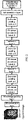
- FIG. 1 is a schematic flowchart of a smart diagnosis assistance method based on medical images provided by an embodiment of the present application.
- An execution subject of the smart assistance diagnosis method in this embodiment is a terminal, and the terminal includes but is not limited to a mobile terminal such as a smart phone, a tablet computer, and a PDA (Personal Digital Assistant etc., and may also include a terminal such as a desktop computer etc. As shown in FIG. 1 , the following may be included in the smart assistance diagnosis method.
- the terminal When detecting a medical image classification instruction, the terminal acquires the medical image to be classified.
- the medical image classification instruction is an instruction for instructing the terminal to perform medical image classification.
- the image classification instruction may be triggered by a user, for example, a doctor clicks on an image classification option in the terminal.
- the acquired medical image to be classified may be a medical image to be classified that is uploaded by the user to the terminal, or may be a medical image to be classified that is extracted by the terminal from a text file, here the terminal acquires the text file corresponding to the file identifier based on a file identifier included in the image classification instruction.
- the terminal preprocesses the medical image to be classified to obtain the preprocessed image. Specifically, the terminal processes the medical image to be classified into single-color channel images, and stitches the single-color channel images to obtain the preprocessed image.
- a single-color channel image is a color channel image composed of information including one kind of color elements. The channel that saves the color information of the image is called the color channel, and each color channel stores the information of the color elements in the image. For example, in a RGB color mode, R represents a red channel, G represents a green channel, and B represents a blue channel.
- the terminal may convert the channel mode of the medical image to be classified into a plurality of single-color channel images by invoking a preset function; and stitch the plurality of single-color channel images by invoking the preset function to obtain the preprocessed image.
- the classification model includes a tensorized network layer and a second-order pooling module; the classification model is a ternary generative adversarial network obtained by training sample images and classification categories corresponding to the sample images based on a preset generator model, a preset discriminator model and a preset classifier model.
- the terminal inputs the preprocessed image into the trained classification model for classification processing, and obtains the classification category corresponding to the preprocessed image.
- the trained classification model is the ternary generative adversarial network obtained by training the sample images and the classification categories corresponding to the sample images based on the preset generator model, the preset discriminator model and the preset classifier model; the trained classification model includes the tensor-decomposed network layer and the second-order pooling module.
- the preset generator model, the preset discriminator model and the preset classifier model cooperate with each other and work together to train the training data to obtain a trained ternary generative adversarial network.
- the training data may include the sample images, the classification categories corresponding to the sample images (that is, preset real image labels), and unlabeled sample images.
- the terminal generates composite images provided with classification labels based on preset classification labels, one-dimensional Gaussian random vectors, and the preset generator model, and finally generates composite image label pairs; acquires sample image label pairs corresponding to the sample images through prediction based on the sample images and the preset classifier model; inputs the sample image label pairs, the preset real image label pairs and the composite image label pairs into the preset discriminator model for discrimination to obtain a first discrimination result corresponding to the sample image label pairs, a second discrimination result corresponding to the preset real image label pairs and a third discrimination result corresponding to the composite image label pairs; calculates a first loss function corresponding to the preset generator model, a second loss function corresponding to the preset discriminator model and a third loss function corresponding to the preset classifier model based on the first discrimination result, the second discrimination result and the third discrimination result; updates network parameters respectively corresponding to the preset generator model, the preset discriminator model and the preset classifier model through gradient descent of a back-
- the preprocessed image is input into the trained classifier model, and the trained classifier model normalizes the preprocessed image to obtain a target image; the trained classifier model is used to extract key features in the target image to acquire a global high-order feature map; the trained classifier model obtains the classification category corresponding to the global high-order feature map and outputs the classification category, that is, the classification category corresponding to the preprocessed image is obtained.
- the S103 may include S1031, S1032 and S1033 specifically as follows.
- the trained classification model includes a trained generator model, a trained discriminator model and a trained classifier model, and the preprocessed image may be classified through the trained classifier model. Specifically, the preprocessed image is input into the trained classifier model, and the preprocessed image is normalized to obtain the target image. For example, data corresponding to the preprocessed image is acquired, and the data is transformed linearly so that voxel values corresponding to the preprocessed image are between [-1, 1].
- FIG. 2 is a structural schematic diagram of the trained classifier model provided by the present application.
- the trained classifier model includes a 3D convolution layer, a 3D average pooling layer, a 3D dense connection block 1, a second-order pooling module 1, a transition layer 1, a 3D dense connection block 2, a second-order pooling module 2, a transition layer 2, a 3D dense connection block 3, a second-order pooling module 3 and a full connection layer.
- each network layer in the preset generator model, the preset discriminator model and the preset classifier model is tensorized.
- the classifier model is taken as an example, during the training, the network layers such as the 3D convolution layer, the 3D average pooling layer and the full connection layer etc. in the preset classifier model are tensorized.
- the terminal extracts the key features in the target image based on the tensor-decomposited network layers and the second-order pooling module in the trained classifier model to obtain the global high-order feature map.
- each network layer in the classifier model is tensorized, and each network layer in the classifier model is compressed by the tensorization method instead of the traditional vectorization method, which reduces parameters while achieving a regularization effect on the network model, thereby solving the problem of excessive parameters and overfitting in the classification and recognition of high-resolution images.
- the classifier model uses the 3D convolution layer instead of a 2D convolution layer, so that the input image may be input in a form of tensor without any dimensionality reduction, thereby retaining the spatial information of the image and reducing the spatial information loss caused by the 2D network layer.
- the S 1032 may include S 10321, S 10322, S 10323 and S 10324 specifically as follows.
- the terminal extracts the features in the target image through the tensorized network layer in the trained classifier model to obtain the first feature map.
- the features in the target image are extracted through the 3D convolution layer, the 3D average pooling layer, etc. in the trained classifier model to obtain the first feature map.
- FIG. 3 is a structural schematic diagram of the second-order pooling module provided by the present application, and the second-order pooling module includes a pre-shrinking module and a calibration module. Specifically, the channel dimension reduction is performed on the input four-dimensional feature map (i.e., the first feature map) through a 1 ⁇ 1 ⁇ 1 convolution to obtain the dimension-reduced second feature map.
- the terminal calculates the weight vector corresponding to the second feature map through the trained classifier model.
- covariance information of each two channels between different channels in the dimension-reduced second feature map is calculated to obtain a covariance matrix; and the weight vector having the same channel number with that of the four-dimensional feature map is acquired through a grouping convolution and the 1 ⁇ 1 ⁇ 1 convolution according to the covariance matrix.
- the terminal weights the first feature map based on the calculated weight vector, so that a weight of an important channel in the first feature map is larger and a weight of an unimportant channel is smaller, so as to obtain a more representative global high-order feature map.
- the trained classifier model uses the back-propagation algorithm to make the weight of the important channel in the first feature map larger and the weight of the unimportant channel in the first feature map smaller, so as to extract more representative feature information and thus obtain the global high-order feature map.
- the trained classifier model acquires the classification category corresponding to the global high-order feature map and outputs the classification category, that is, the classification category corresponding to the preprocessed image is acquired. Further, this classification category may be used to assist disease diagnosis in the embodiment of the present application, and the medical image to be classified is obtained through the terminal; the medical image to be classified is preprocessed to obtain the preprocessed image; and the preprocessed image is classified based on the trained classification model to acquire the corresponding classification result.
- the trained classification model includes the tensor-decomposited network layer and the second-order pooling module
- the internal structure information and the internal correlation of the medical image are preserved when the medical image is processed based on this classification model
- the second-order pooling module based on the dependencies of different regions of the medical image and the correlation information between different channels of high-order features, makes the weight of the important feature channel larger and the weight of the unimportant feature channel smaller under the action of the self-attention mechanism, so as to extract better discriminative features associated with a lesion, thereby improving the accuracy of the smart assistance diagnosis for diseases.
- the images are classified based on the ternary generative adversarial network, which, on the basis of the traditional binary generative adversarial network including a generator and a discriminator, adds up the classifier network model, and alleviates the problem of training instability of the binary generative adversarial network through designing a compatible loss function, solves the problem of inconsistent convergence points of the discriminator in the traditional binary generative adversarial network when performing two target tasks of distinguishing true and false and classifying, so that the generator model and the classifier model work in a cooperative training manner to replace the generative adversarial training method of the traditional binary generative adversarial network, thereby enabling the generator model and the classifier model to achieve the best optimality at the same time, speeding up the convergence, and making the generative adversarial network easier to reach the Nash equilibrium.
- the ternary generative adversarial network which, on the basis of the traditional binary generative adversarial network including a generator and a discriminator, adds up the classifier network model, and alleviates the problem of training instability
- the tensorization method instead of the traditional vectorization method is used to compress each network layer in the ternary generative adversarial network, which achieves the regularization effect on the network model while reducing the parameters, and solves the problems of excessive parameters and overfitting in classification and recognition of high-resolution images; further, the tensorization method can maintain internal correlation between the internal spatial structure information and different voxels, and solves the problem of internal structure loss of the vectorized network layers.
- the traditional first-order pooling (maximum pooling or average pooling) is replaced by the second-order pooling, and the better discriminative features are automatically extracted under the action of the self-attention mechanism by making full use of the second-order information of the overall image, thereby improving the classification accuracy of the classifier.
- the ternary generative adversarial network in the present application uses the semi-supervised learning method to jointly cooperate and train the preset generator model, the preset discriminator model and the preset classifier model, this reduces the network model's demand for image labeling information and makes full use of unlabeled data, thereby realizing the intelligent network model provided with high precision and high robustness; moreover, this reduces the number of the parameters, improves the computing efficiency, helps reduce the performance requirements of the terminal, thereby accelerating the assistance diagnosis process.
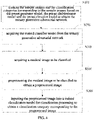
- FIG. 4 is a schematic flowchart of a smart diagnosis assistance method based on medical images provided by another embodiment of the present application.
- An execution subject of the smart assistance diagnosis method in this embodiment is a terminal, and the terminal includes but is not limited to a mobile terminal such as a smart phone, a tablet computer, a personal digital assistant etc., and may also include a terminal such as a desktop computer.
- training steps S201 and S202 of the classifier model is added into this embodiment.
- S203, S204 and S205 in this embodiment are exactly the same as the S101, S102 and S103 in the previous embodiment, the details of which may refer to the relevant descriptions for the S101, S102 and S103 in the previous embodiment and will not be repeated herein.
- the S201 and S202 of the smart assistance diagnosis method as shown in FIG. 4 are as follows.
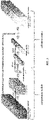
- FIG. 5 is a structural schematic diagram of the ternary generative adversarial network provided by the present application.
- the generator in FIG. 5 refers to the preset generator model, and the corresponding trained generator model is generated after the training is completed;
- the discriminator in FIG. 5 refers to the preset discriminator model, and the corresponding trained discriminator model is generated after the training is completed; during the training, the Alzheimer's disease classifier in FIG.
- the preset generator model mainly includes a 3D deconvolution layer
- the preset discriminator model mainly includes a 3D convolution layer, a 3D dense connection block, a transition layer, a full connection layer, etc.
- the preset classifier model mainly includes a 3D convolution layer, a 3D dense connection block, a second-order pooling module, etc.
- the Alzheimer's disease is only taken as an example here to train and acquire the smart assistance diagnosis model of Alzheimer's disease that can be used to classify MRI images; but classification models used for other medical images may be acquired by training trained through this method, which is not limited herein.
- Steps of the tensor decomposition of the 3D convolution layer and the deconvolution layer are as follows:
- the composite images provided with classification labels are generated based on the preset classification labels, the one-dimensional Gaussian random vectors and the preset generator model, and the composite image label pairs are finally generated;
- the sample image label pairs corresponding to the sample images are determined based on the sample images in the training data and the preset classifier model;
- the sample image label pairs, the preset real image label pairs and the composite image label pairs are input into the preset discriminator model for discrimination to obtain the first discrimination result corresponding to the sample image label pairs, the second discrimination result corresponding to the preset real image label pairs and the third discrimination result corresponding to the composite image label pairs;
- the first loss function corresponding to the preset generator model, the second loss function corresponding to the preset discriminator model and the third loss function corresponding to the preset classifier model are calculated based on the first discrimination result, the second discrimination result and the third discrimination result;
- the network parameters respectively corresponding to the preset generator model, the preset discriminator model and the preset classifier model are updated through gradient
- the trained classifier model is acquire from the ternary generative adversarial network.
- the ternary generative adversarial network obtained by training is the trained classification model
- the trained classification model includes the trained generator model, the trained discriminator model and the trained classifier model, and the terminal acquires the trained classifier model from the trained classification model.
- the S201 may include S2011, S2012, S2013, S2014, S2015 and S2016, which are specifically as follows.
- the one-dimensional Gaussian random vectors and the preset classification labels are used as input and are input into the preset generator model; the input preset classification labels are cascaded to each tensorized network layer through one-hot encoding, and the target feature map is generated based on the one-dimensional Gaussian random vectors; the target feature map is enlarged layer by layer based on the tensorized network layers, and the target composite image is finally generated; and thus the composite image label pairs are finally generated.
- the semi-supervised learning method is introduced into the disease classification task, which can efficiently and comprehensively utilize the unlabeled medical image information, and at the same time the composite images provided with the classification labels are generated through the preset generator model, which plays a role of data enhancement and can train a high-precision assistance diagnosis model in a case of few number of samples.
- This reduces the demand for labeled training samples reduces the workload of complicated labeling for training data in traditional algorithms, thereby further shortening the work period of disease diagnosis, accelerating the speed of disease diagnosis and improving the overall disease identification efficiency.
- the S2011 includes S20111, S20112 and S20113, which are as follows.
- the preset generator model includes tensorized network layers.
- a tensorized deconvolution layer is included in the preset generator model.
- the input preset classification labels are cascaded to each tensorized deconvolution layer through the one-hot encoding, and the target feature map is generated based on the tensorized deconvolution layer and the one-dimensional Gaussian random vectors.
- an activation function of the deconvolution layer adopts a ReLU (Rectified Linear Unit) function and performs BN (Batch Normalization).
- the target feature map is a anatomical brain feature map.
- the tensorized network layers enlarge the target feature map layer by layer, and the obtained image is the target composite image.
- the anatomical brain feature map is enlarged layer by layer to generate a composite image provided with the same size as a real MRI image.
- a last layer of the preset generator model adopts a hyperbolic function, i.e., a tanh activation function.
- the terminal generates the composite image label pairs based on the target composite image and the preset classification labels. For example, the terminal generates the MRI image provided with the classification label based on the composite image and the preset classification label.
- the MRI image provided with the classification label may also be referred to as an MRI image label pairs.
- the terminal predicts the corresponding category of the sample image based on the sample image in the training data and the preset classifier model, and determines the sample image label corresponding to the sample image based on the sample image and the corresponding category.
- the sample image is input into the preset classifier model, the preset classifier model predicts the label information corresponding to the sample image and generates the sample image label pairs corresponding to the sample image based on the sample image and the label information.
- the sample image is a real unlabeled MRI image
- the real unlabeled MRI image is input into the preset classifier model
- the preset classifier model predicts the label information corresponding to the real unlabeled MRI image and generates the MRI image label pairs based on the real unlabeled MRI image and the predicted label information.
- the sample image label pair is input into the preset discriminator model for discrimination.
- the preset discriminator model extracts the feature information of the sample image label pair to obtain the sample feature map corresponding to the sample image label pair, and the discrimination processing is performed on the sample feature map based on the preset discriminator model to obtain the first discrimination result.
- the preset real image label pair in the training data is input into the preset discriminator model for discrimination processing, and the preset discriminator model extracts the feature information of the preset real image label pair to obtain the real feature map corresponding to the preset real image label pair, and the discrimination processing is performed on the real feature map based on the preset discriminator model to obtain the second discrimination result.
- the composite image label pair is input into the preset discriminator model for discrimination processing, the preset discriminator model extracts the feature information of the composite image label pair to obtain the composite feature map corresponding to the composite image label pair, and the discrimination processing is performed on the composite feature map to obtain the third discriminant result.
- the S2013 may include S20131, S20132, S20133 and S20134, which are as follows.
- the preset discriminator model includes the tensorized dense convolutional neural network.
- the sample image corresponding to the sample image label pair is input into the preset discriminator model in a form of a third-order tensor, and the classification label in the sample image label pair, after one-hot encoded as a condition variable, is cascaded into each network layer of the preset discriminator model.
- the tensorized dense convolutional neural network extracts the feature information of the sample image label pair to obtain the feature map that retains the spatial information, that is, to obtain the sample feature map corresponding to the sample image label pair.
- the activation function of the convolution layer adopts ReLU and batch normalization.
- the image corresponding to the real image label pair is input into the preset discriminator model in a form of a third-order tensor, and the classification label in the real image label pair, after one-hot encoded as a condition variable, is cascaded into each network layer of the preset discriminator model.
- the tensorized dense convolutional neural network extracts the feature information of the real image label pair to obtain the feature map that retains the spatial information, that is, to obtain the real feature map corresponding to the real image label pair.
- the activation function of the convolution layer adopts ReLU and batch normalization.
- the composite image is input into the preset discriminator model in a form of a third-order tensor, and the classification label corresponding to the composite image, after one-hot encoded as a condition variable, is cascaded into each network layer in the preset discriminator model.
- the tensorized dense convolutional neural network extracts the feature information in the composite image label pair to obtain the feature map that retains the spatial information, that is, to obtain the composite feature map corresponding to the composite image label pair.
- the activation function of the convolution layer adopts ReLU and batch normalization.
- the preset discriminator model includes a tensorized full connection layer, and performs the discrimination based on a sigmoid function of the tensorized full connection layer to obtain the first discrimination result corresponding to the sample feature map, the second discrimination result corresponding to the real feature map and the third discrimination result corresponding to the composite feature map.
- At S2014 calculate the first loss function corresponding to the preset generator model, the second loss function corresponding to the preset discriminator model and the third loss function corresponding to the preset classifier model based on the first discrimination result, the second discrimination result and the third discrimination result.
- the parameters of the tensor-decomposited kernel matrix G k [ i k ,j k ] of the network layer in the preset generator model are updated in the backpropagation process according to the gradient descent of the loss function G-loss of the preset generator model.
- the goal of the preset generator model is to generate an image that can fool the preset discriminator model by simulating a real image.
- the preset generator model generates a near-real MRI image that can fool the preset discriminator model by simulating real MRI anatomical brain structure features.
- the parameters of the tensor-decomposited kernel matrix G k [ i k , j k ] of the network layer in the preset discriminator model are updated in the backpropagation process according to the gradient descent of the loss function G-loss of the preset discriminator model.
- the goal of the preset discriminator model is to discriminate the real image label pair as true and discriminate the composite image label pair generated by the preset generator model and provided with the classification label as well as the image label pair predicted by the preset classifier model as false.
- the parameters of the tensor-decomposited kernel matrix G k [ i k , j k ] of the network layer in the preset classifier model are updated in the backpropagation process according to the gradient descent of the loss function G-loss of the preset classifier model.
- the goal of the preset classifier model is to automatically extract and classify the feature information in the preprocessed image, for example, to automatically extract MRI anatomical brain structure features for classification and classify the MRI image into three categories: normal, Alzheimer's disease and mild cognitive impairment.
- the loss of the preset classifier model includes two parts, one part is supervised loss, that is, cross-entropy of the classification tasks performed on the real image and the generated image; another part is unsupervised loss, that is, the preset discriminator model is deceived to make the preset discriminator model discriminate the MRI image label pair which is generated by the preset classifier model for the the unlabeled MRI image as true.
- x label ⁇ , R p E x g , y g ⁇ P g x y ⁇ ⁇ log P c y g
- x g ⁇ , L u n sup ervised E x unlabel ⁇ P c x log 1 ⁇ D x unlabel C x unlabel .
- Calculation of R L for the real MRI image label pair is equivalent to calculation of KL divergence between distribution P c ( x , y ) learned by the preset classifier model and distribution P real ( x , y ) of the real data.
- the preset generator model generates the MRI image label pair close to the real distribution, which can improve the classification performance of the classifier model, therefore, R p is introduced to calculate the cross entropy of the generated MRI image label pair; minimization of R p is equivalent to minimization of the KL divergence D KL ( P g ( x , y ) ⁇ P c ( x , y )); since D KL ( P g ( x , y ) ⁇ P c ( x , y )) cannot be calculated directly, therefore the KL divergence D KL ( P g ( x , y ) ⁇ P c ( x , y )) cannot be calculated directly either, and the preset classifier model
- the terminal updates the network parameters respectively corresponding to the preset generator model, the preset discriminator model and the preset classifier model through the gradient descent of the backpropagation algorithm respectively based on the calculated first loss function, second loss function and third loss function. For example, weight values etc. of each network layer in each of the preset generator model, the preset discriminator model and the preset classifier model are updated according to the first loss function, the second loss function and the third loss function. Then, the training is continued based on the parameter-updated preset generator model, preset discriminator model and preset classifier model. That is, the sample images and the classification categories corresponding to the sample images continue to be trained based on the respective parameter-updated models.
- the preset generator model, the preset discriminator model and the preset classifier model are cooperatively trained, such as repeatedly training in a cooperative mode of "generation-discrimination-classification".
- the terminal detects that the first loss function, the second loss function and the third loss function have all converged during the training process that is in the repeated "generation-discrimination-classification" cooperative mode, the training is stopped, and then the trained ternary generative adversarial network is obtained, that is, the trained classification model.
- the number of iterations may also be preset, and it is considered that the training is completed when the training is performed up to this number of iterations, and the trained ternary generative adversarial network is obtained at this time.
- the medical image to be classified is obtained through the terminal; the medical image to be classified is preprocessed to obtain the preprocessed image; and the preprocessed image is classified based on the trained classification model to acquire the corresponding classification result.
- the trained classification model includes the tensor-decomposited network layer and the second-order pooling module
- the internal structure information and the internal correlation of the medical image are preserved when the medical image is processed based on this classification model
- the second-order pooling module based on the dependencies of different regions of the medical image and the correlation information between different channels of high-order features, makes the weight of the important feature channel larger and the weight of the unimportant feature channel smaller under the action of the self-attention mechanism, so as to extract better discriminative features associated with a lesion, thereby improving the accuracy of the smart assistance diagnosis for diseases.
- the images are classified based on the ternary generative adversarial network, which, on the basis of the traditional binary generative adversarial network including a generator and a discriminator, adds up the classifier network model, and alleviates the problem of training instability of the binary generative adversarial network through designing a compatible loss function, solves the problem of inconsistent convergence points of the discriminator in the traditional binary generative adversarial network when performing two target tasks of distinguishing true and false and classifying, so that the generator model and the classifier model work in a cooperative training manner to replace the generative adversarial training method of the traditional binary generative adversarial network, thereby enabling the generator model and the classifier model to achieve the best optimality at the same time, speeding up the convergence, and making the generative adversarial network easier to reach the Nash equilibrium.
- the ternary generative adversarial network which, on the basis of the traditional binary generative adversarial network including a generator and a discriminator, adds up the classifier network model, and alleviates the problem of training instability
- the tensorization method instead of the traditional vectorization method is used to compress each network layer in the ternary generative adversarial network, which achieves the regularization effect on the network model while reducing the parameters, and solves the problems of excessive parameters and overfitting in classification and recognition of high-resolution images; further, the tensorization method can maintain internal correlation of the image between the internal spatial structure information and different voxels, and solves the problem of internal structure loss of the vectorized network layers.
- the traditional first-order pooling (maximum pooling or average pooling) is replaced by the second-order pooling, and the better discriminative features are automatically extracted under the action of the self-attention mechanism by making full use of the second-order information of the overall image, thereby improving the classification accuracy of the classifier.
- the ternary generative adversarial network in the present application uses the semi-supervised learning method to jointly cooperate and train the preset generator model, the preset discriminator model and the preset classifier model, this reduces the network model's demand for image labeling information and makes full use of unlabeled data, thereby realizing the intelligent network model provided with high precision and high robustness; moreover, this reduces the number of the parameters, improves the computing efficiency, helps reduce the performance requirements of the terminal, thereby improving the efficiency of the smart assistance diagnosis.
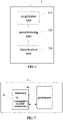
- FIG. 6 is a schematic diagram of a smart diagnosis assistance terminal based on medical images provided by an embodiment of the present application.
- the units included in this terminal is used to execute the steps in the embodiments corresponding to FIG. 1 and FIG. 4 .
- FIG. 6 which includes:
- the trained classification model includes a trained classifier model.
- classification unit 330 includes:
- extraction unit is specifically configured to:
- the terminal further includes:
- the training unit includes:
- the preset generator model includes the tensorized network layer.
- the generation unit is specifically configured to:
- the preset discriminator model includes a tensorized dense convolutional neural network.
- the discrimination unit is specifically configured to:
- FIG. 7 is a schematic diagram of a smart diagnosis assistance terminal based on medical images provided by another embodiment of the present application.
- the terminal 4 of this embodiment includes: a processor 40, a memory 41, and a computer-readable instruction 42 stored in the memory 41 and executable on the processor 40.
- the processor 40 executes the steps of the terminal in each of the embodiments of the smart diagnosis assistance method based on medical images, for example, the S101, S102 and S103 as shown in FIG. 1 .
- the processor 40 implements the functions of the units in the foregoing embodiments, for example, the functions of the units 310, 320 and 330 as shown in FIG. 6 .
- the computer-readable instruction 42 may be divided into one or more units, and the one or more units are stored in the memory 41 and executed by the processor 40 to complete the present application.
- the one or more units may be a series of computer-readable instruction segments capable of completing specific functions, and the instruction segments are used to describe the execution process of the computer-readable instruction 42 in the terminal 4.
- the computer-readable instruction 42 may be obtained by an acquisition unit, a preprocessing unit, and a classification unit, and specific functions of the units are as described above.
- the terminal may include, but is not limited to, the processor 40 and the memory 41.
- FIG. 7 is only an example of the terminal 4, and does not constitute a limitation on the terminal 4, which may include more or less components than those as shown in the figure, or combine some components or different components, for example the terminal may further include an input and output terminal, a network access terminal, a bus, and the like.
- the so-called processor 40 may be a CPU (Central Processing Unit), and may also be other general-purpose processor, DSP (Digital Signal Processors), ASIC (Application Specific Integrated Circuit), FPGA (Field-Programmable Gate Array), or other programmable logic device, discrete gate or transistor logic device, discrete hardware component, etc.
- the general-purpose processor may be a microprocessor or the processor may be any conventional processor or the like.
- the memory 41 may be an internal storage unit of the terminal 4, such as a hard disk or a storage of the terminal 4.
- the memory 41 may also be an external storage terminal of the terminal 4, such as a plug-in hard disk, a SMC (Smart Media Card), a SD (Secure Digital) card, flash card etc. equipped on the terminal 4. Further, the memory 41 may also include both an internal storage unit of the terminal 4 and an external storage terminal.
- the memory 41 is used to store the computer-readable instruction and other programs and data required by the terminal.
- the memory 41 may also be used to temporarily store data that has been output or will be output.
Landscapes
- Engineering & Computer Science (AREA)
- Theoretical Computer Science (AREA)
- Physics & Mathematics (AREA)
- Health & Medical Sciences (AREA)
- General Health & Medical Sciences (AREA)
- General Physics & Mathematics (AREA)
- Evolutionary Computation (AREA)
- Artificial Intelligence (AREA)
- Computing Systems (AREA)
- Software Systems (AREA)
- Medical Informatics (AREA)
- Biomedical Technology (AREA)
- Data Mining & Analysis (AREA)
- Life Sciences & Earth Sciences (AREA)
- General Engineering & Computer Science (AREA)
- Mathematical Physics (AREA)
- Computational Linguistics (AREA)
- Molecular Biology (AREA)
- Biophysics (AREA)
- Computer Vision & Pattern Recognition (AREA)
- Multimedia (AREA)
- Databases & Information Systems (AREA)
- Public Health (AREA)
- Nuclear Medicine, Radiotherapy & Molecular Imaging (AREA)
- Radiology & Medical Imaging (AREA)
- Primary Health Care (AREA)
- Epidemiology (AREA)
- Quality & Reliability (AREA)
- Pathology (AREA)
- Image Analysis (AREA)
Applications Claiming Priority (1)
| Application Number | Priority Date | Filing Date | Title |
|---|---|---|---|
| PCT/CN2019/119491 WO2021097675A1 (zh) | 2019-11-19 | 2019-11-19 | 一种基于医学图像的智能辅助诊断方法及终端 |
Publications (3)
| Publication Number | Publication Date |
|---|---|
| EP4064124A1 true EP4064124A1 (de) | 2022-09-28 |
| EP4064124A4 EP4064124A4 (de) | 2022-11-23 |
| EP4064124B1 EP4064124B1 (de) | 2025-05-07 |
Family
ID=75980083
Family Applications (1)
| Application Number | Title | Priority Date | Filing Date |
|---|---|---|---|
| EP19953002.3A Active EP4064124B1 (de) | 2019-11-19 | 2019-11-19 | Intelligentes diagnoseunterstützungsverfahren und endgerät auf der basis von medizinischen bildern |
Country Status (3)
| Country | Link |
|---|---|
| US (1) | US12254684B2 (de) |
| EP (1) | EP4064124B1 (de) |
| WO (1) | WO2021097675A1 (de) |
Cited By (1)
| Publication number | Priority date | Publication date | Assignee | Title |
|---|---|---|---|---|
| US12387324B2 (en) | 2022-02-18 | 2025-08-12 | Arizona Board Of Regents On Behalf Of Arizona State University | Systems, methods, and apparatuses for implementing discriminative, restorative, and adversarial (DiRA) learning for self-supervised medical image analysis |
Families Citing this family (21)
| Publication number | Priority date | Publication date | Assignee | Title |
|---|---|---|---|---|
| US12333717B2 (en) * | 2019-12-17 | 2025-06-17 | Shenzhen Institutes Of Advanced Technology | Infrared image sequence-based sleep quality evaluation system and method comprising performing evaluation by a classifier and counting the sleep quality evaluation results to determine the largest number to judge good or poor sleep quality |
| US11663840B2 (en) * | 2020-03-26 | 2023-05-30 | Bloomberg Finance L.P. | Method and system for removing noise in documents for image processing |
| US20220036239A1 (en) * | 2020-07-29 | 2022-02-03 | Mastercard International Incorporated | Systems and methods to define the card member value from an issuer perspective |
| EP4252180B1 (de) * | 2020-11-24 | 2026-03-18 | Koninklijke Philips N.V. | Klassifizierung von bildmerkmalen |
| US20220237434A1 (en) * | 2021-01-25 | 2022-07-28 | Samsung Electronics Co., Ltd. | Electronic apparatus for processing multi-modal data, and operation method thereof |
| US11992322B2 (en) * | 2021-03-30 | 2024-05-28 | Ionetworks Inc. | Heart rhythm detection method and system using radar sensor |
| CN113377981B (zh) * | 2021-06-29 | 2022-05-27 | 山东建筑大学 | 基于多任务深度哈希学习的大规模物流商品图像检索方法 |
| CN113744251B (zh) * | 2021-09-07 | 2023-08-29 | 上海桐树生物科技有限公司 | 基于自注意力机制从病理图片预测微卫星不稳定性的方法 |
| DE102021210920A1 (de) * | 2021-09-29 | 2023-03-30 | Siemens Healthcare Gmbh | Einrichtung und computerimplementiertes Verfahren zum Trainieren eines Systems für maschinelles Lernen zum Zuordnen einer Scan-Untersuchung zu einem standardisierten Identifizierercode |
| CN113935969B (zh) * | 2021-10-18 | 2024-04-12 | 太原理工大学 | 一种基于领域知识引导的新冠肺炎特异性病例的诊断系统 |
| US12555033B1 (en) | 2021-12-21 | 2026-02-17 | United Services Automobile Association (Usaa) | Automatic identification of, and responding to, cognition impairment |
| CN114760132B (zh) * | 2022-04-14 | 2023-10-31 | 中国电信股份有限公司 | 信号发送方身份认证方法、装置、存储介质及电子设备 |
| CN115019100A (zh) * | 2022-06-14 | 2022-09-06 | 新乡医学院 | 基于生成对抗网络的生物组织图像的自动分类方法和系统 |
| CN115099855B (zh) * | 2022-06-23 | 2024-09-24 | 广州华多网络科技有限公司 | 广告文案创作模型制备方法及其装置、设备、介质、产品 |
| US20240273889A1 (en) * | 2023-02-09 | 2024-08-15 | Electronics And Telecommunications Research Institute | System and method for classifying novel class objects |
| CN116344004B (zh) * | 2023-05-31 | 2023-08-08 | 苏州恒瑞宏远医疗科技有限公司 | 一种影像样本数据扩增方法及装置 |
| CN116994743B (zh) * | 2023-07-11 | 2024-04-09 | 南通大学 | 基于序贯三支的置信图卷积神经网络的自闭症分类方法 |
| CN117766155B (zh) * | 2024-02-22 | 2024-05-10 | 中国人民解放军海军青岛特勤疗养中心 | 基于人工智能的动态血压医疗数据处理系统 |
| CN117953349B (zh) * | 2024-03-22 | 2024-06-11 | 广东海洋大学 | 一种中药材的病虫害检测方法、装置、设备及存储介质 |
| CN119810557B (zh) * | 2025-01-06 | 2026-02-27 | 山东浪潮科学研究院有限公司 | 利用生成对抗网络自动生成高质量标注数据的方法和系统 |
| CN120147180B (zh) * | 2025-05-15 | 2025-08-26 | 江西省科技基础条件平台中心(江西省计算中心) | 基于深度学习的图像增强处理方法 |
Family Cites Families (12)
| Publication number | Priority date | Publication date | Assignee | Title |
|---|---|---|---|---|
| US7680307B2 (en) * | 2005-04-05 | 2010-03-16 | Scimed Life Systems, Inc. | Systems and methods for image segmentation with a multi-stage classifier |
| US10796220B2 (en) * | 2016-05-24 | 2020-10-06 | Marvell Asia Pte, Ltd. | Systems and methods for vectorized FFT for multi-dimensional convolution operations |
| CN107578069B (zh) | 2017-09-18 | 2020-12-29 | 北京邮电大学世纪学院 | 图像多尺度自动标注方法 |
| CN107679572B (zh) | 2017-09-29 | 2021-05-04 | 深圳大学 | 一种图像判别方法、存储设备及移动终端 |
| US10540578B2 (en) | 2017-12-21 | 2020-01-21 | International Business Machines Corporation | Adapting a generative adversarial network to new data sources for image classification |
| CN108198179A (zh) * | 2018-01-03 | 2018-06-22 | 华南理工大学 | 一种生成对抗网络改进的ct医学图像肺结节检测方法 |
| CN108491874B (zh) | 2018-03-19 | 2021-10-12 | 天津大学 | 一种基于生成式对抗网络的图像单分类方法 |
| US10546389B2 (en) * | 2018-04-06 | 2020-01-28 | Elekta Ab (Publ) | Devices and methods for identifying an object in an image |
| US10847265B2 (en) * | 2018-04-06 | 2020-11-24 | Curai, Inc. | Systems and methods for responding to healthcare inquiries |
| US10891731B2 (en) * | 2018-05-07 | 2021-01-12 | Zebra Medical Vision Ltd. | Systems and methods for pre-processing anatomical images for feeding into a classification neural network |
| US11056227B2 (en) * | 2018-05-23 | 2021-07-06 | Koninklijke Philips N.V. | System and method for generating textual descriptions from medical images |
| CN108961272B (zh) | 2018-07-02 | 2021-10-26 | 浙江工业大学 | 一种基于深度卷积对抗生成网络的皮肤病图像的生成方法 |
-
2019
- 2019-11-19 US US17/763,513 patent/US12254684B2/en active Active
- 2019-11-19 WO PCT/CN2019/119491 patent/WO2021097675A1/zh not_active Ceased
- 2019-11-19 EP EP19953002.3A patent/EP4064124B1/de active Active
Cited By (1)
| Publication number | Priority date | Publication date | Assignee | Title |
|---|---|---|---|---|
| US12387324B2 (en) | 2022-02-18 | 2025-08-12 | Arizona Board Of Regents On Behalf Of Arizona State University | Systems, methods, and apparatuses for implementing discriminative, restorative, and adversarial (DiRA) learning for self-supervised medical image analysis |
Also Published As
| Publication number | Publication date |
|---|---|
| EP4064124A4 (de) | 2022-11-23 |
| US20220343638A1 (en) | 2022-10-27 |
| WO2021097675A1 (zh) | 2021-05-27 |
| EP4064124B1 (de) | 2025-05-07 |
| US12254684B2 (en) | 2025-03-18 |
Similar Documents
| Publication | Publication Date | Title |
|---|---|---|
| US12254684B2 (en) | Smart diagnosis assistance method to solve results of inaccurate classification of image, and terminal based on medical images | |
| CN110993094B (zh) | 一种基于医学图像的智能辅助诊断方法及终端 | |
| Jain et al. | Convolutional neural network based Alzheimer’s disease classification from magnetic resonance brain images | |
| Gao et al. | HEp-2 cell image classification with deep convolutional neural networks | |
| Coates et al. | An analysis of single-layer networks in unsupervised feature learning | |
| Pei et al. | Multi-scale attention-based pseudo-3D convolution neural network for Alzheimer’s disease diagnosis using structural MRI | |
| CN113628201A (zh) | 基于深度学习的病理切片分析方法、电子设备及可读存储介质 | |
| Jha et al. | Alzheimer’s disease detection using sparse autoencoder, scale conjugate gradient and softmax output layer with fine tuning | |
| Chen et al. | Machine learning with tree tensor networks, CP rank constraints, and tensor dropout | |
| Singh et al. | A comparative analysis of deep learning algorithms for skin cancer detection | |
| Li et al. | Residual attention learning network and SVM for malaria parasite detection | |
| WO2021179189A1 (zh) | 大脑成瘾性状评估的可视化方法、装置及介质 | |
| Alshiha et al. | Parallel hybrid algorithm for face recognition using multi-Linear methods | |
| Goel et al. | Efficient feature extraction using DCT for gender classification | |
| Deepa et al. | Classification of lung cancer in segmented CT images using pre-trained deep learning models | |
| Liu et al. | Sparse recognition via intra-class dictionary learning using visual saliency information | |
| Karthigeyan et al. | QCVNET-Leveraging Quantum Technology in Convolutional Neural Networks for Improved Cardiovascular Disease Prediction | |
| Mehta et al. | Scaling recurrent models via orthogonal approximations in tensor trains | |
| Papakostas et al. | Lattice computing (LC) meta-representation for pattern classification | |
| CN121121315B (zh) | 一种超声图像分类方法、装置、设备及可读存储介质 | |
| Győrfi et al. | Effect of spectral resolution on the segmentation quality of magnetic resonance imaging data | |
| Gencer | Brain tumor classification with deep learning: A comparative study of AlexNet and EfficientNetB0 using principal component analysis | |
| EP4586139B1 (de) | Transformator zur klassifikation | |
| Shi et al. | Fine-grained Image Classification using Convolutional Neural Network and Support Vector Machine | |
| Kharma et al. | Adaptable image segmentation via simple pixel classification |
Legal Events
| Date | Code | Title | Description |
|---|---|---|---|
| STAA | Information on the status of an ep patent application or granted ep patent |
Free format text: STATUS: THE INTERNATIONAL PUBLICATION HAS BEEN MADE |
|
| PUAI | Public reference made under article 153(3) epc to a published international application that has entered the european phase |
Free format text: ORIGINAL CODE: 0009012 |
|
| STAA | Information on the status of an ep patent application or granted ep patent |
Free format text: STATUS: REQUEST FOR EXAMINATION WAS MADE |
|
| 17P | Request for examination filed |
Effective date: 20220224 |
|
| AK | Designated contracting states |
Kind code of ref document: A1 Designated state(s): AL AT BE BG CH CY CZ DE DK EE ES FI FR GB GR HR HU IE IS IT LI LT LU LV MC MK MT NL NO PL PT RO RS SE SI SK SM TR |
|
| A4 | Supplementary search report drawn up and despatched |
Effective date: 20221024 |
|
| RIC1 | Information provided on ipc code assigned before grant |
Ipc: G16H 50/20 20180101ALI20221018BHEP Ipc: G06V 10/82 20220101ALI20221018BHEP Ipc: G06V 10/764 20220101ALI20221018BHEP Ipc: G06V 10/40 20220101ALI20221018BHEP Ipc: G06N 3/04 20060101ALI20221018BHEP Ipc: G06K 9/62 20220101AFI20221018BHEP |
|
| DAV | Request for validation of the european patent (deleted) | ||
| DAX | Request for extension of the european patent (deleted) | ||
| REG | Reference to a national code |
Ref country code: DE Ref legal event code: R079 Free format text: PREVIOUS MAIN CLASS: G06K0009620000 Ipc: G06V0010820000 Ref country code: DE Ref legal event code: R079 Ref document number: 602019069835 Country of ref document: DE Free format text: PREVIOUS MAIN CLASS: G06K0009620000 Ipc: G06V0010820000 |
|
| GRAP | Despatch of communication of intention to grant a patent |
Free format text: ORIGINAL CODE: EPIDOSNIGR1 |
|
| STAA | Information on the status of an ep patent application or granted ep patent |
Free format text: STATUS: GRANT OF PATENT IS INTENDED |
|
| RIC1 | Information provided on ipc code assigned before grant |
Ipc: G16H 30/40 20180101ALI20250124BHEP Ipc: G06N 3/08 20060101ALI20250124BHEP Ipc: G06N 3/0475 20230101ALI20250124BHEP Ipc: G06N 3/0464 20230101ALI20250124BHEP Ipc: G06N 3/045 20230101ALI20250124BHEP Ipc: G16H 50/20 20180101ALI20250124BHEP Ipc: G06V 10/82 20220101AFI20250124BHEP |
|
| INTG | Intention to grant announced |
Effective date: 20250207 |
|
| RAP3 | Party data changed (applicant data changed or rights of an application transferred) |
Owner name: SHENZHEN INSTITUTES OF ADVANCEDTECHNOLOGY CHINESE ACADEMY OF SCIENCES |
|
| GRAS | Grant fee paid |
Free format text: ORIGINAL CODE: EPIDOSNIGR3 |
|
| GRAA | (expected) grant |
Free format text: ORIGINAL CODE: 0009210 |
|
| STAA | Information on the status of an ep patent application or granted ep patent |
Free format text: STATUS: THE PATENT HAS BEEN GRANTED |
|
| AK | Designated contracting states |
Kind code of ref document: B1 Designated state(s): AL AT BE BG CH CY CZ DE DK EE ES FI FR GB GR HR HU IE IS IT LI LT LU LV MC MK MT NL NO PL PT RO RS SE SI SK SM TR |
|
| REG | Reference to a national code |
Ref country code: GB Ref legal event code: FG4D |
|
| REG | Reference to a national code |
Ref country code: CH Ref legal event code: EP |
|
| REG | Reference to a national code |
Ref country code: DE Ref legal event code: R096 Ref document number: 602019069835 Country of ref document: DE |
|
| REG | Reference to a national code |
Ref country code: IE Ref legal event code: FG4D |
|
| REG | Reference to a national code |
Ref country code: NL Ref legal event code: MP Effective date: 20250507 |
|
| PG25 | Lapsed in a contracting state [announced via postgrant information from national office to epo] |
Ref country code: PT Free format text: LAPSE BECAUSE OF FAILURE TO SUBMIT A TRANSLATION OF THE DESCRIPTION OR TO PAY THE FEE WITHIN THE PRESCRIBED TIME-LIMIT Effective date: 20250908 Ref country code: ES Free format text: LAPSE BECAUSE OF FAILURE TO SUBMIT A TRANSLATION OF THE DESCRIPTION OR TO PAY THE FEE WITHIN THE PRESCRIBED TIME-LIMIT Effective date: 20250507 Ref country code: FI Free format text: LAPSE BECAUSE OF FAILURE TO SUBMIT A TRANSLATION OF THE DESCRIPTION OR TO PAY THE FEE WITHIN THE PRESCRIBED TIME-LIMIT Effective date: 20250507 |
|
| REG | Reference to a national code |
Ref country code: LT Ref legal event code: MG9D |
|
| PG25 | Lapsed in a contracting state [announced via postgrant information from national office to epo] |
Ref country code: NO Free format text: LAPSE BECAUSE OF FAILURE TO SUBMIT A TRANSLATION OF THE DESCRIPTION OR TO PAY THE FEE WITHIN THE PRESCRIBED TIME-LIMIT Effective date: 20250807 Ref country code: GR Free format text: LAPSE BECAUSE OF FAILURE TO SUBMIT A TRANSLATION OF THE DESCRIPTION OR TO PAY THE FEE WITHIN THE PRESCRIBED TIME-LIMIT Effective date: 20250808 |
|
| PG25 | Lapsed in a contracting state [announced via postgrant information from national office to epo] |
Ref country code: PL Free format text: LAPSE BECAUSE OF FAILURE TO SUBMIT A TRANSLATION OF THE DESCRIPTION OR TO PAY THE FEE WITHIN THE PRESCRIBED TIME-LIMIT Effective date: 20250507 Ref country code: NL Free format text: LAPSE BECAUSE OF FAILURE TO SUBMIT A TRANSLATION OF THE DESCRIPTION OR TO PAY THE FEE WITHIN THE PRESCRIBED TIME-LIMIT Effective date: 20250507 |
|
| REG | Reference to a national code |
Ref country code: AT Ref legal event code: MK05 Ref document number: 1793352 Country of ref document: AT Kind code of ref document: T Effective date: 20250507 |
|
| PG25 | Lapsed in a contracting state [announced via postgrant information from national office to epo] |
Ref country code: BG Free format text: LAPSE BECAUSE OF FAILURE TO SUBMIT A TRANSLATION OF THE DESCRIPTION OR TO PAY THE FEE WITHIN THE PRESCRIBED TIME-LIMIT Effective date: 20250507 |
|
| PG25 | Lapsed in a contracting state [announced via postgrant information from national office to epo] |
Ref country code: HR Free format text: LAPSE BECAUSE OF FAILURE TO SUBMIT A TRANSLATION OF THE DESCRIPTION OR TO PAY THE FEE WITHIN THE PRESCRIBED TIME-LIMIT Effective date: 20250507 |
|
| PG25 | Lapsed in a contracting state [announced via postgrant information from national office to epo] |
Ref country code: AT Free format text: LAPSE BECAUSE OF FAILURE TO SUBMIT A TRANSLATION OF THE DESCRIPTION OR TO PAY THE FEE WITHIN THE PRESCRIBED TIME-LIMIT Effective date: 20250507 |
|
| PG25 | Lapsed in a contracting state [announced via postgrant information from national office to epo] |
Ref country code: RS Free format text: LAPSE BECAUSE OF FAILURE TO SUBMIT A TRANSLATION OF THE DESCRIPTION OR TO PAY THE FEE WITHIN THE PRESCRIBED TIME-LIMIT Effective date: 20250807 |
|
| PG25 | Lapsed in a contracting state [announced via postgrant information from national office to epo] |
Ref country code: IS Free format text: LAPSE BECAUSE OF FAILURE TO SUBMIT A TRANSLATION OF THE DESCRIPTION OR TO PAY THE FEE WITHIN THE PRESCRIBED TIME-LIMIT Effective date: 20250907 |
|
| PG25 | Lapsed in a contracting state [announced via postgrant information from national office to epo] |
Ref country code: LV Free format text: LAPSE BECAUSE OF FAILURE TO SUBMIT A TRANSLATION OF THE DESCRIPTION OR TO PAY THE FEE WITHIN THE PRESCRIBED TIME-LIMIT Effective date: 20250507 |
|
| PG25 | Lapsed in a contracting state [announced via postgrant information from national office to epo] |
Ref country code: SM Free format text: LAPSE BECAUSE OF FAILURE TO SUBMIT A TRANSLATION OF THE DESCRIPTION OR TO PAY THE FEE WITHIN THE PRESCRIBED TIME-LIMIT Effective date: 20250507 Ref country code: DK Free format text: LAPSE BECAUSE OF FAILURE TO SUBMIT A TRANSLATION OF THE DESCRIPTION OR TO PAY THE FEE WITHIN THE PRESCRIBED TIME-LIMIT Effective date: 20250507 |
|
| PG25 | Lapsed in a contracting state [announced via postgrant information from national office to epo] |
Ref country code: CZ Free format text: LAPSE BECAUSE OF FAILURE TO SUBMIT A TRANSLATION OF THE DESCRIPTION OR TO PAY THE FEE WITHIN THE PRESCRIBED TIME-LIMIT Effective date: 20250507 |
|
| PG25 | Lapsed in a contracting state [announced via postgrant information from national office to epo] |
Ref country code: EE Free format text: LAPSE BECAUSE OF FAILURE TO SUBMIT A TRANSLATION OF THE DESCRIPTION OR TO PAY THE FEE WITHIN THE PRESCRIBED TIME-LIMIT Effective date: 20250507 |
|
| PG25 | Lapsed in a contracting state [announced via postgrant information from national office to epo] |
Ref country code: SK Free format text: LAPSE BECAUSE OF FAILURE TO SUBMIT A TRANSLATION OF THE DESCRIPTION OR TO PAY THE FEE WITHIN THE PRESCRIBED TIME-LIMIT Effective date: 20250507 |
|
| PG25 | Lapsed in a contracting state [announced via postgrant information from national office to epo] |
Ref country code: IT Free format text: LAPSE BECAUSE OF FAILURE TO SUBMIT A TRANSLATION OF THE DESCRIPTION OR TO PAY THE FEE WITHIN THE PRESCRIBED TIME-LIMIT Effective date: 20250507 |
|
| PG25 | Lapsed in a contracting state [announced via postgrant information from national office to epo] |
Ref country code: RO Free format text: LAPSE BECAUSE OF FAILURE TO SUBMIT A TRANSLATION OF THE DESCRIPTION OR TO PAY THE FEE WITHIN THE PRESCRIBED TIME-LIMIT Effective date: 20250507 |
|
| REG | Reference to a national code |
Ref country code: DE Ref legal event code: R097 Ref document number: 602019069835 Country of ref document: DE |
|
| PLBE | No opposition filed within time limit |
Free format text: ORIGINAL CODE: 0009261 |
|
| STAA | Information on the status of an ep patent application or granted ep patent |
Free format text: STATUS: NO OPPOSITION FILED WITHIN TIME LIMIT |
|
| REG | Reference to a national code |
Ref country code: CH Ref legal event code: L10 Free format text: ST27 STATUS EVENT CODE: U-0-0-L10-L00 (AS PROVIDED BY THE NATIONAL OFFICE) Effective date: 20260318 |
|
| PGFP | Annual fee paid to national office [announced via postgrant information from national office to epo] |
Ref country code: DE Payment date: 20251231 Year of fee payment: 7 |
|
| 26N | No opposition filed |
Effective date: 20260210 |