EP4063637B1 - Engine system and vehicle - Google Patents
Engine system and vehicle Download PDFInfo
- Publication number
- EP4063637B1 EP4063637B1 EP22154872.0A EP22154872A EP4063637B1 EP 4063637 B1 EP4063637 B1 EP 4063637B1 EP 22154872 A EP22154872 A EP 22154872A EP 4063637 B1 EP4063637 B1 EP 4063637B1
- Authority
- EP
- European Patent Office
- Prior art keywords
- engine
- egr
- control
- valve
- load
- Prior art date
- Legal status (The legal status is an assumption and is not a legal conclusion. Google has not performed a legal analysis and makes no representation as to the accuracy of the status listed.)
- Active
Links
Images


Classifications
-
- F—MECHANICAL ENGINEERING; LIGHTING; HEATING; WEAPONS; BLASTING
- F02—COMBUSTION ENGINES; HOT-GAS OR COMBUSTION-PRODUCT ENGINE PLANTS
- F02D—CONTROLLING COMBUSTION ENGINES
- F02D41/00—Electrical control of supply of combustible mixture or its constituents
- F02D41/0025—Controlling engines characterised by use of non-liquid fuels, pluralities of fuels, or non-fuel substances added to the combustible mixtures
- F02D41/0047—Controlling exhaust gas recirculation [EGR]
- F02D41/005—Controlling exhaust gas recirculation [EGR] according to engine operating conditions
-
- F—MECHANICAL ENGINEERING; LIGHTING; HEATING; WEAPONS; BLASTING
- F02—COMBUSTION ENGINES; HOT-GAS OR COMBUSTION-PRODUCT ENGINE PLANTS
- F02D—CONTROLLING COMBUSTION ENGINES
- F02D41/00—Electrical control of supply of combustible mixture or its constituents
- F02D41/30—Controlling fuel injection
- F02D41/3011—Controlling fuel injection according to or using specific or several modes of combustion
- F02D41/3017—Controlling fuel injection according to or using specific or several modes of combustion characterised by the mode(s) being used
- F02D41/3035—Controlling fuel injection according to or using specific or several modes of combustion characterised by the mode(s) being used a mode being the premixed charge compression-ignition mode
- F02D41/3041—Controlling fuel injection according to or using specific or several modes of combustion characterised by the mode(s) being used a mode being the premixed charge compression-ignition mode with means for triggering compression ignition, e.g. spark plug
-
- F—MECHANICAL ENGINEERING; LIGHTING; HEATING; WEAPONS; BLASTING
- F02—COMBUSTION ENGINES; HOT-GAS OR COMBUSTION-PRODUCT ENGINE PLANTS
- F02D—CONTROLLING COMBUSTION ENGINES
- F02D41/00—Electrical control of supply of combustible mixture or its constituents
- F02D41/30—Controlling fuel injection
- F02D41/3011—Controlling fuel injection according to or using specific or several modes of combustion
- F02D41/3017—Controlling fuel injection according to or using specific or several modes of combustion characterised by the mode(s) being used
- F02D41/3023—Controlling fuel injection according to or using specific or several modes of combustion characterised by the mode(s) being used a mode being the stratified charge spark-ignited mode
- F02D41/3029—Controlling fuel injection according to or using specific or several modes of combustion characterised by the mode(s) being used a mode being the stratified charge spark-ignited mode further comprising a homogeneous charge spark-ignited mode
-
- F—MECHANICAL ENGINEERING; LIGHTING; HEATING; WEAPONS; BLASTING
- F02—COMBUSTION ENGINES; HOT-GAS OR COMBUSTION-PRODUCT ENGINE PLANTS
- F02D—CONTROLLING COMBUSTION ENGINES
- F02D41/00—Electrical control of supply of combustible mixture or its constituents
- F02D41/30—Controlling fuel injection
- F02D41/38—Controlling fuel injection of the high pressure type
- F02D41/40—Controlling fuel injection of the high pressure type with means for controlling injection timing or duration
- F02D41/401—Controlling injection timing
-
- F—MECHANICAL ENGINEERING; LIGHTING; HEATING; WEAPONS; BLASTING
- F02—COMBUSTION ENGINES; HOT-GAS OR COMBUSTION-PRODUCT ENGINE PLANTS
- F02D—CONTROLLING COMBUSTION ENGINES
- F02D41/00—Electrical control of supply of combustible mixture or its constituents
- F02D41/0002—Controlling intake air
- F02D2041/0015—Controlling intake air for engines with means for controlling swirl or tumble flow, e.g. by using swirl valves
-
- F—MECHANICAL ENGINEERING; LIGHTING; HEATING; WEAPONS; BLASTING
- F02—COMBUSTION ENGINES; HOT-GAS OR COMBUSTION-PRODUCT ENGINE PLANTS
- F02D—CONTROLLING COMBUSTION ENGINES
- F02D2200/00—Input parameters for engine control
- F02D2200/02—Input parameters for engine control the parameters being related to the engine
- F02D2200/10—Parameters related to the engine output, e.g. engine torque or engine speed
- F02D2200/101—Engine speed
-
- F—MECHANICAL ENGINEERING; LIGHTING; HEATING; WEAPONS; BLASTING
- F02—COMBUSTION ENGINES; HOT-GAS OR COMBUSTION-PRODUCT ENGINE PLANTS
- F02D—CONTROLLING COMBUSTION ENGINES
- F02D41/00—Electrical control of supply of combustible mixture or its constituents
- F02D41/30—Controlling fuel injection
- F02D41/38—Controlling fuel injection of the high pressure type
- F02D41/40—Controlling fuel injection of the high pressure type with means for controlling injection timing or duration
- F02D41/402—Multiple injections
-
- F—MECHANICAL ENGINEERING; LIGHTING; HEATING; WEAPONS; BLASTING
- F02—COMBUSTION ENGINES; HOT-GAS OR COMBUSTION-PRODUCT ENGINE PLANTS
- F02M—SUPPLYING COMBUSTION ENGINES IN GENERAL WITH COMBUSTIBLE MIXTURES OR CONSTITUENTS THEREOF
- F02M26/00—Engine-pertinent apparatus for adding exhaust gases to combustion-air, main fuel or fuel-air mixture, e.g. by exhaust gas recirculation [EGR] systems
- F02M2026/001—Arrangements; Control features; Details
- F02M2026/003—EGR valve controlled by air measuring device
-
- F—MECHANICAL ENGINEERING; LIGHTING; HEATING; WEAPONS; BLASTING
- F02—COMBUSTION ENGINES; HOT-GAS OR COMBUSTION-PRODUCT ENGINE PLANTS
- F02M—SUPPLYING COMBUSTION ENGINES IN GENERAL WITH COMBUSTIBLE MIXTURES OR CONSTITUENTS THEREOF
- F02M26/00—Engine-pertinent apparatus for adding exhaust gases to combustion-air, main fuel or fuel-air mixture, e.g. by exhaust gas recirculation [EGR] systems
- F02M2026/001—Arrangements; Control features; Details
- F02M2026/009—EGR combined with means to change air/fuel ratio, ignition timing, charge swirl in the cylinder
Definitions
- the present disclosure relates to an engine system having a swirl control valve which generates a swirl flow inside a cylinder.
- a swirl control valve (hereinafter, suitably be referred to as an "SCV") is provided to one of two intake ports which supply intake air to each cylinder, and opening of the SCV is set to a close side (typically, fully closed) to generate a swirl flow inside the cylinder.
- SCV swirl control valve
- JP2002-130025A discloses a technology to switch opening of such an SCV according to an operation state of an engine.
- the SCV is closed in a low load range of the engine, and is opened in a high load range.
- US 2019/0360449 A1 describes a compression-ignition engine control system, which includes an intake phase-variable mechanism and a controller. Within a first operating range and a second operating range on a higher engine load side, the controller controls the variable mechanism to form a gas-fuel ratio (G/F) lean environment in which an air-fuel ratio inside a cylinder is near a stoichiometric air-fuel ratio and burnt gas remains inside the cylinder, and controls a spark plug to spark-ignite mixture gas inside the cylinder to combust in a partial compression-ignition combustion.
- G/F gas-fuel ratio
- JP 6 558427 B2 describes that a control device for the compression ignition type engine includes a spark plug, a controller, and an EGR system for introducing burnt gas from an exhaust passage via an intake passage into a combustion chamber.
- US 2018/334998 A1 describes a control system of a compression-ignition engine, which includes an engine configured to cause combustion of mixture gas inside a combustion chamber, a spark plug, and a controller configured to operate the engine.
- a crown surface of the piston may be formed to be substantially flat without a cavity.
- the PCM 80 controls the EGR valve 48 to avoid the increase in the amount of EGR gas corresponding to the increase in the engine load (typically, maintain the EGR gas amount substantially constant regardless of the increase in the engine load).
- the PCM 80 controls the EGR valve 48 such that the amount of EGR gas becomes substantially constant regardless of the increase in the engine load. According to this, the amount of external EGR gas introduced into the combustion chamber 16 when the SCV 43 is switched from fully closed to fully opened can effectively be reduced, and the combustion stability can certainly be secured.
- the PCM 80 controls the EGR valve 48 to reduce the amount of EGR gas as the engine load increases, the amount of fresh air introduced into the combustion chamber 16 is increased and the engine output can be improved.
Landscapes
- Engineering & Computer Science (AREA)
- Chemical & Material Sciences (AREA)
- Combustion & Propulsion (AREA)
- Mechanical Engineering (AREA)
- General Engineering & Computer Science (AREA)
- Exhaust-Gas Circulating Devices (AREA)
- Output Control And Ontrol Of Special Type Engine (AREA)
- Electrical Control Of Air Or Fuel Supplied To Internal-Combustion Engine (AREA)
- Combined Controls Of Internal Combustion Engines (AREA)
- Combustion Methods Of Internal-Combustion Engines (AREA)
Description
- The present disclosure relates to an engine system having a swirl control valve which generates a swirl flow inside a cylinder.
- Conventionally, technologies are known, in which a swirl control valve (hereinafter, suitably be referred to as an "SCV") is provided to one of two intake ports which supply intake air to each cylinder, and opening of the SCV is set to a close side (typically, fully closed) to generate a swirl flow inside the cylinder. For example,
JP2002-130025A - Moreover, for example,
JP2018-193987A - As described in
JP2002-130025A - Here, when the SCV is switched from fully closed to fully opened corresponding to the shift of the operation state of the engine from the low load range to the high load range, a state where only one intake port communicates with each cylinder is shifted to a state where two intake ports communicate with the cylinder. Therefore, while the SCV is switched from fully closed to fully opened, a blown back amount (backflow amount) of exhaust gas from an exhaust passage to the intake passage during a valve overlap period where both of an intake valve and an exhaust valve open increases compared with before the switching, which is likely to increase an amount of exhaust gas (i.e., internal EGR gas) introduced into the cylinder. As a result, when a comparatively large amount of EGR gas (i.e., external EGR gas) is recirculated by the EGR system in the low load range as described above, the total amount of exhaust gas (i.e., the total amount of external EGR gas and internal EGR gas) introduced into the cylinder upon the switching of the SCV from fully closed to fully opened becomes excessive, which degrades combustion stability.
-
US 10 697 391 B2 -
US 2019/0360449 A1 describes a compression-ignition engine control system, which includes an intake phase-variable mechanism and a controller. Within a first operating range and a second operating range on a higher engine load side, the controller controls the variable mechanism to form a gas-fuel ratio (G/F) lean environment in which an air-fuel ratio inside a cylinder is near a stoichiometric air-fuel ratio and burnt gas remains inside the cylinder, and controls a spark plug to spark-ignite mixture gas inside the cylinder to combust in a partial compression-ignition combustion. -
JP 6 558427 B2 -
US 2018/334998 A1 describes a control system of a compression-ignition engine, which includes an engine configured to cause combustion of mixture gas inside a combustion chamber, a spark plug, and a controller configured to operate the engine. - The present disclosure is made in view of solving the problem described above, and one purpose thereof is to provide an engine system, capable of avoiding lowering of combustion stability due to excessive exhaust gas recirculation (EGR) gas when a swirl control valve set to fully closed in a low load range is switched to fully opened.
- The above problem is solved the invention as defined in
claims - According to this configuration, in the low load range where the engine load is at or below the threshold, when the engine load is separated from the threshold (in the second load range), the controller controls to increase the amount of EGR gas as the engine load increases, whereas, when the engine load is near the threshold (in the first load range), the controller controls to avoid the increase in the amount of EGR gas corresponding to the increase in the engine load. Thus, even when an amount of internal EGR gas increases as described above during the switching of the swirl control valve (SCV) from fully closed to fully opened corresponding to shift of an operation state of the engine from the low load range to a high load range, the increase in an amount of external EGR gas corresponding to the engine load increase can accurately be suppressed. As a result, upon the switching of the SCV from fully closed to fully opened, the increase in the total amount of exhaust gas (i.e., the total amount of external EGR gas and internal EGR gas) introduced into the cylinder can be avoided, and combustion stability can be secured.
- In the second load range, the controller may control the EGR gas adjusting mechanism to increase the amount of EGR gas as the engine load increases. On the other hand, in the first load range, the controller may control the EGR gas adjusting mechanism to keep the amount of EGR gas substantially constant regardless of the increase in the engine load.
- According to this configuration, in the first load range, the controller adjusts the amount of EGR gas to be substantially constant regardless of the increase in the engine load. Thus, the amount of external EGR gas introduced into the cylinder when the SCV is switched from fully closed to fully opened can effectively be reduced, and combustion stability can certainly be secured.
- When the engine load exceeds the threshold, the controller may control the swirl control valve to open, and control the EGR gas adjusting mechanism to reduce the amount of EGR gas as the engine load increases.
- According to this configuration, in the high load range, since the controller reduces the amount of EGR gas as the engine load increases, an amount of fresh air introduced into the cylinder is increased and the engine output can be improved.
- When the engine load is at or below the threshold, the controller may control the fuel injection valve to inject fuel all at once during an intake stroke of the engine. On the other hand, when the engine load exceeds the threshold, the controller may control the fuel injection valve to inject fuel a plurality of times from an intake stroke to a compression stroke of the engine.
- According to this configuration, in the low load range, the controller executes the batch injection of fuel during an intake stroke, thereby homogeneous combustion appropriately being achieved in the engine. Moreover, in the high load range, the controller executes the split injection of fuel from an intake stroke to a compression stroke, thereby stratified-charge combustion appropriately being achieved in the engine.
- The fuel injection valve may be provided incliningly with respect to an axial direction of the piston.
- Furthermore, a crown surface of the piston may be formed to be substantially flat without a cavity.
- The EGR gas adjusting mechanism may be an EGR valve.
-
-
Fig. 1 is a diagram schematically illustrating a configuration of an engine system according to one embodiment of the present disclosure. -
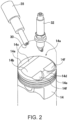
Fig. 2 is a perspective view of an engine according to this embodiment. -
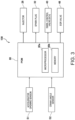
Fig. 3 is a block diagram illustrating an electrical configuration of the engine system according to this embodiment. -
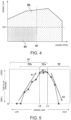
Fig. 4 illustrates operation ranges of the engine according to this embodiment. -
Fig. 5 is a map illustrating a relationship between an engine load and opening of an EGR valve according to this embodiment. -
Fig. 6 is a flowchart illustrating control according to this embodiment. - Hereinafter, an engine system according to one embodiment of the present disclosure is described with reference to the accompanying drawings. All of the features shown in the drawings may not necessarily be essential.
-
Fig. 1 is a diagram schematically illustrating a configuration of the engine system according to this embodiment. As illustrated inFig. 1 , anengine system 100 includes anengine 1 mounted on a vehicle. Theengine 1 may be a gasoline engine to which fuel at least containing gasoline is supplied. In detail, theengine 1 particularly includes acylinder block 4 provided with cylinders 2 (note that, although onecylinder 2 is illustrated inFig. 1 , a plurality of, for example, fourcylinders 2 may be aligned in a row), a cylinder head 6 provided above thecylinder block 4, and anoil pan 8 provided below thecylinder block 4 and storing lubricant therein. Apiston 14 which is coupled to acrankshaft 12 via a connectingrod 10 is reciprocatably inserted into eachcylinder 2. The cylinder head 6, thecylinder 2, and thepiston 14 define acombustion chamber 16 of theengine 1. - Intake air is supplied to the
engine 1 from anintake passage 40. Theintake passage 40 is provided thereon with athrottle valve 41 which is adjustable of an amount of intake air to be supplied to theengine 1, and asurge tank 42 which temporality stores intake air to be supplied to theengine 1. Further, part of theintake passage 40 constitutes anintake port 18 connected to theengine 1. - Two
independent intake ports 18 and twoindependent exhaust ports 20 are particularly connected to theengine 1 for eachcylinder 2, and theintake ports 18 and theexhaust ports 20 are provided withintake valves 22 andexhaust valves 24 which open and close openings on thecombustion chamber 16 side, respectively. Here, in response to opening of theintake valve 22 and descending of thepiston 14, a tumble flow (vertical (longitudinal) vortex) is generated by intake air flowed into thecombustion chamber 16 from theintake port 18. - Further, one of the two
intake ports 18 for eachcylinder 2 is provided with a swirl control valve (SCV) 43 which opens and/or closes a flow passage of theintake port 18. Note that, inFig. 1 , only oneintake port 18 to which theSCV 43 is provided is illustrated, and theother intake port 18 without theSCV 43 is not illustrated. When theSCV 43 is closed, intake air is flowed into thecombustion chamber 16 only from one of the twointake ports 18, and therefore, a swirl flow (horizontal (transverse) vortex) is generated inside thecombustion chamber 16. - A lower surface of the cylinder head 6 of the
engine 1 forms aceiling 26 of thecombustion chamber 16. Thisceiling 26 may be a so-called pentroof type in which two opposing sloped surfaces are provided so as to extend from a central part of theceiling 26 to a lower end of the cylinder head 6. Further, the cylinder head 6 may be attached, for eachcylinder 2, with an injector, a fuel injection valve, a direct injection injector, or a directfuel injection valve 28 which injects, or directly injects fuel into thecylinder 2. Theinjector 28 may be provided incliningly with respect to an axial direction of the piston 14 (i.e., a moving direction of the piston 14). In detail, theinjector 28 is disposed such that its nozzle is oriented obliquely downwardly into thecombustion chamber 16 from between the twointake ports 18 at a periphery of theceiling 26 of thecombustion chamber 16. - Further, a
spark plug 32 which forcibly ignites a mixture gas inside thecombustion chamber 16 may be attached to the cylinder head 6 of theengine 1 for eachcylinder 2. Thespark plug 32 is disposed to extend downwardly from the central part of theceiling 26 of thecombustion chamber 16 while penetrating the cylinder head 6. Moreover, the cylinder head 6 may be provided withvalve mechanisms 36 which drive theintake valves 22 and theexhaust valves 24 of eachcylinder 2, respectively. Thevalve mechanism 36 is, for example, a variable valve lift mechanism which can change a lift amount of each of theintake valve 22 and theexhaust valve 24, or a variable valve phase mechanism which can change a rotational phase of a camshaft with respect to thecrankshaft 12. - The
intake passage 40 is connected to one side surface of theengine 1 as described above, whereas, on the other side surface, anexhaust passage 44 which discharges burnt gas (exhaust gas) from thecombustion chamber 16 of eachcylinder 2 is connected. Theexhaust passage 44 is particularly provided thereon with a catalyst 45 (in detail, a catalytic converter) which purifies exhaust gas. Moreover, theexhaust passage 44 is connected, particularly on a downstream side of thecatalyst 45, to an exhaust gas recirculation (EGR)passage 46 which recirculates the exhaust gas to theintake passage 40. TheEGR passage 46 is particularly provided thereon with anEGR cooler 47 which cools exhaust gas (EGR gas) to be recirculated, and an EGR valve 48 (EGR gas adjusting mechanism) which adjusts an amount of EGR gas to be recirculated to theintake passage 40. TheEGR passage 46, theEGR cooler 47, and theEGR valve 48 constitute an EGR system. - Next,
Fig. 2 is a perspective view illustrating a detailed structure of thepiston 14, theinjector 28, and thespark plug 32 of theengine 1 according to this embodiment. As illustrated inFig. 2 , theinjector 28 may be a multi-nozzle type having a plurality ofnozzles 30. Theinjector 28 is disposed such that an axial direction of theinjector 28 inclines downwardly at a given angle with respect to a horizontal direction. Therefore, fuel spray injected from eachnozzle 30 of theinjector 28 spreads radially to obliquely downward from the periphery of theceiling 26 of thecombustion chamber 16. - Further, a
piston crown surface 14a which constitutes a top part of thepiston 14 may be formed as a convex which bulges at its central area. For example, at the center of thepiston crown surface 14a, aflat surface 14b extending along a horizontal surface orthogonal to the axial direction of thepiston 14 is formed over a comparatively wide range. Thepiston crown surface 14a is not formed with a so-called cavity. - Further, the
piston crown surface 14a may be provided with an injector side slopedsurface 14c extending obliquely upward toward the center from an end part of thepiston crown surface 14a on theinjector 28 side, and a counter-injector side slopedsurface 14d extending obliquely upward toward the center from an opposite end part of thepiston crown surface 14a. i.e., on the farther side from the injector 28 (hereinafter, may be referred to as a "counter-injector side" as necessary). The injector side slopedsurface 14c and the counter-injector side slopedsurface 14d are formed along theceiling 26 of the combustion chamber 16 (seeFig. 1 ). - Further, in each end part of the
piston crown surface 14a on the injector side and the counter-injector side, ahorizontal surface 14e is particularly formed. Further particularly, the counter-injector side slopedsurface 14d of thepiston crown surface 14a is formed with exhaust valve recesses 14f which are concaved to avoid contact between thepiston 14 and theexhaust valves 24, respectively. Note that contact between thepiston 14 and theintake valves 22 is avoided by the injector side slopedsurface 14c, etc. - Next,
Fig. 3 is a block diagram illustrating an electrical configuration of theengine system 100 according to this embodiment. PCM (Powertrain Control Module) 80 is particularly comprised of a circuit, and is a controller based on a well-known microcomputer. ThePCM 80 is provided with, for example, one ormore microprocessor 80a (e.g., a CPU (Central Processing Unit)) which executes a program,memory 80b which is comprised of RAM (Random Access Memory) and/or ROM (Read Only Memory) and stores the program and data, and an I/O bus which inputs and outputs electric signals. - The
PCM 80 is connected to one or various sensors. For example, thePCM 80 is mainly connected with an acceleratoropening sensor S 1 and a crank angle sensor S2. The acceleratoropening sensor S 1 detects an accelerator opening corresponding to a depressing amount of an accelerator pedal, and the crank angle sensor S2 detects a rotational angle of the crankshaft 12 (corresponding to an engine speed). Detection signals outputted from thesesensors S 1 and S2 are inputted into thePCM 80. - The
PCM 80 particularly calculates, based on the detection signals inputted from the sensors S1 and S2, a control amount of each device in accordance with a control logic defined in advance. The control logic is stored in thememory 80b. The control logic includes calculating a target amount and/or the control amount by using a map stored in thememory 80b. ThePCM 80 outputs control signals related to the calculated control amounts mainly to theinjector 28, thespark plug 32, theSCV 43, and theEGR valve 48. - Next, control contents executed by the
PCM 80 according to this embodiment are described. Basically, thePCM 80 switches the opening and closing of theSCV 43 corresponding to a change in an operation state of theengine 1, that is, switches theSCV 43 from fully closed to fully opened, or from fully opened to fully closed. According to this, whether to introduce the swirl flow into thecombustion chamber 16 by theSCV 43 is switched according to the operation state of theengine 1. - First, with reference to
Fig. 4 , the operation ranges of theengine 1 in which theSCV 43 is particularly set to fully closed or fully opened are described.Fig. 4 illustrates the operation ranges of theengine 1 defined by the engine speed indicated by the horizontal axis and the engine load indicated by the vertical axis. In an operation range R1 where the engine speed is at or below a speed threshold N1 (e.g., 2,500 rpm) and the engine load is at or below a load threshold L1, theSCV 43 is particularly set to fully closed, that is, theengine 1 is operated using the swirl flow generated by closing theSCV 43. Further particularly, in the operation range R1, theinjector 28 injects fuel all at once (batch injection) during an intake stroke of theengine 1 in the state where the swirl flow is generated, and thus homogeneous combustion being achieved in theengine 1. - On the other hand, in an operation range R2 where the engine speed exceeds the speed threshold N1 or the engine load exceeds the load threshold L1, the
SCV 43 is particularly set to fully opened, that is, theengine 1 is operated without using the swirl flow. Further particularly, when the engine speed is at or below the speed threshold N1 in the operation range R2, theinjector 28 dividedly injects fuel a plurality of times (split injection) during an intake stroke and a compression stroke of theengine 1, and thus stratified-charge combustion is achieved in theengine 1. In contrast, in a range where the engine speed exceeds the speed threshold N1 in the operation range R2, theinjector 28 injects fuel all at once (batch injection) during an intake stroke of theengine 1, and thus homogeneous combustion is achieved in theengine 1. - Note that
Fig. 4 illustrates an example in which the speed threshold N1 and the load threshold L1 are fixed values, respectively. However, in other examples, the speed threshold N1 may be lowered as the engine load increases, or the load threshold L1 may be lowered as the engine speed increases. Moreover, below, the operation range R1 may suitably be referred to as a "low-load range R1," and the operation range R2 may suitably be referred to as a "high-load range R2." - As described above, in the low-load range R1, the
PCM 80 particularly controls theSCV 43 to fully close so that a swirl flow is generated inside thecombustion chamber 16. Moreover, from the viewpoint of reducing a pumping loss of theengine 1, in the low-load range R1, thePCM 80 basically controls theEGR valve 48 to increase the amount of EGR gas to be recirculated to theintake passage 40 from theEGR passage 46. - Here, when the
SCV 43 is switched from fully closed to fully opened corresponding to the shift of the operation state of theengine 1 from the low-load range R1 to the high-load range R2, a state where only oneintake port 18 communicates with eachcylinder 2 is shifted to a state where twointake ports 18 communicate with thecylinder 2. Therefore, while theSCV 43 is switched from fully closed to fully opened, a blown back amount (backflow amount) of exhaust gas to theintake passage 40 during a valve overlap period where both of theintake valve 22 and theexhaust valve 24 open increases compared with before the switching (the fully closed state of the SCV 43). According to this, during an intake stroke of theengine 1, an amount of exhaust gas (internal EGR gas) introduced into thecombustion chamber 16 together with fresh air increases. As a result, when a comparatively large amount of EGR gas (external EGR gas) is recirculated from theEGR passage 46 in the low-load range R1 as described above, the total amount of exhaust gas (i.e., the total amount of external EGR gas and internal EGR gas) introduced into thecombustion chamber 16 upon the switching of theSCV 43 from fully closed to fully opened becomes excessive, which degrades combustion stability. - In this embodiment, the
PCM 80 executes control to suppress the degradation in combustion stability due to the excessive EGR gas when theSCV 43 is switched from the fully closed to fully opened. In detail, while the operation range is the low-load range R1 where the engine load is at or below the load threshold L1, thePCM 80 controls theEGR valve 48 such that, at a constant or fixed speed, an increase rate of the EGR gas amount with respect to the increase in the engine load is lower in a first load range than in a second load range. The first load range is higher than the second load range, and includes the load threshold L1. That is, in the low-load range R1, when the engine load is separated from the load threshold L1, thePCM 80 controls theEGR valve 48 to increase the amount of EGR gas as the engine load increases. On the other hand, when the engine load is near the load threshold L1, thePCM 80 controls theEGR valve 48 to avoid the increase in the amount of EGR gas corresponding to the increase in the engine load (typically, maintain the EGR gas amount substantially constant regardless of the increase in the engine load). - Here, a basic concept of the control according to this embodiment is described with reference to
Fig. 5. Fig. 5 illustrates a map of an EGR valve opening (vertical axis) applied according to the engine load (horizontal axis) at a certain engine speed (e.g., 1,500 rpm). As illustrated inFig. 5 , in this embodiment, in a range on the lower load side within the low-load range R1 (in detail, in a second load range R1b at or below a given load L2 in the low-load range R1), thePCM 80 gradually increases the EGR valve opening so as to increase the EGR gas amount corresponding to the increase in the engine load (see an arrow A1), in view of reducing the pumping loss of theengine 1. - Particularly, in this embodiment, in a range on the higher load side within the low-load range R1 (in detail, in a first load range R1a between the given load L2 and the load threshold L1 (i.e., higher than the given load L2 and lower than the load threshold L1)), the
PCM 80 reduces the increase rate of the EGR valve opening with respect to the increase in the engine load (see an arrow A2), compared with in the second load range R1b. In more detail, in the first load range R1a, thePCM 80 keeps the EGR valve opening substantially constant regardless of the engine load increase. According to this, even when the amount of internal EGR gas increases during the switching of theSCV 43 from fully closed to fully opened corresponding to the shift of the operation state of theengine 1 from the low-load range R1 to the high-load range R2, the increase in the amount of external EGR gas corresponding to the increase in the engine load can accurately be suppressed. As a result, upon the switching of theSCV 43 from fully closed to fully opened, the increase in the total amount of exhaust gas (i.e., the total amount of external EGR gas and internal EGR gas) introduced into thecombustion chamber 16 can be suppressed, and combustion stability can be secured. - Note that in a range on a further lower load side within the second load range R1b, in order to give priority to securing combustion stability, the EGR valve opening is set to zero so as not to introduce EGR gas into the
combustion chamber 16. On the other hand, in the high-load range R2, in view of improving an engine output by increasing an amount of fresh air, thePCM 80 gradually reduces the EGR valve opening so as to lower the EGR gas amount as the engine load increases (see an arrow A3). - Next, a control flow related to this embodiment is described with reference to
Fig. 6. Fig. 6 is a flowchart illustrating the control according to this embodiment. This control is repeatedly executed by thePCM 80 at a given cycle. All of the steps as shown inFig. 6 may not necessarily be essential. First, at Step S11, thePCM 80 particularly acquires various information. For example, thePCM 80 at least acquires the detection signals of the accelerator opening sensor S1 and the crank angle sensor S2 described above. - Next, at Step S12, the
PCM 80 particularly identifies, based on the information acquired at Step S11, the current operation state of the engine 1 (in detail, the current engine speed and the current engine load). Here, thePCM 80 particularly acquires the engine speed based on the crank angle (the rotational angle of the crankshaft 12) corresponding to the detection signal of the crank angle sensor S2. Moreover, thePCM 80 particularly acquires a target torque of the vehicle based on the accelerator opening corresponding to the detection signal of the accelerator opening sensor S1, and then, calculates the engine load corresponding to the target torque. - Next, at Step S13, the
PCM 80 particularly determines a valve state (fully closed or fully opened) to be set for theSCV 43 based on the operation state of theengine 1 identified at Step S12. For example, when the engine speed and the engine load belong to the low-load range R1, thePCM 80 particularly determines the valve state as fully closed, and, when the engine speed and the engine load belong to the high-load range R2, thePCM 80 particularly determines the valve state as fully opened. - Next, at Step S14, the
PCM 80 particularly determines the EGR valve opening to be set for theEGR valve 48 based on the operation state of theengine 1 identified at Step S12. For example, thePCM 80 particularly determines the EGR valve opening to be applied at the current engine load with reference to the map as illustrated inFig. 5 . Note that since the map illustrated inFig. 5 is defined for each engine speed, the map corresponding to the current engine speed is selected. Then, thePCM 80 proceeds to Step S15. - Next, at Step S15, the
PCM 80 particularly controls theSCV 43 and theEGR valve 48 based on the valve state of theSCV 43 determined at Step S13, and the EGR valve opening determined at Step S14. In this case, thePCM 80 particularly controls theEGR valve 48 to be the determined valve opening. Moreover, when the valve state of theSCV 43 determined at Step S13 is different from the current valve state, thePCM 80 particularly switches the valve state of theSCV 43, that is, switches theSCV 43 from fully closed to fully opened, or from fully opened to fully closed. On the other hand, when the valve state of theSCV 43 determined at Step S13 is the same as the current valve state, thePCM 80 particularly maintains the valve state of theSCV 43. Then, thePCM 80 ends the flow illustrated inFig. 6 . - Next, operation and effects of the
engine system 100 according to this embodiment are described. - In this embodiment, in the low-load range R1 where the engine load is at or below the load threshold L1 at which the
SCV 43 is switched from fully closed to fully opened, thePCM 80 controls theEGR valve 48 such that, at the fixed speed, the increase rate of the EGR gas amount with respect to the increase in the engine load is lower in the first load range R1a than in the second load range R1b. The first load range R1a is higher than the second load range R1b, and includes the load threshold L1. According to this, even when the internal EGR gas amount increases during the switching of theSCV 43 from fully closed to fully opened corresponding to the shift of the operation state of theengine 1 from the low-load range R1 to the high-load range R2, the increase in the external EGR gas amount corresponding to the engine load increase can accurately be suppressed. As a result, upon the switching of theSCV 43 from fully closed to fully opened, the increase in the total amount of exhaust gas (i.e., the total amount of external EGR gas and internal EGR gas) introduced into thecombustion chamber 16 can be suppressed, and combustion stability can be secured. - Further, according to this embodiment, in the first load range R1a, the
PCM 80 controls theEGR valve 48 such that the amount of EGR gas becomes substantially constant regardless of the increase in the engine load. According to this, the amount of external EGR gas introduced into thecombustion chamber 16 when theSCV 43 is switched from fully closed to fully opened can effectively be reduced, and the combustion stability can certainly be secured. - Further, according to this embodiment, in the high-load range R2, since the
PCM 80 controls theEGR valve 48 to reduce the amount of EGR gas as the engine load increases, the amount of fresh air introduced into thecombustion chamber 16 is increased and the engine output can be improved. - Further, according to this embodiment, in the low-load range R1, the
PCM 80 executes the batch injection of fuel during an intake stroke, thereby the homogeneous combustion appropriately being achieved in theengine 1. Moreover, in the high-load range R2 (at or below the speed threshold N1), thePCM 80 executes the split injection of fuel from an intake stroke to a compression stroke, thereby the stratified-charge combustion appropriately being achieved in theengine 1. - It should be understood that the embodiments herein are illustrative and not restrictive, since the scope of the invention is defined by the appended claims rather than by the description preceding them.
-
- 1
- Engine
- 2
- Cylinder
- 14
- Piston
- 14a
- Piston Crown Surface
- 16
- Combustion Chamber
- 18
- Intake Port
- 28
- Injector (Fuel Injection Valve)
- 32
- Spark Plug
- 40
- Intake Passage
- 43
- Swirl Control Valve (SCV)
- 44
- Exhaust Passage
- 45
- Catalyst
- 46
- EGR Passage
- 48
- EGR Valve (EGR Gas Adjusting Mechanism)
- 80
- PCM (Controller)
- 100
- Engine System
Claims (15)
- An engine system (100), comprising:an engine (1) including:a cylinder (2) defining a combustion chamber (16);a piston (14) configured to reciprocate inside the cylinder (2); anda fuel injection valve (28) configured to directly inject fuel into the cylinder (2);a swirl control valve (43) provided inside an intake passage (40) and configured to generate a swirl flow inside the cylinder (2) when the swirl control valve (43) closes, the intake passage (40) being configured to supply intake air to the cylinder (2);an EGR passage (46) configured to recirculate exhaust gas of the engine (1) as EGR gas to the intake passage (40);an EGR gas adjusting mechanism (48) provided to the EGR passage (46) and configured to control an amount of EGR gas to be recirculated to the intake passage (40); anda controller (80) configured to control the fuel injection valve (28), the swirl control valve (43), and the EGR gas adjusting mechanism (48),characterized in thatwhen an engine load is at or below a given threshold (L1), the controller (80) is configured to control the swirl control valve (43) to fully close, andwhile the engine load is at or below the threshold (L1), the controller (80) is configured to control the EGR gas adjusting mechanism (48) such that, at a fixed engine speed, an increase rate of the amount of EGR gas with respect to an increase in the engine load is lower in a first load range (R1a) than in a second load range (R1b), the first load range (R1a) being higher than the second load range (R1b) and including the threshold (L1).
- An engine system (100), comprising:an engine (1) including:a cylinder (2) defining a combustion chamber (16);a piston (14) configured to reciprocate inside the cylinder (2); anda fuel injection valve (28) configured to directly inject fuel into the cylinder (2);a swirl control valve (43) provided inside an intake passage (40) and configured to generate a swirl flow inside the cylinder (2) when the swirl control valve (43) closes, the intake passage (40) being configured to supply intake air to the cylinder (2);an EGR passage (46) configured to recirculate exhaust gas of the engine (1) as EGR gas to the intake passage (40);an EGR gas adjusting mechanism (48) provided to the EGR passage (46) and configured to control an amount of EGR gas to be recirculated to the intake passage (40); anda controller (80) configured to control the fuel injection valve (28), the swirl control valve (43), and the EGR gas adjusting mechanism (48),characterized in thatwhen an engine load is at or below a given threshold (L1), the controller (80) is configured to control the swirl control valve (43) to fully close,while the engine load is at or below the threshold (L1), in a second load range (R1b), the controller (80) is configured to control the EGR gas adjusting mechanism (48) to increase the amount of EGR gas as the engine load increases, andin the first load range (R1a), the controller (80) is configured to control the EGR gas adjusting mechanism (48) to keep the amount of EGR gas substantially constant regardless of the increase in the engine load, the first load range (R1a) being higher than the second load range (R1b) and including the threshold (L1).
- The engine system (100) of claim 1 or 2, wherein when the engine load exceeds the threshold (L1), the controller (80) is configured to control the swirl control valve (43) to open and to control the EGR gas adjusting mechanism (48) to reduce the amount of EGR gas as the engine load increases.
- The engine system (100) of any one of the preceding claims, wherein when the engine load is at or below the threshold (L1), the controller (80) is configured to control the fuel injection valve (28) to inject fuel all at once during an intake stroke of the engine (1), and when the engine load exceeds the threshold (L1), the controller (80) is configured to control the fuel injection valve (28) to inject fuel a plurality of times from an intake stroke to a compression stroke of the engine (1).
- The engine system (100) of any one of the preceding claims, wherein the fuel injection valve (28) is provided incliningly with respect to an axial direction of the piston (14).
- The engine system (100) of any one of the preceding claims, wherein a crown surface (14a) of the piston (14) is formed to be substantially flat without a cavity.
- The engine system (100) of claim 6, wherein the crown surface (14a) has, at a center of the crown surface (14a), a flat surface (14b) extending along a surface orthogonal to the axial direction of the piston (14).
- The engine system (100) of claim 7, wherein the crown surface (14a) has a first sloped surface (14c) extending obliquely toward the center from an end part of the crown surface (14a) on the fuel injection valve (28) side, and a second sloped surface (14d) extending obliquely toward the center from an end part of the crown surface (14a) on an exhaust side.
- The engine system (100) of any one of the preceding claims, wherein
the EGR gas adjusting mechanism (48) is an EGR valve. - The engine system (100) of claim 9, wherein the controller (80) is configured to control the EGR valve such that the EGR valve opening is increased as the engine load increases in the second load range (R1b).
- The engine system (100) of claim 9 or 10, wherein while the engine load is above the threshold (L1), the controller (80) is configured to control the EGR valve such that the EGR valve opening is reduced as the engine load increases.
- The engine system (100) of claim 2, whereinthe EGR gas adjusting mechanism (48) is an EGR valve, andthe controller (80) is configured to control the EGR valve such that an EGR valve opening is substantially constant in the first load range (R1a).
- The engine system (100) of claim 12, wherein the controller (80) is configured to control the EGR valve such that the EGR valve opening is increased as the engine load increases in the second load range (R1b).
- The engine system (100) of claim 12 or 13, wherein while the engine load is above the threshold (L1), the controller (80) is configured to control the EGR valve such that the EGR valve opening is reduced as the engine load increases.
- A vehicle comprising the engine system (100) of any one of the preceding claims.
Applications Claiming Priority (1)
| Application Number | Priority Date | Filing Date | Title |
|---|---|---|---|
| JP2021053082A JP7566243B2 (en) | 2021-03-26 | 2021-03-26 | Engine System |
Publications (2)
| Publication Number | Publication Date |
|---|---|
| EP4063637A1 EP4063637A1 (en) | 2022-09-28 |
| EP4063637B1 true EP4063637B1 (en) | 2024-07-03 |
Family
ID=80225391
Family Applications (1)
| Application Number | Title | Priority Date | Filing Date |
|---|---|---|---|
| EP22154872.0A Active EP4063637B1 (en) | 2021-03-26 | 2022-02-03 | Engine system and vehicle |
Country Status (3)
| Country | Link |
|---|---|
| US (1) | US11492993B2 (en) |
| EP (1) | EP4063637B1 (en) |
| JP (1) | JP7566243B2 (en) |
Families Citing this family (1)
| Publication number | Priority date | Publication date | Assignee | Title |
|---|---|---|---|---|
| KR102460277B1 (en) * | 2021-03-29 | 2022-10-28 | 주식회사 현대케피코 | Eexhaust gas recirculation control method and system during high load operation and combustion engine vehicle including the same system |
Family Cites Families (11)
| Publication number | Priority date | Publication date | Assignee | Title |
|---|---|---|---|---|
| JP2002030970A (en) * | 2000-07-17 | 2002-01-31 | Honda Motor Co Ltd | Combustion state control device for in-cylinder injection internal combustion engine |
| JP3791322B2 (en) | 2000-10-26 | 2006-06-28 | 日産自動車株式会社 | In-cylinder direct injection spark ignition engine controller |
| JP2006057516A (en) | 2004-08-19 | 2006-03-02 | Toyota Motor Corp | Control device for internal combustion engine |
| JP6191837B2 (en) * | 2015-02-19 | 2017-09-06 | マツダ株式会社 | Engine control device |
| WO2018100708A1 (en) * | 2016-12-01 | 2018-06-07 | マツダ株式会社 | Compression ignition gasoline engine |
| US10539098B2 (en) * | 2017-05-19 | 2020-01-21 | Mazda Motor Corporation | Control system of compression-ignition engine |
| US10697391B2 (en) * | 2017-05-19 | 2020-06-30 | Mazda Motor Corporation | Control system of compression-ignition engine |
| JP6558427B2 (en) | 2017-05-19 | 2019-08-14 | マツダ株式会社 | Control device for compression ignition engine |
| JP7077769B2 (en) * | 2018-05-22 | 2022-05-31 | マツダ株式会社 | Compression ignition engine controller |
| JP7088049B2 (en) | 2019-01-31 | 2022-06-21 | マツダ株式会社 | Compression ignition engine controller |
| JP7205258B2 (en) * | 2019-01-31 | 2023-01-17 | マツダ株式会社 | Compression ignition engine controller |
-
2021
- 2021-03-26 JP JP2021053082A patent/JP7566243B2/en active Active
-
2022
- 2022-02-03 EP EP22154872.0A patent/EP4063637B1/en active Active
- 2022-03-02 US US17/684,925 patent/US11492993B2/en active Active
Also Published As
| Publication number | Publication date |
|---|---|
| JP7566243B2 (en) | 2024-10-15 |
| US11492993B2 (en) | 2022-11-08 |
| JP2022150467A (en) | 2022-10-07 |
| US20220307442A1 (en) | 2022-09-29 |
| EP4063637A1 (en) | 2022-09-28 |
Similar Documents
| Publication | Publication Date | Title |
|---|---|---|
| US5740775A (en) | Diesel engine | |
| US8387588B2 (en) | Control apparatus and control method for direct injection spark ignition internal combustion engine | |
| CN115680862B (en) | Engine System | |
| US7168409B2 (en) | Controller for direct injection internal combustion engine | |
| US11686243B2 (en) | Engine system | |
| JP2020002862A (en) | Fuel injection control device for diesel engine | |
| US20230035754A1 (en) | Engine system | |
| JP2020002861A (en) | Fuel injection control device for diesel engine | |
| CN115680861B (en) | Engine System | |
| US20210025318A1 (en) | Fuel injection control device for engine | |
| JP6732035B2 (en) | Internal combustion engine controller | |
| EP4063637B1 (en) | Engine system and vehicle | |
| US7104249B2 (en) | Direct fuel injection/spark ignition engine control device | |
| EP1088983B1 (en) | A control system for a direct injection engine of spark ignition type | |
| EP4063636B1 (en) | Engine system | |
| JP3671755B2 (en) | Intake control device for direct injection internal combustion engine | |
| JP7523750B2 (en) | Engine System | |
| US20220260024A1 (en) | Internal combustion engine | |
| JP7564997B2 (en) | Engine System | |
| JP5316113B2 (en) | Control unit for gasoline engine | |
| JP7666201B2 (en) | Engine System | |
| JP7354805B2 (en) | engine control device | |
| JP7354806B2 (en) | engine control device | |
| EP1688616B1 (en) | Direct-injection spark-ignition internal combustion engine | |
| JP2010112294A (en) | Fuel injection device of internal combustion engine |
Legal Events
| Date | Code | Title | Description |
|---|---|---|---|
| PUAI | Public reference made under article 153(3) epc to a published international application that has entered the european phase |
Free format text: ORIGINAL CODE: 0009012 |
|
| STAA | Information on the status of an ep patent application or granted ep patent |
Free format text: STATUS: THE APPLICATION HAS BEEN PUBLISHED |
|
| AK | Designated contracting states |
Kind code of ref document: A1 Designated state(s): AL AT BE BG CH CY CZ DE DK EE ES FI FR GB GR HR HU IE IS IT LI LT LU LV MC MK MT NL NO PL PT RO RS SE SI SK SM TR |
|
| STAA | Information on the status of an ep patent application or granted ep patent |
Free format text: STATUS: REQUEST FOR EXAMINATION WAS MADE |
|
| 17P | Request for examination filed |
Effective date: 20221020 |
|
| RBV | Designated contracting states (corrected) |
Designated state(s): AL AT BE BG CH CY CZ DE DK EE ES FI FR GB GR HR HU IE IS IT LI LT LU LV MC MK MT NL NO PL PT RO RS SE SI SK SM TR |
|
| GRAP | Despatch of communication of intention to grant a patent |
Free format text: ORIGINAL CODE: EPIDOSNIGR1 |
|
| STAA | Information on the status of an ep patent application or granted ep patent |
Free format text: STATUS: GRANT OF PATENT IS INTENDED |
|
| RIC1 | Information provided on ipc code assigned before grant |
Ipc: F02D 41/30 20060101ALI20240220BHEP Ipc: F02D 41/00 20060101AFI20240220BHEP |
|
| INTG | Intention to grant announced |
Effective date: 20240325 |
|
| GRAS | Grant fee paid |
Free format text: ORIGINAL CODE: EPIDOSNIGR3 |
|
| GRAA | (expected) grant |
Free format text: ORIGINAL CODE: 0009210 |
|
| STAA | Information on the status of an ep patent application or granted ep patent |
Free format text: STATUS: THE PATENT HAS BEEN GRANTED |
|
| AK | Designated contracting states |
Kind code of ref document: B1 Designated state(s): AL AT BE BG CH CY CZ DE DK EE ES FI FR GB GR HR HU IE IS IT LI LT LU LV MC MK MT NL NO PL PT RO RS SE SI SK SM TR |
|
| REG | Reference to a national code |
Ref country code: CH Ref legal event code: EP |
|
| REG | Reference to a national code |
Ref country code: DE Ref legal event code: R096 Ref document number: 602022004207 Country of ref document: DE |
|
| REG | Reference to a national code |
Ref country code: LT Ref legal event code: MG9D |
|
| REG | Reference to a national code |
Ref country code: NL Ref legal event code: MP Effective date: 20240703 |
|
| PG25 | Lapsed in a contracting state [announced via postgrant information from national office to epo] |
Ref country code: PT Free format text: LAPSE BECAUSE OF FAILURE TO SUBMIT A TRANSLATION OF THE DESCRIPTION OR TO PAY THE FEE WITHIN THE PRESCRIBED TIME-LIMIT Effective date: 20241104 |
|
| REG | Reference to a national code |
Ref country code: AT Ref legal event code: MK05 Ref document number: 1700040 Country of ref document: AT Kind code of ref document: T Effective date: 20240703 |
|
| PG25 | Lapsed in a contracting state [announced via postgrant information from national office to epo] |
Ref country code: NL Free format text: LAPSE BECAUSE OF FAILURE TO SUBMIT A TRANSLATION OF THE DESCRIPTION OR TO PAY THE FEE WITHIN THE PRESCRIBED TIME-LIMIT Effective date: 20240703 |
|
| PG25 | Lapsed in a contracting state [announced via postgrant information from national office to epo] |
Ref country code: PT Free format text: LAPSE BECAUSE OF FAILURE TO SUBMIT A TRANSLATION OF THE DESCRIPTION OR TO PAY THE FEE WITHIN THE PRESCRIBED TIME-LIMIT Effective date: 20241104 Ref country code: NL Free format text: LAPSE BECAUSE OF FAILURE TO SUBMIT A TRANSLATION OF THE DESCRIPTION OR TO PAY THE FEE WITHIN THE PRESCRIBED TIME-LIMIT Effective date: 20240703 |
|
| PG25 | Lapsed in a contracting state [announced via postgrant information from national office to epo] |
Ref country code: NO Free format text: LAPSE BECAUSE OF FAILURE TO SUBMIT A TRANSLATION OF THE DESCRIPTION OR TO PAY THE FEE WITHIN THE PRESCRIBED TIME-LIMIT Effective date: 20241003 |
|
| PG25 | Lapsed in a contracting state [announced via postgrant information from national office to epo] |
Ref country code: PL Free format text: LAPSE BECAUSE OF FAILURE TO SUBMIT A TRANSLATION OF THE DESCRIPTION OR TO PAY THE FEE WITHIN THE PRESCRIBED TIME-LIMIT Effective date: 20240703 Ref country code: FI Free format text: LAPSE BECAUSE OF FAILURE TO SUBMIT A TRANSLATION OF THE DESCRIPTION OR TO PAY THE FEE WITHIN THE PRESCRIBED TIME-LIMIT Effective date: 20240703 Ref country code: GR Free format text: LAPSE BECAUSE OF FAILURE TO SUBMIT A TRANSLATION OF THE DESCRIPTION OR TO PAY THE FEE WITHIN THE PRESCRIBED TIME-LIMIT Effective date: 20241004 |
|
| PG25 | Lapsed in a contracting state [announced via postgrant information from national office to epo] |
Ref country code: BG Free format text: LAPSE BECAUSE OF FAILURE TO SUBMIT A TRANSLATION OF THE DESCRIPTION OR TO PAY THE FEE WITHIN THE PRESCRIBED TIME-LIMIT Effective date: 20240703 |
|
| PG25 | Lapsed in a contracting state [announced via postgrant information from national office to epo] |
Ref country code: LV Free format text: LAPSE BECAUSE OF FAILURE TO SUBMIT A TRANSLATION OF THE DESCRIPTION OR TO PAY THE FEE WITHIN THE PRESCRIBED TIME-LIMIT Effective date: 20240703 |
|
| PG25 | Lapsed in a contracting state [announced via postgrant information from national office to epo] |
Ref country code: AT Free format text: LAPSE BECAUSE OF FAILURE TO SUBMIT A TRANSLATION OF THE DESCRIPTION OR TO PAY THE FEE WITHIN THE PRESCRIBED TIME-LIMIT Effective date: 20240703 Ref country code: IS Free format text: LAPSE BECAUSE OF FAILURE TO SUBMIT A TRANSLATION OF THE DESCRIPTION OR TO PAY THE FEE WITHIN THE PRESCRIBED TIME-LIMIT Effective date: 20241103 |
|
| PG25 | Lapsed in a contracting state [announced via postgrant information from national office to epo] |
Ref country code: HR Free format text: LAPSE BECAUSE OF FAILURE TO SUBMIT A TRANSLATION OF THE DESCRIPTION OR TO PAY THE FEE WITHIN THE PRESCRIBED TIME-LIMIT Effective date: 20240703 Ref country code: CZ Free format text: LAPSE BECAUSE OF FAILURE TO SUBMIT A TRANSLATION OF THE DESCRIPTION OR TO PAY THE FEE WITHIN THE PRESCRIBED TIME-LIMIT Effective date: 20240703 |
|
| PG25 | Lapsed in a contracting state [announced via postgrant information from national office to epo] |
Ref country code: RS Free format text: LAPSE BECAUSE OF FAILURE TO SUBMIT A TRANSLATION OF THE DESCRIPTION OR TO PAY THE FEE WITHIN THE PRESCRIBED TIME-LIMIT Effective date: 20241003 Ref country code: ES Free format text: LAPSE BECAUSE OF FAILURE TO SUBMIT A TRANSLATION OF THE DESCRIPTION OR TO PAY THE FEE WITHIN THE PRESCRIBED TIME-LIMIT Effective date: 20240703 |
|
| PG25 | Lapsed in a contracting state [announced via postgrant information from national office to epo] |
Ref country code: RS Free format text: LAPSE BECAUSE OF FAILURE TO SUBMIT A TRANSLATION OF THE DESCRIPTION OR TO PAY THE FEE WITHIN THE PRESCRIBED TIME-LIMIT Effective date: 20241003 Ref country code: PL Free format text: LAPSE BECAUSE OF FAILURE TO SUBMIT A TRANSLATION OF THE DESCRIPTION OR TO PAY THE FEE WITHIN THE PRESCRIBED TIME-LIMIT Effective date: 20240703 Ref country code: NO Free format text: LAPSE BECAUSE OF FAILURE TO SUBMIT A TRANSLATION OF THE DESCRIPTION OR TO PAY THE FEE WITHIN THE PRESCRIBED TIME-LIMIT Effective date: 20241003 Ref country code: LV Free format text: LAPSE BECAUSE OF FAILURE TO SUBMIT A TRANSLATION OF THE DESCRIPTION OR TO PAY THE FEE WITHIN THE PRESCRIBED TIME-LIMIT Effective date: 20240703 Ref country code: IS Free format text: LAPSE BECAUSE OF FAILURE TO SUBMIT A TRANSLATION OF THE DESCRIPTION OR TO PAY THE FEE WITHIN THE PRESCRIBED TIME-LIMIT Effective date: 20241103 Ref country code: HR Free format text: LAPSE BECAUSE OF FAILURE TO SUBMIT A TRANSLATION OF THE DESCRIPTION OR TO PAY THE FEE WITHIN THE PRESCRIBED TIME-LIMIT Effective date: 20240703 Ref country code: GR Free format text: LAPSE BECAUSE OF FAILURE TO SUBMIT A TRANSLATION OF THE DESCRIPTION OR TO PAY THE FEE WITHIN THE PRESCRIBED TIME-LIMIT Effective date: 20241004 Ref country code: FI Free format text: LAPSE BECAUSE OF FAILURE TO SUBMIT A TRANSLATION OF THE DESCRIPTION OR TO PAY THE FEE WITHIN THE PRESCRIBED TIME-LIMIT Effective date: 20240703 Ref country code: ES Free format text: LAPSE BECAUSE OF FAILURE TO SUBMIT A TRANSLATION OF THE DESCRIPTION OR TO PAY THE FEE WITHIN THE PRESCRIBED TIME-LIMIT Effective date: 20240703 Ref country code: CZ Free format text: LAPSE BECAUSE OF FAILURE TO SUBMIT A TRANSLATION OF THE DESCRIPTION OR TO PAY THE FEE WITHIN THE PRESCRIBED TIME-LIMIT Effective date: 20240703 Ref country code: BG Free format text: LAPSE BECAUSE OF FAILURE TO SUBMIT A TRANSLATION OF THE DESCRIPTION OR TO PAY THE FEE WITHIN THE PRESCRIBED TIME-LIMIT Effective date: 20240703 Ref country code: AT Free format text: LAPSE BECAUSE OF FAILURE TO SUBMIT A TRANSLATION OF THE DESCRIPTION OR TO PAY THE FEE WITHIN THE PRESCRIBED TIME-LIMIT Effective date: 20240703 |
|
| REG | Reference to a national code |
Ref country code: DE Ref legal event code: R097 Ref document number: 602022004207 Country of ref document: DE |
|
| PG25 | Lapsed in a contracting state [announced via postgrant information from national office to epo] |
Ref country code: RO Free format text: LAPSE BECAUSE OF FAILURE TO SUBMIT A TRANSLATION OF THE DESCRIPTION OR TO PAY THE FEE WITHIN THE PRESCRIBED TIME-LIMIT Effective date: 20240703 Ref country code: DK Free format text: LAPSE BECAUSE OF FAILURE TO SUBMIT A TRANSLATION OF THE DESCRIPTION OR TO PAY THE FEE WITHIN THE PRESCRIBED TIME-LIMIT Effective date: 20240703 Ref country code: SM Free format text: LAPSE BECAUSE OF FAILURE TO SUBMIT A TRANSLATION OF THE DESCRIPTION OR TO PAY THE FEE WITHIN THE PRESCRIBED TIME-LIMIT Effective date: 20240703 |
|
| PG25 | Lapsed in a contracting state [announced via postgrant information from national office to epo] |
Ref country code: EE Free format text: LAPSE BECAUSE OF FAILURE TO SUBMIT A TRANSLATION OF THE DESCRIPTION OR TO PAY THE FEE WITHIN THE PRESCRIBED TIME-LIMIT Effective date: 20240703 |
|
| PG25 | Lapsed in a contracting state [announced via postgrant information from national office to epo] |
Ref country code: IT Free format text: LAPSE BECAUSE OF FAILURE TO SUBMIT A TRANSLATION OF THE DESCRIPTION OR TO PAY THE FEE WITHIN THE PRESCRIBED TIME-LIMIT Effective date: 20240703 Ref country code: SK Free format text: LAPSE BECAUSE OF FAILURE TO SUBMIT A TRANSLATION OF THE DESCRIPTION OR TO PAY THE FEE WITHIN THE PRESCRIBED TIME-LIMIT Effective date: 20240703 |
|
| PLBE | No opposition filed within time limit |
Free format text: ORIGINAL CODE: 0009261 |
|
| STAA | Information on the status of an ep patent application or granted ep patent |
Free format text: STATUS: NO OPPOSITION FILED WITHIN TIME LIMIT |
|
| 26N | No opposition filed |
Effective date: 20250404 |
|
| PG25 | Lapsed in a contracting state [announced via postgrant information from national office to epo] |
Ref country code: SE Free format text: LAPSE BECAUSE OF FAILURE TO SUBMIT A TRANSLATION OF THE DESCRIPTION OR TO PAY THE FEE WITHIN THE PRESCRIBED TIME-LIMIT Effective date: 20240703 |
|
| PG25 | Lapsed in a contracting state [announced via postgrant information from national office to epo] |
Ref country code: MC Free format text: LAPSE BECAUSE OF FAILURE TO SUBMIT A TRANSLATION OF THE DESCRIPTION OR TO PAY THE FEE WITHIN THE PRESCRIBED TIME-LIMIT Effective date: 20240703 |
|
| REG | Reference to a national code |
Ref country code: CH Ref legal event code: PL |
|
| PG25 | Lapsed in a contracting state [announced via postgrant information from national office to epo] |
Ref country code: LU Free format text: LAPSE BECAUSE OF NON-PAYMENT OF DUE FEES Effective date: 20250203 |
|
| PG25 | Lapsed in a contracting state [announced via postgrant information from national office to epo] |
Ref country code: CH Free format text: LAPSE BECAUSE OF NON-PAYMENT OF DUE FEES Effective date: 20250228 |
|
| REG | Reference to a national code |
Ref country code: BE Ref legal event code: MM Effective date: 20250228 |
|
| PG25 | Lapsed in a contracting state [announced via postgrant information from national office to epo] |
Ref country code: FR Free format text: LAPSE BECAUSE OF NON-PAYMENT OF DUE FEES Effective date: 20250228 |
|
| PG25 | Lapsed in a contracting state [announced via postgrant information from national office to epo] |
Ref country code: BE Free format text: LAPSE BECAUSE OF NON-PAYMENT OF DUE FEES Effective date: 20250228 |
|
| PG25 | Lapsed in a contracting state [announced via postgrant information from national office to epo] |
Ref country code: IE Free format text: LAPSE BECAUSE OF NON-PAYMENT OF DUE FEES Effective date: 20250203 |
|
| PGFP | Annual fee paid to national office [announced via postgrant information from national office to epo] |
Ref country code: DE Payment date: 20251230 Year of fee payment: 5 |