EP4063156B1 - Vehicle battery pack peripheral structure - Google Patents
Vehicle battery pack peripheral structure Download PDFInfo
- Publication number
- EP4063156B1 EP4063156B1 EP22152555.3A EP22152555A EP4063156B1 EP 4063156 B1 EP4063156 B1 EP 4063156B1 EP 22152555 A EP22152555 A EP 22152555A EP 4063156 B1 EP4063156 B1 EP 4063156B1
- Authority
- EP
- European Patent Office
- Prior art keywords
- battery pack
- vehicle
- bracket
- peripheral structure
- region
- Prior art date
- Legal status (The legal status is an assumption and is not a legal conclusion. Google has not performed a legal analysis and makes no representation as to the accuracy of the status listed.)
- Active
Links
Images


Classifications
-
- B—PERFORMING OPERATIONS; TRANSPORTING
- B60—VEHICLES IN GENERAL
- B60K—ARRANGEMENT OR MOUNTING OF PROPULSION UNITS OR OF TRANSMISSIONS IN VEHICLES; ARRANGEMENT OR MOUNTING OF PLURAL DIVERSE PRIME-MOVERS IN VEHICLES; AUXILIARY DRIVES FOR VEHICLES; INSTRUMENTATION OR DASHBOARDS FOR VEHICLES; ARRANGEMENTS IN CONNECTION WITH COOLING, AIR INTAKE, GAS EXHAUST OR FUEL SUPPLY OF PROPULSION UNITS IN VEHICLES
- B60K1/00—Arrangement or mounting of electrical propulsion units
- B60K1/04—Arrangement or mounting of electrical propulsion units of the electric storage means for propulsion
-
- B—PERFORMING OPERATIONS; TRANSPORTING
- B62—LAND VEHICLES FOR TRAVELLING OTHERWISE THAN ON RAILS
- B62D—MOTOR VEHICLES; TRAILERS
- B62D21/00—Understructures, i.e. chassis frame on which a vehicle body may be mounted
- B62D21/15—Understructures, i.e. chassis frame on which a vehicle body may be mounted having impact absorbing means, e.g. a frame designed to permanently or temporarily change shape or dimension upon impact with another body
-
- B—PERFORMING OPERATIONS; TRANSPORTING
- B62—LAND VEHICLES FOR TRAVELLING OTHERWISE THAN ON RAILS
- B62D—MOTOR VEHICLES; TRAILERS
- B62D25/00—Superstructure or monocoque structure sub-units; Parts or details thereof not otherwise provided for
- B62D25/20—Floors or bottom sub-units
- B62D25/2072—Floor protection, e.g. from corrosion or scratching
-
- B—PERFORMING OPERATIONS; TRANSPORTING
- B60—VEHICLES IN GENERAL
- B60K—ARRANGEMENT OR MOUNTING OF PROPULSION UNITS OR OF TRANSMISSIONS IN VEHICLES; ARRANGEMENT OR MOUNTING OF PLURAL DIVERSE PRIME-MOVERS IN VEHICLES; AUXILIARY DRIVES FOR VEHICLES; INSTRUMENTATION OR DASHBOARDS FOR VEHICLES; ARRANGEMENTS IN CONNECTION WITH COOLING, AIR INTAKE, GAS EXHAUST OR FUEL SUPPLY OF PROPULSION UNITS IN VEHICLES
- B60K1/00—Arrangement or mounting of electrical propulsion units
- B60K1/04—Arrangement or mounting of electrical propulsion units of the electric storage means for propulsion
- B60K2001/0405—Arrangement or mounting of electrical propulsion units of the electric storage means for propulsion characterised by their position
- B60K2001/0438—Arrangement under the floor
-
- B—PERFORMING OPERATIONS; TRANSPORTING
- B60—VEHICLES IN GENERAL
- B60Y—INDEXING SCHEME RELATING TO ASPECTS CROSS-CUTTING VEHICLE TECHNOLOGY
- B60Y2306/00—Other features of vehicle sub-units
- B60Y2306/01—Reducing damages in case of crash, e.g. by improving battery protection
Definitions
- the present invention relates to a vehicle battery pack peripheral structure including a floor assembly constituting a floor of a vehicle, a battery pack located below the floor assembly, and an undercover that covers the battery pack from below.
- a battery pack that supplies power to the motor is provided.
- the battery pack is disposed below a floor assembly and is mounted to the floor assembly.
- Such a vehicle typically includes an undercover that covers the battery pack from below in order to protect the battery pack.
- the undercover is configured so as to connect a front panel and a rear panel located closer to a vehicle rear side than the front panel.
- various vehicle battery pack peripheral structures in which such a battery pack can be stably supported by the floor assembly, and the battery pack can be efficiently protected by the undercover.
- one undercover is configured to connect two divided front half portion (front panel) and rear half portion (rear panel) with each other, and a connecting portion between the front half portion and the rear half portion is disposed so as to pass below the battery unit (battery pack).
- a pair of front support members are provided at a front end portion of the battery unit, and the pair of front support members are fixed to a cross member extending in a width direction of a vehicle body.
- US 8 863 877 B2 discloses, for the purpose of reducing deformation of a battery unit in a vehicle rear-end collision, a vehicle battery mounting structure which includes a floor panel, a center cross member, a battery unit, a battery bracket, and a battery lower cover and that the battery unit in the form of a battery rear frame is assembled to the center cross member by means of the battery bracket.
- the connecting portion between the front panel and the rear panel of the undercover is provided so as to pass below the battery pack, and the front panel merely extends substantially flat in the range from a position forward from the battery pack to the middle of the battery pack in the vehicle front-rear direction.
- a rear region of the front panel is overlapped with a front region of the battery pack in the vehicle front-rear direction, and the rear region of the front panel is located close to the front region of the battery pack.
- the substantially flat front panel cannot sufficiently absorb an impact due to being hit by the matter or obstacles as described. Furthermore, the impact applied to a front region of the front panel may be transmitted to the front region of the battery pack via the rear region of the front panel. In this case, the undercover may not be able to sufficiently protect the battery pack. Furthermore, due to hitting the undercover by the matter or obstacles, unpleasant noise for occupants may be caused mainly from the undercover.
- the battery pack is merely mounted to the cross member by the pair of front support members provided at the front end portion of the battery pack. Therefore, the mounting of the battery pack to the cross member may not be able to be sufficiently protected from the impact caused by foreign matter or obstacles when they hit the undercover from the front side and the lower side of the vehicle as described above. Therefore, the battery pack may not be able to be stably supported.
- a vehicle battery pack peripheral structure includes the features of claim 1.
- the battery pack can be efficiently protected, and the battery pack can be stably supported.
- a vehicle battery pack peripheral structure is described together with a vehicle provided with the vehicle battery pack peripheral structure.
- the vehicle provided with the vehicle battery pack peripheral structure according to the present embodiment (hereinafter simply referred to as "battery pack peripheral structure" as necessary) is an electric automobile.
- the vehicle may be a motor-driven vehicle which is other than an electric automobile and can be provided with the battery pack peripheral structure.
- the left side and the right side respectively indicate a left side and a right side when facing the vehicle front side.
- the horizontal direction indicates a direction along the front-rear direction and the width direction of the vehicle.
- the vehicle upper side and the vehicle lower side are respectively simply referred to as an upper side and a lower side in some cases.
- a vehicle battery pack peripheral structure 1 according to the present embodiment is described. That is, the vehicle battery pack peripheral structure 1 according to the present embodiment is schematically configured as described below. As illustrated in Figure 1 , the vehicle battery pack peripheral structure 1 is provided in the vehicle.
- the vehicle battery pack peripheral structure 1 includes a floor assembly 10 constituting a floor 2 of the vehicle. As illustrated in Figure 1 and Figure 3 to Figure 6 , the battery pack peripheral structure 1 includes a battery pack 20 located below the floor assembly 10.
- the battery pack peripheral structure 1 includes brackets 30 configured so as to mount the battery pack 20 to the floor assembly 10.
- the battery pack peripheral structure 1 according to the present embodiment includes two brackets 30 spaced from each other in the vehicle width direction.
- the battery pack peripheral structure may include only one of the two brackets.
- the battery pack peripheral structure 1 includes a pair of left and right brackets 30 in the vehicle width direction. Those two brackets 30 are formed substantially symmetrical in the vehicle width direction. In the following, unless otherwise mentioned, only one of the two brackets 30 and its peripheral part are described.
- the battery pack peripheral structure 1 includes an undercover 40 that covers the battery pack 20 from below.
- the floor assembly 10 includes a cross member 11 extending in the vehicle width direction along the floor assembly 10.
- the bracket 30 is mounted to the battery pack 20 and the cross member 11.
- the cross member 11 is disposed closer to the vehicle front side than a front end of the battery pack 20 in the vehicle front-rear direction.
- the undercover 40 includes a front panel 50 and a rear panel 60 located closer to the vehicle rear side than the front panel 50.
- a coupling region 41 that couples a rear-end region 51 of the front panel 50 in the vehicle front-rear direction and a front-end region 61 of the rear panel 60 in the vehicle front-rear direction is formed.
- a fixing region 70 that fixes the battery pack 20 and the bracket 30 to each other is located closer to the vehicle rear side than the coupling region 41.
- the vehicle battery pack peripheral structure 1 can be schematically configured as described below.
- the floor assembly 10 includes a floor tunnel 12 located at a substantially center thereof in the vehicle width direction.
- the floor tunnel 12 is formed so as to bulge upward and extend in the vehicle front-rear direction.
- the cross member 11 is disposed so as to cross the floor tunnel 12.
- the bracket 30 is disposed so as to cover the battery pack 20 from the vehicle front side and the outer side in the vehicle width direction.
- the fixing region 70 includes a lower fixing portion 71 that fixes a lower region 21 of the battery pack 20 and the bracket 30 to each other.
- the battery pack 20 includes a side wall 22 located at a side end thereof in the vehicle width direction.
- the battery pack 20 includes a bottom wall 23 located at a lower end thereof.
- the bracket 30 includes a side portion 31 opposed to the side wall 22 of the battery pack 20.
- the bracket 30 includes a bottom portion 32 opposed to the bottom wall 23 of the battery pack 20.
- the fixing region 70 includes a side fixing area 72 that fixes the side wall 22 of the battery pack 20 and the side portion 31 of the bracket 30 to each other.
- the fixing region 70 includes a bottom fixing area 73 that fixes the bottom wall 23 of the battery pack 20 and the bottom portion 32 of the bracket 30 to each other.
- the lower fixing portion 71 of the fixing region 70 can include the side fixing area 72 and the bottom fixing area 73.
- the bracket 30 includes a side coupling portion 33 that couples the side portion 31 and the bottom portion 32 thereof to each other.
- the side coupling portion 33 is disposed so as to be spaced from the side wall 22 of the battery pack 20.
- the battery pack peripheral structure 1 includes a bar member 80 disposed below the bracket 30 along the vehicle width direction.
- the battery pack peripheral structure 1 includes a mounting member 90 configured so as to mount the bar member 80 to the bracket 30.
- the mounting member 90 is fixed to the bracket 30 and the bar member 80 in a state of being sandwiched between the bracket 30 and the bar member 80 in the up-down direction.
- the floor assembly 10 can be configured as described below in detail.
- the floor assembly 10 includes two floor panels 13, each located on either side of the floor tunnel 12 in the vehicle width direction.
- the cross member 11 is located below the floor tunnel 12 and the two floor panels 13.
- the floor assembly 10 includes two side members 14 spaced from each other in the vehicle width direction.
- Each side member 14 is disposed along the front-rear direction.
- the cross member 11 extends in the vehicle width direction so as to couple these two side members 14.
- the floor tunnel 12 is formed so as to have a cross section having a substantially hat shape.
- the floor tunnel 12 includes a top surface portion 12a located at an upper end thereof.
- the floor tunnel 12 includes two side surface portions 12b each extending downward from either side end of the top surface portion 12a in the vehicle width direction.
- the two side surface portions 12b are formed so as to increase a distance between the two side surface portions 12b as they extend from the upper side toward the down side.
- the floor tunnel 12 includes two flange portions 12c respectively protruding from lower ends of the two side surface portions 12b toward both sides in the vehicle width direction.
- the cross member 11 is located so as to overlap with the coupling region 41 of the undercover 40 in the vehicle front-rear direction.
- the cross member 11 abuts on the floor tunnel 12 in the up-down direction, and is joined to the floor tunnel 12 by welding.
- the cross member 11 abuts also on the two floor panels 13 in the up-down direction, and is joined to each of the two floor panels 13 by welding.
- the joining can also be attained by joining means other than welding.
- the battery pack 20 can be configured as described below in detail.
- the battery pack 20 is configured to be capable of supplying power to a motor (not shown) used for travel driving of the vehicle. Furthermore, the battery pack 20 is configured to be chargeable.
- the battery pack 20 includes a connector 24 connected to high voltage cables 25 configured to be capable of supplying power to the outside and receiving power from the outside of the battery pack 20. Furthermore, the connector 24 is disposed so as to overlap with the floor tunnel 12 in the vehicle width direction.
- the lower region 21 of the battery pack 20 is a lower case 21.
- An upper region 26 of the battery pack 20 is an upper case 26.
- the lower case 21 is located below the upper case 26.
- the lower case 21 is disposed so as to be aligned with the upper case 26 in the up-down direction and these are coupled to each other.
- an internal device 27 including a battery module 27a of the battery pack 20 is disposed inside the lower case 21 and the upper case 26 coupled to each other in this way.
- the battery pack 20 includes a front wall 28 located at a front end thereof.
- the front wall 28 is disposed along the vehicle width direction.
- Each side wall 22 is disposed along the vehicle front-rear direction.
- the bottom wall 23 is disposed along the horizontal direction.
- the lower case 21 includes a lower portion 22a of the side wall 22, the bottom wall 23, and a lower portion 28a of the front wall 28.
- the bracket 30 can be configured as described below in detail. As illustrated in Figure 7 , the side portion 31 of the bracket 30 is opposed to the lower portion 22a of the side wall 22 of the battery pack 20. As illustrated in Figure 6 , the bracket 30 includes a front portion 34 opposed to the front wall 28 of the battery pack 20. Furthermore, the front portion 34 of the bracket 30 can be opposed to the lower portion 28a of the front wall 28.
- the bracket 30 includes a front coupling portion 35 that couples the bottom portion 32 and the front portion 34 to each other.
- the front coupling portion 35 is disposed so as to be spaced from the front wall 28 of the battery pack 20.
- the front coupling portion 35 is continuous with the side coupling portion 33.
- the bracket 30 includes a protruding region 36 formed so as to protrude from the front wall 28 of the battery pack 20 along the side wall 22 of the battery pack 20.
- the bracket 30 protrudes from the front wall 28 in a cantilever shape.
- the protruding region 36 is formed in a substantially planar shape along the horizontal direction.
- the bottom portion 32 of the bracket 30 is formed as one bottom member 32.
- the bracket 30 includes a corner member 37 at which the side portion 31 and the front portion 34 are integrally formed.
- the bottom member 32 and the corner member 37 respectively include protruding areas 32a and 37a formed so as to define the protruding region 36.
- the side portion 31 of the bracket 30 is joined to the side wall 22 of the battery pack 20, in particular, the lower portion 22a of the side wall 22, by welding.
- the bottom portion 32 of the bracket 30 is joined to the bottom wall 23 of the battery pack 20 by welding.
- the side portion 31 and the bottom portion 32 of the bracket 30 can be joined to each other by welding.
- the front portion 34 of the bracket 30 is joined to the front wall 28 of the battery pack 20, in particular, the lower portion 28a of the front wall 28, by welding.
- the fixing region 70 includes a front fixing area 74 that fixes the front wall 28 of the battery pack 20 and the front portion 34 of the bracket 30 to each other.
- the lower fixing portion 71 of the fixing region 70 can include the front fixing area 74.
- the front coupling portion 35 in the front coupling portion 35, the bottom portion 32 and the front portion 34 of the bracket 30 can be joined to each other by welding. However, the joining can also be attained by joining means other than welding.
- the undercover 40 can be configured as described below in detail.
- the front panel 50 of the undercover 40 includes two side regions 52 respectively adjacent to both sides of the floor tunnel 12 in the vehicle width direction.
- the two side regions 52 are respectively located below a driver seat and a front passenger seat.
- the rear panel 60 abuts on the battery pack 20 in the up-down direction.
- the undercover 40 includes two intermediate mounting portions 42 configured so as to mount the coupling region 41 of the undercover 40 to the cross member 11 through intermediation of the brackets 30.
- the two intermediate mounting portions 42 are respectively located closer to both sides of the floor tunnel 12 in the vehicle width direction.
- the undercover can include one or three or more intermediate mounting portions.
- each intermediate mounting portion 42 is specifically configured so as to be fastened to the bracket 30, in particular, the protruding region 36 of the bracket 30, by fastening means using a bolt or screw and a nut in a state in which the rear-end region 51 of the front panel 50 and the front-end region 61 of the rear panel 60 overlap with each other in the up-down direction.
- this fastening can also be attained by fastening means other than the fastening means using a bolt or screw and a nut.
- the mounting of the intermediate mounting portion, the front panel, and the rear panel can also use means other than the fastening means.
- the undercover 40 has a relief groove 43 penetrating in the up-down direction in a manner of avoiding the mounting member 90.
- the rear panel 60 has a cutout portion 62 cut out from the front-end region 61 of the rear panel 60 toward the vehicle rear side in a manner of avoiding the mounting member 90.
- the relief groove 43 is defined by the rear-end region 51 of the front panel 50 in the vehicle front-rear direction and the cutout portion 62 of the rear panel 60.
- the undercover 40 can have two such relief grooves 43 penetrating in the up-down direction in a manner of respectively avoiding the two mounting members 90 described later.
- the rear panel 60 can have two cutout portions 62 cut out from the front-end region 61 toward the vehicle rear side in a manner of respectively avoiding the two mounting members 90.
- the number of the relief grooves of the undercover is not limited to two.
- the bar member 80 can be configured as described below in detail.
- the bar member 80 is located below the front-end region 61 of the rear panel 60.
- the bar member 80 is opposed to the front-end region 61 of the rear panel 60 in the up-down direction.
- the bar member 80 is disposed so as to be adjacent to the coupling region 41 of the undercover 40 in the vehicle front-rear direction.
- the bar member 80 extends over the entire front-end region 61 of the rear panel 60.
- the bar member 80 is formed in a substantially arc shape protruding from the vehicle rear side toward the vehicle front side.
- the bar member 80 can be formed in a pipe shape.
- the mounting members 90 can be configured as described below in detail.
- the battery pack peripheral structure 1 includes the two mounting members 90 arranged being spaced from each other in the vehicle width direction.
- the battery pack peripheral structure can also include one or three or more mounting members.
- the mounting member 90 is located in the protruding region 36 of the bracket 30.
- the mounting member 90 includes a base portion 91 that abuts on the bottom portion 32 of the bracket 30 in the direction from the upper side toward the down side.
- the mounting member 90 includes a support portion 92 protruding downward from the base portion 91.
- An end portion 81 of the bar member 80 in the longitudinal direction abuts on the support portion 92 in the direction from the down side toward the upper side.
- the mounting member 90 is fastened to the bracket 30 by fastening means using a bolt or screw and a nut. However, this fastening can also be attained by fastening means other than the fastening means using a bolt or screw and a nut.
- the mounting of the bracket and the mounting member can also use means other than the fastening means.
- the support portion 92 of the mounting member 90 is joined to the end portion 81 of the bar member 80 in the longitudinal direction by welding.
- the joining can also be attained by joining means other than welding.
- the vehicle battery pack peripheral structure 1 includes: the floor assembly 10 constituting the floor 2 of the vehicle; the battery pack 20 located below the floor assembly 10; the bracket 30 configured so as to mount the battery pack 20 to the floor assembly 10; and the undercover 40 that covers the battery pack 20 from below, the floor assembly 10 including the cross member 11 extending in the vehicle width direction along the floor assembly 10, the bracket 30 being mounted to the battery pack 20 and the cross member 11, in which the cross member 11 and the bracket 30 are disposed closer to the vehicle front side than the front end of the battery pack 20 in the vehicle front-rear direction, in which the undercover 40 includes the front panel 50 and the rear panel 60 located closer to the vehicle rear side than the front panel 50, in which the coupling region 41 that couples the rear-end region 51 of the front panel 50 in the vehicle front-rear direction and the front-end region 61 of the rear panel 60 in the vehicle front-rear direction is formed, and in which the fixing region 70 that fixes the battery pack 20 and the bracket 30 to each other is located closer to the vehicle rear
- the front panel 50 is disposed closer to the vehicle front side than the battery pack 20.
- the battery pack 20 is located above the rear panel 60, whereas the battery pack 20 is not located above the front panel 50, and thus, a space is formed above the front panel 50.
- Such a space can have a sufficient height corresponding to the thickness of the battery pack 20 between the front panel 50 and the floor assembly 10. Therefore, even when foreign matter or the like hit the front panel 50, and impact, vibration, or the like resulting from the hitting are applied to the front panel 50, it is possible to suppress the direct transmission of such impact, vibration, or the like to the battery pack via the undercover 40.
- the impact transmitted from the front panel 50 to the rear panel 60 can be relaxed by the coupling region 41 having high rigidity.
- the battery pack 20 located above the rear panel 60 can be efficiently protected from such impact. For example, even when the front panel 50 drops off, the battery pack 20 is kept covered by the rear panel 60, so that the battery pack 20 can be efficiently protected.
- the fixing region 70 that fixes the battery pack 20 and the bracket 30 to each other is located closer to the vehicle rear side than the coupling region 41 having high rigidity. Therefore, the mounting of the battery pack 20 to the cross member 11 through intermediation of the bracket 30 can be efficiently protected from the impact caused by foreign matter or obstacles when they hit the undercover 40 from the front side and the lower side of the vehicle by the coupling region 41 having high rigidity. Accordingly, the battery pack 20 can be stably supported.
- the floor assembly 10 includes the floor tunnel 12 located at the center in the vehicle width direction, the floor tunnel 12 is formed so as to bulge upward and extend in the vehicle front-rear direction, the cross member 11 is disposed so as to cross the floor tunnel 12, and the bracket 30 is disposed so as to cover the battery pack 20 from the vehicle front side and the outer side in the vehicle width direction.
- the fixing region 70 that fixes the battery pack 20 and the bracket 30 to each other can be disposed on the front side of the battery pack 20 and the outer side of the battery pack 20 in the vehicle width direction. Therefore, the fixing region 70 can be increased. As a result, the mounting rigidity of the battery pack 20 to the cross member 11 through intermediation of the bracket 30 can be enhanced. Thus, the battery pack 20 can be stably supported.
- the fixing region 70 includes the lower fixing portion 71 that fixes the lower region 21 of the battery pack 20 and the bracket 30 to each other. Therefore, the battery pack 20 can be effectively protected by the bracket 30 from the impact caused by foreign matter or obstacles when they hit the undercover 40 from the front side and the lower side of the vehicle. Furthermore, with the bracket 30, the battery pack 20 can be stably supported from below.
- the battery pack 20 includes the side wall 22 located at the side end thereof in the vehicle width direction, and the bottom wall 23 located at the lower end of the battery pack 20
- the bracket 30 includes the side portion 31 opposed to the side wall 22 of the battery pack 20, and the bottom portion 32 opposed to the bottom wall 23 of the battery pack 20
- the fixing region 70 includes the side fixing area 72 that fixes the side wall 22 of the battery pack 20 and the side portion 31 of the bracket 30 to each other, and the bottom fixing area 73 that fixes the bottom wall 23 of the battery pack 20 and the bottom portion 32 of the bracket 30 to each other, and the side coupling portion 33 that couples the side portion 31 and the bottom portion 32 of the bracket 30 to each other is disposed so as to be spaced from the side wall 22 of the battery pack 20.
- the fixing region 70 can be increased by the side fixing area 72 and the bottom fixing area 73.
- the mounting rigidity of the battery pack 20 to the cross member 11 through intermediation of the bracket 30 can be enhanced.
- the battery pack 20 can be stably supported.
- the side coupling portion 33 that couples the side portion 31 and the bottom portion 32 of the bracket 30 to each other is disposed so as to be spaced from the side wall 22 of the battery pack 20. Therefore, a space is formed between the bracket 30 and the battery pack 20. Such a space can relax the impact caused by foreign matter or obstacles when they hit the undercover 40 from the front side and the lower side of the vehicle. Therefore, the battery pack 20 can be efficiently protected by the space between the bracket 30 and the battery pack 20.
- the vehicle battery pack peripheral structure 1 includes: the bar member 80 disposed below the bracket 30 along the vehicle width direction; and the mounting member 90 configured so as to mount the bar member 80 to the bracket 30, in which the mounting member 90 is fixed to the bracket 30 and the bar member 80 in a state of being sandwiched between the bracket 30 and the bar member 80 in the up-down direction.
- the battery pack 20 can be efficiently protected from the impact caused by foreign matter or obstacles when they hit the undercover 40 from the front side and the lower side of the vehicle by the bar member 80.
Landscapes
- Engineering & Computer Science (AREA)
- Chemical & Material Sciences (AREA)
- Combustion & Propulsion (AREA)
- Transportation (AREA)
- Mechanical Engineering (AREA)
- Body Structure For Vehicles (AREA)
- Arrangement Or Mounting Of Propulsion Units For Vehicles (AREA)
Description
- The present invention relates to a vehicle battery pack peripheral structure including a floor assembly constituting a floor of a vehicle, a battery pack located below the floor assembly, and an undercover that covers the battery pack from below.
- In a vehicle that can be driven to travel using a motor, for example, an electric automobile or the like, a battery pack that supplies power to the motor is provided. In many cases, the battery pack is disposed below a floor assembly and is mounted to the floor assembly.
- Such a vehicle typically includes an undercover that covers the battery pack from below in order to protect the battery pack. In consideration of manufacturing efficiency, the strength, and the like of the undercover, in some cases, the undercover is configured so as to connect a front panel and a rear panel located closer to a vehicle rear side than the front panel. Furthermore, there have been proposed various vehicle battery pack peripheral structures in which such a battery pack can be stably supported by the floor assembly, and the battery pack can be efficiently protected by the undercover.
- As an example of the vehicle battery pack peripheral structure, the following vehicle battery pack peripheral structure is given. Specifically, one undercover is configured to connect two divided front half portion (front panel) and rear half portion (rear panel) with each other, and a connecting portion between the front half portion and the rear half portion is disposed so as to pass below the battery unit (battery pack). Furthermore, a pair of front support members are provided at a front end portion of the battery unit, and the pair of front support members are fixed to a cross member extending in a width direction of a vehicle body. (For example, see
JP 2013-147070 A Figure 1 andFigure 2 .) -
US 8 863 877 B2 discloses, for the purpose of reducing deformation of a battery unit in a vehicle rear-end collision, a vehicle battery mounting structure which includes a floor panel, a center cross member, a battery unit, a battery bracket, and a battery lower cover and that the battery unit in the form of a battery rear frame is assembled to the center cross member by means of the battery bracket. - In general, foreign matter such as gravel and muddy water splashed up by wheels of a vehicle, in particular, front wheels, or obstacles such as steps between sidewalks and traveling roads, curbstones, and car stoppers on which the vehicle runs tend to hit the undercover from a front side and a lower side of the vehicle. Furthermore, in the above-mentioned example of the vehicle battery pack peripheral structure, the connecting portion between the front panel and the rear panel of the undercover is provided so as to pass below the battery pack, and the front panel merely extends substantially flat in the range from a position forward from the battery pack to the middle of the battery pack in the vehicle front-rear direction. Furthermore, a rear region of the front panel is overlapped with a front region of the battery pack in the vehicle front-rear direction, and the rear region of the front panel is located close to the front region of the battery pack.
- Therefore, in the above-mentioned example of the vehicle battery pack peripheral structure, the substantially flat front panel cannot sufficiently absorb an impact due to being hit by the matter or obstacles as described. Furthermore, the impact applied to a front region of the front panel may be transmitted to the front region of the battery pack via the rear region of the front panel. In this case, the undercover may not be able to sufficiently protect the battery pack. Furthermore, due to hitting the undercover by the matter or obstacles, unpleasant noise for occupants may be caused mainly from the undercover.
- Furthermore, in the above-mentioned example of the vehicle battery pack peripheral structure, the battery pack is merely mounted to the cross member by the pair of front support members provided at the front end portion of the battery pack. Therefore, the mounting of the battery pack to the cross member may not be able to be sufficiently protected from the impact caused by foreign matter or obstacles when they hit the undercover from the front side and the lower side of the vehicle as described above. Therefore, the battery pack may not be able to be stably supported.
- In view of such circumstances, in a vehicle battery pack peripheral structure, it is desired to efficiently protect a battery pack and stably support the battery pack.
- In order to solve the problems, a vehicle battery pack peripheral structure according to the invention includes the features of
claim 1. - In the vehicle battery pack peripheral structure according to the invention, the battery pack can be efficiently protected, and the battery pack can be stably supported.
-
- [
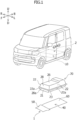
Figure 1] Figure 1 is an exploded perspective view for schematically illustrating a vehicle including a vehicle battery pack peripheral structure according to the present embodiment in a state where a battery pack and an undercover are disassembled. - [
Figure 2] Figure 2 is a bottom view for schematically illustrating the vehicle battery pack peripheral structure according to the present embodiment. - [
Figure 3] Figure 3 is a bottom view for schematically illustrating the vehicle battery pack peripheral structure according to the present embodiment in a state where the undercover is removed. - [
Figure 4] Figure 4 is a sectional view taken along the line X-X ofFigure 2 . - [
Figure 5] Figure 5 is a sectional view taken along the line Y-Y ofFigure 2 . - [
Figure 6] Figure 6 is a sectional view taken along the line Z-Z ofFigure 2 . - [
Figure 7] Figure 7 is a perspective view for schematically illustrating a bracket and its peripheral part of the vehicle battery pack peripheral structure according to the present embodiment in a state in which the undercover is removed. - A vehicle battery pack peripheral structure according to an embodiment is described together with a vehicle provided with the vehicle battery pack peripheral structure. The vehicle provided with the vehicle battery pack peripheral structure according to the present embodiment (hereinafter simply referred to as "battery pack peripheral structure" as necessary) is an electric automobile. However, the vehicle may be a motor-driven vehicle which is other than an electric automobile and can be provided with the battery pack peripheral structure.
- In
Figure 1 to Figure 7 used in the description herein, directions based on the vehicle are referred to as follows: InFigure 1 to Figure 4 ,Figure 6 , andFigure 7 , the vehicle front side and the vehicle rear side are respectively indicated by the one-headed arrow F and the one-headed arrow B. InFigure 1 to Figure 3 ,Figure 5 , andFigure 7 , the left side and the right side as facing the vehicle front side are respectively indicated by the one-headed arrow L and the one-headed arrow R. The vehicle width direction is indicated by the one-headed arrow L and the one-headed arrow R. Furthermore, inFigure 1 andFigure 4 toFigure 7 , the vehicle upper side and the vehicle lower side are respectively indicated by the one-headed arrow U and the one-headed arrow D. - The left side and the right side respectively indicate a left side and a right side when facing the vehicle front side. The horizontal direction indicates a direction along the front-rear direction and the width direction of the vehicle. The vehicle upper side and the vehicle lower side are respectively simply referred to as an upper side and a lower side in some cases.
- With reference to
Figure 1 to Figure 7 , a vehicle battery packperipheral structure 1 according to the present embodiment is described. That is, the vehicle battery packperipheral structure 1 according to the present embodiment is schematically configured as described below. As illustrated inFigure 1 , the vehicle battery packperipheral structure 1 is provided in the vehicle. - As illustrated in
Figure 1 to Figure 7 , the vehicle battery packperipheral structure 1 includes afloor assembly 10 constituting afloor 2 of the vehicle. As illustrated inFigure 1 andFigure 3 toFigure 6 , the battery packperipheral structure 1 includes abattery pack 20 located below thefloor assembly 10. - As illustrated in
Figure 2 ,Figure 3 ,Figure 6 , andFigure 7 , the battery packperipheral structure 1 includesbrackets 30 configured so as to mount thebattery pack 20 to thefloor assembly 10. Here, the battery packperipheral structure 1 according to the present embodiment includes twobrackets 30 spaced from each other in the vehicle width direction. The battery pack peripheral structure may include only one of the two brackets. - In other words, the battery pack
peripheral structure 1 according to the present embodiment includes a pair of left andright brackets 30 in the vehicle width direction. Those twobrackets 30 are formed substantially symmetrical in the vehicle width direction. In the following, unless otherwise mentioned, only one of the twobrackets 30 and its peripheral part are described. - As illustrated in
Figure 1 ,Figure 2 , andFigure 4 toFigure 6 , the battery packperipheral structure 1 includes an undercover 40 that covers thebattery pack 20 from below. As illustrated inFigure 3 to Figure 6 , thefloor assembly 10 includes across member 11 extending in the vehicle width direction along thefloor assembly 10. As illustrated inFigure 6 , thebracket 30 is mounted to thebattery pack 20 and thecross member 11. Thecross member 11 is disposed closer to the vehicle front side than a front end of thebattery pack 20 in the vehicle front-rear direction. - As illustrated in
Figure 1 ,Figure 2 ,Figure 4 , andFigure 6 , the undercover 40 includes afront panel 50 and arear panel 60 located closer to the vehicle rear side than thefront panel 50. Acoupling region 41 that couples a rear-end region 51 of thefront panel 50 in the vehicle front-rear direction and a front-end region 61 of therear panel 60 in the vehicle front-rear direction is formed. As illustrated inFigure 6 , afixing region 70 that fixes thebattery pack 20 and thebracket 30 to each other is located closer to the vehicle rear side than thecoupling region 41. - Furthermore, the vehicle battery pack
peripheral structure 1 according to the present embodiment can be schematically configured as described below. As illustrated inFigure 3 to Figure 6 , thefloor assembly 10 includes afloor tunnel 12 located at a substantially center thereof in the vehicle width direction. Thefloor tunnel 12 is formed so as to bulge upward and extend in the vehicle front-rear direction. Thecross member 11 is disposed so as to cross thefloor tunnel 12. - As illustrated in
Figure 7 , thebracket 30 is disposed so as to cover thebattery pack 20 from the vehicle front side and the outer side in the vehicle width direction. The fixingregion 70 includes alower fixing portion 71 that fixes alower region 21 of thebattery pack 20 and thebracket 30 to each other. - The
battery pack 20 includes aside wall 22 located at a side end thereof in the vehicle width direction. Thebattery pack 20 includes abottom wall 23 located at a lower end thereof. Thebracket 30 includes aside portion 31 opposed to theside wall 22 of thebattery pack 20. Thebracket 30 includes abottom portion 32 opposed to thebottom wall 23 of thebattery pack 20. - The fixing
region 70 includes aside fixing area 72 that fixes theside wall 22 of thebattery pack 20 and theside portion 31 of thebracket 30 to each other. The fixingregion 70 includes abottom fixing area 73 that fixes thebottom wall 23 of thebattery pack 20 and thebottom portion 32 of thebracket 30 to each other. In particular, thelower fixing portion 71 of the fixingregion 70 can include theside fixing area 72 and thebottom fixing area 73. - The
bracket 30 includes aside coupling portion 33 that couples theside portion 31 and thebottom portion 32 thereof to each other. Theside coupling portion 33 is disposed so as to be spaced from theside wall 22 of thebattery pack 20. - As illustrated in
Figure 2 to Figure 4 ,Figure 6 , andFigure 7 , the battery packperipheral structure 1 includes abar member 80 disposed below thebracket 30 along the vehicle width direction. The battery packperipheral structure 1 includes a mountingmember 90 configured so as to mount thebar member 80 to thebracket 30. The mountingmember 90 is fixed to thebracket 30 and thebar member 80 in a state of being sandwiched between thebracket 30 and thebar member 80 in the up-down direction. - With reference to
Figure 3 to Figure 6 , thefloor assembly 10 can be configured as described below in detail. Thefloor assembly 10 includes twofloor panels 13, each located on either side of thefloor tunnel 12 in the vehicle width direction. Thecross member 11 is located below thefloor tunnel 12 and the twofloor panels 13. - In particular, as illustrated in
Figure 3 , thefloor assembly 10 includes twoside members 14 spaced from each other in the vehicle width direction. Eachside member 14 is disposed along the front-rear direction. Thecross member 11 extends in the vehicle width direction so as to couple these twoside members 14. - In particular, as illustrated in
Figure 5 , thefloor tunnel 12 is formed so as to have a cross section having a substantially hat shape. Thefloor tunnel 12 includes atop surface portion 12a located at an upper end thereof. Thefloor tunnel 12 includes twoside surface portions 12b each extending downward from either side end of thetop surface portion 12a in the vehicle width direction. The twoside surface portions 12b are formed so as to increase a distance between the twoside surface portions 12b as they extend from the upper side toward the down side. Thefloor tunnel 12 includes twoflange portions 12c respectively protruding from lower ends of the twoside surface portions 12b toward both sides in the vehicle width direction. - As illustrated in
Figure 4 , thecross member 11 is located so as to overlap with thecoupling region 41 of the undercover 40 in the vehicle front-rear direction. With reference toFigure 3 to Figure 5 , thecross member 11 abuts on thefloor tunnel 12 in the up-down direction, and is joined to thefloor tunnel 12 by welding. With reference toFigure 5 andFigure 6 , thecross member 11 abuts also on the twofloor panels 13 in the up-down direction, and is joined to each of the twofloor panels 13 by welding. However, the joining can also be attained by joining means other than welding. - With reference to
Figure 1 andFigure 3 toFigure 7 , thebattery pack 20 can be configured as described below in detail. Thebattery pack 20 is configured to be capable of supplying power to a motor (not shown) used for travel driving of the vehicle. Furthermore, thebattery pack 20 is configured to be chargeable. - As illustrated in
Figure 3 ,Figure 5 , andFigure 7 , thebattery pack 20 includes aconnector 24 connected tohigh voltage cables 25 configured to be capable of supplying power to the outside and receiving power from the outside of thebattery pack 20. Furthermore, theconnector 24 is disposed so as to overlap with thefloor tunnel 12 in the vehicle width direction. - As illustrated in
Figure 1 andFigure 3 toFigure 7 , thelower region 21 of thebattery pack 20 is alower case 21. Anupper region 26 of thebattery pack 20 is anupper case 26. Thelower case 21 is located below theupper case 26. Thelower case 21 is disposed so as to be aligned with theupper case 26 in the up-down direction and these are coupled to each other. As illustrated inFigure 4 andFigure 6 , aninternal device 27 including abattery module 27a of thebattery pack 20 is disposed inside thelower case 21 and theupper case 26 coupled to each other in this way. - With reference to
Figure 1 andFigure 3 toFigure 7 , thebattery pack 20 includes afront wall 28 located at a front end thereof. Thefront wall 28 is disposed along the vehicle width direction. Eachside wall 22 is disposed along the vehicle front-rear direction. Thebottom wall 23 is disposed along the horizontal direction. Thelower case 21 includes alower portion 22a of theside wall 22, thebottom wall 23, and alower portion 28a of thefront wall 28. - With reference to
Figure 6 andFigure 7 , thebracket 30 can be configured as described below in detail. As illustrated inFigure 7 , theside portion 31 of thebracket 30 is opposed to thelower portion 22a of theside wall 22 of thebattery pack 20. As illustrated inFigure 6 , thebracket 30 includes afront portion 34 opposed to thefront wall 28 of thebattery pack 20. Furthermore, thefront portion 34 of thebracket 30 can be opposed to thelower portion 28a of thefront wall 28. - The
bracket 30 includes afront coupling portion 35 that couples thebottom portion 32 and thefront portion 34 to each other. Thefront coupling portion 35 is disposed so as to be spaced from thefront wall 28 of thebattery pack 20. Thefront coupling portion 35 is continuous with theside coupling portion 33. - As illustrated in
Figure 7 , thebracket 30 includes aprotruding region 36 formed so as to protrude from thefront wall 28 of thebattery pack 20 along theside wall 22 of thebattery pack 20. Thebracket 30 protrudes from thefront wall 28 in a cantilever shape. The protrudingregion 36 is formed in a substantially planar shape along the horizontal direction. - As illustrated in
Figure 6 andFigure 7 , thebottom portion 32 of thebracket 30 is formed as onebottom member 32. Thebracket 30 includes acorner member 37 at which theside portion 31 and thefront portion 34 are integrally formed. Thebottom member 32 and thecorner member 37 respectively include protrudingareas region 36. - As illustrated in
Figure 7 , theside portion 31 of thebracket 30 is joined to theside wall 22 of thebattery pack 20, in particular, thelower portion 22a of theside wall 22, by welding. Thebottom portion 32 of thebracket 30 is joined to thebottom wall 23 of thebattery pack 20 by welding. In theside coupling portion 33, theside portion 31 and thebottom portion 32 of thebracket 30 can be joined to each other by welding. - As illustrated in
Figure 6 , thefront portion 34 of thebracket 30 is joined to thefront wall 28 of thebattery pack 20, in particular, thelower portion 28a of thefront wall 28, by welding. The fixingregion 70 includes afront fixing area 74 that fixes thefront wall 28 of thebattery pack 20 and thefront portion 34 of thebracket 30 to each other. In particular, thelower fixing portion 71 of the fixingregion 70 can include thefront fixing area 74. As illustrated inFigure 6 andFigure 7 , in thefront coupling portion 35, thebottom portion 32 and thefront portion 34 of thebracket 30 can be joined to each other by welding. However, the joining can also be attained by joining means other than welding. - With reference to
Figure 2 andFigure 4 toFigure 6 , the undercover 40 can be configured as described below in detail. As illustrated inFigure 2 andFigure 5 , thefront panel 50 of the undercover 40 includes twoside regions 52 respectively adjacent to both sides of thefloor tunnel 12 in the vehicle width direction. In particular, although not clearly illustrated, the twoside regions 52 are respectively located below a driver seat and a front passenger seat. As illustrated inFigure 4 andFigure 6 , therear panel 60 abuts on thebattery pack 20 in the up-down direction. - With reference to
Figure 2 ,Figure 4 , andFigure 6 , the undercover 40 includes twointermediate mounting portions 42 configured so as to mount thecoupling region 41 of the undercover 40 to thecross member 11 through intermediation of thebrackets 30. The twointermediate mounting portions 42 are respectively located closer to both sides of thefloor tunnel 12 in the vehicle width direction. However, the undercover can include one or three or more intermediate mounting portions. - In particular, although not clearly illustrated, each intermediate mounting
portion 42 is specifically configured so as to be fastened to thebracket 30, in particular, the protrudingregion 36 of thebracket 30, by fastening means using a bolt or screw and a nut in a state in which the rear-end region 51 of thefront panel 50 and the front-end region 61 of therear panel 60 overlap with each other in the up-down direction. However, this fastening can also be attained by fastening means other than the fastening means using a bolt or screw and a nut. The mounting of the intermediate mounting portion, the front panel, and the rear panel can also use means other than the fastening means. - As illustrated in
Figure 2 andFigure 6 , the undercover 40 has arelief groove 43 penetrating in the up-down direction in a manner of avoiding the mountingmember 90. In more detail, therear panel 60 has acutout portion 62 cut out from the front-end region 61 of therear panel 60 toward the vehicle rear side in a manner of avoiding the mountingmember 90. Therelief groove 43 is defined by the rear-end region 51 of thefront panel 50 in the vehicle front-rear direction and thecutout portion 62 of therear panel 60. - The undercover 40 can have two
such relief grooves 43 penetrating in the up-down direction in a manner of respectively avoiding the two mountingmembers 90 described later. In this case, therear panel 60 can have twocutout portions 62 cut out from the front-end region 61 toward the vehicle rear side in a manner of respectively avoiding the two mountingmembers 90. However, the number of the relief grooves of the undercover is not limited to two. - With reference to
Figure 2 to Figure 4 ,Figure 6 , andFigure 7 , thebar member 80 can be configured as described below in detail. Thebar member 80 is located below the front-end region 61 of therear panel 60. Thebar member 80 is opposed to the front-end region 61 of therear panel 60 in the up-down direction. - The
bar member 80 is disposed so as to be adjacent to thecoupling region 41 of the undercover 40 in the vehicle front-rear direction. Thebar member 80 extends over the entire front-end region 61 of therear panel 60. Thebar member 80 is formed in a substantially arc shape protruding from the vehicle rear side toward the vehicle front side. Thebar member 80 can be formed in a pipe shape. - With reference to
Figure 2 ,Figure 3 , andFigure 7 , the mountingmembers 90 can be configured as described below in detail. As illustrated inFigure 2 andFigure 3 , the battery packperipheral structure 1 includes the two mountingmembers 90 arranged being spaced from each other in the vehicle width direction. However, the battery pack peripheral structure can also include one or three or more mounting members. - As illustrated in
Figure 7 , the mountingmember 90 is located in the protrudingregion 36 of thebracket 30. The mountingmember 90 includes abase portion 91 that abuts on thebottom portion 32 of thebracket 30 in the direction from the upper side toward the down side. The mountingmember 90 includes asupport portion 92 protruding downward from thebase portion 91. Anend portion 81 of thebar member 80 in the longitudinal direction abuts on thesupport portion 92 in the direction from the down side toward the upper side. - The mounting
member 90 is fastened to thebracket 30 by fastening means using a bolt or screw and a nut. However, this fastening can also be attained by fastening means other than the fastening means using a bolt or screw and a nut. The mounting of the bracket and the mounting member can also use means other than the fastening means. - The
support portion 92 of the mountingmember 90 is joined to theend portion 81 of thebar member 80 in the longitudinal direction by welding. However, the joining can also be attained by joining means other than welding. - As described above, the vehicle battery pack peripheral structure 1 according to the present embodiment includes: the floor assembly 10 constituting the floor 2 of the vehicle; the battery pack 20 located below the floor assembly 10; the bracket 30 configured so as to mount the battery pack 20 to the floor assembly 10; and the undercover 40 that covers the battery pack 20 from below, the floor assembly 10 including the cross member 11 extending in the vehicle width direction along the floor assembly 10, the bracket 30 being mounted to the battery pack 20 and the cross member 11, in which the cross member 11 and the bracket 30 are disposed closer to the vehicle front side than the front end of the battery pack 20 in the vehicle front-rear direction, in which the undercover 40 includes the front panel 50 and the rear panel 60 located closer to the vehicle rear side than the front panel 50, in which the coupling region 41 that couples the rear-end region 51 of the front panel 50 in the vehicle front-rear direction and the front-end region 61 of the rear panel 60 in the vehicle front-rear direction is formed, and in which the fixing region 70 that fixes the battery pack 20 and the bracket 30 to each other is located closer to the vehicle rear side than the coupling region 41.
- In general, at the time of traveling of the vehicle, foreign matter such as gravel and muddy water splash up from below the vehicle by wheels (not shown), in particular, front wheels (not shown), or obstacles such as steps between sidewalks and roads, curbstones, and car stoppers on which the vehicle runs are likely to hit a front part of the undercover 40 in the vehicle front-rear direction from the front side and the lower side of the vehicle.
- In contrast, in the vehicle battery pack
peripheral structure 1 according to the present embodiment, thefront panel 50 is disposed closer to the vehicle front side than thebattery pack 20. In this case, thebattery pack 20 is located above therear panel 60, whereas thebattery pack 20 is not located above thefront panel 50, and thus, a space is formed above thefront panel 50. Such a space can have a sufficient height corresponding to the thickness of thebattery pack 20 between thefront panel 50 and thefloor assembly 10. Therefore, even when foreign matter or the like hit thefront panel 50, and impact, vibration, or the like resulting from the hitting are applied to thefront panel 50, it is possible to suppress the direct transmission of such impact, vibration, or the like to the battery pack via the undercover 40. - Furthermore, the impact transmitted from the
front panel 50 to therear panel 60 can be relaxed by thecoupling region 41 having high rigidity. As a result, thebattery pack 20 located above therear panel 60 can be efficiently protected from such impact. For example, even when thefront panel 50 drops off, thebattery pack 20 is kept covered by therear panel 60, so that thebattery pack 20 can be efficiently protected. - Furthermore, the fixing
region 70 that fixes thebattery pack 20 and thebracket 30 to each other is located closer to the vehicle rear side than thecoupling region 41 having high rigidity. Therefore, the mounting of thebattery pack 20 to thecross member 11 through intermediation of thebracket 30 can be efficiently protected from the impact caused by foreign matter or obstacles when they hit the undercover 40 from the front side and the lower side of the vehicle by thecoupling region 41 having high rigidity. Accordingly, thebattery pack 20 can be stably supported. - In the vehicle battery pack
peripheral structure 1 according to the present embodiment, thefloor assembly 10 includes thefloor tunnel 12 located at the center in the vehicle width direction, thefloor tunnel 12 is formed so as to bulge upward and extend in the vehicle front-rear direction, thecross member 11 is disposed so as to cross thefloor tunnel 12, and thebracket 30 is disposed so as to cover thebattery pack 20 from the vehicle front side and the outer side in the vehicle width direction. - In this vehicle battery pack
peripheral structure 1, the fixingregion 70 that fixes thebattery pack 20 and thebracket 30 to each other can be disposed on the front side of thebattery pack 20 and the outer side of thebattery pack 20 in the vehicle width direction. Therefore, the fixingregion 70 can be increased. As a result, the mounting rigidity of thebattery pack 20 to thecross member 11 through intermediation of thebracket 30 can be enhanced. Thus, thebattery pack 20 can be stably supported. - In the vehicle battery pack
peripheral structure 1 according to the present embodiment, the fixingregion 70 includes thelower fixing portion 71 that fixes thelower region 21 of thebattery pack 20 and thebracket 30 to each other. Therefore, thebattery pack 20 can be effectively protected by thebracket 30 from the impact caused by foreign matter or obstacles when they hit the undercover 40 from the front side and the lower side of the vehicle. Furthermore, with thebracket 30, thebattery pack 20 can be stably supported from below. - In the vehicle battery pack
peripheral structure 1 according to the present embodiment, thebattery pack 20 includes theside wall 22 located at the side end thereof in the vehicle width direction, and thebottom wall 23 located at the lower end of thebattery pack 20, thebracket 30 includes theside portion 31 opposed to theside wall 22 of thebattery pack 20, and thebottom portion 32 opposed to thebottom wall 23 of thebattery pack 20, the fixingregion 70 includes theside fixing area 72 that fixes theside wall 22 of thebattery pack 20 and theside portion 31 of thebracket 30 to each other, and thebottom fixing area 73 that fixes thebottom wall 23 of thebattery pack 20 and thebottom portion 32 of thebracket 30 to each other, and theside coupling portion 33 that couples theside portion 31 and thebottom portion 32 of thebracket 30 to each other is disposed so as to be spaced from theside wall 22 of thebattery pack 20. - In such a vehicle battery pack
peripheral structure 1, the fixingregion 70 can be increased by theside fixing area 72 and thebottom fixing area 73. As a result, the mounting rigidity of thebattery pack 20 to thecross member 11 through intermediation of thebracket 30 can be enhanced. Thus, thebattery pack 20 can be stably supported. - Furthermore, the
side coupling portion 33 that couples theside portion 31 and thebottom portion 32 of thebracket 30 to each other is disposed so as to be spaced from theside wall 22 of thebattery pack 20. Therefore, a space is formed between thebracket 30 and thebattery pack 20. Such a space can relax the impact caused by foreign matter or obstacles when they hit the undercover 40 from the front side and the lower side of the vehicle. Therefore, thebattery pack 20 can be efficiently protected by the space between thebracket 30 and thebattery pack 20. - The vehicle battery pack
peripheral structure 1 according to the present embodiment includes: thebar member 80 disposed below thebracket 30 along the vehicle width direction; and the mountingmember 90 configured so as to mount thebar member 80 to thebracket 30, in which the mountingmember 90 is fixed to thebracket 30 and thebar member 80 in a state of being sandwiched between thebracket 30 and thebar member 80 in the up-down direction. - In such a vehicle battery pack
peripheral structure 1, thebattery pack 20 can be efficiently protected from the impact caused by foreign matter or obstacles when they hit the undercover 40 from the front side and the lower side of the vehicle by thebar member 80. -
- 1 ... vehicle battery pack peripheral structure (battery pack peripheral structure), 2 ... floor
- 10 ... floor assembly, 11 ... cross member, 12 ... floor tunnel
- 20 ... battery pack, 21 ... lower region, lower case, 22 ... side wall, 23 ... bottom wall
- 30 ... bracket, 31 ... side portion, 32 ... bottom portion, bottom member, 33 ... side coupling portion
- 40 ... undercover, 41 ... coupling region, 50 ... front panel, 51 ... rear-end region, 60 ... rear panel, 61 ... front-end region
- 70 ... fixing region, 71 ... lower fixing portion, 72 ... side fixing area, 73 ... bottom fixing area
- 80 ... bar member
- 90 ... mounting member
Claims (5)
- A vehicle battery pack peripheral structure (1) including:a floor assembly (10) constituting a floor (2) of a vehicle;a battery pack (20) located below the floor assembly (10);a bracket (30) configured so as to mount the battery pack (20) to the floor assembly (10); andan undercover (40) that covers the battery pack (20) from below,the floor assembly (10) including a cross member (11) extending in a vehicle width direction along the floor assembly (10),the bracket (30) being mounted to the battery pack (20) and the cross member (11),wherein the cross member (11) is disposed closer to a vehicle front side than a front end of the battery pack (20) in a vehicle front-rear direction,characterized in that:the undercover (40) includes a front panel (50) disposed closer to the vehicle front side than the battery pack (20) and a rear panel (60) located closer to a vehicle rear side than the front panel (50), the battery pack (20) located above the rear panel (60) but not located above the front panel (50),wherein a rear-end region (51) of the front panel (50) in the vehicle front-rear direction and a front-end region (61) of the rear panel (60) in the vehicle front-rear direction are coupled to each other at a coupling region (41), andwherein a fixing region (70) in which the battery pack (20) and the bracket (30) are fixed to each other is located closer to the vehicle rear side than the coupling region (41).
- The vehicle battery pack peripheral structure (1) according to claim 1,wherein the floor assembly (10) includes a floor tunnel (12) located at a center of the floor assembly (10) in the vehicle width direction,wherein the floor tunnel (12) is formed so as to bulge upward and extend in the vehicle front-rear direction,wherein the cross member (11) is disposed so as to cross the floor tunnel (12), andwherein the bracket (30) is disposed so as to cover the battery pack (20) from the vehicle front side and an outer side in the vehicle width direction.
- The vehicle battery pack peripheral structure (1) according to claim 1 or 2, wherein the fixing region (70) includes a lower fixing portion (71) that fixes a lower region (21) of the battery pack (20) and the bracket (30) to each other.
- The vehicle battery pack peripheral structure (1) according to any one of claims 1 to 3,wherein the battery pack (20) includes a side wall (22) located at a side end of the battery pack (20) in the vehicle width direction, and a bottom wall (23) located at a lower end of the battery pack (20),wherein the bracket (30) includes a side portion (31) opposed to the side wall (21) of the battery pack (20), and a bottom portion (32) opposed to the bottom wall (23) of the battery pack (20),wherein the fixing region (70) includes a side fixing area (72) in which the side wall (22) of the battery pack (20) and the side portion (31) of the bracket (30) are fixed to each other, and a bottom fixing area (73) in which the bottom wall (23) of the battery pack (20) and the bottom portion (32) of the bracket (30) are fixed to each other, andwherein a side coupling portion (33) that couples the side portion (31) and the bottom portion (32) of the bracket (30) to each other is disposed so as to be spaced from the side wall (22) of the battery pack (20).
- The vehicle battery pack peripheral structure (1) according to any one of claims 1 to 4, comprising:a bar member (80) disposed below the bracket (30) along the vehicle width direction; anda mounting member (90) configured so as to mount the bar member (80) to the bracket (30),wherein the mounting member (90) is fixed to the bracket (30) and the bar member (80) in a state of being sandwiched between the bracket (30) and the bar member (80) in an up-down direction.
Applications Claiming Priority (1)
| Application Number | Priority Date | Filing Date | Title |
|---|---|---|---|
| JP2021047027A JP7549805B2 (en) | 2021-03-22 | 2021-03-22 | Vehicle battery pack peripheral structure |
Publications (2)
| Publication Number | Publication Date |
|---|---|
| EP4063156A1 EP4063156A1 (en) | 2022-09-28 |
| EP4063156B1 true EP4063156B1 (en) | 2024-11-27 |
Family
ID=79831550
Family Applications (1)
| Application Number | Title | Priority Date | Filing Date |
|---|---|---|---|
| EP22152555.3A Active EP4063156B1 (en) | 2021-03-22 | 2022-01-20 | Vehicle battery pack peripheral structure |
Country Status (2)
| Country | Link |
|---|---|
| EP (1) | EP4063156B1 (en) |
| JP (1) | JP7549805B2 (en) |
Citations (1)
| Publication number | Priority date | Publication date | Assignee | Title |
|---|---|---|---|---|
| WO2019202018A1 (en) * | 2018-04-20 | 2019-10-24 | Thyssenkrupp Steel Europe Ag | Underrun-protection arrangement for a vehicle-battery arrangement, vehicle-battery arrangement, method for producing an underrun-protection arrangement, and method for producing a vehicle-battery arrangement |
Family Cites Families (6)
| Publication number | Priority date | Publication date | Assignee | Title |
|---|---|---|---|---|
| JP5029263B2 (en) * | 2007-09-28 | 2012-09-19 | 三菱自動車工業株式会社 | Electric car |
| US20120161472A1 (en) * | 2010-12-22 | 2012-06-28 | Tesla Motors, Inc. | System for Absorbing and Distributing Side Impact Energy Utilizing an Integrated Battery Pack |
| JP5906689B2 (en) * | 2011-11-22 | 2016-04-20 | トヨタ自動車株式会社 | Vehicle battery mounting structure |
| JP5970825B2 (en) | 2012-01-17 | 2016-08-17 | 三菱自動車工業株式会社 | undercover |
| JP7069603B2 (en) * | 2017-08-28 | 2022-05-18 | スズキ株式会社 | Body structure of electric vehicle |
| JP6628446B2 (en) * | 2018-05-25 | 2020-01-08 | 本田技研工業株式会社 | Body lower structure |
-
2021
- 2021-03-22 JP JP2021047027A patent/JP7549805B2/en active Active
-
2022
- 2022-01-20 EP EP22152555.3A patent/EP4063156B1/en active Active
Patent Citations (1)
| Publication number | Priority date | Publication date | Assignee | Title |
|---|---|---|---|---|
| WO2019202018A1 (en) * | 2018-04-20 | 2019-10-24 | Thyssenkrupp Steel Europe Ag | Underrun-protection arrangement for a vehicle-battery arrangement, vehicle-battery arrangement, method for producing an underrun-protection arrangement, and method for producing a vehicle-battery arrangement |
Also Published As
| Publication number | Publication date |
|---|---|
| JP7549805B2 (en) | 2024-09-12 |
| JP2022146193A (en) | 2022-10-05 |
| EP4063156A1 (en) | 2022-09-28 |
Similar Documents
| Publication | Publication Date | Title |
|---|---|---|
| EP3202645B1 (en) | Four wheel vehicle | |
| US8029046B2 (en) | Front vehicle body structure | |
| JP6850312B2 (en) | vehicle | |
| JP5984052B2 (en) | Battery pack positioning pin bracket | |
| JP3531491B2 (en) | Car body front structure | |
| JP2019006311A (en) | Vehicle-body front part structure | |
| CN110920752A (en) | Suspension sub-frame structure | |
| JP7585924B2 (en) | Electric vehicle undercarriage | |
| JP7567844B2 (en) | Vehicle front structure | |
| KR20190079777A (en) | Side vehicle body reinforcing structure | |
| JP2021195058A (en) | Vehicular battery protection structure | |
| JP4485992B2 (en) | Steering column mounting structure | |
| JP7545665B2 (en) | Vehicle underbody structure | |
| EP4063241A1 (en) | Undercover structure for vehicle | |
| EP4063156B1 (en) | Vehicle battery pack peripheral structure | |
| JP2012192808A (en) | Vehicular lower body structure | |
| JP2009035106A (en) | Front body structure of automobile | |
| JP3838505B2 (en) | Arrangement structure of vehicle power line | |
| JP2021160511A (en) | Lower structure of electric vehicle | |
| JP7596747B2 (en) | Vehicle undercarriage | |
| WO2019198752A1 (en) | Automobile body structure | |
| EP4063160B1 (en) | Undercover structure for a vehicle and vehicle therewith | |
| JP2004074939A (en) | Tractor frame structure | |
| JP7696385B2 (en) | Mounting structure | |
| JP7696384B2 (en) | vehicle |
Legal Events
| Date | Code | Title | Description |
|---|---|---|---|
| PUAI | Public reference made under article 153(3) epc to a published international application that has entered the european phase |
Free format text: ORIGINAL CODE: 0009012 |
|
| STAA | Information on the status of an ep patent application or granted ep patent |
Free format text: STATUS: REQUEST FOR EXAMINATION WAS MADE |
|
| 17P | Request for examination filed |
Effective date: 20220120 |
|
| AK | Designated contracting states |
Kind code of ref document: A1 Designated state(s): AL AT BE BG CH CY CZ DE DK EE ES FI FR GB GR HR HU IE IS IT LI LT LU LV MC MK MT NL NO PL PT RO RS SE SI SK SM TR |
|
| GRAP | Despatch of communication of intention to grant a patent |
Free format text: ORIGINAL CODE: EPIDOSNIGR1 |
|
| STAA | Information on the status of an ep patent application or granted ep patent |
Free format text: STATUS: GRANT OF PATENT IS INTENDED |
|
| RIC1 | Information provided on ipc code assigned before grant |
Ipc: B62D 25/20 20060101ALN20240808BHEP Ipc: B62D 21/15 20060101ALI20240808BHEP Ipc: B60K 1/04 20190101AFI20240808BHEP |
|
| INTG | Intention to grant announced |
Effective date: 20240820 |
|
| GRAS | Grant fee paid |
Free format text: ORIGINAL CODE: EPIDOSNIGR3 |
|
| GRAA | (expected) grant |
Free format text: ORIGINAL CODE: 0009210 |
|
| STAA | Information on the status of an ep patent application or granted ep patent |
Free format text: STATUS: THE PATENT HAS BEEN GRANTED |
|
| AK | Designated contracting states |
Kind code of ref document: B1 Designated state(s): AL AT BE BG CH CY CZ DE DK EE ES FI FR GB GR HR HU IE IS IT LI LT LU LV MC MK MT NL NO PL PT RO RS SE SI SK SM TR |
|
| REG | Reference to a national code |
Ref country code: GB Ref legal event code: FG4D |
|
| REG | Reference to a national code |
Ref country code: CH Ref legal event code: EP |
|
| REG | Reference to a national code |
Ref country code: DE Ref legal event code: R096 Ref document number: 602022008029 Country of ref document: DE |
|
| REG | Reference to a national code |
Ref country code: IE Ref legal event code: FG4D |
|
| REG | Reference to a national code |
Ref country code: LT Ref legal event code: MG9D |
|
| REG | Reference to a national code |
Ref country code: NL Ref legal event code: MP Effective date: 20241127 |
|
| PG25 | Lapsed in a contracting state [announced via postgrant information from national office to epo] |
Ref country code: HR Free format text: LAPSE BECAUSE OF FAILURE TO SUBMIT A TRANSLATION OF THE DESCRIPTION OR TO PAY THE FEE WITHIN THE PRESCRIBED TIME-LIMIT Effective date: 20241127 Ref country code: IS Free format text: LAPSE BECAUSE OF FAILURE TO SUBMIT A TRANSLATION OF THE DESCRIPTION OR TO PAY THE FEE WITHIN THE PRESCRIBED TIME-LIMIT Effective date: 20250327 Ref country code: PT Free format text: LAPSE BECAUSE OF FAILURE TO SUBMIT A TRANSLATION OF THE DESCRIPTION OR TO PAY THE FEE WITHIN THE PRESCRIBED TIME-LIMIT Effective date: 20250327 |
|
| PG25 | Lapsed in a contracting state [announced via postgrant information from national office to epo] |
Ref country code: NL Free format text: LAPSE BECAUSE OF FAILURE TO SUBMIT A TRANSLATION OF THE DESCRIPTION OR TO PAY THE FEE WITHIN THE PRESCRIBED TIME-LIMIT Effective date: 20241127 Ref country code: FI Free format text: LAPSE BECAUSE OF FAILURE TO SUBMIT A TRANSLATION OF THE DESCRIPTION OR TO PAY THE FEE WITHIN THE PRESCRIBED TIME-LIMIT Effective date: 20241127 |
|
| REG | Reference to a national code |
Ref country code: AT Ref legal event code: MK05 Ref document number: 1745397 Country of ref document: AT Kind code of ref document: T Effective date: 20241127 |
|
| PG25 | Lapsed in a contracting state [announced via postgrant information from national office to epo] |
Ref country code: BG Free format text: LAPSE BECAUSE OF FAILURE TO SUBMIT A TRANSLATION OF THE DESCRIPTION OR TO PAY THE FEE WITHIN THE PRESCRIBED TIME-LIMIT Effective date: 20241127 |
|
| PG25 | Lapsed in a contracting state [announced via postgrant information from national office to epo] |
Ref country code: ES Free format text: LAPSE BECAUSE OF FAILURE TO SUBMIT A TRANSLATION OF THE DESCRIPTION OR TO PAY THE FEE WITHIN THE PRESCRIBED TIME-LIMIT Effective date: 20241127 |
|
| PG25 | Lapsed in a contracting state [announced via postgrant information from national office to epo] |
Ref country code: NO Free format text: LAPSE BECAUSE OF FAILURE TO SUBMIT A TRANSLATION OF THE DESCRIPTION OR TO PAY THE FEE WITHIN THE PRESCRIBED TIME-LIMIT Effective date: 20250227 |
|
| PG25 | Lapsed in a contracting state [announced via postgrant information from national office to epo] |
Ref country code: GR Free format text: LAPSE BECAUSE OF FAILURE TO SUBMIT A TRANSLATION OF THE DESCRIPTION OR TO PAY THE FEE WITHIN THE PRESCRIBED TIME-LIMIT Effective date: 20250228 Ref country code: AT Free format text: LAPSE BECAUSE OF FAILURE TO SUBMIT A TRANSLATION OF THE DESCRIPTION OR TO PAY THE FEE WITHIN THE PRESCRIBED TIME-LIMIT Effective date: 20241127 Ref country code: LV Free format text: LAPSE BECAUSE OF FAILURE TO SUBMIT A TRANSLATION OF THE DESCRIPTION OR TO PAY THE FEE WITHIN THE PRESCRIBED TIME-LIMIT Effective date: 20241127 |
|
| PG25 | Lapsed in a contracting state [announced via postgrant information from national office to epo] |
Ref country code: PL Free format text: LAPSE BECAUSE OF FAILURE TO SUBMIT A TRANSLATION OF THE DESCRIPTION OR TO PAY THE FEE WITHIN THE PRESCRIBED TIME-LIMIT Effective date: 20241127 |
|
| PG25 | Lapsed in a contracting state [announced via postgrant information from national office to epo] |
Ref country code: RS Free format text: LAPSE BECAUSE OF FAILURE TO SUBMIT A TRANSLATION OF THE DESCRIPTION OR TO PAY THE FEE WITHIN THE PRESCRIBED TIME-LIMIT Effective date: 20250227 |
|
| PG25 | Lapsed in a contracting state [announced via postgrant information from national office to epo] |
Ref country code: SM Free format text: LAPSE BECAUSE OF FAILURE TO SUBMIT A TRANSLATION OF THE DESCRIPTION OR TO PAY THE FEE WITHIN THE PRESCRIBED TIME-LIMIT Effective date: 20241127 |
|
| PG25 | Lapsed in a contracting state [announced via postgrant information from national office to epo] |
Ref country code: DK Free format text: LAPSE BECAUSE OF FAILURE TO SUBMIT A TRANSLATION OF THE DESCRIPTION OR TO PAY THE FEE WITHIN THE PRESCRIBED TIME-LIMIT Effective date: 20241127 |
|
| PG25 | Lapsed in a contracting state [announced via postgrant information from national office to epo] |
Ref country code: EE Free format text: LAPSE BECAUSE OF FAILURE TO SUBMIT A TRANSLATION OF THE DESCRIPTION OR TO PAY THE FEE WITHIN THE PRESCRIBED TIME-LIMIT Effective date: 20241127 |
|
| PG25 | Lapsed in a contracting state [announced via postgrant information from national office to epo] |
Ref country code: RO Free format text: LAPSE BECAUSE OF FAILURE TO SUBMIT A TRANSLATION OF THE DESCRIPTION OR TO PAY THE FEE WITHIN THE PRESCRIBED TIME-LIMIT Effective date: 20241127 |
|
| PG25 | Lapsed in a contracting state [announced via postgrant information from national office to epo] |
Ref country code: SK Free format text: LAPSE BECAUSE OF FAILURE TO SUBMIT A TRANSLATION OF THE DESCRIPTION OR TO PAY THE FEE WITHIN THE PRESCRIBED TIME-LIMIT Effective date: 20241127 |
|
| PG25 | Lapsed in a contracting state [announced via postgrant information from national office to epo] |
Ref country code: CZ Free format text: LAPSE BECAUSE OF FAILURE TO SUBMIT A TRANSLATION OF THE DESCRIPTION OR TO PAY THE FEE WITHIN THE PRESCRIBED TIME-LIMIT Effective date: 20241127 |
|
| PG25 | Lapsed in a contracting state [announced via postgrant information from national office to epo] |
Ref country code: IT Free format text: LAPSE BECAUSE OF FAILURE TO SUBMIT A TRANSLATION OF THE DESCRIPTION OR TO PAY THE FEE WITHIN THE PRESCRIBED TIME-LIMIT Effective date: 20241127 |
|
| REG | Reference to a national code |
Ref country code: DE Ref legal event code: R097 Ref document number: 602022008029 Country of ref document: DE |
|
| REG | Reference to a national code |
Ref country code: CH Ref legal event code: PL |
|
| PG25 | Lapsed in a contracting state [announced via postgrant information from national office to epo] |
Ref country code: SE Free format text: LAPSE BECAUSE OF FAILURE TO SUBMIT A TRANSLATION OF THE DESCRIPTION OR TO PAY THE FEE WITHIN THE PRESCRIBED TIME-LIMIT Effective date: 20241127 |
|
| PG25 | Lapsed in a contracting state [announced via postgrant information from national office to epo] |
Ref country code: MC Free format text: LAPSE BECAUSE OF FAILURE TO SUBMIT A TRANSLATION OF THE DESCRIPTION OR TO PAY THE FEE WITHIN THE PRESCRIBED TIME-LIMIT Effective date: 20241127 Ref country code: LU Free format text: LAPSE BECAUSE OF NON-PAYMENT OF DUE FEES Effective date: 20250120 |
|
| PLBE | No opposition filed within time limit |
Free format text: ORIGINAL CODE: 0009261 |
|
| STAA | Information on the status of an ep patent application or granted ep patent |
Free format text: STATUS: NO OPPOSITION FILED WITHIN TIME LIMIT |
|
| PG25 | Lapsed in a contracting state [announced via postgrant information from national office to epo] |
Ref country code: BE Free format text: LAPSE BECAUSE OF NON-PAYMENT OF DUE FEES Effective date: 20250131 |
|
| PG25 | Lapsed in a contracting state [announced via postgrant information from national office to epo] |
Ref country code: CH Free format text: LAPSE BECAUSE OF NON-PAYMENT OF DUE FEES Effective date: 20250131 |
|
| REG | Reference to a national code |
Ref country code: BE Ref legal event code: MM Effective date: 20250131 |
|
| 26N | No opposition filed |
Effective date: 20250828 |
|
| PGFP | Annual fee paid to national office [announced via postgrant information from national office to epo] |
Ref country code: FR Payment date: 20251128 Year of fee payment: 5 |
|
| PG25 | Lapsed in a contracting state [announced via postgrant information from national office to epo] |
Ref country code: IE Free format text: LAPSE BECAUSE OF NON-PAYMENT OF DUE FEES Effective date: 20250120 |
|
| PGFP | Annual fee paid to national office [announced via postgrant information from national office to epo] |
Ref country code: DE Payment date: 20251203 Year of fee payment: 5 |