EP4062850A1 - Pulse irradiation method and pulse irradiation device - Google Patents
Pulse irradiation method and pulse irradiation device Download PDFInfo
- Publication number
- EP4062850A1 EP4062850A1 EP20889466.7A EP20889466A EP4062850A1 EP 4062850 A1 EP4062850 A1 EP 4062850A1 EP 20889466 A EP20889466 A EP 20889466A EP 4062850 A1 EP4062850 A1 EP 4062850A1
- Authority
- EP
- European Patent Office
- Prior art keywords
- pulse
- time period
- application time
- temperature
- application
- Prior art date
- Legal status (The legal status is an assumption and is not a legal conclusion. Google has not performed a legal analysis and makes no representation as to the accuracy of the status listed.)
- Withdrawn
Links
- 238000000034 method Methods 0.000 title claims abstract description 73
- 102000008186 Collagen Human genes 0.000 claims abstract description 203
- 108010035532 Collagen Proteins 0.000 claims abstract description 203
- 229920001436 collagen Polymers 0.000 claims abstract description 203
- 239000000835 fiber Substances 0.000 claims abstract description 138
- XLYOFNOQVPJJNP-UHFFFAOYSA-N water Substances O XLYOFNOQVPJJNP-UHFFFAOYSA-N 0.000 claims abstract description 86
- 210000002950 fibroblast Anatomy 0.000 claims description 59
- 230000036425 denaturation Effects 0.000 claims description 54
- 238000004925 denaturation Methods 0.000 claims description 54
- 238000010521 absorption reaction Methods 0.000 claims description 35
- 210000004027 cell Anatomy 0.000 claims description 35
- 230000007423 decrease Effects 0.000 claims description 18
- 230000002441 reversible effect Effects 0.000 claims description 9
- 230000005068 transpiration Effects 0.000 claims description 8
- 210000001519 tissue Anatomy 0.000 description 57
- 238000010438 heat treatment Methods 0.000 description 18
- 230000003287 optical effect Effects 0.000 description 17
- 230000000694 effects Effects 0.000 description 15
- 230000003685 thermal hair damage Effects 0.000 description 14
- 102000004169 proteins and genes Human genes 0.000 description 12
- 108090000623 proteins and genes Proteins 0.000 description 12
- 230000002427 irreversible effect Effects 0.000 description 10
- 230000015271 coagulation Effects 0.000 description 9
- 238000005345 coagulation Methods 0.000 description 9
- 230000006378 damage Effects 0.000 description 9
- 210000004087 cornea Anatomy 0.000 description 7
- 230000007246 mechanism Effects 0.000 description 7
- 238000003505 heat denaturation Methods 0.000 description 6
- 230000002401 inhibitory effect Effects 0.000 description 6
- 230000004048 modification Effects 0.000 description 6
- 238000012986 modification Methods 0.000 description 6
- 239000013307 optical fiber Substances 0.000 description 5
- 238000004088 simulation Methods 0.000 description 5
- 230000008859 change Effects 0.000 description 4
- 238000010586 diagram Methods 0.000 description 4
- 230000006870 function Effects 0.000 description 4
- 230000000630 rising effect Effects 0.000 description 4
- 230000004913 activation Effects 0.000 description 3
- 210000000170 cell membrane Anatomy 0.000 description 3
- 238000006243 chemical reaction Methods 0.000 description 3
- 230000020169 heat generation Effects 0.000 description 3
- 230000031700 light absorption Effects 0.000 description 3
- 239000012071 phase Substances 0.000 description 3
- 238000001228 spectrum Methods 0.000 description 3
- 238000004458 analytical method Methods 0.000 description 2
- 210000000988 bone and bone Anatomy 0.000 description 2
- 238000004364 calculation method Methods 0.000 description 2
- 238000005259 measurement Methods 0.000 description 2
- 206010033675 panniculitis Diseases 0.000 description 2
- 239000011148 porous material Substances 0.000 description 2
- 238000012545 processing Methods 0.000 description 2
- 238000012552 review Methods 0.000 description 2
- 210000004304 subcutaneous tissue Anatomy 0.000 description 2
- 239000000126 substance Substances 0.000 description 2
- 241000282414 Homo sapiens Species 0.000 description 1
- 241000124008 Mammalia Species 0.000 description 1
- 241001465754 Metazoa Species 0.000 description 1
- 206010028980 Neoplasm Diseases 0.000 description 1
- 206010040844 Skin exfoliation Diseases 0.000 description 1
- 230000009471 action Effects 0.000 description 1
- 150000001413 amino acids Chemical class 0.000 description 1
- 230000008901 benefit Effects 0.000 description 1
- 230000005540 biological transmission Effects 0.000 description 1
- 230000015572 biosynthetic process Effects 0.000 description 1
- 210000003969 blast cell Anatomy 0.000 description 1
- 210000004204 blood vessel Anatomy 0.000 description 1
- 210000001124 body fluid Anatomy 0.000 description 1
- 239000010839 body fluid Substances 0.000 description 1
- 230000036760 body temperature Effects 0.000 description 1
- 238000009835 boiling Methods 0.000 description 1
- 210000000845 cartilage Anatomy 0.000 description 1
- 238000004590 computer program Methods 0.000 description 1
- 238000002316 cosmetic surgery Methods 0.000 description 1
- 210000000805 cytoplasm Anatomy 0.000 description 1
- 230000007123 defense Effects 0.000 description 1
- 238000001514 detection method Methods 0.000 description 1
- 238000011161 development Methods 0.000 description 1
- 230000018109 developmental process Effects 0.000 description 1
- 229940079593 drug Drugs 0.000 description 1
- 239000003814 drug Substances 0.000 description 1
- 238000005516 engineering process Methods 0.000 description 1
- 230000007613 environmental effect Effects 0.000 description 1
- 239000007789 gas Substances 0.000 description 1
- 230000023597 hemostasis Effects 0.000 description 1
- 230000013632 homeostatic process Effects 0.000 description 1
- 239000001257 hydrogen Substances 0.000 description 1
- 229910052739 hydrogen Inorganic materials 0.000 description 1
- 230000009545 invasion Effects 0.000 description 1
- 238000002430 laser surgery Methods 0.000 description 1
- 239000007791 liquid phase Substances 0.000 description 1
- 238000010801 machine learning Methods 0.000 description 1
- 239000000463 material Substances 0.000 description 1
- 238000002406 microsurgery Methods 0.000 description 1
- 230000017074 necrotic cell death Effects 0.000 description 1
- 150000003904 phospholipids Chemical class 0.000 description 1
- 230000000704 physical effect Effects 0.000 description 1
- 230000008569 process Effects 0.000 description 1
- 230000005855 radiation Effects 0.000 description 1
- 230000008439 repair process Effects 0.000 description 1
- 230000003252 repetitive effect Effects 0.000 description 1
- 230000004044 response Effects 0.000 description 1
- 210000001525 retina Anatomy 0.000 description 1
- 239000004065 semiconductor Substances 0.000 description 1
- 210000000813 small intestine Anatomy 0.000 description 1
- 238000001931 thermography Methods 0.000 description 1
- 230000001052 transient effect Effects 0.000 description 1
- 210000001835 viscera Anatomy 0.000 description 1
Images


Classifications
-
- A—HUMAN NECESSITIES
- A61—MEDICAL OR VETERINARY SCIENCE; HYGIENE
- A61B—DIAGNOSIS; SURGERY; IDENTIFICATION
- A61B18/00—Surgical instruments, devices or methods for transferring non-mechanical forms of energy to or from the body
- A61B18/18—Surgical instruments, devices or methods for transferring non-mechanical forms of energy to or from the body by applying electromagnetic radiation, e.g. microwaves
- A61B18/20—Surgical instruments, devices or methods for transferring non-mechanical forms of energy to or from the body by applying electromagnetic radiation, e.g. microwaves using laser
- A61B18/203—Surgical instruments, devices or methods for transferring non-mechanical forms of energy to or from the body by applying electromagnetic radiation, e.g. microwaves using laser applying laser energy to the outside of the body
-
- A—HUMAN NECESSITIES
- A61—MEDICAL OR VETERINARY SCIENCE; HYGIENE
- A61N—ELECTROTHERAPY; MAGNETOTHERAPY; RADIATION THERAPY; ULTRASOUND THERAPY
- A61N5/00—Radiation therapy
- A61N5/06—Radiation therapy using light
- A61N5/0613—Apparatus adapted for a specific treatment
- A61N5/0625—Warming the body, e.g. hyperthermia treatment
-
- A—HUMAN NECESSITIES
- A61—MEDICAL OR VETERINARY SCIENCE; HYGIENE
- A61F—FILTERS IMPLANTABLE INTO BLOOD VESSELS; PROSTHESES; DEVICES PROVIDING PATENCY TO, OR PREVENTING COLLAPSING OF, TUBULAR STRUCTURES OF THE BODY, e.g. STENTS; ORTHOPAEDIC, NURSING OR CONTRACEPTIVE DEVICES; FOMENTATION; TREATMENT OR PROTECTION OF EYES OR EARS; BANDAGES, DRESSINGS OR ABSORBENT PADS; FIRST-AID KITS
- A61F9/00—Methods or devices for treatment of the eyes; Devices for putting in contact-lenses; Devices to correct squinting; Apparatus to guide the blind; Protective devices for the eyes, carried on the body or in the hand
- A61F9/007—Methods or devices for eye surgery
- A61F9/008—Methods or devices for eye surgery using laser
- A61F9/00821—Methods or devices for eye surgery using laser for coagulation
-
- A—HUMAN NECESSITIES
- A61—MEDICAL OR VETERINARY SCIENCE; HYGIENE
- A61N—ELECTROTHERAPY; MAGNETOTHERAPY; RADIATION THERAPY; ULTRASOUND THERAPY
- A61N5/00—Radiation therapy
- A61N5/06—Radiation therapy using light
- A61N5/067—Radiation therapy using light using laser light
-
- A—HUMAN NECESSITIES
- A61—MEDICAL OR VETERINARY SCIENCE; HYGIENE
- A61B—DIAGNOSIS; SURGERY; IDENTIFICATION
- A61B17/00—Surgical instruments, devices or methods
- A61B2017/00017—Electrical control of surgical instruments
- A61B2017/00022—Sensing or detecting at the treatment site
- A61B2017/00057—Light
- A61B2017/00061—Light spectrum
-
- A—HUMAN NECESSITIES
- A61—MEDICAL OR VETERINARY SCIENCE; HYGIENE
- A61B—DIAGNOSIS; SURGERY; IDENTIFICATION
- A61B17/00—Surgical instruments, devices or methods
- A61B2017/00017—Electrical control of surgical instruments
- A61B2017/00022—Sensing or detecting at the treatment site
- A61B2017/00057—Light
- A61B2017/00066—Light intensity
-
- A—HUMAN NECESSITIES
- A61—MEDICAL OR VETERINARY SCIENCE; HYGIENE
- A61B—DIAGNOSIS; SURGERY; IDENTIFICATION
- A61B17/00—Surgical instruments, devices or methods
- A61B2017/00017—Electrical control of surgical instruments
- A61B2017/00137—Details of operation mode
- A61B2017/00154—Details of operation mode pulsed
- A61B2017/00172—Pulse trains, bursts, intermittent continuous operation
-
- A—HUMAN NECESSITIES
- A61—MEDICAL OR VETERINARY SCIENCE; HYGIENE
- A61B—DIAGNOSIS; SURGERY; IDENTIFICATION
- A61B18/00—Surgical instruments, devices or methods for transferring non-mechanical forms of energy to or from the body
- A61B2018/00315—Surgical instruments, devices or methods for transferring non-mechanical forms of energy to or from the body for treatment of particular body parts
- A61B2018/00452—Skin
-
- A—HUMAN NECESSITIES
- A61—MEDICAL OR VETERINARY SCIENCE; HYGIENE
- A61B—DIAGNOSIS; SURGERY; IDENTIFICATION
- A61B18/00—Surgical instruments, devices or methods for transferring non-mechanical forms of energy to or from the body
- A61B2018/00571—Surgical instruments, devices or methods for transferring non-mechanical forms of energy to or from the body for achieving a particular surgical effect
- A61B2018/00589—Coagulation
-
- A—HUMAN NECESSITIES
- A61—MEDICAL OR VETERINARY SCIENCE; HYGIENE
- A61B—DIAGNOSIS; SURGERY; IDENTIFICATION
- A61B18/00—Surgical instruments, devices or methods for transferring non-mechanical forms of energy to or from the body
- A61B2018/00636—Sensing and controlling the application of energy
- A61B2018/00642—Sensing and controlling the application of energy with feedback, i.e. closed loop control
-
- A—HUMAN NECESSITIES
- A61—MEDICAL OR VETERINARY SCIENCE; HYGIENE
- A61B—DIAGNOSIS; SURGERY; IDENTIFICATION
- A61B18/00—Surgical instruments, devices or methods for transferring non-mechanical forms of energy to or from the body
- A61B2018/00636—Sensing and controlling the application of energy
- A61B2018/00666—Sensing and controlling the application of energy using a threshold value
- A61B2018/00678—Sensing and controlling the application of energy using a threshold value upper
-
- A—HUMAN NECESSITIES
- A61—MEDICAL OR VETERINARY SCIENCE; HYGIENE
- A61B—DIAGNOSIS; SURGERY; IDENTIFICATION
- A61B18/00—Surgical instruments, devices or methods for transferring non-mechanical forms of energy to or from the body
- A61B2018/00636—Sensing and controlling the application of energy
- A61B2018/00696—Controlled or regulated parameters
- A61B2018/00702—Power or energy
- A61B2018/00708—Power or energy switching the power on or off
-
- A—HUMAN NECESSITIES
- A61—MEDICAL OR VETERINARY SCIENCE; HYGIENE
- A61B—DIAGNOSIS; SURGERY; IDENTIFICATION
- A61B18/00—Surgical instruments, devices or methods for transferring non-mechanical forms of energy to or from the body
- A61B2018/00636—Sensing and controlling the application of energy
- A61B2018/00696—Controlled or regulated parameters
- A61B2018/00714—Temperature
-
- A—HUMAN NECESSITIES
- A61—MEDICAL OR VETERINARY SCIENCE; HYGIENE
- A61B—DIAGNOSIS; SURGERY; IDENTIFICATION
- A61B18/00—Surgical instruments, devices or methods for transferring non-mechanical forms of energy to or from the body
- A61B2018/00636—Sensing and controlling the application of energy
- A61B2018/00696—Controlled or regulated parameters
- A61B2018/00726—Duty cycle
-
- A—HUMAN NECESSITIES
- A61—MEDICAL OR VETERINARY SCIENCE; HYGIENE
- A61B—DIAGNOSIS; SURGERY; IDENTIFICATION
- A61B18/00—Surgical instruments, devices or methods for transferring non-mechanical forms of energy to or from the body
- A61B2018/00636—Sensing and controlling the application of energy
- A61B2018/00696—Controlled or regulated parameters
- A61B2018/00761—Duration
-
- A—HUMAN NECESSITIES
- A61—MEDICAL OR VETERINARY SCIENCE; HYGIENE
- A61B—DIAGNOSIS; SURGERY; IDENTIFICATION
- A61B18/00—Surgical instruments, devices or methods for transferring non-mechanical forms of energy to or from the body
- A61B2018/00636—Sensing and controlling the application of energy
- A61B2018/00773—Sensed parameters
- A61B2018/00779—Power or energy
- A61B2018/00785—Reflected power
-
- A—HUMAN NECESSITIES
- A61—MEDICAL OR VETERINARY SCIENCE; HYGIENE
- A61B—DIAGNOSIS; SURGERY; IDENTIFICATION
- A61B18/00—Surgical instruments, devices or methods for transferring non-mechanical forms of energy to or from the body
- A61B2018/00636—Sensing and controlling the application of energy
- A61B2018/00773—Sensed parameters
- A61B2018/00791—Temperature
- A61B2018/00809—Temperature measured thermochromatically
-
- A—HUMAN NECESSITIES
- A61—MEDICAL OR VETERINARY SCIENCE; HYGIENE
- A61B—DIAGNOSIS; SURGERY; IDENTIFICATION
- A61B18/00—Surgical instruments, devices or methods for transferring non-mechanical forms of energy to or from the body
- A61B2018/00636—Sensing and controlling the application of energy
- A61B2018/00773—Sensed parameters
- A61B2018/00869—Phase
-
- A—HUMAN NECESSITIES
- A61—MEDICAL OR VETERINARY SCIENCE; HYGIENE
- A61B—DIAGNOSIS; SURGERY; IDENTIFICATION
- A61B18/00—Surgical instruments, devices or methods for transferring non-mechanical forms of energy to or from the body
- A61B18/18—Surgical instruments, devices or methods for transferring non-mechanical forms of energy to or from the body by applying electromagnetic radiation, e.g. microwaves
- A61B2018/1807—Surgical instruments, devices or methods for transferring non-mechanical forms of energy to or from the body by applying electromagnetic radiation, e.g. microwaves using light other than laser radiation
-
- A—HUMAN NECESSITIES
- A61—MEDICAL OR VETERINARY SCIENCE; HYGIENE
- A61B—DIAGNOSIS; SURGERY; IDENTIFICATION
- A61B18/00—Surgical instruments, devices or methods for transferring non-mechanical forms of energy to or from the body
- A61B18/18—Surgical instruments, devices or methods for transferring non-mechanical forms of energy to or from the body by applying electromagnetic radiation, e.g. microwaves
- A61B18/20—Surgical instruments, devices or methods for transferring non-mechanical forms of energy to or from the body by applying electromagnetic radiation, e.g. microwaves using laser
- A61B2018/2035—Beam shaping or redirecting; Optical components therefor
- A61B2018/20351—Scanning mechanisms
- A61B2018/20359—Scanning mechanisms by movable mirrors, e.g. galvanometric
-
- A—HUMAN NECESSITIES
- A61—MEDICAL OR VETERINARY SCIENCE; HYGIENE
- A61F—FILTERS IMPLANTABLE INTO BLOOD VESSELS; PROSTHESES; DEVICES PROVIDING PATENCY TO, OR PREVENTING COLLAPSING OF, TUBULAR STRUCTURES OF THE BODY, e.g. STENTS; ORTHOPAEDIC, NURSING OR CONTRACEPTIVE DEVICES; FOMENTATION; TREATMENT OR PROTECTION OF EYES OR EARS; BANDAGES, DRESSINGS OR ABSORBENT PADS; FIRST-AID KITS
- A61F9/00—Methods or devices for treatment of the eyes; Devices for putting in contact-lenses; Devices to correct squinting; Apparatus to guide the blind; Protective devices for the eyes, carried on the body or in the hand
- A61F9/007—Methods or devices for eye surgery
- A61F9/008—Methods or devices for eye surgery using laser
- A61F2009/00861—Methods or devices for eye surgery using laser adapted for treatment at a particular location
- A61F2009/00863—Retina
-
- A—HUMAN NECESSITIES
- A61—MEDICAL OR VETERINARY SCIENCE; HYGIENE
- A61F—FILTERS IMPLANTABLE INTO BLOOD VESSELS; PROSTHESES; DEVICES PROVIDING PATENCY TO, OR PREVENTING COLLAPSING OF, TUBULAR STRUCTURES OF THE BODY, e.g. STENTS; ORTHOPAEDIC, NURSING OR CONTRACEPTIVE DEVICES; FOMENTATION; TREATMENT OR PROTECTION OF EYES OR EARS; BANDAGES, DRESSINGS OR ABSORBENT PADS; FIRST-AID KITS
- A61F9/00—Methods or devices for treatment of the eyes; Devices for putting in contact-lenses; Devices to correct squinting; Apparatus to guide the blind; Protective devices for the eyes, carried on the body or in the hand
- A61F9/007—Methods or devices for eye surgery
-
- A—HUMAN NECESSITIES
- A61—MEDICAL OR VETERINARY SCIENCE; HYGIENE
- A61N—ELECTROTHERAPY; MAGNETOTHERAPY; RADIATION THERAPY; ULTRASOUND THERAPY
- A61N5/00—Radiation therapy
- A61N5/06—Radiation therapy using light
- A61N2005/0626—Monitoring, verifying, controlling systems and methods
- A61N2005/0627—Dose monitoring systems and methods
Definitions
- the present invention relates to a pulse application method and a pulse application device.
- coagulation treatment in which collagen fibers are heated to coagulate the collagen fibers by application of laser light to skin has been performed as skin treatment.
- Non Patent Literature 1 Current Laser Resurfacing Technologies: A Review that Delves Beneath the Surface, Jason Preissig, Kristy Hamilton, Ramsey Markus, Seminars in Plastic Surgery, Vol. 26, No.3, 2012, PP. 109-116
- an object of the present invention is to obtain a pulse application method and a pulse application device that make it possible to selectively heat collagen fibers in living tissue while inhibiting heating of cells that are present in the living tissue.
- a pulse application method is a pulse application method of applying a pulse of light to living tissue to heat the living tissue, wherein a wavelength of the light is set within a range in which a temperature rise width of collagen fibers in the living tissue when the light is applied to the living tissue is larger than a temperature rise width of water containing cells that are contained in the living tissue and that are present around the collagen fibers.
- the cells are fibroblast.
- an application time period in which a pulse of light is applied to the living tissue and a non-application time period in which no pulse of light is applied to the living tissue are repeated alternately.
- the non-application time period is set such that a temperature of the water at an end of the non-application time period is equal to or lower than a first temperature.
- the non-application time period is set such that the temperature of the water at the end of the non-application time period is approximately equal to the temperature of the water at a start of the application time period immediately before the non-application time period.
- the non-application time period is set such that a temperature of the collagen fibers at an end of the non-application time period is higher than the temperature of the collagen fibers at a start of the application time period immediately before the non-application time period.
- the non-application time period is set based on a thermal relaxation time period from an end of the application time period immediately before the non-application time period until a time when a temperature of the collagen fibers decreases to a temperature obtained by adding a temperature width obtained by dividing the temperature rise width of the collagen fibers in the application time period by a bottom of a natural logarithm to a temperature at a start of the application time period.
- the non-application time period is set equal to or more than the thermal relaxation time period.
- the non-application time period is between 80 [ms] and 210 [ms] inclusive.
- the wavelength and an application time period of the pulse are set such that the temperature of the water at an end of the application time period is equal to or lower than a second temperature.
- the second temperature is a thermal denaturation threshold temperature at which collagen molecules in collagen fibers thermally denature.
- the second temperature is a reversible thermal denaturation threshold temperature at which collagen molecules in collagen fibers reversibly thermally denature.
- the wavelength and an application time period of the pulse are set such that collagen molecules in the collagen fibers thermally denature and the cells are not thermally damaged.
- the wavelength and an application time period of the pulse are set such that collagen molecules in the collagen fibers thermally denature and the cells are reversibly thermally damaged.
- the wavelength and an application time period of the pulse are set such that collagen molecules in the collagen fibers irreversibly thermally denature and the cells are not thermally damaged.
- the wavelength and an application time period of the pulse are set such that collagen molecules in the collagen fibers irreversibly thermally denature and the cells are reversibly thermally damaged.
- the wavelength and an application time period of the pulse are set such that thermal transpiration occurs on a surface of the living tissue.
- the application time period in which the pulse of light is applied to the living tissue and the non-application time period in which no pulse of light is applied to the living tissue are repeated alternately, and the wavelength, the application time period, the non-application time period, and the number of times the application time period is repeated are set such that collagen molecules in the collagen fibers thermally denature and the cells are not thermally damaged.
- the application time period in which the pulse of light is applied to the living tissue and the non-application time period in which no pulse of light is applied to the living tissue are repeated alternately, and the wavelength, the application time period, the non-application time period, and the number of times the application time period is repeated are set such that collagen molecules in the collagen fibers thermally denature and the cells are reversibly thermally damaged.
- the application time period in which the pulse of light is applied to the living tissue and the non-application time period in which no pulse of light is applied to the living tissue are repeated alternately, and the wavelength, the application time period, the non-application time period, and the number of times the application time period is repeated are set such that collagen molecules in the collagen fibers irreversibly thermally denature and the cells are not thermally damaged.
- the application time period in which the pulse of light is applied to the living tissue and the non-application time period in which no pulse of light is applied to the living tissue are repeated alternately, and the wavelength, the application time period, the non-application time period, and the number of times the application time period is repeated are set such that collagen molecules in the collagen fibers irreversibly thermally denature and the cells are reversibly thermally damaged.
- the application time period in which the pulse of light is applied to the living tissue and the non-application time period in which no pulse of light is applied to the living tissue are repeated alternately, and the wavelength, the application time period, the non-application time period, and the number of times the application time period is repeated are set such that thermal transpiration occurs on a surface of the living tissue.
- a ratio of the temperature rise width of the collagen fibers to the temperature rise width of the water when the light is applied to the living tissue is equal to or larger than 1.1.
- a denaturation state of the collagen fibers is detected, and at a time when a given denaturation state of the collagen fibers is detected, application of the pulse ends.
- a plurality of pulses of light are applied intermittently.
- the wavelength of the light is set at a wavelength at which an absorption coefficient of the collagen fibers is larger than an absorption coefficient of the water.
- the pulse application method for example, the wavelength of the light is set at a value longer than 1480 [nm].
- the wavelength of the light is set at a value equal to or less than 1600 [nm].
- a pulse application device is a pulse application device configured to apply a pulse of light to living tissue to heat the living tissue, wherein a wavelength of the light is set within a range in which a temperature rise width of collagen fibers in the living tissue when the light is applied to the living tissue is larger than a temperature rise width of water containing fibroblast that are contained in the living tissue and that are present around the collagen fibers.
- the pulse application device for example, includes a detector configured to detect a denaturation state of the collagen fibers, wherein at a time when a given denaturation state of the collagen fibers is detected by the detector, application of the pulse ends.
- the wavelength of the light is set at a value longer than 1480 [nm].
- the wavelength of the light is set at a value equal to or less than 1600 [nm].
- the pulse application method and the pulse application device it is possible to selectively heat collagen fibers in living tissue while inhibiting heating of cells that are present in the living tissue.
- FIG. 1 is a configuration diagram of a pulse application device 1. As illustrated in FIG. 1 , the pulse application device 1 includes a pulse laser device 10, an optical head 20, an optical fiber 30, a control device 40, and a sensor 50.
- the pulse laser device 10 is capable of emitting a pulse of infrared laser light.
- the pulse of laser light that is emitted by the pulse laser device 10 is transmitted to the optical head 20 via the optical fiber 30 and is applied from the optical head 20 to skin S.
- the optical head 20 disperses and collimates or focuses the pulse of laser light and applies the pulse of laser light to the skin S.
- the skin S is heated and/or stimulated by the applied pulse of laser light.
- the optical head 20 is moved manually or a robot arm, or the like, making it possible to apply the pulse of laser light to a desired spot on the skin S.
- the control device 40 is able to set or change a specification, such as an intensity of a pulse of laser light that is emitted from the pulse laser device 10, a pulse application time period (a pulse ON period or a pulse width) of the laser light and a pulse non-application time period (pulse OFF period) of the laser light.
- the pulse laser device 10 may include a fiber laser device or a semiconductor laser device.
- the skin S is an example of living tissue.
- the sensor 50 detects a thermal denaturation state of collagen fibers that are contained in the skin S.
- the thermal denaturation state of collagen fibers will be described, exemplifying a cornea.
- a cornea is mainly composed of collagen and, because collagen fibers are aligned in the cornea, the cornea has high transparency in the state of not thermally denaturing.
- the structurally changed part becomes the center of scattering and the cornea becomes cloudy in a visible light region.
- the senor 50 is a noncontact sensor.
- the mechanical sensor 50 such as a hardness sensor
- the sensor 50 is a contact sensor. It is possible to detect a thermal denaturation state of collagen molecules not only in a cornea but also in other tissue.
- the control device 40 is able to end application of pulses at a time when the sensor 50 detects a given thermal denaturation state of collagen fibers.
- the sensor 50 is an example a detector.
- FIG. 2 is a schematic diagram illustrating an internal structure of living tissue, such as the skin S.
- the skin S contains living organisms water S1, collagen fiber bundles S2 that are bundles of collagen fibers, and fibroblast S3.
- the fibroblast S3 generate collagen fibers.
- Light absorption properties and heat conduction properties of the fibroblast S3 are approximately the same as those of water.
- the fibroblast S3 can be regarded as water.
- the fibroblast S3 are an example of cells.
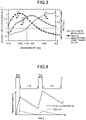
- FIG. 3 is a graph illustrating wavelength spectra of absorption coefficients of water and collagen molecules and a ratio of the absorption coefficient of collagen molecules to that of water. It has been proved that, as illustrated in FIG. 3 , in the range of near-infrared light, an absorption coefficient of water and an absorption coefficient of collagen molecules vary depending on the wavelength ( Banri Ono et. al, The Journal of Japan Society for Laser Surgery and Medicine, 36, 324, 2015 and Kou, et al, Appl Opt, 32, 3521-3540, 1993 ).
- the absorption coefficient of water is, in a range from the wavelength of irradiation light of 1400 [nm] to 1600 [nm], at peak when the wavelength is approximately 1450 [nm], decreases as the wavelength becomes shorter than approximately 1450 [nm] and decreases as the wavelength becomes longer than approximately 1450 [nm].
- the absorption coefficient of collagen molecules is, in a range of the wavelength of irradiation light from 1400 [nm] to 1600 [nm], at peak when the wavelength is approximately 1500 [nm], decreases as the wavelength becomes shorter than approximately 1500 [nm], and decreases as the wavelength becomes longer than approximately 1500 [nm]. Accordingly, as illustrated in FIG.
- the ratio of the absorption coefficient of collagen molecules to the absorption coefficient of water increases as the wavelength becomes longer. Furthermore, it is estimated that the absorption coefficient of collagen molecules further decreases when the wavelength becomes longer than 1600 [nm].
- the wavelength of laser light to be applied to the skin S that is, the wavelength of laser light that the pulse laser device 10 emits is set within a range in which the absorption coefficient of collagen molecules is larger than the absorption coefficient of water, that is, is set longer than 1480 [nm]. It can be argued that the range in which the wavelength is longer than 1480 [nm] is a range in which collagen fibers (collagen fiber bundles) are heated more easily than water.
- the wavelength of laser light that is applied to the skin S that is, the wavelength of laser light that the pulse laser device 10 emits is set equal to or under 1600 [nm].
- the wavelength of laser light that is applied to the skin S that is, the wavelength of laser light that the pulse laser device 10 emits is set longer than 1480 [nm] and equal to or under 1600 [nm].
- FIG. 4 is a schematic timing chart illustrating changes of water and collagen fibers in temperature over time associated with application of pulses of laser light.
- the temperatures of water and collagen fibers increase because of absorption of energy of laser light.
- Ton because the wavelength of laser light is set at a wavelength at which the absorption coefficient of collagen fibers is larger than the absorption coefficient of water, a rise of the temperature of collagen fibers (a temperature rise width) is larger than a rise of the temperature of water (a temperature rise width).
- the wavelength of laser light is set such that the rise of the temperature of collagen fibers during the pulse application time period Ton is larger than the rise of the temperature of water during the pulse application time period Ton.
- the inventors focused on the aspect that the temperature of collagen fibers rises during the pulse application time period Ton and calculated a pulse application time period Ton makes it possible to further increase the absorption coefficient ratio.
- FIG. 5 is a graph illustrating a correlation between the pulse application time period Ton and the ratio of the rise of the temperature of collagen fibers to that of water (simply referred to as the temperature rise ratio below) in application of a single pulse during the pulse application time period Ton.
- FIG. 5 is of calculation values by numerical simulation with respect to a calculation model obtained by modeling subcutaneous tissue. In the numerical simulation, parameters, such as a border condition and a coefficient, are adjusted such that the calculated value of thermal denaturation depth obtained by application of laser light is approximate to an experimental value of thermal denaturation depth obtained by application of laser light to a sample of subcutaneous tissue. In this numerical simulation, irradiation energy per pulse does not depend on the pulse application time period Ton and is constant.
- This simulation makes it possible to estimate a temperature of each part at the time of application of laser light and changes in temperature over time with respect to various sites of irradiation, application environments, and application conditions.
- the point in which the temperatures of water and fibroblast are measured is set in a position between collagen fibers that are adjacent to each other with an interval (intermediate position), which is a position less susceptible to thermal absorption by collagen fibers.
- the temperature rise ratio can be kept larger than 1 within the range in which the pulse application time period Ton is between 0.01 [ ⁇ s] and 1000 [ ⁇ s] inclusive.
- the inventors focused on the aspect that the temperature of water decreases in the pulse non-application time period Toff and calculates the pulse non-application time period Toff that makes it possible to selectively heat collagen fibers while inhibiting the temperature of water from rising.
- FIG. 6 is a graph illustrating pulse non-application time periods Toff with respect to respective pulse application time periods Ton in the same numerical simulation as that in which the result in FIG. 5 is obtained, which are pulse non-application time periods enabling the temperature of water at the end of the pulse non-application time period Toff to be equal (to decrease) to the temperature at the start of the pulse application time period Ton immediately before the pulse non-application time period Toff.
- the temperature of water at the start of the pulse application time period Ton is an example of a first temperature.
- the pulse non-application time period Toff be set according to a thermal relaxation time period of collagen fibers.
- the thermal relaxation time period of collagen fibers may be defined as a time period from the end of the pulse application time period Ton immediately before the pulse non-application time period Toff until a time when the temperature of collagen fibers decreases to a temperature obtained by adding a temperature width ( ⁇ tc/e) obtained by dividing a temperature rise width of collagen fibers in the pulse application time period Ton by a bottom of a natural logarithm to the temperature at the start of the pulse application time period Ton.
- ⁇ tc is the temperature rise width of collagen fibers.
- the pulse non-application time period Toff can be set longer than the thermal relaxation time period of collagen fibers.
- the pulse non-application time period Toff may be set at a value obtained by multiplying the thermal relaxation time period by a coefficient larger than 1 (for example, 1.1, or the like).
- 1 for example, 1.1, or the like.
- the temperature of water at the end of the pulse non-application time period Toff tends to be equal to or lower than the temperature of water at the start of the pulse application time period Ton immediately before the pulse non-application time period Toff. This makes it possible to assuredly inhibit the temperature of water from rising.
- the pulse non-application time period Toff can be set equal to the thermal relaxation time period of collagen fibers.
- the temperature of water at the end of the pulse non-application time period Toff is equal the temperature of water at the start of the pulse application time period Ton immediately previous to the pulse non-application time period Toff. It is possible also in this case to inhibit the temperature of water from rising.
- the pulse non-application time period Toff can be set shorter than the thermal relaxation time period of collagen fibers.
- the pulse non-application time period Toff may be set at a value obtained by multiplying the thermal relaxation time period by a coefficient (for example, 0.9, or the like) larger than 0 and smaller than 1.
- a coefficient for example, 0.9, or the like
- the temperature of water at the end of the pulse non-application time period Toff is higher than the temperature of water at the start of the pulse application time period Ton immediately before the pulse non-application time period Toff. In other words, it is higher than the temperature of water at the end of the pulse non-application time period Toff presented in FIG. 4 .
- the temperature of water at the end of the pulse non-application time period Toff is set such that, for example, the temperature rise with respect to the temperature of water at the start of the initial pulse application time period Ton is equal to or smaller than a given value or may be set equal to or smaller than a temperature that does not damage the skin S.
- a temperature obtained by adding a given value to the temperature of water at the start of the initial pulse application time period Ton or the temperature that does not damage the skin S is an example of the first temperature.
- the first temperature is a threshold temperature that is set according to the temperature of water at the end of the pulse non-application time period Toff.
- the highest temperature of water in the pulse application time period Ton is set, for example, equal to or smaller than a temperature that does not damage the skin S.
- the temperature that does not damage the skin S in this case is an example of a second temperature.
- the second temperature is a threshold temperature that is set according to the temperature of water at the end of the pulse application time period Ton.
- the protein of which a living organism consists causes an irreversible thermal denaturation at approximately 60 °C. In some cases, although it varies depending on the site or internal organ and varies depending on the heating time, thermal damage may occur in living tissue even at approximately 45 °C when the heating time is relatively long. It is possible to acquire a threshold temperature corresponding to a site of irradiation, an irradiation environment, an irradiation condition, etc., experimentally in advance (refer to Literature 2: Minoru Obara, Tsunenori Arai, Katsumi Midorikawa. Applied Laser Engineering. Corona Publishing Co., Ltd., 1998 .)
- the thermal relaxation time period varies depending on the water content of the skin S, arrangement of collagen fibers (fiber bundle of collagen fibers) in the skin S, the intensity of laser light, the pulse application time period Ton, etc.
- the thermal relaxation time period and the pulse non-application time period Toff may be set variably according to the water content of the skin S, arrangement of collagen fibers in the skin S, the intensity of laser light, the pulse application time period Ton, etc.
- the pulse application time period Ton, the pulse non-application time period Toff and the energy (intensity) applied in the pulse application time period Ton may be the same among multiple pulses or may differ per pulse.
- the control device 40 may change at least one of the pulse application time period Ton, the pulse non-application time period Toff, and the energy according to the denaturation caused by heating of collagen fibers.
- the pulse of laser light may be applied intermittently like a burst waveform.
- the time of intermittence in this case is, for example, sufficiently shorter than the thermal relaxation time period.
- the wavelength of laser light and the pulse application time period Ton are set such that the collagen molecules in collagen fibers thermally denature.
- the wavelength of laser light, the pulse application time period Ton, the pulse non-application time period Toff, and the number of times the pulse application time period Ton is repeated are set such that collagen molecules in collagen fibers thermally denature.
- adjustments of the pulse width and the pulse interval are made in consideration of heat conduction to the surroundings in the pulse interval.
- the state of heat conduction to the surroundings is determined by the heat conductivity and the shape of a heat generating part.
- a feature heat conduction thermal relaxation constant
- the pulse width is set sufficiently shorter than the feature heat conduction time and the pulse interval is set sufficiently longer than the feature heat conduction time (Literature 2).
- Selective photothermolysis does not give a heat generation contrast equal to or more than the absorption ratio between a living tissue part whose light absorption is large and the surrounding living tissue whose light absorption is small (in other words, the heat generation ratio depending on laser application) and the absorption ratio gives an upper limit of the heat generation ratio.
- the heat generation ratio depending on laser application the heat generation ratio depending on laser application
- the absorption ratio gives an upper limit of the heat generation ratio.
- Thermal denaturation of collagen molecules includes irreversible thermal denaturation and reversible thermal denaturation. Irreversible thermal denaturation causes coagulation of collagen molecules and is used for treatment of cancers, coagulation of retina, hemostasis, etc. Reversible thermal denaturation of collagen molecules is used to weld a blood vessel, the small intestine, skin, etc.
- Collagen molecules form three-dimensional spiral structure chains; however, the hydrogen bonds that bind the spiral structure chains are disconnected with an increase in temperature and, when overheated, the collage molecules are dispersed and shrink. This state is irreversible thermal denaturation. In the case of denaturation with a small ratio of disconnection of bonds, a return to the original structure is made in some cases and this transient thermal denaturation is referred to as reversible thermal denaturation.
- Collagen molecules are classified into a few tens of types according to the types and shapes of amino acid contained and the site of presence in living tissue differs. In the present embodiment, I or III collagen serving as main components of skin, skin loss repair, bone, etc., is main referred to.
- ⁇ ⁇ ⁇ 0 ⁇ t exp ⁇ E a RT dt
- ⁇ stored heat denaturation amount
- A frequency factor [1/s]
- ⁇ t heating time [s]
- E a activation energy [J/mol]
- R gas constant [J/mol ⁇ K]( ⁇ 8.314)
- T temperature [K].
- the stored heat denaturation amount is a guide of denaturation and, in general, at approximately 1, it is determined that it is thermal denaturation.
- the stored heat denaturation amount is proportional to the time.
- the power of an index function is a negative number and the frequency factor and the stored heat denaturation amount are constants that are determined by the substance and thus, the higher the temperature is, the larger the value of the exponential function is. Accordingly, the thermal denaturation depends on the heating time and the holding time.
- the stored heat denaturation amount is a guide of a denaturation amount and does not provide a precise threshold is taken as the reason why the stored heat denaturation amount based on Arrhenius theory is not used in general.
- the frequency factor and the activation energy vary depending on the substance (protein).
- Arrhenius theory can give a theoretical support on living organism protein coagulation, standing on precise Arrhenius theory has less meaning in a practical broad argument.
- a determination is made based on a thermal denaturation temperature serving as a guide (refer to Literature 6: Photophysical processes in recent medical laser developments: A review, Jean-Luc Boulnois, Lasers in Medical Science, January 1986, Volume 1, Issue 1, PP. 47-66 ) .
- a practical heat application time in a spot in living organism treatment is short because it is a local action particularly in an operation treatment device and does not exceed, for example, one second.
- heating does not continue because of a living biology reaction response and, typically, it is approximately 50 ms.
- a temperature that gives a sufficient accumulated thermal denaturation amount is determined roughly.
- a guide value of a temperature enabling irreversible thermal denaturation is used practically (refer to Literature 6).
- a generally-used guide value of a temperature enabling irreversible thermal denaturation is used as a threshold temperature.
- Fibroblast are cells that generate collagen molecules and thus it is preferable that the temperature of fibroblast, that is, the temperature of water be a temperature at which fibroblast are not damaged, that is, a temperature causing no thermal denaturation.
- the temperature of fibroblast that is, the temperature of water be a temperature at which fibroblast are not damaged, that is, a temperature causing no thermal denaturation.
- activities are activated by heating fibroblast to an extent where the fibroblast are not damaged to cause the fibroblast to reversibly thermally denature.
- Selective heating can be executed under a condition that causes thermal transpiration on the surface of living tissue.
- Thermal transpiration of living tissue occurs at the moment when the temperature of moisture in living tissue reaches 100 °C locally and boils.
- the volume expands approximately thousandfold, the cell membrane is torn and the tissue disappears.
- a condition that sequentially supplies latent heat that is lost due to boiling can be set (refer to Literature 2).
- the wavelength of laser light and the pulse application time period Ton are set such that fibroblast are not thermally damaged or are reversibly thermally damaged.
- the wavelength of laser light, the pulse application time period Ton, the pulse non-application time period Toff, and the number of times the pulse application time period Ton is repeated are set such that fibroblast are not thermally damaged or are reversibly thermally damaged.
- the longer the pulse application time period Ton is, the higher the temperatures of collagen fibers and water (fibroblast) increase and, the longer the pulse non-application time period Toff is, the lower the temperatures of collagen fibers and water (fibroblast) are.
- the difference of the temperature of collagen fibers after the end of the pulse non-application time period Toff from the temperature of collagen fibers at the start of the pulse application time period Ton and the difference of the temperature of water (fibroblast) at the end of the pulse non-application time period Toff from the temperature of water (fibroblast) at the start of the pulse application time period Ton is adjustable by the wavelength, the pulse application time period Ton and the pulse non-application time period Toff.
- the number of times the pulse application time period Ton is repeated can be set based on the defenses in temperature thereof. For example, in the situation where each of the temperatures increases in each set of the pulse application time period Ton and the pulse non-application time period Toff, the larger the difference in temperature is, the smaller the repetition number-of-times until the time when each of the temperatures reaches a given temperature is and, the smaller the difference in temperature is, the larger the repetition number-of-times until the time when each of the temperatures reaches the given temperature is.
- the wavelength of laser light, the pulse application time period Ton, the pulse non-application time period Toff, and the repetition number-of-times can be set in consideration of an environmental condition, such as the ambient temperature or the body temperature.
- an environmental condition such as the ambient temperature or the body temperature.
- the lengths of the pulse application time period Ton and the pulse non-application time period Toff need not be set the same (at constant values) with respect to a plurality of sets of pulse application and the lengths may be switched when it comes close to a given temperature or may be changed per pulse.
- the optical fiber 30 and the optical head 20 may be replaced with a space optical system.
- the space optical system can include a lens, a mirror, etc.
- the space optical system may include a Galvano scanner. Laser light can be applied by the Galvano scanner to a desired spot on the skin S.
- a space optical system including a Galvano scanner may be arranged on a light output side of the optical head 20 of the pulse application device 1.
- laser light is applied to a certain point on the skin S for a period corresponding to a scanning speed.
- the laser light that is emitted by the pulse laser device 10 is a continuous wave
- the trajectory of laser light by scanning may be in a shape of a ring. Accordingly, laser light is applied in a manner of pulses repeatedly to sequential points on the skin S and, even when laser light is a continuous wave, it is possible to control heat input to the skin S over time.
- a control mechanism for controlling a beam profile of laser light may be further added to the pulse application device 1.
- a mechanism that includes a special optical fiber and that generates a beam that is a combination of a beam of a single-peak-type profile and a beam of a ring-type profile is known.
- a mechanism including a spatial light modulator (SLM) is known.
- the SLM is, for example, a space phase modulation device that consists of pixels of a phase modulation device that are a plurality of micro-optical operation devices that are arrayed one-dimensionally or two-dimensionally and that controls the beam profile of input laser light by electrically controlling the phase of each of the pixels.
- a mechanisms including a DOE is known.
- the DOE is a diffractive optical element configured by integrating a plurality of diffraction gratings with different periods.
- the DOE is capable of forming a beam shape by deflecting input laser light to a direction of an effect of each diffraction grating or superimposing the laser light.
- the DOE is capable of forming the input single-peak-type beam into a line beam or a ring beam.
- the pulse application device 1 includes the single pulse laser device 10; however, the pulse application device 1 may include a plurality of the pulse laser devices 10. When a plurality of the pulse laser devices 10 are included, the wavelengths of laser light to be emitted may be all the same or may differ at least partly.
- the pulse application device 1 may include a reference laser device that emits laser light of a visible light area in addition to the pulse laser device 10 that emits near-infrared laser light.
- the reference laser device may be configured to emit reference laser light (continuous wave or pulse) in the visible light region to apply the laser light to the same position as the position on the skin S in which the laser light from the pulse laser device 10 is applied.
- the reference laser light can be checked visually, which make it easy to check the position on the skin S in which the laser light from the pulse laser device 10 is applied.
- the sensor 50 may be an infrared thermometer, a thermography, a color sensor, an image sensor, an acoustic sensor, a power meter, or the like.
- the pulse application device 1 may include a sensor system including the sensor 50 and a measurement device, such as a spectrum analyzer.
- the control device 40 may be configured to be capable of executing a computer program enabling arithmetic processing using a trained model that is generated by machine learning, or the like, previously. In this case, the control device 40 may perform arithmetic processing on data that is acquired by the sensor 50 using the trained model and determine a thermal denaturation state of collagen fibers contained in the skin S.
- the wavelength of laser light is set within a range in which the temperature rise width of collagen fibers in the skin S when the laser light is applied to the skin S (living tissue) is larger than the temperature rise width of water containing fibroblast (cells) that are contained in the skin and that are present around the collagen fibers.
- a rise of the temperature of collagen fibers is set larger than a rise of the temperature of water, which makes it possible to heat collagen fibers more efficiently.
- the cells are fibroblast.
- the method of the present embodiment is effective in the case where the cells are fibroblast.
- the pulse application time period Ton in which a pulse of light is applied to the skin S and the pulse non-application time period Toff in which no pulse of light is applied to the skin S are repeated alternately.
- the pulse non-application time period Toff (non-application time period) is set such that the temperature of water at the end of the pulse non-application time period Toff is equal to or lower than the first temperature (given temperature).
- the pulse non-application time period Toff is set such that the temperature of water at the end of the pulse non-application time period Toff is approximately equal to the temperature of water at the start of the pulse application time period Ton.
- the pulse non-application time period Toff is set such that the temperature of collagen fibers at the end of the pulse non-application time period Toff is higher than the temperature of collagen fibers at the start of the pulse application time period Ton immediately before the pulse non-application time period Toff.
- the pulse non-application time period Toff is set based on the thermal relaxation time period from the end of the pulse application time period Ton immediately before the pulse non-application time period Toff until a time when the temperature of collagen fibers decreases to a temperature obtained by adding the temperature rise width obtained by adding the temperature width obtained by dividing the temperature rise of collagen fibers in the pulse application time period Ton by the bottom of a natural logarithm to the temperature at the start of the pulse application time period Ton.
- the pulse non-application time period Toff is set equal to or more than the thermal relaxation time period of collagen fibers.
- the pulse non-application time period Toff is between 80 [ms] and 210 [ms] inclusive.
- the pulse application time period Ton is set such that the temperature of water at the end of the pulse application time period Ton is equal to or lower than the second temperature (given temperature).
- the second temperature is a thermal denaturation threshold temperature at which collagen molecules in collagen fibers thermally denature.
- the second temperature is a reversible thermal denaturation threshold temperature at which the collagen molecules in the collagen fibers reversibly thermally denature.
- the wavelength and the pulse application time period Ton are set such that the collagen molecules in collagen fibers thermally denature and fibroblast are not thermally damaged.
- the wavelength and the pulse application time period Ton are set such that collagen molecules in collagen fibers thermally denature and fibroblast are reversibly damaged.
- the wavelength and the pulse application time period Ton are set such that collagen molecules in collagen fibers irreversibly thermally denature and fibroblast are not thermally damaged.
- the wavelength and the pulse application time period Ton are set such that the collagen molecules in collagen fibers irreversibly thermally denature and fibroblast reversibly thermally denature.
- the wavelength and the pulse application time period Ton are set such that thermal transpiration occurs on the surface of the skin S.
- the wavelength, the pulse application time period Ton, the pulse non-application time period Toff, and the number of times the pulse application time period Ton is repeated are set such that collagen molecules in collagen fibers thermally denature and fibroblast are not thermally damaged.
- the wavelength, the pulse application time period Ton, the pulse non-application time period Toff, and the number of times the pulse application time period Ton is repeated are set such that collagen molecules in collagen fibers thermally denature and fibroblast are reversibly thermally damaged.
- the wavelength, the pulse application time period Ton, the pulse non-application time period Toff, and the number of times the pulse application time period Ton is repeated are set such that collagen molecules in collagen fibers reversibly thermally denature and fibroblast are not thermally damaged.
- the wavelength, the pulse application time period Ton, the pulse non-application time period Toff, and the number of times the pulse application time period Ton is repeated are set such that collagen molecules in collagen fibers reversibly thermally denature and fibroblast are reversibly damaged.
- the wavelength, the pulse application time period Ton, the pulse non-application time period Toff, and the number of times the pulse application time period Ton is repeated are set such that thermal transpiration occurs on the surface of the skin S.
- the ratio of the temperature rise width of the collagen fibers to the temperature rise width of water when light is applied to the skin S is equal to or larger than 1.1.
- a plurality of pulses of light are applied intermittently.
- the wavelength of laser light is set at a wavelength at which the absorption coefficient of collagen fibers is larger than the absorption coefficient of water.
- the wavelength of light is set at a value longer than 1480 [nm].
- the wavelength of light is set equal to or less than 1600 [nm].
- the living tissue is not limited to skin, and it may be, for example, living tissue containing collagen fibers, such as the alimentary tract, cartilage, or bone.
- cells may be cells other than fibroblast.
- the pulse application number-of-times may be set according to the temperature of water or collagen fibers.
- the wavelength is set longer than 1600 [nm], because the absorption coefficient is relatively small and accordingly a light invasion length is relatively long, it is possible to obtain the same function and effect on a deeper part of living tissue.
- the present invention is usable in a pulse application method and a pulse application device.
Landscapes
- Health & Medical Sciences (AREA)
- Physics & Mathematics (AREA)
- Engineering & Computer Science (AREA)
- Biomedical Technology (AREA)
- Life Sciences & Earth Sciences (AREA)
- Optics & Photonics (AREA)
- Animal Behavior & Ethology (AREA)
- Nuclear Medicine, Radiotherapy & Molecular Imaging (AREA)
- Veterinary Medicine (AREA)
- Public Health (AREA)
- General Health & Medical Sciences (AREA)
- Surgery (AREA)
- Heart & Thoracic Surgery (AREA)
- Ophthalmology & Optometry (AREA)
- Pathology (AREA)
- Radiology & Medical Imaging (AREA)
- Electromagnetism (AREA)
- Otolaryngology (AREA)
- Medical Informatics (AREA)
- Molecular Biology (AREA)
- Vascular Medicine (AREA)
- Laser Surgery Devices (AREA)
- Radiation-Therapy Devices (AREA)
Abstract
Description
- The present invention relates to a pulse application method and a pulse application device. Background
- For example, coagulation treatment in which collagen fibers are heated to coagulate the collagen fibers by application of laser light to skin has been performed as skin treatment.
- Non Patent Literature 1: Current Laser Resurfacing Technologies: A Review that Delves Beneath the Surface, Jason Preissig, Kristy Hamilton, Ramsey Markus, Seminars in Plastic Surgery, Vol. 26, No.3, 2012, PP. 109-116
- When living tissue, particularly, skin is heated by laser light application, however, similar heating occurs not only in collagen fibers but also in cells in the living tissue and therefore there is a risk that it is hard to inhibit side effects.
- Thus, an object of the present invention is to obtain a pulse application method and a pulse application device that make it possible to selectively heat collagen fibers in living tissue while inhibiting heating of cells that are present in the living tissue.
- A pulse application method according to the present invention is a pulse application method of applying a pulse of light to living tissue to heat the living tissue, wherein a wavelength of the light is set within a range in which a temperature rise width of collagen fibers in the living tissue when the light is applied to the living tissue is larger than a temperature rise width of water containing cells that are contained in the living tissue and that are present around the collagen fibers.
- In the pulse application method, for example, the cells are fibroblast.
- In the pulse application method, for example, an application time period in which a pulse of light is applied to the living tissue and a non-application time period in which no pulse of light is applied to the living tissue are repeated alternately.
- In the pulse application method, for example, the non-application time period is set such that a temperature of the water at an end of the non-application time period is equal to or lower than a first temperature.
- In the pulse application method, for example, the non-application time period is set such that the temperature of the water at the end of the non-application time period is approximately equal to the temperature of the water at a start of the application time period immediately before the non-application time period.
- In the pulse application method, for example, the non-application time period is set such that a temperature of the collagen fibers at an end of the non-application time period is higher than the temperature of the collagen fibers at a start of the application time period immediately before the non-application time period.
- In the pulse application method, for example, the non-application time period is set based on a thermal relaxation time period from an end of the application time period immediately before the non-application time period until a time when a temperature of the collagen fibers decreases to a temperature obtained by adding a temperature width obtained by dividing the temperature rise width of the collagen fibers in the application time period by a bottom of a natural logarithm to a temperature at a start of the application time period.
- In the pulse application method, for example, the non-application time period is set equal to or more than the thermal relaxation time period.
- In the pulse application method, for example, the non-application time period is between 80 [ms] and 210 [ms] inclusive.
- In the pulse application method, for example, the wavelength and an application time period of the pulse are set such that the temperature of the water at an end of the application time period is equal to or lower than a second temperature.
- In the pulse application method, for example, the second temperature is a thermal denaturation threshold temperature at which collagen molecules in collagen fibers thermally denature.
- In the pulse application method, for example, the second temperature is a reversible thermal denaturation threshold temperature at which collagen molecules in collagen fibers reversibly thermally denature.
- In the pulse application method, for example, the wavelength and an application time period of the pulse are set such that collagen molecules in the collagen fibers thermally denature and the cells are not thermally damaged.
- In the pulse application method, for example, the wavelength and an application time period of the pulse are set such that collagen molecules in the collagen fibers thermally denature and the cells are reversibly thermally damaged.
- In the pulse application method, for example, the wavelength and an application time period of the pulse are set such that collagen molecules in the collagen fibers irreversibly thermally denature and the cells are not thermally damaged.
- In the pulse application method, for example, the wavelength and an application time period of the pulse are set such that collagen molecules in the collagen fibers irreversibly thermally denature and the cells are reversibly thermally damaged.
- In the pulse application method, for example, the wavelength and an application time period of the pulse are set such that thermal transpiration occurs on a surface of the living tissue.
- In the pulse application method , for example, the application time period in which the pulse of light is applied to the living tissue and the non-application time period in which no pulse of light is applied to the living tissue are repeated alternately, and the wavelength, the application time period, the non-application time period, and the number of times the application time period is repeated are set such that collagen molecules in the collagen fibers thermally denature and the cells are not thermally damaged.
- In the pulse application method, for example, the application time period in which the pulse of light is applied to the living tissue and the non-application time period in which no pulse of light is applied to the living tissue are repeated alternately, and the wavelength, the application time period, the non-application time period, and the number of times the application time period is repeated are set such that collagen molecules in the collagen fibers thermally denature and the cells are reversibly thermally damaged.
- In the pulse application method, for example, the application time period in which the pulse of light is applied to the living tissue and the non-application time period in which no pulse of light is applied to the living tissue are repeated alternately, and the wavelength, the application time period, the non-application time period, and the number of times the application time period is repeated are set such that collagen molecules in the collagen fibers irreversibly thermally denature and the cells are not thermally damaged.
- In the pulse application method, for example, the application time period in which the pulse of light is applied to the living tissue and the non-application time period in which no pulse of light is applied to the living tissue are repeated alternately, and the wavelength, the application time period, the non-application time period, and the number of times the application time period is repeated are set such that collagen molecules in the collagen fibers irreversibly thermally denature and the cells are reversibly thermally damaged.
- In the pulse application method, for example, the application time period in which the pulse of light is applied to the living tissue and the non-application time period in which no pulse of light is applied to the living tissue are repeated alternately, and the wavelength, the application time period, the non-application time period, and the number of times the application time period is repeated are set such that thermal transpiration occurs on a surface of the living tissue.
- In the pulse application method, for example, a ratio of the temperature rise width of the collagen fibers to the temperature rise width of the water when the light is applied to the living tissue is equal to or larger than 1.1.
- In the pulse application method, for example, a denaturation state of the collagen fibers is detected, and at a time when a given denaturation state of the collagen fibers is detected, application of the pulse ends.
- In the pulse application method, for example, in an application time period of the pulse, a plurality of pulses of light are applied intermittently.
- In the pulse application method, for example, the wavelength of the light is set at a wavelength at which an absorption coefficient of the collagen fibers is larger than an absorption coefficient of the water.
- The pulse application method, for example, the wavelength of the light is set at a value longer than 1480 [nm].
- In the pulse application method, for example, the wavelength of the light is set at a value equal to or less than 1600 [nm].
- A pulse application device according to the present invention is a pulse application device configured to apply a pulse of light to living tissue to heat the living tissue, wherein a wavelength of the light is set within a range in which a temperature rise width of collagen fibers in the living tissue when the light is applied to the living tissue is larger than a temperature rise width of water containing fibroblast that are contained in the living tissue and that are present around the collagen fibers.
- The pulse application device, for example, includes a detector configured to detect a denaturation state of the collagen fibers, wherein at a time when a given denaturation state of the collagen fibers is detected by the detector, application of the pulse ends.
- In the pulse application device, for example, the wavelength of the light is set at a value longer than 1480 [nm].
- In the pulse application device, for example, the wavelength of the light is set at a value equal to or less than 1600 [nm].
- According to the pulse application method and the pulse application device, it is possible to selectively heat collagen fibers in living tissue while inhibiting heating of cells that are present in the living tissue.
-
-
FIG. 1 is an exemplary and schematic configuration diagram of a pulse application device according to an embodiment. -
FIG. 2 is a schematic diagram illustrating an internal structure of living tissue. -
FIG. 3 is an exemplary and schematic graph illustrating wavelength spectra of absorption coefficients of water and collagen molecules and a ratio of the absorption coefficient of collagen molecules to that of water. -
FIG. 4 is an exemplary and schematic timing chart illustrating changes of water and collagen fibers in temperature over time caused by a pulse application method according to the embodiment. -
FIG. 5 is an exemplary graph illustrating a correlation between a pulse application time period and a ratio of the rise of the temperature of collagen fibers to that of water in application of one pulse in the pulse application time period in the pulse application method according to the embodiment. -
FIG. 6 is an exemplary graph illustrating pulse non-application time periods with respect to respective pulse application time periods in the pulse application method according to the embodiment, which are pulse non-application time periods enabling the temperature of water at the end of the pulse non-application time period to be equal to the temperature at the start of the pulse application time period. - An exemplary embodiment of the present invention and modifications thereof will be disclosed below. Configurations of the embodiment and the modification presented below and the functions and results (effects) brought by the configurations are an example. The embodiment can be realized by a configuration other than the configurations disclosed by the embodiment and the modifications below. According to the present invention, it is possible to obtain at least one of various effects (including derivative effects) obtained by the configurations described below.
-
FIG. 1 is a configuration diagram of apulse application device 1. As illustrated inFIG. 1 , thepulse application device 1 includes apulse laser device 10, anoptical head 20, anoptical fiber 30, acontrol device 40, and asensor 50. - The
pulse laser device 10 is capable of emitting a pulse of infrared laser light. The pulse of laser light that is emitted by thepulse laser device 10 is transmitted to theoptical head 20 via theoptical fiber 30 and is applied from theoptical head 20 to skin S. Theoptical head 20 disperses and collimates or focuses the pulse of laser light and applies the pulse of laser light to the skin S. The skin S is heated and/or stimulated by the applied pulse of laser light. Theoptical head 20 is moved manually or a robot arm, or the like, making it possible to apply the pulse of laser light to a desired spot on the skin S. Thecontrol device 40 is able to set or change a specification, such as an intensity of a pulse of laser light that is emitted from thepulse laser device 10, a pulse application time period (a pulse ON period or a pulse width) of the laser light and a pulse non-application time period (pulse OFF period) of the laser light. Thepulse laser device 10 may include a fiber laser device or a semiconductor laser device. The skin S is an example of living tissue. - The
sensor 50 detects a thermal denaturation state of collagen fibers that are contained in the skin S. The thermal denaturation state of collagen fibers will be described, exemplifying a cornea. A cornea is mainly composed of collagen and, because collagen fibers are aligned in the cornea, the cornea has high transparency in the state of not thermally denaturing. When a structure change occurs in collagen in the cornea due to thermal denaturation, the structurally changed part becomes the center of scattering and the cornea becomes cloudy in a visible light region. Based on the same principle, it is possible to detect a thermal denaturation state of the skin S by measuring a scattering state by theoptical sensor 50, for example, measuring back scattering attenuation of irradiation light. In this case, thesensor 50 is a noncontact sensor. When the skin S thermally denatures, the hardness of the skin S increases. Thus, measurement of hardness by themechanical sensor 50, such as a hardness sensor, enables detection of a thermal denaturation state of the skin. In this case, thesensor 50 is a contact sensor. It is possible to detect a thermal denaturation state of collagen molecules not only in a cornea but also in other tissue. Thecontrol device 40 is able to end application of pulses at a time when thesensor 50 detects a given thermal denaturation state of collagen fibers. Thesensor 50 is an example a detector. -
FIG. 2 is a schematic diagram illustrating an internal structure of living tissue, such as the skin S. As illustrated inFIG. 2 , the skin S contains living organisms water S1, collagen fiber bundles S2 that are bundles of collagen fibers, and fibroblast S3. The fibroblast S3 generate collagen fibers. Light absorption properties and heat conduction properties of the fibroblast S3 are approximately the same as those of water. Thus, in analysis of changes in temperature, the fibroblast S3 can be regarded as water. The fibroblast S3 are an example of cells. -
FIG. 3 is a graph illustrating wavelength spectra of absorption coefficients of water and collagen molecules and a ratio of the absorption coefficient of collagen molecules to that of water. It has been proved that, as illustrated inFIG. 3 , in the range of near-infrared light, an absorption coefficient of water and an absorption coefficient of collagen molecules vary depending on the wavelength (Banri Ono et. al, The Journal of Japan Society for Laser Surgery and Medicine, 36, 324, 2015 and Kou, et al, Appl Opt, 32, 3521-3540, 1993). The absorption coefficient of water is, in a range from the wavelength of irradiation light of 1400 [nm] to 1600 [nm], at peak when the wavelength is approximately 1450 [nm], decreases as the wavelength becomes shorter than approximately 1450 [nm] and decreases as the wavelength becomes longer than approximately 1450 [nm]. On the other hand, the absorption coefficient of collagen molecules is, in a range of the wavelength of irradiation light from 1400 [nm] to 1600 [nm], at peak when the wavelength is approximately 1500 [nm], decreases as the wavelength becomes shorter than approximately 1500 [nm], and decreases as the wavelength becomes longer than approximately 1500 [nm]. Accordingly, as illustrated inFIG. 3 , in the range of the wavelength of irradiation light from 1400 [nm] to 1600 [nm], the ratio of the absorption coefficient of collagen molecules to the absorption coefficient of water (referred to as an absorption coefficient ratio below) increases as the wavelength becomes longer. Furthermore, it is estimated that the absorption coefficient of collagen molecules further decreases when the wavelength becomes longer than 1600 [nm]. - Based on such nature, in the present embodiment, the wavelength of laser light to be applied to the skin S, that is, the wavelength of laser light that the
pulse laser device 10 emits is set within a range in which the absorption coefficient of collagen molecules is larger than the absorption coefficient of water, that is, is set longer than 1480 [nm]. It can be argued that the range in which the wavelength is longer than 1480 [nm] is a range in which collagen fibers (collagen fiber bundles) are heated more easily than water. - As described above, in the range in which the wavelength is longer than 1600 [nm], the absorption coefficient of collagen molecules decreases as the wavelength becomes longer and this means that an optical energy absorption efficiency of collagen molecules decreases depending on application of laser light whose wavelength is longer than 1600 [nm]. Thus, in the present embodiment, the wavelength of laser light that is applied to the skin S, that is, the wavelength of laser light that the
pulse laser device 10 emits is set equal to or under 1600 [nm]. - From such consideration, in the present embodiment, the wavelength of laser light that is applied to the skin S, that is, the wavelength of laser light that the
pulse laser device 10 emits is set longer than 1480 [nm] and equal to or under 1600 [nm]. -
FIG. 4 is a schematic timing chart illustrating changes of water and collagen fibers in temperature over time associated with application of pulses of laser light. - As illustrated in
FIG. 4 , in a pulse application time period Ton, the temperatures of water and collagen fibers increase because of absorption of energy of laser light. As described above, in the pulse application time period Ton, because the wavelength of laser light is set at a wavelength at which the absorption coefficient of collagen fibers is larger than the absorption coefficient of water, a rise of the temperature of collagen fibers (a temperature rise width) is larger than a rise of the temperature of water (a temperature rise width). In other words, the wavelength of laser light is set such that the rise of the temperature of collagen fibers during the pulse application time period Ton is larger than the rise of the temperature of water during the pulse application time period Ton. - The inventors focused on the aspect that the temperature of collagen fibers rises during the pulse application time period Ton and calculated a pulse application time period Ton makes it possible to further increase the absorption coefficient ratio.
-
FIG. 5 is a graph illustrating a correlation between the pulse application time period Ton and the ratio of the rise of the temperature of collagen fibers to that of water (simply referred to as the temperature rise ratio below) in application of a single pulse during the pulse application time period Ton.FIG. 5 is of calculation values by numerical simulation with respect to a calculation model obtained by modeling subcutaneous tissue. In the numerical simulation, parameters, such as a border condition and a coefficient, are adjusted such that the calculated value of thermal denaturation depth obtained by application of laser light is approximate to an experimental value of thermal denaturation depth obtained by application of laser light to a sample of subcutaneous tissue. In this numerical simulation, irradiation energy per pulse does not depend on the pulse application time period Ton and is constant. In other words, the smaller the pulse application time period Ton is, the larger the applied energy per unit time is and, the longer the pulse application time period Ton is, the smaller the irradiation energy per unit time is. This simulation makes it possible to estimate a temperature of each part at the time of application of laser light and changes in temperature over time with respect to various sites of irradiation, application environments, and application conditions. The point in which the temperatures of water and fibroblast are measured is set in a position between collagen fibers that are adjacent to each other with an interval (intermediate position), which is a position less susceptible to thermal absorption by collagen fibers. - As illustrated in
FIG. 5 , it was proved that, as for the range of wavelength of laser light where the absorption coefficient ratio is larger than 1, specifically, in the range of 1480 [nm] or longer, the temperature rise ratio can be kept larger than 1 within the range in which the pulse application time period Ton is between 0.01 [µs] and 1000 [µs] inclusive. - On the other hand, as illustrated in
FIG. 4 , in the pulse non-application time period Toff, as illustrated inFIG. 4 , because of transmission of heat from collagen fibers and water whose temperatures become higher than the surroundings (the air) to the surroundings, the temperatures of water and collagen fibers decrease. The decrease of the temperature of water and the decrease of the temperature of collagen fibers depend on the specific heat of water and collagen fibers. - The inventors focused on the aspect that the temperature of water decreases in the pulse non-application time period Toff and calculates the pulse non-application time period Toff that makes it possible to selectively heat collagen fibers while inhibiting the temperature of water from rising.
-
FIG. 6 is a graph illustrating pulse non-application time periods Toff with respect to respective pulse application time periods Ton in the same numerical simulation as that in which the result inFIG. 5 is obtained, which are pulse non-application time periods enabling the temperature of water at the end of the pulse non-application time period Toff to be equal (to decrease) to the temperature at the start of the pulse application time period Ton immediately before the pulse non-application time period Toff. In the example inFIG. 6 , the temperature of water at the start of the pulse application time period Ton is an example of a first temperature. - It was proved that, as illustrated in
FIG. 6 , setting the pulse-non-application time period Toff according to the wavelength of laser light and the pulse application time period Ton enables the temperature of water at the end of the pulse non-application time period Toff to decrease to a temperature (first temperature) approximately equal to the temperature that at the start of the pulse application time period Ton. As understood fromFIG. 6 , it is preferable that the pulse non-application time period Toff be between 80 [ms] and 210 [ms] inclusive. - It can be understood that, as illustrated in
FIG. 4 , in the case where the temperature of collagen fibers at the end of the pulse non-application time period Toff is higher than the temperature of water, repeating application of a pulse, in other words, repeating the pulse-application time period Ton and the pulse non-application time period Toff gradually increases the difference in temperature between water and collagen fibers at the end of the pulse non-application time period Toff and eventually it is possible to more selectively heat collagen fibers. - It is preferable that the pulse non-application time period Toff be set according to a thermal relaxation time period of collagen fibers. The thermal relaxation time period of collagen fibers may be defined as a time period from the end of the pulse application time period Ton immediately before the pulse non-application time period Toff until a time when the temperature of collagen fibers decreases to a temperature obtained by adding a temperature width (Δtc/e) obtained by dividing a temperature rise width of collagen fibers in the pulse application time period Ton by a bottom of a natural logarithm to the temperature at the start of the pulse application time period Ton. Here, Δtc is the temperature rise width of collagen fibers.
- The pulse non-application time period Toff can be set longer than the thermal relaxation time period of collagen fibers. In an example, the pulse non-application time period Toff may be set at a value obtained by multiplying the thermal relaxation time period by a coefficient larger than 1 (for example, 1.1, or the like). In this case, the temperature of water at the end of the pulse non-application time period Toff tends to be equal to or lower than the temperature of water at the start of the pulse application time period Ton immediately before the pulse non-application time period Toff. This makes it possible to assuredly inhibit the temperature of water from rising.
- The pulse non-application time period Toff can be set equal to the thermal relaxation time period of collagen fibers. In this case, the temperature of water at the end of the pulse non-application time period Toff is equal the temperature of water at the start of the pulse application time period Ton immediately previous to the pulse non-application time period Toff. It is possible also in this case to inhibit the temperature of water from rising.
- The pulse non-application time period Toff can be set shorter than the thermal relaxation time period of collagen fibers. In an example, the pulse non-application time period Toff may be set at a value obtained by multiplying the thermal relaxation time period by a coefficient (for example, 0.9, or the like) larger than 0 and smaller than 1. In this case, the temperature of water at the end of the pulse non-application time period Toff is higher than the temperature of water at the start of the pulse application time period Ton immediately before the pulse non-application time period Toff. In other words, it is higher than the temperature of water at the end of the pulse non-application time period Toff presented in
FIG. 4 . This enables the temperature of collagen fibers at the end of the pulse non-application time period Toff to be higher and therefore enables the temperature of collagen fibers more speedily. Note that, in this case, because the temperature of water rises gradually according to application of pulse, the temperature of water at the end of the pulse non-application time period Toff is set such that, for example, the temperature rise with respect to the temperature of water at the start of the initial pulse application time period Ton is equal to or smaller than a given value or may be set equal to or smaller than a temperature that does not damage the skin S. A temperature obtained by adding a given value to the temperature of water at the start of the initial pulse application time period Ton or the temperature that does not damage the skin S is an example of the first temperature. The first temperature is a threshold temperature that is set according to the temperature of water at the end of the pulse non-application time period Toff. - Furthermore, regardless of the length of the pulse non-application time period Toff, the highest temperature of water in the pulse application time period Ton is set, for example, equal to or smaller than a temperature that does not damage the skin S. The temperature that does not damage the skin S in this case is an example of a second temperature. The second temperature is a threshold temperature that is set according to the temperature of water at the end of the pulse application time period Ton.
- Normally, the higher the temperature is, the shorter the time in which protein thermally denatures is and, the lower the temperature is, the longer the time in which protein thermally denatures is. The protein of which a living organism consists causes an irreversible thermal denaturation at approximately 60 °C. In some cases, although it varies depending on the site or internal organ and varies depending on the heating time, thermal damage may occur in living tissue even at approximately 45 °C when the heating time is relatively long. It is possible to acquire a threshold temperature corresponding to a site of irradiation, an irradiation environment, an irradiation condition, etc., experimentally in advance (refer to Literature 2: Minoru Obara, Tsunenori Arai, Katsumi Midorikawa. Applied Laser Engineering. Corona Publishing Co., Ltd., 1998.)
- The thermal relaxation time period varies depending on the water content of the skin S, arrangement of collagen fibers (fiber bundle of collagen fibers) in the skin S, the intensity of laser light, the pulse application time period Ton, etc. Thus, the thermal relaxation time period and the pulse non-application time period Toff may be set variably according to the water content of the skin S, arrangement of collagen fibers in the skin S, the intensity of laser light, the pulse application time period Ton, etc.
- The pulse application time period Ton, the pulse non-application time period Toff and the energy (intensity) applied in the pulse application time period Ton may be the same among multiple pulses or may differ per pulse. For example, the
control device 40 may change at least one of the pulse application time period Ton, the pulse non-application time period Toff, and the energy according to the denaturation caused by heating of collagen fibers. - During the pulse application time period Ton, the pulse of laser light may be applied intermittently like a burst waveform. The time of intermittence in this case is, for example, sufficiently shorter than the thermal relaxation time period.
- In order to obtain the effect of a single pulse, the wavelength of laser light and the pulse application time period Ton are set such that the collagen molecules in collagen fibers thermally denature. In order to obtain the effect of multiple pulses, the wavelength of laser light, the pulse application time period Ton, the pulse non-application time period Toff, and the number of times the pulse application time period Ton is repeated are set such that collagen molecules in collagen fibers thermally denature.
- Locally and selectively heating living tissue by repetitive application of pulses of laser is a method of, when the absorption coefficient of tissue to be heated selectively is larger than the absorption coefficient of surrounding tissue, selectively heating tissue with a large absorption coefficient by adjusting the pulse width (the pulse application time period Ton) and the pulse interval (the pulse non-application time period Toff). This method is referred to as selective photothermolysis (refer to Literature 3: Selective photothermolysis: precise microsurgery by selective absorption of pulsed radiation, RR Anderson, JA Parrish, Science, Vol. 220, Issue 4596, PP. 524-527, 1983).
- Specifically, adjustments of the pulse width and the pulse interval are made in consideration of heat conduction to the surroundings in the pulse interval. The state of heat conduction to the surroundings is determined by the heat conductivity and the shape of a heat generating part. In order to simply argue the issue of unsteady heat conduction, a feature heat conduction (thermal relaxation constant) is defined and used. For selective photothermolysis, the pulse width is set sufficiently shorter than the feature heat conduction time and the pulse interval is set sufficiently longer than the feature heat conduction time (Literature 2).
- Selective photothermolysis does not give a heat generation contrast equal to or more than the absorption ratio between a living tissue part whose light absorption is large and the surrounding living tissue whose light absorption is small (in other words, the heat generation ratio depending on laser application) and the absorption ratio gives an upper limit of the heat generation ratio. On the contrary, when a sequential laser is applied for a long time, because the heat conduction leads to uniform heating, local and selective heating cannot be realized.
- Thermal denaturation of collagen molecules includes irreversible thermal denaturation and reversible thermal denaturation. Irreversible thermal denaturation causes coagulation of collagen molecules and is used for treatment of cancers, coagulation of retina, hemostasis, etc. Reversible thermal denaturation of collagen molecules is used to weld a blood vessel, the small intestine, skin, etc.
- Collagen molecules form three-dimensional spiral structure chains; however, the hydrogen bonds that bind the spiral structure chains are disconnected with an increase in temperature and, when overheated, the collage molecules are dispersed and shrink. This state is irreversible thermal denaturation. In the case of denaturation with a small ratio of disconnection of bonds, a return to the original structure is made in some cases and this transient thermal denaturation is referred to as reversible thermal denaturation. Collagen molecules are classified into a few tens of types according to the types and shapes of amino acid contained and the site of presence in living tissue differs. In the present embodiment, I or III collagen serving as main components of skin, skin loss repair, bone, etc., is main referred to. The physical properties of collagen molecules differ also depending on animal species and thermal properties differ depending on the environment in which the living organism lives (refer to Literature 4: On a Relationship Between the Arrhenius Parameters from Thermal Damage Studies, Neil T. Wright, Journal of Biomechanical Engineering, Vol. 125, No. 2, PP. 300-304, 2003). In the present embodiment, thermal properties of collagen molecules of mammals including human beings living on land are mainly referred to.
- Thermal denaturation of collagen molecules is one type a chemical reaction process and is described according to Arrhenius theory (Equation (1), Arrhenius equation) describing a chemical reaction (refer to Literature 5: Finite element analysis of temperature controlled coagulation in laser irradiated tissue, T. N. Glenn, S. Rastegar, S. L. Jacques, IEEE Transactions on Biomedical Engineering, Vol. 43, No. 1, PP 79-87, Jan. 1996, Eq(3)).

- From Equation (1), when the heating time is constant, the stored heat denaturation amount is proportional to the time. The power of an index function is a negative number and the frequency factor and the stored heat denaturation amount are constants that are determined by the substance and thus, the higher the temperature is, the larger the value of the exponential function is. Accordingly, the thermal denaturation depends on the heating time and the holding time.
- The fact that the stored heat denaturation amount is a guide of a denaturation amount and does not provide a precise threshold is taken as the reason why the stored heat denaturation amount based on Arrhenius theory is not used in general. Furthermore, the frequency factor and the activation energy vary depending on the substance (protein). As described above, while Arrhenius theory can give a theoretical support on living organism protein coagulation, standing on precise Arrhenius theory has less meaning in a practical broad argument. Thus, in general, a determination is made based on a thermal denaturation temperature serving as a guide (refer to Literature 6: Photophysical processes in recent medical laser developments: A review, Jean-Luc Boulnois, Lasers in Medical Science, January 1986, ) .
- A practical heat application time in a spot in living organism treatment is short because it is a local action particularly in an operation treatment device and does not exceed, for example, one second. In a burn that is a typical living organism thermal damage, heating does not continue because of a living biology reaction response and, typically, it is approximately 50 ms. As described above, as a result of limitation of on the heating time in treatment, a temperature that gives a sufficient accumulated thermal denaturation amount is determined roughly.
- As described above, it is difficult to precisely obtain a temperature and a heating time that are necessary to obtain irreversible thermal denaturation of living tissue and a guide value of a temperature enabling irreversible thermal denaturation is used practically (refer to Literature 6). In the present embodiment, a generally-used guide value of a temperature enabling irreversible thermal denaturation is used as a threshold temperature. When a thermal denaturation threshold temperature is exceeded, protein thermally denatures and, when a reversible thermal denaturation threshold temperature is exceeded, protein reversibly thermally denatures.
- Fibroblast are cells that generate collagen molecules and thus it is preferable that the temperature of fibroblast, that is, the temperature of water be a temperature at which fibroblast are not damaged, that is, a temperature causing no thermal denaturation. As for fibroblast, it has been proved that activities are activated by heating fibroblast to an extent where the fibroblast are not damaged to cause the fibroblast to reversibly thermally denature.
- When protein in fibroblast cause irreversible thermal denaturation, vital activity stops and the cells necrose (thermal damage or irreversible thermal damage). On the other hand, when reversible thermal denaturation of protein or significantly little and local irreversible denaturation of protein occurs, in some cases, homeostasis causes restoration outcome (activation) of the fibroblast (reversible damage). Fibroblast may go into necrosis because cytoplasm goes out of the cells via pores that are opened due to thermal damage of the surrounding phospholipid bilayer and the surrounding body fluid flows into the cells via the cell membrane and causes the cells to swell and the cells rupture. In thermal coagulation treatment, formation of pores in the cell membrane and thermal denaturation of protein are caused and thresholds thereof remain a subject of dispute. Thermal denaturation of protein tends to be used for general modeling.
- Selective heating can be executed under a condition that causes thermal transpiration on the surface of living tissue. Thermal transpiration of living tissue occurs at the moment when the temperature of moisture in living tissue reaches 100 °C locally and boils. When water in the liquid phase turns into steam, the volume expands approximately thousandfold, the cell membrane is torn and the tissue disappears. In order to cause this to occur successively, a condition that sequentially supplies latent heat that is lost due to boiling can be set (refer to Literature 2).
- In order to obtain an effect of a single pulse, the wavelength of laser light and the pulse application time period Ton are set such that fibroblast are not thermally damaged or are reversibly thermally damaged. In order to obtain the effect of multiple pulses, the wavelength of laser light, the pulse application time period Ton, the pulse non-application time period Toff, and the number of times the pulse application time period Ton is repeated are set such that fibroblast are not thermally damaged or are reversibly thermally damaged.
- In the present embodiment, the longer the pulse application time period Ton is, the higher the temperatures of collagen fibers and water (fibroblast) increase and, the longer the pulse non-application time period Toff is, the lower the temperatures of collagen fibers and water (fibroblast) are. The difference of the temperature of collagen fibers after the end of the pulse non-application time period Toff from the temperature of collagen fibers at the start of the pulse application time period Ton and the difference of the temperature of water (fibroblast) at the end of the pulse non-application time period Toff from the temperature of water (fibroblast) at the start of the pulse application time period Ton is adjustable by the wavelength, the pulse application time period Ton and the pulse non-application time period Toff. The number of times the pulse application time period Ton is repeated (also simply referred to as a repetition number-of-times below) can be set based on the defenses in temperature thereof. For example, in the situation where each of the temperatures increases in each set of the pulse application time period Ton and the pulse non-application time period Toff, the larger the difference in temperature is, the smaller the repetition number-of-times until the time when each of the temperatures reaches a given temperature is and, the smaller the difference in temperature is, the larger the repetition number-of-times until the time when each of the temperatures reaches the given temperature is. The wavelength of laser light, the pulse application time period Ton, the pulse non-application time period Toff, and the repetition number-of-times can be set in consideration of an environmental condition, such as the ambient temperature or the body temperature. Note that the lengths of the pulse application time period Ton and the pulse non-application time period Toff need not be set the same (at constant values) with respect to a plurality of sets of pulse application and the lengths may be switched when it comes close to a given temperature or may be changed per pulse.
- In the
pulse application device 1 illustrated inFIG. 1 , theoptical fiber 30 and theoptical head 20 may be replaced with a space optical system. In this case, the space optical system can include a lens, a mirror, etc. The space optical system may include a Galvano scanner. Laser light can be applied by the Galvano scanner to a desired spot on the skin S. Furthermore, a space optical system including a Galvano scanner may be arranged on a light output side of theoptical head 20 of thepulse application device 1. - For example, when high speed scanning of laser light is made with the Galvano scanner in the space optical system, laser light is applied to a certain point on the skin S for a period corresponding to a scanning speed. In this case, even when the laser light that is emitted by the
pulse laser device 10 is a continuous wave, it is possible to apply the laser light to the skin S in a manner of pulses. For example, the trajectory of laser light by scanning may be in a shape of a ring. Accordingly, laser light is applied in a manner of pulses repeatedly to sequential points on the skin S and, even when laser light is a continuous wave, it is possible to control heat input to the skin S over time. - A control mechanism for controlling a beam profile of laser light may be further added to the
pulse application device 1. As such a control mechanism, a mechanism that includes a special optical fiber and that generates a beam that is a combination of a beam of a single-peak-type profile and a beam of a ring-type profile is known. As another control mechanism, a mechanism including a spatial light modulator (SLM) is known. The SLM is, for example, a space phase modulation device that consists of pixels of a phase modulation device that are a plurality of micro-optical operation devices that are arrayed one-dimensionally or two-dimensionally and that controls the beam profile of input laser light by electrically controlling the phase of each of the pixels. - Furthermore, as another control mechanism, a mechanisms including a DOE (diffractive optical element) is known. The DOE is a diffractive optical element configured by integrating a plurality of diffraction gratings with different periods. The DOE is capable of forming a beam shape by deflecting input laser light to a direction of an effect of each diffraction grating or superimposing the laser light. For example, the DOE is capable of forming the input single-peak-type beam into a line beam or a ring beam.
- The
pulse application device 1 includes the singlepulse laser device 10; however, thepulse application device 1 may include a plurality of thepulse laser devices 10. When a plurality of thepulse laser devices 10 are included, the wavelengths of laser light to be emitted may be all the same or may differ at least partly. - The
pulse application device 1 may include a reference laser device that emits laser light of a visible light area in addition to thepulse laser device 10 that emits near-infrared laser light. The reference laser device may be configured to emit reference laser light (continuous wave or pulse) in the visible light region to apply the laser light to the same position as the position on the skin S in which the laser light from thepulse laser device 10 is applied. The reference laser light can be checked visually, which make it easy to check the position on the skin S in which the laser light from thepulse laser device 10 is applied. - The
sensor 50 may be an infrared thermometer, a thermography, a color sensor, an image sensor, an acoustic sensor, a power meter, or the like. Thepulse application device 1 may include a sensor system including thesensor 50 and a measurement device, such as a spectrum analyzer. For example, thecontrol device 40 may be configured to be capable of executing a computer program enabling arithmetic processing using a trained model that is generated by machine learning, or the like, previously. In this case, thecontrol device 40 may perform arithmetic processing on data that is acquired by thesensor 50 using the trained model and determine a thermal denaturation state of collagen fibers contained in the skin S. - As described above, in the present embodiment, the wavelength of laser light (light) is set within a range in which the temperature rise width of collagen fibers in the skin S when the laser light is applied to the skin S (living tissue) is larger than the temperature rise width of water containing fibroblast (cells) that are contained in the skin and that are present around the collagen fibers.
- According to the present embodiment, in the pulse application time period Ton, a rise of the temperature of collagen fibers is set larger than a rise of the temperature of water, which makes it possible to heat collagen fibers more efficiently. Thus, according to such a method, for example, it is possible to obtain more efficient treatment effects than by coagulation of collagen fibers.
- In the present embodiment, for example, the cells are fibroblast.
- The method of the present embodiment is effective in the case where the cells are fibroblast.
- In the present embodiment, for example, the pulse application time period Ton in which a pulse of light is applied to the skin S and the pulse non-application time period Toff in which no pulse of light is applied to the skin S are repeated alternately.
- Accordingly, in the pulse non-application time period Toff, it is possible to inhibit the temperature of fibroblast contained in water from rising and eventually inhibit fibroblast from being damaged.
- In the present embodiment, for example, the pulse non-application time period Toff (non-application time period) is set such that the temperature of water at the end of the pulse non-application time period Toff is equal to or lower than the first temperature (given temperature).
- Accordingly, it is possible more assuredly inhibit a temperature rise of fibroblast and eventually a damage of the fibroblast.
- In the pulse application method of the present embodiment, for example, the pulse non-application time period Toff is set such that the temperature of water at the end of the pulse non-application time period Toff is approximately equal to the temperature of water at the start of the pulse application time period Ton.
- Accordingly, it is possible to more assuredly inhibit a temperature rise of fibroblast and eventually a damage of fibroblast.
- In the present embodiment, the pulse non-application time period Toff is set such that the temperature of collagen fibers at the end of the pulse non-application time period Toff is higher than the temperature of collagen fibers at the start of the pulse application time period Ton immediately before the pulse non-application time period Toff.
- Accordingly, it is possible to speedily increase the temperature of collagen fibers by repeating application of a pulse.
- In the present embodiment, the pulse non-application time period Toff is set based on the thermal relaxation time period from the end of the pulse application time period Ton immediately before the pulse non-application time period Toff until a time when the temperature of collagen fibers decreases to a temperature obtained by adding the temperature rise width obtained by adding the temperature width obtained by dividing the temperature rise of collagen fibers in the pulse application time period Ton by the bottom of a natural logarithm to the temperature at the start of the pulse application time period Ton.
- Accordingly, it is possible to set the pulse non-application time period Toff more appropriately according to the thermal relaxation time period of collagen fibers.
- In the present embodiment, the pulse non-application time period Toff is set equal to or more than the thermal relaxation time period of collagen fibers.
- Accordingly, it is possible to assuredly inhibit a temperature rise of collagen blast cells and eventually a damage of fibroblast.
- In the present embodiment, the pulse non-application time period Toff is between 80 [ms] and 210 [ms] inclusive.
- As is clear from
FIGS. 5 and 6 , according to such a configuration, it is possible to set the pulse non-application time period Toff enabling the temperature of water to decrease according to the wavelength of light and the pulse application time period Ton that make it possible to obtain a preferable temperature rise ratio. - In the present embodiment, the pulse application time period Ton is set such that the temperature of water at the end of the pulse application time period Ton is equal to or lower than the second temperature (given temperature).
- Accordingly, it is possible to more assuredly inhibit a temperature rise of fibroblast and eventually a damage of fibroblast.
- In the present embodiment, the second temperature is a thermal denaturation threshold temperature at which collagen molecules in collagen fibers thermally denature.
- Accordingly, it is possible to thermally denature collagen molecules.
- In the present embodiment, the second temperature is a reversible thermal denaturation threshold temperature at which the collagen molecules in the collagen fibers reversibly thermally denature.
- Accordingly, it is possible to reversibly thermally denature collagen molecules.
- In the present embodiment, the wavelength and the pulse application time period Ton are set such that the collagen molecules in collagen fibers thermally denature and fibroblast are not thermally damaged.
- Accordingly, it is possible to inhibit a thermal damage of fibroblast while thermally denaturing collagen molecules.
- In the present embodiment, the wavelength and the pulse application time period Ton are set such that collagen molecules in collagen fibers thermally denature and fibroblast are reversibly damaged.
- Accordingly, it is possible to inhibit a thermal damage of fibroblast while thermally denaturing collagen molecules.
- In the present embodiment, the wavelength and the pulse application time period Ton are set such that collagen molecules in collagen fibers irreversibly thermally denature and fibroblast are not thermally damaged.
- Accordingly, it is possible to inhibit a thermal damage of fibroblast while irreversibly thermally denaturing collagen molecules.
- In the present embodiment, the wavelength and the pulse application time period Ton are set such that the collagen molecules in collagen fibers irreversibly thermally denature and fibroblast reversibly thermally denature.
- Accordingly, it is possible to inhibit a thermal damage of fibroblast while irreversibly thermally denaturing collagen molecules.
- In the present embodiment, the wavelength and the pulse application time period Ton are set such that thermal transpiration occurs on the surface of the skin S.
- Accordingly, it is possible to give coagulation treatment in deep tissue.
- In the present embodiment, the wavelength, the pulse application time period Ton, the pulse non-application time period Toff, and the number of times the pulse application time period Ton is repeated are set such that collagen molecules in collagen fibers thermally denature and fibroblast are not thermally damaged.
- Accordingly, it is possible to inhibit a thermal damage of fibroblast while thermally denaturing collagen molecules.
- In the present embodiment, the wavelength, the pulse application time period Ton, the pulse non-application time period Toff, and the number of times the pulse application time period Ton is repeated are set such that collagen molecules in collagen fibers thermally denature and fibroblast are reversibly thermally damaged.
- Accordingly, it is possible to inhibit a thermal damage of fibroblast while thermally denaturing collagen molecules.
- In the present embodiment, the wavelength, the pulse application time period Ton, the pulse non-application time period Toff, and the number of times the pulse application time period Ton is repeated are set such that collagen molecules in collagen fibers reversibly thermally denature and fibroblast are not thermally damaged.
- Accordingly, it is possible to inhibit a thermal damage of fibroblast while irreversibly thermally denaturing collagen molecules.
- In the present embodiment, the wavelength, the pulse application time period Ton, the pulse non-application time period Toff, and the number of times the pulse application time period Ton is repeated are set such that collagen molecules in collagen fibers reversibly thermally denature and fibroblast are reversibly damaged.
- Accordingly, it is possible to inhibit a thermal damage of fibroblast while irreversibly thermally denaturing collagen molecules.
- In the present embodiment, the wavelength, the pulse application time period Ton, the pulse non-application time period Toff, and the number of times the pulse application time period Ton is repeated are set such that thermal transpiration occurs on the surface of the skin S.
- Accordingly, it is possible to remove shallow tissue and thus give coagulation treatment in deep tissue.
- In the present embodiment, the ratio of the temperature rise width of the collagen fibers to the temperature rise width of water when light is applied to the skin S is equal to or larger than 1.1.
- As is clear from
FIG. 5 , according to such a configuration, a higher temperature rise ratio is obtained. In other words, it is possible to selectively heat collagen fibers more efficiently. - In the present embodiment, at the time when the given denaturation state of collagen fibers is detected by the sensor 50 (detector), application of a pulse ends.
- Accordingly, advantages that it is possible to inhibit excessive application of light and omit unnecessary application of light are obtained.
- In the present embodiment, in the pulse application time period Ton, a plurality of pulses of light are applied intermittently.
- Accordingly, the same effect as that in the case where laser light is applied successively in the pulse application time period Ton can be obtained.
- In the present embodiment, the wavelength of laser light is set at a wavelength at which the absorption coefficient of collagen fibers is larger than the absorption coefficient of water.
- Accordingly, it is possible to efficiently increase the temperature of collagen fibers while inhibiting a temperature rise of the fibroblast in the pulse application time period Ton.
- In the present embodiment, the wavelength of light is set at a value longer than 1480 [nm].
- Accordingly, it is possible to more efficiently increase the temperature of collagen fibers while inhibiting a temperature rise of the fibroblast in the pulse application time period Ton.
- In the present embodiment, the wavelength of light is set equal to or less than 1600 [nm].
- Accordingly, it is possible to more efficiently increase the temperature of collagen fibers while inhibiting a temperature rise of the fibroblast in the pulse application time period Ton.
- The present embodiment of the present invention and modifications thereof have been exemplified and the present embodiment and the modifications described above are an example and are not intended to limit the scope of the invention. The above-described embodiment and modifications can be carried out in other various modes and various types of omission, replacement, combination and change can be made without departing from the scope of the invention. Specification, such as each configuration and the shape (the structure, type, direction, model, size, length, width, thickness, height, number, arrangement, position, and material) can be changed as appropriate and enabled.
- For example, the living tissue is not limited to skin, and it may be, for example, living tissue containing collagen fibers, such as the alimentary tract, cartilage, or bone. Furthermore, cells may be cells other than fibroblast.
- The pulse application number-of-times may be set according to the temperature of water or collagen fibers.
- When the wavelength is set longer than 1600 [nm], because the absorption coefficient is relatively small and accordingly a light invasion length is relatively long, it is possible to obtain the same function and effect on a deeper part of living tissue.
- The present invention is usable in a pulse application method and a pulse application device.
-
- 1
- PULSE APPLICATION DEVICE
- 10
- PULSE LASER DEVICE
- 20
- OPTICAL HEAD
- 30
- OPTICAL FIBER
- 40
- CONTROL DEVICE
- 50
- SENSOR (DETECTOR)
- S
- SKIN
- Sl
- LIVING ORGANISMS WATER
- S2
- COLLAGEN FIBER BUNDLE
- S3
- FIBROBLAST
- Toff
- PULSE NON-APPLICATION TIME PERIOD
- Ton
- PULSE APPLICATION TIME PERIOD
Claims (32)
- A pulse application method of applying a pulse of light to living tissue to heat the living tissue, wherein a wavelength of the light is set within a range in which a temperature rise width of collagen fibers in the living tissue when the light is applied to the living tissue is larger than a temperature rise width of water containing cells that are contained in the living tissue and that are present around the collagen fibers.
- The pulse application method according to claim 1, wherein the cells are fibroblast.
- The pulse application method according to claim 1, wherein an application time period in which a pulse of light is applied to the living tissue and a non-application time period in which no pulse of light is applied to the living tissue are repeated alternately.
- The pulse application method according to claim 3, wherein the non-application time period is set such that a temperature of the water at an end of the non-application time period is equal to or lower than a first temperature.
- The pulse application method according to claim 4, wherein the non-application time period is set such that the temperature of the water at the end of the non-application time period is approximately equal to the temperature of the water at a start of the application time period immediately before the non-application time period.
- The pulse application method according to any one of claims 3 to 5, wherein the non-application time period is set such that a temperature of the collagen fibers at an end of the non-application time period is higher than the temperature of the collagen fibers at a start of the application time period immediately before the non-application time period.
- The pulse application method according to any one of claims 3 to 6, wherein the non-application time period is set based on a thermal relaxation time period from an end of the application time period immediately before the non-application time period until a time when a temperature of the collagen fibers decreases to a temperature obtained by adding a temperature width obtained by dividing the temperature rise width of the collagen fibers in the application time period by a bottom of a natural logarithm to a temperature at a start of the application time period.
- The pulse application method according to claim 7, wherein the non-application time period is set equal to or more than the thermal relaxation time period.
- The pulse application method according to any one of claims 3 to 8, wherein the non-application time period is between 80 [ms] and 210 [ms] inclusive.
- The pulse application method according to any one of claims 1 to 9, wherein the wavelength and an application time period of the pulse are set such that the temperature of the water at an end of the application time period is equal to or lower than a second temperature.
- The pulse application method according to claim 10, wherein the second temperature is a thermal denaturation threshold temperature at which collagen molecules in collagen fibers thermally denature.
- The pulse application method according to claim 10, wherein the second temperature is a reversible thermal denaturation threshold temperature at which collagen molecules in collagen fibers reversibly thermally denature.
- The pulse application method according to claim 1, wherein the wavelength and an application time period of the pulse are set such that collagen molecules in the collagen fibers thermally denature and the cells are not thermally damaged.
- The pulse application method according to claim 1, wherein the wavelength and an application time period of the pulse are set such that collagen molecules in the collagen fibers thermally denature and the cells are reversibly thermally damaged.
- The pulse application method according to claim 1, wherein the wavelength and an application time period of the pulse are set such that collagen molecules in the collagen fibers irreversibly thermally denature and the cells are not thermally damaged.
- The pulse application method according to claim 1, wherein the wavelength and an application time period of the pulse are set such that collagen molecules in the collagen fibers irreversibly thermally denature and the cells are reversibly thermally damaged.
- The pulse application method according to any one of claims 1 and 13 to 16, wherein the wavelength and an application time period of the pulse are set such that thermal transpiration occurs on a surface of the living tissue.
- The pulse application method according to claim 3, wherein the application time period in which the pulse of light is applied to the living tissue and the non-application time period in which no pulse of light is applied to the living tissue are repeated alternately, and
the wavelength, the application time period, the non-application time period, and the number of times the application time period is repeated are set such that collagen molecules in the collagen fibers thermally denature and the cells are not thermally damaged. - The pulse application method according to claim 3, wherein the application time period in which the pulse of light is applied to the living tissue and the non-application time period in which no pulse of light is applied to the living tissue are repeated alternately, and
the wavelength, the application time period, the non-application time period, and the number of times the application time period is repeated are set such that collagen molecules in the collagen fibers thermally denature and the cells are reversibly thermally damaged. - The pulse application method according to claim 3, wherein the application time period in which the pulse of light is applied to the living tissue and the non-application time period in which no pulse of light is applied to the living tissue are repeated alternately, and
the wavelength, the application time period, the non-application time period, and the number of times the application time period is repeated are set such that collagen molecules in the collagen fibers irreversibly thermally denature and the cells are not thermally damaged. - The pulse application method according to claim 3, wherein the application time period in which the pulse of light is applied to the living tissue and the non-application time period in which no pulse of light is applied to the living tissue are repeated alternately, and
the wavelength, the application time period, the non-application time period, and the number of times the application time period is repeated are set such that collagen molecules in the collagen fibers irreversibly thermally denature and the cells are reversibly thermally damaged. - The pulse application method according to any one of claims 3 and 18 to 21, wherein the application time period in which the pulse of light is applied to the living tissue and the non-application time period in which no pulse of light is applied to the living tissue are repeated alternately, and
the wavelength, the application time period, the non-application time period, and the number of times the application time period is repeated are set such that thermal transpiration occurs on a surface of the living tissue. - The pulse application method according to any one of claims 1 to 22, wherein a ratio of the temperature rise width of the collagen fibers to the temperature rise width of the water when the light is applied to the living tissue is equal to or larger than 1.1.
- The pulse application method according to any one of claims 1 to 23, whereina denaturation state of the collagen fibers is detected, andat a time when a given denaturation state of the collagen fibers is detected, application of the pulse ends.
- The pulse application method according to any one of claims 1 to 24, wherein, in an application time period of the pulse, a plurality of pulses of light are applied intermittently.
- The pulse application method according to any one of claims 1 to 25, wherein the wavelength of the light is set at a wavelength at which an absorption coefficient of the collagen fibers is larger than an absorption coefficient of the water.
- The pulse application method according to any one of claims 1 to 26, wherein the wavelength of the light is set at a value longer than 1480 [nm].
- The pulse application method according to any one of claims 1 to 27, wherein the wavelength of the light is set at a value equal to or less than 1600 [nm].
- A pulse application device configured to apply a pulse of light to living tissue to heat the living tissue, wherein a wavelength of the light is set within a range in which a temperature rise width of collagen fibers in the living tissue when the light is applied to the living tissue is larger than a temperature rise width of water containing fibroblast that are contained in the living tissue and that are present around the collagen fibers.
- The pulse application device according to claim 29, comprising a detector configured to detect a denaturation state of the collagen fibers,
wherein at a time when a given denaturation state of the collagen fibers is detected by the detector, application of the pulse ends. - The pulse application device according to claim 29 or 30, wherein the wavelength of the light is set at a value longer than 1480 [nm].
- The pulse application device according to any one of claims 29 to 31, wherein the wavelength of the light is set at a value equal to or less than 1600 [nm].
Applications Claiming Priority (2)
| Application Number | Priority Date | Filing Date | Title |
|---|---|---|---|
| JP2019207610A JP2021078640A (en) | 2019-11-18 | 2019-11-18 | Pulse irradiation method and pulse irradiation device |
| PCT/JP2020/043058 WO2021100778A1 (en) | 2019-11-18 | 2020-11-18 | Pulse irradiation method and pulse irradiation device |
Publications (2)
| Publication Number | Publication Date |
|---|---|
| EP4062850A1 true EP4062850A1 (en) | 2022-09-28 |
| EP4062850A4 EP4062850A4 (en) | 2024-01-17 |
Family
ID=75961667
Family Applications (1)
| Application Number | Title | Priority Date | Filing Date |
|---|---|---|---|
| EP20889466.7A Withdrawn EP4062850A4 (en) | 2019-11-18 | 2020-11-18 | Pulse irradiation method and pulse irradiation device |
Country Status (6)
| Country | Link |
|---|---|
| US (1) | US20220249865A1 (en) |
| EP (1) | EP4062850A4 (en) |
| JP (1) | JP2021078640A (en) |
| KR (1) | KR20220103094A (en) |
| CN (1) | CN114641249A (en) |
| WO (1) | WO2021100778A1 (en) |
Families Citing this family (1)
| Publication number | Priority date | Publication date | Assignee | Title |
|---|---|---|---|---|
| JP2025078895A (en) * | 2022-03-31 | 2025-05-21 | 株式会社ジェイメック | Irradiation device and irradiation method |
Family Cites Families (11)
| Publication number | Priority date | Publication date | Assignee | Title |
|---|---|---|---|---|
| US4976709A (en) * | 1988-12-15 | 1990-12-11 | Sand Bruce J | Method for collagen treatment |
| US5810801A (en) * | 1997-02-05 | 1998-09-22 | Candela Corporation | Method and apparatus for treating wrinkles in skin using radiation |
| US5957919A (en) * | 1997-07-02 | 1999-09-28 | Laufer; Michael D. | Bleb reducer |
| US6053909A (en) * | 1998-03-27 | 2000-04-25 | Shadduck; John H. | Ionothermal delivery system and technique for medical procedures |
| US7856985B2 (en) * | 2005-04-22 | 2010-12-28 | Cynosure, Inc. | Method of treatment body tissue using a non-uniform laser beam |
| US8127771B2 (en) * | 2005-05-18 | 2012-03-06 | Cooltouch Incorporated | Treatment of cellulite and adipose tissue with mid-infrared radiation |
| WO2011133660A2 (en) * | 2010-04-20 | 2011-10-27 | Alfano Robert R | Method for picosecond and femtosecond laser tissue welding |
| CN106535743B (en) * | 2014-07-02 | 2021-04-16 | 皇家飞利浦有限公司 | Light-based measurement system and method for collagen denaturation measurement and skin care system |
| WO2017097923A1 (en) * | 2015-12-11 | 2017-06-15 | Koninklijke Philips N.V. | A skin treatment device |
| BR112019013011B1 (en) * | 2016-12-23 | 2021-11-16 | The General Hospital Corporation | SELECTIVE BIOLOGICAL TISSUE TREATMENT SYSTEMS |
| EP3585333B1 (en) * | 2017-02-27 | 2023-07-19 | Oregon Health & Science University | Laser thermal conjunctivoplasty |
-
2019
- 2019-11-18 JP JP2019207610A patent/JP2021078640A/en active Pending
-
2020
- 2020-11-18 CN CN202080076685.1A patent/CN114641249A/en active Pending
- 2020-11-18 WO PCT/JP2020/043058 patent/WO2021100778A1/en not_active Ceased
- 2020-11-18 EP EP20889466.7A patent/EP4062850A4/en not_active Withdrawn
- 2020-11-18 KR KR1020227012457A patent/KR20220103094A/en not_active Withdrawn
-
2022
- 2022-04-28 US US17/661,078 patent/US20220249865A1/en not_active Abandoned
Also Published As
| Publication number | Publication date |
|---|---|
| US20220249865A1 (en) | 2022-08-11 |
| KR20220103094A (en) | 2022-07-21 |
| WO2021100778A1 (en) | 2021-05-27 |
| JP2021078640A (en) | 2021-05-27 |
| CN114641249A (en) | 2022-06-17 |
| EP4062850A4 (en) | 2024-01-17 |
Similar Documents
| Publication | Publication Date | Title |
|---|---|---|
| JP7618125B2 (en) | Method and apparatus for optimizing selective photothermolysis | |
| US7643883B2 (en) | Device and method for treating skin | |
| US8244369B2 (en) | Device and method for treating skin with temperature control | |
| US10722292B2 (en) | Surgical device with an end-effector assembly and system for monitoring of tissue during a surgical procedure | |
| EP2162076B1 (en) | System for monitoring tissue during an electrosurgical procedure | |
| US6053909A (en) | Ionothermal delivery system and technique for medical procedures | |
| EP3863549B1 (en) | Device for dermatological treatment | |
| EP4385443A1 (en) | Intense pulse light skin or hair care device | |
| US10244946B2 (en) | Temperature sensor, temperature measuring device and medical engineering systems comprising a temperature sensor or a temperature measuring device | |
| GB2390025A (en) | Dermatological treatment apparatus | |
| US20220249865A1 (en) | Pulse application method and pulse application device | |
| JP2016123520A (en) | Treatment device | |
| EP3288507B1 (en) | A device and method for non-invasive monitoring of retinal tissue temperature | |
| Fichera | Cognitive supervision for robot-assisted minimally invasive laser surgery | |
| Insero et al. | Laser photo-induced effects: A focus on the photothermal interaction | |
| Durmuş et al. | Measurements of temperature and optical power caused by an IPL therapy device on an artificial tissue | |
| CN113598943A (en) | Surgical instrument and measurement method | |
| Yoshimura et al. | Relationship between damaged fraction and reflected spectra of denaturing tissues | |
| Santamaría-Bustamante et al. | Evaluation of Nd: YAG Laser-irradiated Tissue Ablation and Thermal Effects on Muscular Tissues | |
| Rossi et al. | A predictive analysis of thermal effects in pigmented skin and underlying tissues during IR laser therapy. | |
| Campbell et al. | Thermal imaging in surgery | |
| Chen | Experimental and modeling study of thermal response of skin and cornea to infrared wavelengths laser irradiation | |
| El-Sherif et al. | Multivariate image analysis of laser-induced photothermal imaging used for detection of caries tooth | |
| Tarabein | Towards the automatic control of laser ablation for surgical applications | |
| Mina-Rosales et al. | Irradiation of biological tissue using pulsed lasers: results and applications in medical areas |
Legal Events
| Date | Code | Title | Description |
|---|---|---|---|
| STAA | Information on the status of an ep patent application or granted ep patent |
Free format text: STATUS: THE INTERNATIONAL PUBLICATION HAS BEEN MADE |
|
| PUAI | Public reference made under article 153(3) epc to a published international application that has entered the european phase |
Free format text: ORIGINAL CODE: 0009012 |
|
| STAA | Information on the status of an ep patent application or granted ep patent |
Free format text: STATUS: REQUEST FOR EXAMINATION WAS MADE |
|
| 17P | Request for examination filed |
Effective date: 20220505 |
|
| AK | Designated contracting states |
Kind code of ref document: A1 Designated state(s): AL AT BE BG CH CY CZ DE DK EE ES FI FR GB GR HR HU IE IS IT LI LT LU LV MC MK MT NL NO PL PT RO RS SE SI SK SM TR |
|
| DAV | Request for validation of the european patent (deleted) | ||
| DAX | Request for extension of the european patent (deleted) | ||
| A4 | Supplementary search report drawn up and despatched |
Effective date: 20231214 |
|
| RIC1 | Information provided on ipc code assigned before grant |
Ipc: A61N 5/067 20060101ALI20231208BHEP Ipc: A61B 18/20 20060101AFI20231208BHEP |
|
| STAA | Information on the status of an ep patent application or granted ep patent |
Free format text: STATUS: THE APPLICATION IS DEEMED TO BE WITHDRAWN |
|
| 18D | Application deemed to be withdrawn |
Effective date: 20240710 |