EP4062418B1 - Speech-based breathing prediction - Google Patents
Speech-based breathing prediction Download PDFInfo
- Publication number
- EP4062418B1 EP4062418B1 EP20808333.7A EP20808333A EP4062418B1 EP 4062418 B1 EP4062418 B1 EP 4062418B1 EP 20808333 A EP20808333 A EP 20808333A EP 4062418 B1 EP4062418 B1 EP 4062418B1
- Authority
- EP
- European Patent Office
- Prior art keywords
- subject
- speech
- inspiration
- signal
- machine learning
- Prior art date
- Legal status (The legal status is an assumption and is not a legal conclusion. Google has not performed a legal analysis and makes no representation as to the accuracy of the status listed.)
- Active
Links
Images


Classifications
-
- G—PHYSICS
- G16—INFORMATION AND COMMUNICATION TECHNOLOGY [ICT] SPECIALLY ADAPTED FOR SPECIFIC APPLICATION FIELDS
- G16H—HEALTHCARE INFORMATICS, i.e. INFORMATION AND COMMUNICATION TECHNOLOGY [ICT] SPECIALLY ADAPTED FOR THE HANDLING OR PROCESSING OF MEDICAL OR HEALTHCARE DATA
- G16H20/00—ICT specially adapted for therapies or health-improving plans, e.g. for handling prescriptions, for steering therapy or for monitoring patient compliance
- G16H20/40—ICT specially adapted for therapies or health-improving plans, e.g. for handling prescriptions, for steering therapy or for monitoring patient compliance relating to mechanical, radiation or invasive therapies, e.g. surgery, laser therapy, dialysis or acupuncture
-
- A—HUMAN NECESSITIES
- A61—MEDICAL OR VETERINARY SCIENCE; HYGIENE
- A61M—DEVICES FOR INTRODUCING MEDIA INTO, OR ONTO, THE BODY; DEVICES FOR TRANSDUCING BODY MEDIA OR FOR TAKING MEDIA FROM THE BODY; DEVICES FOR PRODUCING OR ENDING SLEEP OR STUPOR
- A61M16/00—Devices for influencing the respiratory system of patients by gas treatment, e.g. ventilators; Tracheal tubes
- A61M16/021—Devices for influencing the respiratory system of patients by gas treatment, e.g. ventilators; Tracheal tubes operated by electrical means
- A61M16/022—Control means therefor
- A61M16/024—Control means therefor including calculation means, e.g. using a processor
- A61M16/026—Control means therefor including calculation means, e.g. using a processor specially adapted for predicting, e.g. for determining an information representative of a flow limitation during a ventilation cycle by using a root square technique or a regression analysis
-
- A—HUMAN NECESSITIES
- A61—MEDICAL OR VETERINARY SCIENCE; HYGIENE
- A61M—DEVICES FOR INTRODUCING MEDIA INTO, OR ONTO, THE BODY; DEVICES FOR TRANSDUCING BODY MEDIA OR FOR TAKING MEDIA FROM THE BODY; DEVICES FOR PRODUCING OR ENDING SLEEP OR STUPOR
- A61M16/00—Devices for influencing the respiratory system of patients by gas treatment, e.g. ventilators; Tracheal tubes
- A61M16/0003—Accessories therefor, e.g. sensors, vibrators, negative pressure
-
- G—PHYSICS
- G10—MUSICAL INSTRUMENTS; ACOUSTICS
- G10L—SPEECH ANALYSIS TECHNIQUES OR SPEECH SYNTHESIS; SPEECH RECOGNITION; SPEECH OR VOICE PROCESSING TECHNIQUES; SPEECH OR AUDIO CODING OR DECODING
- G10L15/00—Speech recognition
- G10L15/06—Creation of reference templates; Training of speech recognition systems, e.g. adaptation to the characteristics of the speaker's voice
- G10L15/063—Training
-
- G—PHYSICS
- G10—MUSICAL INSTRUMENTS; ACOUSTICS
- G10L—SPEECH ANALYSIS TECHNIQUES OR SPEECH SYNTHESIS; SPEECH RECOGNITION; SPEECH OR VOICE PROCESSING TECHNIQUES; SPEECH OR AUDIO CODING OR DECODING
- G10L15/00—Speech recognition
- G10L15/08—Speech classification or search
- G10L15/16—Speech classification or search using artificial neural networks
-
- G—PHYSICS
- G16—INFORMATION AND COMMUNICATION TECHNOLOGY [ICT] SPECIALLY ADAPTED FOR SPECIFIC APPLICATION FIELDS
- G16H—HEALTHCARE INFORMATICS, i.e. INFORMATION AND COMMUNICATION TECHNOLOGY [ICT] SPECIALLY ADAPTED FOR THE HANDLING OR PROCESSING OF MEDICAL OR HEALTHCARE DATA
- G16H50/00—ICT specially adapted for medical diagnosis, medical simulation or medical data mining; ICT specially adapted for detecting, monitoring or modelling epidemics or pandemics
- G16H50/50—ICT specially adapted for medical diagnosis, medical simulation or medical data mining; ICT specially adapted for detecting, monitoring or modelling epidemics or pandemics for simulation or modelling of medical disorders
-
- A—HUMAN NECESSITIES
- A61—MEDICAL OR VETERINARY SCIENCE; HYGIENE
- A61M—DEVICES FOR INTRODUCING MEDIA INTO, OR ONTO, THE BODY; DEVICES FOR TRANSDUCING BODY MEDIA OR FOR TAKING MEDIA FROM THE BODY; DEVICES FOR PRODUCING OR ENDING SLEEP OR STUPOR
- A61M16/00—Devices for influencing the respiratory system of patients by gas treatment, e.g. ventilators; Tracheal tubes
- A61M16/0003—Accessories therefor, e.g. sensors, vibrators, negative pressure
- A61M2016/0015—Accessories therefor, e.g. sensors, vibrators, negative pressure inhalation detectors
- A61M2016/0018—Accessories therefor, e.g. sensors, vibrators, negative pressure inhalation detectors electrical
- A61M2016/0021—Accessories therefor, e.g. sensors, vibrators, negative pressure inhalation detectors electrical with a proportional output signal, e.g. from a thermistor
-
- A—HUMAN NECESSITIES
- A61—MEDICAL OR VETERINARY SCIENCE; HYGIENE
- A61M—DEVICES FOR INTRODUCING MEDIA INTO, OR ONTO, THE BODY; DEVICES FOR TRANSDUCING BODY MEDIA OR FOR TAKING MEDIA FROM THE BODY; DEVICES FOR PRODUCING OR ENDING SLEEP OR STUPOR
- A61M2205/00—General characteristics of the apparatus
- A61M2205/50—General characteristics of the apparatus with microprocessors or computers
-
- A—HUMAN NECESSITIES
- A61—MEDICAL OR VETERINARY SCIENCE; HYGIENE
- A61M—DEVICES FOR INTRODUCING MEDIA INTO, OR ONTO, THE BODY; DEVICES FOR TRANSDUCING BODY MEDIA OR FOR TAKING MEDIA FROM THE BODY; DEVICES FOR PRODUCING OR ENDING SLEEP OR STUPOR
- A61M2230/00—Measuring parameters of the user
- A61M2230/40—Respiratory characteristics
- A61M2230/42—Rate
Definitions
- the invention relates to a method, apparatus and tangible machine-readable medium for controlling, for example, delivery of gas to a subject such as a patient.
- a subject such as a respiratory patient may have a need for supportive therapy for various respiratory ailments such as Chronic Obstructive Pulmonary Disease, COPD.
- Respiratory support for such ailments may be provided by a ventilation system for delivering gas such as therapy air to the subject.
- the ventilation system may deliver the therapy air to the subject with a certain oxygen level and/or pressure selected for the subject's individual therapy requirements.
- This therapy air may be administered using an interface such as a nasal cannula or a mouth and/or nose mask.
- the delivery of therapy air may be driven by sensing spontaneous breathing attempts by the subject.
- Lungs are needed for both speech and respiration which, in the case of respiratory patients, may lead to difficulties in terms of social interactions related to disturbed speech and/or health problems due to disrupted gas exchange during speech.
- a subject's breathing rate may typically be significantly lower during speech than when the subject is not speaking.
- the respiration rate may slow down by 50% during speech. Since expiration takes place during speech and inspiration is mostly performed in pauses of speech, the breathing pattern may be asymmetrical since a healthy subject may take short inspirations and relatively long expirations during speech. As a consequence, respiration may be impaired during speech.
- the corresponding, temporary increase in carbon dioxide levels and decrease in oxygen levels in the lung is typically not a problem for healthy subjects but may cause discomfort in certain respiratory patients.
- a respiratory patient may need additional support (e.g., more oxygen) during speech.
- a ventilation system for providing respiratory support to the patient may be less effective or efficient at providing such support during speech, for example, due to the slower breathing rate and/or the relatively long expiration periods associated with speech.
- attempting to directly monitor the breathing pattern of the subject may involve use of additional equipment which may place additional burden on the subject in terms of setting up and using the additional equipment.
- EP 2 320 791 A1 describes a method for respiratory support that includes measuring a pressure, providing a measured pressure, measuring an inlet flow and an outlet flow, and providing a measured net flow. A relationship between a first value related to the measured pressure, a second value related to the measured net flow and a third value related to patient effort is used to provide a prediction of patient effort.
- WO 2014/045257 A1 describes a system for determining a person's breathing, the system comprising an input for obtaining an audio signal, the audio signal comprising a sound component constituting a speech recording of a person.
- aspects or embodiments described herein relate to improving support provided to a subject in receipt of gas during speech and/or improving gas delivery to a subject during speech. Aspects or embodiments described herein may obviate one or more problems associated with supporting a subject during speech and/or delivering gas to a subject during speech.
- a method not forming part of the claimed invention comprises obtaining an indication of a speech pattern of a subject.
- the method further comprises using the indication to determine a predicted time of inspiration by the subject.
- the determination is performed by processing circuitry.
- the determination is based on a machine learning model for predicting a relationship between the speech pattern and a breathing pattern of the subject.
- the method further comprises controlling delivery of gas to the subject based on the predicted time of inspiration by the subject.
- the method comprises deriving a respiration signal from the indication and using the respiration signal as an input to the machine learning model to predict, (e.g., using the processing circuitry), the time of inspiration by the subject.
- the machine learning model is built using a neural network configured to identify any correlations between a speech signal and a corresponding respiration signal acquired from a plurality of trainers.
- the neural network is configured to identify at least one of: linguistic content and prosodic features of speech signals acquired from the trainers to facilitate identification of the correlation.
- the method comprises causing a ventilation system to deliver the gas to the subject during the predicted time of inspiration for a specified period of time.
- the specified period of time may be one of: a pre-determined period of time; or adapted according to the subject's individual needs.
- the subject's individual needs are determined based on at least one of: linguistic context of the subject's speech; previous inspiration durations by the subject; and a medical need of the subject.
- the method comprises using change-point detection to predict the time of inspiration of the subject based on the subject's respiration signal as predicted by the machine learning model based on the speech pattern of the subject.
- the apparatus comprises processing circuitry.
- the processing circuitry comprises a prediction module.
- the prediction module is configured to use an indication of a speech pattern of a monitored subject to determine a predicted time of inspiration by the subject. The determination is based on a machine learning model for predicting a relationship between the speech pattern and a breathing pattern of the subject.
- the processing circuitry further comprises a control module.
- the control module is configured to control delivery of gas to the subject based on the predicted time of inspiration by the subject.
- the apparatus comprises a sound transducer configured to obtain a speech signal corresponding to the speech pattern of the subject.
- a tangible machine-readable medium stores instructions which, when executed by at least one processor, cause the at least one processor to determine, from an indication of a speech pattern of a subject, a predicted time of inspiration by the subject. The determination is based on a machine learning model for predicting a relationship between the speech pattern and a breathing pattern of the subject.
- the instructions further cause the at least one processor to control delivery of gas to the subject based on the predicted time of inspiration by the subject.
- the machine learning model is trained with a plurality of speech signals and corresponding respiration signals acquired from a plurality of trainers.
- an input to the machine learning model comprises a spectral representation of the plurality of speech signals; and an indication of the corresponding respiration signals at specified time intervals.
- the input may be fed into a neural network comprising a plurality of memory layers such that, when the neural network is optimized to update network weighting based on the input, the machine learning model may be updated accordingly.
- the spectral representation of each of the plurality of speech signals is obtained.
- the spectral representation is obtained by filtering each speech signal to spectrally flatten the speech signal and boost higher frequencies compared with lower frequencies of the speech signal; applying a Fourier transform to obtain a power spectrum corresponding to the speech signal; applying a Mel-frequency scaling to the power spectrum to obtain a Mel spectrogram; and selecting a plurality of time windows from the Mel spectrogram, wherein each time window is separated by a specified stride interval.
- the indication of the corresponding respiration signals at specified time intervals is obtained by: obtaining a respiratory inductive plethysmography, RIP, signal from the training subject; and determining an RIP signal value at the end of each time window within the specified stride interval.
- the neural network comprises at least one of: a recurrent neural network, RNN; an RNN-long short term memory, RNN-LSTM, network; and a convolutional neural network, CNN.
- an attention mechanism with breathing rate as an auxiliary training parameter is used to optimize the neural network.
- aspects or embodiments described herein may provide improved support to a subject in receipt of gas during speech and/or may improve the performance of gas delivery to a subject during speech.
- the aspects or embodiments described herein may provide improved delivery of gas to the subject to support the subject's speech and/or may provide improved gas delivery to the subject to support respiration during speech.
- Figure 1 shows a method 100 not forming part of the invention (e.g., a computer-implemented method) of controlling delivery of gas such as therapy air to a subject such as a respiratory patient.
- the method 100 may be used to control the supply of gas provided by a ventilation system (an example of which is described in more detail below in relation to Figures 2a to 2b).
- the method 100 may provide an instruction or other indication to the ventilation system to control the manner by which the ventilation system delivers the gas.
- the timing and/or duration of the gas delivery may by controlled based on the instruction or other indication provided by the method 100.
- the method 100 comprises obtaining, at block 102, an indication of a speech pattern of a subject.
- the speech pattern of the subject may be obtained from a sound transducer such as a microphone for detecting sound and generating a signal representative of the detected sound.
- the speech pattern may comprise characteristic features such as prosodic features and/or linguistic content which may be present in the signal generated by the sound transducer.
- the method 100 comprises using the indication to determine (e.g., using processing circuitry), at block 104, a predicted time of inspiration by the subject based on a machine learning model for predicting a relationship between the speech pattern and a breathing pattern of the subject.
- a breathing pattern has two phases: inspiration (i.e., breathing in) and expiration (i.e., breathing out).
- the breathing pattern may be adapted (either voluntarily or involuntarily) by the subject according to the subject's speech pattern.
- the speech pattern of the subject may comprise characteristic features (e.g., prosodic features and/or linguistic content) which may be indicative of whether the subject is inspiring or expiring. For example, a pause in speech may be indicative that the subject is inspiring or about to inspire. A change in pitch or speed of the speech may be indicative that a subject has just inspired or is about to inspire.
- a subject's speech may comprise sentences during which the subject may expire and between which the subject may inspire.
- speech patterns can be complex and vary (e.g., during a subject's speech or between different subjects) such that it is difficult to design a reliable model for predicting the relationship between a subject's speech pattern and their breathing pattern.
- the above examples of how a subject's breathing pattern may depend on the subject's speech pattern are merely illustrative assumptions of how a subject's breathing pattern may be related to the subject's speech pattern and should not be regarded as a definitive due to complexity and/or variability in a subject's speech and breathing pattern.
- the duration of inspiration in normal speech may typically last for a few hundred milliseconds, which may be too fast for certain ventilators (e.g., mechanical ventilators) to react within a sufficiently short timeframe to deliver gas once an inspiration attempt has been detected.
- a ventilator providing gas via an interface such as a nasal cannula connected to ventilator via a hose may take a specified amount of time to deliver the gas that depends on the length of the hose (and the reaction speed of the ventilator) upon receiving an indication that the ventilator is to deliver the gas.
- the subject may receive the gas too late to be adequately supported by the ventilation system during speech.
- speech may create artifacts in air pressure and flow signals that may create difficulties in terms of detecting actual breaths.
- the moment of inspiration may depend on what the subject is trying to say, the linguistic content and/or the context of the speech.
- sensor data such as provided by an air flow sensor, air pressure sensor and/or a microphone may not necessarily enable a ventilation system to provide adequate support to a subject during speech.
- the machine learning model referred to in the method 100 may be used to interpret the subject's speech pattern such that it may be possible to predict the subject's breathing pattern with an acceptable reliability.
- the machine learning model may be used to interpret the complex and/or variable patterns in the speech pattern of the subject in order to provide the prediction of the subject's breathing pattern.
- the machine learning model may be trained using information from a training data set derived from the speech and breathing patterns obtained from a plurality of human trainers. This machine learning approach may provide a simplified way to model speech and breathing patterns without having to construct a model that relies on certain assumptions (such as the illustrative assumptions described above) which may otherwise yield erroneous predictions due to potential bias and/or errors in the assumptions. Since the machine learning model may avoid making or may reduce its reliance on certain assumptions, predictions that are based on the machine learning model may be more reliable than a model that relies on assumptions that could otherwise be subject to bias and/or erroneous.
- the method 100 further comprises controlling, at block 106, delivery of gas to the subject based on the predicted time of inspiration by the subject.
- the method 100 may generate an indication (e.g., an inspiration signal) that may be received by a ventilator of a ventilation system to cause the ventilator to deliver the gas to the subject based on the predicted time of inspiration.
- the method 100 may trigger the delivery of gas by a ventilation system for the predicted time of inspiration.
- the ventilation system has a specified reaction time (e.g., due to the reaction speed of the ventilator and/or length of the hose connecting the ventilator and the interface)
- the prediction may trigger the delivery of gas in time to provide sufficient support to a subject in receipt of gas during speech.
- the machine learning model may allow the method 100 to proactively predict a time of inspiration based on a subject's speech pattern, which may provide sufficient time for the ventilation system to react to deliver the gas within a specified timeframe and/or allow the ventilation system to deliver gas for a duration of time corresponding to the duration of inspiration by the subject.
- an end-user of a ventilation system (such as the subject themselves) may find setting up the ventilation system relatively straightforward since the method 100 may reduce or avoid the need for additional equipment such as body sensors for directly monitoring respiration. Configuring a ventilation system to include monitoring speech data (e.g., using a microphone or other sound detector) may be regarded as relatively straightforward for an end-user to set up themselves.
- FIG. 2a schematically depicts a ventilation system 200 according to an embodiment for at least partially implementing certain methods described herein, such as the method 100 of Figure 1.
- a subject 202 is fitted with an interface which, in this embodiment, comprises a nasal cannula 204 for delivering gas to the subject 202 via a hose 206 connected to a ventilator 208.
- the ventilator 208 may be controlled (e.g., according to block 106 of the method 100) such that certain gas parameters (e.g., gas flow rate, pressure, oxygen level, timing and/or any other parameters relevant to the delivery of the gas) are appropriate for the subject's needs at a particular moment in time.
- certain gas parameters e.g., gas flow rate, pressure, oxygen level, timing and/or any other parameters relevant to the delivery of the gas
- the ventilation system 200 further comprises a prediction module 210 for at least partially implementing certain methods described herein.
- the prediction module 210 may implement at least one of: blocks 102, 104 and 106 of the method 100.
- An input 212 to the prediction module 210 may provide the speech pattern of the subject 202 to the prediction module 210.
- the prediction module 210 may predict the time of inspiration by the subject 202. This predicted time of inspiration may be used to control delivery of the gas to the subject 202.
- Figure 2b schematically depicts certain modules of the prediction module 210.
- the prediction module 210 comprises a pre-processing module 214 for converting the monitored speech into a format appropriate for being input to a machine learning module 216 that outputs a prediction of the subject's breathing pattern (i.e., their anticipated breathing pattern based on the monitored speech pattern).
- the machine learning module 216 comprises a deep recurrent neural network although other types of neural networks or machine learning models may be used.
- an inspiration prediction module 218 may predict the time of inspiration by the subject 202 and generate a ventilator control signal 220 for causing the ventilator 208 to deliver gas to the subject for the predicted time of inspiration by the subject 202.
- the ventilator control signal 220 may cause the activation of the ventilator 208 at the beginning of the predicted inspiration such that gas can flow to the lungs of the subject 202 (e.g., by the subject 202 inhaling the gas or by the gas being forced in by a gas pump).
- the amount (e.g., concentration or rate) of oxygen and/or pressure may also be adjusted according to the detected and/or predicted respiration rate, to compensate for reduced minute ventilation and/or prevent the shortness of breath, hypoxemia, and/or hypercapnia.
- the ventilator control signal 220 may cause the deactivation of the ventilator 208 to stop the flow of gas and thus allow the subject 202 to breathe out.
- An output of the machine learning model may be indicative of an estimated, or predicted, respiration signal.
- a change-point detection algorithm e.g., implemented by the inspiration prediction module 218, uses the estimated respiration signal to predict the inspiration moments of the subject 202.
- the value of T may be optimized individually for each subject 202 (e.g., depending on, for example, the capability of the ventilator 208, a preferred mode of ventilator 208 operation and/or individual requirements of the subject 202).
- the value of T may depend on the linguistic context of the speech and/or may be based on inspiration pause durations observed previously.
- the duration of ventilation may be based on data from the individual subject 202 and/or the context of the subject's 202 speech.
- the value of T may be at least one of: pre-determined; selected based on analysis of the subject's speech and/or selected based on previous predictions of the subject's respiration signal.
- Figure 3 schematically depicts a system 300 according to an embodiment for training (and subsequently testing) a machine learning model 302 for predicting a breathing pattern of a subject based on the subject's speech.
- the machine learning model 302 may be implemented by a machine learning module 216 such as described in relation to Figure 2b.
- the machine learning model 302 is based on a deep recurrent neural network or other sequential regression algorithm.
- the machine learning model 302 is trained with a large amount of speech and respiration data where the trainer's respiration data is collected, for example, using an air flow measurement sensor and/or a body sensor.
- a training respiration signal 304 (i.e., a 'measured breathing pattern') is collected by a body sensor which, in this embodiment, comprises two respiratory elastic band sensors 306 arranged to monitor chest and/or abdomen movement of a trainer 308 during respiration.
- the training respiration signal 304 may be indicative of a respiratory inductive plethysmography, RIP, signal.
- one of the sensors 306 is placed around the ribcage of the trainer 308 while the other of the sensors 306 is placed around the abdomen of the trainer 308 although a different number of sensors (e.g., one or three or more) may be used and positioned as appropriate to detect chest and/or abdomen movements corresponding to the trainer's 308 respiration.
- the movement of their chest and/or abdomen causes at least one of the respiratory elastic band sensors 306 to expand and/or contract to generate body movement signals 310 (e.g., a ribcage signal 310a and an abdomen signal 310b) which are collectively indicative (e.g., by combining the body movement signals 310) of the training respiration signal 304.
- body movement signals 310 e.g., a ribcage signal 310a and an abdomen signal 310b
- the speech of the trainer 308 is detected using a microphone 312 although any other device for detecting speech may be used instead of or as well as the microphone 312.
- the microphone 312 generates speech data based on the trainer's 308 speech which is processed by a training speech processing module 314 (which may correspond to the 'pre-processing module 214' as described in relation to Figure 2) into training speech signal data 316 for input to the machine learning model 302.
- the training speech processing module 314 performs audio spectral analysis to convert the speech data (as monitored by the microphone 312) into a format appropriate for input to the machine learning model 302.
- the processing of the speech data is performed as follows using the indicated values.
- the training speech signal data 316 is split into fixed time window lengths of 4 seconds with a stride of 10 milliseconds between adjacent windows (in Figure 3 , these windows are indicated by boxes with a window length ' ⁇ Ts>' and the stride is exaggerated in length for ease of understanding).
- These windows of speech signal data 316 are processed by a filter (e.g., a pre-emphasis filter) to spectrally flatten the speech signals and boost higher frequencies.
- a Short-Time Fourier Transform, STFT is computed with a short frame size of 25 milliseconds, a stride of 10 milliseconds and a hamming window to obtain the power spectrum.
- Mel filter banks apply Mel-frequency scaling, which is a perceptual scale that helps to simulate the way the human ear and brain works to interpret sound.
- the Mel spectrum may provide better resolution at low frequencies and less resolution at relatively higher frequencies.
- a Log Mel spectrogram is then generated to represent the spectral features of the training speech signal data 316 as an input to the machine learning model 302. In other embodiments, different values may be used (e.g., different window lengths, strides and frame lengths) when processing the speech data to generate the Log Mel spectrogram.
- the Log Mel spectrogram is mapped with the training respiration signal 304 at the endpoint of the time window to train the model 302 with a stride of 10 milliseconds between windows.
- each time window of the Log Mel spectrogram is fed into the machine learning model 302 while the corresponding respiration signal 304 at the endpoint of these time windows is also fed into the machine learning model 302.
- the input training data for training of the machine learning model 302 is based on a spectral representation of speech and samples of the training respiration signal from each trainer 308 during conversations.
- Each trainer 308 is healthy (i.e., they do not have a respiratory ailment) and a plurality of the trainers 308 are used to train the machine learning model 302.
- forty (40) trainers 308 were instructed to read a phonetically balanced paragraph.
- the phonetically balanced paragraph read by the trainers 308 is known as the " Rainbow Passage" (from Fairbanks, G. (1960). Voice and articulation drillbook, 2nd edn. New York: Harper & Row. pp124-139 ), a commonly-used paragraph for speech training purposes.
- the machine learning model 302 is based on a Recurrent Neural Network-Long Short Term Memory, RNN-LSTM, network model.
- RNN-LSTM Recurrent Neural Network-Long Short Term Memory
- the input training data is fed into a network of two long short term memory layers with 128 hidden units and a learning rate of 0.001.
- An Adam optimizer is used as an optimization algorithm to update network weights iteratively based on the input training data.
- Mean squared error is used as the regression loss function.
- the hyperparameters selected for the network are estimated after repeated experimentation although could instead be randomly selected.
- Figure 4 is a graph depicting the experimental results of a test run using the trained model 302 to estimate the respiratory signal 318 (i.e., the 'estimated breathing pattern' or 'estimated breathing signal') of a test subject to cross-validate (e.g., using ⁇ leave one subject' cross validation) the data from the plurality of trainers 308. Accordingly, each test subject's speech data was processed in the same way as the training speech data from the remaining trainers 308 e.g., using a test speech processing module 320 which may provide the same functionality as the training speech processing module 314.
- Figure 4 shows an example comparison between the measured (or 'actual') breathing signal (e.g., an 'RIP signal') in the upper graph and the estimated breathing signal (i.e., the estimated, or predicted, respiratory signal 318) in the lower graph as a function of time (in seconds) for a test subject.
- the measured (or 'actual') breathing signal e.g., an 'RIP signal'
- the estimated breathing signal i.e., the estimated, or predicted, respiratory signal 318
- estimating a breathing pattern from speech data using the RNN-LSTM network model is a regression problem
- two metrics are used for evaluation and comparison of the measured and estimated breathing signals. These metrics are correlation and mean squared error, MSE, of the estimated breathing signal and the measured breathing signal.
- MSE mean squared error
- experimental results produced by the model which provide a high correlation value and/or a low MSE may be indicative that the trained model may provide an acceptable or reliable estimation of the breathing signal.
- the experimental results from a test subject depicted by Figure 4 were found to estimate the breathing pattern of the test subject with a correlation of 0.42 and MSE of 0.0016 to the test subject's measured respiratory signal.
- another test subject's experimental results were found to estimate the test subject's breathing pattern with a correlation of 0.47 and an MSE of 0.0017.
- a trainer's breathing rate during conversational speech is nearly half their normal breathing rate (i.e., as compared to their breathing rate when not speaking).
- Certain breathing parameters such as breathing rate and tidal volume were determined for the plurality of trainers 308 based on their experimental results. As such, for the plurality of trainers 308, an average estimated breathing rate of 7.9 breaths per minute with an error of 5.6% was observed. Further, the tidal volume was estimated with an error of 2.4%.
- certain breathing events (such as the points of inhalation and expiration as well as the lengths thereof) may be apparent from the estimated and measured breathing signals.
- an algorithm for identifying peaks and/or troughs of the estimated breathing signal may be implemented.
- the algorithm detects a change that appears to correspond to a certain breathing event, this may be compared to the measured breathing signal to determine whether or not the detected change does indeed correspond to the breathing event.
- the inhalation events were identified with a sensitivity of 0.88, precision of 0.82 and an F1 score of 0.8534.
- the RNN-LSTM network model may be capable of learning and understanding the dynamics of breathing based on linguistic content and/or prosodic features of the speech.
- the trained model may be used to estimate the respiratory sensor values of a speech signal in real time to predict the respiratory signal (and hence provide enough time for a ventilator to react to deliver gas for the time of inspiration).
- the results indicated above demonstrate that the model 302 can be trained to provide sufficient sensitivity and/or precision to enable a ventilator to adequately meet a subject's respiratory needs while the subject is speaking and/or to support the subject during speech.
- the recurrent neural network, RNN is replaced by a convolutional neural network, CNN.
- CNN convolutional neural network
- the CNN was found to predict the respiratory signal with a correlation of 0.41 and mean square error of 0.00229 to the actual respiratory signal.
- a memory network such as described above may employ an attention mechanism, multi-task learning-based approach with breathing rate (e.g., the rate of breathing in and out) as an auxiliary training parameter for improved estimation of the predicted respiration signal.
- Figure 5 is a flowchart of a method 500 of predicting a subject's breathing pattern according to an embodiment, e.g., to enable control of a ventilation system (such as described above in relation to Figure 2) for delivering gas to the subject.
- a ventilation system such as described above in relation to Figure 2
- certain blocks described in relation to the method 500 may be omitted and/or the arrangement/order of the blocks may be modified at least partially to the arrangement/order indicated by Figure 5 .
- the method 500 may comprise at least one block corresponding to the method 100 of Figure 1.
- block 502 may correspond to block 102 of Figure 1
- block 504 may correspond to block 104 of Figure 1
- block 506 may correspond to block 106 of Figure 1.
- the method 500 may be implemented in conjunction with and/or comprise the method 100 of Figure 1.
- the method 500 may be implemented by or in conjunction with certain modules or blocks such as described in relation to certain apparatus and systems described herein (e.g., as depicted by Figures 2 and/or 3 ). Certain blocks described below may therefore make reference to certain features of other figures described herein.
- the method 500 comprises, at block 508, deriving a respiration signal from the indication.
- the respiration signal is used as an input to the machine learning model.
- the machine learning model may be used to predict (e.g., using processing circuitry), the time of inspiration by the subject.
- a plurality of trainers may be used to train the machine learning model (e.g., the machine learning model 302 of Figure 3 ).
- the machine learning model may be built using a neural network configured to identify, at block 510, any correlations between a speech signal and a corresponding respiration signal acquired from a plurality of trainers. Where any correlations are identified, these correlations may be used to update the network weights of the neural network to improve the predictions made based on the neural network.
- the potentially large volume of training data used as an input to the neural network may be analyzed to identify difficult-to-spot patterns in the speech data so as to improve predictions of the respiration signal without having to use a predetermined model (i.e., based on a human analyst's assumptions) which could be subject to bias and/or make erroneous assumptions about certain correlations.
- a predetermined model i.e., based on a human analyst's assumptions
- the neural network may be configured to identify, at block 512, at least one of: linguistic content and/or prosodic features of speech signals acquired from the trainers to facilitate identification of the correlation.
- Linguistic content and/or prosodic features of speech signals may be indicative of the context of the speech, which may be useful for determining certain correlations that may not otherwise be straightforward to identify without using a machine learning approach.
- linguistic content of speech signals may comprise a significant amount of information with potentially complex and variable speech patterns such that it may be difficult for a human analyst to identify a model that makes sufficiently reliable predictions.
- the method 500 comprises causing, at block 514, a ventilation system (such as described previously) to deliver the gas to the subject during the predicted time of inspiration for a specified period of time.
- the specified period of time may be one of: a pre-determined period of time; or adapted according to the subject's individual needs.
- the start point for the specified period of time may begin upon activation of a ventilator.
- the specified period of time may indicate the duration of time over which gas is to be delivered to the subject.
- the specified period of time may or may not correspond to the predicted duration of inspiration. For example, if there is any lag due to the reaction time of the ventilator, the specified period of time may be longer than the inspiration to take into account the lag.
- these needs may be determined, at block 516, based on at least one of: linguistic context of the subject's speech; previous inspiration durations by the subject; and a medical need of the subject. For example, a determination may be made based on the linguistic context of the speech and/or previous inspiration durations that the subject is speaking in sentences and, if the subject is predicted to inspire between the sentences (or at any other point) for a certain duration, the specified period of time may be adapted accordingly. Further, if the subject has a particular medical need (e.g., a target oxygen level in their lungs or any other medical need), the specified of time may be adapted accordingly to provide sufficient gas (e.g., to reach the target oxygen level).
- a particular medical need e.g., a target oxygen level in their lungs or any other medical need
- the specified of time may be adapted accordingly to provide sufficient gas (e.g., to reach the target oxygen level).
- the method 500 may comprise using change-point detection (such as described above) to predict the time of inspiration of the subject based on the subject's respiration signal as predicted by the machine learning model based on the speech pattern of the subject.
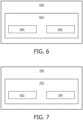
- FIG 6 is a schematic illustration of apparatus 600 according to an embodiment for implementing certain methods described herein. Where appropriate, the apparatus 600 is described in relation to the certain components of Figure 2 for ease of reference.
- the apparatus 600 comprises processing circuitry 602 which may, for example, be implemented in at least one of the prediction module 210 and ventilator 208 of Figure 2.
- the processing circuitry 602 comprises a prediction module 604 which may at least partially implement certain methods described herein such as described in relation to Figures 1 and/or 5 and/or at least partially provide the functionality described in relation to the systems of Figures 2 and/or 3 .
- the prediction module 604 is configured to use an indication of a speech pattern of a monitored subject to determine a predicted time of inspiration by the subject based on a machine learning model for predicting a relationship between the speech pattern and a breathing pattern of the subject.
- the processing circuitry 602 further comprises a control module 606 which may implement certain methods described herein such as described in relation to Figures 1 and/or 5 and/or provide the functionality described in relation to the apparatus or systems of Figures 2 and/or 3.
- the control module 606 is configured to control delivery of gas to the subject based on the predicted time of inspiration by the subject.
- the control module 606 may generate a ventilator control signal (such as described in relation to Figure 2) for causing a ventilator to deliver gas to the subject for the time of inspiration by the subject.
- the apparatus 600 may form part of a ventilator such as described above in relation to Figure 2.
- the apparatus 600 may be a separate entity (e.g., a separate computer, server, or the like) communicatively coupled to the ventilator and configured to provide instructions or another indication to the ventilator so as to cause the ventilator to deliver gas at the times determined by the apparatus 600.
- a separate entity e.g., a separate computer, server, or the like
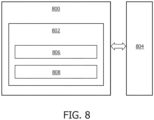
- FIG 7 is a schematic illustration of apparatus 700 according to an embodiment for implementing certain methods described herein.
- the apparatus 700 comprises processing circuitry 702 comprising the processing circuitry 602 of Figure 6 and a sound transducer 704 (e.g., a microphone) configured to obtain a speech signal corresponding to the speech pattern of the subject.
- the apparatus 600 or 700 may further comprise a ventilator such as described in relation to Figure 2.
- FIG 8 schematically illustrates a machine-readable medium 800 (e.g., a tangible machine-readable medium) according to an embodiment which stores instructions 802, which when executed by at least one processor 804, cause the at least one processor 804 to carry out certain methods described herein (e.g., the method 100 of Figure 1 or the method 500 of Figure 5 ).
- the machine-readable medium 800 may be implemented in a computing system such as a computer or server for controlling a ventilator and/or may be implemented by the ventilator itself.
- the instructions 802 comprise instructions 806 to cause the at least one processor 804 to determine, from an indication of a speech pattern of a subject, a predicted time of inspiration by the subject based on a machine learning model for predicting a relationship between the speech pattern and a breathing pattern of the subject.
- the instructions 802 further comprise instructions 808 to cause the at least one processor 804 to control delivery of gas to the subject based on the predicted time of inspiration by the subject.
- the machine learning model used to predict the time of inspiration in accordance with the instructions 802 described above is now described in more detail with reference to Figure 3 and its associated description.
- the machine learning model may be trained with a plurality of speech signals and corresponding respiration signals acquired from a plurality of trainers.
- An input to the machine learning model may comprise a spectral representation of the plurality of speech signals (e.g., from each trainer).
- the spectral representation may comprise the Log Mel spectrogram described above.
- the input may further comprise an indication of the corresponding respiration signals at specified time intervals.
- the indication may comprise or be indicative of the respiration signal obtained at the end of each time window selected from the training speech signal data.
- the input may be fed into a neural network (such as any of the neural networks described above) comprising a plurality of memory layers such that, when the neural network is optimized to update network weighting based on the input, the machine learning model is updated accordingly.
- the spectral representation of each of the plurality of speech signals may be obtained by filtering each speech signal to spectrally flatten the speech signal and boost higher frequencies compared with lower frequencies of the speech signal.
- a Fourier transform (such as the STFT) may be applied to the spectral representation to obtain a power spectrum corresponding to the speech signal.
- a Mel-frequency scaling may be applied to the power spectrum to obtain a Mel spectrogram (which in some embodiments may be a Log Mel spectrogram).
- a plurality of time windows may be selected from the Mel spectrogram, wherein each time window is separated by a specified stride interval. In the embodiment of Figure 3 , each time window has a duration of 4 seconds and is separated from the subsequent time window by a stride of 10 milliseconds. It is within this stride interval that the indication of the corresponding respiration signals may be obtained. In other embodiments, the length of the time window and/or stride may be different to those indicated in the above embodiment.
- the indication of the corresponding respiration signals at specified time intervals is obtained by obtaining a respiratory inductive plethysmography, RIP, signal from the training subject.
- the RIP signal value is determined at the end of each time window (i.e., within the specified stride interval).
- the neural network may comprise at least one of: a recurrent neural network, RNN; an RNN-long short term memory, RNN-LSTM, network; and a convolutional neural network, CNN.
- RNN recurrent neural network
- RNN-LSTM RNN-long short term memory
- CNN convolutional neural network
- an attention mechanism with breathing rate as an auxiliary training parameter may be used to optimize the neural network.
- One or more features described in one embodiment may be combined with or replace features described in another embodiment.
- the methods 100, 500 of Figures 1 and/or 5 may be modified based on features described in relation to the systems of Figures 2 and/or 3 , and vice versa.
- Embodiments in the present disclosure can be provided as methods, systems or as a combination of machine readable instructions and processing circuitry.
- Such machine readable instructions may be included on a non-transitory machine (for example, computer) readable storage medium (including but not limited to disc storage, CD-ROM, optical storage, etc.) having computer readable program codes therein or thereon.
- the machine readable instructions may, for example, be executed by a general purpose computer, a special purpose computer, an embedded processor or processors of other programmable data processing devices to realize the functions described in the description and diagrams.
- a processor or processing circuitry, or a module thereof may execute the machine readable instructions.
- functional modules of the ventilation system 200 for example, the prediction module 210, pre-processing module 214, machine learning module 216 and/or inspiration prediction module 218) and/or functional modules of the system 300 (for example, the training speech processing module 314 and/or the test speech processing module 320) and devices may be implemented by a processor executing machine readable instructions stored in a memory, or a processor operating in accordance with instructions embedded in logic circuitry.
- the term 'processor' is to be interpreted broadly to include a CPU, processing unit, ASIC, logic unit, or programmable gate array etc.
- the methods and functional modules may all be performed by a single processor or divided amongst several processors.
- Such machine readable instructions may also be stored in a computer readable storage that can guide the computer or other programmable data processing devices to operate in a specific mode.
- Such machine readable instructions may also be loaded onto a computer or other programmable data processing devices, so that the computer or other programmable data processing devices perform a series of operations to produce computer-implemented processing, thus the instructions executed on the computer or other programmable devices realize functions specified by block(s) in the flow charts and/or in the block diagrams.
- teachings herein may be implemented in the form of a computer program product, the computer program product being stored in a storage medium and comprising a plurality of instructions for making a computer device implement the methods recited in the embodiments of the present disclosure.
Landscapes
- Engineering & Computer Science (AREA)
- Health & Medical Sciences (AREA)
- Public Health (AREA)
- General Health & Medical Sciences (AREA)
- Biomedical Technology (AREA)
- Medical Informatics (AREA)
- Emergency Medicine (AREA)
- Human Computer Interaction (AREA)
- Multimedia (AREA)
- Acoustics & Sound (AREA)
- Physics & Mathematics (AREA)
- Audiology, Speech & Language Pathology (AREA)
- Computational Linguistics (AREA)
- Artificial Intelligence (AREA)
- Veterinary Medicine (AREA)
- Pulmonology (AREA)
- Anesthesiology (AREA)
- Heart & Thoracic Surgery (AREA)
- Hematology (AREA)
- Life Sciences & Earth Sciences (AREA)
- Animal Behavior & Ethology (AREA)
- Primary Health Care (AREA)
- Epidemiology (AREA)
- Evolutionary Computation (AREA)
- Data Mining & Analysis (AREA)
- Urology & Nephrology (AREA)
- Surgery (AREA)
- Nuclear Medicine, Radiotherapy & Molecular Imaging (AREA)
- Pathology (AREA)
- Databases & Information Systems (AREA)
- Measurement Of The Respiration, Hearing Ability, Form, And Blood Characteristics Of Living Organisms (AREA)
Applications Claiming Priority (2)
| Application Number | Priority Date | Filing Date | Title |
|---|---|---|---|
| US201962936811P | 2019-11-18 | 2019-11-18 | |
| PCT/EP2020/082311 WO2021099279A1 (en) | 2019-11-18 | 2020-11-17 | Speech-based breathing prediction |
Publications (2)
| Publication Number | Publication Date |
|---|---|
| EP4062418A1 EP4062418A1 (en) | 2022-09-28 |
| EP4062418B1 true EP4062418B1 (en) | 2024-08-14 |
Family
ID=73476106
Family Applications (1)
| Application Number | Title | Priority Date | Filing Date |
|---|---|---|---|
| EP20808333.7A Active EP4062418B1 (en) | 2019-11-18 | 2020-11-17 | Speech-based breathing prediction |
Country Status (5)
| Country | Link |
|---|---|
| US (1) | US11752288B2 (enExample) |
| EP (1) | EP4062418B1 (enExample) |
| JP (1) | JP7775189B2 (enExample) |
| CN (1) | CN114730629A (enExample) |
| WO (1) | WO2021099279A1 (enExample) |
Families Citing this family (9)
| Publication number | Priority date | Publication date | Assignee | Title |
|---|---|---|---|---|
| WO2021127228A1 (en) | 2019-12-17 | 2021-06-24 | Starkey Laboratories, Inc. | Hearing assistance systems and methods for monitoring emotional state |
| US20220157434A1 (en) * | 2020-11-16 | 2022-05-19 | Starkey Laboratories, Inc. | Ear-wearable device systems and methods for monitoring emotional state |
| CN115518247B (zh) * | 2021-06-25 | 2025-11-11 | 北京肿瘤医院(北京大学肿瘤医院) | 一种维持肿瘤放疗患者规律呼吸的系统和方法 |
| JP7356666B2 (ja) * | 2021-08-26 | 2023-10-05 | 株式会社CaTe | プログラム、情報処理装置、および情報処理方法 |
| CN113936663B (zh) * | 2021-12-03 | 2025-03-07 | 上海交通大学 | 困难气道的检测方法及其电子设备和存储介质 |
| US20230380793A1 (en) | 2022-05-27 | 2023-11-30 | Samsung Electronics Co., Ltd. | System and method for deep audio spectral processing for respiration rate and depth estimation using smart earbuds |
| CN115120227B (zh) * | 2022-06-20 | 2024-10-29 | 山东大学 | 一种基于动态模式识别的腺样体识别系统和方法 |
| KR102814045B1 (ko) * | 2022-09-14 | 2025-05-29 | 주식회사 웨이센 | 스마트폰으로 수집한 음향데이터의 기침, 호흡 구간 검출 및 이상구간 분류 방법 |
| EP4386749A1 (en) * | 2022-12-15 | 2024-06-19 | Koninklijke Philips N.V. | Speech processing of audio signal |
Citations (4)
| Publication number | Priority date | Publication date | Assignee | Title |
|---|---|---|---|---|
| JP2012032557A (ja) * | 2010-07-30 | 2012-02-16 | Internatl Business Mach Corp <Ibm> | 音声に含まれる吸気音を検出する装置、方法、及びプログラム |
| CN102458549A (zh) * | 2009-04-02 | 2012-05-16 | 呼吸科技公司 | 使用自由空间内的气体传输管嘴进行无创开放式通气的方法、系统和装置 |
| US20190224431A1 (en) * | 2005-06-14 | 2019-07-25 | Resmed Limited | Methods and apparatus for improving cpap patient compliance |
| US10406310B2 (en) * | 2012-08-22 | 2019-09-10 | Resmed Paris Sas | Breathing assistance system with speech detection |
Family Cites Families (11)
| Publication number | Priority date | Publication date | Assignee | Title |
|---|---|---|---|---|
| FR2334374A1 (fr) * | 1975-12-08 | 1977-07-08 | Normalair Garrett Holdings | Perfectionnement aux systemes pour delivrer des gaz respirables, notamment a bord des engins aeriens |
| US5806515A (en) | 1997-03-28 | 1998-09-15 | Passy-Muir, Inc. | Supplemental oxygen adapter for tracheostomy speaking valves |
| US7305988B2 (en) | 2005-12-22 | 2007-12-11 | The General Electric Company | Integrated ventilator nasal trigger and gas monitoring system |
| JP2008086741A (ja) * | 2005-12-26 | 2008-04-17 | Akira Tomono | 呼吸検出型化学物質提示装置、および、呼吸検出装置 |
| JP2011522621A (ja) | 2008-06-06 | 2011-08-04 | ネルコー ピューリタン ベネット エルエルシー | 患者の努力に比例した換気のためのシステムおよび方法 |
| JP2010145952A (ja) | 2008-12-22 | 2010-07-01 | Daiichikosho Co Ltd | マイクロホンから歌唱者に酸素を過給するカラオケ装置 |
| US9392962B2 (en) * | 2011-04-01 | 2016-07-19 | Varian Medical Systems, Inc. | Prediction of breathing signal and determining non-periodicity of breathing using signal-phase histogram |
| EP2816952B1 (en) * | 2012-02-20 | 2022-08-03 | University of Florida Research Foundation, Inc. | Method and apparatus for predicting work of breathing |
| EP2897526B1 (en) * | 2012-09-19 | 2021-03-17 | ResMed Sensor Technologies Limited | System and method for determining sleep stage |
| WO2014045257A1 (en) | 2012-09-24 | 2014-03-27 | Koninklijke Philips N.V. | System and method for determining a person's breathing |
| US20170296094A1 (en) | 2016-04-15 | 2017-10-19 | Msa Technology, Llc | Breathing apparatus with system-integrated breathing sensor system |
-
2020
- 2020-10-15 US US17/071,312 patent/US11752288B2/en active Active
- 2020-11-17 WO PCT/EP2020/082311 patent/WO2021099279A1/en not_active Ceased
- 2020-11-17 JP JP2022525026A patent/JP7775189B2/ja active Active
- 2020-11-17 CN CN202080080101.8A patent/CN114730629A/zh active Pending
- 2020-11-17 EP EP20808333.7A patent/EP4062418B1/en active Active
Patent Citations (4)
| Publication number | Priority date | Publication date | Assignee | Title |
|---|---|---|---|---|
| US20190224431A1 (en) * | 2005-06-14 | 2019-07-25 | Resmed Limited | Methods and apparatus for improving cpap patient compliance |
| CN102458549A (zh) * | 2009-04-02 | 2012-05-16 | 呼吸科技公司 | 使用自由空间内的气体传输管嘴进行无创开放式通气的方法、系统和装置 |
| JP2012032557A (ja) * | 2010-07-30 | 2012-02-16 | Internatl Business Mach Corp <Ibm> | 音声に含まれる吸気音を検出する装置、方法、及びプログラム |
| US10406310B2 (en) * | 2012-08-22 | 2019-09-10 | Resmed Paris Sas | Breathing assistance system with speech detection |
Also Published As
| Publication number | Publication date |
|---|---|
| CN114730629A (zh) | 2022-07-08 |
| JP7775189B2 (ja) | 2025-11-25 |
| US20210146082A1 (en) | 2021-05-20 |
| JP2023501176A (ja) | 2023-01-18 |
| US11752288B2 (en) | 2023-09-12 |
| WO2021099279A1 (en) | 2021-05-27 |
| EP4062418A1 (en) | 2022-09-28 |
Similar Documents
| Publication | Publication Date | Title |
|---|---|---|
| EP4062418B1 (en) | Speech-based breathing prediction | |
| JP2023501176A5 (enExample) | ||
| CN112822976B (zh) | 通过语音分析估计肺容量 | |
| US11612708B2 (en) | Method and apparatus for determining and/or predicting sleep and respiratory behaviours for management of airway pressure | |
| US10796805B2 (en) | Assessment of a pulmonary condition by speech analysis | |
| Nallanthighal et al. | Deep learning architectures for estimating breathing signal and respiratory parameters from speech recordings | |
| JP2022502153A5 (enExample) | ||
| Mostaani et al. | On the relationship between speech-based breathing signal prediction evaluation measures and breathing parameters estimation | |
| Fahed et al. | Random Forest Classification of Breathing Phases from Audio Signals Recorded using Mobile Devices. | |
| EP4539911B1 (en) | System for controlling a sleep disordered breathing therapy device | |
| WO2025247794A1 (en) | Virtual spirometry and other pulmonary function tests (ptfs) from speech | |
| HK40082015A (en) | Apparatus for determining and/or predicting sleep and respiratory behaviours for management of airway pressure | |
| HK40082015B (en) | Apparatus for determining and/or predicting sleep and respiratory behaviours for management of airway pressure | |
| HK40051516A (en) | Estimating lung volume by speech analysis | |
| HK1113736A (en) | Apparatus and method for breathing pattern determination using a non-contact microphone |
Legal Events
| Date | Code | Title | Description |
|---|---|---|---|
| STAA | Information on the status of an ep patent application or granted ep patent |
Free format text: STATUS: UNKNOWN |
|
| STAA | Information on the status of an ep patent application or granted ep patent |
Free format text: STATUS: THE INTERNATIONAL PUBLICATION HAS BEEN MADE |
|
| PUAI | Public reference made under article 153(3) epc to a published international application that has entered the european phase |
Free format text: ORIGINAL CODE: 0009012 |
|
| STAA | Information on the status of an ep patent application or granted ep patent |
Free format text: STATUS: REQUEST FOR EXAMINATION WAS MADE |
|
| 17P | Request for examination filed |
Effective date: 20220620 |
|
| AK | Designated contracting states |
Kind code of ref document: A1 Designated state(s): AL AT BE BG CH CY CZ DE DK EE ES FI FR GB GR HR HU IE IS IT LI LT LU LV MC MK MT NL NO PL PT RO RS SE SI SK SM TR |
|
| DAV | Request for validation of the european patent (deleted) | ||
| DAX | Request for extension of the european patent (deleted) | ||
| GRAP | Despatch of communication of intention to grant a patent |
Free format text: ORIGINAL CODE: EPIDOSNIGR1 |
|
| STAA | Information on the status of an ep patent application or granted ep patent |
Free format text: STATUS: GRANT OF PATENT IS INTENDED |
|
| INTG | Intention to grant announced |
Effective date: 20240318 |
|
| GRAS | Grant fee paid |
Free format text: ORIGINAL CODE: EPIDOSNIGR3 |
|
| GRAA | (expected) grant |
Free format text: ORIGINAL CODE: 0009210 |
|
| STAA | Information on the status of an ep patent application or granted ep patent |
Free format text: STATUS: THE PATENT HAS BEEN GRANTED |
|
| AK | Designated contracting states |
Kind code of ref document: B1 Designated state(s): AL AT BE BG CH CY CZ DE DK EE ES FI FR GB GR HR HU IE IS IT LI LT LU LV MC MK MT NL NO PL PT RO RS SE SI SK SM TR |
|
| REG | Reference to a national code |
Ref country code: GB Ref legal event code: FG4D |
|
| REG | Reference to a national code |
Ref country code: CH Ref legal event code: EP |
|
| REG | Reference to a national code |
Ref country code: DE Ref legal event code: R096 Ref document number: 602020035873 Country of ref document: DE |
|
| REG | Reference to a national code |
Ref country code: IE Ref legal event code: FG4D |
|
| REG | Reference to a national code |
Ref country code: LT Ref legal event code: MG9D |
|
| REG | Reference to a national code |
Ref country code: NL Ref legal event code: MP Effective date: 20240814 |
|
| PG25 | Lapsed in a contracting state [announced via postgrant information from national office to epo] |
Ref country code: NO Free format text: LAPSE BECAUSE OF FAILURE TO SUBMIT A TRANSLATION OF THE DESCRIPTION OR TO PAY THE FEE WITHIN THE PRESCRIBED TIME-LIMIT Effective date: 20241114 |
|
| REG | Reference to a national code |
Ref country code: AT Ref legal event code: MK05 Ref document number: 1714075 Country of ref document: AT Kind code of ref document: T Effective date: 20240814 |
|
| PG25 | Lapsed in a contracting state [announced via postgrant information from national office to epo] |
Ref country code: FI Free format text: LAPSE BECAUSE OF FAILURE TO SUBMIT A TRANSLATION OF THE DESCRIPTION OR TO PAY THE FEE WITHIN THE PRESCRIBED TIME-LIMIT Effective date: 20240814 Ref country code: NL Free format text: LAPSE BECAUSE OF FAILURE TO SUBMIT A TRANSLATION OF THE DESCRIPTION OR TO PAY THE FEE WITHIN THE PRESCRIBED TIME-LIMIT Effective date: 20240814 Ref country code: PL Free format text: LAPSE BECAUSE OF FAILURE TO SUBMIT A TRANSLATION OF THE DESCRIPTION OR TO PAY THE FEE WITHIN THE PRESCRIBED TIME-LIMIT Effective date: 20240814 Ref country code: GR Free format text: LAPSE BECAUSE OF FAILURE TO SUBMIT A TRANSLATION OF THE DESCRIPTION OR TO PAY THE FEE WITHIN THE PRESCRIBED TIME-LIMIT Effective date: 20241115 Ref country code: PT Free format text: LAPSE BECAUSE OF FAILURE TO SUBMIT A TRANSLATION OF THE DESCRIPTION OR TO PAY THE FEE WITHIN THE PRESCRIBED TIME-LIMIT Effective date: 20241216 |
|
| PG25 | Lapsed in a contracting state [announced via postgrant information from national office to epo] |
Ref country code: BG Free format text: LAPSE BECAUSE OF FAILURE TO SUBMIT A TRANSLATION OF THE DESCRIPTION OR TO PAY THE FEE WITHIN THE PRESCRIBED TIME-LIMIT Effective date: 20240814 |
|
| PG25 | Lapsed in a contracting state [announced via postgrant information from national office to epo] |
Ref country code: LV Free format text: LAPSE BECAUSE OF FAILURE TO SUBMIT A TRANSLATION OF THE DESCRIPTION OR TO PAY THE FEE WITHIN THE PRESCRIBED TIME-LIMIT Effective date: 20240814 |
|
| PG25 | Lapsed in a contracting state [announced via postgrant information from national office to epo] |
Ref country code: AT Free format text: LAPSE BECAUSE OF FAILURE TO SUBMIT A TRANSLATION OF THE DESCRIPTION OR TO PAY THE FEE WITHIN THE PRESCRIBED TIME-LIMIT Effective date: 20240814 Ref country code: IS Free format text: LAPSE BECAUSE OF FAILURE TO SUBMIT A TRANSLATION OF THE DESCRIPTION OR TO PAY THE FEE WITHIN THE PRESCRIBED TIME-LIMIT Effective date: 20241214 |
|
| PG25 | Lapsed in a contracting state [announced via postgrant information from national office to epo] |
Ref country code: HR Free format text: LAPSE BECAUSE OF FAILURE TO SUBMIT A TRANSLATION OF THE DESCRIPTION OR TO PAY THE FEE WITHIN THE PRESCRIBED TIME-LIMIT Effective date: 20240814 |
|
| PG25 | Lapsed in a contracting state [announced via postgrant information from national office to epo] |
Ref country code: RS Free format text: LAPSE BECAUSE OF FAILURE TO SUBMIT A TRANSLATION OF THE DESCRIPTION OR TO PAY THE FEE WITHIN THE PRESCRIBED TIME-LIMIT Effective date: 20241114 Ref country code: ES Free format text: LAPSE BECAUSE OF FAILURE TO SUBMIT A TRANSLATION OF THE DESCRIPTION OR TO PAY THE FEE WITHIN THE PRESCRIBED TIME-LIMIT Effective date: 20240814 |
|
| PG25 | Lapsed in a contracting state [announced via postgrant information from national office to epo] |
Ref country code: RS Free format text: LAPSE BECAUSE OF FAILURE TO SUBMIT A TRANSLATION OF THE DESCRIPTION OR TO PAY THE FEE WITHIN THE PRESCRIBED TIME-LIMIT Effective date: 20241114 Ref country code: PT Free format text: LAPSE BECAUSE OF FAILURE TO SUBMIT A TRANSLATION OF THE DESCRIPTION OR TO PAY THE FEE WITHIN THE PRESCRIBED TIME-LIMIT Effective date: 20241216 Ref country code: PL Free format text: LAPSE BECAUSE OF FAILURE TO SUBMIT A TRANSLATION OF THE DESCRIPTION OR TO PAY THE FEE WITHIN THE PRESCRIBED TIME-LIMIT Effective date: 20240814 Ref country code: NO Free format text: LAPSE BECAUSE OF FAILURE TO SUBMIT A TRANSLATION OF THE DESCRIPTION OR TO PAY THE FEE WITHIN THE PRESCRIBED TIME-LIMIT Effective date: 20241114 Ref country code: NL Free format text: LAPSE BECAUSE OF FAILURE TO SUBMIT A TRANSLATION OF THE DESCRIPTION OR TO PAY THE FEE WITHIN THE PRESCRIBED TIME-LIMIT Effective date: 20240814 Ref country code: LV Free format text: LAPSE BECAUSE OF FAILURE TO SUBMIT A TRANSLATION OF THE DESCRIPTION OR TO PAY THE FEE WITHIN THE PRESCRIBED TIME-LIMIT Effective date: 20240814 Ref country code: IS Free format text: LAPSE BECAUSE OF FAILURE TO SUBMIT A TRANSLATION OF THE DESCRIPTION OR TO PAY THE FEE WITHIN THE PRESCRIBED TIME-LIMIT Effective date: 20241214 Ref country code: HR Free format text: LAPSE BECAUSE OF FAILURE TO SUBMIT A TRANSLATION OF THE DESCRIPTION OR TO PAY THE FEE WITHIN THE PRESCRIBED TIME-LIMIT Effective date: 20240814 Ref country code: GR Free format text: LAPSE BECAUSE OF FAILURE TO SUBMIT A TRANSLATION OF THE DESCRIPTION OR TO PAY THE FEE WITHIN THE PRESCRIBED TIME-LIMIT Effective date: 20241115 Ref country code: FI Free format text: LAPSE BECAUSE OF FAILURE TO SUBMIT A TRANSLATION OF THE DESCRIPTION OR TO PAY THE FEE WITHIN THE PRESCRIBED TIME-LIMIT Effective date: 20240814 Ref country code: ES Free format text: LAPSE BECAUSE OF FAILURE TO SUBMIT A TRANSLATION OF THE DESCRIPTION OR TO PAY THE FEE WITHIN THE PRESCRIBED TIME-LIMIT Effective date: 20240814 Ref country code: BG Free format text: LAPSE BECAUSE OF FAILURE TO SUBMIT A TRANSLATION OF THE DESCRIPTION OR TO PAY THE FEE WITHIN THE PRESCRIBED TIME-LIMIT Effective date: 20240814 Ref country code: AT Free format text: LAPSE BECAUSE OF FAILURE TO SUBMIT A TRANSLATION OF THE DESCRIPTION OR TO PAY THE FEE WITHIN THE PRESCRIBED TIME-LIMIT Effective date: 20240814 |
|
| PG25 | Lapsed in a contracting state [announced via postgrant information from national office to epo] |
Ref country code: DK Free format text: LAPSE BECAUSE OF FAILURE TO SUBMIT A TRANSLATION OF THE DESCRIPTION OR TO PAY THE FEE WITHIN THE PRESCRIBED TIME-LIMIT Effective date: 20240814 Ref country code: SM Free format text: LAPSE BECAUSE OF FAILURE TO SUBMIT A TRANSLATION OF THE DESCRIPTION OR TO PAY THE FEE WITHIN THE PRESCRIBED TIME-LIMIT Effective date: 20240814 Ref country code: RO Free format text: LAPSE BECAUSE OF FAILURE TO SUBMIT A TRANSLATION OF THE DESCRIPTION OR TO PAY THE FEE WITHIN THE PRESCRIBED TIME-LIMIT Effective date: 20240814 |
|
| PG25 | Lapsed in a contracting state [announced via postgrant information from national office to epo] |
Ref country code: EE Free format text: LAPSE BECAUSE OF FAILURE TO SUBMIT A TRANSLATION OF THE DESCRIPTION OR TO PAY THE FEE WITHIN THE PRESCRIBED TIME-LIMIT Effective date: 20240814 |
|
| PG25 | Lapsed in a contracting state [announced via postgrant information from national office to epo] |
Ref country code: CZ Free format text: LAPSE BECAUSE OF FAILURE TO SUBMIT A TRANSLATION OF THE DESCRIPTION OR TO PAY THE FEE WITHIN THE PRESCRIBED TIME-LIMIT Effective date: 20240814 |
|
| PG25 | Lapsed in a contracting state [announced via postgrant information from national office to epo] |
Ref country code: IT Free format text: LAPSE BECAUSE OF FAILURE TO SUBMIT A TRANSLATION OF THE DESCRIPTION OR TO PAY THE FEE WITHIN THE PRESCRIBED TIME-LIMIT Effective date: 20240814 Ref country code: SK Free format text: LAPSE BECAUSE OF FAILURE TO SUBMIT A TRANSLATION OF THE DESCRIPTION OR TO PAY THE FEE WITHIN THE PRESCRIBED TIME-LIMIT Effective date: 20240814 |
|
| REG | Reference to a national code |
Ref country code: DE Ref legal event code: R097 Ref document number: 602020035873 Country of ref document: DE |
|
| PLBE | No opposition filed within time limit |
Free format text: ORIGINAL CODE: 0009261 |
|
| STAA | Information on the status of an ep patent application or granted ep patent |
Free format text: STATUS: NO OPPOSITION FILED WITHIN TIME LIMIT |
|
| REG | Reference to a national code |
Ref country code: CH Ref legal event code: PL |
|
| PG25 | Lapsed in a contracting state [announced via postgrant information from national office to epo] |
Ref country code: MC Free format text: LAPSE BECAUSE OF FAILURE TO SUBMIT A TRANSLATION OF THE DESCRIPTION OR TO PAY THE FEE WITHIN THE PRESCRIBED TIME-LIMIT Effective date: 20240814 |
|
| PG25 | Lapsed in a contracting state [announced via postgrant information from national office to epo] |
Ref country code: LU Free format text: LAPSE BECAUSE OF NON-PAYMENT OF DUE FEES Effective date: 20241117 |
|
| REG | Reference to a national code |
Ref country code: CH Ref legal event code: PL |
|
| 26N | No opposition filed |
Effective date: 20250515 |
|
| GBPC | Gb: european patent ceased through non-payment of renewal fee |
Effective date: 20241117 |
|
| PG25 | Lapsed in a contracting state [announced via postgrant information from national office to epo] |
Ref country code: CH Free format text: LAPSE BECAUSE OF NON-PAYMENT OF DUE FEES Effective date: 20241130 |
|
| REG | Reference to a national code |
Ref country code: BE Ref legal event code: MM Effective date: 20241130 |
|
| PG25 | Lapsed in a contracting state [announced via postgrant information from national office to epo] |
Ref country code: SE Free format text: LAPSE BECAUSE OF FAILURE TO SUBMIT A TRANSLATION OF THE DESCRIPTION OR TO PAY THE FEE WITHIN THE PRESCRIBED TIME-LIMIT Effective date: 20240814 |
|
| PG25 | Lapsed in a contracting state [announced via postgrant information from national office to epo] |
Ref country code: GB Free format text: LAPSE BECAUSE OF NON-PAYMENT OF DUE FEES Effective date: 20241117 Ref country code: BE Free format text: LAPSE BECAUSE OF NON-PAYMENT OF DUE FEES Effective date: 20241130 |
|
| PG25 | Lapsed in a contracting state [announced via postgrant information from national office to epo] |
Ref country code: FR Free format text: LAPSE BECAUSE OF NON-PAYMENT OF DUE FEES Effective date: 20241130 |
|
| PG25 | Lapsed in a contracting state [announced via postgrant information from national office to epo] |
Ref country code: IE Free format text: LAPSE BECAUSE OF NON-PAYMENT OF DUE FEES Effective date: 20241117 |
|
| PGFP | Annual fee paid to national office [announced via postgrant information from national office to epo] |
Ref country code: DE Payment date: 20251126 Year of fee payment: 6 |
|
| PG25 | Lapsed in a contracting state [announced via postgrant information from national office to epo] |
Ref country code: HU Free format text: LAPSE BECAUSE OF FAILURE TO SUBMIT A TRANSLATION OF THE DESCRIPTION OR TO PAY THE FEE WITHIN THE PRESCRIBED TIME-LIMIT; INVALID AB INITIO Effective date: 20201117 |
|
| PG25 | Lapsed in a contracting state [announced via postgrant information from national office to epo] |
Ref country code: CY Free format text: LAPSE BECAUSE OF FAILURE TO SUBMIT A TRANSLATION OF THE DESCRIPTION OR TO PAY THE FEE WITHIN THE PRESCRIBED TIME-LIMIT; INVALID AB INITIO Effective date: 20201117 |