EP4061057A1 - Access method and apparatus for access point, electronic device, and storage medium - Google Patents
Access method and apparatus for access point, electronic device, and storage medium Download PDFInfo
- Publication number
- EP4061057A1 EP4061057A1 EP21182087.3A EP21182087A EP4061057A1 EP 4061057 A1 EP4061057 A1 EP 4061057A1 EP 21182087 A EP21182087 A EP 21182087A EP 4061057 A1 EP4061057 A1 EP 4061057A1
- Authority
- EP
- European Patent Office
- Prior art keywords
- access
- interface
- responsive
- hop count
- intended
- Prior art date
- Legal status (The legal status is an assumption and is not a legal conclusion. Google has not performed a legal analysis and makes no representation as to the accuracy of the status listed.)
- Pending
Links
- 238000000034 method Methods 0.000 title claims abstract description 91
- 230000004044 response Effects 0.000 claims abstract description 5
- 238000004891 communication Methods 0.000 description 18
- 238000005516 engineering process Methods 0.000 description 8
- 230000008901 benefit Effects 0.000 description 4
- 238000010586 diagram Methods 0.000 description 4
- 230000006855 networking Effects 0.000 description 4
- 230000003287 optical effect Effects 0.000 description 4
- 238000011084 recovery Methods 0.000 description 4
- 230000005236 sound signal Effects 0.000 description 4
- 238000007726 management method Methods 0.000 description 3
- GOLXNESZZPUPJE-UHFFFAOYSA-N spiromesifen Chemical compound CC1=CC(C)=CC(C)=C1C(C(O1)=O)=C(OC(=O)CC(C)(C)C)C11CCCC1 GOLXNESZZPUPJE-UHFFFAOYSA-N 0.000 description 3
- 230000001133 acceleration Effects 0.000 description 2
- 230000009471 action Effects 0.000 description 2
- 230000008859 change Effects 0.000 description 2
- 230000007547 defect Effects 0.000 description 2
- 230000003993 interaction Effects 0.000 description 2
- 230000006978 adaptation Effects 0.000 description 1
- 238000003491 array Methods 0.000 description 1
- 230000009286 beneficial effect Effects 0.000 description 1
- 230000000295 complement effect Effects 0.000 description 1
- 238000010276 construction Methods 0.000 description 1
- 238000013500 data storage Methods 0.000 description 1
- 238000003384 imaging method Methods 0.000 description 1
- 239000004973 liquid crystal related substance Substances 0.000 description 1
- 229910044991 metal oxide Inorganic materials 0.000 description 1
- 150000004706 metal oxides Chemical class 0.000 description 1
- 238000012986 modification Methods 0.000 description 1
- 230000004048 modification Effects 0.000 description 1
- 230000002093 peripheral effect Effects 0.000 description 1
- 230000001105 regulatory effect Effects 0.000 description 1
- 239000004065 semiconductor Substances 0.000 description 1
- 230000003068 static effect Effects 0.000 description 1
- 230000001360 synchronised effect Effects 0.000 description 1
Images


Classifications
-
- H—ELECTRICITY
- H04—ELECTRIC COMMUNICATION TECHNIQUE
- H04W—WIRELESS COMMUNICATION NETWORKS
- H04W48/00—Access restriction; Network selection; Access point selection
- H04W48/02—Access restriction performed under specific conditions
- H04W48/06—Access restriction performed under specific conditions based on traffic conditions
-
- H—ELECTRICITY
- H04—ELECTRIC COMMUNICATION TECHNIQUE
- H04W—WIRELESS COMMUNICATION NETWORKS
- H04W48/00—Access restriction; Network selection; Access point selection
- H04W48/08—Access restriction or access information delivery, e.g. discovery data delivery
-
- H—ELECTRICITY
- H04—ELECTRIC COMMUNICATION TECHNIQUE
- H04W—WIRELESS COMMUNICATION NETWORKS
- H04W48/00—Access restriction; Network selection; Access point selection
- H04W48/02—Access restriction performed under specific conditions
-
- H—ELECTRICITY
- H04—ELECTRIC COMMUNICATION TECHNIQUE
- H04W—WIRELESS COMMUNICATION NETWORKS
- H04W12/00—Security arrangements; Authentication; Protecting privacy or anonymity
- H04W12/50—Secure pairing of devices
- H04W12/55—Secure pairing of devices involving three or more devices, e.g. group pairing
-
- H—ELECTRICITY
- H04—ELECTRIC COMMUNICATION TECHNIQUE
- H04W—WIRELESS COMMUNICATION NETWORKS
- H04W40/00—Communication routing or communication path finding
- H04W40/02—Communication route or path selection, e.g. power-based or shortest path routing
- H04W40/22—Communication route or path selection, e.g. power-based or shortest path routing using selective relaying for reaching a BTS [Base Transceiver Station] or an access point
-
- H—ELECTRICITY
- H04—ELECTRIC COMMUNICATION TECHNIQUE
- H04W—WIRELESS COMMUNICATION NETWORKS
- H04W48/00—Access restriction; Network selection; Access point selection
- H04W48/08—Access restriction or access information delivery, e.g. discovery data delivery
- H04W48/12—Access restriction or access information delivery, e.g. discovery data delivery using downlink control channel
-
- H—ELECTRICITY
- H04—ELECTRIC COMMUNICATION TECHNIQUE
- H04W—WIRELESS COMMUNICATION NETWORKS
- H04W48/00—Access restriction; Network selection; Access point selection
- H04W48/16—Discovering, processing access restriction or access information
-
- H—ELECTRICITY
- H04—ELECTRIC COMMUNICATION TECHNIQUE
- H04W—WIRELESS COMMUNICATION NETWORKS
- H04W48/00—Access restriction; Network selection; Access point selection
- H04W48/20—Selecting an access point
-
- H—ELECTRICITY
- H04—ELECTRIC COMMUNICATION TECHNIQUE
- H04W—WIRELESS COMMUNICATION NETWORKS
- H04W88/00—Devices specially adapted for wireless communication networks, e.g. terminals, base stations or access point devices
- H04W88/08—Access point devices
-
- H—ELECTRICITY
- H04—ELECTRIC COMMUNICATION TECHNIQUE
- H04W—WIRELESS COMMUNICATION NETWORKS
- H04W12/00—Security arrangements; Authentication; Protecting privacy or anonymity
- H04W12/009—Security arrangements; Authentication; Protecting privacy or anonymity specially adapted for networks, e.g. wireless sensor networks, ad-hoc networks, RFID networks or cloud networks
-
- H—ELECTRICITY
- H04—ELECTRIC COMMUNICATION TECHNIQUE
- H04W—WIRELESS COMMUNICATION NETWORKS
- H04W76/00—Connection management
- H04W76/10—Connection setup
- H04W76/14—Direct-mode setup
-
- H—ELECTRICITY
- H04—ELECTRIC COMMUNICATION TECHNIQUE
- H04W—WIRELESS COMMUNICATION NETWORKS
- H04W84/00—Network topologies
- H04W84/18—Self-organising networks, e.g. ad-hoc networks or sensor networks
-
- H—ELECTRICITY
- H04—ELECTRIC COMMUNICATION TECHNIQUE
- H04W—WIRELESS COMMUNICATION NETWORKS
- H04W84/00—Network topologies
- H04W84/18—Self-organising networks, e.g. ad-hoc networks or sensor networks
- H04W84/22—Self-organising networks, e.g. ad-hoc networks or sensor networks with access to wired networks
-
- H—ELECTRICITY
- H04—ELECTRIC COMMUNICATION TECHNIQUE
- H04W—WIRELESS COMMUNICATION NETWORKS
- H04W92/00—Interfaces specially adapted for wireless communication networks
- H04W92/16—Interfaces between hierarchically similar devices
- H04W92/20—Interfaces between hierarchically similar devices between access points
Definitions
- the disclosure generally relates, but not limited, to the technical field of wireless communications, and more particularly, to an access method and apparatus for an access point (AP), an electronic device, and a storage medium.
- AP access point
- electronic device electronic device
- storage medium storage medium
- a signal of a single router cannot cover everywhere in the large house or the multistory building, and a solution to extension of the coverage of the signal is needed.
- a signal coverage is extended using a solution such as a power line communication modem and wireless relaying, but there are still defects of poor network speed experience, complex configuration, high difficulties in wiring, and the like.
- Mesh networking is extensively applied rapidly due to advantages of synchronous configuration, network self-repairing, seamless roaming, and the like.
- a wireless rate may be affected by a factor such as contention for a wireless channel, and the increase of a hop count or the number of accessing Mesh devices may reduce the wireless performance.
- Embodiments of the disclosure disclose an access method and apparatus for an AP, an electronic device, and a storage medium.
- an access method for an AP which may be applied to a first AP and include: determining, responsive to that an access restriction rule allows a second AP to access the first AP, interface configuration information of the first AP according to the access restriction rule; and configuring an access interface of the first AP according to the interface configuration information, the access interface being configured for the second AP to access the first AP in response to determining that the access interface is configured to allow access.
- the first AP may be a root router of a mesh network
- the second AP may be a sub router of the mesh network, and the root router may be connected with at least one sub router; or, the first AP may be an intermediate sub router of the mesh network, the second AP may be an end router of the mesh network, and the intermediate sub router may be connected with at least one end router.
- the interface configuration information may include at least one of: first interface configuration information, indicating a number threshold of a number of second APs that are allowed to access the first AP using the access interface; or second interface configuration information, indicating a hop count threshold of a hop count of the AP.
- the method may further include: whether a second AP intended to access is allowed to access the first AP through the access interface is determined according to the number of the second APs that access the first AP and the number threshold.
- the operation that whether the second AP intended to access is allowed to access the first AP through the access interface is determined according to the number of the second APs that access the first AP and the number threshold may include: responsive to that the number of the second APs that access the first AP is less than the number threshold, it is determined that the second AP intended to access is allowed to access the first AP through the access interface; or, responsive to that the number of the second APs that access the first AP is equal to the number threshold, it is determined that the second AP intended to access is forbidden to access the first AP through the access interface.
- the method may further include: whether to activate the access interface is determined according to the hop count of the first AP and the hop count threshold.
- the operation that whether to activate the access interface is determined according to the hop count of the first AP and the hop count threshold may include: responsive to that the hop count of the first AP is less than the hop count threshold, the access interface is determined to be activated; or, responsive to that the hop count of the first AP is equal to the hop count threshold, the access interface is determined to be deactivated.
- the method may further include: responsive to that the access interface is activated or the number of the second APs that access the first AP is less than the number threshold, a flag bit of the access interface is set to a first value; and the first value may indicate that the first AP allows the second AP intended to access to access the first AP through the access interface.
- the method may further include: responsive to that the number of the second APs that access the first AP is equal to the number threshold, the flag bit is set to a second value; and the second value may indicate that the first AP forbids the second AP intended to access to access the first AP through the access interface.
- the method may further include: information of the flag bit of the access interface is acquired.
- the operation that whether the second AP intended to access is allowed to access the first AP through the access interface is determined according to the number of the second APs that access the first AP and the number threshold may include: responsive to that the information of the flag bit indicates the first value, it is determined that the second AP intended to access is allowed to access the first AP through the access interface; or, responsive to that the information of the flag bit indicates the second value, it is determined that the second AP intended to access is forbidden to access the first AP through the access interface.
- the method may further include: responsive to that the flag bit is set to the first value or the flag bit is set to the second value, a beacon frame including information of the flag bit is broadcast.
- an access apparatus for an AP which may be applied to a first AP and include a determination module and a configuration module; the determination module is configured to, responsive to that an access restriction rule allows a second AP to access the first AP, determine interface configuration information of the first AP according to the access restriction rule; and the configuration module is configured to configure an access interface of the first AP according to the interface configuration information, the access interface being configured for the second AP to access the first AP in response to determining that the access interface is configured to allow access.
- the first AP may be a root router of a mesh network
- the second AP may be a sub router of the mesh network, and the root router may be connected with at least one sub router; or, the first AP may be an intermediate sub router of the mesh network, the second AP may be an end router of the mesh network, and the intermediate sub router may be connected with at least one end router.
- the determination module may further be configured as follows: the interface configuration information includes at least one of: first interface configuration information, indicating a number threshold of a number of second APs that are allowed to access the first AP using the access interface; or second interface configuration information, indicating a hop count threshold of a hop count of the AP.
- the determination module may further be configured to: determine whether a second AP intended to access is allowed to access the first AP through the access interface according to the number of the second APs that access the first AP and the number threshold.
- the determination module may further be configured to: responsive to that the number of the second APs that access the first AP is less than the number threshold, determine that the second AP intended to access is allowed to access the first AP through the access interface; or, responsive to that the number of the second APs that access the first AP is equal to the number threshold, determine that the second AP intended to access is forbidden to access the first AP through the access interface.
- the determination module may further be configured to: determine whether to activate the access interface according to the hop count of the first AP and the hop count threshold.
- the determination module may further be configured to: responsive to that the hop count of the first AP is less than the hop count threshold, determine to activate the access interface; or, responsive to that the hop count of the first AP is equal to the hop count threshold, determine to deactivate the access interface.
- the apparatus may further include a setting module, the setting module may further be configured to: responsive to that the access interface is activated or the number of the second APs that access the first AP is less than the number threshold, set a flag bit of the access interface to a first value; and the first value may indicate that the first
- the second AP allows the second AP intended to access to access the first AP through the access interface.
- the setting module may further be configured to: responsive to that the number of the second APs that access the first AP is equal to the number threshold, set the flag bit to a second value; and the second value may indicate that the first AP forbids the second AP intended to access to access the first AP through the access interface.
- the apparatus may further include an acquisition module, the acquisition module may further be configured to acquire information of the flag bit of the access interface; and the determination module may further be configured to: responsive to that the information of the flag bit indicates the first value, determine that the second AP intended to access is allowed to access the first AP through the access interface; or, responsive to that the information of the flag bit indicates the second value, determine that the second AP intended to access is forbidden to access the first AP through the access interface.
- the apparatus may further include a broadcast module, and the broadcast module may be configured to: responsive to that the flag bit is set to the first value or the flag bit is set to the second value, broadcast a beacon frame including information of the flag bit.
- the interface configuration information of the first AP is determined according to the access restriction rule responsive to that the access restriction rule allows the second AP to access the first AP, so that the interface configuration information may be determined according to the access restriction rule.
- the access interface of the first AP is configured according to the interface configuration information, the access interface being configured for the second AP to access the first AP when the access interface is configured to allow access. In such a manner, the access interface of the first AP may be configured using the configuration information determined according to the access restriction rule.
- this manner Compared with a manner of configuring the access interface of the first AP not using the interface configuration information determined according to the access restriction rule, this manner has the advantage that the access interface may be configured to forbid or allow the second AP to access the first AP through the access interface when the access restriction rule allows the second AP to access the first AP, so that the number of the second APs that access the first AP may be restricted, and the condition that the wireless performance is reduced by a large number of APs in a network may be reduced.
- module may include memory (shared, dedicated, or group) that stores code or instructions that can be executed by one or more processors.
- a module may include one or more circuits with or without stored code or instructions.
- the module or circuit may include one or more components that are directly or indirectly connected. These components may or may not be physically attached to, or located adjacent to, one another.
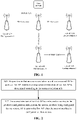
- a mesh network includes an outer network and five APs.
- the five APs are AP1, AP2, AP3, AP4 and AP5 respectively.
- Ap1 is a root AP
- AP2, AP3, AP4 and AP5 are sub APs.
- Hop counts of AP2, AP3 and AP4 are 1, and a hop count of AP5 is 2.
- the wireless performance of a mesh device is improved, namely the condition that the wireless network performance of the mesh network is reduced by an excessively large number of APs that access a certain AP in the mesh network or an excessively large hop count of an AP in the mesh network is reduced.
- the recovery efficiency of a topological network is improved, namely a disconnected AP may avoid an AP that has been accessed by a maximum number of APs when selecting an AP for access, and the topology recovery efficiency may be improved.
- the mesh network restricts the number of connections allowed by each AP and a maximum hop count of the mesh network.
- a hop count indicates a distance between a certain network device (for example, an AP) in the mesh network and a device at an exit of the network.
- the number of connections of an AP in the mesh network refers to the number of subordinate APs of the AP.
- each AP in the mesh network allows at most three APs to access, and the maximum hop count allowed in the mesh network is 2.
- an embodiment provides an access method for an AP.
- the method is applied to a first AP, and includes the following operations.
- interface configuration information of the first AP is determined according to the access restriction rule.
- an access interface of the first AP is configured according to the interface configuration information, the access interface being configured for the second AP to access the first AP when the access interface is configured to allow access.
- At least one of the first AP or the second AP may be an AP in a mesh network.
- the AP may be a router.
- the second AP may access the first AP to establish a connection with an outer network.
- the second AP may also be connected with or coupled to another AP.
- the second AP may also be connected with a third AP, a fourth AP and the like.
- the first AP may be connected with multiple second APs.
- Each first AP and/or each second AP may be connected with at least one terminal.
- the terminal may be, but not limited to, a computer, a mobile phone, a wearable device, a vehicle-mounted terminal, a road side unit (RSU), a smart home terminal, an industrial sensing device, and/or a medical device, etc.
- the first AP is a root router of a mesh network
- the second AP is a sub router of the mesh network
- the root router is connected with at least one sub router
- the first AP is an intermediate sub router of the mesh network
- the second AP is an end router of the mesh network
- the intermediate sub router is connected with at least one end router.
- a total hop count of routers connected to/with a main router may be directly restricted in a manner of unification in the whole network, and in such case, since the hop count of the whole network is fixed, even though the main router in mesh routers has a capability greater than the hop count, no more routers may not be connected to improve the connectivity of the network, so that the capability of the mesh network is restricted.
- the routers of the mesh network when deployed, the routers may be deployed according to a fixed hop count, so the number of the routers that are deployed may not be regulated flexibly.
- the interface configuration information of the first AP is determined according to the access restriction rule responsive to that the access restriction rule allows the second AP to access the first AP, so that the access restriction rule may be determined flexibly according to the capability of the mesh network to ensure that the access restriction rule is adapted to the capability of the mesh network, and the interface configuration information may be determined according to the access restriction rule.
- the access interface of the first AP is configured according to the interface configuration information, the access interface being configured for the second AP to access the first AP when the access interface is configured to allow access. In such a manner, the access interface of the first AP may be configured flexibly using the configuration information determined according to the access restriction rule.
- this manner has the advantage that the access interface may be configured to forbid or allow the second AP to access the first AP through the access interface when the access restriction rule allows the second AP to access the first AP, so that the mesh network may independently restrict the number of second APs that access the first AP to implement flexible configuration when the second AP accesses the first AP, and the condition that the wireless performance is reduced by a large number of APs in the network or the condition of low topology recovery efficiency caused by a complex topology may be reduced.
- the mesh network indicates a number threshold of the number of APs that may be connected to each AP and/or a hop count threshold of a hop count of the AP.
- the access restriction rule indicates the number threshold of the number of APs that may be connected to each AP and the hop count threshold of the hop count of the AP.
- the access restriction rule indicates that the number of second APs that may be connected to each first AP is at most 3 and that a maximum hop count of the first AP is 3. It is to be noted that the number of other APs that access the first AP cannot exceed the number threshold.
- the hop count threshold of the hop count of the AP may be the maximum hop count of the mesh network, and the hop count of the AP cannot exceed the maximum hop count of the mesh network.
- a hop count of an AP connected with a root AP is 1, a hop count of an AP connected with the AP of which the hop count is 1 is 2, a hop count of an AP connected with the AP of which the hop count is 2 is 3, and so on.
- multiple APs may correspond to the same hop count. For example, if both AP 1 and AP 2 are connected with the root AP, hop counts of AP 1 and AP 2 are both 1.
- the root AP is an AP directly connected with the outer network.
- the first AP receives information of the access restriction rule from a main AP or the root AP, and the first AP determines the interface configuration information of the first AP according to the access restriction rule responsive to that the information of the access restriction rule received by the first AP indicates that the second AP is allowed to access the first AP.
- the information of the access restriction rule is pre-configured in the first AP, and the first AP determines the interface configuration information of the first AP according to the access restriction rule responsive to that the pre-configured information of the access restriction rule allows the second AP to access the first AP.
- the interface configuration information of the first AP at least indicates a number threshold of the number of second APs that may be connected to the first AP and/or a hop count threshold of a hop count of the second AP.
- the number threshold responsive to that power of the first AP is greater than a power threshold, the number threshold is greater than a first value; and responsive to that the power of the first AP is less than the power threshold, the number threshold is less than the first value.
- the hop count threshold is greater than a second value; and responsive to that the power of the first AP is less than the power threshold, the hop count threshold is less than the second value.
- the hop count threshold of the hop count of the second AP may be the maximum hop count of the mesh network.
- the interface configuration information indicates a hop count threshold of a hop count of the first AP.
- the first AP allows a second AP intended to access to access through the access interface responsive to that the hop count of the first AP is less than the hop count threshold; and the first AP forbids the second AP intended to access to access through the access interface responsive to that the hop count of the first AP is equal to the hop count threshold.
- the interface configuration information indicates the number threshold of the number of the second APs that may be connected to the first AP.
- the first AP allows the second AP intended to access to access through the access interface responsive to that the number of second APs that are connected to the first AP is less than the number threshold; and the access interface of the first AP forbids the second AP intended to access to access through the access interface responsive to that the number of the second APs that are connected to the first AP is equal to the number threshold.
- the number of the second APs that are connected to the first AP is equal to the number threshold at a first moment; and at a second moment, at least one of the second APs is disconnected from the first AP, and the number of the second APs that are connected to the first AP is less than the number threshold.
- the first AP allows the second AP intended to access to access through the access interface responsive to that the number of the second APs that are connected to the first AP is less than the number threshold.
- the second AP intended to access may access the first AP through the access interface responsive to that the second AP is allowed to access through the access interface, and the second AP intended to access may not access the first AP through the access interface responsive to that the second AP is forbidden to access through the access interface.
- the access interface of the first AP is enabled or activated responsive to that the second AP is allowed to access through the access interface, and the access interface of the first AP is disabled or deactivated responsive to that the second AP is forbidden to access through the access interface.
- the second AP intended to access may send the first AP a request of requesting for access responsive to that the second AP is allowed to access through the access interface; and the second AP intended to access does not send the first AP the request of requesting for access responsive to that the second AP is forbidden to access through the access interface.
- the first AP receives the information of the access restriction rule from the main AP, and the access restriction rule indicates that the second AP is allowed to access the first AP.
- the second AP determines the interface configuration information of the first AP according to the access restriction rule.
- the second AP configures the access interface of the first AP according to the interface configuration information, and the configuration information indicates the number threshold of the number of the second APs that may be connected to the first AP and/or the hop count threshold of the hop count of the second AP.
- the first AP enables or activates the access interface responsive to that the hop count of the second AP is less than the hop count threshold.
- the second AP sends a request message for accessing the first AP to the first AP.
- the first AP allows the second AP intended to access to access the first AP through the access interface of the first AP responsive to that the request message is received and the number of the second APs that access the first AP is less than the number threshold.
- the second AP intended to access accesses the first AP through the access interface.
- the interface configuration information of the first AP is determined according to the access restriction rule responsive to that the access restriction rule allows the second AP to access the first AP, so that the interface configuration information may be determined according to the access restriction rule.
- the access interface of the first AP is configured according to the interface configuration information, and the access interface is configured for the second AP to access the first AP when the access interface is configured to allow access. In such a manner, the access interface of the first AP may be configured using the configuration information determined according to the access restriction rule.
- this manner Compared with a manner of configuring the access interface of the first AP not using the interface configuration information determined according to the access restriction rule, this manner has the advantage that the access interface may be configured to forbid or allow the second AP to access the first AP through the access interface when the access restriction rule allows the second AP to access the first AP, so that the number of the second APs that access the first AP may be restricted, and the condition that the wireless performance is reduced by a large number of APs in a network may be reduced.
- the interface configuration information includes at least one of: first interface configuration information, indicating a number threshold of the number of second APs that are allowed to access the first AP using the access interface; or second interface configuration information, indicating a hop count threshold of a hop count of the AP.
- the first AP may be connected with multiple second APs, and the number threshold is an upper limit value of the number of the multiple second APs that may be connected to the first AP. For example, if the first AP may be connected with N second APs, the number threshold is N, N being a positive integer greater than 1.
- the first AP allows the second AP intended to access to access the first AP through the access interface responsive to that the number of the second APs that are connected to the first AP is less than the number threshold.
- the first AP forbids the second AP intended to access to access the first AP through the access interface responsive to that the number of the second APs that are connected to the first AP is equal to the number threshold.
- the hop count threshold may be the maximum hop count in the mesh network. For example, if the maximum hop count in the mesh network is N, the hop count threshold is N.
- the first AP activates the access interface of the first AP responsive to that the hop count of the first AP is less than the hop count threshold, and in such case, the second AP intended to access may access the first AP through the access interface.
- the first AP deactivates the access interface of the first AP responsive to that the hop count of the first AP is equal to the hop count threshold, and in such case, the second AP intended to access may not access the first AP through the access interface.
- an embodiment provides an access method for an AP.
- the method is applied to a first AP, and includes the following operation.
- whether a second AP intended to access is allowed to access the first AP through the access interface is determined according to the number of the second APs that access the first AP and a number threshold.
- the access restriction rule sent by the root AP is received, or information of the access restriction rule is preset.
- the information of the access restriction rule indicates the number threshold.
- the first AP may be connected with multiple second APs, and the number threshold is an upper limit value of the number of the multiple second APs that may be connected to the first AP. For example, if the first AP may be connected with N second APs, the number threshold is N, N being a positive integer greater than 1.
- the first AP activates the access interface, the first AP receives the request message of requesting for accessing the first AP from the second AP intended to access, and the first AP allows the second AP intended to access to access the first AP through the access interface responsive to that the number of the second APs that are connected to the first AP is less than the number threshold. In such case, the second AP intended to access may access the first AP through the access interface.
- the first AP activates the access interface, the first AP receives the request message of requesting for accessing the first AP from the second AP intended to access, and the first AP forbids the second AP intended to access to access the first AP through the access interface responsive to that the number of the second APs that are connected to the first AP is equal to the number threshold. In such case, the second AP intended to access may not access the first AP through the access interface.
- an embodiment provides an access method for an AP.
- the method is applied to a first AP, and includes the following operation.
- the first AP activates the access interface, the first AP receives the request message of requesting for accessing the first AP sent from the second AP intended to access, the first AP allows the second AP intended to access to access the first AP through the access interface responsive to that the number of the second APs that are connected to the first AP is less than the number threshold, and the first AP sends a notification message indicating that access is allowed to the second AP intended to access according to the request message.
- the second AP intended to access may access the first AP through the access interface after receiving the notification message.
- the first AP activates the access interface, the first AP receives the request message of requesting for accessing the first AP from the second AP intended to access, the first AP forbids the second AP intended to access to access the first AP through the access interface responsive to that the number of the second APs that are connected to the first AP is equal to the number threshold, and the first AP sends a notification message indicating that access is forbidden to the second AP intended to access according to the request message.
- the second AP intended to access may not access the first AP through the access interface after receiving the notification message.
- an embodiment provides an access method for an AP.
- the method is applied to a first AP, and includes the following operation.
- whether to enable/activate the access interface is determined according to a hop count of the first AP and a hop count threshold.
- the access restriction rule sent by the root AP is received, or the access restriction rule is preset.
- the access restriction rule indicates the hop count threshold.
- the same hop count threshold is configured for all APs in the mesh network.
- the hop count threshold may be the maximum hop count in the mesh network. For example, if the maximum hop count in the mesh network is N, the hop count threshold is N.
- the first AP determines to activate the access interface of the first AP responsive to that the hop count of the first AP is less than the hop count threshold, and in such case, the second AP intended to access may access the first AP through the access interface after the access interface is activated.
- the first AP determines to deactivate the access interface of the first AP responsive to that the hop count of the first AP is equal to the hop count threshold, and in such case, the second AP intended to access may not access the first AP through the access interface after the access interface is deactivated.
- an embodiment provides an access method for an AP.
- the method is applied to a first AP, and includes the following operation.
- the access interface is determined to be activated; or, responsive to that the hop count of the first AP is equal to the hop count threshold, the access interface is determined to be deactivated.
- the access interface is determined to be activated responsive to that the hop count of the first AP is less than the hop count threshold, the first AP receives the request message of requesting for accessing the first AP from the second AP intended to access, the first AP allows the second AP intended to access to access the first AP through the access interface responsive to that the number of the second APs that are connected to the first AP is less than the number threshold, and the first AP sends a notification message indicating that access is allowed to the second AP intended to access according to the request message.
- the second AP intended to access may access the first AP through the access interface after receiving the notification message.
- the access interface is determined to be activated responsive to that the hop count of the first AP is less than the hop count threshold, the first AP receives the request message of requesting for accessing the first AP from the second AP intended to access, the first AP forbids the second AP intended to access to access the first AP through the access interface responsive to that the number of the second APs that are connected to the first AP is equal to the number threshold, and the first AP sends a notification message indicating that access is forbidden to the second AP intended to access according to the request message.
- the second AP intended to access may not access the first AP through the access interface after receiving the notification message.
- the access interface is determined to be deactivated responsive to that the hop count of the first AP is equal to the hop count threshold.
- the second AP intended to access may not access the first AP through the access interface responsive to that the access interface is deactivated.
- an embodiment provides an access method for an AP.
- the method is applied to a first AP, and includes the following operations.
- a flag bit of the access interface is set to a first value.
- the first value indicates that the first AP allows a second AP intended to access to access the first AP through the access interface.
- the flag bit is preset.
- the flag bit limit is preset in a cache region.
- the flag bit of the access interface is set to the first value responsive to that the access interface is activated. For example, during initial setting, if the access interface of the AP is activated, the flag bit limit corresponding to the access interface may be set to be false.
- the flag bit of the access interface is set to the first value responsive to that the access interface is activated or the number of the second APs that access the first AP is less than the number threshold.
- the first AP may set the flag bit limit corresponding to the access interface to be false when detecting that the number of the second APs that access the first AP is less than the number threshold.
- the first AP may detect the flag bit periodically. When the flag bit is false, the first AP allows the second AP intended to access to access the first AP through the access interface. Then, the second AP intended to access may access the first AP through the access interface.
- an embodiment provides an access method for an AP.
- the method is applied to a first AP, and includes the following operations.
- a flag bit is set to a second value.
- the second value indicates that the first AP forbids a second AP intended to access to access the first AP through the access interface.
- the flag bit is preset.
- the flag bit limit is preset in the cache region.
- the flag bit is set to the second value responsive to that the number of the second APs that access the first AP is equal to the number threshold.
- the first AP may set the flag bit limit corresponding to the access interface to be true when detecting that the number of the second APs that access the first AP is equal to the number threshold.
- the first AP may detect the flag bit periodically. When the flag bit is true, the first AP forbids the second AP intended to access to access the first AP through the access interface. Then, the second AP intended to access may not access the first AP through the access interface.
- the number of the second APs that access the first AP may be less than the number threshold, and in such case, the flag bit may be reset to be false.
- an embodiment provides an access method for an AP.
- the method is applied to a first AP, and includes the following operations.
- the information of the flag bit of the access interface may be acquired periodically.
- the information of the flag bit of the access interface may be acquired after the request message of requesting for access is received from the second AP intended to access.
- the first AP may detect the flag bit periodically. When the flag bit is false, the first AP allows the second AP intended to access to access the first AP through the access interface. Then, the second AP intended to access may access the first AP through the access interface.
- the first AP may detect the flag bit periodically. When the flag bit is true, the first AP forbids the second AP intended to access to access the first AP through the access interface. Then, the second AP intended to access may not access the first AP through the access interface.
- an embodiment provides an access method for an AP.
- the method is applied to a first AP, and includes the following operation.
- a beacon frame including information of the flag bit is broadcast.
- the beacon frame including the information of the flag bit is broadcast responsive to that the flag bit is set to the first value during initial setting.
- the beacon frame including the information of the flag bit is broadcast responsive to that the flag bit is updated from the first value to the second value.
- the first AP allows the second AP intended to access to access the first AP through the access interface responsive to that the beacon frame includes the first value; and the first AP forbids the second AP intended to access to access the first AP through the access interface responsive to that the beacon frame includes the second value. Then, the second AP may access or stop accessing the first AP according to an instruction of the first AP.
- an access method for an AP is provided.
- the method is applied to a first AP, and includes the following operations.
- the first AP receives information of an access restriction rule from a root AP.
- the information of the access restriction rule at least indicates a restriction rule for a hop count of the first AP and a restriction rule for the number of second APs that are allowed to be connected to the first AP.
- interface configuration information is determined according to the access restriction rule.
- the interface configuration information indicates a hop count threshold of the hop count of the first AP.
- the interface configuration information also indicates a number threshold of the number of the second APs that are allowed to be connected to the first AP.
- an access interface of the first AP is configured using the interface configuration information.
- S115 is executed when the hop count of the first AP is equal to the hop count threshold, otherwise, S116 is executed.
- the access interface of the first AP is deactivated.
- the access interface of the first AP is activated.
- the number threshold is queried.
- S119 is executed when the number of the second APs that are connected to the first AP is equal to the number threshold, otherwise, S120 is executed.
- a second AP intended to access is not allowed to access the first AP through the access interface, and S122 is executed.
- the second AP intended to access is allowed to access the first AP through the access interface.
- S118 is continued to be executed after a second AP intended to access is added.
- S118 is continued to be executed after a second AP that has accessed is disconnected.
- an embodiment provides an access apparatus for an AP.
- the apparatus is applied to a first AP, and includes a determination module 121 and a configuration module 122.
- the determination module 121 is configured to, responsive to that an access restriction rule allows a second AP to access the first AP, determine interface configuration information of the first AP according to the access restriction rule.
- the configuration module 122 is configured to configure an access interface of the first AP according to the interface configuration information, the access interface being configured for the second AP to access the first AP when the access interface is configured to allow access.
- the determination module 121 is further configured as follows: the interface configuration information includes at least one of: first interface configuration information, indicating a number threshold of the number of second APs that are allowed to access the first AP using the access interface; or second interface configuration information, indicating a hop count threshold of a hop count of the AP.
- the determination module 121 is further configured to: determine whether a second AP intended to access is allowed to access the first AP through the access interface according to the number of the second APs that access the first AP and a number threshold.
- the determination module 121 is further configured to: responsive to that the number of second APs that access the first AP is less than a number threshold, determine that a second AP intended to access is allowed to access the first AP through the access interface; or, responsive to that the number of the second APs that access the first AP is equal to the number threshold, determine that the second AP intended to access is forbidden to access the first AP through the access interface.
- the determination module 121 is further configured to: determine whether to activate the access interface according to a hop count of the first AP and a hop count threshold.
- the determination module 121 is further configured to: responsive to that a hop count of the first AP is less than a hop count threshold, determine to activate the access interface; or, responsive to that the hop count of the first AP is equal to the hop count threshold, determine to deactivate the access interface.
- the apparatus further includes a setting module 123.
- the setting module 123 is further configured to: responsive to that the access interface is activated or the number of the second APs that access the first AP is less than a number threshold, set a flag bit of the access interface to a first value; and the first value indicates that the first AP allows a second AP intended to access to access the first AP through the access interface.
- the setting module 123 is further configured to: responsive to that the number of the second APs that access the first AP is equal to a number threshold, set a flag bit to a second value; and the second value indicates that the first AP forbids a second AP intended to access to access the first AP through the access interface.
- the apparatus further includes an acquisition module 124.
- the acquisition module 124 is further configured to acquire information of a flag bit of the access interface; and the determination module 121 is further configured to: responsive to that the information of the flag bit indicates a first value, determine that a second AP intended to access is allowed to access the first AP through the access interface; or, responsive to that the information of the flag bit indicates a second value, determine that the second AP intended to access is forbidden to access the first AP through the access interface.
- the apparatus further includes a broadcast module 125.
- the broadcast module 125 is configured to: responsive to that a flag bit is set to a first value or the flag bit is set to a second value, broadcast a beacon frame including information of the flag bit.
- An embodiment of the disclosure also provides a communication device, which includes: an antenna; a memory; and a processor, connected with the antenna and the memory respectively and configured to execute an executable program stored in the memory to control the antenna to send and receive wireless signals and execute the steps of the wireless network access method provided in any abovementioned embodiment.
- the communication device provided in the embodiment may be the abovementioned terminal or base station.
- the terminal may be various carry-on terminals or vehicle-mounted terminals.
- the base station may be various types of base stations, for example, a 4th-generation (4G) base station, a 5th-generation (5G) base station or the like.
- the antenna may be various types of antennae, such as a mobile antenna like a 3rd-generation (3G) antenna, a 4G antenna, a 5G antenna or the like.
- the antenna may also include a wireless fidelity (WiFi) antenna, a wireless charging antenna, etc.
- WiFi wireless fidelity
- the memory may include various types of storage media, and the storage medium is a non-transitory computer storage medium, and may keep information in the communication device after a power failure of the communication device.
- the processor may be connected with the antenna and the memory through a bus, etc., and is configured to read the executable program stored in the memory to implement, for example, at least one of the methods in any embodiment of the disclosure.
- An embodiment of the disclosure also provides a non-transitory computer-readable storage medium, which stores an executable program, the executable program being executed by a processor to implement the steps of the wireless network access method provided in any abovementioned embodiment, for example, at least one of the methods in any embodiment of the disclosure.
- FIG. 13 is a block diagram of an electronic device 600, according to an example.
- the electronic device 600 may be a mobile phone, a computer, a digital broadcast terminal, a messaging device, a gaming console, a tablet, a medical device, exercise equipment, a personal digital assistant, and the like.
- the electronic device 600 may include one or more of the following components: a processing component 602, a memory 604, a power component 606, a multimedia component 608, an audio component 610, an input/output (I/O) interface 612, a sensor component 614, or a communication component 616.
- a processing component 602 a memory 604, a power component 606, a multimedia component 608, an audio component 610, an input/output (I/O) interface 612, a sensor component 614, or a communication component 616.
- the processing component 602 typically controls overall operations of the electronic device 600, such as the operations associated with display, telephone calls, data communications, camera operations, and recording operations.
- the processing component 602 may include one or more processors 820 to execute instructions to perform all or part of the steps in the abovementioned method.
- the processing component 602 may include one or more modules which facilitate interaction between the processing component 602 and other components.
- the processing component 602 may include a multimedia module to facilitate interaction between the multimedia component 608 and the processing component 602.
- the memory 604 is configured to store various types of data to support the operation of the device 600. Examples of such data include instructions for any applications or methods operated on the electronic device 600, contact data, phonebook data, messages, pictures, video, etc.
- the memory 604 may be implemented by any type of volatile or nonvolatile memory devices, or a combination thereof, such as a static random access memory (SRAM), an electrically erasable programmable read-only memory (EEPROM), an erasable programmable read-only memory (EPROM), a programmable read-only memory (PROM), a read-only memory (ROM), a magnetic memory, a flash memory, and a magnetic or optical disk.
- SRAM static random access memory
- EEPROM electrically erasable programmable read-only memory
- EPROM erasable programmable read-only memory
- PROM programmable read-only memory
- ROM read-only memory
- magnetic memory a magnetic memory
- flash memory and a magnetic or optical disk.
- the power component 606 provides power for various components of the electronic device 600.
- the power component 606 may include a power management system, one or more power supplies, and other components associated with generation, management and distribution of power for the electronic device 600.
- the multimedia component 608 includes a screen providing an output interface between the electronic device 600 and a user.
- the screen may include a liquid crystal display (LCD) and a touch panel (TP). If the screen includes the TP, the screen may be implemented as a touch screen to receive an input signal from the user.
- the TP includes one or more touch sensors to sense touches, swipes and gestures on the TP. The touch sensors may not only sense a boundary of a touch or swipe action, but also detect a period of time and a pressure associated with the touch or swipe action.
- the multimedia component 608 includes a front camera and/or a rear camera.
- the front camera and/or the rear camera may receive external multimedia data when the device 600 is in an operation mode, such as a photographing mode or a video mode.
- an operation mode such as a photographing mode or a video mode.
- Each of the front camera and the rear camera may be a fixed optical lens system or have focusing and optical zooming capabilities.
- the audio component 610 is configured to output and/or input an audio signal.
- the audio component 610 includes a microphone (MIC), and the MIC is configured to receive an external audio signal when the electronic device 600 is in an operation mode, such as a call mode, a recording mode and a voice recognition mode.
- the received audio signal may further be stored in the memory 604 or sent through the communication component 616.
- the audio component 610 further includes a speaker configured to output the audio signal.
- the I/O interface 612 provides an interface between the processing component 602 and peripheral interface modules, such as a keyboard, a click wheel, buttons and the like.
- the buttons may include, but are not limited to: a home button, a volume button, a starting button and a locking button.
- the sensor component 614 includes one or more sensors configured to provide status assessments in various aspects for the electronic device 600. For instance, the sensor component 614 may detect an on/off status of the device 600 and relative positioning of components, such as a display and small keyboard of the electronic device 600, and the sensor component 614 may further detect a change in a position of the electronic device 600 or a component of the electronic device 600, presence or absence of contact between the user and the electronic device 600, orientation or acceleration/deceleration of the electronic device 600 and a change in temperature of the electronic device 600.
- the sensor component 614 may include a proximity sensor configured to detect presence of an object nearby without any physical contact.
- the sensor component 614 may also include a light sensor, such as a complementary metal oxide semiconductor (CMOS) or charge coupled device (CCD) image sensor, configured for use in an imaging application.
- CMOS complementary metal oxide semiconductor
- CCD charge coupled device
- the sensor component 614 may also include an acceleration sensor, a gyroscope sensor, a magnetic sensor, a pressure sensor or a temperature sensor.
- the communication component 616 is configured to facilitate wired or wireless communication between the electronic device 600 and other devices.
- the electronic device 600 may access a communication-standard-based wireless network, such as a WiFi network, a 2nd-generation (2G) or 3G network or a combination thereof.
- the communication component 616 receives a broadcast signal or broadcast associated information from an external broadcast management system through a broadcast channel.
- the communication component 616 further includes a near field communication (NFC) module to facilitate short-range communications.
- the NFC module may be implemented based on a radio frequency identification (RFID) technology, an infrared data association (IrDA) technology, an ultra-wide band (UWB) technology, a Bluetooth (BT) technology, and other technologies.
- RFID radio frequency identification
- IrDA infrared data association
- UWB ultra-wide band
- BT Bluetooth
- the electronic device 600 may be implemented by one or more application specific integrated circuits (ASICs), digital signal processors (DSPs), digital signal processing devices (DSPDs), programmable logic devices (PLDs), field programmable gate arrays (FPGAs), controllers, micro-controllers, microprocessors or other electronic components, and is configured to execute the abovementioned methods.
- ASICs application specific integrated circuits
- DSPs digital signal processors
- DSPDs digital signal processing devices
- PLDs programmable logic devices
- FPGAs field programmable gate arrays
- controllers micro-controllers, microprocessors or other electronic components, and is configured to execute the abovementioned methods.
- non-transitory computer-readable storage medium including instructions, such as included in the memory 604, executable by the processor 820 of the electronic device 600 for performing the abovementioned methods.
- the non-transitory computer-readable storage medium may be a ROM, a random access memory (RAM), a compact disc read-only memory (CD-ROM), a magnetic tape, a floppy disc, an optical data storage device, and the like.
Landscapes
- Engineering & Computer Science (AREA)
- Computer Networks & Wireless Communication (AREA)
- Signal Processing (AREA)
- Computer Security & Cryptography (AREA)
- Mobile Radio Communication Systems (AREA)
Abstract
Description
- The disclosure generally relates, but not limited, to the technical field of wireless communications, and more particularly, to an access method and apparatus for an access point (AP), an electronic device, and a storage medium.
- In a wireless communication technology, for wireless communication in a large house or a multistory building, a signal of a single router cannot cover everywhere in the large house or the multistory building, and a solution to extension of the coverage of the signal is needed. Before a Mesh technology, a signal coverage is extended using a solution such as a power line communication modem and wireless relaying, but there are still defects of poor network speed experience, complex configuration, high difficulties in wiring, and the like. Mesh networking is extensively applied rapidly due to advantages of synchronous configuration, network self-repairing, seamless roaming, and the like.
- In a mesh network, a wireless rate may be affected by a factor such as contention for a wireless channel, and the increase of a hop count or the number of accessing Mesh devices may reduce the wireless performance.
- Embodiments of the disclosure disclose an access method and apparatus for an AP, an electronic device, and a storage medium.
- According to a first aspect of the embodiments of the disclosure, an access method for an AP is provided, which may be applied to a first AP and include: determining, responsive to that an access restriction rule allows a second AP to access the first AP, interface configuration information of the first AP according to the access restriction rule; and configuring an access interface of the first AP according to the interface configuration information, the access interface being configured for the second AP to access the first AP in response to determining that the access interface is configured to allow access.
- In an embodiment, the first AP may be a root router of a mesh network, the second AP may be a sub router of the mesh network, and the root router may be connected with at least one sub router; or, the first AP may be an intermediate sub router of the mesh network, the second AP may be an end router of the mesh network, and the intermediate sub router may be connected with at least one end router.
- In an embodiment, the interface configuration information may include at least one of: first interface configuration information, indicating a number threshold of a number of second APs that are allowed to access the first AP using the access interface; or second interface configuration information, indicating a hop count threshold of a hop count of the AP.
- In an embodiment, the method may further include: whether a second AP intended to access is allowed to access the first AP through the access interface is determined according to the number of the second APs that access the first AP and the number threshold.
- In an embodiment, the operation that whether the second AP intended to access is allowed to access the first AP through the access interface is determined according to the number of the second APs that access the first AP and the number threshold may include: responsive to that the number of the second APs that access the first AP is less than the number threshold, it is determined that the second AP intended to access is allowed to access the first AP through the access interface; or, responsive to that the number of the second APs that access the first AP is equal to the number threshold, it is determined that the second AP intended to access is forbidden to access the first AP through the access interface.
- In an embodiment, the method may further include: whether to activate the access interface is determined according to the hop count of the first AP and the hop count threshold.
- In an embodiment, the operation that whether to activate the access interface is determined according to the hop count of the first AP and the hop count threshold may include: responsive to that the hop count of the first AP is less than the hop count threshold, the access interface is determined to be activated; or, responsive to that the hop count of the first AP is equal to the hop count threshold, the access interface is determined to be deactivated.
- In an embodiment, the method may further include: responsive to that the access interface is activated or the number of the second APs that access the first AP is less than the number threshold, a flag bit of the access interface is set to a first value; and the first value may indicate that the first AP allows the second AP intended to access to access the first AP through the access interface.
- In an embodiment, the method may further include: responsive to that the number of the second APs that access the first AP is equal to the number threshold, the flag bit is set to a second value; and the second value may indicate that the first AP forbids the second AP intended to access to access the first AP through the access interface.
- In an embodiment, the method may further include: information of the flag bit of the access interface is acquired. The operation that whether the second AP intended to access is allowed to access the first AP through the access interface is determined according to the number of the second APs that access the first AP and the number threshold may include: responsive to that the information of the flag bit indicates the first value, it is determined that the second AP intended to access is allowed to access the first AP through the access interface; or, responsive to that the information of the flag bit indicates the second value, it is determined that the second AP intended to access is forbidden to access the first AP through the access interface.
- In an embodiment, the method may further include: responsive to that the flag bit is set to the first value or the flag bit is set to the second value, a beacon frame including information of the flag bit is broadcast.
- According to a second aspect of the embodiments of the disclosure, an access apparatus for an AP is provided, which may be applied to a first AP and include a determination module and a configuration module; the determination module is configured to, responsive to that an access restriction rule allows a second AP to access the first AP, determine interface configuration information of the first AP according to the access restriction rule; and the configuration module is configured to configure an access interface of the first AP according to the interface configuration information, the access interface being configured for the second AP to access the first AP in response to determining that the access interface is configured to allow access.
- In an embodiment, the first AP may be a root router of a mesh network, the second AP may be a sub router of the mesh network, and the root router may be connected with at least one sub router; or, the first AP may be an intermediate sub router of the mesh network, the second AP may be an end router of the mesh network, and the intermediate sub router may be connected with at least one end router.
- In an embodiment, the determination module may further be configured as follows: the interface configuration information includes at least one of: first interface configuration information, indicating a number threshold of a number of second APs that are allowed to access the first AP using the access interface; or second interface configuration information, indicating a hop count threshold of a hop count of the AP.
- In an embodiment, the determination module may further be configured to: determine whether a second AP intended to access is allowed to access the first AP through the access interface according to the number of the second APs that access the first AP and the number threshold.
- In an embodiment, the determination module may further be configured to: responsive to that the number of the second APs that access the first AP is less than the number threshold, determine that the second AP intended to access is allowed to access the first AP through the access interface; or, responsive to that the number of the second APs that access the first AP is equal to the number threshold, determine that the second AP intended to access is forbidden to access the first AP through the access interface.
- In an embodiment, the determination module may further be configured to: determine whether to activate the access interface according to the hop count of the first AP and the hop count threshold.
- In an embodiment, the determination module may further be configured to: responsive to that the hop count of the first AP is less than the hop count threshold, determine to activate the access interface; or, responsive to that the hop count of the first AP is equal to the hop count threshold, determine to deactivate the access interface.
- In an embodiment, the apparatus may further include a setting module, the setting module may further be configured to: responsive to that the access interface is activated or the number of the second APs that access the first AP is less than the number threshold, set a flag bit of the access interface to a first value; and the first value may indicate that the first
- AP allows the second AP intended to access to access the first AP through the access interface.
- In an embodiment, the setting module may further be configured to: responsive to that the number of the second APs that access the first AP is equal to the number threshold, set the flag bit to a second value; and the second value may indicate that the first AP forbids the second AP intended to access to access the first AP through the access interface.
- In an embodiment, the apparatus may further include an acquisition module, the acquisition module may further be configured to acquire information of the flag bit of the access interface; and the determination module may further be configured to: responsive to that the information of the flag bit indicates the first value, determine that the second AP intended to access is allowed to access the first AP through the access interface; or, responsive to that the information of the flag bit indicates the second value, determine that the second AP intended to access is forbidden to access the first AP through the access interface.
- In an embodiment, the apparatus may further include a broadcast module, and the broadcast module may be configured to: responsive to that the flag bit is set to the first value or the flag bit is set to the second value, broadcast a beacon frame including information of the flag bit.
- The technical solutions provided in the embodiments of the disclosure may have the following beneficial effects.
- In the embodiments of the disclosure, the interface configuration information of the first AP is determined according to the access restriction rule responsive to that the access restriction rule allows the second AP to access the first AP, so that the interface configuration information may be determined according to the access restriction rule. The access interface of the first AP is configured according to the interface configuration information, the access interface being configured for the second AP to access the first AP when the access interface is configured to allow access. In such a manner, the access interface of the first AP may be configured using the configuration information determined according to the access restriction rule. Compared with a manner of configuring the access interface of the first AP not using the interface configuration information determined according to the access restriction rule, this manner has the advantage that the access interface may be configured to forbid or allow the second AP to access the first AP through the access interface when the access restriction rule allows the second AP to access the first AP, so that the number of the second APs that access the first AP may be restricted, and the condition that the wireless performance is reduced by a large number of APs in a network may be reduced.
- It is to be understood that the above general descriptions and detailed descriptions below are only exemplary and explanatory and not intended to limit the disclosure.
- The accompanying drawings, which are incorporated in and constitute a part of this specification, illustrate embodiments consistent with the disclosure and, together with the description, serve to explain the principles of the disclosure.
-
FIG. 1 is a schematic diagram illustrating a wireless communication system, according to an example. -
FIG. 2 is a flow chart showing an access method for an AP, according to an example. -
FIG. 3 is a flow chart showing an access method for an AP, according to an example. -
FIG. 4 is a flow chart showing an access method for an AP, according to an example. -
FIG. 5 is a flow chart showing an access method for an AP, according to an example. -
FIG. 6 is a flow chart showing an access method for an AP, according to an example. -
FIG. 7 is a flow chart showing an access method for an AP, according to an example. -
FIG. 8 is a flow chart showing an access method for an AP, according to an example. -
FIG. 9 is a flow chart showing an access method for an AP, according to an example. -
FIG. 10 is a flow chart showing an access method for an AP, according to an example. -
FIG. 11 is a flow chart showing an access method for an AP, according to an example. -
FIG. 12 is a block diagram of an access apparatus for an AP, according to an example. -
FIG. 13 is a block diagram of an electronic device, according to an example. - Reference will now be made in detail to examples, examples of which are illustrated in the accompanying drawings. The following description refers to the accompanying drawings in which the same numbers in different drawings represent the same or similar elements unless otherwise represented. The implementations set forth in the following description of examples do not represent all implementations consistent with the disclosure. Instead, they are merely examples of apparatuses and methods consistent with aspects related to the disclosure as recited in the appended claims.
- Reference throughout this specification to "one embodiment," "an embodiment," "an example," "some embodiments," "some examples," or similar language means that a particular feature, structure, or characteristic described is included in at least one embodiment or example. Features, structures, elements, or characteristics described in connection with one or some embodiments are also applicable to other embodiments, unless expressly specified otherwise.
- The terms "module," "sub-module," "circuit," "sub-circuit," "circuitry," "sub-circuitry," "unit," or "sub-unit" may include memory (shared, dedicated, or group) that stores code or instructions that can be executed by one or more processors. A module may include one or more circuits with or without stored code or instructions. The module or circuit may include one or more components that are directly or indirectly connected. These components may or may not be physically attached to, or located adjacent to, one another.
- For making it convenient for those skilled in the art to understand, multiple implementation modes are listed in the embodiments of the disclosure to describe the technical solutions of the embodiments of the disclosure clearly. Of course, those skilled in the art can understood that multiple embodiments provided in the embodiments of the disclosure can be executed independently, or can be combined with methods of the other embodiments in the embodiments of the disclosure for execution together, or may be executed independently or after combined with some methods in other related technologies. No limits are made thereto in the embodiments of the disclosure.
- For conveniently understanding any embodiments of the disclosure, a mesh network is described at first.
- Referring to
FIG. 1 , in an example, a mesh network includes an outer network and five APs. The five APs are AP1, AP2, AP3, AP4 and AP5 respectively. Ap1 is a root AP, and AP2, AP3, AP4 and AP5 are sub APs. Hop counts of AP2, AP3 and AP4 are 1, and a hop count of AP5 is 2. - In the mesh network, the following performance of two aspects needs to be improved. First, the wireless performance of a mesh device is improved, namely the condition that the wireless network performance of the mesh network is reduced by an excessively large number of APs that access a certain AP in the mesh network or an excessively large hop count of an AP in the mesh network is reduced. Second, the recovery efficiency of a topological network is improved, namely a disconnected AP may avoid an AP that has been accessed by a maximum number of APs when selecting an AP for access, and the topology recovery efficiency may be improved.
- In an embodiment, the mesh network restricts the number of connections allowed by each AP and a maximum hop count of the mesh network. Here, a hop count indicates a distance between a certain network device (for example, an AP) in the mesh network and a device at an exit of the network. Here, the number of connections of an AP in the mesh network refers to the number of subordinate APs of the AP. In
FIG. 1 , each AP in the mesh network allows at most three APs to access, and the maximum hop count allowed in the mesh network is 2. - As illustrated in
FIG. 2 , an embodiment provides an access method for an AP. The method is applied to a first AP, and includes the following operations. - At S21, responsive to that an access restriction rule allows a second AP to access the first AP, interface configuration information of the first AP is determined according to the access restriction rule.
- At S22, an access interface of the first AP is configured according to the interface configuration information, the access interface being configured for the second AP to access the first AP when the access interface is configured to allow access.
- Here, at least one of the first AP or the second AP may be an AP in a mesh network. Here, the AP may be a router. The second AP may access the first AP to establish a connection with an outer network. It is to be noted that the second AP may also be connected with or coupled to another AP. For example, the second AP may also be connected with a third AP, a fourth AP and the like.
- Here, the first AP may be connected with multiple second APs. Each first AP and/or each second AP may be connected with at least one terminal. Here, the terminal may be, but not limited to, a computer, a mobile phone, a wearable device, a vehicle-mounted terminal, a road side unit (RSU), a smart home terminal, an industrial sensing device, and/or a medical device, etc.
- In an embodiment, the first AP is a root router of a mesh network, the second AP is a sub router of the mesh network, and the root router is connected with at least one sub router; or, the first AP is an intermediate sub router of the mesh network, the second AP is an end router of the mesh network, and the intermediate sub router is connected with at least one end router.
- In the related art, during networking of the mesh network, the wireless performance is likely to be reduced under the condition that a hop count is too large or the number of accessing mesh devices is too large, and in addition, an excessively complex network topology may affect the topology recovery efficiency. For overcoming the foregoing defects brought during networking of the mesh network, during networking of the mesh network, on one hand, in the related art, a total hop count of routers connected to/with a main router may be directly restricted in a manner of unification in the whole network, and in such case, since the hop count of the whole network is fixed, even though the main router in mesh routers has a capability greater than the hop count, no more routers may not be connected to improve the connectivity of the network, so that the capability of the mesh network is restricted. On the other hand, in the related art, when the routers of the mesh network are deployed, the routers may be deployed according to a fixed hop count, so the number of the routers that are deployed may not be regulated flexibly.
- In the embodiment of the disclosure, the interface configuration information of the first AP is determined according to the access restriction rule responsive to that the access restriction rule allows the second AP to access the first AP, so that the access restriction rule may be determined flexibly according to the capability of the mesh network to ensure that the access restriction rule is adapted to the capability of the mesh network, and the interface configuration information may be determined according to the access restriction rule. The access interface of the first AP is configured according to the interface configuration information, the access interface being configured for the second AP to access the first AP when the access interface is configured to allow access. In such a manner, the access interface of the first AP may be configured flexibly using the configuration information determined according to the access restriction rule. Compared with a manner of deploying the mesh network according to a fixed hop count and configuring the access interface of the first AP not using the interface configuration information obtained according to the access restriction rule determined according to the capability of the mesh network, this manner has the advantage that the access interface may be configured to forbid or allow the second AP to access the first AP through the access interface when the access restriction rule allows the second AP to access the first AP, so that the mesh network may independently restrict the number of second APs that access the first AP to implement flexible configuration when the second AP accesses the first AP, and the condition that the wireless performance is reduced by a large number of APs in the network or the condition of low topology recovery efficiency caused by a complex topology may be reduced.
- In an embodiment, the mesh network indicates a number threshold of the number of APs that may be connected to each AP and/or a hop count threshold of a hop count of the AP. In an embodiment, the access restriction rule indicates the number threshold of the number of APs that may be connected to each AP and the hop count threshold of the hop count of the AP. For example, the access restriction rule indicates that the number of second APs that may be connected to each first AP is at most 3 and that a maximum hop count of the first AP is 3. It is to be noted that the number of other APs that access the first AP cannot exceed the number threshold. The hop count threshold of the hop count of the AP may be the maximum hop count of the mesh network, and the hop count of the AP cannot exceed the maximum hop count of the mesh network.
- In an embodiment, a hop count of an AP connected with a root AP is 1, a hop count of an AP connected with the AP of which the hop count is 1 is 2, a hop count of an AP connected with the AP of which the hop count is 2 is 3, and so on. Here, multiple APs may correspond to the same hop count. For example, if both
AP 1 andAP 2 are connected with the root AP, hop counts ofAP 1 andAP 2 are both 1. Here, the root AP is an AP directly connected with the outer network. - In an embodiment, the first AP receives information of the access restriction rule from a main AP or the root AP, and the first AP determines the interface configuration information of the first AP according to the access restriction rule responsive to that the information of the access restriction rule received by the first AP indicates that the second AP is allowed to access the first AP.
- In an embodiment, the information of the access restriction rule is pre-configured in the first AP, and the first AP determines the interface configuration information of the first AP according to the access restriction rule responsive to that the pre-configured information of the access restriction rule allows the second AP to access the first AP.
- In an embodiment, the interface configuration information of the first AP at least indicates a number threshold of the number of second APs that may be connected to the first AP and/or a hop count threshold of a hop count of the second AP. In an embodiment, responsive to that power of the first AP is greater than a power threshold, the number threshold is greater than a first value; and responsive to that the power of the first AP is less than the power threshold, the number threshold is less than the first value. In an embodiment, responsive to that the power of the first AP is greater than the power threshold, the hop count threshold is greater than a second value; and responsive to that the power of the first AP is less than the power threshold, the hop count threshold is less than the second value. Here, the hop count threshold of the hop count of the second AP may be the maximum hop count of the mesh network.
- In an embodiment, the interface configuration information indicates a hop count threshold of a hop count of the first AP. In an embodiment, the first AP allows a second AP intended to access to access through the access interface responsive to that the hop count of the first AP is less than the hop count threshold; and the first AP forbids the second AP intended to access to access through the access interface responsive to that the hop count of the first AP is equal to the hop count threshold.
- In an embodiment, the interface configuration information indicates the number threshold of the number of the second APs that may be connected to the first AP. In an embodiment, the first AP allows the second AP intended to access to access through the access interface responsive to that the number of second APs that are connected to the first AP is less than the number threshold; and the access interface of the first AP forbids the second AP intended to access to access through the access interface responsive to that the number of the second APs that are connected to the first AP is equal to the number threshold.
- In an embodiment, the number of the second APs that are connected to the first AP is equal to the number threshold at a first moment; and at a second moment, at least one of the second APs is disconnected from the first AP, and the number of the second APs that are connected to the first AP is less than the number threshold. The first AP allows the second AP intended to access to access through the access interface responsive to that the number of the second APs that are connected to the first AP is less than the number threshold.
- In an embodiment, the second AP intended to access may access the first AP through the access interface responsive to that the second AP is allowed to access through the access interface, and the second AP intended to access may not access the first AP through the access interface responsive to that the second AP is forbidden to access through the access interface.
- In an embodiment, the access interface of the first AP is enabled or activated responsive to that the second AP is allowed to access through the access interface, and the access interface of the first AP is disabled or deactivated responsive to that the second AP is forbidden to access through the access interface.
- In an embodiment, the second AP intended to access may send the first AP a request of requesting for access responsive to that the second AP is allowed to access through the access interface; and the second AP intended to access does not send the first AP the request of requesting for access responsive to that the second AP is forbidden to access through the access interface.
- In an embodiment, the first AP receives the information of the access restriction rule from the main AP, and the access restriction rule indicates that the second AP is allowed to access the first AP. The second AP determines the interface configuration information of the first AP according to the access restriction rule. The second AP configures the access interface of the first AP according to the interface configuration information, and the configuration information indicates the number threshold of the number of the second APs that may be connected to the first AP and/or the hop count threshold of the hop count of the second AP. The first AP enables or activates the access interface responsive to that the hop count of the second AP is less than the hop count threshold. The second AP sends a request message for accessing the first AP to the first AP. The first AP allows the second AP intended to access to access the first AP through the access interface of the first AP responsive to that the request message is received and the number of the second APs that access the first AP is less than the number threshold. The second AP intended to access accesses the first AP through the access interface.
- In the embodiment of the disclosure, the interface configuration information of the first AP is determined according to the access restriction rule responsive to that the access restriction rule allows the second AP to access the first AP, so that the interface configuration information may be determined according to the access restriction rule. The access interface of the first AP is configured according to the interface configuration information, and the access interface is configured for the second AP to access the first AP when the access interface is configured to allow access. In such a manner, the access interface of the first AP may be configured using the configuration information determined according to the access restriction rule. Compared with a manner of configuring the access interface of the first AP not using the interface configuration information determined according to the access restriction rule, this manner has the advantage that the access interface may be configured to forbid or allow the second AP to access the first AP through the access interface when the access restriction rule allows the second AP to access the first AP, so that the number of the second APs that access the first AP may be restricted, and the condition that the wireless performance is reduced by a large number of APs in a network may be reduced.
- In an embodiment, the interface configuration information includes at least one of: first interface configuration information, indicating a number threshold of the number of second APs that are allowed to access the first AP using the access interface; or second interface configuration information, indicating a hop count threshold of a hop count of the AP.
- In an embodiment, the first AP may be connected with multiple second APs, and the number threshold is an upper limit value of the number of the multiple second APs that may be connected to the first AP. For example, if the first AP may be connected with N second APs, the number threshold is N, N being a positive integer greater than 1.
- In an embodiment, the first AP allows the second AP intended to access to access the first AP through the access interface responsive to that the number of the second APs that are connected to the first AP is less than the number threshold. The first AP forbids the second AP intended to access to access the first AP through the access interface responsive to that the number of the second APs that are connected to the first AP is equal to the number threshold.
- In an embodiment, the hop count threshold may be the maximum hop count in the mesh network. For example, if the maximum hop count in the mesh network is N, the hop count threshold is N.
- In an embodiment, the first AP activates the access interface of the first AP responsive to that the hop count of the first AP is less than the hop count threshold, and in such case, the second AP intended to access may access the first AP through the access interface. The first AP deactivates the access interface of the first AP responsive to that the hop count of the first AP is equal to the hop count threshold, and in such case, the second AP intended to access may not access the first AP through the access interface.
- It is to be noted that those skilled in the art can understand that the method provided in the embodiment of the disclosure may be executed independently, or may be executed together with some methods in the embodiments of the disclosure or some methods in the related art.
- As illustrated in
FIG. 3 , an embodiment provides an access method for an AP. The method is applied to a first AP, and includes the following operation. - At S31, whether a second AP intended to access is allowed to access the first AP through the access interface is determined according to the number of the second APs that access the first AP and a number threshold.
- In an embodiment, the access restriction rule sent by the root AP is received, or information of the access restriction rule is preset. The information of the access restriction rule indicates the number threshold.
- In an embodiment, the first AP may be connected with multiple second APs, and the number threshold is an upper limit value of the number of the multiple second APs that may be connected to the first AP. For example, if the first AP may be connected with N second APs, the number threshold is N, N being a positive integer greater than 1.
- In an embodiment, the first AP activates the access interface, the first AP receives the request message of requesting for accessing the first AP from the second AP intended to access, and the first AP allows the second AP intended to access to access the first AP through the access interface responsive to that the number of the second APs that are connected to the first AP is less than the number threshold. In such case, the second AP intended to access may access the first AP through the access interface.
- In an embodiment, the first AP activates the access interface, the first AP receives the request message of requesting for accessing the first AP from the second AP intended to access, and the first AP forbids the second AP intended to access to access the first AP through the access interface responsive to that the number of the second APs that are connected to the first AP is equal to the number threshold. In such case, the second AP intended to access may not access the first AP through the access interface.
- It is to be noted that those skilled in the art can understand that the method provided in the embodiment of the disclosure may be executed independently, or may be executed together with some methods in the embodiments of the disclosure or some methods in the related art.
- As illustrated in
FIG. 4 , an embodiment provides an access method for an AP. The method is applied to a first AP, and includes the following operation. - At S41, responsive to that the number of second APs that access the first AP is less than a number threshold, it is determined that a second AP intended to access is allowed to access the first AP through the access interface; or, responsive to that the number of the second APs that access the first AP is equal to the number threshold, it is determined that the second AP intended to access is forbidden to access the first AP through the access interface.
- In an embodiment, the first AP activates the access interface, the first AP receives the request message of requesting for accessing the first AP sent from the second AP intended to access, the first AP allows the second AP intended to access to access the first AP through the access interface responsive to that the number of the second APs that are connected to the first AP is less than the number threshold, and the first AP sends a notification message indicating that access is allowed to the second AP intended to access according to the request message. In such case, the second AP intended to access may access the first AP through the access interface after receiving the notification message.
- In an embodiment, the first AP activates the access interface, the first AP receives the request message of requesting for accessing the first AP from the second AP intended to access, the first AP forbids the second AP intended to access to access the first AP through the access interface responsive to that the number of the second APs that are connected to the first AP is equal to the number threshold, and the first AP sends a notification message indicating that access is forbidden to the second AP intended to access according to the request message. In such case, the second AP intended to access may not access the first AP through the access interface after receiving the notification message.
- It is to be noted that those skilled in the art can understand that the method provided in the embodiment of the disclosure may be executed independently, or may be executed together with some methods in the embodiments of the disclosure or some methods in the related art.
- As illustrated in
FIG. 5 , an embodiment provides an access method for an AP. The method is applied to a first AP, and includes the following operation. - At S51, whether to enable/activate the access interface is determined according to a hop count of the first AP and a hop count threshold.
- In an embodiment, the access restriction rule sent by the root AP is received, or the access restriction rule is preset. The access restriction rule indicates the hop count threshold. In an embodiment, the same hop count threshold is configured for all APs in the mesh network.
- In an embodiment, the hop count threshold may be the maximum hop count in the mesh network. For example, if the maximum hop count in the mesh network is N, the hop count threshold is N.
- In an embodiment, the first AP determines to activate the access interface of the first AP responsive to that the hop count of the first AP is less than the hop count threshold, and in such case, the second AP intended to access may access the first AP through the access interface after the access interface is activated. The first AP determines to deactivate the access interface of the first AP responsive to that the hop count of the first AP is equal to the hop count threshold, and in such case, the second AP intended to access may not access the first AP through the access interface after the access interface is deactivated.
- It is to be noted that those skilled in the art can understand that the method provided in the embodiment of the disclosure may be executed independently, or may be executed together with some methods in the embodiments of the disclosure or some methods in the related art.
- As illustrated in
FIG. 6 , an embodiment provides an access method for an AP. The method is applied to a first AP, and includes the following operation. - At S61, responsive to that a hop count of the first AP is less than a hop count threshold, the access interface is determined to be activated; or, responsive to that the hop count of the first AP is equal to the hop count threshold, the access interface is determined to be deactivated.
- In an embodiment, the access interface is determined to be activated responsive to that the hop count of the first AP is less than the hop count threshold, the first AP receives the request message of requesting for accessing the first AP from the second AP intended to access, the first AP allows the second AP intended to access to access the first AP through the access interface responsive to that the number of the second APs that are connected to the first AP is less than the number threshold, and the first AP sends a notification message indicating that access is allowed to the second AP intended to access according to the request message. In such case, the second AP intended to access may access the first AP through the access interface after receiving the notification message.
- In an embodiment, the access interface is determined to be activated responsive to that the hop count of the first AP is less than the hop count threshold, the first AP receives the request message of requesting for accessing the first AP from the second AP intended to access, the first AP forbids the second AP intended to access to access the first AP through the access interface responsive to that the number of the second APs that are connected to the first AP is equal to the number threshold, and the first AP sends a notification message indicating that access is forbidden to the second AP intended to access according to the request message. In such case, the second AP intended to access may not access the first AP through the access interface after receiving the notification message.
- In an embodiment, the access interface is determined to be deactivated responsive to that the hop count of the first AP is equal to the hop count threshold. The second AP intended to access may not access the first AP through the access interface responsive to that the access interface is deactivated.
- It is to be noted that those skilled in the art can understand that the method provided in the embodiment of the disclosure may be executed independently, or may be executed together with some methods in the embodiments of the disclosure or some methods in the related art.
- As illustrated in
FIG. 7 , an embodiment provides an access method for an AP. The method is applied to a first AP, and includes the following operations. - At S71, responsive to that the access interface is activated or the number of the second APs that access the first AP is less than a number threshold, a flag bit of the access interface is set to a first value. The first value indicates that the first AP allows a second AP intended to access to access the first AP through the access interface.
- In an embodiment, the flag bit is preset. For example, the flag bit limit is preset in a cache region.
- In an embodiment, the flag bit of the access interface is set to the first value responsive to that the access interface is activated. For example, during initial setting, if the access interface of the AP is activated, the flag bit limit corresponding to the access interface may be set to be false.
- In an embodiment, the flag bit of the access interface is set to the first value responsive to that the access interface is activated or the number of the second APs that access the first AP is less than the number threshold. For example, the first AP may set the flag bit limit corresponding to the access interface to be false when detecting that the number of the second APs that access the first AP is less than the number threshold.
- In an embodiment, the first AP may detect the flag bit periodically. When the flag bit is false, the first AP allows the second AP intended to access to access the first AP through the access interface. Then, the second AP intended to access may access the first AP through the access interface.
- It is to be noted that those skilled in the art can understand that the method provided in the embodiment of the disclosure may be executed independently, or may be executed together with some methods in the embodiments of the disclosure or some methods in the related art.
- As illustrated in
FIG. 8 , an embodiment provides an access method for an AP. The method is applied to a first AP, and includes the following operations. - At S81, responsive to that the number of the second APs that access the first AP is equal to a number threshold, a flag bit is set to a second value. The second value indicates that the first AP forbids a second AP intended to access to access the first AP through the access interface.
- In an embodiment, the flag bit is preset. For example, the flag bit limit is preset in the cache region.
- In an embodiment, the flag bit is set to the second value responsive to that the number of the second APs that access the first AP is equal to the number threshold. For example, the first AP may set the flag bit limit corresponding to the access interface to be true when detecting that the number of the second APs that access the first AP is equal to the number threshold.
- In an embodiment, the first AP may detect the flag bit periodically. When the flag bit is true, the first AP forbids the second AP intended to access to access the first AP through the access interface. Then, the second AP intended to access may not access the first AP through the access interface.
- It is to be noted that, when part of second APs that access the first AP are disconnected, the number of the second APs that access the first AP may be less than the number threshold, and in such case, the flag bit may be reset to be false.
- It is to be noted that those skilled in the art can understand that the method provided in the embodiment of the disclosure may be executed independently, or may be executed together with some methods in the embodiments of the disclosure or some methods in the related art.
- As illustrated in
FIG. 9 , an embodiment provides an access method for an AP. The method is applied to a first AP, and includes the following operations. - At S91, information of a flag bit of the access interface is acquired.
- At S92, responsive to that the information of the flag bit indicates a first value, it is determined that a second AP intended to access is allowed to access the first AP through the access interface; or, responsive to that the information of the flag bit indicates a second value, it is determined that the second AP intended to access is forbidden to access the first AP through the access interface.
- In an embodiment, the information of the flag bit of the access interface may be acquired periodically.
- In another embodiment, the information of the flag bit of the access interface may be acquired after the request message of requesting for access is received from the second AP intended to access.
- In an embodiment, the first AP may detect the flag bit periodically. When the flag bit is false, the first AP allows the second AP intended to access to access the first AP through the access interface. Then, the second AP intended to access may access the first AP through the access interface.
- In an embodiment, the first AP may detect the flag bit periodically. When the flag bit is true, the first AP forbids the second AP intended to access to access the first AP through the access interface. Then, the second AP intended to access may not access the first AP through the access interface.
- It is to be noted that those skilled in the art can understand that the method provided in the embodiment of the disclosure may be executed independently, or may be executed together with some methods in the embodiments of the disclosure or some methods in the related art.
- As illustrated in
FIG. 10 , an embodiment provides an access method for an AP. The method is applied to a first AP, and includes the following operation. - At S101, responsive to that a flag bit is set to a first value or the flag bit is set to a second value, a beacon frame including information of the flag bit is broadcast.
- In an embodiment, the beacon frame including the information of the flag bit is broadcast responsive to that the flag bit is set to the first value during initial setting.
- In an embodiment, the beacon frame including the information of the flag bit is broadcast responsive to that the flag bit is updated from the first value to the second value.
- In an embodiment, the first AP allows the second AP intended to access to access the first AP through the access interface responsive to that the beacon frame includes the first value; and the first AP forbids the second AP intended to access to access the first AP through the access interface responsive to that the beacon frame includes the second value. Then, the second AP may access or stop accessing the first AP according to an instruction of the first AP.
- It is to be noted that those skilled in the art can understand that the method provided in the embodiment of the disclosure may be executed independently, or may be executed together with some methods in the embodiments of the disclosure or some methods in the related art.
- For understanding the embodiments of the disclosure better, the embodiments of the disclosure will further be described below through an example.
- Referring to
FIG. 11 , an access method for an AP is provided. The method is applied to a first AP, and includes the following operations. - At S111, the first AP receives information of an access restriction rule from a root AP. Here, the information of the access restriction rule at least indicates a restriction rule for a hop count of the first AP and a restriction rule for the number of second APs that are allowed to be connected to the first AP.
- At S112, interface configuration information is determined according to the access restriction rule. Here, the interface configuration information indicates a hop count threshold of the hop count of the first AP. The interface configuration information also indicates a number threshold of the number of the second APs that are allowed to be connected to the first AP.
- At S113, an access interface of the first AP is configured using the interface configuration information.
- At S114, whether the hop count of the first AP is equal to the hop count threshold is detected, S115 is executed when the hop count of the first AP is equal to the hop count threshold, otherwise, S116 is executed.
- At S115, the access interface of the first AP is deactivated.
- At S116, the access interface of the first AP is activated.
- At S117, the number threshold is queried.
- At S18, whether the number of second APs that are connected to the first AP is equal to the number threshold is detected, S119 is executed when the number of the second APs that are connected to the first AP is equal to the number threshold, otherwise, S120 is executed.
- At S119, a second AP intended to access is not allowed to access the first AP through the access interface, and S122 is executed.
- At S120, the second AP intended to access is allowed to access the first AP through the access interface.
- At S121, S118 is continued to be executed after a second AP intended to access is added.
- At S122, S118 is continued to be executed after a second AP that has accessed is disconnected.
- As illustrated in
FIG. 12 , an embodiment provides an access apparatus for an AP. The apparatus is applied to a first AP, and includes adetermination module 121 and aconfiguration module 122. - The
determination module 121 is configured to, responsive to that an access restriction rule allows a second AP to access the first AP, determine interface configuration information of the first AP according to the access restriction rule. - The
configuration module 122 is configured to configure an access interface of the first AP according to the interface configuration information, the access interface being configured for the second AP to access the first AP when the access interface is configured to allow access. - In an embodiment, the
determination module 121 is further configured as follows: the interface configuration information includes at least one of: first interface configuration information, indicating a number threshold of the number of second APs that are allowed to access the first AP using the access interface; or second interface configuration information, indicating a hop count threshold of a hop count of the AP. - In an embodiment, the
determination module 121 is further configured to: determine whether a second AP intended to access is allowed to access the first AP through the access interface according to the number of the second APs that access the first AP and a number threshold. - In an embodiment, the
determination module 121 is further configured to: responsive to that the number of second APs that access the first AP is less than a number threshold, determine that a second AP intended to access is allowed to access the first AP through the access interface; or, responsive to that the number of the second APs that access the first AP is equal to the number threshold, determine that the second AP intended to access is forbidden to access the first AP through the access interface. - In an embodiment, the
determination module 121 is further configured to: determine whether to activate the access interface according to a hop count of the first AP and a hop count threshold. - In an embodiment, the
determination module 121 is further configured to: responsive to that a hop count of the first AP is less than a hop count threshold, determine to activate the access interface; or, responsive to that the hop count of the first AP is equal to the hop count threshold, determine to deactivate the access interface. - In an embodiment, the apparatus further includes a
setting module 123. Thesetting module 123 is further configured to: responsive to that the access interface is activated or the number of the second APs that access the first AP is less than a number threshold, set a flag bit of the access interface to a first value; and the first value indicates that the first AP allows a second AP intended to access to access the first AP through the access interface. - In an embodiment, the
setting module 123 is further configured to: responsive to that the number of the second APs that access the first AP is equal to a number threshold, set a flag bit to a second value; and the second value indicates that the first AP forbids a second AP intended to access to access the first AP through the access interface. - In an embodiment, the apparatus further includes an
acquisition module 124. - The
acquisition module 124 is further configured to acquire information of a flag bit of the access interface; and thedetermination module 121 is further configured to: responsive to that the information of the flag bit indicates a first value, determine that a second AP intended to access is allowed to access the first AP through the access interface; or, responsive to that the information of the flag bit indicates a second value, determine that the second AP intended to access is forbidden to access the first AP through the access interface. - In an embodiment, the apparatus further includes a
broadcast module 125. Thebroadcast module 125 is configured to: responsive to that a flag bit is set to a first value or the flag bit is set to a second value, broadcast a beacon frame including information of the flag bit. - With respect to the apparatuses in the above embodiments, the specific manners for performing operations for individual modules therein have been described in detail in the embodiments regarding the methods, which will not be elaborated herein.
- An embodiment of the disclosure also provides a communication device, which includes: an antenna; a memory; and a processor, connected with the antenna and the memory respectively and configured to execute an executable program stored in the memory to control the antenna to send and receive wireless signals and execute the steps of the wireless network access method provided in any abovementioned embodiment.
- The communication device provided in the embodiment may be the abovementioned terminal or base station. The terminal may be various carry-on terminals or vehicle-mounted terminals. The base station may be various types of base stations, for example, a 4th-generation (4G) base station, a 5th-generation (5G) base station or the like.
- The antenna may be various types of antennae, such as a mobile antenna like a 3rd-generation (3G) antenna, a 4G antenna, a 5G antenna or the like. The antenna may also include a wireless fidelity (WiFi) antenna, a wireless charging antenna, etc.
- The memory may include various types of storage media, and the storage medium is a non-transitory computer storage medium, and may keep information in the communication device after a power failure of the communication device.
- The processor may be connected with the antenna and the memory through a bus, etc., and is configured to read the executable program stored in the memory to implement, for example, at least one of the methods in any embodiment of the disclosure.
- An embodiment of the disclosure also provides a non-transitory computer-readable storage medium, which stores an executable program, the executable program being executed by a processor to implement the steps of the wireless network access method provided in any abovementioned embodiment, for example, at least one of the methods in any embodiment of the disclosure.
- With respect to the apparatuses in the above embodiments, the specific manners for performing operations for individual modules therein have been described in detail in the embodiments regarding the methods, which will not be elaborated herein.
-
FIG. 13 is a block diagram of anelectronic device 600, according to an example. For example, theelectronic device 600 may be a mobile phone, a computer, a digital broadcast terminal, a messaging device, a gaming console, a tablet, a medical device, exercise equipment, a personal digital assistant, and the like. - Referring to
FIG. 13 , theelectronic device 600 may include one or more of the following components: aprocessing component 602, amemory 604, apower component 606, amultimedia component 608, anaudio component 610, an input/output (I/O)interface 612, asensor component 614, or acommunication component 616. - The
processing component 602 typically controls overall operations of theelectronic device 600, such as the operations associated with display, telephone calls, data communications, camera operations, and recording operations. Theprocessing component 602 may include one or more processors 820 to execute instructions to perform all or part of the steps in the abovementioned method. Moreover, theprocessing component 602 may include one or more modules which facilitate interaction between theprocessing component 602 and other components. For instance, theprocessing component 602 may include a multimedia module to facilitate interaction between themultimedia component 608 and theprocessing component 602. - The
memory 604 is configured to store various types of data to support the operation of thedevice 600. Examples of such data include instructions for any applications or methods operated on theelectronic device 600, contact data, phonebook data, messages, pictures, video, etc. Thememory 604 may be implemented by any type of volatile or nonvolatile memory devices, or a combination thereof, such as a static random access memory (SRAM), an electrically erasable programmable read-only memory (EEPROM), an erasable programmable read-only memory (EPROM), a programmable read-only memory (PROM), a read-only memory (ROM), a magnetic memory, a flash memory, and a magnetic or optical disk. - The
power component 606 provides power for various components of theelectronic device 600. Thepower component 606 may include a power management system, one or more power supplies, and other components associated with generation, management and distribution of power for theelectronic device 600. - The
multimedia component 608 includes a screen providing an output interface between theelectronic device 600 and a user. In some embodiments, the screen may include a liquid crystal display (LCD) and a touch panel (TP). If the screen includes the TP, the screen may be implemented as a touch screen to receive an input signal from the user. The TP includes one or more touch sensors to sense touches, swipes and gestures on the TP. The touch sensors may not only sense a boundary of a touch or swipe action, but also detect a period of time and a pressure associated with the touch or swipe action. In some embodiments, themultimedia component 608 includes a front camera and/or a rear camera. The front camera and/or the rear camera may receive external multimedia data when thedevice 600 is in an operation mode, such as a photographing mode or a video mode. Each of the front camera and the rear camera may be a fixed optical lens system or have focusing and optical zooming capabilities. - The
audio component 610 is configured to output and/or input an audio signal. For example, theaudio component 610 includes a microphone (MIC), and the MIC is configured to receive an external audio signal when theelectronic device 600 is in an operation mode, such as a call mode, a recording mode and a voice recognition mode. The received audio signal may further be stored in thememory 604 or sent through thecommunication component 616. In some embodiments, theaudio component 610 further includes a speaker configured to output the audio signal. - The I/
O interface 612 provides an interface between theprocessing component 602 and peripheral interface modules, such as a keyboard, a click wheel, buttons and the like. The buttons may include, but are not limited to: a home button, a volume button, a starting button and a locking button. - The
sensor component 614 includes one or more sensors configured to provide status assessments in various aspects for theelectronic device 600. For instance, thesensor component 614 may detect an on/off status of thedevice 600 and relative positioning of components, such as a display and small keyboard of theelectronic device 600, and thesensor component 614 may further detect a change in a position of theelectronic device 600 or a component of theelectronic device 600, presence or absence of contact between the user and theelectronic device 600, orientation or acceleration/deceleration of theelectronic device 600 and a change in temperature of theelectronic device 600. Thesensor component 614 may include a proximity sensor configured to detect presence of an object nearby without any physical contact. Thesensor component 614 may also include a light sensor, such as a complementary metal oxide semiconductor (CMOS) or charge coupled device (CCD) image sensor, configured for use in an imaging application. In some embodiments, thesensor component 614 may also include an acceleration sensor, a gyroscope sensor, a magnetic sensor, a pressure sensor or a temperature sensor. - The
communication component 616 is configured to facilitate wired or wireless communication between theelectronic device 600 and other devices. Theelectronic device 600 may access a communication-standard-based wireless network, such as a WiFi network, a 2nd-generation (2G) or 3G network or a combination thereof. In an example, thecommunication component 616 receives a broadcast signal or broadcast associated information from an external broadcast management system through a broadcast channel. In an example, thecommunication component 616 further includes a near field communication (NFC) module to facilitate short-range communications. For example, the NFC module may be implemented based on a radio frequency identification (RFID) technology, an infrared data association (IrDA) technology, an ultra-wide band (UWB) technology, a Bluetooth (BT) technology, and other technologies. - In an example, the
electronic device 600 may be implemented by one or more application specific integrated circuits (ASICs), digital signal processors (DSPs), digital signal processing devices (DSPDs), programmable logic devices (PLDs), field programmable gate arrays (FPGAs), controllers, micro-controllers, microprocessors or other electronic components, and is configured to execute the abovementioned methods. - In an example, there is also provided a non-transitory computer-readable storage medium including instructions, such as included in the
memory 604, executable by the processor 820 of theelectronic device 600 for performing the abovementioned methods. For example, the non-transitory computer-readable storage medium may be a ROM, a random access memory (RAM), a compact disc read-only memory (CD-ROM), a magnetic tape, a floppy disc, an optical data storage device, and the like. - Other implementation solutions of the disclosure will be apparent to those skilled in the art from consideration of the specification and practice of the disclosure. This application is intended to cover any variations, uses, or adaptations of the disclosure following the general principles thereof and including such departures from the disclosure as come within known or customary practice in the art. It is intended that the specification and examples be considered as exemplary only, with a true scope of the disclosure being indicated by the following claims.
- It will be appreciated that the disclosure is not limited to the exact construction that has been described above and illustrated in the accompanying drawings, and that various modifications and changes may be made without departing from the scope thereof. It is intended that the scope of the disclosure only be limited by the appended claims.
Claims (15)
- An access method for an access point, AP, applied to a first AP, characterized in that the method comprises:determining (S21), responsive to that an access restriction rule allows a second AP to access the first AP, interface configuration information of the first AP according to the access restriction rule; andconfiguring (S22) an access interface of the first AP according to the interface configuration information, the access interface being configured for the second AP to access the first AP in response to determining that the access interface is configured to allow access.
- The method of claim 1, wherein the first AP is a root router of a mesh network, the second AP is a sub router of the mesh network, and the root router is connected with at least one sub router; or, the first AP is an intermediate sub router of the mesh network, the second AP is an end router of the mesh network, and the intermediate sub router is connected with at least one end router;
wherein the interface configuration information comprises at least one of:first interface configuration information, indicating a number threshold of a number of second APs that are allowed to access the first AP using the access interface; orsecond interface configuration information, indicating a hop count threshold of a hop count of the AP. - The method of claim 2, further comprising:
determining (S31) whether a second AP intended to access is allowed to access the first AP through the access interface according to the number of the second APs that access the first AP and the number threshold;
wherein the determining whether the second AP intended to access is allowed to access the first AP through the access interface according to the number of the second APs that access the first AP and the number threshold comprises:determining that the second AP intended to access is allowed to access the first AP through the access interface responsive to that the number of the second APs that access the first AP is less than the number threshold; or,determining that the second AP intended to access is forbidden to access the first AP through the access interface responsive to that the number of the second APs that access the first AP is equal to the number threshold. - The method of claim 2, further comprising:determining (S51) whether to activate the access interface according to the hop count of the first AP and the hop count threshold;wherein the determining whether to activate the access interface according to the hop count of the first AP and the hop count threshold comprises:determining to activate the access interface responsive to that the hop count of the first AP is less than the hop count threshold; or,determining to deactivate the access interface responsive to that the hop count of the first AP is equal to the hop count threshold.
- The method of claim 3, further comprising:setting (S71) a flag bit of the access interface to a first value responsive to that the access interface is activated or the number of the second APs that access the first AP is less than the number threshold;wherein the first value indicates that the first AP allows the second AP intended to access to access the first AP through the access interface.
- The method of claim 5, further comprising:setting the flag bit to a second value responsive to that the number of the second APs that access the first AP is equal to the number threshold;wherein the second value indicates that the first AP forbids the second AP intended to access to access the first AP through the access interface.
- The method of claim 6, further comprising:acquiring information of the flag bit of the access interface;wherein the determining whether the second AP intended to access is allowed to access the first AP through the access interface according to the number of the second APs that access the first AP and the number threshold comprises:determining that the second AP intended to access is allowed to access the first AP through the access interface responsive to that the information of the flag bit indicates the first value; or,determining that the second AP intended to access is forbidden to access the first AP through the access interface responsive to that the information of the flag bit indicates the second value.
- The method of claim 6, further comprising:
broadcasting (S101) a beacon frame including information of the flag bit responsive to that the flag bit is set to the first value or the flag bit is set to the second value. - An access apparatus for an access point, AP, applied to a first AP, characterized in that the apparatus comprises a determination module (121) and a configuration module (122);wherein the determination module (121) is configured to, responsive to that an access restriction rule allows a second AP to access the first AP, determine interface configuration information of the first AP according to the access restriction rule; andthe configuration module (122) is configured to configure an access interface of the first AP according to the interface configuration information, the access interface being configured for the second AP to access the first AP in response to determining that the access interface is configured to allow access.
- The apparatus of claim 9, wherein the determination module (121) is further configured as follows: the first AP is a root router of a mesh network, the second AP is a sub router of the mesh network, and the root router is connected with at least one sub router; or, the first AP is an intermediate sub router of the mesh network, the second AP is an end router of the mesh network, and the intermediate sub router is connected with at least one end router;
wherein the determination module (121) is further configured as follows: the interface configuration information comprises at least one of:first interface configuration information, indicating a number threshold of a number of second APs that are allowed to access the first AP using the access interface; orsecond interface configuration information, indicating a hop count threshold of a hop count of the AP. - The apparatus of claim 10, wherein the determination module (121) is further configured to:
determine whether a second AP intended to access is allowed to access the first AP through the access interface according to the number of the second APs that access the first AP and the number threshold;
wherein the determination module (121) is further configured to:responsive to that the number of the second APs that access the first AP is less than the number threshold, determine that the second AP intended to access is allowed to access the first AP through the access interface; or,responsive to that the number of the second APs that access the first AP is equal to the number threshold, determine that the second AP intended to access is forbidden to access the first AP through the access interface. - The apparatus of claim 10, wherein the determination module (121) is further configured to:
determine whether to activate the access interface according to the hop count of the first AP and the hop count threshold;
wherein the determination module (121) is further configured to:responsive to that the hop count of the first AP is less than the hop count threshold, determine to activate the access interface; or,responsive to that the hop count of the first AP is equal to the hop count threshold, determine to deactivate the access interface. - The apparatus of claim 11, further comprising a setting module (123), wherein the setting module (123) is further configured to:responsive to that the access interface is activated or the number of the second APs that access the first AP is less than the number threshold, set a flag bit of the access interface to a first value;wherein the first value indicates that the first AP allows the second AP intended to access to access the first AP through the access interface.
- The apparatus of claim 13, wherein the setting module (123) is further configured to:responsive to that the number of the second APs that access the first AP is equal to the number threshold, set the flag bit to a second value;wherein the second value indicates that the first AP forbids the second AP intended to access to access the first AP through the access interface.
- The apparatus of claim 14, further comprising an acquisition module (124), wherein the acquisition module (124) is further configured to acquire information of the flag bit of the access interface; and
wherein the determination module (121) is further configured to:responsive to that the information of the flag bit indicates the first value, determine that the second AP intended to access is allowed to access the first AP through the access interface; or,responsive to that the information of the flag bit indicates the second value, determine that the second AP intended to access is forbidden to access the first AP through the access interface.
Applications Claiming Priority (1)
| Application Number | Priority Date | Filing Date | Title |
|---|---|---|---|
| CN202110282728.8A CN113115402B (en) | 2021-03-16 | 2021-03-16 | Access method and device of access point, electronic equipment and storage medium |
Publications (1)
| Publication Number | Publication Date |
|---|---|
| EP4061057A1 true EP4061057A1 (en) | 2022-09-21 |
Family
ID=76695603
Family Applications (1)
| Application Number | Title | Priority Date | Filing Date |
|---|---|---|---|
| EP21182087.3A Pending EP4061057A1 (en) | 2021-03-16 | 2021-06-28 | Access method and apparatus for access point, electronic device, and storage medium |
Country Status (3)
| Country | Link |
|---|---|
| US (1) | US11659473B2 (en) |
| EP (1) | EP4061057A1 (en) |
| CN (1) | CN113115402B (en) |
Cited By (1)
| Publication number | Priority date | Publication date | Assignee | Title |
|---|---|---|---|---|
| EP4395202A1 (en) * | 2022-12-30 | 2024-07-03 | Rohde & Schwarz GmbH & Co. KG | Communication method for a wireless ad hoc network, and wireless ad hoc network |
Families Citing this family (2)
| Publication number | Priority date | Publication date | Assignee | Title |
|---|---|---|---|---|
| CN119676865A (en) * | 2023-09-20 | 2025-03-21 | 华为技术有限公司 | Communication method and communication device |
| US12231910B1 (en) * | 2024-08-19 | 2025-02-18 | Tp-Link Systems Inc. | Method and wireless extender for operating in a wireless frequency band and computer program product |
Citations (1)
| Publication number | Priority date | Publication date | Assignee | Title |
|---|---|---|---|---|
| CN105101349A (en) * | 2015-05-12 | 2015-11-25 | 中兴通讯股份有限公司 | Access control method, device and terminal for wireless local area network |
Family Cites Families (11)
| Publication number | Priority date | Publication date | Assignee | Title |
|---|---|---|---|---|
| CN102065509B (en) * | 2010-12-31 | 2015-02-04 | 广州杰赛科技股份有限公司 | Wireless mesh network system |
| EP2608459B1 (en) * | 2011-04-27 | 2014-12-17 | Huawei Technologies Co., Ltd. | Router, virtual cluster router system and establishing method thereof |
| US20130002409A1 (en) * | 2011-06-30 | 2013-01-03 | Broadcom Corporation | Powerline communication device with adaptable interface |
| US9648548B1 (en) * | 2015-01-02 | 2017-05-09 | Sprint Spectrum L.P. | WiFi mesh configuration |
| US10142927B2 (en) * | 2015-11-10 | 2018-11-27 | Red Hat, Inc. | Selection of a mesh access point in a wireless mesh network |
| CN107094294B (en) * | 2016-02-18 | 2020-06-02 | 腾讯科技(深圳)有限公司 | Network connection method and device |
| KR102390046B1 (en) * | 2017-03-08 | 2022-04-25 | 삼성전자주식회사 | Wireless router, internet of things device and system for supporting a connection to wireless router of internet of things device |
| CN107172653A (en) * | 2017-06-01 | 2017-09-15 | 上海斐讯数据通信技术有限公司 | A kind of method, control system and system for connecting many wireless access points |
| CN107548101B (en) * | 2017-06-20 | 2020-12-04 | 新华三技术有限公司 | Message processing method and device, AP and computer storage medium |
| US10708765B2 (en) * | 2018-06-15 | 2020-07-07 | Sharp Laboratories Of America, Inc. | Method and apparatus for indicating restricted resources of wireless terminal |
| CN111263379B (en) * | 2020-02-19 | 2023-08-04 | 深圳市共进电子股份有限公司 | Method for establishing backhaul station connection, network equipment and storage medium |
-
2021
- 2021-03-16 CN CN202110282728.8A patent/CN113115402B/en active Active
- 2021-06-22 US US17/354,933 patent/US11659473B2/en active Active
- 2021-06-28 EP EP21182087.3A patent/EP4061057A1/en active Pending
Patent Citations (1)
| Publication number | Priority date | Publication date | Assignee | Title |
|---|---|---|---|---|
| CN105101349A (en) * | 2015-05-12 | 2015-11-25 | 中兴通讯股份有限公司 | Access control method, device and terminal for wireless local area network |
Non-Patent Citations (3)
| Title |
|---|
| INTEL CORPORATION: "Enhancements to establish efficient topologies and backhaul failure", vol. RAN WG2, no. Electronic meeting; 20201102 - 20201113, 23 October 2020 (2020-10-23), XP051942208, Retrieved from the Internet <URL:https://ftp.3gpp.org/tsg_ran/WG2_RL2/TSGR2_112-e/Docs/R2-2009201.zip R2-2009201 Enhancements to establish efficient topologies and backhaul failure recovery.docx> [retrieved on 20201023] * |
| VIVO: "Discussion on IAB node access and resource allocation", vol. RAN WG2, no. Montreal, Canada; 20180702 - 20180706, 1 July 2018 (2018-07-01), XP051467109, Retrieved from the Internet <URL:http://www.3gpp.org/ftp/Meetings%5F3GPP%5FSYNC/RAN2/Docs> [retrieved on 20180701] * |
| YUZHEN MA ET AL: "Optimisation of Wi-Fi Mesh Network for small cell backhaul", 2014 INTERNATIONAL WORKSHOP ON HIGH MOBILITY WIRELESS COMMUNICATIONS, IEEE, 1 November 2014 (2014-11-01), pages 89 - 93, XP032700243, DOI: 10.1109/HMWC.2014.7000220 * |
Cited By (1)
| Publication number | Priority date | Publication date | Assignee | Title |
|---|---|---|---|---|
| EP4395202A1 (en) * | 2022-12-30 | 2024-07-03 | Rohde & Schwarz GmbH & Co. KG | Communication method for a wireless ad hoc network, and wireless ad hoc network |
Also Published As
| Publication number | Publication date |
|---|---|
| US20220303870A1 (en) | 2022-09-22 |
| CN113115402B (en) | 2023-10-20 |
| CN113115402A (en) | 2021-07-13 |
| US11659473B2 (en) | 2023-05-23 |
Similar Documents
| Publication | Publication Date | Title |
|---|---|---|
| US12127139B2 (en) | Methods and devices for configuring, sending and receiving discovery reference signal (DRS) | |
| US12082054B2 (en) | Information processing method and apparatus, and computer storage medium | |
| EP3866513A1 (en) | Method and device for search for wireless network, and storage medium | |
| US11659473B2 (en) | Access method and apparatus for access point, electronic device, and storage medium | |
| US12127302B2 (en) | Network access method and apparatus, and communication device and storage medium | |
| EP4021040B1 (en) | Mdt information notifying method and apparatus, and mdt information receiving method and apparatus | |
| US12096474B2 (en) | Method and device for configuring bandwidth part | |
| EP3565374B1 (en) | Region configuration methods and devices | |
| EP3799335B1 (en) | Physical downlink control signaling detection method, device, and computer readable storage medium | |
| US20240389153A1 (en) | Method for reporting terminal capability information, and communication device | |
| US20240147545A1 (en) | Random access method | |
| US11089543B2 (en) | Communication method and device for indicating an operating frequency range | |
| EP3979704A1 (en) | Method for determining network switching resource and method for configuring network switching resource | |
| EP3739952A1 (en) | Cell type indication method and apparatus | |
| US11350300B2 (en) | Network measurement method and device, and storage medium | |
| US20200275354A1 (en) | Cell access method and cell access apparatus | |
| US20170147134A1 (en) | Method and apparatus for controlling touch-screen sensitivity | |
| US11871430B2 (en) | Downlink control channel receiving and transmitting method and device | |
| CN108401518B (en) | Channel coordination method and device | |
| US11178654B2 (en) | Configuration method and device for downlink control information | |
| EP3771276A1 (en) | Data transmission method and device | |
| CN116582880B (en) | Signal strength detection methods, devices, electronic equipment and storage media | |
| EP4668964A1 (en) | Transmission configuration indication state determination method and apparatus, and storage medium | |
| WO2024138437A1 (en) | Information transmission method and apparatus, and storage medium | |
| CN116867093A (en) | Communication control method and device, electronic equipment, computer-readable storage medium |
Legal Events
| Date | Code | Title | Description |
|---|---|---|---|
| PUAI | Public reference made under article 153(3) epc to a published international application that has entered the european phase |
Free format text: ORIGINAL CODE: 0009012 |
|
| STAA | Information on the status of an ep patent application or granted ep patent |
Free format text: STATUS: THE APPLICATION HAS BEEN PUBLISHED |
|
| AK | Designated contracting states |
Kind code of ref document: A1 Designated state(s): AL AT BE BG CH CY CZ DE DK EE ES FI FR GB GR HR HU IE IS IT LI LT LU LV MC MK MT NL NO PL PT RO RS SE SI SK SM TR |
|
| STAA | Information on the status of an ep patent application or granted ep patent |
Free format text: STATUS: REQUEST FOR EXAMINATION WAS MADE |
|
| 17P | Request for examination filed |
Effective date: 20230316 |
|
| RBV | Designated contracting states (corrected) |
Designated state(s): AL AT BE BG CH CY CZ DE DK EE ES FI FR GB GR HR HU IE IS IT LI LT LU LV MC MK MT NL NO PL PT RO RS SE SI SK SM TR |
|
| STAA | Information on the status of an ep patent application or granted ep patent |
Free format text: STATUS: EXAMINATION IS IN PROGRESS |
|
| 17Q | First examination report despatched |
Effective date: 20250117 |