EP4060850B1 - Battery management unit and methods of using the same - Google Patents
Battery management unit and methods of using the same Download PDFInfo
- Publication number
- EP4060850B1 EP4060850B1 EP22158920.3A EP22158920A EP4060850B1 EP 4060850 B1 EP4060850 B1 EP 4060850B1 EP 22158920 A EP22158920 A EP 22158920A EP 4060850 B1 EP4060850 B1 EP 4060850B1
- Authority
- EP
- European Patent Office
- Prior art keywords
- battery pack
- respective battery
- soc
- bpmu
- power
- Prior art date
- Legal status (The legal status is an assumption and is not a legal conclusion. Google has not performed a legal analysis and makes no representation as to the accuracy of the status listed.)
- Active
Links
Images





Classifications
-
- H—ELECTRICITY
- H02—GENERATION; CONVERSION OR DISTRIBUTION OF ELECTRIC POWER
- H02J—ELECTRIC POWER NETWORKS; CIRCUIT ARRANGEMENTS OR SYSTEMS FOR SUPPLYING OR DISTRIBUTING ELECTRIC POWER; SYSTEMS FOR STORING ELECTRIC ENERGY
- H02J3/00—Circuit arrangements for AC mains or AC distribution networks
- H02J3/28—Arrangements for balancing of the load in networks by storage of energy
- H02J3/32—Arrangements for balancing of the load in networks by storage of energy using batteries or super capacitors with converting means
-
- H—ELECTRICITY
- H02—GENERATION; CONVERSION OR DISTRIBUTION OF ELECTRIC POWER
- H02J—ELECTRIC POWER NETWORKS; CIRCUIT ARRANGEMENTS OR SYSTEMS FOR SUPPLYING OR DISTRIBUTING ELECTRIC POWER; SYSTEMS FOR STORING ELECTRIC ENERGY
- H02J7/00—Circuit arrangements for charging or discharging batteries or for supplying loads from batteries
- H02J7/80—Circuit arrangements for charging or discharging batteries or for supplying loads from batteries including monitoring or indicating arrangements
- H02J7/82—Control of state of charge [SOC]
-
- H—ELECTRICITY
- H01—ELECTRIC ELEMENTS
- H01M—PROCESSES OR MEANS, e.g. BATTERIES, FOR THE DIRECT CONVERSION OF CHEMICAL ENERGY INTO ELECTRICAL ENERGY
- H01M10/00—Secondary cells; Manufacture thereof
- H01M10/42—Methods or arrangements for servicing or maintenance of secondary cells or secondary half-cells
- H01M10/425—Structural combination with electronic components, e.g. electronic circuits integrated to the outside of the casing
-
- H—ELECTRICITY
- H01—ELECTRIC ELEMENTS
- H01M—PROCESSES OR MEANS, e.g. BATTERIES, FOR THE DIRECT CONVERSION OF CHEMICAL ENERGY INTO ELECTRICAL ENERGY
- H01M10/00—Secondary cells; Manufacture thereof
- H01M10/42—Methods or arrangements for servicing or maintenance of secondary cells or secondary half-cells
- H01M10/44—Methods for charging or discharging
- H01M10/441—Methods for charging or discharging for several batteries or cells simultaneously or sequentially
-
- H—ELECTRICITY
- H02—GENERATION; CONVERSION OR DISTRIBUTION OF ELECTRIC POWER
- H02J—ELECTRIC POWER NETWORKS; CIRCUIT ARRANGEMENTS OR SYSTEMS FOR SUPPLYING OR DISTRIBUTING ELECTRIC POWER; SYSTEMS FOR STORING ELECTRIC ENERGY
- H02J13/00—Circuit arrangements for providing remote monitoring or remote control of equipment in a power distribution network
- H02J13/13—Circuit arrangements for providing remote monitoring or remote control of equipment in a power distribution network characterised by the transmission of data to equipment in the power network
- H02J13/1321—Circuit arrangements for providing remote monitoring or remote control of equipment in a power distribution network characterised by the transmission of data to equipment in the power network using a wired telecommunication network or a data transmission bus
-
- H—ELECTRICITY
- H02—GENERATION; CONVERSION OR DISTRIBUTION OF ELECTRIC POWER
- H02J—ELECTRIC POWER NETWORKS; CIRCUIT ARRANGEMENTS OR SYSTEMS FOR SUPPLYING OR DISTRIBUTING ELECTRIC POWER; SYSTEMS FOR STORING ELECTRIC ENERGY
- H02J3/00—Circuit arrangements for AC mains or AC distribution networks
- H02J3/38—Arrangements for feeding a single network from two or more generators or sources in parallel; Arrangements for feeding already energised networks from additional generators or sources in parallel
-
- H—ELECTRICITY
- H02—GENERATION; CONVERSION OR DISTRIBUTION OF ELECTRIC POWER
- H02J—ELECTRIC POWER NETWORKS; CIRCUIT ARRANGEMENTS OR SYSTEMS FOR SUPPLYING OR DISTRIBUTING ELECTRIC POWER; SYSTEMS FOR STORING ELECTRIC ENERGY
- H02J7/00—Circuit arrangements for charging or discharging batteries or for supplying loads from batteries
- H02J7/02—Circuit arrangements for charging or discharging batteries or for supplying loads from batteries for charging batteries from AC mains by converters
- H02J7/04—Regulation of charging current or voltage
-
- H—ELECTRICITY
- H02—GENERATION; CONVERSION OR DISTRIBUTION OF ELECTRIC POWER
- H02J—ELECTRIC POWER NETWORKS; CIRCUIT ARRANGEMENTS OR SYSTEMS FOR SUPPLYING OR DISTRIBUTING ELECTRIC POWER; SYSTEMS FOR STORING ELECTRIC ENERGY
- H02J7/00—Circuit arrangements for charging or discharging batteries or for supplying loads from batteries
- H02J7/40—Circuit arrangements for charging or discharging batteries or for supplying loads from batteries characterised by the exchange of charge or discharge related data
- H02J7/44—Circuit arrangements for charging or discharging batteries or for supplying loads from batteries characterised by the exchange of charge or discharge related data between battery management systems and power sources
-
- H—ELECTRICITY
- H02—GENERATION; CONVERSION OR DISTRIBUTION OF ELECTRIC POWER
- H02J—ELECTRIC POWER NETWORKS; CIRCUIT ARRANGEMENTS OR SYSTEMS FOR SUPPLYING OR DISTRIBUTING ELECTRIC POWER; SYSTEMS FOR STORING ELECTRIC ENERGY
- H02J7/00—Circuit arrangements for charging or discharging batteries or for supplying loads from batteries
- H02J7/50—Circuit arrangements for charging or discharging batteries or for supplying loads from batteries acting upon multiple batteries simultaneously or sequentially
-
- H—ELECTRICITY
- H02—GENERATION; CONVERSION OR DISTRIBUTION OF ELECTRIC POWER
- H02J—ELECTRIC POWER NETWORKS; CIRCUIT ARRANGEMENTS OR SYSTEMS FOR SUPPLYING OR DISTRIBUTING ELECTRIC POWER; SYSTEMS FOR STORING ELECTRIC ENERGY
- H02J7/00—Circuit arrangements for charging or discharging batteries or for supplying loads from batteries
- H02J7/80—Circuit arrangements for charging or discharging batteries or for supplying loads from batteries including monitoring or indicating arrangements
- H02J7/84—Control of state of health [SOH]
-
- H—ELECTRICITY
- H02—GENERATION; CONVERSION OR DISTRIBUTION OF ELECTRIC POWER
- H02M—APPARATUS FOR CONVERSION BETWEEN AC AND AC, BETWEEN AC AND DC, OR BETWEEN DC AND DC, AND FOR USE WITH MAINS OR SIMILAR POWER SUPPLY SYSTEMS; CONVERSION OF DC OR AC INPUT POWER INTO SURGE OUTPUT POWER; CONTROL OR REGULATION THEREOF
- H02M7/00—Conversion of AC power input into DC power output; Conversion of DC power input into AC power output
- H02M7/66—Conversion of AC power input into DC power output; Conversion of DC power input into AC power output with possibility of reversal
- H02M7/68—Conversion of AC power input into DC power output; Conversion of DC power input into AC power output with possibility of reversal by static converters
-
- G—PHYSICS
- G01—MEASURING; TESTING
- G01R—MEASURING ELECTRIC VARIABLES; MEASURING MAGNETIC VARIABLES
- G01R31/00—Arrangements for testing electric properties; Arrangements for locating electric faults; Arrangements for electrical testing characterised by what is being tested not provided for elsewhere
- G01R31/36—Arrangements for testing, measuring or monitoring the electrical condition of accumulators or electric batteries, e.g. capacity or state of charge [SoC]
- G01R31/382—Arrangements for monitoring battery or accumulator variables, e.g. SoC
- G01R31/3842—Arrangements for monitoring battery or accumulator variables, e.g. SoC combining voltage and current measurements
-
- G—PHYSICS
- G01—MEASURING; TESTING
- G01R—MEASURING ELECTRIC VARIABLES; MEASURING MAGNETIC VARIABLES
- G01R31/00—Arrangements for testing electric properties; Arrangements for locating electric faults; Arrangements for electrical testing characterised by what is being tested not provided for elsewhere
- G01R31/36—Arrangements for testing, measuring or monitoring the electrical condition of accumulators or electric batteries, e.g. capacity or state of charge [SoC]
- G01R31/392—Determining battery ageing or deterioration, e.g. state of health
-
- H—ELECTRICITY
- H01—ELECTRIC ELEMENTS
- H01M—PROCESSES OR MEANS, e.g. BATTERIES, FOR THE DIRECT CONVERSION OF CHEMICAL ENERGY INTO ELECTRICAL ENERGY
- H01M10/00—Secondary cells; Manufacture thereof
- H01M10/42—Methods or arrangements for servicing or maintenance of secondary cells or secondary half-cells
- H01M10/425—Structural combination with electronic components, e.g. electronic circuits integrated to the outside of the casing
- H01M2010/4271—Battery management systems including electronic circuits, e.g. control of current or voltage to keep battery in healthy state, cell balancing
-
- H—ELECTRICITY
- H01—ELECTRIC ELEMENTS
- H01M—PROCESSES OR MEANS, e.g. BATTERIES, FOR THE DIRECT CONVERSION OF CHEMICAL ENERGY INTO ELECTRICAL ENERGY
- H01M10/00—Secondary cells; Manufacture thereof
- H01M10/42—Methods or arrangements for servicing or maintenance of secondary cells or secondary half-cells
- H01M10/425—Structural combination with electronic components, e.g. electronic circuits integrated to the outside of the casing
- H01M2010/4278—Systems for data transfer from batteries, e.g. transfer of battery parameters to a controller, data transferred between battery controller and main controller
-
- H—ELECTRICITY
- H02—GENERATION; CONVERSION OR DISTRIBUTION OF ELECTRIC POWER
- H02J—ELECTRIC POWER NETWORKS; CIRCUIT ARRANGEMENTS OR SYSTEMS FOR SUPPLYING OR DISTRIBUTING ELECTRIC POWER; SYSTEMS FOR STORING ELECTRIC ENERGY
- H02J2207/00—Details of circuit arrangements for charging or discharging batteries or supplying loads from batteries
- H02J2207/20—Charging or discharging characterised by the power electronics converter
-
- H—ELECTRICITY
- H02—GENERATION; CONVERSION OR DISTRIBUTION OF ELECTRIC POWER
- H02J—ELECTRIC POWER NETWORKS; CIRCUIT ARRANGEMENTS OR SYSTEMS FOR SUPPLYING OR DISTRIBUTING ELECTRIC POWER; SYSTEMS FOR STORING ELECTRIC ENERGY
- H02J7/00—Circuit arrangements for charging or discharging batteries or for supplying loads from batteries
- H02J7/40—Circuit arrangements for charging or discharging batteries or for supplying loads from batteries characterised by the exchange of charge or discharge related data
-
- H—ELECTRICITY
- H02—GENERATION; CONVERSION OR DISTRIBUTION OF ELECTRIC POWER
- H02J—ELECTRIC POWER NETWORKS; CIRCUIT ARRANGEMENTS OR SYSTEMS FOR SUPPLYING OR DISTRIBUTING ELECTRIC POWER; SYSTEMS FOR STORING ELECTRIC ENERGY
- H02J7/00—Circuit arrangements for charging or discharging batteries or for supplying loads from batteries
- H02J7/80—Circuit arrangements for charging or discharging batteries or for supplying loads from batteries including monitoring or indicating arrangements
-
- H—ELECTRICITY
- H02—GENERATION; CONVERSION OR DISTRIBUTION OF ELECTRIC POWER
- H02J—ELECTRIC POWER NETWORKS; CIRCUIT ARRANGEMENTS OR SYSTEMS FOR SUPPLYING OR DISTRIBUTING ELECTRIC POWER; SYSTEMS FOR STORING ELECTRIC ENERGY
- H02J7/00—Circuit arrangements for charging or discharging batteries or for supplying loads from batteries
- H02J7/865—Battery or charger load switching, e.g. concurrent charging and load supply
-
- H—ELECTRICITY
- H02—GENERATION; CONVERSION OR DISTRIBUTION OF ELECTRIC POWER
- H02J—ELECTRIC POWER NETWORKS; CIRCUIT ARRANGEMENTS OR SYSTEMS FOR SUPPLYING OR DISTRIBUTING ELECTRIC POWER; SYSTEMS FOR STORING ELECTRIC ENERGY
- H02J7/00—Circuit arrangements for charging or discharging batteries or for supplying loads from batteries
- H02J7/90—Regulation of charging or discharging current or voltage
- H02J7/933—Regulation of charging or discharging current or voltage the cycle being controlled or terminated in response to electric parameters
Definitions
- the disclosure relates to systems and methods for energy storage generally. More particularly, the disclosed subject matter relates to a battery management unit, a system comprising such a battery management unit, and a method for monitoring and controlling stationary energy storage.
- a stationary energy storage system can store energy and release energy in the form of electricity when it is needed.
- EP 3 547 705 A1 discloses a Battery Management System (BMS) which includes a plurality of master battery management units (M-BMU), each comprising at least one multi cell battery-sensing device.
- the multi cell battery-sensing device is configured to directly sense one or more conditions associated with each battery cell of a group of battery cells that are associated with one battery module.
- the BMS also includes a plurality of sensor battery management units (S-BMU) associated with each of the battery modules.
- S-BMU sensor battery management units
- Each S-BMU is a single-cell battery-sensing device arranged to directly sense one or more conditions associated with a particular battery cell.
- Each S-BMU is configured to wirelessly communicate data acquired as a result of the direct sensing to an M-BMU associated with the particular battery module.
- the present disclosure provides a battery power management unit (BPMU) for an electrical energy storage system, an electrical energy storage system comprising such a battery power management unit (BPMU), and methods of using the same.
- BPMU battery power management unit
- a computer program product as defined in claim 11.
- such an electrical energy storage system comprises a plurality of battery packs, one or more battery power management unit (BPMU), one or more power converters, and a system controller.
- Each battery pack comprises an internal battery management unit (BMU).
- Each BPMU is connected with at least one battery pack.
- the BPMU comprises a microcontroller and one or more processors having at least one tangible, non-transitory machine readable medium encoded with one or more programs.
- the BPMU is configured to perform steps of: reading data from the internal BMU of the respective battery pack to establish capacity, an energy baseline, and an initial value of state of charge (SOC) of the respective battery pack, checking voltage and current of the respective battery pack at a time interval, calculating power of the respective battery pack to integrate the power into an energy reading of the respective battery pack, and determining and updating state of charge (SOC) of the respective battery pack based on the initial value of SOC, the current, and the time interval.
- Each power converter is coupled with at least one battery pack and is configured to convert direct current (DC) from a respective battery pack to alternating current (AC) or vice versa.
- the system controller is used for controlling discharging power from or charging power to the respective battery pack based on updated data including the SOC and the energy reading of each respective battery.
- the plurality of battery packs may be heterogeneous battery packs connected in parallel selected from new batteries, second-use electric vehicle (EV) batteries, or combinations thereof.
- the plurality of battery packs are second-use electric vehicle (EV) batteries connected in parallel.
- the used EV batteries can be directly utilized in the system, without pre-selection or dismantling.
- Each battery pack comprises an inverter and an internal battery management unit (BMU) in the pack.
- each BPMU is also configured to determine state of health (SOH) of each respective battery pack based on the capacity of the respective battery pack.
- SOH state of health
- a suitable technique including, but not limited to, Coulomb counting, electrochemical impedance measurement, any other SOC estimation technique, or a combination thereof can be used in determining the SOH and the SOC of each respective battery pack.
- the system controller is configured to control discharging or charging each respective battery based on the SOH and the SOC of each respective battery pack, and a power command from an upper level energy management system (EMS).
- EMS upper level energy management system
- each BPMU is also configured to transmit the updated data of each respective battery pack such as the SOH, the SOC and the power or energy reading to the system controller.
- Each BPMU is also configured to define an idle time for each respective battery pack so as to refresh the internal BMU of the respective battery pack.
- each BPMU further includes at least one CAN reader in the microcontroller, relay chips, and a power supply.
- the power supply has power output matched to those of the internal BMU of the respective battery and the CAN reader or readers.
- the present disclosure provides a battery power management unit (BPMU) for an electrical energy storage system.
- the BPMU comprises a microcontroller configured to be connected with at least one battery pack, and one or more processors (such as a computer) connected with the microcontroller.
- the one or more processors have at least one tangible, non-transitory machine readable medium encoded with one or more programs.
- the BPMU is configured to perform steps of: reading data from the internal BMU of a respective battery pack to establish capacity, an energy baseline, and an initial value of state of charge (SOC) of the respective battery pack, checking or measuring voltage and current of the respective battery pack at a time interval, calculating power of the respective battery pack to integrate the power into an energy reading of the respective battery pack, and determining and updating state of charge (SOC) of the respective battery pack based on the initial value of SOC, the current, and the time interval.
- the BPMU is further configured to transmit updated data of the respective battery pack including the SOC and the energy reading to a system controller for controlling discharging power from or charging power to the respective battery pack based on the updated data of the respective battery pack.
- the battery pack is a new battery pack or second-use electric vehicle (EV) battery pack as described herein.
- EV electric vehicle
- the BPMU is also configured to determine state of health (SOH) of each respective battery pack based on the capacity of the respective battery pack.
- SOH state of health
- a suitable technique such as Coulomb counting, electrochemical impedance measurement, or a combination thereof can be used in determining the SOH and the SOC of each respective battery pack.
- the system controller is configured to control discharging or charging each respective battery based on the SOH and the SOC of each respective battery pack, and a power command from an upper level energy management system (EMS).
- EMS upper level energy management system
- the BPMU is also configured to define an idle time for each respective battery pack so as to refresh the internal BMU of the respective battery pack.
- each BPMU further includes at least one CAN reader in the microcontroller, relay chips, and a power supply, which has power output matched to those of the internal BMU of the respective battery and the at least one CAN reader.
- the present disclosure provides a method for using a battery power management unit (BPMU) in an electrical energy storage system, or a method of operating the electrical energy storage system.
- BPMU battery power management unit
- Such a method comprises steps performed using the BPMU including: reading data from an internal BMU of a respective battery pack among a plurality of battery packs to establish capacity, an energy baseline, and an initial value of state of charge (SOC) of the respective battery pack, checking voltage and current of the respective battery pack at a time interval, calculating power of the respective battery pack to integrate the power into an energy reading of the respective battery pack, and determining and updating state of charge (SOC) of the respective battery pack based on the initial value of SOC, the current, and the time interval.
- the method may further include transmitting updated data of the respective battery pack including the SOC and the energy reading to a system controller for controlling discharging power from or charging power to the respective battery pack based on the updated data of the respective battery pack.
- the plurality of battery packs are heterogeneous battery pack selected from new battery, second-use electric vehicle (EV) battery packs, or a combination thereof, connected in parallel.
- EV electric vehicle
- the method further comprises determining state of health (SOH) of each respective battery pack based on the capacity of the respective battery pack.
- SOH and the SOC of each respective battery pack, and a power command from an upper level energy management system (EMS) are used by the system controller for controlling discharging or charging each respective battery.
- EMS upper level energy management system
- a suitable technique such as Coulomb counting, electrochemical impedance measurement, or any other suitable technique, or a combination thereof is used for determining the SOH and the SOC of each respective battery pack.
- the method further comprises defining an idle time for each respective battery pack so as to refresh the internal BMU of the respective battery pack.
- the present disclosure provides a computer program product, which comprises program instructions, when executed on a data-processing apparatus, adapted to perform the method steps described above.
- the BPMU determine and provide real-time and reliable data of the battery packs, which are second-use EV batteries directly used in the system without dissembling.
- Such real-time and accurate data of battery packs are provided to the system controller for decision-making, for example, controlling discharging or charging the battery packs with better control.
- the life-time of the battery packs can be also extended through better control.
- the present disclosure provides a battery power management unit (BPMU) for an electrical energy storage system, an electrical energy storage system comprising such a battery power management unit (BPMU), and methods of using the same.
- BPMU battery power management unit
- BESS refers to a battery energy storage system
- BPMU battery pack management unit
- SOH refers to state of health
- SOC state of charge
- the controller, the system, and the method provided in the present disclosure apply to different battery packs, which are heterogeneous battery packs.
- References to "heterogeneous battery packs” made herein refer to battery packs or modules having different capacity, SOC, and/or SOH, and can be selected from new batteries (e.g., from different manufacturers), second-use electric vehicle (EV) batteries, or combinations thereof. Second-use EV batteries are used for illustration purpose.
- References to “discharging” from or “charging” to the plurality of battery packs are understood that the plurality of batteries packs collectively discharge or be charged, while it is possible that some battery packs may stay idle (without charging or discharging).
- SOH state of health
- state of charge (SOC) described herein is defined as a level of charge of an electric battery relative to its capacity.
- SOC state of charge
- the units of SOC are percentage points, 0% means empty, and 100% means full.
- HMI human machine interface
- UI user interface
- HMI user interface
- a human-machine interface may involve interfaces between human and machines with physical input hardware such as keyboards, mice, or any other human interaction based on tactile, visual, or auditory senses.
- Such user interfaces may include other layers such as output hardware such as computer monitors, speakers, and printers.
- controller area network or "central area network” (CAN) used herein refers to a vehicle bus standard designed to allow microcontroller devices to communicate with each other's application without a host computer, and without wiring every individual components together.
- TCP/IP transmission control protocol/internet protocol
- EMS energy management system
- Each battery pack includes an inverter and a battery management unit (BMU) therein.
- BMU battery management unit
- power inverter is used to describe the internal component in a battery pack
- power converter or “power conversion system (PCS)” is used to describe the converter connected with one or more battery packs.
- PCS power conversion system
- BMU battery management unit
- BPMU battery power management unit
- the BPMU provided herein can be also called a battery management unit (BMU).
- the term BPMU is mostly used to distinguish from internal BMU in a battery pack.
- connection or coupling are understood to encompass different connections or coupling between or among the components so as to conduct electricity or transmit signals for communication. Such a connection or coupling can be through wire, wireless, or cloud-based modes.
- references to "a system controller” made herein are understood to encompass a controller wired or connected via wireless or cloud based technology, and such a controller is used to control the energy storage system.
- a controller uses cloud and internet based computing technology, and can perform calculation locally.
- Such a technology translates the languages of different sources such as inverter and BMS languages (e.g., CAN, Modbus, DNP3, or any other suitable language).
- inverter and BMS languages e.g., CAN, Modbus, DNP3, or any other suitable language.
- Modbus is a data communication protocol and a standard of communication protocol or means of connecting industrial electric devices.
- FIGS. 1-6 like items are indicated by like reference numerals, and for brevity, descriptions of the structure, provided above with reference to the preceding figures, are not repeated.
- the methods described in FIGS. 7 and 8 are described with reference to the exemplary structure described in FIGS. 1-6 .
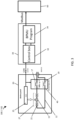
- FIG. 1 a framework of an exemplary system 100, which is an energy storage system, is illustrated.
- FIG. 2 is an exemplary system 102 as an example of the system 100 in some embodiments.
- Such a system 100 (or 102) comprises a battery power management unit (BPMU) 30 in accordance with some embodiments.
- BPMU battery power management unit
- the energy storage system 100 comprises a plurality of battery packs 20, one or more battery power management unit (BPMU) 30, and a system controller 60.
- System 100 further comprises power converters 10, which is also called a power conversion system (PCS).
- the system controller 60 may be connected with other components in wire or wireless mode.
- the dotted lines 22 in FIG. 1 illustrate that the controller 60 can work in a cloud-based mode, and can work as a real-time local cloud.
- System 100 can be used for discharging power from battery packs 20 to a grid 85, or for charging from the grid 85 to battery packs 20.
- Wire connection 12 may be used.
- a busbar 80 may exist between the system 100 and the grid 85.
- each battery pack 20 comprises a battery or batteries 21, an internal battery management unit (BMU) 25, and an inverter 40. EV battery packs 20 are removed from vehicles and are not disassembled into modules.
- BMU battery management unit
- system 100 may be connected directly to power grid 85, which may have a voltage in a range of from 300 volts to 480 volts (e.g., 400-480 volts).
- the grid is a 480V 3-phase power grid. All components in the system 100, including HMI, converters, BPMUs, and protection relays, are linked or coupled to the system controller 60 through TCP/IP network.
- the controller 60 is networked with all components through TCP/IP 22. Users 55 can access the network.
- System 102 is an example of system 100 for the illustration purpose only.
- System 102 may include one or more BPMUs 30.
- Each BPMU 30 is connected with at least one battery pack 20 and is configured to monitor and control respective battery pack(s) 20.
- One BPMU 30 and one battery pack 20 are shown in FIG. 2 for illustration only.
- Each power converter 10 is coupled with at least one battery pack 20, for example, through wires 12.
- Power converter 10 is configured to convert direct current (DC) from a respective battery pack 20 to alternating current (AC) or vice versa.
- the system controller 60 is connected with the power converter 10 and the BPMU 30, for example, through communication lines 22.
- the battery pack 20 having the internal battery management unit (BMU) 25 is also connected with the BPMU 30, which include a control box with a microcontroller 32 and one or more processor 34.
- the system controller 60 may be connected by wire or in wireless or cloud-based mode. In FIG. 1 , all the connections between the controller 60 and other components can be wireless and clouded based. The connections among other components can be by wires in some embodiments.
- the power converter 10 controls whether or not to charge or discharge the battery pack 20.
- the controller 60 is configured to adjust charge/discharge rates depending on the conditions of the battery packs 20 such as SOC and SOH.
- the system 102 may further comprise a plurality of automatic circuit breakers 14.
- One or two circuit breakers 14 may be disposed between a battery pack 20 and a respective power converter 10, and is configured to connect or disconnect a respective battery pack 20 and a respective power converter 10.
- Circuit breaker 14 can be used between the power converter 10 and the grid 85.
- the controller 60 also controls safety of the system by controlling circuit breakers 14 between power converters 10 and battery packs 20.
- a circuit breaker 14 will protect a respective EV battery pack 20 from inrush current and arcs while also starting the system.
- the controller 60 collects data of battery packs 20 and pre-charges the DC ports on the converters 10, then closes the circuit breakers 14 via function relays and switching motors on the circuit breakers.
- the BPMU 30 comprises at least two parts including a microcontroller 32 in a control box (or called relay box) and one or more processors 34 having programs, which are connected with wires 12.
- Each battery pack includes a battery set 27, an internal BMU 25(or called BMS), and an inverter 40.
- the battery set 27 may include one or more batteries 21 connected with a disconnecting switch 15, which may include a plunger to be pulled out during a transfer.
- the inverter 40 may include at least two relays including a main relay 17 and a second relay 19.
- the microcontroller 32 is connected with the internal BMS 25 and the relays 17 and 19, for example, in a wireless mode.
- the microcontroller 32 is used to activate the internal BMU 25, turn on/off main battery contacts through the relays 17 and 19, and transmit CAN signal from between the BPMU 30 and the battery pack 20.
- the microcontroller 32 in the control box may be a controller such as a raspberry pi.
- the control box may further include relay chips and/or switches, a DC power supply in a range of from 5-24 volts (e.g., 12V), and one or more CAN readers.
- the processor 34 e.g., a computer
- the processor 34 may include one or more programs as described herein to read CAN, category data, calculate real-time data, translate the data into Modbus, and transmit the data out to the system controller 60.
- the program also has a function to pause the work above and refresh internal BMS. This is considered as battery sleeping period, which occurs in any suitable time period, for example, once in an operation day.
- the BPMU 30 first activates internal BMS 25 of a battery pack and closes the main contacts of the battery.
- the detailed procedures may depend on the brands of EV battery packs.
- the CAN readers in the control box read CAN data from internal BMS of battery packs and send the data to the processor 34 (e.g., computer).
- the CAN readers are connected to communication ports of battery packs separately and read CAN data in sequence.
- the program in the computer gathers CAN data from CAN readers and separate the useful information for stationary energy storage applications.
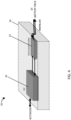
- the exemplary BPMU 30 comprises a microcontroller 32 and a processor 34 such as a personal computer inside an enclosure 36.
- the microcontroller 32 connects with and communicates with a respective battery pack 20 with a digital I/O interface.
- the BPMU 30 is configured to monitor and control the respective battery packs 20, by coordinating with the controller 60.
- the microcontroller 32 and the processor 34 connect and communicate with each other.
- the processor 34 is connected with the network for the controller 60.
- a battery power management unit (BPMU) 30 is connected with multiple battery packs 20 in accordance with some embodiments.
- Five battery packs 20 are shown in FIG. 5 for illustration only.
- Each battery packs includes a respective internal BMU.
- the battery packs 20 are connected to one or more power converters 10 through wire connection 12.
- the BPMU 30 includes a microcontroller 32 having multiple ports and CAN readers connected with the BMUs of battery pack, for example, wirelessly through CAN 22a.
- the BPMU also includes one or more processor 34 loaded with program.
- the microcontroller 32 may be connected and communicated with the processor 34 through Ethernet 22b and USB adapter 23 as illustrated in FIG. 5 .
- the processor 34 may be connected with the system controller 60 wirelessly, for example, through Ethernet 22b. In FIG. 5 , more CAN readers can be utilized to read CAN data from multiple packs. These CAN readers in the microcontroller 32 are connected to the processor 34 through USB port. A proper sequence can be created for the connected battery packs.
- the microcontroller 32 and the one or more processors 34 may be a system or a circuit board in some embodiments.
- such an electrical energy storage system 100 comprises a plurality of battery packs 20, one or more battery power management unit (BPMU) 30, one or more power converters 10, and a system controller 60.
- Each battery pack 20 comprises an internal BMU 25 (or called BMS).
- the plurality of battery packs 20 are second-use electric vehicle (EV) batteries connected in parallel. The used EV batteries can be directly utilized in the system, without pre-selection or dismantling.
- Each battery pack comprises an inverter and an internal battery management unit (BMU) in the pack.
- Each BPMU 30 is connected with at least one battery pack 20.
- the BPMU 30 comprises a microcontroller 32 in a control box (or called relay box) and one or more processors 34 (e.g., computer) having at least one tangible, non-transitory machine readable medium encoded with one or more programs.
- processors 34 e.g., computer
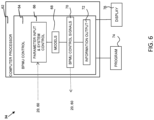
- an exemplary BPMU 30 comprises one or more processors 62 and at least one tangible, non-transitory machine readable medium encoded with one or more programs 74 to be executed by the one or more processors 62 and/or the microcontroller 32, for managing one or more battery packs in accordance with some embodiments.
- the processor(s) 62 may include a central battery management unit control 64, which includes a parameter input module 66, model module 68, a signal control module 70, and information and instruction output module 72.
- the parameter input module 66 coordinates with the battery packs 20 and read the data from battery packs 20.
- the model module 68 is configured to perform a simulation based on the input parameters to provide information and instruction to the BPMU control module 70 and the information and instruction output module 72.
- the processors 62 may be optionally connected with one or more displays 76 for displaying the information and instructions from module 72 and to an operator.
- the BPMU 30 is configured to perform steps as described herein. These steps include: reading data from the internal BMU 30 of the respective battery pack 20 to establish capacity, an energy baseline, and an initial value of state of charge (SOC) of the respective battery pack, checking voltage and current of the respective battery pack 20 at a time interval, calculating power of the respective battery pack 20 to integrate the power into an energy reading of the respective battery pack 20, and determining and updating state of charge (SOC) of the respective battery pack based on the initial value of SOC, the current, and the time interval.
- Each power converter 10 is coupled with at least one battery pack and is configured to convert direct current (DC) from a respective battery pack 20 to alternating current (AC) or vice versa.
- the system controller 60 is used for controlling discharging power from or charging power to the respective battery pack 20 based on updated data including the SOC and the energy reading of each respective battery.
- each BPMU 30 is also configured to determine state of health (SOH) of each respective battery pack 20 based on the capacity of the respective battery pack 20.
- SOH state of health
- a suitable technique including, but not limited to, Coulomb counting, electrochemical impedance measurement, or a combination thereof can be used in determining the SOH and the SOC of each respective battery pack 20.
- the system controller 60 is configured to control discharging or charging each respective battery based on the SOH and the SOC of each respective battery pack 20, and a power command from an upper level energy management system (EMS).
- EMS upper level energy management system
- Each BPMU 30 is also configured to transmit the updated data of each respective battery pack 20 such as the SOH, the SOC and the power or energy reading to the system controller 60.
- Each BPMU 30 is also configured to define an idle time for each respective battery pack so as to refresh the internal BMU of the respective battery pack.
- each BPMU 30 further includes at least one CAN reader in the microcontroller, relay chips, and a power supply.
- the power supply has power output matched to those of the internal BMU of the respective battery and the CAN reader or readers. In some embodiments, the power supply is in the range of from 5 volts to 24 volts.
- the present disclosure provides a system and a method for monitoring and controling battery packs 30 that are retired from electric vehicles (EV) and are planned to be used in stationary energy storage applications.
- the battery packs 20 are used without being disassembled into their individual components.
- the battery packs 20 include internal modules, cells, battery management systems (internal BMS) 25 that are used as is.
- the external battery management unit (BMU, or called BPMU) 30 is developed for one or multiple battery packs 20 out of EVs.
- the BPMU 30 activates the interenal battery manangement systems (BMS) 25, reads CAN data, screens data into parameters that are used to calculate and update critical values such as SOC and SOH. These data are then used to make determinations regarding operating algorithms for battery usage for a system controller 60.
- BMS interenal battery manangement systems
- the present disclosure also provides a battery power management unit (BPMU) 30 for an electrical energy storage system 100 or 102 as described herein.
- the BPMU 30 comprises a microcontroller 32 configured to be connected with at least one battery pack 20, and one or more processors (such as a computer) 34 connected with the microcontroller 32.
- the one or more processors 34 have at least one tangible, non-transitory machine readable medium encoded with one or more programs.
- the battery packs 20 are second-use electric vehicle (EV) battery pack as described herein.
- the BPMU 30 is configured to perform steps of: reading data from the internal BMU 25 of a respective battery pack 20 to establish capacity, an energy baseline, and an initial value of state of charge (SOC) of the respective battery pack 20, checking or measuring voltage and current of the respective battery pack 20 at a time interval, calculating power of the respective battery pack 20 to integrate the power into an energy reading of the respective battery pack, and determining and updating state of charge (SOC) of the respective battery pack 20 based on the initial value of SOC, the current, and the time interval.
- the BPMU 30 is also configured to determine state of health (SOH) of each respective battery pack 20 based on the capacity of the respective battery pack 20.
- the BPMU 30 is further configured to transmit updated data of the respective battery pack 20 including the SOC, the SOH, and the energy reading to a system controller for controlling discharging power from or charging power to the respective battery pack 20 based on the updated data of the respective battery pack 20.
- the system controller 60 is configured to control discharging or charging each respective battery based on the SOH and the SOC of each respective battery pack, and a power command from an upper level energy management system (EMS).
- EMS upper level energy management system
- the BPMU 30 is also configured to define an idle time for each respective battery pack so as to refresh the internal BMU 25 of the respective battery pack 20.
- each BPMU 30 further includes at least one CAN reader in the microcontroller 32, relay chips, and a power supply, which has power output matched to those of the internal BMU 25 of the respective battery 20 and the at least one CAN reader.
- the CAN bus is used as example in this disclosure.
- the BPMU 30 can work with any other communication protocols, such as MODBUS.
- Redundant data from the internal BMS 25 is removed and non-functional parameters are re-estimated and updated accordingly in the external BPMU 30.
- the updated parameters are then used by the system controller 60 to make decision through algorithms for battery operation.
- the BPMU 30 provides real time and reliable data for the system controller 60 rather than directly using the information from the internal BMU 25 of a battery pack 20.
- the system and the method provided in the present disclosure do not rely on testing methods such as electrochemical impedence spectroscopy (EIS) to determine the SOH, and but may rely on the SOC and SOH values coming from the internal BMU 25 of a battery pack 20.
- EIS electrochemical impedence spectroscopy
- the internal BMU (or BMS) 25, originally designed for vehicles by the Original Equipment Manufacturer (OEM) may be used as a data source for to calculate real time information.
- the BPMU 30 is also used to make decisions regarding battery pack operation by conveying the real-time calculations to the system controller 60.
- the internal BMUs 25 are not designed for stationary energy storage application, and their functions are limited after being removed from the EVs.
- the BPMUs and the method provided herein inspect the limitation and improve real-time calculations on energy levels and demonic values of state of charge (SOC) of battery packs.
- the BPMU 30 can enhance functions of internal BMU 25 of a battery pack 20 and provide better reference values for system applications.
- the BPMU 30 collects data from internal BMU 25 and verify accuracy and compute real-time values of battery status, updates and transmits data in the form of Modbus via TCP/IP. Engineering assumptions are made to closely represent real time battery status.
- the BPMU 30 also refreshes data from the internal BMS at a defined time frame to adjust for accuracy.
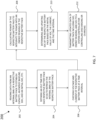
- an exemplary method 200 is illustrated for using a battery power management unit (BPMU) 30 to manage one or more battery packs 20 in an energy storage system 100 or 102, or for operating such a system 100 or 102 in accordance with some embodiments.
- BPMU battery power management unit
- such a method 200 comprises the steps descried herein using the BPMU 30.
- step 202 data from an internal BMU 25 of a respective battery pack 20 among a plurality of battery packs are read.
- the capacity, an energy baseline, and an initial value of state of charge (SOC) of the respective battery pack 20 are established.
- the plurality of battery packs 20 are selected from new batteries, second-use electric vehicle (EV) battery packs or combinations thereof, which are connected in parallel.
- the state of health (SOH) of each respective battery pack 20 is also determined based on its capacity.
- the SOH in percentage (%) can be determined by dividing the capacity by its maximum capacity of a brand-new battery pack based on the specification. The SOH may decrease over time and use.
- An initial SOC in percentage (%) can be determined by dividing a current level of charge of an electric battery relative to its capacity.
- the internal BMS 25 of a battery pack 20 may not give proper readings on SOH, due to differences in packs first-life use in EVs or other different applications.
- An engineering assumption based on history of the pack is made to estimate the SOH.
- a constant base capacity (rated energy as original pack) is used in this step.
- an idle time i.e., sleeping period
- an idle time is defined for each respective battery pack 20 so as to refresh the internal BMU 25 of the respective battery pack 20.
- the stationary applications require battery packs are always active. Variance on calculated values, especially energy and SOC could become large. Re-estimate energy baseline is necessary once in 24 hours.
- the BMU emulates car shut down condition for pack and let internal BMS work to update battery parameters. While a pack is sleeping, a sleep indicator signal will triggered and sent to upper level controller to pause system operation. In the BMU, managing multi-packs of battery, the sleep actions are performed in a sequence for all packs.
- step 206 voltage and current of the respective battery pack 20 are checked or measured at a time interval.
- the power of the respective battery pack 20 is calculated to integrate the power into an energy reading of the respective battery pack 20.
- the power can be calculated based on the voltage and the current, and the energy can be calculated based on based on the voltage, the current, and the time. Floating current may be ignored in the calculation.
- state of charge (SOC) of the respective battery pack 20 is determined and updated based on the initial value of SOC, the current, and the time interval.
- SOC state of charge
- a suitable technique such as Coulomb counting, electrochemical impedance measurement, or any other suitable techniques, or a combination thereof is used for determining the SOH and the SOC of each respective battery pack.
- Coulomb counting is a technique used to track the state of charge of a battery pack. It works by integrating the active flowing current (in amps) over time to derive the total sum of energy entering or leaving the battery pack.
- SOC(t) and SOC(t- ⁇ t) are the state of charge of the battery pack at time (t) and (t- ⁇ t), respectively
- SOC(t 0 ) is an initial SOC
- ⁇ t is a time interval
- I(t) is the current
- Qn is the capacity of the battery pack.
- I(t) may be represented as negative during discharging and positive as charging.
- a new EV battery pack has a maximum capacity of 30 kWh rated capacity. After 7 ⁇ 8 years of service in a car, the battery pack is retired at 80% SOH (or less). Then the battery pack has a second life starting at a capacity Qn of 24kWh, which is 30kWh x 80%.
- the SOC can be estimated by coulomb counting or similar methods.
- Steps from step 202 to step 210 can be reiterated for each battery pack 20.
- the updated data of the respective battery pack 20 including the SOC and the energy reading is transmitted to a system controller 60, which is for controlling discharging power from or charging power to the respective battery pack 20 based on the updated data of the respective battery pack.
- the SOH and the SOC of each respective battery 20 pack, and a power command from an upper level energy management system (EMS) are used by the system controller 60 for controlling discharging or charging each respective battery.
- EMS energy management system
- a power distribution rate is calculated for each of a plurality of battery packs 20 connected in parallel.
- the battery packs 20 having higher capacity and high SOH and/or SOC can be preferably used for discharging to meet the power demand from EMS.
- An exemplary method of controlling discharging or charging using a system controller is described in the inventors' co-pending U.S. Application No. 17/201,529 .
- an exemplary flow chart 300 is used to illustrate an exemplary program and the method 200 for managing one or more battery packs in accordance with some embodiments.
- the system is started.
- the BPMU 30 activates the internal BMS 25 of a battery pack and close the main contacts.
- the detailed procedures may depend on the brand of EV battery packs.
- the CAN readers in the control box read CAN data from the internal BMS 25 of each battery pack 20 and send the data to the processor 34.
- the CAN readers are connected to communication ports of each battery pack 20 separately and read CAN data in sequence.
- the program in the computer gathers CAN data from CAN readers and separate the useful information for stationary applications. As described at step 202 of FIG. 7 , the data are used to establish capacity, an energy baseline, and an initial value of state of charge (SOC) of the respective battery pack 20.
- the energy capacity baseline i.e.
- BMS 25 total operable capacity of a new battery pack, Qn) and voltage boundary (Vlow and Vhigh according to the OEM specifications), information provided by battery manufactures, are selected.
- Baselines such as energy, SOC values, are determined according to the information from the internal BMS 25. Using these baselines, energy and SOC are calculated and updated in real time. Battery pack voltage, average pack temperatures, fail codes, and SOH are also gathered from BMS.
- a sleep time is defined for each single pack to refresh internal BMS 25.
- the BPMU 30 returns to read the data again.
- the voltage and the current of each respective battery are checked and recorded. During discharging (represented by “i ⁇ -1" in FIG. 8 ) or charging (represented by "i>1"), the voltage and the current at any time will be kept updated by cycling back to block 90.
- the power of the respective battery pack 20 is calculated to integrate the power into an energy reading of the respective battery pack 20 as described in step 208 of FIG. 7 .
- state of charge (SOC) of the respective battery pack 20 is determined and updated based on the initial value of SOC, the current, and the time interval as described in step 210 of FIG. 7 .
- the steps from block 86 to block 96 can be reiterated if the number of reiteration is less than a pre-determined maximum number of re-iterations ("n_max") at block 98.
- n_max a pre-determined maximum number of re-iterations
- the updated data of the respective battery pack 20 including the SOC and the energy reading is transmitted to a system controller 60, for example, through Modbus, as described in step 212 of FIG. 7 .
- the program can be terminated at block 104 and 106. Otherwise, the steps may be repeated if needed.
- the total current less than 1 Amp i.e. absolute value of i less than 1
- the energy and SOC are calculated using voltage and current to better represent the condition of battery packs.
- FIGS. 9-10 show the changes in energy and SOC read directly from an internal BMS of a battery pack and the corresponding voltage with time during a charging and discharging test in a control experiment.
- the energy and SOC readings were obtained directly from the internal BMS.
- the values did not represent the status of the batteries accurately.
- a sleep/wake up action was performed at the points after discharging and charging the battery.
- FIGS. 11-12 show the change in calculated energy and the SOC of the battery pack with time at the corresponding voltage during a charging and discharging test in an experiment. Accurate and real-time values such as the energy and SOC of a battery pack are obtained.
- the BPMU determine and provide real-time and reliable data of the battery packs, which are second-use EV batteries directly used in the system without dissembling.
- Such real-time and accurate data of battery packs are provided to the system controller for decision-making, for example, controlling discharging or charging the battery packs with better control.
- the life-time of the battery packs can be also extended through better control.
- the methods and system described herein may be at least partially embodied in the form of computer-implemented processes and apparatus for practicing those processes.
- the disclosed methods may also be at least partially embodied in the form of tangible, non-transient machine readable storage media encoded with computer program code.
- the media may include, for example, RAMs, ROMs, CD-ROMs, DVD-ROMs, BD-ROMs, hard disk drives, flash memories, or any other non-transient machine-readable storage medium, or any combination of these mediums, wherein, when the computer program code is loaded into and executed by a computer, the computer becomes an apparatus for practicing the method.
- the methods may also be at least partially embodied in the form of a computer into which computer program code is loaded and/or executed, such that, the computer becomes an apparatus for practicing the methods.
- the computer program code segments configure the processor to create specific logic circuits.
- the methods may alternatively be at least partially embodied in a digital signal processor formed of application specific integrated circuits for performing the methods.
- the computer or the control unit may be operated remotely using a cloud based system.
Landscapes
- Engineering & Computer Science (AREA)
- Power Engineering (AREA)
- General Chemical & Material Sciences (AREA)
- Chemical & Material Sciences (AREA)
- Chemical Kinetics & Catalysis (AREA)
- Electrochemistry (AREA)
- Manufacturing & Machinery (AREA)
- Microelectronics & Electronic Packaging (AREA)
- Charge And Discharge Circuits For Batteries Or The Like (AREA)
- Secondary Cells (AREA)
- Health & Medical Sciences (AREA)
- General Health & Medical Sciences (AREA)
- Medical Informatics (AREA)
Description
- The disclosure relates to systems and methods for energy storage generally. More particularly, the disclosed subject matter relates to a battery management unit, a system comprising such a battery management unit, and a method for monitoring and controlling stationary energy storage.
- Clean and renewable sources of energy become more important due to increased concerns about environmental issues such as global warming. Such sources include solar and wind power, and rechargeable battery. Renewable energy sources are not flexible because they cannot be dispatched when needed to meet the changing requirements of energy consumers. Energy storage systems are expected to solve this flexibility challenge. A stationary energy storage system can store energy and release energy in the form of electricity when it is needed.
-
EP 3 547 705 A1 discloses a Battery Management System (BMS) which includes a plurality of master battery management units (M-BMU), each comprising at least one multi cell battery-sensing device. The multi cell battery-sensing device is configured to directly sense one or more conditions associated with each battery cell of a group of battery cells that are associated with one battery module. The BMS also includes a plurality of sensor battery management units (S-BMU) associated with each of the battery modules. Each S-BMU is a single-cell battery-sensing device arranged to directly sense one or more conditions associated with a particular battery cell. Each S-BMU is configured to wirelessly communicate data acquired as a result of the direct sensing to an M-BMU associated with the particular battery module. - The present disclosure provides a battery power management unit (BPMU) for an electrical energy storage system, an electrical energy storage system comprising such a battery power management unit (BPMU), and methods of using the same. According to a first aspect, there is provided a BPMU for an electrical energy storage system as defined in
claim 1. According to a second aspect, there is provided a method for using a BPMU in an electrical energy storage system as defined in claim 7. According to a third aspect, there is provided a computer program product as defined in claim 11. - In accordance with some embodiments, such an electrical energy storage system comprises a plurality of battery packs, one or more battery power management unit (BPMU), one or more power converters, and a system controller. Each battery pack comprises an internal battery management unit (BMU). Each BPMU is connected with at least one battery pack. The BPMU comprises a microcontroller and one or more processors having at least one tangible, non-transitory machine readable medium encoded with one or more programs. The BPMU is configured to perform steps of: reading data from the internal BMU of the respective battery pack to establish capacity, an energy baseline, and an initial value of state of charge (SOC) of the respective battery pack, checking voltage and current of the respective battery pack at a time interval, calculating power of the respective battery pack to integrate the power into an energy reading of the respective battery pack, and determining and updating state of charge (SOC) of the respective battery pack based on the initial value of SOC, the current, and the time interval. Each power converter is coupled with at least one battery pack and is configured to convert direct current (DC) from a respective battery pack to alternating current (AC) or vice versa. The system controller is used for controlling discharging power from or charging power to the respective battery pack based on updated data including the SOC and the energy reading of each respective battery.
- The plurality of battery packs may be heterogeneous battery packs connected in parallel selected from new batteries, second-use electric vehicle (EV) batteries, or combinations thereof. In some embodiments, the plurality of battery packs are second-use electric vehicle (EV) batteries connected in parallel. The used EV batteries can be directly utilized in the system, without pre-selection or dismantling. Each battery pack comprises an inverter and an internal battery management unit (BMU) in the pack.
- In some embodiments, each BPMU is also configured to determine state of health (SOH) of each respective battery pack based on the capacity of the respective battery pack. A suitable technique including, but not limited to, Coulomb counting, electrochemical impedance measurement, any other SOC estimation technique, or a combination thereof can be used in determining the SOH and the SOC of each respective battery pack. The system controller is configured to control discharging or charging each respective battery based on the SOH and the SOC of each respective battery pack, and a power command from an upper level energy management system (EMS).
- In some embodiments, each BPMU is also configured to transmit the updated data of each respective battery pack such as the SOH, the SOC and the power or energy reading to the system controller.
- Each BPMU is also configured to define an idle time for each respective battery pack so as to refresh the internal BMU of the respective battery pack.
- In some embodiments, each BPMU further includes at least one CAN reader in the microcontroller, relay chips, and a power supply. The power supply has power output matched to those of the internal BMU of the respective battery and the CAN reader or readers.
- In another example, the present disclosure provides a battery power management unit (BPMU) for an electrical energy storage system. The BPMU comprises a microcontroller configured to be connected with at least one battery pack, and one or more processors (such as a computer) connected with the microcontroller. The one or more processors have at least one tangible, non-transitory machine readable medium encoded with one or more programs. The BPMU is configured to perform steps of: reading data from the internal BMU of a respective battery pack to establish capacity, an energy baseline, and an initial value of state of charge (SOC) of the respective battery pack, checking or measuring voltage and current of the respective battery pack at a time interval, calculating power of the respective battery pack to integrate the power into an energy reading of the respective battery pack, and determining and updating state of charge (SOC) of the respective battery pack based on the initial value of SOC, the current, and the time interval. The BPMU is further configured to transmit updated data of the respective battery pack including the SOC and the energy reading to a system controller for controlling discharging power from or charging power to the respective battery pack based on the updated data of the respective battery pack.
- In some embodiments, in the system comprising one or more BPMU, the battery pack is a new battery pack or second-use electric vehicle (EV) battery pack as described herein.
- In some embodiments, the BPMU is also configured to determine state of health (SOH) of each respective battery pack based on the capacity of the respective battery pack. A suitable technique such as Coulomb counting, electrochemical impedance measurement, or a combination thereof can be used in determining the SOH and the SOC of each respective battery pack. The system controller is configured to control discharging or charging each respective battery based on the SOH and the SOC of each respective battery pack, and a power command from an upper level energy management system (EMS).
- The BPMU is also configured to define an idle time for each respective battery pack so as to refresh the internal BMU of the respective battery pack.
- In some embodiments, each BPMU further includes at least one CAN reader in the microcontroller, relay chips, and a power supply, which has power output matched to those of the internal BMU of the respective battery and the at least one CAN reader.
- In another aspect, the present disclosure provides a method for using a battery power management unit (BPMU) in an electrical energy storage system, or a method of operating the electrical energy storage system. Such a method comprises steps performed using the BPMU including: reading data from an internal BMU of a respective battery pack among a plurality of battery packs to establish capacity, an energy baseline, and an initial value of state of charge (SOC) of the respective battery pack, checking voltage and current of the respective battery pack at a time interval, calculating power of the respective battery pack to integrate the power into an energy reading of the respective battery pack, and determining and updating state of charge (SOC) of the respective battery pack based on the initial value of SOC, the current, and the time interval. The method may further include transmitting updated data of the respective battery pack including the SOC and the energy reading to a system controller for controlling discharging power from or charging power to the respective battery pack based on the updated data of the respective battery pack.
- As described herein, the plurality of battery packs are heterogeneous battery pack selected from new battery, second-use electric vehicle (EV) battery packs, or a combination thereof, connected in parallel.
- In some embodiments, the method further comprises determining state of health (SOH) of each respective battery pack based on the capacity of the respective battery pack. The SOH and the SOC of each respective battery pack, and a power command from an upper level energy management system (EMS) are used by the system controller for controlling discharging or charging each respective battery. A suitable technique such as Coulomb counting, electrochemical impedance measurement, or any other suitable technique, or a combination thereof is used for determining the SOH and the SOC of each respective battery pack.
- The method further comprises defining an idle time for each respective battery pack so as to refresh the internal BMU of the respective battery pack.
- In another aspect, the present disclosure provides a computer program product, which comprises program instructions, when executed on a data-processing apparatus, adapted to perform the method steps described above.
- The BPMU, the system comprising the BPMU, and the methods provided in the present disclosure have many advantages. For example, the BPMU determine and provide real-time and reliable data of the battery packs, which are second-use EV batteries directly used in the system without dissembling. Such real-time and accurate data of battery packs are provided to the system controller for decision-making, for example, controlling discharging or charging the battery packs with better control. The life-time of the battery packs can be also extended through better control.
- The present disclosure is best understood from the following detailed description when read in conjunction with the accompanying drawings. It is emphasized that, according to common practice, the various features of the drawings are not necessarily to scale. On the contrary, the dimensions of the various features are arbitrarily expanded or reduced for clarity. Like reference numerals denote like features throughout specification and drawings.
-
FIG. 1 is a block diagram illustrating an exemplary system, which is a power energy storage system comprising a battery power management unit (BPMU), in accordance with some embodiments. -
FIG. 2 is a block diagram illustrating an exemplary system according to the design ofFIG. 1 . -
FIG. 3 is a block diagram illustrating a portion of the exemplary system comprising a battery power management unit (BPMU) in accordance with some embodiments. -
FIG. 4 illustrates an exemplary battery pack management units (BPMU) in accordance with some embodiments. -
FIG. 5 is a block diagram illustrating a portion of the exemplary system comprising a battery power management unit (BPMU) connected with multiple battery packs in accordance with some embodiments. -
FIG. 6 is a block diagram illustrating an exemplary BPMU or computer implemented unit comprising one or more processors and at least one tangible, non-transitory machine readable medium encoded with one or more programs, for managing one or more battery packs in accordance with some embodiments. -
FIG. 7 is a flow chart illustrating an exemplary method for managing one or more battery packs in an energy storage system in accordance with some embodiments. -
FIG. 8 is a flow chart illustrating an exemplary program for managing one or more battery packs in accordance with some embodiments. -
FIG. 9 shows the changes in energy read directly from an internal BMS of a battery pack and the corresponding voltage with time during a charging and discharging test in a control experiment. -
FIG. 10 shows the changes in SOC read directly from an internal BMS of a battery pack and the corresponding voltage with time during a charging and discharging test in the control experiment. -
FIG. 11 shows the change in calculated energy of the battery pack with time at the corresponding voltage during a charging and discharging test in an experiment. -
FIG. 12 shows the change in SOC of a battery pack with time at the corresponding voltage during a charging and discharging test in the experiment. - This description of the exemplary embodiments is intended to be read in connection with the accompanying drawings, which are to be considered part of the entire written description. In the description, relative terms such as "lower," "upper," "horizontal," "vertical,", "above," "below," "up," "down," "top" and "bottom" as well as derivative thereof (e.g., "horizontally," "downwardly," "upwardly," etc.) should be construed to refer to the orientation as then described or as shown in the drawing under discussion. These relative terms are for convenience of description and do not require that the apparatus be constructed or operated in a particular orientation. Terms concerning attachments, coupling and the like, such as "connected" and "interconnected," refer to a relationship wherein structures are secured or attached to one another either directly or indirectly through intervening structures, as well as both movable or rigid attachments or relationships, unless expressly described otherwise.
- For purposes of the description hereinafter, it is to be understood that the embodiments described below may assume alternative variations and embodiments. It is also to be understood that the specific articles, compositions, and/or processes described herein are exemplary and should not be considered as limiting.
- In the present disclosure the singular forms "a," "an," and "the" include the plural reference, and reference to a particular numerical value includes at least that particular value, unless the context clearly indicates otherwise. When values are expressed as approximations, by use of the antecedent "about," it will be understood that the particular value forms another embodiment. As used herein, "about X" (where X is a numerical value) preferably refers to ±10% of the recited value, inclusive. For example, the phrase "about 8" preferably refers to a value of 7.2 to 8.8, inclusive. Where present, all ranges are inclusive and combinable. For example, when a range of "1 to 5" is recited, the recited range should be construed as including ranges "1 to 4", "1 to 3", "1-2", "1-2 & 4-5", "1-3 & 5", "2-5", and the like. In addition, when a list of alternatives is positively provided, such listing can be interpreted to mean that any of the alternatives may be excluded, e.g., by a negative limitation in the claims. For example, when a range of "1 to 5" is recited, the recited range may be construed as including situations whereby any of 1, 2, 3, 4, or 5 are negatively excluded; thus, a recitation of "1 to 5" may be construed as "1 and 3-5, but not 2", or simply "wherein 2 is not included." It is intended that any component, element, attribute, or step that is positively recited herein may be explicitly excluded in the claims, whether such components, elements, attributes, or steps are listed as alternatives or whether they are recited in isolation.
- The present disclosure provides a battery power management unit (BPMU) for an electrical energy storage system, an electrical energy storage system comprising such a battery power management unit (BPMU), and methods of using the same.
- Unless it is expressly stated otherwise, the acronyms are used herein for abbreviation. For example, "BESS" refers to a battery energy storage system, "BPMU" refers to a battery pack management unit, "SOH" refers to state of health, and "SOC" refers to state of charge.
- The controller, the system, and the method provided in the present disclosure apply to different battery packs, which are heterogeneous battery packs. References to "heterogeneous battery packs" made herein refer to battery packs or modules having different capacity, SOC, and/or SOH, and can be selected from new batteries (e.g., from different manufacturers), second-use electric vehicle (EV) batteries, or combinations thereof. Second-use EV batteries are used for illustration purpose. References to "discharging" from or "charging" to the plurality of battery packs are understood that the plurality of batteries packs collectively discharge or be charged, while it is possible that some battery packs may stay idle (without charging or discharging).
- Unless expressly indicated otherwise, references to "state of health (SOH)" made herein will be understood to mean a figure of merit of the condition of a battery, a battery cell, or a battery pack compared to its ideal conditions. SOH is characterized in percentage (%). The condition matching the specifications under the ideal conditions is 100%. SOH may decrease over time and use.
- Unless expressly indicated otherwise, "state of charge" (SOC) described herein is defined as a level of charge of an electric battery relative to its capacity. The units of SOC are percentage points, 0% means empty, and 100% means full.
- The term "human machine interface (HMI)" used herein is understood to refer to user interface (UI) is the space where interactions between humans and machines occur. A human-machine interface (HMI) may involve interfaces between human and machines with physical input hardware such as keyboards, mice, or any other human interaction based on tactile, visual, or auditory senses. Such user interfaces may include other layers such as output hardware such as computer monitors, speakers, and printers.
- The term "controller area network" or "central area network" (CAN) used herein refers to a vehicle bus standard designed to allow microcontroller devices to communicate with each other's application without a host computer, and without wiring every individual components together.
- The term "transmission control protocol/internet protocol (TCP/IP)" used herein is understood as a set of standardized rules that allow computers to communicate on a network such as internet.
- The term "energy management system (EMS)" used herein refers to a system of computer-aided tools used by operators of electric utility grids to monitor, control, and optimize the performance of the generation or transmission system.
- In the present disclosure, the terms "power demand" and "power requirement" are used interchangeably, and the terms "converter" and "inverter" can be used interchangeably. Each battery pack includes an inverter and a battery management unit (BMU) therein. For the convenience of description, the term "power inverter" is used to describe the internal component in a battery pack, and the term "power converter" or "power conversion system (PCS)" is used to describe the converter connected with one or more battery packs. The term of "battery management unit (BMU)" or "battery management system (BMS)" is used to describe the internal component in a battery pack, and the term "battery power management unit (BPMU)" is used to describe the battery management unit connected with one or more battery packs. The BPMU provided herein can be also called a battery management unit (BMU). The term BPMU is mostly used to distinguish from internal BMU in a battery pack.
- Unless expressly indicated otherwise, the term "connected" or "coupled" used herein are understood to encompass different connections or coupling between or among the components so as to conduct electricity or transmit signals for communication. Such a connection or coupling can be through wire, wireless, or cloud-based modes.
- Unless expressly indicated otherwise, references to "a system controller" made herein are understood to encompass a controller wired or connected via wireless or cloud based technology, and such a controller is used to control the energy storage system. For example, in some embodiments, such a controller uses cloud and internet based computing technology, and can perform calculation locally. Such a technology translates the languages of different sources such as inverter and BMS languages (e.g., CAN, Modbus, DNP3, or any other suitable language). Using such a technology, the controller and different devices or units in the system as described herein can communicate with each other. Modbus is a data communication protocol and a standard of communication protocol or means of connecting industrial electric devices.
- In
FIGS 1-6 , like items are indicated by like reference numerals, and for brevity, descriptions of the structure, provided above with reference to the preceding figures, are not repeated. The methods described inFIGS. 7 and8 are described with reference to the exemplary structure described inFIGS. 1-6 . - Referring to
FIG. 1 , a framework of anexemplary system 100, which is an energy storage system, is illustrated.FIG. 2 is anexemplary system 102 as an example of thesystem 100 in some embodiments. Such a system 100 (or 102) comprises a battery power management unit (BPMU) 30 in accordance with some embodiments. - Referring to
FIGS. 1-2 , in accordance with some embodiments, theenergy storage system 100 comprises a plurality of battery packs 20, one or more battery power management unit (BPMU) 30, and asystem controller 60.System 100 further comprisespower converters 10, which is also called a power conversion system (PCS). Thesystem controller 60 may be connected with other components in wire or wireless mode. The dottedlines 22 inFIG. 1 illustrate that thecontroller 60 can work in a cloud-based mode, and can work as a real-time local cloud.System 100 can be used for discharging power from battery packs 20 to agrid 85, or for charging from thegrid 85 to battery packs 20.Wire connection 12 may be used. Abusbar 80 may exist between thesystem 100 and thegrid 85. - The plurality of battery packs 20 are connected in a
parallel configuration 50. In some embodiments, the plurality of battery packs 20 are second-use (i.e. used) electric vehicle (EV) batteries. The used EV batteries having different capacity can be directly utilized in the system, without pre-selection or dismantling. As illustrated inFIG. 1 , eachbattery pack 20 comprises a battery orbatteries 21, an internal battery management unit (BMU) 25, and aninverter 40. EV battery packs 20 are removed from vehicles and are not disassembled into modules. - Referring to
FIGS. 1-2 , in some embodiments,system 100 may be connected directly topower grid 85, which may have a voltage in a range of from 300 volts to 480 volts (e.g., 400-480 volts). In some embodiments, the grid is a 480V 3-phase power grid. All components in thesystem 100, including HMI, converters, BPMUs, and protection relays, are linked or coupled to thesystem controller 60 through TCP/IP network. Thecontroller 60 is networked with all components through TCP/IP 22.Users 55 can access the network. - Referring to
FIG. 2 , theexemplary system 102 is an example ofsystem 100 for the illustration purpose only. System 102 (or 100) may include one ormore BPMUs 30. EachBPMU 30 is connected with at least onebattery pack 20 and is configured to monitor and control respective battery pack(s) 20. OneBPMU 30 and onebattery pack 20 are shown inFIG. 2 for illustration only. Eachpower converter 10 is coupled with at least onebattery pack 20, for example, throughwires 12.Power converter 10 is configured to convert direct current (DC) from arespective battery pack 20 to alternating current (AC) or vice versa. - The
system controller 60 is connected with thepower converter 10 and theBPMU 30, for example, through communication lines 22. Thebattery pack 20 having the internal battery management unit (BMU) 25 is also connected with theBPMU 30, which include a control box with amicrocontroller 32 and one ormore processor 34. Thesystem controller 60 may be connected by wire or in wireless or cloud-based mode. InFIG. 1 , all the connections between thecontroller 60 and other components can be wireless and clouded based. The connections among other components can be by wires in some embodiments. Thepower converter 10 controls whether or not to charge or discharge thebattery pack 20. Thecontroller 60 is configured to adjust charge/discharge rates depending on the conditions of the battery packs 20 such as SOC and SOH. - Referring to
FIG. 2 , thesystem 102 may further comprise a plurality ofautomatic circuit breakers 14. One or twocircuit breakers 14 may be disposed between abattery pack 20 and arespective power converter 10, and is configured to connect or disconnect arespective battery pack 20 and arespective power converter 10.Circuit breaker 14 can be used between thepower converter 10 and thegrid 85. Thecontroller 60 also controls safety of the system by controllingcircuit breakers 14 betweenpower converters 10 and battery packs 20. Acircuit breaker 14 will protect a respectiveEV battery pack 20 from inrush current and arcs while also starting the system. Thecontroller 60 collects data of battery packs 20 and pre-charges the DC ports on theconverters 10, then closes thecircuit breakers 14 via function relays and switching motors on the circuit breakers. - Referring to
FIG. 3 , theBPMU 30 comprises at least two parts including amicrocontroller 32 in a control box (or called relay box) and one ormore processors 34 having programs, which are connected withwires 12. Each battery pack includes a battery set 27, an internal BMU 25(or called BMS), and aninverter 40. The battery set 27 may include one ormore batteries 21 connected with a disconnectingswitch 15, which may include a plunger to be pulled out during a transfer. Theinverter 40 may include at least two relays including amain relay 17 and asecond relay 19. Themicrocontroller 32 is connected with theinternal BMS 25 and therelays - As described herein, the
microcontroller 32 is used to activate theinternal BMU 25, turn on/off main battery contacts through therelays BPMU 30 and thebattery pack 20. Themicrocontroller 32 in the control box may be a controller such as a raspberry pi. The control box may further include relay chips and/or switches, a DC power supply in a range of from 5-24 volts (e.g., 12V), and one or more CAN readers. The processor 34 (e.g., a computer) may include one or more programs as described herein to read CAN, category data, calculate real-time data, translate the data into Modbus, and transmit the data out to thesystem controller 60. The program also has a function to pause the work above and refresh internal BMS. This is considered as battery sleeping period, which occurs in any suitable time period, for example, once in an operation day. - The
BPMU 30 first activatesinternal BMS 25 of a battery pack and closes the main contacts of the battery. The detailed procedures may depend on the brands of EV battery packs. The CAN readers in the control box read CAN data from internal BMS of battery packs and send the data to the processor 34 (e.g., computer). The CAN readers are connected to communication ports of battery packs separately and read CAN data in sequence. The program in the computer gathers CAN data from CAN readers and separate the useful information for stationary energy storage applications. - Referring to
FIG. 4 , an exemplary battery pack management units (BPMU) 30 is illustrated. Theexemplary BPMU 30 comprises amicrocontroller 32 and aprocessor 34 such as a personal computer inside anenclosure 36. Themicrocontroller 32 connects with and communicates with arespective battery pack 20 with a digital I/O interface. Through themicrocontroller 32, theBPMU 30 is configured to monitor and control the respective battery packs 20, by coordinating with thecontroller 60. Themicrocontroller 32 and theprocessor 34 connect and communicate with each other. Theprocessor 34 is connected with the network for thecontroller 60. - Referring to
FIG. 5 , a portion of theexemplary system FIG. 5 for illustration only. Each battery packs includes a respective internal BMU. The battery packs 20 are connected to one ormore power converters 10 throughwire connection 12. TheBPMU 30 includes amicrocontroller 32 having multiple ports and CAN readers connected with the BMUs of battery pack, for example, wirelessly throughCAN 22a. The BPMU also includes one ormore processor 34 loaded with program. Themicrocontroller 32 may be connected and communicated with theprocessor 34 throughEthernet 22b andUSB adapter 23 as illustrated inFIG. 5 . Theprocessor 34 may be connected with thesystem controller 60 wirelessly, for example, throughEthernet 22b. InFIG. 5 , more CAN readers can be utilized to read CAN data from multiple packs. These CAN readers in themicrocontroller 32 are connected to theprocessor 34 through USB port. A proper sequence can be created for the connected battery packs. Themicrocontroller 32 and the one ormore processors 34 may be a system or a circuit board in some embodiments. - Referring to
FIGS. 1-5 , such an electrical energy storage system 100 (102) comprises a plurality of battery packs 20, one or more battery power management unit (BPMU) 30, one ormore power converters 10, and asystem controller 60. Eachbattery pack 20 comprises an internal BMU 25 (or called BMS). In some embodiments, the plurality of battery packs 20 are second-use electric vehicle (EV) batteries connected in parallel. The used EV batteries can be directly utilized in the system, without pre-selection or dismantling. Each battery pack comprises an inverter and an internal battery management unit (BMU) in the pack. - Each
BPMU 30 is connected with at least onebattery pack 20. TheBPMU 30 comprises amicrocontroller 32 in a control box (or called relay box) and one or more processors 34 (e.g., computer) having at least one tangible, non-transitory machine readable medium encoded with one or more programs. - Referring to
FIG. 6 , anexemplary BPMU 30 comprises one ormore processors 62 and at least one tangible, non-transitory machine readable medium encoded with one ormore programs 74 to be executed by the one ormore processors 62 and/or themicrocontroller 32, for managing one or more battery packs in accordance with some embodiments. The processor(s) 62 may include a central batterymanagement unit control 64, which includes aparameter input module 66,model module 68, asignal control module 70, and information andinstruction output module 72. Theparameter input module 66 coordinates with the battery packs 20 and read the data from battery packs 20. Together with the one ormore programs 74, themodel module 68 is configured to perform a simulation based on the input parameters to provide information and instruction to theBPMU control module 70 and the information andinstruction output module 72. Theprocessors 62 may be optionally connected with one ormore displays 76 for displaying the information and instructions frommodule 72 and to an operator. - The
BPMU 30 is configured to perform steps as described herein. These steps include: reading data from theinternal BMU 30 of therespective battery pack 20 to establish capacity, an energy baseline, and an initial value of state of charge (SOC) of the respective battery pack, checking voltage and current of therespective battery pack 20 at a time interval, calculating power of therespective battery pack 20 to integrate the power into an energy reading of therespective battery pack 20, and determining and updating state of charge (SOC) of the respective battery pack based on the initial value of SOC, the current, and the time interval. Eachpower converter 10 is coupled with at least one battery pack and is configured to convert direct current (DC) from arespective battery pack 20 to alternating current (AC) or vice versa. Thesystem controller 60 is used for controlling discharging power from or charging power to therespective battery pack 20 based on updated data including the SOC and the energy reading of each respective battery. - In some embodiments, each
BPMU 30 is also configured to determine state of health (SOH) of eachrespective battery pack 20 based on the capacity of therespective battery pack 20. A suitable technique including, but not limited to, Coulomb counting, electrochemical impedance measurement, or a combination thereof can be used in determining the SOH and the SOC of eachrespective battery pack 20. Thesystem controller 60 is configured to control discharging or charging each respective battery based on the SOH and the SOC of eachrespective battery pack 20, and a power command from an upper level energy management system (EMS). EachBPMU 30 is also configured to transmit the updated data of eachrespective battery pack 20 such as the SOH, the SOC and the power or energy reading to thesystem controller 60. - Each
BPMU 30 is also configured to define an idle time for each respective battery pack so as to refresh the internal BMU of the respective battery pack. In some embodiments, each BPMU 30 further includes at least one CAN reader in the microcontroller, relay chips, and a power supply. The power supply has power output matched to those of the internal BMU of the respective battery and the CAN reader or readers. In some embodiments, the power supply is in the range of from 5 volts to 24 volts. - The present disclosure provides a system and a method for monitoring and controling battery packs 30 that are retired from electric vehicles (EV) and are planned to be used in stationary energy storage applications. The battery packs 20 are used without being disassembled into their individual components. The battery packs 20 include internal modules, cells, battery management systems (internal BMS) 25 that are used as is. The external battery management unit (BMU, or called BPMU) 30 is developed for one or multiple battery packs 20 out of EVs. The
BPMU 30 activates the interenal battery manangement systems (BMS) 25, reads CAN data, screens data into parameters that are used to calculate and update critical values such as SOC and SOH. These data are then used to make determinations regarding operating algorithms for battery usage for asystem controller 60. - In another aspect, the present disclosure also provides a battery power management unit (BPMU) 30 for an electrical
energy storage system BPMU 30 comprises amicrocontroller 32 configured to be connected with at least onebattery pack 20, and one or more processors (such as a computer) 34 connected with themicrocontroller 32. The one ormore processors 34 have at least one tangible, non-transitory machine readable medium encoded with one or more programs. The battery packs 20 are second-use electric vehicle (EV) battery pack as described herein. - The
BPMU 30 is configured to perform steps of: reading data from theinternal BMU 25 of arespective battery pack 20 to establish capacity, an energy baseline, and an initial value of state of charge (SOC) of therespective battery pack 20, checking or measuring voltage and current of therespective battery pack 20 at a time interval, calculating power of therespective battery pack 20 to integrate the power into an energy reading of the respective battery pack, and determining and updating state of charge (SOC) of therespective battery pack 20 based on the initial value of SOC, the current, and the time interval. In some embodiments, theBPMU 30 is also configured to determine state of health (SOH) of eachrespective battery pack 20 based on the capacity of therespective battery pack 20. A suitable technique such as Coulomb counting, electrochemical impedance measurement, or a combination thereof can be used in determining the SOH and the SOC of eachrespective battery pack 20. TheBPMU 30 is further configured to transmit updated data of therespective battery pack 20 including the SOC, the SOH, and the energy reading to a system controller for controlling discharging power from or charging power to therespective battery pack 20 based on the updated data of therespective battery pack 20. Thesystem controller 60 is configured to control discharging or charging each respective battery based on the SOH and the SOC of each respective battery pack, and a power command from an upper level energy management system (EMS). In addition, theBPMU 30 is also configured to define an idle time for each respective battery pack so as to refresh theinternal BMU 25 of therespective battery pack 20. In some embodiments, each BPMU 30 further includes at least one CAN reader in themicrocontroller 32, relay chips, and a power supply, which has power output matched to those of theinternal BMU 25 of therespective battery 20 and the at least one CAN reader. The CAN bus is used as example in this disclosure. TheBPMU 30 can work with any other communication protocols, such as MODBUS. - Redundant data from the
internal BMS 25 is removed and non-functional parameters are re-estimated and updated accordingly in theexternal BPMU 30. The updated parameters are then used by thesystem controller 60 to make decision through algorithms for battery operation. TheBPMU 30 provides real time and reliable data for thesystem controller 60 rather than directly using the information from theinternal BMU 25 of abattery pack 20. - In some embodiments, the system and the method provided in the present disclosure do not rely on testing methods such as electrochemical impedence spectroscopy (EIS) to determine the SOH, and but may rely on the SOC and SOH values coming from the
internal BMU 25 of abattery pack 20. One objective to calculate accurately the real time SOC and SOH values of second-use EV battery packs 20 used in the system. - The internal BMU (or BMS) 25, originally designed for vehicles by the Original Equipment Manufacturer (OEM) may be used as a data source for to calculate real time information. The
BPMU 30 is also used to make decisions regarding battery pack operation by conveying the real-time calculations to thesystem controller 60. Theinternal BMUs 25 are not designed for stationary energy storage application, and their functions are limited after being removed from the EVs. The BPMUs and the method provided herein inspect the limitation and improve real-time calculations on energy levels and demonic values of state of charge (SOC) of battery packs. TheBPMU 30 can enhance functions ofinternal BMU 25 of abattery pack 20 and provide better reference values for system applications. In some embodiments, theBPMU 30 collects data frominternal BMU 25 and verify accuracy and compute real-time values of battery status, updates and transmits data in the form of Modbus via TCP/IP. Engineering assumptions are made to closely represent real time battery status. TheBPMU 30 also refreshes data from the internal BMS at a defined time frame to adjust for accuracy. - Referring to
FIG. 7 , anexemplary method 200 is illustrated for using a battery power management unit (BPMU) 30 to manage one or more battery packs 20 in anenergy storage system system method 200 comprises the steps descried herein using theBPMU 30. - At
step 202, data from aninternal BMU 25 of arespective battery pack 20 among a plurality of battery packs are read. The capacity, an energy baseline, and an initial value of state of charge (SOC) of therespective battery pack 20 are established. As described herein, the plurality of battery packs 20 are selected from new batteries, second-use electric vehicle (EV) battery packs or combinations thereof, which are connected in parallel. In some embodiments, the state of health (SOH) of eachrespective battery pack 20 is also determined based on its capacity. The SOH in percentage (%) can be determined by dividing the capacity by its maximum capacity of a brand-new battery pack based on the specification. The SOH may decrease over time and use. An initial SOC in percentage (%) can be determined by dividing a current level of charge of an electric battery relative to its capacity. - In some embodiments, the
internal BMS 25 of abattery pack 20 may not give proper readings on SOH, due to differences in packs first-life use in EVs or other different applications. An engineering assumption based on history of the pack is made to estimate the SOH. A constant base capacity (rated energy as original pack) is used in this step. - At
step 204, an idle time (i.e., sleeping period) is defined for eachrespective battery pack 20 so as to refresh theinternal BMU 25 of therespective battery pack 20. - The stationary applications require battery packs are always active. Variance on calculated values, especially energy and SOC could become large. Re-estimate energy baseline is necessary once in 24 hours. The BMU emulates car shut down condition for pack and let internal BMS work to update battery parameters. While a pack is sleeping, a sleep indicator signal will triggered and sent to upper level controller to pause system operation. In the BMU, managing multi-packs of battery, the sleep actions are performed in a sequence for all packs.
- At
step 206, voltage and current of therespective battery pack 20 are checked or measured at a time interval. - At
step 208, the power of therespective battery pack 20 is calculated to integrate the power into an energy reading of therespective battery pack 20. The power can be calculated based on the voltage and the current, and the energy can be calculated based on based on the voltage, the current, and the time. Floating current may be ignored in the calculation. - At
step 210, state of charge (SOC) of therespective battery pack 20 is determined and updated based on the initial value of SOC, the current, and the time interval. In some embodiments, a suitable technique such as Coulomb counting, electrochemical impedance measurement, or any other suitable techniques, or a combination thereof is used for determining the SOH and the SOC of each respective battery pack. - Coulomb counting is a technique used to track the state of charge of a battery pack. It works by integrating the active flowing current (in amps) over time to derive the total sum of energy entering or leaving the battery pack. For example, the SOC of a
battery pack 20 at any given time can be calculated following Equation:

- [0079] If the current is record as positive values, Equations (1) and (2) for a discharging process are represented as Equations:


- Taking one example, in some embodiments, it is assumed that a new EV battery pack has a maximum capacity of 30 kWh rated capacity. After 7~8 years of service in a car, the battery pack is retired at 80% SOH (or less). Then the battery pack has a second life starting at a capacity Qn of 24kWh, which is 30kWh x 80%. The SOC can be estimated by coulomb counting or similar methods. The daily base energy E0 is captured while starting and/or resuming from sleep. Energy value is computed as E=E0 + ΣV*I, and the real-time SOC= E/Qn.
- Steps from
step 202 to step 210 can be reiterated for eachbattery pack 20. - At
step 212, the updated data of therespective battery pack 20 including the SOC and the energy reading is transmitted to asystem controller 60, which is for controlling discharging power from or charging power to therespective battery pack 20 based on the updated data of the respective battery pack. The SOH and the SOC of eachrespective battery 20 pack, and a power command from an upper level energy management system (EMS) are used by thesystem controller 60 for controlling discharging or charging each respective battery. For example, a power distribution rate is calculated for each of a plurality of battery packs 20 connected in parallel. The battery packs 20 having higher capacity and high SOH and/or SOC can be preferably used for discharging to meet the power demand from EMS. An exemplary method of controlling discharging or charging using a system controller is described in the inventors' co-pendingU.S. Application No. 17/201,529 . - Referring to
FIG. 8 , anexemplary flow chart 300 is used to illustrate an exemplary program and themethod 200 for managing one or more battery packs in accordance with some embodiments. - At
block 82, the system is started. Atblock 84, theBPMU 30 activates theinternal BMS 25 of a battery pack and close the main contacts. The detailed procedures may depend on the brand of EV battery packs. Atblock 86, the CAN readers in the control box read CAN data from theinternal BMS 25 of eachbattery pack 20 and send the data to theprocessor 34. The CAN readers are connected to communication ports of eachbattery pack 20 separately and read CAN data in sequence. The program in the computer gathers CAN data from CAN readers and separate the useful information for stationary applications. As described atstep 202 ofFIG. 7 , the data are used to establish capacity, an energy baseline, and an initial value of state of charge (SOC) of therespective battery pack 20. In the program, the energy capacity baseline (i.e. total operable capacity of a new battery pack, Qn) and voltage boundary (Vlow and Vhigh according to the OEM specifications), information provided by battery manufactures, are selected. Baselines, such as energy, SOC values, are determined according to the information from theinternal BMS 25. Using these baselines, energy and SOC are calculated and updated in real time. Battery pack voltage, average pack temperatures, fail codes, and SOH are also gathered from BMS. - At
block 88, a sleep time is defined for each single pack to refreshinternal BMS 25. When the sleep time is set and passes, theBPMU 30 returns to read the data again. If the sleep time is not set, atblock 90, the voltage and the current of each respective battery are checked and recorded. During discharging (represented by "i<-1" inFIG. 8 ) or charging (represented by "i>1"), the voltage and the current at any time will be kept updated by cycling back to block 90. When a respective battery is not charged or discharged, atblock 94, the power of therespective battery pack 20 is calculated to integrate the power into an energy reading of therespective battery pack 20 as described instep 208 ofFIG. 7 . Atblock 96, state of charge (SOC) of therespective battery pack 20 is determined and updated based on the initial value of SOC, the current, and the time interval as described instep 210 ofFIG. 7 . The steps fromblock 86 to block 96 can be reiterated if the number of reiteration is less than a pre-determined maximum number of re-iterations ("n_max") atblock 98. When the number of reiteration reaches the pre-determined maximum number, atblock 103, the updated data of therespective battery pack 20 including the SOC and the energy reading is transmitted to asystem controller 60, for example, through Modbus, as described instep 212 ofFIG. 7 . The program can be terminated atblock - Due to circulating current, which may exist, even at idle mode miscalculation may happen and affect estimating energy and SOC. In some embodiments, the total current less than 1 Amp (i.e. absolute value of i less than 1) is ignored, and a corresponding limit is set and provided to the upper system controller. The energy and SOC are calculated using voltage and current to better represent the condition of battery packs.
- In the
exemplary system 102 ofFIG. 2 , charging/discharging tests were conducted, and results are shown inFIGS. 9-12 . -
FIGS. 9-10 show the changes in energy and SOC read directly from an internal BMS of a battery pack and the corresponding voltage with time during a charging and discharging test in a control experiment. The energy and SOC readings were obtained directly from the internal BMS. The values did not represent the status of the batteries accurately. A sleep/wake up action was performed at the points after discharging and charging the battery. -
FIGS. 11-12 show the change in calculated energy and the SOC of the battery pack with time at the corresponding voltage during a charging and discharging test in an experiment. Accurate and real-time values such as the energy and SOC of a battery pack are obtained. - The BPMU, the system comprising the BPMU, and the methods provided in the present disclosure have many advantages. For example, the BPMU determine and provide real-time and reliable data of the battery packs, which are second-use EV batteries directly used in the system without dissembling. Such real-time and accurate data of battery packs are provided to the system controller for decision-making, for example, controlling discharging or charging the battery packs with better control. The life-time of the battery packs can be also extended through better control.
- The methods and system described herein may be at least partially embodied in the form of computer-implemented processes and apparatus for practicing those processes. The disclosed methods may also be at least partially embodied in the form of tangible, non-transient machine readable storage media encoded with computer program code. The media may include, for example, RAMs, ROMs, CD-ROMs, DVD-ROMs, BD-ROMs, hard disk drives, flash memories, or any other non-transient machine-readable storage medium, or any combination of these mediums, wherein, when the computer program code is loaded into and executed by a computer, the computer becomes an apparatus for practicing the method. The methods may also be at least partially embodied in the form of a computer into which computer program code is loaded and/or executed, such that, the computer becomes an apparatus for practicing the methods. When implemented on a general-purpose processor, the computer program code segments configure the processor to create specific logic circuits. The methods may alternatively be at least partially embodied in a digital signal processor formed of application specific integrated circuits for performing the methods. The computer or the control unit may be operated remotely using a cloud based system.
- Although the subject matter has been described in terms of exemplary embodiments, it is not limited thereto.
Claims (11)
- A battery power management unit, BPMU, (30) for an electrical energy storage system (100), comprising:a microcontroller (32) configured to be in communication with at least one battery pack (20);one or more processors (34) connected with the microcontroller and having at least one tangible, non-transitory machine readable medium encoded with one or more programs, and the BPMU configured to perform steps of:reading (202) data from the internal battery management unit, BMU, (25) of a respective battery pack to establish capacity, an energy baseline, and an initial value of state of charge, SOC, of the respective battery pack, wherein the energy baseline is the total operable capacity of a new battery pack;defining (204) an idle time for each respective battery pack so as to refresh the internal BMU of the respective battery pack;checking (206) voltage and current of the respective battery pack at a time interval;calculating (208) power of the respective battery pack based on the voltage and the current, and integrating the power into an energy reading of the respective battery pack;determining (210) and updating state of charge, SOC, of the respective battery pack based on the initial value of SOC, the current, and the time interval; andtransmitting (212) updated data of the respective battery pack including the SOC and the energy reading to a system controller (60) for controlling discharging power from or charging power to the respective battery pack based on the updated data of the respective battery pack.
- The BPMU of claim 1, wherein the at least one battery pack (20) includes heterogeneous battery packs selected from new batteries, second-use electric vehicle, EV, batteries, or combinations thereof.
- The BPMU (30) according to any of claims 1 to 2, wherein the BPMU is also configured to determine state of health, SOH, of each respective battery pack (20) based on the capacity of the respective battery pack.
- The BPMU (30) according to any of claims 1 to 3, wherein a technique including Coulomb counting, electrochemical impedance measurement, or a combination thereof is used in determining the SOH and the SOC of each respective battery pack (20).
- The BPMU (30) according to any of claims 1 to 4, wherein the system controller (60) is configured to control discharging or charging each respective battery based on the SOH and the SOC of each respective battery pack (20), and a power command from an upper level energy management system, EMS.
- The BPMU (30) according to any of claims 1 to 5, wherein each BPMU further includes at least one CAN reader in the microcontroller (32), relay chips, and a power supply having power output matched to those of the internal BMU (25) of the respective battery and the at least one CAN reader.
- A method (200) for using a battery power management unit, BPMU, (30) in an electrical energy storage system (100), comprising:reading (202) data from an internal battery management unit, BMU (25) of a respective battery pack (20) among a plurality of battery packs to establish capacity, an energy baseline, and an initial value of state of charge, SOC, of the respective battery pack, wherein the energy baseline is the total operable capacity of a new battery pack;defining (204) an idle time for each respective battery pack so as to refresh the internal BMU of the respective battery pack;checking (206) voltage and current of the respective battery pack at a time interval;calculating (208) power of the respective battery pack based on the voltage and the current, and integrating the power into an energy reading of the respective battery pack;determining (210) and updating state of charge, SOC, of the respective battery pack based on the initial value of SOC, the current, and the time interval; andtransmitting (212) updated data of the respective battery pack including the SOC and the energy reading to a system controller (60) for controlling discharging power from or charging power to the respective battery pack based on the updated data of the respective battery pack.
- The method of claim 7, wherein the plurality of battery packs (20) are heterogeneous battery packs connected in parallel selected from new batteries, second-use electric vehicle, EV, batteries, or combinations thereof.
- The method according to any of claims 7 to 8, further comprising determining state of health, SOH, of each respective battery pack (20) based on the capacity of the respective battery pack, wherein the SOH and the SOC of each respective battery pack, and a power command from an upper level energy management system, EMS, are used by the system controller (60) for controlling discharging or charging each respective battery.
- The method according to any of claims 7 to 9, wherein a technique including Coulomb counting, electrochemical impedance measurement, any other SOC estimation technique, or a combination thereof is used in determining the SOH and the SOC of each respective battery pack (20).
- A computer program product comprising program instructions that, when executed on a data-processing apparatus, cause the data-processing apparatus to perform the method steps according to any one of claims 7-10.
Applications Claiming Priority (1)
| Application Number | Priority Date | Filing Date | Title |
|---|---|---|---|
| US17/202,877 US12126204B2 (en) | 2021-03-16 | 2021-03-16 | Battery management unit to determine updated SOC and energy reading, energy storage system comprising, the same, and method of using the same |
Publications (2)
| Publication Number | Publication Date |
|---|---|
| EP4060850A1 EP4060850A1 (en) | 2022-09-21 |
| EP4060850B1 true EP4060850B1 (en) | 2024-05-15 |
Family
ID=80685333
Family Applications (1)
| Application Number | Title | Priority Date | Filing Date |
|---|---|---|---|
| EP22158920.3A Active EP4060850B1 (en) | 2021-03-16 | 2022-02-25 | Battery management unit and methods of using the same |
Country Status (3)
| Country | Link |
|---|---|
| US (1) | US12126204B2 (en) |
| EP (1) | EP4060850B1 (en) |
| CN (1) | CN115085304A (en) |
Families Citing this family (7)
| Publication number | Priority date | Publication date | Assignee | Title |
|---|---|---|---|---|
| CN115411764B (en) * | 2021-05-27 | 2025-03-25 | 华为数字能源技术有限公司 | Energy storage system, physical location identification method and photovoltaic power generation system |
| WO2022255480A1 (en) * | 2021-06-04 | 2022-12-08 | ヌヴォトンテクノロジージャパン株式会社 | Battery state estimation device, battery state estimation system, and battery state estimation method |
| KR102678879B1 (en) * | 2021-09-08 | 2024-06-28 | 주식회사 엘지에너지솔루션 | Energy storage system including newly installed battery racks and method controlling the same |
| US12500436B2 (en) * | 2021-10-20 | 2025-12-16 | China Energy Investment Corporation Limited | Controller, system, and method for managing discharge or charge of heterogeneous battery packs |
| DE102023130306A1 (en) * | 2023-11-02 | 2025-05-08 | Linde Material Handling Gmbh | Battery charging device for electrically powered industrial trucks |
| KR20260009087A (en) * | 2024-07-10 | 2026-01-19 | 에스케이온 주식회사 | Wireless battery management system, battery pack comprising the same, and apparatus comprising the battery pack |
| US12306261B1 (en) * | 2024-08-01 | 2025-05-20 | Lunar Energy, Inc. | Battery health monitoring system |
Family Cites Families (60)
| Publication number | Priority date | Publication date | Assignee | Title |
|---|---|---|---|---|
| JP3375511B2 (en) * | 1997-04-14 | 2003-02-10 | 本田技研工業株式会社 | Battery remaining capacity detection device |
| ID30557A (en) * | 1999-01-18 | 2001-12-20 | Farnow Technologies Pty Ltd | ENERGY SETTINGS |
| JP4817510B2 (en) * | 2001-02-23 | 2011-11-16 | キヤノン株式会社 | Memory controller and memory control device |
| US7570022B2 (en) * | 2005-02-09 | 2009-08-04 | Gm Global Technology Operations, Inc. | Variable battery refresh charging cycles |
| JP4571000B2 (en) * | 2005-03-29 | 2010-10-27 | 富士重工業株式会社 | Remaining capacity calculation device for power storage device |
| JP5109304B2 (en) * | 2006-08-03 | 2012-12-26 | 日産自動車株式会社 | Battery remaining capacity detection device |
| JP5074601B2 (en) * | 2008-12-04 | 2012-11-14 | 株式会社日立製作所 | Storage system having volatile memory and nonvolatile memory |
| CN102055037A (en) * | 2009-11-10 | 2011-05-11 | 和硕联合科技股份有限公司 | Mobile electronic device and electric quantity management method of battery module thereof |
| TWI412206B (en) * | 2009-11-27 | 2013-10-11 | 財團法人工業技術研究院 | Power source module and method for using the same |
| CN103402809B (en) * | 2011-01-13 | 2016-11-09 | 卡明斯公司 | Systems, methods and apparatus for controlling power output distribution in a hybrid powertrain |
| US20120215368A1 (en) * | 2011-02-23 | 2012-08-23 | Nec Laboratories America, Inc. | Storage integrated management systems for energy microgrids |
| US9020649B2 (en) * | 2011-07-18 | 2015-04-28 | Nec Laboratories America, Inc. | Method for real-time power management of a grid-tied microgrid to extend storage lifetime and reduce cost of energy |
| CN102355031B (en) * | 2011-10-29 | 2014-05-14 | 重庆大学 | Active equalizing charging method and device for LiFePO4 power battery packs |
| CN103123992B (en) * | 2011-11-17 | 2015-07-29 | 财团法人工业技术研究院 | Battery pack and method for controlling charging and discharging of the battery pack using its thermoelectric characteristics |
| US9312576B2 (en) * | 2012-02-15 | 2016-04-12 | Htc Corporation | Portable electronic devices capable of obtaining charging current value of charger and charging method thereof |
| US9442165B2 (en) * | 2012-07-07 | 2016-09-13 | Nec Corporation | Method for estimating battery life in presence of partial charge and discharge cycles |
| US20140088897A1 (en) * | 2012-09-26 | 2014-03-27 | Nec Laboratories America, Inc. | Computer Implemented Method for Diagnositc Analytics for Battery Life Management |
| US9568931B2 (en) * | 2013-06-19 | 2017-02-14 | Nec Corporation | Multi-layer control framework for an energy storage system |
| US9753511B2 (en) * | 2013-11-26 | 2017-09-05 | Nec Corporation | Fuzzy logic based integrated power coordination system for hybrid energy storage system |
| US20150261892A1 (en) * | 2014-03-12 | 2015-09-17 | Nec Laboratories America, Inc. | Integrated optimal placement, sizing, and operation of energy storage devices in electric distribution networks |
| US9966777B2 (en) * | 2014-07-17 | 2018-05-08 | Nec Corporation | Modular multilevel converter for hybrid energy storage |
| US9906057B2 (en) * | 2014-10-09 | 2018-02-27 | Nec Corporation | Modular multilvel converter and control framework for hybrid energy storage |
| US9866029B2 (en) * | 2014-11-04 | 2018-01-09 | Nec Corporation | Enhancing power system voltage stability using grid energy storage for voltage support |
| US9964572B2 (en) * | 2015-02-12 | 2018-05-08 | Nec Corporation | Wide-area measurement system based control of grid-scale storage for power system stability enhancement |
| US20160241031A1 (en) * | 2015-02-18 | 2016-08-18 | Nec Laboratories America, Inc. | Dynamic probability-based power outage management system |
| US10250039B2 (en) * | 2015-10-08 | 2019-04-02 | Con Edison Battery Storage, Llc | Energy storage controller with battery life model |
| US10422835B2 (en) * | 2015-10-27 | 2019-09-24 | Nec Corporation | Innovative framework combining cycling and calendar aging models |
| US10298042B2 (en) * | 2016-02-05 | 2019-05-21 | Nec Corporation | Resilient battery charging strategies to reduce battery degradation and self-discharging |
| US9925888B2 (en) * | 2016-03-02 | 2018-03-27 | Ford Global Technologies, Llc | Battery cell state of charge initialization in a presence of voltage measurement uncertainty |
| US20170310140A1 (en) * | 2016-04-26 | 2017-10-26 | Nec Laboratories America, Inc. | System and method for reducing time-averaged peak charges |
| US10899247B2 (en) * | 2016-06-08 | 2021-01-26 | Ford Global Technologies, Llc | System and method for online vehicle battery capacity diagnosis |
| US10452032B1 (en) * | 2016-09-08 | 2019-10-22 | PXiSE Energy Solutions, LLC | Optimizing power contribution of distributed energy resources for real time power demand scheduling |
| US10333306B2 (en) * | 2016-12-14 | 2019-06-25 | Nec Corporation | Data-driven demand charge management solution |
| US11196623B2 (en) * | 2016-12-30 | 2021-12-07 | Intel Corporation | Data packaging protocols for communications between IoT devices |
| CN107121643B (en) | 2017-07-11 | 2019-10-11 | 山东大学 | Lithium-ion battery state of health joint estimation method |
| TWM557478U (en) * | 2017-10-27 | 2018-03-21 | 正文科技股份有限公司 | Mobile power |
| TWM557479U (en) * | 2017-10-31 | 2018-03-21 | 正文科技股份有限公司 | Mobile power |
| US20190137956A1 (en) * | 2017-11-06 | 2019-05-09 | Nec Laboratories America, Inc. | Battery lifetime maximization in behind-the-meter energy management systems |
| US10673242B2 (en) * | 2017-11-13 | 2020-06-02 | Nec Corporation | Demand charge and response management using energy storage |
| US11131713B2 (en) * | 2018-02-21 | 2021-09-28 | Nec Corporation | Deep learning approach for battery aging model |
| EP3547705A1 (en) | 2018-03-28 | 2019-10-02 | Navitas Solutions, Inc. | Fault-tolerant battery management |
| US20190369166A1 (en) * | 2018-05-31 | 2019-12-05 | Nec Laboratories America, Inc. | Extending battery life in behind the meter battery energy storage systems |
| US20200011932A1 (en) * | 2018-07-05 | 2020-01-09 | Nec Laboratories America, Inc. | Battery capacity fading model using deep learning |
| US20200309857A1 (en) | 2019-03-27 | 2020-10-01 | Enersys Delaware Inc. | Methods, systems, and devices for estimating and predicting battery properties |
| EP3780326A4 (en) | 2019-04-24 | 2022-04-06 | Toshiba Mitsubishi-Electric Industrial Systems Corporation | POWER SUPPLY SYSTEM |
| WO2021010113A1 (en) * | 2019-07-18 | 2021-01-21 | パナソニックIpマネジメント株式会社 | Management device and power supply system |
| JP7346155B2 (en) * | 2019-08-21 | 2023-09-19 | 東芝エネルギーシステムズ株式会社 | Battery capacity estimation device, battery capacity estimation method, and program |
| CN110518667B (en) | 2019-09-05 | 2021-10-08 | 山东省科学院自动化研究所 | A kind of cascade utilization battery parallel system and its control method |
| CN110752635A (en) * | 2019-10-12 | 2020-02-04 | 山东大学 | Online capacity monitoring and charging and discharging dual-state equalization circuit and method for series battery pack |
| US11817733B2 (en) * | 2020-03-23 | 2023-11-14 | Duracell U.S. Operations, Inc. | Monitoring capacity of a power bank battery and devices charged therewith |
| US11721992B2 (en) * | 2020-07-23 | 2023-08-08 | Motorola Solutions, Inc. | System and method for supplying power from a multi-cell battery to a single-cell power management system |
| EP4005859A1 (en) * | 2020-11-30 | 2022-06-01 | Wobben Properties GmbH | Method for controlling an exchange between a charging structure and an electrical supply network |
| US11668757B2 (en) * | 2021-03-11 | 2023-06-06 | Duracell U.S. Operations, Inc. | Integrated monitoring capacity of a power bank battery and devices charged therewith |
| US11799140B2 (en) * | 2021-03-15 | 2023-10-24 | China Energy Investment Corporation Limited | Controller for energy storage, system comprising the same, and methods of using the same |
| US20220344959A1 (en) * | 2021-04-27 | 2022-10-27 | China Energy Investment Corporation Limited | Voltage-biased controller, system and method for controlling discharge of heterogeneous battery packs |
| US20220368150A1 (en) * | 2021-04-27 | 2022-11-17 | China Energy Investment Corporation Limited | Voltage gradient-biased controller, system and method for controlling discharge of heterogeneous battery packs |
| US12500436B2 (en) * | 2021-10-20 | 2025-12-16 | China Energy Investment Corporation Limited | Controller, system, and method for managing discharge or charge of heterogeneous battery packs |
| US12149083B2 (en) * | 2021-10-20 | 2024-11-19 | China Energy Investment Corporation Limited | Controller and method for balancing discharge or charge of battery packs in energy storage system |
| US11652357B1 (en) * | 2021-10-27 | 2023-05-16 | China Energy Investment Corporation Limited | Controller, system and method for controlling discharge of heterogeneous battery packs |
| US12372580B2 (en) * | 2022-03-28 | 2025-07-29 | Relyion, Inc. | Systems and methods for managing diverse batteries |
-
2021
- 2021-03-16 US US17/202,877 patent/US12126204B2/en active Active
-
2022
- 2022-02-23 CN CN202210167929.8A patent/CN115085304A/en active Pending
- 2022-02-25 EP EP22158920.3A patent/EP4060850B1/en active Active
Also Published As
| Publication number | Publication date |
|---|---|
| US12126204B2 (en) | 2024-10-22 |
| CN115085304A (en) | 2022-09-20 |
| US20220302724A1 (en) | 2022-09-22 |
| EP4060850A1 (en) | 2022-09-21 |
Similar Documents
| Publication | Publication Date | Title |
|---|---|---|
| EP4060850B1 (en) | Battery management unit and methods of using the same | |
| CN114389336A (en) | Dynamic management and control system of lithium battery energy storage system | |
| CN102231546B (en) | Battery management system with balanced charge and discharge functions and control method thereof | |
| EP4060851A1 (en) | Controller for energy storage and methods of using the same | |
| CN104798283B (en) | For testing and safeguarding the application of the facility of high-tension battery and the facility | |
| CN202309138U (en) | Lithium-iron-phosphate battery-managing system for substation direct-current power-supply system | |
| CN112350395A (en) | Apparatus and method for controlling interface of power system | |
| CN113067042B (en) | An energy storage device and a fault prediction and diagnosis method | |
| CN106415974A (en) | battery system | |
| CN113300437A (en) | Dynamic management and control system of lithium battery energy storage system | |
| CN106058345B (en) | Method and apparatus for monitoring on-board battery chargers | |
| CN105556783A (en) | battery system | |
| CN108232347A (en) | Battery module management method and device of automatic guided transport vehicle | |
| CN104881001A (en) | Energy storage battery management system based on deep learning network | |
| CN105556782A (en) | battery system | |
| JP2022519956A (en) | Battery test system | |
| CN105580234A (en) | Storage battery system | |
| JP7240893B2 (en) | battery controller | |
| CN105452051B (en) | Method for operating a battery system | |
| CN103094632B (en) | AGV (automatic guided vehicle) lead-acid battery intelligent management system and control method thereof | |
| KR20170119863A (en) | Method for calculating energy storage system capacity and power management system using the same | |
| Ma et al. | Fuzzy logic based power and thermal management system design for multi-cell lithium-ion battery bank protection and operation | |
| Tammisetti et al. | Cost-Efficient Battery Management System with Predictive Analysis | |
| Tadoum et al. | Standards and Regulations for Battery Management Systems in Germany: Review and Improvement Potentials | |
| CN115295895A (en) | Battery temperature monitoring system and method |
Legal Events
| Date | Code | Title | Description |
|---|---|---|---|
| PUAI | Public reference made under article 153(3) epc to a published international application that has entered the european phase |
Free format text: ORIGINAL CODE: 0009012 |
|
| STAA | Information on the status of an ep patent application or granted ep patent |
Free format text: STATUS: THE APPLICATION HAS BEEN PUBLISHED |
|
| AK | Designated contracting states |
Kind code of ref document: A1 Designated state(s): AL AT BE BG CH CY CZ DE DK EE ES FI FR GB GR HR HU IE IS IT LI LT LU LV MC MK MT NL NO PL PT RO RS SE SI SK SM TR |
|
| STAA | Information on the status of an ep patent application or granted ep patent |
Free format text: STATUS: REQUEST FOR EXAMINATION WAS MADE |
|
| 17P | Request for examination filed |
Effective date: 20230309 |
|
| RBV | Designated contracting states (corrected) |
Designated state(s): AL AT BE BG CH CY CZ DE DK EE ES FI FR GB GR HR HU IE IS IT LI LT LU LV MC MK MT NL NO PL PT RO RS SE SI SK SM TR |
|
| STAA | Information on the status of an ep patent application or granted ep patent |
Free format text: STATUS: EXAMINATION IS IN PROGRESS |
|
| 17Q | First examination report despatched |
Effective date: 20230602 |
|
| GRAP | Despatch of communication of intention to grant a patent |
Free format text: ORIGINAL CODE: EPIDOSNIGR1 |
|
| STAA | Information on the status of an ep patent application or granted ep patent |
Free format text: STATUS: GRANT OF PATENT IS INTENDED |
|
| INTG | Intention to grant announced |
Effective date: 20231212 |
|
| RAP3 | Party data changed (applicant data changed or rights of an application transferred) |
Owner name: NATIONAL INSTITUTE OF CLEAN-AND-LOW-CARBON ENERGY Owner name: CHINA ENERGY INVESTMENT CORPORATION LIMITED |
|
| GRAS | Grant fee paid |
Free format text: ORIGINAL CODE: EPIDOSNIGR3 |
|
| GRAA | (expected) grant |
Free format text: ORIGINAL CODE: 0009210 |
|
| STAA | Information on the status of an ep patent application or granted ep patent |
Free format text: STATUS: THE PATENT HAS BEEN GRANTED |
|
| AK | Designated contracting states |
Kind code of ref document: B1 Designated state(s): AL AT BE BG CH CY CZ DE DK EE ES FI FR GB GR HR HU IE IS IT LI LT LU LV MC MK MT NL NO PL PT RO RS SE SI SK SM TR |
|
| REG | Reference to a national code |
Ref country code: CH Ref legal event code: EP |
|
| REG | Reference to a national code |
Ref country code: IE Ref legal event code: FG4D |
|
| REG | Reference to a national code |
Ref country code: DE Ref legal event code: R096 Ref document number: 602022003408 Country of ref document: DE |
|
| P01 | Opt-out of the competence of the unified patent court (upc) registered |
Free format text: CASE NUMBER: APP_38535/2024 Effective date: 20240627 |
|
| REG | Reference to a national code |
Ref country code: LT Ref legal event code: MG9D |
|
| REG | Reference to a national code |
Ref country code: NL Ref legal event code: MP Effective date: 20240515 |
|
| PG25 | Lapsed in a contracting state [announced via postgrant information from national office to epo] |
Ref country code: IS Free format text: LAPSE BECAUSE OF FAILURE TO SUBMIT A TRANSLATION OF THE DESCRIPTION OR TO PAY THE FEE WITHIN THE PRESCRIBED TIME-LIMIT Effective date: 20240915 |
|
| PG25 | Lapsed in a contracting state [announced via postgrant information from national office to epo] |
Ref country code: BG Free format text: LAPSE BECAUSE OF FAILURE TO SUBMIT A TRANSLATION OF THE DESCRIPTION OR TO PAY THE FEE WITHIN THE PRESCRIBED TIME-LIMIT Effective date: 20240515 |
|
| PG25 | Lapsed in a contracting state [announced via postgrant information from national office to epo] |
Ref country code: HR Free format text: LAPSE BECAUSE OF FAILURE TO SUBMIT A TRANSLATION OF THE DESCRIPTION OR TO PAY THE FEE WITHIN THE PRESCRIBED TIME-LIMIT Effective date: 20240515 Ref country code: FI Free format text: LAPSE BECAUSE OF FAILURE TO SUBMIT A TRANSLATION OF THE DESCRIPTION OR TO PAY THE FEE WITHIN THE PRESCRIBED TIME-LIMIT Effective date: 20240515 |
|
| PG25 | Lapsed in a contracting state [announced via postgrant information from national office to epo] |
Ref country code: GR Free format text: LAPSE BECAUSE OF FAILURE TO SUBMIT A TRANSLATION OF THE DESCRIPTION OR TO PAY THE FEE WITHIN THE PRESCRIBED TIME-LIMIT Effective date: 20240816 |
|
| PG25 | Lapsed in a contracting state [announced via postgrant information from national office to epo] |
Ref country code: PT Free format text: LAPSE BECAUSE OF FAILURE TO SUBMIT A TRANSLATION OF THE DESCRIPTION OR TO PAY THE FEE WITHIN THE PRESCRIBED TIME-LIMIT Effective date: 20240916 |
|
| REG | Reference to a national code |
Ref country code: AT Ref legal event code: MK05 Ref document number: 1687687 Country of ref document: AT Kind code of ref document: T Effective date: 20240515 |
|
| PG25 | Lapsed in a contracting state [announced via postgrant information from national office to epo] |
Ref country code: NL Free format text: LAPSE BECAUSE OF FAILURE TO SUBMIT A TRANSLATION OF THE DESCRIPTION OR TO PAY THE FEE WITHIN THE PRESCRIBED TIME-LIMIT Effective date: 20240515 |
|
| PG25 | Lapsed in a contracting state [announced via postgrant information from national office to epo] |
Ref country code: ES Free format text: LAPSE BECAUSE OF FAILURE TO SUBMIT A TRANSLATION OF THE DESCRIPTION OR TO PAY THE FEE WITHIN THE PRESCRIBED TIME-LIMIT Effective date: 20240515 |
|
| PG25 | Lapsed in a contracting state [announced via postgrant information from national office to epo] |
Ref country code: AT Free format text: LAPSE BECAUSE OF FAILURE TO SUBMIT A TRANSLATION OF THE DESCRIPTION OR TO PAY THE FEE WITHIN THE PRESCRIBED TIME-LIMIT Effective date: 20240515 |
|
| PG25 | Lapsed in a contracting state [announced via postgrant information from national office to epo] |
Ref country code: PL Free format text: LAPSE BECAUSE OF FAILURE TO SUBMIT A TRANSLATION OF THE DESCRIPTION OR TO PAY THE FEE WITHIN THE PRESCRIBED TIME-LIMIT Effective date: 20240515 |
|
| PG25 | Lapsed in a contracting state [announced via postgrant information from national office to epo] |
Ref country code: LV Free format text: LAPSE BECAUSE OF FAILURE TO SUBMIT A TRANSLATION OF THE DESCRIPTION OR TO PAY THE FEE WITHIN THE PRESCRIBED TIME-LIMIT Effective date: 20240515 |
|
| PG25 | Lapsed in a contracting state [announced via postgrant information from national office to epo] |
Ref country code: PT Free format text: LAPSE BECAUSE OF FAILURE TO SUBMIT A TRANSLATION OF THE DESCRIPTION OR TO PAY THE FEE WITHIN THE PRESCRIBED TIME-LIMIT Effective date: 20240916 Ref country code: PL Free format text: LAPSE BECAUSE OF FAILURE TO SUBMIT A TRANSLATION OF THE DESCRIPTION OR TO PAY THE FEE WITHIN THE PRESCRIBED TIME-LIMIT Effective date: 20240515 Ref country code: NO Free format text: LAPSE BECAUSE OF FAILURE TO SUBMIT A TRANSLATION OF THE DESCRIPTION OR TO PAY THE FEE WITHIN THE PRESCRIBED TIME-LIMIT Effective date: 20240815 Ref country code: NL Free format text: LAPSE BECAUSE OF FAILURE TO SUBMIT A TRANSLATION OF THE DESCRIPTION OR TO PAY THE FEE WITHIN THE PRESCRIBED TIME-LIMIT Effective date: 20240515 Ref country code: LV Free format text: LAPSE BECAUSE OF FAILURE TO SUBMIT A TRANSLATION OF THE DESCRIPTION OR TO PAY THE FEE WITHIN THE PRESCRIBED TIME-LIMIT Effective date: 20240515 Ref country code: IS Free format text: LAPSE BECAUSE OF FAILURE TO SUBMIT A TRANSLATION OF THE DESCRIPTION OR TO PAY THE FEE WITHIN THE PRESCRIBED TIME-LIMIT Effective date: 20240915 Ref country code: HR Free format text: LAPSE BECAUSE OF FAILURE TO SUBMIT A TRANSLATION OF THE DESCRIPTION OR TO PAY THE FEE WITHIN THE PRESCRIBED TIME-LIMIT Effective date: 20240515 Ref country code: GR Free format text: LAPSE BECAUSE OF FAILURE TO SUBMIT A TRANSLATION OF THE DESCRIPTION OR TO PAY THE FEE WITHIN THE PRESCRIBED TIME-LIMIT Effective date: 20240816 Ref country code: FI Free format text: LAPSE BECAUSE OF FAILURE TO SUBMIT A TRANSLATION OF THE DESCRIPTION OR TO PAY THE FEE WITHIN THE PRESCRIBED TIME-LIMIT Effective date: 20240515 Ref country code: ES Free format text: LAPSE BECAUSE OF FAILURE TO SUBMIT A TRANSLATION OF THE DESCRIPTION OR TO PAY THE FEE WITHIN THE PRESCRIBED TIME-LIMIT Effective date: 20240515 Ref country code: BG Free format text: LAPSE BECAUSE OF FAILURE TO SUBMIT A TRANSLATION OF THE DESCRIPTION OR TO PAY THE FEE WITHIN THE PRESCRIBED TIME-LIMIT Effective date: 20240515 Ref country code: AT Free format text: LAPSE BECAUSE OF FAILURE TO SUBMIT A TRANSLATION OF THE DESCRIPTION OR TO PAY THE FEE WITHIN THE PRESCRIBED TIME-LIMIT Effective date: 20240515 Ref country code: RS Free format text: LAPSE BECAUSE OF FAILURE TO SUBMIT A TRANSLATION OF THE DESCRIPTION OR TO PAY THE FEE WITHIN THE PRESCRIBED TIME-LIMIT Effective date: 20240815 |
|
| PG25 | Lapsed in a contracting state [announced via postgrant information from national office to epo] |
Ref country code: DK Free format text: LAPSE BECAUSE OF FAILURE TO SUBMIT A TRANSLATION OF THE DESCRIPTION OR TO PAY THE FEE WITHIN THE PRESCRIBED TIME-LIMIT Effective date: 20240515 |
|
| PG25 | Lapsed in a contracting state [announced via postgrant information from national office to epo] |
Ref country code: EE Free format text: LAPSE BECAUSE OF FAILURE TO SUBMIT A TRANSLATION OF THE DESCRIPTION OR TO PAY THE FEE WITHIN THE PRESCRIBED TIME-LIMIT Effective date: 20240515 |
|
| PG25 | Lapsed in a contracting state [announced via postgrant information from national office to epo] |
Ref country code: CZ Free format text: LAPSE BECAUSE OF FAILURE TO SUBMIT A TRANSLATION OF THE DESCRIPTION OR TO PAY THE FEE WITHIN THE PRESCRIBED TIME-LIMIT Effective date: 20240515 |
|
| PG25 | Lapsed in a contracting state [announced via postgrant information from national office to epo] |
Ref country code: RO Free format text: LAPSE BECAUSE OF FAILURE TO SUBMIT A TRANSLATION OF THE DESCRIPTION OR TO PAY THE FEE WITHIN THE PRESCRIBED TIME-LIMIT Effective date: 20240515 Ref country code: SK Free format text: LAPSE BECAUSE OF FAILURE TO SUBMIT A TRANSLATION OF THE DESCRIPTION OR TO PAY THE FEE WITHIN THE PRESCRIBED TIME-LIMIT Effective date: 20240515 |
|
| PG25 | Lapsed in a contracting state [announced via postgrant information from national office to epo] |
Ref country code: SM Free format text: LAPSE BECAUSE OF FAILURE TO SUBMIT A TRANSLATION OF THE DESCRIPTION OR TO PAY THE FEE WITHIN THE PRESCRIBED TIME-LIMIT Effective date: 20240515 |
|
| PG25 | Lapsed in a contracting state [announced via postgrant information from national office to epo] |
Ref country code: SM Free format text: LAPSE BECAUSE OF FAILURE TO SUBMIT A TRANSLATION OF THE DESCRIPTION OR TO PAY THE FEE WITHIN THE PRESCRIBED TIME-LIMIT Effective date: 20240515 Ref country code: SK Free format text: LAPSE BECAUSE OF FAILURE TO SUBMIT A TRANSLATION OF THE DESCRIPTION OR TO PAY THE FEE WITHIN THE PRESCRIBED TIME-LIMIT Effective date: 20240515 Ref country code: RO Free format text: LAPSE BECAUSE OF FAILURE TO SUBMIT A TRANSLATION OF THE DESCRIPTION OR TO PAY THE FEE WITHIN THE PRESCRIBED TIME-LIMIT Effective date: 20240515 Ref country code: EE Free format text: LAPSE BECAUSE OF FAILURE TO SUBMIT A TRANSLATION OF THE DESCRIPTION OR TO PAY THE FEE WITHIN THE PRESCRIBED TIME-LIMIT Effective date: 20240515 Ref country code: DK Free format text: LAPSE BECAUSE OF FAILURE TO SUBMIT A TRANSLATION OF THE DESCRIPTION OR TO PAY THE FEE WITHIN THE PRESCRIBED TIME-LIMIT Effective date: 20240515 Ref country code: CZ Free format text: LAPSE BECAUSE OF FAILURE TO SUBMIT A TRANSLATION OF THE DESCRIPTION OR TO PAY THE FEE WITHIN THE PRESCRIBED TIME-LIMIT Effective date: 20240515 |
|
| PG25 | Lapsed in a contracting state [announced via postgrant information from national office to epo] |
Ref country code: IT Free format text: LAPSE BECAUSE OF FAILURE TO SUBMIT A TRANSLATION OF THE DESCRIPTION OR TO PAY THE FEE WITHIN THE PRESCRIBED TIME-LIMIT Effective date: 20240515 |
|
| REG | Reference to a national code |
Ref country code: DE Ref legal event code: R097 Ref document number: 602022003408 Country of ref document: DE |
|
| PLBE | No opposition filed within time limit |
Free format text: ORIGINAL CODE: 0009261 |
|
| STAA | Information on the status of an ep patent application or granted ep patent |
Free format text: STATUS: NO OPPOSITION FILED WITHIN TIME LIMIT |
|
| 26N | No opposition filed |
Effective date: 20250218 |
|
| PG25 | Lapsed in a contracting state [announced via postgrant information from national office to epo] |
Ref country code: SI Free format text: LAPSE BECAUSE OF FAILURE TO SUBMIT A TRANSLATION OF THE DESCRIPTION OR TO PAY THE FEE WITHIN THE PRESCRIBED TIME-LIMIT Effective date: 20240515 |
|
| PG25 | Lapsed in a contracting state [announced via postgrant information from national office to epo] |
Ref country code: SE Free format text: LAPSE BECAUSE OF FAILURE TO SUBMIT A TRANSLATION OF THE DESCRIPTION OR TO PAY THE FEE WITHIN THE PRESCRIBED TIME-LIMIT Effective date: 20240515 |
|
| PG25 | Lapsed in a contracting state [announced via postgrant information from national office to epo] |
Ref country code: MC Free format text: LAPSE BECAUSE OF FAILURE TO SUBMIT A TRANSLATION OF THE DESCRIPTION OR TO PAY THE FEE WITHIN THE PRESCRIBED TIME-LIMIT Effective date: 20240515 |
|
| REG | Reference to a national code |
Ref country code: CH Ref legal event code: PL |
|
| PG25 | Lapsed in a contracting state [announced via postgrant information from national office to epo] |
Ref country code: LU Free format text: LAPSE BECAUSE OF NON-PAYMENT OF DUE FEES Effective date: 20250225 |
|
| PG25 | Lapsed in a contracting state [announced via postgrant information from national office to epo] |
Ref country code: CH Free format text: LAPSE BECAUSE OF NON-PAYMENT OF DUE FEES Effective date: 20250228 |
|
| REG | Reference to a national code |
Ref country code: BE Ref legal event code: MM Effective date: 20250228 |
|
| PG25 | Lapsed in a contracting state [announced via postgrant information from national office to epo] |
Ref country code: FR Free format text: LAPSE BECAUSE OF NON-PAYMENT OF DUE FEES Effective date: 20250228 |
|
| PG25 | Lapsed in a contracting state [announced via postgrant information from national office to epo] |
Ref country code: BE Free format text: LAPSE BECAUSE OF NON-PAYMENT OF DUE FEES Effective date: 20250228 |
|
| PG25 | Lapsed in a contracting state [announced via postgrant information from national office to epo] |
Ref country code: IE Free format text: LAPSE BECAUSE OF NON-PAYMENT OF DUE FEES Effective date: 20250225 |
|
| PGFP | Annual fee paid to national office [announced via postgrant information from national office to epo] |
Ref country code: GB Payment date: 20260219 Year of fee payment: 5 |
|
| PGFP | Annual fee paid to national office [announced via postgrant information from national office to epo] |
Ref country code: DE Payment date: 20260206 Year of fee payment: 5 |