EP4060438B1 - Modulares steuersystem und verfahren zur dynamischen adaptiven prozesssteuerung einer anlage in einem maschinen-zu-maschinen-netzwerk - Google Patents
Modulares steuersystem und verfahren zur dynamischen adaptiven prozesssteuerung einer anlage in einem maschinen-zu-maschinen-netzwerk Download PDFInfo
- Publication number
- EP4060438B1 EP4060438B1 EP21163544.6A EP21163544A EP4060438B1 EP 4060438 B1 EP4060438 B1 EP 4060438B1 EP 21163544 A EP21163544 A EP 21163544A EP 4060438 B1 EP4060438 B1 EP 4060438B1
- Authority
- EP
- European Patent Office
- Prior art keywords
- control system
- line
- machine
- machine control
- control
- Prior art date
- Legal status (The legal status is an assumption and is not a legal conclusion. Google has not performed a legal analysis and makes no representation as to the accuracy of the status listed.)
- Active
Links
Images

Classifications
-
- G—PHYSICS
- G05—CONTROLLING; REGULATING
- G05B—CONTROL OR REGULATING SYSTEMS IN GENERAL; FUNCTIONAL ELEMENTS OF SUCH SYSTEMS; MONITORING OR TESTING ARRANGEMENTS FOR SUCH SYSTEMS OR ELEMENTS
- G05B19/00—Programme-control systems
- G05B19/02—Programme-control systems electric
- G05B19/418—Total factory control, i.e. centrally controlling a plurality of machines, e.g. direct or distributed numerical control [DNC], flexible manufacturing systems [FMS], integrated manufacturing systems [IMS] or computer integrated manufacturing [CIM]
- G05B19/4185—Total factory control, i.e. centrally controlling a plurality of machines, e.g. direct or distributed numerical control [DNC], flexible manufacturing systems [FMS], integrated manufacturing systems [IMS] or computer integrated manufacturing [CIM] characterised by the network communication
- G05B19/41855—Total factory control, i.e. centrally controlling a plurality of machines, e.g. direct or distributed numerical control [DNC], flexible manufacturing systems [FMS], integrated manufacturing systems [IMS] or computer integrated manufacturing [CIM] characterised by the network communication by local area network [LAN], network structure
-
- G—PHYSICS
- G05—CONTROLLING; REGULATING
- G05B—CONTROL OR REGULATING SYSTEMS IN GENERAL; FUNCTIONAL ELEMENTS OF SUCH SYSTEMS; MONITORING OR TESTING ARRANGEMENTS FOR SUCH SYSTEMS OR ELEMENTS
- G05B19/00—Programme-control systems
- G05B19/02—Programme-control systems electric
- G05B19/04—Programme control other than numerical control, i.e. in sequence controllers or logic controllers
- G05B19/042—Programme control other than numerical control, i.e. in sequence controllers or logic controllers using digital processors
-
- G—PHYSICS
- G05—CONTROLLING; REGULATING
- G05B—CONTROL OR REGULATING SYSTEMS IN GENERAL; FUNCTIONAL ELEMENTS OF SUCH SYSTEMS; MONITORING OR TESTING ARRANGEMENTS FOR SUCH SYSTEMS OR ELEMENTS
- G05B19/00—Programme-control systems
- G05B19/02—Programme-control systems electric
- G05B19/418—Total factory control, i.e. centrally controlling a plurality of machines, e.g. direct or distributed numerical control [DNC], flexible manufacturing systems [FMS], integrated manufacturing systems [IMS] or computer integrated manufacturing [CIM]
- G05B19/41845—Total factory control, i.e. centrally controlling a plurality of machines, e.g. direct or distributed numerical control [DNC], flexible manufacturing systems [FMS], integrated manufacturing systems [IMS] or computer integrated manufacturing [CIM] characterised by system universality, reconfigurability, modularity
-
- G—PHYSICS
- G05—CONTROLLING; REGULATING
- G05B—CONTROL OR REGULATING SYSTEMS IN GENERAL; FUNCTIONAL ELEMENTS OF SUCH SYSTEMS; MONITORING OR TESTING ARRANGEMENTS FOR SUCH SYSTEMS OR ELEMENTS
- G05B2219/00—Program-control systems
- G05B2219/20—Pc systems
- G05B2219/23—Pc programming
- G05B2219/23389—Modular program, each process has corresponding program module
-
- G—PHYSICS
- G05—CONTROLLING; REGULATING
- G05B—CONTROL OR REGULATING SYSTEMS IN GENERAL; FUNCTIONAL ELEMENTS OF SUCH SYSTEMS; MONITORING OR TESTING ARRANGEMENTS FOR SUCH SYSTEMS OR ELEMENTS
- G05B2219/00—Program-control systems
- G05B2219/20—Pc systems
- G05B2219/25—Pc structure of the system
- G05B2219/25086—Assign functions to group of complete or partial cells, modules
-
- G—PHYSICS
- G05—CONTROLLING; REGULATING
- G05B—CONTROL OR REGULATING SYSTEMS IN GENERAL; FUNCTIONAL ELEMENTS OF SUCH SYSTEMS; MONITORING OR TESTING ARRANGEMENTS FOR SUCH SYSTEMS OR ELEMENTS
- G05B2219/00—Program-control systems
- G05B2219/30—Nc systems
- G05B2219/31—From computer integrated manufacturing till monitoring
- G05B2219/31075—Modular cell elements
-
- G—PHYSICS
- G05—CONTROLLING; REGULATING
- G05B—CONTROL OR REGULATING SYSTEMS IN GENERAL; FUNCTIONAL ELEMENTS OF SUCH SYSTEMS; MONITORING OR TESTING ARRANGEMENTS FOR SUCH SYSTEMS OR ELEMENTS
- G05B2219/00—Program-control systems
- G05B2219/30—Nc systems
- G05B2219/32—Operator till task planning
- G05B2219/32019—Dynamic reconfiguration to maintain optimal design, fabrication, assembly
-
- G—PHYSICS
- G05—CONTROLLING; REGULATING
- G05B—CONTROL OR REGULATING SYSTEMS IN GENERAL; FUNCTIONAL ELEMENTS OF SUCH SYSTEMS; MONITORING OR TESTING ARRANGEMENTS FOR SUCH SYSTEMS OR ELEMENTS
- G05B2219/00—Program-control systems
- G05B2219/30—Nc systems
- G05B2219/32—Operator till task planning
- G05B2219/32404—Scada supervisory control and data acquisition
Definitions
- the present invention generally relates to the field of electronic process control. More particularly, the present invention relates to a modular, interchangeable architecture for a self-adapting controlling, steering and executing of process control operation, applications and/or operational units of process line of a plant, as e.g. depositor unit, mould transport unit, tempering unit or shaker of a moulding line in a food production plant. Most particularly, the present invention relates to process control of network devices, in particular plant and plant systems having a process line, in a Machine-to-Machine (M2M) network having a direct communication between devices and/or a central system using an appropriate communication channel.
- M2M Machine-to-Machine
- the invention relates to a modular control system for plants associated with the plant control system comprises a plurality of interlocked elements, as I/O interfaces and actor or actuator control of one or more operational unit of the plant.
- the operation of the operational units are controlled by the plant control system via the elements interlocked to the plant control system, i.e. the actuators, where the operational unit, as operational units of a process line, are devices performing a mechanism or process within the process line, for example opening a valve, activating and operating power electronic drives, collecting sensor information, and the like.
- Production and process lines of plants known from prior art are usually constructed to be rigid and inflexible.
- the conveyor technology used is installed in a fixed manner and therefore does not allow an adaptation of the production or process line depending on new needs, as the change of the sequence of processing units within a process line.
- advances in industrial process control technology have improved many aspects of factory and plant operation, this inflexibility still remains.
- industrial processes were operated and controlled by humans and rudimentary mechanical controls.
- Control processors execute control and/or steering programs that read process status variables, execute instruction commands associated with control algorithms based upon the status variable data and desired set point information to render output values for the control points in industrial processes.
- Such control processors and programs support a substantially self-running industrial process.
- Manufacturing and process control systems have to be modified if changes in the process control devices, the sequence of processing units in a process line or the processes themselves are required. Thus, it is important to provide means for quickly configuring/re-configuring without touching unchanged portions of the system. It is also important to provide means for making such changes while minimizing disruptions to the operation of the industrial process, e.g., minimizing the time that the process stands idle. Further, in view of the need to continually improve supervisory process control and process/manufacturing information systems, there is a strong desire to not be locked into a single architecture of a process line or a supervisory process control and manufacturing information system. Such inflexibility of plant control systems is undesirable though at the present point inevitable in the conservative industrial control systems market.
- Modular control systems used today in a variety of industries, are complete control systems that can provide specific functionality.
- a modular control system can e.g. be implemented as a skid-mounted system, so called because the system is enclosed within a frame and is easily transported.
- a skid can be delivered to a factory as an integral unit, without being disassembled and reassembled, and typically preconfigured by the manufacturer.
- a skid generally includes a programmable logic controller (PLC), specialized equipment such as valves or boilers, and sensors such as pressure or temperature sensors, for example.
- PLC programmable logic controller
- distributed control systems can be used to control the production or process line, a batch, a fed-batch, and continuous processes operating the control at the site or at remote locations.
- Process lines typically include one or more process controllers communicatively coupled to one or more field devices via analog, digital or combined analog/digital buses, or via a wireless communication link or network.
- the various devices perform monitoring, control, and data collection functions to control the process, safety shutdown systems, fire and gas detection systems, machine health monitoring systems, maintenance systems, decision support, and other systems.
- the field devices which may be, for example, valves, valve positioners, switches and transmitters (e.g., temperature, pressure, level and flow rate sensors), are located within the process line and generally perform physical or process control functions such as opening or closing valves, measuring process parameters, etc. to control one or more processes executing within the process plant or system.
- Smart field devices such as the field devices conforming to the well-known Fieldbus protocol may also perform control calculations, alarming functions, and other control functions commonly implemented within the controller.
- the process controllers which are also typically located within the plant environment, receive signals indicative of process measurements made by the field devices and/or other information pertaining to the field devices and execute a controller application that runs, for example, different control modules which make process control decisions, generate control signals based on the received information and coordinate with the control modules or blocks being performed in the field devices.
- the control modules in the controller send the control signals over the communication lines or links to the field devices to thereby control the operation of at least a portion of the process line or production line.
- Information from the field devices and the controller is usually made available over a data highway to one or more other hardware devices, such as operator workstations, personal computers or computing devices, data historians, report generators, centralized databases, or other centralized administrative computing devices that are typically placed in control rooms in loco or other locations close to the plant environment.
- hardware devices such as operator workstations, personal computers or computing devices, data historians, report generators, centralized databases, or other centralized administrative computing devices that are typically placed in control rooms in loco or other locations close to the plant environment.
- Each of these hardware devices typically is centralized across the process plant or across a portion of the process plant.
- These hardware devices run applications that may, for example, enable an operator to perform functions with respect to controlling a process and/or operating the process plant, such as changing settings of the process control routine, modifying the operation of the control modules within the controllers or the field devices, viewing the current state of the process, viewing alarms generated by field devices and controllers, simulating the operation of the process for the purpose of training personnel or testing the process control software, keeping and updating a configuration database, etc.
- the data highway utilized by the hardware devices, controllers and field devices may include a wired communication path, a wireless communication path, or a combination of wired and wireless communication paths.
- multiple applications can be stored within a control system and executed by different devices located at diverse places within a process plant.
- Each dedicated controller and, in some cases, one or more field devices stores and executes a respective controller application that runs the control modules assigned and downloaded thereto to implement actual process control functionality.
- the viewing applications which may be executed on one or more operator workstations (or on one or more remote computing devices in communicative connection with the operator workstations and the data highway), receive data from the controller application via the data highway and display this data to process control system designers, operators, or users using the user interfaces, and may provide any of a number of different views, such as an operator's view, an engineer's view, a technician's view, etc.
- a data application for storing historical data is typically executed by a data capturing device that collects and stores some or all of the data provided across the data highway while a configuration database application may run in a still further computer attached to the data highway to store the current process control routine configuration and data associated therewith.
- the configuration database may be located in the same workstation as the configuration application.
- Devices operating in process control and industrial automation systems can be interconnected in a wired or wireless manner, and communicate using industrial communication protocols. Further, protocols have been developed to interconnect PLCs. In addition to standard industrial automation protocols there exist a great number of proprietary protocols for interconnecting nodes in a process control system. In general, these proprietary protocols specify formats for conveying measurements, alerts and status reports, commands that affect process variables or automation parameters, commands for activating or deactivating devices, etc. A typical industrial communication protocol also supports device configuration, via pre-defined commands or commands defined by manufacturers for specific devices in accordance with the syntax of the protocol.
- a PLC's configuration limitations can be attributable to a PLC's communication ports limitations or inability to communicate with other nodes of a process plant via a network or data highway of the process plant.
- a typical PLC may include dedicated communication ports that allow only certain types of protocols, such that other nodes in the process plant, communicating using different protocols, would not be able to connect to the PLC via the dedicated ports.
- the dedicated ports are especially problematic where the PLC has few or a limited number of communication ports.
- a PLC providing a single dedicated port for each of a variety of communication protocols (e.g., one port for Modbus, another port for Ethernet, etc.) may inhibit the PLC from retransmitting communications from one port to another port, e.g., because of the different and incompatible communication protocols.
- Limited communication ports may also cause problems when a PLC needs to communicate, e.g., receive instructions from and/or provide data to, multiple nodes using the same type of communication protocol, but where the PLC does not have enough communication ports to accommodate all of the nodes of that particular type of communication protocol. In such situations, the PLC would need to utilize multiple external switches to accommodate the additional nodes of the particular communication protocol, which would increase the complexity and costs associated with the process control system of the process plant.
- the limited configuration options of the PLC's communication ports creates additional problems.
- the PLC may have limited or no means to control the retransmission of communications (e.g., data packets or messages) to other ports of the PLC. This can lead to security issues where an operator of a skid may desire to prevent certain ports of the PLC from communicating with other ports associated with the PLC in order to control secure access among the nodes connected PLC.
- the skid operator may be forced to add external firewalls to the PLC in order to implement secure access among the nodes connected to the PLC, which would create increased complexity and costs associated with the distributed process control system of the process plant.
- such configurations would require additional programmatic and settings configurations to the PLC by the operator, which can be complex, and which can be burdensome because the skid operator would typically have to manually implement such programmatic and settings configuration changes each time the configuration of the PLC changes, for example, each time the nodes and/or communication protocols that are connected to and/or used with the PLC changes.
- the processing stations are permanently installed, but not all of them have to be used.
- EP 3 111 768 A1 a system for small batches is known in which industrial robots move the products between processing modules and, if necessary, process them on the way. Since industrial robots are rather slow, their use is not very suitable for high throughput, i.e. for the industrial production of food products.
- industrial robots are rather slow, their use is not very suitable for high throughput, i.e. for the industrial production of food products.
- manufacturers of high-quality food products, especially chocolate products, who produce small or medium quantities of seasonal products and for market testing, or who want flexible industrial processing adaptable systems with easy handling and high hygienic standards are required.
- the prior art document US2018/088548A1 shows a plant associated with the plant control system with a plurality of interlocked elements of one or more operational units of the plant.
- the operation of an operational unit is controlled by the plant control system.
- the plant control system is accessible by an independent process control system over a network via network interfaces using an OPC UA based Machine-to-Machine (M2M) network.
- M2M Machine-to-Machine
- the independent process control system directly steers the operational units using OPC UA based messages containing PLC signaling data and steering commands transmitted between the process control system and the plant control system.
- this system is not adaptive or modularized to be adaptive, but the overall control of the system is moved to a centralized process control system allowing to directly steer the plant and its operational units over the network.
- An Extended Agent Communication Framework for Rapid Reconfiguration of Distributed Manufacturing Systems discloses a communication framework between the coordinator, workstation agents, and executors to facilitate the reconfiguration process of manufacturing system by extending the standard Agent Communication Language (ACL).
- ACL Agent Communication Language
- the message structure of inter-agent information exchange is extended for the initiation, self-layout recognition, and control program update phases of reconfiguration.
- a self-layout recognition mechanism is disclosed based on infrared communication that enables each workstation to identify linked workstations and share the identified information for automatic layout change detection.
- PackML is used as a representation language of state machines for different components.
- the document describes a tool chain needed for developing and deploying the components to automate manufacturing sites. With the system, it is possible to represent production sites revealing interdependencies between different phases and tasks at the shop floor.
- an object of the present invention to provide a system and method for plant operation control systems and supervisory process control applications which can be easily adapted to changing process lines, e.g. in respect to the architecture giving the sequence of processing units/steps within the process line, line layout based on arrangement of machines of the process line, i.e. the arrangement of machines within the production process. It is a further object to provide an adaptive process control system and architecture with a platform-independent supervisory process control and manufacturing information system application architecture where the control system framework can be easily designed and altered.
- an application object e.g. a line control system, is hosted by an engine.
- the engine is hosted by a platform that can be run by computer means with infrastructure software.
- the modular control system may perform the same functionality of a typical control system, but will also include enhanced configurability, modular functionality and dynamic adaptability, as described below.
- chocolate moulding lines a modular arrangement for such a production or food processing plant as well as a method for automated adapting and retrofitting of the plant and process line control systems, which will reduce the disadvantages of the prior art, which in particular a high flexibility, dynamic and automated adaptability of the process line as well as the control system of the process line having a line controller providing a dynamically adaptable process line arrangement.
- the above-mentioned objects related to a modular control system providing a dynamically adaptive process control of a process line of a plant in a Machine-to-Machine network are achieved, particularly, in that the process line of the plant comprises a plurality of distributed machine control system with one or more elements interlocked to one or more operational unit of the process line, wherein the operation of an operational unit performing a physical function within the process line is controlled by an associated machine control system by means of the elements interlocked to the operational units, the elements at least comprising IO-interfaces and actor control devices, in that the distributed machine control systems are accessible by an independent line control system via network interfaces, and messages containing monitoring data and/or signaling data and/or steering commands are transmittable between the line control system and the machine control systems, in that the modular control system comprises a plurality of communication channels, the plurality of communication channels operable to communicate between the line control system and the machine control systems, the machine control systems acting as network nodes in the Machine-to-Machine (M2M) network
- M2M
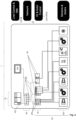
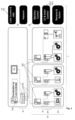
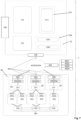
- Figure 3 illustrates, schematically, an architecture for a possible implementation of an embodiment of the inventive method and system for a modular control system 1 providing a dynamically adaptive process control of a process line 301 of a plant 30 in a Machine-to-Machine network 403/M2M
- dynamically adaptive is used herein in the sense of automatically recognizing new arrangements and technical layouts of the process line 301 and adapting its operation to the new arrangements and technical layouts of the process line 301.
- layout as such can be modified by the control system 1 itself by monitoring or scanning periodically or on request new settings of a process line 301.
- the layout can also be adapted manually, e.g.
- the process line 301 of the plant 30 comprises a plurality of distributed machine control system 20 with one or more elements 303 interlocked to one or more operational unit 302 of the process line 303.
- the operation of an operational unit 302, which performs a physical function within the process line 301, is controlled by an associated machine control system 20 by means of the elements 303 interlocked to the operational units 302.
- the elements 303 at least comprise IO-interfaces 3031 and actor control devices 3032.
- the process line 301 e.g. for the production of food products, especially chocolate products, can comprise operational unit 302 in which the products, e.g. the food products, can be processed and/or transported.
- the operational units 302 can be a mould dynamically based on the adapted layout of the process line 301.
- the process line 301 of the plant 30 comprises a plurality of distributed machine control system 20 with one or more elements 303 interlocked to one or more operational unit 302 of the process line 303.
- the operation of an operational unit 302, which performs a physical function within the process line 301, is controlled by an associated machine control system 20 by means of the elements 303 interlocked to the operational units 302.
- the elements 303 at least comprise IO-interfaces 3031 and actor control devices 3032.
- the process line 301 e.g. for the production of food products, especially chocolate products, can comprise operational unit 302 in which the products, e.g.
- the operational units 302 can be a mould warmer, a cooling station, a casting station, a sleeve forming station, a cold stamping station, an opening forming station, a filling station, an insertion station, a shaking station, a lid station, a weigh station, a licking station, a decorating station, a demoulding station, a stacking and/or unstacking station, a spraying station, a printing station, an insertion station, a packaging station, a foil application station and/or a control station, or the same.
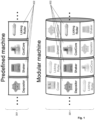
- the operational units 302 can be realized as standardized modules each having a module frame with a height, a width and a length which makes them interchangeable without redesigning the structure of the process line 301, if two or more modules have to be replaced or changed.
- the individual machines have a grid dimension or system dimension for the different mechanical features.
- this is not a requirement for the realization of the modular control system 1, as such.
- the distributed machine control systems 20 are accessible by an independent line control system 10 via network interfaces 105/202, where messages and/or signaling data containing monitoring/condition data and/or signaling/configuration data and/or steering commands are transmittable between the line control system 10 and the machine control systems 20.
- the line control system 10 can be realized in situ, i.e. at the plant 30, or decentralized at any location accessible by the data transmission network 40. However, since the line control system 10 is typically realized as a link between the control level and process control level, it is normally realized in situ. It has to be noted, that for the embodiment variant of a decentralized line control system 10 further technical requirements for the data transmission network 10 may be crucial, such as real-time or quasi real-time capability for synchronization of the machines.
- the network 40 can comprise the worldwide back-bone network Internet.
- the control system 1 can be operated centralized, in particular by a provider of line control system 10 and appropriate machine control systems 20.
- the network interface 105 of the line control system 10 and the network interface 202 of the machine control systems 20 may include interfaces to WLAN (Wireless Local Area Network), Bluetooth, GSM (Global System for Mobile Communication), GPRS (Generalized Packet Radio Service), USSD (Unstructured Supplementary Services Data), UMTS (Universal Mobile Telecommunications System) and/or Ethernet or another wired LAN (Local Area Network) etc.
- the data transmission network 40 may stand for or comprise various heterogeneous networks, such as, for example, a Bluetooth network, for example for installations in covered localities, a mobile-radio network with GSM and/or UMTS etc., a wireless LAN, for example based on IEEE wireless 802.1x, but also on a wired LAN, i.e. on a local fixed network, in particular also on the PSTN (Public Switched Telephone Network) etc.
- PSTN Public Switched Telephone Network
- the interfaces may be not only packet-switched interfaces, such as are utilized directly by network protocols such as, for example, Ethernet or token ring, but also circuit-switched interfaces, which can be utilized by means of protocols such as, for example, PPP (Point to Point Protocol), SLIP (Serial Line Internet Protocol) or GPRS (Generalized Packet Radio Service) i.e. which interfaces, for example, do not possess a network address such as a MAC address or a DLC address.
- PPP Point to Point Protocol
- SLIP Serial Line Internet Protocol
- GPRS Generalized Packet Radio Service
- the communication between the line control system 10 and the machine control system 20 can be effected via the LAN and/or the worldwide backbone network Internet, for example by means of special short messages, for example SMS (Short Message Services), EMS (Enhanced Message Services), via a signaling channel, such as, for example, USSD (Unstructured Supplementary Services Data) or other technologies, such as MExE (Mobile Execution Environment), GPRS (Generalized Packet Radio Service), WAP (Wireless Application Protocol) or UMTS (Universal Mobile Telecommunications System) or via IEEE wireless 802.1x or another useful channel.
- SMS Short Message Services
- EMS Enhanced Message Services
- a signaling channel such as, for example, USSD (Unstructured Supplementary Services Data) or other technologies, such as MExE (Mobile Execution Environment), GPRS (Generalized Packet Radio Service), WAP (Wireless Application Protocol) or UMTS (Universal Mobile Telecommunications System) or via IEEE wireless 802.1x or another useful channel.
- SMS Short Message
- the line control system 10 can comprise a human machine interface 106/HMI dynamically adapting a process line layout 1011 based on the configured, pre-configured or detected sequence of the machine control systems 20 within the process line 301, the process line layout 1011 being presentable to a user via the human machine interface 106/HMI for user-interaction with the operations within the process line 301.
- the line control system 10 can comprise a controller which operates, in the modular control system 1, the control logic of the modular control system 1 and the line control system 10, respectively, independently of other controllers forming e.g. part of the machine control systems 20 and comprising for example PLCs to operate the operational units 301.
- the controller of the line control system 10 can operate the one or multiple machine control system 20, which form one or more process lines 301 of a process plant 30.
- the configured layout may be operated synchronously as a part of the process line 301.
- Configuration parameters 4022 used by the controller may be imported or downloaded from a configuration database of the line control system 10 into one or more configuration databases of the distributed machine control system 20, where the former may comprise e.g. a central repository of configuration data of the line control system 10.
- the controller is built natively on the platform of the line control system 10.
- the controller in this case can communicate with the machine control system 20 as nodes according to one or more communication protocols of the modular control system 1, which can also be proprietary in some implementations or use standard data transfer protocols.
- the line control system 10 and/or the controller communicates with the nodes of the machine control systems 20 using a standard industrial communication protocol.
- the modular control system 1 comprises a plurality of communication channels 401.
- the plurality of communication channels 401 are operable to provide communicate between the line control system 10 and the machine control systems 20.
- the machine control systems 20 act as network nodes 203 in the Machine-to-Machine 403/M2M network, for example as IP-network nodes having a fixed MAC-address. Other standard communication and data transmission can be used as well.
- Each machine control system 20 comprises a machine control system-specific identification 204, which can be based on the IP-address of the machine control systems 20 as network node or the MAC-address (Media Access Control Address) assigned to a network interface controller (NIC) of the network interface 202 of the machine control system 20 or any other machine/network interface identicator.
- NIC network interface controller
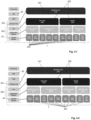
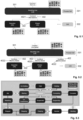
- the process of detecting can be realized as follows: Based on the configured IP address list, a connection is established with the machines one after the other. After a connection is established, the machine identification is exchanged using a data packet (configuration parameters). Further, the control logic layer 402 accepts command messages 4021 for the controlling, monitoring and steering of the operational units 302 via the machine control systems 20 steered by the line control system 10 (see figure 5.1 ). As such, commands of the command messages 4021 control the machine and conditions of the command messages 4021 provide the feedback and monitoring of the processes.
- the configuration parameters can be exchanged when the line is set up and the control parameters can be exchanged cyclically thereafter.
- the transmitted configuration parameters 4022 can also comprise configuration parameters 4022 indicating states of the operational units 302.
- PackML created by the Organization for Machine Automation and Control (OMAC) in conjunction with the International Society of Automation (ISA) is to bring a operational consistency to all machines that make up a discrete process line or other types of discrete process flow.
- PackML provides, inter alia, (i) standard defined machine states and operational flow, (ii) Overall Equipment Effectiveness (OEE) data, (iii) Root Cause Analysis (RCA) data, and (iv) Flexible recipe schemes and standardized SCADA or MES inputs. Both signaling exchanges (commands/configurations) form part of the control logic layer 402 between the line control system 10 and the machine control systems 20, as described above.
- the PackML state machine can be embedded in an existing Rockwell framework, where the latter is extended as described above.
- the controller allows operating a plurality of configurable communication ports, where the controller may be included as part of a modular control system 1 and the line control system 1, respectively.
- the controller may include the control logic layer 402 operable to control the machine control systems 20 and the operational units 301 of a process plant 30, respectively.
- the operational units 301 are configured to perform a physical function within the process line 30 as described herein.
- the plurality of communication ports may include a first set of communication ports and a second set of communication ports.
- the controller accesses the control logic layer 402 as a software layer that accepts the configuration parameters 4022, the machine control commands 4023, and additionally port configuration parameters.
- the machine control systems 20 can provide a command and condition interface between the line control system 10 and operational units 302 specified by their performable operations.
- a line process engine 101 of the line control system 10 can e.g. comprise a library 141 with identifications 204 and assigned line control commands and parameters 1042 for different machine control systems 20 to provide the common interface, wherein the dynamical structuring and adjustment of the process line 301 by the detected sequence of machine control systems 20 is based on the transmitted configuration parameters 4022 and the machine control commands 4033 extracted from the library 141.
- the communication over the control logic layer 402 can e.g. be based on Simple Network Management Protocol 404/SNMP providing identification of a machine control system 20 using the IP-address of the machine control system 2, the machine control system 20 acting as an IP-network node within a IP-network.
- control logic layer 402 can accept Logix tag-based alarming parameters providing the alarming control parameters for the line control system 10.
- the machine control systems 20 accessible by the line control system 10 via network interfaces 105/202, and the monitoring data and/or signaling data and/or steering commands can e.g. follow a defined state model structure being based on the ISA standard 88/95 for the control of the machines and the automation.
- the state model structure can e.g. be based on PackML as a underlying structure for the control of the machines and the automation.
- the configuration parameters 4022 can further comprise parameters indicating the current state of an operational unit 302 following a predefined state model.
Landscapes
- Engineering & Computer Science (AREA)
- Physics & Mathematics (AREA)
- General Physics & Mathematics (AREA)
- Automation & Control Theory (AREA)
- General Engineering & Computer Science (AREA)
- Manufacturing & Machinery (AREA)
- Quality & Reliability (AREA)
- Programmable Controllers (AREA)
Claims (10)
- Modulares Steuerungssystem (1), das dazu konfiguriert ist, eine dynamisch adaptive Prozesssteuerung einer Prozesslinie (301) einer Anlage (30) in einem Maschinezu-Maschine-Netzwerk (M2M) bereitzustellen, wobei die Prozesslinie (301) der Anlage (30) eine Vielzahl von verteilten Maschinensteuerungssystemen (20) mit einem oder mehreren Elementen (303) umfasst, die mit einer oder mehreren Betriebseinheiten (302) der Prozesslinie (301) verknüpft sind, wobei der Betrieb einer Betriebseinheit (302), die eine physische Funktion innerhalb der Prozesslinie (301) ausführt, durch ein zugeordnetes Maschinensteuerungssystem (20) mittels der mit den Betriebseinheiten (302) verknüpfte Elemente (303) gesteuert wird, wobei die Elemente (303) zumindest IO-Schnittstellen (3031) und Aktorsteuerungsvorrichtungen (3032) umfassen, wobeidie verteilten Maschinensteuerungssystemen (20) von einem unabhängigen Liniensteuerungssystem (10) über Netzwerkschnittstellen (105/202) zugänglich sind und Nachrichten mit Überwachungsdaten und/oder Signalisierungsdaten und/oder Lenkbefehlen zwischen dem Liniensteuerungssystem (10) und den Maschinensteuerungssystemen (20) übertragbar sind,das modulare Steuerungssystem (1) eine Vielzahl von Kommunikationskanälen (401) umfasst, wobei die Vielzahl von Kommunikationskanälen (401) betreibbar ist, um zwischen dem Liniensteuerungssystem (10) und den Maschinensteuerungssystemen (20) zu kommunizieren, wobei die Maschinensteuerungssysteme (20) als Netzwerkknoten (203) in dem Maschine-zu-Maschine-Netzwerk (M2M) wirken, wobei jedes Maschinensteuerungssystem (20) eine maschinensteuerungssystemspezifische Identifikation umfasst,das modulare Steuerungssystem (1) umfasst eine Steuerungslogikschicht (402), die zwischen dem Liniensteuerungssystem (10) und den Maschinensteuerungssystemen (20) betrieben werden kann, um die Nachrichten (4021) zur Steuerung, Überwachung und Lenkung der Betriebseinheiten (302) über die Maschinensteuerungssysteme (20) zu übertragen, dadurch gekennzeichnetdass die Steuerungslogikschicht (402) so konfiguriert ist, dass sie Konfigurationsparameter (4022) akzeptiert, wobei die Konfigurationsparameter (4022), die von einem Maschinensteuerungssystem (20) übertragen werden, mindestens ein vorhergehendes Maschinensteuerungssystem (20) und/oder ein nachfolgendes Maschinensteuerungssystem (20) innerhalb der Prozesslinie (301) auf der Grundlage von maschinensteuerungssystemspezifischen Identifikationen angeben, wobei das Liniensteuerungssystem (10) so konfiguriert ist, dass es die Prozesslinie (301) durch eine erfasste Sequenz von Maschinensteuerungssystemen (20) auf der Grundlage der übertragenen Konfigurationsparameter (4022) dynamisch strukturiert und einstellt,die Steuerung und/oder Überwachung und/oder Lenkung der Betriebseinheiten (302) über die Maschinensteuerungssysteme (20) durch das Liniensteuerungssystem (10) auf der Grundlage der dynamisch angepassten Prozesslinie (301) dynamisch anpassbar ist, wobei die Betriebseinheiten (302) mittels der Vielzahl von Maschinensteuerungssystemen (20), die speicherprogrammierbare Steuerung (SPS) umfassen, über die Vielzahl von verknüpften Elementen (303) gesteuert werden, wobei jeder Betriebseinheit (302) mittels ihres zugehörigen Maschinensteuerungssystems (20) signalisiert wird, einen oder mehrere Vorgänge auszuführen, wobei die Steuerung und/oder Überwachung und/oder Lenkung durch das Liniensteuerungssystem (10) zumindest mit dem einen oder den mehreren auszuführenden Vorgängen in Zusammenhang steht, unddie Maschinensteuerungssysteme (20) so konfiguriert sind, dass sie eine gemeinsame Schnittstelle zwischen dem Liniensteuerungssystem (10) und Betriebseinheiten (302) bereitstellen, die durch ihre ausführbaren Vorgänge spezifiziert sind, wobei ein Linienprozessmotor des Liniensteuerungssystems (10) eine Bibliothek mit Identifikationen und zugewiesenen Liniensteuerungsbefehlen und -parametern für verschiedene Maschinensteuerungssysteme (20) umfasst, um die gemeinsame Schnittstelle bereitzustellen, wobei die dynamische Strukturierung und Anpassung der Prozesslinie (301) durch die erkannte Sequenz von Maschinensteuerungssystemen (20) auf den übertragenen Konfigurationsparametern (4022) und den Maschinensteuerungsbefehlen basiert, die aus der Bibliothek extrahiert wurden.
- Modulares Steuerungssystem (1) nach Anspruch 1, dadurch gekennzeichnet, dass jedes Maschinensteuerungssystem (20) einen definierten Bereich von ausführbaren Vorgängen umfasst, die von den Betriebseinheiten (302), die mit dem jeweiligen Maschinensteuerungssystem (20) verbunden sind, verarbeitet oder durchgeführt werden können.
- Modulares Steuerungssystem (1) nach einem der Ansprüche 1 oder 2, dadurch gekennzeichnet, dass das Liniensteuerungssystem (10) eine Mensch-Maschine-Schnittstelle (106/HMI) umfasst, die ein Prozesslinienlayout basierend auf der erkannten Sequenz der Maschinensteuerungssysteme (20) innerhalb der Prozesslinie (301) dynamisch anpasst, wobei das Prozesslinienlayout einem Benutzer über die Mensch-Maschine-Schnittstelle (106/HMI) zur Benutzerinteraktion mit den Vorgängen innerhalb der Prozesslinie (301) präsentiert werden kann.
- Modulares Steuerungssystem (1) nach einem der Ansprüche 1 bis 3, dadurch gekennzeichnet, dass ein Produktionsprozess der Prozesslinie (301) auf der modular anpassbaren Sequenz von Maschinensteuerungen (20) mit zugehörigen Betriebseinheiten (302) innerhalb der Prozesslinie (301) basiert.
- Modulares Steuerungssystem (1) nach Anspruch 4, dadurch gekennzeichnet, dass die Sequenz von Maschinensteuerungssystemen (20) mit zugehörigen Betriebseinheiten (302) innerhalb der Prozesslinie (301) durch Umstrukturierung der Prozesslinie (301) in der Anlage (30) dynamisch anpassbar ist, was eine dynamische und automatisierte Rekonfiguration des Prozesslinienlayouts im Liniensteuerungssystem (10) auslöst.
- Modulares Steuerungssystem (1) nach einem der Ansprüche 1 bis 5, dadurch gekennzeichnet, dass die Kommunikation über die Steuerungslogikschicht (402) auf dem Simple Network Management Protocol (404/SNMP) basiert, das die Identifizierung eines Maschinensteuerungssystems (2) anhand der IP-Adresse des Maschinensteuerungssystems (2) ermöglicht, wobei das Maschinensteuerungssystem (2) als IP-Netzwerkknoten innerhalb eines IP-Netzwerks fungiert.
- Modulares Steuerungssystem (1) nach einem der Ansprüche 1 bis 6, dadurch gekennzeichnet, dass die Steuerungslogikschicht (402) Logix-Tag-basierte Alarmierungsparameter akzeptiert, welche die Alarmierungssteuerungsparameter für das Liniensteuerungssystem (10) bereitstellen.
- Modulares Steuerungssystem (1) nach einem der Ansprüche 1 bis 7, dadurch gekennzeichnet, dass die Maschinensteuerungssysteme (20) über Netzwerkschnittstellen (105/202) von dem Liniensteuerungssystem (10) zugänglich sind und die Überwachungsdaten und/oder Signalisierungsdaten und/oder Lenkbefehle einer Zustandsmodellstruktur folgen, die auf dem ISA-Standard 88/95 für die Steuerung der Maschinen und der Automatisierung basiert.
- Modulares Steuerungssystem (1) nach einem der Ansprüche 1 bis 8, dadurch gekennzeichnet, dass die Zustandsmodellstruktur auf PackML als zugrundeliegende Struktur für die Steuerung der Maschinen und der Automatisierung basiert.
- Modulares Steuerungssystem (1) nach einem der Ansprüche 1 bis 9, dadurch gekennzeichnet, dass die Konfigurationsparameter (4022) ferner Parameter umfassen, die den aktuellen Zustand einer Betriebseinheit (302) nach einem vordefinierten Zustandsmodell angeben.
Priority Applications (3)
| Application Number | Priority Date | Filing Date | Title |
|---|---|---|---|
| EP21163544.6A EP4060438B1 (de) | 2021-03-18 | 2021-03-18 | Modulares steuersystem und verfahren zur dynamischen adaptiven prozesssteuerung einer anlage in einem maschinen-zu-maschinen-netzwerk |
| DK21163544.6T DK4060438T3 (da) | 2021-03-18 | 2021-03-18 | Modulært styresystem og fremgangsmåde til dynamisk adaptiv processtyring af et anlæg i et maskine-til-maskine-netværk |
| US17/654,712 US12422804B2 (en) | 2021-03-18 | 2022-03-14 | Modular control system and method for dynamically adaptive process control of a plant in a machine-to-machine network |
Applications Claiming Priority (1)
| Application Number | Priority Date | Filing Date | Title |
|---|---|---|---|
| EP21163544.6A EP4060438B1 (de) | 2021-03-18 | 2021-03-18 | Modulares steuersystem und verfahren zur dynamischen adaptiven prozesssteuerung einer anlage in einem maschinen-zu-maschinen-netzwerk |
Publications (2)
| Publication Number | Publication Date |
|---|---|
| EP4060438A1 EP4060438A1 (de) | 2022-09-21 |
| EP4060438B1 true EP4060438B1 (de) | 2025-05-07 |
Family
ID=75108284
Family Applications (1)
| Application Number | Title | Priority Date | Filing Date |
|---|---|---|---|
| EP21163544.6A Active EP4060438B1 (de) | 2021-03-18 | 2021-03-18 | Modulares steuersystem und verfahren zur dynamischen adaptiven prozesssteuerung einer anlage in einem maschinen-zu-maschinen-netzwerk |
Country Status (3)
| Country | Link |
|---|---|
| US (1) | US12422804B2 (de) |
| EP (1) | EP4060438B1 (de) |
| DK (1) | DK4060438T3 (de) |
Families Citing this family (2)
| Publication number | Priority date | Publication date | Assignee | Title |
|---|---|---|---|---|
| TWI885573B (zh) * | 2023-11-10 | 2025-06-01 | 財團法人工業技術研究院 | 外接式生產機台控制系統及其運作方法 |
| CN117499443B (zh) * | 2023-12-28 | 2024-03-29 | 湖南信健科技有限公司 | 一种分布式控制系统dcs通信松耦合管理系统 |
Family Cites Families (8)
| Publication number | Priority date | Publication date | Assignee | Title |
|---|---|---|---|---|
| DE19809651C2 (de) | 1998-03-06 | 2003-06-26 | Buehler Bindler Gmbh | Schokoladenanlage |
| JP6290420B2 (ja) * | 2013-12-20 | 2018-03-07 | ザ プロクター アンド ギャンブル カンパニー | 吸収性物品を製造するためのフレキシブルマウントコンバータ |
| US10649414B2 (en) * | 2015-03-27 | 2020-05-12 | Bühler AG | Adaptive cross plant control and steering system, and corresponding method thereof |
| EP3111768B1 (de) | 2015-07-01 | 2019-03-27 | Bühler GmbH | Anlage zur fertigung von nahrungsmitteln |
| JP6888775B2 (ja) | 2016-04-05 | 2021-06-16 | 川崎重工業株式会社 | 搬送装置、それを用いた製造ライン、及び製造ラインの変更方法 |
| GB2558366B (en) * | 2016-10-24 | 2022-08-10 | Fisher Rosemount Systems Inc | Systems and methods for merging modular control systems into a process plant |
| KR20190133468A (ko) * | 2018-05-23 | 2019-12-03 | 울산과학기술원 | 레이아웃 재구성이 가능한 모듈러 공장 시스템 |
| US20220043431A1 (en) * | 2020-08-05 | 2022-02-10 | Rockwell Automation Technologies, Inc. | Industrial automation control program utilization in analytics model engine |
-
2021
- 2021-03-18 EP EP21163544.6A patent/EP4060438B1/de active Active
- 2021-03-18 DK DK21163544.6T patent/DK4060438T3/da active
-
2022
- 2022-03-14 US US17/654,712 patent/US12422804B2/en active Active
Also Published As
| Publication number | Publication date |
|---|---|
| EP4060438A1 (de) | 2022-09-21 |
| US20220299961A1 (en) | 2022-09-22 |
| DK4060438T3 (da) | 2025-06-02 |
| US12422804B2 (en) | 2025-09-23 |
Similar Documents
| Publication | Publication Date | Title |
|---|---|---|
| EP3275214B1 (de) | Verfahren und system zur prozesssteuerung von anlagen in einem auf opc-ua basierenden maschine-zu-maschine-netzwerk | |
| US10853298B2 (en) | Apparatus and methods for communicatively coupling field devices to controllers in a process control system using a distributed marshaling architecture | |
| EP3722898B1 (de) | E/a-mesh-architektur für ein industrielles automatisierungssystem | |
| US9235454B2 (en) | Method and server for generating a display and operating view for an operating and monitoring device of an industrial automation arrangement | |
| US12422804B2 (en) | Modular control system and method for dynamically adaptive process control of a plant in a machine-to-machine network | |
| US7761698B2 (en) | Method for replacing a field device of automation technology | |
| CN110301129B (zh) | 用于多协议无线传感器网络的系统、方法和介质 | |
| CN102684720A (zh) | 用于在过程控制或监测环境中进行无线通信的方法和装置 | |
| US12407582B2 (en) | Method the representation and operation of production resources, in particular for the plastics-processing industry | |
| US11886152B2 (en) | Automated monitoring and control using augmented streaming decision tree | |
| EP3816743A1 (de) | Steuerung industrieller prozesse und automatisierungssystem mit entkoppelten steuergeräten | |
| Rerkratn et al. | Integration of WirelessHART devices into mitsubishi PLC for plant monitoring | |
| WO2006023568A1 (en) | Programmable logic controller (plc) with satellite interface | |
| BLEVINS et al. | 4.9 DCS: Integration with Buses and Networks |
Legal Events
| Date | Code | Title | Description |
|---|---|---|---|
| STAA | Information on the status of an ep patent application or granted ep patent |
Free format text: STATUS: EXAMINATION IS IN PROGRESS |
|
| PUAI | Public reference made under article 153(3) epc to a published international application that has entered the european phase |
Free format text: ORIGINAL CODE: 0009012 |
|
| 17P | Request for examination filed |
Effective date: 20210318 |
|
| AK | Designated contracting states |
Kind code of ref document: A1 Designated state(s): AL AT BE BG CH CY CZ DE DK EE ES FI FR GB GR HR HU IE IS IT LI LT LU LV MC MK MT NL NO PL PT RO RS SE SI SK SM TR |
|
| RBV | Designated contracting states (corrected) |
Designated state(s): AL AT BE BG CH CY CZ DE DK EE ES FI FR GB GR HR HU IE IS IT LI LT LU LV MC MK MT NL NO PL PT RO RS SE SI SK SM TR |
|
| TPAC | Observations filed by third parties |
Free format text: ORIGINAL CODE: EPIDOSNTIPA |
|
| P01 | Opt-out of the competence of the unified patent court (upc) registered |
Effective date: 20230523 |
|
| GRAP | Despatch of communication of intention to grant a patent |
Free format text: ORIGINAL CODE: EPIDOSNIGR1 |
|
| STAA | Information on the status of an ep patent application or granted ep patent |
Free format text: STATUS: GRANT OF PATENT IS INTENDED |
|
| INTG | Intention to grant announced |
Effective date: 20241219 |
|
| GRAS | Grant fee paid |
Free format text: ORIGINAL CODE: EPIDOSNIGR3 |
|
| GRAA | (expected) grant |
Free format text: ORIGINAL CODE: 0009210 |
|
| STAA | Information on the status of an ep patent application or granted ep patent |
Free format text: STATUS: THE PATENT HAS BEEN GRANTED |
|
| AK | Designated contracting states |
Kind code of ref document: B1 Designated state(s): AL AT BE BG CH CY CZ DE DK EE ES FI FR GB GR HR HU IE IS IT LI LT LU LV MC MK MT NL NO PL PT RO RS SE SI SK SM TR |
|
| REG | Reference to a national code |
Ref country code: GB Ref legal event code: FG4D |
|
| REG | Reference to a national code |
Ref country code: CH Ref legal event code: EP |
|
| REG | Reference to a national code |
Ref country code: DE Ref legal event code: R096 Ref document number: 602021030257 Country of ref document: DE |
|
| REG | Reference to a national code |
Ref country code: DK Ref legal event code: T3 Effective date: 20250527 |
|
| REG | Reference to a national code |
Ref country code: IE Ref legal event code: FG4D |
|
| REG | Reference to a national code |
Ref country code: SK Ref legal event code: T3 Ref document number: E 46618 Country of ref document: SK |
|
| REG | Reference to a national code |
Ref country code: NL Ref legal event code: MP Effective date: 20250507 |
|
| PG25 | Lapsed in a contracting state [announced via postgrant information from national office to epo] |
Ref country code: FI Free format text: LAPSE BECAUSE OF FAILURE TO SUBMIT A TRANSLATION OF THE DESCRIPTION OR TO PAY THE FEE WITHIN THE PRESCRIBED TIME-LIMIT Effective date: 20250507 Ref country code: PT Free format text: LAPSE BECAUSE OF FAILURE TO SUBMIT A TRANSLATION OF THE DESCRIPTION OR TO PAY THE FEE WITHIN THE PRESCRIBED TIME-LIMIT Effective date: 20250908 Ref country code: ES Free format text: LAPSE BECAUSE OF FAILURE TO SUBMIT A TRANSLATION OF THE DESCRIPTION OR TO PAY THE FEE WITHIN THE PRESCRIBED TIME-LIMIT Effective date: 20250507 |
|
| REG | Reference to a national code |
Ref country code: LT Ref legal event code: MG9D |
|
| PG25 | Lapsed in a contracting state [announced via postgrant information from national office to epo] |
Ref country code: GR Free format text: LAPSE BECAUSE OF FAILURE TO SUBMIT A TRANSLATION OF THE DESCRIPTION OR TO PAY THE FEE WITHIN THE PRESCRIBED TIME-LIMIT Effective date: 20250808 Ref country code: NO Free format text: LAPSE BECAUSE OF FAILURE TO SUBMIT A TRANSLATION OF THE DESCRIPTION OR TO PAY THE FEE WITHIN THE PRESCRIBED TIME-LIMIT Effective date: 20250807 |
|
| PG25 | Lapsed in a contracting state [announced via postgrant information from national office to epo] |
Ref country code: PL Free format text: LAPSE BECAUSE OF FAILURE TO SUBMIT A TRANSLATION OF THE DESCRIPTION OR TO PAY THE FEE WITHIN THE PRESCRIBED TIME-LIMIT Effective date: 20250507 Ref country code: NL Free format text: LAPSE BECAUSE OF FAILURE TO SUBMIT A TRANSLATION OF THE DESCRIPTION OR TO PAY THE FEE WITHIN THE PRESCRIBED TIME-LIMIT Effective date: 20250507 |
|
| REG | Reference to a national code |
Ref country code: AT Ref legal event code: MK05 Ref document number: 1793145 Country of ref document: AT Kind code of ref document: T Effective date: 20250507 |
|
| PG25 | Lapsed in a contracting state [announced via postgrant information from national office to epo] |
Ref country code: BG Free format text: LAPSE BECAUSE OF FAILURE TO SUBMIT A TRANSLATION OF THE DESCRIPTION OR TO PAY THE FEE WITHIN THE PRESCRIBED TIME-LIMIT Effective date: 20250507 |
|
| PG25 | Lapsed in a contracting state [announced via postgrant information from national office to epo] |
Ref country code: HR Free format text: LAPSE BECAUSE OF FAILURE TO SUBMIT A TRANSLATION OF THE DESCRIPTION OR TO PAY THE FEE WITHIN THE PRESCRIBED TIME-LIMIT Effective date: 20250507 |
|
| PG25 | Lapsed in a contracting state [announced via postgrant information from national office to epo] |
Ref country code: AT Free format text: LAPSE BECAUSE OF FAILURE TO SUBMIT A TRANSLATION OF THE DESCRIPTION OR TO PAY THE FEE WITHIN THE PRESCRIBED TIME-LIMIT Effective date: 20250507 |
|
| PG25 | Lapsed in a contracting state [announced via postgrant information from national office to epo] |
Ref country code: RS Free format text: LAPSE BECAUSE OF FAILURE TO SUBMIT A TRANSLATION OF THE DESCRIPTION OR TO PAY THE FEE WITHIN THE PRESCRIBED TIME-LIMIT Effective date: 20250807 |
|
| PG25 | Lapsed in a contracting state [announced via postgrant information from national office to epo] |
Ref country code: IS Free format text: LAPSE BECAUSE OF FAILURE TO SUBMIT A TRANSLATION OF THE DESCRIPTION OR TO PAY THE FEE WITHIN THE PRESCRIBED TIME-LIMIT Effective date: 20250907 |
|
| PG25 | Lapsed in a contracting state [announced via postgrant information from national office to epo] |
Ref country code: LV Free format text: LAPSE BECAUSE OF FAILURE TO SUBMIT A TRANSLATION OF THE DESCRIPTION OR TO PAY THE FEE WITHIN THE PRESCRIBED TIME-LIMIT Effective date: 20250507 |
|
| PG25 | Lapsed in a contracting state [announced via postgrant information from national office to epo] |
Ref country code: SM Free format text: LAPSE BECAUSE OF FAILURE TO SUBMIT A TRANSLATION OF THE DESCRIPTION OR TO PAY THE FEE WITHIN THE PRESCRIBED TIME-LIMIT Effective date: 20250507 |
|
| PG25 | Lapsed in a contracting state [announced via postgrant information from national office to epo] |
Ref country code: CZ Free format text: LAPSE BECAUSE OF FAILURE TO SUBMIT A TRANSLATION OF THE DESCRIPTION OR TO PAY THE FEE WITHIN THE PRESCRIBED TIME-LIMIT Effective date: 20250507 |
|
| PG25 | Lapsed in a contracting state [announced via postgrant information from national office to epo] |
Ref country code: EE Free format text: LAPSE BECAUSE OF FAILURE TO SUBMIT A TRANSLATION OF THE DESCRIPTION OR TO PAY THE FEE WITHIN THE PRESCRIBED TIME-LIMIT Effective date: 20250507 |
|
| PLBI | Opposition filed |
Free format text: ORIGINAL CODE: 0009260 |