EP4060178B1 - Pressure regulator - Google Patents
Pressure regulator Download PDFInfo
- Publication number
- EP4060178B1 EP4060178B1 EP22160710.4A EP22160710A EP4060178B1 EP 4060178 B1 EP4060178 B1 EP 4060178B1 EP 22160710 A EP22160710 A EP 22160710A EP 4060178 B1 EP4060178 B1 EP 4060178B1
- Authority
- EP
- European Patent Office
- Prior art keywords
- pressure regulating
- seat
- regulating valve
- valve
- valve body
- Prior art date
- Legal status (The legal status is an assumption and is not a legal conclusion. Google has not performed a legal analysis and makes no representation as to the accuracy of the status listed.)
- Active
Links
Images


Classifications
-
- F—MECHANICAL ENGINEERING; LIGHTING; HEATING; WEAPONS; BLASTING
- F02—COMBUSTION ENGINES; HOT-GAS OR COMBUSTION-PRODUCT ENGINE PLANTS
- F02M—SUPPLYING COMBUSTION ENGINES IN GENERAL WITH COMBUSTIBLE MIXTURES OR CONSTITUENTS THEREOF
- F02M21/00—Apparatus for supplying engines with non-liquid fuels, e.g. gaseous fuels stored in liquid form
- F02M21/02—Apparatus for supplying engines with non-liquid fuels, e.g. gaseous fuels stored in liquid form for gaseous fuels
- F02M21/0218—Details on the gaseous fuel supply system, e.g. tanks, valves, pipes, pumps, rails, injectors or mixers
- F02M21/023—Valves; Pressure or flow regulators in the fuel supply or return system
- F02M21/0239—Pressure or flow regulators therefor
-
- G—PHYSICS
- G05—CONTROLLING; REGULATING
- G05D—SYSTEMS FOR CONTROLLING OR REGULATING NON-ELECTRIC VARIABLES
- G05D16/00—Control of fluid pressure
- G05D16/04—Control of fluid pressure without auxiliary power
- G05D16/10—Control of fluid pressure without auxiliary power the sensing element being a piston or plunger
- G05D16/103—Control of fluid pressure without auxiliary power the sensing element being a piston or plunger the sensing element placed between the inlet and outlet
- G05D16/106—Sleeve-like sensing elements; Sensing elements surrounded by the flow path
-
- F—MECHANICAL ENGINEERING; LIGHTING; HEATING; WEAPONS; BLASTING
- F02—COMBUSTION ENGINES; HOT-GAS OR COMBUSTION-PRODUCT ENGINE PLANTS
- F02M—SUPPLYING COMBUSTION ENGINES IN GENERAL WITH COMBUSTIBLE MIXTURES OR CONSTITUENTS THEREOF
- F02M37/00—Apparatus or systems for feeding liquid fuel from storage containers to carburettors or fuel-injection apparatus; Arrangements for purifying liquid fuel specially adapted for, or arranged on, internal-combustion engines
- F02M37/0011—Constructional details; Manufacturing or assembly of elements of fuel systems; Materials therefor
- F02M37/0023—Valves in the fuel supply and return system
- F02M37/0029—Pressure regulator in the low pressure fuel system
-
- F—MECHANICAL ENGINEERING; LIGHTING; HEATING; WEAPONS; BLASTING
- F16—ENGINEERING ELEMENTS AND UNITS; GENERAL MEASURES FOR PRODUCING AND MAINTAINING EFFECTIVE FUNCTIONING OF MACHINES OR INSTALLATIONS; THERMAL INSULATION IN GENERAL
- F16C—SHAFTS; FLEXIBLE SHAFTS; ELEMENTS OR CRANKSHAFT MECHANISMS; ROTARY BODIES OTHER THAN GEARING ELEMENTS; BEARINGS
- F16C17/00—Sliding-contact bearings for exclusively rotary movement
- F16C17/26—Systems consisting of a plurality of sliding-contact bearings
-
- G—PHYSICS
- G05—CONTROLLING; REGULATING
- G05D—SYSTEMS FOR CONTROLLING OR REGULATING NON-ELECTRIC VARIABLES
- G05D16/00—Control of fluid pressure
- G05D16/04—Control of fluid pressure without auxiliary power
- G05D16/10—Control of fluid pressure without auxiliary power the sensing element being a piston or plunger
- G05D16/103—Control of fluid pressure without auxiliary power the sensing element being a piston or plunger the sensing element placed between the inlet and outlet
-
- F—MECHANICAL ENGINEERING; LIGHTING; HEATING; WEAPONS; BLASTING
- F16—ENGINEERING ELEMENTS AND UNITS; GENERAL MEASURES FOR PRODUCING AND MAINTAINING EFFECTIVE FUNCTIONING OF MACHINES OR INSTALLATIONS; THERMAL INSULATION IN GENERAL
- F16C—SHAFTS; FLEXIBLE SHAFTS; ELEMENTS OR CRANKSHAFT MECHANISMS; ROTARY BODIES OTHER THAN GEARING ELEMENTS; BEARINGS
- F16C2361/00—Apparatus or articles in engineering in general
- F16C2361/91—Valves
-
- F—MECHANICAL ENGINEERING; LIGHTING; HEATING; WEAPONS; BLASTING
- F16—ENGINEERING ELEMENTS AND UNITS; GENERAL MEASURES FOR PRODUCING AND MAINTAINING EFFECTIVE FUNCTIONING OF MACHINES OR INSTALLATIONS; THERMAL INSULATION IN GENERAL
- F16C—SHAFTS; FLEXIBLE SHAFTS; ELEMENTS OR CRANKSHAFT MECHANISMS; ROTARY BODIES OTHER THAN GEARING ELEMENTS; BEARINGS
- F16C33/00—Parts of bearings; Special methods for making bearings or parts thereof
- F16C33/02—Parts of sliding-contact bearings
- F16C33/04—Brasses; Bushes; Linings
- F16C33/20—Sliding surface consisting mainly of plastics
Definitions
- the present invention relates to a regulator used to depressurize a high pressure fluid to a desired pressure.
- a regulator that controls a flow rate of a high pressure fluid by opening and closing a pressure control valve via a piston portion by pressure fluctuation in the pressure regulating chamber is presented in, for example, JP S52-92436 U and JP 2019-67216 A , and for example, it is used for a pressure regulator when supplying a high pressure fuel such as CNG stored in a fuel tank to an engine.
- FIG. 5 shows an example of a regulator in the related art, in which one open end of a tubular passage 2 formed to penetrate through a body main body 1 is used as an introduction port 21 of a high pressure fluid, and the other open end is used as a takeout port 22 of a decompressed fluid, a pressure regulating chamber 4 is disposed via a valve seat 3 having a valve-seat seat 31 inside the introduction port 21 in the passage 2 and composed of a valve-seat seat holding member 33 forming a through-hole in an axial direction of the passage 2, a piston pressure regulating valve 7 composed of a pressure regulating valve body 5 having a tip surface that can be in close contact with the valve-seat seat 31 between the pressure regulating chamber 4 and the takeout port 22 of the passage 2 and having a tubular communication passage with both ends open and a piston portion 6 surrounded and fixed to an outer periphery of the takeout port 22 side in the passage of the pressure regulating valve body 5 is provided so as to be slidable in the axial direction of the
- valve seat 3 in which the cylindrical valve-seat seat 31 is installed by fitting an outer peripheral ridge protruding from an outer peripheral end surface thereof into a fitting recess and that has a valve-seat seat holding member 33, which is a partition wall forming the through-hole 32 in the axial direction of the passage 2, is disposed inside the introduction port 21 in the passage 2, and the pressure regulating chamber 4 is formed in the direction of the introduction port 21 side of the valve-seat seat 31 of the passage 2.
- a piston pressure regulating valve 7 composed of a pressure regulating valve body 5 having a tip surface 51 that can be in close contact with the valve-seat seat 31 of the valve seat 3 between the pressure regulating chamber 4 and the takeout port 22 of the passage 2 and having a tubular communication passage 52 with both ends open, and a piston portion 6 having a diameter larger than that of the pressure regulating valve body 5 provided on the outer periphery on the takeout port 22 side in the passage 2 of the pressure regulating valve body 5 is slidably installed in the axial direction of the passage 2.
- the piston portion 6 has a configuration in which the piston portion 6 is urged in the direction of the takeout port 22 of the passage 2 by the pressure regulating spring 8 having a predetermined load disposed in an atmospheric chamber 61 that is provided coaxially and parallel to the pressure regulating chamber 4 around the piston portion 6 and the fluid adjusted to a desired pressure is taken out from the takeout port 22 by controlling a fluid pressure in the pressure regulating chamber 4 by changing opening areas of the valve-seat seat 31 and the pressure regulating valve body 5 by balancing a load by a pressure of a fluid, the fluid being a high pressure fluid introduced from the introduction port 21 being introduced into the pressure regulating chamber 4 provided so as to face the valve-seat seat 31 via the through-hole 32 formed in the holding member 33 of the valve-seat seat 31 of the valve seat 3, passing through the pressure regulating valve body 5 in which a communication passage 52 is formed, and acting on the piston portion 6 fixed to the pressure regulating valve body 5, and a load by the pressure regulating spring 8 acting on the piston portion 6 on the opposite
- EP 3 462 272 A1 discloses a pressure regulating valve body in contact with a valve seated seat, and a piston unit that is formed around an outer periphery thereof and that affects a pressure regulating spring are formed separately, the two forming a piston pressure regulating valve.
- US 2018/265697 A1 discloses a composite material.
- EP 2 833 009 A1 discloses a composite plain bearing.
- WO 2017/106666 A1 discloses a reciprocating pump including a housing, a rod, a bellows, and a bearing.
- US 7 036 491 B2 discloses a gas-supply system for internal-combustion engines.
- a pressure-reducing valve is set between a reservoir of a gas and a distribution manifold or rail that feeds the gas to a series of electromagnetically controlled injectors associated to various cylinders of an engine.
- DE 10 2016 205018 A1 discloses a pressure control valve including a valve element placed in a valve chamber, a piston placed in a pressure control chamber, a valve seat placed between the valve chamber and a divided pressure control chamber, and a valve spring urging the valve element toward the valve seat.
- friction resistance is generated at respective contact portions by sliding (reciprocating) the piston portion 6 and the pressure regulating valve body 5 of the relatively long piston pressure regulating valve 7 while tilting in clearances formed respectively between the piston portion 6 and the pressure regulating valve body 5 and the inner wall 25 of the passage 2 of the body main body 1.
- the present invention has been made to solve the above problem, and an object thereof is to provide a regulator without functional loss due to an inclination of the piston pressure regulating valve by eliminating frictional resistance generated between a piston portion and a pressure regulating valve body and an inner wall of a passage formed in a body main body for holding them when a piston pressure regulating valve is slid (reciprocated).
- a regulator according to the present invention made to solve the above problem is provided according to claim 1.
- a gap between the piston portion and the inner wall of the passage formed in the body main body may be set so that the piston portion and the inner wall of the passage of the body main body do not come into contact with each other when the pressure regulating valve body is tilted along an axis within an angle range allowed by a distance between the first and second annular bearings and a gap formed between the pressure regulating valve body and the inner wall of the passage formed in the body main body. Therefore, even if the pressure regulating valve body is tilted, there is no concern that the piston portion and the body main body come into contact with each other to deteriorate or damage the performance.
- an insertion groove for the first annular bearing is formed on an end surface of a boss on the piston portion side extending from the passage of the body main body along the gap by a predetermined distance. Therefore, the annular bearing can be installed at a mounting position of the pressure regulating valve body in a predetermined length direction simply by assembling the annular bearing into the insertion groove.
- the first annular bearing has a notch formed in a part thereof, and a flange for preventing the inserted first annular bearing from being pulled out is expanded inward at an open end of the insertion groove of the first annular bearing on the end surface of the boss on the piston portion side. Therefore, even if the pressure regulating valve body reciprocates, the annular bearing inserted in the insertion groove does not come off.
- the annular bearing has a notch formed in a part thereof, by pressing the annular bearing inward to reduce a diameter before assembling the pressure regulating valve body, the annular bearing can be easily inserted into the insertion groove from the open end narrowed by the flange.
- the insertion groove of the second annular bearing is formed on the end surface of the boss on the valve seat side extending from the passage of the body main body along the gap by a predetermined distance, and a seal member for closing the gap between the pressure regulating valve body and the inner wall of the passage formed in the body main body is provided adjacent to the end surface. Therefore, not only does the second annular bearing inserted in the insertion groove not come off, but when the pressure is applied, the second annular bearing is compressed by the seal member and fills the gap between the pressure regulating valve body and the body main body, thereby exerting a backup ring function that prevents the seal member from protruding.
- the present invention it is possible to provide a regulator without functional loss due to an inclination of the piston pressure regulating valve by eliminating frictional resistance generated between a piston portion and a pressure regulating valve body and an inner wall of a passage formed in a body main body for holding them when a piston pressure regulating valve is slid (reciprocated).
- FIGS. 1 to 4 show cross-sectional views of a preferred embodiment of the present invention, and the overall configuration is almost the same as the example in the related art shown in FIG. 5 , and therefore the detailed description of the similar parts will be omitted. Further, the same components as those in the example in the related art will be described with the same reference numerals.
- the embodiment according to the present invention is particularly different from the example in the related art in that, at least a pair of rigid synthetic resin annular bearings 10a and 10b that are tough and have low frictional resistance such as hard vinyl chloride resin and polypropylene resin are interposed along a length direction of the pressure regulating valve body 5 at a predetermined distance at a position on the valve seat 3 side in the axial direction of the gap 9 formed between the pressure regulating valve body 5 and the inner wall 25 of the passage 2 formed in the body main body 1.
- the gap 9 between the piston portion 6 and the inner wall 25 of the passage 2 formed in the body main body is set so that the piston portion 6 and the inner wall 25 of the passage 2 of the body main body 1 do not come into contact with each other when the pressure regulating valve body 5 is tilted along the axis within the angle range allowed by the distance between the pair of annular bearings 10a and 10b (distance A shown in FIG. 3 ) and the gap 9.
- a boss 11 is extended by a predetermined distance (distance B shown in FIG. 3 ) from the passage 2 of the body main body 1 along the gap 9, and an annular insertion groove 13a for inserting the annular bearing 10a is formed in an end surface 12a of the boss 11 on the piston portion 6 side.
- the annular bearing 10a can be easily and surely installed at a mounting position of the pressure regulating valve body 5 in a predetermined length direction simply by inserting and assembling the annular bearing 10a into the insertion groove 13a.
- the flange 14a for preventing the inserted annular bearing 10a from being pulled out is expanded inward at the open end of the insertion groove 13a of the boss 11, even if the pressure regulating valve body 5 reciprocates in the axial direction, the annular bearing 10a inserted into the insertion groove 13a does not come off.
- the annular bearing 10a since the annular bearing 10a has a notch 101a formed in a part thereof, the annular bearing 10a can be easily inserted into the insertion groove 13a from the open end narrowed by the flange 14a by pressing the annular bearing 10a inward from the outer peripheral surface to reduce the diameter before assembling the pressure regulating valve body 5.
- annular bearing 10a according to the present embodiment in which the notch 101a is formed and the diameter thereof can be reduced as shown in FIG. 4 , is preferably formed of a rigid synthetic resin having appropriate flexibility and elasticity in addition to being tough and having low frictional resistance as described above.
- the insertion groove 13b of the annular bearing 10b is formed on the end surface 12b of the boss 11 on the valve seat 3 side extending from the passage 2 of the body main body 1 along the gap 9 by a predetermined distance, and the seal member 91 for closing the gap 9 between the pressure regulating valve body 5 and the inner wall 25 of the passage 2 formed in the body main body 1 is provided adjacent to the end surface 12b.
- the seal member 91 act as a wall to prevent the annular bearing 10b inserted into the insertion groove 13b from being pulled out, but when the pressure is applied, the annular bearing 10b is compressed by the seal member 91 and fills the gap 9 between the pressure regulating valve body 5 and the body main body 1, thereby exerting a backup ring function that prevents the seal member 91 from protruding.
- the insertion groove 13b into which the annular bearing 10b is inserted does not have to be provided with the flange 14a as in the insertion groove 13a of the annular bearing 10a, but by providing the annular bearing 10b with a notch 101b as in the annular bearing 10a (see FIG. 4 ), the assembly to the pressure regulating valve body 5 can be facilitated.
Landscapes
- Engineering & Computer Science (AREA)
- Chemical & Material Sciences (AREA)
- General Engineering & Computer Science (AREA)
- Physics & Mathematics (AREA)
- Mechanical Engineering (AREA)
- Combustion & Propulsion (AREA)
- Fluid Mechanics (AREA)
- General Physics & Mathematics (AREA)
- Automation & Control Theory (AREA)
- Oil, Petroleum & Natural Gas (AREA)
- General Chemical & Material Sciences (AREA)
- Chemical Kinetics & Catalysis (AREA)
- Control Of Fluid Pressure (AREA)
- Fluid-Driven Valves (AREA)
- Safety Valves (AREA)
Description
- The present invention relates to a regulator used to depressurize a high pressure fluid to a desired pressure.
- A regulator that controls a flow rate of a high pressure fluid by opening and closing a pressure control valve via a piston portion by pressure fluctuation in the pressure regulating chamber is presented in, for example,
JP S52-92436 U JP 2019-67216 A -
FIG. 5 shows an example of a regulator in the related art, in which one open end of atubular passage 2 formed to penetrate through a bodymain body 1 is used as anintroduction port 21 of a high pressure fluid, and the other open end is used as atakeout port 22 of a decompressed fluid, apressure regulating chamber 4 is disposed via avalve seat 3 having a valve-seat seat 31 inside theintroduction port 21 in thepassage 2 and composed of a valve-seatseat holding member 33 forming a through-hole in an axial direction of thepassage 2, a pistonpressure regulating valve 7 composed of a pressure regulatingvalve body 5 having a tip surface that can be in close contact with the valve-seat seat 31 between thepressure regulating chamber 4 and thetakeout port 22 of thepassage 2 and having a tubular communication passage with both ends open and apiston portion 6 surrounded and fixed to an outer periphery of thetakeout port 22 side in the passage of the pressure regulatingvalve body 5 is provided so as to be slidable in the axial direction of thepassage 2 and urged in a direction of thetakeout port 22 in thepassage 2 by apressure regulating spring 8 that has a predetermined load and is disposed in an atmospheric chamber provided coaxially and parallel to thepressure regulating chamber 4 around thepiston portion 6, a fluid adjusted to a desired pressure is taken out from thetakeout port 22 by controlling a fluid pressure in thepressure regulating chamber 4 by changing opening areas of the valve-seat seat 31 and the pressure regulatingvalve body 5 by balancing a load by a pressure of a fluid, the fluid being a high pressure fluid introduced from theintroduction port 21 being introduced into the valve-seat seat 31 through a through-hole 32 formed in the valve-seatseat holding member 33 of the pressure regulatingvalve body 5 and thepressure regulating chamber 4 provided so as to face the valve-seat seat 31, passing through the pressure regulatingvalve body 5 in which acommunication passage 52 is formed, and acting on thepiston portion 6 joined to the pressure regulatingvalve body 5, and a load by thepressure regulating spring 8 acting on thepiston portion 6 on the opposite side of thepressure regulating chamber 4, and aninlet cover 23 for airtightly introducing the high pressure fluid and anoutlet cover 24 for airtightly taking out the pressure-adjusted fluid are disposed at theintroduction port 21 and thetakeout port 22, respectively. - Further, a
valve seat 3 in which the cylindrical valve-seat seat 31 is installed by fitting an outer peripheral ridge protruding from an outer peripheral end surface thereof into a fitting recess and that has a valve-seatseat holding member 33, which is a partition wall forming the through-hole 32 in the axial direction of thepassage 2, is disposed inside theintroduction port 21 in thepassage 2, and thepressure regulating chamber 4 is formed in the direction of theintroduction port 21 side of the valve-seat seat 31 of thepassage 2. - Then, a piston
pressure regulating valve 7 composed of a pressure regulatingvalve body 5 having atip surface 51 that can be in close contact with the valve-seat seat 31 of thevalve seat 3 between thepressure regulating chamber 4 and thetakeout port 22 of thepassage 2 and having atubular communication passage 52 with both ends open, and apiston portion 6 having a diameter larger than that of the pressure regulatingvalve body 5 provided on the outer periphery on thetakeout port 22 side in thepassage 2 of the pressure regulatingvalve body 5 is slidably installed in the axial direction of thepassage 2. - Furthermore, the
piston portion 6 has a configuration in which thepiston portion 6 is urged in the direction of thetakeout port 22 of thepassage 2 by thepressure regulating spring 8 having a predetermined load disposed in anatmospheric chamber 61 that is provided coaxially and parallel to thepressure regulating chamber 4 around thepiston portion 6 and the fluid adjusted to a desired pressure is taken out from thetakeout port 22 by controlling a fluid pressure in thepressure regulating chamber 4 by changing opening areas of the valve-seat seat 31 and the pressure regulatingvalve body 5 by balancing a load by a pressure of a fluid, the fluid being a high pressure fluid introduced from theintroduction port 21 being introduced into thepressure regulating chamber 4 provided so as to face the valve-seat seat 31 via the through-hole 32 formed in theholding member 33 of the valve-seat seat 31 of thevalve seat 3, passing through the pressure regulatingvalve body 5 in which acommunication passage 52 is formed, and acting on thepiston portion 6 fixed to the pressure regulatingvalve body 5, and a load by thepressure regulating spring 8 acting on thepiston portion 6 on the opposite side of thepressure regulating chamber 4.
EP 3 462 272 A1
US 2018/265697 A1 discloses a composite material.
EP 2 833 009 A1
WO 2017/106666 A1 discloses a reciprocating pump including a housing, a rod, a bellows, and a bearing.
US 7 036 491 B2 discloses a gas-supply system for internal-combustion engines. A pressure-reducing valve is set between a reservoir of a gas and a distribution manifold or rail that feeds the gas to a series of electromagnetically controlled injectors associated to various cylinders of an engine.
DE 10 2016 205018 A1 discloses a pressure control valve including a valve element placed in a valve chamber, a piston placed in a pressure control chamber, a valve seat placed between the valve chamber and a divided pressure control chamber, and a valve spring urging the valve element toward the valve seat. - However, in the regulator in the related art, friction resistance is generated at respective contact portions by sliding (reciprocating) the
piston portion 6 and the pressure regulatingvalve body 5 of the relatively long pistonpressure regulating valve 7 while tilting in clearances formed respectively between thepiston portion 6 and the pressure regulatingvalve body 5 and theinner wall 25 of thepassage 2 of the bodymain body 1. - Therefore, there is a problem that the sliding (reciprocating) of the piston
pressure regulating valve 7 is not smooth and the performance deteriorates, in particular, there is a problem that the clearances at contact portions increase due to the friction caused by the use at the contact portions, the performance deteriorates, and the function loss develops. - The present invention has been made to solve the above problem, and an object thereof is to provide a regulator without functional loss due to an inclination of the piston pressure regulating valve by eliminating frictional resistance generated between a piston portion and a pressure regulating valve body and an inner wall of a passage formed in a body main body for holding them when a piston pressure regulating valve is slid (reciprocated).
- A regulator according to the present invention made to solve the above problem is provided according to
claim 1. - Further, a gap between the piston portion and the inner wall of the passage formed in the body main body may be set so that the piston portion and the inner wall of the passage of the body main body do not come into contact with each other when the pressure regulating valve body is tilted along an axis within an angle range allowed by a distance between the first and second annular bearings and a gap formed between the pressure regulating valve body and the inner wall of the passage formed in the body main body. Therefore, even if the pressure regulating valve body is tilted, there is no concern that the piston portion and the body main body come into contact with each other to deteriorate or damage the performance.
- Further, an insertion groove for the first annular bearing is formed on an end surface of a boss on the piston portion side extending from the passage of the body main body along the gap by a predetermined distance. Therefore, the annular bearing can be installed at a mounting position of the pressure regulating valve body in a predetermined length direction simply by assembling the annular bearing into the insertion groove.
- In addition, the first annular bearing has a notch formed in a part thereof, and a flange for preventing the inserted first annular bearing from being pulled out is expanded inward at an open end of the insertion groove of the first annular bearing on the end surface of the boss on the piston portion side. Therefore, even if the pressure regulating valve body reciprocates, the annular bearing inserted in the insertion groove does not come off.
- In particular, since the annular bearing has a notch formed in a part thereof, by pressing the annular bearing inward to reduce a diameter before assembling the pressure regulating valve body, the annular bearing can be easily inserted into the insertion groove from the open end narrowed by the flange.
- Furthermore, the insertion groove of the second annular bearing is formed on the end surface of the boss on the valve seat side extending from the passage of the body main body along the gap by a predetermined distance, and a seal member for closing the gap between the pressure regulating valve body and the inner wall of the passage formed in the body main body is provided adjacent to the end surface. Therefore, not only does the second annular bearing inserted in the insertion groove not come off, but when the pressure is applied, the second annular bearing is compressed by the seal member and fills the gap between the pressure regulating valve body and the body main body, thereby exerting a backup ring function that prevents the seal member from protruding.
- According to the present invention, it is possible to provide a regulator without functional loss due to an inclination of the piston pressure regulating valve by eliminating frictional resistance generated between a piston portion and a pressure regulating valve body and an inner wall of a passage formed in a body main body for holding them when a piston pressure regulating valve is slid (reciprocated).
-
-
FIG. 1 is a cross-sectional view showing a valve closed according to an embodiment of the present invention; -
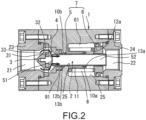
FIG. 2 is a cross-sectional view showing a valve open according to the embodiment shown inFIG. 1 ; -
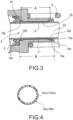
FIG. 3 is an enlarged cross-sectional view of a portion of piston pressure regulating valve according to the embodiment shown inFIG. 1 ; -
FIG. 4 is an enlarged vertical cross-sectional view showing an annular bearing according to the embodiment shown inFIG. 1 ; and -
FIG. 5 is a cross-sectional view showing a valve open according to an embodiment of an example in the related art. - Hereinafter, an embodiment for carrying out the present invention will be described with reference to the drawings.
-
FIGS. 1 to 4 show cross-sectional views of a preferred embodiment of the present invention, and the overall configuration is almost the same as the example in the related art shown inFIG. 5 , and therefore the detailed description of the similar parts will be omitted. Further, the same components as those in the example in the related art will be described with the same reference numerals. - Then, the embodiment according to the present invention is particularly different from the example in the related art in that, at least a pair of rigid synthetic resin
annular bearings valve body 5 at a predetermined distance at a position on thevalve seat 3 side in the axial direction of thegap 9 formed between the pressure regulatingvalve body 5 and theinner wall 25 of thepassage 2 formed in the bodymain body 1. - Further, in the present embodiment, when the
gap 9 between thepiston portion 6 and theinner wall 25 of thepassage 2 formed in the body main body is set so that thepiston portion 6 and theinner wall 25 of thepassage 2 of the bodymain body 1 do not come into contact with each other when the pressure regulatingvalve body 5 is tilted along the axis within the angle range allowed by the distance between the pair ofannular bearings FIG. 3 ) and thegap 9. - As a result, even if the pressure regulating
valve body 5 is tilted, thepiston portion 6 does not come into contact with theinner wall 25 of thepassage 2 of the bodymain body 1, so that there is no concern about performance deterioration or damage due to use. - Further, in the present embodiment, a
boss 11 is extended by a predetermined distance (distance B shown inFIG. 3 ) from thepassage 2 of the bodymain body 1 along thegap 9, and anannular insertion groove 13a for inserting theannular bearing 10a is formed in anend surface 12a of theboss 11 on thepiston portion 6 side. - Therefore, the
annular bearing 10a can be easily and surely installed at a mounting position of the pressure regulatingvalve body 5 in a predetermined length direction simply by inserting and assembling theannular bearing 10a into theinsertion groove 13a. - In addition, in the present embodiment, since the
flange 14a for preventing the insertedannular bearing 10a from being pulled out is expanded inward at the open end of theinsertion groove 13a of theboss 11, even if the pressure regulatingvalve body 5 reciprocates in the axial direction, theannular bearing 10a inserted into theinsertion groove 13a does not come off. - In particular, in the present embodiment, as shown in
FIG. 4 , since theannular bearing 10a has anotch 101a formed in a part thereof, theannular bearing 10a can be easily inserted into theinsertion groove 13a from the open end narrowed by theflange 14a by pressing theannular bearing 10a inward from the outer peripheral surface to reduce the diameter before assembling the pressure regulatingvalve body 5. - Note that the
annular bearing 10a according to the present embodiment in which thenotch 101a is formed and the diameter thereof can be reduced as shown inFIG. 4 , is preferably formed of a rigid synthetic resin having appropriate flexibility and elasticity in addition to being tough and having low frictional resistance as described above. - Furthermore, in the present embodiment, the
insertion groove 13b of theannular bearing 10b is formed on theend surface 12b of theboss 11 on thevalve seat 3 side extending from thepassage 2 of the bodymain body 1 along thegap 9 by a predetermined distance, and theseal member 91 for closing thegap 9 between the pressure regulatingvalve body 5 and theinner wall 25 of thepassage 2 formed in the bodymain body 1 is provided adjacent to theend surface 12b. - Therefore, not only does the
seal member 91 act as a wall to prevent theannular bearing 10b inserted into theinsertion groove 13b from being pulled out, but when the pressure is applied, theannular bearing 10b is compressed by theseal member 91 and fills thegap 9 between the pressure regulatingvalve body 5 and the bodymain body 1, thereby exerting a backup ring function that prevents theseal member 91 from protruding. - Since the
annular bearing 10b is prevented from coming off by theseal member 91, theinsertion groove 13b into which theannular bearing 10b is inserted does not have to be provided with theflange 14a as in theinsertion groove 13a of theannular bearing 10a, but by providing theannular bearing 10b with anotch 101b as in theannular bearing 10a (seeFIG. 4 ), the assembly to the pressure regulatingvalve body 5 can be facilitated.
Claims (2)
- A regulator, whereinone open end of a tubular passage (2) formed to penetrate through a body main body (1) is used as an introduction port (21) of a high pressure fluid, and the other open end is used as a takeout port (22) of a decompressed fluid,a pressure regulating chamber (4) is disposed via a valve seat (3) having a valve-seat seat (31) inside the introduction port (21) in the tubular passage (2) and composed of a valve-seat seat holding member (33) forming a through-hole (32) in an axial direction of the tubular passage (2),a piston pressure regulating valve (7) composed of a pressure regulating valve body (5) having a tip surface contactable with the valve-seat seat (31) between the pressure regulating chamber (4) and the takeout port (22) of the tubular passage (2) and having a tubular communication passage (52) with both ends open and a piston portion (6) surrounded and fixed to an outer periphery of the takeout port (22) side in the tubular passage (2) of the pressure regulating valve body (5) is provided so as to be slidable in the axial direction of the tubular passage (2) and urged in a direction of the takeout port (22) in the tubular passage (2) by a pressure regulating spring (8) that has a predetermined load and is disposed in an atmospheric chamber (61) provided coaxially and parallel to the pressure regulating chamber (4) around the piston portion (6),a fluid adjusted to a desired pressure is taken out from the takeout port (22) by controlling a fluid pressure in the pressure regulating chamber (4) by changing opening areas of the valve-seat seat (31) and the pressure regulating valve body (5) by balancing a load by a pressure of a fluid, the fluid being a high pressure fluid introduced from the introduction port (21) being introduced into the valve-seat seat (31) through the through-hole (32) formed in the valve-seat seat holding member (33) of the pressure regulating valve body (5) and the pressure regulating chamber (4) provided so as to face the valve-seat seat (31), passing through the pressure regulating valve body (5) in which the tubular communication passage (52) is formed, and acting on the piston portion (6) fixed to the pressure regulating valve body (5), and a load by the pressure regulating spring (8) acting on the piston portion (6) on the opposite side of the pressure regulating chamber (4), andfirst and second rigid synthetic resin annular bearings (10a, 10b) are interposed along a length direction of the pressure regulating valve body (5) at a predetermined distance, at a position on a valve seat side in the axial direction of a gap (9) formed between the pressure regulating valve body (5) and the tubular passage (2) formed in the body main body (1),wherein an insertion groove (13a) of the first annular bearing (10a) is formed on an end surface (12a) of a boss (11) on the piston portion (6) side,wherein the first annular bearing (10a) has a notch (101a) formed in a part thereof, and a flange (14a) for preventing the inserted first annular bearing (10a) from being pulled out is expanded inward at an open end of the insertion groove (13a) of the first annular bearing (10a),wherein an insertion groove (13b) of the second annular bearing (10b) is formed on an end surface (12b) of the boss (11) on the valve seat (3) side, and a seal member (91) for closing the gap (9) between the pressure regulating valve body (5) and the tubular passage (2) formed in the body main body (1) is provided adjacent to the end surface (12a).
- The regulator according to claim 1, wherein a gap between the piston portion (6) and the tubular passage (2) formed in the body main body (1) is set so that the piston portion (6) and the tubular passage (2) of the body main body (1) do not come into contact with each other when the pressure regulating valve body (5) is tilted along an axis within an angle range allowed by a distance between the first and second annular bearings (10a, 10b) and the gap formed between the pressure regulating valve body (5) and the tubular passage (2) formed in the body main body (1).
Applications Claiming Priority (1)
| Application Number | Priority Date | Filing Date | Title |
|---|---|---|---|
| JP2021044834A JP7662181B2 (en) | 2021-03-18 | 2021-03-18 | Regulator |
Publications (3)
| Publication Number | Publication Date |
|---|---|
| EP4060178A1 EP4060178A1 (en) | 2022-09-21 |
| EP4060178B1 true EP4060178B1 (en) | 2024-10-30 |
| EP4060178C0 EP4060178C0 (en) | 2024-10-30 |
Family
ID=80683874
Family Applications (1)
| Application Number | Title | Priority Date | Filing Date |
|---|---|---|---|
| EP22160710.4A Active EP4060178B1 (en) | 2021-03-18 | 2022-03-08 | Pressure regulator |
Country Status (4)
| Country | Link |
|---|---|
| US (1) | US11714436B2 (en) |
| EP (1) | EP4060178B1 (en) |
| JP (1) | JP7662181B2 (en) |
| CN (1) | CN115111088A (en) |
Family Cites Families (17)
| Publication number | Priority date | Publication date | Assignee | Title |
|---|---|---|---|---|
| GB737198A (en) * | 1953-02-27 | 1955-09-21 | Dunlop Rubber Co | Pressure reducing valve |
| JPS5552146Y2 (en) | 1976-01-06 | 1980-12-03 | ||
| US5950664A (en) * | 1997-02-18 | 1999-09-14 | Amot Controls Corp | Valve with improved combination bearing support and seal |
| ATE380292T1 (en) * | 2004-05-03 | 2007-12-15 | Fiat Ricerche | GAS SUPPLY SYSTEM FOR AN INTERNAL COMBUSTION ENGINE HAVING A PRESSURE REDUCING VALVE REGULATED BY A CONTROL PRESSURE |
| JP4997822B2 (en) * | 2006-05-15 | 2012-08-08 | オイレス工業株式会社 | Plain bearing |
| CN103003607A (en) * | 2010-08-06 | 2013-03-27 | 川崎重工业株式会社 | Gas pressure regulator |
| JP5292436B2 (en) | 2011-04-18 | 2013-09-18 | 株式会社半導体エネルギー研究所 | Laser irradiation method and laser irradiation apparatus |
| CN106870349A (en) * | 2012-03-27 | 2017-06-20 | Ntn株式会社 | Composite sliding bearing, bracket guiding piece, variable capacity type axial poiston pump |
| ITBO20130375A1 (en) * | 2013-07-17 | 2015-01-18 | Metatron S R L | PRESSURE REDUCER |
| JP2016071429A (en) | 2014-09-26 | 2016-05-09 | 株式会社ケーヒン | Pressure reducing valve |
| JP2016184256A (en) * | 2015-03-26 | 2016-10-20 | 愛三工業株式会社 | Pressure regulating valve |
| EP3380543A1 (en) | 2015-09-18 | 2018-10-03 | Victrex Manufacturing Limited | Polymeric materials |
| JP2017102582A (en) * | 2015-11-30 | 2017-06-08 | 愛三工業株式会社 | Pressure-reducing valve |
| TW201727120A (en) * | 2015-12-18 | 2017-08-01 | 葛萊兒明尼蘇達股份有限公司 | Internal bellows bearing |
| JP6859027B2 (en) * | 2016-04-04 | 2021-04-14 | 愛三工業株式会社 | Pressure regulating valve |
| JP6974834B2 (en) * | 2017-10-02 | 2021-12-01 | 株式会社ニッキ | regulator |
| JP7126059B2 (en) * | 2018-03-28 | 2022-08-26 | パナソニックIpマネジメント株式会社 | shutter, blower |
-
2021
- 2021-03-18 JP JP2021044834A patent/JP7662181B2/en active Active
-
2022
- 2022-03-08 EP EP22160710.4A patent/EP4060178B1/en active Active
- 2022-03-16 CN CN202210257481.9A patent/CN115111088A/en active Pending
- 2022-03-17 US US17/697,922 patent/US11714436B2/en active Active
Also Published As
| Publication number | Publication date |
|---|---|
| JP2022144007A (en) | 2022-10-03 |
| EP4060178A1 (en) | 2022-09-21 |
| US11714436B2 (en) | 2023-08-01 |
| JP7662181B2 (en) | 2025-04-15 |
| US20220300013A1 (en) | 2022-09-22 |
| EP4060178C0 (en) | 2024-10-30 |
| CN115111088A (en) | 2022-09-27 |
Similar Documents
| Publication | Publication Date | Title |
|---|---|---|
| US6186168B1 (en) | Pressure Regulator | |
| US7051746B2 (en) | Valve having pressure balancing piston and method involving same | |
| AU700267B2 (en) | Improved two-stage pressure regulator | |
| US6354319B1 (en) | Low differential, pilot operated fluid pressure regulation apparatus and method | |
| US20130186487A1 (en) | Gas pressure regulating valve | |
| KR100709997B1 (en) | Pressure regulator | |
| EP0759122A1 (en) | Non-return fuel system with fuel pressure vacuum response | |
| US7165573B2 (en) | Compressed natural gas pressure regulator | |
| US8720488B2 (en) | Gas valve | |
| US5619972A (en) | Demand pressure regulator | |
| US11137074B2 (en) | Regulator | |
| WO1998026168A1 (en) | Pressure balanced gas injection valve | |
| EP4060178B1 (en) | Pressure regulator | |
| US20140283794A1 (en) | Pressure control valve for gaseous fuel | |
| EP1096180B1 (en) | Seal arrangement | |
| JP6649483B2 (en) | High pressure fuel supply pump | |
| JP2017072026A (en) | High pressure fuel supply pump | |
| JP2001124282A (en) | Surge suppressing device | |
| HK40077436A (en) | Regulator | |
| US20220268265A1 (en) | Fuel pump and damper cup thereof | |
| KR102108164B1 (en) | High pressure pump | |
| CN107304742A (en) | Control valve for controlling medium, especially fuel | |
| US20250334194A1 (en) | Pressure regulating valve | |
| AU751916B2 (en) | Pressure balanced gas injection valve |
Legal Events
| Date | Code | Title | Description |
|---|---|---|---|
| PUAI | Public reference made under article 153(3) epc to a published international application that has entered the european phase |
Free format text: ORIGINAL CODE: 0009012 |
|
| STAA | Information on the status of an ep patent application or granted ep patent |
Free format text: STATUS: THE APPLICATION HAS BEEN PUBLISHED |
|
| AK | Designated contracting states |
Kind code of ref document: A1 Designated state(s): AL AT BE BG CH CY CZ DE DK EE ES FI FR GB GR HR HU IE IS IT LI LT LU LV MC MK MT NL NO PL PT RO RS SE SI SK SM TR |
|
| STAA | Information on the status of an ep patent application or granted ep patent |
Free format text: STATUS: REQUEST FOR EXAMINATION WAS MADE |
|
| 17P | Request for examination filed |
Effective date: 20230320 |
|
| RBV | Designated contracting states (corrected) |
Designated state(s): AL AT BE BG CH CY CZ DE DK EE ES FI FR GB GR HR HU IE IS IT LI LT LU LV MC MK MT NL NO PL PT RO RS SE SI SK SM TR |
|
| GRAP | Despatch of communication of intention to grant a patent |
Free format text: ORIGINAL CODE: EPIDOSNIGR1 |
|
| RIC1 | Information provided on ipc code assigned before grant |
Ipc: F16C 33/20 20060101ALN20240503BHEP Ipc: F16K 3/26 20060101ALN20240503BHEP Ipc: F16C 17/26 20060101ALI20240503BHEP Ipc: G05D 16/10 20060101ALI20240503BHEP Ipc: F02M 37/00 20060101ALI20240503BHEP Ipc: F02M 21/02 20060101AFI20240503BHEP |
|
| STAA | Information on the status of an ep patent application or granted ep patent |
Free format text: STATUS: GRANT OF PATENT IS INTENDED |
|
| INTG | Intention to grant announced |
Effective date: 20240613 |
|
| GRAS | Grant fee paid |
Free format text: ORIGINAL CODE: EPIDOSNIGR3 |
|
| GRAA | (expected) grant |
Free format text: ORIGINAL CODE: 0009210 |
|
| STAA | Information on the status of an ep patent application or granted ep patent |
Free format text: STATUS: THE PATENT HAS BEEN GRANTED |
|
| AK | Designated contracting states |
Kind code of ref document: B1 Designated state(s): AL AT BE BG CH CY CZ DE DK EE ES FI FR GB GR HR HU IE IS IT LI LT LU LV MC MK MT NL NO PL PT RO RS SE SI SK SM TR |
|
| REG | Reference to a national code |
Ref country code: GB Ref legal event code: FG4D |
|
| REG | Reference to a national code |
Ref country code: CH Ref legal event code: EP |
|
| REG | Reference to a national code |
Ref country code: IE Ref legal event code: FG4D |
|
| REG | Reference to a national code |
Ref country code: DE Ref legal event code: R096 Ref document number: 602022007132 Country of ref document: DE |
|
| U01 | Request for unitary effect filed |
Effective date: 20241030 |
|
| U07 | Unitary effect registered |
Designated state(s): AT BE BG DE DK EE FI FR IT LT LU LV MT NL PT RO SE SI Effective date: 20241111 |
|
| PG25 | Lapsed in a contracting state [announced via postgrant information from national office to epo] |
Ref country code: HR Free format text: LAPSE BECAUSE OF FAILURE TO SUBMIT A TRANSLATION OF THE DESCRIPTION OR TO PAY THE FEE WITHIN THE PRESCRIBED TIME-LIMIT Effective date: 20241030 Ref country code: IS Free format text: LAPSE BECAUSE OF FAILURE TO SUBMIT A TRANSLATION OF THE DESCRIPTION OR TO PAY THE FEE WITHIN THE PRESCRIBED TIME-LIMIT Effective date: 20250228 |
|
| PG25 | Lapsed in a contracting state [announced via postgrant information from national office to epo] |
Ref country code: ES Free format text: LAPSE BECAUSE OF FAILURE TO SUBMIT A TRANSLATION OF THE DESCRIPTION OR TO PAY THE FEE WITHIN THE PRESCRIBED TIME-LIMIT Effective date: 20241030 |
|
| PG25 | Lapsed in a contracting state [announced via postgrant information from national office to epo] |
Ref country code: NO Free format text: LAPSE BECAUSE OF FAILURE TO SUBMIT A TRANSLATION OF THE DESCRIPTION OR TO PAY THE FEE WITHIN THE PRESCRIBED TIME-LIMIT Effective date: 20250130 |
|
| U20 | Renewal fee for the european patent with unitary effect paid |
Year of fee payment: 4 Effective date: 20250318 |
|
| PG25 | Lapsed in a contracting state [announced via postgrant information from national office to epo] |
Ref country code: GR Free format text: LAPSE BECAUSE OF FAILURE TO SUBMIT A TRANSLATION OF THE DESCRIPTION OR TO PAY THE FEE WITHIN THE PRESCRIBED TIME-LIMIT Effective date: 20250131 |
|
| PG25 | Lapsed in a contracting state [announced via postgrant information from national office to epo] |
Ref country code: PL Free format text: LAPSE BECAUSE OF FAILURE TO SUBMIT A TRANSLATION OF THE DESCRIPTION OR TO PAY THE FEE WITHIN THE PRESCRIBED TIME-LIMIT Effective date: 20241030 |
|
| PG25 | Lapsed in a contracting state [announced via postgrant information from national office to epo] |
Ref country code: RS Free format text: LAPSE BECAUSE OF FAILURE TO SUBMIT A TRANSLATION OF THE DESCRIPTION OR TO PAY THE FEE WITHIN THE PRESCRIBED TIME-LIMIT Effective date: 20250130 |
|
| PG25 | Lapsed in a contracting state [announced via postgrant information from national office to epo] |
Ref country code: SM Free format text: LAPSE BECAUSE OF FAILURE TO SUBMIT A TRANSLATION OF THE DESCRIPTION OR TO PAY THE FEE WITHIN THE PRESCRIBED TIME-LIMIT Effective date: 20241030 |
|
| PG25 | Lapsed in a contracting state [announced via postgrant information from national office to epo] |
Ref country code: SK Free format text: LAPSE BECAUSE OF FAILURE TO SUBMIT A TRANSLATION OF THE DESCRIPTION OR TO PAY THE FEE WITHIN THE PRESCRIBED TIME-LIMIT Effective date: 20241030 |
|
| PG25 | Lapsed in a contracting state [announced via postgrant information from national office to epo] |
Ref country code: CZ Free format text: LAPSE BECAUSE OF FAILURE TO SUBMIT A TRANSLATION OF THE DESCRIPTION OR TO PAY THE FEE WITHIN THE PRESCRIBED TIME-LIMIT Effective date: 20241030 |
|
| PLBE | No opposition filed within time limit |
Free format text: ORIGINAL CODE: 0009261 |
|
| STAA | Information on the status of an ep patent application or granted ep patent |
Free format text: STATUS: NO OPPOSITION FILED WITHIN TIME LIMIT |
|
| 26N | No opposition filed |
Effective date: 20250731 |
|
| PG25 | Lapsed in a contracting state [announced via postgrant information from national office to epo] |
Ref country code: MC Free format text: LAPSE BECAUSE OF FAILURE TO SUBMIT A TRANSLATION OF THE DESCRIPTION OR TO PAY THE FEE WITHIN THE PRESCRIBED TIME-LIMIT Effective date: 20241030 |
|
| REG | Reference to a national code |
Ref country code: CH Ref legal event code: H13 Free format text: ST27 STATUS EVENT CODE: U-0-0-H10-H13 (AS PROVIDED BY THE NATIONAL OFFICE) Effective date: 20251023 |
|
| PG25 | Lapsed in a contracting state [announced via postgrant information from national office to epo] |
Ref country code: CH Free format text: LAPSE BECAUSE OF NON-PAYMENT OF DUE FEES Effective date: 20250331 |
|
| PG25 | Lapsed in a contracting state [announced via postgrant information from national office to epo] |
Ref country code: IE Free format text: LAPSE BECAUSE OF NON-PAYMENT OF DUE FEES Effective date: 20250308 |
|
| U20 | Renewal fee for the european patent with unitary effect paid |
Year of fee payment: 5 Effective date: 20260318 |