EP4060058A1 - High-strength ferritic stainless steel for clamp, and manufacturing method therefor - Google Patents
High-strength ferritic stainless steel for clamp, and manufacturing method therefor Download PDFInfo
- Publication number
- EP4060058A1 EP4060058A1 EP20902604.6A EP20902604A EP4060058A1 EP 4060058 A1 EP4060058 A1 EP 4060058A1 EP 20902604 A EP20902604 A EP 20902604A EP 4060058 A1 EP4060058 A1 EP 4060058A1
- Authority
- EP
- European Patent Office
- Prior art keywords
- mpa
- strength
- stainless steel
- ferritic stainless
- less
- Prior art date
- Legal status (The legal status is an assumption and is not a legal conclusion. Google has not performed a legal analysis and makes no representation as to the accuracy of the status listed.)
- Pending
Links
Images

Classifications
-
- B—PERFORMING OPERATIONS; TRANSPORTING
- B21—MECHANICAL METAL-WORKING WITHOUT ESSENTIALLY REMOVING MATERIAL; PUNCHING METAL
- B21B—ROLLING OF METAL
- B21B1/00—Metal-rolling methods or mills for making semi-finished products of solid or profiled cross-section; Sequence of operations in milling trains; Layout of rolling-mill plant, e.g. grouping of stands; Succession of passes or of sectional pass alternations
- B21B1/22—Metal-rolling methods or mills for making semi-finished products of solid or profiled cross-section; Sequence of operations in milling trains; Layout of rolling-mill plant, e.g. grouping of stands; Succession of passes or of sectional pass alternations for rolling plates, strips, bands or sheets of indefinite length
- B21B1/24—Metal-rolling methods or mills for making semi-finished products of solid or profiled cross-section; Sequence of operations in milling trains; Layout of rolling-mill plant, e.g. grouping of stands; Succession of passes or of sectional pass alternations for rolling plates, strips, bands or sheets of indefinite length in a continuous or semi-continuous process
-
- B—PERFORMING OPERATIONS; TRANSPORTING
- B21—MECHANICAL METAL-WORKING WITHOUT ESSENTIALLY REMOVING MATERIAL; PUNCHING METAL
- B21B—ROLLING OF METAL
- B21B3/00—Rolling materials of special alloys so far as the composition of the alloy requires or permits special rolling methods or sequences ; Rolling of aluminium, copper, zinc or other non-ferrous metals
-
- C—CHEMISTRY; METALLURGY
- C21—METALLURGY OF IRON
- C21D—MODIFYING THE PHYSICAL STRUCTURE OF FERROUS METALS; GENERAL DEVICES FOR HEAT TREATMENT OF FERROUS OR NON-FERROUS METALS OR ALLOYS; MAKING METAL MALLEABLE, e.g. BY DECARBURISATION OR TEMPERING
- C21D6/00—Heat treatment of ferrous alloys
- C21D6/002—Heat treatment of ferrous alloys containing Cr
-
- C—CHEMISTRY; METALLURGY
- C21—METALLURGY OF IRON
- C21D—MODIFYING THE PHYSICAL STRUCTURE OF FERROUS METALS; GENERAL DEVICES FOR HEAT TREATMENT OF FERROUS OR NON-FERROUS METALS OR ALLOYS; MAKING METAL MALLEABLE, e.g. BY DECARBURISATION OR TEMPERING
- C21D6/00—Heat treatment of ferrous alloys
- C21D6/005—Heat treatment of ferrous alloys containing Mn
-
- C—CHEMISTRY; METALLURGY
- C21—METALLURGY OF IRON
- C21D—MODIFYING THE PHYSICAL STRUCTURE OF FERROUS METALS; GENERAL DEVICES FOR HEAT TREATMENT OF FERROUS OR NON-FERROUS METALS OR ALLOYS; MAKING METAL MALLEABLE, e.g. BY DECARBURISATION OR TEMPERING
- C21D6/00—Heat treatment of ferrous alloys
- C21D6/008—Heat treatment of ferrous alloys containing Si
-
- C—CHEMISTRY; METALLURGY
- C21—METALLURGY OF IRON
- C21D—MODIFYING THE PHYSICAL STRUCTURE OF FERROUS METALS; GENERAL DEVICES FOR HEAT TREATMENT OF FERROUS OR NON-FERROUS METALS OR ALLOYS; MAKING METAL MALLEABLE, e.g. BY DECARBURISATION OR TEMPERING
- C21D8/00—Modifying the physical properties of ferrous metals or ferrous alloys by deformation combined with, or followed by, heat treatment
- C21D8/02—Modifying the physical properties of ferrous metals or ferrous alloys by deformation combined with, or followed by, heat treatment during manufacturing of plates or strips
-
- C—CHEMISTRY; METALLURGY
- C21—METALLURGY OF IRON
- C21D—MODIFYING THE PHYSICAL STRUCTURE OF FERROUS METALS; GENERAL DEVICES FOR HEAT TREATMENT OF FERROUS OR NON-FERROUS METALS OR ALLOYS; MAKING METAL MALLEABLE, e.g. BY DECARBURISATION OR TEMPERING
- C21D8/00—Modifying the physical properties of ferrous metals or ferrous alloys by deformation combined with, or followed by, heat treatment
- C21D8/02—Modifying the physical properties of ferrous metals or ferrous alloys by deformation combined with, or followed by, heat treatment during manufacturing of plates or strips
- C21D8/021—Modifying the physical properties of ferrous metals or ferrous alloys by deformation combined with, or followed by, heat treatment during manufacturing of plates or strips involving particular fabrication steps or treatments of ingots or slabs
-
- C—CHEMISTRY; METALLURGY
- C21—METALLURGY OF IRON
- C21D—MODIFYING THE PHYSICAL STRUCTURE OF FERROUS METALS; GENERAL DEVICES FOR HEAT TREATMENT OF FERROUS OR NON-FERROUS METALS OR ALLOYS; MAKING METAL MALLEABLE, e.g. BY DECARBURISATION OR TEMPERING
- C21D8/00—Modifying the physical properties of ferrous metals or ferrous alloys by deformation combined with, or followed by, heat treatment
- C21D8/02—Modifying the physical properties of ferrous metals or ferrous alloys by deformation combined with, or followed by, heat treatment during manufacturing of plates or strips
- C21D8/0221—Modifying the physical properties of ferrous metals or ferrous alloys by deformation combined with, or followed by, heat treatment during manufacturing of plates or strips characterised by the working steps
- C21D8/0226—Hot rolling
-
- C—CHEMISTRY; METALLURGY
- C21—METALLURGY OF IRON
- C21D—MODIFYING THE PHYSICAL STRUCTURE OF FERROUS METALS; GENERAL DEVICES FOR HEAT TREATMENT OF FERROUS OR NON-FERROUS METALS OR ALLOYS; MAKING METAL MALLEABLE, e.g. BY DECARBURISATION OR TEMPERING
- C21D8/00—Modifying the physical properties of ferrous metals or ferrous alloys by deformation combined with, or followed by, heat treatment
- C21D8/02—Modifying the physical properties of ferrous metals or ferrous alloys by deformation combined with, or followed by, heat treatment during manufacturing of plates or strips
- C21D8/0221—Modifying the physical properties of ferrous metals or ferrous alloys by deformation combined with, or followed by, heat treatment during manufacturing of plates or strips characterised by the working steps
- C21D8/0236—Cold rolling
-
- C—CHEMISTRY; METALLURGY
- C21—METALLURGY OF IRON
- C21D—MODIFYING THE PHYSICAL STRUCTURE OF FERROUS METALS; GENERAL DEVICES FOR HEAT TREATMENT OF FERROUS OR NON-FERROUS METALS OR ALLOYS; MAKING METAL MALLEABLE, e.g. BY DECARBURISATION OR TEMPERING
- C21D8/00—Modifying the physical properties of ferrous metals or ferrous alloys by deformation combined with, or followed by, heat treatment
- C21D8/02—Modifying the physical properties of ferrous metals or ferrous alloys by deformation combined with, or followed by, heat treatment during manufacturing of plates or strips
- C21D8/0221—Modifying the physical properties of ferrous metals or ferrous alloys by deformation combined with, or followed by, heat treatment during manufacturing of plates or strips characterised by the working steps
- C21D8/0242—Flattening; Dressing; Flexing
-
- C—CHEMISTRY; METALLURGY
- C21—METALLURGY OF IRON
- C21D—MODIFYING THE PHYSICAL STRUCTURE OF FERROUS METALS; GENERAL DEVICES FOR HEAT TREATMENT OF FERROUS OR NON-FERROUS METALS OR ALLOYS; MAKING METAL MALLEABLE, e.g. BY DECARBURISATION OR TEMPERING
- C21D8/00—Modifying the physical properties of ferrous metals or ferrous alloys by deformation combined with, or followed by, heat treatment
- C21D8/02—Modifying the physical properties of ferrous metals or ferrous alloys by deformation combined with, or followed by, heat treatment during manufacturing of plates or strips
- C21D8/0247—Modifying the physical properties of ferrous metals or ferrous alloys by deformation combined with, or followed by, heat treatment during manufacturing of plates or strips characterised by the heat treatment
- C21D8/0252—Modifying the physical properties of ferrous metals or ferrous alloys by deformation combined with, or followed by, heat treatment during manufacturing of plates or strips characterised by the heat treatment with application of tension
-
- C—CHEMISTRY; METALLURGY
- C21—METALLURGY OF IRON
- C21D—MODIFYING THE PHYSICAL STRUCTURE OF FERROUS METALS; GENERAL DEVICES FOR HEAT TREATMENT OF FERROUS OR NON-FERROUS METALS OR ALLOYS; MAKING METAL MALLEABLE, e.g. BY DECARBURISATION OR TEMPERING
- C21D8/00—Modifying the physical properties of ferrous metals or ferrous alloys by deformation combined with, or followed by, heat treatment
- C21D8/02—Modifying the physical properties of ferrous metals or ferrous alloys by deformation combined with, or followed by, heat treatment during manufacturing of plates or strips
- C21D8/0247—Modifying the physical properties of ferrous metals or ferrous alloys by deformation combined with, or followed by, heat treatment during manufacturing of plates or strips characterised by the heat treatment
- C21D8/0263—Modifying the physical properties of ferrous metals or ferrous alloys by deformation combined with, or followed by, heat treatment during manufacturing of plates or strips characterised by the heat treatment following hot rolling
-
- C—CHEMISTRY; METALLURGY
- C21—METALLURGY OF IRON
- C21D—MODIFYING THE PHYSICAL STRUCTURE OF FERROUS METALS; GENERAL DEVICES FOR HEAT TREATMENT OF FERROUS OR NON-FERROUS METALS OR ALLOYS; MAKING METAL MALLEABLE, e.g. BY DECARBURISATION OR TEMPERING
- C21D8/00—Modifying the physical properties of ferrous metals or ferrous alloys by deformation combined with, or followed by, heat treatment
- C21D8/02—Modifying the physical properties of ferrous metals or ferrous alloys by deformation combined with, or followed by, heat treatment during manufacturing of plates or strips
- C21D8/0247—Modifying the physical properties of ferrous metals or ferrous alloys by deformation combined with, or followed by, heat treatment during manufacturing of plates or strips characterised by the heat treatment
- C21D8/0273—Final recrystallisation annealing
-
- C—CHEMISTRY; METALLURGY
- C21—METALLURGY OF IRON
- C21D—MODIFYING THE PHYSICAL STRUCTURE OF FERROUS METALS; GENERAL DEVICES FOR HEAT TREATMENT OF FERROUS OR NON-FERROUS METALS OR ALLOYS; MAKING METAL MALLEABLE, e.g. BY DECARBURISATION OR TEMPERING
- C21D9/00—Heat treatment, e.g. annealing, hardening, quenching or tempering, adapted for particular articles; Furnaces therefor
- C21D9/46—Heat treatment, e.g. annealing, hardening, quenching or tempering, adapted for particular articles; Furnaces therefor for sheet metals
-
- C—CHEMISTRY; METALLURGY
- C22—METALLURGY; FERROUS OR NON-FERROUS ALLOYS; TREATMENT OF ALLOYS OR NON-FERROUS METALS
- C22C—ALLOYS
- C22C38/00—Ferrous alloys, e.g. steel alloys
- C22C38/001—Ferrous alloys, e.g. steel alloys containing N
-
- C—CHEMISTRY; METALLURGY
- C22—METALLURGY; FERROUS OR NON-FERROUS ALLOYS; TREATMENT OF ALLOYS OR NON-FERROUS METALS
- C22C—ALLOYS
- C22C38/00—Ferrous alloys, e.g. steel alloys
- C22C38/02—Ferrous alloys, e.g. steel alloys containing silicon
-
- C—CHEMISTRY; METALLURGY
- C22—METALLURGY; FERROUS OR NON-FERROUS ALLOYS; TREATMENT OF ALLOYS OR NON-FERROUS METALS
- C22C—ALLOYS
- C22C38/00—Ferrous alloys, e.g. steel alloys
- C22C38/04—Ferrous alloys, e.g. steel alloys containing manganese
-
- C—CHEMISTRY; METALLURGY
- C22—METALLURGY; FERROUS OR NON-FERROUS ALLOYS; TREATMENT OF ALLOYS OR NON-FERROUS METALS
- C22C—ALLOYS
- C22C38/00—Ferrous alloys, e.g. steel alloys
- C22C38/06—Ferrous alloys, e.g. steel alloys containing aluminium
-
- C—CHEMISTRY; METALLURGY
- C22—METALLURGY; FERROUS OR NON-FERROUS ALLOYS; TREATMENT OF ALLOYS OR NON-FERROUS METALS
- C22C—ALLOYS
- C22C38/00—Ferrous alloys, e.g. steel alloys
- C22C38/18—Ferrous alloys, e.g. steel alloys containing chromium
- C22C38/24—Ferrous alloys, e.g. steel alloys containing chromium with vanadium
-
- C—CHEMISTRY; METALLURGY
- C22—METALLURGY; FERROUS OR NON-FERROUS ALLOYS; TREATMENT OF ALLOYS OR NON-FERROUS METALS
- C22C—ALLOYS
- C22C38/00—Ferrous alloys, e.g. steel alloys
- C22C38/18—Ferrous alloys, e.g. steel alloys containing chromium
- C22C38/38—Ferrous alloys, e.g. steel alloys containing chromium with more than 1.5% by weight of manganese
-
- C—CHEMISTRY; METALLURGY
- C22—METALLURGY; FERROUS OR NON-FERROUS ALLOYS; TREATMENT OF ALLOYS OR NON-FERROUS METALS
- C22C—ALLOYS
- C22C38/00—Ferrous alloys, e.g. steel alloys
- C22C38/18—Ferrous alloys, e.g. steel alloys containing chromium
- C22C38/40—Ferrous alloys, e.g. steel alloys containing chromium with nickel
- C22C38/46—Ferrous alloys, e.g. steel alloys containing chromium with nickel with vanadium
-
- C—CHEMISTRY; METALLURGY
- C21—METALLURGY OF IRON
- C21D—MODIFYING THE PHYSICAL STRUCTURE OF FERROUS METALS; GENERAL DEVICES FOR HEAT TREATMENT OF FERROUS OR NON-FERROUS METALS OR ALLOYS; MAKING METAL MALLEABLE, e.g. BY DECARBURISATION OR TEMPERING
- C21D2211/00—Microstructure comprising significant phases
- C21D2211/004—Dispersions; Precipitations
-
- C—CHEMISTRY; METALLURGY
- C21—METALLURGY OF IRON
- C21D—MODIFYING THE PHYSICAL STRUCTURE OF FERROUS METALS; GENERAL DEVICES FOR HEAT TREATMENT OF FERROUS OR NON-FERROUS METALS OR ALLOYS; MAKING METAL MALLEABLE, e.g. BY DECARBURISATION OR TEMPERING
- C21D2211/00—Microstructure comprising significant phases
- C21D2211/005—Ferrite
Definitions
- the present invention relates to high-strength ferritic stainless steel, and more specifically, to high-strength ferritic stainless steel, which has a yield strength of 350 MPa or more and can be applied to a clamp of an automobile or a general hose, and a manufacturing method thereof.
- Ferritic stainless steel is widely used in heat-resistant appliances, sink tops, exterior materials, home appliances, electronic parts, and the like due to having a low price, a low thermal expansion coefficient, good surface gloss, good moldability, and good oxidation resistance compared to austenitic stainless steel.
- Cold-rolled thin sheets of ferritic stainless steel are manufactured by a hot-rolling process, an annealing-pickling process that removes the surface scale of the hot-rolled coil and removes the internal stress of the material, a cold-rolling process, and an annealing process.
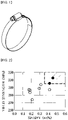
- FIG. 1 shows a clamp for an automobile or a general hose.
- the clamp needs high strength because it serves to fasten plastic hoses or pipes, and excellent ductility is also required because there should be no cracks during bending.
- corrosion resistance is required as it is used not only inside but also outside automobiles, the demand for stainless steel for clamps is increasing recently.
- Utility ferrite such as 410UF, which is generally manufactured, has poor corrosion resistance and a low elongation rate due to having a Cr content of 12%, so it cannot be used for clamps. Therefore, it is attempted to use 16% Cr 430 series (general 430, 430LX) having a relatively high Cr content, but it is difficult to satisfy market demand due to low tensile strength.
- TS tensile strength
- YS yield strength
- El elongation rate
- the present invention is directed to providing STS430 ferritic stainless steel capable of implementing high strength such as a yield strength of 350 MPa or more by controlling the contents of Si, Al, V, C, N, and the like in a component system and the size and amount of precipitates through omission of hot-rolling annealing and performing skin-pass rolling, and a manufacturing method thereof.
- One aspect of the present invention provides a method of manufacturing high-strength ferritic stainless steel for a clamp, which includes: hot-rolling a slab, which includes, by weight, 0.04 to 0.1% of C, 0.2 to 0.6% of Si, 0.01 to 1.5% of Mn, 14.0 to 18.0% of Cr, 0.005 to 0.2% of Al, 0.005 to 0.2% of V, 0.02 to 0.1% of N, and the remainder as Fe and inevitable impurities and satisfies the following Expressions (1) and (2), by reheating at 1,000 to 1,200 °C; winding the hot-rolled steel sheet at 700 °C or more; cold-rolling the wound hot-rolled steel sheet at a reduction ratio of 60% or more without performing annealing; annealing the cold-rolled steel sheet at 550 to 950 °C for 10 minutes or less; and skin-pass rolling the cold-rolled annealed steel sheet at a reduction ratio of 2 to 8%. 0.35 % ⁇ Si + Al + V ⁇ 0.6 % 0.09
- the cold-rolled annealed steel sheet may include at least 2.5 ⁇ 10 6 (Cr,Fe)-carbonitride precipitates having an average diameter of 0.5 ⁇ m or less per mm 2 .
- the slab may further include any one or more selected from the group consisting of 0.001 to 0.5% of Ni, 0.05% or less of P, and 0.005% or less of S.
- the cold-rolled annealed steel sheet may have a yield strength of 320 MPa or more, a tensile strength of 510 MPa or more, and an elongation rate of 20% or more.
- the cold-rolled annealed steel sheet having been skin-pass rolled may have a yield strength of 350 MPa or more, a tensile strength of 510 MPa or more, and an elongation rate of 20% or more.
- Another aspect of the present invention provides high-strength ferritic stainless steel for a clamp, which includes, by weight, 0.04 to 0.1% of C, 0.2 to 0.6% of Si, 0.01 to 1.5% of Mn, 14.0 to 18.0% of Cr, 0.005 to 0.2% of Al, 0.005 to 0.2% of V, 0.02 to 0.1% of N, and the remainder as Fe and inevitable impurities, satisfies the following Expressions (1) and (2), and has a yield strength of 350 MPa or more. 0.35 % ⁇ Si + Al + V ⁇ 0.6 % 0.09 % ⁇ C + N ⁇ 0.12 %
- the high-strength ferritic stainless steel may further include any one or more selected from the group consisting of 0.001 to 0.5% of Ni, 0.05% or less of P, and 0.005% or less of S.
- At least 2.5 ⁇ 10 6 (Cr,Fe)-carbonitride precipitates having an average diameter of 0.5 ⁇ m or less per mm 2 may be distributed.
- the high-strength ferritic stainless steel may have a tensile strength of 510 MPa or more and an elongation rate of 20% or more.
- High-strength ferritic stainless steel according to an embodiment of the present invention can be used for a clamp of an automobile or the like by satisfying a yield strength of 350 MPa or more, a tensile strength of 510 MPa or more, and an elongation rate of 20% or more.
- a method of manufacturing high-strength ferritic stainless steel for a clamp includes: hot-rolling a slab, which includes, by weight, 0.04 to 0.1% of C, 0.2 to 0.6% of Si, 0.01 to 1.5% of Mn, 14.0 to 18.0% of Cr, 0.005 to 0.2% of Al, 0.005 to 0.2% of V, 0.02 to 0.1% of N, and the remainder as Fe and inevitable impurities and satisfies the following Expressions (1) and (2), by reheating at 1,000 to 1,200 °C; winding the hot-rolled steel sheet at 700 °C or more; cold-rolling the wound hot-rolled steel sheet at a reduction ratio of 60% or more without performing annealing; annealing the cold-rolled steel sheet at 550 to 950 °C for 10 minutes or less; and skin-pass rolling the cold-rolled annealed steel sheet at a reduction ratio of 2 to 8%. 0.35 % ⁇ Si + Al + V ⁇ 0.6 % 0.09 %
- High-strength ferritic stainless steel for a clamp includes, by weight, 0.04 to 0.1% of C, 0.2 to 0.6% of Si, 0.01 to 1.5% of Mn, 14.0 to 18.0% of Cr, 0.005 to 0.2% of Al, 0.005 to 0.2% of V, 0.02 to 0.1% of N, and the remainder as Fe and inevitable impurities.
- the content of C is 0.04 to 0.1%.
- C is an impurity that is inevitably included in ferritic stainless steel and serves to improve strength by being precipitated as (Cr,Fe) 23 C 6 and (Cr,Fe) 7 C 3 carbides, so C is included in an amount of 0.04% or more.
- C is excessively included in the base material, an elongation rate is degraded to substantially degrade the processability of a product, so the C content is limited to 0.1% or less.
- the content of Si is 0.2 to 0.6%.
- Si is an impurity that is inevitably included in the steel, but is an element added as a deoxidizer during steel making and is a ferrite-stabilizing element.
- the Si content is usually managed at 0.4% or less.
- the Si content is controlled to 0.2 to 0.6% to improve tensile strength and yield strength through a solid solution strengthening effect, and the Si content is limited to 0.6% or less to maintain an elongation rate.
- the content of Mn is 0.01 to 1.5%.
- Mn is an impurity that is inevitably included in the steel.
- Mn is an austenite-stabilizing element, it serves to suppress roping and ridging.
- Mn content is limited to 0.01 to 1.5%.
- the content of Cr is 14.0 to 18.0%.
- Cr is an alloying element that is added to improve the corrosion resistance of the steel, and the critical content thereof is 12%.
- ferritic stainless steel containing C and N may undergo intergranular corrosion, and thus the Cr content is limited to 14.0 to 18.0% in consideration of the possibility of intergranular corrosion and the increase in manufacturing costs.
- the content of Al is 0.005 to 0.2%.
- Al is a strong deoxidizer and serves to lower the content of oxygen in molten steel.
- Al is added in an amount of 0.005% or more.
- the Al content is limited to 0.2% or less, more preferably, 0.1% or less.
- the content of V is 0.005 to 0.2%.
- V serves to form carbonitride by fixing C and N and is an element effective for suppressing the growth of carbonitride and refining it.
- V is added in an amount of 0.005% or more, more preferably, 0.03% or more.
- the V content is limited to 0.2% or less, more preferably, 0.1% or less.
- the content of N is 0.02 to 0.1%.
- N is present as an impurity element equivalently to C and serves to improve strength by being precipitated as Cr 2 N nitride in the manufacturing process.
- N is added in an amount of 0.02% or more.
- the addition of a large amount of N not only impairs processability, but also causes stretcher strain in a cold-rolled product, so the N content is limited to 0.1% or less.
- the high-strength ferritic stainless steel may further include any one or more selected from the group consisting of 0.001 to 0.5% of Ni, 0.05% or less of P, and 0.005% or less of S.
- Ni is 0.001 to 0.5%.
- Ni is an austenite-stabilizing element, has an effect of suppressing roping and ridging by increasing an austenite fraction, and serves to improve corrosion resistance by addition of a small amount thereof.
- the Ni content is limited to the above-described range.
- the content of P is 0.05% or less.
- P is an impurity that is inevitably included in the steel and causes intergranular corrosion during pickling or impairs hot processability, so the P content is adjusted within the above-described range.
- the content of S is 0.005% or less.
- S is an impurity that is inevitably included in the steel and is segregated at grain boundaries to impair hot processability, so the S content is limited to the above-described range.
- the stainless steel includes the remainder as Fe and other inevitable impurities.
- the stainless steel satisfies the following Expressions (1) and (2) and the above-described component system composition. 0.35 % ⁇ Si + Al + V ⁇ 0.6 % 0.09 % ⁇ C + N ⁇ 0.12 %
- yield strength (YS) is increased through a solid solution strengthening effect resulting from an increase in the content of Si, Al, and V which are substitutive elements, and thus 320 MPa or more may be exhibited.
- Si+Al+V value is less than 0.35%, it is difficult to implement desired yield strength, and when a Si+Al+V value exceeds 0.6%, an elongation rate is degraded.
- a cold-rolled steel sheet having been annealed may be subjected to skin-pass rolling to implement a yield strength of 350 MPa or more.
- a tensile strength (TS) of 510 MPa or more may be implemented.
- TS tensile strength
- the microstructure of the present invention according to the above-described alloying element control may include at least 2.5 ⁇ 10 6 (Fe,Cr)-carbonitride precipitates having an average diameter of 0.5 ⁇ m or less per mm 2 .
- the (Fe,Cr)-carbonitride precipitates may be (Cr,Fe) 23 C 6 and (Cr,Fe) 7 C 3 carbides or Cr 2 N nitrides according to an increase in the C+N content.
- a method of manufacturing high-strength ferritic stainless steel for a clamp includes: hot-rolling a slab, which includes, by weight, 0.04 to 0.1% of C, 0.2 to 0.6% of Si, 0.01 to 1.5% of Mn, 14.0 to 18.0% of Cr, 0.005 to 0.2% of Al, 0.005 to 0.2% of V, 0.02 to 0.1% of N, and the remainder as Fe and inevitable impurities and satisfies Expressions (1) and (2), by reheating at 1,000 to 1,200 °C; winding the hot-rolled steel sheet at 700 °C or more; cold-rolling the wound hot-rolled steel sheet at a reduction ratio of 60% or more without performing annealing; annealing the cold-rolled steel sheet at 550 to 950 °C for 10 minutes or less; and skin-pass rolling the cold-rolled annealed steel sheet at a reduction ratio of 2 to 8%.
- a finishing temperature of the hot-rolling is preferably 800 °C or more. Fine precipitates are formed in the state of the hot-rolled coil through rolling at a finishing temperature of 800 °C or more and winding at 700 °C or more, and coarsening of the precipitates is prevented by omitting the subsequent hot-rolling annealing.
- ferritic stainless steel used for a clamp is subjected to batch annealing (batch annealing furnace (BAF)) as hot-rolling annealing after hot-rolling, but the present invention is characterized in that hot-rolling annealing is omitted.
- batch annealing BAF
- fine precipitates precipitated in the hot-rolled coil are coarsened, and the total number thereof is reduced, thereby making it difficult to ensure high strength.
- the cold-rolled annealed steel sheet may be subjected to skin-pass rolling at a reduction ratio of 2 to 8% to ensure a yield strength of 350 MPa or more. When the reduction ratio exceeds 8%, an elongation rate is degraded.
- Ferritic stainless steel with a component system in which C, N, Si, Al, and V were controlled as shown in the following Table 1 was subjected to Lab vacuum melting to prepare a slab.
- the slab was reheated at 1,000 to 1,200 °C and then rolled at a finishing temperature of 800 °C or more using a rough rolling mill and a continuous finish rolling mill to manufacture a hot-rolled sheet.
- the hot-rolled sheet was subjected to cold-rolling and annealing, and then some of steel grades were subjected to skin-pass rolling to manufacture a final cold-rolled sheet.
- Table 2 shows values of Expressions (1) and (2), which are defined as Si+Al+V and C+N, respectively, for steel having alloying components shown in Table 1 and also shows hot-rolling annealing conditions and the number of precipitates of the cold-rolled annealed material. Also, the yield strength (YS), tensile strength (TS), and elongation (EL) rate obtained by performing a tensile test at room temperature and a crosshead speed of 20 mm/min in the direction of 0° from the rolling direction on the sheet surface of the cold-rolled annealed material are shown.
- YS yield strength
- TS tensile strength
- EL elongation
- Steel grades A and B were obtained through vacuum melting by controlling C, N, Si, Al, and V of ferritic stainless steel, and each steel was reheated at 1,000 to 1,200 °C and then rolled at a finishing temperature of 800 °C or more using a rough rolling mill and a continuous finish rolling mill to manufacture a hot-rolled sheet, and the hot-rolled sheet was subjected to pickling without performing hot-rolling annealing, cold-rolling, cold-rolling annealing, and skin-pass rolling.
- the steel grades A and B satisfied Si+Al+V ⁇ 0.35% and yield strength (YS) ⁇ 350 MPa by performing skin-pass rolling. Also, it can be confirmed that the steel grades A and B satisfied C+N ⁇ 0.09% and accordingly tensile strength (TS) ⁇ 510 MPa.
- the steel grades C to E satisfied Expression (1) of the present invention such as a C+N value of 0.09% or more, but the Si+Al+V value was 0.35% or less, and thus a yield strength (YS) of 300 MPa was exhibited, which was as low as 320 MPa before performing skin-pass rolling.
- Expression (1) of the present invention such as a C+N value of 0.09% or more, but the Si+Al+V value was 0.35% or less, and thus a yield strength (YS) of 300 MPa was exhibited, which was as low as 320 MPa before performing skin-pass rolling.
- the steel grade H satisfied a Si+Al+V value of 0.35% or more and a C+N value of 0.09% or more, but yield strength (YS) ⁇ 320 MPa and tensile strength (TS) ⁇ 510 MPa were not satisfied by performing hot-rolling batch-annealing (BAF).
- the steel grade I did not satisfy a Si+Al+V value of 0.35 or more and a C+N value of 0.09% or more and exhibited a low yield strength (YS) of 280 MPa or less by performing hot-rolling batch-annealing (BAF) and also exhibited a low tensile strength (TS) of 490 MPa or less, and thus the desired strength levels of the present invention were not satisfied.
- YS low yield strength
- BAF hot-rolling batch-annealing
- TS tensile strength
- FIG. 2 is a graph showing yield strength (YS) according to a value of Expression (1) before skin-pass rolling of the present invention
- FIG. 3 is a graph showing tensile strength (TS) according to a value of Expression (2) before skin-pass rolling of the present invention.
- a value of Expression (1) defined as Si+Al+V which is the sum of substitutive elements, was controlled to be 0.35% or more to increase yield strength through the solid solution strengthening effect of the base material, and thus a yield strength of 320 MPa or more could be implemented. Also, the desired yield strength of 350 MPa or more could be ensured by performing skin-pass rolling.
- a value of Expression (2) defined as C+N was controlled to be 0.09% or more to increase the amount of (Fe,Cr)-carbonitride precipitates, and a hot-rolling annealing process was omitted to provide a precipitate refinement effect and accordingly increase the amount of work hardening, and thus a tensile strength of 510 MPa or more could be implemented.
- FIG. 4 show photographs of precipitates of an inventive example according to the present invention and a comparative example, taken using a scanning electron microscope (SEM) and a transmission electron microscope (TEM).
- SEM scanning electron microscope
- TEM transmission electron microscope
- the non-annealing column shows photographs for the steel grade A of Inventive Example 1
- the BAF column shows photographs for the steel grade I of Comparative Example 7.
- the ferritic stainless steel according to the present invention is capable of ensuring a yield strength of 350 MPa or more, a tensile strength of 510 MPa or more, and an elongation rate of 20% or more and thus can be applied to a clamp of an automobile or a general hose.
Landscapes
- Chemical & Material Sciences (AREA)
- Engineering & Computer Science (AREA)
- Mechanical Engineering (AREA)
- Materials Engineering (AREA)
- Metallurgy (AREA)
- Organic Chemistry (AREA)
- Crystallography & Structural Chemistry (AREA)
- Thermal Sciences (AREA)
- Physics & Mathematics (AREA)
- Heat Treatment Of Sheet Steel (AREA)
- Supports For Pipes And Cables (AREA)
- Exhaust Silencers (AREA)
- Rigid Pipes And Flexible Pipes (AREA)
Abstract
Description
- The present invention relates to high-strength ferritic stainless steel, and more specifically, to high-strength ferritic stainless steel, which has a yield strength of 350 MPa or more and can be applied to a clamp of an automobile or a general hose, and a manufacturing method thereof.
- Ferritic stainless steel is widely used in heat-resistant appliances, sink tops, exterior materials, home appliances, electronic parts, and the like due to having a low price, a low thermal expansion coefficient, good surface gloss, good moldability, and good oxidation resistance compared to austenitic stainless steel. Cold-rolled thin sheets of ferritic stainless steel are manufactured by a hot-rolling process, an annealing-pickling process that removes the surface scale of the hot-rolled coil and removes the internal stress of the material, a cold-rolling process, and an annealing process.
-
FIG. 1 shows a clamp for an automobile or a general hose. The clamp needs high strength because it serves to fasten plastic hoses or pipes, and excellent ductility is also required because there should be no cracks during bending. In addition, since corrosion resistance is required as it is used not only inside but also outside automobiles, the demand for stainless steel for clamps is increasing recently. - Utility ferrite such as 410UF, which is generally manufactured, has poor corrosion resistance and a low elongation rate due to having a Cr content of 12%, so it cannot be used for clamps. Therefore, it is attempted to use 16% Cr 430 series (general 430, 430LX) having a relatively high Cr content, but it is difficult to satisfy market demand due to low tensile strength. In order to satisfy market requirements including a tensile strength (TS) of 510 MPa or more, a yield strength (YS) of 350 MPa or more, and an elongation rate (El) of 20% or more in all three directions of 0°, 45° and 90° based on a rolling direction, development of a component system and optimization of a manufacturing process need to be preceded.
- For major quality issues in ferritic stainless steel exemplified by STS430, there are a number of prior patent technologies related to an improvement in ridging, orange peel, and in-plane anisotropy during molding. However, there is almost no research on optimizing manufacturing technology and reviewing a component system that satisfy high strength so that it can be applied to clamps of automobiles or general hoses.
- The present invention is directed to providing STS430 ferritic stainless steel capable of implementing high strength such as a yield strength of 350 MPa or more by controlling the contents of Si, Al, V, C, N, and the like in a component system and the size and amount of precipitates through omission of hot-rolling annealing and performing skin-pass rolling, and a manufacturing method thereof.
- One aspect of the present invention provides a method of manufacturing high-strength ferritic stainless steel for a clamp, which includes: hot-rolling a slab, which includes, by weight, 0.04 to 0.1% of C, 0.2 to 0.6% of Si, 0.01 to 1.5% of Mn, 14.0 to 18.0% of Cr, 0.005 to 0.2% of Al, 0.005 to 0.2% of V, 0.02 to 0.1% of N, and the remainder as Fe and inevitable impurities and satisfies the following Expressions (1) and (2), by reheating at 1,000 to 1,200 °C; winding the hot-rolled steel sheet at 700 °C or more; cold-rolling the wound hot-rolled steel sheet at a reduction ratio of 60% or more without performing annealing; annealing the cold-rolled steel sheet at 550 to 950 °C for 10 minutes or less; and skin-pass rolling the cold-rolled annealed steel sheet at a reduction ratio of 2 to 8%.


- According to an embodiment of the present invention, the cold-rolled annealed steel sheet may include at least 2.5×10⁶ (Cr,Fe)-carbonitride precipitates having an average diameter of 0.5 µm or less per mm2.
- According to an embodiment of the present invention, the slab may further include any one or more selected from the group consisting of 0.001 to 0.5% of Ni, 0.05% or less of P, and 0.005% or less of S.
- According to an embodiment of the present invention, the cold-rolled annealed steel sheet may have a yield strength of 320 MPa or more, a tensile strength of 510 MPa or more, and an elongation rate of 20% or more.
- According to an embodiment of the present invention, the cold-rolled annealed steel sheet having been skin-pass rolled may have a yield strength of 350 MPa or more, a tensile strength of 510 MPa or more, and an elongation rate of 20% or more.
- Another aspect of the present invention provides high-strength ferritic stainless steel for a clamp, which includes, by weight, 0.04 to 0.1% of C, 0.2 to 0.6% of Si, 0.01 to 1.5% of Mn, 14.0 to 18.0% of Cr, 0.005 to 0.2% of Al, 0.005 to 0.2% of V, 0.02 to 0.1% of N, and the remainder as Fe and inevitable impurities, satisfies the following Expressions (1) and (2), and has a yield strength of 350 MPa or more.


- According to an embodiment of the present invention, the high-strength ferritic stainless steel may further include any one or more selected from the group consisting of 0.001 to 0.5% of Ni, 0.05% or less of P, and 0.005% or less of S.
- According to an embodiment of the present invention, at least 2.5×10⁶ (Cr,Fe)-carbonitride precipitates having an average diameter of 0.5 µm or less per mm2 may be distributed.
- According to an embodiment of the present invention, the high-strength ferritic stainless steel may have a tensile strength of 510 MPa or more and an elongation rate of 20% or more.
- High-strength ferritic stainless steel according to an embodiment of the present invention can be used for a clamp of an automobile or the like by satisfying a yield strength of 350 MPa or more, a tensile strength of 510 MPa or more, and an elongation rate of 20% or more.
-
-
FIG. 1 is an image showing the shape of a general clamp. -
FIG. 2 is a graph showing yield strength (YS) according to a value of Expression (1) before skin-pass rolling of the present invention. -
FIG. 3 is a graph showing tensile strength (TS) according to a value of Expression (2) before skin-pass rolling of the present invention. -
FIG. 4 show photographs of precipitates of an inventive example according to the present invention and a comparative example, taken using a scanning electron microscope (SEM) and a transmission electron microscope (TEM). - A method of manufacturing high-strength ferritic stainless steel for a clamp according to an embodiment of the present invention includes: hot-rolling a slab, which includes, by weight, 0.04 to 0.1% of C, 0.2 to 0.6% of Si, 0.01 to 1.5% of Mn, 14.0 to 18.0% of Cr, 0.005 to 0.2% of Al, 0.005 to 0.2% of V, 0.02 to 0.1% of N, and the remainder as Fe and inevitable impurities and satisfies the following Expressions (1) and (2), by reheating at 1,000 to 1,200 °C; winding the hot-rolled steel sheet at 700 °C or more; cold-rolling the wound hot-rolled steel sheet at a reduction ratio of 60% or more without performing annealing; annealing the cold-rolled steel sheet at 550 to 950 °C for 10 minutes or less; and skin-pass rolling the cold-rolled annealed steel sheet at a reduction ratio of 2 to 8%.


- Hereinafter, exemplary embodiments of the present invention will be described in detail with reference to the accompanying drawings. The exemplary embodiments presented herein are provided for sufficiently conveying the spirit and scope of the present invention to those skilled in the art. The present invention can be embodied in various forms without being limited to the embodiments presented herein. In the drawings, portions which are not related to the description may be omitted for clarifying the present invention, and sizes of components may be exaggerated for understanding the present invention.
- High-strength ferritic stainless steel for a clamp according to an embodiment of the present invention includes, by weight, 0.04 to 0.1% of C, 0.2 to 0.6% of Si, 0.01 to 1.5% of Mn, 14.0 to 18.0% of Cr, 0.005 to 0.2% of Al, 0.005 to 0.2% of V, 0.02 to 0.1% of N, and the remainder as Fe and inevitable impurities.
- Hereinafter, the reason for limiting the numerical value of the alloying element content of the present invention will be described. Hereinafter, unless otherwise specified, the unit is % by weight.
- The content of C is 0.04 to 0.1%.
- In the steel, C is an impurity that is inevitably included in ferritic stainless steel and serves to improve strength by being precipitated as (Cr,Fe)23C6 and (Cr,Fe)7C3 carbides, so C is included in an amount of 0.04% or more. However, when C is excessively included in the base material, an elongation rate is degraded to substantially degrade the processability of a product, so the C content is limited to 0.1% or less.
- The content of Si is 0.2 to 0.6%.
- Si is an impurity that is inevitably included in the steel, but is an element added as a deoxidizer during steel making and is a ferrite-stabilizing element. When a large amount of Si is included in the steel, it causes the hardening of a material to degrade ductility, so the Si content is usually managed at 0.4% or less. However, to manufacture high-strength ferritic stainless steel for a clamp, it is necessary to optimally use Si. Therefore, in the present invention, the Si content is controlled to 0.2 to 0.6% to improve tensile strength and yield strength through a solid solution strengthening effect, and the Si content is limited to 0.6% or less to maintain an elongation rate.
- The content of Mn is 0.01 to 1.5%.
- Mn is an impurity that is inevitably included in the steel. However, since Mn is an austenite-stabilizing element, it serves to suppress roping and ridging. However, when a large amount of Mn is included, manganese-based fumes are generated during welding, and the fumes cause MnS phase precipitation to degrade an elongation rate, so the Mn content is limited to 0.01 to 1.5%.
- The content of Cr is 14.0 to 18.0%.
- Cr is an alloying element that is added to improve the corrosion resistance of the steel, and the critical content thereof is 12%. However, ferritic stainless steel containing C and N may undergo intergranular corrosion, and thus the Cr content is limited to 14.0 to 18.0% in consideration of the possibility of intergranular corrosion and the increase in manufacturing costs.
- The content of Al is 0.005 to 0.2%.
- Al is a strong deoxidizer and serves to lower the content of oxygen in molten steel. In the present invention, Al is added in an amount of 0.005% or more. However, when the Al content is excessive, the sleeve defect of a cold-rolled strip occurs due to an increase in non-metallic inclusions, and weldability is also deteriorated, so the Al content is limited to 0.2% or less, more preferably, 0.1% or less.
- The content of V is 0.005 to 0.2%.
- V serves to form carbonitride by fixing C and N and is an element effective for suppressing the growth of carbonitride and refining it. In the present invention, V is added in an amount of 0.005% or more, more preferably, 0.03% or more. However, when the V content is excessive, the manufacturing costs increase rapidly, so the V content is limited to 0.2% or less, more preferably, 0.1% or less.
- The content of N is 0.02 to 0.1%.
- In the steel, N is present as an impurity element equivalently to C and serves to improve strength by being precipitated as Cr2N nitride in the manufacturing process. N is added in an amount of 0.02% or more. However, the addition of a large amount of N not only impairs processability, but also causes stretcher strain in a cold-rolled product, so the N content is limited to 0.1% or less.
- In addition, according to an embodiment of the present invention, the high-strength ferritic stainless steel may further include any one or more selected from the group consisting of 0.001 to 0.5% of Ni, 0.05% or less of P, and 0.005% or less of S.
- The content of Ni is 0.001 to 0.5%. Like Cu and Mn, Ni is an austenite-stabilizing element, has an effect of suppressing roping and ridging by increasing an austenite fraction, and serves to improve corrosion resistance by addition of a small amount thereof. However, when a large amount of Ni is added, deterioration of processability and an increase in manufacturing costs are caused, so the Ni content is limited to the above-described range.
- The content of P is 0.05% or less. P is an impurity that is inevitably included in the steel and causes intergranular corrosion during pickling or impairs hot processability, so the P content is adjusted within the above-described range.
- The content of S is 0.005% or less. S is an impurity that is inevitably included in the steel and is segregated at grain boundaries to impair hot processability, so the S content is limited to the above-described range.
- In addition to the above-described alloying elements, the stainless steel includes the remainder as Fe and other inevitable impurities.
- In addition, the stainless steel satisfies the following Expressions (1) and (2) and the above-described component system composition.


- In the present invention, to implement high strength, yield strength (YS) is increased through a solid solution strengthening effect resulting from an increase in the content of Si, Al, and V which are substitutive elements, and thus 320 MPa or more may be exhibited. When a Si+Al+V value is less than 0.35%, it is difficult to implement desired yield strength, and when a Si+Al+V value exceeds 0.6%, an elongation rate is degraded. Also, as in a manufacturing method to be described below, a cold-rolled steel sheet having been annealed may be subjected to skin-pass rolling to implement a yield strength of 350 MPa or more. When a yield strength is below 320 MPa before skin-pass rolling, a high reduction ratio is required during skin-pass rolling, which leads to degradation of an elongation rate, so this case is not preferable. Therefore, it is important to ensure a yield strength of 320 MPa or more by satisfying Expression (1) before skin-pass rolling.
- By increasing the amount of (Fe,Cr)-carbonitride precipitates by increasing the C+N content and by increasing the amount of work hardening through a precipitate refinement effect caused by omitting hot-rolling annealing, a tensile strength (TS) of 510 MPa or more may be implemented. When a C+N value is less than 0.09%, it is difficult to implement desired tensile strength, and when a C+N value exceeds 0.12%, an elongation rate is degraded.
- The microstructure of the present invention according to the above-described alloying element control may include at least 2.5×10⁶ (Fe,Cr)-carbonitride precipitates having an average diameter of 0.5 µm or less per mm2. The (Fe,Cr)-carbonitride precipitates may be (Cr,Fe)23C6 and (Cr,Fe)7C3 carbides or Cr2N nitrides according to an increase in the C+N content. By precipitating a large amount of fine precipitates having an average diameter of 0.5 µm or less, it is possible to increase the amount of work hardening during tensioning.
- However, for the precipitation of (Fe,Cr) carbonitride, it is required to omit hot-rolling annealing in addition to the alloying element control.
- In the case of clamps for connecting hoses, when the hose has a small diameter, a clamp having a thickness of 1 mm or less is used, and a yield strength (YS) of 320 MPa or more is required, and when the hose has a large diameter, a clamp having a thickness of 1 mm or more is used, and a yield strength (YS) of 350 MPa or more is required. By controlling the above-described alloying elements and carbonitride precipitates, a yield strength (YS) of 320 MPa or more may be ensured, but it is difficult to ensure a yield strength (YS) of 350 MPa or more. Therefore, it is necessary to modify the manufacturing method to implement a yield strength of 350 MPa or more.
- A method of manufacturing high-strength ferritic stainless steel for a clamp according to an embodiment of the present invention includes: hot-rolling a slab, which includes, by weight, 0.04 to 0.1% of C, 0.2 to 0.6% of Si, 0.01 to 1.5% of Mn, 14.0 to 18.0% of Cr, 0.005 to 0.2% of Al, 0.005 to 0.2% of V, 0.02 to 0.1% of N, and the remainder as Fe and inevitable impurities and satisfies Expressions (1) and (2), by reheating at 1,000 to 1,200 °C; winding the hot-rolled steel sheet at 700 °C or more; cold-rolling the wound hot-rolled steel sheet at a reduction ratio of 60% or more without performing annealing; annealing the cold-rolled steel sheet at 550 to 950 °C for 10 minutes or less; and skin-pass rolling the cold-rolled annealed steel sheet at a reduction ratio of 2 to 8%.
- A finishing temperature of the hot-rolling is preferably 800 °C or more. Fine precipitates are formed in the state of the hot-rolled coil through rolling at a finishing temperature of 800 °C or more and winding at 700 °C or more, and coarsening of the precipitates is prevented by omitting the subsequent hot-rolling annealing.
- In general, ferritic stainless steel used for a clamp is subjected to batch annealing (batch annealing furnace (BAF)) as hot-rolling annealing after hot-rolling, but the present invention is characterized in that hot-rolling annealing is omitted. When batch annealing (BAF) is performed, fine precipitates precipitated in the hot-rolled coil are coarsened, and the total number thereof is reduced, thereby making it difficult to ensure high strength.
- The cold-rolled annealed steel sheet may be subjected to skin-pass rolling at a reduction ratio of 2 to 8% to ensure a yield strength of 350 MPa or more. When the reduction ratio exceeds 8%, an elongation rate is degraded.
- Hereinafter, the present invention will be described in further detail with reference to exemplary embodiments.
- Ferritic stainless steel with a component system in which C, N, Si, Al, and V were controlled as shown in the following Table 1 was subjected to Lab vacuum melting to prepare a slab. The slab was reheated at 1,000 to 1,200 °C and then rolled at a finishing temperature of 800 °C or more using a rough rolling mill and a continuous finish rolling mill to manufacture a hot-rolled sheet.
[Table 1] Steel grades Alloying components (% by weight) Classification C Si Mn Cr Al V N A 0.0690 0.35 0.50 16.20 0.043 0.06 0.0360 Inventive Example 1 B 0.0631 0.30 0.48 16.29 0.083 0.03 0.0329 Inventive Example 2 C 0.0680 0.14 0.49 16.17 0.033 0.01 0.0360 Comparative Example 1 D 0.0610 0.12 0.46 16.15 0.031 0.02 0.0310 Comparative Example 2 E 0.0689 0.14 0.46 16.16 0.033 0.01 0.0261 Comparative Example 3 F 0.0631 0.20 0.48 16.25 0.081 0.01 0.0229 Comparative Example 4 G 0.0631 0.20 0.48 16.23 0.081 0.02 0.0229 Comparative Example 5 H 0.0631 0.30 0.47 16.29 0.083 0.03 0.0329 Comparative Example 6 I 0.0590 0.12 0.47 16.14 0.078 0.01 0.0215 Comparative Example 7 - The hot-rolled sheet was subjected to cold-rolling and annealing, and then some of steel grades were subjected to skin-pass rolling to manufacture a final cold-rolled sheet.
- The following Table 2 shows values of Expressions (1) and (2), which are defined as Si+Al+V and C+N, respectively, for steel having alloying components shown in Table 1 and also shows hot-rolling annealing conditions and the number of precipitates of the cold-rolled annealed material. Also, the yield strength (YS), tensile strength (TS), and elongation (EL) rate obtained by performing a tensile test at room temperature and a crosshead speed of 20 mm/min in the direction of 0° from the rolling direction on the sheet surface of the cold-rolled annealed material are shown.
[Table 2] Classification Steel grades Expression (1) (%by weight) Expression (2) (weight) Number of precipitates with 0.5 µm or less (106/mm2) Hot-rolling annealing Reduction ratio of skin-pass rolling YS (MPa) TS (MPa) EL (%) Inventive Example 1 A 0.453 0.105 3.6 None 7% 361.6 573.0 23.7 Inventive Example 2 B 0.414 0.096 3.2 None 4% 352.8 547.4 23.1 Comparative Example 1 C 0.183 0.104 3.0 None - 303.0 546.0 23.0 Comparative Example 2 D 0.171 0.092 2.8 None - 304.0 538.0 25.0 Comparative Example 3 E 0.183 0.095 2.7 None - 297.0 513.0 27.0 Comparative Example 4 F 0.292 0.086 2.6 None 6% 326.2 511.7 22.4 Comparative Example 5 G 0.312 0.086 2.4 None 5% 329.6 509.2 23.9 Comparative Example 6 H 0.414 0.096 0.2 BAF - 304.5 494.1 28.0 Comparative Example 7 I 0.208 0.081 0.2 BAF - 277.9 486.1 30.1 - Steel grades A and B were obtained through vacuum melting by controlling C, N, Si, Al, and V of ferritic stainless steel, and each steel was reheated at 1,000 to 1,200 °C and then rolled at a finishing temperature of 800 °C or more using a rough rolling mill and a continuous finish rolling mill to manufacture a hot-rolled sheet, and the hot-rolled sheet was subjected to pickling without performing hot-rolling annealing, cold-rolling, cold-rolling annealing, and skin-pass rolling.
- It can be confirmed that the steel grades A and B satisfied Si+Al+V≥0.35% and yield strength (YS)≥350 MPa by performing skin-pass rolling. Also, it can be confirmed that the steel grades A and B satisfied C+N≥0.09% and accordingly tensile strength (TS)≥510 MPa.
- It can be confirmed that the steel grades C to E satisfied Expression (1) of the present invention such as a C+N value of 0.09% or more, but the Si+Al+V value was 0.35% or less, and thus a yield strength (YS) of 300 MPa was exhibited, which was as low as 320 MPa before performing skin-pass rolling.
- It can be confirmed that the steel grades F and G exhibited a Si+Al+V value of 0.35% or less and a C+N value of 0.09% or less, and thus both yield strength (YS) and tensile strength (TS) did not satisfy the desired levels of the present invention even though skin-pass rolling was performed.
- It can be confirmed that the steel grade H satisfied a Si+Al+V value of 0.35% or more and a C+N value of 0.09% or more, but yield strength (YS)≥320 MPa and tensile strength (TS)≥510 MPa were not satisfied by performing hot-rolling batch-annealing (BAF).
- In addition, it can be confirmed that the steel grade I did not satisfy a Si+Al+V value of 0.35 or more and a C+N value of 0.09% or more and exhibited a low yield strength (YS) of 280 MPa or less by performing hot-rolling batch-annealing (BAF) and also exhibited a low tensile strength (TS) of 490 MPa or less, and thus the desired strength levels of the present invention were not satisfied.
-
FIG. 2 is a graph showing yield strength (YS) according to a value of Expression (1) before skin-pass rolling of the present invention, andFIG. 3 is a graph showing tensile strength (TS) according to a value of Expression (2) before skin-pass rolling of the present invention. - Referring to
FIG. 2 andFIG. 3 , to implement high strength in the present invention, a value of Expression (1) defined as Si+Al+V, which is the sum of substitutive elements, was controlled to be 0.35% or more to increase yield strength through the solid solution strengthening effect of the base material, and thus a yield strength of 320 MPa or more could be implemented. Also, the desired yield strength of 350 MPa or more could be ensured by performing skin-pass rolling. Also, a value of Expression (2) defined as C+N was controlled to be 0.09% or more to increase the amount of (Fe,Cr)-carbonitride precipitates, and a hot-rolling annealing process was omitted to provide a precipitate refinement effect and accordingly increase the amount of work hardening, and thus a tensile strength of 510 MPa or more could be implemented. -
FIG. 4 show photographs of precipitates of an inventive example according to the present invention and a comparative example, taken using a scanning electron microscope (SEM) and a transmission electron microscope (TEM). The non-annealing column shows photographs for the steel grade A of Inventive Example 1, and the BAF column shows photographs for the steel grade I of Comparative Example 7. - It can be confirmed that a large amount of precipitates having an average diameter of 0.5 µm or less were formed in the case of the steel grade A of Inventive Example 1, whereas precipitates having an average diameter of 0.5 to 2.0 µm were formed in the case of the steel grade I of Comparative Example 7. That is, it can be seen that when both the control of alloying components and the omission of hot-rolling annealing are satisfied, the purpose of the present invention can be achieved.
- As described above, exemplary embodiments of the present invention have been described, but the present invention is not limited thereto, and it should be understood by those skilled in the art that various changes and modifications can be made to the exemplary embodiments of the present invention without departing from the concept and scope of the following claims.
- The ferritic stainless steel according to the present invention is capable of ensuring a yield strength of 350 MPa or more, a tensile strength of 510 MPa or more, and an elongation rate of 20% or more and thus can be applied to a clamp of an automobile or a general hose.
Claims (9)
- A method of manufacturing high-strength ferritic stainless steel for a clamp, the method comprising:hot-rolling a slab, which includes, by weight, 0.04 to 0.1% of C, 0.2 to 0.6% of Si, 0.01 to 1.5% of Mn, 14.0 to 18.0% of Cr, 0.005 to 0.2% of Al, 0.005 to 0.2% of V, 0.02 to 0.1% of N, and the remainder as Fe and inevitable impurities and satisfies the following Expressions (1) and (2), by reheating at 1,000 to 1,200 °C;winding the hot-rolled steel sheet at 700 °C or more;cold-rolling the wound hot-rolled steel sheet at a reduction ratio of 60% or more without performing annealing;annealing the cold-rolled steel sheet at 550 to 950 °C for 10 minutes or less; andskin-pass rolling the cold-rolled annealed steel sheet at a reduction ratio of 2 to 8%.

 (wherein, Si, Al, V, C, and N refer to contents (% by weight) of respective elements)
 - The method of claim 1, wherein the cold-rolled annealed steel sheet includes at least 2.5×10⁶ (Cr,Fe)-carbonitride precipitates having an average diameter of 0.5 µm or less per mm2.
- The method of claim 1, wherein the slab further includes any one or more selected from the group consisting of 0.001 to 0.5% of Ni, 0.05% or less of P, and 0.005% or less of S.
- The method of claim 1, wherein the cold-rolled annealed steel sheet has a yield strength of 320 MPa or more, a tensile strength of 510 MPa or more, and an elongation rate of 20% or more.
- The method of claim 1, wherein the cold-rolled annealed steel sheet having been skin-pass rolled has a yield strength of 350 MPa or more, a tensile strength of 510 MPa or more, and an elongation rate of 20% or more.
- High-strength ferritic stainless steel for a clamp, comprising, by weight, 0.04 to 0.1% of C, 0.2 to 0.6% of Si, 0.01 to 1.5% of Mn, 14.0 to 18.0% of Cr, 0.005 to 0.2% of Al, 0.005 to 0.2% of V, 0.02 to 0.1% of N, and the remainder as Fe and inevitable impurities, satisfying the following Expressions (1) and (2), and having a yield strength of 350 MPa or more.


- The high-strength ferritic stainless steel of claim 6, further comprising any one or more selected from the group consisting of 0.001 to 0.5% of Ni, 0.05% or less of P, and 0.005% or less of S.
- The high-strength ferritic stainless steel of claim 6, which includes (Cr,Fe)-carbonitride precipitates, wherein at least 2.5×10⁶ (Cr,Fe)-carbonitride precipitates having an average diameter of 0.5 µm or less per mm2 are distributed.
- The high-strength ferritic stainless steel of claim 6, which has a tensile strength of 510 MPa or more and an elongation rate of 20% or more.
Applications Claiming Priority (2)
| Application Number | Priority Date | Filing Date | Title |
|---|---|---|---|
| KR1020190170065A KR102272790B1 (en) | 2019-12-18 | 2019-12-18 | High-strength ferritic stainless steel for clamp and method for manufacturing the same |
| PCT/KR2020/015781 WO2021125564A1 (en) | 2019-12-18 | 2020-11-11 | High-strength ferritic stainless steel for clamp, and manufacturing method therefor |
Publications (2)
| Publication Number | Publication Date |
|---|---|
| EP4060058A1 true EP4060058A1 (en) | 2022-09-21 |
| EP4060058A4 EP4060058A4 (en) | 2024-01-24 |
Family
ID=76477725
Family Applications (1)
| Application Number | Title | Priority Date | Filing Date |
|---|---|---|---|
| EP20902604.6A Pending EP4060058A4 (en) | 2019-12-18 | 2020-11-11 | HIGH STRENGTH FERRITIC STAINLESS STEEL FOR CLAMPS AND METHOD FOR MANUFACTURE THEREOF |
Country Status (6)
| Country | Link |
|---|---|
| US (1) | US20230025024A1 (en) |
| EP (1) | EP4060058A4 (en) |
| JP (1) | JP7421650B2 (en) |
| KR (1) | KR102272790B1 (en) |
| CN (1) | CN114945689B (en) |
| WO (1) | WO2021125564A1 (en) |
Families Citing this family (1)
| Publication number | Priority date | Publication date | Assignee | Title |
|---|---|---|---|---|
| CN114000061A (en) * | 2021-10-29 | 2022-02-01 | 宝钢德盛不锈钢有限公司 | Low-chromium ferrite stainless steel with excellent plasticity |
Family Cites Families (15)
| Publication number | Priority date | Publication date | Assignee | Title |
|---|---|---|---|---|
| JP3779784B2 (en) * | 1996-12-17 | 2006-05-31 | 新日本製鐵株式会社 | Method for producing ferritic stainless steel with excellent surface properties |
| USRE40950E1 (en) * | 1999-03-30 | 2009-11-10 | Jfe Steel Corporation | Ferritic stainless steel plate |
| JP3941363B2 (en) | 1999-09-09 | 2007-07-04 | Jfeスチール株式会社 | Ferritic stainless cold-rolled steel sheet excellent in ductility, workability and ridging resistance, and method for producing the same |
| US6413332B1 (en) * | 1999-09-09 | 2002-07-02 | Kawasaki Steel Corporation | Method of producing ferritic Cr-containing steel sheet having excellent ductility, formability, and anti-ridging properties |
| JP2001089814A (en) * | 1999-09-22 | 2001-04-03 | Kawasaki Steel Corp | Method for producing ferritic stainless steel sheet with excellent ductility, workability and ridging resistance |
| JP2001107149A (en) | 1999-09-30 | 2001-04-17 | Kawasaki Steel Corp | Method for producing ferritic stainless steel sheet with excellent ductility, workability and ridging resistance |
| JP4519505B2 (en) * | 2004-04-07 | 2010-08-04 | 新日鐵住金ステンレス株式会社 | Ferritic stainless steel sheet having excellent formability and method for producing the same |
| JP4721761B2 (en) * | 2005-04-25 | 2011-07-13 | 新日鐵住金ステンレス株式会社 | Ferritic stainless steel sheet with excellent corrosion resistance and ridging resistance and method for producing the same |
| JP4682806B2 (en) | 2005-10-27 | 2011-05-11 | Jfeスチール株式会社 | Ferritic stainless steel cold-rolled steel sheet excellent in press formability and manufacturing method thereof |
| JP4682805B2 (en) | 2005-10-27 | 2011-05-11 | Jfeスチール株式会社 | Ferritic stainless steel cold-rolled steel sheet excellent in press formability and manufacturing method thereof |
| JP5045050B2 (en) | 2006-10-05 | 2012-10-10 | Jfeスチール株式会社 | Ferritic stainless hot rolled steel sheet for cold rolling and method for producing the same |
| EP3159423B1 (en) * | 2014-09-05 | 2020-09-02 | JFE Steel Corporation | Cold-rolled ferritic stainless steel sheet |
| KR101614614B1 (en) * | 2014-10-22 | 2016-04-22 | 주식회사 포스코 | Ferritic stainless steel sheet with high-strength and good elongation and method formanufacturing the same |
| KR101828282B1 (en) * | 2016-09-28 | 2018-02-14 | 주식회사 포스코 | Cold-rolled ferritic stainless steel sheet having excellent surface quality and method of manufacturing the same |
| JP6793003B2 (en) | 2016-10-26 | 2020-12-02 | 日鉄ステンレス株式会社 | Ferritic stainless steel plate for plant holding plate of plant cultivation shelf and plant holding plate of plant cultivation shelf |
-
2019
- 2019-12-18 KR KR1020190170065A patent/KR102272790B1/en active Active
-
2020
- 2020-11-11 JP JP2022537900A patent/JP7421650B2/en active Active
- 2020-11-11 WO PCT/KR2020/015781 patent/WO2021125564A1/en not_active Ceased
- 2020-11-11 EP EP20902604.6A patent/EP4060058A4/en active Pending
- 2020-11-11 CN CN202080093046.6A patent/CN114945689B/en active Active
- 2020-11-11 US US17/786,152 patent/US20230025024A1/en active Pending
Also Published As
| Publication number | Publication date |
|---|---|
| JP7421650B2 (en) | 2024-01-24 |
| CN114945689B (en) | 2025-02-25 |
| CN114945689A (en) | 2022-08-26 |
| JP2023507639A (en) | 2023-02-24 |
| KR102272790B1 (en) | 2021-07-05 |
| KR20210078226A (en) | 2021-06-28 |
| US20230025024A1 (en) | 2023-01-26 |
| EP4060058A4 (en) | 2024-01-24 |
| WO2021125564A1 (en) | 2021-06-24 |
Similar Documents
| Publication | Publication Date | Title |
|---|---|---|
| EP2554699B1 (en) | Steel sheet with high tensile strength and superior ductility and method for producing same | |
| US11072837B2 (en) | Martensitic stainless steel sheet | |
| KR101264537B1 (en) | Method for manufacturing steel plate for can-making | |
| CN104619874B (en) | Ferritic stainless steel sheet with excellent formability | |
| JPH03277741A (en) | Dual-phase cold roller steel sheet excellent in workability, cold nonaging properties and baking hardenability and its manufacture | |
| EP4060058A1 (en) | High-strength ferritic stainless steel for clamp, and manufacturing method therefor | |
| US20200087745A1 (en) | Ferritic stainless steel having excellent strength and corrosion resistance to acid and method of manufacturing the same | |
| KR101263612B1 (en) | Cold-rolled steel sheet with excellent formability, shape retentivity, and surface appearance and process for producing same | |
| EP3231886B1 (en) | Complex-phase steel sheet with excellent formability and manufacturing method therefor | |
| KR101463667B1 (en) | Cold-rolled steel plate and method for producing same | |
| JP7192112B2 (en) | HIGH STRENGTH FERRITIC STAINLESS STEEL FOR CLAMP AND METHOD FOR MANUFACTURING SAME | |
| JP7298777B2 (en) | Hot-rolled steel sheet and manufacturing method thereof | |
| JP2024542247A (en) | HOT-ROLLED STEEL SHEET AND ITS MANUFACTURING METHOD | |
| KR20190077672A (en) | Ferritic stainless steel excellent in ridging property | |
| KR20190022127A (en) | Ferritic stainless steel with improved impact toughness at low temperature and method of manufacturing the same | |
| EP4606923A1 (en) | High-strength austenitic stainless steel and manufacturing method thereof | |
| EP4403663A1 (en) | Ferritic stainless steel and manufacturing method therefor | |
| EP4610383A1 (en) | Ferritic stainless steel with improved workability and ridging resistance and manufacturing method thereof | |
| KR101528014B1 (en) | Cold-rolled steel plate and method for producing same | |
| JP4959061B2 (en) | Ferritic stainless steel sheet with excellent overhanging property and method for producing the same | |
| JP3704790B2 (en) | Cold-rolled steel sheet with good aging resistance | |
| JP3363930B2 (en) | Thin steel sheet with excellent strength-ductility balance | |
| KR20180068087A (en) | Ferritic stainless steel with improved impact toughness and method of manufacturing the same | |
| KR20230059478A (en) | Ferritic stainless hot-rolled steel plate excellent in formability and method for production thereof | |
| JPH10265892A (en) | Iron-based alloy with excellent ductility |
Legal Events
| Date | Code | Title | Description |
|---|---|---|---|
| STAA | Information on the status of an ep patent application or granted ep patent |
Free format text: STATUS: THE INTERNATIONAL PUBLICATION HAS BEEN MADE |
|
| PUAI | Public reference made under article 153(3) epc to a published international application that has entered the european phase |
Free format text: ORIGINAL CODE: 0009012 |
|
| STAA | Information on the status of an ep patent application or granted ep patent |
Free format text: STATUS: REQUEST FOR EXAMINATION WAS MADE |
|
| 17P | Request for examination filed |
Effective date: 20220616 |
|
| AK | Designated contracting states |
Kind code of ref document: A1 Designated state(s): AL AT BE BG CH CY CZ DE DK EE ES FI FR GB GR HR HU IE IS IT LI LT LU LV MC MK MT NL NO PL PT RO RS SE SI SK SM TR |
|
| DAV | Request for validation of the european patent (deleted) | ||
| DAX | Request for extension of the european patent (deleted) | ||
| REG | Reference to a national code |
Ref country code: DE Ref legal event code: R079 Free format text: PREVIOUS MAIN CLASS: C21D0008020000 Ipc: C22C0038240000 |
|
| A4 | Supplementary search report drawn up and despatched |
Effective date: 20240104 |
|
| RIC1 | Information provided on ipc code assigned before grant |
Ipc: C21D 6/00 20060101ALI20231221BHEP Ipc: C21D 8/02 20060101ALI20231221BHEP Ipc: C21D 9/46 20060101ALI20231221BHEP Ipc: C22C 38/46 20060101ALI20231221BHEP Ipc: C22C 38/00 20060101ALI20231221BHEP Ipc: C22C 38/06 20060101ALI20231221BHEP Ipc: C22C 38/02 20060101ALI20231221BHEP Ipc: C22C 38/04 20060101ALI20231221BHEP Ipc: C22C 38/24 20060101AFI20231221BHEP |