EP4059778A1 - Electrical center cover with machine-readable indicator confirmation of lock engagement - Google Patents
Electrical center cover with machine-readable indicator confirmation of lock engagement Download PDFInfo
- Publication number
- EP4059778A1 EP4059778A1 EP21209258.9A EP21209258A EP4059778A1 EP 4059778 A1 EP4059778 A1 EP 4059778A1 EP 21209258 A EP21209258 A EP 21209258A EP 4059778 A1 EP4059778 A1 EP 4059778A1
- Authority
- EP
- European Patent Office
- Prior art keywords
- cla
- feature
- cover
- electrical center
- housing
- Prior art date
- Legal status (The legal status is an assumption and is not a legal conclusion. Google has not performed a legal analysis and makes no representation as to the accuracy of the status listed.)
- Pending
Links
Images



Classifications
-
- H—ELECTRICITY
- H05—ELECTRIC TECHNIQUES NOT OTHERWISE PROVIDED FOR
- H05K—PRINTED CIRCUITS; CASINGS OR CONSTRUCTIONAL DETAILS OF ELECTRIC APPARATUS; MANUFACTURE OF ASSEMBLAGES OF ELECTRICAL COMPONENTS
- H05K5/00—Casings, cabinets or drawers for electric apparatus
- H05K5/02—Details
- H05K5/03—Covers
-
- H—ELECTRICITY
- H05—ELECTRIC TECHNIQUES NOT OTHERWISE PROVIDED FOR
- H05K—PRINTED CIRCUITS; CASINGS OR CONSTRUCTIONAL DETAILS OF ELECTRIC APPARATUS; MANUFACTURE OF ASSEMBLAGES OF ELECTRICAL COMPONENTS
- H05K5/00—Casings, cabinets or drawers for electric apparatus
- H05K5/02—Details
- H05K5/0217—Mechanical details of casings
-
- B—PERFORMING OPERATIONS; TRANSPORTING
- B60—VEHICLES IN GENERAL
- B60R—VEHICLES, VEHICLE FITTINGS, OR VEHICLE PARTS, NOT OTHERWISE PROVIDED FOR
- B60R16/00—Electric or fluid circuits specially adapted for vehicles and not otherwise provided for; Arrangement of elements of electric or fluid circuits specially adapted for vehicles and not otherwise provided for
- B60R16/02—Electric or fluid circuits specially adapted for vehicles and not otherwise provided for; Arrangement of elements of electric or fluid circuits specially adapted for vehicles and not otherwise provided for electric constitutive elements
- B60R16/023—Electric or fluid circuits specially adapted for vehicles and not otherwise provided for; Arrangement of elements of electric or fluid circuits specially adapted for vehicles and not otherwise provided for electric constitutive elements for transmission of signals between vehicle parts or subsystems
- B60R16/0239—Electronic boxes
-
- H—ELECTRICITY
- H05—ELECTRIC TECHNIQUES NOT OTHERWISE PROVIDED FOR
- H05K—PRINTED CIRCUITS; CASINGS OR CONSTRUCTIONAL DETAILS OF ELECTRIC APPARATUS; MANUFACTURE OF ASSEMBLAGES OF ELECTRICAL COMPONENTS
- H05K5/00—Casings, cabinets or drawers for electric apparatus
- H05K5/02—Details
- H05K5/0217—Mechanical details of casings
- H05K5/0221—Locks; Latches
-
- H—ELECTRICITY
- H05—ELECTRIC TECHNIQUES NOT OTHERWISE PROVIDED FOR
- H05K—PRINTED CIRCUITS; CASINGS OR CONSTRUCTIONAL DETAILS OF ELECTRIC APPARATUS; MANUFACTURE OF ASSEMBLAGES OF ELECTRICAL COMPONENTS
- H05K5/00—Casings, cabinets or drawers for electric apparatus
- H05K5/10—Casings, cabinets or drawers for electric apparatus comprising several parts forming a closed casing
- H05K5/15—Casings, cabinets or drawers for electric apparatus comprising several parts forming a closed casing assembled by resilient members
-
- H—ELECTRICITY
- H05—ELECTRIC TECHNIQUES NOT OTHERWISE PROVIDED FOR
- H05K—PRINTED CIRCUITS; CASINGS OR CONSTRUCTIONAL DETAILS OF ELECTRIC APPARATUS; MANUFACTURE OF ASSEMBLAGES OF ELECTRICAL COMPONENTS
- H05K7/00—Constructional details common to different types of electric apparatus
- H05K7/02—Arrangements of circuit components or wiring on supporting structure
- H05K7/026—Multiple connections subassemblies
Definitions
- the present disclosure generally relates to electrical center covers and, more particularly, to an electrical center cover with a machine-readable indicator for confirmation of lock engagement of the cover with the electrical center.
- a PDB typically comprises an array of electrical components (fuses, circuit breakers, relays, etc.) in a single unit.
- a cover is typically affixed to the PDB.
- Cover lock assurance involves the assurance that the cover is fully engaged with the PDB.
- Conventional PDB covers include CLA mechanisms that involve human-dependent confirmation, such as listening for an audible click. Human-dependent CLA is unreliable, which can result in PDB covers being lost or not fully engaged, which could result in damage to the PDB's electrical components. This potential loss/damage increases costs.
- a cover for an electrical center of a vehicle comprises a cover member defining a first cover lock assurance (CLA) feature and configured to cover electrical components of the electrical center when the first CLA feature is fully engaged with a second CLA feature defined by a housing of the electrical center, and a CLA system configured to assure the full engagement of the cover member to the housing of the electrical center, the CLA system comprising a third CLA feature configured to selectively engage/disengage with the first and second CLA features to engage the cover member to the housing of the electrical center and a machine-readable indicator configured to be fully visible and readable by a CLA device when the third CLA feature is fully engaged and seated within the first and second CLA features.
- CLA cover lock assurance
- the machine-readable indicator is configured to be not fully visible and readable by the CLA device when the third CLA feature is partially engaged with the second CLA feature.
- the machine-readable indicator is a two-dimensional data matrix.
- the two-dimensional data matrix is a quick response (QR) code.
- the first and second CLA features are engageable notch features
- the third CLA feature is a clip feature that slidably engages through the first CLA feature and with the second CLA feature.
- the electrical center is a power distribution block (PDB) of the vehicle.
- the cover prevents water from entering the PDB and damaging the electrical components therein.
- a method of covering an electrical center of a vehicle comprises providing a cover member defining a first cover lock assurance (CLA) feature and configured to cover electrical components of the electrical center when the first CLA feature is fully engaged with a second CLA feature defined by a housing of the electrical center, and providing a CLA system configured to assure the full engagement of the cover member to the housing of the electrical center, the CLA system comprising a third CLA feature configured to selectively engage/disengage with the first and second CLA features to engage the cover member to the housing of the electrical center, and a machine-readable indicator configured to be fully visible and readable by a CLA device when the third CLA feature is fully engaged and seated within the first and second CLA features.
- CLA cover lock assurance
- the method further comprises partially engaging the third CLA feature with the second CLA feature, wherein the machine-readable indicator is configured to be not fully visible and readable by the CLA device when the third CLA feature is partially engaged with the second CLA feature. In some implementations, the method further comprises fully engaging and seating the third CLA feature within the first and second CLA features, and reading, by the CLA device, the machine-readable indicator to assure the full engagement of the cover member to the housing of the electrical center.
- the machine-readable indicator is a two-dimensional data matrix.
- the two-dimensional data matrix is a quick response (QR) code.
- the first and second CLA features are engageable notch features, and wherein the third CLA feature is a clip feature that slidably engages through the first CLA feature and with the second CLA feature.
- the electrical center is a power distribution block (PDB) of the vehicle.
- the cover prevents water from entering the PDB and damaging the electrical components therein.
- the method comprises providing an electrical center of the electrical system, wherein the electrical center defines a housing and comprises electrical components housed by the housing, and wherein the housing defines a first cover lock assurance (CLA) feature, providing a cover configured to cover the electrical components of the electrical center when engaged to the housing of the electrical center, wherein the cover comprises a cover member that defines a second CLA feature and a CLA system configured to assure the full engagement of the cover member to the housing of the electrical center, at least partially engaging a third CLA feature of the CLA system with the second and first CLA features to engage the cover member to the housing of the electrical center, and attempting reading, by a CLA device, a machine-readable indicator of the CLA system, wherein the machine-readable indicator configured to be fully visible and readable by the CLA device when the third CLA feature is fully engaged and seated within the second and first CLA features.
- CLA cover lock assurance
- the method further comprises only partially engaging the third CLA feature with the second and first CLA features such that the machine-readable indicator is not fully visible, and failing to read, by the CLA device, the machine-readable indicator thereby failing to assure the full engagement of the cover member to the housing of the electrical center.
- the method further comprises fully engaging and seating the third CLA feature within the second and first CLA features, and successfully reading, by the CLA device, the machine-readable indicator thereby assuring the full engagement of the cover member to the housing of the electrical center.
- the machine-readable indicator is a two-dimensional data matrix.
- the two-dimensional data matrix is a quick response (QR) code.
- conventional electrical center e.g., power distribution block, or PDB
- covers include cover lock assurance CLA mechanisms that involve human-dependent confirmation, such as listening for an audible click.
- Human-dependent CLA is unreliable, which can result in PDB covers being lost or not fully engaged, which could result in damage to the PDB's electrical components. This potential loss/damage increases costs.
- FIGS. 1A-1B exploded and perspective views of a cover 100 for an electrical center 104 of a larger electrical system (not shown) of a vehicle (not shown) according to some implementations of the present disclosure are illustrated.
- the electrical center 104 is a PDB comprising electrical components such as fuses, circuit breakers, relays, and the like in a single unit. It will be appreciated, however, that the systems and methods of the present disclosure are applicable to any suitable electrical centers requiring covering.
- the cover 100 generally comprises a cover member 108 and a CLA system 112.
- the cover member 108 is configured to cover the electrical components of the electrical center 104 (generally illustrated) when the CLA system 112 is fully engaged, including engagement of first and second CLA features defined by the cover member 108 and the electrical center 104 (shown in other FIGS. and described below).
- the cover 100 could protect or insulate the electrical components of the electrical center 104 from water/moisture, which could potentially cause damage.
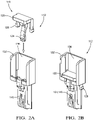
- the CLA system 112 also comprises a third CLA feature 116. Referring now to FIGS. 2A-2B and with continued reference to the previous FIGS., exploded and perspective views of an example configuration of the CLA system 112 according to some implementations of the present disclosure are illustrated.
- the third CLA feature 116 is a clip feature that defines a top/base member 120, a bottom/clip member 124, and opposing outer clip members 128.
- the cover member 108 defines the first CLA feature 132 in addition to a machine-readable indicator 136 defined by the cover member 108 that is also part of the CLA system 112.
- the electrical center 104 e.g., its housing
- these first and second CLA features 132, 140 are engageable notches that slidably engage each other but do not provide locking functionality.
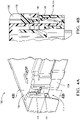
- FIGS. front views of partially engaged and fully engaged configurations of the CLA system 112 including the machine-readable indicator 136 and zoomed-in perspective views and cross-sectional views of the cover 100 and the electrical center 104 according to some implementations of the present disclosure are illustrated.
- the machine-readable indicator 136 is configured to be fully visible and readable by a CLA device (not shown) when the third CLA feature 116 is fully engaged and seated within the first and second CLA features 132, 140.
- a CLA device not shown
- the second CLA feature 140 defined in a housing 144 of the electrical center 104
- a clip member 148 of the second CLA feature 140 are illustrated in greater detail.
- the machine-readable indicator is a two-dimensional data matrix or barcode, such as a quick response (QR) code or the like. It will be appreciated that other suitable machine-readable indicators could be utilized, provided that they are only partially visible when the third CLA feature 116 is only partially engaged, as shown in FIG. 3A .
- the CLA device is not explicitly shown, it will be appreciated that one skilled in the art recognizes that the CLA device could be any handheld or robotically-controlled scanning or reading device for machine-readable indicators (a camera, an infrared scanner, etc.). By requiring full engagement and seating of the third CLA feature 116 in order to then read the machine-readable indicator 136, full engagement of the cover 100 to the electrical center 104 can be assured.
- FIGS. 5A-5C cross-sectional views of the first, second, and third CLA features 132, 140, and 116 at various stages of engagement according to some implementations of the present disclosure are illustrated in greater detail.
- the third CLA feature 116 is partially engaged up to a point where the bottom/clip member 124 contacts a surface 152 of the cover member 108. Beyond this point, the third CLA feature 116 is engaged with the first CLA feature 132 but still removable from the cover member 108 (i.e., the second CLA feature 132).
- FIG. 5A the third CLA feature 116 is partially engaged up to a point where the bottom/clip member 124 contacts a surface 152 of the cover member 108. Beyond this point, the third CLA feature 116 is engaged with the first CLA feature 132 but still removable from the cover member 108 (i.e., the second CLA feature 132).
- FIG. 5A the third CLA feature 116 is partially engaged up to a point where the bottom/clip member 124 contacts a surface 152 of the
- the third CLA feature 116 is partially engaged such that the bottom/clip member 124 of the third CLA feature 116 engages with the clip member 148 of the second CLA feature 140. This represents engagement of the third CLA feature 116 with both the first and second CLA features 132, 140, but not full engagement.
- the third CLA feature 116 is fully engaged and seated with the clip member 148 of the second CLA feature 140 (the electrical center 104) being engaged with the surface 152 of the second CLA feature 132 (the cover member 108).
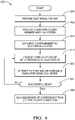
- FIG. 6 a flow diagram of an example method 200 of assembling a portion of an electrical system of a vehicle and, more particularly, covering an electrical center of the vehicle, according to some implementations of the present disclosure, is illustrated. While the components of FIGS. 1-5C are generally referenced, it will be appreciated that the method 200 could be applicable to the assembly of any suitable electrical centers/systems.
- the electrical center 104 is provided.
- the cover 100 comprising the cover member 108 and the CLA system 112 is provided.
- the cover member 108 is connected to or engaged with the electrical center 104.
- the third CLA feature 116 is engaged with the first and second CLA features 132, 140.
- an attempt is made by the CLA device to read the machine-readable indicator 136. This could also be described as a scanning operation or read attempt.
- a determination is made (e.g., by the CLA device or a robotic installer) whether the machine-readable indicator 136 was successfully read. For example, when the third CLA feature 116 is only partially engaged and not fully seated, the machine-readable indicator 136 is not fully visible and therefore not machine-readable.
- assurance of the cover-electrical center locked connection is made at 228 and the method 200 ends or returns to 204 for another cycle. Otherwise, the method 200 returns to 216 where engagement of the third CLA feature 116 continues and another attempt is made to assure the cover-electrical center locked connection.
- Example embodiments are provided so that this disclosure will be thorough, and will fully convey the scope to those who are skilled in the art. Numerous specific details are set forth such as examples of specific components, devices, and methods, to provide a thorough understanding of embodiments of the present disclosure. It will be apparent to those skilled in the art that specific details need not be employed, that example embodiments may be embodied in many different forms and that neither should be construed to limit the scope of the disclosure. In some example embodiments, well-known procedures, well-known device structures, and well-known technologies are not described in detail.
- first, second, third, etc. may be used herein to describe various elements, components, regions, layers and/or sections, these elements, components, regions, layers and/or sections should not be limited by these terms. These terms may be only used to distinguish one element, component, region, layer or section from another region, layer or section. Terms such as “first,” “second,” and other numerical terms when used herein do not imply a sequence or order unless clearly indicated by the context. Thus, a first element, component, region, layer or section discussed below could be termed a second element, component, region, layer or section without departing from the teachings of the example embodiments.
- module may refer to, be part of, or include: an Application Specific Integrated Circuit (ASIC); an electronic circuit; a combinational logic circuit; a field programmable gate array (FPGA); a processor or a distributed network of processors (shared, dedicated, or grouped) and storage in networked clusters or datacenters that executes code or a process; other suitable components that provide the described functionality; or a combination of some or all of the above, such as in a system-on-chip.
- the term module may also include memory (shared, dedicated, or grouped) that stores code executed by the one or more processors.
- code may include software, firmware, byte-code and/or microcode, and may refer to programs, routines, functions, classes, and/or objects.
- shared means that some or all code from multiple modules may be executed using a single (shared) processor. In addition, some or all code from multiple modules may be stored by a single (shared) memory.
- group means that some or all code from a single module may be executed using a group of processors. In addition, some or all code from a single module may be stored using a group of memories.
- the techniques described herein may be implemented by one or more computer programs executed by one or more processors.
- the computer programs include processor-executable instructions that are stored on a non-transitory tangible computer readable medium.
- the computer programs may also include stored data.
- Non-limiting examples of the non-transitory tangible computer readable medium are nonvolatile memory, magnetic storage, and optical storage.
- the present disclosure also relates to an apparatus for performing the operations herein.
- This apparatus may be specially constructed for the required purposes, or it may comprise a general-purpose computer selectively activated or reconfigured by a computer program stored on a computer readable medium that can be accessed by the computer.
- a computer program may be stored in a tangible computer readable storage medium, such as, but is not limited to, any type of disk including floppy disks, optical disks, CD-ROMs, magnetic-optical disks, read-only memories (ROMs), random access memories (RAMs), EPROMs, EEPROMs, magnetic or optical cards, application specific integrated circuits (ASICs), or any type of media suitable for storing electronic instructions, and each coupled to a computer system bus.
- the computers referred to in the specification may include a single processor or may be architectures employing multiple processor designs for increased computing capability.
Landscapes
- Engineering & Computer Science (AREA)
- Microelectronics & Electronic Packaging (AREA)
- Mechanical Engineering (AREA)
- Casings For Electric Apparatus (AREA)
Abstract
Description
- The present disclosure generally relates to electrical center covers and, more particularly, to an electrical center cover with a machine-readable indicator for confirmation of lock engagement of the cover with the electrical center.
- Electrical centers for vehicles, also commonly referred to as power distribution blocks (PDBs), handle power distribution to the vehicle's electrical system. A PDB typically comprises an array of electrical components (fuses, circuit breakers, relays, etc.) in a single unit. In order to protect the PDB and its electrical components from water and other environmental conditions, a cover is typically affixed to the PDB. Cover lock assurance (CLA) involves the assurance that the cover is fully engaged with the PDB. Conventional PDB covers include CLA mechanisms that involve human-dependent confirmation, such as listening for an audible click. Human-dependent CLA is unreliable, which can result in PDB covers being lost or not fully engaged, which could result in damage to the PDB's electrical components. This potential loss/damage increases costs. Thus, while conventional vehicle electrical center covers work for their intended purpose, there exists an opportunity for improvement in the relevant art.
- The background description provided herein is for the purpose of generally presenting the context of the disclosure. Work of the presently named inventors, to the extent it is described in this background section, as well as aspects of the description that may not otherwise qualify as prior art at the time of filing, are neither expressly nor impliedly admitted as prior art against the present disclosure.
- According to one aspect of the present disclosure, a cover for an electrical center of a vehicle is presented. In one exemplary implementation, the cover comprises a cover member defining a first cover lock assurance (CLA) feature and configured to cover electrical components of the electrical center when the first CLA feature is fully engaged with a second CLA feature defined by a housing of the electrical center, and a CLA system configured to assure the full engagement of the cover member to the housing of the electrical center, the CLA system comprising a third CLA feature configured to selectively engage/disengage with the first and second CLA features to engage the cover member to the housing of the electrical center and a machine-readable indicator configured to be fully visible and readable by a CLA device when the third CLA feature is fully engaged and seated within the first and second CLA features.
- In some implementations, the machine-readable indicator is configured to be not fully visible and readable by the CLA device when the third CLA feature is partially engaged with the second CLA feature. In some implementations, the machine-readable indicator is a two-dimensional data matrix. In some implementations, the two-dimensional data matrix is a quick response (QR) code.
- In some implementations, the first and second CLA features are engageable notch features, and wherein the third CLA feature is a clip feature that slidably engages through the first CLA feature and with the second CLA feature. In some implementations, the electrical center is a power distribution block (PDB) of the vehicle. In some implementations, the cover prevents water from entering the PDB and damaging the electrical components therein.
- According to another aspect of the present disclosure, a method of covering an electrical center of a vehicle is presented. In one exemplary implementation, the method comprises providing a cover member defining a first cover lock assurance (CLA) feature and configured to cover electrical components of the electrical center when the first CLA feature is fully engaged with a second CLA feature defined by a housing of the electrical center, and providing a CLA system configured to assure the full engagement of the cover member to the housing of the electrical center, the CLA system comprising a third CLA feature configured to selectively engage/disengage with the first and second CLA features to engage the cover member to the housing of the electrical center, and a machine-readable indicator configured to be fully visible and readable by a CLA device when the third CLA feature is fully engaged and seated within the first and second CLA features.
- In some implementations, the method further comprises partially engaging the third CLA feature with the second CLA feature, wherein the machine-readable indicator is configured to be not fully visible and readable by the CLA device when the third CLA feature is partially engaged with the second CLA feature. In some implementations, the method further comprises fully engaging and seating the third CLA feature within the first and second CLA features, and reading, by the CLA device, the machine-readable indicator to assure the full engagement of the cover member to the housing of the electrical center.
- In some implementations, the machine-readable indicator is a two-dimensional data matrix. In some implementations, the two-dimensional data matrix is a quick response (QR) code. In some implementations, the first and second CLA features are engageable notch features, and wherein the third CLA feature is a clip feature that slidably engages through the first CLA feature and with the second CLA feature. In some implementations, the electrical center is a power distribution block (PDB) of the vehicle. In some implementations, the cover prevents water from entering the PDB and damaging the electrical components therein.
- According to yet another aspect of the present disclosure, a method of assembling a portion of an electrical system of a vehicle is presented. In one exemplary implementation, the method comprises providing an electrical center of the electrical system, wherein the electrical center defines a housing and comprises electrical components housed by the housing, and wherein the housing defines a first cover lock assurance (CLA) feature, providing a cover configured to cover the electrical components of the electrical center when engaged to the housing of the electrical center, wherein the cover comprises a cover member that defines a second CLA feature and a CLA system configured to assure the full engagement of the cover member to the housing of the electrical center, at least partially engaging a third CLA feature of the CLA system with the second and first CLA features to engage the cover member to the housing of the electrical center, and attempting reading, by a CLA device, a machine-readable indicator of the CLA system, wherein the machine-readable indicator configured to be fully visible and readable by the CLA device when the third CLA feature is fully engaged and seated within the second and first CLA features.
- In some implementations, the method further comprises only partially engaging the third CLA feature with the second and first CLA features such that the machine-readable indicator is not fully visible, and failing to read, by the CLA device, the machine-readable indicator thereby failing to assure the full engagement of the cover member to the housing of the electrical center. In some implementations, the method further comprises fully engaging and seating the third CLA feature within the second and first CLA features, and successfully reading, by the CLA device, the machine-readable indicator thereby assuring the full engagement of the cover member to the housing of the electrical center. In some implementations, the machine-readable indicator is a two-dimensional data matrix. In some implementations, the two-dimensional data matrix is a quick response (QR) code.
- Further areas of applicability of the present disclosure will become apparent from the detailed description provided hereinafter. It should be understood that the detailed description and specific examples are intended for purposes of illustration only and are not intended to limit the scope of the disclosure.
- The present disclosure will become more fully understood from the detailed description and the accompanying drawings, wherein:
-
FIGS. 1A-1B illustrate exploded and perspective views of a cover for an electrical center of a vehicle including first and second respective CLA features according to some implementations of the present disclosure; -
FIGS. 2A-2B illustrate exploded and perspective views of a cover lock assurance (CLA) system of the cover including a third CLA feature and a machine-readable indicator according to some implementations of the present disclosure; -
FIGS. 3A-3B illustrate front views of partially engaged and fully engaged configurations the CLA system according to some implementations of the present disclosure; -
FIGS. 4A-4B illustrate zoomed-in perspective views and cross-sectional views of the cover and the housing of the electrical center and first, second, and third CLA features according to some implementations of the present disclosure; -
FIGS. 5A-5C illustrate cross-sectional views of the first, second, and third CLA features at various stages of engagement according to some implementations of the present disclosure; and -
FIG. 6 illustrates a flow diagram of an example method of assembling a portion of an electrical system of a vehicle and, more particularly, covering an electrical center of the vehicle, according to some implementations of the present disclosure. - As previously discussed, conventional electrical center (e.g., power distribution block, or PDB) covers include cover lock assurance CLA mechanisms that involve human-dependent confirmation, such as listening for an audible click. Human-dependent CLA is unreliable, which can result in PDB covers being lost or not fully engaged, which could result in damage to the PDB's electrical components. This potential loss/damage increases costs. Thus, while conventional vehicle electrical center covers work for their intended purpose, there exists an opportunity for improvement in the relevant art. Referring now to
FIGS. 1A-1B , exploded and perspective views of acover 100 for anelectrical center 104 of a larger electrical system (not shown) of a vehicle (not shown) according to some implementations of the present disclosure are illustrated. For purposes of this disclosure, theelectrical center 104 is a PDB comprising electrical components such as fuses, circuit breakers, relays, and the like in a single unit. It will be appreciated, however, that the systems and methods of the present disclosure are applicable to any suitable electrical centers requiring covering. - The
cover 100 generally comprises acover member 108 and aCLA system 112. Thecover member 108 is configured to cover the electrical components of the electrical center 104 (generally illustrated) when theCLA system 112 is fully engaged, including engagement of first and second CLA features defined by thecover member 108 and the electrical center 104 (shown in other FIGS. and described below). Thecover 100, for example, could protect or insulate the electrical components of theelectrical center 104 from water/moisture, which could potentially cause damage. TheCLA system 112 also comprises athird CLA feature 116. Referring now toFIGS. 2A-2B and with continued reference to the previous FIGS., exploded and perspective views of an example configuration of theCLA system 112 according to some implementations of the present disclosure are illustrated. As shown, thethird CLA feature 116 is a clip feature that defines a top/base member 120, a bottom/clip member 124, and opposingouter clip members 128. - The
cover member 108 defines thefirst CLA feature 132 in addition to a machine-readable indicator 136 defined by thecover member 108 that is also part of theCLA system 112. The electrical center 104 (e.g., its housing) defines thesecond CLA feature 140, which is engageable by thefirst CLA feature 132 as well as the third CLA feature 116 (via bottom/clip member 124). As shown, these first and second CLA features 132, 140 are engageable notches that slidably engage each other but do not provide locking functionality. Referring now toFIGS. 3A-3B and4A-4B and with continued reference to the previous FIGS., front views of partially engaged and fully engaged configurations of theCLA system 112 including the machine-readable indicator 136 and zoomed-in perspective views and cross-sectional views of thecover 100 and theelectrical center 104 according to some implementations of the present disclosure are illustrated. - As shown, the machine-
readable indicator 136 is configured to be fully visible and readable by a CLA device (not shown) when thethird CLA feature 116 is fully engaged and seated within the first and second CLA features 132, 140. InFIGS. 4A-4B , the second CLA feature 140 (defined in a housing 144 of the electrical center 104) and aclip member 148 of thesecond CLA feature 140 are illustrated in greater detail. In one exemplary implementation, the machine-readable indicator is a two-dimensional data matrix or barcode, such as a quick response (QR) code or the like. It will be appreciated that other suitable machine-readable indicators could be utilized, provided that they are only partially visible when thethird CLA feature 116 is only partially engaged, as shown inFIG. 3A . While the CLA device is not explicitly shown, it will be appreciated that one skilled in the art recognizes that the CLA device could be any handheld or robotically-controlled scanning or reading device for machine-readable indicators (a camera, an infrared scanner, etc.). By requiring full engagement and seating of the third CLA feature 116 in order to then read the machine-readable indicator 136, full engagement of thecover 100 to theelectrical center 104 can be assured. - Referring now to
FIGS. 5A-5C , cross-sectional views of the first, second, and third CLA features 132, 140, and 116 at various stages of engagement according to some implementations of the present disclosure are illustrated in greater detail. InFIG. 5A , thethird CLA feature 116 is partially engaged up to a point where the bottom/clip member 124 contacts a surface 152 of thecover member 108. Beyond this point, thethird CLA feature 116 is engaged with thefirst CLA feature 132 but still removable from the cover member 108 (i.e., the second CLA feature 132). InFIG. 5B , thethird CLA feature 116 is partially engaged such that the bottom/clip member 124 of thethird CLA feature 116 engages with theclip member 148 of thesecond CLA feature 140. This represents engagement of the third CLA feature 116 with both the first and second CLA features 132, 140, but not full engagement. Finally, inFIG. 5C , thethird CLA feature 116 is fully engaged and seated with theclip member 148 of the second CLA feature 140 (the electrical center 104) being engaged with the surface 152 of the second CLA feature 132 (the cover member 108). - Referring now to
FIG. 6 , a flow diagram of anexample method 200 of assembling a portion of an electrical system of a vehicle and, more particularly, covering an electrical center of the vehicle, according to some implementations of the present disclosure, is illustrated. While the components ofFIGS. 1-5C are generally referenced, it will be appreciated that themethod 200 could be applicable to the assembly of any suitable electrical centers/systems. At 204, theelectrical center 104 is provided. At 208, thecover 100 comprising thecover member 108 and theCLA system 112 is provided. At 212, thecover member 108 is connected to or engaged with theelectrical center 104. At 216, thethird CLA feature 116 is engaged with the first and second CLA features 132, 140. At 220, an attempt is made by the CLA device to read the machine-readable indicator 136. This could also be described as a scanning operation or read attempt. At 224, a determination is made (e.g., by the CLA device or a robotic installer) whether the machine-readable indicator 136 was successfully read. For example, when thethird CLA feature 116 is only partially engaged and not fully seated, the machine-readable indicator 136 is not fully visible and therefore not machine-readable. When successful, assurance of the cover-electrical center locked connection is made at 228 and themethod 200 ends or returns to 204 for another cycle. Otherwise, themethod 200 returns to 216 where engagement of thethird CLA feature 116 continues and another attempt is made to assure the cover-electrical center locked connection. - Example embodiments are provided so that this disclosure will be thorough, and will fully convey the scope to those who are skilled in the art. Numerous specific details are set forth such as examples of specific components, devices, and methods, to provide a thorough understanding of embodiments of the present disclosure. It will be apparent to those skilled in the art that specific details need not be employed, that example embodiments may be embodied in many different forms and that neither should be construed to limit the scope of the disclosure. In some example embodiments, well-known procedures, well-known device structures, and well-known technologies are not described in detail.
- The terminology used herein is for the purpose of describing particular example embodiments only and is not intended to be limiting. As used herein, the singular forms "a," "an," and "the" may be intended to include the plural forms as well, unless the context clearly indicates otherwise. The term "and/or" includes any and all combinations of one or more of the associated listed items. The terms "comprises," "comprising," "including," and "having," are inclusive and therefore specify the presence of stated features, integers, steps, operations, elements, and/or components, but do not preclude the presence or addition of one or more other features, integers, steps, operations, elements, components, and/or groups thereof. The method steps, processes, and operations described herein are not to be construed as necessarily requiring their performance in the particular order discussed or illustrated, unless specifically identified as an order of performance. It is also to be understood that additional or alternative steps may be employed.
- Although the terms first, second, third, etc. may be used herein to describe various elements, components, regions, layers and/or sections, these elements, components, regions, layers and/or sections should not be limited by these terms. These terms may be only used to distinguish one element, component, region, layer or section from another region, layer or section. Terms such as "first," "second," and other numerical terms when used herein do not imply a sequence or order unless clearly indicated by the context. Thus, a first element, component, region, layer or section discussed below could be termed a second element, component, region, layer or section without departing from the teachings of the example embodiments.
- As used herein, the term module may refer to, be part of, or include: an Application Specific Integrated Circuit (ASIC); an electronic circuit; a combinational logic circuit; a field programmable gate array (FPGA); a processor or a distributed network of processors (shared, dedicated, or grouped) and storage in networked clusters or datacenters that executes code or a process; other suitable components that provide the described functionality; or a combination of some or all of the above, such as in a system-on-chip. The term module may also include memory (shared, dedicated, or grouped) that stores code executed by the one or more processors.
- The term code, as used above, may include software, firmware, byte-code and/or microcode, and may refer to programs, routines, functions, classes, and/or objects. The term shared, as used above, means that some or all code from multiple modules may be executed using a single (shared) processor. In addition, some or all code from multiple modules may be stored by a single (shared) memory. The term group, as used above, means that some or all code from a single module may be executed using a group of processors. In addition, some or all code from a single module may be stored using a group of memories.
- The techniques described herein may be implemented by one or more computer programs executed by one or more processors. The computer programs include processor-executable instructions that are stored on a non-transitory tangible computer readable medium. The computer programs may also include stored data. Non-limiting examples of the non-transitory tangible computer readable medium are nonvolatile memory, magnetic storage, and optical storage.
- Some portions of the above description present the techniques described herein in terms of algorithms and symbolic representations of operations on information. These algorithmic descriptions and representations are the means used by those skilled in the data processing arts to most effectively convey the substance of their work to others skilled in the art. These operations, while described functionally or logically, are understood to be implemented by computer programs. Furthermore, it has also proven convenient at times to refer to these arrangements of operations as modules or by functional names, without loss of generality.
- Unless specifically stated otherwise as apparent from the above discussion, it is appreciated that throughout the description, discussions utilizing terms such as "processing" or "computing" or "calculating" or "determining" or "displaying" or the like, refer to the action and processes of a computer system, or similar electronic computing device, that manipulates and transforms data represented as physical (electronic) quantities within the computer system memories or registers or other such information storage, transmission or display devices.
- Certain aspects of the described techniques include process steps and instructions described herein in the form of an algorithm. It should be noted that the described process steps and instructions could be embodied in software, firmware or hardware, and when embodied in software, could be downloaded to reside on and be operated from different platforms used by real time network operating systems.
- The present disclosure also relates to an apparatus for performing the operations herein. This apparatus may be specially constructed for the required purposes, or it may comprise a general-purpose computer selectively activated or reconfigured by a computer program stored on a computer readable medium that can be accessed by the computer. Such a computer program may be stored in a tangible computer readable storage medium, such as, but is not limited to, any type of disk including floppy disks, optical disks, CD-ROMs, magnetic-optical disks, read-only memories (ROMs), random access memories (RAMs), EPROMs, EEPROMs, magnetic or optical cards, application specific integrated circuits (ASICs), or any type of media suitable for storing electronic instructions, and each coupled to a computer system bus. Furthermore, the computers referred to in the specification may include a single processor or may be architectures employing multiple processor designs for increased computing capability.
- The foregoing description of the embodiments has been provided for purposes of illustration and description. It is not intended to be exhaustive or to limit the disclosure. Individual elements or features of a particular embodiment are generally not limited to that particular embodiment, but, where applicable, are interchangeable and can be used in a selected embodiment, even if not specifically shown or described. The same may also be varied in many ways. Such variations are not to be regarded as a departure from the disclosure, and all such modifications are intended to be included within the scope of the disclosure.
Claims (20)
- A cover for an electrical center of a vehicle, the cover comprising:a cover member defining a first cover lock assurance (CLA) feature and configured to cover electrical components of the electrical center when the first CLA feature is fully engaged with a second CLA feature defined by a housing of the electrical center; anda CLA system configured to assure the full engagement of the cover member to the housing of the electrical center, the CLA system comprising:a third CLA feature configured to selectively engage/disengage with the first and second CLA features to engage the cover member to the housing of the electrical center; anda machine-readable indicator configured to be fully visible and readable by a CLA device when the third CLA feature is fully engaged and seated within the first and second CLA features.
- The cover of claim 1, wherein the machine-readable indicator is configured to be not fully visible and readable by the CLA device when the third CLA feature is partially engaged with the second CLA feature.
- The cover of claim 2, wherein the machine-readable indicator is a two-dimensional data matrix.
- The cover of claim 3, wherein the two-dimensional data matrix is a quick response (QR) code.
- The cover of any one of claims 1 to 4, wherein the first and second CLA features are engageable notch features, and wherein the third CLA feature is a clip feature that slidably engages through the first CLA feature and with the second CLA feature.
- The cover of any one of claims 1 to 5, wherein the electrical center is a power distribution block (PDB) of the vehicle.
- The cover of claim 6, wherein the cover prevents water from entering the PDB and damaging the electrical components therein.
- A method of covering an electrical center of a vehicle, the method comprising:providing a cover member defining a first cover lock assurance (CLA) feature and configured to cover electrical components of the electrical center when the first CLA feature is fully engaged with a second CLA feature defined by a housing of the electrical center; andproviding a CLA system configured to assure the full engagement of the cover member to the housing of the electrical center, the CLA system comprising:a third CLA feature configured to selectively engage/disengage with the first and second CLA features to engage the cover member to the housing of the electrical center; anda machine-readable indicator configured to be fully visible and readable by a CLA device when the third CLA feature is fully engaged and seated within the first and second CLA features.
- The method of claim 8, further comprising partially engaging the third CLA feature with the second CLA feature, wherein the machine-readable indicator is configured to be not fully visible and readable by the CLA device when the third CLA feature is partially engaged with the second CLA feature.
- The method of claim 8, further comprising:fully engaging and seating the third CLA feature within the first and second CLA features; andreading, by the CLA device, the machine-readable indicator to assure the full engagement of the cover member to the housing of the electrical center.
- The method of claim 10, wherein the machine-readable indicator is a two-dimensional data matrix.
- The method of claim 11, wherein the two-dimensional data matrix is a quick response (QR) code.
- The method of any one of claims 8 to 12, wherein the first and second CLA features are engageable notch features, and wherein the third CLA feature is a clip feature that slidably engages through the first CLA feature and with the second CLA feature.
- The method of any one of claims 8 to 13, wherein the electrical center is a power distribution block (PDB) of the vehicle.
- The method of claim 14, wherein the cover prevents water from entering the PDB and damaging the electrical components therein.
- A method of assembling a portion of an electrical system of a vehicle, the method comprising:providing an electrical center of the electrical system, wherein the electrical center defines a housing and comprises electrical components housed by the housing, and wherein the housing defines a first cover lock assurance (CLA) feature;providing a cover configured to cover the electrical components of the electrical center when engaged to the housing of the electrical center, wherein the cover comprises a cover member that defines a second CLA feature and a CLA system configured to assure the full engagement of the cover member to the housing of the electrical center;at least partially engaging a third CLA feature of the CLA system with the second and first CLA features to engage the cover member to the housing of the electrical center; andattempting reading, by a CLA device, a machine-readable indicator of the CLA system, wherein the machine-readable indicator configured to be fully visible and readable by the CLA device when the third CLA feature is fully engaged and seated within the second and first CLA features.
- The method of claim 16, further comprising:only partially engaging the third CLA feature with the second and first CLA features such that the machine-readable indicator is not fully visible; andfailing to read, by the CLA device, the machine-readable indicator thereby failing to assure the full engagement of the cover member to the housing of the electrical center.
- The method of claim 16, further comprising:fully engaging and seating the third CLA feature within the second and first CLA features; andsuccessfully reading, by the CLA device, the machine-readable indicator thereby assuring the full engagement of the cover member to the housing of the electrical center.
- The method of claim 18, wherein the machine-readable indicator is a two-dimensional data matrix.
- The method of claim 19, wherein the two-dimensional data matrix is a quick response (QR) code.
Applications Claiming Priority (1)
| Application Number | Priority Date | Filing Date | Title |
|---|---|---|---|
| US16/952,277 US11558972B2 (en) | 2020-11-19 | 2020-11-19 | Electrical center cover with machine-readable indicator confirmation of lock engagement |
Publications (1)
| Publication Number | Publication Date |
|---|---|
| EP4059778A1 true EP4059778A1 (en) | 2022-09-21 |
Family
ID=78709294
Family Applications (1)
| Application Number | Title | Priority Date | Filing Date |
|---|---|---|---|
| EP21209258.9A Pending EP4059778A1 (en) | 2020-11-19 | 2021-11-19 | Electrical center cover with machine-readable indicator confirmation of lock engagement |
Country Status (3)
| Country | Link |
|---|---|
| US (1) | US11558972B2 (en) |
| EP (1) | EP4059778A1 (en) |
| CN (1) | CN114521076A (en) |
Families Citing this family (2)
| Publication number | Priority date | Publication date | Assignee | Title |
|---|---|---|---|---|
| CN114093244A (en) * | 2021-11-18 | 2022-02-25 | 武汉华星光电技术有限公司 | Backlight Modules and Electronic Devices |
| US12356564B2 (en) | 2023-08-22 | 2025-07-08 | Ford Global Technologies, Llc | Power distribution assembly |
Citations (3)
| Publication number | Priority date | Publication date | Assignee | Title |
|---|---|---|---|---|
| US9583860B1 (en) * | 2015-11-24 | 2017-02-28 | Te Connectivity Corporation | Electrical connector with recordable position assurance |
| US20170229813A1 (en) * | 2016-02-10 | 2017-08-10 | Yazaki North America, Inc. | Connector position assurance with identification feature |
| US9801296B1 (en) * | 2017-01-16 | 2017-10-24 | Dinkle Enterprise Co., Ltd. | Housing device having pull-type locking and release structure |
Family Cites Families (19)
| Publication number | Priority date | Publication date | Assignee | Title |
|---|---|---|---|---|
| US3027168A (en) | 1957-12-05 | 1962-03-27 | Heinrich J B Herbruggen | Packing ring |
| US6431880B1 (en) | 1998-06-22 | 2002-08-13 | Cooper Technologies | Modular terminal fuse block |
| US7134921B2 (en) | 2004-04-15 | 2006-11-14 | Erico International Corporation | Power distribution block assembly |
| US7375300B2 (en) * | 2005-09-08 | 2008-05-20 | Illinois Tool Works Inc. | Switch assembly |
| US7700875B2 (en) * | 2006-12-22 | 2010-04-20 | Thomas & Betts International, Inc. | Switch box extender grounding strap |
| JP4916955B2 (en) * | 2007-06-07 | 2012-04-18 | 矢崎総業株式会社 | Electronic component built-in unit |
| US7727022B2 (en) | 2008-02-14 | 2010-06-01 | Delphi Technologies, Inc. | On harness PCB electrical center |
| US7845959B2 (en) | 2009-01-06 | 2010-12-07 | Cooper Technologies Company | Component position assurance element for a power distribution block |
| US20120268864A1 (en) * | 2011-04-21 | 2012-10-25 | Delphi Technologies, Inc. | Apparatus having plurality of openings to access removable electronic devices some of which have electrical connections using no circuit board trace |
| US8721374B2 (en) * | 2011-07-22 | 2014-05-13 | Lear Corporation | Electrical connector |
| US9622355B2 (en) | 2013-07-08 | 2017-04-11 | Delphi Technologies, Inc. | Environmentally sealed electrical housing assembly with integrated connector |
| MX2017005407A (en) * | 2014-10-31 | 2017-10-04 | CommScope Connectivity Belgium BVBA | Guaranteed closed safety lock. |
| KR101609705B1 (en) * | 2015-12-08 | 2016-04-06 | 영화테크(주) | Junction box |
| JP6575930B2 (en) * | 2016-06-02 | 2019-09-18 | 株式会社オートネットワーク技術研究所 | Board unit |
| AU2016410602B2 (en) * | 2016-06-23 | 2022-07-28 | Landis+Gyr Technology, Inc. | Utility meter enclosure with dual position locks |
| JP2018073791A (en) * | 2016-11-04 | 2018-05-10 | 住友電装株式会社 | Electric connection box |
| US10604924B2 (en) * | 2016-12-13 | 2020-03-31 | Newtonoid Technologies, L.L.C. | Smart urinals and methods of making and using same |
| DE102017204600A1 (en) * | 2017-03-20 | 2018-09-20 | Robert Bosch Gmbh | A connector for connecting two housing parts and housings comprising two housing parts and at least one connector |
| JP7214615B2 (en) * | 2019-12-05 | 2023-01-30 | 株式会社東芝 | Connected device |
-
2020
- 2020-11-19 US US16/952,277 patent/US11558972B2/en active Active
-
2021
- 2021-11-19 CN CN202111376105.3A patent/CN114521076A/en active Pending
- 2021-11-19 EP EP21209258.9A patent/EP4059778A1/en active Pending
Patent Citations (3)
| Publication number | Priority date | Publication date | Assignee | Title |
|---|---|---|---|---|
| US9583860B1 (en) * | 2015-11-24 | 2017-02-28 | Te Connectivity Corporation | Electrical connector with recordable position assurance |
| US20170229813A1 (en) * | 2016-02-10 | 2017-08-10 | Yazaki North America, Inc. | Connector position assurance with identification feature |
| US9801296B1 (en) * | 2017-01-16 | 2017-10-24 | Dinkle Enterprise Co., Ltd. | Housing device having pull-type locking and release structure |
Also Published As
| Publication number | Publication date |
|---|---|
| US20220159858A1 (en) | 2022-05-19 |
| CN114521076A (en) | 2022-05-20 |
| US11558972B2 (en) | 2023-01-17 |
Similar Documents
| Publication | Publication Date | Title |
|---|---|---|
| EP4059778A1 (en) | Electrical center cover with machine-readable indicator confirmation of lock engagement | |
| CN108491301B (en) | Electronic device, abnormality early warning method based on redis and storage medium | |
| US20080181407A1 (en) | Method for protecting a control device against manipulation | |
| WO2006028657A1 (en) | Volatile storage based power loss recovery mechanism | |
| EP0897144A2 (en) | Method and apparatus for providing access protection in an integrated circuit | |
| CN113641873B (en) | Data processing method and device, electronic equipment and readable storage medium | |
| CN111241604A (en) | Apparatus and method relating to memory deactivation for memory security | |
| EP1532528A2 (en) | Method to secure the execution of a program against attacks | |
| EP2996034A1 (en) | Execution flow protection in microcontrollers | |
| US8582765B2 (en) | Masking of data in a calculation | |
| CN110751116B (en) | Target identification method and device | |
| CN109388976B (en) | Systems and methods for masking RSA operations | |
| US20080263533A1 (en) | Implementation of patches by a processing unit | |
| CN112633281A (en) | Vehicle identity authentication method and system based on Hash algorithm | |
| CN111027046A (en) | Access control method and device for USB network equipment | |
| JP2010134644A (en) | Ic card and patch execution method | |
| US20140009260A1 (en) | System and Method for Querying Vehicle Status at a Checkpoint using Identity Information | |
| CN106445807B (en) | Application installation package detection method and device for intelligent terminal | |
| CN116070293A (en) | Processing method and device for firmware protection through chip encryption | |
| JP2018116355A (en) | On-vehicle equipment | |
| CN100487650C (en) | Computer device with plug-in type ROM-BIOS | |
| US20050055571A1 (en) | Unauthorized access embedded software protection system | |
| CN116679324B (en) | Methods, apparatus, electronic devices and storage media for dual-satellite fault identification | |
| CN114996710B (en) | Branch record implementation method and system | |
| Rice et al. | Dependable coding of fiducial tags |
Legal Events
| Date | Code | Title | Description |
|---|---|---|---|
| PUAI | Public reference made under article 153(3) epc to a published international application that has entered the european phase |
Free format text: ORIGINAL CODE: 0009012 |
|
| STAA | Information on the status of an ep patent application or granted ep patent |
Free format text: STATUS: THE APPLICATION HAS BEEN PUBLISHED |
|
| AK | Designated contracting states |
Kind code of ref document: A1 Designated state(s): AL AT BE BG CH CY CZ DE DK EE ES FI FR GB GR HR HU IE IS IT LI LT LU LV MC MK MT NL NO PL PT RO RS SE SI SK SM TR |
|
| STAA | Information on the status of an ep patent application or granted ep patent |
Free format text: STATUS: REQUEST FOR EXAMINATION WAS MADE |
|
| RAP3 | Party data changed (applicant data changed or rights of an application transferred) |
Owner name: APTIV TECHNOLOGIES LIMITED |
|
| 17P | Request for examination filed |
Effective date: 20230321 |
|
| RBV | Designated contracting states (corrected) |
Designated state(s): AL AT BE BG CH CY CZ DE DK EE ES FI FR GB GR HR HU IE IS IT LI LT LU LV MC MK MT NL NO PL PT RO RS SE SI SK SM TR |
|
| RAP1 | Party data changed (applicant data changed or rights of an application transferred) |
Owner name: APTIV TECHNOLOGIES AG |
|
| STAA | Information on the status of an ep patent application or granted ep patent |
Free format text: STATUS: EXAMINATION IS IN PROGRESS |
|
| RAP3 | Party data changed (applicant data changed or rights of an application transferred) |
Owner name: APTIV TECHNOLOGIES AG |
|
| 17Q | First examination report despatched |
Effective date: 20240916 |